The Best Way to Clean Couch Stains, From Fresh Spills to Old Stains

Did that little spill leave a mark you notice every time you sit down? Maybe it’s yesterday’s coffee, a greasy fingerprint on the armrest, or a mystery patch hiding beneath a cushion. The best way to clean couch stains depends on what caused the mark and what your upholstery can handle. The wrong cleaner can leave you dealing with a bigger patch than the original spill.
The quick answer
- Blot fresh spills with a clean white cloth instead of rubbing them into the upholstery.
- Use a cleaner allowed by the couch’s care instructions, and test a hidden spot before treating the stain.
- For water-safe upholstery, apply small amounts of compatible cleaner and avoid soaking the cushions.
- Old stains, pet accidents, and water rings need a method suited to both the stain and fabric.
Below, you’ll find the steps for fresh spills, advice for the stains that tend to hang around, and a small selection of products worth having nearby.
Before You Grab a Cleaner, Check the Couch Tag
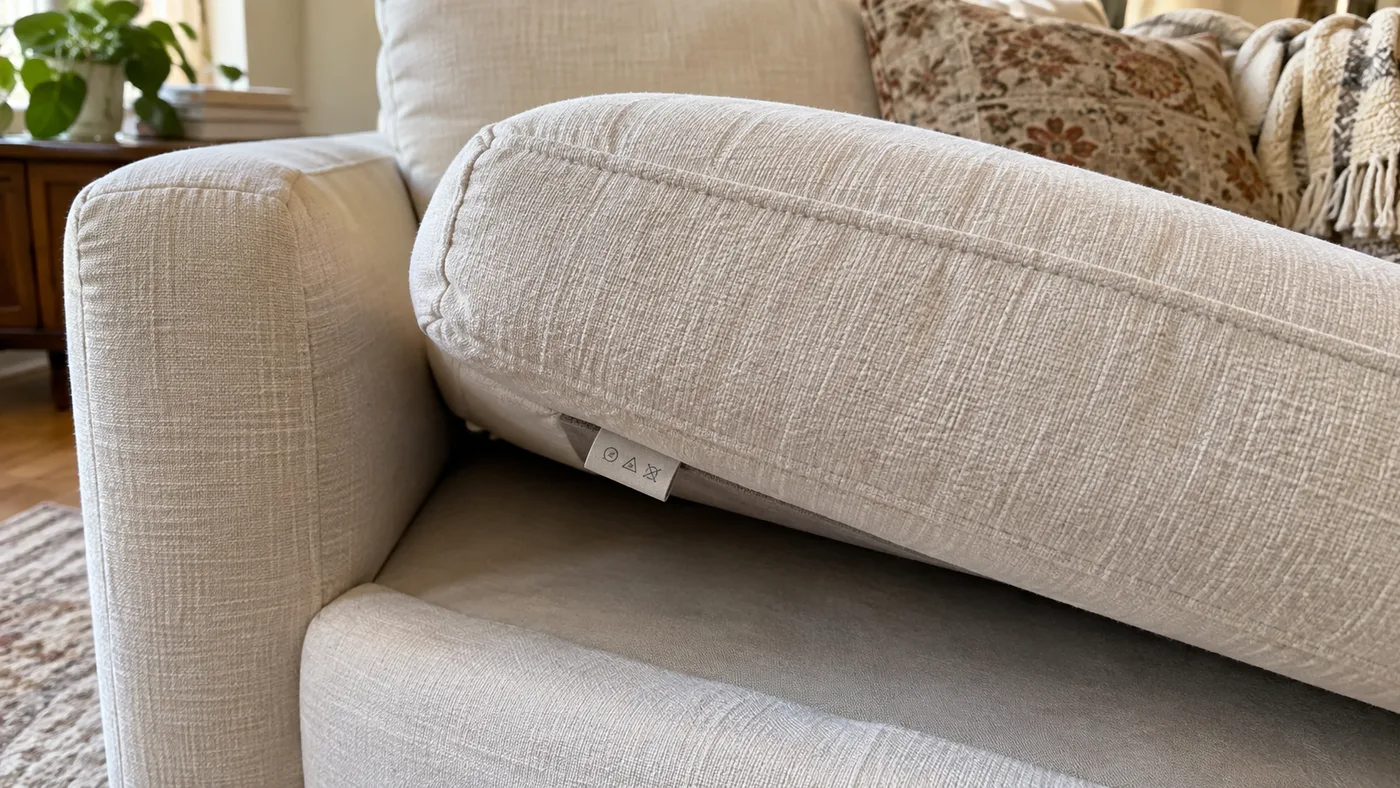
Your couch’s care instructions determine which cleaning methods you can use. Check beneath the seat cushions, along the seating deck, or underneath the frame. You may find a letter code, written instructions, or both.
The cleaner bottle and the couch instructions need to agree. A product labeled “upholstery cleaner” still has limits.
What W, S, WS, and X Actually Mean
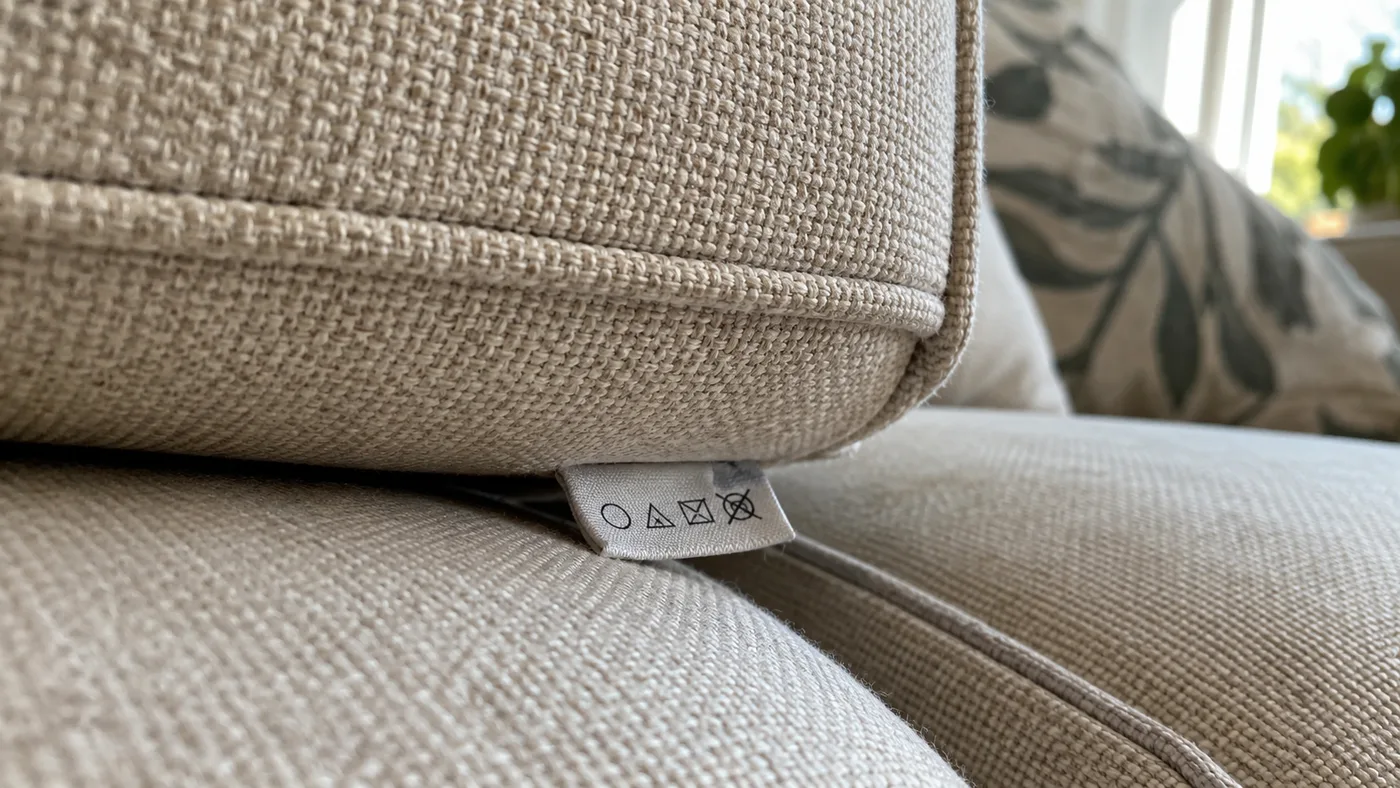
These codes describe the permitted type of cleaning agent. They do not automatically approve every cleaning machine or washing method.
| Code | What it generally permits | What to check |
|---|---|---|
| W | Water-based upholstery spot-cleaning products | Whether the maker specifies foam, shampoo, or another method |
| S | Approved water-free cleaning solvents | The recommended product and any professional-cleaning requirement |
| WS or SW | Compatible water-based or solvent cleaners | Restrictions for the particular fabric and furniture construction |
| X | Vacuuming or approved light brushing | Professional advice for stains; avoid applying liquid cleaners |
A W label does not automatically mean you can steam the couch, use an extractor, or wash its cushion covers. Those methods introduce different amounts of moisture, heat, and movement.
No Label? Find the Fabric Details Before Experimenting
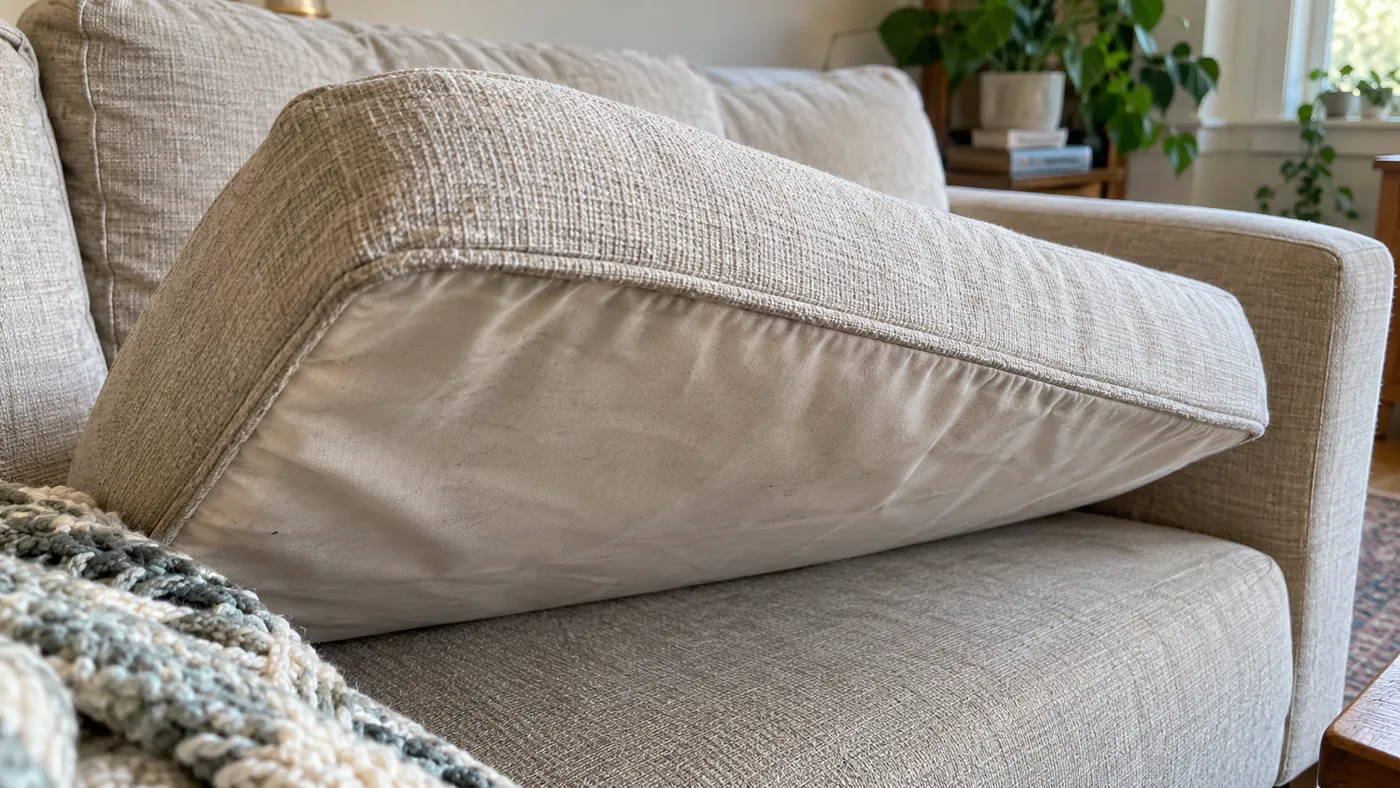
Look up the model or contact the manufacturer before choosing a liquid treatment. An order confirmation, receipt, or photo of the furniture label can help identify the upholstery.
If you bought the couch secondhand, ask whether the seller still has its paperwork. Meanwhile, gently lift loose solids and blot fresh liquid with a dry white cloth.
Fabric appearance can be misleading. Our guide to upholstery fibers and daily wear explains why similar-looking materials can behave differently.
Test a Hidden Spot and Let It Dry
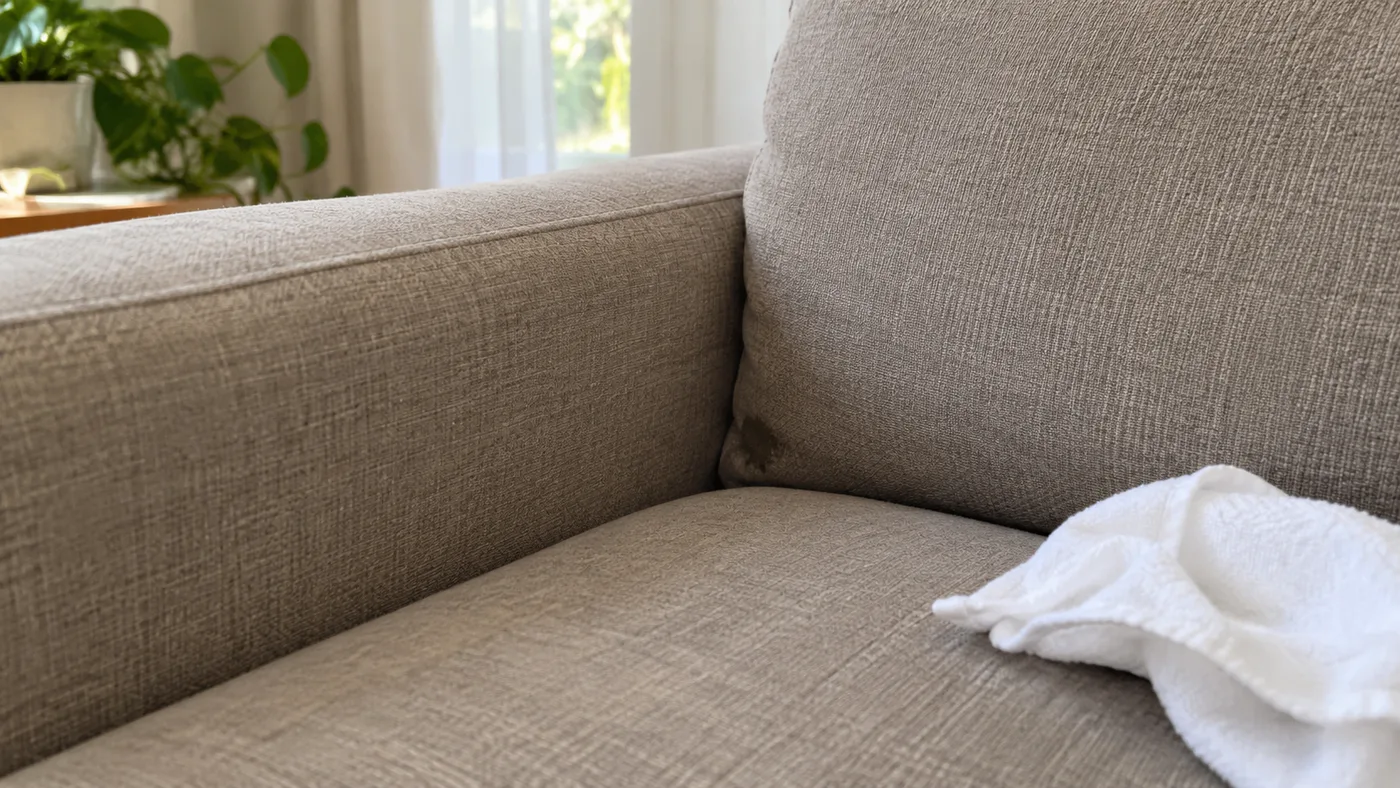
Test the approved cleaner somewhere inconspicuous and inspect the area after it dries. Follow the product’s test instructions, including any waiting time.
Check for color transferring to the cloth, a pale patch, a ring, stiffness, or a change in texture. Wet upholstery often looks darker, so an immediate glance cannot tell you everything.
If the test leaves a mark, put that cleaner aside.
Gather a Small Cleaning Kit
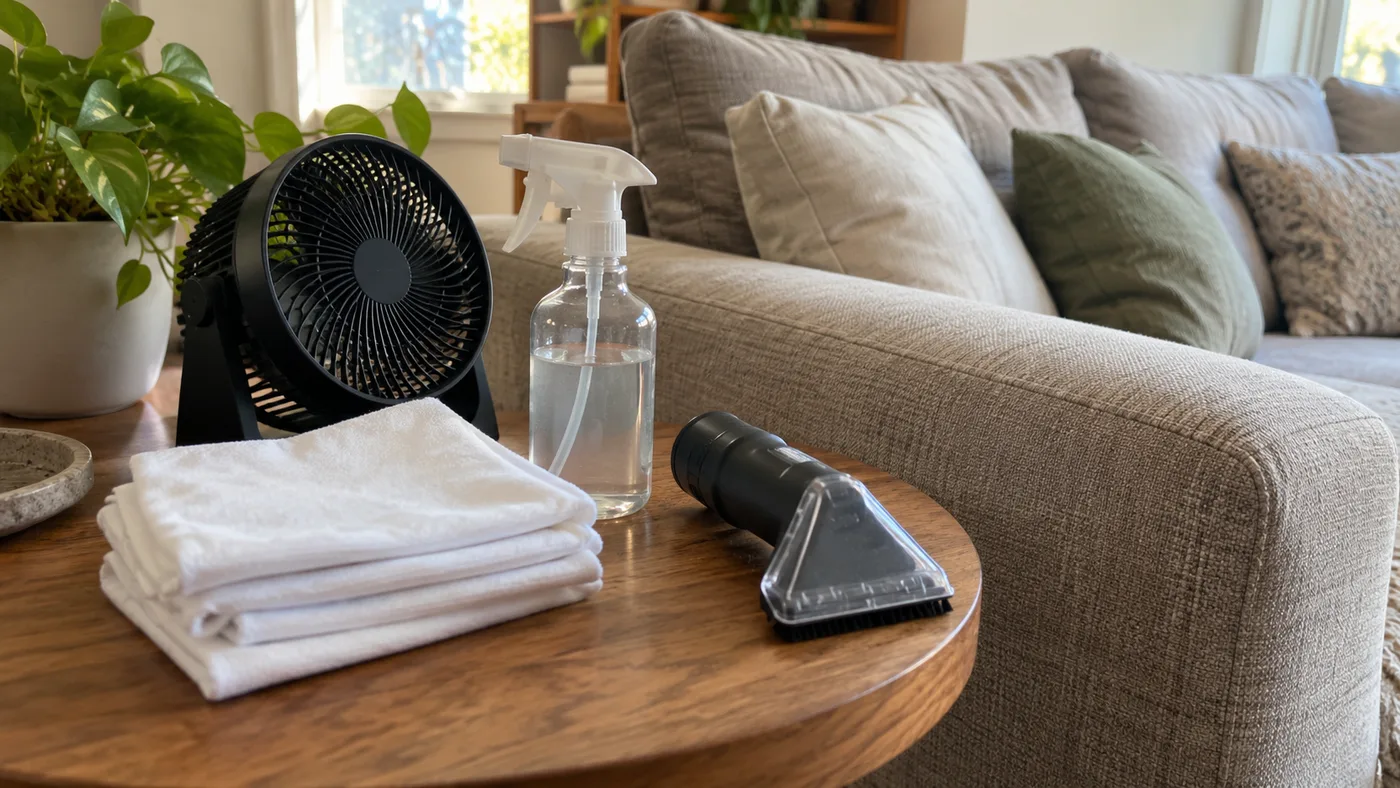
Keep clean white cloths, an appropriate vacuum attachment, and one compatible cleaner within easy reach. You can add other tools when the stain calls for them.
Useful supplies include:
- White absorbent cloths: For blotting liquid and spotting transferred upholstery dye.
- A spoon or blunt edge: For lifting food without smearing it.
- An upholstery vacuum attachment: For dry crumbs, dust, and loose debris.
- Distilled water: For cleaning methods that permit water.
- An approved upholstery cleaner: Or a mild soap solution specifically allowed by the furniture maker.
- A fan: To help air circulate while the cleaned area dries.
For a ready-made option, Folex Instant Carpet Spot Remover is formulated for colorfast upholstery that can safely be dampened with water. Test it first and follow its application directions.
How to Clean a Fresh Couch Stain in Five Steps
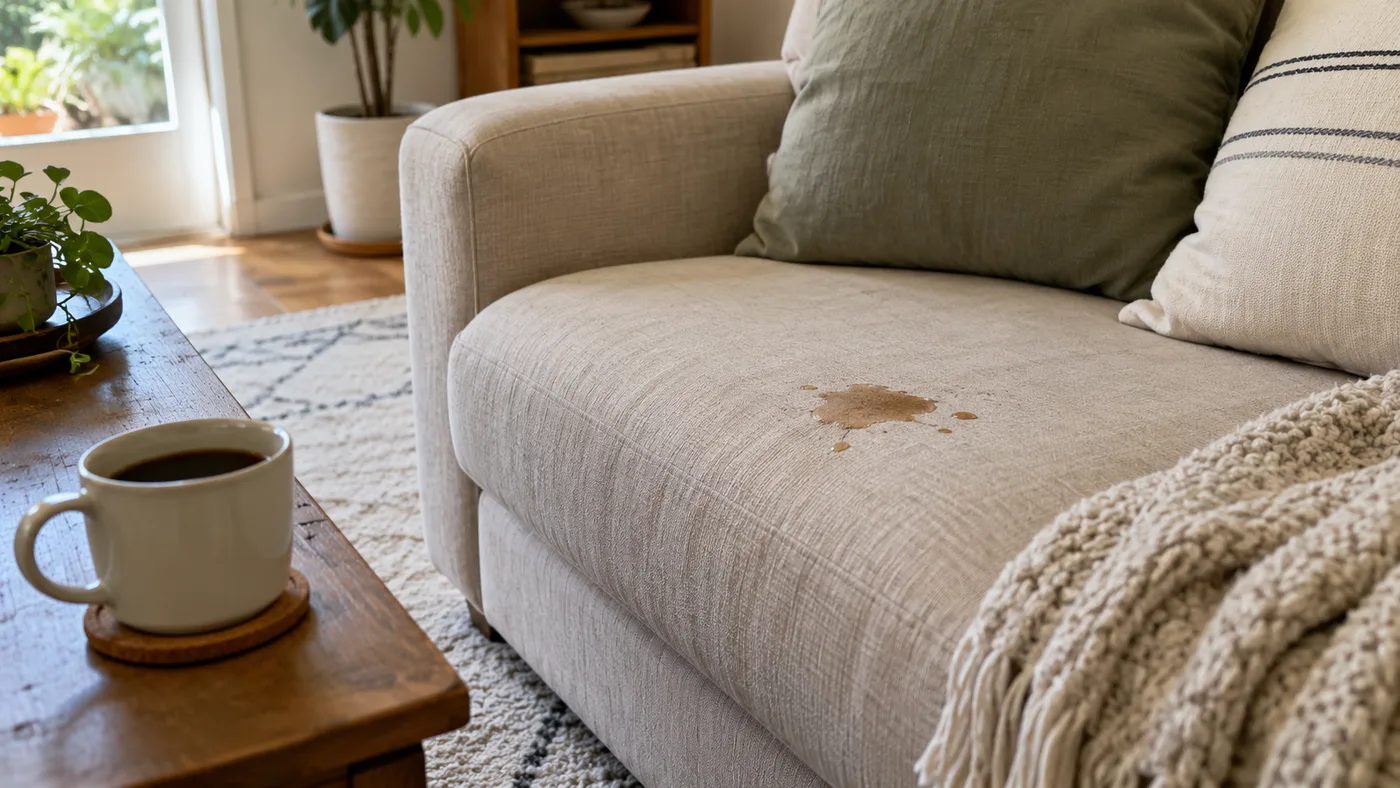
Remove excess material, use a tested cleaning method, and control the moisture. The sequence below applies when your upholstery is approved for the cleaner you have chosen.
For S-code, X-code, or unfamiliar upholstery, follow its specific care instructions instead of adapting a water-based method.
1. Lift Solids and Blot the Spill
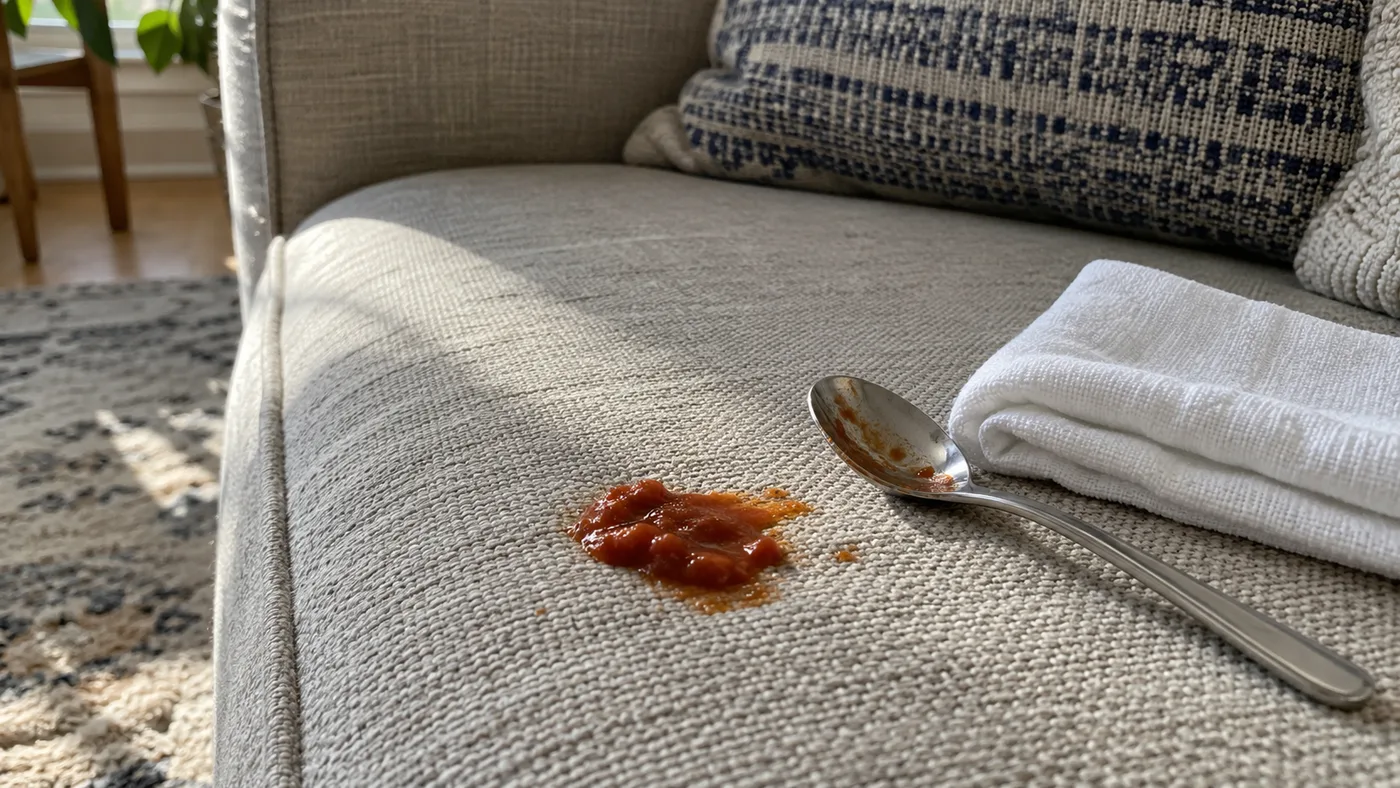
Lift food or other solids with a spoon, then press a dry white cloth onto the liquid. Lift the cloth, move to a clean part, and repeat.
If a spoonful of pasta sauce lands on the cushion, scoop up what is sitting on the surface before touching the remaining mark. Wiping across the whole spill can turn one spot into a streak.
Work gently from the outside toward the center.
2. Remove Loose, Dry Debris
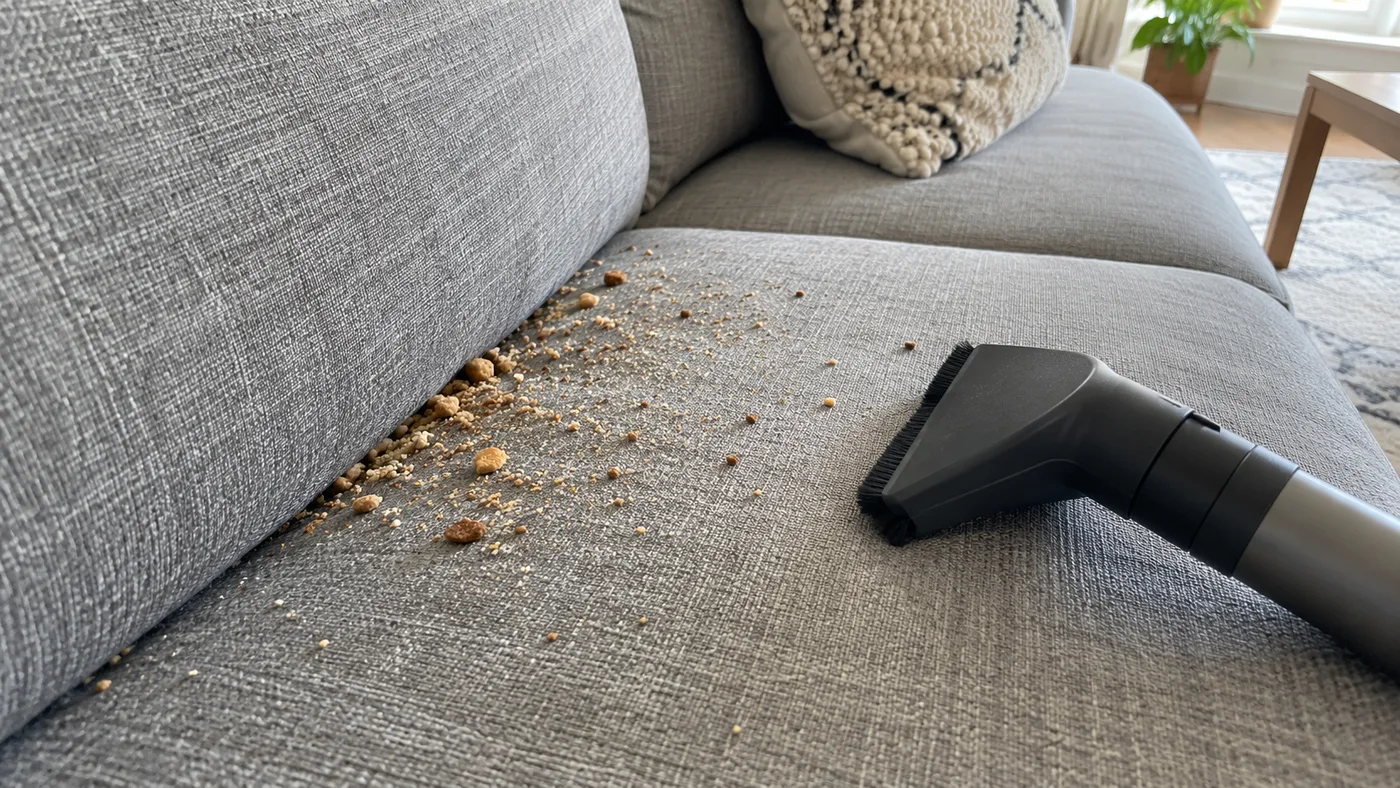
Vacuum dry particles once the wet spill has been dealt with. Use a suitable upholstery attachment and gentle pressure.
Keep a regular dry vacuum away from liquid. If the area still feels wet, continue blotting and leave the vacuum for the surrounding dry fabric.
This step is especially useful when the stain sits among biscuit crumbs, dust, or dried soil.
3. Apply the Compatible Cleaner as Directed
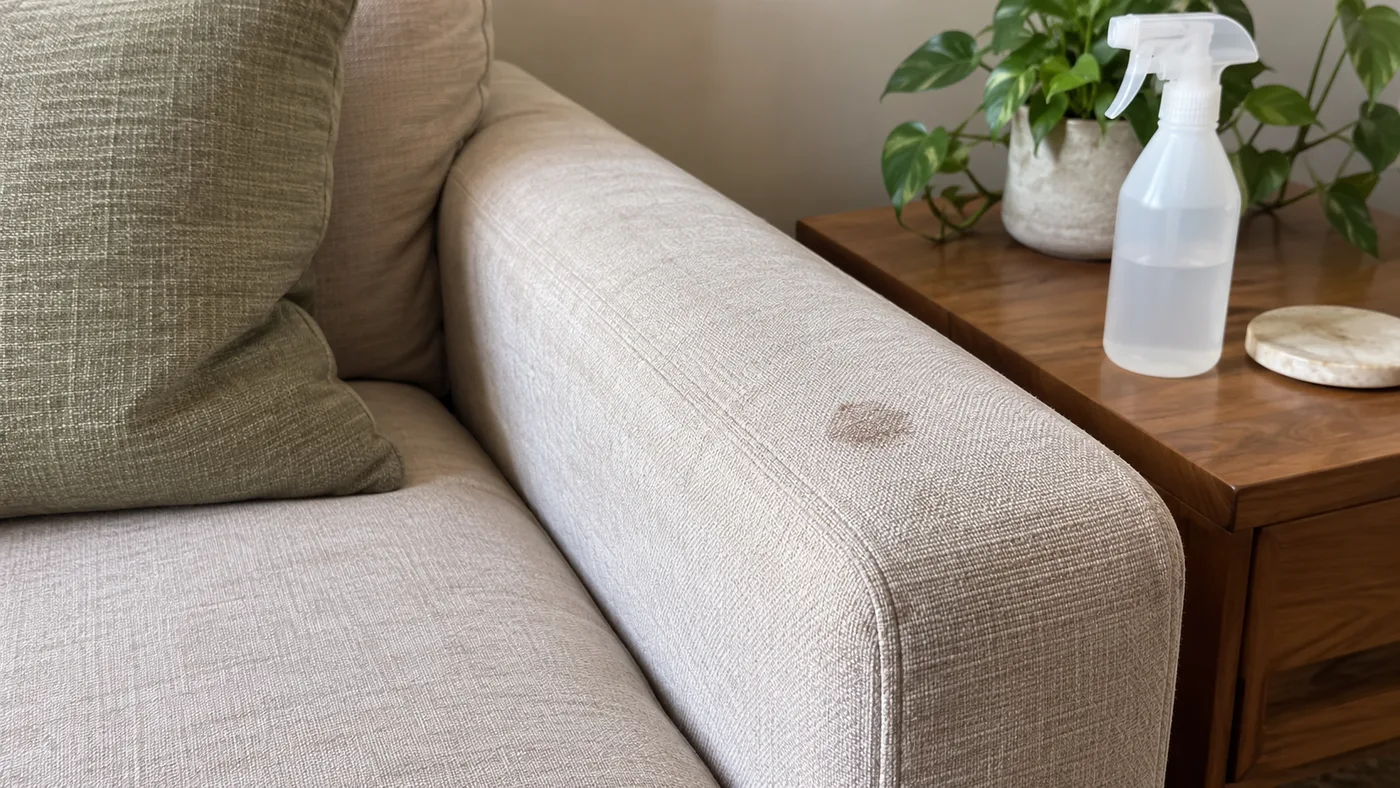
Use the product’s specified amount, dilution, and contact time. Some cleaners go directly onto the fabric; others are applied with a cloth. Follow the method that matches both the product and the couch.
For an approved soap solution, use a well-wrung cloth and the manufacturer’s recommended dilution. More soap creates more residue to remove.
Gently treat the affected area from its outside edge toward the middle. Avoid pressing so much liquid into the fabric that the cushion filling becomes soaked.
4. Remove Residue if the Instructions Require It
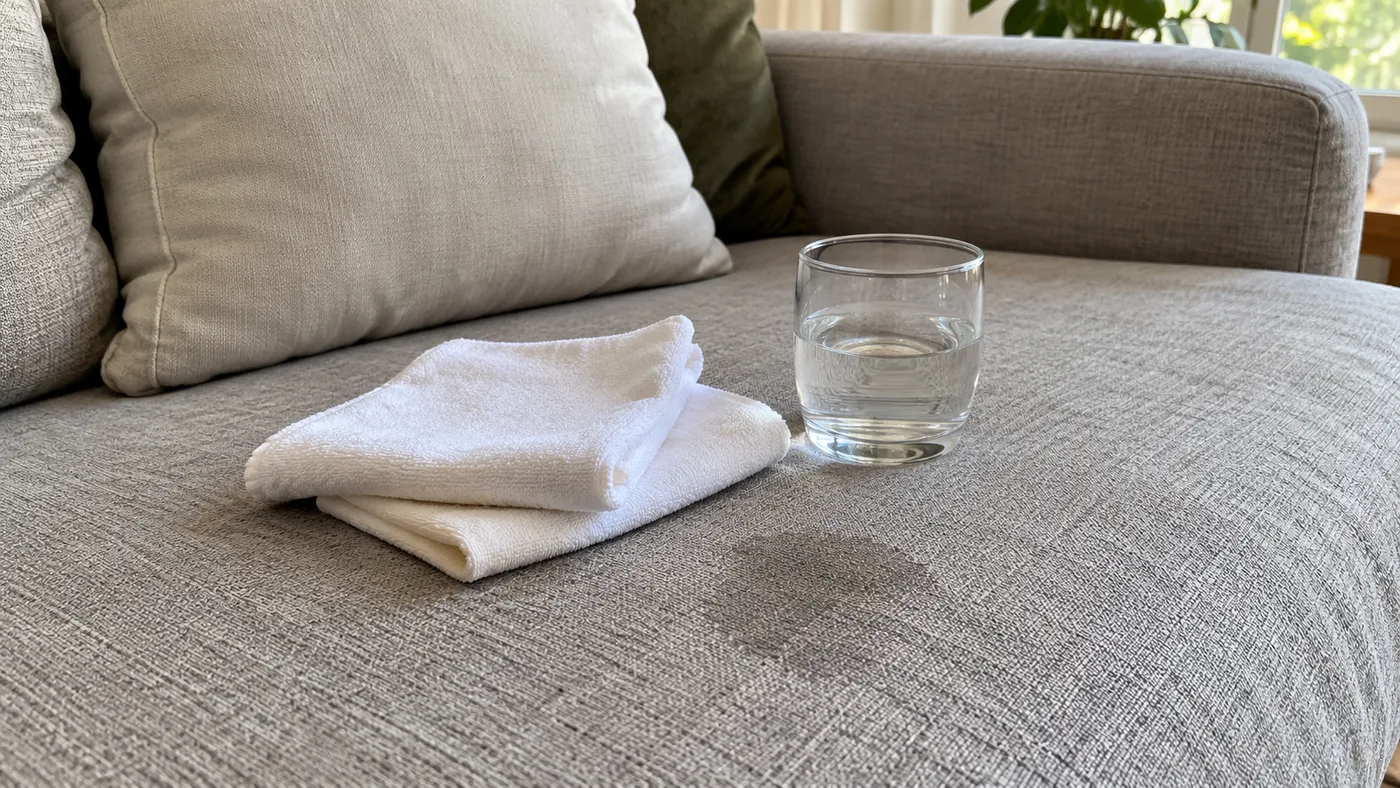
Remove soap residue when the cleaning instructions call for rinsing. On suitable water-safe upholstery, this may mean blotting with a fresh cloth lightly dampened with clean water, followed by a dry towel.
Switch to clean sections of the cloth as you work.
Some products, including Folex, have no-rinse directions. Follow those instructions rather than adding an unnecessary wetting step.
5. Let the Area Dry Completely Before Judging It

Allow the cleaned area to dry fully before sitting on it or deciding whether to repeat treatment. A fan can help circulate air, and ventilation may help when weather permits.
Avoid a hot hair dryer or an iron. Heat may affect the upholstery or make certain stains harder to remove.
There is no single drying time for every couch. Fabric, filling, humidity, and the amount of moisture all play a part.
Match the Cleaning Method to the Stain
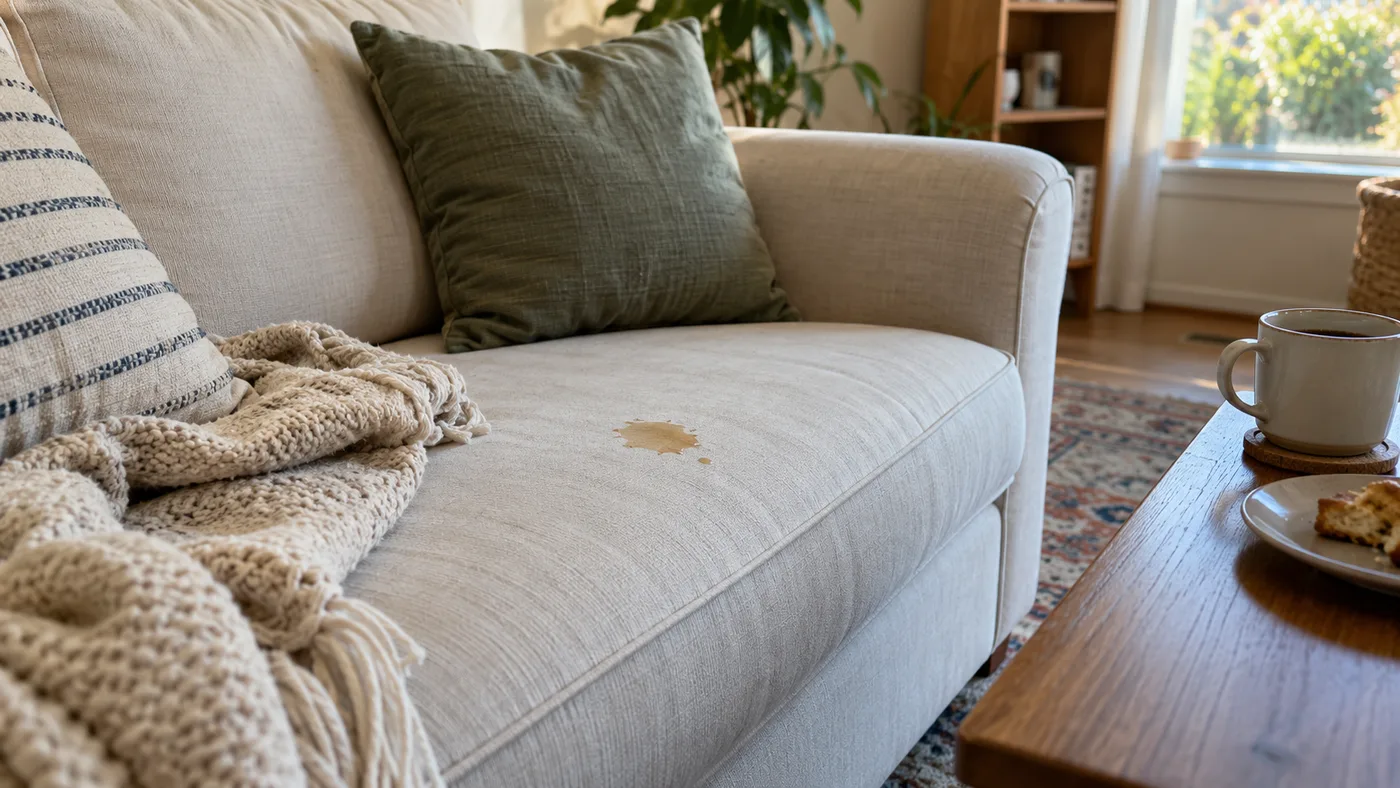
Choose the treatment for both the stain and the upholstery. This quick guide can help you decide which section to follow.
| Stain | First action | Possible treatment on compatible upholstery |
|---|---|---|
| Coffee or tea | Blot excess liquid | Approved spot cleaner |
| Red wine | Blot without spreading | Targeted wine stain remover |
| Grease, chocolate, or sauce | Lift surface residue | Approved detergent or grease-removing upholstery product |
| Mud | Lift thick deposits gently | Vacuum remaining soil once dry, then treat any mark |
| Pet accident | Remove solids and blot | Suitable enzyme-based stain and odor cleaner |
| Blood | Blot carefully | Cool-water method or approved product where permitted |
| Ink | Avoid spreading it | Targeted treatment or professional cleaning |
Coffee and Tea: Blot First, Then Treat What Remains
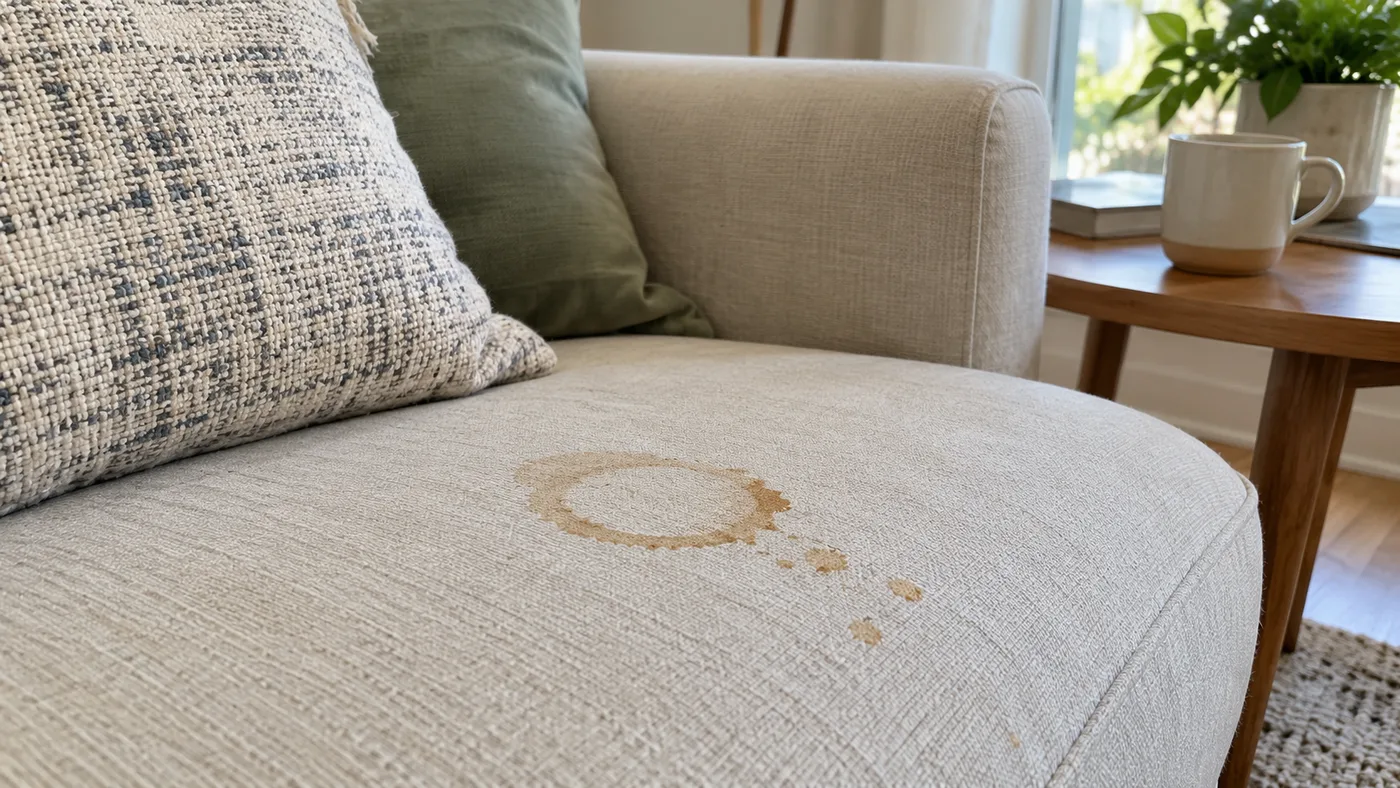
Blot up the drink, then use a tested cleaner approved for the upholstery. Keep turning the cloth so you are lifting the spill with a clean surface.
A milky latte leaves more behind than plain black coffee. Cream, milk, and sugar can leave residue even when the brown mark fades, so follow the full cleaning and residue-removal instructions.
Folex is one option for compatible water-safe upholstery. Give it the treatment time and application method on the label instead of repeatedly adding more product.
Red Wine: Reach for a Suitable Stain Remover
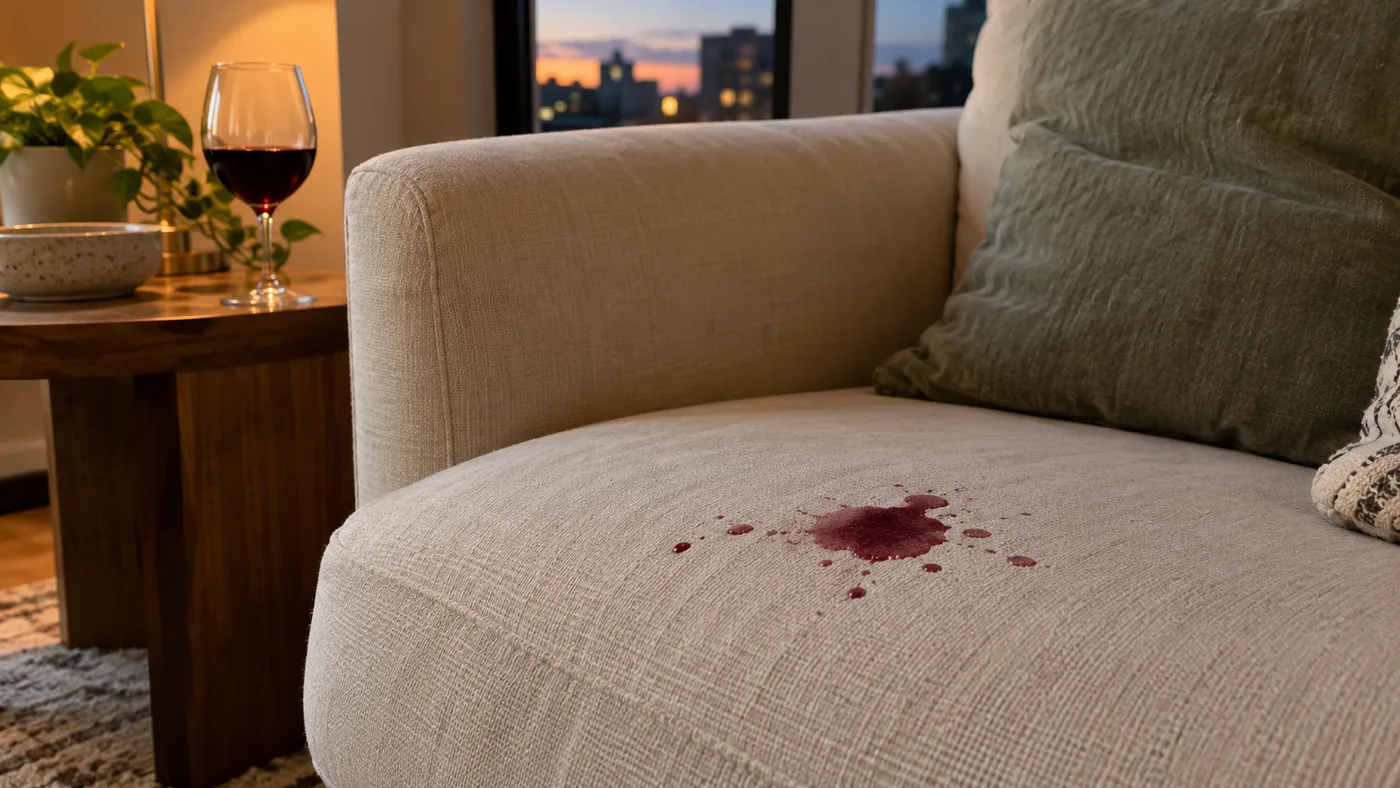
Blot immediately and use a stain remover suitable for both red wine and your fabric. Skip pouring white wine over the spill; it adds more liquid to manage.
Wine Away is a targeted option for suitable water-washable fabrics. Its directions include a short contact time before blotting, with repeat treatment where needed. Spot-test and follow the bottle’s instructions.
If the spill has spread beyond the visible mark or reached delicate upholstery, professional cleaning may be the better next move.
Grease, Chocolate, and Sauce: Lift the Residue Before Cleaning
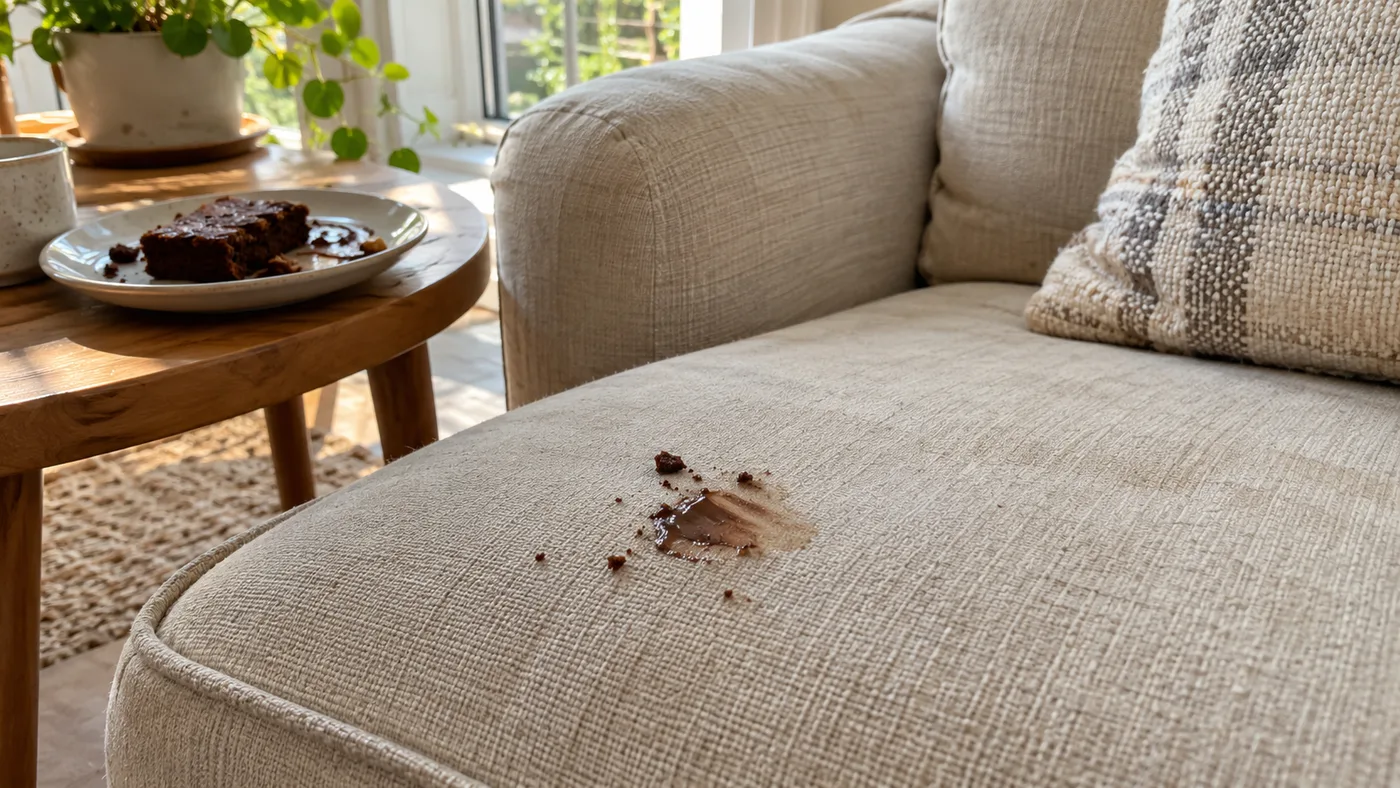
Remove the surface material first, then treat the remaining oily or colored mark with an approved cleaner. Use a spoon or blunt edge, taking care around the weave.
Chocolate and sauce can leave several kinds of residue together. Water alone may lift some of the mess while leaving an oily shadow.
If the furniture maker permits mild dishwashing liquid, follow its dilution instructions. Regular dish soap, concentrated formulas, and dish sprays can have different ingredients, so avoid swapping products without checking.
Mud: Remove the Dry Dirt Before Adding Cleaner
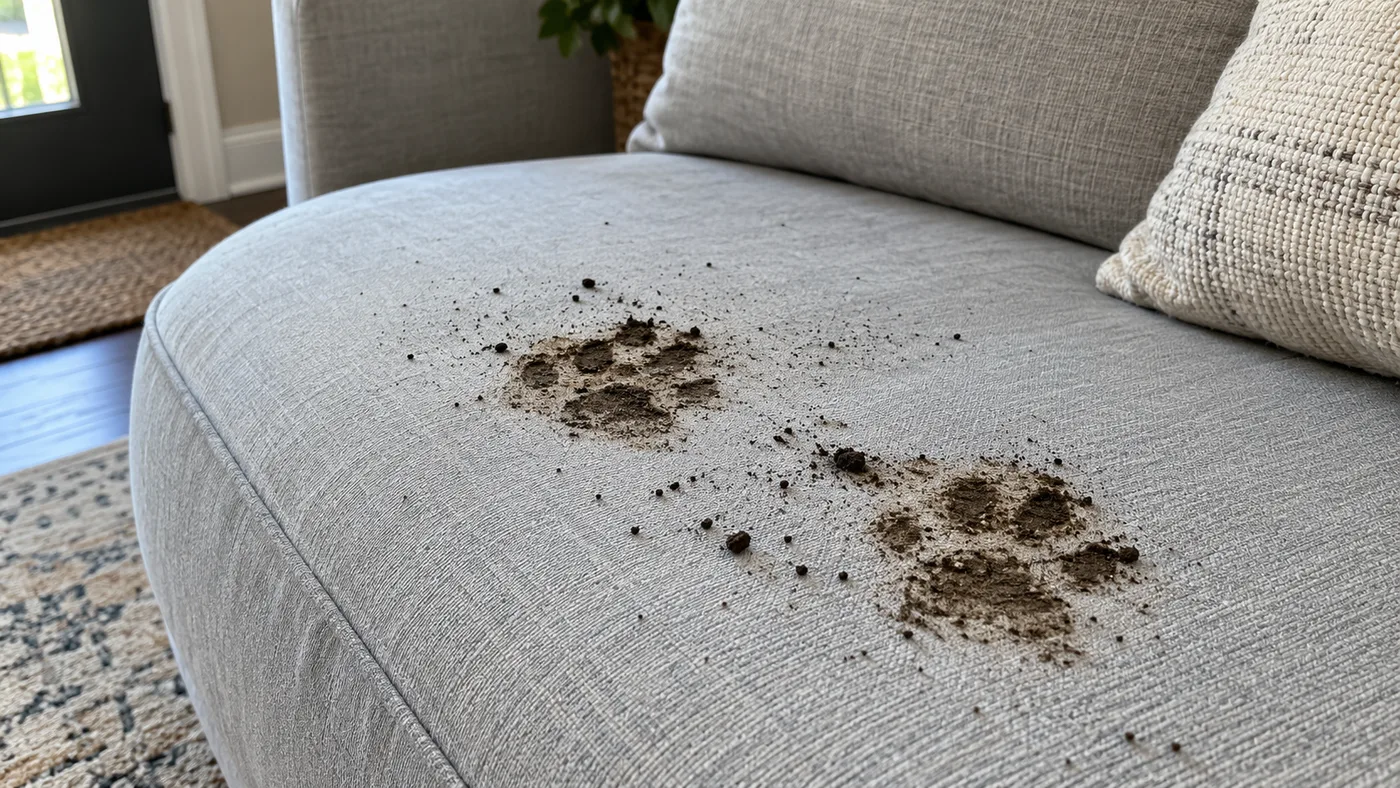
Gently lift thick clumps, allow remaining mud to dry, and vacuum the loose soil before treating the mark. Rubbing wet mud into the fabric can spread it through a larger area.
Picture a muddy paw print on a cream cushion. Cleaning around loose grit with a wet cloth gives that grit plenty of opportunity to travel.
Once the dry particles are gone, use the approved spot-cleaning method for any discoloration left behind.
Pet Accidents: Deal With the Odor as Well as the Mark
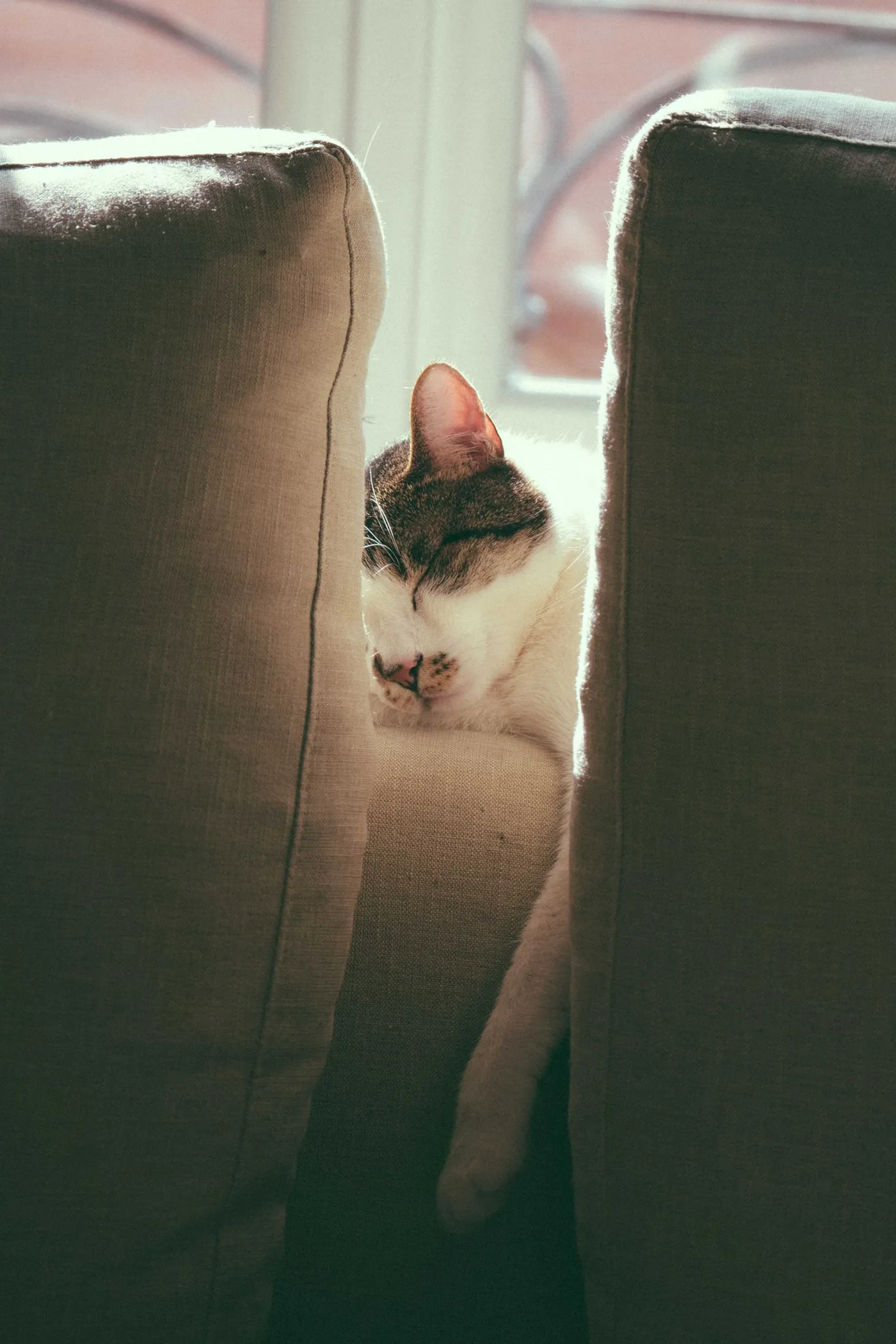
Use an upholstery-compatible enzyme cleaner for suitable organic pet messes, following its full application and drying directions. These products need time to work, so wiping them off immediately may undermine the treatment.
For cat accidents, Nature’s Miracle Advanced Stain & Odor Eliminator for Cats is one option to check against your upholstery instructions. This formula excludes leather, suede, silk, and wool specialty fabrics.
If the accident soaked into the filling, surface cleaning may leave the source of the odor behind. Ask a professional about the cushion rather than repeatedly wetting its cover.
Keep people and pets off treated areas until the product instructions say they are ready for use.
Blood: Avoid Heat and Follow the Fabric Instructions
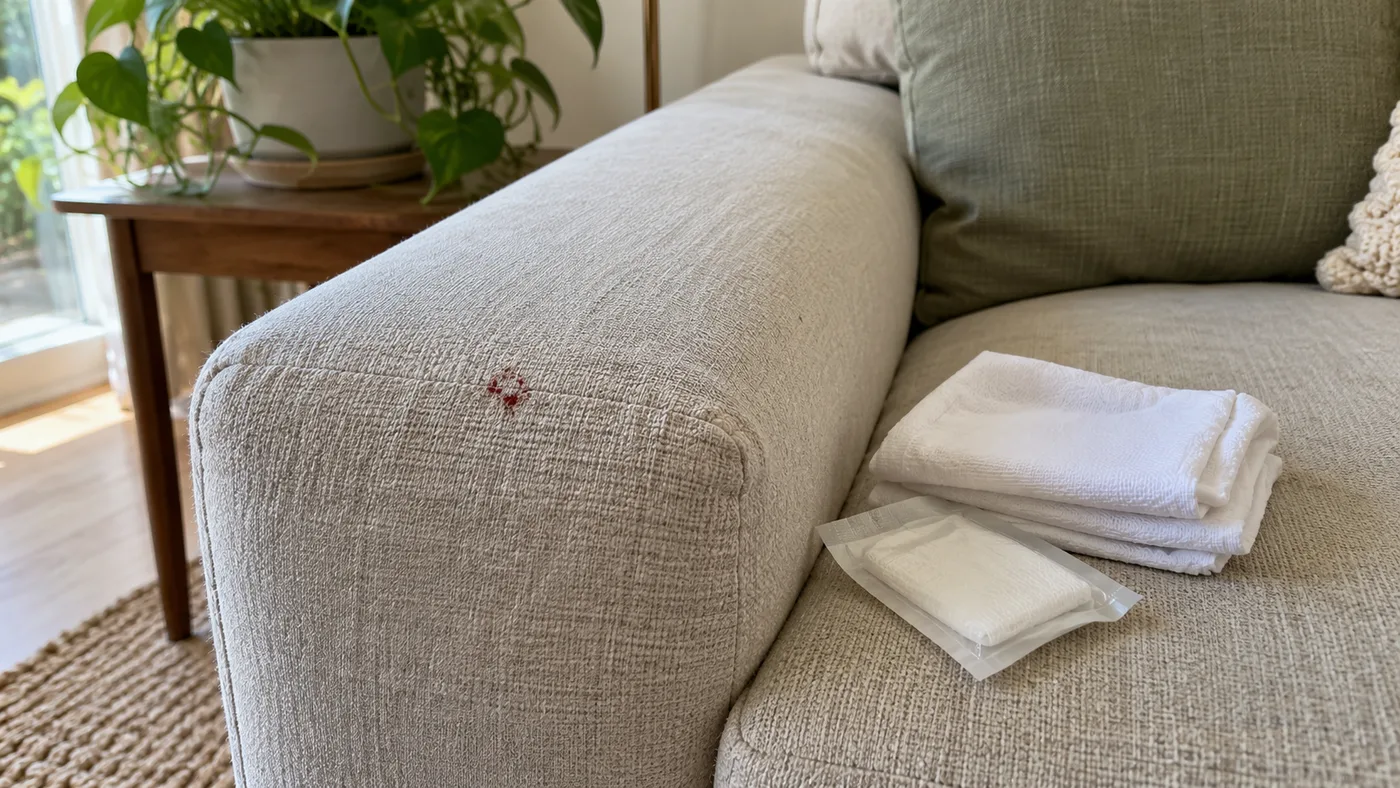
Blot fresh blood carefully and use cool water only on upholstery approved for that treatment. Avoid hot water, which can make protein-based stains harder to remove.
Wear gloves when handling blood. Use clean sections of a white cloth and avoid scrubbing dried residue into the weave.
If an approved cleaner is needed, choose it for the fabric as well as the stain. Household peroxide and bleach can affect upholstery color, so they should not become automatic second attempts.
Ink: Stop Before the Mark Spreads
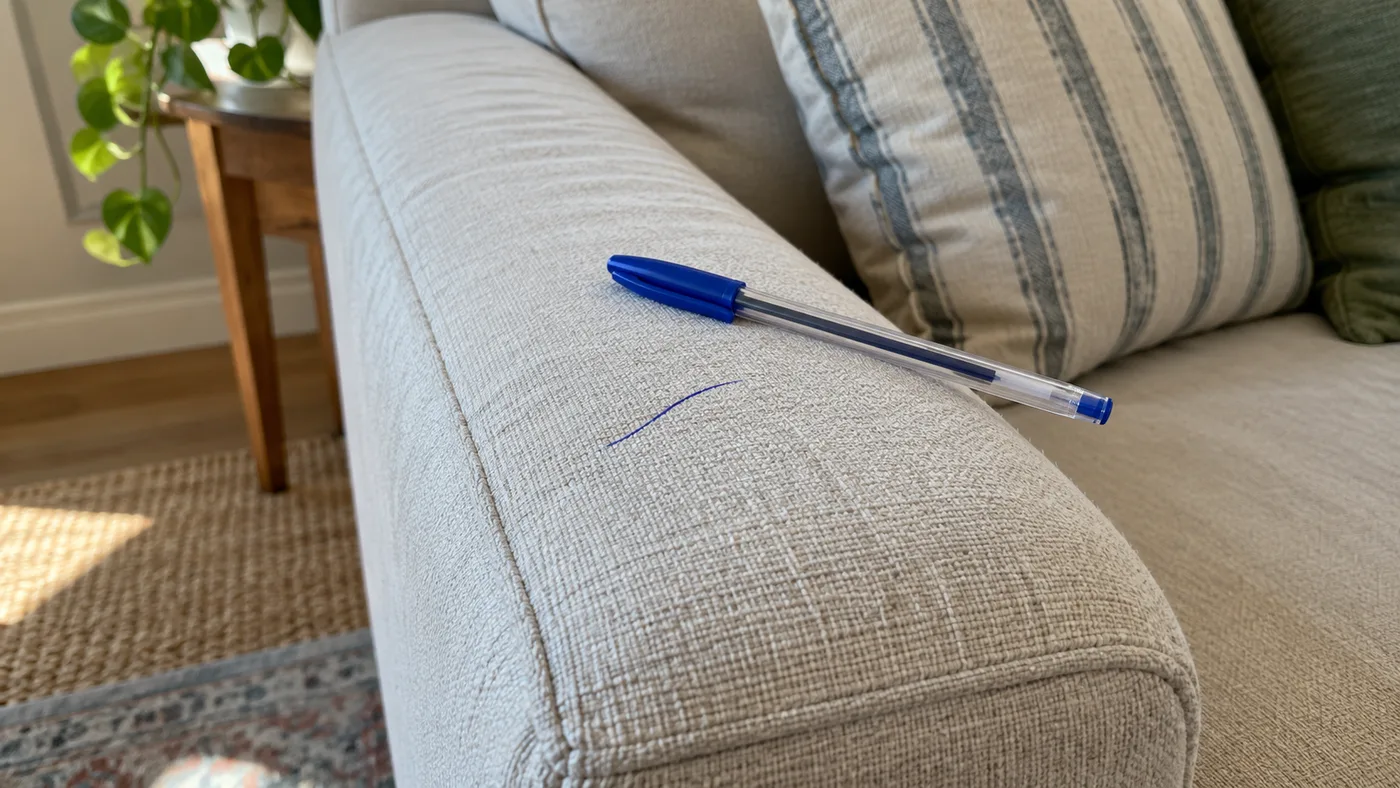
Avoid rubbing ink and seek a treatment specifically approved for the upholstery. A cleaner that dissolves ink can also carry it farther through the fabric.
This is especially frustrating with a dark pen line on a pale couch. The line may look small enough for a quick dab of alcohol, but the surrounding halo can become the bigger problem.
For unknown fabrics, leather, or valuable upholstery, get professional advice before applying a solvent.
Old Stain? Give It a Careful Second Pass
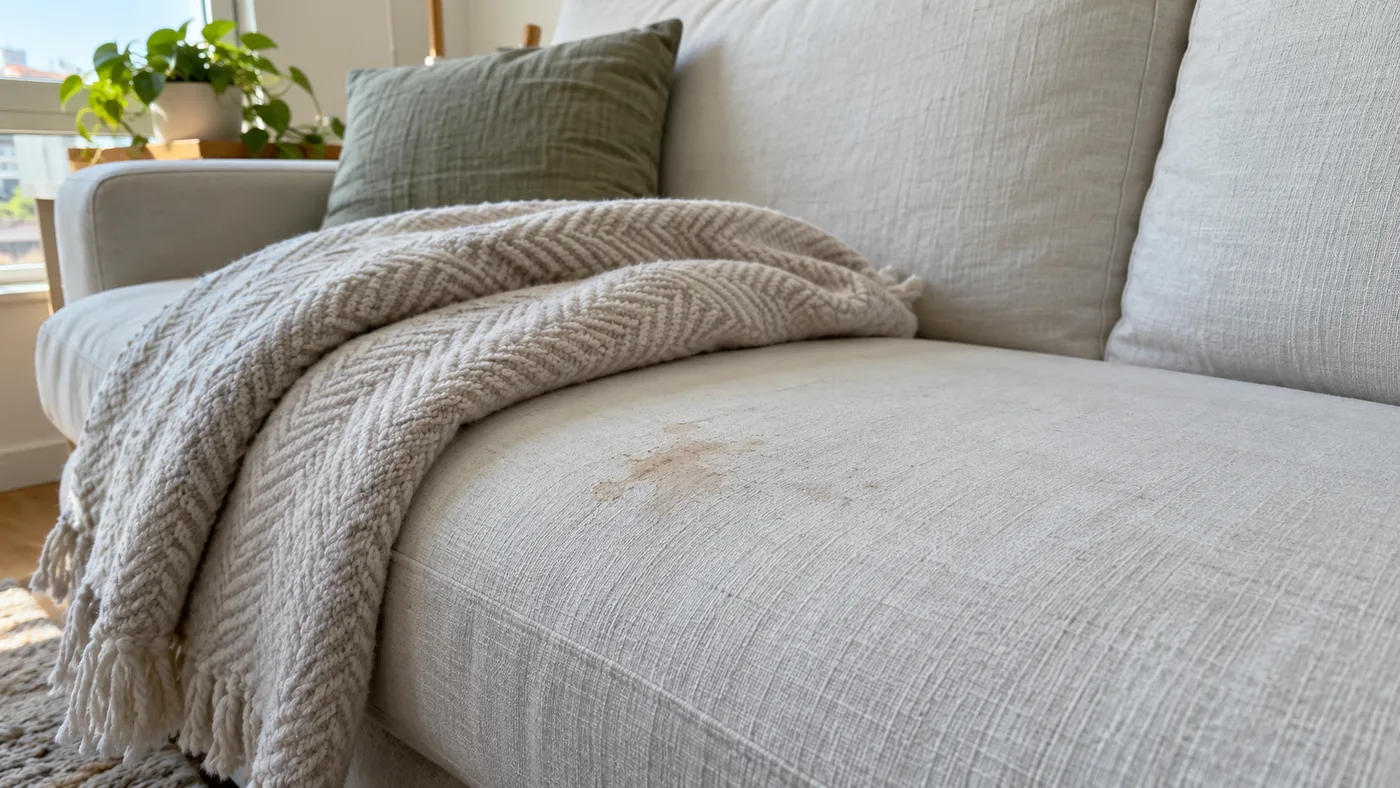
Some old stains can improve with the right treatment, but repeated scrubbing can damage the fabric before the mark disappears. Identify what caused the stain if you can, and make a note of anything already used on it.
A dried coffee spill and a pale patch caused by color loss need different responses. Cleaning can remove residue; it cannot reliably restore dye that has been removed.
Follow the approved product’s contact time and judge the result after drying.
When to Repeat the Treatment
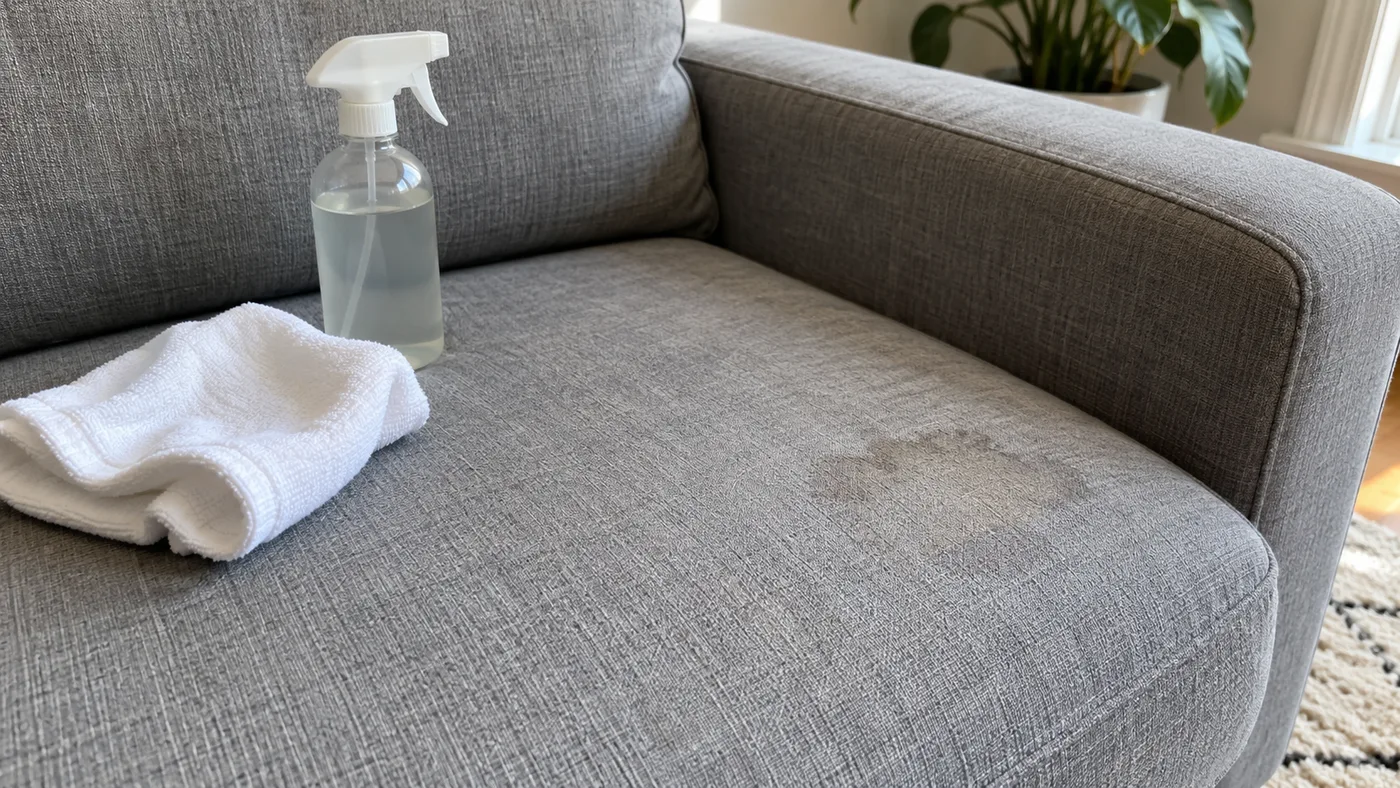
Repeat only when the product instructions allow it, the fabric remains unchanged, and the stain has improved. Use the same controlled method rather than increasing the concentration.
Some stain removers, including Folex, are intended for certain older marks on compatible materials. That still leaves limits: a spill that permanently changed the fabric’s color may leave a visible patch.
When to Stop
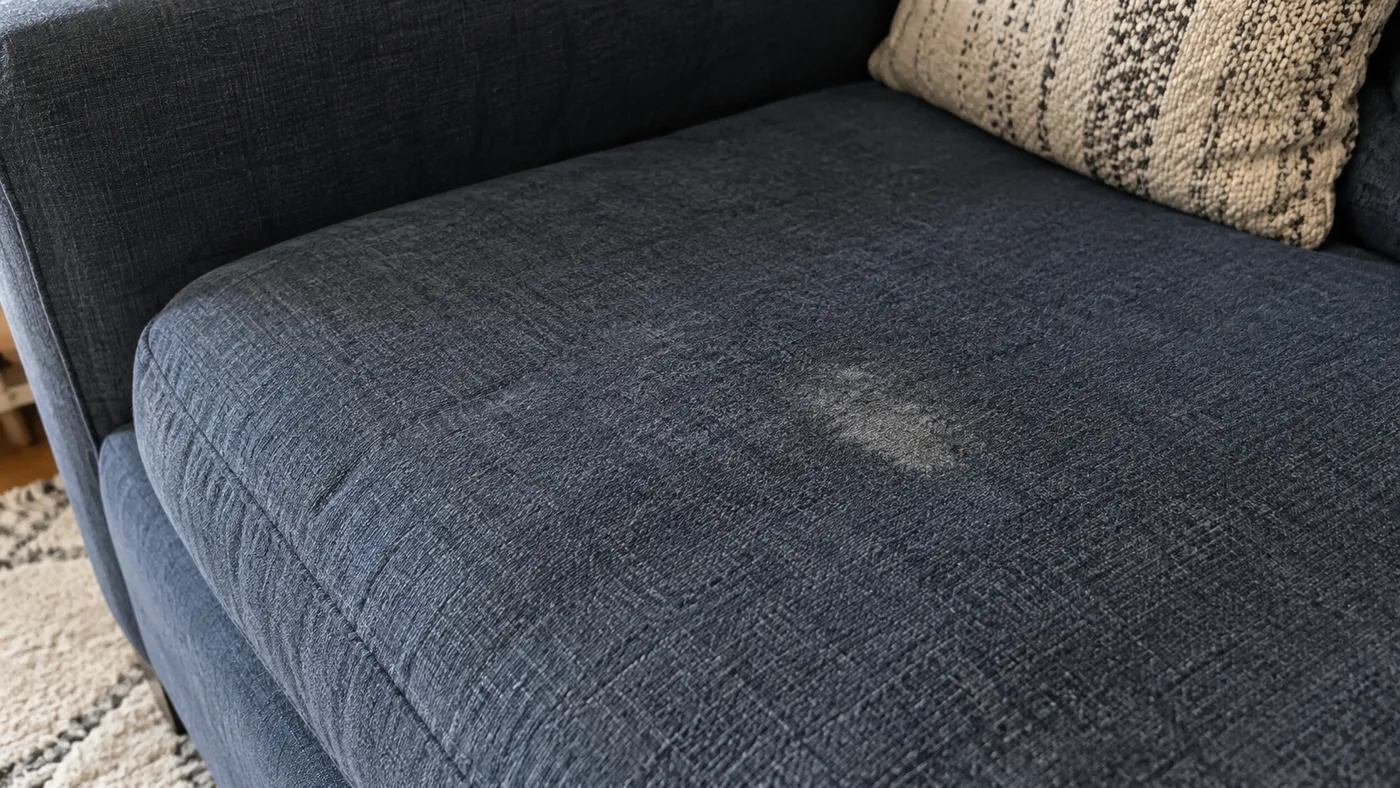
Stop if upholstery dye transfers to the cloth, the texture changes, a ring expands, or repeated treatment produces no further improvement.
Take a photo in daylight and note the products you used. That information can help a professional decide what treatment is still possible.
A stubborn stain does not need to become a weekend-long experiment.
Cleaned the Stain but Left a Water Ring?
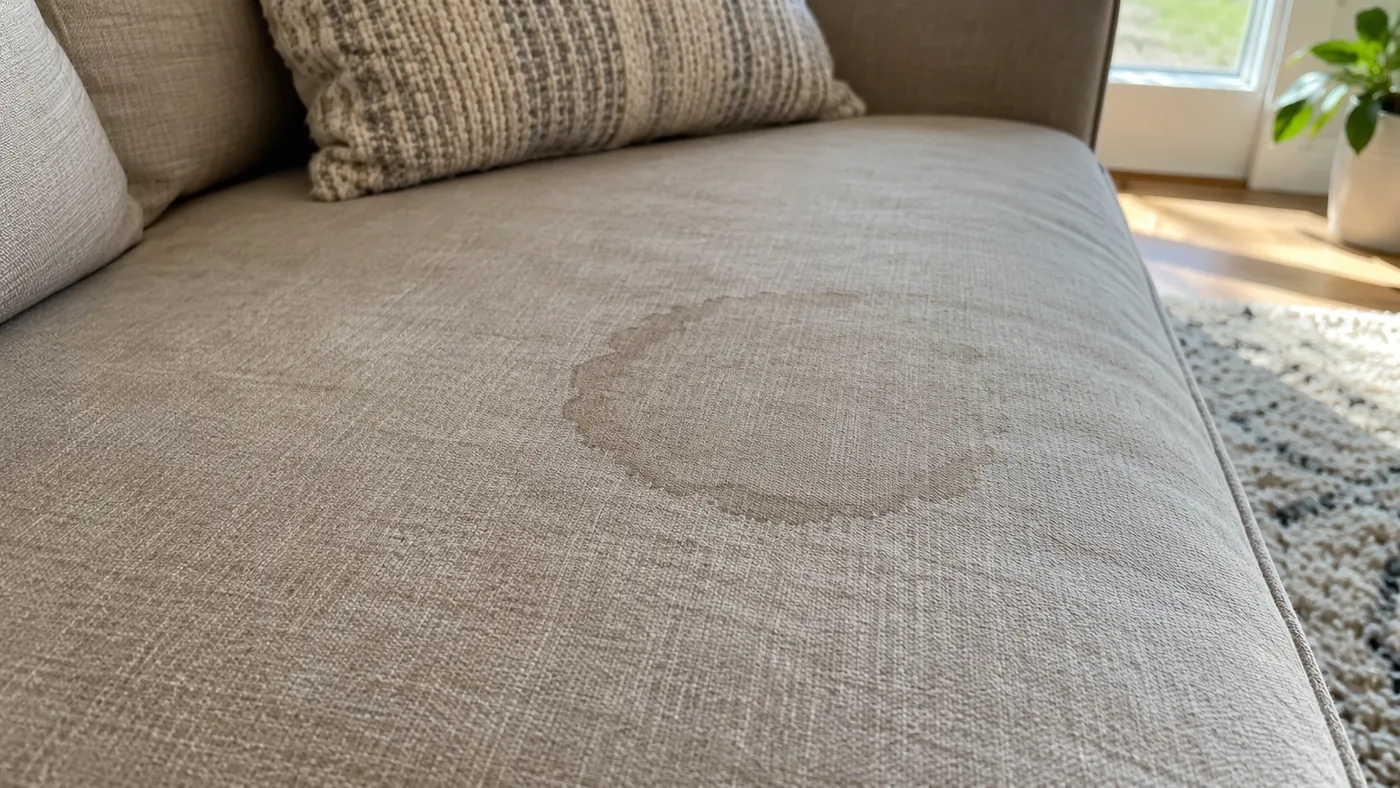
A ring may involve moved soil, cleaning residue, or uneven drying. It does not automatically mean your tap water caused the whole problem.
As moisture spreads, it can carry dissolved material toward the edge of the damp area. Think of the faint border left when a puddle dries on a dusty surface.
Adding more water to the center without addressing the cause can create another edge.
Distilled Water Can Help With Minerals, but It Is Not a Universal Fix
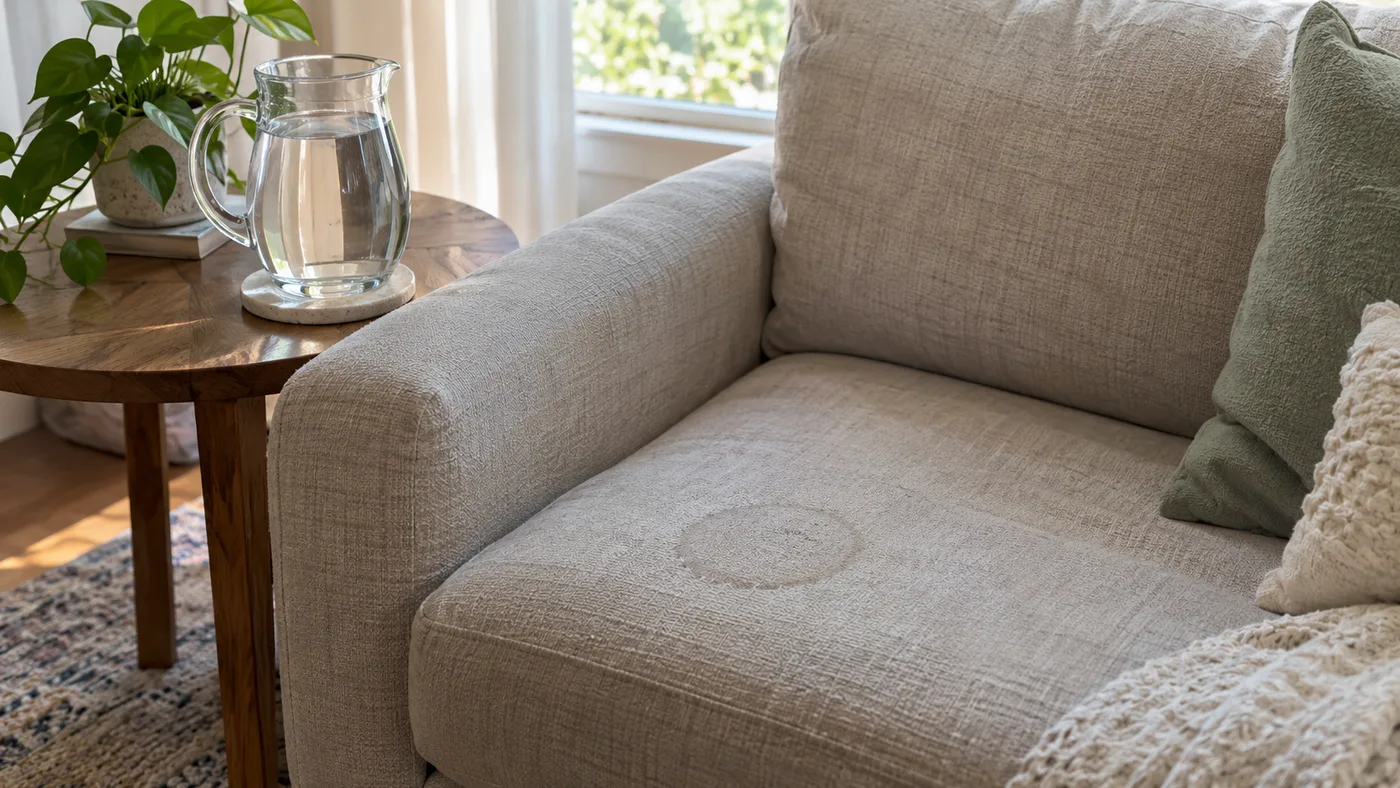
Distilled water avoids adding the minerals found in tap water, but it is useful only when your upholstery permits water-based cleaning. It does not make an S-code or X-code couch suitable for wet treatment.
Use it where the approved cleaning method calls for water. You still need to manage the cleaner, the existing soil, and the amount of moisture.
Check Whether the Whole Fabric Panel Needs Cleaning
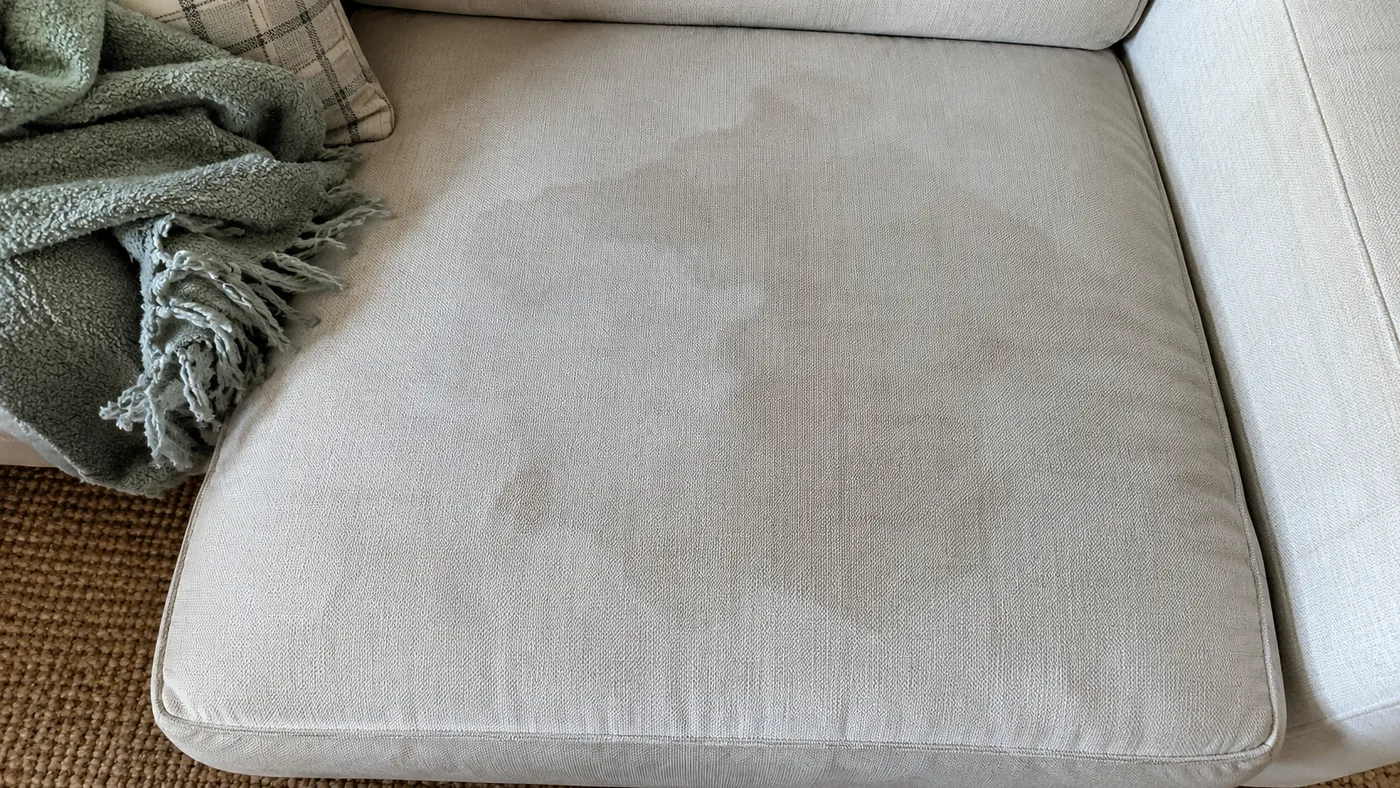
Follow the manufacturer’s guidance on whether to clean from seam to seam. Some upholstery benefits from treating the whole panel evenly rather than repeatedly wetting a small circle.
That could mean the entire top surface of a cushion, bounded by its seams. It does not mean soaking the whole cushion or automatically cleaning every part of the couch.
If the instructions are unclear, get advice before making the damp area larger.
Know When the Ring Needs Professional Attention
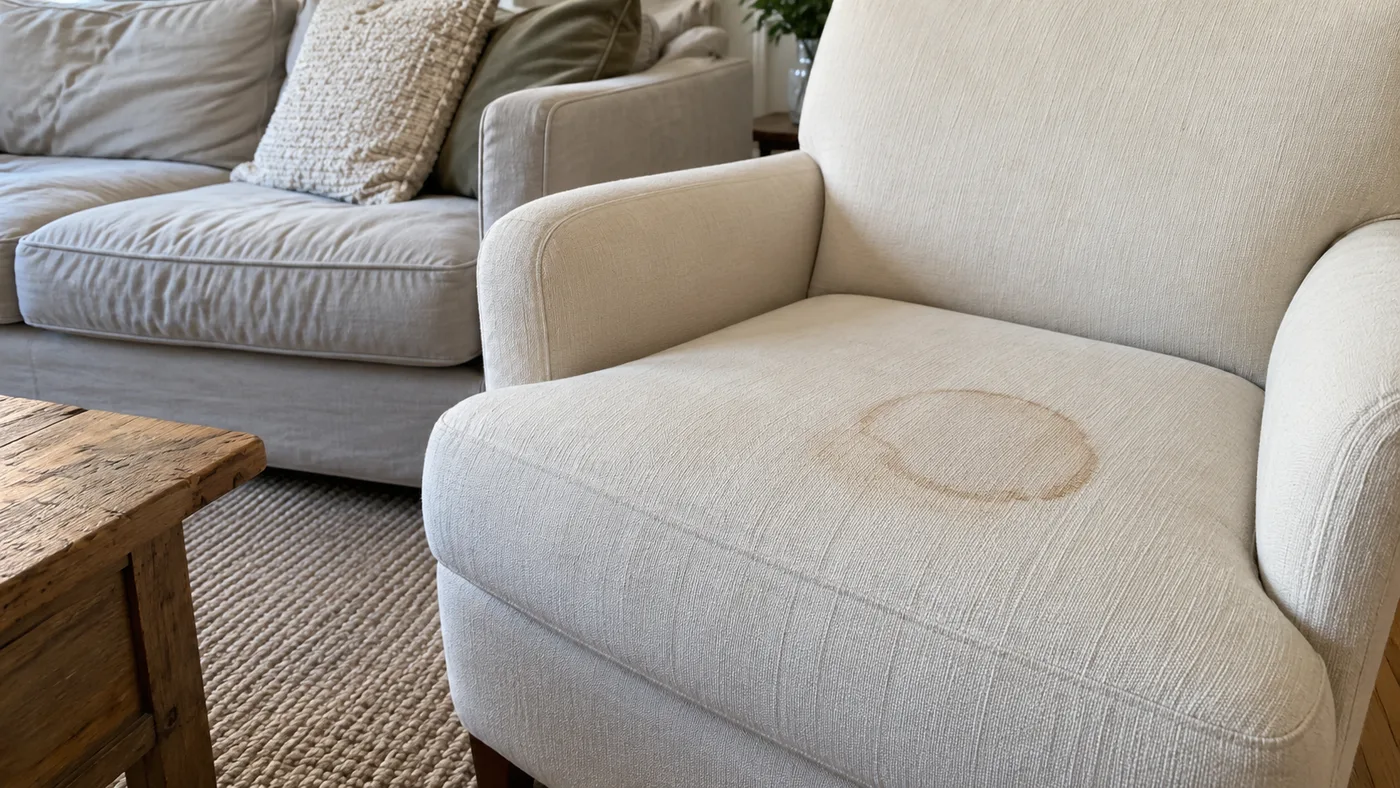
Get professional help when the ring keeps growing, returns after treatment, or appears on delicate or unidentified upholstery. A pale patch, changed texture, or brown discoloration may need a different diagnosis.
Microfiber, Linen, Velvet, and Leather Need Different Care
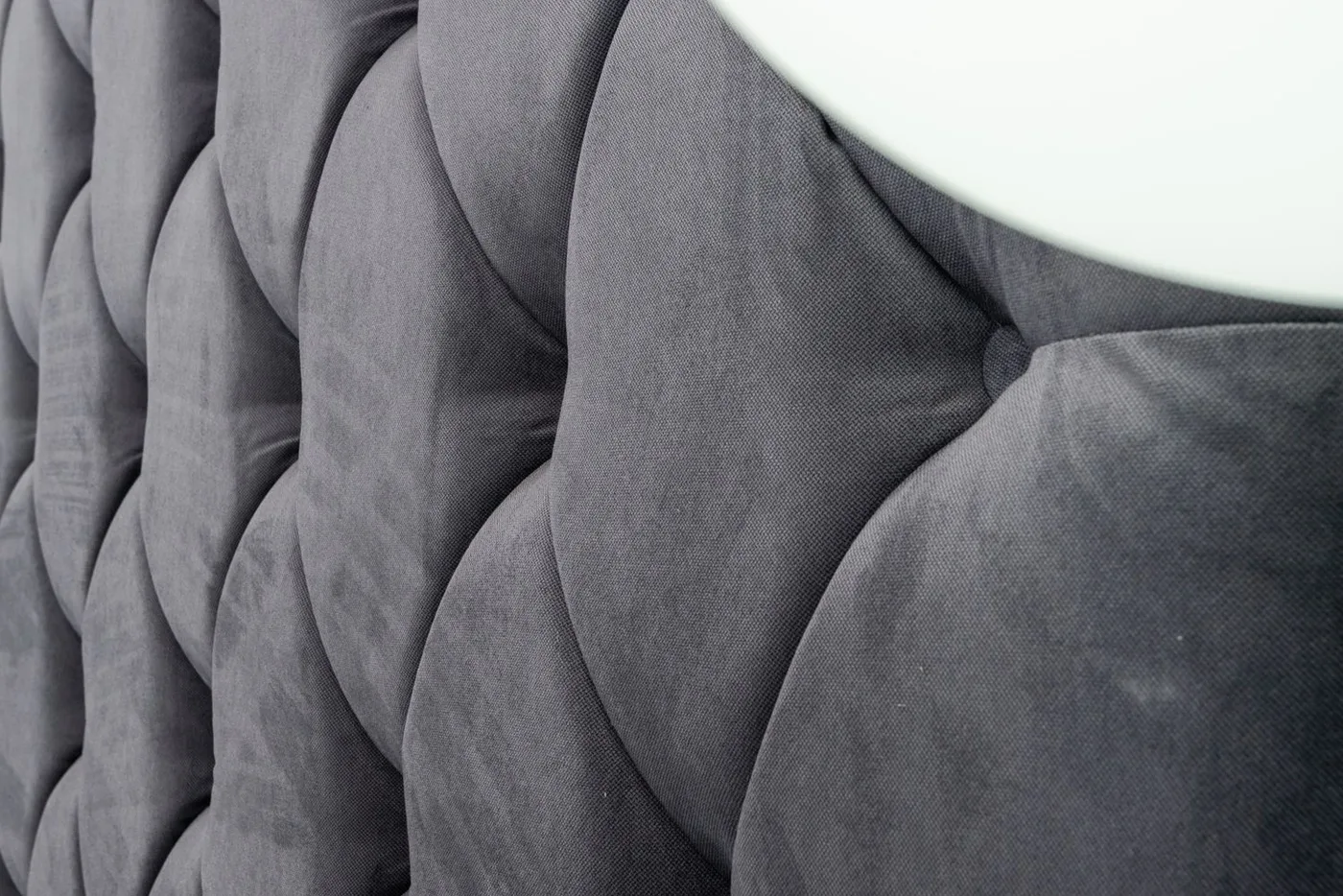
The material name alone cannot tell you which cleaner is safe. Fiber blends, dyes, finishes, and cushion construction can change the cleaning requirements.
Microfiber: Follow the Code Before Reaching for Alcohol
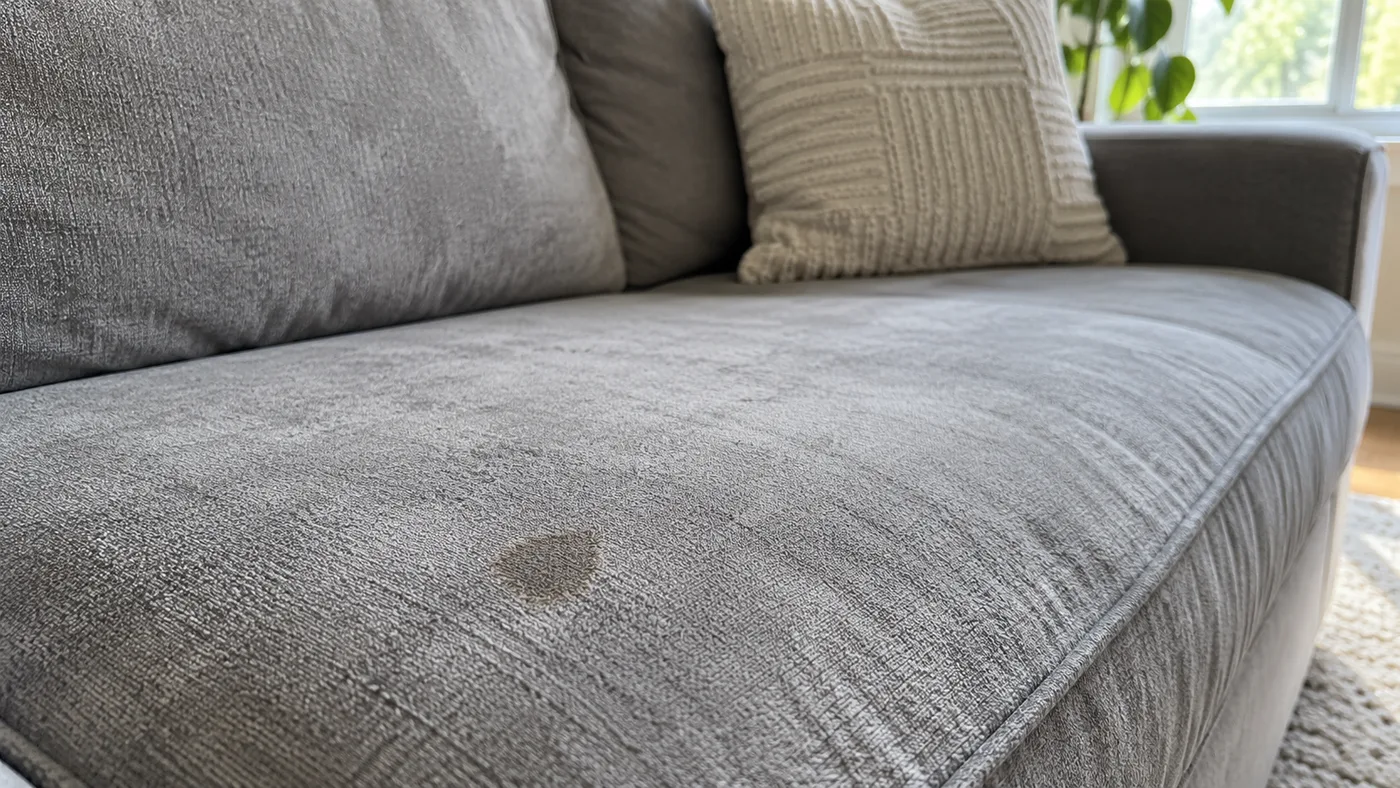
Check the upholstery code and manufacturer’s instructions before using rubbing alcohol. Microfiber can have different care requirements, and an S code does not automatically approve a household bottle of alcohol.
Use the specified cleaning agent. Once the area is fully dry, restore the surface texture only with the brush and method recommended for that fabric.
Linen and Velvet: Protect the Texture and Finish
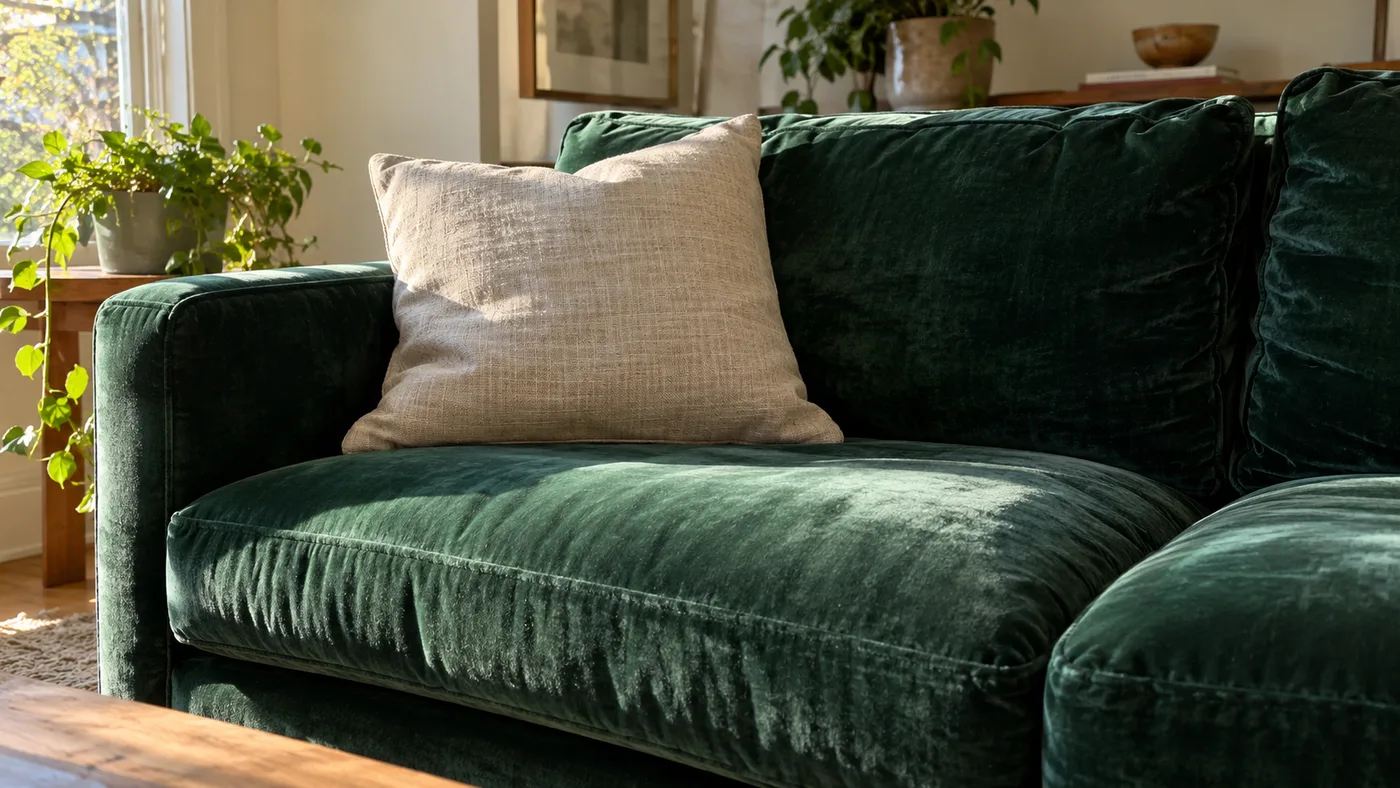
Use the fabric’s approved method and avoid aggressive rubbing, excess moisture, or unapproved heat. A stain may be less noticeable than a flattened patch of velvet or a changed area of linen.
For velvet, also check whether brushing is recommended and which direction to follow. If you are unsure about the fabric or finish, a professional cleaner can help you avoid a permanent texture change.
Our guide to living with linen upholstery covers the wrinkles, wear, and everyday care that come with the material.
Leather: Use Care Products Approved for Its Finish
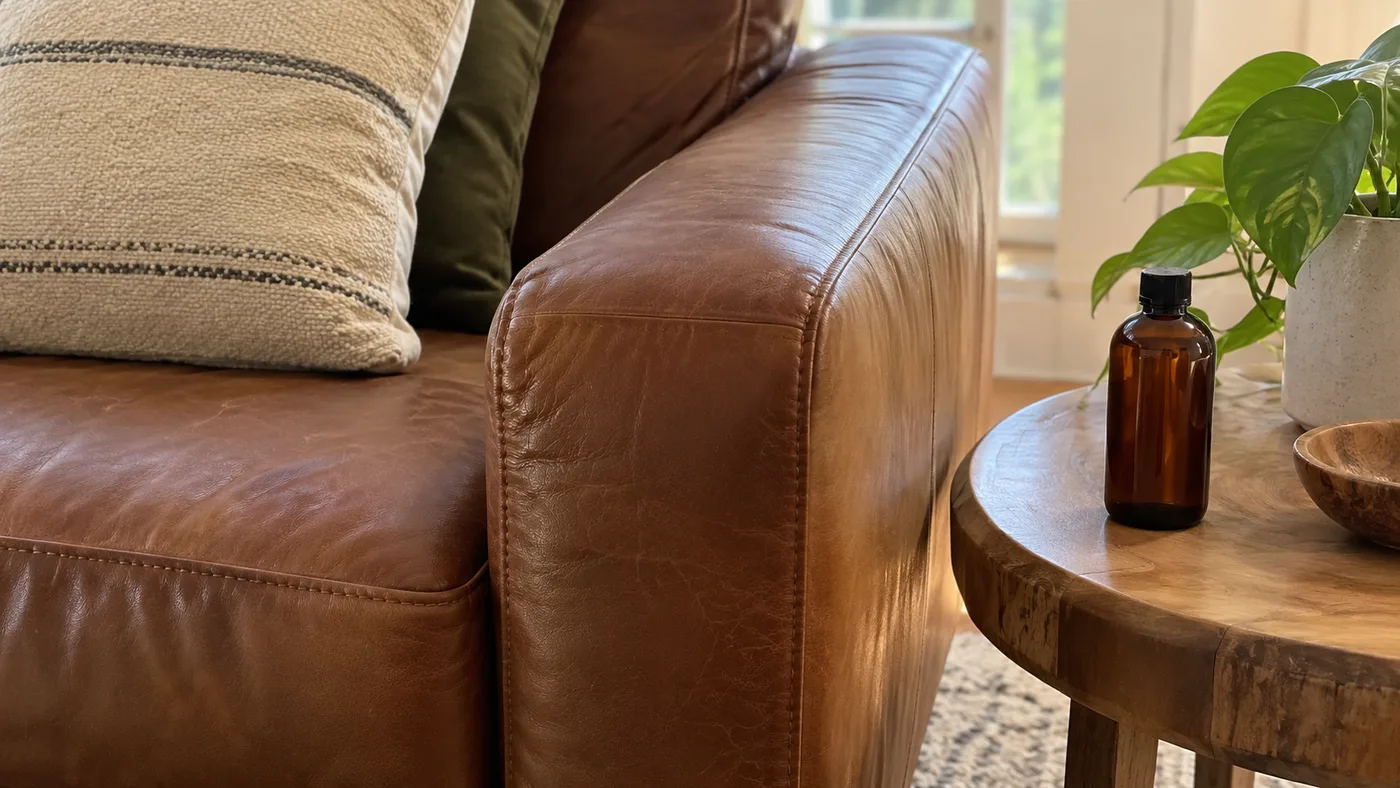
Choose cleaning products approved for your type of leather. Finished leather, aniline leather, suede, and nubuck can react very differently to moisture and cleaning agents.
Blot a fresh spill promptly with a soft dry cloth, then follow the furniture maker’s care routine. Use conditioner only where recommended.
Leave homemade mixtures of cooking oils, vinegar, and alcohol out of the routine. Their effects on the finish can be difficult to reverse.
Do You Need a Machine, or Will Spot Cleaning Do?
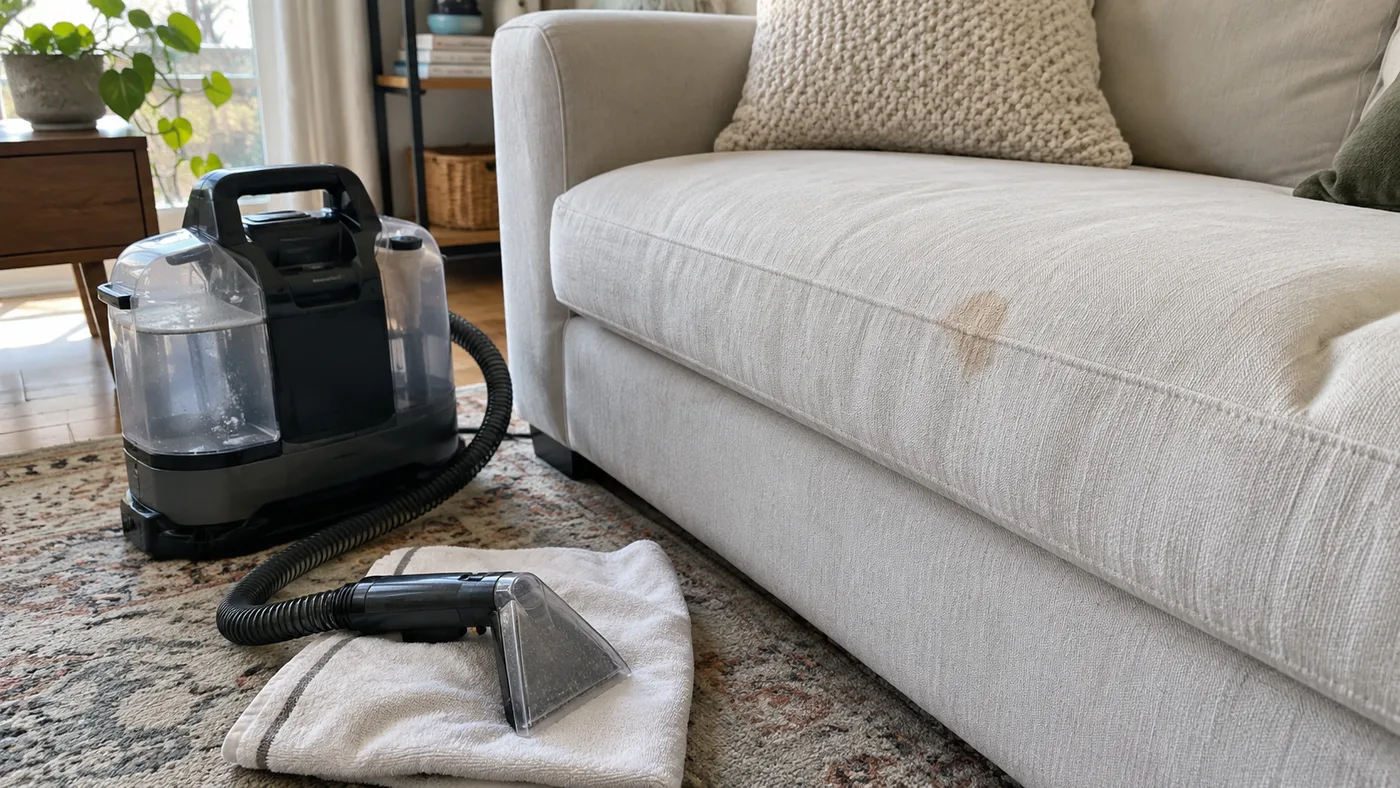
Spot cleaning may be enough for a small mark; an extractor can help with larger areas of upholstery approved for that method. The couch’s instructions should settle the question before you buy a machine.
Also think about how often you would use it. One mystery stain on a delicate sofa may justify a professional visit more readily than a new appliance.
When a Portable Extractor Makes Sense
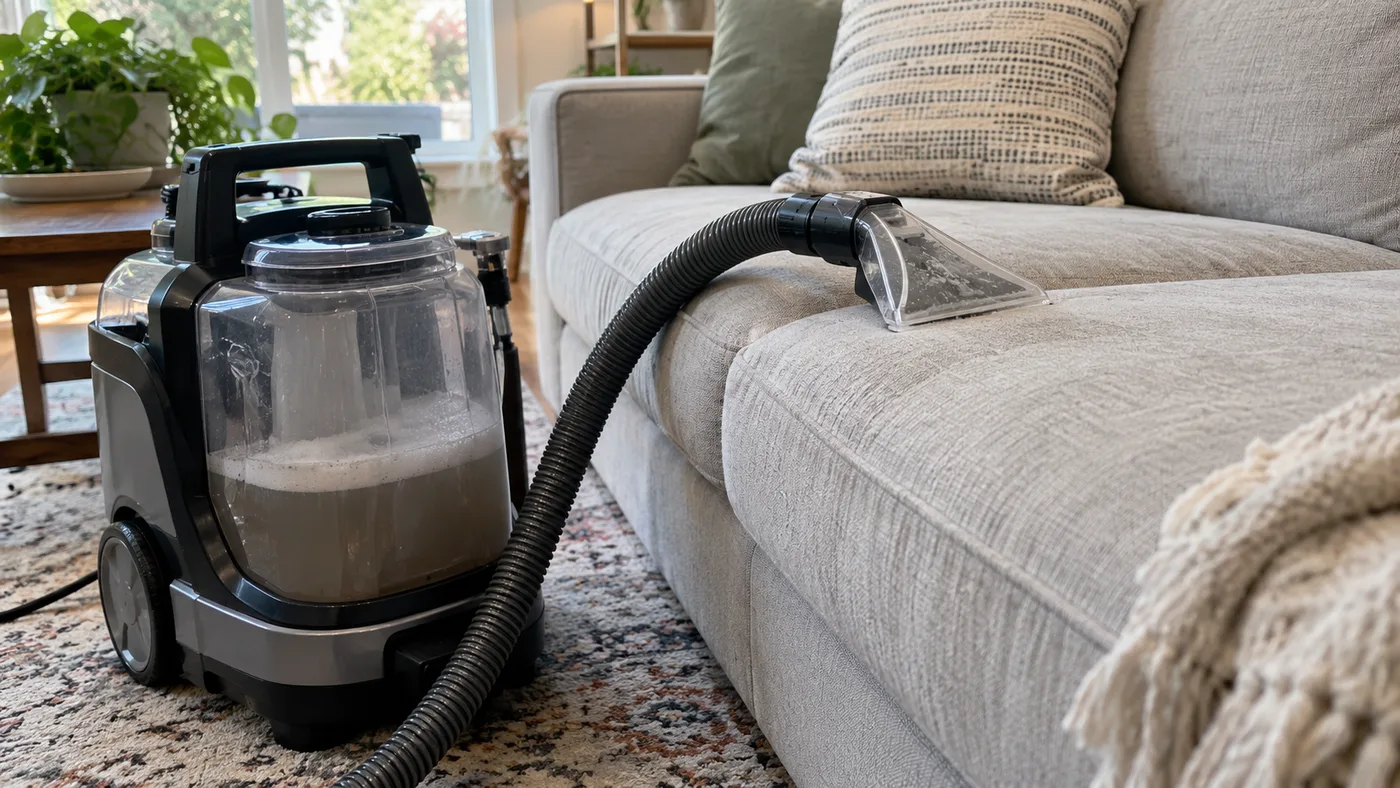
A portable extractor is useful when the upholstery permits extraction and you need to remove cleaning solution along with loosened soil. Use the machine’s approved formula, fill lines, and instructions.
The BISSELL Little Green Pet Pro is an option for compatible upholstery and other suitable soft surfaces. Its suction helps recover dirty water after treatment.
Follow the furniture’s restrictions even if the machine lists upholstery among its uses. Avoid adding homemade dish-soap mixtures to the tank, and allow the furniture to dry completely afterward.
An Extractor and a Steamer Do Different Jobs
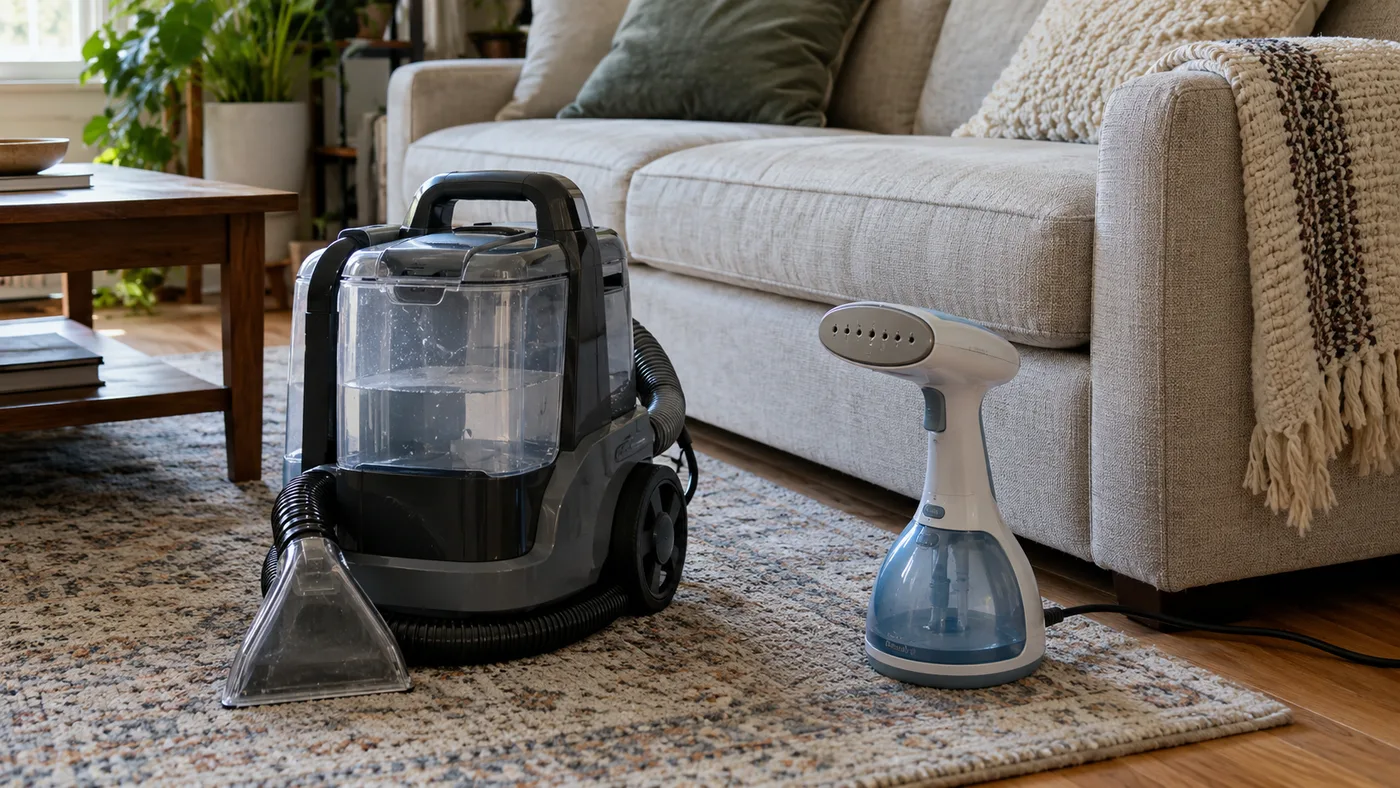
An extractor applies liquid and removes it through suction; a steamer applies heat and moisture. Some machines combine functions, so check the exact model.
That difference matters when the couch permits a water-based spot cleaner but prohibits steam or extraction.
Do not use a clothes iron’s steam button as a shortcut for an old couch stain unless the upholstery manufacturer specifically approves that treatment.
A Zipper Does Not Mean the Cover Is Machine-Washable
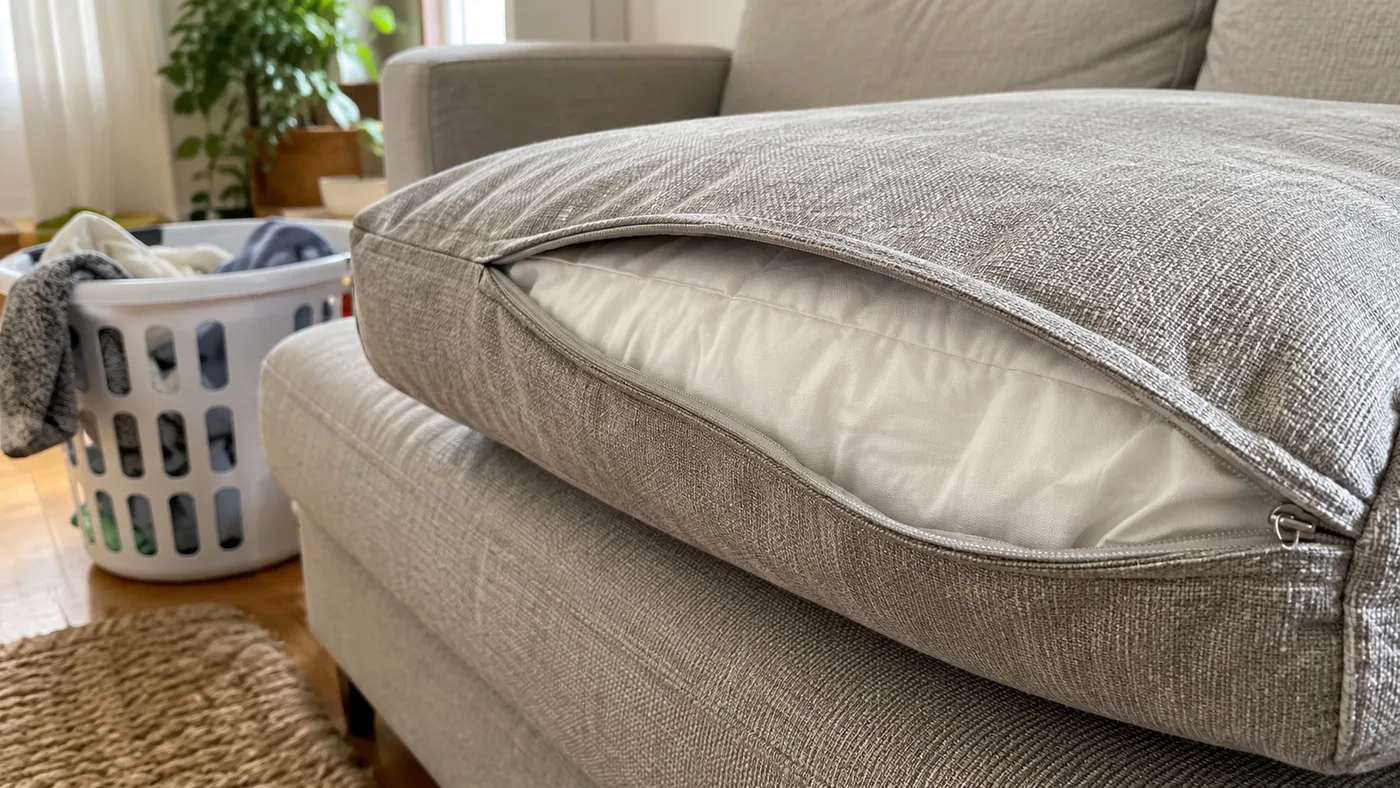
Wash a cushion cover only when its care instructions explicitly permit it. Some covers have zippers for fitting the upholstery during manufacture.
Follow the specified detergent, temperature, cycle, and drying method. A cover that shrinks even slightly can be difficult to refit.
For compatible washable covers, OxiClean White Revive Liquid is a laundry option. Check both labels and the fabric exclusions. Keep it within its intended washable-laundry use rather than applying it as an improvised cleaner to attached upholstery.
Cleaning Habits That Can Make a Small Stain Worse
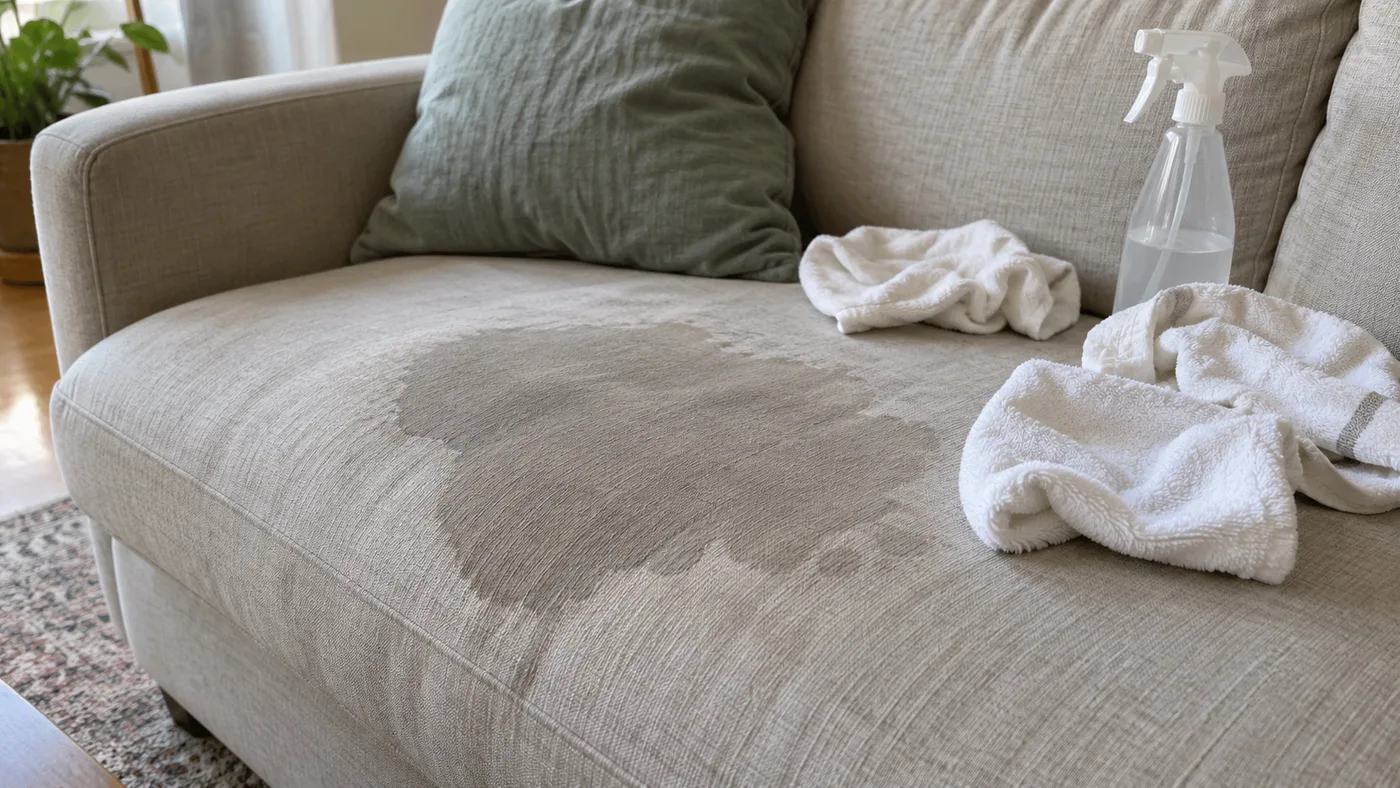
Keep the treatment controlled and give the fabric time to dry between decisions. Before tackling the next mark, run through this checklist:
- I have checked the couch’s care instructions.
- The cleaner is suitable for this upholstery and stain.
- The hidden test area has dried without an unwanted change.
- I am lifting and blotting gently.
- I am avoiding unnecessary moisture in the cushion filling.
- I am following the product’s dilution and contact time.
- I am keeping different cleaning chemicals separate.
- Any heat, extraction, or washing method is explicitly permitted.
- The couch will dry fully before being used.
- I will stop if the color or texture changes.
A fragrance can make the room smell fresher while residue remains in the cushion. Likewise, a wet patch can temporarily hide a stain. Check the fabric when it is dry, in ordinary daylight.
For more on protecting the surface itself, read our guide to weave, pilling, fading, and cleaning.
Couch Stain Cleaning FAQs

The best next step depends on the care label, the stain, and what has already been applied. These answers cover the questions that often come up halfway through a cleanup.
What Is the Best Homemade Cleaner for Couch Stains?
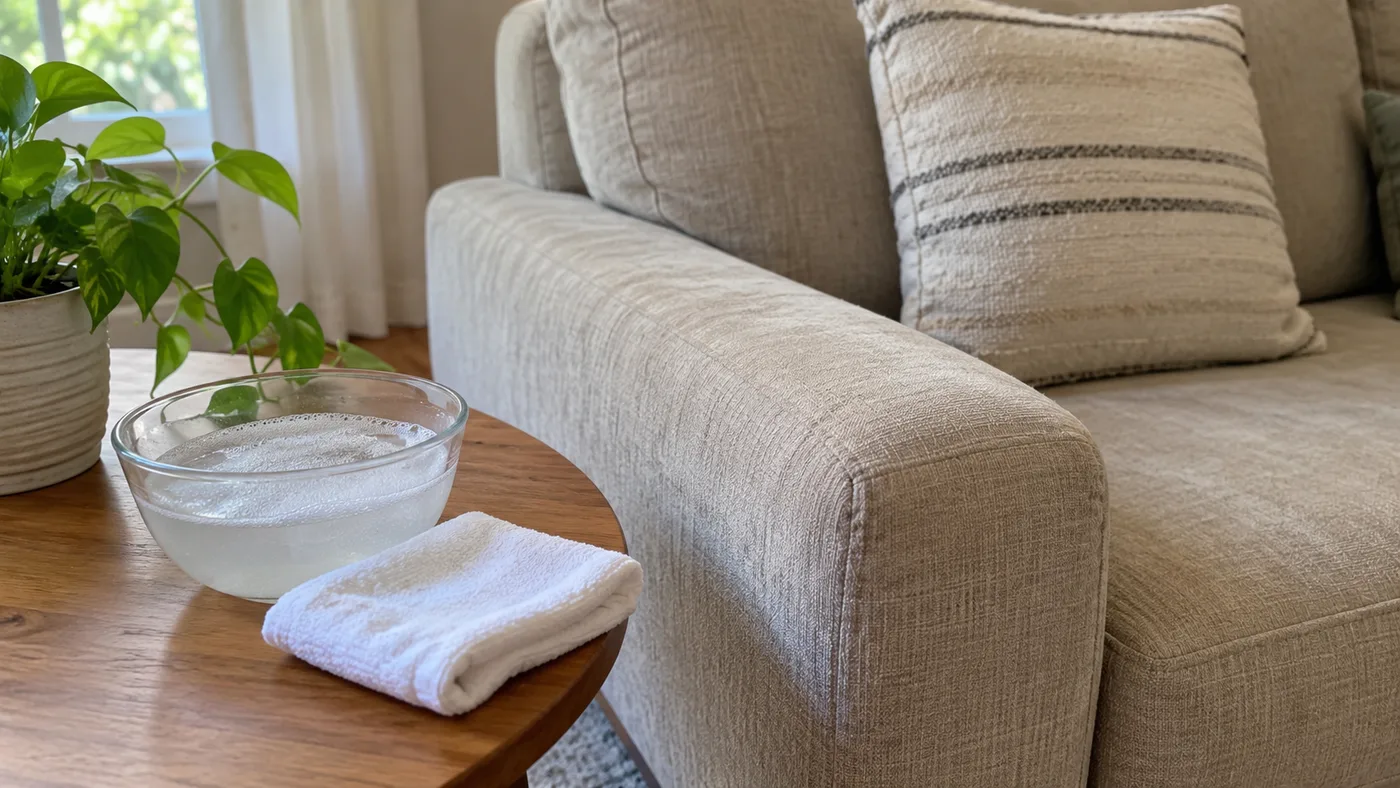
A diluted mild soap solution may work when the furniture manufacturer approves it and provides suitable directions. There is no homemade recipe that suits every couch.
Use the recommended dilution. If you cannot find one, a labeled, compatible upholstery cleaner gives you clearer application instructions than an improvised mixture.
Can White Vinegar Remove Couch Stains?
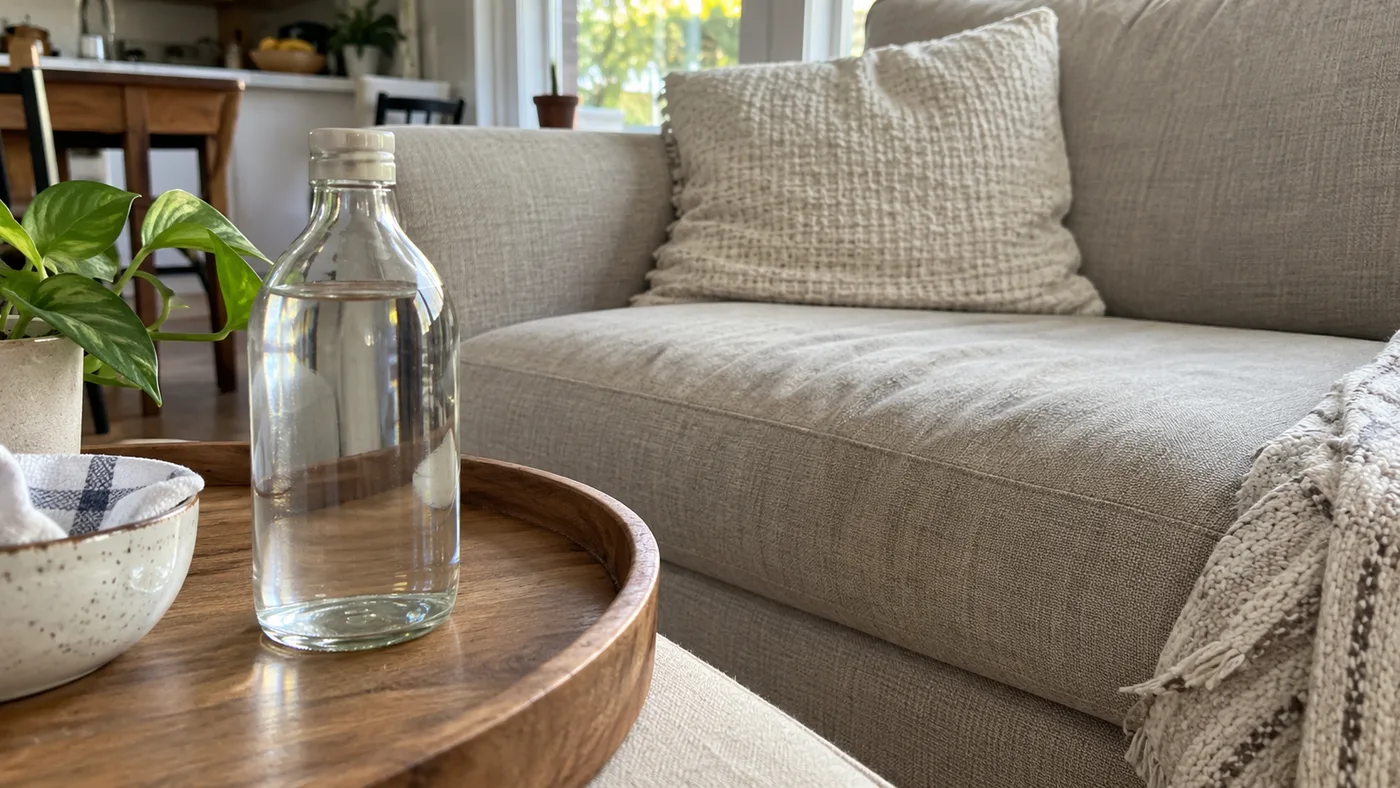
Vinegar may help with some residues, but it is not a universal couch stain remover. Use it only where the upholstery instructions permit it.
It is water-based, so it is unsuitable as a substitute for an approved water-free solvent. Avoid mixing it with other cleaning products.
Does Baking Soda Remove Stains or Mainly Help With Odors?
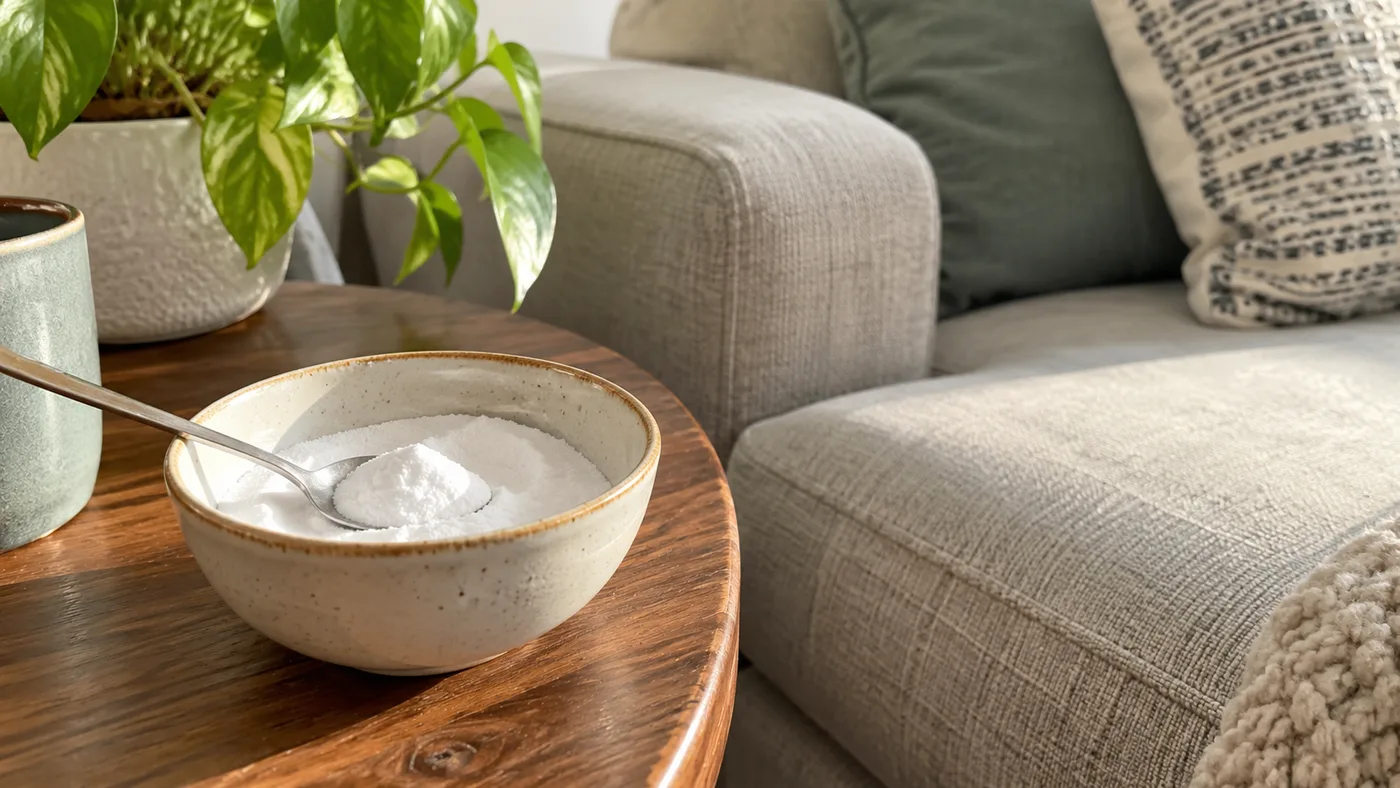
Baking soda may help with some odors, but it is not a dependable treatment for every visible stain. Its suitability also depends on the upholstery and your vacuum’s instructions for fine powders.
Avoid packing it into damp fabric or using a paste as a universal solution. Powder residue can become another thing to remove.
Can I Use Dish Soap on My Couch?
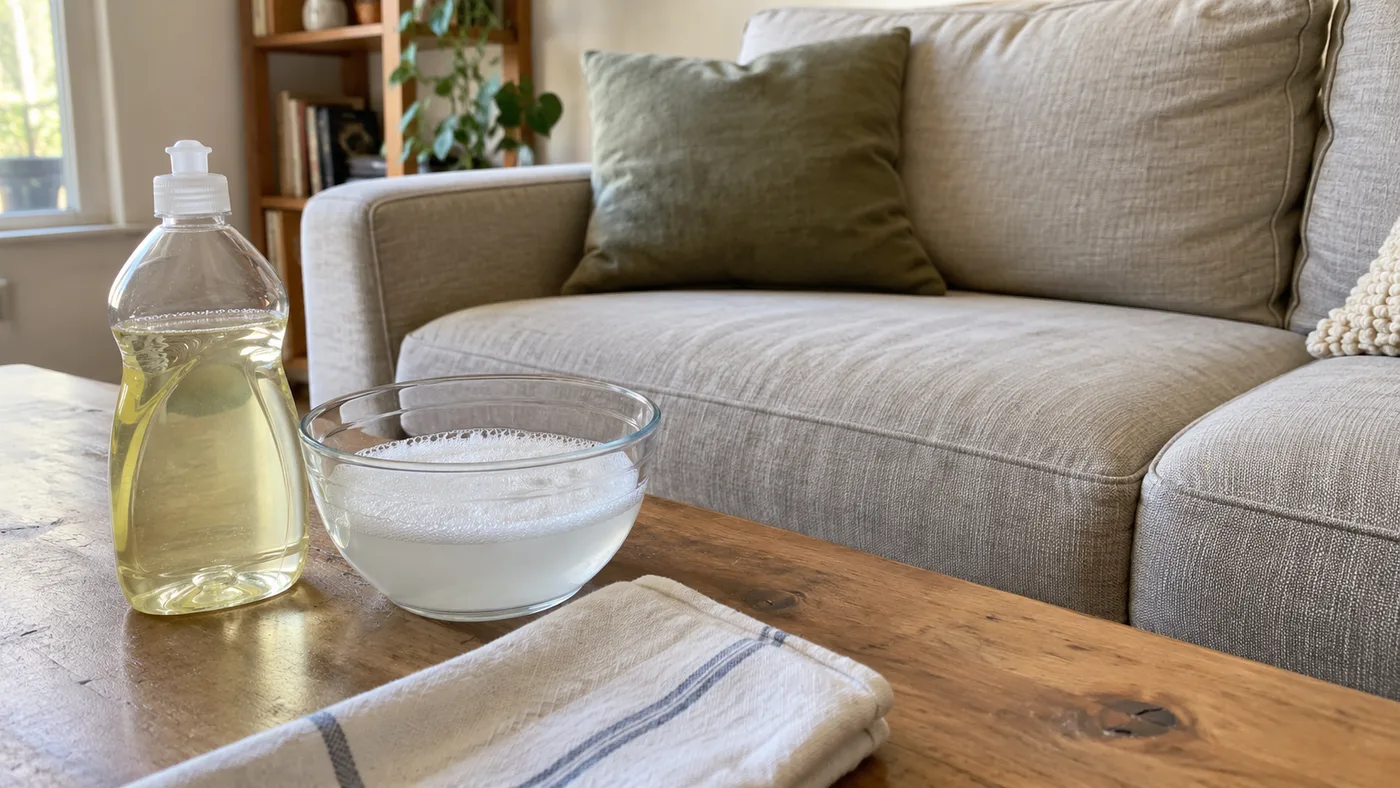
Yes, when the furniture manufacturer allows it, using the specified formula and dilution. W or WS should not be treated as approval for every dishwashing product.
Dish sprays and concentrated liquids may differ from the mild soap named in the instructions. Follow any required residue-removal step.
Is Carpet Cleaner Safe for Upholstery?
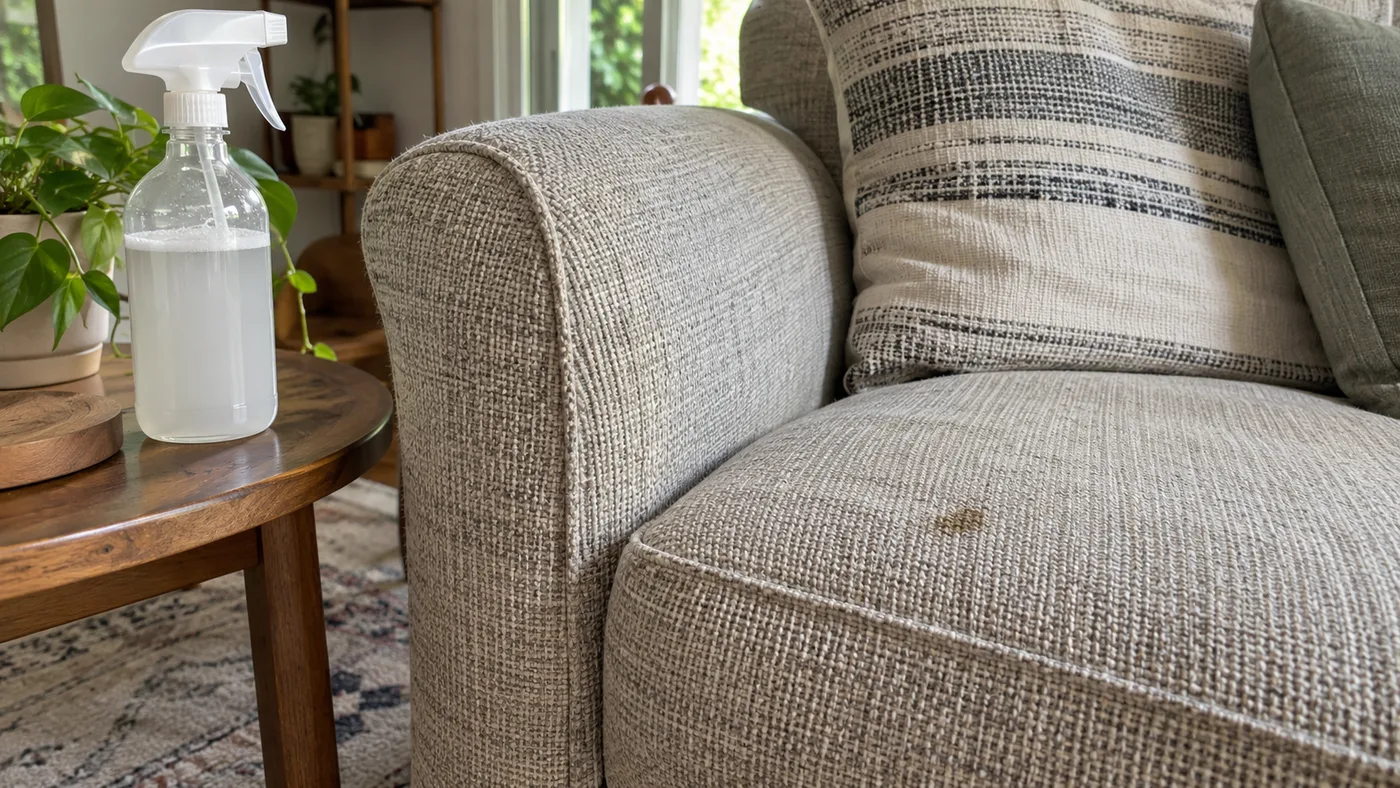
Some carpet spot cleaners also list upholstery, but the cleaner and couch instructions must both allow the use. Folex, for example, specifies colorfast materials that can safely be dampened with water.
For machines, check the formula and the furniture’s approval for extraction separately.
Can Old Couch Stains Still Come Out?
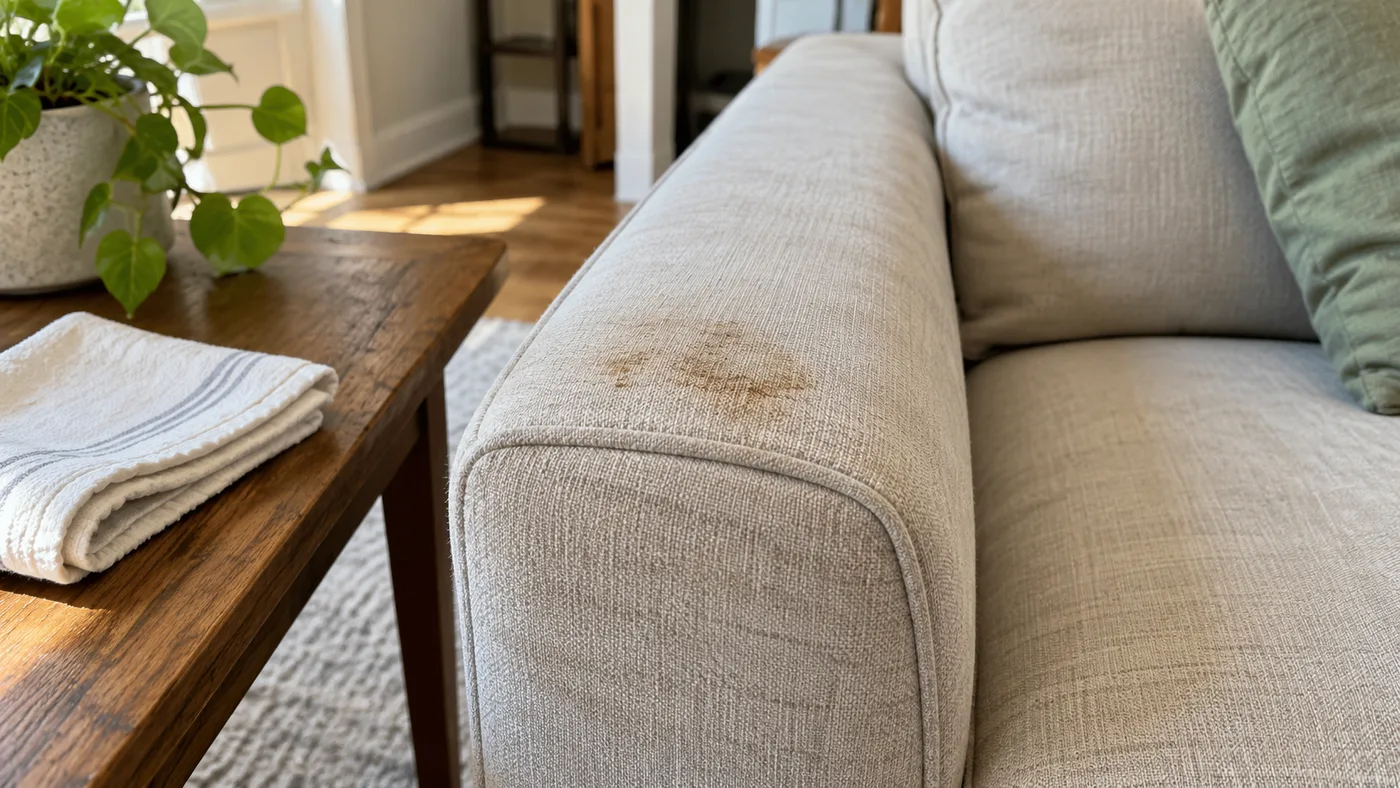
Some old stains can improve or come out; others leave permanent discoloration. The substance, fabric, previous treatments, and any heat exposure all affect the result.
Use a compatible treatment and judge it after drying. Repeated cleaning cannot reliably fix dye loss or other fabric damage.
Why Does the Stain Reappear After the Couch Dries?
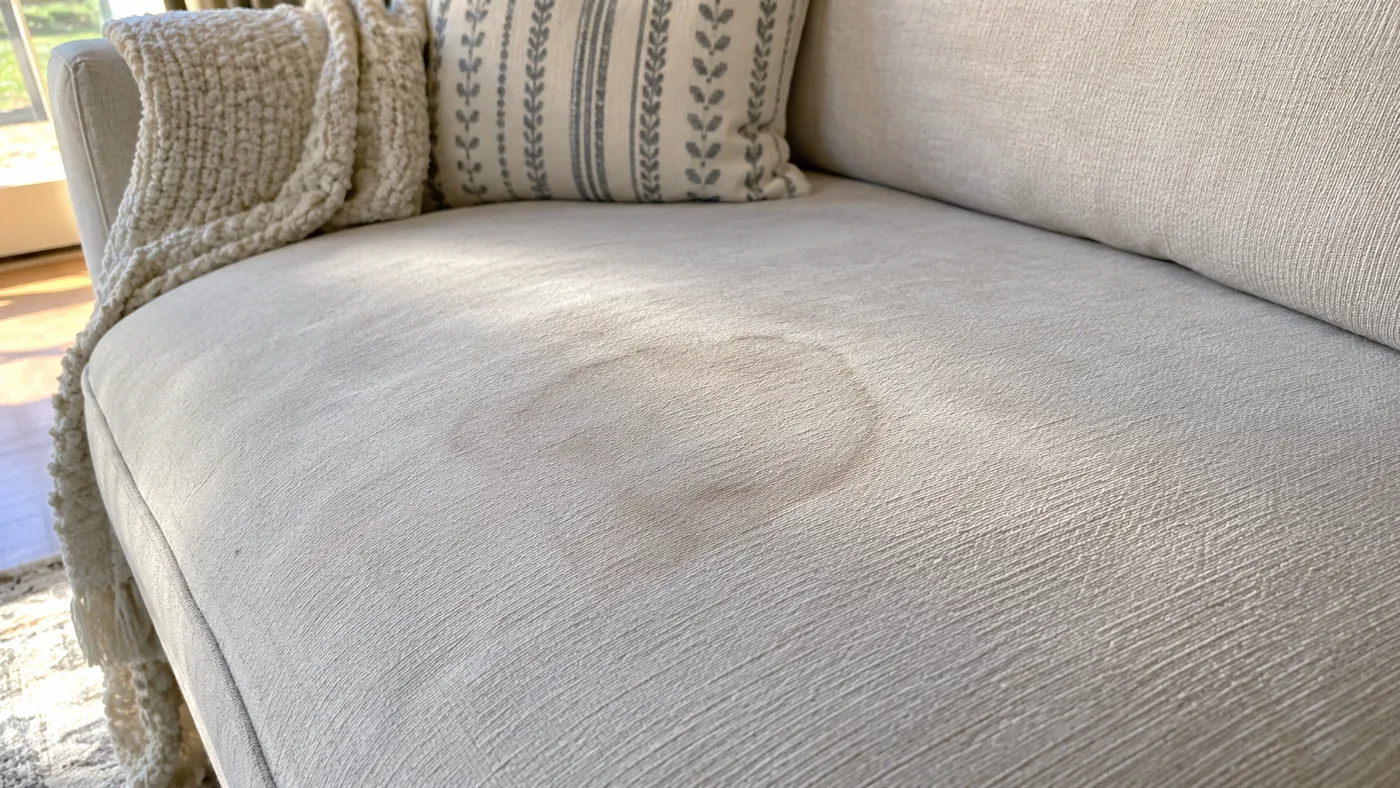
Residue or moisture from deeper in the upholstery may move back toward the surface as it dries. Remaining cleaner can also leave a visible patch or collect dirt later.
If the mark repeatedly returns, the cushion may need more than another surface treatment. Tell a professional what was spilled and which products you have used.
When Should I Call a Professional Upholstery Cleaner?
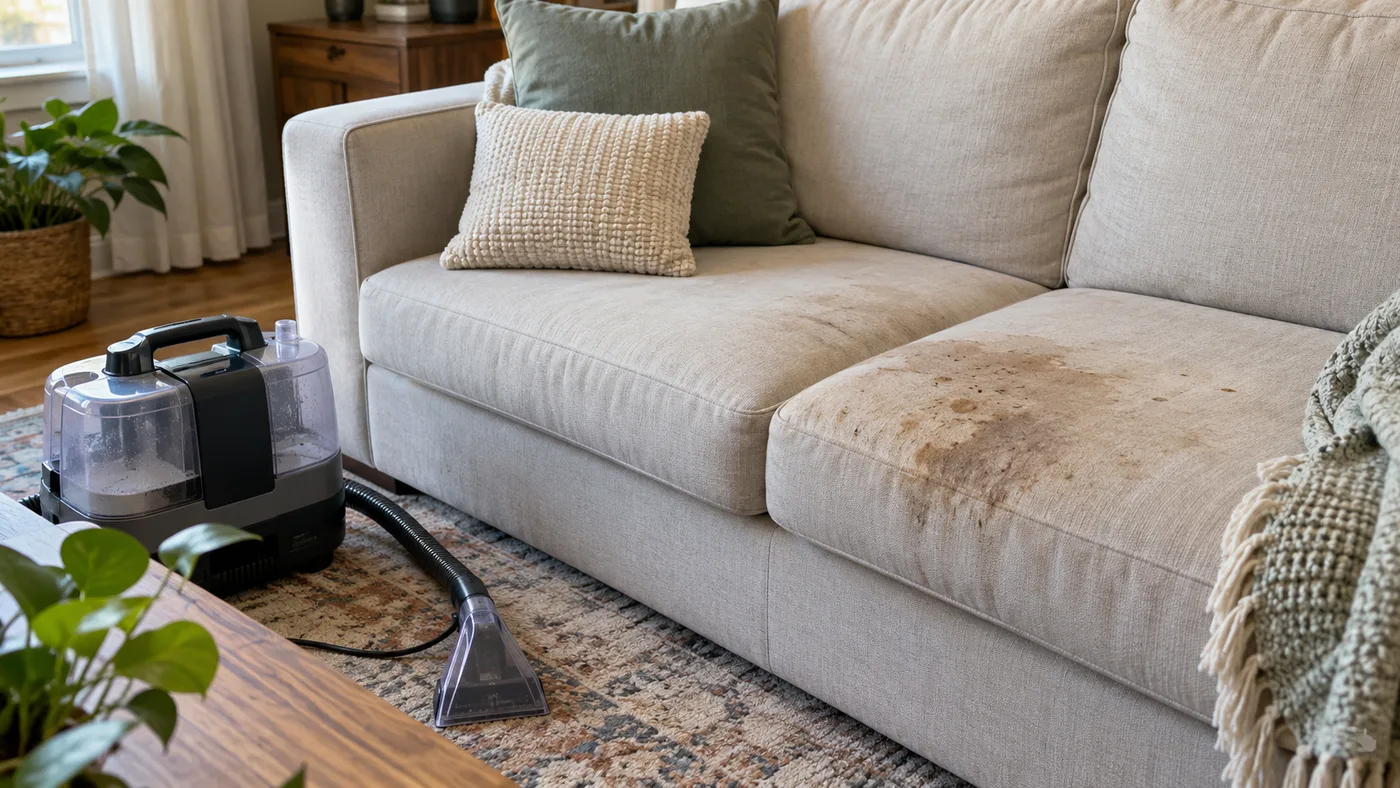
Call when the label requires professional cleaning, the fabric is unknown or delicate, the spill reached the filling, or treatment changes the color or texture.
Professional help is also useful for persistent odors, spreading rings, and stains that keep returning. Keep the product names and photos handy so the cleaner has a clear picture of the problem.
Shop Couch-Cleaning Essentials
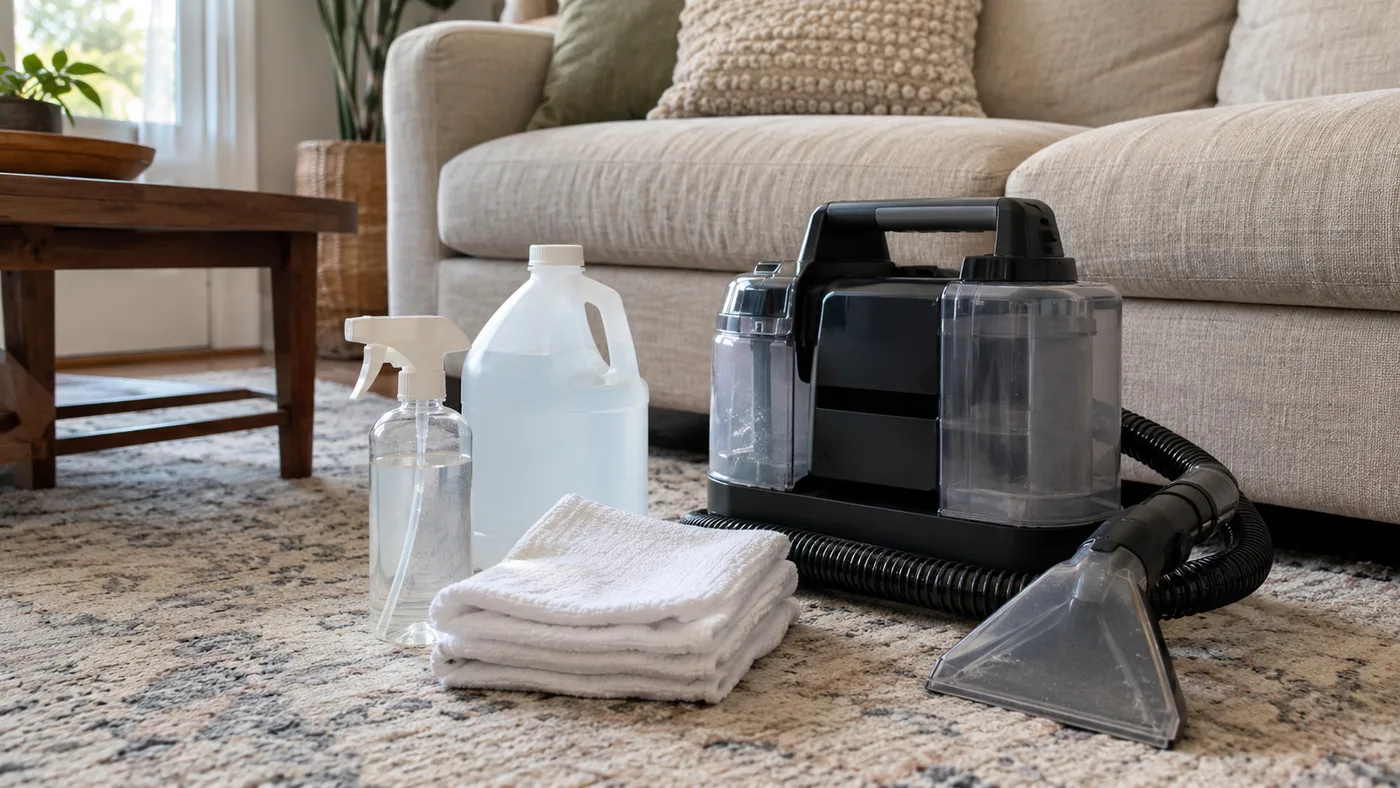
Choose the supplies that match your upholstery and the mess you need to clean. These options cover different jobs, so you can keep the kit small.
- Folex Instant Carpet Spot Remover: A ready-made spot cleaner for compatible, colorfast upholstery that can safely be dampened with water.
- Wine Away: A targeted option for red-wine marks on suitable water-washable fabrics.
- BISSELL Little Green Pet Pro: A portable extractor for suitable upholstery when the furniture maker permits machine cleaning.
- OxiClean White Revive Liquid: A laundry option for compatible removable covers explicitly approved for washing.
- White absorbent cleaning cloths: Keep several clean ones available so you can blot with a fresh surface and watch for transferred dye.
- Distilled water: A practical supply for approved water-based cleaning methods, without the minerals found in tap water.
- Nature’s Miracle Advanced Stain & Odor Eliminator for Cats: An enzyme-based option for suitable cat messes and compatible surfaces. Check the upholstery restrictions before use.
Shop the Couch-Cleaning Products in This Guide
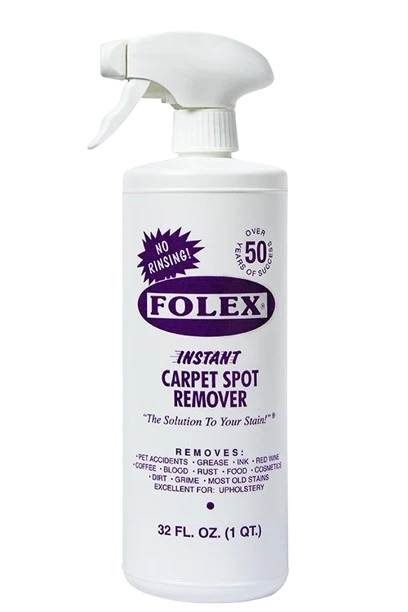 Folex Instant Carpet Spot RemoverA no-rinse spot cleaner for compatible, colorfast upholstery that can safely be dampened.
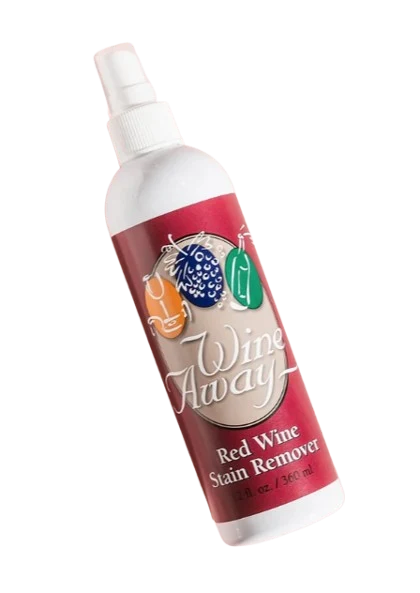 Wine Away stain removerA targeted option for red-wine marks on suitable water-washable upholstery.
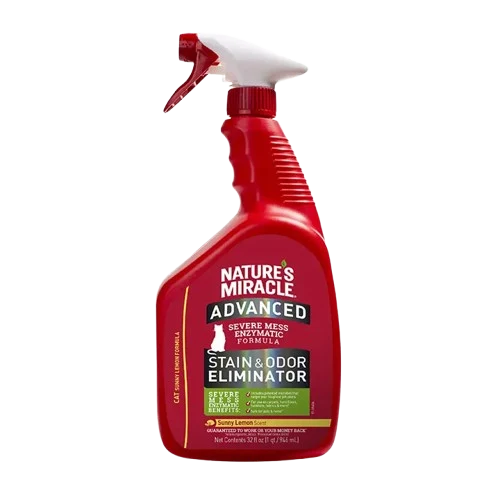 Nature’s Miracle Advanced Stain & Odor Eliminator for CatsAn enzyme-based option for compatible surfaces after a cat accident.
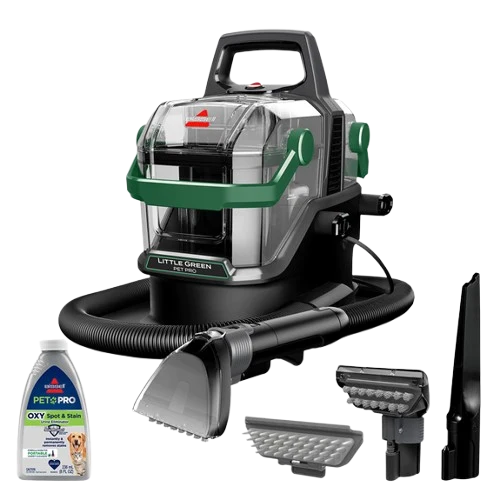 BISSELL Little Green Pet ProA portable extractor for upholstery whose maker permits machine cleaning.
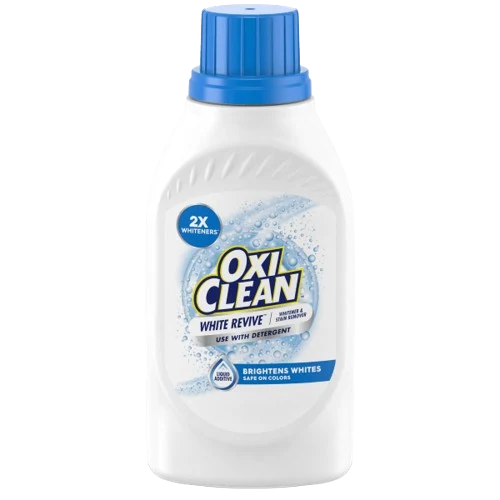 OxiClean White Revive LiquidFor compatible removable covers that are explicitly approved for washing.