15 Basement Man Cave Ideas on a Budget for Better Game Nights

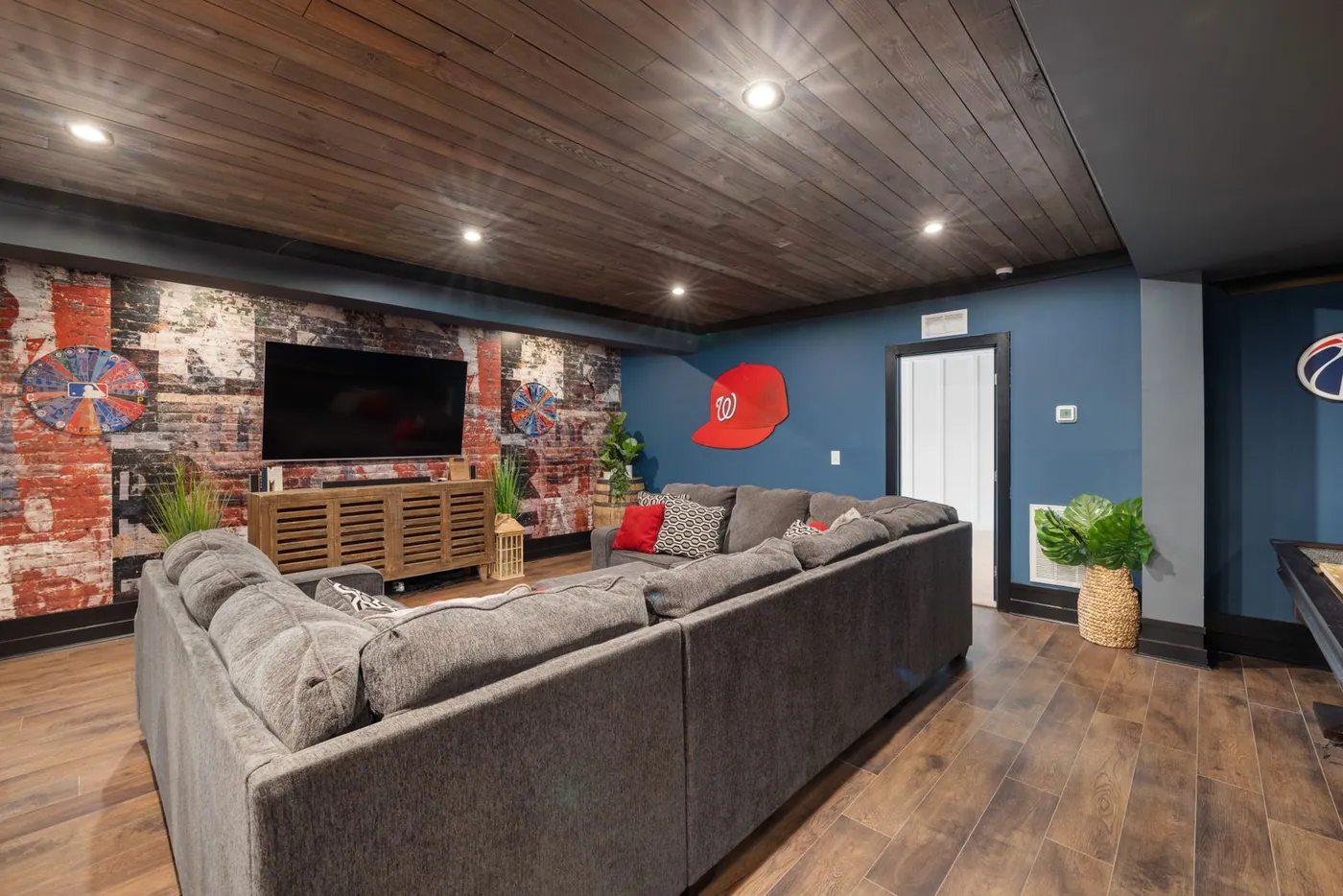
A free weekend, an unused basement, and a spare TV can make a basement man cave feel like the obvious next project. You could finally have somewhere for game nights, movies, or a few uninterrupted hours with your favorite records. Then you look at the bare floor, low ceiling, and boxes everywhere, and the shopping list gets longer than expected.
The quick answer
- Address moisture, ventilation, and safe access before spending on basement furniture or decor.
- Build the room around one activity you enjoy, such as movies, gaming, or cards, using furniture you already own.
- Spend first on comfortable seating and better lighting. A drinks station or foldaway game setup can come later.
In an already usable basement, several of these changes could fit into a weekend. An unfinished space may need repairs or building work first. The ideas below will help you decide where to spend, what to reuse, and which additions deserve the room.
Before the Fun Stuff, Check What Your Basement Needs
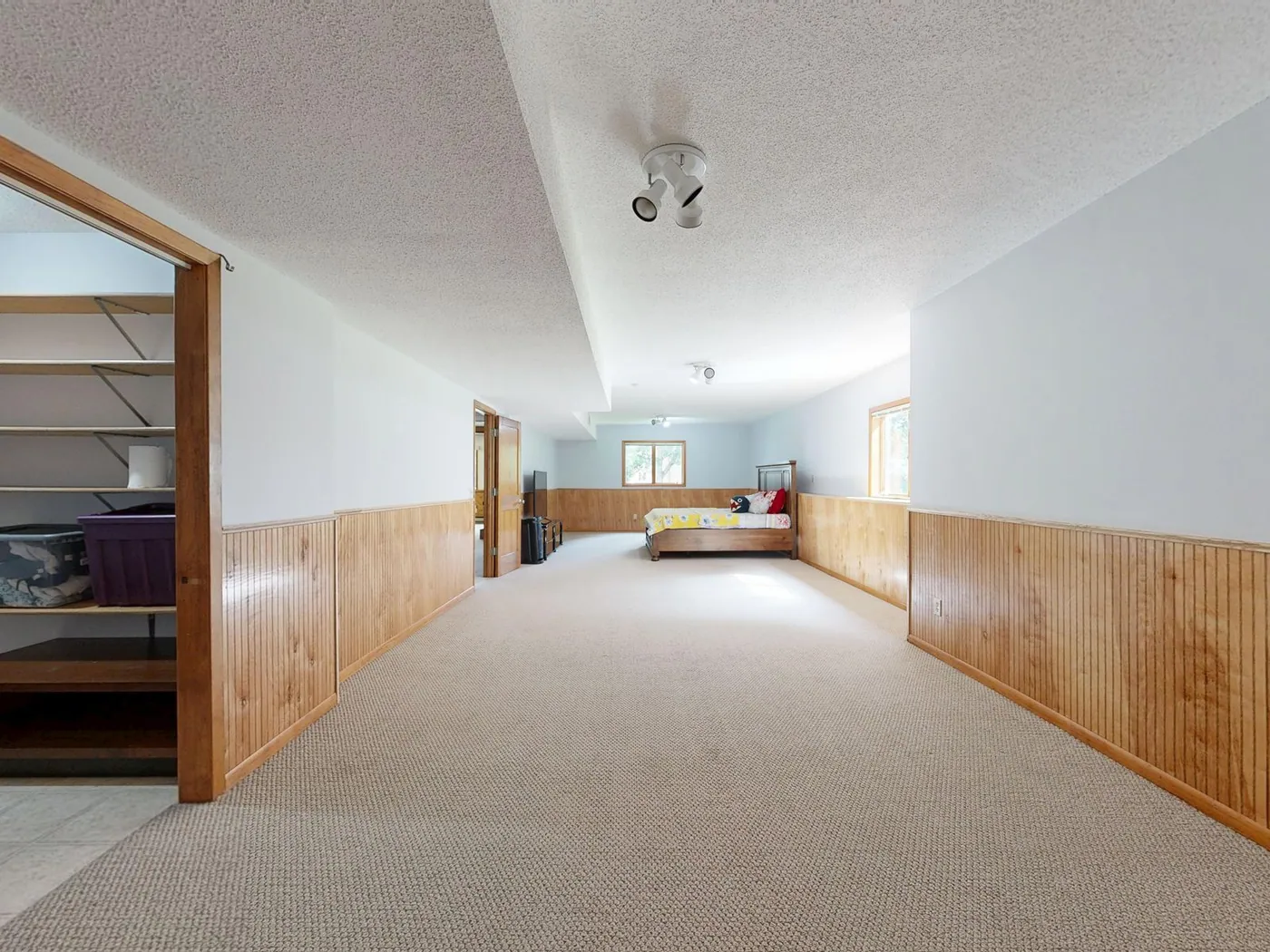
Deal with moisture, air quality, temperature, and electrical needs before bringing down upholstered furniture and electronics. A room that smells damp or becomes uncomfortable after half an hour needs attention before decorating.
Look for leaks, water marks, condensation, and changes after heavy rain. A dehumidifier can help manage humidity, but a leaking wall or recurring puddle needs its own repair. Arrange a radon test if the basement has not been tested appropriately for its planned use.
Walk through the space with its future layout in mind. Check headroom beneath beams and ducts, the condition of the stairs, available outlets, and access to equipment that needs servicing. Before converting an unfinished basement, confirm the local requirements for the proposed work and use.
Pick the Basement Man Cave You’ll Actually Use
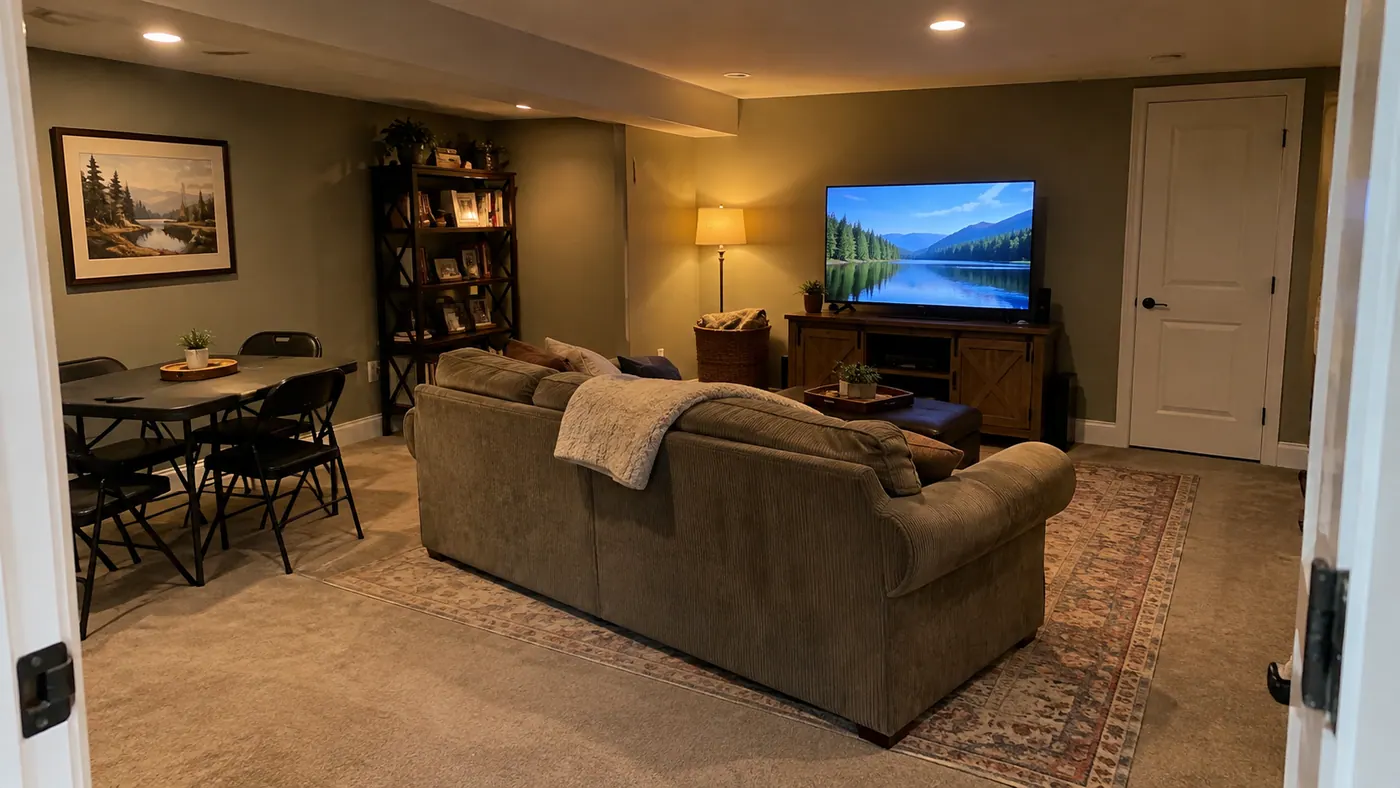
Choose one main activity and one useful supporting feature. That gives the room a purpose and helps you avoid buying equipment that barely gets used.
If friends come over for football every Sunday, seating and a clear screen view deserve the most attention. If you mostly play cards, the table and chairs matter more than a giant television.
| Your usual downtime | Main setup | Useful extra |
|---|---|---|
| Watching sports | TV and comfortable group seating | Compact drinks station |
| Movie nights | TV or projector with planned seating | Adjustable lighting |
| Console gaming | Screen, comfortable chair, and controller storage | Headphones or suitable speakers |
| Cards and board games | Table with room for occupied chairs | Game storage |
| Listening to music | Comfortable chair and music setup | Record or instrument display |
| Using a shared basement | Compact lounge | Equipment that folds or rolls away |
For a long, narrow basement, keep a continuous route along one side and place activities in separate stretches of the room.
For a small enclosed room, choose seating first, then check whether a drinks cabinet or game setup can fit without squeezing the entrance.
For one corner of a larger basement, use furniture placement and a suitable rug to define the hangout area. Keep the laundry, storage, and utility routes usable.
1. Make the TV Lounge Comfortable Enough for the Whole Game
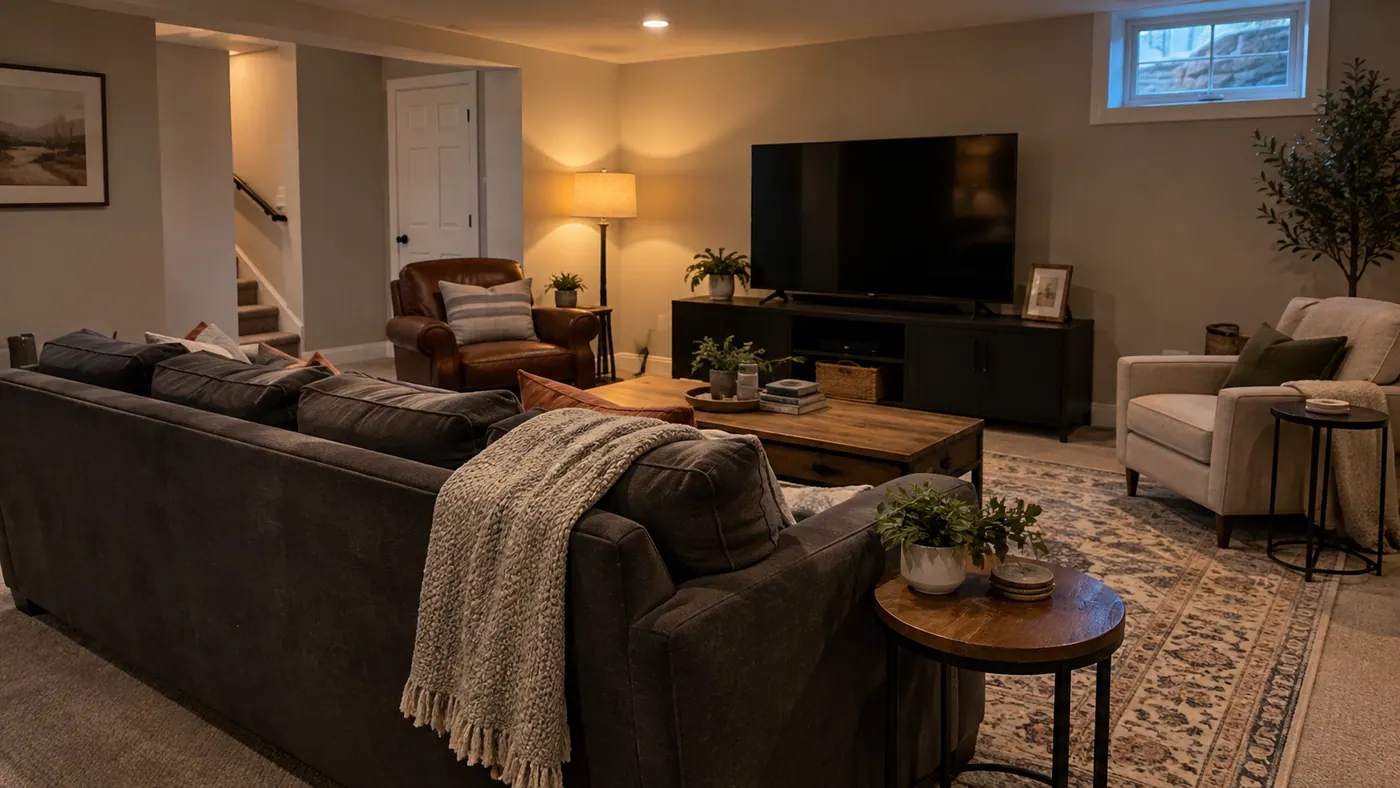
Arrange the seating so everyone can see the screen, reach a drink, and get up without asking three people to move. A comfortable sofa you already own may be all the room needs.
Test the arrangement with people sitting in it. Open the recliner, put something on the side table, and walk past the seats. A layout that looks spacious when everything is tucked away can feel very different during a game.
Before buying furniture, measure the complete delivery route. Include the stairs, doorways, ceiling above the stairwell, and tight turns at the bottom.
If a new sectional is already in your budget, the Pottery Barn Turner Square Arm Leather Chaise Sectional offers different configurations. Treat it as an optional larger purchase and check the selected configuration carefully.
Our guide to choosing a sofa layout for your room can help you compare arrangements before moving anything heavy.
2. Give Movie Night a Bigger Screen, If the Room Allows It
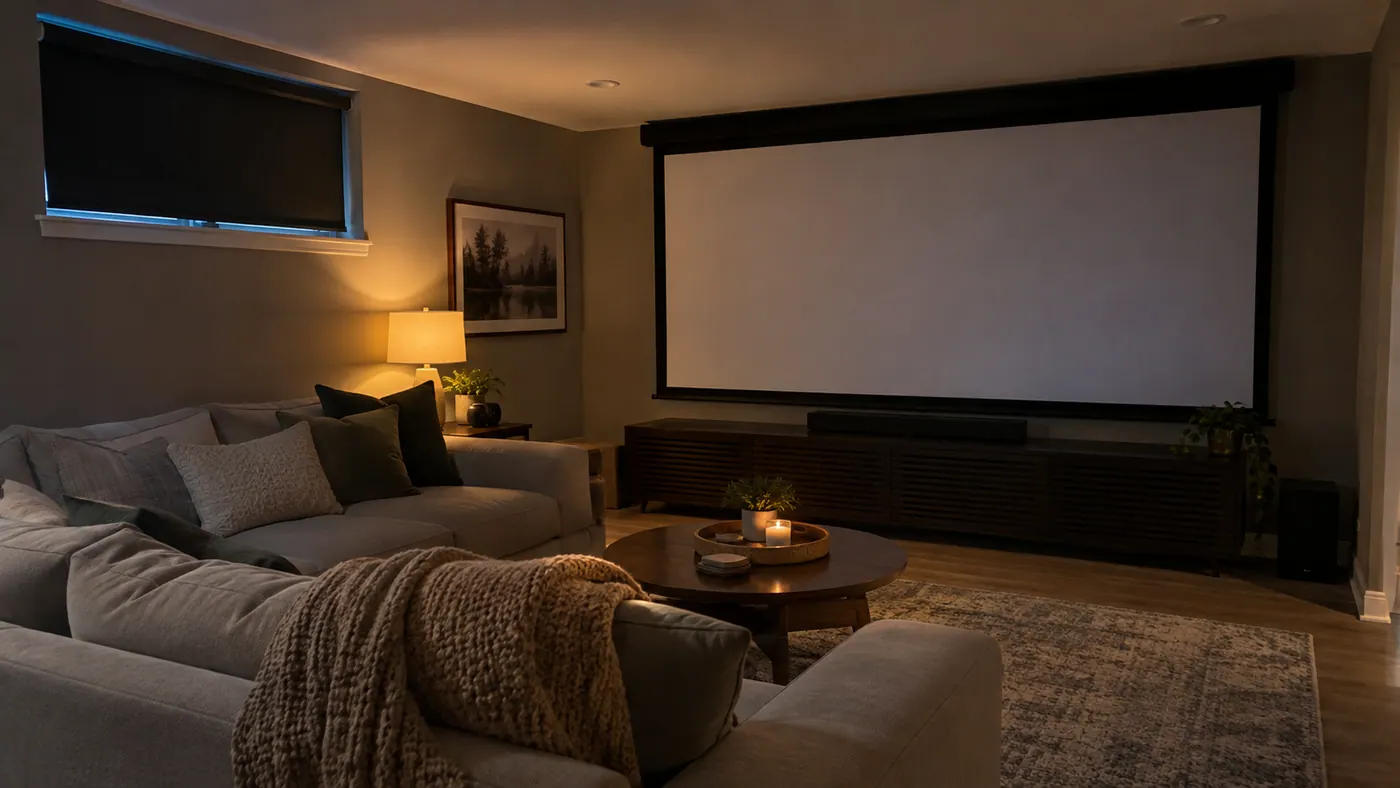
Choose a TV or projector around your viewing habits, available light, and installation space. A TV is often the easier everyday choice. A projector can create a larger picture when the room supports the required setup.
Projector throw distance is the distance needed between the lens and screen for a particular image size. Think of it as a placement requirement: you cannot assume a projector will fill any wall from whichever shelf happens to be available.
| Choice | Everyday use | What to check | Possible extras |
|---|---|---|---|
| TV | Convenient for casual viewing and gaming | Viewing distance, reflections, mount or stand, and cable access | Suitable mounting hardware or furniture |
| Projector | Suits planned movie sessions and larger images | Throw distance, brightness, light control, placement, and ceiling obstructions | Screen, mount, audio, and longer cable runs |
A retractable screen can free up a wall between movie nights, though the housing and mounting still need room.
Compare the complete setup cost before ordering. A low projector price becomes less exciting when the screen, mount, audio, and installation use the rest of the budget.
3. Build a Gaming Corner Around How You Play
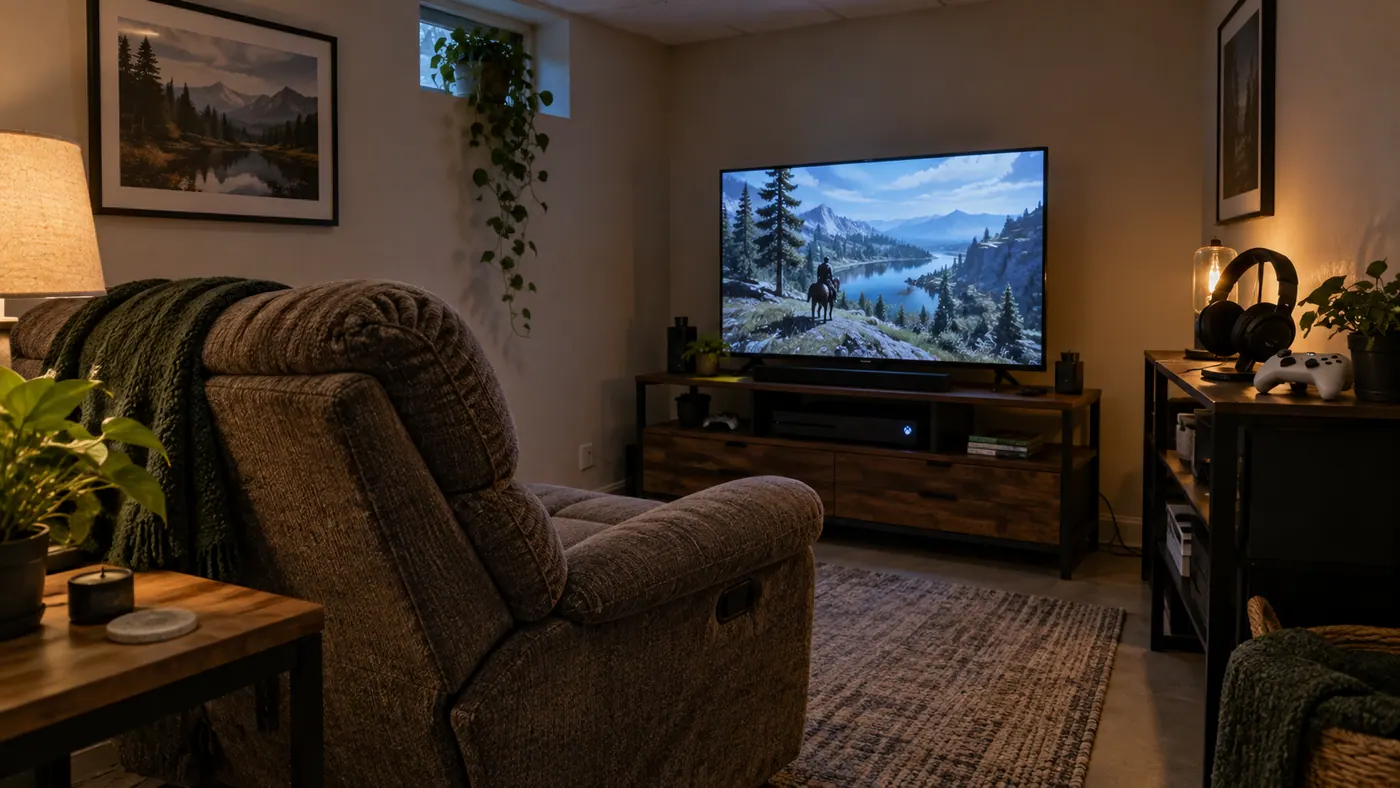
Match the seat and screen position to console or desk gaming. Console gaming may suit a lounge chair, while a keyboard and mouse usually need a proper desk arrangement.
Give controllers and headphones a home close to the seat. Route charging cables so they stay clear of feet, chair movement, and walkways. Leave the ventilation space required around consoles and other equipment.
The RESPAWN 900 gaming recliner combines a reclining back, footrest, cup holder, and side pouch. Check how much room the chair needs while reclining and swiveling, rather than judging it only in the upright position.
Already have a comfortable chair? Keep it. Moving the screen, adding a small side table, or tidying the charging setup might solve the problem for much less.
4. Roll Out a Poker Setup When Friends Come Over
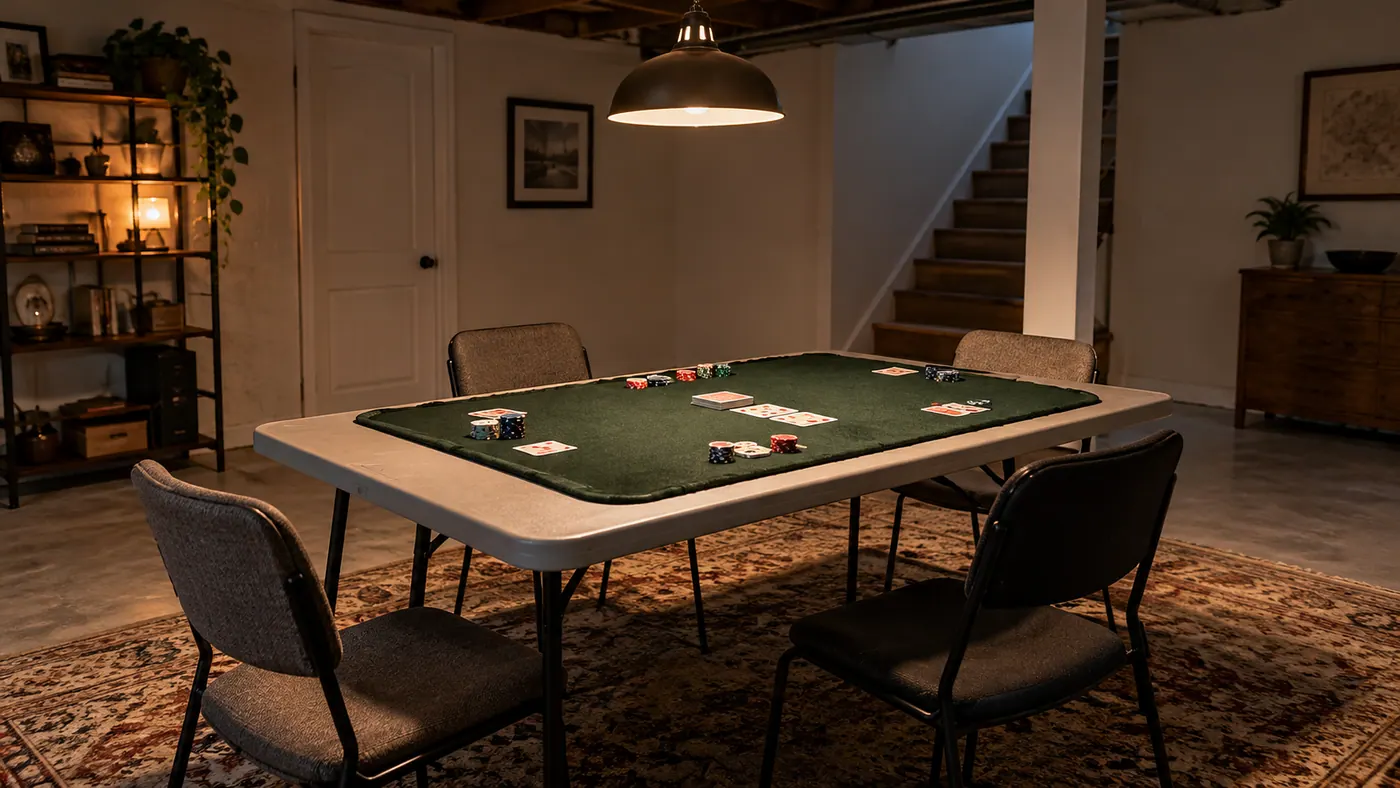
Use a suitable table and removable playing mat when a permanent poker table would crowd the room. Folding chairs and nearby storage can make the setup easy to bring out again.
The Newverest 70 × 35-inch Texas Hold’em poker mat gives a compatible table a dedicated playing surface and rolls up afterward.
Check the table’s width as well as its length. A six-foot folding table may be long enough while still being too narrow to support a 35-inch-deep mat.
Leave enough room for occupied chairs and someone walking behind them. Try the arrangement with your usual group before deciding how many seats to squeeze around the table.
5. Give the Dartboard a Clear Lane
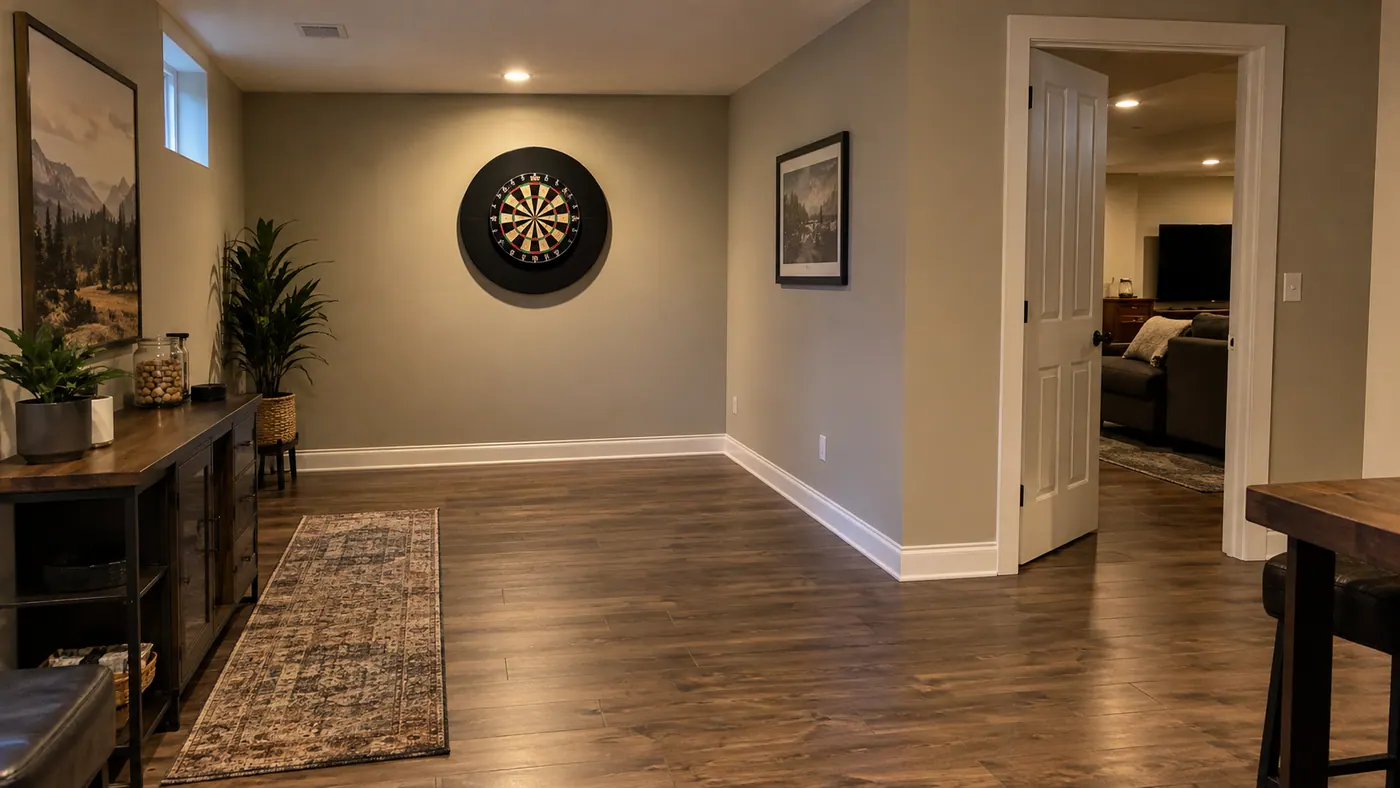
Position the dartboard where nobody needs to cross the throwing area to reach the stairs, drinks, or sofa. The board uses little wall space, but the game still needs a clear stretch of floor.
A Winmau Blade 6 dartboard is one option to compare. Allow for a suitable surround or backboard, secure mounting, and lighting that makes the board easy to see.
Follow the board’s setup guidance for mounting and throwing distance. Include room for the player’s stance and anyone waiting for a turn.
If the only possible lane crosses the entrance, a tabletop game may work better. You want friends to relax without announcing every trip across the room.
6. Let the Playing Space Decide the Game Table
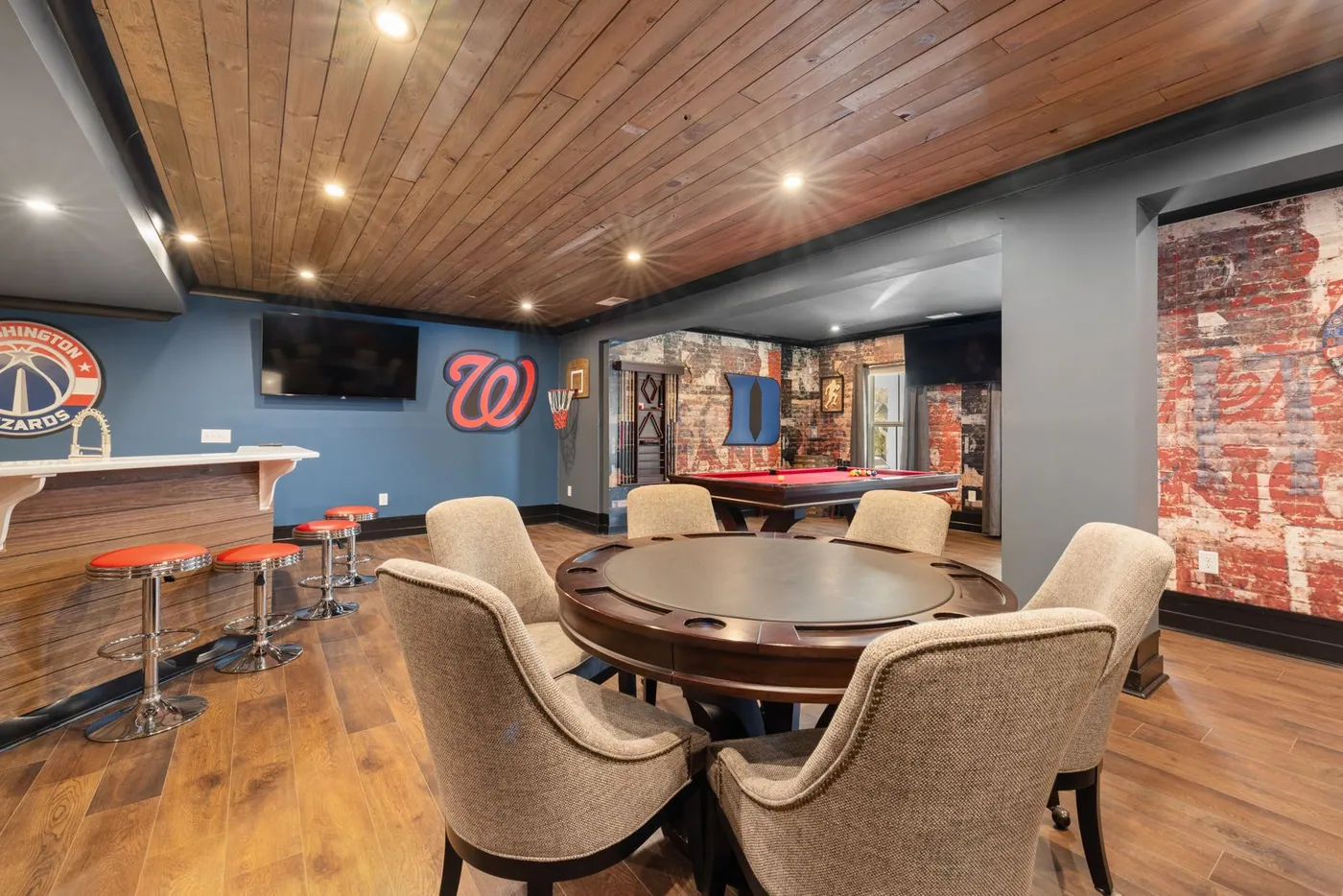
Allow room for the players and equipment before choosing the table. Pool needs cue clearance around the playing surface. Foosball needs room for extended rods and people standing beside them.
A table that fits between two walls can still be awkward to play on. Picture a pool shot close to the cushion or two people moving quickly during a foosball match. Those are the moments your layout needs to accommodate.
Secondhand tables can be worth exploring, but add up transport, assembly, leveling, and any repairs before calling one a bargain. Getting a heavy table down the stairs can be a substantial part of the job.
If the space is tight, compare a compact arcade cabinet, a smaller game, or something that stores away. Choose the game your room can support comfortably.
7. Turn a Sideboard Into a Drinks Station
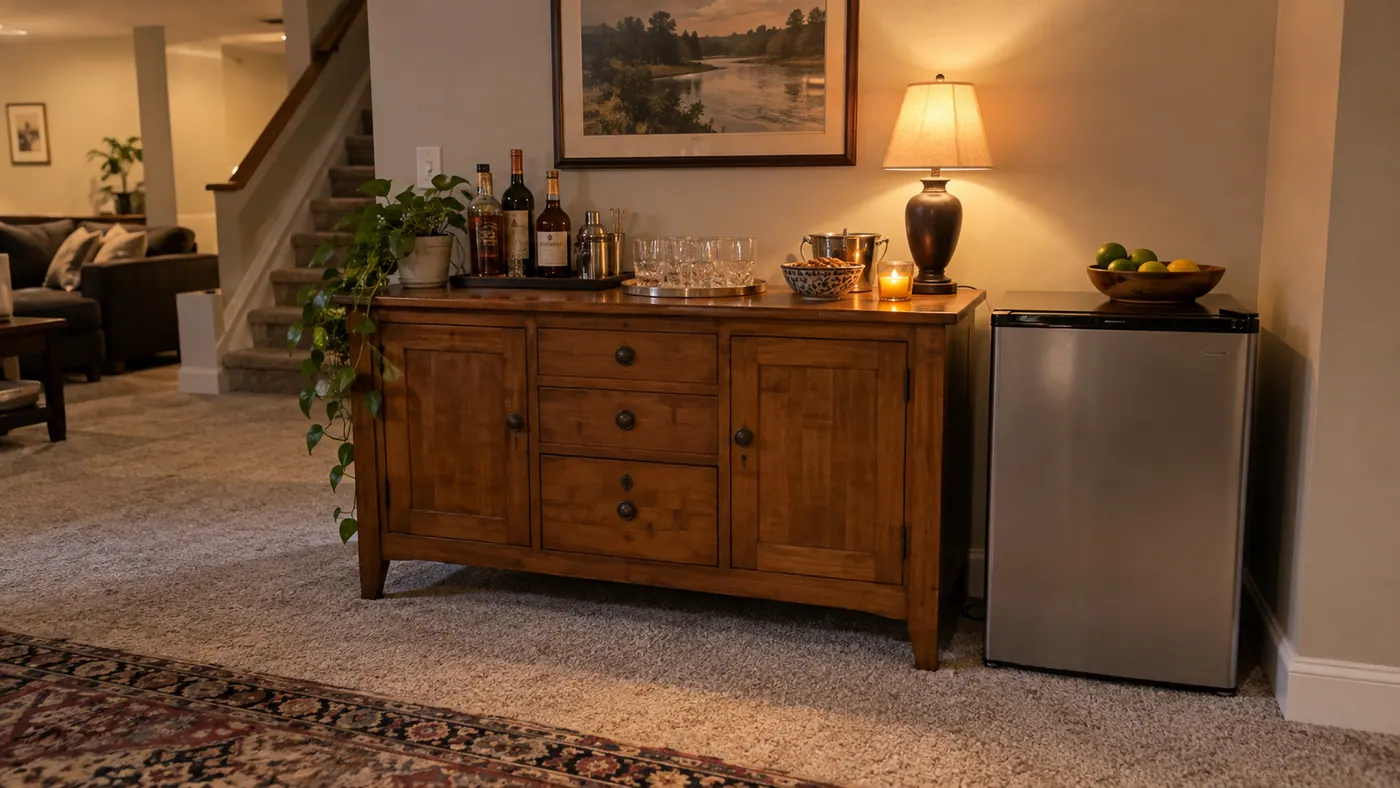
Use a sideboard, sturdy dresser, or bar cart to create a dry bar without adding a sink. A clear serving surface, glassware storage, and a place for snacks may cover most of what you need.
Try the cabinet first and live with it for a few gatherings. You will soon know whether a refrigerator would save enough trips upstairs to justify the cost and space.
The BLACK+DECKER BCRK25V compact refrigerator is a 2.5-cubic-foot option with a reversible door. Check the appliance dimensions, required clearances, and door swing against your proposed position.
A wet bar adds a sink, water supply, drainage, and installation work. It becomes more useful when you regularly wash glasses or prepare drinks downstairs.
8. Layer the Lighting So the Basement Feels Inviting
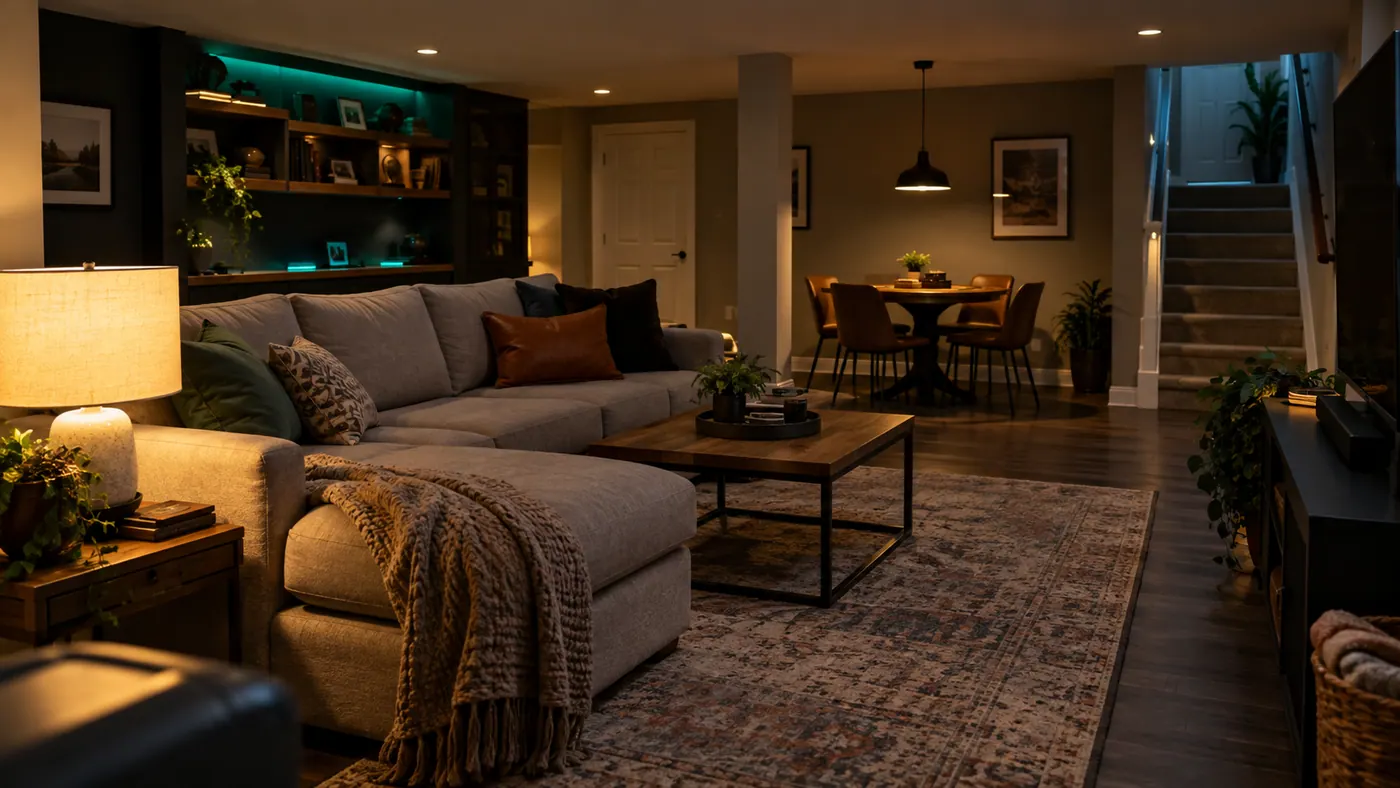
Combine general room lighting with lights for specific activities and a few optional accents. One harsh ceiling bulb rarely serves a movie screen, card table, and reading chair equally well.
A lamp beside the sofa can make the room more comfortable immediately. Give a card table enough light to see the playing surface, and keep the route to the stairs visible when the screen area is dimmed.
Govee RGBIC LED strips offer adjustable accent effects. Choose a length and model that suit the installation, and check whether the strip can be cut before planning its route.
Place accent lighting where it will not create distracting screen reflections. You may find that a steady, subtle glow feels better during a full movie than a changing color display.
For practical lamps that can move with the furniture, browse our table lamp guide.
9. Work With the Low Ceiling
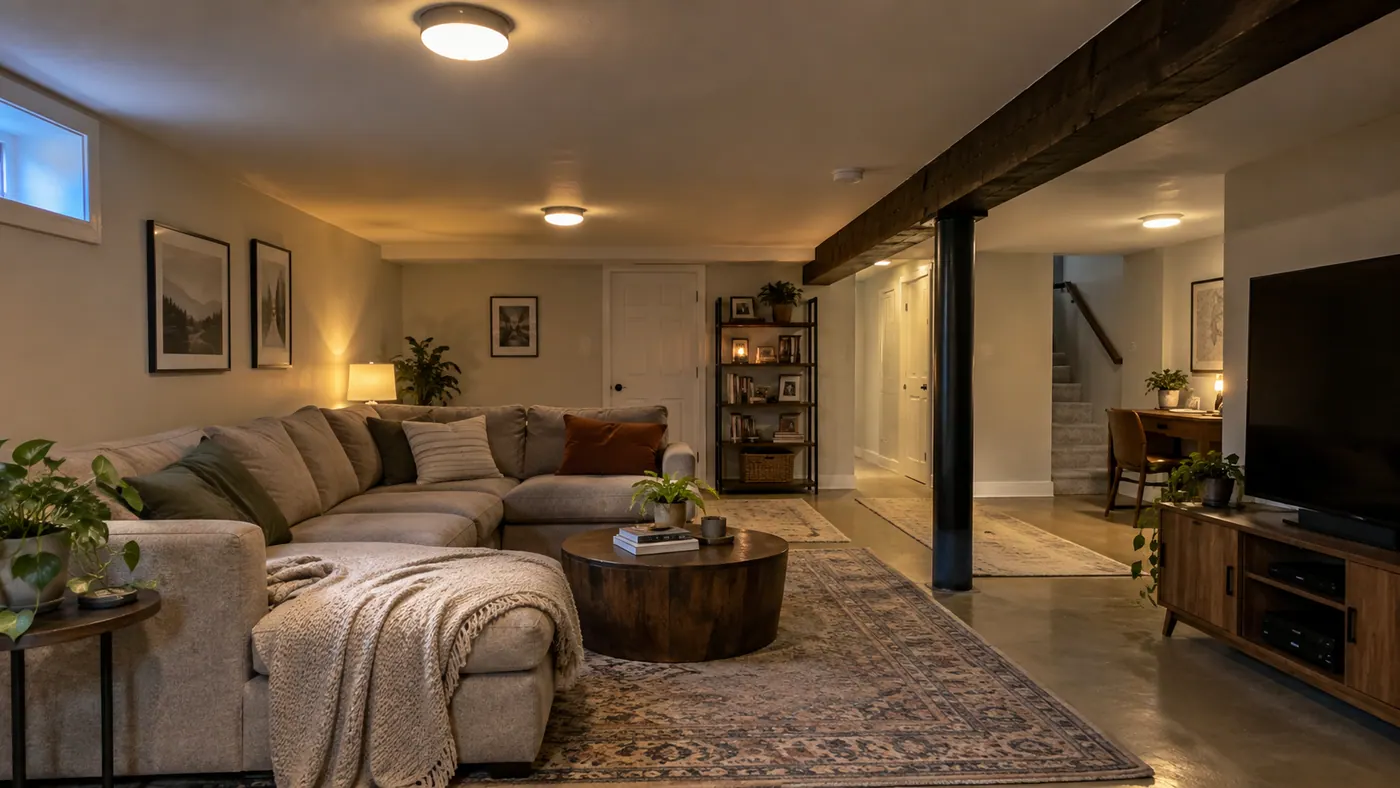
Preserve useful headroom and access when choosing a ceiling finish. Low-profile fixtures and an uncluttered finish can help, but removing an existing ceiling is a project to plan carefully.
An existing drop ceiling may provide useful access to pipes and wiring. Replacing damaged tiles or improving the lighting could be enough to refresh it.
A finished ceiling can create a tidy appearance, while an exposed ceiling needs a deliberate plan for services, lighting, and any required protection. Beadboard is another possible finish when the supporting construction and room conditions suit it.
Keep valves, junction boxes, and other necessary service points accessible. Avoid hanging fixtures where people walk beneath low beams.
Check the room’s actual clearances before choosing the look. A photograph of a dark exposed ceiling cannot tell you how comfortably someone will walk through yours.
10. Give Old Paneling a Color You Want to Live With
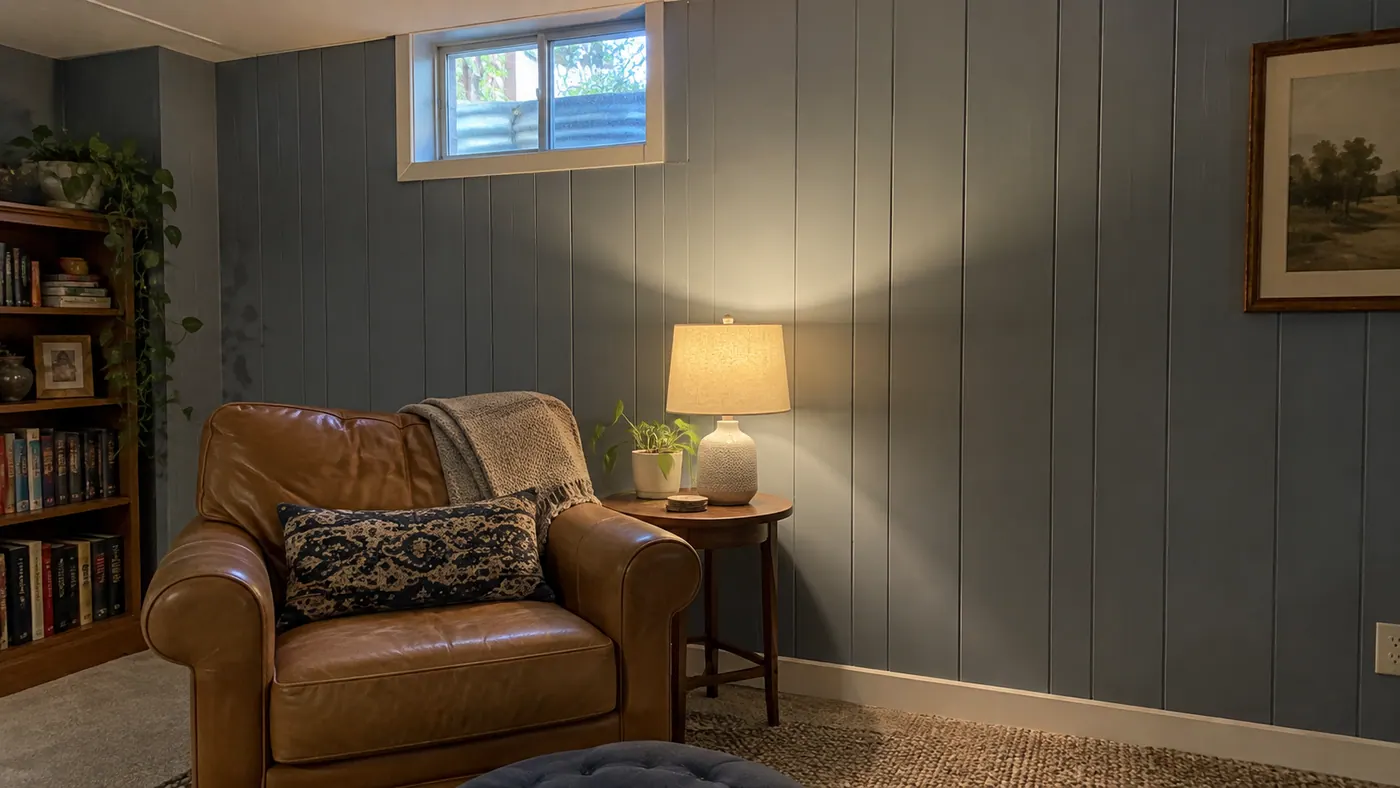
Clean, prepare, and paint sound paneling if you like its texture and it is suitable for refinishing. Paneling that is damp, damaged, or loose needs attention before paint.
Choose the color beside the furniture that will stay. A warm neutral can work with mixed wood finishes, while muted green or blue can give the room more character. Test samples under the lamps you will actually use in the evening.
Farrow & Ball Pigeon is a muted blue-gray option worth sampling if you want a restrained color. If you buy a color match from another brand, test that actual paint too, since the result can differ.
Primer should suit the surface and any staining. For difficult glossy or laminate surfaces, a bonding primer such as INSL-X Stix may be appropriate when its instructions match the job.
11. Choose Flooring for the Basement You Have
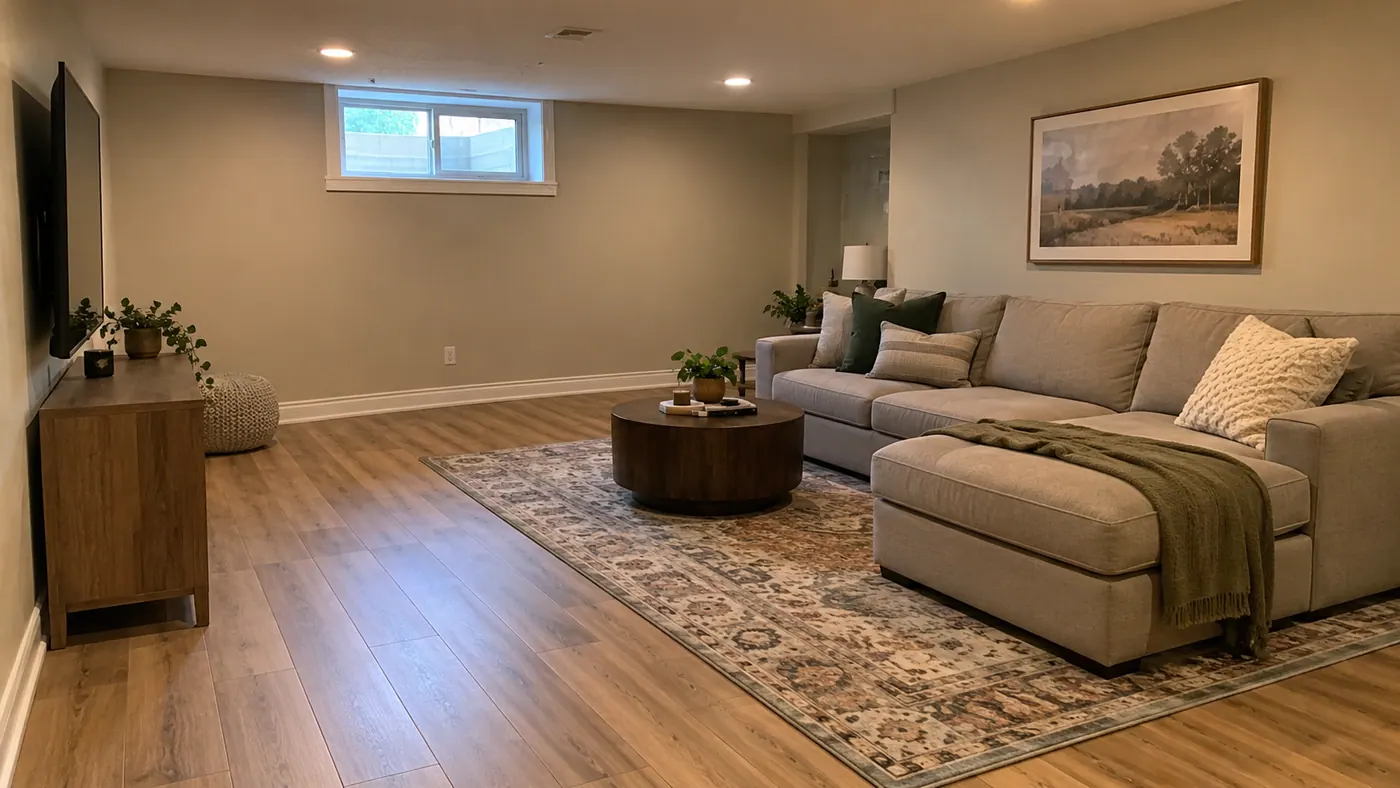
Match the flooring to the slab, moisture conditions, and manufacturer’s installation requirements. Keep an existing floor if it is suitable and in good condition. You can put the savings toward seating or lighting.
For a replacement, Allure Honey Butter Oak luxury vinyl plank provides a warm wood look, and the manufacturer lists below-grade installation among its applications. Check the installation guide for the requirements that apply to your floor.
A waterproof plank does not fix moisture coming through or collecting beneath the floor. Resolve that condition before covering it.
In a dry, suitable room, an area rug can add comfort beneath the lounge furniture and help define the seating area. Our rug size guide explains how to connect the furniture without leaving the rug stranded in the middle.
12. Make the Room Sound Better
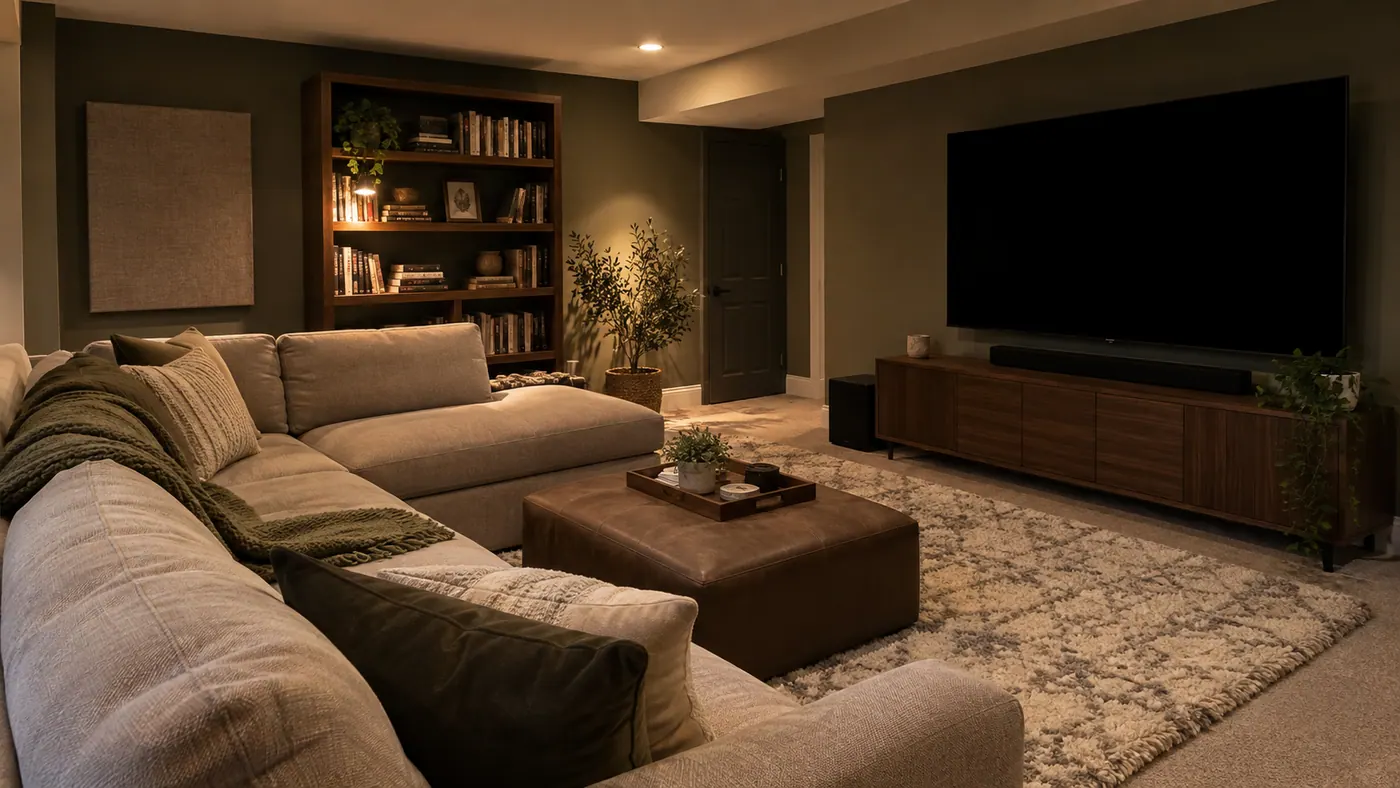
Identify whether you want less echo inside the basement or less noise reaching upstairs. Those goals need different solutions.
For a lively, echoing room, upholstered seating, rugs, and appropriately chosen acoustic treatment can reduce sound reflections. If movie dialogue becomes hard to follow as the volume rises, the room itself may be contributing to the problem.
Reducing sound transmission upstairs can involve the ceiling assembly, gaps, doors, and other paths through the building. Small foam tiles on a wall will not address all of those routes.
Before buying a larger speaker system, try your existing equipment at the volume you normally use. A compatible soundbar may help with dialogue; headphones may suit late-night gaming.
Choose an audio upgrade around the problem you hear. More speakers create more equipment to place, wire, and control.
13. Put Your Collection Where You Can Enjoy It
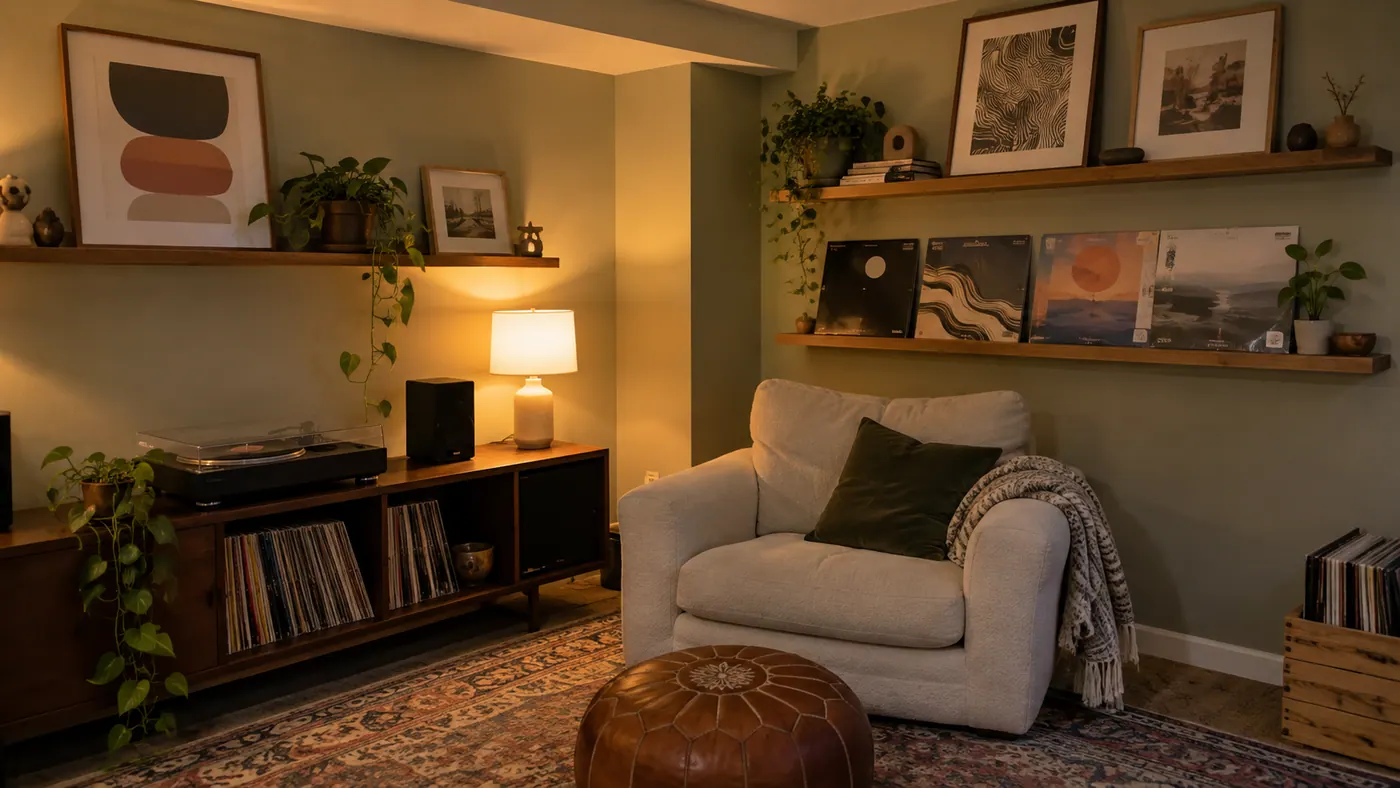
Group jerseys, posters, records, or collectibles in one deliberate display area. A few things you care about can make the basement feel personal without filling every wall.
Frame the concert poster that has been rolled up for years. Put the signed ball somewhere visible. Give the record sleeves enough space that you can actually see the artwork.
Use shelves and cabinets that suit the weight and size of the collection, and keep valuable pieces away from damp areas. Electronics stored nearby still need their required ventilation.
Leave room for additions rather than buying decorations simply to fill gaps. Our art wall guide can help you bring different pieces together.
14. Make Room for Music and Quiet Evenings
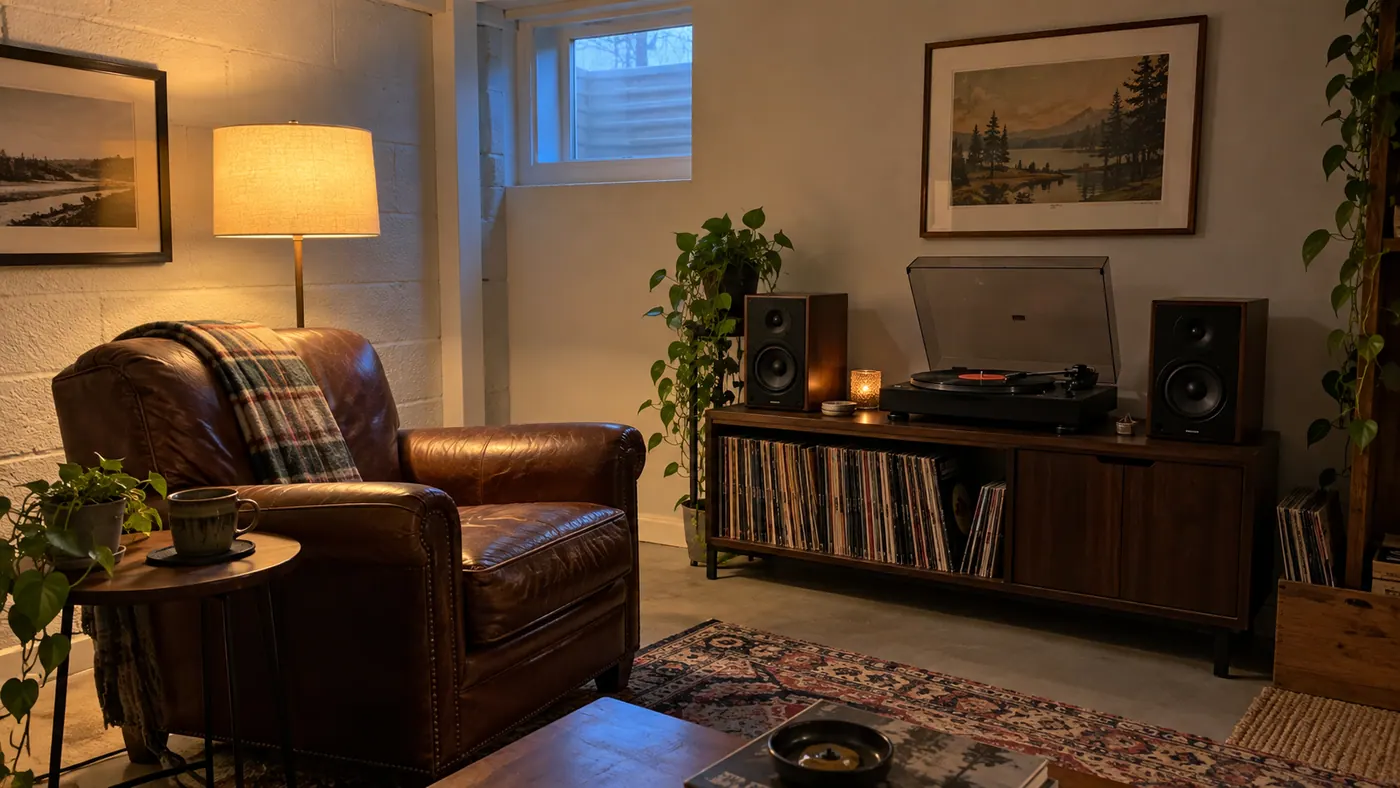
Create a small listening spot with a comfortable seat, accessible music, and somewhere to put a drink. It can share the main lounge rather than needing a separate room.
Use the equipment you already enjoy first. Check the speaker placement and listen from your usual seat before replacing anything.
If you want a record-player setup with separate speakers, the ANGELS HORN H00501 includes stereo bookshelf speakers. Allow space for the turntable, its open lid, the speakers, and records you can reach easily.
Put the turntable on a stable, level surface and follow the setup instructions. Keep drinks somewhere they are unlikely to spill onto the equipment.
Sometimes this corner will get more use than the biggest screen in the house.
15. Keep a Small Basement Flexible
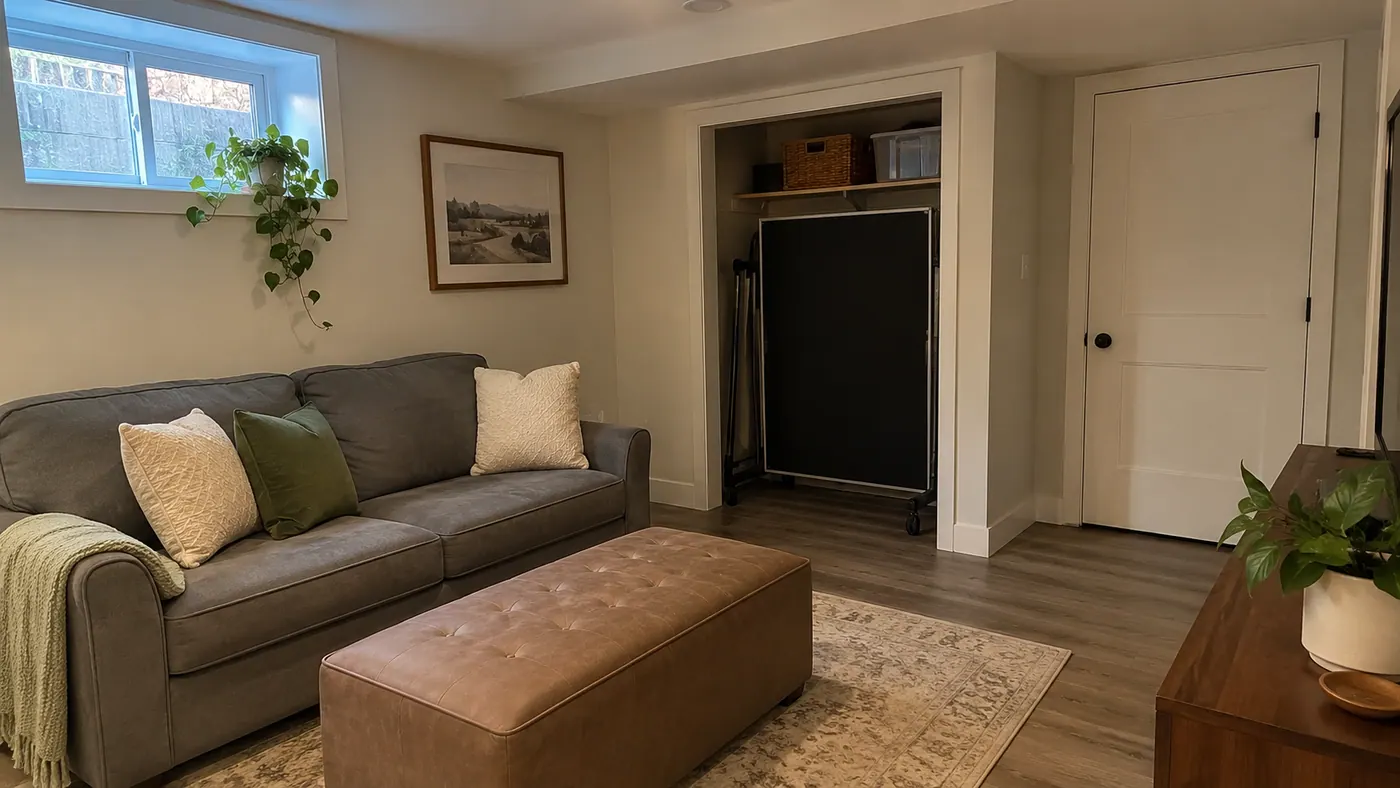
Choose movable furniture and practical storage when the basement needs to serve several purposes. A foldaway game table can share space with an exercise area, while a compact desk may fit beside the lounge.
Give everything a place when it is packed away. A folding table is only convenient if retrieving it does not involve moving six storage boxes.
A storage ottoman can hold games or throws while providing a footrest. Our storage ottoman guide for small living rooms helps compare shapes and storage styles.
For a desk corner, use our home office layout guide to check the chair, screen, and surrounding routes.
Keep utility access clear and give exercise equipment the operating space its maker requires. Plan the room for furniture in use, as well as furniture put away.
What Should You Spend on First?
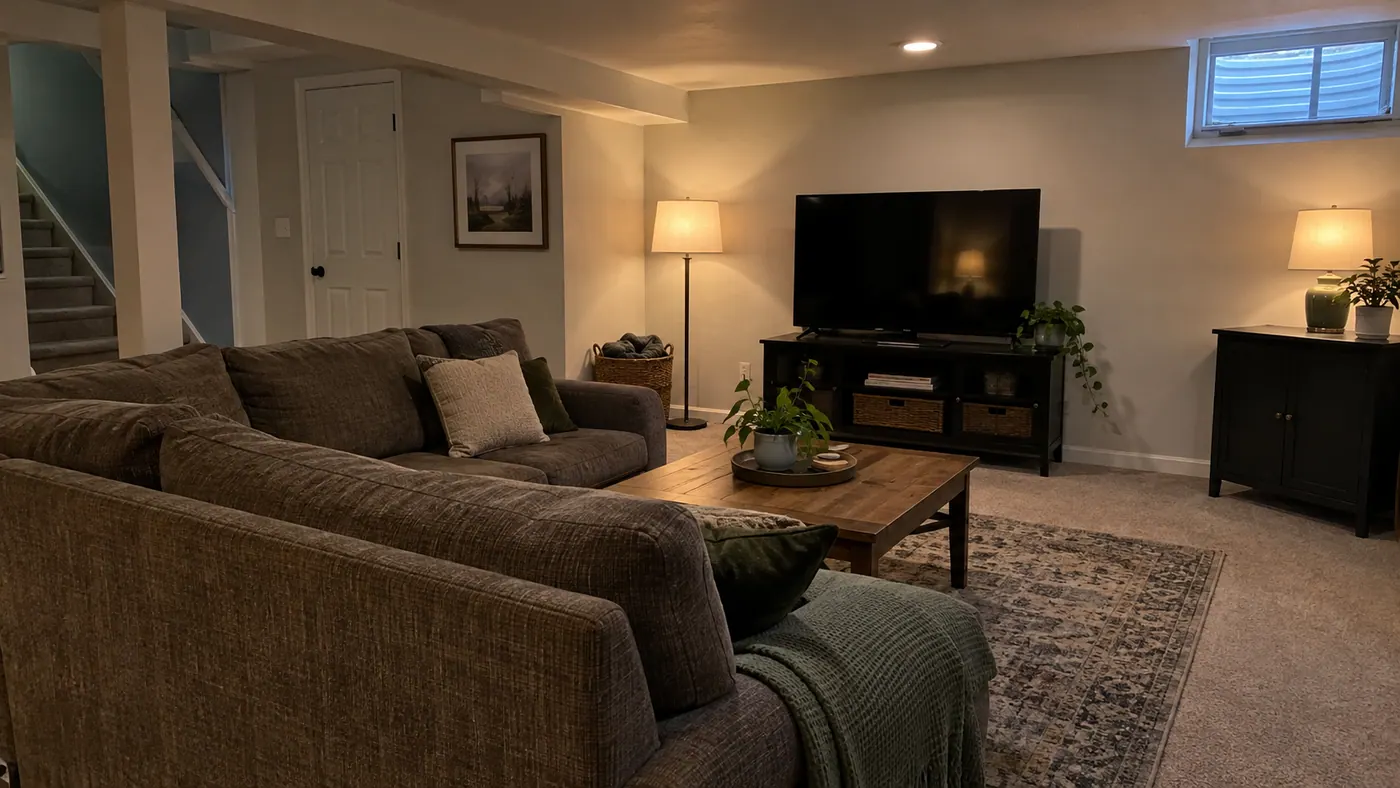
Pay for necessary room preparation, then comfort and the main activity. Optional features can follow once you know how the room works.
| Your project | What the budget needs to cover | What can often wait |
|---|---|---|
| Furnishing a finished basement | Seating, lighting, entertainment, storage, and decor | Extra games, decorative lighting, and a larger drinks station |
| Refreshing an older finished basement | Repairs, preparation, selected finishes, and furnishings | Replacing usable furniture or changing every surface |
| Converting an unfinished basement | Moisture work, required building work, utilities, finishes, and furnishings | Most decorative purchases until the room plan is settled |
A wet bar, bathroom, custom cabinetry, or extensive sound isolation can change the project substantially. Get the work and total cost clear before spending the remaining budget on equipment.
For an affordable first version, bring down suitable furniture, arrange the main activity, add useful lighting, and give games or controllers a storage spot. Use it for a few evenings before ordering the extras.
A Quick Checklist Before You Build Your Basement Man Cave
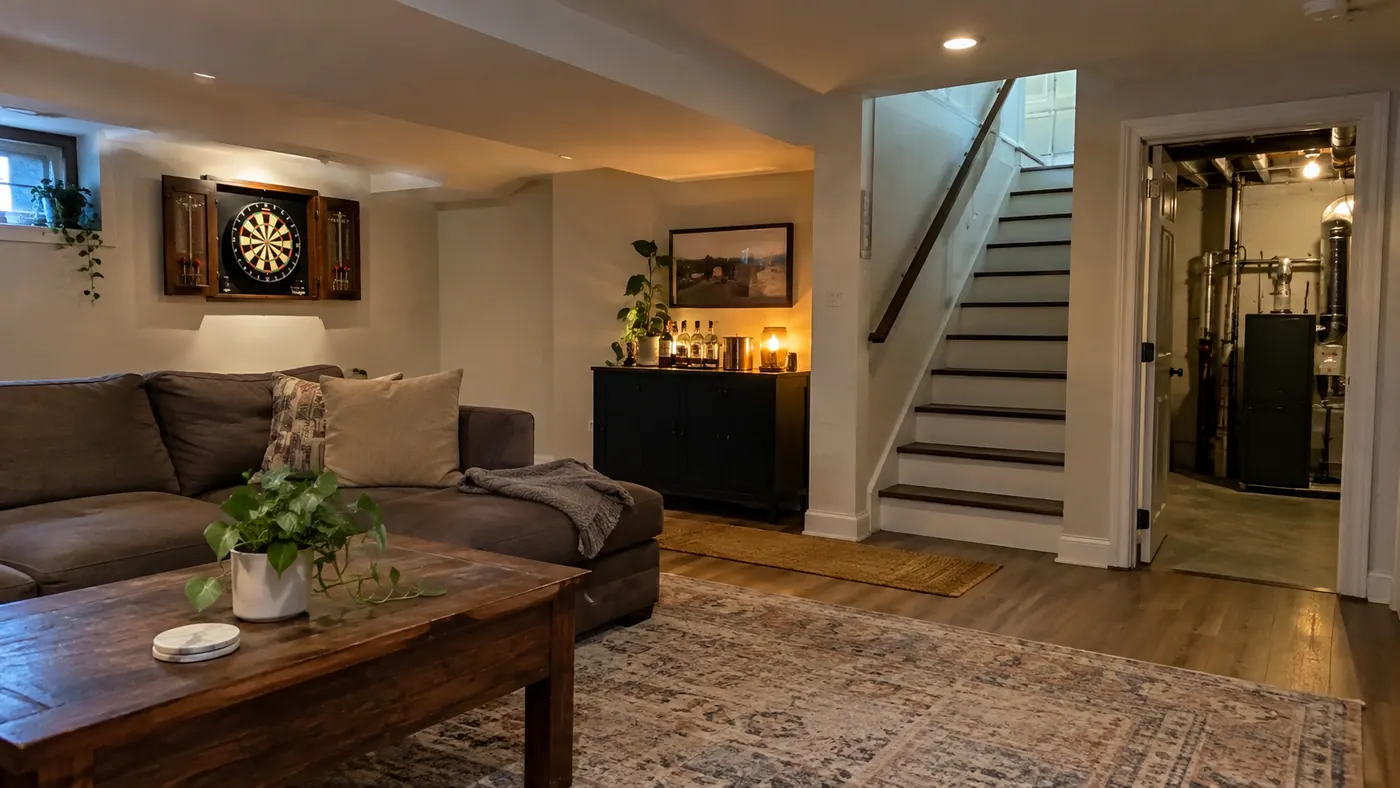
Use this checklist before committing to the layout or placing larger orders.
- The basement’s condition supports the planned use.
- I know the main activity I am designing around.
- Furniture can reach the room through the complete delivery route.
- Seating, game equipment, and doors have room to operate.
- Walking routes and necessary utility access remain clear.
- The lighting works for activities and moving around the room.
- Electrical, ventilation, and appliance requirements are accounted for.
- I have included delivery, installation, and finishing costs.
- My plans meet the requirements that apply to the work.
- I have a place for the storage this room used to hold.
FAQs About Basement Man Caves
How Do You Make a Basement Man Cave on a Budget?
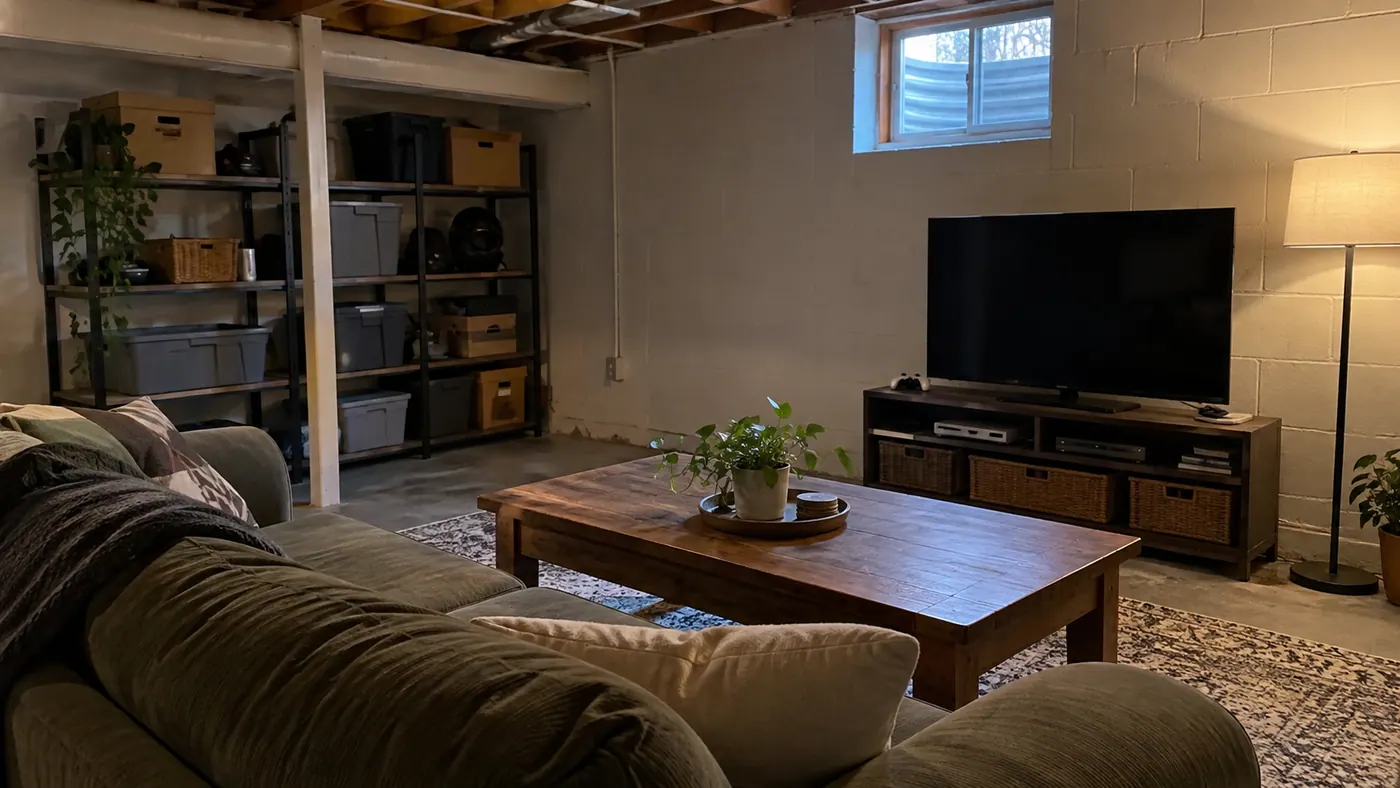
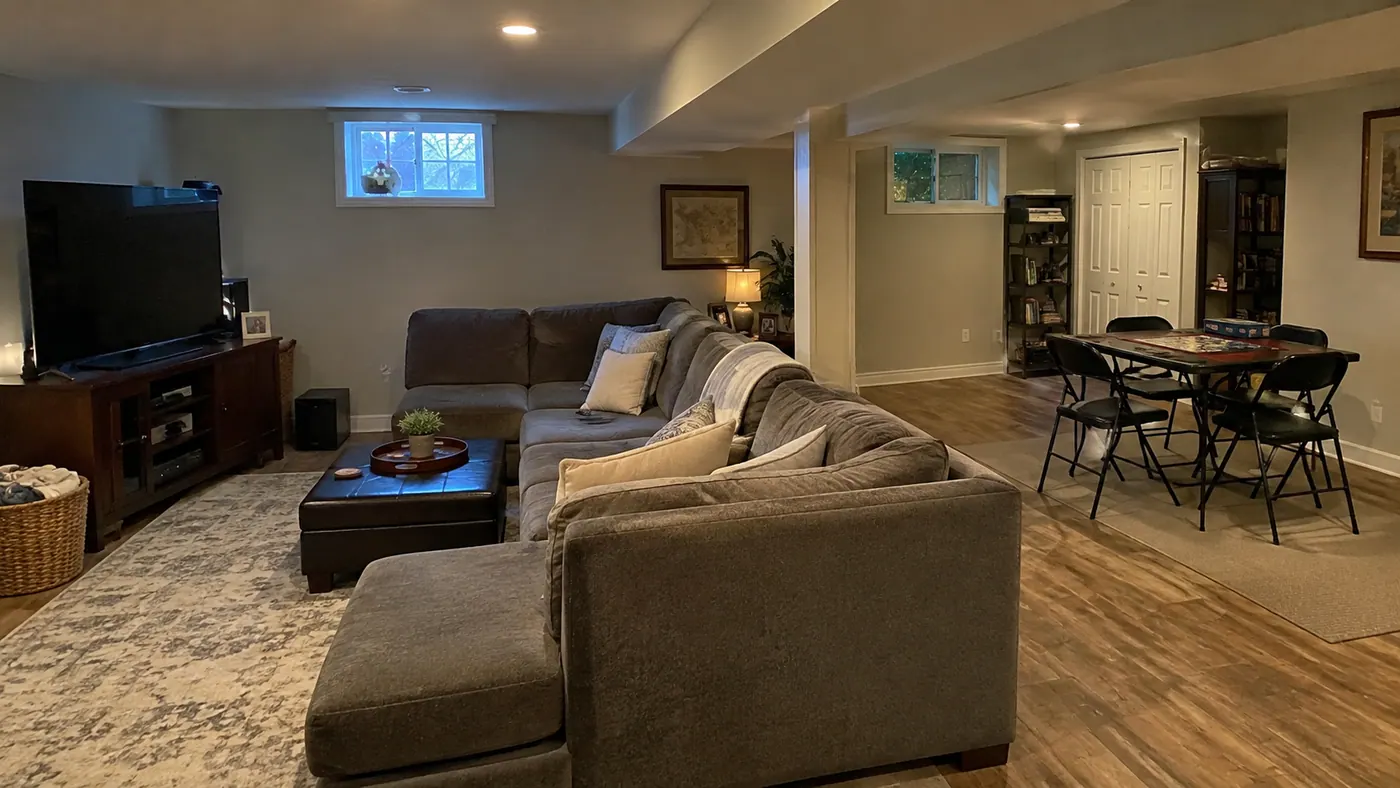
Reuse suitable furniture, choose one main activity, and buy only what makes that setup work better. In an already usable basement, a comfortable seat, existing TV, lamp, and practical storage may be enough for the first version. Add another feature after you have used the room for a while.
What Can You Fit in a Small Basement Man Cave?
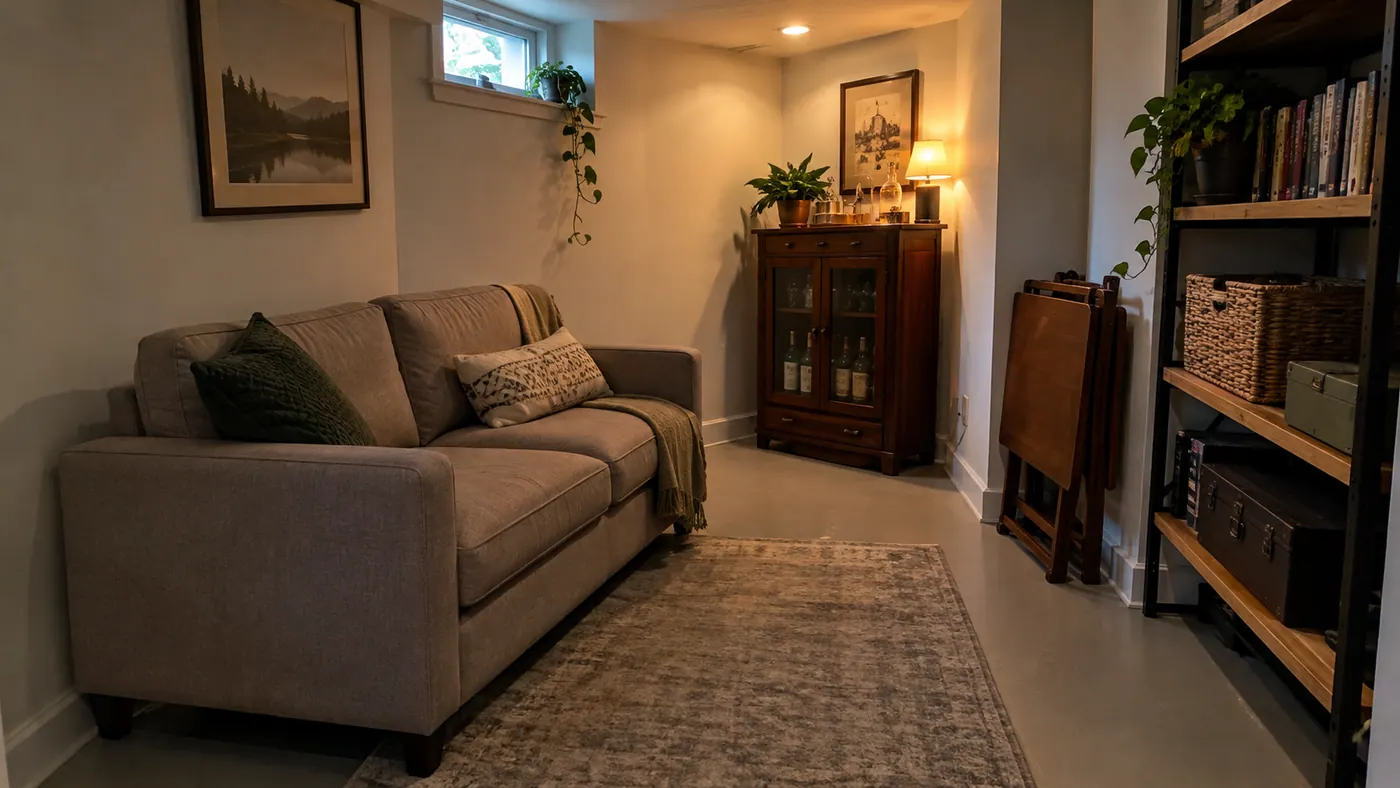
A small basement may suit a lounge plus a compact drinks station or a game setup that packs away. Check the space needed with chairs occupied, recliners open, and doors swinging. A small piece of equipment can still need a large area to use comfortably.
Can You Create a Man Cave in an Unfinished Basement?
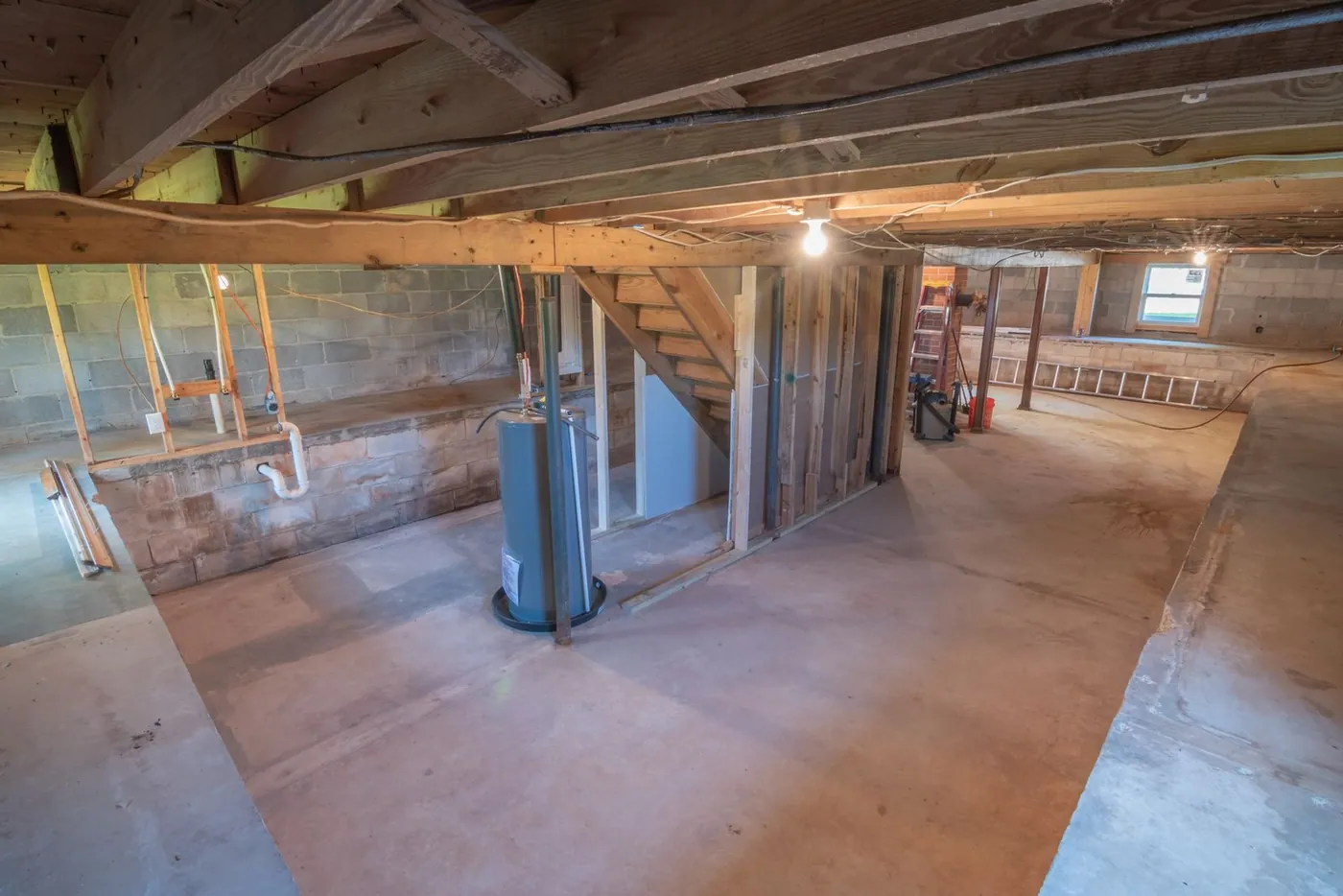
Yes, but the basement may need work before it is suitable for regular use. Moisture, temperature, ventilation, electrical provision, access, and local requirements can all affect the project. Decorating may fit into a weekend once the necessary preparation is complete.
How Do You Make a Low-Ceiling Basement Feel Better?
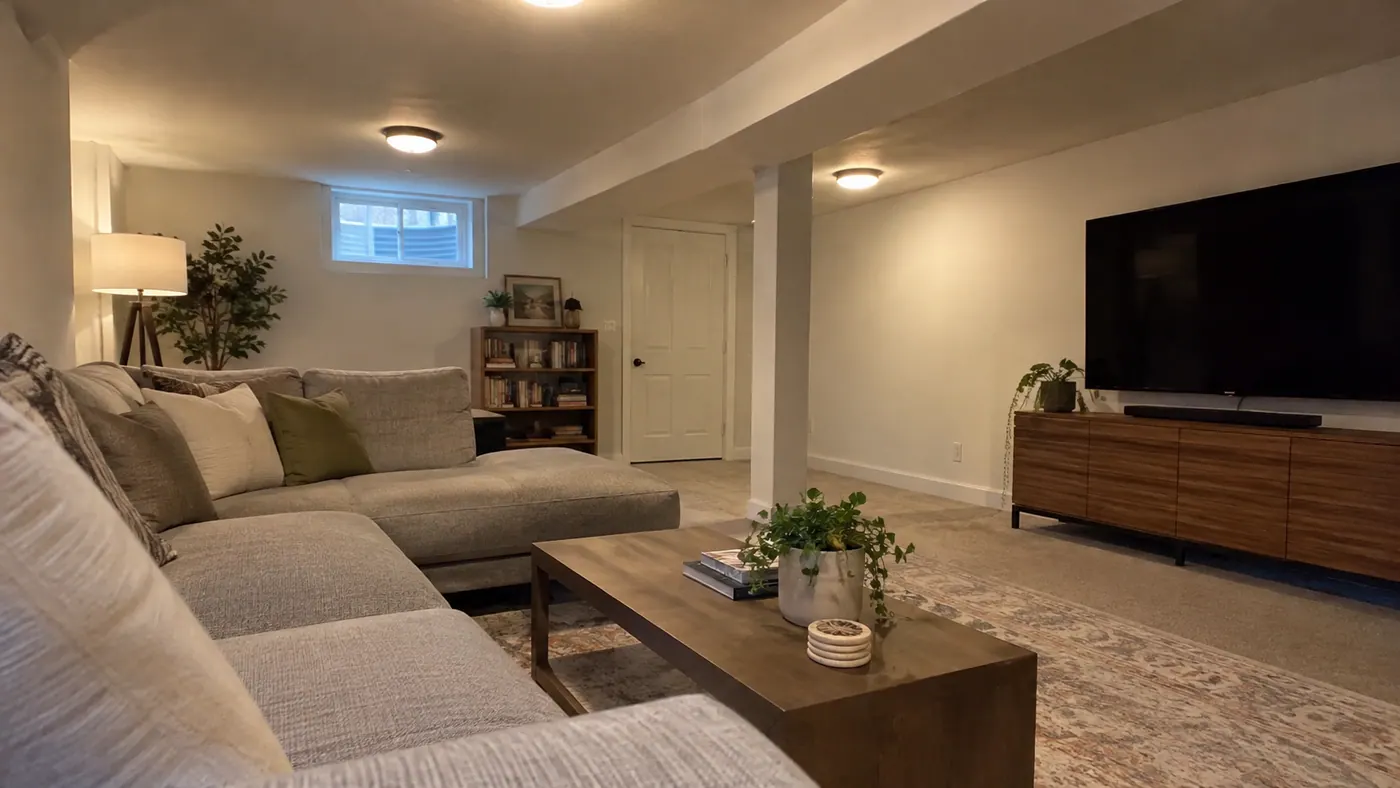
Use unobtrusive lighting, furniture that fits the room, and a ceiling finish suited to the available clearance. Keep hanging fixtures away from low routes and avoid adding unnecessary layers overhead. Preserve required access to services when planning any ceiling changes.
Is a TV or Projector Better for a Basement?
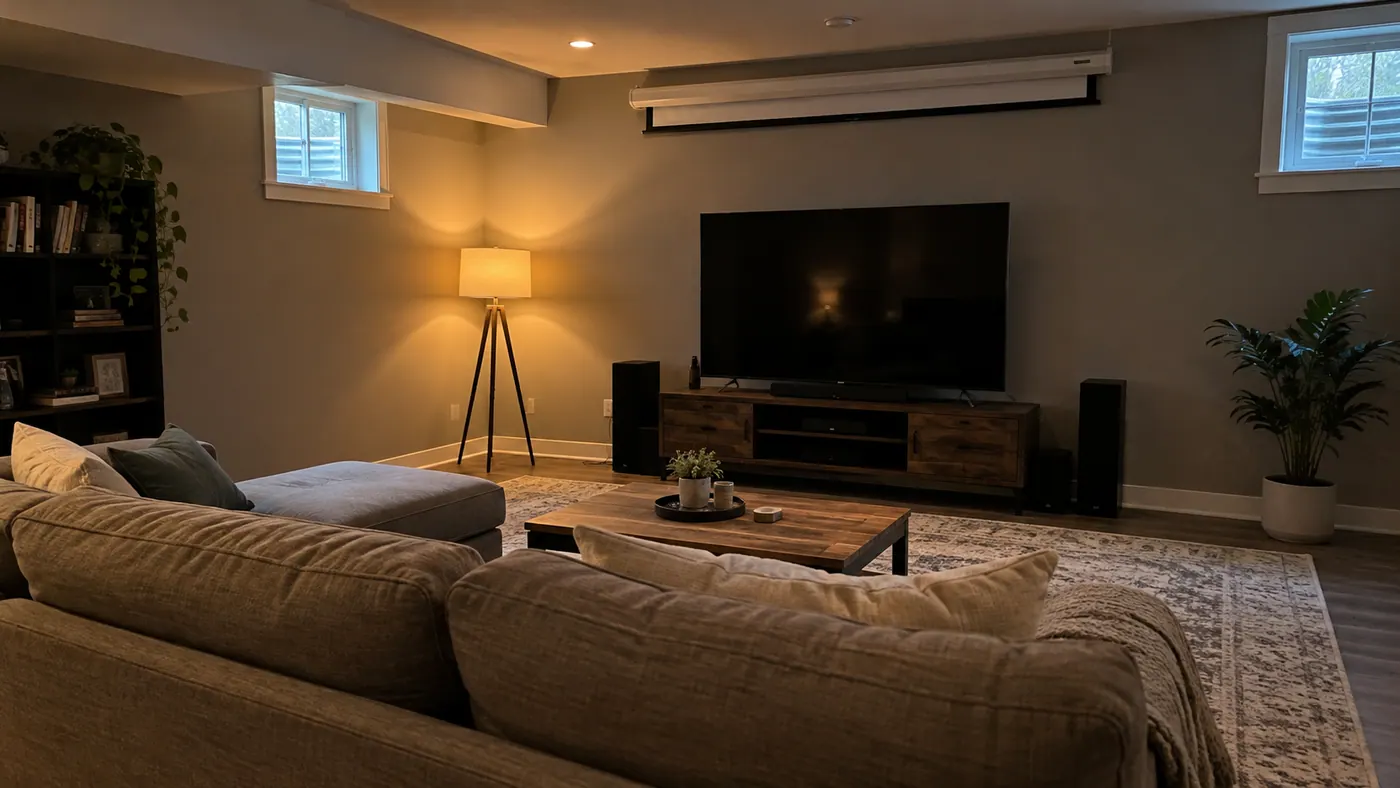
A TV generally suits convenient everyday use, while a projector can suit larger planned movie sessions in an appropriate room. For a projector, check light control, throw distance, placement, and the full equipment cost. For either choice, test the view from every regular seat.
How Much Room Does a Pool Table Need?
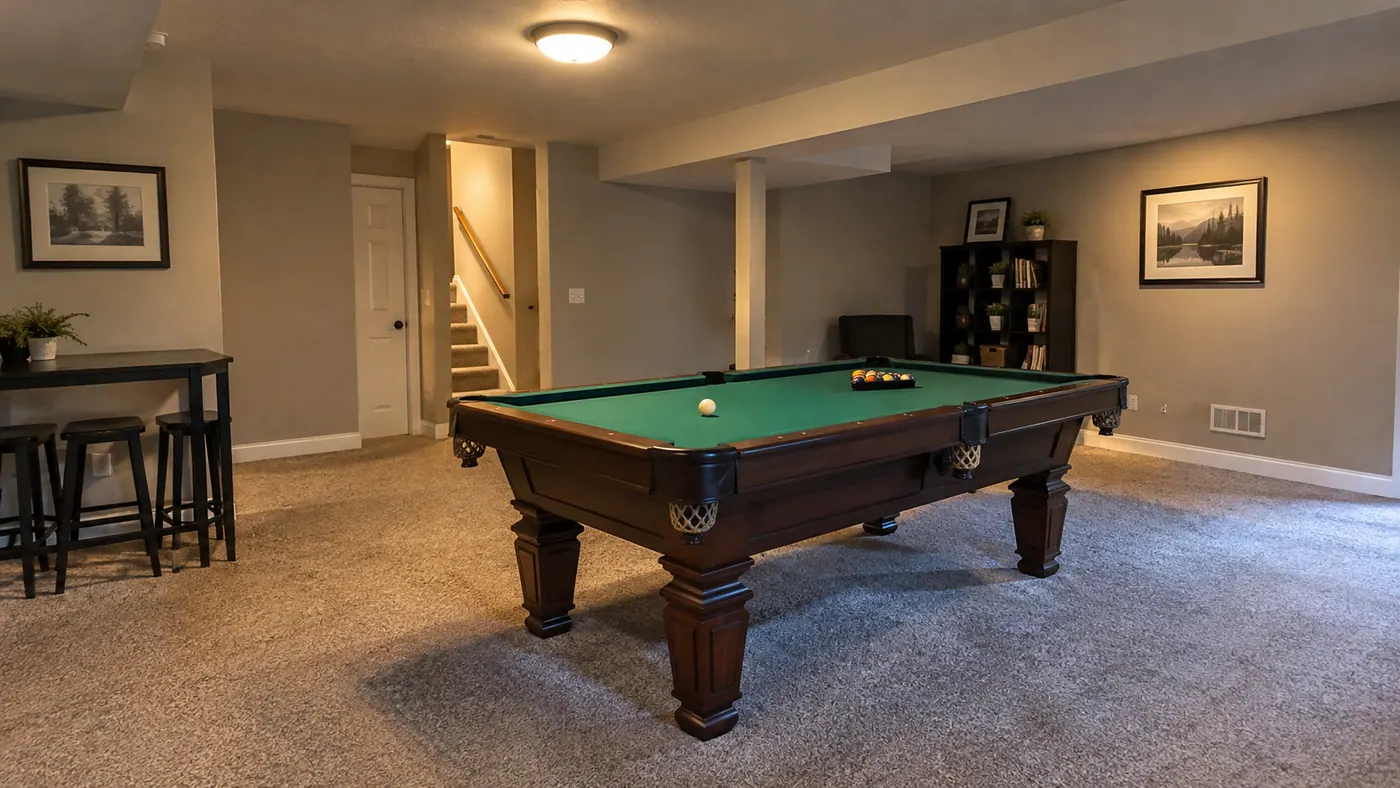
Use the table maker’s room-size guide for the playing surface and cue length you plan to use. Allow cue movement on every side, then account for furniture, columns, and walking routes. The table’s outside dimensions alone will not tell you whether the room works.
How Do You Keep Basement Noise From Reaching Upstairs?
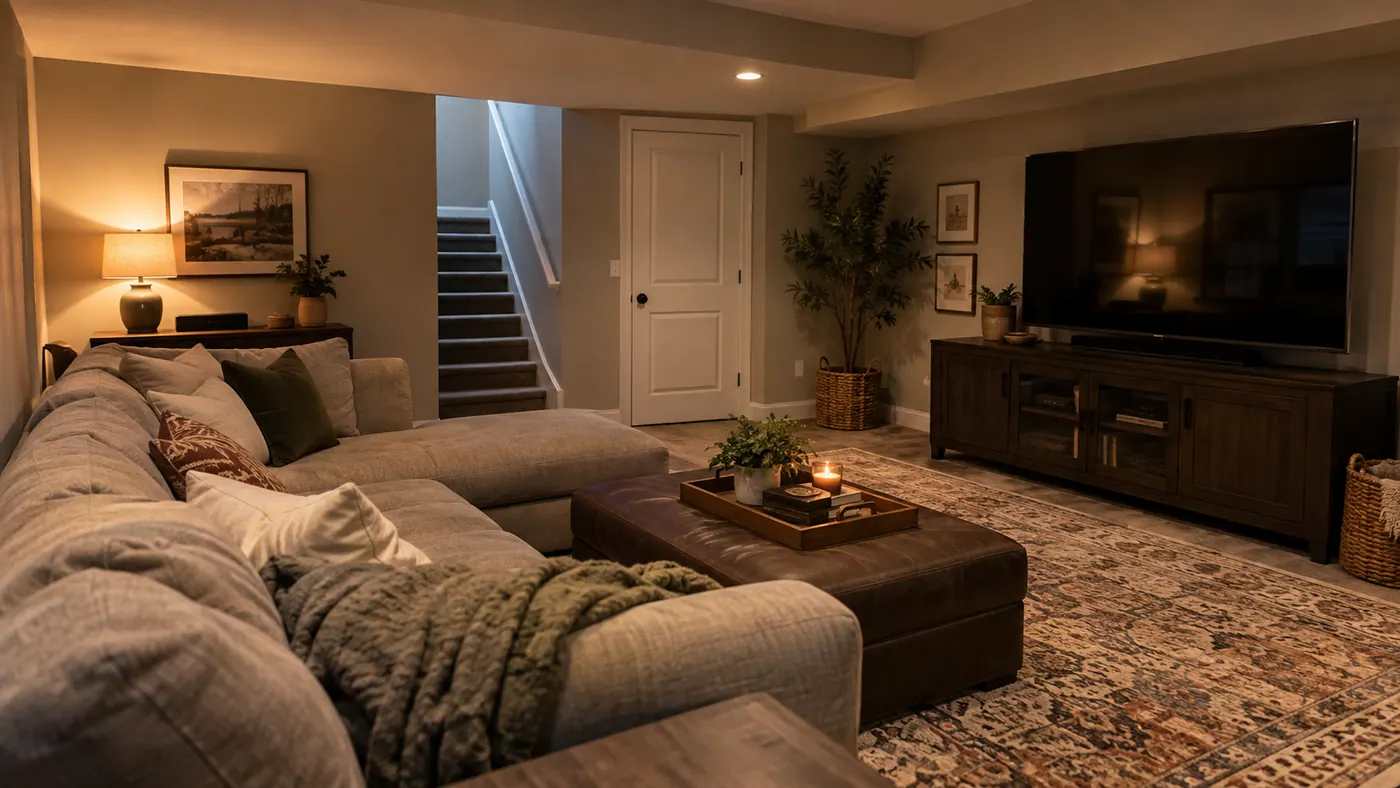
Identify the paths carrying sound, then address the ceiling, doors, gaps, or other relevant parts of the room. Acoustic treatment can improve the sound inside the basement, while sound isolation involves reducing transmission beyond it. Headphones can be a practical immediate option for late-night gaming.
Is a Dry Bar Enough, or Should You Add a Wet Bar?
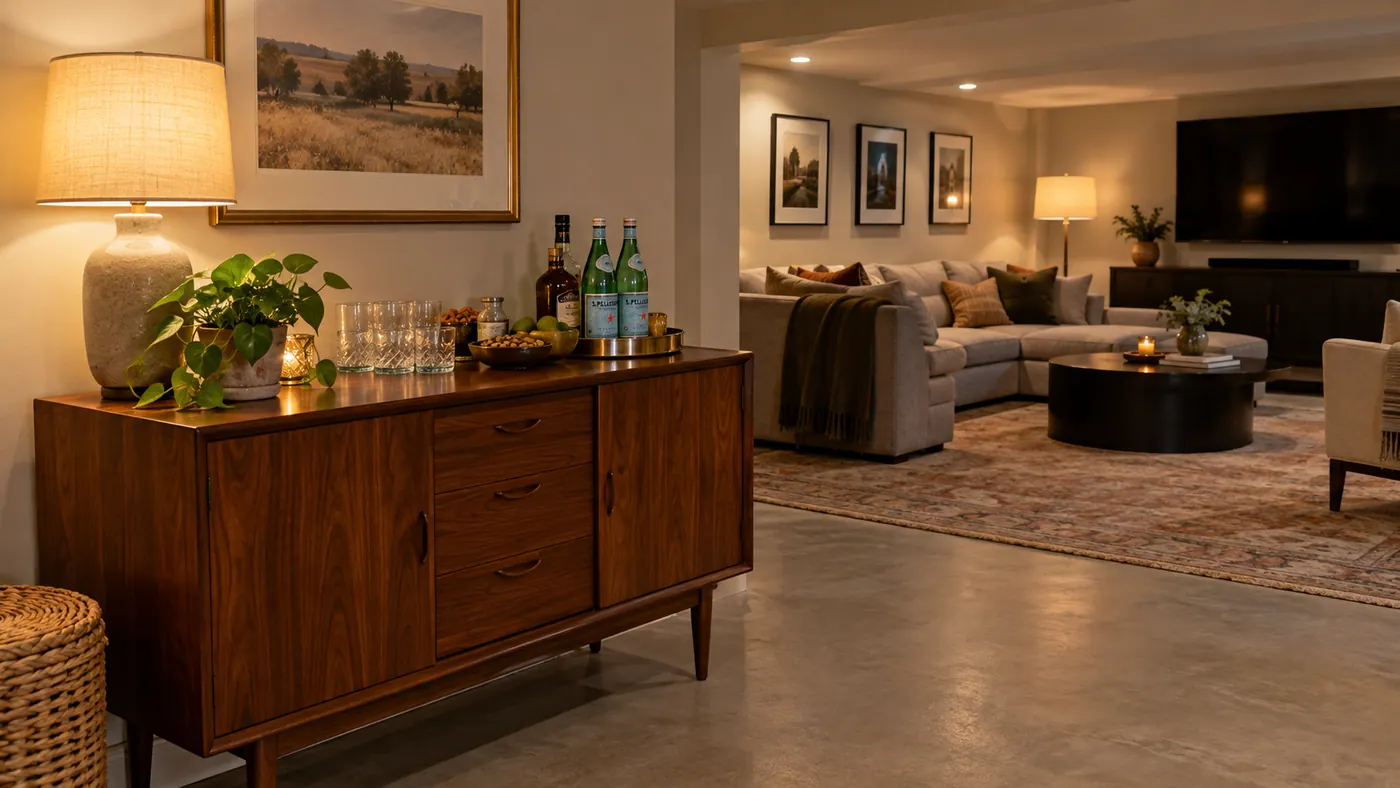
A dry bar is often enough for serving drinks and snacks; a wet bar becomes more useful when you regularly need a sink downstairs. Try a sideboard or bar cart first. If repeated trips upstairs for washing and preparation become frustrating, you will have a clearer reason to price the plumbing work.
Useful Products for Your Basement Man Cave
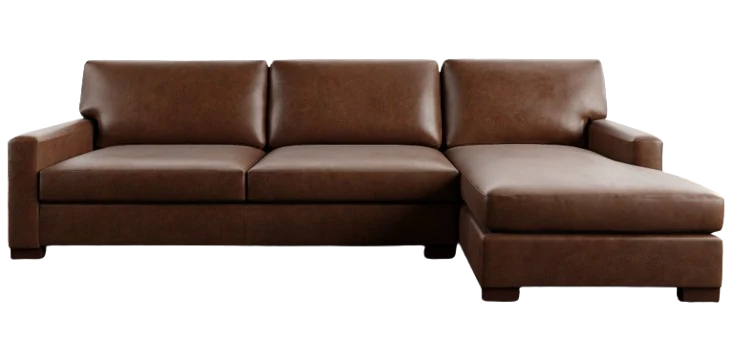 Pottery Barn Turner Square Arm Leather Chaise SectionalA larger-budget seating choice when the room and delivery route suit the configuration.
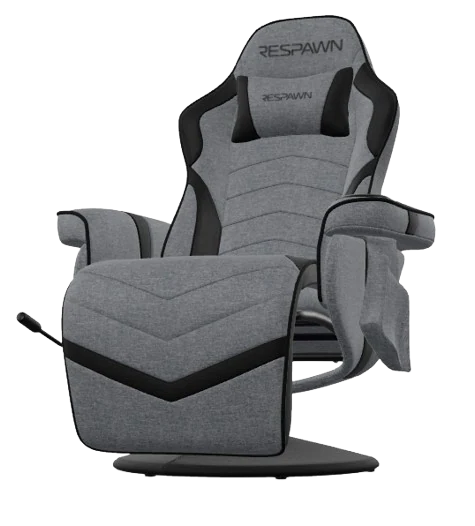 RESPAWN 900 gaming reclinerA reclining console-gaming seat with a footrest, cup holder, and side pouch.
 Newverest 70 × 35-inch poker matA roll-up playing surface for a table wide and long enough to support it.
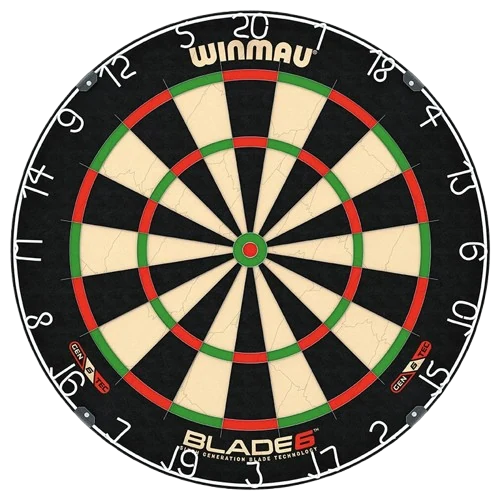 Winmau Blade 6 dartboardA wall game for a room with a clear throwing lane.
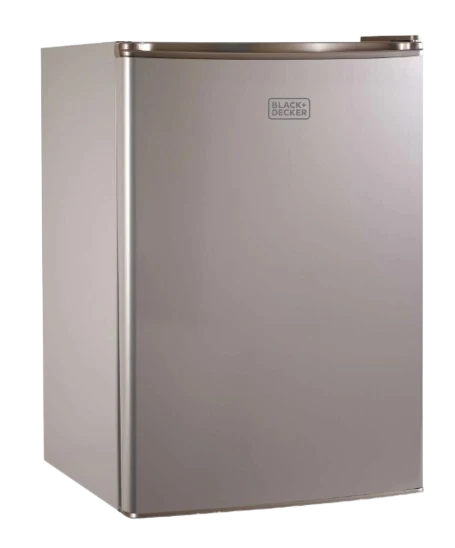 BLACK+DECKER BCRK25V compact refrigeratorCompact drinks storage with a reversible door; check ventilation clearance.
 Govee RGBIC LED stripsAdjustable accent light for a suitable shelf, screen area, or room detail.
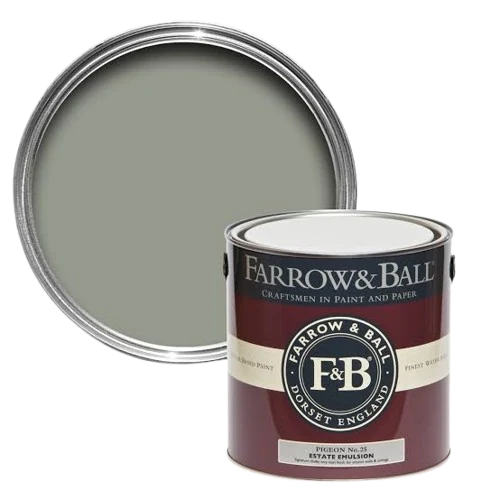 Farrow & Ball PigeonA muted blue-gray paint color to sample beside the furniture you are keeping.
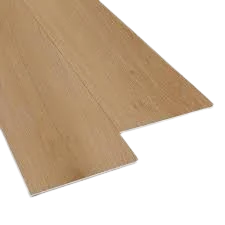 Allure Honey Butter Oak luxury vinyl plankWarm wood-look flooring for a basement that meets its installation requirements.