Japandi Style: 8 Elements That Blend Japanese & Scandinavian Design

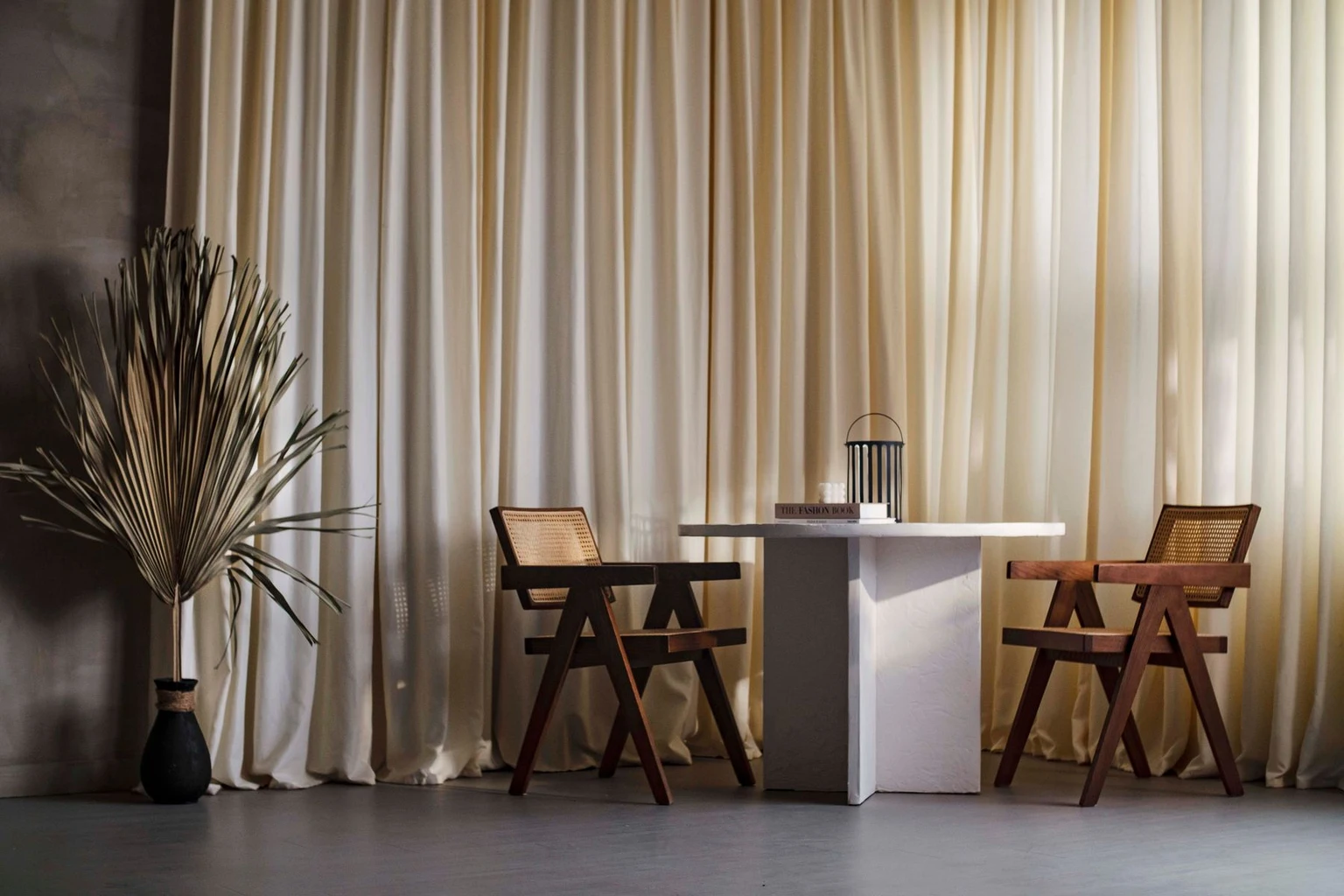
Japandi style combines Japanese and Scandinavian design, with simple furniture, natural materials, and an emphasis on comfort. Wooden tables, soft fabrics, lamps with shades, and uncluttered shelves are common features.
It’s a good choice if you want your furniture and decor to work well together without replacing everything. A favorite dresser, comfortable sofa, or handmade bowl may already fit.
The quick answer
- Warm neutrals and earthy colors help different pieces look coordinated.
- Wood, stone, ceramics, and woven fabrics add texture.
- Furniture should have simple shapes and be comfortable to use.
- Daylight and shaded lamps soften the lighting.
- Closed storage keeps everyday supplies from crowding surfaces.
- A few personal or handmade objects add character.
- Useful furniture you already own can remain part of the room.
Below are eight elements of Japandi style, with color combinations, examples for different rooms, and products that suit the look.
Japandi Style, Explained Simply
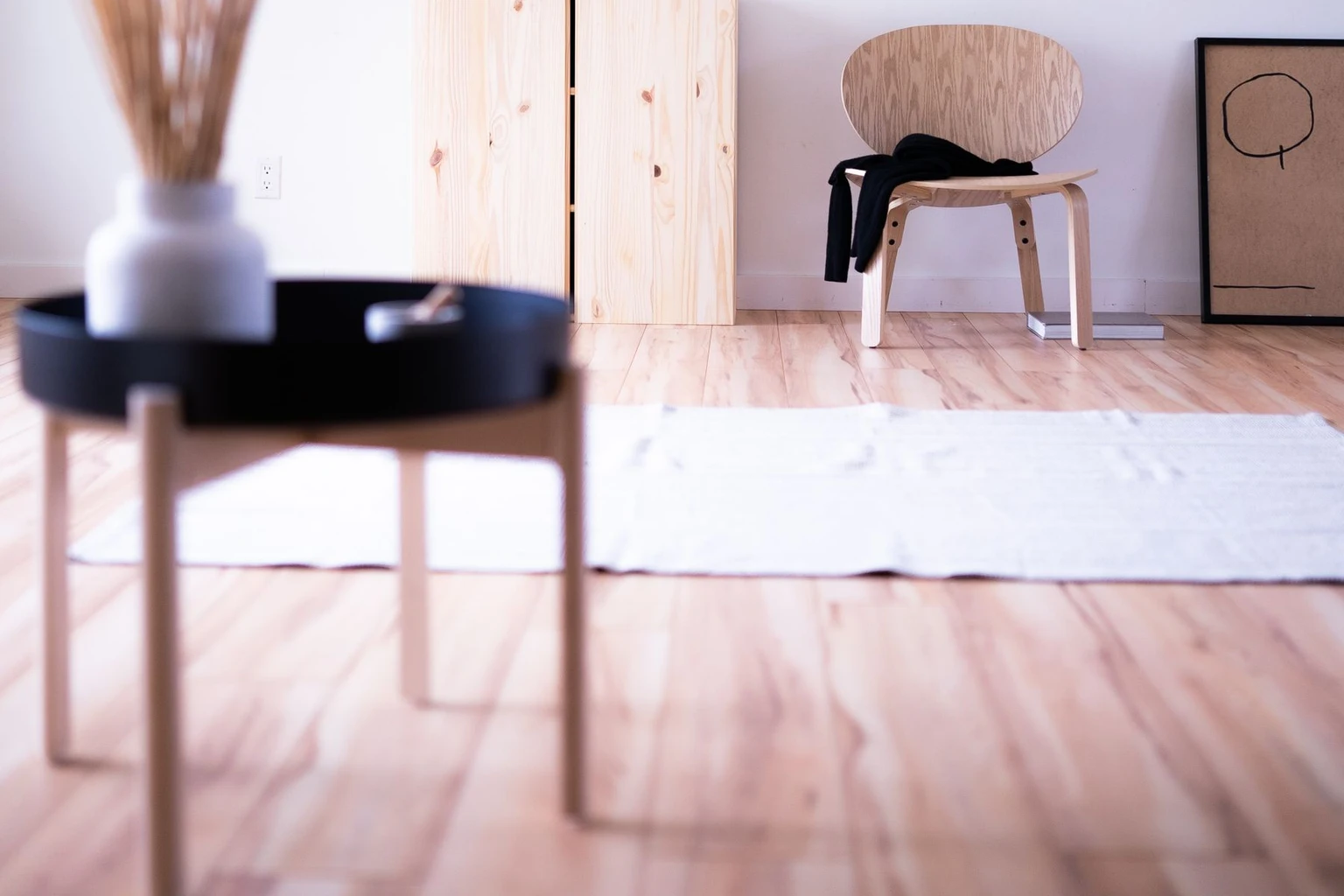
Japandi combines Japanese and Scandinavian ideas about simplicity, craftsmanship, natural materials, and comfort.
Two concepts often appear in explanations of the style. The Japanese concept of wabi-sabi includes an appreciation of impermanence and imperfect beauty. At home, that might be an uneven ceramic glaze or the wear on a wooden table you’ve used for years.
Hygge, associated with Danish and Norwegian culture, describes a sense of coziness and contentment. Comfortable seating, soft lighting, and a blanket nearby can contribute to that feeling.
These ideas help explain why a simple room can still feel welcoming. There’s space around the furniture, but there are also comfortable places to sit and familiar things to enjoy.
1. Warm Neutrals With Enough Contrast
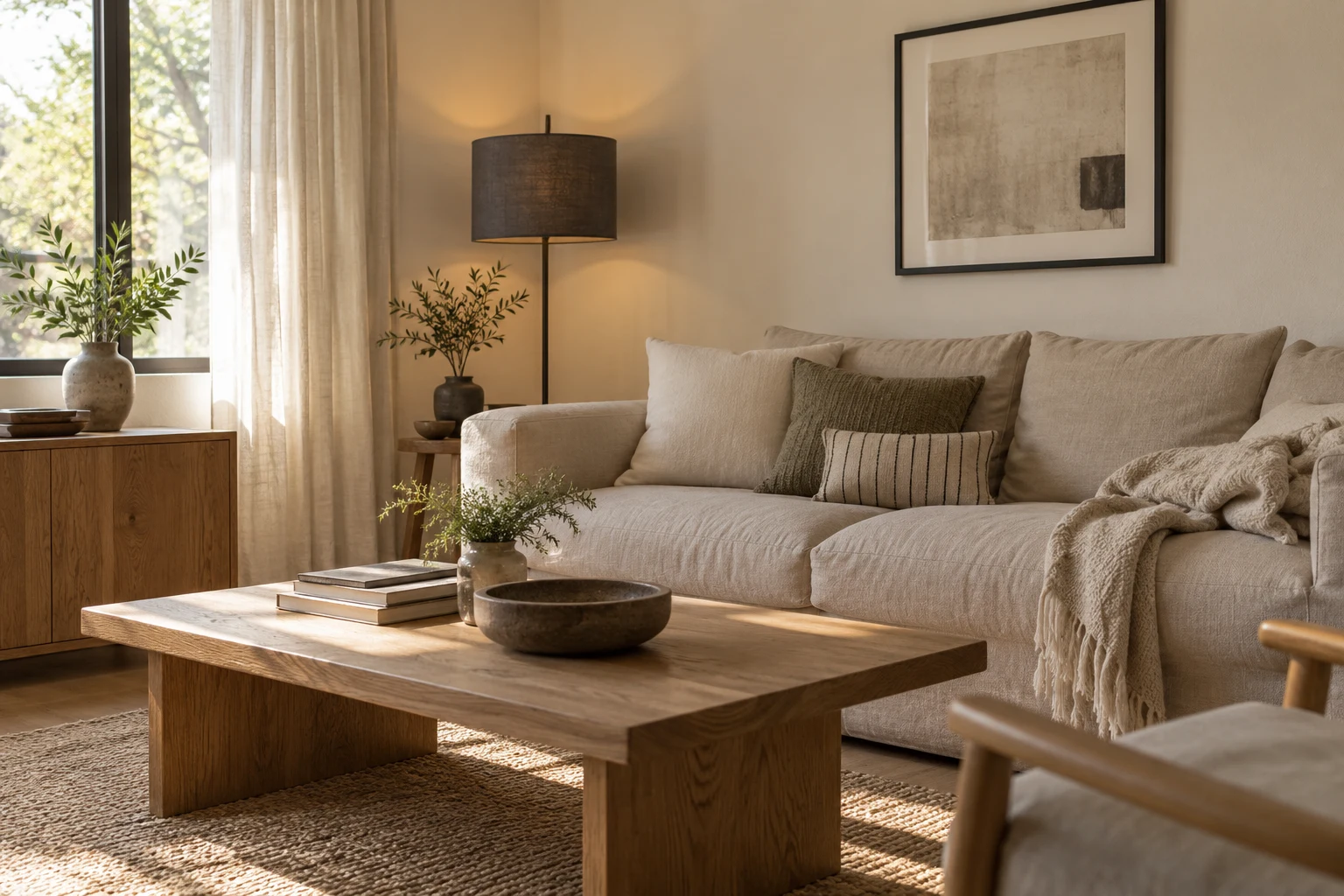
A Japandi color scheme usually combines soft neutrals, wood tones, and a few darker or earthy accents.
Cream, oatmeal, taupe, and warm white work well on larger surfaces. Brown, charcoal, muted green, and clay can add variety through smaller pieces.
The furniture and flooring you’re keeping give you a useful starting point. A walnut dresser already adds brown, while a gray sofa can work alongside warm white curtains and wooden tables.
If everything looks almost the same beige, a dark lamp or picture frame can help the individual pieces stand out.
Three Japandi Color Combinations to Try
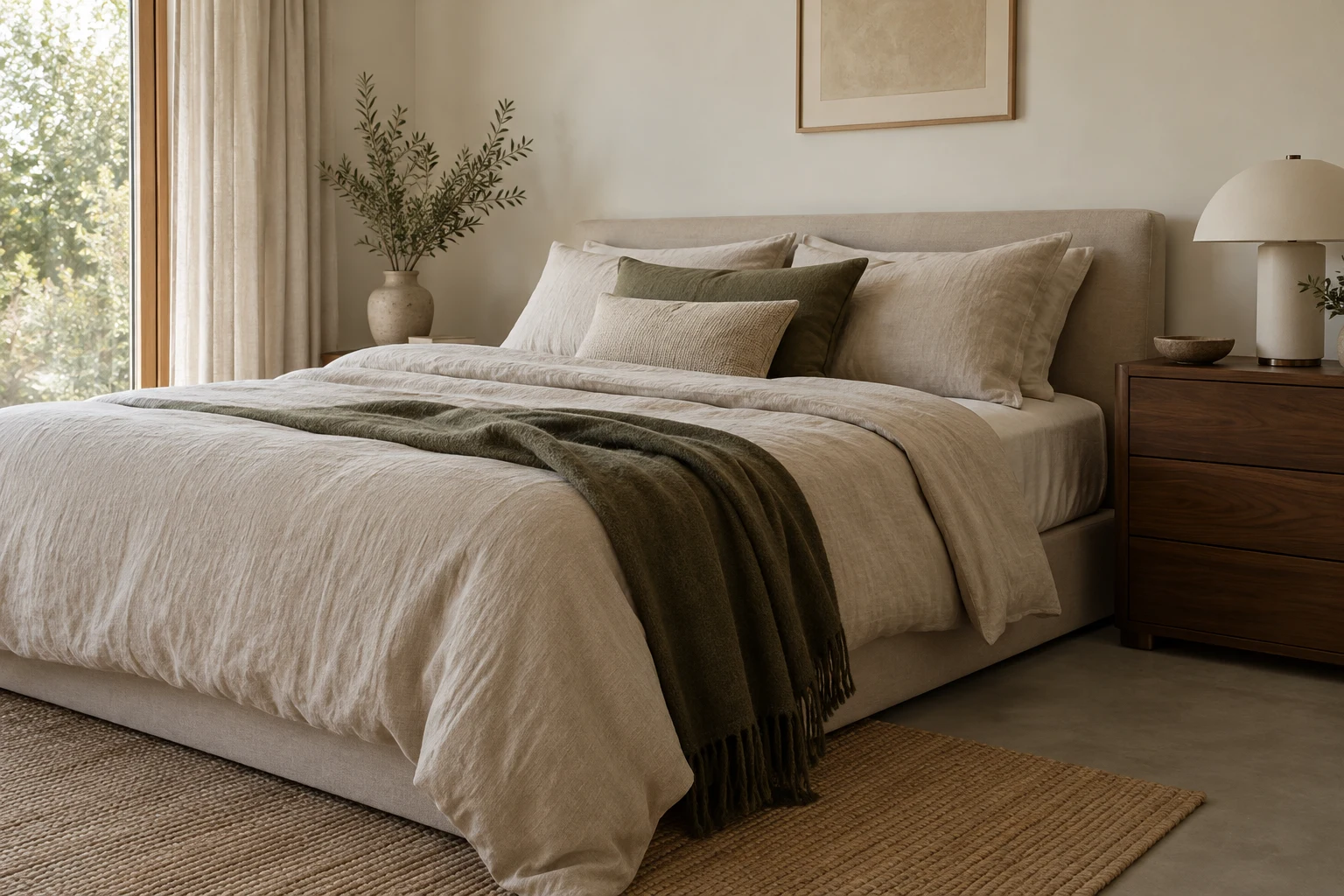
These three combinations work across furniture, fabrics, and accessories:
| Color combination | Where it works well | An easy example |
|---|---|---|
| Cream, oak, and charcoal | A light room that needs some contrast | Cream curtains, an oak table, and a charcoal lamp |
| Oatmeal, walnut, and olive | A room with darker wooden furniture | Oatmeal bedding and an olive throw beside a walnut dresser |
| Warm white, clay, and soft gray | A room with gray flooring or upholstery | Warm white walls, a clay cushion, and a textured gray rug |
The colors don’t need to match exactly. Repeating a similar shade of brown in a frame, table, and cushion helps the pieces look good together.
2. Wood With Visible Grain
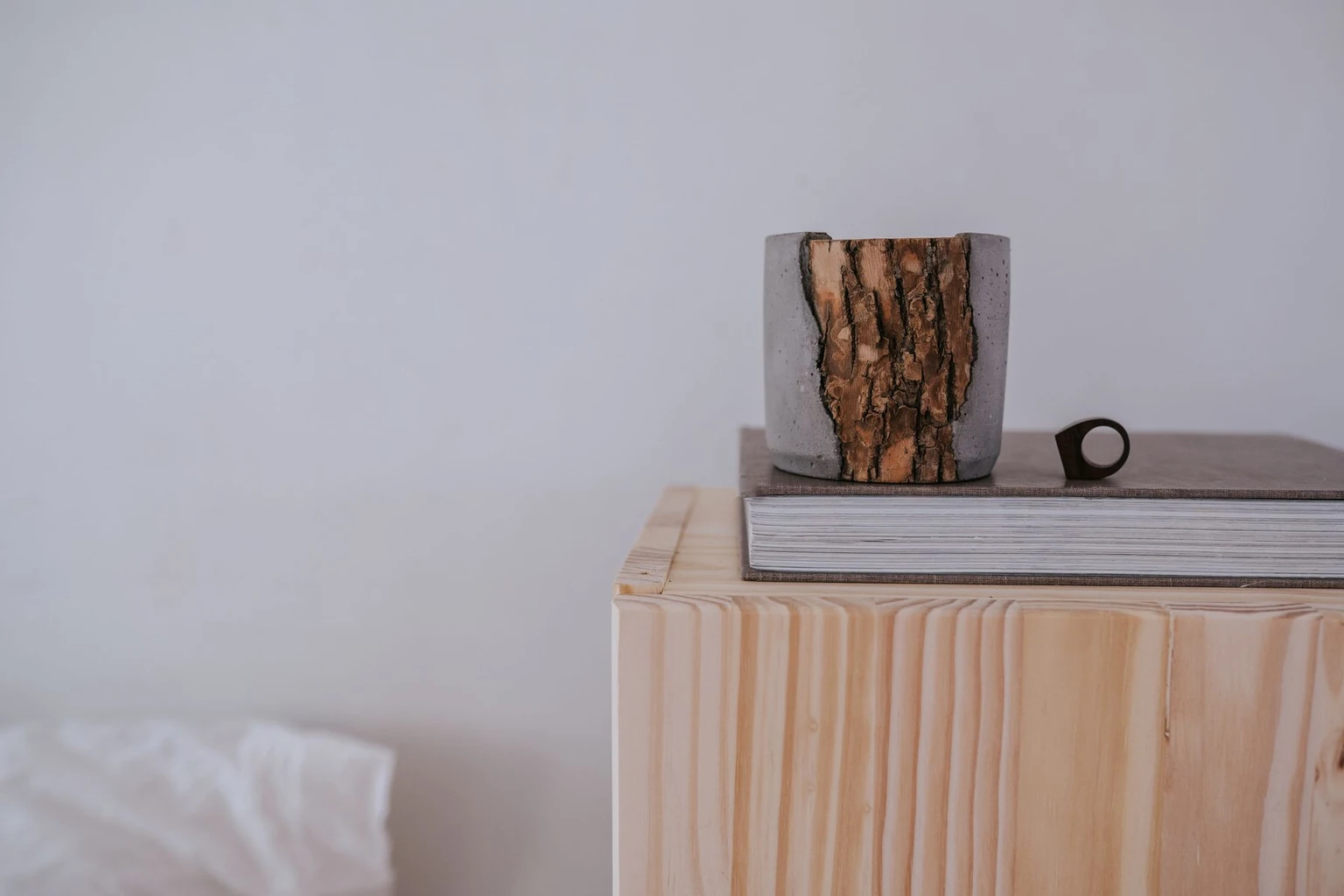
Wood adds color and natural texture. The grain on a table or cabinet can be decorative enough on its own.
Light oak, ash, pine, and darker walnut tones can all suit the style. A room can also combine light and dark wood successfully.
For example, a dark cabinet works well with pale flooring. A brown frame or chair elsewhere in the room can help tie the colors together.
If you need bedside storage, the Aitjunz Two-Drawer Nightstand Set combines an oak-look finish, curved edges, two drawers, and a charging station. The tables use engineered wood, with enough surface space for a lamp and your nightly essentials.
Their rounded edges work well beside a simple bed frame. The drawers keep cables, hand cream, and other small items within reach.
You can keep wooden furniture you already use and like. A favorite dresser still suits the style, even with a few signs of wear.
3. Simple Furniture That Feels Comfortable
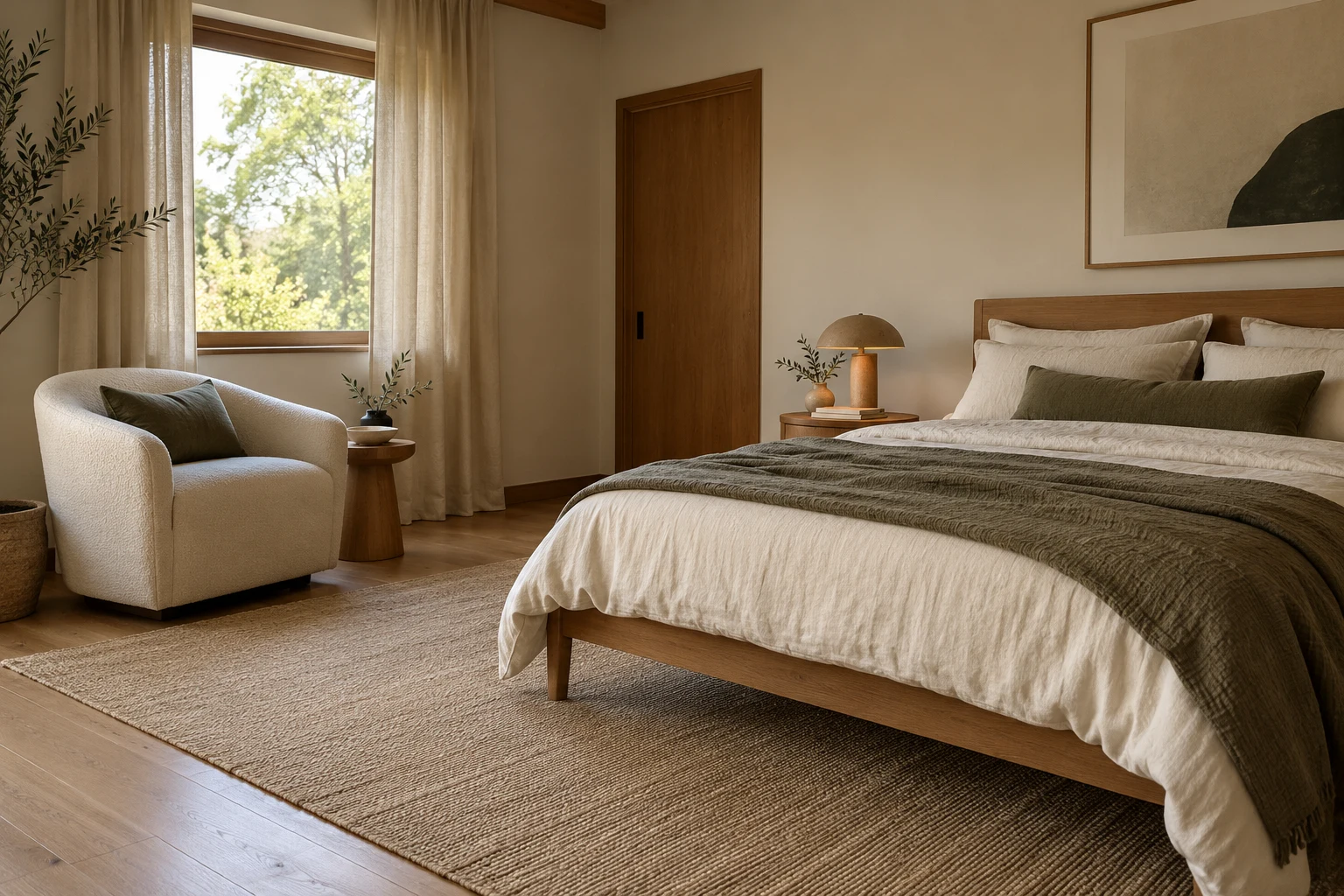
Japandi furniture usually has uncomplicated shapes and a practical purpose.
That could mean a sofa with plain upholstery, a wooden bed with a simple headboard, or a rounded coffee table without decorative trim.
Height matters just as much as appearance. A low bed should still be easy to get out of, and a chair should feel comfortable when you sit down for more than a few minutes.
Curved and straight shapes can work together. A round side table beside a rectangular sofa adds variety without introducing another color or print.
There should also be enough space to pull out chairs and open cabinet doors comfortably.
Our guide to arranging bedroom furniture explains how to place the main pieces before adding benches, chairs, or extra tables.
A useful buying rule: New furniture should solve a problem you can describe, such as missing storage, uncomfortable seating, or an awkwardly sized table.
4. Soft Fabrics With Different Textures
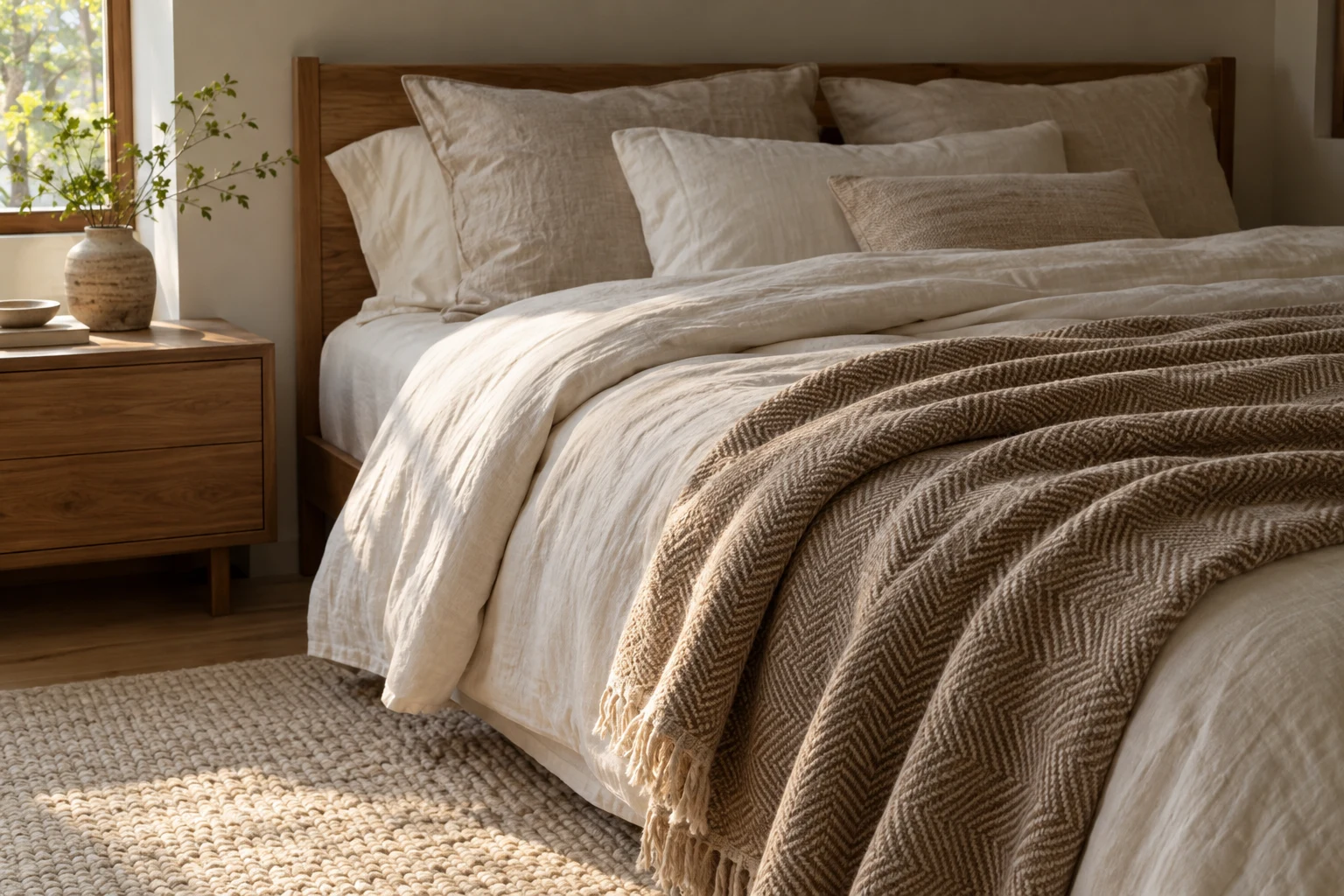
Fabrics with different textures add variety to a room, even when the colors are similar.
Linen has a relaxed, slightly uneven surface. Cotton can provide a smoother layer, while wool and woven fabrics add more noticeable texture.
You can also create the look with bedding you already find comfortable. The Bedsure Prewashed Queen Duvet Cover Set offers a plain, relaxed appearance in its “Linen” color. The fabric is polyester microfiber, and the set includes a duvet cover and two pillow shams.
For a different texture on top, the Bedsure Herringbone Cotton Blanket has a fine woven pattern and a light-brown color that works with cream, oatmeal, and wooden furniture.
Fold it across the lower part of the bed or keep it on the sofa for cooler evenings. Only add as many layers as you need to stay comfortable.
A rug adds another texture underfoot. The Shilucheng 8 × 10-Foot Wool-Blend Rug combines 80% wool and 20% cotton in beige and white. It can go beneath a sofa and coffee table or under a bed, with part of the rug extending beyond the furniture.
For bedding ideas, our guide to layering a bed shows how a few folds and contrasting fabrics can create a fuller appearance.
5. Daylight and Softer Evening Lighting
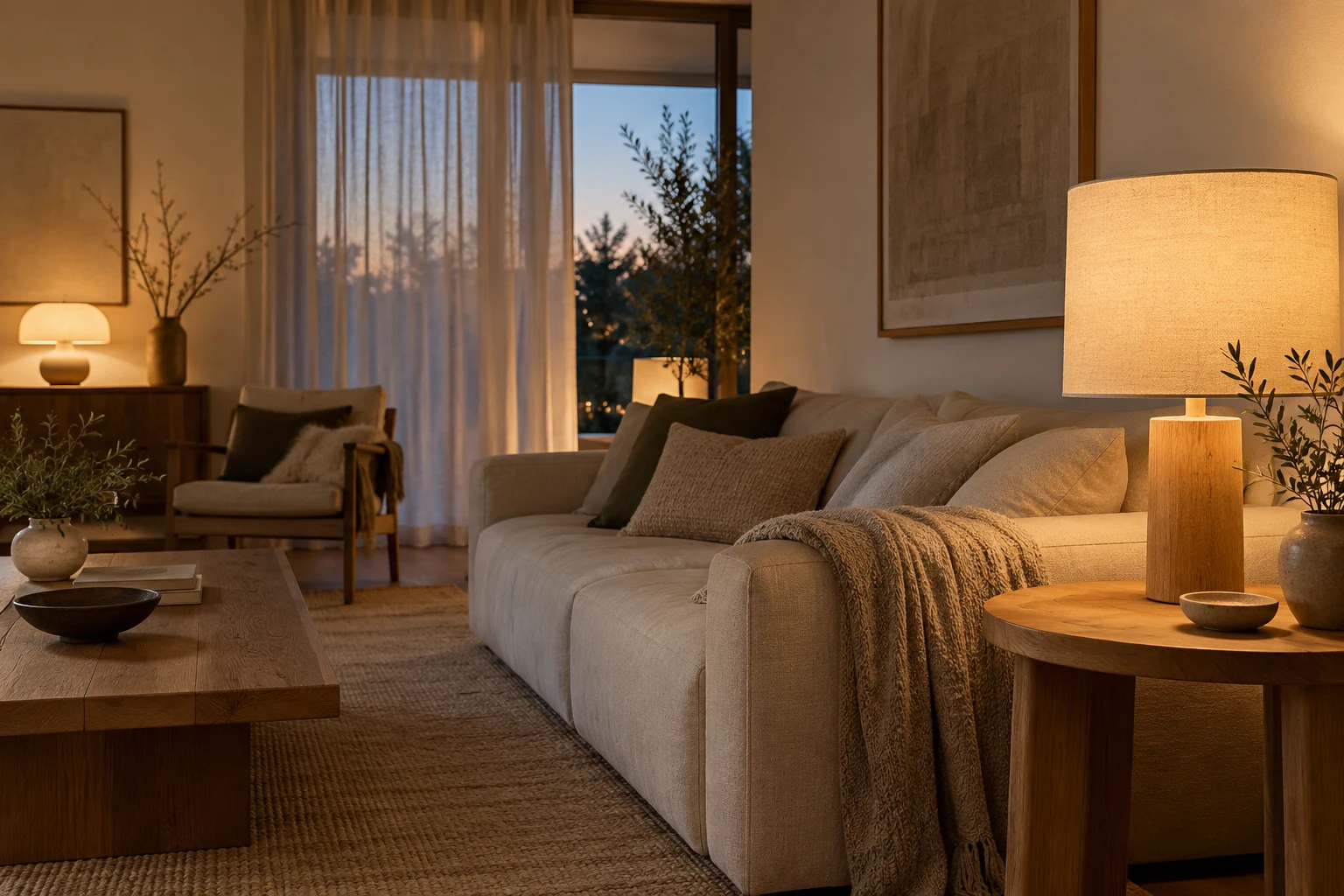
A Japandi room needs soft daylight, gentle light for relaxing, and brighter light for reading.
During the day, light-filtering curtains soften strong sunlight. A rod that extends beyond both sides of the window lets you pull the curtains clear of the glass.
Bedrooms may also need an opaque or blackout layer for privacy and sleep. Our guide to choosing bedroom curtains explains the options.
After sunset, a shaded lamp near the bed or sofa provides gentler lighting. Another lamp across the room can brighten an area the first one doesn’t reach.
The UCHENTON Small Bedside Table Lamp pairs a wooden base with a round beige fabric shade. It looks good with plain bedding, ceramic accessories, and wooden furniture.
Paper, fabric, and opal-glass shades can all work with this style. For reading, an adjustable lamp that directs enough light onto the page is also useful.
Our layered bedroom lighting guide explains how to combine general, reading, and decorative lighting.
6. Closed Storage and Less on Display
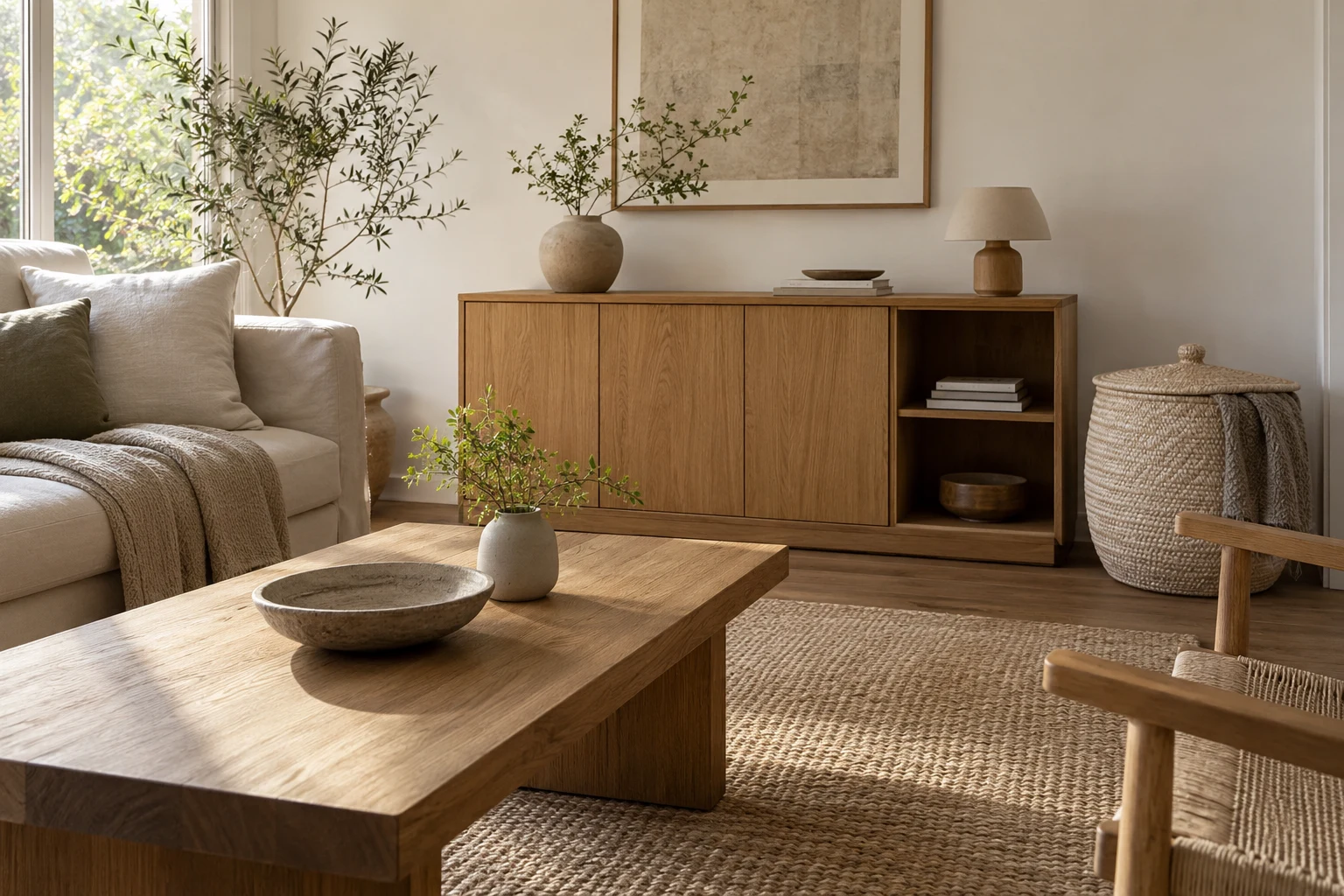
Closed storage helps by reducing the number of small items on display.
The most convenient arrangement puts things near where you use them. Bedside drawers can hold cables and hand cream, while a living-room cabinet can store electronics and paperwork.
For spare blankets and other larger items, the Best Choice Products Lidded Hyacinth Storage Basket adds a woven texture in a whitewashed finish. It provides covered storage for throws or other belongings beside a sofa, cabinet, or bed.
A few open shelves can still display books and favorite objects. Leaving gaps between groups makes each one easier to see.
If a shelf looks crowded even after you’ve organized it, remove a few things before buying more containers. There may simply be too much on that shelf.
Our guide to reducing visual clutter covers crowded surfaces, visible cables, and everyday supplies in more detail.
7. Ceramics, Stone, and Personal Details
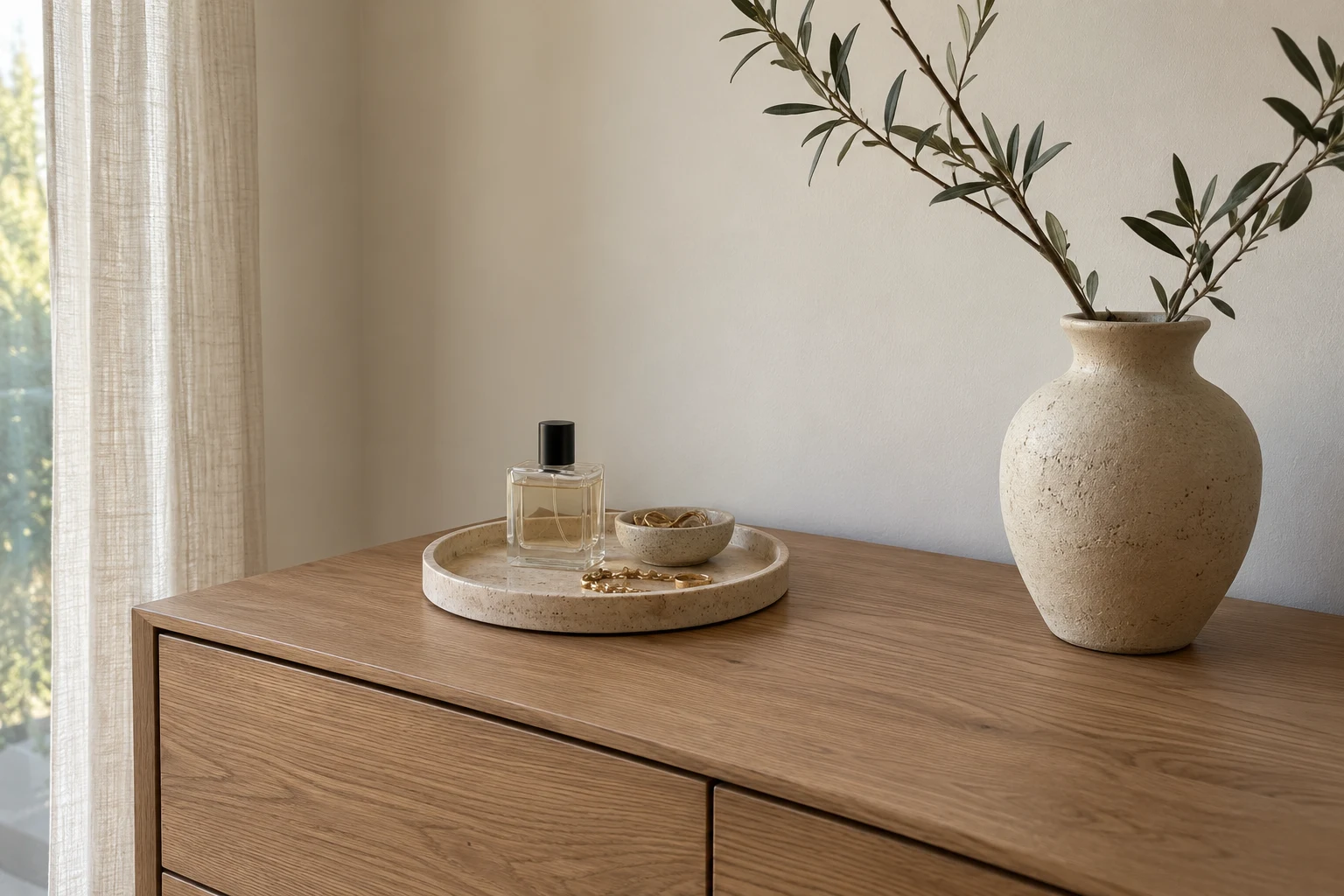
A few useful or meaningful objects give a Japandi room personality.
That could be a bowl from a local market, a framed photograph, or a vase you use every week. Personal pieces can work alongside simple furniture without matching one another perfectly.
For a larger decorative piece, the Vanselia 10-Inch Ceramic Vase has a rustic appearance that suits a cabinet, dining table, or dresser. A few flowers or leafy branches are enough to fill it without making the table look crowded.
Smaller essentials can stay together on the WORHE Round Stone Vanity Tray. Its beige color works with warm neutrals, and the round shape adds contrast beside rectangular furniture.
A tray is useful for jewelry, perfume, or a few everyday items. It still needs some empty space around it so the surface stays easy to use.
Handmade ceramics often have variations in shape and glaze. Older objects may show wear from use. You can display these pieces as they are, without buying new accessories.
8. A Little Greenery and a View Outside
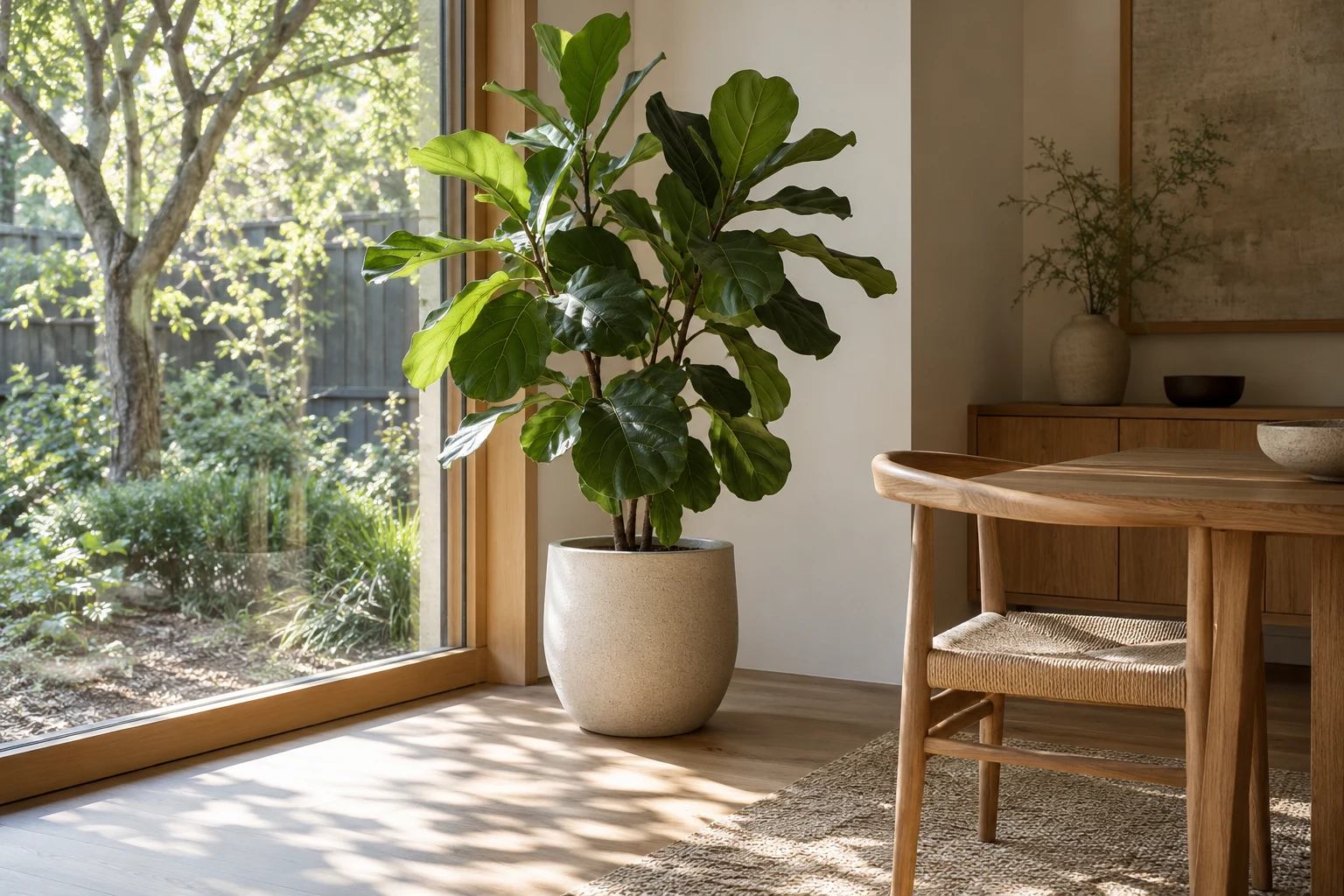
A plant or an outdoor view brings natural shapes and color into the room.
One plant may be enough in a small room. It needs enough daylight and space to grow.
A simple planter works well beside wood and plain fabrics. A plant stand can raise it closer to the light from a window.
If you prefer an occasional change, flowers or branches in a vase can add greenery without another plant to maintain.
If a tall cabinet blocks the view from your window, moving it may let you see more of the trees or garden outside.
How These Elements Work in Different Rooms
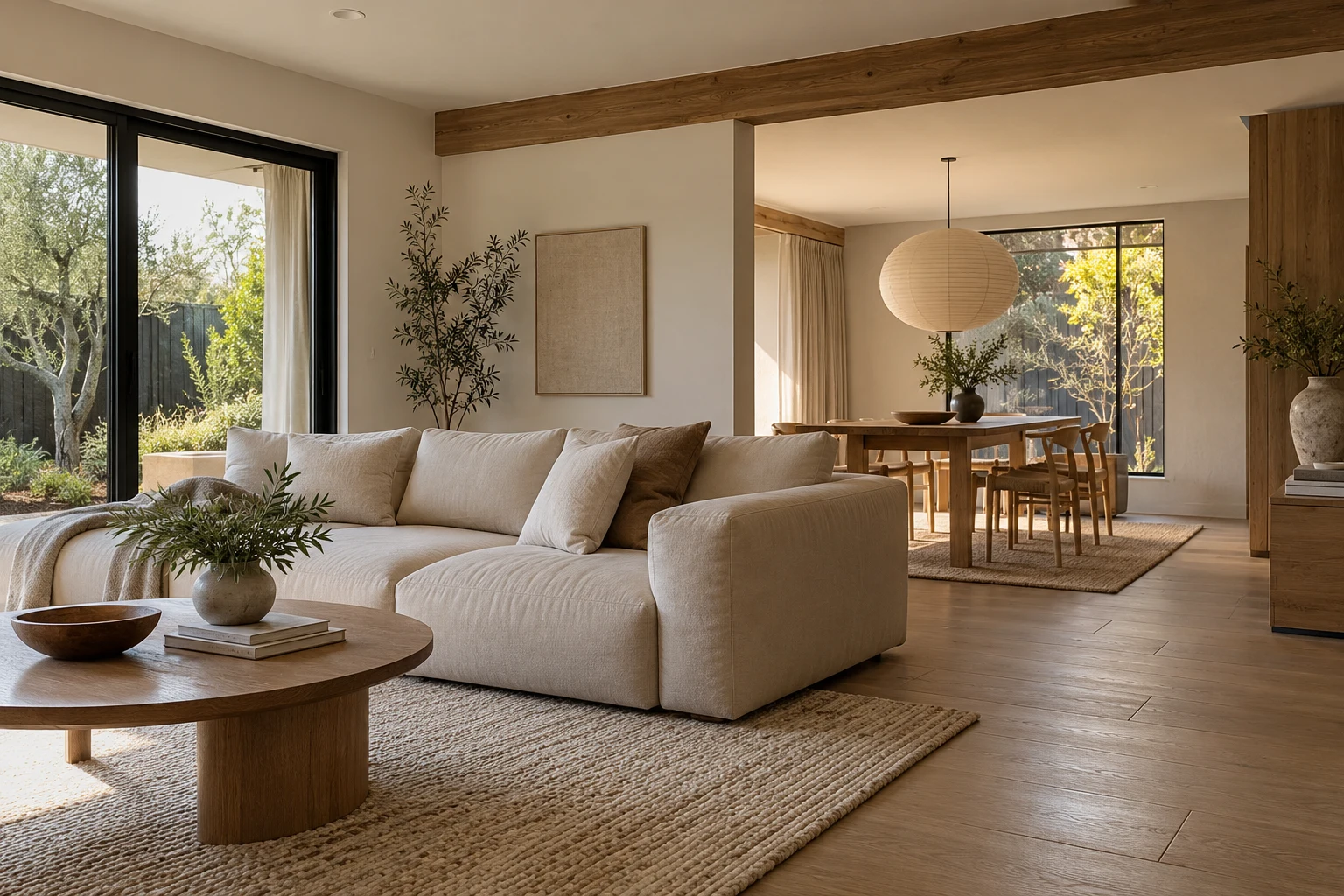
These ideas work in different rooms. In each one, focus on comfortable furniture, convenient storage, and enough space to move.
A Japandi Bedroom
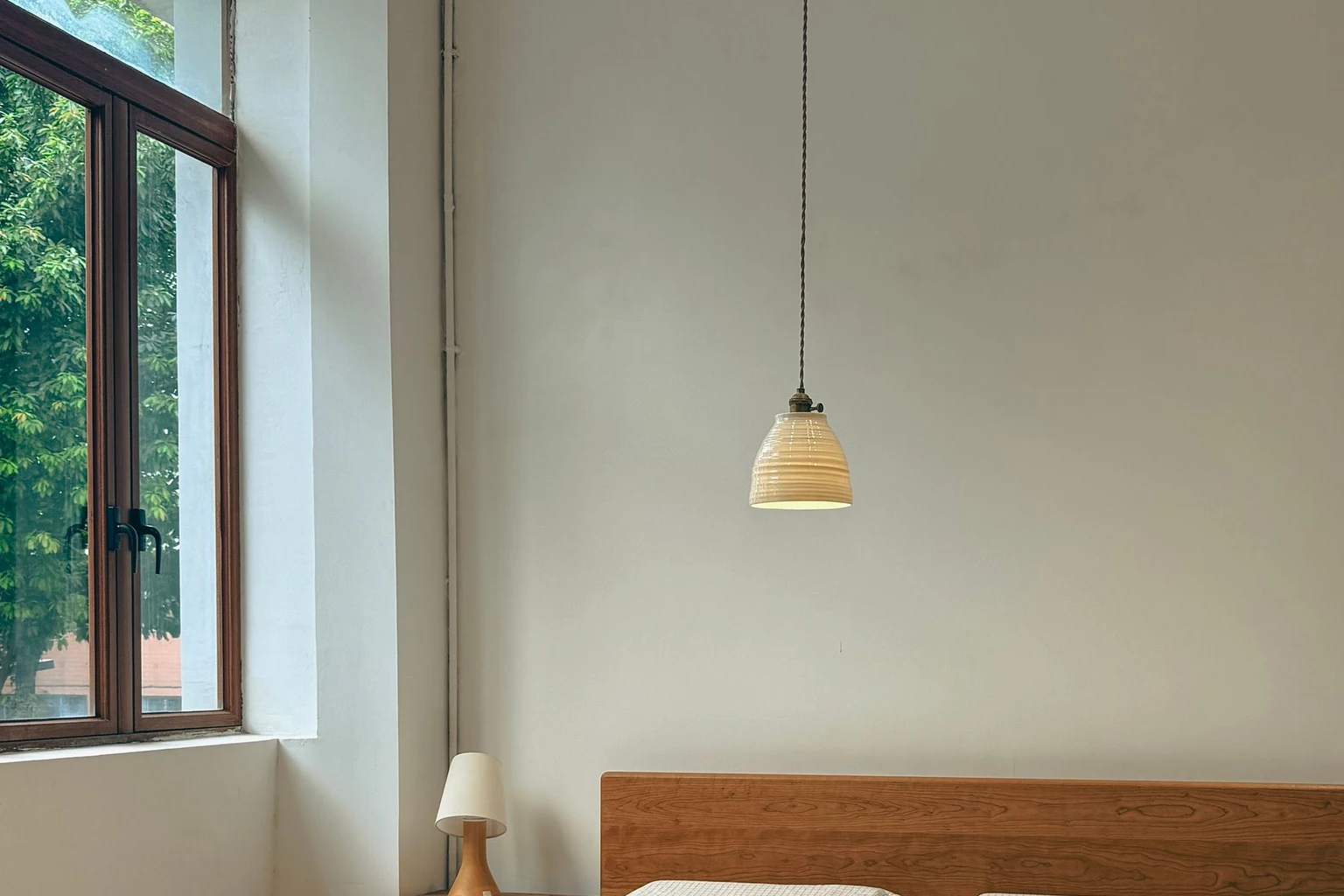
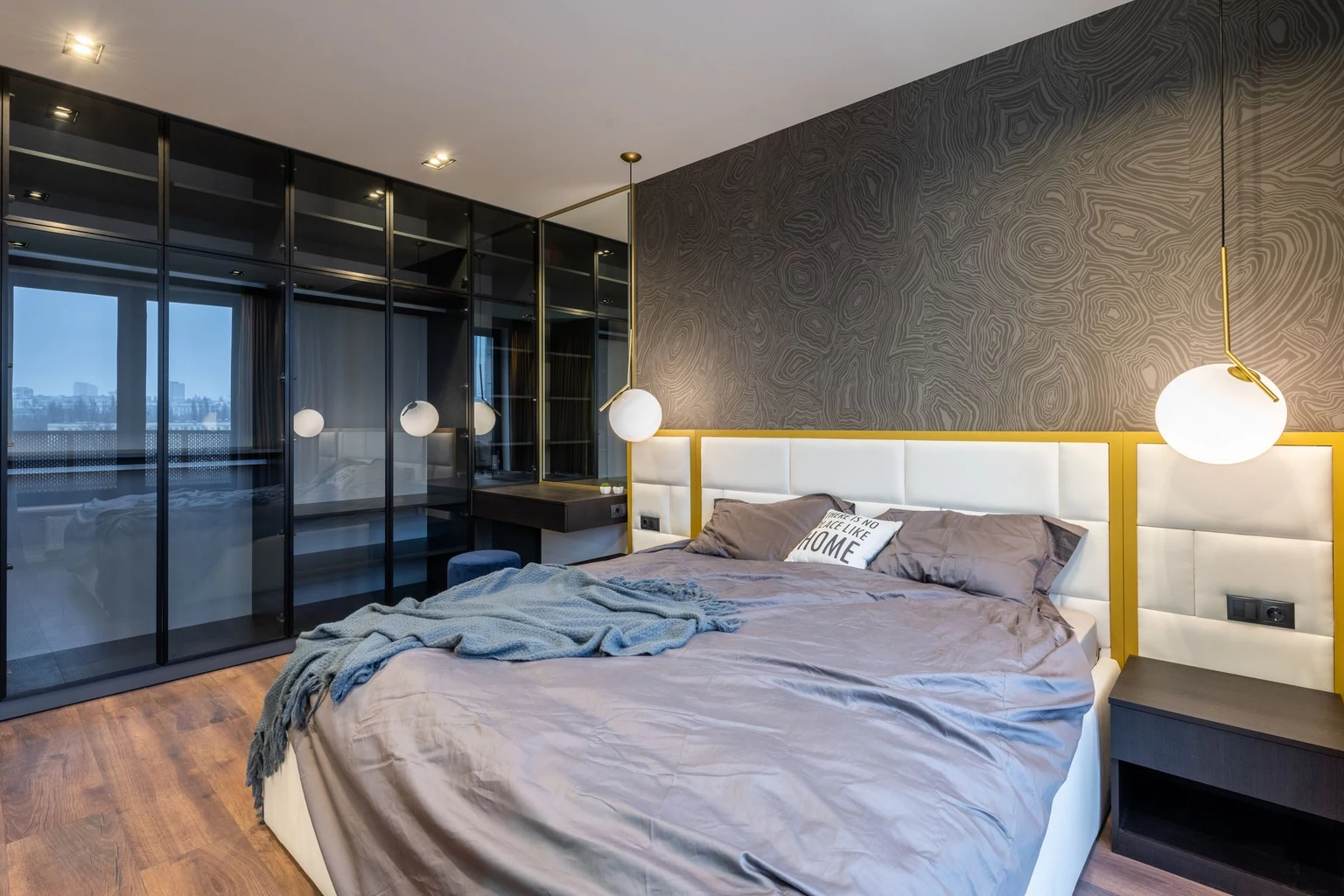
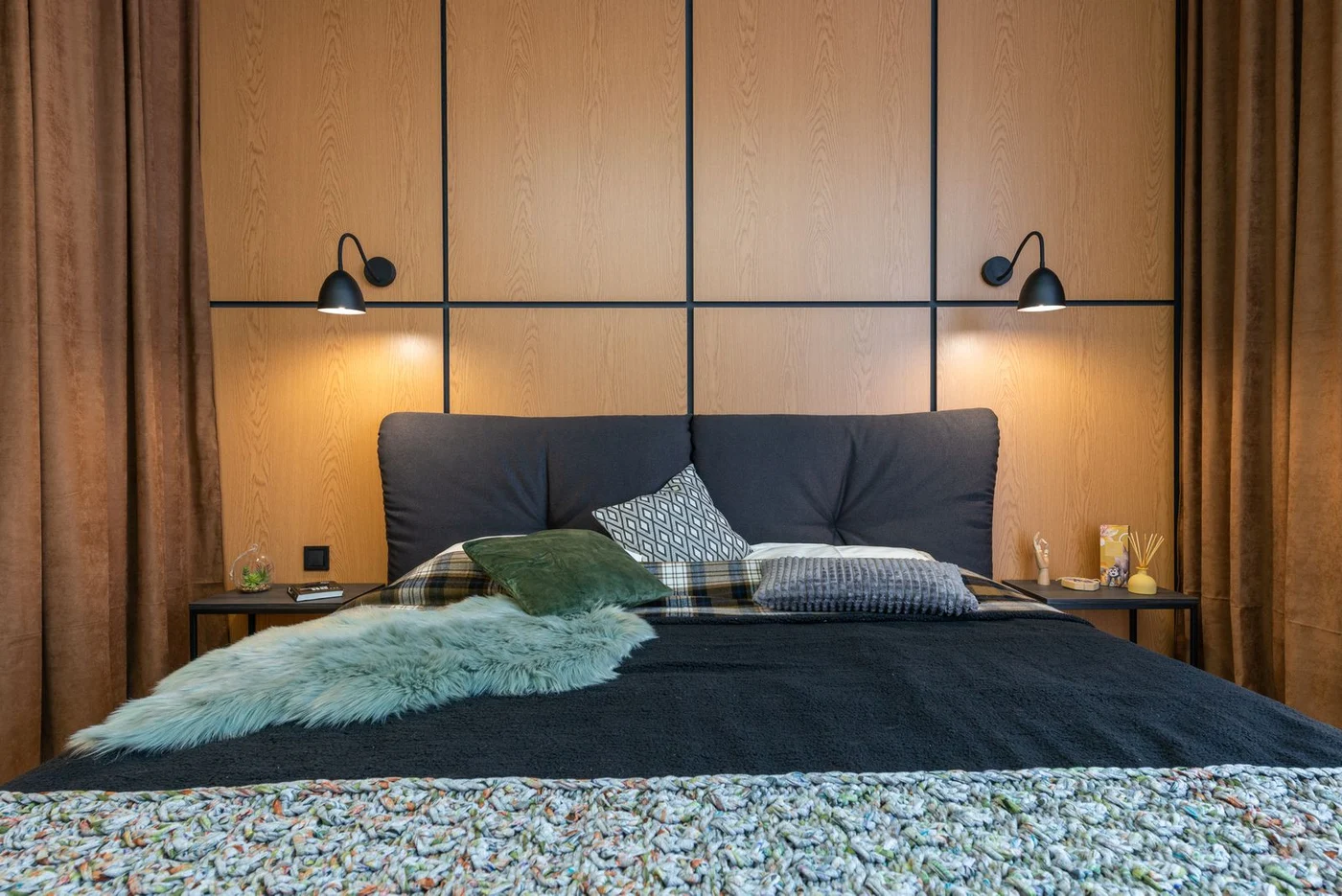
A Japandi bedroom needs a comfortable bed, storage within reach, curtains for privacy, and light for reading and relaxing.
Plain bedding in a mix of soft fabrics adds comfort and texture. A bedside drawer keeps smaller belongings nearby, while a shaded lamp offers gentler light in the evening.
A headboard, one piece of art, or a muted wall color may be all the decoration you need behind the bed.
In a smaller bedroom, extra seating is optional. Our small-bedroom guide offers ways to make better use of the available space.
A Japandi Living Room
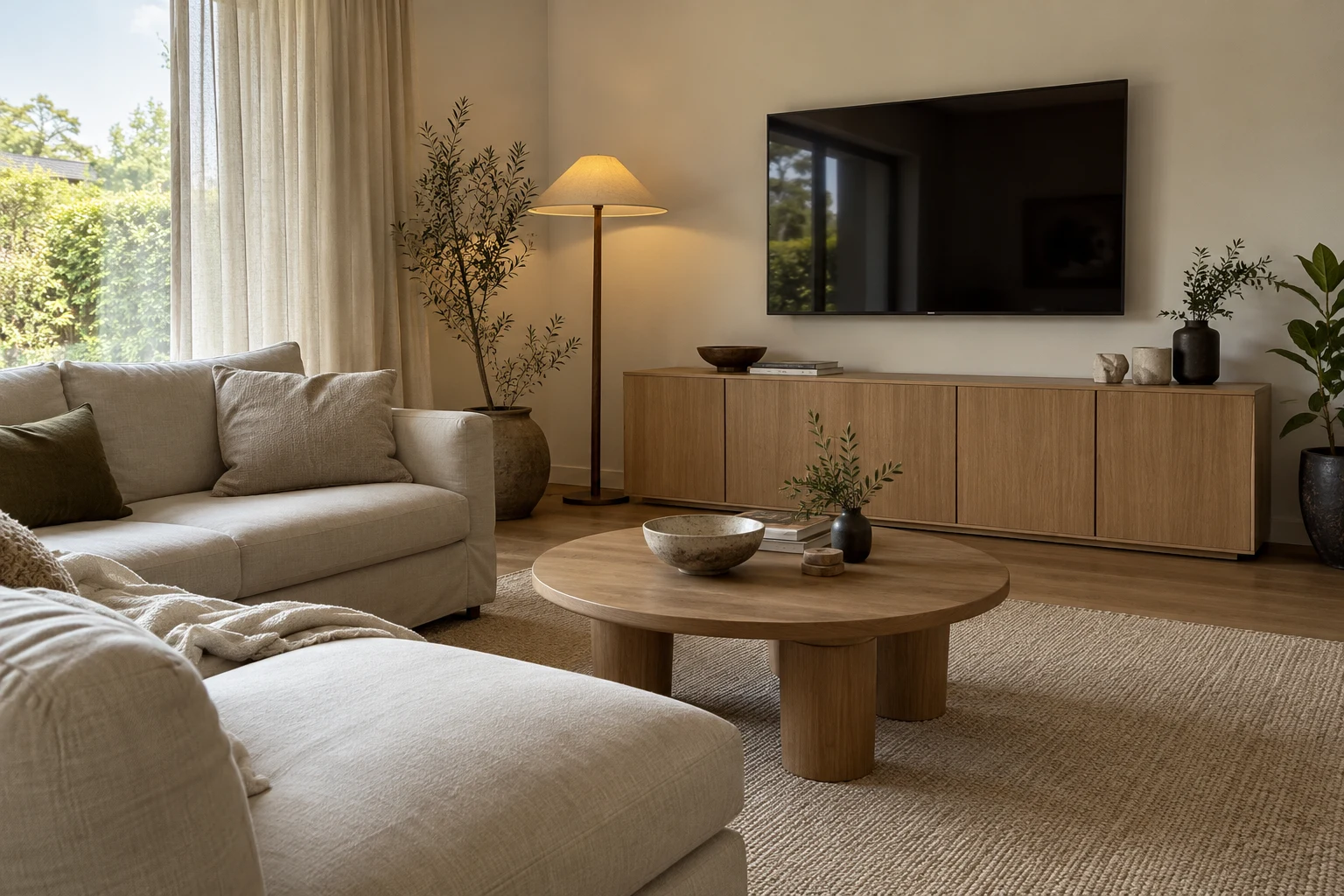
A Japandi living room works well with comfortable seating, a practical table, a rug, lamps, and covered storage.
Cushions and a blanket make the sofa more comfortable. A cabinet can store electronics and paperwork, while a basket can hold the blanket when you’re not using it.
A television can fit into a Japandi living room, too. A simple TV stand and cables tucked neatly behind it help the area look tidy.
A Small Apartment or Rental
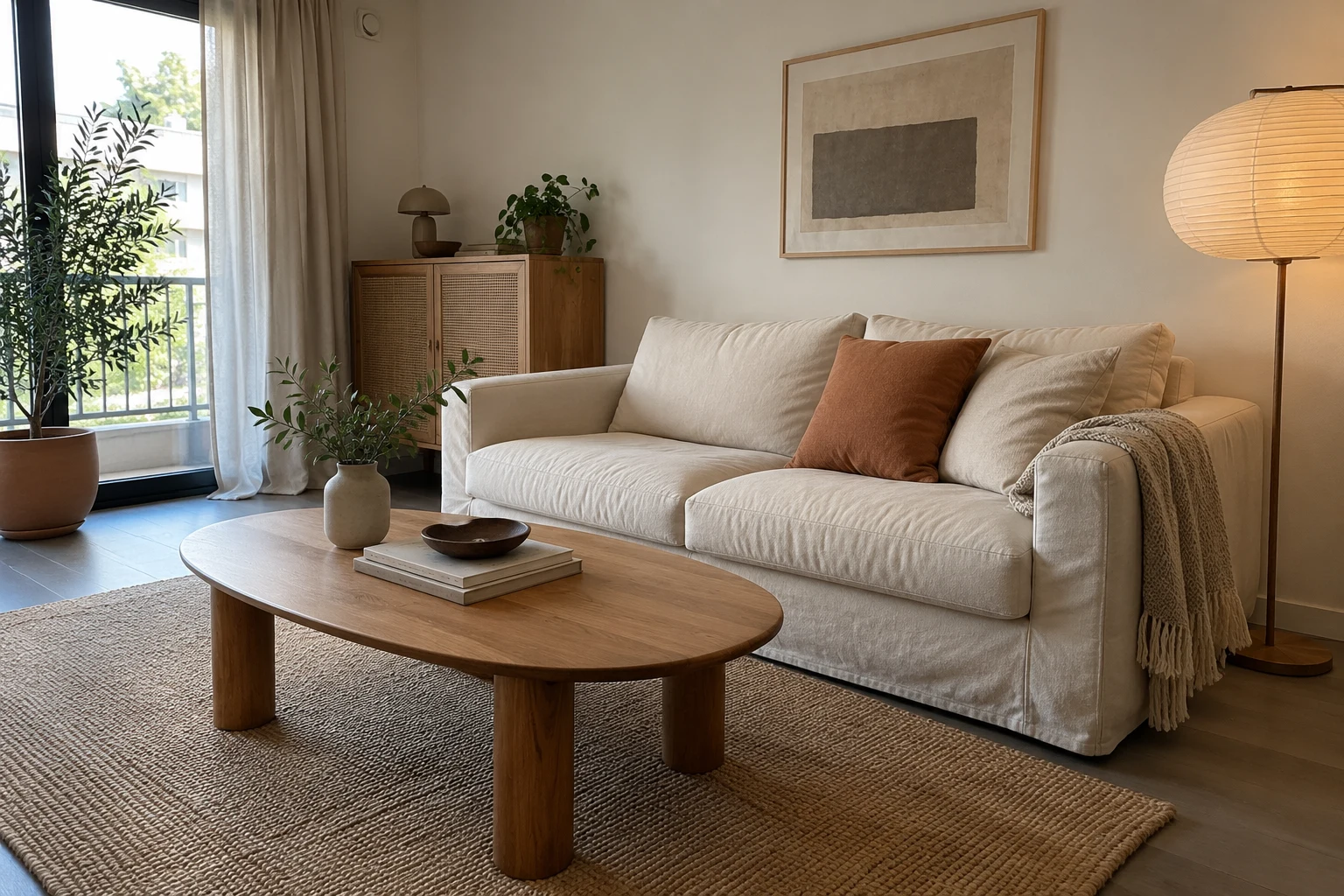
In an apartment or rental, you can change the look with curtains, bedding, lamps, and storage, or by rearranging the furniture.
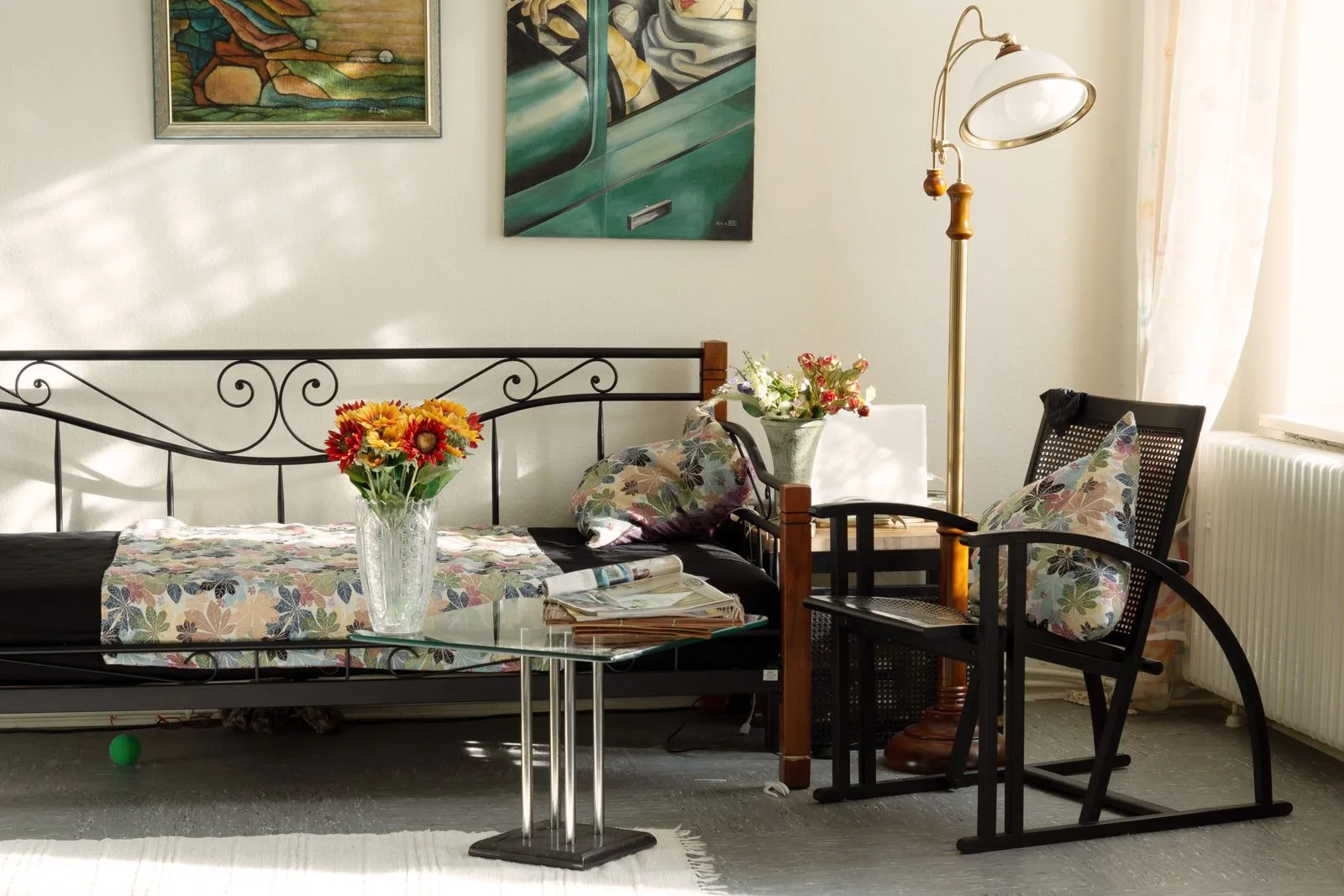
Existing flooring and cabinets can guide the colors. Gray flooring, for example, can work with warm white fabrics, a wooden table, and a muted clay cushion.
Curtains, lamps, and smaller furniture are also easy to take with you when you move.
For more ideas, explore our guides to decorating a small apartment on a budget and temporary rental wall decor.
Why a Japandi Room Can Still Feel Unfinished
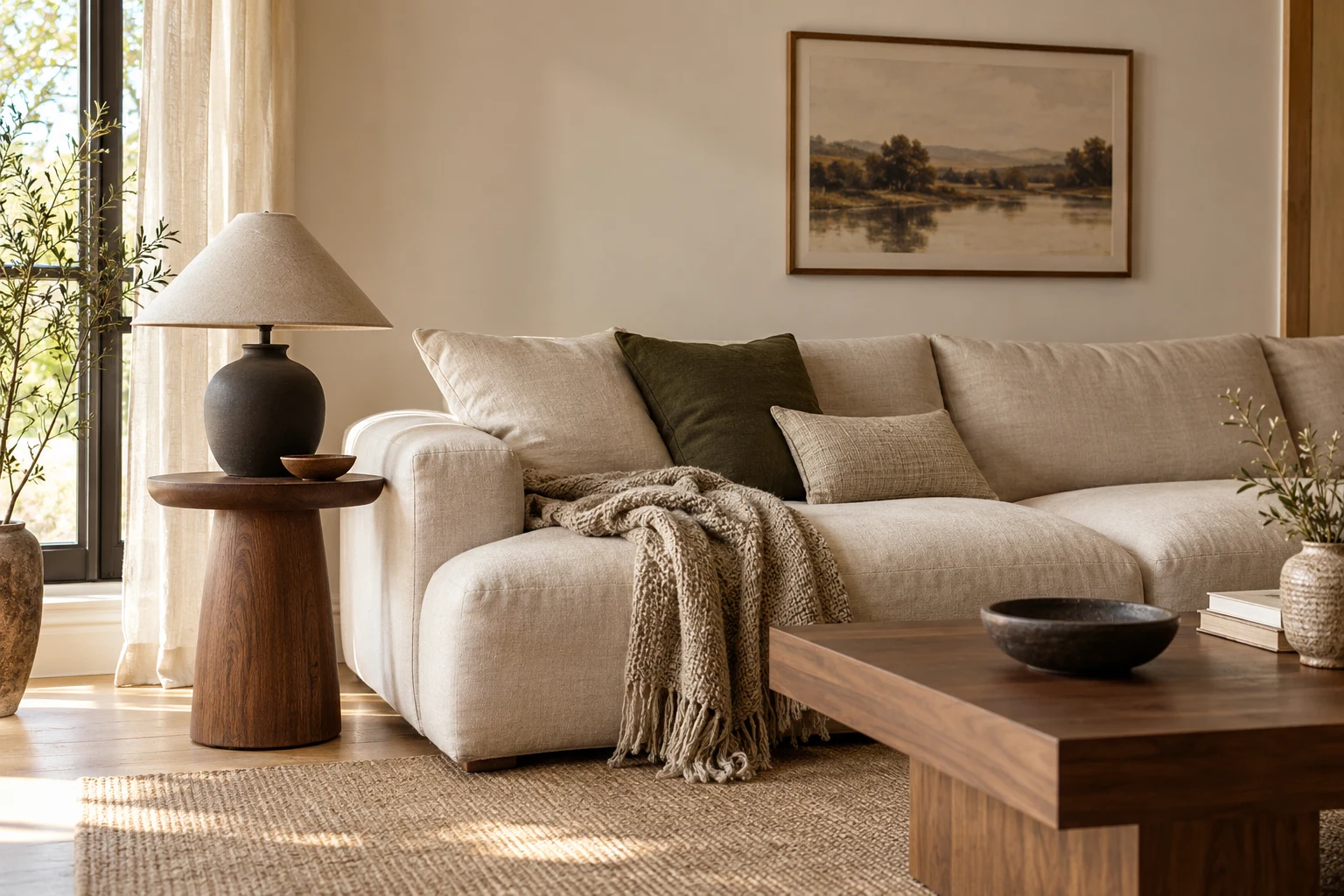
If the room still feels unfinished, it may need a darker accent, softer fabrics, another lamp, or a few personal items.
Here are a few common problems and ways to fix them.
| What feels wrong | A useful adjustment |
|---|---|
| Everything looks nearly the same color | Add darker wood or a small charcoal, olive, or brown accent. |
| The room feels bare | Add soft cushions, a blanket, and an object you enjoy displaying. |
| Shelves look crowded | Move everyday supplies into nearby closed storage. |
| The room feels harsh at night | Add a lamp with a shade beside the sofa or bed. |
| Furniture looks good but feels uncomfortable | Adjust its height, size, or position. |
| Different finishes look unrelated | Repeat a few existing colors or materials elsewhere. |
| The room feels impersonal | Display a favorite artwork, photograph, or familiar object. |
Changing one thing at a time makes it easier to see what helps.
A Quick Japandi Room Checklist
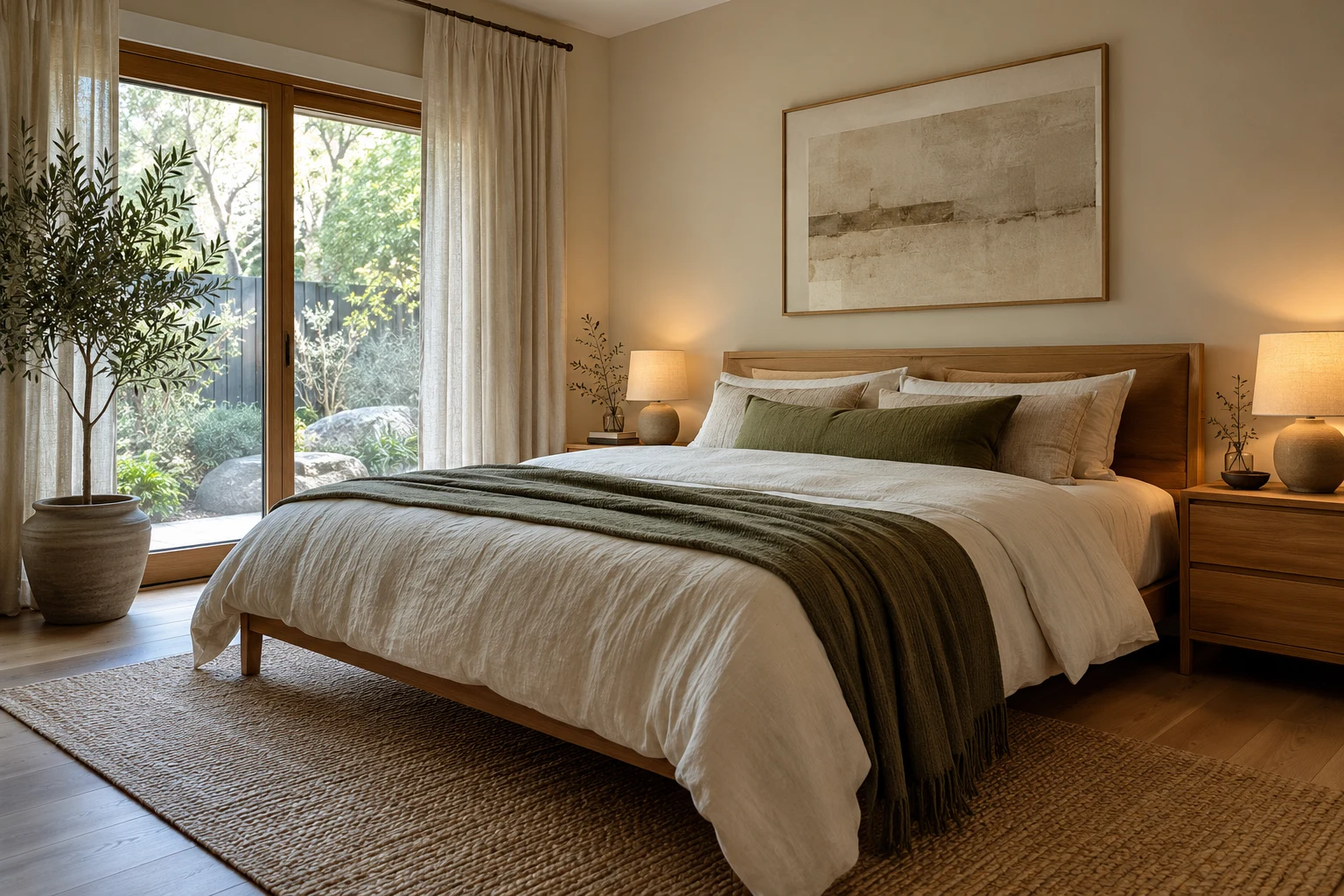
A Japandi room should look good and be comfortable to use.
- The main furniture feels comfortable.
- There’s enough space to walk, pull out chairs, and use storage.
- Everyday belongings are stored near where I use them.
- A few colors and materials repeat around the room.
- Fabrics add softness where it’s needed.
- Lighting works for reading, relaxing, and finding things.
- Favorite personal objects remain on display.
- Any planned purchase has a clear purpose.
Anything you haven’t ticked off is a useful place to focus next. A crowded bedside table may need a drawer, while a dim reading spot may need a better lamp.
Frequently Asked Questions
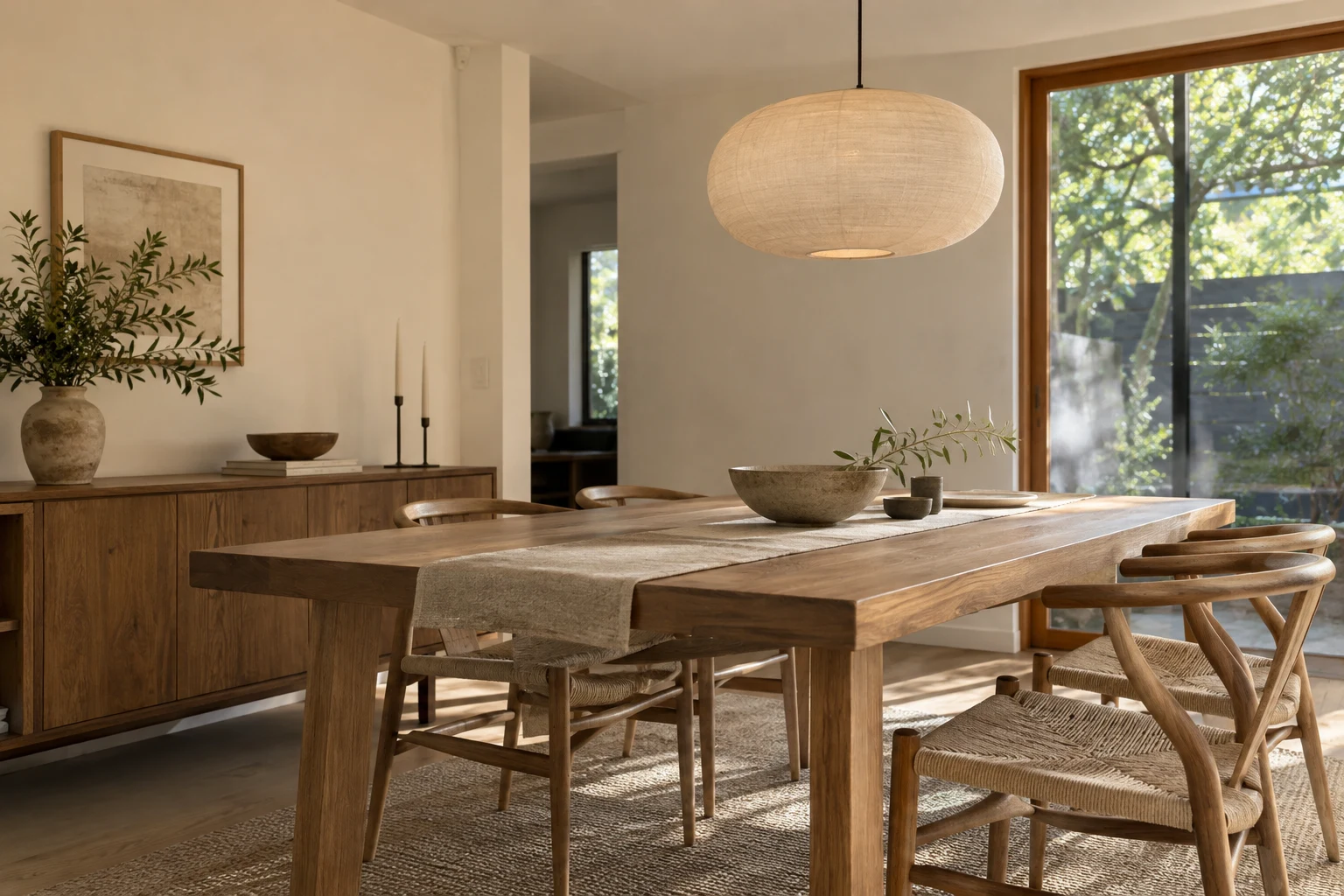
You can bring Japandi style into rooms of different sizes and work with your budget and the furniture you already own.
What Are the Main Elements of Japandi Style?
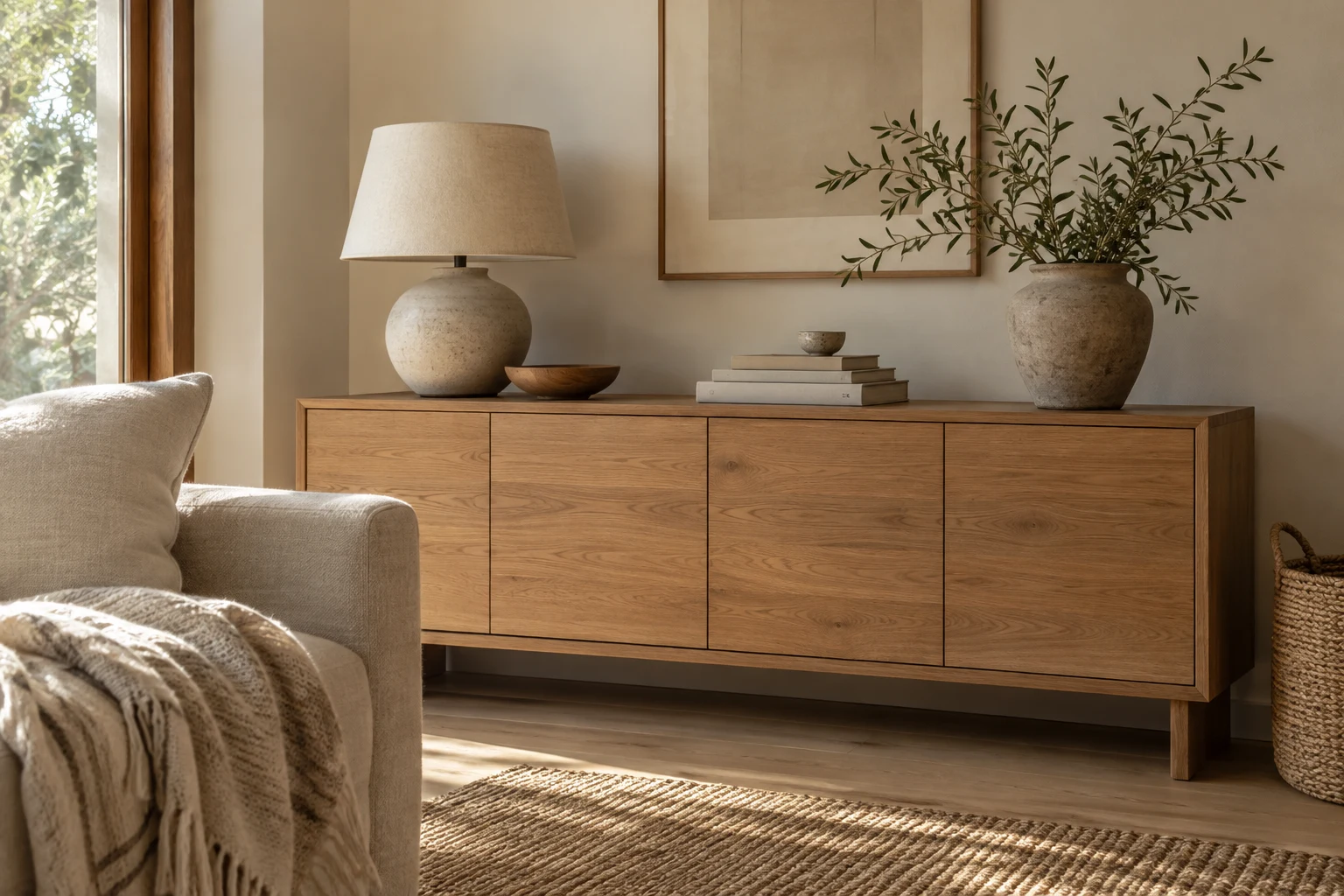
The main elements include warm neutrals, wood, simple furniture, soft fabrics, gentle lighting, practical storage, ceramics, and greenery.
You may already have several of them. The most useful change could be rearranging the furniture or clearing a crowded surface.
What Is the Difference Between Japandi and Scandinavian Style?
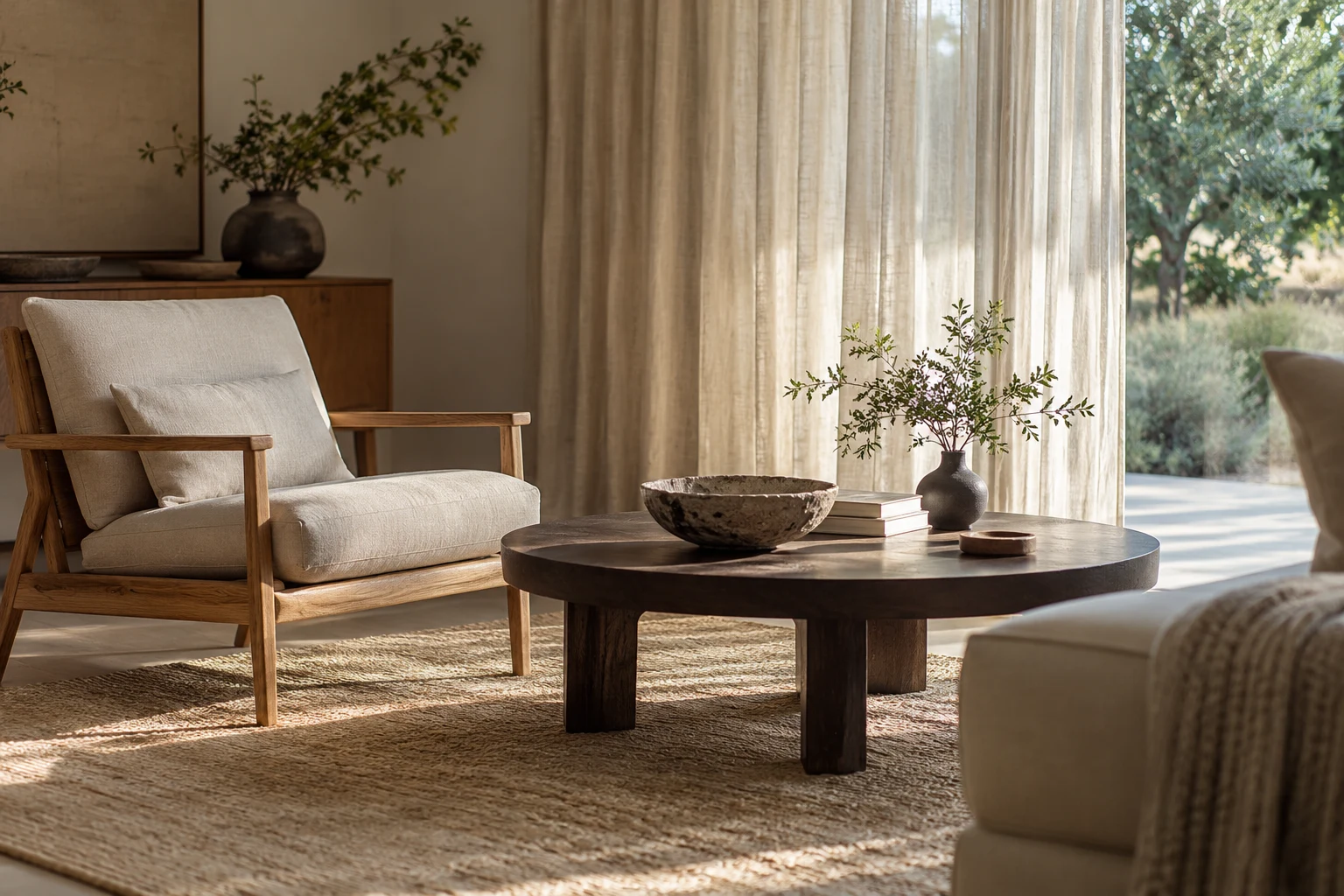
Japandi combines Japanese and Scandinavian design influences, while Scandinavian style is a broader design tradition of its own.
Both can include natural materials, useful furniture, and comfortable interiors. Japandi also draws on Japanese ideas about careful craftsmanship, simple decoration, and the beauty of natural differences in wood and ceramics.
Neither is limited to one wood tone or an exact set of colors.
Does Japandi Have to Be Beige?
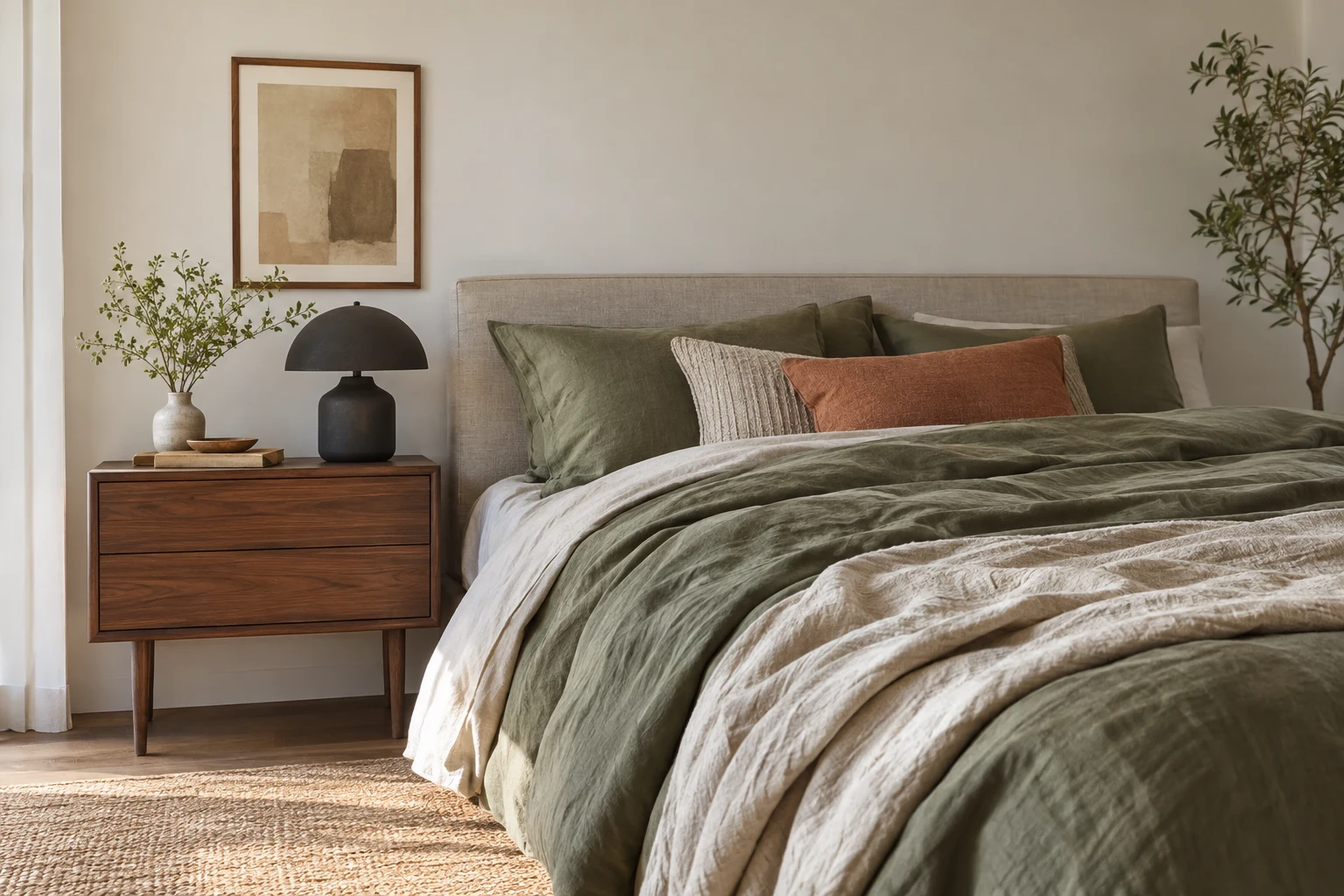
No. Muted green, clay, gray, brown, and charcoal can all work.
A cream sofa with olive cushions and a darker wooden table can look coordinated without using beige throughout the room.
Can Light and Dark Wood Work Together?
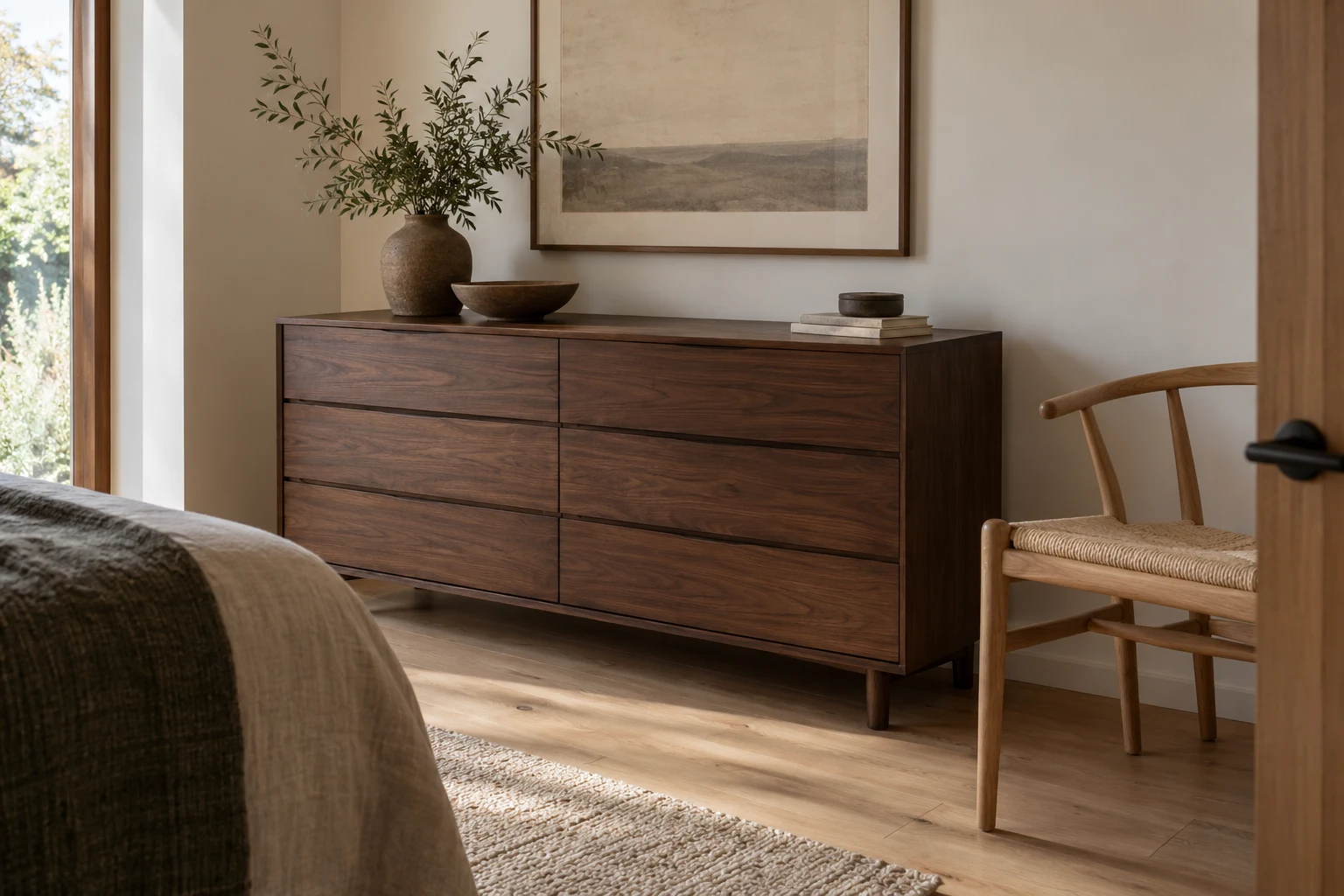
Yes. Light and dark wood can work well together, especially when similar colors appear elsewhere.
For example, a brown chair or picture frame can repeat the color of a walnut cabinet in a room with pale flooring. The furniture doesn’t need to come from one collection.
Does Japandi Furniture Have to Be Low?
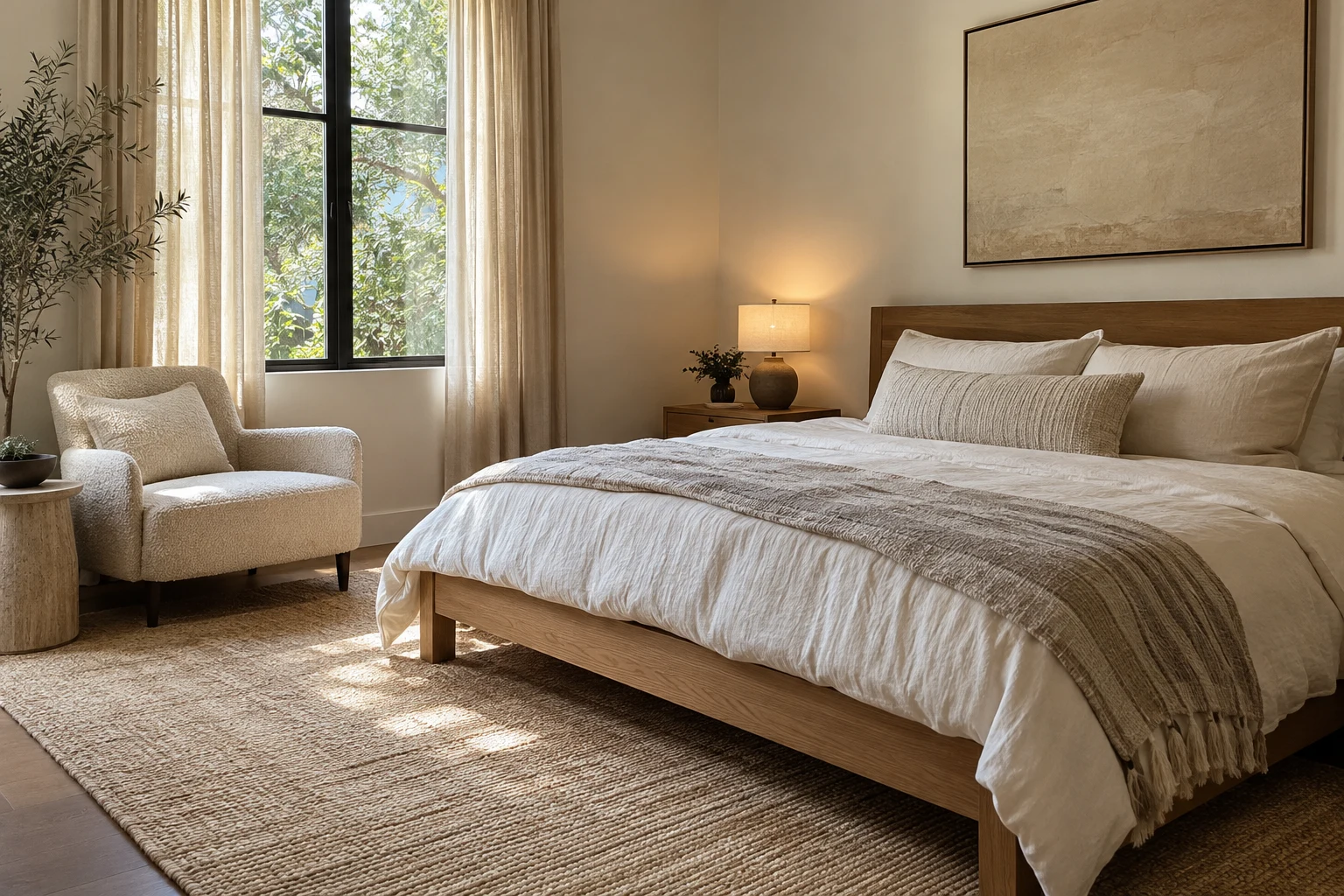
No. Furniture height should suit the person using it.
A standard-height bed or supportive chair can still suit Japandi style. Simple shapes and wood or fabric finishes help it fit in. Floor seating is optional.
Can I Create a Japandi Room on a Budget?
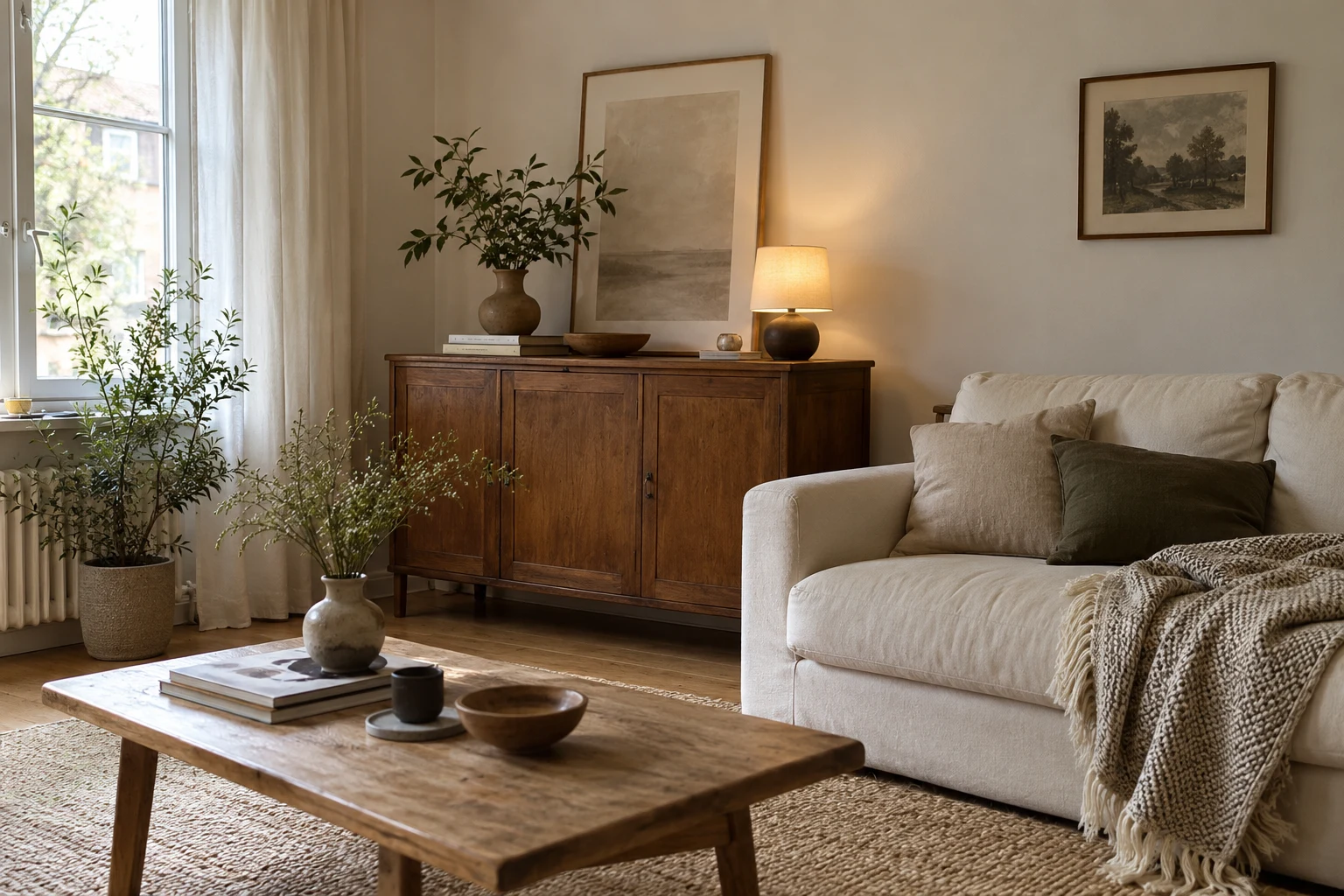
Yes. Rearranging furniture, clearing crowded surfaces, and coordinating what you already own can change the room without a large purchase.
If you do buy something, spend on items you’ll use often, such as a lamp, curtains, a storage basket, or comfortable bedding.
Useful Finds for a Japandi Home
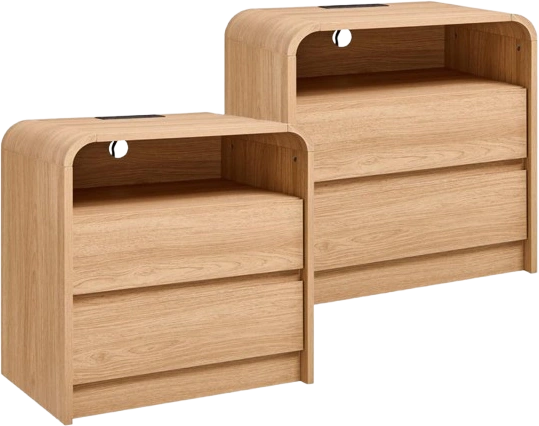 Aitjunz Two-Drawer Nightstand SetOak-look bedside tables with curved edges, two drawers, and a charging station.
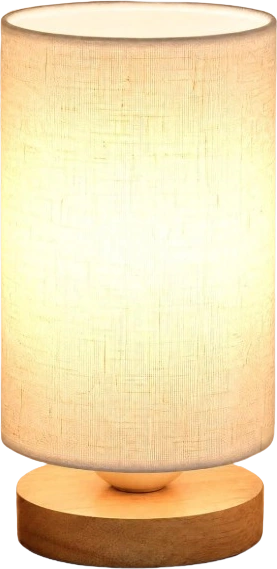 UCHENTON Small Bedside Table LampA compact lamp with a wooden base and a beige fabric shade.
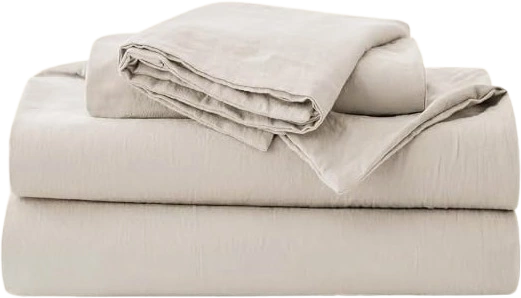 Bedsure Prewashed Queen Duvet Cover SetA polyester microfiber duvet cover and two shams in a neutral “Linen” color.
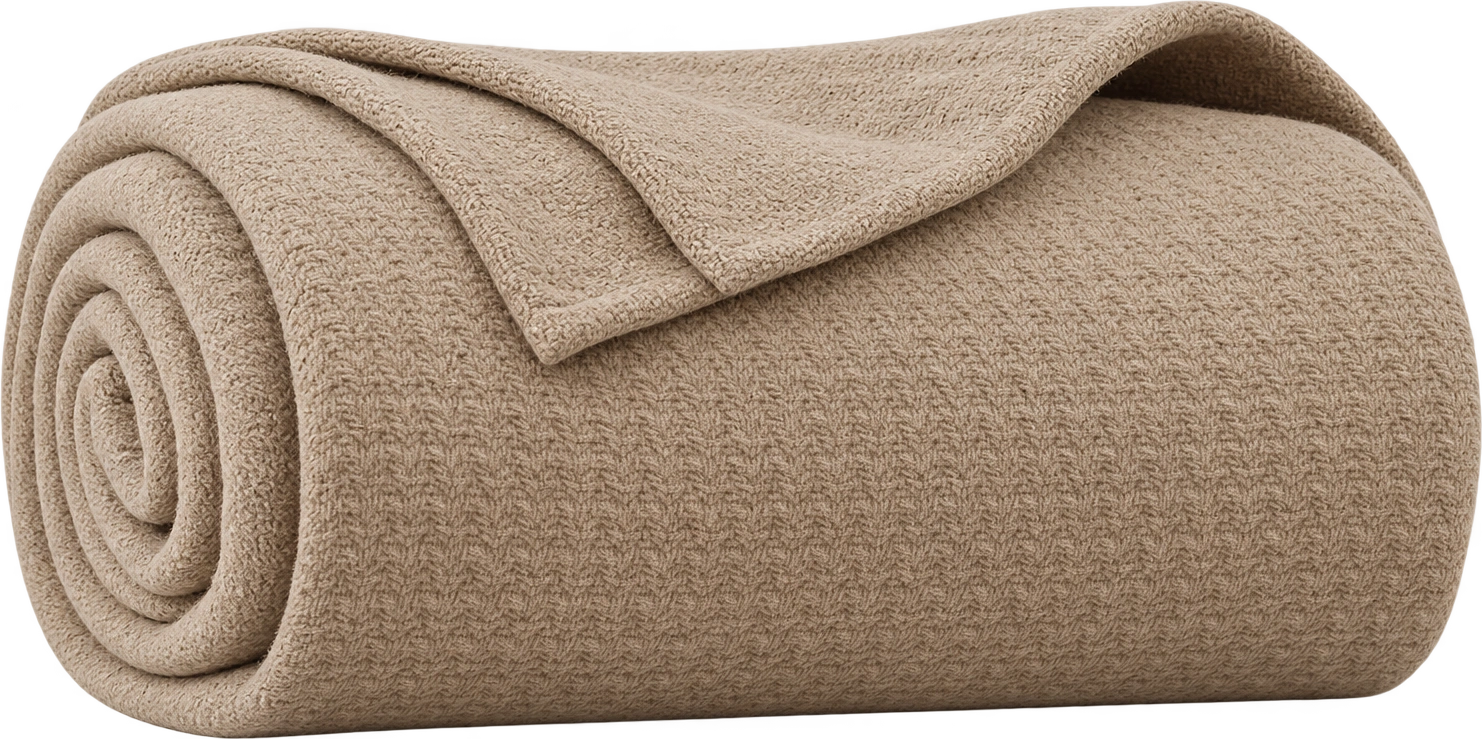 Bedsure Herringbone Cotton BlanketA light-brown cotton blanket with a fine herringbone weave.
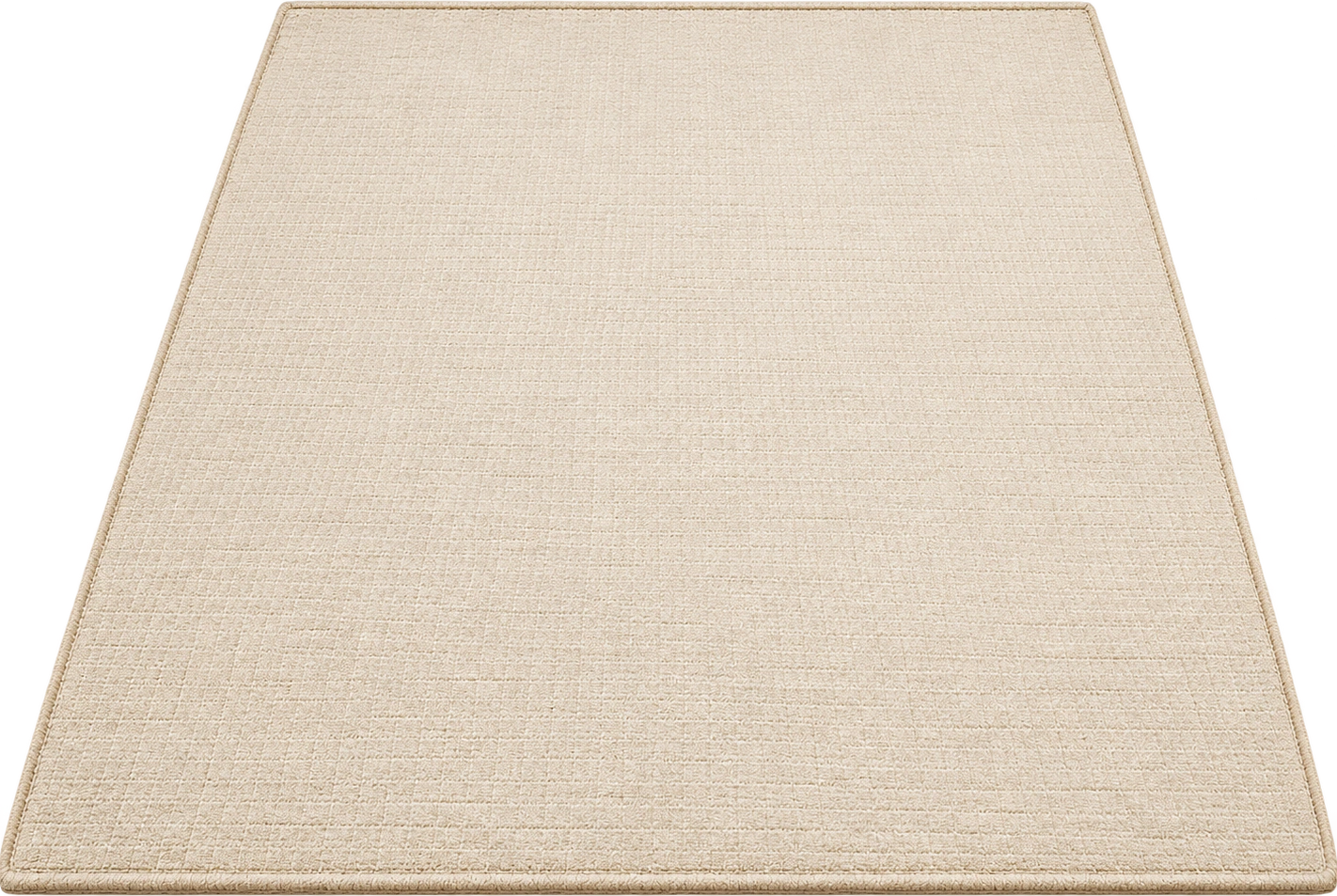 Shilucheng 8 × 10-Foot Wool-Blend RugA beige-and-white rug made with 80% wool and 20% cotton.
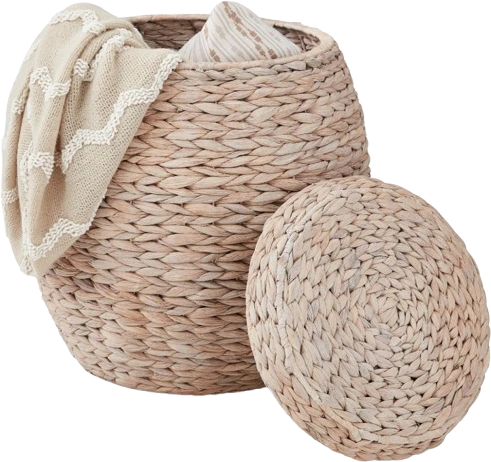 Best Choice Products Lidded Hyacinth Storage BasketA whitewashed woven basket for throws and loose belongings.
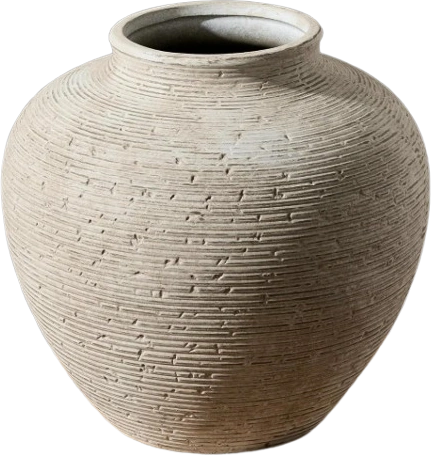 Vanselia 10-Inch Ceramic VaseA rustic ceramic vase for a few stems on a dresser or table.
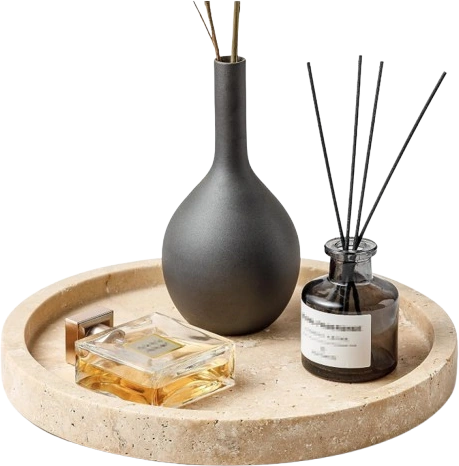 WORHE Round Stone Vanity TrayA beige stone tray for jewelry, perfume, and smaller everyday items.