21 Crystal Decor Ideas for a Living Room from Unique to Large

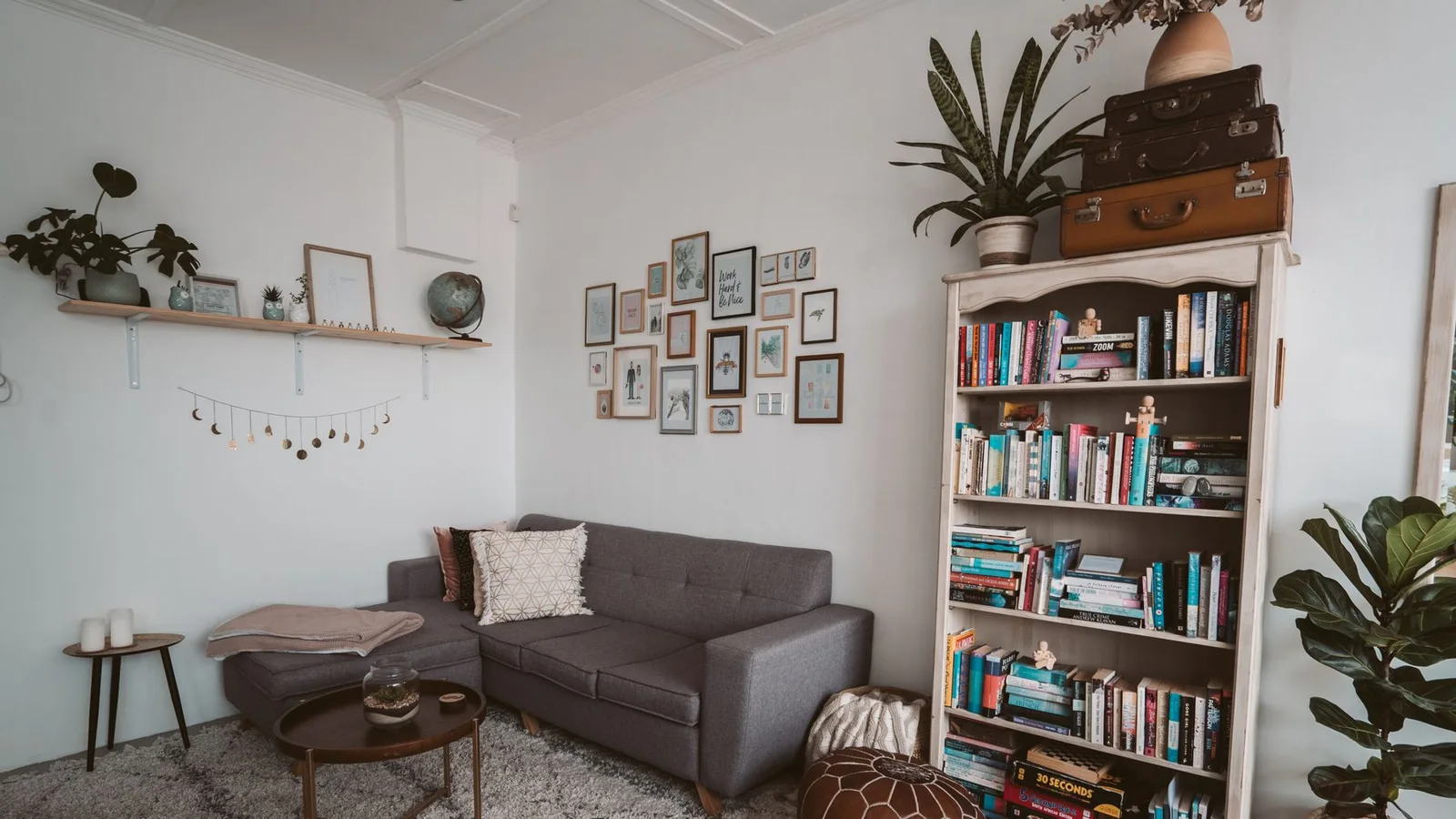
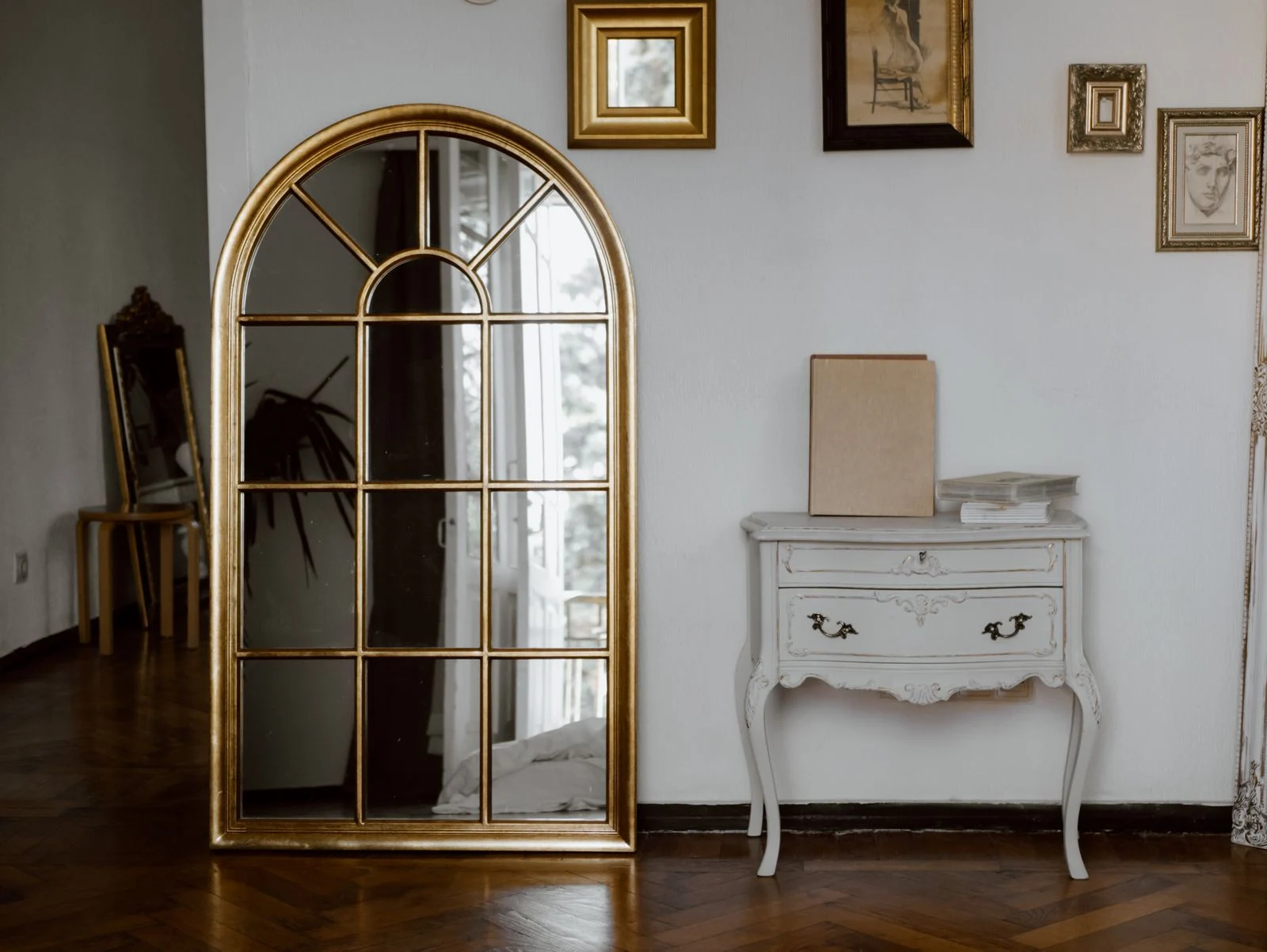
Sometimes the living room has all the furniture it needs, yet the shelves and coffee table still feel a little unfinished. If you’ve been browsing crystal decor for living room shelves, side tables, or that empty console, there’s plenty beyond the familiar purple rock. Different colors, shapes, and sizes can give those overlooked spots something interesting to look at.
The quick answer
- A quartz cluster or small amethyst piece adds texture and color to a shelf or side table.
- Crystal bookends or a stone bowl combine decoration with an everyday use.
- A large geode needs its own stable display space. Leave room around it so the shape and color remain easy to see.
The trick is choosing a piece you enjoy and giving it a sensible place to live. These 21 ideas cover small shelf accents through substantial statement pieces, with simple ways to work them into the room you already have.
1. Raw Quartz Clusters That Give a Plain Shelf Some Texture
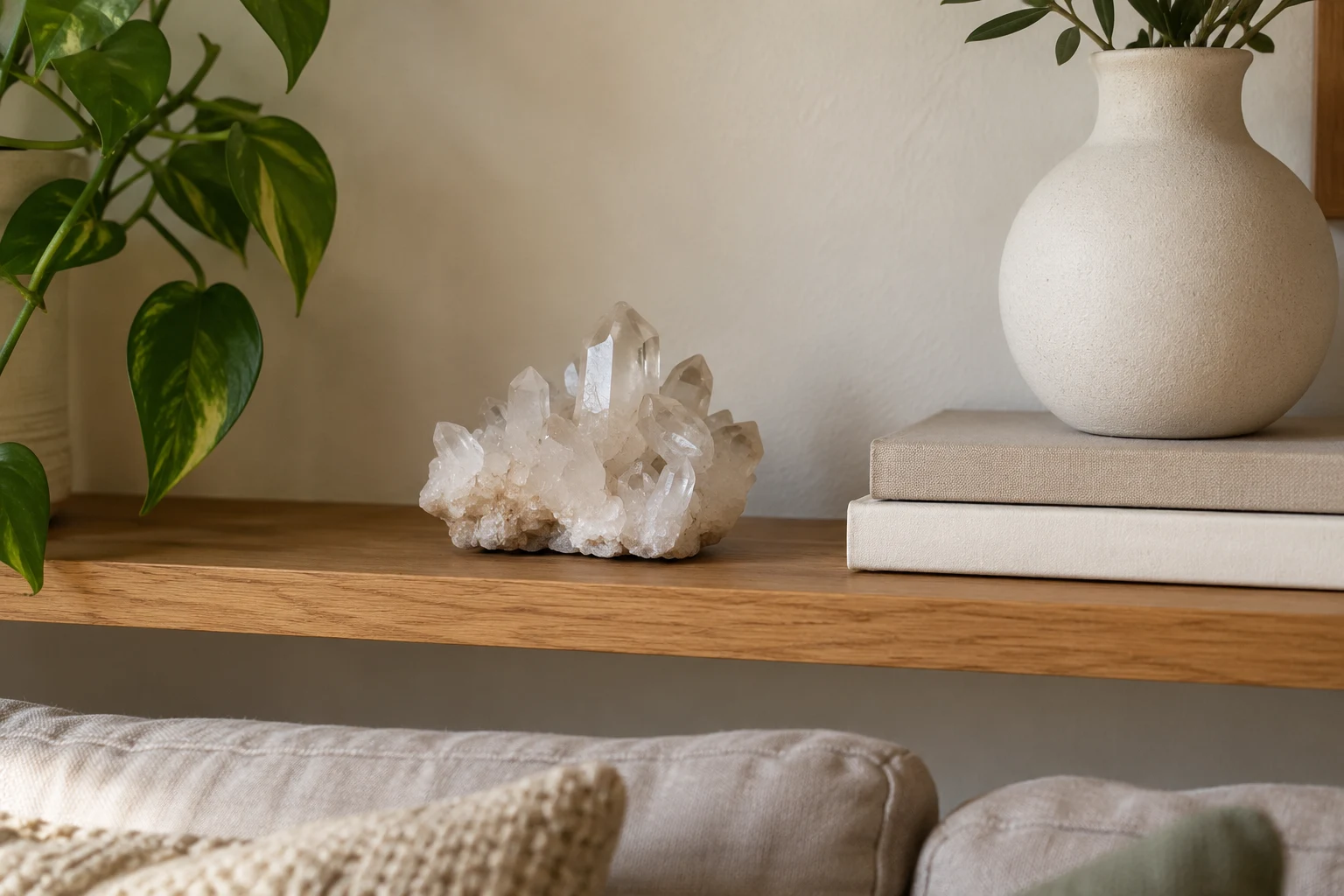
A raw quartz cluster adds texture beside smooth objects such as books, ceramic vases, and picture frames. Its irregular shape gives the arrangement something different without requiring another strong color.
Got a shelf that looks a little too coordinated? Place a modest cluster beside a plain pottery bowl or a short stack of books. Keep its outline visible so those small points don’t disappear among other accessories.
For this look, choose a cluster with a stable base and proportions that suit the shelf. A compact piece can be enough, especially when you leave a little empty space around it.
2. Amethyst Clusters for a Little Purple Personality
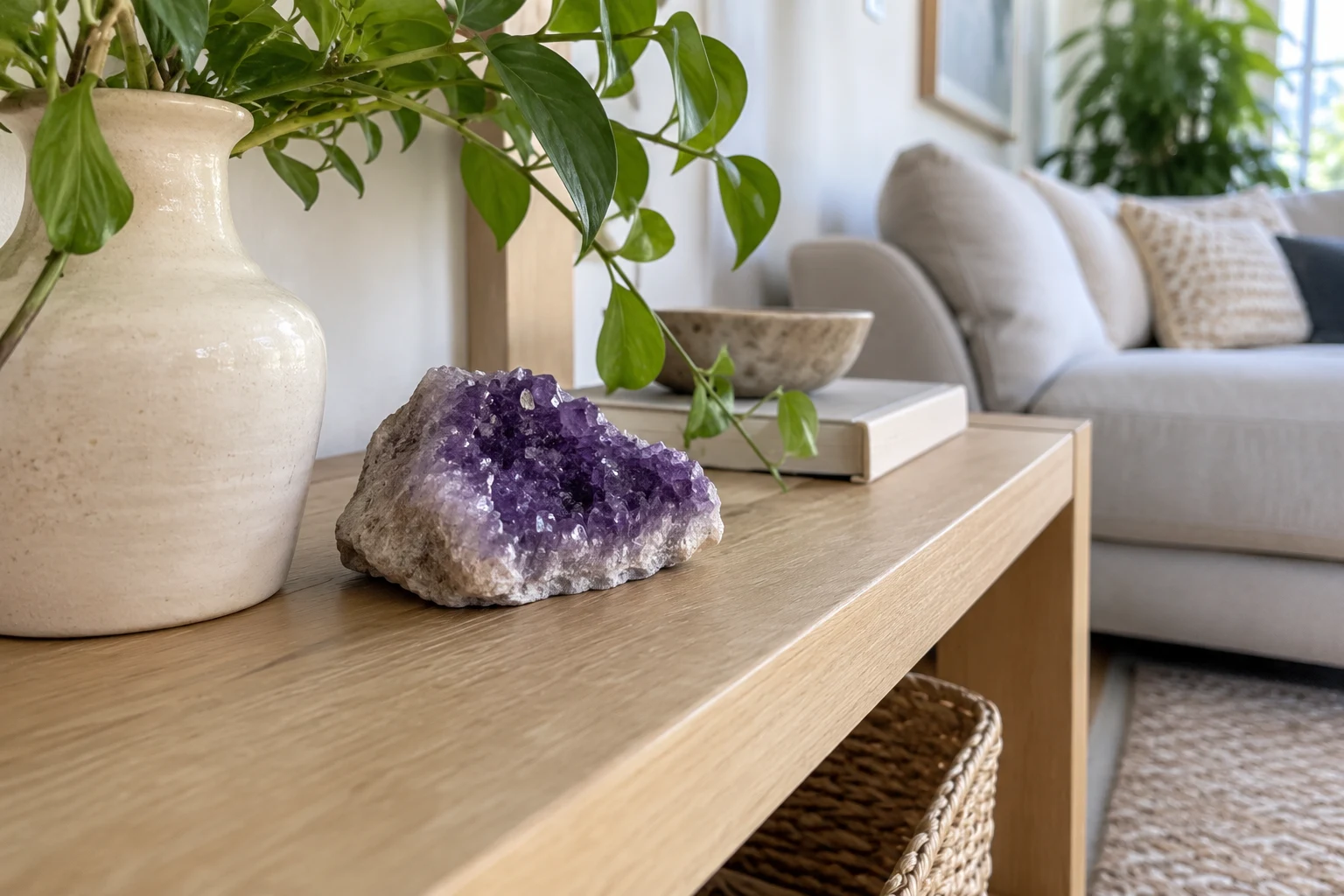
An amethyst cluster brings a concentrated touch of purple to a neutral living room. Smaller pieces work well when you like color but don’t want to commit to a purple chair or a new rug.
Try one beside a cream vase, a leafy plant, or a warm wood frame. If your artwork already includes lavender or plum, the crystal can repeat that color in another part of the room.
Choose the shade you actually enjoy, whether that’s pale lavender or a deeper purple. The specimen’s real coloring matters more than the most dramatic product photograph.
3. Large Amethyst Geodes That Deserve Their Own Spot
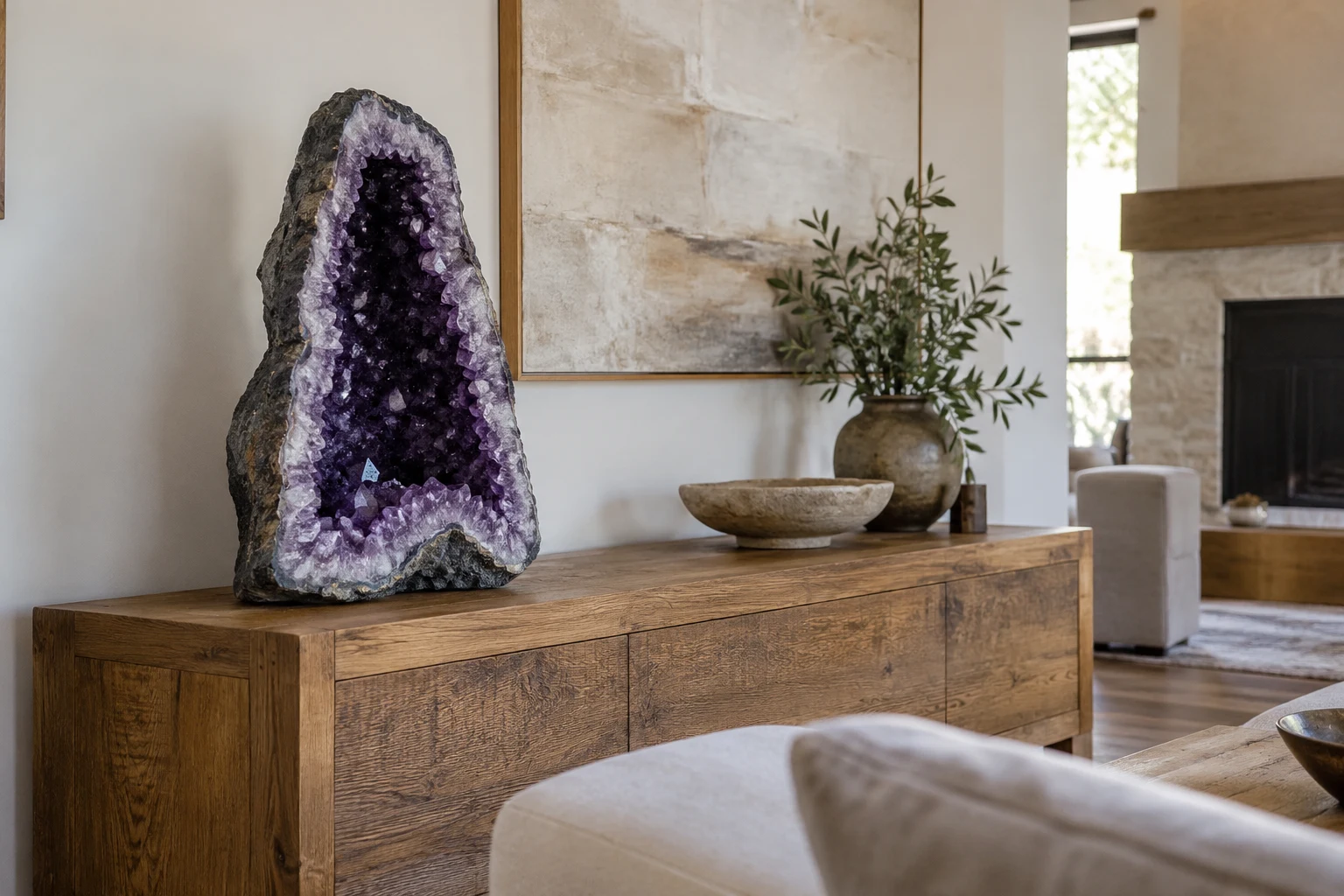
A large amethyst geode works best as a focal point on a suitably sturdy surface. Its hollow interior and crystal-covered walls give it a different presence from a small cluster.
Picture the console that currently holds six accessories you barely notice. One substantial geode could take the lead there, with a simple framed print or low bowl nearby.
Before buying, check the actual dimensions, weight, and base. Leave enough surrounding space to appreciate the opening, and make sure the supporting furniture can handle the piece.
4. Oversized Quartz That Holds Its Own in a Big Room
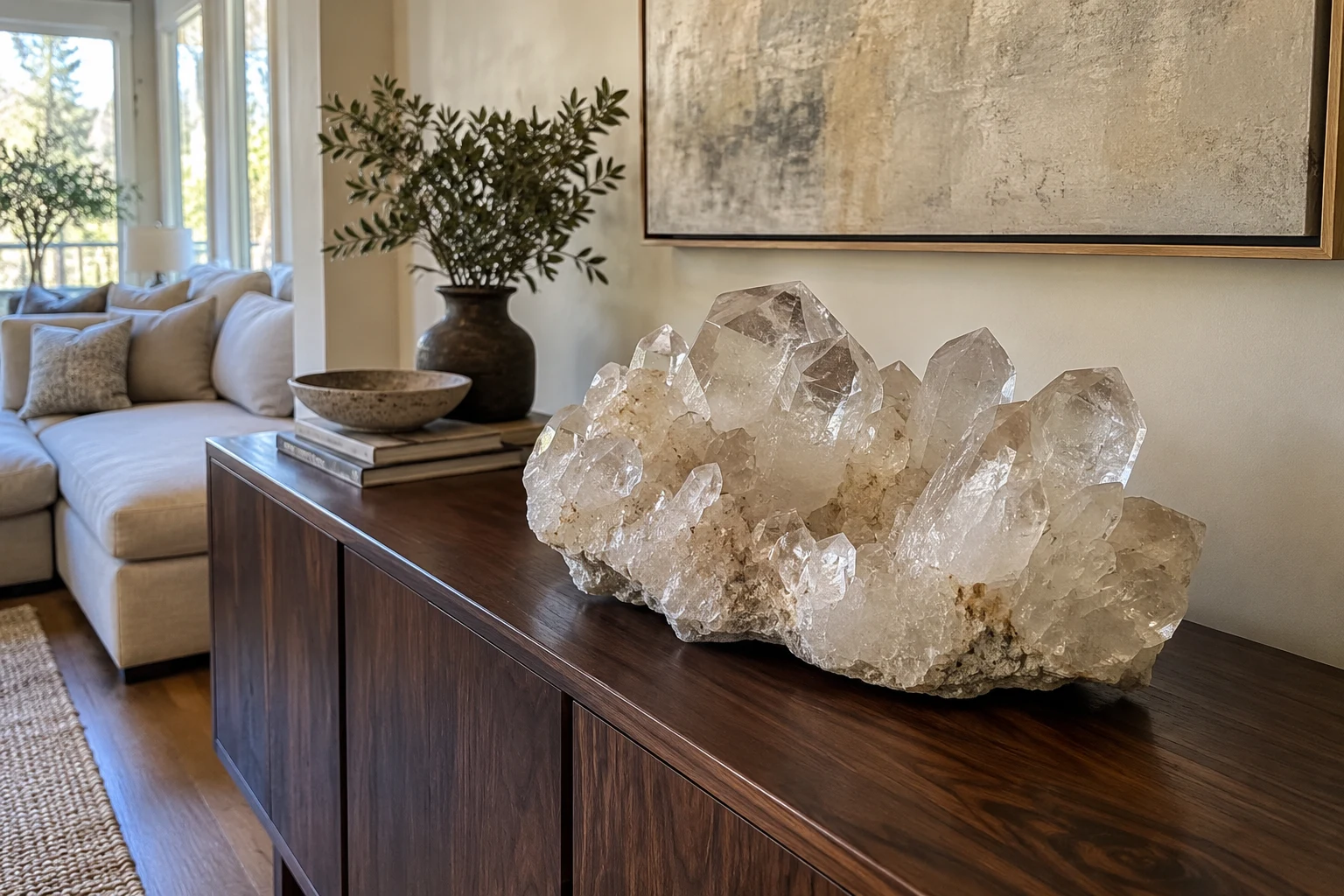
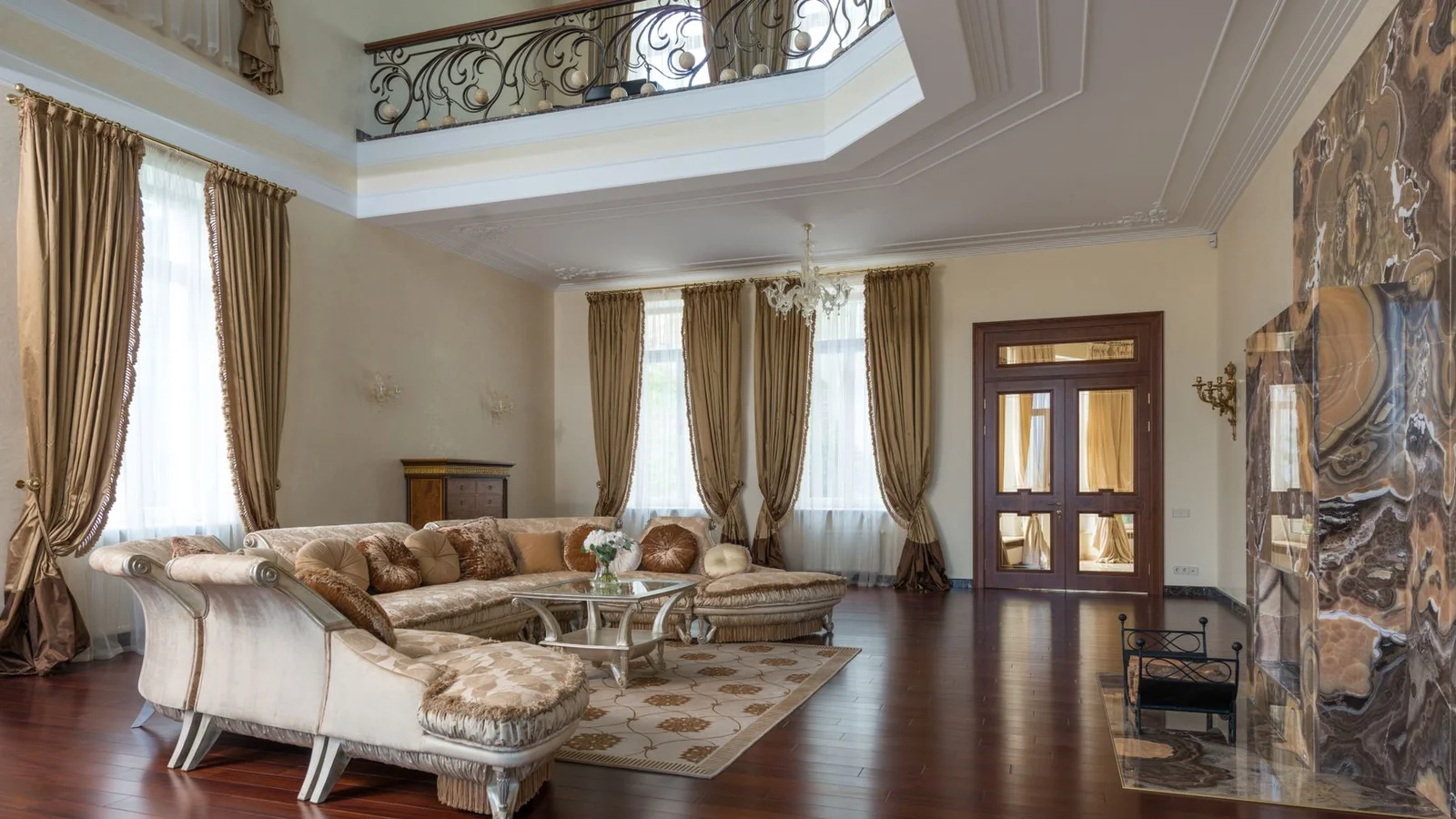
An oversized quartz specimen suits a room where smaller accessories tend to disappear. A broad cluster or tall natural formation can bring shape and texture to a generous console or display cabinet.
Scale makes the difference here. A tiny crystal on a long, nearly empty cabinet may look forgotten, while a larger piece gives the arrangement a clearer purpose.
Keep nearby accessories simple and check the view from the sofa. The specimen should fit comfortably on its surface, with a secure base and space around its edges.
5. Rose Quartz for a Soft Touch of Pink
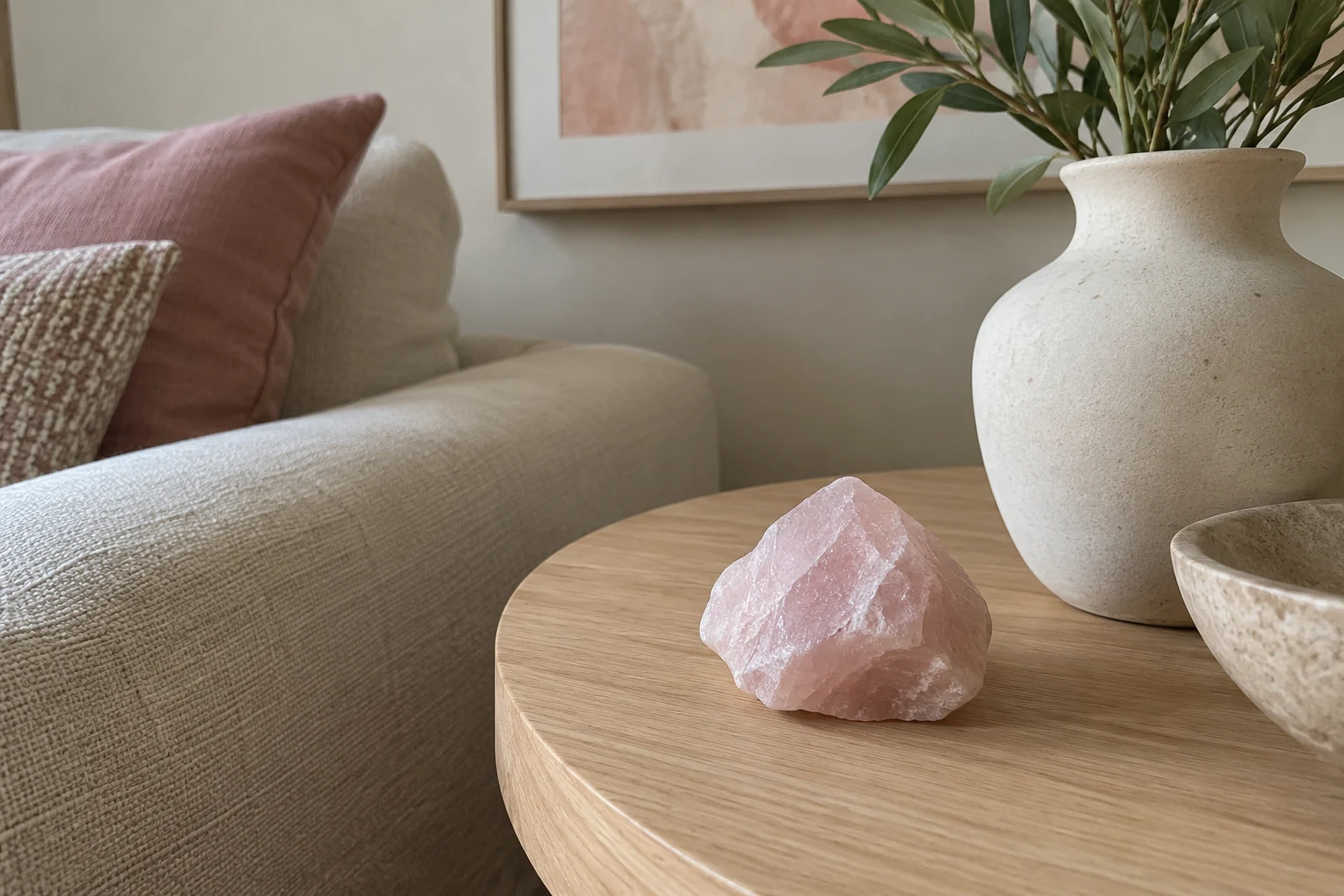
Rose quartz adds a gentle pink accent to rooms decorated in cream, beige, pale wood, or warm gray. A raw chunk gives you texture, while a polished freeform offers a smoother finish.
If your living room feels a little beige-on-beige, place a piece beside a neutral vase or a wood picture frame. You can repeat the pink in a small detail from your artwork, though a complete matching scheme isn’t necessary.
A simple specimen is an easy choice here. Let its color provide the interest, especially if the surrounding furniture already has plenty of curves, patterns, or decorative details.
6. Citrine for Honey-Colored Warmth
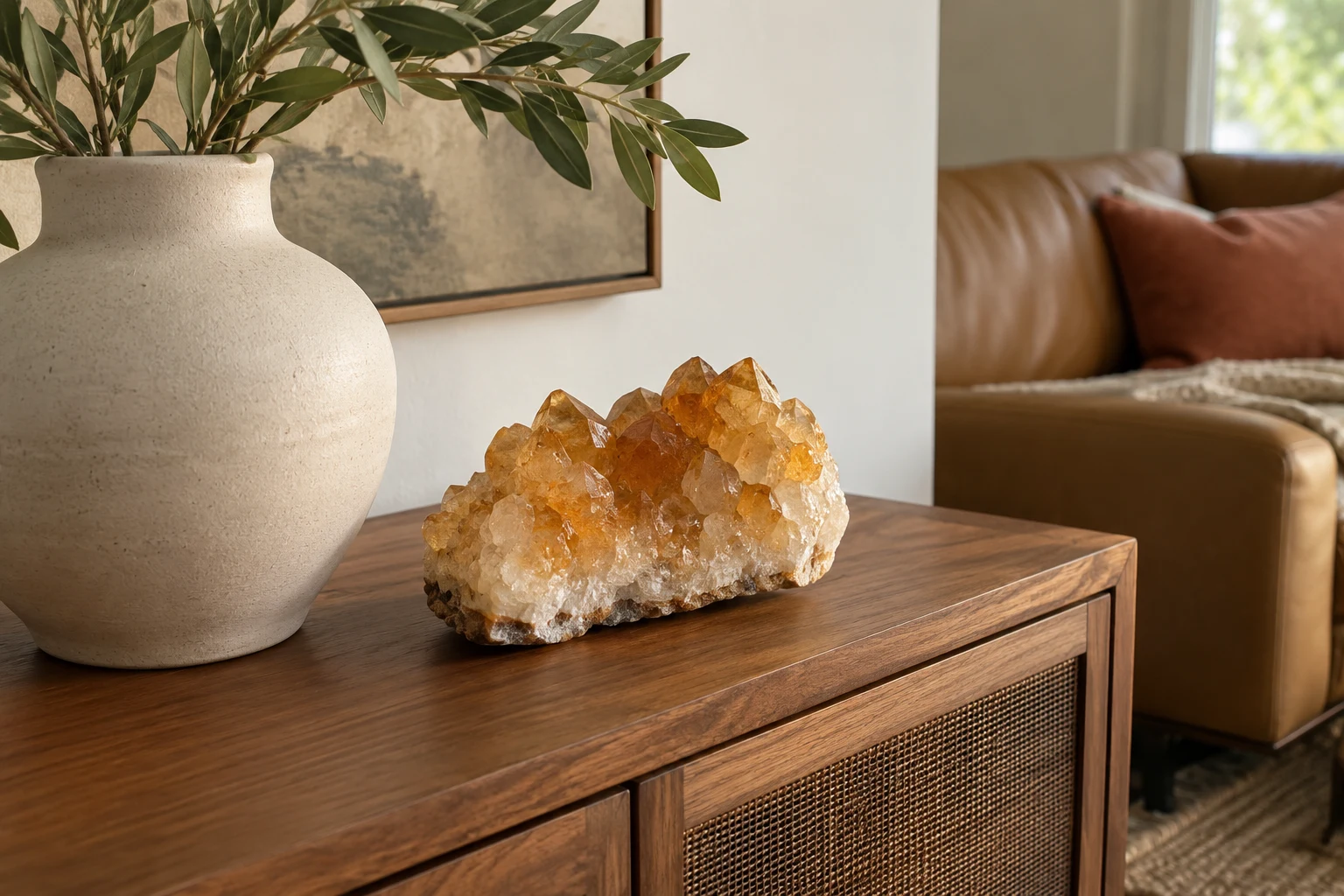
A golden citrine specimen can connect beautifully with warm wood, earthy fabrics, and brass details. Choose it for the color it brings to the arrangement.
On a walnut sideboard, for example, a golden piece beside an off-white ceramic vessel creates a small contrast without introducing a completely new palette. It also works with rust cushions or ochre artwork.
Check the seller’s description and treatment disclosures before choosing a specimen. Buy for the appearance you like and the material information provided, rather than assuming every golden stone has the same origin or treatment history.
7. Fluorite for Green and Purple in One Piece
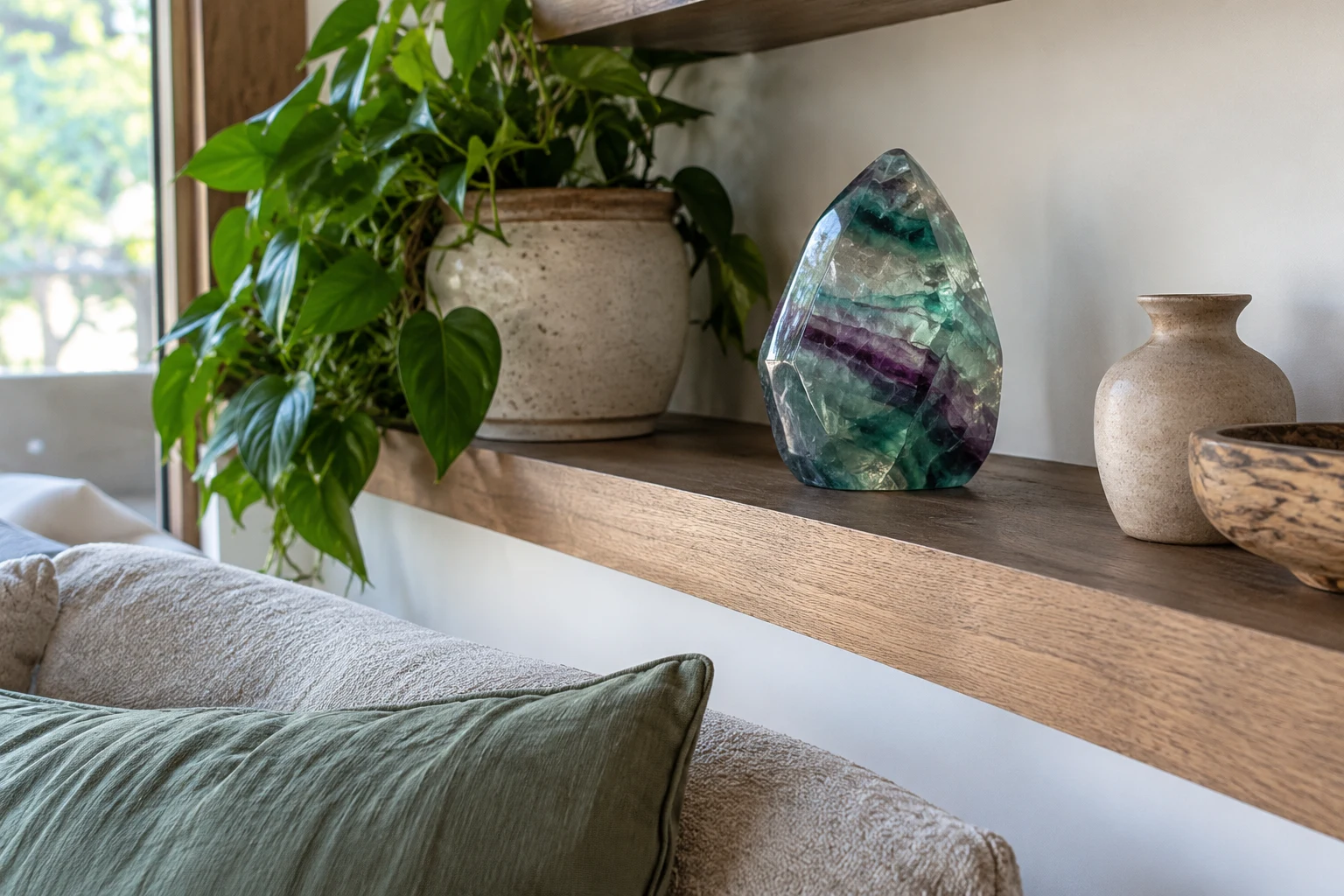
Fluorite is a good direction when you want a mineral accent with visible color variation. Choose a piece whose green, purple, or mixed tones connect with something already in the room.
That could be the green in a cushion or a purple detail in a print. A polished freeform lets you appreciate the stone’s pattern without adding another strongly geometric object.
Look closely at the photographs before ordering. An exact-specimen listing helps you judge the coloring you’ll receive, which matters when color is the main reason you’re buying it.
8. Smoky Quartz for a Quieter, Moodier Look
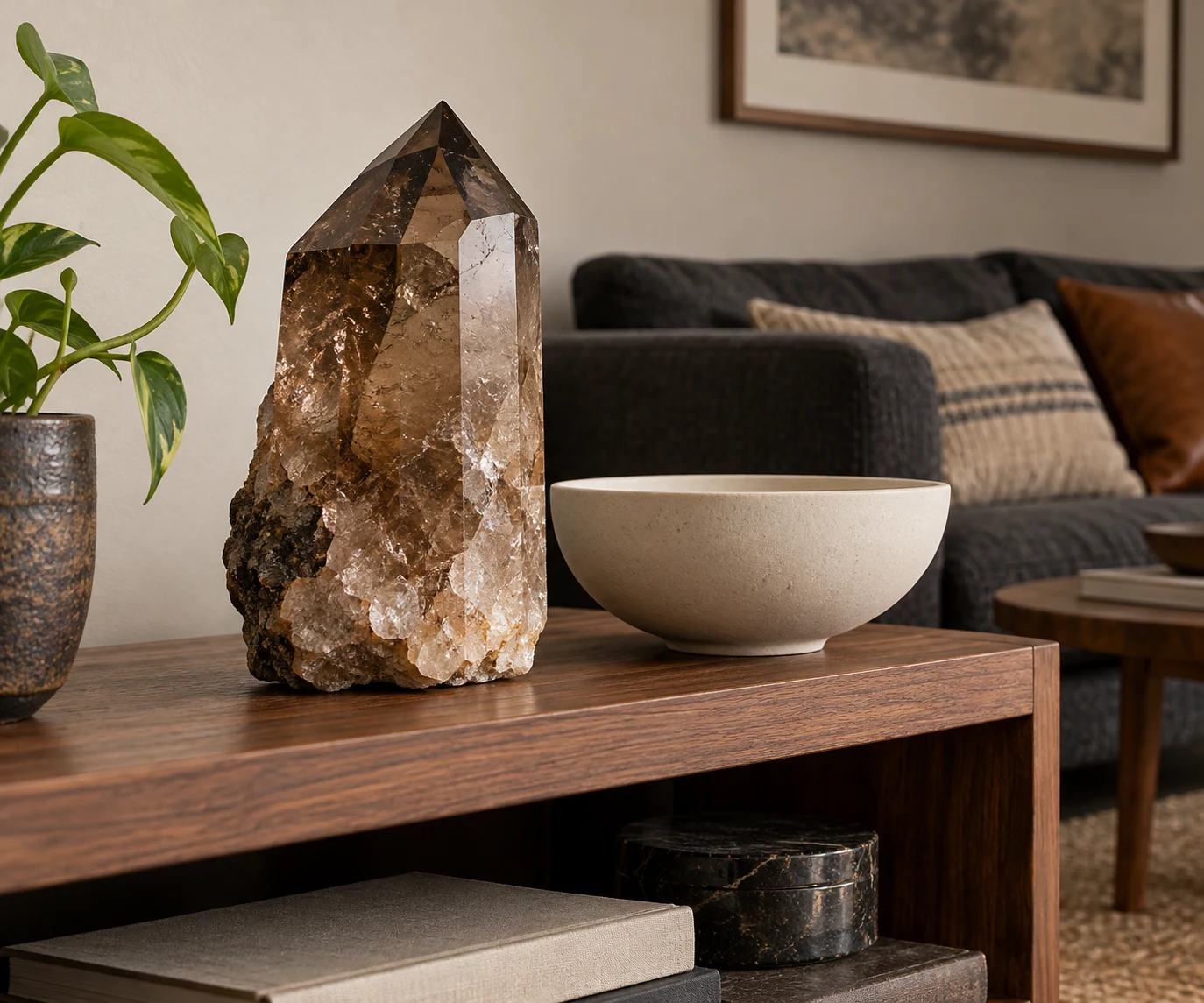
Smoky quartz suits living rooms with muted colors, darker woods, leather, or charcoal upholstery. It adds mineral texture while keeping the overall palette restrained.
The main challenge is visibility. A dark piece against a dark shelf can disappear, so give it a slightly lighter background or place it beside a pale ceramic accessory.
Choose a shape with an outline you can appreciate from across the room. A little contrast behind the specimen often helps more than adding extra objects around it.
9. Polished Black Stone for a Bold Modern Accent
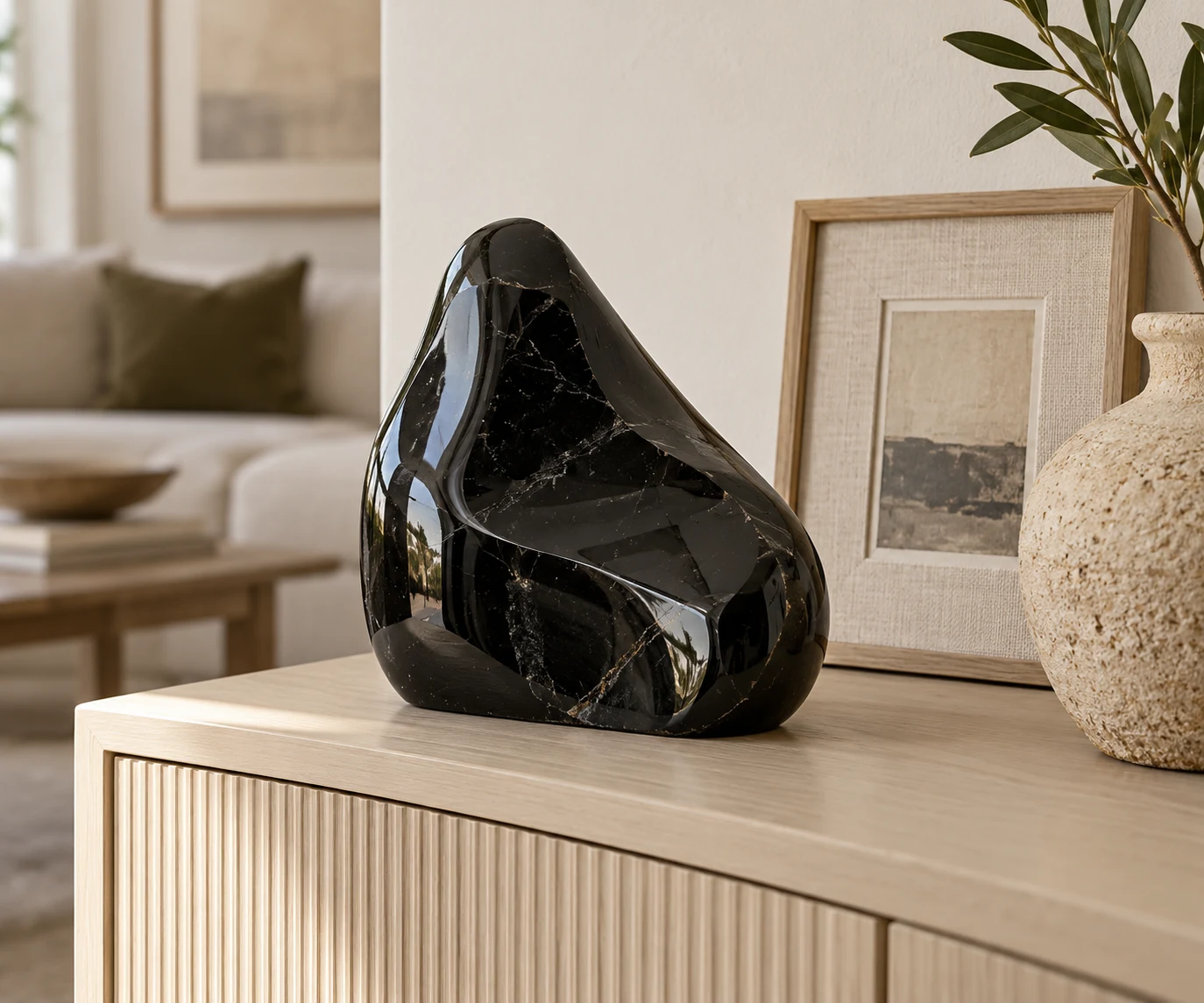
A polished black stone object adds a strong visual accent to a light, simple arrangement. Obsidian is one option commonly sold alongside crystal decor, although it is natural volcanic glass.
If your room has black picture frames or dark furniture legs, a small polished piece can repeat that detail on a shelf. Its smooth finish also offers a contrast to linen, rough pottery, or woven baskets.
Keep the shape uncomplicated when the room already feels busy. One dark accent can be enough to connect the arrangement to the rest of the space.
10. Crystal Balls That Break Up All Those Straight Lines
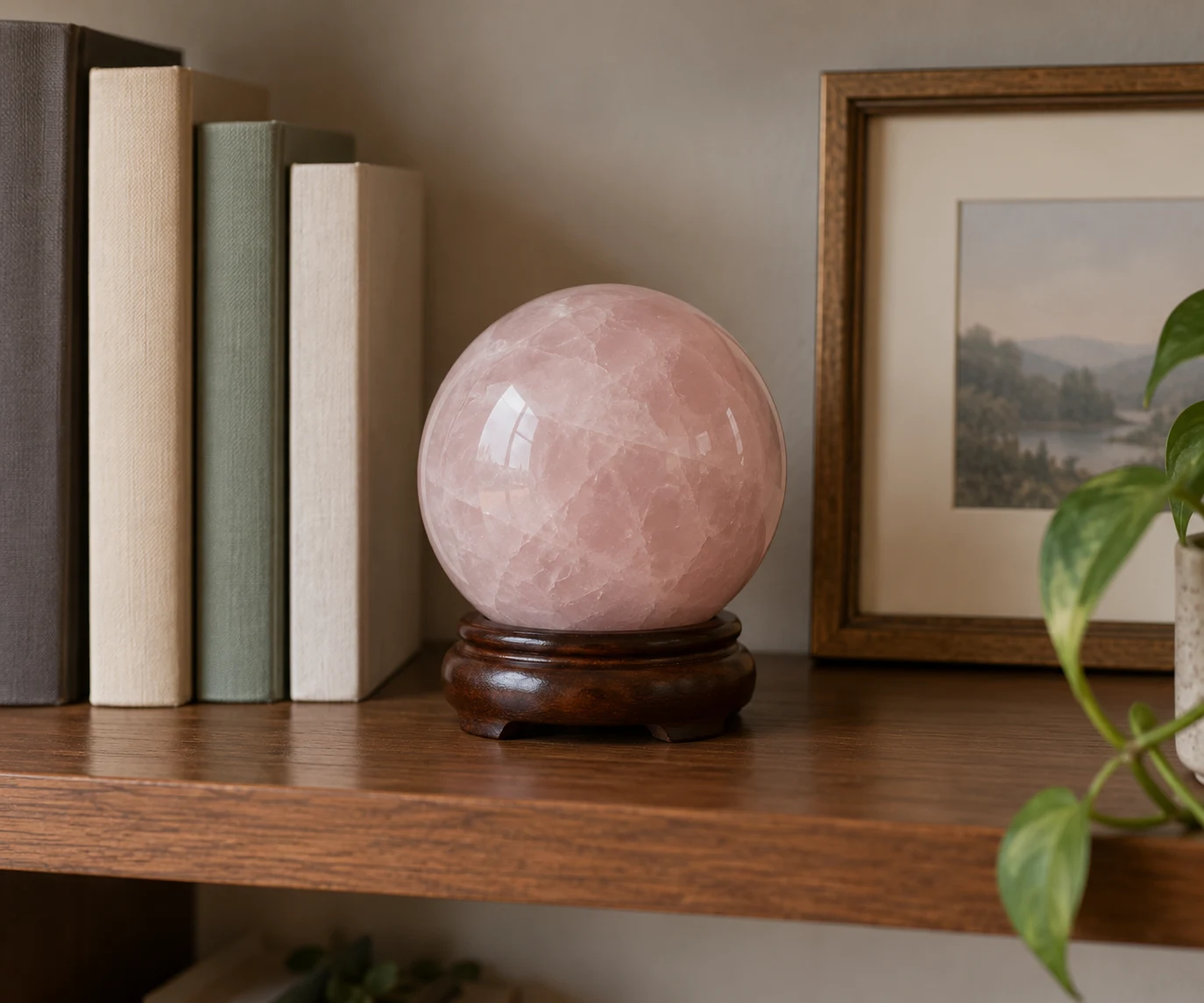
A polished crystal sphere adds contrast to rectangular furniture and accessories. The shape is especially useful on a bookshelf, where nearly everything else has straight edges.
Place one beside upright books or a square frame, allowing the stand and sphere to read as a single object. The round form supplies the interest, so the surrounding arrangement can stay fairly simple.
Choose a fitted, stable stand and position the sphere where it won’t be knocked. Check the material’s placement guidance before deciding on a permanent spot, particularly near a window.
11. Crystal Towers and Prisms for a Little Height
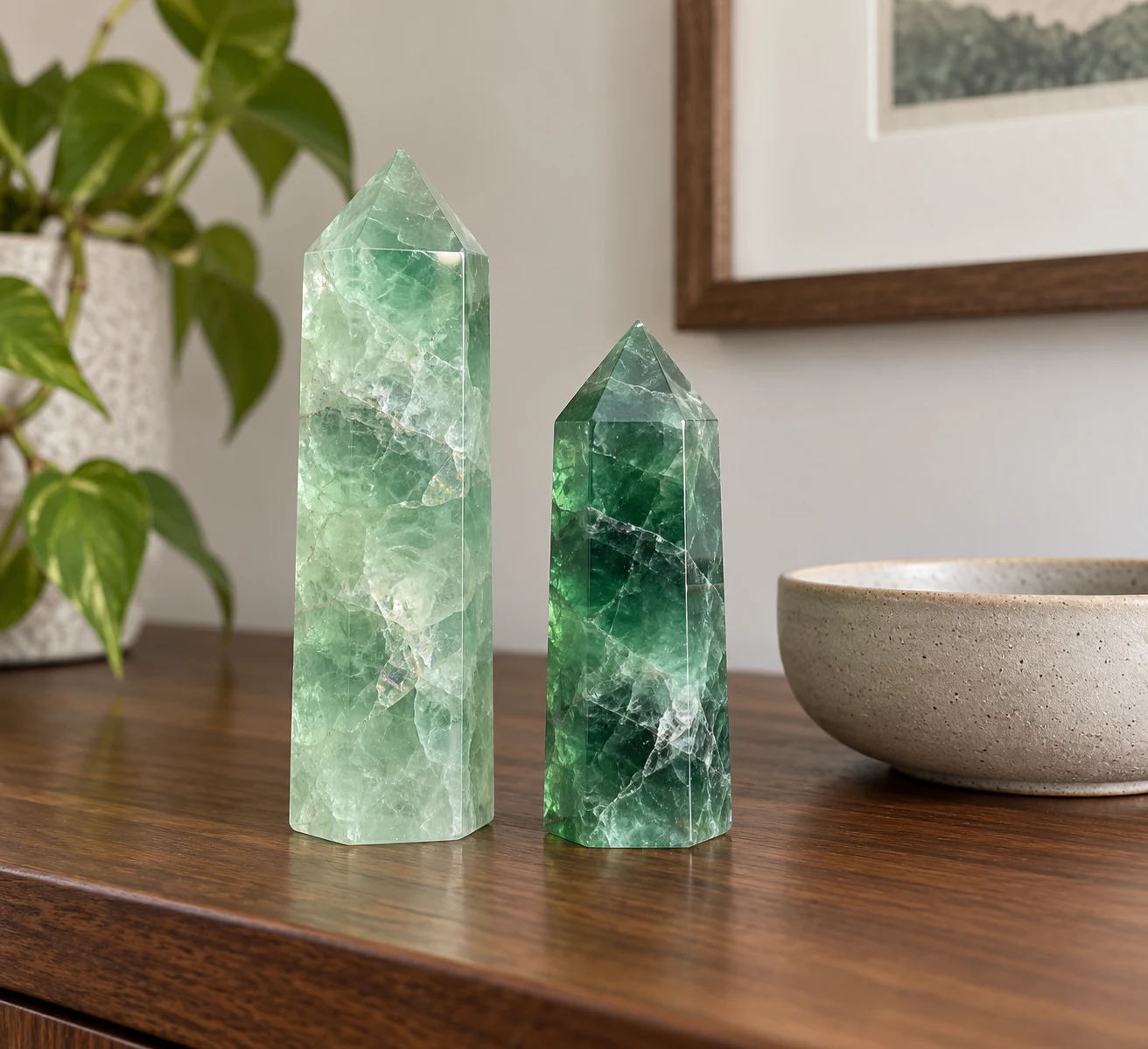
A crystal tower or prism introduces a vertical shape among low bowls, stacked books, and short decorative objects. It works particularly well when everything on a surface sits at roughly the same height.
One tower may be all the arrangement needs. For a small grouping, vary the heights while keeping some connection between the colors or finishes.
Read the listing carefully: a cut and polished tower differs from a naturally formed crystal point. Either can be attractive, but the description should make clear what you’re buying.
12. Crystal Pyramids for a Clean Geometric Detail
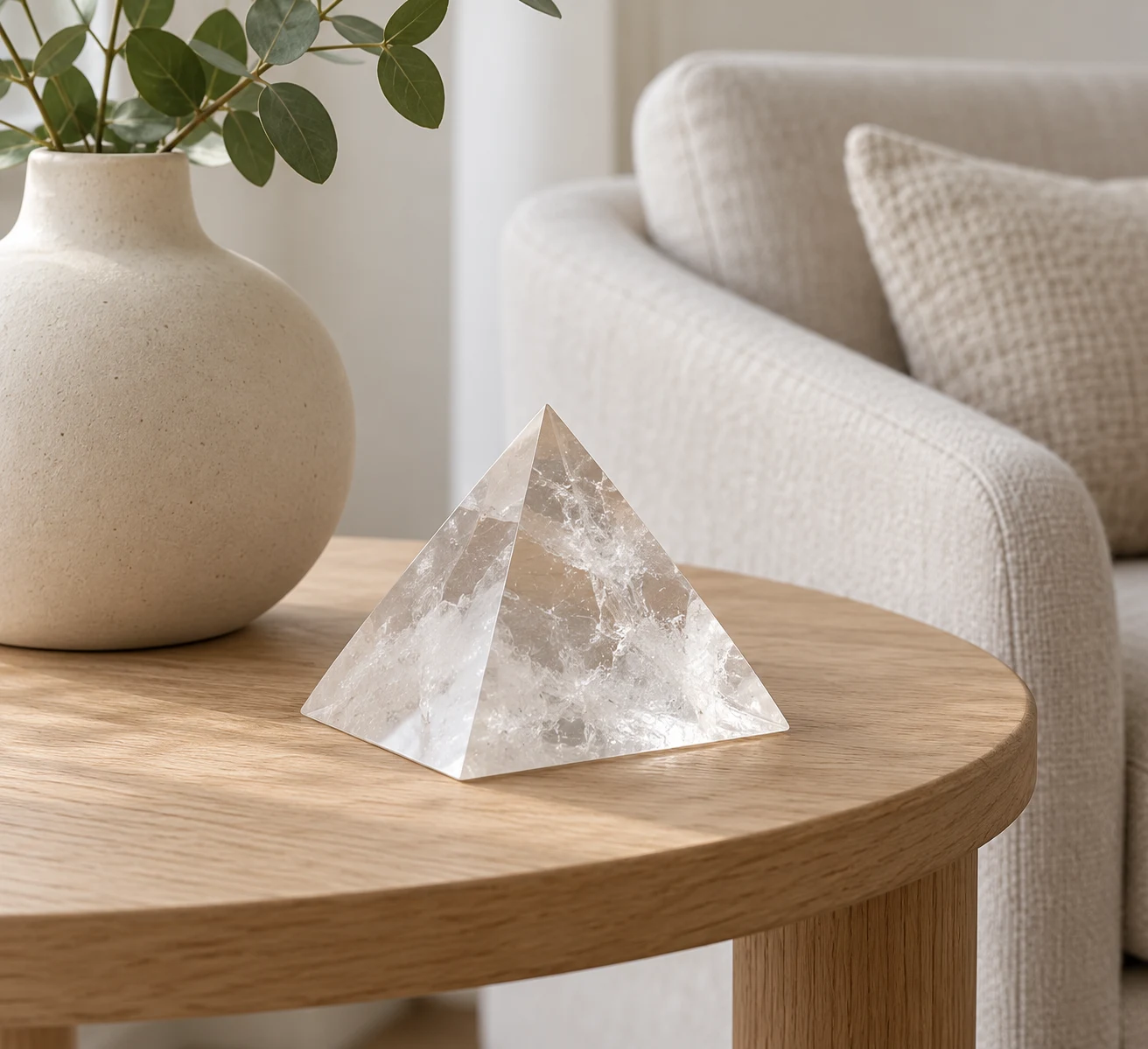
A pyramid-shaped piece gives a shelf or side table a clear geometric accent. Its broad base and pointed profile make it visually different from clusters and rounded carvings.
Try it near a curved vase or an upholstered chair, where the surrounding shapes provide contrast. A plain surface helps the pyramid remain visible without needing a busy display.
Check whether the piece is solid stone, crystal glass, or resin containing decorative fragments. The material should be clearly identified, especially when the appearance suggests something different.
13. Agate Slices That Show Off Their Pattern
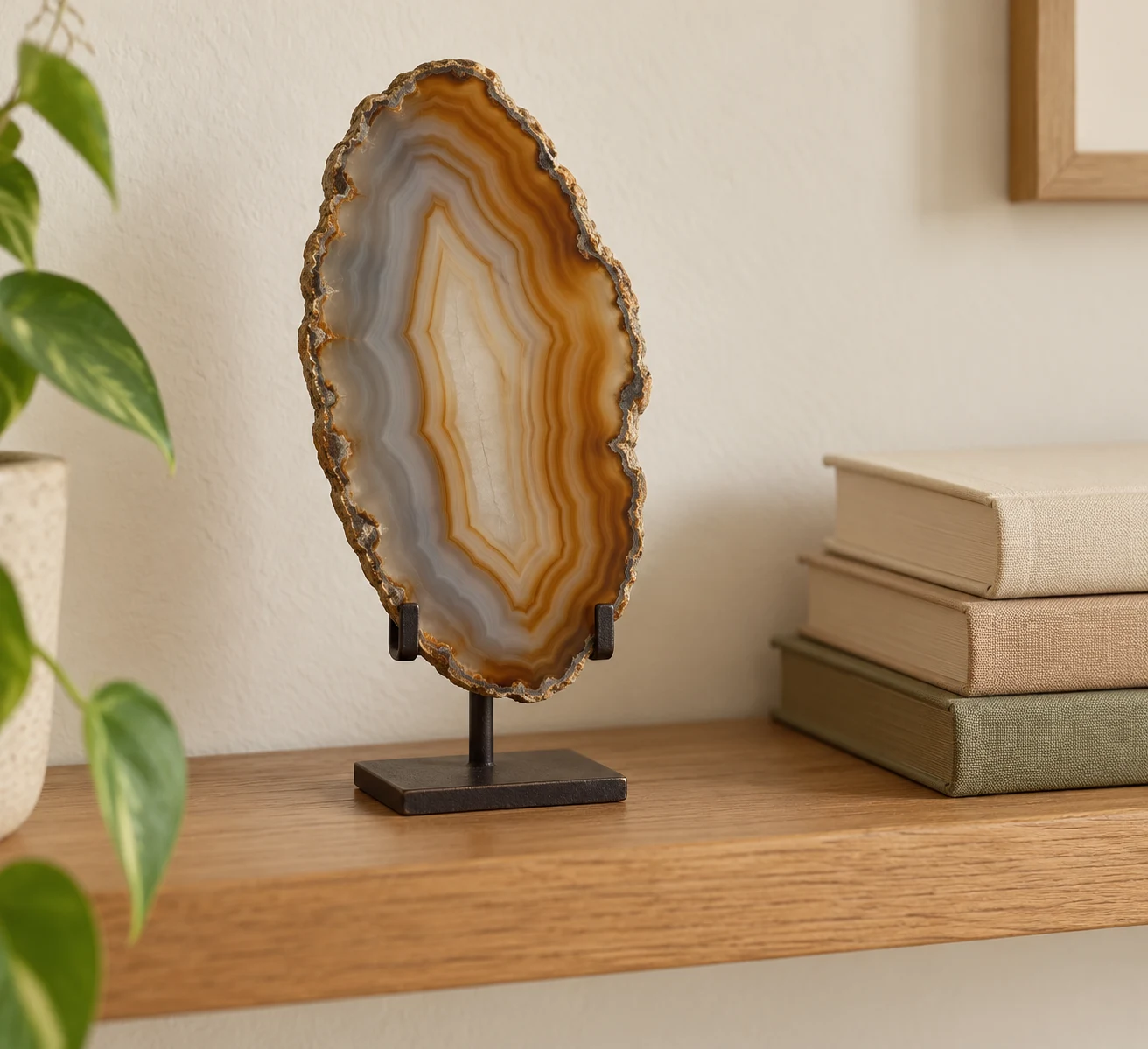
An agate slice displayed upright lets its pattern become the main feature. A suitable stand keeps the face visible and gives the piece a defined place in the arrangement.
This works nicely on a narrow shelf where a bulky object would feel crowded. Place the slice against a fairly plain background so its bands remain easy to see.
Choose a secure stand and read any information about color enhancement. Pick the pattern and palette that suit your room, with a clear understanding of how the piece has been finished.
14. Crystal Bookends That Earn Their Shelf Space
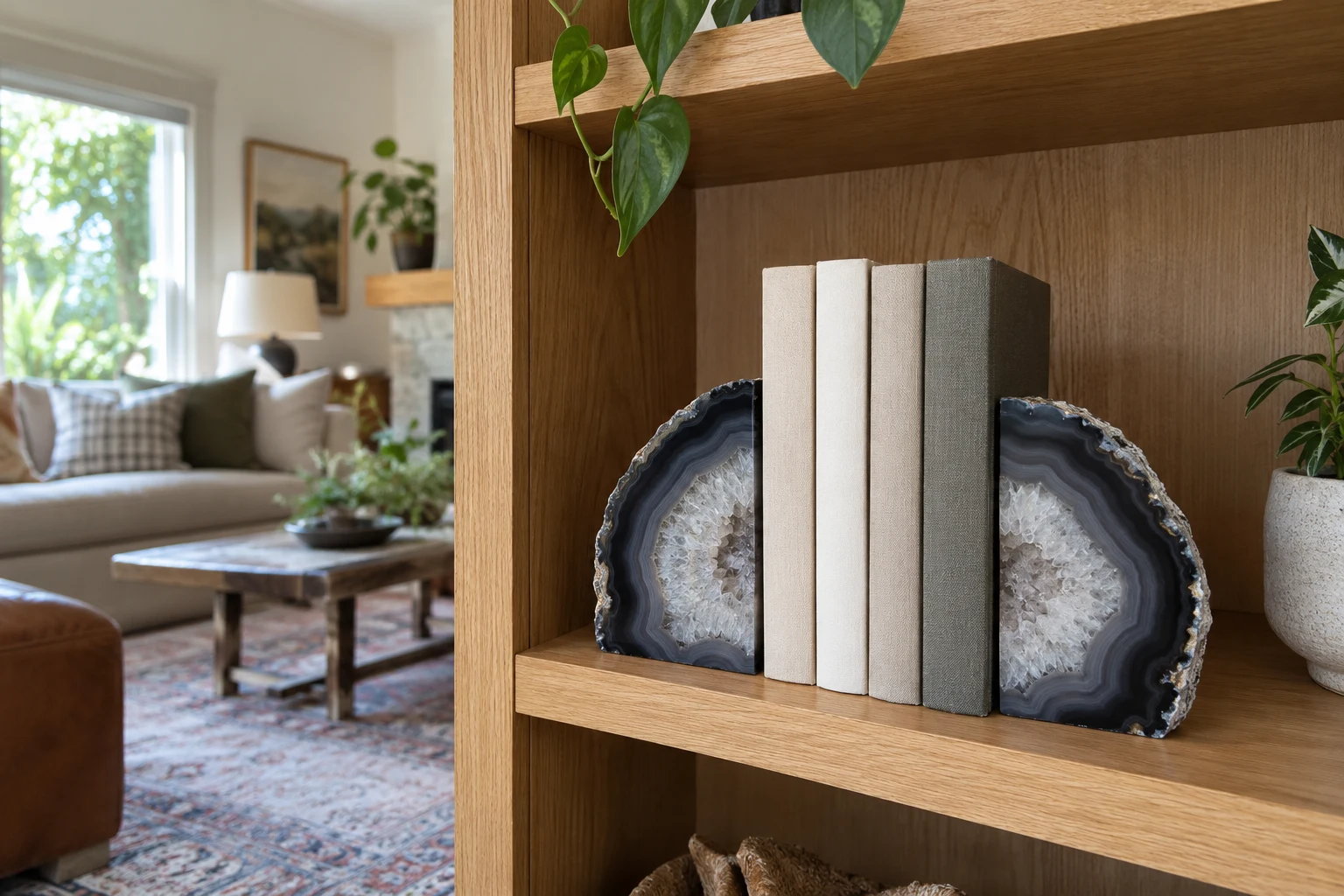
Mineral bookends add decorative interest while supporting the books you actually use. Agate, quartz, and amethyst versions offer different colors and textures without needing a separate display area.
They’re especially handy if your living-room shelves lean practical: novels, cookbooks, photo albums, and the occasional board game. A pair of stone bookends gives those everyday items a more finished arrangement.
Look for purpose-made bookends with flat bases, suitable weight, and protective pads. Keep the books they support proportionate to the pair rather than expecting small pieces to hold an oversized collection.
15. Carved Stone Bowls That Look Good Empty
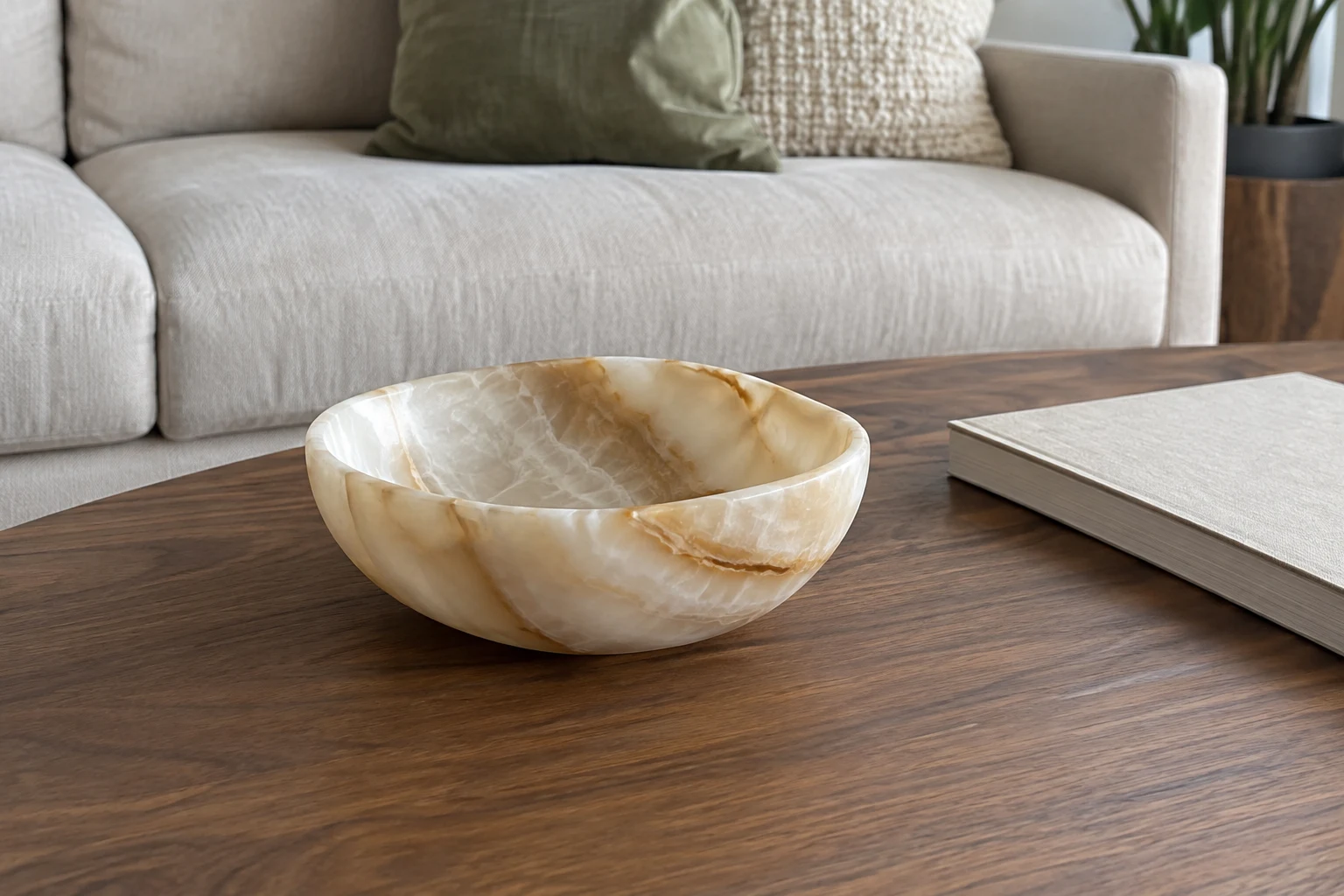
A carved stone bowl can serve as a low centerpiece without being filled. Its shape, markings, and finish provide the decoration.
On a coffee table, that low profile leaves the view across the room relatively open. Position it beside a book or on its own, depending on how much space you need for drinks and daily use.
Check the actual material and intended use before buying. For more ways to arrange a bowl without surrounding it with clutter, see our guide to trays, bowls, and everyday objects.
16. Selenite Tower Lamps for a Gentle Evening Glow
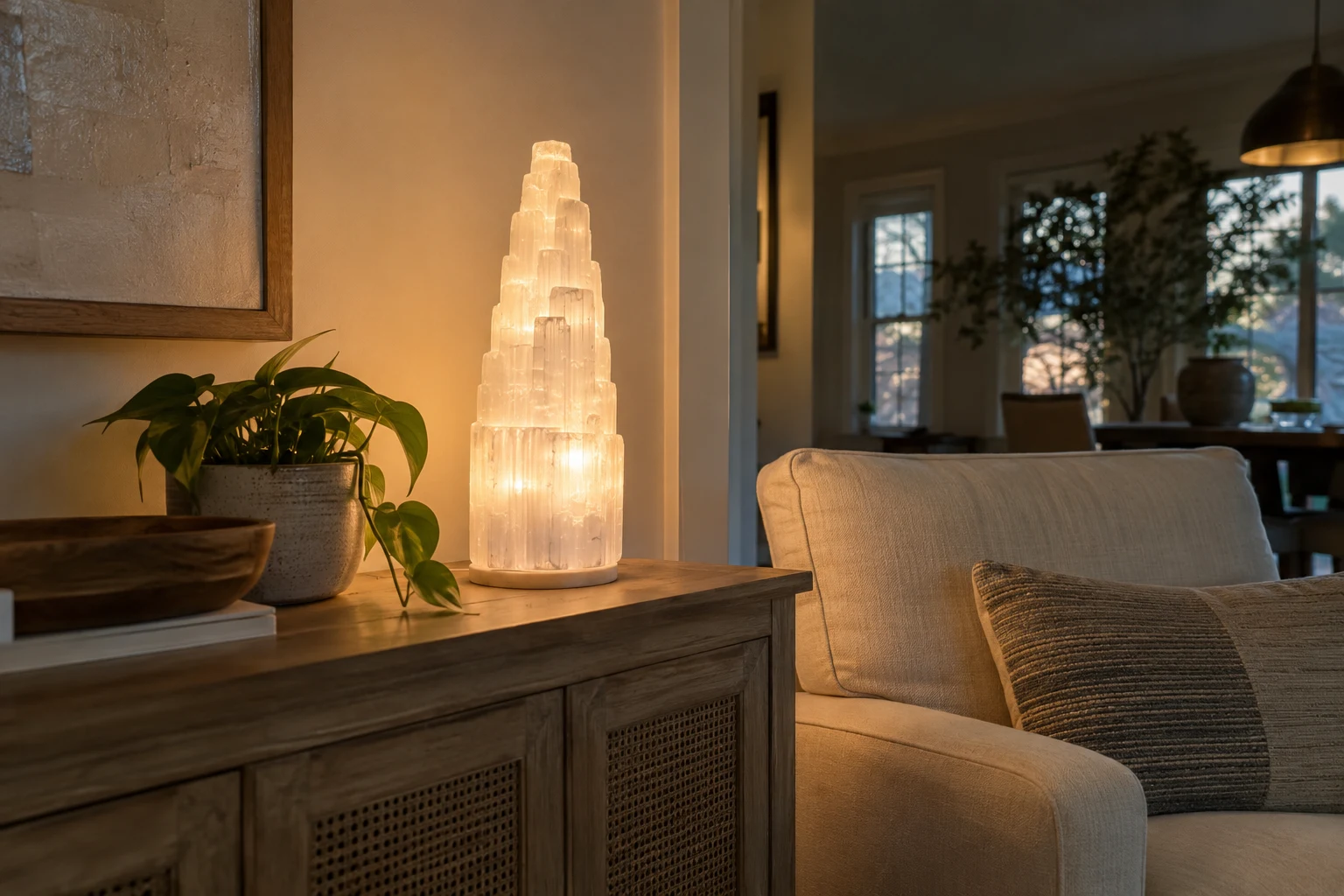
A selenite-style tower lamp can add decorative ambient light beside a console or armchair. Its appeal comes from the combination of the mineral’s appearance and the light within it.
Think of the corner that feels perfectly pleasant during the day but rather forgotten after sunset. A small decorative lamp can give it a warmer presence during an evening on the sofa.
Keep a suitable reading light nearby if that chair is where you read. Choose a finished lamp with clear material, electrical, and care information, and follow its bulb specifications.
17. Crystal Tealight Holders for Small Pools of Light
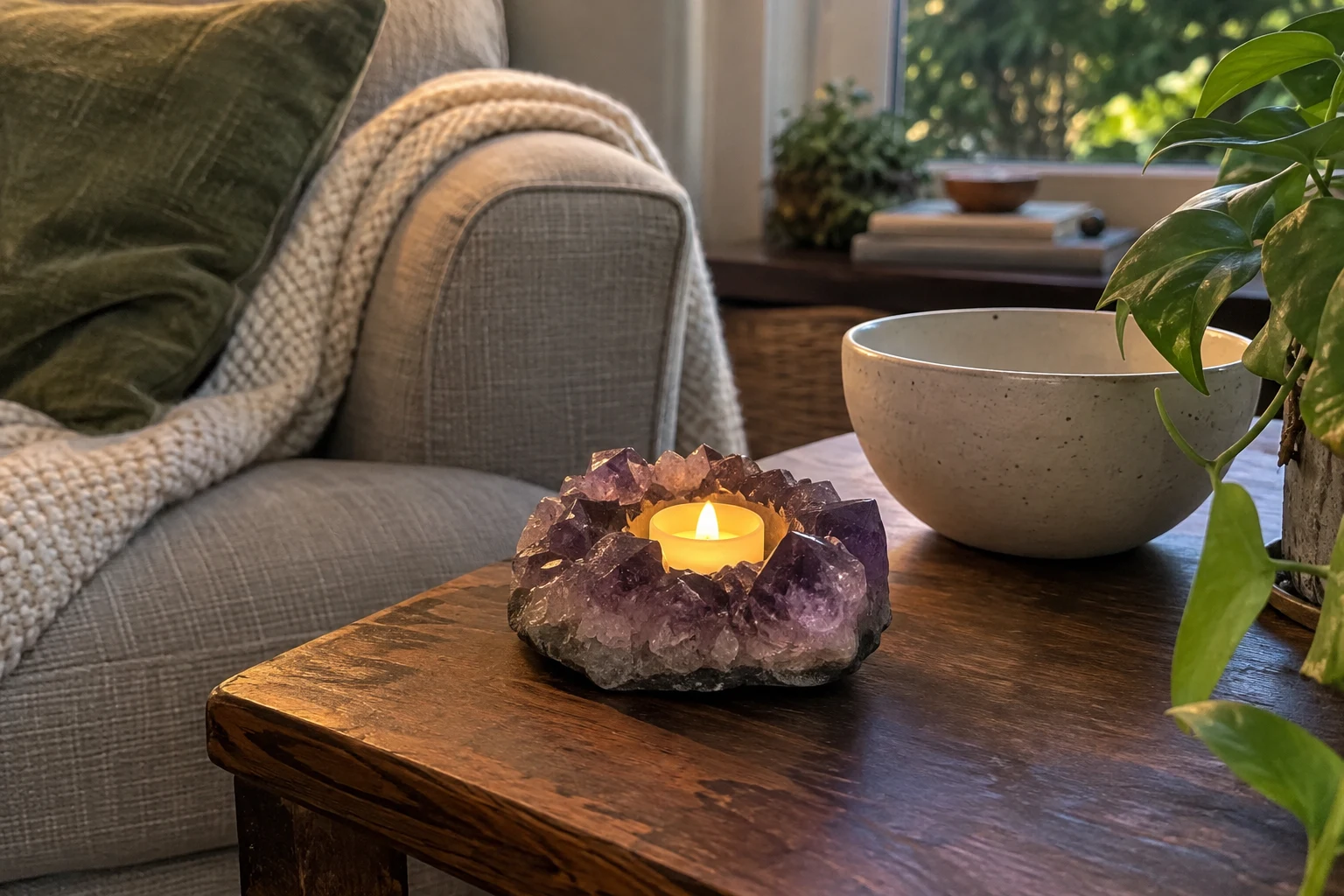
A crystal tealight holder paired with a correctly sized LED light makes a compact evening accent. Rough mineral holders offer texture, while cut-glass versions have a more regular, faceted appearance.
Place one on a side table or within a simple console arrangement. It doesn’t need several other glowing objects around it to feel inviting.
Check the opening and depth against the LED tealight you plan to use. A good fit looks more finished, especially when the holder will also be visible during the day.
18. Gemstone Trees for a Playful Shelf Detail
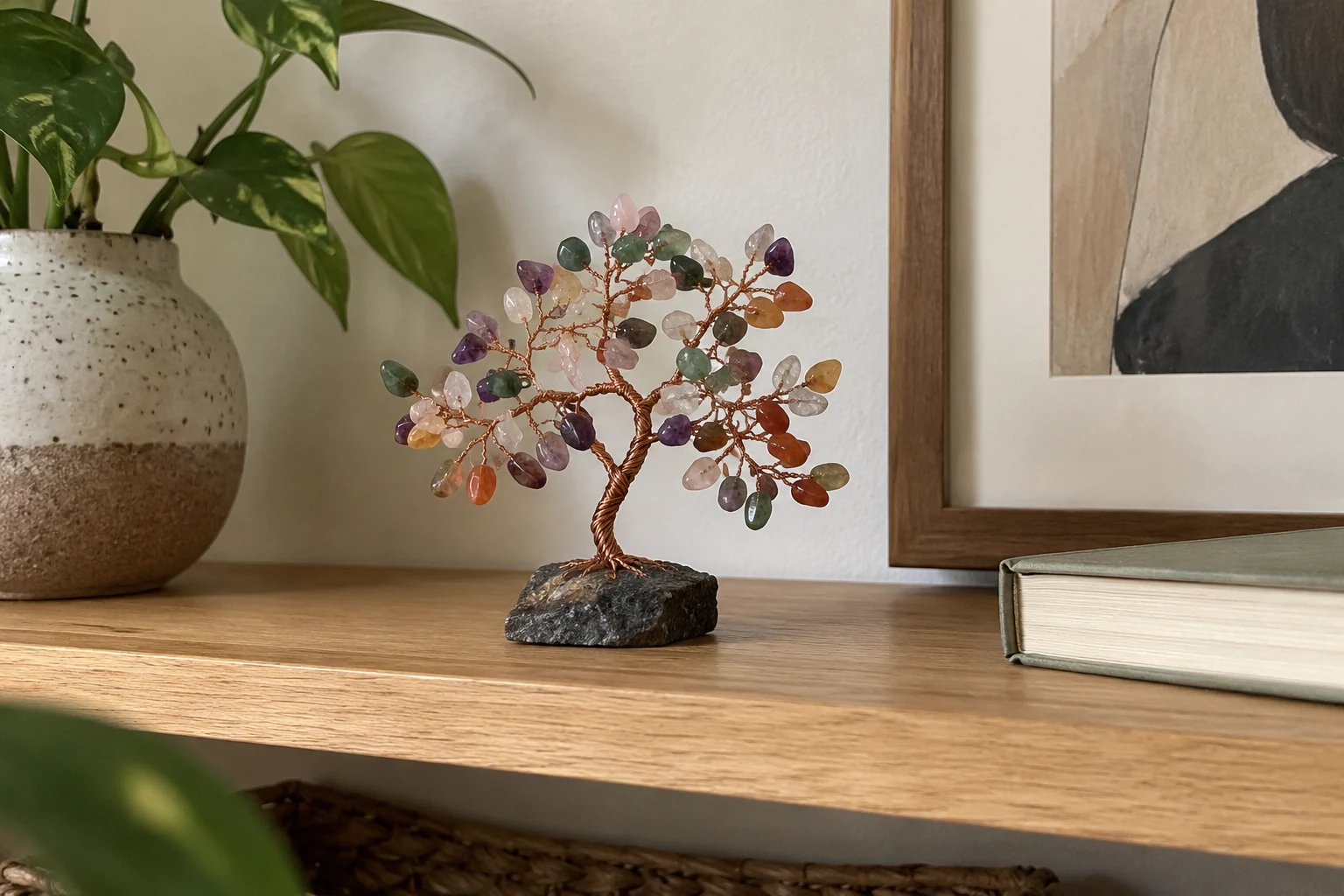
A gemstone tree adds a small sculptural shape to a shelf or console. Single-color versions are easy to work into a restrained palette, while mixed-color trees suit a more eclectic room.
Give the branches a simple background so their outline remains visible. Next to a busy print or several other figurines, that delicate structure can get lost.
Choose a tree with a stable base and a size that suits the surrounding objects. One playful piece is often enough to make an otherwise practical shelf feel more personal.
19. Crystal Carvings That Say Something About You
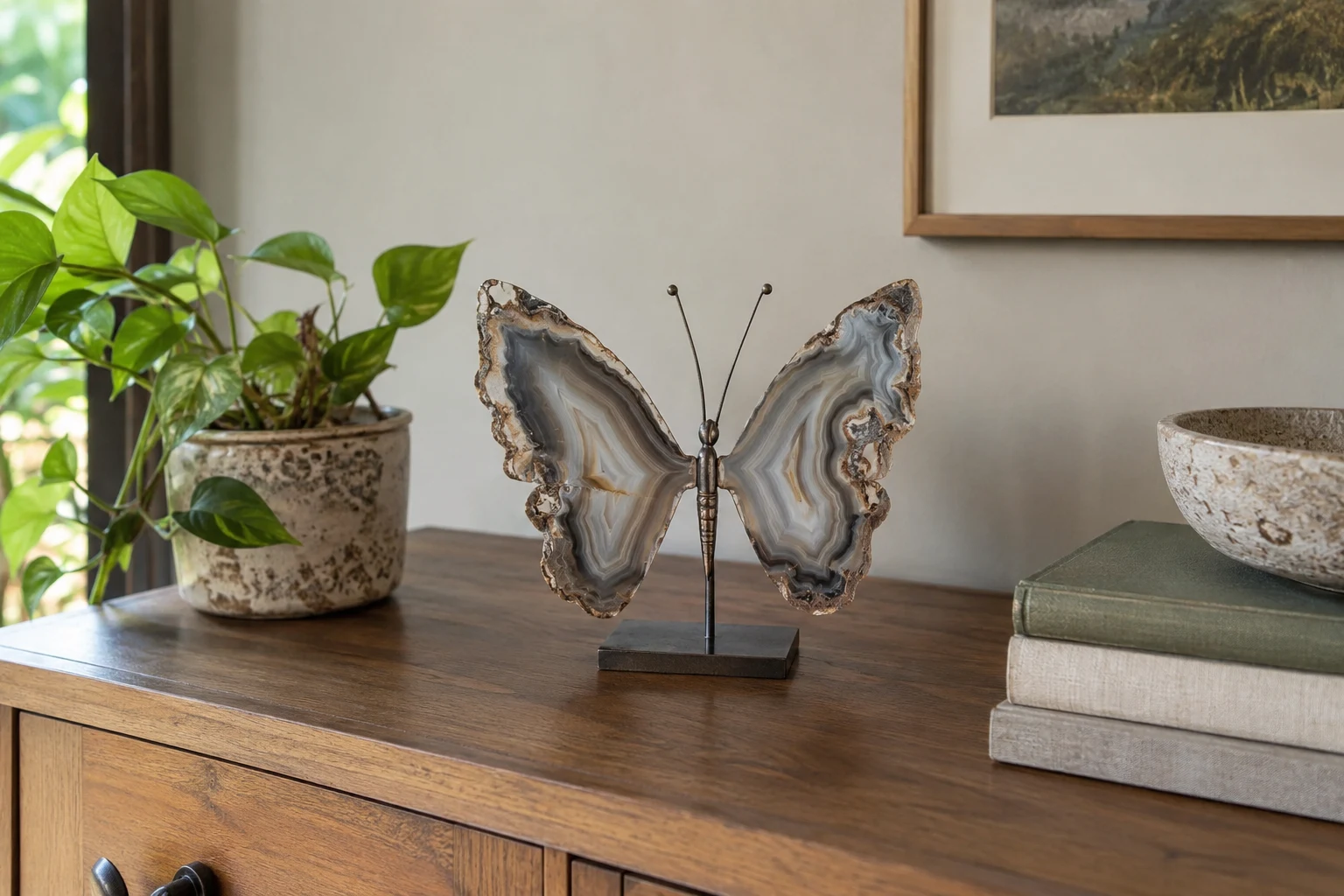
A carved mineral ornament works best when you enjoy the shape itself. Hearts, flowers, animals, and agate butterflies offer plenty of choice beyond abstract stone forms.
Love gardening? A flower carving might belong beside your plant books. Collect butterfly artwork? An agate butterfly could repeat that interest on a nearby cabinet.
Keep the arrangement connected to everyday objects, such as books or photographs. A meaningful shape gives you a better reason to keep a piece than buying it simply to fill a gap.
20. Modern Crystal-Glass Sculptures with Clean Lines
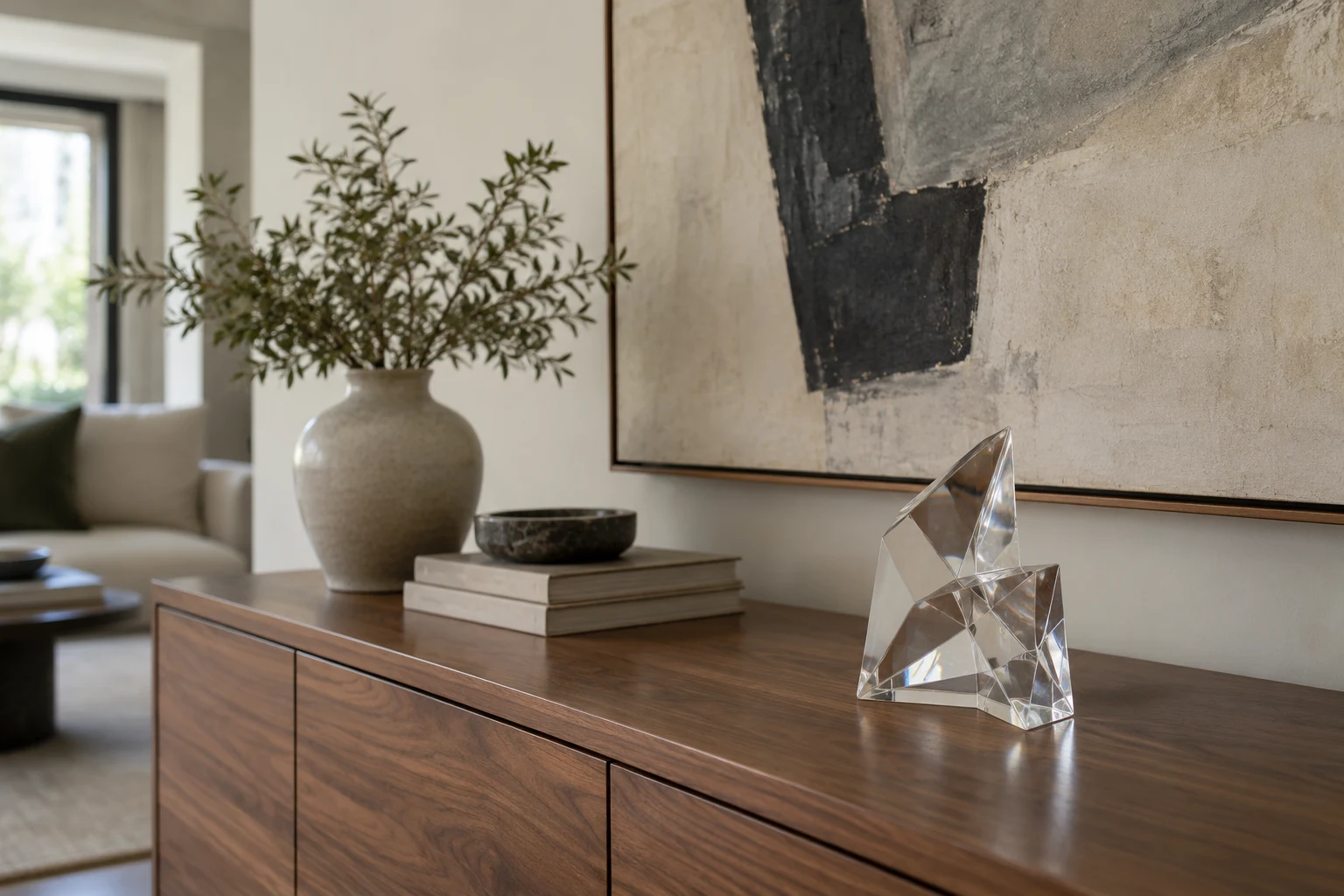
A manufactured crystal-glass sculpture offers a precise, polished look for modern living rooms. Geometric blocks, faceted forms, and abstract shapes all fit within this direction.
A sleek console with a large print above it is a useful setting. Choose a sculpture whose outline is clearly visible, then keep nearby accessories restrained enough to appreciate the form.
Check that the listing identifies the material accurately. The shape should appeal to you in ordinary room lighting, as well as in a brightly lit product photograph.
21. A Large Crystal Vase That Comes Out More Than Once a Year
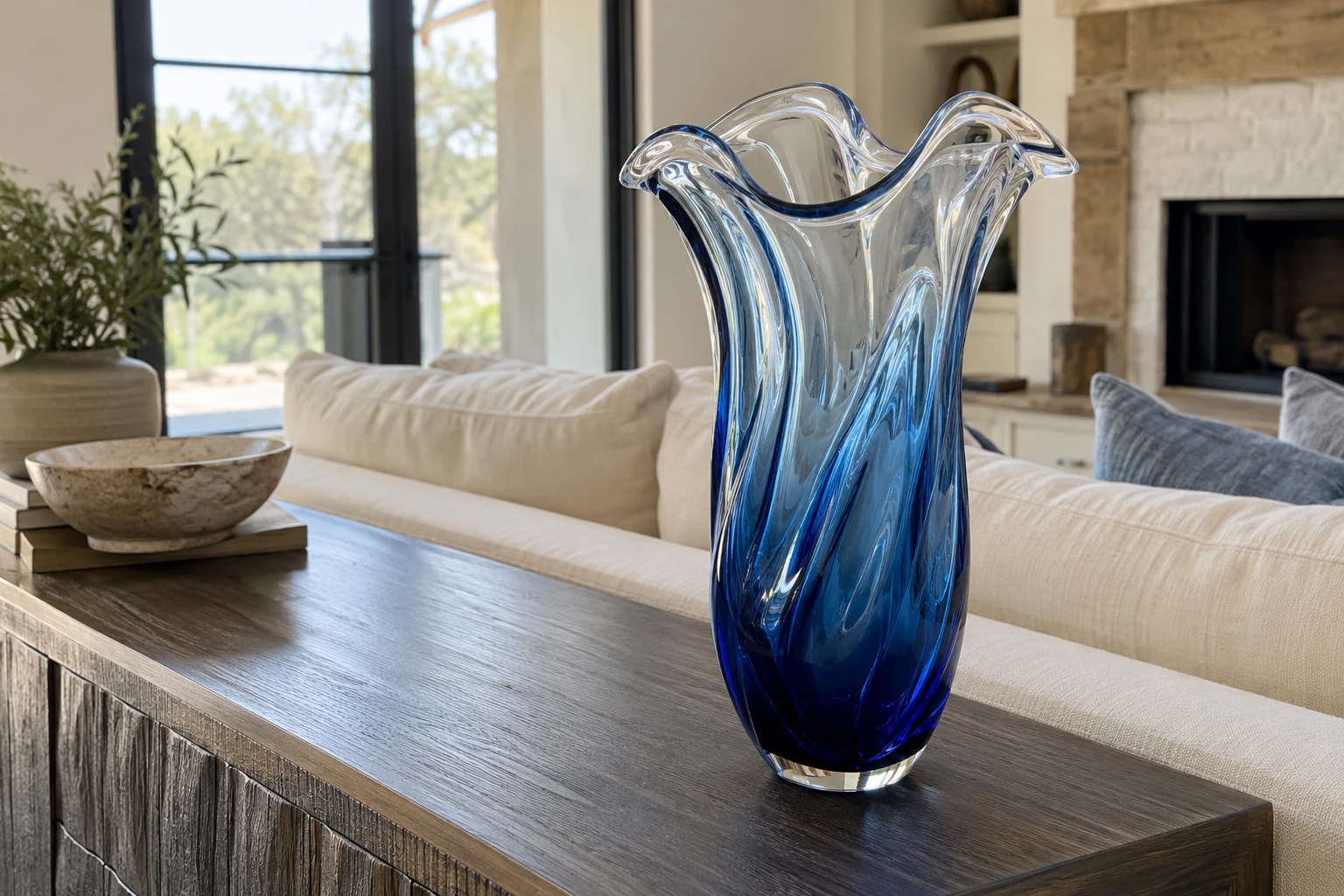
A large crystal-glass vase can become an everyday decorative piece on a substantial console or sideboard. Detailed cut glass suits a simple floral arrangement, while a plainer vase can handle more expressive branches.
If you already own one that only appears for birthdays, try it in the living room for a week. A few stems may be enough, and some shapes look attractive empty.
Check the height, stability, and available surface before settling on its position. Reusing a piece you own is also one of the easiest ideas in our guide to updating your living room on a budget. The hand-blown blue art glass vase shown here offers another decorative-glass option; its listing does not establish that it is crystal glass.
Which Type of Crystal Decor Fits Your Living Room?
Choose the overall look you want, then narrow down the type of piece. A room full of warm wood and textured fabrics may suit a raw specimen, while a simpler modern space might suit a polished geometric form.
| The look you want | Crystal decor to explore |
|---|---|
| Natural and textured | Raw quartz clusters, amethyst clusters, agate slices |
| Large and sculptural | Amethyst geodes, oversized quartz, substantial crystal-glass vases |
| Soft and subtle | Rose quartz, pale stone bowls, small clear quartz pieces |
| Modern and geometric | Towers, prisms, pyramids, abstract crystal-glass sculptures |
| Dark and understated | Smoky quartz, polished obsidian |
| Colorful and personal | Fluorite, gemstone trees, carved ornaments |
| Decorative and useful | Bookends, lamps, tealight holders, vases |
You don’t need a matching collection. A shared color or a pleasing contrast can connect different pieces, especially when you give each one enough space.
Before You Bring a Piece Home
Check the size, weight, material, and care requirements before choosing a permanent display spot. A piece can look perfect online and still be too tall for your shelf or too heavy for your side table.
- Measure the space: Check width, depth, and height, including the display stand.
- Check the weight: Make sure the supporting furniture is suitable.
- Confirm the material: Read whether the item is natural stone, crystal glass, resin, or a composite.
- Read treatment disclosures: Look for information about dyeing, coatings, or other treatments.
- Check the photographs: Find out whether you’ll receive the pictured specimen or a similar example.
- Look for stability: Choose a secure base or a properly fitted stand.
- Read care instructions: Check cleaning and placement guidance for the specific piece.
- Think about everyday use: Keep sharp, heavy, fragile, or small loose pieces away from places where children or pets could reach or knock them.
- Check delivery and returns: Understand how damage in transit is handled.
What Is the Difference Between Natural Crystals and Crystal Glass?
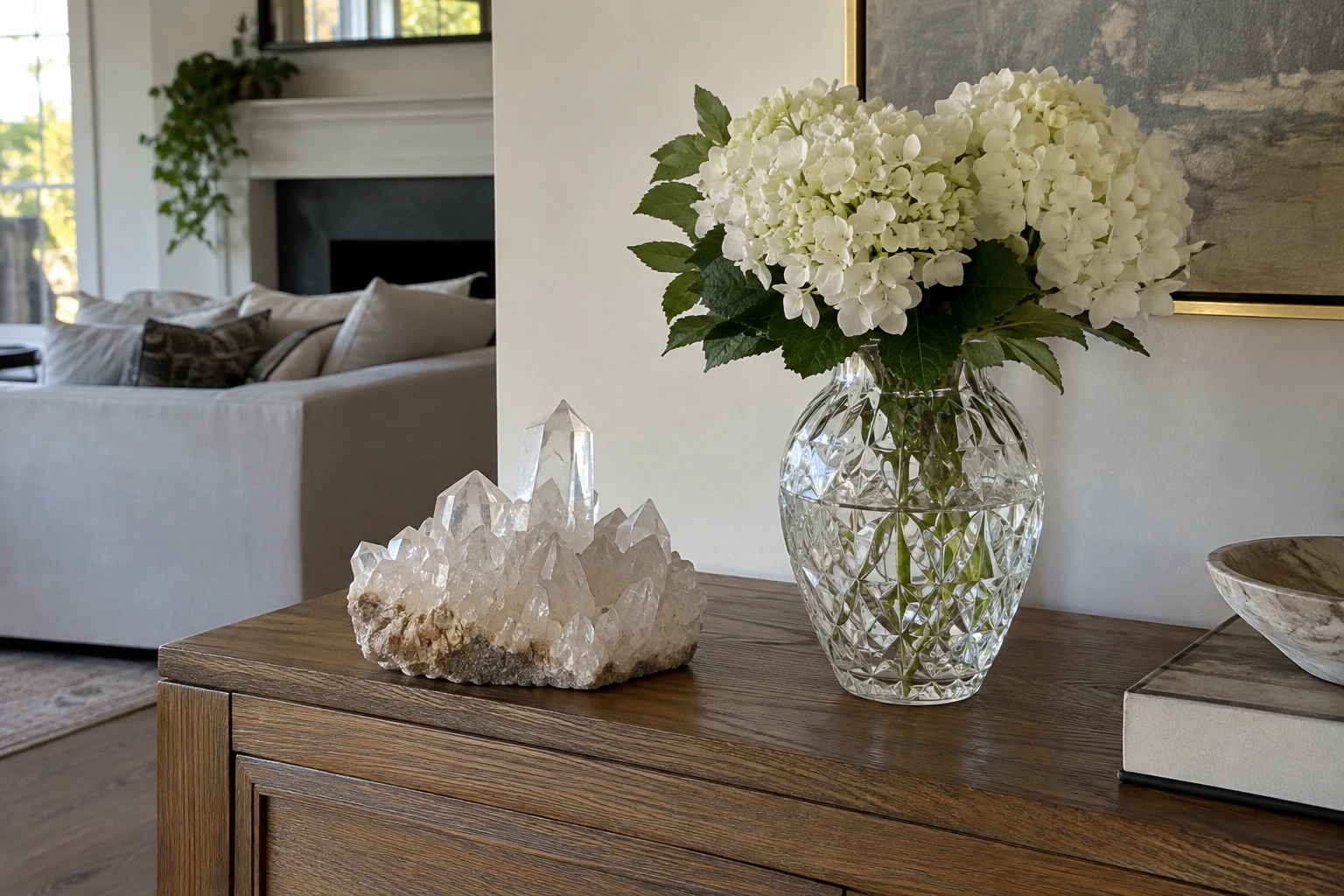
Natural mineral decor uses geological materials, while crystal glass is manufactured glass used to make decorative and functional objects. A quartz cluster and a cut-crystal vase belong to different material categories, even though both may appear in a search for crystal decor.
Natural stone may also be cut, polished, carved, or treated. Read the description of the individual piece so you know which qualities are natural and which come from its finishing process.
Which Crystal Decor Works Best in a Small Living Room?
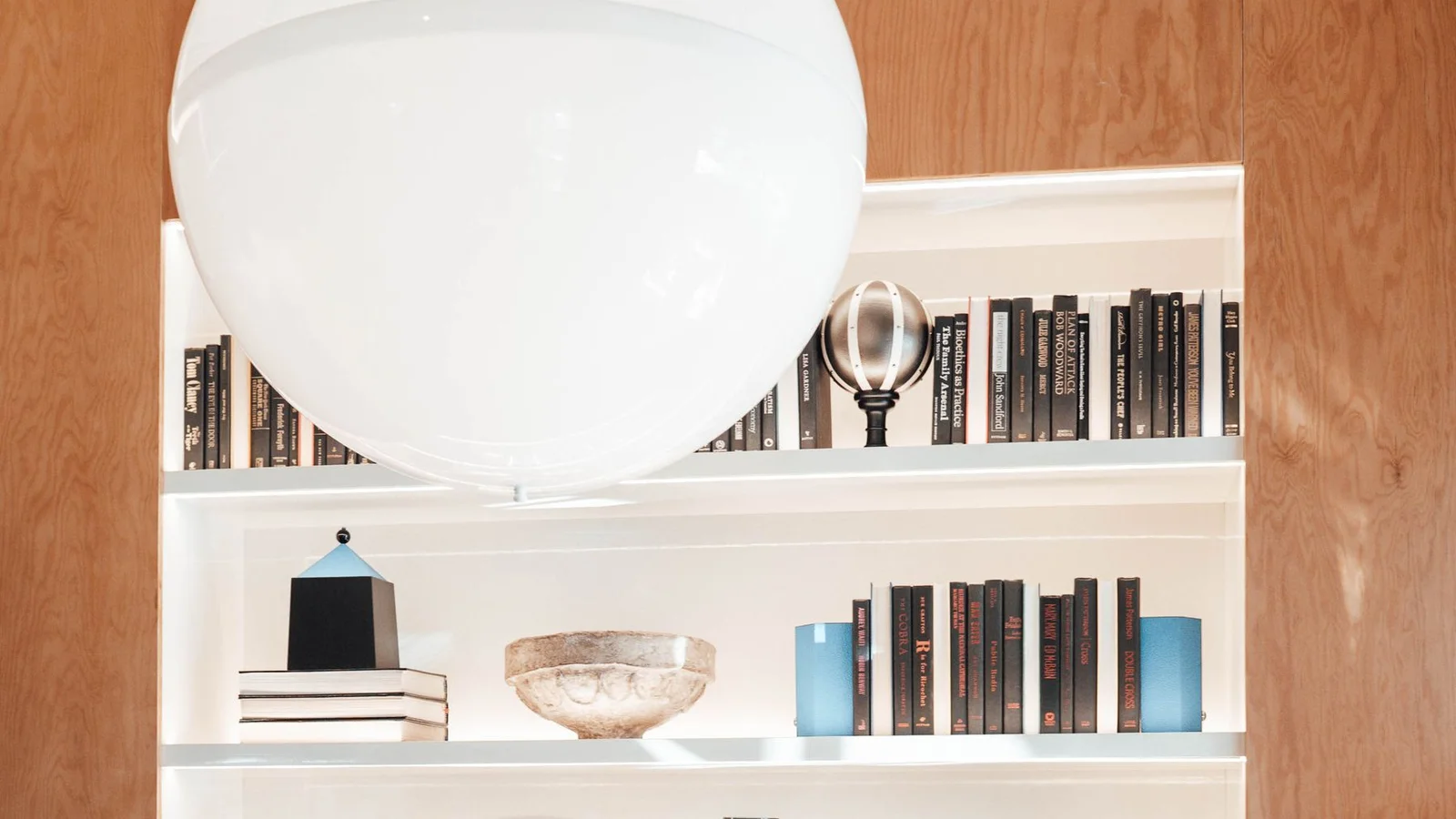
Bookends, one small specimen, or a compact carved bowl are easy options for a small living room. They can fit into an existing arrangement without requiring another piece of furniture.
Choose one display area and keep the other surfaces useful. If you have to move three objects every time you put down a mug, the arrangement needs a little editing.
Where Should You Display a Large Crystal Geode?
Display a large geode on a stable, suitably rated surface where it won’t obstruct movement or be easily knocked. Check the specimen’s weight and base before deciding on a console, cabinet, or dedicated stand.
View it from where you normally sit. The opening should face into the room, with enough surrounding space for its shape to remain clear.
Can You Mix Different Crystal Colors and Shapes?
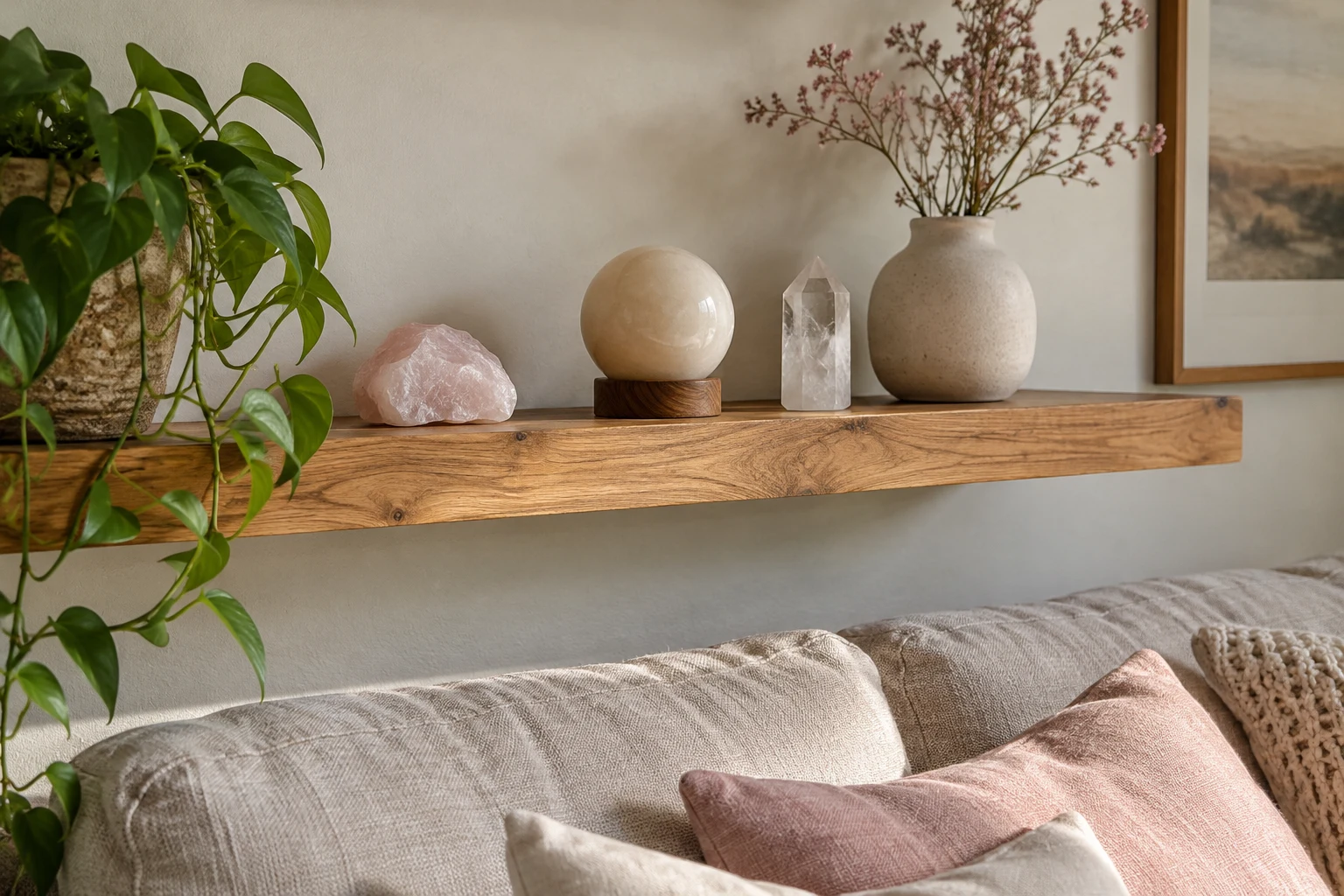
Yes. Connect the pieces through a limited color palette, then vary their shapes or finishes. For example, pale pink and cream pieces can work together even when one is rough and the other is polished.
For a larger collection, divide it into smaller groups with visible gaps. A matte ceramic vessel can also provide a quieter surface between more detailed pieces, as we discuss in our guide to collecting handmade ceramics.
How Do You Clean Crystal Decor?
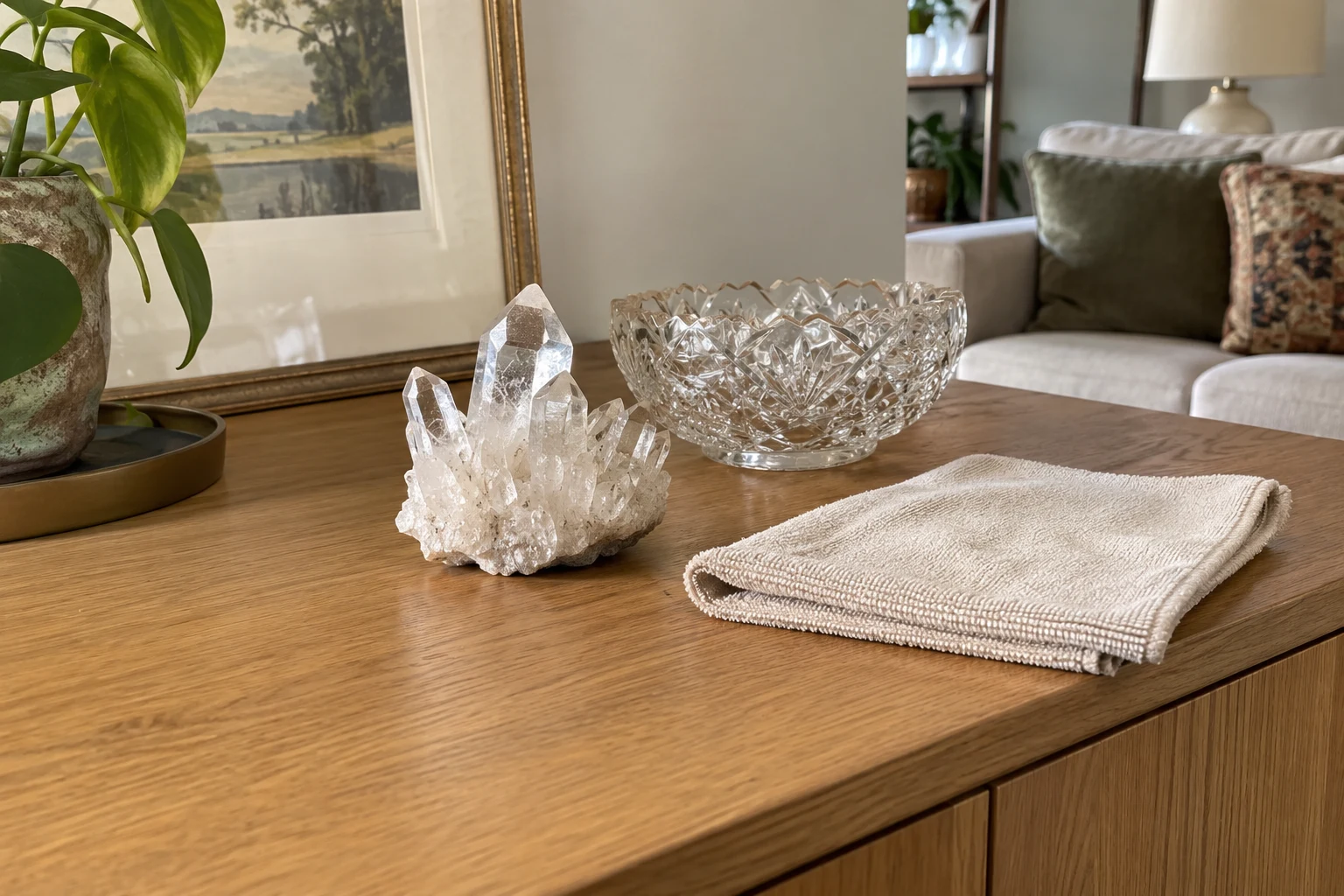
Follow the cleaning instructions for the exact material and product you own. Natural minerals, treated stones, crystal glass, and electrical lamps can require different care.
Avoid assuming a piece is suitable for soaking, cleaning sprays, or prolonged sunlight. If the instructions are missing, ask the seller for guidance before trying a cleaning method.
Crystal Decor to Bring the Look Home
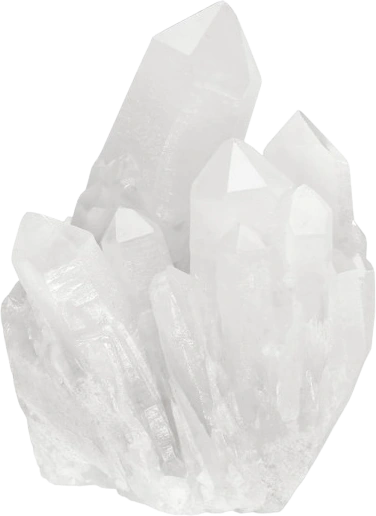 Top Plaza Clear Quartz ClusterA clear-to-cloudy quartz cluster for adding natural texture to a shelf or tray.
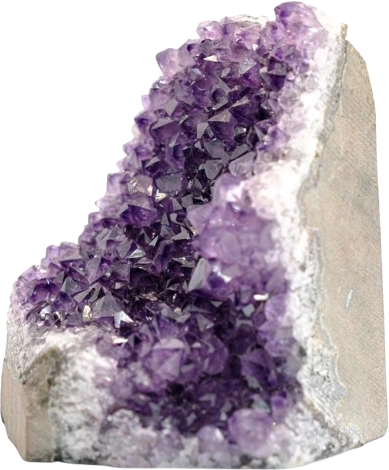 Natural Amethyst ClusterA purple amethyst cluster for a console or shelf. Check the selected specimen and size.
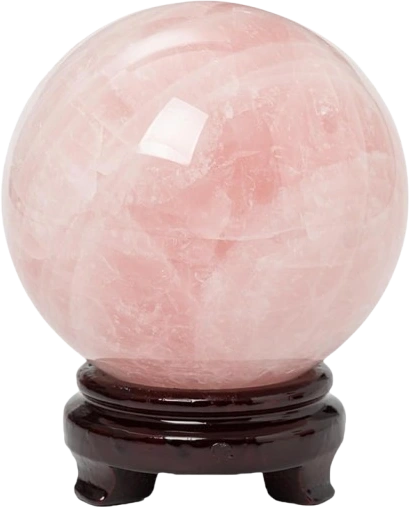 Rose Quartz Sphere with StandA polished pink sphere with a dark display stand for a rounded decorative accent.
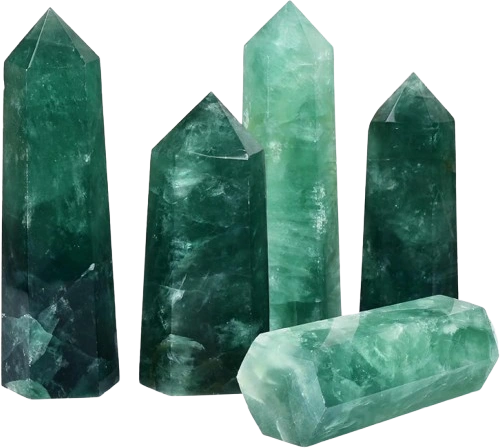 Green Fluorite Obelisk TowerA pointed green fluorite accent. Check the listing for the selected size and quantity.
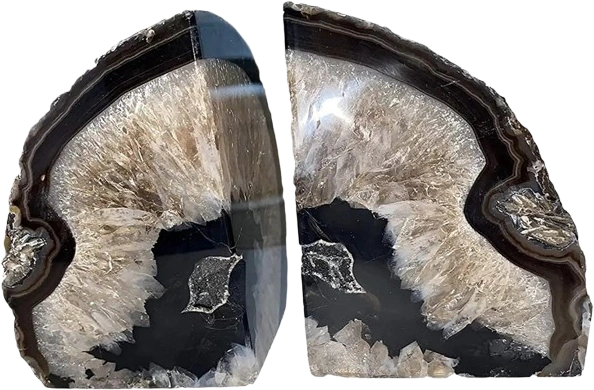 JIC Gem Black Agate Geode BookendsDark banded agate bookends with pale crystal interiors for a useful shelf accent.
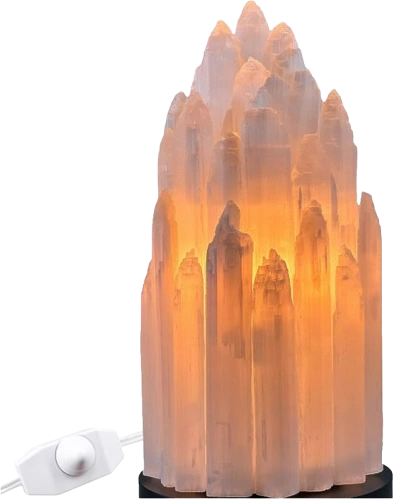 Selenite Tower LampA pale mineral-style lamp for decorative evening light. Check the listing’s material and electrical details.
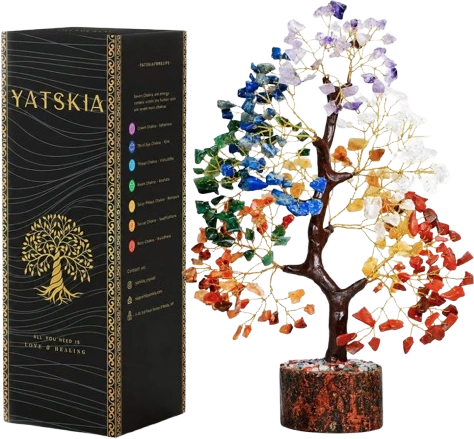 YATSKIA Seven Chakra Gemstone TreeA branching decorative tree with multicolored stone details and a compact base.
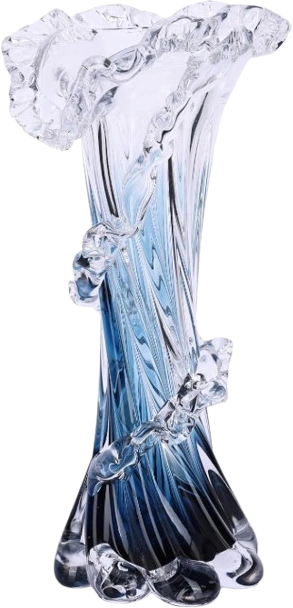 Hand-Blown Blue Art Glass VaseA sculptural blue glass vase with a rippled rim for flowers or an empty display.