Best Bathroom Light Fixtures: 10 Smart Picks for Steamy Spaces

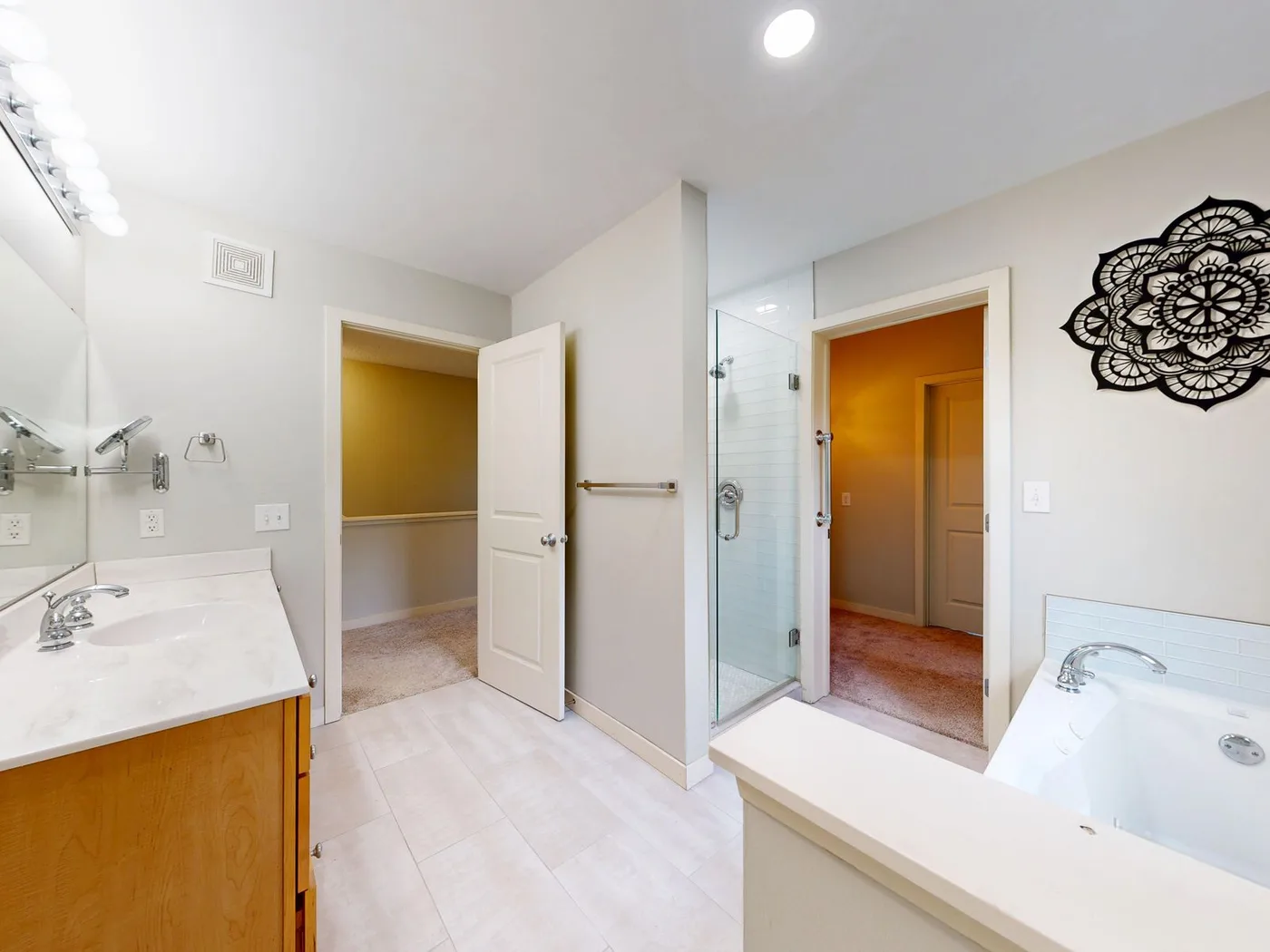
Good bathroom lighting makes shaving, skincare, and getting ready easier, then gives you a softer glow when it’s time to unwind. When choosing the best light fixture for bathroom spaces, you’ll probably want something that looks good, lights your face evenly, and suits a room that gets steamy every day.
The quick answer
- The Ebern Designs Rhenn 3-Light Vanity Light suits lighting above a bathroom mirror.
- The Pottery Barn Cooper Double Tube Sconce fits narrow spaces beside the mirror.
- The Mitzi Sara Flush Mount adds a decorative ceiling light. These picks suit bathroom locations away from direct water exposure.
From a quick vanity update to lighting a whole bathroom, these ten options will help you find a setup that fits your space and daily routine.
Which Bathroom Light Fixture Fits Your Space?
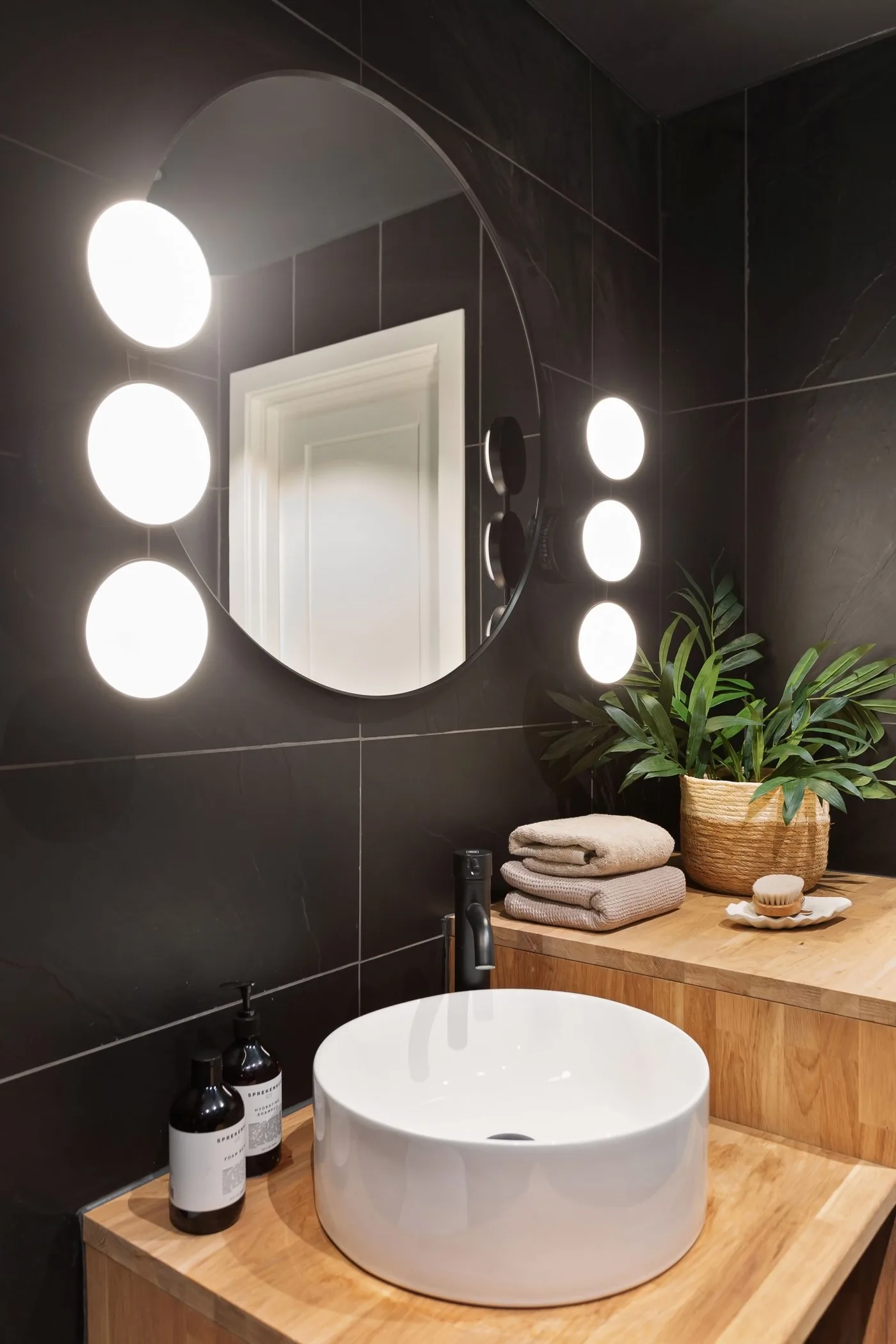
Choose the fixture for the spot that needs better light. If the room seems bright but your face looks shadowy, the mirror needs attention before the ceiling does.
| Your bathroom need | Fixture to prioritize | What to check |
|---|---|---|
| Clearer shaving and makeup light | Paired diffused sconces | Position, output, and glare |
| Little wall space beside the mirror | Above-mirror vanity bar | Width and cabinet-door clearance |
| Narrow strips of wall | Slim vertical sconces | Width and wall projection |
| Low ceiling | Compact flush mount | Actual fixture height |
| Dark shower | Shower-suitable recessed light | Location rating and coverage |
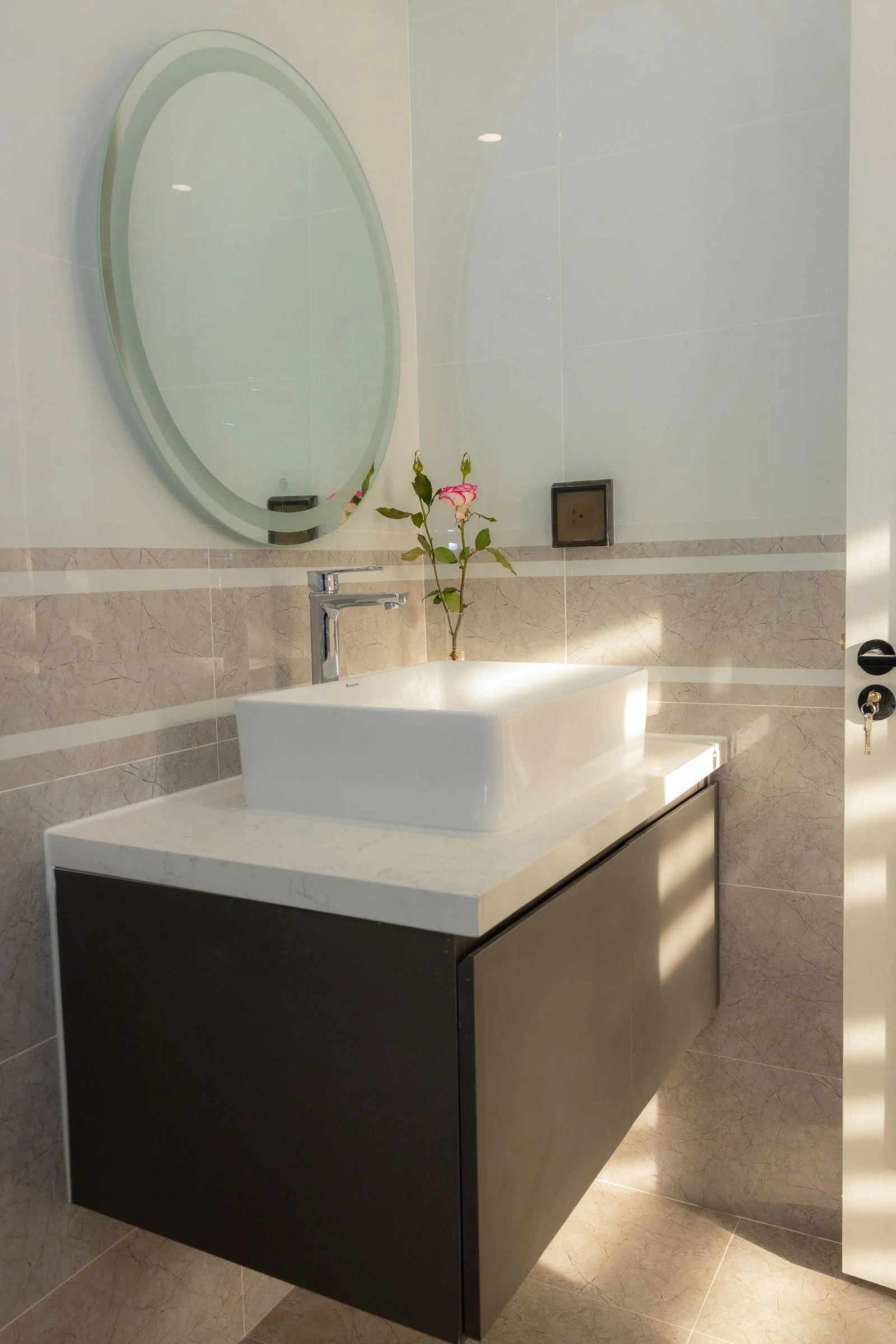
| Clean mirror wall | Front-lit LED mirror | Light directed toward your face |
| Decorative focal point | Pendant or chandelier | Clearance and supporting light |
| Gentler nighttime trips | Shielded under-vanity lighting | Separate controls |
1. Best for Everyday Grooming: Sconces on Both Sides of the Mirror
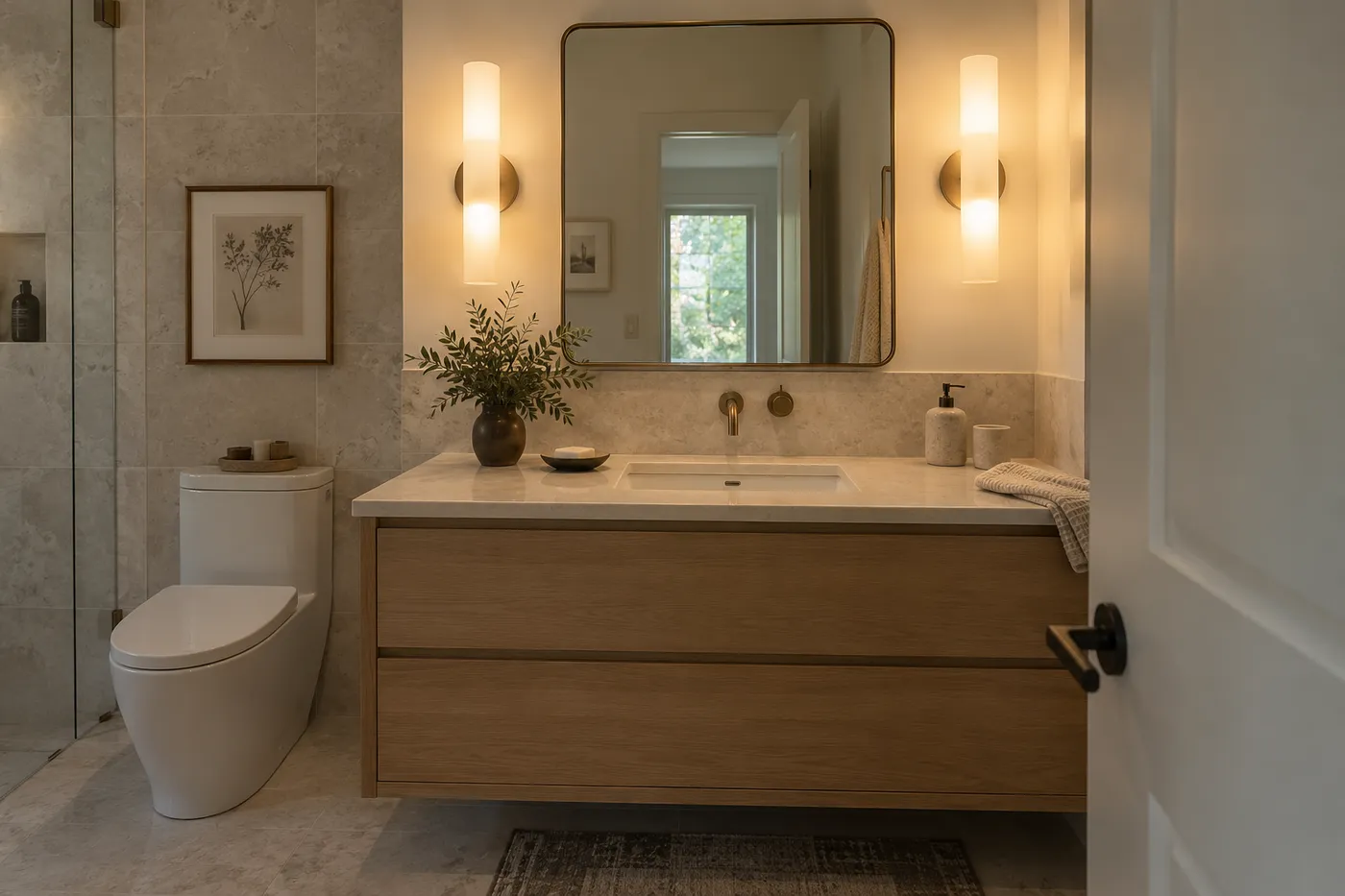
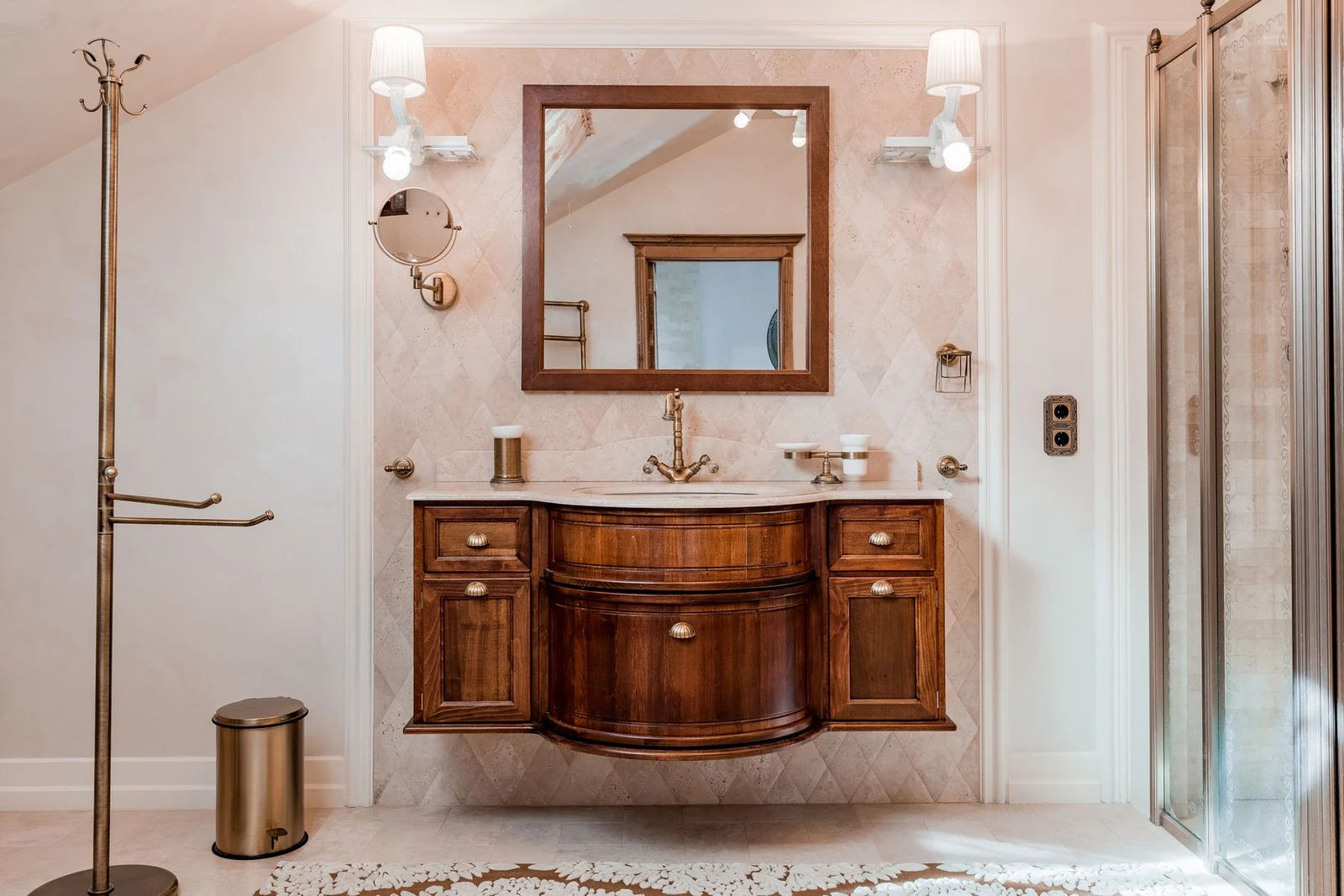
Place diffused light on both sides of the mirror to reduce uneven shadows across your face. One ceiling light can brighten the sink while leaving your eyes and chin in shade.
Look for frosted or opal glass, then position the glowing part of each fixture around the people who use the mirror. A little globe and a long tube spread light differently, so there is no single mounting height that fits every bathroom.
Sharing a double vanity? Give each person usable light. Nobody should have to lean into the other sink just to see clearly.
The In Common With Glass Up Down Sconce has a damp-rated hardwired version and warm glass shades. Its gentle ambient glow is appealing beside a mirror; review its output and your layout before relying on it as the only grooming light.
2. Best When Wall Space Is Tight: An Above-Mirror Vanity Light
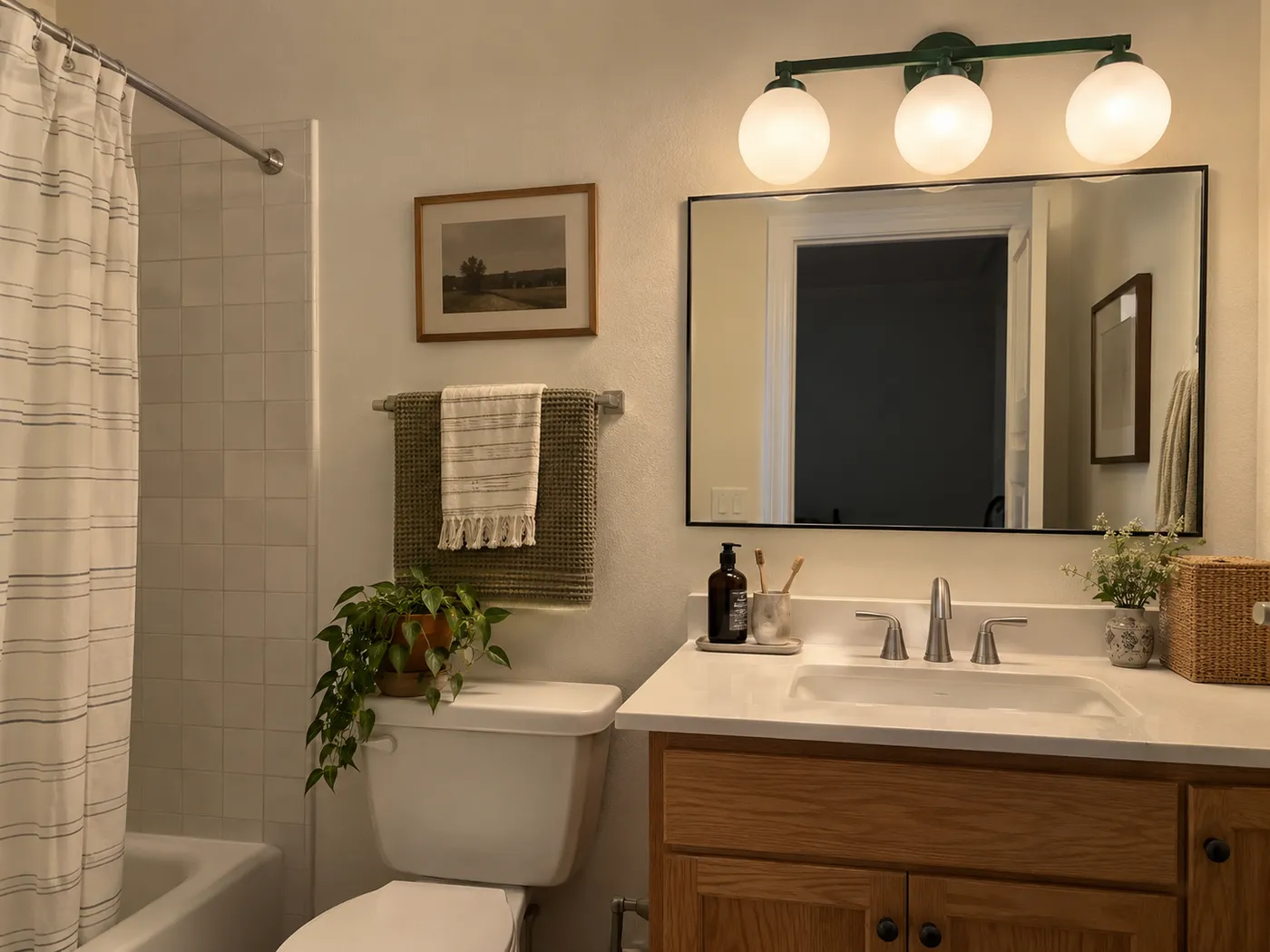
Use a diffused vanity bar when a mirror or medicine cabinet leaves no space for side sconces. This is the familiar small-bathroom puzzle: the cabinet takes nearly the whole wall, but the sink still needs light.
Open the cabinet doors before measuring. Check the fixture’s width, its projection from the wall, and where the existing electrical box sits. Moving wiring can turn a quick replacement into a larger job.
The Ebern Designs Rhenn 3-Light Vanity Light uses milky glass globes and a green backplate. The listing identifies it as damp-rated and says dimming requires compatible bulbs and controls. Light from above may still leave some facial shadows, so keep the shades diffused.
3. Best for Narrow Mirror Gaps: Slim Vertical Tube Sconces
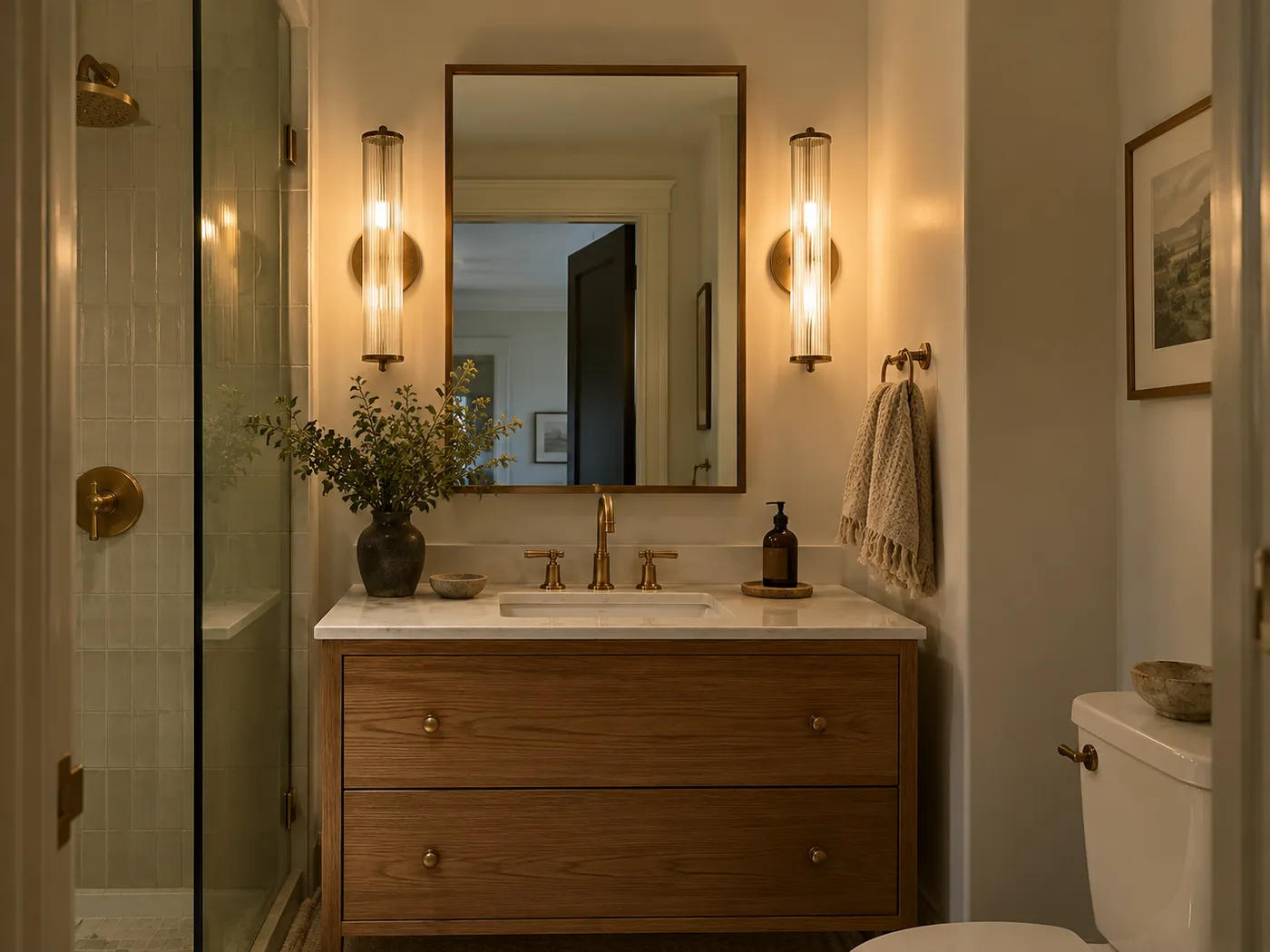
Choose a slim vertical sconce when there is room beside the mirror, but a bulky shade would feel cramped. Long fixtures can sit between two mirrors or in a narrow strip beside one.
Measure the depth too. A sconce may look slim from the front and still project far enough to catch a cabinet door or shoulder.
The Pottery Barn Cooper Ribbed Glass Double Tube Sconce is suitable for bathrooms when protected from direct water. Its ribbed clear glass has a light profile, though the visible bulbs may create glare at eye level.
4. Best for a Softer Decorative Look: Globe Sconces
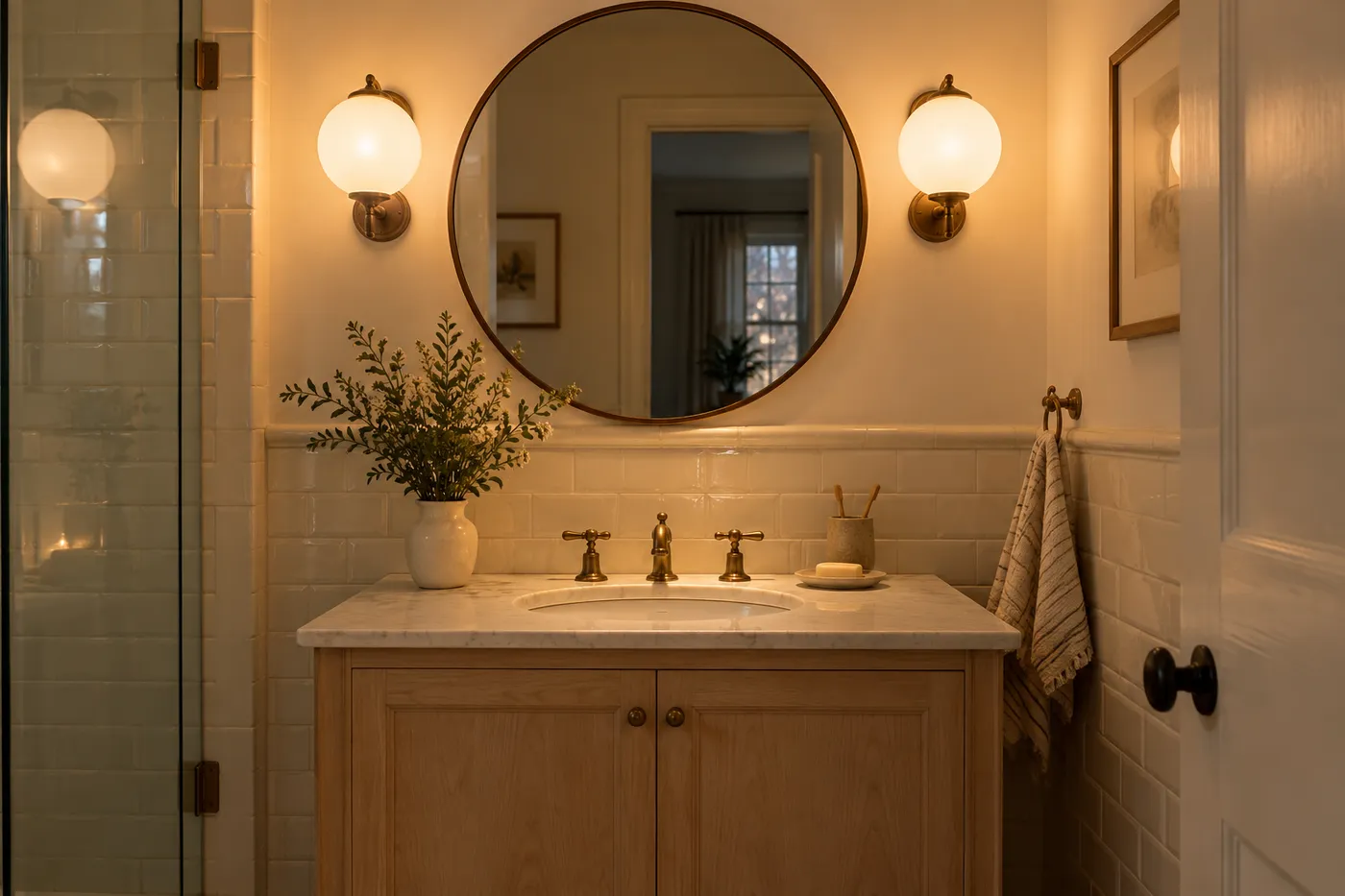
Choose opal or frosted globe sconces for a rounder shape and a softer-looking light source. They loosen up all the rectangles made by tile, cabinets, and mirrors without taking another inch of counter space.
Brass tones warm up pale tile, nickel sits easily with cool finishes, and black gives a light wall definition. Your faucet and light do not need identical finishes to look comfortable together.
Pay attention to the glass. A clear globe puts the bulb on display; an opaque one conceals it better. If you want that gentle glow by the sink, choose a globe with a suitable bathroom rating and the level of output your routine needs.
5. Best for Low Ceilings: A Flush-Mount Ceiling Light
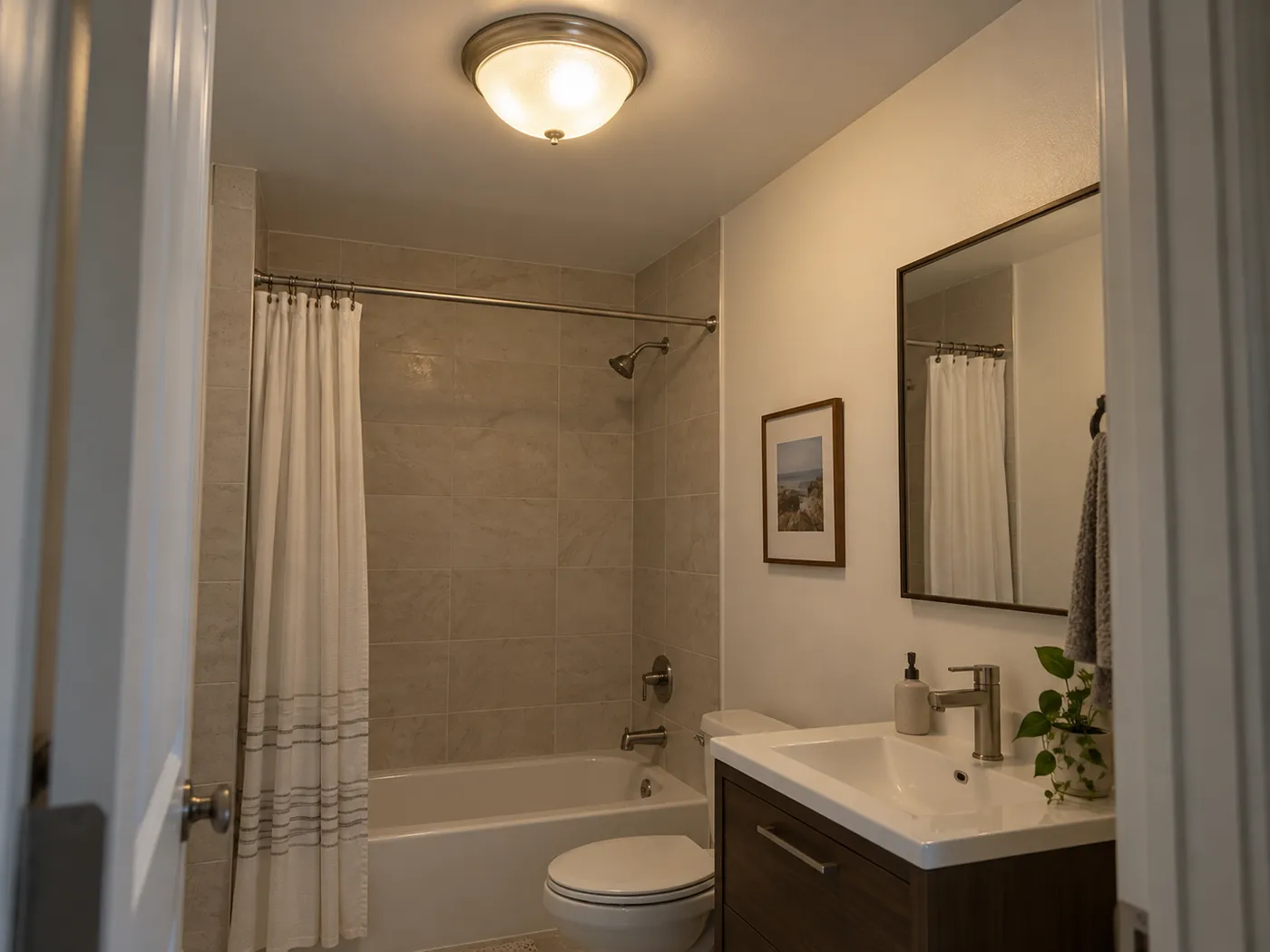
Use a shallow flush mount for general light when a hanging fixture would crowd the room. In an apartment bathroom, the ceiling may already be busy with a fan, shower frame, and tall cabinet.
Read the actual height in the dimensions. “Flush mount” describes how the fixture attaches, but decorative models can still extend far below the ceiling.
The Mitzi Sara Flush Mount has ribbed clear glass and a damp rating. It is 12 inches high, so it suits a room with enough overhead space better than a particularly low ceiling. Keep mirror lighting in your plan, too; a bright room can still leave your face in shadow.
6. Best for a Dark Shower: Recessed Lighting Approved for the Location
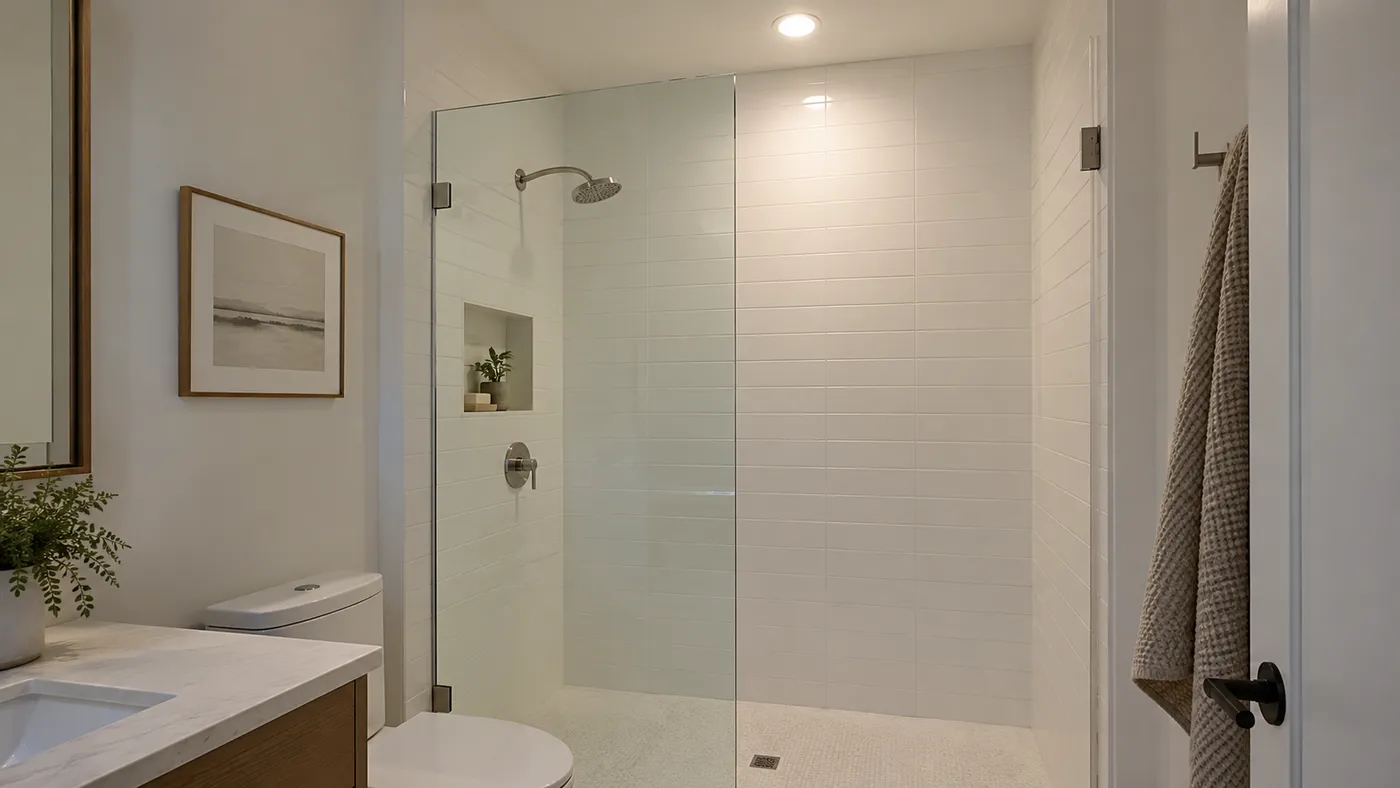
Choose a recessed light whose complete assembly is approved for its exact shower location. A vanity can be brilliantly lit, then the curtain closes and every bottle in the shower looks the same.
Aim for comfortable coverage across the shower instead of one glaring spot. Ask the installer about placement, access for future maintenance, and the rating of the housing, trim, and lamp together.
7. Best for a Clean Mirror Wall: A Front-Lit LED Mirror
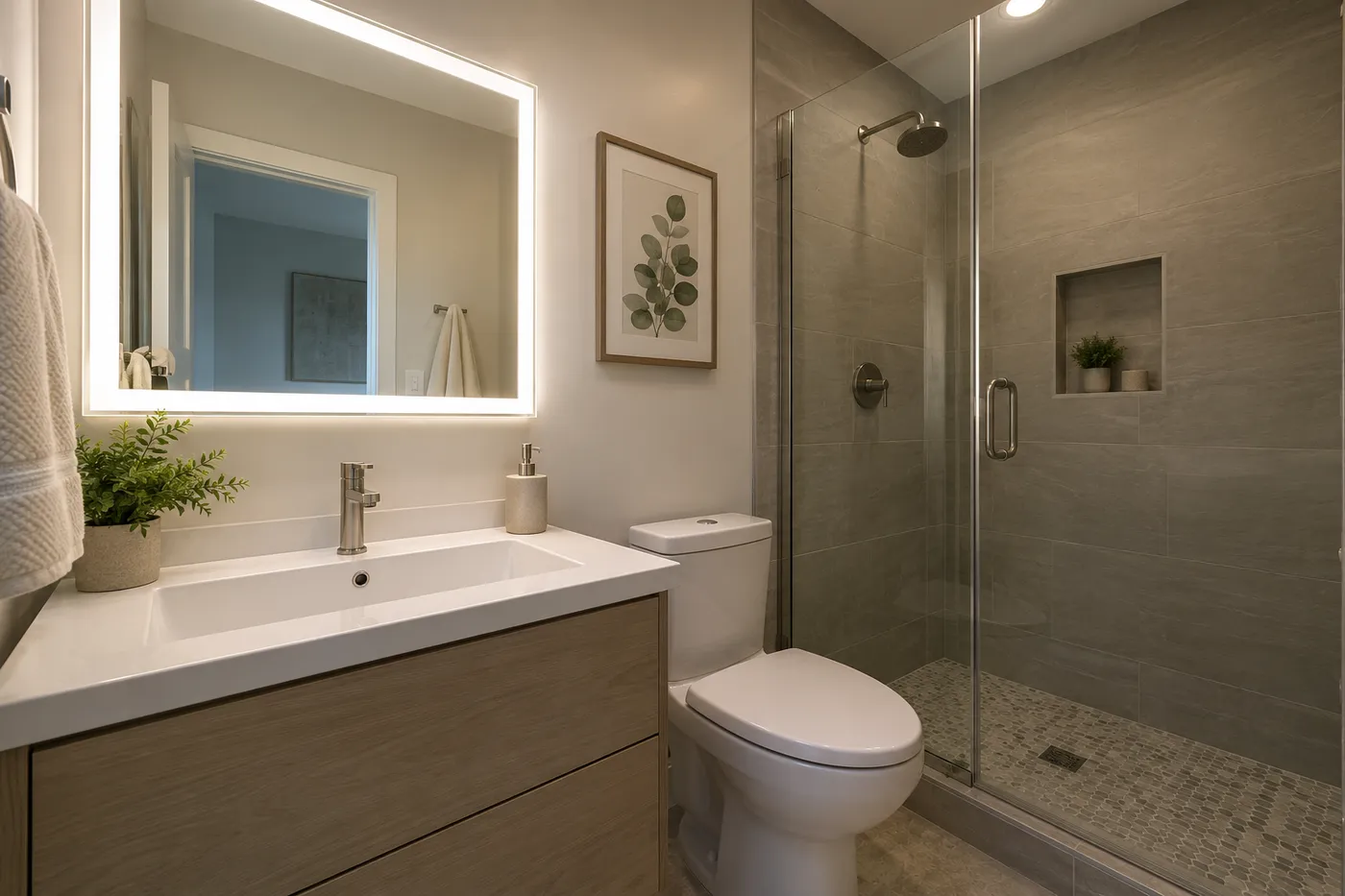
Choose a lighted mirror that directs enough light toward your face if it will replace separate sconces. A glowing outline looks lovely in photos; the question is where that light lands.
Front-lit models shine from the face or forward-facing edges. Backlit models mainly cast a halo on the wall. Some do both. Think of it like a desk lamp: lighting the wall behind the desk does little for the page you are reading.
Compare output, dimming, color quality, and whether the driver or light source can be serviced. A decorative halo may still need a separate vanity light. Our bathroom mirror size guide can help you fit the mirror to your sink and wall.
8. Best for a Powder-Room Focal Point: A Small Pendant
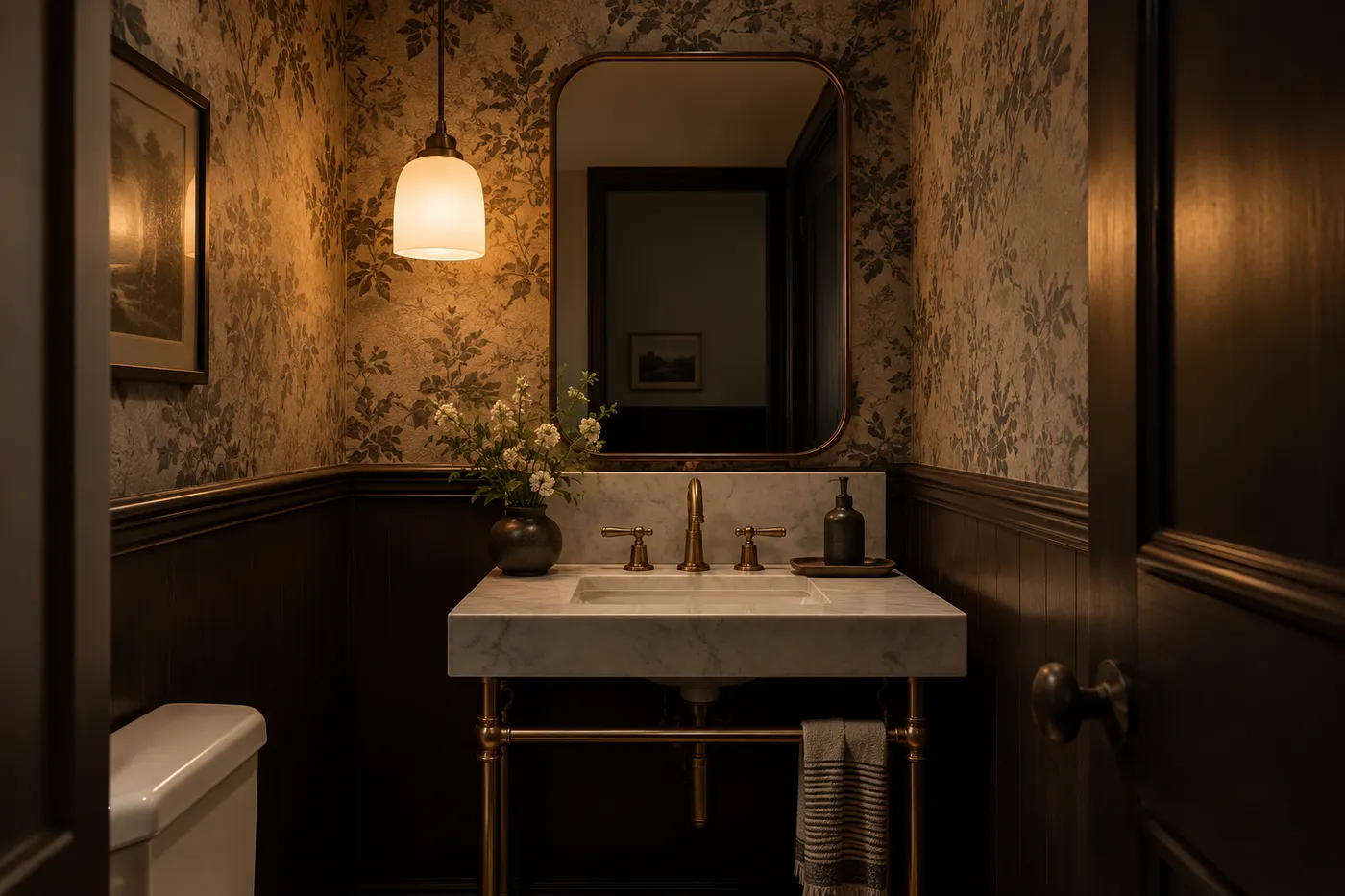
Hang a compact pendant where it leaves comfortable clearance and brings useful light toward the sink. A little powder room has room for personality even when it has hardly any wall space.
An opaque glass shade can glow more broadly. A solid shade may light the basin beautifully while leaving the mirror dim, so look at its lit photos and plan another source if needed.
Keep the pendant away from doors and the path to the hand towel. Check its location rating and the installation instructions before treating a decorative fixture as bathroom-ready.
9. Best for a Spacious Bathroom: A Statement Chandelier
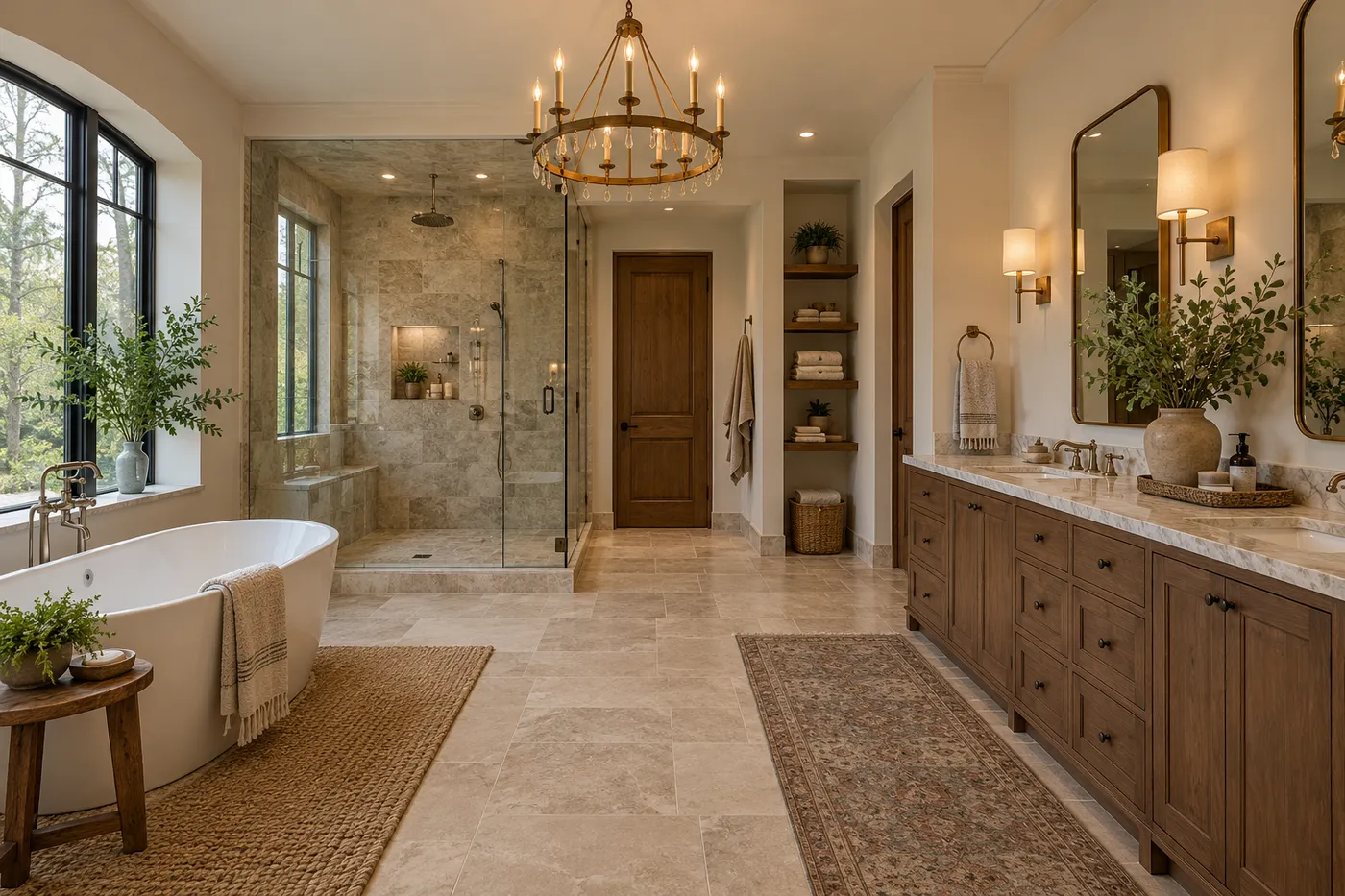
Use a chandelier for atmosphere and general light alongside dedicated vanity lighting. In a larger bathroom, it can pull together the open floor, vanity, and surrounding finishes.
Check how the fixture looks from the doorway and whether you can clean it comfortably. Lots of tiny glass pieces are charming until they all need wiping.
10. Best for Late-Night Trips: Under-Vanity Lighting
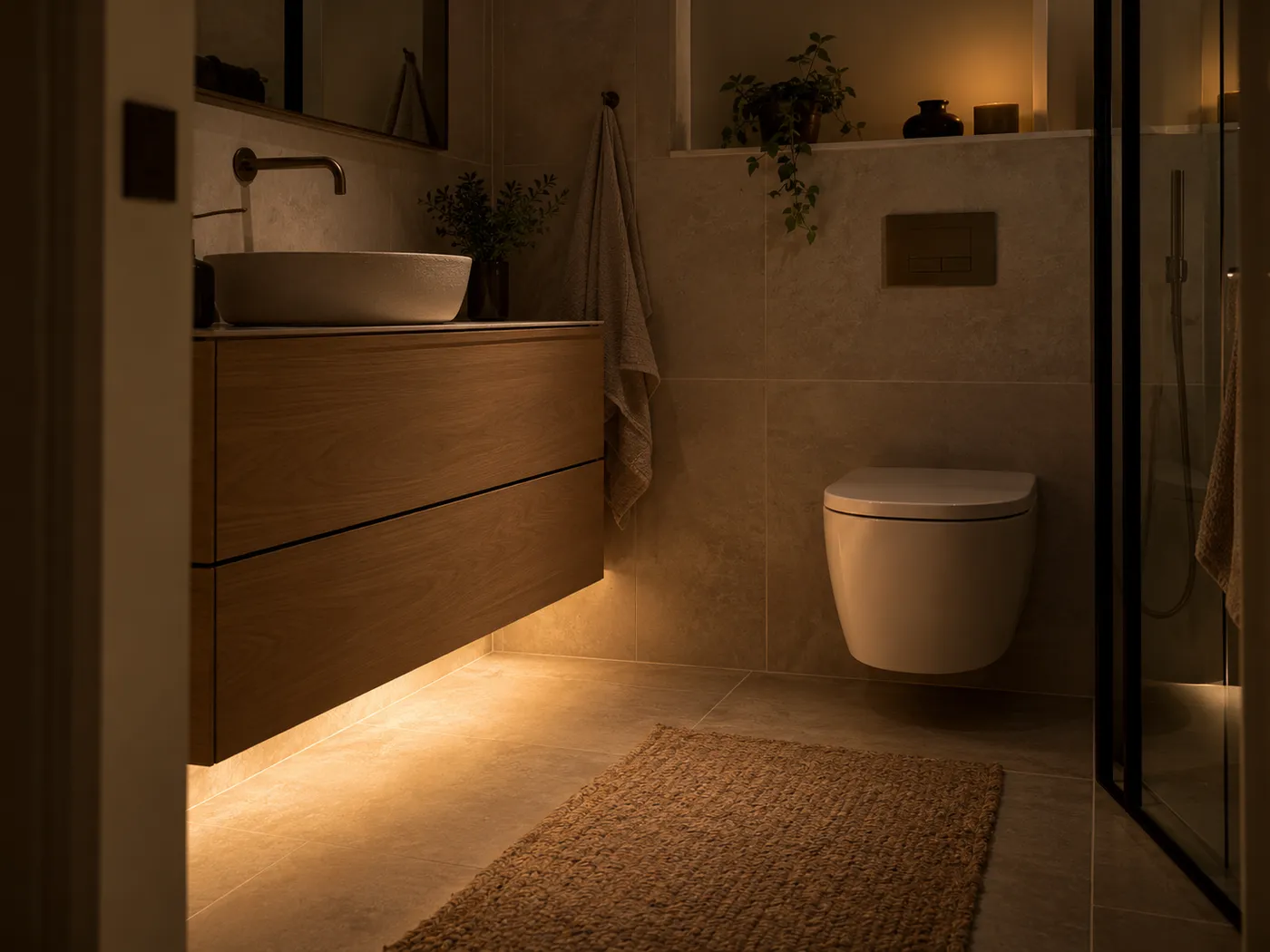
Add shielded light beneath a floating vanity for a gentle nighttime route. The full bathroom light feels surprisingly bright when you have just woken up.
Hide the LED dots with a diffuser and give this lighting its own control. Motion activation can work well if the sensor does not turn on every time someone walks past the bathroom.
Check the suitability of the whole setup, including the strip, connections, and power supply. This is supporting light for the floor, not your main vanity light. Our guide to bathroom lighting for mirrors, showers, and late nights shows how the layers work together.
Before You Buy: The Details That Change the Result
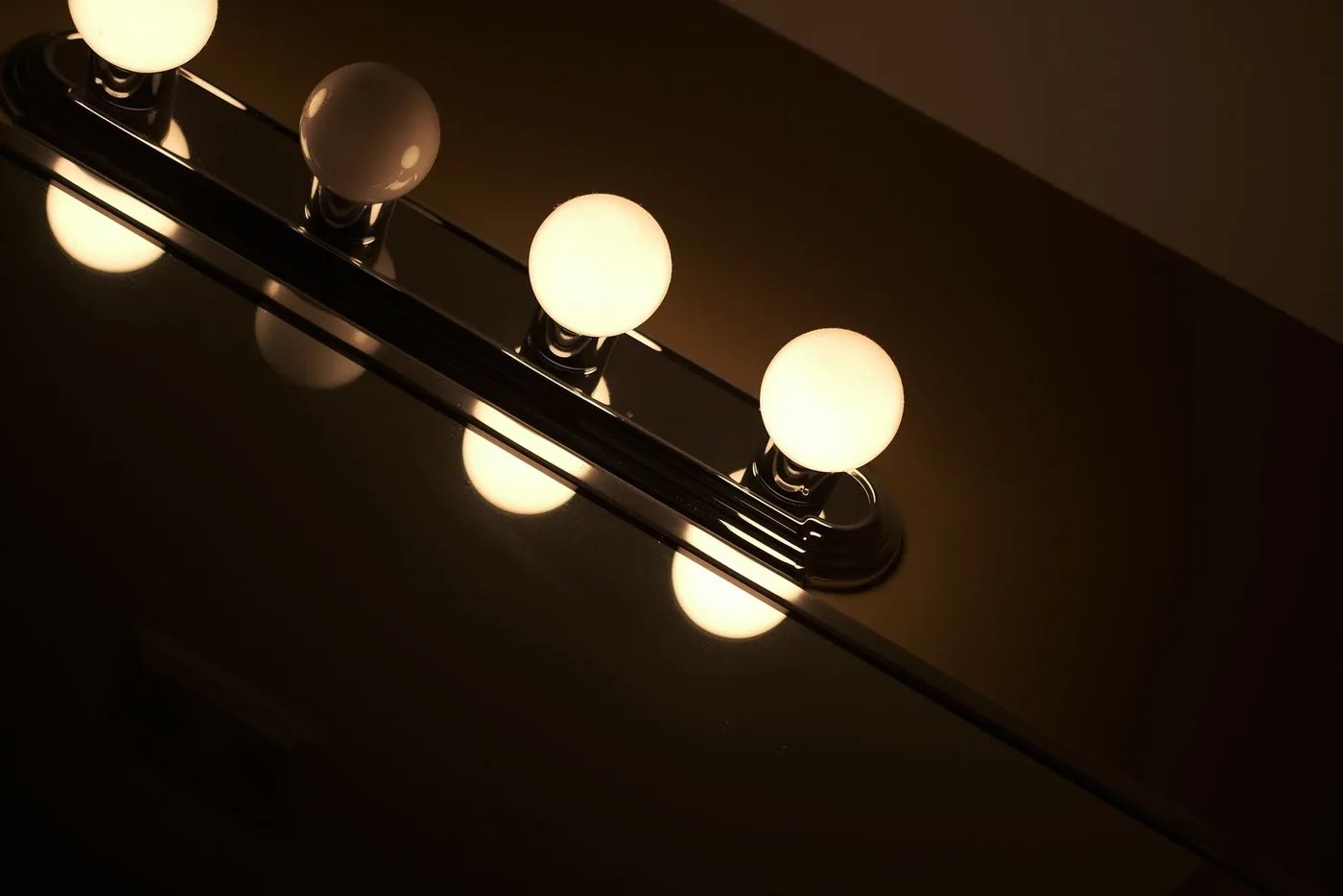
Give the shade, light output, physical fit, moisture rating, and maintenance a quick check before choosing a finish. Those details determine whether the fixture stays comfortable to use after the initial excitement wears off.
Choose the Shade With the Light Switched On
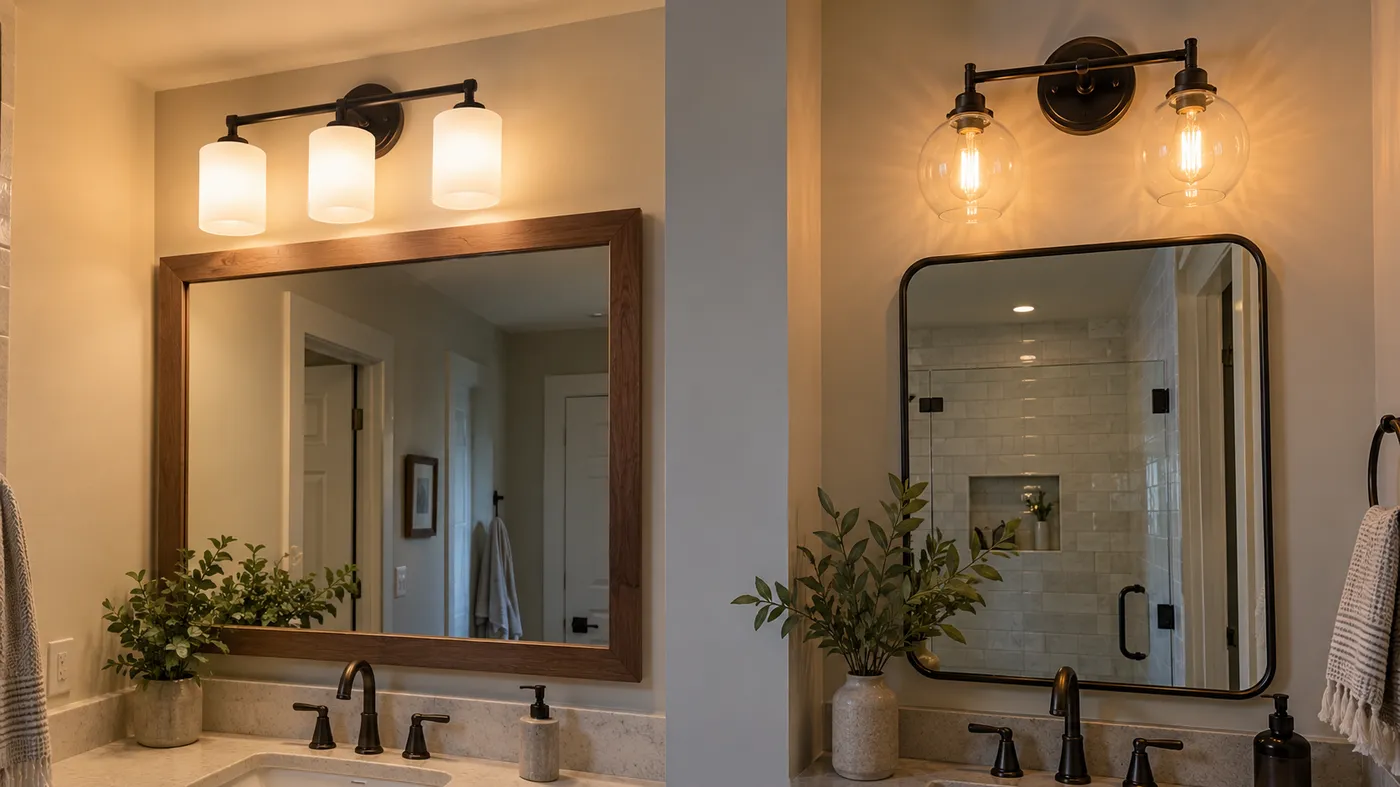
Look at the fixture while it is illuminated, ideally from your normal position at the mirror. Frosted and opal shades soften the visible light source. Clear glass shows more of the bulb; solid metal sends light through its openings.
An exposed filament can look charming when it is off and distracting when it is beside your reflection. Customer photos or a showroom display help more than an unlit product shot.
Check Brightness and Color Separately
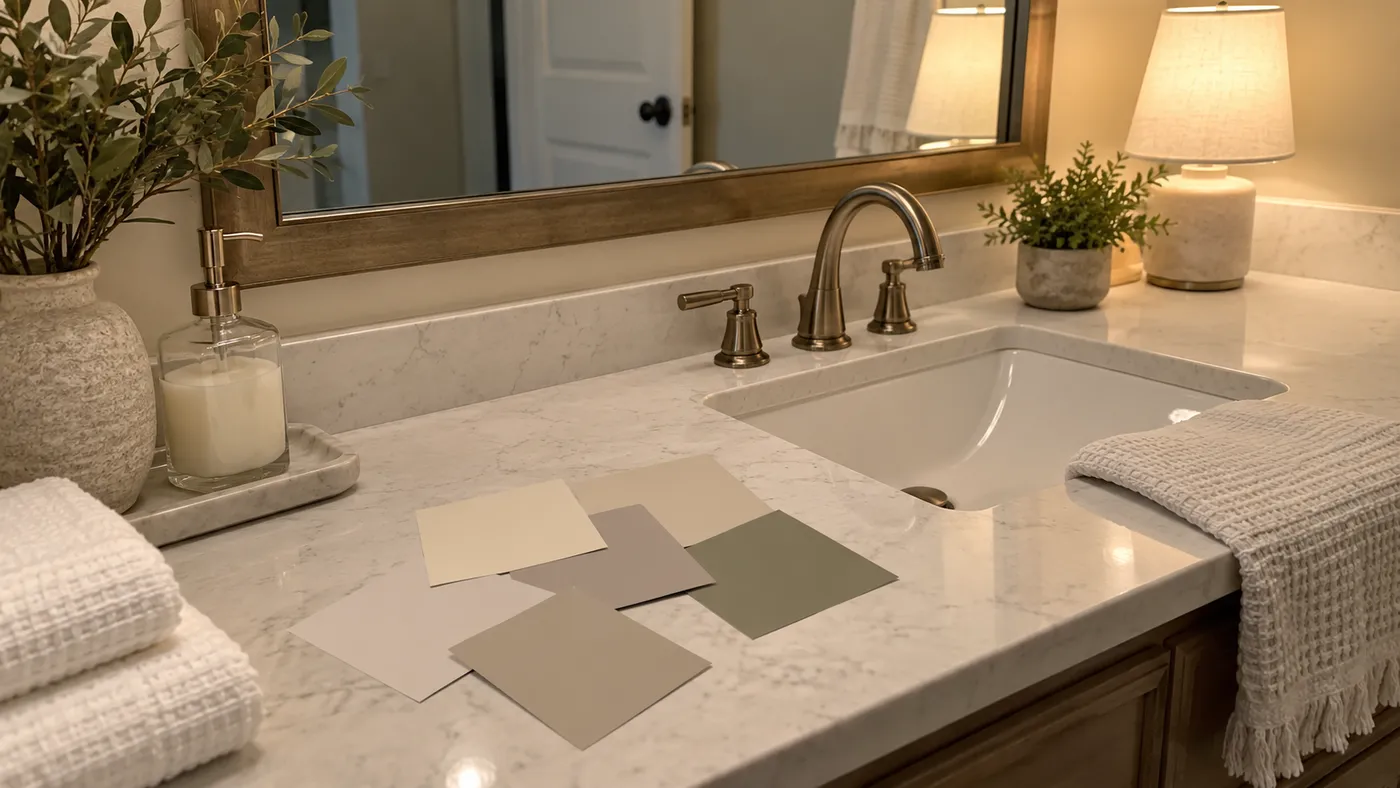
Use lumens for light output, Kelvin for the appearance of white light, and color-rendering information for how colors appear. A cooler-looking bulb is not automatically brighter.
A white towel or foundation shade can look different under two bulbs that seem equally bright. If you like a warmer room, 2700–3000K is a useful range to try. For a more neutral look, try 3500–4000K. A CRI of 90 or higher is a helpful shortlist point for grooming, though it does not tell the whole story.
Measure Around the Mirror and Existing Connection
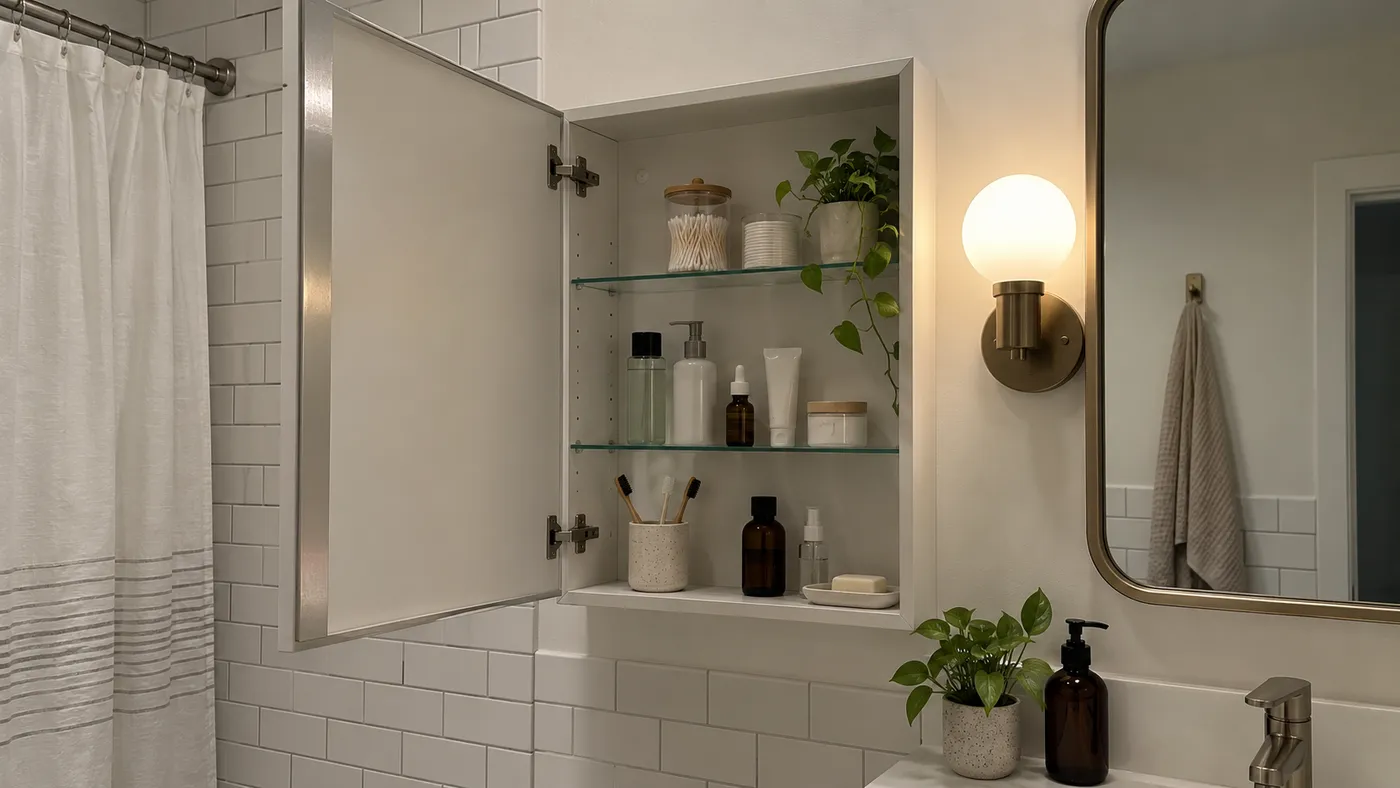
Measure the mirror, cabinet doors, nearby corners, and the existing electrical-box position before ordering. Include how far the light projects from the wall.
An off-center electrical box can leave your new light looking crooked unless the backplate accommodates it. Moving the connection belongs in the budget, along with the fixture.
Match the Fixture to Moisture Exposure
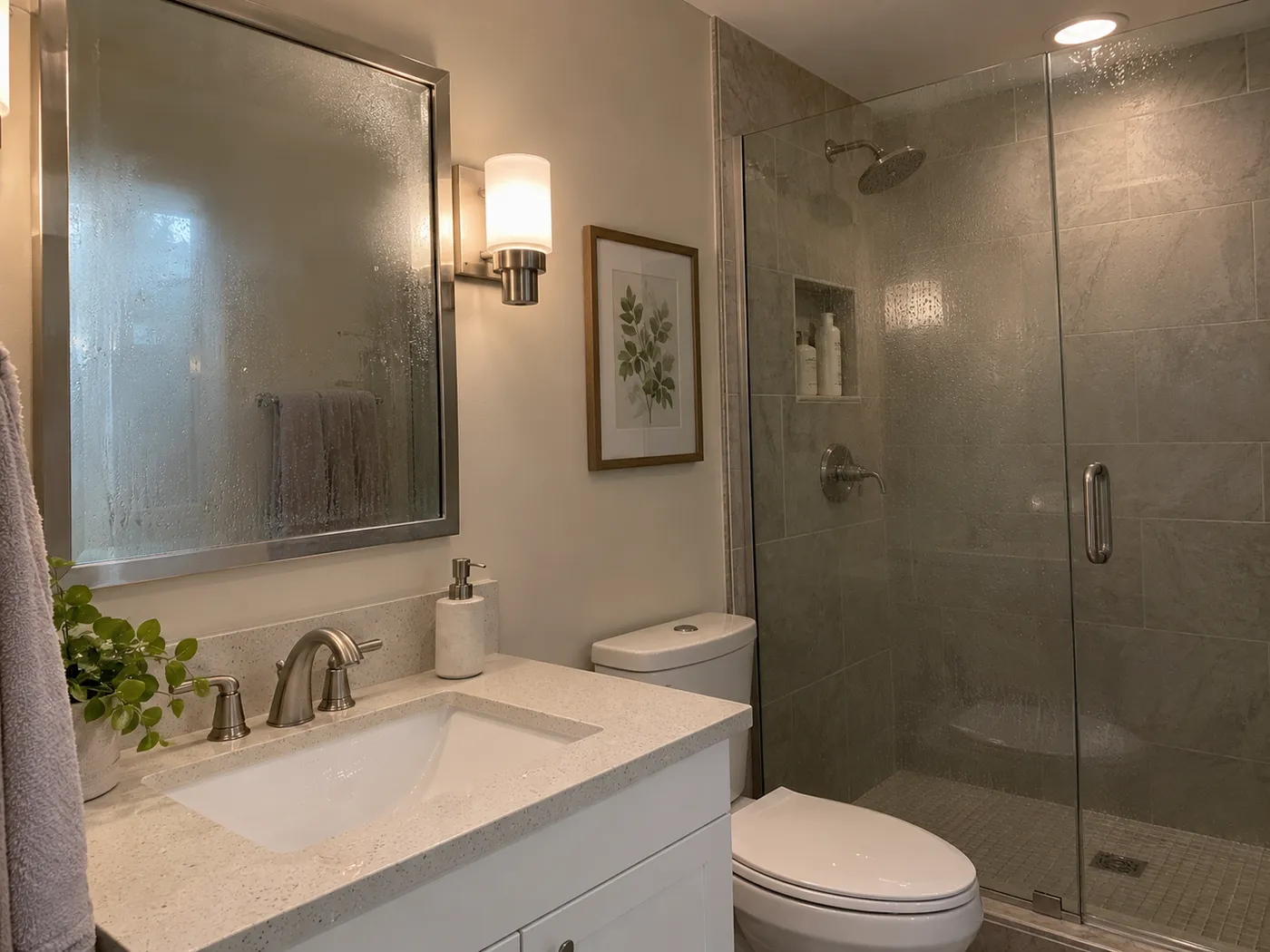
Match the location rating to the fixture’s position, then review the named product’s actual materials and finish care. A brass-colored surface could cover different metals and coatings.
For the named picks here, Rhenn, Sara, and the hardwired Glass Up Down Sconce are identified as damp-rated. Pottery Barn identifies Cooper as bathroom-suitable when protected from direct water. None of those descriptions alone guarantees that the finish will never corrode.
Check Dimmers, Bulbs, and Future Replacement
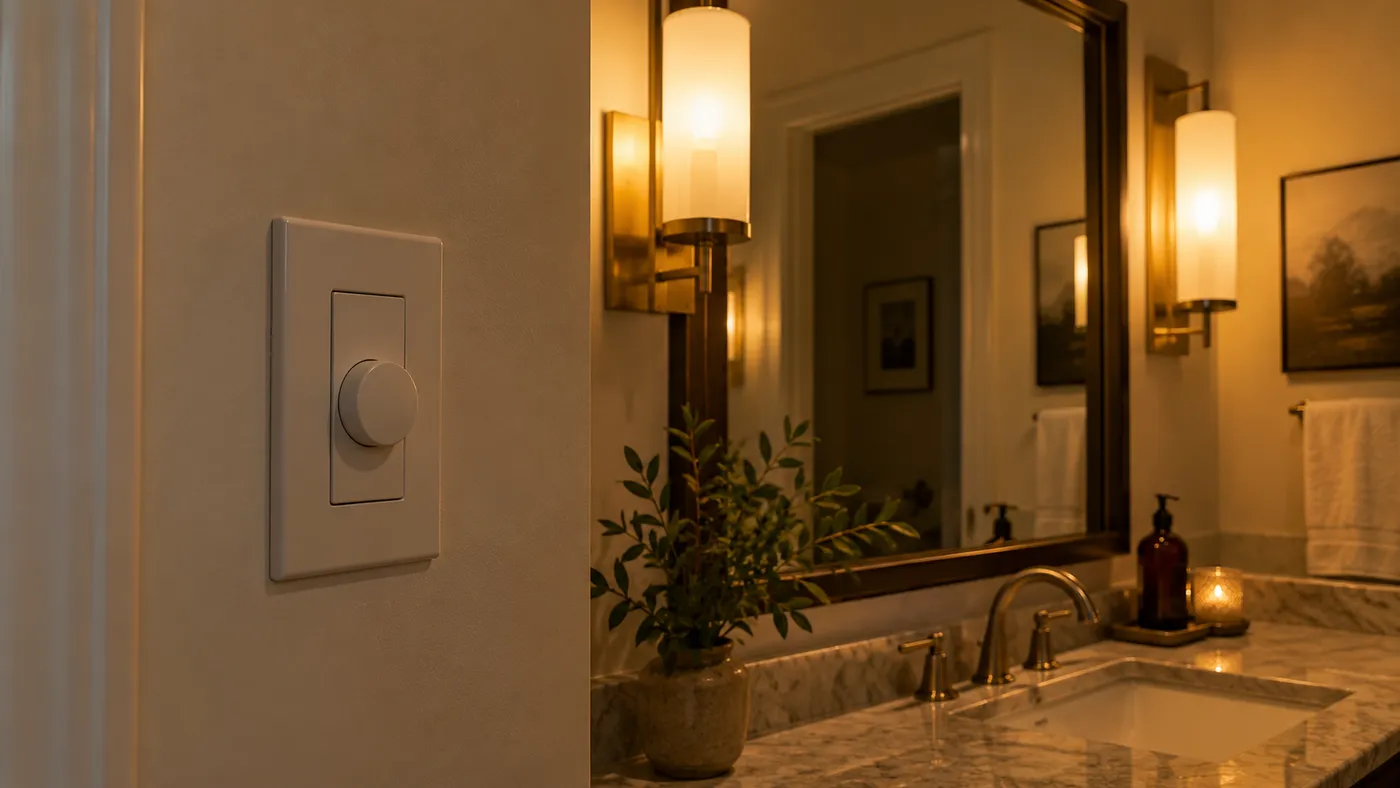
Confirm that the fixture, bulb or LED driver, and dimmer are compatible. Two boxes marked “dimmable” do not always create a smooth range together.
Replaceable bulbs are easy to change later. For integrated LEDs, find out whether the driver or light source can be serviced and what the warranty covers. Include installation in the comparison, especially if the electrical connection needs moving.
Bathroom Lighting Mistakes That Leave You Squinting
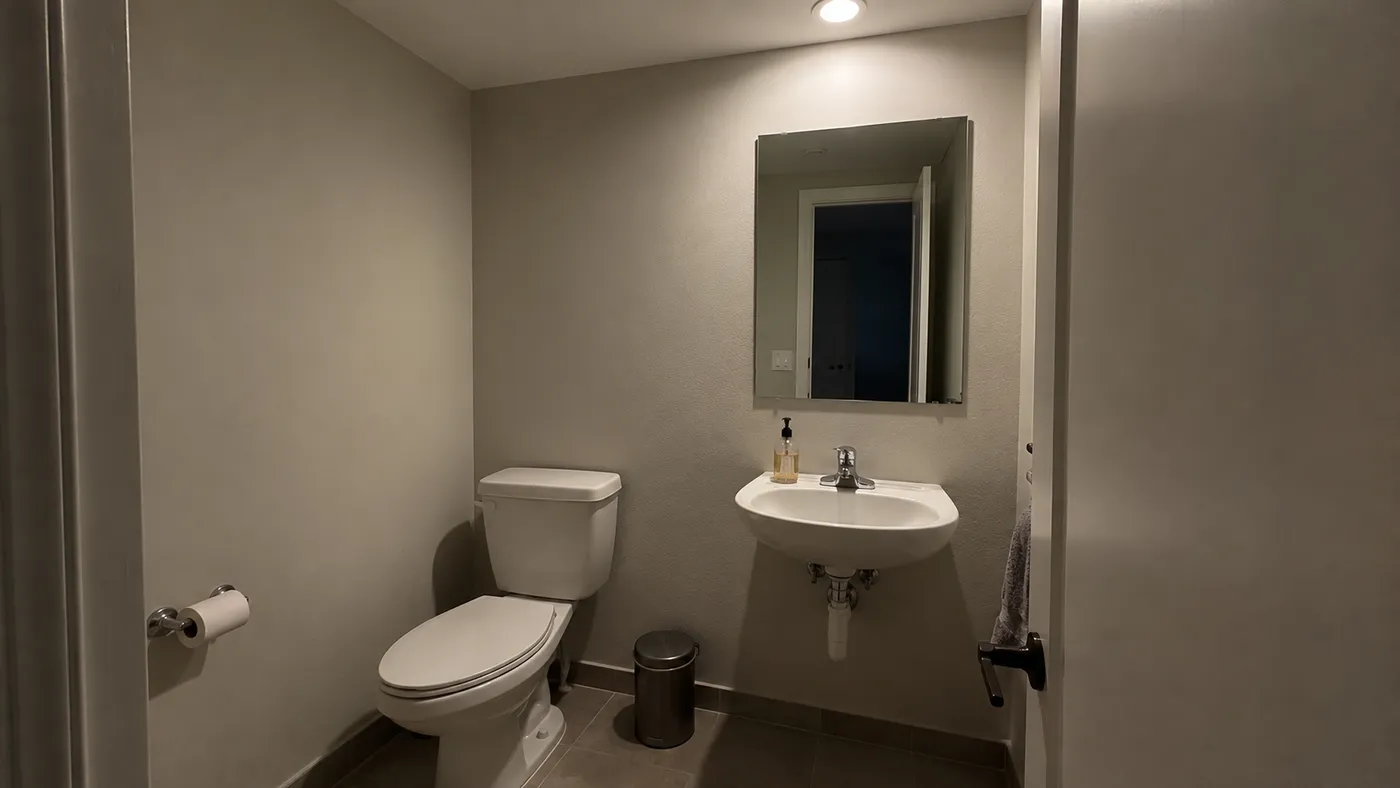
Fix the direction and quality of the light before adding more brightness. A few familiar choices can make an otherwise good fixture frustrating every morning.
- One overhead light for everything: Add useful light around the mirror.
- Exposed bulbs at eye level: Check glare when the light is on.
- A backlit halo doing all the work: Make sure light reaches your face.
- Dark metal shades everywhere: Fill the areas those shades leave dim.
- Buying by finish alone: Review materials, moisture suitability, and care.
- Ordering before measuring: Check the backplate, projection, and cabinet clearance.
Renting? Our rental-friendly lighting guide has ideas for rooms where changing the wiring is limited.
Your Bathroom Light Shopping Checklist
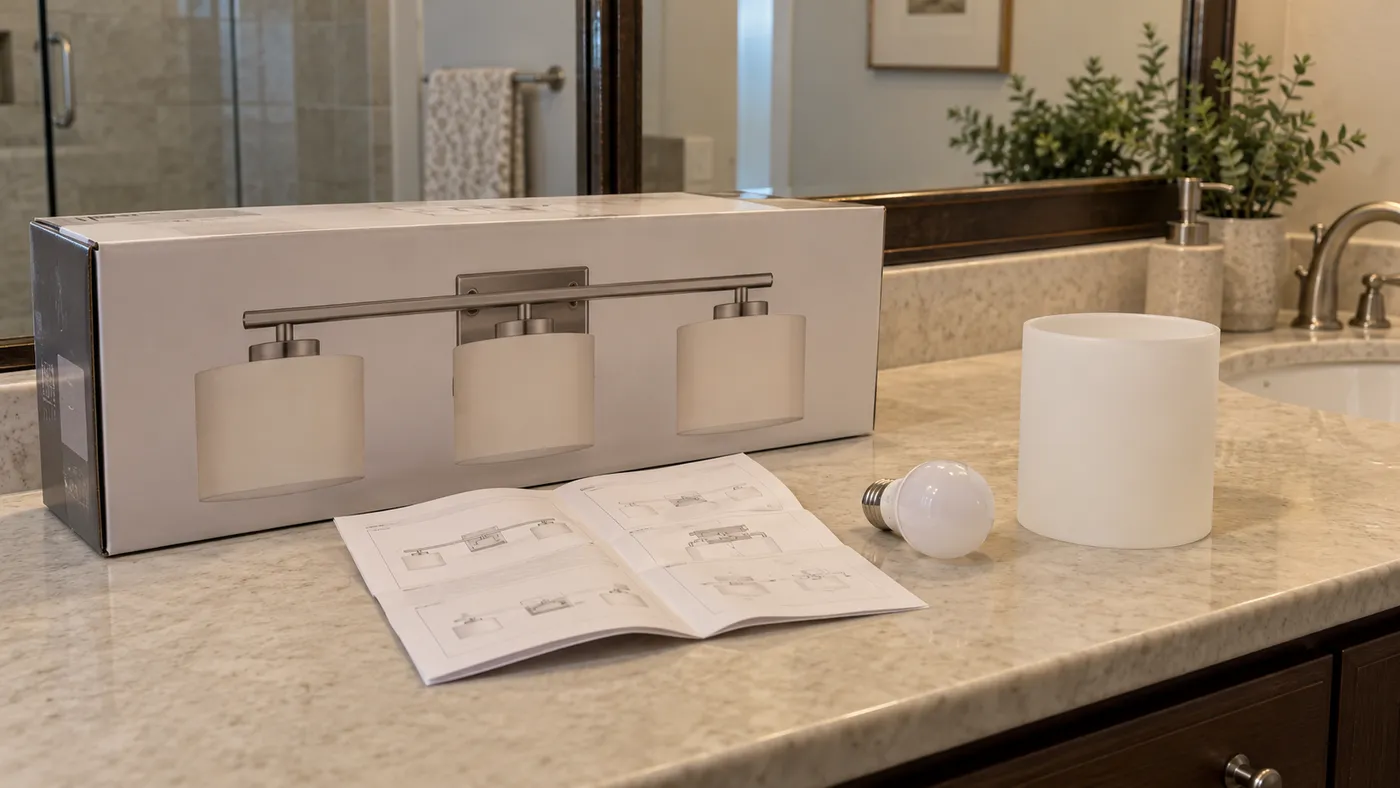
Save these checks for the moment you are comparing fixtures. A good-looking option should also suit your wall, your routine, and the moisture near it.
- I know whether this light is for grooming, general light, or ambiance.
- It fits around the mirror and any cabinet doors.
- Its height and projection suit the space.
- The complete fixture is approved for the intended location.
- I reviewed the actual materials and finish care.
- I checked the warranty for finish coverage.
- I checked light output, color temperature, and color quality.
- The bulbs or integrated LEDs suit my needs.
- The dimmer is compatible.
- I have seen the fixture illuminated.
- I know how serviceable parts can be replaced.
- My budget includes installation where needed.
Bathroom Lighting Questions, Answered
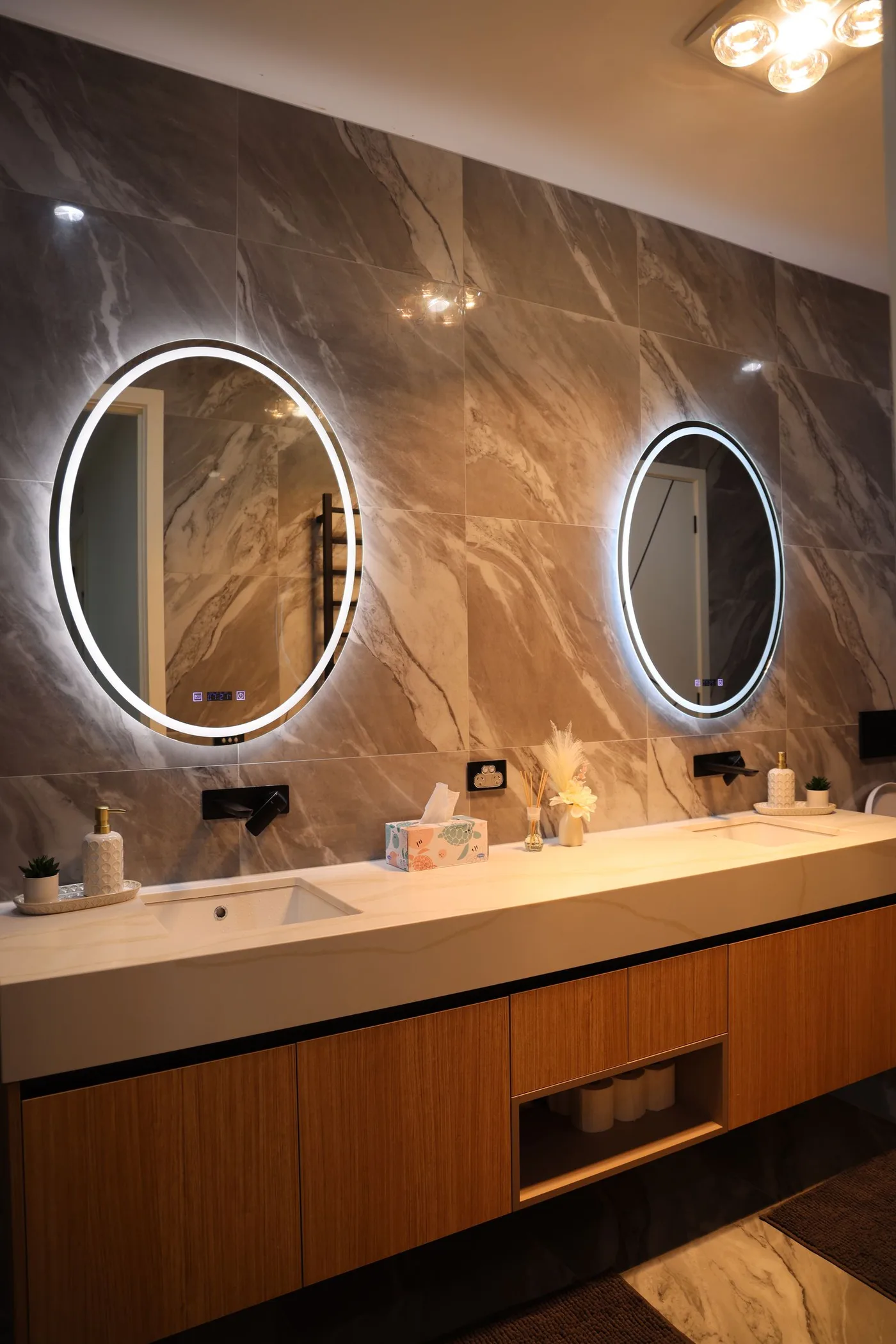
Let the mirror, shower, and room layout settle the final choice. These quick answers cover the questions that usually remain after you have narrowed down the fixture style.
Is It Better to Put Lights Above or Beside a Bathroom Mirror?
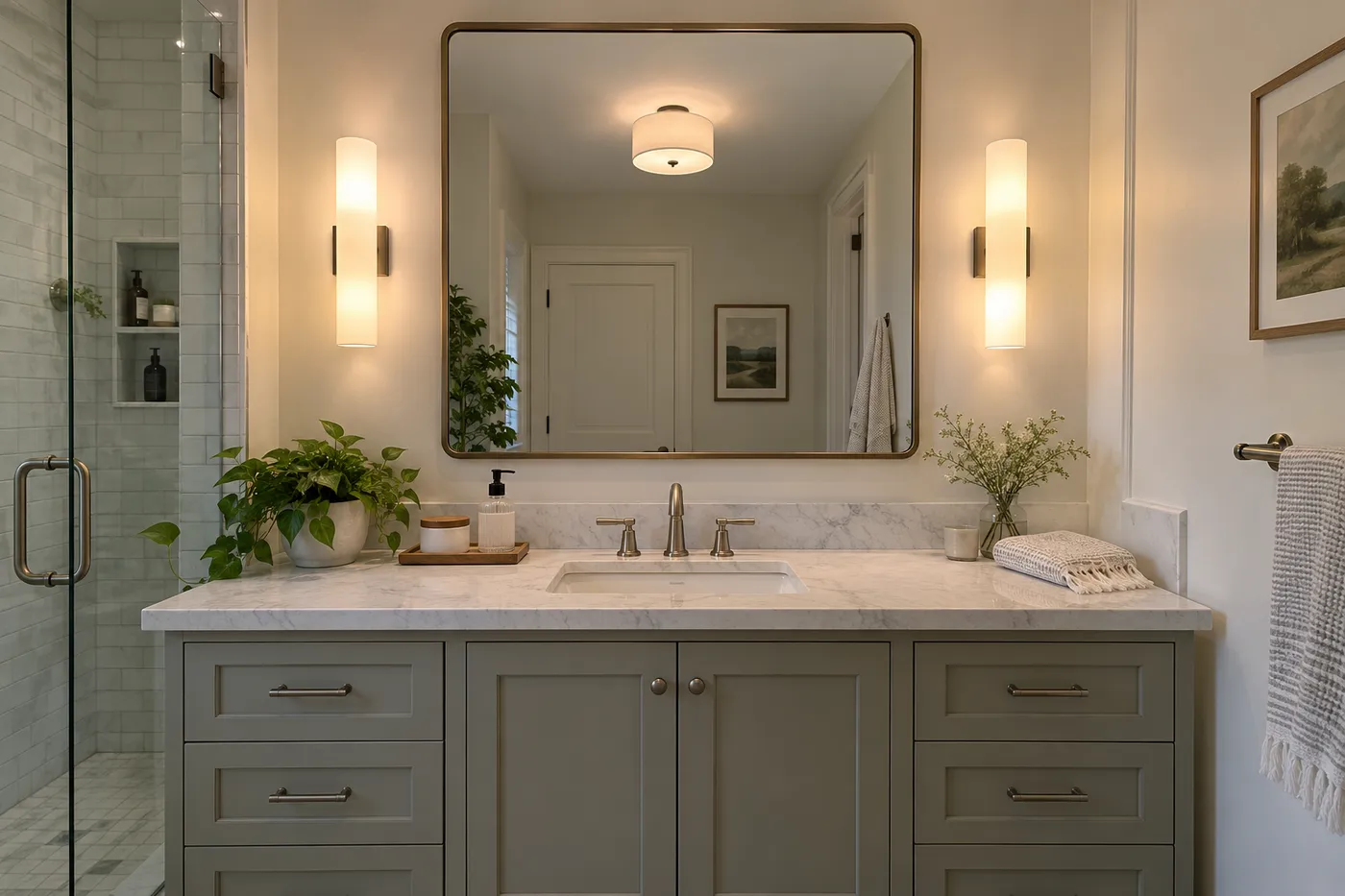
Paired side lights are a strong choice for reducing facial shadows; an above-mirror light is practical when the wall is too tight. Whichever layout fits, prioritize useful light and comfortable diffusion.
Is Warm White or Daylight Better for a Bathroom?
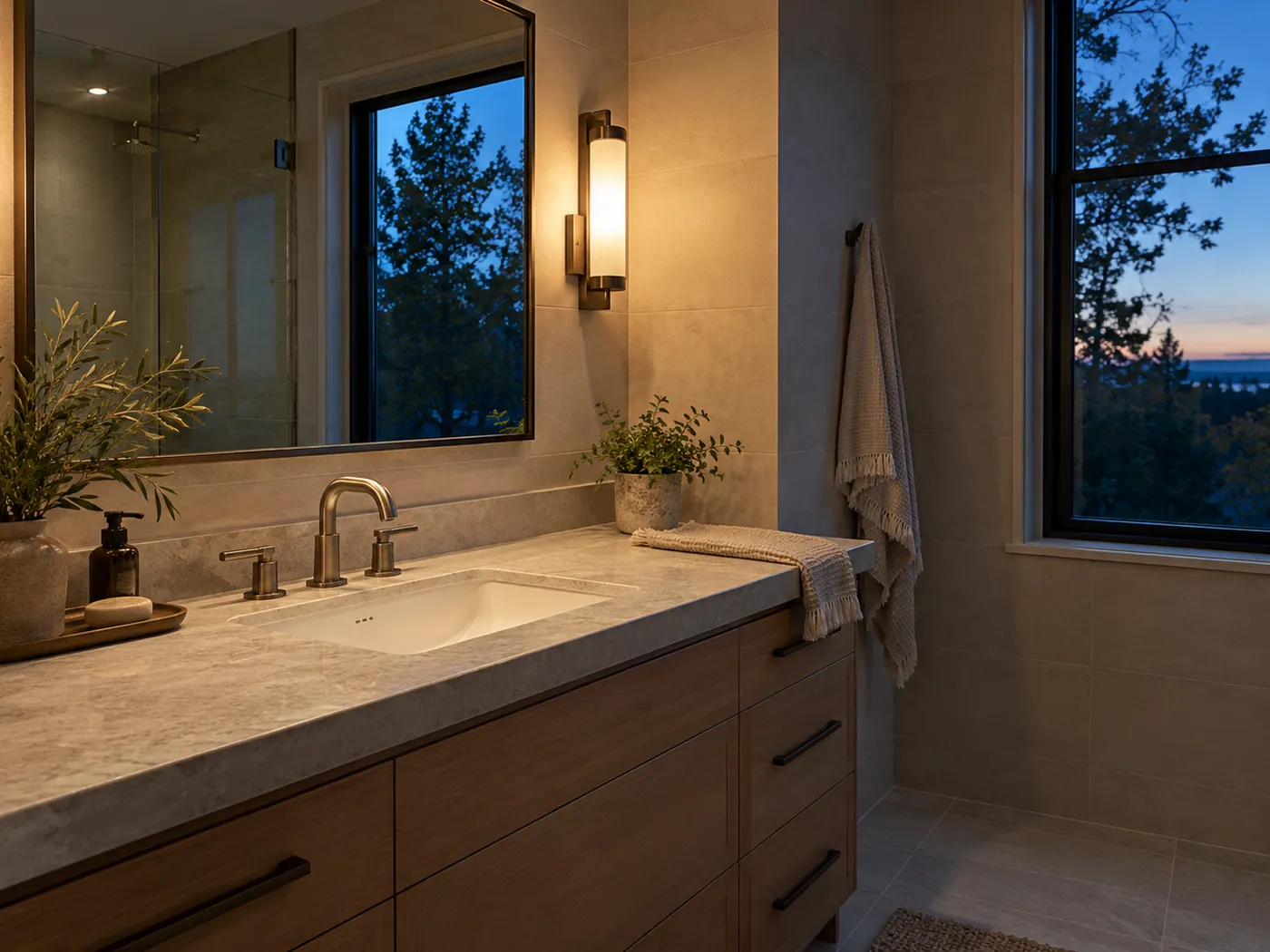
Warm white feels relaxed, while a more neutral white may suit your grooming routine. Try the color in your room rather than choosing the coolest bulb because it sounds brighter. Check lumens separately.
Can a Lighted Mirror Replace Vanity Sconces?
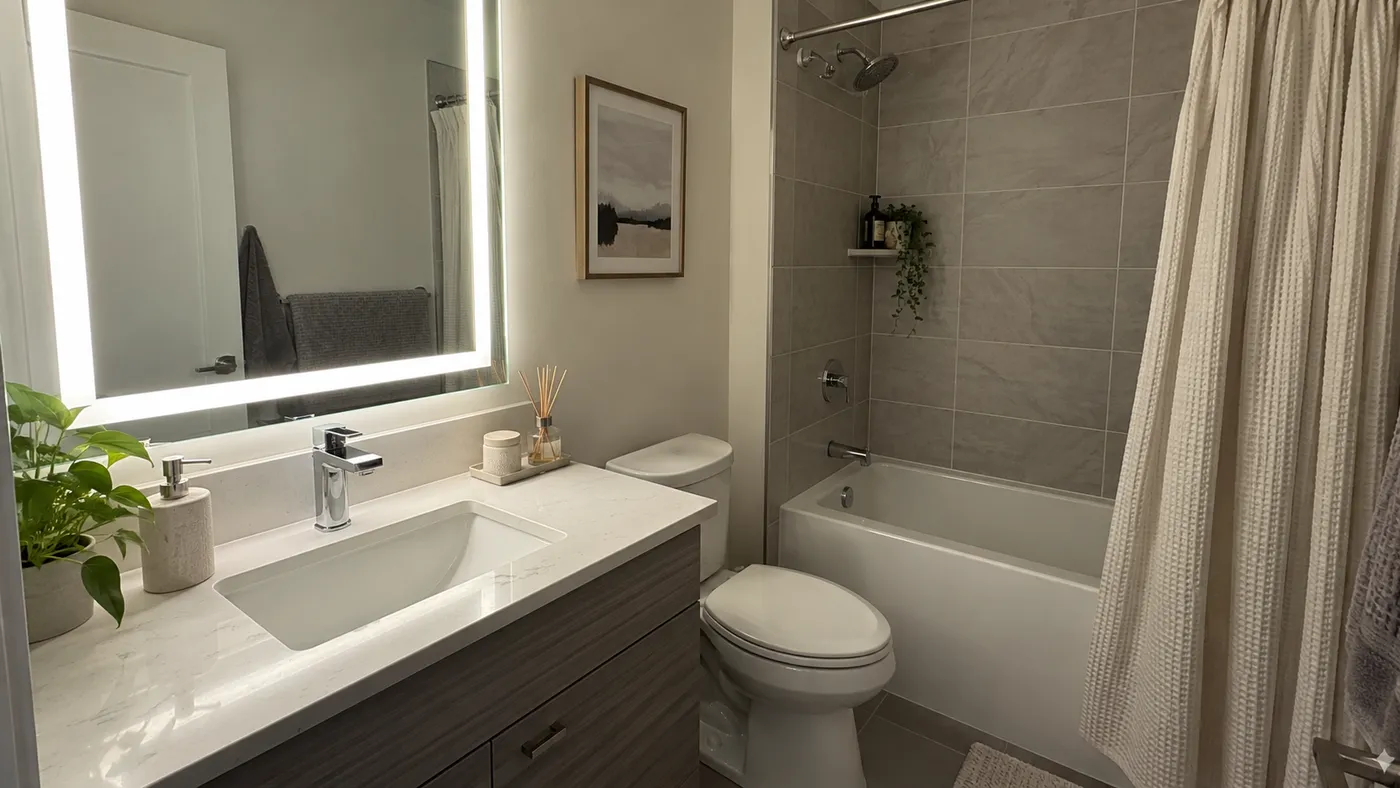
Yes, if it sends enough useful light toward your face. A mainly backlit mirror may still need a separate task light. Compare its output and look at where the light falls.
How Many Lights Does a Small Bathroom Need?
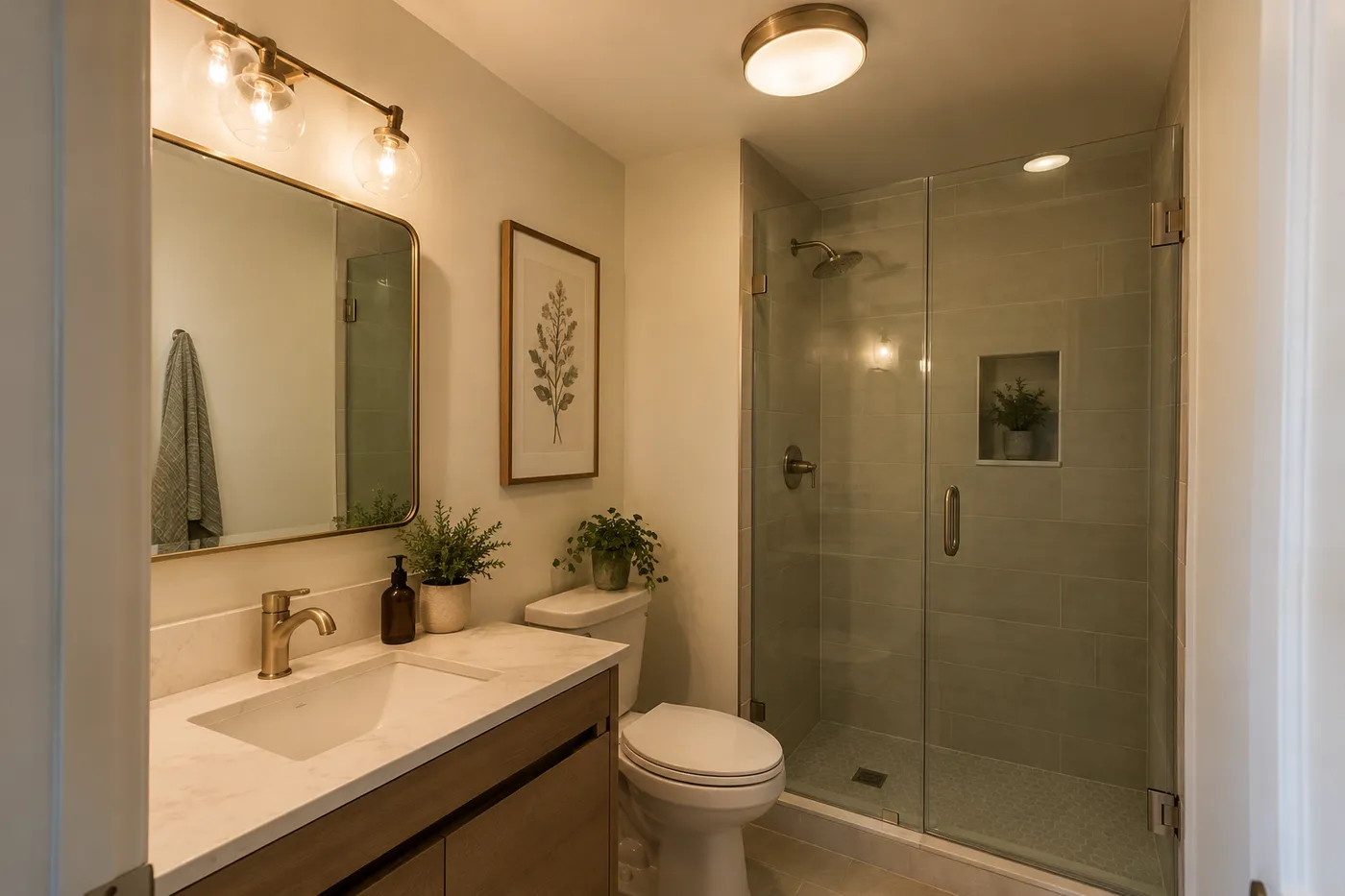
Plan light for the mirror, the room, and any enclosed shower rather than choosing a universal fixture count. A small powder room may need fewer sources than a similarly sized bathroom with a curtain that blocks light.
Do All Bathroom Lights Need a Wet Rating?
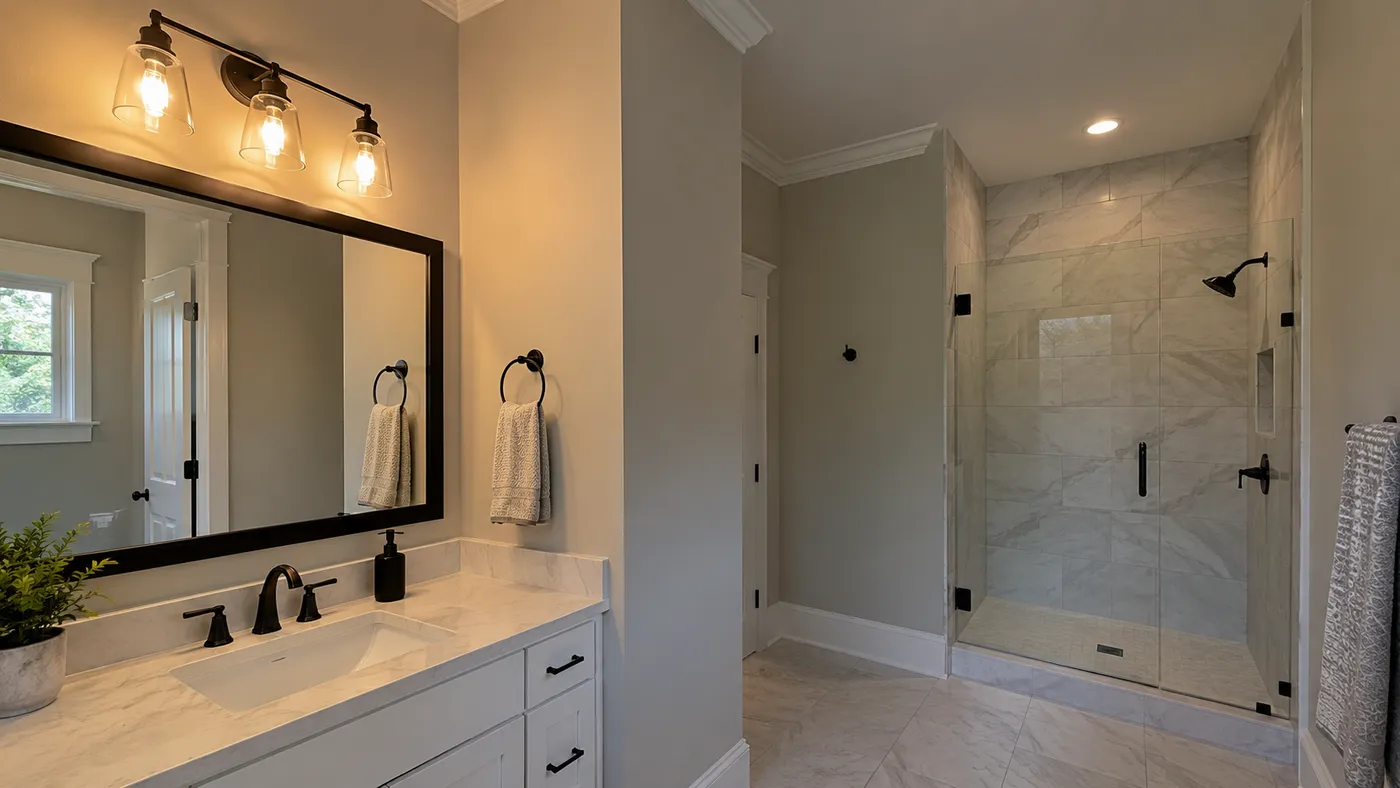
No. The required rating depends on where the fixture sits and whether water can reach it directly. Match the product instructions and rating to that location, then have the installer confirm the plan.
Shop the Bathroom Lighting Edit
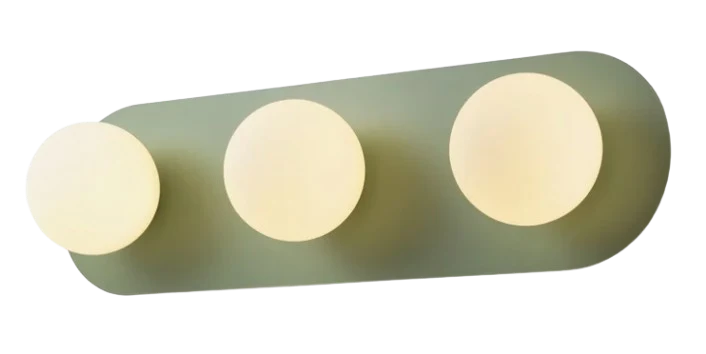 Ebern Designs Rhenn 3-Light Vanity LightThree milky globes for an above-mirror vanity light in a humid bathroom.
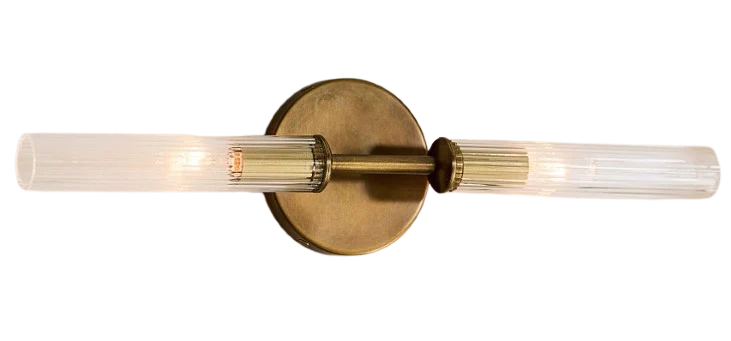 Pottery Barn Cooper Ribbed Glass Double Tube SconceA slim ribbed-glass sconce for the narrow wall beside a bathroom mirror.
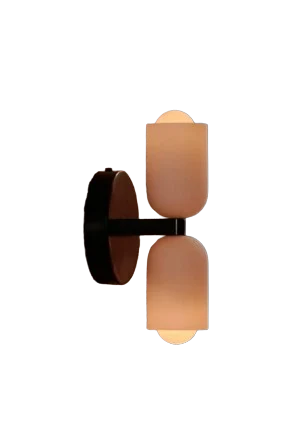 In Common With Glass Up Down SconceA damp-rated hardwired sconce with a soft ambient glow beside the mirror.
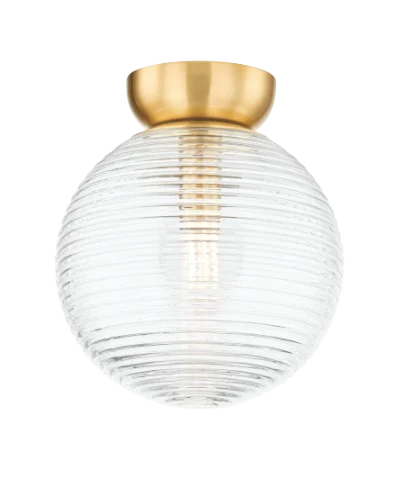 Mitzi Sara Flush MountA damp-rated ribbed-glass ceiling light for a bathroom with overhead clearance.