Bathroom Mirror Size Guide: The Right Fit for Your Vanity

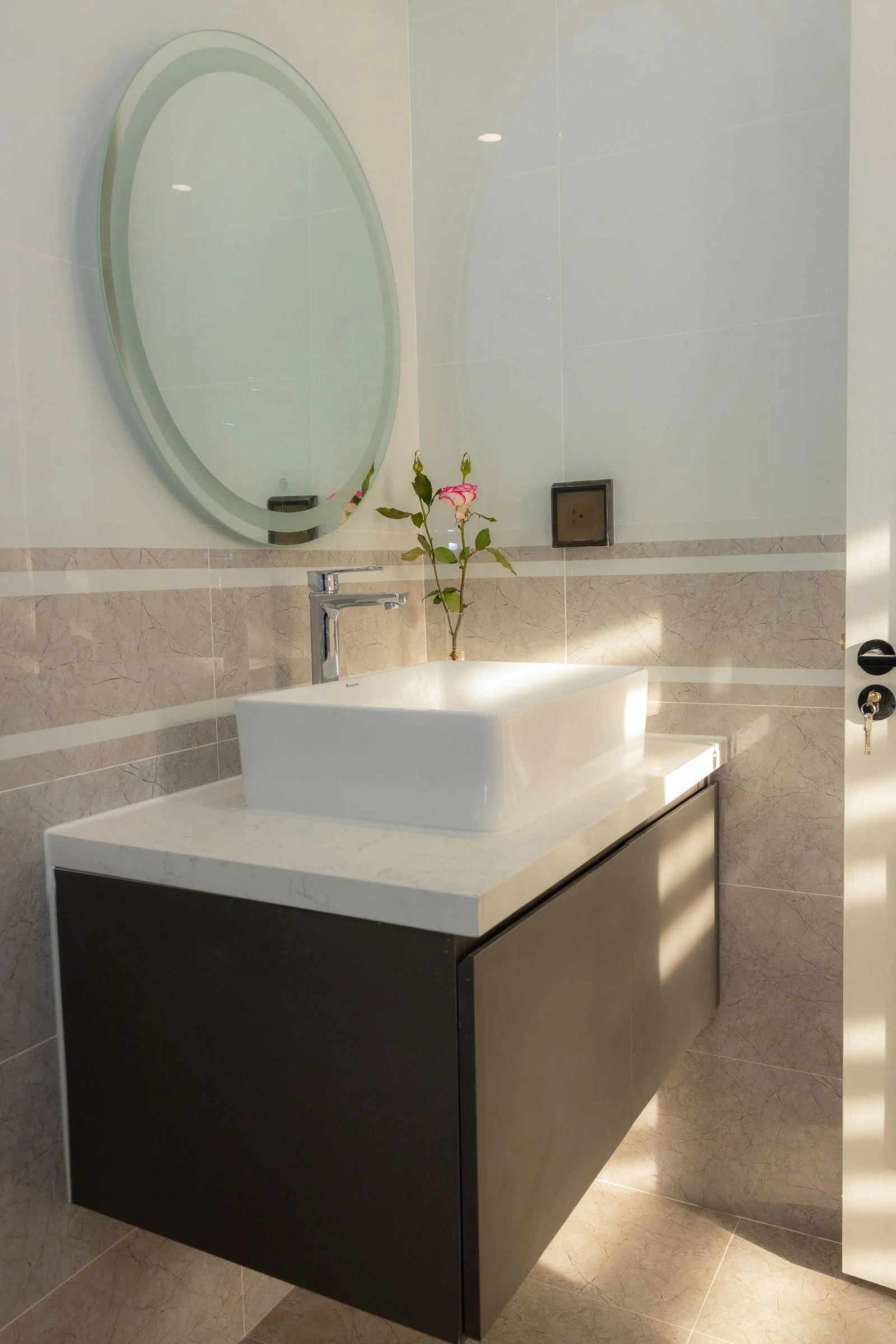
A bathroom mirror usually looks balanced when it leaves 2 to 4 inches on each side of the vanity. For a 36-inch vanity, that means a mirror about 28 to 32 inches wide.
However, choosing the right bathroom mirror size also depends on your sink, lights, and available wall space. The width should suit the vanity, and the height should give everyone a comfortable view.
The quick answer
- Mirror width: A few inches inside each vanity edge works well for most framed mirrors.
- Mirror height: Enough glass to see your face and head comfortably, with room for the faucet and lights.
- Double vanities: One wide mirror or two mirrors centered above the sinks.
- Frame size: The outside measurements determine how much wall space you need.
- Before buying: A full-size paper template helps you see how the mirror will fit.
1. Bathroom Mirror Sizes at a Glance
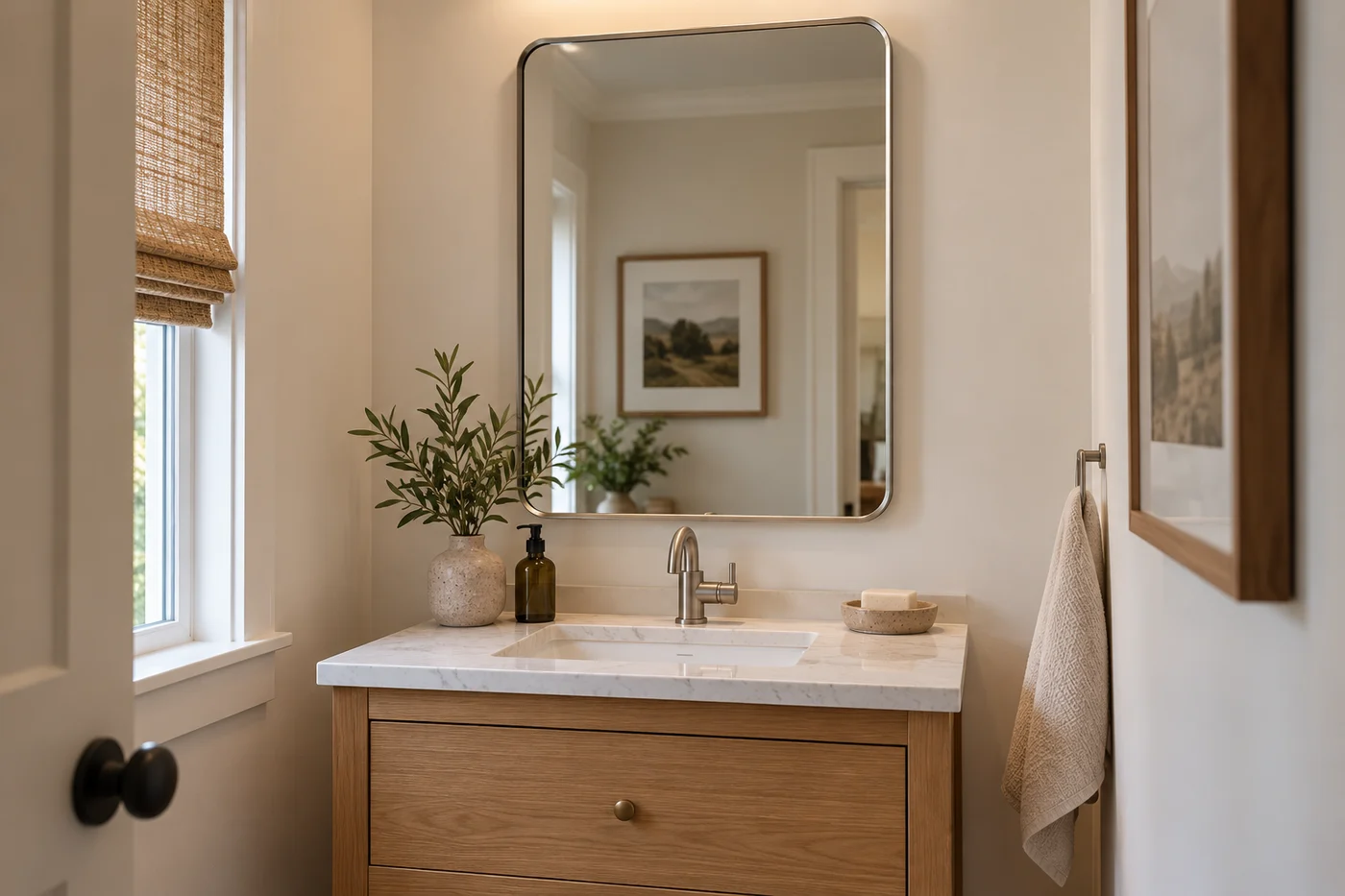
For most vanities, a mirror slightly narrower than the countertop gives you an even border on both sides.
The chart below gives you practical widths to work with. These are overall mirror widths, including the frame.
| Vanity width | Suggested width for one mirror |
|---|---|
| 24 inches | 20–22 inches |
| 30 inches | 24–26 inches |
| 36 inches | 28–32 inches |
| 42 inches | 34–38 inches |
| 48 inches | 40–44 inches |
| 60 inches | 52–56 inches |
| 72 inches | 64–68 inches |
A 30-inch mirror over a 36-inch vanity, for example, leaves 3 inches on each side.
Meanwhile, a compact 24-inch vanity often works better with smaller gaps. A 20- to 22-inch mirror gives you more room to see yourself while still sitting within the vanity’s width.
The Delma Silver-Framed Bathroom Mirror is a useful example. Mounted upright, its 20-inch width and 30-inch height make it a compact option for a 24-inch vanity, with 2 inches left on each side.
Note: These ranges assume there is enough clear wall space. Side lights, nearby cabinets, and sink positions can change the best fit. Choose the mirror’s height separately.
2. The Side Gap That Makes the Size Clear
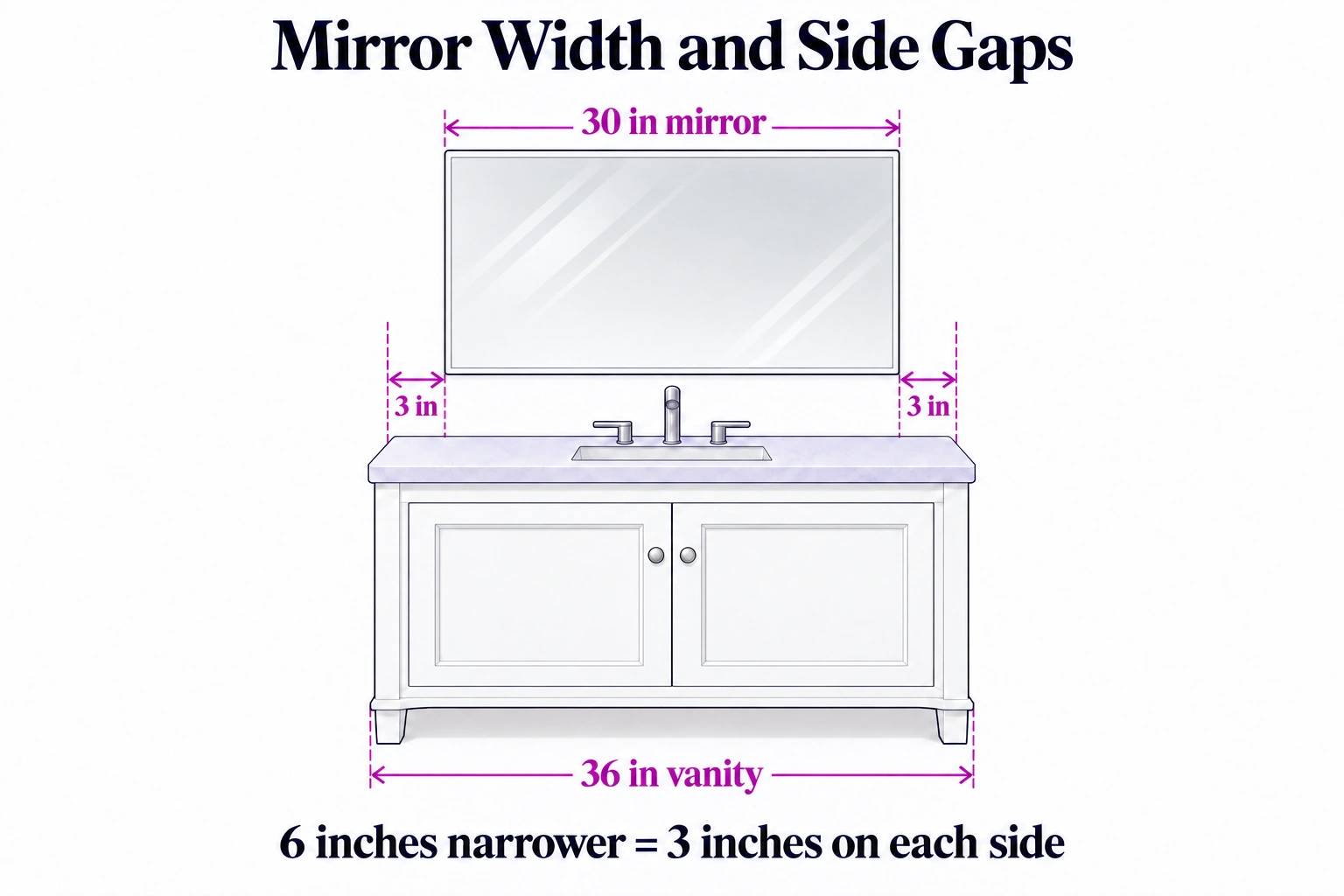
A mirror that is 4 inches narrower than the vanity leaves 2 inches on each side when centered. That is different from leaving 4 inches per side.
Here’s a simple example:
| Measurement | Size |
|---|---|
| Vanity width | 36 inches |
| Mirror width | 30 inches |
| Total difference | 6 inches |
| Gap on each side | 3 inches |
The calculation is:
Side gap = (vanity width − mirror width) ÷ 2
So, if you want 4 inches on either side of a 36-inch vanity, the mirror needs to be 28 inches wide.
The countertop’s full width matters here, including any overhang. A cabinet described as 36 inches wide may have a slightly wider top.
The same goes for the mirror. A wide frame takes up part of its overall width, leaving less glass than a thin frame of the same outside size.
For a compact vanity, the LOAAO Black Metal-Framed Bathroom Mirror measures 22 by 30 inches. Mounted upright over a 24-inch vanity, it leaves 1 inch on each side. That smaller gap can work well when there are no sconces beside it.
3. A Comfortable Mirror Height for Everyone
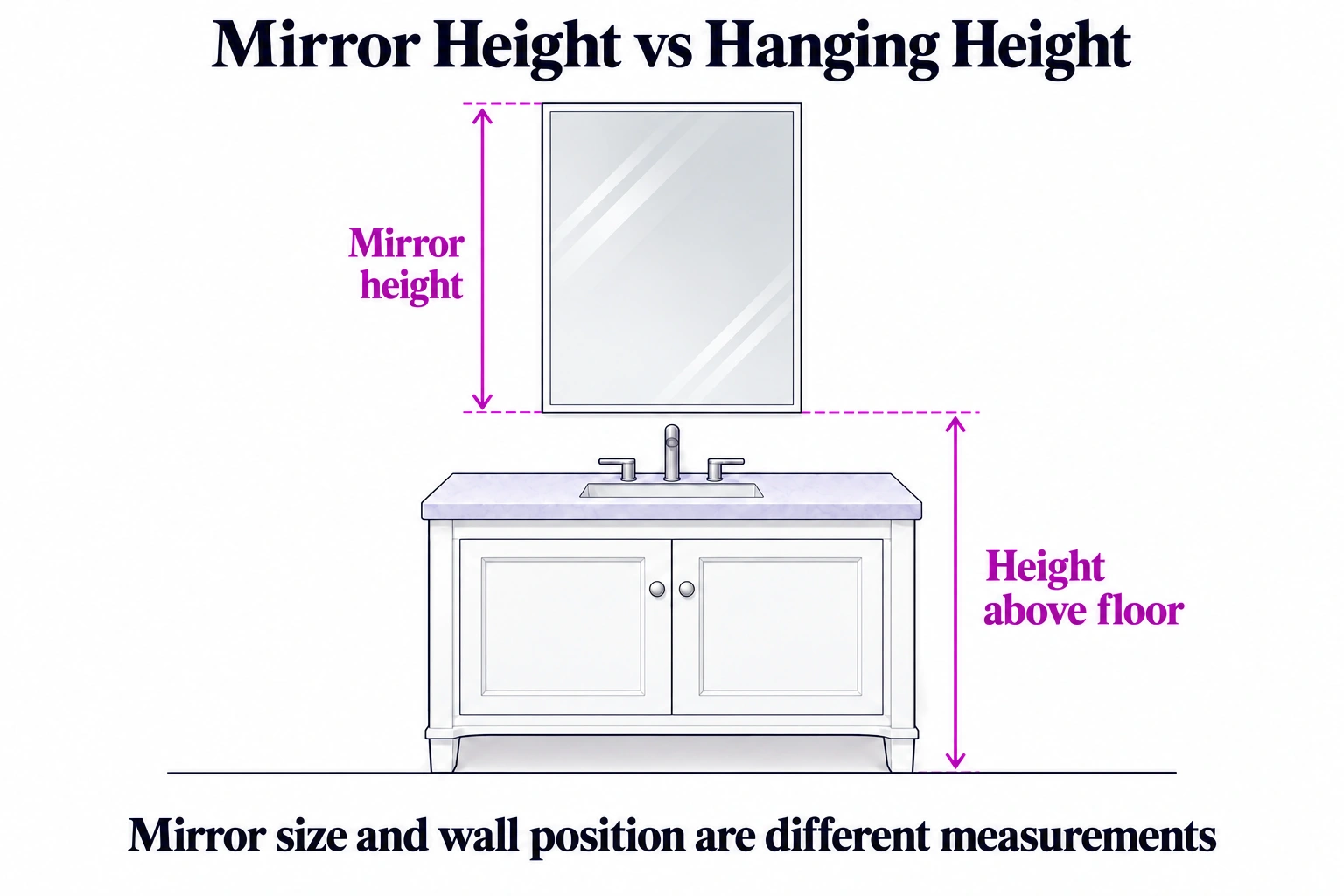
The right height gives everyone using the sink a comfortable view of their face and head while fitting between the fixtures.
There are two different measurements here:
- Mirror height: How tall the mirror itself is.
- Hanging height: Where the mirror sits on the wall.
A tall mirror can sit relatively low and still reach well above your head. A short mirror mounted high might leave a shorter person looking at the bottom of the frame.
If two people share the bathroom and their heights are quite different, a taller mirror often solves the problem more easily than moving a small mirror upward.
| What to measure | Why it matters |
|---|---|
| Countertop and backsplash height | Shows where the clear wall space begins |
| Faucet height | Helps you position the mirror around the fittings |
| Lowest edge of an overhead light | Limits how high the mirror can extend |
| Available wall height | Determines which mirror heights will fit |
| Users’ standing or seated positions | Helps you choose a comfortable hanging position |
For example, a 36-inch-tall mirror with its bottom edge 42 inches above the floor reaches 78 inches at the top. If an existing light extends below that point, you need a shorter mirror or a different position.
An arched option, such as the LAWADA Arched LED Bathroom Mirror, is 24 inches wide and 32 inches tall. Its curved top suits a space where you want an arch without choosing a particularly wide mirror. It also includes front lighting, backlighting, dimming, and a defogging function.
Note: One fixed hanging height won’t suit every household. Everyone should have a comfortable view from their usual position at the sink.
4. Enough Room for the Faucet and Lights
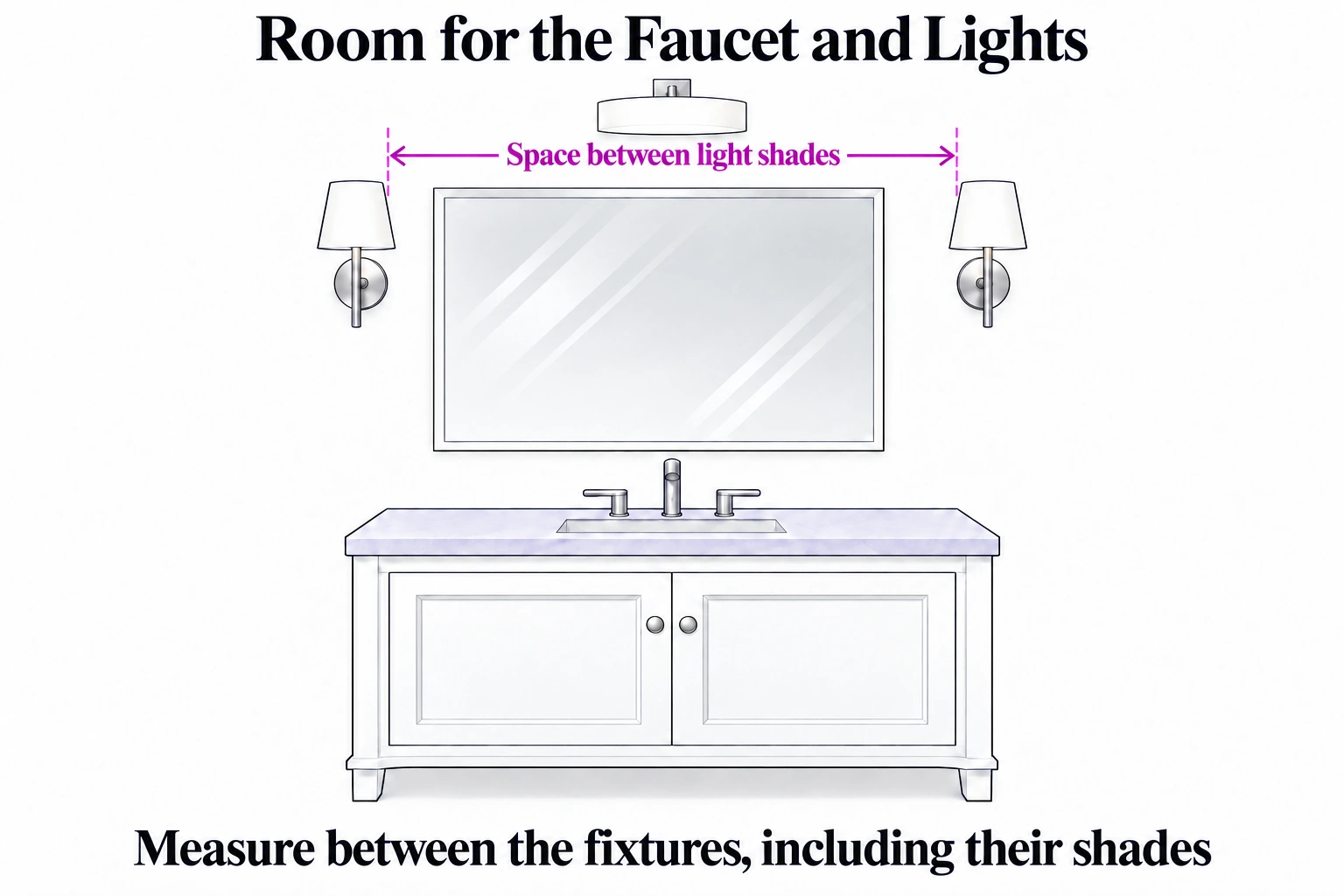
The mirror needs to fit within the clear space around your fixtures, even when its width looks right for the vanity.
With an overhead light, the lowest part of the fixture sets the upper limit. That might be the bottom of a glass shade rather than the metal bar attached to the wall.
With side sconces, the closest edges of the lights determine the available width. Measuring between the wall plates alone can make the opening seem wider than it is.
Suppose the gap between two light shades is 36 inches. A 30-inch-wide mirror leaves 3 inches between its frame and each shade. A 36-inch mirror fills the entire opening, leaving no gap.
The faucet and backsplash matter below the mirror, too. A tall backsplash can push the bottom edge upward. A shorter mirror may then fit beneath the existing light without moving it.
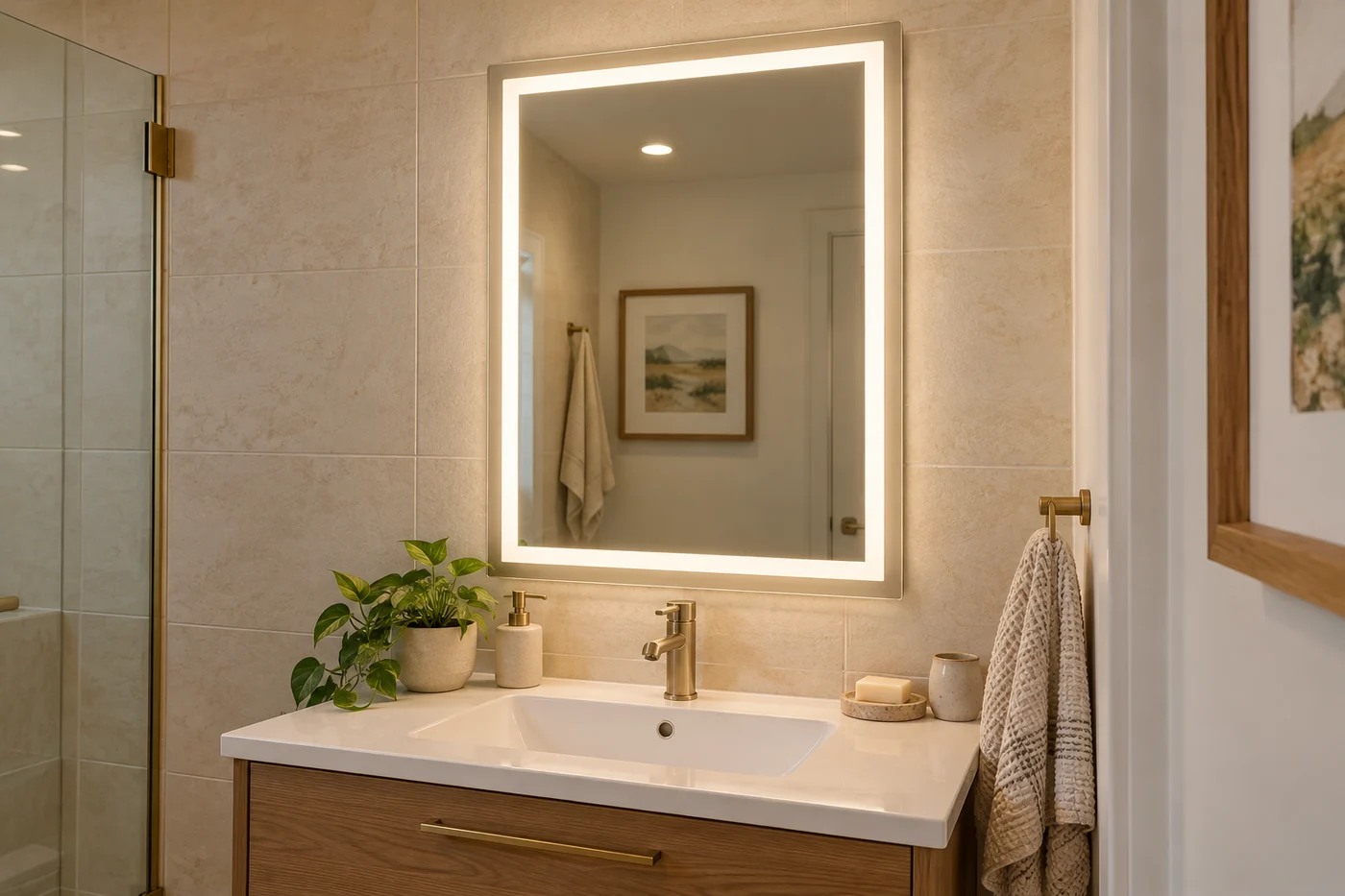
If you want lighting built into the mirror, the TETOTE 24-by-30-Inch LED Bathroom Mirror combines front lighting and backlighting, with adjustable brightness, three light-color settings, and a defogging function.
The front light helps illuminate your face, while the backlight adds a glow around the mirror. A mirror with backlighting alone may still need separate lighting for shaving or makeup.
Our guide to bathroom light fixtures covers more options for lighting around the vanity.
5. One Wide Mirror or Two Above a Double Vanity?
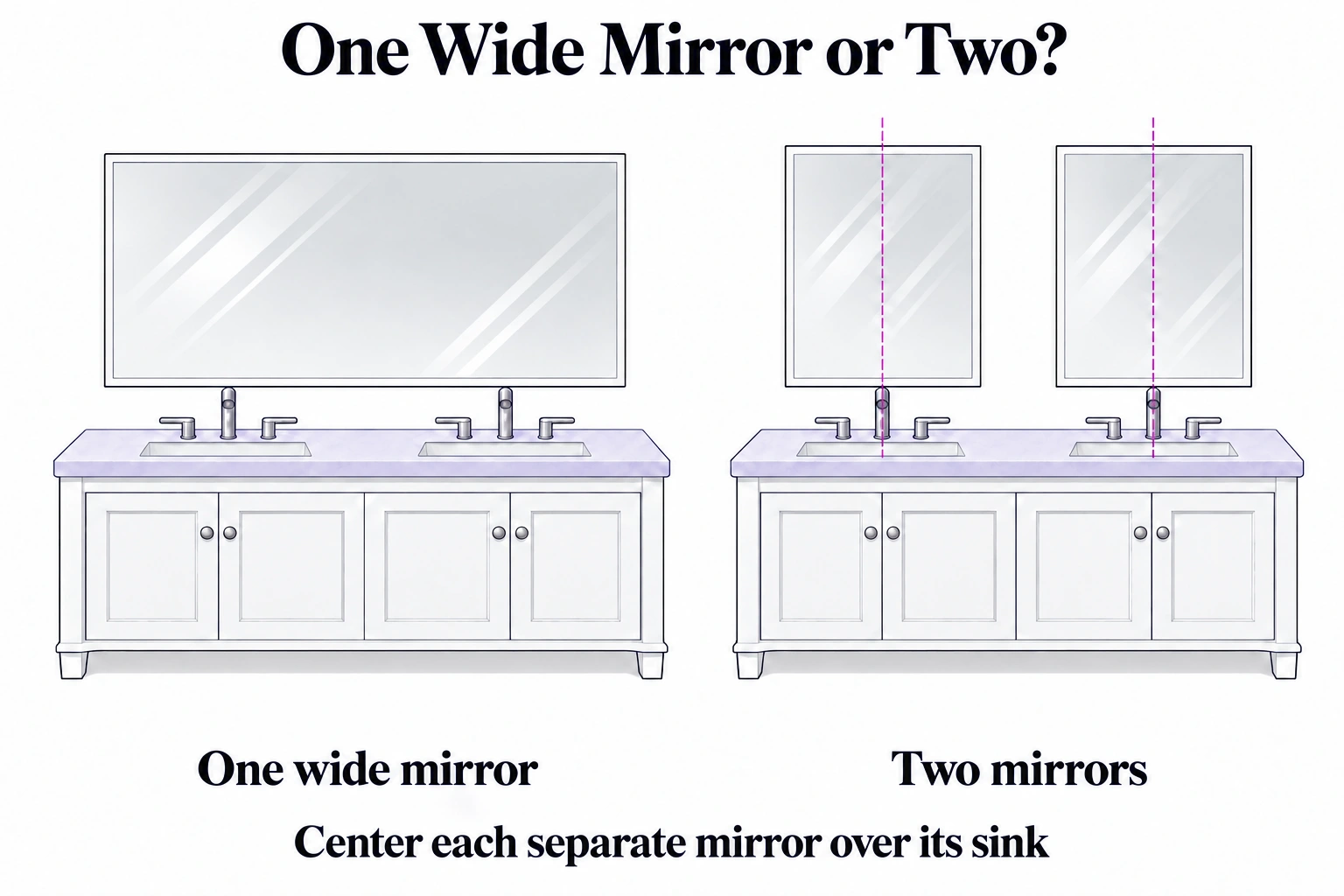
One wide mirror gives you a continuous view across both sinks. Two mirrors give each person a mirror above their basin and leave wall space between them.
Either arrangement can work with different decorating styles. The sink positions and lights are more useful guides.
| Layout | Main benefit | What determines the fit |
|---|---|---|
| One wide mirror | Reflection across both sinks and the space between them | Vanity width, sink positions, and surrounding fixtures |
| Two separate mirrors | An individual mirror above each basin | Distance between sink centers, outer gaps, and lighting |
For two mirrors, each one should be centered over its sink. Simply dividing the vanity width in half can give you the wrong answer.
Here’s a layout where the measurements work:
- The vanity is 60 inches wide.
- Each sink center sits 15 inches from its nearest outer edge.
- Each mirror is 24 inches wide.
- The mirrors leave 3 inches at the outer edges and 6 inches between them.
Move those sinks closer together, and the gap between the mirrors shrinks. Move them farther apart, and the outer frames get closer to the vanity edges.
That’s why two 24-inch mirrors can fit one 60-inch vanity beautifully and feel crowded on another.
For a single mirror, the glass should extend far enough across both sink positions for each person to see comfortably.
6. Round, Arched, Oval, or Rectangular?
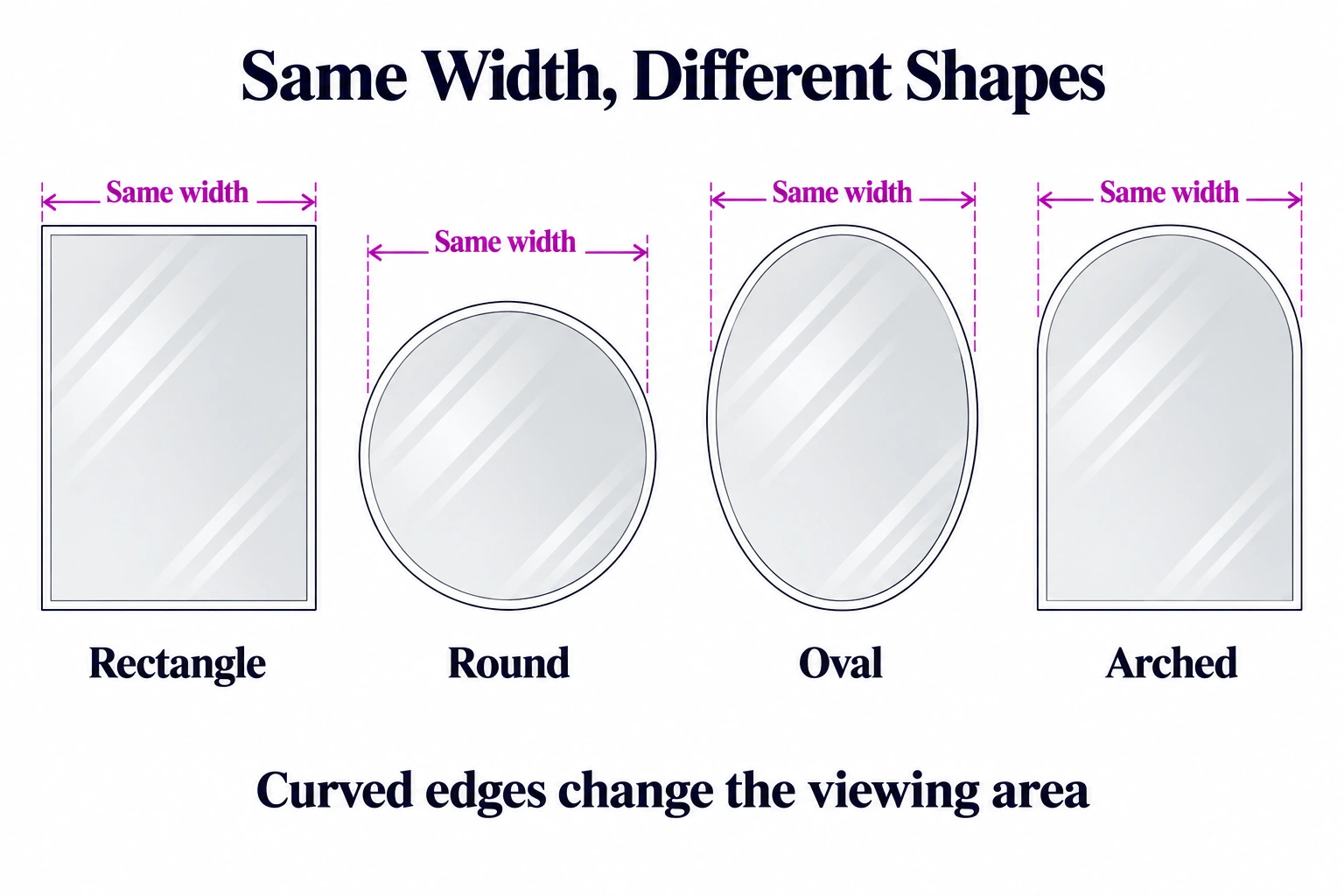
A rectangular mirror provides consistent width from top to bottom. Round, oval, and arched mirrors narrow in different places, changing how much glass is available around your face.
| Mirror shape | What you get | Where it works well |
|---|---|---|
| Rectangular | A broad, consistent viewing area | Shared bathrooms and everyday grooming |
| Round | Full width across the middle, narrowing above and below | Single sinks and walls where you want more visible tile or paint |
| Arched | A straight lower section with a curved top | Vanities with room for extra height |
| Oval | A curved outline that narrows toward both ends | Narrow wall spaces when mounted upright |
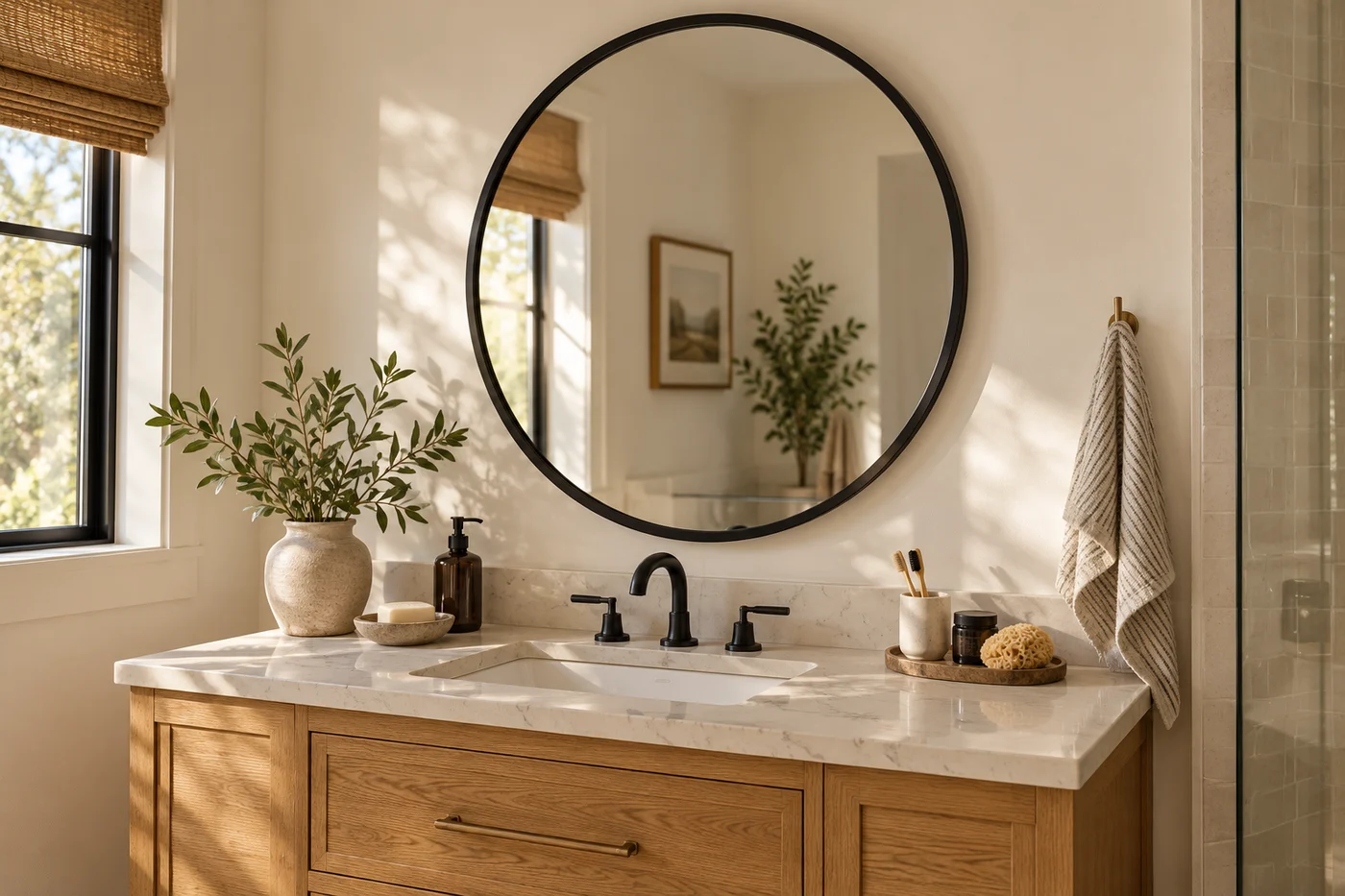
The XRAMFY 30-Inch Round Mirror is a simple matte-black option for a single vanity. Above a 36-inch vanity, its widest point leaves 3 inches on each side.
However, a 30-inch circle won’t give you the same viewing area as a 30-inch-wide rectangle. The rectangle stays wide near the top, while the circle curves inward.
For a narrower wall, the Delma Black Oval Bathroom Mirror measures 24 inches wide and 36 inches tall when upright. It also supports horizontal mounting, which changes the width to 36 inches and the height to 24 inches.
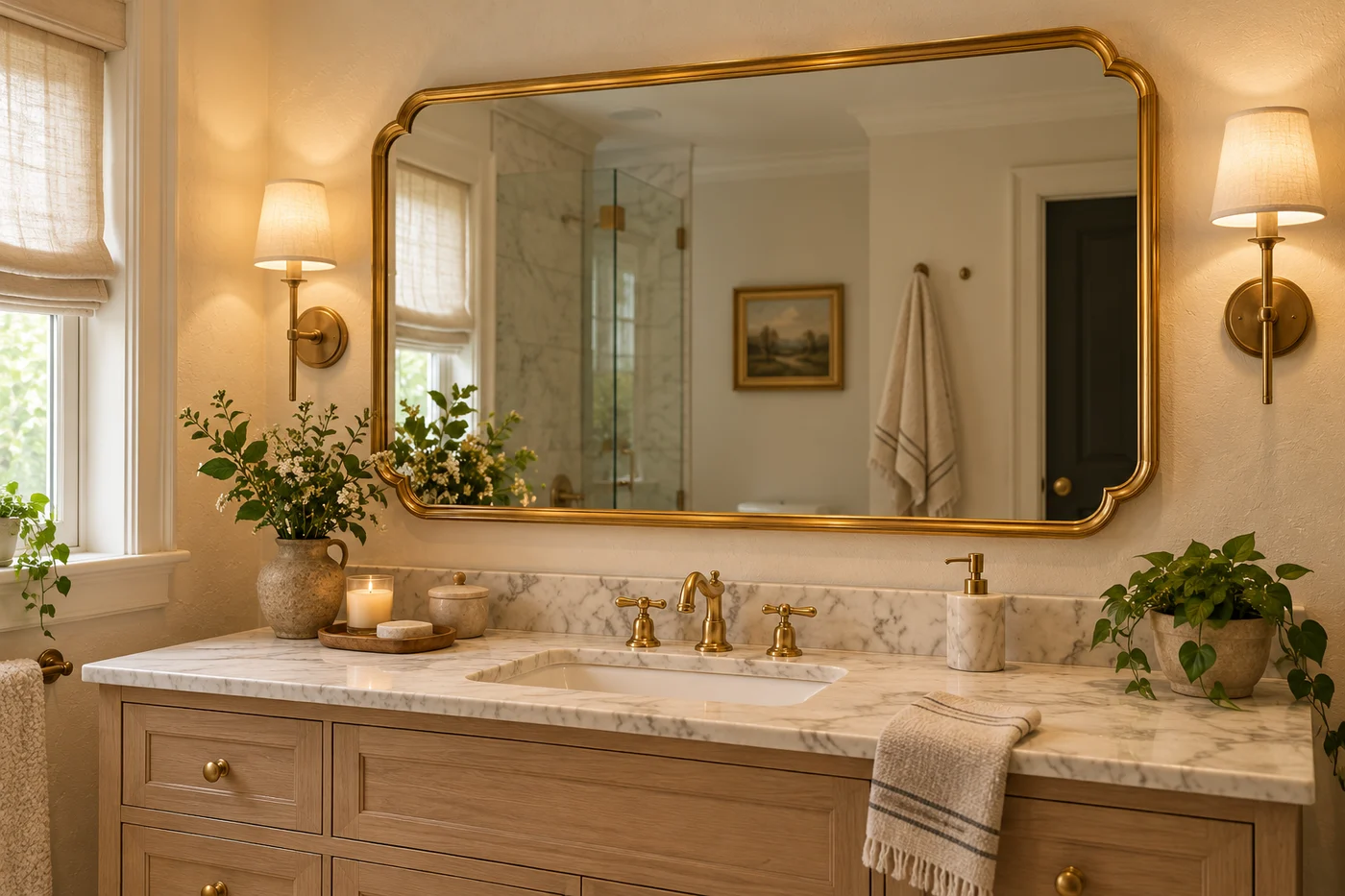
A decorative edge gives you another option. The Dimelax Gold Scalloped-Corner Mirror measures 48 by 24 inches and supports either orientation. Hung horizontally, it has a broad rectangular shape with curved corner details. Its gold frame works well when you want the mirror to pick up the finish of nearby hardware.
Frames deserve a little attention, too. A thin frame leaves more of the overall size available for glass. A broad decorative frame uses more of that space.
Note: Curved edges change the mirror’s shape and viewing area. They don’t automatically soften harsh lighting.
7. Small Bathrooms and Awkward Vanity Layouts
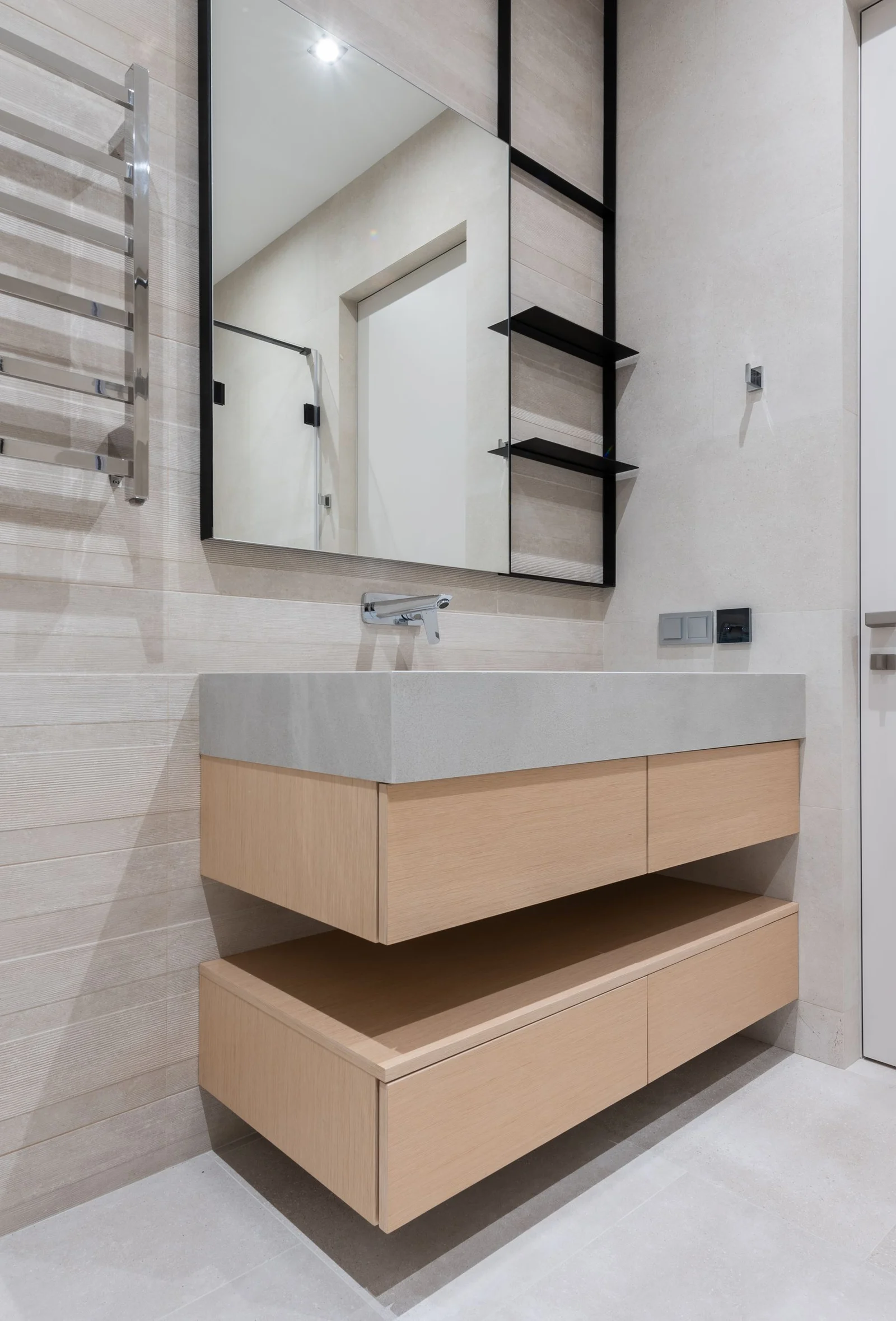
The best fit gives you a useful reflection above the sink while leaving room for nearby fixtures.
For a pedestal sink, a compact round or oval mirror can leave more wall visible around it. A taller rectangle may be more useful when the wall is narrow but there is plenty of height.
An off-center sink needs a different approach. If the basin sits at one end of a long countertop, a small mirror centered over the cabinet may leave you facing the frame while brushing your teeth.
In that situation, either:
- A smaller mirror sits above the basin.
- A wider mirror extends across the basin and more of the vanity.
A wall-to-wall mirror is another option. Here, the mirror fills the available wall rather than stopping a few inches inside the vanity edges. This can work particularly well when the vanity sits in an alcove.
Storage can influence the choice as well. A mirrored medicine cabinet combines a reflection with space for everyday toiletries. Its depth and door movement matter alongside its width and height, especially beside a wall or sconce.
Sometimes the easier solution is moving your makeup routine to a separate dressing table. The Ratsamee Hollywood Vanity Mirror is a 23-by-18-inch makeup mirror with 15 dimmable bulbs and three light-color settings. It fits that separate makeup area, keeping more of the bathroom counter free.
For more ways to clear the countertop, our bathroom cabinet organization guide has practical ideas for keeping daily essentials within reach.
8. A Quick Fit Checklist Before Buying
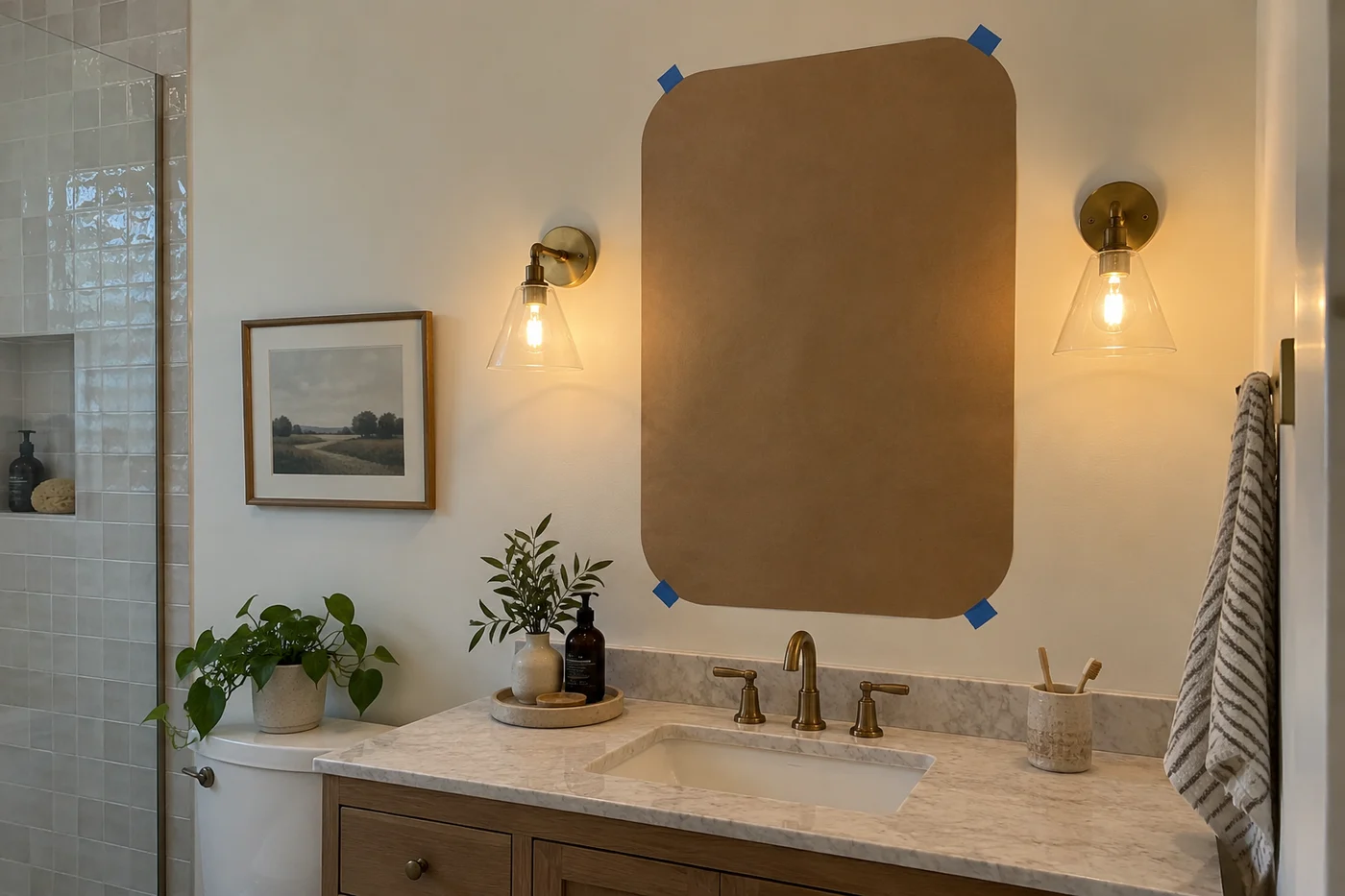
A full-size paper template shows how the proposed mirror will fit between the sink, lights, and surrounding fixtures.
A cutout in the mirror’s actual shape is especially useful for round and arched designs. A rectangular outline won’t show the extra wall space around a circle’s curved edges.
- The full countertop width is recorded, including the overhang.
- The mirror’s overall width and height fit the available wall.
- The frame is included in those measurements.
- The mirror lines up with the sink or gives both users a comfortable view.
- The faucet, backsplash, lights, and outlets have enough room.
- Everyone using the sink has a comfortable viewing position.
- Any medicine cabinet door can open without hitting nearby fixtures.
- A full-size paper template shows the planned shape and position.
Note: Width and height depend on orientation. A 20-by-30-inch mirror is 20 inches wide when upright and 30 inches wide when turned sideways, provided the model supports both mounting positions.
9. Bathroom Mirror Size Questions
What Size Mirror Works Over a 30-Inch Vanity?
A mirror about 24 to 26 inches wide is a practical choice. Centered over the vanity, it leaves roughly 2 to 3 inches on each side.
A narrower mirror can also work when side lights occupy some of the wall.
What Size Mirror Works Over a 36-Inch Vanity?
A mirror about 28 to 32 inches wide usually works well. A 30-inch mirror leaves 3 inches per side, making it a straightforward option for a centered single sink.
What Size Mirror Works Over a 48-Inch Vanity?
A mirror about 40 to 44 inches wide leaves 2 to 4 inches on each side. A smaller mirror may suit a layout with large sconces or a sink positioned toward one end.
Can a Bathroom Mirror Be the Same Width as the Vanity?
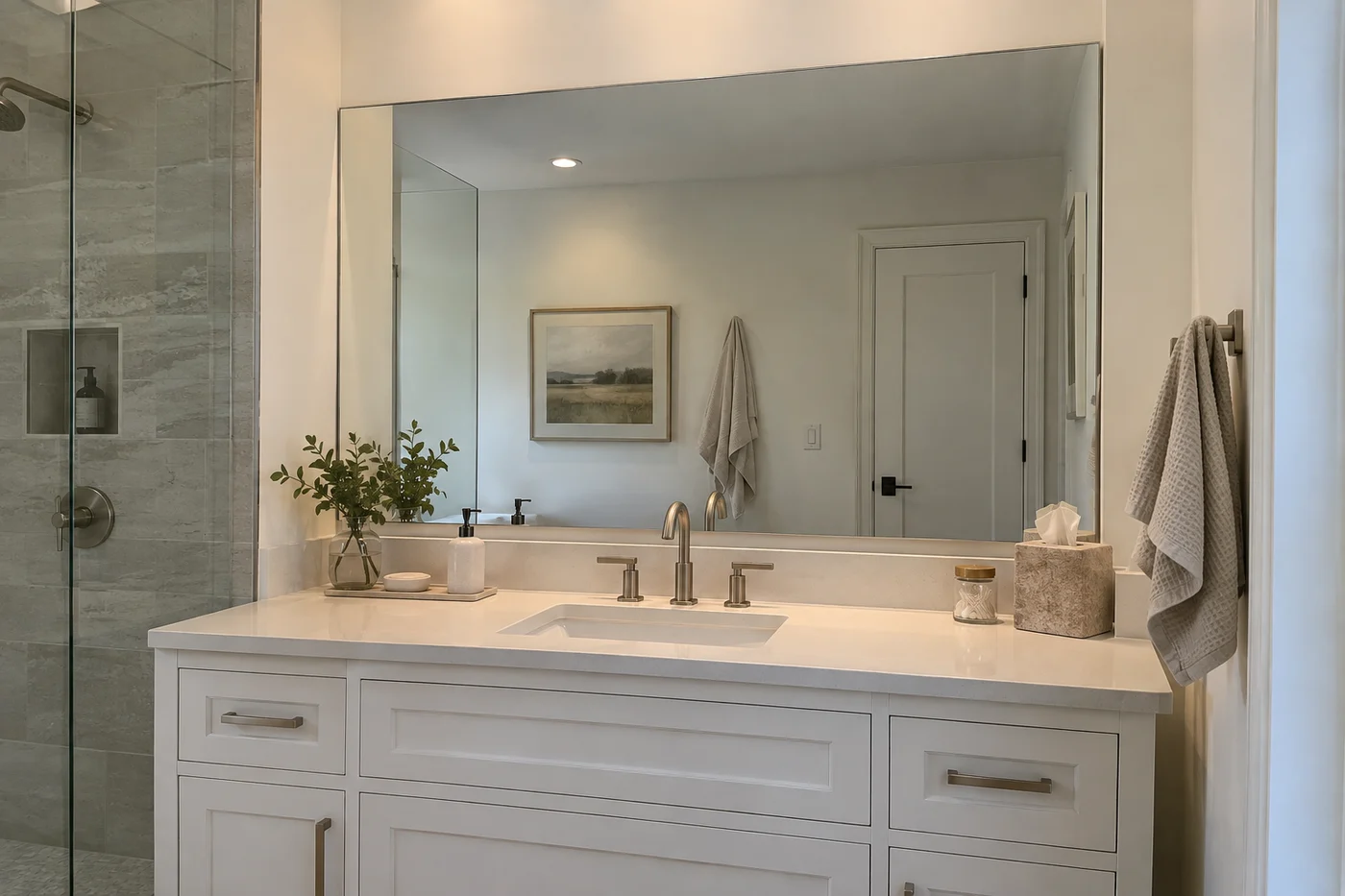
Yes, a mirror can be the same width as the vanity. This works well when you want the outer edges to line up and the surrounding wall has enough room.
A thin frame or frameless edge can keep the arrangement looking simple.
Can a Mirror Be Wider Than the Vanity?
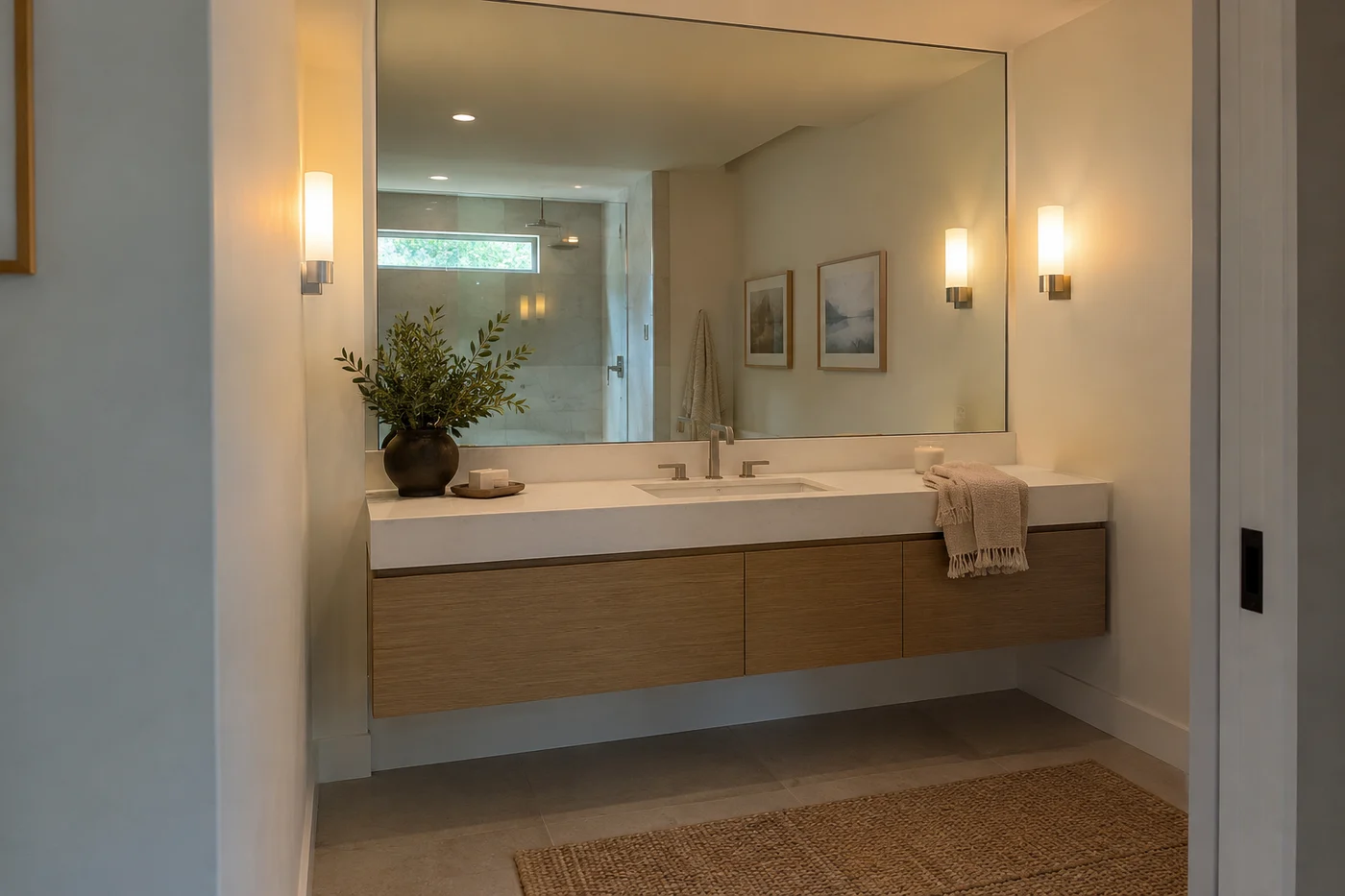
Yes, especially in a wall-to-wall arrangement. A mirror can extend beyond the vanity when it fits the surrounding wall and leaves room for nearby fixtures.
For an individual framed mirror, staying within the vanity’s width is usually the easier choice.
Should the Mirror Be Centered Over the Sink or Cabinet?
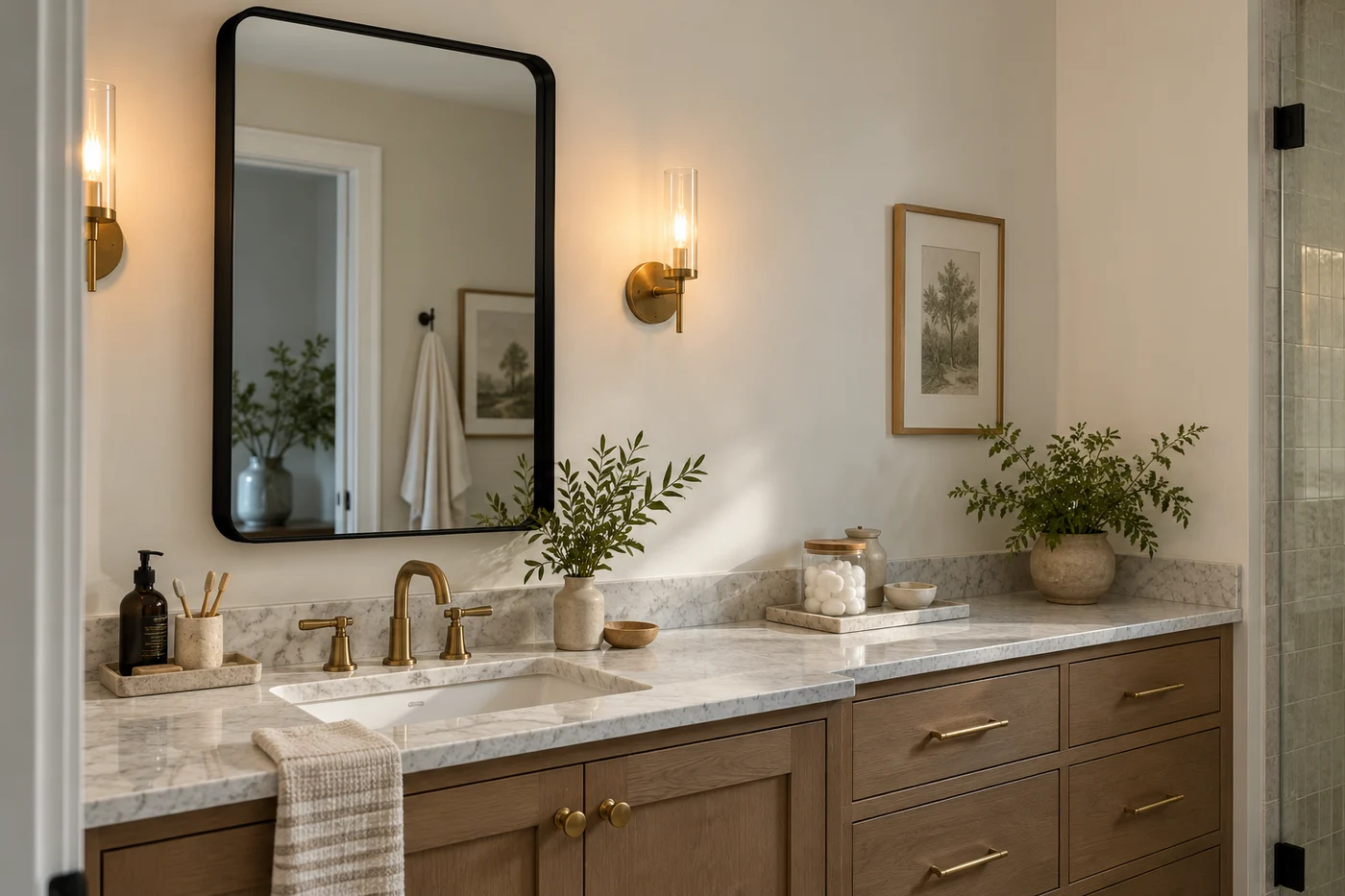
A smaller individual mirror should usually be centered over the sink. When the basin and cabinet share the same center, both align naturally.
With an off-center sink, a wider mirror can cover more of the cabinet while still giving you a useful reflection above the basin.
Does a Round Mirror Need to Be Larger Than a Rectangular Mirror?
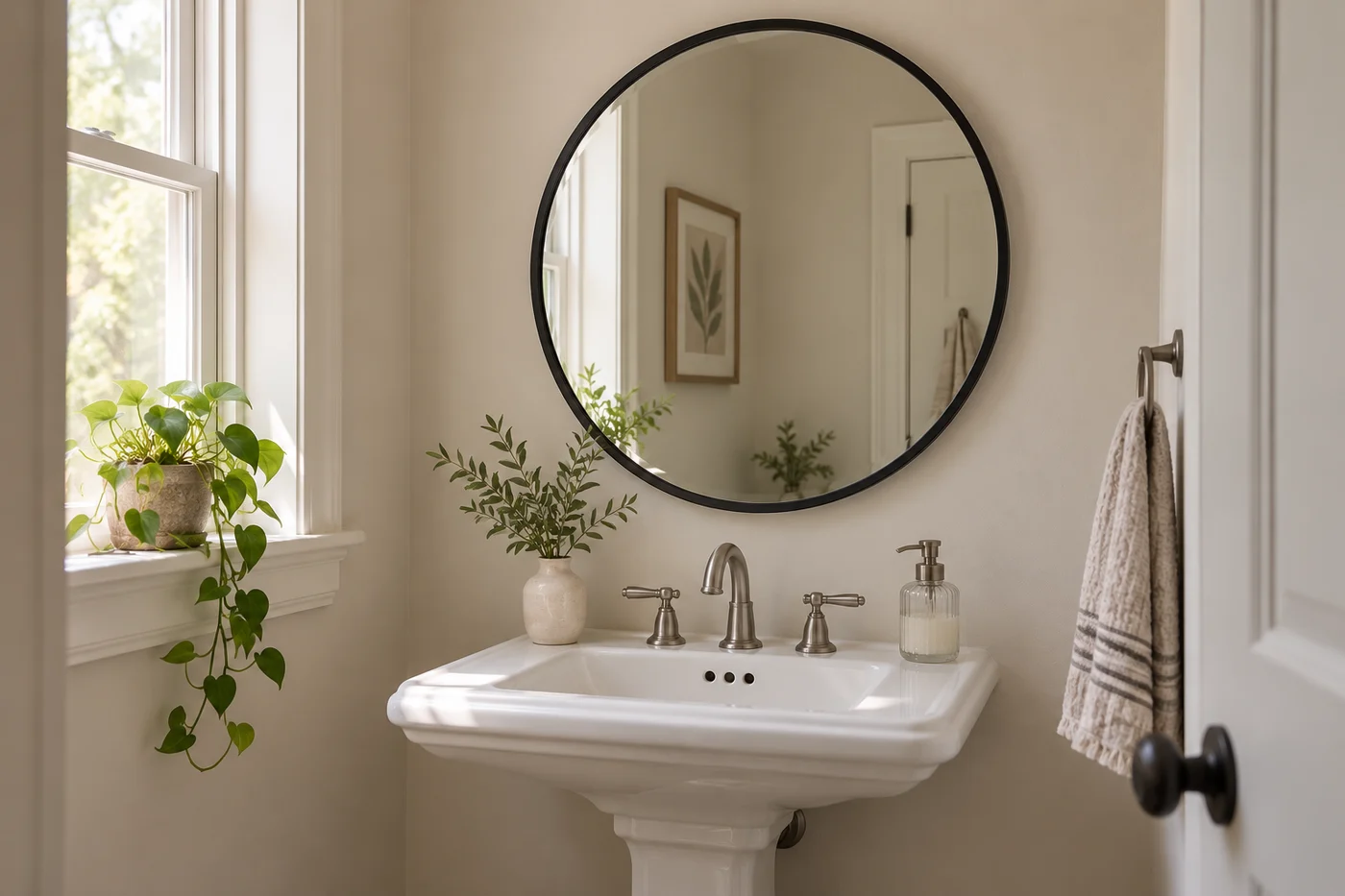
Not automatically. A round mirror has less glass near its top and bottom than a rectangle of the same width.
A larger diameter gives you more glass, but it also adds height. The mirror still needs to fit between the fixtures and give you a comfortable view.
Mirrors for Your Vanity
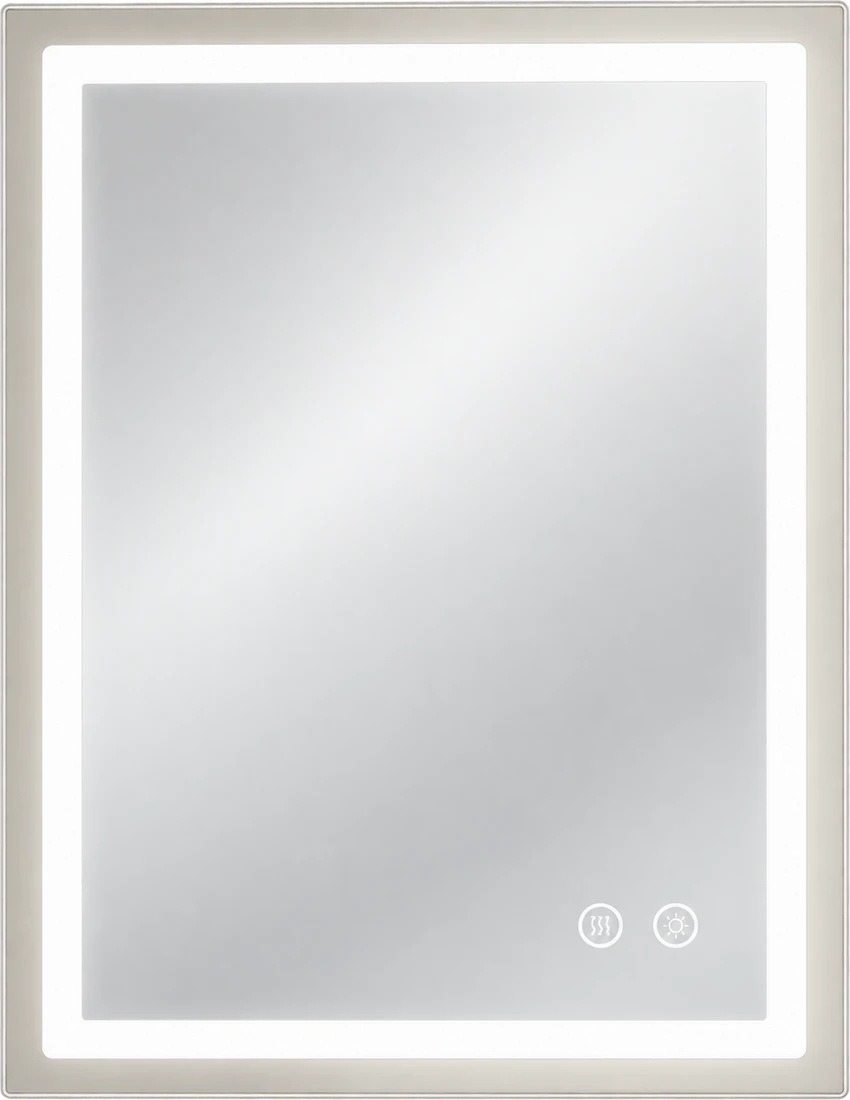 TETOTE 24-by-30-Inch LED Bathroom MirrorA rectangular bathroom mirror with front lighting, backlighting, adjustable brightness, and a defogging function.
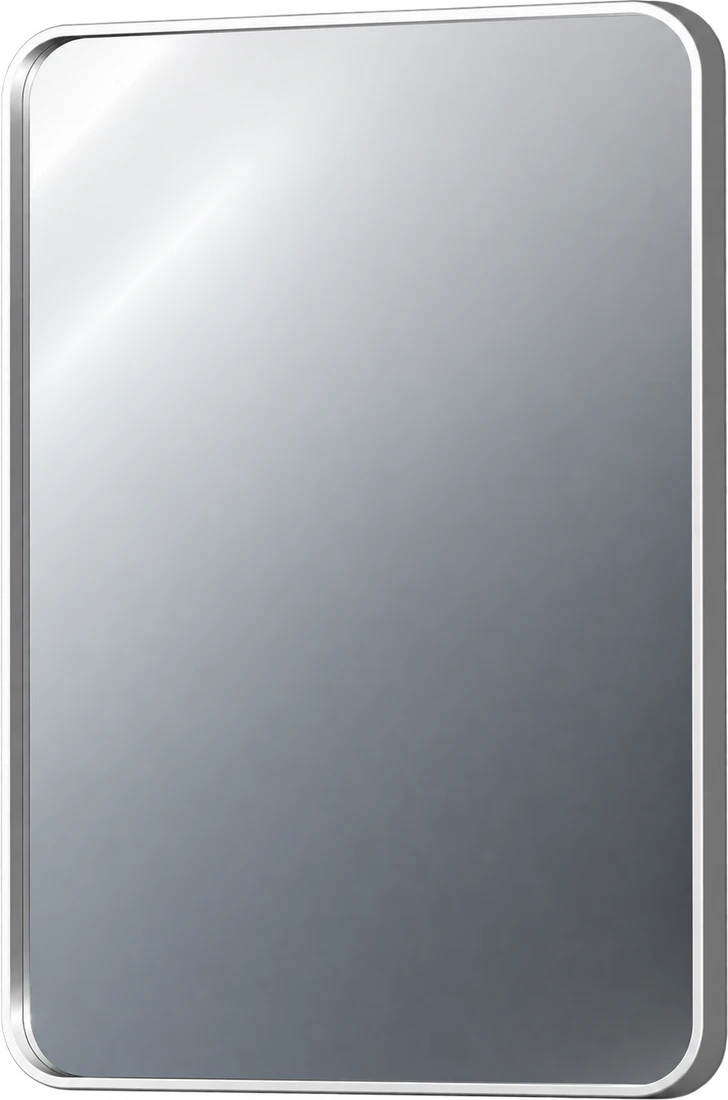 Delma Silver-Framed Bathroom MirrorA 20-by-30-inch mirror with a silver frame and two mounting orientations. A compact option for a small vanity.
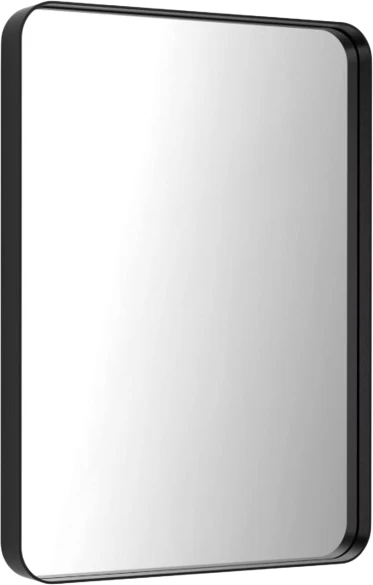 LOAAO Black Metal-Framed Bathroom MirrorA 22-by-30-inch rounded rectangle with a matte-black frame. A useful size for narrow vanity walls.
 XRAMFY 30-Inch Round MirrorA round mirror with a matte-black aluminum frame. Its 30-inch diameter works neatly above many 36-inch single vanities.
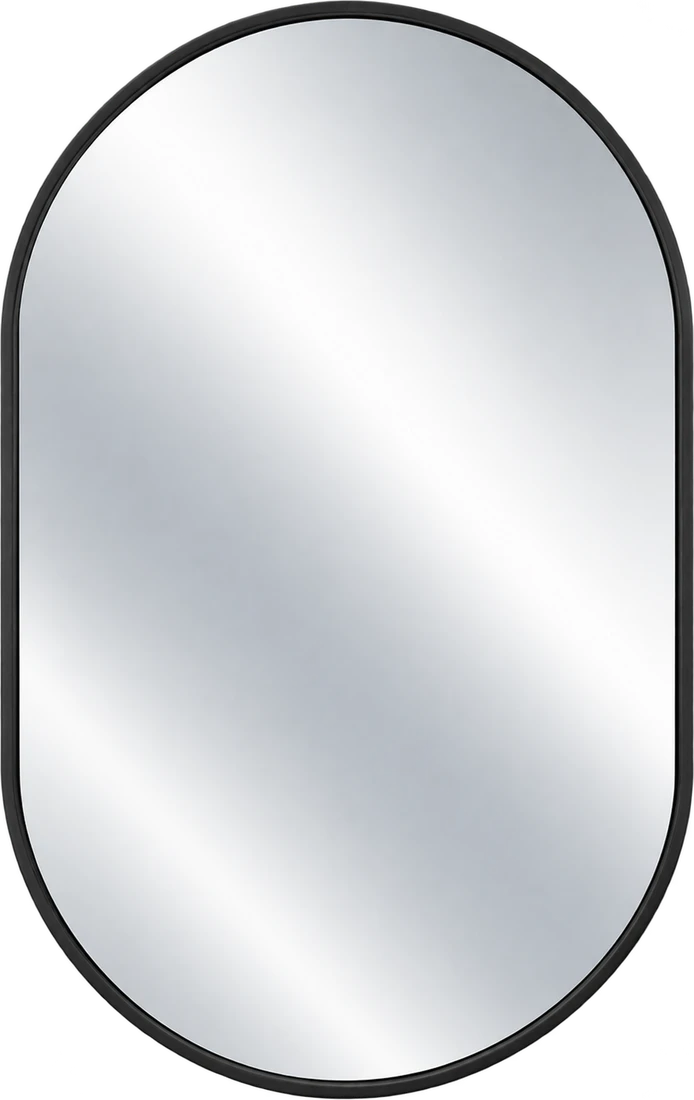 Delma Black Oval Bathroom MirrorA 24-by-36-inch oval mirror with a black aluminum frame. Suitable for upright or horizontal mounting.
 Dimelax Gold Scalloped-Corner MirrorA 48-by-24-inch mirror with a gold frame and decorative curved corners. It can hang horizontally or vertically.
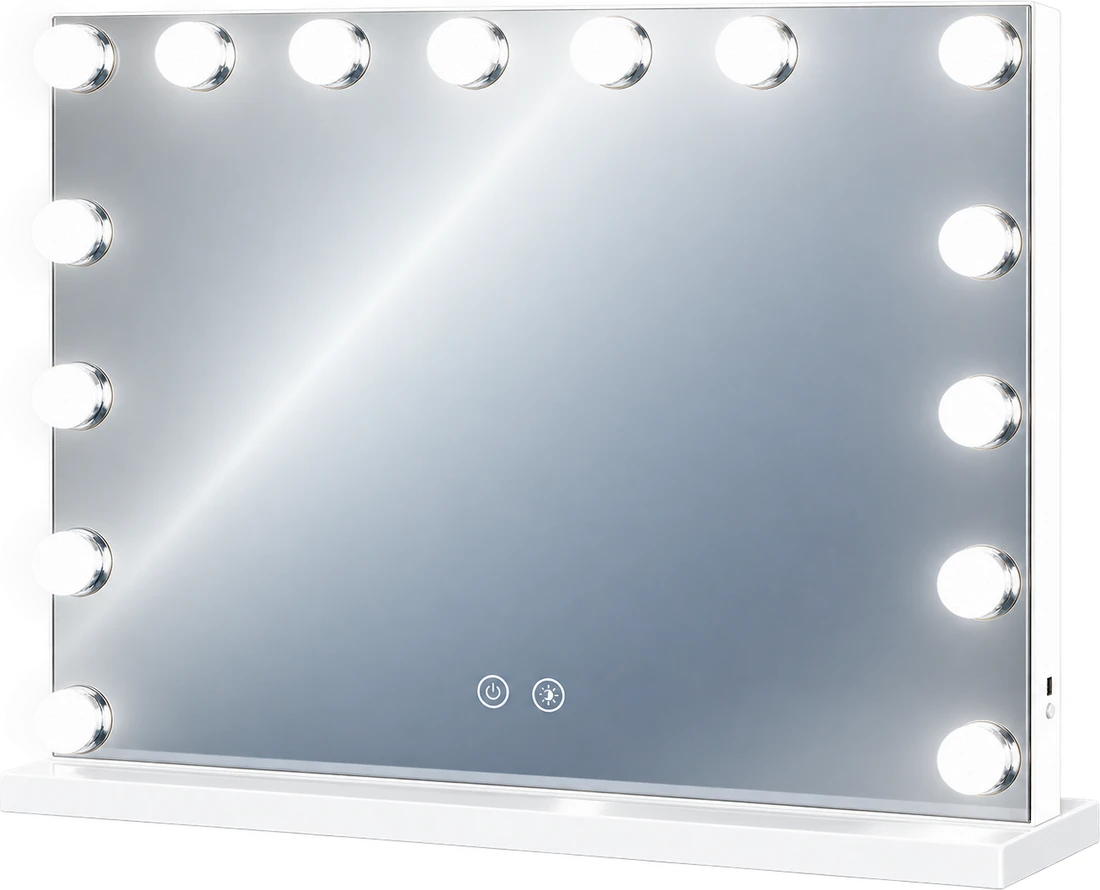 Ratsamee Hollywood Vanity MirrorA 23-by-18-inch makeup mirror with 15 dimmable bulbs. An option for a separate dressing table.
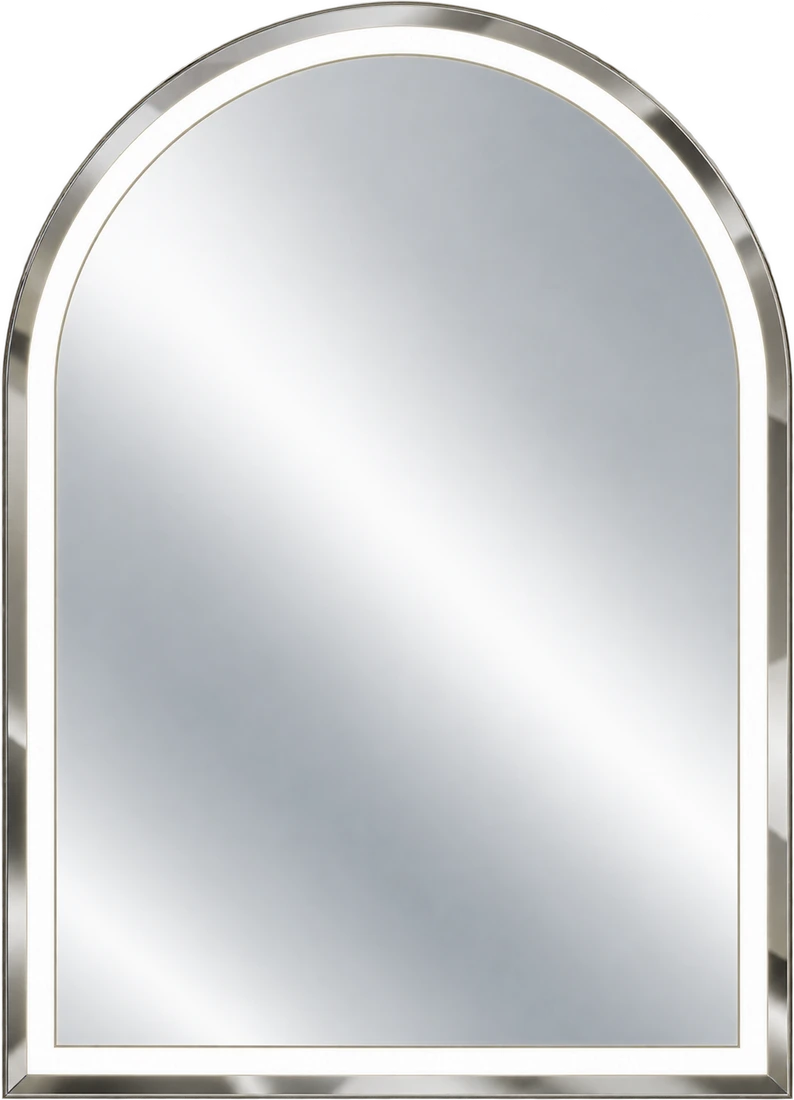 LAWADA Arched LED Bathroom MirrorA 24-by-32-inch arched mirror with front lighting, backlighting, adjustable brightness, and a defogging function.