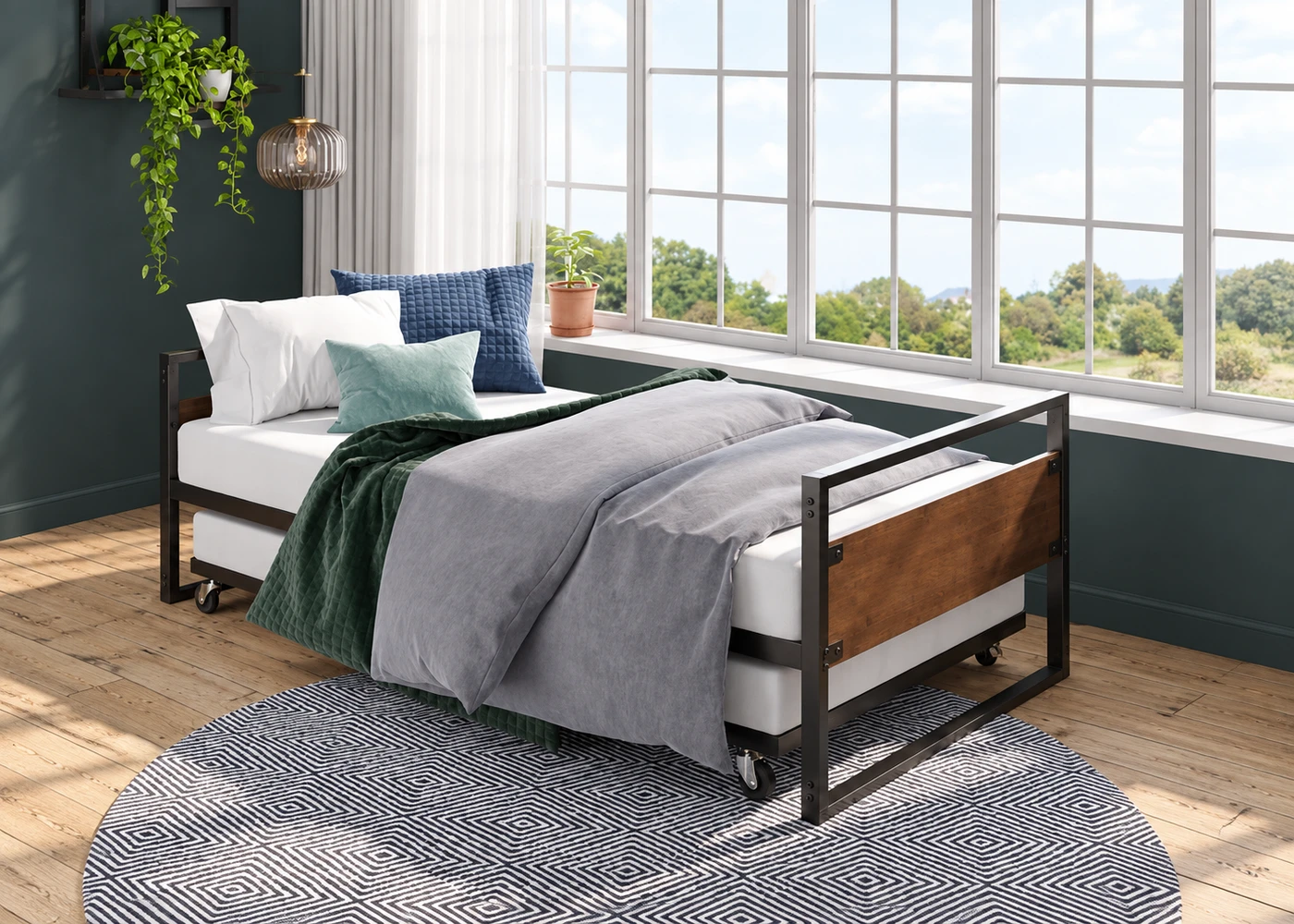
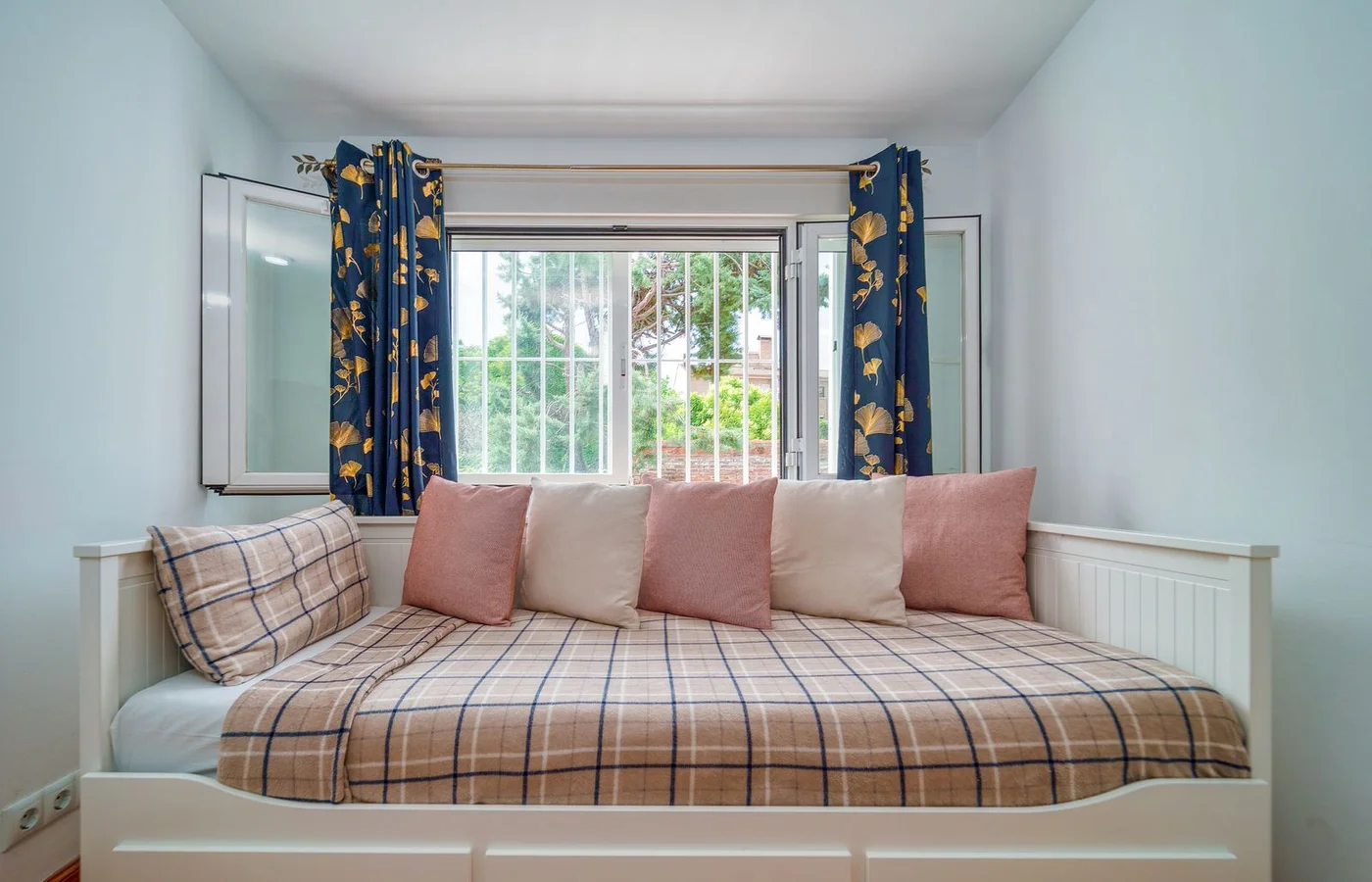
How to Make a Daybed Look Like a Couch: 7 Easy Changes

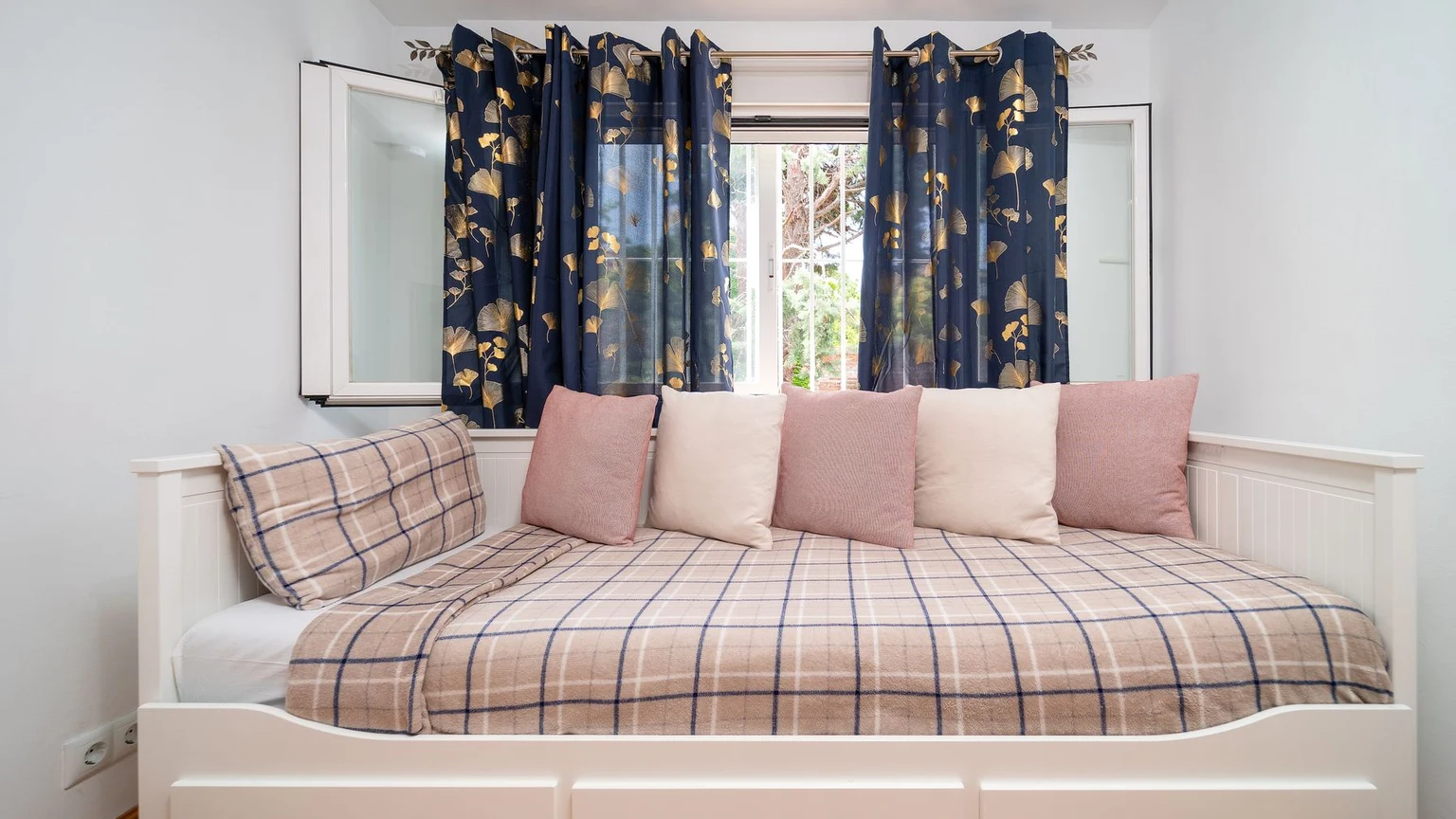
Making a daybed look like a couch comes down to a neatly covered mattress, supportive back cushions, and comfortable ends. These changes give it a more sofa-like shape and make sitting easier. A nearby table and lamp help turn it into a spot you’ll actually use during the day.
Maybe your daybed is in the home office, but the bedding makes the whole room feel like a spare bedroom. Or perhaps you sleep on it every night and want somewhere comfortable to sit during the day. Styling a daybed as a sofa works best when the cushions, cover, and surrounding furniture suit both uses.
Here’s what makes the biggest difference:
The quick answer
- A smooth cover gives the mattress a neater shape.
- Sitting feels more comfortable with substantial back cushions behind you.
- Bolsters or large pillows can soften hard side rails.
- A secure mattress and well-fitting cover mean less straightening throughout the day.
- A few repeated colors help the cover, cushions, and throw look coordinated.
- Bedtime is easier when spare bedding is nearby and the daytime cushions have somewhere to go.
You may already have several of these pieces. The seven changes below will help you put them together and decide where something new would help.
1. A Neat Cover Makes the Biggest Visual Difference
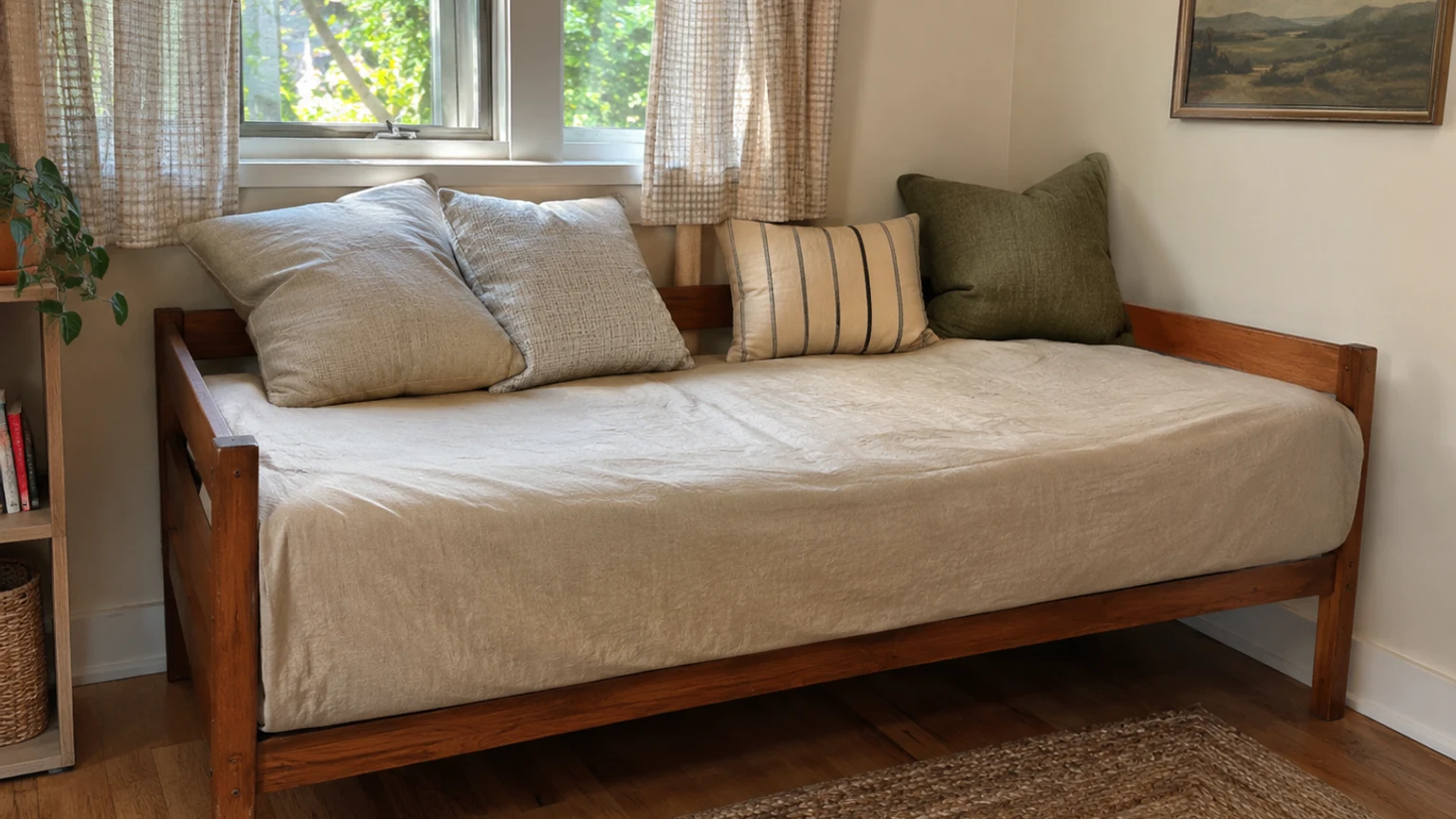
A smooth, well-fitting cover makes the mattress look more like a large sofa cushion. Loose sheets and a bulky comforter leave more of that familiar bed shape on show.
For a tailored finish, an upholstery-style mattress cover gives the seat defined edges. A lightweight quilt or daybed cover creates a softer look and is easier to arrange than a thick duvet.
The Madison Park Tuscany Daybed Cover Set suits that softer approach. It’s a quilted bedding set, so it works well for a relaxed guest room or reading area. Neatly arranged back cushions help it look more like seating during the day.
With any loose cover, excess fabric is what tends to cause trouble. A smooth top, tidy front edge, and minimal bunching around the side rails make the biggest difference.
If you sleep here every night, a plain fitted sheet can also work. An opaque fabric hides the mattress pattern, while a snug fit keeps the corners tidy. There’s no need to add a complicated cover arrangement that you’ll have to undo every evening.
Which Parts of the Frame Should You Hide?
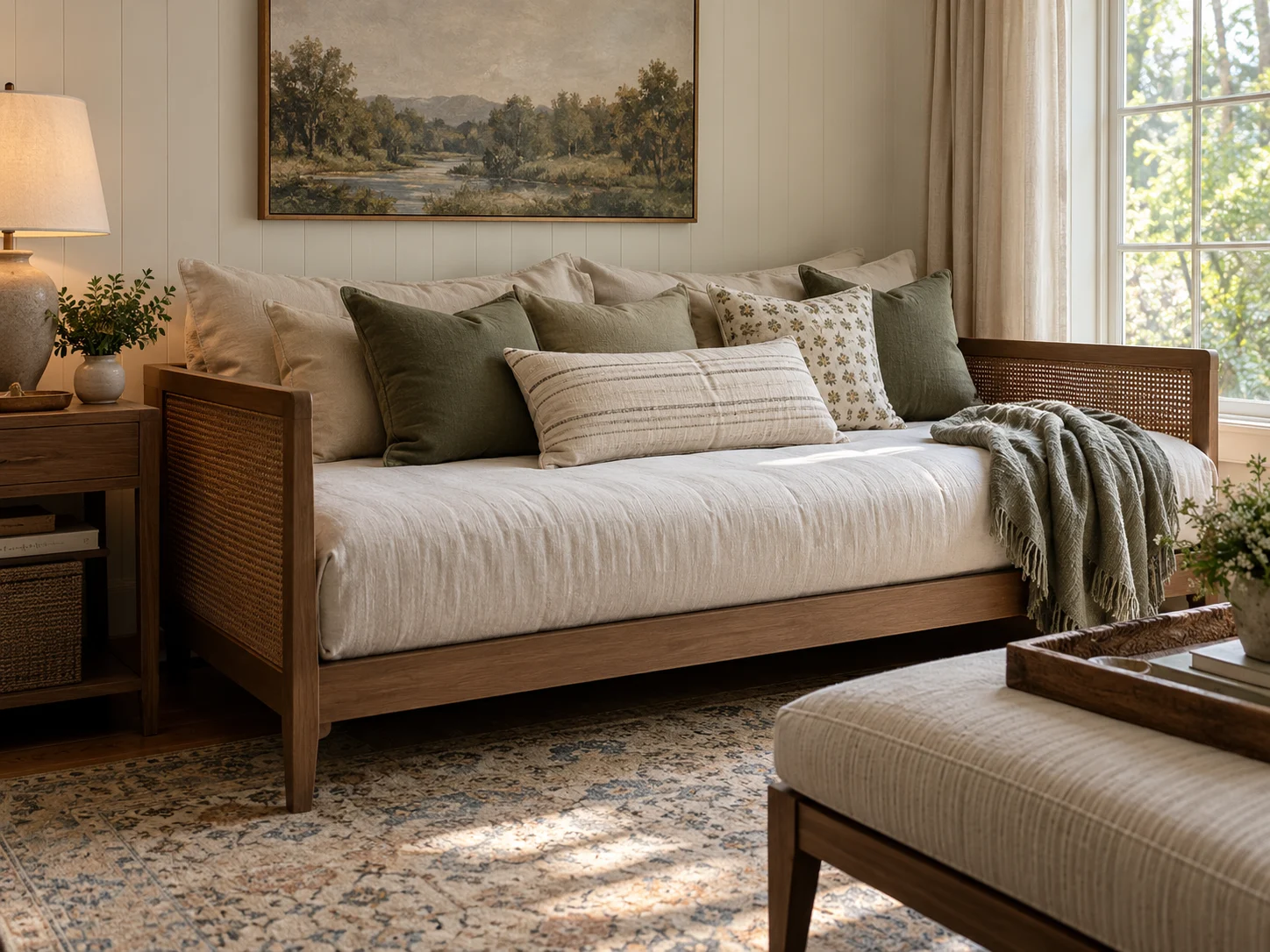
Attractive frame details can stay on show. Wood legs, woven sides, or a slim metal frame can help the daybed fit in with the rest of your furniture.
An exposed base with bedding stored underneath may look better behind a straight tailored skirt. A color close to the mattress cover makes the two pieces look connected.
Corner posts need room for the fabric to fall around them. A skirt with split corners avoids the bunching that happens when one continuous panel catches on the frame.
A wooden trundle front usually looks tidy enough to leave visible. Any hanging fabric should stay clear of its handle and wheels.
2. A Proper Backrest Makes the Daybed Easier to Sit On
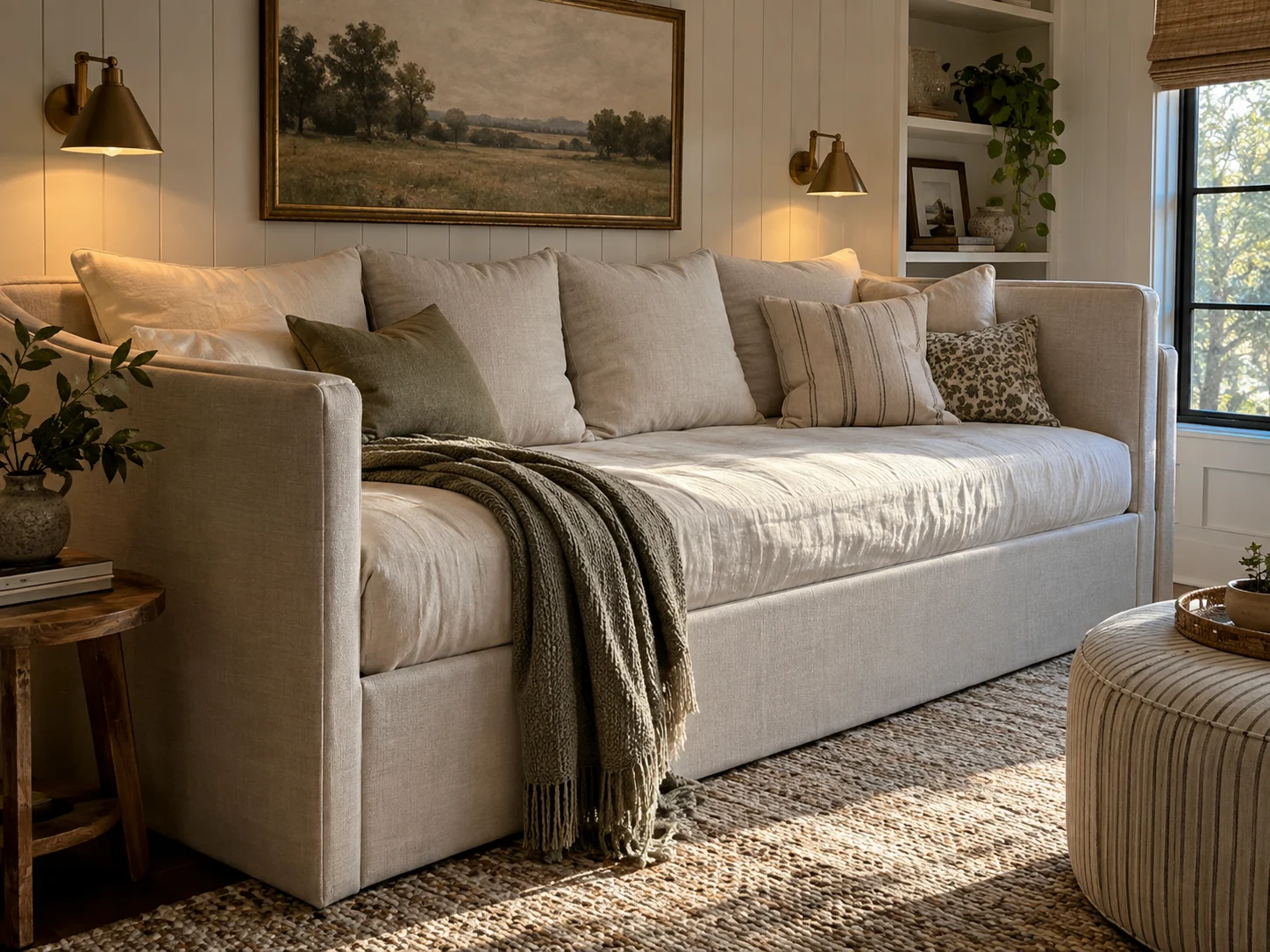
Substantial back cushions reduce the usable seat depth, so you can lean back without shuffling halfway across the mattress.
You’ve probably felt the problem: your back reaches the cushions, but your feet no longer rest comfortably on the floor. A deeper cushion behind you brings your sitting position forward.
Small decorative pillows often flatten or move apart when you lean against them. They’re useful for extra comfort, but the main back layer needs more support.
Large Cushions or One Long Back Cushion?
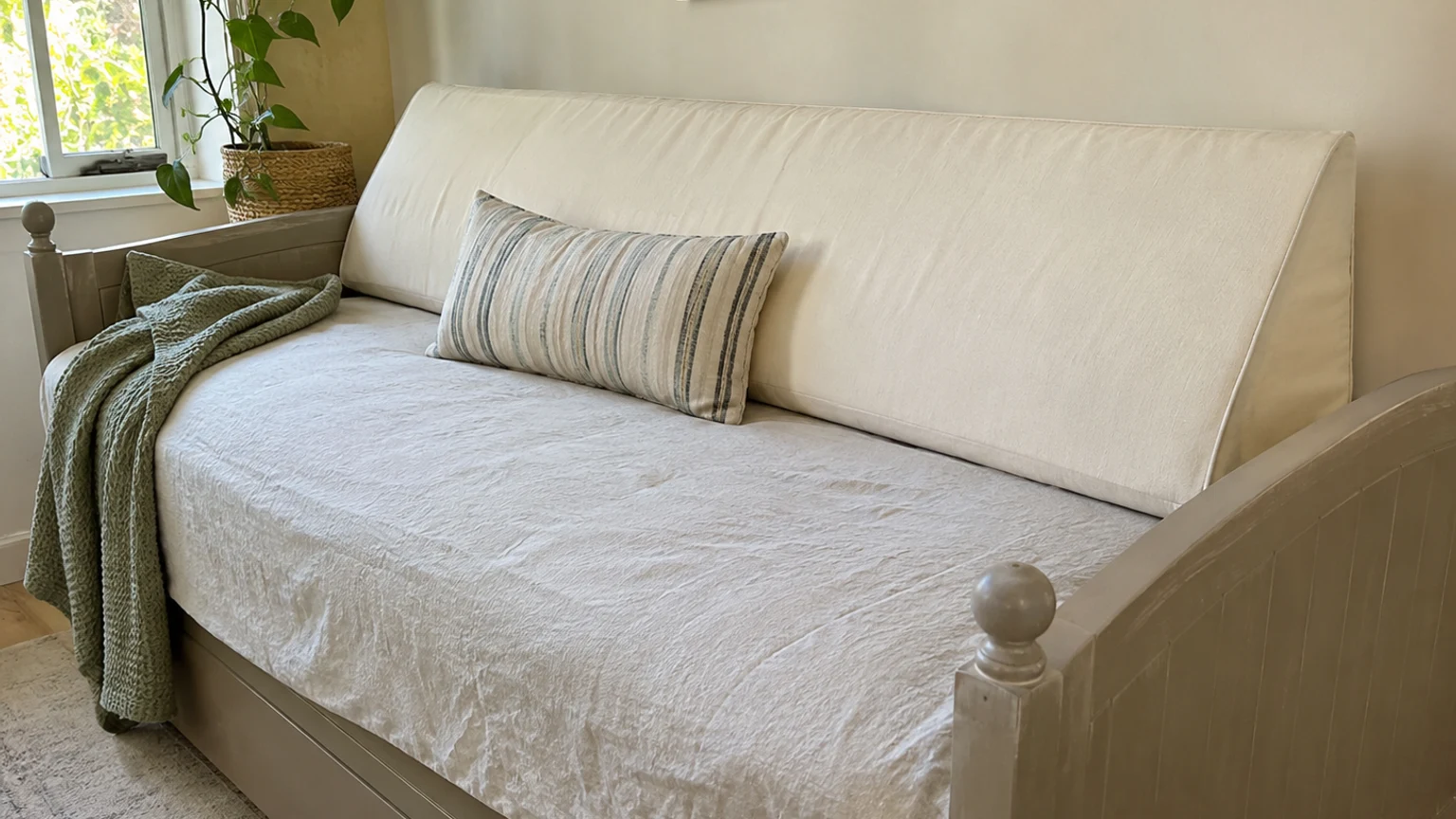
Large square cushions offer flexibility, while a long cushion leaves fewer gaps along the back.
Two or three substantial square cushions can work well on a framed daybed. Each person can adjust the cushion behind them, and the separate pieces are easier to move at bedtime.
For a more continuous backrest, the WOWMAX Wedge Headboard Pillow has a triangular shape designed for leaning against. It belongs along the long side of the daybed, supported by a wall or back panel.
A long cushion doesn’t automatically fit every frame. Its length needs to fit between the side rails, and its depth affects how much sitting room remains.
With square cushions, the insert matters as much as the cover. A Euro sham is simply a cover. It won’t create a supportive backrest unless the cushion inside it holds up when you lean against it.
How Much Back Support Do You Need?
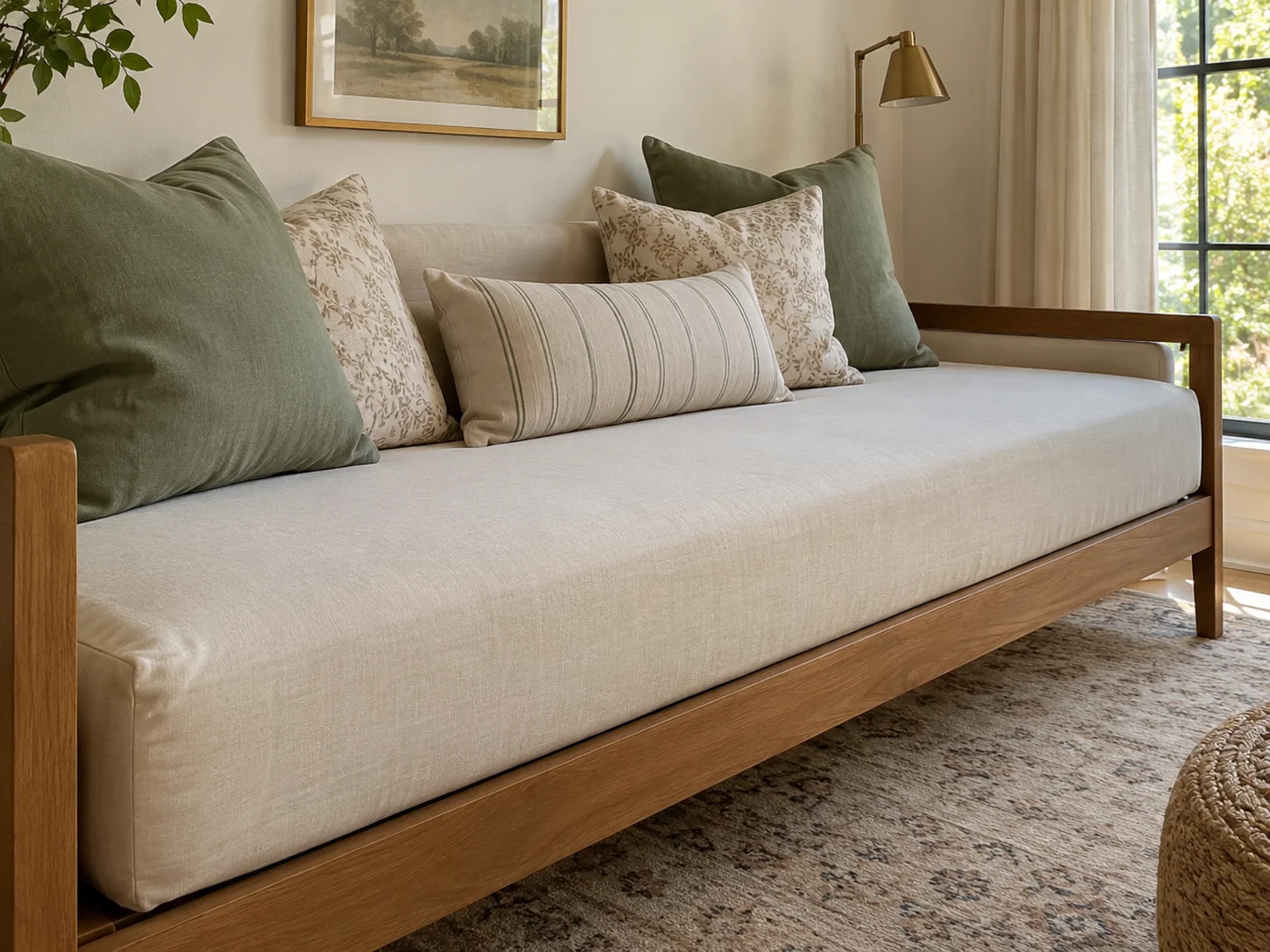
The right amount lets you lean back comfortably without feeling pushed to the edge.
Before buying several new cushions, you can try the arrangement with pillows or folded blankets you already own. Adding thickness behind your back shows how a deeper cushion would change the seat.
For reading with your feet tucked up, more open mattress space may feel comfortable. For conversation or working on a laptop, you may prefer a shallower sitting area.
A removable lumbar pillow gives you some flexibility. Someone who needs extra support can keep it behind their lower back; someone taller can move it aside.
The mattress edge matters, too. If it sinks heavily when you sit down, back cushions won’t solve that part of the problem.
3. Padded Ends Give It a More Sofa-Like Shape
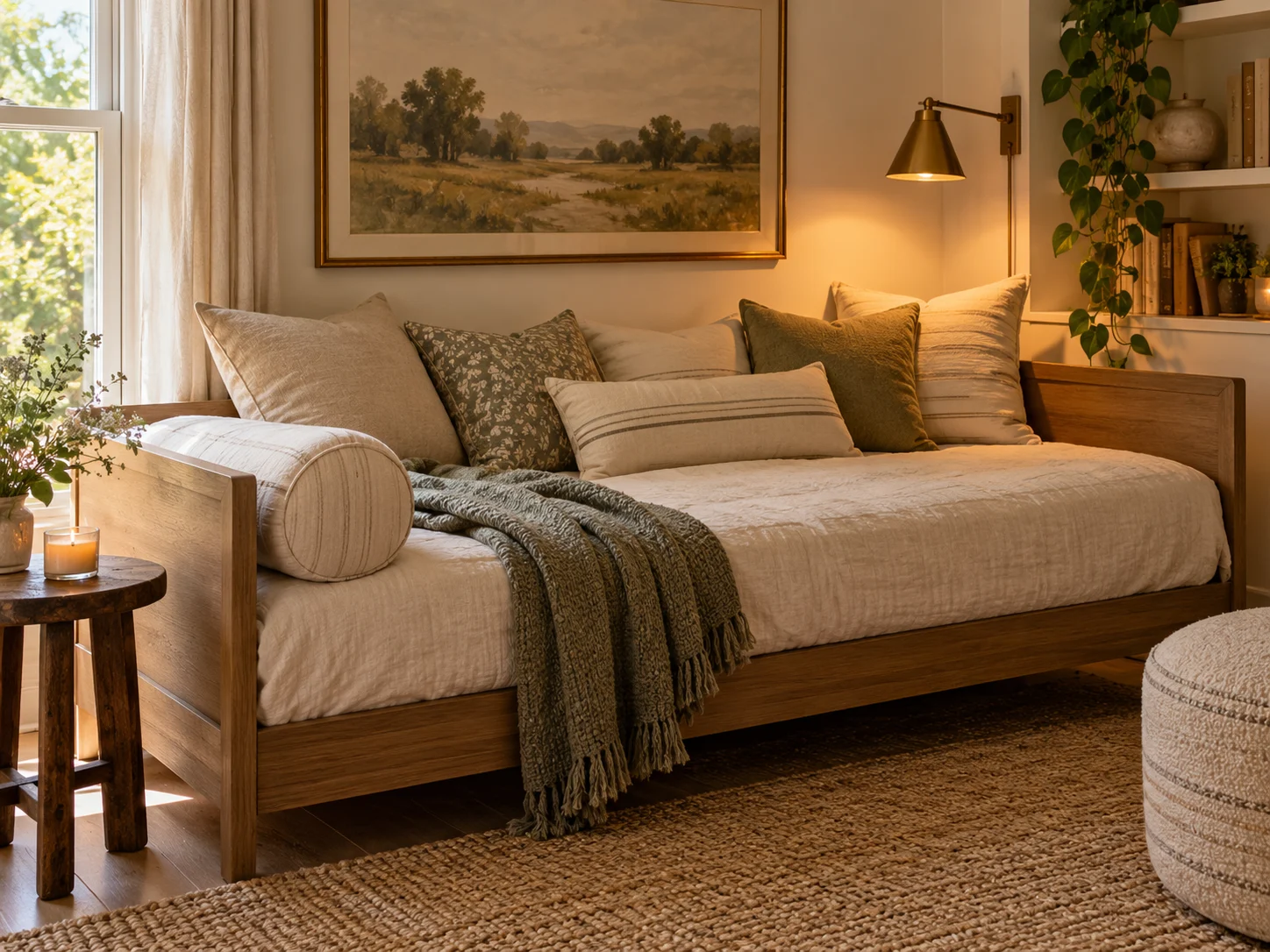
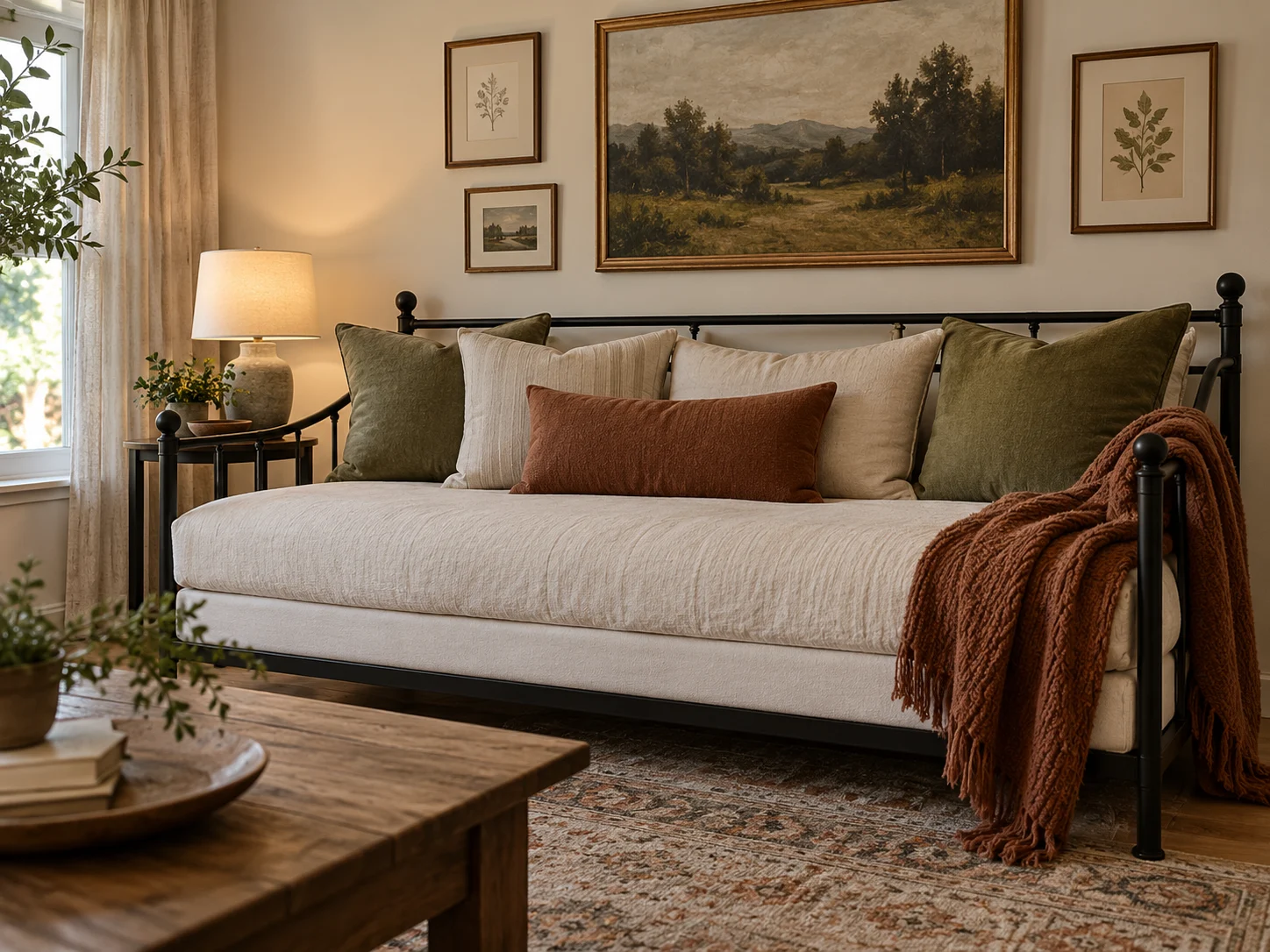
Bolsters or large pillows against the sides provide a softer place to rest your arms and help fill the gaps beside the mattress.
Cylindrical bolsters are especially useful against narrow wood or metal rails. Their shape fits neatly along the ends without needing a whole row of decorative cushions.
An off-white cylindrical bolster pillow is an easy match for cream, oatmeal, or muted-color covers. It can soften one hard end or be paired with another bolster for a more balanced arrangement.
Large square pillows can do the same job if you already have them. One at each end may be enough.
For a daybed with padded upholstered arms, extra end cushions may take up useful seating space. In that case, one small pillow for comfort can look better than a matching pair.
4. A Secure Mattress Means Less Straightening
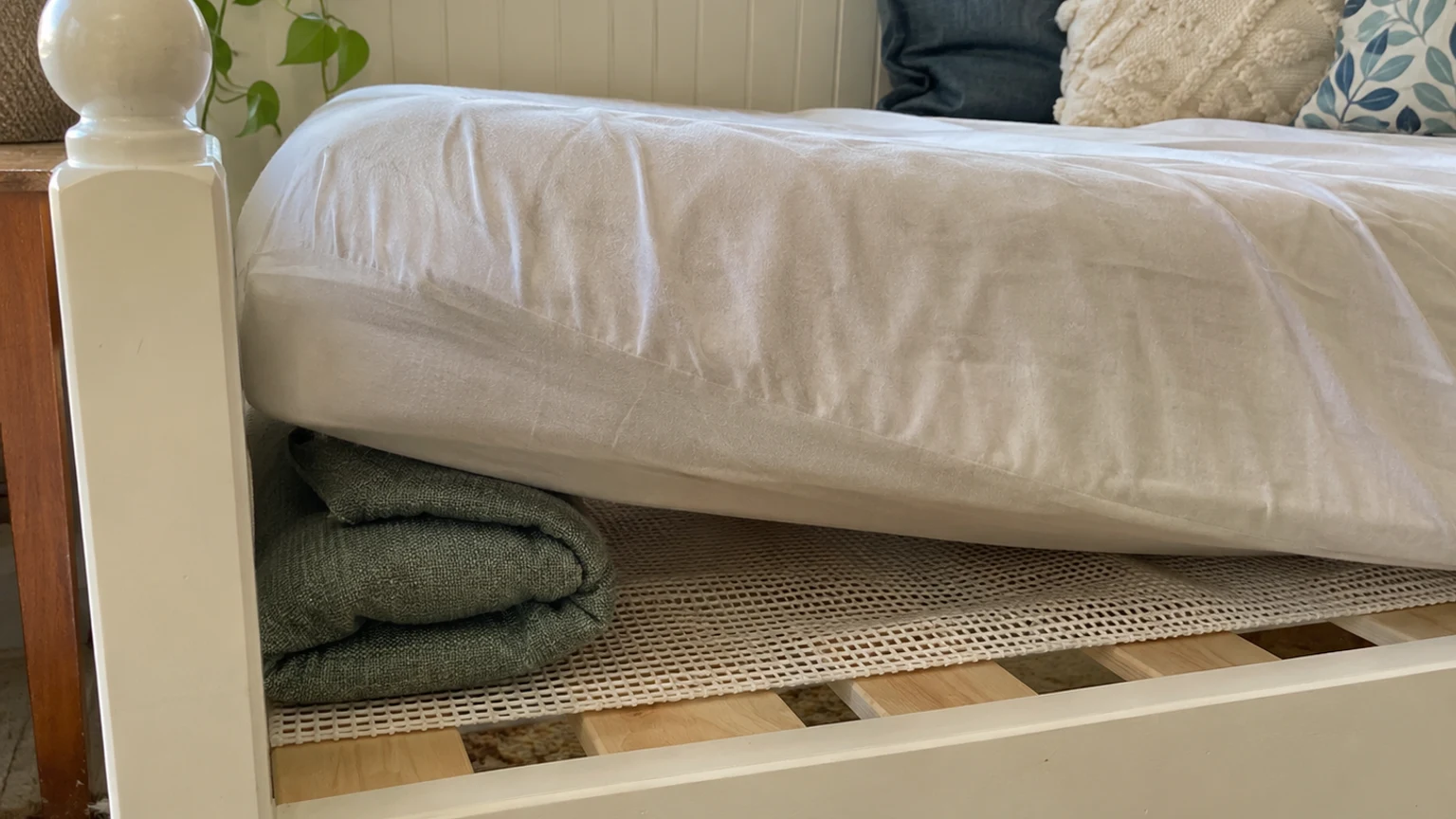
The fix depends on what’s moving: the cover, the mattress, or the back cushions.
If the daybed looks neat until someone sits down, more decorative pillows probably won’t help. It’s easier to deal with each problem separately.
| What keeps happening? | What helps |
|---|---|
| The cover bunches beneath you | Less excess fabric and a closer fit |
| The mattress slides forward | A mattress-grip layer beneath it |
| Small pillows fall through open rails | Larger back cushions that span the openings |
| Cushions drop behind the mattress | A smaller rear gap and stable support behind them |
The GORILLA GRIP Mattress Gripper is designed to help reduce mattress movement. It sits beneath the mattress, so it addresses the sliding that happens below the cover.
The linked version measures 54 by 72 inches, so it is wider than a standard twin mattress. Its dimensions matter when planning how it will sit on your particular base.
For cushions that keep falling backward, the gap behind the mattress may be the bigger issue. A long back cushion or larger square cushions can bridge openings that small pillows slip through.
A textured cover may also feel less slippery than a very smooth fabric. Still, cushion size and proper backing do most of the work.
5. A Shared Color Palette Makes the Pieces Look Coordinated
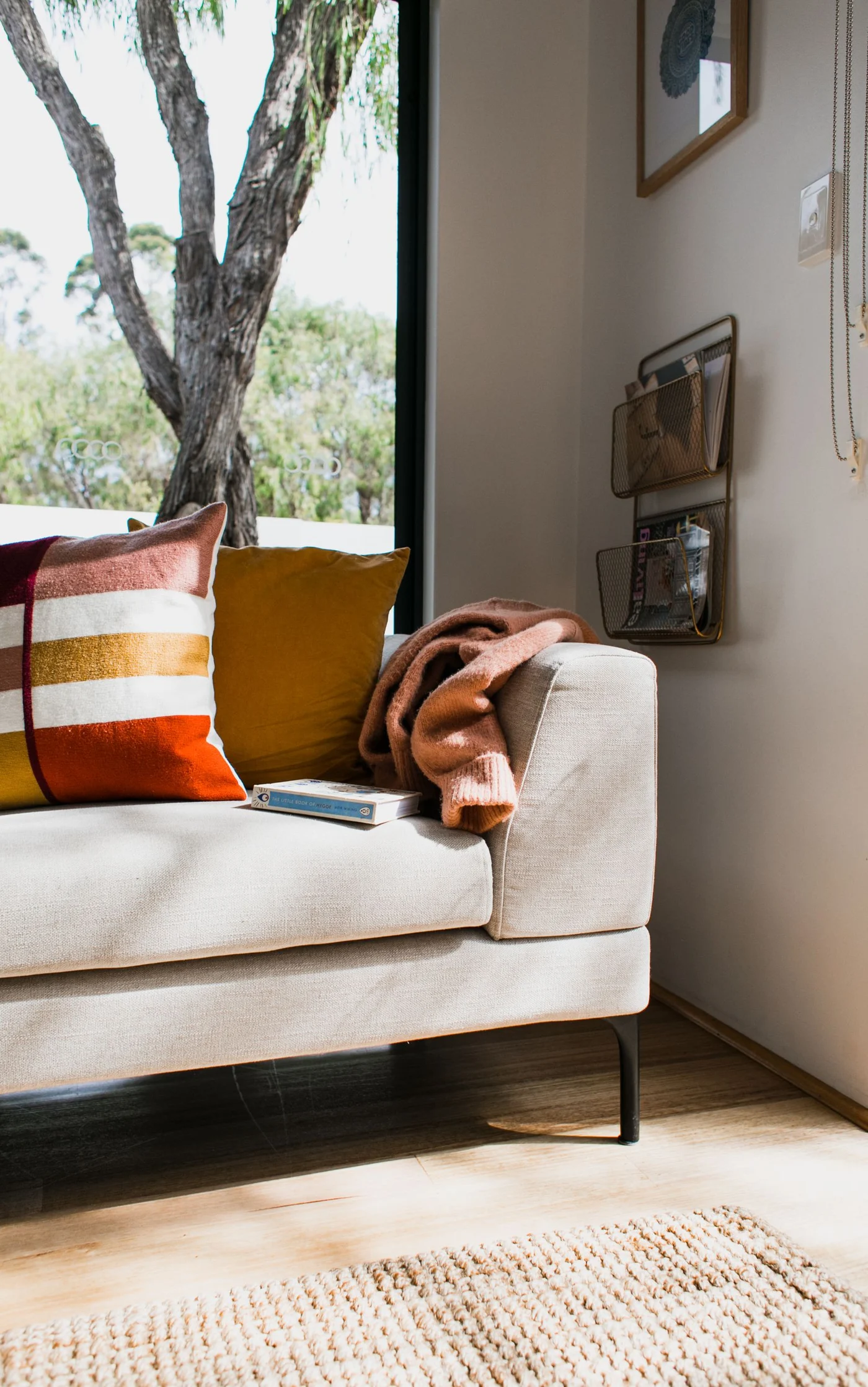
A few repeated colors help separate pieces look like they belong together.
The cover and back cushions take up the most space, so their colors have the biggest effect. Similar shades create a coordinated look, while a smaller pillow or throw can introduce contrast.
Perhaps your daybed has a cream cover but the room already has blue curtains. A blue-striped cushion connects the two without needing a matching bedding set.
The FIOUOVO striped textured cushion covers fit naturally into this kind of arrangement. A striped accent works well in front of plain back cushions, where the pattern stays easy to see.
These combinations offer a few simple directions:
| Look | Main colors | Smaller accent |
|---|---|---|
| Warm and relaxed | Oatmeal and olive | Rust or a muted floral |
| Rich and tailored | Navy and cream | Warm brass or tan |
| Light and casual | Cream and faded blue | A stripe and pale wood |
Texture adds variety without requiring another color. A smooth seat cover, a woven cushion, and a soft throw can look interesting together even in similar shades.
The blunique Faux Fur Bubble Throw adds a fluffy texture to a plain cover. The cream-white, 50-by-60-inch version works as a small throw over one end or across your lap.
A loose fold over the side looks relaxed and keeps the seat available. Covering the entire mattress with a thick throw can create the same bunching you’ve just tidied away.
And if visitors need to move several pillows before sitting down, the arrangement has more than it needs. Comfortable seating deserves some open space.
6. The Furniture Around It Helps It Feel Like a Couch
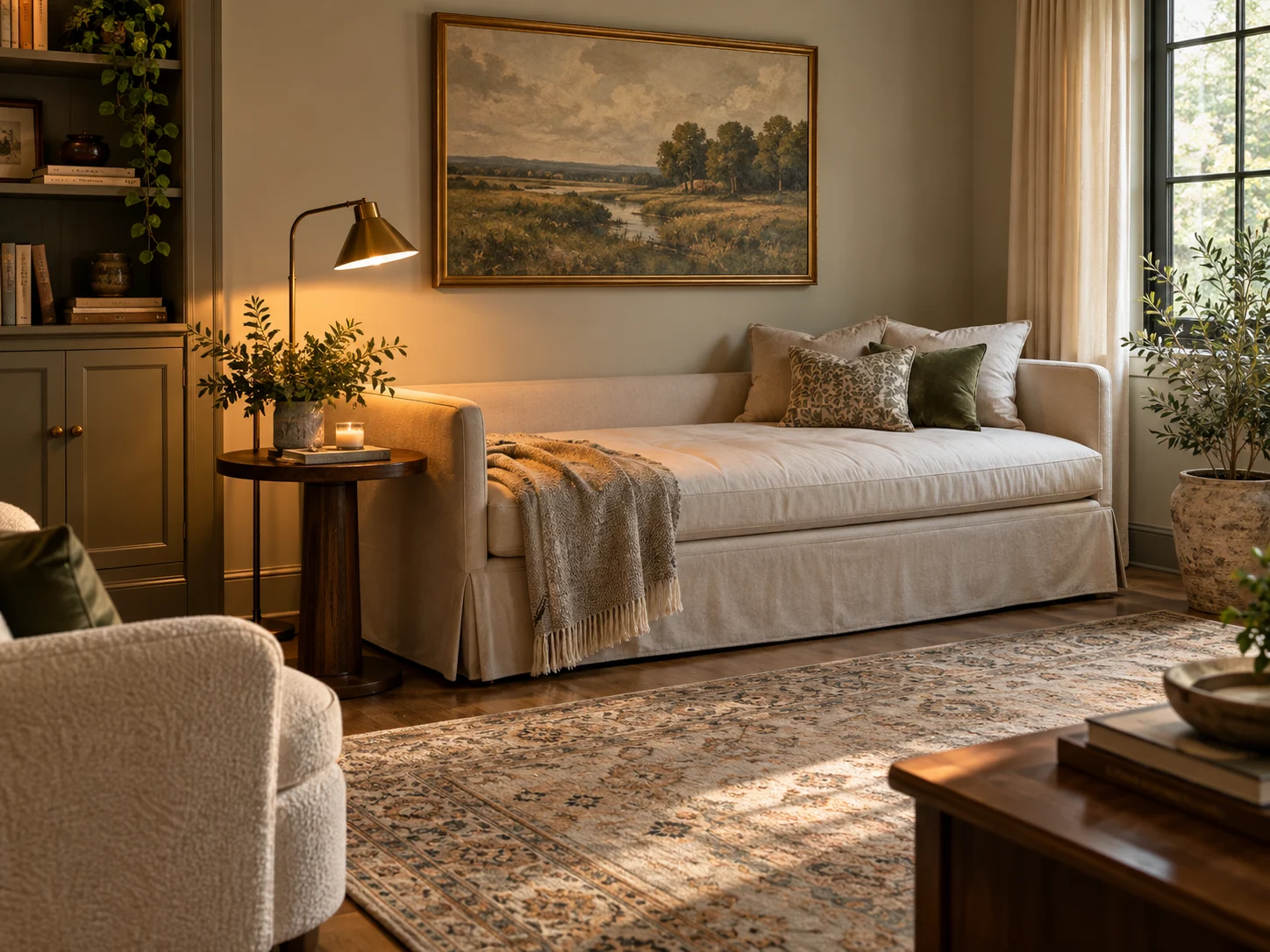
A reachable table and light make the daybed useful for everyday sitting.
The room feels different when you can set down a mug, pick up a book, and switch on a lamp without getting up. Those small conveniences help the space work as a sitting area.
You don’t need to buy everything at once. A side table borrowed from another room can show you where a permanent one would be most useful.
A Side Table That’s Easy to Reach
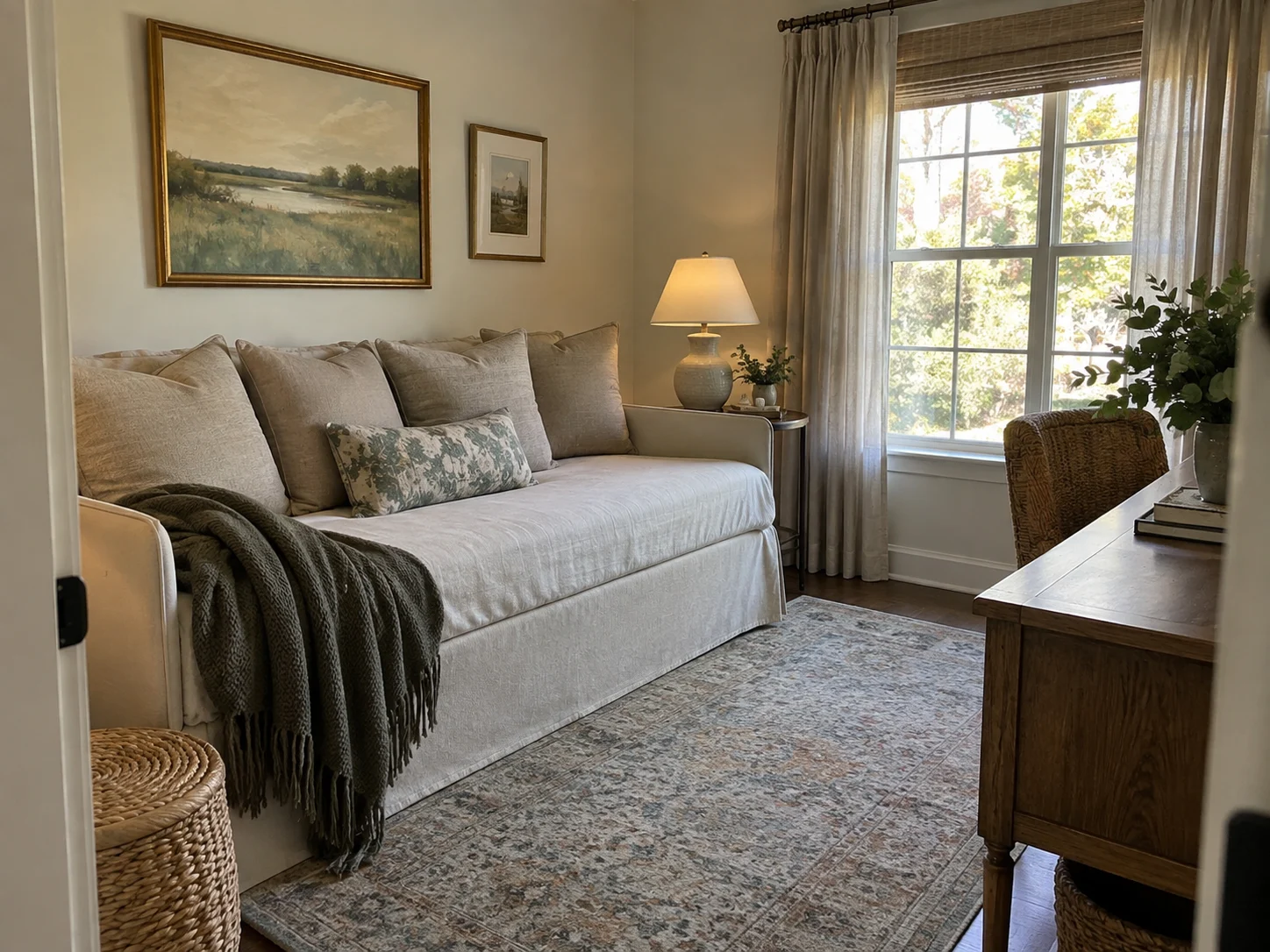
A small table close to the seat is more useful than a larger one you have to lean across an arm to reach.
The VASAGLE C-Shaped Side Table has a metal frame and a compact tabletop. Its C-shaped design can bring the surface closer when there is space for the base beneath the daybed.
A low trundle or solid base may prevent that arrangement. The table can sit beside the daybed instead, or a regular round side table may suit the space better.
Its nighttime position matters as well. A table that slides a short distance out of the way is easier to live with than one you have to carry into another room.
Does the Daybed Need to Go Against a Wall?
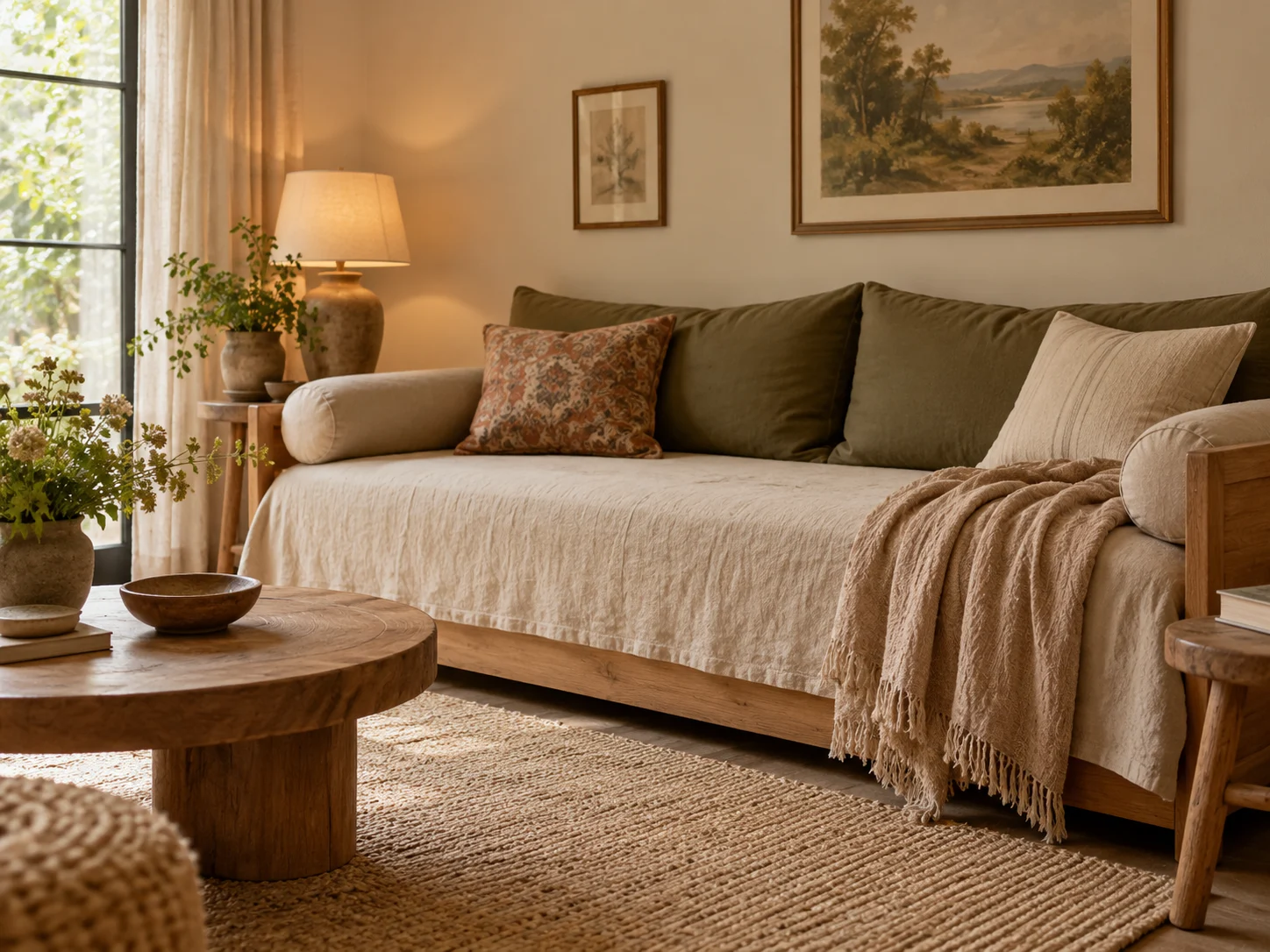
For a backless frame used as upright seating, a supportive wall usually makes the arrangement easier.
The wall holds the cushions in place, while the cushions soften the surface and bring you forward. Artwork above the long side can help finish the area.
A daybed with a supportive, finished back has more placement options. It can face another chair or sit away from the wall with a clear walking route behind it.
An open, backless daybed can also work between two sitting areas. That setup is better suited to lounging or brief sitting unless it has a backrest designed for support.
A rug can connect the daybed with a nearby chair or table. Our rug size guide explains how to choose a size that works with the furniture arrangement.
7. Bedtime Should Be an Easy Changeover

Nearby bedding storage and a place for daytime cushions make the biggest difference at night.
For occasional guests, a complete bedding set in one place saves searching through several cupboards. Sheets and pillowcases can be folded inside one pillowcase, with a blanket and sleeping pillow nearby.
If you sleep on the daybed every night, fewer decorative pieces make more sense. A cover that comes off easily, a supportive back cushion, and one throw are easier to manage than several layers.
Pillow storage needs more room than people often expect. A basket may hold a throw and a small cushion. Large back cushions usually need a clear closet shelf or a storage ottoman with enough space inside.
The best arrangement is one you’re happy to put back together tomorrow morning.
Enough Space for the Trundle
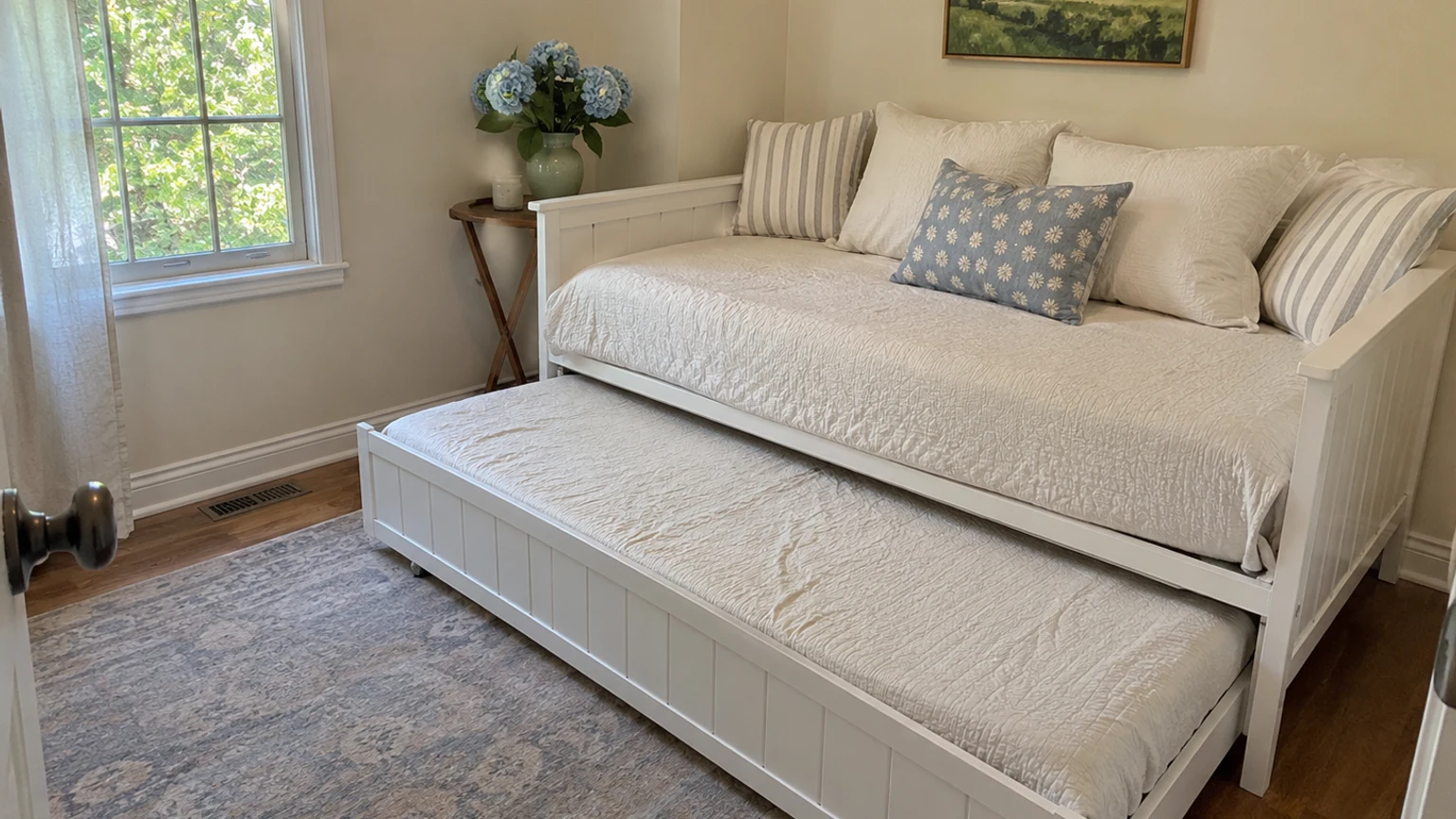
The trundle needs its full opening space, including room around the bed once it’s out.
A coffee table may fit comfortably during the day but block the lower bed at night. Baskets, hanging fabric, and raised rug edges can also get in the way.
One complete changeover makes these problems obvious. With both beds ready, there should still be a clear route to the door and a reachable light.
For more help with the furniture itself, see our guides to daybeds with trundles for guest rooms and mattresses for trundle beds.
Your Daybed-to-Couch Checklist
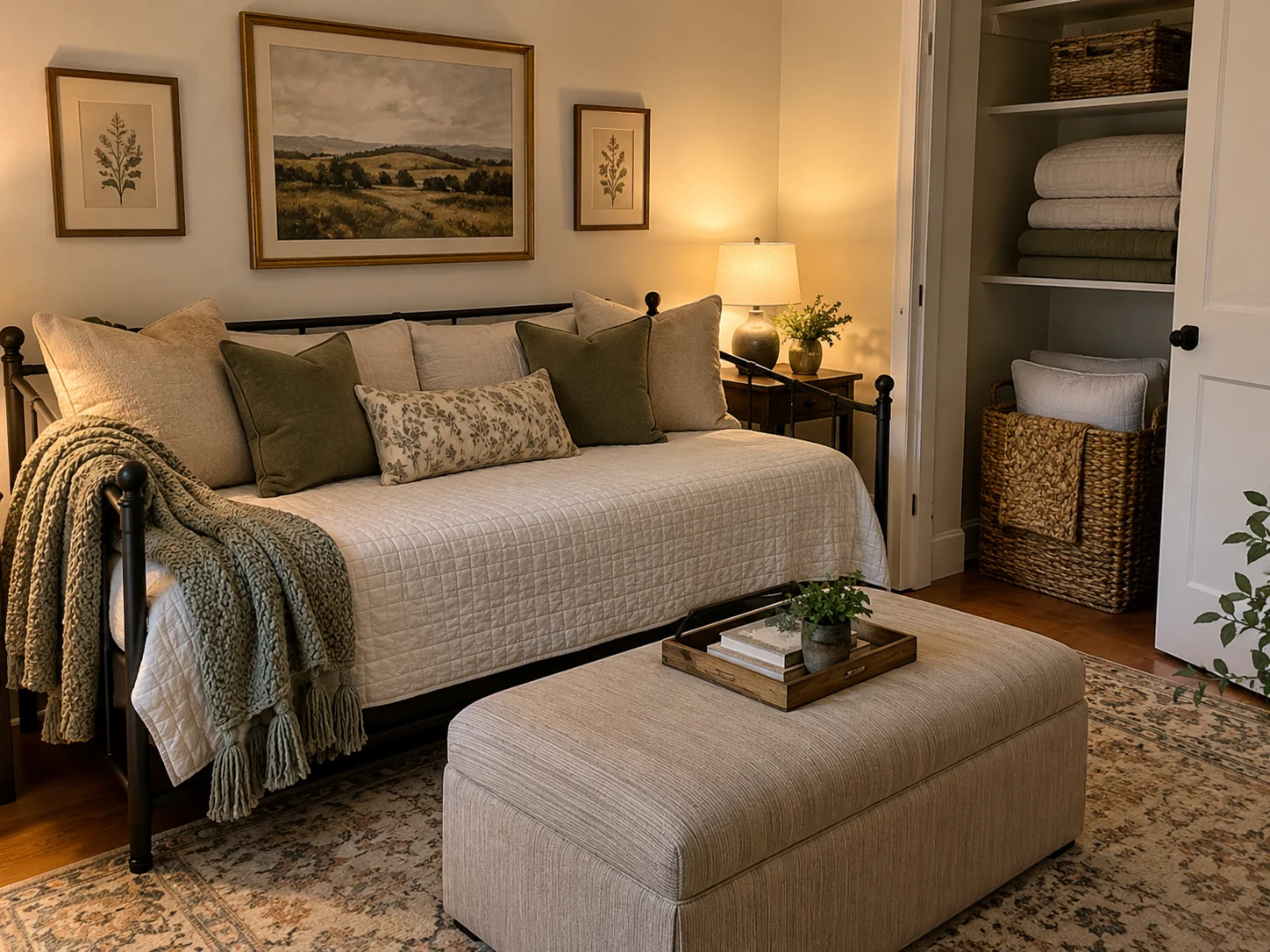
A successful setup feels comfortable during the day and manageable at bedtime.
- The cover lies smoothly without bulky folds.
- The back cushions stay supported when someone leans against them.
- The sitting position feels comfortable.
- Hard side rails have padding where needed.
- There’s room to sit without clearing a pile of pillows.
- A table and light are within reach.
- Daytime cushions have a storage spot.
- Guest bedding is stored together.
- The trundle or drawers open freely.
- The nighttime walkway stays clear.
Frequently Asked Questions
Your frame, mattress, and daily routine determine which changes will help most. These answers cover the common sticking points.
Can You Make a Regular Twin Bed Look Like a Couch?
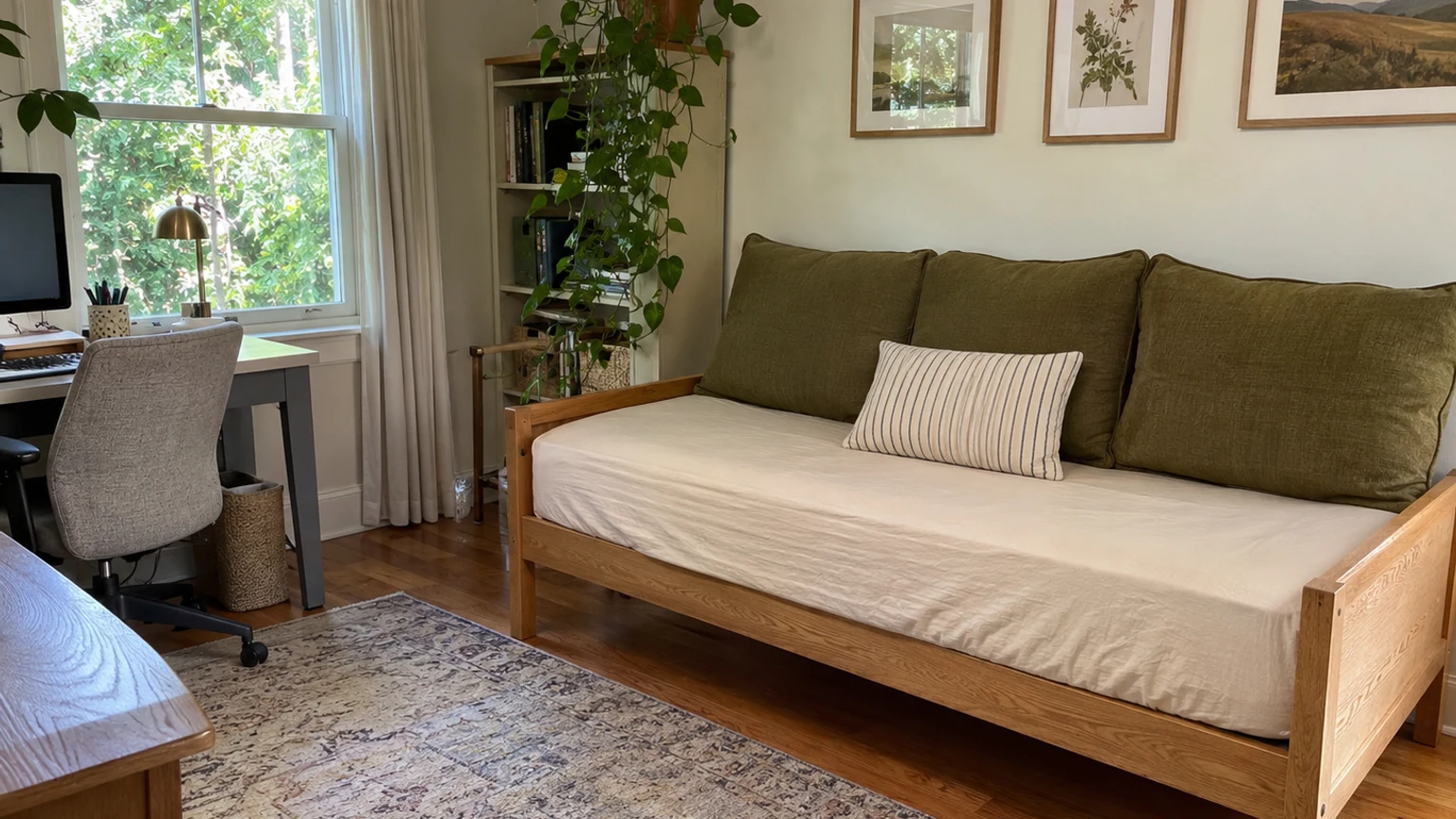
Yes. A neatly covered mattress and supported cushion back can make a regular twin bed work as daytime seating.
The long side usually goes against a wall. Cushions along that side create a backrest, while pillows at the ends soften the outline.
A tall headboard at one end will remain visible, but coordinated fabric can still make the overall arrangement look more put together.
How Many Pillows Does a Daybed Need?
Two or three large back cushions can be enough, with smaller pillows added only where they improve comfort.
A long wedge cushion may replace that row. An upholstered back may need less padding, while open rails may need broader coverage.
The useful number is the one that leaves space to sit and is easy to put away.
Can You Use a Fitted Sheet Instead of a Daybed Cover?
Yes. A snug, opaque fitted sheet is a practical option for a small budget or daily sleeping.
It follows the rounded mattress shape more closely than an upholstery-style cover. Supportive cushions and a coordinated throw can still make the result look inviting.
Will a Regular Sofa Slipcover Fit a Daybed?
A daybed or mattress cover generally fits better. Regular sofa slipcovers are shaped around sofa backs and arms, which may be missing or positioned differently on a daybed.
A fitted mattress cover or a neatly arranged daybed cover is usually easier to manage.
Can a Daybed Work as Your Everyday Couch?
Yes, if the mattress support, seat height, and back cushions suit the way you sit.
The extra depth can be comfortable when you curl up with your feet on the seat. Upright sitting usually needs more support behind your back.
A mattress edge that sinks heavily may remain uncomfortable even after the cushions and cover look right.
What Makes the Biggest Difference on a Small Budget?
The mattress cover and back support have the biggest effect on appearance and comfort.
An existing quilt, a few substantial cushions, and a table moved from another corner can be enough to improve the daybed. The decorative extras can come later.
Products Featured in This Guide
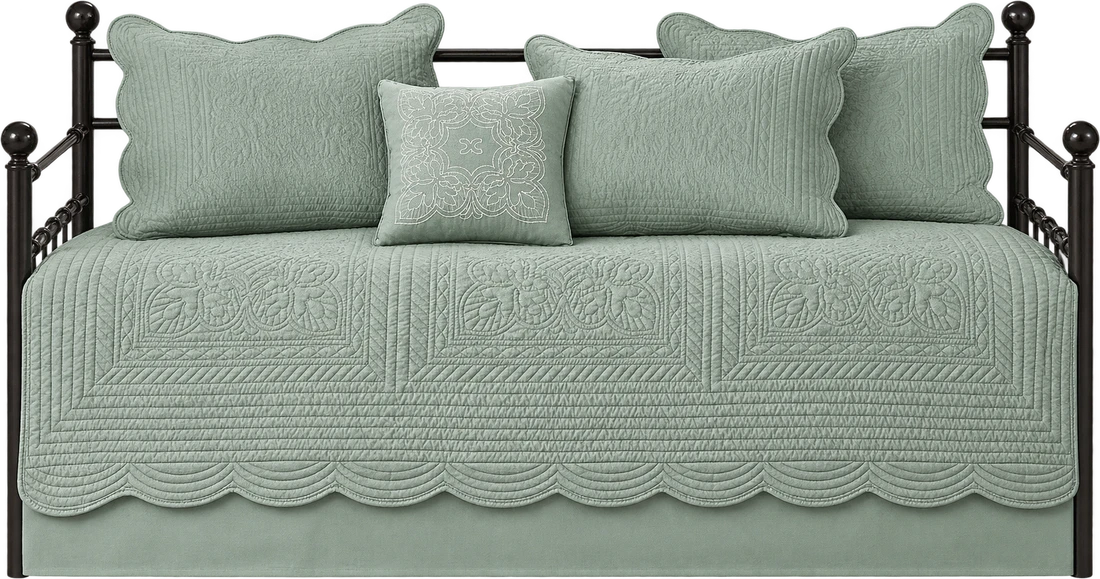 Madison Park Tuscany Daybed Cover SetA quilted daybed set for a soft, coordinated look.
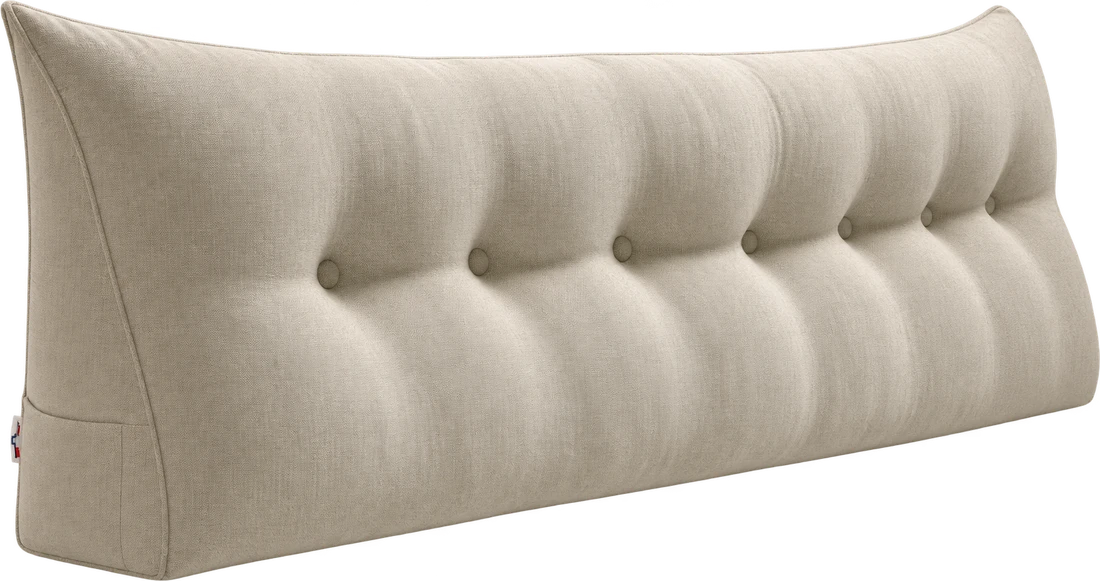 WOWMAX Wedge Headboard PillowA long triangular reading cushion for supported sitting against a wall or back panel.
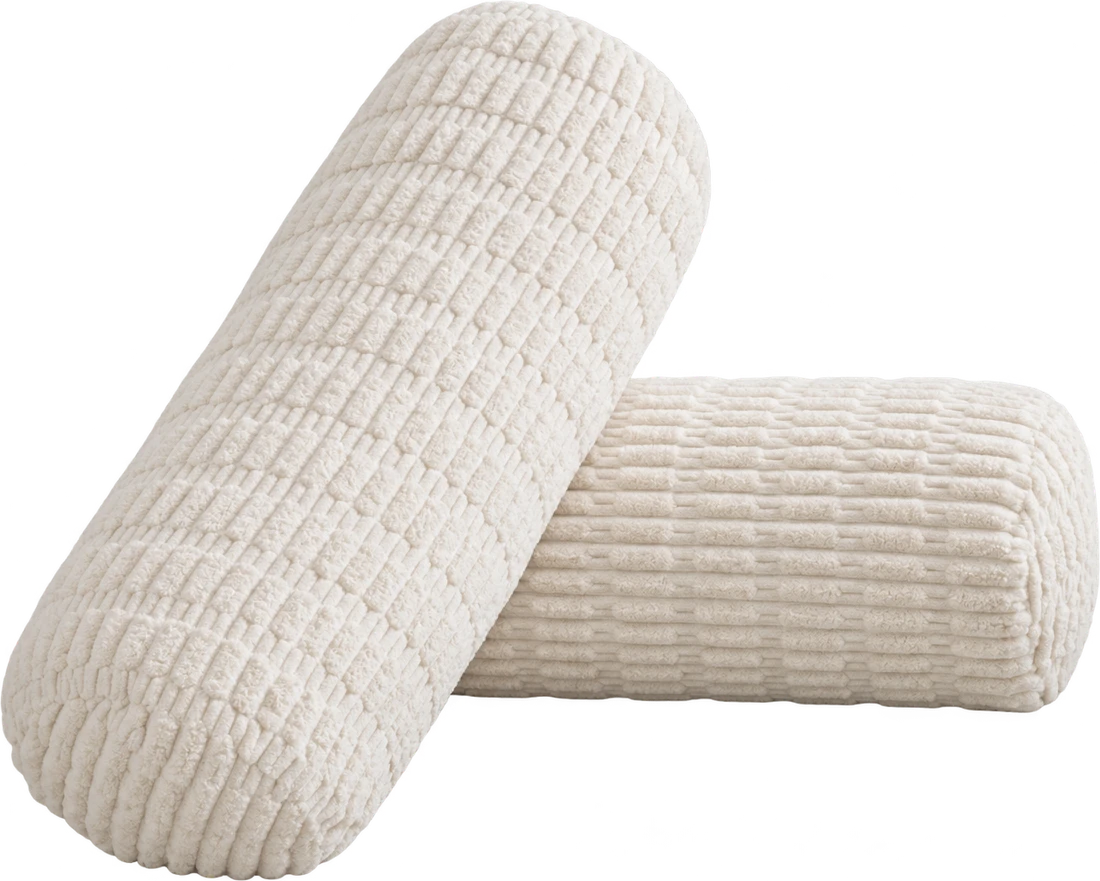 Off-White Cylindrical Bolster PillowTextured end cushions for softening hard daybed side rails.
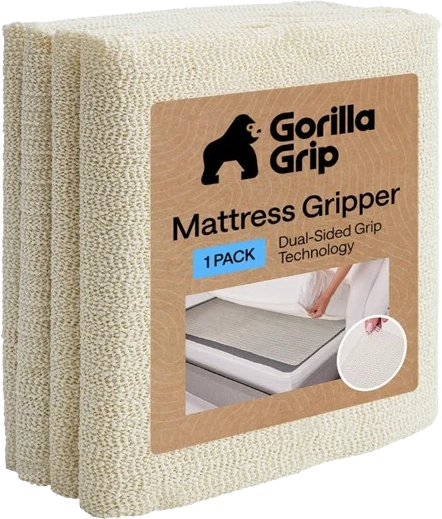 GORILLA GRIP Mattress GripperA non-slip layer beneath the mattress to help reduce shifting.
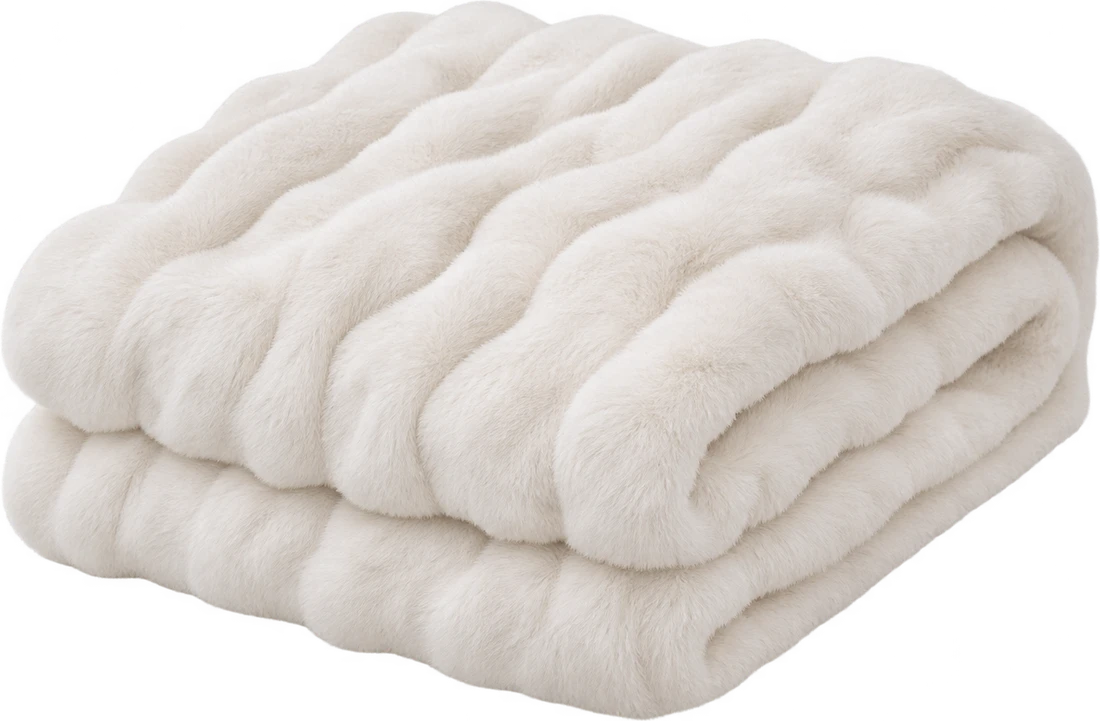 blunique Faux Fur Bubble ThrowA cream-white, 50-by-60-inch throw with a fluffy textured finish.
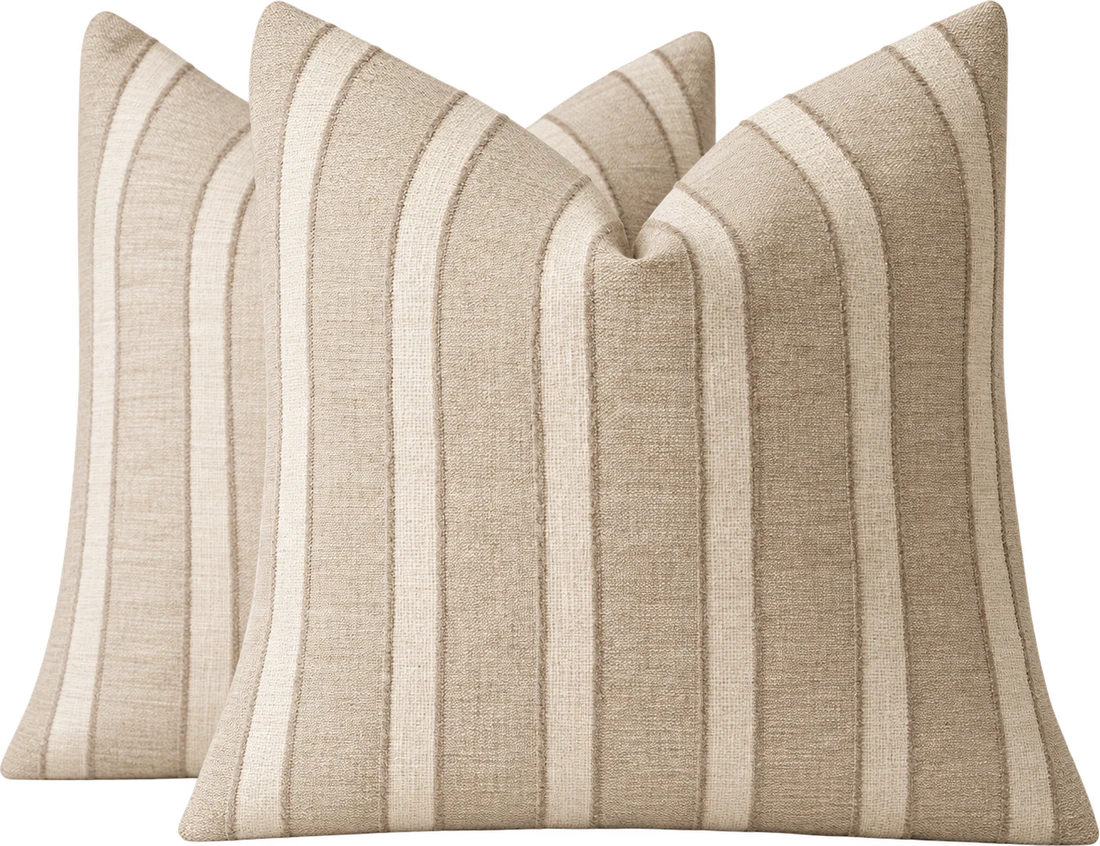 FIOUOVO Striped Textured Cushion CoversNeutral striped covers to pair with plain back cushions and a simple seat cover.
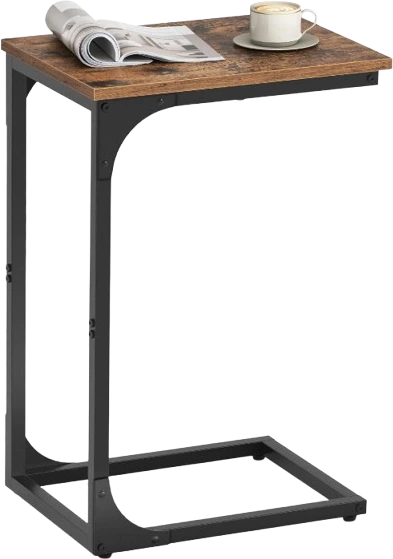 VASAGLE C-Shaped Side TableA compact wood-look tabletop and metal frame for drinks and books beside the seat.