Rug Size Guide for Every Room and Furniture Layout

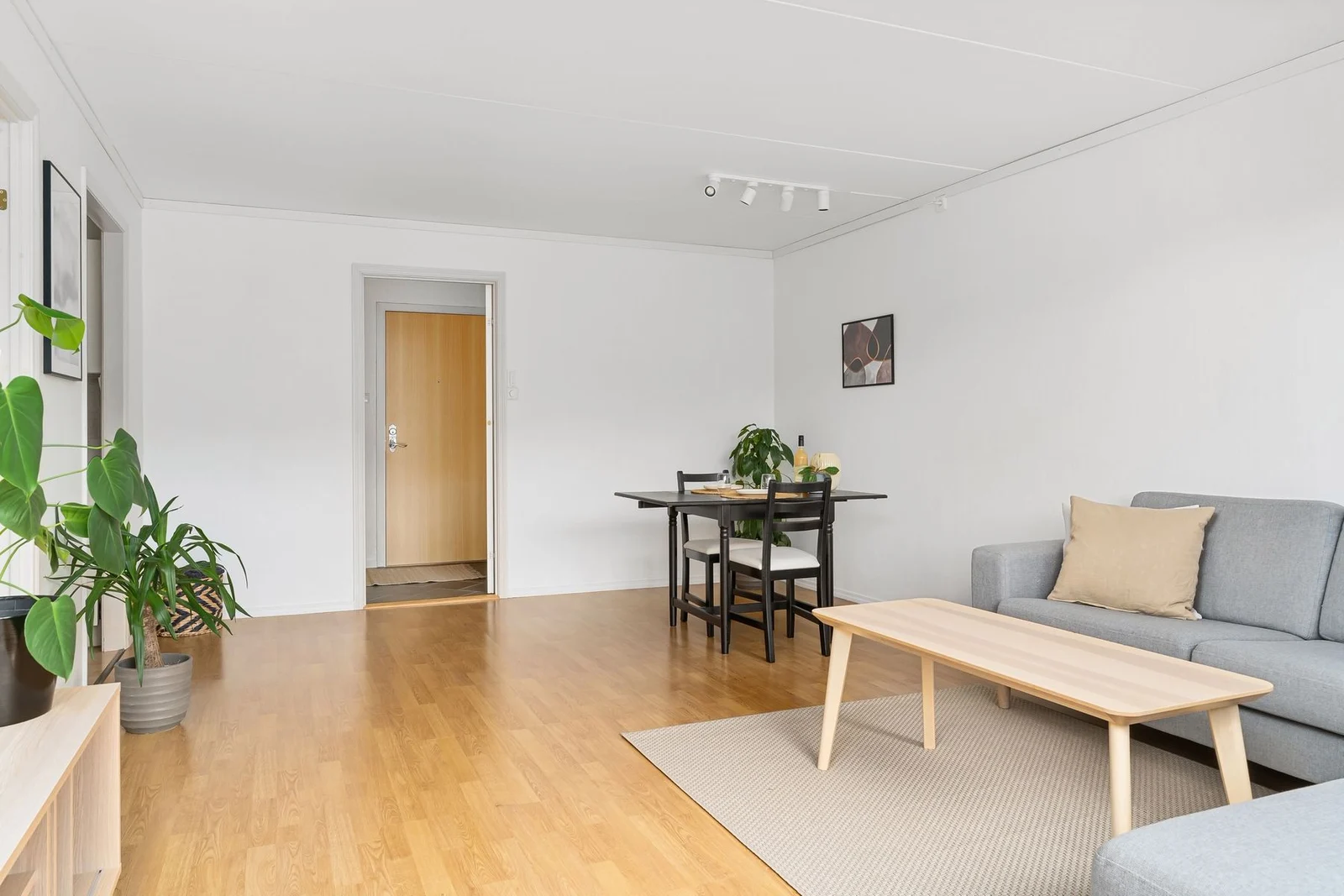
The easiest way to choose a rug is to match it to your furniture and the space you use. In a living room, that means reaching beneath the seating. Around a dining table, it means enough room for the chairs. Beside a bed, you want somewhere soft to put your feet.
This room-by-room rug sizing guide explains which sizes usually work, where the furniture should sit, and when a smaller or larger rug makes more sense.
The quick answer
- Living room: 8 × 10 and 9 × 12 feet often work well, with the front legs of the sofa and chairs on the rug.
- Bedroom: an 8 × 10 usually suits a queen bed, while a 9 × 12 gives a king bed more coverage.
- Dining room: allow at least 24 inches beyond every table edge, with extra room for chairs that pull out farther.
- Hallway: a runner should leave visible flooring along both sides and space at each end.
- Before buying: a taped outline shows how the rug fits around your furniture, doors, and walking routes.
1. Rug Sizes at a Glance
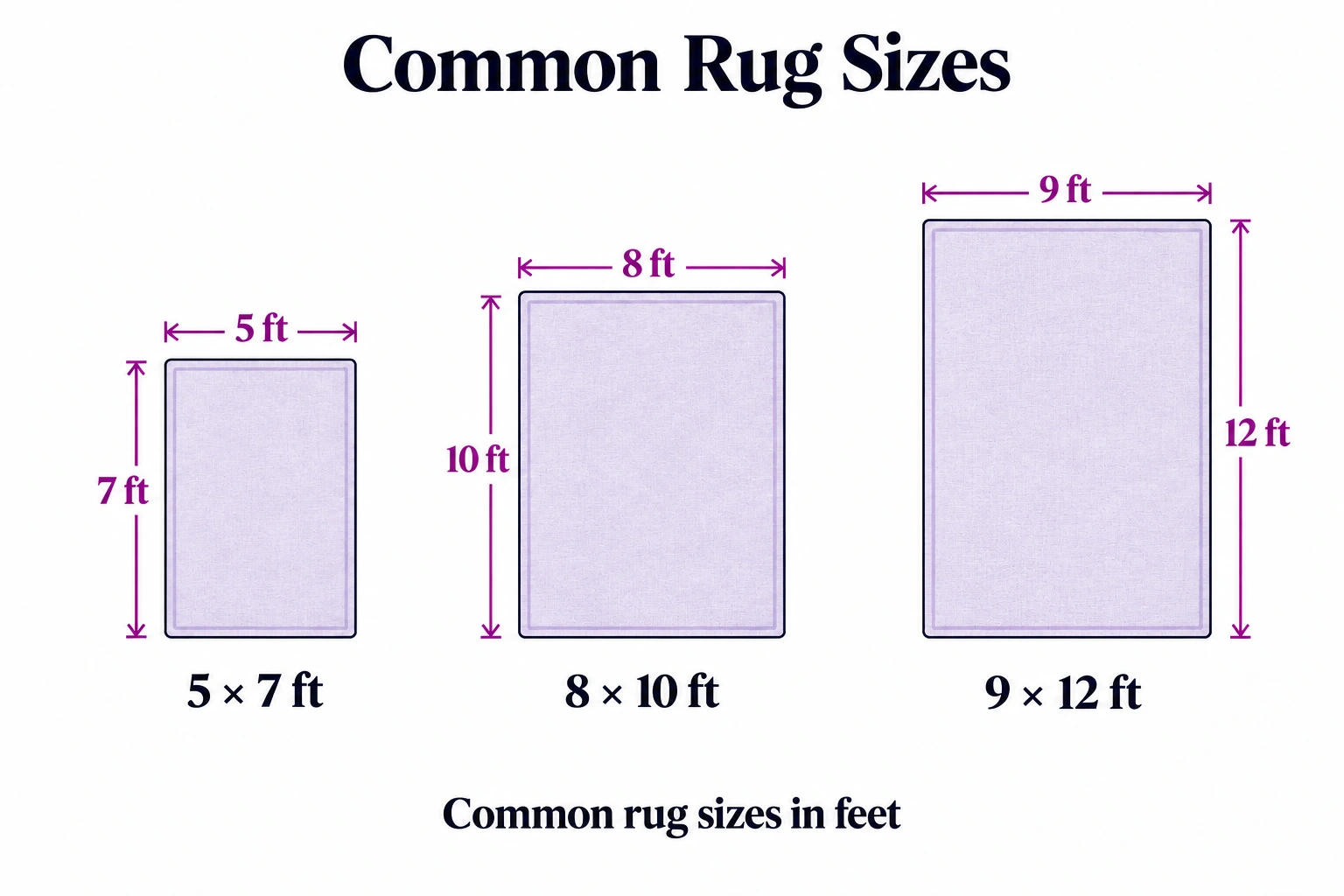
How you arrange your furniture helps you choose the rug size. The table below gives you a few sizes to try.
All rectangular sizes below are listed in feet.
| Room or furniture layout | Common rug sizes | What needs to fit |
|---|---|---|
| Compact seating area | 5 × 7, 5 × 8, or 6 × 9 | A small furniture grouping or separate reading corner |
| Living room | 8 × 10 or 9 × 12 | Front legs of the sofa and main chairs |
| Large sectional or seating group | 9 × 12 or 10 × 14 | The sectional, chaise, and surrounding seating |
| Twin bed | 5 × 8 | Space beside and beyond the lower part of the bed |
| Full bed | 6 × 9 or 8 × 10 | Coverage along the sides and foot |
| Queen bed | 8 × 10 or 9 × 12 | Space beside the bed, with more coverage from the larger size |
| King bed | 9 × 12 or 10 × 14 | The bed and, where needed, a bench at its foot |
| Dining table | Often 8 × 10 or 9 × 12 | The table and pulled-out chairs |
| Kitchen or hallway | Runners roughly 2–3 feet wide | The standing or walking area |
| Small entryway | 2 × 3 or 3 × 5 | The entrance with room for the door to open |
Note: A wide bed frame, deep sectional, or long dining table can change the size you need. The measurements of your furniture give you a more useful answer than the room’s name alone.
2. Three Measurements for the Right Fit
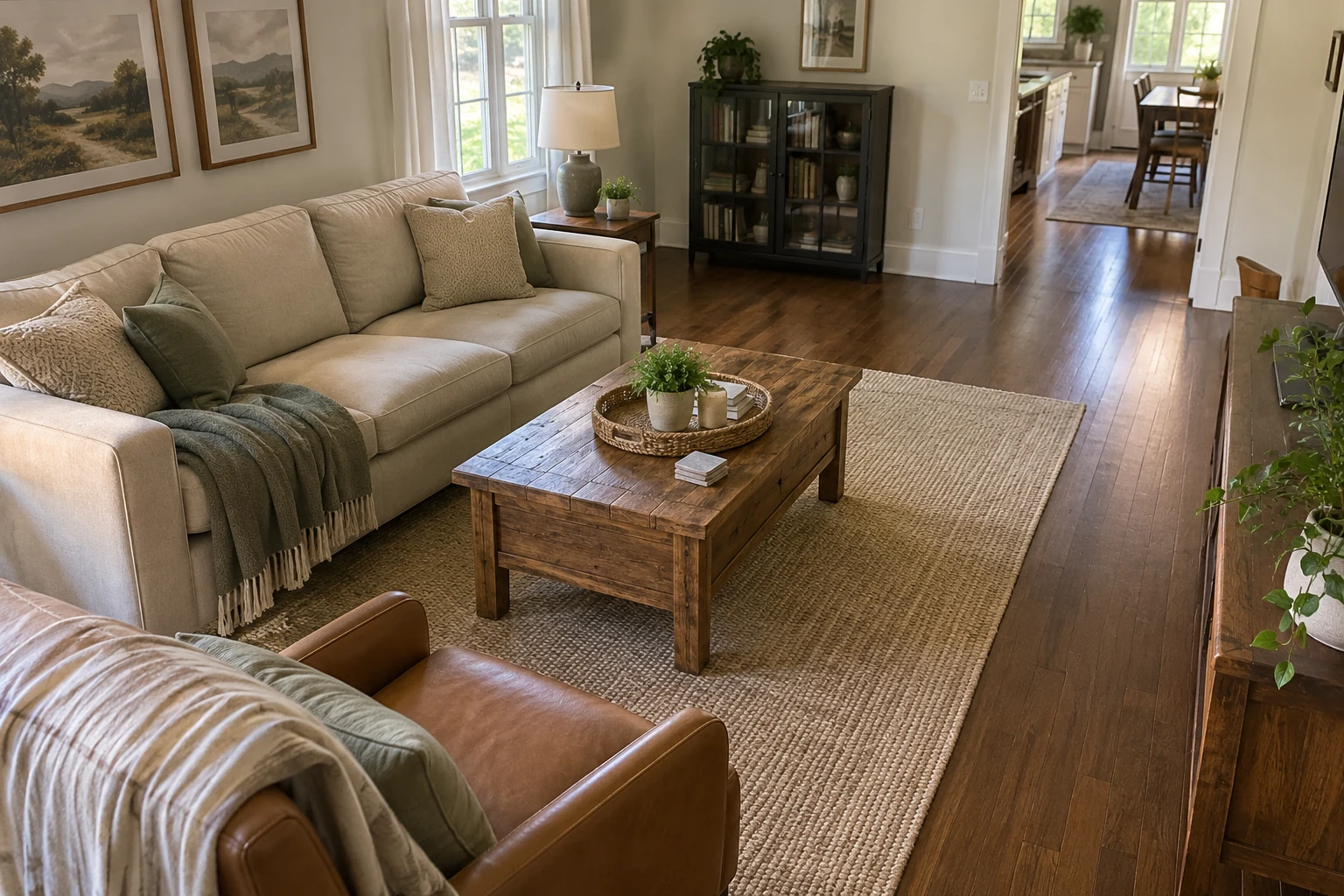
Measure the space your furniture takes up, the floor space available for the rug, and the room you need to walk around it.
A rug can fit inside the room perfectly and still be too small for the dining chairs.
The Space Your Furniture Takes Up
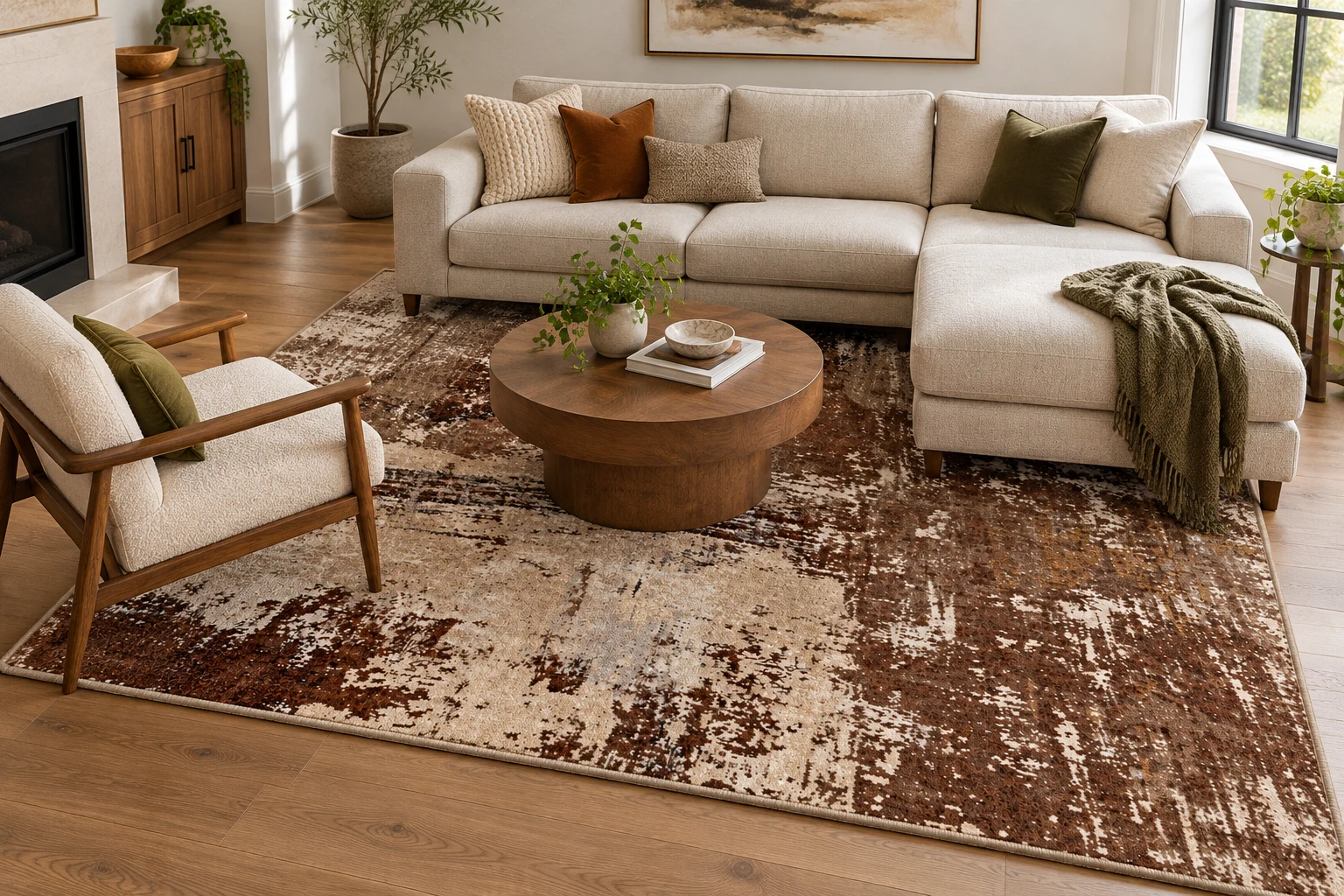
Measure the whole arrangement that will sit on or around the rug.
For a living room, include the sofa and main chairs. With a sectional, include the chaise.
In a bedroom, measure the outside edges of the bed frame. An upholstered frame can be wider than the mattress, and a bench needs extra rug beyond the foot.
For dining rooms, measure the tabletop, then add space for pulled-out chairs. If you usually keep the table extended, measure it at that length.
A Simple Tape Test
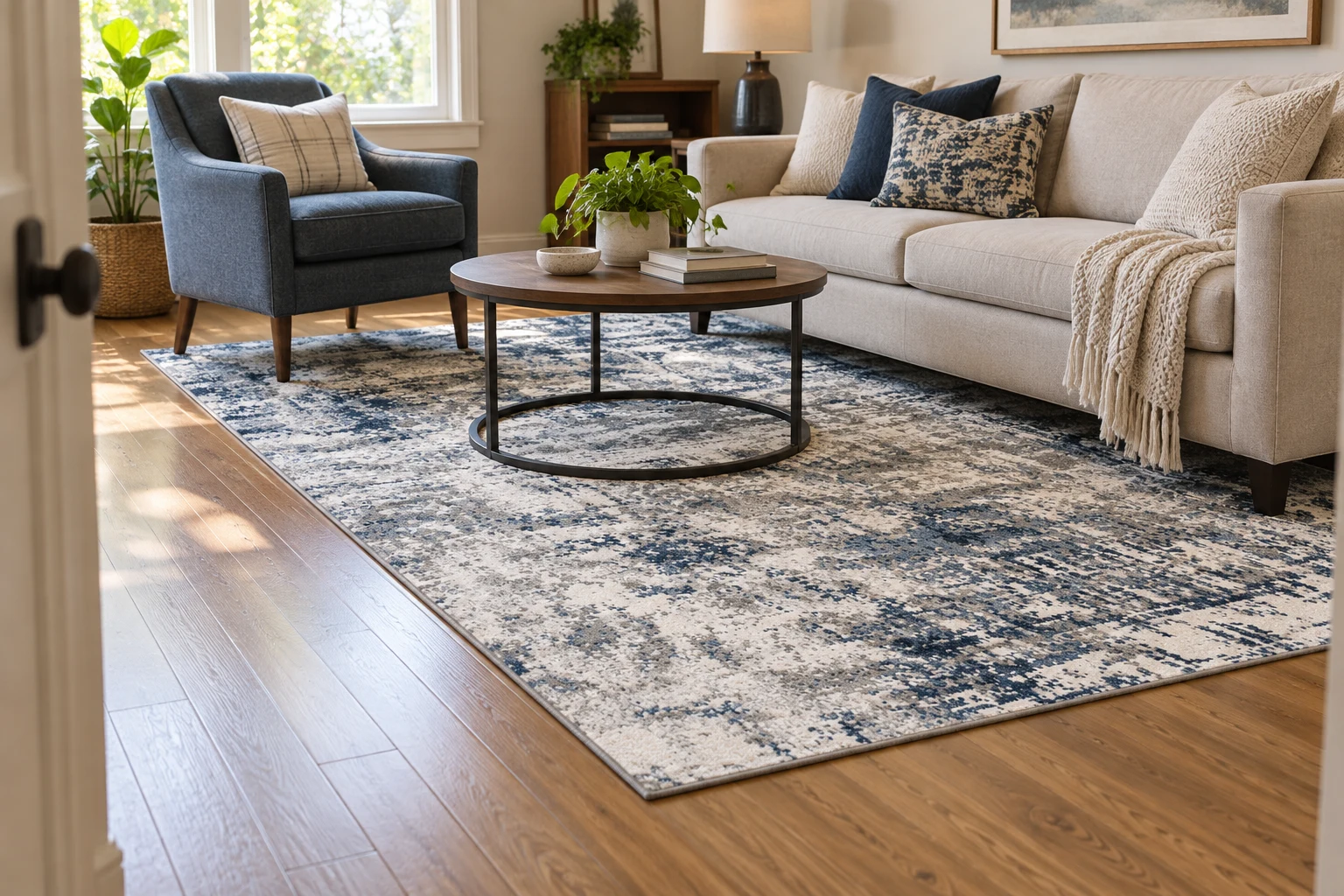
A taped outline lets you try the size in the room before moving any heavy furniture.
Use removable tape suitable for your floor, then run through this checklist:
- The first outline shows the smaller rug option.
- The second outline shows the next size up.
- The sofa and chair legs you want on the rug sit inside the outline.
- Dining chairs stay inside the outline when pulled out.
- The outline reaches the spots where you step out of bed.
- Doors, drawers, and appliances open freely.
- The main walking route feels comfortable.
The outline makes it easier to see which size fits your furniture.
The Size on the Label
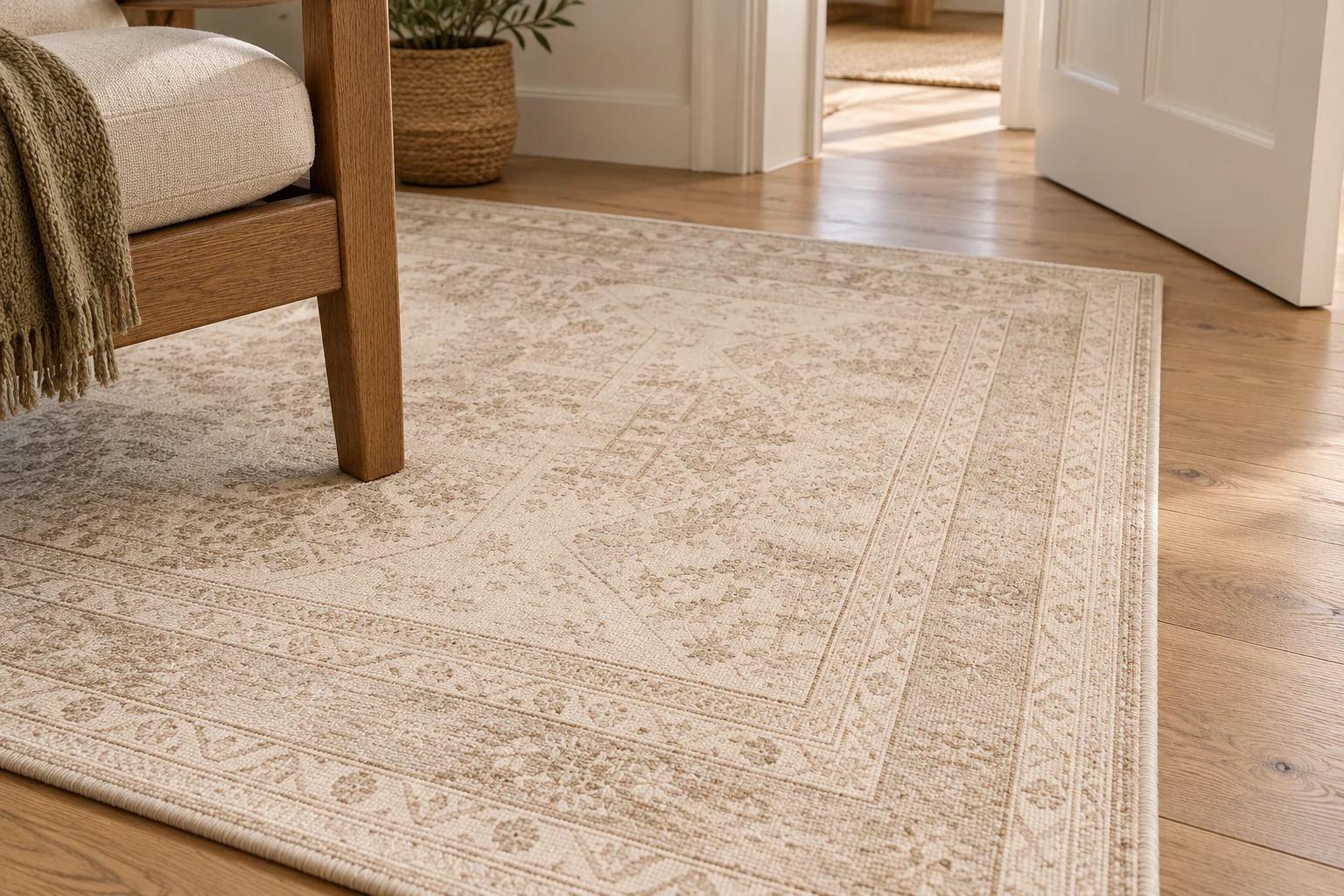
Use the exact measurements in the product details. A rug described as 8 × 10 may be a few inches smaller.
Six inches may make little difference beneath a coffee table. Around a dining table, a few missing inches can leave the chair legs off the rug.
Door clearance also includes the rug and pad together. A thin rug can still catch if a thick pad lifts it too high.
3. Living Room Rugs That Fit the Seating
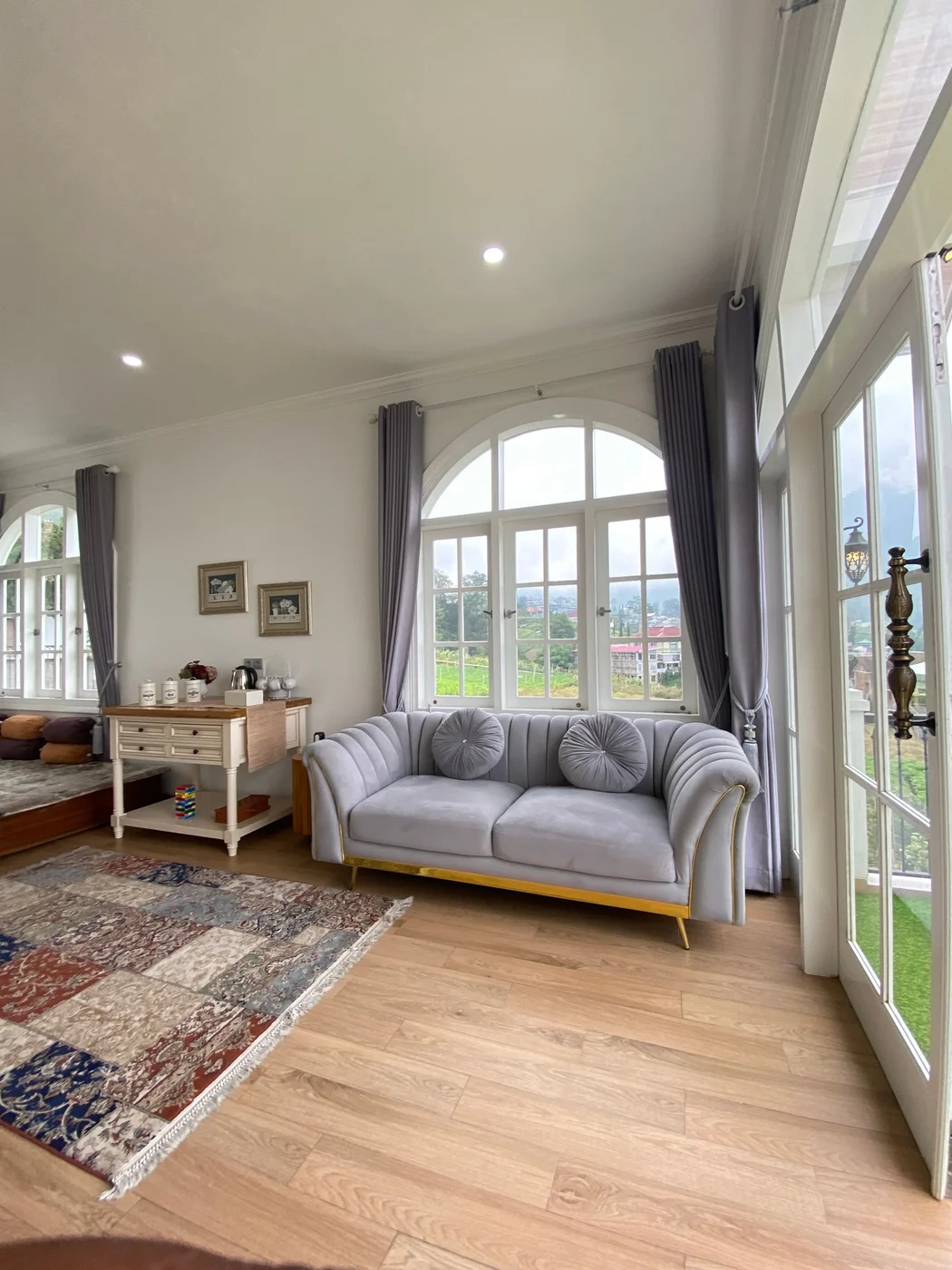
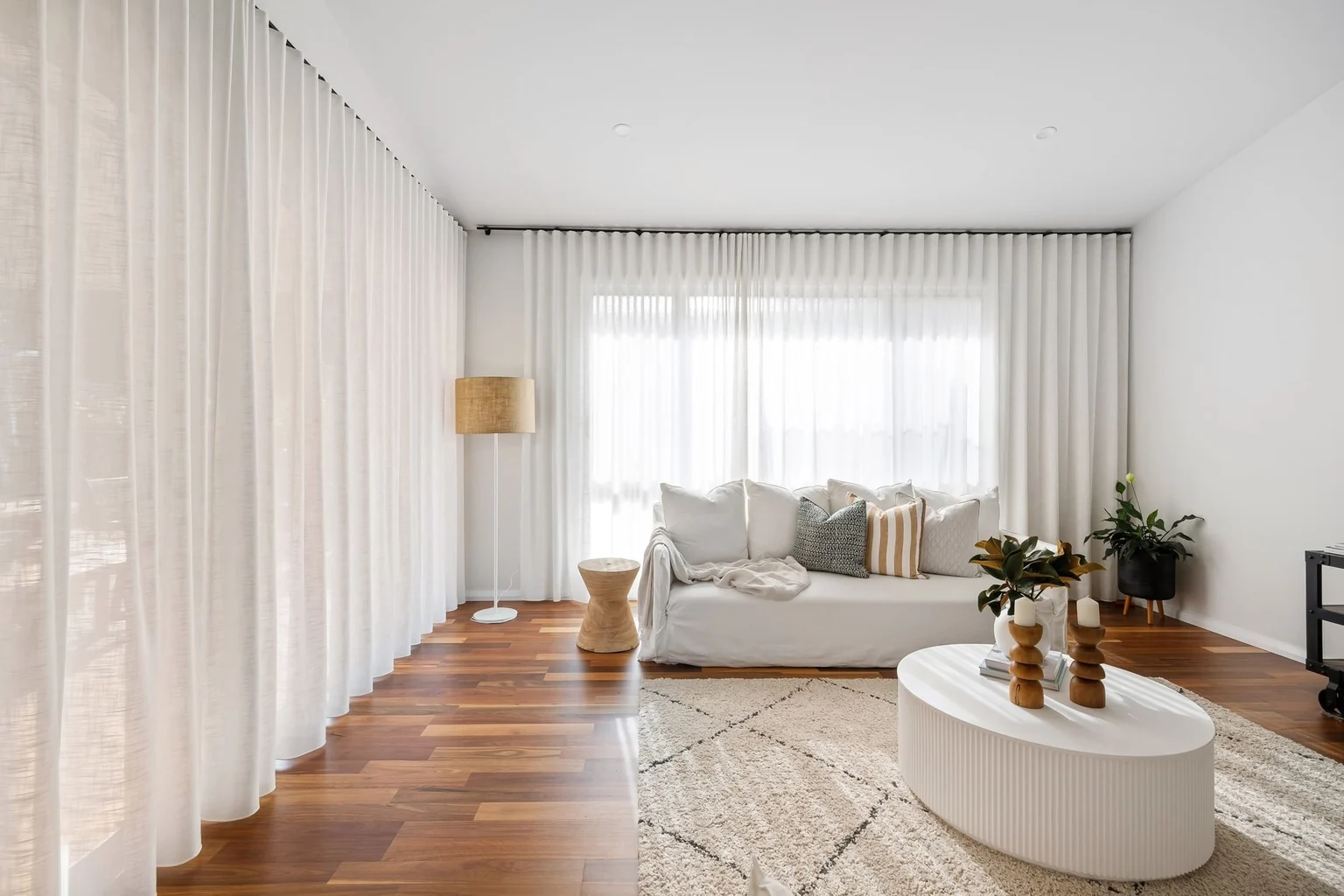
A living-room rug usually works best when it reaches beneath at least the front legs of the sofa and main chairs.
An 8 × 10 often fits a sofa and a couple of chairs. A 9 × 12 gives you more room for a wider sofa, extra chairs, or furniture placed farther apart.
Front Legs On: An Easy Everyday Layout
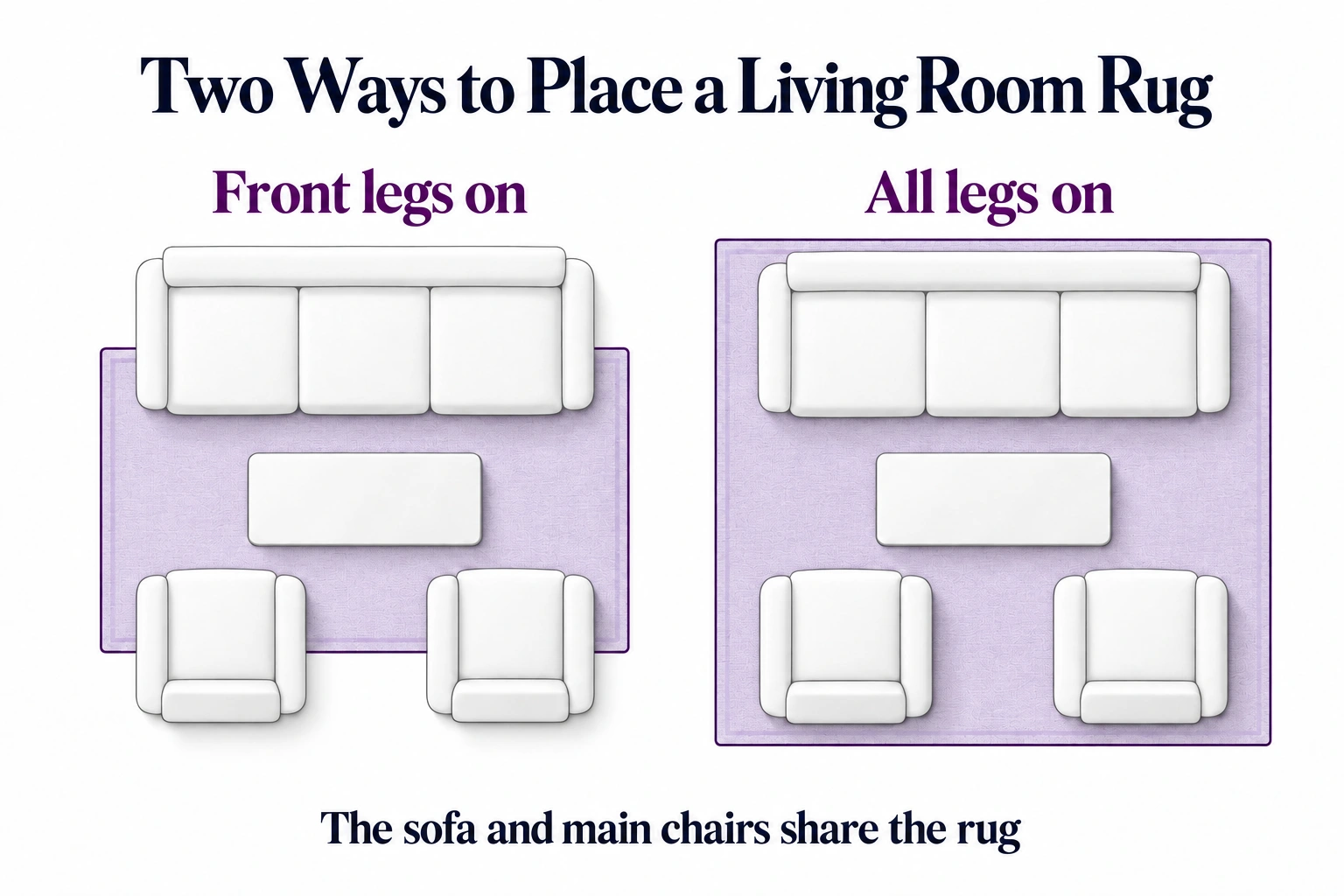
The front legs should sit comfortably inside the rug’s edge, with enough room that they won’t slip off when a chair moves slightly.
Around 6–8 inches of rug beyond each end of the sofa is a useful target. An 84-inch sofa therefore needs roughly 96–100 inches of rug along that side.
The rug also needs to be deep enough to reach beneath the chairs. Sofa width alone won’t tell you whether it fits.
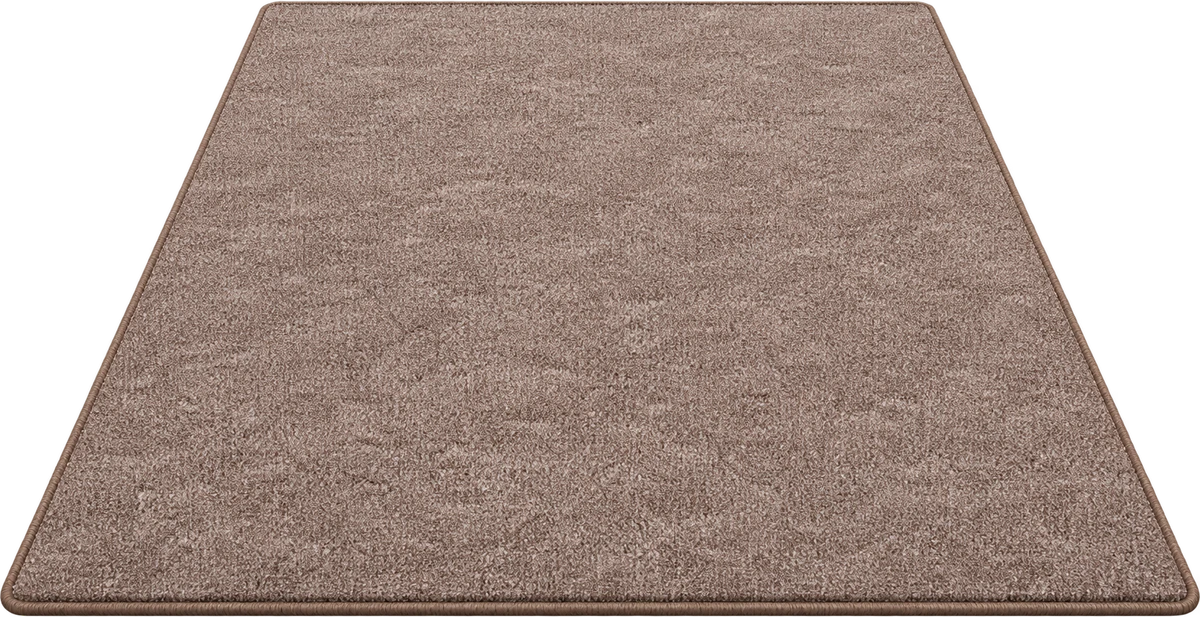
For a brown abstract design, the Yarooge 8 × 10 Washable Rug suits this kind of layout. Its short fibers give it a flat surface beneath furniture.
The Aelenmu 8 × 10 Blue-Grey Abstract Rug is another option if blue and grey fit the room better.
All Legs On: More Coverage for a Larger Room
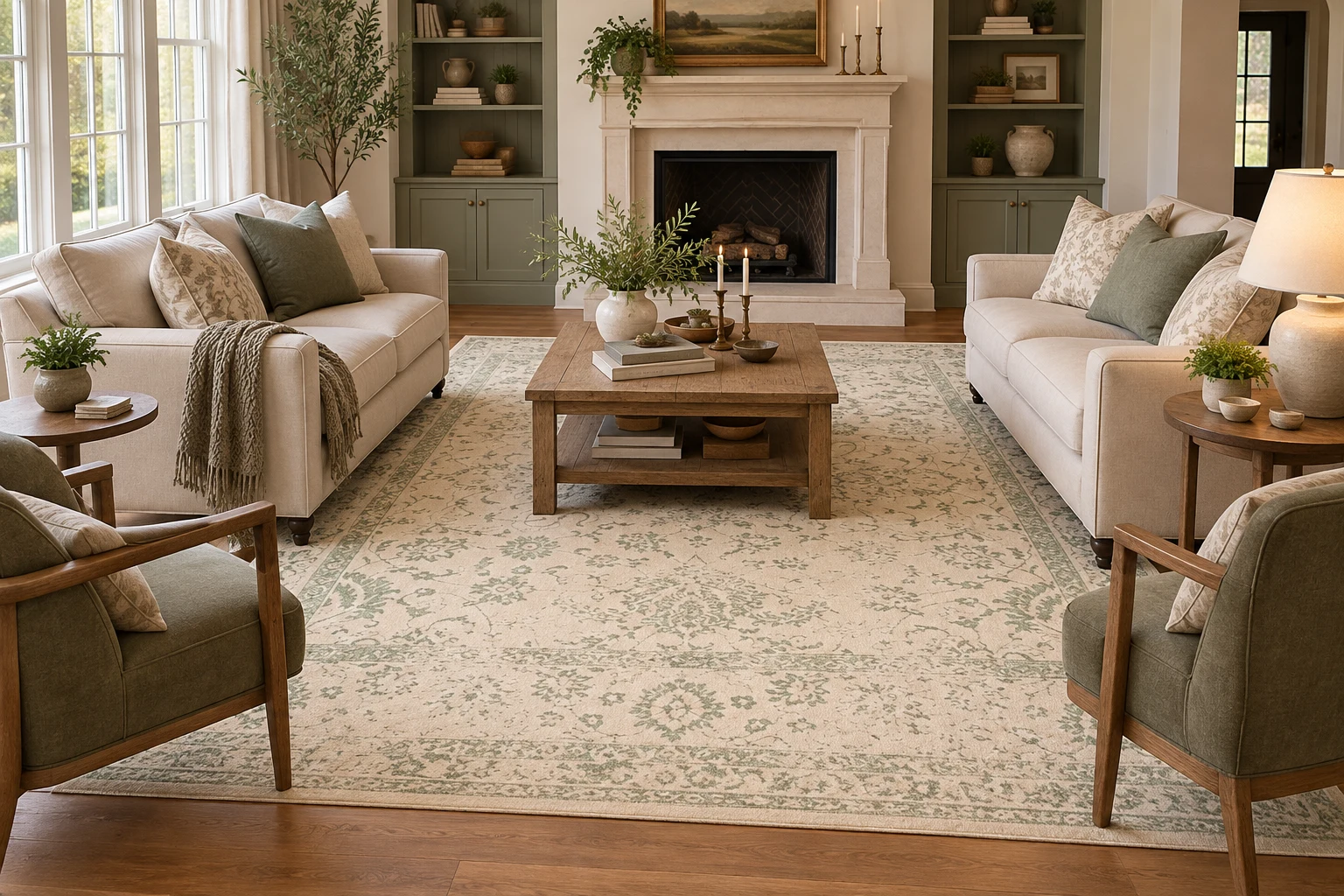
For this layout, every leg of the sofa and main chairs sits fully on the rug.
This works well with two facing sofas or a sofa and chairs in the middle of a larger room. A 9 × 12 or 10 × 14 may suit the layout.
The SAFAVIEH Adirondack 9 × 12 Rug in Ivory and Sage gives you more space beneath the seating, with a faded floral pattern. It is useful when an 8 × 10 leaves too little room around the seating.
A little rug beyond the furniture keeps everything from looking squeezed onto it. Visible flooring around the outside gives the rug a clear edge.
Sectionals and Chaise Sofas
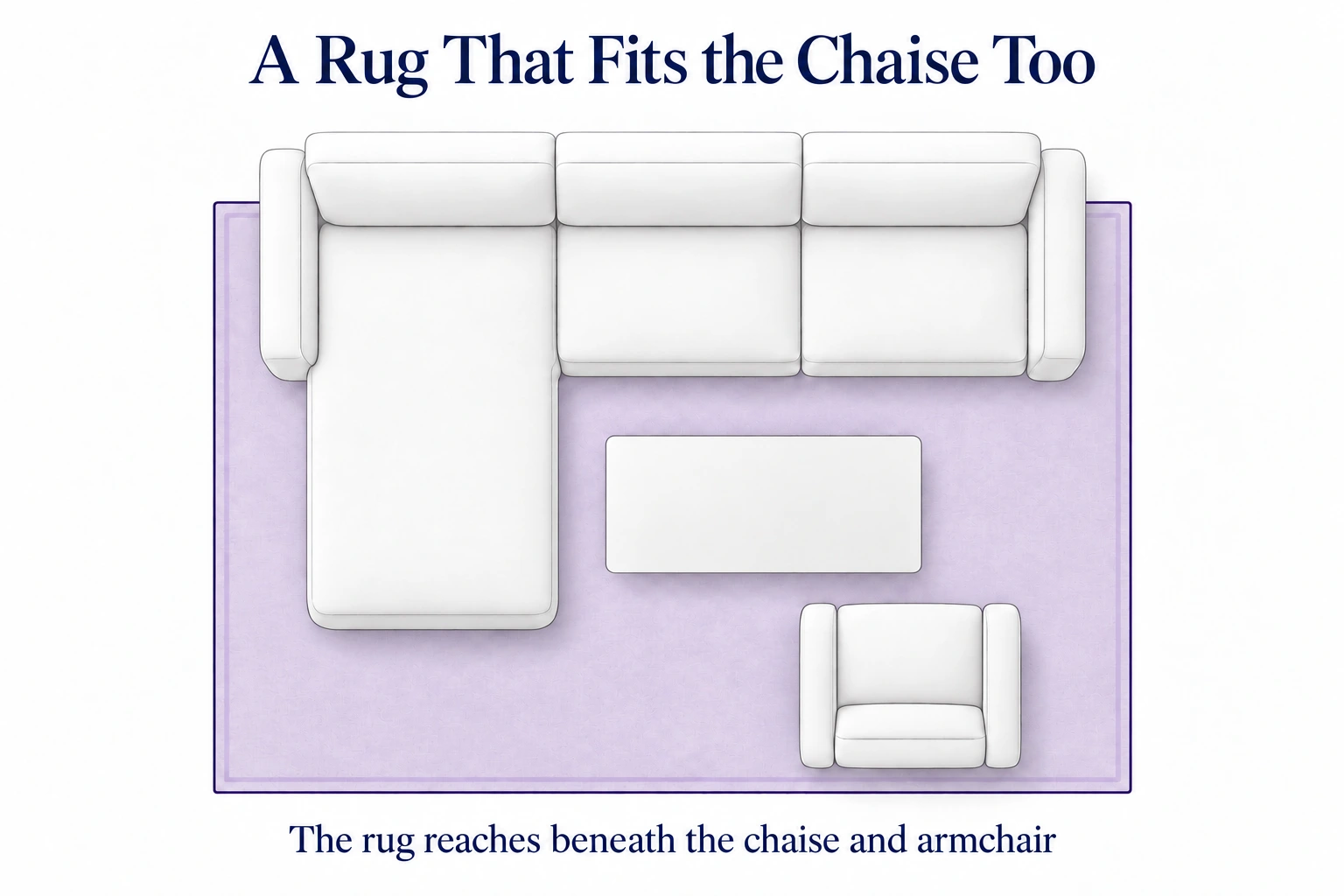
The rug should reach beneath the sectional, its chaise, and any separate chair.
A common mistake is choosing a rug that fits the long sofa section while leaving the chaise awkwardly beyond it.
The taped outline should show where the sectional’s front legs will sit, where the coffee table belongs, and where an armchair will sit.
Our living room design mistakes guide covers other layout problems that can make good furniture feel awkward together.
4. Bedroom Rugs With Room for Your Feet
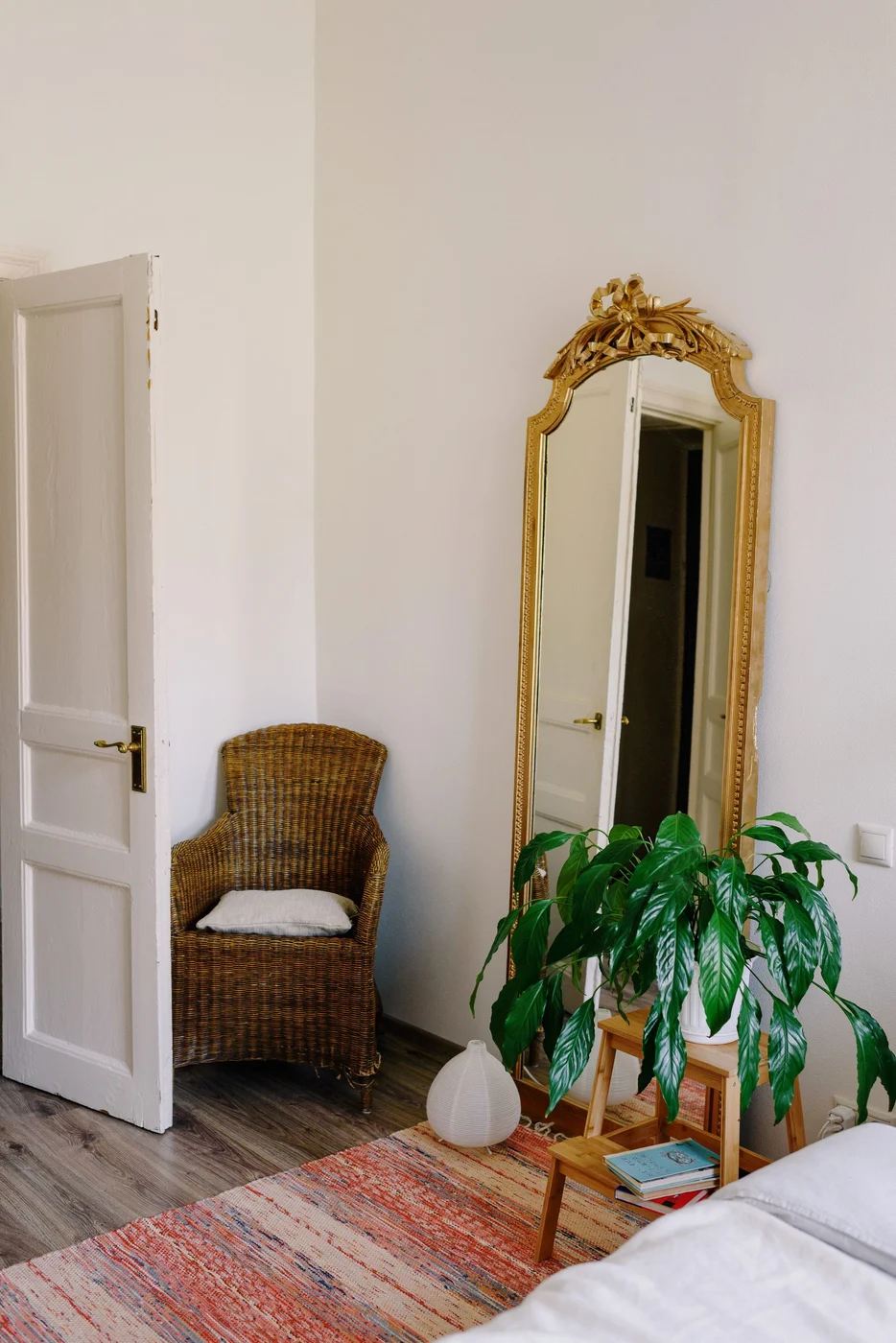
A bedroom rug should reach beyond the sides and foot of the bed. Around 18–24 inches of exposed rug is a useful target where you get in and out.
The frame’s width, the direction of the rug, and how far you slide it under the bed all affect how much rug shows.
Twin and Full Beds
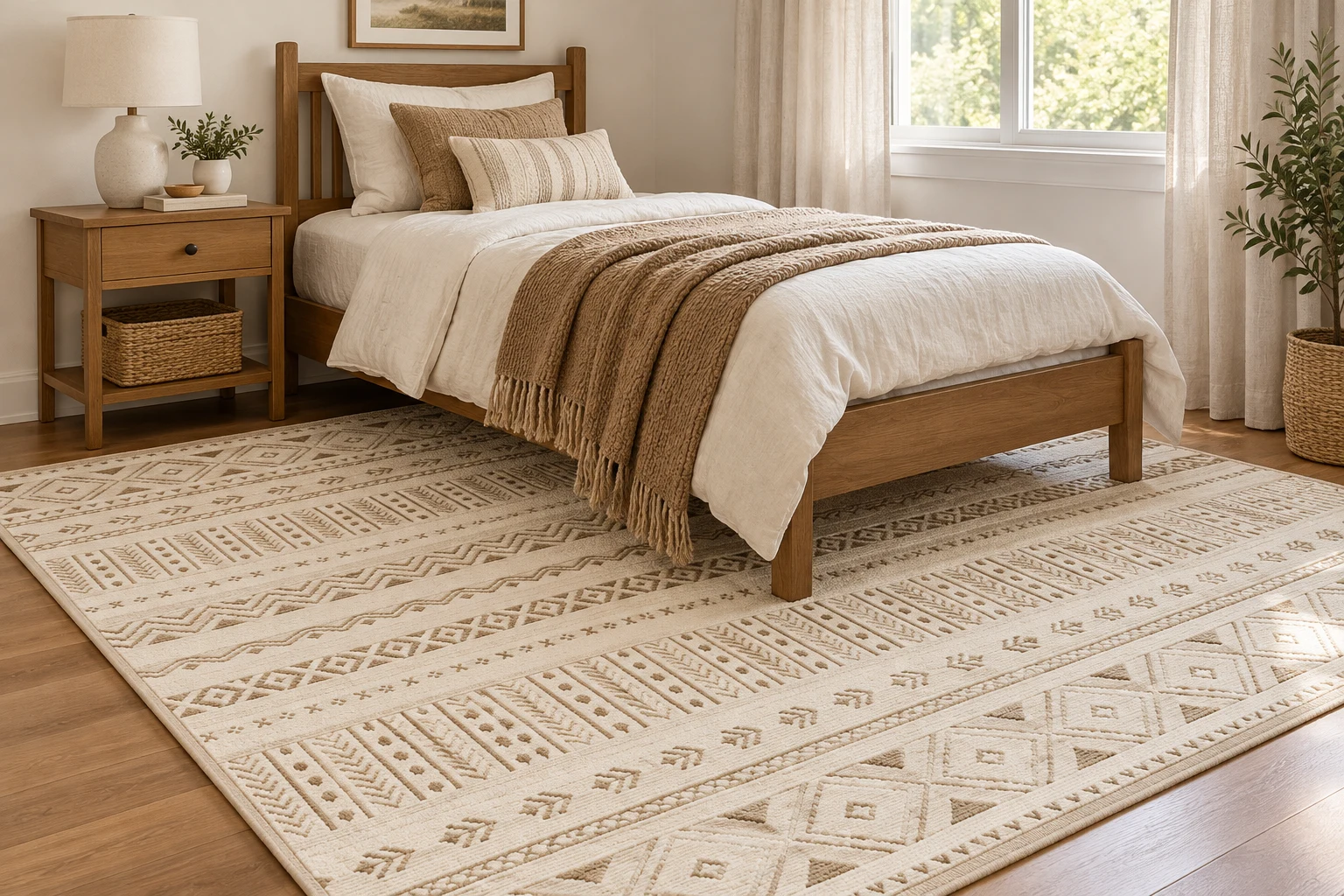
A 5 × 8 often suits a twin bed, while a 6 × 9 or 8 × 10 leaves more rug beside a full bed.
One practical arrangement places the rug beneath the lower part of the bed, leaving the nightstands on bare flooring.
With two twin beds, a shared larger rug can connect both beds. A runner between them works when you mainly need softness in the middle.
Our guide to two beds in a small bedroom has more layouts for that setup.
Queen Beds: 8 × 10 or 9 × 12?
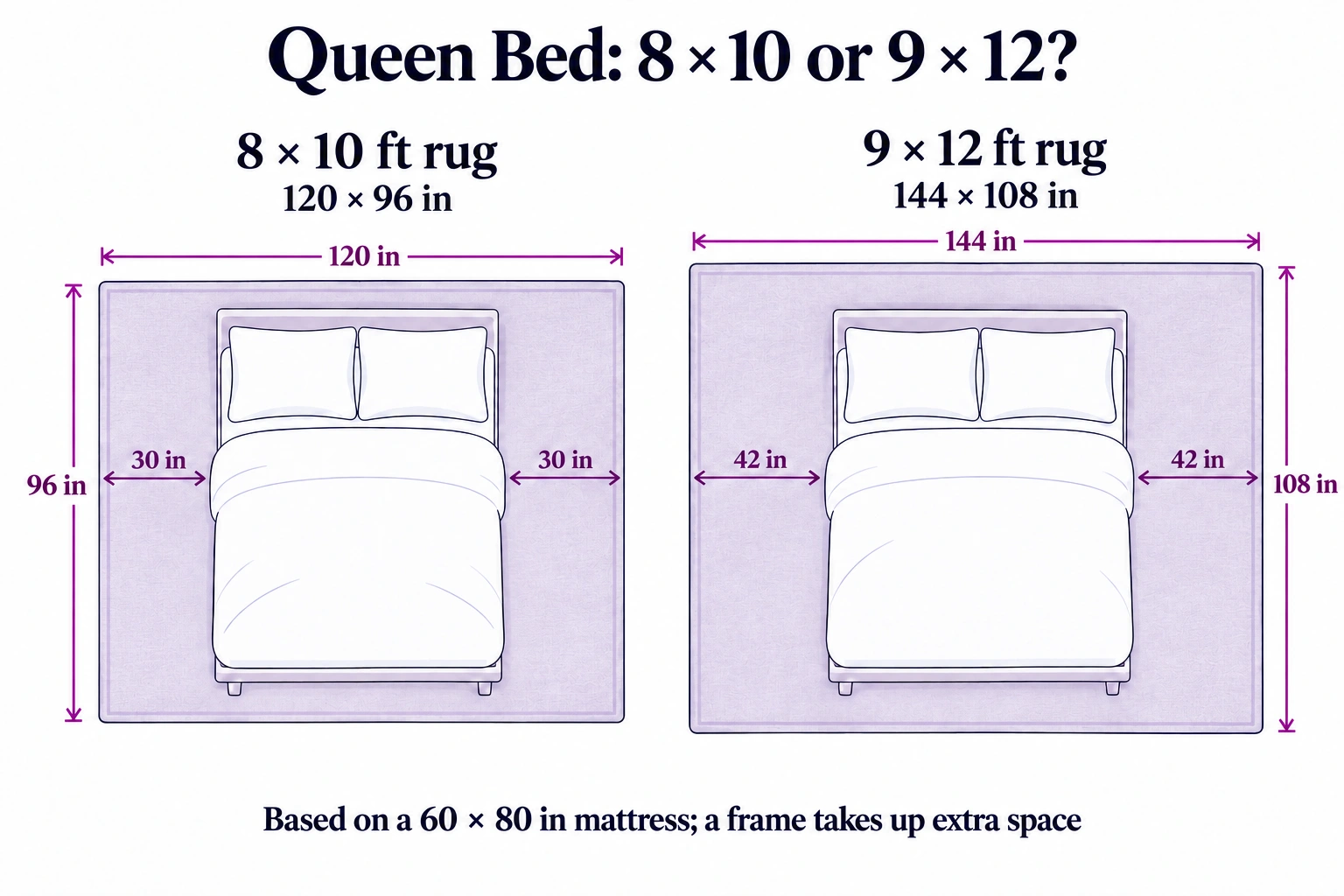
An 8 × 10 is a practical choice for many queen bedrooms. A 9 × 12 adds coverage for a wider frame, larger room, or bench.
With the 10-foot side running across a standard 60-inch queen mattress, an 8 × 10 leaves about 30 inches on either side before allowing for the frame.
The Luxturiy 8 × 10 Beige Washable Rug is one option in this size. Its beige vintage-style pattern works well if you want visible detail around the bed without adding a strong new color.
The rug can sit beneath the lower part of the bed while the nightstands remain off it.
King Beds: 9 × 12 and Larger Options
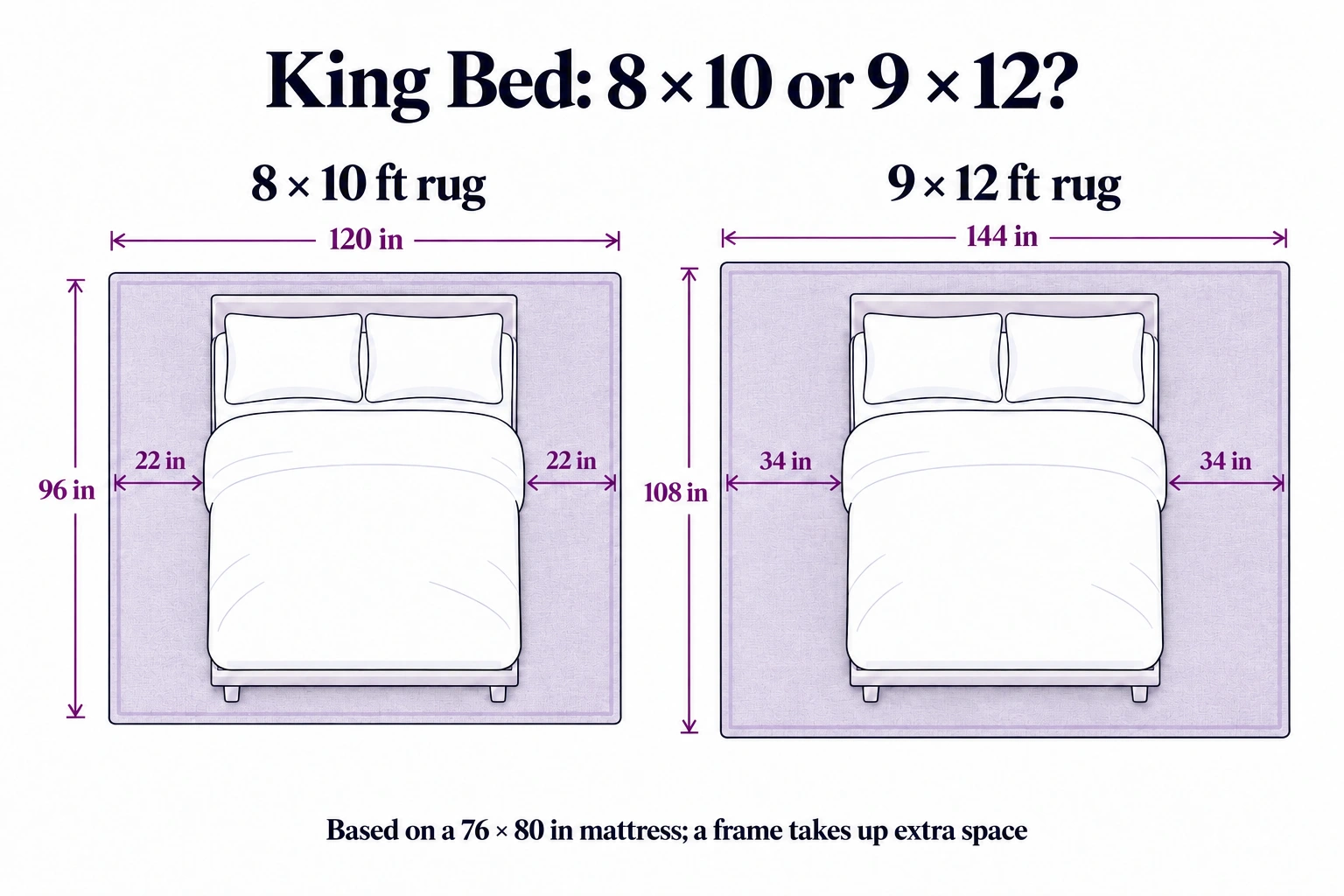
A 9 × 12 usually leaves plenty of rug beside a king bed. A 10 × 14 adds more space around the bed and any bench.
An 8 × 10 can also work in a tighter bedroom, with its 10-foot side across the bed. Beside a standard 76-inch king mattress, that leaves about 22 inches per side before allowing for the frame.
For that smaller arrangement, the PLHXFR 8 × 10 Dark Green Floral Rug adds a floral pattern around the bed. It leaves less rug showing than a 9 × 12.
Bedside Rugs and Runners
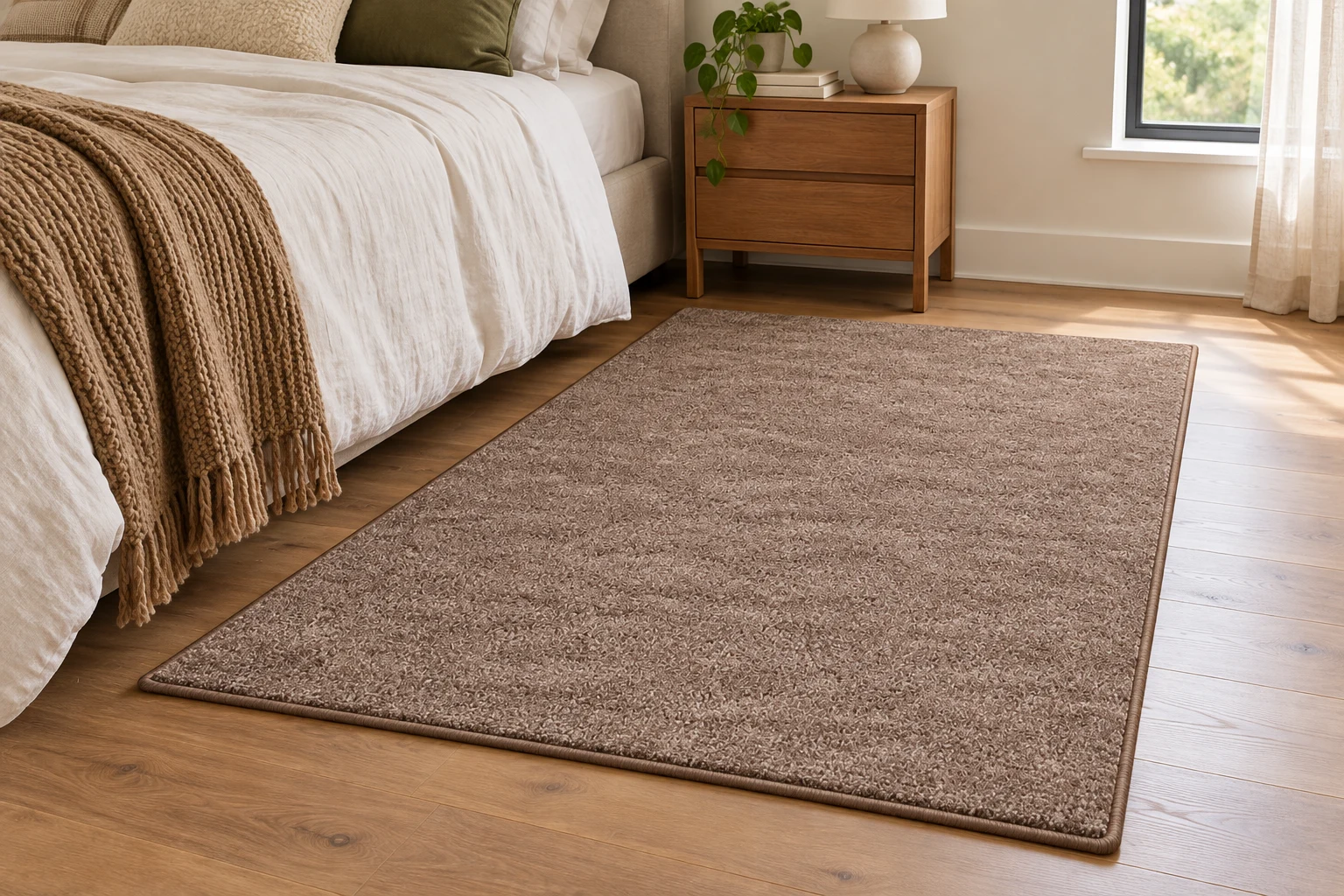
Bedside rugs work well when you want less floor coverage or cannot fit a large rug around the bed.
The Keeko 4 × 6 Memory Foam Rug works beside a bed if there’s enough floor space. Its memory foam cushioning feels soft when you get up.
A 4 × 6 takes more room than a small bedside mat, so its long side can run alongside the bed where the floor space allows.
| Bed | Useful rug sizes | Practical placement |
|---|---|---|
| Twin | 5 × 8 | Beneath the lower part or alongside the bed |
| Full | 6 × 9 or 8 × 10 | Rug showing on both sides and beyond the foot |
| Queen | 8 × 10 or 9 × 12 | Long side across the bed; nightstands can remain off |
| King | 9 × 12 or 10 × 14 | Coverage beside the bed and beyond the foot |
| King in a tighter room | 8 × 10 | Long side across the bed, with less coverage |
For the rest of the room, these bedroom furniture layouts help you plan the bed, storage, and walking space together.
5. Dining Room Rugs With Space for Every Chair
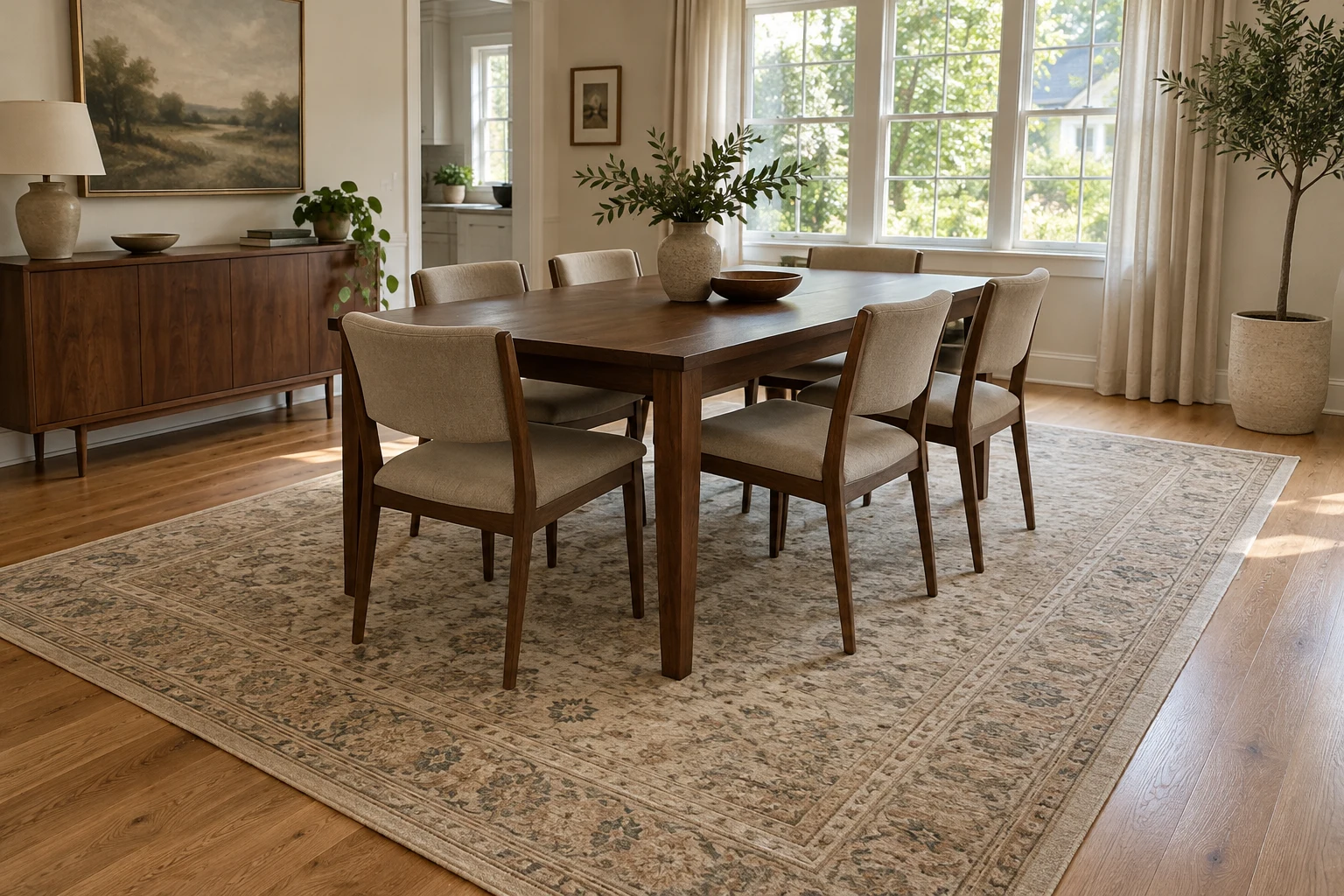
A dining-room rug should extend at least 24 inches beyond every table edge. Around 30–36 inches gives larger chairs more room.
The chair legs should remain on the rug when someone pulls the chair out to sit down.
The Extra Space Around the Table
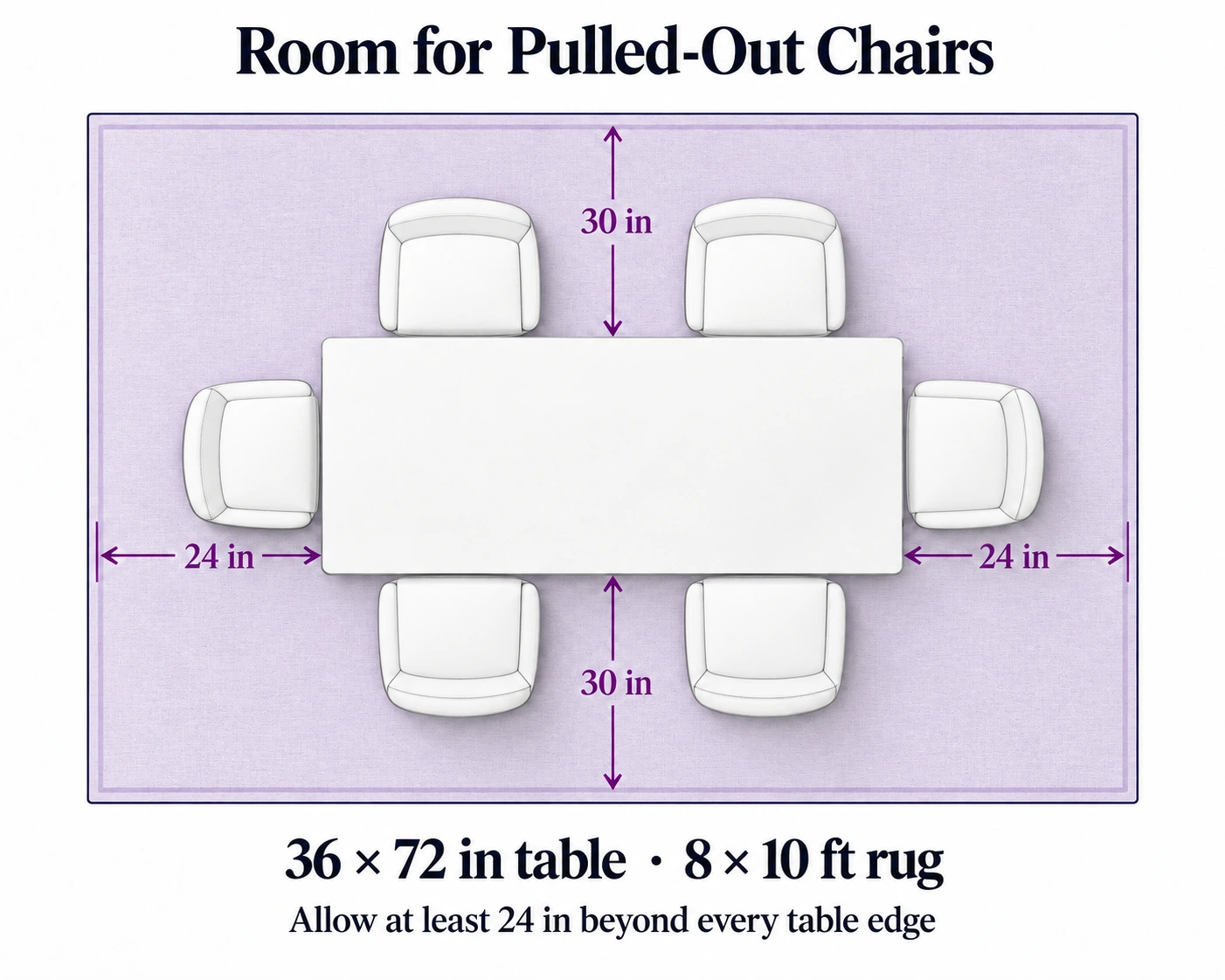
Add 48 inches to the table’s width and length to allow 24 inches for chairs on every side.
For a 36 × 72-inch table:
- Width: 36 + 24 + 24 = 84 inches.
- Length: 72 + 24 + 24 = 120 inches.
That means a rug at least 7 × 10 feet. An 8 × 10 gives you that space. If the chairs at the ends pull out farther than 24 inches, you’ll need a longer rug.
| Table dimensions | Rug size to try | Space beyond the table |
|---|---|---|
| 36 × 60 inches | 8 × 10 | 30 inches around all sides |
| 36 × 72 inches | 8 × 10 | 30 inches at the sides, 24 at the ends |
| 40 × 84 inches | 9 × 12 | 34 inches at the sides, 30 at the ends |
| 42 × 96 inches | 9 × 12 | 33 inches at the sides, 24 at the ends |
The Gent drizz 8 × 10 Black, Grey, and Gold Abstract Rug is a washable option with short fibers. It suits the smaller tables in the chart above.
Chairs slide more easily over flatwoven rugs or rugs with short fibers than over thick, fluffy rugs.
Round Tables and Round Rugs
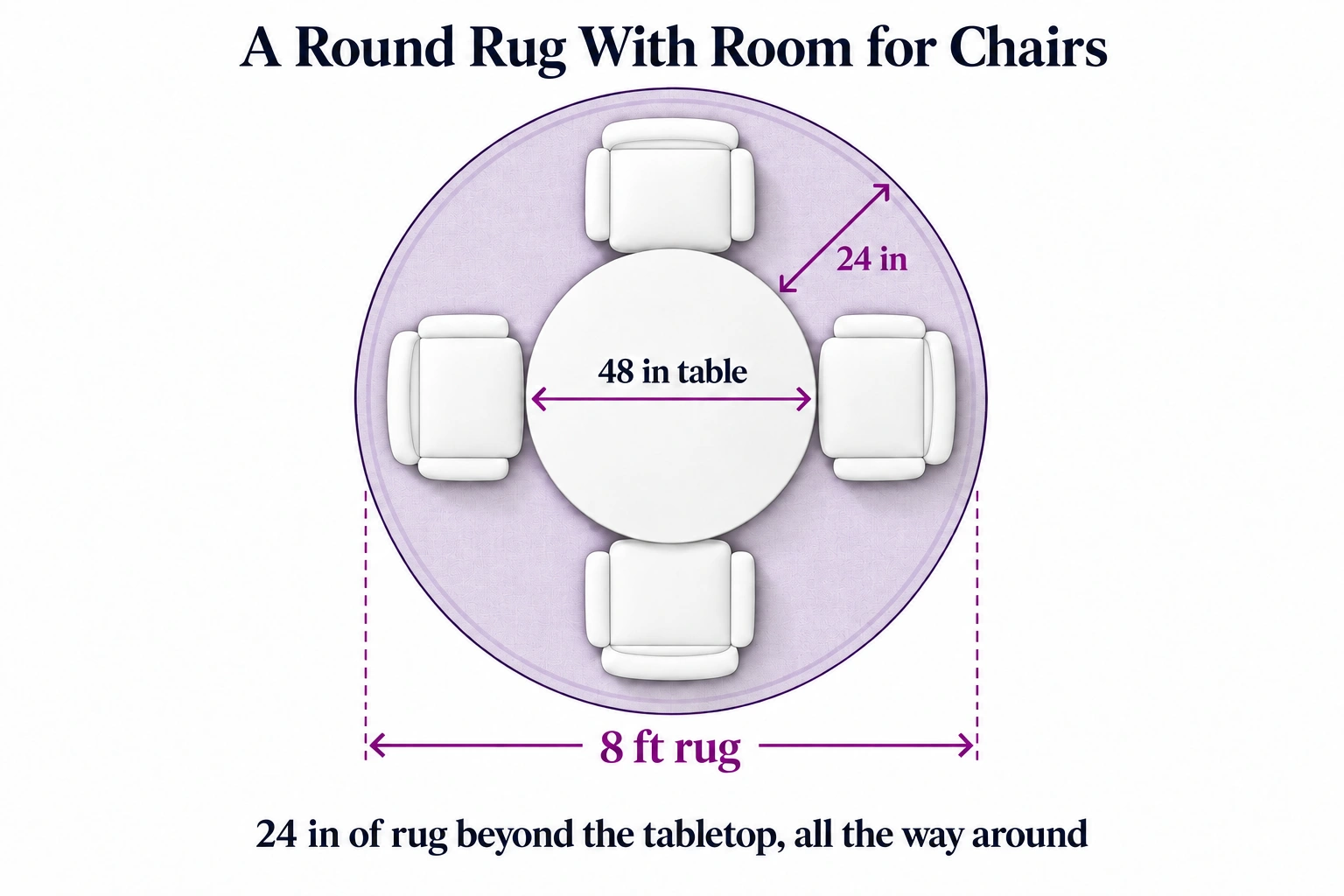
A round rug needs the same 24-inch minimum beyond the tabletop.
A 48-inch table therefore needs a rug at least 96 inches across, or 8 feet in diameter.
A 60-inch table needs at least a 9-foot diameter for the same clearance. An 8-foot rug would leave only 18 inches around it.
Square and rectangular rugs can also work. Even the rug’s shorter side should leave at least 24 inches beyond each edge of the table.
Our round versus rectangular dining table guide explains how table shape affects the rest of the room.
Extendable Tables
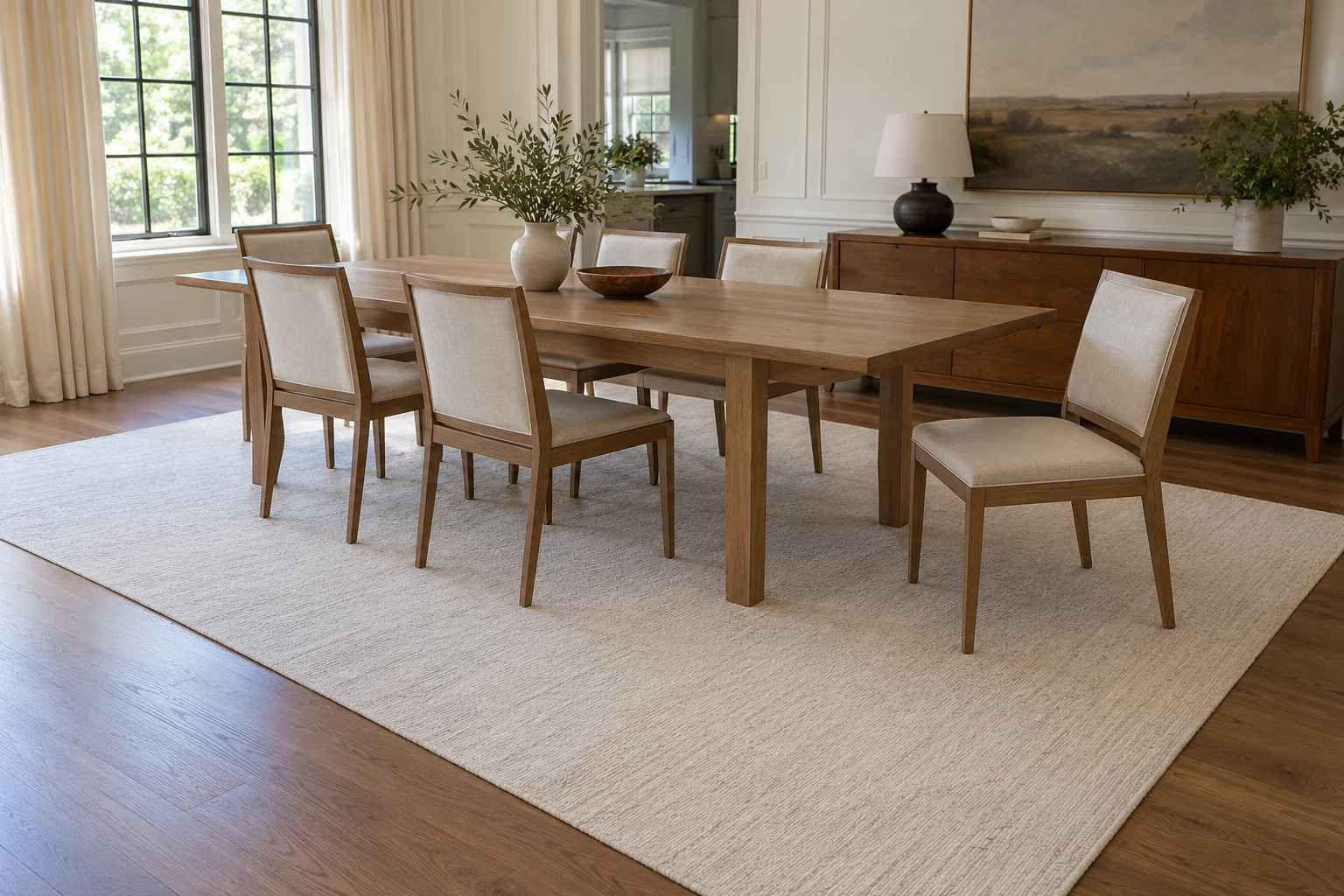
A table that regularly stays extended needs a rug sized for its extended length.
Even for occasional larger dinners, the end chairs need room to move. Their back legs shouldn’t land directly on the rug edge when pulled out.
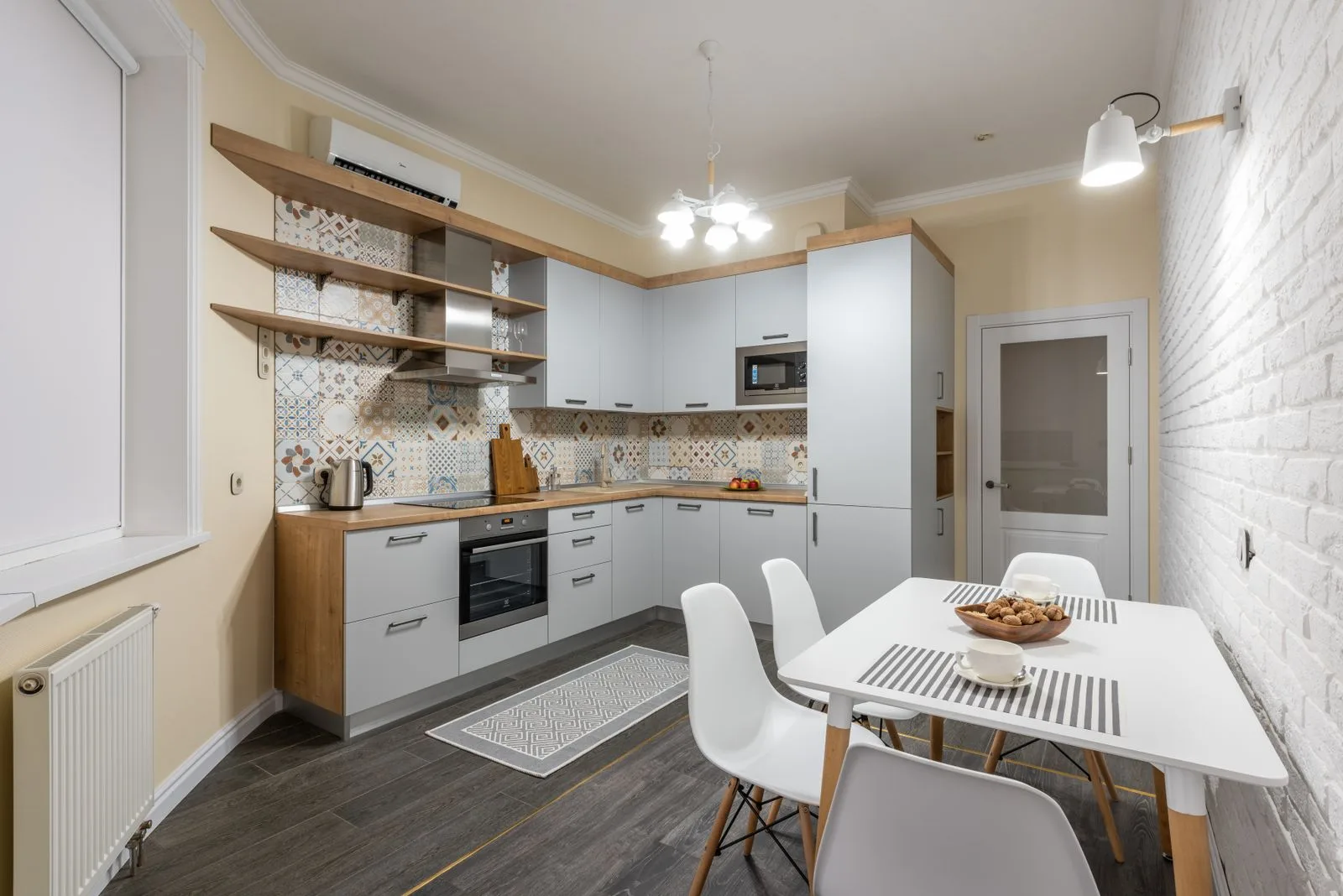
Note: Choose the rug size using the table’s measurements and the space needed to pull out the chairs. Two tables that both seat six can be very different sizes.
6. Kitchen Rugs for the Sink, Island, and Walkway
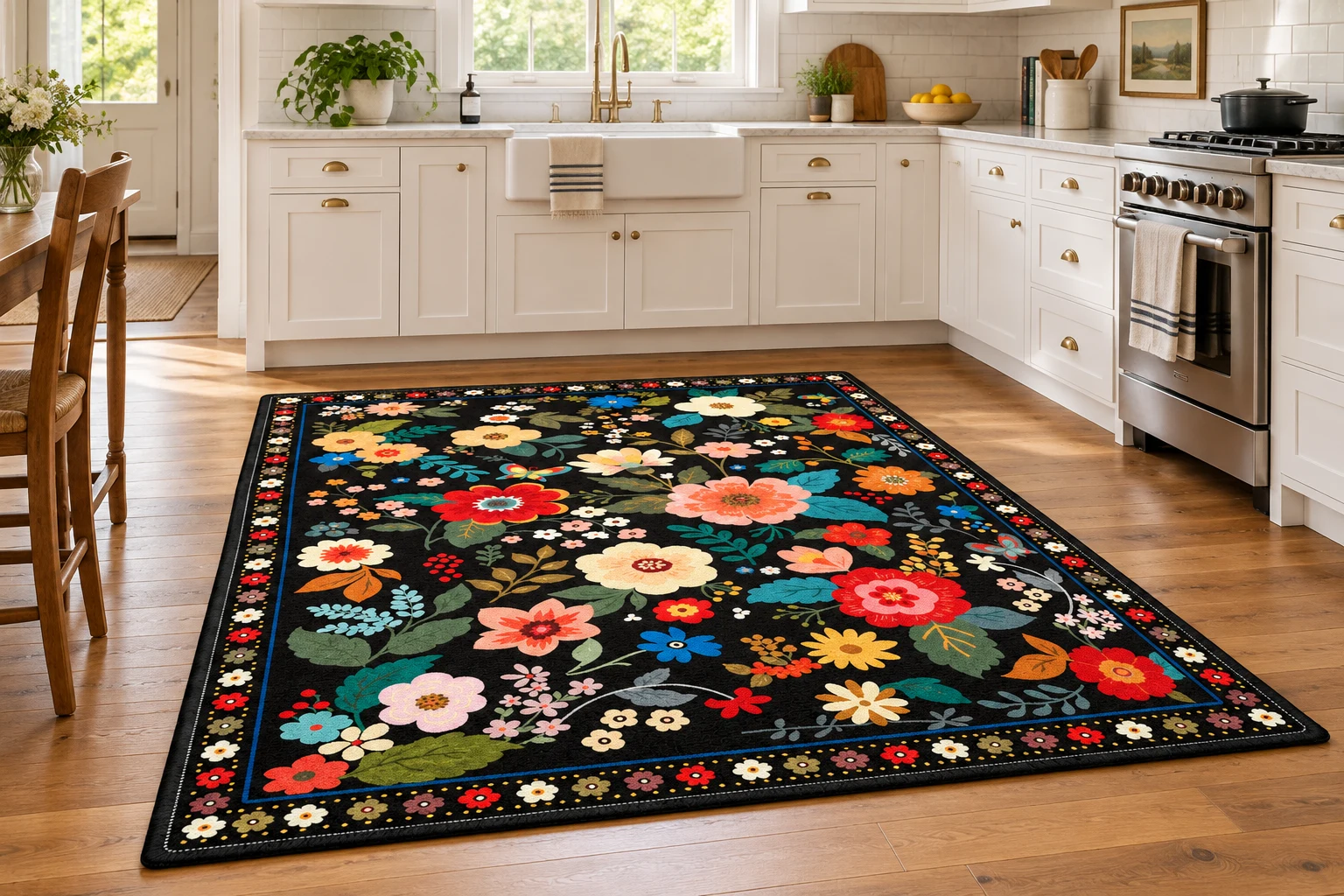
A 2 × 3 or 3 × 5 often works in front of a sink. A runner suits a longer preparation area, galley kitchen, or space beside an island.
A larger rug needs plenty of open floor space. The RELEANY 5 × 7 Black Floral Washable Rug can work in a roomy kitchen with a clear central floor, rather than a narrow strip between cabinets.
It can also work in a nearby breakfast nook if the table and pulled-out chairs fit on it.
The dishwasher needs to open freely over the rug and any pad. Cabinet doors and drawers need the same room to move.
Our small kitchen rug ideas show more placements around sinks, counters, and islands.
7. Hallway and Entryway Rugs With a Clear Border
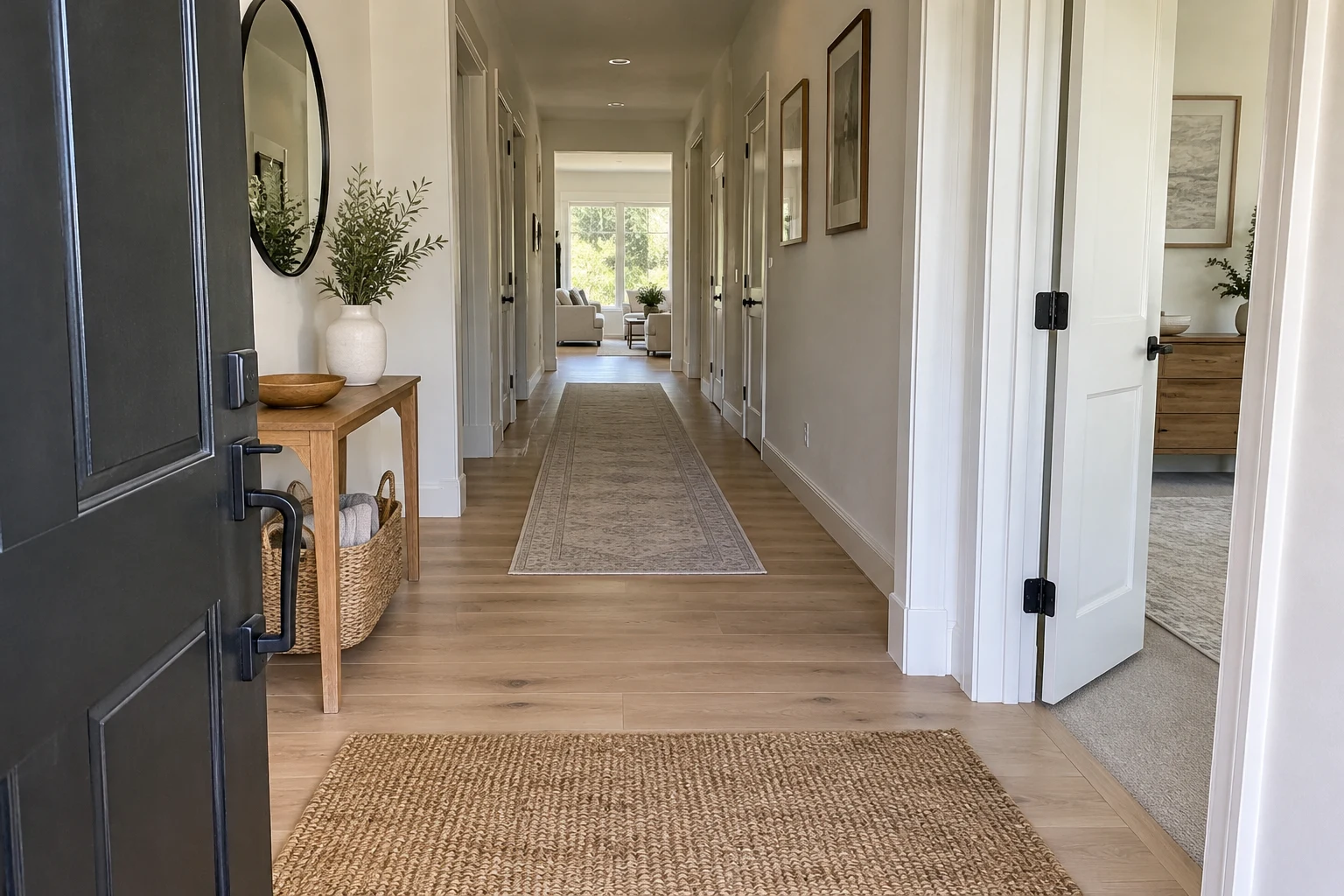
Hallway and entryway rugs should fit where you walk. Leave enough room to open doors, pass furniture, and turn corners.
Hallway Runners
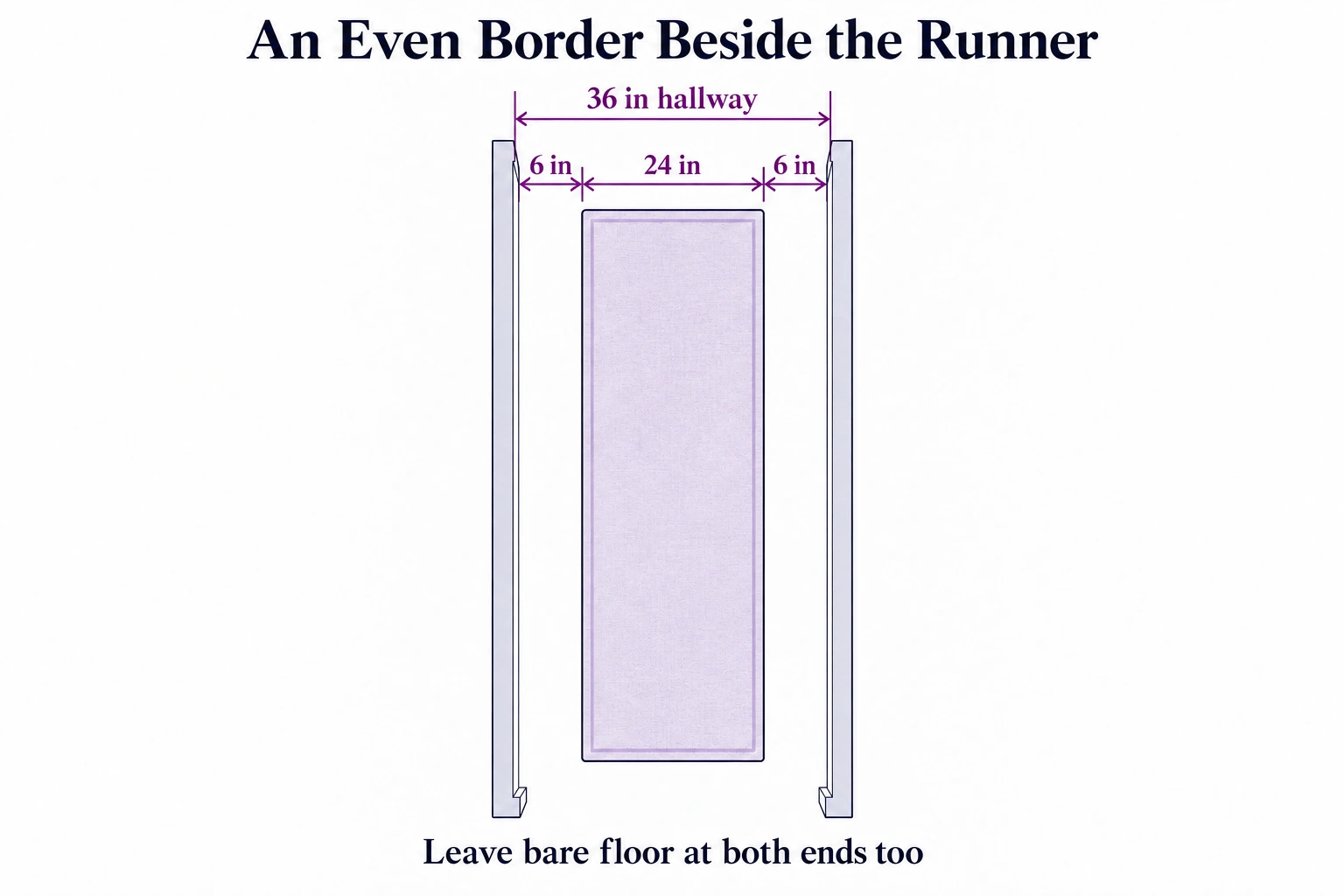
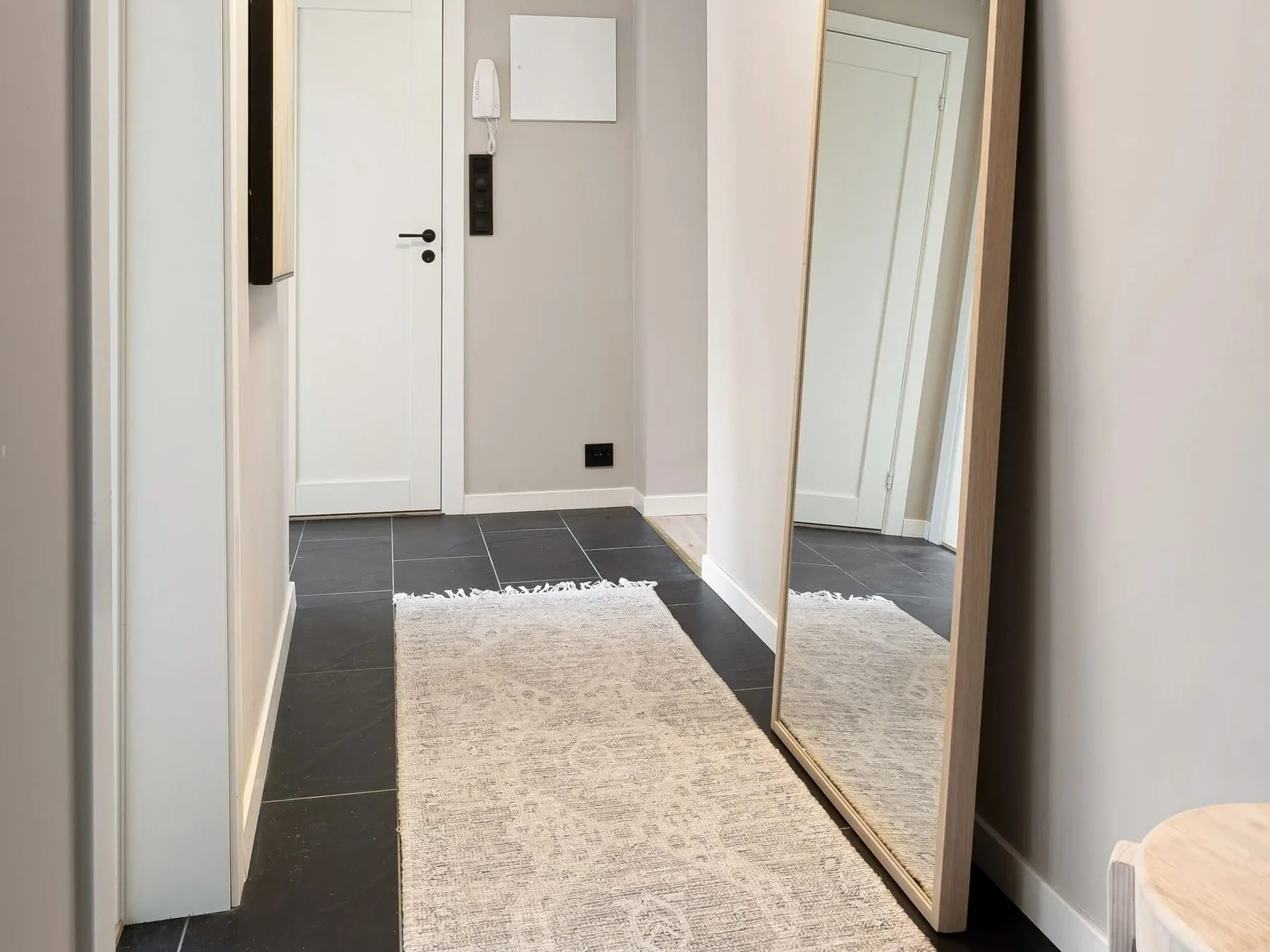
Roughly 4–6 inches of exposed floor per side is a useful target where the hallway allows.
A 24-inch runner in a 36-inch hallway leaves six inches on either side.
There should also be space at each end. For a long hallway, two shorter runners can work, with their ends lying flat and the gap away from a busy doorway or turning point.
Entryway Rugs
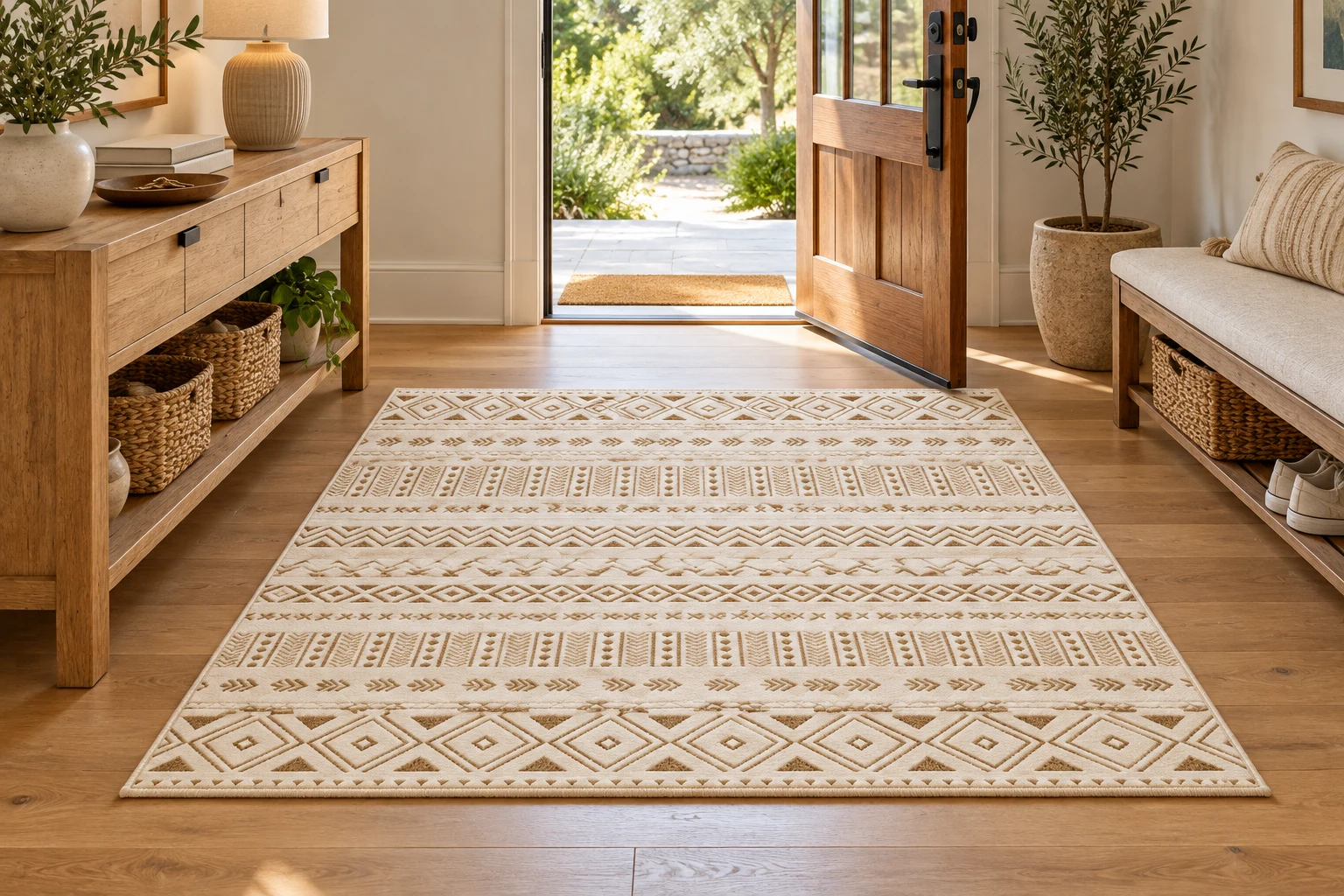
A 2 × 3 or 3 × 5 often suits a small entrance. A larger foyer can take a bigger rectangular rug.
For a spacious entrance, the cotiled 5 × 7 Moroccan-Style Washable Rug in Brown and Cream offers a neutral geometric pattern. It works best in a larger entrance with room to come in and take off your shoes.
The door needs to clear the rug and pad together, even if the rug itself is thin.
See our entryway rug ideas for more ways to fit a rug around the doorway and furniture.
8. Bathroom and Outdoor Rug Sizes
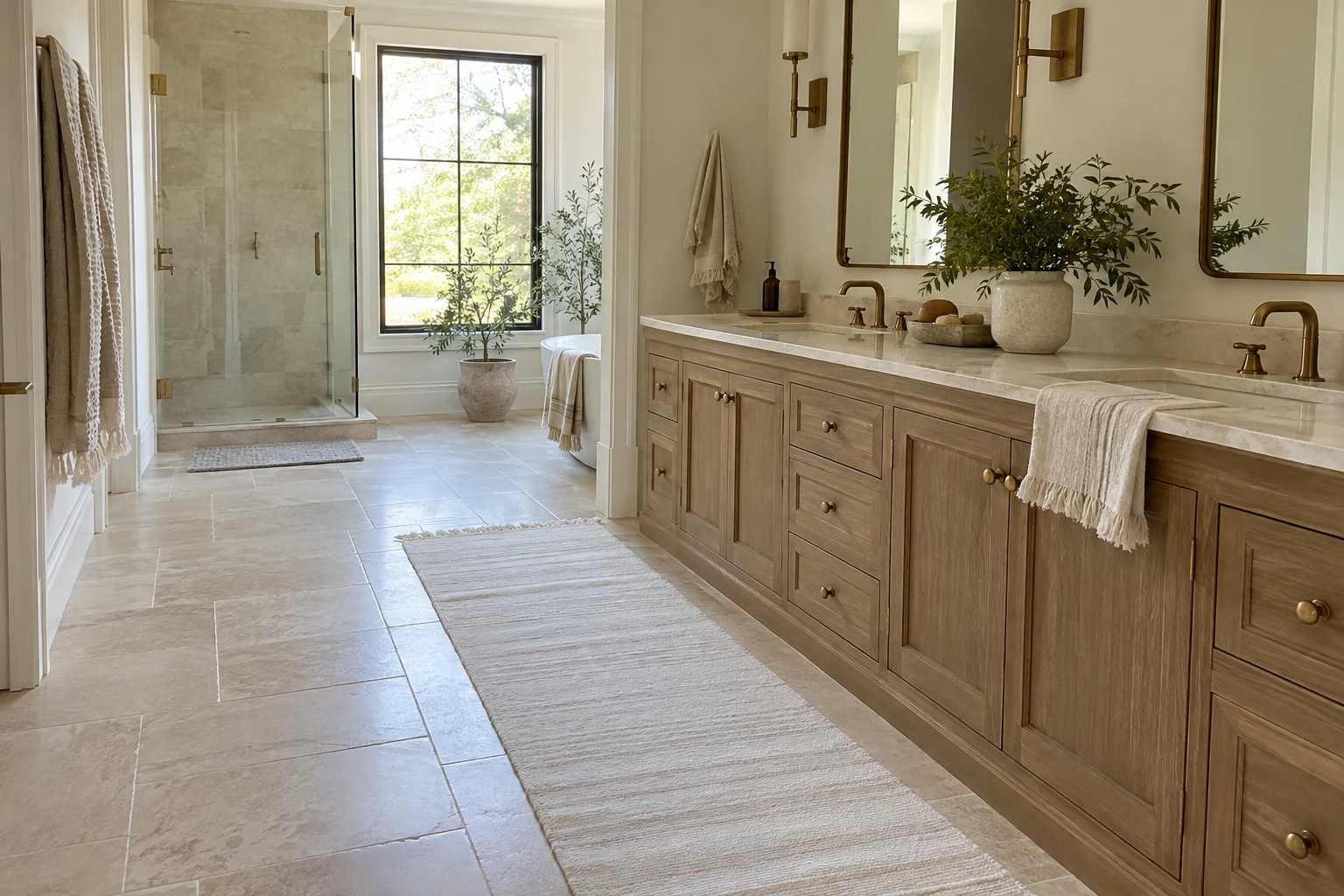
Bathroom and outdoor rugs should suit where you stand, sit, or walk.
Bathroom Rugs
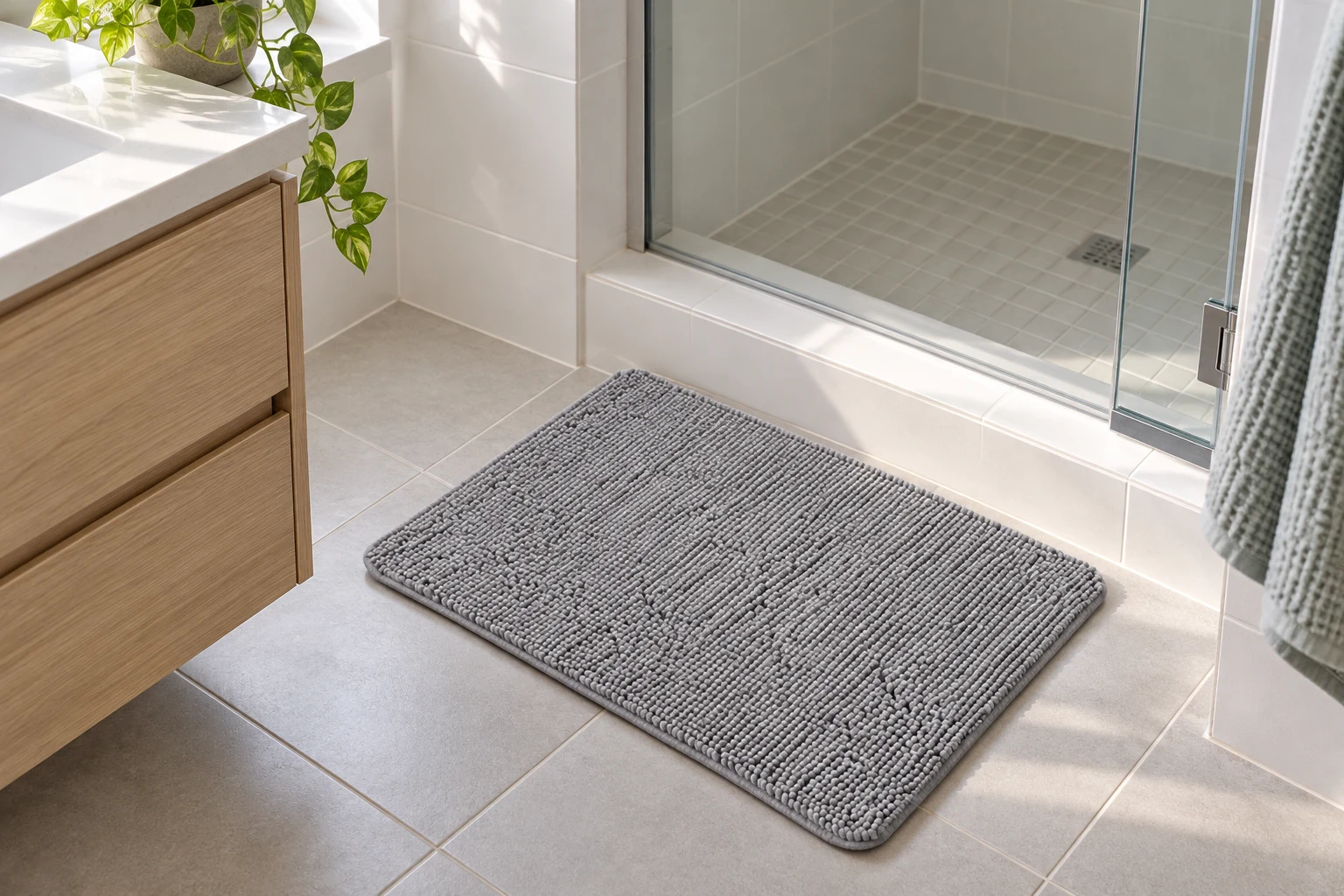
A small mat suits the area beside a tub or shower. A longer runner can cover the standing space along a double vanity.
The OLANLY Chenille Bath Mat measures 20 × 30 inches in grey. That compact size suits a smaller space beside the shower or in front of a sink.
Its soft chenille fibers absorb water when you step out of the shower. The floor beneath the mat should remain dry.
A decorative rug can add color elsewhere in the bathroom. Beside the shower, use a bath mat that absorbs water.
Balcony and Patio Rugs
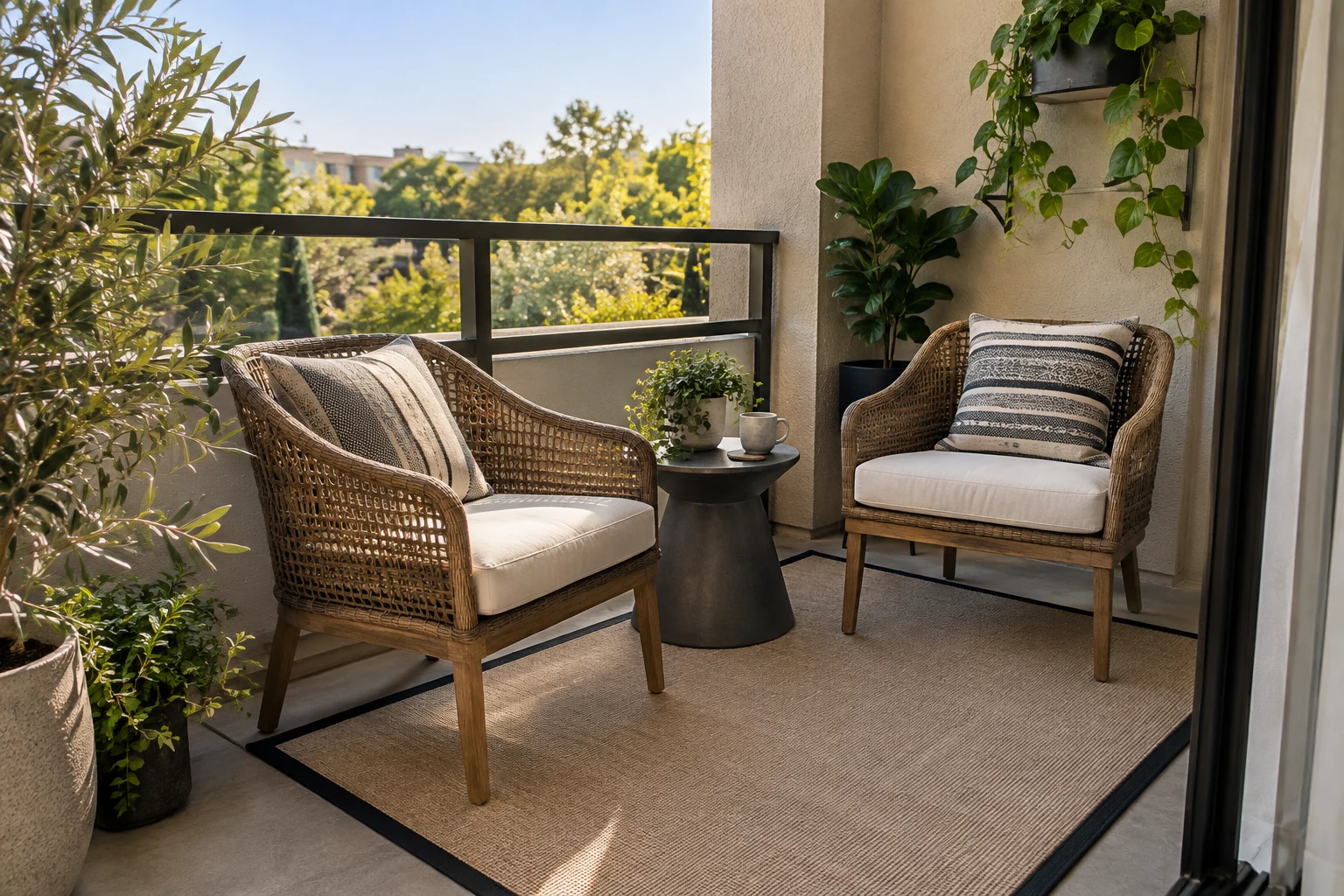
An outdoor rug should reach beneath the main seating legs or contain a dining arrangement with enough room for chairs.
A 5 × 8 may suit a small balcony setup. An 8 × 10 or 9 × 12 can work around a larger seating group.
For an outdoor dining table, leave the same space for pulled-out chairs as you would indoors. Choose a rug made for outdoor use.
9. Open-Plan Rooms and Rugs That Are Too Small
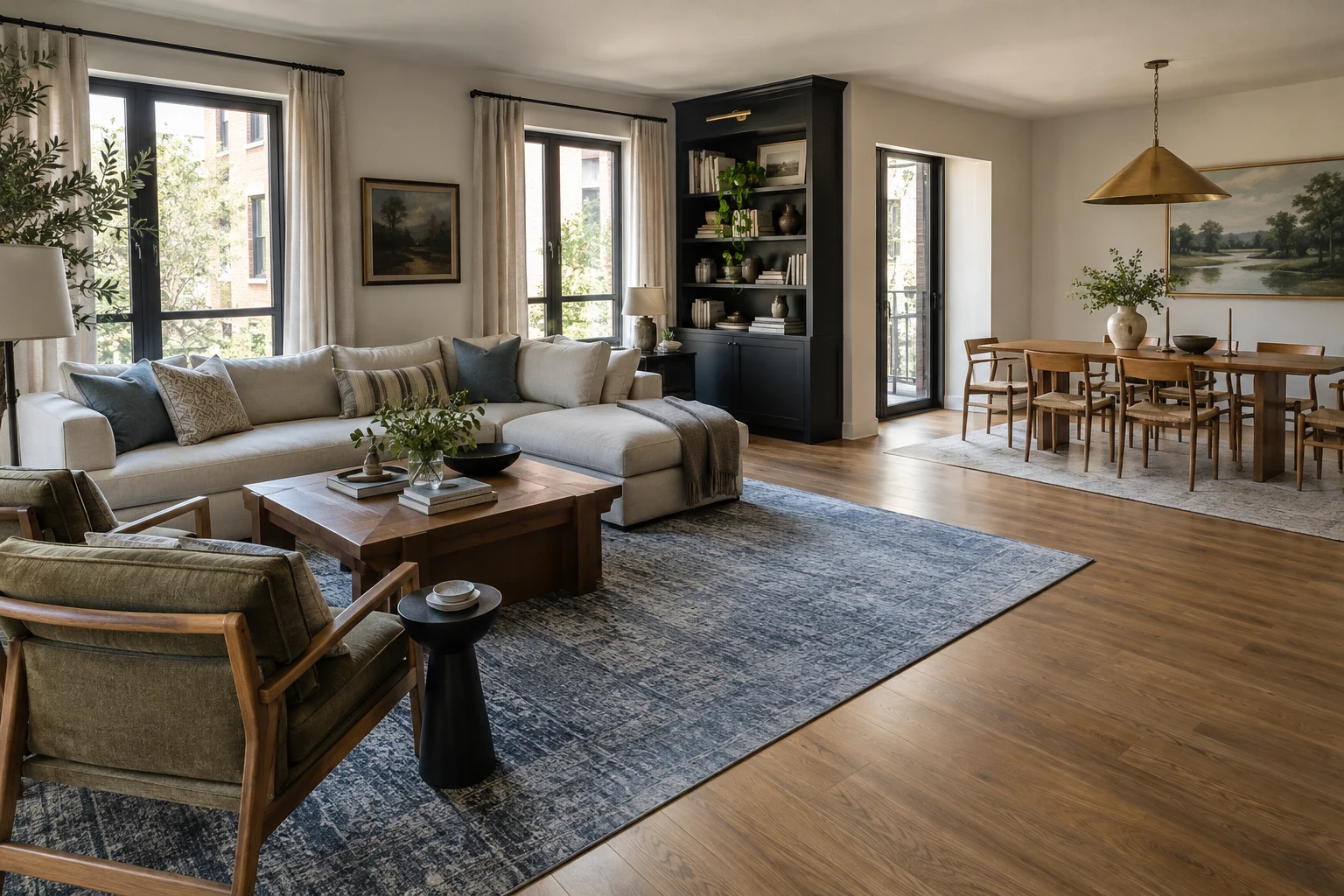
Each rug should fit the furniture around it. In an open-plan room, you can use one for the seating area and another for the dining table.
Separate Rugs for Separate Areas
The living-room rug belongs around the sofa and main chairs. The dining rug belongs around the table and pulled-out chairs.
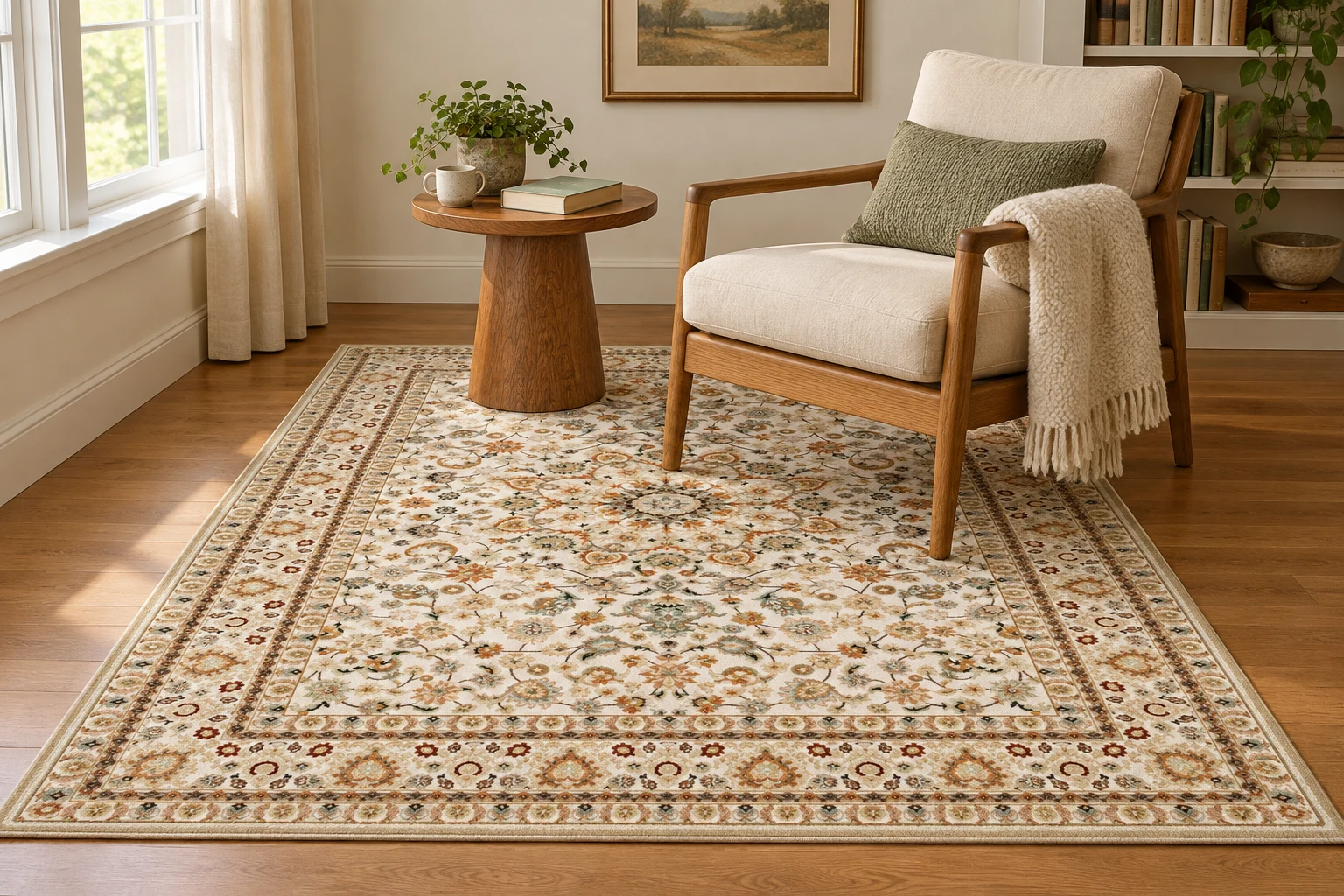
Meanwhile, a separate reading corner can use a smaller rug. The ExpediX 5 × 7 Beige Vintage Washable Rug fits a reading chair and side table without covering much of the surrounding floor.
The route between the areas should remain easy to walk through.
Our guide to dividing a room without building a wall has more ways to create distinct areas.
A Larger Base Beneath a Favorite Rug
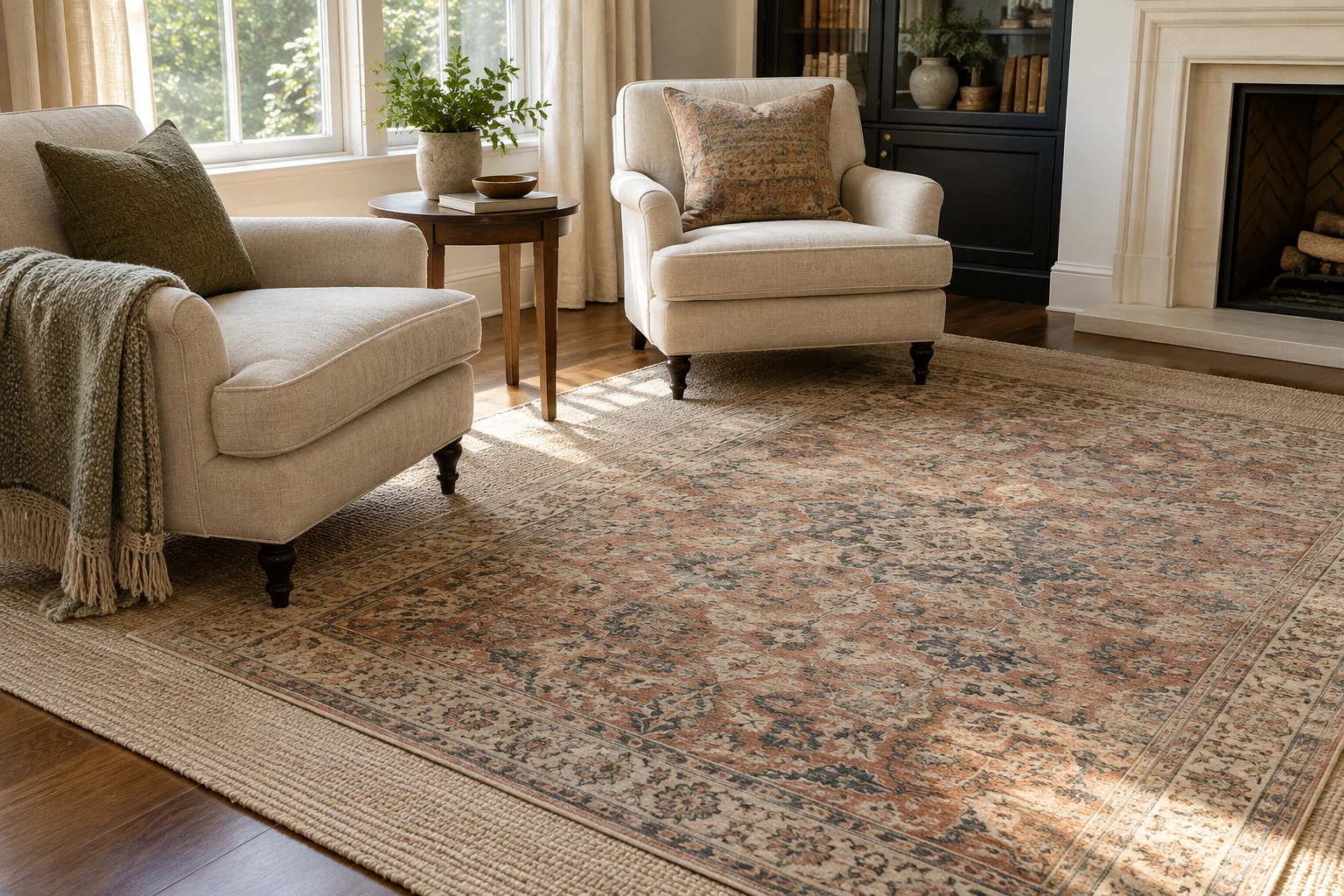
A larger, flat rug underneath can reach beneath the furniture while a smaller patterned rug sits on top.
Both rugs should lie flat. Together, they should be thin enough for furniture to sit steadily and doors to open freely.
If you prefer natural texture on its own, the SAFAVIEH Natural Fiber NF447A Jute Rug is a chunky 5 × 8 option for a compact seating area.
At roughly ¾ inch thick, this jute rug works best on its own. Its 5 × 8 size suits a small seating area; a sofa with several chairs will often need an 8 × 10 or 9 × 12.
A rug that is too small for the main living room may still fit neatly beneath a reading chair or in another compact area.
10. Your Rug Fit Checklist
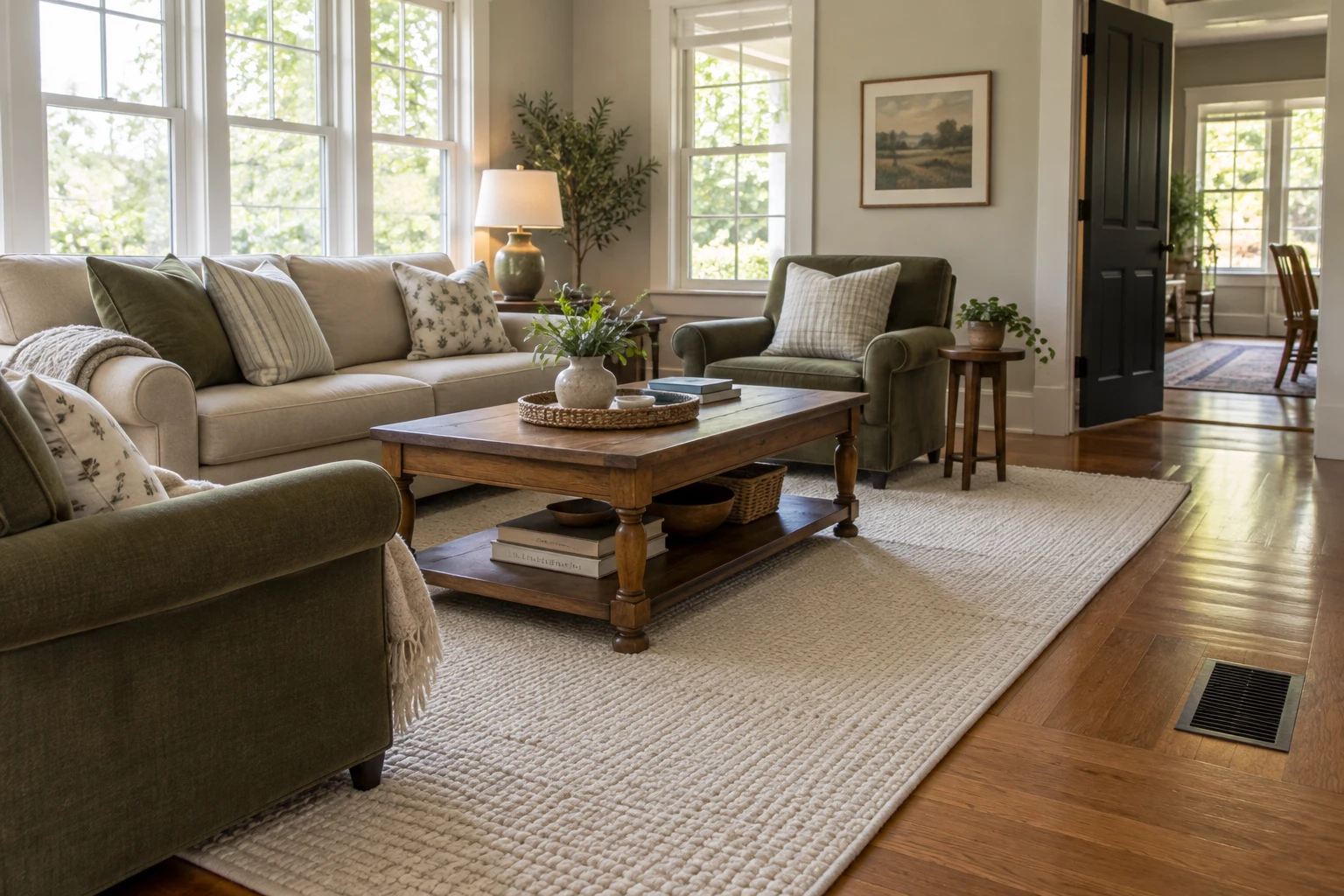
A rug fits when the furniture has enough room and everyday movement feels easy.
- The sofa and chair legs I want on the rug sit well inside its edges.
- Dining chairs remain fully on it when pulled out.
- The rug reaches the spots where I step out of bed.
- The bench at the foot of the bed sits fully on the rug.
- Doors, drawers, and the dishwasher open freely.
- Floor vents remain uncovered.
- The rug’s exact measurements match the taped outline.
- Any separate pad stays hidden beneath the rug.
- The edges lie flat.
- I can walk through nearby doorways and turn corners easily.
11. Common Rug Size Questions
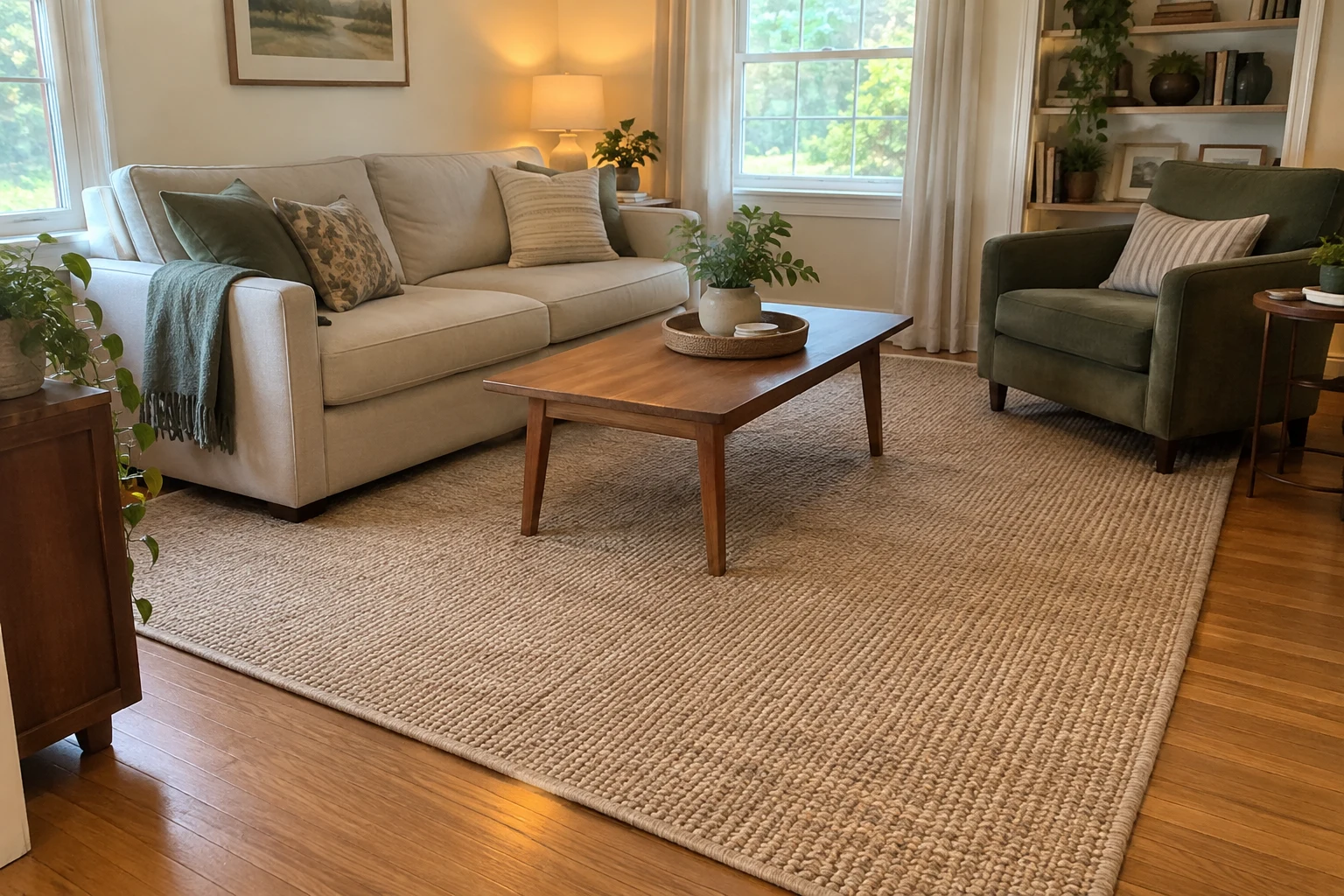
The right size depends on what needs to fit, so these answers focus on common layouts.
Is an 8 × 10 Rug Big Enough for My Living Room?
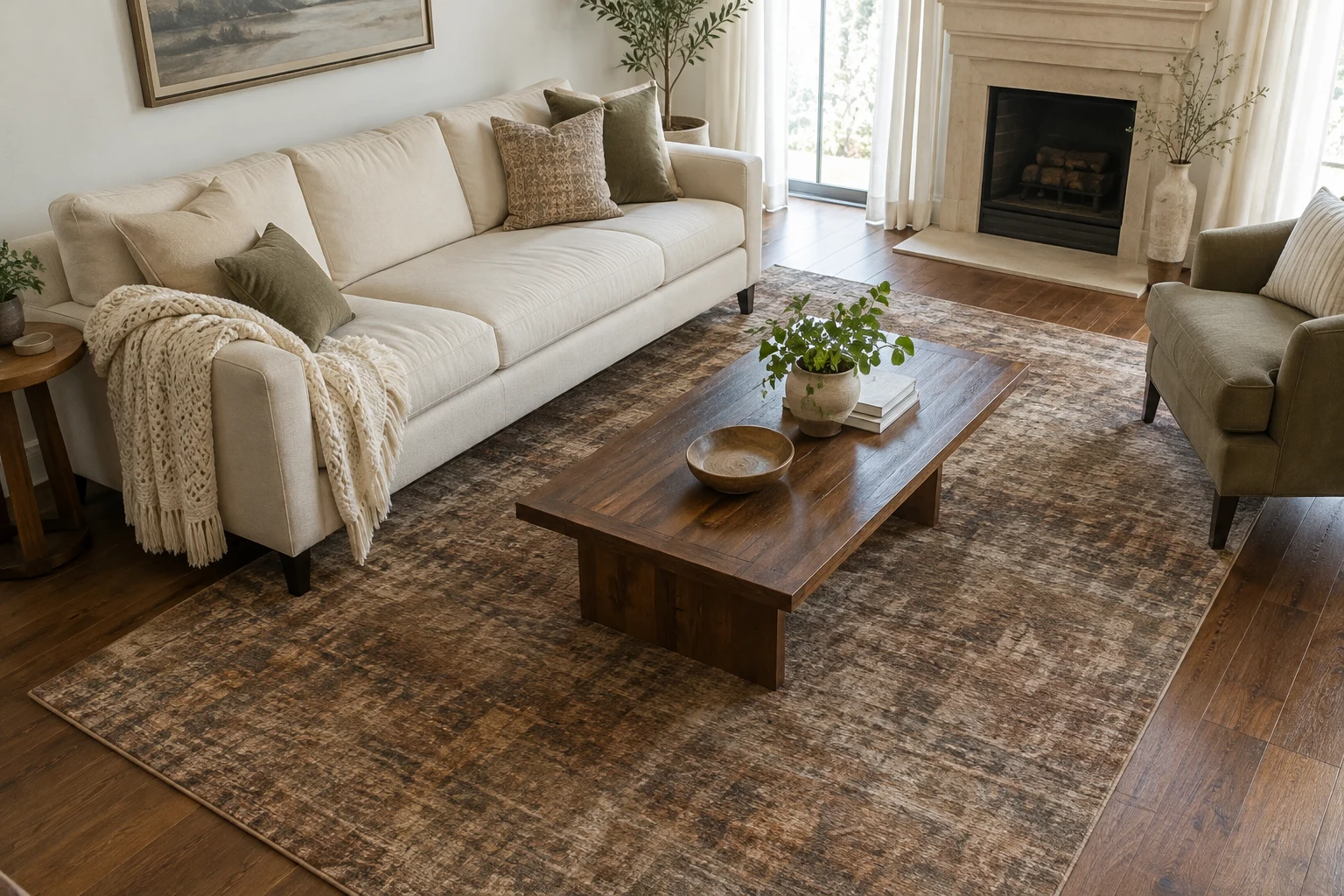
Yes, an 8 × 10 suits many living rooms with a sofa and a small number of chairs.
A wide arrangement, deep sectional, or furniture placed farther apart may need a 9 × 12 or larger.
Is a 5 × 7 Rug Too Small Under a Sofa?
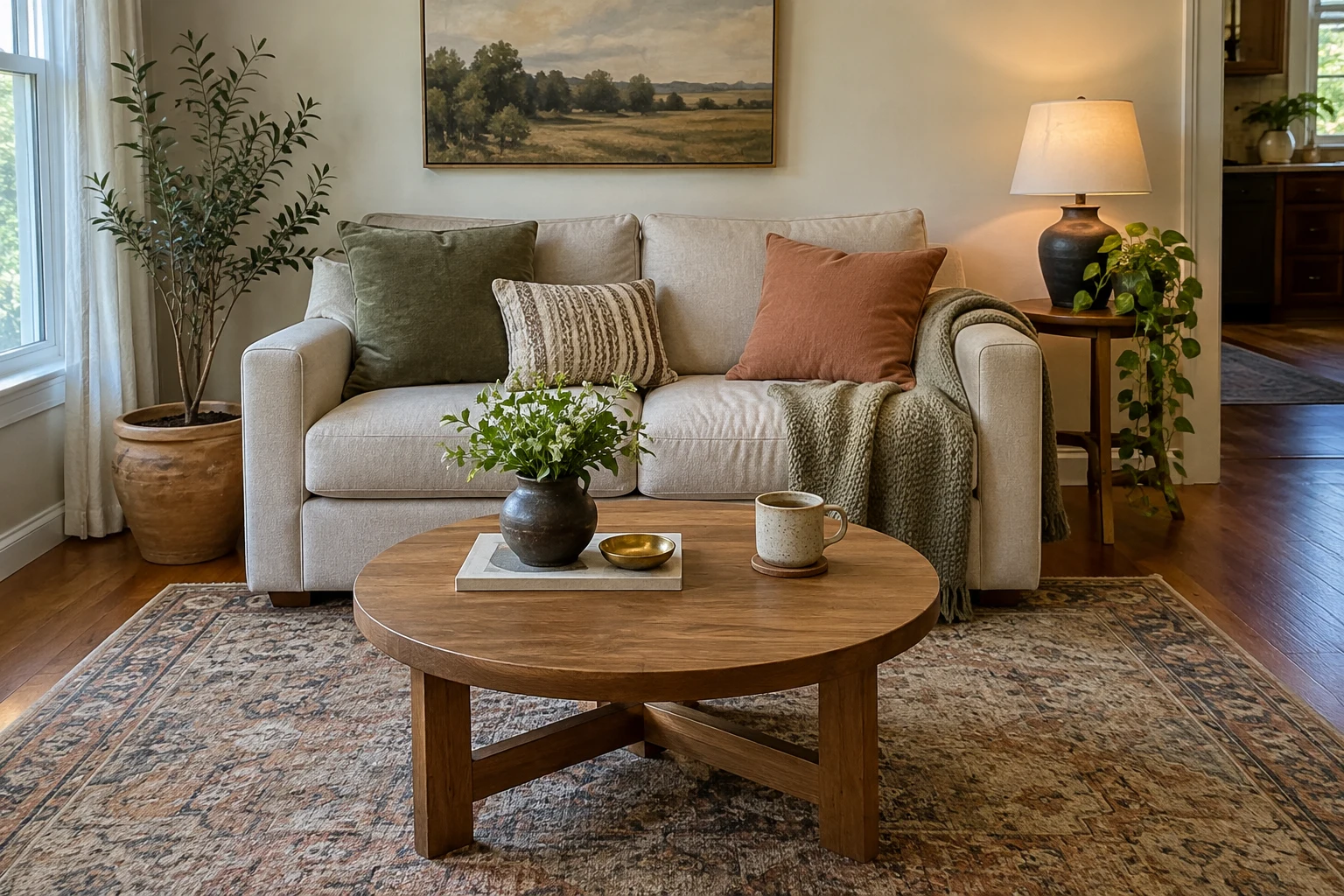
A 5 × 7 is often too small to reach beneath a full-size sofa and several chairs.
It can work around a coffee table in a compact arrangement or beneath a separate chair-and-side-table setup.
What Size Rug Goes Under a Queen Bed?
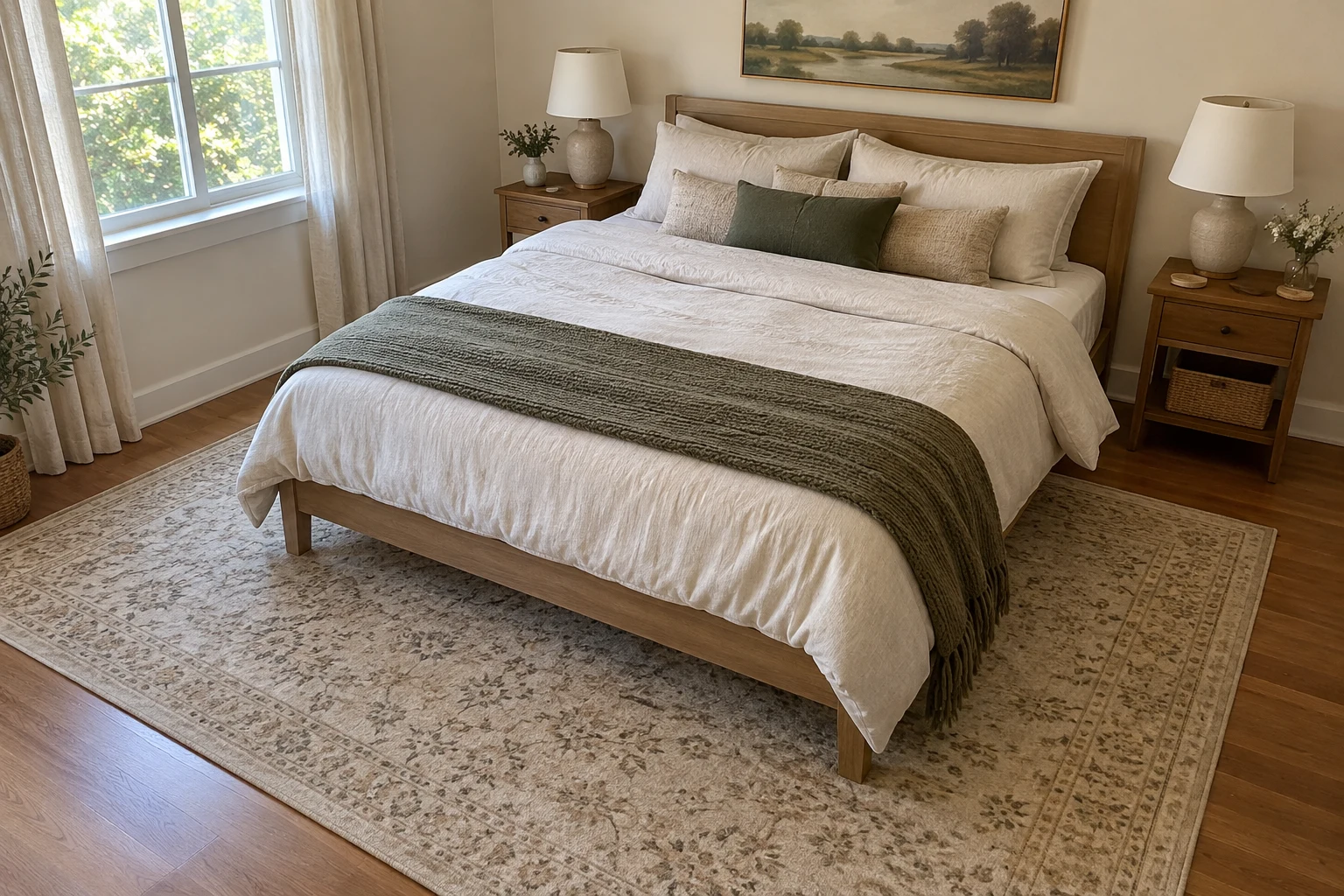
An 8 × 10 is a practical choice, with the 10-foot side running across the bed.
A 9 × 12 gives more coverage for a wide frame, larger room, or bench.
Can an 8 × 10 Rug Work Under a King Bed?
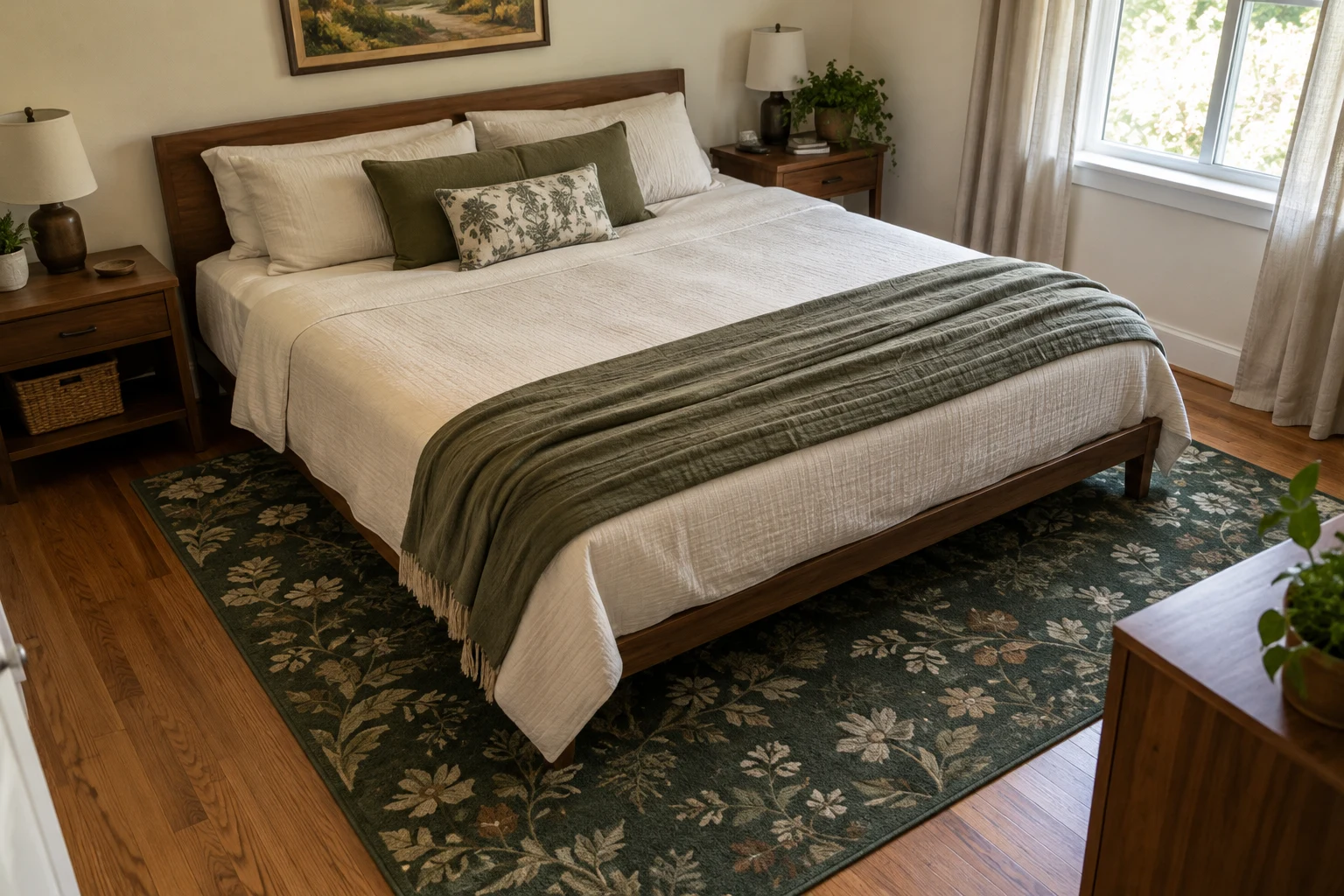
Yes. Position the 10-foot side across the bed, with the rug beneath the lower part.
It provides less coverage than a 9 × 12, particularly around a wide frame or bench.
What Size Rug Goes Under a 48-Inch Round Table?
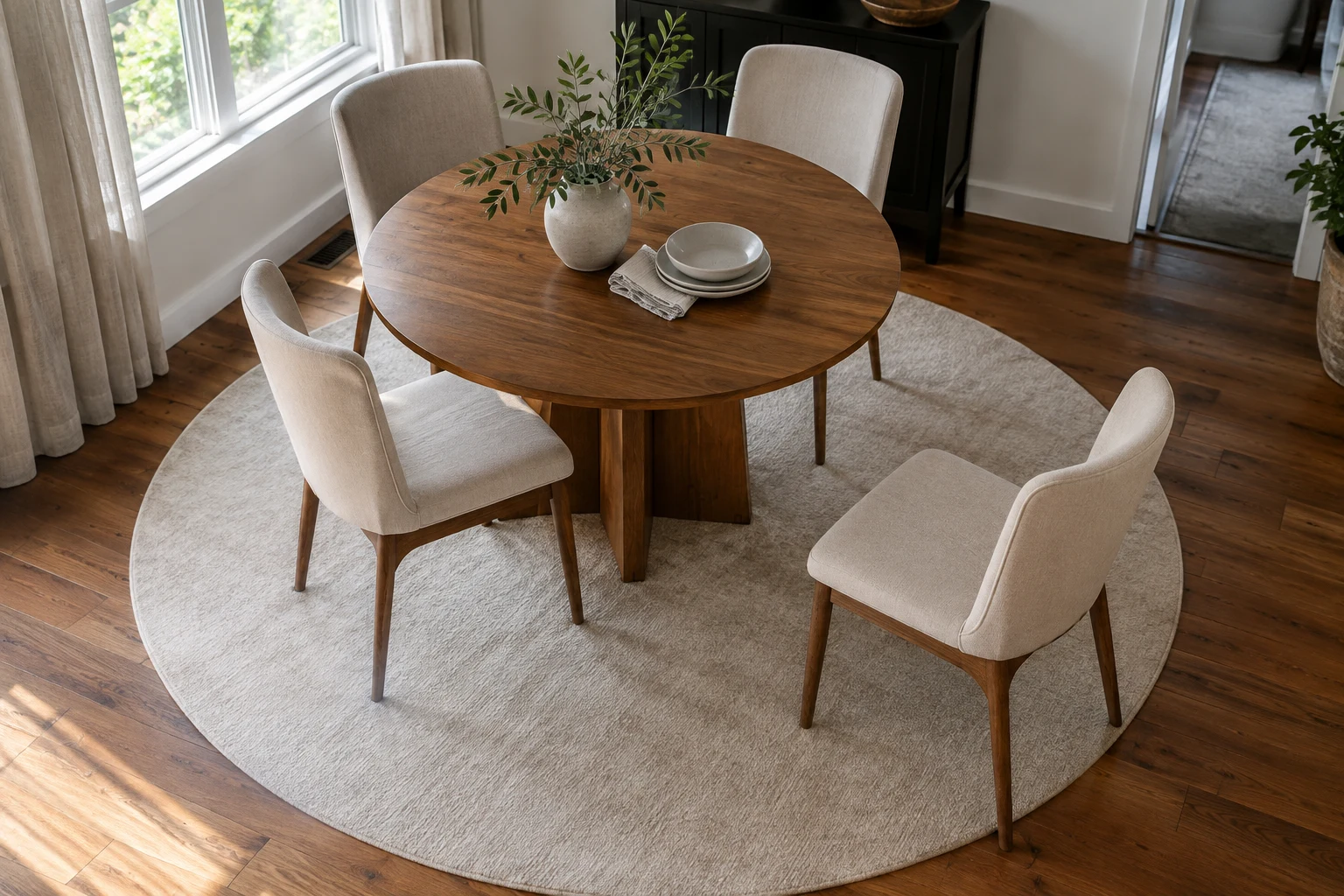
An 8-foot round rug provides 24 inches beyond each edge of a 48-inch round table.
You’ll need a bigger rug if the chairs are large or you pull them out farther.
How Much Floor Should Show Around a Rug?
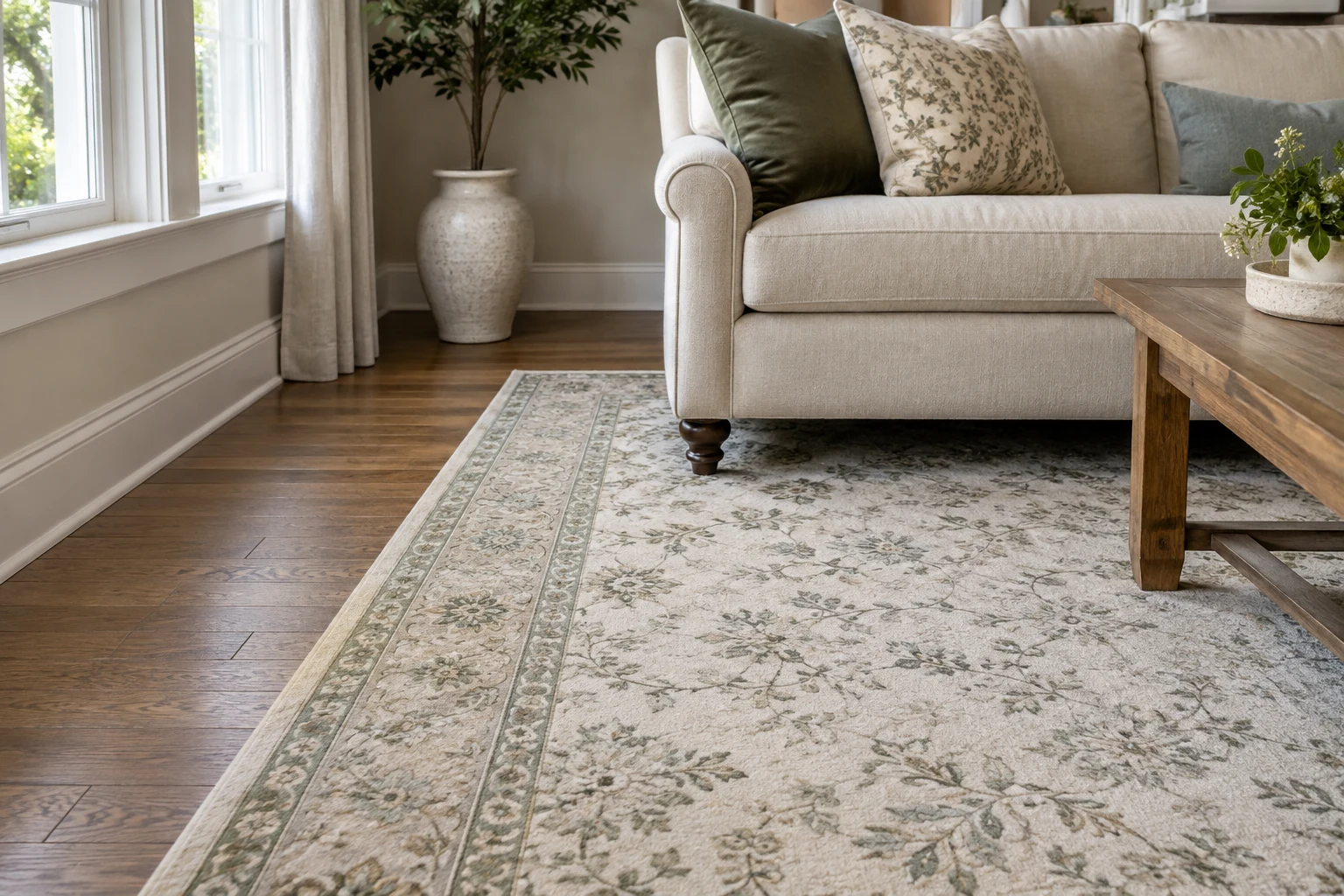
Around 12–24 inches can look balanced in a larger enclosed room. A smaller room may have a narrower border.
Hallway runners usually need much less, often around 4–6 inches per side. Furniture fit, vents, and door clearance still matter.
Is a Bigger Rug Always Better?
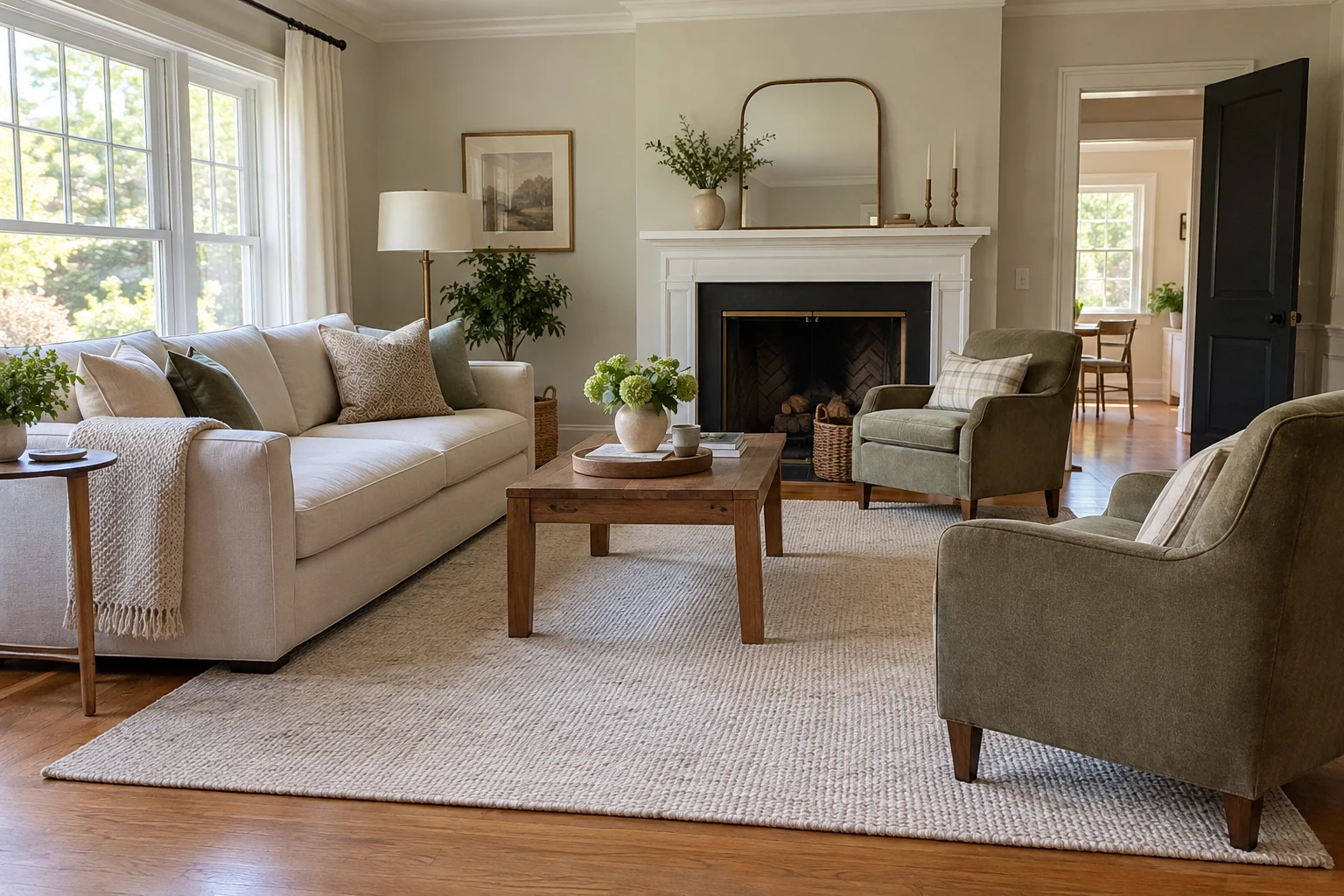
No. A bigger rug helps when the smaller one doesn’t reach beneath the sofa and chairs, or when dining chairs slide off its edges.
The larger size still needs to fit around doors, vents, and the amount of exposed flooring you want.
What Size Rug Pad Do I Need?
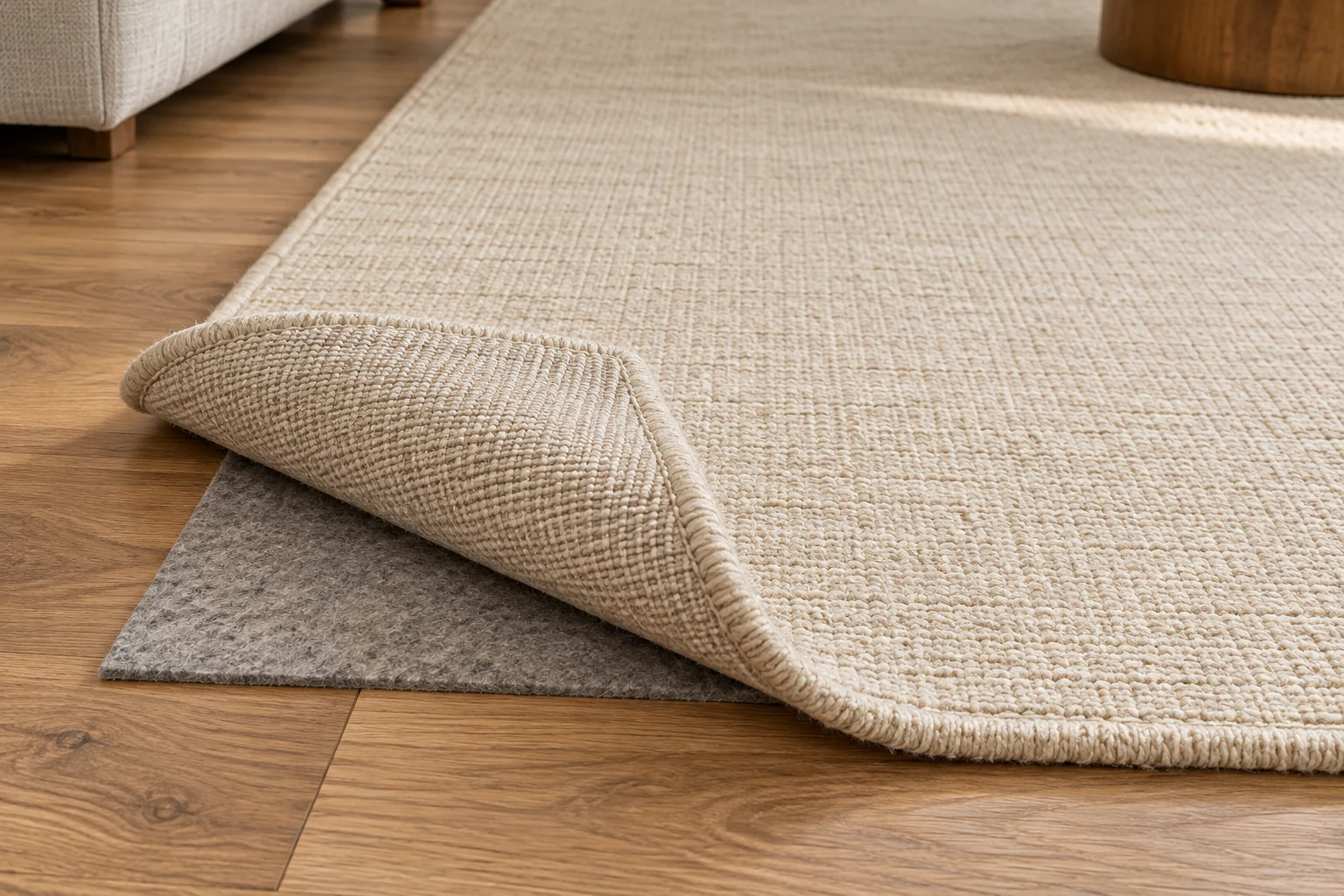
A separate pad should sit slightly inside the rug’s edges, commonly about one inch in from each side.
For a full 8 × 10 rug, that means approximately 7 feet 10 inches × 9 feet 10 inches.
A separate pad is not necessary for every rug. Some already have a non-slip backing, and an extra pad makes the rug thicker. Any pad you use should suit both the rug and the flooring.
12. Rugs for the Layouts in This Guide
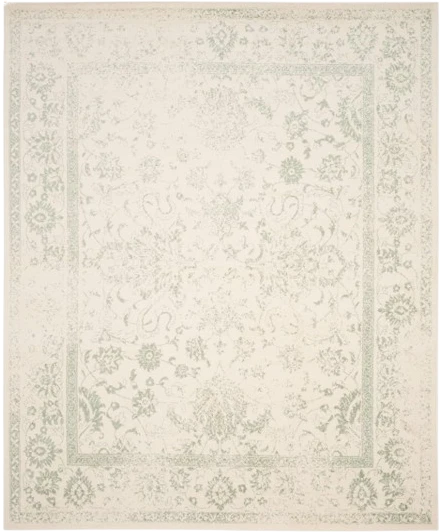 SAFAVIEH Adirondack 9 × 12 RugA large ivory-and-sage rug with a faded floral pattern for a roomy seating area.
 Keeko 4 × 6 Memory Foam RugA soft, cushioned brown-and-white rug for beside the bed or a small sitting area.
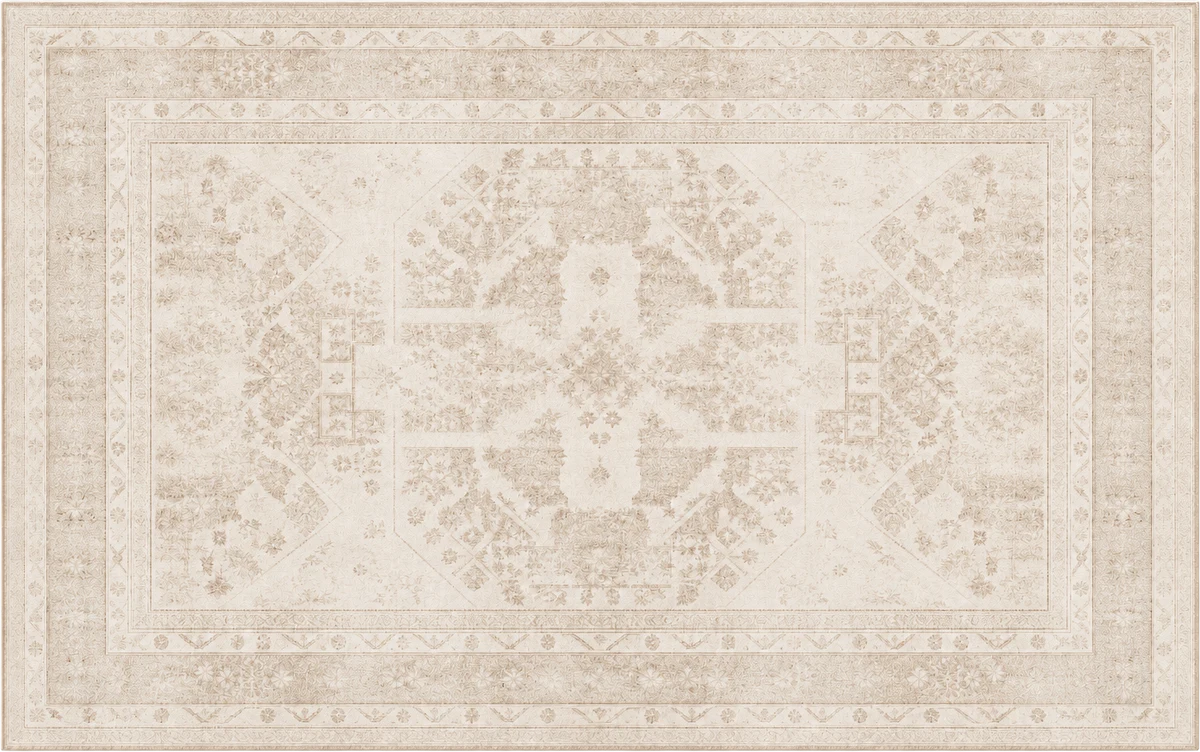 Luxturiy 8 × 10 Beige Washable RugA beige vintage-style rug for under a queen bed or around a sofa and chairs.
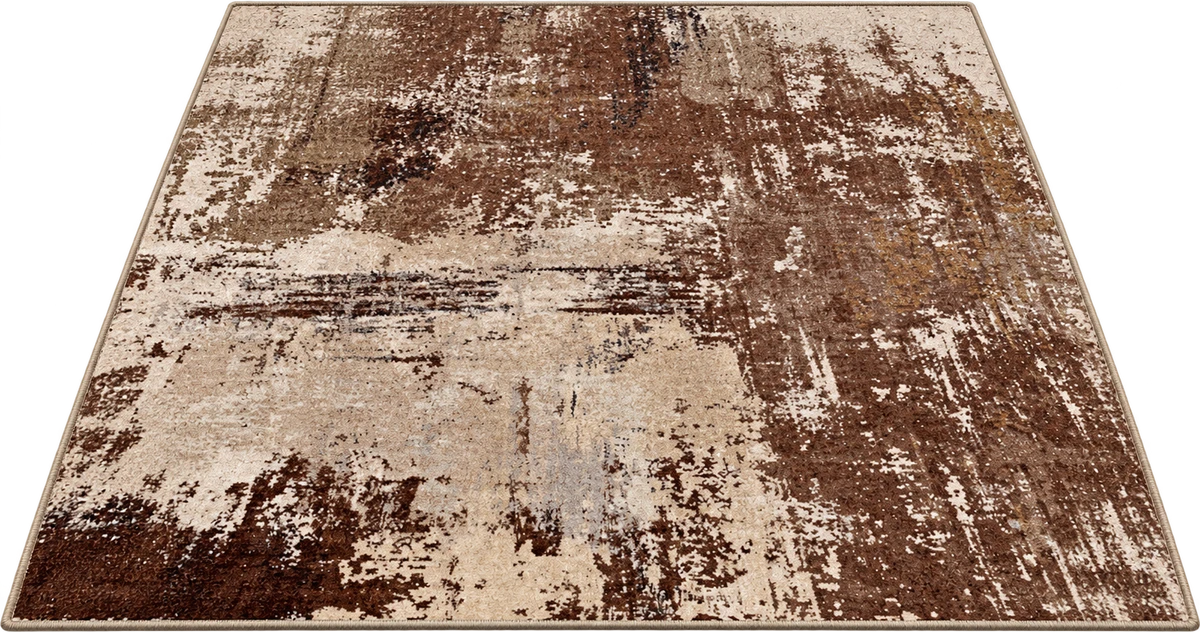 Yarooge 8 × 10 Abstract Washable RugA brown abstract rug with short fibers and a flat surface beneath furniture.
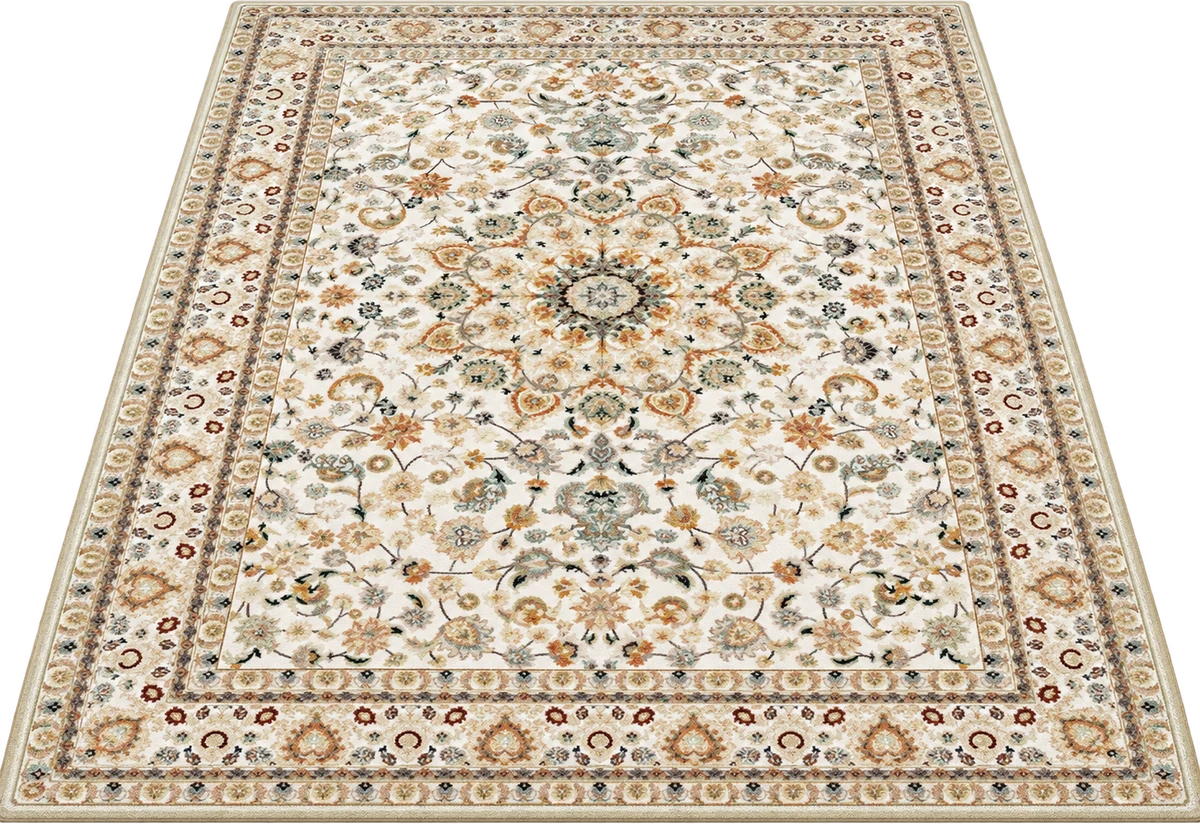 ExpediX 5 × 7 Beige Vintage RugA washable patterned rug for a reading chair and side table.
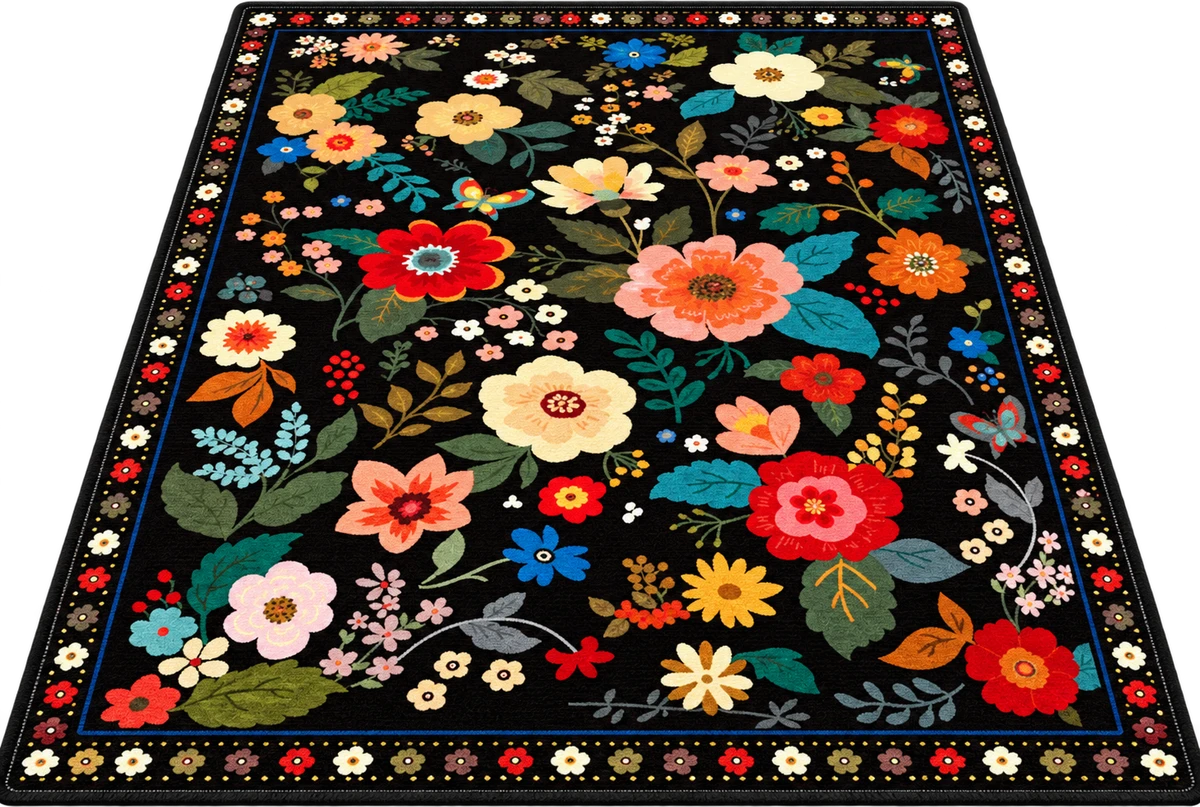 RELEANY 5 × 7 Black Floral RugA washable floral rug for a roomy kitchen floor, breakfast corner, or compact seating area.
 PLHXFR 8 × 10 Dark Green Floral RugA dark green floral rug for a bedroom or living room with space for an 8 × 10.
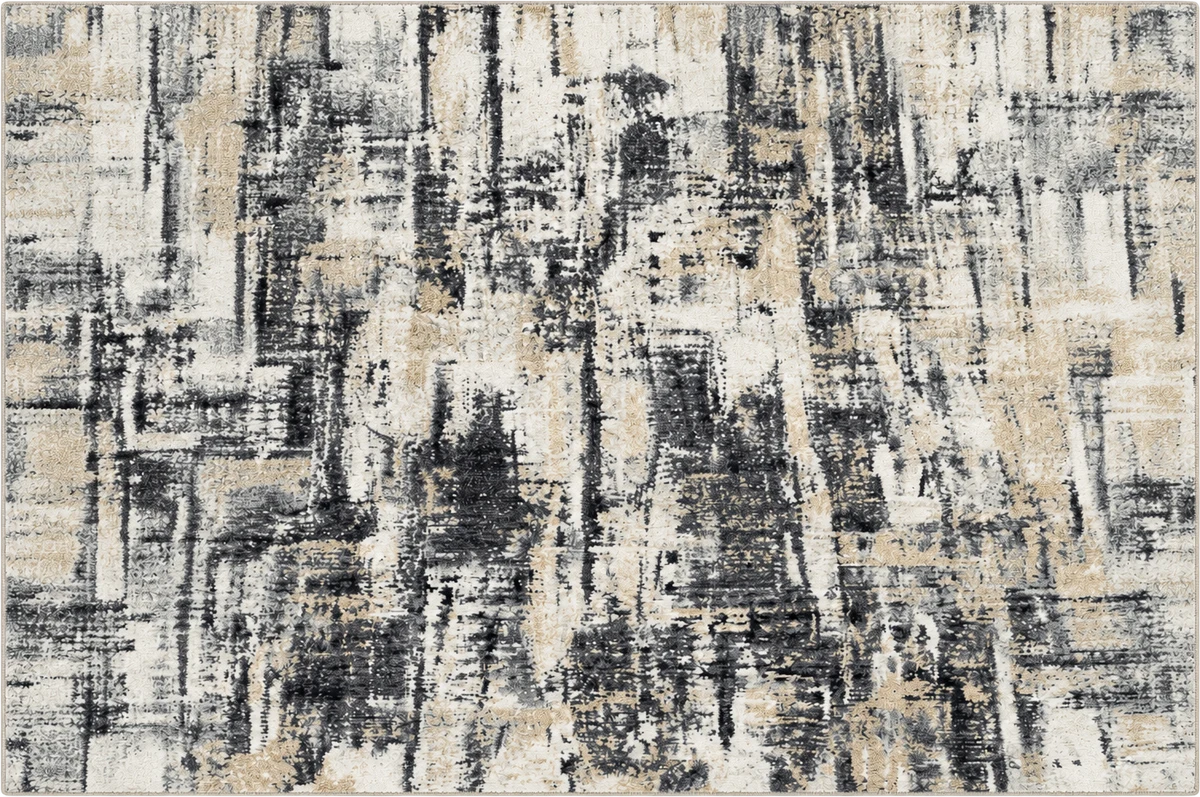 Gent drizz 8 × 10 Abstract RugA washable black, grey, and gold rug with short fibers that make it easier to slide dining chairs.
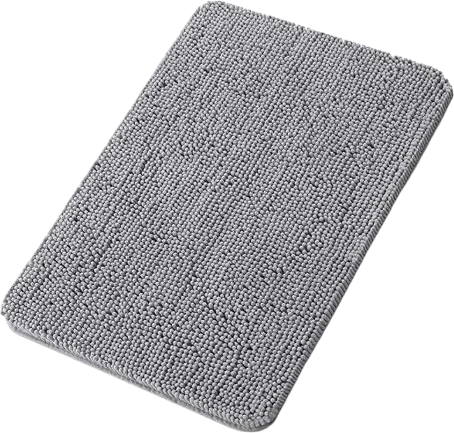 OLANLY Chenille Bath MatA compact 20 × 30-inch grey mat with absorbent chenille fibers for the bathroom.
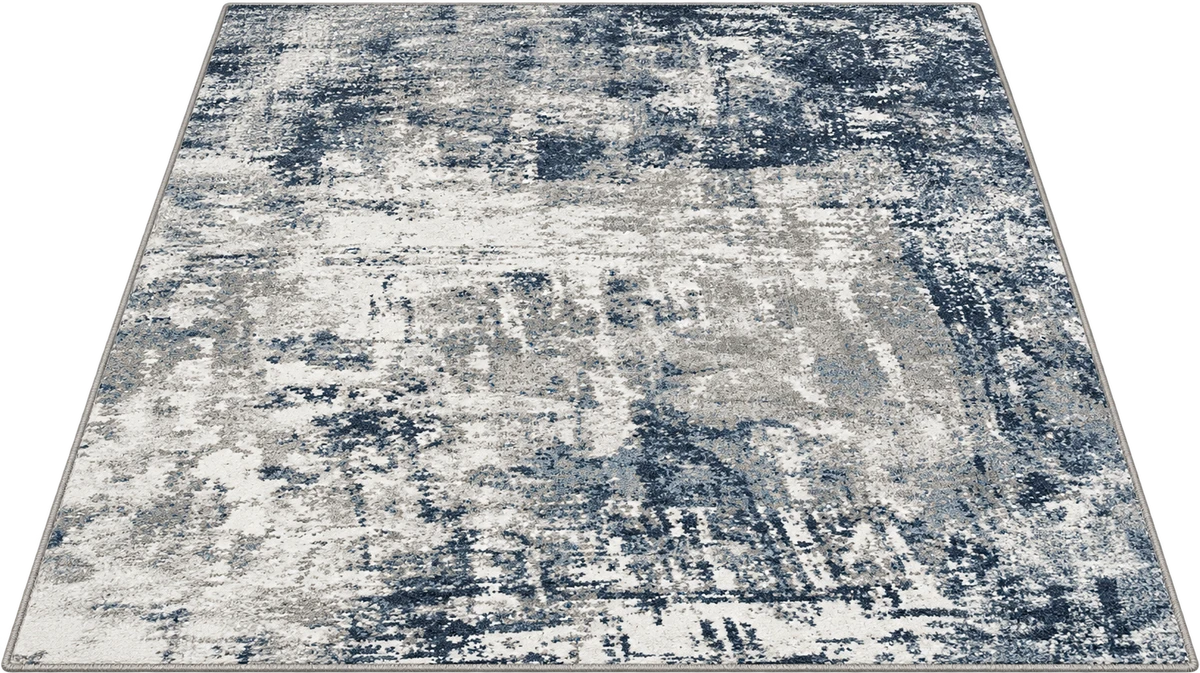 Aelenmu 8 × 10 Blue-Grey Abstract RugA washable abstract design for a living room or bedroom with blue and grey accents.
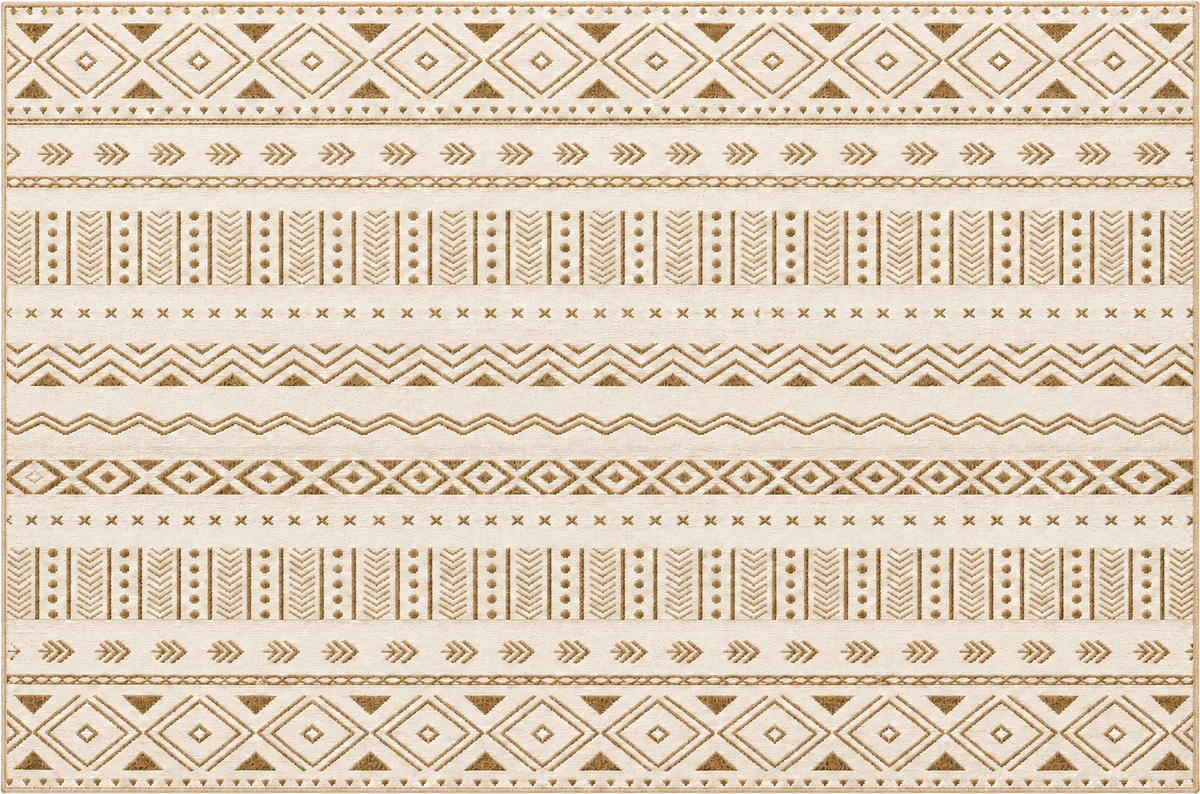 cotiled 5 × 7 Moroccan-Style RugA washable brown-and-cream geometric rug for a larger entryway or compact seating area.
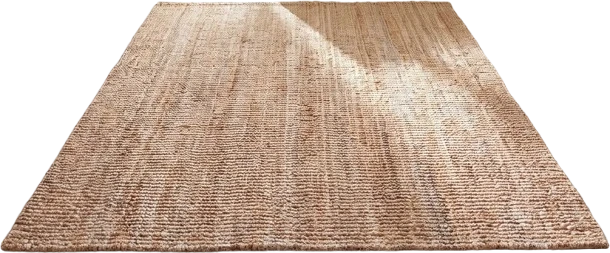 SAFAVIEH Natural Fiber 5 × 8 Jute RugA thick, textured jute rug for a small seating area. Best used on its own.