How to Layer Bedding for That Designer-Magazine Look

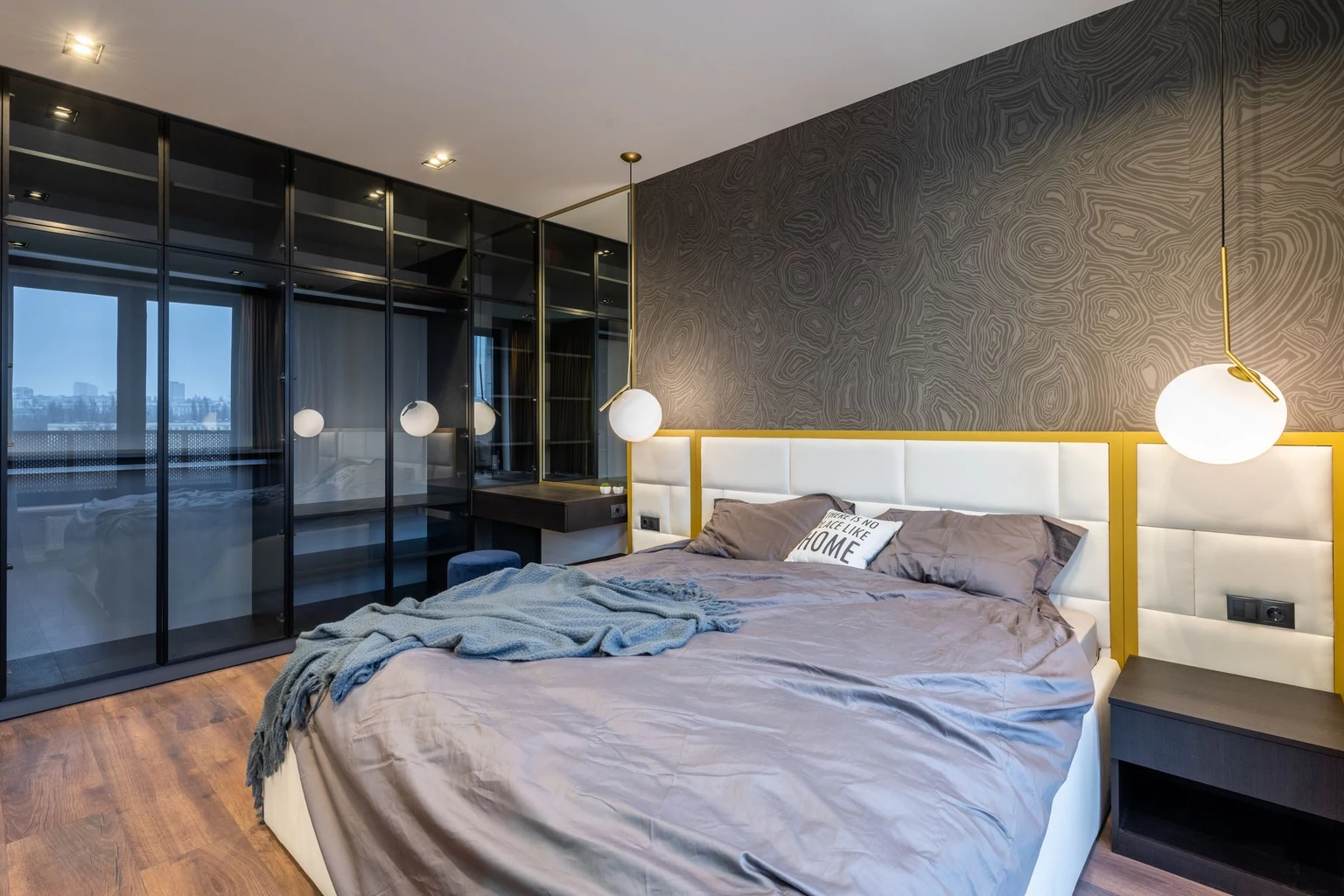
Ever saved a beautifully styled bed on Pinterest or spotted one in a designer magazine, then tried to recreate it at home?
You straighten the bedding, arrange the pillows, and add a blanket, but somehow your bed still looks flatter.
Layering your bedding is easier when you know how to arrange the pieces.
A loose duvet fold, a blanket with a different texture, and a few coordinated colors can make the bed look fuller without a mountain of cushions.
The quick answer
- Layer sheets, a lightweight quilt or blanket, and a duvet or comforter, using only as much warmth as you need.
- Fold the upper coverings back so a little of each layer shows.
- Combine two or three coordinated colors with different textures, such as smooth cotton, linen, and waffle weave.
- Arrange your sleeping pillows, then add one lumbar cushion or a pair of decorative pillows.
- A blanket at the foot adds texture, but you don’t need every extra layer to complete the look.
Here’s the bedding order, how to arrange each piece, and three complete combinations you can recreate.
1. The Bedding Order, Made Simple
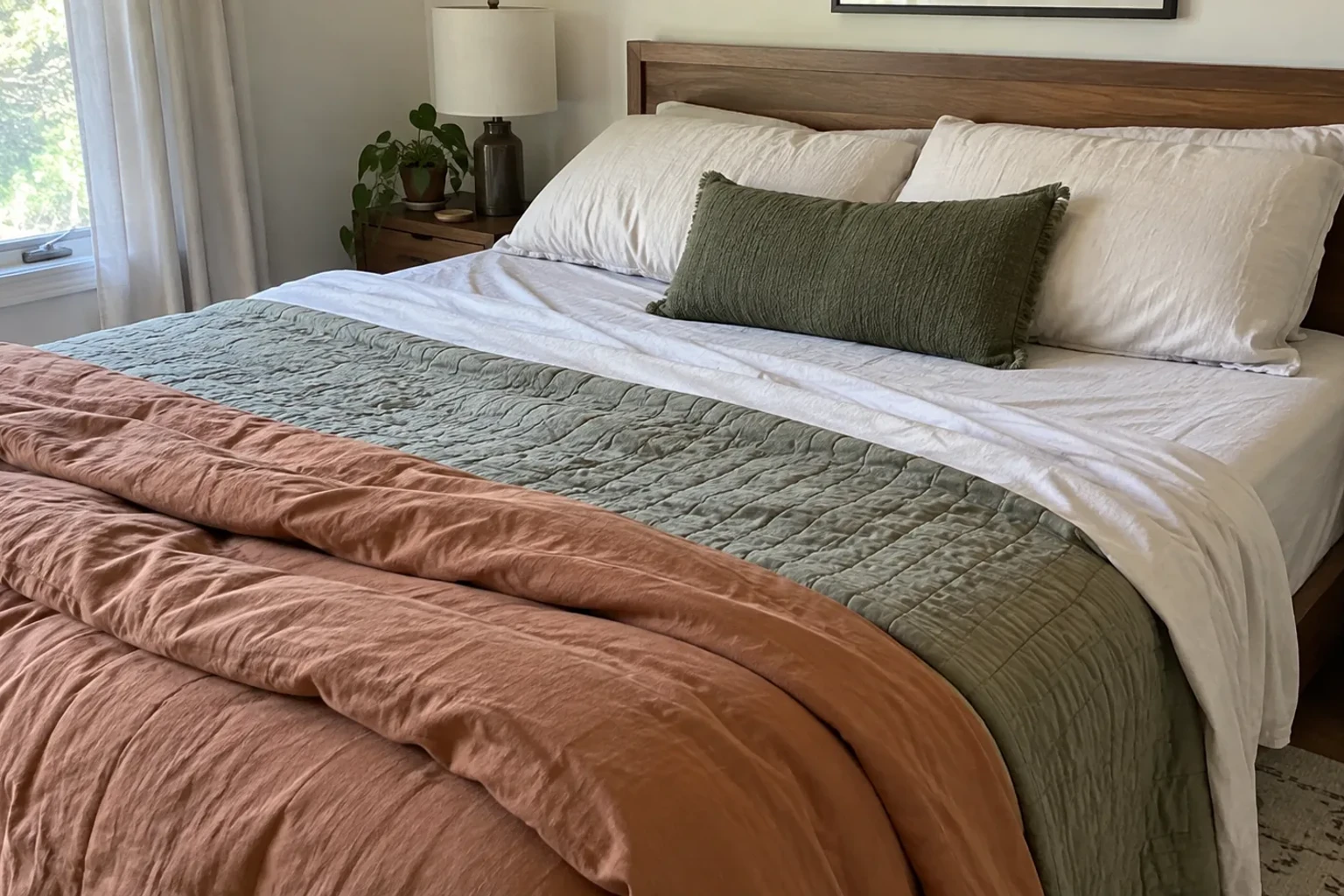
The usual order is a fitted sheet, an optional top sheet, a lightweight blanket or quilt, and a duvet or comforter. Sleeping pillows go at the head of the bed, followed by any decorative cushions.
A mattress protector belongs beneath the fitted sheet. The other layers depend on how warm you like to sleep and which fabrics you want to show.
| Bedding piece | What it does | Where it goes |
|---|---|---|
| Mattress protector | Helps protect the mattress | Beneath the fitted sheet |
| Fitted sheet | Covers the surface you sleep on | Around the mattress |
| Top sheet, optional | Adds a separate washable layer | Between you and the main covering |
| Blanket, quilt, or coverlet | Adds warmth, color, or texture | Beneath the duvet or folded across it |
| Duvet or comforter | Provides the main warm covering | Over the lighter bedding |
| Sleeping pillows | Support your head while sleeping | At the head of the bed |
| Decorative cushions and throw | Add optional color and texture | In front of the pillows or near the foot |
The names can be confusing, so here’s the difference.
A duvet is a filled insert used inside a removable cover. A comforter is a filled covering you can generally use without adding a cover.
A quilt has stitched layers and usually looks flatter than a duvet. A coverlet is a lightweight bed covering that can be used alone or layered with other bedding.
If you want a softer surface beneath the sheets, the Niagara Sleep Solution Queen Mattress Topper adds a padded layer over the mattress. It measures 60 × 80 inches and has stretchy sides designed for mattresses 8–20 inches deep.
A topper is optional and changes how the bed feels. The visible folds, fabrics, and pillows are what create the styled appearance.
2. Sheets That Look Neat and Feel Good
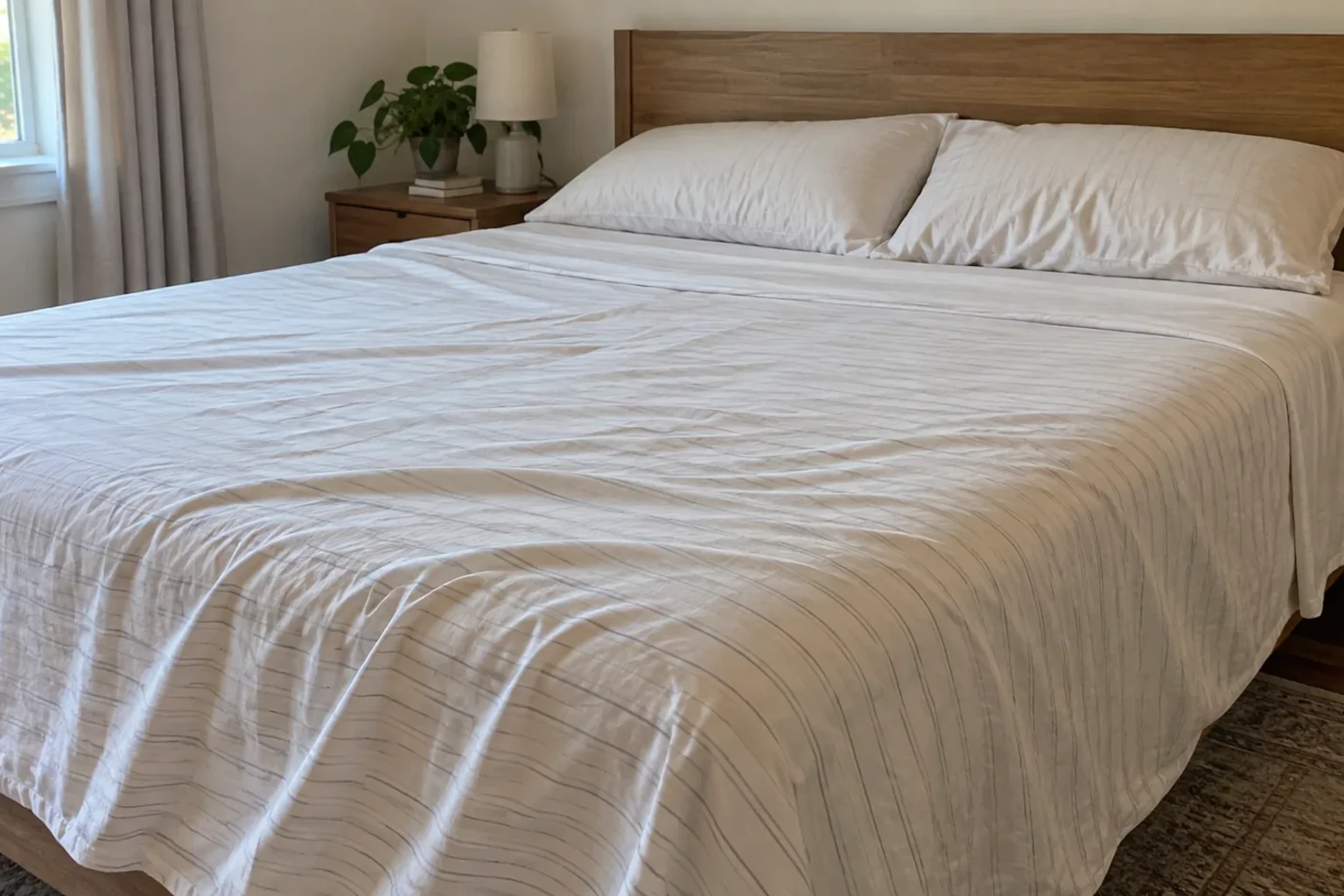
Well-fitting sheets make the bed easier to straighten, while a folded top sheet adds another visible layer.
The fitted sheet needs enough depth for the mattress and any topper. If its corners keep pulling loose, smoothing the duvet won’t solve the problem underneath.
Once the sheet fits securely, smooth out loose fabric before adding the other coverings. A few creases are perfectly fine.
Cotton or Linen: Which Look Do You Prefer?
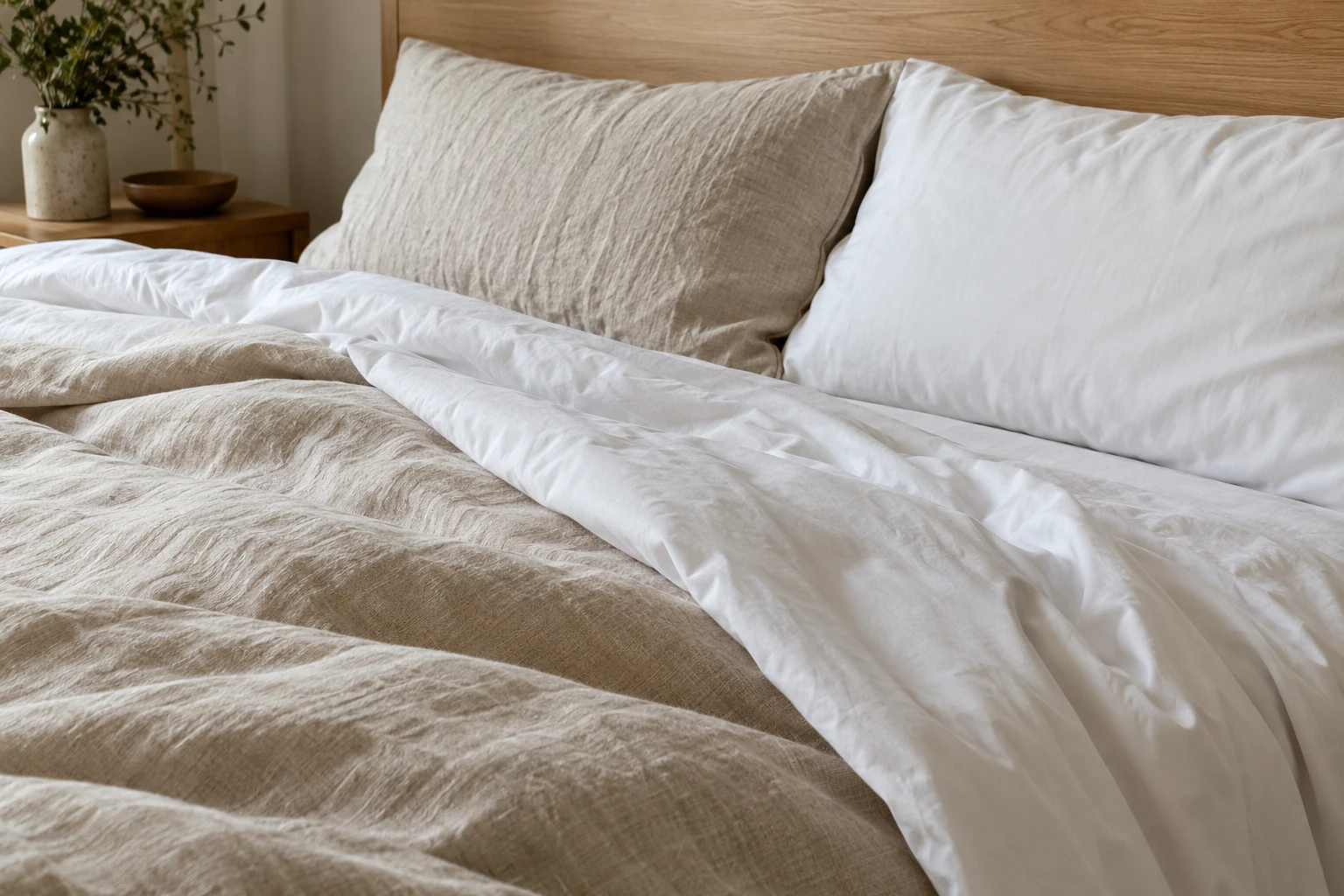
Cotton percale looks crisp, cotton sateen has a smoother finish with a slight sheen, and linen has a more textured appearance.
Choose the feel you enjoy sleeping on. White and cream are easy to combine with other bedding, while pale colors and simple stripes can add detail.
The California Design Den Queen Cotton Sateen Sheet Sets are a white, 400-thread-count option made from 100% cotton.
This two-pack includes two fitted sheets, two flat sheets, and four pillowcases. Having a second set also makes changing the bed easier on laundry day.
For a relaxed linen look, leave the natural creases visible. For a more polished cotton finish, straighten the sheet before adding the quilt and duvet.
The Top-Sheet Fold
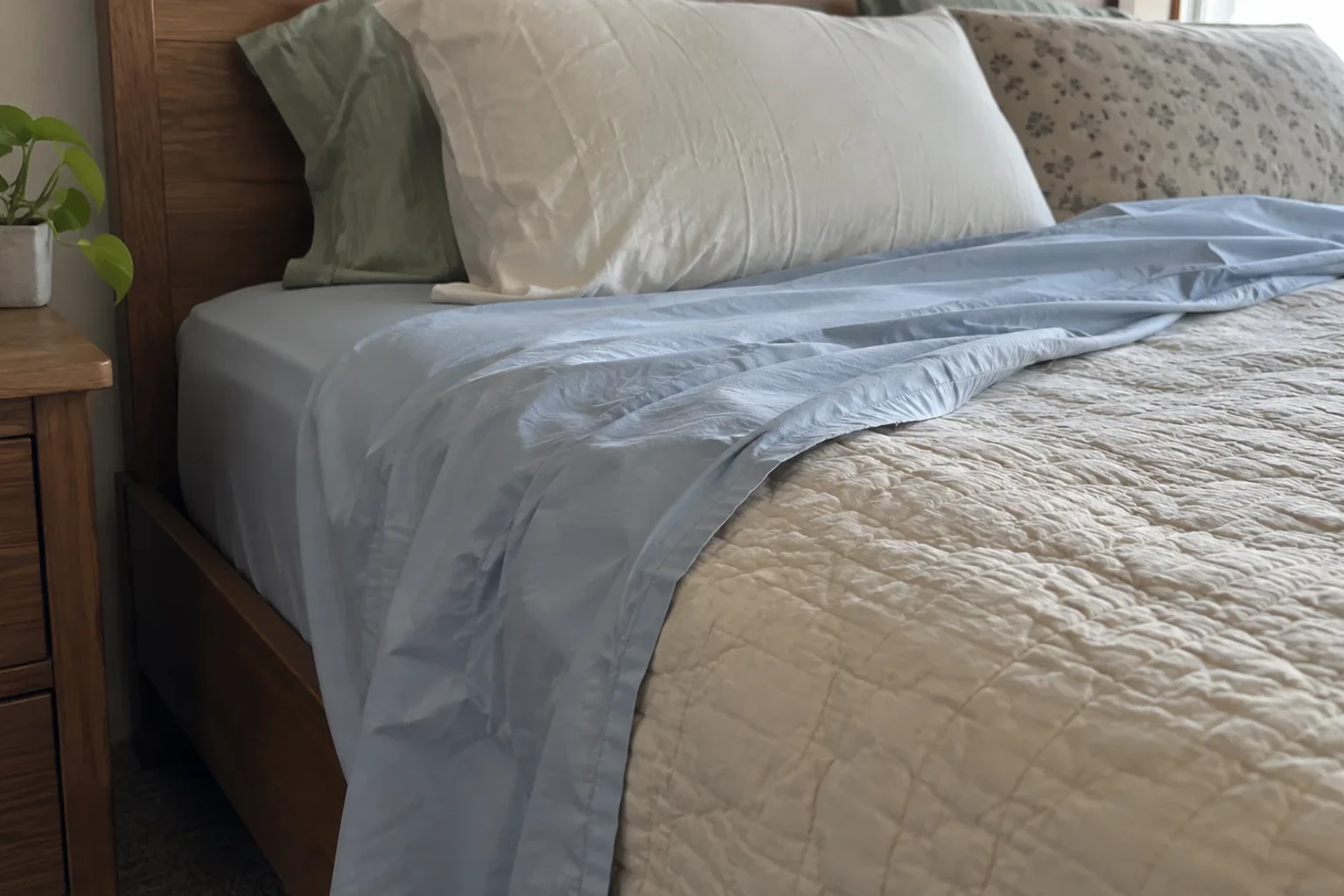
Fold the top sheet over the upper edge of your blanket, leaving enough fabric visible to show its color or pattern.
For a one-sided print, place the printed side downward. When you turn the sheet back, the print will face upward.
There’s no exact width you need to follow. A visible band is enough.
If you don’t use a top sheet, leave it out. Contrasting pillowcases or a quilt folded over the duvet can provide the extra detail.
3. The Fold That Makes a Duvet Look Fuller
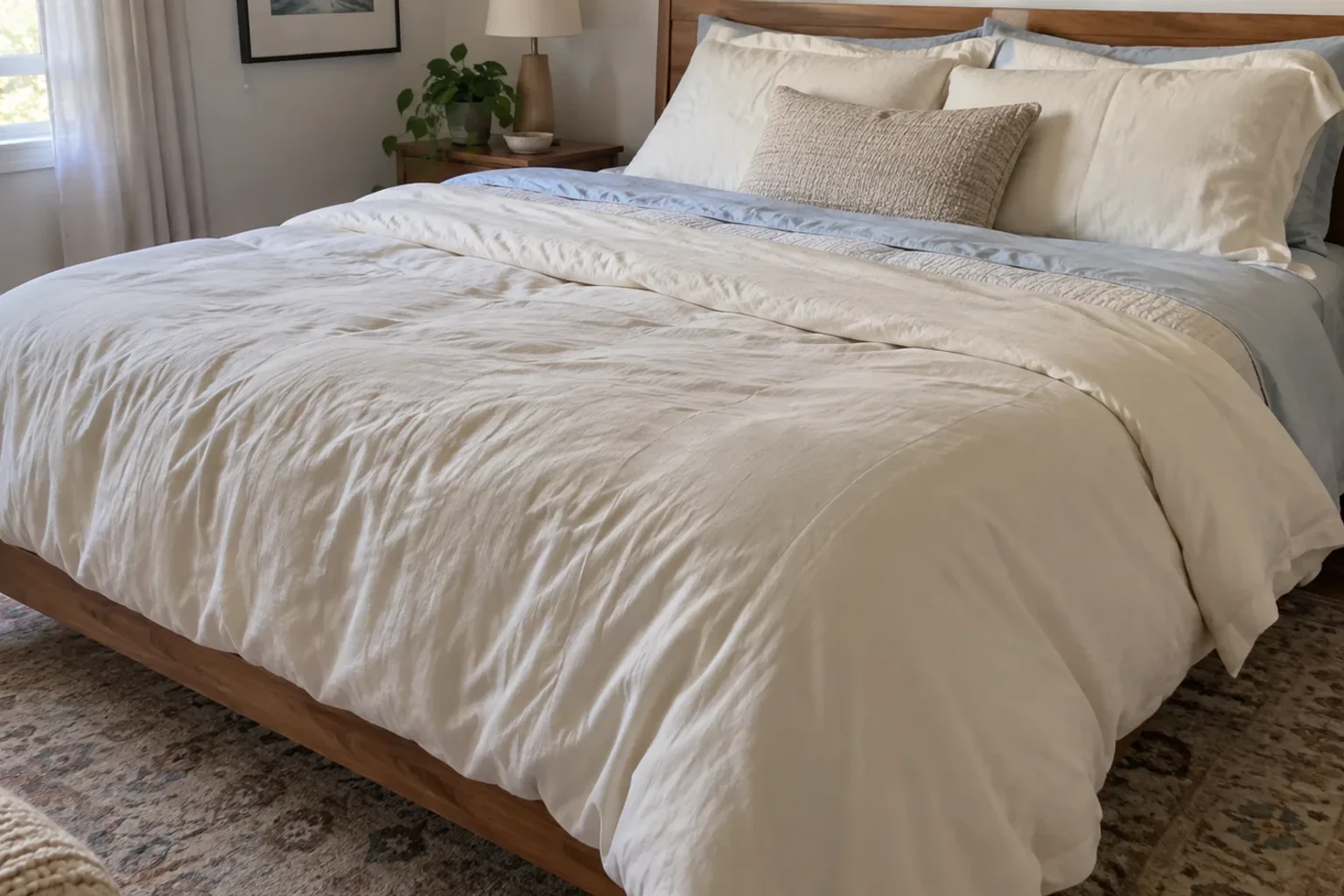
A duvet looks fuller when the filling is evenly spread and the fold stays loose. Pulling it tightly across the mattress flattens that effect.
Before buying more bedding, try changing the fold. It can make a bigger difference than another cushion.
A Full Duvet With Even Coverage
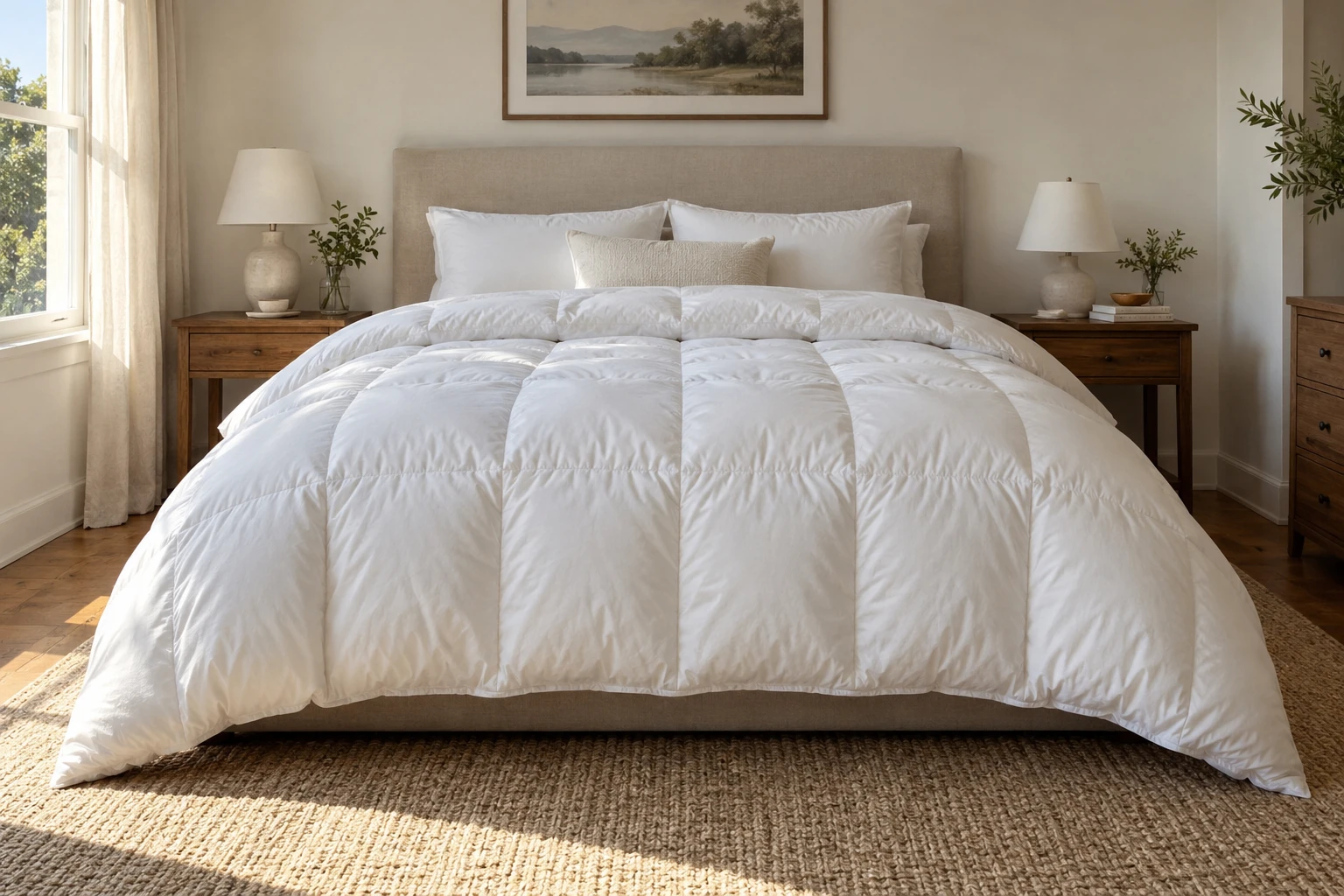
The insert should fill the cover properly, with enough fabric hanging down both sides of the mattress.
Shake the duvet gently to spread the filling, then straighten the insert’s corners inside the cover. Secure the ties to the insert’s loops where they’re provided.
The Bedsure Queen Comforter Duvet Insert has down-alternative polyester filling, box stitching, and eight attachment tabs. You can use it as a white comforter or inside a duvet cover.
This queen option measures 88 × 88 inches, so a cover with matching dimensions will help avoid empty edges.
A thick mattress uses more of the covering’s width, leaving less fabric hanging down the sides. If you’re changing bed sizes, our queen vs king bed size guide explains the difference in mattress width.
Two Ways to Fold It
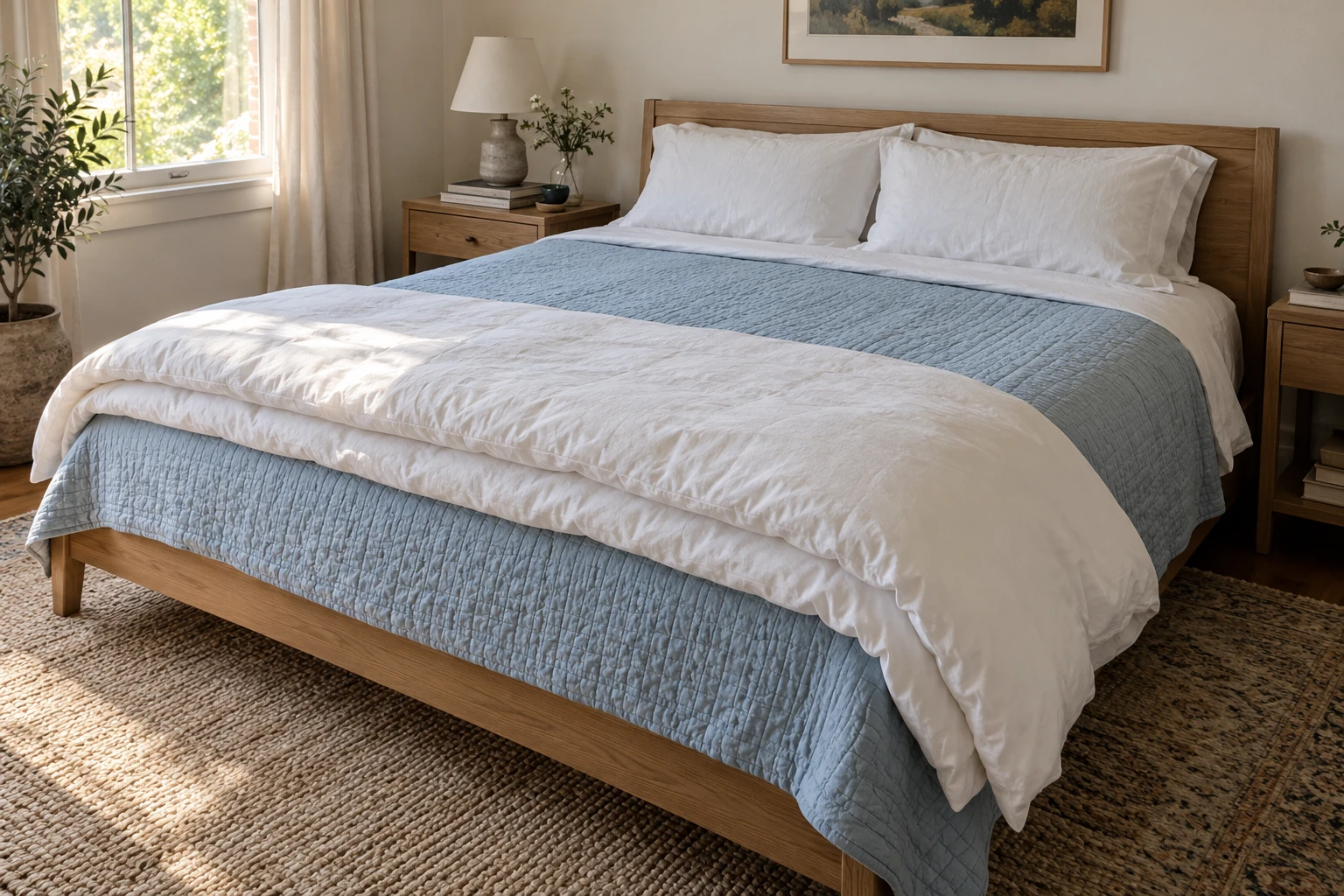
A fold at the top reveals the sheet and blanket beneath. A duvet folded at the foot shows more of the quilt.
For the first arrangement, spread the duvet evenly over the mattress. Turn the upper portion toward the foot, exposing the lighter bedding below.
Keep the fold loose rather than pressing it flat. That rounded fold helps the duvet look fuller.
For the second arrangement, spread a quilt or coverlet over the bed. Fold the duvet into a broad section across the lower part of the mattress.
This is useful when you sleep under the quilt and only pull up the duvet on colder nights.
Do You Really Need Two Duvets?
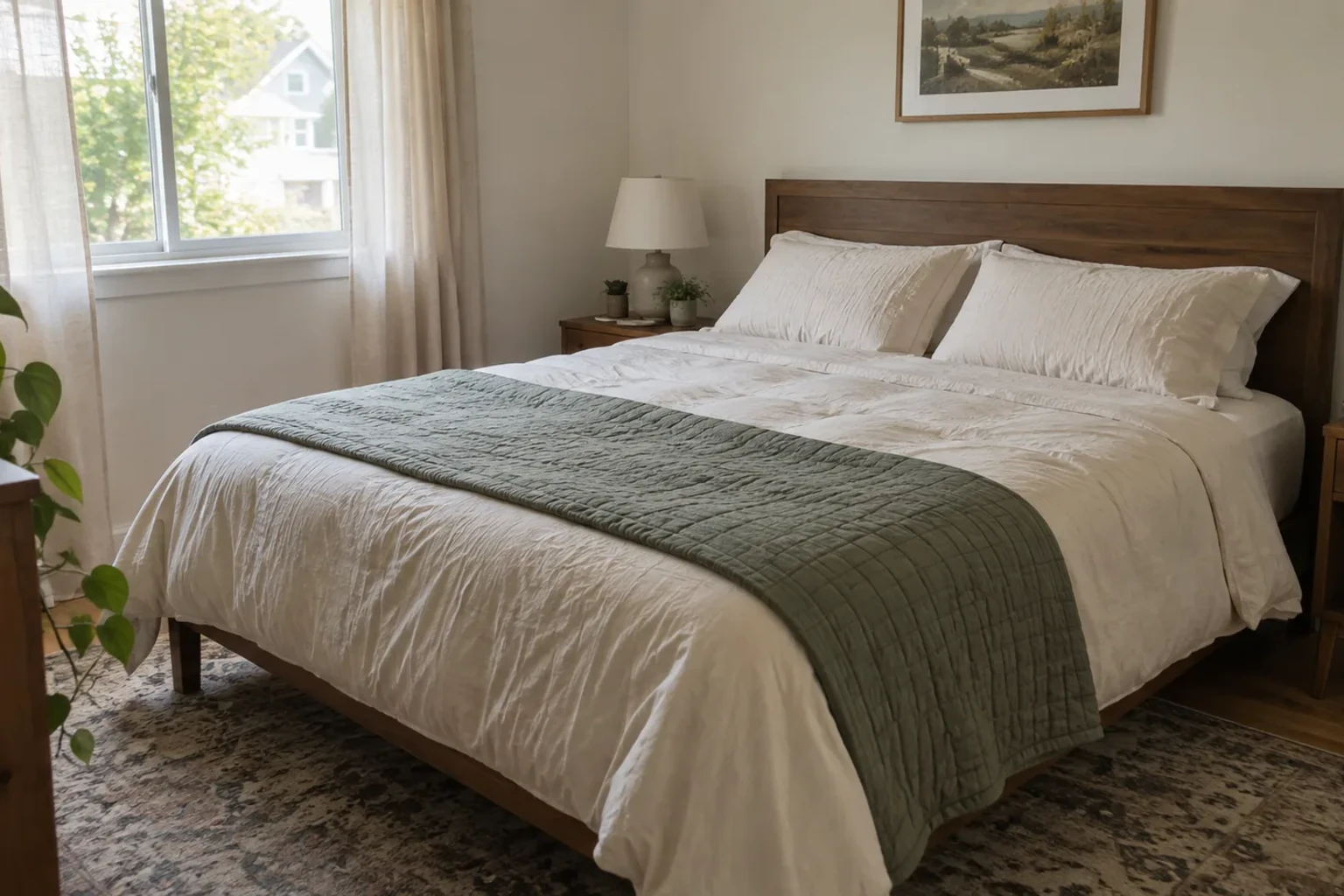
No. A single duvet is enough for a layered bed.
Some photographed beds use extra inserts or a second duvet to create more fullness. That also means more warmth, weight, and bedding to move at night.
For an everyday arrangement, use one well-fitting insert and a generous fold. Different fabrics and a few pillows can provide the rest of the detail.
If you sleep warm, a lighter quilt with the duvet folded at the foot may suit you better.
4. A Quilt or Blanket That Actually Shows
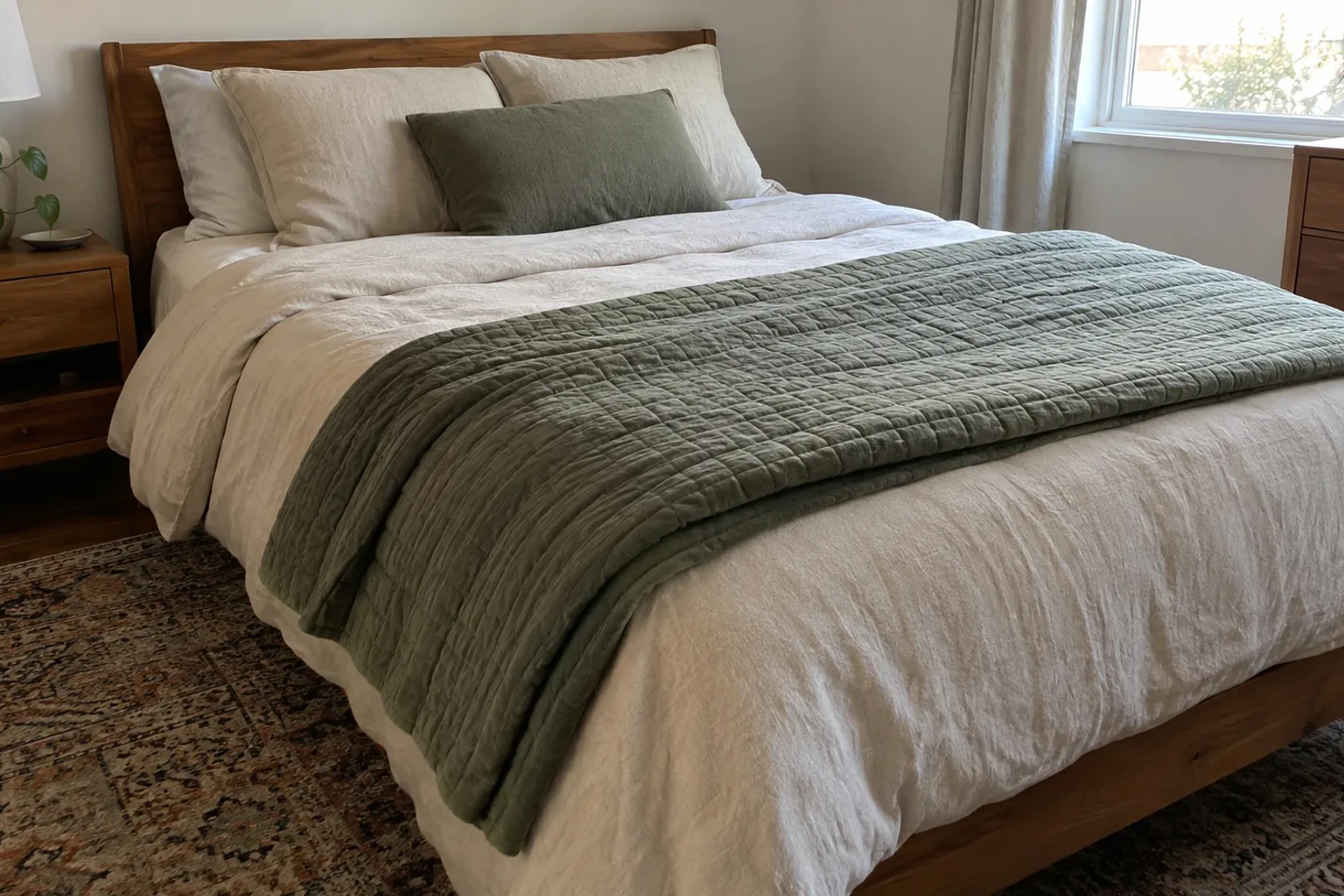
A quilt or blanket adds more visual detail when its stitching, weave, or color differs from the duvet.
Two smooth white coverings can blend together. A white duvet with an oatmeal waffle blanket is easier to distinguish, even though the colors are similar.
A few useful textures include:
- Waffle weave: a raised grid pattern.
- Cotton gauze: a softly crinkled fabric.
- Quilting: visible stitching across flatter layers.
- Matelassé: fabric woven with a raised pattern.
- Chunky knit: large, clearly visible loops of yarn.
One contrasting texture is often enough.
Under the Duvet for a Neat, Layered Fold
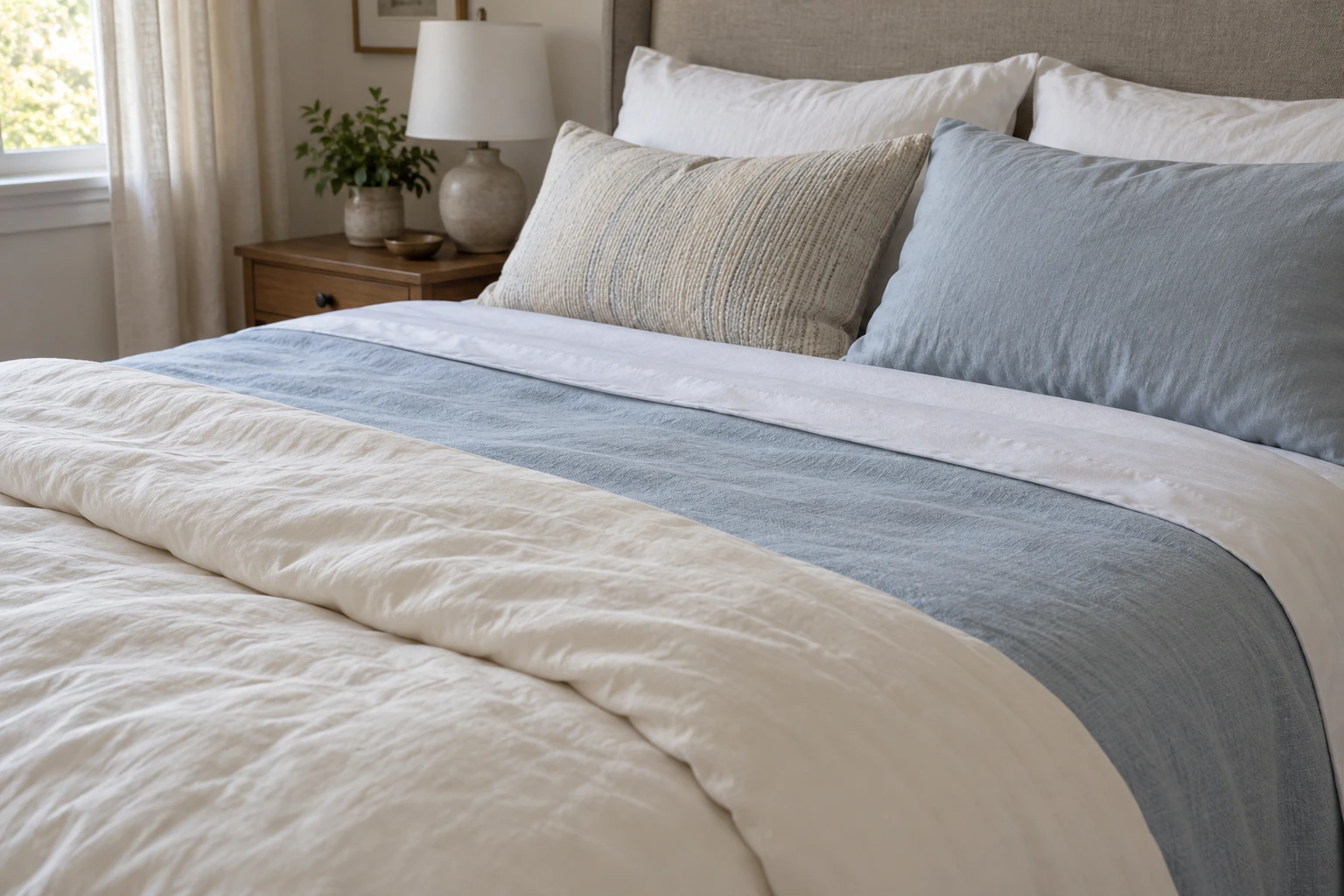
Place the blanket over the top sheet, then fold the duvet back far enough to reveal it.
Leave some of the sheet visible above the blanket, too. You’ll have three distinct edges near the pillows.
For example, a white sheet, pale blue blanket, and cream duvet create a layered look without any patterned fabric.
This arrangement works well when the blanket is something you actually sleep under.
Across the Foot for Color and Texture
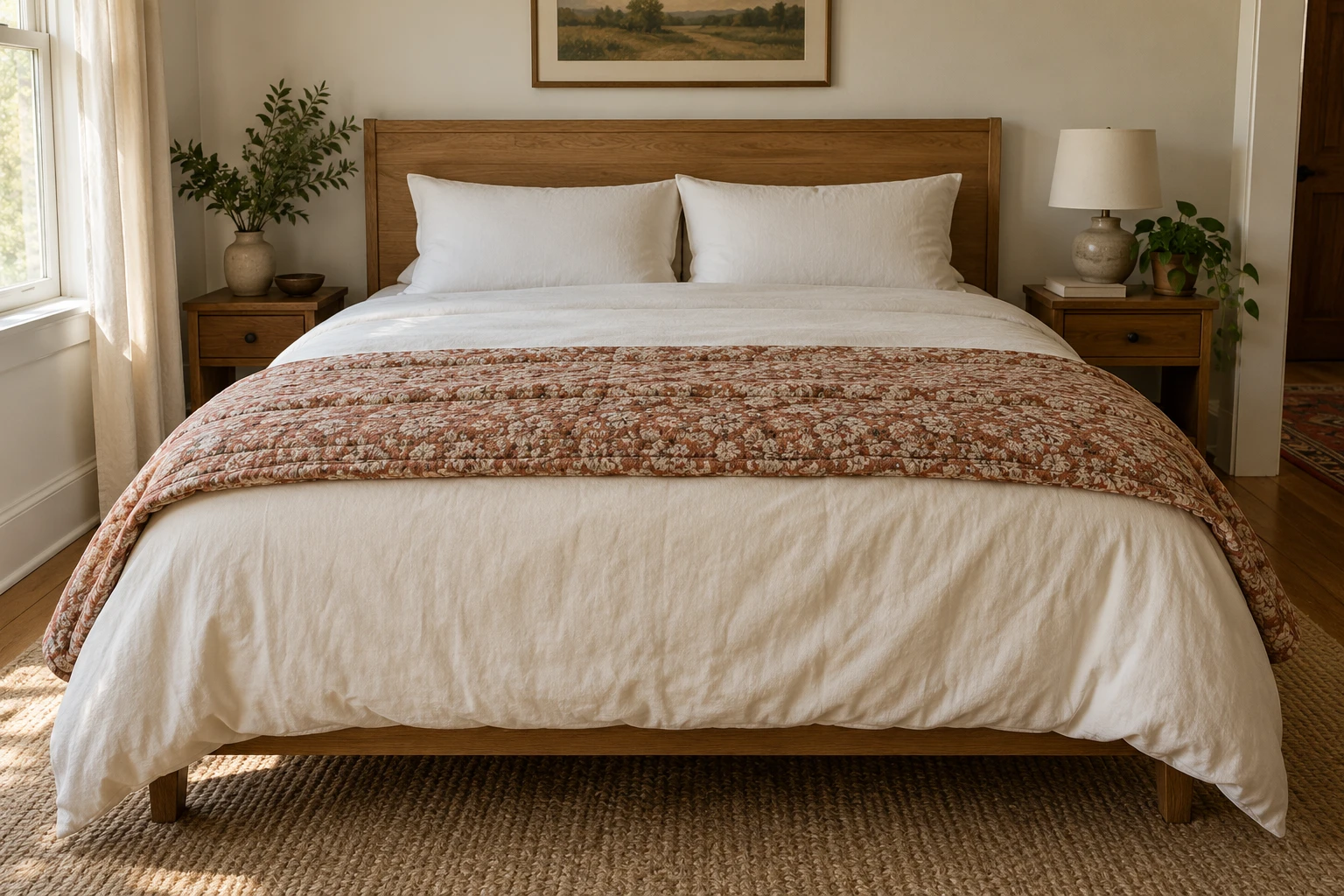
Fold the quilt or blanket across the lower part of the bed when you want it mainly for decoration or occasional warmth.
A broad, flat fold shows more of the fabric than a narrow roll. It also avoids a bulky ridge across the mattress.
A patterned quilt works well here because you can show the print without covering the whole bed. A plain waffle or gauze blanket gives a simpler finish.
If the quilt is your favorite piece, spread it over the mattress and fold the duvet at the foot instead.
5. Colors and Textures That Work Together
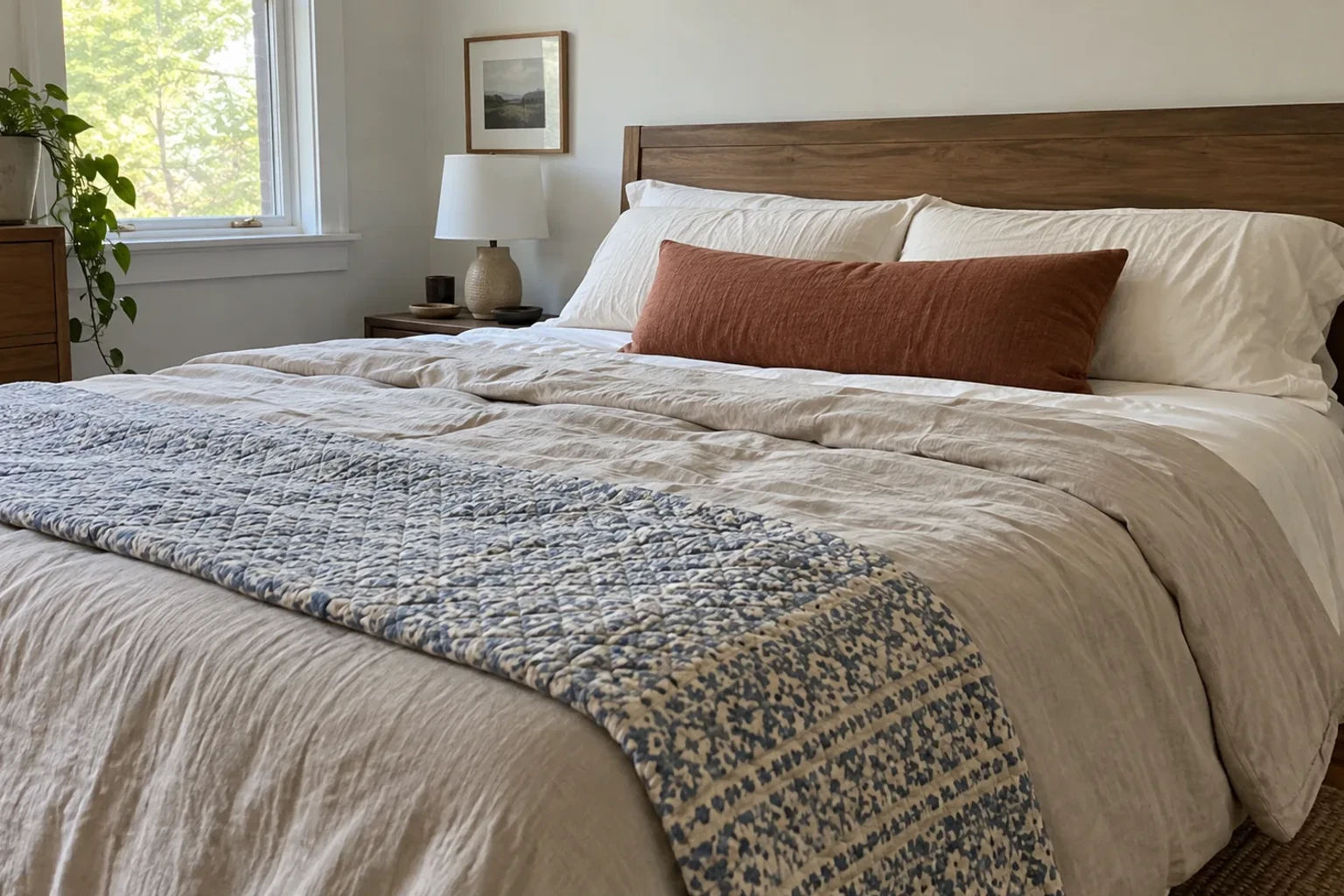
Two or three coordinated colors make it easier to combine bedding without making the bed look busy.
A quilt, duvet cover, or cushion you already like can guide the rest of the choices.
Two or Three Colors Are Plenty
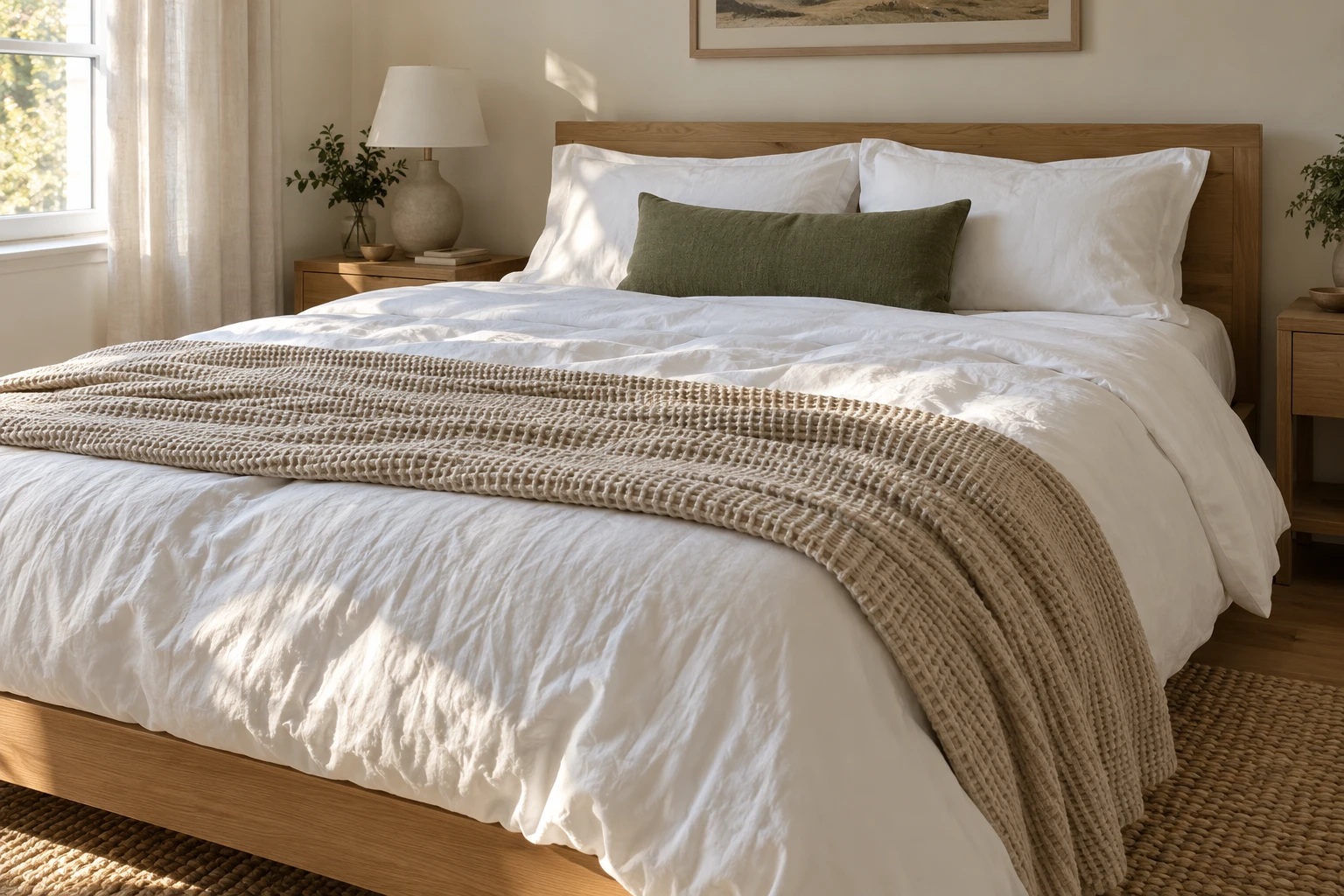
Use one main color, a second color for contrast, and an optional accent.
| Main bedding | Second layer | Small accent |
|---|---|---|
| White | Oatmeal | Olive |
| Ivory | Warm brown | Rust |
| White | Soft blue | Navy |
The main color usually covers the largest area, such as the duvet. The second color can appear in a blanket, while the accent might be limited to one cushion.
If a patterned quilt already contains cream, blue, and rust, you have a ready-made combination. Cream sheets and a rust cushion will work with it.
You can find more ideas for neutral colors and natural textures in our Japandi style guide.
One Pattern, Several Textures
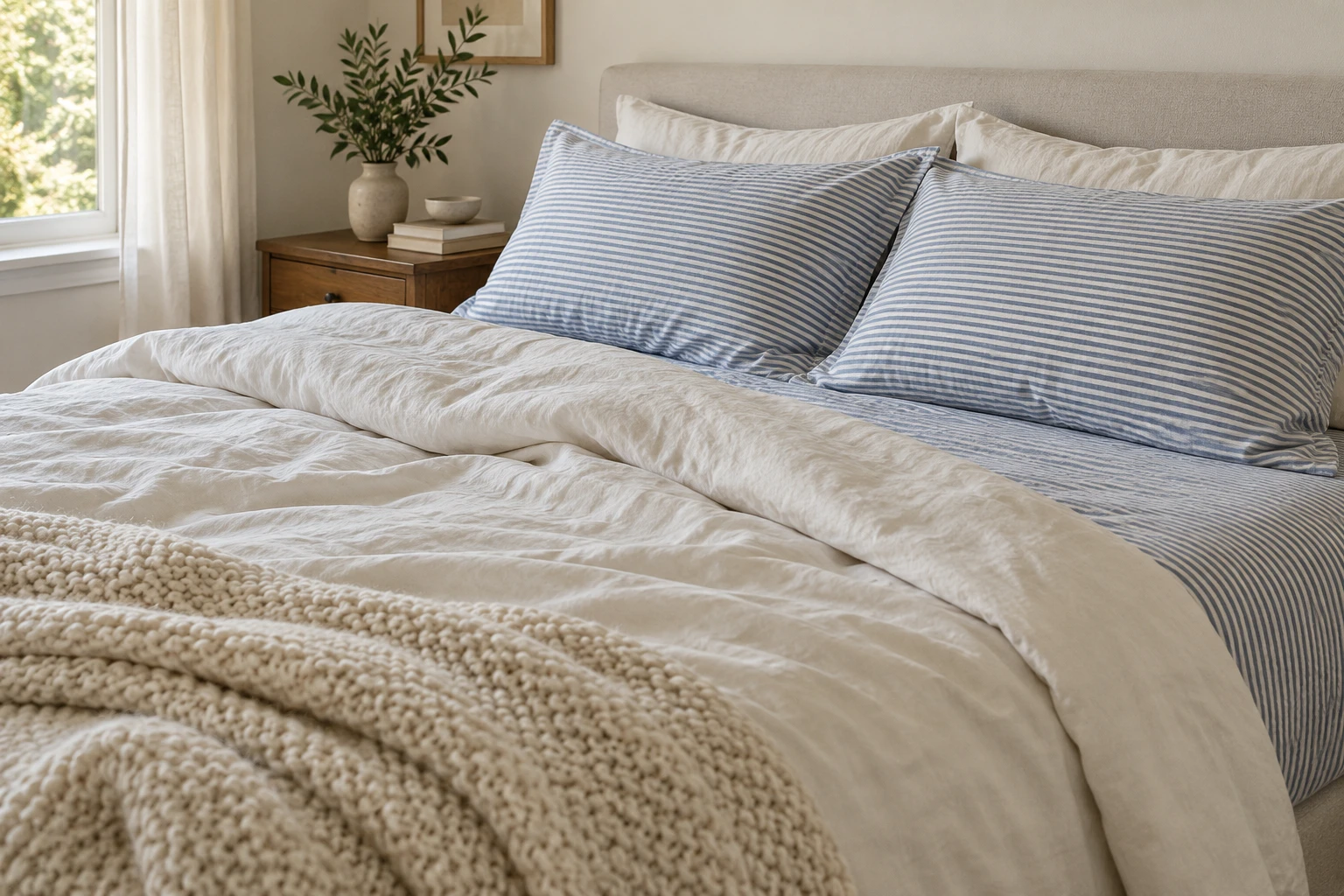
One noticeable pattern is an easy way to add variety without having to coordinate several prints.
That pattern could appear on the sheets, quilt, or decorative cushion. The other pieces can be plain but different in texture.
For example, striped sheets, a linen duvet, and a chunky-knit throw give you three visibly different fabrics.
An all-white bed works the same way. Smooth sheets, a stitched coverlet, and a textured duvet cover can look layered without introducing another color.
6. A Pillow Arrangement You Can Live With

Your sleeping pillows and one decorative cushion can look complete. Extra square pillows are optional when you want a fuller arrangement.
The practical question is how many you’re happy to move every evening.
The Simple Arrangement
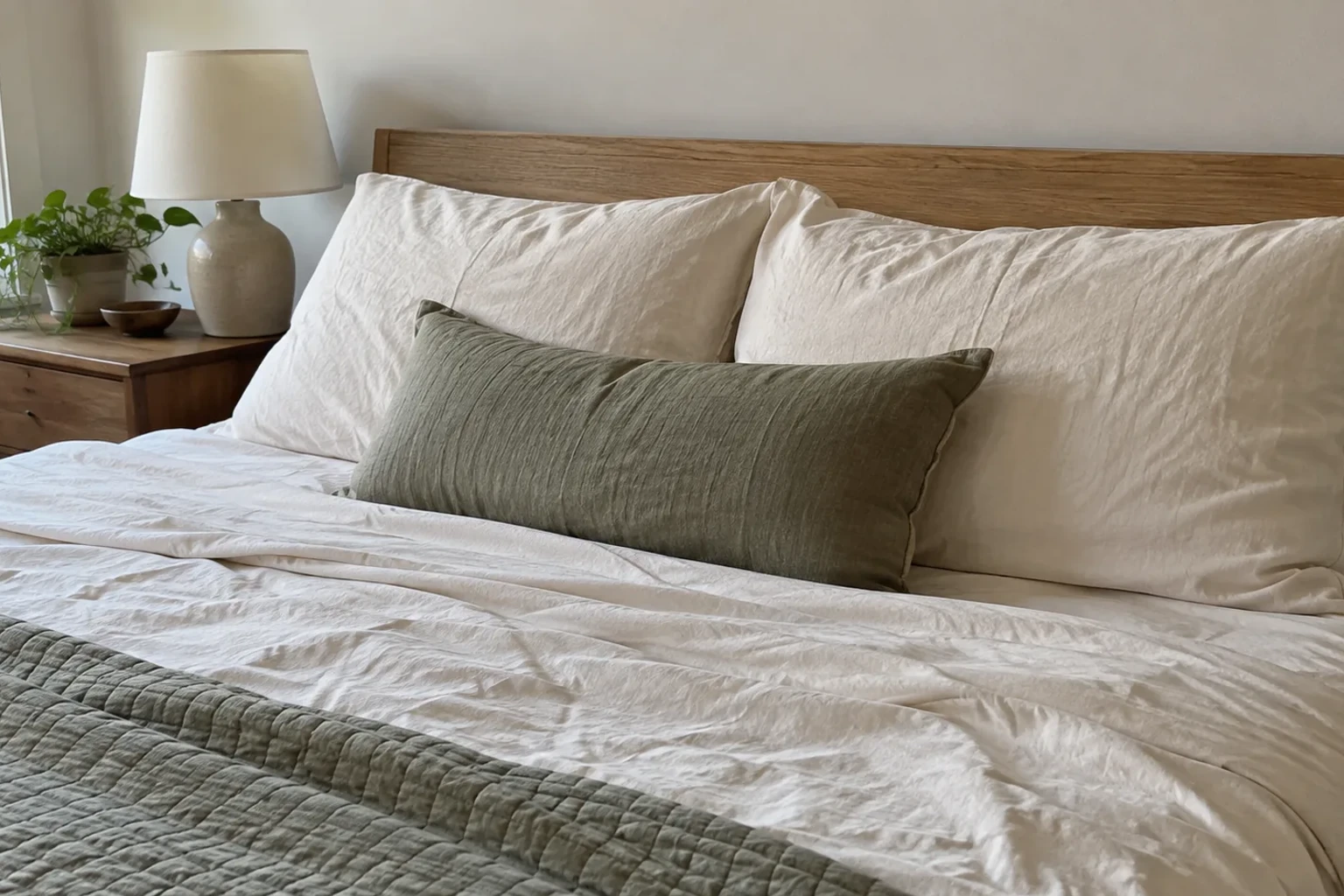
Arrange your sleeping pillows neatly, then place one lumbar cushion in front.
A lumbar cushion is the long rectangular kind. It adds a different shape without another tall row of pillows.
If you sleep with four pillows, stack them in two pairs and position the lumbar in front.
This is a good place for a small print or darker color when the rest of the bedding is plain.
The Fuller Arrangement
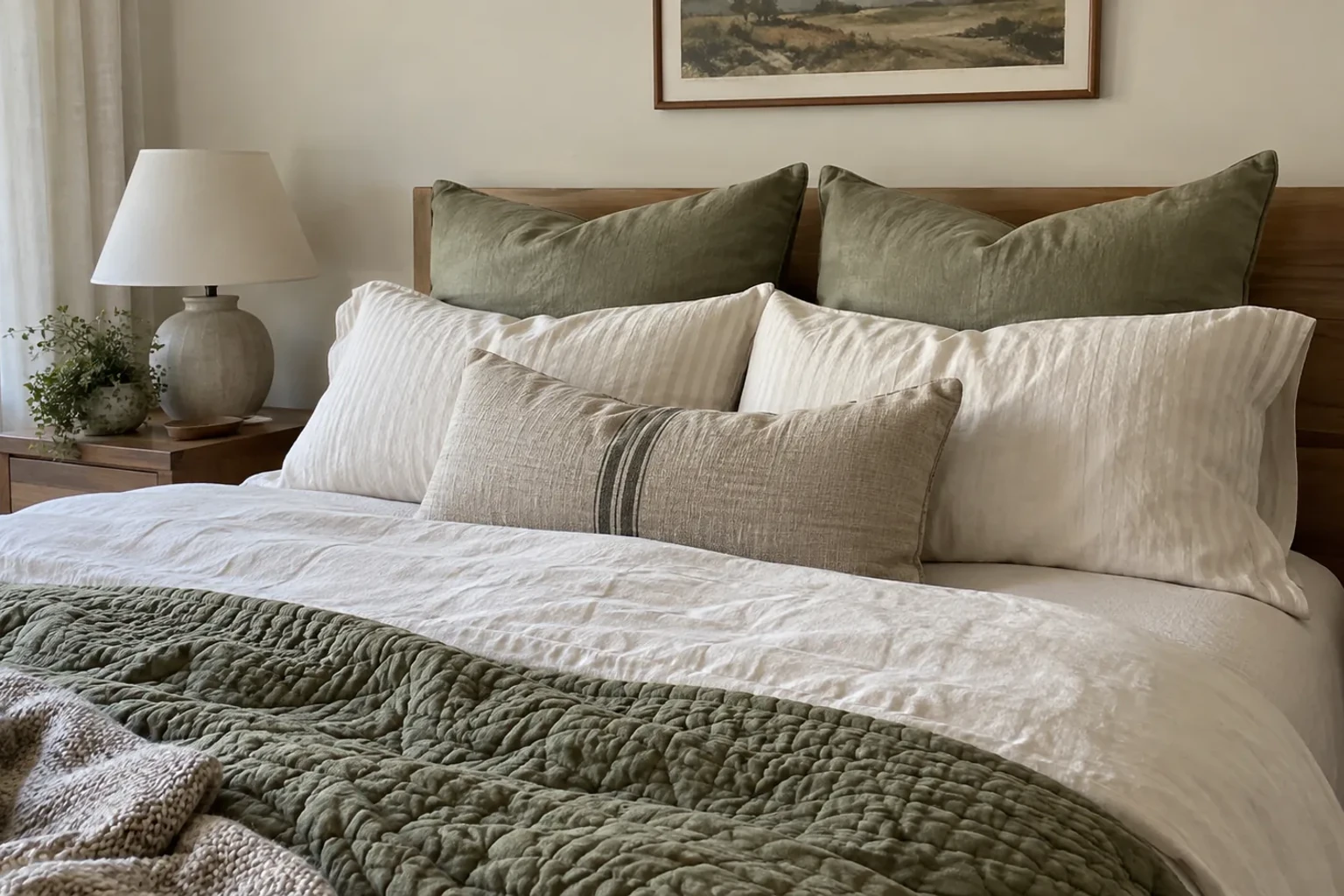
Place larger pillows behind smaller ones, keeping each row partly visible.
For a full arrangement, Euro pillows can go against the headboard, followed by sleeping pillows and a smaller cushion.
Two Euros can suit a queen, while three can fill the width of a king. They aren’t essential, especially with a low headboard.
A simpler alternative is your sleeping pillows with two decorative square cushions in front. This adds fullness without another large row.
Why the Insert Matters
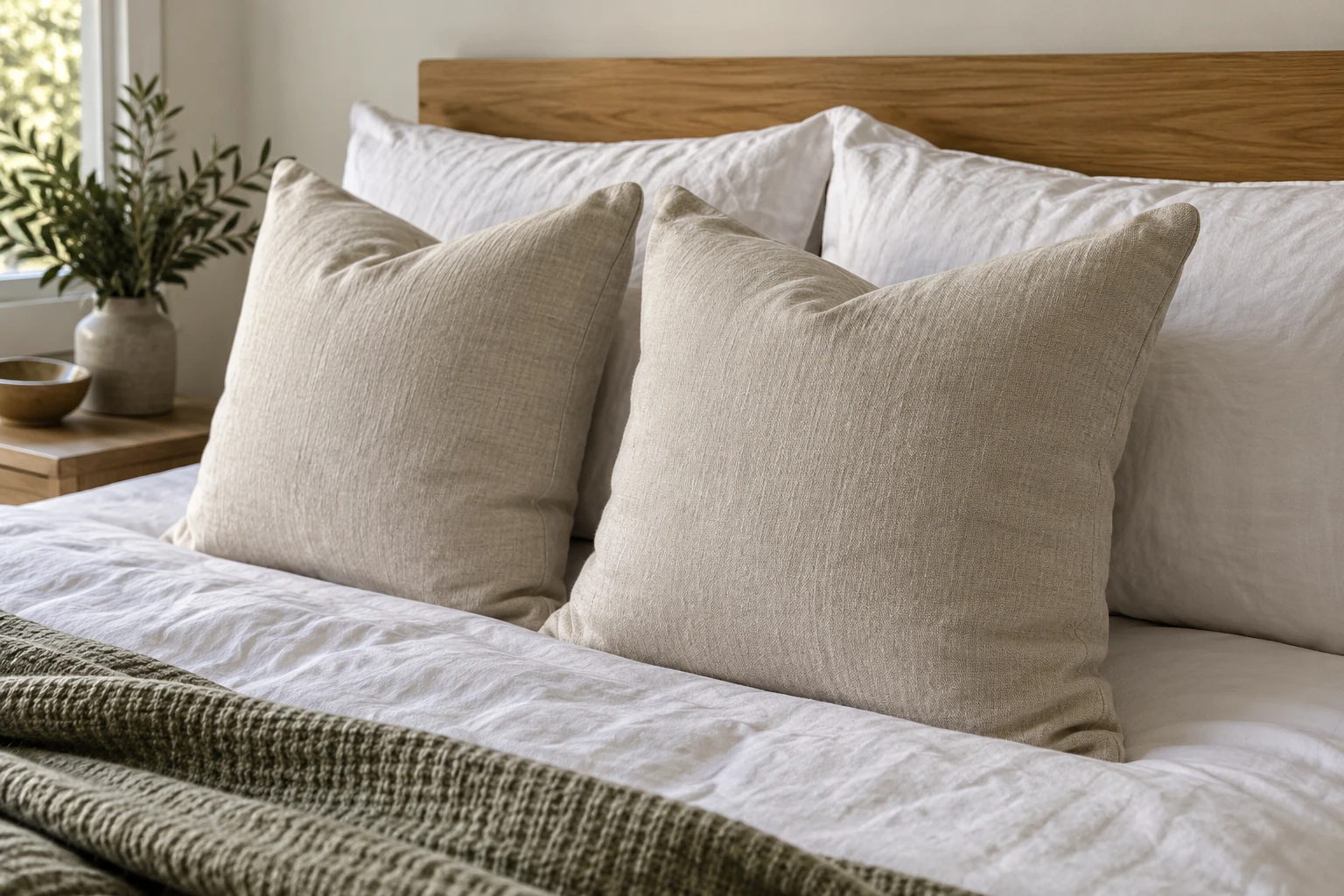
The insert should fill the cushion cover without leaving loose corners or excessive empty fabric.
The Pillowflex 20 × 20-Inch Synthetic Down Pillow Inserts come as a pair and use down-alternative filling. They’re decorative square inserts, smaller than the large Euro pillows used at the back of some arrangements.
Use them for a pair of accent cushions in front of your sleeping pillows. Matching covers keep the arrangement simple; different textures in the same color add more variety.
For the sleeping pillows you already own, our guide to washing pillows without ruining them covers cleaning and care.
7. The Throw Blanket: A Finishing Touch, Not a Requirement
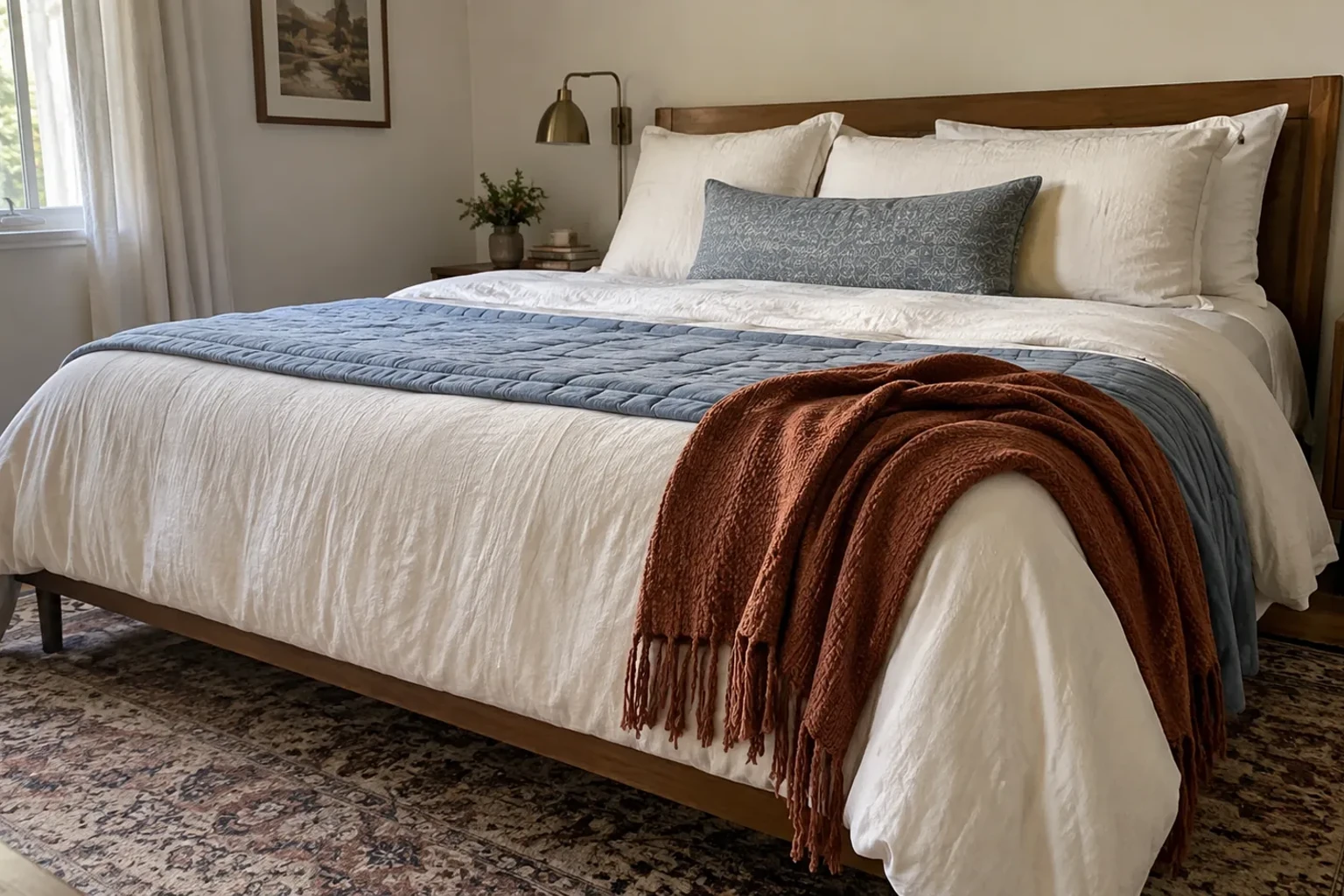
A throw is useful when you want another texture, a small amount of color, or an extra blanket nearby.
If a patterned quilt already covers the foot of the bed, you may not need one.
For a neat finish, fold the throw into a broad rectangle. For a relaxed arrangement, fold it loosely over one lower corner and let a little fabric hang over the side.
The SAMIAH LUXE Chunky Knit Throw Blanket has a thick chenille cable-knit texture in buttercream. It measures 50 × 70 inches, making it a useful accent over a corner of the bed.
That placement is particularly suitable for a king bed, where a throw this size won’t provide the same side overhang as a full-size bed blanket.
8. Three Magazine-Inspired Bedding Looks to Try
A short list of pieces makes the finished look easier to recreate. These combinations use the same basic layering order.
Crisp Hotel White

Combine white sheets and a white duvet or comforter with a textured coverlet and neatly arranged pillows.
The California Design Den cotton sateen sheets and Bedsure white comforter fit this combination.
Fold the comforter back to reveal the sheet, then place a white or ivory coverlet across the lower part of the bed.
Keep the pillowcases coordinated and arrange them evenly on both sides.
The formula: White sheets + white duvet or comforter + textured coverlet + matching pillows.
Relaxed Linen and Warm Neutrals
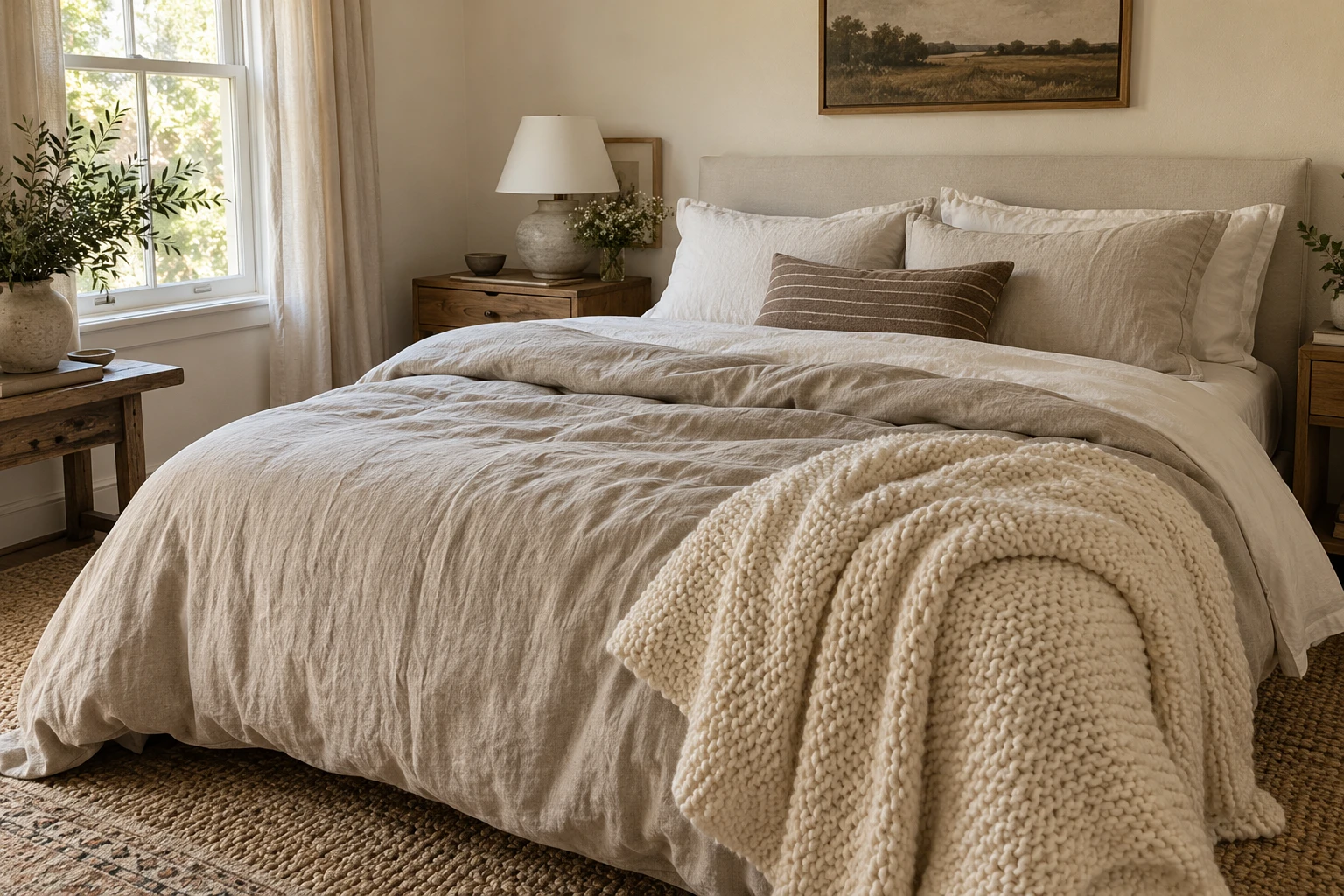
Pair light sheets with an oatmeal linen duvet cover, a cream knitted throw, and one patterned cushion.
Leave the linen’s natural creases visible and use a loose fold near the pillows.
The buttercream SAMIAH LUXE throw works over a lower corner, where its large knit contrasts with the finer linen fabric.
A muted stripe or small floral cushion adds enough pattern for the arrangement.
The formula: Light sheets + oatmeal linen duvet + cream knit throw + one patterned cushion.
Soft Color With a Patterned Quilt
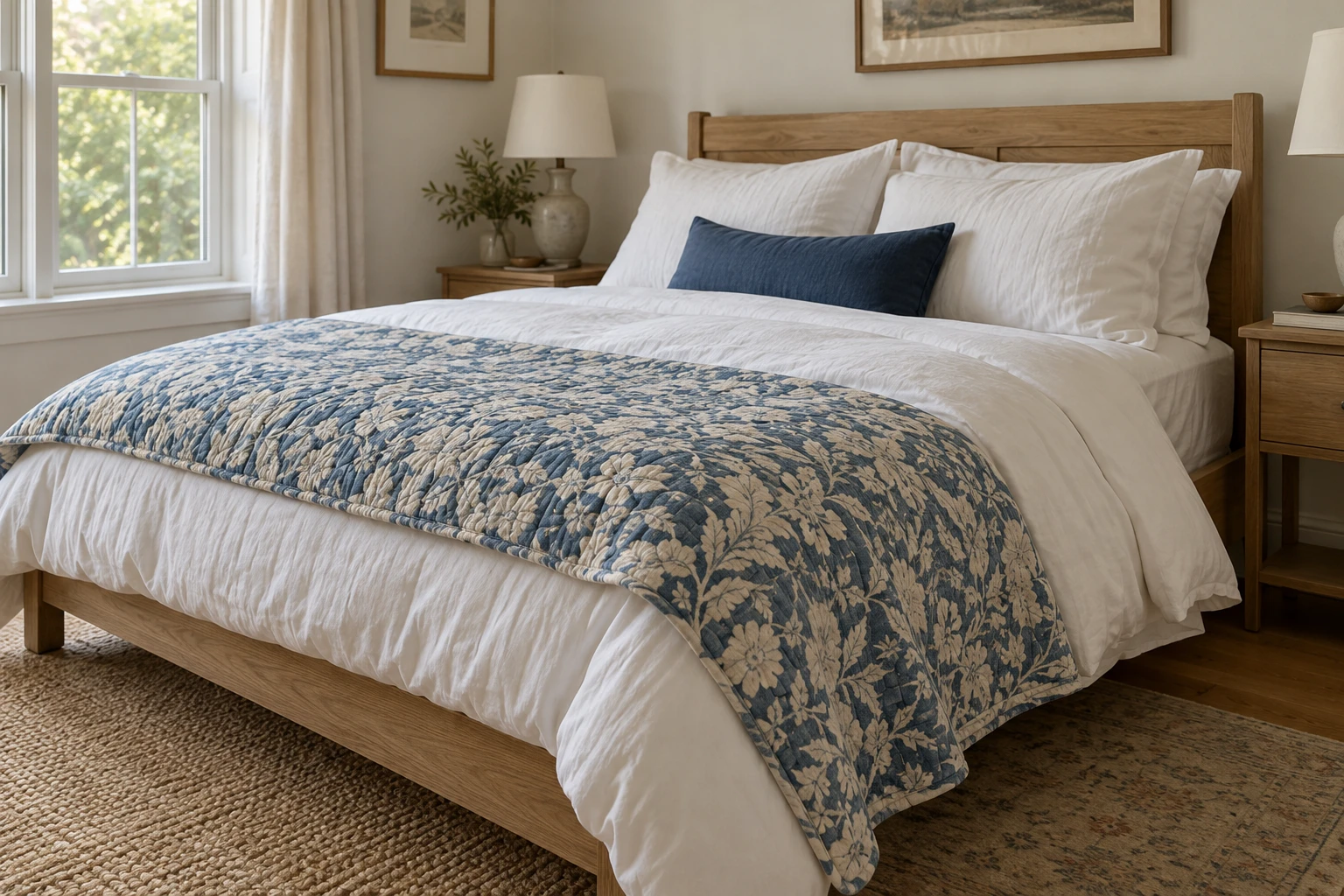
Use plain sheets and a duvet, then repeat one color from the quilt in a cushion.
A blue-and-cream quilt works with white bedding and a navy cushion, for example.
Fold the quilt across the foot for a smaller amount of pattern. Spread it across the bed and fold the duvet at the foot when you want more of the print visible.
The formula: Plain sheets + plain duvet + patterned quilt + one repeated accent color.
9. A Beautiful Bed Should Still Be Comfortable
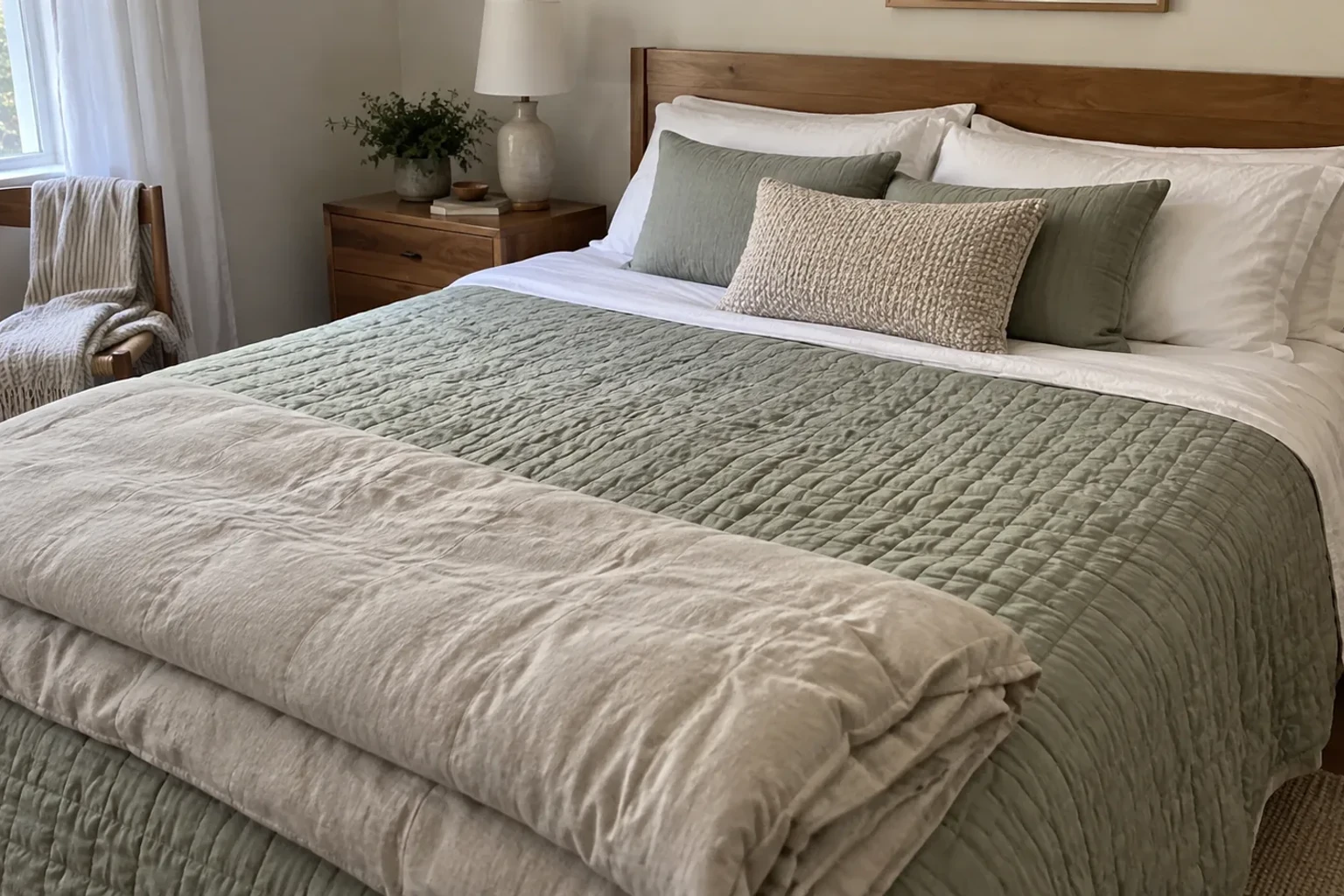
The weight and number of coverings should suit your room and how warm you feel while sleeping.
On warmer nights, a sheet and lightweight quilt may be enough. Different pillowcases, textures, and visible folds can still make the bed look layered.
When the room gets colder, add a blanket or use a warmer duvet.
If one person gets cold while the other stays warm, an extra blanket on that side is more practical than making the whole bed heavier.
When the arrangement looks wrong, adjust the part causing the problem before adding more bedding.
| What looks wrong | What helps |
|---|---|
| The duvet looks flat | Spread the filling evenly and loosen the upper fold |
| The cover has empty corners | Reposition the insert and secure its ties where available |
| The layers are hard to see | Fold the upper covering farther back |
| The bed looks busy | Remove one pattern or repeat a color already present |
| The throw looks too short | Place it over a corner instead of across the full width |
| The foot looks bulky | Make a broader, flatter fold or remove one covering |
| The pillows hide the headboard | Remove a row or use smaller decorative cushions |
| Bedding ends up on the floor | Reduce the decorative pieces and provide storage nearby |
For a room with limited space, our guide to making a small bedroom look bigger includes ways to reduce clutter around the bed.
The final bedding checklist
- The fitted sheet stays around all four corners.
- The main covering reaches evenly down both sides.
- Each decorative layer is visible.
- The colors work together.
- The pillows leave some of the headboard showing.
- The bedding feels comfortable for the room temperature.
- Extra cushions and blankets have somewhere to go.
- The arrangement is easy to remake tomorrow.
Frequently Asked Questions
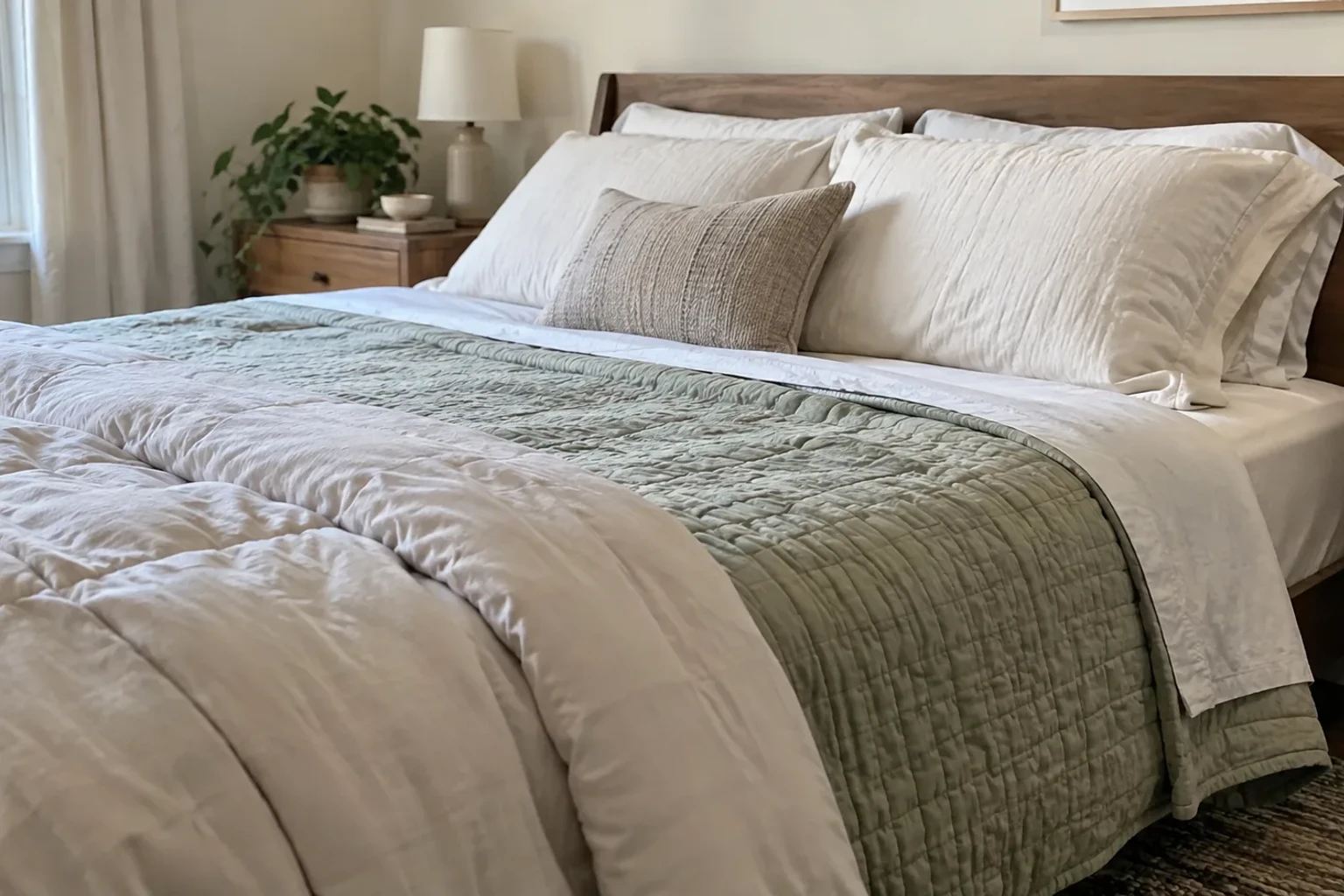
You can change the order and number of layers to suit your bed. Here are the details that commonly cause confusion.
What Order Should Bedding Layers Go In?
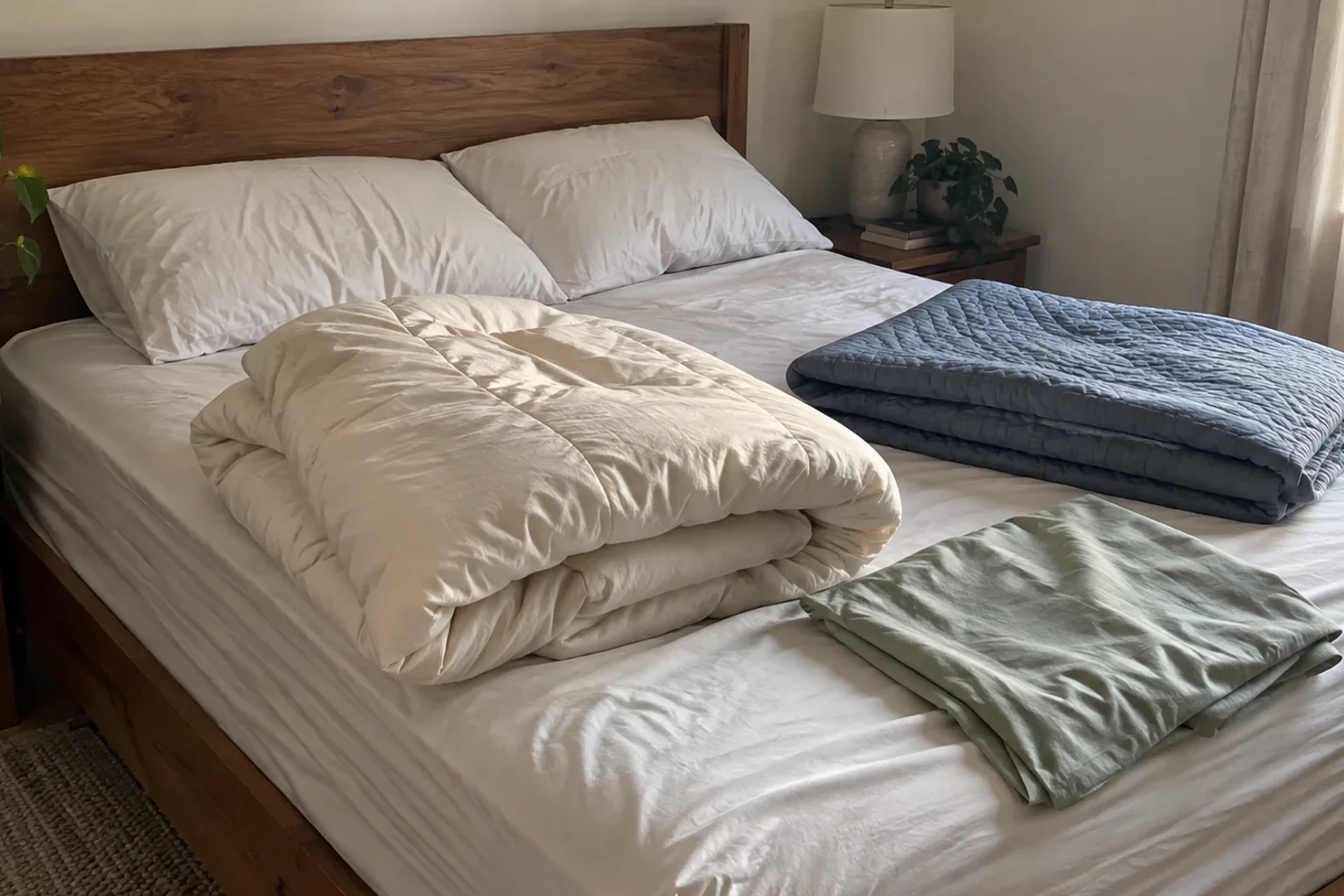
The usual order is fitted sheet, optional top sheet, blanket or quilt, then duvet or comforter.
Sleeping pillows and decorative cushions go at the head of the bed. A quilt or throw can also sit over the duvet when you want to show its fabric.
Does a Quilt Go Over or Under a Duvet?
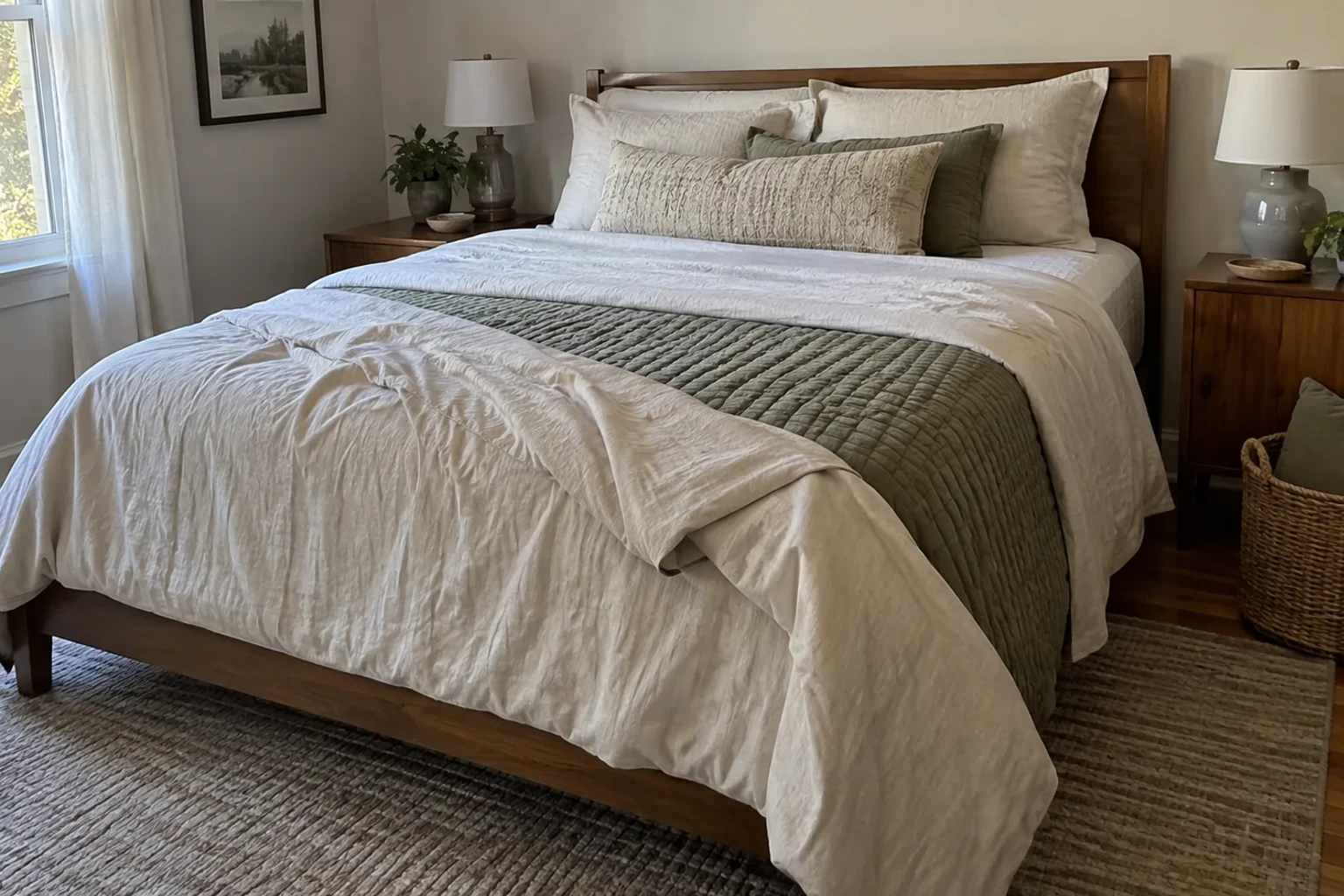
Underneath works well for extra warmth; on top works well when you want the quilt visible.
You can also spread the quilt over the whole bed and fold the duvet across the foot.
Can You Layer Bedding Without a Duvet?
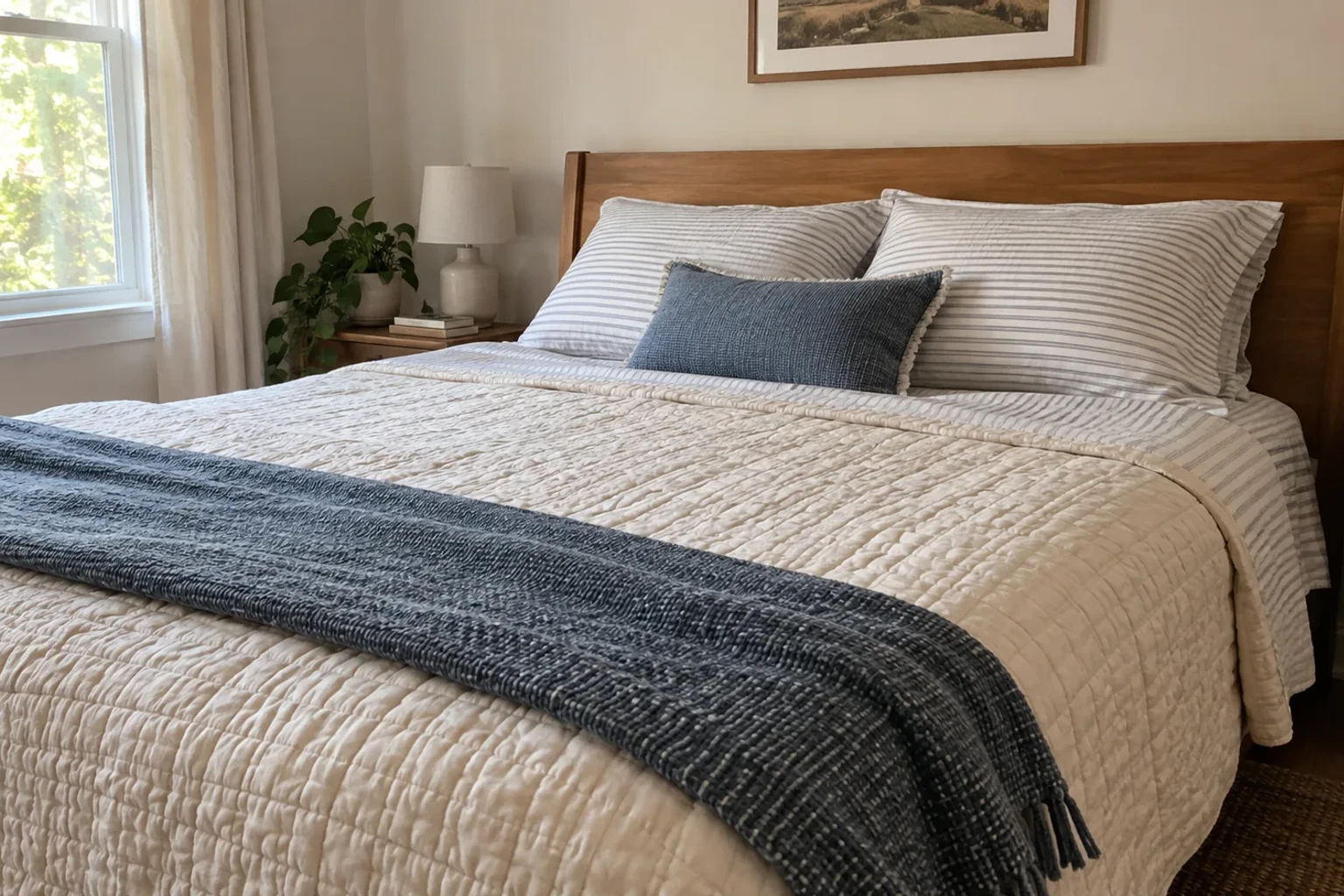
Yes. A quilt, coverlet, or comforter can be the main covering.
Show the sheet at the top, introduce another texture through the pillows, or add a folded blanket at the foot.
How Do You Make a Bed Look Fluffy Without Two Inserts?
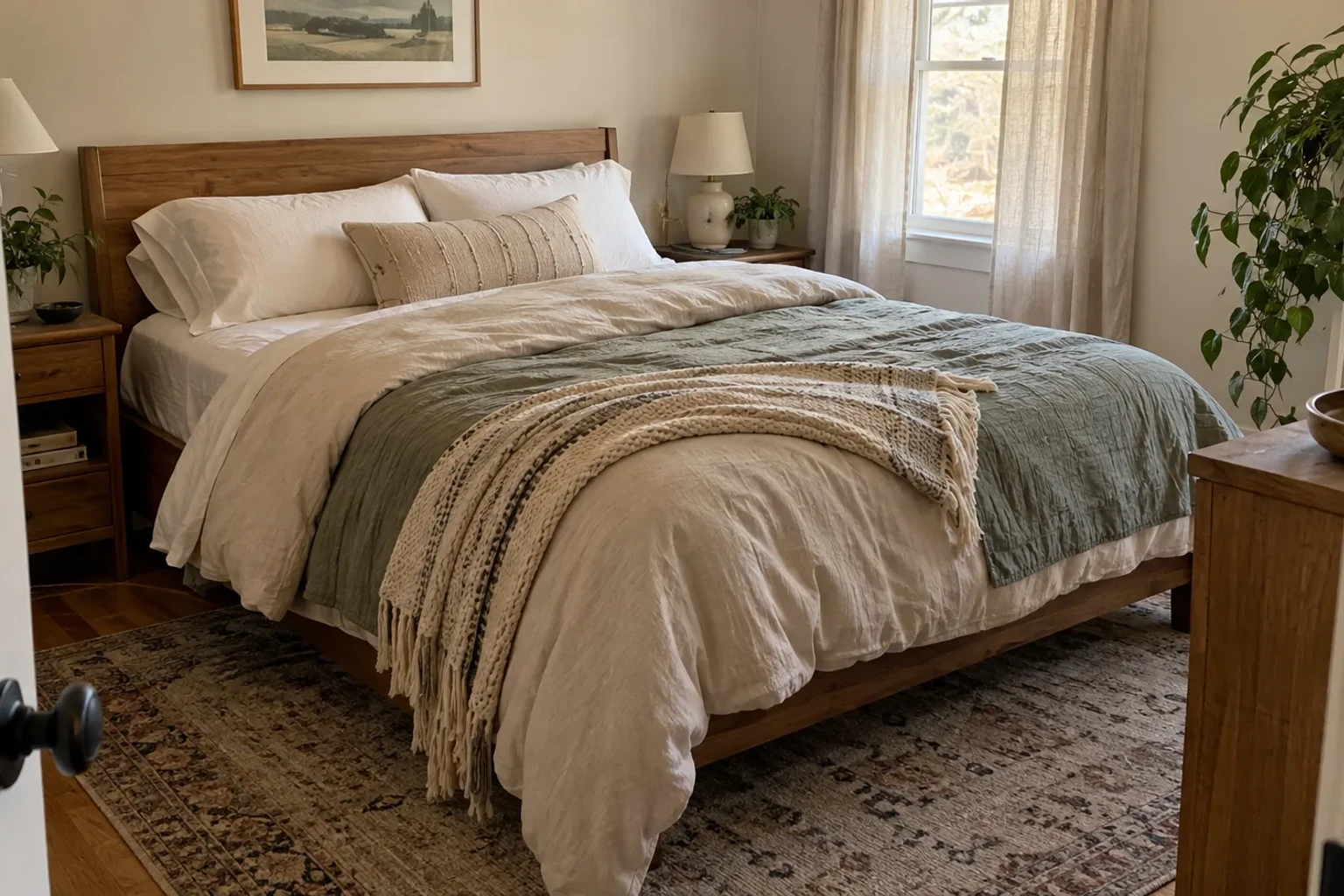
Spread the filling evenly, position the insert inside the cover’s corners, and avoid pulling the duvet flat.
A few plump pillows add fullness at the head of the bed without extra coverings across the entire mattress.
How Many Pillows Look Good on a Queen or King Bed?

Sleeping pillows and one lumbar cushion are enough for a simple arrangement.
For a fuller look, add a pair of decorative square cushions. Large Euro pillows are another option, with two often used on a queen and three on a king.
Keep the number manageable enough that making the bed stays easy.
Bedding Finds for the Finished Look
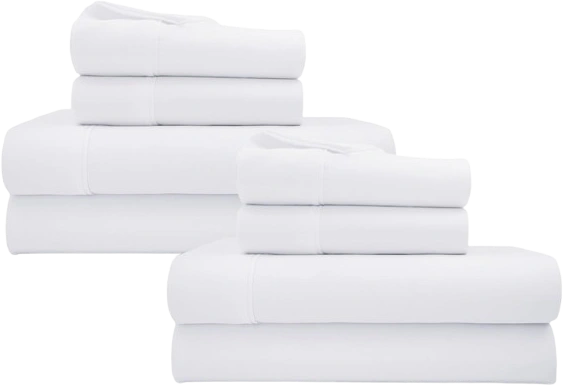 California Design Den Queen Cotton Sateen Sheet SetsTwo white, 400-thread-count cotton sheet sets with fitted sheets, flat sheets, and pillowcases.
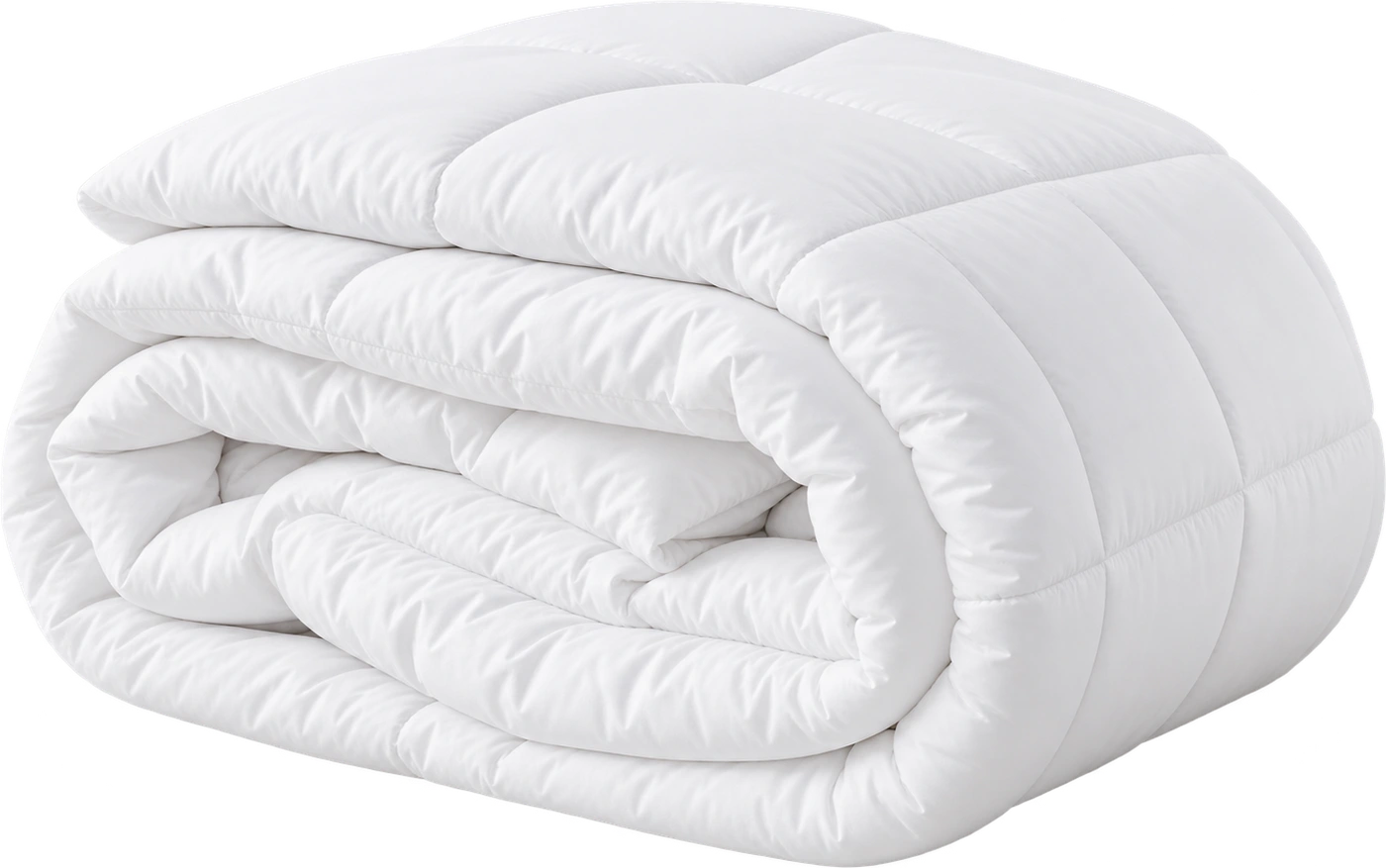 Bedsure Queen Comforter Duvet InsertAn 88 × 88-inch white down-alternative comforter with box stitching and eight attachment tabs.
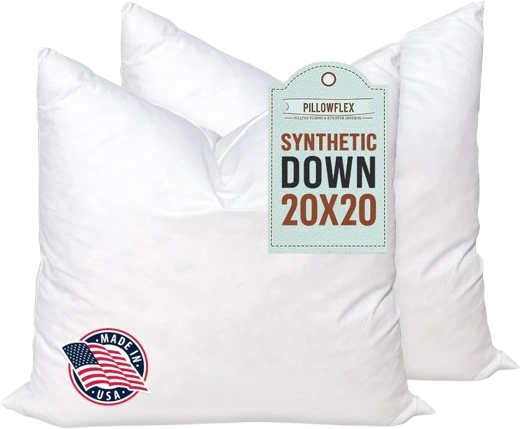 Pillowflex 20 × 20-Inch Pillow Inserts, Set of TwoDown-alternative square inserts for a pair of decorative cushions in front of your sleeping pillows.
 SAMIAH LUXE Chunky Knit Throw BlanketA 50 × 70-inch buttercream chenille throw for knitted texture over a corner of the bed.
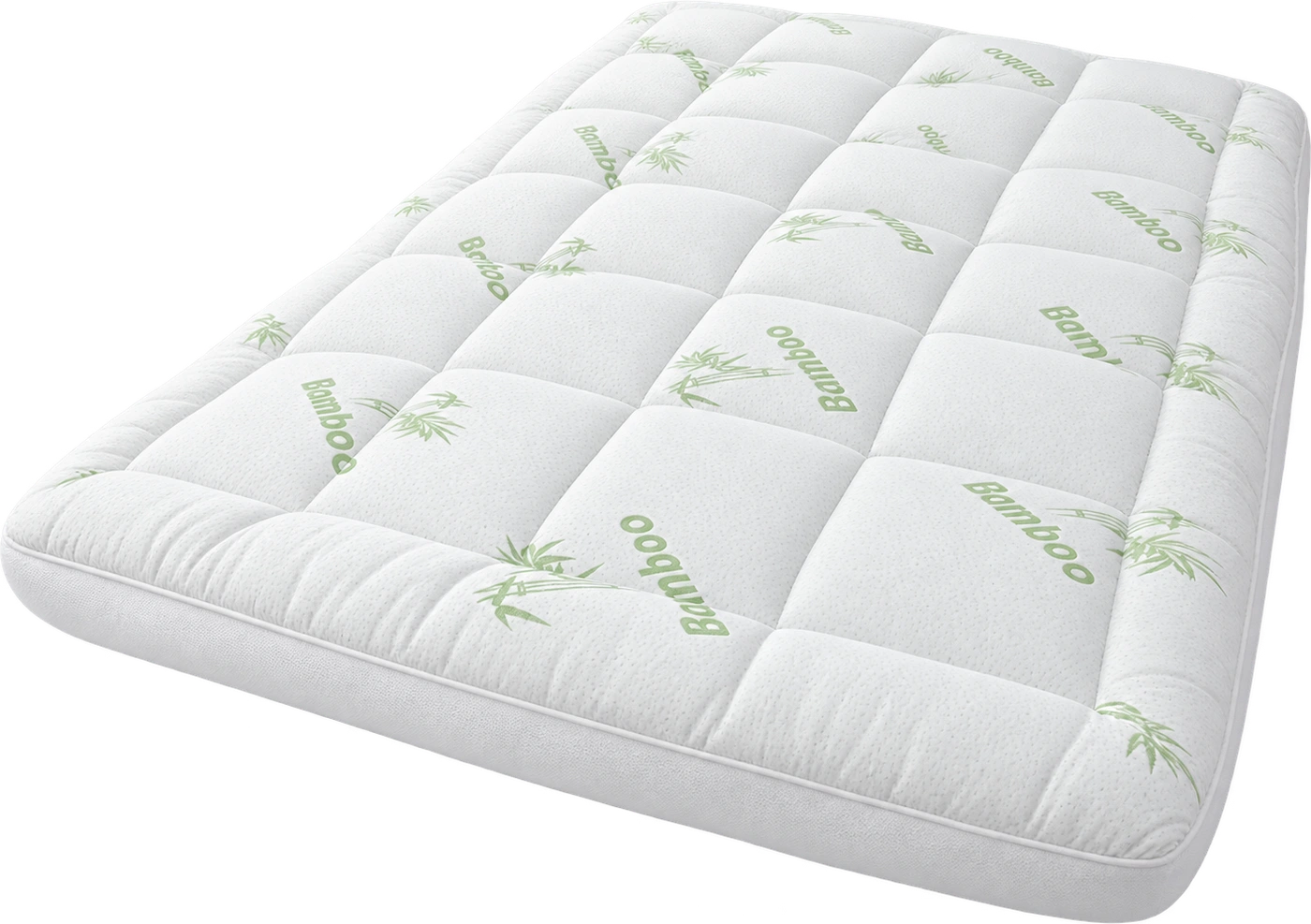 Niagara Sleep Solution Queen Mattress TopperA padded 60 × 80-inch topper with stretchy sides for mattresses 8–20 inches deep.