30 Nancy Meyers Aesthetic Ideas and What to Buy for That Cozy Movie-Home Look

You’re probably familiar with Nancy Meyers, even if you know her through the kitchen in It’s Complicated or the beach house in Something’s Gotta Give.
People keep referencing her because the homes in her films feel so inviting.
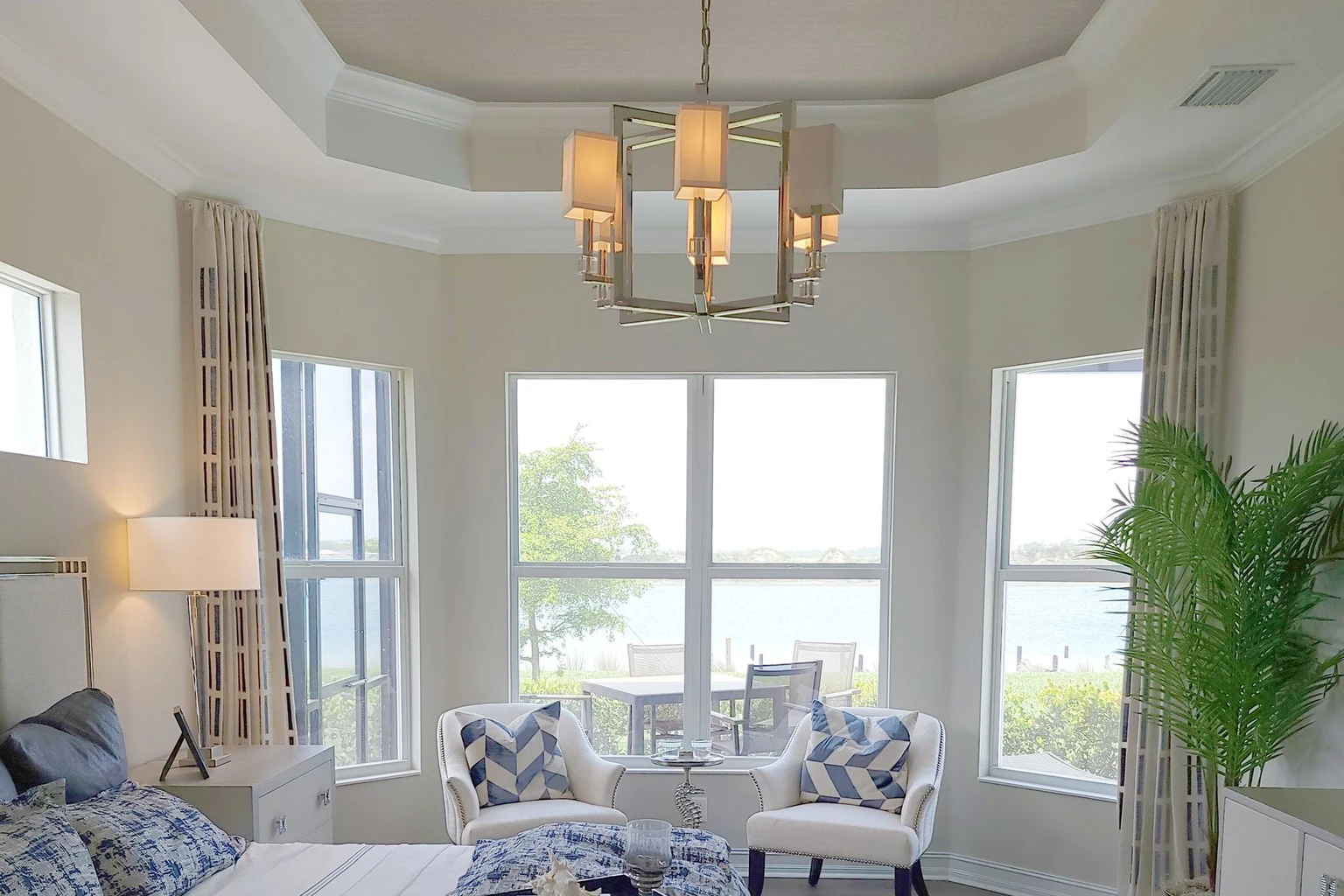
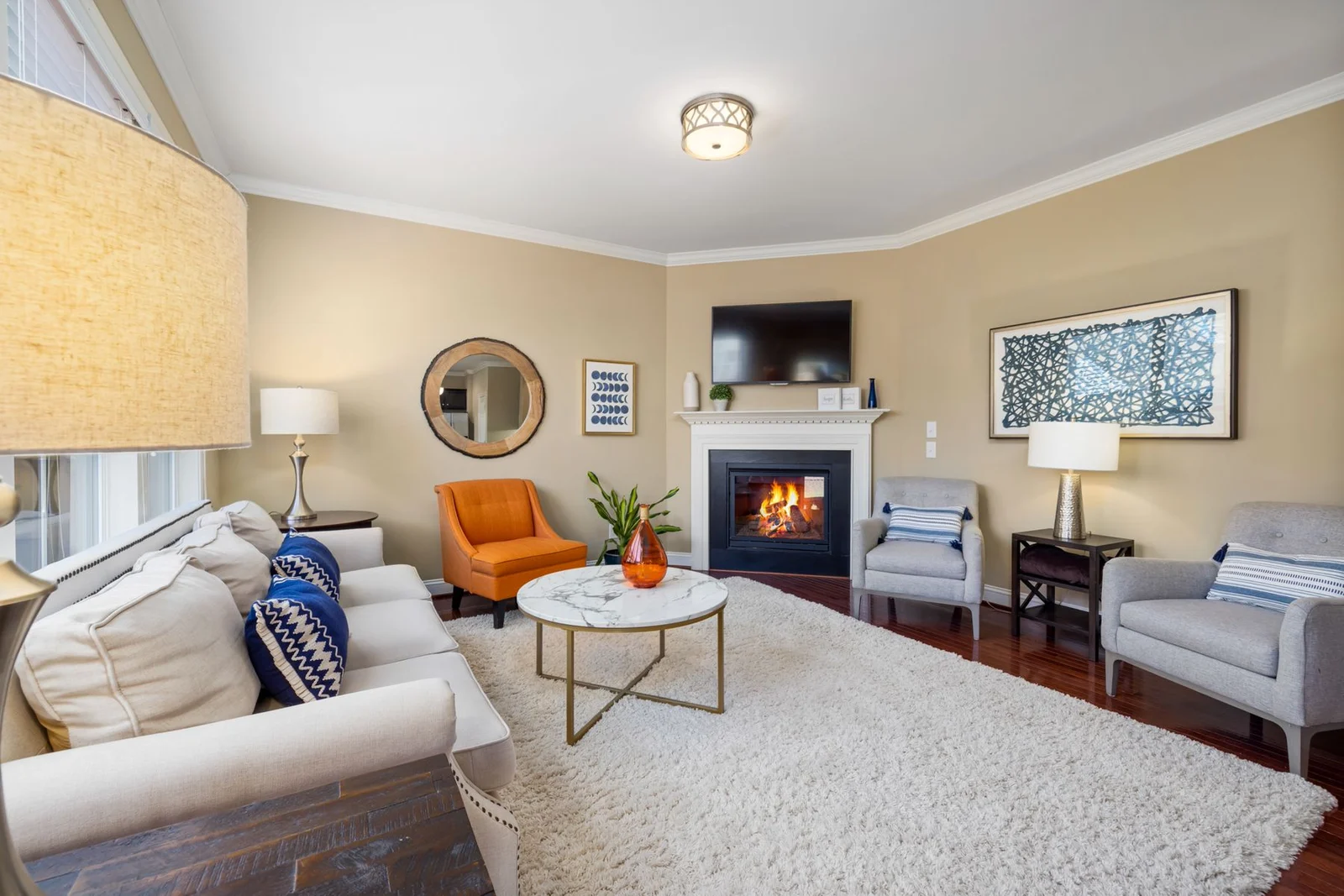
The Nancy Meyers aesthetic brings together comfortable furniture, warm neutrals, layered fabrics, and personal details that make you want to settle in.
The quick answer
- Combine comfortable seating, warm wood, and shaded lamps for the relaxed interiors associated with Nancy Meyers films.
- Layer cotton or linen, stripes, florals, and a textured rug around a coordinated palette.
- Books you read, flowers, and useful kitchen pieces on display make the room personal rather than overly arranged.
Whether you love an airy coastal living room or the cozy cottage in The Holiday, these 30 ideas will help you carry that feeling through your home.
There are small updates, furniture ideas, and useful finds along the way.
1. Creamy Neutrals With a Little Depth
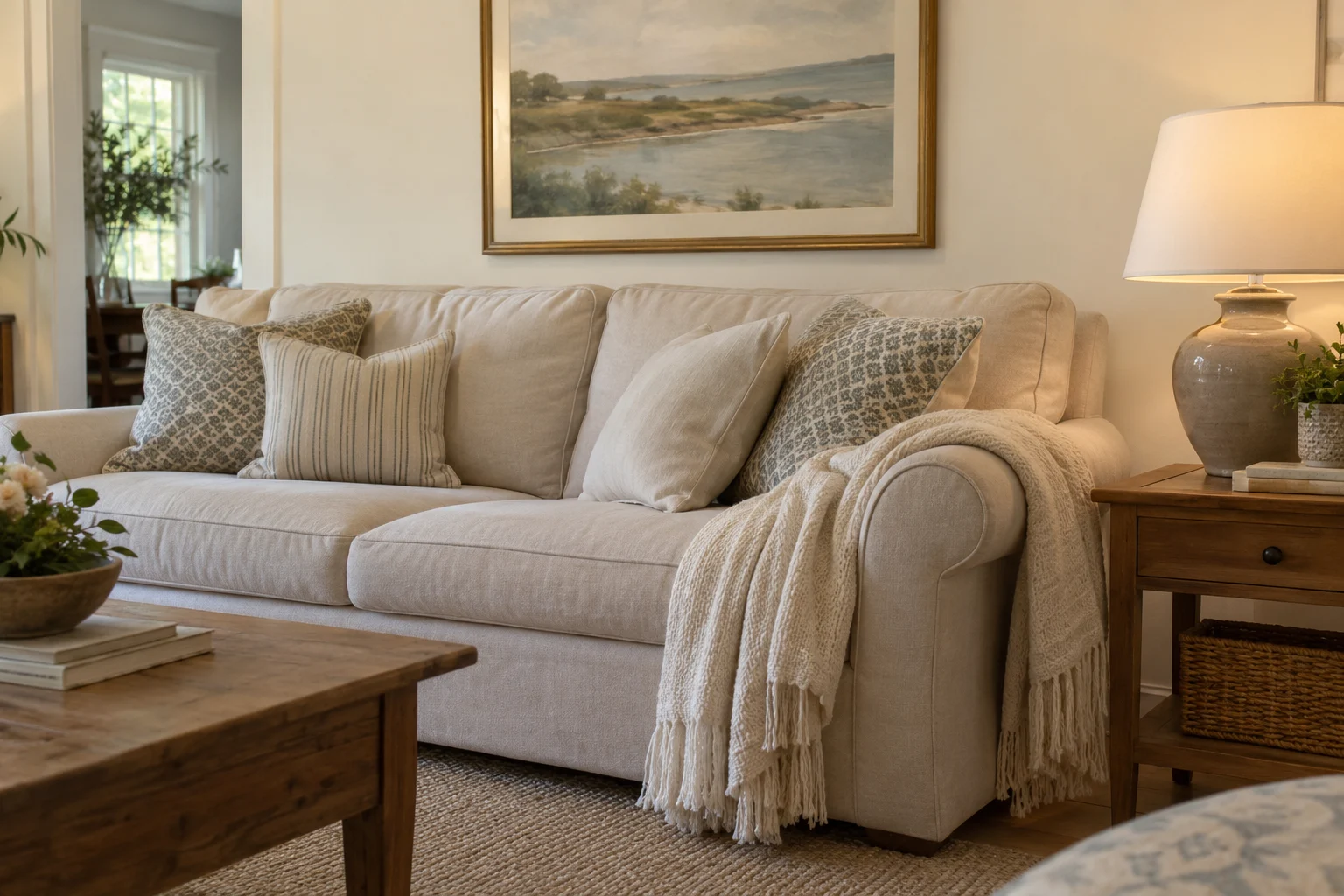
Layer several warm neutrals to give a pale room depth. Cream, ivory, oatmeal, and soft taupe sit comfortably together, especially when each appears in a different material. Think painted walls, a woven throw, and a ceramic lamp.
If your room already has white walls, work with them. Beige curtains and a medium-brown side table can introduce warmth without repainting. Our earth tone interior color palettes offer more combinations for building around the furniture you own.
2. Blue and White, With Room for Other Colors
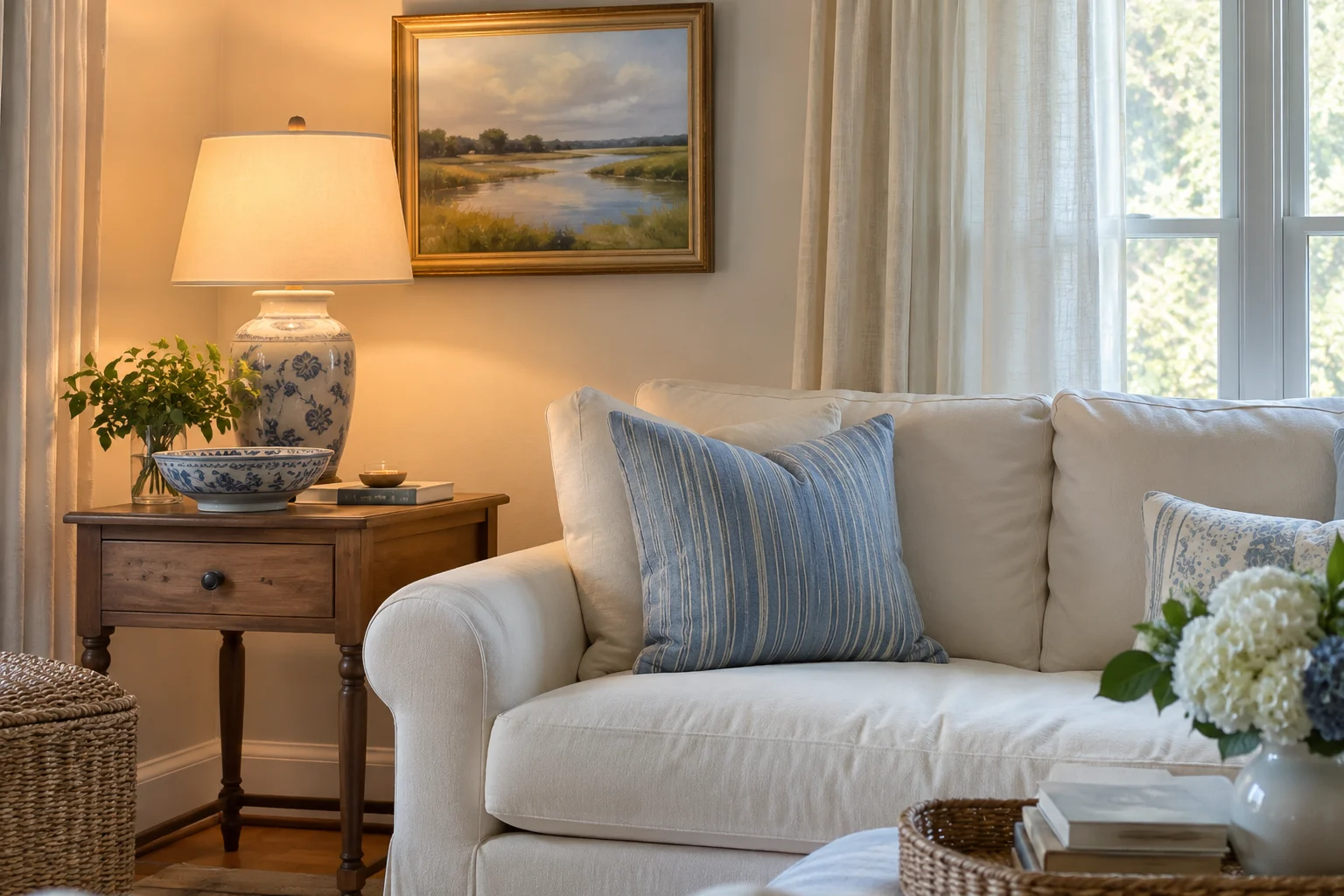
Repeat blue and white in a few small places to create an easy connection across the room. A cushion on the sofa, a bowl on a shelf, and a blue detail in a painting are enough to make the palette feel intentional.
Prefer the cottage side of this look? Soft sage, faded rose, and muted yellow work beautifully with warm wood and cream. Keep the larger surfaces quiet, then let your favorite color appear in the details you can change easily.
3. The Sofa Everyone Wants to Sink Into
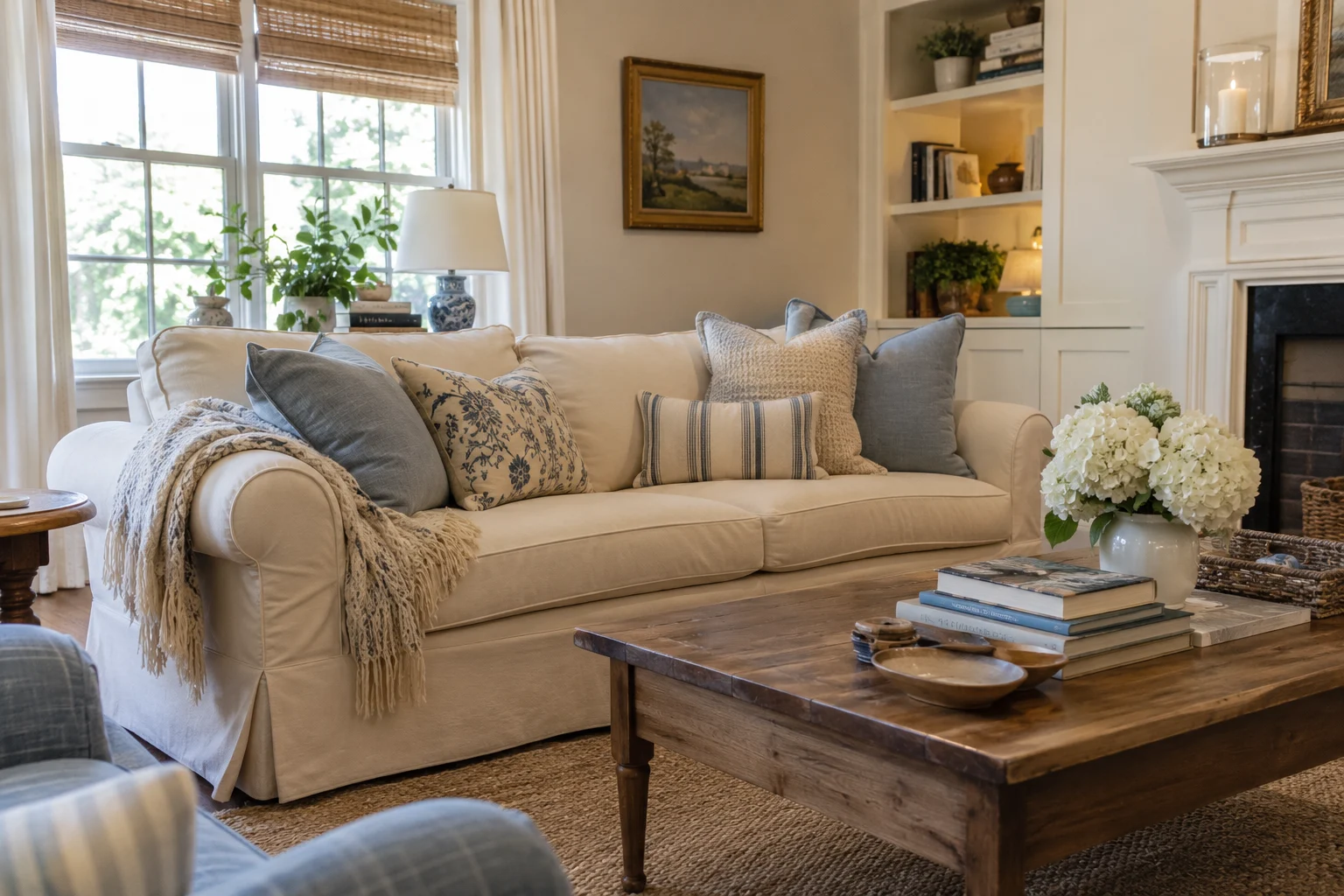
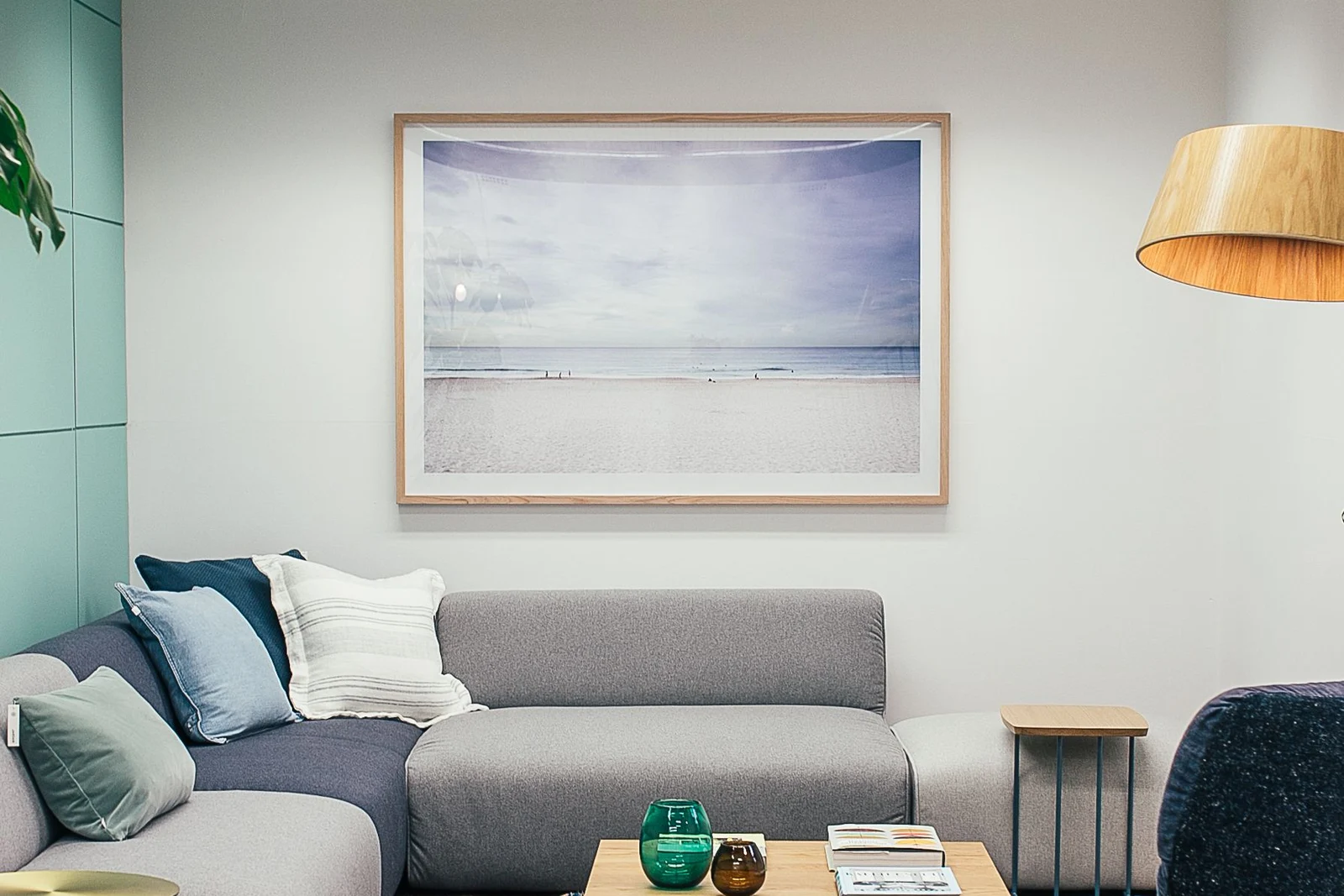
A comfortable sofa with a relaxed shape gives this style its foundation. Rounded arms, generous cushions, and a skirted base create a familiar look that works with books, patterned pillows, and older wood furniture.
The Vorthio 89-Inch Farmhouse Sofa brings those details together with cream upholstery, rolled arms, and a skirted profile. Its removable cushion covers are machine washable, which is useful when the sofa doubles as the household snack spot. For a smaller room, our small-sofa guide has more compact options.
4. One Good Reading Chair Can Change the Room
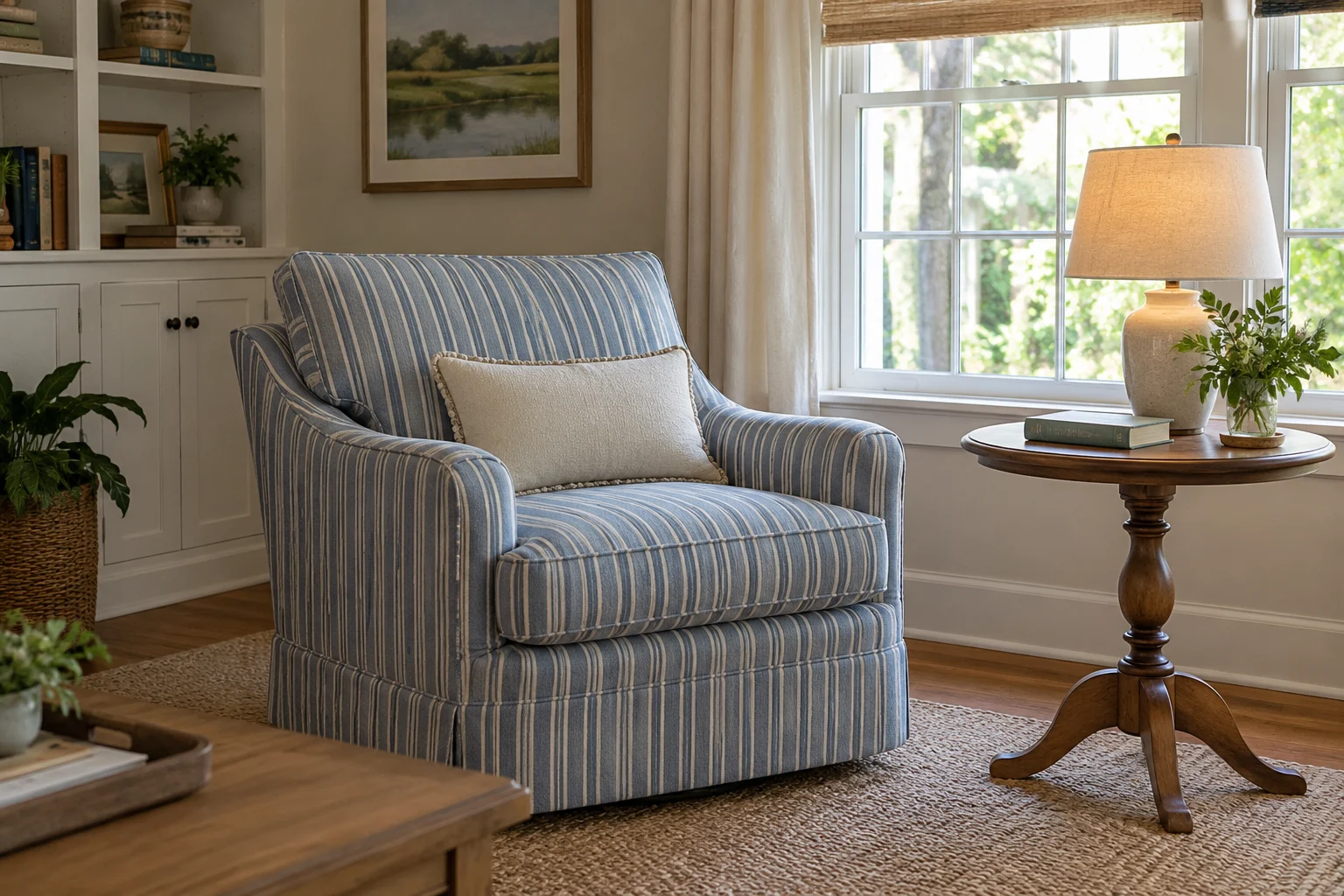
Turn an unused corner into a reading spot with a comfortable chair and a nearby surface. Somewhere to put your cup makes the chair much more likely to become part of your daily routine.
The INZOY Blue Stripe Swivel Accent Chair adds a quiet pattern and a rotating base, so it can face the conversation or turn toward the window. Position it slightly toward the sofa, with enough room around the base to swivel freely. That corner collecting tote bags suddenly has a better job.
5. Wood Furniture That Doesn’t All Match
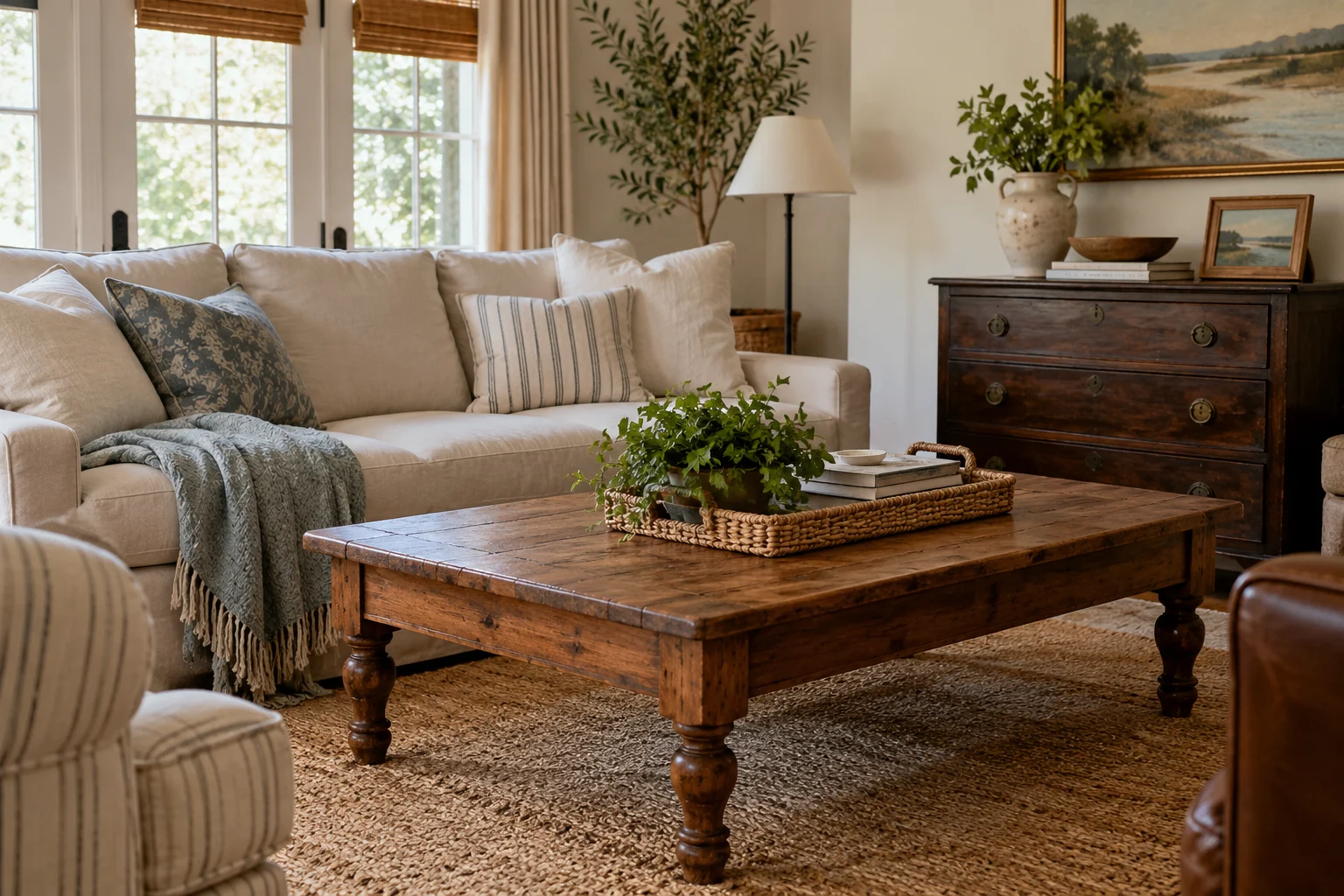
Mix wood finishes while repeating a few colors or shapes elsewhere. A medium-brown coffee table can sit beside a darker chest, especially when both have simple lines and the surrounding fabrics share a calm palette.
If the difference feels abrupt, add a smaller piece that echoes one of the finishes. A wood picture frame or tray can do it. This is a forgiving approach for anyone whose furniture arrived through several moves, a few secondhand finds, and one generous relative.
6. Something Old Earns Its Place
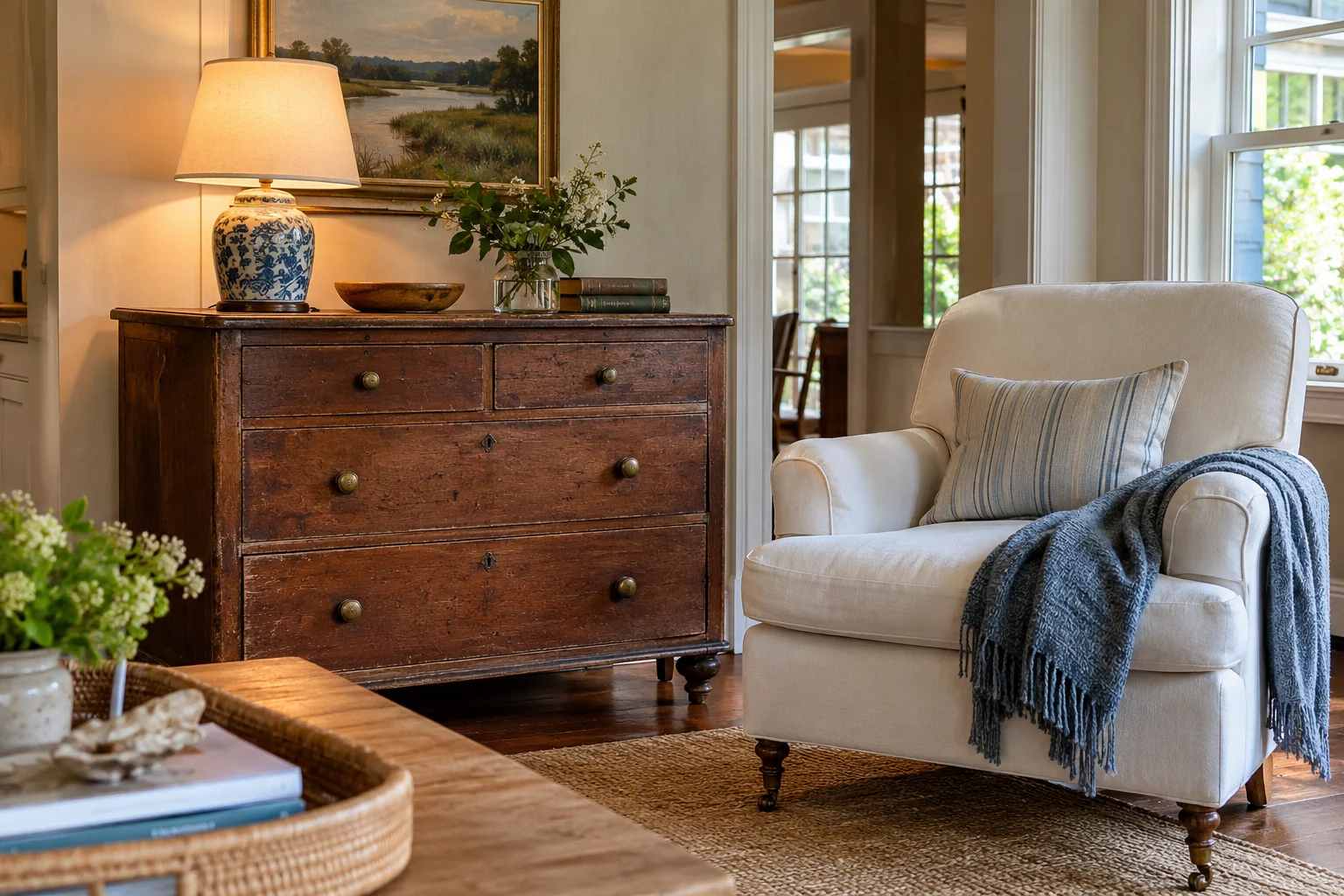
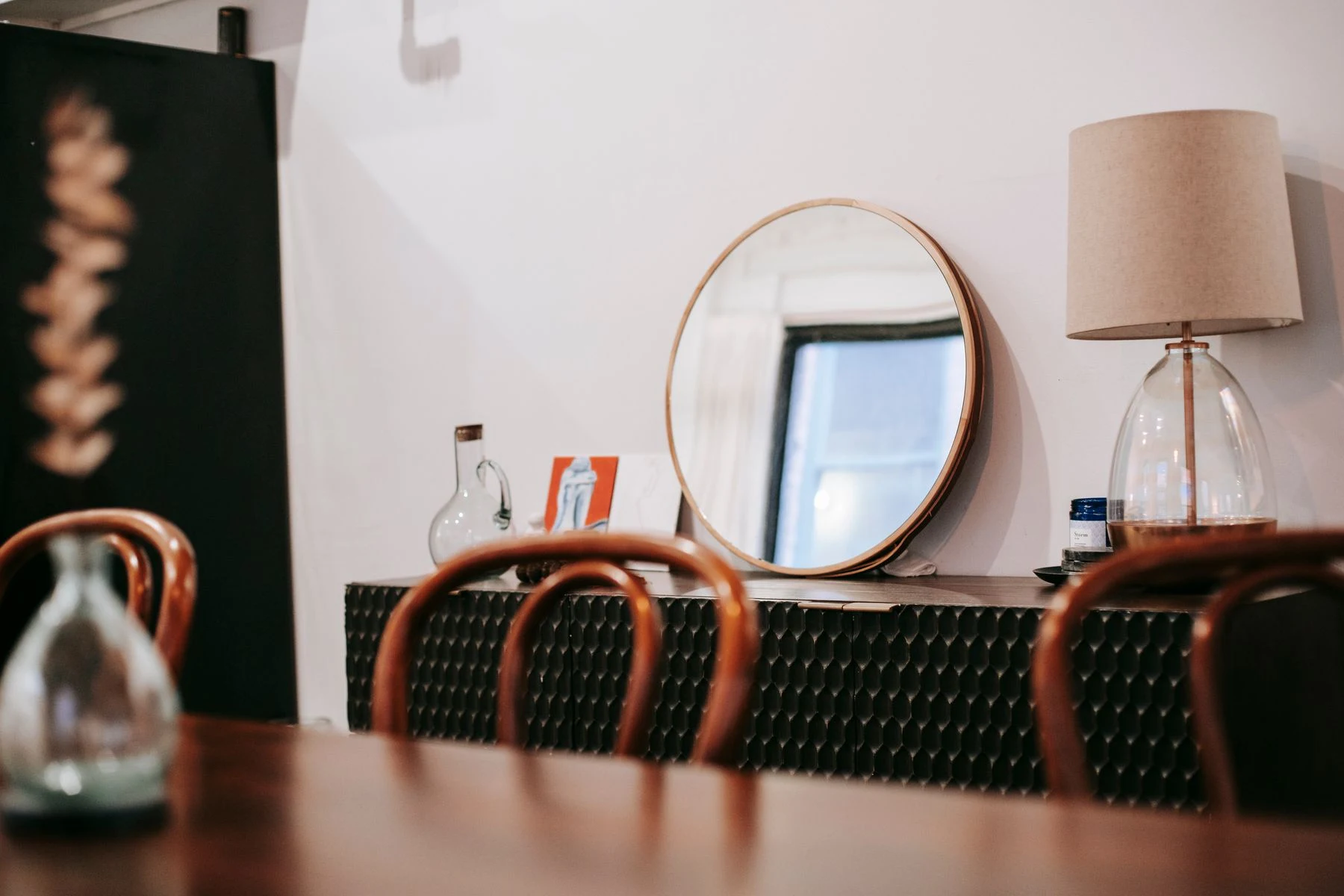
Give one older piece a useful role in the room. An inherited dresser can hold table linens, a vintage side table can support a lamp, and an old mirror can brighten an entryway.
A little wear adds interest, particularly alongside fresh upholstery and clean walls. You don’t need an entire room of antiques. One familiar piece with a good shape can give newer furniture something to relate to.
7. A Textured Rug Beneath It All
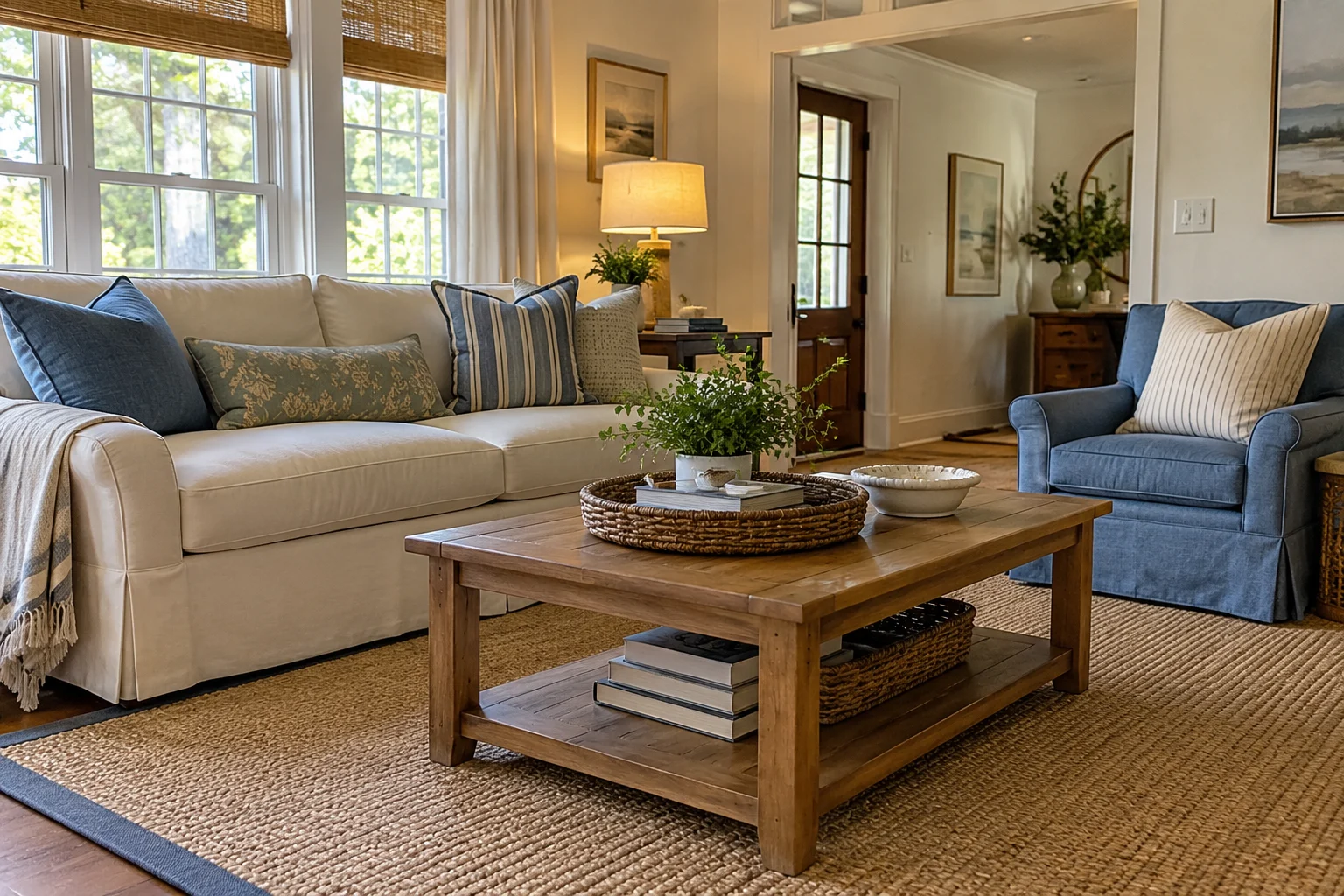
Use a textured rug to bring the seating area together. Let the front legs of the sofa and nearby chairs rest on it so the furniture reads as one group.
The SAFAVIEH Natural Fiber NF143C Sisal Rug has a textured surface and a defined border that suit this relaxed, traditional look. Sisal has a firm feel underfoot, making it a better match for a sitting area than a spot where you want plush softness.
Rug note: Keep this sisal rug away from excess moisture and vacuum without a beater bar. A rug pad adds cushioning and helps hold it in place.
8. Stripes and Florals Can Share a Sofa
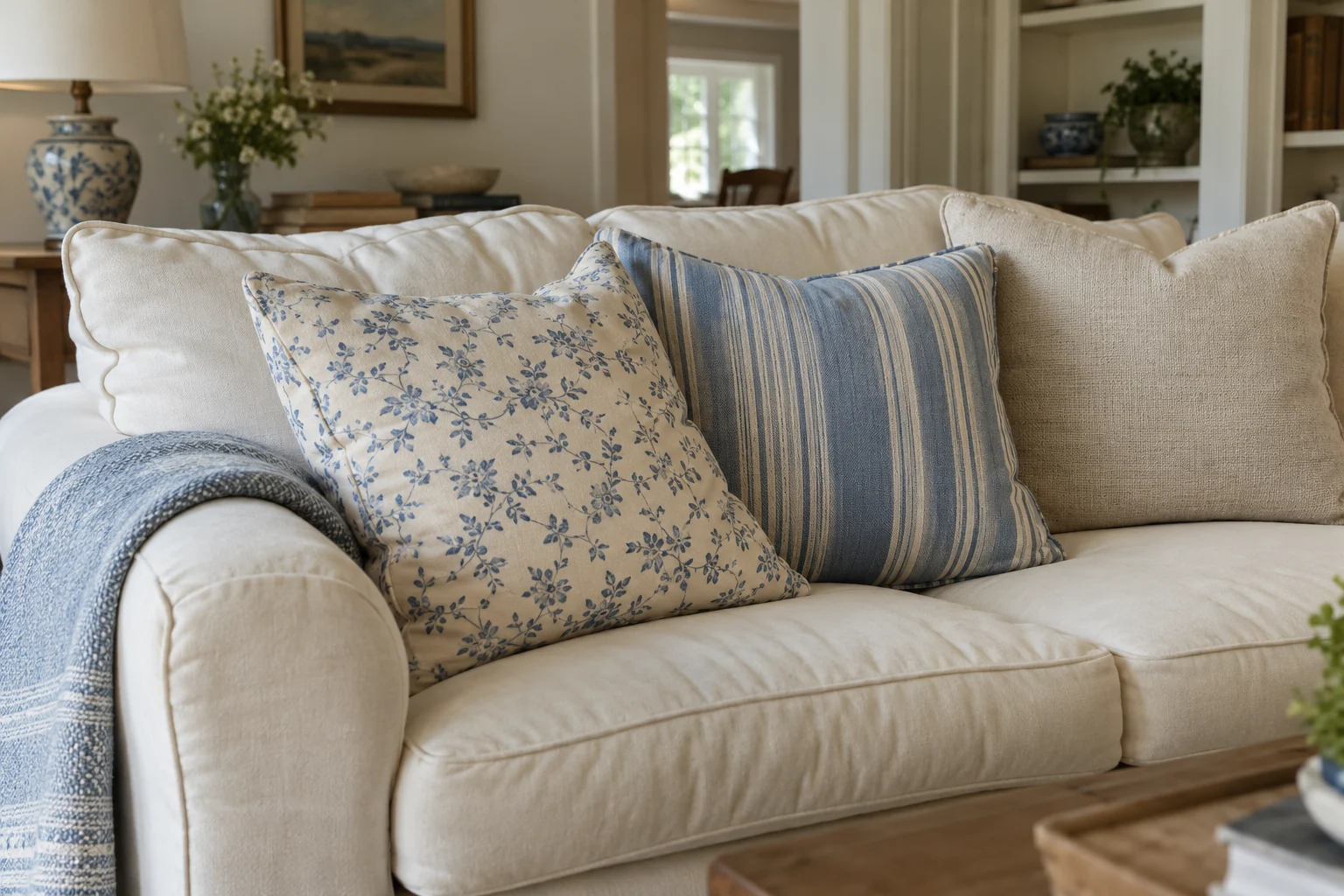
Connect different patterns through one shared color and vary their scale. A narrow blue stripe, a larger blue floral, and a plain cream cushion give your eye enough repetition to follow.
The Jillien Harbor “The Juliet” Pillow Cover adds a soft blue floral pattern against an off-white background. Pair the 20-inch cover with a simple stripe or a textured solid. Keep the rest of the sofa fairly quiet so each pattern has room to show.
9. Lamps Make the Evening
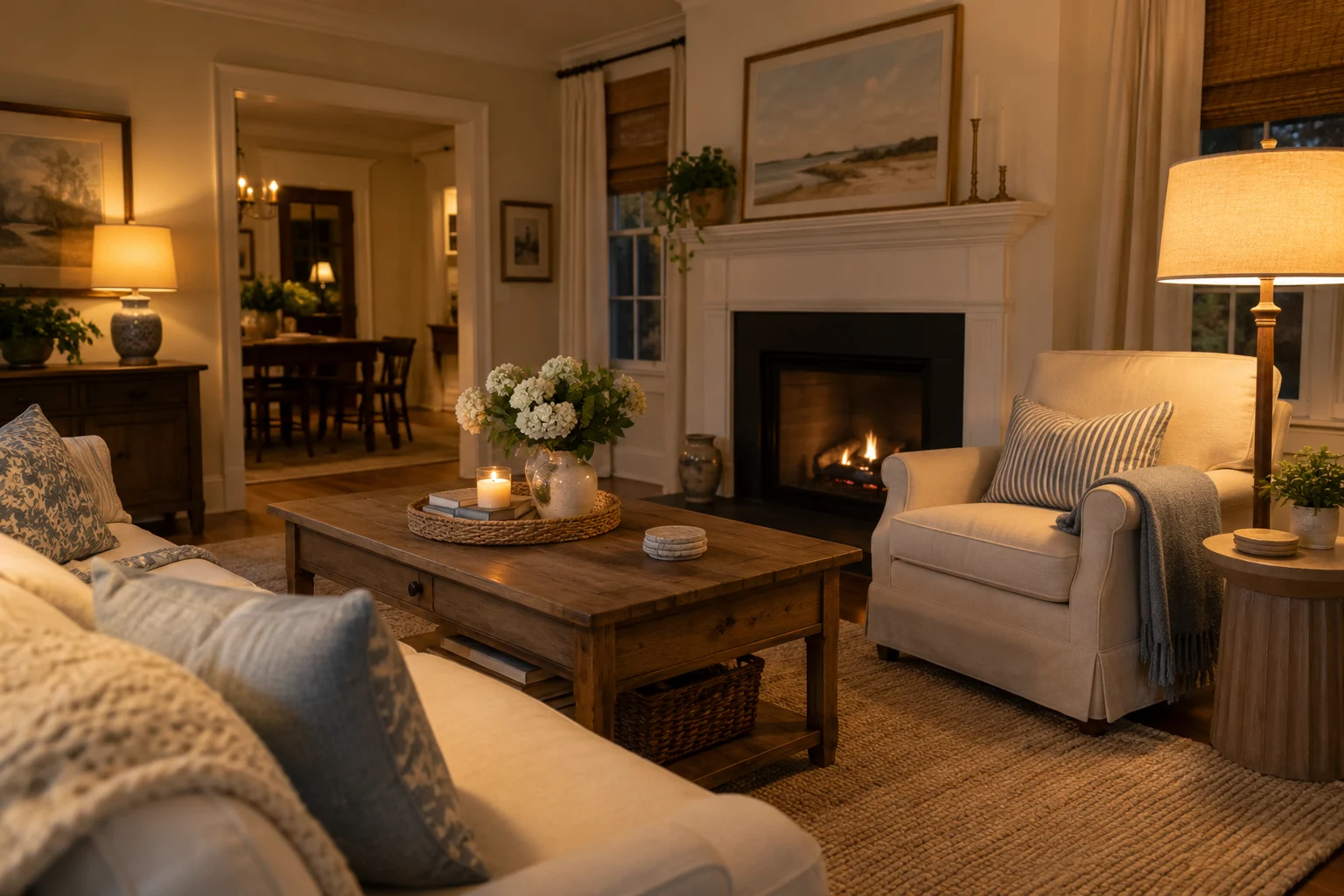
Place lamps where people sit, read, and talk. Light at seating height makes the room feel comfortable after sunset, especially when it comes from more than one corner.
The ZenGlimmer Dark Walnut Floor Lamp combines a wood pole, brushed-gold accents, and a broad linen shade. It works beside a reading chair or at the end of a sofa, where the shade helps soften the light. Add a warm-white frosted E26 bulb; the bulb is sold separately.
10. Windows With a Softer Side
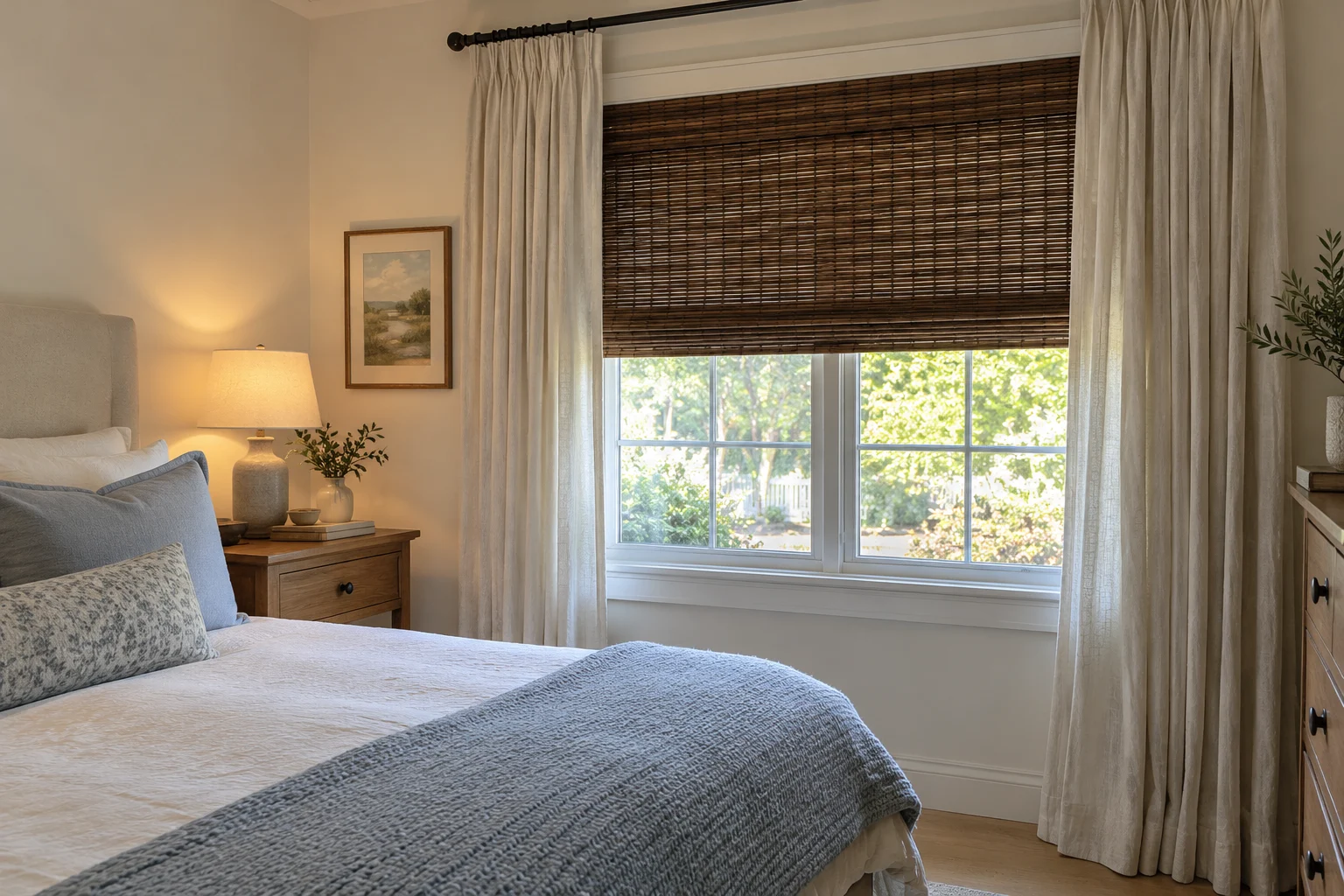
Combine curtain panels with a woven shade for softness, texture, and light control. The curtains frame the window while the shade handles the practical work of covering the glass.
The LazBlinds Cordless Bamboo Roman Shade has blackout backing, making it a useful option for a bedroom or a room that needs more privacy. Pale curtains beside its darker woven finish create a gentle contrast. Our guide to layering curtains, rugs, and upholstery explains how to keep those textures working together.
11. Books That Actually Belong to You
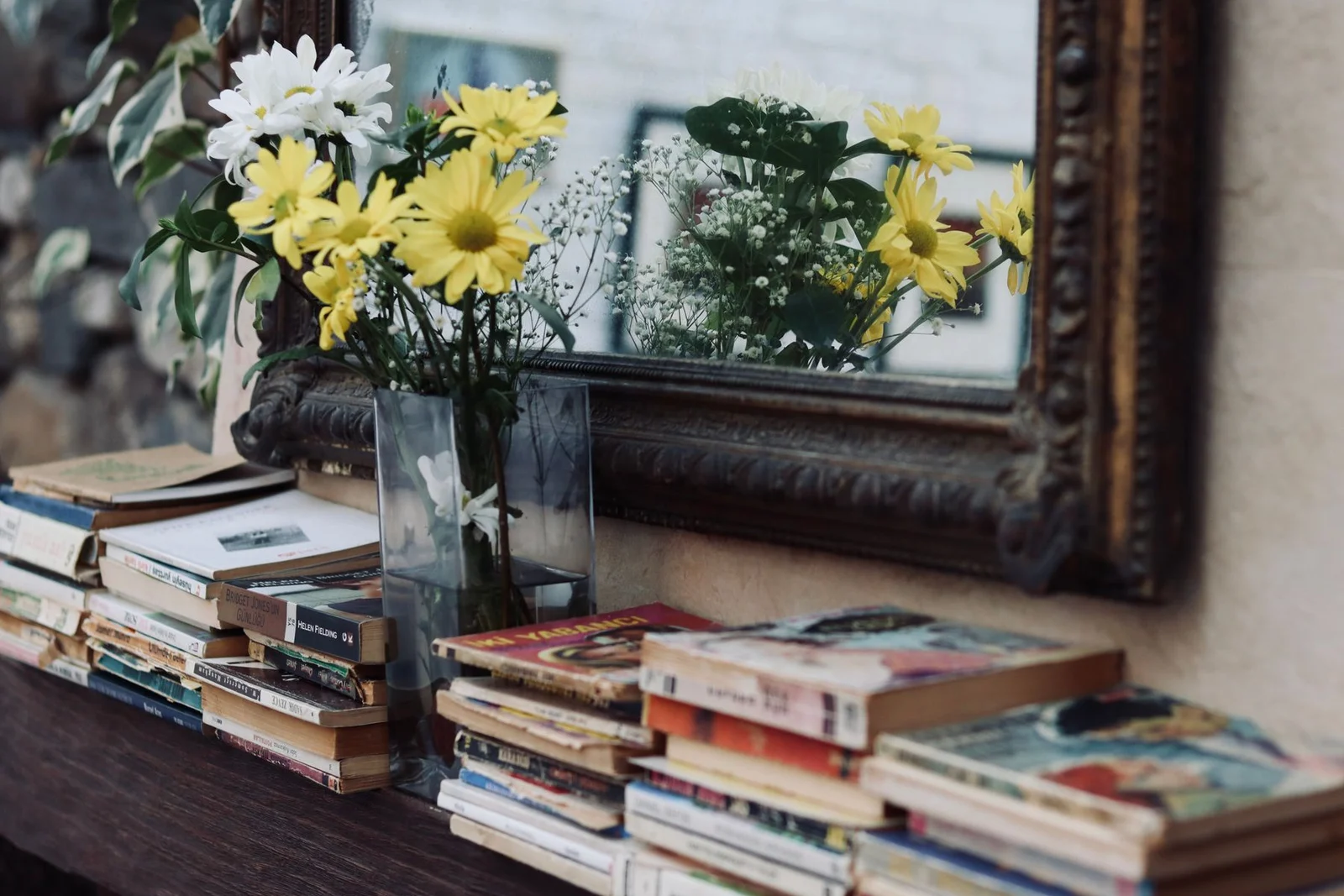
Bring out the books you enjoy and place them where you naturally read. A short stack beside your chair or a few favorites on the coffee table makes the room feel connected to your life.
Leave enough space for a drink and the remote. You can mix upright books with a small horizontal stack on a shelf, but there’s no need to arrange every spine by color. A slightly uneven collection has plenty of charm.
12. A Wall With a Story
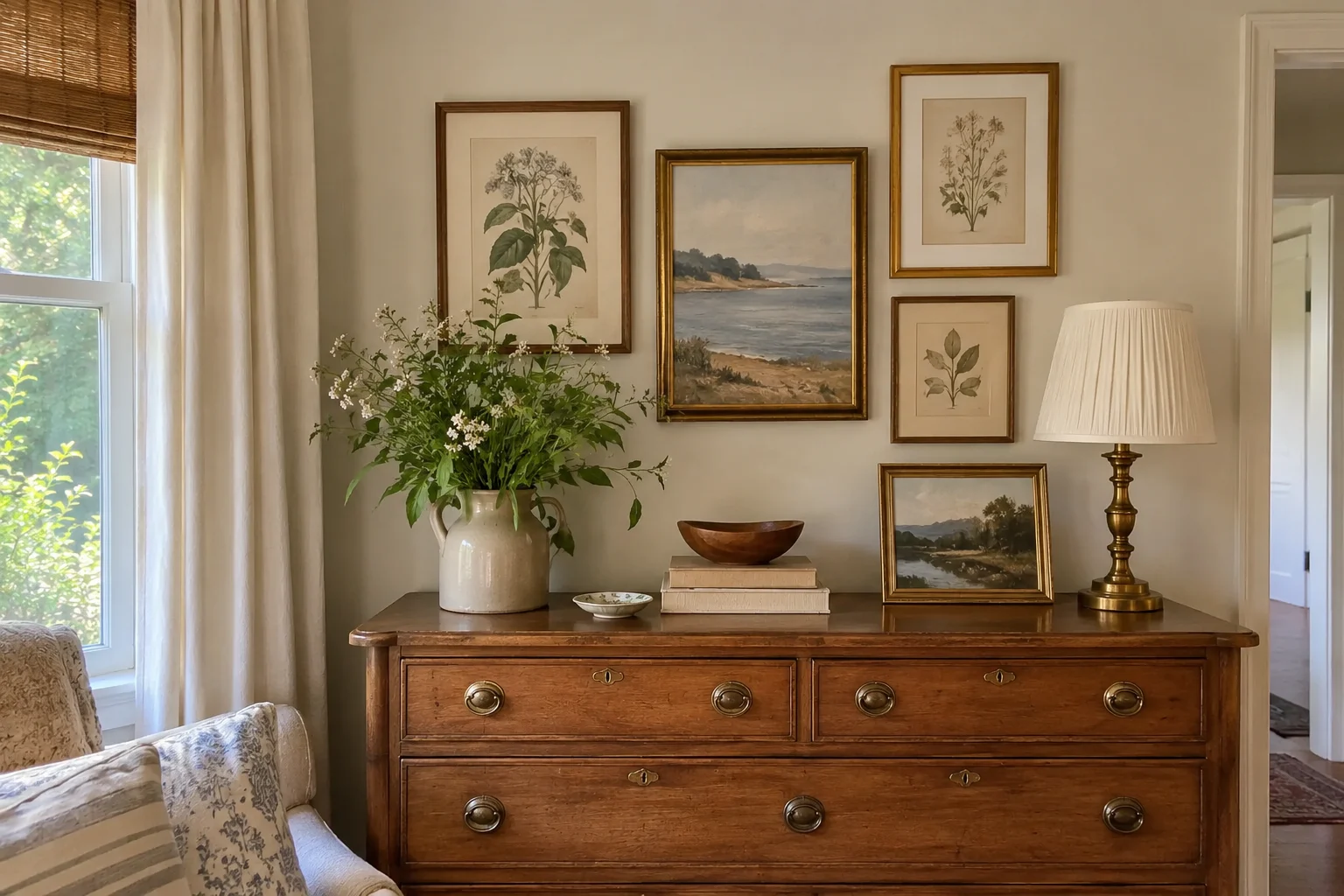
Mix artwork with personal meaning, connected by a few recurring colors or frame finishes. Botanical prints and landscapes fit easily into this style, but photographs and travel finds deserve a place, too.
For a simple grouping, hang one larger piece with two smaller ones nearby. Repeat a wood or brass-toned frame somewhere in the arrangement. That small connection helps different subjects feel comfortable together.
13. Woven Baskets That Earn Their Keep
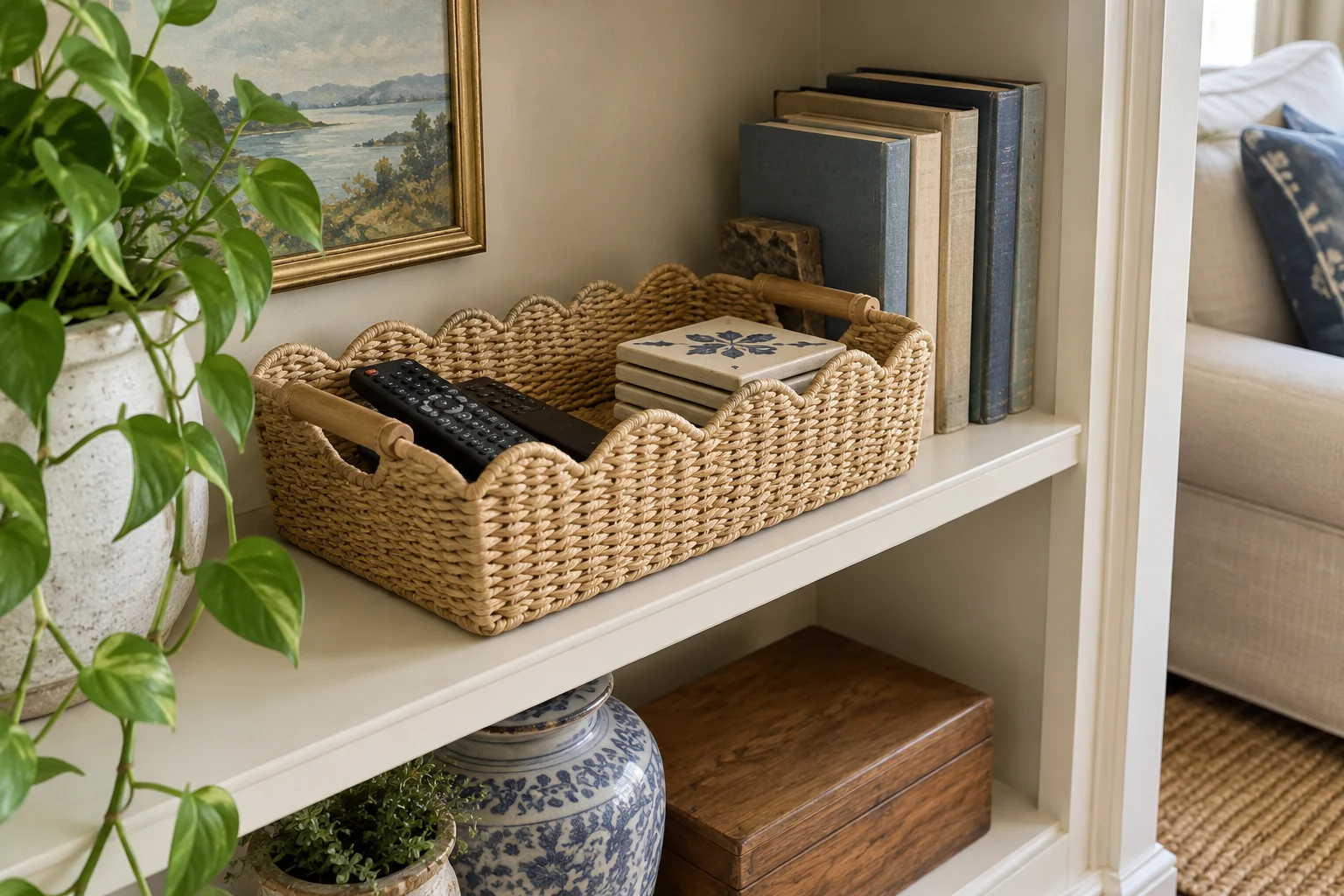
Put a basket wherever small items regularly gather. Remotes on the coffee table, reading glasses beside the bed, and loose accessories on a shelf all benefit from a clear home.
The CubesLand Scalloped Storage Basket is made from woven paper rope with wooden handles. Its shallow shape suits remotes, coasters, or small bedside items, while the scalloped edge adds a playful detail. Reserve a larger floor basket for throws and bulky blankets.
14. Flowers in an Everyday Vase
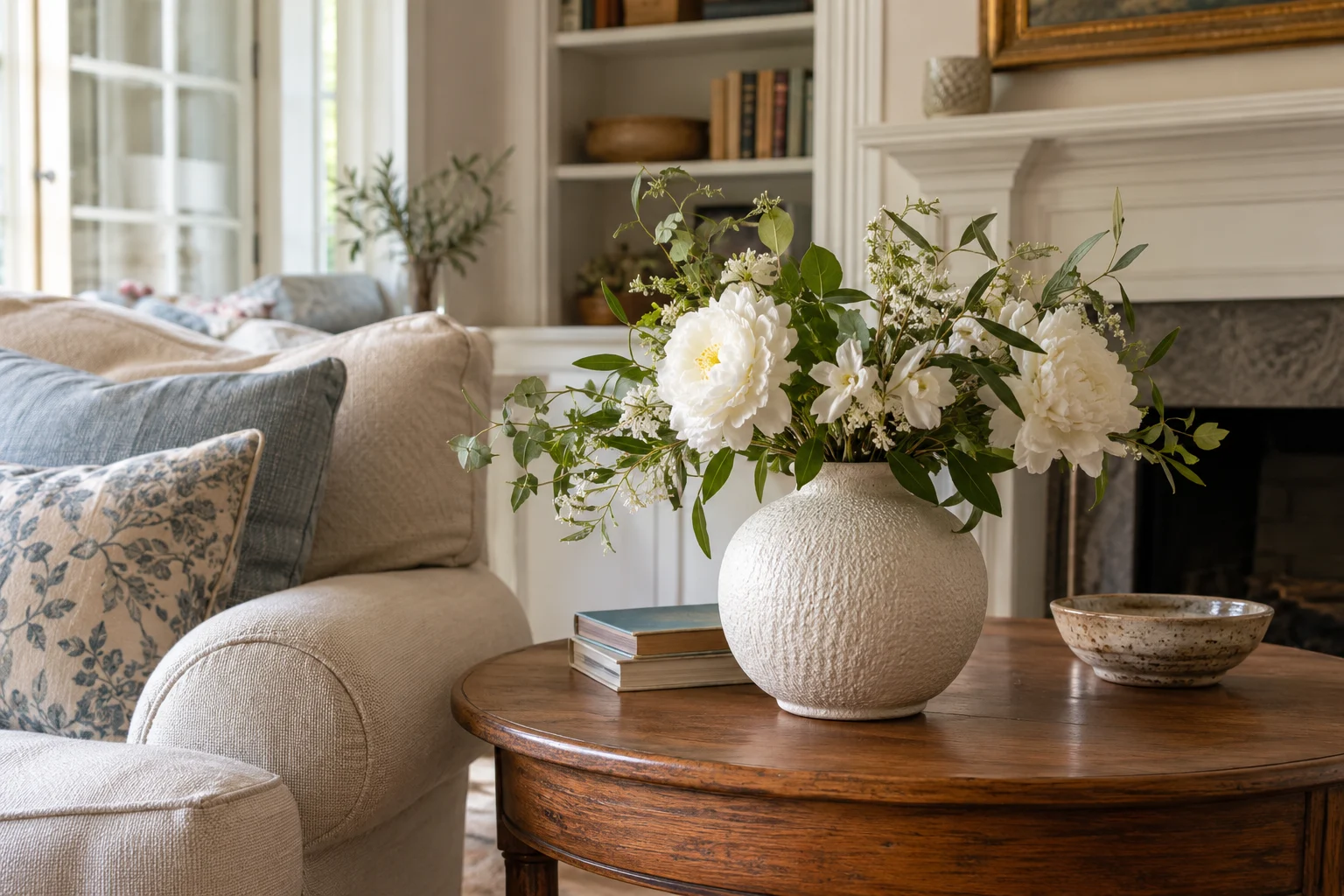
Place a simple arrangement somewhere you’ll notice it throughout the day. Grocery-store flowers, garden cuttings, or a few leafy stems can all bring life to a room.
The Vanselia Rustic Ceramic Vase has a textured finish and a waterproof interior for fresh flowers. Its rounded shape works with a loose arrangement on a console or side table. Keep a dining-table arrangement low enough that everyone can see across it.
15. The Fruit Bowl Has a Job
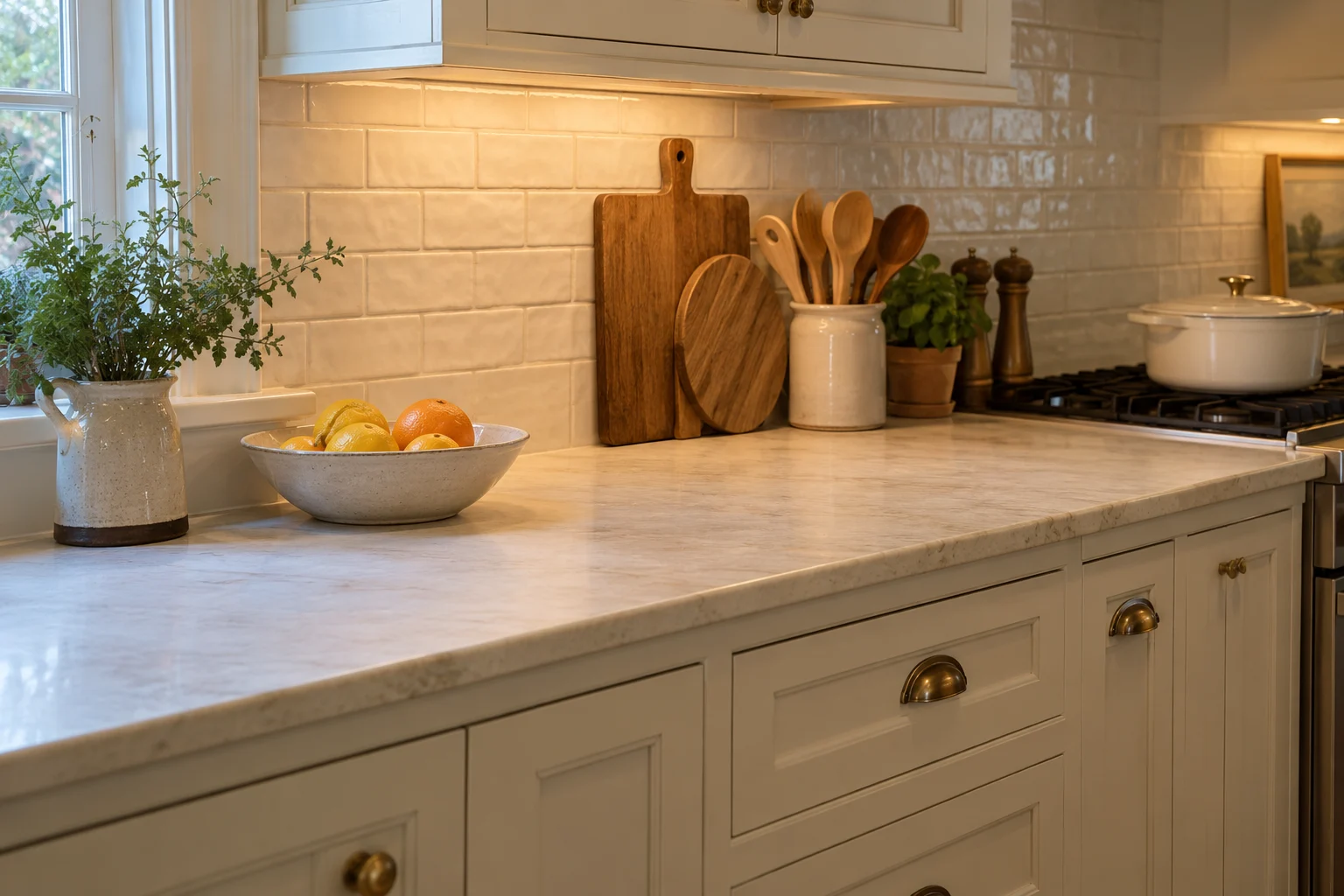
Display fruit you eat in a bowl that suits the counter. A wood bowl adds warmth, a white ceramic bowl feels quiet, and blue-and-white pottery introduces a little pattern.
Keep it near the place where you make breakfast or unpack groceries. In a small kitchen, one compact bowl is plenty. The useful part matters: those lemons should eventually make it into dinner.
16. A Kitchen Counter With Useful Character
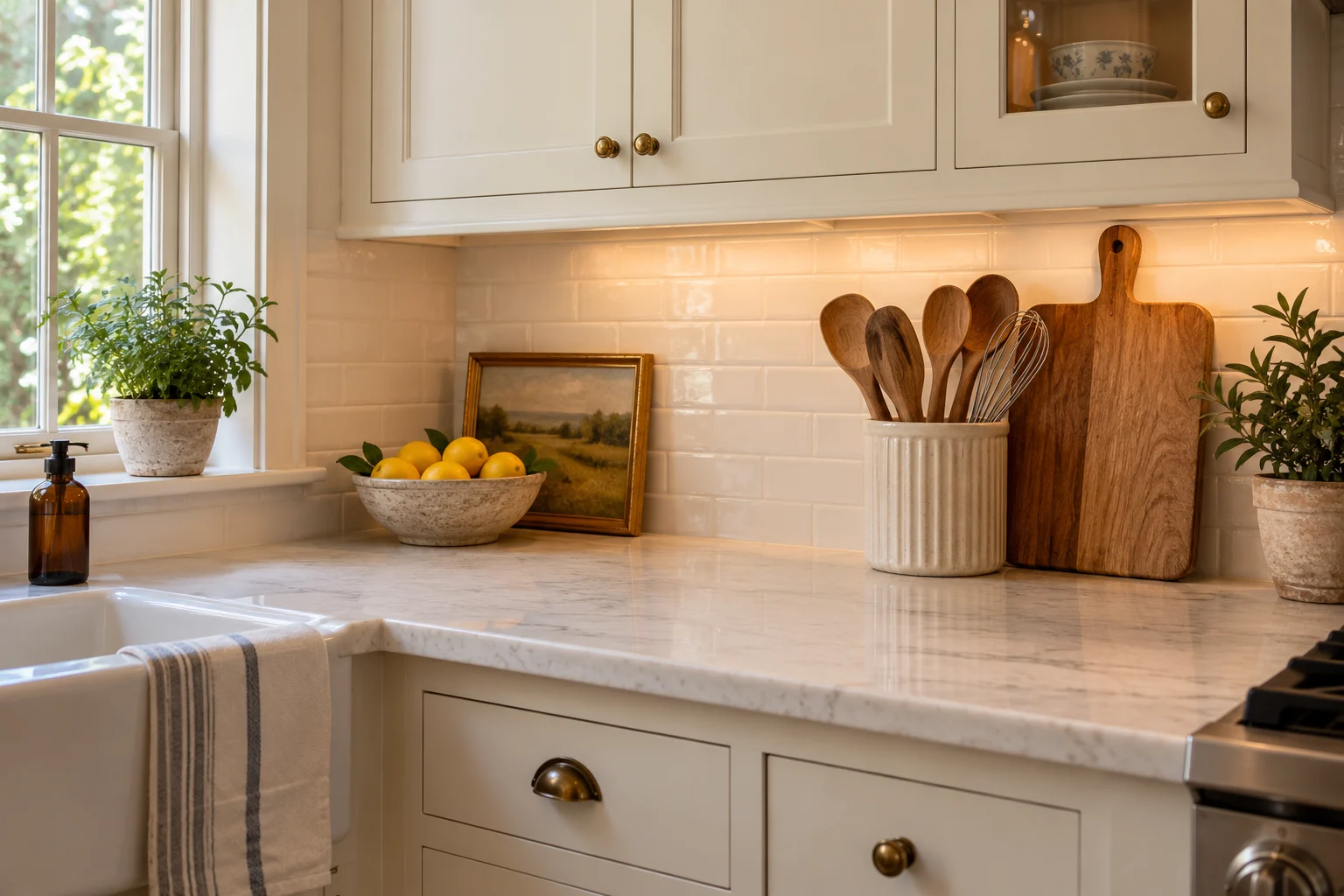
Group the tools you reach for most in one attractive container. Wooden spoons, a spatula, and a whisk can create a practical little arrangement without taking over the worktop.
The JIEMEI HOME Aged Ivory Utensil Crock brings in a softly textured ceramic finish and has a cork base to help protect the counter. Set it near your preparation area, with a cutting board behind it if there’s room. Keep the remaining tools in a drawer so the crock stays easy to use.
17. Copper With a Little History
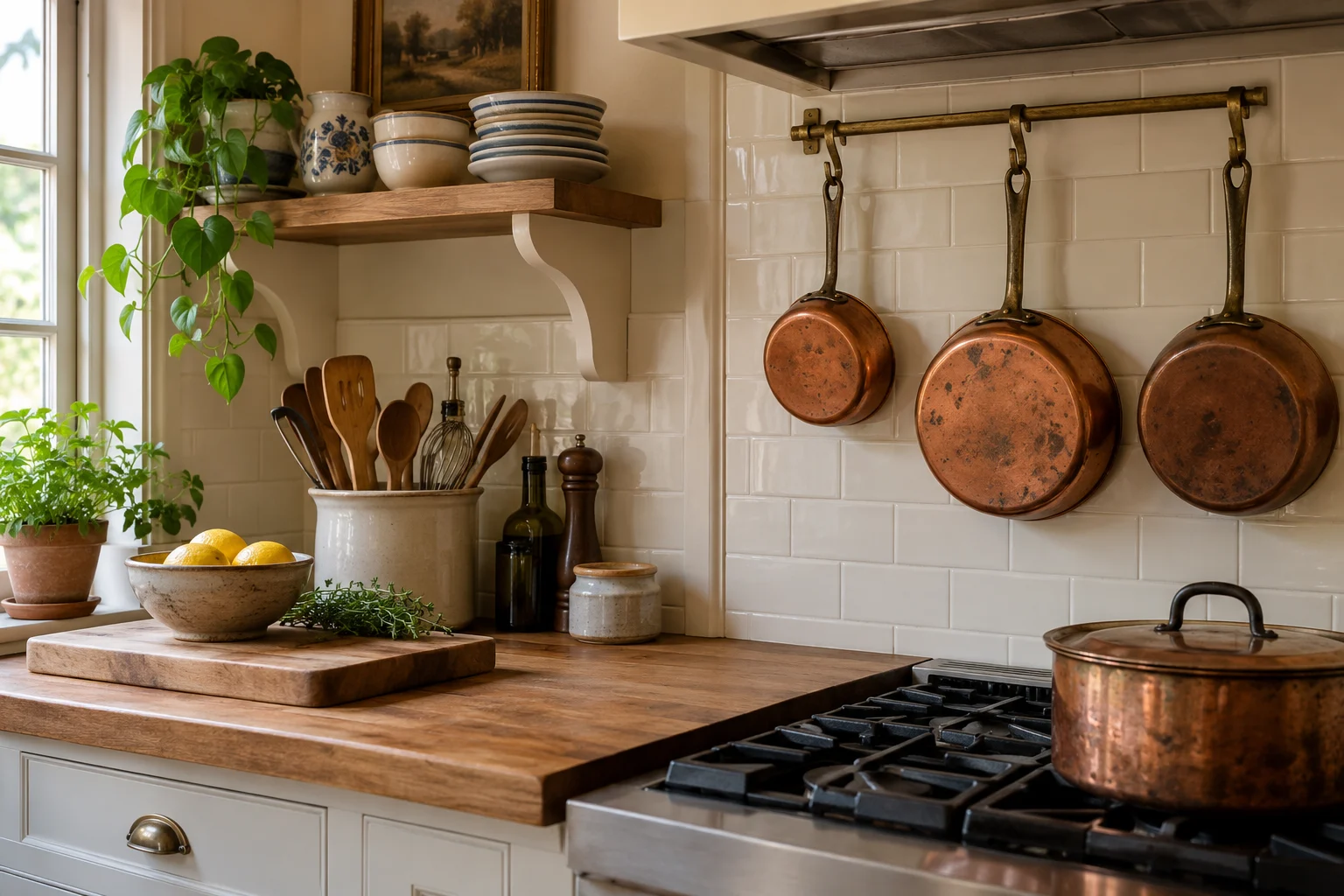
Let cookware you use become part of the kitchen’s character. A copper pan on a rail or a favorite pot on an open shelf introduces another warm material alongside wood and ceramic.
You can get a similar sense of familiarity from well-kept stainless steel, an enamel pot, or a wood cutting board with visible use. Give each piece enough space to lift down easily. A display that makes cooking awkward will lose its appeal quickly.
18. Everyday Tools Worth Leaving Out
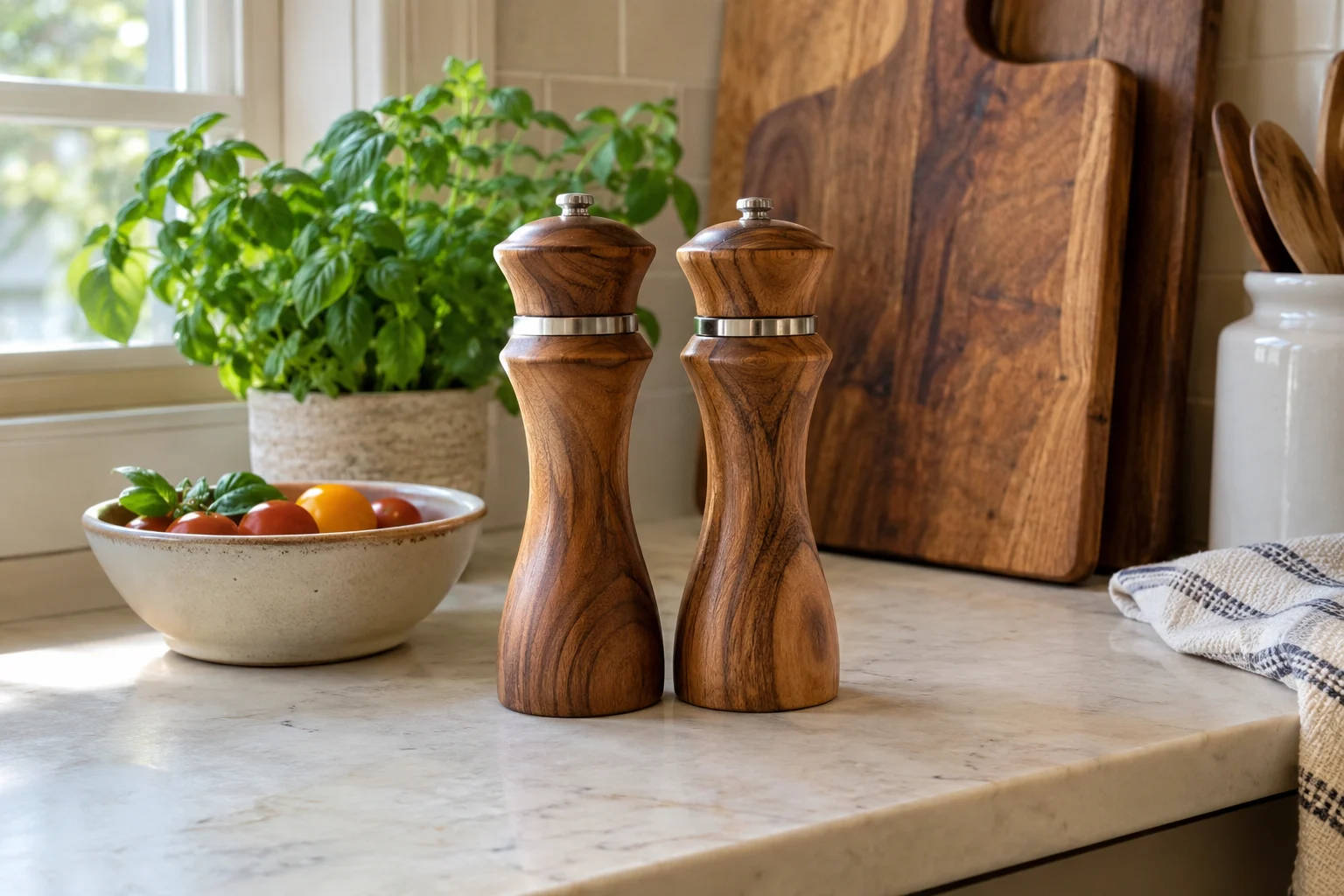
Choose attractive, useful versions of the tools that already live on your counter. Salt and pepper mills are a good example because they move naturally between the kitchen and dining table.
The Gennua Kitchen Wooden Salt and Pepper Grinder Set uses solid acacia wood with adjustable grinding mechanisms. The curved shape and visible grain bring warmth to a pale kitchen. Keep the pair near your cooking area, then carry them to the table when dinner is ready.
19. A Gathering Spot in the Kitchen
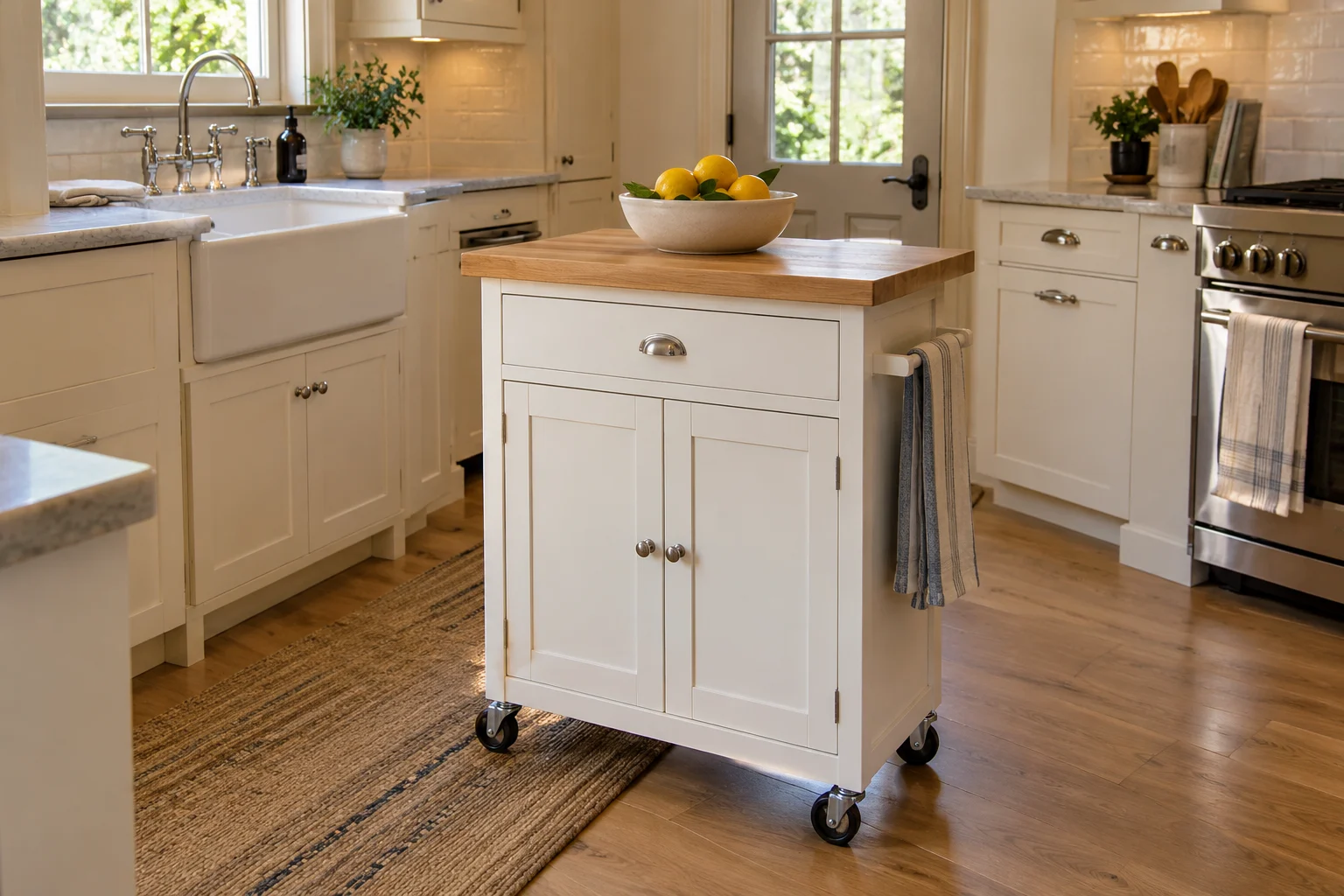
Create an extra surface where someone can help with dinner or set down a plate. A kitchen table, existing island, or compact cart can make the room easier to share.
The JY QAQA 26-Inch Rolling Kitchen Island Cart combines a white cabinet, wood top, drawer, and enclosed shelving. Use it as a compact preparation or serving station, then lock the casters when it’s in position. Its practical role is extra workspace and storage; keep the walking route around it clear.
20. White Dishes, Ready for Tuesday Dinner
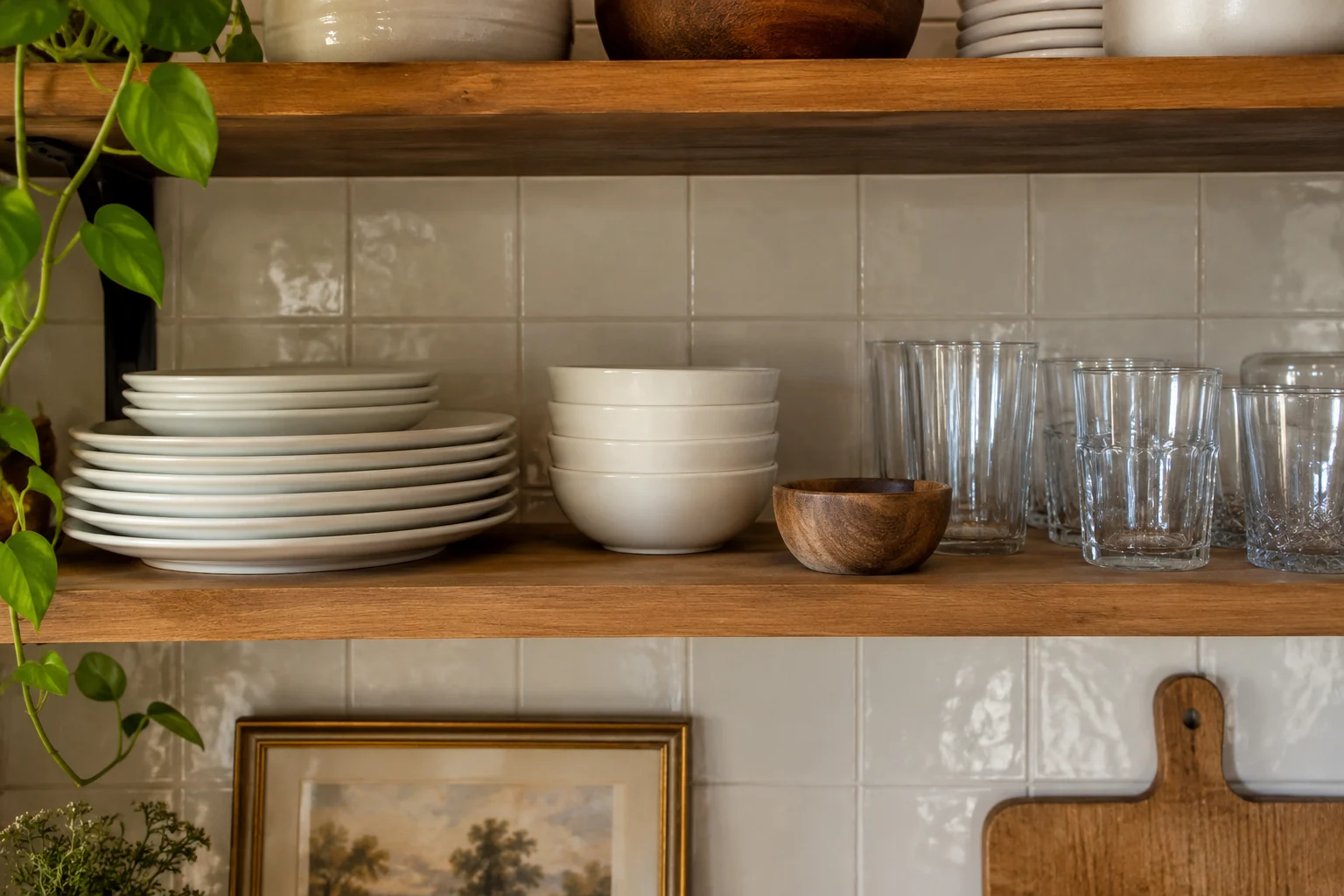
Use everyday white dinnerware as a flexible foundation. It works with wood tables, patterned napkins, colored glasses, and serving bowls collected over time.
Stack a few frequently used plates on an accessible shelf if you enjoy open storage. Closed cabinets work just as well for keeping everything ready between meals. The same dishes can handle hurried toast in the morning and a full table of friends later.
21. A Table That Welcomes One More Person
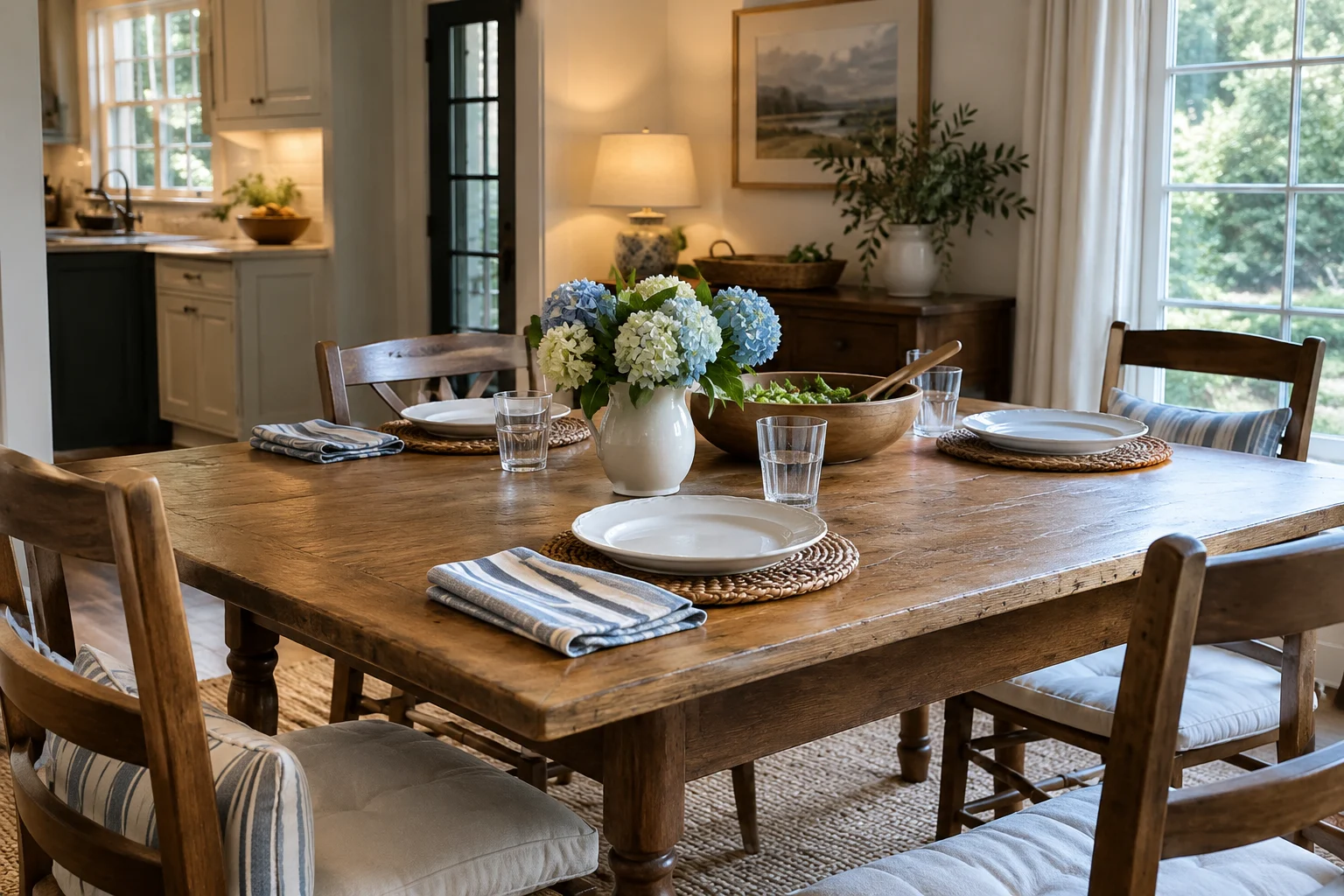
Make the table comfortable to sit around and easy to share. Cloth napkins, a serving bowl, and a low arrangement of flowers are enough to give dinner a little care.
Leave generous space for the actual meal. If your table is small, move serving dishes to a sideboard or nearby counter. Everyone should be able to reach their glass without negotiating around a centerpiece.
22. Candlelight for the Ordinary Evenings
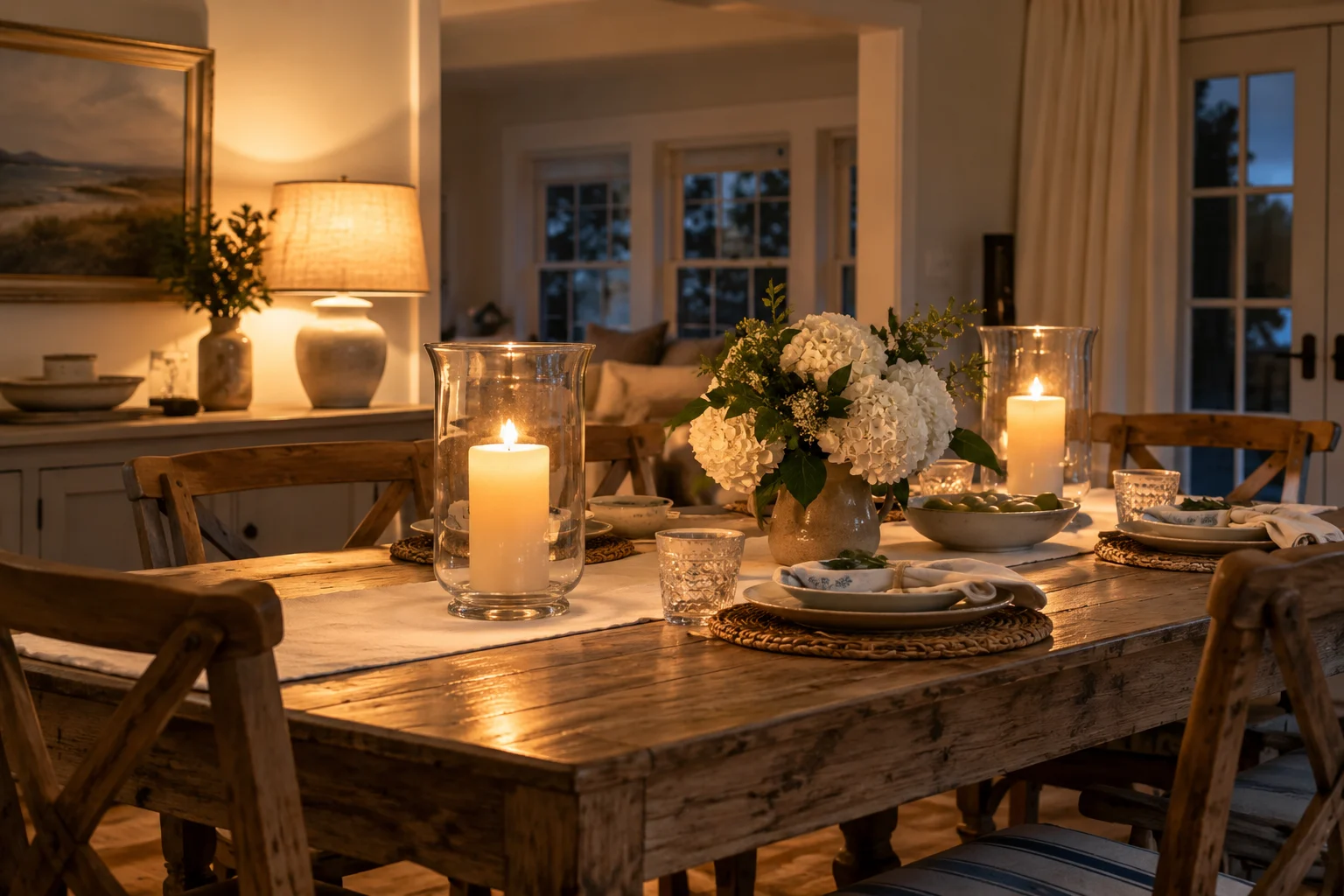
Use a small candle arrangement to make an ordinary evening feel special. Clear glass hurricanes suit the airy coastal version of this style, while slender candlesticks bring a more traditional note.
One arrangement on the dining table can carry the mood. Flameless candles offer another way to get that glow, especially on shelves or in busy family spaces. Keep the surrounding surface simple so the light remains the focus.
23. A Bed You Want to Climb Back Into
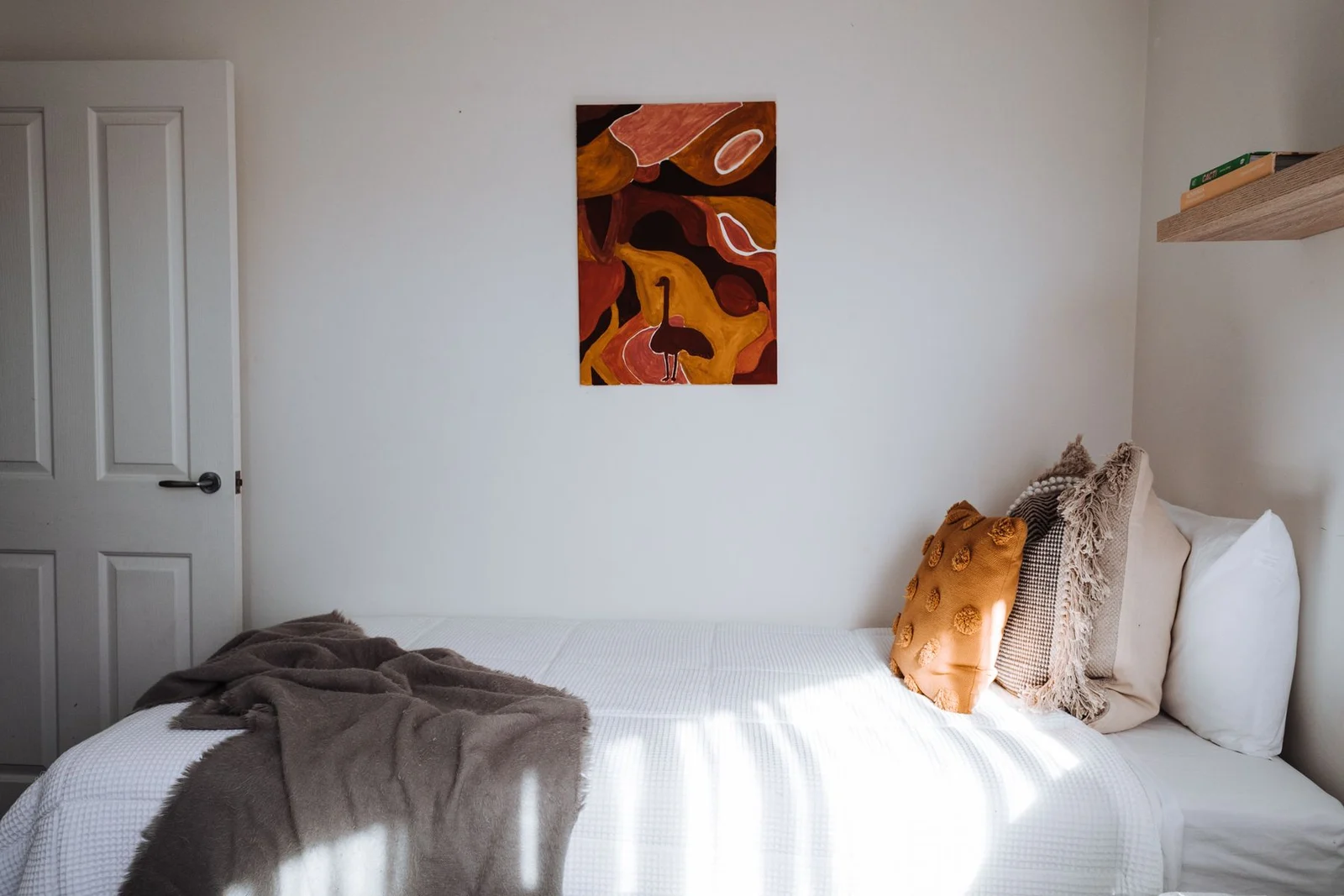
Build the bed around comfortable sheets, a useful top layer, and a manageable number of pillows. White or cream bedding creates an easy foundation for a quilt, patterned cushion, or warm wood bed frame.
Think about your daily routine before piling on more layers. If you’re moving six decorative pillows every night, simplify. Two sleeping pillows per person and one finishing cushion can still look generous.
24. The Quilt That Makes It Feel Like Home
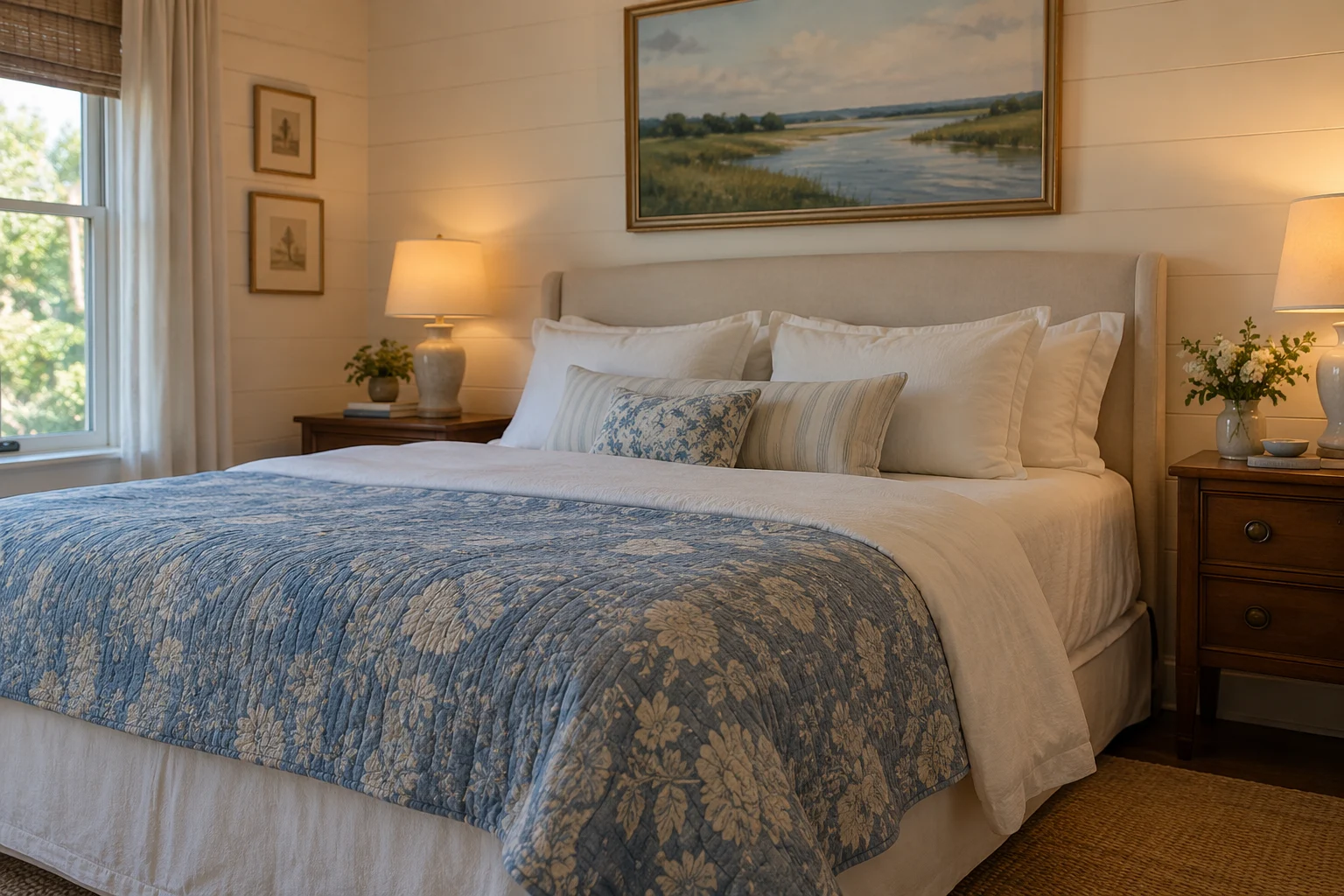
Fold a quilt or coverlet across the lower part of the bed to introduce pattern. A quiet stripe leans coastal, while a floral or patchwork design adds cottage charm.
Pull one color from the quilt into another small detail, such as a lampshade or framed print. If you prefer the pattern underneath a plain duvet, our floral bed sheet ideas offer another way to bring it into the room.
25. A Headboard With Familiar Charm
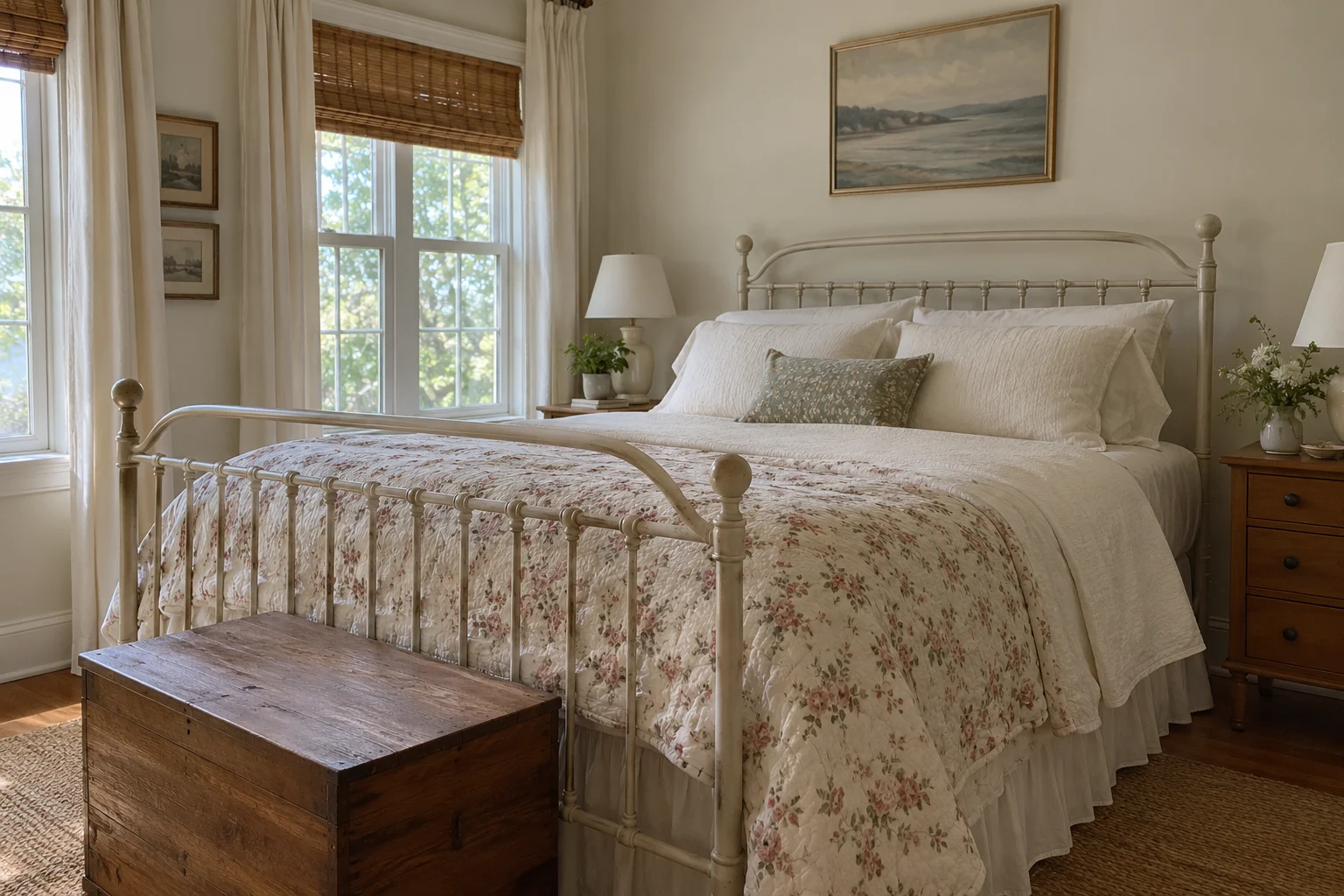
Choose a headboard that supports the way you use your bed. Upholstered designs provide a comfortable surface for leaning back, while wood and metal spindle styles create a lighter visual outline.
A softly shaped upholstered headboard pairs well with plain bedding and a floral quilt. A spindle frame can carry more pattern without making the room feel heavy. For nightly readers, our headboards for reading in bed focus on comfortable support.
26. Bedside Tables With Room for Real Life
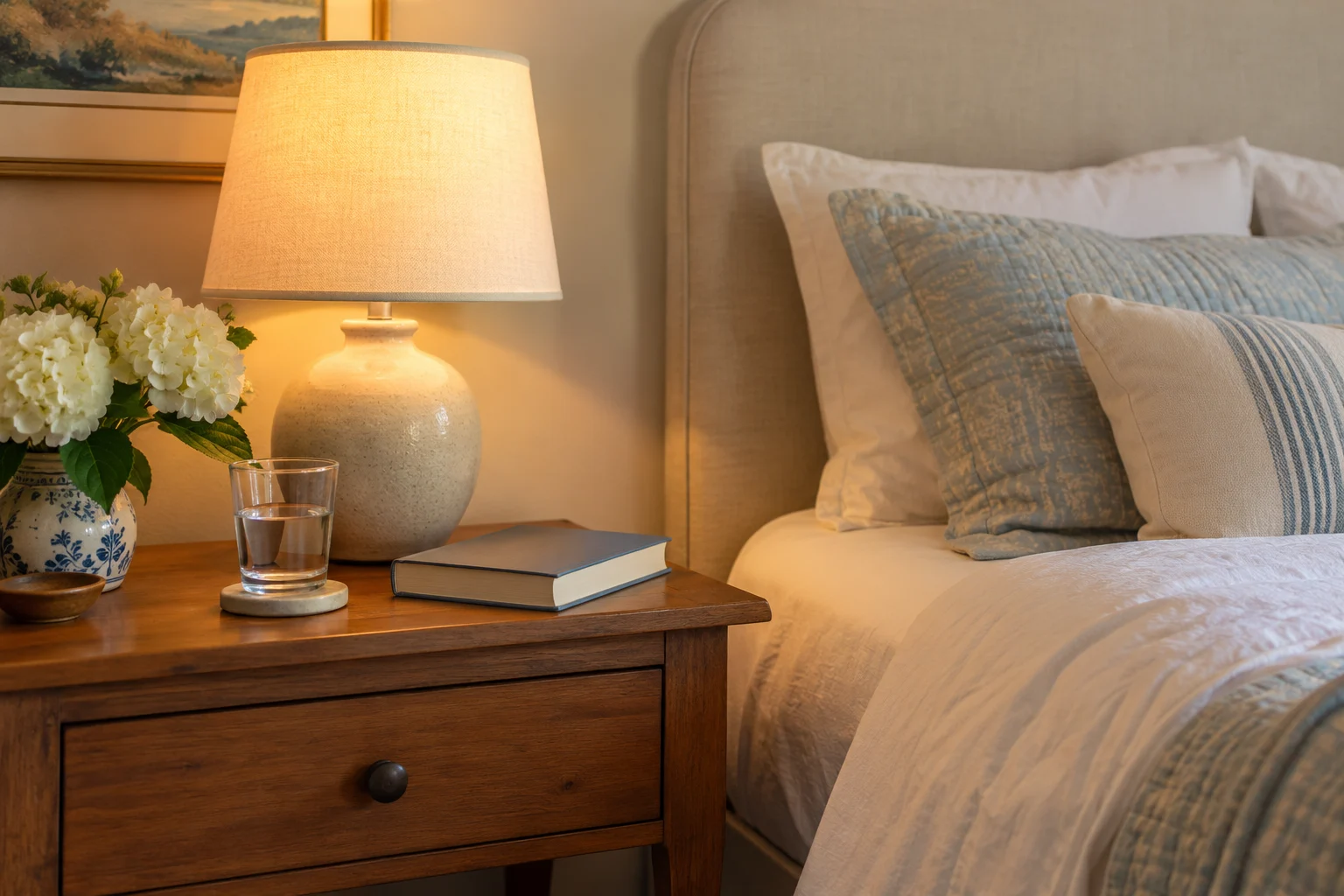
Leave enough bedside space for the things you reach for every night. A lamp, water glass, and current book need a reliable landing spot. A drawer helps with chargers, tissues, and the smaller things that accumulate.
Your tables can be different shapes or finishes. Similar heights and a shared detail, such as matching lamps, help them feel connected. An older chest on one side and a simpler table on the other can work especially well.
27. An Entryway That Says “Come In”
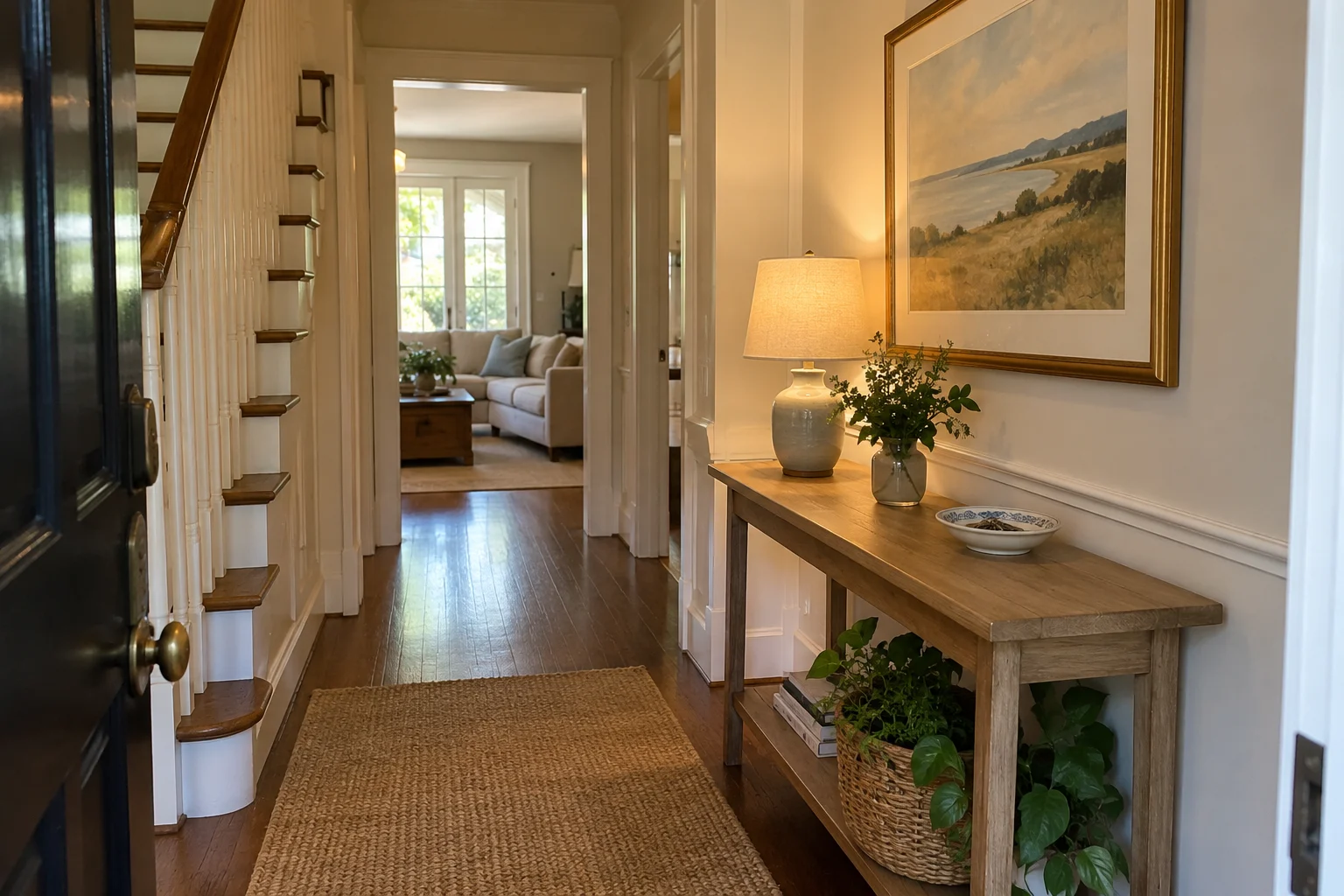
Give the entrance somewhere to set things down and a clear route into the house. A shallow console, small chest, or narrow wall shelf can provide enough space for keys and mail.
Add a lamp if there’s a convenient outlet, then leave part of the surface empty. That breathing room makes the arrangement useful when you arrive carrying groceries, a bag, and a conversation you’re still having on the phone.
28. The Porch Deserves a Comfortable Seat
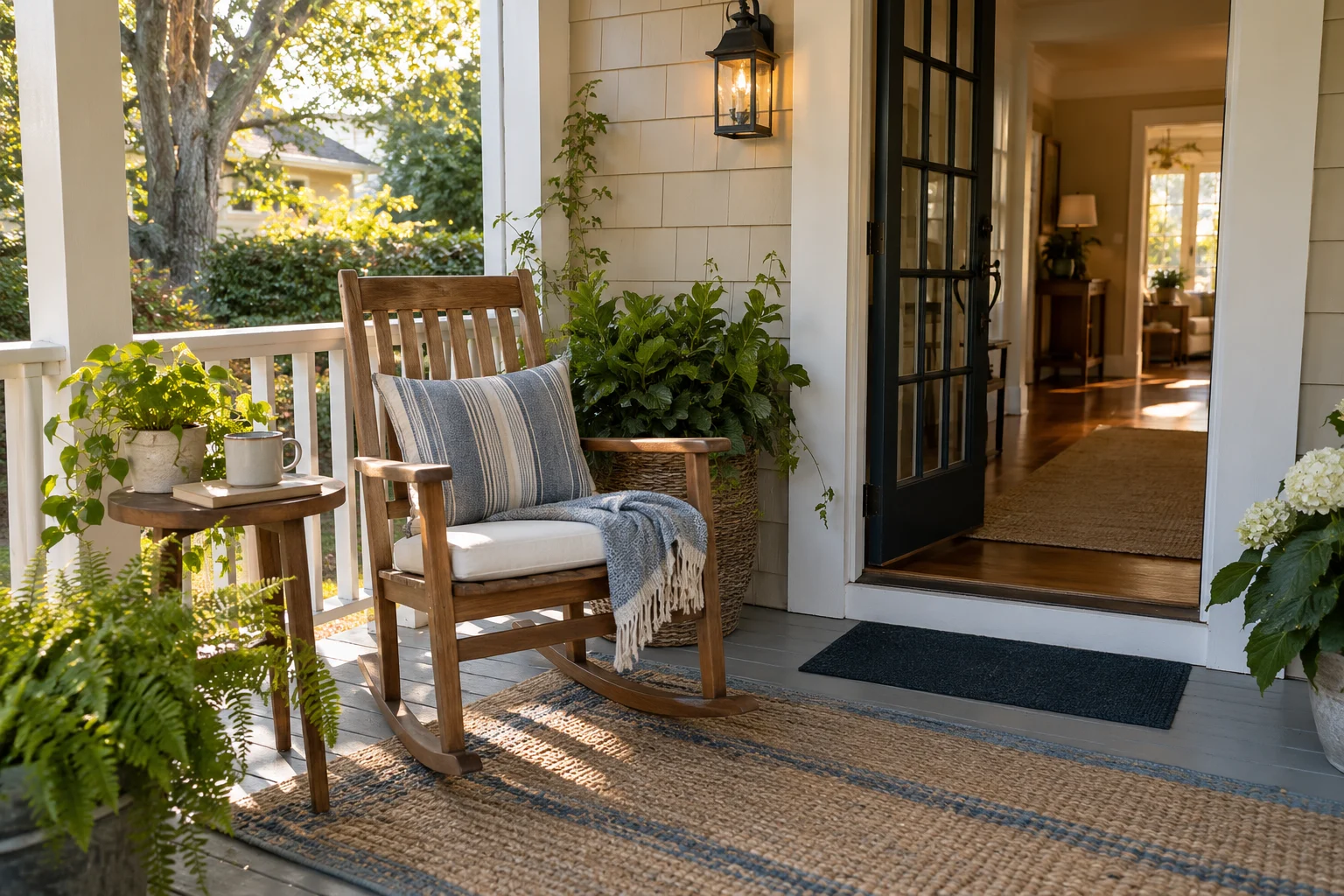
Arrange one comfortable outdoor seat beside a small surface and greenery. That’s enough to create a place for morning coffee or a quiet few minutes before dinner.
A balcony can carry the same feeling with a compact chair and a pot near the railing. Choose furniture made for outdoor use and keep the door’s opening clear. A spot you can easily step into will get more use.
29. The Apartment-Sized Nancy Meyers Look
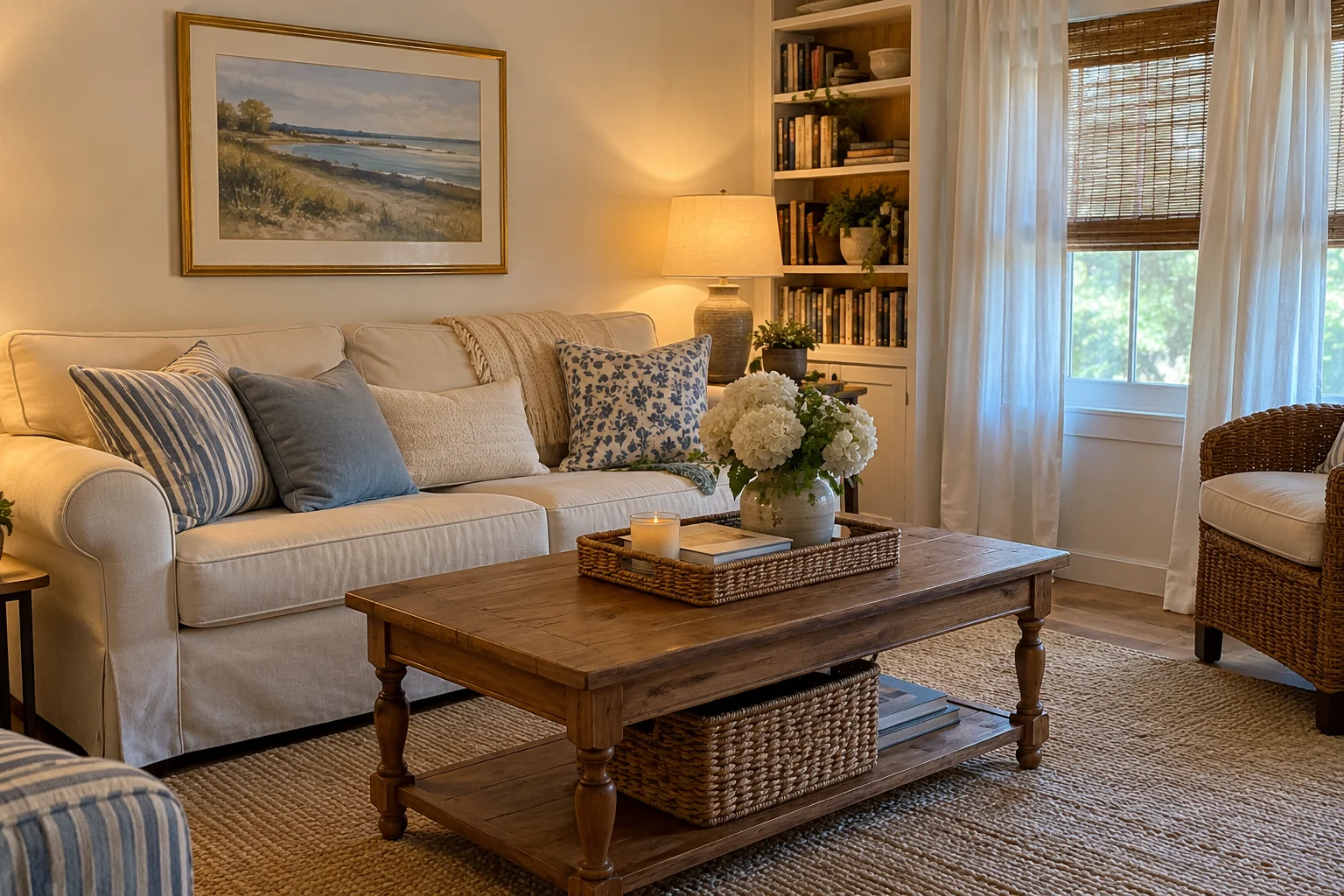
Use fewer pieces and let each one contribute comfort, texture, or storage. A sofa, a lamp, a rug, and books you love can establish the feeling without filling every corner.
For renters, curtains, cushion covers, framed art, and furniture placement offer plenty of flexibility. Keep the largest pieces proportional to the room and repeat a small palette. You’ll get more from a comfortable layout than from squeezing in every decorating idea.
30. Your Life Is the Finishing Touch
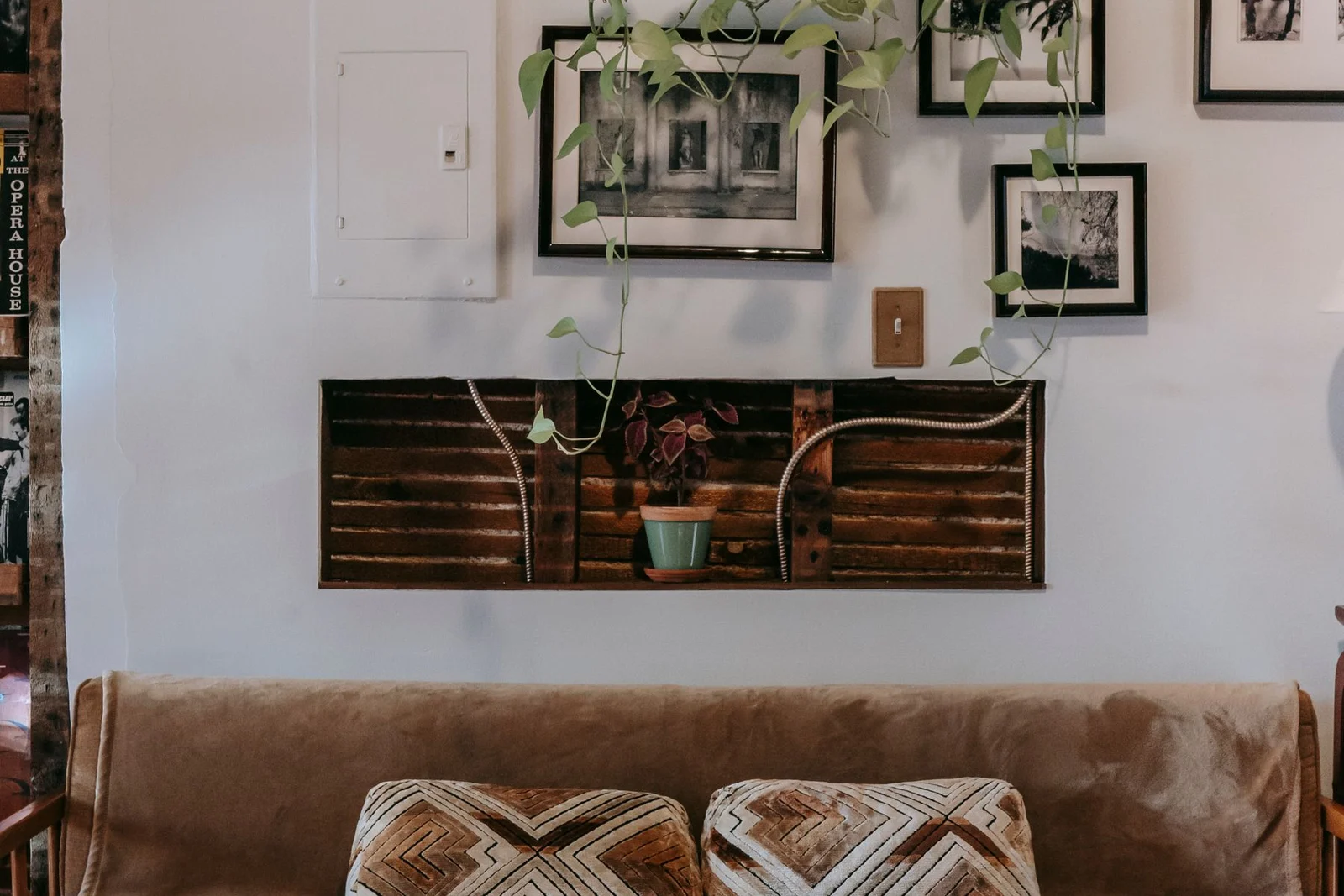
Keep the objects that reflect your routines, interests, and history. The photograph from a family trip, the bowl you use every weekend, and the chair everyone claims after dinner all belong.
Before buying another accessory, move a few meaningful pieces into places where you can enjoy them. Group the smaller ones and leave useful surfaces available. A home becomes more inviting when there’s room for the people and habits that fill it.
A Quick Checklist for That Comfortable, Collected Look
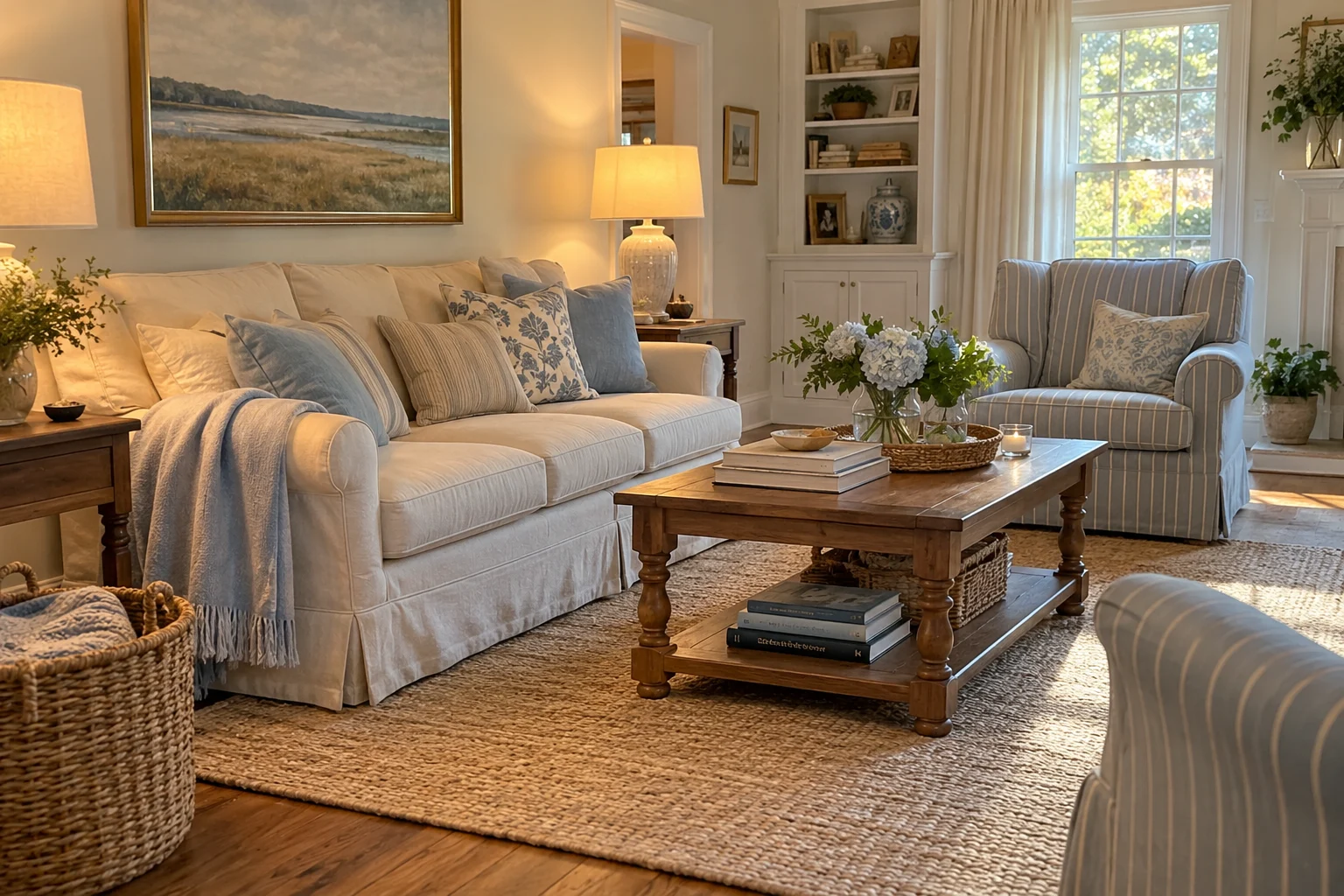
Focus on comfort, useful storage, and details you enjoy seeing every day. Walk through the room and look for the small changes that would make it easier to use.
- Comfortable seating where people naturally gather.
- Warm neutrals connected by wood and textiles.
- A lamp beside the place where you read or relax.
- A balance of plain fabrics and a few patterns.
- Books, photographs, and objects with personal meaning.
- Kitchen tools grouped within easy reach.
- Storage for the things that regularly collect on surfaces.
- Clear space to walk, cook, and set down a drink.
A small-update note: Rearranging a chair, moving a lamp, and bringing out a favorite quilt can change the room before you buy anything.
Nancy Meyers Aesthetic FAQs
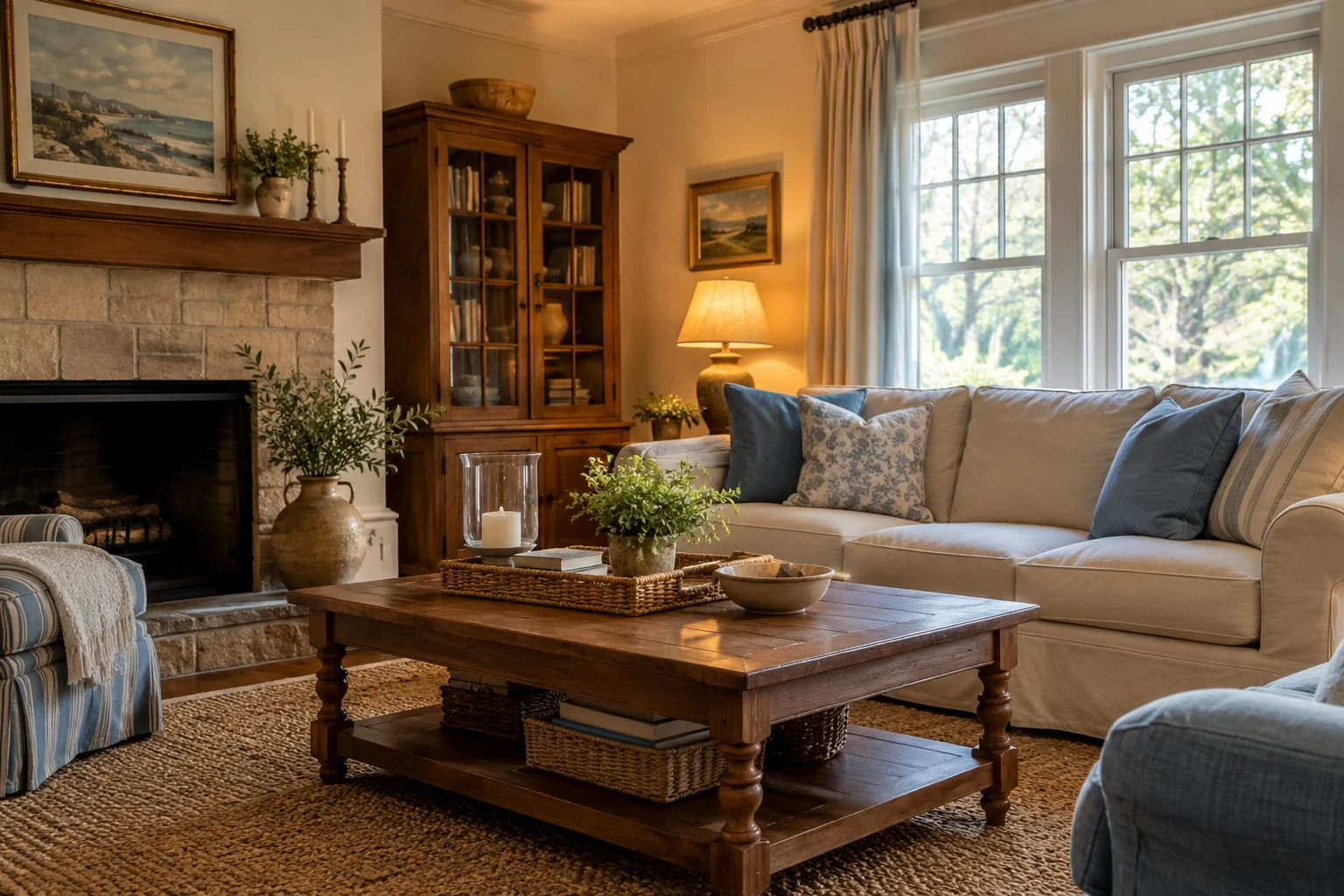
What Is the Nancy Meyers Aesthetic?
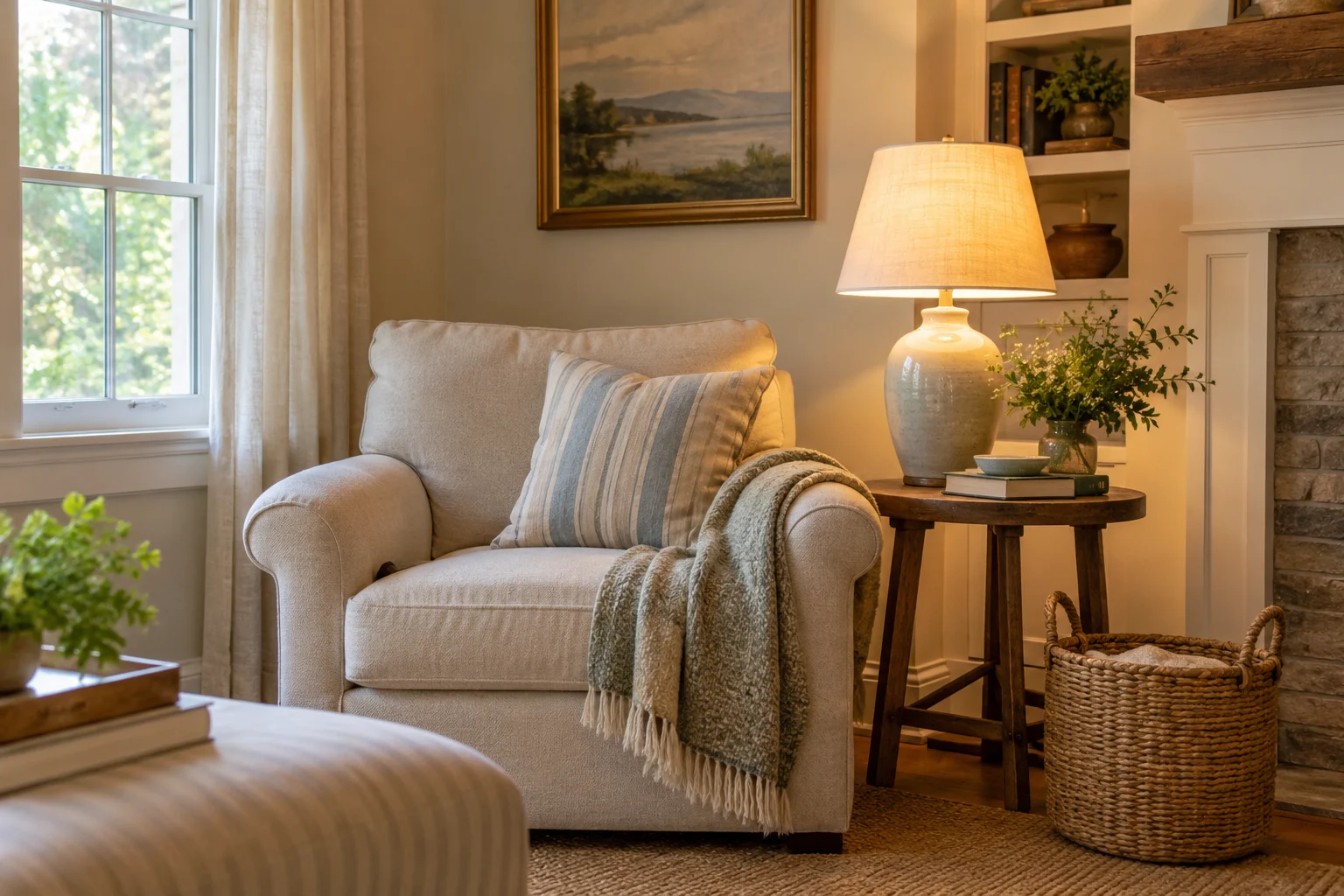
The Nancy Meyers aesthetic is a comfortable, layered decorating approach associated with the homes in her films. Common ingredients include classic furniture, warm neutrals, natural textures, shaded lighting, books, and everyday objects that reflect the people living there.
Is It the Same as Coastal Grandmother Style?
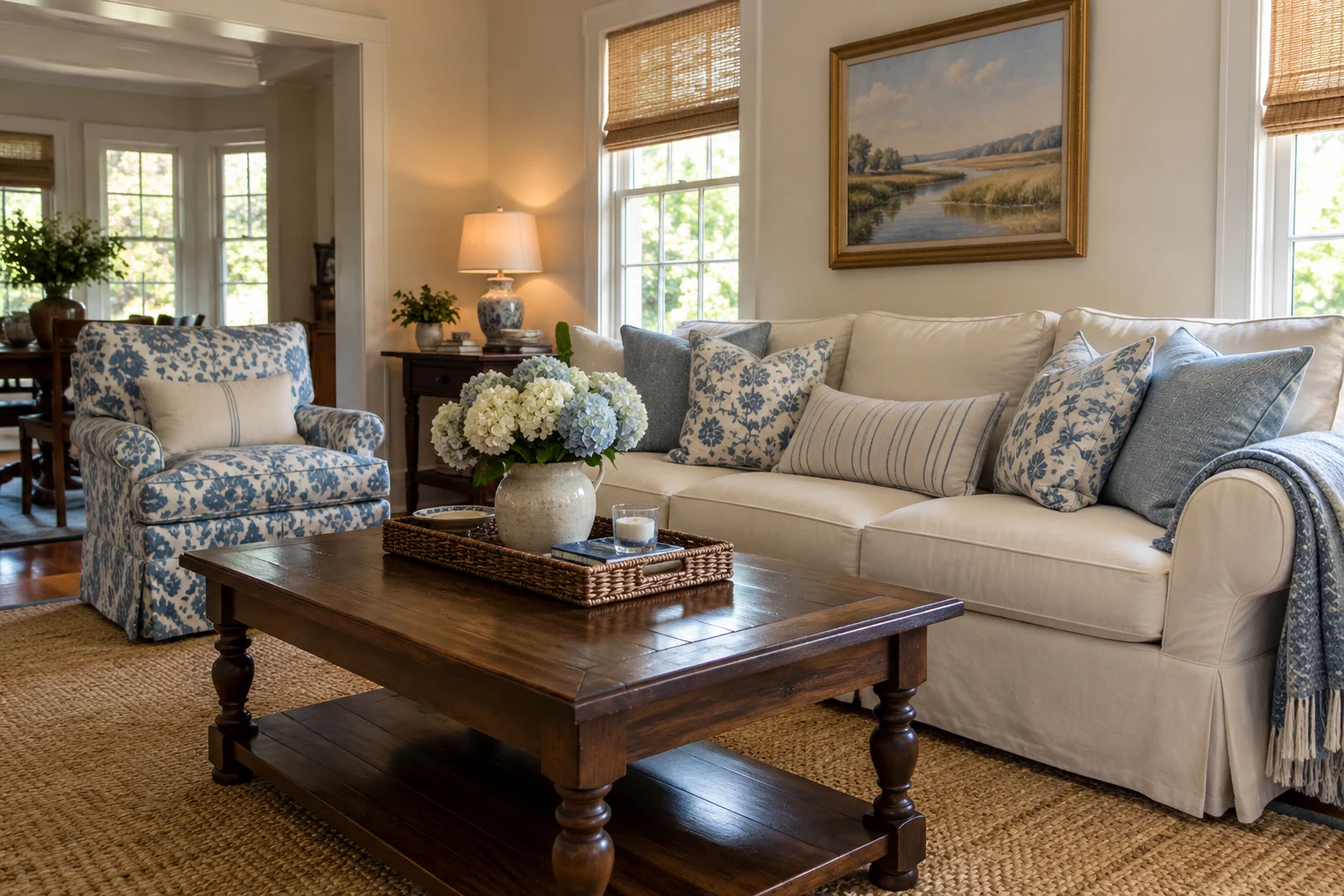
The two overlap, especially in their relaxed fabrics, soft colors, and comfortable seating. Nancy Meyers interiors cover a wider range, including cozy cottages and more contemporary homes. You can take the parts that suit your own rooms.
Which Colors Work Best?
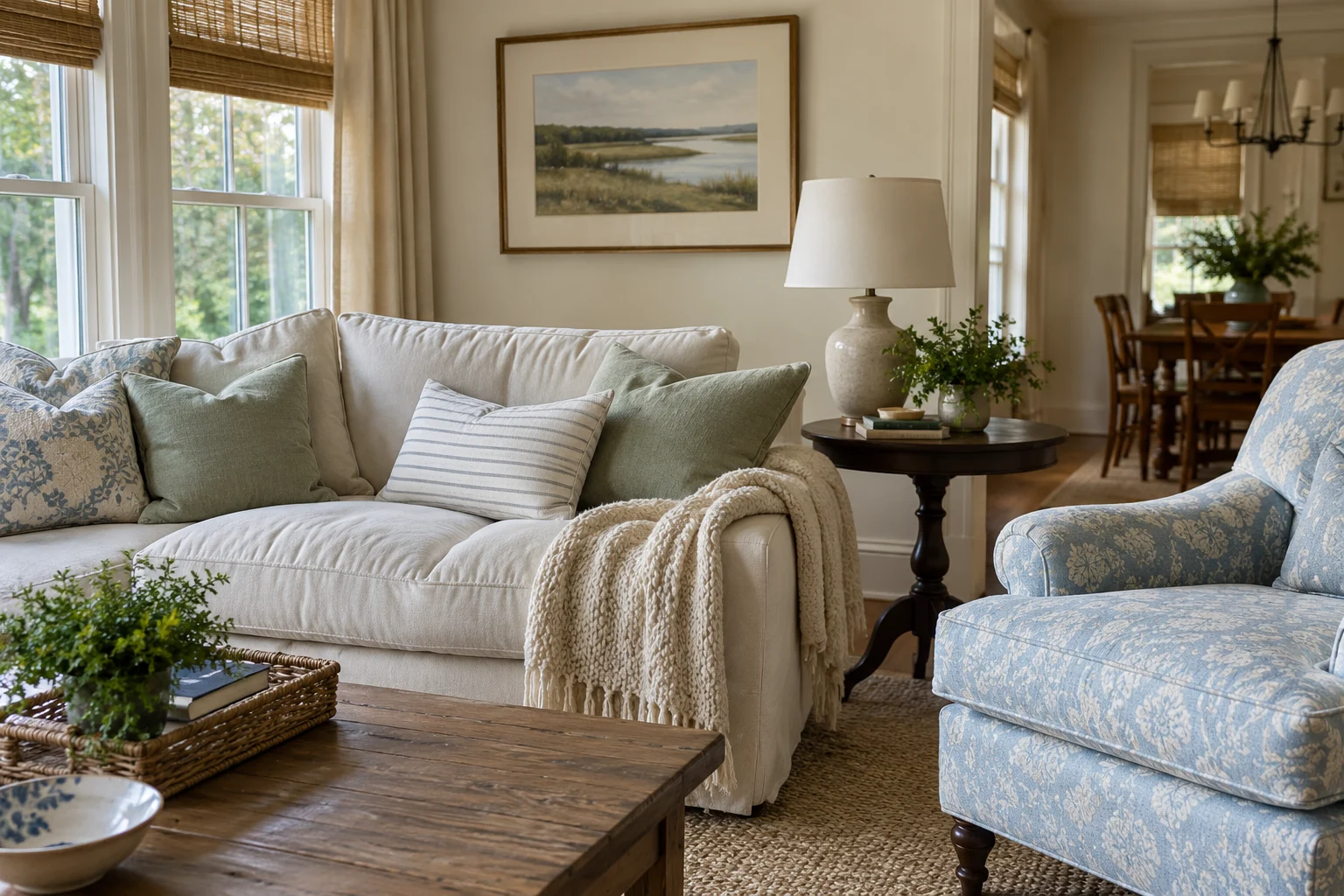
Cream, ivory, warm beige, soft blue, and sage are useful foundation colors. Faded rose, muted yellow, and deeper wood tones can add variety. Repeat a favorite accent in two or three places to connect the room.
How Can I Get the Look on a Budget?
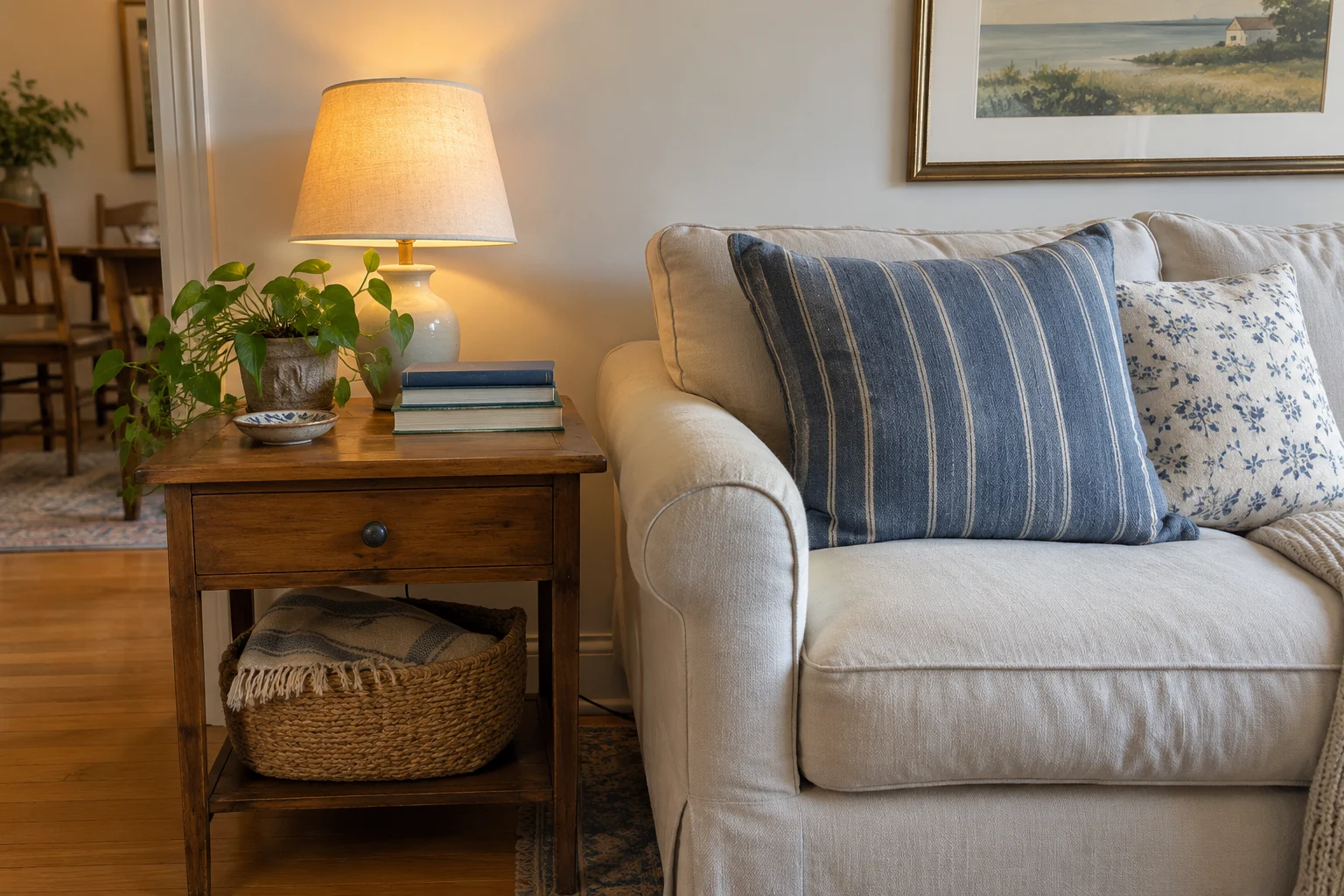
Rearrange what you own, bring out meaningful objects, and spend on the missing piece that will improve daily use. That might be a reading lamp, a better storage basket, or new cushion covers. Secondhand wood furniture can add character without requiring a matching set.
Can This Style Work With Kids and Pets?
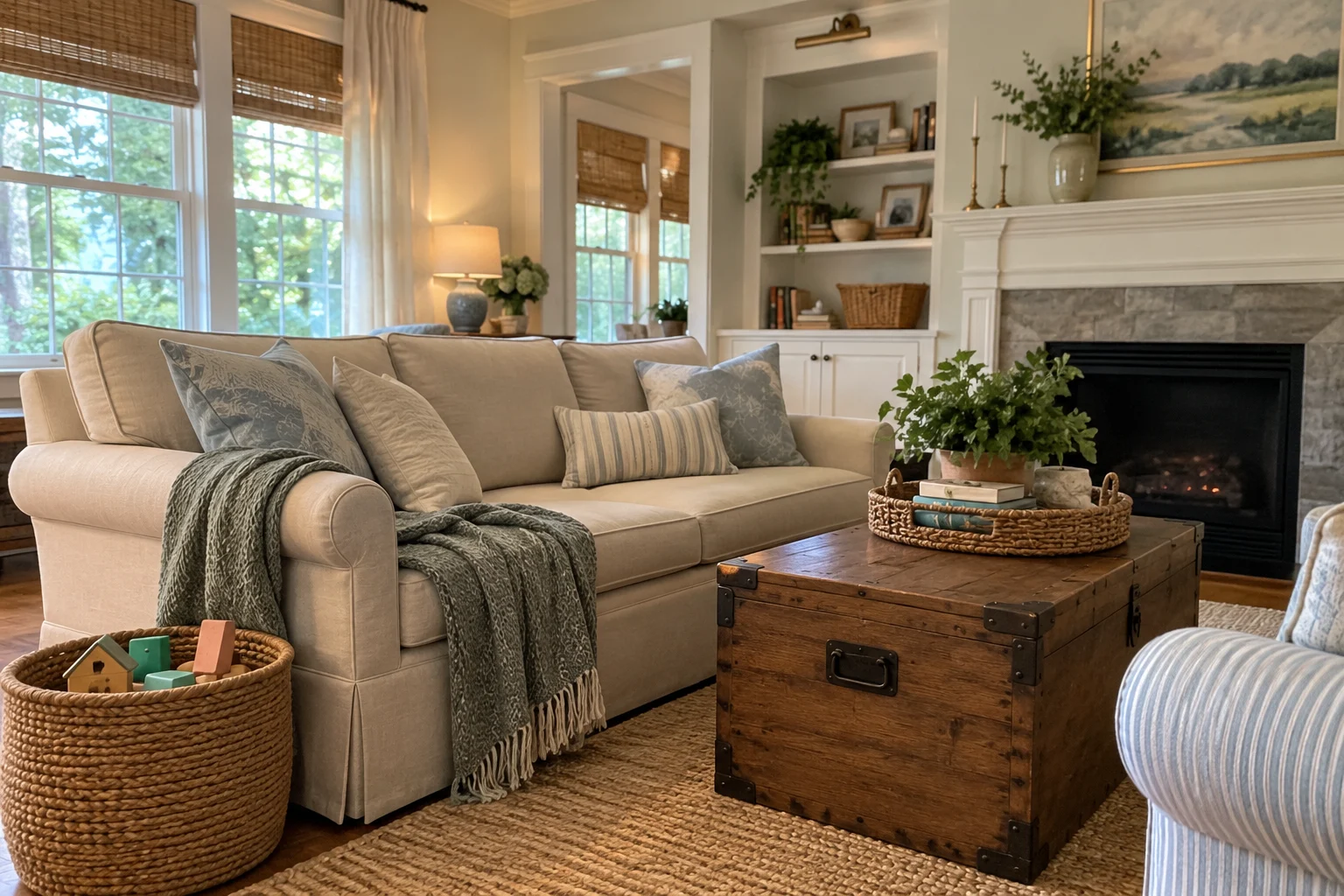
Yes. Practical upholstery, washable textiles, and storage near the places where mess happens help the look work for family life. Oatmeal and patterned fabrics offer alternatives to bright white, while baskets and drawers make quick tidying easier.
Do I Need a White Sofa?
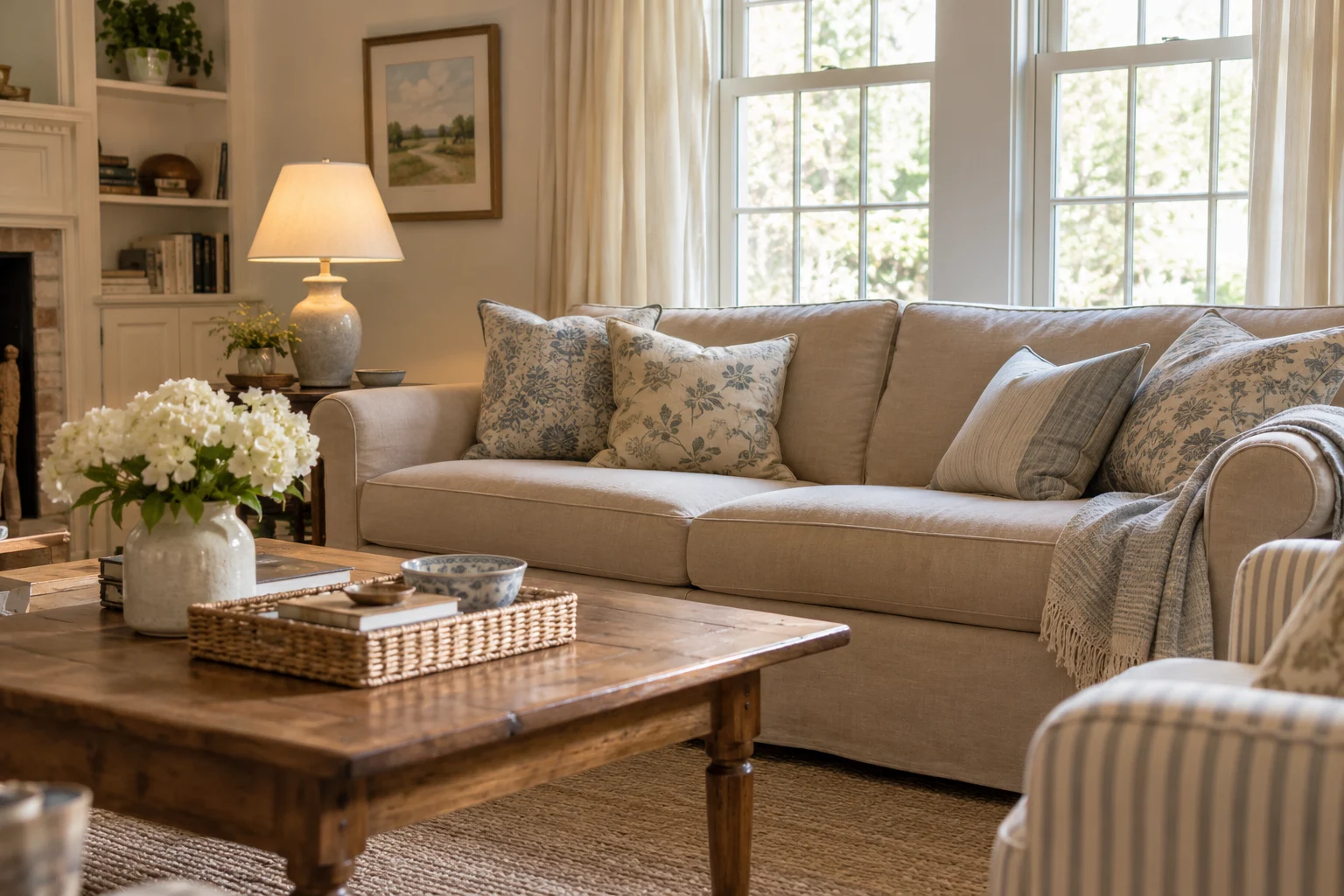
No. Beige, oatmeal, soft gray, and muted colors can all work. Keep the seating comfortable, add warm materials around it, and use lamps and textiles to soften the room.
How Do I Keep the Room From Feeling Cluttered?
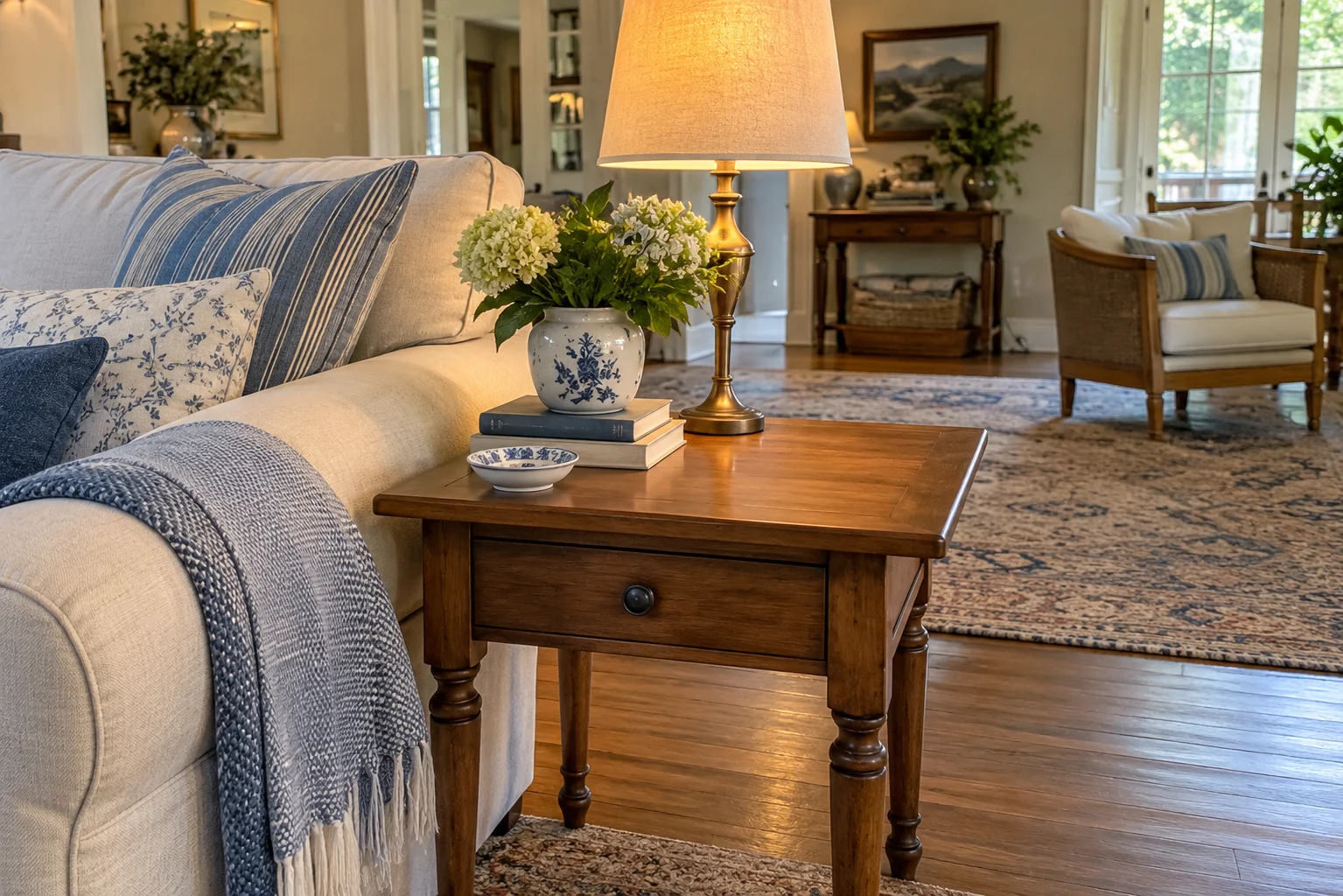
Group smaller objects and protect the surfaces you use every day. Keep room for a drink on the side table, preparation space in the kitchen, and a clear path through the seating area. Store the overflow nearby so tidying takes a moment.
Shop the Nancy Meyers Look
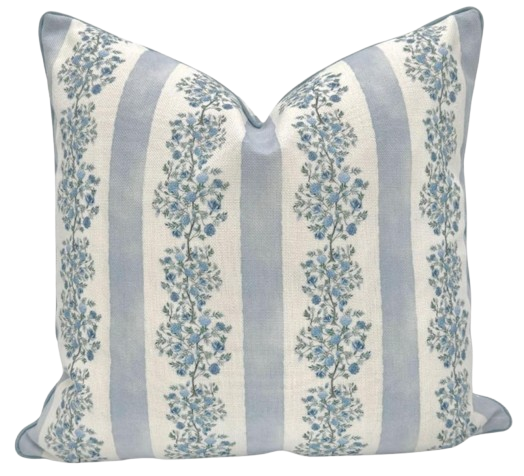 Jillien Harbor “The Juliet” Pillow CoverSoft blue floral pattern on an off-white background. Pillow cover; filling is separate.
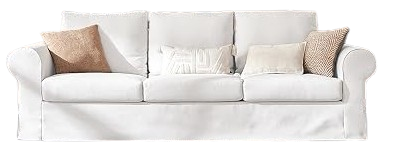 Vorthio 89-Inch Farmhouse SofaCream upholstery, rolled arms, and a skirted base. Removable cushion covers are machine washable.
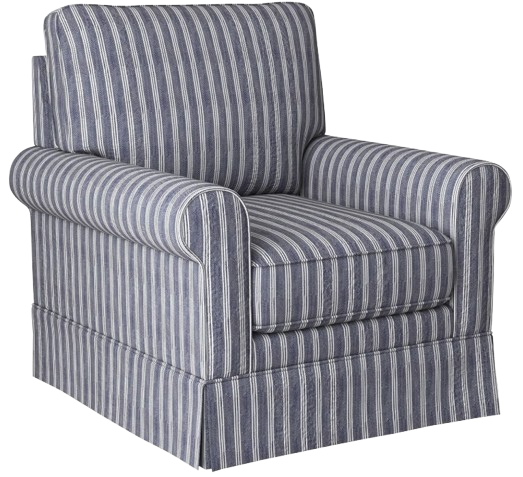 INZOY Blue Stripe Swivel Accent ChairA blue-striped upholstered chair with a swivel base for reading corners and conversation.
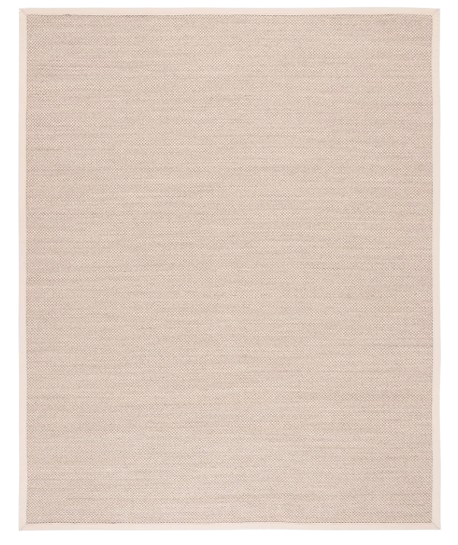 SAFAVIEH Natural Fiber NF143C Rug in Marble and BeigeBordered sisal texture in marble and beige tones. A firm woven foundation for the seating area.
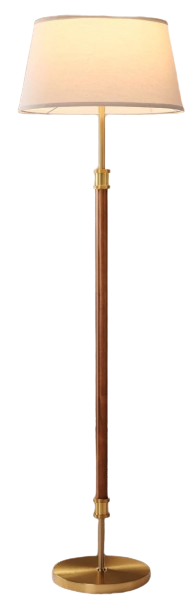 ZenGlimmer Dark Walnut Floor LampDark walnut, brushed-gold accents, and a broad linen shade. E26 bulb sold separately.
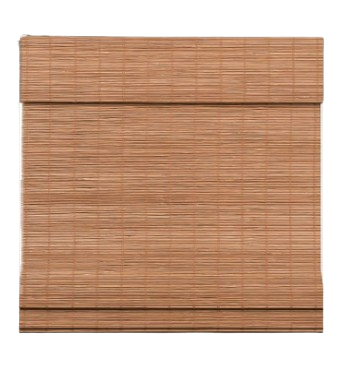 LazBlinds Cordless Bamboo Roman ShadeA cordless woven bamboo shade with blackout backing for privacy and layered windows.
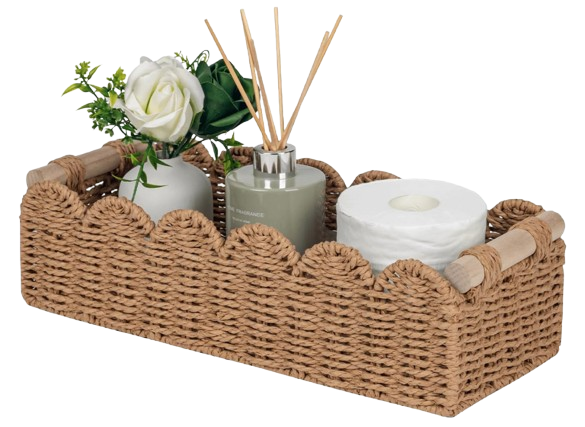 CubesLand Scalloped Storage BasketA shallow paper-rope basket with wooden handles for remotes, coasters, and small items. Styling accessories shown separately.
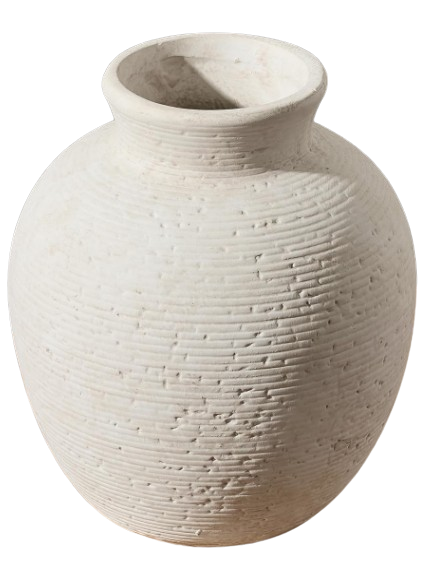 Vanselia Rustic Ceramic VaseTextured ceramic with a waterproof interior for fresh flowers and leafy stems.
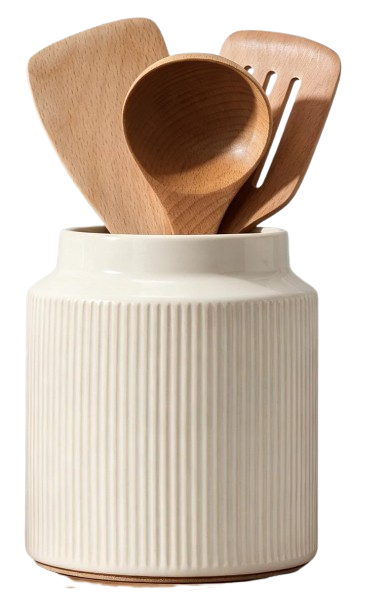 JIEMEI HOME Aged Ivory Utensil CrockAn aged-ivory ceramic crock with a protective cork base for cooking tools. Utensils shown for styling.
 Gennua Kitchen Wooden Salt and Pepper Grinder SetAdjustable salt and pepper mills in solid acacia wood for the counter and dining table.
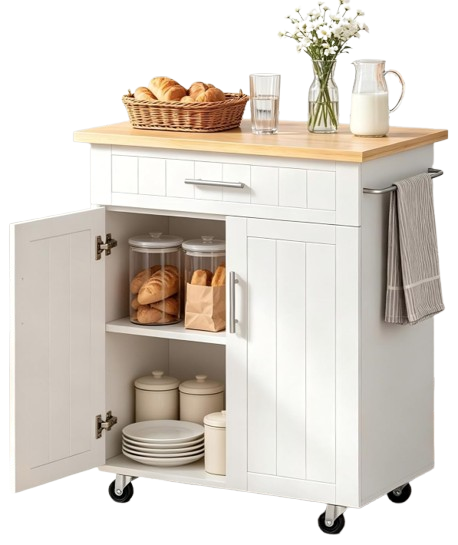 JY QAQA 26-Inch Rolling Kitchen Island CartA compact wood-topped cart with a drawer, enclosed shelves, and locking casters. Accessories shown for styling.