12 Modern Coastal Bedroom Ideas for a Beach House Feel


A beach house bedroom often has a few things in common: comfortable bedding, plenty of daylight, natural textures, and colors that feel easy to live with. Modern coastal decorating brings those details into your bedroom, wherever you live.
You can get the look while keeping your existing bed, carpet, and dresser. Cream bedding can soften the appearance of dark furniture. A woven headboard adds texture, while long curtains and a shaded bedside lamp make the room feel more inviting.
The quick answer
- Combine warm white and sandy neutrals with faded blue, sea-glass green, or a little coral.
- Layer cotton or linen bedding with a textured blanket and a few pillows.
- Add one or two woven pieces, such as a headboard, basket, or lampshade.
- Use long curtains with a separate privacy layer and warm bedside lighting.
- Finish with artwork you enjoy and useful storage, leaving room for everyday essentials.
Below are 12 ideas you can use individually or combine for a fuller bedroom refresh.
1. Coastal Colors That Work With What You Own
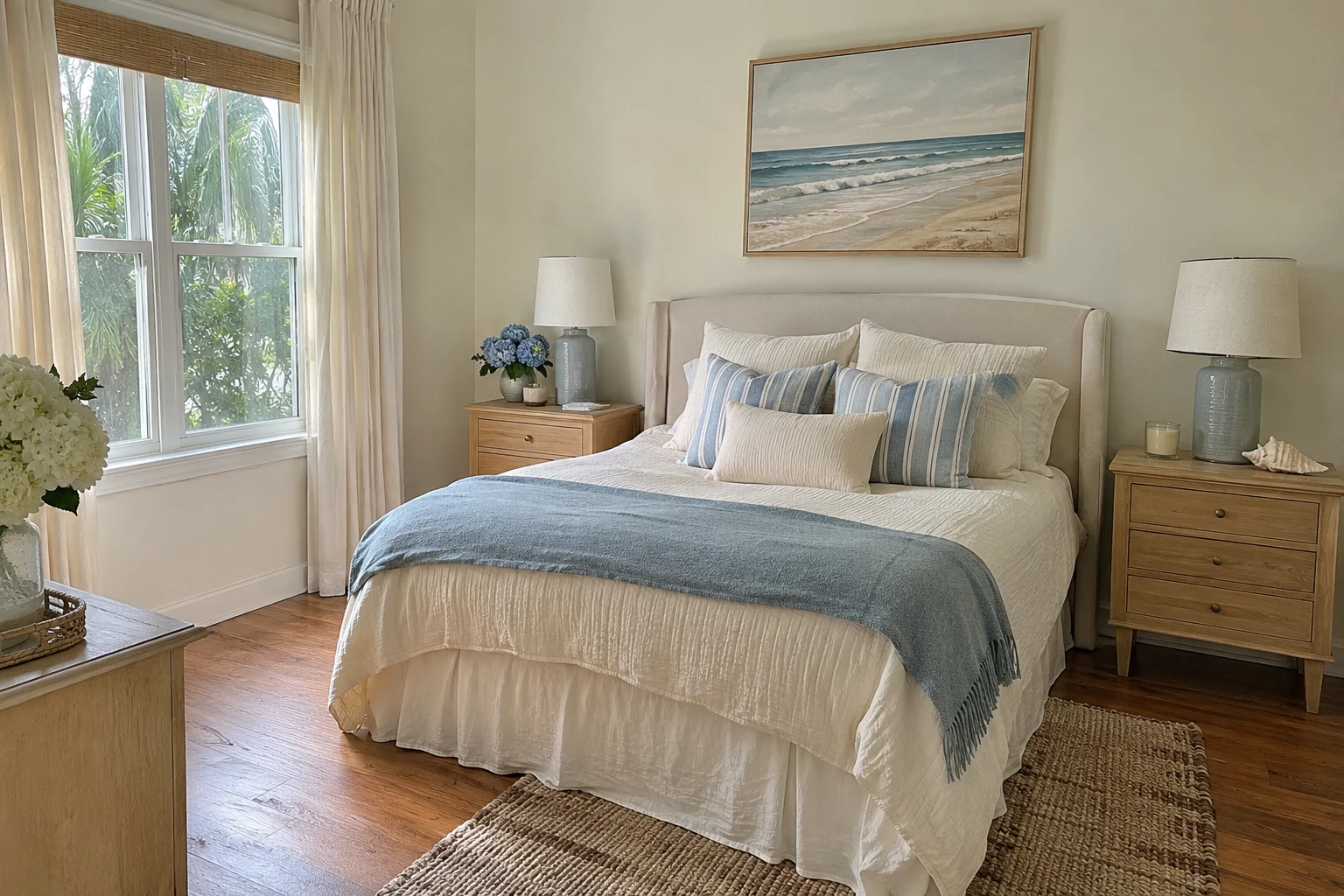
The most useful coastal palette works with the furniture and flooring you’re keeping. Those pieces already take up a large part of the room, so your new colors should look good beside them.
Perhaps you have beige carpet and a dark brown bed. Cream bedding, a muted blue blanket, and an ivory lamp can make that combination feel lighter without replacing either expensive item.
Meanwhile, a room with pale wood floors can take a little more contrast. A navy pillow or dark picture frame will remain visible against white bedding and light walls.
These three combinations offer different versions of the coastal look:
| Color combination | How to use it |
|---|---|
| Warm white, sand, and oak | Cream bedding, pale wood furniture, and woven accessories for a mostly neutral room. |
| White, faded blue, and navy | White sheets, a soft blue blanket, and one or two darker details. |
| Cream, sea-glass green, and warm brown | Pale green bedding or walls alongside cream curtains and existing wood furniture. |
There’s no need to repeat every color everywhere. A blue pillow and a little blue in the artwork can be enough to connect the two sides of the room.
If you already have a patterned rug or favorite print, its colors can help you choose the bedding. That makes the next decision easier and gives you a reason to keep something you like.
2. A Woven Headboard With Simple Bedding
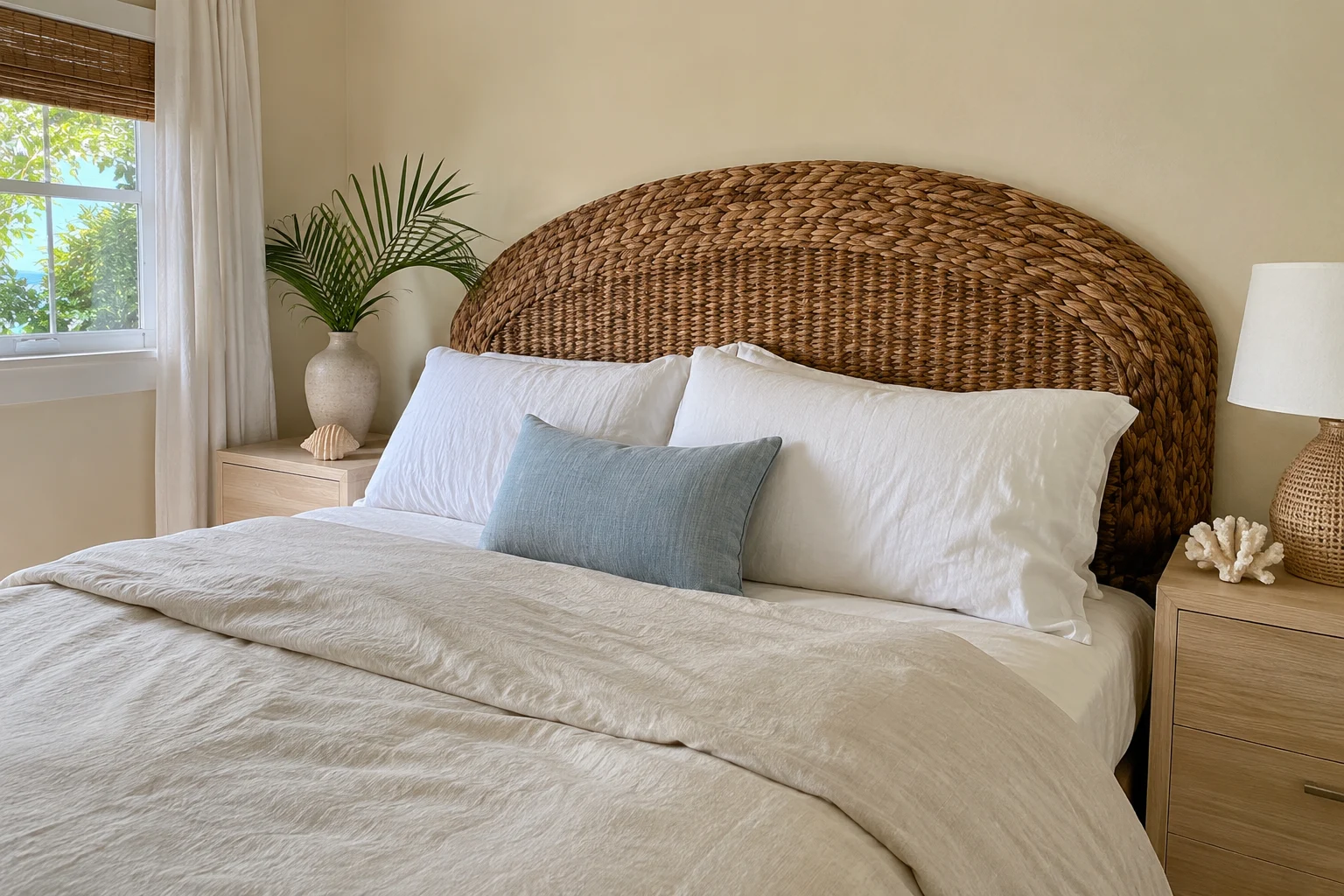
A woven headboard makes a noticeable difference because the bed occupies so much of the room. Its texture remains visible even when the rest of the bedding is simple.
Cane often has a regular, open pattern. Other woven fibers create a denser surface with more variation in color. Both work with cotton sheets, plain duvet covers, and smooth wooden nightstands.
The Crosley Furniture Serena Queen Headboard uses handwoven banana leaves over a wooden frame. Its curved outline and natural brown finish suit cream bedding, a pale blue cushion, and simple bedside furniture.
With a detailed headboard like this, plain pillowcases help you see the weave clearly. There’s little need for another large pattern directly in front of it.
Already happy with your upholstered bed? A padded headboard is comfortable for reading, and it works well in a coastal bedroom. A woven basket or shade can introduce a similar natural texture elsewhere.
The same applies to a black metal or dark wood frame. Pale bedding and lighter accessories can change how it looks without replacing a perfectly useful bed.
3. Pale Bedding With Enough Texture to Look Inviting

Bedding looks more inviting when it combines different fabric textures. White sheets, a white quilt, and white pillowcases can work beautifully together when their surfaces aren’t all identical.
A simple arrangement is smooth sheets underneath, a quilt or blanket across the bed, and a duvet folded back near the pillows. The fold shows the layer beneath and gives the bedding a fuller appearance.
For a warmer neutral color, the Simple&Opulence King Linen Duvet Cover Set comes in natural linen with embroidered detailing. It includes a duvet cover and two pillow shams. The sandy shade pairs easily with white sheets and blue accents.
This is a cover set, so the fullness comes from the duvet insert inside it.
For a lighter woven layer, the Threadmill Cotton Herringbone Blanket has a small repeating pattern in Tusk White. The twin-size blanket measures 68 × 92 inches. It works as bedding for a twin or as a folded accent blanket on a larger bed.
You don’t need to buy every layer. If you already have a white quilt you like, new pillow covers and one blanket may provide enough of a change.
In warmer weather, the quilt or blanket can remain on the bed while the duvet goes into storage. The arrangement should suit how you sleep, too.
Our guide to layering bedding for a designer-magazine look explains the order of the layers and how to arrange the pillows.
4. A Little Stripe or Blue Pattern Goes a Long Way
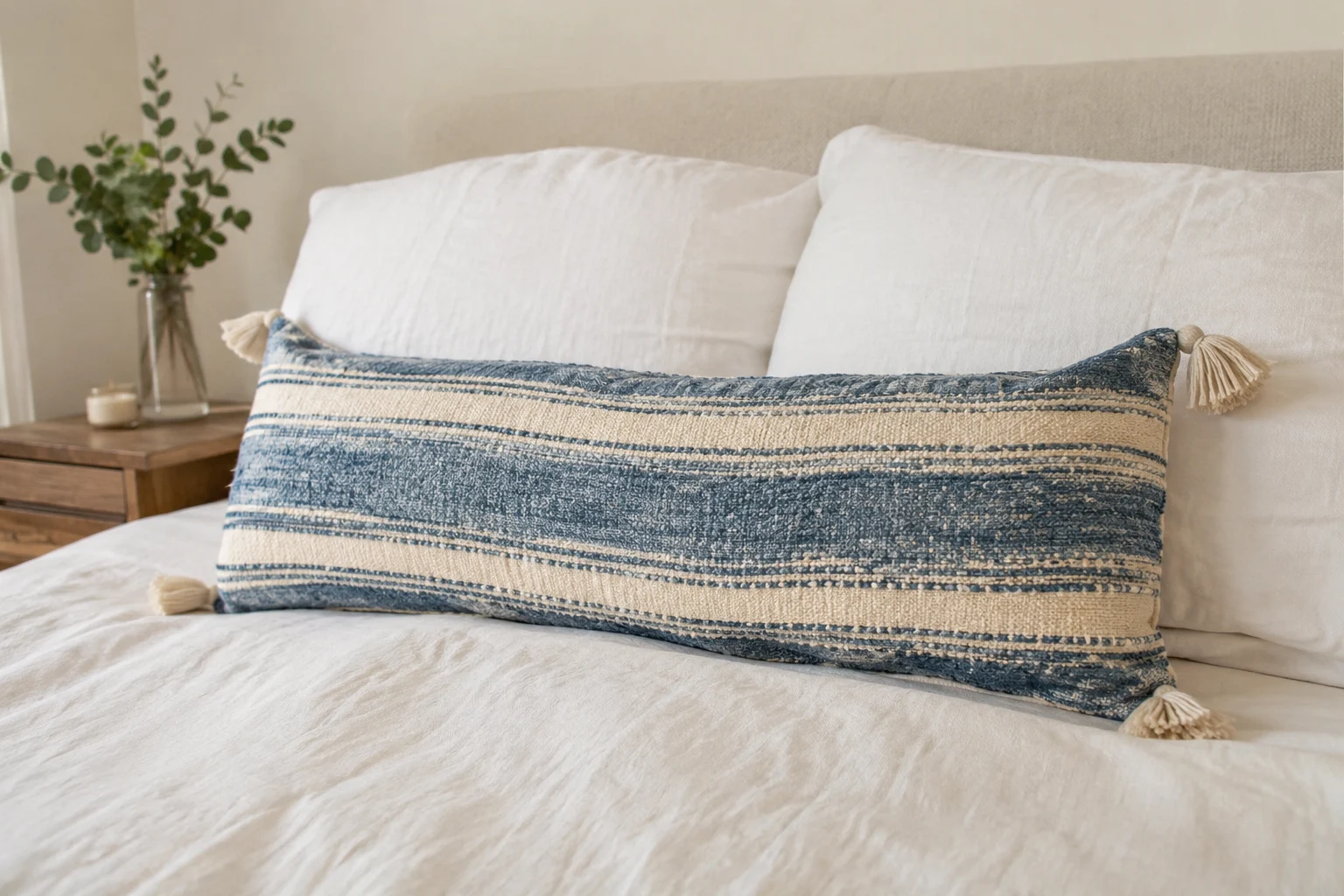
A single patterned pillow or blanket can introduce a coastal detail without making the whole bed look busy.
Narrow stripes work well on pillowcases and small cushions because the pattern stays relatively quiet. Broader stripes are more noticeable, especially on a blanket spread across the foot of the bed.
For a textured alternative, the BlissBlush Coastal Blue Lumbar Pillow Cover adds blue and a woven geometric pattern. Its long 14 × 36-inch shape works across the front of your regular pillows. It is a cover rather than a filled cushion.
One long accent pillow also means fewer separate cushions to move at bedtime.
If your duvet already has stripes, plain curtains and a solid-colored blanket will give the pattern some space. If the bedding is plain, a striped cushion can provide the detail instead.
Stripes can work with other patterns, too. A narrow blue stripe beside a small blue-and-cream floral print shares enough color to look coordinated. Keeping one pattern noticeably larger than the other helps each remain distinct.
5. Wood Furniture That Doesn’t All Match
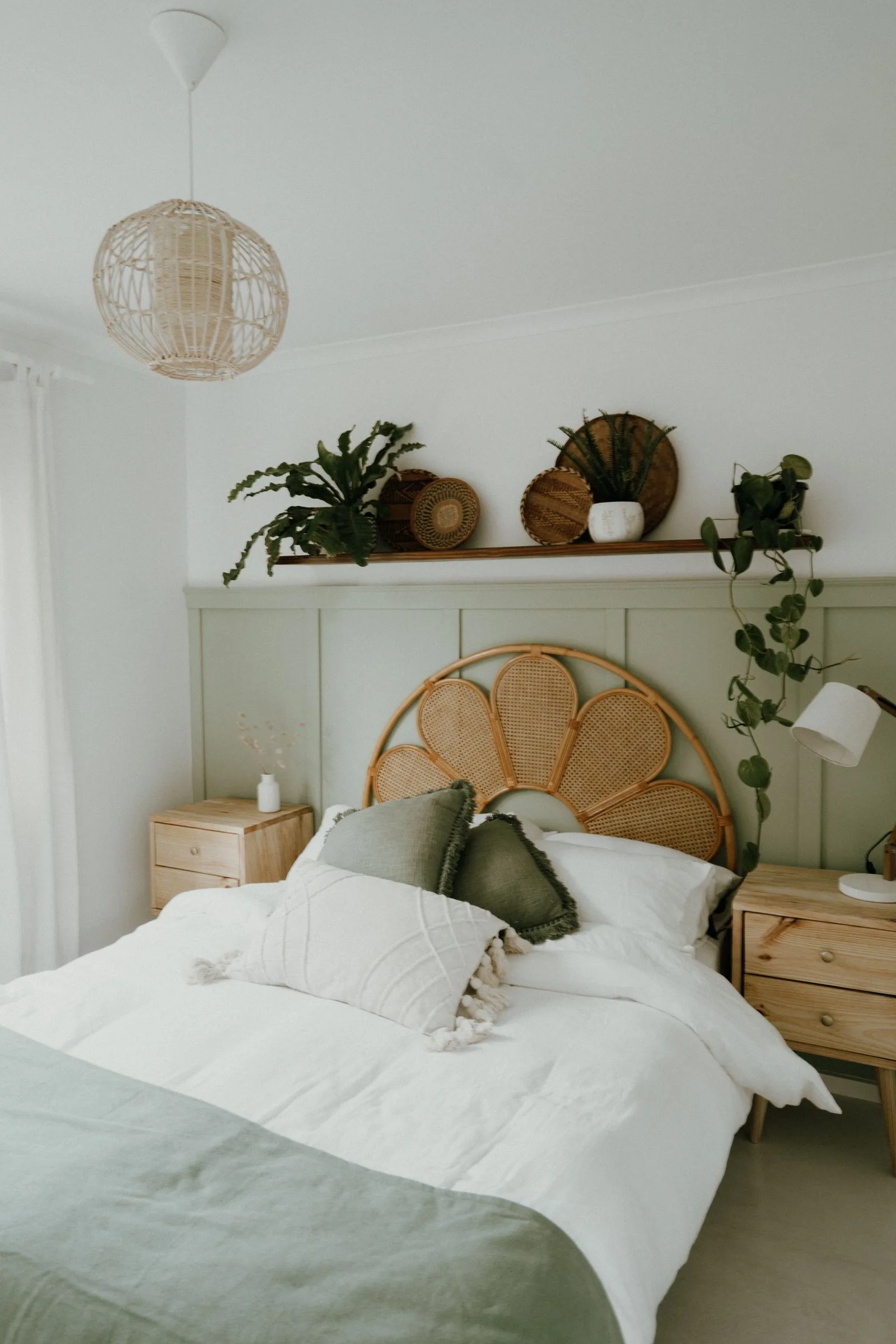
Coastal bedrooms can mix wood, painted furniture, and woven materials without looking mismatched. A little repetition helps those pieces feel connected.
An older brown dresser, for example, can work beside a cream upholstered bed and a pale wooden nightstand. A brown frame above the dresser repeats its color elsewhere, while cream bedding connects the bed to the lighter furniture.
You don’t need a complete matching bedroom set.
A woven headboard already brings plenty of texture. Smooth bedside tables can make a useful contrast, with a shell-finish or ceramic lamp adding another material.
Furniture should still meet your everyday needs. A nightstand with a drawer is useful for charging cables, hand cream, and other small items you don’t want permanently on display. An open shelf suits books or a small basket.
The top needs enough room for the lamp and whatever you use beside the bed. If a decorative object leaves nowhere to put your glasses, it belongs somewhere else.
6. A Rug You’ll Enjoy Stepping Onto
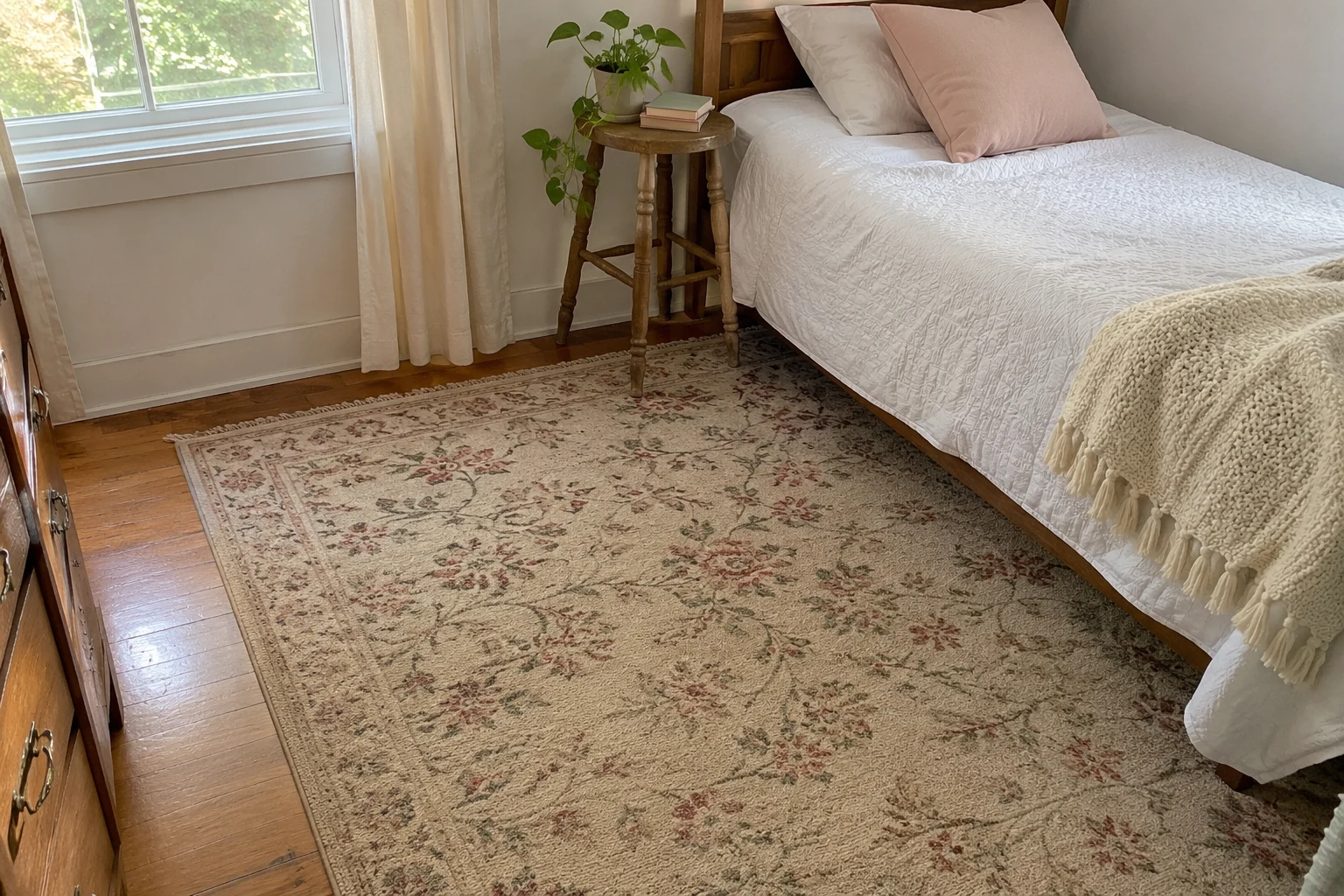
The best bedroom rug gives you comfortable, visible coverage beside the bed. Its texture matters, but so does where your feet actually land.
Jute and sisal have a pronounced woven appearance that suits coastal rooms. They can also feel coarse under bare feet. Wool, cotton, and softer synthetic rugs offer other options if comfort is your priority.
The losbulake Beige 5 × 7-Foot Area Rug has a low-pile floral pattern in neutral colors. It introduces some pattern while leaving blue bedding or coastal artwork as the more colorful parts of the room.
Its size suits a smaller arrangement, beside a bed, or beneath a compact seating area. A 5 × 7-foot rug won’t provide generous coverage on all sides of a queen or king bed.
For a larger bed, the rug should extend far enough beyond the mattress and frame to be useful. A rug almost completely hidden underneath adds little to the room.
Alternatively, a runner on each side provides a soft place to step without requiring one large rug. This can be especially useful when the room has awkward corners or furniture close to the bed.
Our rug size guide covers the different arrangements in more detail.
7. Long Curtains With Privacy Built In
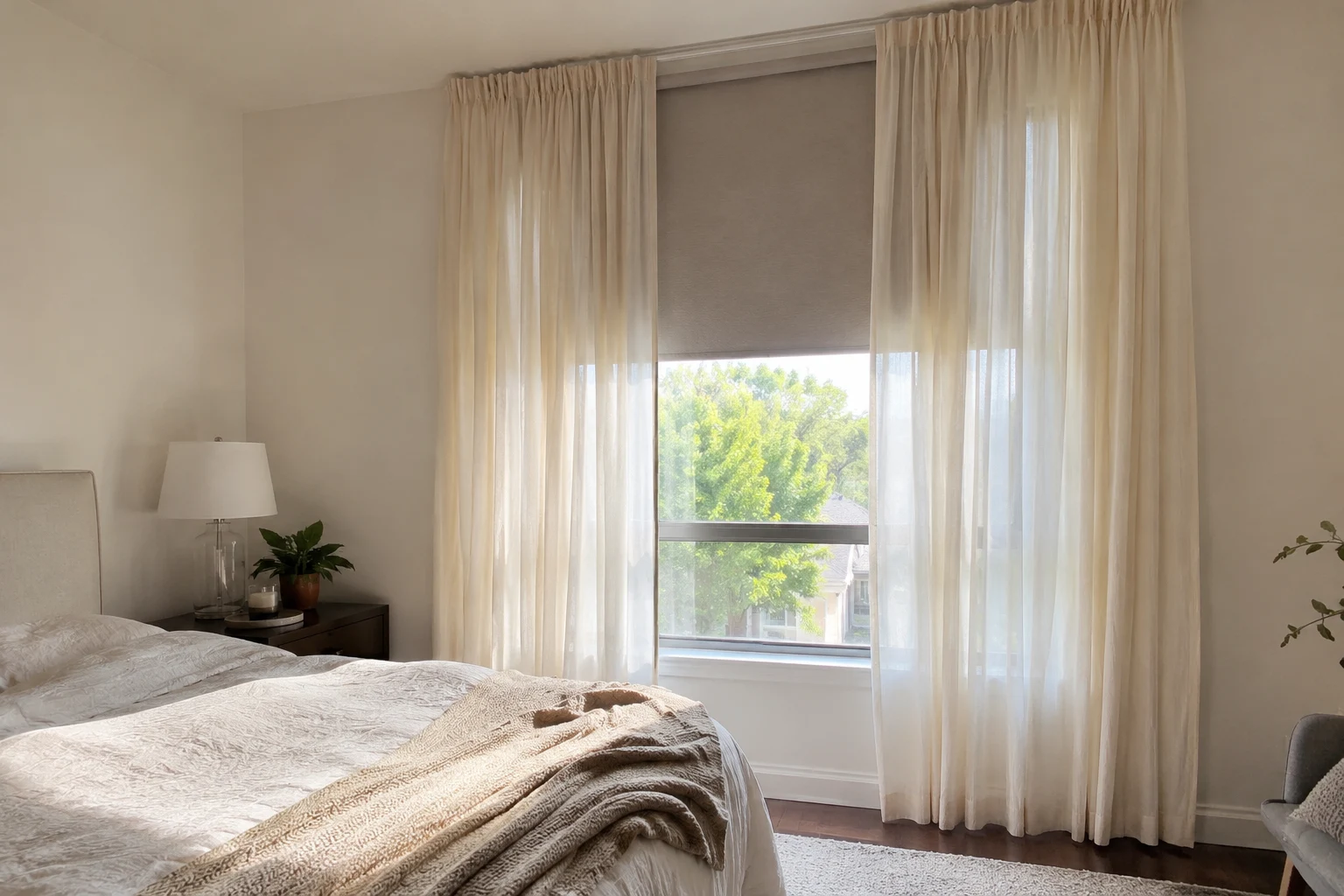
Curtains hung high and extending to the floor create a taller, more finished appearance. A rod that reaches beyond the window also allows the open panels to clear more of the glass.
That second detail matters in a small bedroom. Heavy curtains covering the sides of the window can make it look narrower and reduce the daylight coming in.
The Nanspring Ivory Cream Semi-Sheer Curtains provide a light, textured layer in a linen blend. The 96-inch panels suit a soft coastal palette, particularly alongside natural wood and cream bedding.
Their semi-sheer fabric filters daylight, so they need a separate opaque layer for privacy after dark.
Two arrangements work particularly well:
- Semi-sheer curtains with a blackout shade: the curtains provide softness during the day, while the shade covers the window at night.
- Sheers with opaque curtains on a double rod or track: each layer opens independently, giving you more control over daylight and privacy.
The finished hem should reach the floor or sit just above it. Fabric pooling on the floor takes more effort to keep clean and can get in the way beside a bed.
For more help with fabric and coverage, see our guide to choosing bedroom curtains.
8. Bedside Lamps That Feel Comfortable After Dark
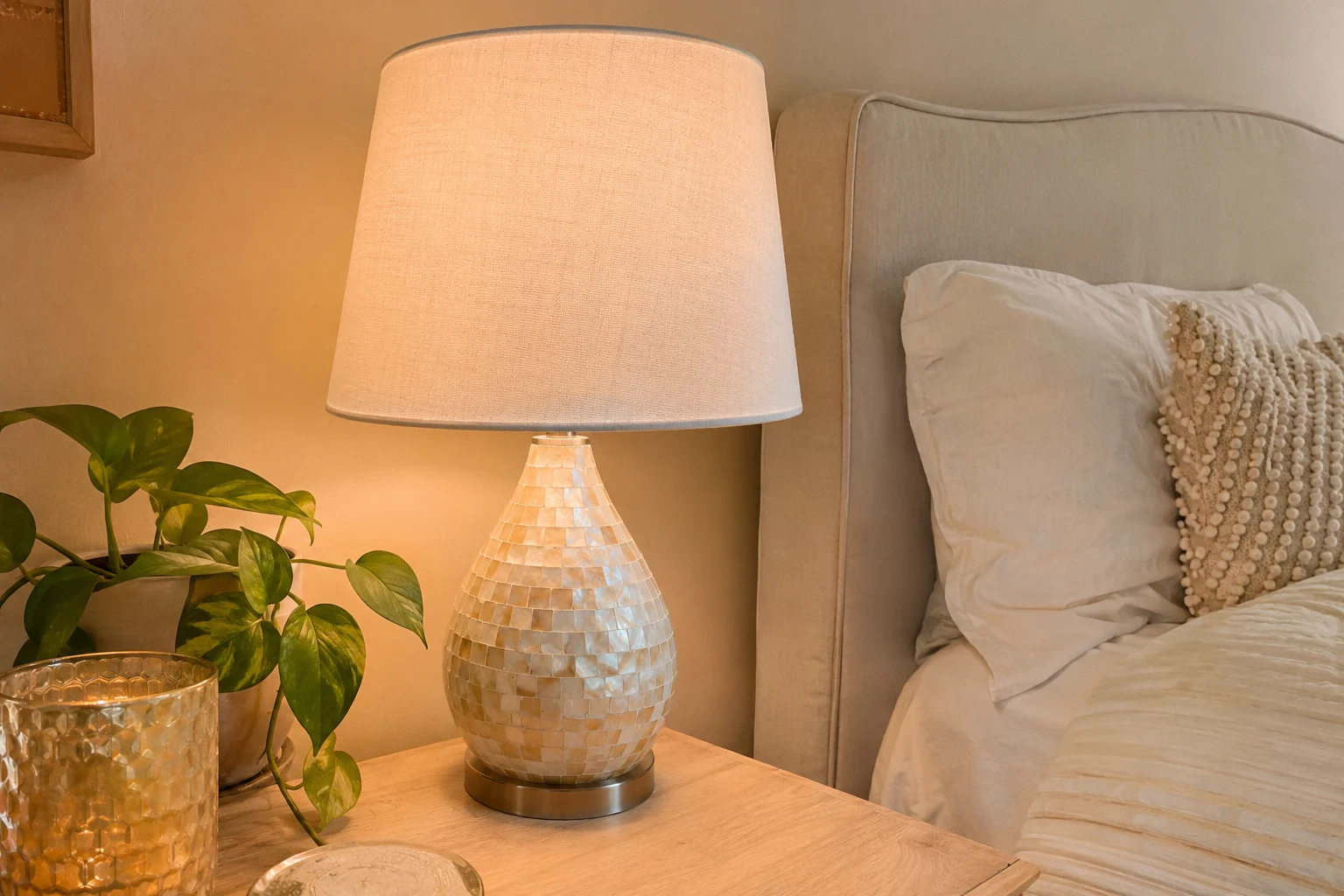
A shaded bedside lamp makes a bedroom more comfortable in the evening, especially when the ceiling light feels too bright for winding down.
The JONATHAN Y Mona Mini Table Lamp combines a mother-of-pearl finish with a white linen shade. At 20.5 inches tall, it adds a coastal material without relying on a shell-shaped ornament or beach-themed sign.
Its pale finish works alongside white bedding, blue accents, and warmer wood furniture.
Placement matters as much as appearance. From your usual position in bed, the shade should shield your eyes from the bulb. The switch should be easy to reach, and the base should leave room for a book or drink.
A warm-white bulb around 2700K is a useful choice for relaxed evening lighting. If you read in bed, you also need enough light on the page. A dim decorative glow may look lovely in a photograph and still be frustrating to read by.
Where bedside tables are small, wall lights free up the surface. A ceiling light can then handle general lighting when you’re cleaning or looking for something.
Our layered bedroom lighting guide explains how those lights work together.
9. One Wall With a Little More Detail
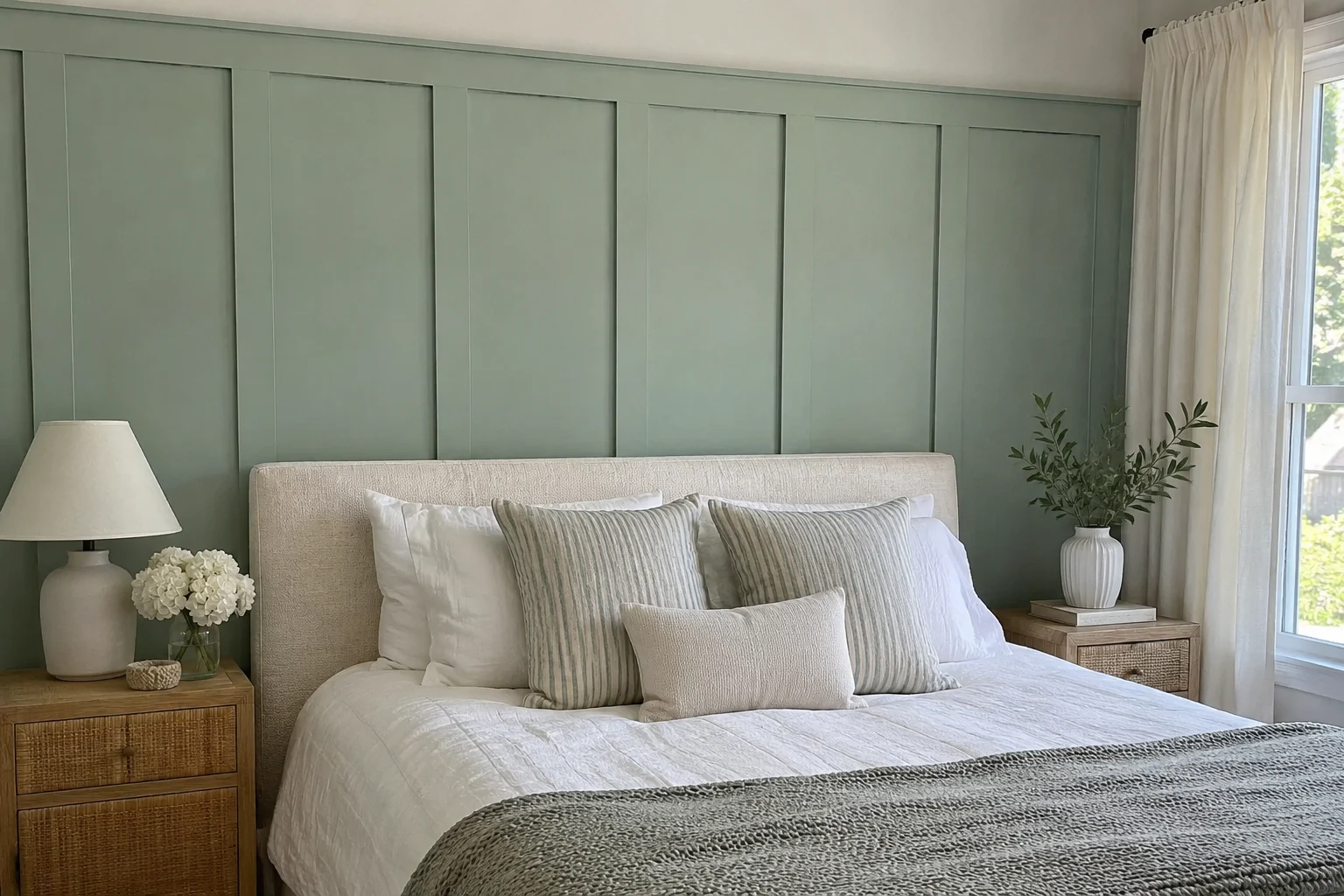
The wall behind the bed is a useful place for paint, paneling, or a restrained pattern. You see it immediately when entering many bedrooms, so even one change can be noticeable.
A muted blue or green painted wall is the simplest option. It adds color without taking up floor space or requiring more furniture.
Paneling adds lines and shadows as well as color. Vertical boards can suit a simple wooden or upholstered bed, while painted board and batten gives the wall a more structured appearance.
The spacing needs to work around windows and outlets. Narrow leftover gaps at the edges can make the finished wall look awkward, even when the color is lovely.
Wallpaper offers another approach. A fine stripe, small botanical pattern, or subtle woven effect can work behind a plain headboard.
With a detailed woven headboard, a simpler wall treatment usually makes the combination easier to look at. Cream paint may be all the background it needs.
For a rental, framed artwork can provide a noticeable change with less work. Our temporary rental-wall decorating ideas cover several ways to add color and pattern.
10. Coastal Artwork You Actually Want to Look At
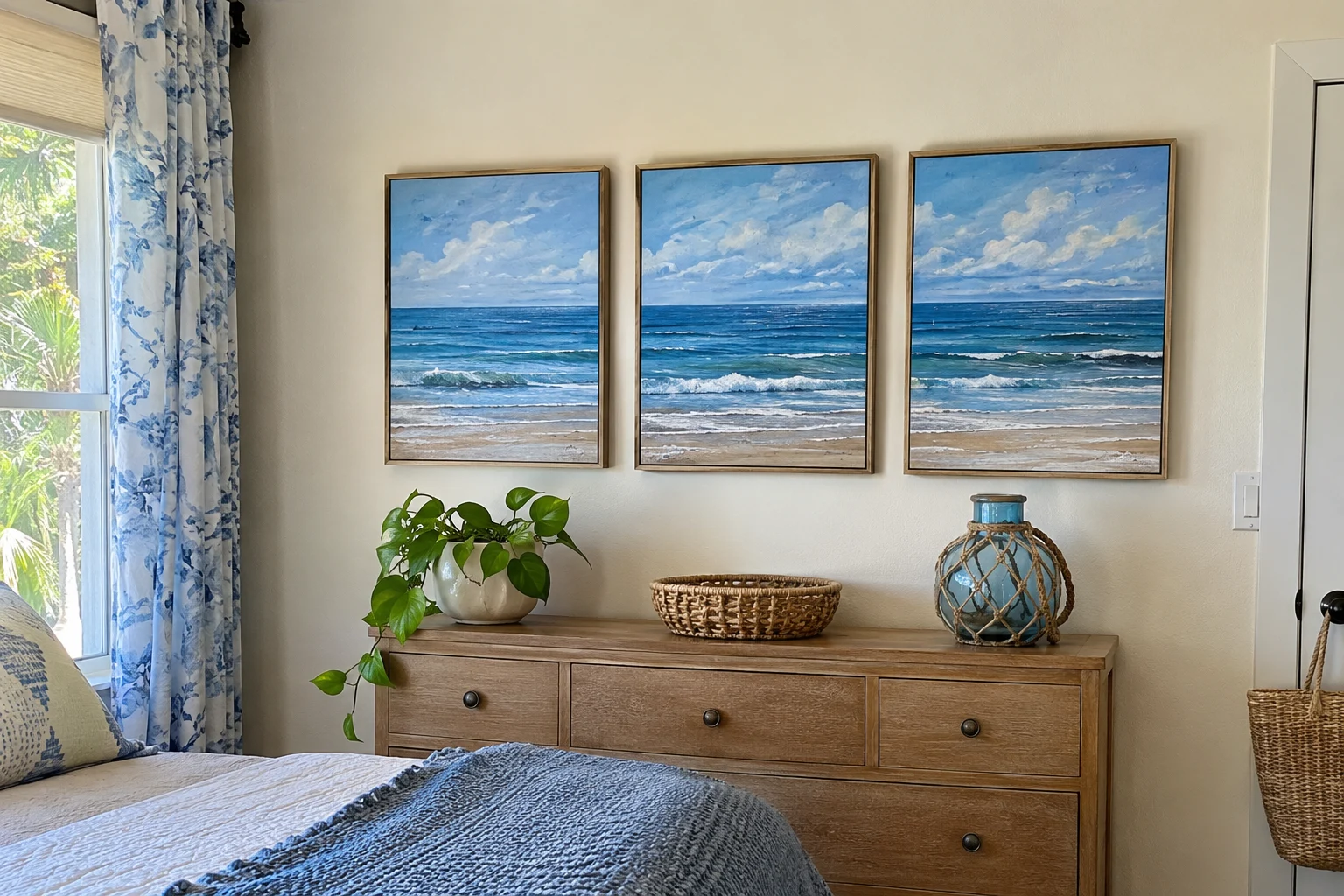
The strongest choice is artwork you enjoy seeing every day. That might be a beach photograph, a painted seascape, a vintage map, or a botanical print.
A personal photograph can be particularly meaningful. A quiet stretch of coast from a family trip may suit the room better than a generic beach quote.
If you prefer a coordinated set, this Three-Piece Blue Coastal Landscape Wall Art offers a ready-made grouping. Its blue subject matter can connect with a pillow or blanket elsewhere in the room.
A set of three works best where there’s enough uninterrupted wall space to see the arrangement as a whole. A narrow section beside a window may suit one smaller picture instead.
You don’t have to match the bedding exactly to the artwork. Repeating one or two colors is enough. A little sandy beige in a coastal scene can connect with wooden furniture, while its blue tones can reappear in a single cushion.
For a softer look, pale wood frames work well with cream walls. Black frames add more contrast and can connect with an existing dark bed or curtain rod.
11. A Bench, Chair, or Basket That Fits Your Routine
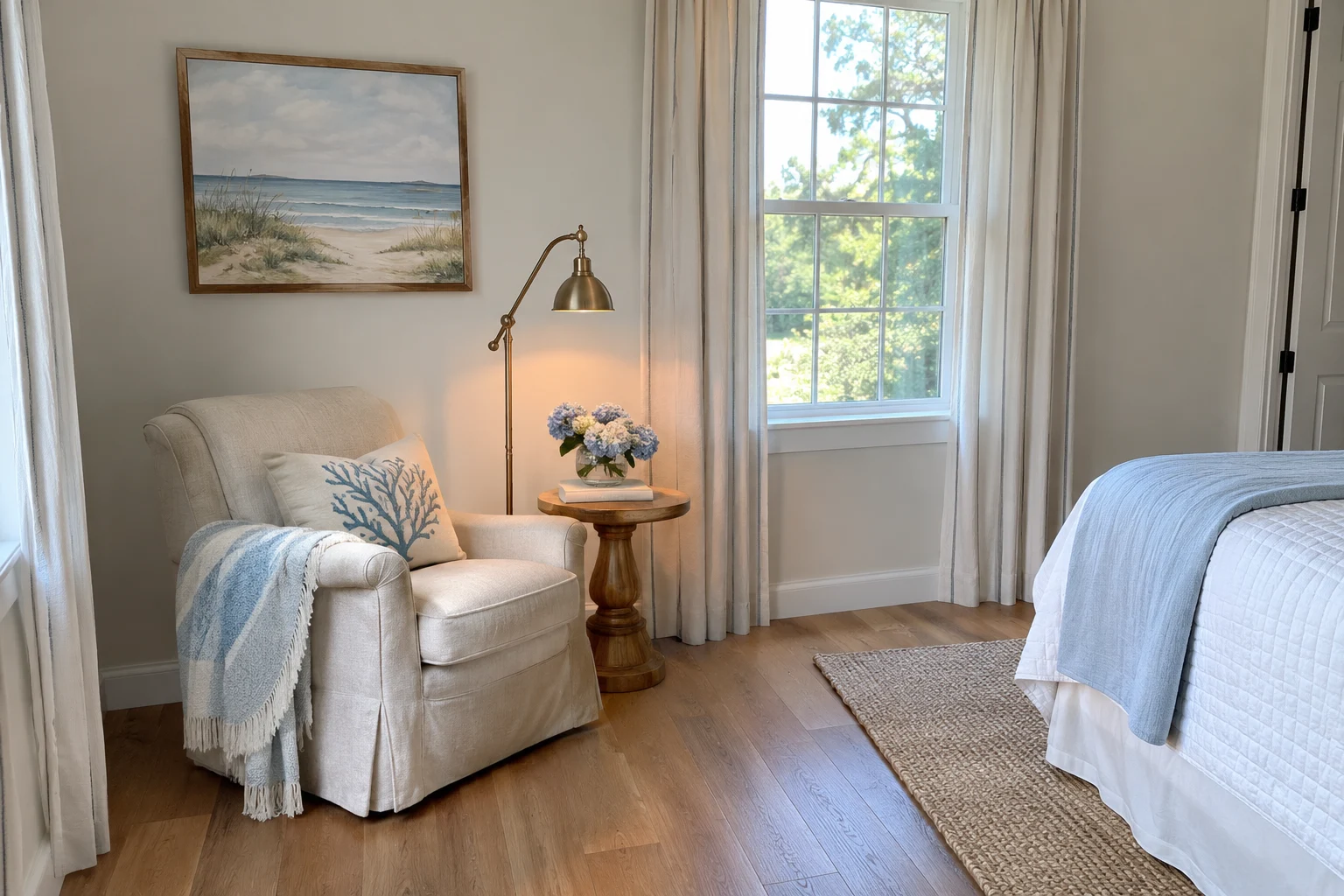
Extra bedroom furniture is most useful when it supports something you regularly do.
A bench looks attractive at the foot of the bed, but it needs enough space around it. If it makes the route to the door awkward, a smaller seat or no additional furniture will work better.
A reading chair makes sense if you like spending time in the bedroom before going to sleep. A large basket may be more useful if spare blankets and cushions otherwise end up on the floor.
| Option | Useful when… |
|---|---|
| Bench | You want a place to sit while putting on socks or to set down a folded blanket. |
| Reading chair | You regularly read, knit, or relax away from the bed. |
| Large floor basket | Spare cushions and blankets need somewhere convenient to go. |
| Open floor space | Another piece of furniture would make moving around difficult. |
There’s nothing unfinished about leaving a corner empty.
A coastal bedroom often looks relaxed partly because the furniture has enough space around it. You should be able to carry a laundry basket, change the sheets, and walk around the bed without squeezing past a chair.
Our guide to arranging bedroom furniture can help you choose a layout before adding another piece.
12. A Few Finishing Details That Make It Yours
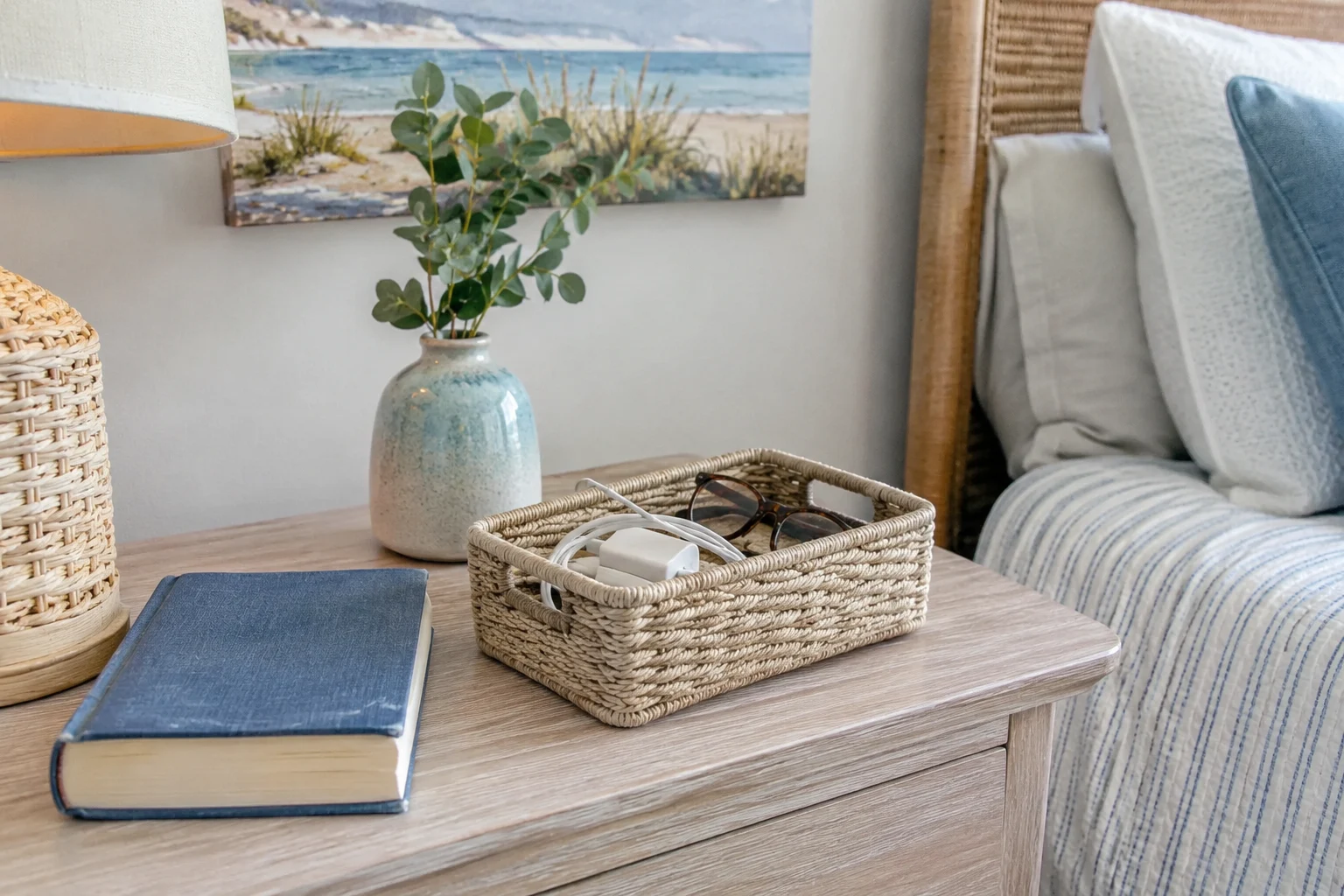
The finishing details should combine personal objects and useful storage. A favorite photograph, a small vase, and somewhere to put everyday items can be enough.
The SEVDIZON Small Woven Storage Baskets come as a set of three and use woven paper rope. Their small size suits bedside essentials, spare charging cables, or items on a dresser.
These are organizers for small belongings, rather than floor baskets for blankets. On an open shelf, they also make several loose items look tidier.
A shell collection can still belong in a modern coastal bedroom. A few shells in a small dish are easier to appreciate than souvenirs spread across every surface.
Greenery adds another color without needing more patterned fabric. One plant near a window or a few stems in a vase can work well beside cream bedding and wood furniture.
And if you love coral, blush pink, or yellow, use some. Coastal decorating has room for warmer colors. A small cushion or framed print lets you introduce them without changing the entire palette.
If your bedroom currently has lots of matching nautical decorations, put a few away and keep your favorites. Simpler bedding and one meaningful coastal picture can make the room feel more personal.
A Coastal Refresh With the Furniture You Already Own

The most affordable refresh usually comes from changing the details around your existing furniture.
Suppose your room has a dark wooden bed, beige carpet, and a dresser you still use every day. None of those pieces prevents a coastal look.
Here’s how a few practical changes could work:
| What you already have | A change to try |
|---|---|
| Dark wooden bed | Cream bedding with a faded blue accent pillow. |
| Plain duvet | A textured blanket folded across the lower part of the bed. |
| Curtains covering the edges of the window | A wider rod so the open panels can clear more of the glass. |
| One bright ceiling light | A shaded bedside lamp for evening use. |
| Small belongings spread across the dresser | A basket or drawer for essentials, with a favorite picture left on display. |
| Bench blocking the walkway | A smaller seat elsewhere, or more open floor space. |
Before adding more, run through this short checklist:
- The new colors work with the floor and furniture.
- The bedding suits how warm or cool you like to sleep.
- The curtains provide both daylight control and nighttime privacy.
- The bedside light is useful from your normal position in bed.
- The rug is visible where you want a softer surface.
- Small belongings have accessible storage.
- There’s enough room to move comfortably around the furniture.
Modern Coastal Bedroom FAQs
What makes a bedroom modern coastal?
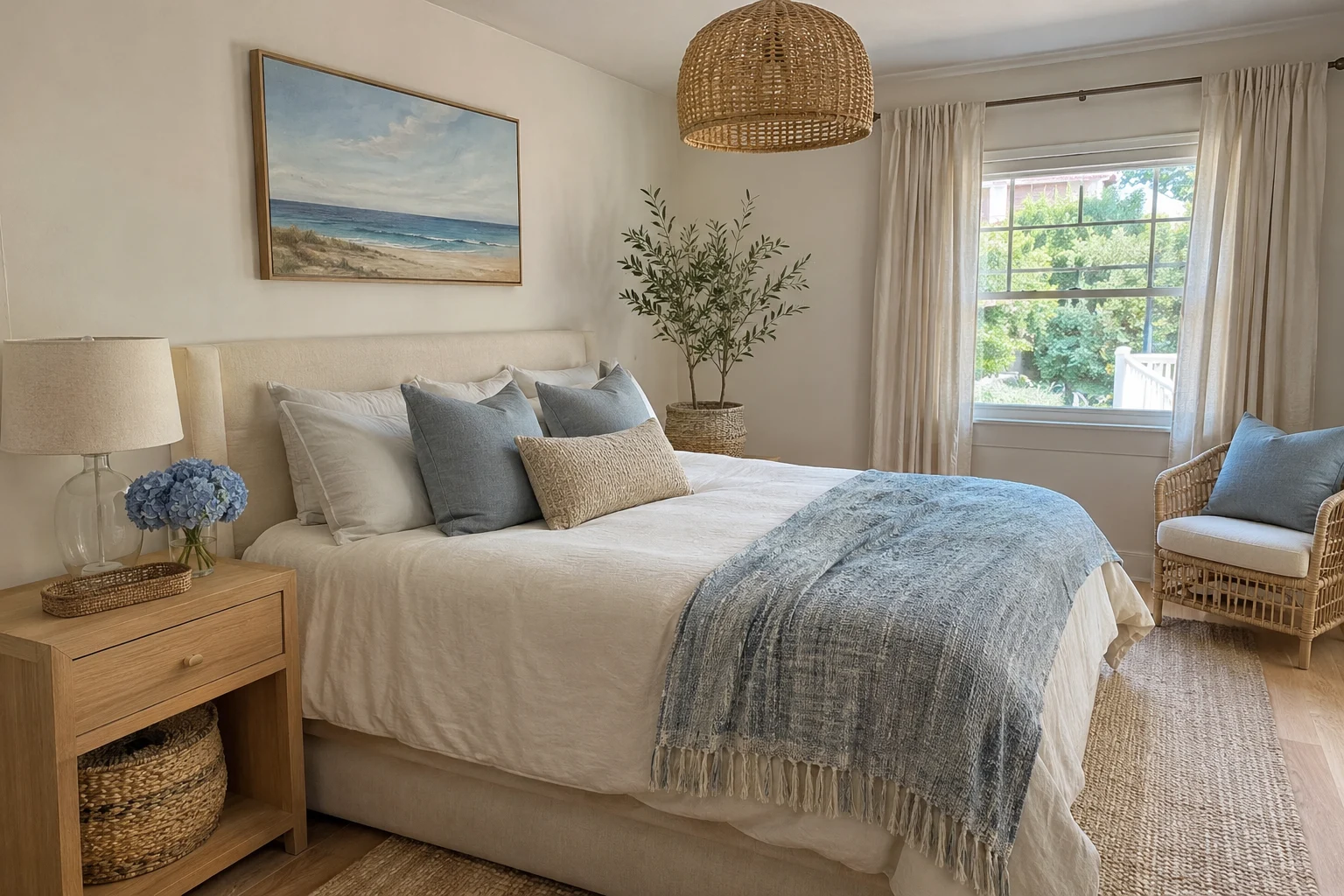
A modern coastal bedroom combines simple furniture, natural textures, and a beach-inspired palette. Cotton or linen bedding, woven details, pale colors, and useful lighting create the look. Blue is common, but it isn’t essential.
Can a coastal bedroom work without blue?

Yes. Cream, sand, warm brown, and muted green make a coastal palette without blue. A woven headboard, textured bedding, and long cream curtains can provide plenty of the beach house feel.
How do I make a small bedroom feel coastal?
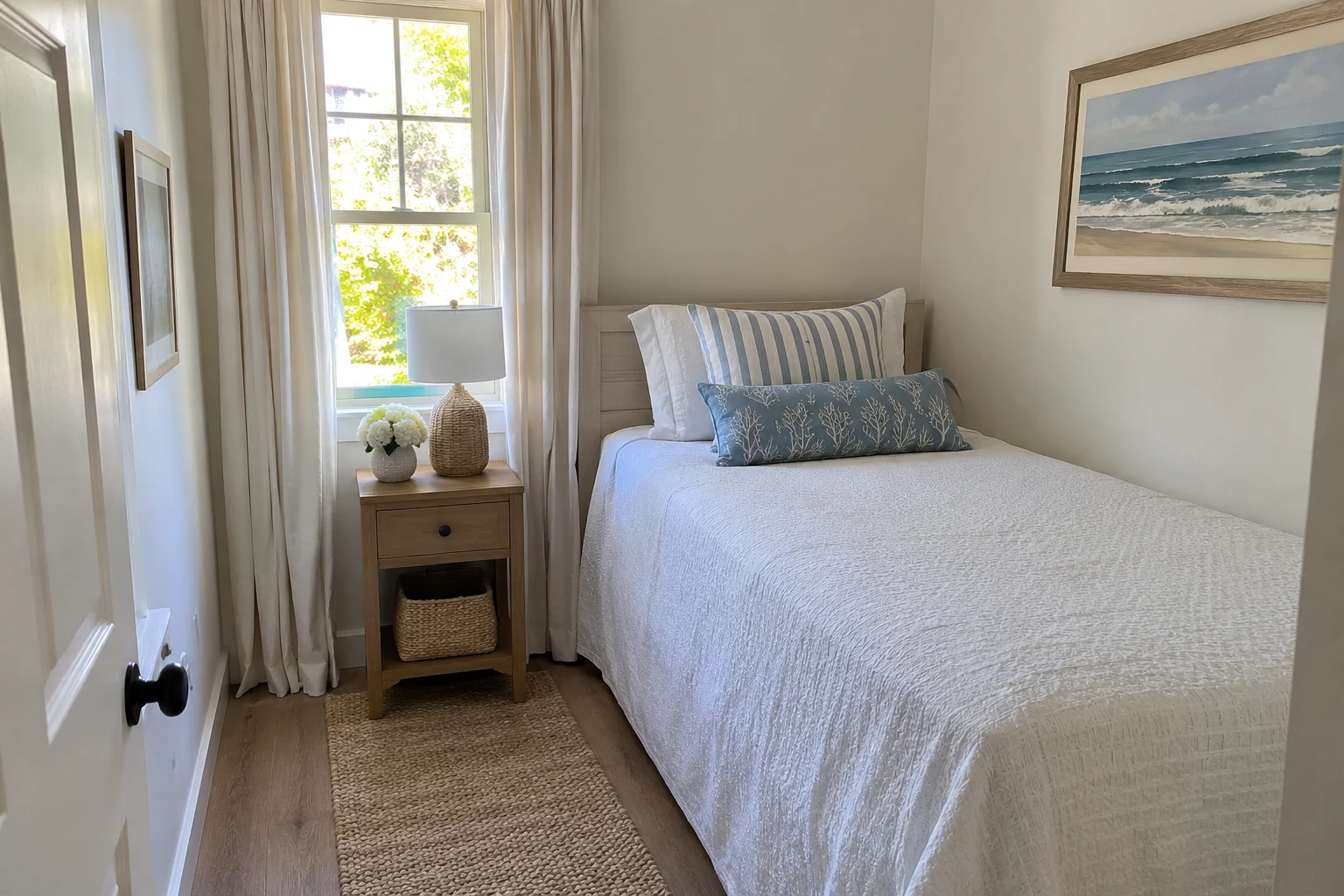
A pale bedspread, one woven detail, and curtains that open clear of the window are useful changes. Furniture that fits comfortably matters more than adding extra decorations. Our guide to making a small bedroom look bigger has more ideas for daylight, storage, and layout.
Can I keep dark wood furniture?

Absolutely. Cream bedding and lighter fabrics work well beside dark wood. A little of the same brown in an artwork frame or basket can connect the furniture with the rest of the room.
What’s the easiest coastal bedroom update on a budget?
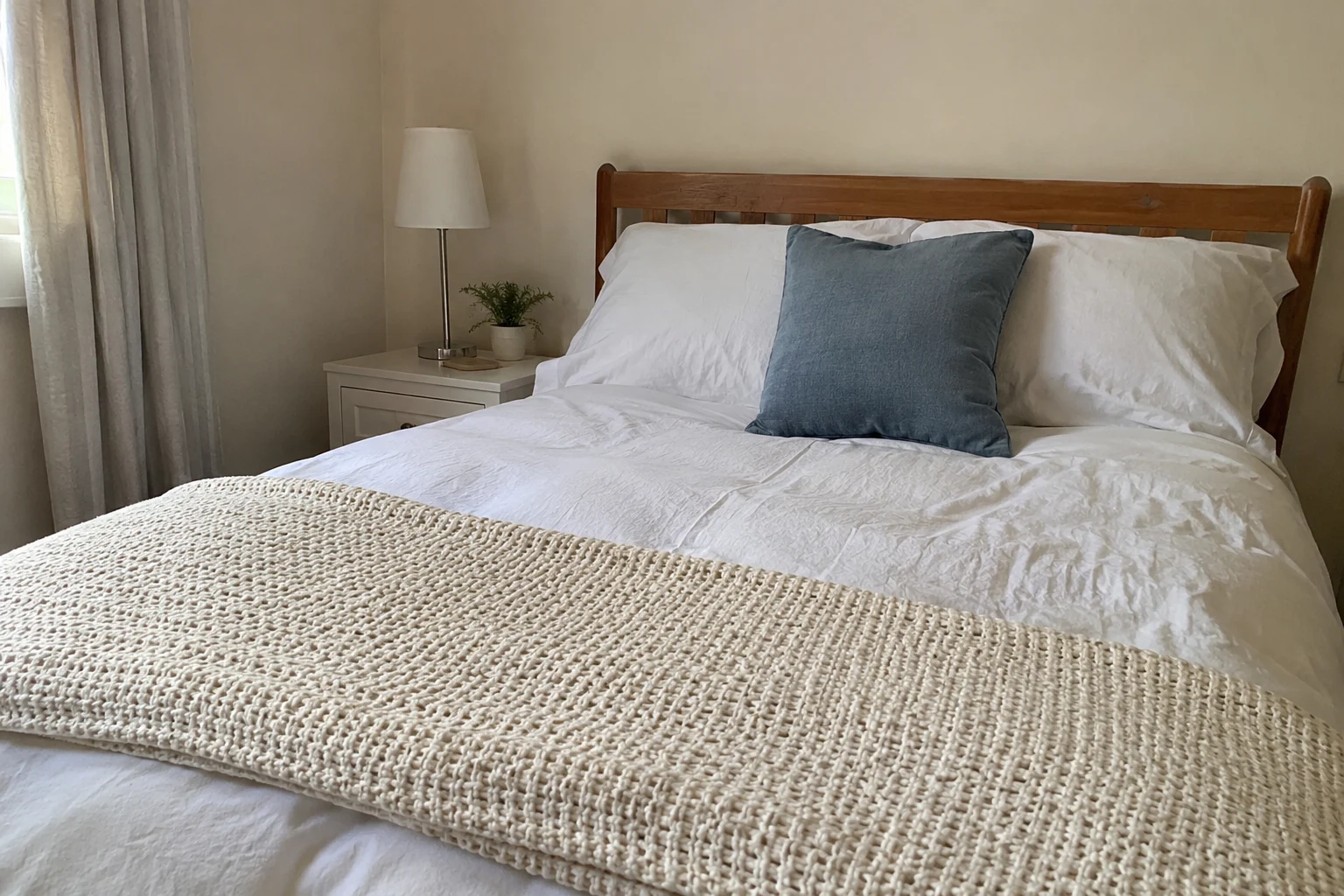
A bedding change is often enough to make a visible difference. A new pillow cover and textured blanket can update an existing plain duvet. Rearranging accessories and clearing crowded surfaces costs nothing.
What’s the difference between coastal and nautical decorating?
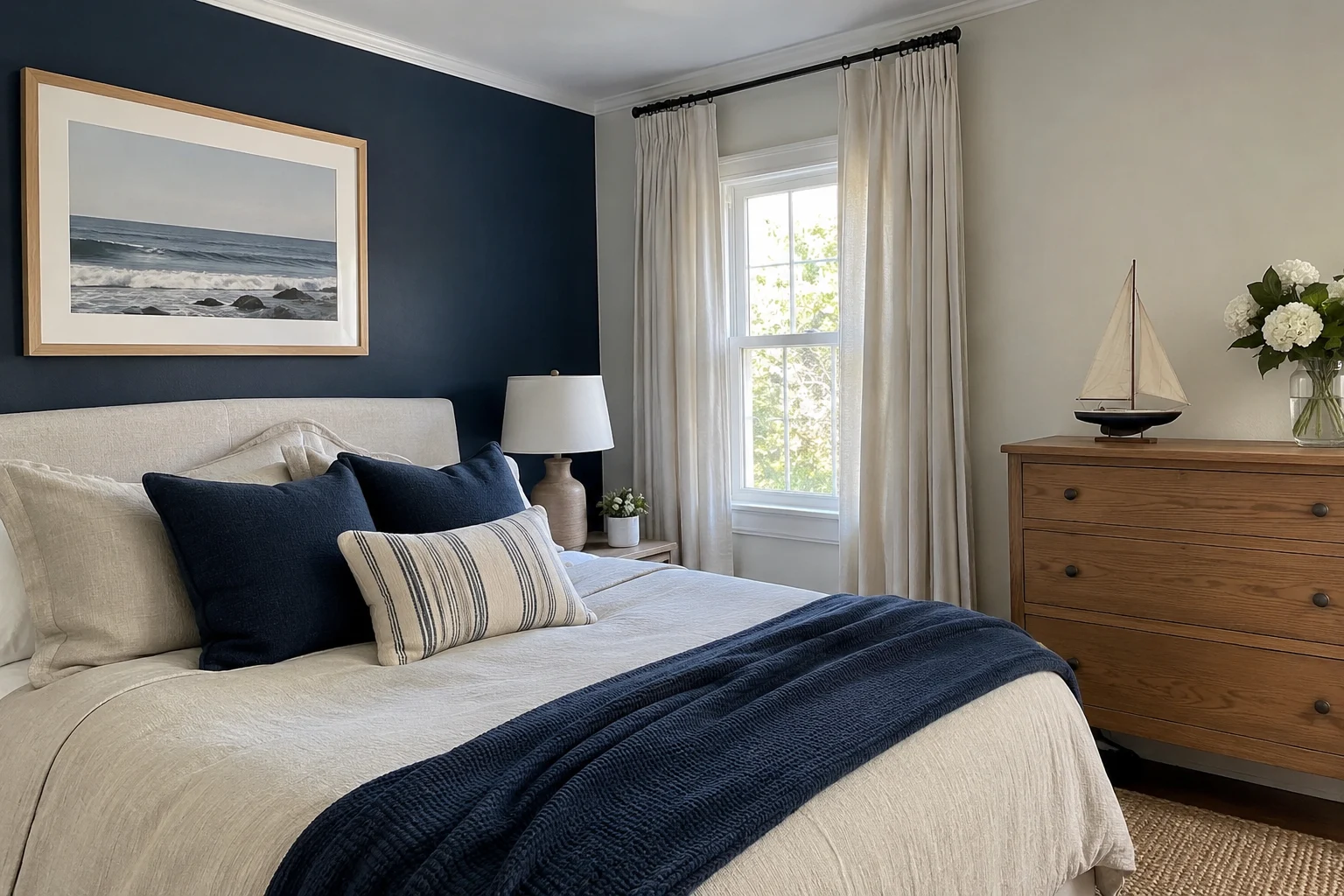
Coastal decorating takes inspiration from seaside colors and natural materials. Nautical decorating uses more direct references to boats and sailing, such as anchors, ship wheels, ropes, and strong navy-and-white combinations. A coastal bedroom can include a nautical detail without repeating it throughout the room.
Coastal Bedroom Finds
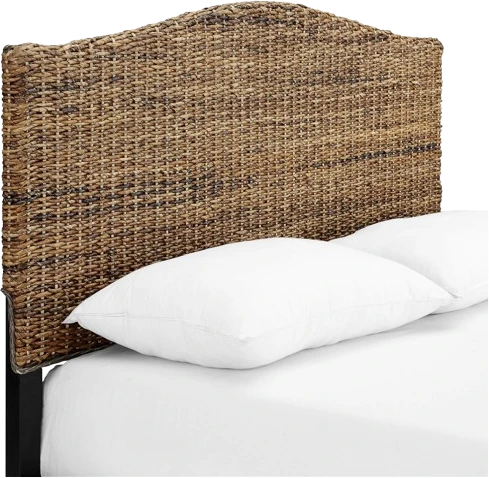 Crosley Furniture Serena Queen HeadboardA curved queen headboard with handwoven banana-leaf texture and a natural brown finish.
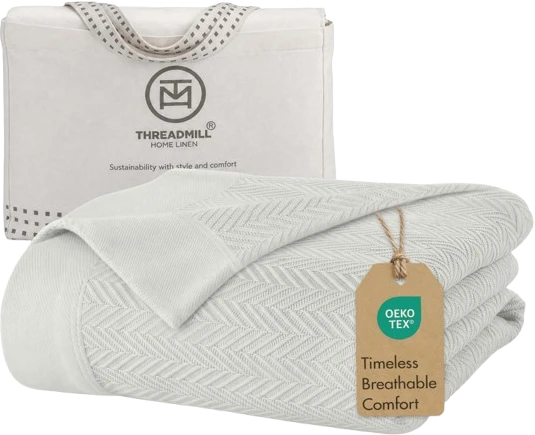 Threadmill Cotton Herringbone BlanketA twin-size cotton blanket in Tusk White with a subtle herringbone weave.
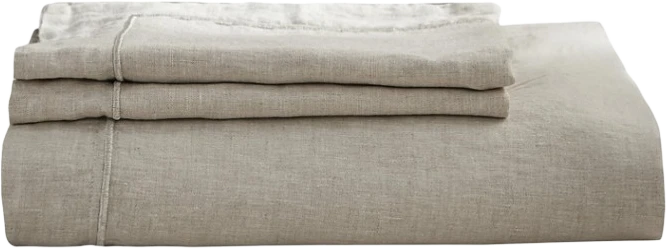 Simple&Opulence King Linen Duvet Cover SetA natural linen duvet cover and two embroidered shams. Duvet insert not included.
 BlissBlush Coastal Blue Lumbar Pillow CoverA textured blue-and-cream 14 × 36-inch cover for the front of your bed.
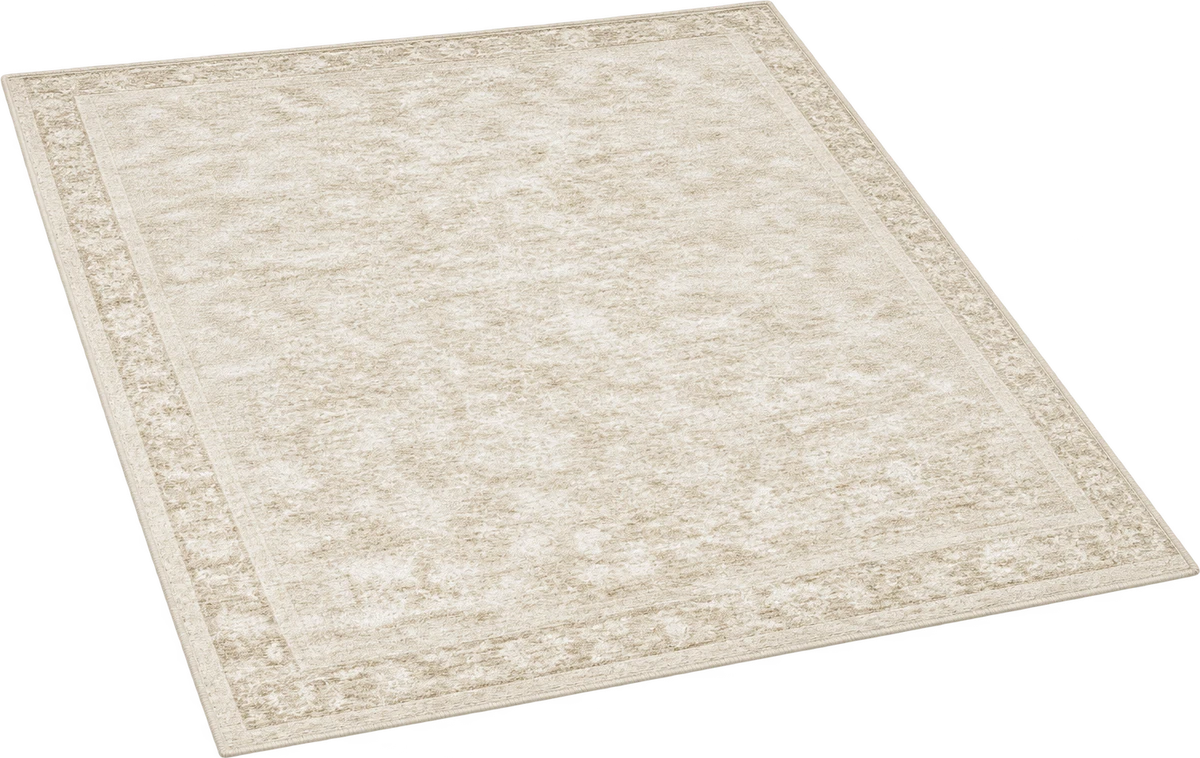 losbulake Beige 5 × 7-Foot Area RugA low-pile beige rug with a subtle floral pattern for a smaller bedroom arrangement.
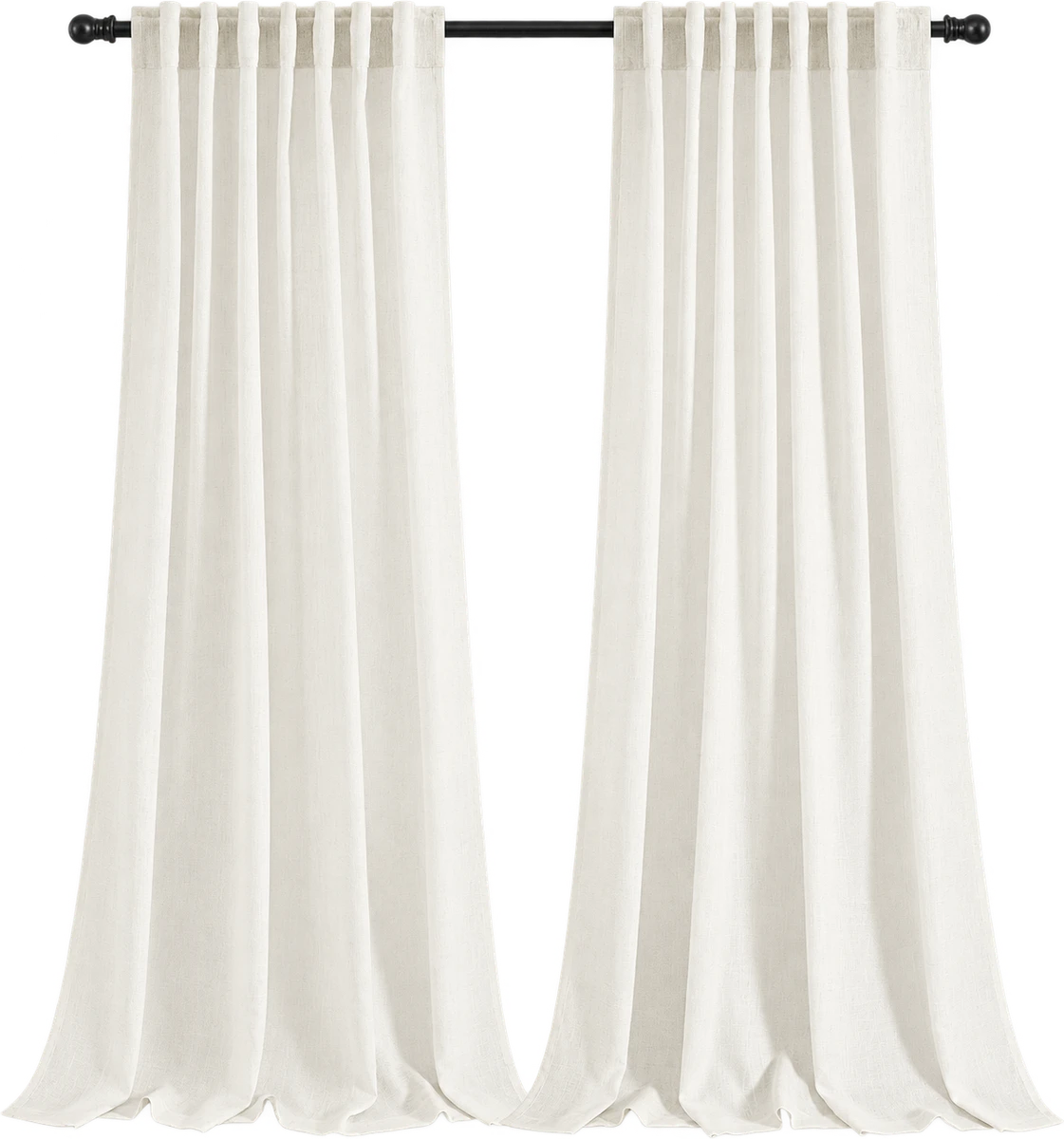 Nanspring Ivory Cream Semi-Sheer CurtainsTextured 96-inch linen-blend panels for softly filtered daylight.
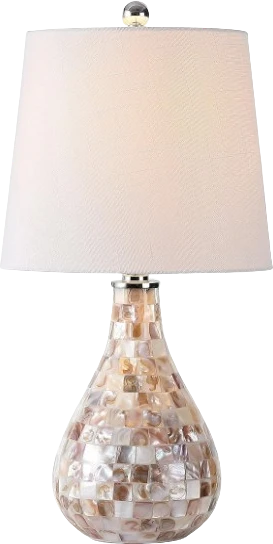 JONATHAN Y Mona Mini Table LampA 20.5-inch bedside lamp with a mother-of-pearl finish and white linen shade.
 SEVDIZON Small Woven Storage Baskets, Set of ThreeThree small paper-rope baskets for bedside essentials and dresser items.
 Three-Piece Blue Coastal Landscape Wall ArtA coordinated framed set of blue coastal landscapes for an open wall.