13 Clever Places to Hide Valuables at Home, Plus 7 Spots to Skip

Finding places to hide valuables at home gets tricky when you want something tucked away but still easy to find when you need it. You might be putting aside emergency cash, keeping a family ring out of sight, or giving your passport a permanent home so you’re not searching every drawer the night before a flight.
The quick answer
- A properly anchored safe inside a closed cabinet offers more protection than a decorative hiding place.
- Concealed compartments, book safes, and ordinary storage bins suit small, replaceable items you want out of view.
- For expensive jewelry or important papers, prioritize security and protection from damage over how well the container blends into the room.
A good hiding place also survives everyday life. It shouldn’t disappear during a pantry clear-out, get soaked when you water a plant, or leave you wondering where you put the money six months later.
What Are You Putting Away?
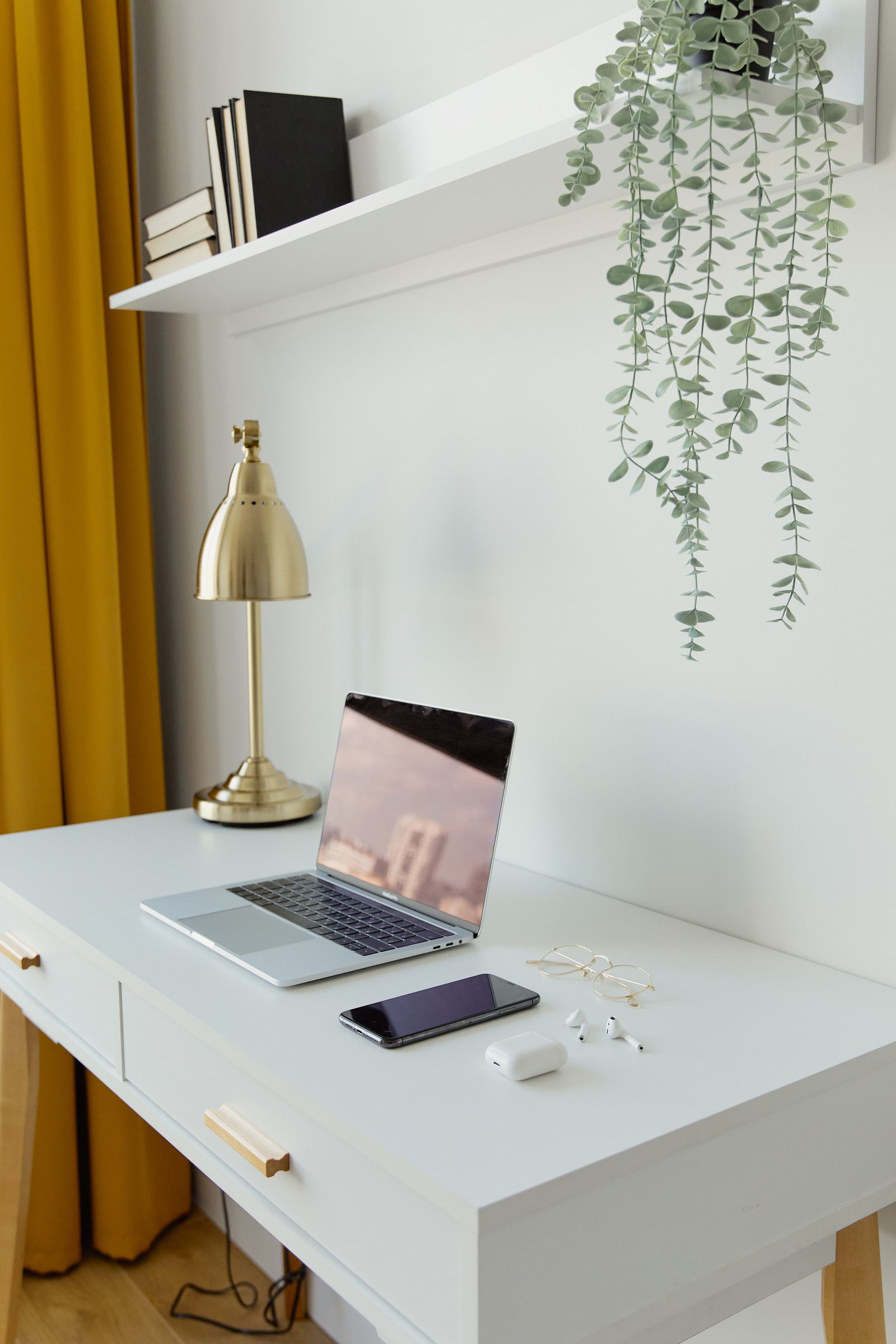
Choose the storage around the item, how often you need it, and what could damage it. The spare cash you might need tonight has different requirements from a family heirloom you bring out twice a year.
| What you’re storing | What matters most |
|---|---|
| A little emergency cash | A dry, memorable location you can reach easily |
| Jewelry you wear often | Convenient secured storage with separate, soft-lined spaces |
| Passports and important papers | Enough room to avoid bending, plus suitable protection from fire and water |
| Expensive or irreplaceable belongings | A properly installed safe with independently tested protection appropriate to the contents |
Think about retrieval, too. A floor compartment may suit something you rarely touch. It becomes tiresome if you need to move furniture every morning to reach your watch.
1. Put a Properly Anchored Safe Inside a Closed Cabinet
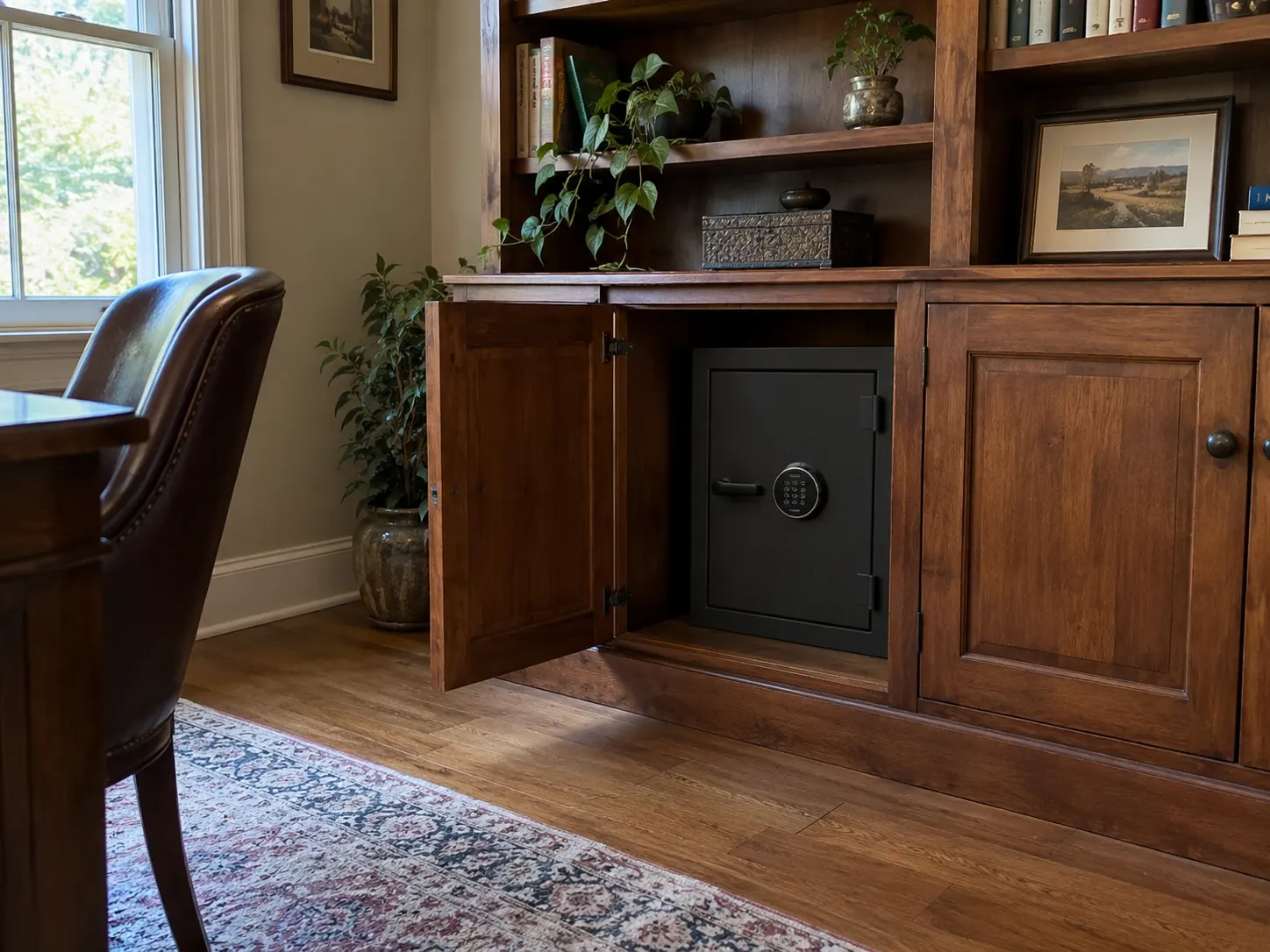
A closed cabinet keeps a safe out of sight, while proper anchoring makes the safe harder to carry away. The cabinet provides the disguise; the safe and its installation provide the security.
Choose a position where both doors can open comfortably. A safe that technically fits can still be awkward if its handle catches the cabinet frame or its door blocks access to the contents.
The mounting surface matters just as much. Fastening a heavy safe to a thin removable shelf offers little help if the shelf can leave with it. Follow the manufacturer’s installation instructions and use a suitable structural surface. Heavy models may also need professional delivery and a check that the supporting floor is suitable.
For a substantial home-safe option, the American Security BF1512 has a UL RSC Level I security rating, a UL 60-minute fire rating, and an anchor point.
The SentrySafe SFW123GDC is another option to compare when fire and water protection are priorities. It includes bolt-down hardware, but its protection should be assessed on its own specifications. Those two safes are not interchangeable simply because both have a lock and a fire rating.
2. Plan a Floor Safe While the Room Is Being Renovated
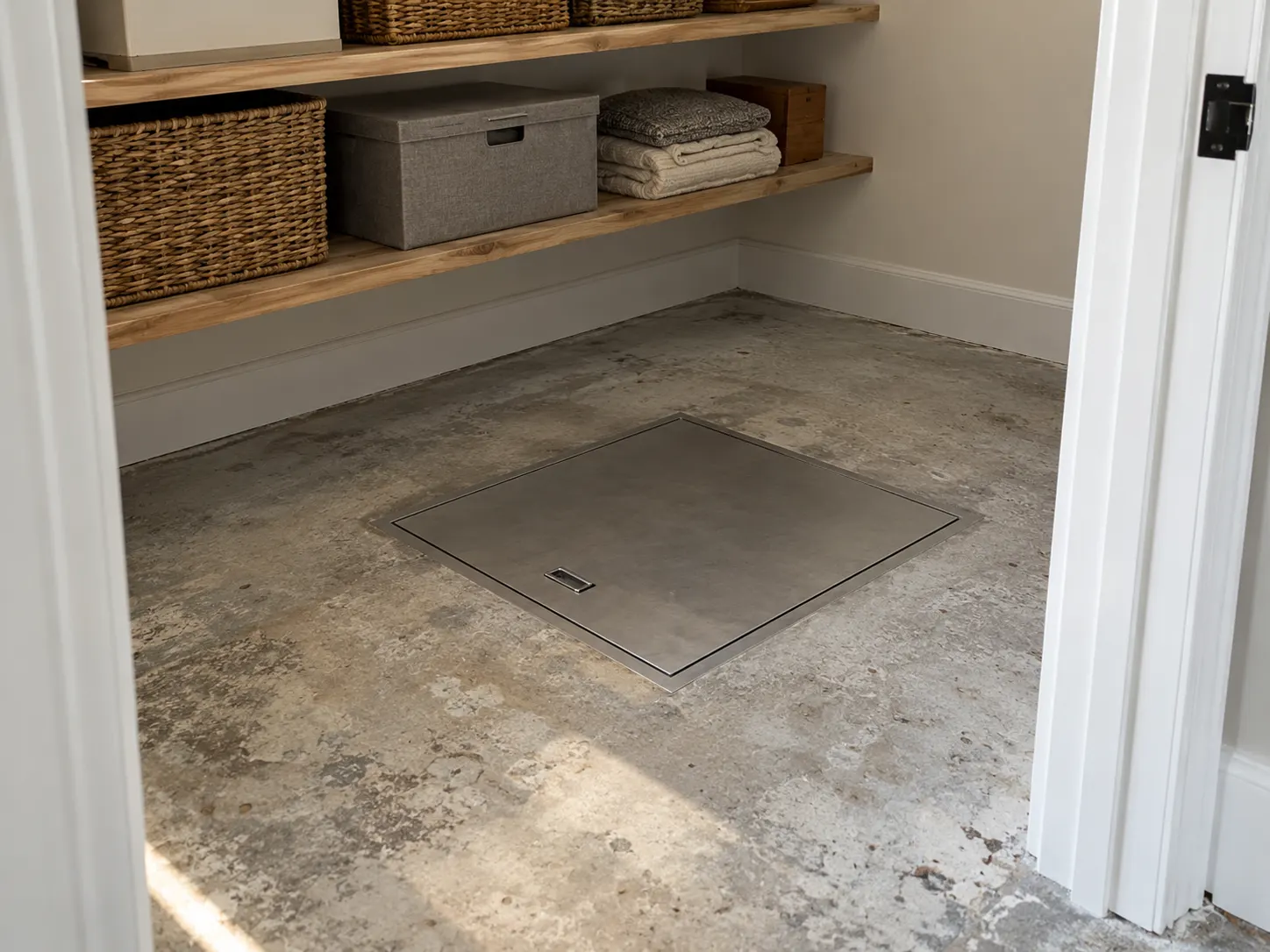
A floor safe makes the most sense when permanent installation is already practical. If you’re renovating a ground-floor room, it’s an easier time to discuss the work than after new flooring has been laid.
This is a job for an installer who understands the floor construction and anything running beneath it. Cutting into a slab without knowing what is inside it can create a much bigger problem than a misplaced passport.
Access deserves a thought before installation. Could you comfortably kneel down, open the lid, and lift out the contents? Would a wardrobe or storage stack eventually end up above it?
The American Security B1500 is a floor-safe option listed in the manufacturer’s product catalog. Discuss installation and moisture management with the supplier.
Being set into a floor does not automatically establish a safe’s fire or water rating. Check the particular model and installation requirements.
3. Fit a Recessed Wall Safe Where You Can Reach It Comfortably
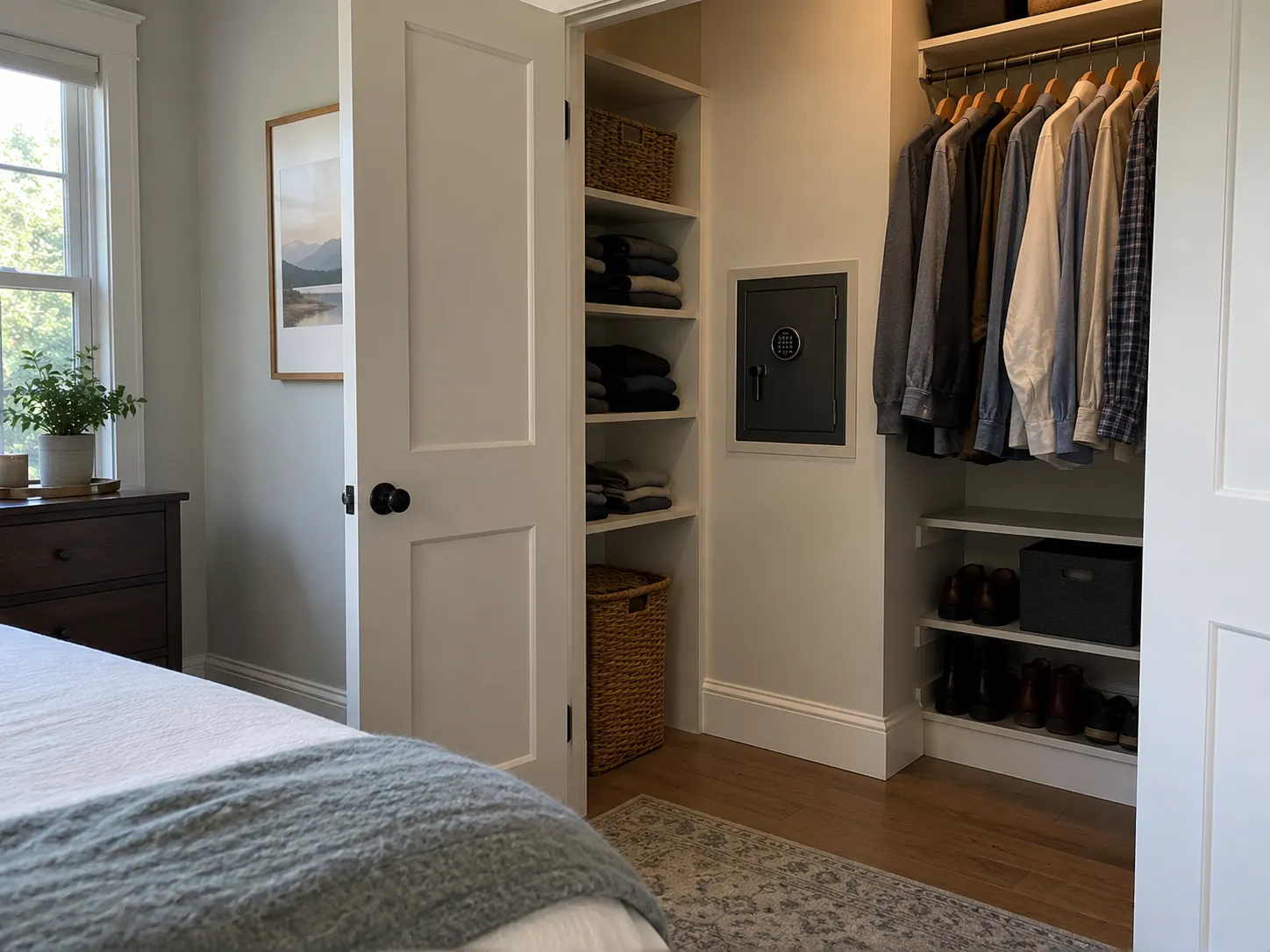
A recessed wall safe saves floor space and can keep frequently needed items within easy reach. A position inside a closet may be more convenient than moving a large picture every time you want to open it.
The tradeoff is depth. Wall safes can have shallow interiors, so check whether your document folder, jewelry tray, or small case will fit with the door closed. The locking mechanism can occupy some of the space you see in the outer dimensions.
Installation needs suitable framing and a location clear of hidden wiring and plumbing. The door also needs room to swing without catching shelves or hanging clothes.
The Barska AX12038 Biometric Wall Safe has removable shelves, fingerprint access, and backup keys. The manufacturer lists it as not fireproof, so it should not be chosen on the assumption that recessed storage protects documents during a fire.
4. Give a Deep Drawer a Discreet False Bottom
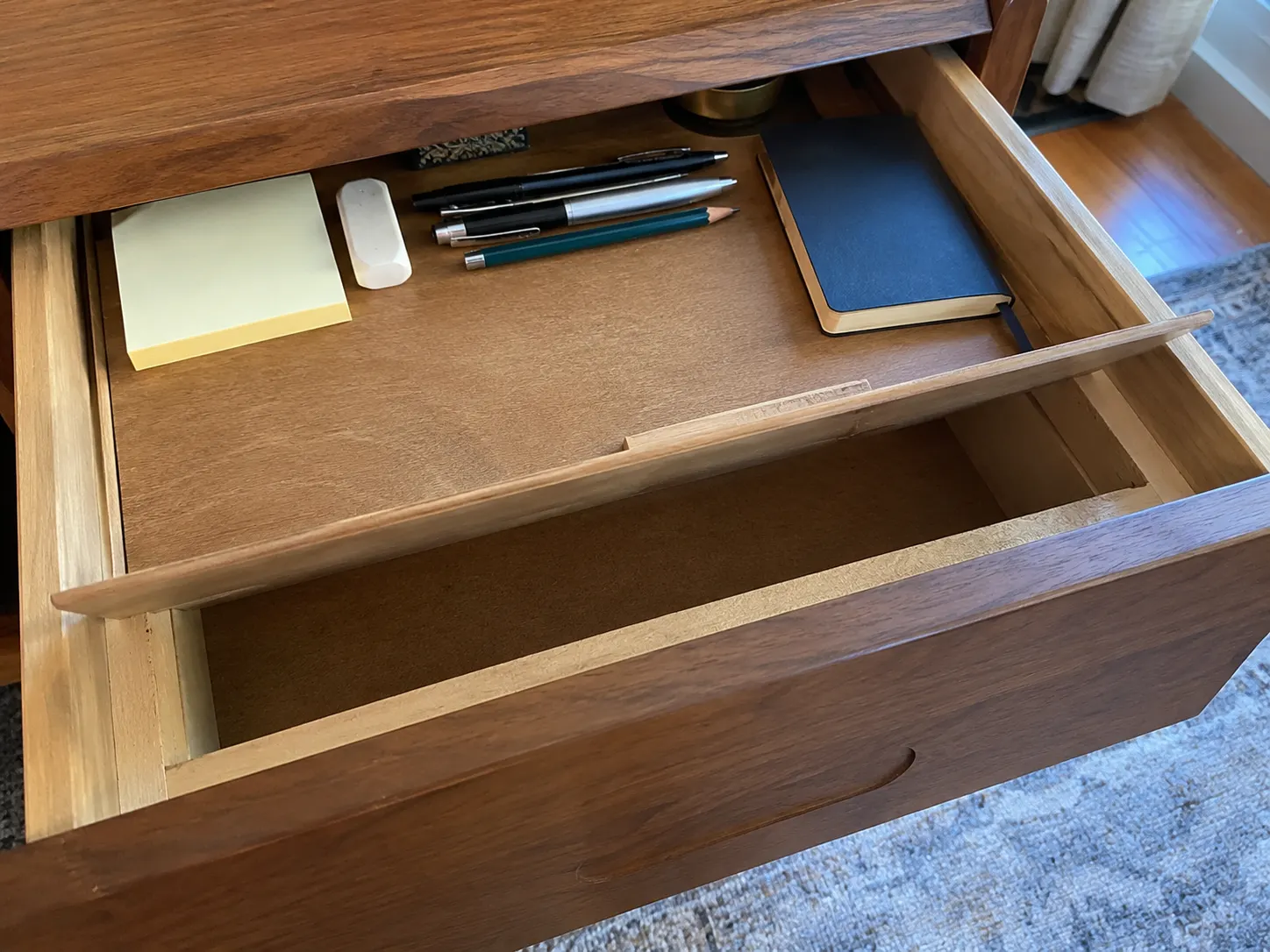
A fitted false bottom can create a shallow compartment beneath the things you normally keep in a drawer. It works best when the drawer has enough depth to lose a little usable space without becoming awkward.
Picture a deep desk drawer with stationery above the panel and a slim envelope below. The contents can remain organized, and the concealed layer stays separate from everything you reach for during the day.
Keep the hidden items flat. Overfilling the compartment can push the panel upward, make it rock, or prevent the drawer from closing smoothly. A carpenter-made insert can provide a better fit than a loose board balanced on whatever happens to be available.
This is concealed storage with limited physical protection. Reserve it for belongings whose value matches that level of protection.
If the drawer is already overflowing, our guide to organizing dresser drawers so they stay tidy can help you make the usable space work properly.
5. Use the Gap Behind a Removable Drawer
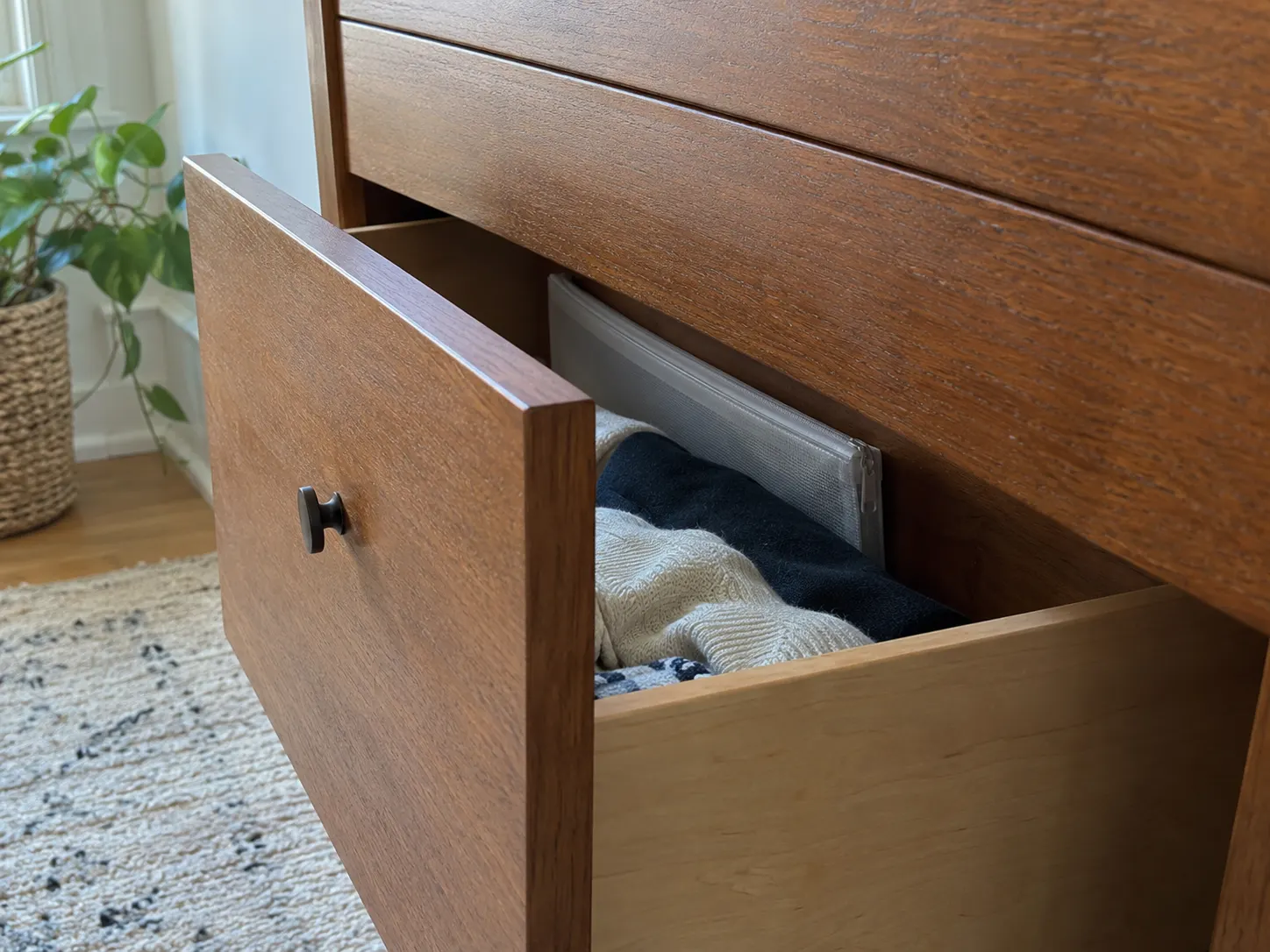
Some furniture has an unused gap behind a drawer that can accommodate a securely positioned, slim pouch. Check the actual clearance before putting anything there.
Unlike a false bottom, this space sits outside the drawer itself. That means retrieving the contents may require removing the drawer, which suits occasional access better than daily use.
Drawer slides, catches, and moving parts need to remain clear. A loose envelope can fall, snag, or get crushed when the drawer closes. Test the movement with the compartment empty before trusting the arrangement.
A slim protective document pouch can help keep papers together, but a pouch only provides the protection stated for that particular product. A zip closure alone says little about resistance to water or fire.
Put a reminder in your private inventory before moving or selling the furniture. Nobody wants their emergency cash included in a bargain dresser sale.
6. Blend a Book Safe Into a Shelf You Already Use
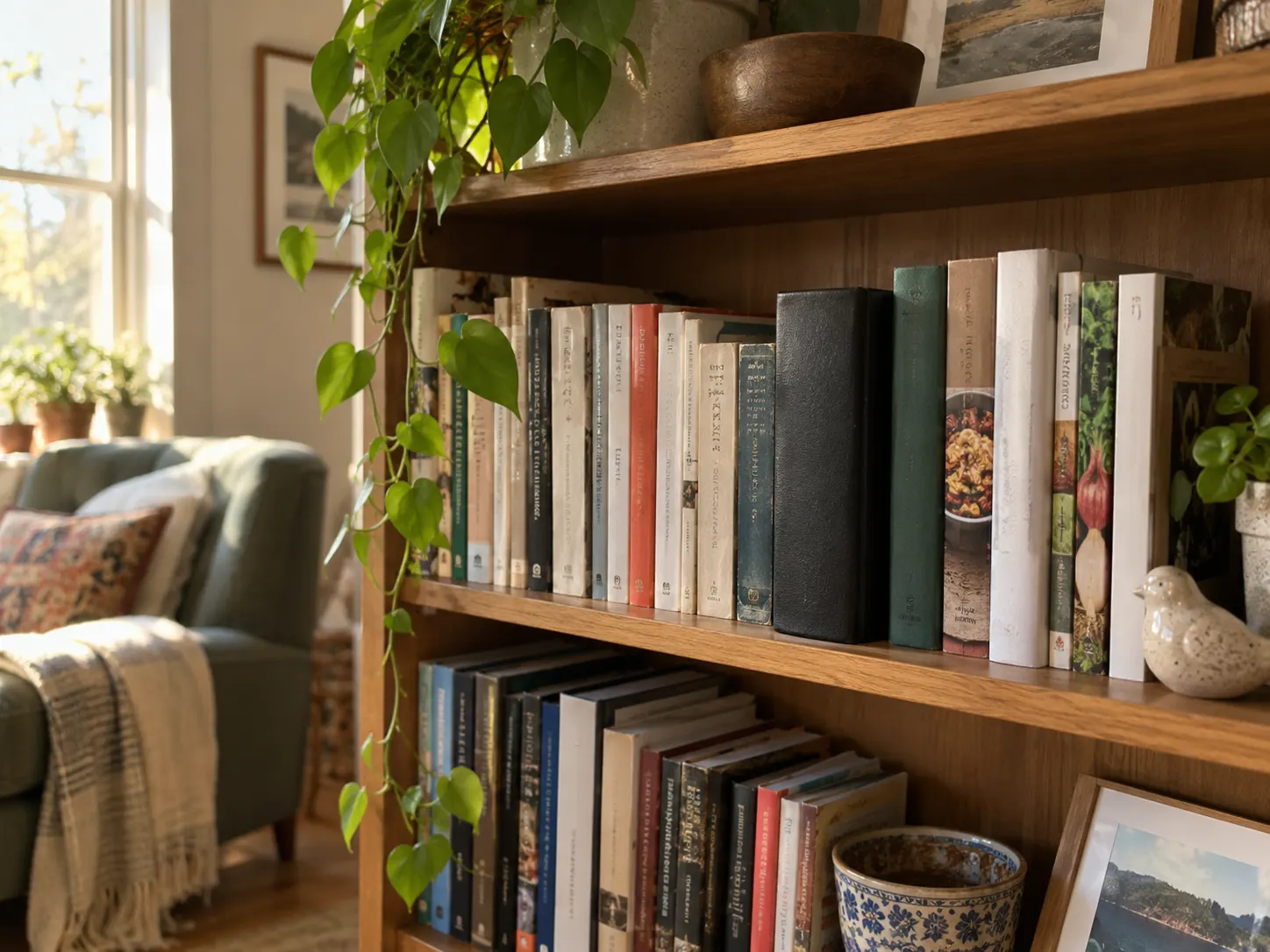
A book safe can keep a few small items discreetly stored on an existing bookshelf. Choose one that suits the size and appearance of the books around it.
If your shelves are full of paperbacks and cookbooks, an enormous ornamental dictionary may look oddly placed. The disguise should feel natural in your room without needing a whole shelf of props.
Check the internal dimensions, too. The cover can be much larger than the compartment inside, especially once the lock and metal walls take up space.
The Barska AX11680 Dictionary Book Lock Box has a paper exterior and a key-locking steel compartment. It remains portable and has no fire protection.
That makes it a possible choice for modest concealment, with limits that matter if you’re deciding where to put an expensive ring or your only copy of an important document.
7. Choose a Pantry Container That Belongs on Your Shelf
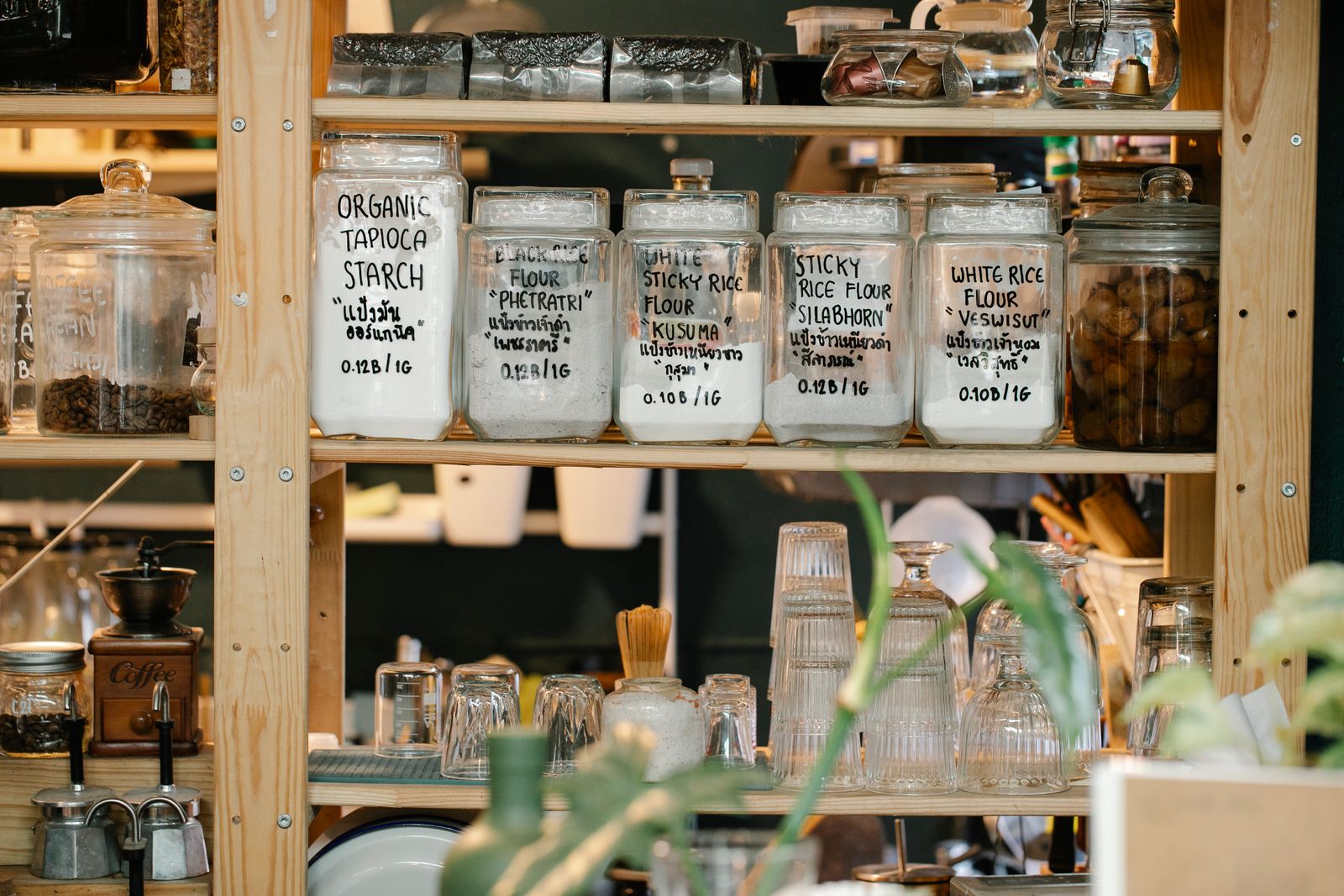
A clean diversion container can conceal small items when its appearance fits the things you already keep in the cupboard. A separate hidden compartment keeps the contents away from food and residue.
These containers come disguised as cans, jars, and other household packaging. Look beyond the label to check the opening, closure, and usable interior space. A large-looking jar may have room for only a tightly folded note and a key.
The everyday risk is easy to picture: someone reorganizes the pantry, spots an unfamiliar can, and adds it to a donation box.
Use this idea only where household routines won’t turn the container into food, recycling, or a giveaway. Let a trusted household member know that it must be kept.
Choose an empty, clean, purpose-made container. Valuables should never share space with actual food or cleaning chemicals.
8. Put a Small Case Inside an Ordinary Storage Bin
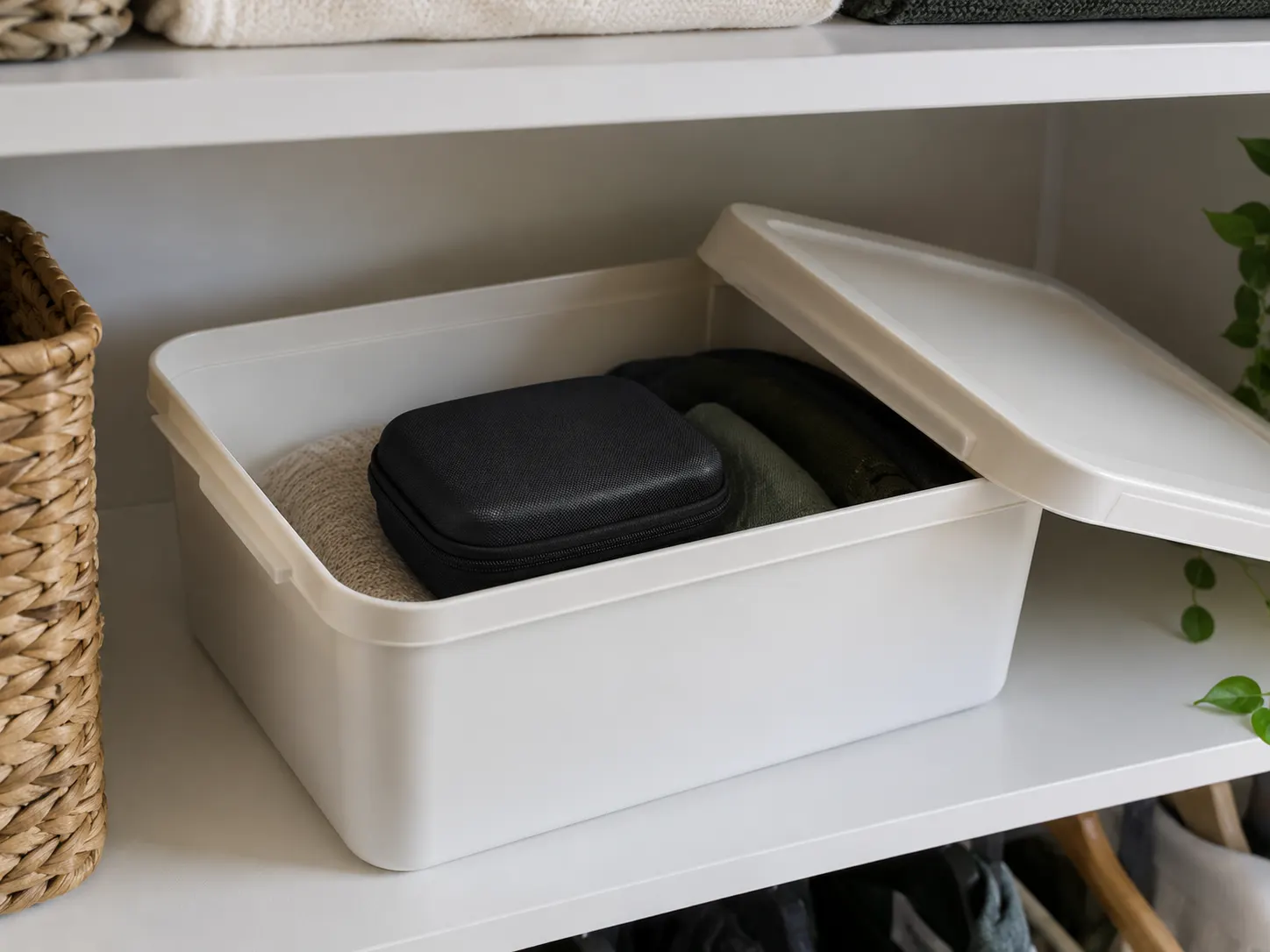
A protective case inside an opaque storage bin can keep a few belongings discreet and organized. The useful part is having a defined container, rather than loose items buried among blankets or decorations.
A tote of seasonal linens might be suitable for something you rarely need. It would be frustrating storage for a passport you use every month.
Choose a dry indoor location and a bin that belongs to your keep pile. A box waiting to go to a charity shop is an obvious source of accidental loss, regardless of how well its contents are hidden.
Keep a private record of the outer bin and the inner container. You can be discreet without relying entirely on memory.
If your shelves make every retrieval feel like unpacking a moving van, see our guide to storage shelves sized to the objects you actually keep.
9. Use the Dry Space Beneath a Planter’s Inner Pot
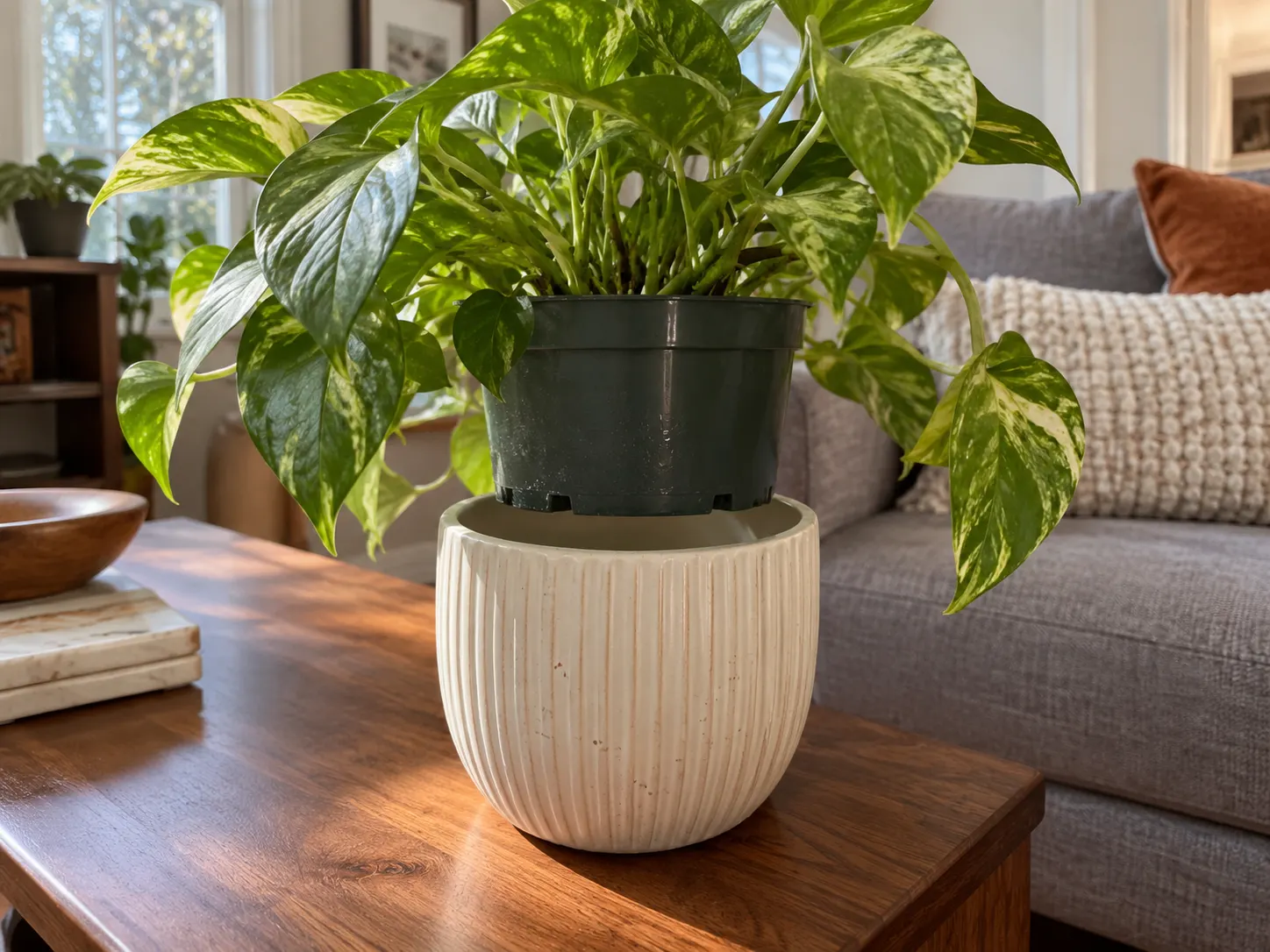
A decorative planter can conceal a small case if it has a separate inner pot and a reliably dry compartment beneath it. The valuables should stay completely separate from soil and drainage water.
This depends on the planter’s construction. Some outer pots collect water at the bottom, which makes that space unsuitable even if it appears dry today.
Remove the inner pot for watering and let it drain fully before returning it. Check that the hidden container does not block drainage or make the plant unstable.
The Pelican 1040 Micro Case offers compact protective storage with IP67 water protection under the manufacturer’s stated test conditions. It protects against environmental exposure; it does not provide a theft-resistant lock.
An artificial plant avoids watering, although the risk of accidentally giving away the whole planter remains.
10. Make Use of a Removable Cabinet Toe Kick
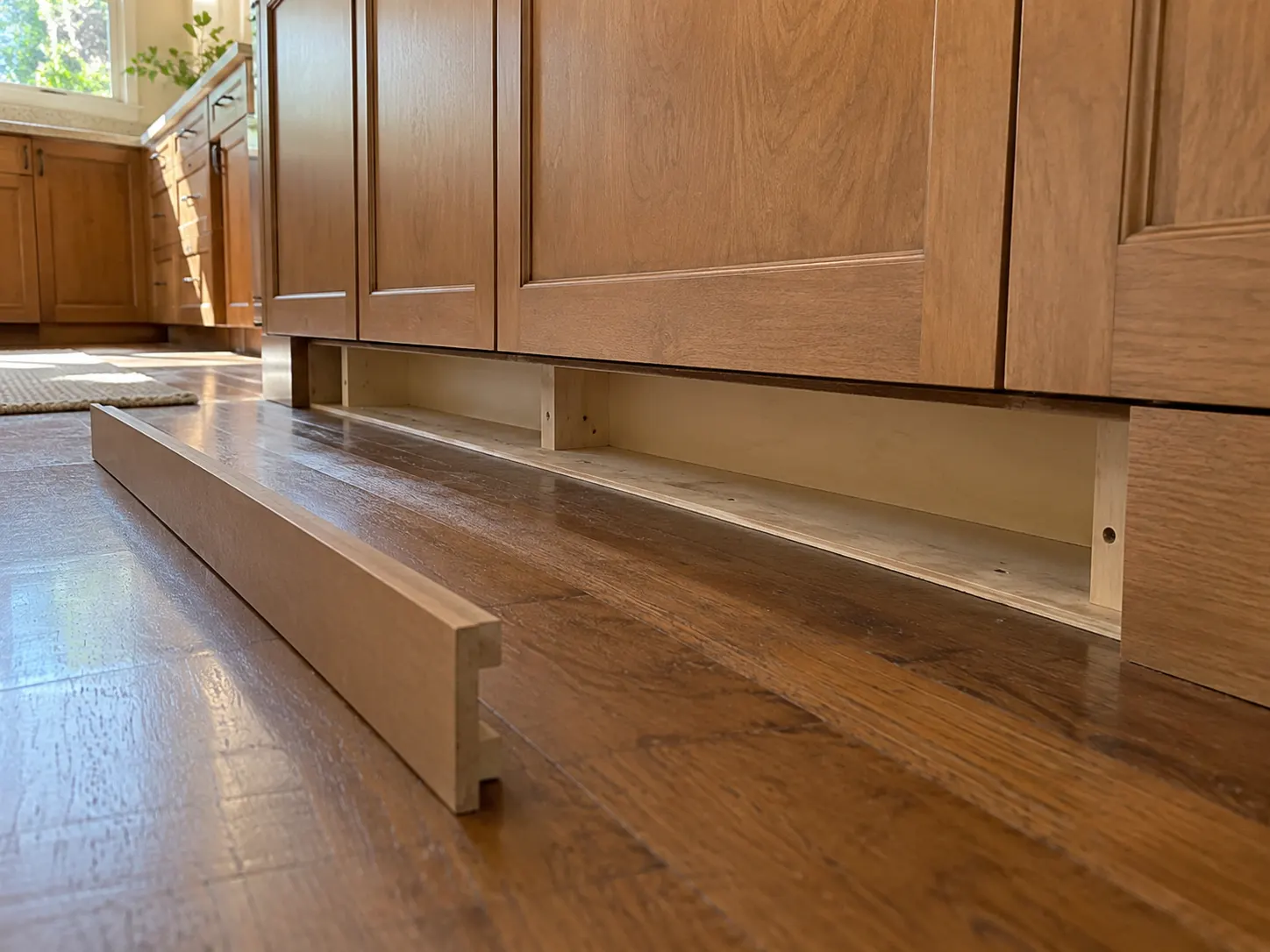
Some cabinet bases have accessible space behind a removable toe kick that can hold a shallow container. Cabinet construction varies, so check what is actually behind the panel.
A toe kick is the recessed panel near your feet beneath the cabinet doors. On some kitchens it clips off. On others, removing it means damaging a fixed finish.
If the space is suitable, a shallow lidded box keeps small items together and helps protect them from dust. Make sure the panel can close properly and be removed again without a struggle.
Keep the compartment clear of pipes, wiring, ventilation, and anything that needs servicing. Areas close to a sink or dishwasher also deserve particular attention for leaks.
This is occasional-access storage. Having to crouch on the kitchen floor every time you need a spare key will wear thin quickly.
11. Use a Purpose-Built Compartment Behind a Decorative Vent Cover
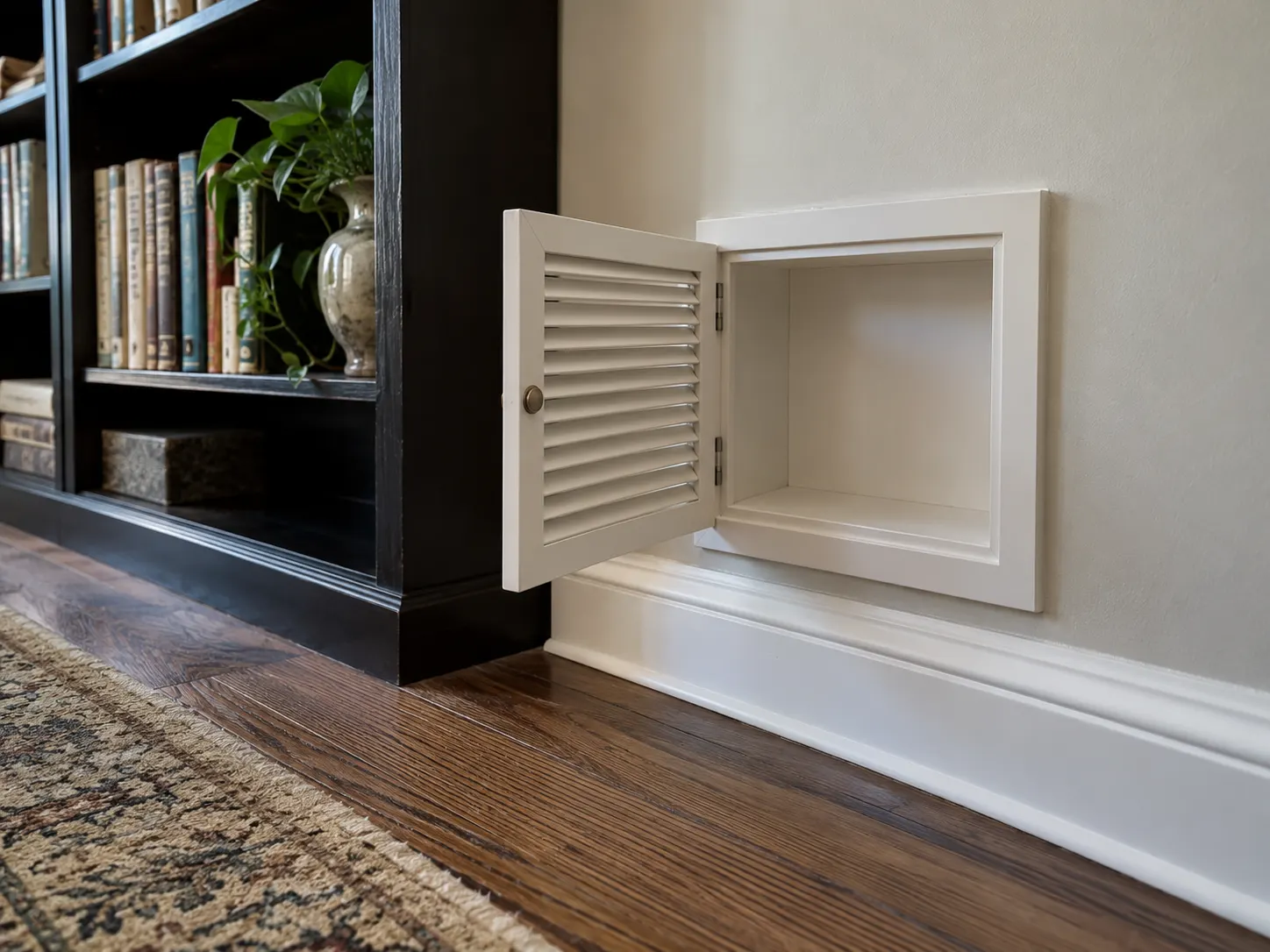
A purpose-built false vent can hide a small storage compartment behind a decorative grille. The compartment needs to be separate from working ventilation.
Choose the location and product around the wall construction, available depth, and contents. A cover alone provides concealment. Any locking or protective features come from the compartment installed behind it.
A grille that clashes with every other fitting in the room can draw attention, so the finish and proportions deserve as much thought as the storage capacity.
Have the installation checked for hidden services before anything is cut into the wall. Working ducts must stay clear for airflow and maintenance.
For a small amount of occasional-use storage, this can be tidy. For valuable belongings, evaluate the actual enclosure and lock with the same care you would give any other container.
12. Put a Clean, Empty Paint Can on a Utility Shelf
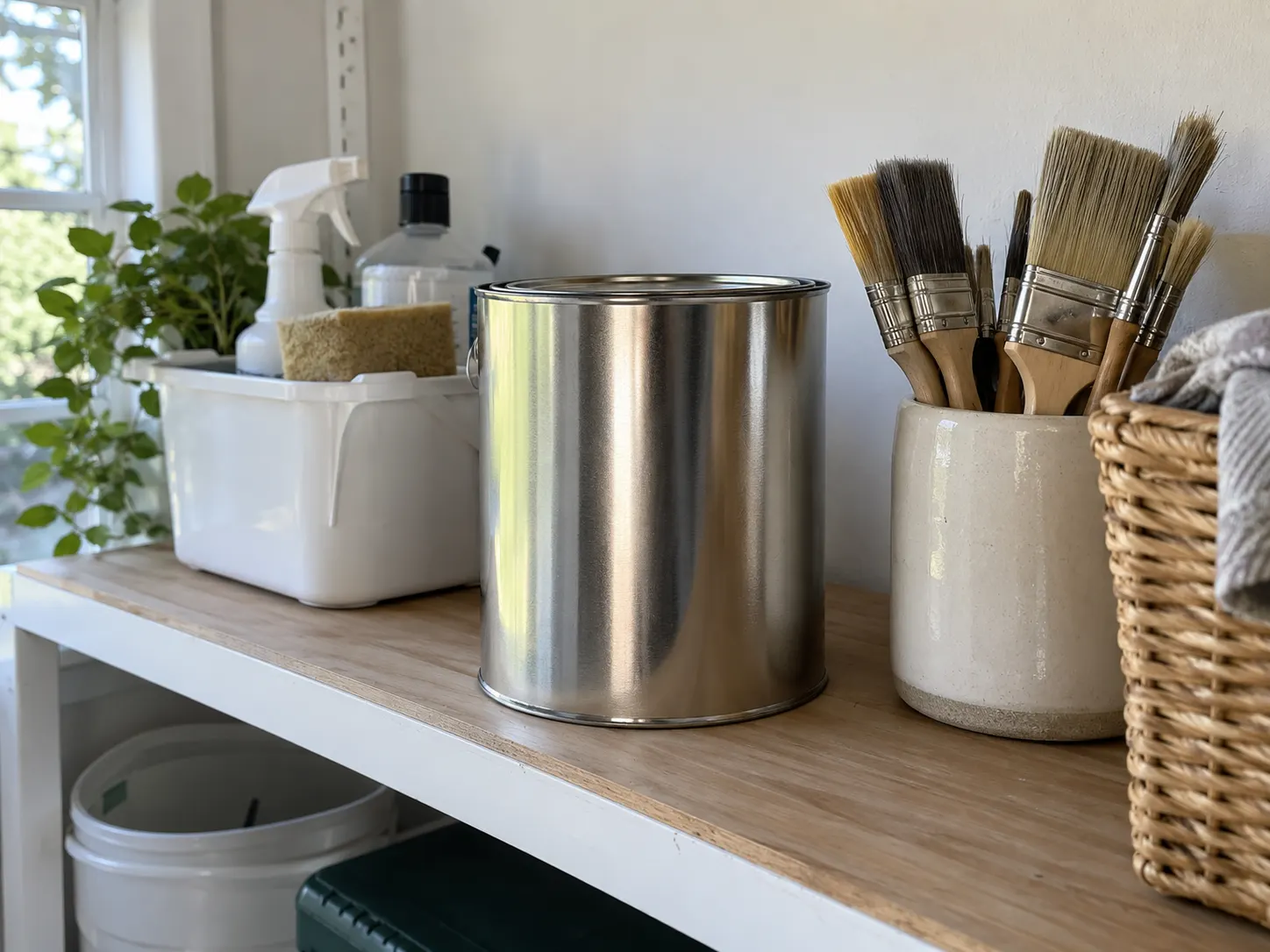
A clean, empty paint can can disguise a small protective pouch among supplies you already keep. An indoor utility shelf is easier to manage than a damp shed or a garage with large temperature swings.
Choose a can with no wet paint, stubborn residue, rust, or sharp edges around the opening. A new empty replacement can may be more practical than spending an afternoon trying to clean an old one.
Keep the contents inside a separate pouch so they are easy to lift out together.
The biggest weakness arrives on clear-out day. Empty cans are exactly the sort of thing someone might gather for disposal.
Use this only for modest concealment, and record the container privately. Before decorating, reorganizing, or moving, retrieve the contents first.
13. Use a Separate Pipe-Style Container in a Utility Area
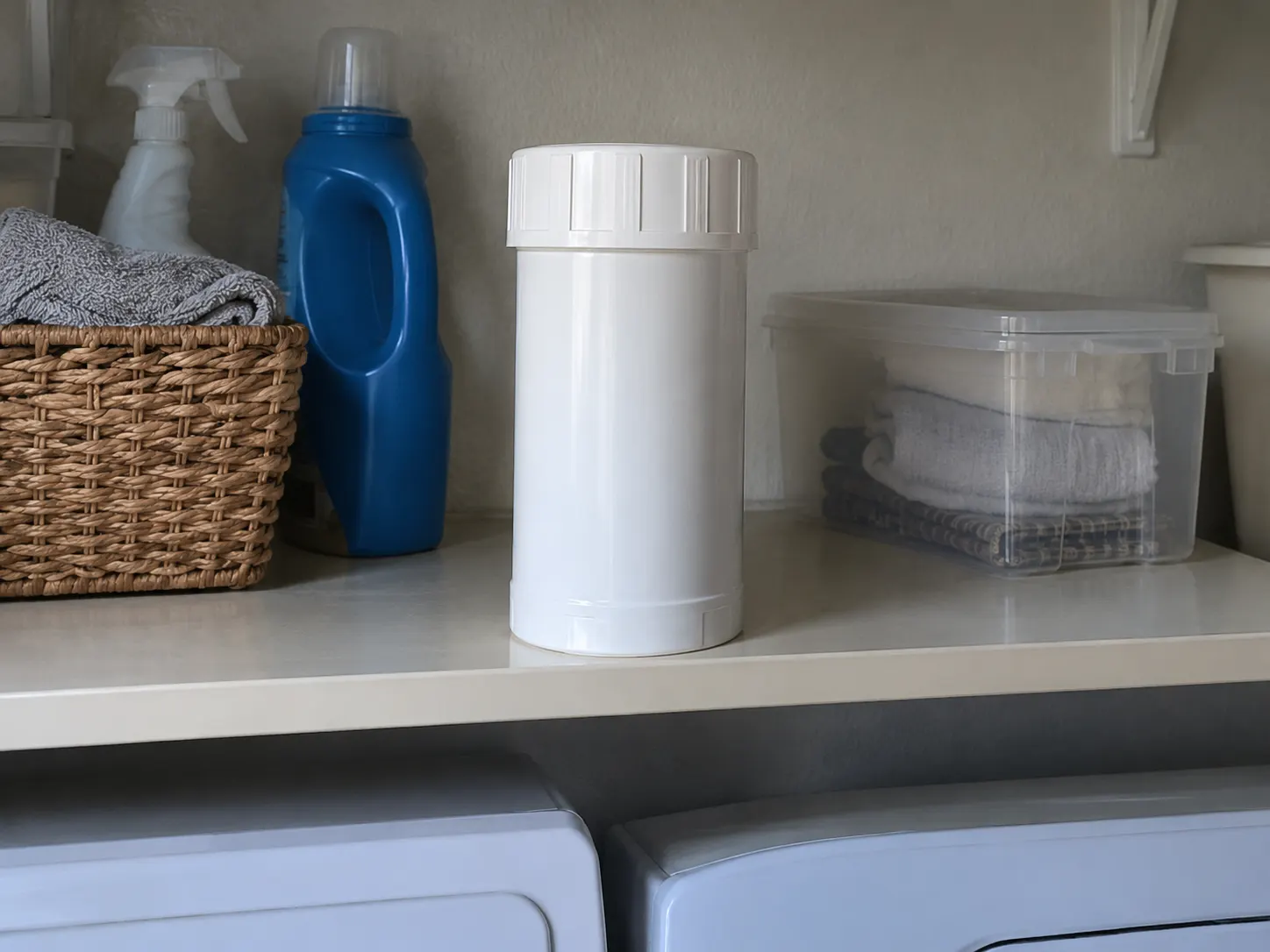
A purpose-built pipe-style container can conceal small items in a suitable utility area without altering working plumbing. It needs to be a separate storage object with an accessible closure.
The idea depends on context. A pipe-shaped container on a shelf of maintenance supplies may look ordinary. The same object beside a bedroom lamp would need explaining.
Check that the opening is wide enough for the contents and that the cap can be reopened easily. Anything rolled tightly into a narrow container can become awkward to remove.
Keep it away from working water, gas, drainage, and electrical systems. It should never look like something another person needs to connect or repair.
Maintenance is the practical catch. Retrieve the contents before a plumber, contractor, or household member clears the utility area.
7 Hiding Spots That Can Create More Problems Than They Solve
Skip locations that expose valuables to everyday searches, moisture, heat, or disposal. A hiding place has to cope with the people who live in the home as well as the possibility of theft.
Under the Mattress or in the Sock Drawer
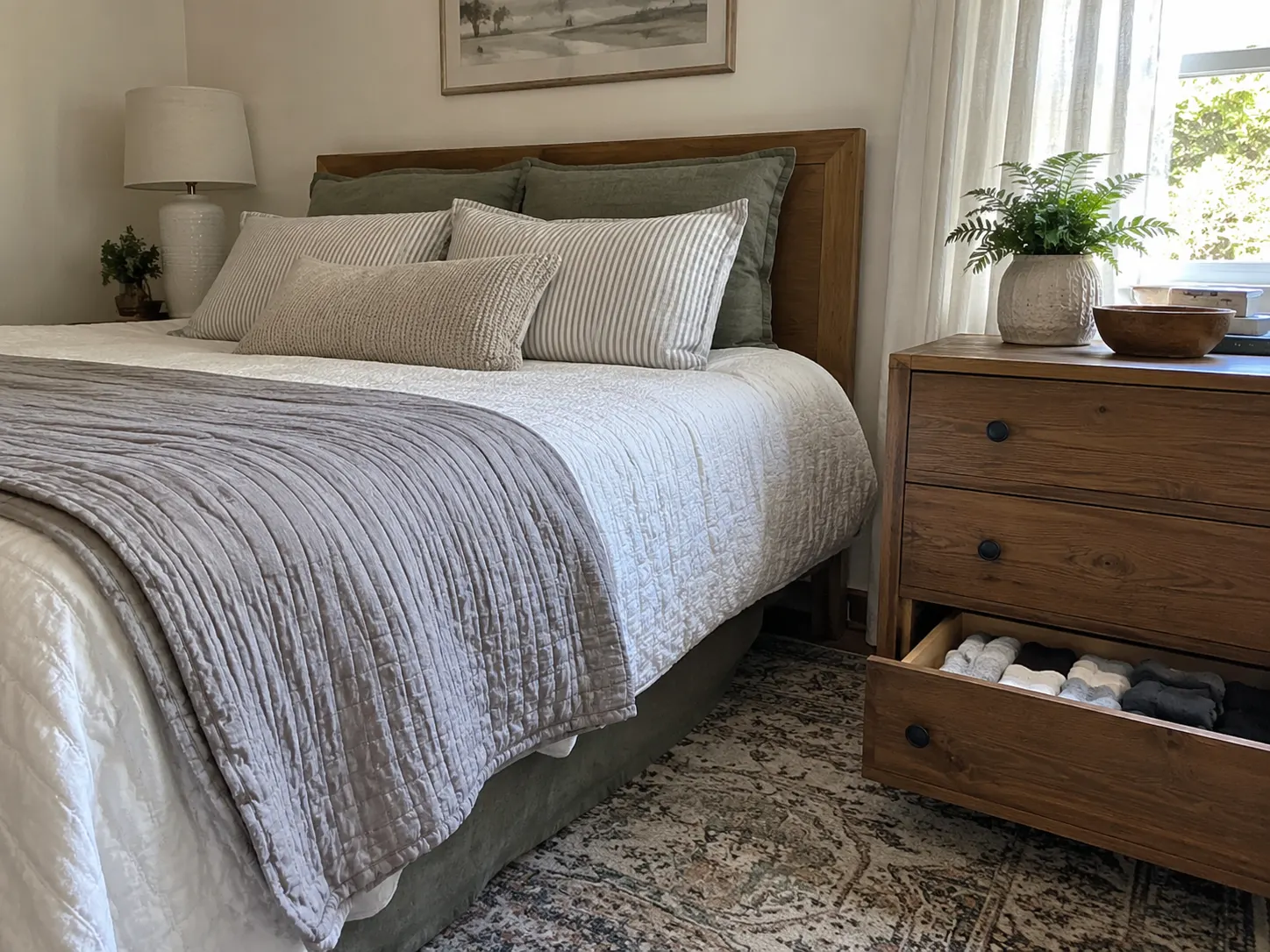
These spots offer little concealment once someone searches the bedroom. Lifting a mattress or opening a drawer does not require discovering a hidden compartment.
They can also be disturbed during cleaning, changing bedding, or reorganizing clothes. Give emergency cash a defined container and location instead of letting it disappear among everyday items.
In a Jewelry Box on the Dresser
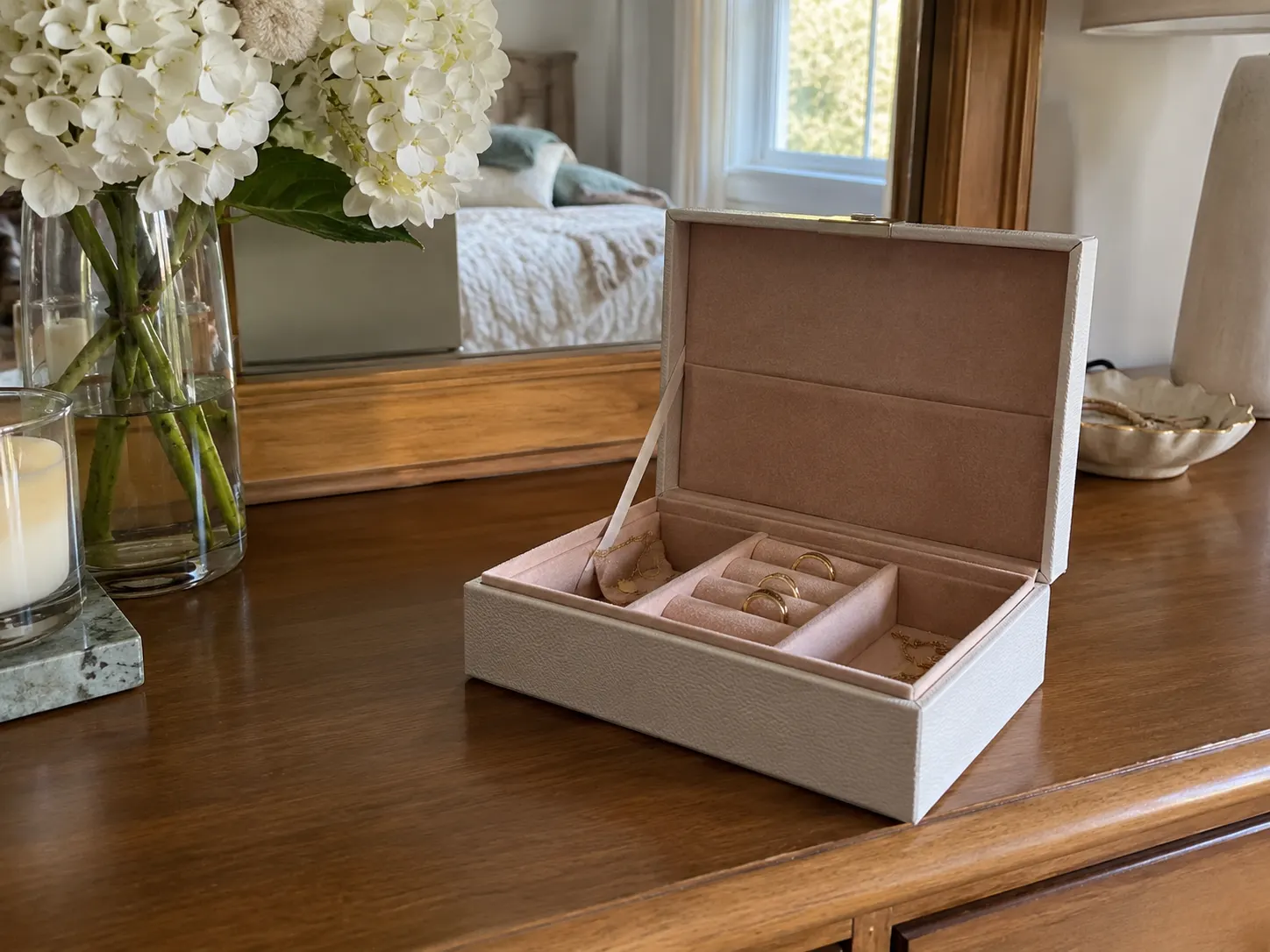
A visible jewelry box clearly identifies where jewelry is stored. It can still be useful for organizing inexpensive pieces, but valuable items need storage matched to their worth.
For daily jewelry, use a soft-lined organizer inside secured storage. Separate compartments also help prevent the chain-and-earring knot that somehow forms when everything shares one little dish.
Inside the Freezer
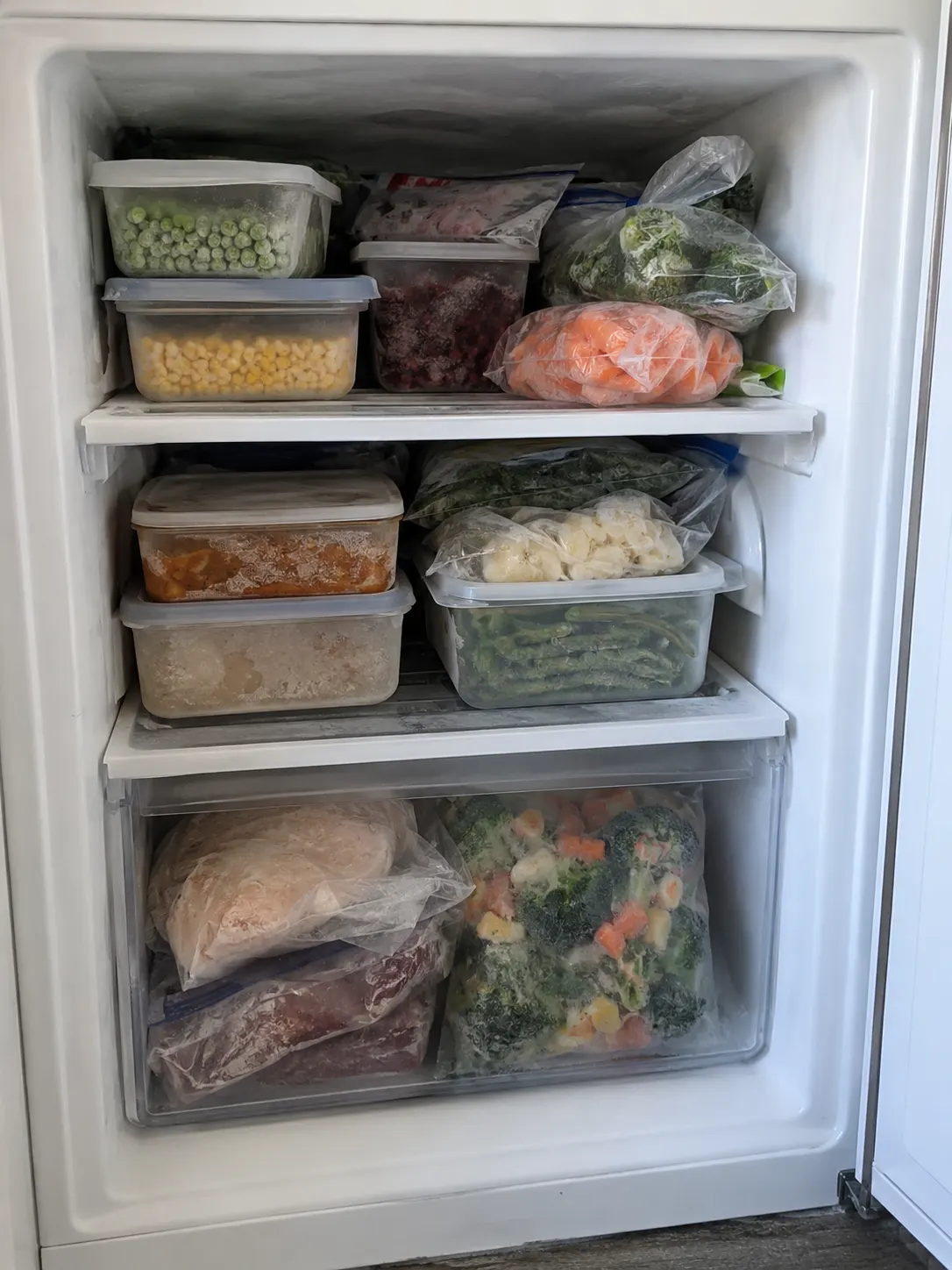
A freezer introduces avoidable risks from condensation, defrosting, food handling, and accidental disposal. A bag that looks forgotten may be thrown out during the next freezer clean.
A household freezer also has no established role as a tested fire-rated safe. Put important papers in storage selected for document protection.
Beneath a Trash-Can Liner
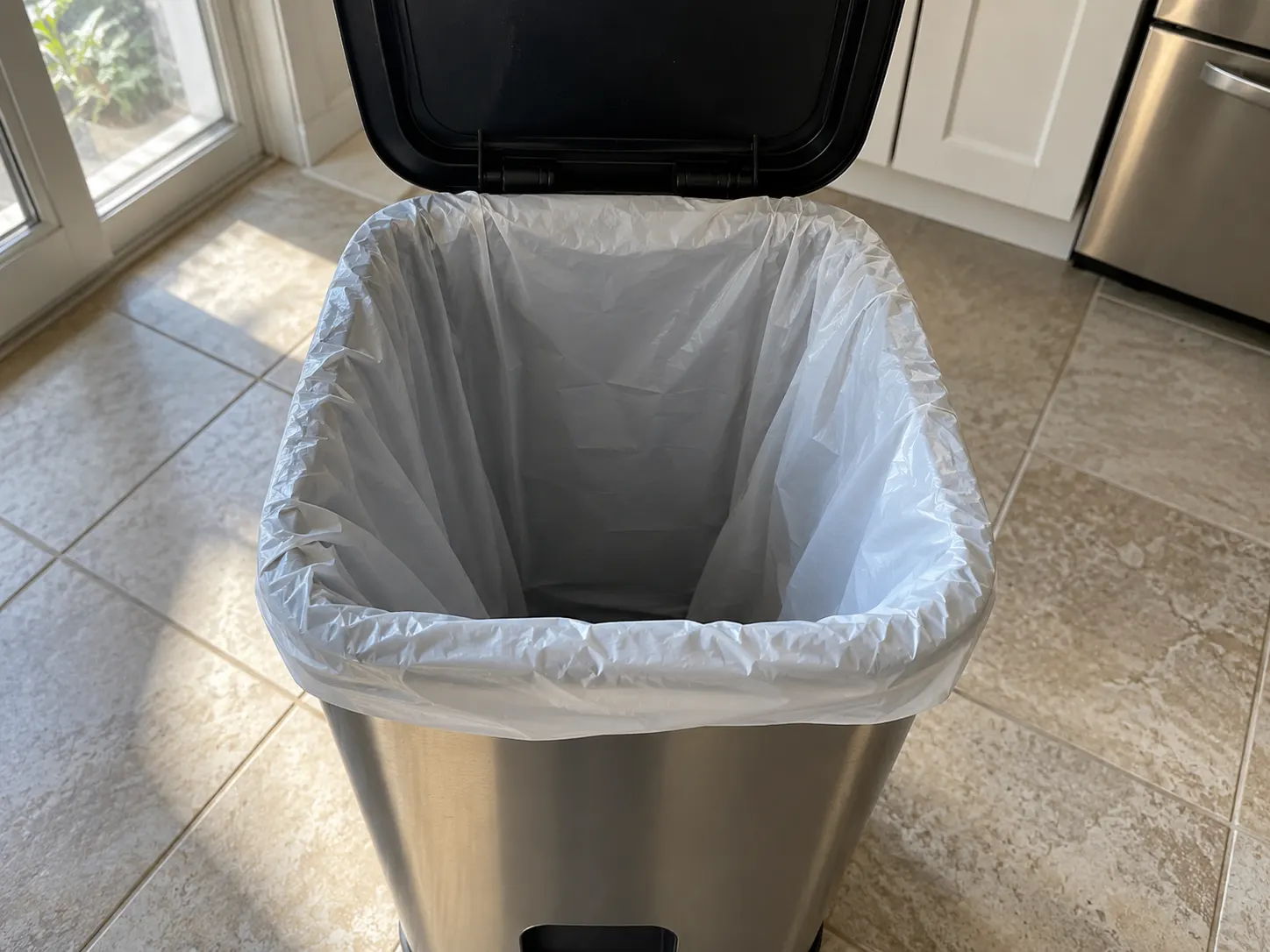
This location makes accidental disposal and contamination too easy. A leaking bag, a thorough clean, or someone replacing the liner can disturb whatever is underneath.
Even a sealed pouch still needs to be retrieved from a container designed for waste. Keep belongings somewhere that does not enter the cleaning and rubbish-removal routine.
Inside Working Appliances, Outlets, or Vents
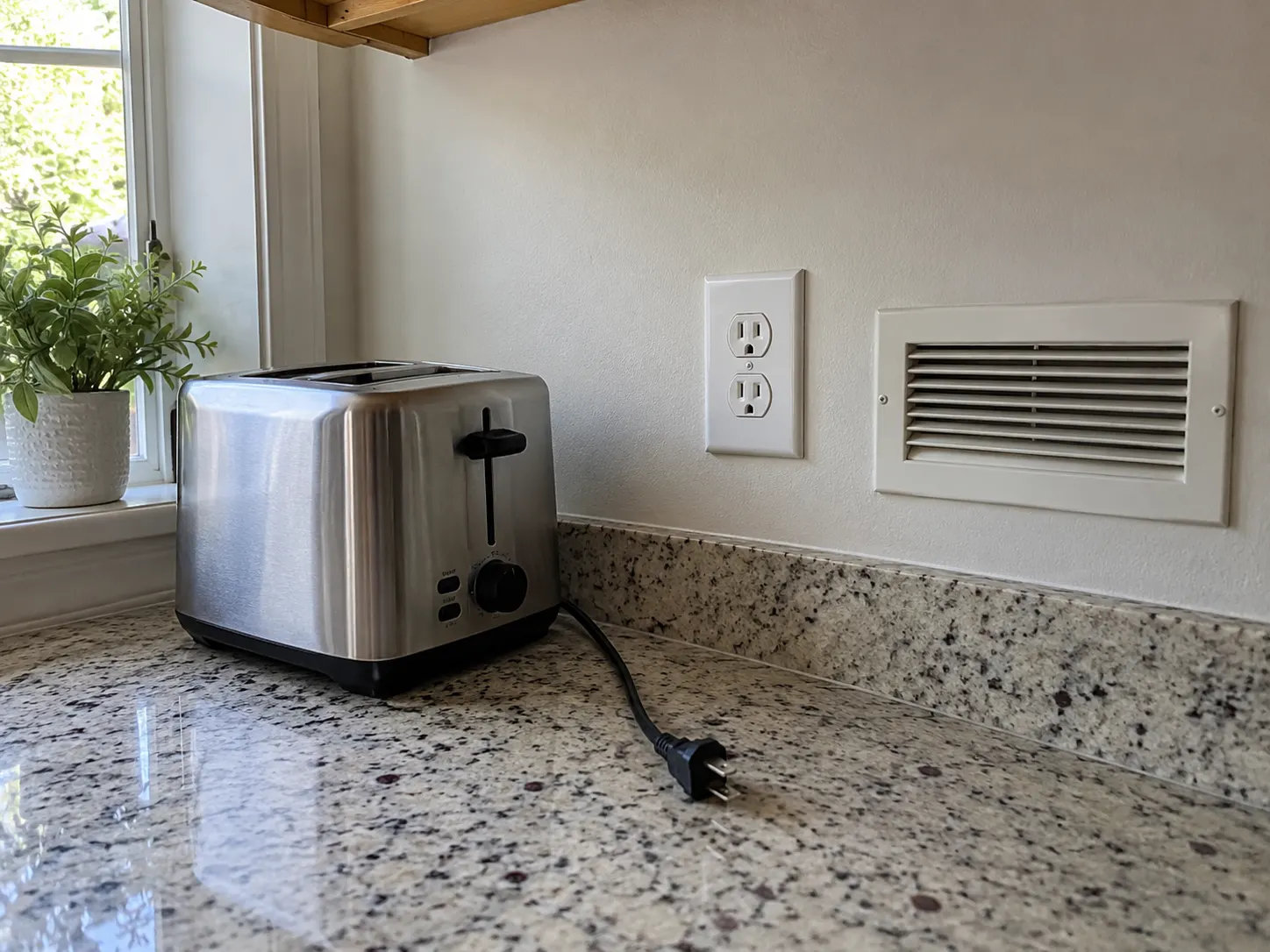
Keep valuables out of active equipment and live electrical fittings. Heat, moving components, airflow, and servicing can damage the contents or create a hazard.
A decorative storage compartment should be self-contained. A working toaster, outlet, appliance housing, or ventilation duct should remain available for its intended job.
In a Damp Attic, Garage, or Basement Corner
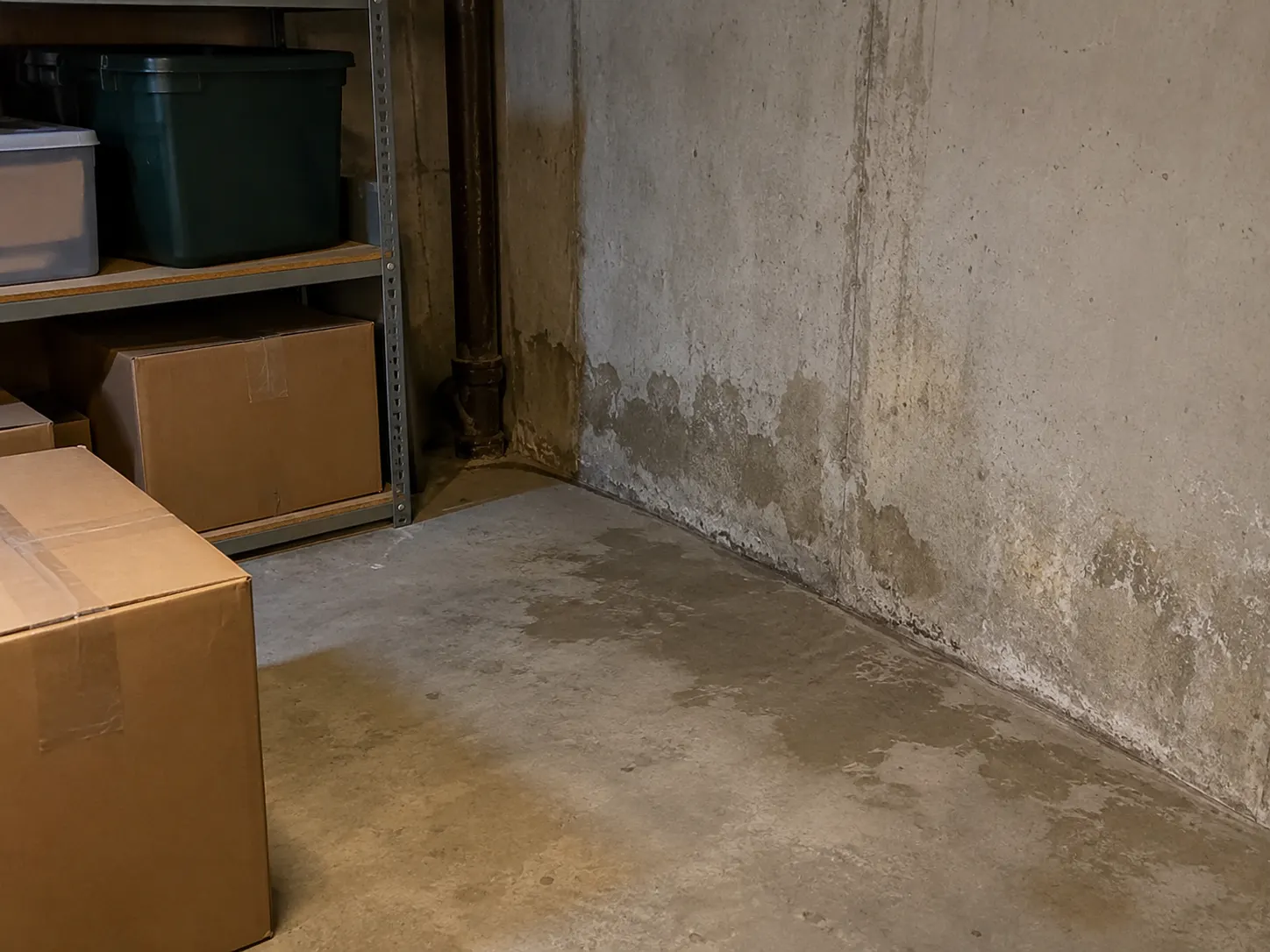
Choose the environment by its actual temperature, moisture, and exposure to leaks. A rarely visited area can still be unsuitable for paper, electronics, or jewelry.
Look for signs of dampness and think about seasonal changes. A corner that feels comfortable in spring may become hot, humid, or wet later in the year.
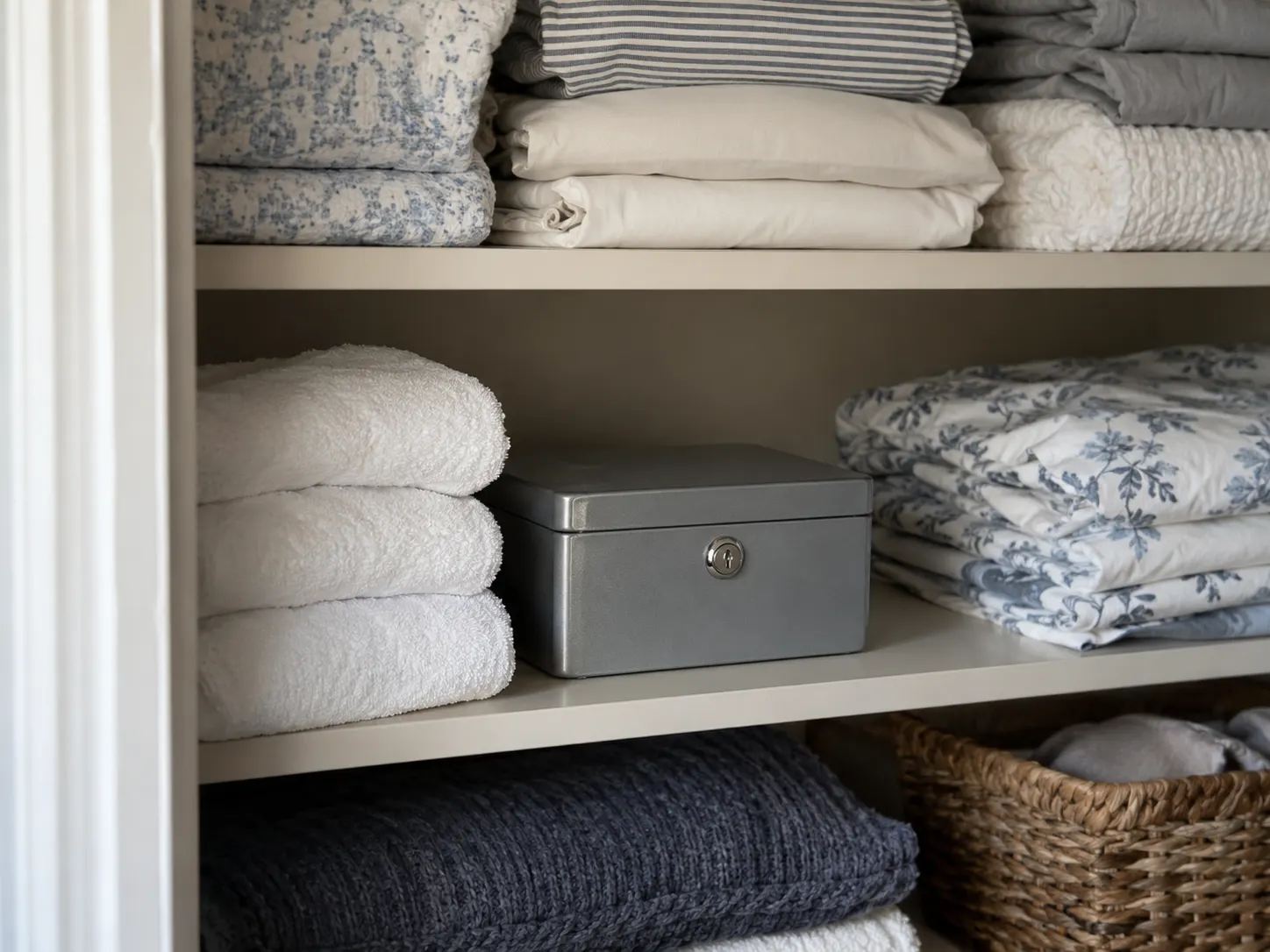
In a Small Portable Lockbox Left Unsecured
A portable lockbox can be carried away with its contents. Its usefulness depends on the lock, construction, and any approved method of securing it in place.
Where appropriate, choose a model with a manufacturer-approved anchoring or tethering option and install it as directed. A small box sitting loose on a shelf provides limited resistance to removal.
Before You Put Anything Away, Check These Details
A good arrangement should protect the contents, remain usable, and survive an ordinary household tidy-up.
- The contents fit without bending, crushing, or scratching.
- The location stays dry and away from heat.
- The container provides the protection these items need.
- I can retrieve the contents without dismantling the room.
- The container is unlikely to be donated, recycled, or discarded.
- A trusted person can locate essential belongings if necessary.
- I have a private record of what is stored where.
- Keys and access codes are stored securely.
- I will empty the compartment before moving, renovating, or selling the furniture.
FAQs About Hiding Valuables at Home

Where Should I Keep a Small Amount of Emergency Cash?
Keep it in a dry, memorable location that you can reach without tools or heavy lifting. A discreet container inside an indoor storage bin or a book safe may suit a modest amount.
Only keep an amount appropriate to the protection available. Larger sums deserve stronger secured storage rather than a more elaborate household disguise.
Where Should I Store Jewelry I Wear Every Day?
Use accessible secured storage with a soft-lined tray or separate compartments. Rings, watches, and chains should have enough space to avoid rubbing against one another.
If putting something away feels like a ten-minute task, it is more likely to end up on the bedside table. Convenient access helps you keep the routine.
Are Book Safes and Diversion Cans Worth Buying?
They can be useful for concealing a few small, replaceable items. Their value depends on how naturally they fit into the room, how well they close, and whether the household will leave them alone.
Many remain easy to carry away, and a locking book box does not automatically have fire or water protection. Buy for the features the product actually provides.
Is a Wall Safe Better Than a Floor Safe?
The better choice depends on installation, access, capacity, and the model’s tested protection. A wall safe can be easier to reach; a floor safe may suit permanent storage that you open less often.
Compare the actual models. “Wall” and “floor” describe placement, not a complete security rating.
What Can Renters Use Without Altering the Property?
Book safes, protective cases inside storage bins, and suitable removable furniture compartments offer options without changing the building. Portable safes may also offer approved ways to secure them, depending on the model and available anchor point.
Check your lease before drilling or altering cabinetry. Keep expectations matched to the arrangement, especially when a container remains unsecured.
Can a Freezer Protect Cash or Documents During a Fire?
A freezer should not be treated as a tested fire-rated safe. Its normal insulation does not establish how it will protect documents during a house fire.
Choose a container with independently tested fire protection suitable for the contents. Keep secure backup copies of important information where appropriate.
How Do I Keep a Hidden Container From Being Thrown Away?
Record its location privately and make retrieval part of your decluttering routine. A trusted household member should know which containers or pieces of furniture must not leave without being checked.
Before tackling a whole room, retrieve the hidden belongings and account for them. Our realistic decluttering plan before buying organizers can help make the rest of the clear-out easier to manage.
Shop the Storage Options Mentioned in This Guide
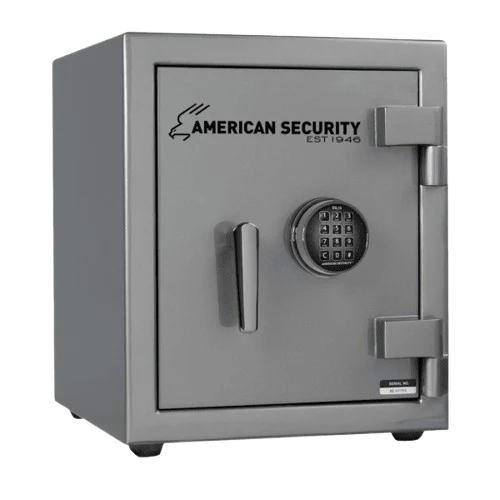 American Security BF1512A substantial home safe with a UL RSC Level I security rating, a UL 60-minute fire rating, and an anchor point. Plan its delivery, support, and installation carefully.
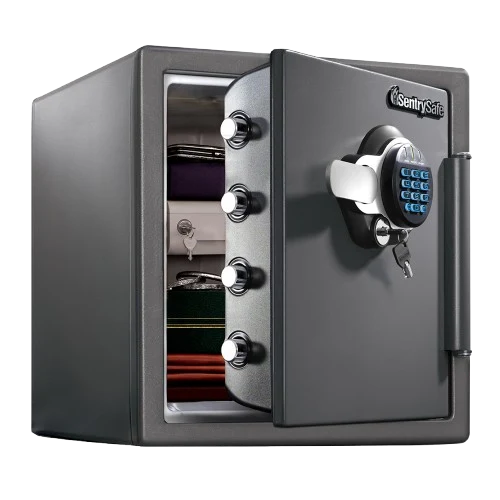 SentrySafe SFW123GDCA home-safe option with documented fire and water protection, interior organization, and bolt-down hardware. Follow its specific installation and protection conditions.
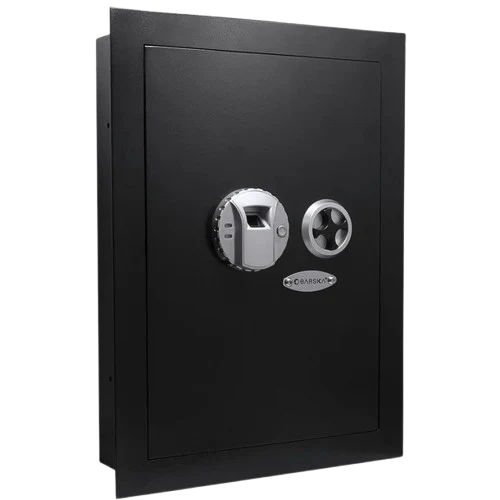 Barska AX12038 Biometric Wall SafeRecessed locking storage with removable shelves and backup keys. The manufacturer lists it as not fireproof.
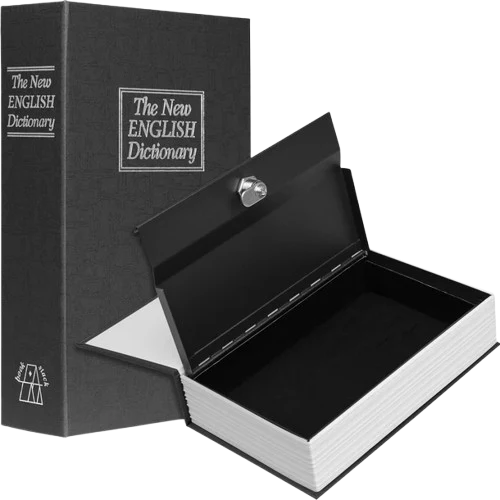 Barska AX11680 Dictionary Book Lock BoxA portable book-style container with a key-locking steel compartment for discreet storage. It has no fire protection.
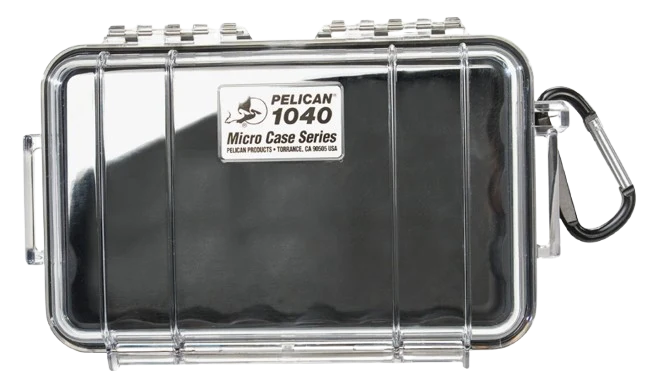 Pelican 1040 Micro CaseA compact protective case with IP67 water protection under the manufacturer’s stated conditions. Useful as an inner container where environmental protection matters.