How to Organize Dresser Drawers: KonMari Method & More

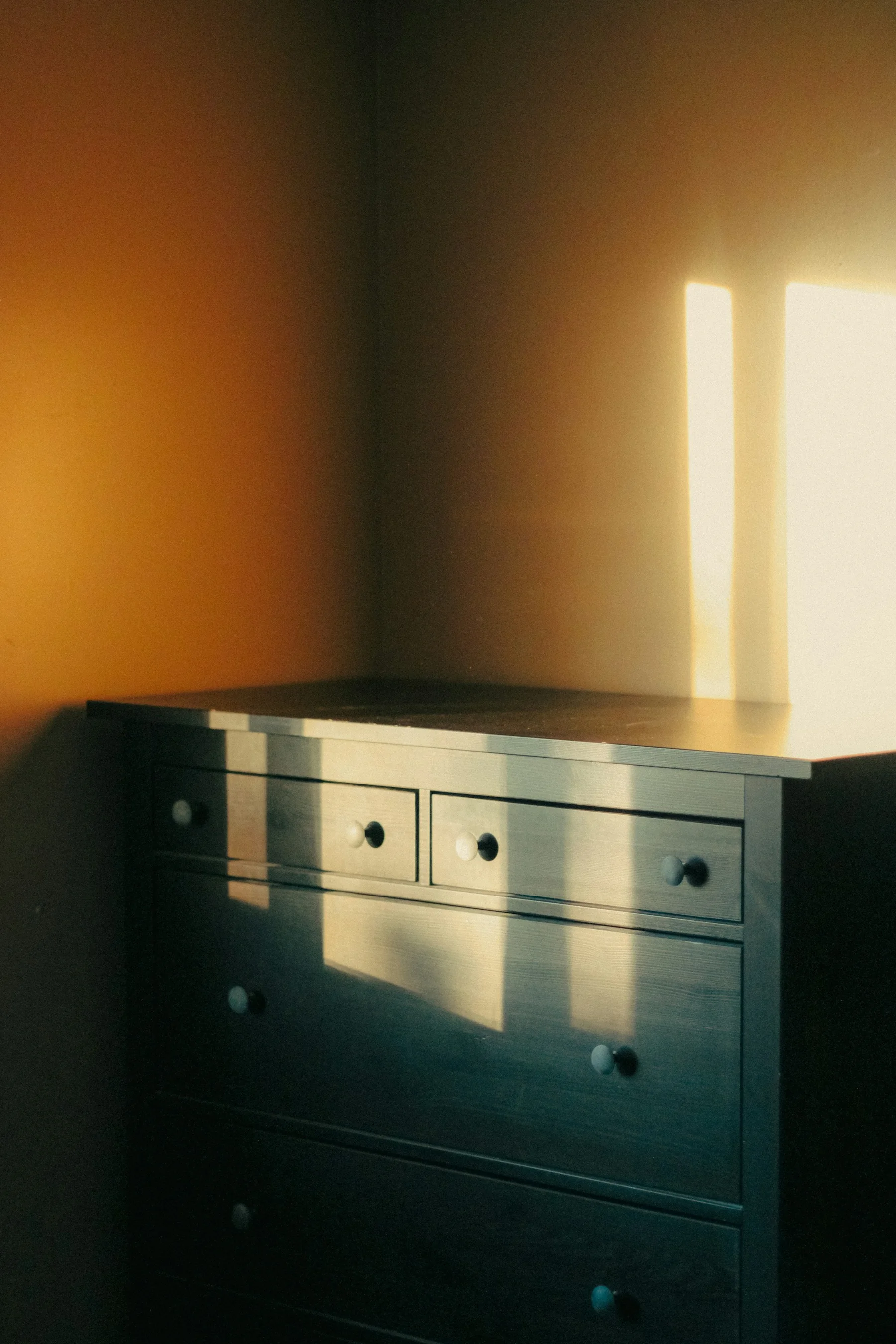
Tired of sorting out messy dresser drawers, only to find everything jumbled again a few days later?
An organized dresser makes getting dressed easier, helps you find clothes you’d forgotten about, and gives clean laundry a reserved place to go. Good dresser drawer organization can be achieved with these simple steps:
The quick answer
- Less overcrowding: Remove clothes you no longer wear and store occasional pieces elsewhere.
- Visible clothing: File-fold suitable items so you can see them without lifting a stack.
- Separate sections: Dividers or small boxes prevent clothing categories from mixing.
- Easy access: Everyday clothes belong in the drawers you can comfortably reach.
- Enough room: Clothes still in the laundry need space, too.
Here’s how to put that into practice, from sorting your socks to folding shirts the KonMari way.
1. The Clothes in Your Hamper Count, Too
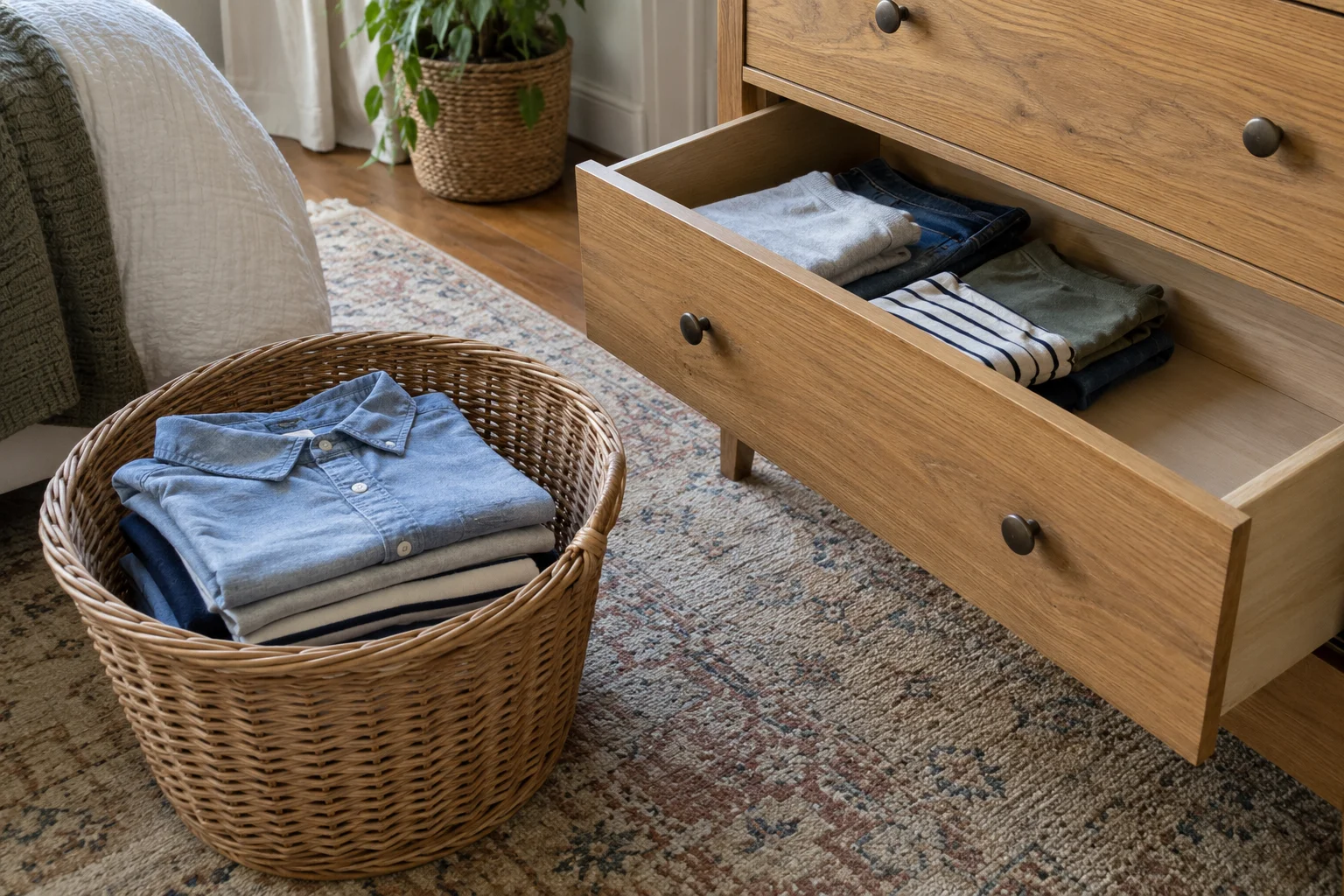
All the clothes assigned to a drawer need room, including anything being washed, dried, or worn.
Say three workout tops are in the dresser and five are in the laundry. Their section needs space for eight. Organizing around those three tops will leave you rearranging everything when the next load is ready.
Gather clean clothes from baskets, drying racks, and the bedroom chair. Account for anything still in the wash without mixing dirty laundry into the clean piles.
A few supplies will make the job easier:
- Donation bag
- Separate spot for clothes that need repairs
- Cleaning cloth
- Measuring tape
- Small boxes or organizers you already own
Once the drawer is empty, wipe it out and let it dry before putting clothes back.
2. Which Clothes Are Worth the Drawer Space?
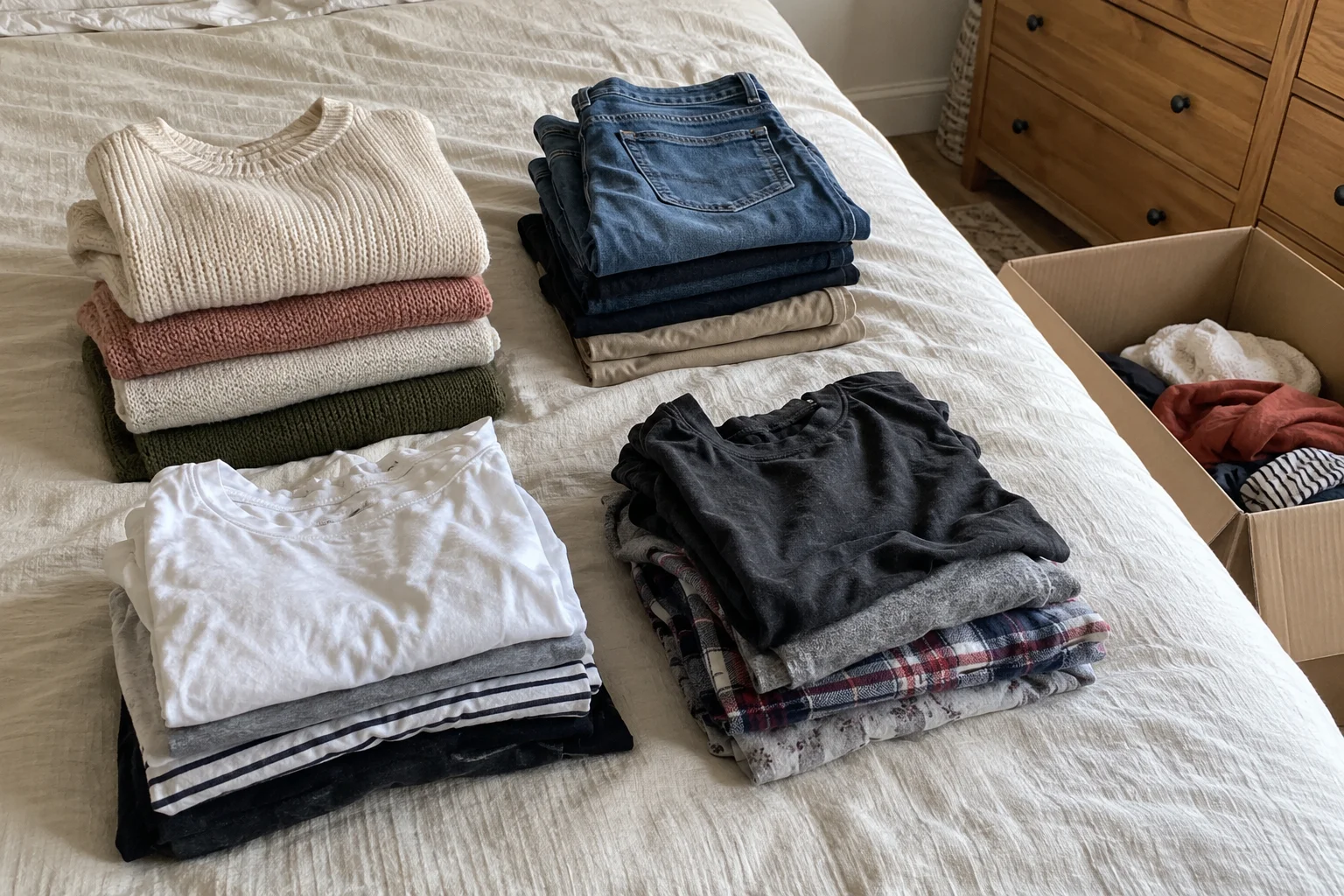
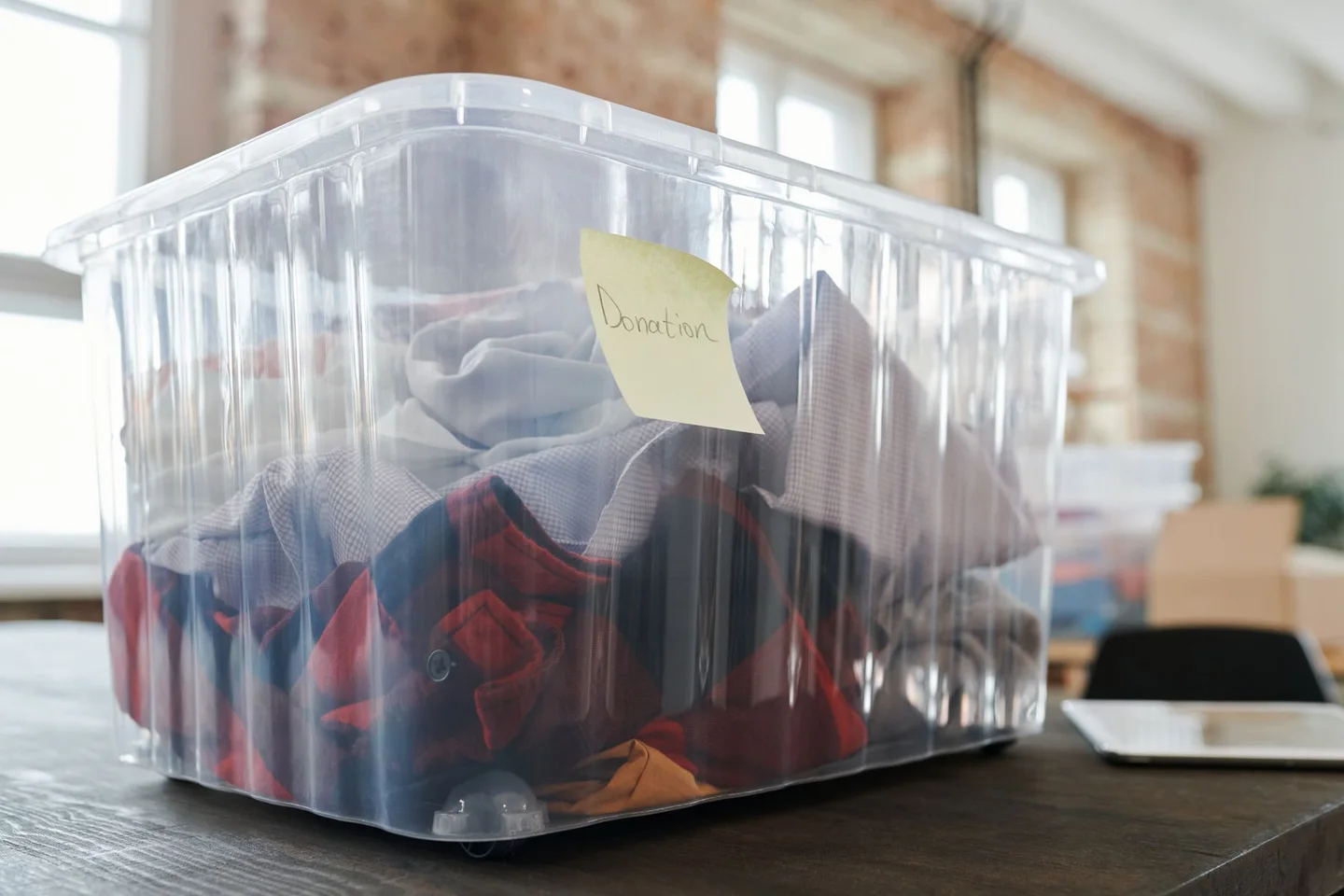
Clothes you wear and enjoy deserve the top spot with plenty of room. Pieces that no longer fit, feel uncomfortable, or go unused can leave your everyday drawers.
That includes underwear with a waistband that digs into your skin, socks with worn-through heels, and the shirt you keep trying on before changing into something else.
Grouping similar items helps you see what’s taking up space. You might have fifteen pairs of socks but wear the same six between washes.
Four piles keep the sorting straightforward:
| Pile | What belongs here |
|---|---|
| Keep | Clothes you wear, enjoy, and want in this dresser |
| Donate or sell | Usable pieces that no longer fit or suit you |
| Repair | Clothes you want to wear once a specific problem is fixed |
| Store elsewhere | Seasonal clothing, occasional pieces, and keepsakes |
The repair pile needs a next step. A shirt with a missing button can go beside your sewing supplies so you remember to fix it.
Old T-shirts deserve a look, too. A few for painting or messy jobs are useful. An entire drawer of them may be more than you need.
For anything you feel guilty letting go of, our guide to things to declutter at home includes help with the “but it’s still perfectly good” question.
3. The KonMari Method, Explained Simply
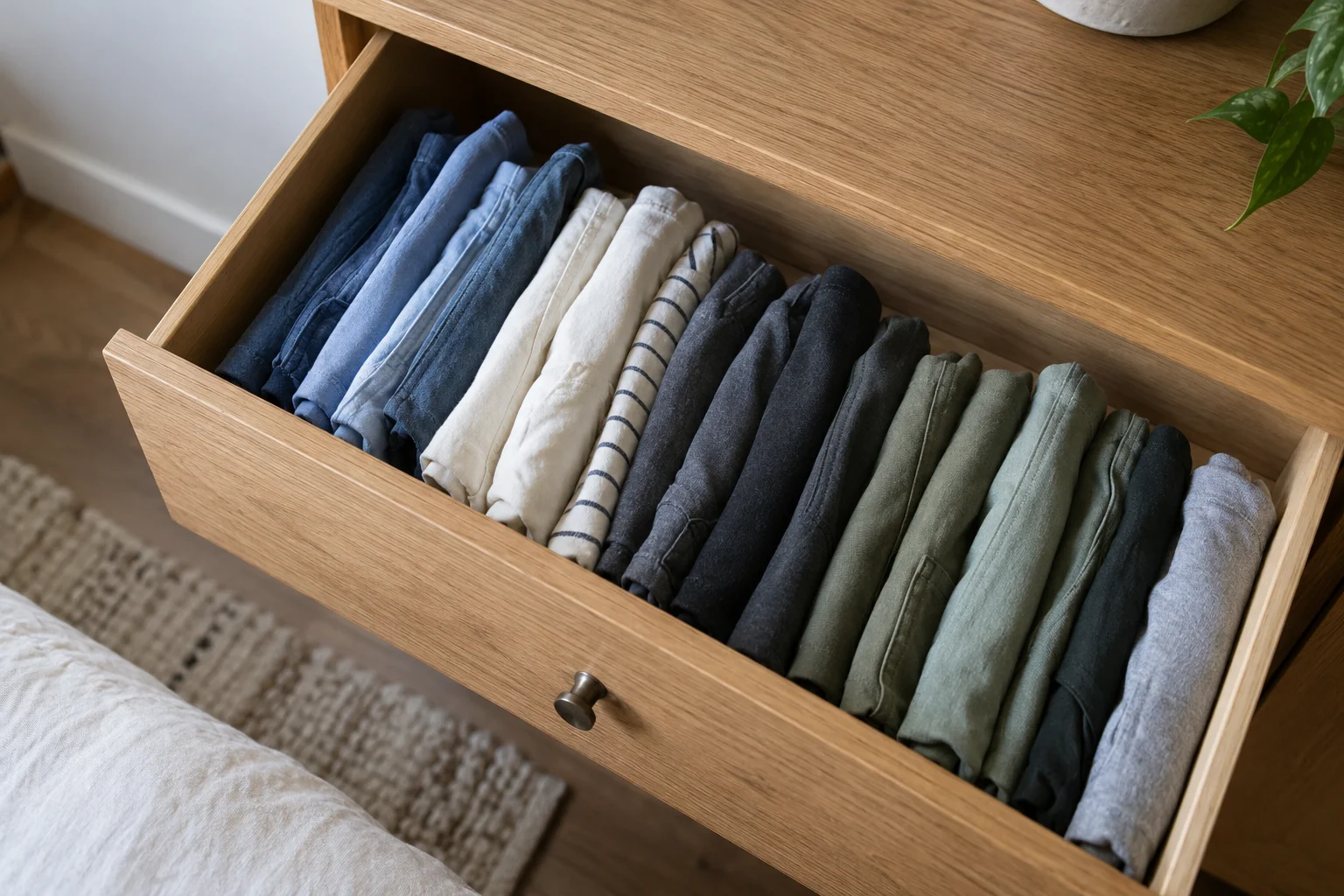
KonMari combines choosing what sparks joy with thoughtful storage. Marie Kondo’s method involves sorting belongings by category, with clothing first in the wider process.
For your dresser, that means gathering clothing, deciding what you want to keep, and arranging those pieces so they’re easy to see and use.
Upright folding is one part of the method. You can use it for a dresser refresh without taking on the full process throughout your home.
A T-shirt is an easy piece to practice on:
- Lay it flat and smooth the fabric.
- Fold one side toward the center, tucking the sleeve inside the outline.
- Repeat on the other side to make a long rectangle.
- Fold the bottom toward the neckline, leaving a small gap at the edge.
- Fold the length again into halves or thirds.
- Stand the folded shirt upright.
The arrangement works a little like books on a shelf. Each piece is visible, and you can remove one without lifting everything above it.
One test fold helps you find the right size. Place the shirt in the drawer and adjust its height or width before folding the rest.
You don’t need a folding board. The first shirt can serve as a rough guide.
4. A Drawer Layout That Fits Your Morning
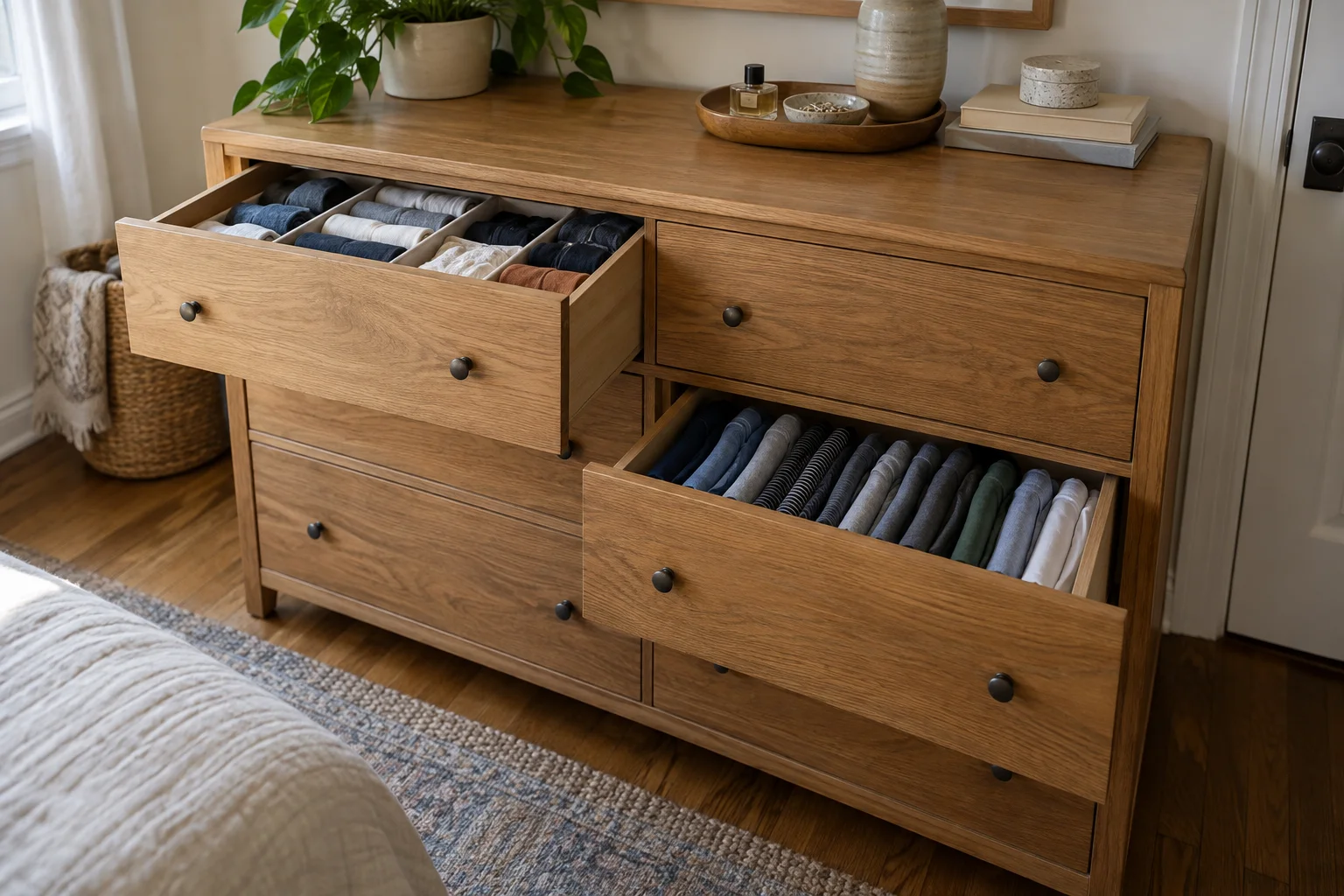
The clothes you reach for every morning belong in the easiest drawers to reach. Items you wear less often can go in the remaining drawers.
If you exercise before breakfast, one drawer for leggings, workout tops, and sports bras saves you from searching in three places.
If you mostly wear T-shirts and jeans, those categories need more space than occasional dress socks or swimwear.
Here’s one possible layout for a six-drawer dresser:
| Drawer | What goes inside |
|---|---|
| Top left | Socks and underwear in separate sections |
| Top right | Bras and camisoles |
| Middle left | Everyday T-shirts and tops |
| Middle right | Workout clothes |
| Bottom left | Pajamas and loungewear |
| Bottom right | Jeans, shorts, and other folded bottoms |
The arrangement can change with your wardrobe. The amount of clothing determines the space it needs. Three camisoles don’t need a whole drawer if your everyday shirts are squeezed together.
Comfort matters, too. Daily essentials can go higher if bending is difficult, or in the middle if the top drawers are hard to reach.
If the bed blocks the dresser from opening properly, our bedroom furniture arrangement guide can help with the space around it.
5. Drawer Organizers: What’s Actually Useful?
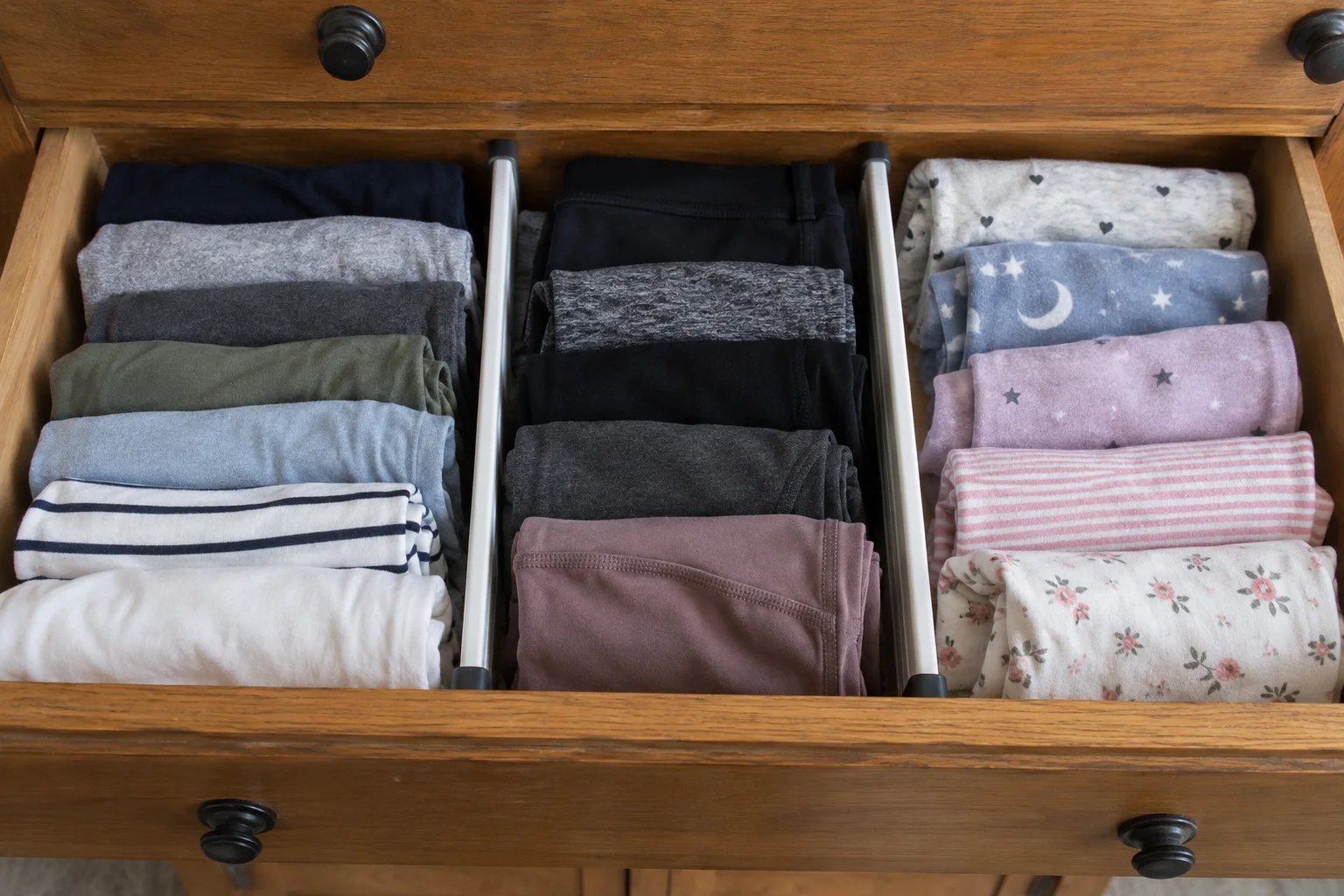
A useful organizer fits the drawer and the clothes inside it. The amount you’re keeping and the drawer’s dimensions will help you choose the right type.
Measure the interior width, front-to-back depth, and usable height beneath the drawer opening. Then match the organizer to the problem:
| Organizer | What it helps with |
|---|---|
| Adjustable dividers | Rows of shirts, leggings, or pajamas that slide into one another |
| Open fabric boxes | Soft clothing that needs support to stay upright |
| Small compartment inserts | Socks, underwear, and accessories that get mixed together |
| Clean shoeboxes | Trying separate sections without buying anything |
For rows that keep spreading across a wide drawer, Lifewit adjustable drawer dividers create clear boundaries between categories. The linked set includes eight dividers, each 4 inches tall and expandable from 11 to 17 inches.
Open boxes work differently: they hold a whole group of clothes together. IKEA SKUBB boxes come in a six-piece set with three sizes, so you can use smaller boxes for socks and larger ones for folded clothing. At 5⅛ inches tall, they suit deeper drawers.
Compartment size matters as much as the organizer itself. Thin ankle socks fit into small spaces. Thick boot socks need wider sections so putting them away doesn’t mean squeezing each pair into a tiny slot.
One box and a couple of dividers may be all a drawer needs.
6. Socks, Shirts, Sweaters: A Place for Each
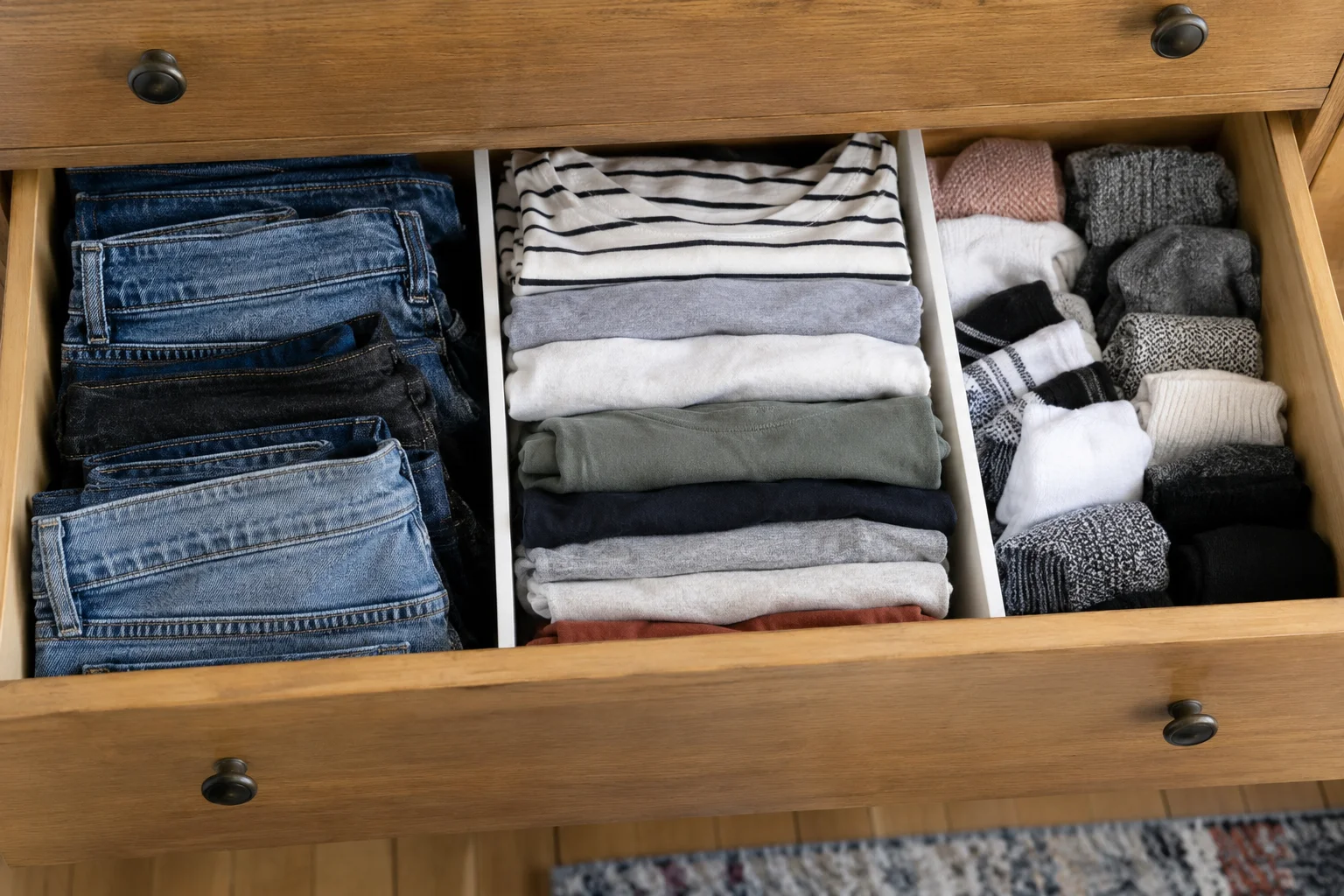
Each clothing category needs enough space to be removed and returned easily. Small changes to the fold or container can make a drawer much less frustrating to use.
Socks and Underwear
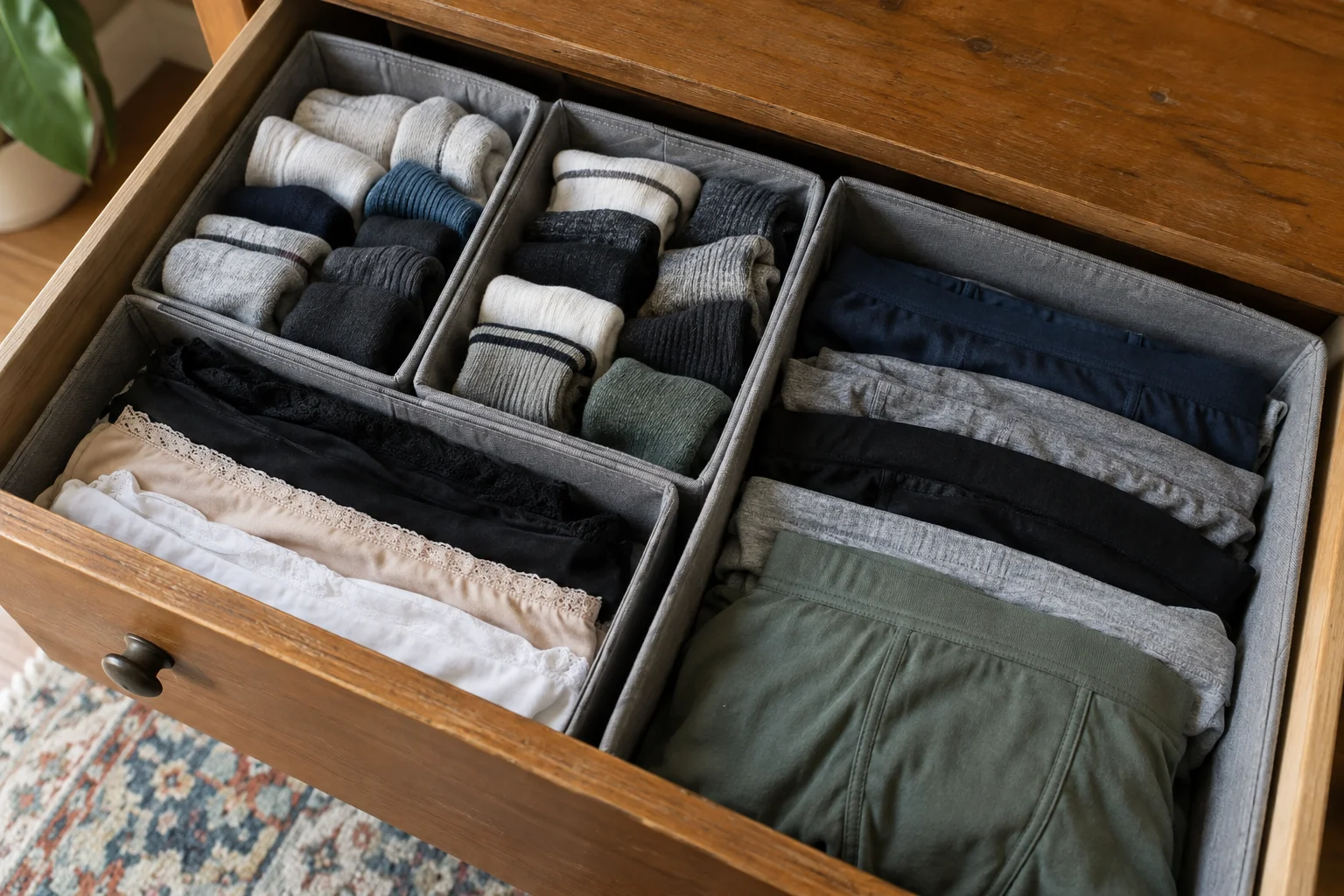
Separate sections prevent socks and underwear from mixing. Everyday pairs can sit toward the front, with occasional items farther back.
Pair socks before putting them away so you aren’t hunting for a match while getting dressed.
Underwear can be folded into small rectangles or placed in an open compartment. A simple method you’ll repeat is more useful than a complicated fold you’ll abandon.
The DIOMMELL six-piece fabric organizer set is an option for creating those separate sections. You can dedicate one box to underwear and another to socks, with larger spaces for thicker pairs.
Bras and Camisoles
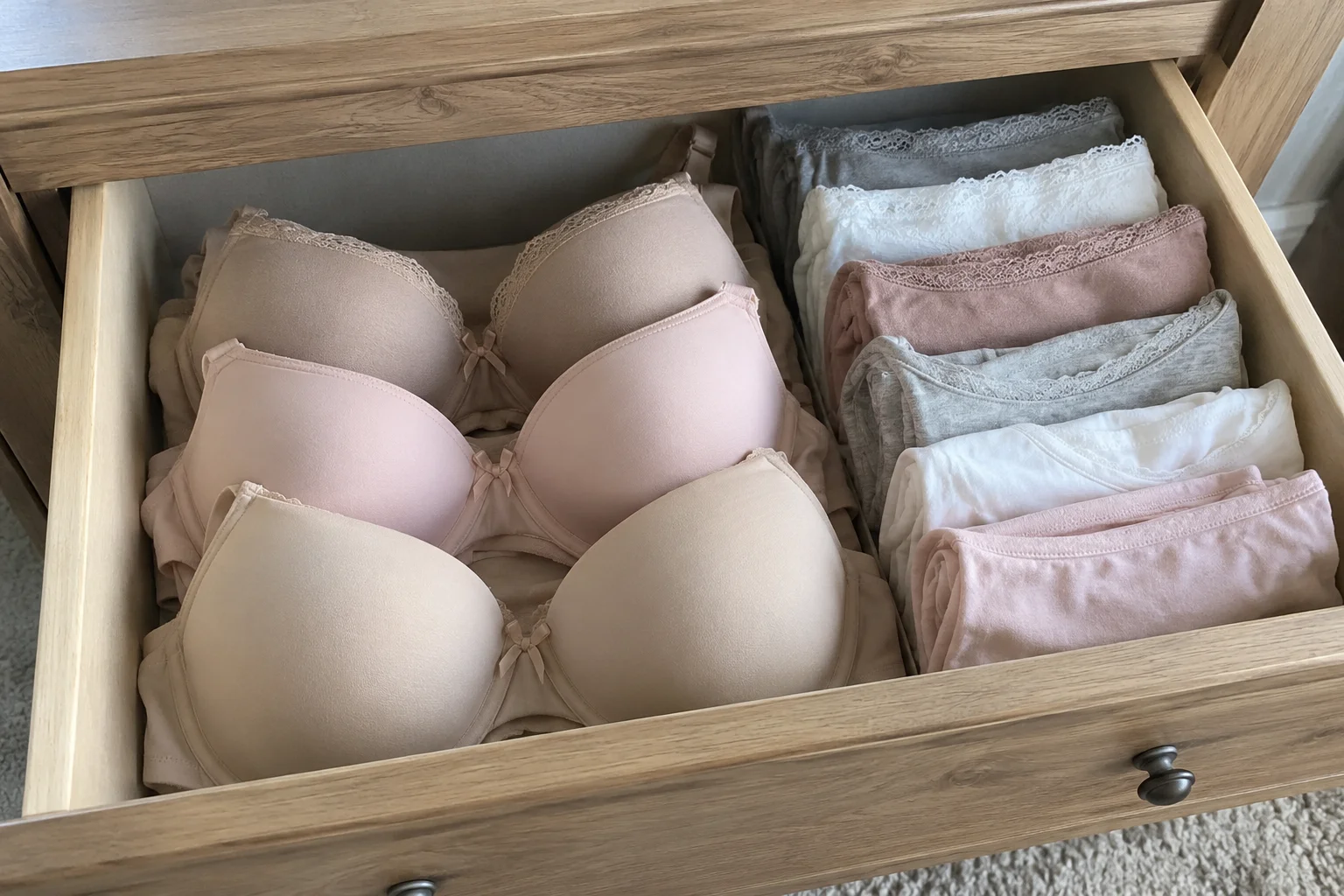
Structured bras need space to hold their shape. Arrange them one behind another without crushing or turning the cups inside out, and tuck the straps neatly behind them.
Soft, unstructured bras can be folded in a separate section. Camisoles work well in upright rows alongside them.
If the drawer only closes when you press everything down, it’s too full. Moving a few pieces elsewhere gives the cups room and makes the drawer easier to use.
T-Shirts and Tank Tops
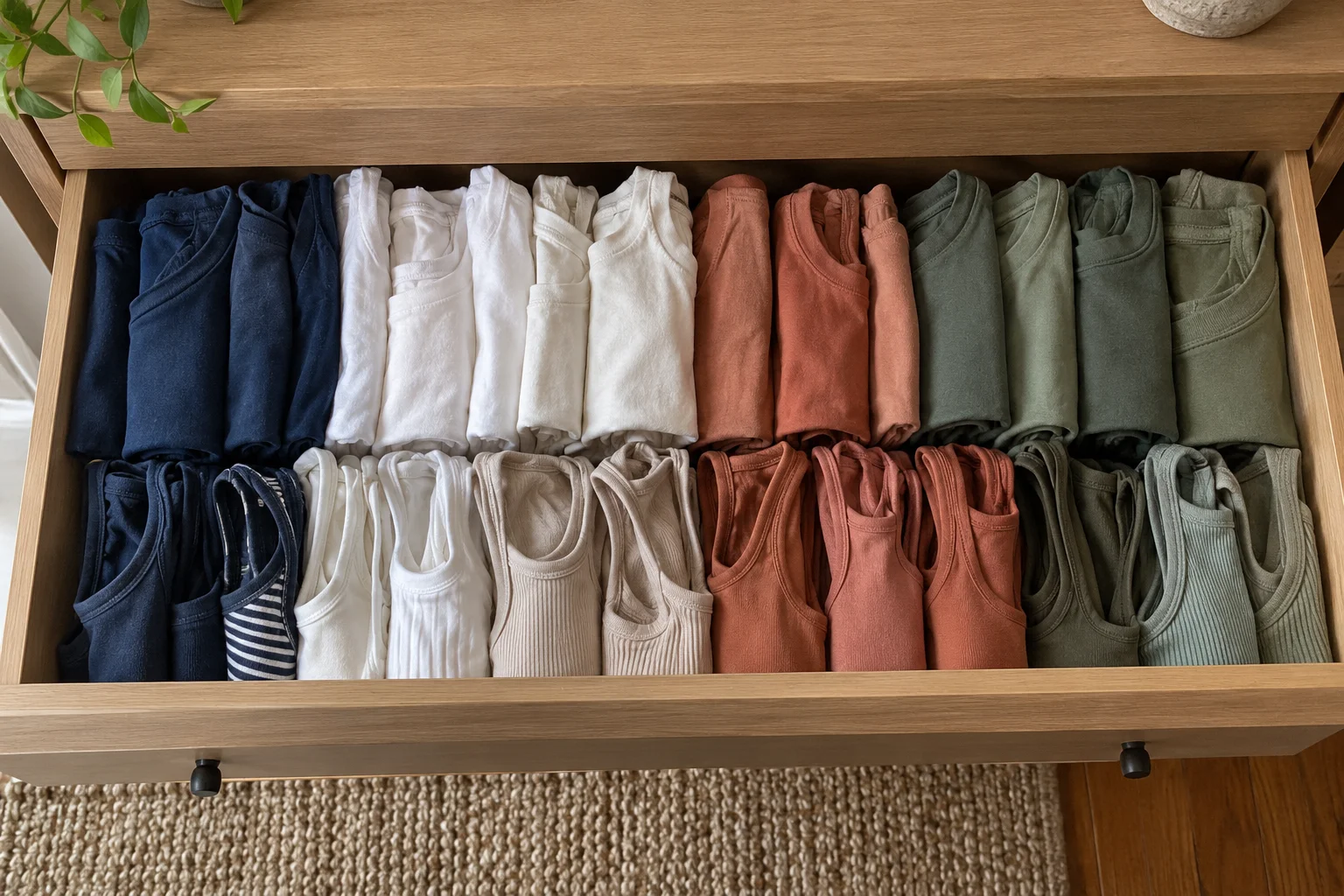
File folding works well for everyday tops. Each folded piece should sit below the drawer opening and come out without pulling the next one along.
T-shirts and tank tops can have separate rows. Sorting by color is optional.
For printed shirts, a visible part of the design helps you tell them apart. That’s especially useful when several are the same color.
A divider between rows supports lightweight tops when the drawer is partly empty.
Workout Clothes
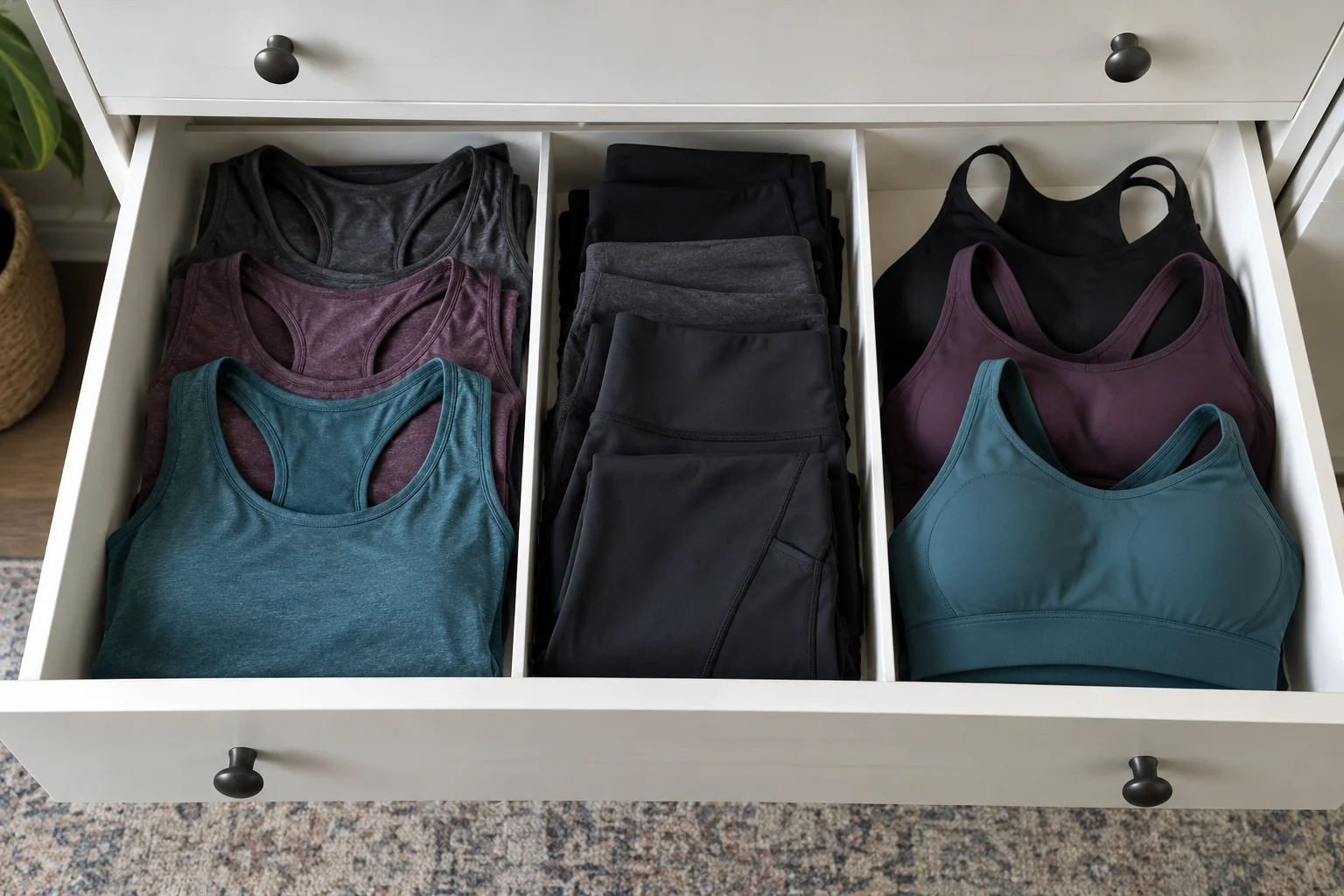
One workout drawer makes a complete outfit easier to find. Separate tops, bottoms, and sports bras within it.
Leggings can be file-folded or loosely rolled, depending on which shape holds better. Small accessories belong in their own box so they don’t slip underneath larger pieces.
Two dividers can turn a wide drawer into three sections. That’s often enough organization for a drawer you use while half asleep.
Pajamas and Loungewear
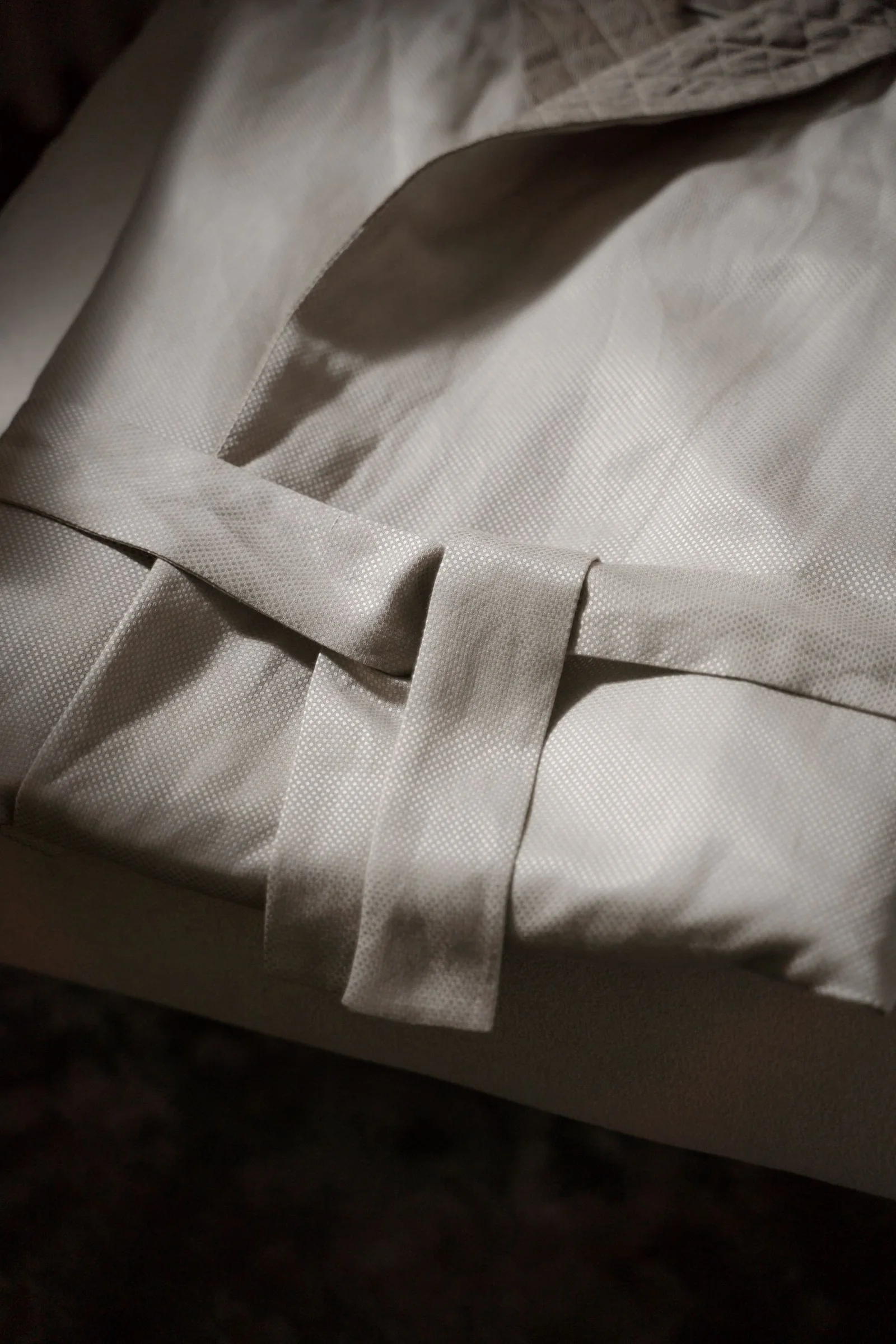
Matching sets are easier to find when stored together. Fold the bottoms with the top if you usually wear both pieces at once.
For mix-and-match sleepwear, separate rows for tops and bottoms make more sense.
An overflowing pajama drawer often contains old shirts that rarely get worn. If the same few are always in the laundry, those are the ones that need accessible space.
Jeans, Shorts, and Sweaters
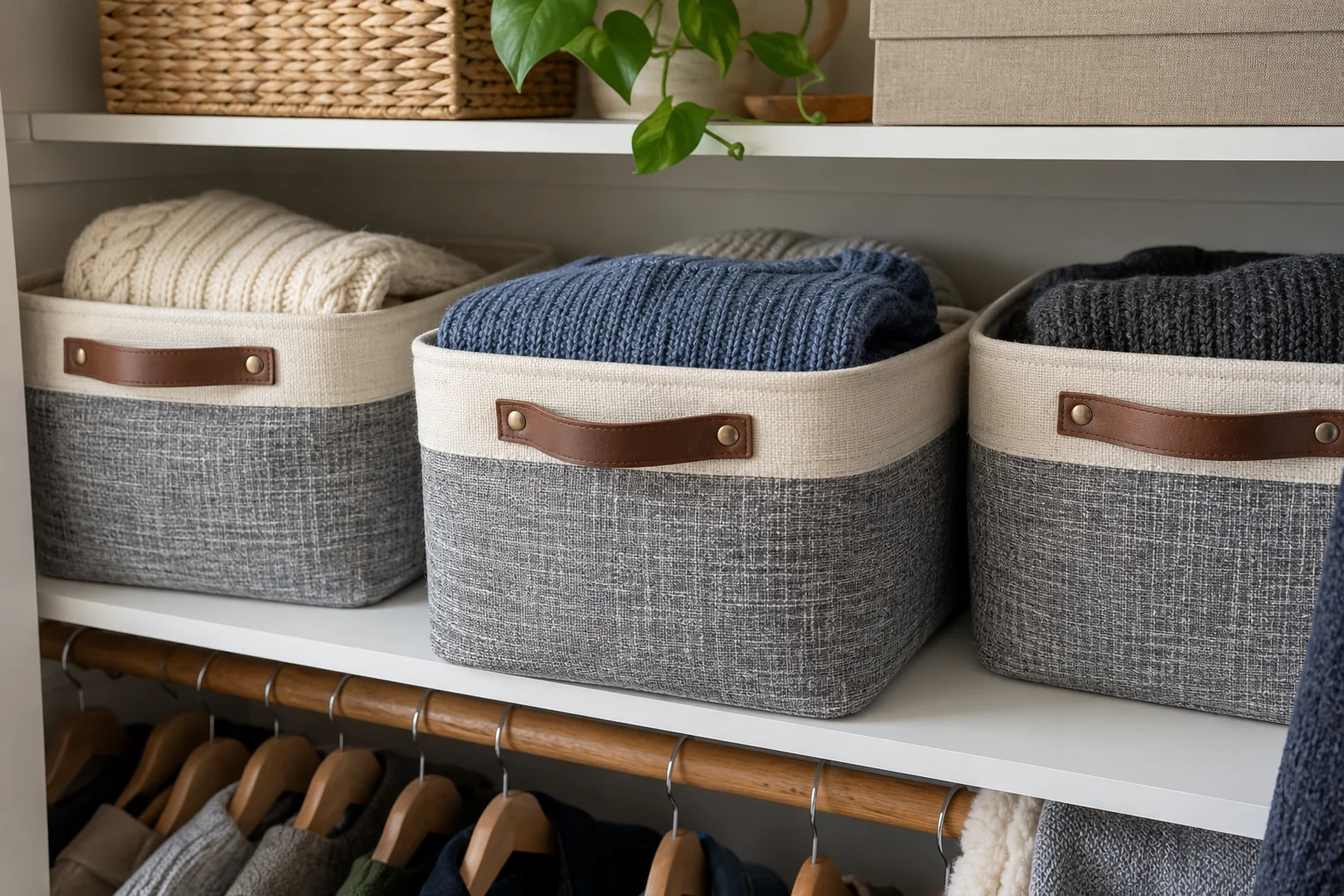
Bulkier clothes need more room around each fold. Upright folds suit drawers with enough height; low stacks work better in shallower spaces.
Denim often holds an upright fold well. Chunky sweaters take up more room, so folded storage on a closet shelf may work better.
Bagnizer fabric shelf baskets offer a separate place for folded sweaters. The open tops make clothing easy to reach, and the handles help you pull a basket forward on the shelf. Moving those bulky pieces out can free a drawer for clothes you wear more often.
7. Deep, Shallow, or Shared Drawers
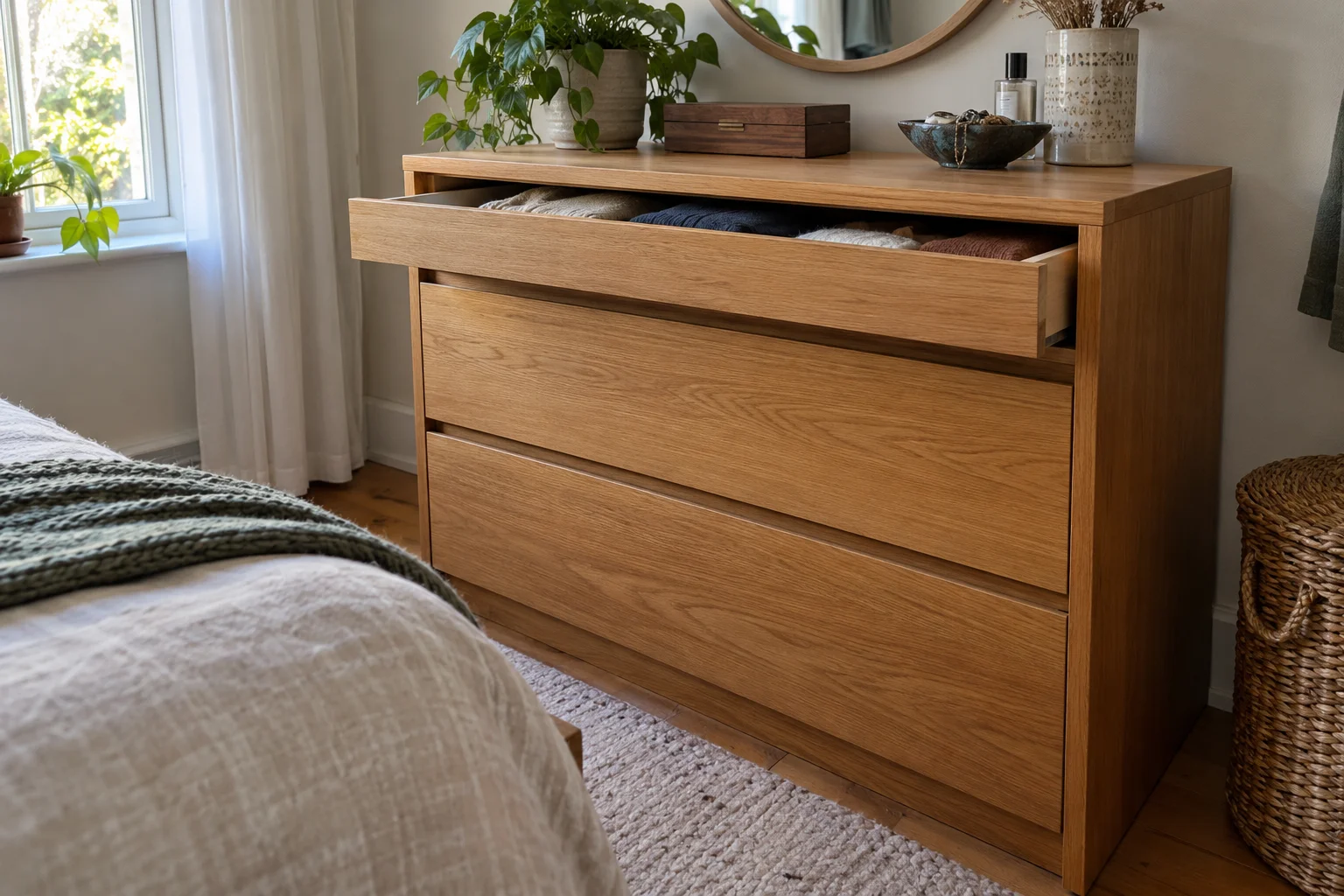
The drawer’s dimensions and the person using it determine what works. A method that suits one drawer may need adjusting in the next.
Deep Drawers
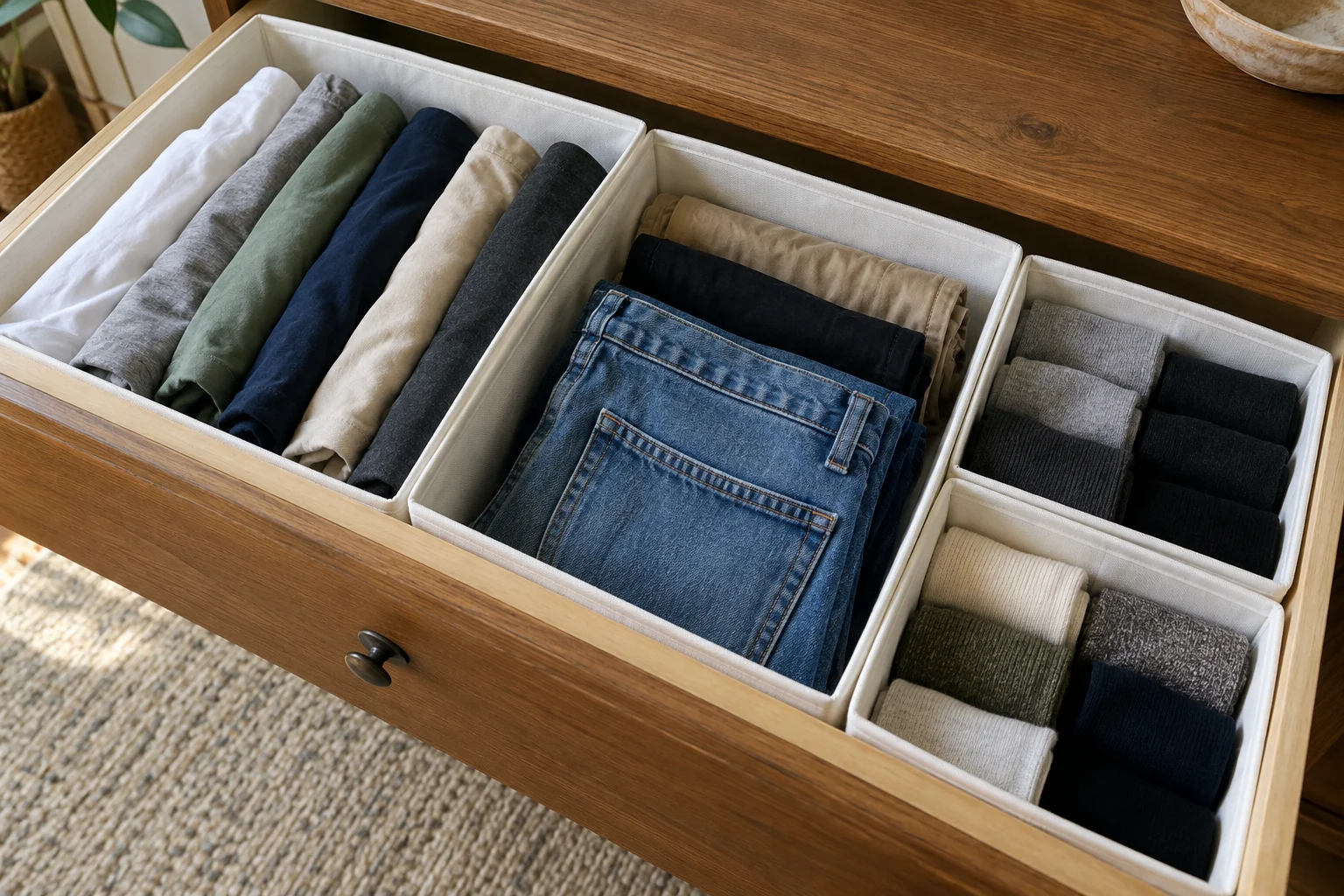
Bins help deep drawers stay organized by supporting rows and separating categories.
The larger boxes in a SKUBB set can hold folded clothing together, while smaller boxes separate socks or accessories.
Extra depth is useful for bulkier garments. Filling it with mixed layers of small items makes the bottom layer harder to reach.
Everyday clothes should remain visible from above.
Shallow Drawers
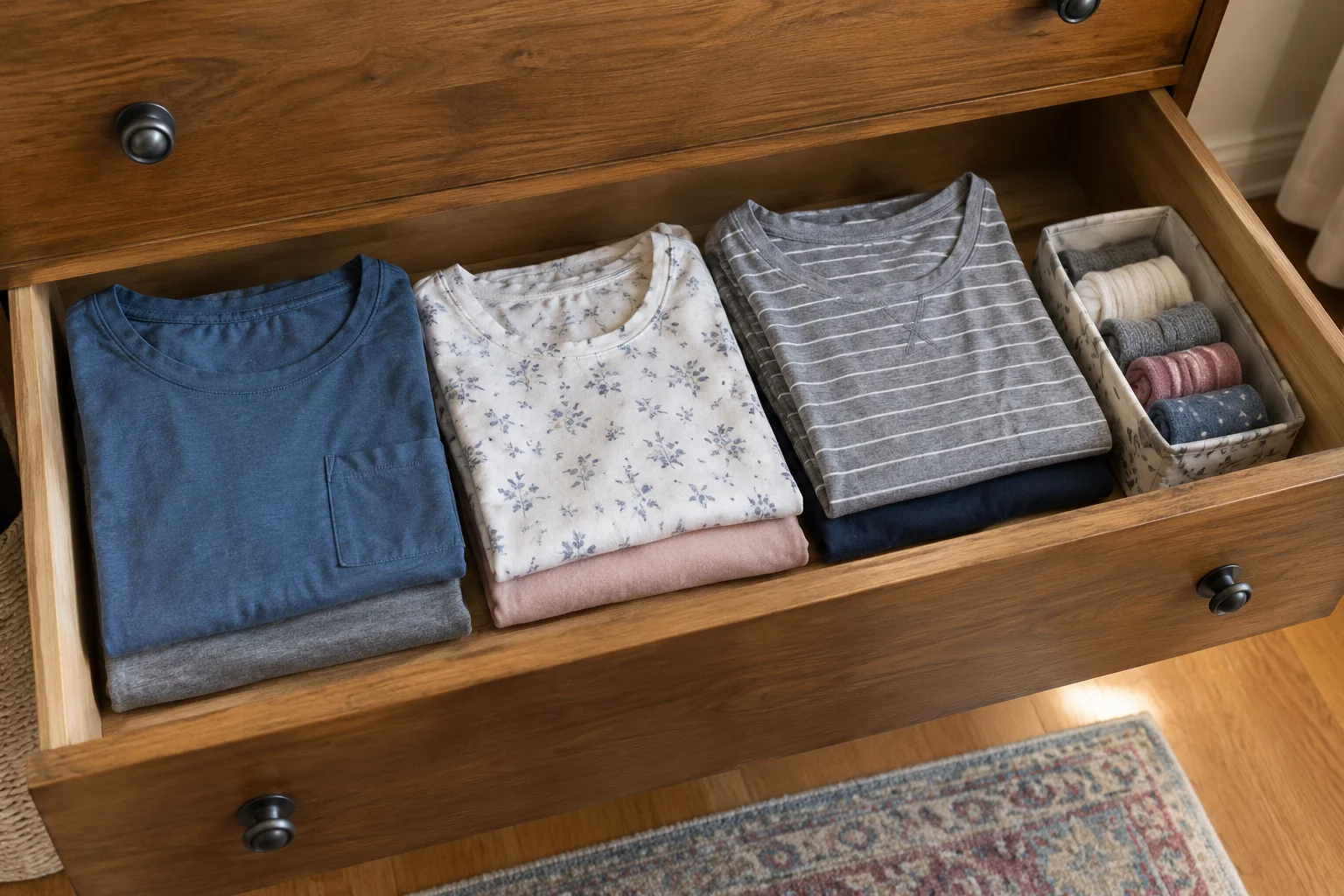
Low stacks or shorter folds work better when height is limited. A few folded sleep shirts can be easier to manage than upright pieces that catch as the drawer closes.
Small items can go in shallow, open boxes. Clothing that stays neatly in place may need no organizer at all.
Shared Dressers
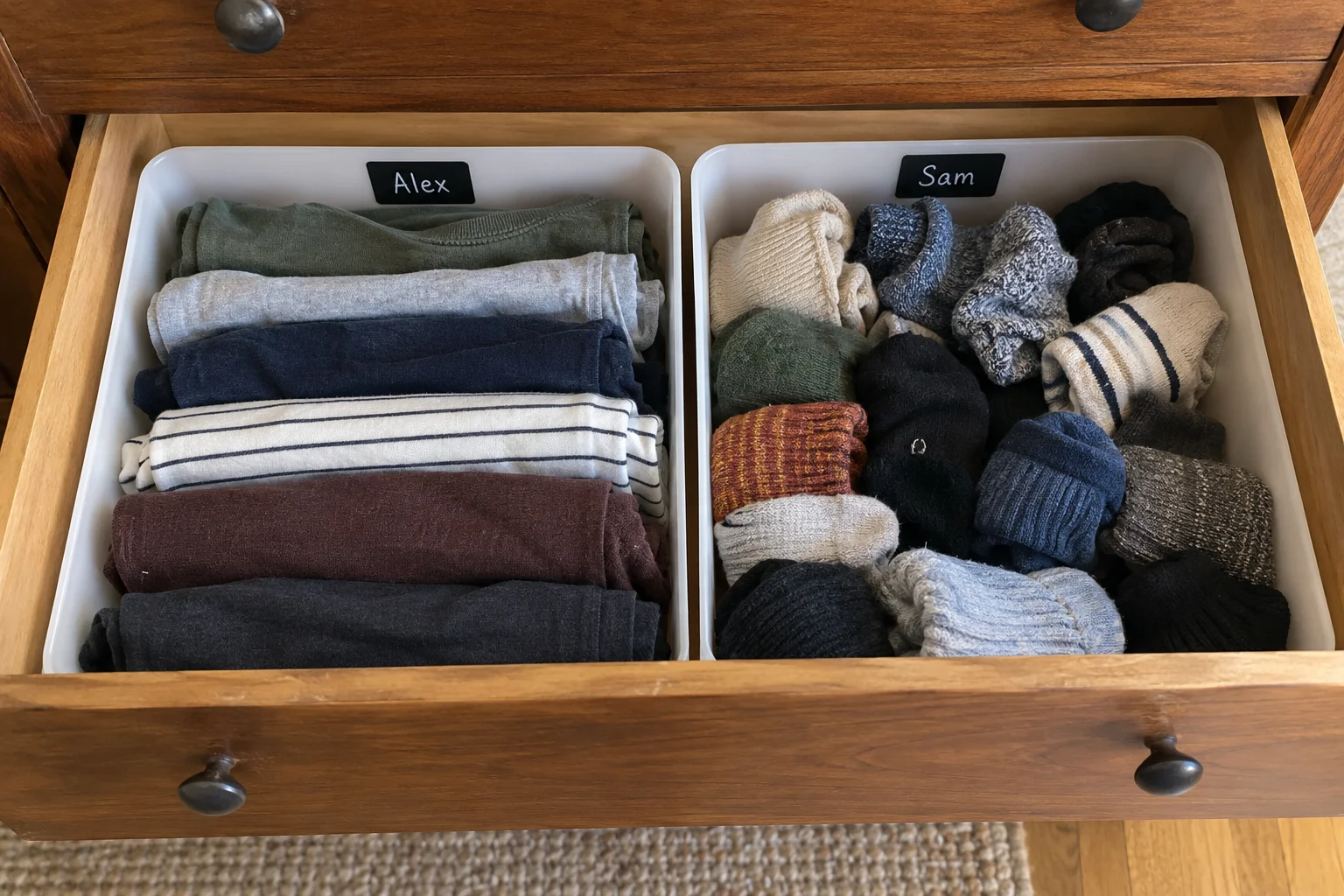
Each person needs a defined area before the clothing is divided into smaller categories.
That could mean one side each, separate drawers, or individual sections inside a wide drawer.
The space doesn’t have to be equal. Bulky work uniforms may need more room than lightweight tops.
Labels help when several people put laundry away. Savvy & Sorted chalkboard labels can identify smooth plastic organizer sections with names or categories such as “socks” and “workout tops.” The set includes a chalk marker, and the labels can be rewritten when the arrangement changes.
Small Dressers
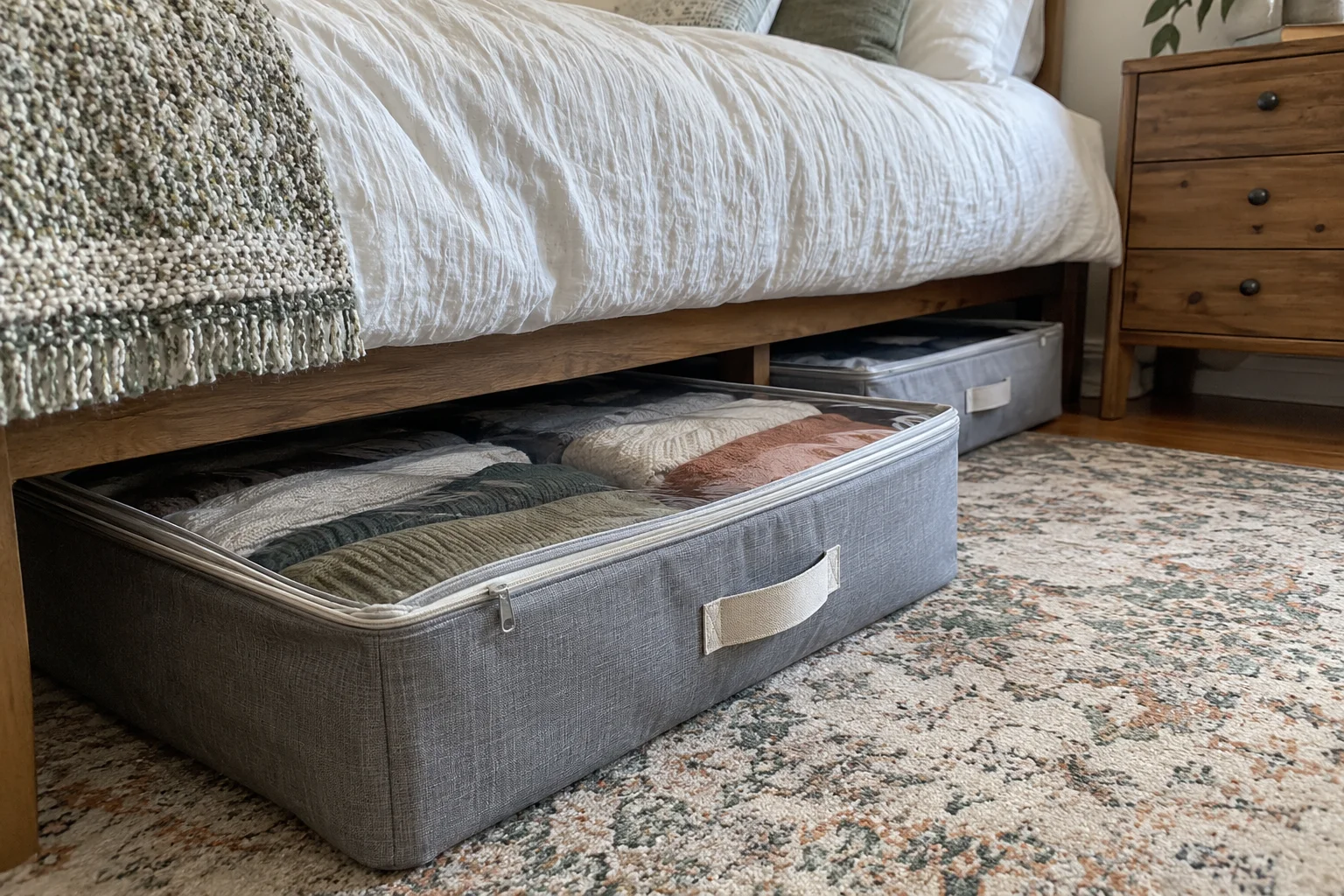
Frequently worn clothing deserves priority when drawer space is limited. Seasonal and occasional pieces can move elsewhere.
For example, swimwear can leave the dresser during colder months, while heavy sweaters can move out when the weather warms up.
StorageWorks under-bed storage containers provide a separate place for those seasonal clothes. Their low profile uses space beneath the bed, and the clear lids help you see what’s packed inside.
Clothes should be clean and completely dry before going into storage.
Our small-bedroom ideas include more ways to add storage without filling the room with extra furniture.
8. Will It Still Work After Laundry Day?
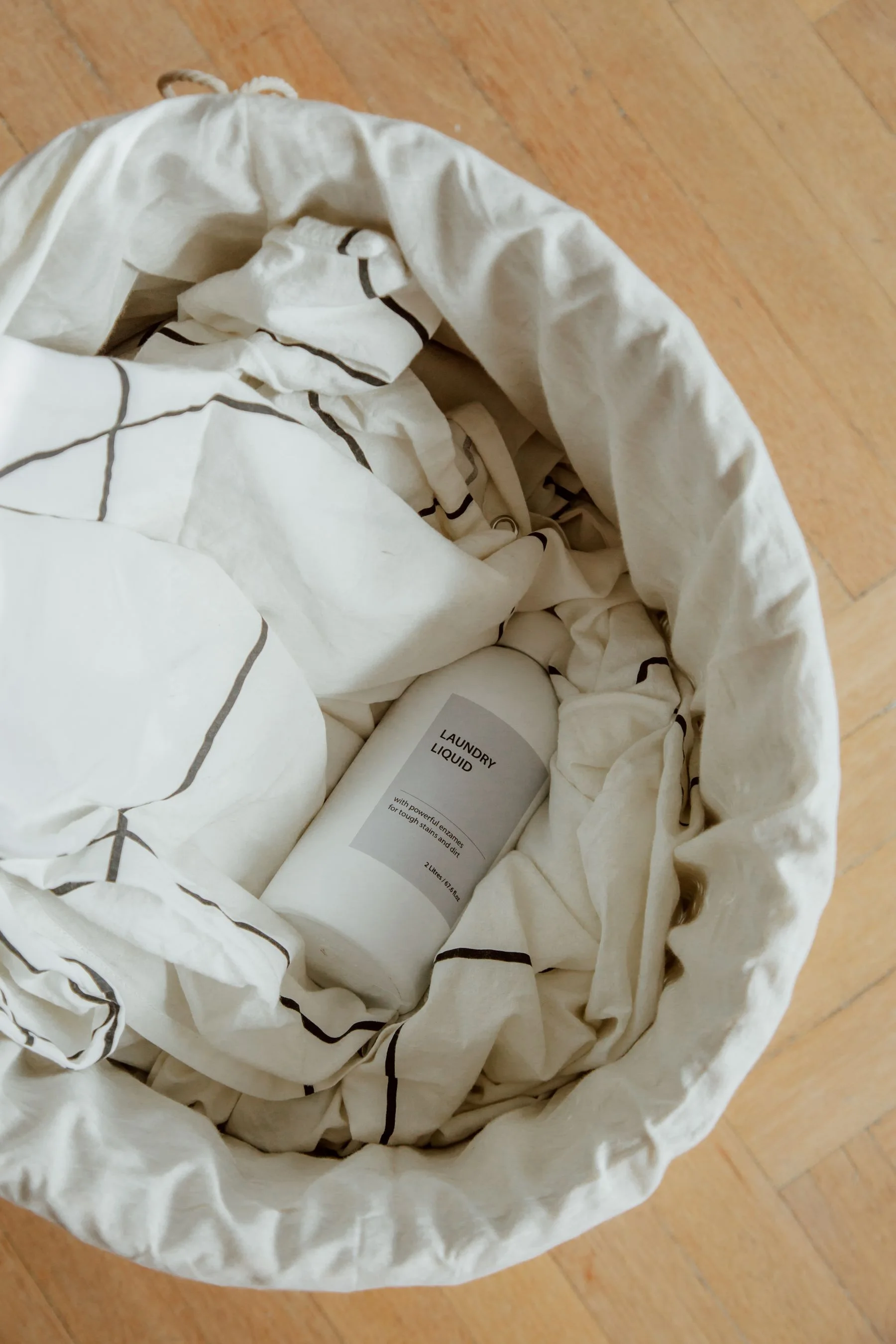
An easy return routine keeps the dresser organized. Clothes should go back into their usual spaces without rearranging the whole drawer.
Straighten a leaning row as you put laundry away. If a partly empty section keeps falling over, move the divider inward to support it.
A little spare room makes it easier to remove and replace individual pieces.
After a full laundry cycle, use this checklist:
- Every clean item has a place.
- Drawers close without pressing clothes down.
- Everyday clothing is visible and easy to reach.
- One piece comes out without dragging others along.
- Putting clothes away feels manageable.
A section that repeatedly overflows needs more room or fewer clothes. A folding routine that feels tedious needs simplifying.
One-in/one-out is an optional habit for controlling a growing wardrobe. When a new piece arrives, an older item you no longer wear can leave. This is general upkeep advice rather than a KonMari rule.
If clothes still collect on the bedroom chair, our guide to reducing bedroom clutter has ideas for clothes you’ve worn but aren’t ready to wash.
Frequently Asked Questions
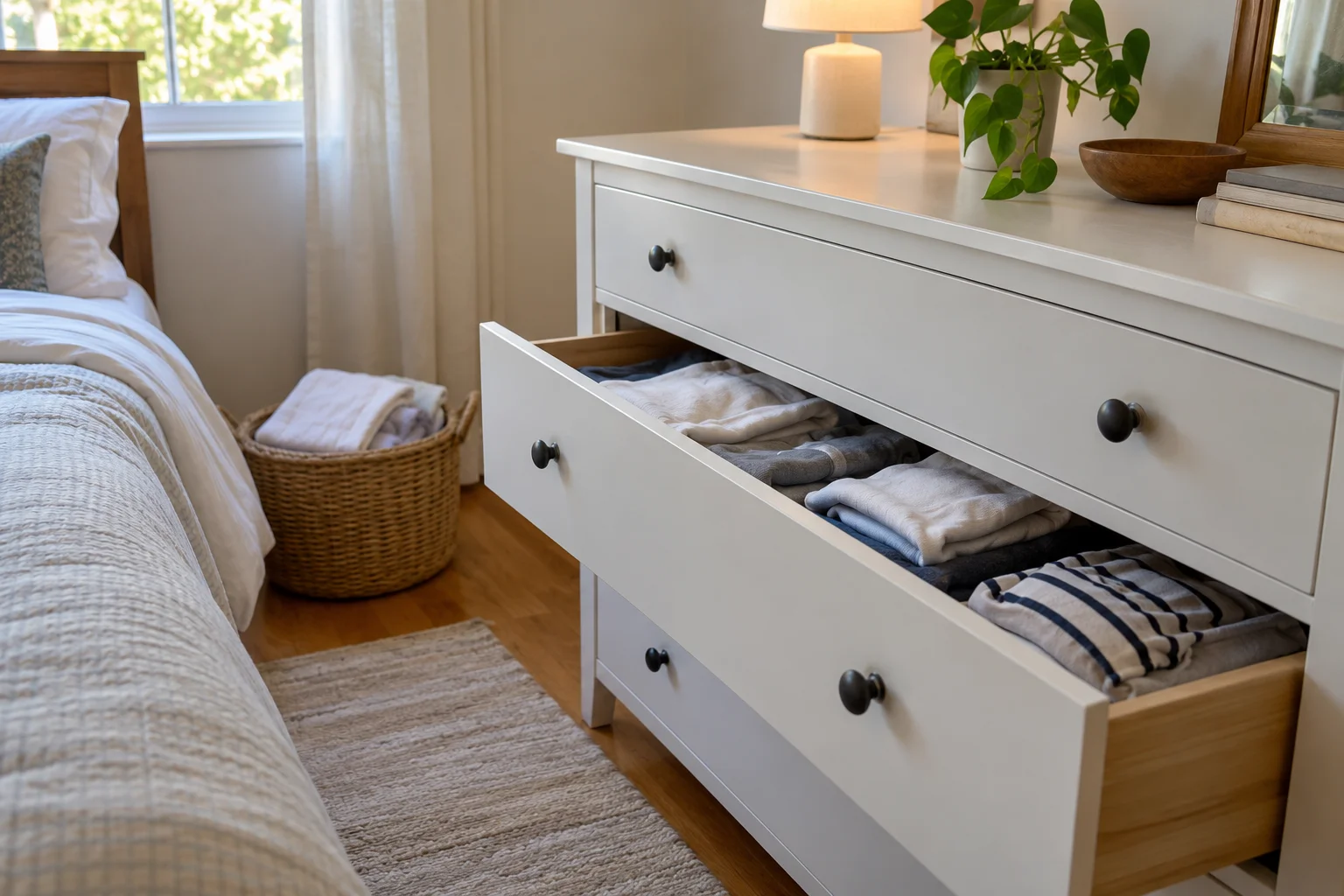
Visibility, easy access, and manageable upkeep matter most. These answers cover the details.
What Goes in the Top Dresser Drawer?
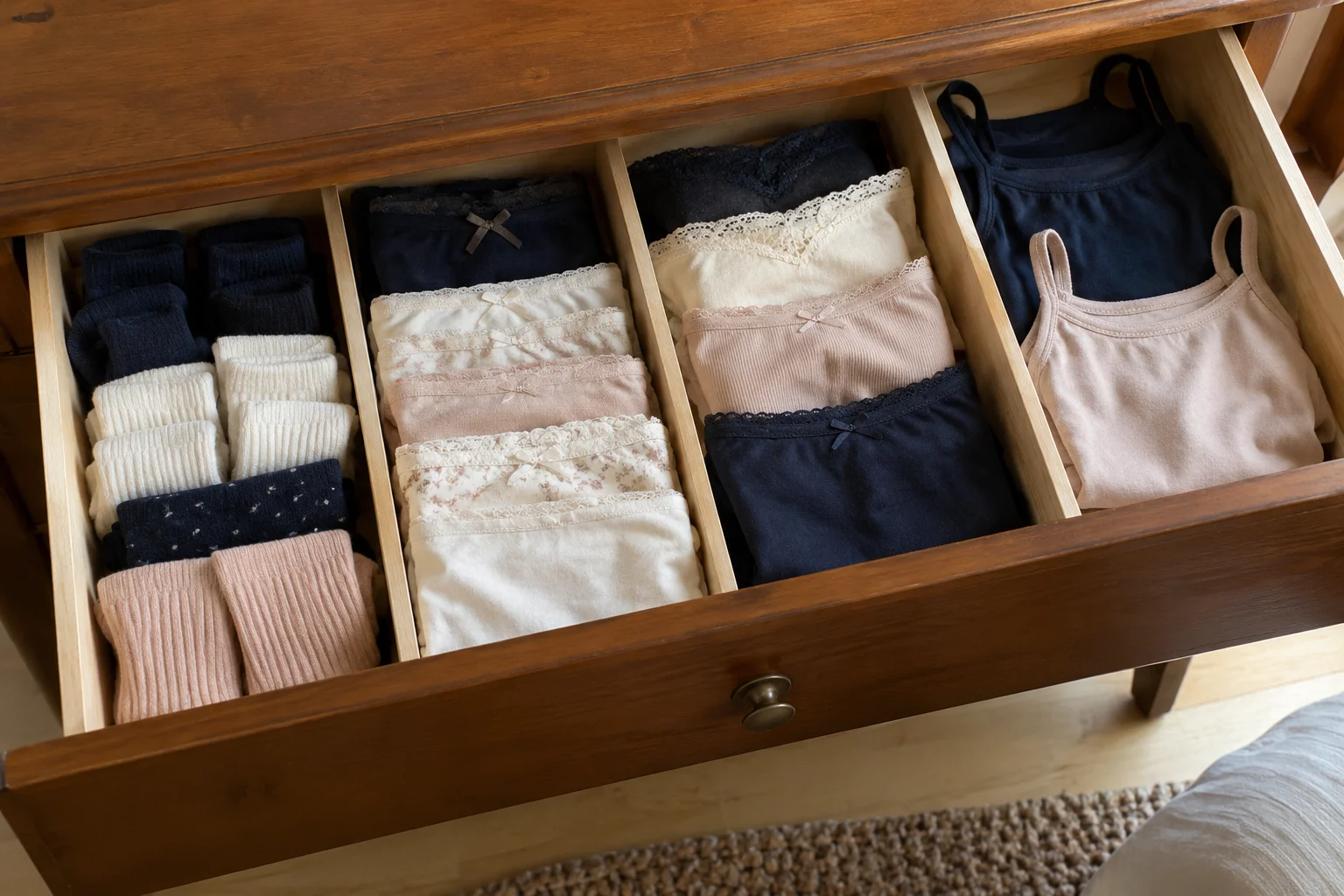
Frequently used small items work well there when the top drawer is comfortable to reach. Socks, underwear, bras, and camisoles are common choices.
Boxes or dividers help prevent the categories from mixing.
Is Rolling or Folding Better for Drawer Storage?
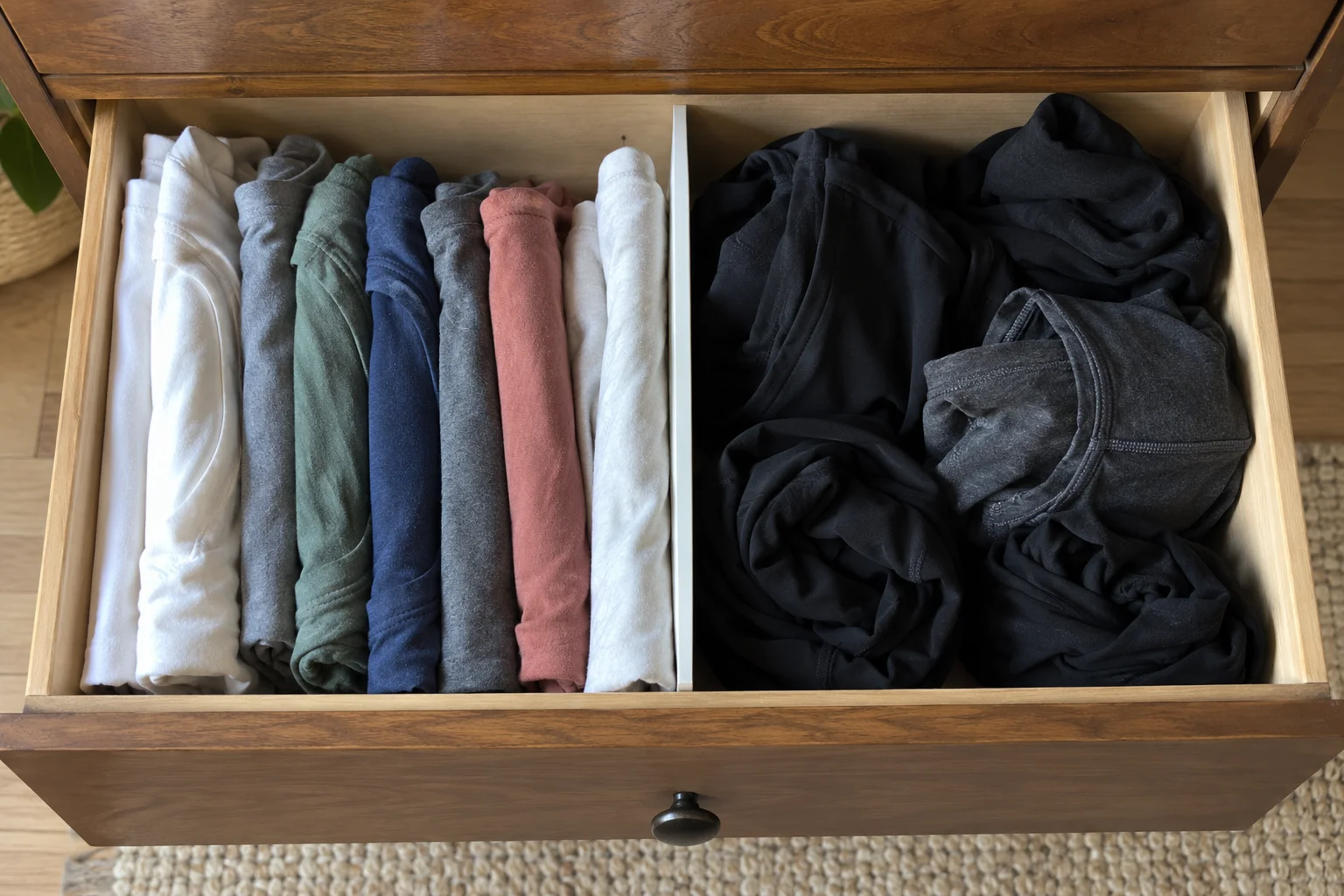
File folding suits clothes that hold their shape. Loose rolls can work for soft, lightweight pieces that are easier to store that way.
The useful method is one that fits the drawer, keeps items visible, and is easy to repeat.
How Do You Organize Deep Dresser Drawers?
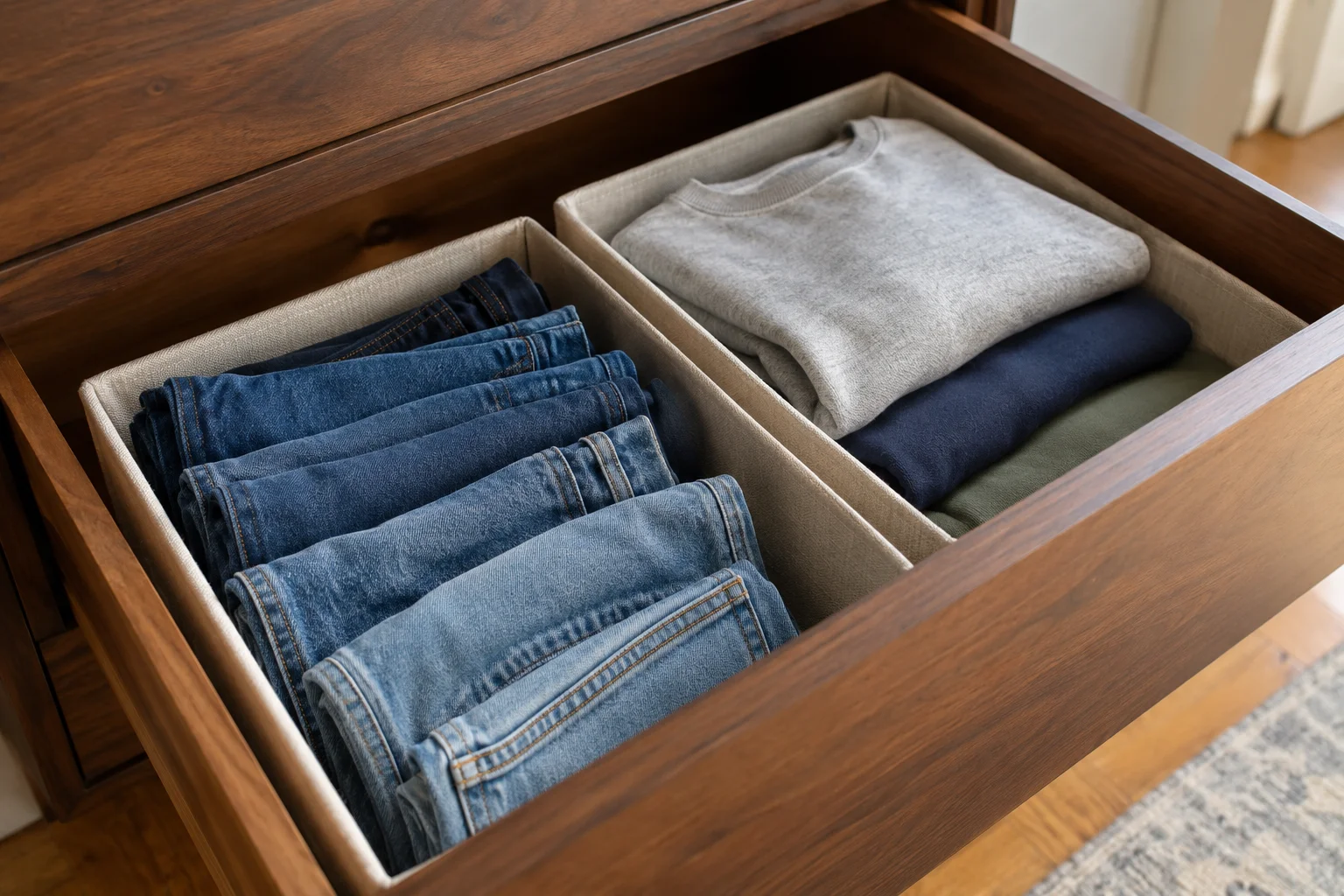
Bins or dividers support clothing rows and separate categories. Bulkier garments can use the extra depth, while smaller everyday items stay visible in their own containers.
Can You Organize Drawers Without Buying Anything?
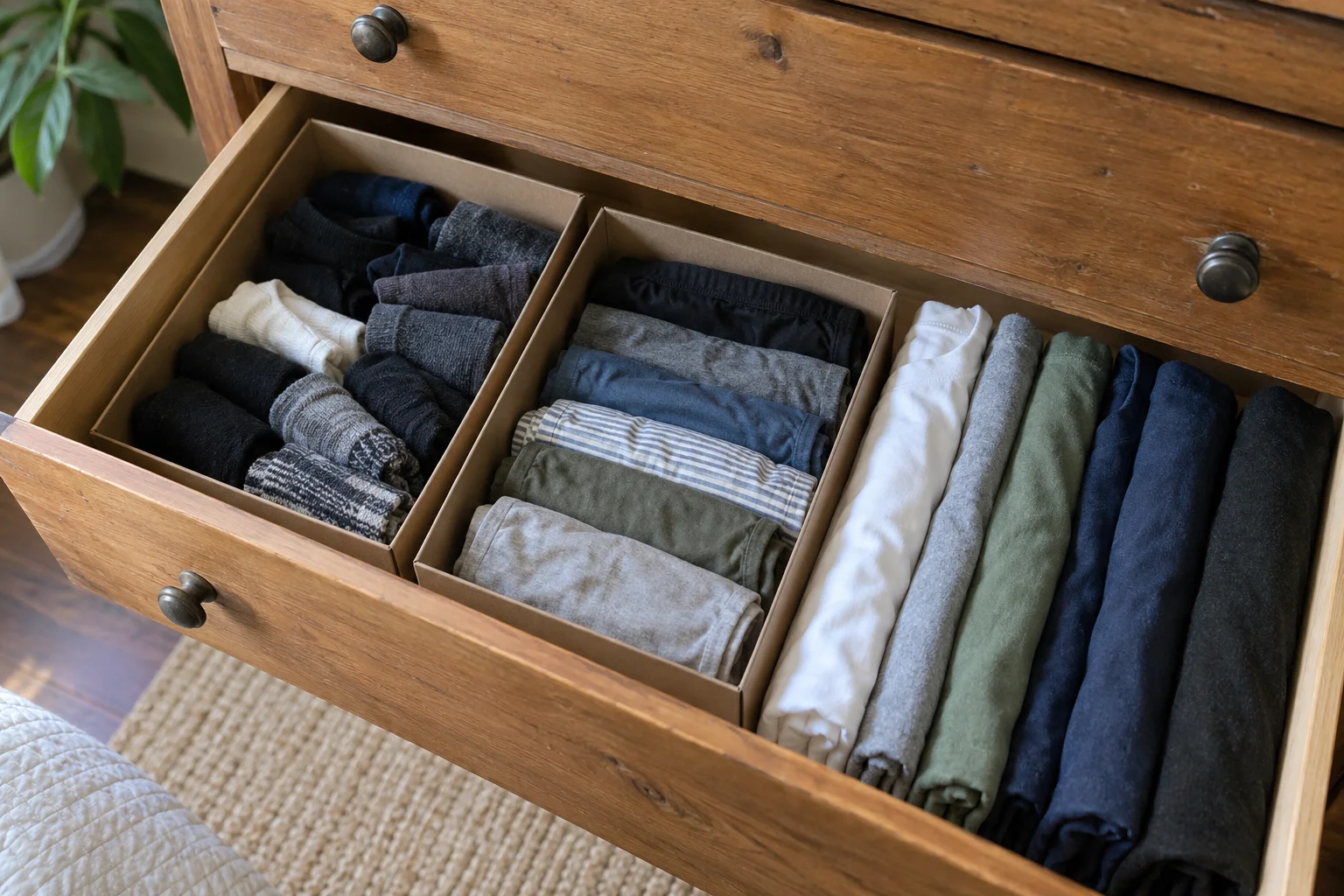
Existing boxes and separate rows can be enough. Clean shoeboxes and gift boxes work as simple compartments, while clothing that stands upright may need no support.
An organizer helps where items repeatedly mix or fall over.
What Does KonMari Mean for Dresser Organization?
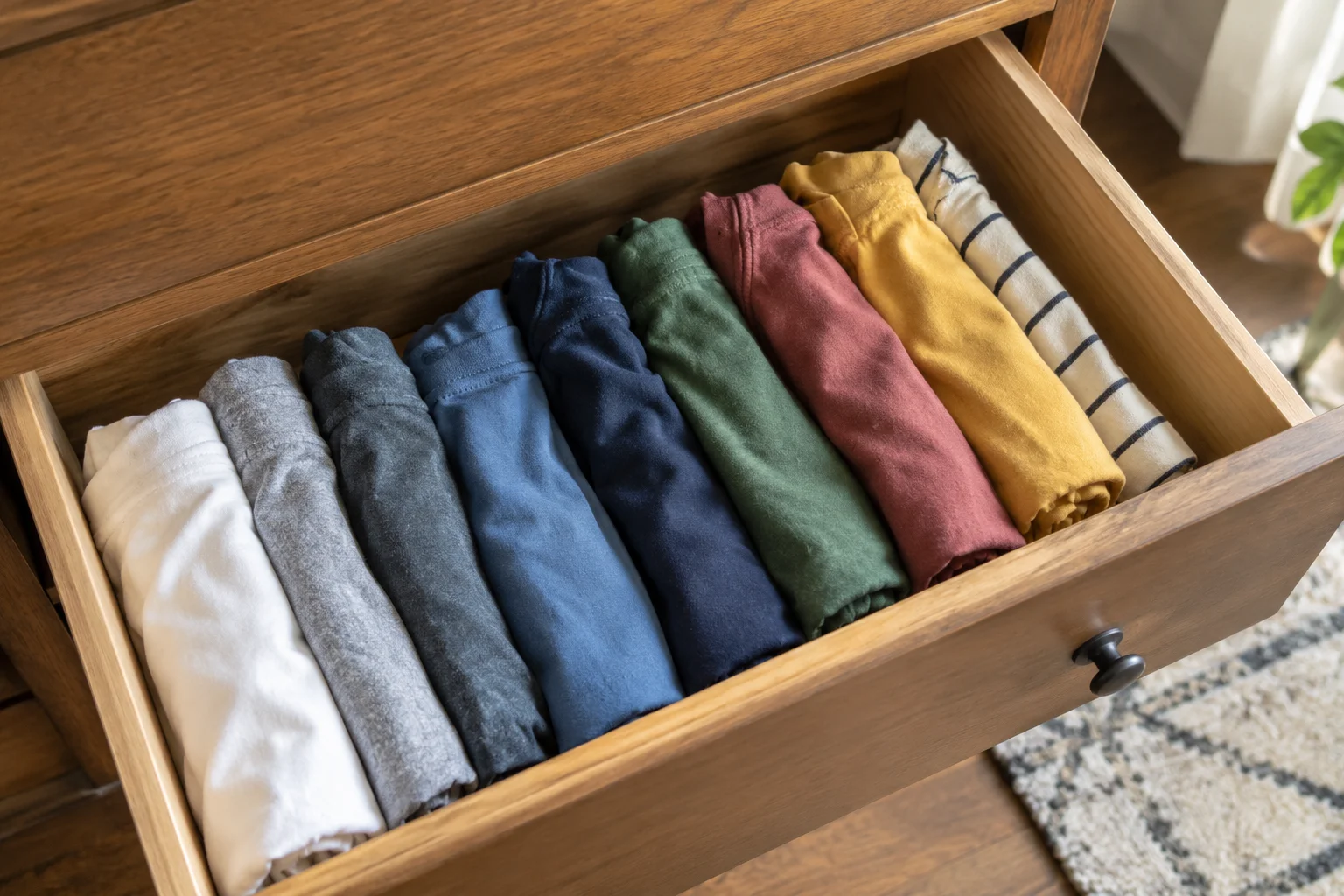
KonMari involves sorting by category, choosing what sparks joy, and storing belongings thoughtfully. Upright folding is one technique used for suitable clothing.
A dresser refresh can use these ideas on a smaller scale than the complete method.
Useful Finds for More Organized Drawers
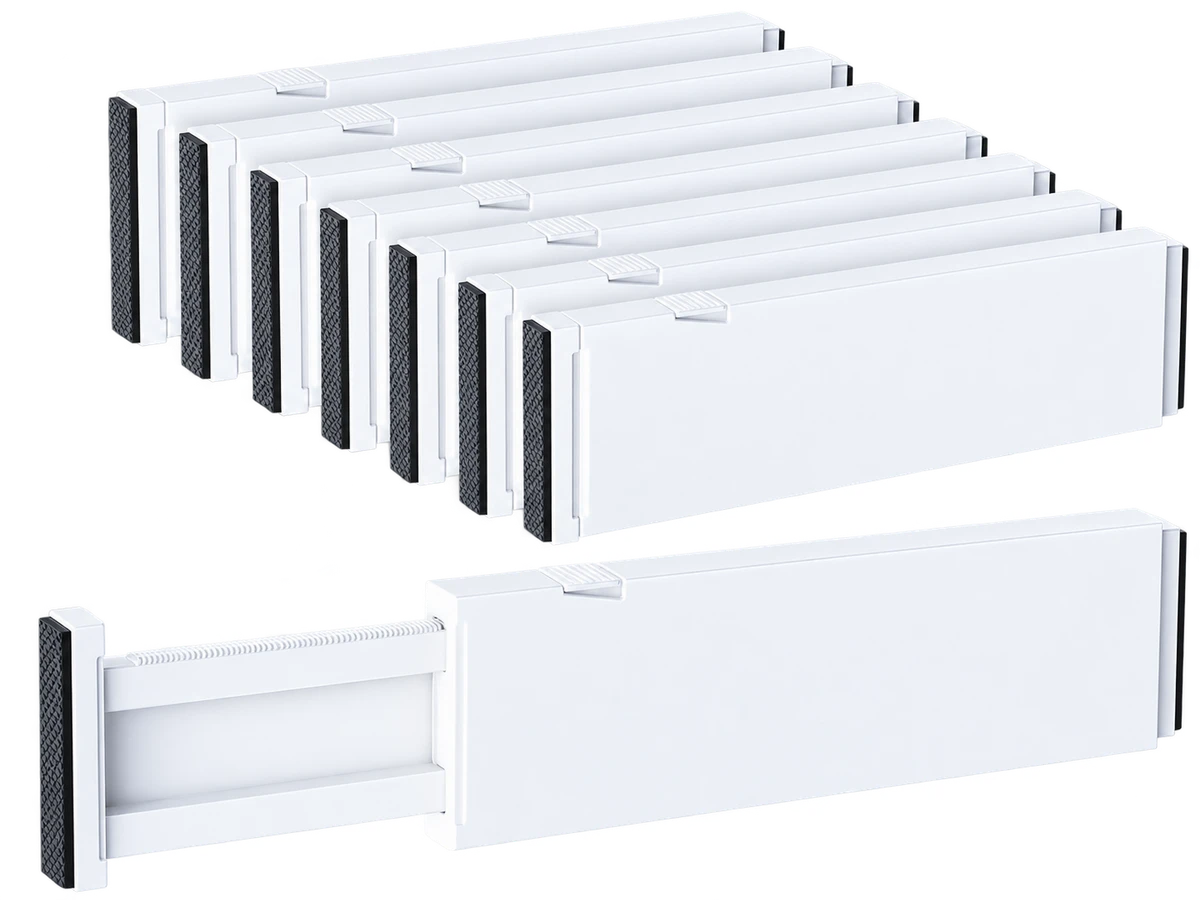 Lifewit Adjustable Drawer DividersEight expandable dividers for separate rows of shirts, leggings, and pajamas. Each is 4 inches tall and adjusts from 11 to 17 inches.
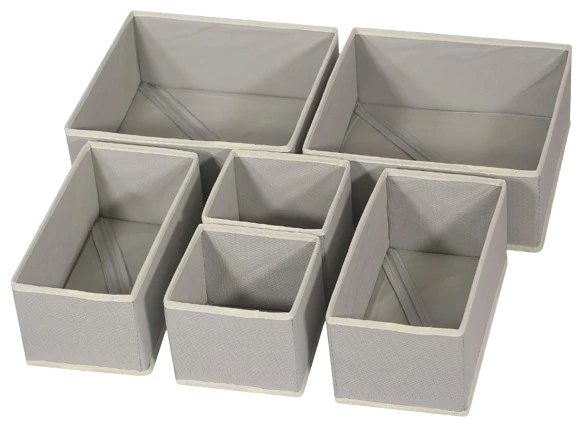 DIOMMELL Fabric Drawer Organizers, Set of 6Foldable fabric boxes for socks, underwear, and other small clothing items.
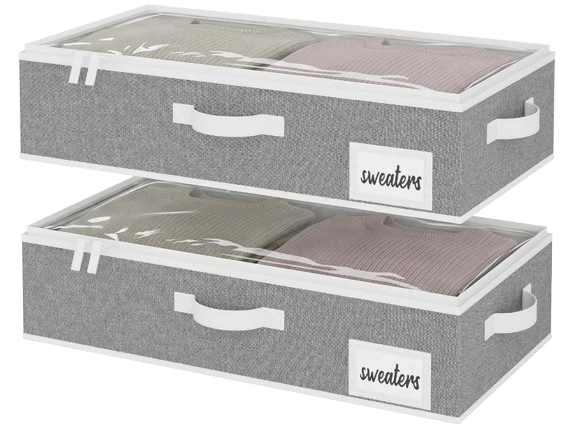 StorageWorks Under-Bed Storage ContainersContainers with clear lids and handles for seasonal clothes stored beneath the bed.
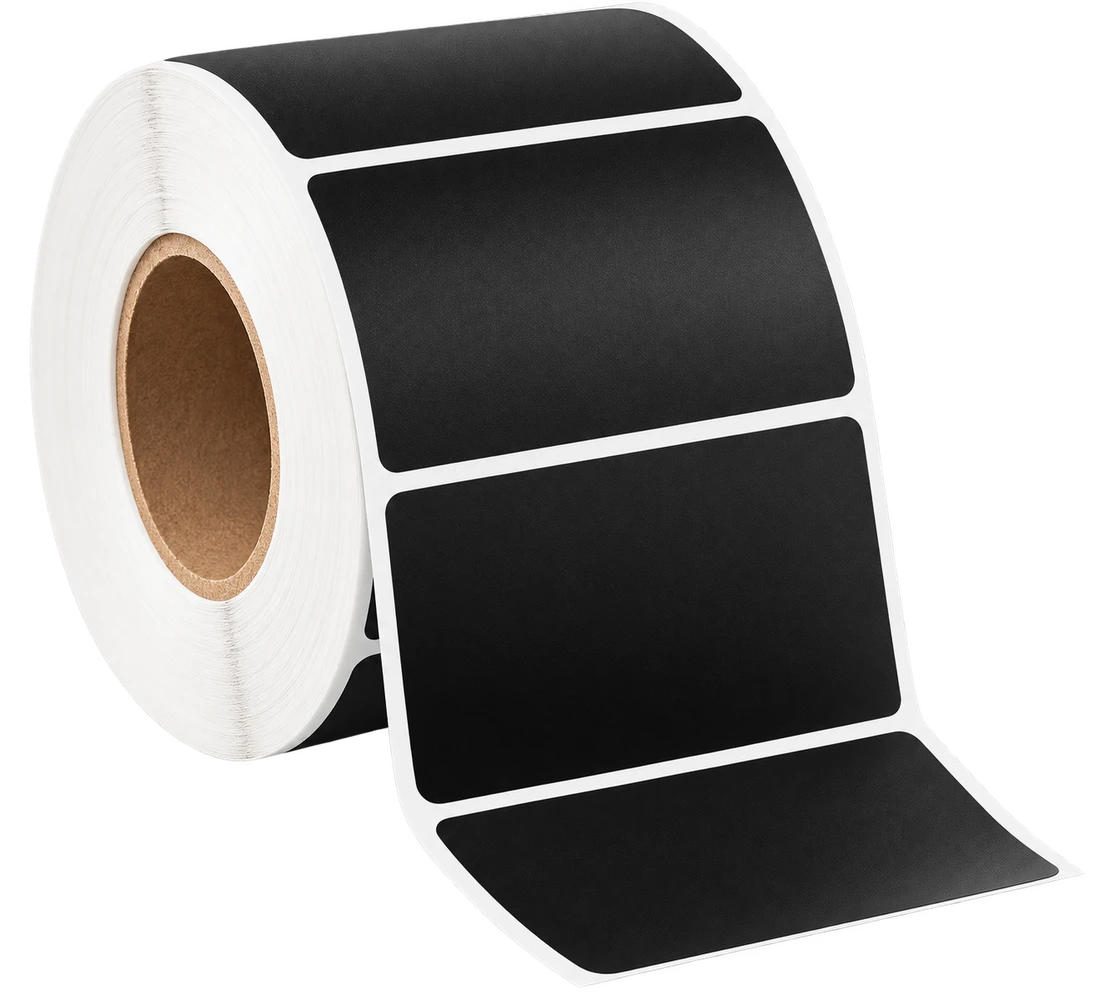 Savvy & Sorted Chalkboard LabelsReusable labels with a chalk marker for naming smooth plastic bins and organizer sections.
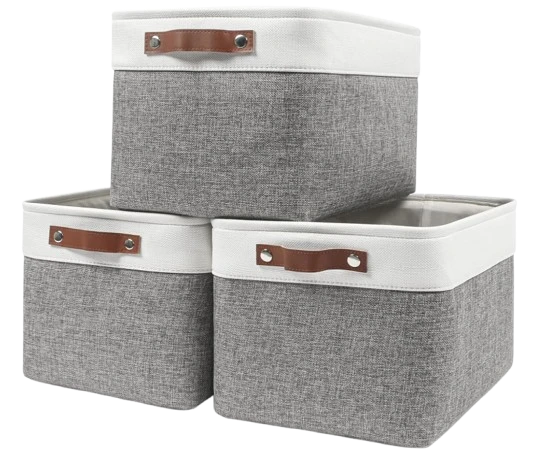 Bagnizer Fabric Shelf Baskets, Set of 3Open fabric baskets with handles for folded sweaters and bulky clothes on closet shelves.
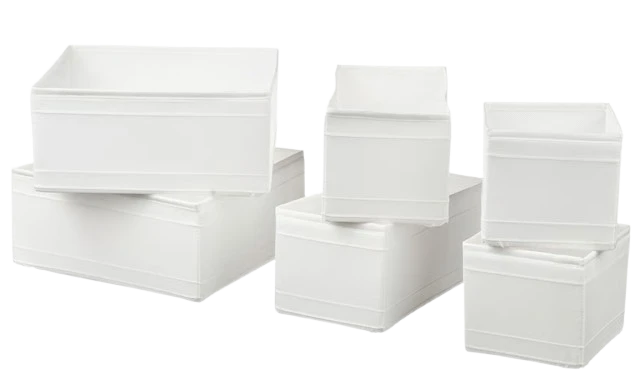 IKEA SKUBB Boxes, Set of 6Fabric boxes in three sizes for socks, underwear, and folded clothing. Their 5⅛-inch height suits deeper drawers.