How to Organize Bathroom Cabinets So You Can Actually Find Things

There’s a particular frustration in buying another tube of toothpaste, putting it away, and discovering two unopened ones behind the shampoo. Bathroom cabinets make it surprisingly easy to lose things in a very small space.
The quick answer
- Empty one cabinet, clean it, and remove products you no longer use.
- Group supplies by routine and put everyday essentials in the easiest spots to reach.
- Measure around pipes, hinges, and door openings before adding bins, dividers, or pull-out organizers.
A few small changes can make mornings easier. Here’s how to arrange the shelves, drawers, and awkward gaps so finding something doesn’t mean emptying half the cabinet.
1. Empty One Cabinet and See What’s Been Hiding
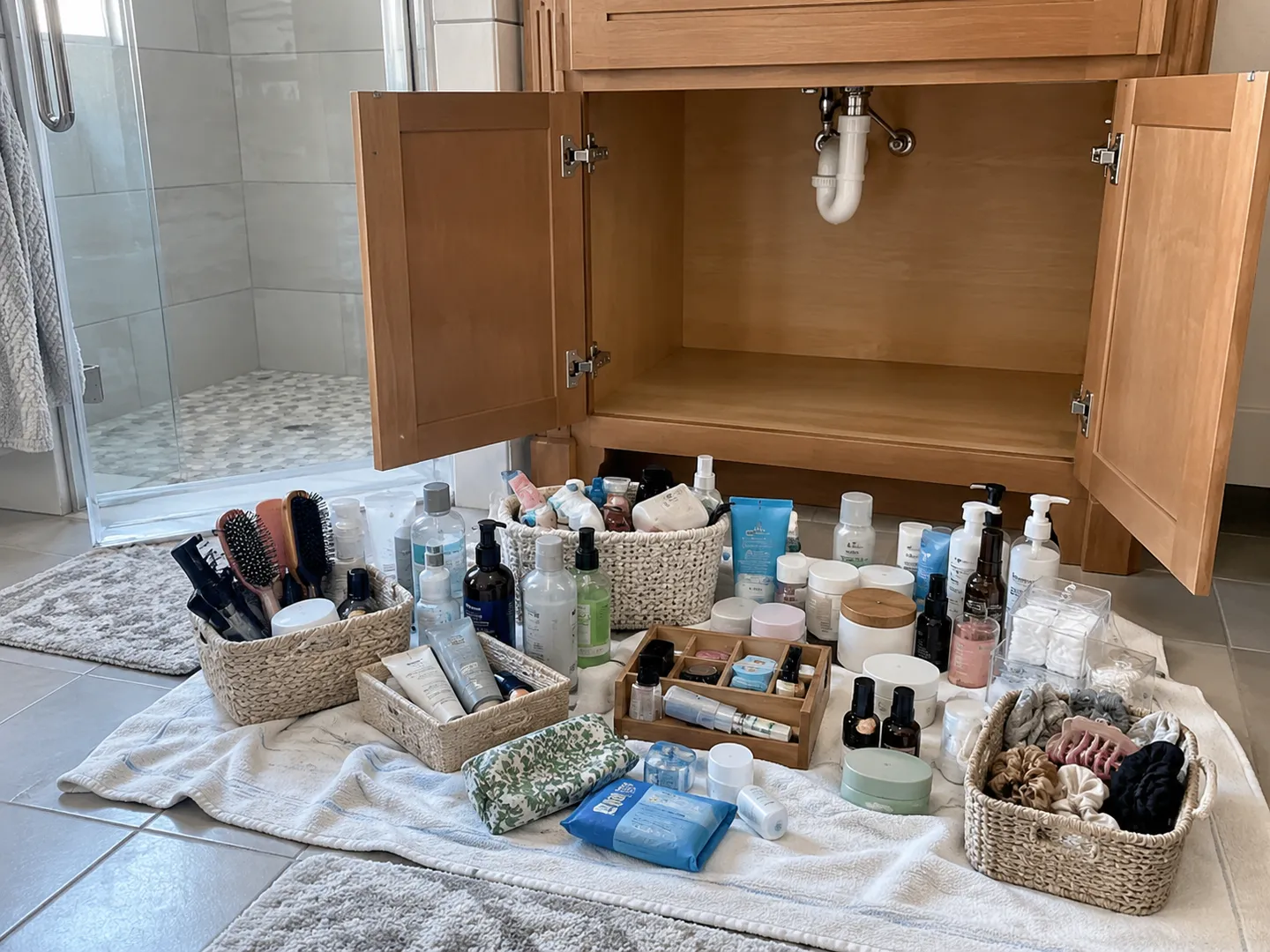
Take everything out of one cabinet, including the baskets and drawer inserts. Seeing the contents together helps explain why a seemingly roomy cupboard has become so difficult to use.
Lay everything on an old towel or washable surface. Bring over the products from the counter that also need a place inside. Otherwise, the shelf might be beautifully arranged before the face wash and moisturiser even enter the picture.
This is usually when duplicates appear. So do empty boxes, forgotten samples, and attachments for appliances that left the house years ago.
Keep the job manageable. One cabinet is plenty if there’s dinner to make or a school pickup approaching. Finishing a small area is much more satisfying than having the entire bathroom spread across the bedroom floor at bedtime.
2. Keep What You Use, Clear Out What You Don’t
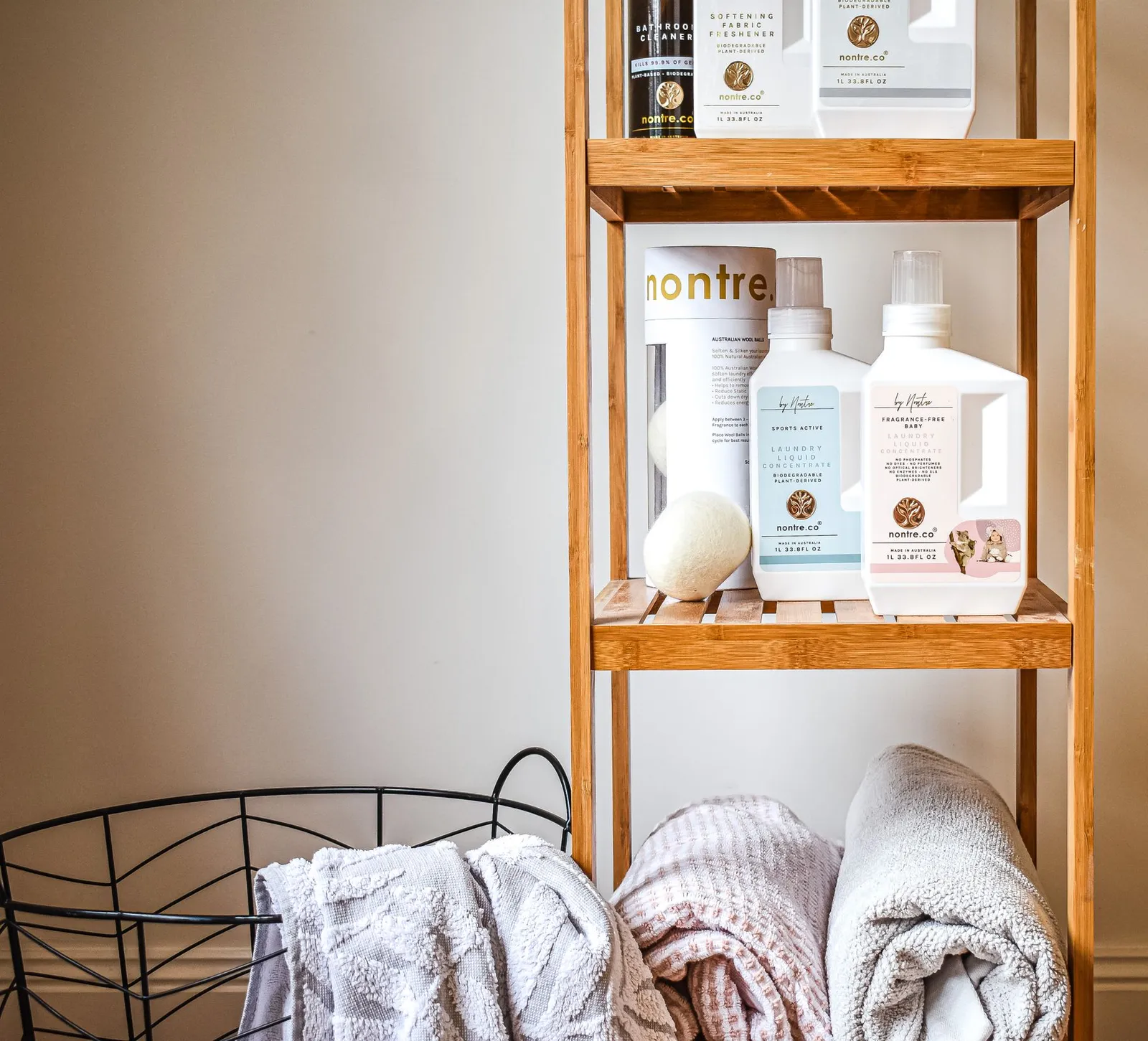
Separate the contents into keep, discard, donate where accepted, and move elsewhere. Make those decisions before working out how many containers to buy.
Give the Half-Used Bottles an Honest Look
Keep products that are useful and in good condition, and remove empty, expired, damaged, or unwanted items.
A nearly finished lotion doesn’t need to be thrown away just because its bottle looks scruffy. Put it somewhere accessible and finish it.
The styling cream that never worked for your hair is a different matter. If it’s been ignored through several haircuts, it probably doesn’t need another chance at the back of the cupboard.
Check donation organisations’ rules before setting aside unopened products, and follow appropriate disposal guidance for anything that needs special handling.
Let Bulky Extras Live Somewhere Else
Keep a useful amount nearby and move bulk supplies to another suitable storage area.
One spare hand soap is easy to reach when the dispenser runs out. The rest of the multipack could live in a labelled household-storage bin.
Extra towels and toilet paper can take up a surprising amount of cabinet space, too. A dry shelf in a linen closet may suit them better, leaving room for the things used at the sink every day.
Choose a location that’s easy to remember. An unlabelled bag in another room will simply create a second search.
Check What Actually Belongs in the Bathroom
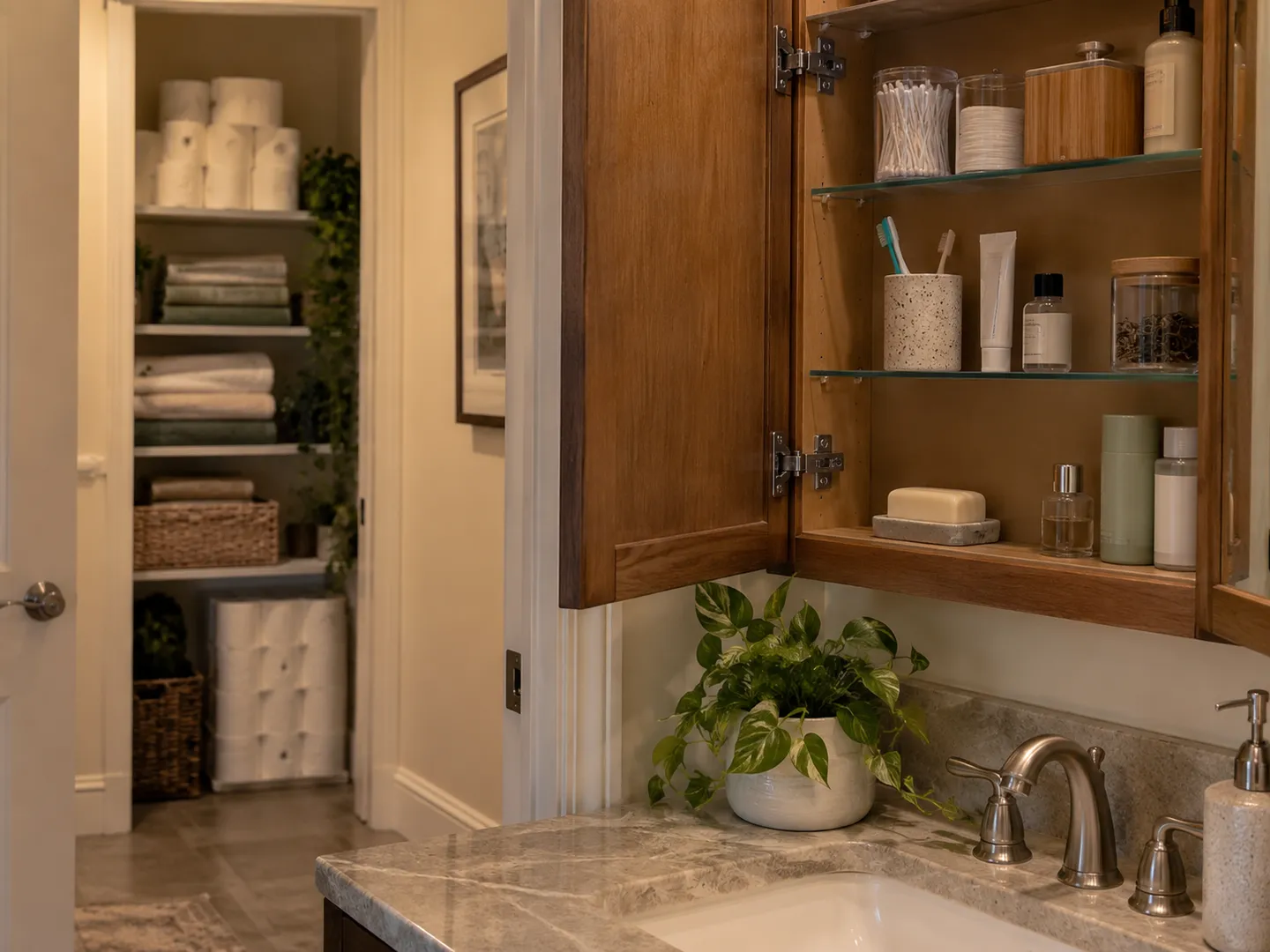
Check product labels and care instructions before assigning medicines, medical equipment, or sensitive products a bathroom shelf. Their storage requirements should decide where they belong.
Then look for ordinary things that have drifted in: spare cables, jewellery boxes, old receipts, or supplies used elsewhere.
Every unrelated item removed gives the cabinet a little more room to do its everyday job.
3. Clean the Cabinet, Then Measure the Awkward Bits
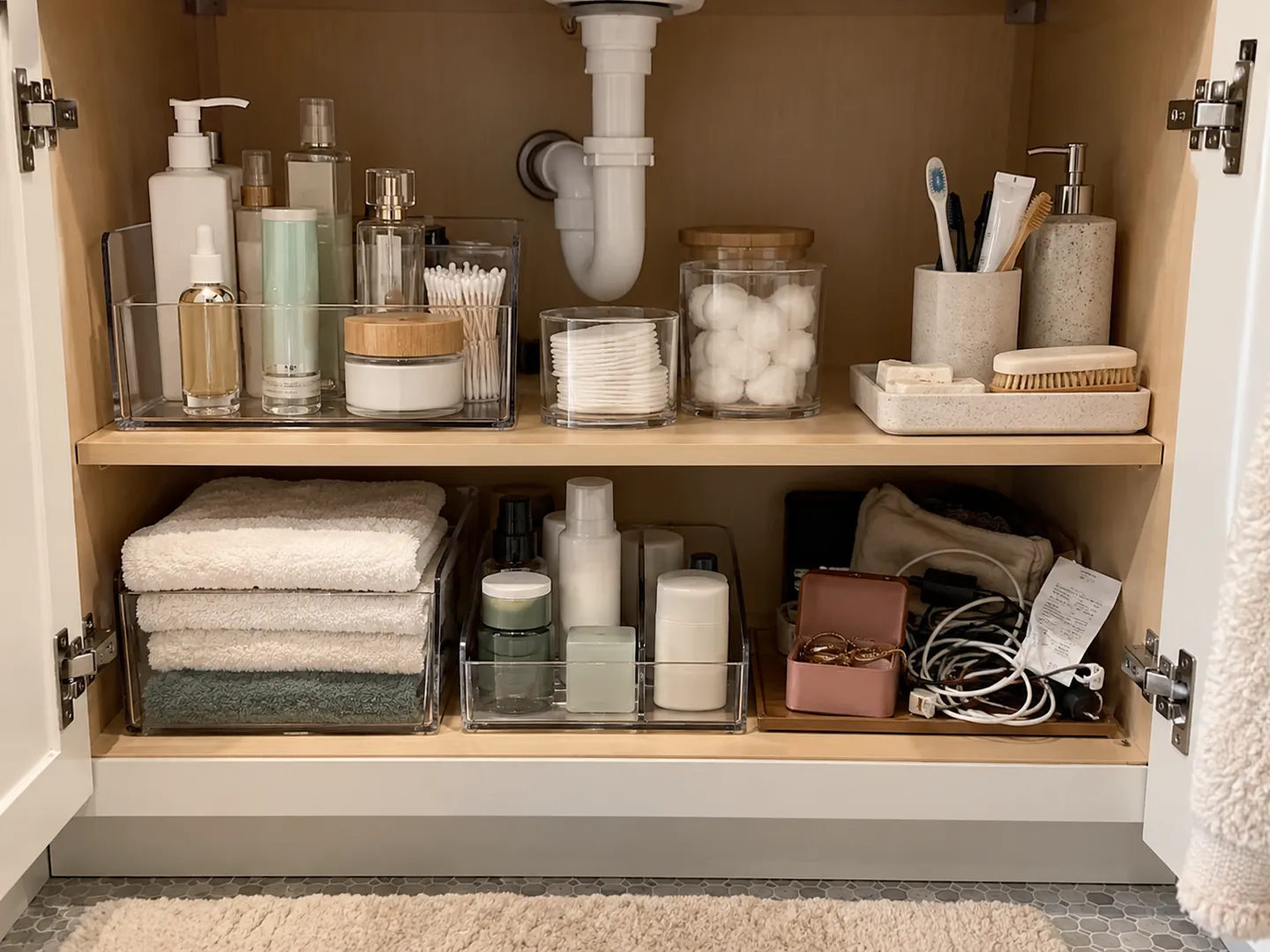
Clean and dry the empty cabinet, then measure its usable interior space.
Brush or vacuum out loose dust and hair, then wipe the surfaces with a cleaner suitable for the cabinet material. Let everything dry before replacing containers.
If there’s a leak, persistent dampness, or a swollen cabinet base, address the cause before adding a liner. Covering the evidence won’t solve the problem.
For measurements, check:
- Interior width, depth, and height.
- Clear space on each side of the pipes.
- Width of the door opening.
- Any centre frame, hinges, or other obstructions.
- Room needed to pull a drawer forward.
- Height of the tallest bottle, including its pump.
A vanity’s outside dimensions don’t tell the whole story. Think of a suitcase: the wheels, handle, and lining all reduce the space available inside.
Before ordering, mark an organizer’s footprint on paper and place it in the cabinet. A quick paper mock-up can reveal that the “perfect” drawer would sit directly beneath a pipe.
4. Give Everyday Products the Easiest Spots
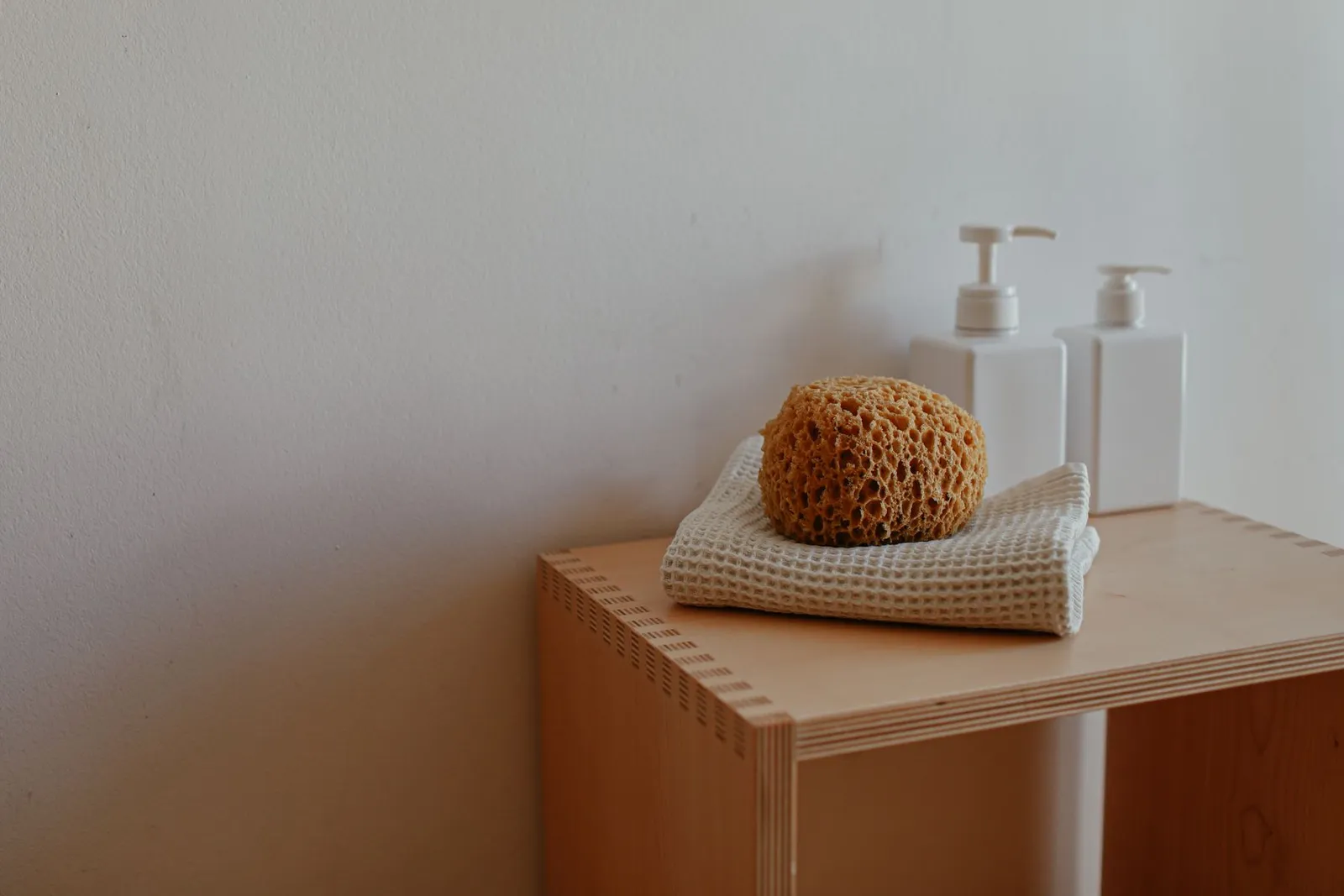
Reserve the most accessible spaces for daily products, with occasional items and refills farther back.
That might mean the top vanity drawer, a low shelf in the mirror cabinet, or a bin near the front under the sink. The best location depends on where getting ready actually happens.
Keep Each Routine Together
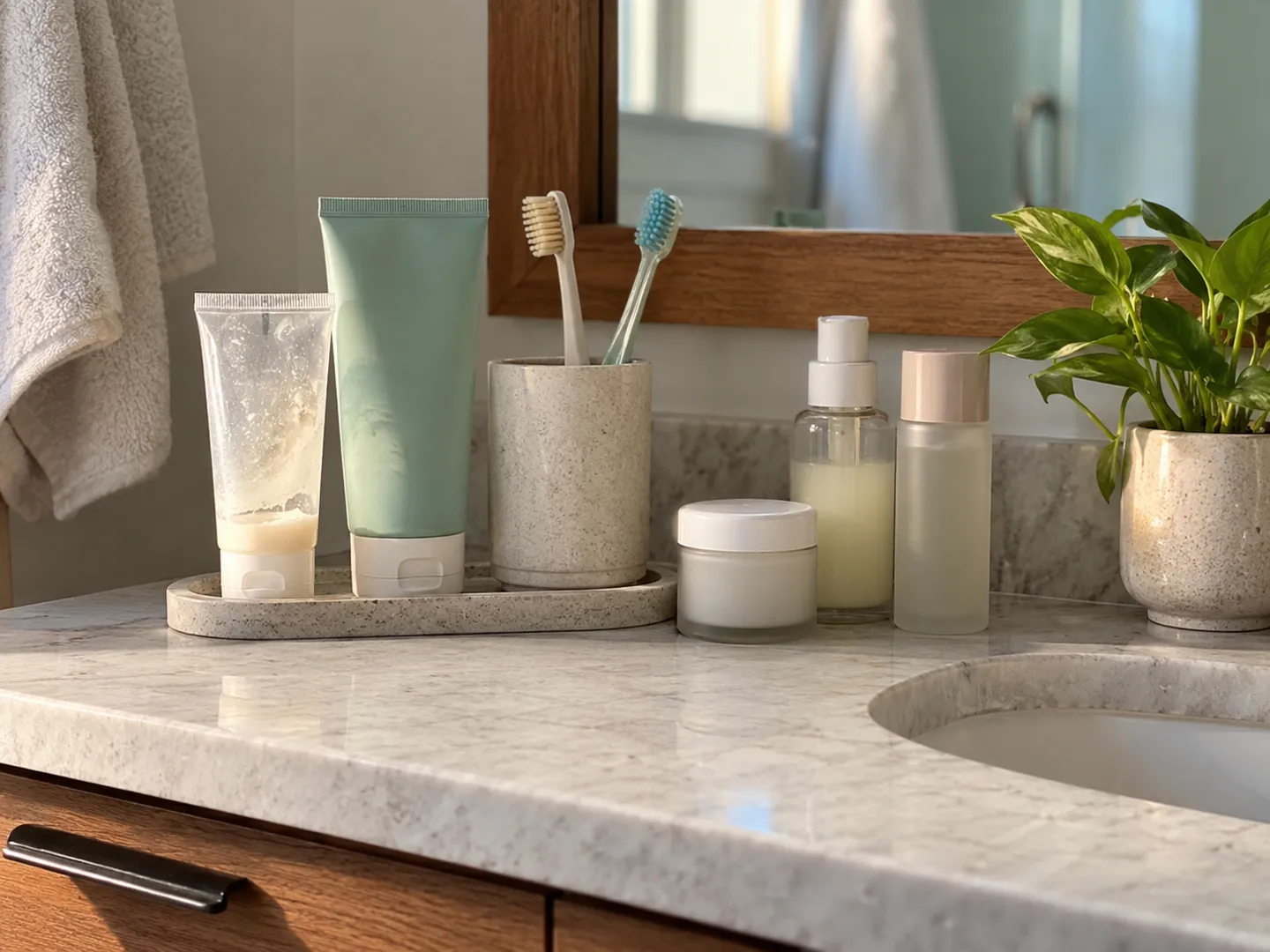
Group products used during the same routine. Dental care, shaving, daily skincare, hair care, and nail care are useful categories.
A shaving tray might hold the razor, cream, and spare heads. A nail-care box could contain files, clippers, and polish.
Keep the categories broad enough to use without thinking. Hair clips and hair ties can share a compartment if that makes putting them away easier.
Put Refills Behind the Routine
Give backups their own bin so they stay separate from products already in use.
Keep the current moisturiser accessible and its replacement with the refills. There’s less chance of opening both and forgetting which one needs finishing.
A simple “Refills” label may be enough. For a larger supply, separate hair products from soap and skincare so everything remains easy to check.
Make a Small Grab-and-Go Kit
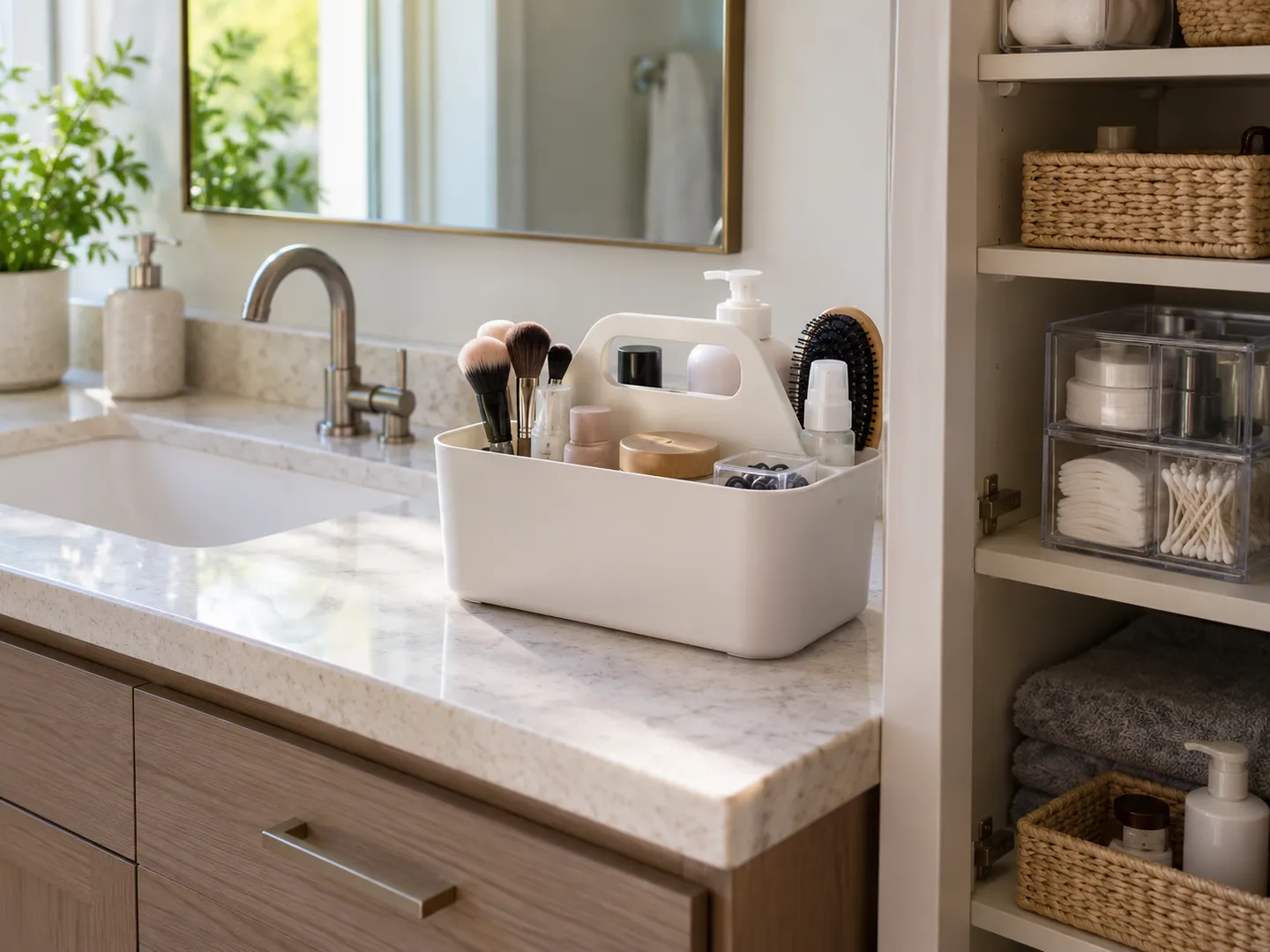
Use a removable caddy for a routine that happens in another room.
A makeup kit can travel to the dressing table and return in one trip. The same idea works for hair accessories or occasional nail care.
Try a washable container already in the house. Check that it holds the products upright and remains comfortable to carry when full.
5. Work Around the Pipes Under the Sink
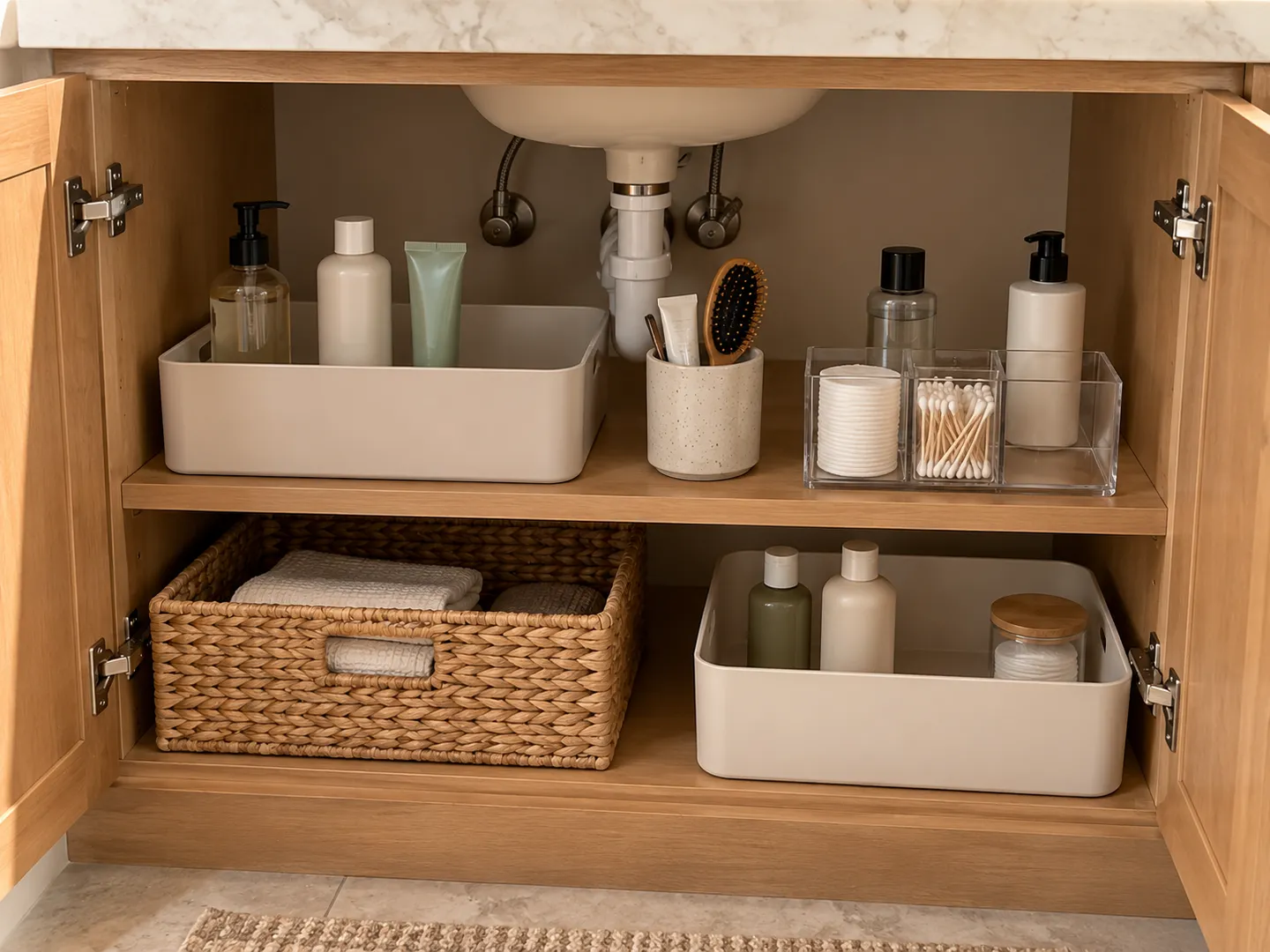
Treat the clear areas beside the plumbing as separate storage spaces, keeping pipes and shut-off valves accessible.
A cabinet doesn’t have to contain one continuous storage system. Different-sized pieces can work together quite happily.
Add Drawers Where There’s Height
Use pull-out drawers to store small items vertically without lifting one container off another.
Spare soap, hair accessories, and travel toiletries can each have a drawer. Check the organizer’s stacking instructions and keep heavier contents low.
The madesmart Two Tier Organizer with Dividers is worth considering for a suitable space. Assembled, it measures approximately 14.38 inches deep, 9 inches wide, and 10.63 inches high. Allow extra clearance for the contents and for removing the bins.
Use a Slim Bin Where There’s Only a Narrow Gap
Choose a narrow handled bin for a clear strip of space beside the pipes.
Upright bottles can sit in a row, ready to pull forward together. This is particularly handy when reaching the back would otherwise involve kneeling on the floor and moving everything in front.
Check the door opening, too. A bin that fits inside but catches on the frame every morning is unlikely to become a favourite.
Give Hair Tools and Cleaning Supplies Separate Homes
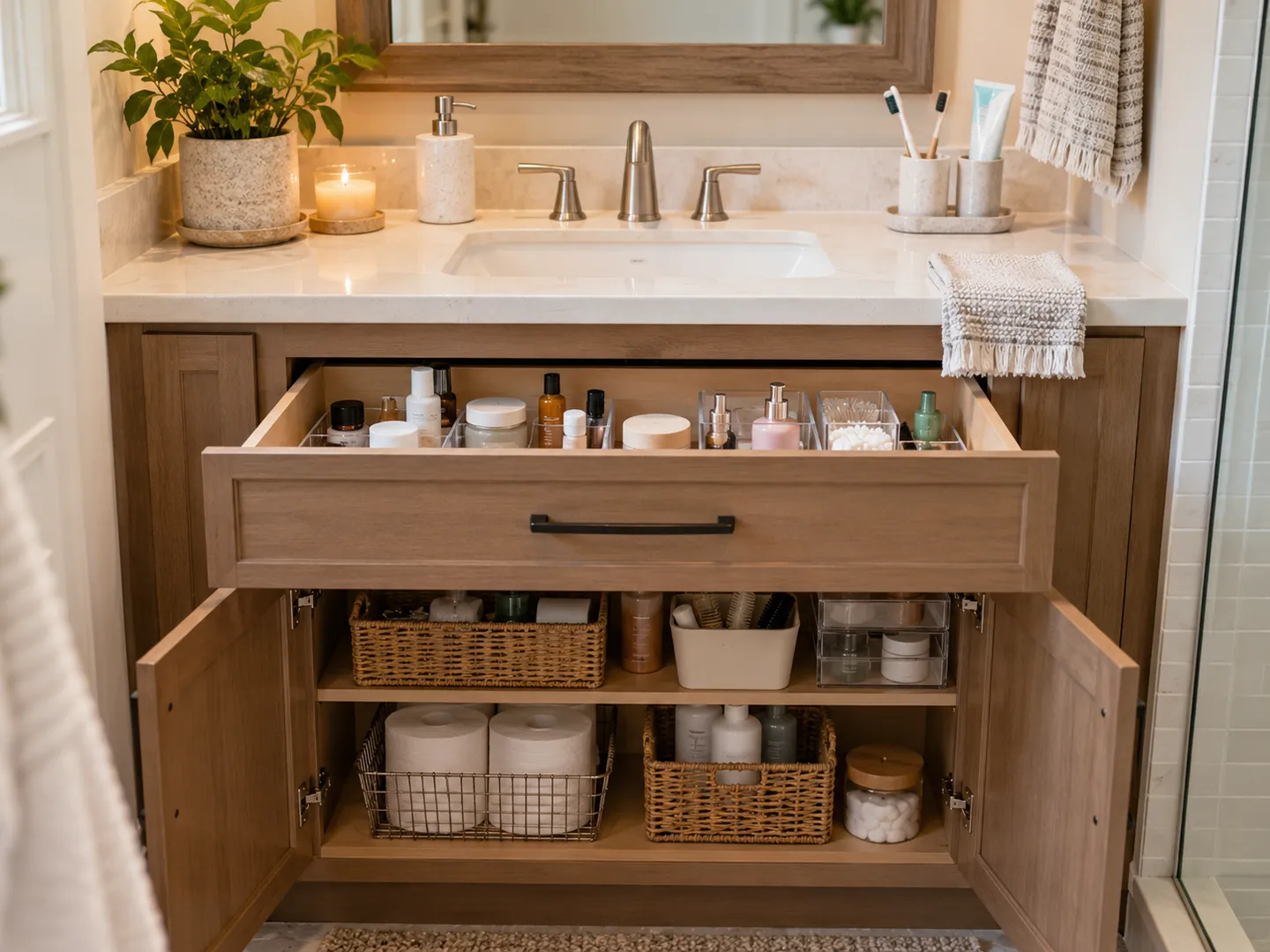
Contain cleaning products separately and give unplugged, cooled hair tools their own holder or bin.
A dedicated holder can help when a dryer, straightener, and several attachments keep tangling together. For one appliance, a simple container may be enough. Avoid tightly wrapping cords around tools.
Keep cleaners in their original labelled containers and stored securely where children cannot access them.
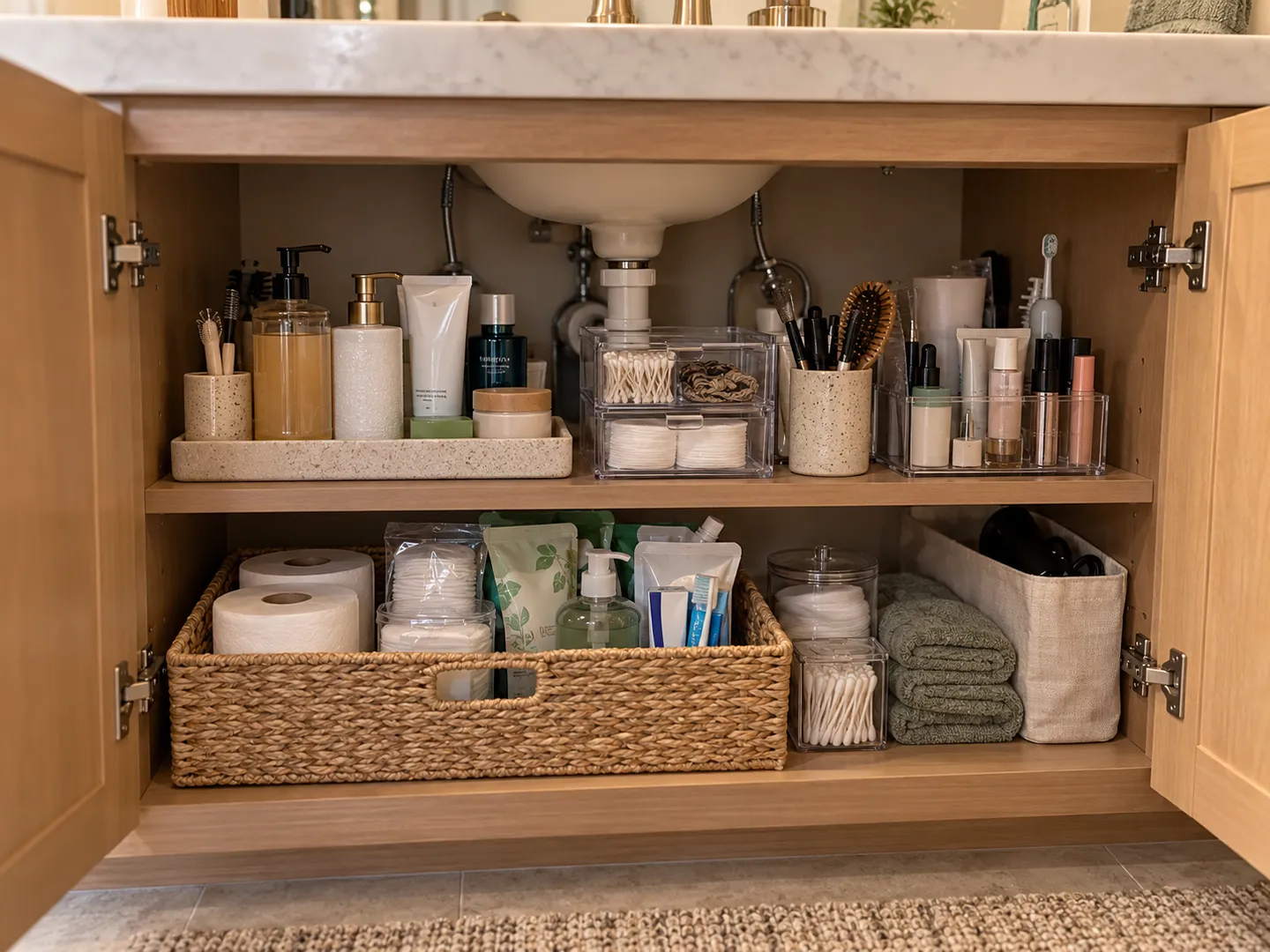
One possible layout: small drawers on the left, a tall bottle bin on the right, and clear access to the plumbing between them.
6. Stop Losing Things at the Back of Cabinet Shelves
Choose containers that move the contents toward the cabinet opening. Handled bins and turntables can make a deep shelf much easier to use.
Pull a Whole Category Forward
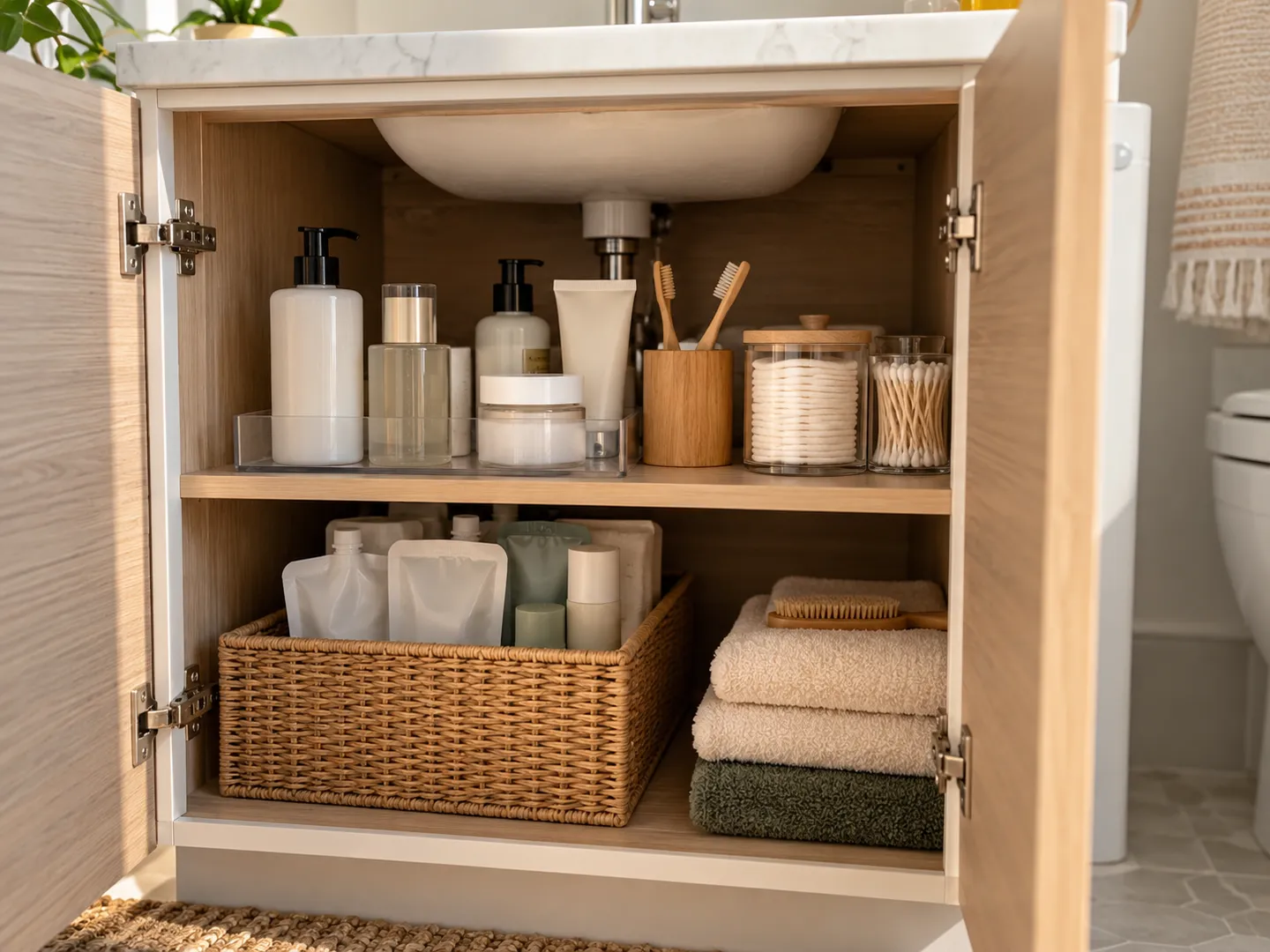
Put related products in a rectangular bin that slides out easily.
When packing for a trip, the whole toiletries bin can come to the counter. There’s no need to collect little bottles from several corners.
Leave enough space around it for a comfortable grip, and check that it isn’t too heavy when full.
Give Bottles a Turn
Use a turntable where bottles have enough space to rotate freely.
The OXO 11-inch Turntable is one option for a sufficiently wide shelf. It has a raised edge and non-slip feet to help keep things contained.
Check the loaded arrangement, including pumps and spray heads. A tray can fit perfectly while a bottle catches on the wall.
For a narrow rectangular cabinet, straight-sided bins may make better use of the available room.
Add a Second Level Only When You Can Still Reach Everything
Use a riser or stacking drawers when both levels remain accessible.
A riser can create space for short containers underneath. Pull-out drawers let the lower contents come forward without disturbing the upper level.
Ordinary stacked bins suit occasional supplies better. Lifting a heavy basket every evening to reach the floss makes leaving the floss on the counter very tempting.
7. Give the Little Things Their Own Compartments
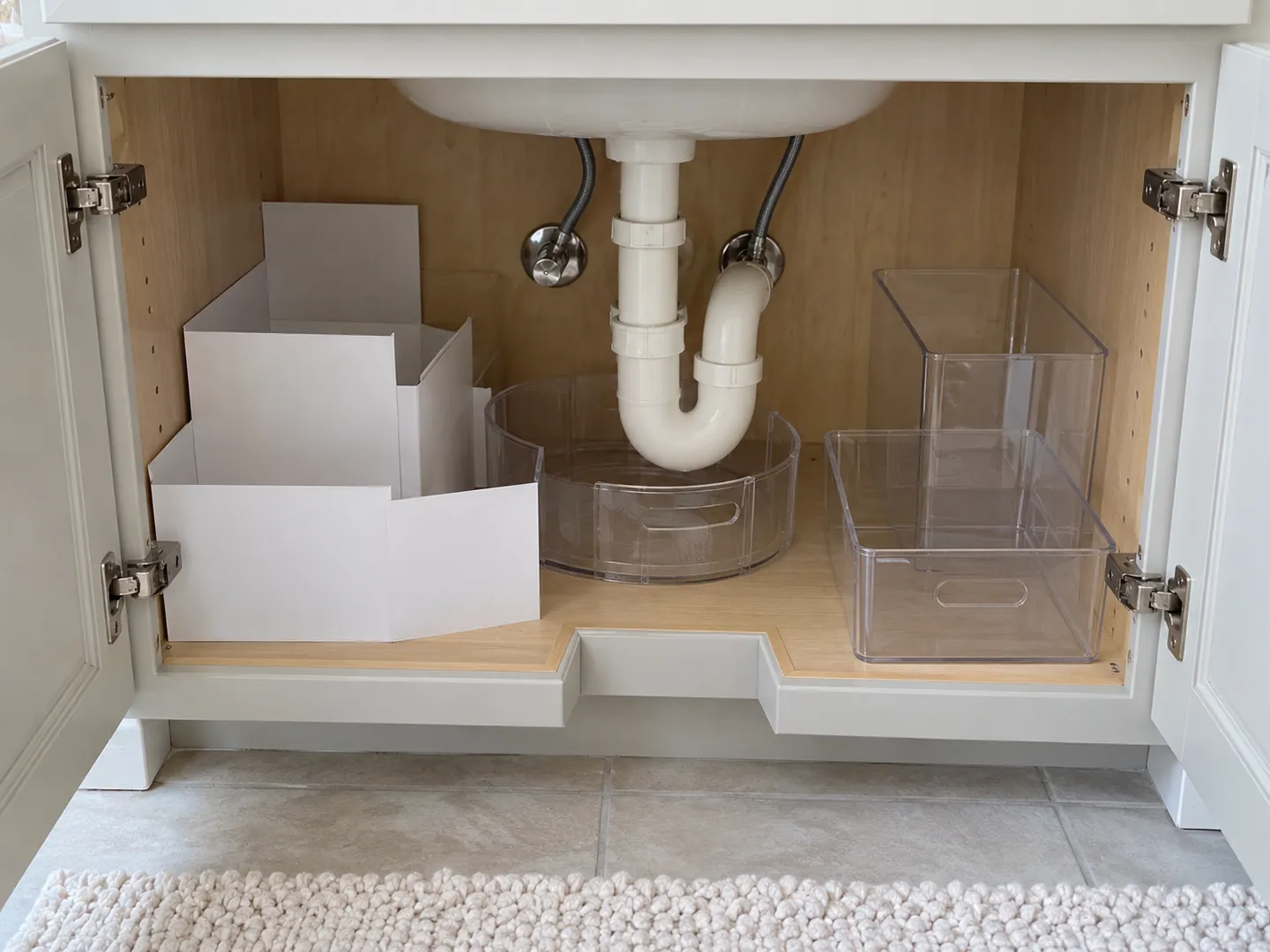
Match the organizer’s depth to its contents: shallow trays for little items, deeper bins for upright products.
A few well-sized compartments can be more useful than a large set filled with awkward gaps.
Shallow Drawers: Keep Everything Visible
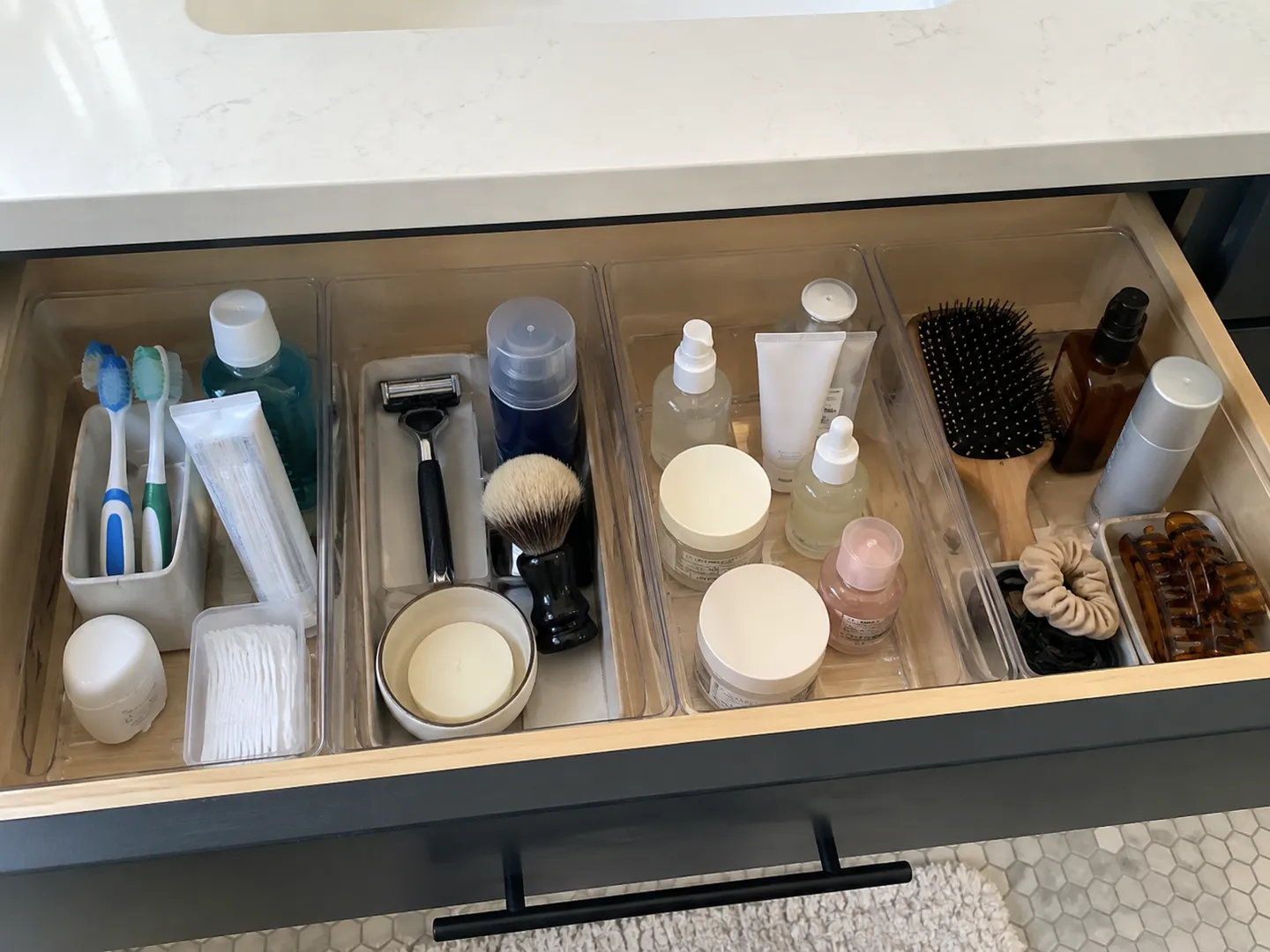
Arrange hair accessories, tweezers, and everyday makeup in a few removable trays.
Give longer items, such as brushes and files, enough room to lie flat. Keep frequently used pieces in the easiest compartments to reach.
Lay out the products before choosing trays. That oversized palette won’t become smaller because an organizer set came with twelve identical boxes.
Deep Drawers: Keep Bottles Standing
Use deeper bins or adjustable dividers to hold categories in place.
The iDesign Linus Deep Drawer Organizers come in several sizes, including a 6 × 6-inch option that can suit small groups of bottles. Check the chosen size against the drawer and its contents.
Expandable dividers can work for towels or larger sections. The same approach appears in our guide to organizing dresser drawers, where clear sections help stop categories spreading into one another.
Make Labels Visible From Above
Position labels where they can be read from the normal viewing angle.
In a deep drawer, a label on the front of a bin may disappear. The upper edge can be more useful.
Keep original product information readable, and label categories only where it saves a search. A clear tray containing nothing but hair ties probably explains itself.
8. Use the Cabinet Door, If It Still Closes
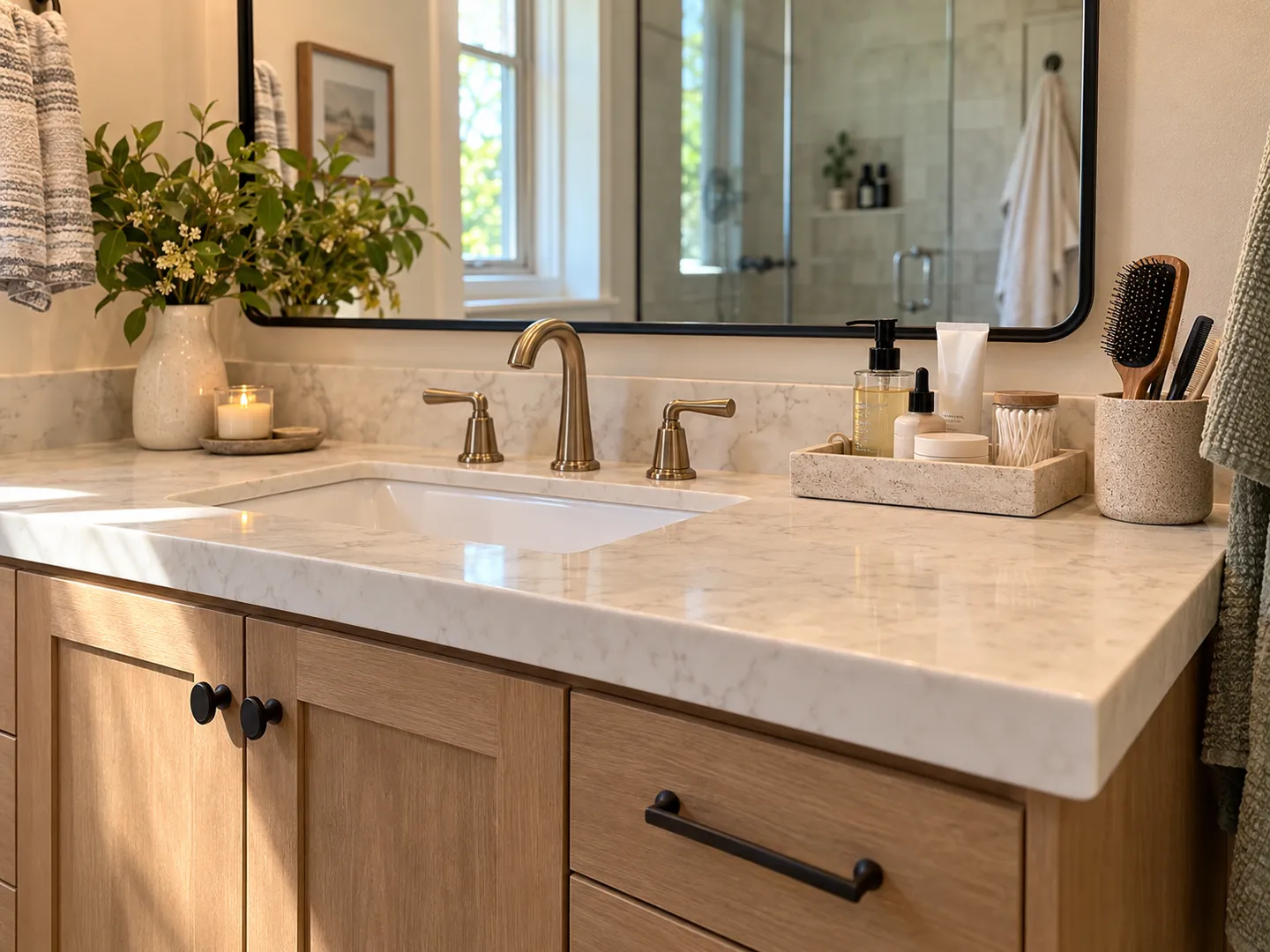
A shallow door-mounted caddy can hold lightweight essentials when there’s enough clearance behind the closed door.
An empty cabinet makes this idea look wonderfully straightforward. Then the basket meets the shampoo bottle behind it.
Test the proposed position with the shelves and bins loaded. Check hinges, pipes, and anything that moves as the door swings.
The Command Clear Medium Caddy is an option for suitable surfaces. Follow its preparation, installation, removal, and weight instructions, and check that the product suits the location.
An over-cabinet basket avoids adhesive, although its hooks can affect how the door closes. Measure the gap above the door before choosing one.
Keep the contents light and easy to remove. A caddy that needs unpacking to release one item has become another tiny cupboard to search.
9. Sharing a Bathroom? Give Everyone a Clear Place
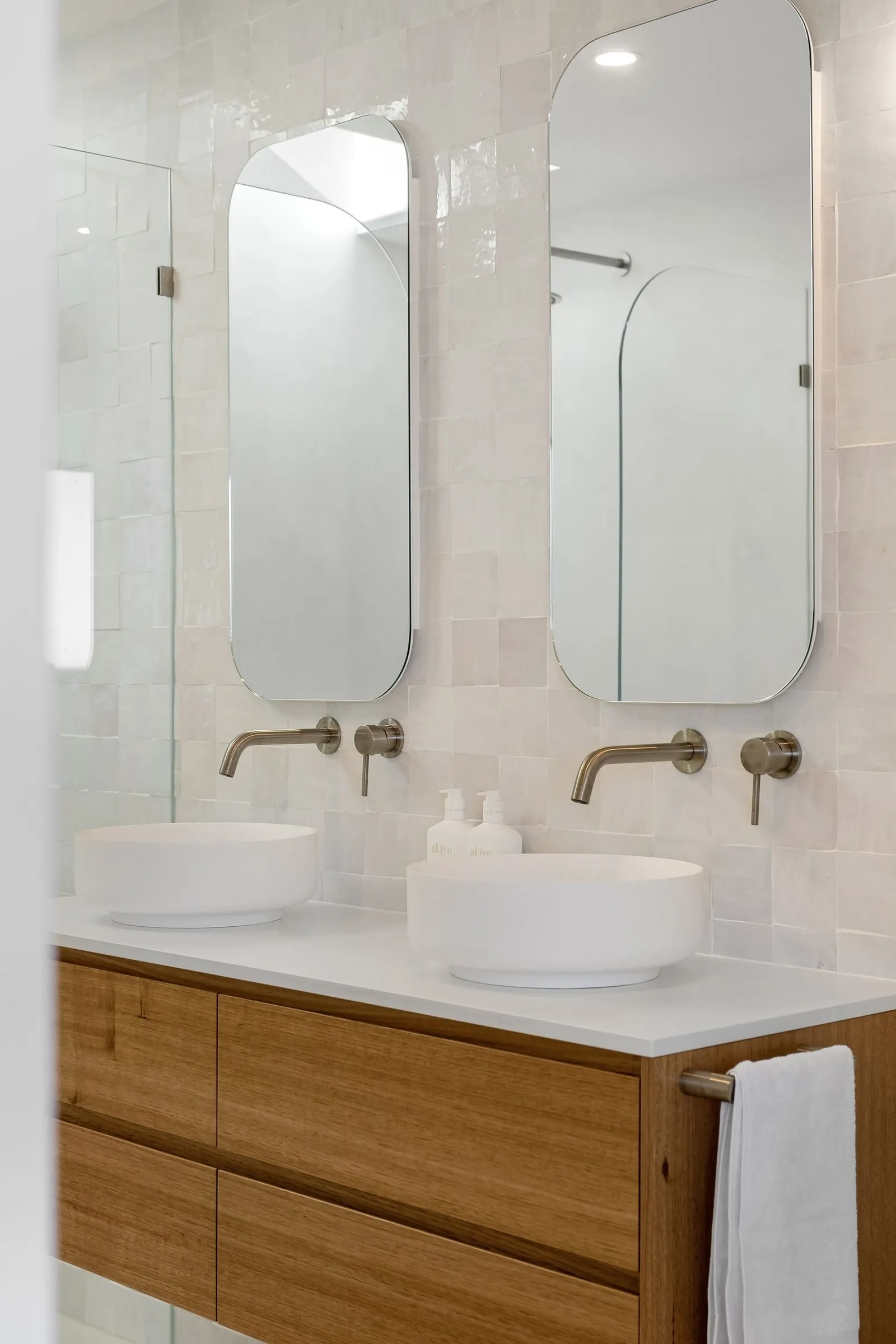
Assign each person a bin, drawer, or section, and keep shared supplies together.
Two personal morning-routine bins and one shared refill bin can be enough. The arrangement is easy to understand, and everyone can see where their products belong.
Position everyday items near where each person naturally gets ready. Someone using the left sink shouldn’t need to reach across the whole vanity for a hairbrush.
Let everyone help choose the categories. A system is easier to maintain when the people using it understand why things are there.
And allow different amounts of space. One person may own a shaving kit and a moisturiser; another may have several hair products. Identical baskets aren’t essential.
Aim for enough room for each person’s actual routine. Simple name labels can handle the rest.
10. Make Putting Things Back the Easy Part
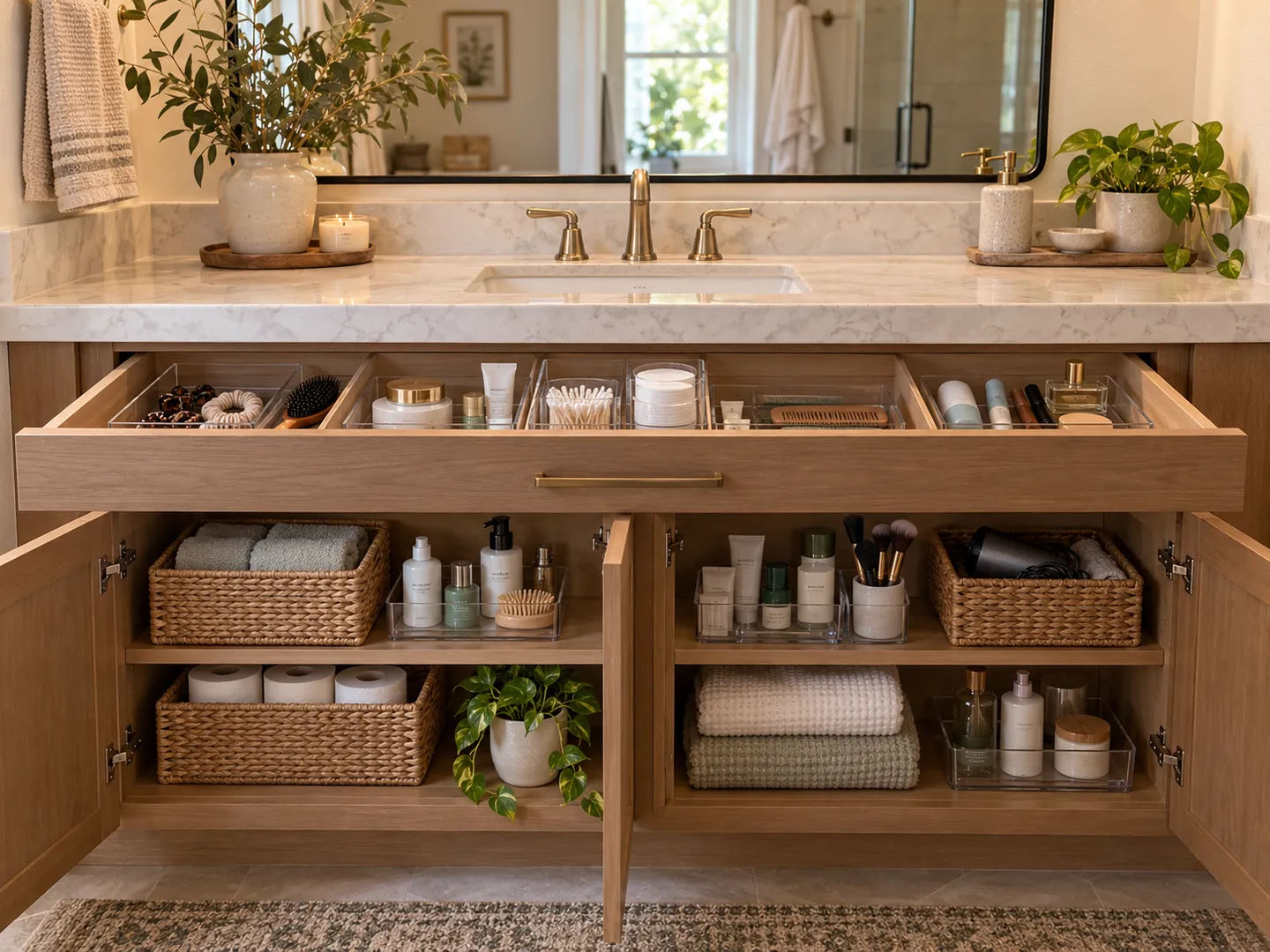
Keep the storage simple enough to reset during normal use. Easy access matters just as much when returning something as when taking it out.
Leave a Little Empty Space
Allow enough space to return products without squeezing or rearranging everything.
If removing one bottle makes the others fall sideways, loosen the arrangement. A different bin or fewer items in that group may help.
There should also be somewhere to put a replacement before the current bottle is completely finished.
Check the Refill Bin Before Shopping
Check the backups before adding toiletries to the shopping list.
Keep a short list wherever the household already tracks groceries and supplies. When the last spare hand soap comes out, add it.
A system that helps with shopping is much less likely to refill itself with forgotten duplicates.
Change the Spot That Keeps Getting Messy
Move storage closer when the same product repeatedly gets left out.
A hairbrush may need an open holder near the front. A skincare bin may work better one shelf lower. Removing an unnecessary lid might make putting things away feel effortless.
A quick weekly tidy and wipe can catch stray items and spills. Occasionally check for forgotten or expired products.
Bathroom Cabinet Organizers Worth Considering
Choose an organizer for a specific space and task. Most cabinets won’t need every option below.
| The problem | An option to consider | What to check |
|---|---|---|
| Small products disappear in a deep drawer | iDesign Linus Deep Drawer Organizers | Drawer height, organizer size, and the products being stored. |
| There’s unused height beside the pipes | madesmart Two Tier Organizer with Dividers | Assembled dimensions and room to remove each bin. |
| Bottles vanish at the back of a shelf | OXO 11-inch Turntable | Clearance for both the tray and the bottles to rotate. |
| Lightweight essentials need an accessible spot | Command Clear Medium Caddy | Surface suitability, load limit, and door clearance. |
| Towels or product groups slide together | SpaceAid Expandable Bamboo Dividers | The selected dividers’ height and expansion range. |
| Products travel between rooms | A washable handled caddy | Loaded weight, bottle stability, and a comfortable handle. |
Before ordering, try the proposed layout with suitable containers already in the house. A few mornings of use will reveal whether a new organizer would help.
Before You Close the Door: A Quick Checklist
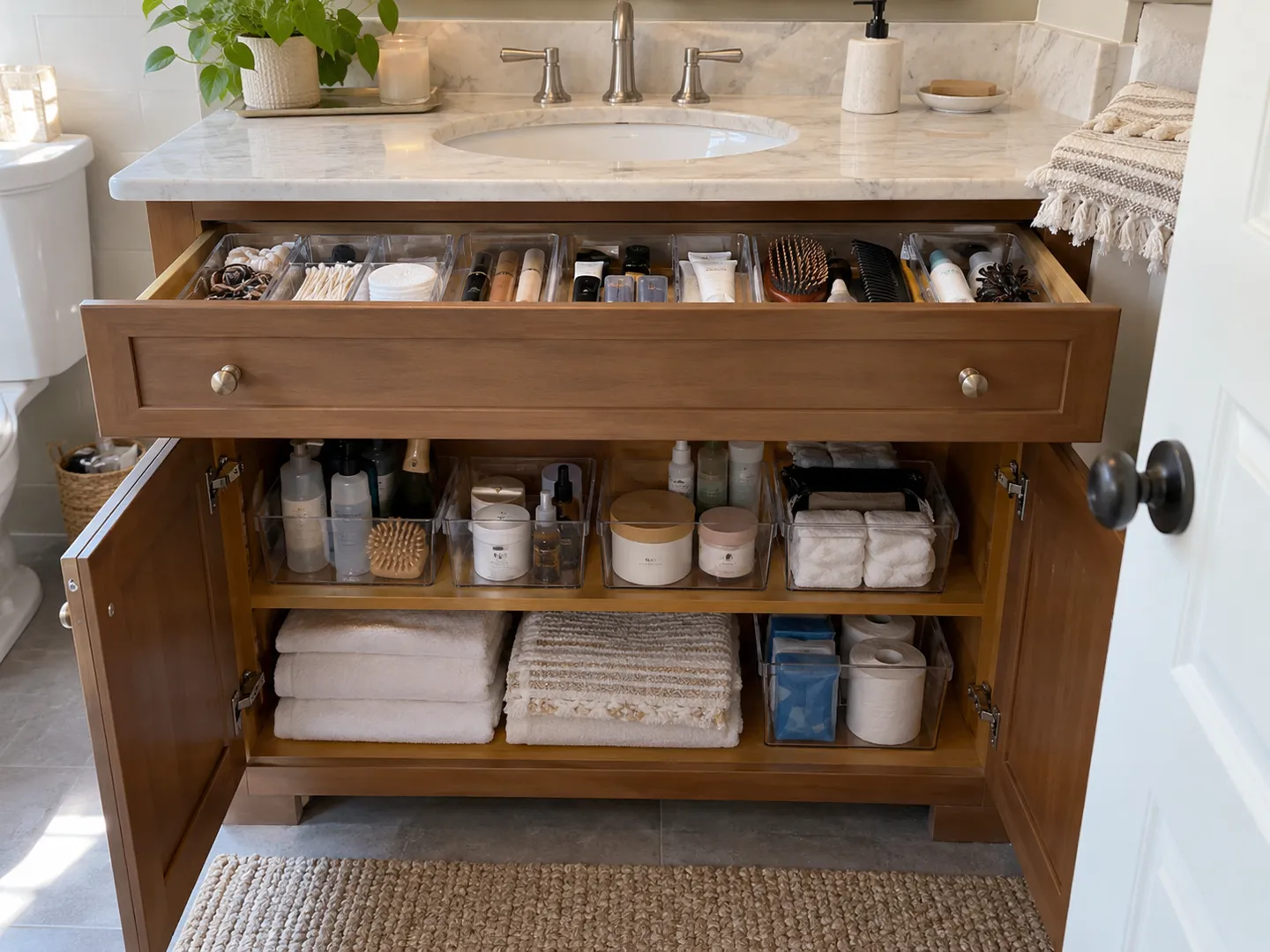
- Daily products are accessible without moving several other things.
- Refills are separate and easy to check.
- Every drawer opens and every door closes properly.
- Pipes and shut-off valves remain accessible.
- Small items are contained without too many fiddly compartments.
- Everyone sharing the bathroom knows where their things belong.
- Products are stored according to their instructions.
- There’s a little room left.
- Putting things away feels easy.
Bathroom Cabinet Questions, Answered
How Do You Organize a Bathroom Cabinet With No Drawers?
Use handled bins or freestanding pull-out drawers. Keep daily products near the front and occasional supplies farther back. Choose containers that move through the door opening comfortably, even when full.
What Works Best Around Under-Sink Pipes?
Narrow individual organizers usually offer more flexibility than one wide unit. Choose pieces for the usable areas beside the plumbing, and leave access to pipes and shut-off valves. Check the loaded height as well as the empty organizer.
How Can You Organize Bathroom Cabinets Without Buying Anything?
Remove unwanted items, relocate bulky extras, and group the rest in clean, suitable containers. Spare trays, washable tubs, and existing toiletry bags can help test an arrangement. Avoid absorbent cardboard in areas that may become damp.
Are Clear Bins Better Than Baskets?
Clear bins make small products visible, while baskets can suit larger dry items such as spare towels. Consider how easily the container can be cleaned and lifted. An opaque basket works well when its purpose is obvious or clearly labelled.
What If Everything Still Won’t Fit?
Review duplicates and move overflow before adding more organizers. Containers divide existing space and occupy some of it themselves.
Keep everyday supplies convenient and find another suitable home for bulk purchases. Our small bathroom storage guide covers options beyond the vanity.
Tomorrow Morning Should Feel Easier
Choose the cabinet that causes the most frustration and give its everyday items an accessible home. The arrangement can change after a few mornings of use.
A useful bathroom cabinet lets you find what you need and put it back without a second thought. If the face wash is easy to reach and the spare toothpaste is finally accounted for, the effort has already paid off.