Ultimate Bed Sheet Guide: Which Material Is Best For You?

Ever bought sheets that looked lovely in the package, then found them too warm, too slippery, or surprisingly rough once you made the bed?
Choosing a bed sheet material gets easier when you know which feel you enjoy. Some people love crisp cotton sheets. Others prefer a smoother fabric that falls loosely around them, or something warm and fuzzy on a cold night.
The quick answer
- Cotton percale suits people who like lightweight sheets with a crisp, matte finish.
- Cotton sateen feels smoother and usually has a little more weight and sheen.
- Linen offers an airy feel and noticeable texture, with wrinkles that remain part of its appearance.
- Lyocell and bamboo-derived viscose suit people who prefer smooth, flowing fabric.
- Silk offers a slippery, luxurious feel but needs gentler care.
- Microfiber is usually affordable and resists wrinkles, though it can feel warm.
- Flannel and fleece provide extra warmth, while jersey feels stretchy and familiar, like a T-shirt.
- A good fit depends on mattress size and total depth, including any topper.
Below, we’ll explain how these fabrics differ, which details matter when buying, and how to find sheets you’ll actually enjoy sleeping in.
1. Your Best Sheet Material at a Glance
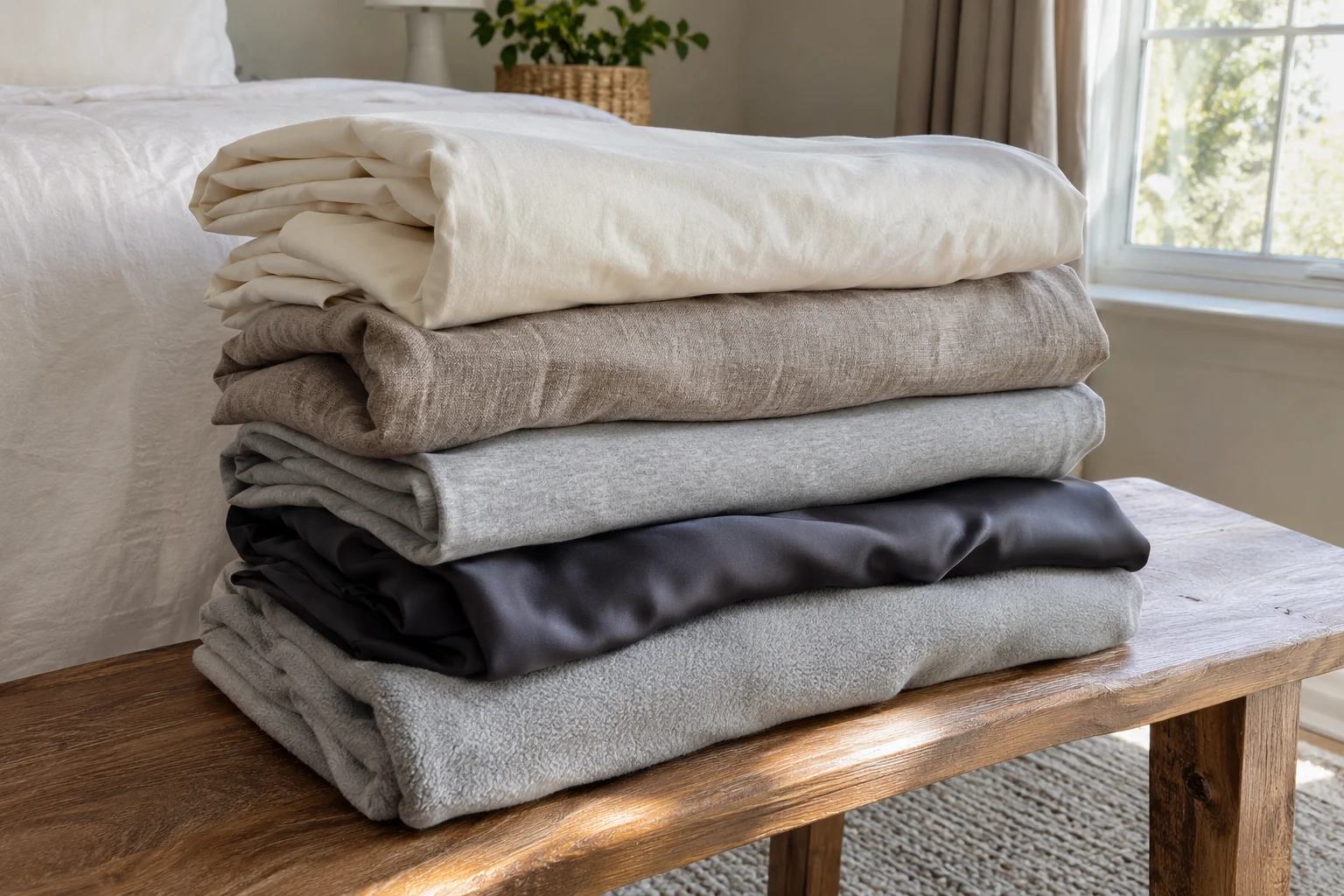
For an everyday choice, cotton percale or cotton sateen will suit many bedrooms. The main decision is whether you prefer a crisp feel or a smoother finish.
Other materials make sense when you have a particular preference, such as linen’s texture or fleece’s warmth.
| Sheet type | How it feels | A good choice for | Main drawback |
|---|---|---|---|
| Cotton percale | Crisp, light, and matte | People who prefer less cling and a fresh feel | Wrinkles easily |
| Cotton sateen | Smooth, with a slight sheen | People who like softer-feeling, more substantial sheets | Often feels warmer than lightweight percale |
| Linen | Textured and airy | People who enjoy relaxed bedding and natural texture | Usually costs more and stays visibly creased |
| Lyocell | Smooth and flowing | People who dislike rough or stiff fabric | Often needs gentle washing and drying |
| Bamboo-derived viscose | Soft, smooth, and drapey | People who like fabric that falls close to the body | Quality and durability vary |
| Silk | Smooth and slippery | People who enjoy a luxurious feel and gentle care routines | Expensive and less forgiving in the laundry |
| Microfiber | Soft, often lightly brushed | Lower budgets and fewer wrinkles | Can feel warm or clingy |
| Flannel | Soft and fuzzy | Cold nights and people who feel chilly in bed | Can become too warm and may pill |
| Fleece | Plush and insulating | People who want a particularly warm bed | Usually too warm for hot sleepers |
| Jersey | Soft and stretchy | People who like the feel of a cotton T-shirt | Can stretch out or pill |
Your duvet, mattress protector, sleepwear, and room temperature also affect how warm the bed feels. Sheets are one part of that combination.
2. Material, Weave, and Finish: What the Label Actually Means
Material tells you what the fibers are. Weave or knit tells you how those fibers become fabric. The finish describes treatments that change its surface or feel.
That explains why two sets labeled “100% cotton” can feel quite different.
A cotton button-down shirt and a cotton T-shirt use the same basic fiber, but their construction gives them different textures and stretch. Sheets work in a similar way.
Here are the terms you’ll see most often:
- Materials: Cotton, linen, silk, polyester, lyocell, and viscose.
- Weaves: Percale, sateen, and satin.
- Knits: Jersey.
- Surface treatments: Brushing, which creates the fuzzy feel found in flannel and some microfiber sheets.
A label that says 100% cotton percale tells you both the fiber and the weave. That is more useful than a description that only says “luxury sheets.”
A useful note: Sateen and satin describe fabric construction, so those words alone don’t tell you the material. Microfiber describes very fine fibers and is commonly made from polyester.
3. Cotton: Crisp Percale or Smooth Sateen?
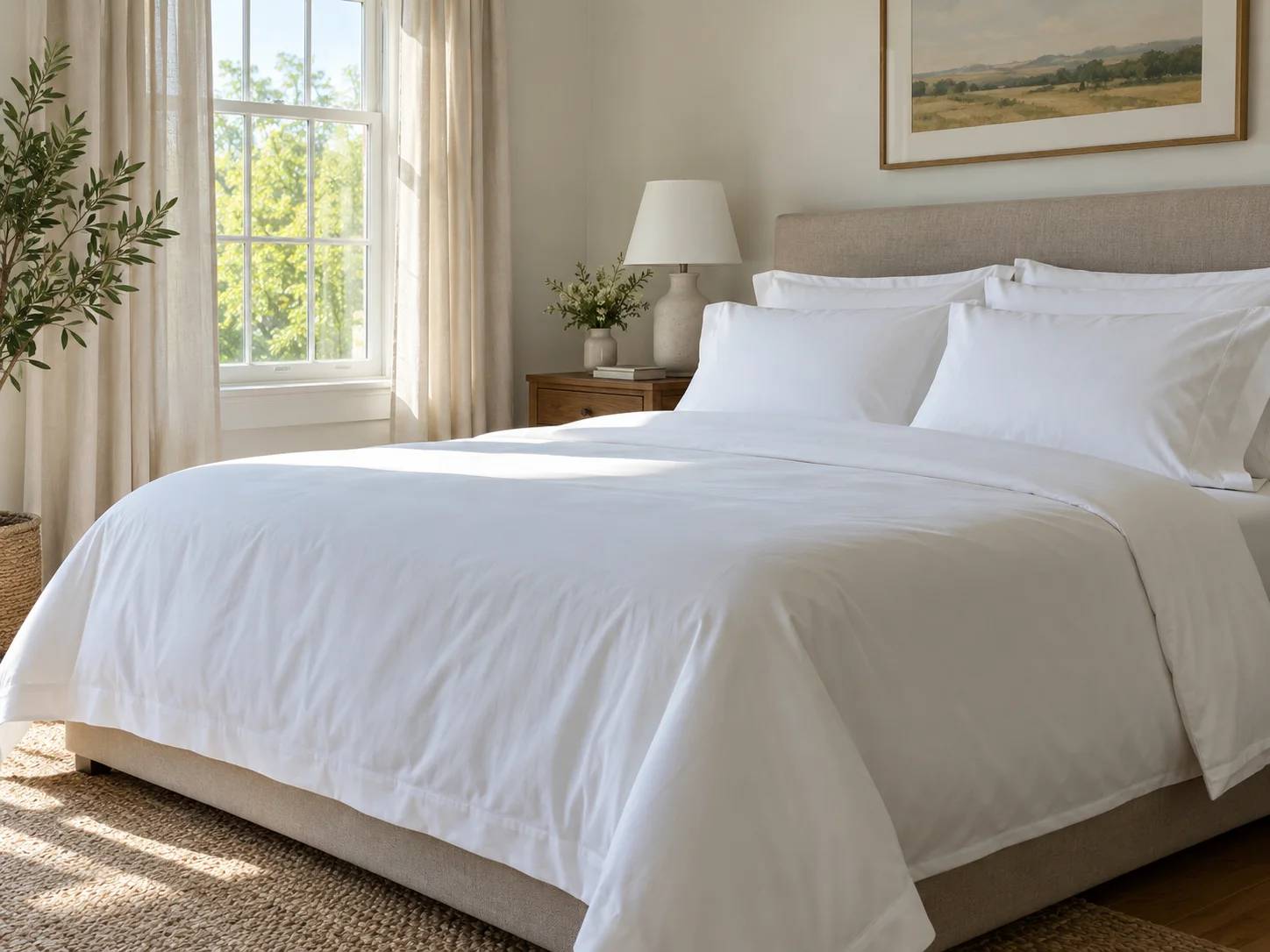
Cotton is a practical everyday choice because it is absorbent, widely available, and generally straightforward to wash. However, the weave has a big effect on how it feels.
If you’ve disliked cotton sheets before, you may have disliked that particular weave or fabric weight.
Percale for That Fresh, Crisp Bed Feel
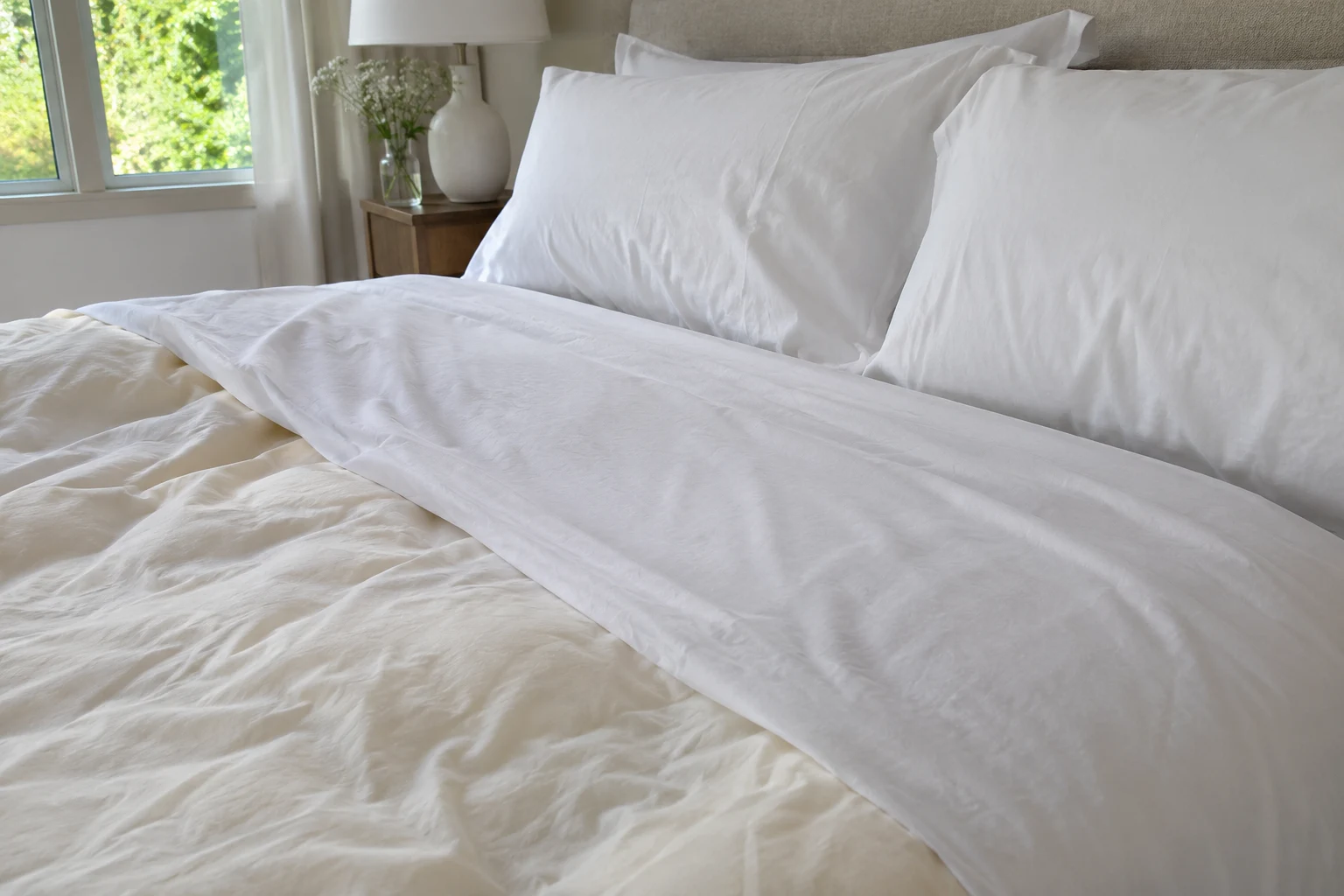
Cotton percale has a crisp, matte finish and usually feels lighter than a comparable sateen fabric.
It works well if you dislike sheets that cling closely to your legs. Lightweight percale is also a useful option when you tend to feel warm at night.
The LANE LINEN Cotton Percale Sheet Set fits this preference. Its cotton percale construction makes it an option for a simple bed without the sheen of sateen.
Percale does wrinkle. Taking it out of the dryer promptly and smoothing it over the mattress helps, but it won’t stay perfectly pressed through a week of sleeping.
Sateen for a Smoother, Softer Finish
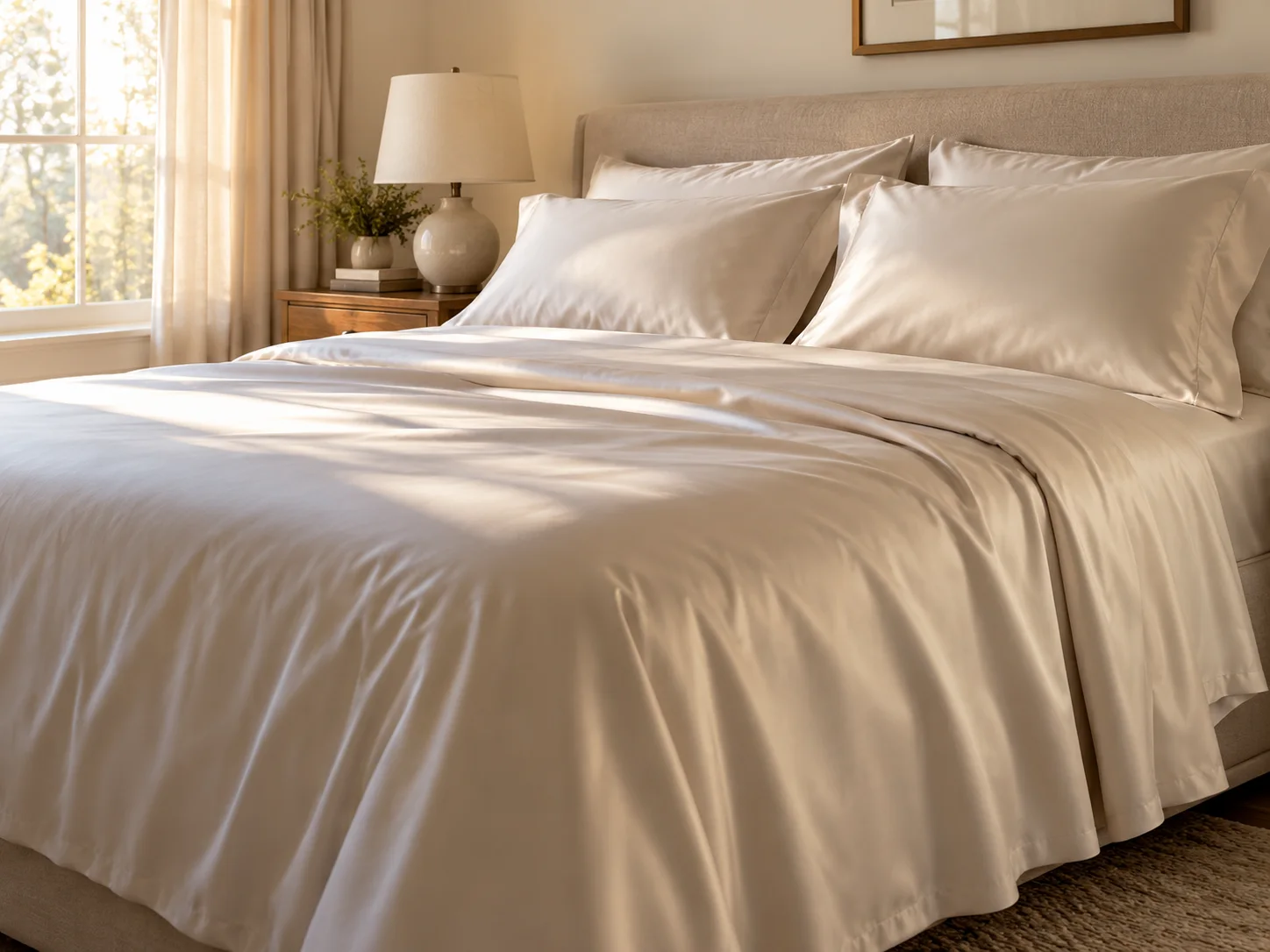
Cotton sateen feels smooth and has a slight sheen. It often falls more closely around your body and feels more substantial than percale.
If crisp sheets feel a little stiff to you, sateen may be more comfortable. However, a dense sateen fabric can feel warm, especially beneath a heavy duvet.
The California Design Den Cotton Sateen King Sheet Set combines cotton with a sateen weave. This six-piece set includes four pillowcases, which is useful if you already sleep with four pillows.
The extra pieces are only a benefit if you use them. A smaller set may be easier to store when your linen cupboard is already full.
Egyptian, Pima, and Supima: What Are You Paying For?
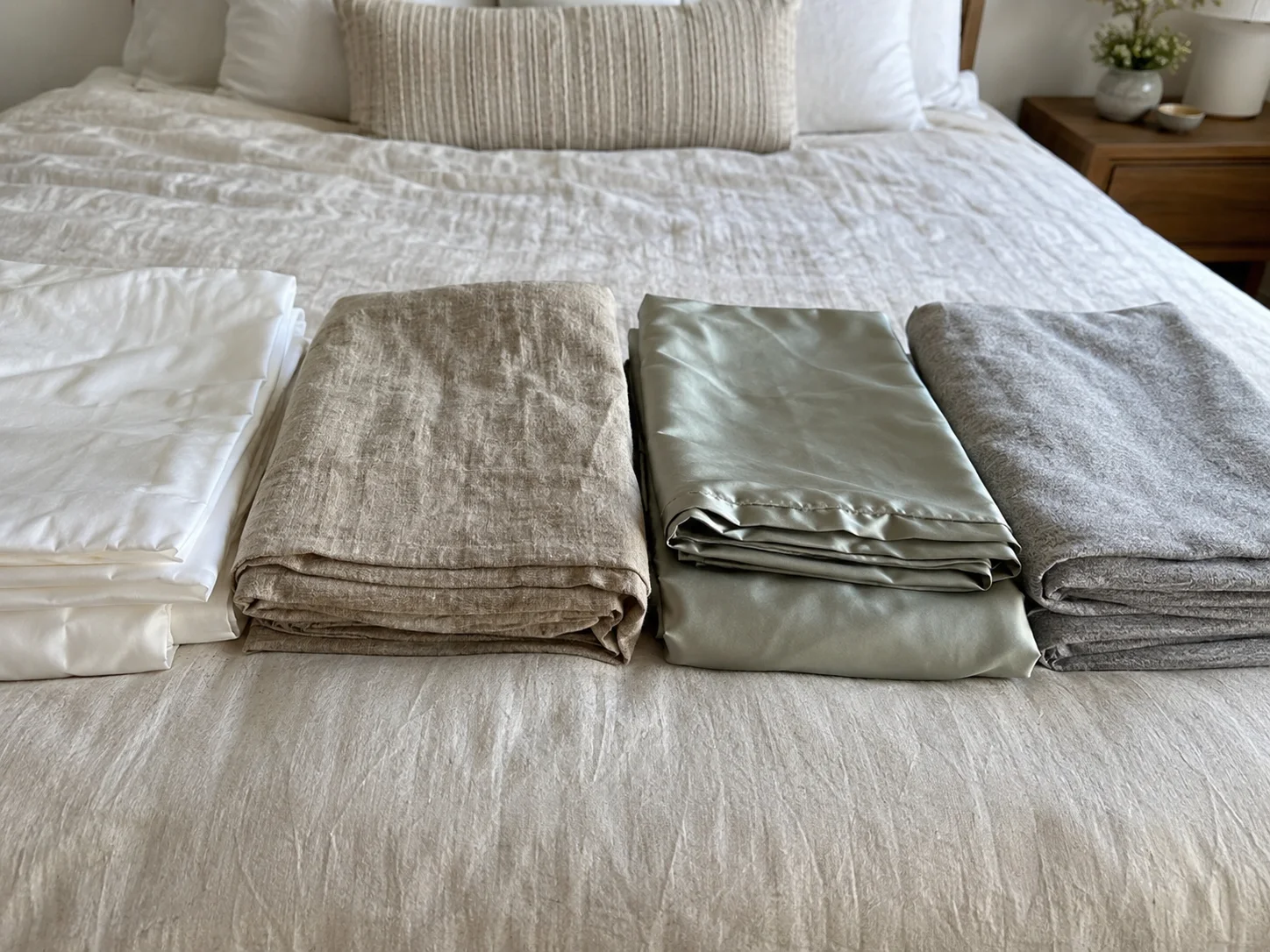
Longer cotton fibers can be spun into smoother, stronger yarns, but the finished fabric still depends on how it is made.
Egyptian cotton refers to cotton grown in Egypt. Pima is an extra-long-staple cotton variety, while Supima is a trademark for American-grown extra-long-staple cotton.
Those names don’t tell you whether the sheets will feel crisp or silky. The weave remains important.
For a smoother cotton option, the Chateau Home Collection Egyptian Cotton Sateen Sheet Set uses a sateen weave. It makes more sense for someone who enjoys a substantial, smooth fabric than someone looking for especially light, crisp sheets.
Its higher thread count is one detail about the fabric, rather than a reason on its own to choose it.
4. Linen: An Airy Bed With More Texture
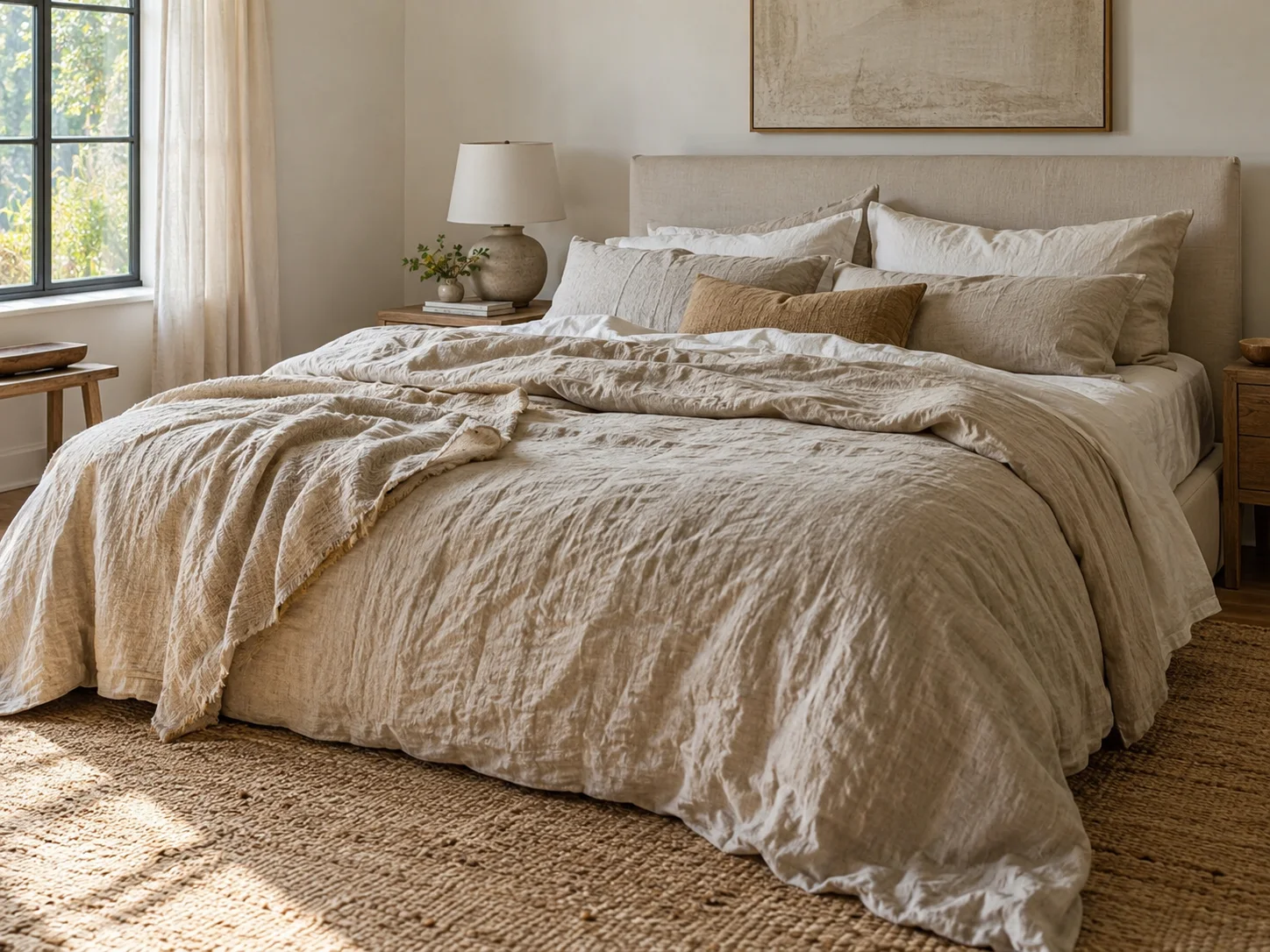
Linen suits people who want an airy feel and a textured surface. It is made from flax and has a different feel from smooth cotton or silk.
New linen can feel fairly firm. Washing generally softens it, although it keeps more texture than sateen.
The LBRO2M 100% Linen Sheet Set is an option if you want that texture throughout the bed. It pairs naturally with a cotton blanket or a loosely folded duvet.
There is no need to make every layer linen. If you enjoy linen sheets but prefer a smoother surface against your face, cotton pillowcases are an easy combination.
The main trade-offs are price and wrinkles. Linen usually costs more than basic cotton or microfiber, and it will look creased after use.
If you like a tightly pressed bed, cotton may suit you better. If you enjoy relaxed bedding, our guide to layering bedding for a designer-magazine look shows how different textures work together.
5. Lyocell and Bamboo Sheets: Smooth Fabrics With Different Labels
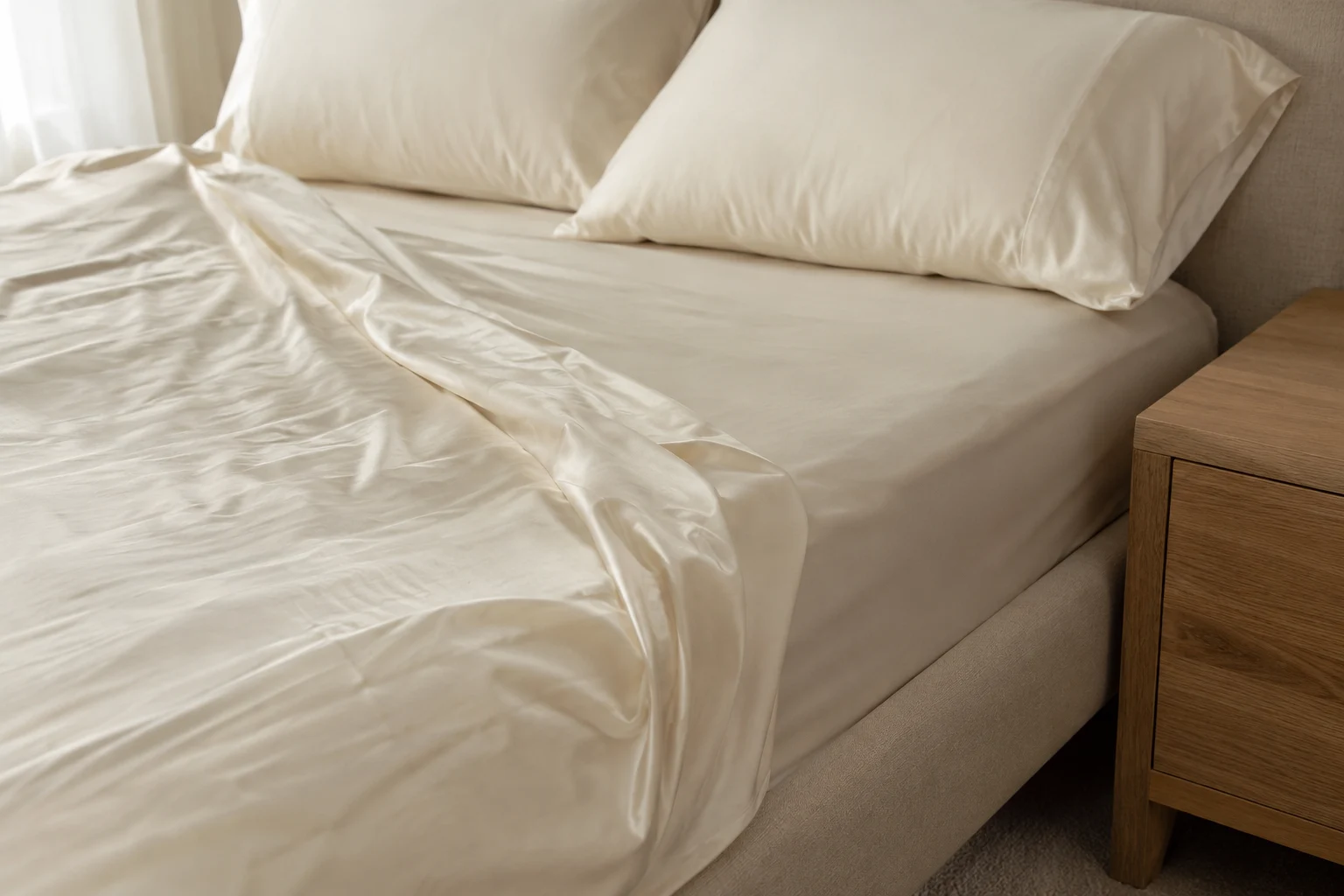
Lyocell and bamboo-derived viscose often appeal to people who want a smooth fabric that falls loosely around the body.
Both are regenerated cellulose fibers. Plant material is processed into fibers that can be spun into yarn and made into fabric.
The exact composition matters because these fibers can also be blended with cotton, polyester, or each other.
Lyocell and TENCEL Sheets
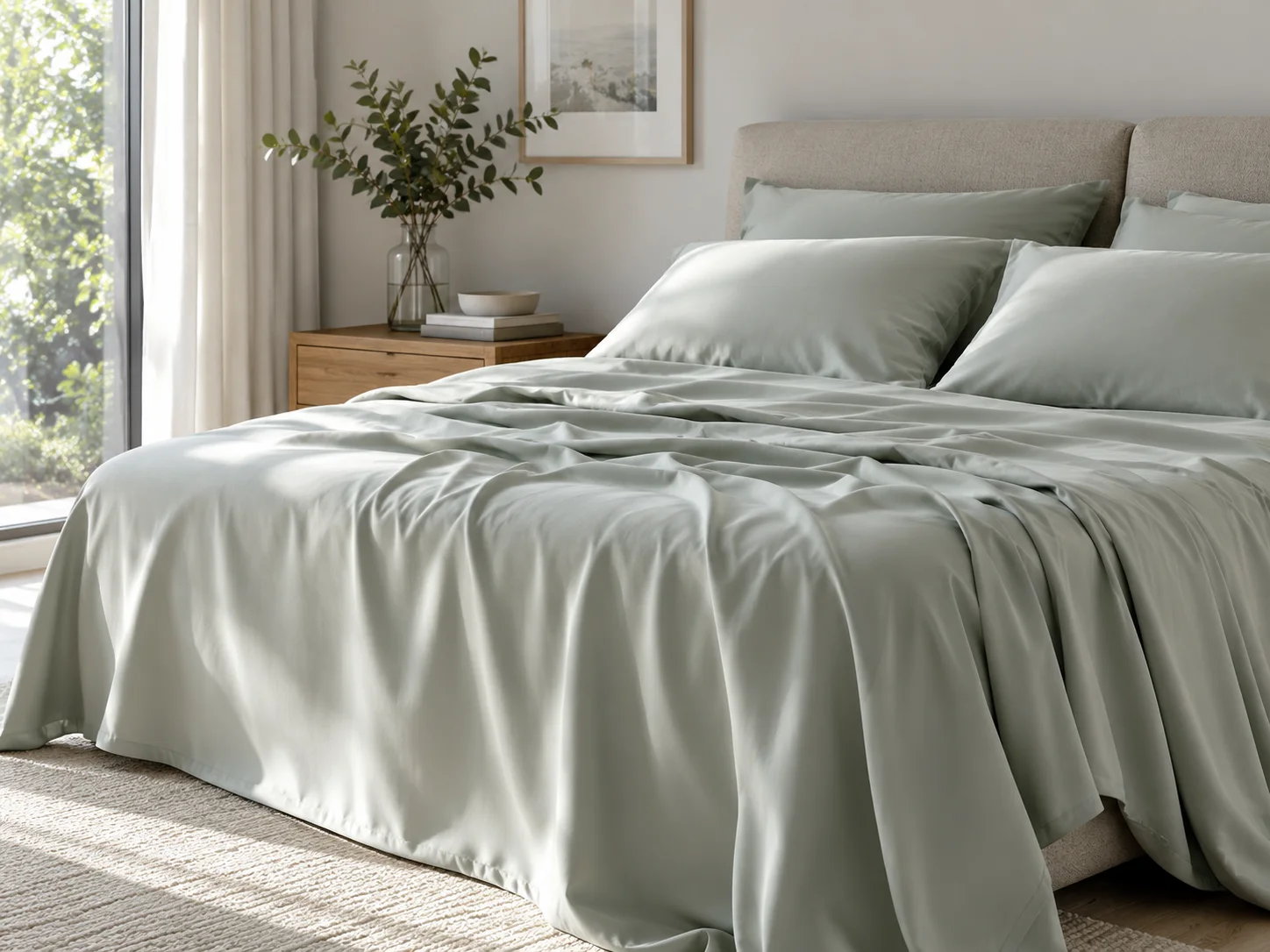
Lyocell typically has a smooth, flowing feel. It can be a useful option if you dislike the texture of linen or the crispness of percale.
TENCEL is a fiber brand that includes lyocell and modal. The name alone doesn’t mean that every sheet set contains the same fiber or blend.
Lyocell sheets often need gentler washing and drying than a basic cotton set. They suit a household where bedding can have its own wash cycle rather than being bundled in with towels and heavy clothing.
If you prefer the simplest possible laundry routine, cotton or microfiber may be easier to live with.
Bamboo-Derived Viscose Sheets
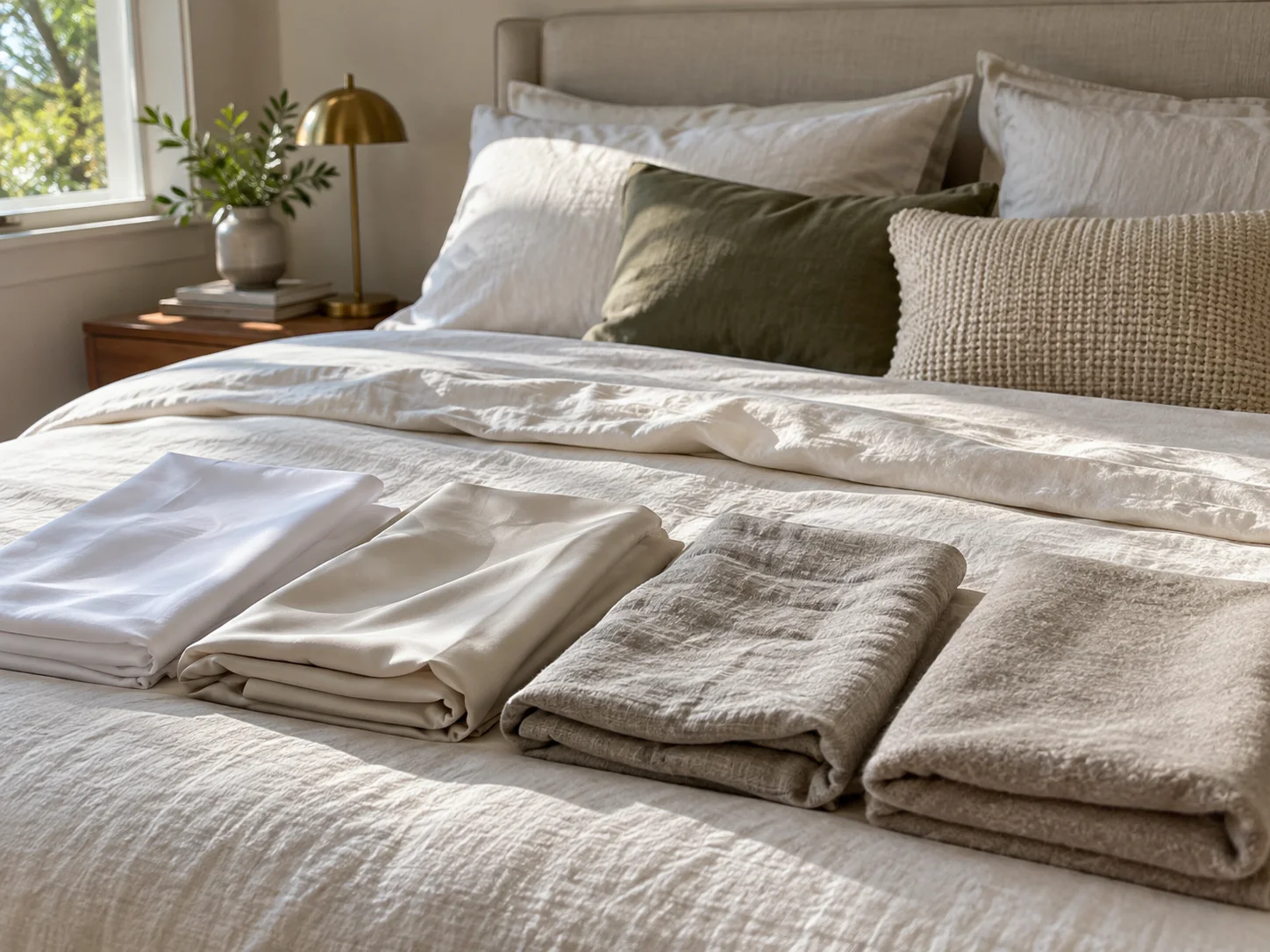
Most bedding sold as bamboo sheets is viscose or rayon made from bamboo, rather than fabric woven directly from raw bamboo fibers.
The Pure Bamboo King Sheet Set uses viscose derived from bamboo. It belongs on the shortlist if you prefer smooth, drapey sheets over a crisp cotton feel.
This type of fabric can feel close to the body. That may be exactly what you enjoy, but it is a different experience from lightweight percale.
A useful note: A bamboo label does not automatically mean a fabric is antibacterial, chemical-free, or environmentally preferable. Those claims need evidence beyond the plant name.
6. Silk: A Smooth Finish With More Upkeep
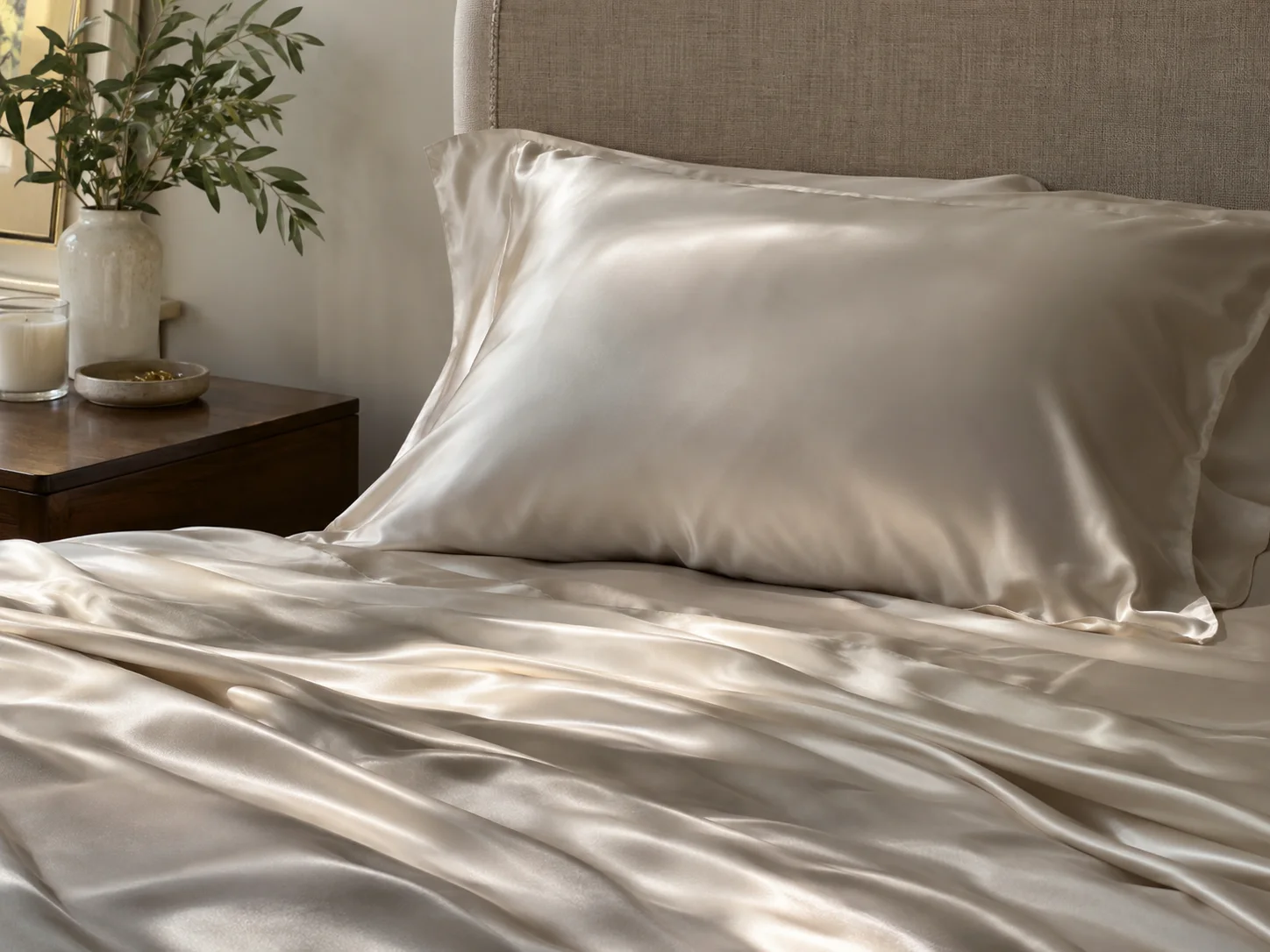
Silk is a natural protein fiber with a smooth, slippery feel. It can make the bed feel luxurious, but it comes with a higher price and a more careful laundry routine.
The 22 Momme Mulberry Silk King Sheet Set is an option for someone who wants silk across the whole bed.
Momme describes the weight of silk fabric. It is more relevant to silk than the thread counts commonly used to advertise cotton sheets.
Silk and polyester satin are different materials, even when both look shiny. Polyester satin is usually much cheaper, while silk has its own feel and care requirements.
A full silk set also changes how the bed behaves. Pillows and bedding may move around more easily on the slippery surface.
If you only want silk against your face, a silk pillowcase is a smaller purchase than replacing the entire sheet set.
7. Microfiber and Blends: Affordable and Easy to Wash
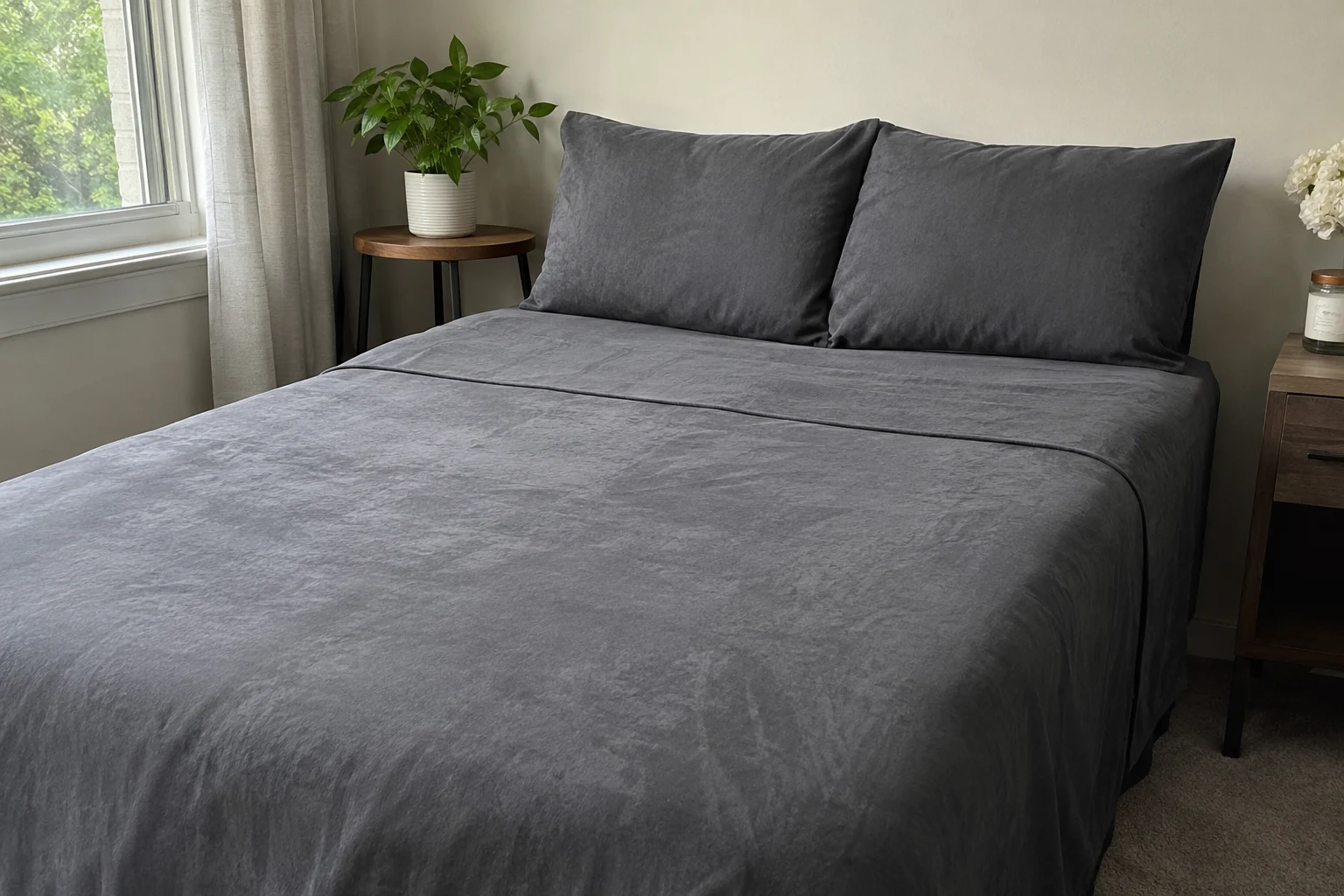
Microfiber is a practical option when price, softness, and fewer wrinkles matter most.
Most microfiber sheets are made from polyester. They often dry quickly and feel soft immediately, especially when the surface is brushed.
The CGK Unlimited Queen Four-Piece Sheet Set is a microfiber option for an everyday bed or spare room. It includes a fitted sheet, a flat sheet, and two pillowcases.
The main drawback is warmth. Some people find microfiber comfortable all year, while others feel too hot or dislike how it clings.
Cotton-polyester blends offer another compromise. They often wrinkle less than pure cotton, but the feel depends on the proportion of each fiber and the way the fabric is made.
For a tight budget, the best purchase is a set that fits properly and feels comfortable. A large bundle of pieces you won’t use simply takes up more cupboard space.
Our guide to decorating on a budget has more ways to improve a bedroom without replacing everything at once.
8. Flannel, Fleece, and Jersey for a Cozier Bed
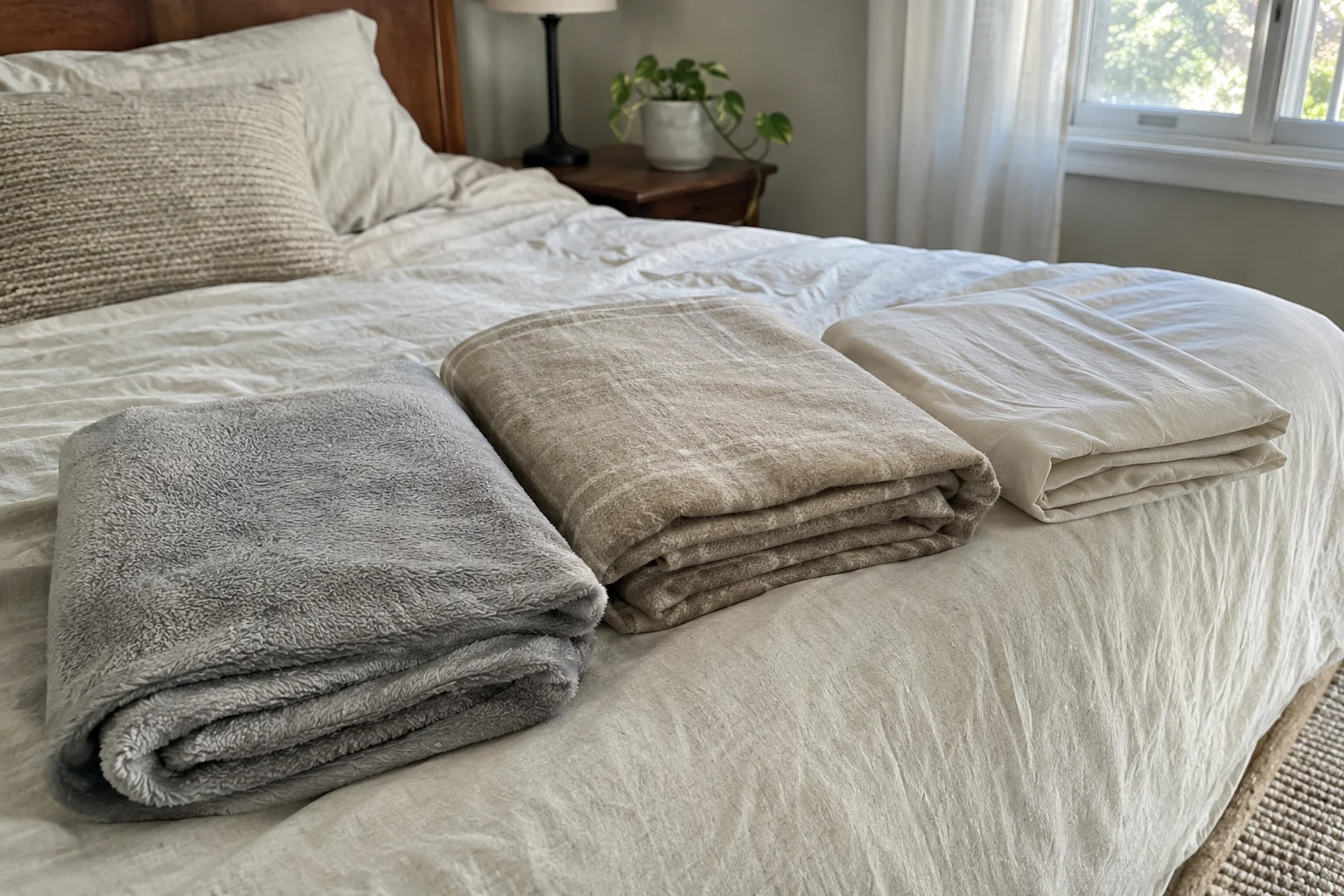
These fabrics suit different preferences: flannel and fleece add warmth, while jersey adds stretch.
They are worth separating because “soft” can describe all three without explaining how they feel.
Flannel for Cold Nights
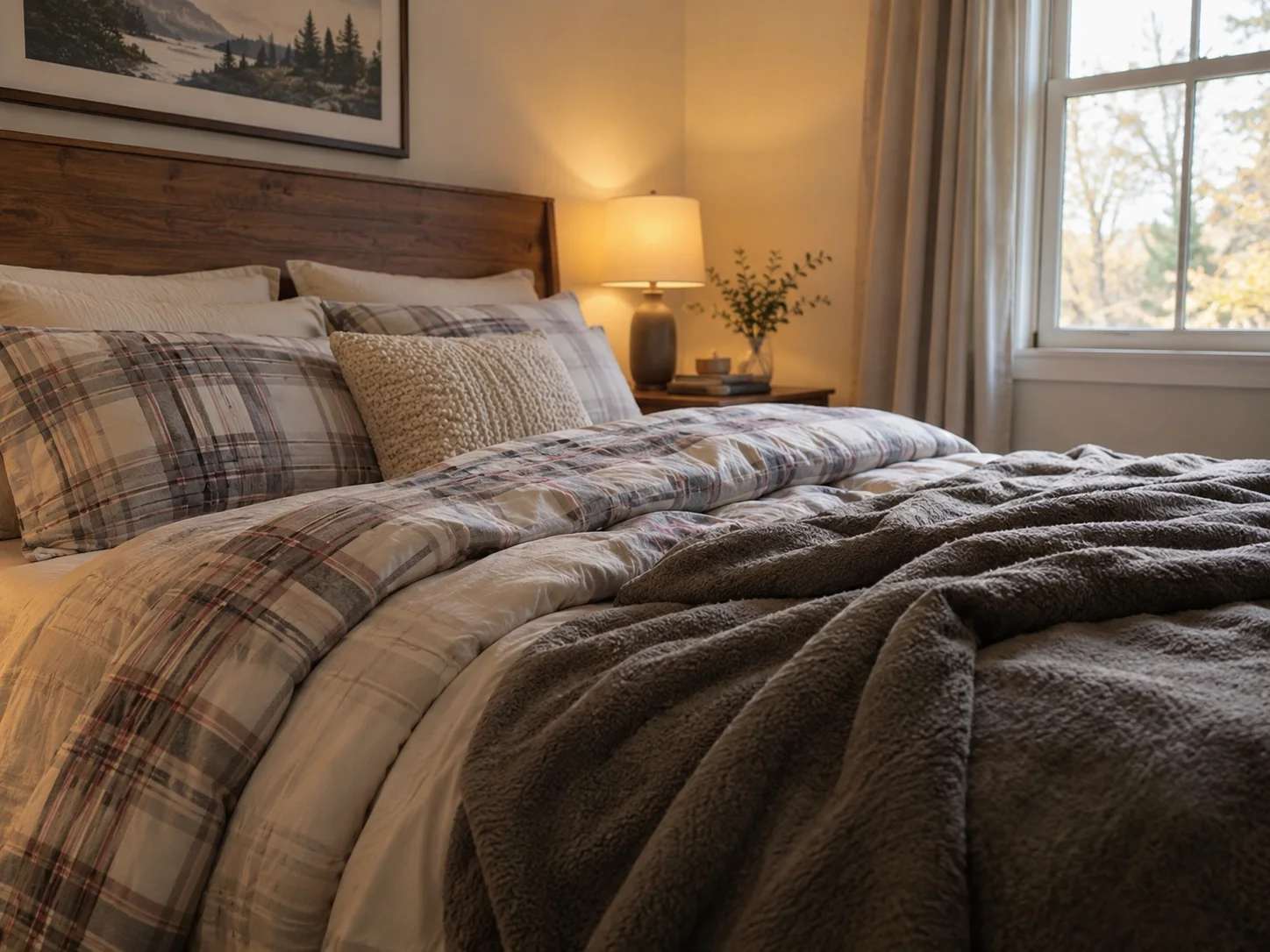
Flannel has a fuzzy surface that helps trap warmth. Cotton flannel is common, although blends are also available.
It works well if getting into cool, crisp sheets is the part of bedtime you dislike most.
The brushed surface can develop small pills with use. Flannel can also feel too warm once the weather changes, so it often works best as a seasonal set.
Fleece for a Plush, Warm Bed
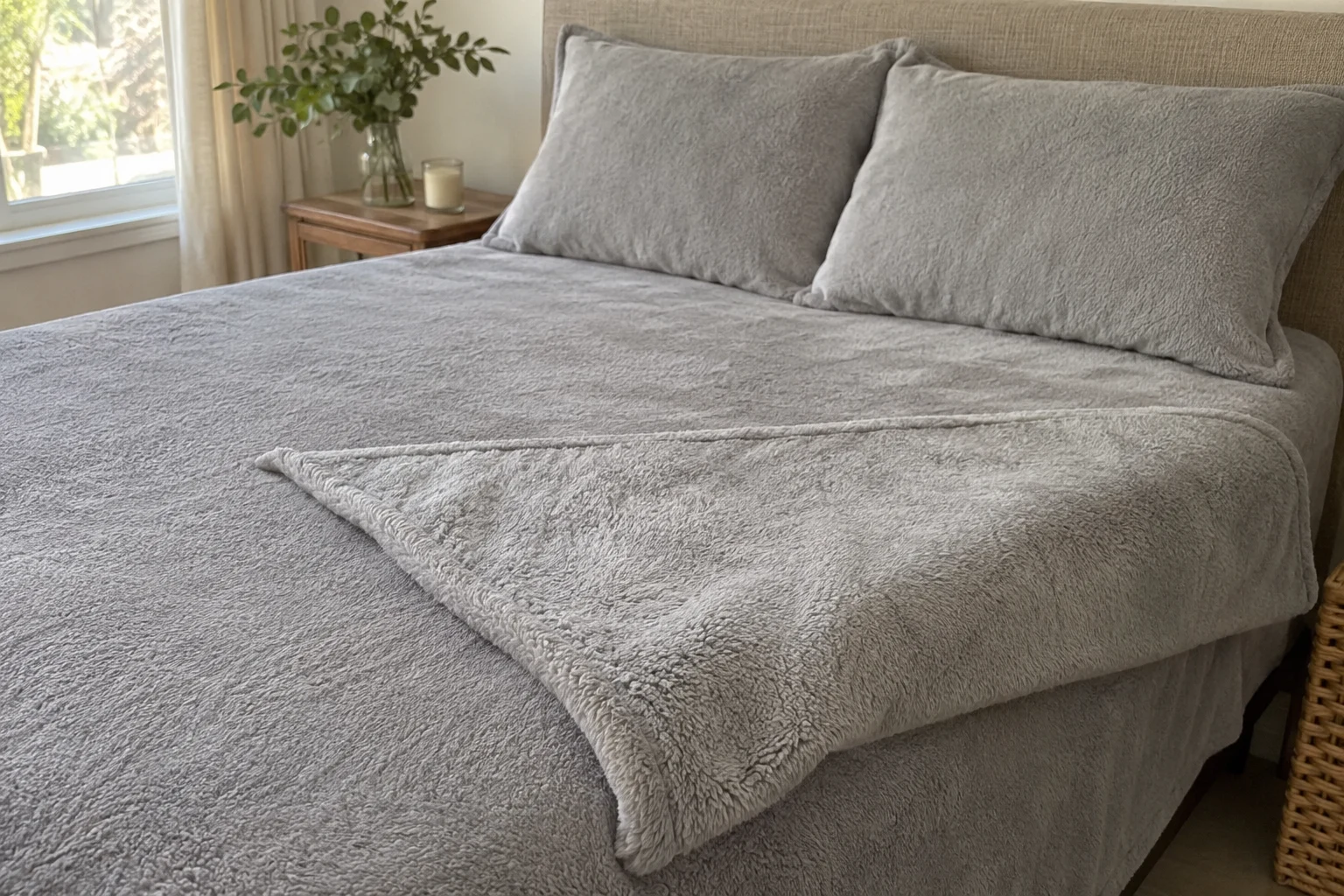
Fleece provides a thicker, plush feel and suits people who regularly feel cold in bed.
The Bare Home Super Soft Fleece Queen Sheet Set is a warm option for that preference. Its polar fleece fabric is different from cotton flannel and has a more blanket-like feel.
This is the kind of set to choose for warmth rather than a cool, crisp bed. Hot sleepers will usually be more comfortable with a lighter fabric.
Jersey for a T-Shirt Feel
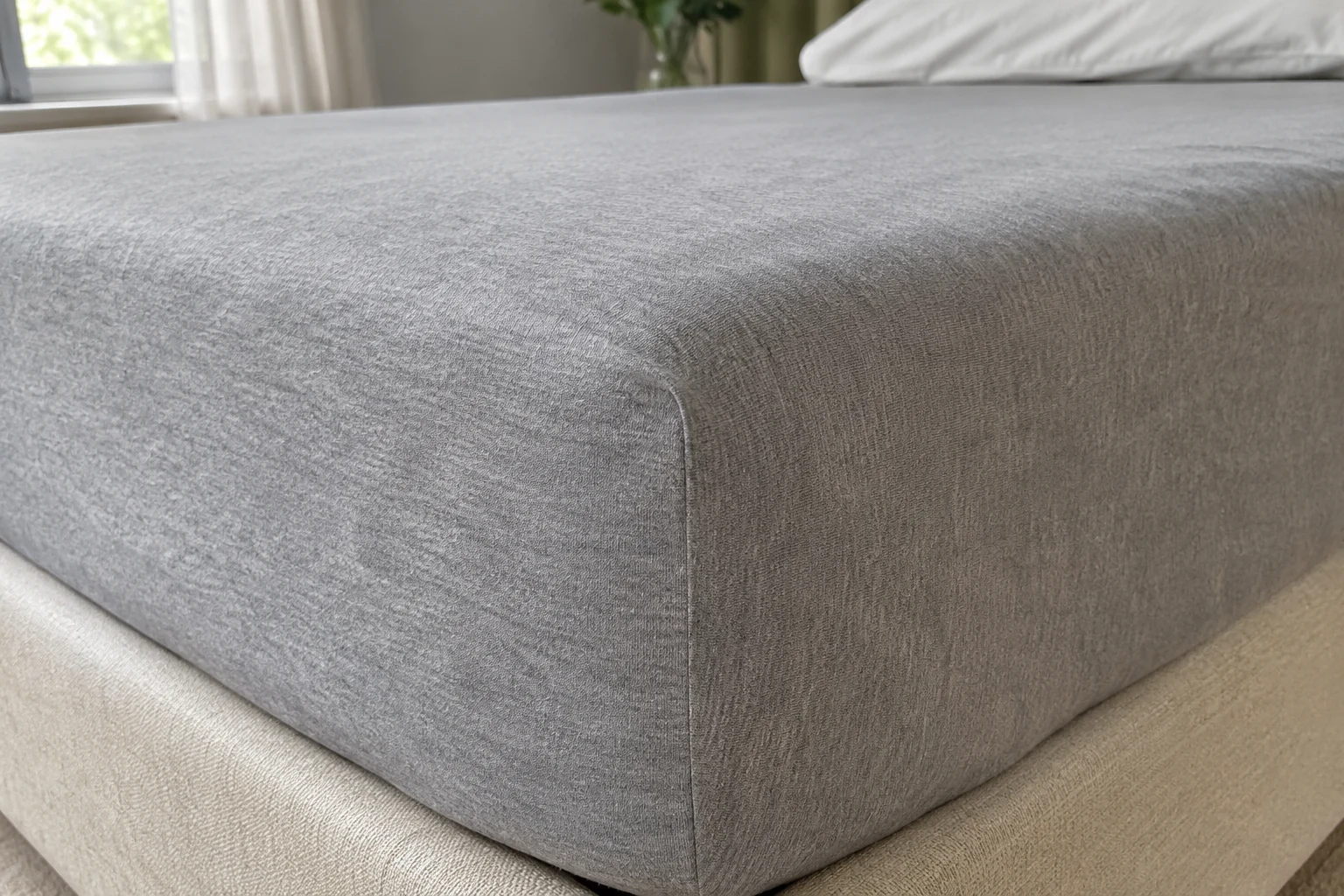
Jersey feels stretchy and familiar, much like a soft T-shirt.
It is knitted rather than woven, which gives it stretch. Cotton jersey and cotton blends are common, though the fiber mix affects warmth and durability.
Jersey suits people who dislike stiff sheets and don’t mind a less tailored appearance. Over time, some sets stretch out or develop pills, especially where the fabric rubs against the body.
9. What Thread Count Actually Tells You
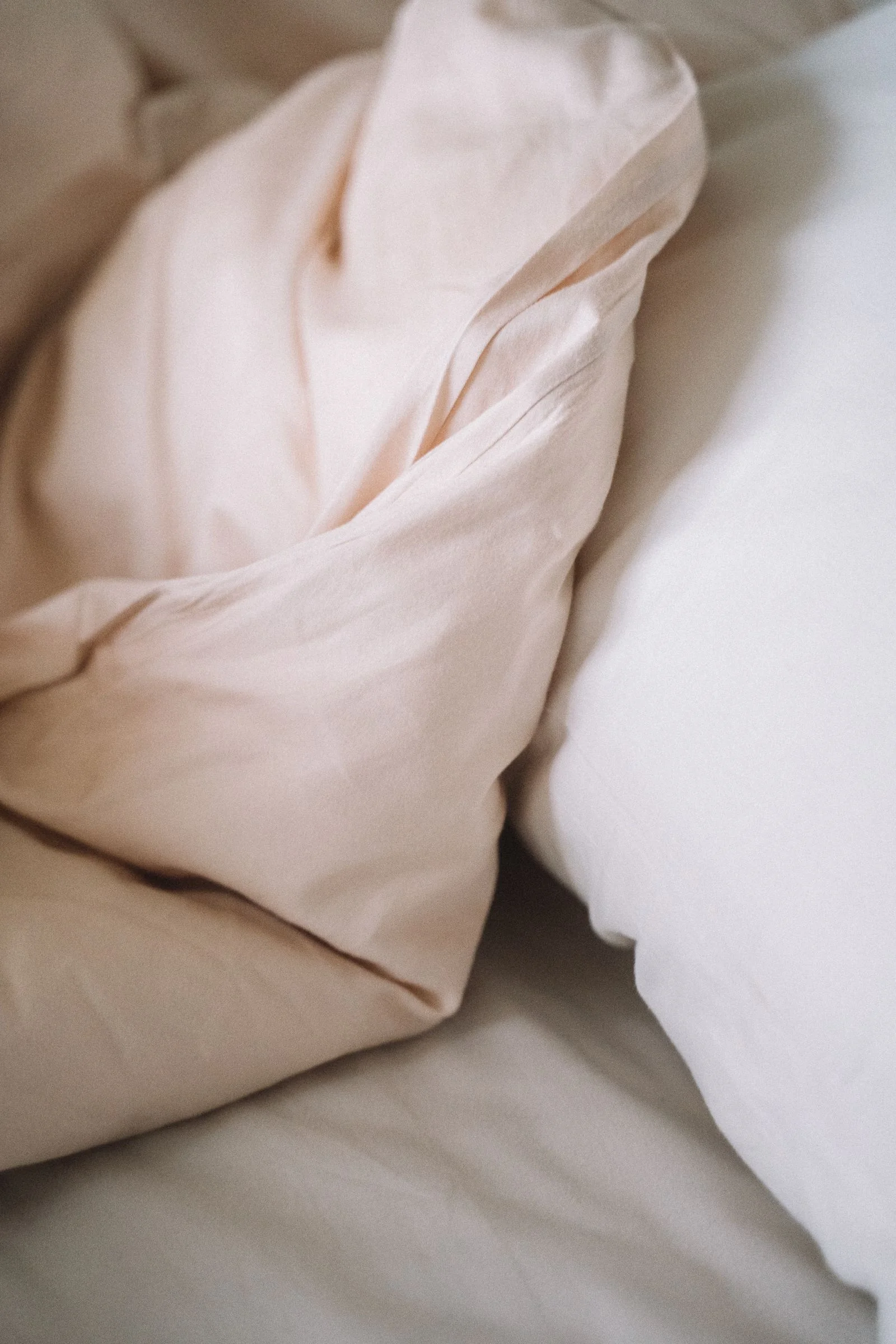
Thread count describes the number of threads in a square inch of woven fabric. It doesn’t measure softness on its own.
The fiber, yarn quality, weave, and finishing all affect the result. A higher number can also mean a denser fabric, which may feel heavier or warmer.
Some thread-count claims count the separate strands within a multi-ply yarn, making the number look more impressive without providing a useful comparison.
For buying purposes, this order is more helpful:
- Material: Cotton, linen, silk, viscose, lyocell, or a synthetic.
- Weave or knit: Percale, sateen, jersey, or another construction.
- Feel and weight: Crisp, smooth, textured, light, or warm.
- Fit and care: Whether it suits your mattress and laundry routine.
- Thread count: An extra detail when comparing similar woven fabrics.
Linen, silk, fleece, and jersey should not be judged using the same thread-count expectations as cotton sheets.
Shopping note: “Hotel quality” and “cooling” are broad descriptions. They don’t tell you enough about the fiber, fabric weight, or how a set will feel in your bedroom.
10. The Right Fabric Still Needs the Right Fit
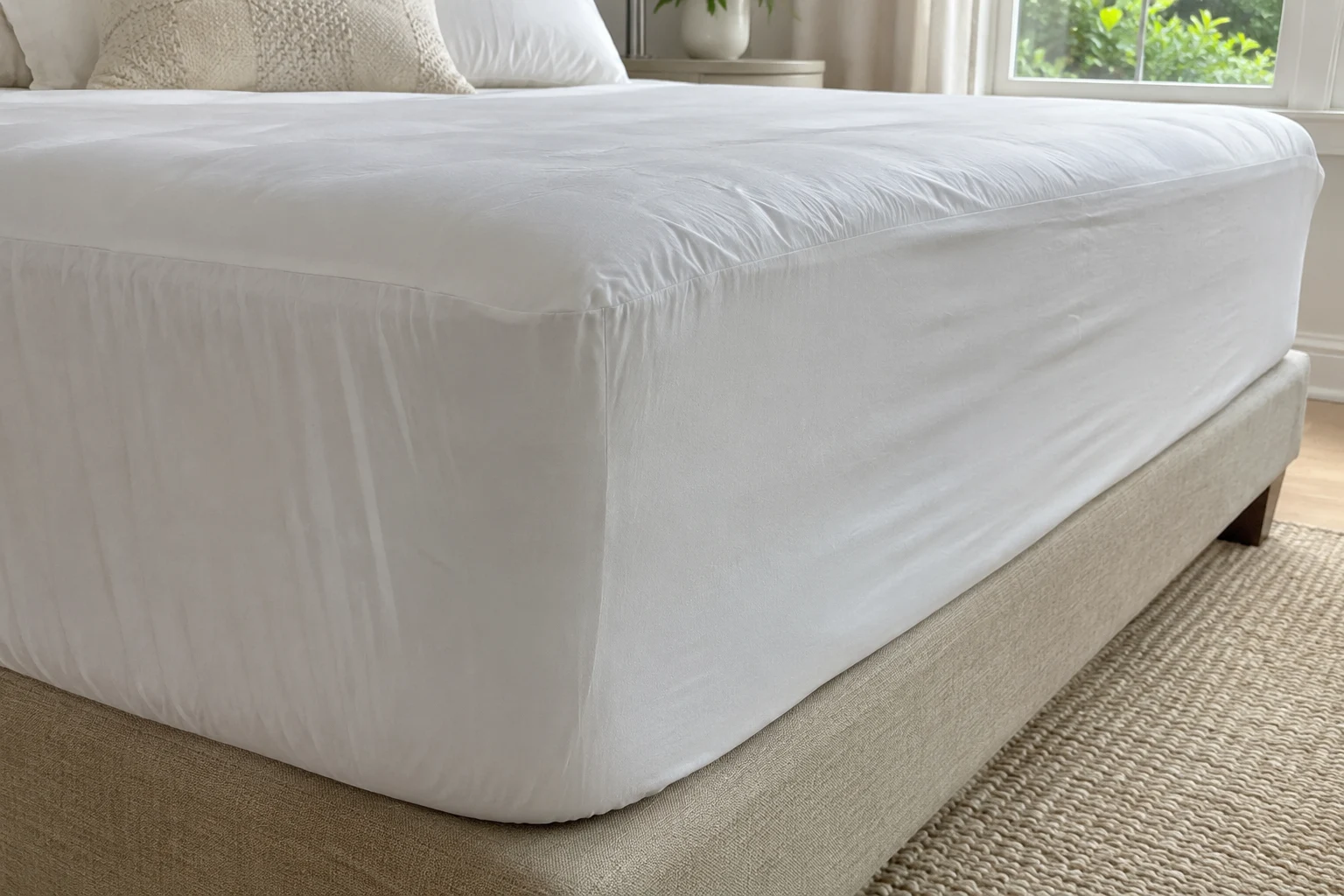
A comfortable sheet needs the right width, length, and mattress-depth allowance.
Your mattress topper counts toward that depth. For example, a 12-inch mattress with a 3-inch topper creates a 15-inch sleeping surface before allowing for the fitted sheet to tuck underneath.
“Deep pocket” is a general description, and the stated pocket depth is not always the same as the maximum mattress height it supports.
For particularly deep beds, the CGK Extra Deep King Six-Piece Sheet Set is designed with extra-deep fitted-sheet pockets. It uses microfiber and includes four pillowcases, so it suits a different need from a standard-depth cotton set.
Bed size matters just as much. A standard king and a California king have different dimensions, and a split king uses two separate mattresses. Our queen vs. king bed size guide explains the standard sizes.
Pillowcases deserve attention, too. King pillowcases can look loose on standard pillows, while smaller cases may compress larger pillows.
A flat sheet is optional. It can help keep the duvet cover cleaner between washes, but it may be unnecessary if you prefer sleeping directly beneath a regularly washed duvet cover.
11. A Quick Checklist Before You Buy
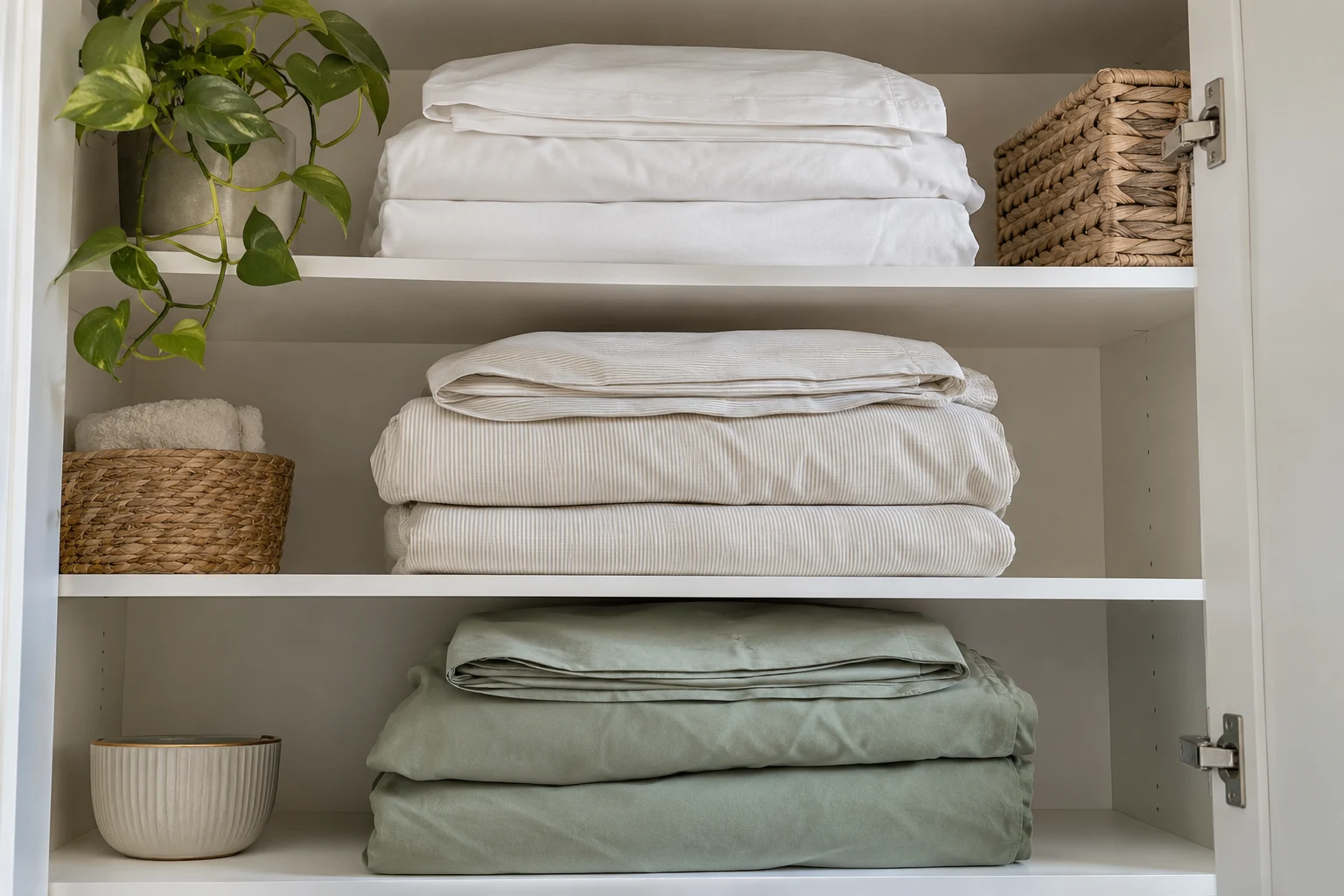
A good purchase should suit how you sleep and how you care for your bedding.
- The fabric has the feel I enjoy: crisp, smooth, textured, stretchy, or fuzzy.
- Its warmth suits me and the bedding I already use.
- The fiber composition is clear.
- The fitted sheet suits my mattress width, length, and total depth.
- The pillowcases match my pillows.
- I will use the pieces included in the set.
- The washing and drying routine fits my household.
- The price makes sense for how often I’ll use it.
A spare set is useful on laundry day. Two sets that you enjoy using are usually more practical than several sets bought mainly because they were on sale.
12. Bed Sheet Questions, Answered
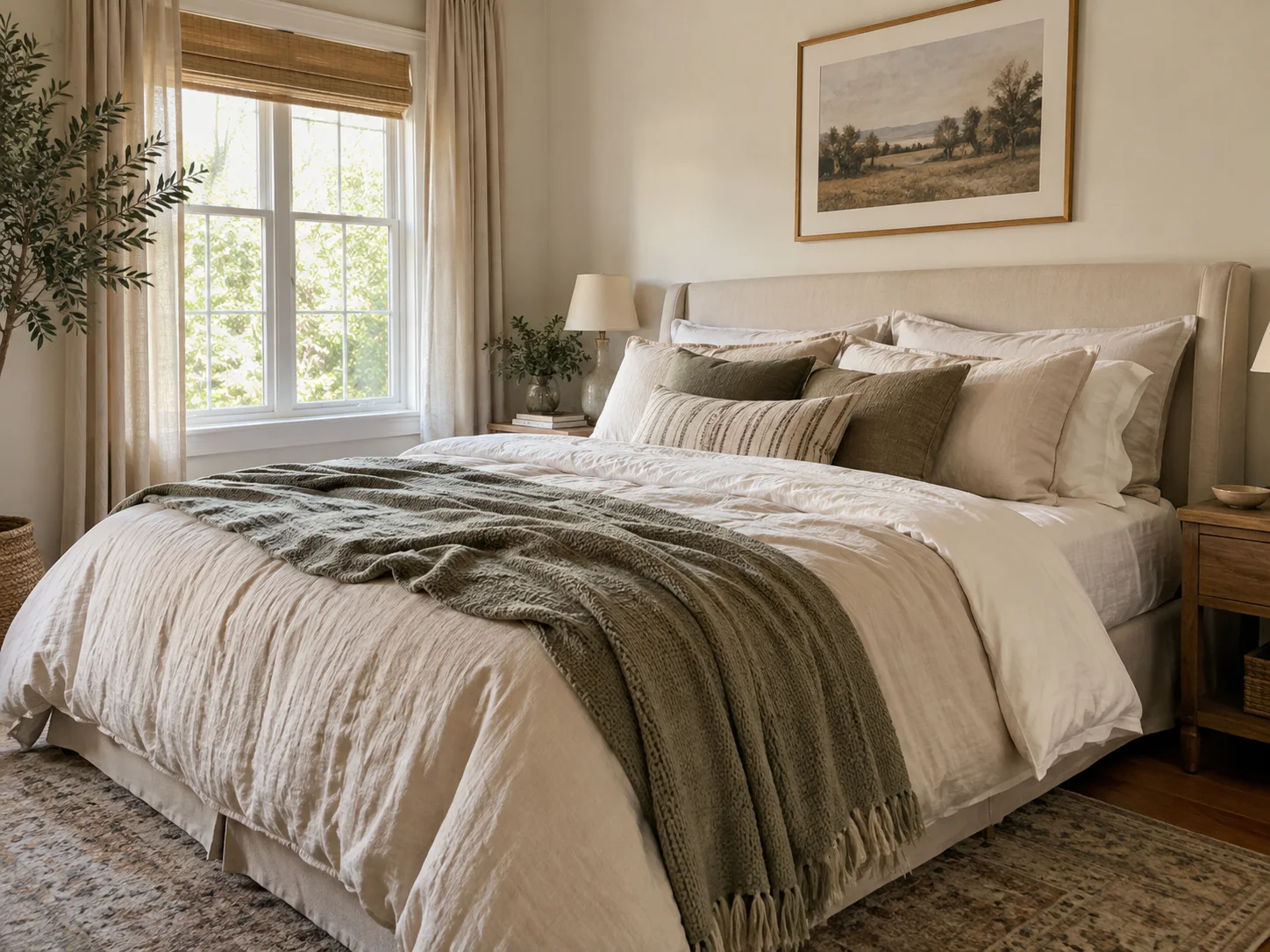
Most sheet-buying questions come back to feel, warmth, fit, and care. Here are the details that help with the final decision.
Which Bed Sheet Material Is Best for Hot Sleepers?
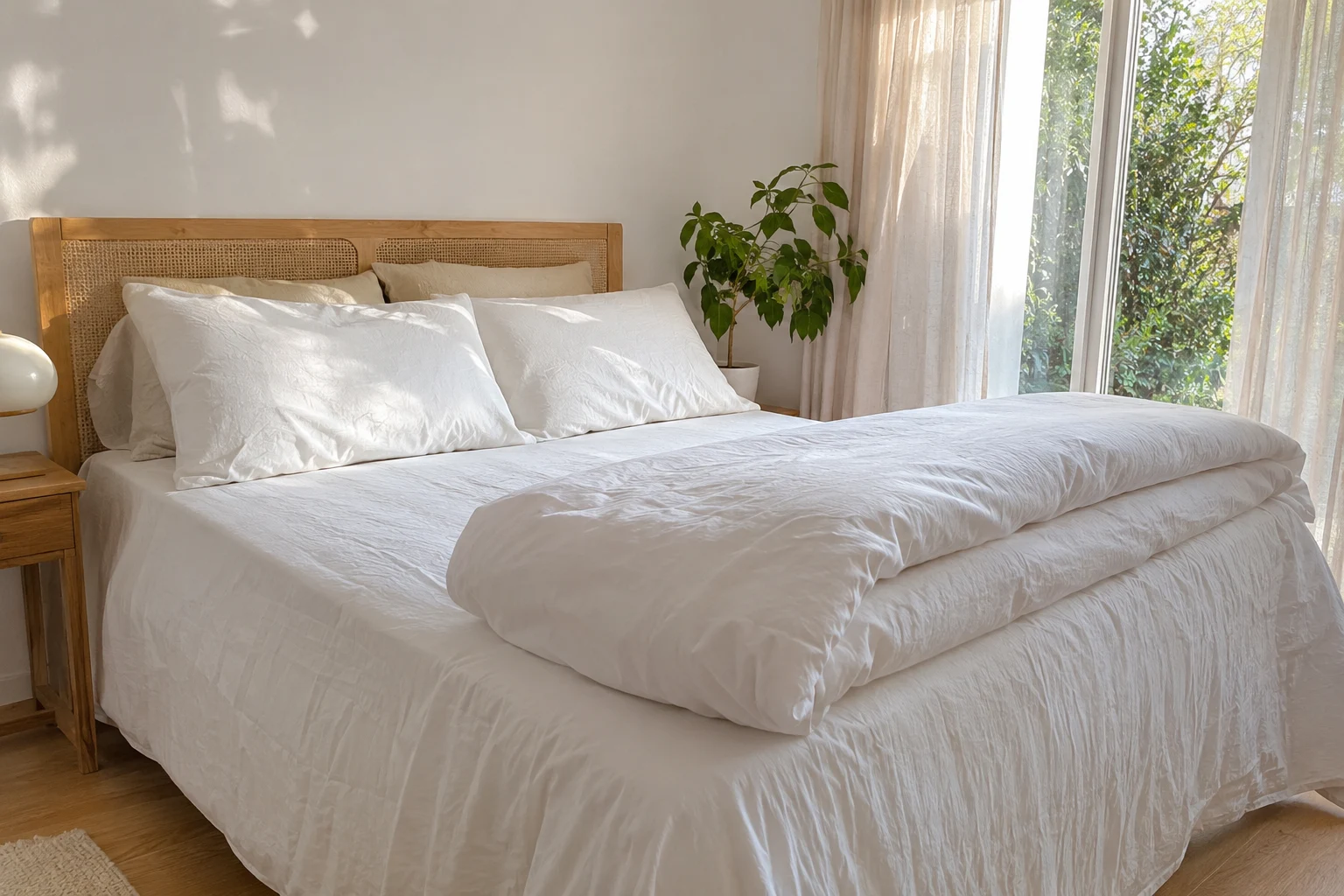
Lightweight cotton percale and linen are useful choices for people who tend to feel hot. Lyocell may also suit someone who prefers a smoother feel.
The whole bed matters, though. A heavy duvet or heat-retaining mattress protector can still make you warm beneath a light sheet.
Which Sheets Give You That Hotel-Bed Feel?
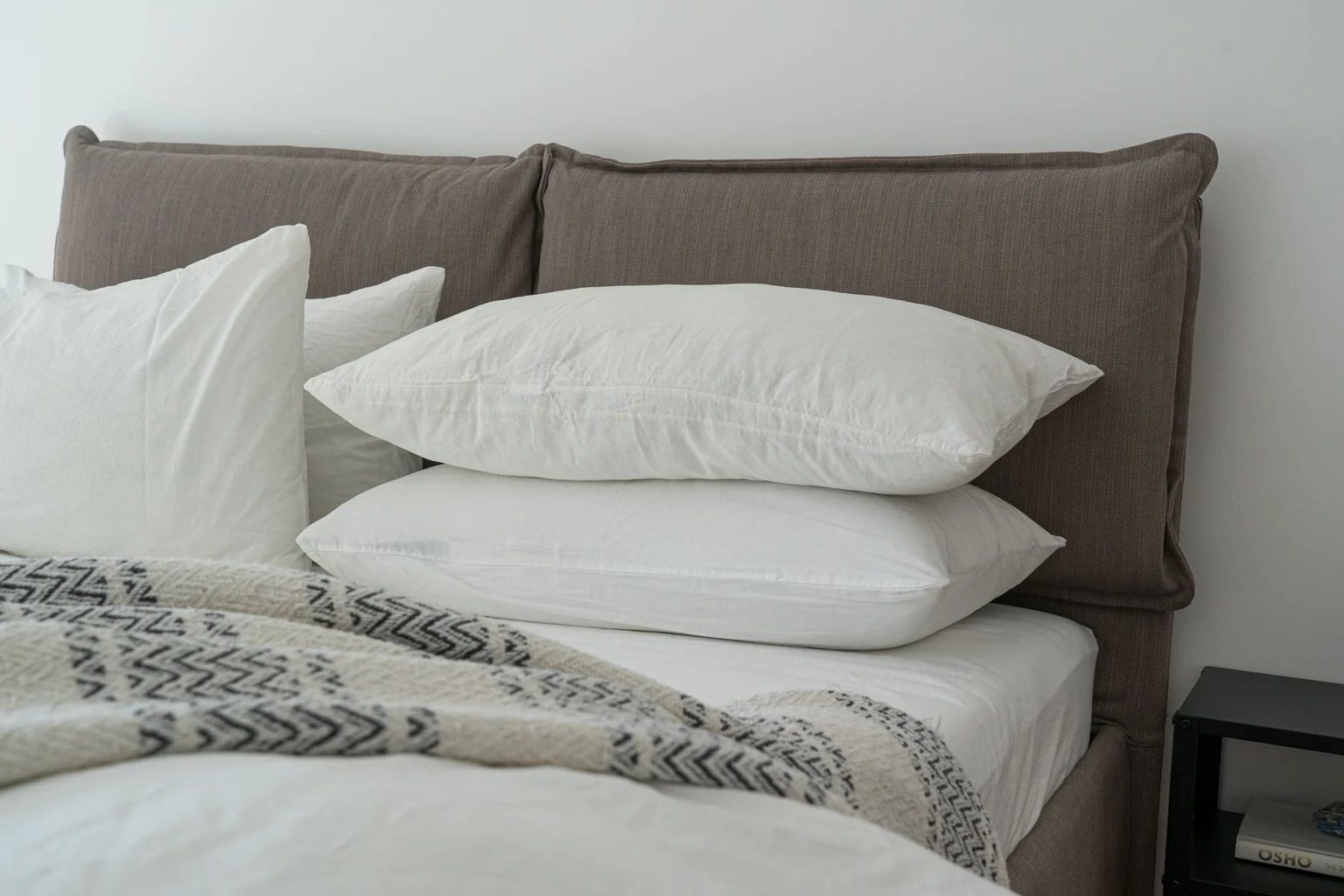
Cotton percale gives a crisp finish, while cotton sateen feels smoother and often looks slightly shinier.
There is no single hotel-sheet material. A well-fitting sheet, freshly washed bedding, and a neatly folded top layer all contribute to the result.
Are Bamboo Sheets Better Than Cotton?
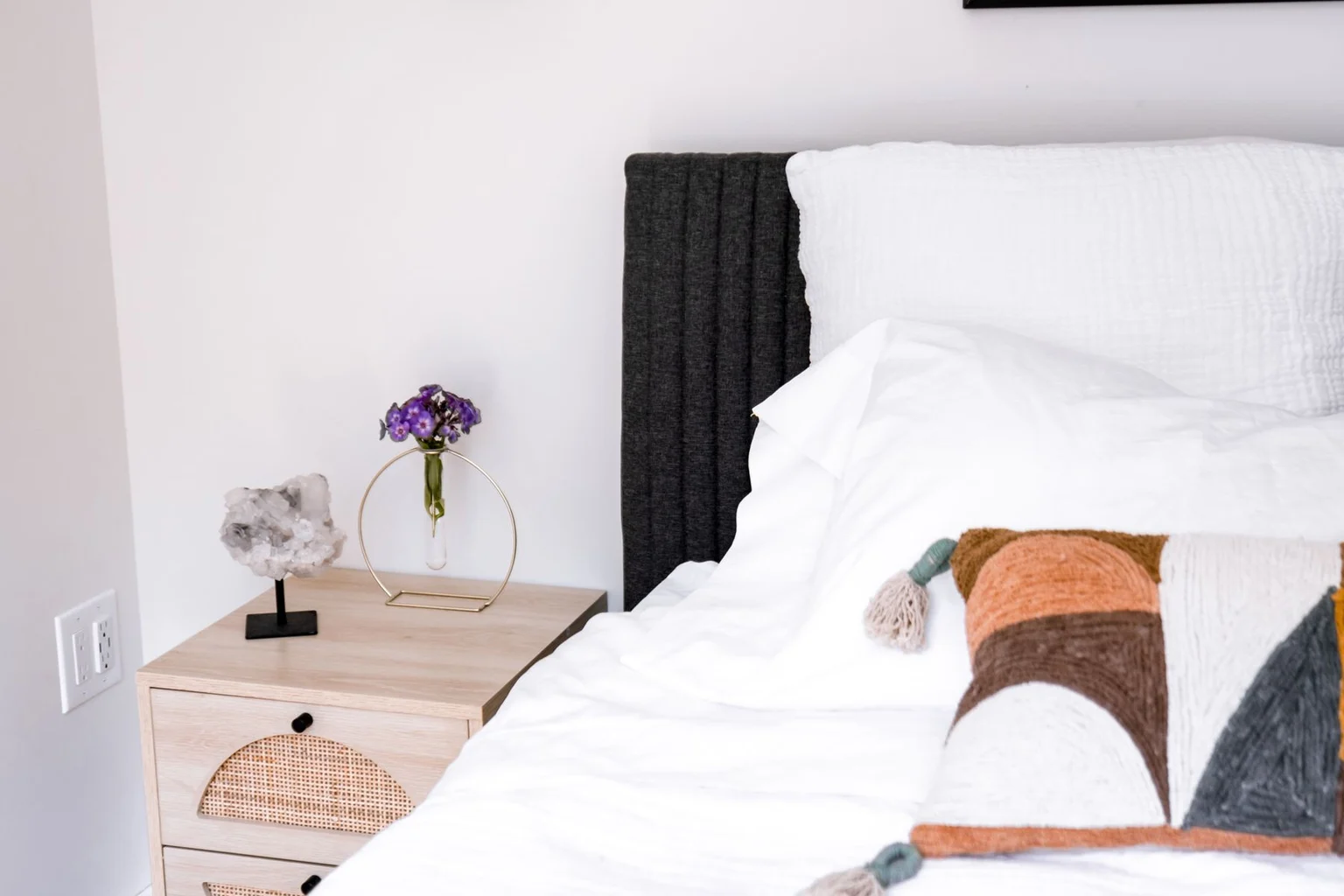
Bamboo-derived viscose suits people who enjoy soft, flowing fabric. Cotton offers more variety, including crisp percale, smooth sateen, and stretchy jersey.
Your preference matters more than the plant name. Someone who dislikes clingy sheets may prefer percale, while someone who finds percale stiff may enjoy viscose.
Is Egyptian Cotton Worth the Extra Money?
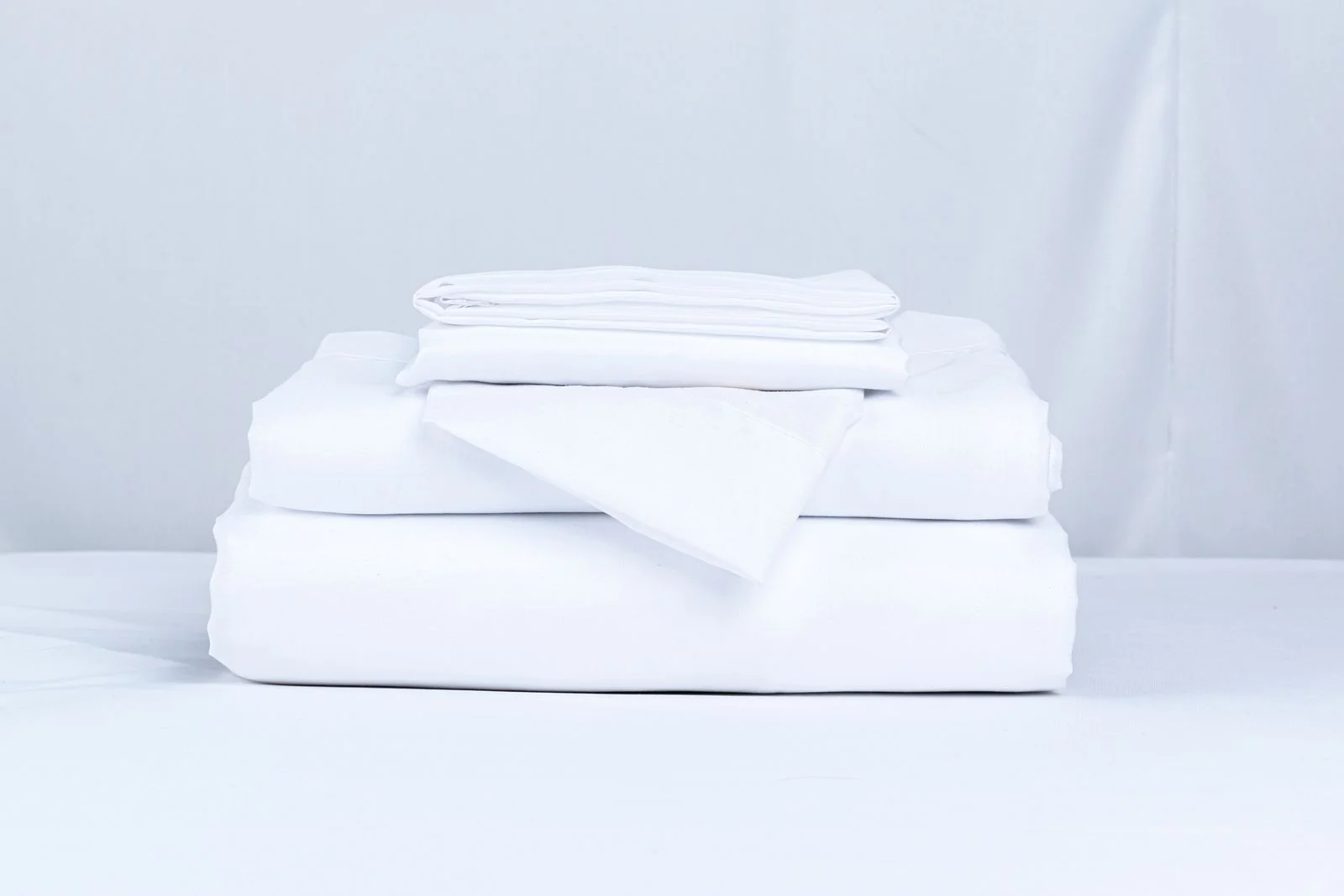
Egyptian cotton can be worth paying for when the sheets offer good-quality yarn, careful construction, and a feel you enjoy.
The country of origin alone does not guarantee that a set will be softer or more durable than other cotton sheets.
Does a Higher Thread Count Mean Softer Sheets?

No. Softness also depends on the fiber, yarn, weave, and finish.
A lower-thread-count percale may feel light and crisp, while a denser sateen feels smooth and heavier. Either can be comfortable.
Are Silk and Satin the Same?
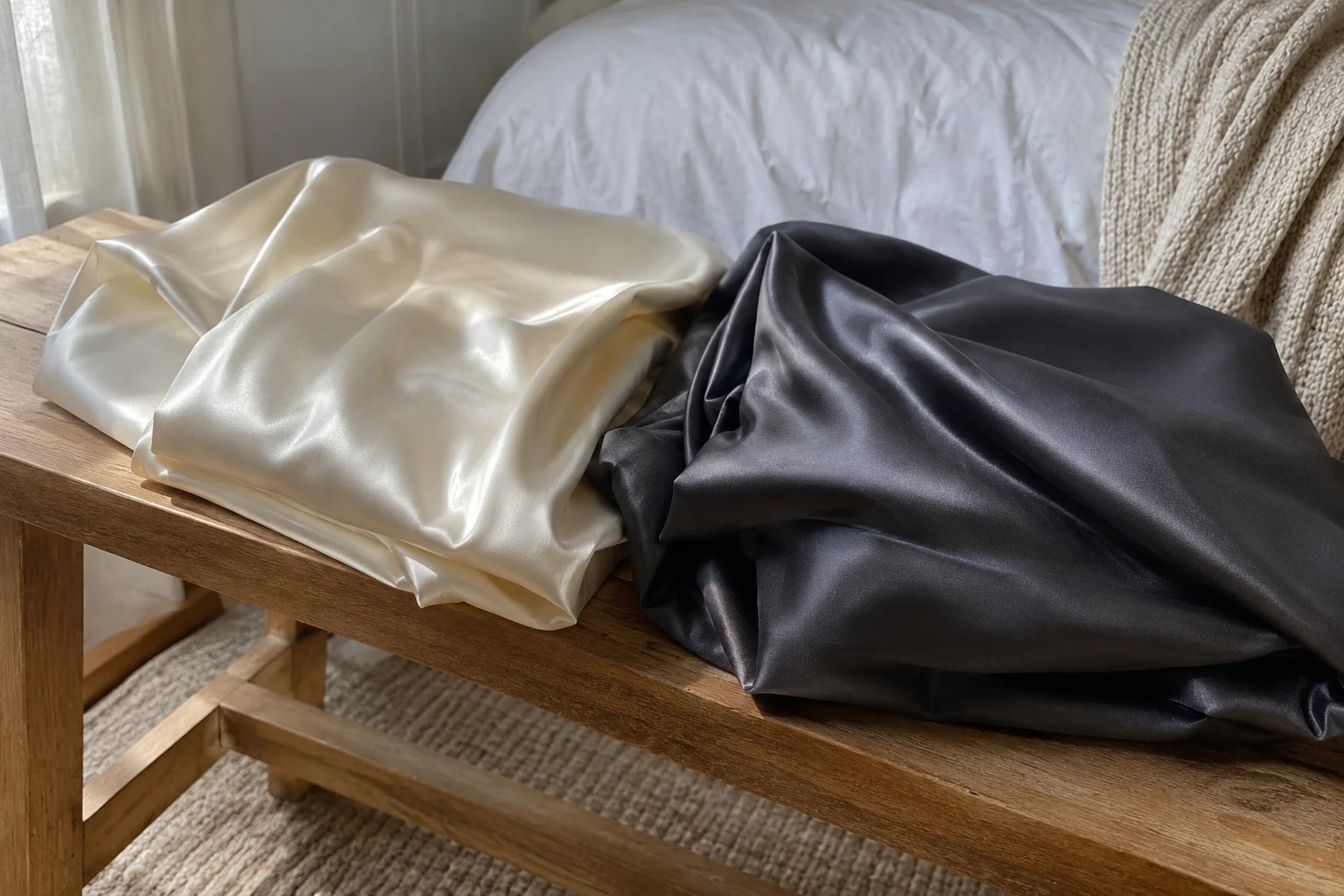
Silk is a fiber. Satin is a weave. Satin can be made from silk, polyester, or other fibers.
That means an inexpensive satin set may have a similar shine to silk while feeling different and needing a different care routine.
Why Does My Fitted Sheet Keep Coming Off?
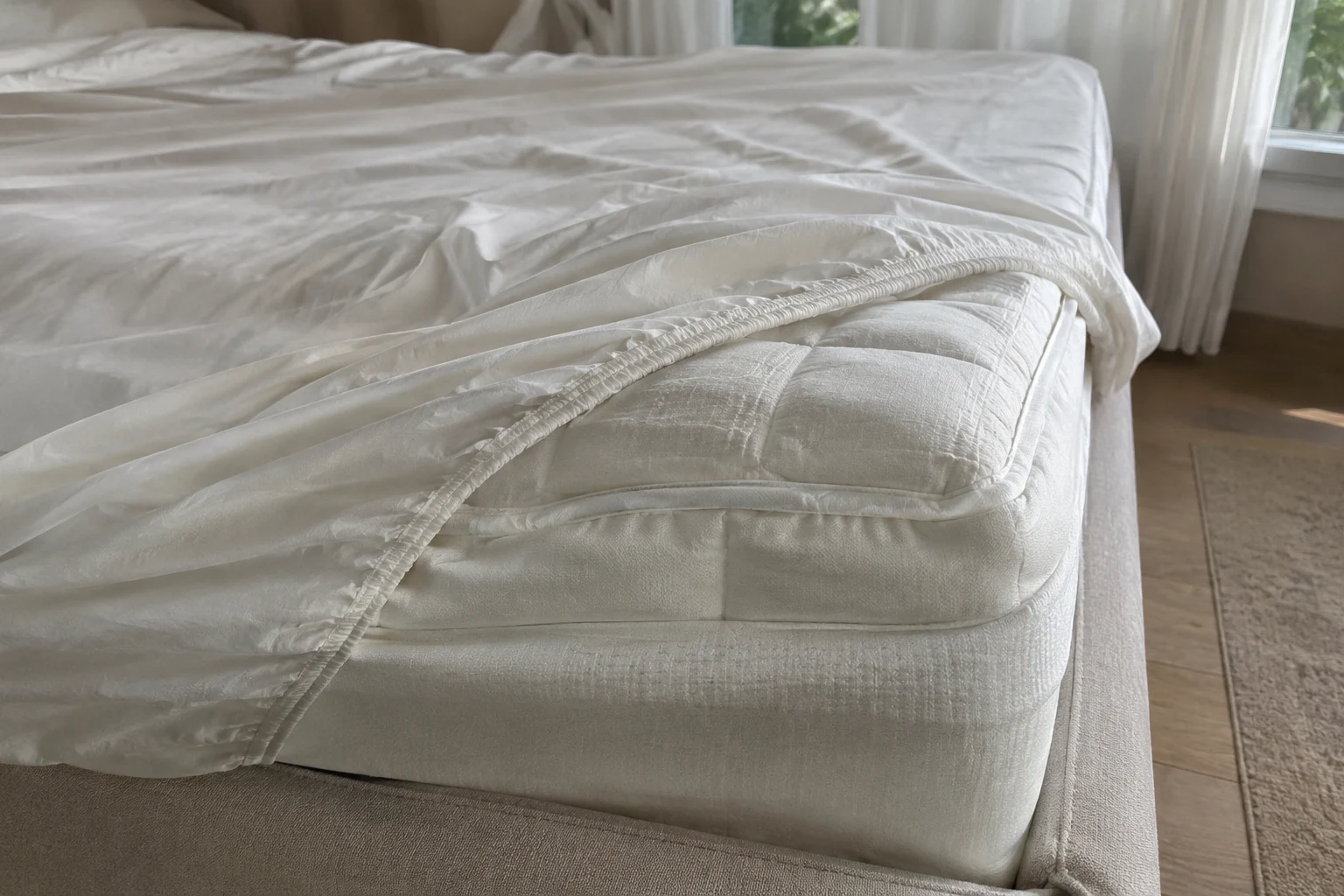
Common causes include the wrong dimensions, insufficient pocket depth, or worn elastic.
A topper can make a previously well-fitting sheet too shallow. Meanwhile, a sheet that is much too large may leave loose fabric that shifts around during the night.
The right fit should cover the sides and tuck underneath without stretching the corners excessively.
Sheet Sets for Different Preferences
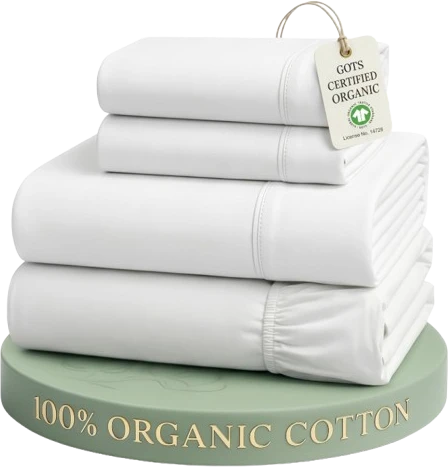 LANE LINEN Cotton Percale Sheet SetCotton percale sheets with a crisp, matte finish.
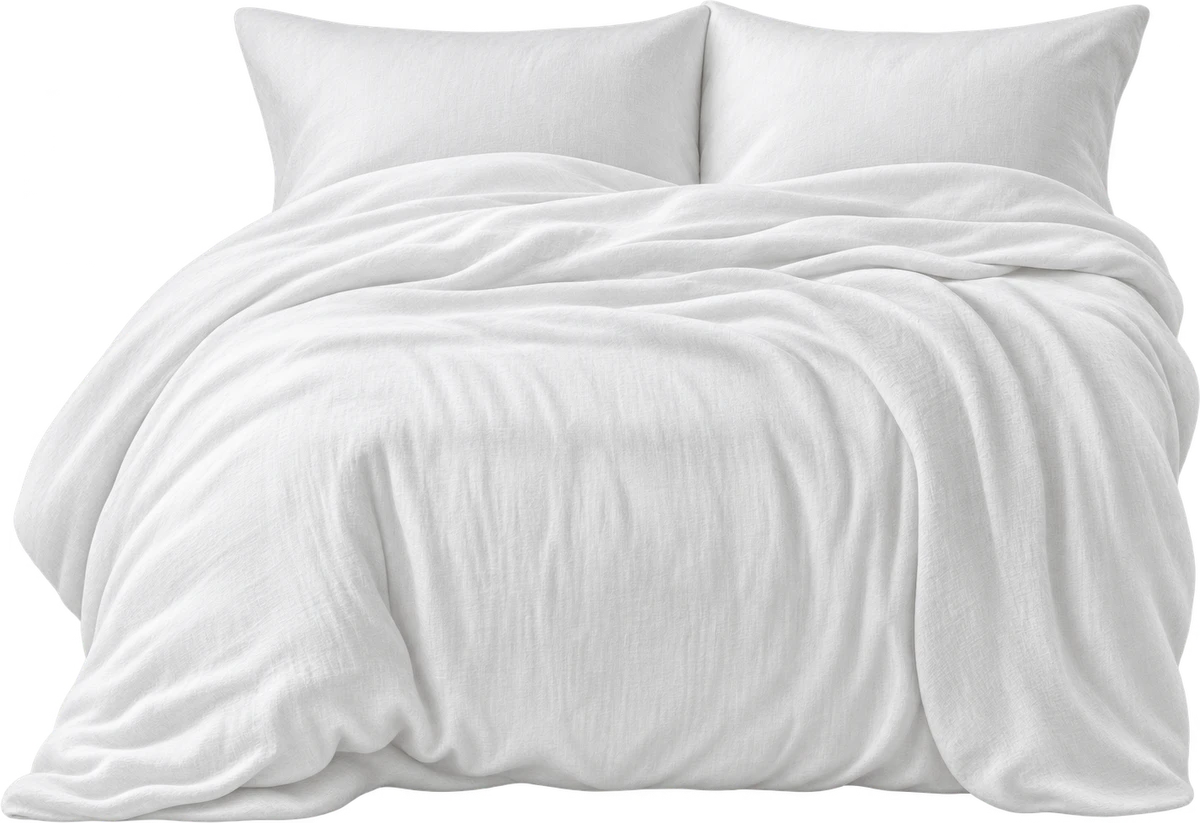 California Design Den Cotton Sateen King Sheet SetA smooth cotton sateen set with four pillowcases.
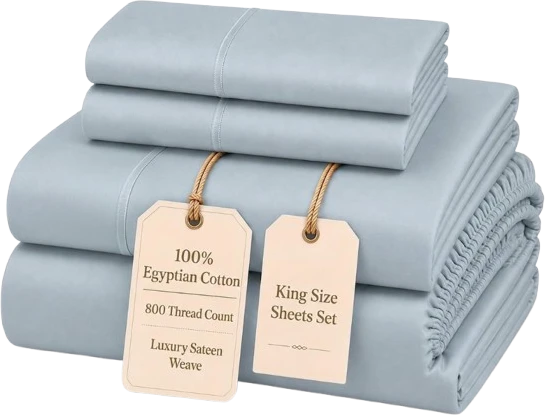 Chateau Home Collection Egyptian Cotton Sateen Sheet SetEgyptian cotton sheets in a smooth sateen weave.
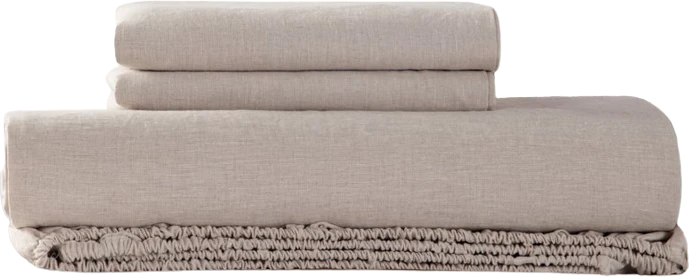 LBRO2M 100% Linen Sheet SetTextured linen sheets for a relaxed, airy bed.
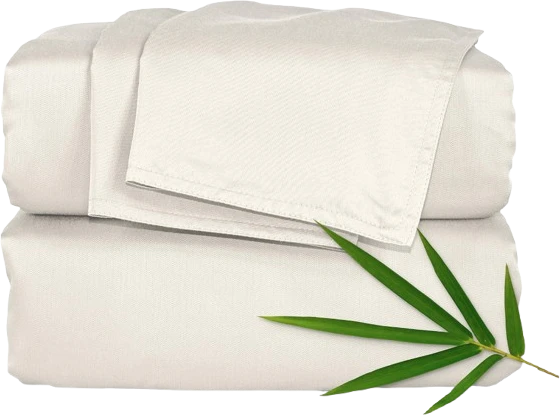 Pure Bamboo King Sheet SetSmooth, drapey sheets made from bamboo-derived viscose.
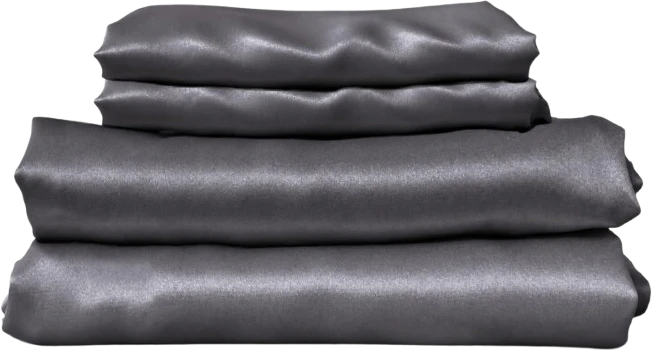 22 Momme Mulberry Silk King Sheet SetMulberry silk sheets with a smooth, slippery finish.
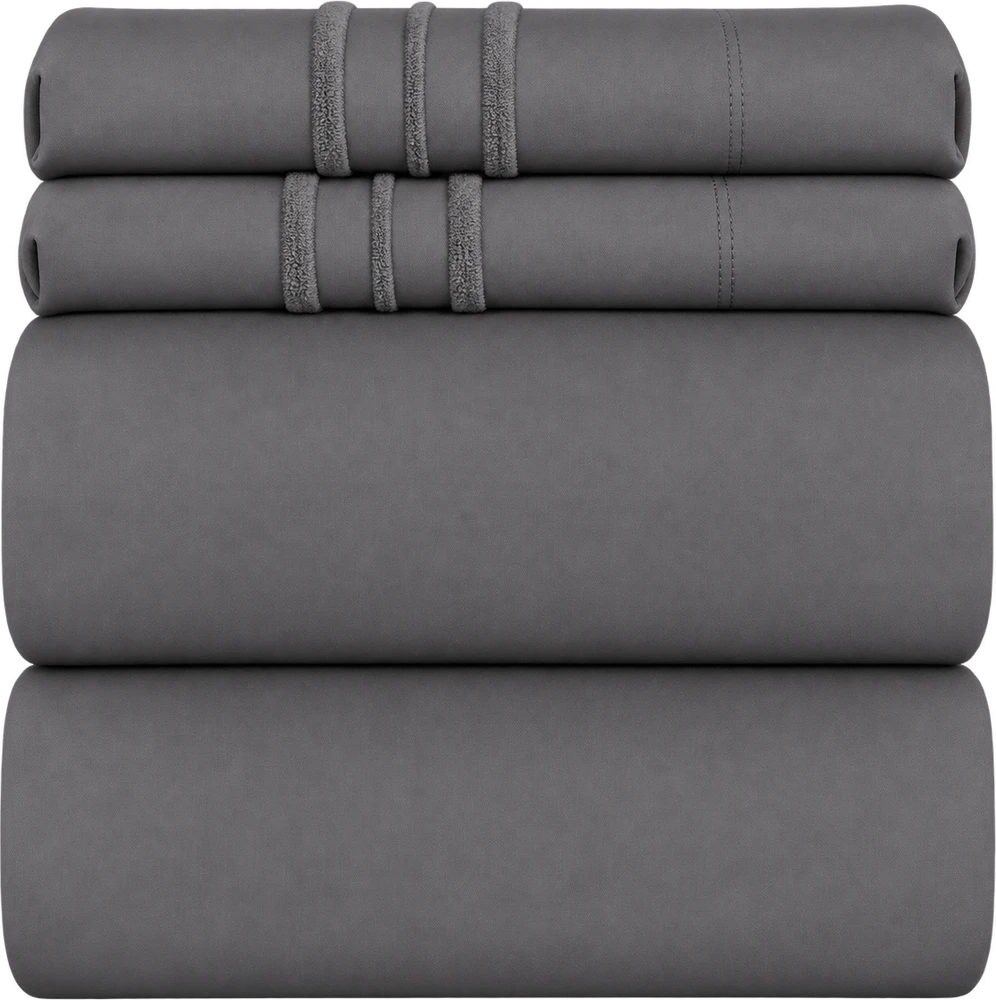 CGK Unlimited Queen Four-Piece Sheet SetSoft microfiber sheets with two matching pillowcases.
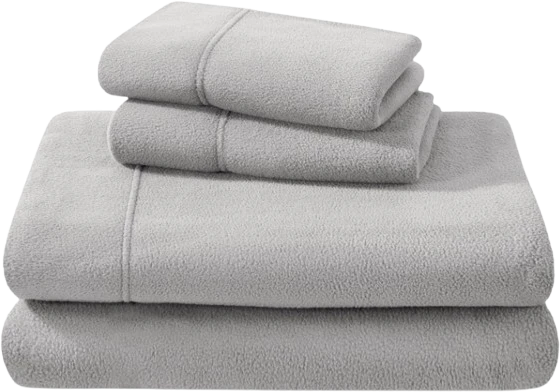 Bare Home Super Soft Fleece Queen Sheet SetPlush polar fleece sheets for a warmer bed.
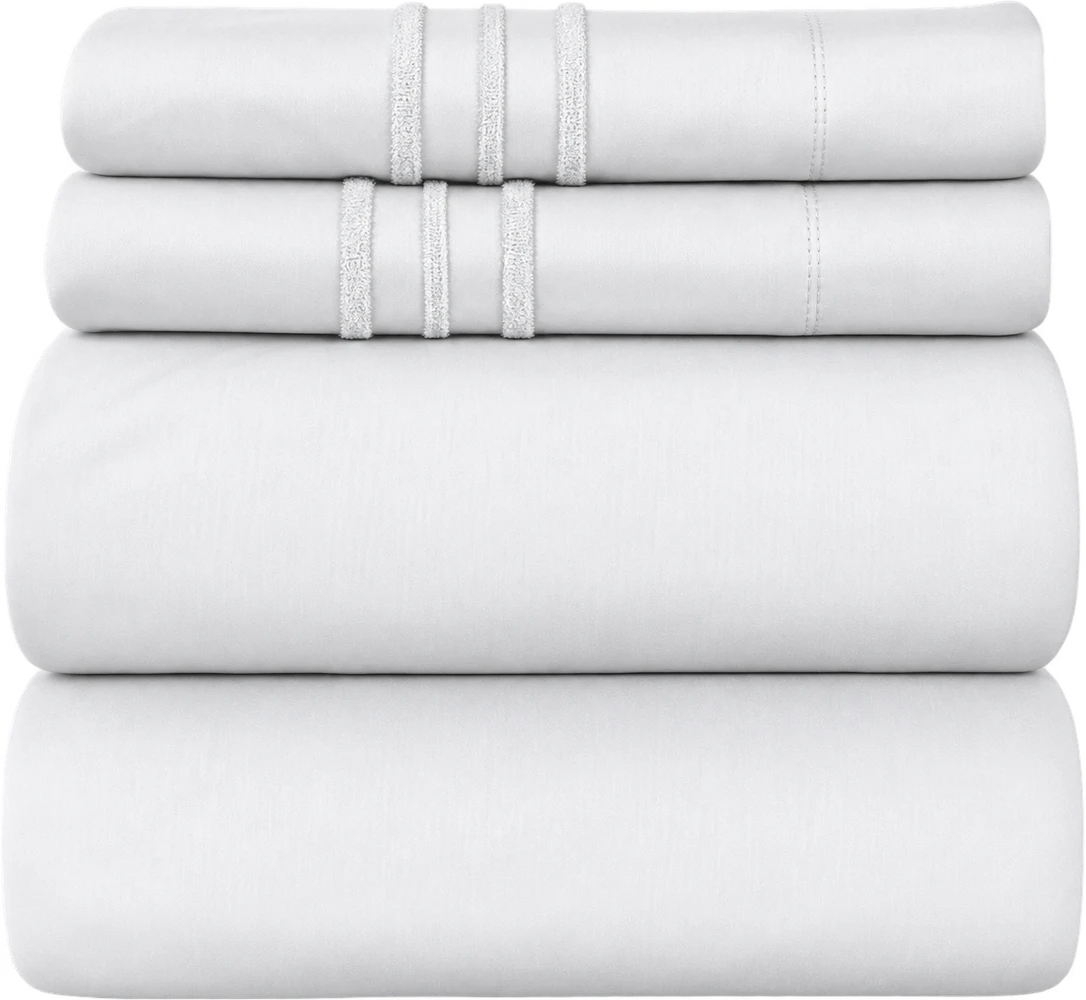 CGK Extra Deep King Six-Piece Sheet SetExtra-deep microfiber sheets with four pillowcases.