Queen vs King Bed Size: Is the Extra Space Worth It?

The queen vs king bed size debate gets personal when one of you sleeps diagonally and the other wakes up clinging to the edge.
A bigger bed sounds lovely at midnight. By morning, you still need enough room to open the dresser and get dressed.
The quick answer
- A standard US queen measures 60 × 80 inches; a standard king measures 76 × 80 inches.
- A king adds 16 inches of width, or 8 inches per person when shared equally. Both mattresses are the same length.
- A queen suits couples who sleep comfortably together and want more room for furniture.
- A king suits couples who need more sleeping width, provided the bedroom has room for the wider frame and clear walkways.
Those extra 16 inches can make a noticeable difference. Here’s what you gain, what takes up more room, and which pieces you’ll need when changing sizes.
1. Queen vs King at a Glance: Where the Extra Space Goes
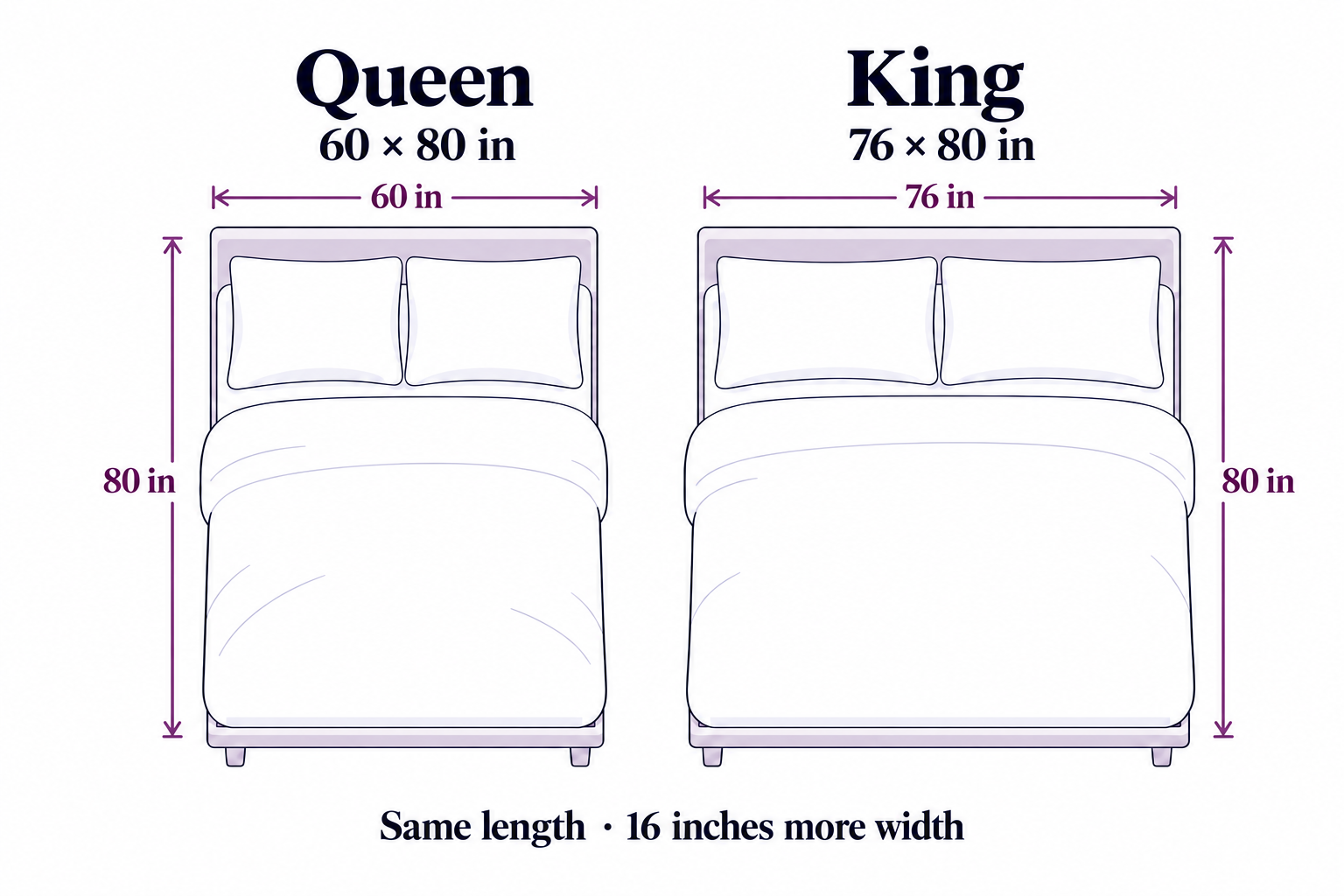
A standard king is 16 inches wider than a queen, giving two people an extra 8 inches each when the bed is shared equally.
That works out to roughly 27% more mattress surface area. All of that additional space runs across the bed, so upgrading from queen to king won’t give your feet more room.
| Detail | Queen | Standard king |
|---|---|---|
| Mattress dimensions | 60 × 80 inches | 76 × 80 inches |
| Approximate dimensions in centimeters | 152 × 203 cm | 193 × 203 cm |
| Width per person, shared equally | 30 inches | 38 inches |
| Mattress length | 6 feet 8 inches | 6 feet 8 inches |
| Main advantage | Leaves more floor space | Gives sleepers more width |
| Main tradeoff | Less room to spread out together | Needs a wider frame and more room |
| Typical cost within the same range | Usually lower | Usually higher |
Each half of a king is the width of a standard Twin XL mattress. A couple sharing a queen gets 30 inches each, which is 8 inches narrower.
Size note: This guide uses standard US mattress dimensions. Size names vary internationally, and the complete bed frame usually extends beyond the mattress.
2. What Those Extra 16 Inches Feel Like at Night
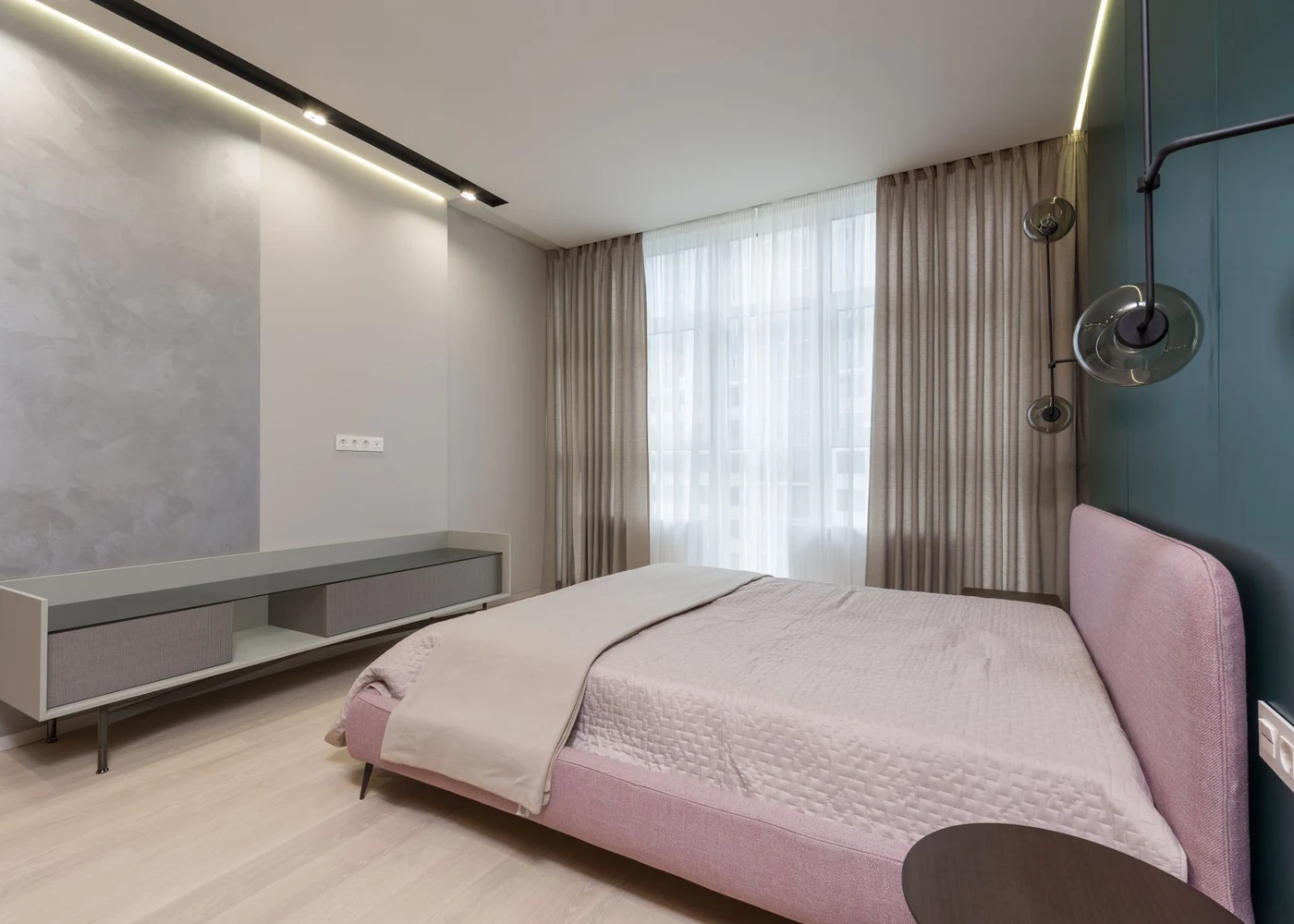
A king makes the biggest difference when two people regularly feel crowded on a queen.
If you already sleep comfortably on a queen, the additional width may feel pleasant without being essential.
Two People, Two Sleeping Styles
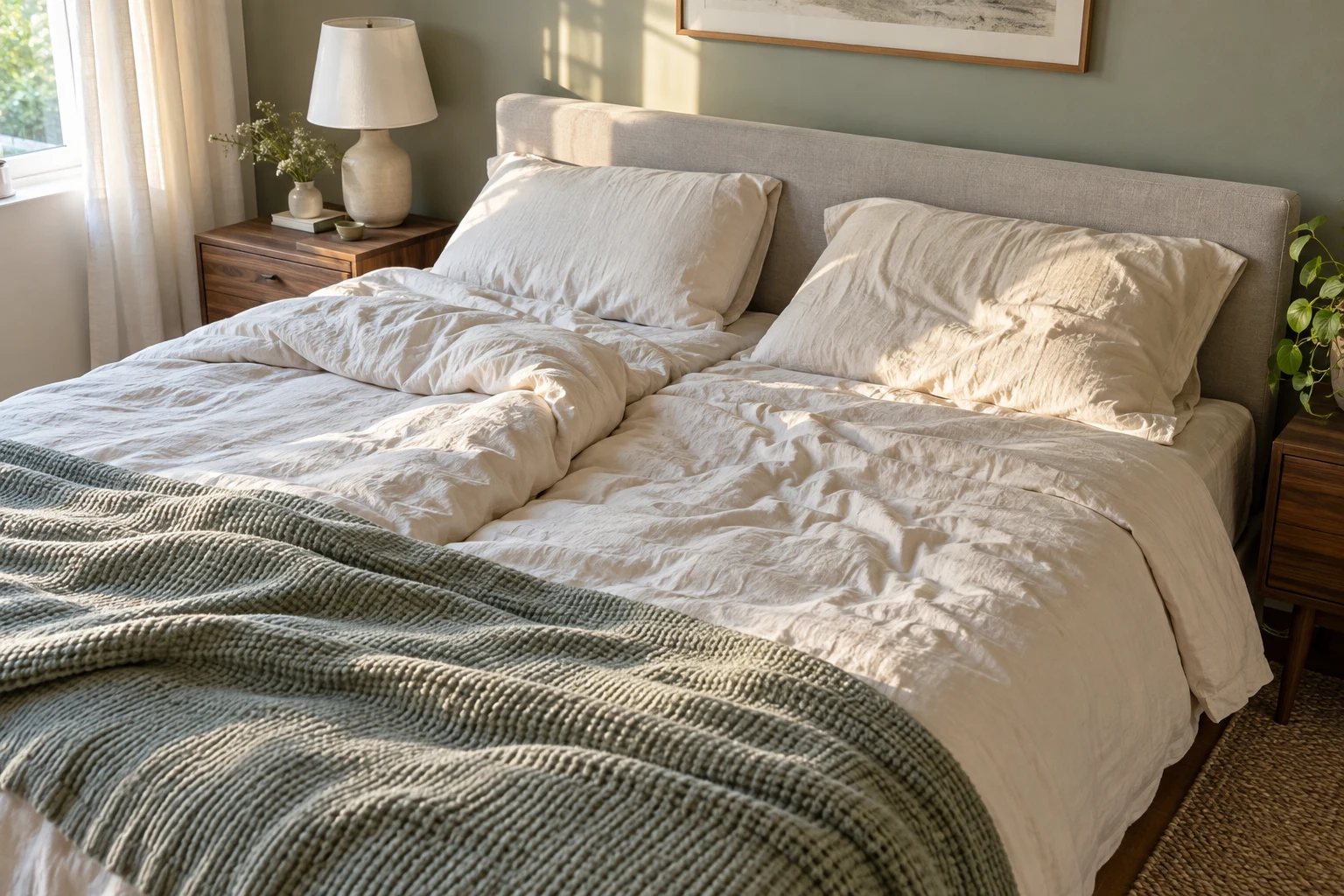
A wider mattress helps when your usual sleeping positions leave either of you short of room.
Perhaps you fall asleep neatly on your side, then wake up with one knee pointing toward the middle. Your partner might sleep on their back with an arm stretched outward.
Neither position sounds particularly demanding until you fit both into a shared queen.
A king gives you more room to change position without bumping your partner.
Your actual habits matter more than a rule assigning a particular mattress size to every side, back, or stomach sleeper.
When the Dog Claims the Middle
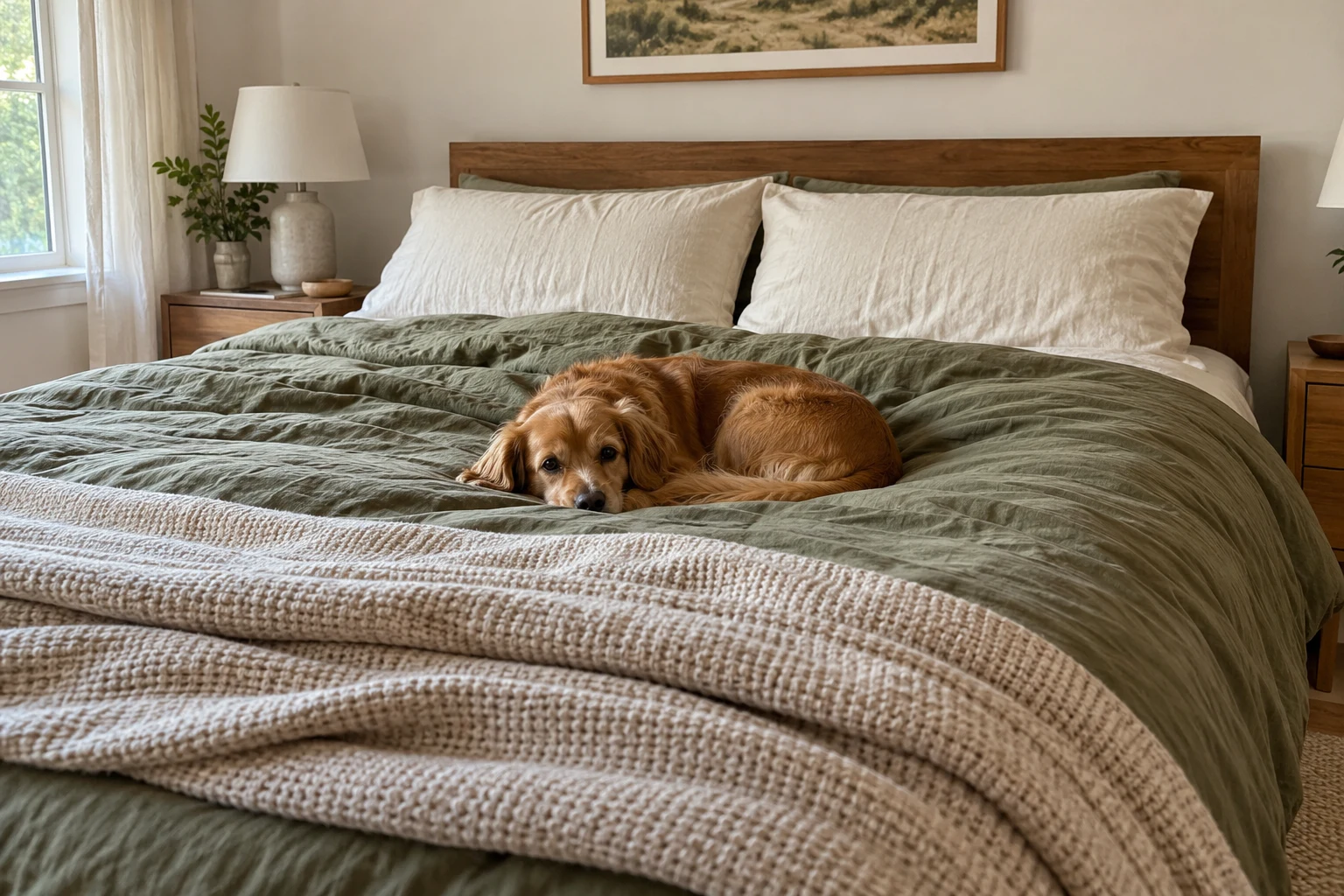
A king gives two adults more room around a pet that regularly occupies part of the bed.
A dog sleeping across the foot can reduce usable legroom. One sleeping between you takes up width. The wider mattress helps most with that second situation.
If the dog sleeps elsewhere and the queen already feels comfortable, you can leave this particular reason off your upgrade list.
More Width Won’t Fix Every Mattress Problem
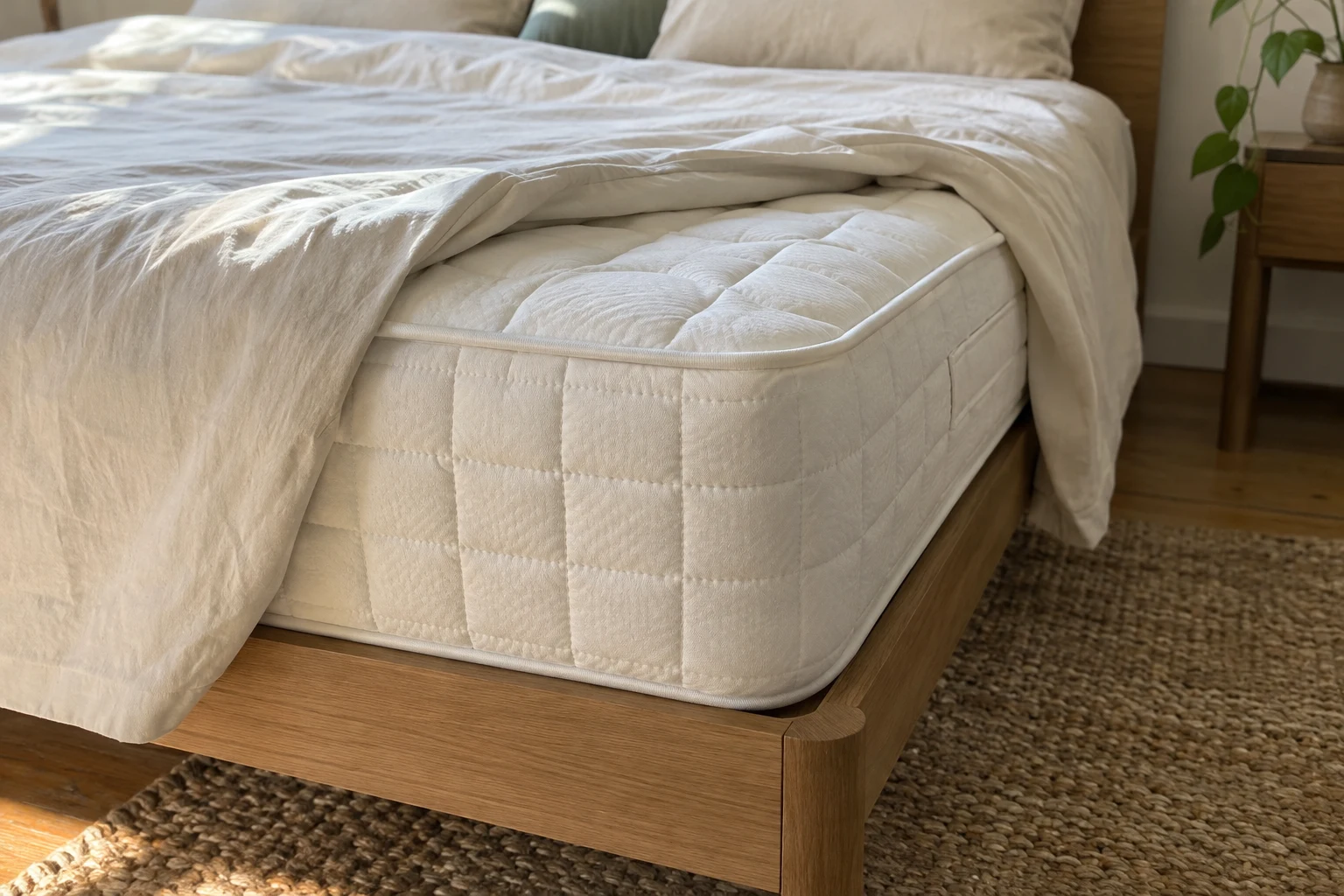
A wider mattress helps with crowding. Firmness, edge support, and motion isolation depend on the mattress itself.
| What happens at night | What deserves attention |
|---|---|
| You regularly bump elbows or run out of room to turn | Mattress width |
| You feel your partner’s movements across the bed | Motion isolation |
| The edge sinks when you move toward it | Edge support |
| The surface feels too firm, soft, or uneven | Mattress comfort and support |
| Your feet hang over an 80-inch mattress | Additional mattress length |
A larger version of a mattress you dislike may still feel too firm, too soft, or unsupportive.
If sleeping space is adequate, replacing the mattress while keeping the queen size can be the more practical change.
3. When a Queen Is the Better Buy
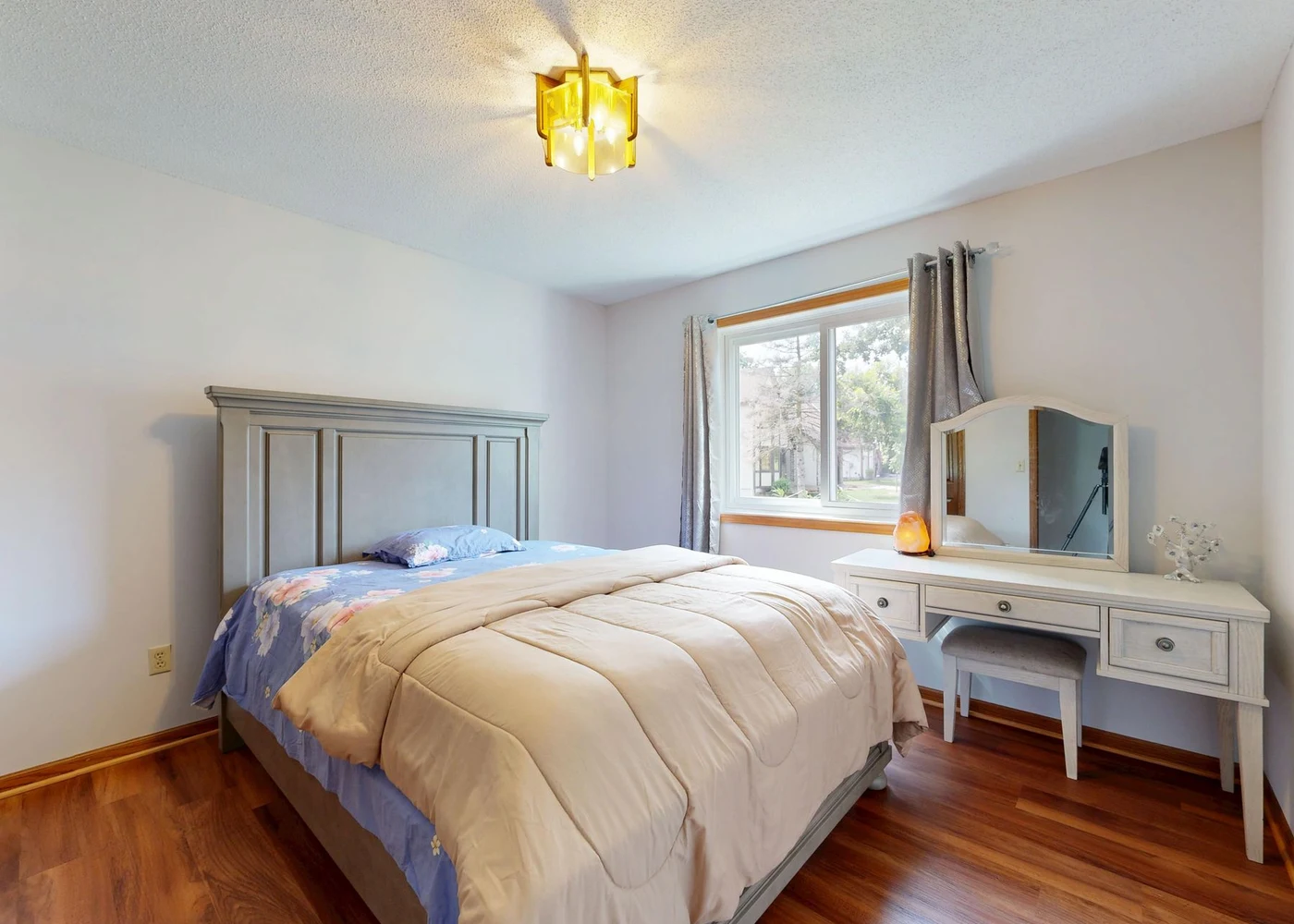
A queen is a strong choice when it gives you enough sleeping space while keeping the bedroom easy to use.
It works especially well for solo sleepers, couples who are comfortable sharing, and guest bedrooms that need space for bags and a place to get dressed.
There’s also the bedroom that does several jobs. You might need a desk beside the window, a dresser opposite the bed, or a chair you actually sit in. Keeping a queen gives those pieces more room.
Suppose a king would fit between the walls, but the wardrobe door would only open partway.
That extra sleeping width comes with a daily inconvenience. If you’re happy sleeping on a queen, there’s little reason to introduce it.
Keep the queen when:
- You rarely feel crowded at night.
- The room holds a desk or other frequently used furniture.
- Guests need somewhere to open a suitcase.
- You want to keep your existing queen frame and bedding.
- You move regularly and want a mattress that’s easier to carry through doors and hallways.
If the size works and the mattress is due for replacement, the RsnuLpocv 12-Inch Queen Hybrid Mattress is a queen-size option with medium firm feel.
It measures 60 × 80 × 12 inches and combines memory foam with individually wrapped pocket springs.
You can replace the mattress without changing the room layout. Mattress depth affects the bed’s height; mattress width affects how much floor space it needs.
For more ways to arrange a room around a queen bed, see our guide to making a small bedroom look bigger.
4. When a King Is Worth the Upgrade
A king is worth the upgrade if you regularly feel crowded and still have room to walk, open drawers, and use the rest of the bedroom.
You don’t need to justify it with a grand bedroom makeover. Regularly waking up crowded is a practical reason on its own.
The strongest case is a couple who likes their current mattress but keeps running out of space.
Perhaps one person shifts toward the middle, or both prefer to spread out. An additional 8 inches each can feel useful in that situation.
The king makes sense when:
- You regularly feel short of sleeping width.
- Both sleepers want more personal space.
- Your pet takes up enough of the bed to leave you short of room.
- The complete frame leaves usable access to furniture and storage.
- The total upgrade fits your budget.
If reading or relaxing in bed is part of your evening, an adjustable base is another option for the setup.
The Blissful Nights e4 King Adjustable Bed Frame offers head and foot incline with a wireless remote, along with massage, USB charging, and an under-bed light.
Treat the adjustable base as a separate choice from mattress size. The king provides the width; the base changes your position.
An adjustable setup also needs a mattress designed to flex with it.
And remember: a standard king remains 80 inches long. If your feet hang over the end, the California king section below will be more useful.
5. Will the Bed Fit With Your Other Furniture?
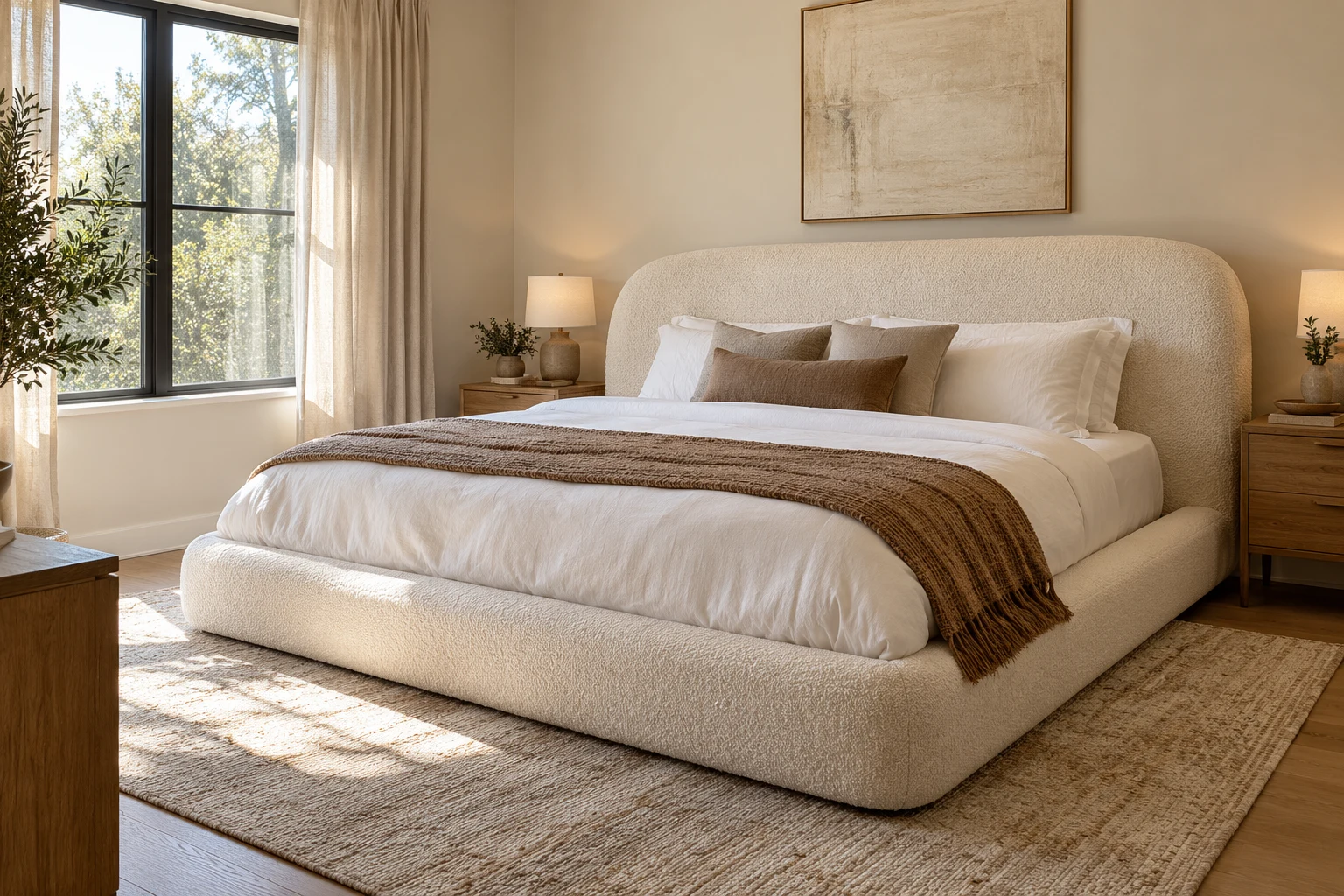
The complete frame needs to fit alongside your furniture, with enough room to open doors and walk around the bed.
Mattress measurements describe the sleeping surface. Upholstered sides, projecting headboards, chunky posts, and footboards can take up additional floor space.
For example, the Homkdom King Cloud Bed Frame has a cushioned surround and bouclé upholstery that create a soft, substantial look.
It suits a bedroom where the bed can be a prominent feature, with enough room around its padded edges.
Those padded sides need extra floor space. The outside dimensions of the frame matter as much as the mattress dimensions.
The examples below use mattresses alone so the size difference is easy to see. A complete frame will leave less clearance.
A 10 × 10 Room: A Queen Usually Leaves More Options
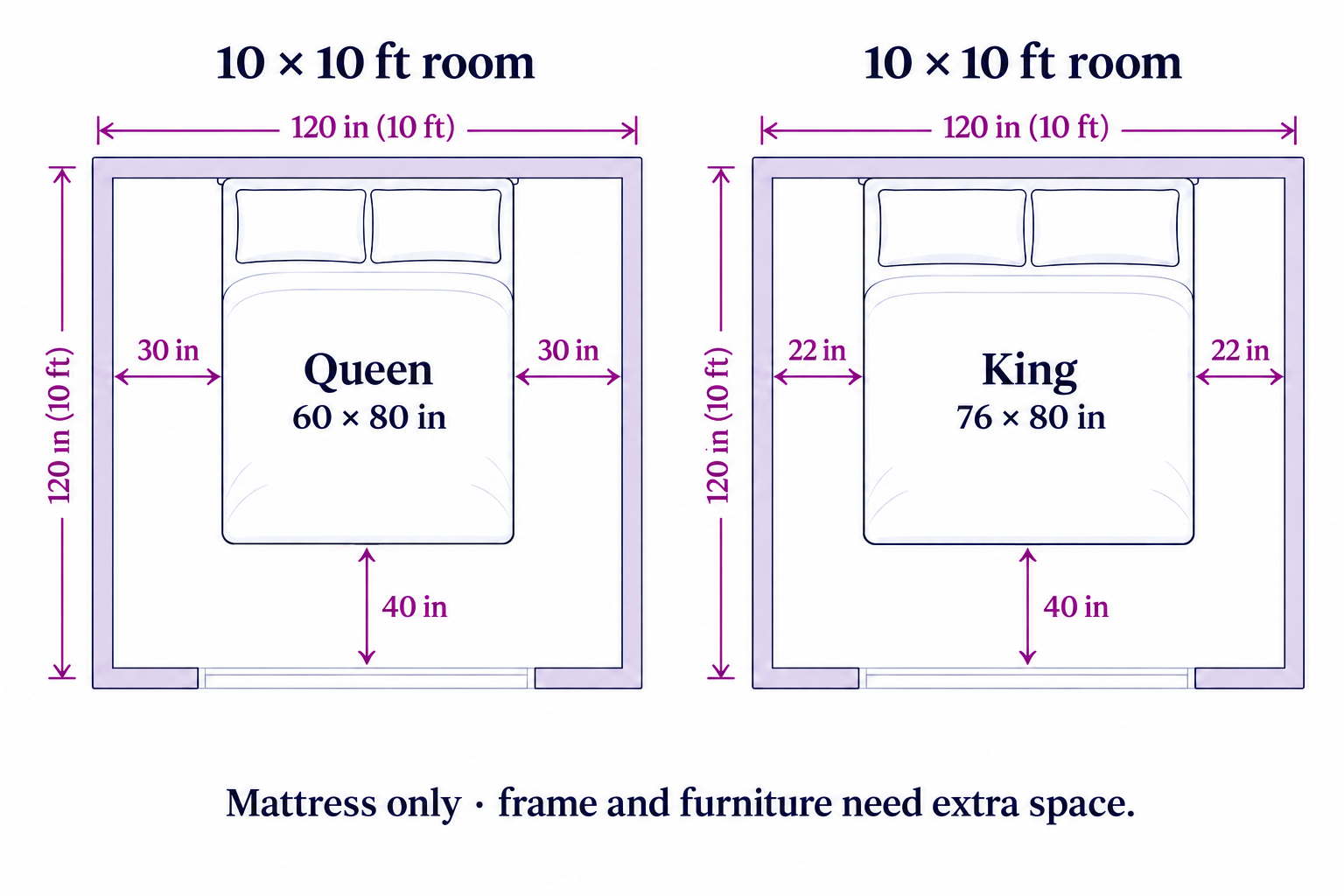
A queen is generally easier to arrange in a 10-by-10-foot bedroom.
A 10-foot wall measures 120 inches. With the mattress centered across it:
- Queen: 120 − 60 = 60 inches remaining, or 30 inches per side.
- King: 120 − 76 = 44 inches remaining, or 22 inches per side.
The difference is 8 inches on each side. That’s space you might use to walk past the bed, change the sheets, or reach a lower drawer.
At the foot, both sizes leave the same mattress-only remainder: 120 − 80 = 40 inches.
Place a 20-inch-deep dresser directly opposite the mattress, and that gap falls to 20 inches before accounting for the frame or opening a drawer.
This is often where a seemingly workable layout gets awkward.
A 10 × 12 Room: Which Wall Gets the Headboard?
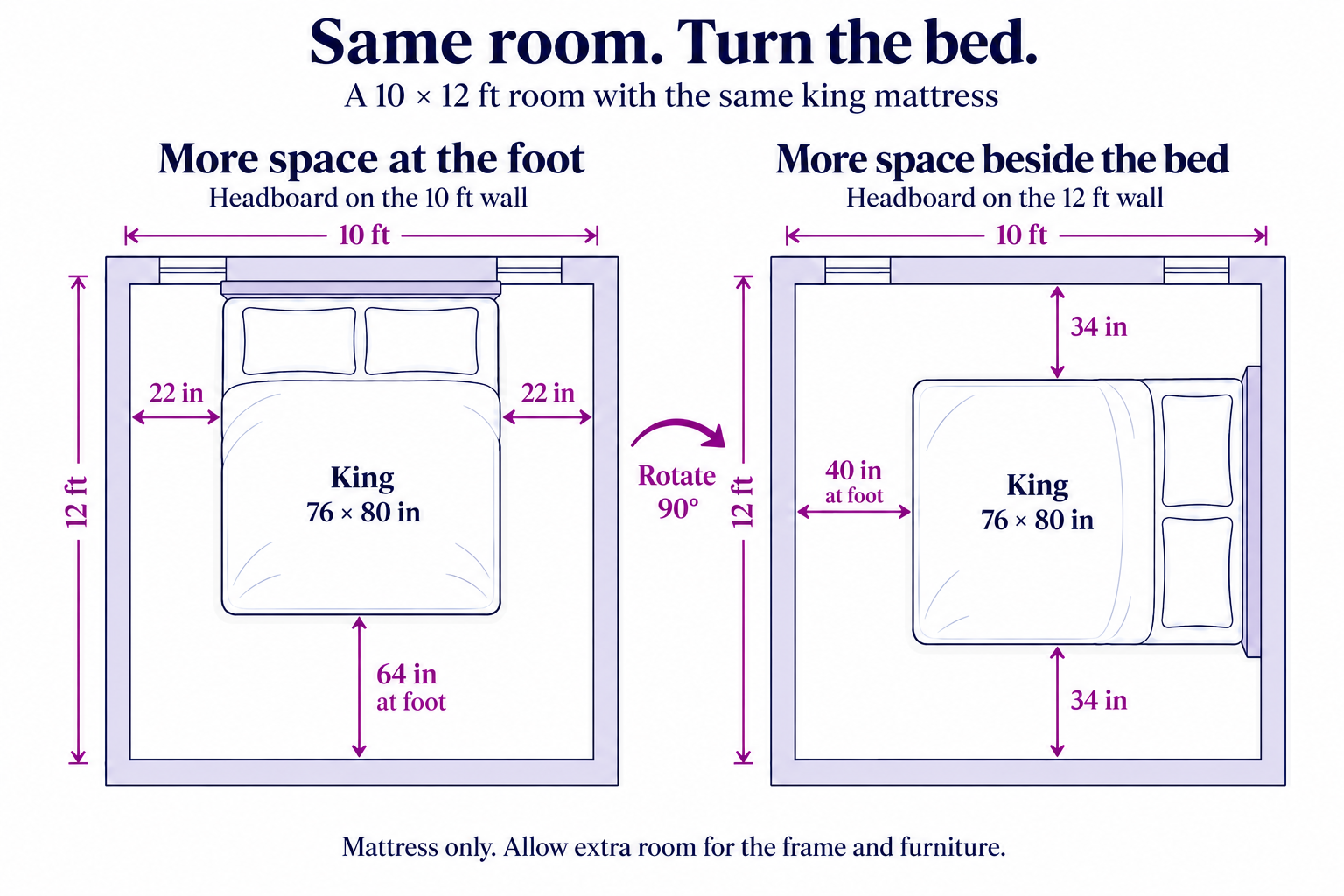
The bed’s orientation determines whether the extra room improves side access or space at the foot.
Put the headboard against the 10-foot wall, and the side clearances remain the same as in the previous example. That leaves an extra two feet of space at the foot of the mattress.
Turn the bed so its width runs across the 12-foot wall, and you gain space beside it. The shorter room dimension then limits the space at the foot.
| Headboard wall | Queen clearance per side | King clearance per side | Space beyond the mattress foot |
|---|---|---|---|
| 10-foot wall | 30 inches | 22 inches | 64 inches |
| 12-foot wall | 42 inches | 34 inches | 40 inches |
The positions of doors, windows, and storage affect which layout works best. The room’s total square footage cannot tell you that on its own.
A 12 × 12 Room: A King Becomes More Practical
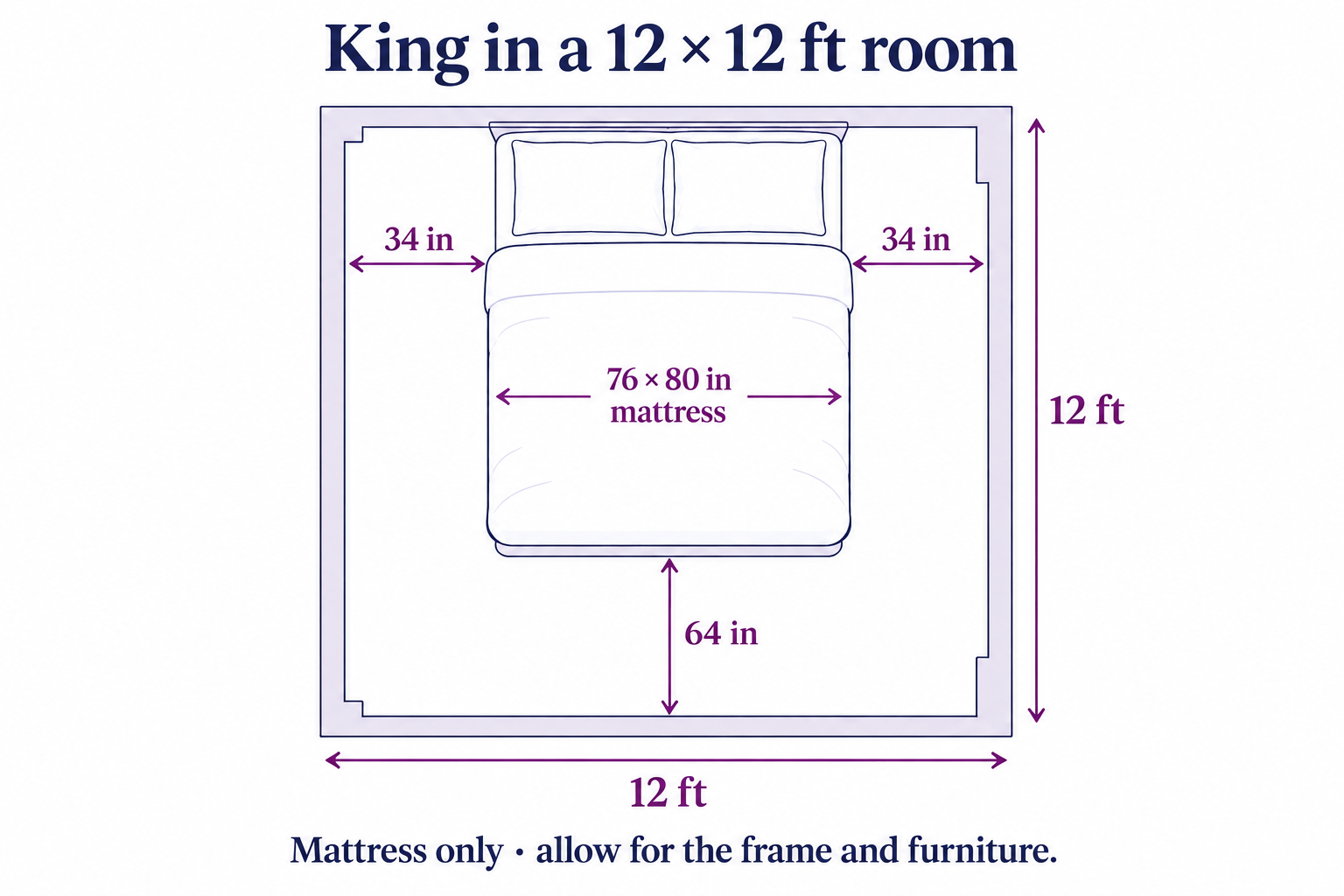
A 12-by-12-foot bedroom is a useful planning example for a king, with room to arrange modest furniture around it.
A centered 76-inch-wide mattress leaves 34 inches on each side. Its 80-inch length leaves 64 inches between the mattress foot and the opposite wall.
The frame uses some of that space, and furniture uses more. Still, you have more flexibility for bedside tables and a dresser than in a room only 10 feet wide.
Layout note: Room-size recommendations are planning guides. The narrowest usable gap, door position, and furniture footprint determine how comfortable the finished room feels.
A Taped Outline Shows Where the Frame Will Fit
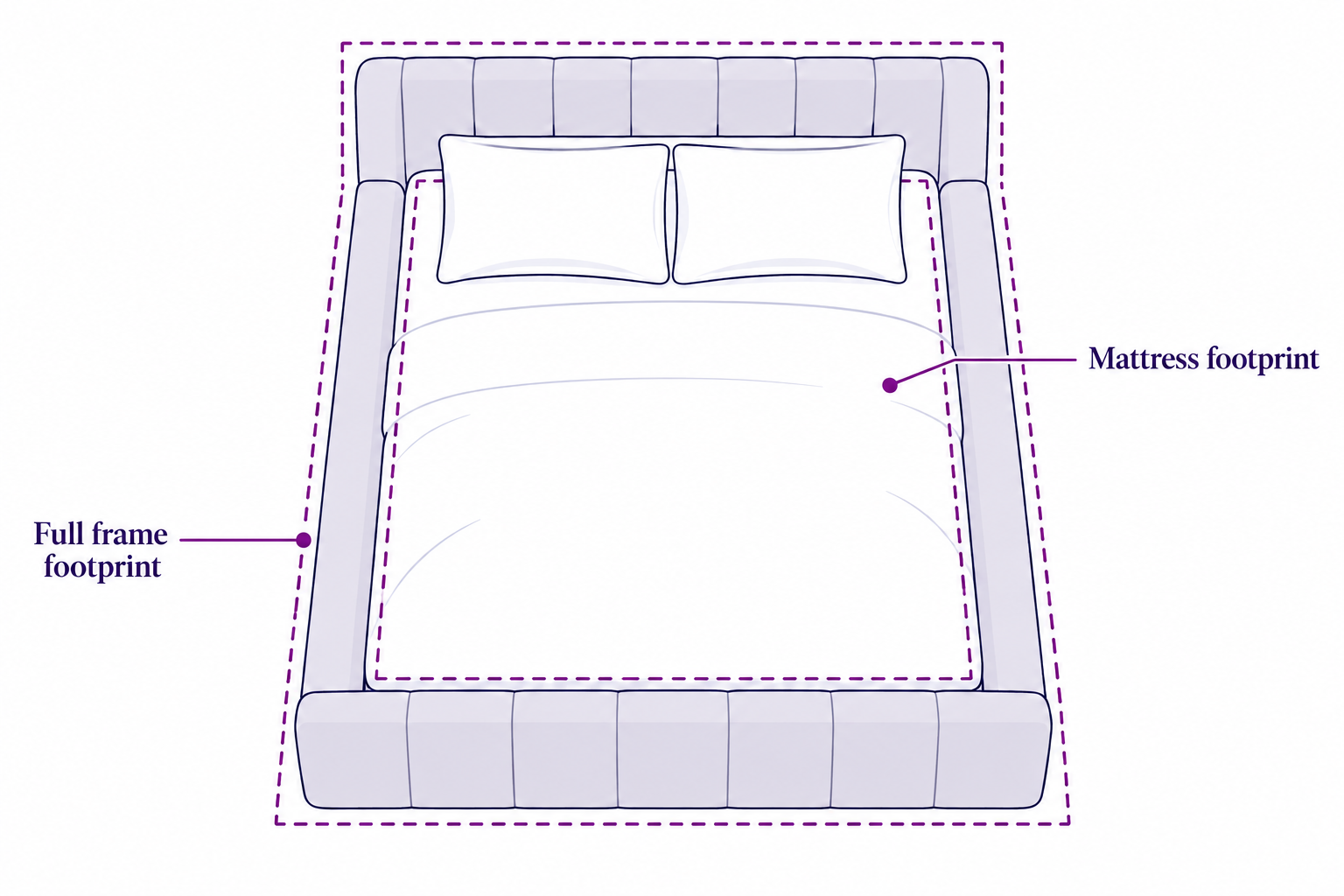
A taped outline of the frame’s full length and width shows how much floor space the larger bed will use.
Use a tape measure and removable floor-safe tape. Include projecting corners and the widest part of the headboard.
Then run through this checklist:
- Open the bedroom door fully.
- Open the wardrobe or closet doors.
- Pull dresser drawers out to their normal working position.
- Walk along both regularly used sides.
- Leave space to stand while using storage.
- Include the bedside tables.
- Allow clearance for storage-bed drawers.
- Walk the route you use during the night.
Aim for roughly 30 inches on regularly used sides where space allows. A 24-inch gap is tighter, and busy routes may benefit from more room.
These are household planning targets; mobility needs can call for wider access.
Our bedroom furniture arrangement guide helps with placement, while the storage bed comparison explains how drawers and lifting mechanisms affect the surrounding space.
6. The Upgrade Costs More Than the Mattress
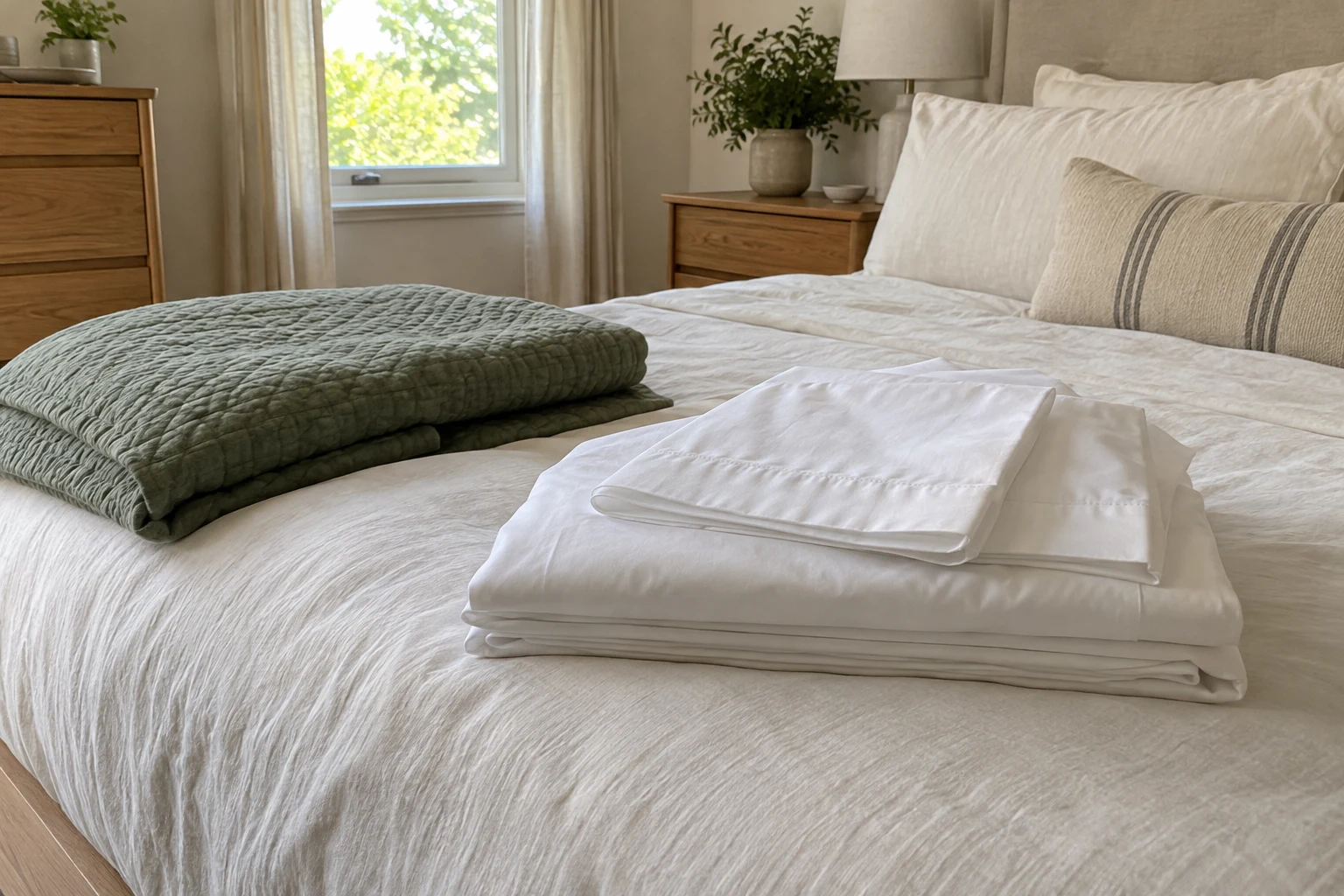
The total cost includes the mattress, a suitable frame or foundation, and correctly sized bedding.
Within the same product range, king sizes usually cost more than queen sizes, although promotions can narrow the difference.
The easily overlooked expense is replacing pieces you already own.
| Item | What happens when moving from queen to king? |
|---|---|
| Mattress | Replace with the selected size |
| Frame or foundation | A queen-only support will need replacing |
| Fitted sheet | Replace with king size |
| Mattress protector | Replace with king size |
| Duvet, comforter, or quilt | Wider coverage is usually needed |
| Pillows | Existing pillows can stay |
| Pillowcases | Keep them if you keep the same pillows |
| Headboard | Reuse depends on its width and mounting design |
Mattress depth matters for fitted sheets and protectors, too. A sheet can have the correct width and length yet lack enough pocket depth for a tall mattress.
If you’re staying with a queen, the Boll & Branch Signature Hemmed Queen Sheet Set in White keeps the bedding simple. It includes a fitted sheet, flat sheet, and two pillowcases in organic cotton.
White works easily with a patterned quilt, an earthy throw, or bedding you already own.
Protection belongs in the budget as well. The PlushDeluxe Queen Mattress Protector adds a waterproof layer beneath the fitted sheet. This queen version measures 60 × 80 inches and accommodates mattresses up to 18 inches deep.
Both products are queen-size options. A king mattress needs a king-size fitted sheet and protector.
For help choosing the feel of your sheets, see our bed sheet material guide. Our bedding layering guide also shows how to create a comfortable bed without replacing every pillow and throw.
7. King, California King, or Split King?
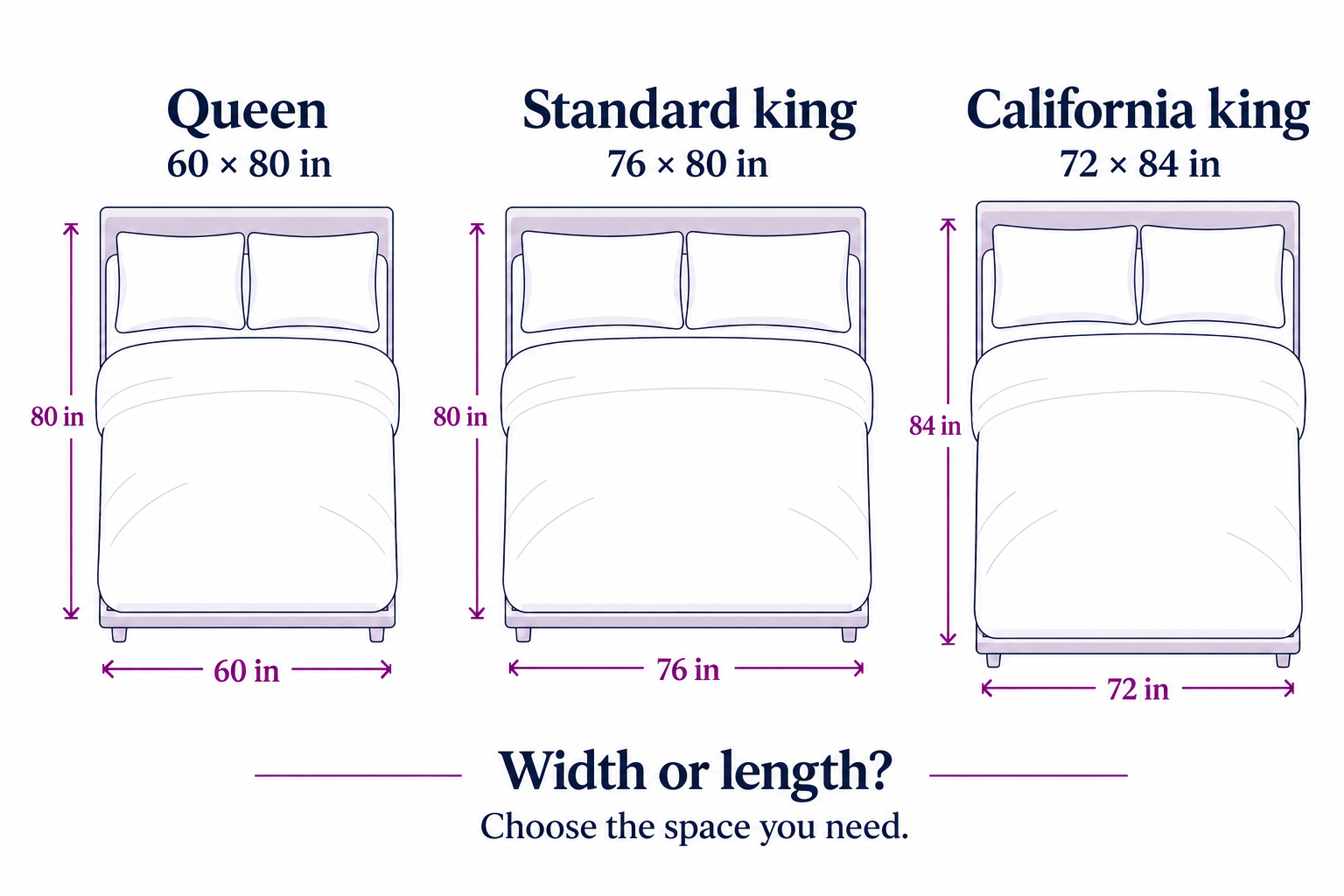
A standard king prioritizes width, a California king provides extra length, and a split king divides the sleeping surface into two mattresses.
California King: Four More Inches for Your Feet
A California king measures 72 × 84 inches, making it 4 inches longer and 4 inches narrower than a standard king.
That additional length is useful when an 80-inch mattress leaves you short of comfortable legroom.
| Mattress | Width | Length |
|---|---|---|
| Queen | 60 inches | 80 inches |
| Standard king | 76 inches | 80 inches |
| California king | 72 inches | 84 inches |
A California king has slightly less total surface area than a standard king. Its advantage is the longer shape.
It needs its own correctly sized fitted sheets, protector, and supporting frame. Standard king and California king fitted bedding are not interchangeable.
Split King: Separate Sides, One Large Bed
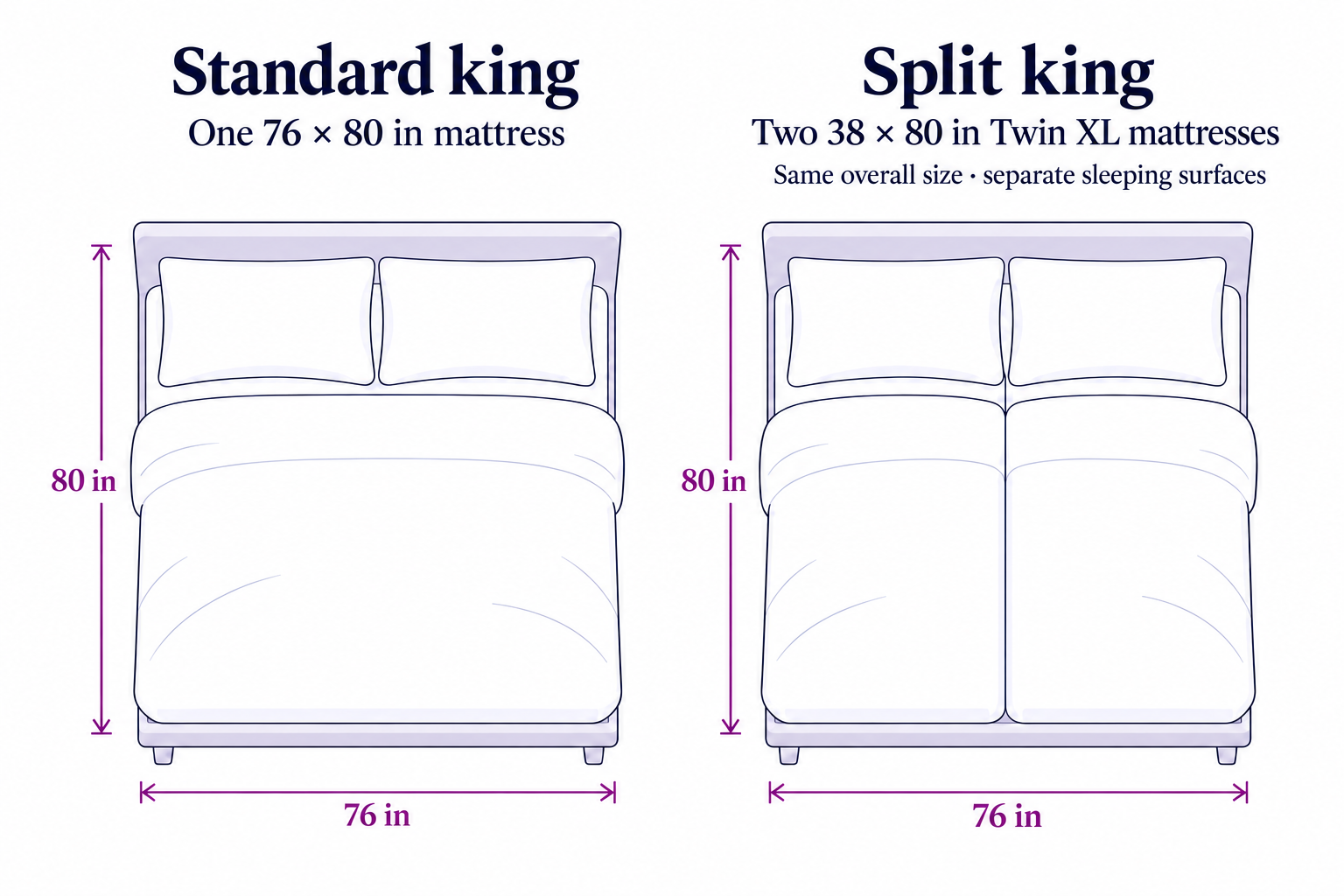
A split king uses two Twin XL mattresses, each measuring 38 × 80 inches, to create a combined 76 × 80-inch sleeping surface.
Together, they are the same width and length as a standard king.
The appeal is flexibility. Each person can have a different firmness, and a suitable two-part adjustable setup allows independent positioning.
The tradeoff is a seam down the middle, which matters if you regularly sleep across the center.
For fitted bedding, use two Twin XL sheets.
The Boll & Branch Signature Hemmed Split King Sheet Set in Sageleaf includes those two fitted sheets, one king flat sheet, and two king pillowcases.
The muted green pairs well with cream bedding and warm wood furniture.
The set includes both Twin XL fitted sheets, so there’s no need to buy them separately.
Setup note: A king adjustable base and a split king arrangement serve different purposes. Independent movement requires separately controlled sides and separate mattresses.
8. Can You Get It Upstairs?
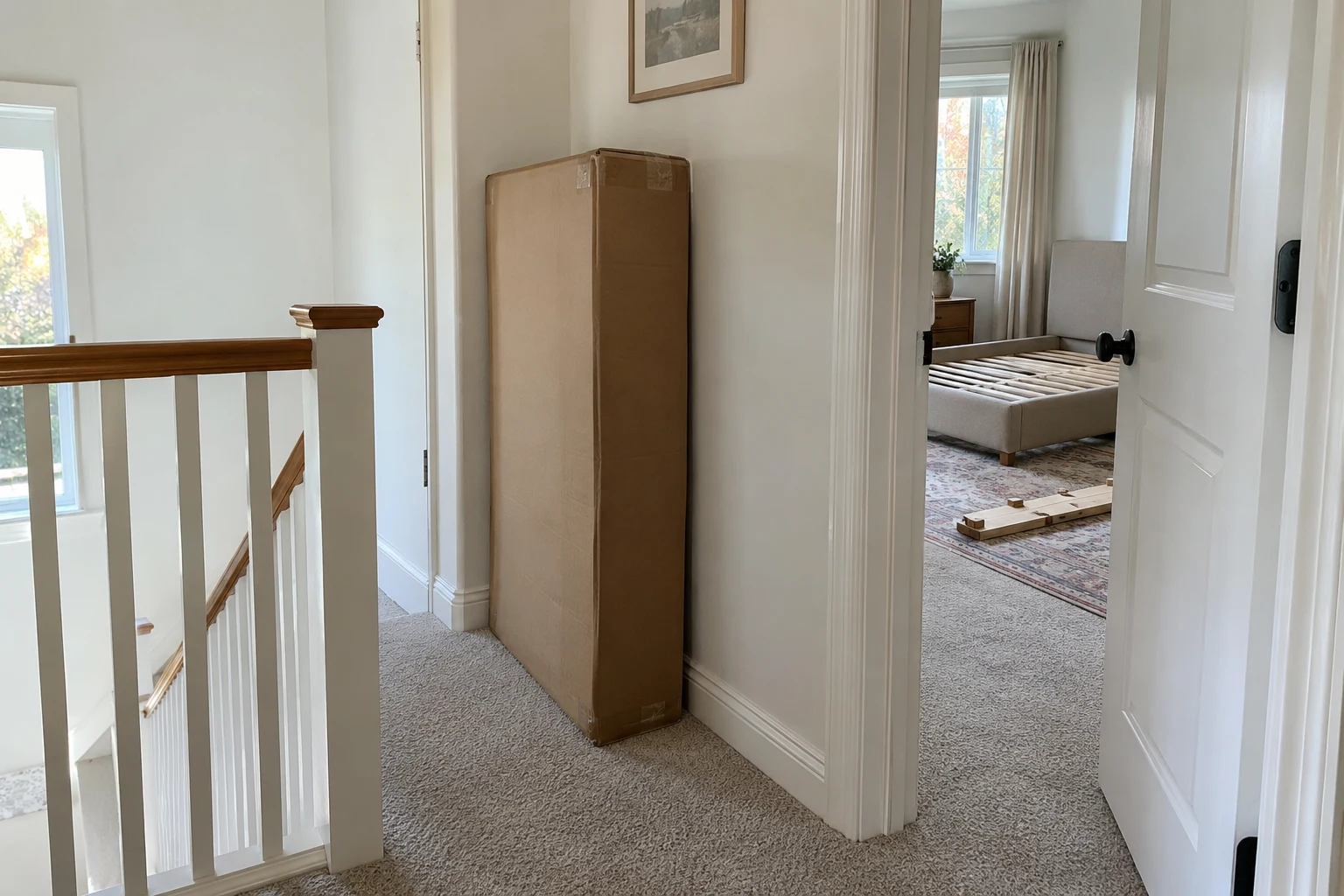
The largest mattress or frame component must fit through the entire delivery route.
A broad headboard can be more awkward than the mattress. Long rigid rails can also cause trouble at a narrow landing or a sharp turn.
Map the route through:
- The entrance.
- Interior doorways.
- Hallways and corners.
- Staircases and landings.
- Elevators, where relevant.
- The final turn into the bedroom.
A compressed mattress arrives in a smaller package, which helps with initial delivery.
After expansion, it remains a full-size mattress for the next move.
Frames that dismantle and split king setups offer smaller individual pieces to carry.
The two mattresses together still take up the same space as a standard king, so smaller pieces are easier to carry but don’t save bedroom floor space.
9. Queen or King? Five Questions to Help You Decide
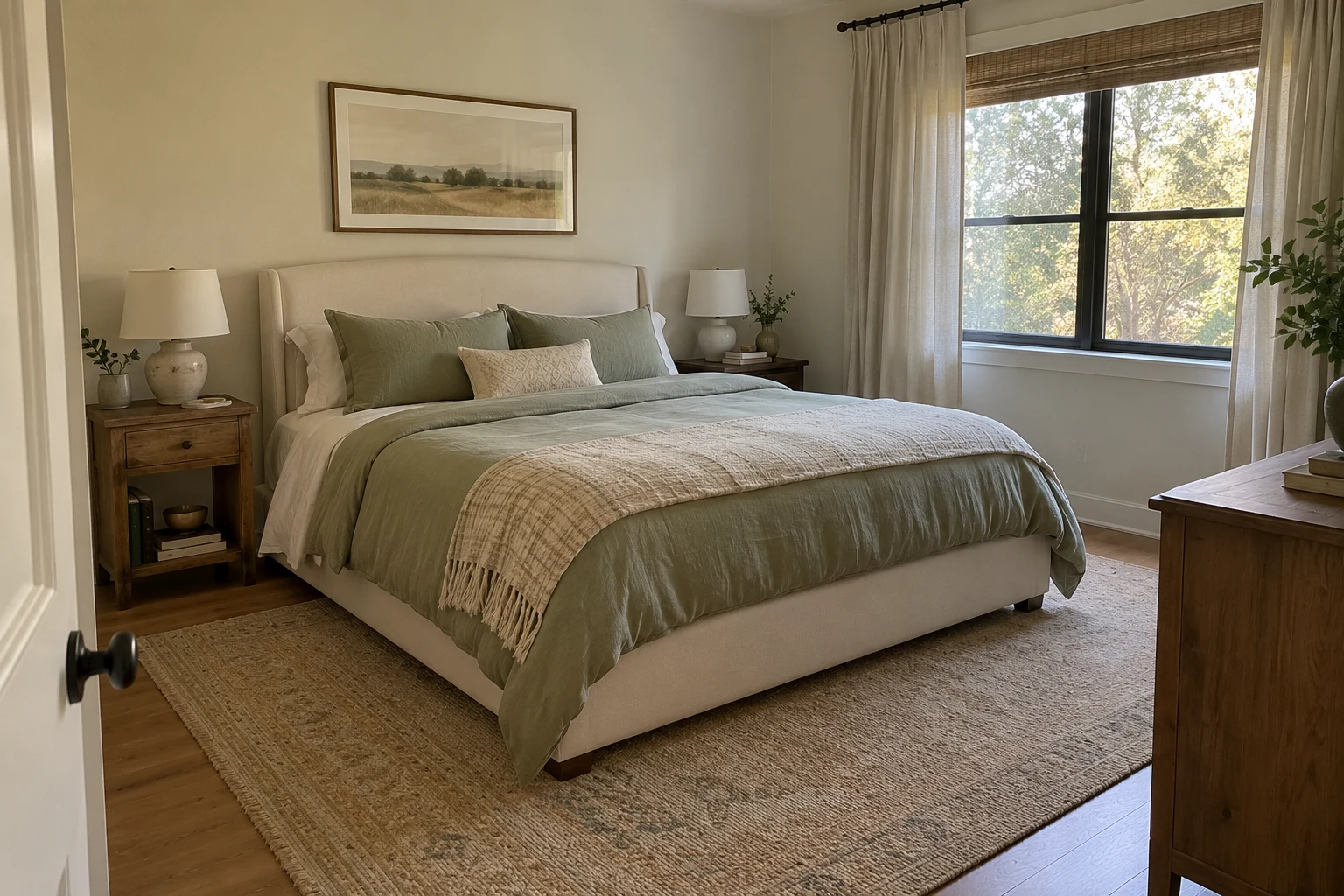
A king makes sense if you regularly need more sleeping space and can still use the bedroom comfortably.
These five questions can help you decide:
- Are we regularly short of sleeping width? Repeated crowding is a stronger reason to upgrade than liking the appearance of a bigger bed.
- Does the complete frame leave comfortable access? Include the parts that project beyond the mattress.
- Can we use the doors and storage properly? A dresser needs room for both the open drawer and the person standing in front of it.
- Does the budget cover the whole change? Add fitted bedding, a protector, and the supporting furniture.
- Can the largest pieces reach the bedroom? Include tight turns and future moves in the plan.
Keep the queen if you already sleep comfortably and a king would make everyday tasks awkward. Choose the king if the queen feels crowded and the wider bed fits without disrupting the room.
10. Quick Answers Before You Buy
Is a Queen Big Enough for Two Adults?
Yes, a queen works for many couples. Shared equally, it provides 30 inches of width per person.
Whether that feels generous enough depends on body size, sleeping positions, and preferred personal space. Regularly running out of room is a useful sign that more width could help.
Is a King Longer Than a Queen?
No. Standard queen and king mattresses are both 80 inches long. A California king adds length, measuring 84 inches.
Can a King Fit in a 10 × 10 Bedroom?
A king mattress can physically fit, but the arrangement is usually tight. Centered across a 10-foot wall, it leaves 22 inches per side before adding the frame.
A queen is generally easier to furnish around in that room size.
Do Two Twin Beds Make a King?
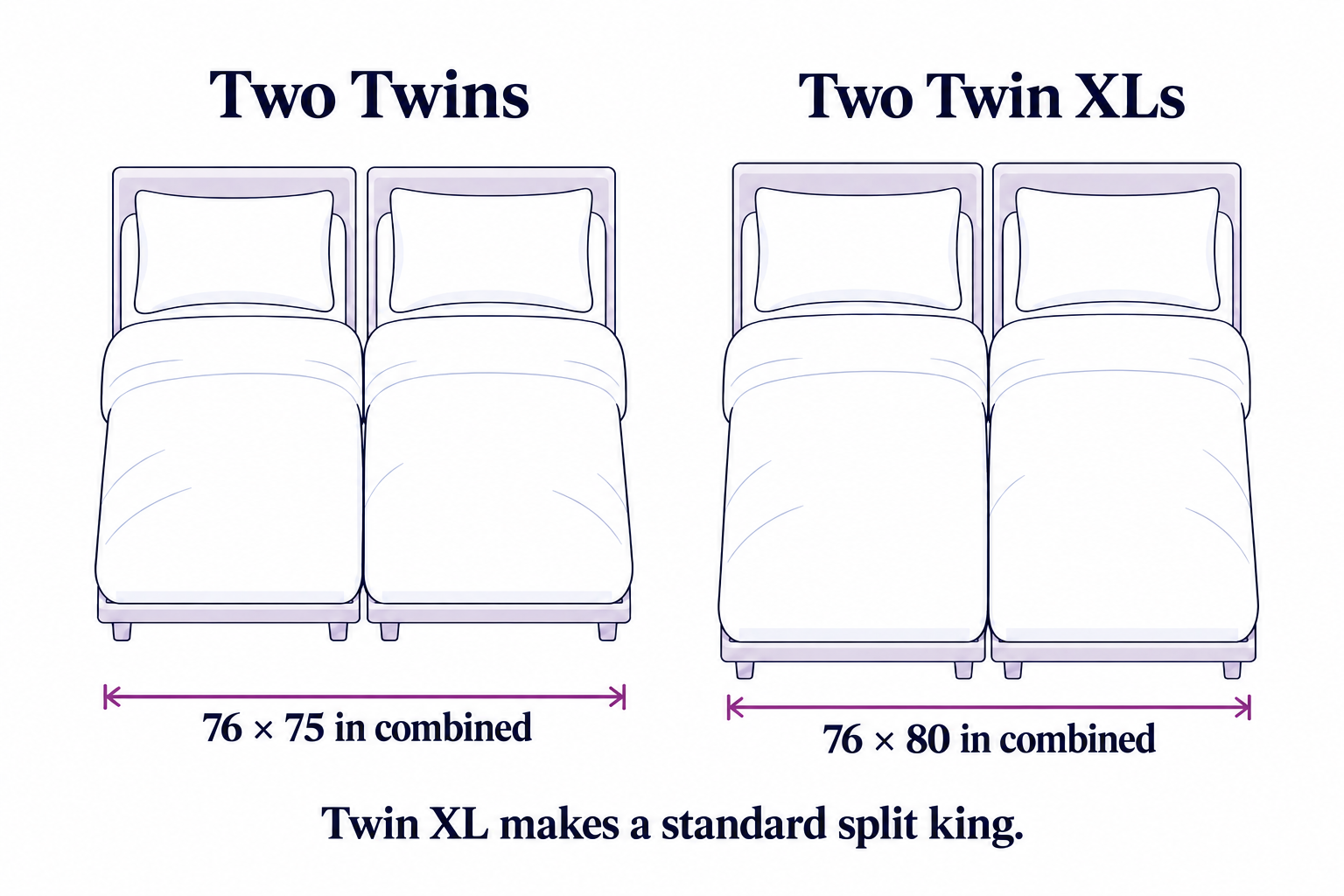
Two Twin XL mattresses make a standard split king. Each measures 38 × 80 inches.
Two standard twins are typically 38 × 75 inches each. Together, they match a king’s width but fall 5 inches short of its length.
Can Queen Sheets Fit a King Mattress?
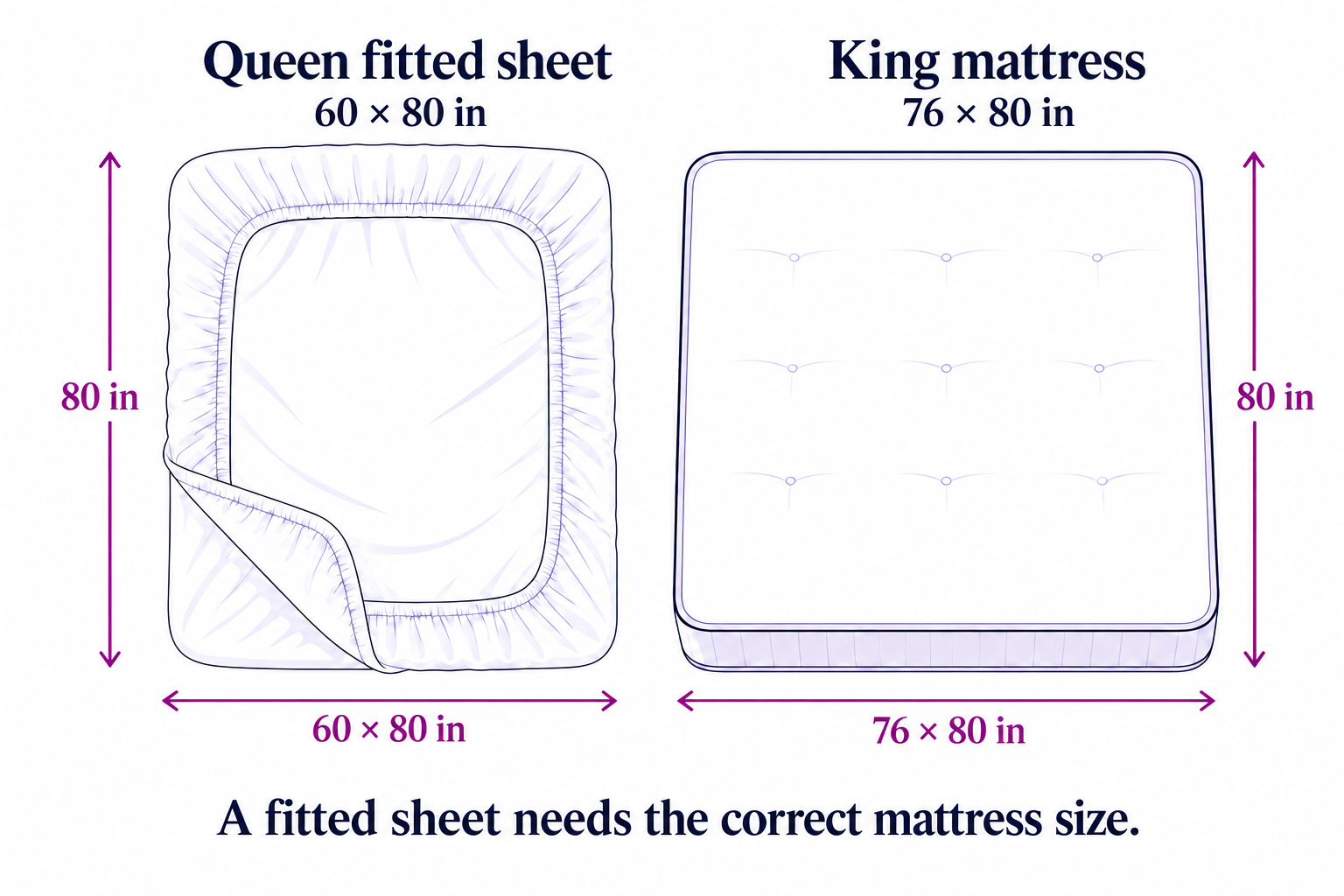
A queen fitted sheet will not properly fit a king mattress. The king is 16 inches wider.
A queen flat sheet may cover part of a king, but it will provide less side coverage. King-size bedding gives the intended fit.
Can a King Mattress Go on a Queen Frame?
A queen-only frame is too narrow for a king mattress. Use a supporting frame or foundation designed for king dimensions.
Some adjustable metal frames accommodate more than one size, but a fixed queen platform or upholstered surround does not automatically expand.
Is California King Bigger Than Standard King?
A California king is longer and narrower, with slightly less total surface area. It measures 72 × 84 inches, compared with a standard king’s 76 × 80 inches.
Choose between them according to whether you need more length or more shared width.
11. Useful Pieces for Your Chosen Setup
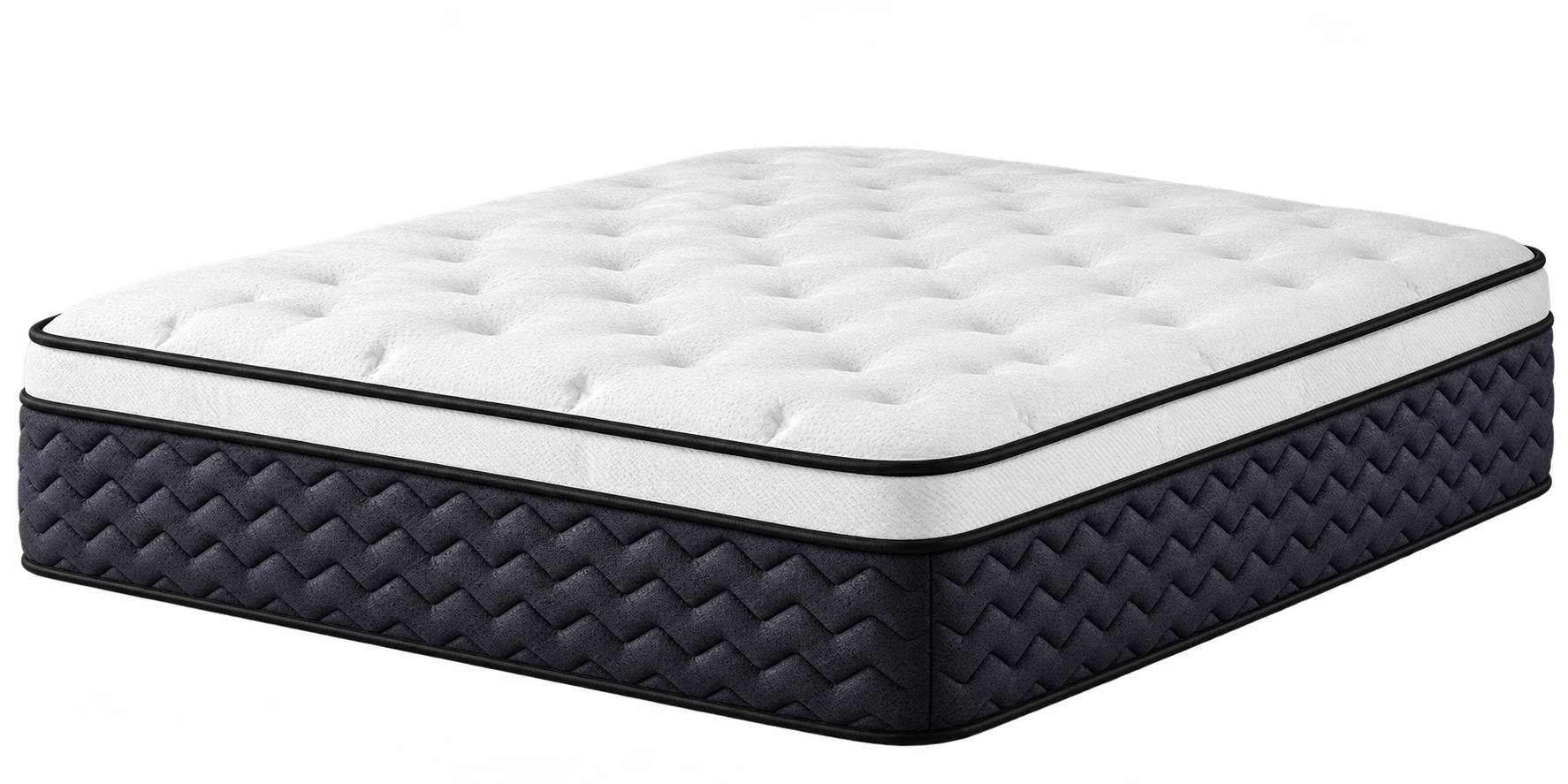 RsnuLpocv 12-Inch Queen Hybrid MattressA 60 × 80-inch queen hybrid with medium firm feel, memory foam, and pocket springs.
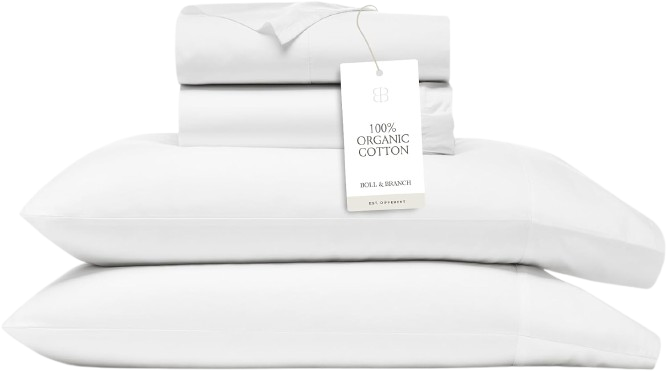 Boll & Branch Signature Hemmed Queen Sheet SetWhite organic cotton bedding with a queen fitted sheet, flat sheet, and two pillowcases.
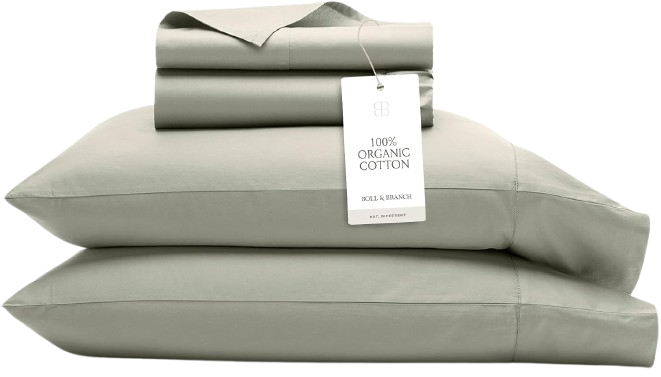 Boll & Branch Signature Hemmed Split King Sheet SetSageleaf bedding with two Twin XL fitted sheets, a king flat sheet, and two king pillowcases.
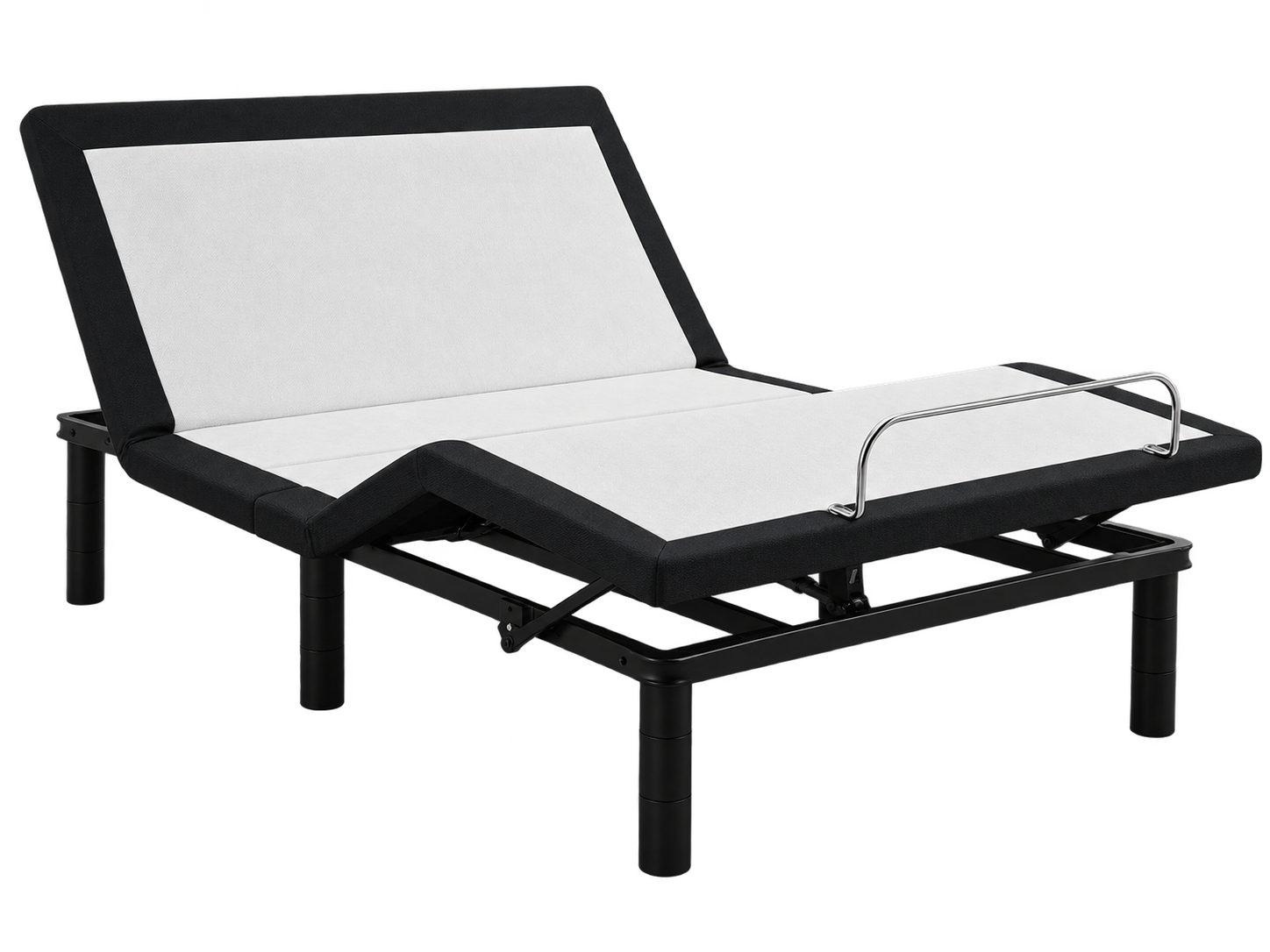 Blissful Nights e4 King Adjustable Bed FrameA king adjustable base with wireless head and foot controls, massage, USB ports, and under-bed lighting.
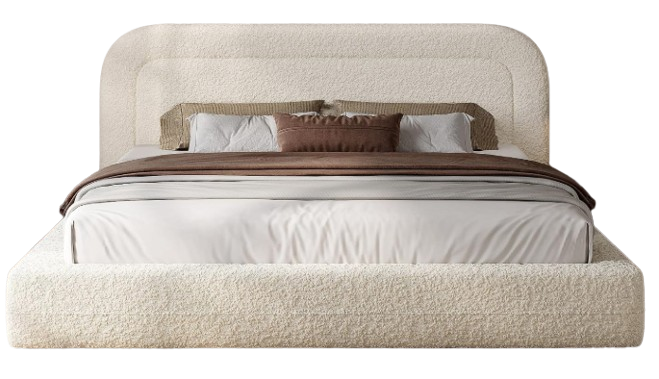 Homkdom King Cloud Bed FrameA bouclé king bed frame with thick padded sides that need extra floor space.
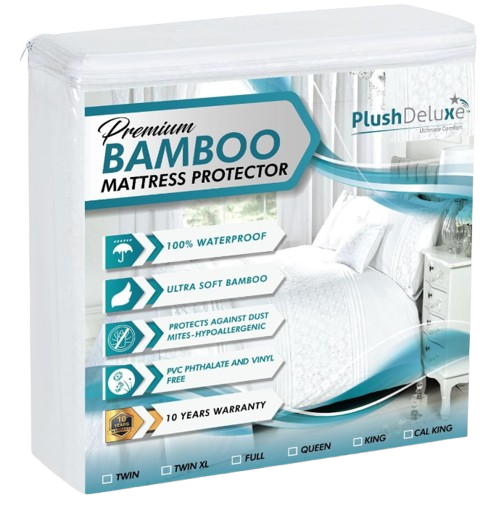 PlushDeluxe Queen Mattress ProtectorA waterproof queen protector for a 60 × 80-inch mattress, fitting depths up to 18 inches.