How to Reduce Visual Clutter: 12 Fixes for a Harmonious Makeover

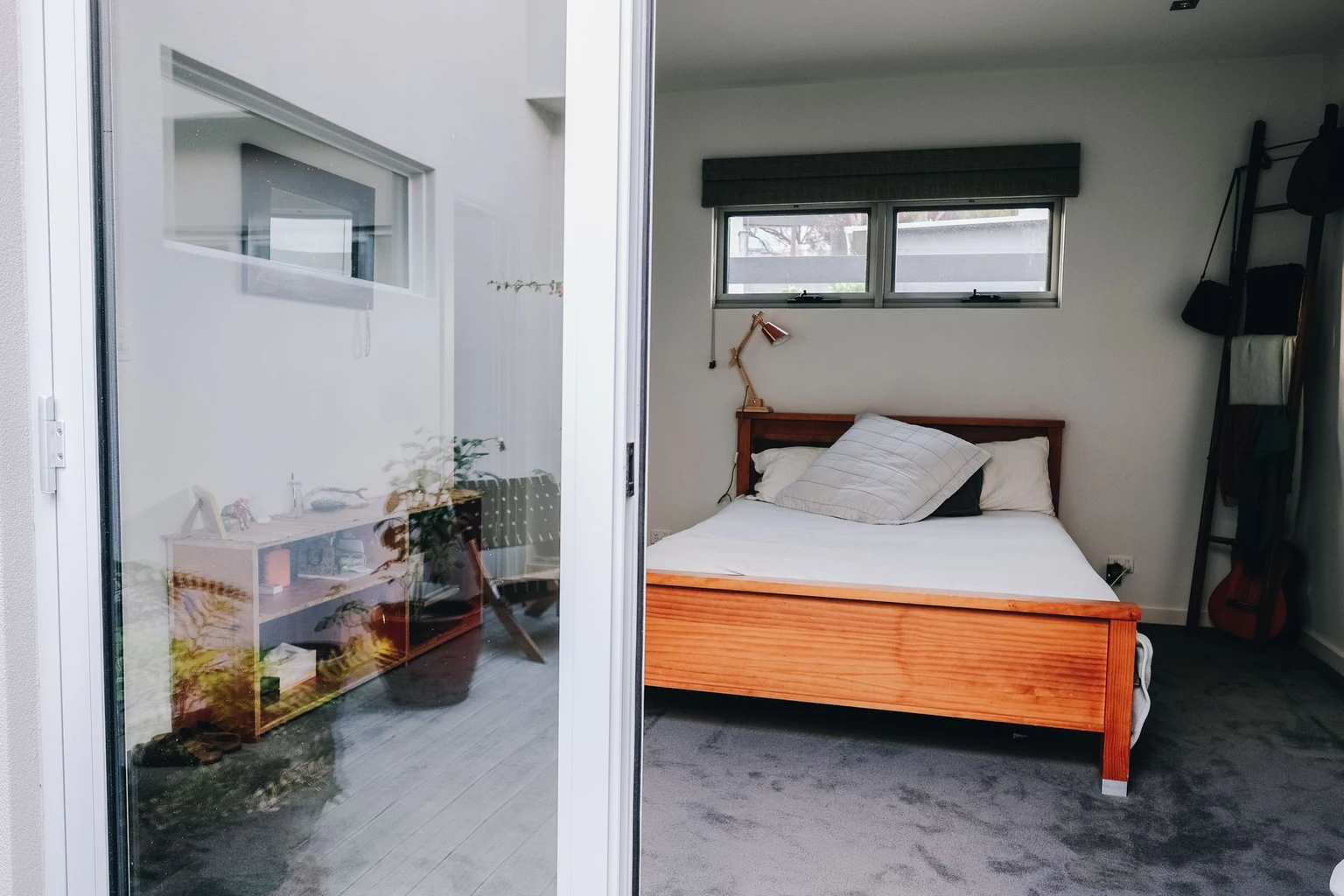
Why does your room still look messy even after you’ve cleaned and organized it?
The laundry is put away, the floor is clear, and everything has its place, yet the room still looks crowded.
Too many things on display can create visual clutter, even when they’re neatly arranged. Rows of bottles, loose cables, crowded shelves, and several different patterns can all contribute.
The quick answer
- Clear crowded surfaces and keep the things you use or enjoy seeing.
- Group small essentials in a tray, drawer, or container.
- Put spare products in easy-to-reach storage.
- Tidy visible cables and repeat a few colors and finishes.
- Leave space between decorations so each piece is easier to see.
A few changes to what you display and where you store things can make the room feel more harmonious.
Below are 12 practical fixes you can try with the furniture and belongings you already have.
What Counts as Visual Clutter?
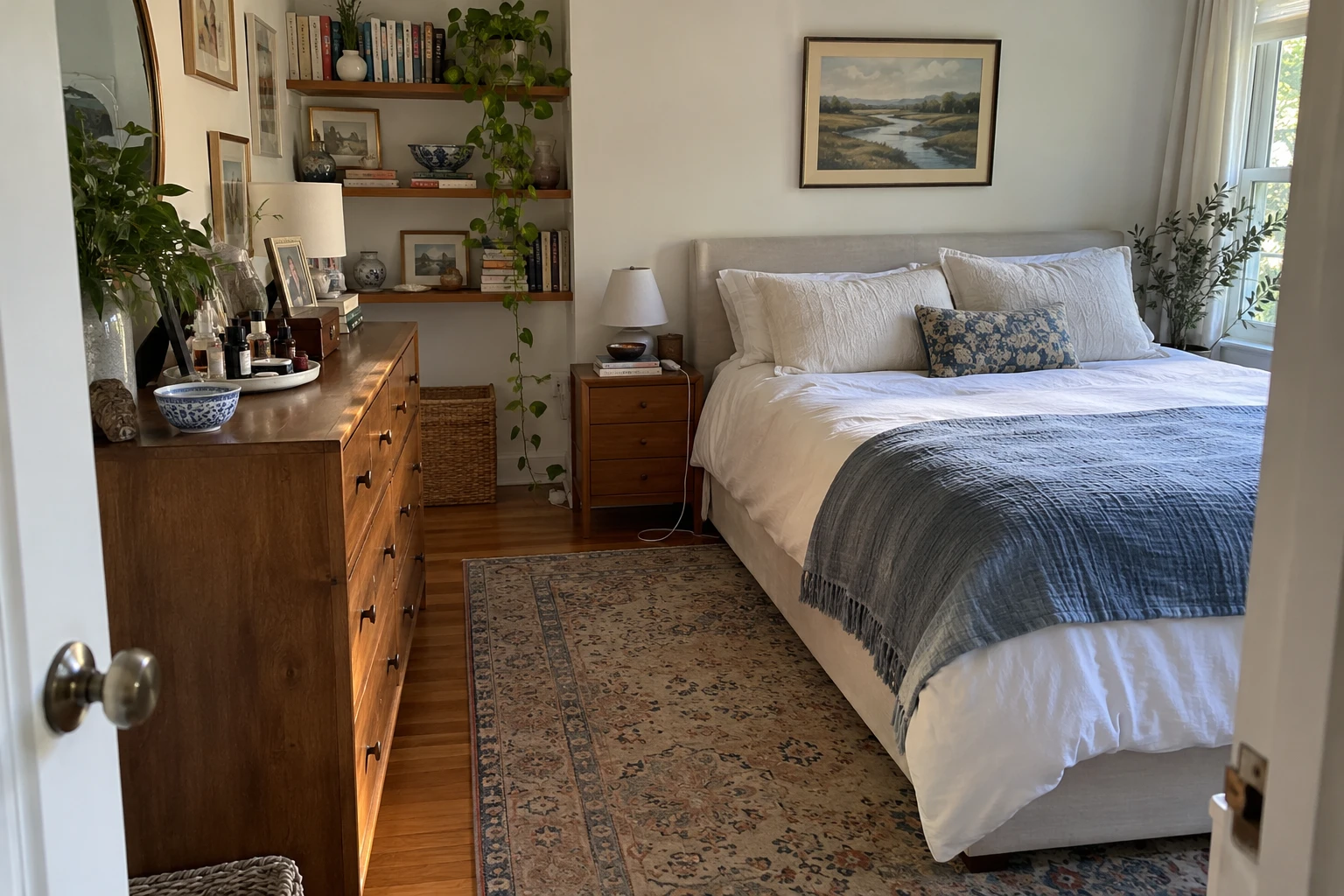
Visual clutter is the mix of objects, colors, patterns, and details that makes a space look busy to you.
Sometimes it’s obvious: laundry on the floor, receipts beside the bed, or parcels waiting to be returned.
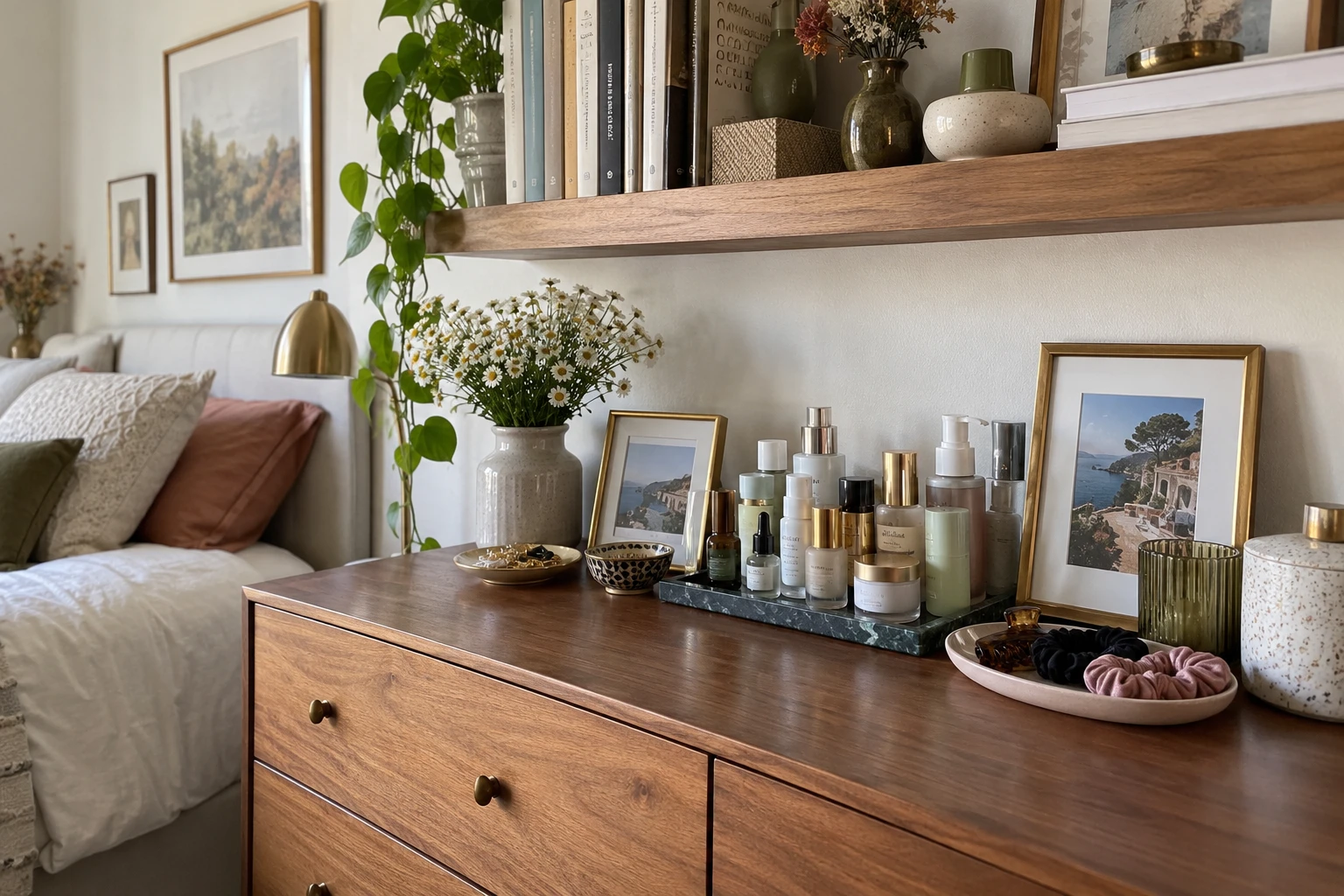
Other times, everything is in its place. The dresser has a neat row of skincare bottles, every shelf holds a collection, and several patterned cushions cover the bed. Together, they may feel like too much.
Three common examples are:
- Everyday mess: clothes, paperwork, used cups, and belongings left out after use.
- Crowded displays: shelves, windowsills, and tabletops with little clear space.
- Lots of unrelated details: different packaging, patterns, containers, and loose cables.
1. One Clear Surface Makes a Noticeable Difference
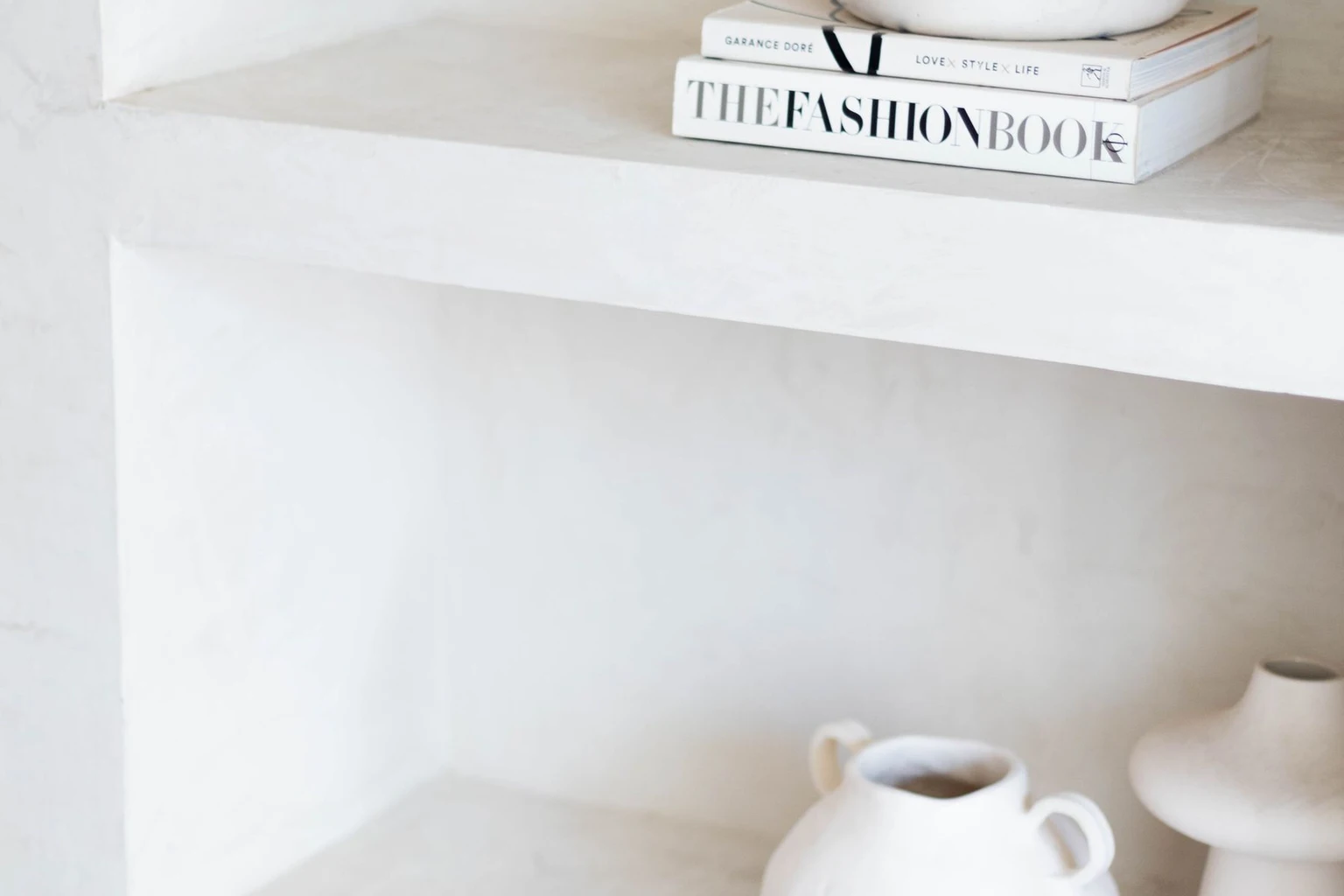
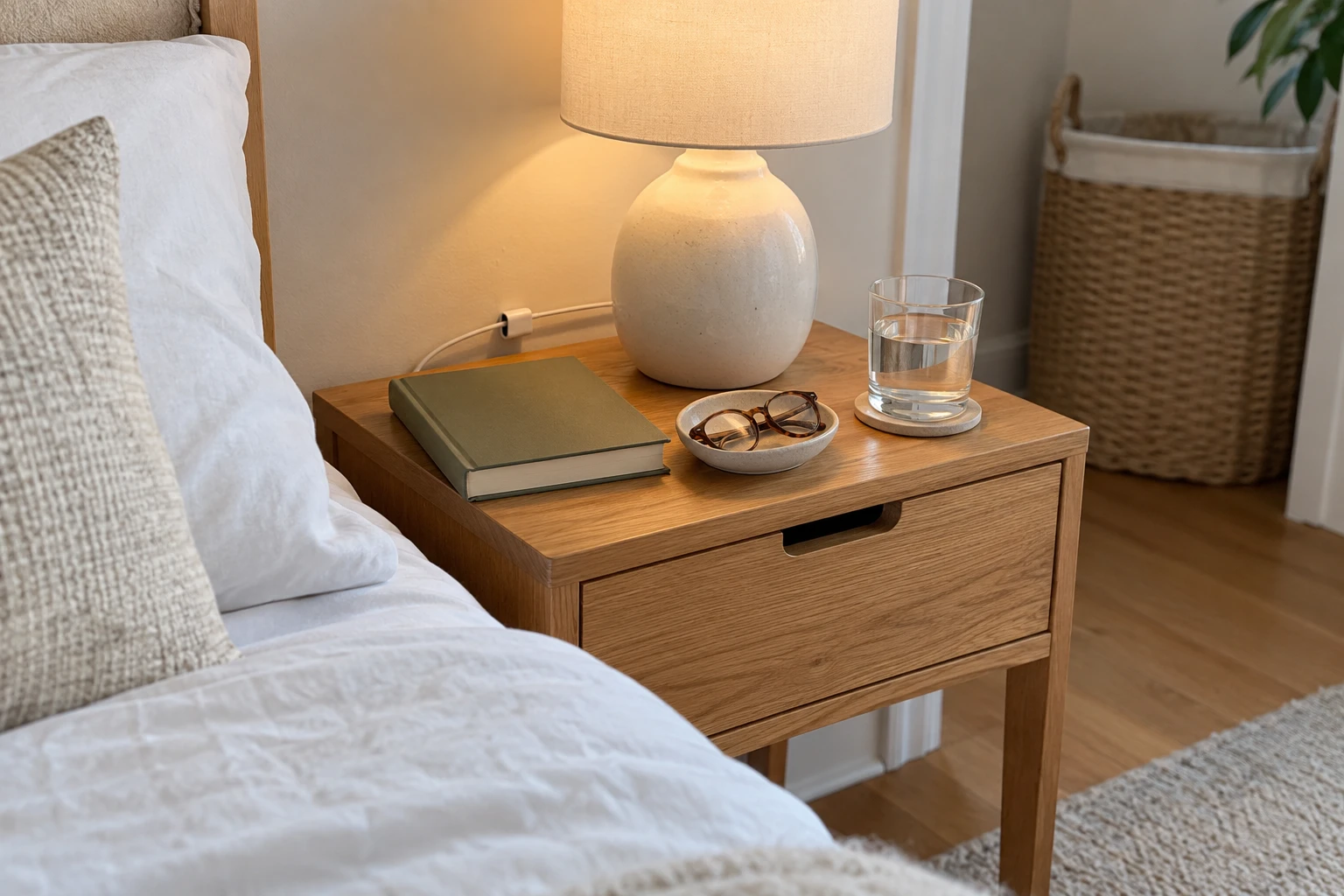
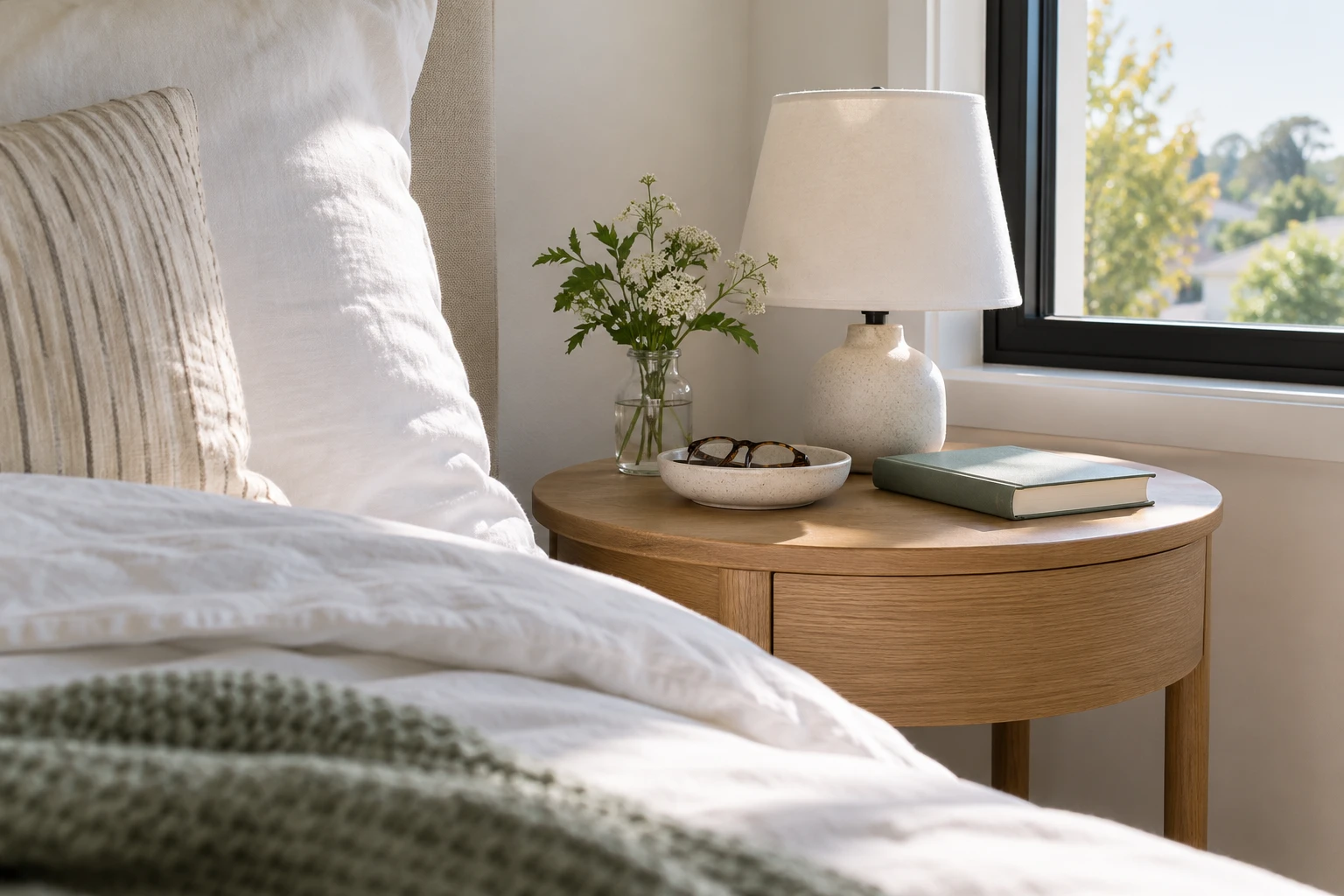
Clear one small surface, wipe it down, and return the essentials and decorations you want there.
A nightstand is a manageable choice. So is one end of a dresser. Emptying every shelf and drawer at once can leave you with more sorting than you have time to finish.
Put the contents in a temporary basket while you clean. Return the everyday essentials first, then add a favorite decorative piece.
Your lamp, glasses, current book, and a framed photo might be enough. Old receipts can go, spare chargers can return to a drawer, and finished books can move back to the bookshelf.
There’s no fixed number of objects you’re allowed to keep. Leave enough clear space to use the surface comfortably.
Finish sorting the temporary basket before moving on so you don’t leave another pile behind.
2. Small Essentials Are Easier to Find Together
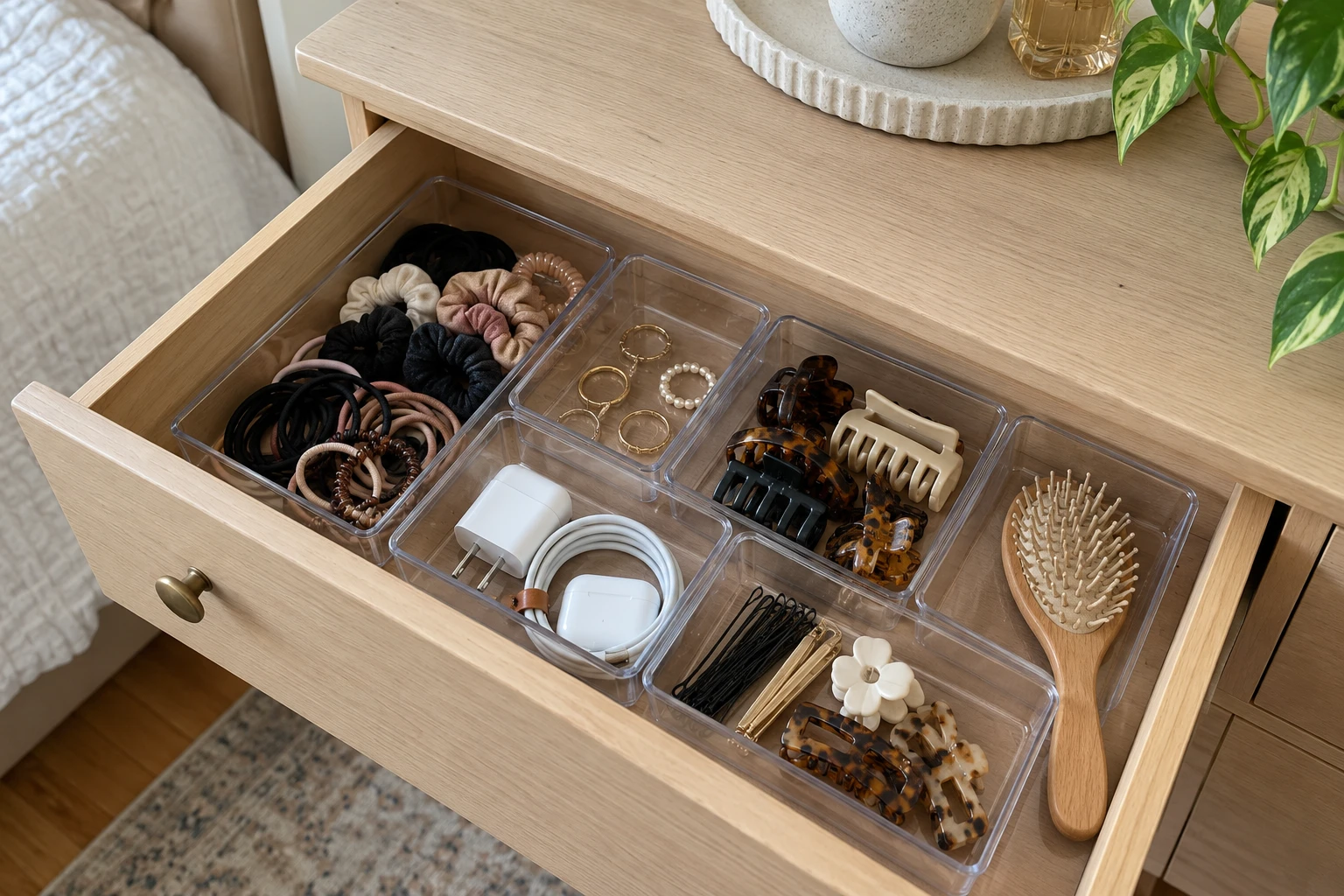
Small belongings are easier to manage when each type has its own place.
Hair ties, rings, lip balm, and charging accessories can quickly spread across a dresser. Putting them in a drawer helps, but dividing that drawer makes them easier to find later.
The Vtopmart 25-Piece Clear Drawer Organizer Set includes trays in four sizes. Use smaller compartments for rings and hair accessories, with longer trays for brushes or other everyday items.
You can divide the set between a bedside drawer, dresser, and desk. There’s no need to fill every tray or use them all in one place.
For jewelry you remove each evening, a small dish on the dresser may be more convenient. Use shallow containers for small items so you can see what’s inside without rummaging.
3. Everyday Packaging Adds More Color Than You Think
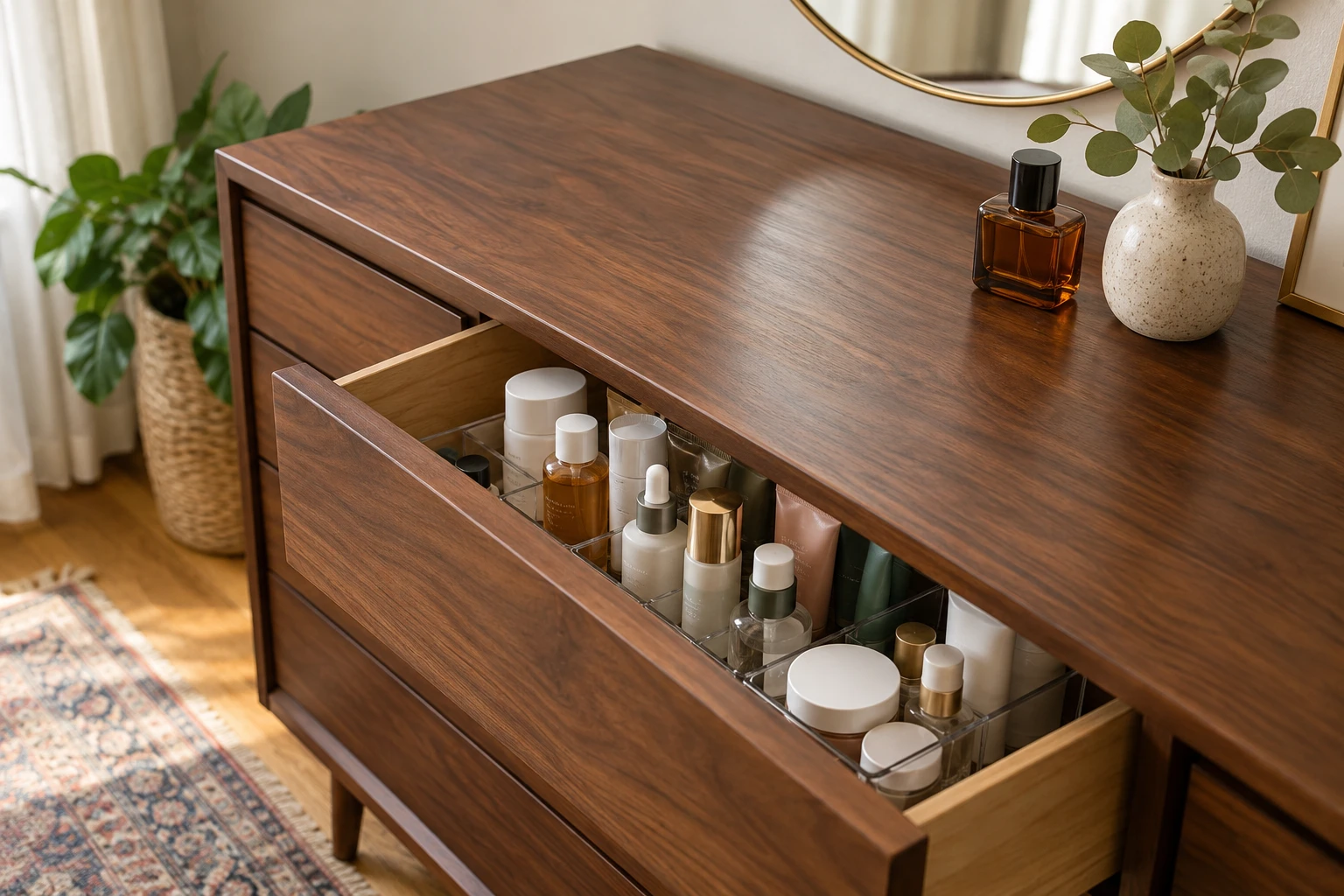
Store spare bottles and packaged products together to reduce the number of labels visible around the room.
Think about a dresser covered with skincare. Pink lettering, a bright green tube, several white bottles, and a promotional box all add different colors and shapes.
A drawer organizer can hold the products you use there. Backups and occasional-use items can go in a cupboard or a separate bin.
You can still leave a favorite perfume bottle on display. Removing the extra packaging around it may be enough to make the dresser look less crowded.
There’s no need to transfer every product into a matching bottle. Existing drawers and opaque bins can simplify the view immediately.
4. Loose Cables Can Make a Tidy Corner Look Messy
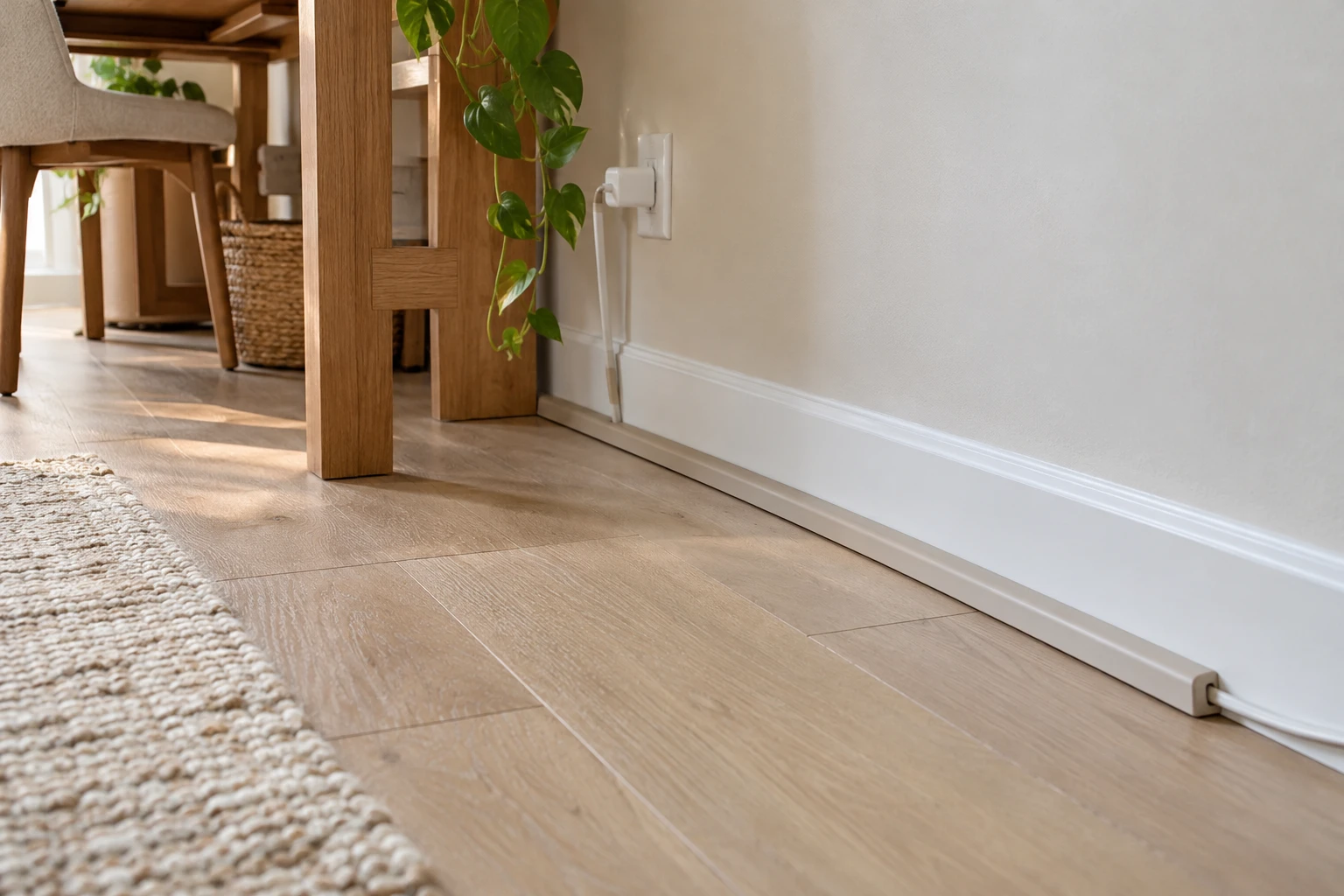
Route cables neatly behind furniture and secure loose sections so they don’t keep slipping into view.
A lamp cord hanging down the wall can be surprisingly noticeable. Add a phone charger and another charging lead, and the corner begins to look untidy.
Cable clips work well behind a nightstand or desk. A wall cord cover suits a cable running down the wall.
For a cable that needs to run along the floor, the D-Line 6-Foot Floor Cord Cover provides a beige cover with a channel underneath. Its flexible material can be trimmed to the length needed.
Route floor cables away from the main walking path wherever possible. A cover contains the cable, but the route still matters.
Remove unused leads before organizing the ones you need. Our guide to hiding cords in a bedroom has more ideas for bedsides, lamps, and desks.
5. Closed Storage Helps With Mixed Belongings
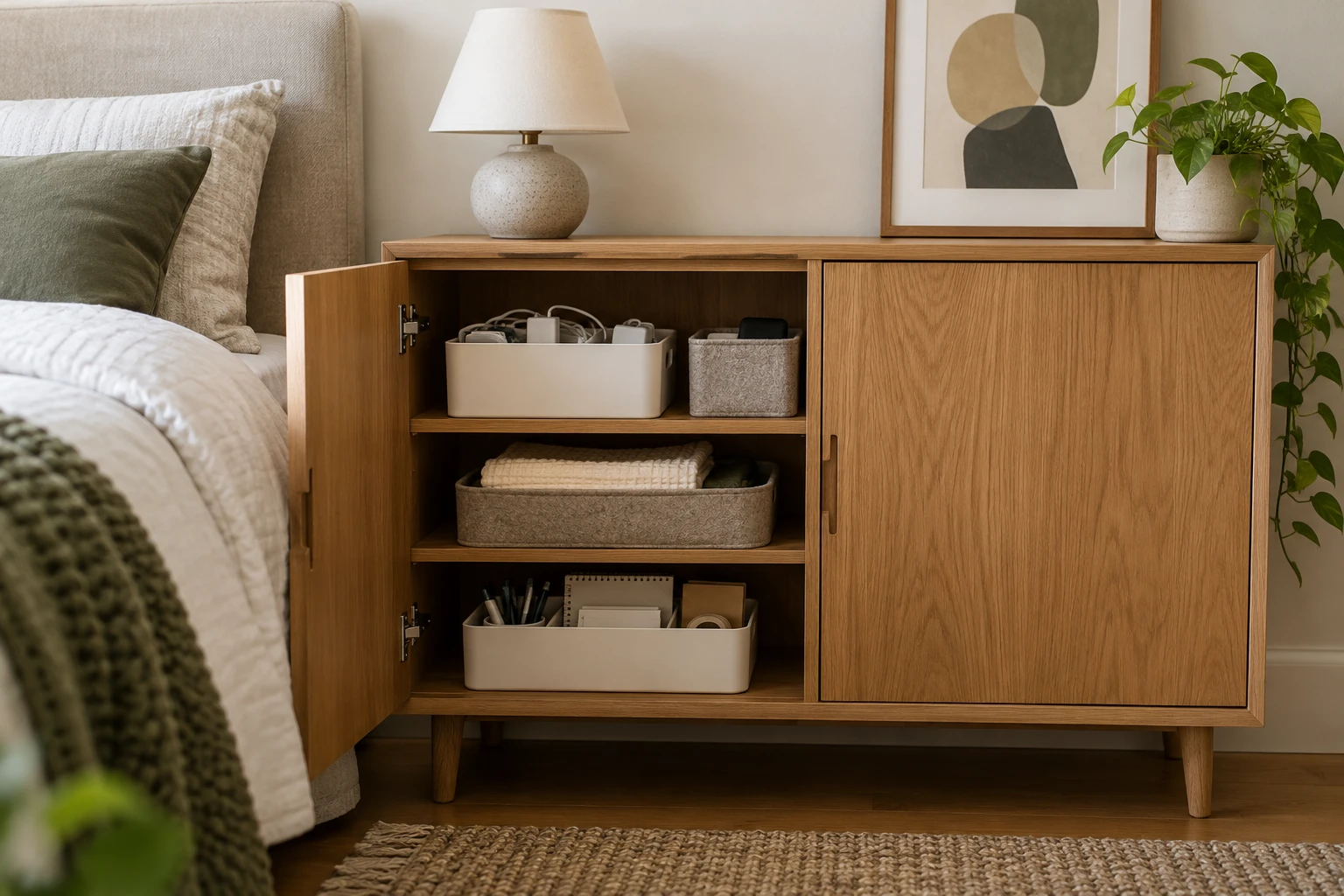
Drawers and cupboards work well for belongings you need nearby but don’t need to display.
Spare chargers, paperwork, personal-care products, and hobby materials rarely look coordinated together. They don’t need to when they have useful storage.
A bedside drawer can hold hand cream and charging accessories. A cupboard can hold craft supplies in separate containers. A shallow box can keep paperwork together until you deal with it.
The important part is access. If reaching your everyday supplies means lifting three boxes, those supplies will probably end up on the table again.
Frequently used items belong in the easiest places to reach. Backups and occasional-use belongings can go higher up or farther back.
Simple labels help identify what’s inside. Transparent organizers also work well inside a cupboard, where you can see their contents when you open the door.
6. Similar Containers Make Open Shelves Look Tidier
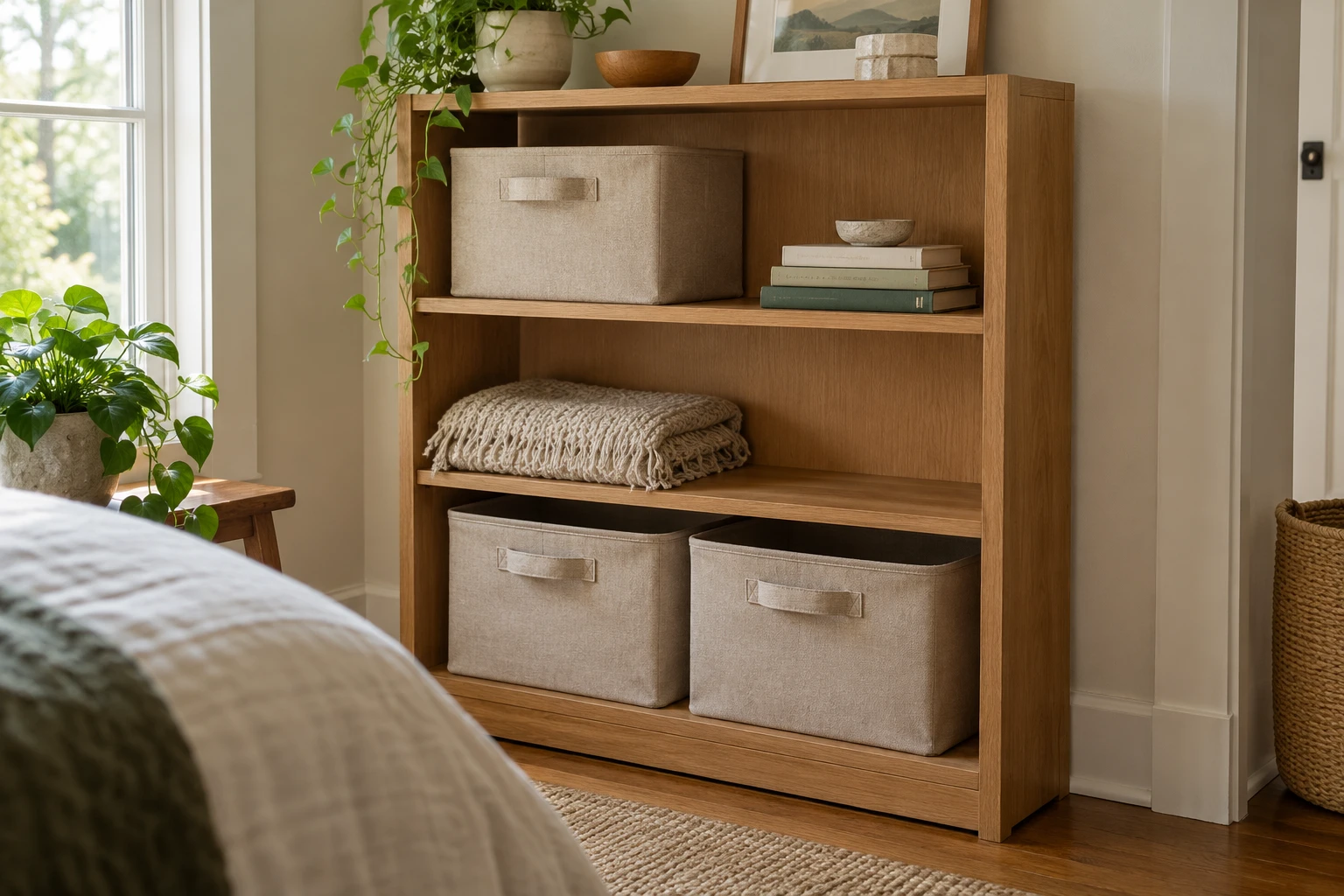
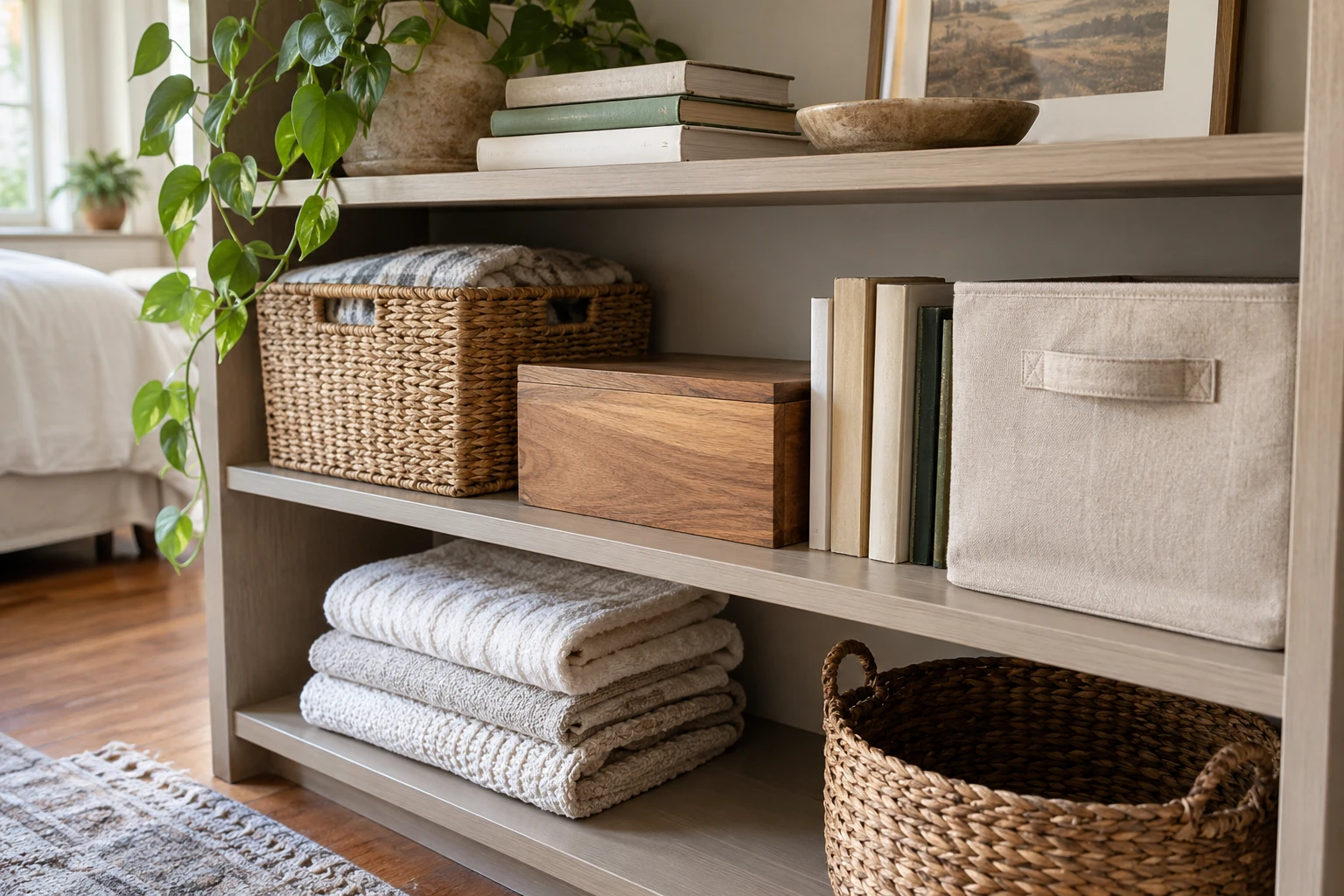
Containers with similar shapes, colors, or finishes make open storage look less busy.
They don’t have to come from one matching set. Two woven baskets and a plain wooden box can look coordinated because their materials and colors are similar.
If you need containers for several categories, the StorageWorks Large Beige Fabric Storage Bins, Set of Three provide a matching option with carrying handles.
One can hold spare bedding, another accessories, and another supplies you use occasionally. Their opaque sides conceal the mixed contents when viewed from the front.
Before buying more storage, group similar containers you already own and remove loose packaging from between them.
Leave some shelf space empty. Filling every gap with another basket can make the unit look crowded again.
7. Clothes Need Somewhere Better Than the Chair
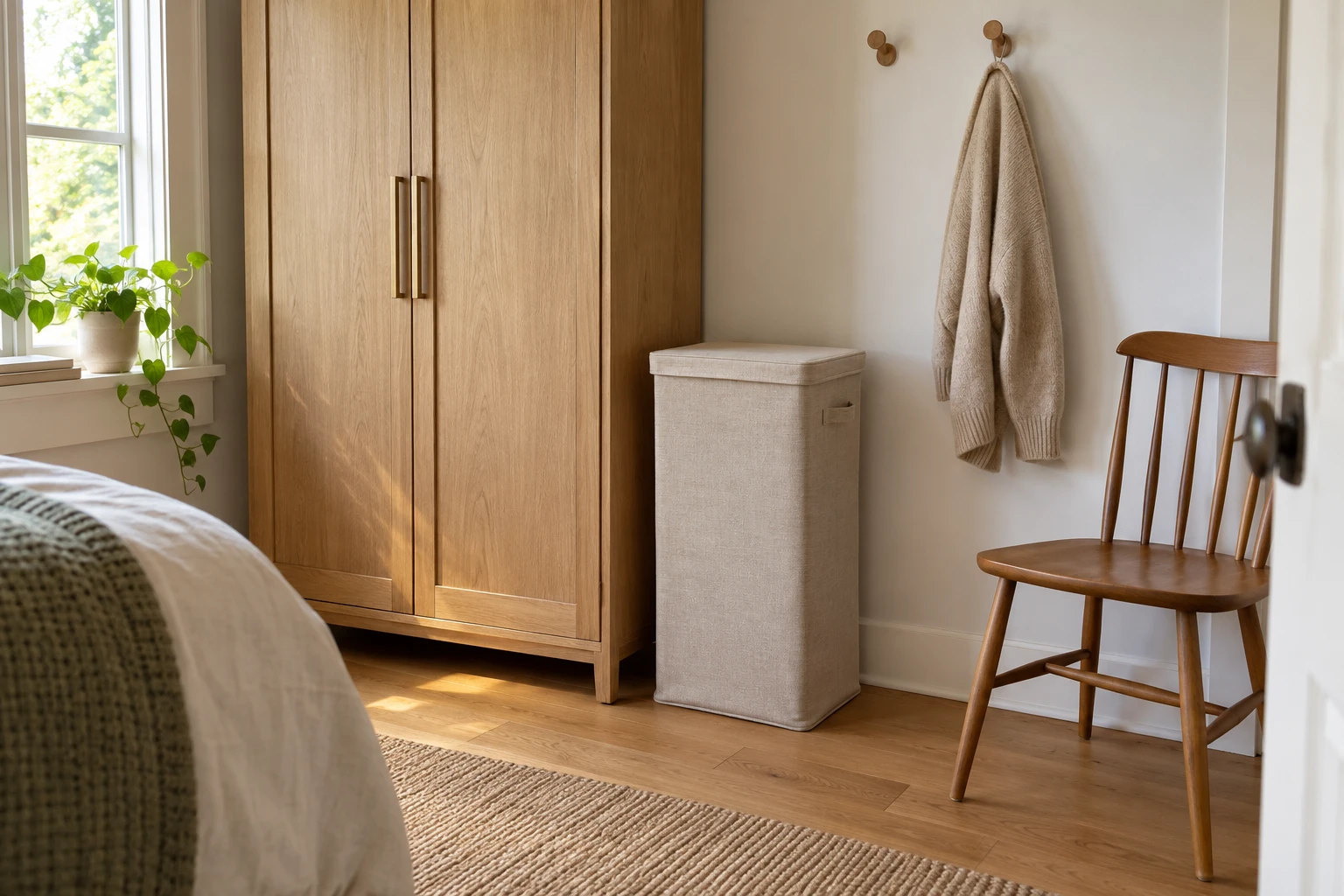
Separate dirty laundry, clean clothes, and clothes you plan to wear again. Each needs a convenient place.
The chair often becomes a clothes pile because those categories get mixed together. A freshly washed T-shirt ends up beneath yesterday’s cardigan, and soon you’re unsure what needs washing.
Dirty clothes go in the hamper. Clean clothes return to a drawer or wardrobe. A cardigan worn briefly can go on a designated hook.
The Lifewit 105L Laundry Hamper with Lid keeps laundry out of view and includes a removable inner bag for carrying it to the washing machine.
Place it near where you change so putting clothes inside takes little effort.
If clean laundry keeps staying out because the drawers are packed, make space there first. Our guide to organizing dresser drawers explains how to arrange clothes so they’re easier to put away.
8. A Neater Bed Can Change the Whole Room
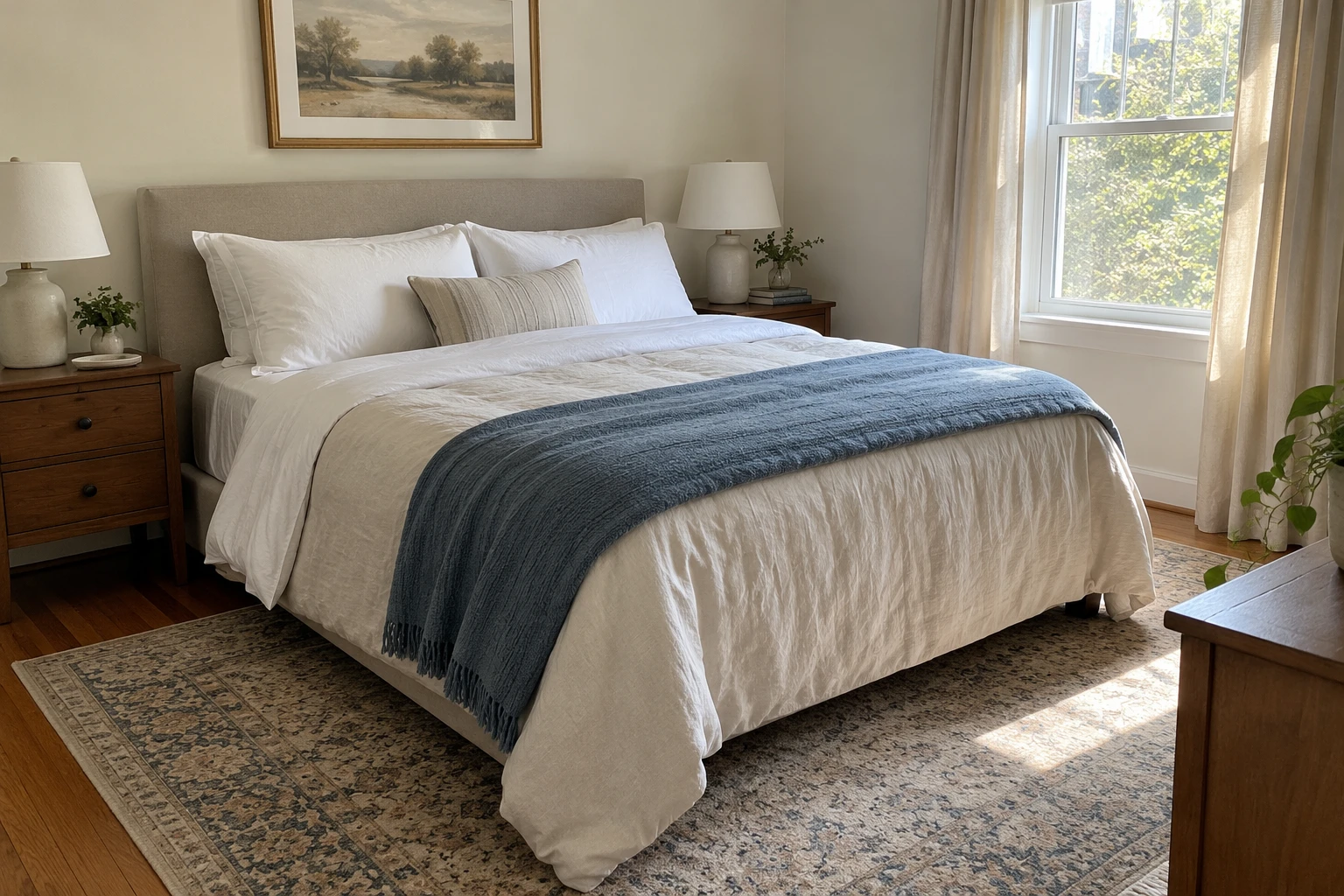
Straighten the main covering and fold extra blankets into one section instead of leaving them spread across the bed.
Because the bed takes up so much space, its appearance affects the whole room. A crooked duvet, loose throws, and cushions at different angles can look messy even when everything is clean.
Pull the duvet into place, arrange the sleeping pillows, and fold a throw across the foot. Keep the decorative cushions you enjoy and have somewhere clean to put them at bedtime.
For spare bedding, the TidyCorner 4.5-Inch Under-Bed Storage Containers, Set of Two have transparent zippered tops and reinforced sides.
They’re a low-profile option for storing seasonal clothes and extra bedding beneath a bed. Each container is 4.5 inches tall, with a footprint of approximately 33.6 by 17 inches.
Our bedding layering guide has more ways to arrange pillows, quilts, and throws without making the bed difficult to maintain.
9. Repeated Colors Help the Room Look More Coordinated

Repeat colors already in the room to help separate pieces look more coordinated.
Suppose your quilt contains blue, cream, and rust. Cream pillowcases and a plain blue throw repeat those colors without adding another pattern.
The same approach works with curtains, artwork, lamps, and storage baskets. A warm brown basket may look more coordinated beside a wooden nightstand than a bright plastic tub.
You don’t need to make everything beige. Colorful rooms can look harmonious when some colors appear more than once.
If several patterns look busy together, pair a patterned piece with something plain. A floral quilt might look clearer with solid pillowcases than with several additional prints.
Our earth-tone color palette guide has combinations to try if you prefer warm, muted colors.
10. Favorite Objects Look Better With Space Around Them
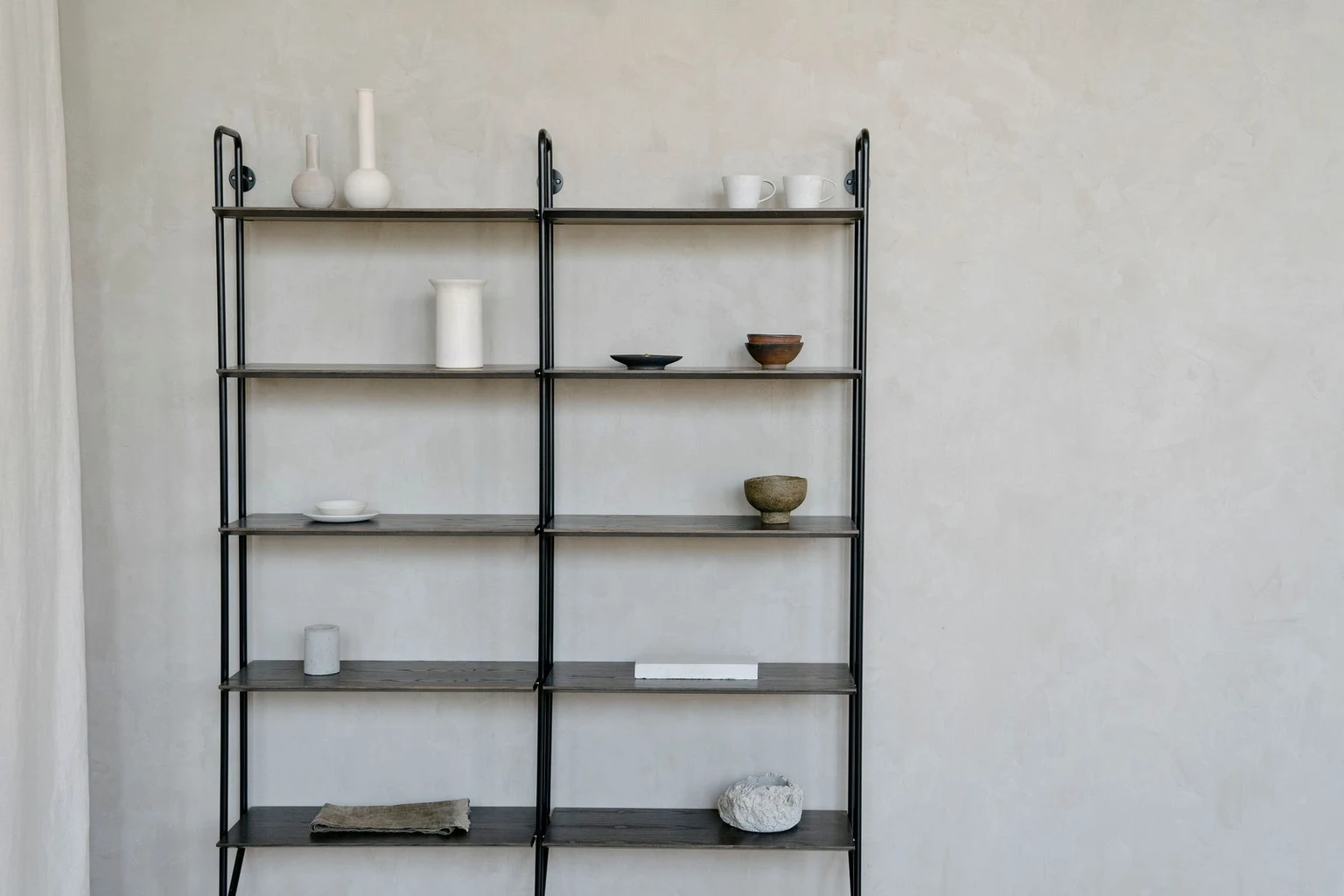
Group related decorations and leave space beside them. That makes individual pieces easier to notice.
A collection of ceramics spread across the dresser, windowsill, and bedside table can make the whole room look busy. Displaying the pieces together on one shelf keeps the collection in a single area.
Arrange a few pieces, then step back before adding more. You may find the shelf already looks how you want it.
Look at walls and furniture together, too. A gallery wall above a dresser covered in ornaments can feel crowded. Clearing some of the dresser may be enough to make the pictures stand out.
If you enjoy changing your displays, rotate a few pieces occasionally. Put them away in suitable storage, rather than leaving a box beside the furniture.
11. Too Much Furniture Can Make the Room Feel Crowded
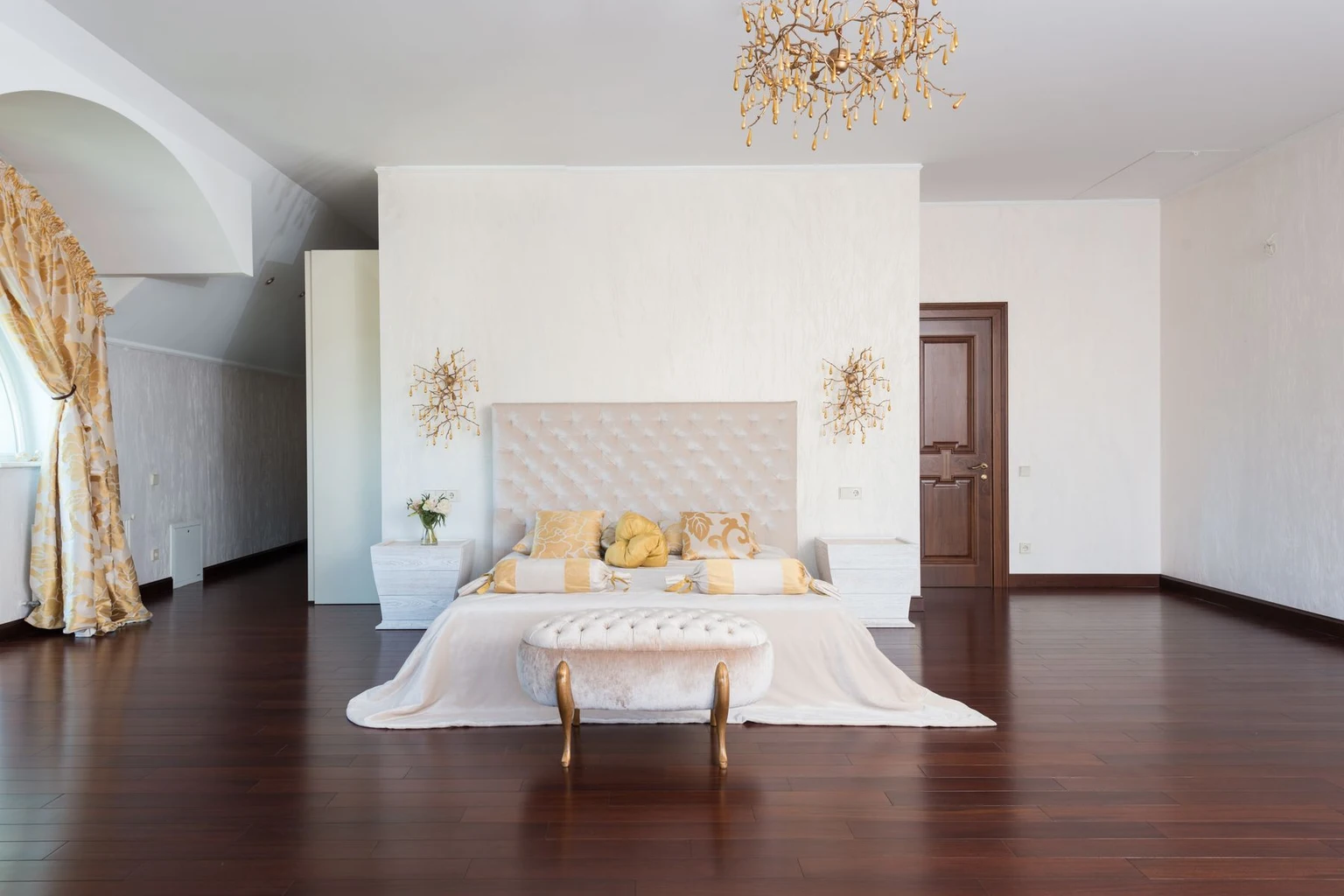
Remove or reposition furniture that blocks movement or does a job another piece already handles.
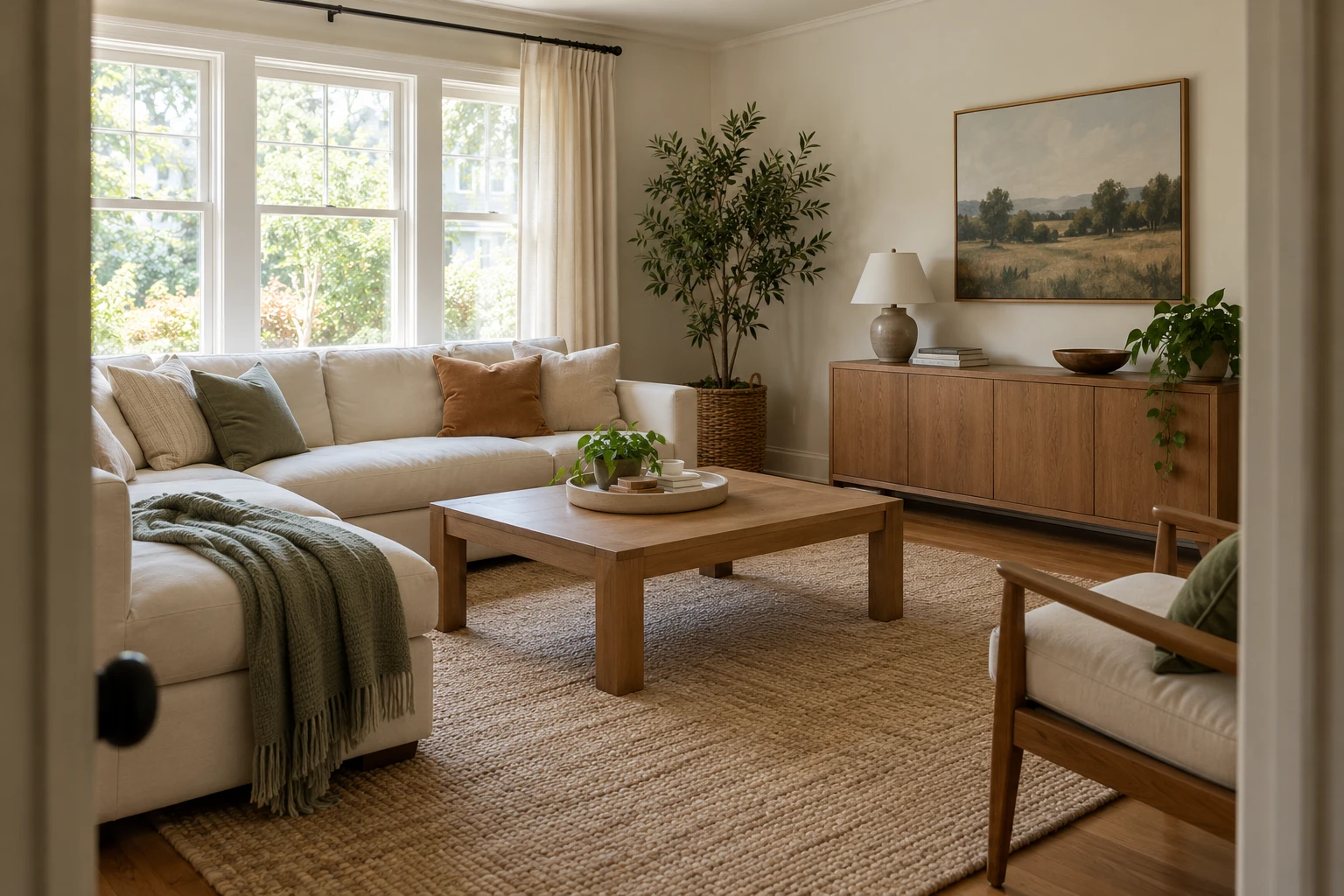
A tidy room can still feel packed when every corner contains another table, chair, or storage unit.
Perhaps there’s a chair nobody sits in, a bench you squeeze past each evening, or several small tables where one would do. Moving one piece can make a noticeable difference.
Think about everyday activities. Can you carry a laundry basket through the room, change the sheets, or vacuum beside the bed without shifting furniture?
If you need both seating and storage, the SONGMICS 43.3-Inch Folding Storage Ottoman Bench combines a padded seat with space inside for blankets and other belongings. It also folds down when no longer needed.
A multipurpose piece is most useful when it replaces something, rather than becoming another addition to a crowded room.
Our guide to arranging bedroom furniture includes layouts for different room shapes and routines.
12. A Short Daily Tidy Keeps Surfaces Clear
Return everyday items to their usual places before small piles build up.
A few minutes in the evening can be enough to deal with the things used that day. There’s no need to reorganize drawers or rearrange decorations each time.
Use this short checklist:
- Rubbish and empty packaging removed.
- Dirty clothes placed in the hamper.
- Clean clothes put away.
- Books, glasses, and chargers returned to their usual spots.
- Used cups taken to the kitchen.
- Spare items removed from the dresser and nightstand.
If the same belongings keep appearing in the same pile, look at where they’re supposed to go.
A bag left beside the door may need a nearby hook. Hand cream left on the nightstand may need space in its top drawer.
Convenient storage makes tidying easier to keep up with.
Common Questions About Visual Clutter
Why Does My Room Look Cluttered Even After Cleaning?
Cleaning removes dust and dirt, but crowded displays, visible packaging, and loose cables remain.
You may only need to store the spare bottles, remove an unused charger, or leave a gap between decorative pieces to make the area look tidier.
Can a Colorful or Maximalist Room Still Look Organized?
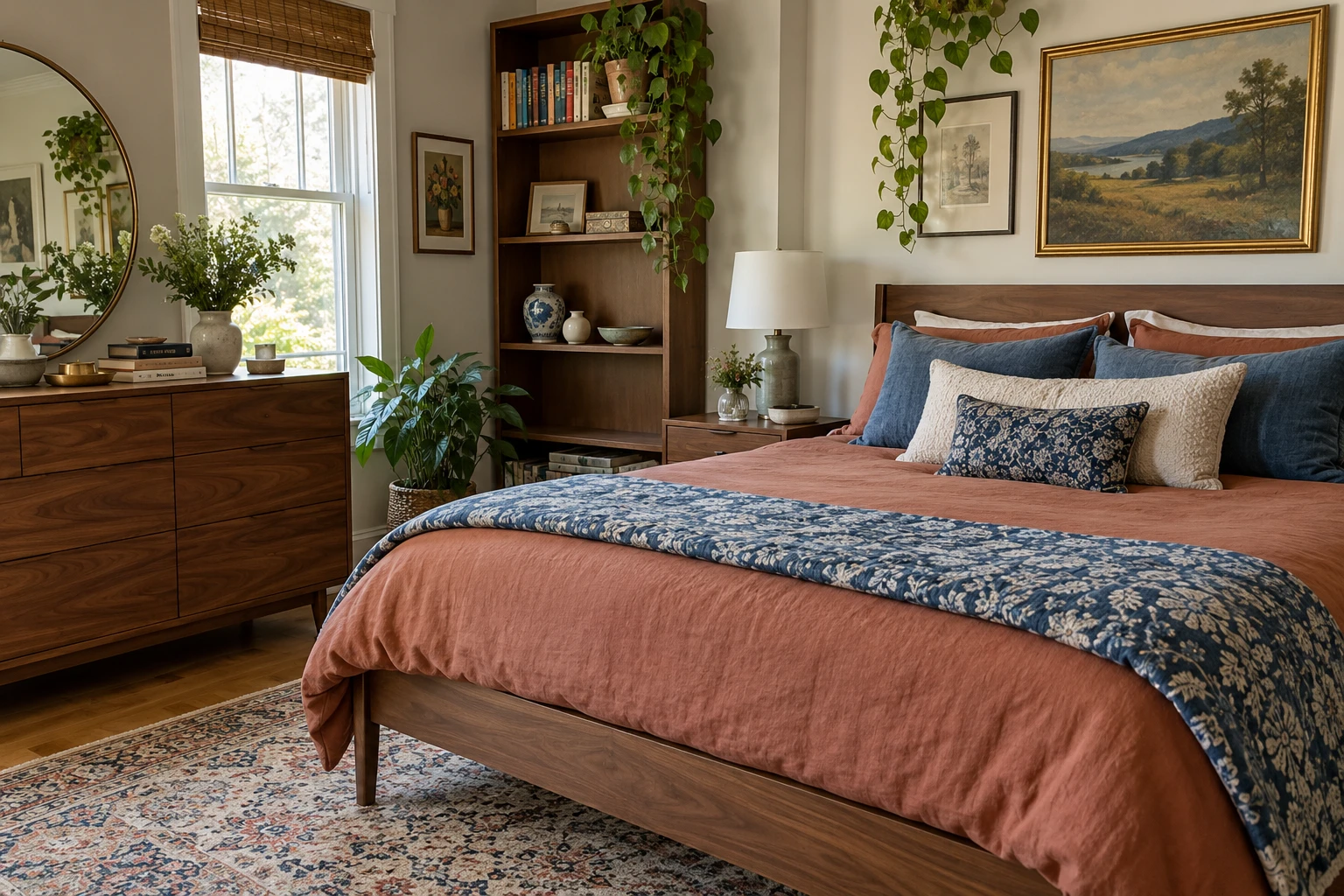
Yes. Color and collections can stay. Clear groupings, repeated colors, and usable surfaces help the room look organized.
A large collection on one wall can work well with a simpler table below it. Keep the amount of decoration you enjoy and can comfortably maintain.
Do I Need to Buy Matching Storage?
No. Rearranging what you own may be enough.
Sort the belongings first, then decide whether there’s a storage problem left to solve. A spare tray, an empty drawer, or a box already in the cupboard may do the job.
New organizers are useful when they solve a specific problem, such as small items getting mixed together or spare bedding taking up the chair.
What Can I Do If I Only Have Ten Minutes?
Remove rubbish, return misplaced items, and clear one small surface.
Wipe the surface, put back the essentials, and finish sorting anything you removed.
Leave the full wardrobe or packed cupboard for another time. A small task you can finish is more useful than several half-sorted piles.
Useful Finds for a Less Cluttered Room
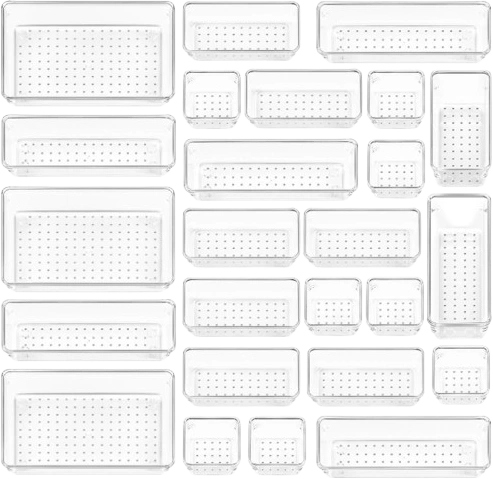 Vtopmart 25-Piece Clear Drawer Organizer SetTrays in four sizes for jewelry, hair accessories, and other small essentials.
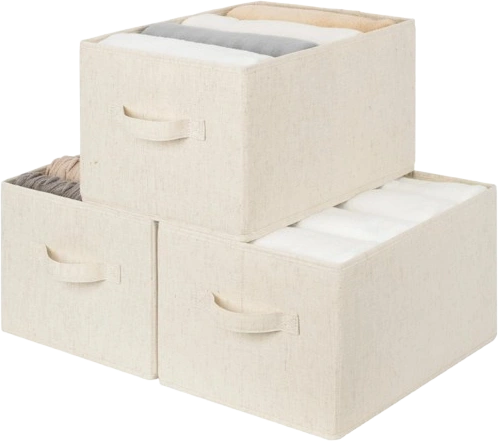 StorageWorks Large Beige Fabric Storage Bins, Set of ThreeMatching fabric bins with handles for tidier shelves and closet storage.
 D-Line 6-Foot Floor Cord CoverA flexible beige cover for floor cables, with a channel underneath.
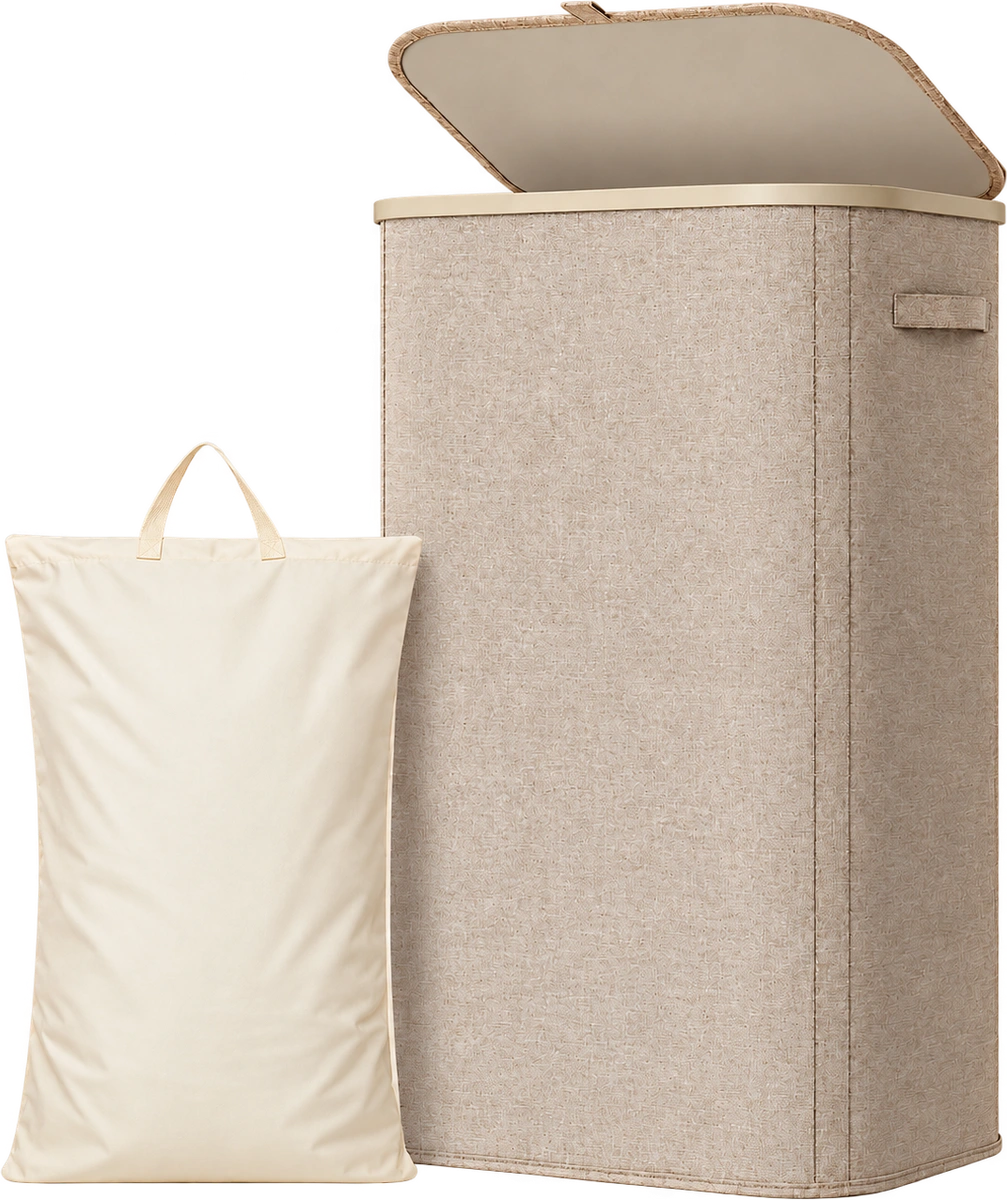 Lifewit 105L Laundry Hamper with LidA tall hamper with a lid and a removable bag for carrying laundry.
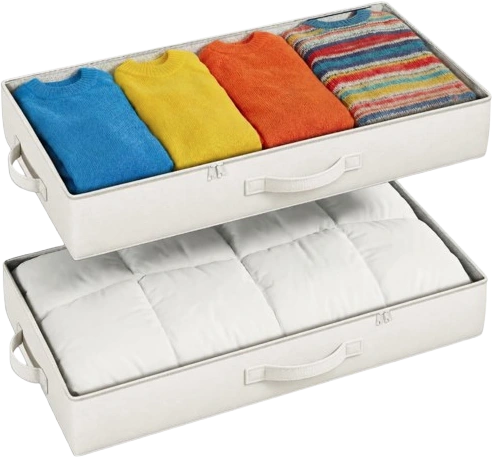 TidyCorner 4.5-Inch Under-Bed Storage Containers, Set of TwoLow-profile containers with clear zippered tops for spare bedding and seasonal clothes.
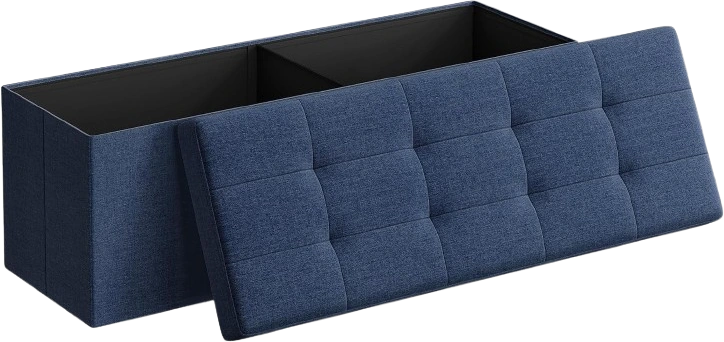 SONGMICS 43.3-Inch Folding Storage Ottoman BenchA padded seat with concealed storage for blankets and bedroom extras.