15 Entryway Rug Ideas for a Modern Home and a Grand Entrance

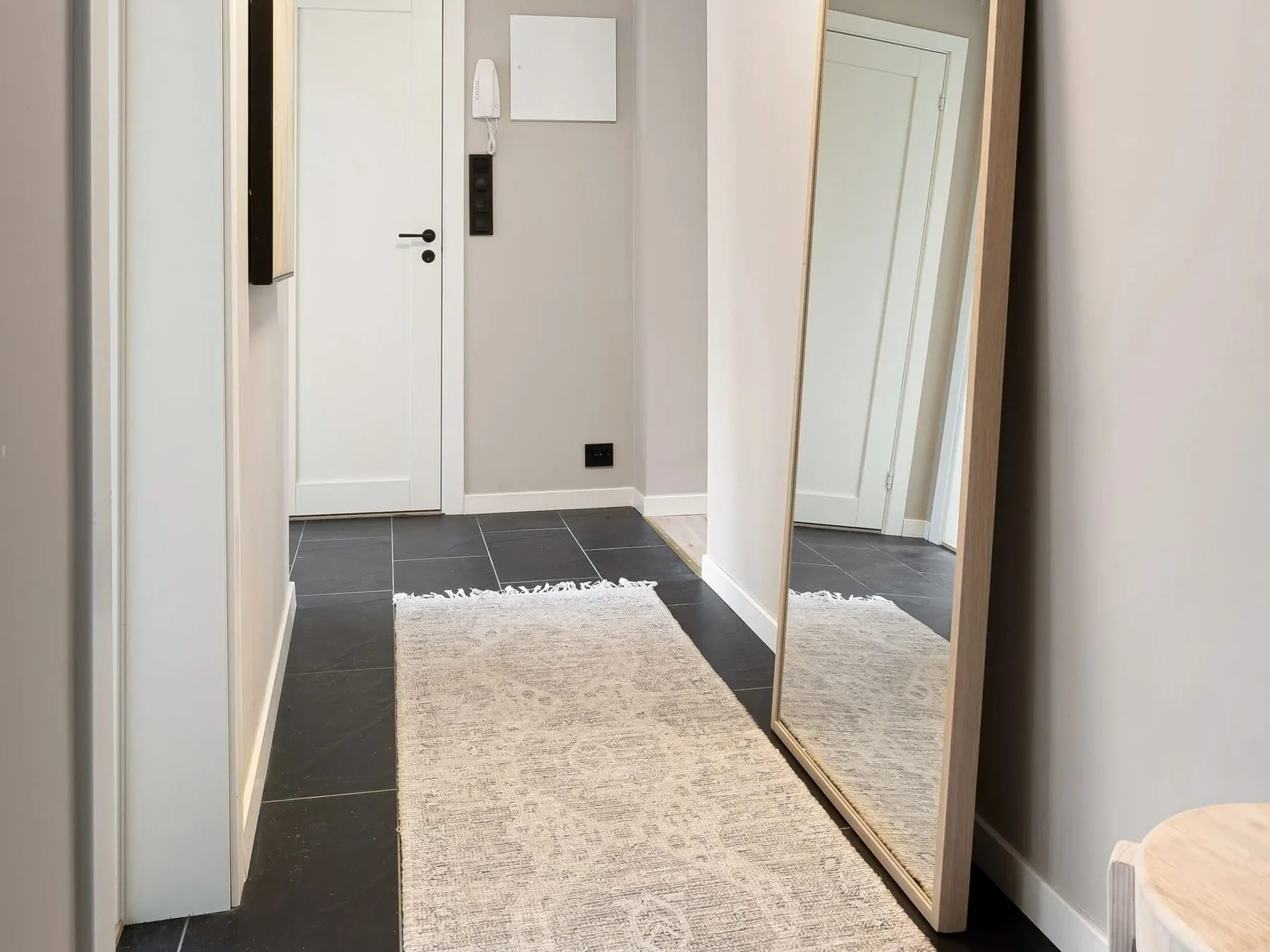
You can spend ages choosing a hallway mirror, finding the right bench, and arranging hooks, then walk through the front door and still feel that something is missing. Often, it’s the bare stretch of floor connecting everything. The best entryway rug ideas give that space some color, soften all those straight edges, and make the entrance feel like a room you’ve actually finished.
The quick answer
- A runner suits a narrow hallway, a compact flatweave suits a small doorway, and a round rug suits an open foyer.
- Choose a thickness that clears the door and a backing or pad suited to the floor.
- Stripes, faded vintage patterns, and florals add character; washable construction is useful for frequently muddy entrances.
Of course, that rug also has to live with grocery bags, rainy shoes, and the dog who reaches the door before you do. A lovely pattern loses some of its appeal when the door catches it every morning.
These 15 ideas cover the decorating part and the everyday details, followed by a buying checklist to help you choose.
Find the Right Rug for Your Entrance
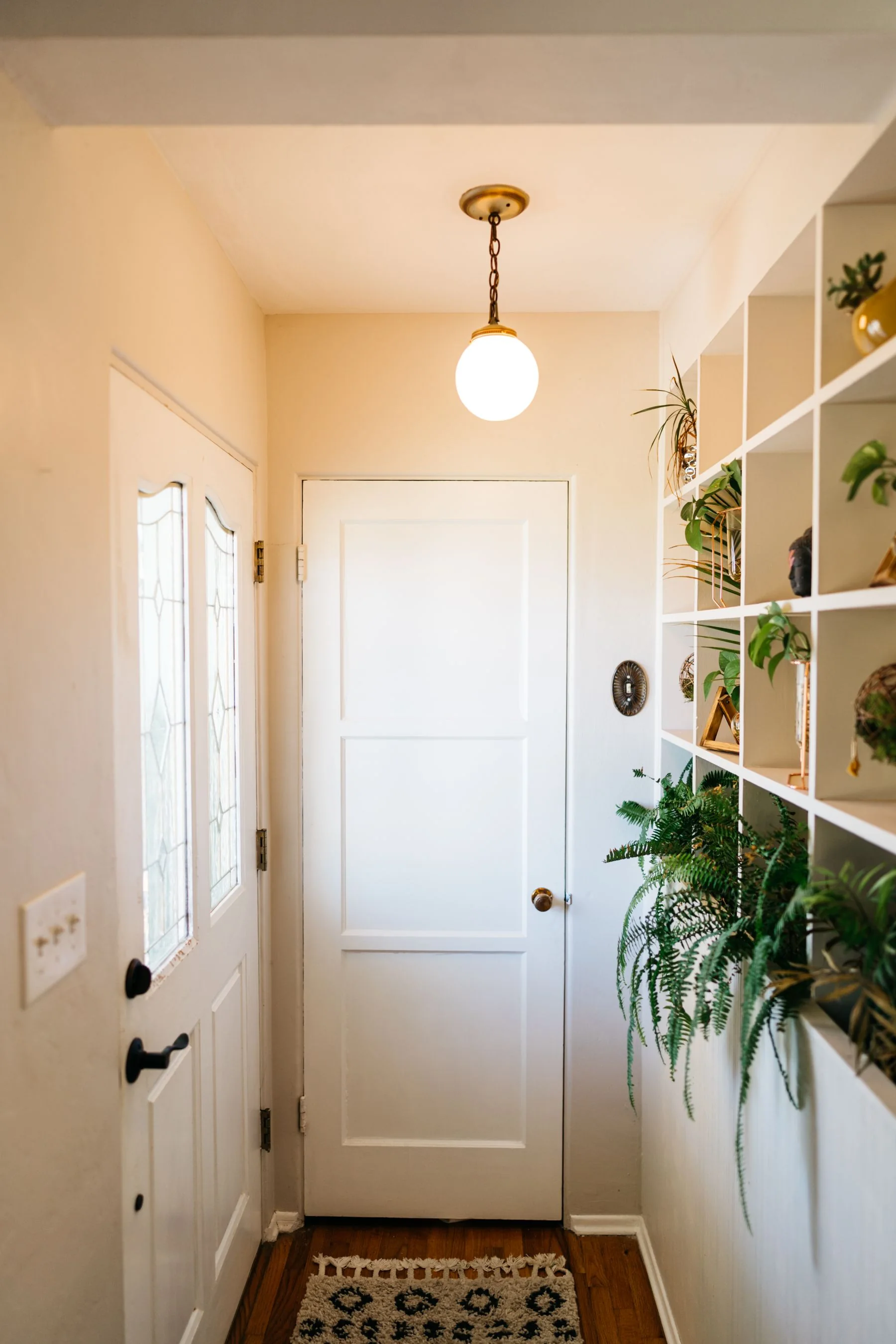
Match the rug’s shape to your available floor space, then choose a pattern you’ll enjoy seeing every day. This quick guide narrows down the options.
| Your entrance | A useful rug direction |
|---|---|
| Long, narrow hallway | A runner following the main walking route |
| Small apartment entrance | A compact, low-profile rectangle |
| Wide, roughly square foyer | A round rug or generously sized rectangle |
| Busy entrance with frequent mess | A low-profile rug with manageable cleaning requirements |
| Dry entrance with cool tile | Woven texture or a braided rug |
| Plain walls and simple furniture | Floral, abstract, or stronger geometric pattern |
| Patterned wallpaper and colorful furnishings | A quieter rug with subtle texture |
1. Give a Narrow Hallway a Runner Worth Following
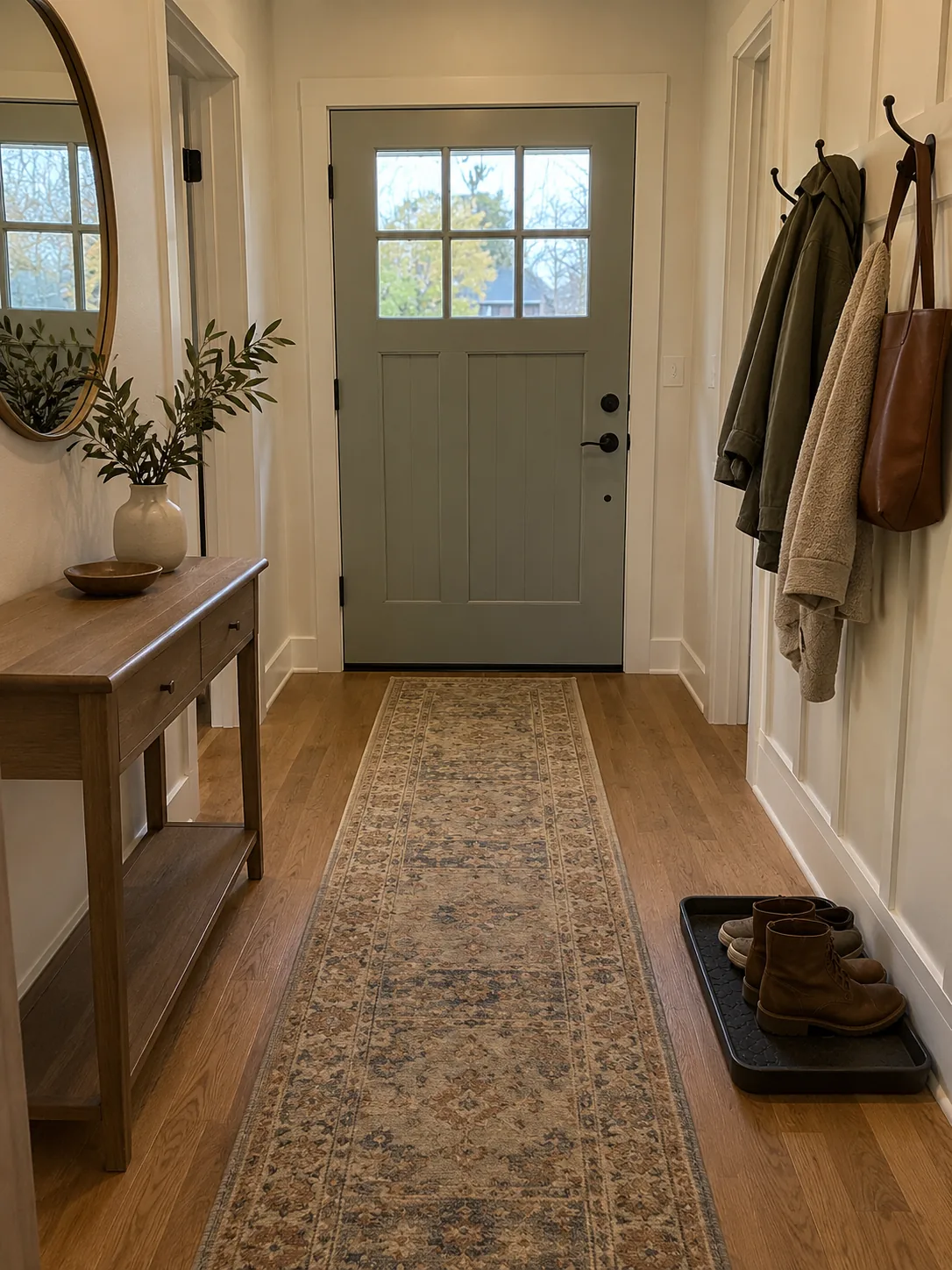
Choose a runner that follows the hallway’s length while leaving visible flooring along both sides. It should relate to the passage, with room around doorways and furniture.
If your entrance leads past a console toward the living room, follow that route. A tiny rug halfway along the hall can look disconnected from everything around it.
The Chris Loves Julia x Loloi Rosemarie ROE-01 in Sage/Blush is a pretty option for muted color and traditional pattern. Its range includes several runner lengths, which makes it easier to compare proportions.
Before choosing one, open every door along the hall. The front door might clear the rug while the coat cupboard catches it.
2. Give a Tiny Entryway One Good Patch of Pattern
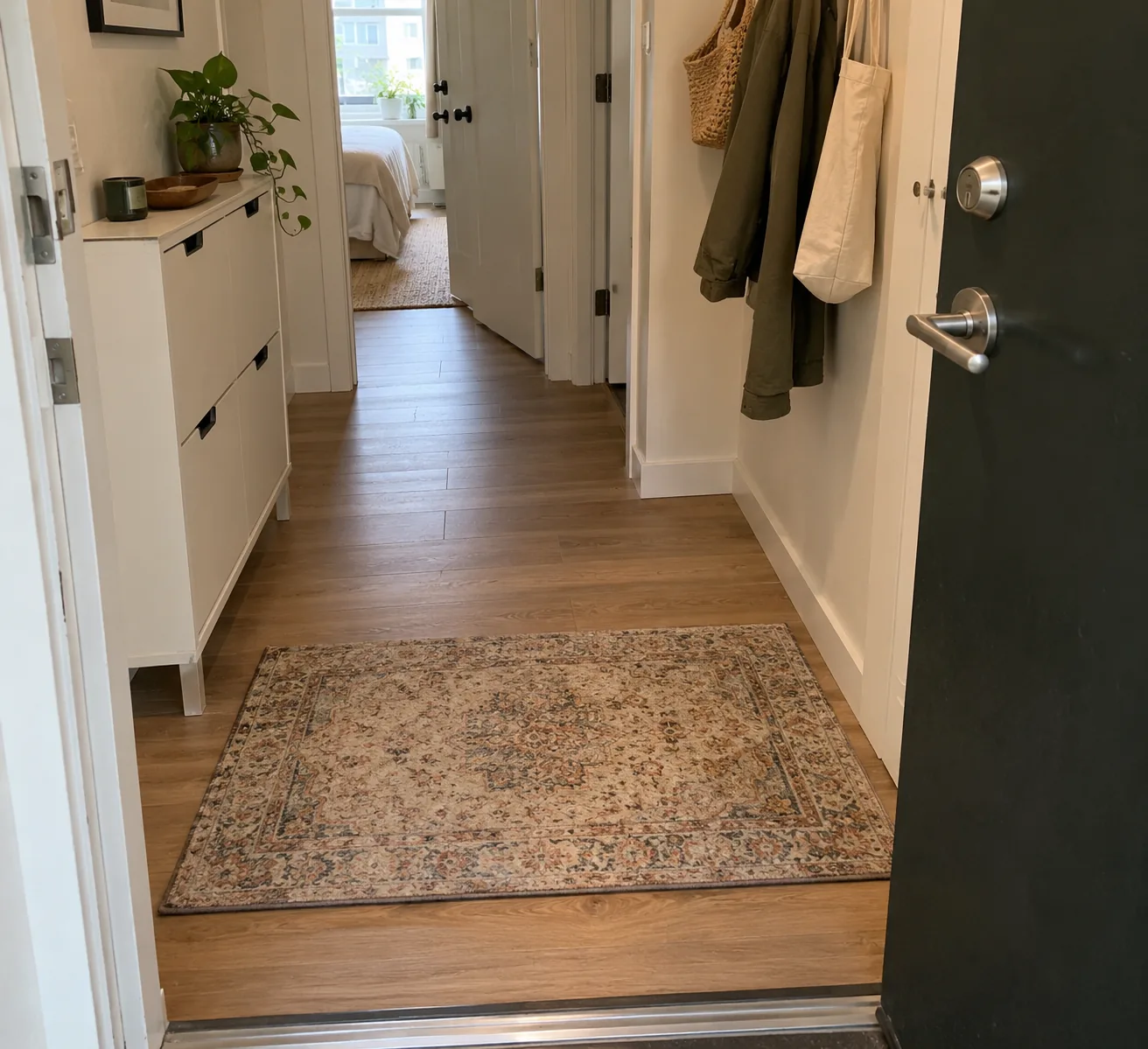
Use a compact rug to define the arrival area without crowding the door or nearby storage. You don’t need to cover the entire floor for it to make a difference.
Picture the ordinary routine: you step inside, put down a bag, and turn toward the shoe cabinet. That little patch of floor is the area your rug needs to serve.
A restrained geometric pattern can give a small entrance some personality while leaving the walls free for hooks and a mirror. If storage is already a squeeze, our guide to an entryway with almost no floor space has ways to keep the essentials within reach.
Check the shoe cabinet too. Pull-down compartments and low drawers need clearance just as doors do.
3. Borrow Some Character From a Faded Vintage Pattern
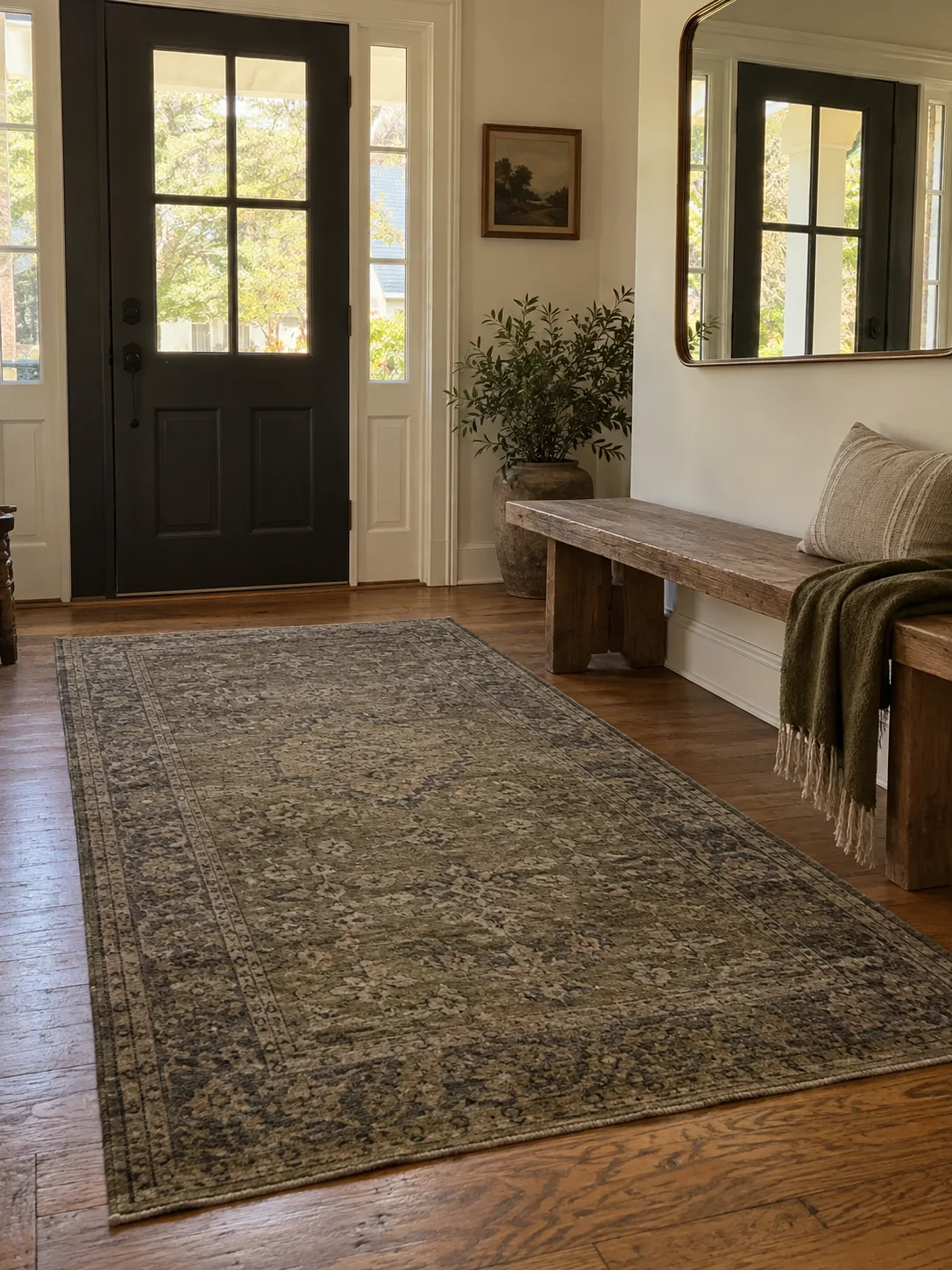
A faded vintage-style rug adds detail without demanding bright walls or elaborate furniture. It works especially well beside a simple bench, an older wooden console, or a contemporary mirror.
The Loloi II Layla LAY-03 in Olive/Charcoal gives you that worn-in appearance through a printed design. It’s a useful choice when you love traditional patterns but want to shop predictable sizes.
Pull one quieter color from the rug into a cushion or small ceramic bowl. You’ll get a connection between the floor and furniture without buying a matching set.
Vintage-inspired describes the appearance here. This is a newly made rug, so it won’t have the individual wear or construction of an antique.
4. Let a Round Rug Soften a Boxy Foyer
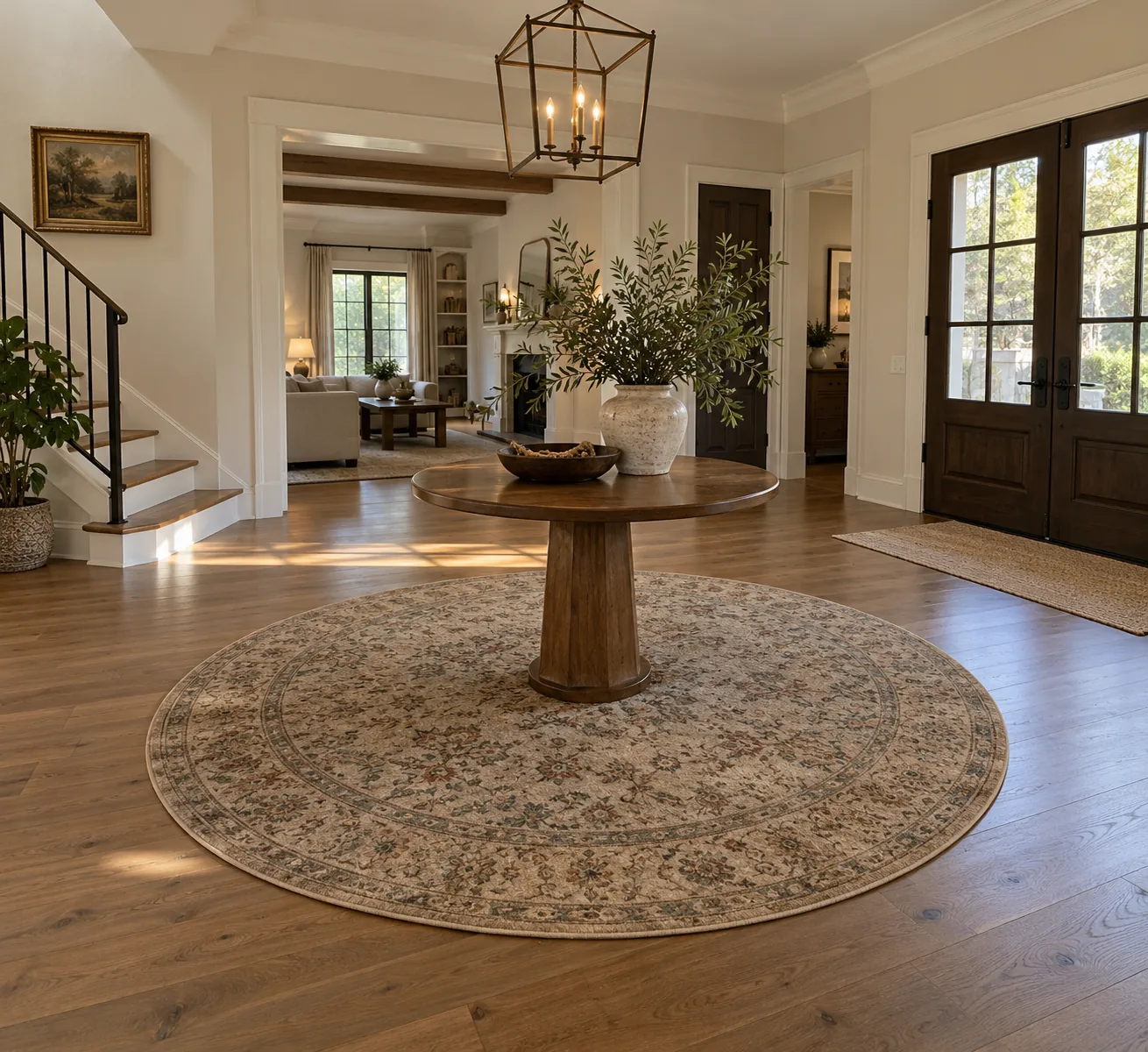
Choose a round rug when the foyer has enough width for the curve to remain visible. It can look especially good beneath a round table or near a curved staircase.
Placement matters more than simply centering it between four walls. Look at the pendant light, furniture, and route into the next room. Those elements help you decide where the rug belongs.
The Rosemarie collection also includes round options if you like its traditional pattern.
For a foyer with a central table, leave enough room to walk comfortably around the arrangement while carrying bags. A beautiful entrance should still be easy to enter.
5. Give a Plain Entrance Some Rhythm With Stripes
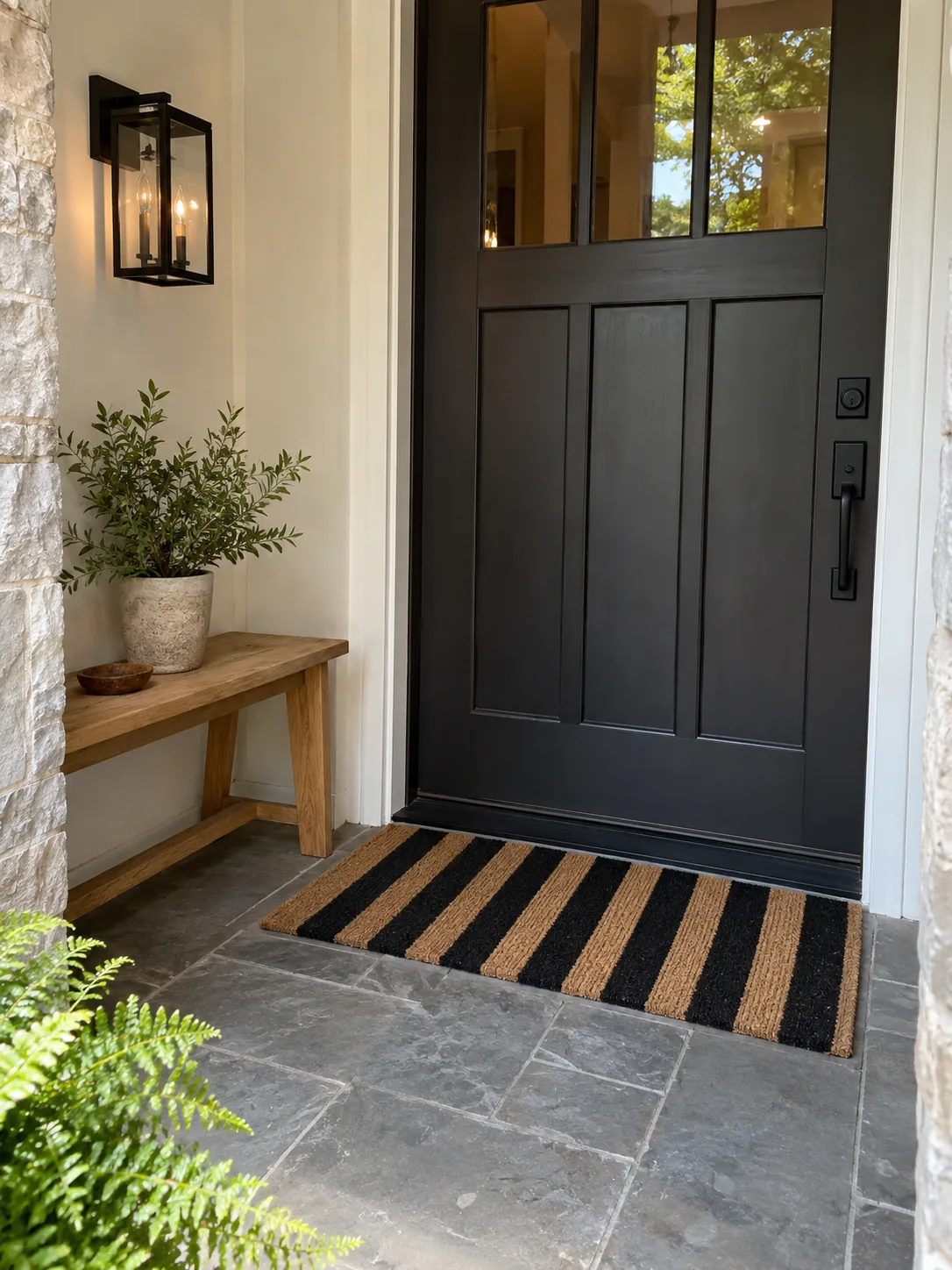
Stripes bring a clear, repeatable pattern into an entrance without requiring much extra decoration. Narrow stripes feel quieter; broad, contrasting bands draw more attention.
Black and natural tones work well with black door hardware, an oak bench, or a simple metal light fitting. Blue and cream can feel lighter beside painted woodwork.
The Erin Gates by Momeni Park Mats Stripe PAR-02 is a compact coir doormat option for this look. Use it where a doormat belongs, rather than expecting it to fill a hallway like a runner.
Check its thickness against the doorway before buying. A small footprint doesn’t automatically mean a mat will clear a low door.
6. Warm Up Cool Flooring With Woven Texture
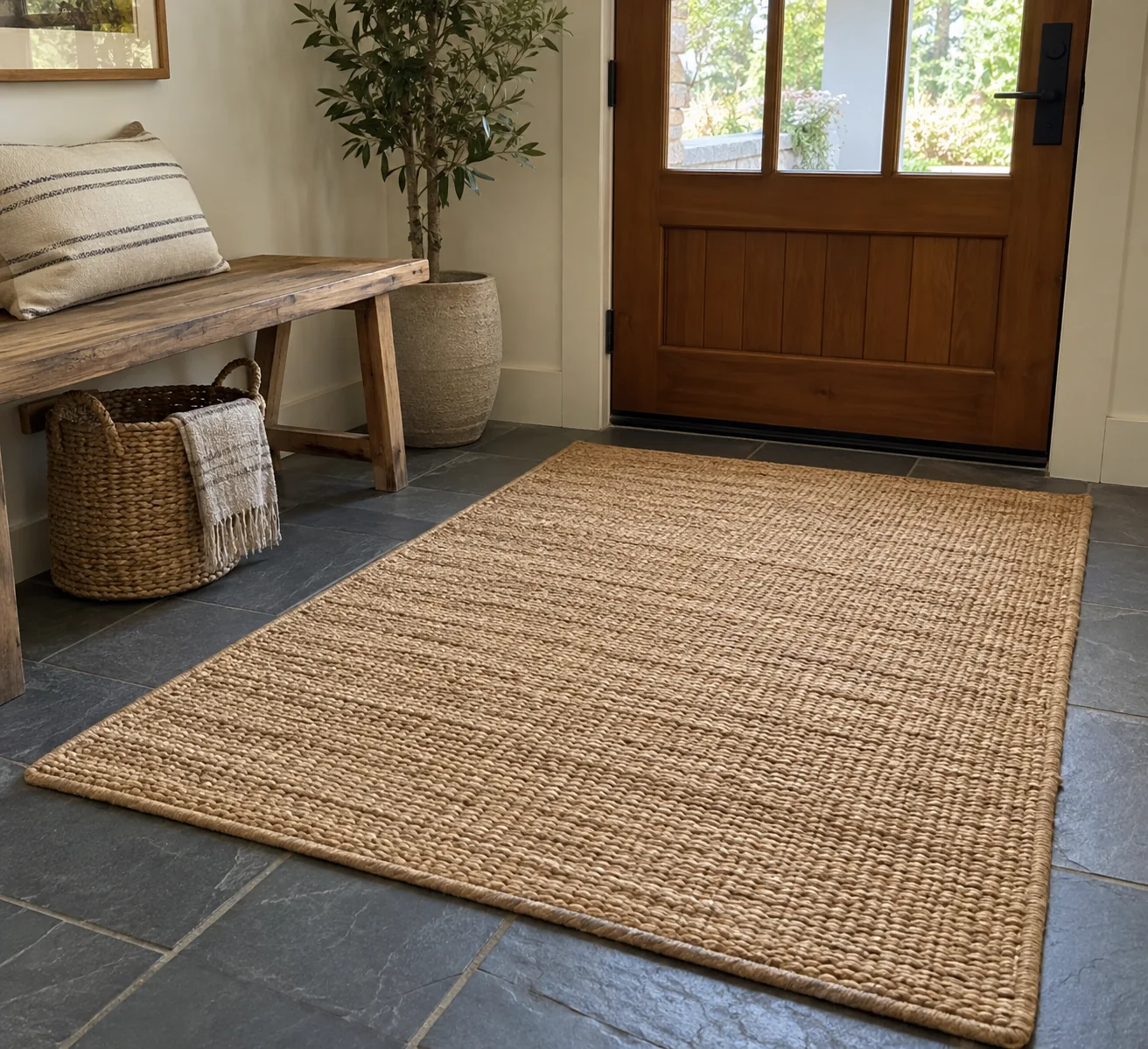
A woven jute rug suits a dry entrance where you want warmth and texture without a strong print. Its irregular weave gives plain stone or tile something softer to sit beside.
The Erin Gates by Momeni Crescent CRE-1 Natural combines jute with a broken-stripe design. It would sit comfortably alongside a wooden bench and a basket for scarves.
Be honest about what comes through your door. If rainy boots regularly leave puddles here, prioritize a rug whose care instructions suit that routine.
7. Bring Back the Braided Oval Rug
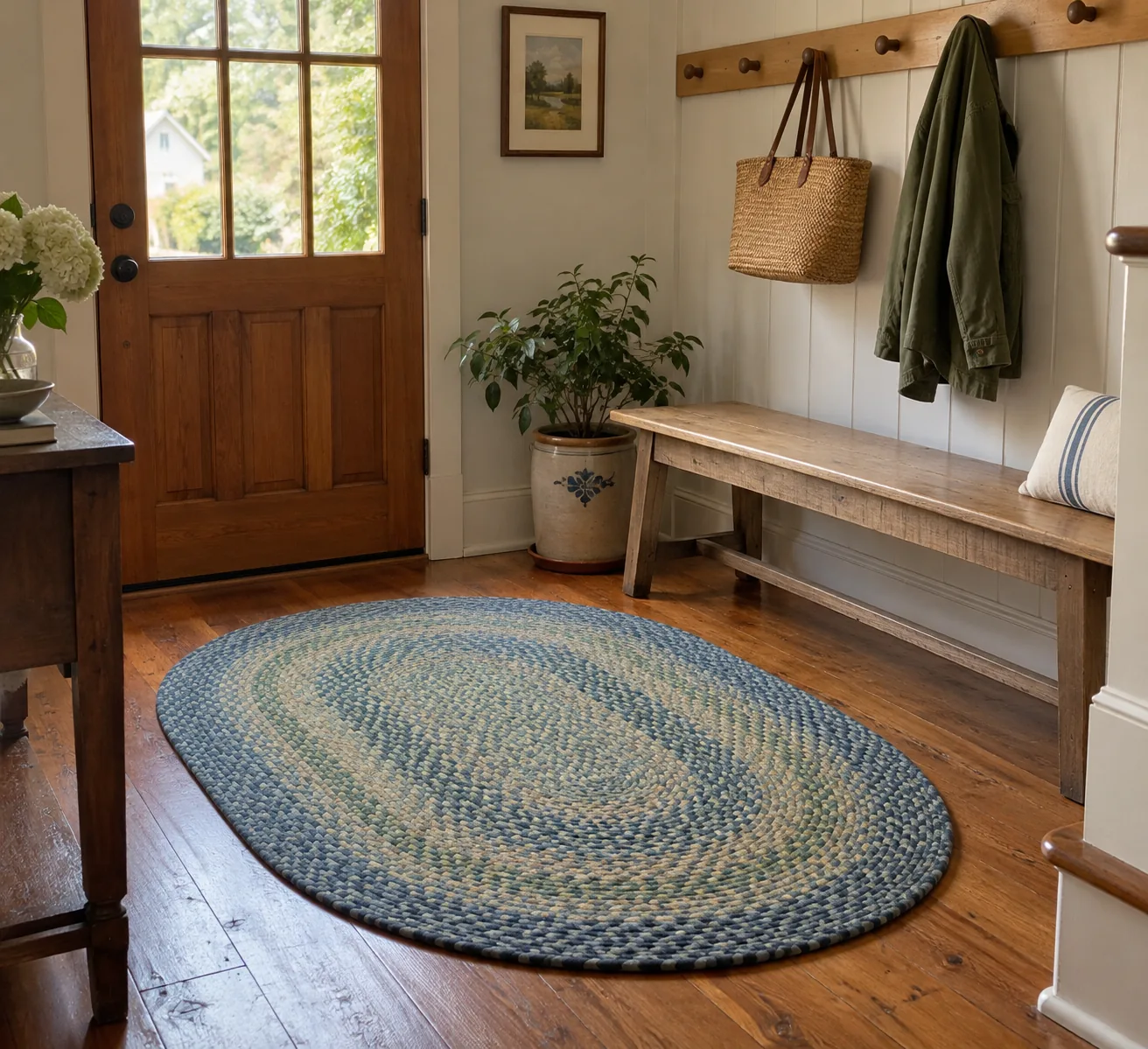
A braided oval rug brings curved edges and familiar pattern into an entrance with wooden furniture. It’s an easy fit for a cottage-style room, but it can also soften a simple modern space.
The Capel Alliance braided rug is one option to explore for this look. Choose a color combination that picks up something already in the room, such as the bench finish or painted door.
You don’t need a whole collection of country furniture around it. A plain peg rail, a clean-lined bench, and one basket can be enough.
If this is the style you keep saving, our vintage decor ideas worth bringing back offer more ways to work familiar pieces into an everyday home.
8. Pick a Pattern That Forgives Everyday Footprints
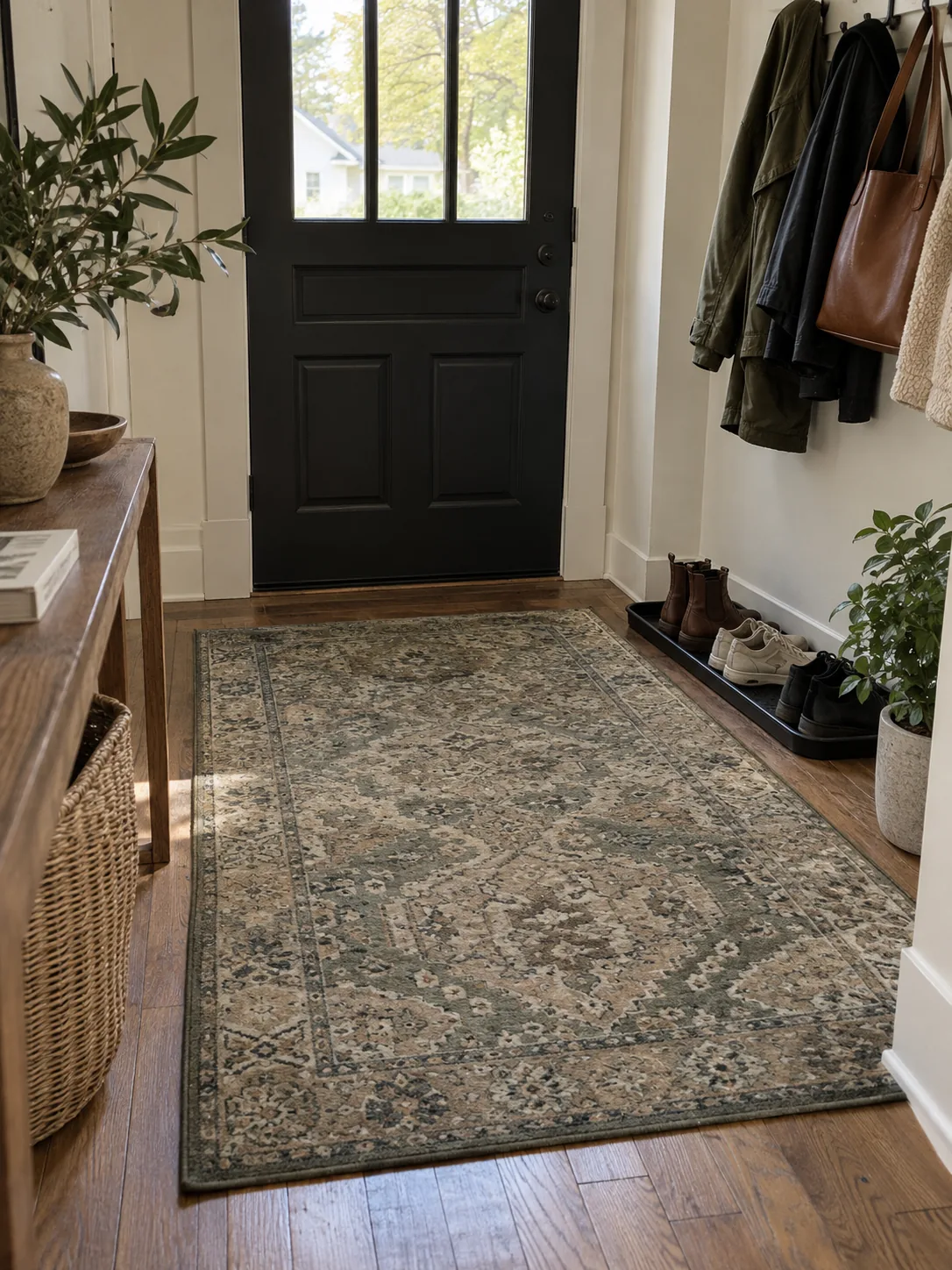
Midtone rugs with varied colors and smaller details can make minor marks less noticeable between cleanings. Large areas of pale cream often reveal dark dirt, while very dark surfaces can show light lint and pet hair.
Think about your particular household. A sandy garden path, pale dog hair, and muddy school shoes leave different traces.
The mixed olive and charcoal pattern of the Loloi Layla LAY-03 offers this kind of visual variation.
A pattern can make the room feel tidier between chores, but grit still needs removing. Keep the vacuuming routine even when the rug looks fine.
9. Let the Rug Be the Artwork
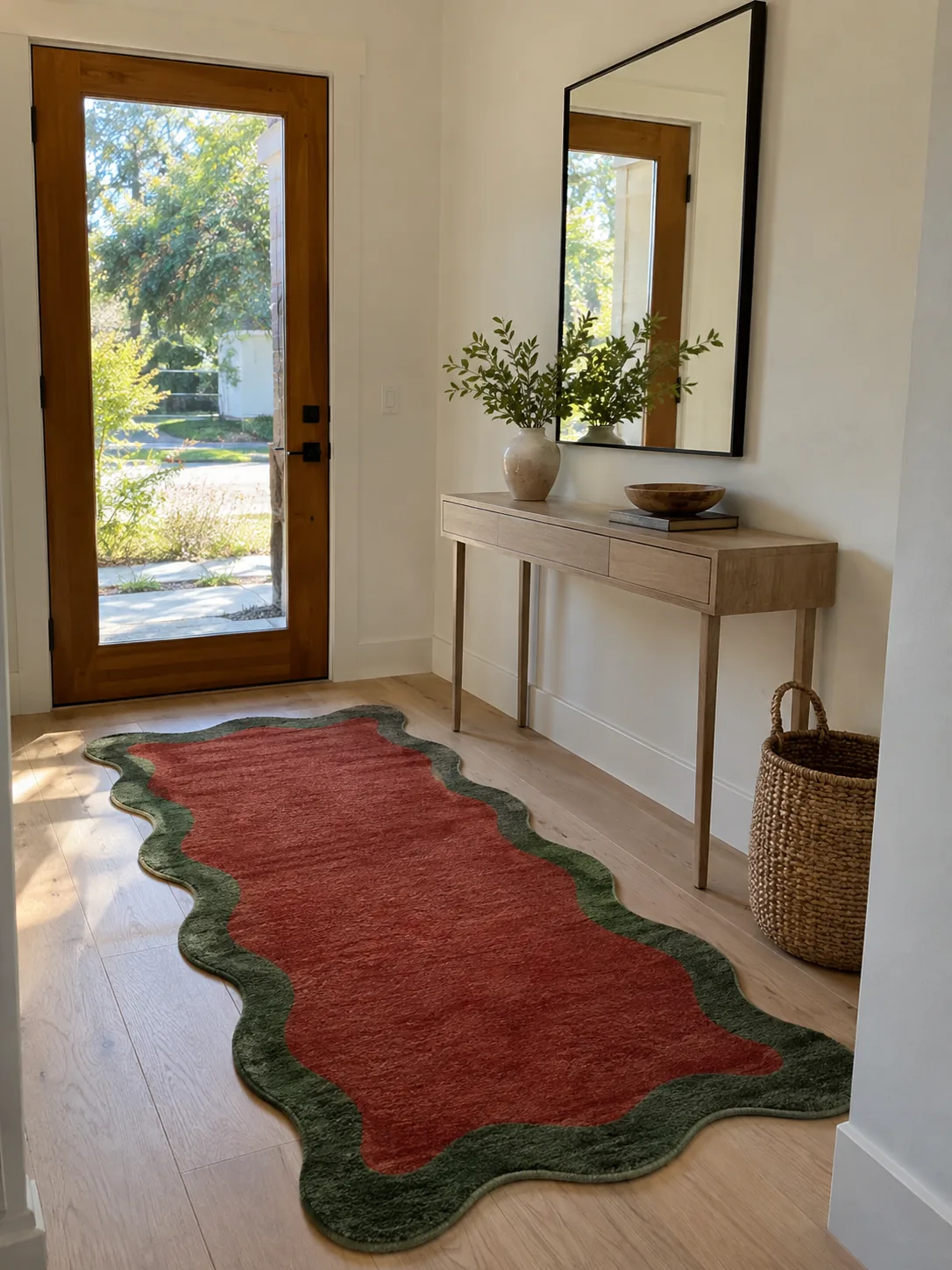
A distinctive rug can become the focal point when there’s little wall space for pictures. This works best when the furniture around it stays fairly simple.
The Johann Banta Irregular Tomato Runner takes that idea in a cheerful direction. Its outline and color make it a choice for someone who wants the entrance to feel personal.
Prefer green? The Johann Banta Irregular Green Moss Rug offers another organic shape, although its larger standard sizes need more floor space.
With either approach, check the widest and narrowest parts of the actual outline. An irregular rug can fit inside a rectangle on paper while placing an awkward edge directly in the walking route.
10. Let a Floral Rug Do the Decorating
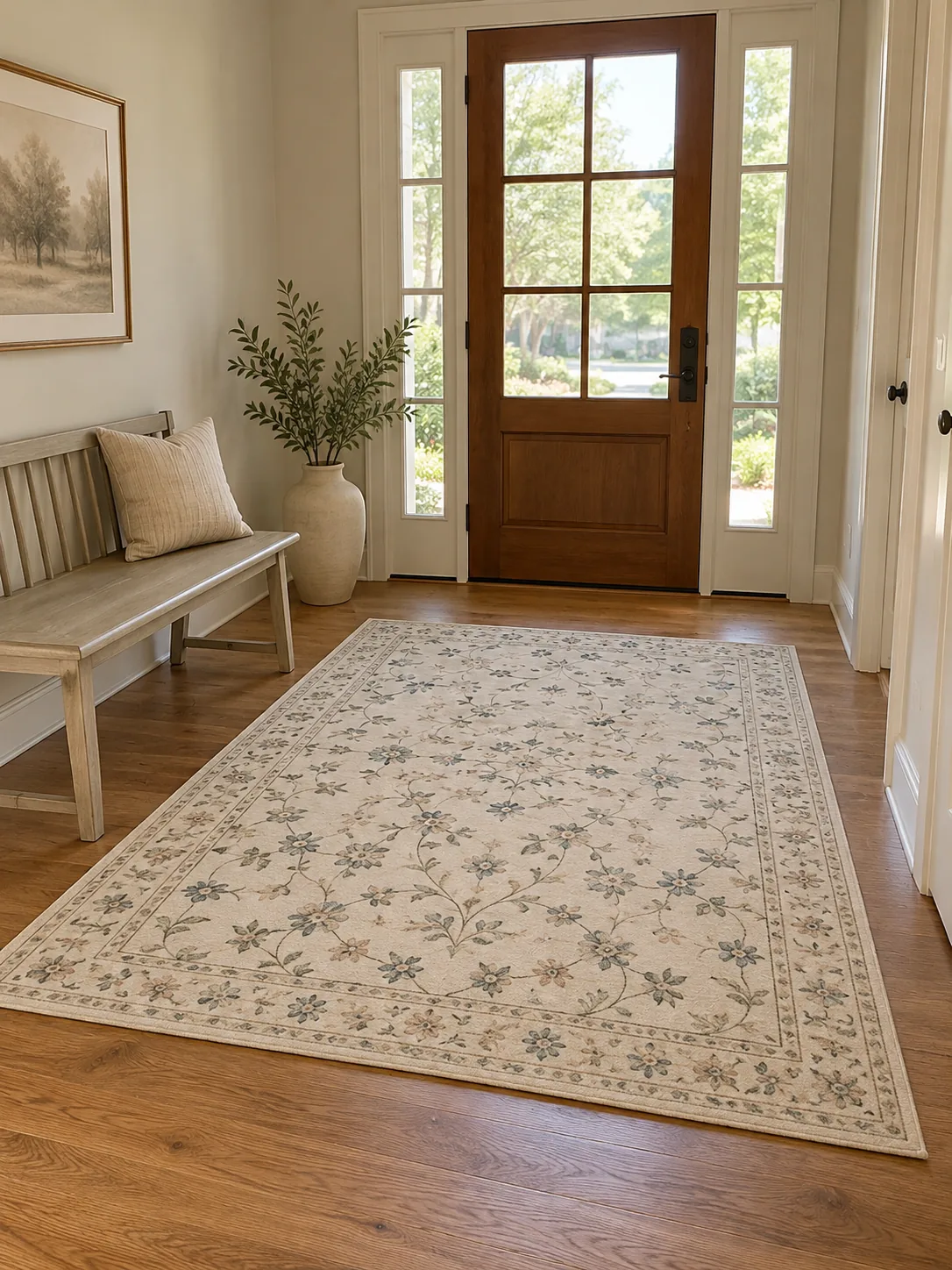
A floral rug can provide enough color and movement that the rest of the entrance needs only a few simple pieces. Try one with a plain bench, a restrained wall color, and a single vase.
The Loloi Norabel NOR-01 in Ivory/Multi has a botanical design and hooked wool construction. It’s a pretty option for an entrance where you want visible pattern underfoot.
Pay attention to the scale. Larger leaves and flowers are easier to read from the doorway; a smaller pattern can create a busier overall surface.
You can repeat one leaf or flower color elsewhere, but there’s no need to match every shade. One shared green cushion might do the job.
11. Borrow One Color From the Room Beyond
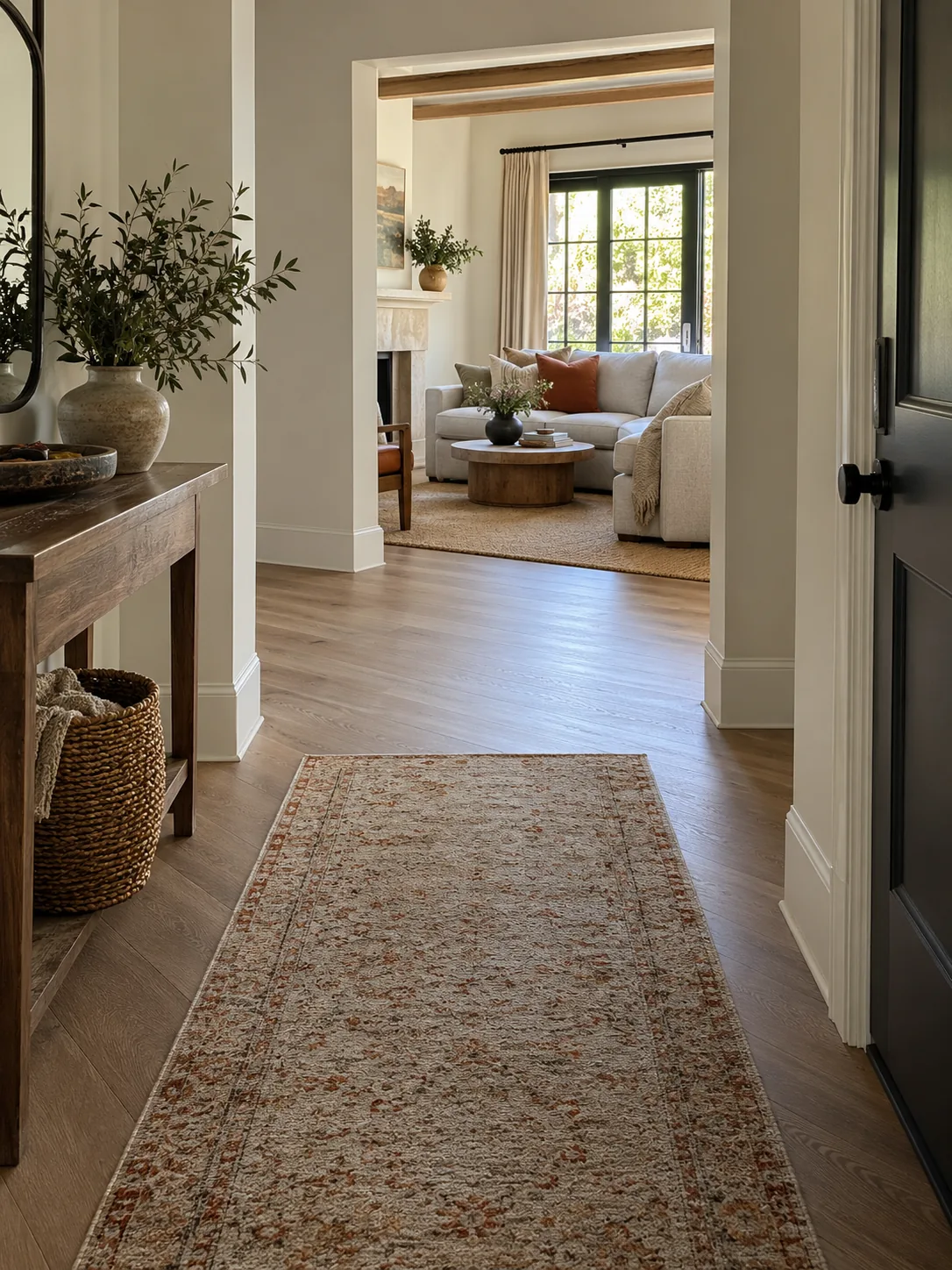
Choose an entry rug with one color already visible in the adjoining room. That connection can make an open layout feel more settled.
Suppose your living room has a rust cushion. A little rust in the entry runner links the spaces, even if one rug is traditional and the other is mostly plain.
This works with blue, olive, warm brown, or almost any color you already enjoy. It also saves you from buying several new accessories just to make a rug fit.
Stand at the front door and look toward the next room. That view tells you more than comparing individual product photos.
12. Give Bold Wallpaper a Quieter Rug
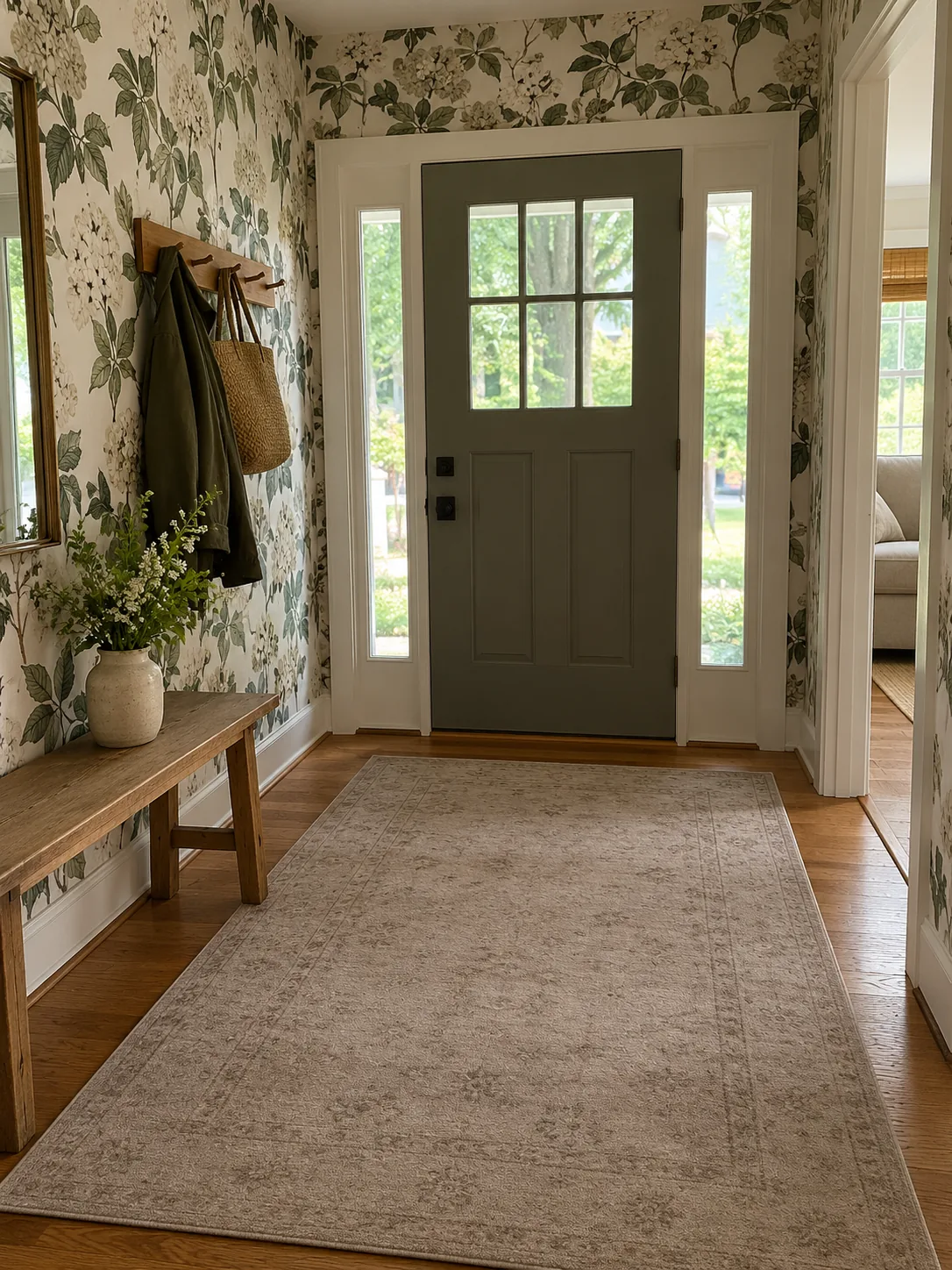
Pair busy wallpaper with a rug that has less contrast or a simpler pattern. Texture, a narrow border, or quiet stripes can add interest without making every surface compete for attention.
If your wallpaper has branches, flowers, and several colors, a restrained rug gives the eye somewhere calmer to land.
Neutral doesn’t have to mean pale beige. A muted blue, warm brown, or soft gray drawn from the wallpaper may look more connected.
The reverse also works: plain walls leave more room for a strong rug. Choose the part of the entrance you want to notice first, then give the surrounding pieces a supporting role.
13. Layer a Doormat Where the Door Has Room
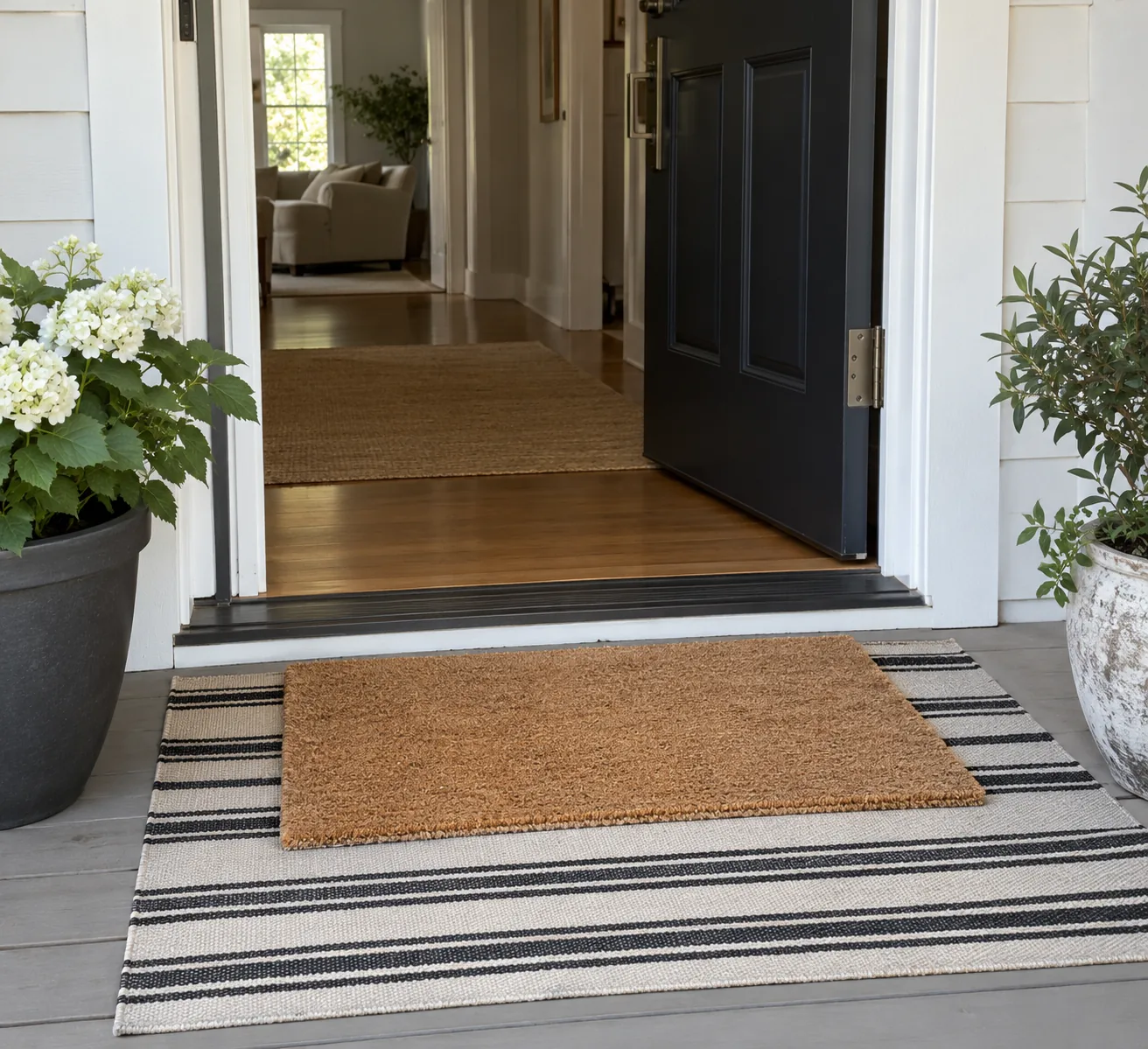
Layering works when both pieces stay flat, the door clears them, and the edges sit comfortably outside awkward turning points. A sheltered porch with generous space is often easier to arrange than a tight indoor vestibule.
A plain top mat over a striped base is one option. A patterned mat over a quiet base can work too.
The Park Mats Stripe could supply the upper pattern where its dimensions and thickness suit the setting.
Check the complete arrangement before keeping it. Open the door fully, walk across it, and turn as you normally would with shopping bags. If the layers shift or catch, a single well-fitted rug is the easier choice.
14. Give a Grand Foyer a Rug That Belongs There
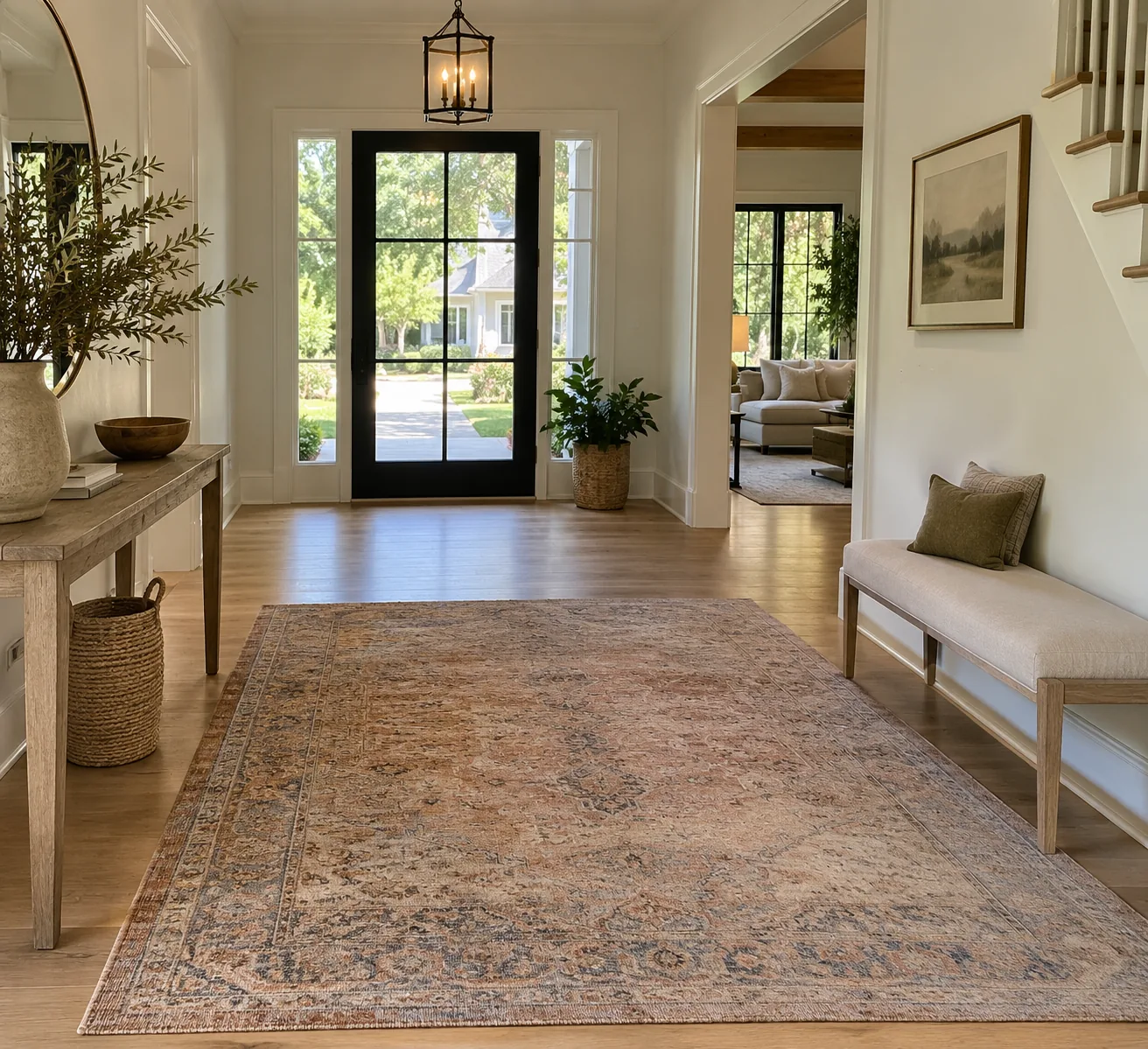
Choose the rug around the foyer’s main arrangement, including its furniture and walking routes. The width of the front door alone tells you very little about what will suit a large room.
A round table might need a broad circle beneath it. A console and nearby seating may relate better to a substantial rectangle.
Look at how much bare floor separates the rug from those pieces. If the rug seems stranded in the middle, compare a larger size before changing anything else.
Our rug size guide can help you think through furniture placement and proportions. A larger rug should still leave comfortable access to stairs, doors, and adjoining rooms.
15. Choose a Washable Rug You Can Actually Wash
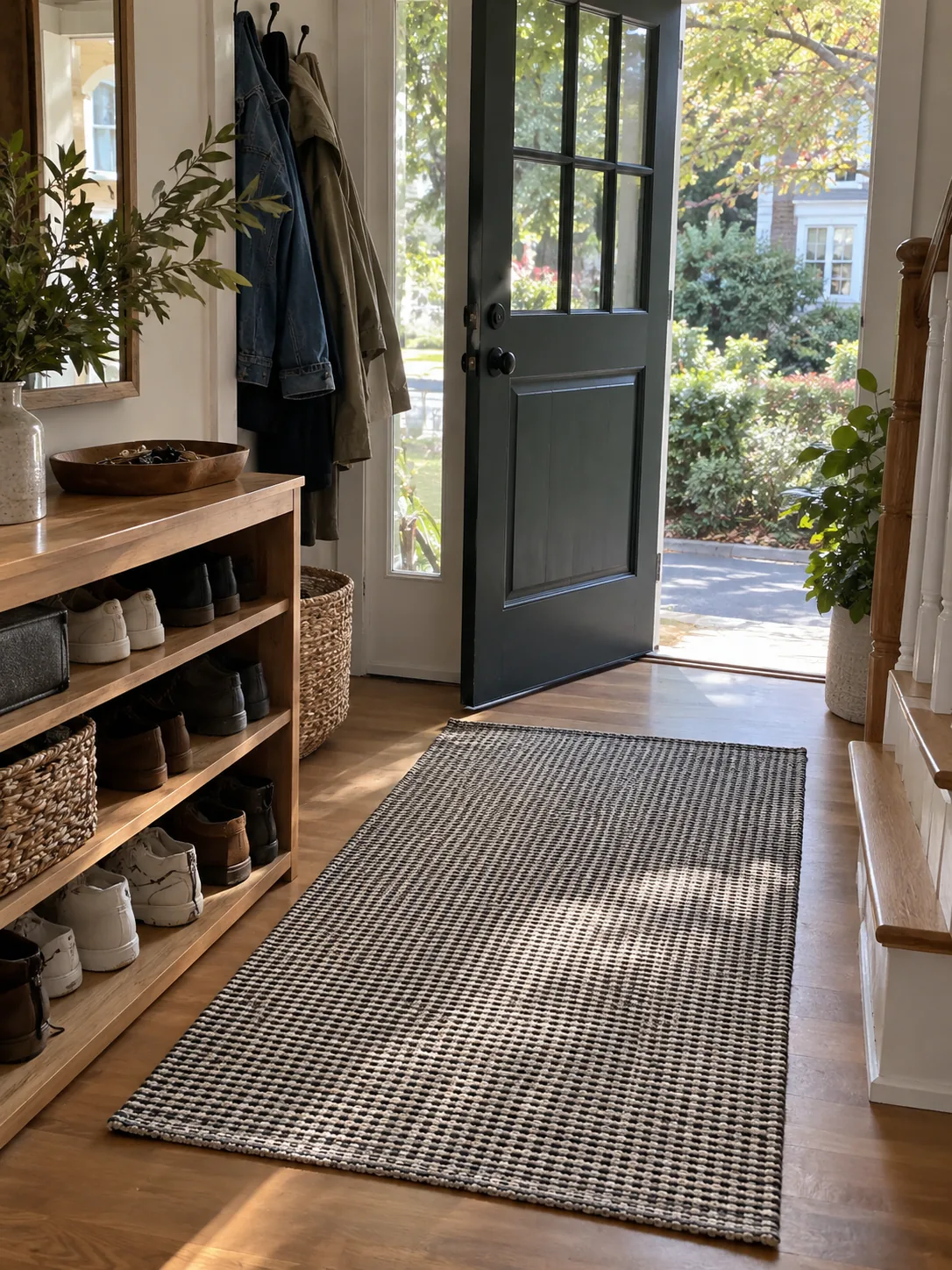
A washable rug is useful when you can manage its washing, drying, and regular upkeep at home. Read the instructions for the exact size before buying.
The compact IKEA TIPHEDE flatwoven rug in natural/black is one option for a small entrance. IKEA lists this version as machine washable, with dimensions of approximately 1 foot 8 inches by 2 feet 7 inches.
For larger rugs, check the required washing-machine capacity. Also think about where the rug will dry and whether the care instructions allow tumble drying.
A removable-cover system has a different routine from a whole-rug wash. Choose the process you’ll actually follow on an ordinary weekend.
Before You Buy, Check What Happens When the Door Opens
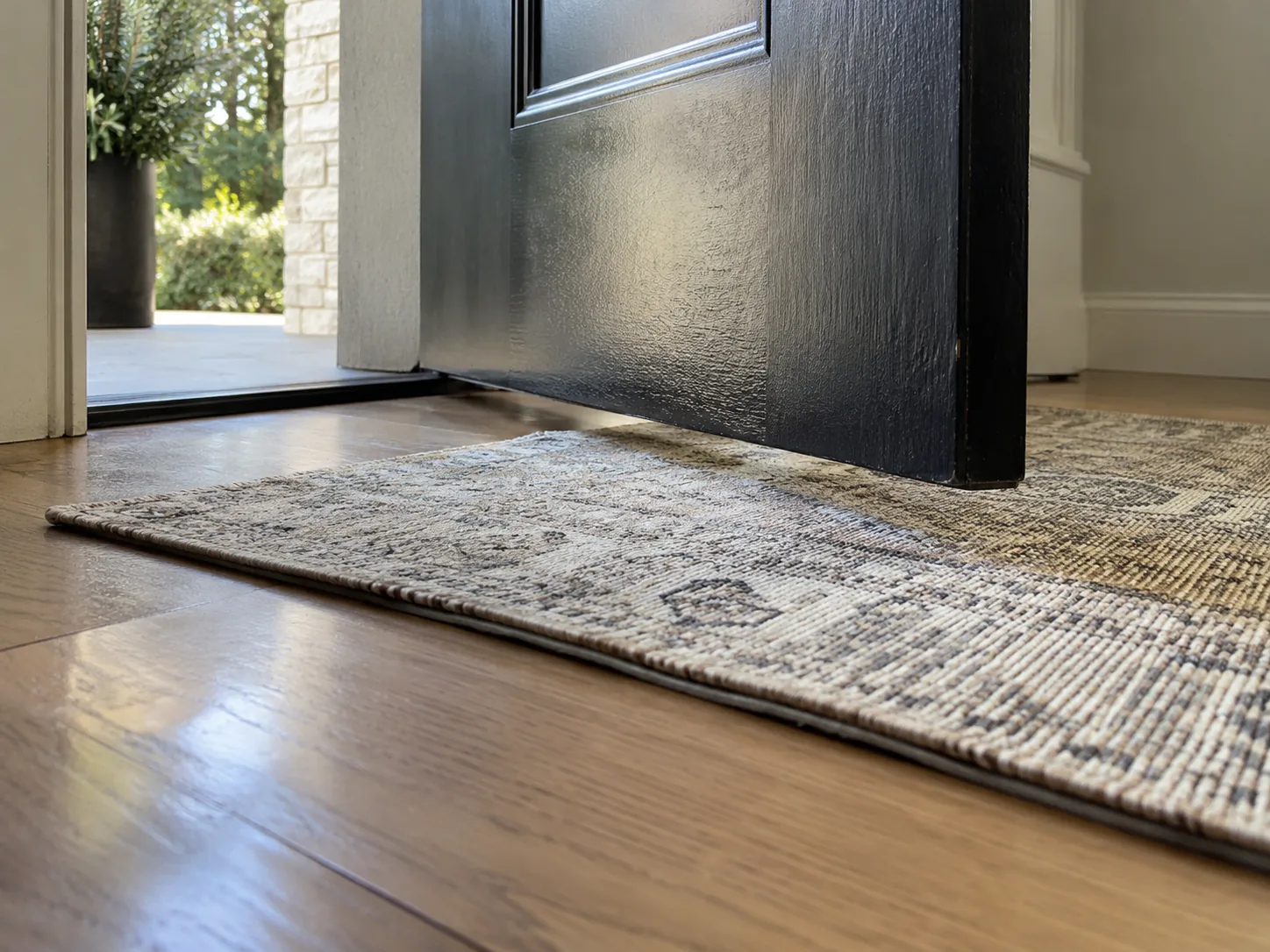
Check the footprint, total thickness, cleaning instructions, and floor compatibility before choosing a color. Those details decide whether a rug works in daily use.
What Size Rug Fits Your Entryway?
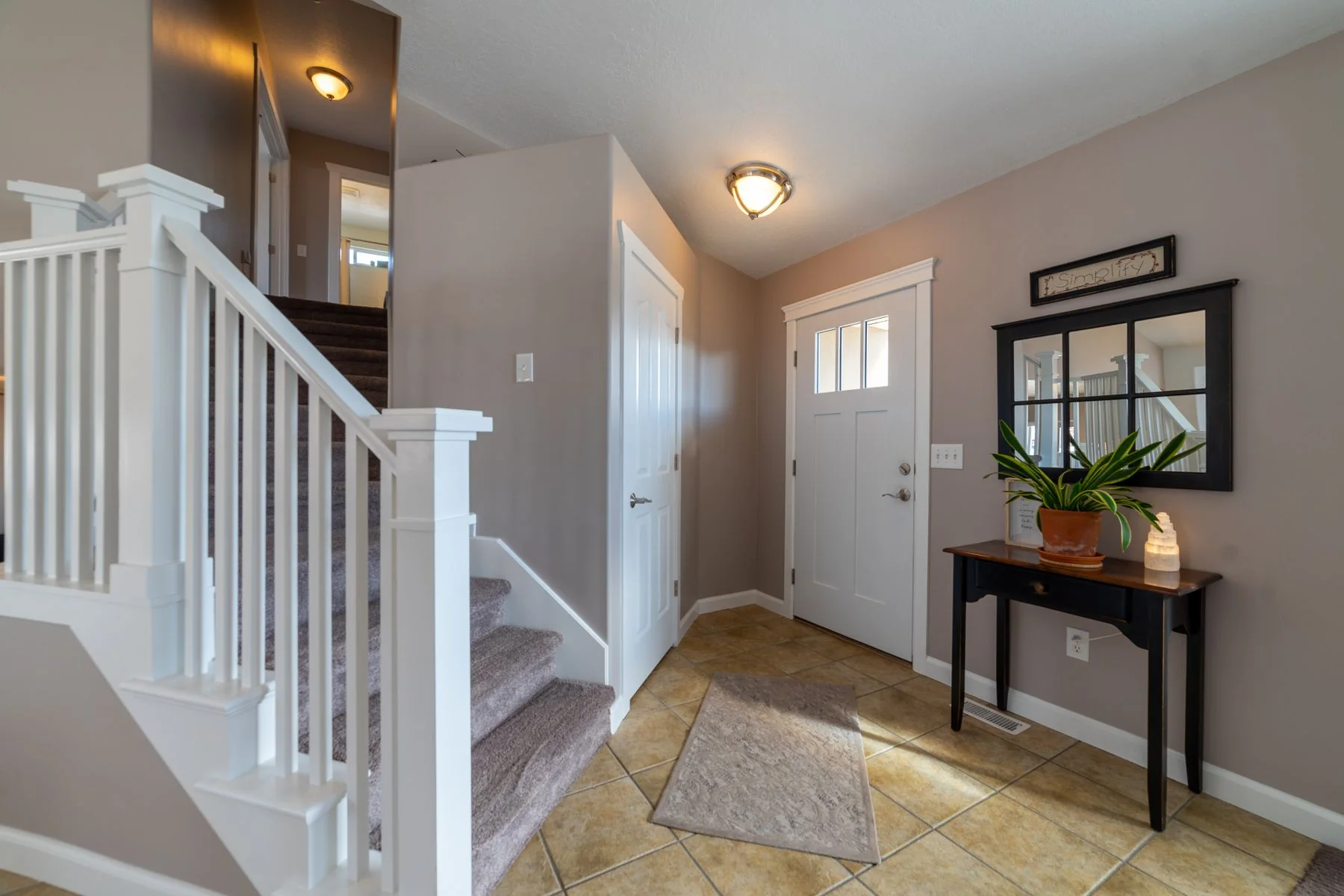
Measure the usable floor area, including the walking route and the space needed by doors and furniture.
A 2-by-3-foot rug may suit a compact arrival spot, while a longer passage may need a runner. A broad foyer could accommodate a 5-by-7-foot rug or a round design. These are sizes to compare with your room, rather than automatic answers.
Map out the proposed footprint with sheets of paper or a floor-safe marking method. Then walk through the entrance normally. You’ll quickly notice whether an edge falls where you turn or remove your shoes.
Will the Rug and Pad Fit Under the Door?
The door needs to clear the combined thickness of the rug and its pad throughout its full swing.
Check the lowest clearance along that movement, since the gap may change across the floor. Include any door sweep.
Also, pile height is not necessarily total rug thickness. The backing and construction add to the overall profile. If a listing gives only pile height, ask for the full thickness before ordering for a tight doorway.
Which Material Fits Your Daily Routine?
Choose by the conditions at your door and the care you can manage. Fiber names alone don’t tell you whether a particular rug will suit the space.
| Rug type | Where it may fit | What to check |
|---|---|---|
| Synthetic low-pile rug | A frequently used entrance | Cleaning instructions, backing, and total thickness |
| Wool rug | An indoor entrance where you want texture and pattern | Care requirements, construction, and suitability for your traffic |
| Jute or another natural-fiber rug | A dry entrance | Moisture restrictions and cleaning method |
| Washable flatweave | A household that needs regular washing | Machine capacity, drying instructions, and grip |
| Coir doormat | A shoe-wiping spot | Approved location, thickness, and weather exposure |
A boot tray and a rug can share the work. The tray handles wet footwear while the rug defines the room.
Does the Rug Need a Pad?
Use a suitable pad when the rug manufacturer recommends one, checking compatibility with both the rug and your flooring.
Different pads offer different combinations of grip and cushioning. An entryway with limited door clearance may need a thinner option than a living room.
Follow the pad maker’s sizing instructions so it remains concealed beneath the rug.
The Entryway Rug Checklist
Before ordering, make sure the rug suits the way you enter, move through, and clean the space.
- The door opens fully over the rug and pad.
- Cupboards, drawers, and shoe-storage compartments still open.
- The shape suits the available floor space.
- Edges will not fall across an awkward turning point.
- The backing or pad is compatible with the flooring.
- The cleaning instructions fit your usual routine.
- You can manage any washing and drying requirements.
- The colors work with the flooring and nearby rooms.
- Wet shoes and umbrellas have somewhere suitable to go.
- You’ve checked the return policy, including any custom-size exclusions.
Entryway Rug Questions, Answered
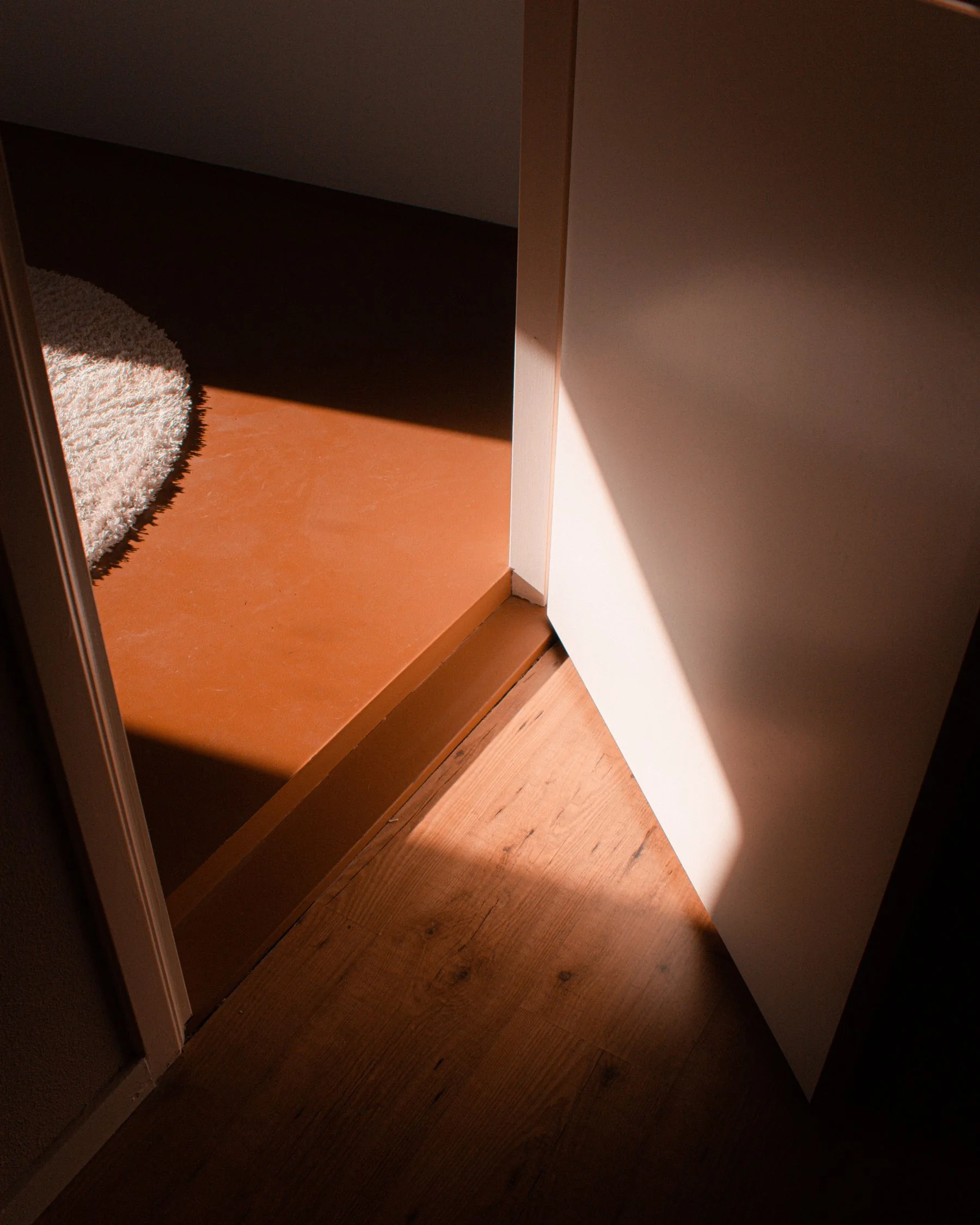
Your layout and routine should guide the final choice. Here are the questions that tend to come up once you’ve narrowed down the look.
Should an Entryway Rug Be Wider Than the Door?
It can be, but the usable floor space matters more than a fixed rule about door width. A wider rug may suit a generous entrance, while a small vestibule may need a compact shape. Check the swing, nearby walls, and furniture before choosing.
Is a Runner or a Small Rectangular Rug Better?
Choose a runner for an elongated passage and a small rectangle for a short, contained entrance. Look at the route you take after stepping inside. If you immediately turn into the living room, a long runner may have little purpose.
What Rug Color Shows the Least Everyday Dirt?
A midtone pattern with several shades usually disguises small marks better than a large area of very pale or very dark color. Match the choice to your household too. Pale pet hair and dark mud will show differently on the same rug.
Is Jute a Good Choice Near the Front Door?
Jute can suit a dry indoor entrance, but it is a poor match for a spot that regularly stays wet. Check the exact rug’s care instructions. A separate shoe tray helps, though it won’t solve a doorway where rain frequently reaches the floor.
Can You Put a Rug Over Tile or Hardwood?
Yes, provided the rug backing and pad are compatible with the flooring. Keep the floor beneath clean and dry, follow the manufacturers’ instructions, and check underneath periodically for trapped grit or moisture.
Should the Entryway Rug Match the Living-Room Rug?
The rugs can coordinate through color, texture, or pattern scale without being identical. For example, a patterned entry runner with small blue details can relate to a mostly blue living-room rug. Check how they look together from the doorway.
Can You Layer a Doormat Over Another Rug?
Yes, when the arrangement clears the door and stays stable underfoot. Both pieces also need to suit the location. If the layers shift, bunch up, or make cleaning awkward, use one rug that fits the space well.
Shop the entryway rugs in this guide
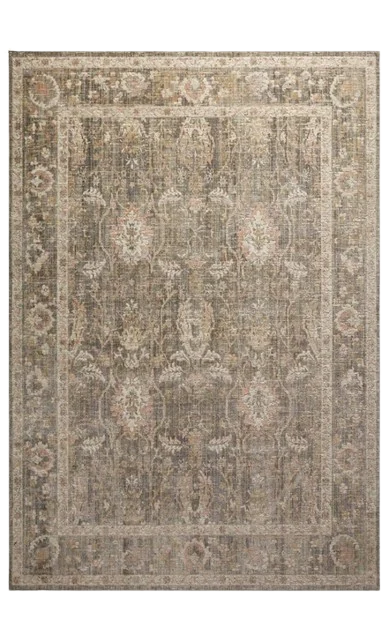 Chris Loves Julia x Loloi Rosemarie ROE-01Muted traditional pattern with runner and round options.
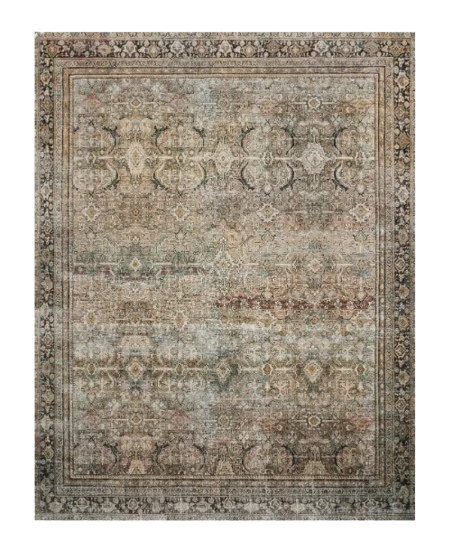 Loloi II Layla LAY-03A faded vintage-style design for adding color beside simple furniture.
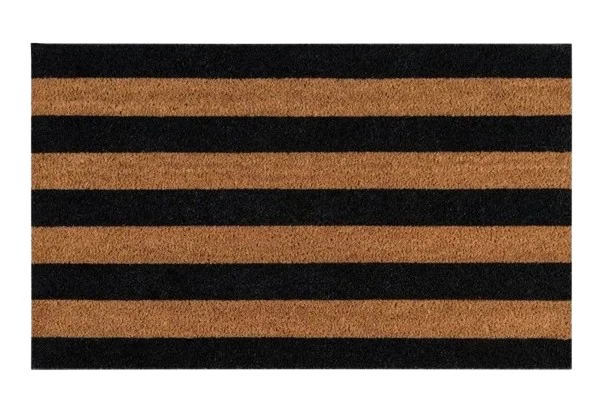 Erin Gates by Momeni Park Mats Stripe PAR-02A compact striped doormat for a suitably sized threshold.
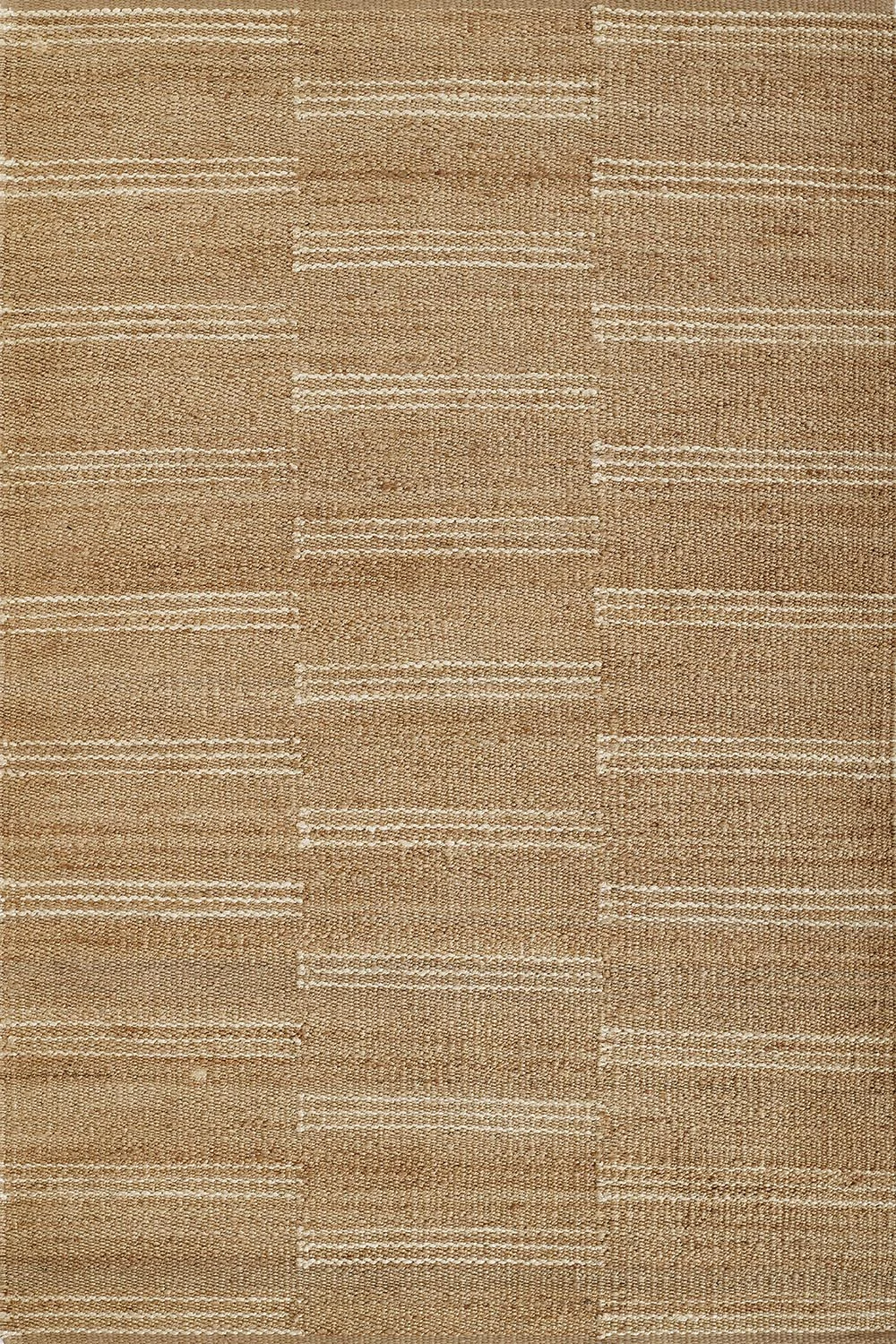 Erin Gates by Momeni Crescent CRE-1 NaturalJute texture and a broken stripe for a dry indoor entrance.
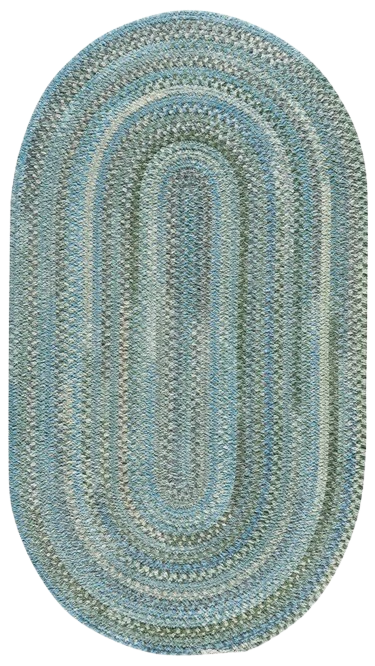 Capel Alliance braided rugA familiar braided look for an entrance with wooden furniture.
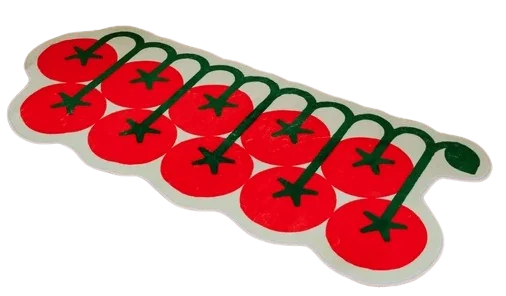 Johann Banta Irregular Tomato RunnerA playful shape for a simple entrance with room for its outline.
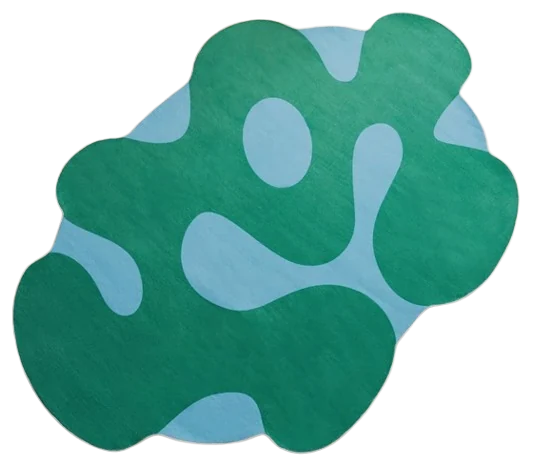 Johann Banta Irregular Green Moss RugAn organic-shaped option for a larger area.
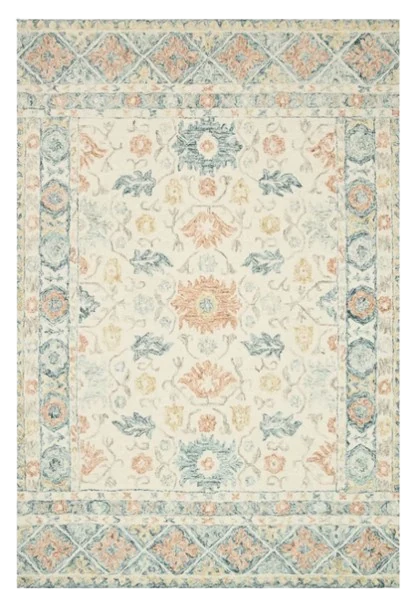 Loloi Norabel NOR-01Botanical pattern that can carry much of the room’s decoration.
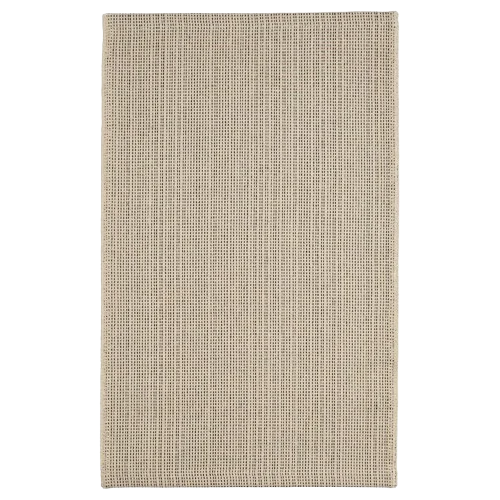 IKEA TIPHEDE flatwoven rugA compact, machine-washable flatweave for a small arrival spot.