15 Kitchen Rug Ideas for Small Kitchens That Make Every Inch Feel Cozier

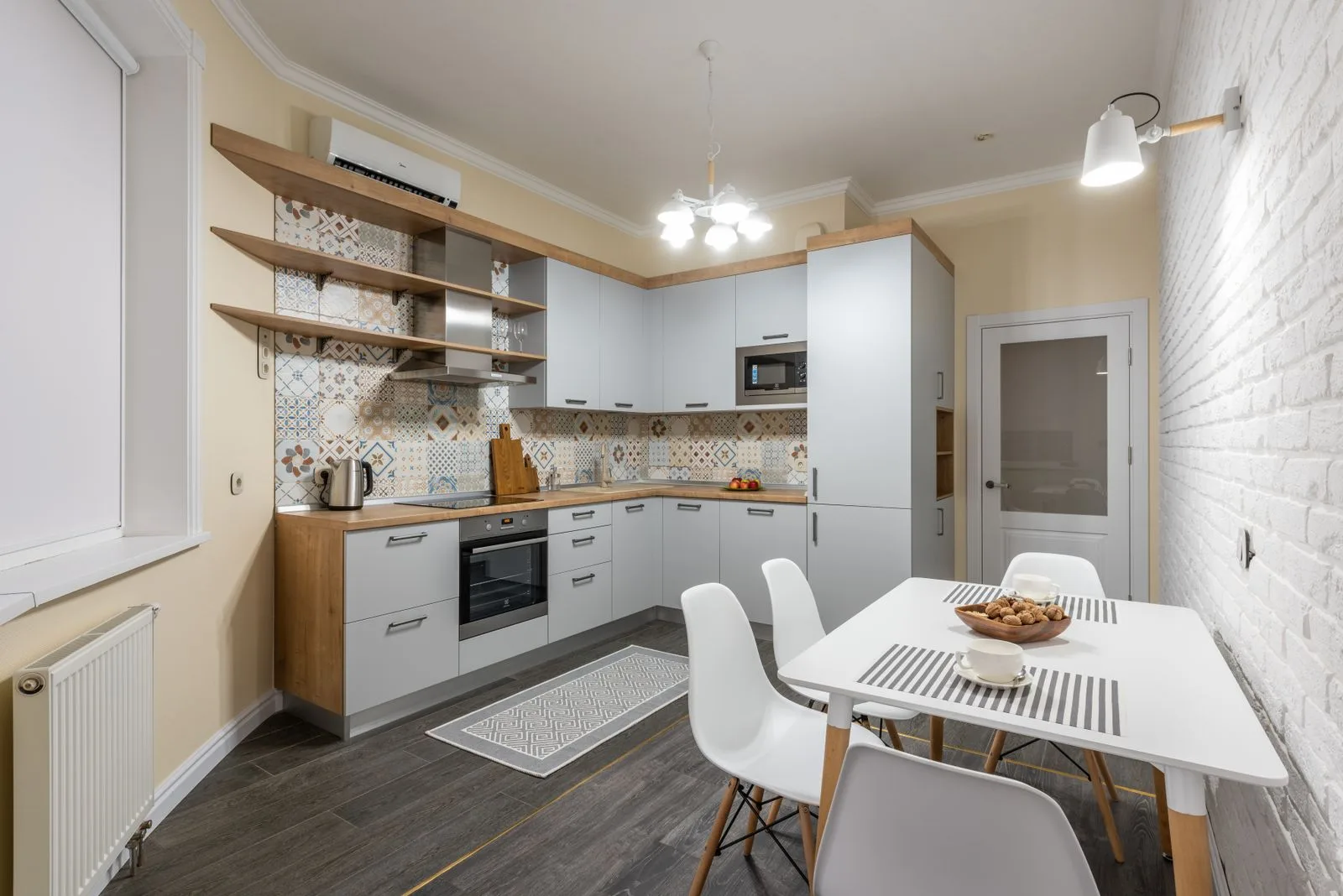
A little pattern underfoot gives even the smallest kitchen something to smile about.
You’ve cleared the counters, tucked away the toaster, and bought the nice tea towels. Yet the kitchen still feels a little bare. Take a look down. That stretch of floor between the cabinets is a good place to add some warmth without sacrificing another inch of counter space.
The quick answer
- A runner suits a long aisle; a compact rug suits the sink area; a larger rug can define a breakfast table.
- Choose a washable, low-profile design that suits everyday spills and allows doors to open freely.
- Use a suitable backing or rug pad to keep it secure on your kitchen floor.
That takes care of the practical part. Now you get to choose the fun part: faded florals, warm terracotta, cheerful checks, or something bold enough to give those plain cabinets a little company.
Which Rug Belongs in Your Kitchen?
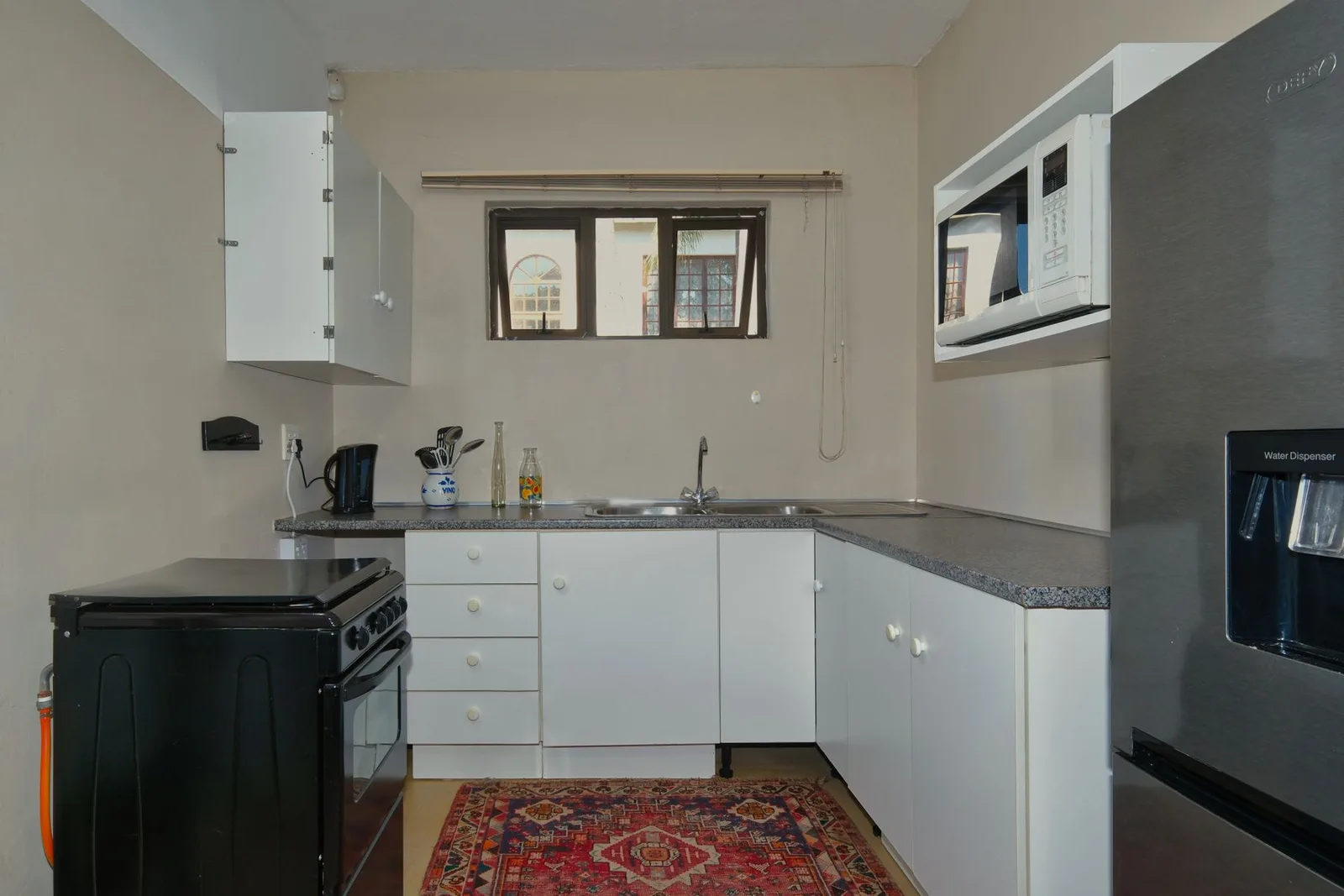
Let your kitchen layout choose the shape. Let your taste choose the pattern. That keeps you from falling for a beautiful rug and spending the next six months kicking its corner out of the dishwasher.
| Your kitchen | Choose this |
|---|---|
| A long, narrow galley | One runner along the clear aisle |
| Very little open floor | A compact rug in front of the sink |
| A small island | A runner beside the main working side |
| A breakfast table | A flat rug that holds the chairs when pulled out |
| Busy floor tiles or a patterned backsplash | A quieter rug with fewer competing colors |
| Plain cabinets and simple flooring | A stronger pattern or richer color |
| One spot where you stand for ages | A stable cushioned kitchen mat |
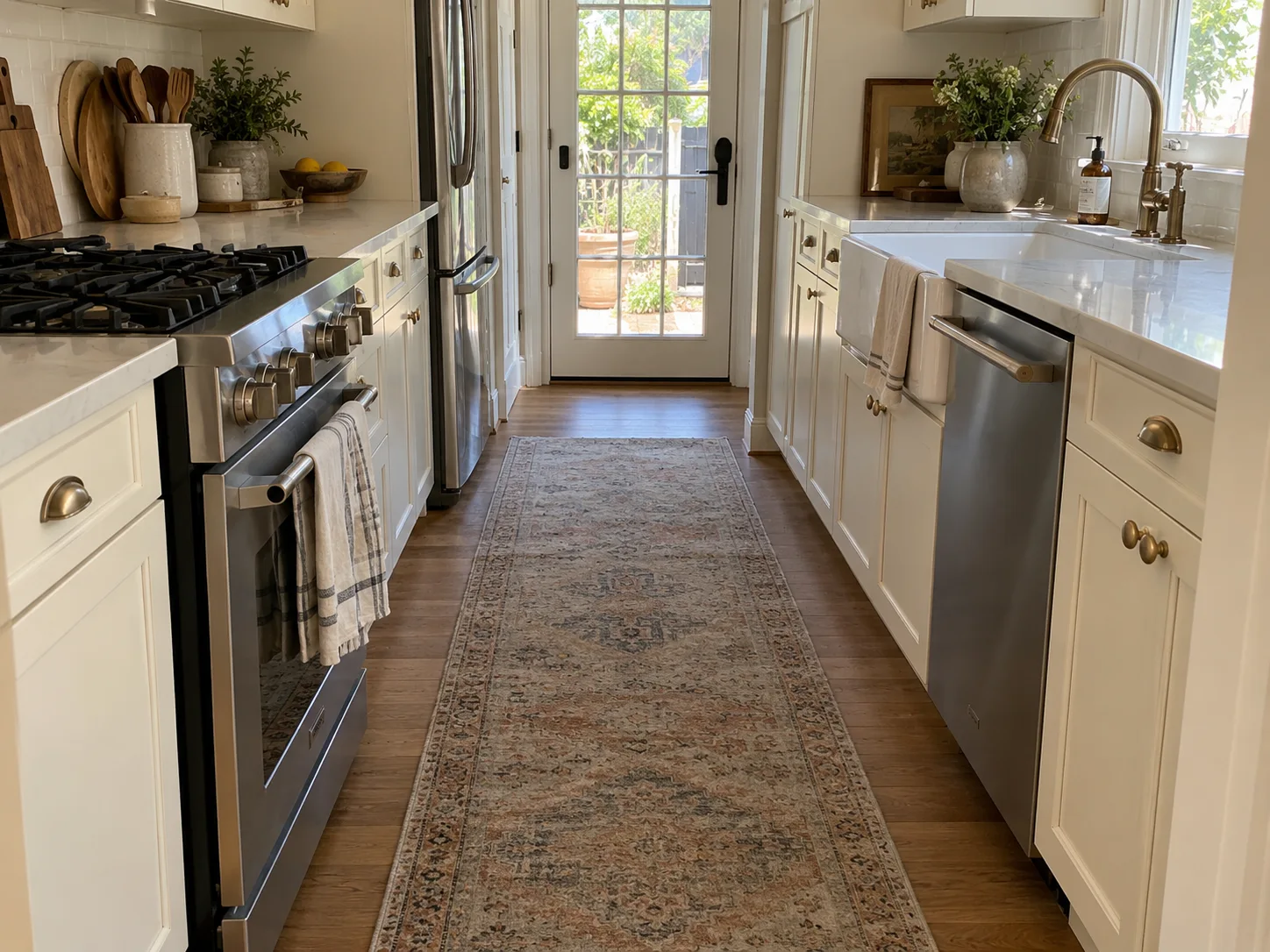
1. Give a Narrow Galley One Good Runner
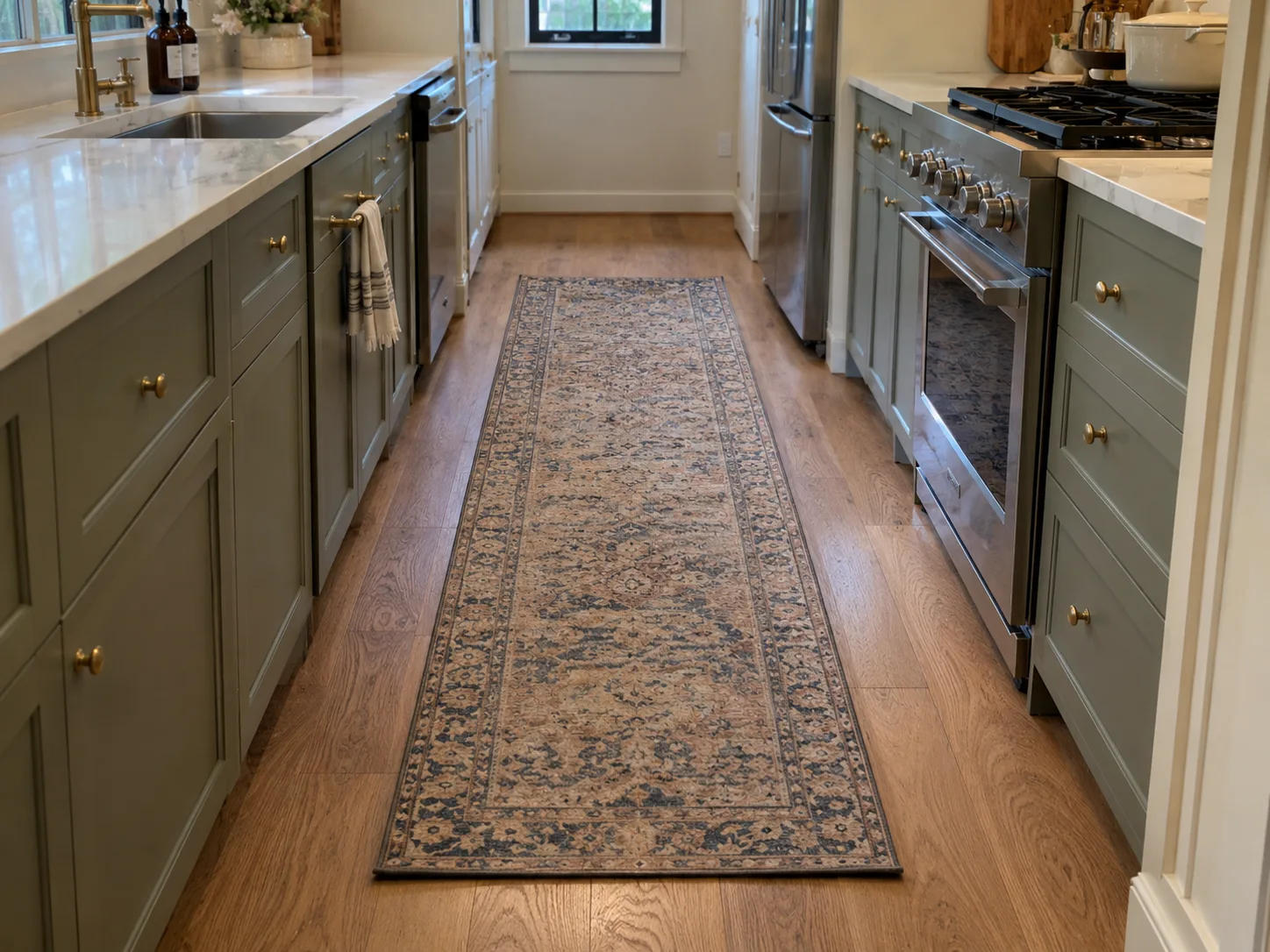
Use one runner to follow the main aisle between your cabinets. It gives the floor a clear direction and puts something softer beneath the route you travel all day.
Leave a visible strip of flooring on both sides. Keep the ends clear of doorways and awkward turns. The runner should sit comfortably inside the aisle without touching every edge like a fitted carpet.
For a kitchen with cream cabinets and wood details, the Ruggable Kamran Hazel Flatwoven Rug brings in a faded traditional pattern that suits everyday kitchen life. Measure the complete rug-and-pad setup before ordering.
Still dodging furniture on the way to the fridge? Our small kitchen ideas will help you sort out the walking space first.
2. Make Washing Up a Little Nicer
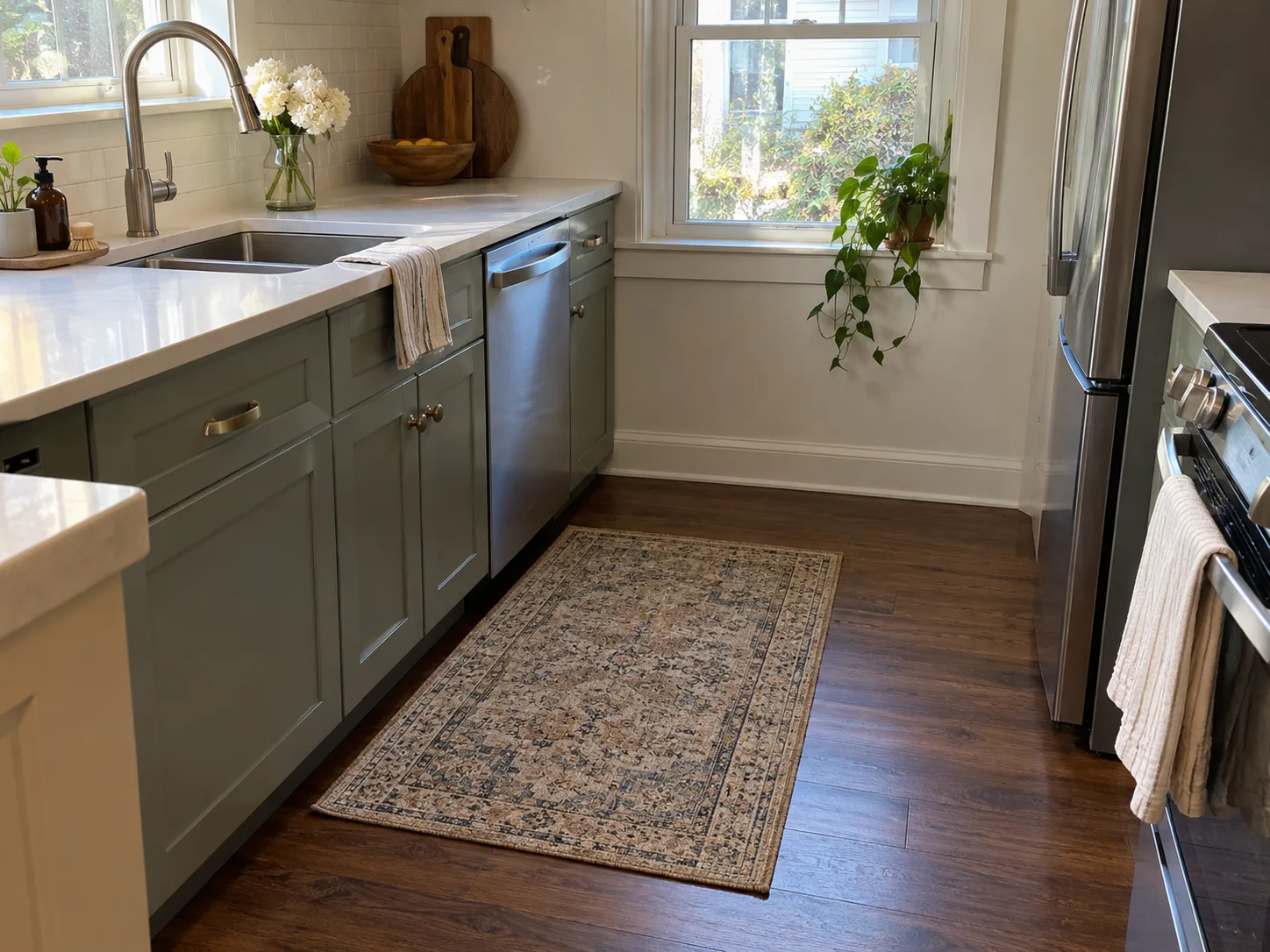
Put a compact rug where your feet land at the sink. This is the easiest choice when there isn’t enough open floor for a runner.
A 2-by-3-foot rug is a useful size to measure for. Mark it out with tape, stand at the sink, and check that both feet rest comfortably inside the footprint.
Then open the dishwasher. All the way. It gets a vote too.
Choose a washable rug with a secure backing or suitable pad. After a big splash, lift it and dry the floor underneath.
3. Give the Island’s Working Side Some Comfort
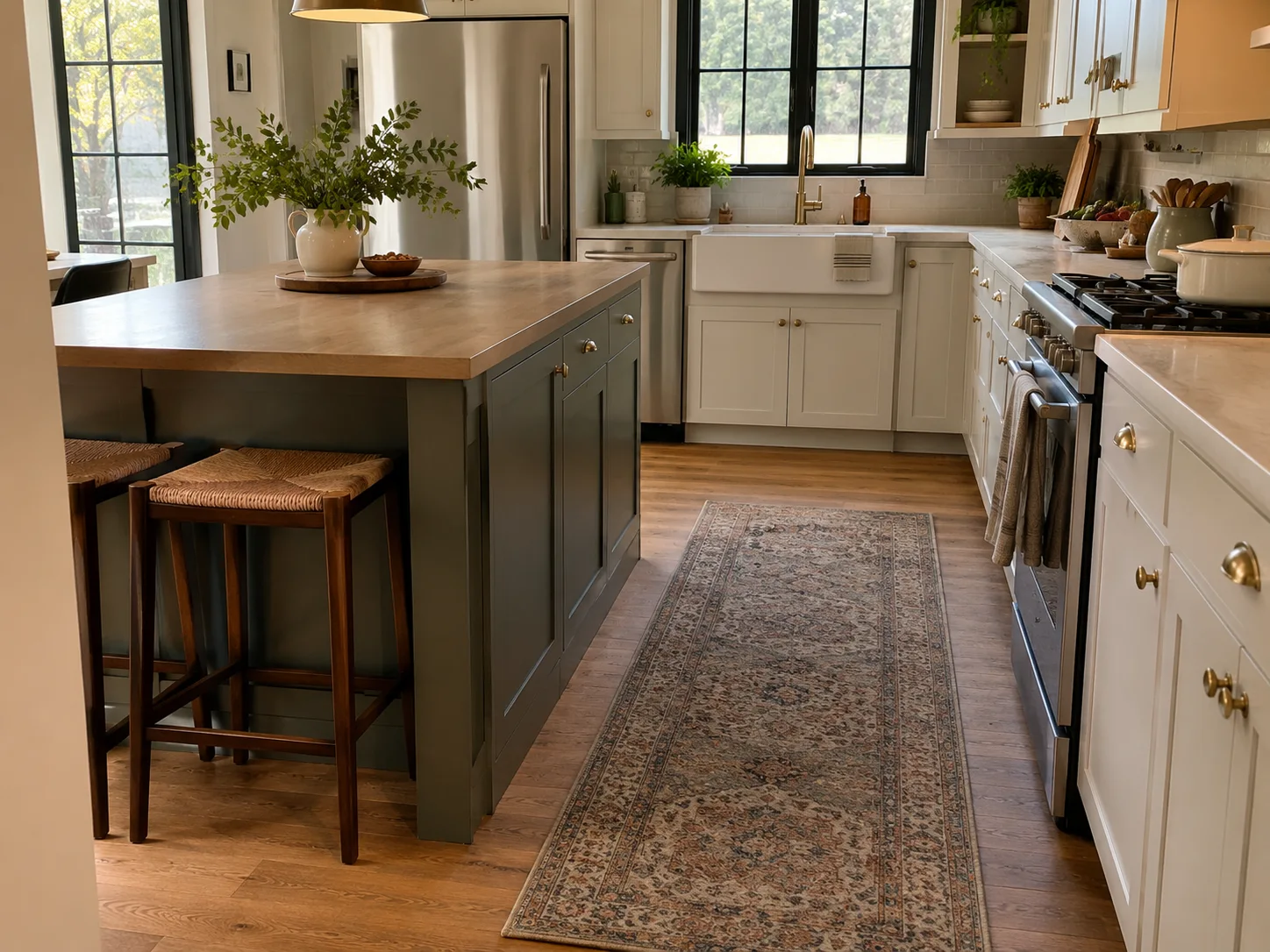
Place the runner on the side of the island where you spend the most time. Follow your routine rather than centering it for the sake of symmetry.
If you chop vegetables at the island, put it there. If the island holds the sink, line it up with your washing-up position. Open the drawers and walk around both ends before settling on the size.
A rug beneath stools needs a different check. Pull each stool out, sit down, and push it back. The legs should move without catching the rug’s edge.
For help deciding how much furniture belongs in the room, see our guide to choosing a dining table or kitchen island.
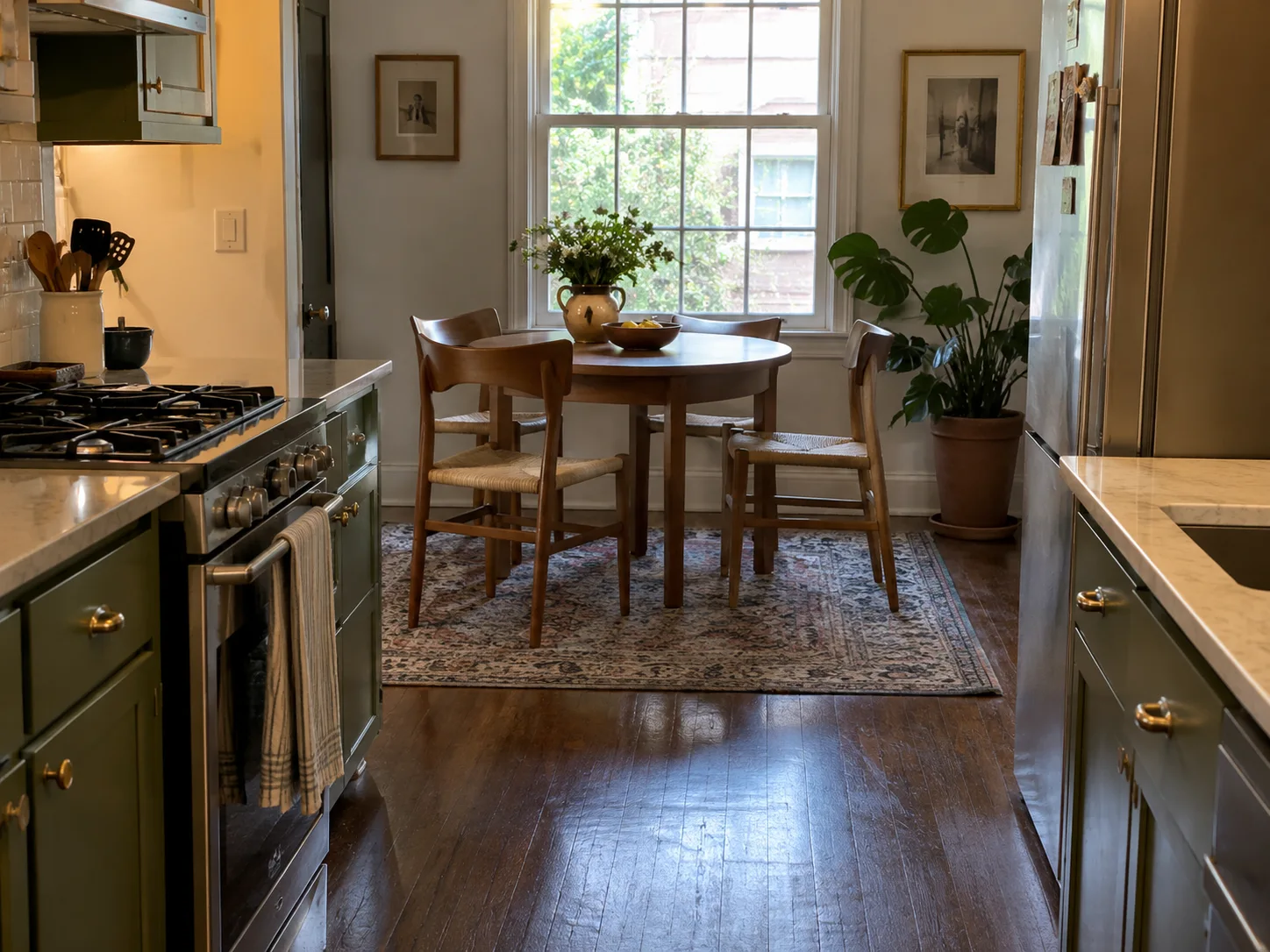
4. Give the Breakfast Table a Proper Place to Land
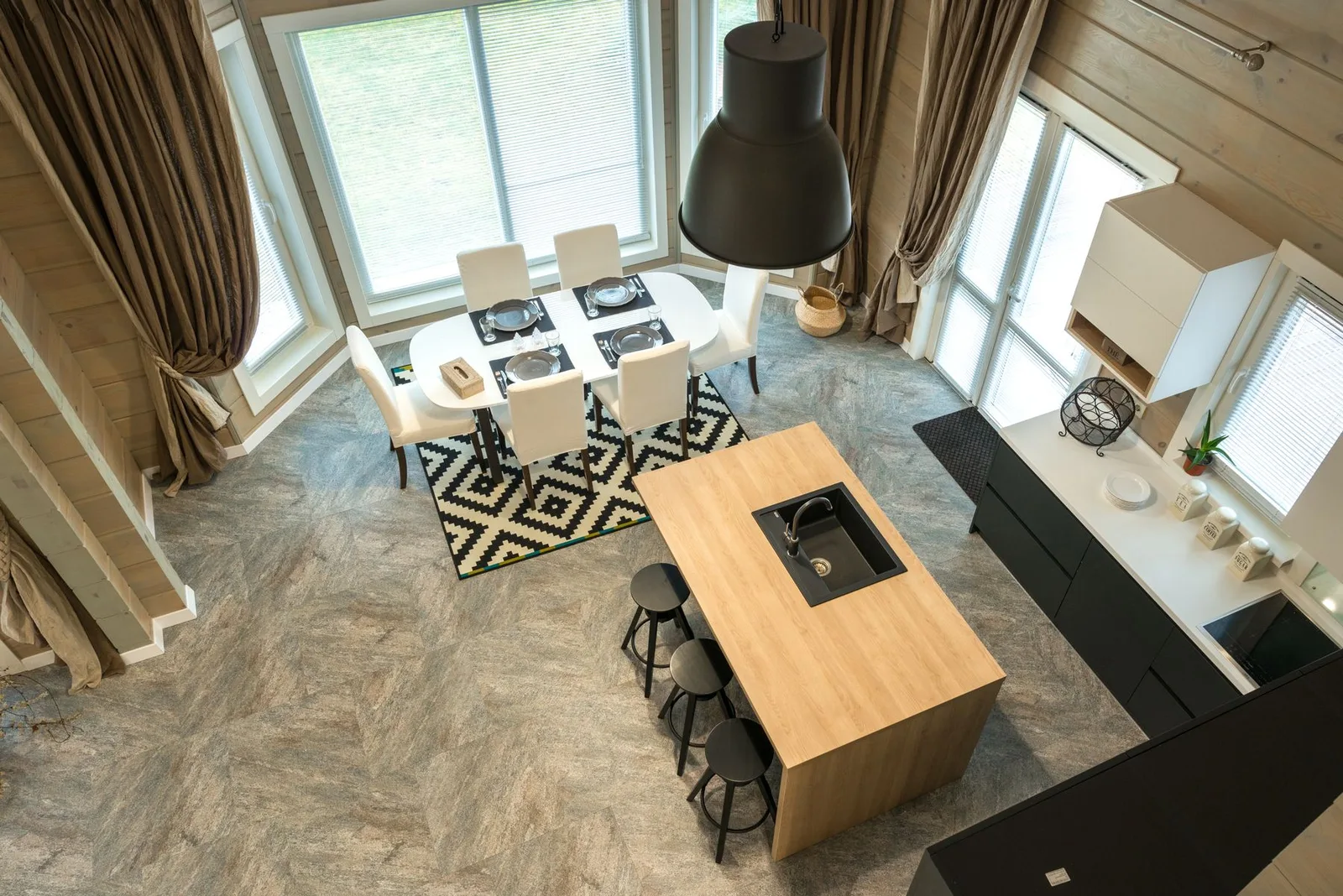
Choose a dining rug large enough to keep the chairs on it when someone sits down or gets up. That matters more than matching the rug to the tabletop.
A tiny round rug beneath a round table looks sweet until the chair’s back legs fall off the edge. Suddenly breakfast comes with a small furniture obstacle course.
Pull the chairs out before measuring. Choose a flat surface so they slide easily, and keep the rug clear of the cooking aisle.
If the correct size crowds the kitchen, leave the table area bare. A sink-side rug will add warmth without getting in everyone’s way.
Our rug size guide explains how to measure around furniture and everyday movement.
5. Bring in a Vintage Pattern With a Little Personality
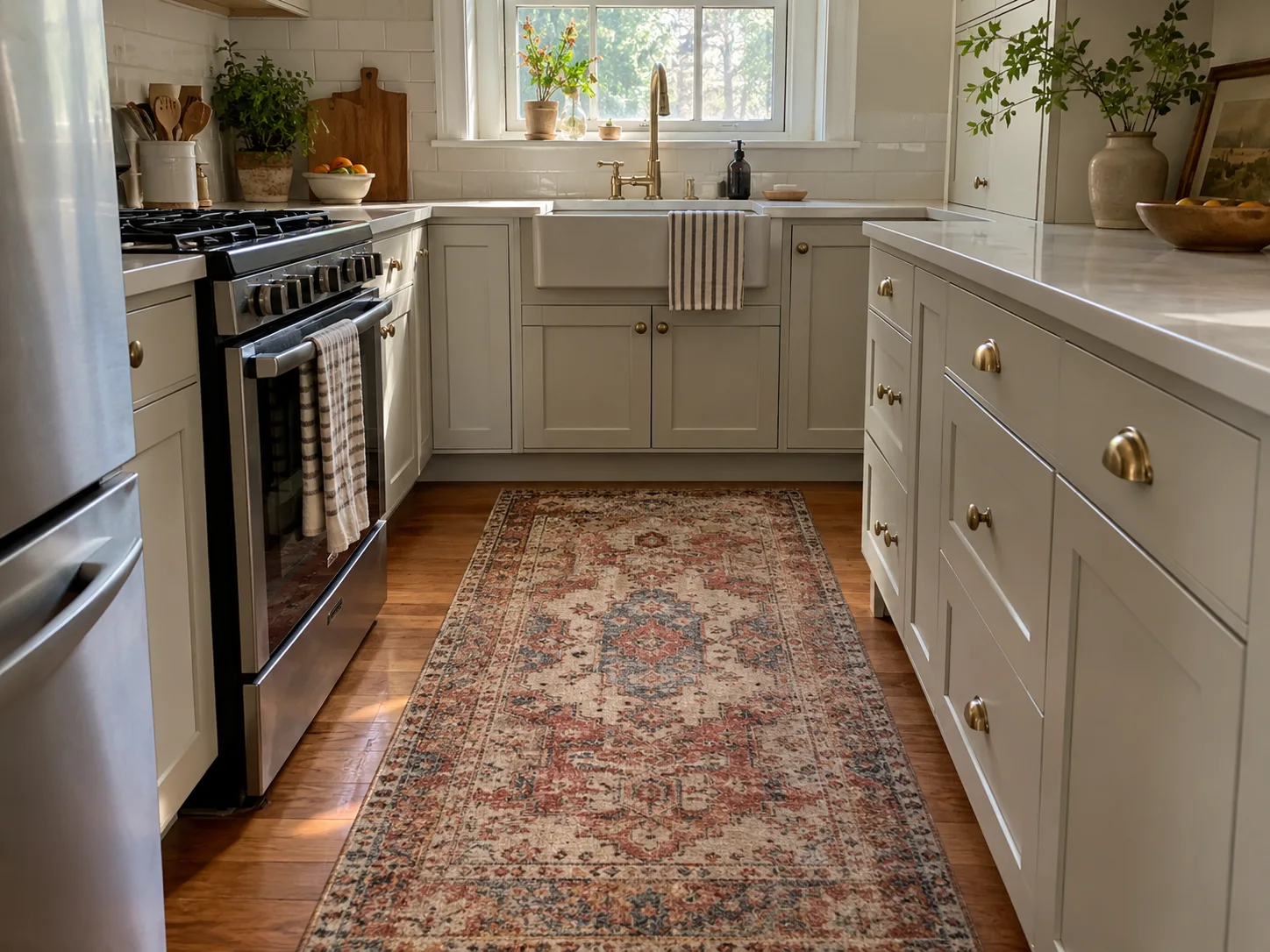
Choose a vintage-style pattern when plain cabinets need some character. The mix of colors works especially well with wood, painted finishes, and stainless steel.
Look for muted reds, warm browns, dusty blues, or cream details that connect with something already in the room. You don’t need a perfect match. A few shared colors are enough.
For a busy cooking area, choose a washable vintage-style rug over an antique that needs specialist care. You’ll enjoy it more when a dropped spoonful of sauce doesn’t become the evening’s main event.
6. Warm Up Gray Cabinets With Terracotta
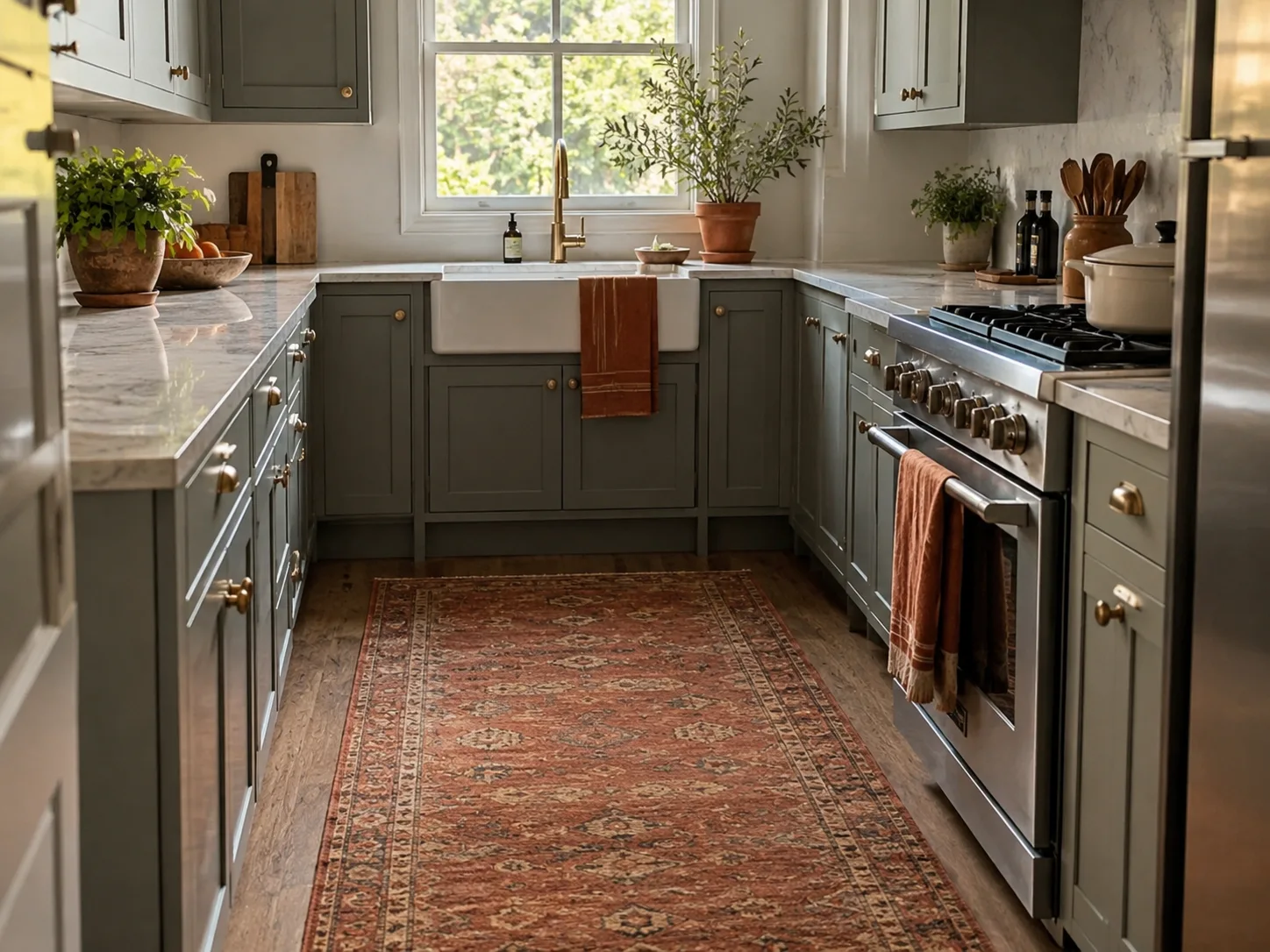
Use a rust or terracotta rug to warm up gray, white, or cool green cabinetry. It’s a straightforward fix for a kitchen that feels a little chilly, even with the lights on.
Picture gray cabinets, a white counter, and stainless steel appliances. A muted clay runner adds a warmer color near the floor and sits nicely beside wooden boards or stools.
Repeat that shade once elsewhere, perhaps in a plant pot or tea towel. Then stop. You don’t need a matching terracotta kettle, toaster, and utensil jar.
If your floor already has strong orange tones, compare a sample in the room. Choose a shade that works with the wood rather than competing with it.
7. Give a White Kitchen a Soft Blue Lift
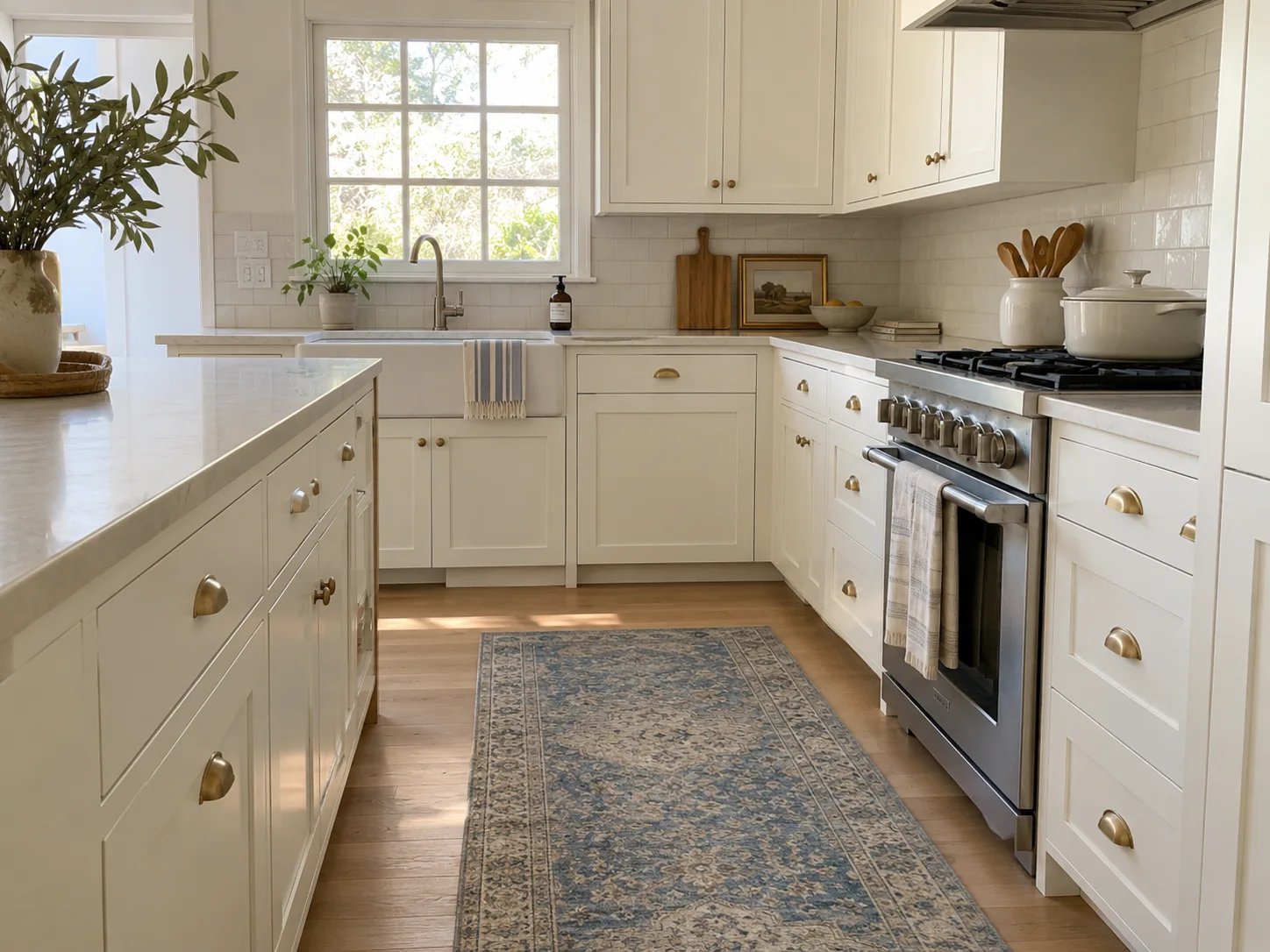
Choose faded blue for a gentle look or navy for stronger contrast. Both work well with white cabinets, but they give the room a different mood.
A washed blue-and-cream pattern feels easy alongside light oak and simple ceramics. Navy makes more sense when you already have dark chairs, window frames, or handles to connect it to.
Look for a mixture of tones rather than choosing a solid dark rug solely to hide dirt. White crumbs show up beautifully on navy. Unfortunately, toast does not respect your decorating plans.
A softly patterned blue runner gives you color without making every mark the first thing you notice.
8. Pick Up One Color From the Backsplash
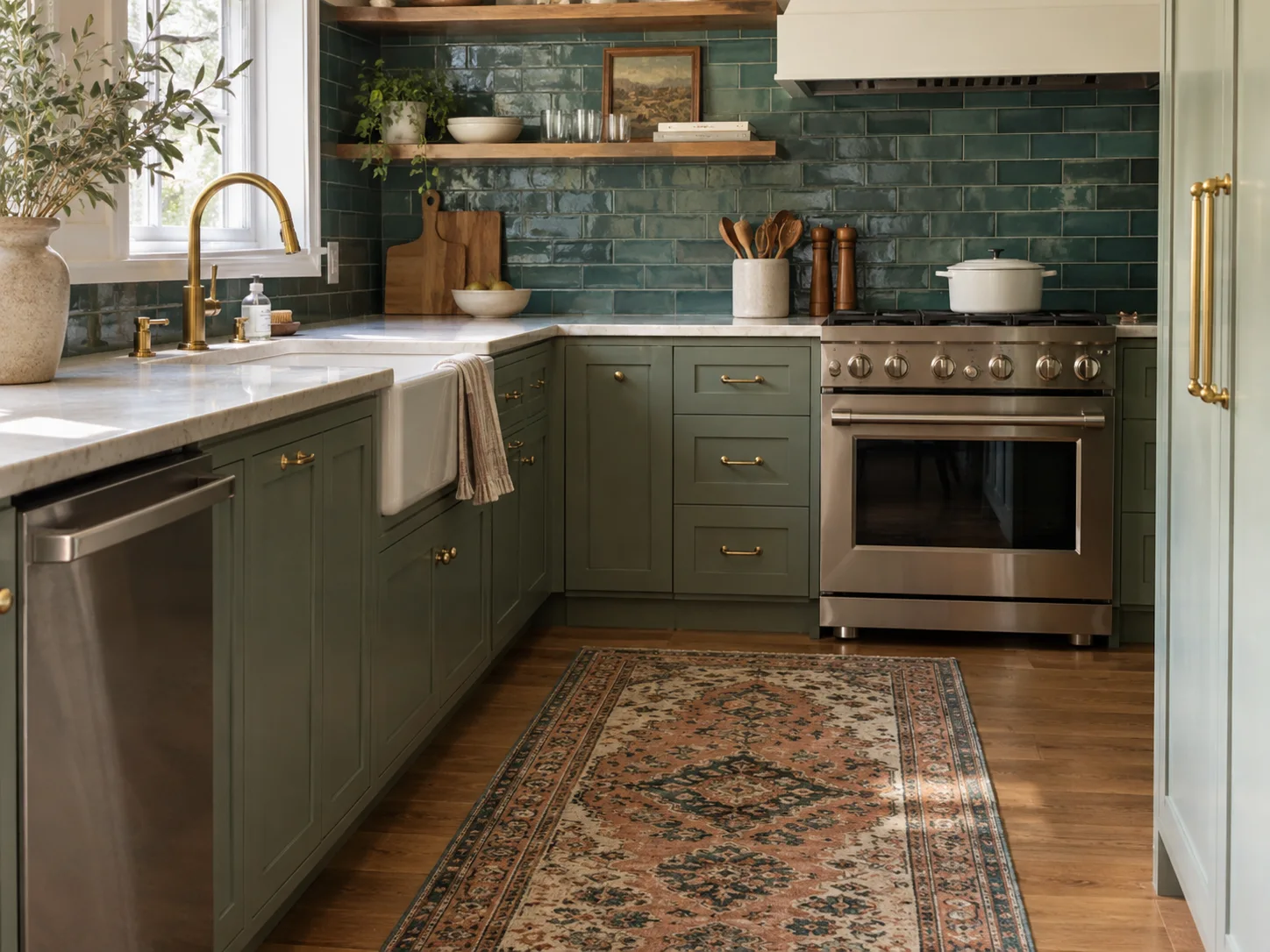
Choose a rug containing one color that already appears in your backsplash or cabinets. This is an easy way to make a bold pattern feel at home.
Green tiles? Look for green or teal somewhere in the rug. Warm wood cabinets? Bring in a related brown, rust, or golden tone.
The Ruggable Nerissa Teal & Gold Flatwoven Rug suits a kitchen with compatible blue, green, or warm golden details. Its pattern has plenty of personality, so let the surrounding accessories stay fairly simple.
9. Give Busy Tiles a Quieter Companion
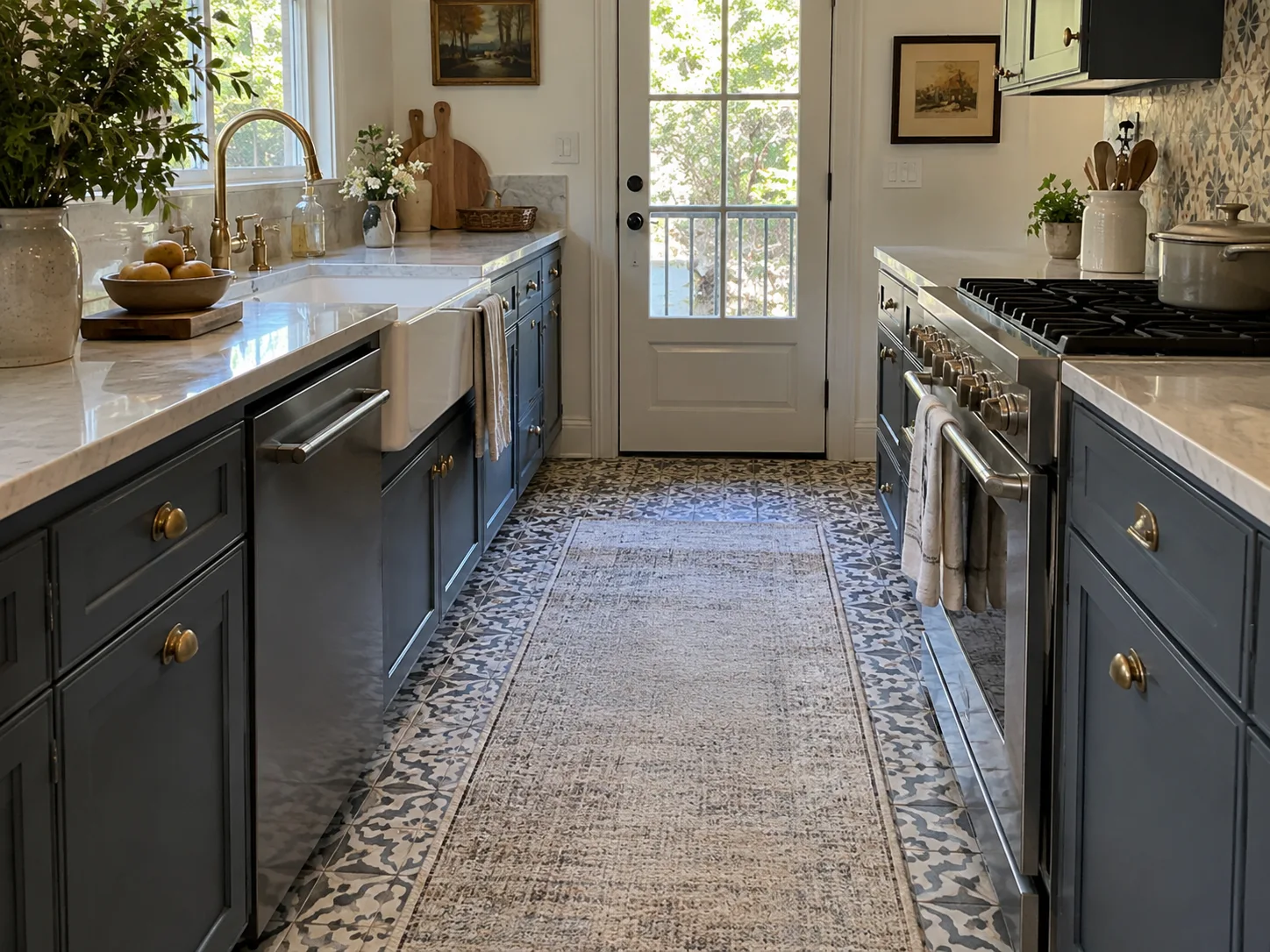
Choose a subtle rug when the floor or backsplash already carries a strong pattern. Fine stripes, soft grids, and closely related colors are useful here.
A kitchen with patterned tiles, veined counters, and colorful cabinet fronts already has a lot to look at. A quieter rug adds softness without asking for more attention.
Try oatmeal, muted blue, warm gray, or cream with a gentle pattern. Pick up a color from the existing finishes to keep the combination connected.
The rug doesn’t have to disappear. It just needs to share the room politely.
10. Let Plain Cabinets Have a More Interesting Neighbor
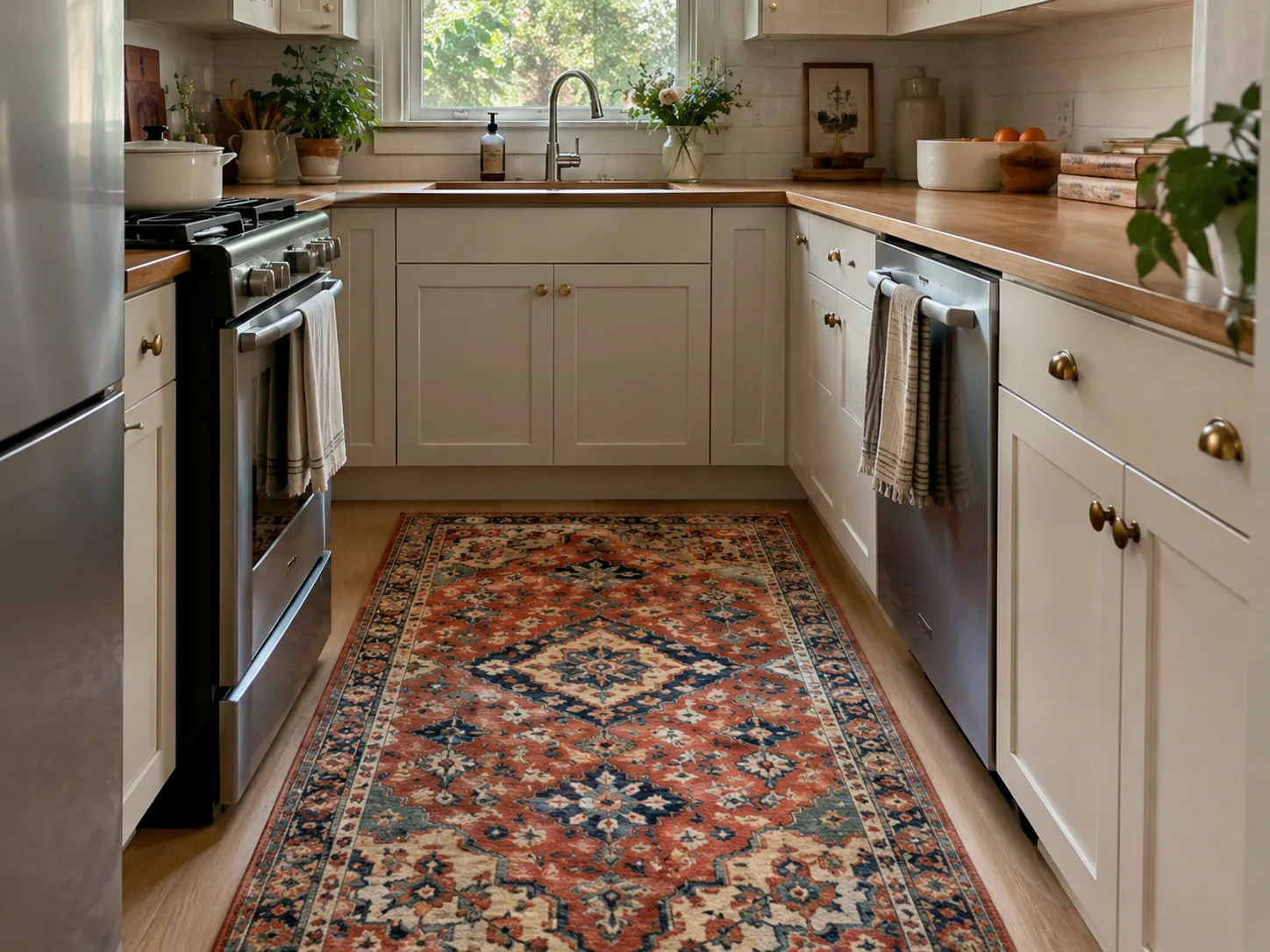
Use a stronger pattern when your cabinets, backsplash, and floor are mostly plain. The rug becomes an easy place to express your taste.
Graphic shapes, botanical motifs, and mixed colors all work here. Keep a few colors connected to the room so the result feels considered.
The Ruggable La Joie Natural Multicolor Flatwoven Rug is a good example of an expressive design to pair with simpler finishes.
You don’t have to repaint the cabinets to make the kitchen feel more like you. Sometimes the floor gets to have the fun.
11. Use Stripes to Follow the Room’s Lines
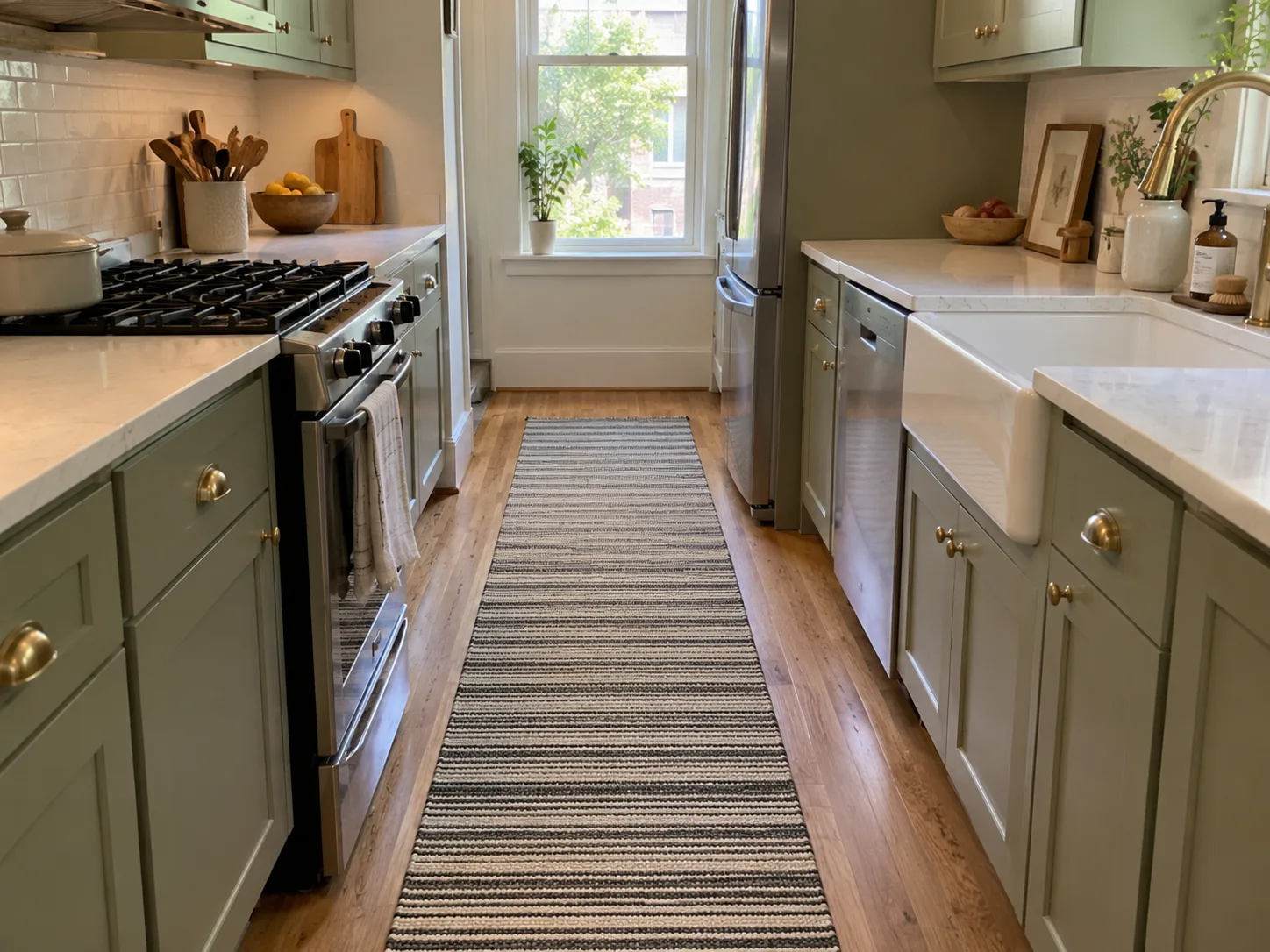
Choose fine stripes for a quieter look and broad stripes for a stronger statement. Check how they sit beside your floorboards and cabinet runs.
In a galley kitchen, stripes following the length of the aisle reinforce that long, orderly arrangement. In a room with several existing patterns, a lower-contrast stripe is easier to combine.
Don’t buy a rug because someone promised its stripes would magically widen the room. Buy it because the pattern suits the space and the dimensions fit.
For changes that improve the room as a whole, our guide to making a small kitchen look bigger covers more than the floor.
12. Add Some Cottage Charm With Checks

Choose gingham or checks for an easy cottage feel. They pair well with painted cabinets, wooden chairs, and everyday ceramics.
Cream-and-tan checks keep things soft. Green-and-cream adds a little color. Black-and-white makes a much stronger statement.
Pay attention to the floor underneath. If it already has a clear checkerboard or square pattern, adding another set of checks can feel busy. Use a plain or gently varied rug there instead.
On simple flooring, a checked runner is a lovely way to make the kitchen feel less formal. It has the same friendly quality as a good checked tablecloth, without taking up the table.
13. Soften the Straight Lines With Florals
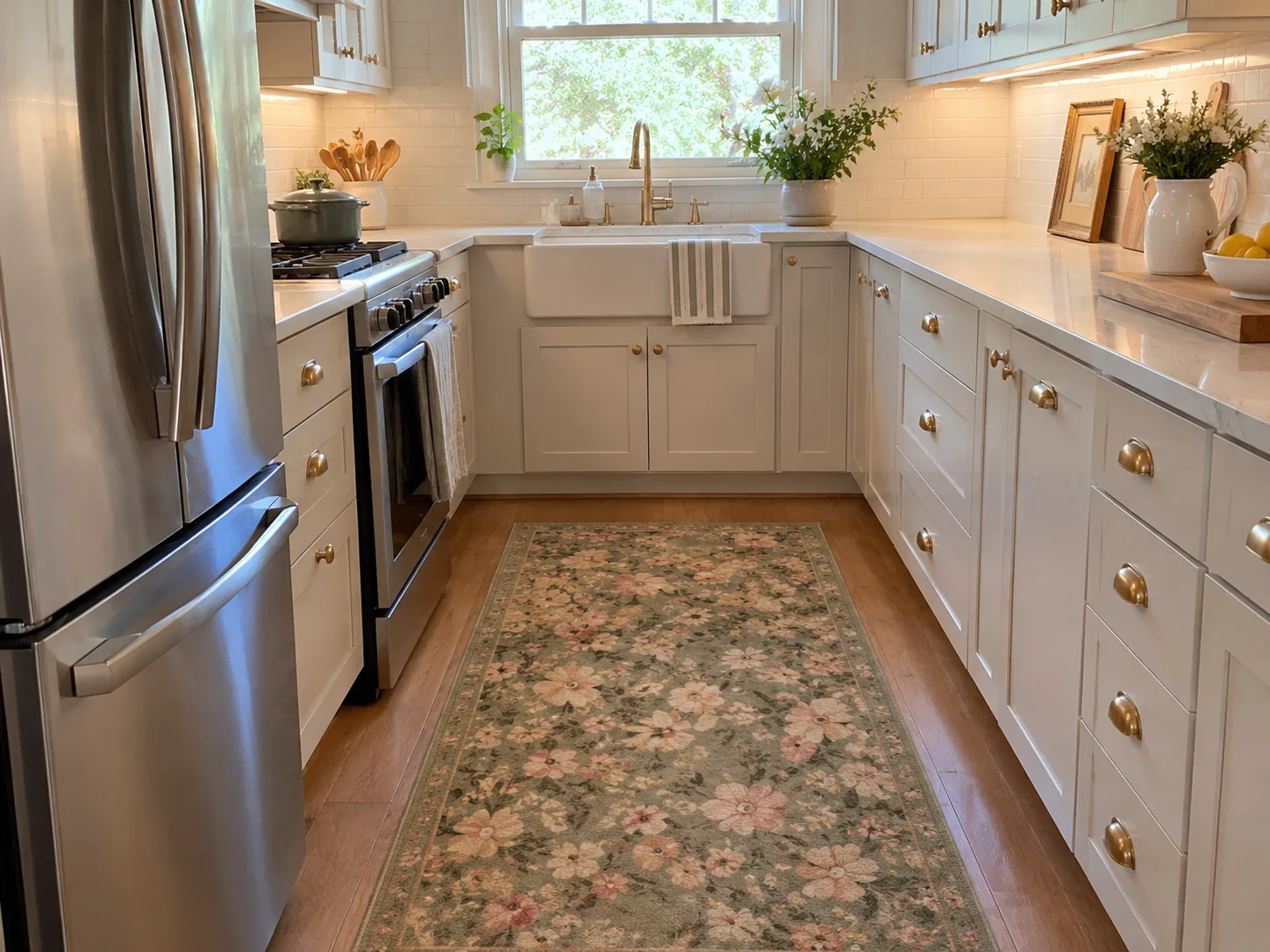
Use a floral rug to soften a kitchen full of straight edges. Choose the background color first, then look at the flowers or leaves.
A cream background connects easily with pale cabinetry. A darker background gives the pattern more contrast. Open, spaced-out motifs feel different from a dense traditional floral, so compare the overall effect rather than judging one flower up close.
Pick up one color in a tea towel or small accessory if the rug needs a connection to the room.
Keep the rest relaxed. A floral rug already brings plenty of detail; it doesn’t need a whole garden of matching accessories.
14. Get the Woven Look With Easier Washing
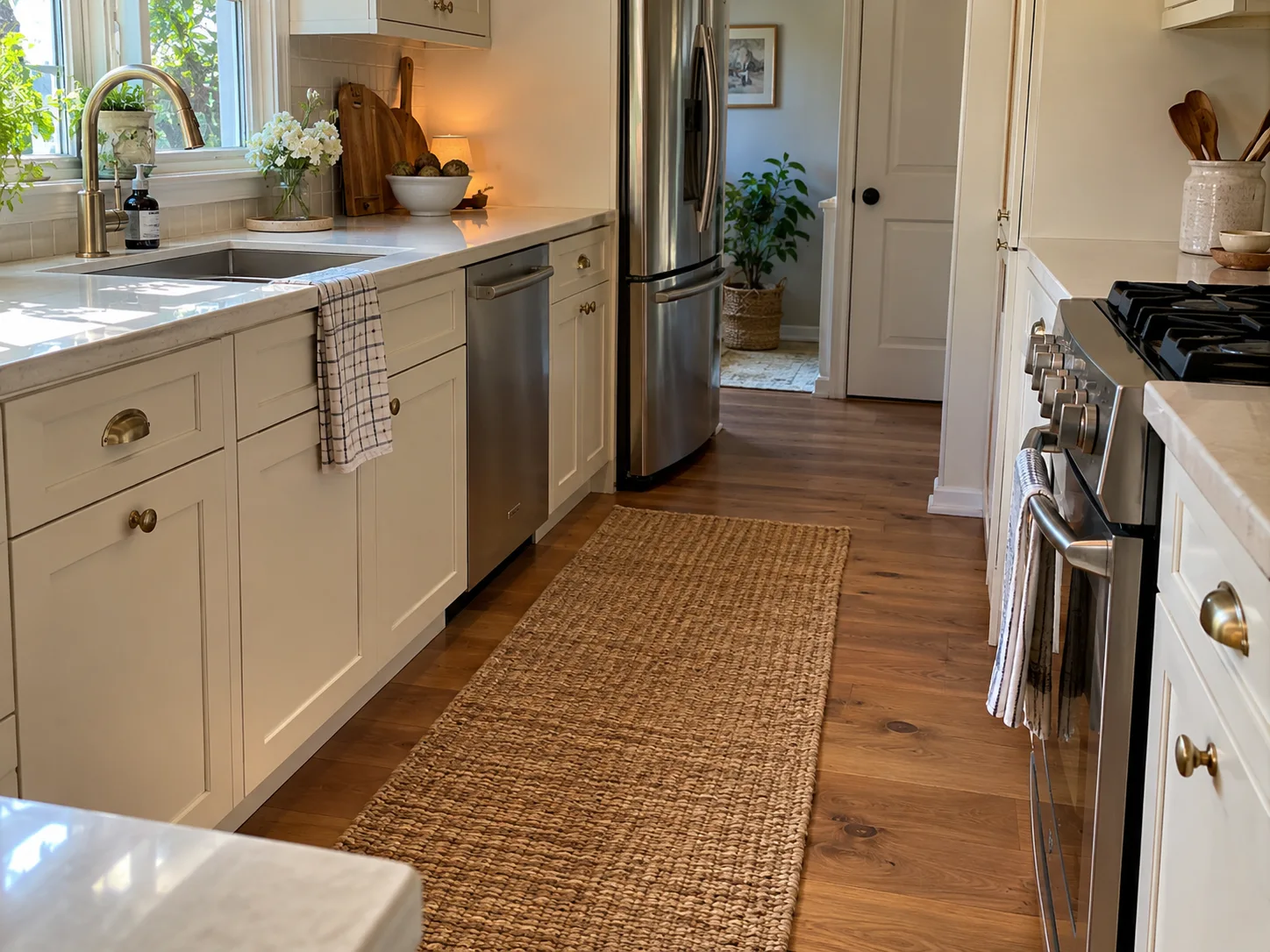
Choose a washable jute-look rug when you want woven texture in a busy cooking area. Check the actual fiber content and care instructions before buying.
Natural jute and a synthetic rug that resembles it require different care. Their appearance alone won’t tell you how they handle kitchen mess.
The Ruggable Harvest Stripe Brown Re-Jute Rug uses synthetic materials for its woven look and has a machine-washable removable cover. Follow the separate care instructions for the cover and pad.
Its brown-and-sand palette works well with cream cabinets, oak, and darker wood furniture.
15. Put a Cushioned Mat Where Your Feet Work Hardest
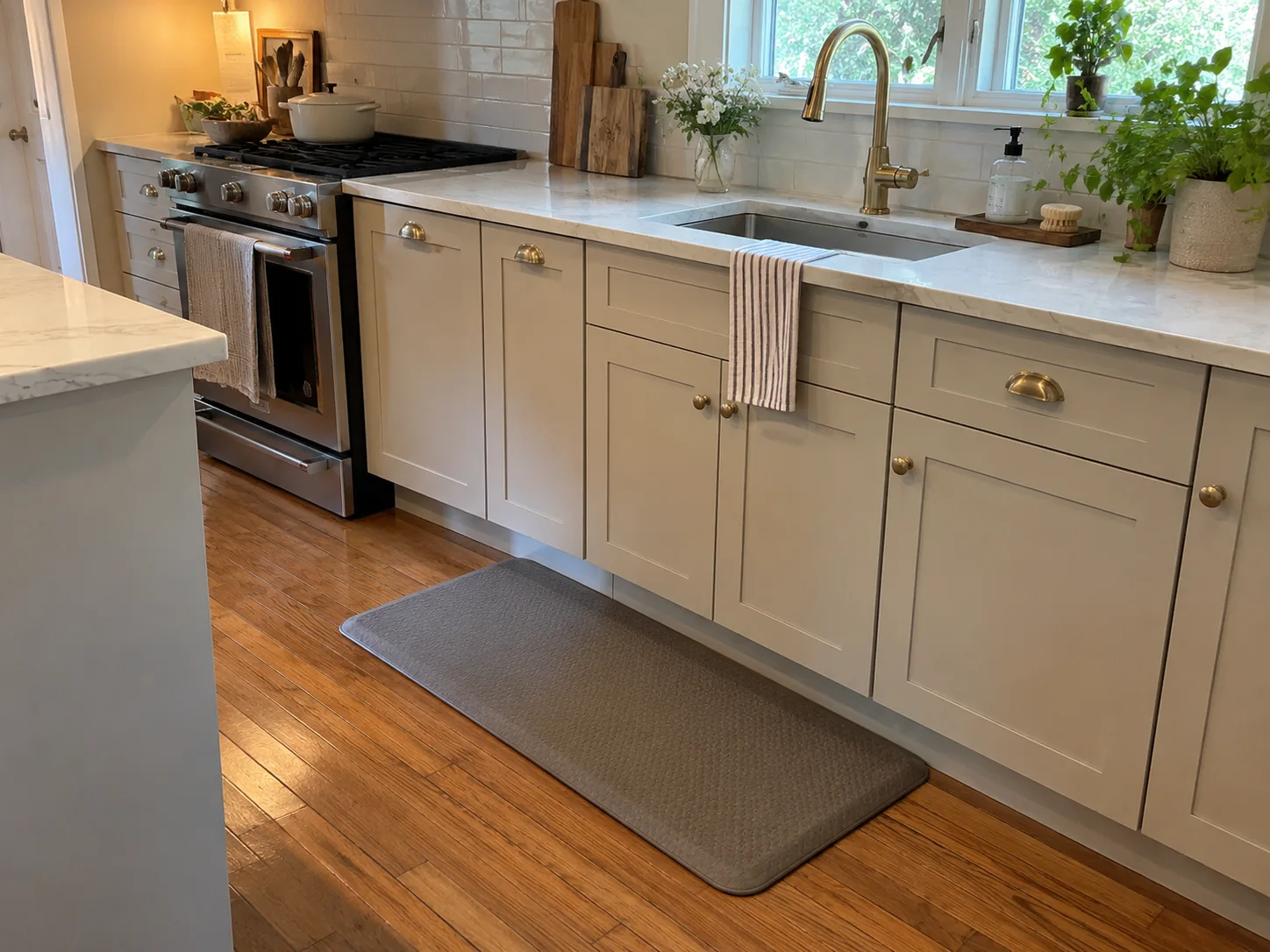
Choose a purpose-made cushioned mat for long stretches at the sink or prep counter. Keep it to the standing area that needs it.
This is the spot where you wash the dinner dishes, peel potatoes, or prepare lunches for the next few days. A compact mat gives that job a more comfortable surface.
Look for a stable base, edges that sit securely, and a finish you can clean easily. Check nearby door clearance too.
Try the feel in person when you can. Some people like softer cushioning; others prefer a firmer surface. The mat should feel steady when you step onto it, turn, and step off again.
What Size Rug Will Actually Fit?
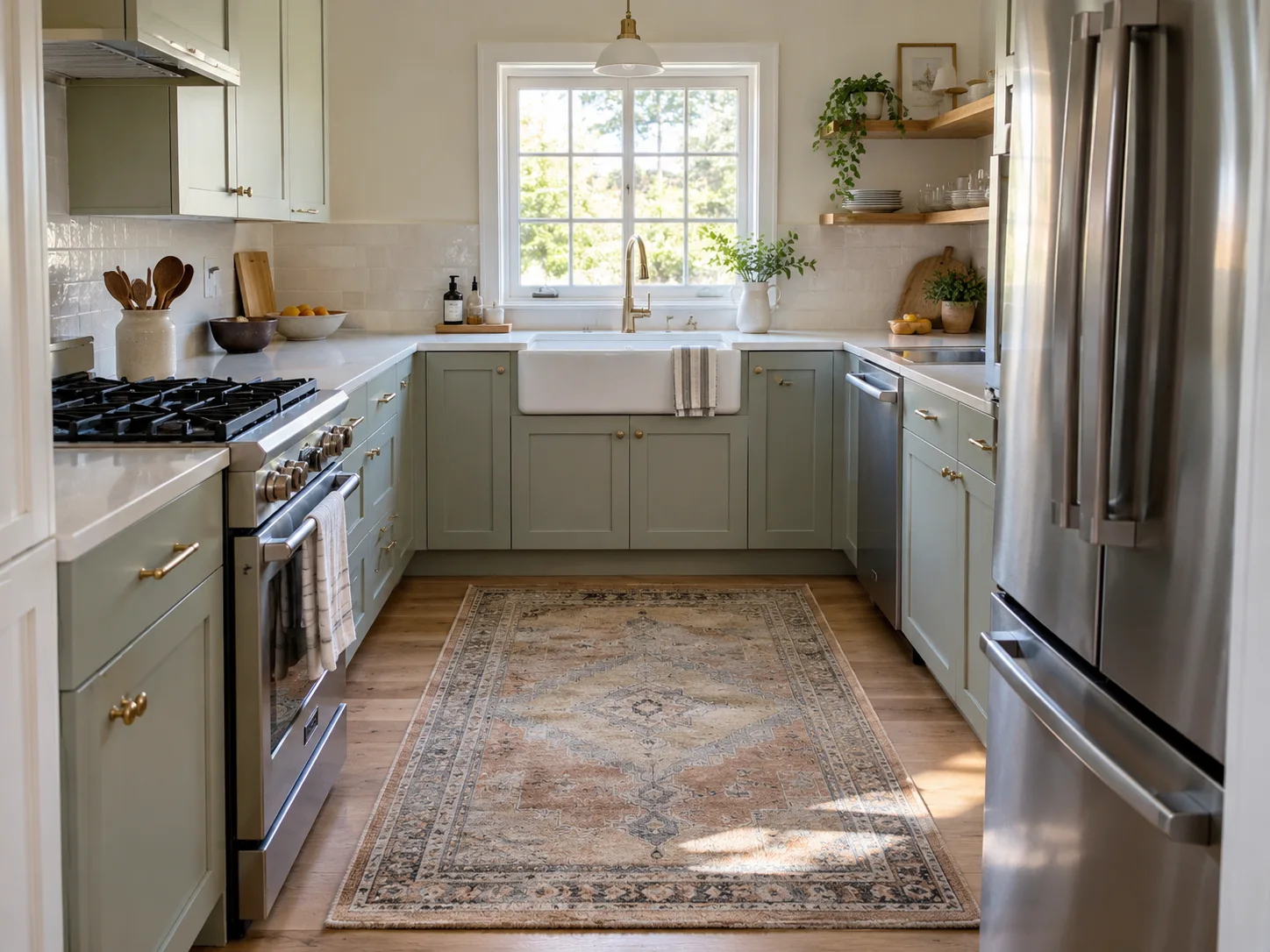
Measure the floor while the kitchen is being used, not only while everything is closed and tucked away. Doors, chairs, and stools need room to move.
Measure the Narrowest Part of the Aisle
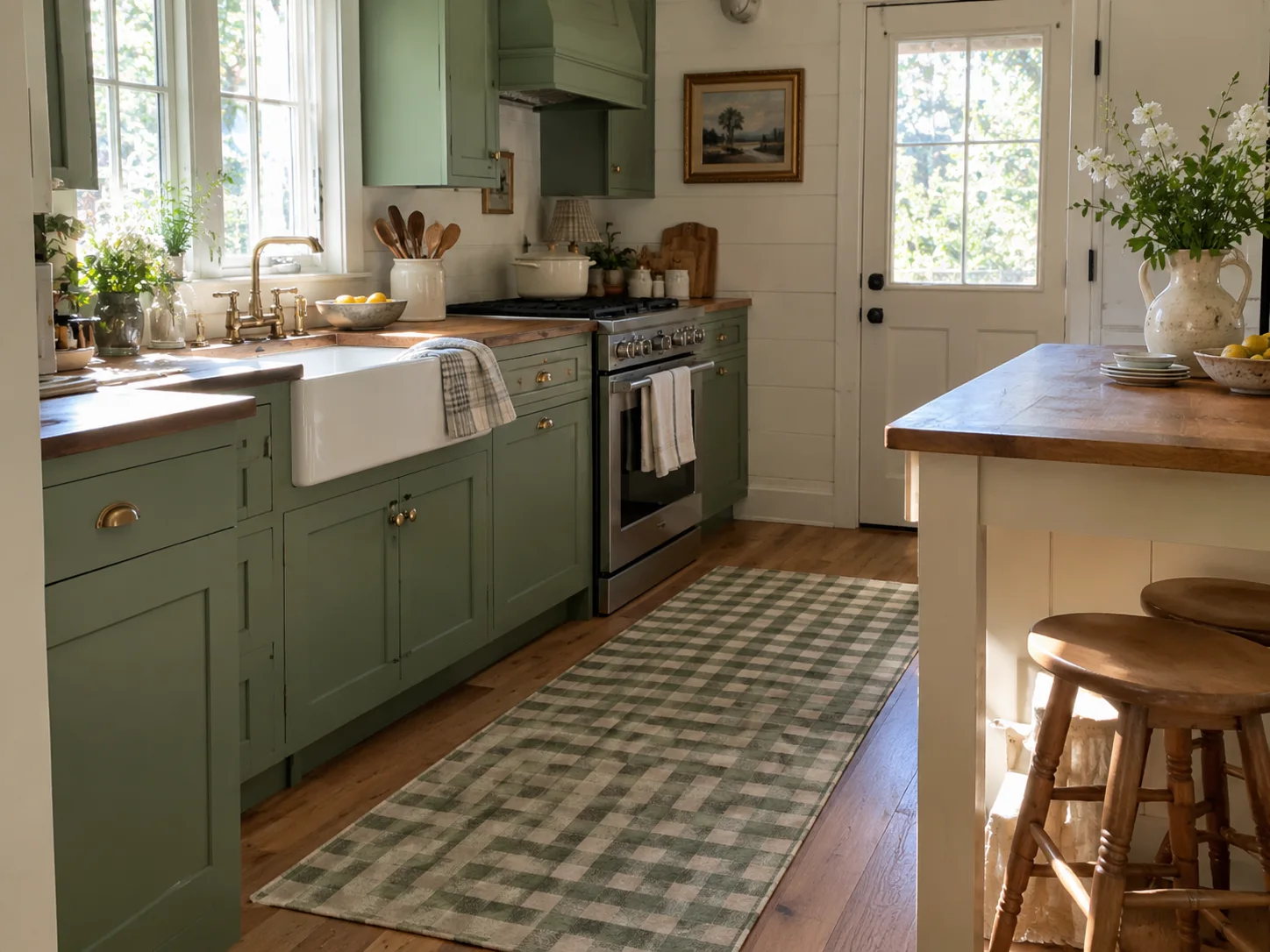
Use the narrowest clear section as your reference. Account for projecting appliances and furniture beside the route.
Mark the proposed rug with painter’s tape. Walk through carrying a shopping bag. Stand at the counter and turn toward the fridge.
If the outline feels awkward now, a nice pattern won’t fix it later.
Give the Dishwasher a Full Test
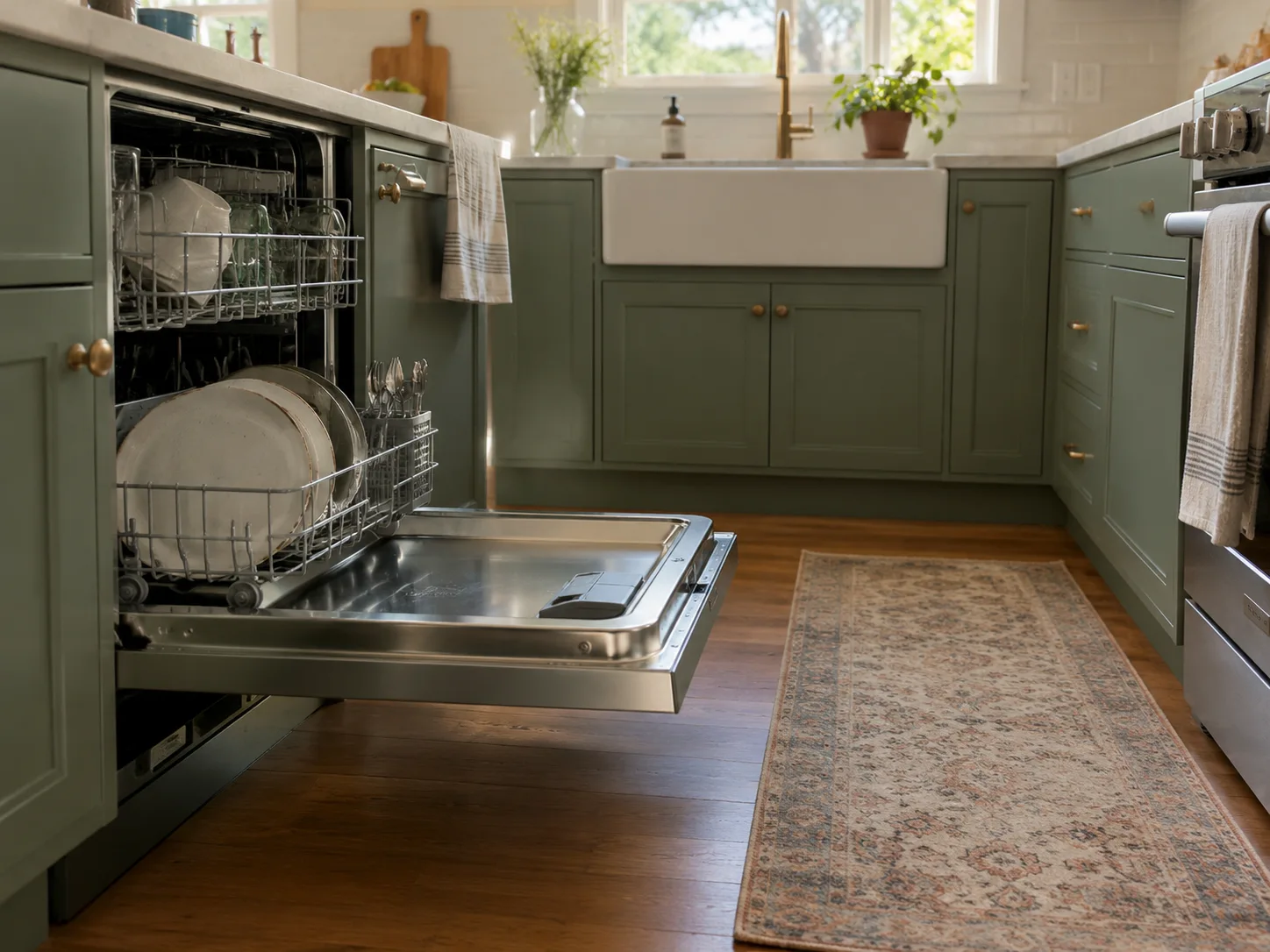
Check the combined thickness of the rug and pad. A thin cover on a thick pad still creates a raised surface.
Open the dishwasher, oven, nearby room doors, and low drawers. Check that nothing catches, drags, or folds the rug.
Choose a thinner setup or a different position if it interferes. You should not have to rearrange the floor to load a plate.
Measure With the Dining Chairs Pulled Out
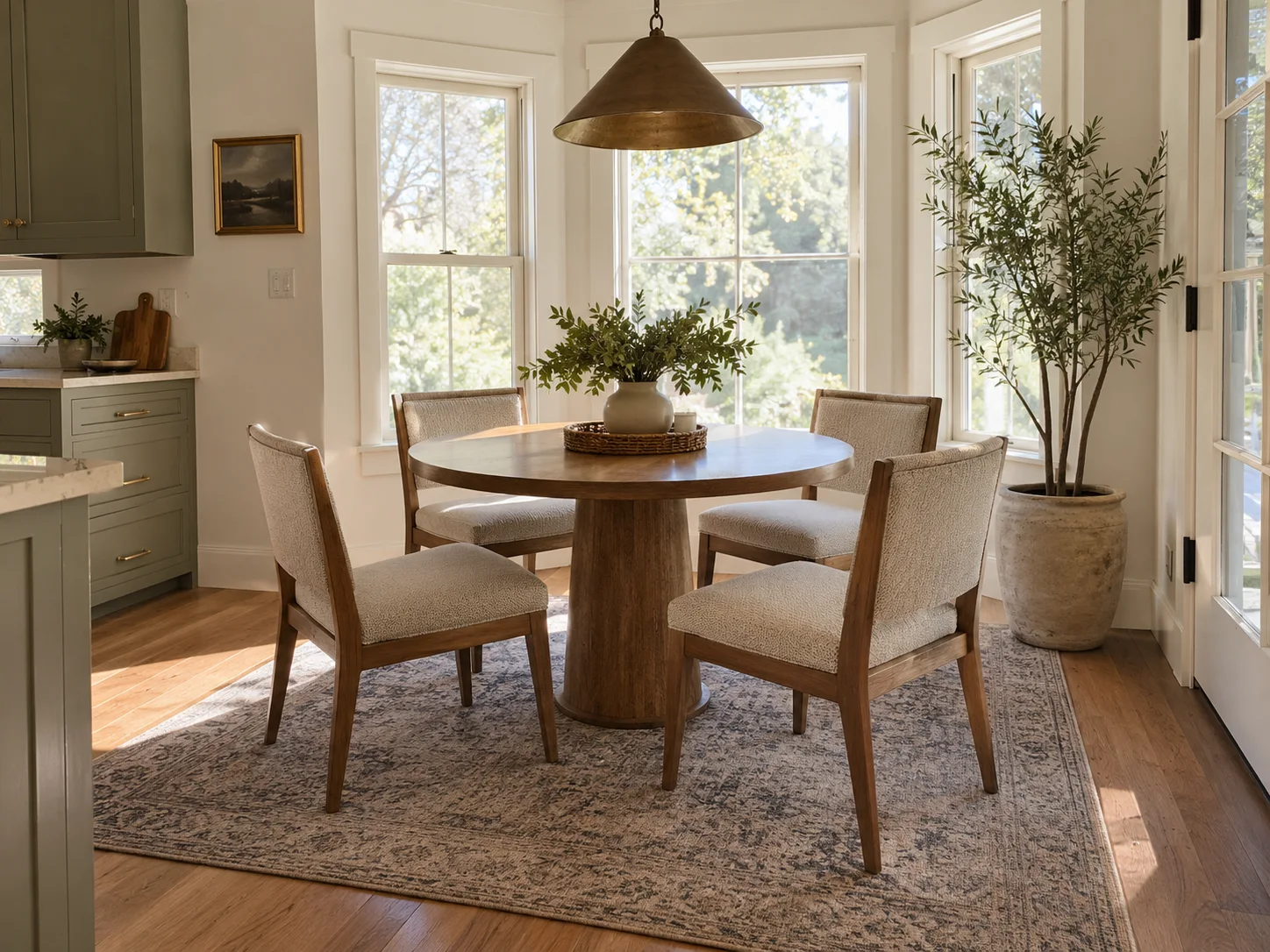
Keep the chair legs on the rug during ordinary sitting and standing.
An allowance of around 24 to 36 inches beyond the tabletop on the chair sides is a useful planning range. Test it with your actual chairs before choosing the size.
If the resulting footprint blocks the cooking aisle, move the rug idea to another part of the kitchen.
Which Rug Materials Are Easiest to Live With?
Buy according to the cleaning instructions for the exact rug. Rugs made from the same fiber can have different backings, finishes, and care requirements.
| Rug type | The useful buying check |
|---|---|
| Washable cotton | Confirm machine washing, drying instructions, and shrinkage guidance. |
| Polyester or polypropylene | Check whether the specific rug is machine washable, spot-clean only, or requires another method. |
| Wool | Read the spill-care instructions and decide whether the upkeep suits your kitchen. |
| Jute or sisal | Check moisture restrictions. Keep moisture-sensitive rugs away from frequent splashes. |
| Cushioned kitchen mat | Check wipe-clean instructions, floor compatibility, and edge stability. |
| Two-piece washable rug | Read separate instructions for the cover and pad, and confirm washer capacity. |
For a busy kitchen, favor a low-profile surface that is straightforward to clean. Deep pile, loose layers, and long fringe create more work in a cramped aisle.
And remember: “flatwoven” describes construction. It does not automatically mean you can put the rug in the washing machine.
The Five-Minute Check Before You Order
Run through this list before adding anything to your basket.
- I measured the clear floor space.
- I tested the footprint with tape.
- Doors, drawers, and appliances open fully.
- Chairs and stools move without catching an edge.
- The backing or pad is suitable for my flooring.
- I understand the cleaning instructions.
- The washable part fits my washing machine.
- I know whether the price includes the required pad.
- The rug lies flat without overlapping another mat.
Small Kitchen Rug Questions, Answered
Can a Rug Make a Small Kitchen Look Bigger?
A rug helps the room feel more settled when its size, placement, and colors suit the layout. It does not need to cover most of the floor.
One runner following a clear aisle usually creates a simpler arrangement than several scattered mats. Keep the surrounding walking space clear and choose a pattern that works with the finishes already there.
Is a Runner Better Than a Small Kitchen Mat?
Use a runner for a long working area and a compact mat for one standing spot.
A row of counters suits a runner. A small patch in front of the sink suits a compact rug. A cushioned mat makes sense when standing comfort is the main job.
The kitchen’s shape gives you the answer.
Should a Kitchen Rug Be Washable?
Choose a washable rug for areas that regularly collect food, splashes, and muddy footprints. A wipe-clean mat is another good choice.
Check whether the whole rug goes in the machine or only its cover. Confirm the required washer capacity and drying method.
The aim is a rug you’ll clean without putting the job off for three weekends.
Can You Put a Rug in Front of the Stove?
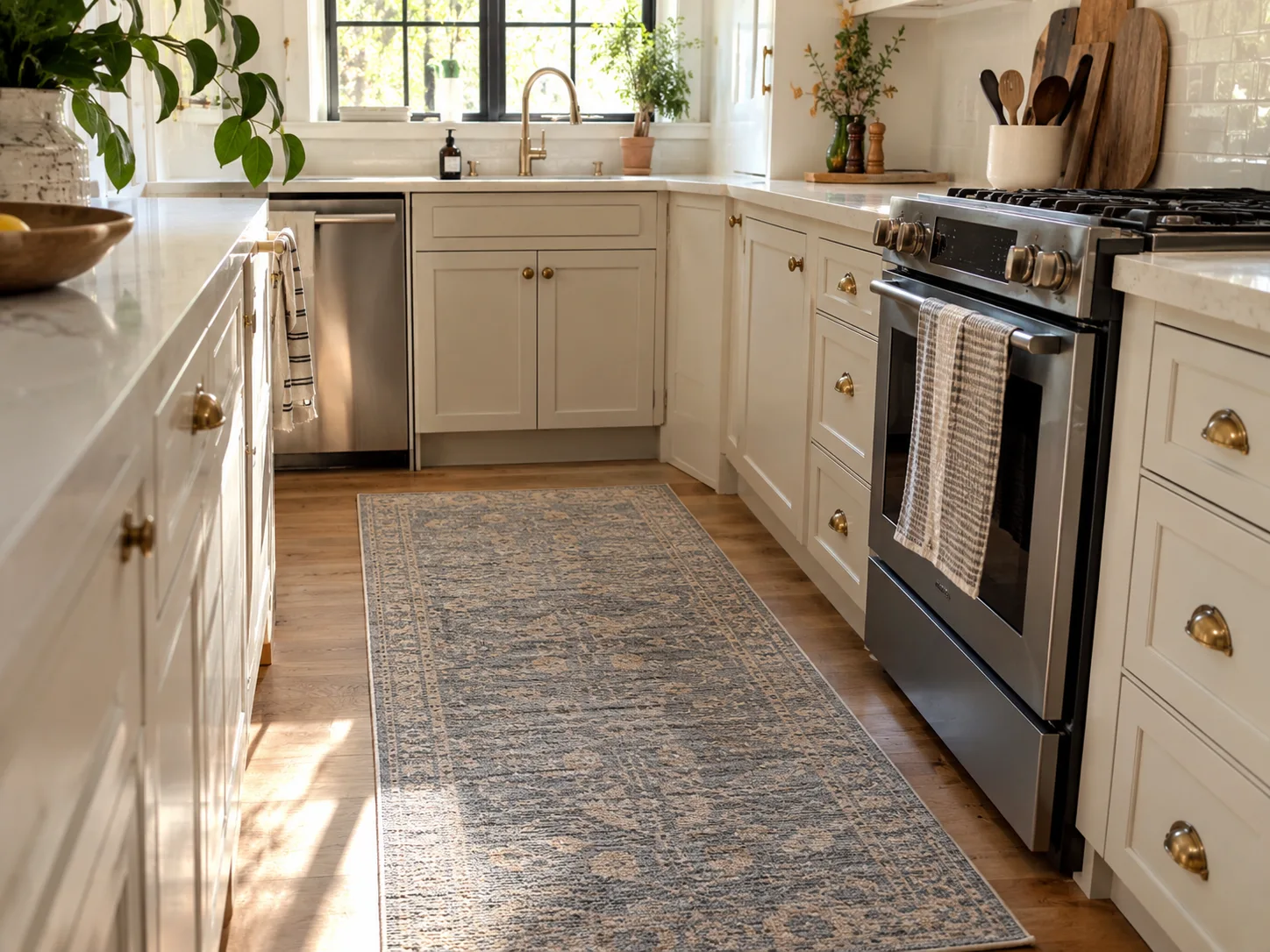
Use this location only when the rug stays secure, the oven opens freely, and the placement follows the appliance’s guidance. Keep vents unobstructed.
Ordinary kitchen rugs are not fireproof. If the rug shifts, bunches, or interferes with handling hot cookware, move it elsewhere.
The sink or a separate prep counter is a better home for it than a cramped cooking spot.
Can You Use Two Rugs in a Small Kitchen?
Use two rugs only when they serve distinct areas and both fit comfortably.
A cooking-aisle runner and a breakfast-table rug make sense in an eat-in kitchen. Two small mats almost touching in a short aisle add unnecessary edges.
Keep their colors related and leave clear space between them.
Pick the Spot That Makes Everyday Life Nicer
Choose one useful location, get the fit right, and buy a design you enjoy. That is enough.
A faded runner beside the cabinets, cheerful checks at the sink, or a soft blue rug under the breakfast table will give the room a little more warmth and personality. You’ll notice it during the ordinary moments: the first coffee, the dinner prep, and, yes, the washing up.