Grandma Had the Right Idea: 12 Vintage Decor Ideas Worth Bringing Back

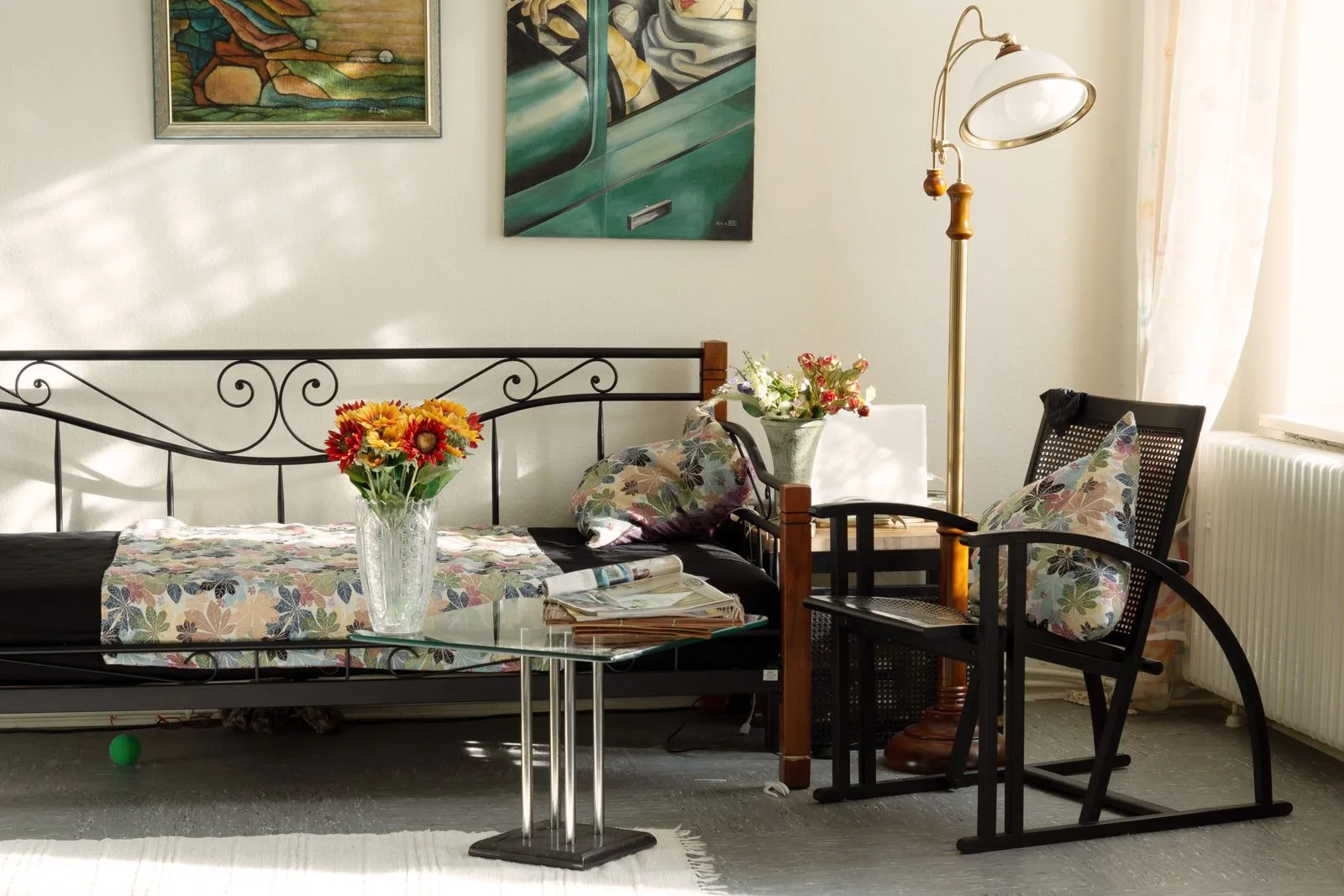
You might remember the quilt folded over the spare bed, the embroidered cloth beneath a vase, or the floral chair that outlasted every other seat in the house. Perhaps you once thought those things looked old-fashioned. Now, while browsing vintage decor ideas for your own home, you find yourself pausing over the very pieces you barely noticed back then.
The quick answer
- Patchwork quilts and floral cushions add familiar vintage patterns to everyday seating and bedding.
- Display blue-and-white china, a silver tray, or a wooden quilt rack where you can actually use them.
- Repeat a color from the vintage pieces in your existing decor so old and new furnishings work together.
Part of their appeal is how easily they make a room feel personal. Someone chose that china, stitched that quilt, or kept that chair through several house moves. You can give those pieces a new place beside your current sofa or plain white bedding, whether they came from family or a Saturday thrift-store visit.
These 12 ideas cover which pieces to look for, how to work them into your rooms, and what to check before bringing them home.
What Makes a Room Feel “Grandma Chic”?
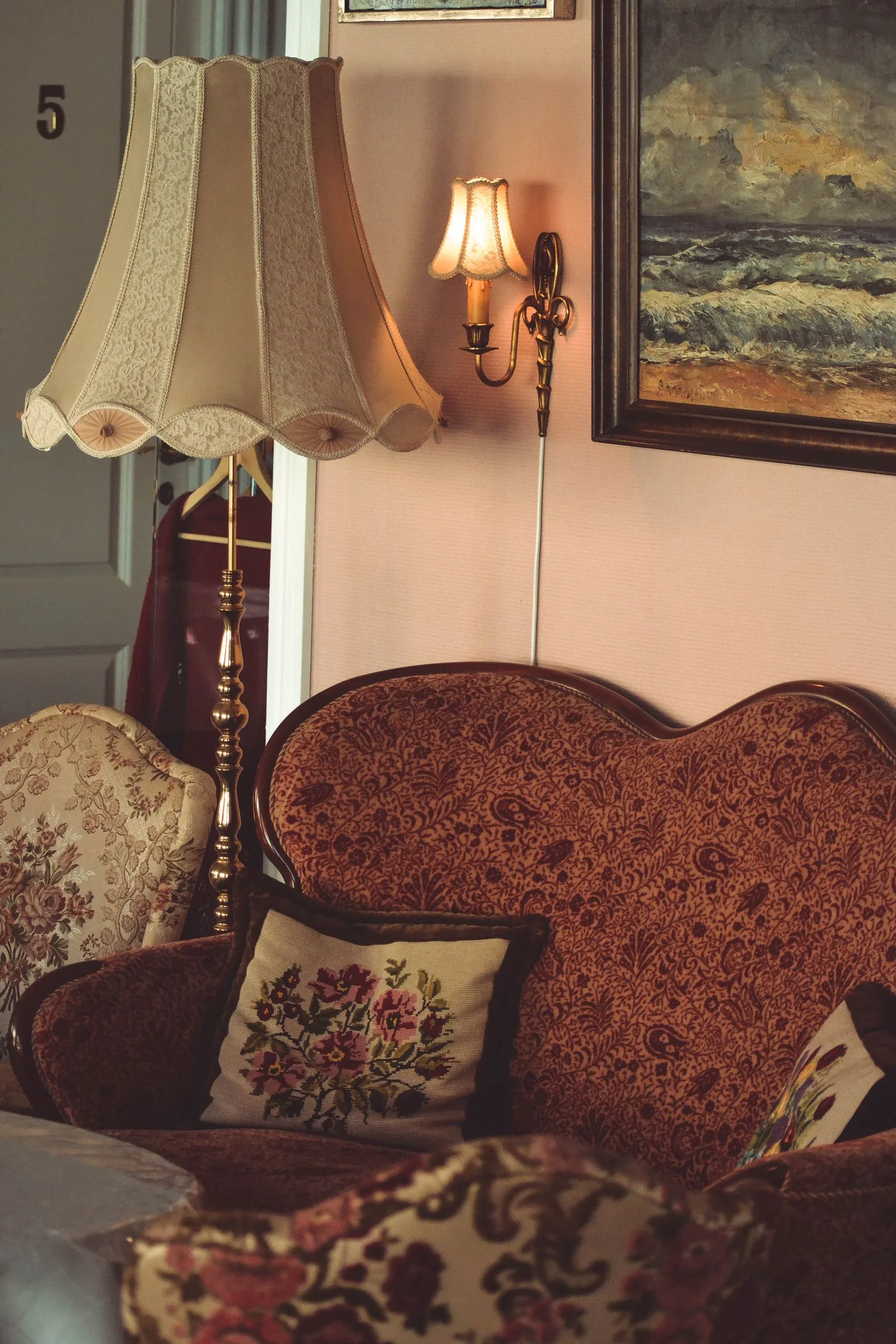
Grandma chic brings together traditional patterns, handmade details, older furniture, and objects that feel personal. Think patchwork bedding, warm wood, woven baskets, embroidered linens, and the dishes someone liked enough to display.
You’ll also hear “granny chic” and “grandmillennial” used for overlapping looks. Grandmillennial often describes a more deliberately coordinated version, with traditional prints, pleated shades, and decorative trims. The boundaries are loose, so there’s little reason to worry about getting the label exactly right.
Your version might be a simple apartment with one floral armchair. Someone else’s might have patterned curtains, shelves of pottery, and quilts in every bedroom.
Keep the pieces you enjoy using and looking at. That gives the room a much clearer direction than trying to include every nostalgic detail at once.
1. Give a Wooden Quilt Rack a Job Again
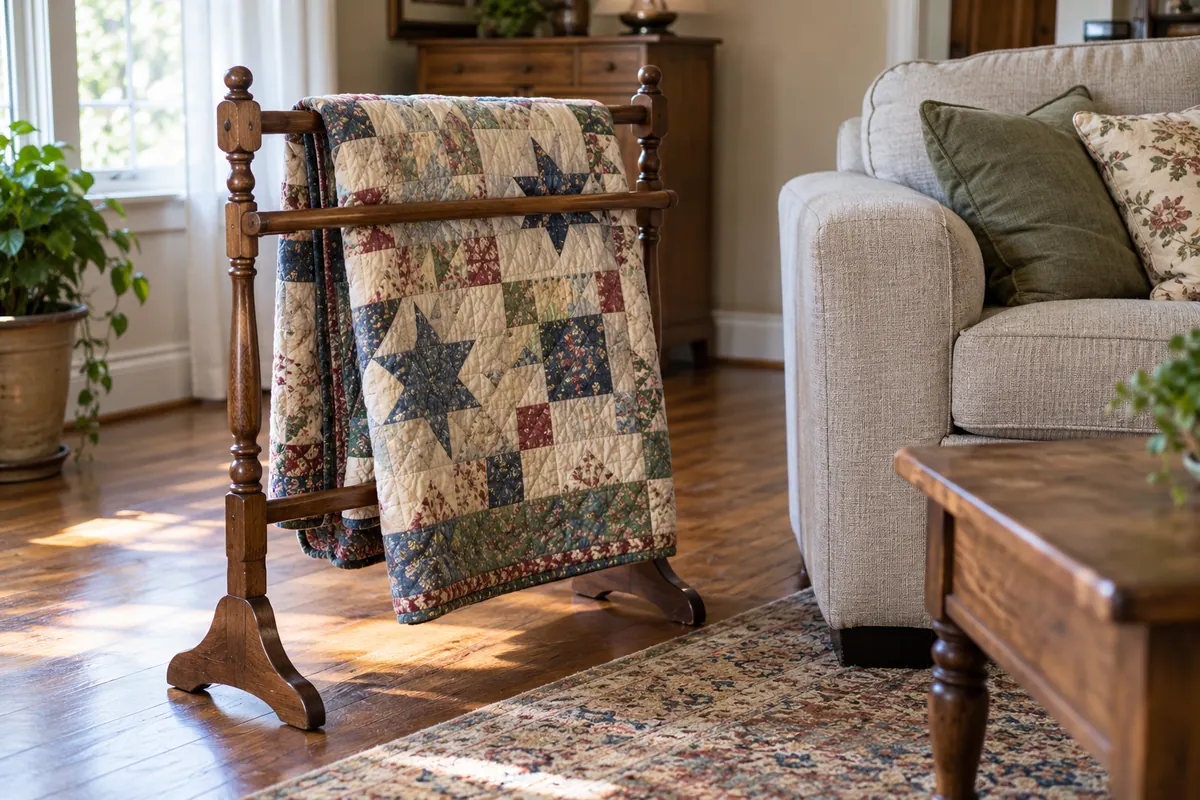
Put a quilt rack where you actually reach for a blanket, usually beside the sofa or near the bed. It earns its floor space by keeping a favorite textile visible and within reach.
If your blankets currently slide off the sofa and end up on the floor, a rack gives them a dependable home. Fold an everyday quilt loosely over a rail and leave enough room to lift it off without moving the furniture.
For a secondhand wooden rack, check that the frame sits firmly and the rails feel smooth. Run your hand along the surfaces to find rough patches that could catch fabric. Measure the usable rail width, too. Decorative ends can make the rack look wider than the space available for your quilt.
A wooden spindle quilt rack is a good secondhand piece to look for. Search by its actual name rather than “vintage decor,” then compare dimensions and condition.
A wall-mounted rail may suit a narrow room better. Its fixings need to suit both the wall and the combined weight of the rail and textile.
2. Let a Patchwork Quilt Set the Room’s Colors
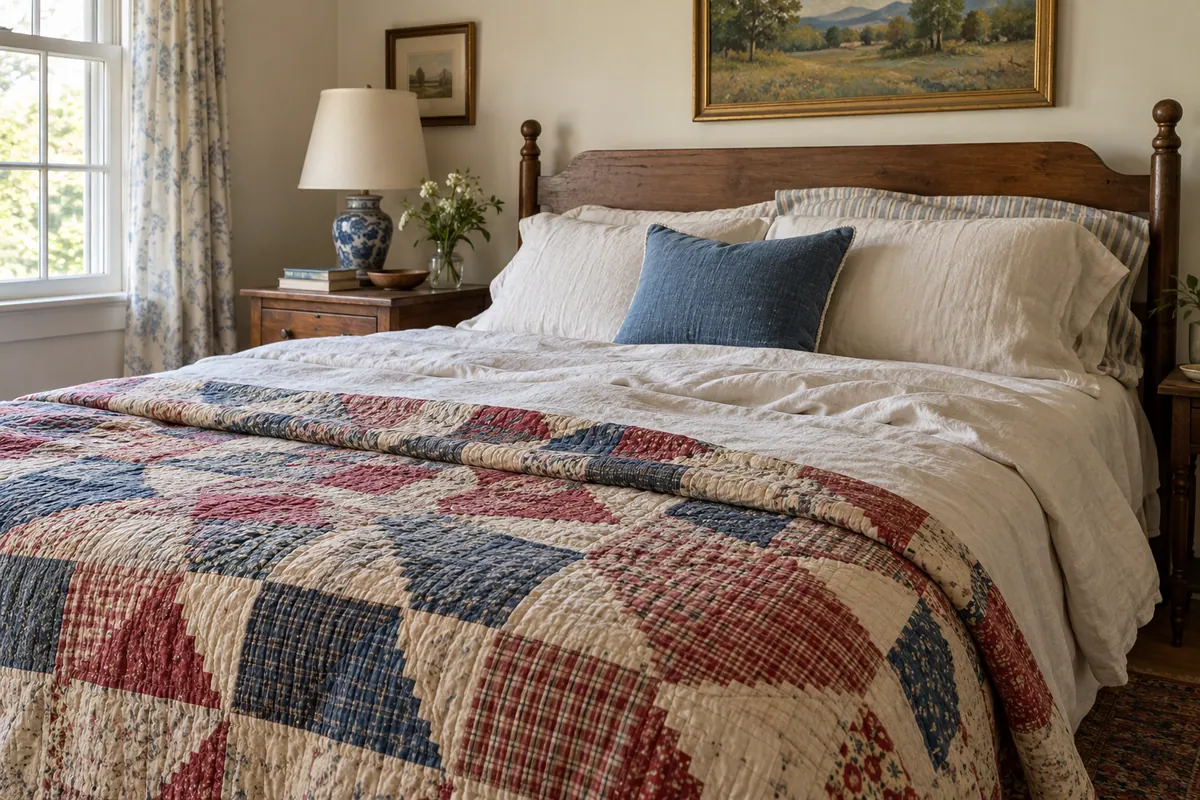
A quilt at the foot of the bed gives every nearby color something to connect with.
Choose two or three colors from the quilt and repeat them elsewhere in the room. That makes a busy pattern easier to work with.
Say the quilt contains faded red, cream, and blue. Cream bedding, a blue cushion, and a small red detail on the nightstand can make the combination feel settled. Every color in the quilt doesn’t need a matching accessory.
The Josh Young x Williams Sonoma Home Vintage Quilt offers a red-and-white patchwork option if you prefer a limited palette. The John Lewis Patchwork Quilted Cotton Blend Bedspread in Avocado is another option to compare for a greener scheme.
On a sofa, fold the quilt over one arm or across the back so part of the pattern remains visible. In a bedroom, our guide to layering bedding without making the bed feel busy can help you keep the arrangement easy to remake.
3. Let One Floral Cushion Do the Talking
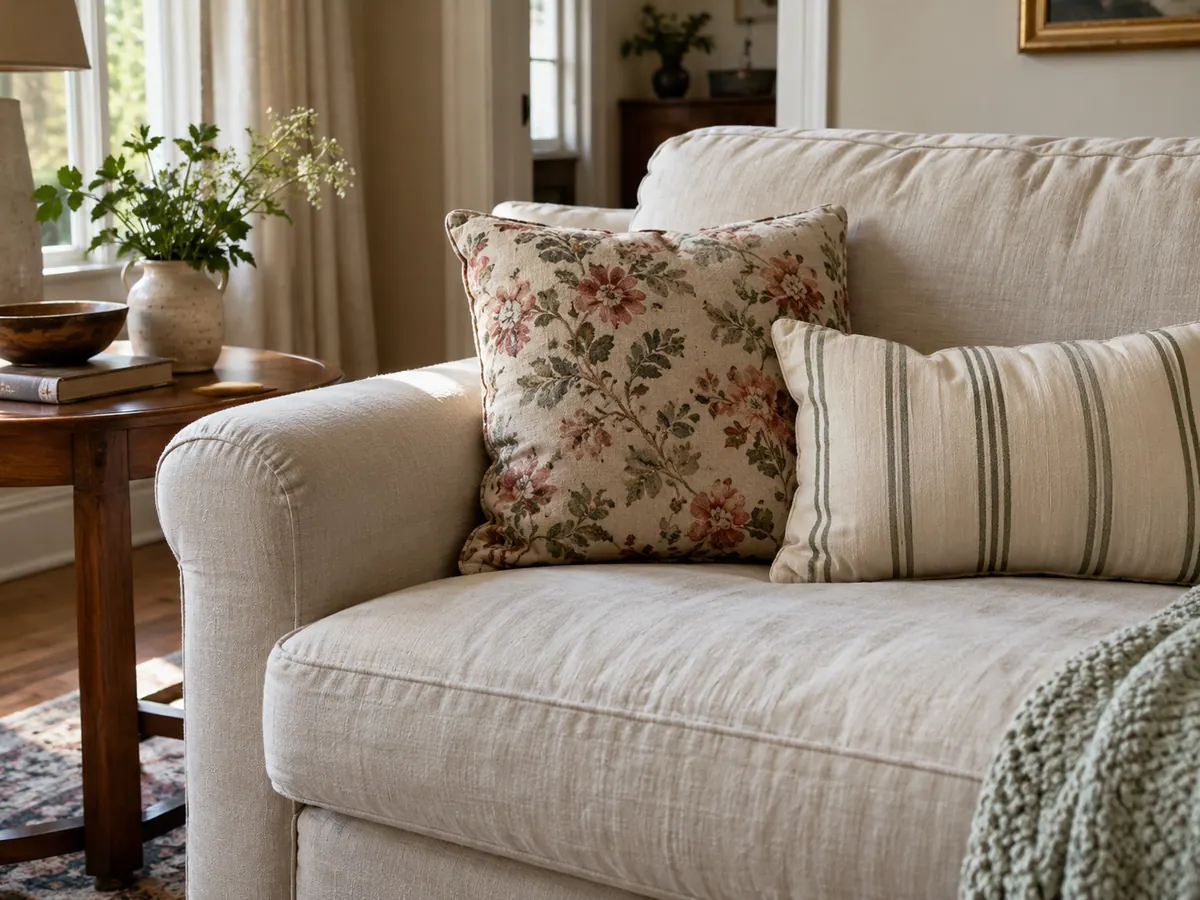
A floral cushion and a simple stripe make an ordinary sofa feel more personal.
Try a floral cushion before committing to a whole chair or sofa in the same print. It gives you time to see whether you enjoy living with the pattern.
A print can look lovely online and feel surprisingly loud beside your curtains. A removable cover is easier to move around while you work out the combination.
The Sanderson x Williams Sonoma Home Hykenham Pillow Cover is one option to consider for a traditional floral accent. Check the dimensions and whether you need to buy an insert separately.
For an easy pairing, put a floral cushion beside a narrow stripe that shares its background color. A cream floral and a cream-and-green stripe already have something in common.
Vary the size of the patterns. A larger flower print is easier to distinguish beside a fine stripe than beside another equally large, equally colorful design.
Once you know you like the combination, a floral chair becomes a more considered purchase.
4. Bring the Blue-and-White China Out of the Cupboard
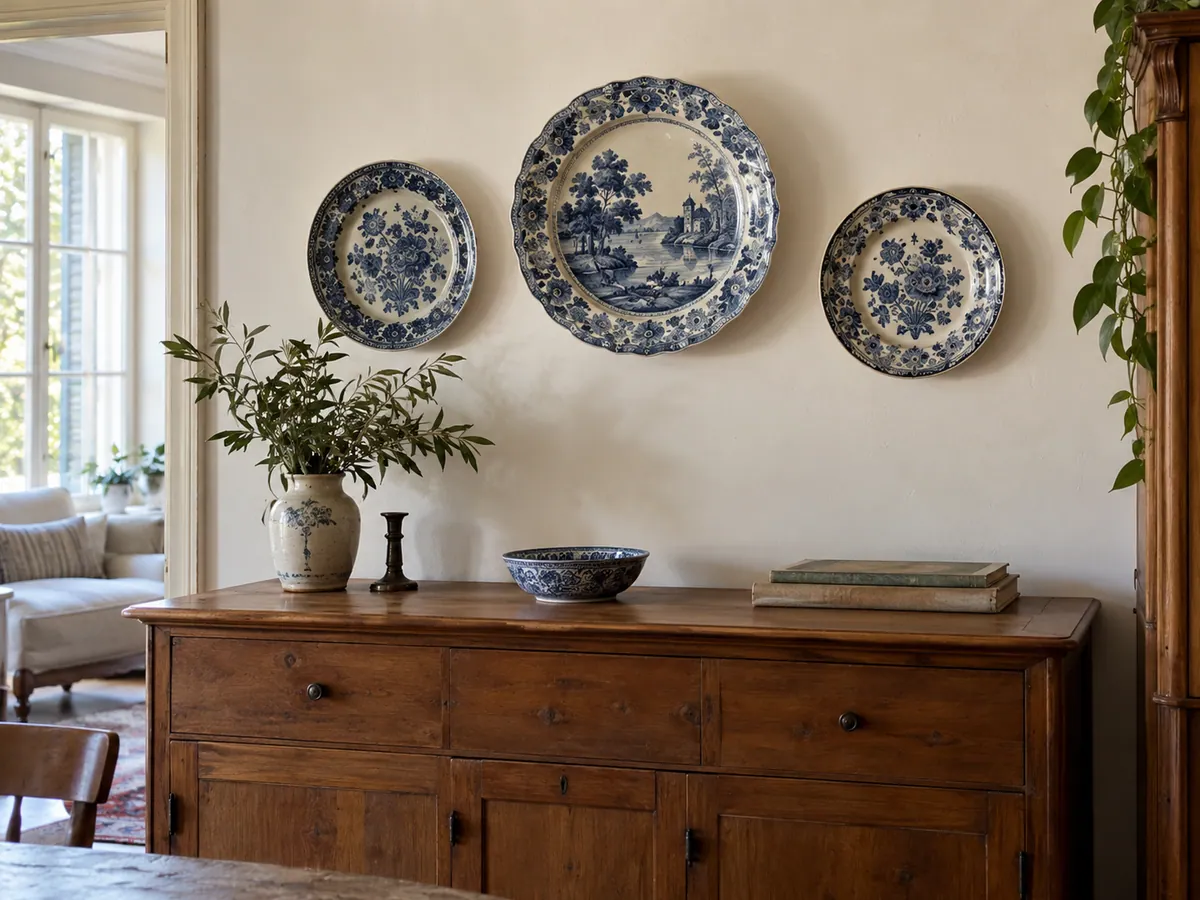
A small group of patterned plates gives a quiet wall some personality.
Display a few favorite pieces together where their patterns are easy to see. A shelf, dresser, or small wall arrangement can be enough.
There’s no need to unpack an entire dinner service. Three plates above a sideboard might give you more pleasure than a crowded cabinet you rarely open.
Burleigh Blue Calico plates are worth considering if you want a recognizable blue-and-white pattern to combine with secondhand finds. Different plate shapes can work together when the colors remain fairly consistent.
Lay out a wall arrangement on a table first. Adjust the gaps until you can distinguish each piece, then transfer the arrangement to the wall using suitable display hardware.
Match supports to the item’s size, weight, and condition. A valuable or delicate plate deserves advice on an appropriate mount.
For a simpler arrangement, stand one plate securely behind a small bowl on a shelf. Keep the display clear of places where bags, elbows, or opening doors could knock it.
5. Keep a Woven Basket Beside Your Favorite Seat
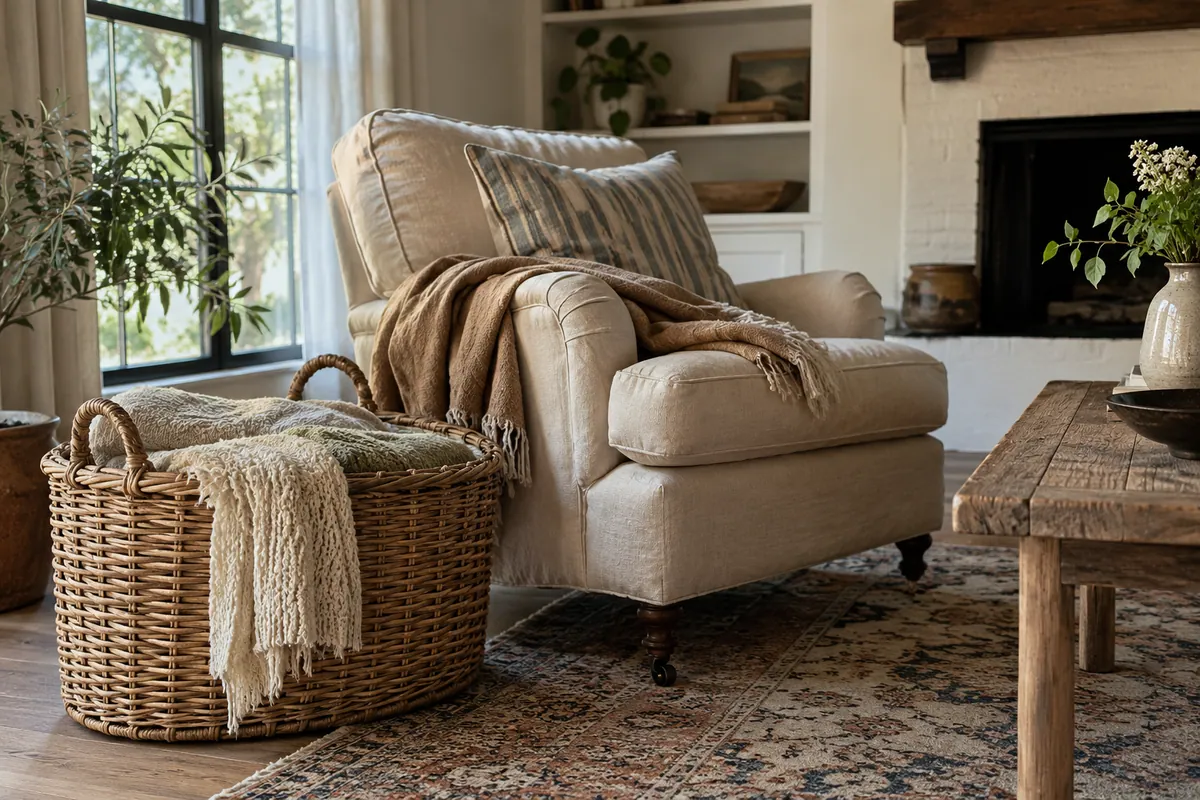
A blanket basket belongs close enough that putting things away barely feels like a chore.
Choose a basket that comfortably holds the blankets you use most, then put it beside the seating. If you have to squash everything inside, it’s too small.
This is one of those purchases where the measurements matter more than the styled photograph. Fold your usual throws into a loose pile and measure that pile before ordering.
The IKEA SNIDAD rattan basket is a roomy, open option to compare. Its visible weave suits a casual living room, although you should check the interior for rough areas before adding fabric.
Use a suitable smooth liner for everyday blankets that might catch on the weave. Fragile heirloom textiles deserve more protective storage.
A basket beneath an open console also works if you can pull it out easily. Otherwise, you’ll probably leave the blanket on the sofa again.
If you need a small piece of furniture as well as storage, the Serena & Lily South Seas Rattan Side Cart offers another woven option. Check its shelf dimensions against what you plan to keep there.
6. Give Lace and Embroidery a Small Place to Shine
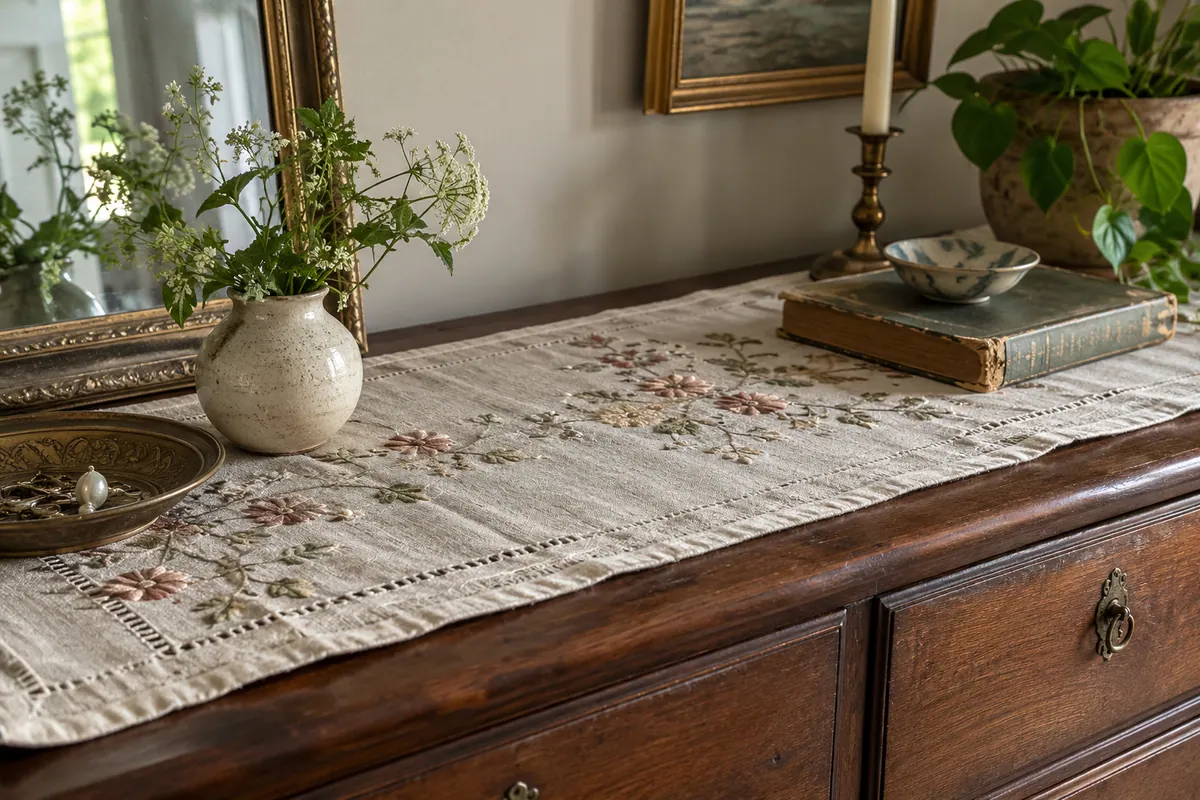
A little stitching stands out beautifully against a plain wooden surface.
Give one detailed textile enough space to be noticed. An embroidered runner, eyelet cushion, or lace panel can bring softness to an otherwise simple corner.
Have a dark wooden dresser that feels a little severe? A light runner beneath a few carefully placed objects may change how it looks without changing the furniture.
For the dining table, embroidered napkins are an easy way to try the idea. They can come out for an ordinary weekend lunch instead of waiting for an occasion that never arrives.
When buying secondhand, ask for close-up photographs of the edges, folds, and stitched areas. Look for thinning fabric and repairs as well as obvious stains.
Choose the amount of care you’re willing to repeat. If hand-washing six napkins sounds like a job you’ll avoid, a new machine-washable set with embroidery may get more use.
A washable eyelet cushion cover is another practical choice for a room where delicate table linens would feel fussy.
7. Soften the Bed With a Skirt or Gentle Ruffle
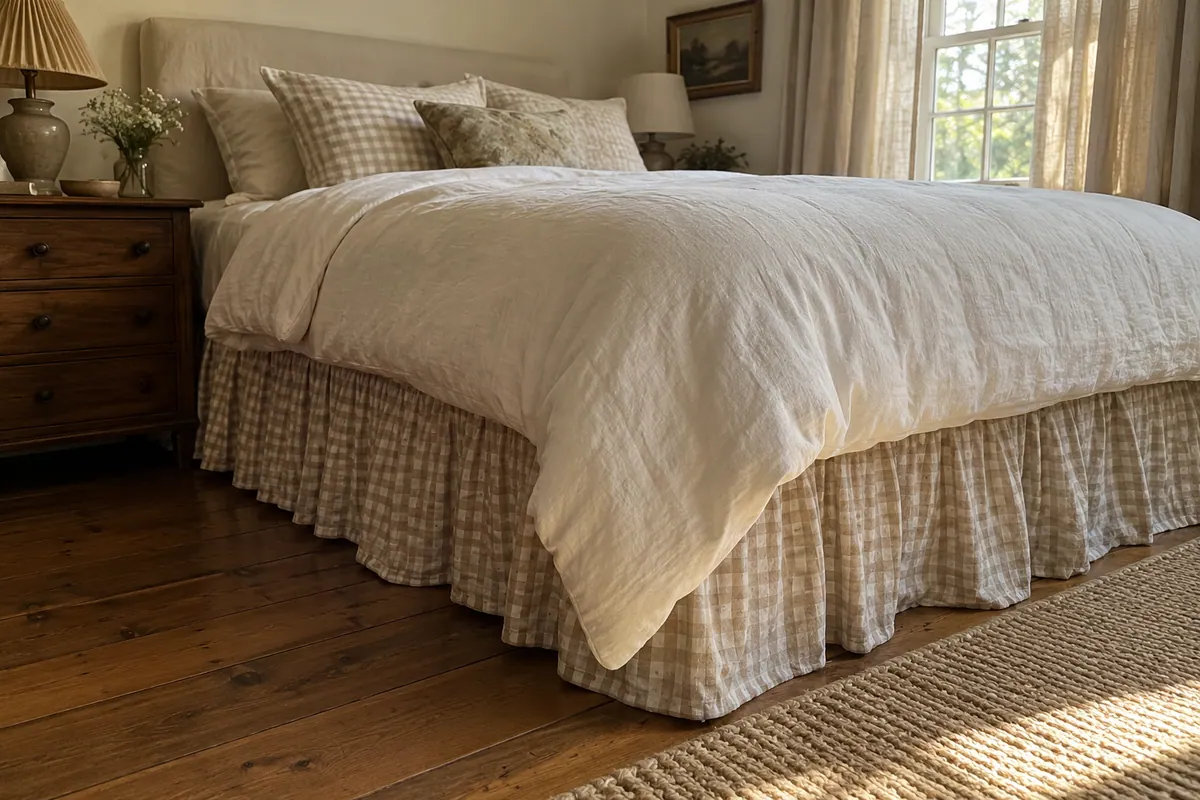
A small check at the bed’s edge adds pattern without covering another large surface.
A bed skirt works well when you want to soften a visible base or conceal tidy under-bed storage. It’s especially useful beneath a plain duvet or a quilt with a simple border.
The Dunelm Portloe Woven Gingham Frilled Valance is a cotton option with a small check and frilled edge. It comes from a UK retailer, so compare its actual measurements with your bed rather than relying on the size name alone.
Measure from the skirt’s attachment point to the floor. A skirt that drags can collect dust and make changing the bedding more awkward.
Also consider what happens on laundry day. Does fitting it require lifting a heavy mattress? Will it cover drawers you open every morning?
Keep the pattern quieter if your quilt already has plenty going on. A plain skirt or small gingham can sit comfortably beneath larger patchwork.
8. Add a Braided Rug Where You Want More Color
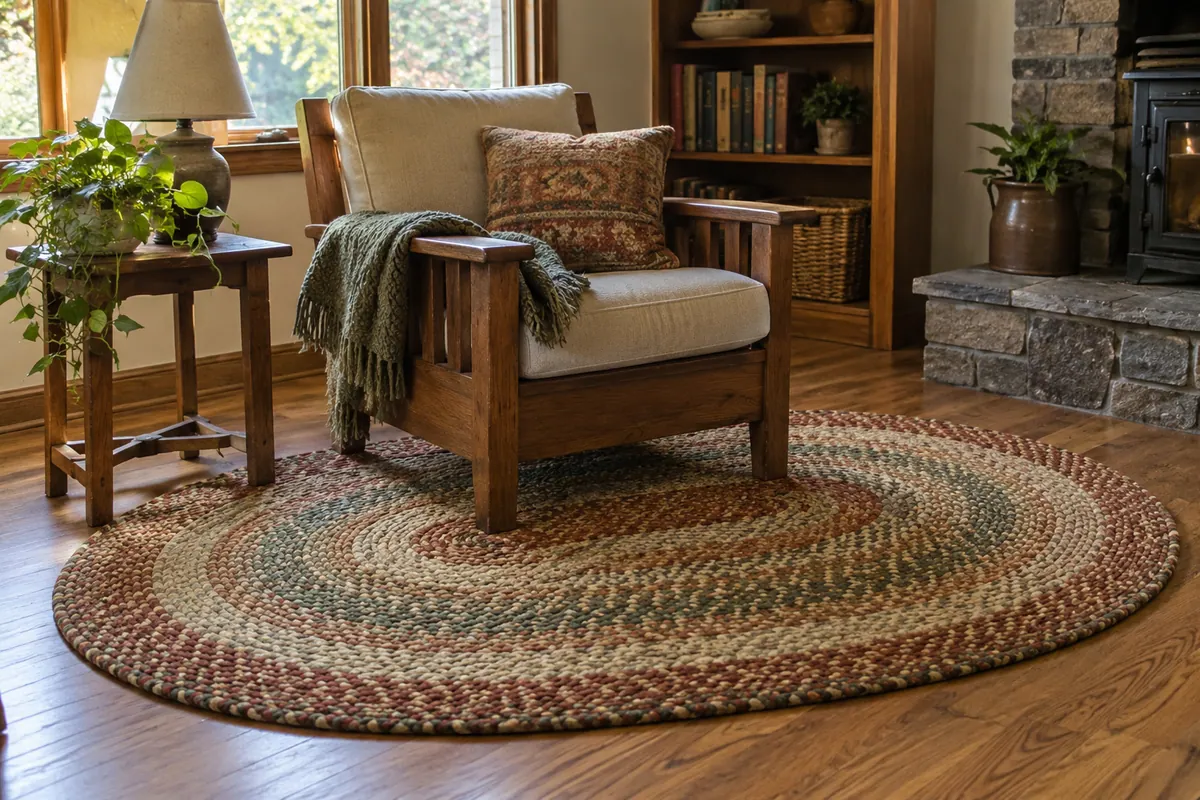
The rug’s curved bands bring a little rhythm to the furniture around it.
Choose a braided rug for the space it needs to serve, then use its colors to connect the room. Shape and pattern won’t make up for a rug that leaves your chair legs awkwardly balanced along an edge.
An oval can soften a corner with several square furniture pieces. A rectangle may fit more easily beneath a bed or seating group.
The Braided Rug Company Organic Jute Rug at TOAST is one option to compare if you like natural texture. For somewhere you stand barefoot every morning, consider whether you would prefer a softer material.
Before buying, mark the proposed outline on the floor. Sit down, pull out the chair, and open nearby doors.
Check the combined thickness of the rug and pad wherever a door passes over them. Our rug size guide walks through the furniture measurements that make the decision easier.
9. Put a Silver Tray to Everyday Use
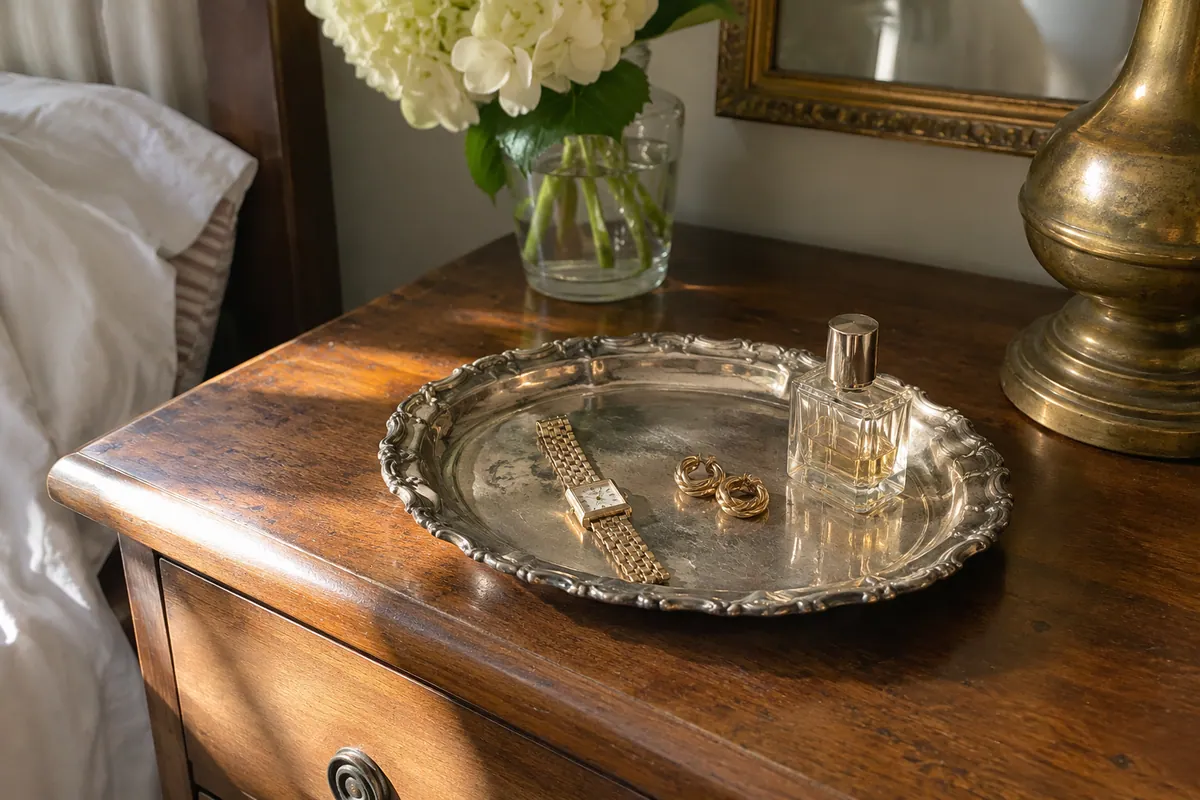
A small tray gives everyday odds and ends a rather lovely address.
Give the tray a specific job so it stays useful. It might hold your watch and earrings, gather perfume bottles, or keep correspondence together on a console.
If the dresser looks messy even after you’ve tidied it, try grouping related objects in one shallow tray. The arrangement becomes easier to read, and wiping the surface takes less rearranging.
For a new option, the H&M Home rectangular stainless-steel tray has a silver-colored finish and curved corners.
When shopping vintage, pay attention to the description:
- Solid silver describes an alloy containing silver throughout.
- Silver plate has a layer of silver over another metal.
- Silver-colored describes appearance and doesn’t establish silver content.
Those differences affect care and what you should pay. Ask for clear photographs of any marks when the seller’s claim matters to the price.
A tray also needs a limit. Once it fills with receipts, loose buttons, and charging plugs, it’s time to sort the contents.
10. Make Room for a Little Old-Fashioned Hosting
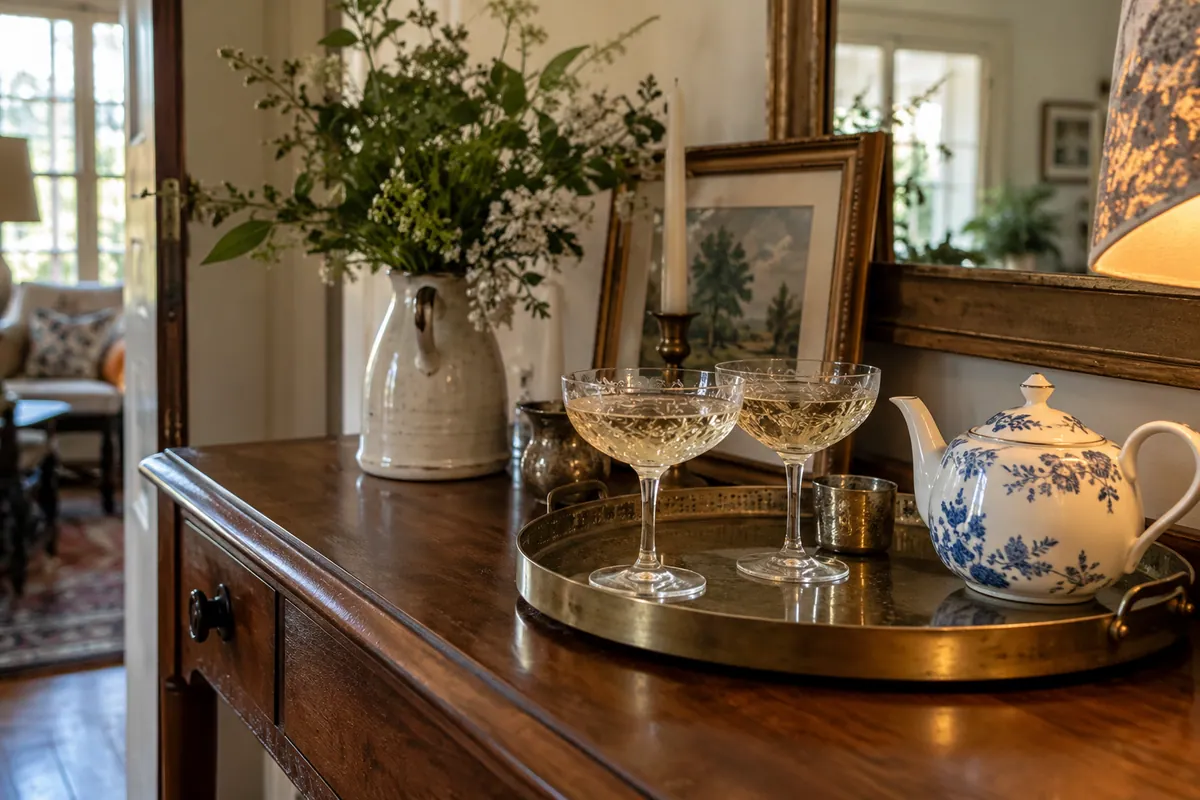
A few glasses on a tray can make an ordinary evening feel worth sitting down for.
A serving tray and a clear section of sideboard are enough for a small drinks station. Buy a cart only if you have room for it and expect to use it.
Perhaps friends come over while you’re still finishing dinner. Keeping glasses and drinks together lets them help themselves without standing beside the cooker.
The Williams Sonoma Vintage Etched Coupe Glasses bring decorative detail to that setup. Choose the quantity you’ll regularly use and check the care instructions before making them your everyday glasses.
Tea works here, too. A teapot, cups, and somewhere for the biscuits can make the same corner feel welcoming.
For a vintage trolley, check its wheels, shelves, and joints before buying. Make sure it can move through the route you have in mind.
Leave a clear surface for pouring and setting things down. A drinks station becomes frustrating when every inch is occupied by ornaments.
11. Find One Wooden Chair With Character
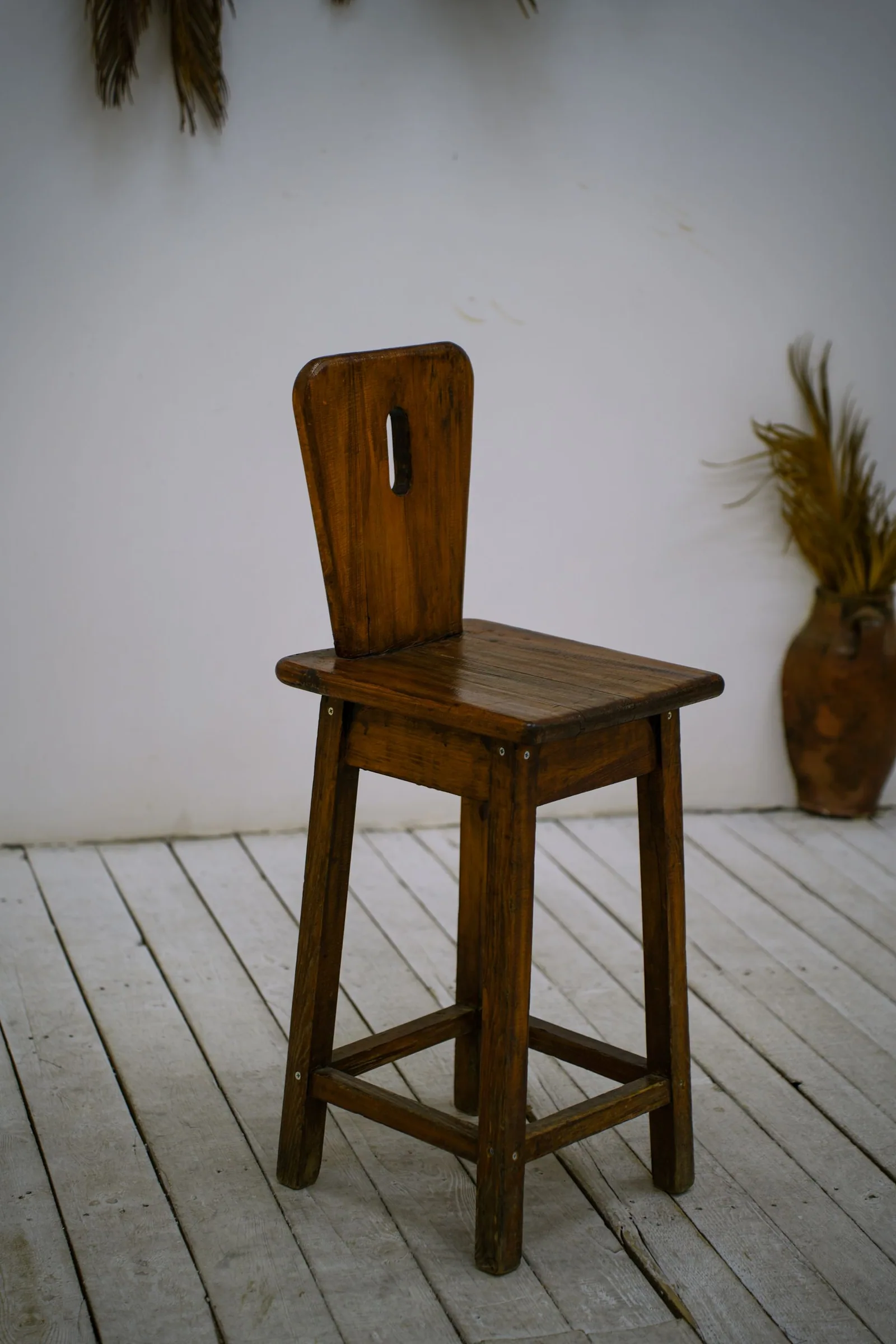
Choose a vintage chair for a real seating job, then check whether its dimensions and condition suit that job. A lovely shape won’t help if the seat is too low for your desk.
A chair beside the bed can hold a book during the day and provide somewhere to sit while getting dressed. At a dining table, one older pair can introduce a different wood tone without replacing every seat.
Sit in the chair if you can. Check for movement at the joints, inspect the underside, and look closely at cane or woven seating. Ask about repairs rather than assuming every mark is simply age.
Add restoration costs before deciding whether it’s a bargain. Re-caning, upholstery, and structural repairs can change the total considerably.
For online searches, phrases such as “wooden spindle chair,” “teak dining chair,” or “cane-back chair” are more useful than a broad search for nostalgic furniture.
If a bedroom chair usually disappears beneath clothes, our guide to reducing bedroom visual clutter can help you give it a usable role again.
12. Give Handmade Textiles Some Wall Space
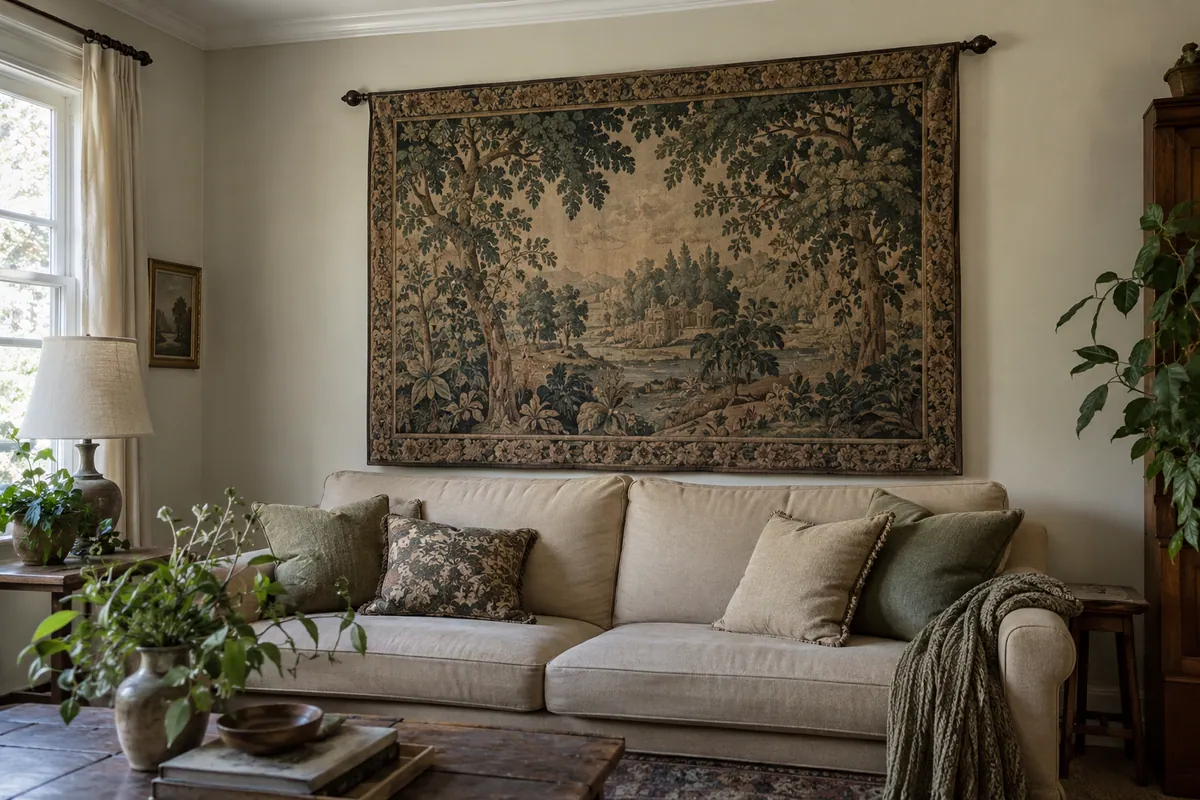
A textile above a simple sofa brings pattern to the place you see most often.
A quilt, tapestry, or framed embroidery can give a quiet wall a clear focal point. Choose its size in relation to the furniture below it.
For example, a broad textile above a sofa can hold the arrangement together. A small embroidered piece may look more comfortable above a narrow table or beside a reading chair.
The McGee & Co. Hortensia Wall Tapestry is an option for a leafy scene in green and earthy tones. Repeat one of those colors nearby, then leave enough surrounding wall visible to appreciate its edges.
An older quilt needs a display method suited to its condition and weight. Avoid improvising with clips or a few nails. The Canadian Conservation Institute recommends appropriate support and keeping quilts away from strong light and heat sources.
A small piece of family needlework may be easier to accommodate through conservation framing.
How to Make These Pieces Work With Your Home
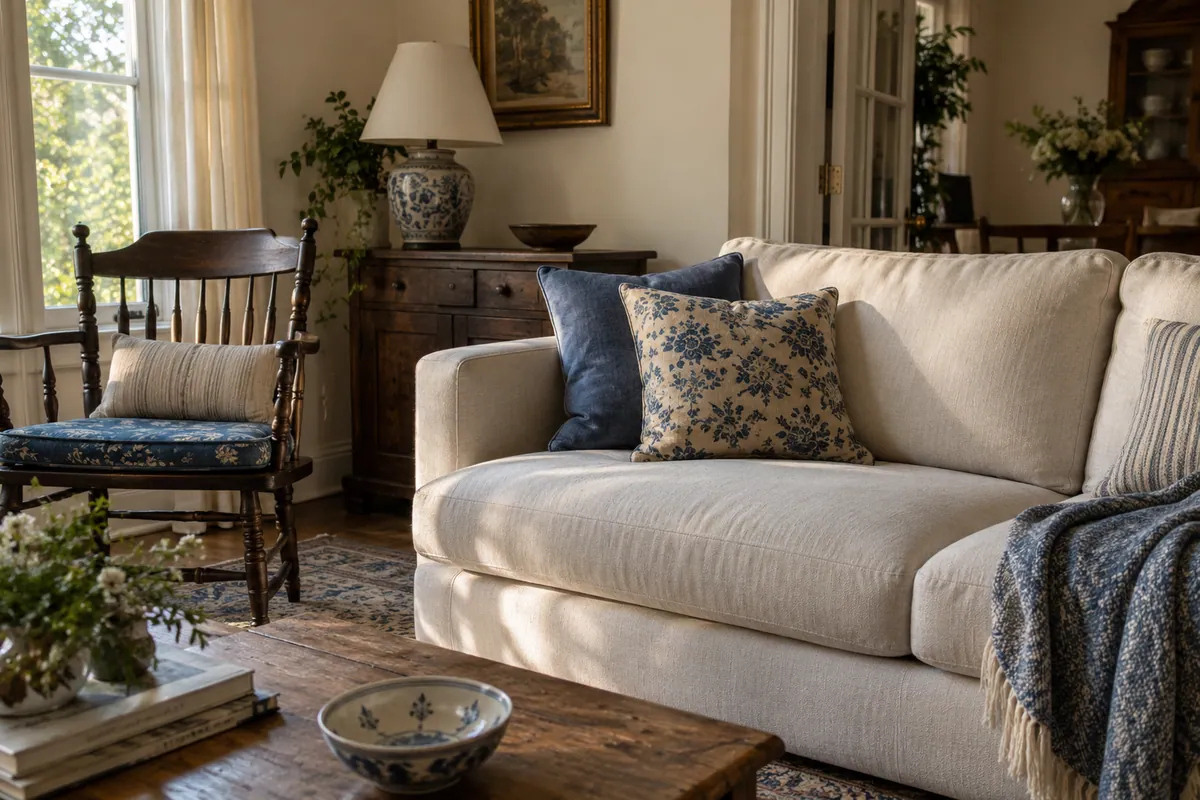
Shared colors help furniture from different decades feel comfortable together.
Let your existing room guide which nostalgic details you add. Look at the furniture, colors, and daily routines already in place before choosing another piece.
Let One Favorite Piece Lead
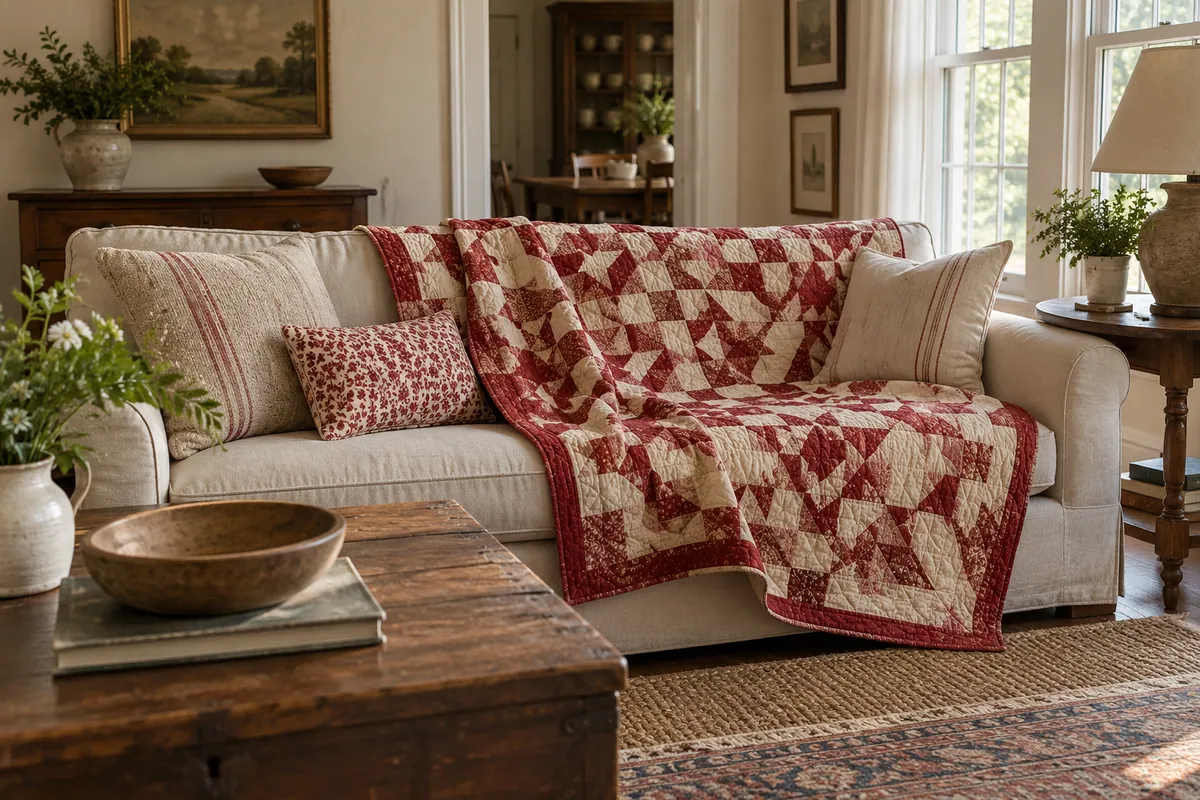
A favorite quilt gives the surrounding room a ready-made color reference.
Choose the piece you most want to see every day and make room for it. That could be a quilt, an inherited chair, or a collection of pottery.
If you love the chair’s shape but dislike its current cushion, try changing the cushion before rearranging the entire room. Small adjustments often reveal what the piece needs.
Repeat a Few Colors Across Old and New Pieces
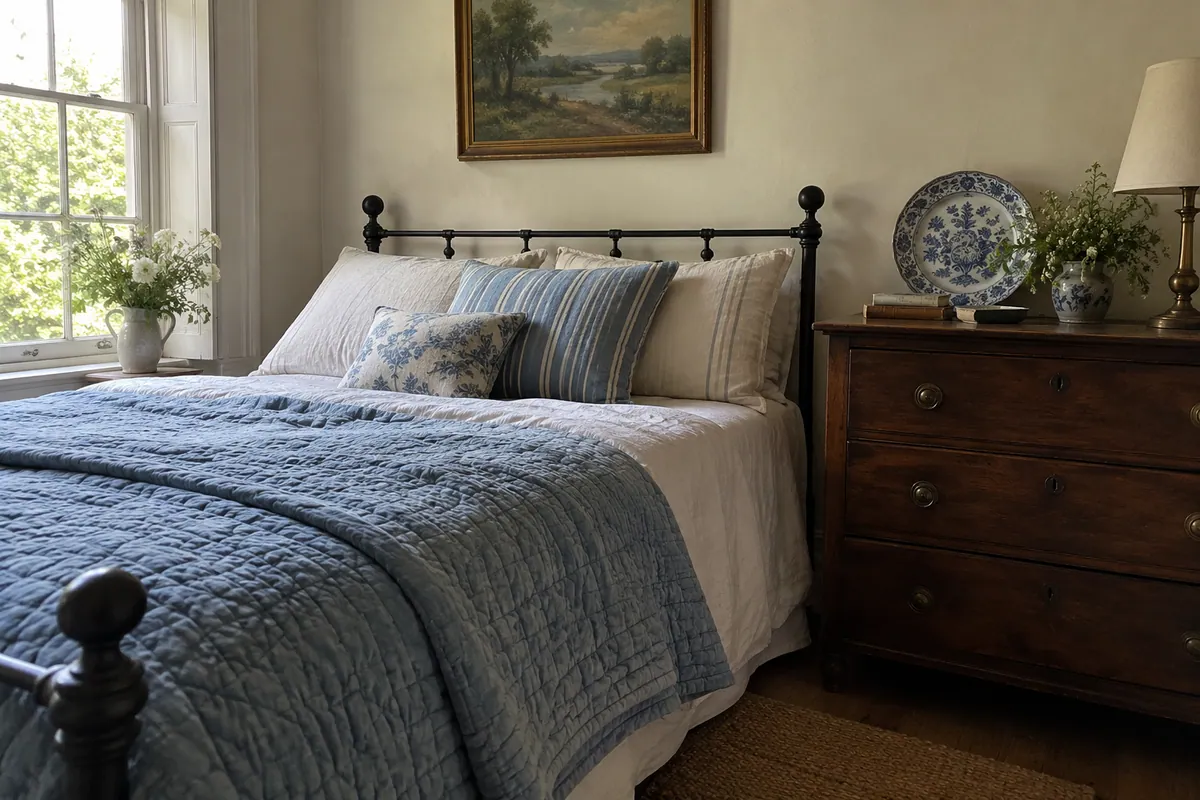
A little blue in the china, cushion, and quilt quietly connects the room.
Repeat a few existing colors in different materials. The shades can be related without being identical.
A blue plate, a faded blue quilt patch, and a striped cushion can sit comfortably together. Think of them as members of the same family with different personalities.
Leave Space for Everyday Life
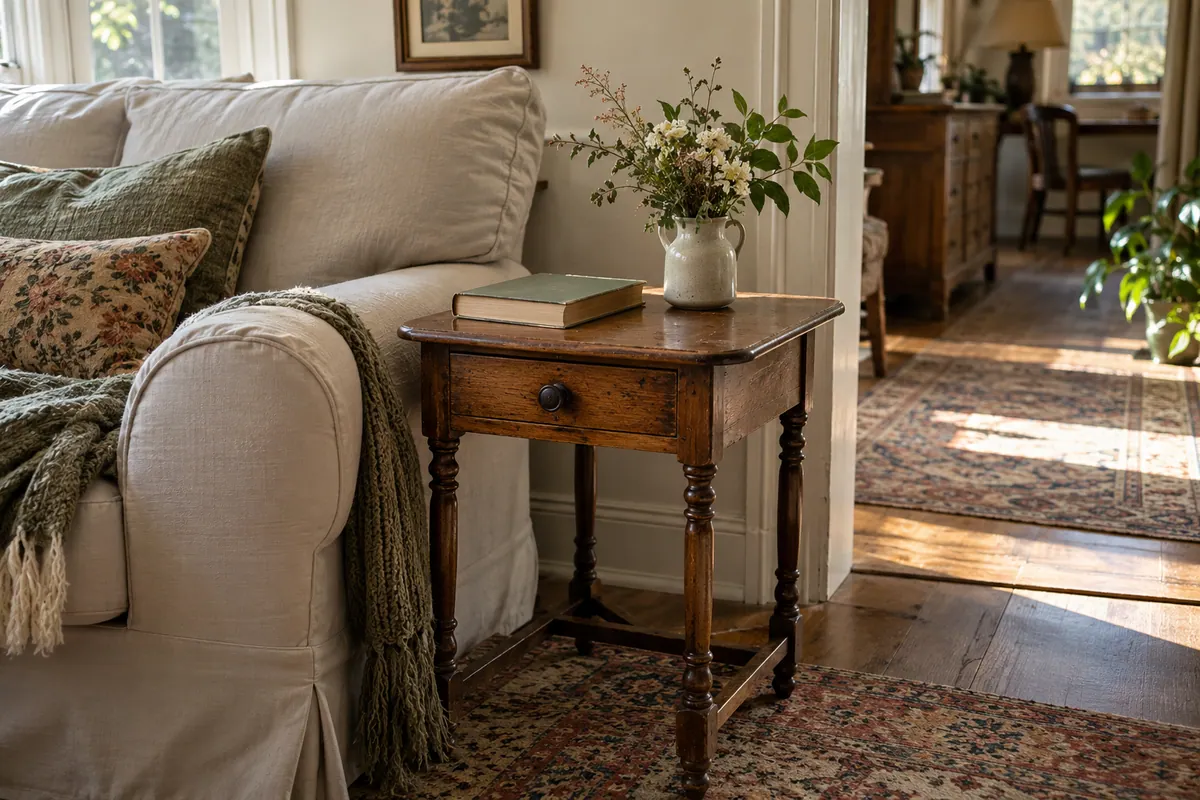
A clear patch of tabletop makes room for the book you’re actually reading.
Keep seating, walkways, and useful surfaces easy to use. You should be able to set down a cup without moving a collection first.
If a shelf feels crowded, group related pieces and leave a gap beside them. If the room still feels busy, move a few objects elsewhere and see which arrangement you prefer.
Add Slowly Enough to Notice What Works
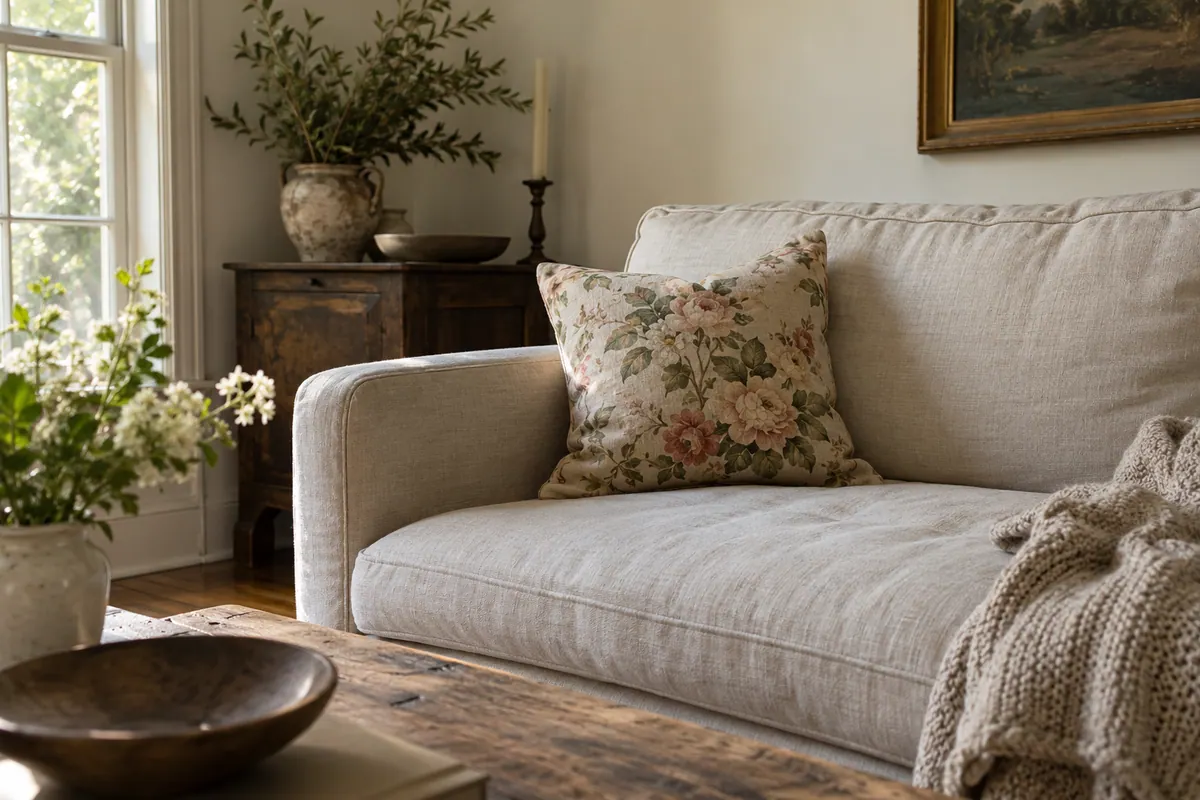
One thoughtful addition gives you time to see the room differently.
Live with a change before making the next purchase. A week of using the room can reveal more than a quick photograph.
You might discover that the basket solves your blanket problem completely. Or that the patterned cushion supplies enough color, making new curtains unnecessary.
Where to Find Pieces With Some History
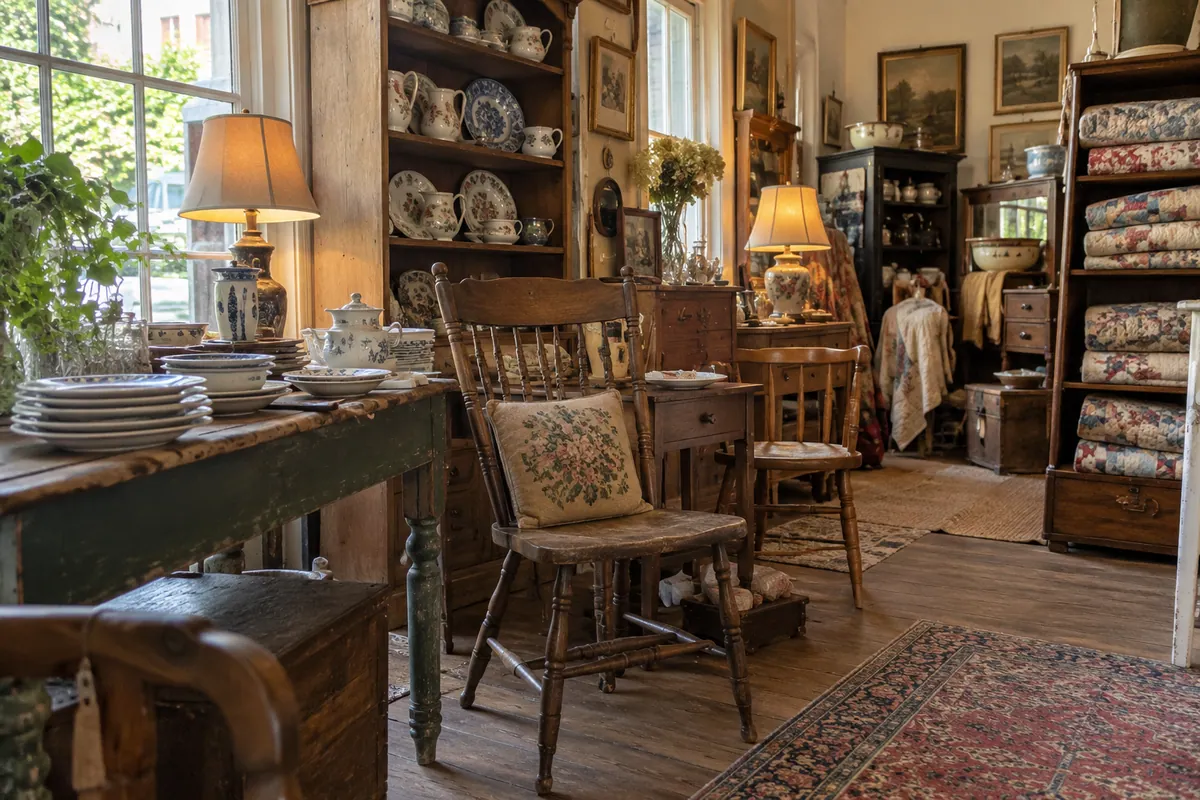
A secondhand find feels even better when you know exactly where it will go.
Shop according to the item’s condition, size, and purpose. The right source for a small embroidered napkin may be different from the right source for a heavy wooden cabinet.
Look Through What You Already Own
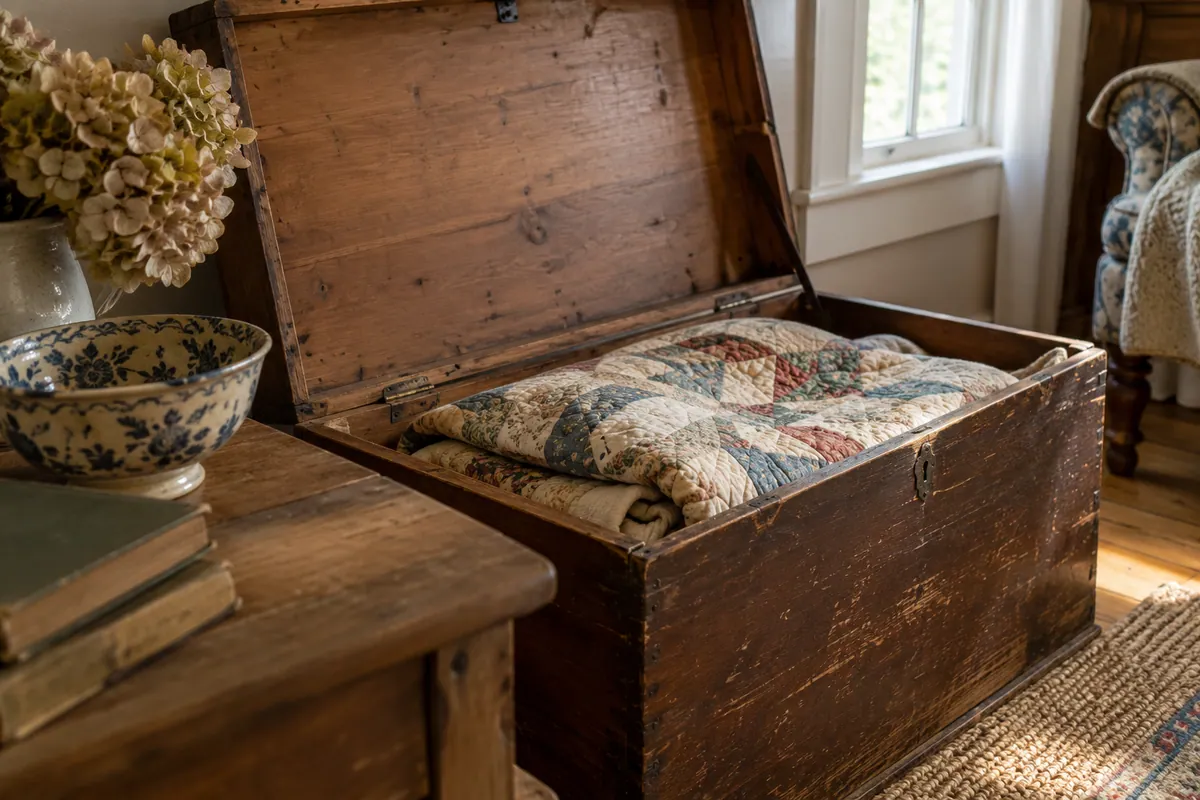
A forgotten bowl or folded quilt may be the piece the room needs.
Check stored belongings before buying more. Spare-room furniture, boxed dishes, and folded linens can look different when you give them a new location.
A plate that feels too decorative for the dinner table might work beautifully on a shelf. A quilt you rarely unfold may supply the colors for a bedroom refresh.
Ask relatives about an object’s history while you have the chance. Write down names and dates rather than relying on memory.
Shop Locally for Larger Furniture
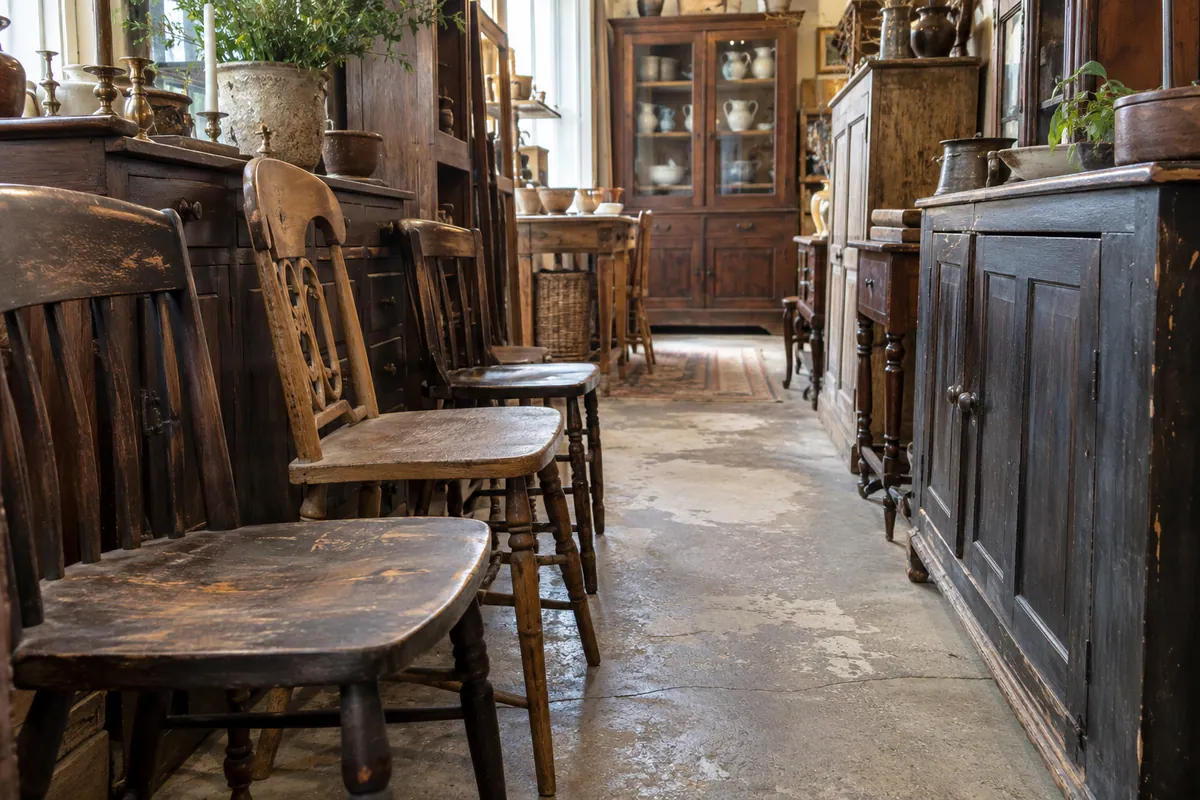
Seeing a chair in person makes its scale and condition much easier to judge.
Local shops and resale listings let you inspect larger pieces before arranging transport. Thrift stores, estate sales, and antique shops are useful places to compare construction and condition.
Bring measurements, take photographs, and allow yourself time to decide. Include the delivery route in your checks, especially stairs, narrow doorways, and tight turns.
Use Online Sellers for Specific Styles
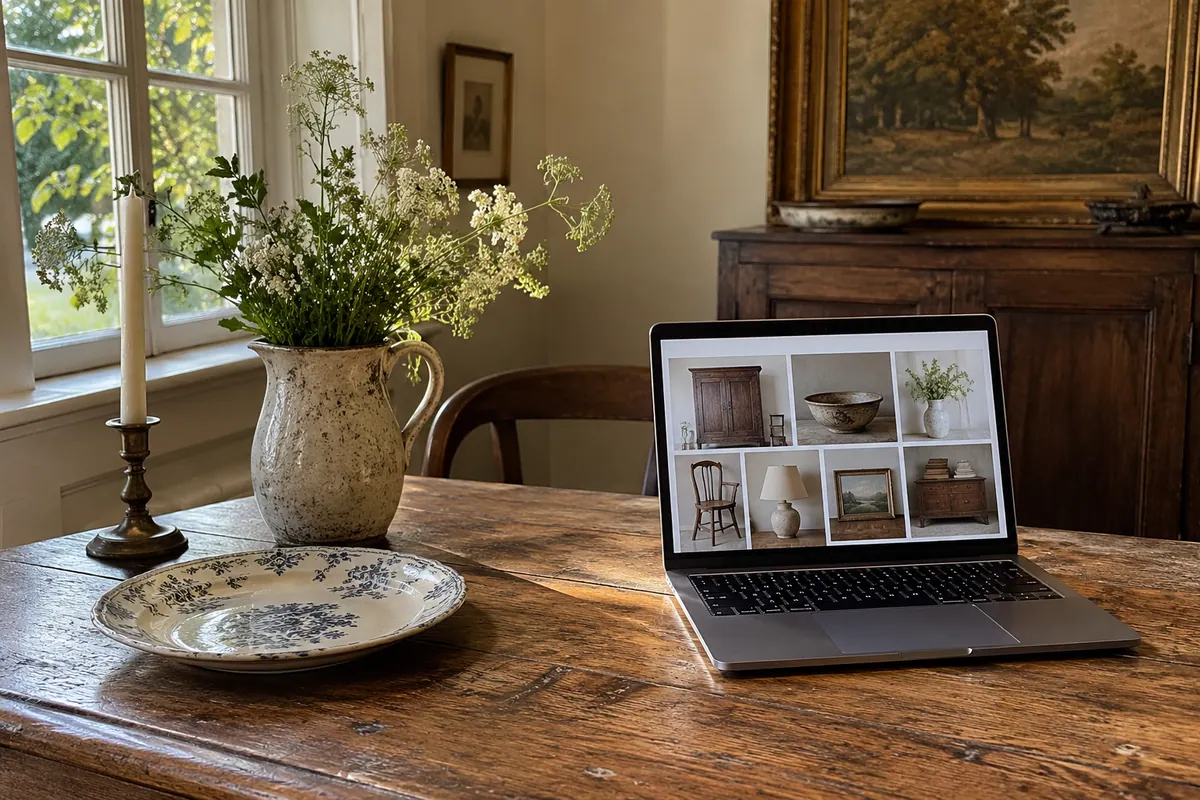
Close-up photographs matter more than a beautifully styled listing.
Search for the material, shape, and dimensions you need. “Wooden quilt rack” or “blue transferware plate” gives you a more useful shortlist than “grandma aesthetic.”
On marketplaces such as Etsy or Chairish, read the full description and request photographs of the underside, joints, repairs, or maker’s marks when relevant.
A seller calling something “vintage style” does not establish its age. Check the return terms before purchasing a piece you cannot inspect yourself.
Buy New When Fit or Everyday Care Matters Most
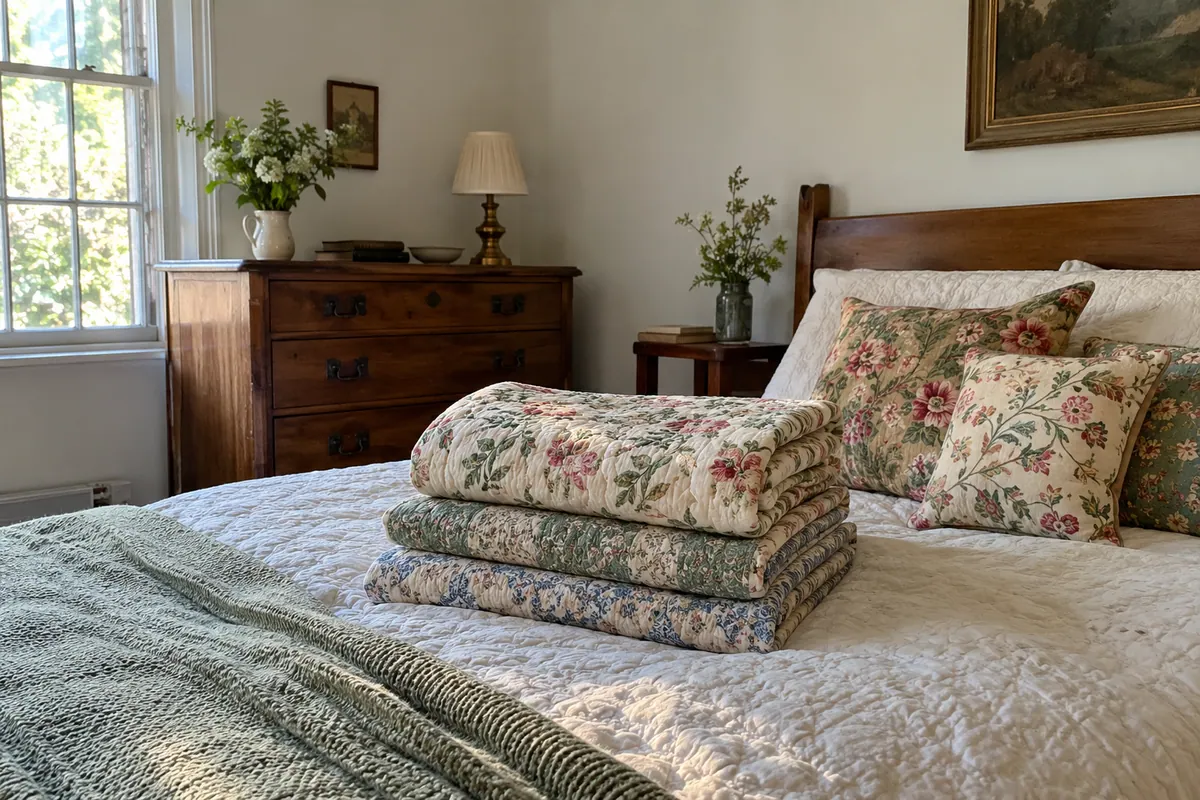
New bedding can bring familiar patterns into a room with less uncertainty about care.
New pieces make sense when you need predictable sizing, repeatable care instructions, or several matching items. A washable bedspread or removable cushion cover may suit a busy household better than a fragile textile.
You can pair new fabric with older furniture. The room’s personality comes from your choices and how you use them.
Before You Bring It Home: A Quick Checklist
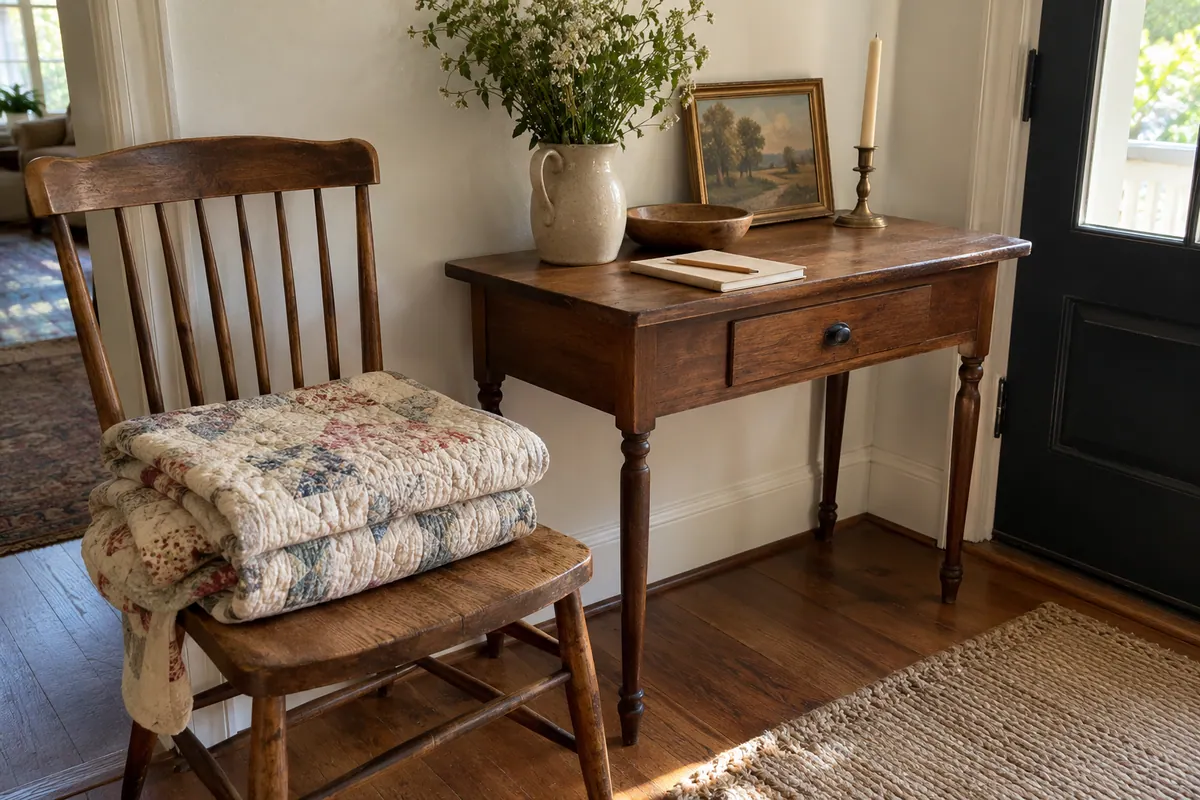
A tape measure and a few honest questions can save you a return trip.
Choose pieces that fit your home as comfortably as they fit your taste. Tick these off before buying:
- I know where the piece will go.
- I have measured both the item and the available space.
- It has a purpose I will appreciate.
- I have checked its condition or requested detailed photographs.
- I understand the cleaning or repair work it needs.
- Its colors or materials connect with something I already own.
- I have included delivery and repairs in the total cost.
- I can still use the furniture and move around comfortably.
- I would like it even without the trend label.
Frequently Asked Questions
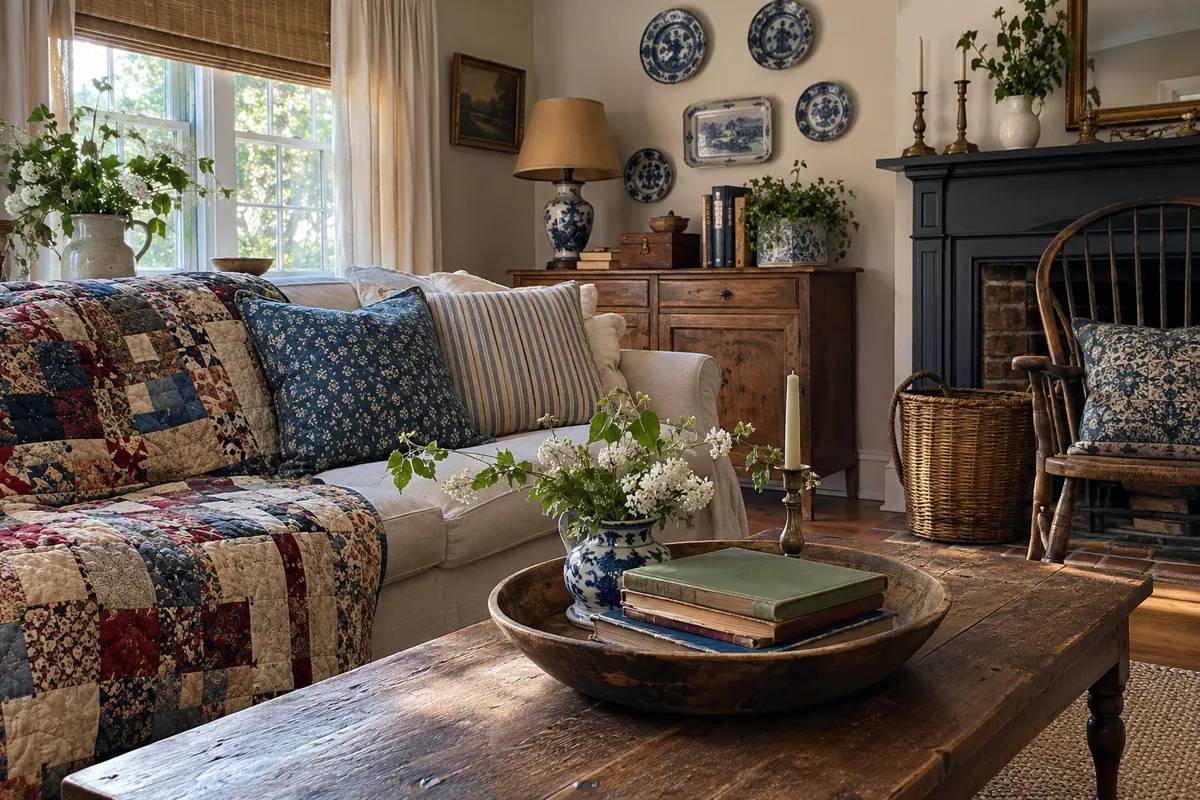
The best decorating decisions usually come down to fit, care, and what you enjoy.
You can borrow a few nostalgic details while keeping the room comfortable for the way you live. These answers help with the choices that tend to cause hesitation.
What Is Grandma Chic Decorating?
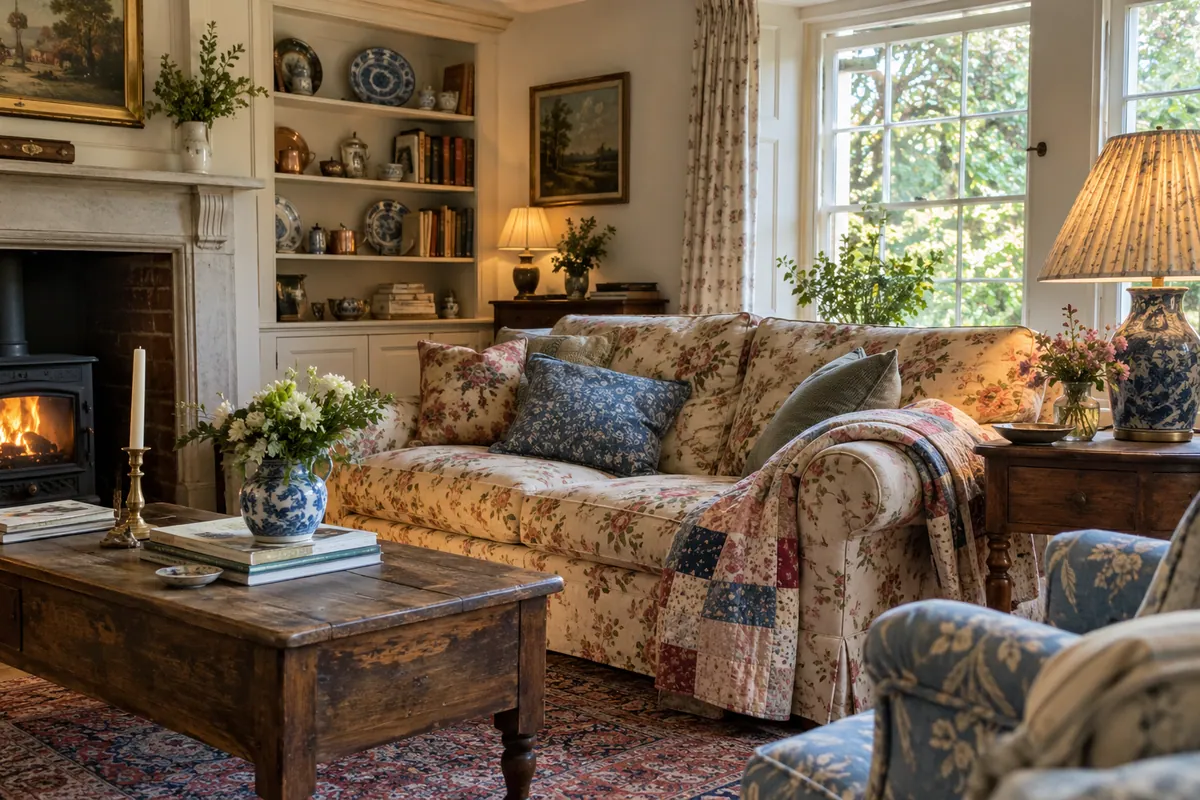
Quilts, patterned china, and wooden furniture are familiar ingredients of the look.
Grandma chic decorating uses traditional patterns, older or vintage-inspired pieces, and personal collections to create a welcoming room. Floral textiles, patchwork quilts, embroidered linens, and decorative dishes are common examples.
There’s no required shopping list. A few well-chosen pieces can communicate the style.
How Is Grandma Chic Different From Cottagecore?
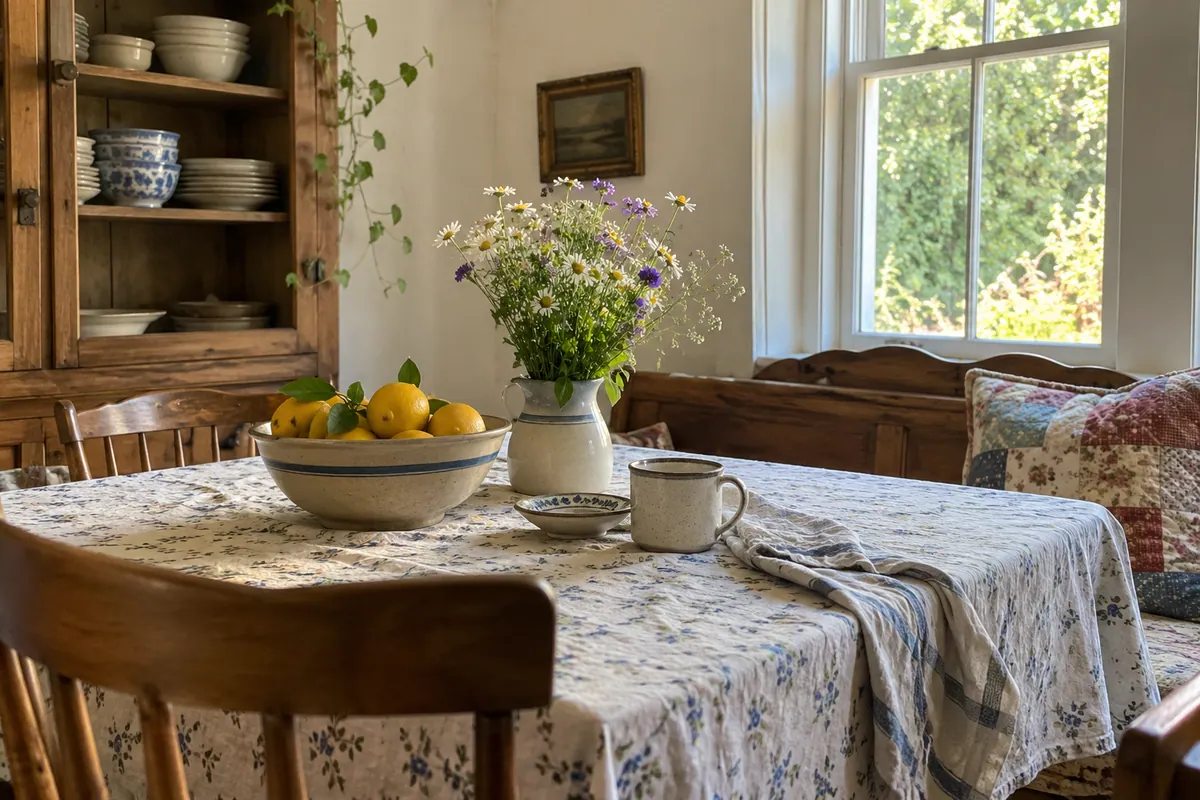
A quilt and a vase of flowers can belong comfortably to either style.
Grandma chic tends to emphasize traditional interiors and collected belongings, while cottagecore leans toward an ideal of country life and handmade domestic routines. They share plenty of materials and patterns.
A china-filled dresser might suit both. The surrounding room and the way you use it determine which influence feels stronger.
Can Vintage Decor Work in a Modern Home?
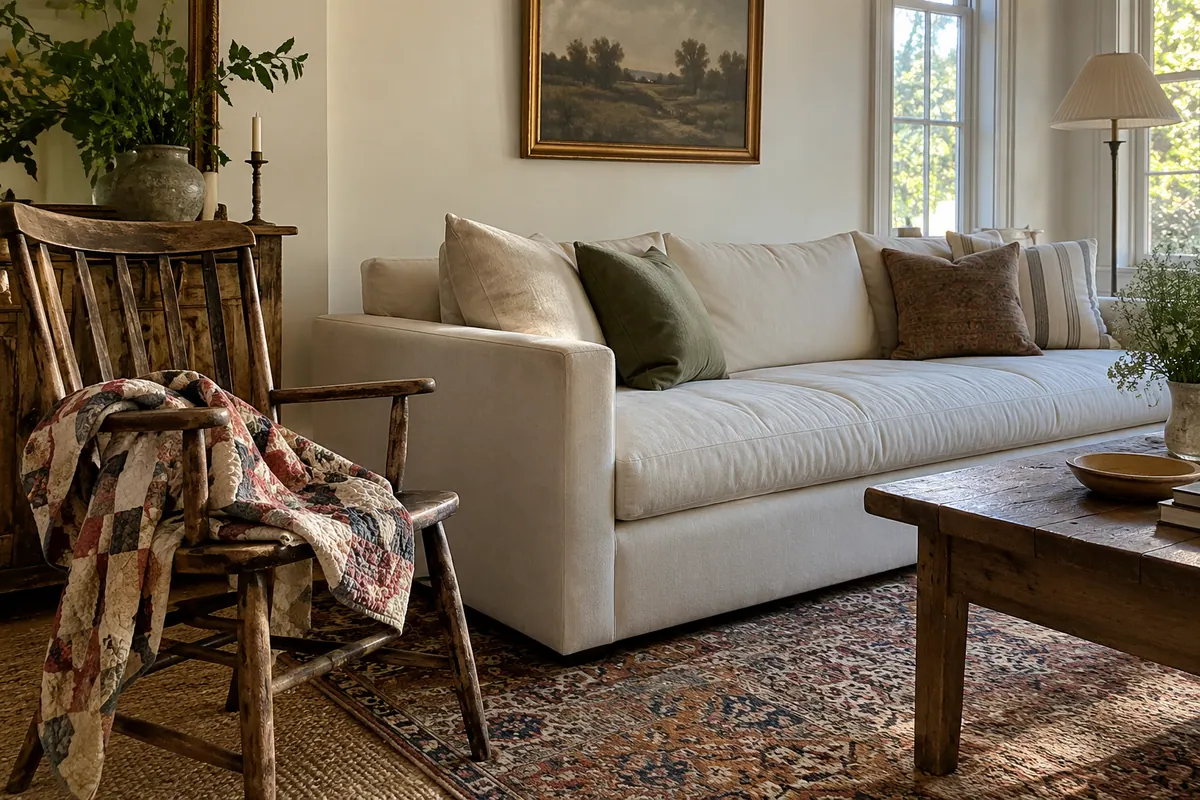
A simple sofa gives an older quilt plenty of room to stand out.
Yes. A vintage piece can work well alongside furniture with simple shapes and a related color palette. Try a wooden chair beside a contemporary desk or a patterned quilt over plain bedding.
Check the proportions together. A delicate chair may look overwhelmed beside a very bulky table, even when you like each piece separately.
How Do You Get This Look on a Small Budget?
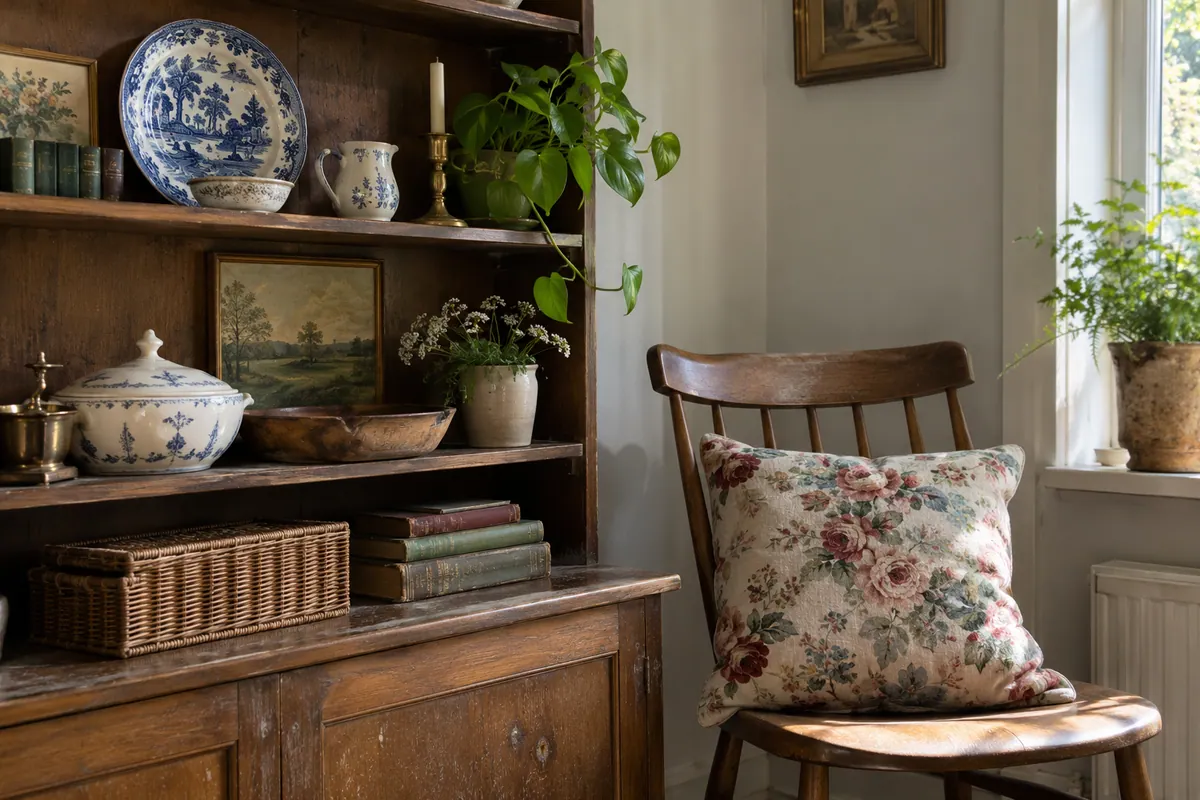
A secondhand plate and a cushion cover can change a corner without changing the furniture.
Rearrange what you own, then spend on a small detail with a clear purpose. A floral cover, embroidered runner, or secondhand plate can make a noticeable difference.
For larger items, include repairs and transport in the comparison. A low purchase price can become less appealing once the work is added.
Are Quilt Racks Useful in Small Rooms?
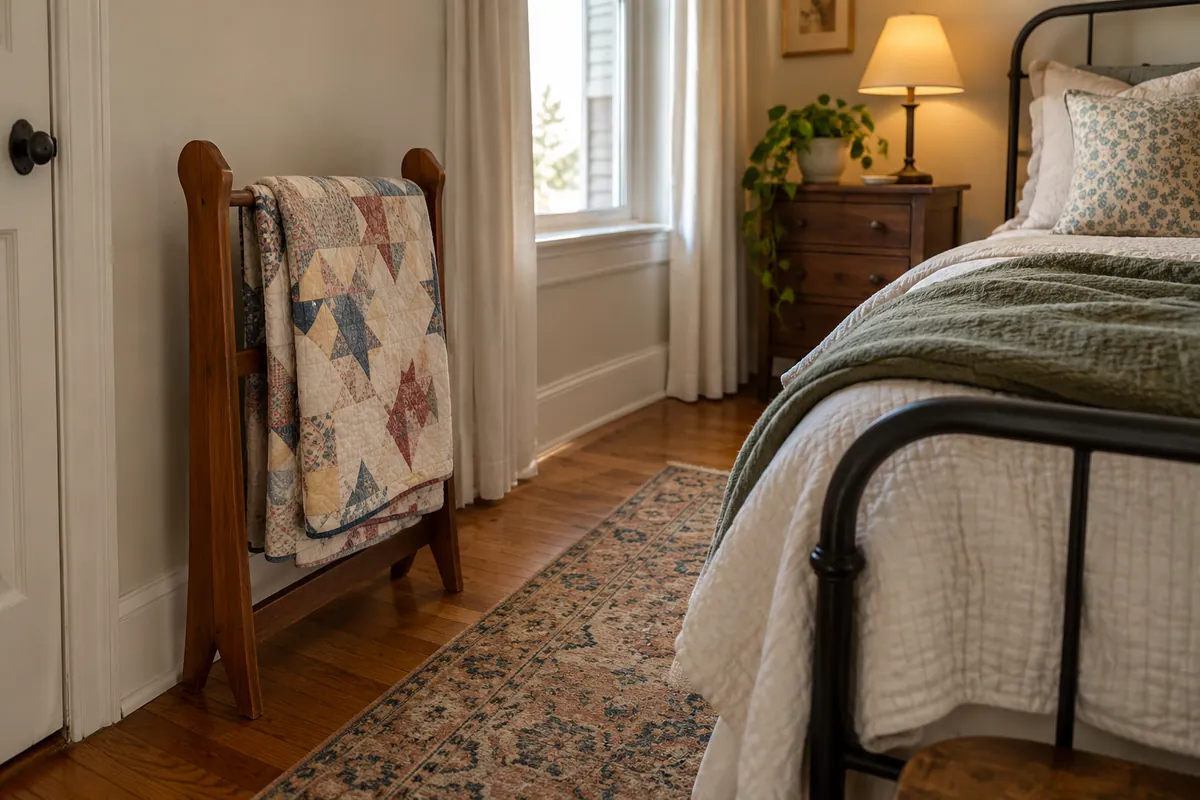
A narrow rack works best when it replaces the pile already occupying a chair.
Yes, if the rack solves a storage problem without narrowing the walking space. Measure its full footprint, including projecting feet.
If floor space is already tight, compare a wall-mounted display rail or a basket that fits beneath existing furniture. The easiest option is the one you can keep using.
How Can You Display a Quilt Without Damaging It?
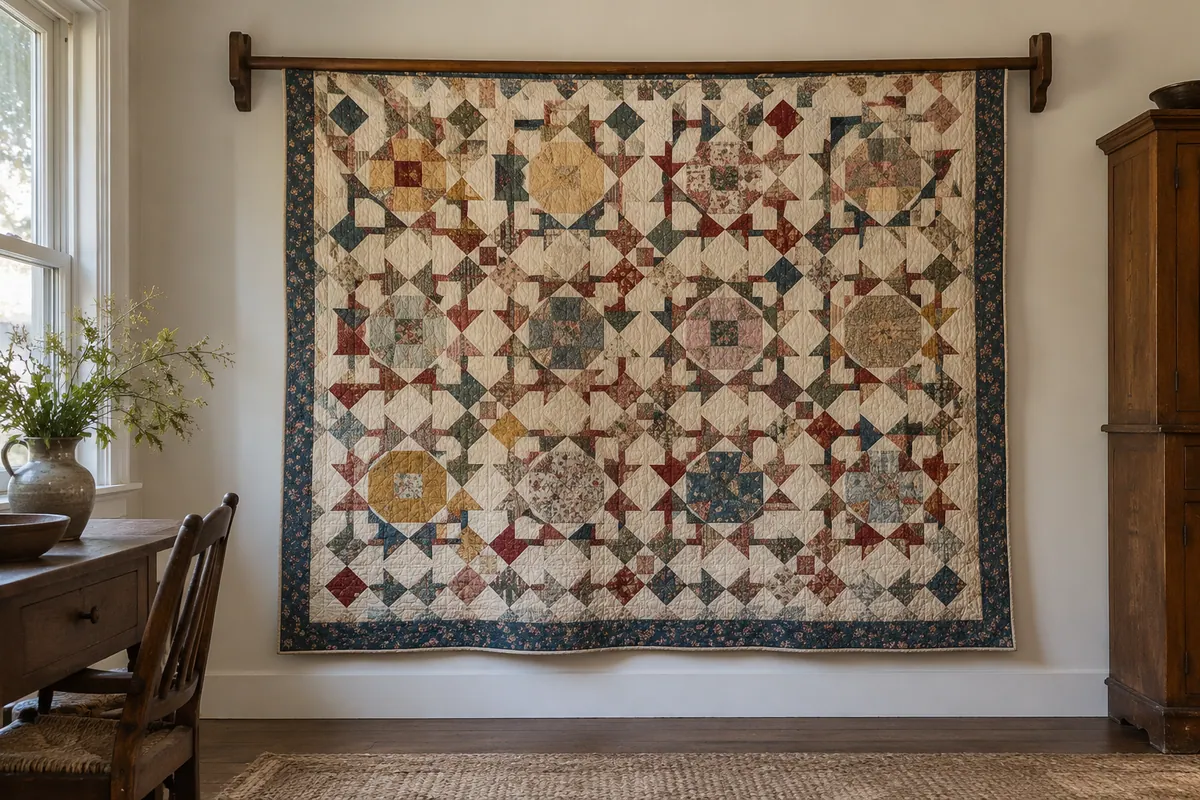
Thoughtful support lets the stitching and pattern remain the focus.
Match the support and display location to the quilt’s condition. A sound modern quilt and a fragile antique may need very different treatment.
Keep older quilts away from strong light, avoid concentrated strain from improvised fixings, and ask a textile conservator about valuable or weakened pieces. The Canadian Conservation Institute’s guidance is a useful care reference.
What Should You Check Before Buying Vintage Furniture?
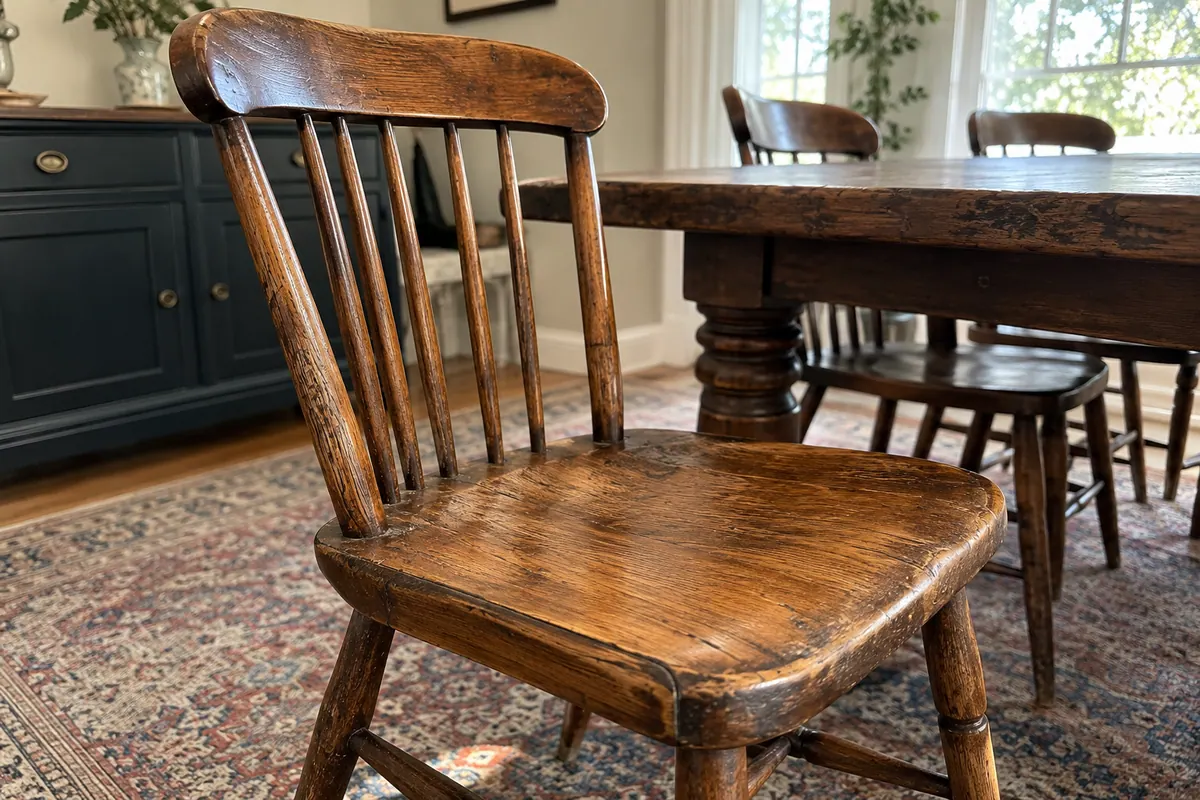
The underside and joints often tell you more than the polished front.
Check dimensions, stability, repairs, material condition, and the complete cost of getting it usable at home. Open drawers, inspect joints, and sit on seating when possible.
For online purchases, ask specific questions. “Does the chair move at any joint?” is more useful than “Is it in good condition?”
Bring a Little Nostalgia Home
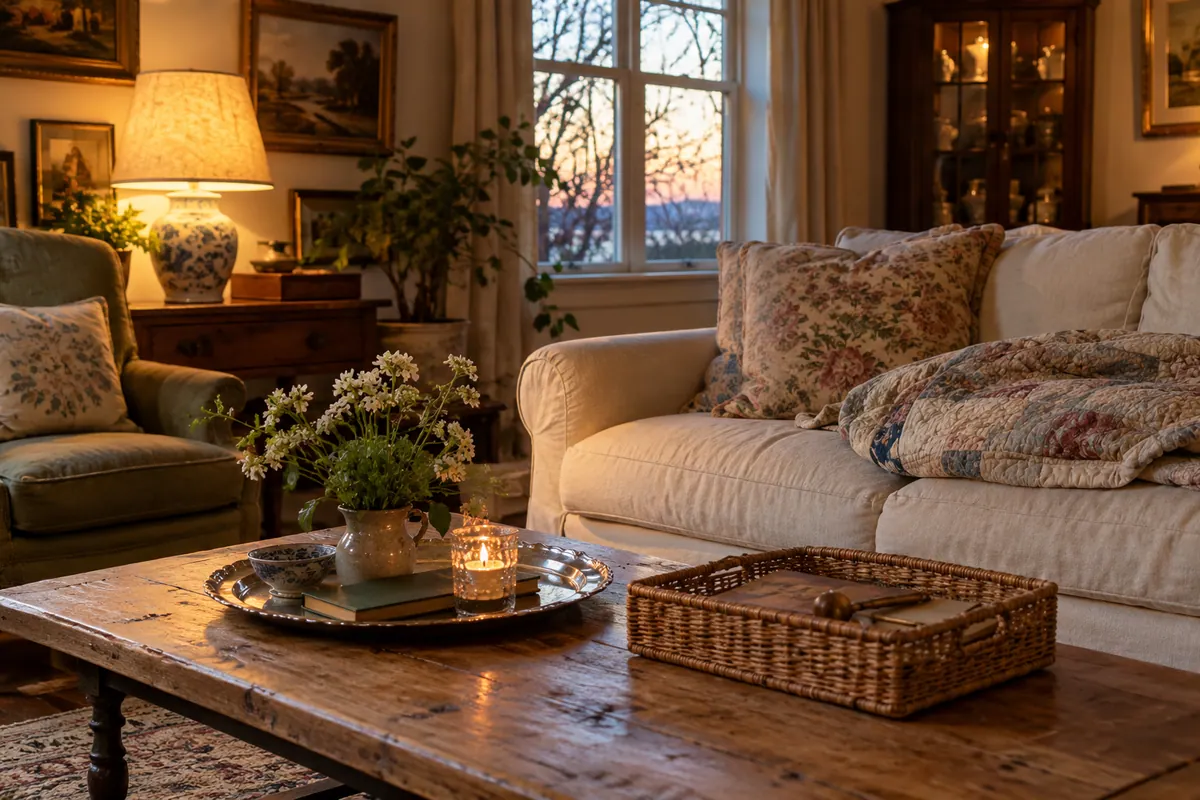
A few useful favorites can make the whole room feel more familiar.
Choose the piece that answers a need you already have. A quilt can bring color to plain bedding. A basket can clear the sofa. A tray can gather the things you put down every evening.
And if there’s already a quilt folded in your cupboard or a chair waiting in the spare room, give it a try. You may already own your favorite part of the finished room.
Bring a little nostalgia home
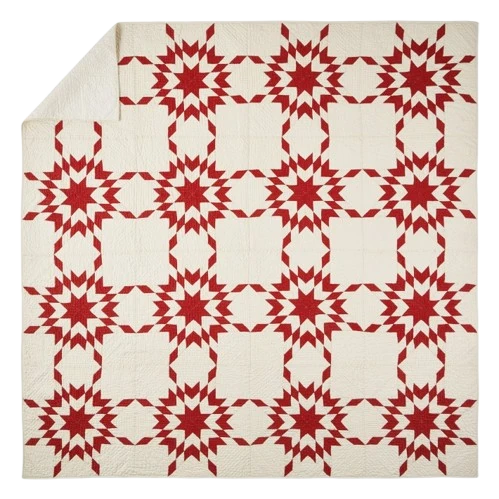 Josh Young x Williams Sonoma Home Vintage QuiltRed-and-white patchwork that can set a room’s color palette.
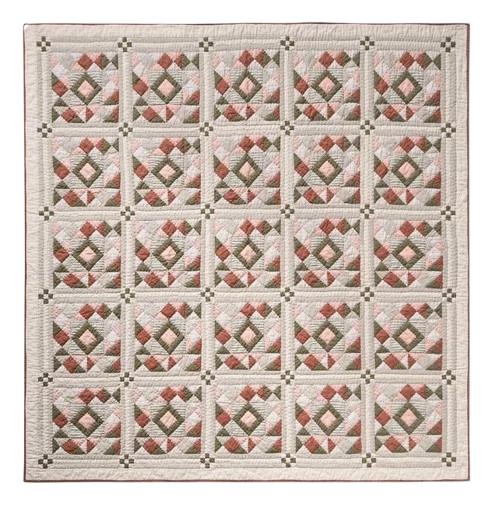 John Lewis Patchwork Quilted BedspreadA softer green and pink patchwork option for the bed.
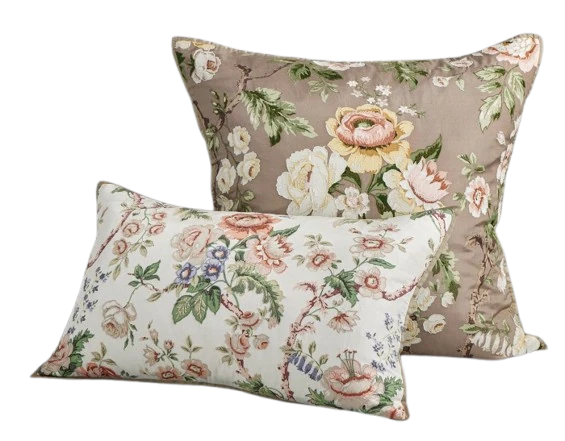 Sanderson Hykenham Pillow CoverA floral accent to try before committing to patterned furniture.
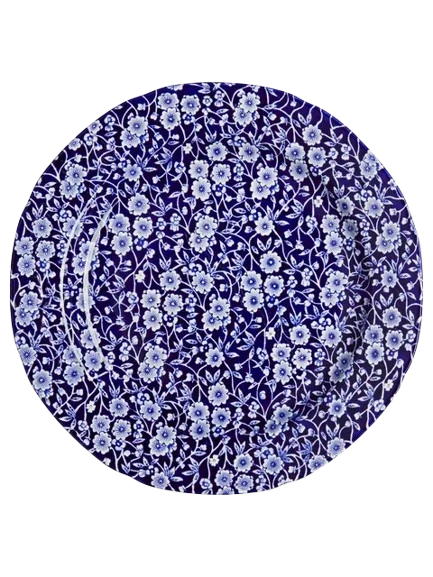 Burleigh Blue Calico PlateA blue-and-white pattern for the table or a small display.
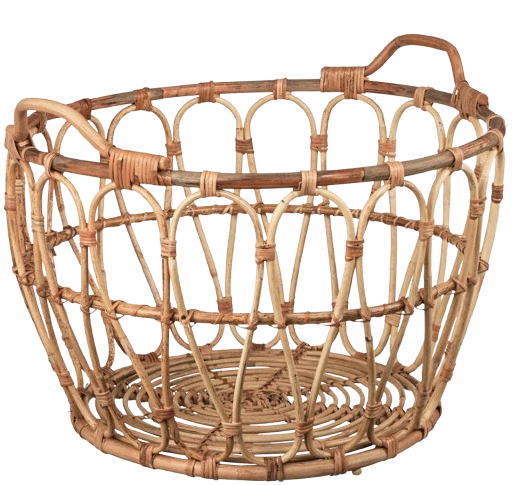 IKEA SNIDAD Rattan BasketWoven storage that keeps everyday throws within reach.
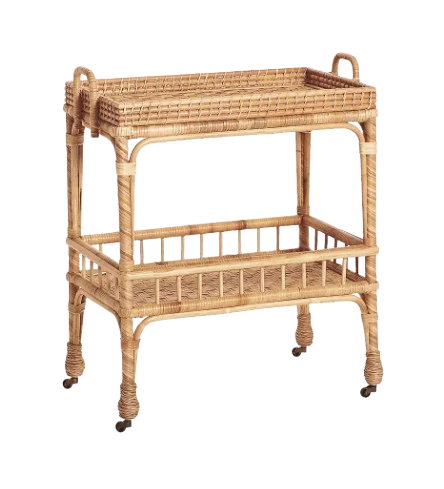 Serena & Lily South Seas Rattan Side CartA small woven cart for useful items beside your seating.
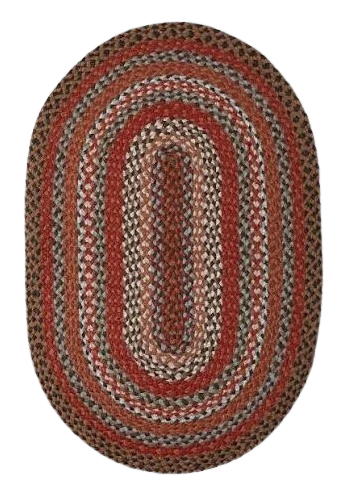 The Braided Rug Company Organic Jute RugOval braids add color and texture to a measured space.
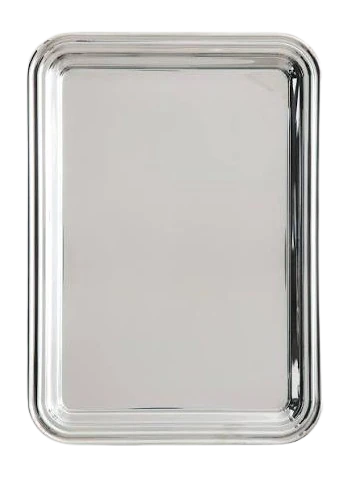 H&M Home Rectangular Stainless-Steel TrayA defined place for the things you set down every evening.
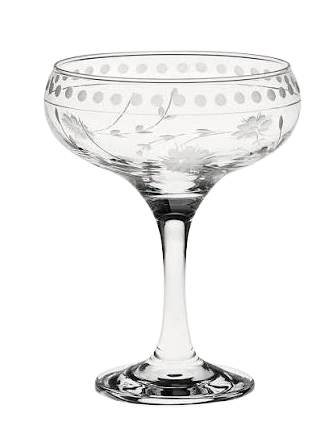 Williams Sonoma Vintage Etched Coupe GlassesDetailed glassware for a small hosting spot.
 McGee & Co. Hortensia Wall TapestryA leafy textile scene for a quiet wall.