36 Game Room Ideas For Adults and Kids Everyone Will Love

Looking for game room ideas that fit your home and the way your family likes to play? Maybe you want a grown-up spot for cards and cocktails, a colorful hangout for the kids, or a retro-inspired room with an arcade cabinet you’ve wanted for years.
The quick answer
- For an adult game room, combine a card table, comfortable chairs, and a small drinks station.
- For children, prioritize reachable game storage and clear floor space with seating that is easy to move.
- An arcade cabinet and nostalgic artwork create a retro look without needing to decorate every wall.
- Plan around the space needed to play, including room for players around game tables.
You can make any of these ideas work on a smaller scale, too. A spare corner, shared family room, or finished basement can become the place everyone heads when someone asks, “Anyone up for a game?”
1. A Small Corner With Big Game-Night Potential
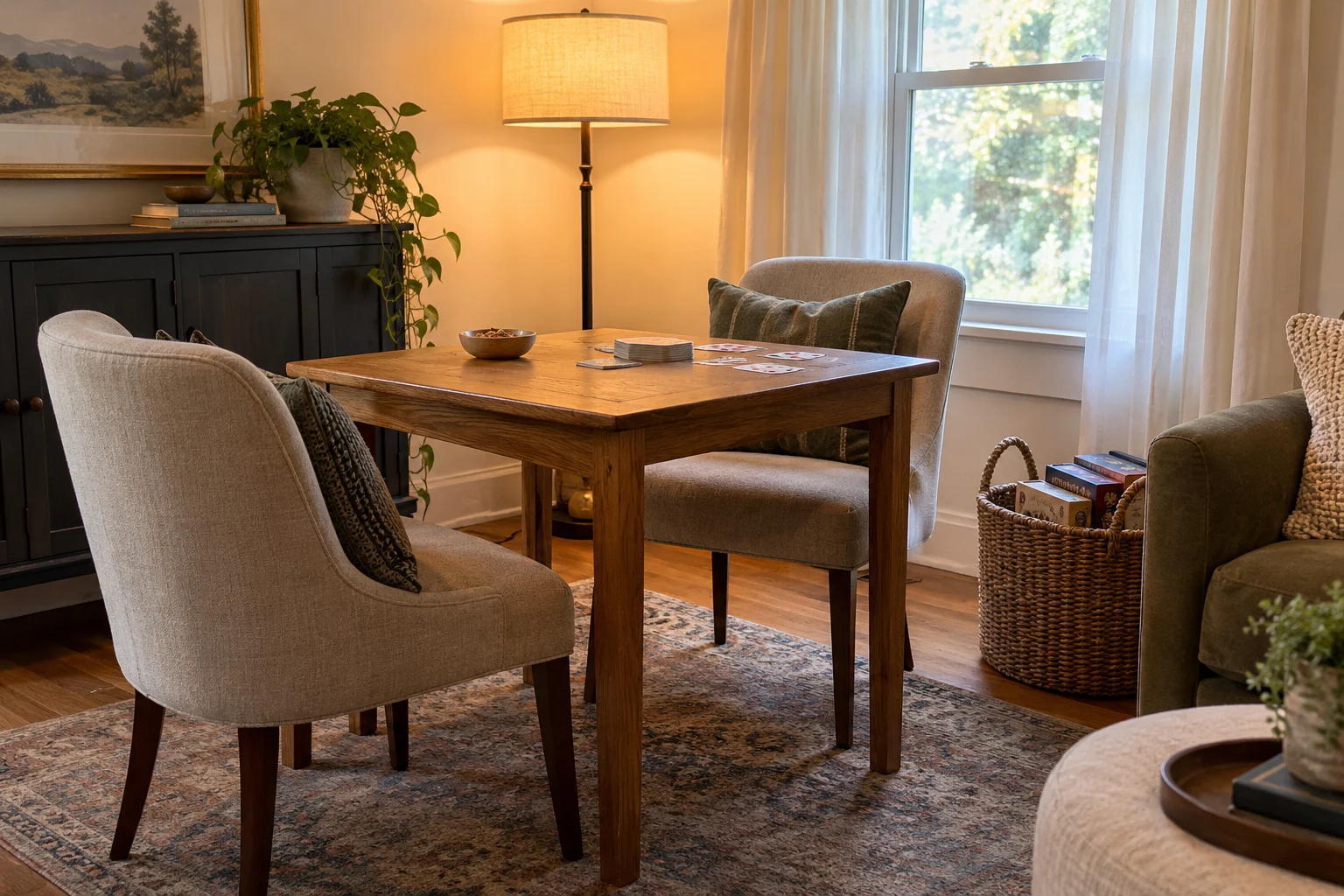
A compact table and comfortable chairs can turn an unused corner into a regular gathering spot. Give it a home beside a window, behind the sofa, or along a quiet living room wall.
Keep a few favorite games nearby so playing feels easy. A basket holds cards and smaller boxes, while a lamp gives the corner its own atmosphere. When everything is ready, a quick game feels much more inviting.
2. Everyone’s Invited to the Round Table
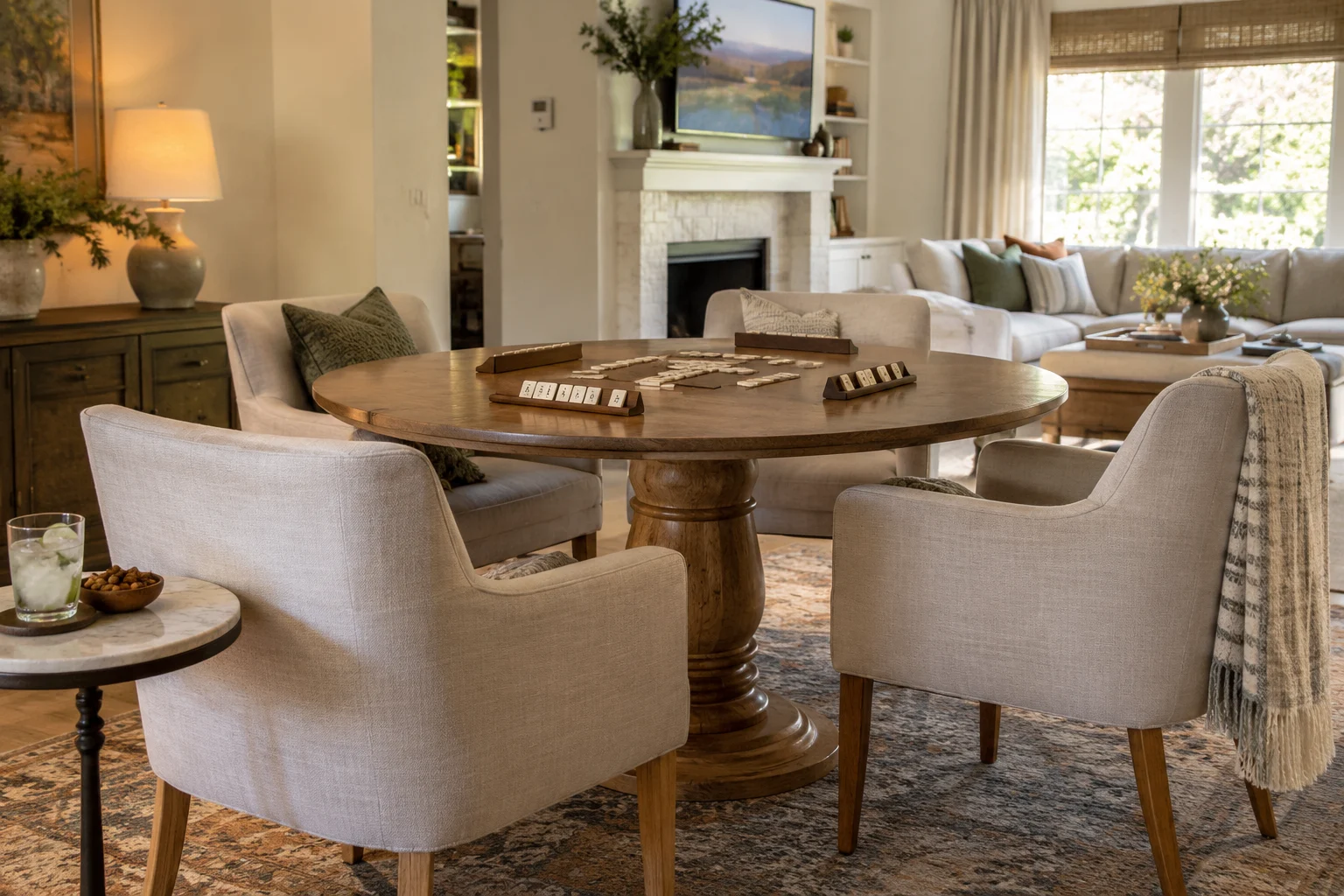
A round table suits cards, conversation, and smaller board games because everyone faces one another. A pedestal base also leaves fewer table legs competing with everyone’s feet.
For regular mahjong nights, the GUSTARIA American Mahjong Set keeps the essentials together with 166 tiles, four rack-and-pusher combinations, and a blue patterned carrying bag. It is easy to give the whole set a home on a nearby shelf between gatherings.
Give the game enough room to spread out. Tile racks, score sheets, and larger boards fill a tabletop quickly. When the game gets busy, nearby side tables can take over drink duty.
3. One Favorite Game, One Great Room
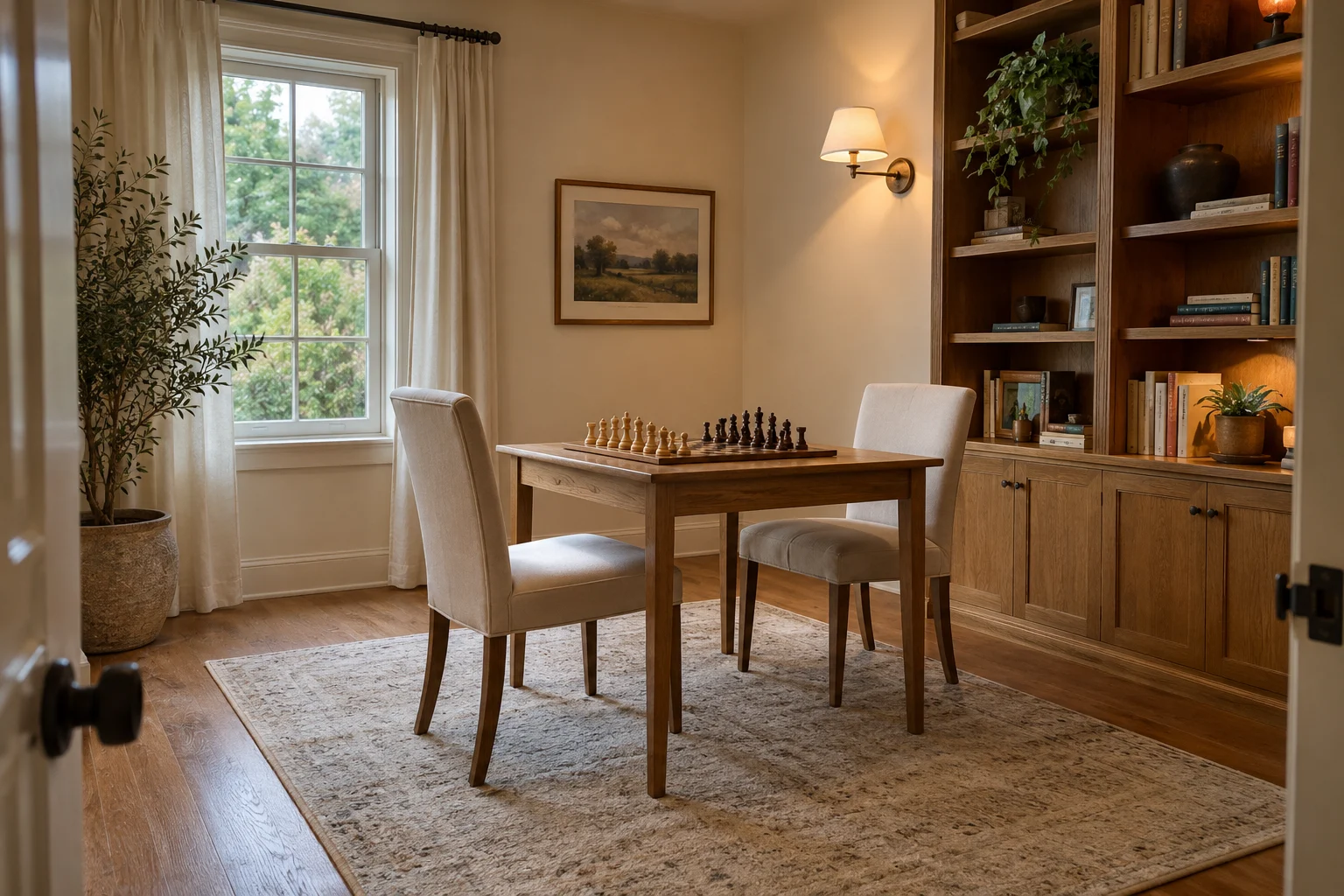
Build a small game room around the activity your household already enjoys. If everyone loves cards, give the table the best light. If weekend console sessions are the tradition, arrange the seating around the screen.
That choice makes the rest of the room easier to furnish. Add storage for the equipment, somewhere for spectators to sit, and a clear walking route. Leave enough room to enjoy the game comfortably.
4. Dinner Tonight, Board Games Tomorrow
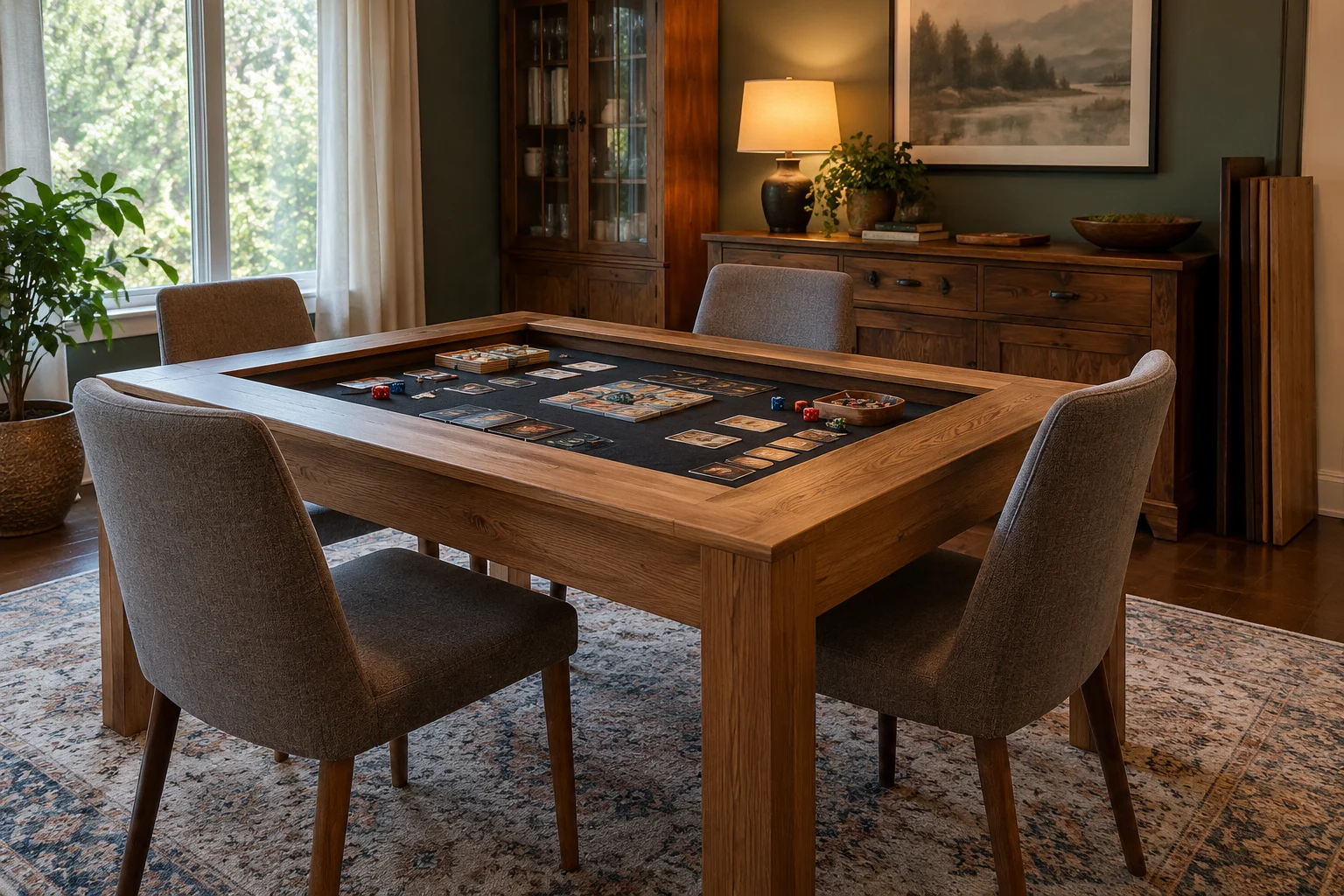
A gaming table with a removable dining top lets one room handle meals and longer games. It is particularly useful when your dining room also hosts weekend gatherings.
The Brimhart Board Game Table With Removable Top has a recessed 57-by-33-inch playing area beneath a four-piece cover. Its included play mat and detachable cup holders give cards, dice, and drinks their own places during a session.
Give the cover sections a dedicated storage spot while you play. If a game runs into another evening, pieces that fit beneath the cover can stay arranged in the recessed area.
5. Poker Night Without a Permanent Poker Room
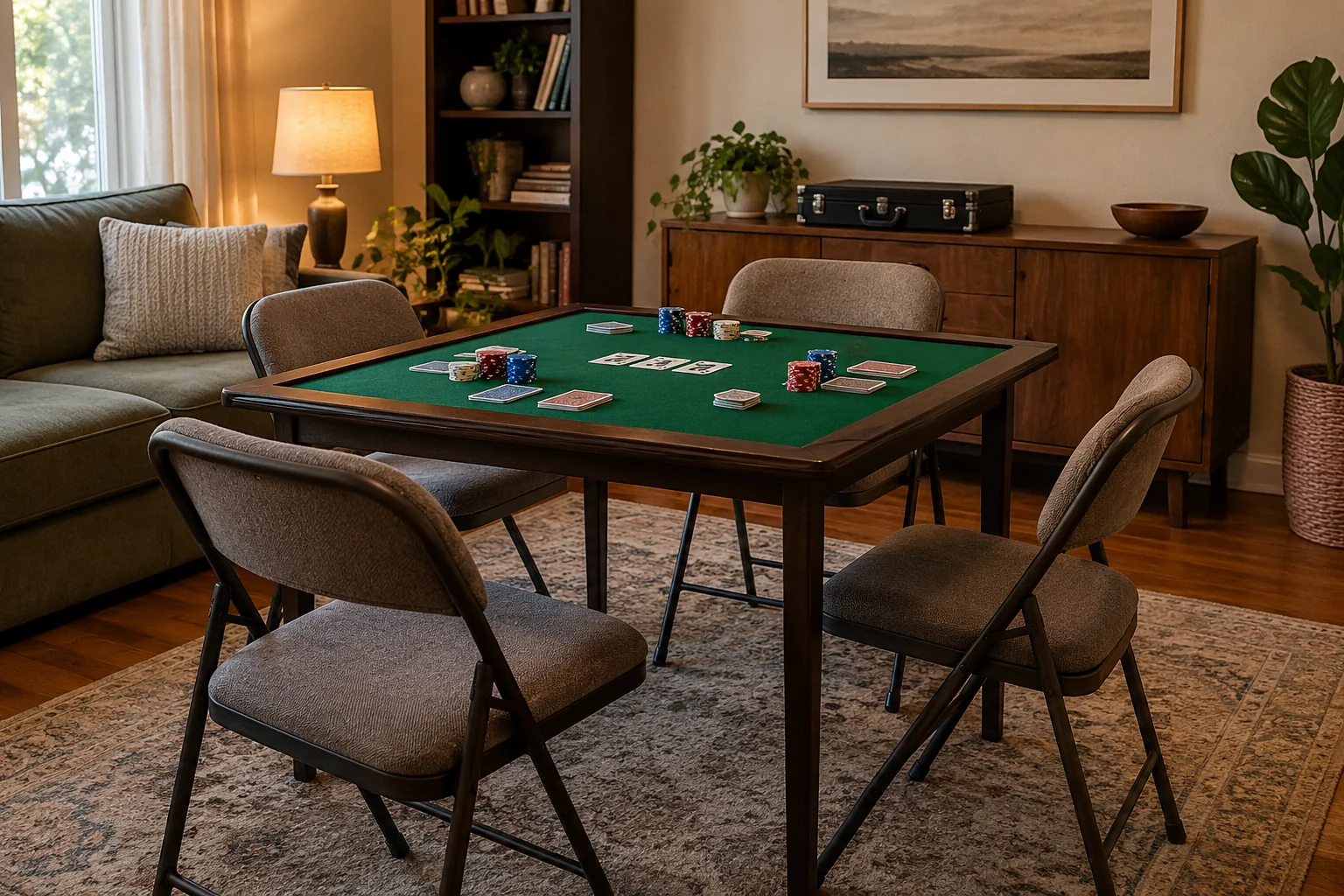
A folding poker table or removable poker top makes occasional game nights easy to host. Store the playing surface and seating together so setup takes only a few moves.
Keep cards and chips in a small case, with a nearby tray for drinks. A room that usually serves another purpose benefits from simple permanent furniture. Nobody wants to move a bookcase just to deal the first hand.
6. The Dartboard Wall Everyone Gathers Around
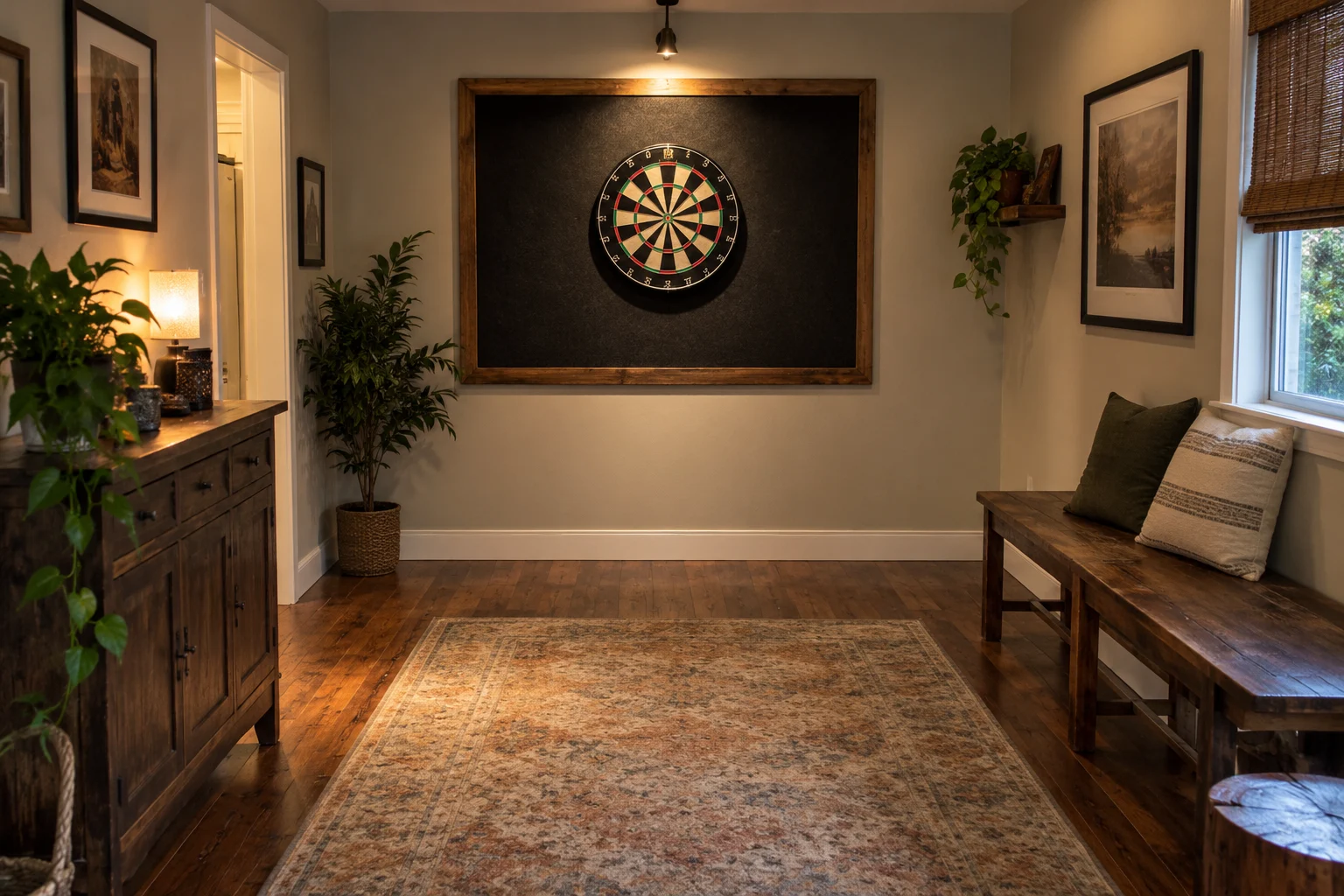
Put the dartboard on a wall with a clear throwing lane and no passing traffic. A cabinet helps it blend into the room when closed, while a protective surround covers the wall around the board.
The WINMAU Blade 6 Single Core Dartboard gives this setup a sisal playing surface, thin scoring wires, and an adjustable mounting system. Pair it with a separate cabinet or surround, then place a small scoreboard beside it to finish the corner.
Position spectator seating beside the throwing area. In a family room, store steel-tip darts away between supervised sessions and keep younger children clear of active play.
7. A Foosball Corner Worth Calling Next
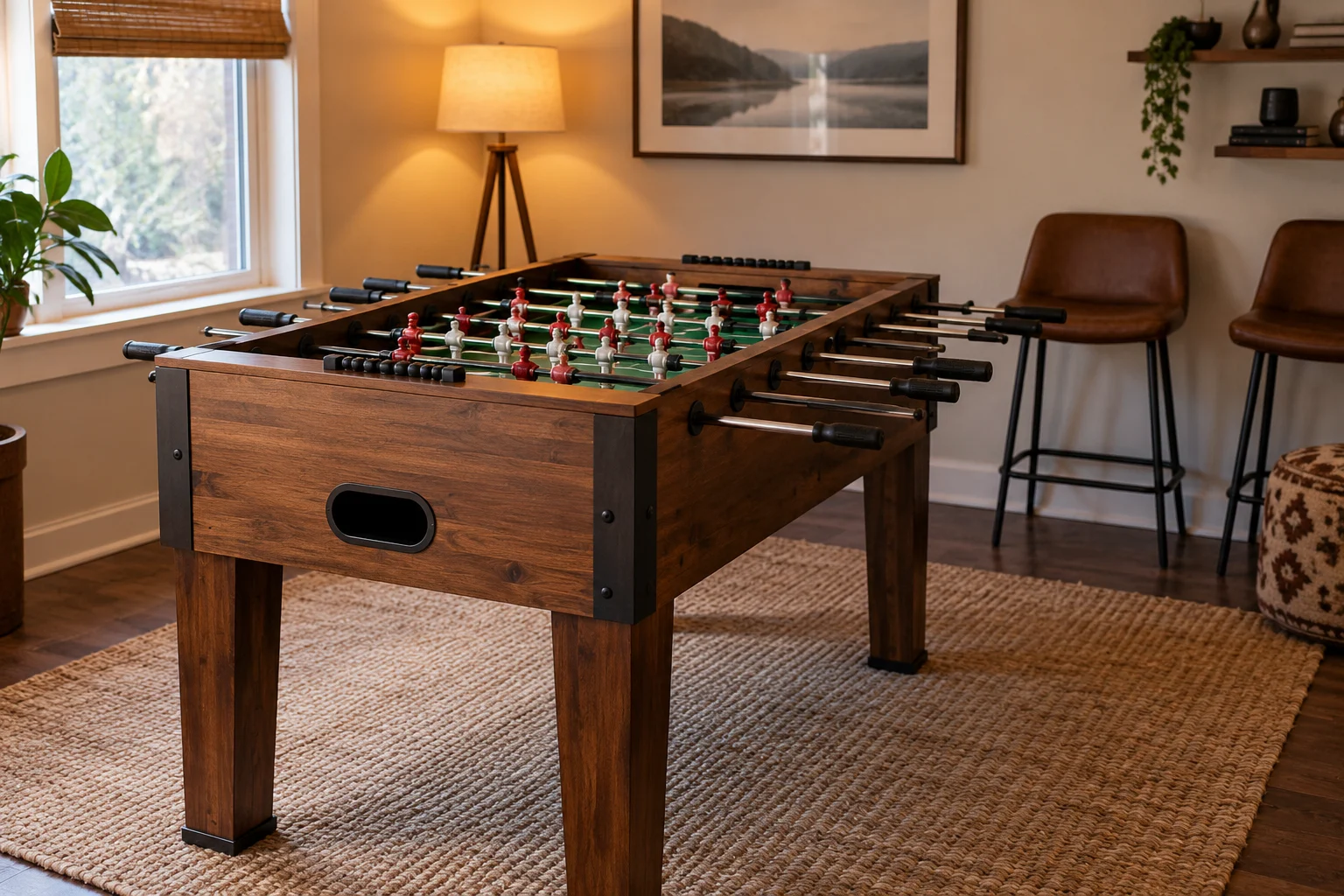
A foosball table needs open space on both playing sides. Position it where people can move the rods freely and stand comfortably without blocking the route through the room.
The Best Choice Products 48-Inch Foosball Table comes with two balls and two cup holders, making it a straightforward choice for casual home matches. Its wood-look finish also fits comfortably alongside everyday lounge furniture.
Remember that the rods extend beyond the table body. This model’s listed footprint grows from 48 by 24 inches to 56 by 42 inches with the rods and cup holders included. Leave additional room for players, with a couple of stools nearby for the next team.
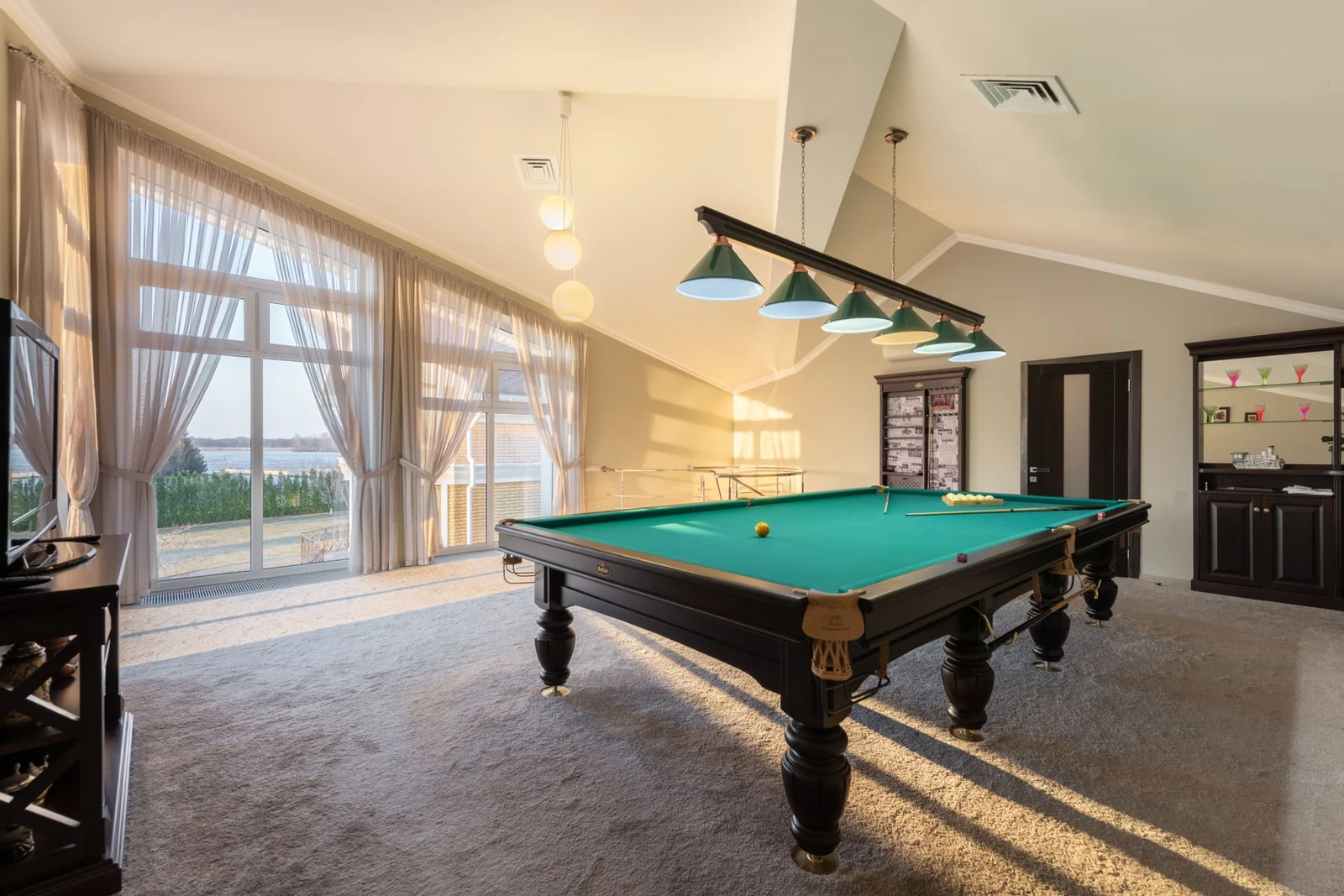
8. Pool-Hall Style, Right at Home
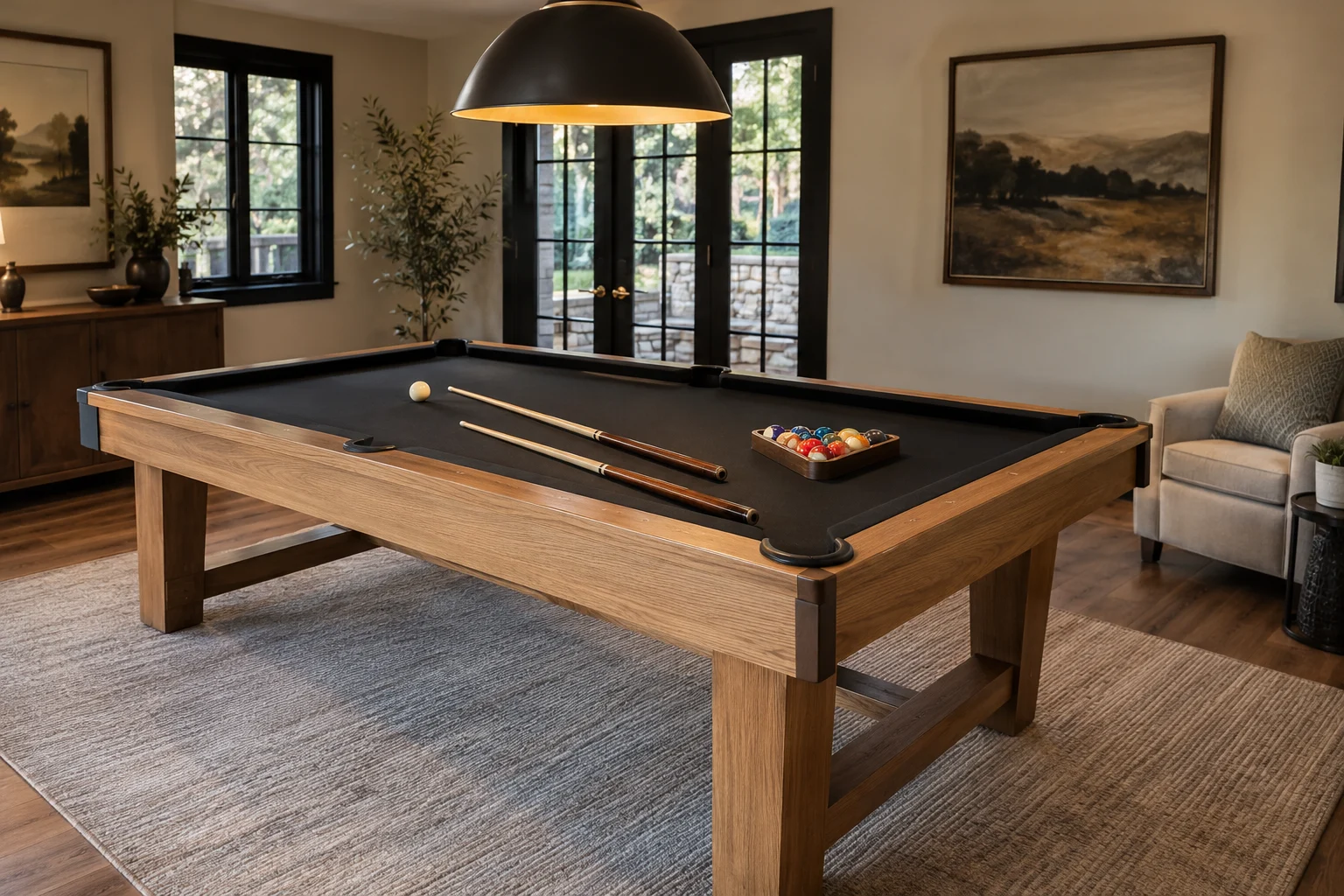
Use the pool table’s finish and cloth color to guide the room’s palette. Wood finishes pair naturally with upholstered seating, warm lighting, and a simple cue rack.
The GoSports 7-Foot Portable Billiards Table has an oak-look finish and folding legs, with balls, two cues, chalk, and a brush included. Its finish gives you an easy starting point for the surrounding furniture: warm wood accents, a comfortable chair, and a few understated prints.
Keep chairs, cabinets, and lamps outside the playing area. A beautiful table becomes frustrating quickly when the wall interrupts half the shots.
Planning note: GoSports recommends a minimum room size of 16 by 13 feet for this table. The layout needs to accommodate cue strokes around every side.
9. Table Tennis That Packs Away
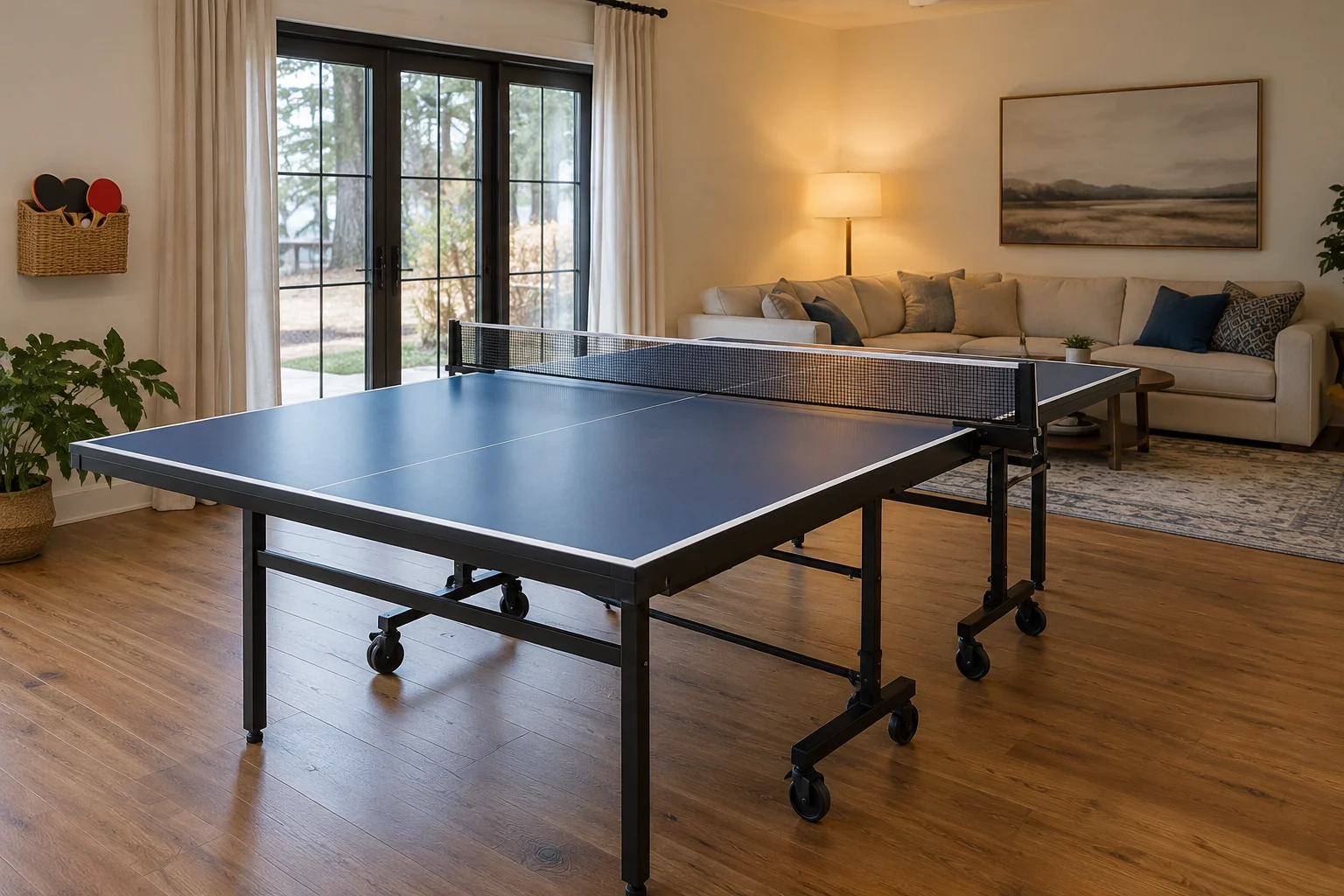
A folding table tennis table suits a multipurpose room with enough clear playing space. Plan where the folded sections will stand so putting the table away stays practical.
The JOOLA Inside 13 Table Tennis Table has two folding halves and lockable wheels, making it easier to move into its storage position. It includes a clamp-on net, and one half can be raised for solo playback practice.
Keep paddles and balls in a wall basket or shallow cabinet nearby. Paddles are a separate addition to this table, so give them a permanent storage spot when furnishing the area. Everything will be ready when someone suggests a quick rally.
10. Shuffleboard Along the Long Wall
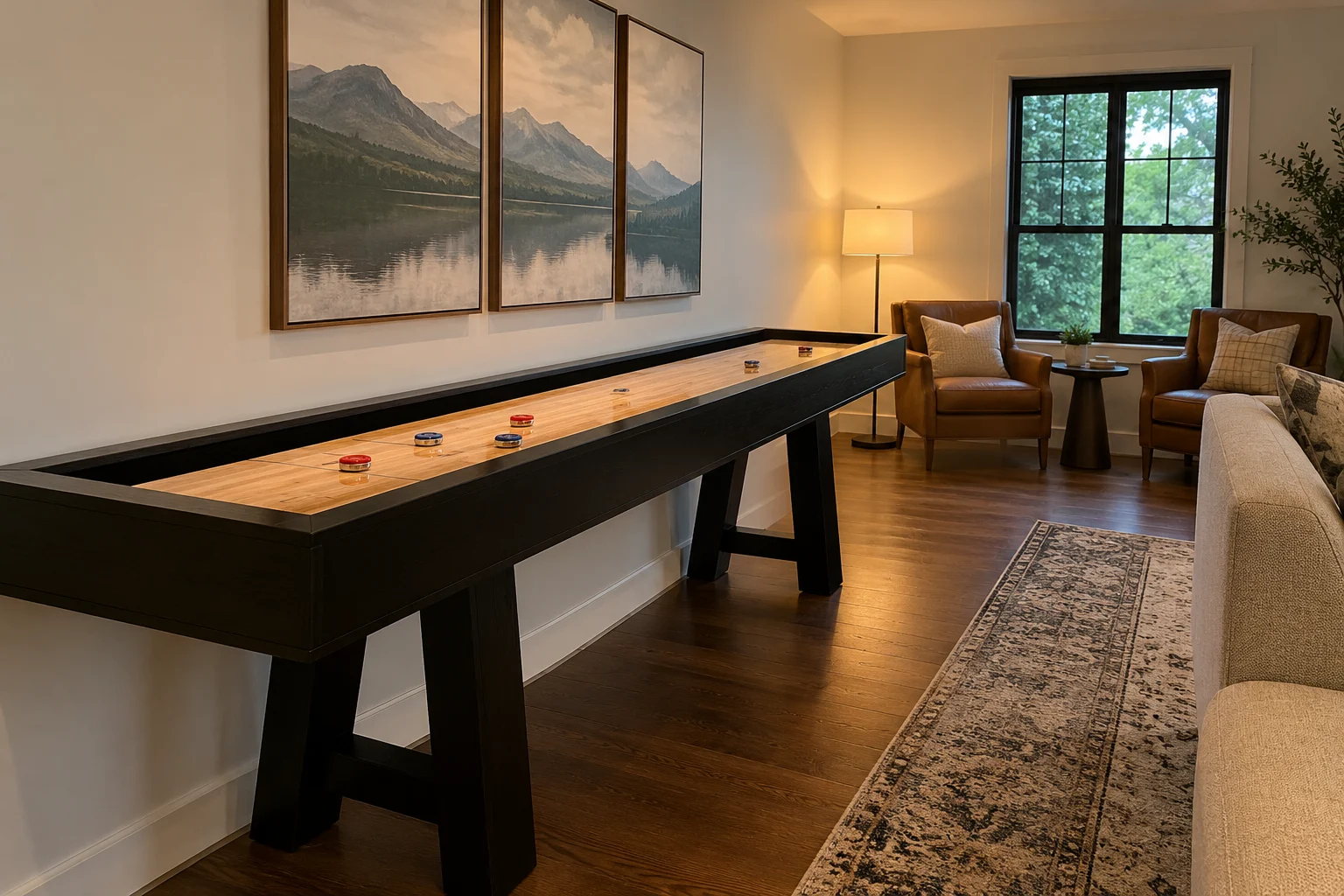
Shuffleboard works naturally along the side of a larger game room. Keep both playing ends accessible and leave the main walking route clear of people taking turns.
The Playcraft Woodbridge Shuffleboard Table works well with a lounge-like arrangement, thanks to its furniture-style base and built-in accessory storage. It comes with eight pucks, a scoring abacus, a brush, and speed wax, so the game’s supplies can stay together.
A few framed prints can finish the wall without crowding it. Nearby chairs give spectators somewhere to settle while they wait for their turn.
11. A Little Arcade With Plenty of Nostalgia
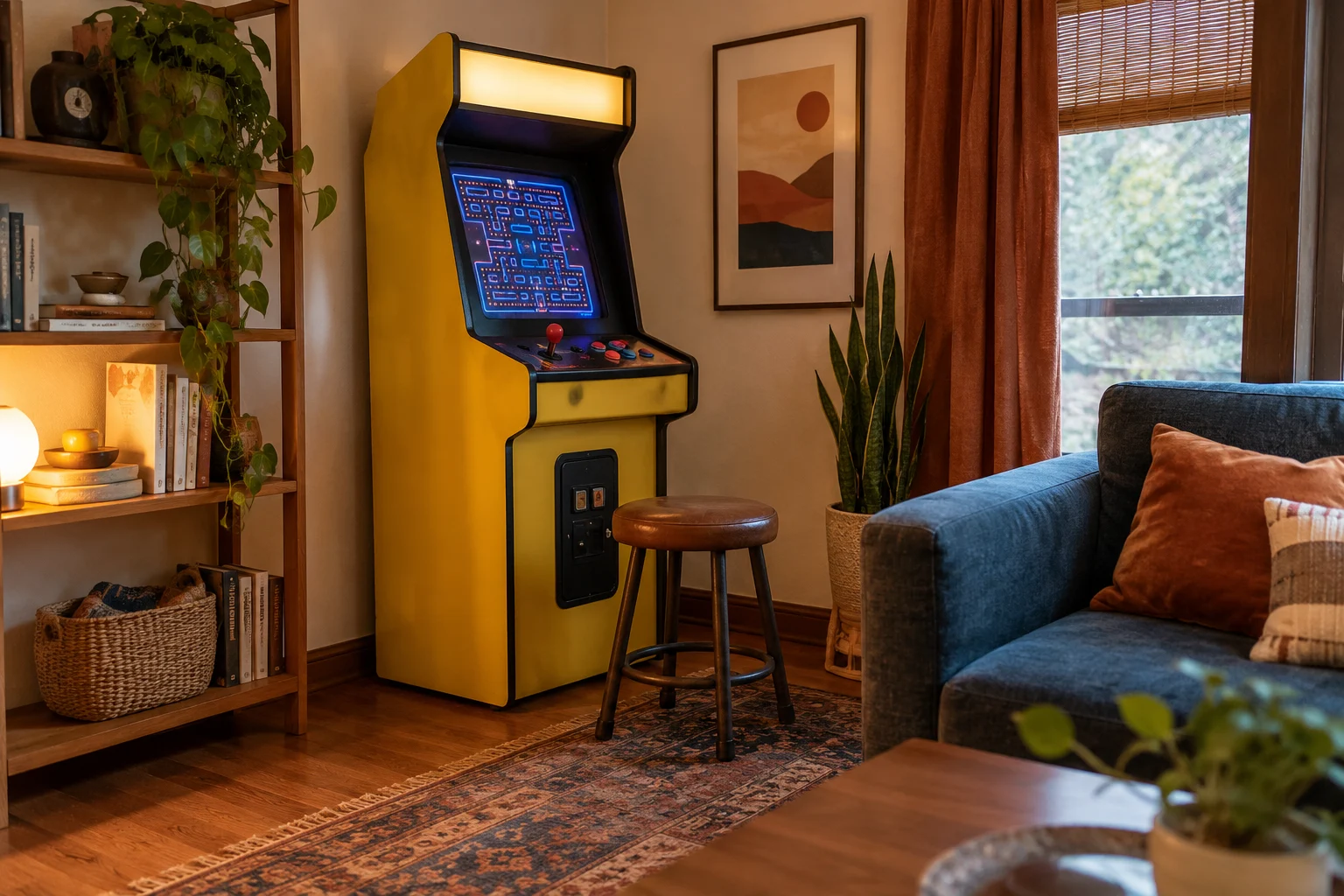
One arcade cabinet can establish a retro theme by itself. Let its colors guide a few accents, then keep the surrounding furniture straightforward.
The Arcade1Up PAC-MAN Deluxe Arcade Cabinet brings familiar yellow artwork, an illuminated marquee, and traditional joystick controls into the room. Its 14 built-in games include PAC-MAN, Galaga, and Dig Dug, giving everyone a few different high scores to chase.
Position it where another person can comfortably watch. A stool and a framed game print are enough to complete the corner. In a bigger room, leave space beside the cabinet for friends to gather between turns.
12. Pinball Gets the Spotlight
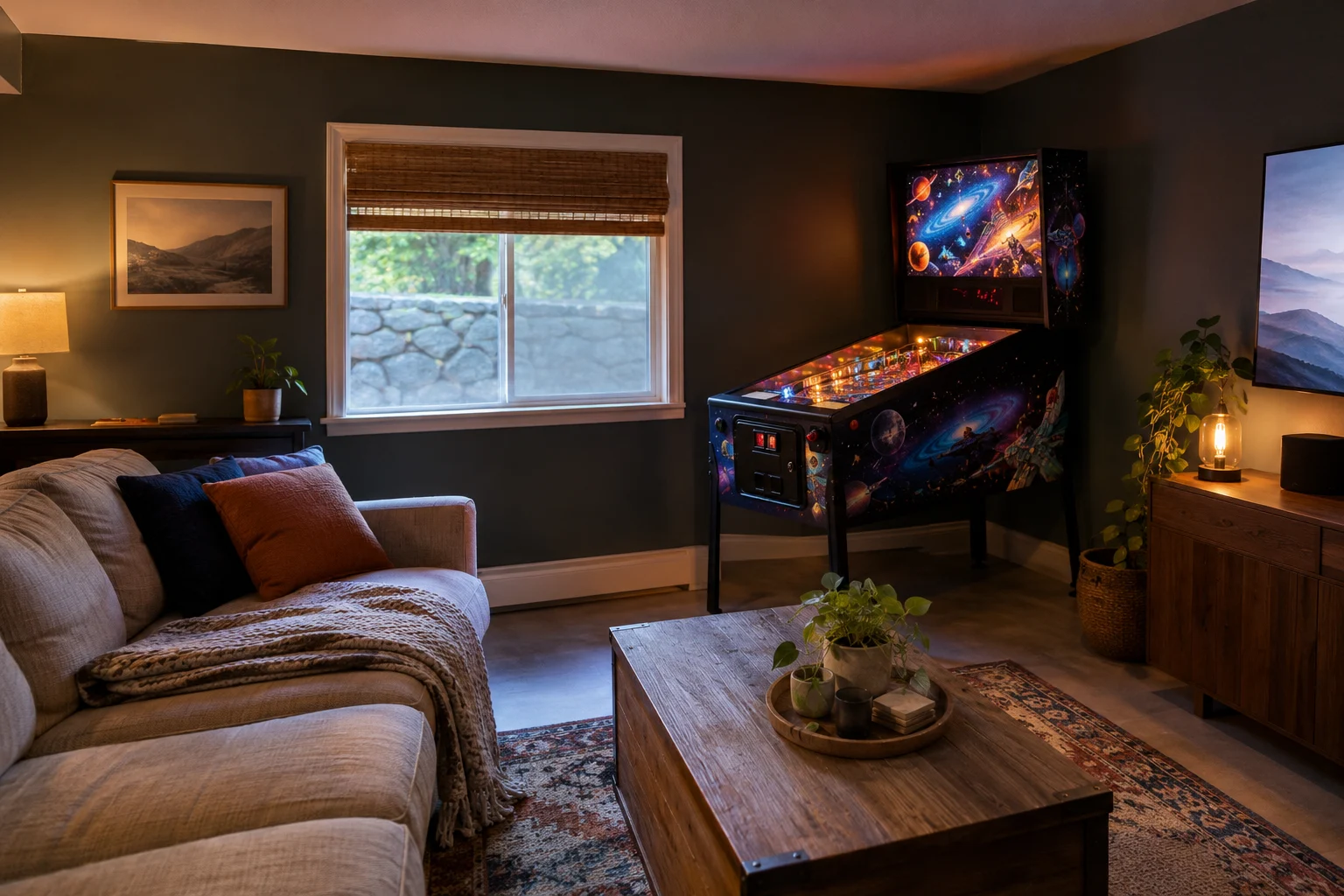
Treat a pinball machine as a statement piece and give the player a clear position in front. Its artwork and lighting already provide plenty of decoration.
Repeat one or two cabinet colors in nearby cushions or wall art. Keep drinks on a separate surface and leave access around the machine for maintenance. A simple background lets the game hold everyone’s attention.
13. Who’s Up for an Indoor Basketball Challenge?
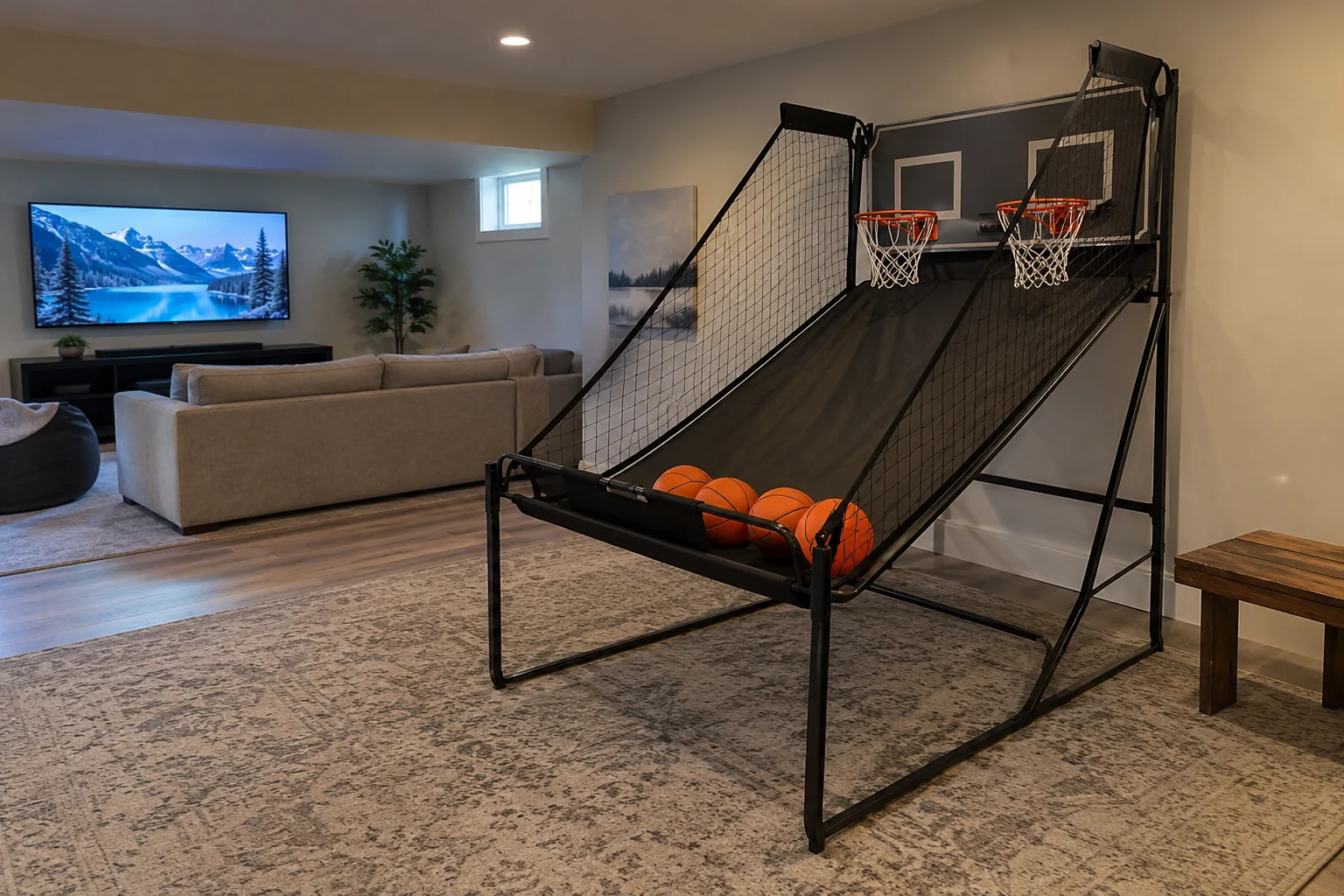
An arcade basketball game belongs in a room with enough floor space and overhead clearance for active play. A larger recreation room or finished garage gives players space to shoot and retrieve balls.
Separate this area from the card table and fragile displays. A ball basket and a bench for the next players help contain the activity. It is a fun option for households that enjoy quick challenges between other games.
14. Three Zones, One Happier Basement
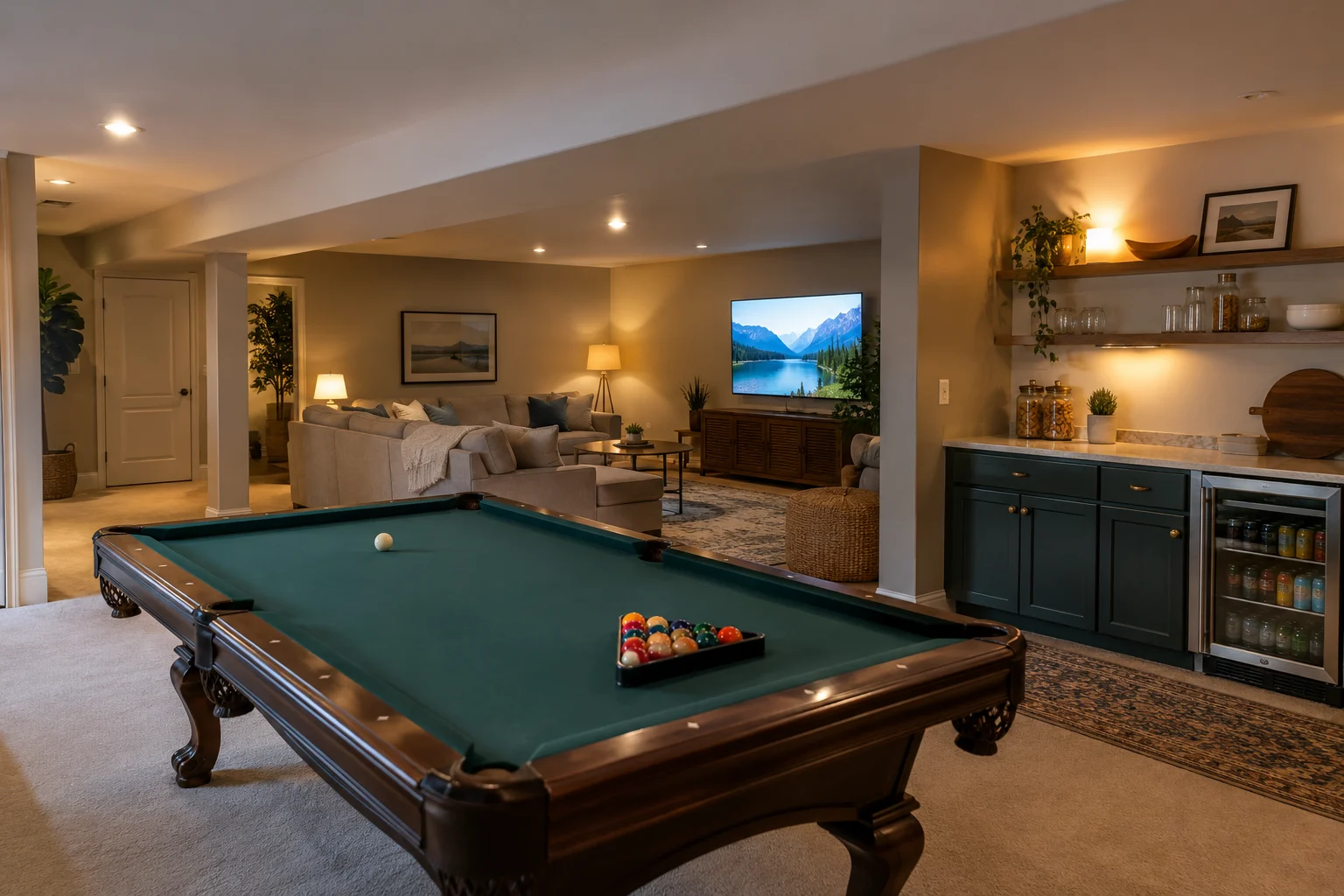
Divide a larger basement into places for playing, sitting, and getting refreshments. Furniture placement can establish these areas without adding walls.
Put the main game table at one end and arrange a sofa around the television at the other. A snack cabinet along a side wall serves both. Leave a clear route between them so collecting a drink does not interrupt a shot.
15. The Finished Garage Clubhouse
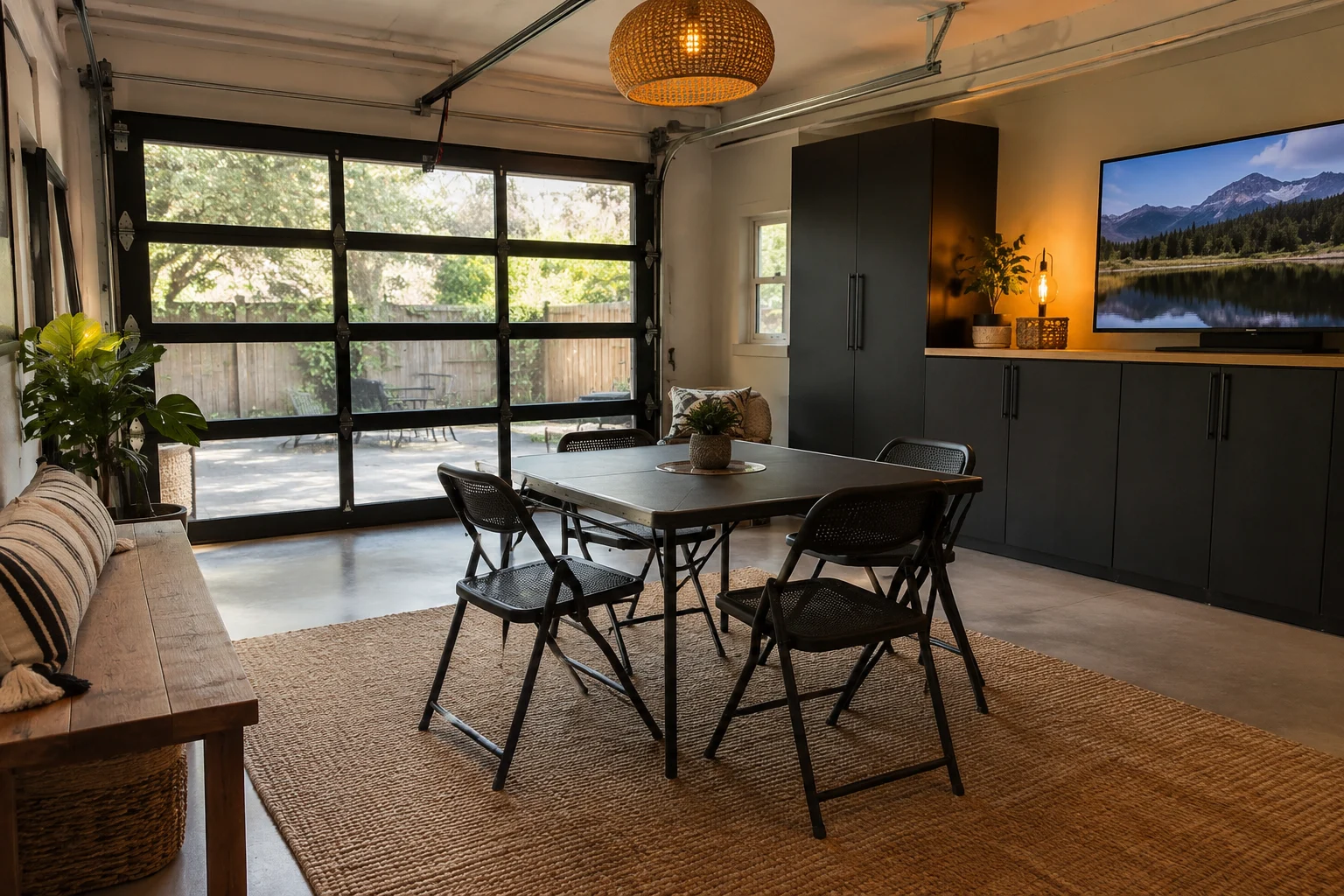
An already finished garage can become a relaxed game room with sturdy furniture and organized wall storage. Give the main activity the clearest part of the floor.
Closed cabinets keep household supplies out of sight, while a rug softens the seating area. Add a bench, a few framed prints, and useful evening lighting. The room should feel welcoming even when nobody has planned a tournament.
16. An Attic Hideaway Beneath the Eaves
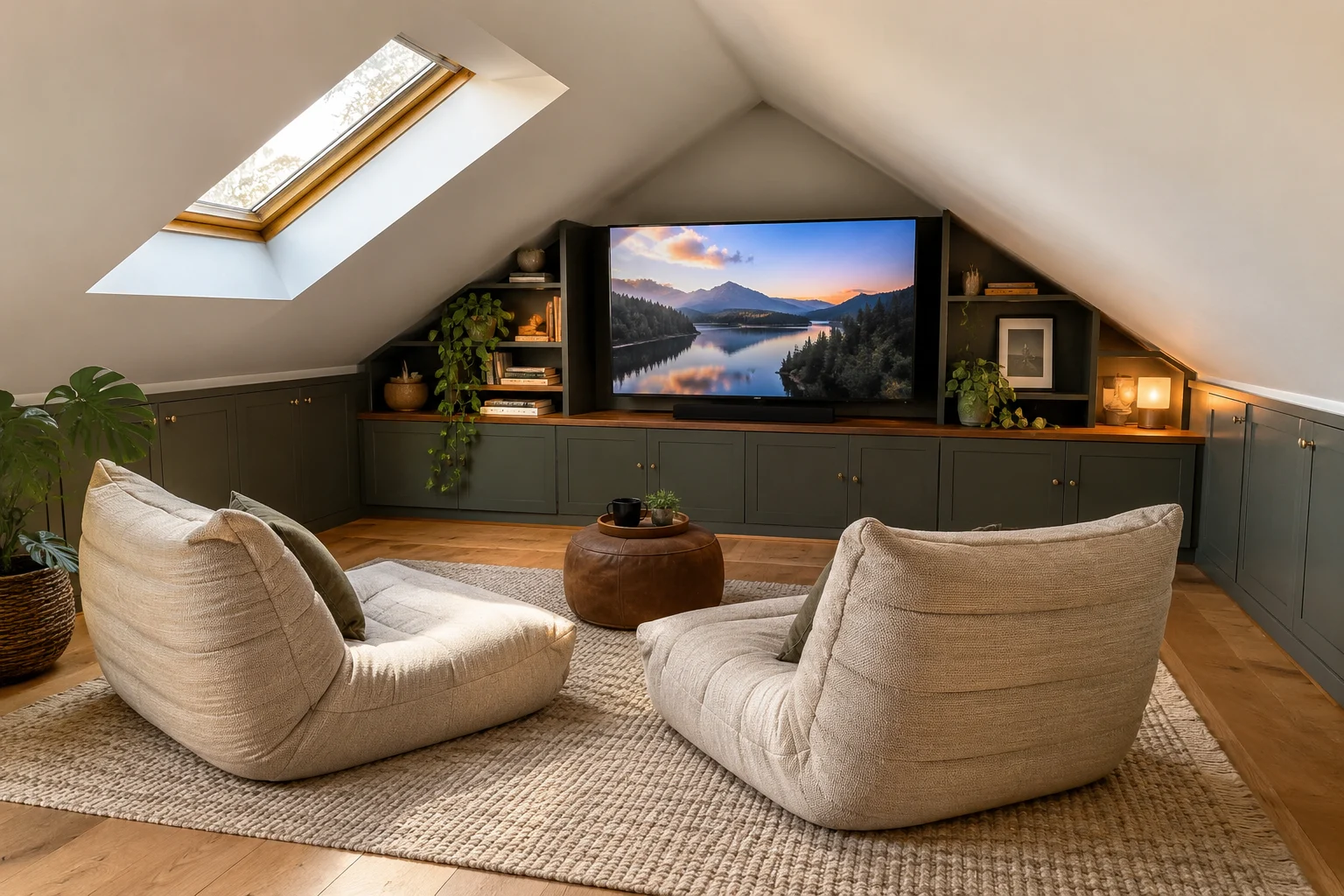
Use the lowest parts of a finished attic for storage and reserve the taller areas for people. Low cabinets fit beneath sloping ceilings without taking away valuable standing space.
A console setup can work well here, with seating positioned where everyone has comfortable headroom. Keep the screen out of direct window glare and add a small lamp for evening light. The roofline already gives the room character.
17. When the Home Office Clocks Out
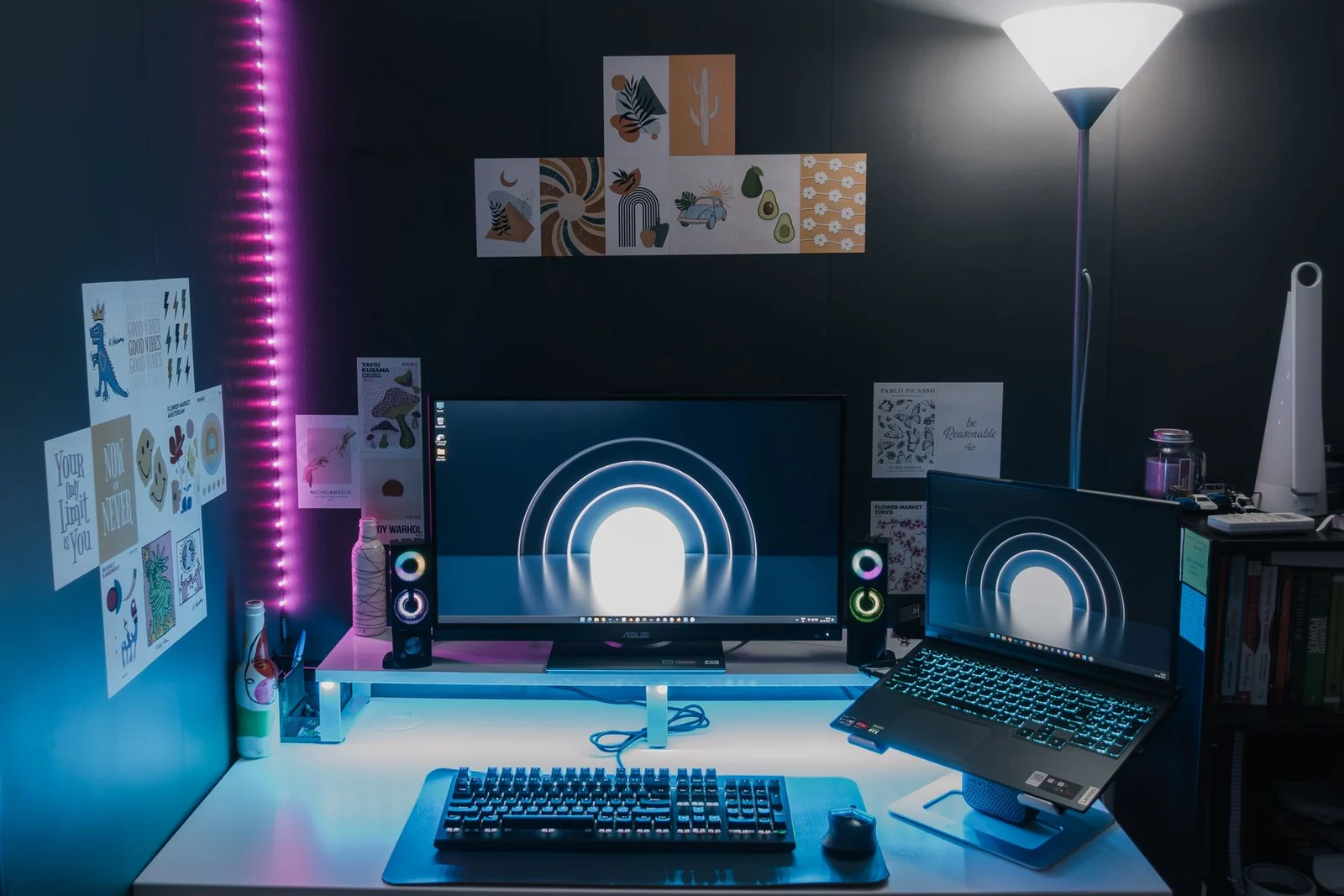
A shared work-and-gaming desk works well when the essentials have dedicated places. Keep the keyboard area clear and move paperwork into a drawer when the working day ends.
For a setup that leans into the gaming look, the GTPLAYER Gaming Chair With Footrest has an adjustable seat height, swivel base, headrest, and lumbar cushion. Its black faux-leather finish pairs easily with a darker desk, while the pull-out footrest offers another sitting option during breaks.
Leave enough room behind the desk to move the chair comfortably. Headset storage and a simple cable tray help the setup switch between activities without a round of untangling.
18. Two Players, One Shared Setup
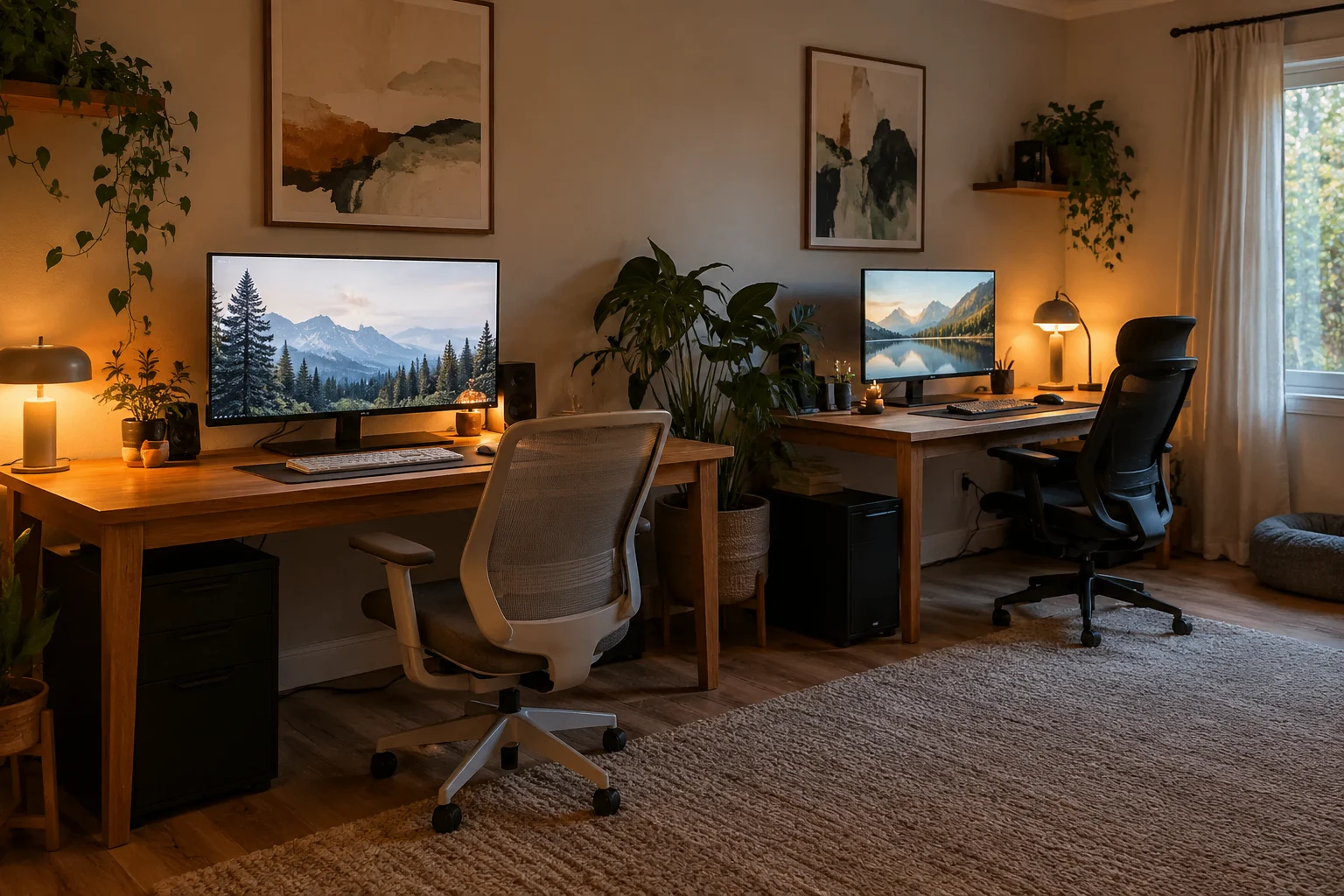
Arrange a two-person gaming room around the space each person needs to sit and move. A long desk works along a broad wall, while separate desks offer more flexibility in an awkward room.
Coordinated furniture helps the setup feel connected. Personal artwork and accessories can give each side its own character. Keep the area behind the chairs clear so either person can get up without interrupting the other.
19. Couch Multiplayer Takes Center Stage
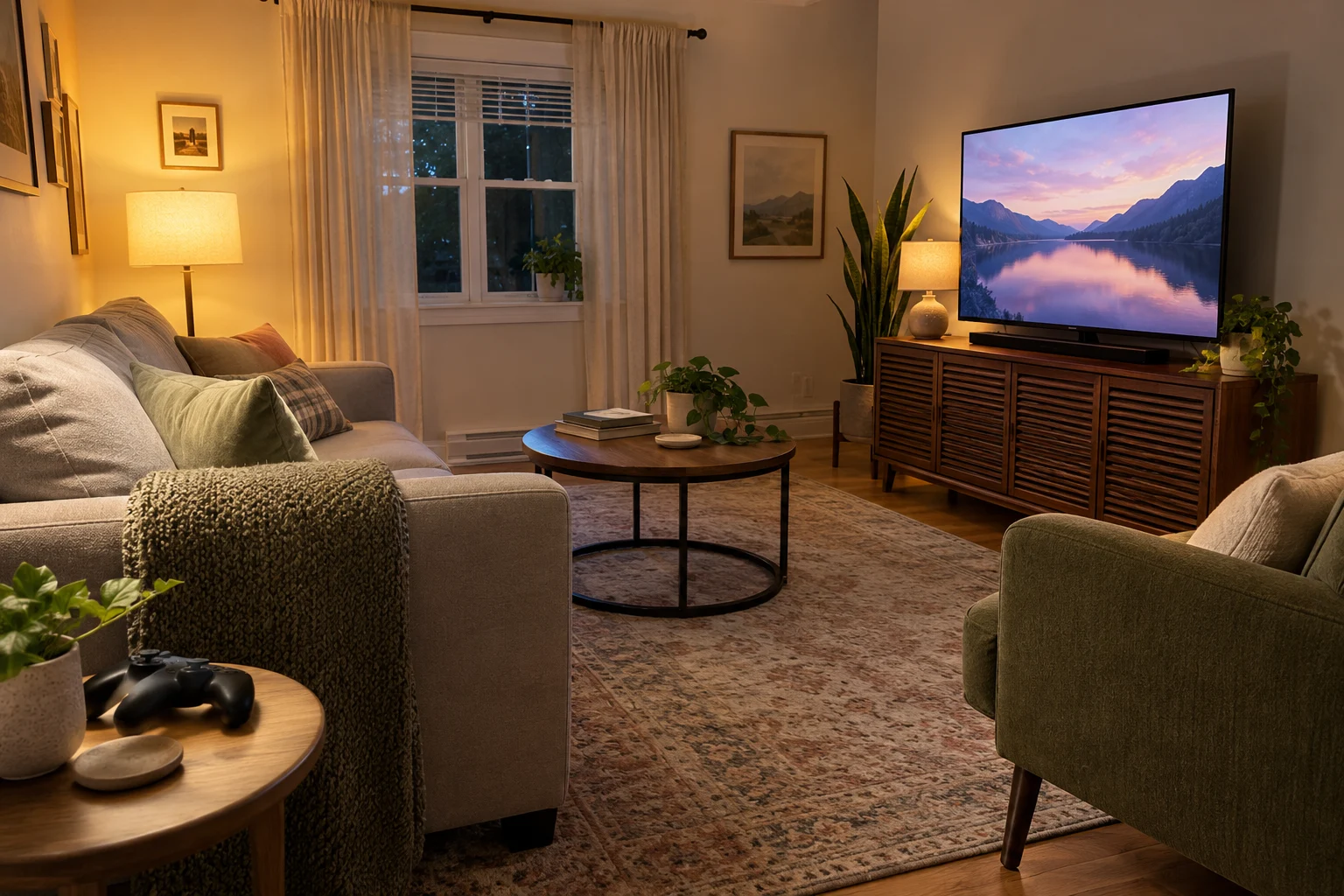
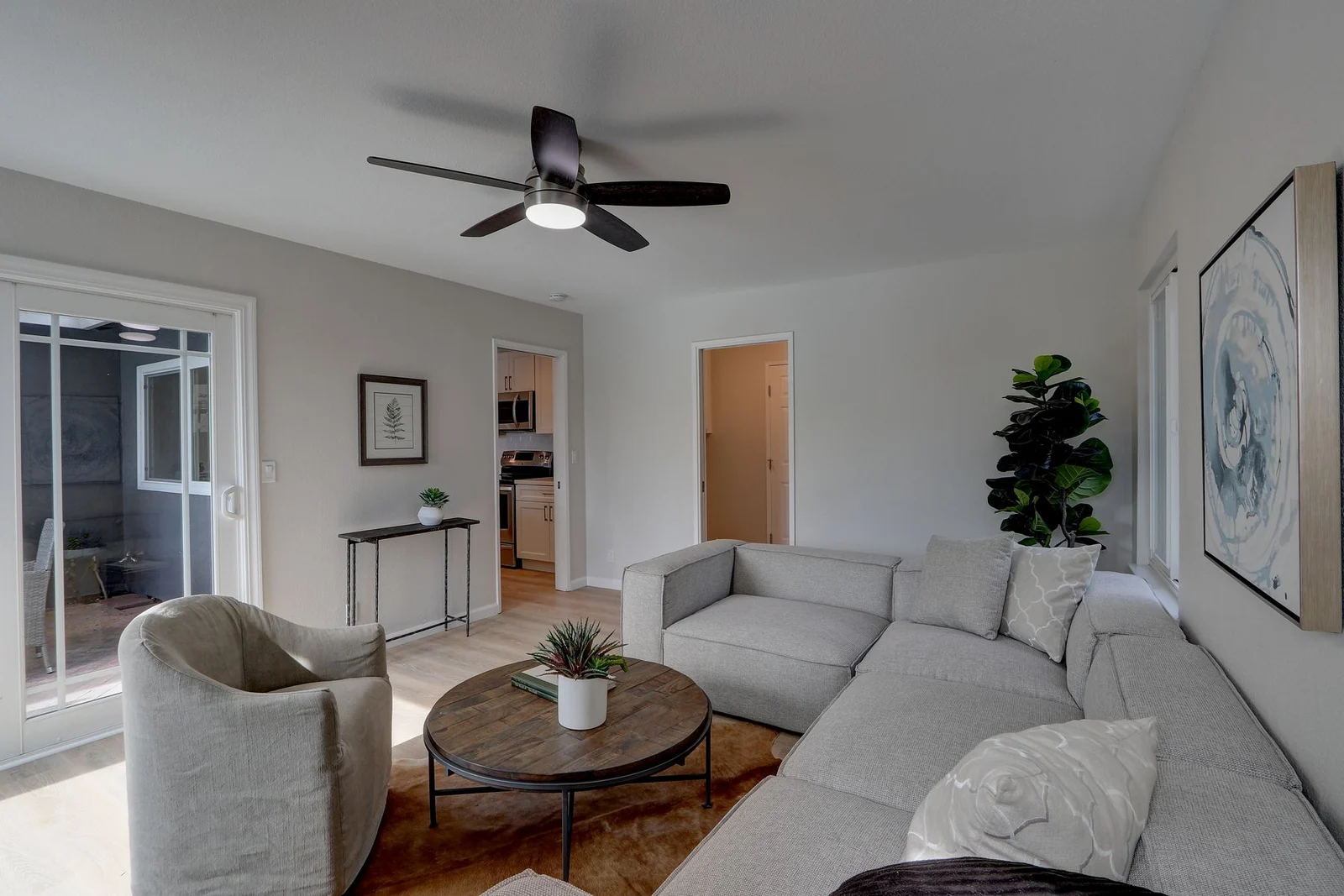
Arrange the seating so every player can see the screen without twisting sideways. A sofa with a movable chair or ottoman gives you options when another player joins.
Choose a media console with accessible storage and ventilation space around operating equipment. Small side tables keep drinks away from controllers. For tighter layouts, our small sofas guide has compact seating ideas that leave room for the rest of the setup.
20. Game Night Meets Movie Night
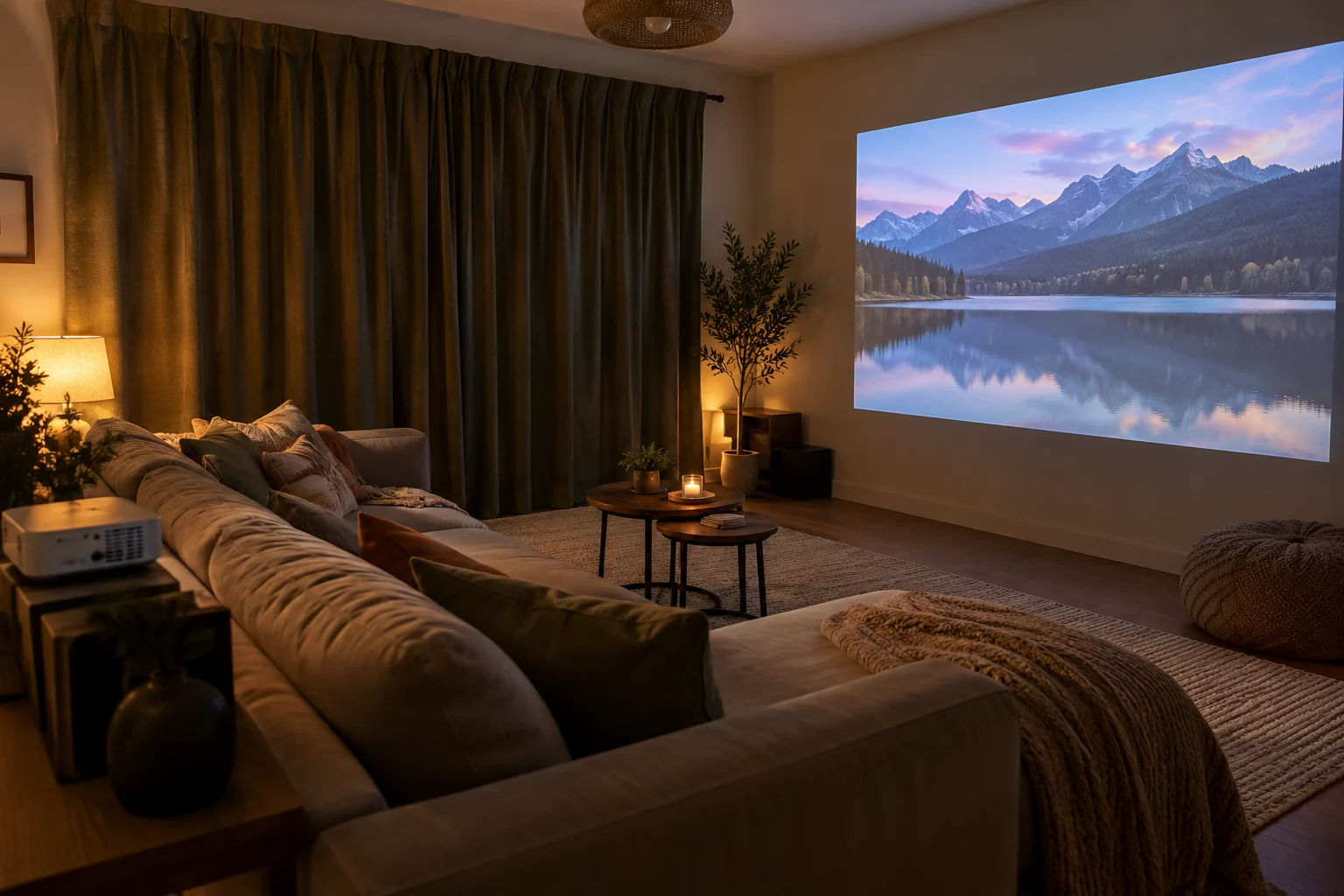
A shared game-and-movie room needs flexible lighting and comfortable seating. Movable tables make it easy to clear the center once the last round is finished.
For the movie side of the room, the Aurzen Roku TV D1R Projector combines 1080p resolution with built-in Roku streaming, autofocus, and automatic keystone correction. It gives everyone a reason to stay for a film after the cards are packed away.
Keep the projection path clear and use curtains to control daylight. A nearby home for remotes and blankets helps the room change mood without a complete rearrangement.
21. Comfortable Seats for the Waiting Team
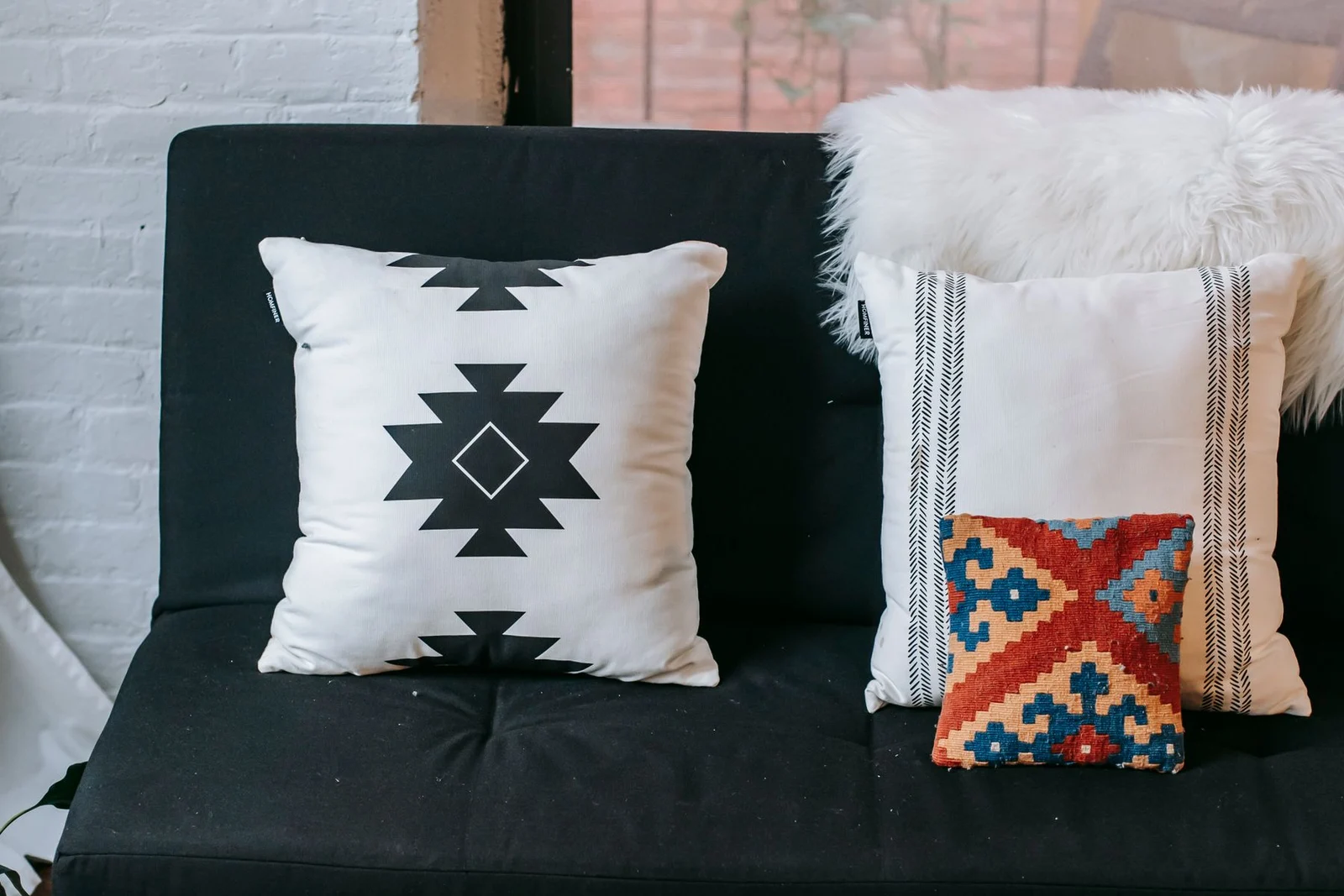
Plan places for spectators as well as players. Friends waiting for a match often spend more time sitting and chatting than using the equipment.
A sofa handles the main gathering area, while lightweight chairs or poufs move closer when needed. Keep seating outside active playing space. Everyone should be able to relax without watching for a moving cue or foosball rod.
22. The Bench With a Secret Stash
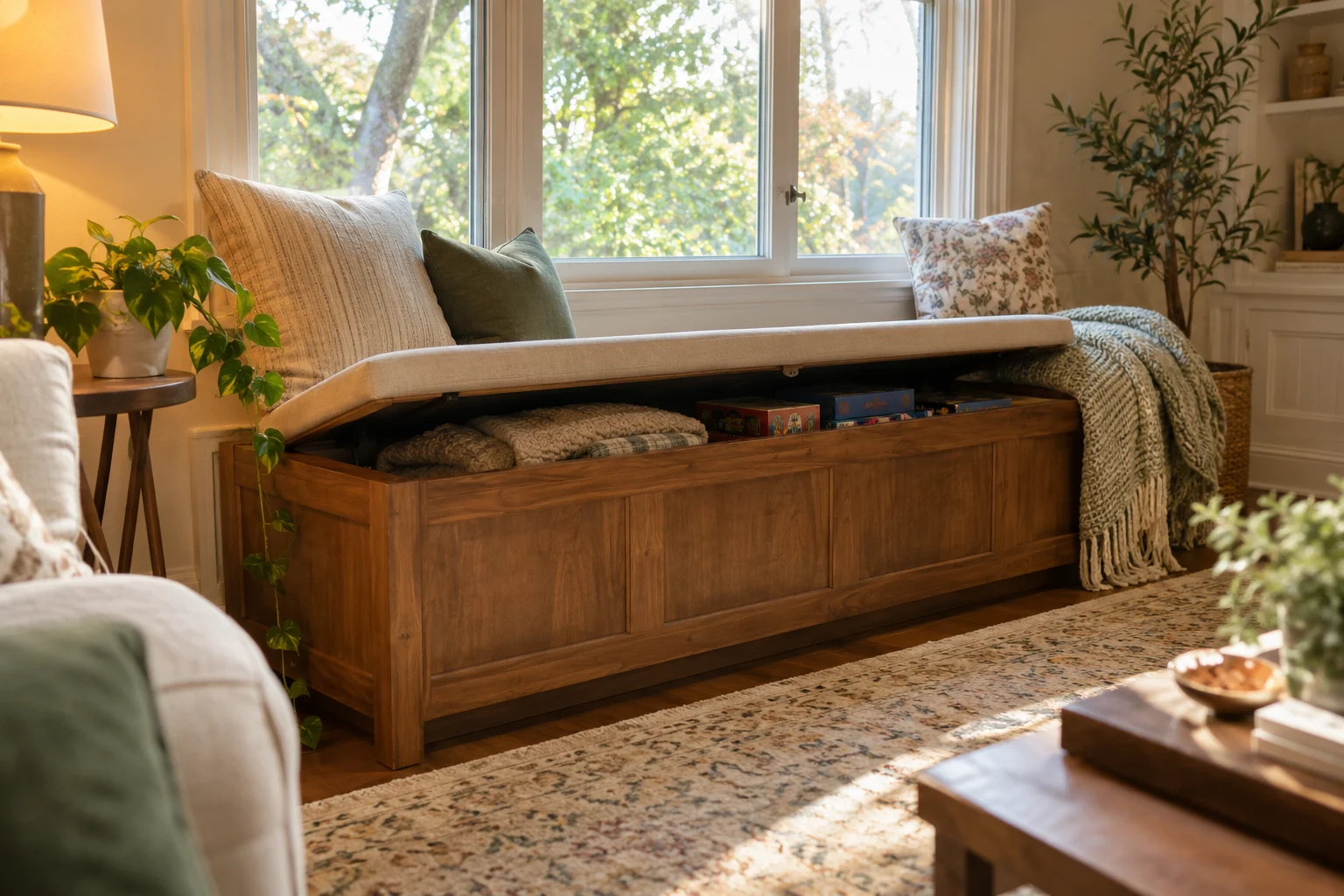
A storage bench adds seating and a home for bulky game-room extras. Place it along a wall or beneath a window where it will not interrupt play.
Assign its interior a clear purpose. Board games can occupy one side, with blankets or spare accessories on the other. Small containers keep loose pieces together, making the bench useful long after the first tidy-up.
23. A Board-Game Library You Can Browse
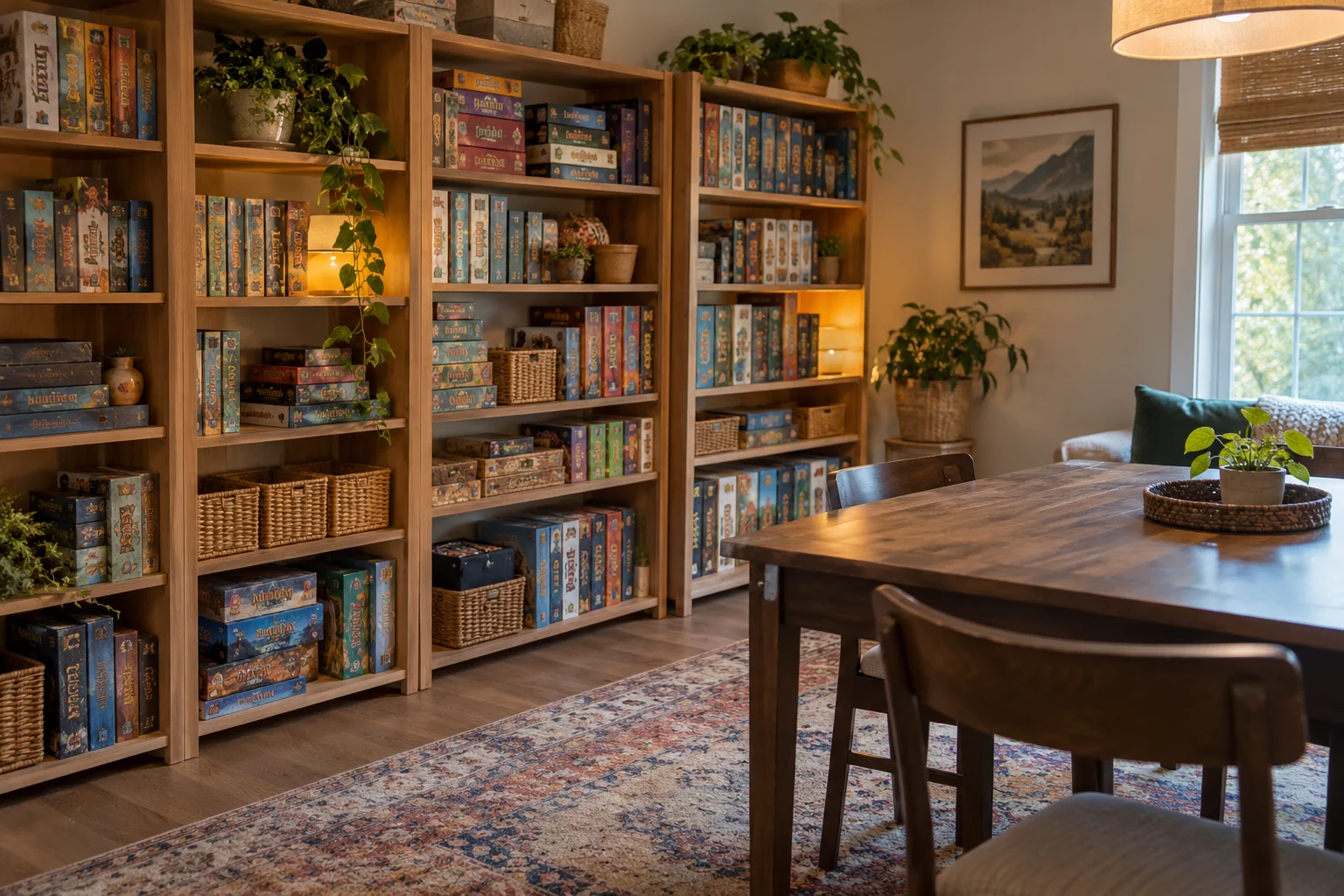
Store games where people can see the choices and reach them easily. Adjustable shelves accommodate tall boxes, wide boards, and smaller card games.
Keep frequently played games at a convenient height and use baskets for loose accessories. In a family room, reserve an accessible shelf for age-appropriate favorites. People should be able to take out a game without dismantling the whole stack.
24. A Proper Home for Controllers and Headsets
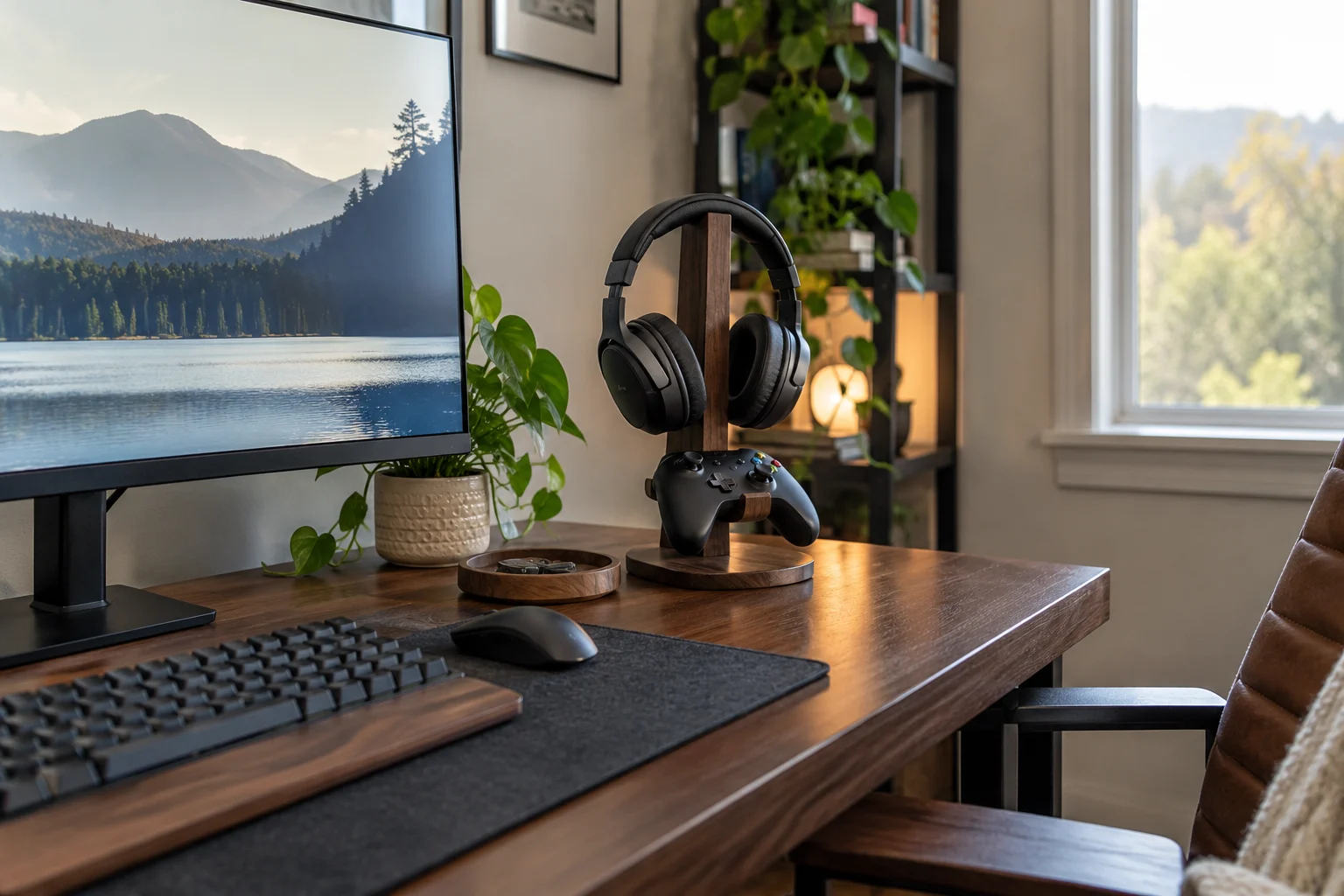
Put accessory storage beside the place where the equipment is used. A headset returned to its stand is easier to find than one buried beneath a hoodie.
The UPERGO Walnut Headphone and Controller Stand gives both items a resting place without spreading them across the desktop. Its storage base holds smaller accessories, while the walnut finish adds warmth beside a monitor and keyboard.
Route charging cables toward a nearby power point and secure the slack beneath the desk. Keep the ends of frequently used cables accessible so putting everything away also makes the next session easier.
25. Snacks on Wheels
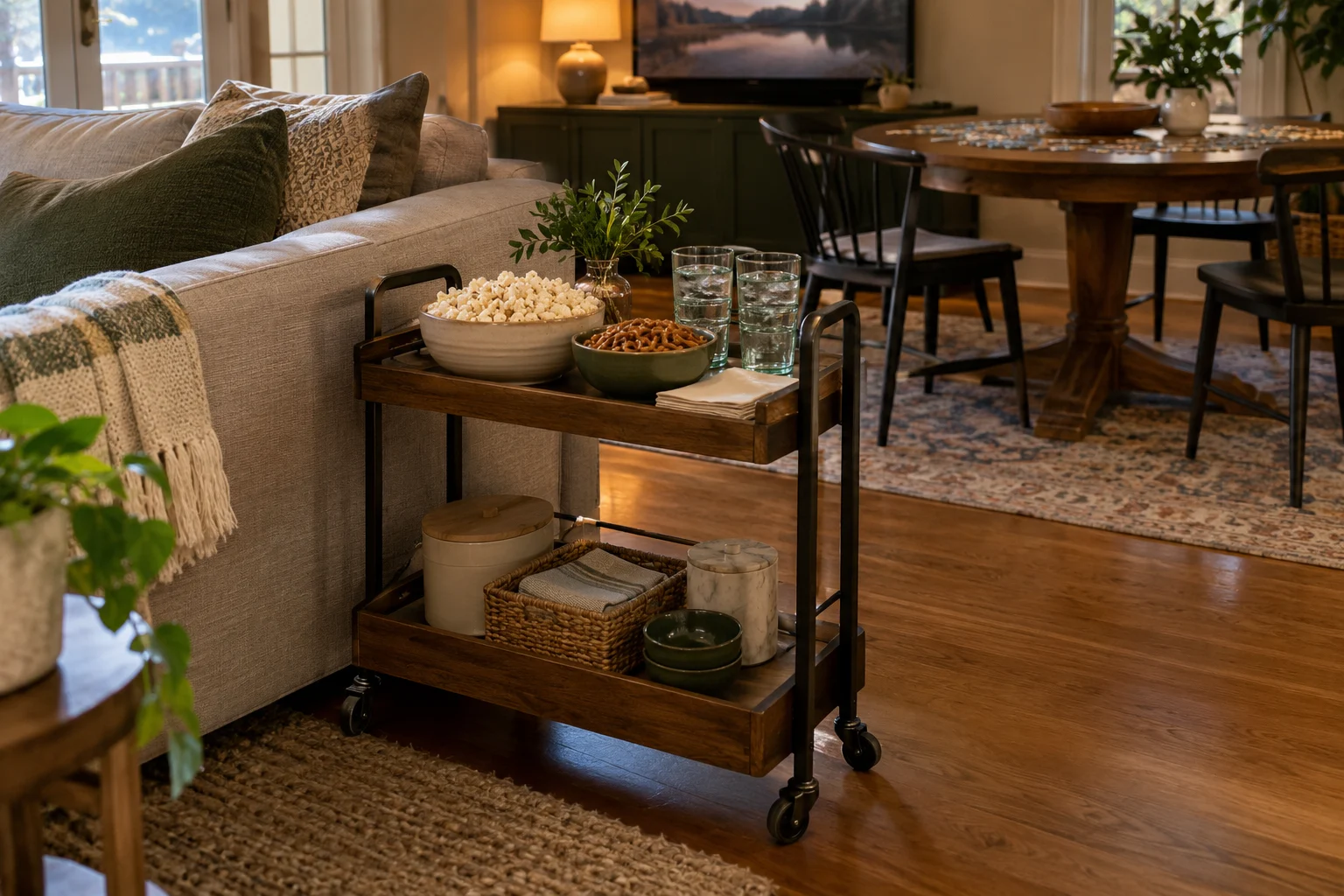
A rolling cart gives snacks and drinks their own space beside the action. It is particularly useful when the game already occupies the entire table.
Put serving bowls and napkins on top, with refills below. Park the cart beside the seating area and lock its wheels when in use. Guests get a convenient refreshment spot, and the game pieces get to stay dry.
26. An Adult Game Room With a Bar Corner
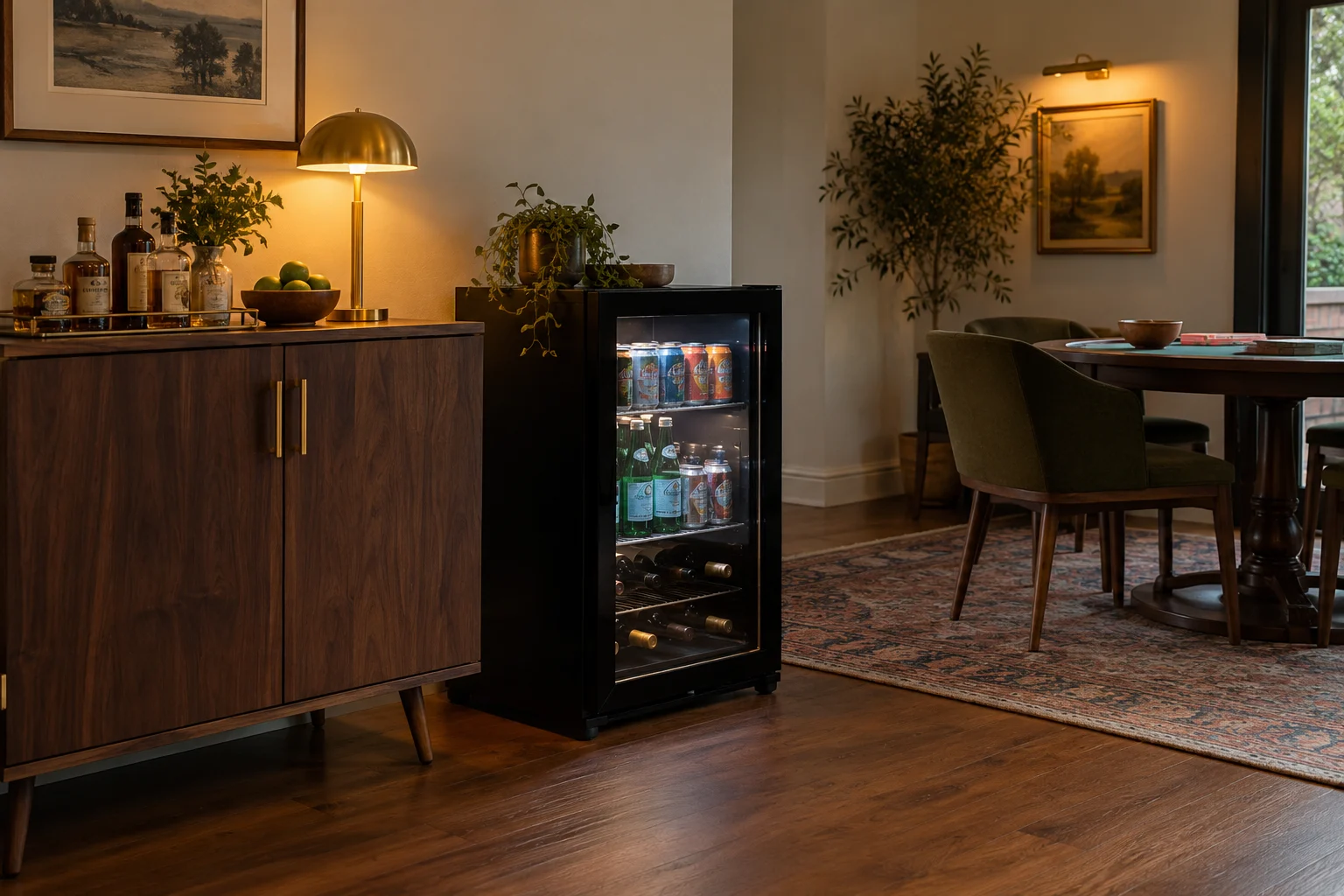
A compact cabinet and a drinks surface can create a relaxed bar corner without taking over the room. Use the cabinet for glassware and serving supplies, keeping its top available for preparing drinks.
The Electactic 3.2-Cubic-Foot Beverage Refrigerator keeps refreshments nearby, with a glass door and adjustable shelves for arranging cans and bottles. Place it beside the cabinet so guests can help themselves without crossing the playing area.
Allow ventilation space around the refrigerator rather than fitting it tightly into surrounding furniture. In a room shared with children, keep alcoholic drinks and bar tools in separate locked storage.
27. That Soft Glow Behind the Screen
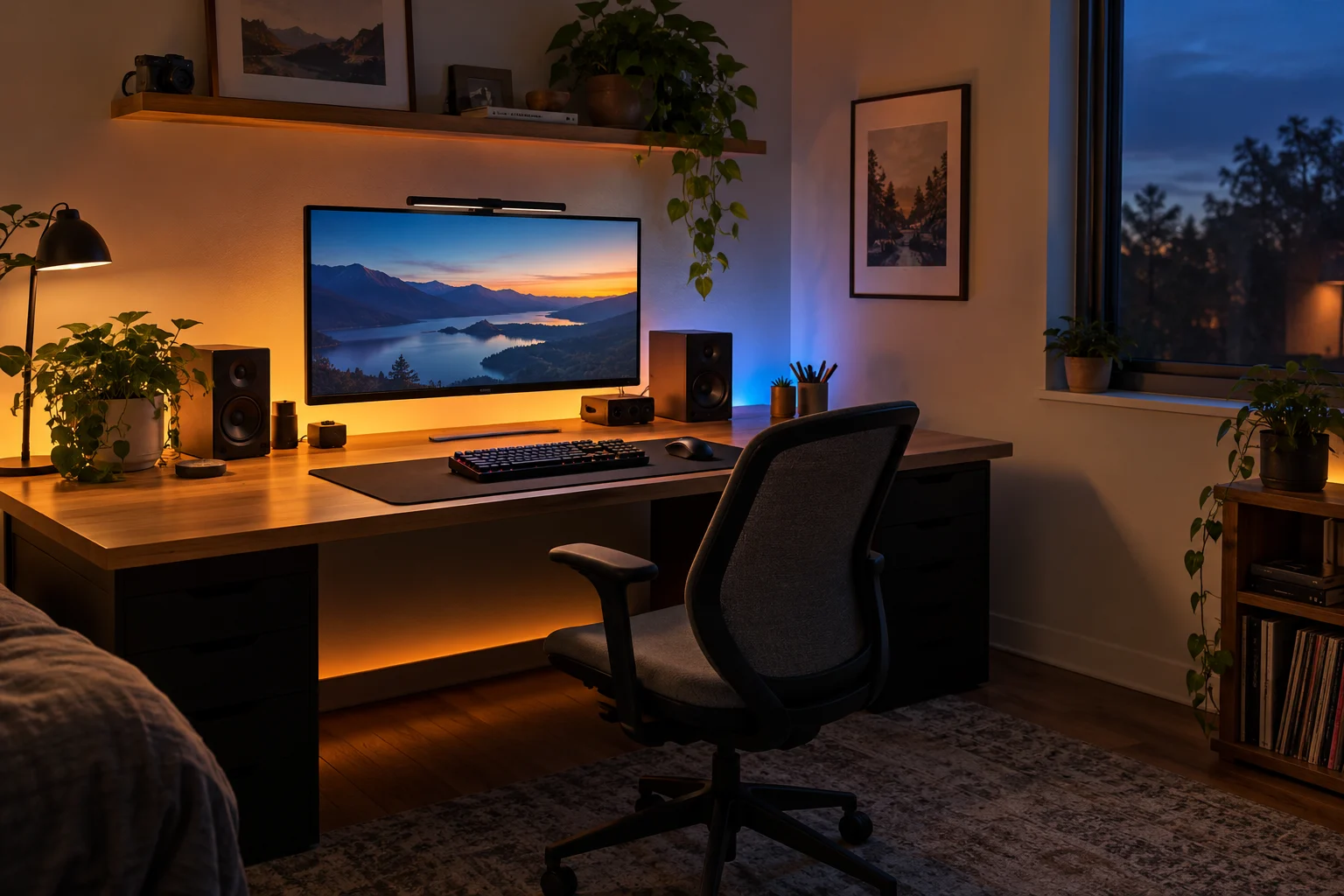
Place accent lighting behind the screen or beneath shelving for a softer glow. Keeping the light source out of direct view makes the effect feel calmer.
The Govee COB LED Strip Lights 2 provide diffused, color-changing light for this kind of setup. Use a warm tone for a relaxed evening or repeat one accent color from the room’s artwork.
Keep a useful lamp or overhead light available for reading cards and cleaning up. Plan the strip’s installation route before trimming it, because cut-off sections cannot be reused.
28. Good Lighting for Serious Board-Game Business
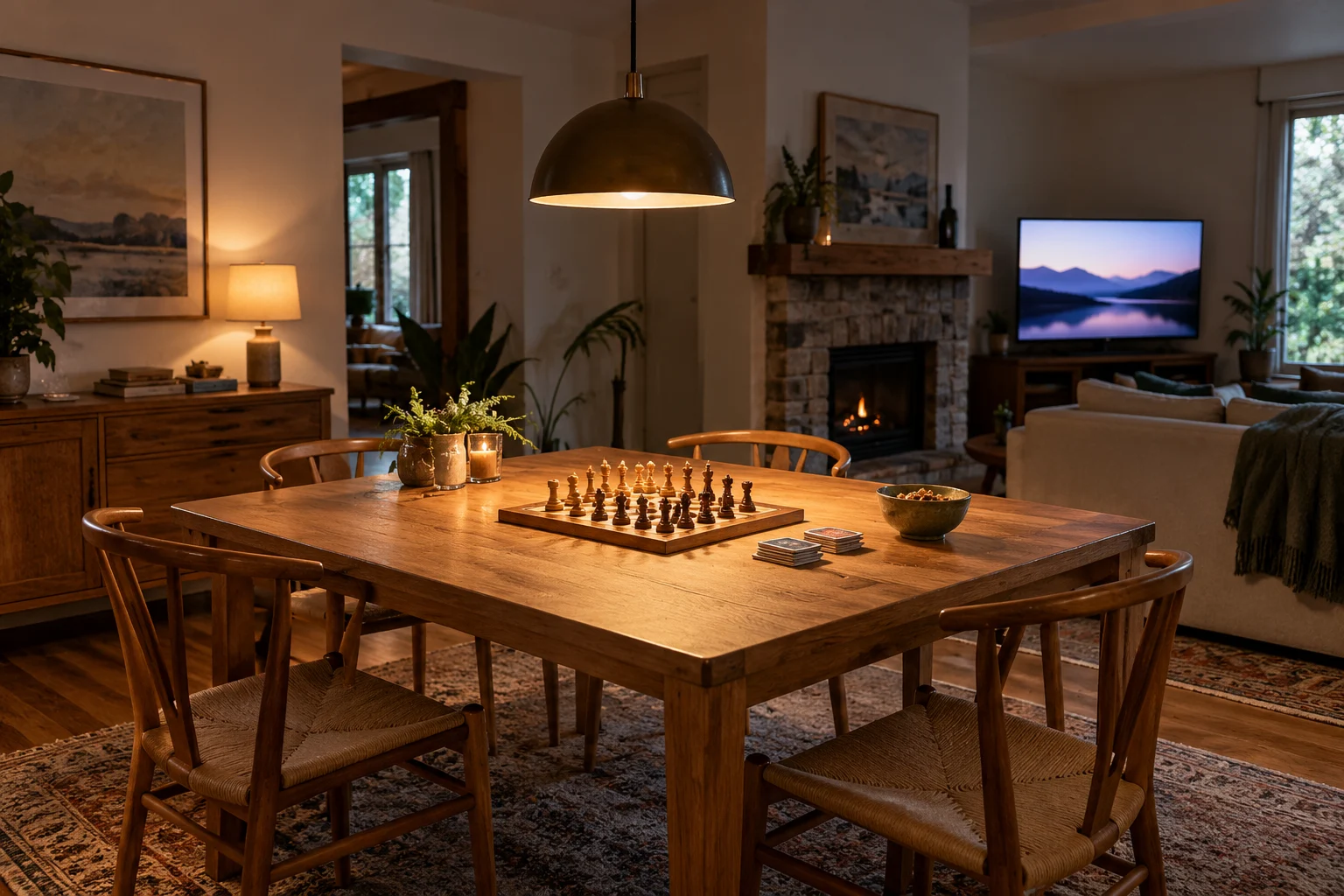
Light the playing surface evenly so everyone can read and play comfortably. A centered pendant or suitable linear fixture gives a permanent game table a clear focal point.
Keep the fixture out of players’ sightlines and avoid directing bright light toward a nearby screen. Adjustable lighting helps a multipurpose room shift between detailed tabletop games and a quieter evening atmosphere.
29. A Game Room With Less Echo
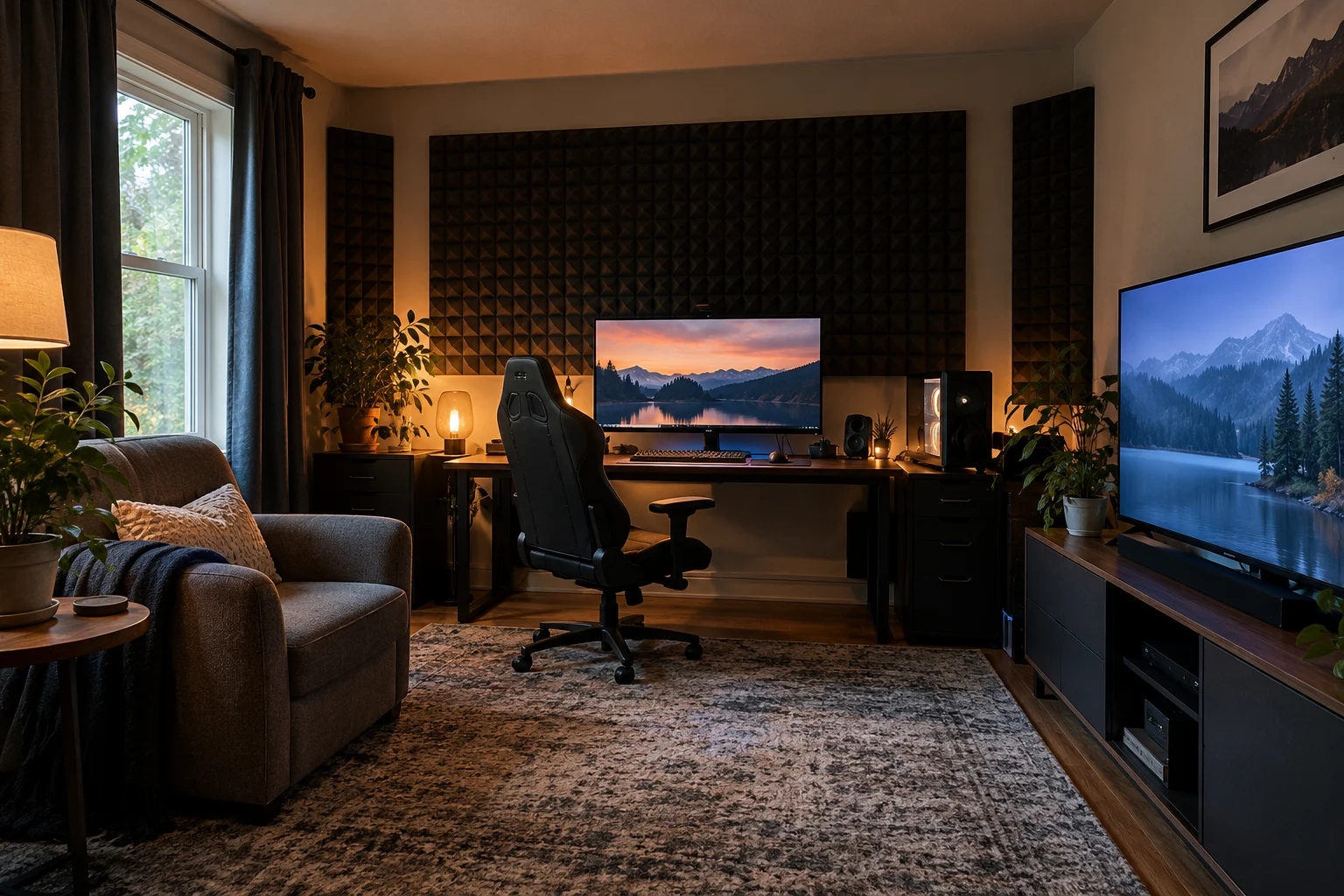
Rugs, curtains, upholstered furniture, and acoustic panels can reduce echo inside a game room. They are particularly useful in spaces with bare floors and several hard walls.
For a dedicated desk or media area, the SD SODOCT Pyramid Acoustic Foam Panels offer a lightweight way to add sound absorption. The pack includes 24 two-inch-thick panels, which can form a simple, orderly arrangement on the wall.
Sound note: These panels help reduce reflections within the room. Blocking sound between rooms is a separate job involving walls, doors, gaps, and other building elements.
30. The Scoreboard Is Part of the Decor
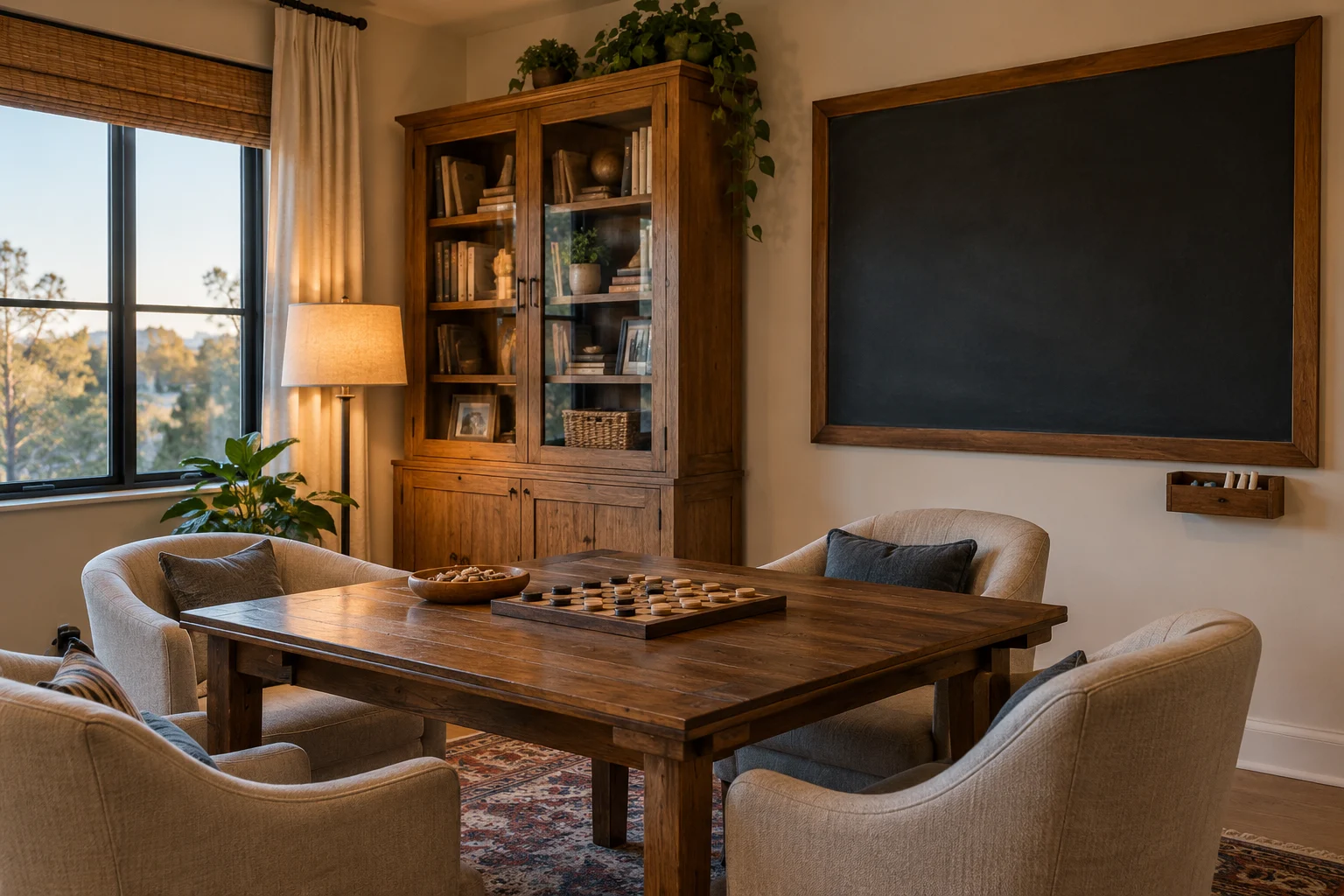
Hang a scoreboard where players can read and update it easily. A framed chalkboard or dry-erase board works beside a game table without needing more floor space.
Use it for tournament brackets, weekly winners, or a running family score. A small holder keeps the writing supplies nearby. Matching the frame to the furniture helps the scoreboard feel like part of the room.
31. A Gallery Wall for Your Favorite Games
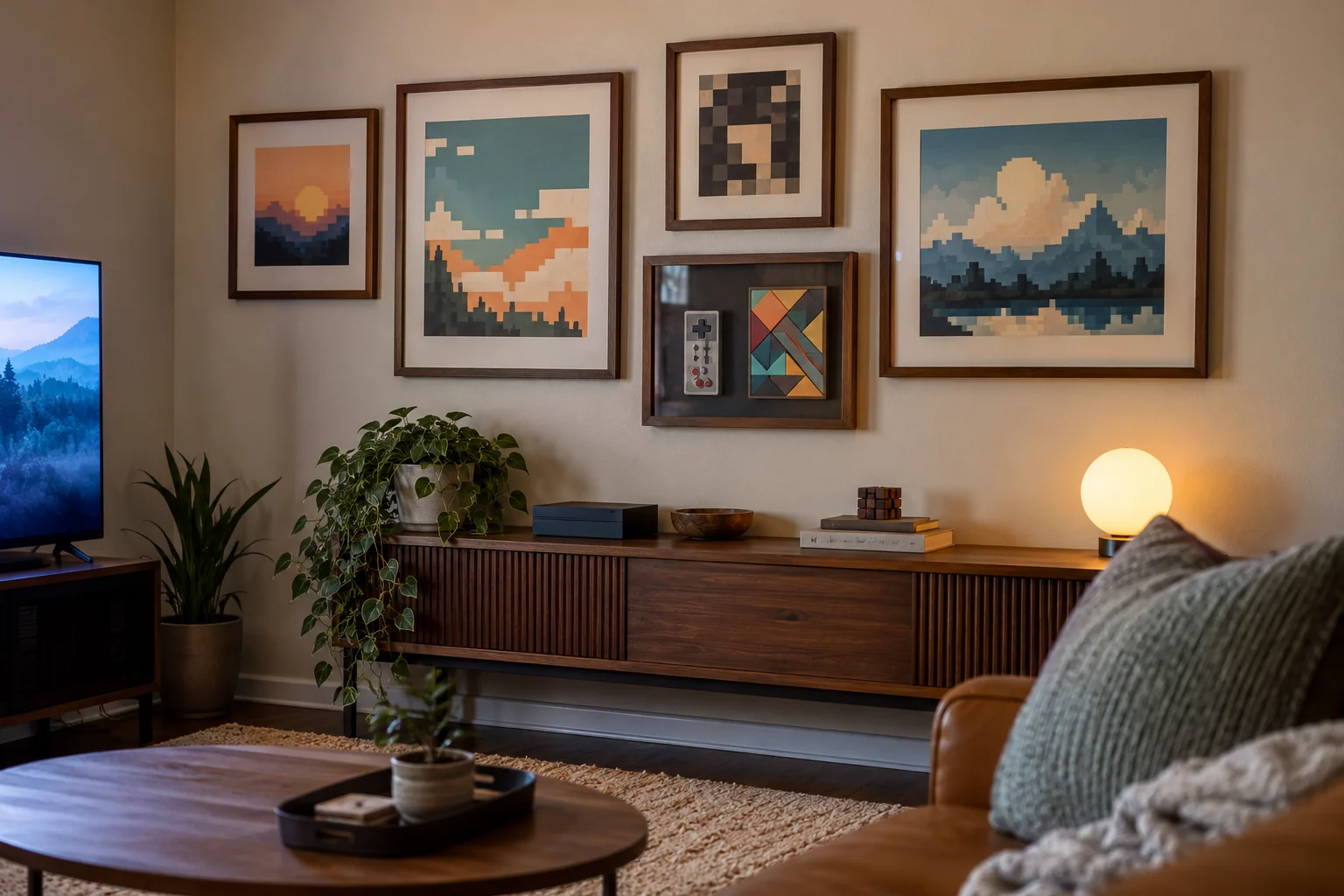
Choose a small collection of game artwork or memorabilia and display it together. Vintage board-game artwork, framed jerseys, and completed puzzles can all work.
Repeat a frame finish or color to connect the display. If you are still deciding on the room’s overall look, our interior design styles guide can help you put a name to the furniture and finishes you like.
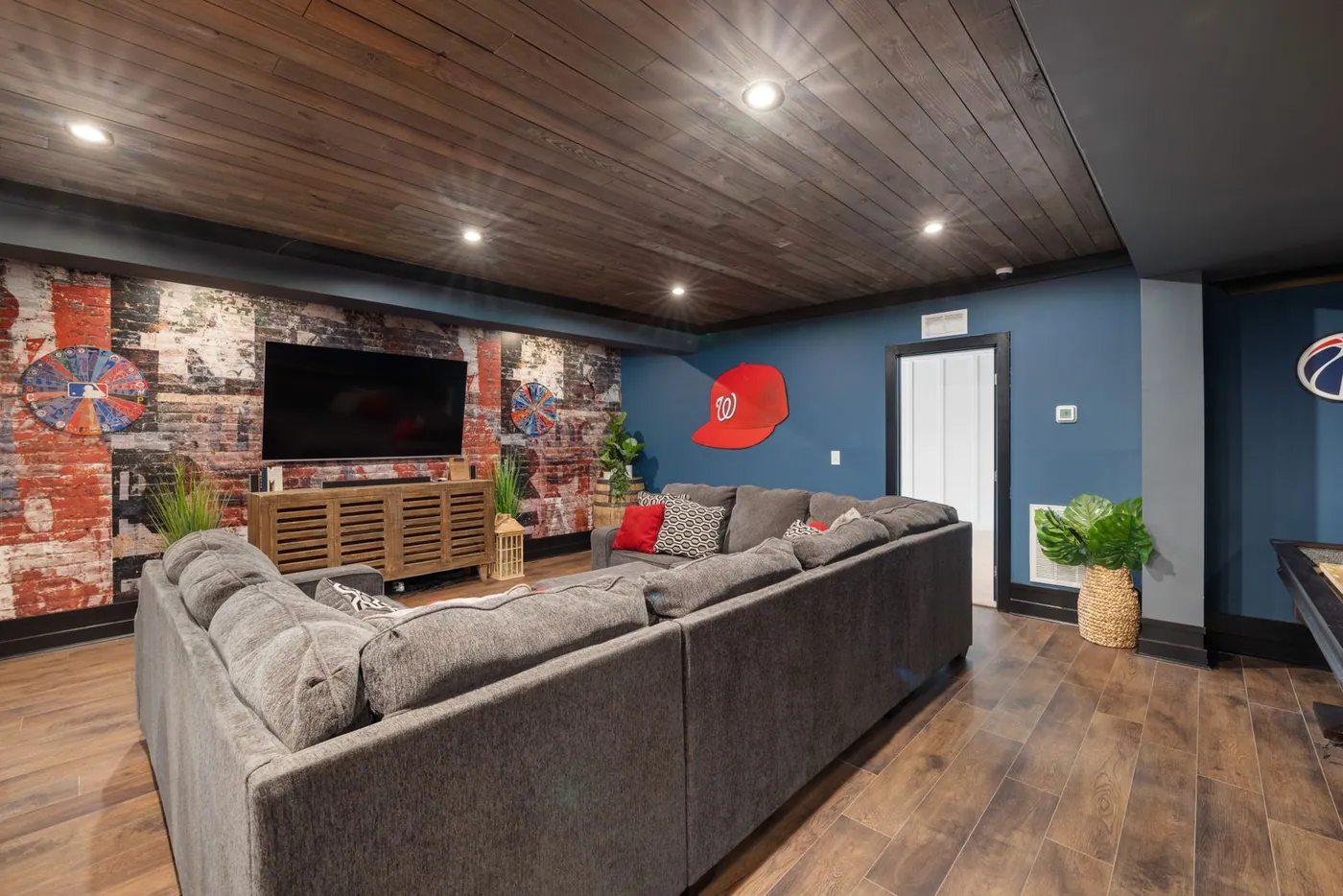
32. Dark Walls, Warm Lights, Good Company
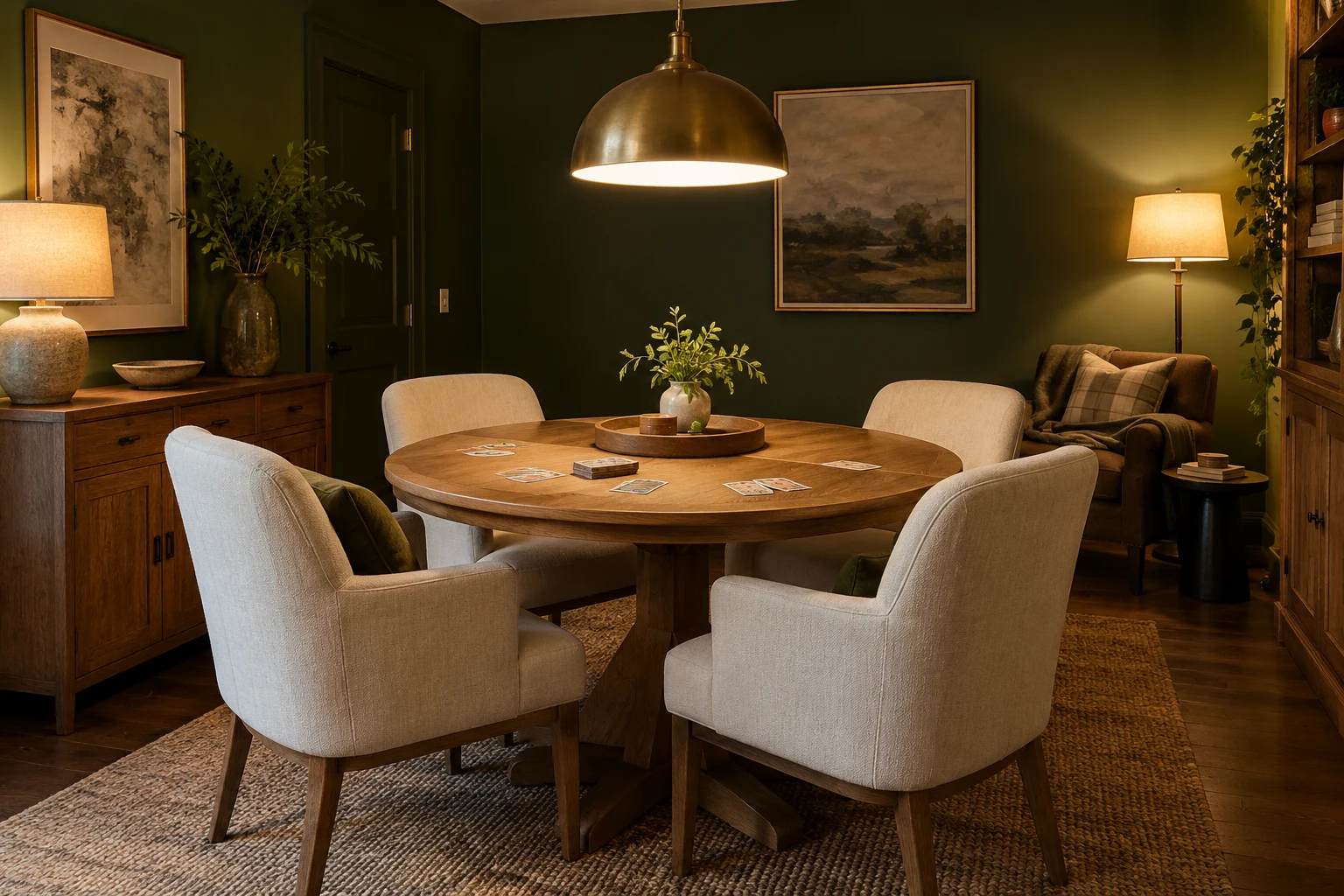
Navy, forest green, or charcoal walls create an intimate backdrop for a game room. Balance them with lighter upholstery and several useful sources of light.
Warm wood furniture and cream cushions keep the room inviting. A table lamp softens the lounge area, while a separate fixture lights the game. Carry one accent color through the artwork and accessories to connect the space.
33. Wood, Greenery, and a Calmer Gaming Setup
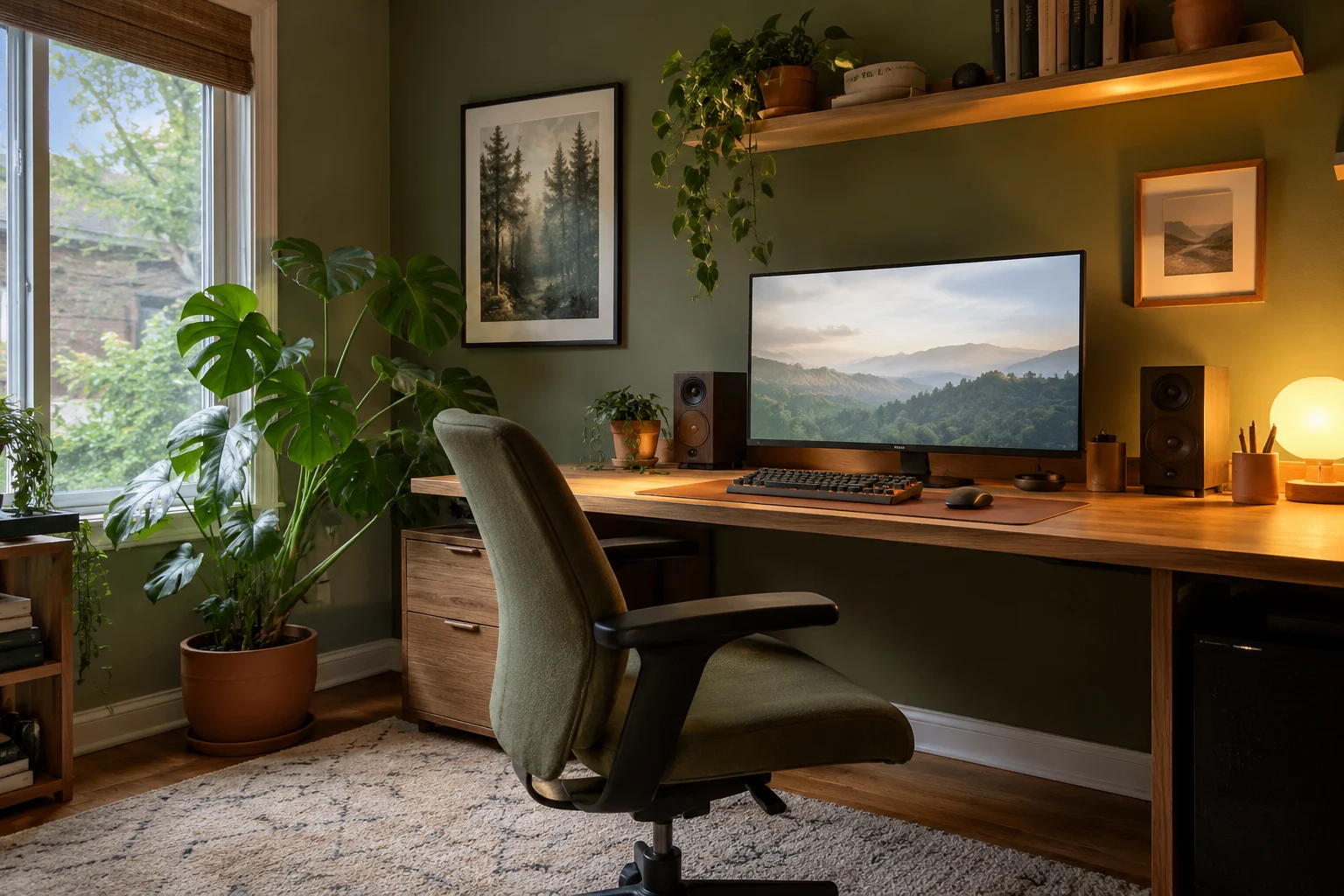
Pair electronics with wood finishes, earthy colors, and a little greenery for a relaxed look. A wood desk or media cabinet can connect the setup to the rest of the home.
Add a plant where it receives suitable light and keep watering away from equipment. Olive, sand, terracotta, and warm brown work well together. Our earth-tone color palettes offer combinations for walls, rugs, and seating.
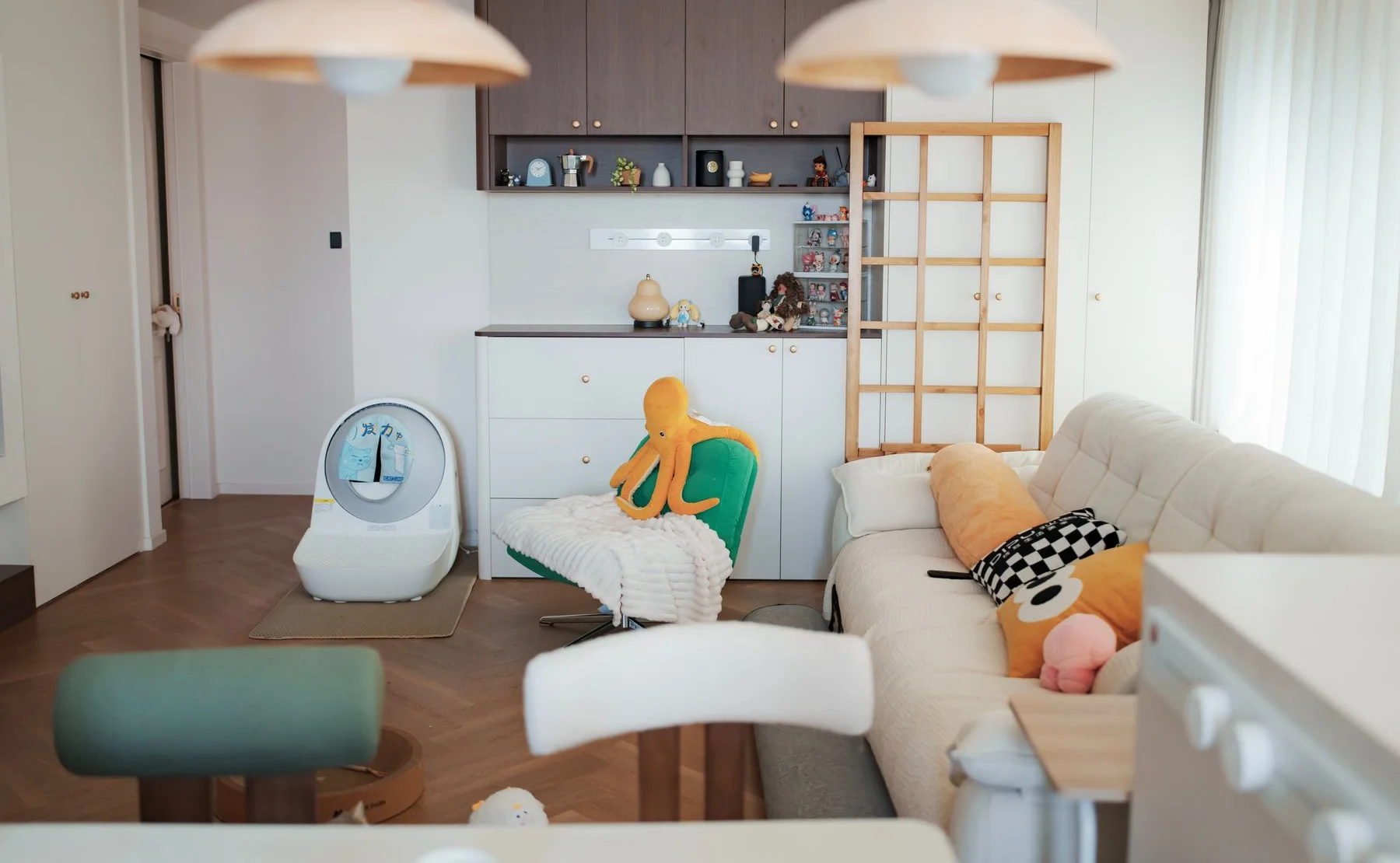
34. Pastels Have a Place in the Game Room, Too
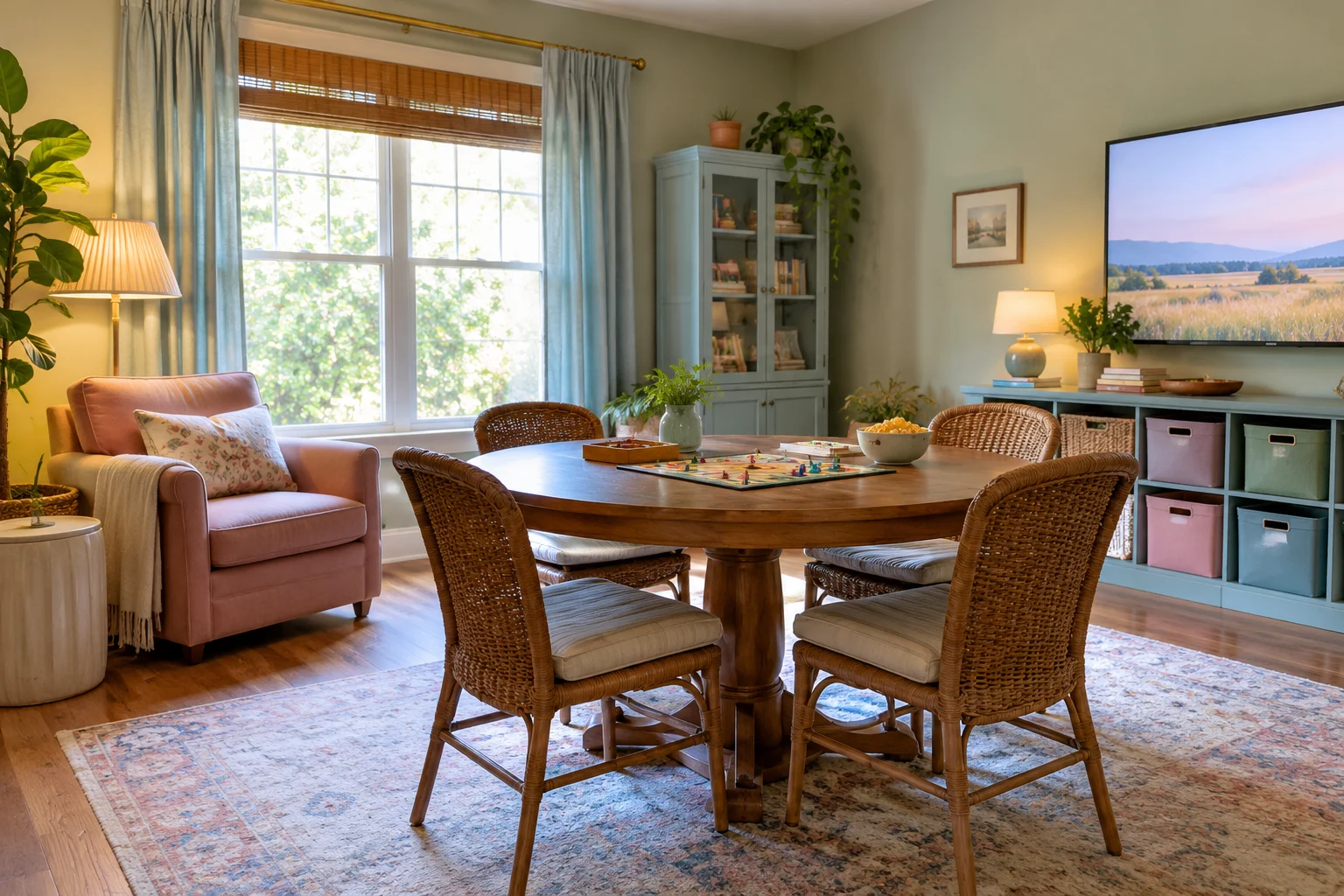
Repeat one or two pastel shades across the room’s furniture and accessories. Pale blue storage, a blush chair, or a soft green wall can establish the look.
Keep the main furniture finishes coordinated so the colors feel connected. In a child’s or teen’s space, artwork and removable accessories let the room change as their interests grow. Closed storage gives the colorful details some breathing room.
35. The Sports Fan’s Favorite Seat in the House
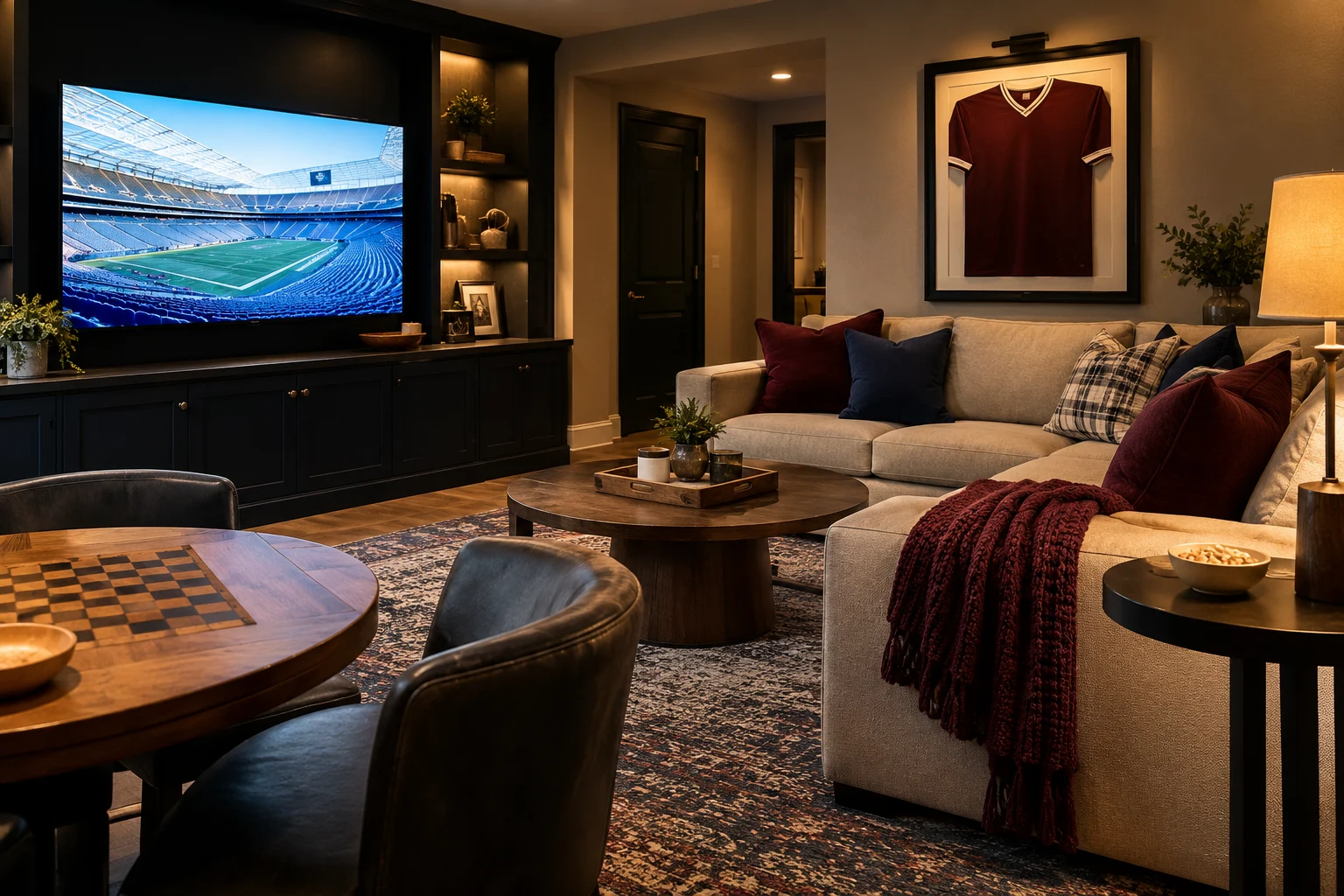
Combine a comfortable viewing area with a small memorabilia display and one activity everyone enjoys. A card table or nearby game corner gives people something to do before kickoff.
Use team colors in cushions, prints, or a framed jersey. Provide enough small tables for drinks and snacks, and arrange seats so nobody has to watch around someone else’s head.
36. Room to Move, Dance, and Play
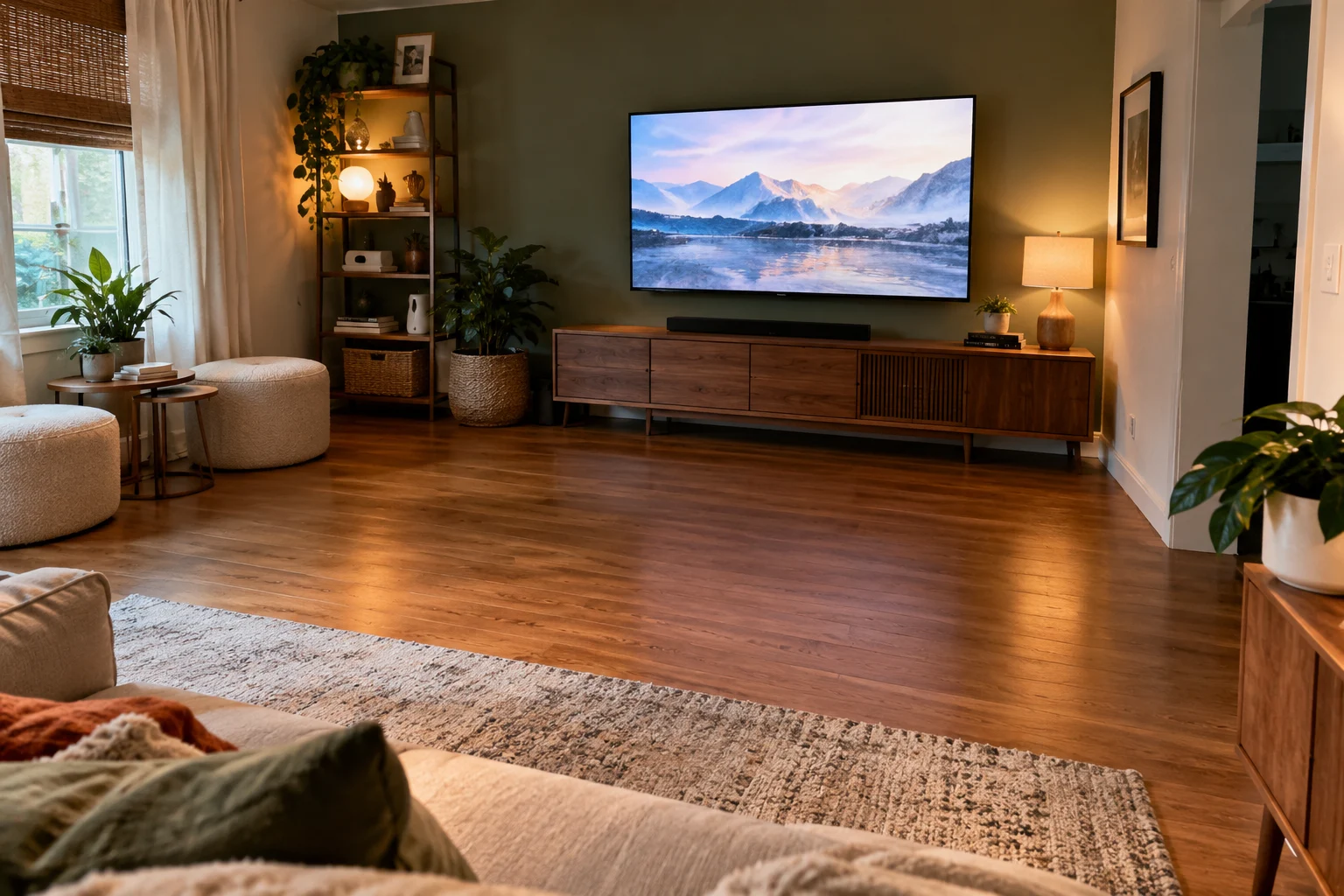
Use lightweight, movable furniture where dance games or VR need open floor space. Keep this area clear of fragile objects, loose cables, and projecting furniture edges.
Nesting tables and small ottomans move more easily than a heavy central coffee table. Give the equipment a storage spot nearby. Afterward, the room can return to its everyday layout without much effort.
A Quick Game-Room Checklist
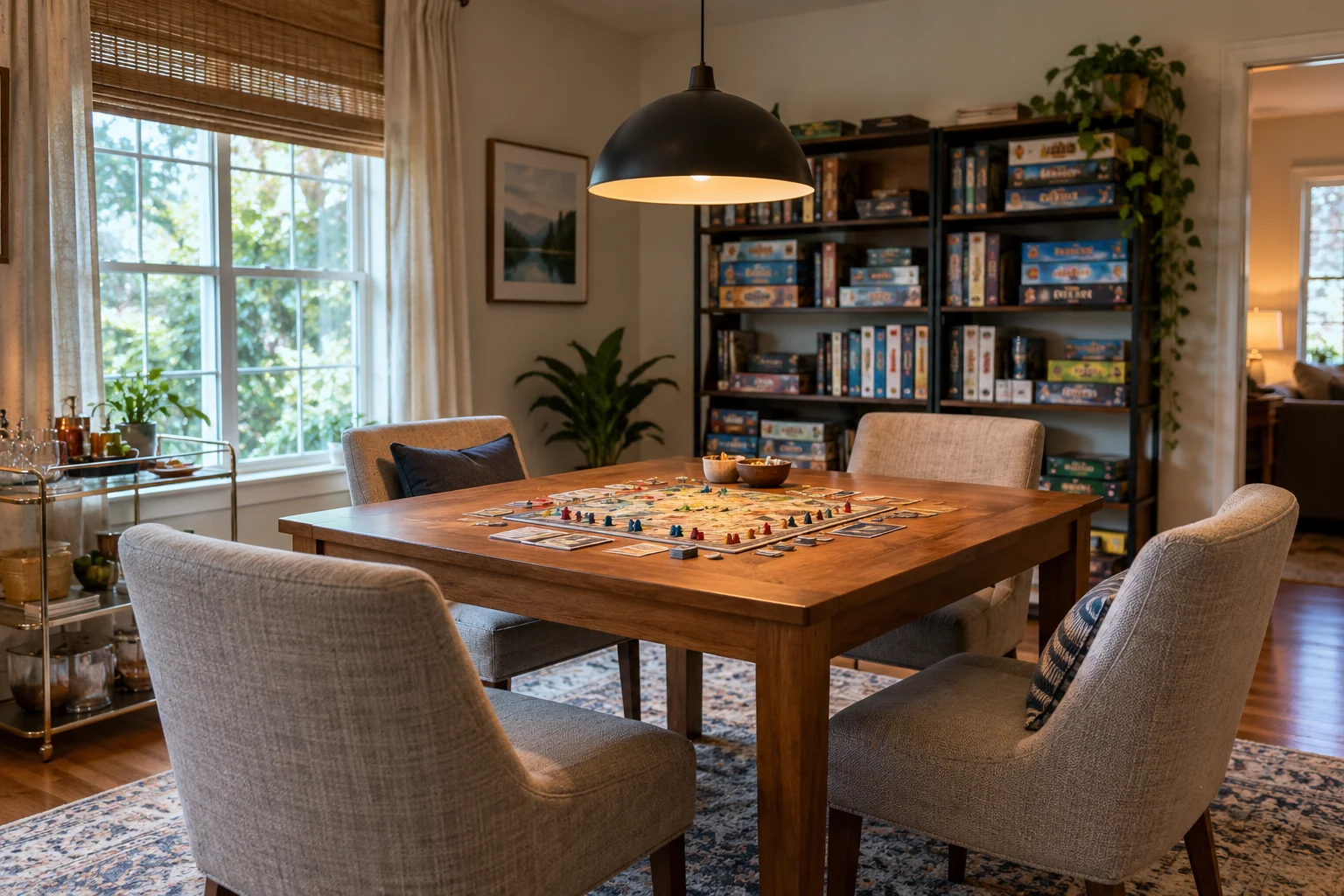
A useful game room is easy to play in and easy to reset afterward. These details make the biggest difference:
- Choose the main activity. Give your household’s favorite game the space it needs.
- Leave room for players. Include cue strokes, moving rods, pulled-out chairs, and walking routes.
- Provide spectator seating. Waiting for a turn should feel comfortable.
- Light the activity. Cards need clear light; screens need controlled glare.
- Store accessories nearby. Keep equipment close to where it is used.
- Give drinks their own surface. Free up the playing area.
- Make cleanup straightforward. Everyone should know where things go.
Game Room Questions, Answered
What Should an Adult Game Room Include?
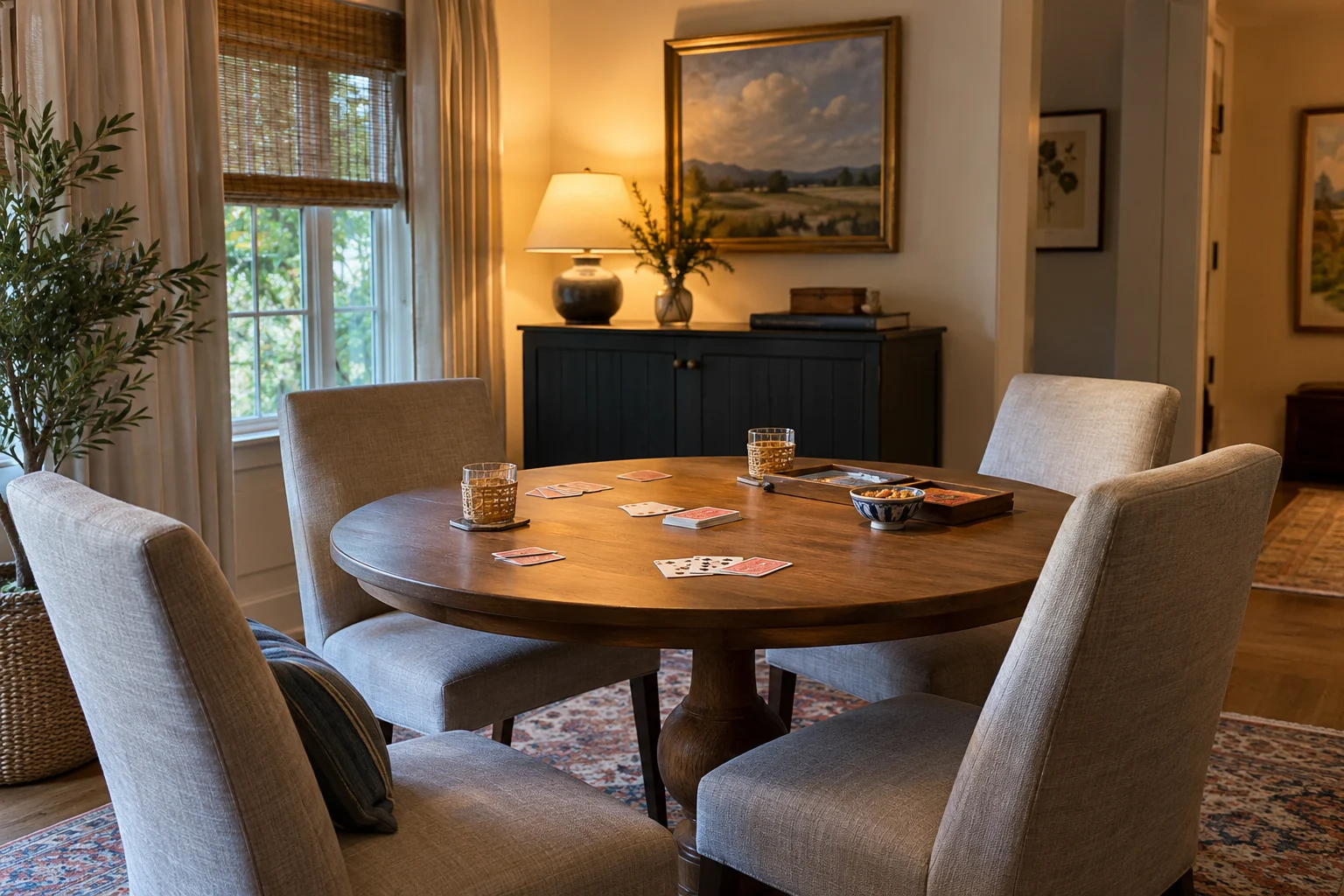
An adult game room needs a game people enjoy, comfortable seating, useful lighting, and nearby storage. A card table with upholstered chairs works well for social evenings, while a pool table or console setup can anchor a larger room.
A drinks cabinet, music, and personal artwork add atmosphere. Keep the arrangement focused on how you actually spend time with friends.
How Do You Make a Game Room Work for Kids and Adults?
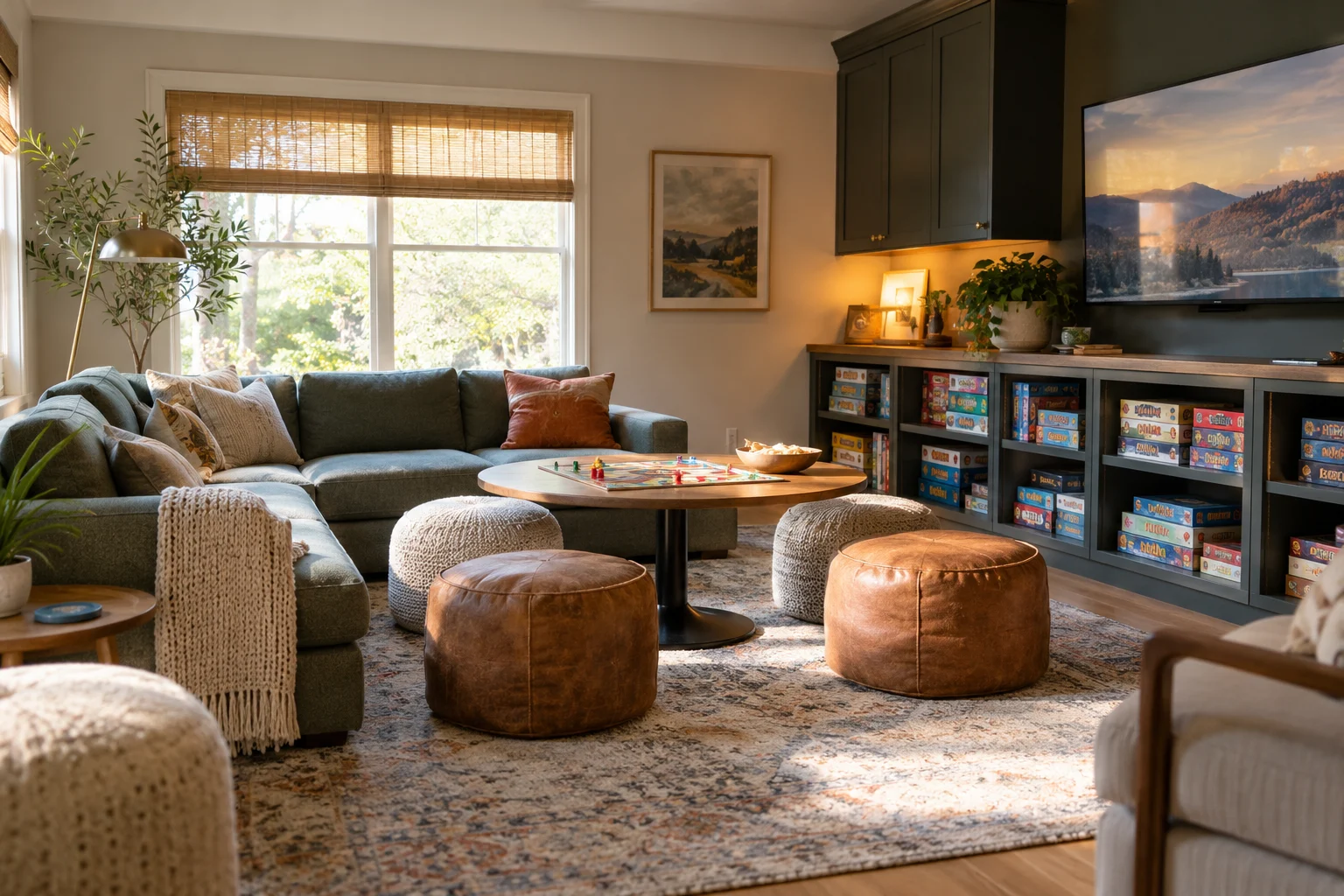
Combine an accessible family game area with flexible seating and organized storage. A table for board games, a shared screen, and some open floor space give different ages several ways to join in.
Keep age-appropriate games within children’s reach. Store small pieces, sharp game equipment, and adult bar supplies separately so the room stays easy to manage.
What Works Best in a Small Game Room?
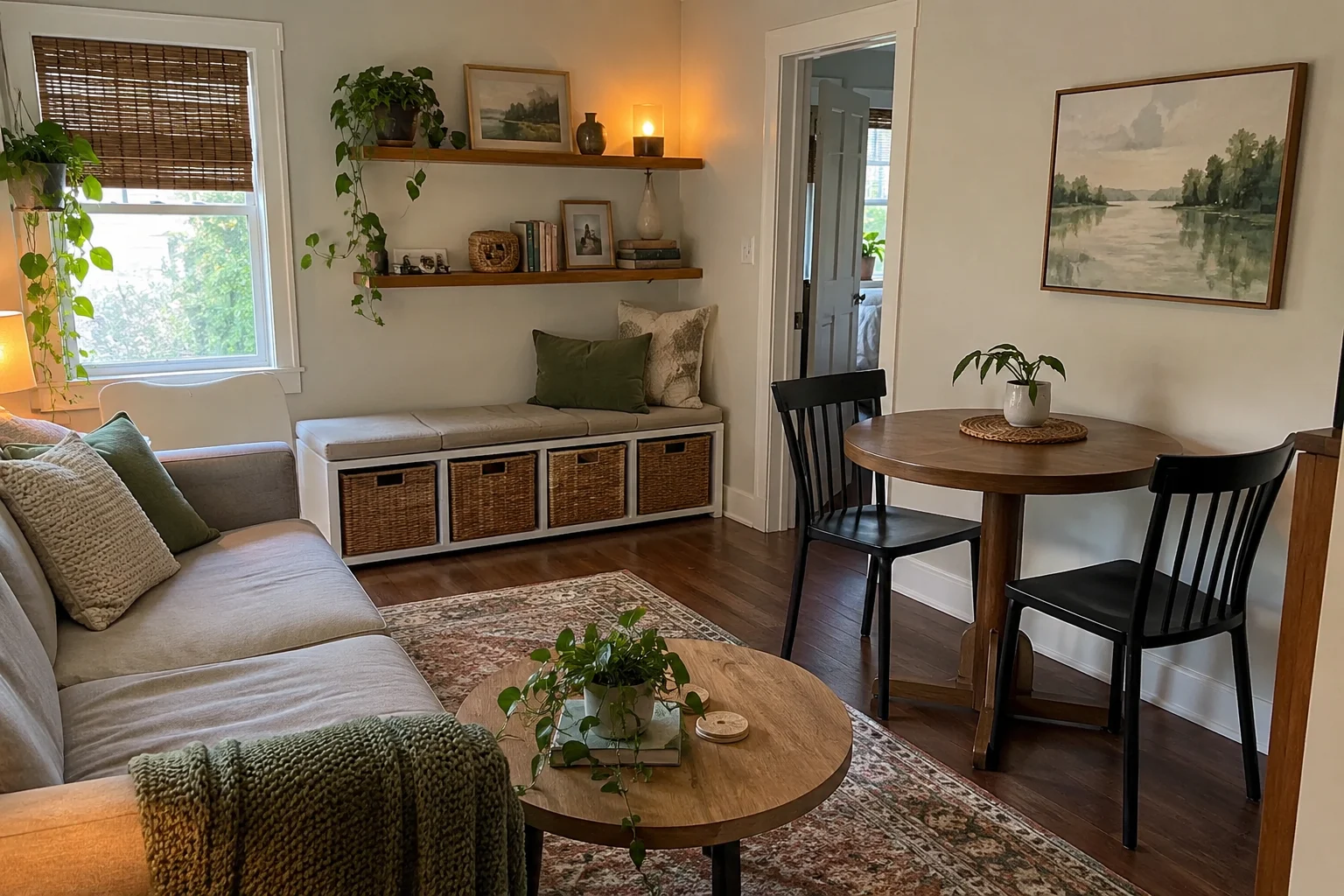
A small game room works best with one main activity and furniture that serves more than one purpose. A dining table can host cards, a storage bench can hold games, and a compact sofa can support both movies and multiplayer sessions.
Wall storage helps keep the floor clear. Folding equipment is useful when there is also a practical place to store it.
How Can You Create a Game Room on a Budget?
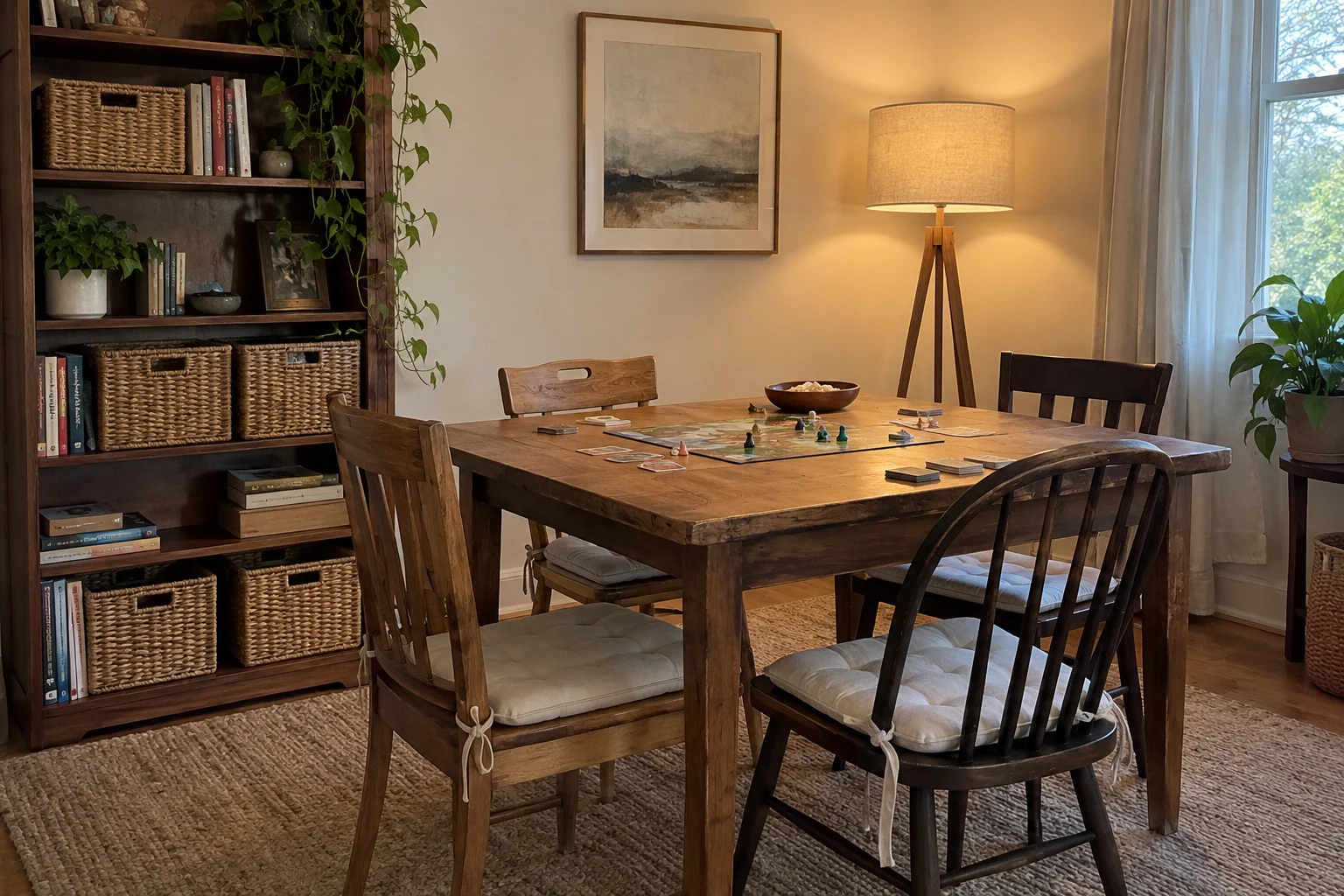
Use an existing table, seating, and storage unit, then improve the lighting and organization. A lamp, a basket for controllers, and a few framed prints can make the area feel deliberate without replacing everything.
Spend on the parts that get used most. Comfortable seating and a workable playing surface will make a bigger everyday difference than filling the room with decorative accessories.
How Do You Make a Game Room Feel More Grown-Up?
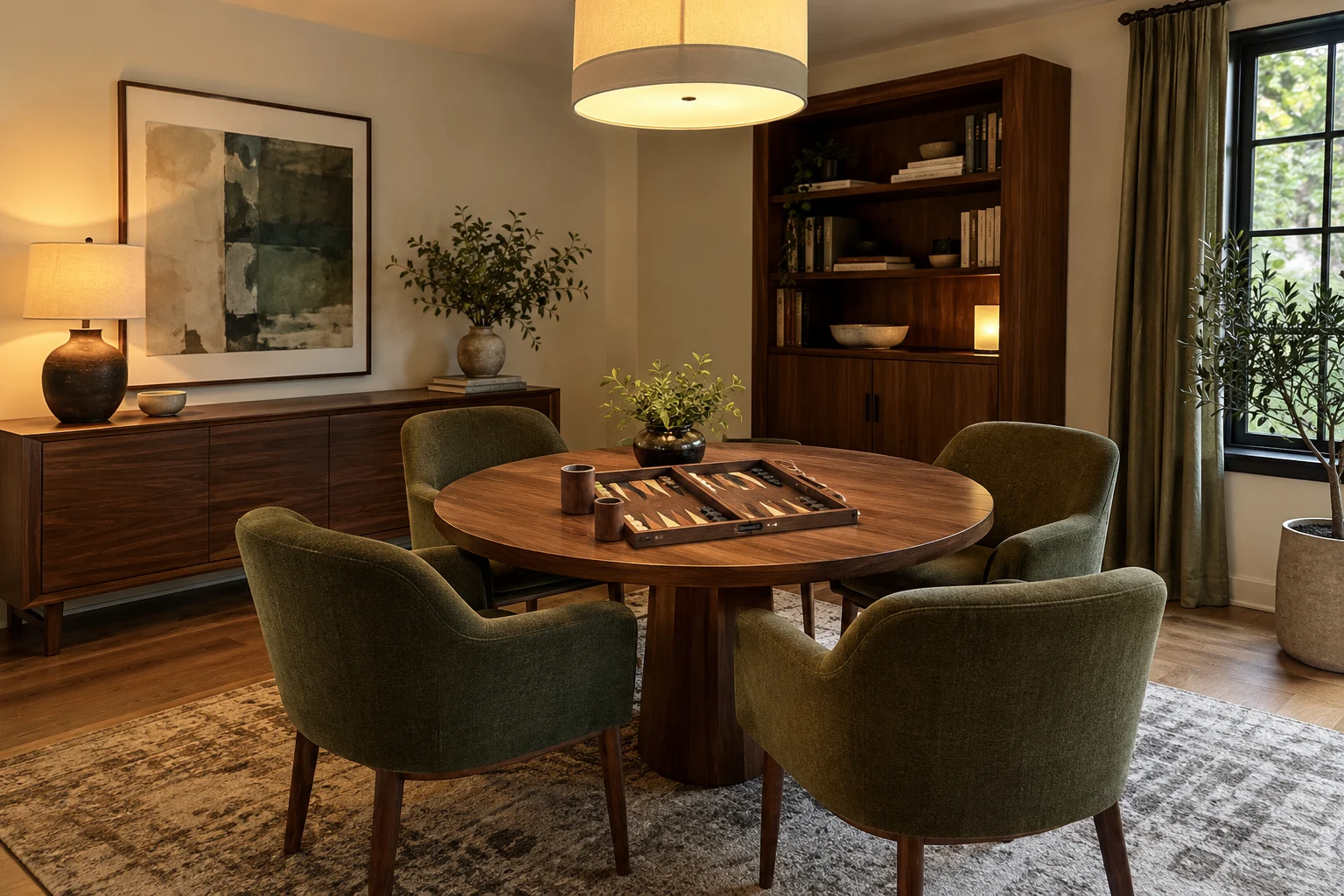
Use a consistent color palette, comfortable furniture, and a smaller selection of personal decor. Wood finishes, upholstered seating, and warm lighting help a game room feel connected to the rest of the home.
Let a favorite game or collection provide the personality. Closed storage keeps packaging, spare cables, and loose accessories from dominating the room.
Do Acoustic Panels Soundproof a Game Room?
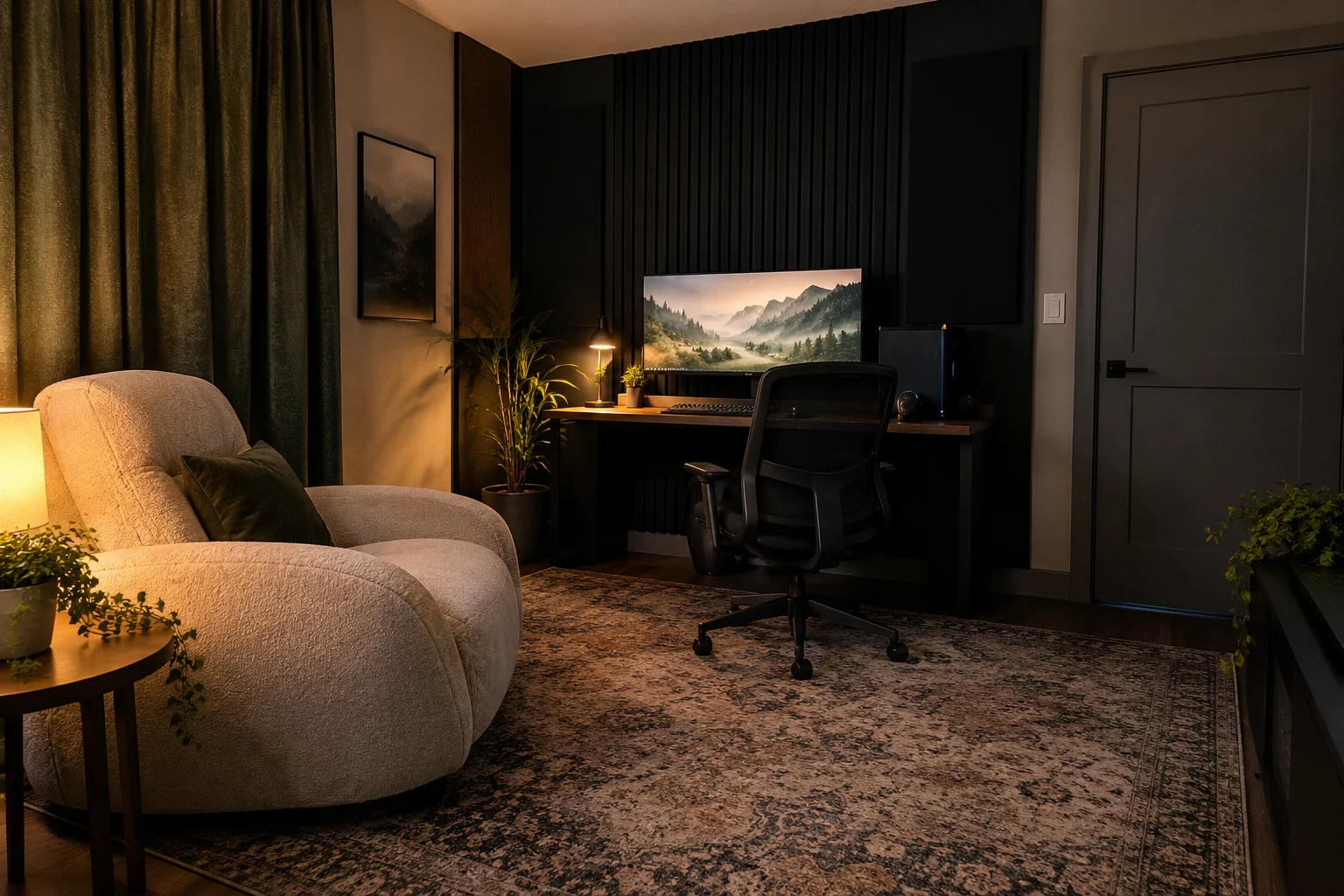
Acoustic panels help reduce echo and reverberation inside the room. They can improve how voices and speakers sound in a space with many hard surfaces.
Sound isolation between rooms depends on the building itself, including doors, walls, and gaps. Rugs, curtains, and panels are useful for room acoustics, while reducing noise transfer requires a different approach.
Shop the Game-Night Favorites
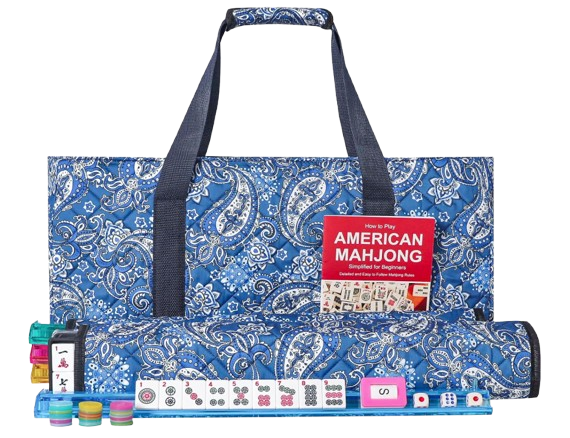 GUSTARIA American Mahjong SetA 166-tile set with four rack-and-pusher combinations and a blue patterned carrying bag.
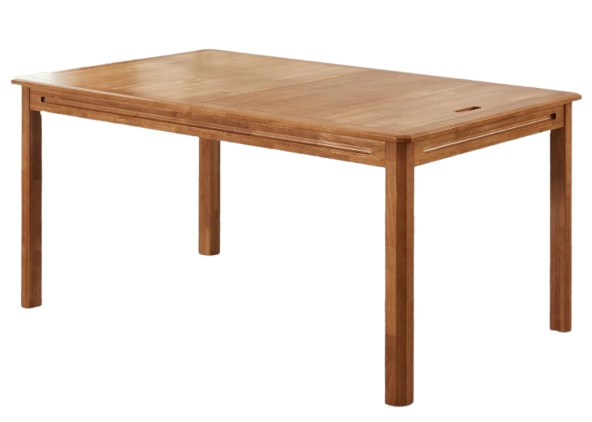 Brimhart Board Game Table With Removable TopA dining-and-gaming table with a recessed 57-by-33-inch play area, removable cover, play mat, and detachable cup holders.
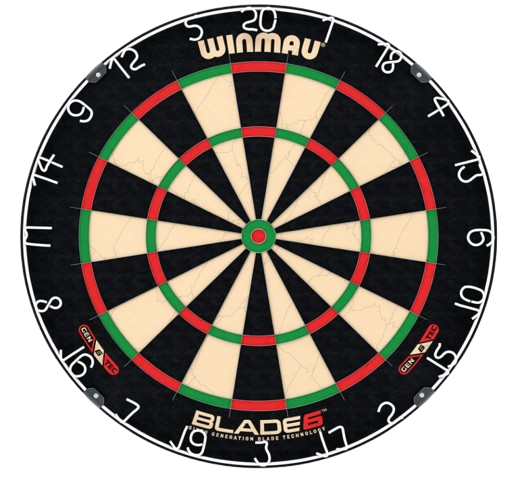 WINMAU Blade 6 Single Core DartboardA sisal dartboard with thin scoring wires and adjustable mounting. Cabinet and surround are separate additions.
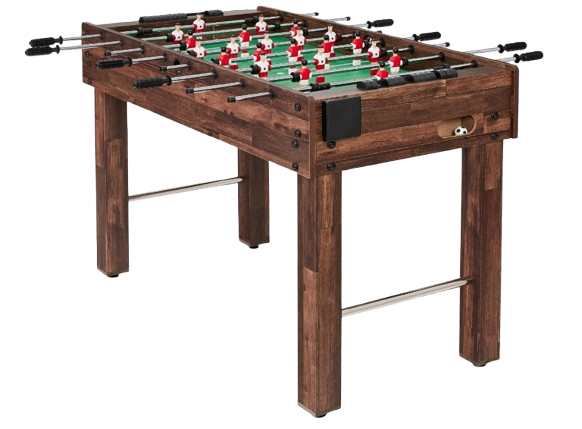 Best Choice Products 48-Inch Foosball TableA wood-look home foosball table with two balls and two cup holders. Allow room for rods and players.
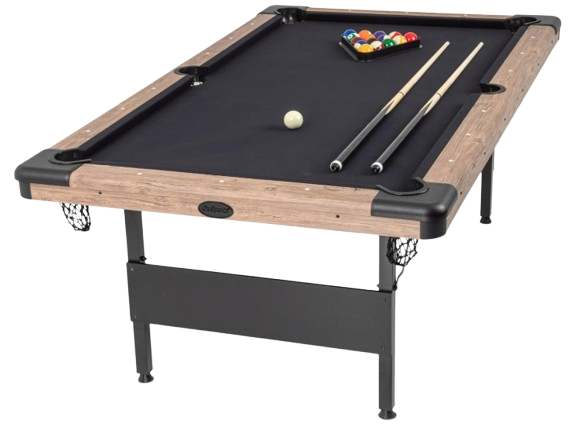 GoSports 7-Foot Portable Billiards TableAn oak-look folding table with balls, two cues, chalk, and a brush. Recommended minimum room: 16 by 13 feet.
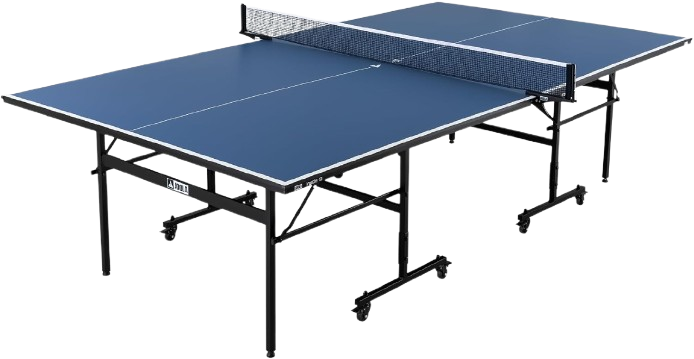 JOOLA Inside 13 Table Tennis TableA folding indoor table with lockable wheels, clamp-on net, and solo playback position. Paddles are sold separately.
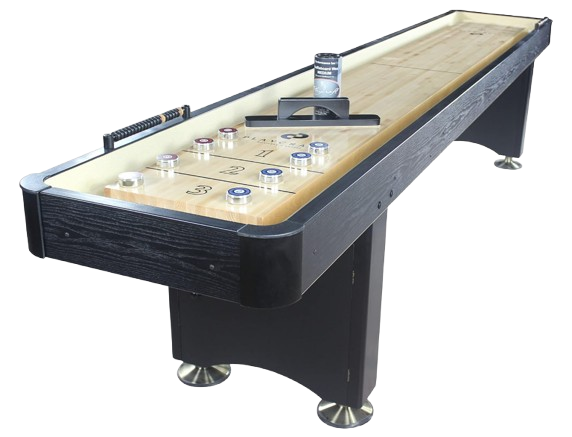 Playcraft Woodbridge Shuffleboard TableA furniture-style shuffleboard table with eight pucks, scoring abacus, brush, speed wax, and accessory storage.
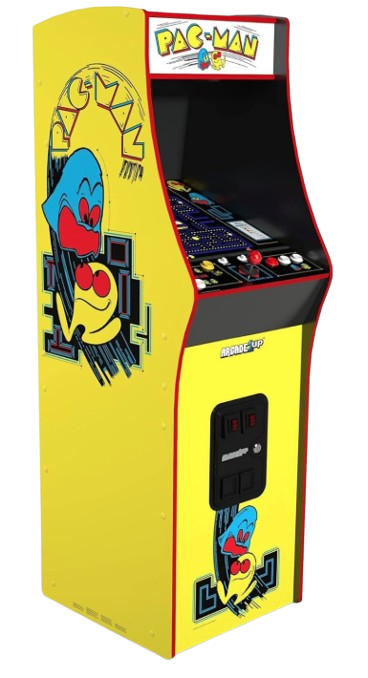 Arcade1Up PAC-MAN Deluxe Arcade CabinetAn illuminated retro cabinet with 14 classic games, including PAC-MAN, Galaga, and Dig Dug.
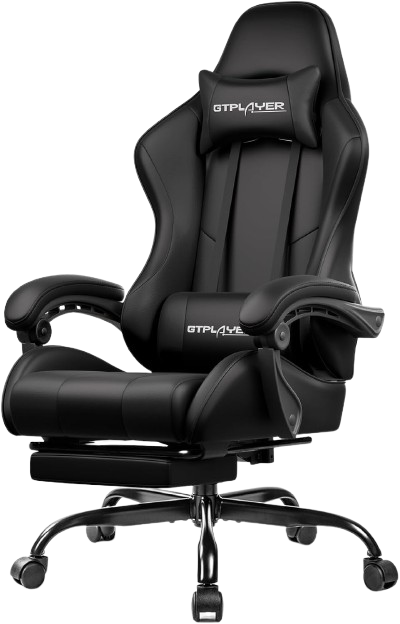 GTPLAYER Gaming Chair With FootrestA black faux-leather chair with adjustable seat height, swivel base, headrest, lumbar cushion, and pull-out footrest.
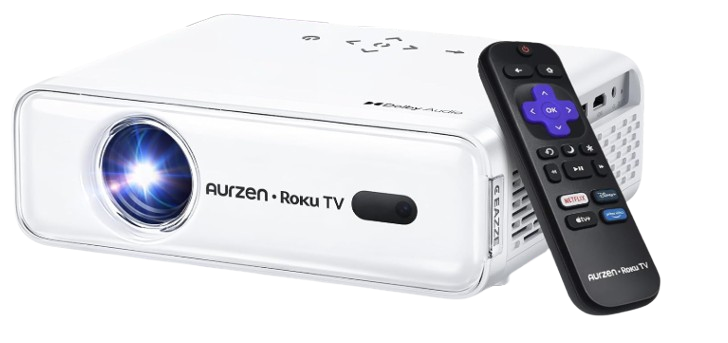 Aurzen Roku TV D1R ProjectorA 1080p projector with built-in Roku streaming, autofocus, and automatic keystone correction for movie nights.
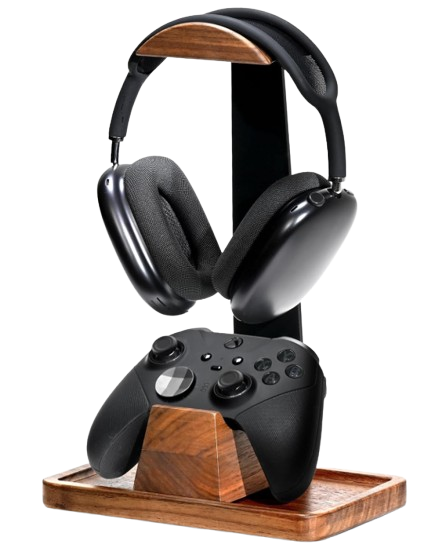 UPERGO Walnut Headphone and Controller StandA walnut stand for a headset and controller, with a storage base for small accessories. Headset and controller shown for styling.
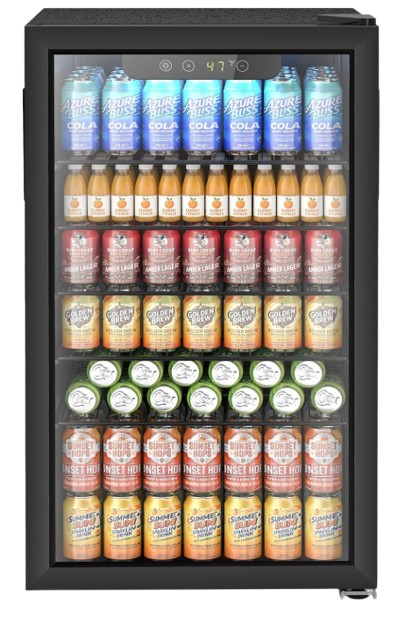 Electactic 3.2-Cubic-Foot Beverage RefrigeratorA glass-door drinks refrigerator with adjustable shelving and temperature controls for a refreshment station.
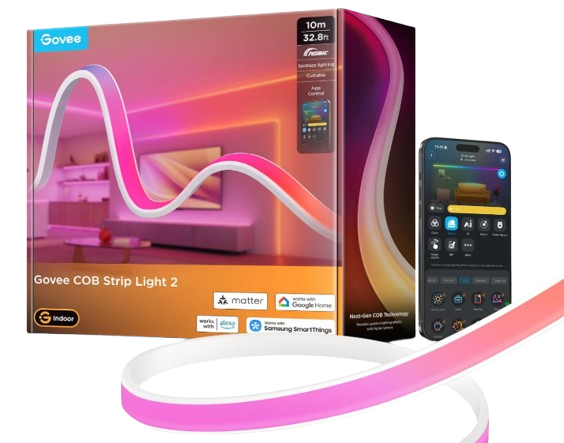 Govee COB LED Strip Lights 2Diffused, color-changing strip lighting for shelves and gaming setups. Cut-off sections cannot be reused.
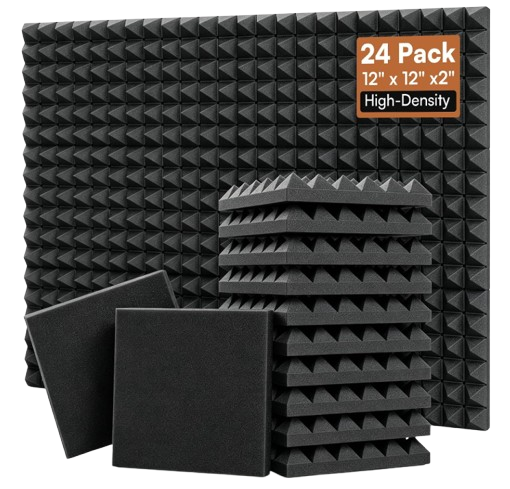 SD SODOCT Pyramid Acoustic Foam PanelsTwenty-four two-inch-thick panels for reducing echo and reflections around a gaming or media area.