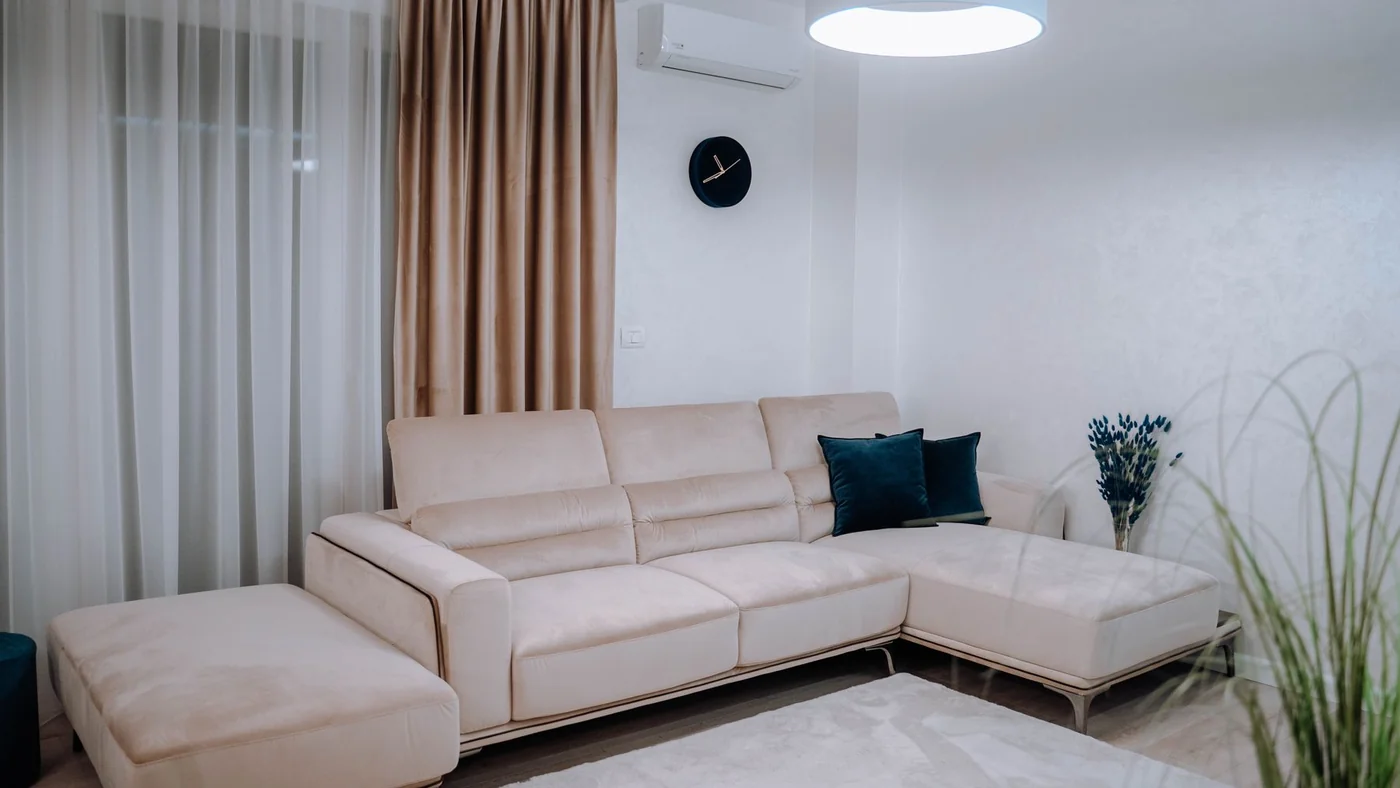
21 Kid-Friendly Living Room Ideas You’ll Still Love After Bedtime

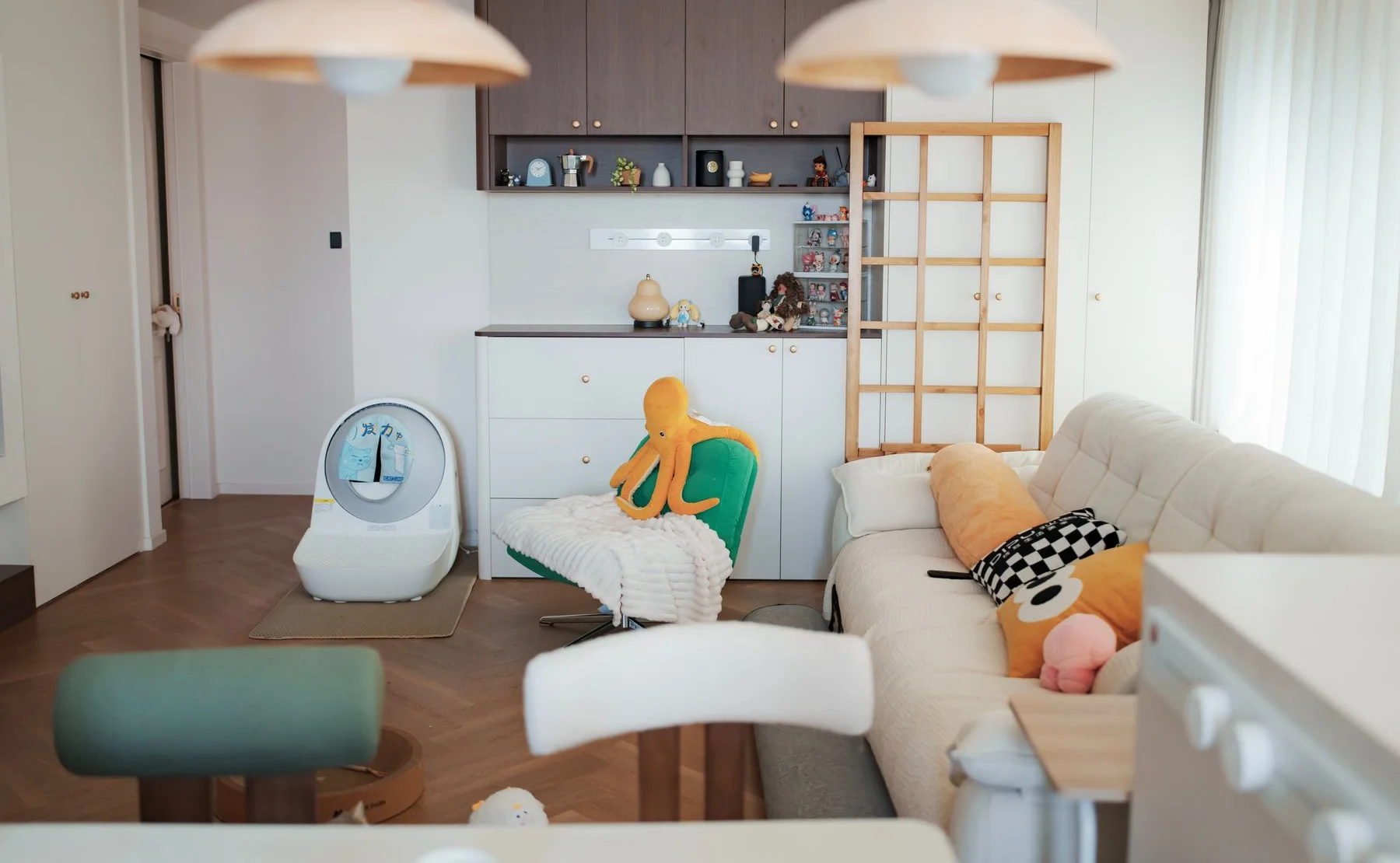
The living room is where everyone gathers, which means it may also host a cushion fort, a trail of building blocks and the cup of coffee you keep trying to set down. These kid-friendly living room ideas are for a room that can handle a busy afternoon and still feel good to sit in once the children are asleep.
The quick answer
- Washable sofa covers and an easy-to-clean rug make everyday spills easier to manage.
- Use reachable toy storage so children can find favorites and help put them away.
- Softer furniture shapes and clear floor space for movement and play help the room work for the whole family.
You can use many of the ideas with what you already have. Here are a few quick product picks for specific problems, followed by 21 ways to make the room work for the whole family.
Quick Picks for the Problems You’re Trying to Solve
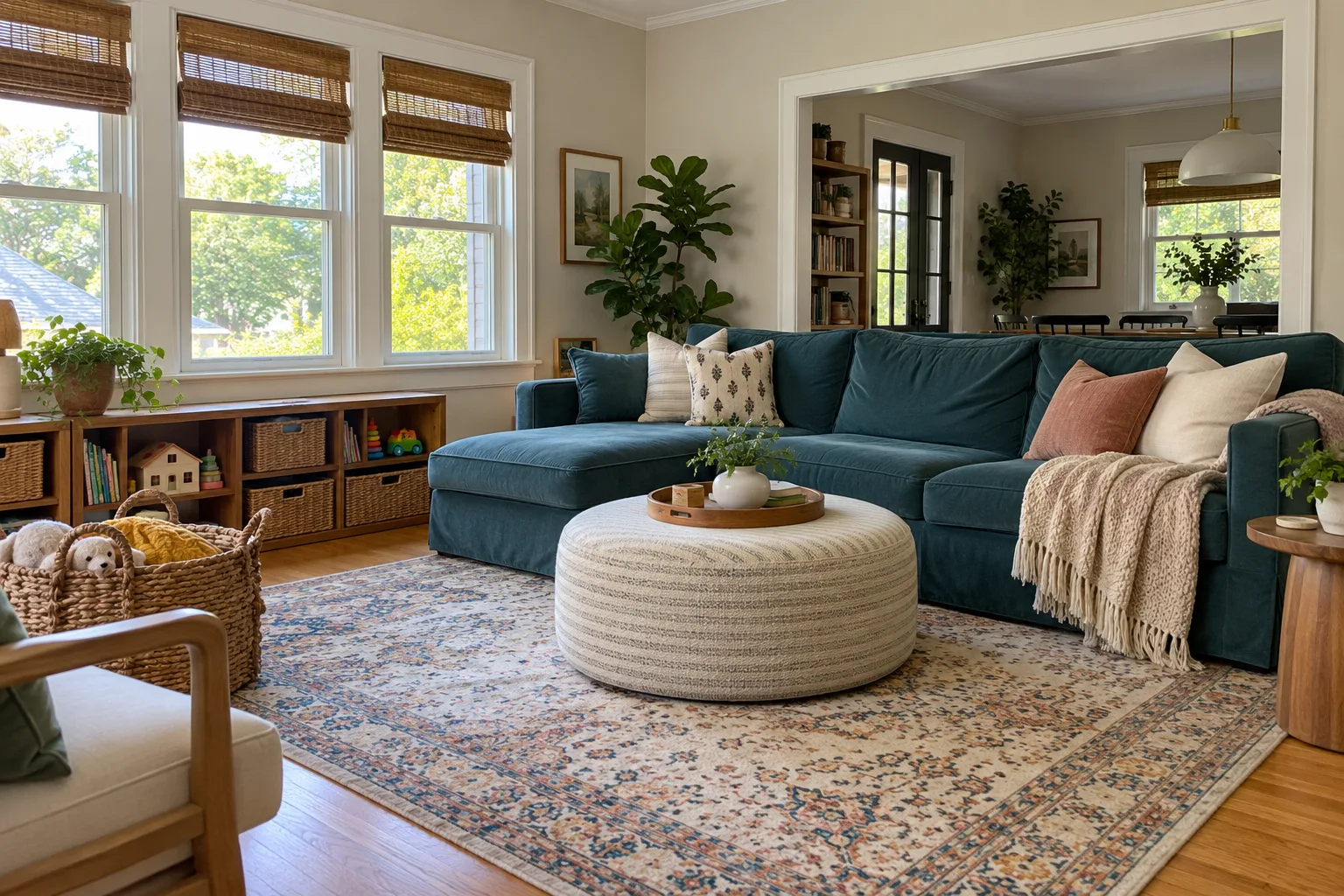
Choose the piece that solves your biggest daily annoyance first. A washable cover helps with spills; a storage bench helps when toys have nowhere to go.
- Washable sofa cover: IKEA KIVIK
- Washable rugs: Ruggable Iris Apfel Jingle Jungle or Lorena Canals cotton rugs
- Flexible play seat, ages 3+: Nugget Chunk
- Extra seat and household storage: Quince Oak and Performance Boucle Storage Bench
- Soft coffee-table alternative: House of Noa Bennett
Already own something that works? Keep it. The ideas below are just as useful when you rearrange what you have.
1. Choose a Sofa Whose Covers Can Go in the Wash
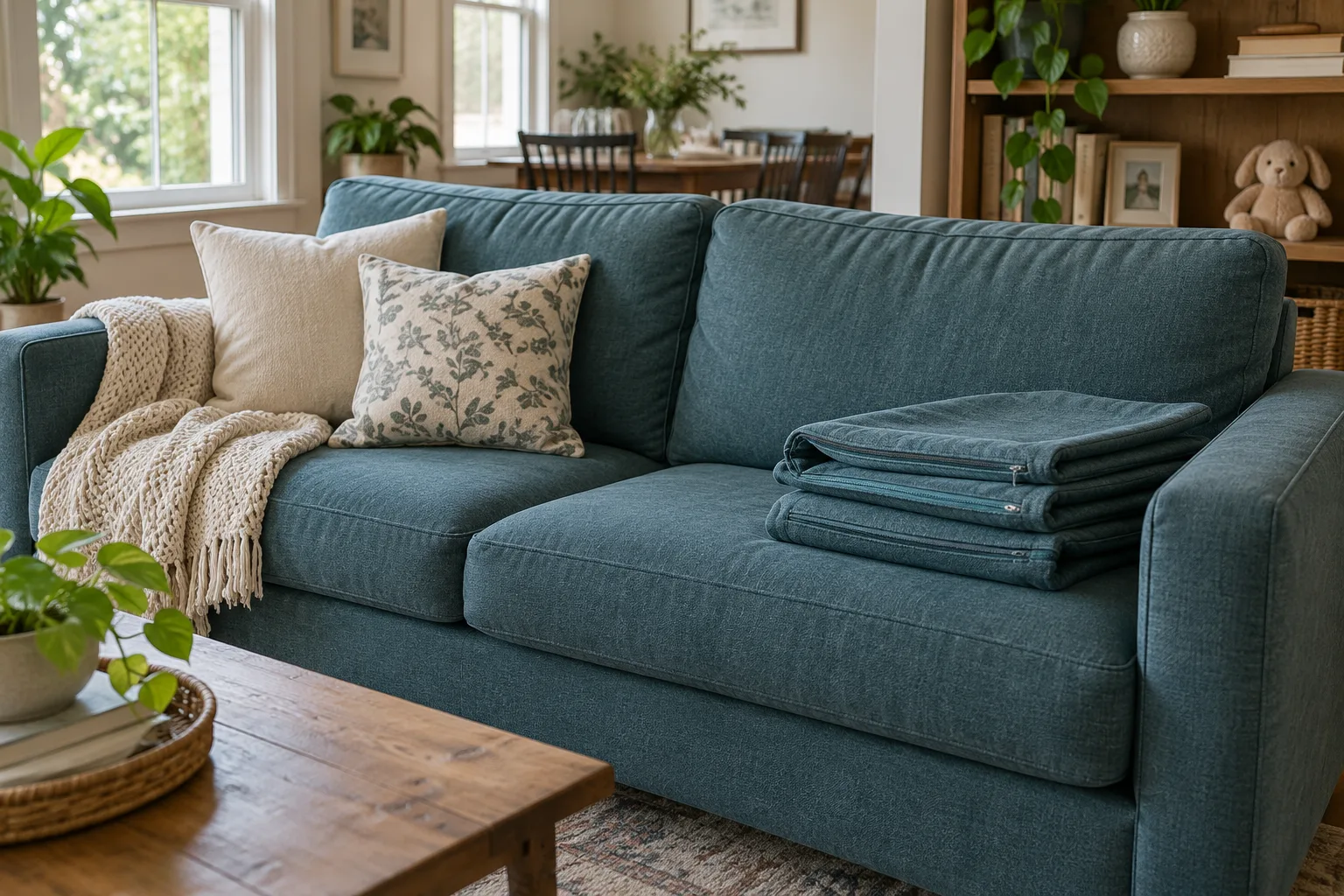
For frequent spills, look for a sofa with covers the manufacturer says you can machine wash. Removable does not automatically mean washable, so read the care label before you buy.
The IKEA KIVIK in Kelinge has a removable machine-washable cover. Its instructions say not to tumble dry it, which matters when the sofa needs to be ready again by movie night.
Check whether replacement covers are available and where the cushions can dry. A practical fabric still needs a care routine you can actually fit into your week.
2. Leave Room for the Family Around the Sofa, Too
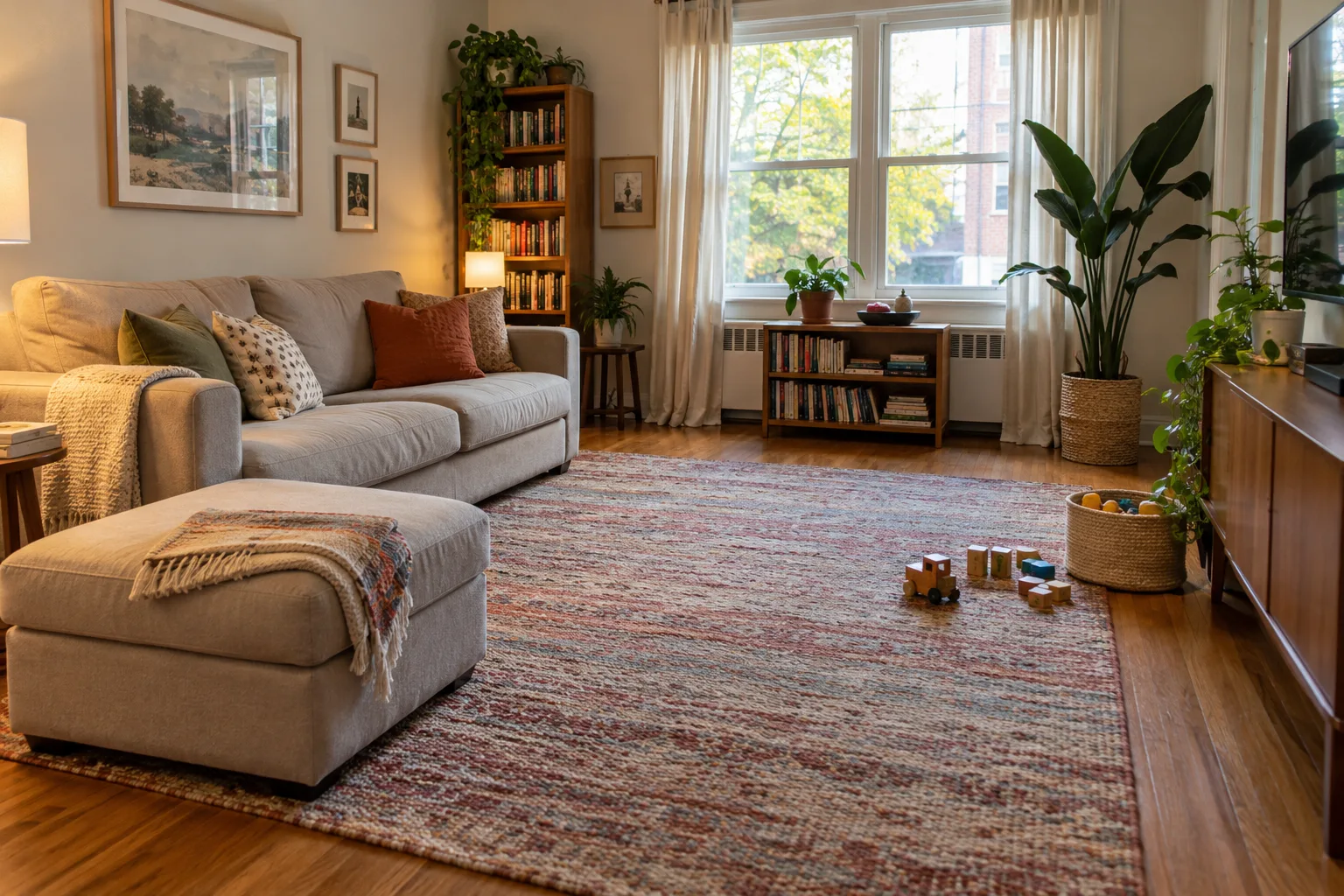
Give the family enough seats while keeping a clear route through the room. A huge sectional can be cozy, but the best layout still leaves space to walk and play.
A chaise may become everyone’s favorite movie spot. If it blocks the only path to the kitchen, try a smaller sofa with a movable ottoman instead.
Have a larger room? Our soft sectional picks can help you compare generous seating without losing sight of the room’s floor plan.
3. Read the Cleaning Instructions Before Falling for the Fabric
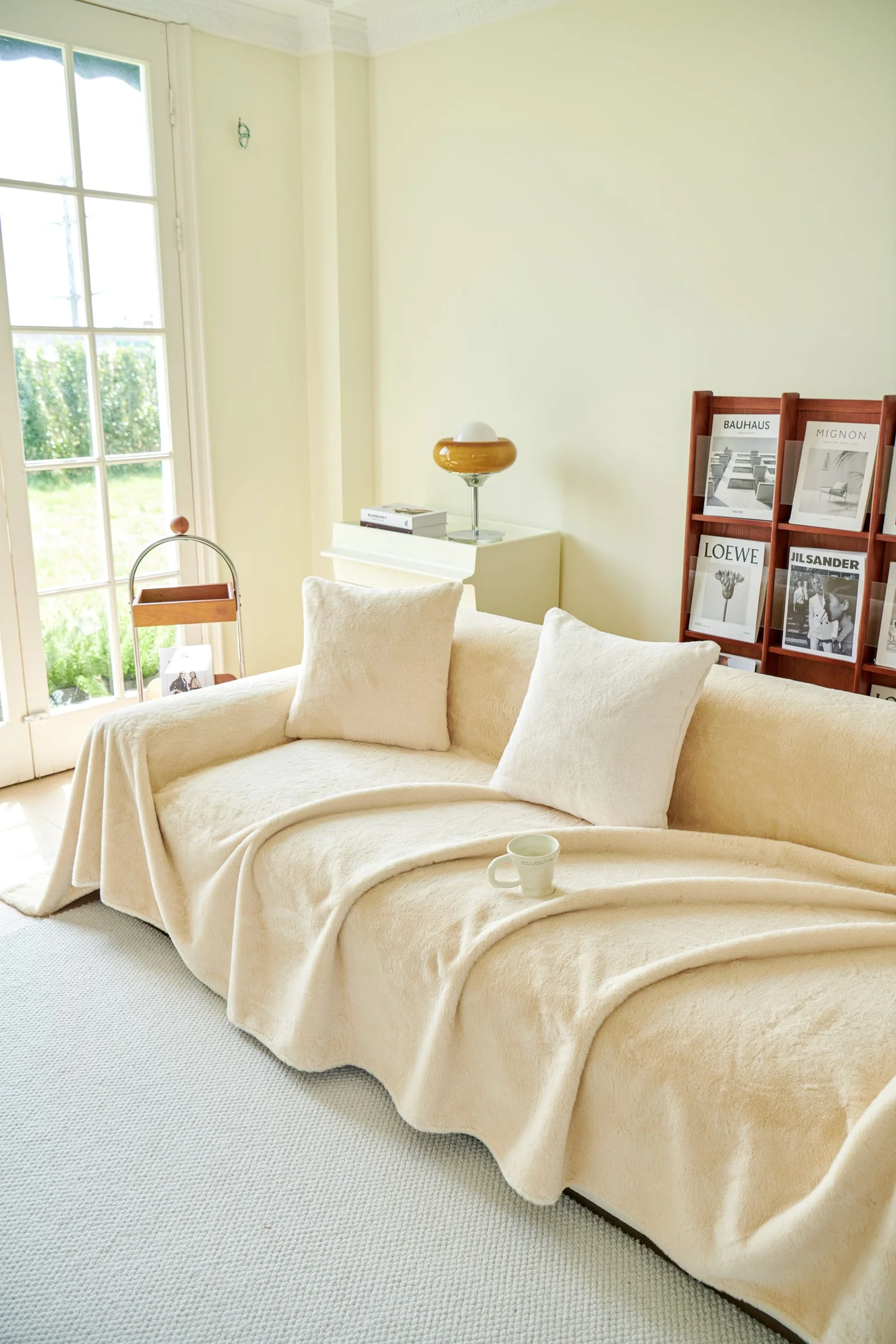
Match the fabric care instructions to the cleaning you’re willing to do. A cover you can wash at home is different from upholstery that only tolerates spot cleaning.
Look up the exact fabric and colorway. A performance label may describe stain resistance or durability, but it does not promise that the whole cover belongs in a washing machine.
If your current sofa needs attention, our couch stain guide walks through checking the care code before treating a mark. Note: Always follow the sofa maker’s instructions first.
4. Pick Colors That Forgive Your Particular Kind of Mess
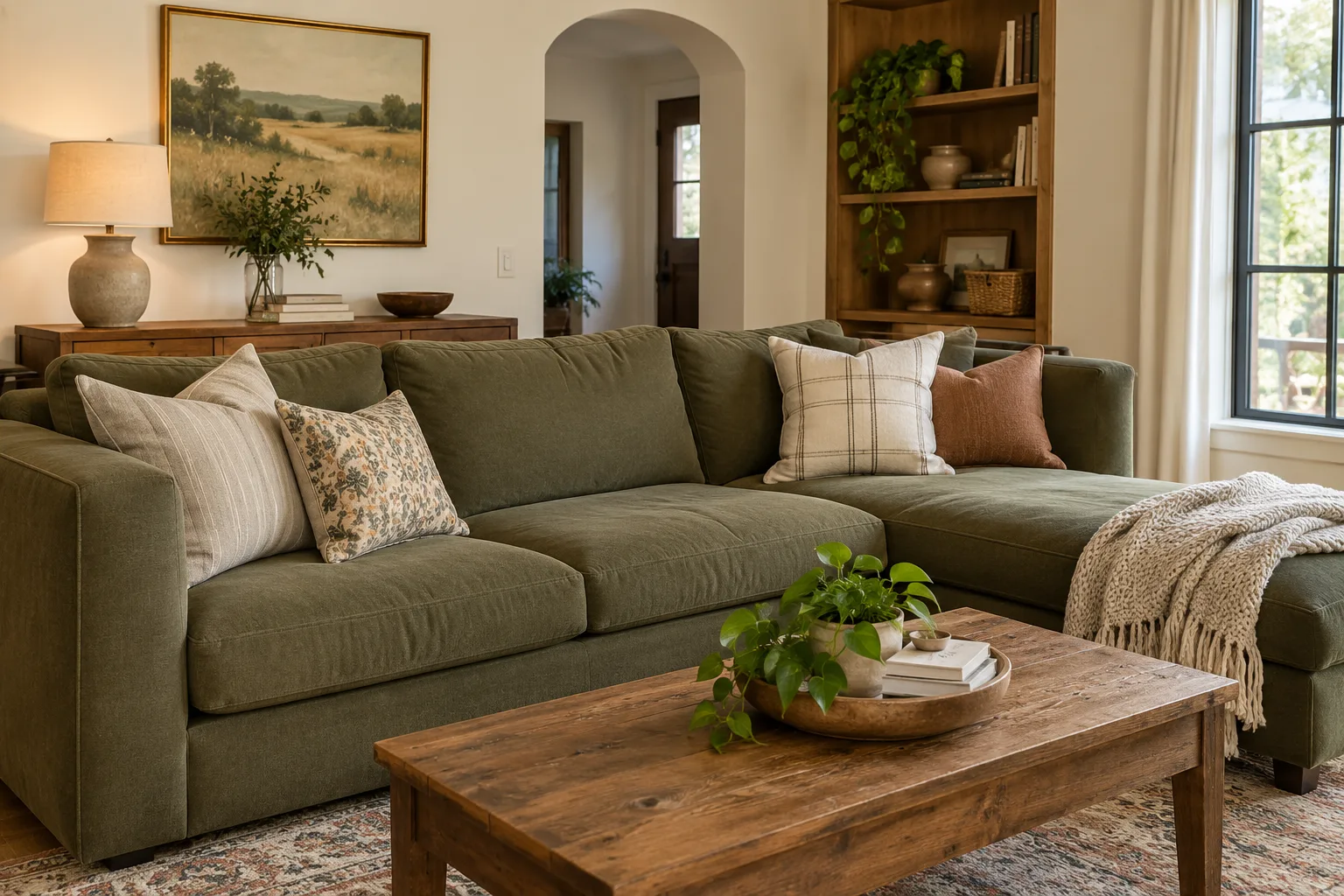
Choose sofa and rug colors around the marks your household really makes. Dark furniture is not a universal answer: pale crumbs show on charcoal, while dark pet hair shows on cream.
Midtone greens, browns and blues, or a subtle woven pattern, can be more forgiving between cleanups. For sticky fingerprints, a surface you can wipe may matter more than the color.
Take a fabric swatch home and look at it in morning and evening light. The shade that looked perfect in a showroom may behave differently beside your own floor and pets.
5. Buy a Washable Rug You Can Actually Wash
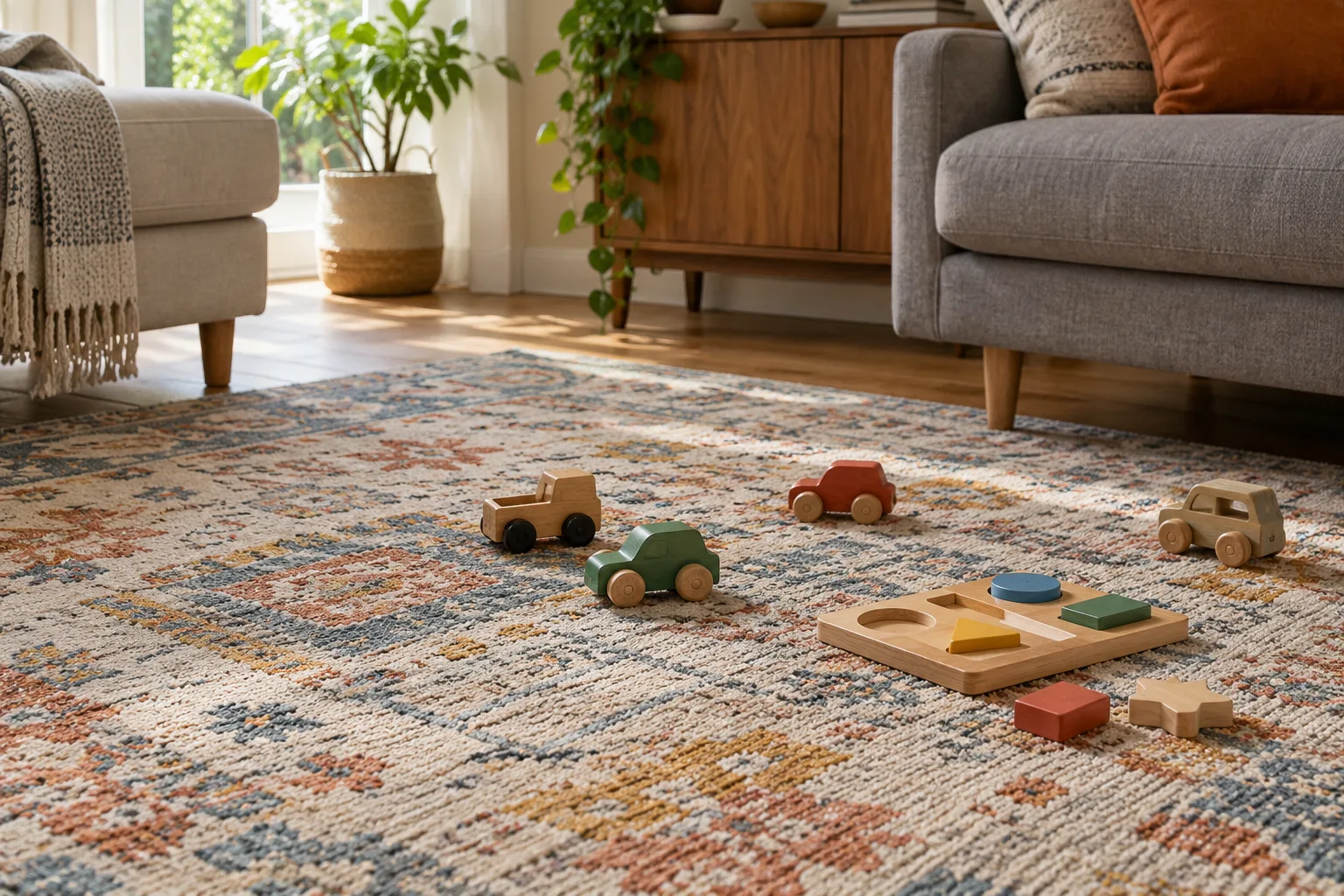
Check the care instructions for the exact rug size and construction before ordering. A washable label only helps when the rug fits your washer and your drying plan. The Ruggable Iris Apfel Jingle Jungle brings playful animal illustrations to the floor.
Think about what happens on that rug most days. A flatter surface makes toy cars and puzzles easier to use, while a cushier one feels nicer for floor reading.
If a softer cotton feel is the priority, look through Lorena Canals washable cotton rugs. Check the care directions for the specific design and size you like.
Use our rug size guide to check the layout, then read the brand’s washing guidance. An oversized rug can be awkward even when the label says machine washable.
6. Give the Floor Some Breathing Room

Move or remove one piece of furniture to claim a useful patch of floor. You may be surprised how much play space appears when an occasional chair shifts a foot toward the wall.
Try sliding the coffee table aside during the day or swapping two little side tables for one. Keep the route between doors and seating open so playtime does not turn into an obstacle course.
This can be a zero-cost change. Mark the area by actually sitting on the floor with a game, then see whether everyone can still move around comfortably.
7. Round Off the Coffee-Table Conversation
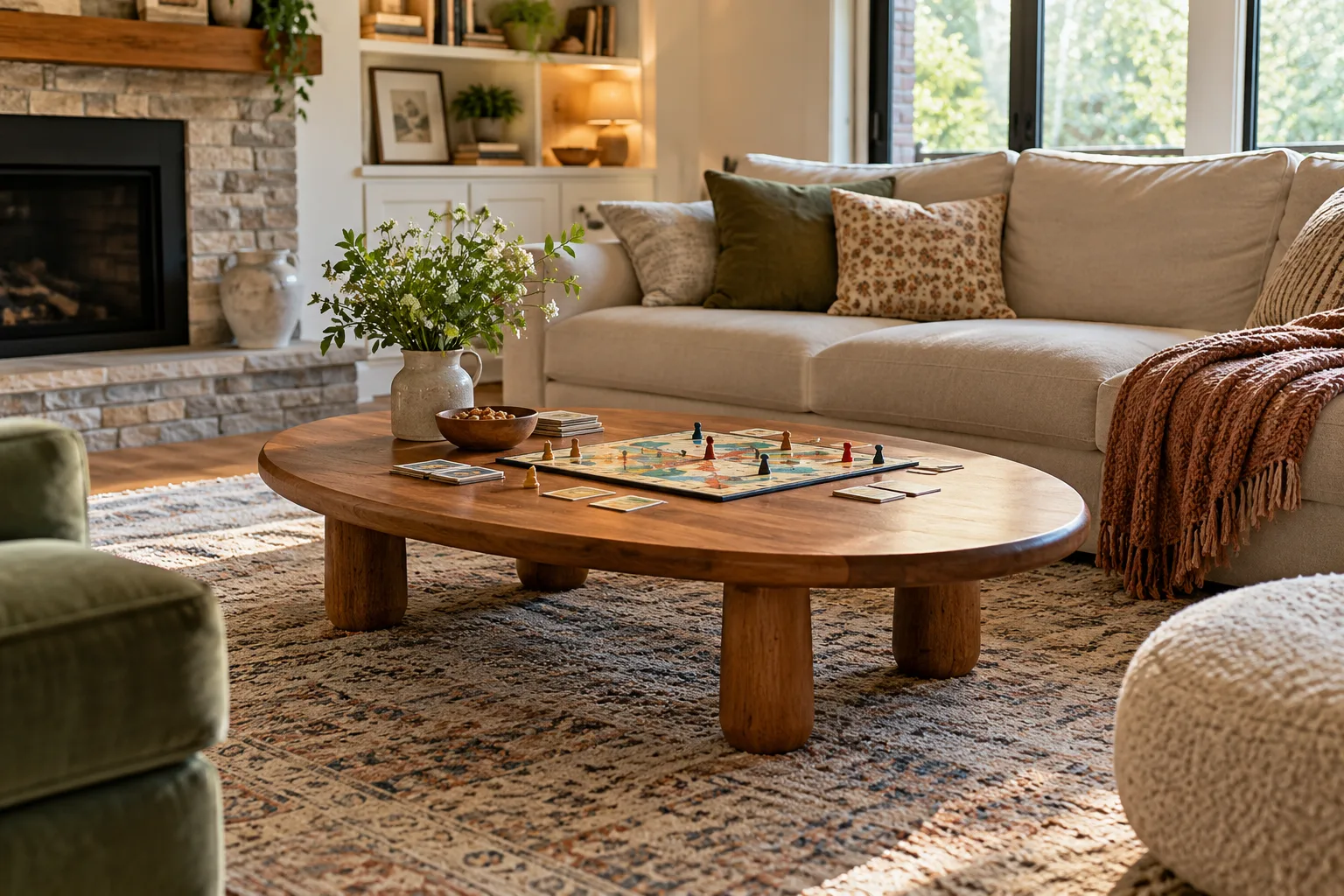
A round or oval coffee table removes sharp projecting corners while keeping a firm surface. That can suit a room where people also use the table for board games, drawing and drinks.
Look beyond the shape. A table should be stable, easy to walk around and a sensible height for the sofa. Rounded corners do not fix a wobbly base or a crowded layout.
If your existing table works, you may only need to move it away from the main play area during the busiest hours.
8. Try a Soft Centerpiece During the Toddler Years
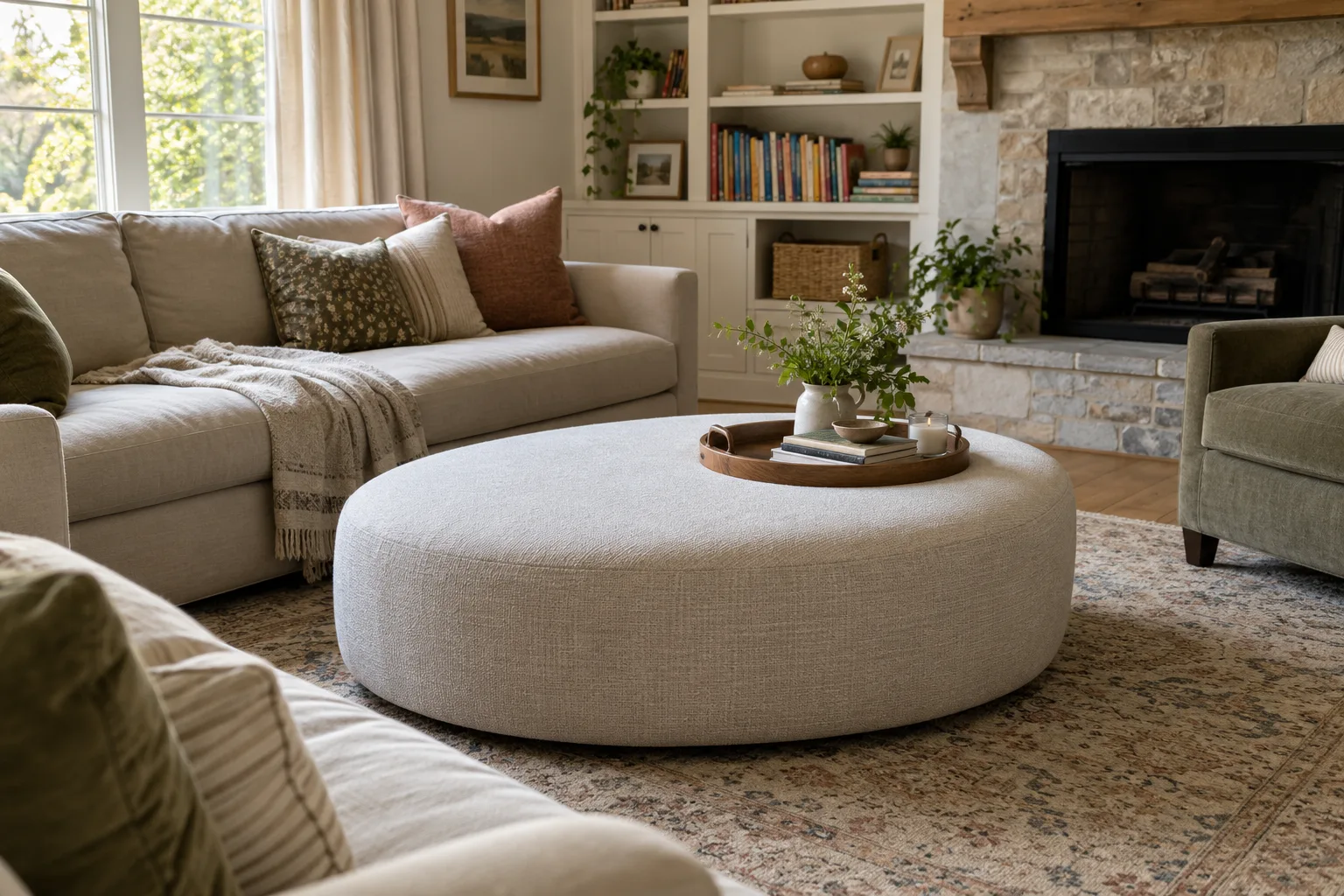
Use a padded ottoman or foam coffee table if you want a softer center surface. It gives the room a place to gather without a hard tabletop in the middle.
The House of Noa Bennett is a foam option with a removable washable cover. Availability can change, so check the current listing before planning around a particular color.
Soft surfaces are less useful for handwriting, game pieces and cups. A stable side table or tray can handle the grown-up coffee while the center stays flexible.
9. Add Play Seating That Packs Back Into One Piece
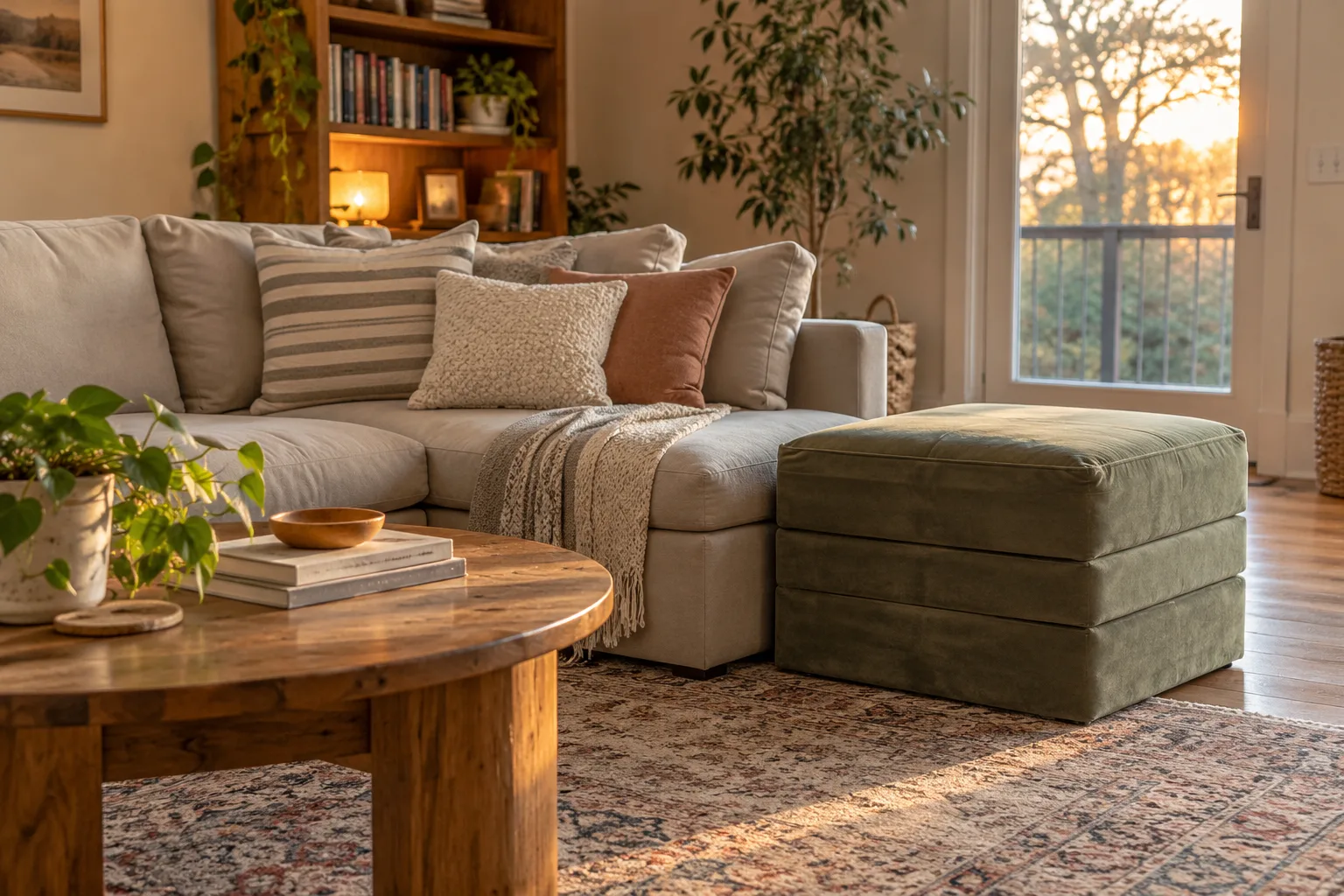
Choose movable play seating that has a clear home when the game is over. That keeps the room flexible without adding another permanent chair.
The Nugget Chunk can be a soft perch or part of a play setup, then return to its ottoman shape in the evening. Nugget lists it for ages 3 and up and gives care instructions for its washable covers.
Leave enough floor room to use the pieces safely. A play ottoman is most helpful when you can put it back without rearranging the whole room.
10. Give Kids a Corner of Their Own
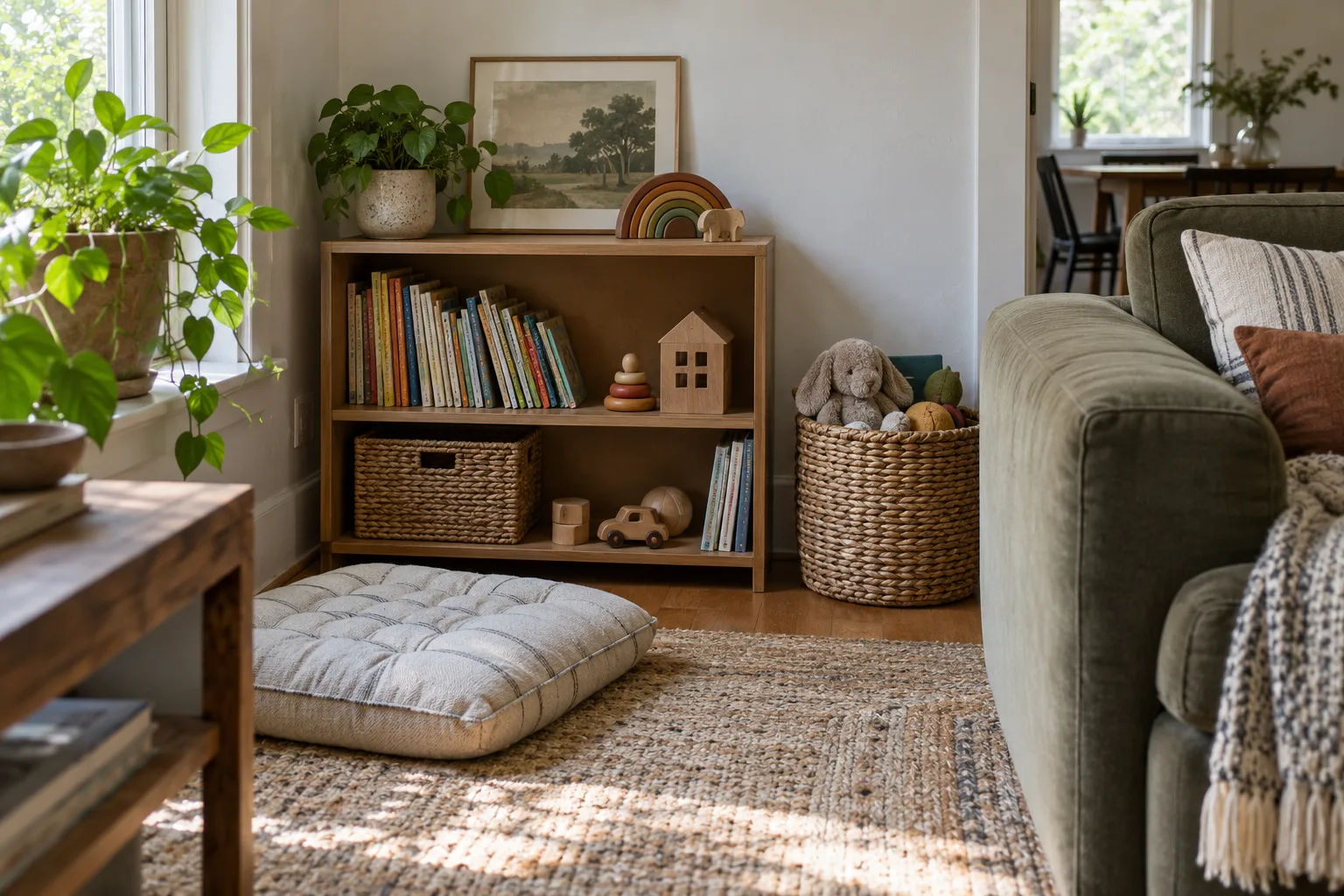
Give the play things a small, defined home within the living room. A low shelf, a basket and a comfortable floor spot can be enough.
Repeat a color or material already in the room so the corner feels connected. A wood shelf beside a wood coffee table looks intentional even when its lower shelves hold picture books.
Keep the daily favorites visible. When a child can see where something belongs, cleanup has a better chance of happening before bedtime.
11. Put Everyday Favorites Where Children Can Reach Them
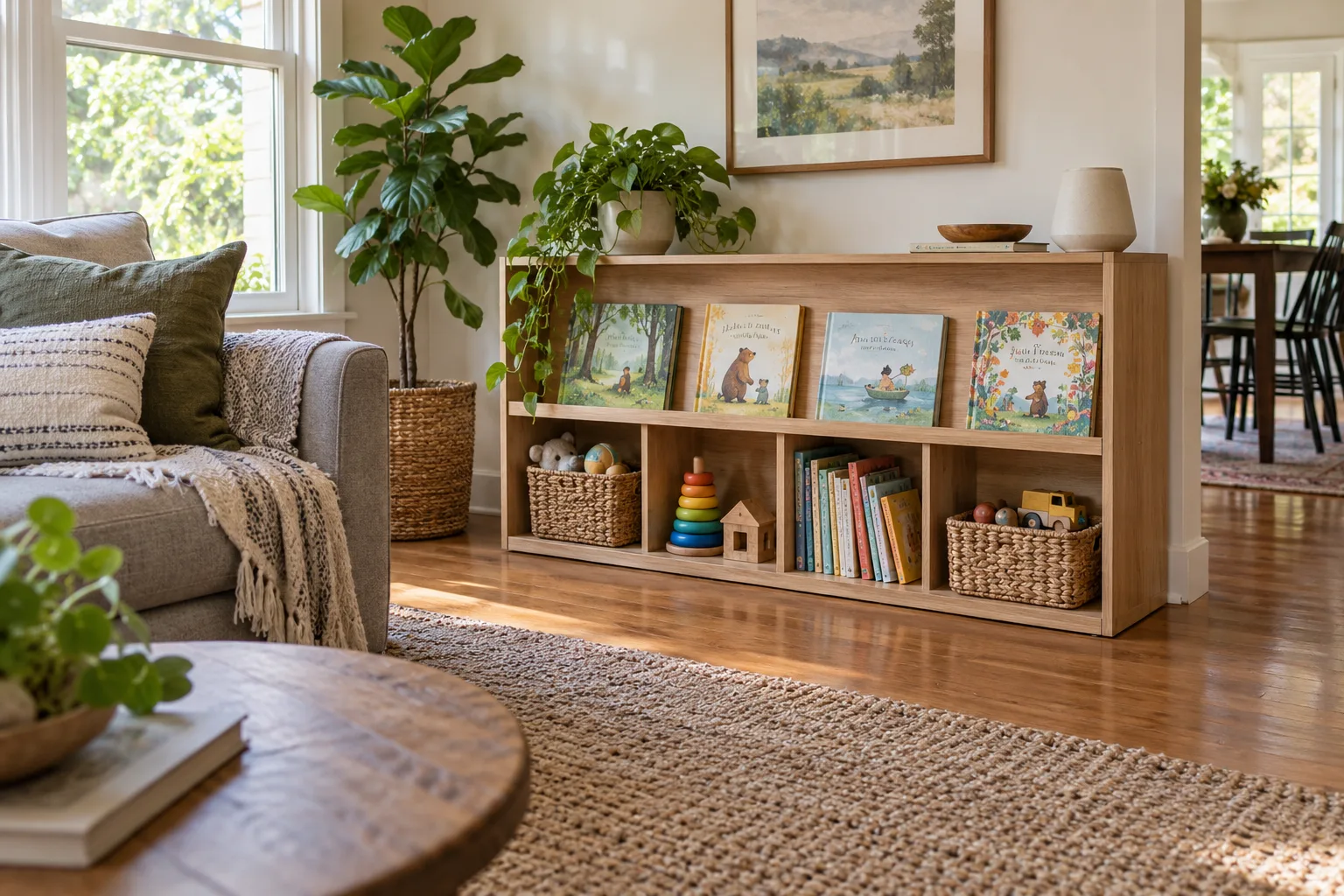
Use low, accessible shelving for a small selection of age-appropriate books and toys. Children can choose what to use and see where to return it.
Front-facing books make a simple invitation to read. Keep heavier or fragile objects out of reach and follow the furniture maker’s anchoring instructions.
You do not need a dedicated toy wall. One low shelf with a few choices often works better than a tower of bins packed too full to sort.
12. Hide the Overflow, Keep the Favorites Handy
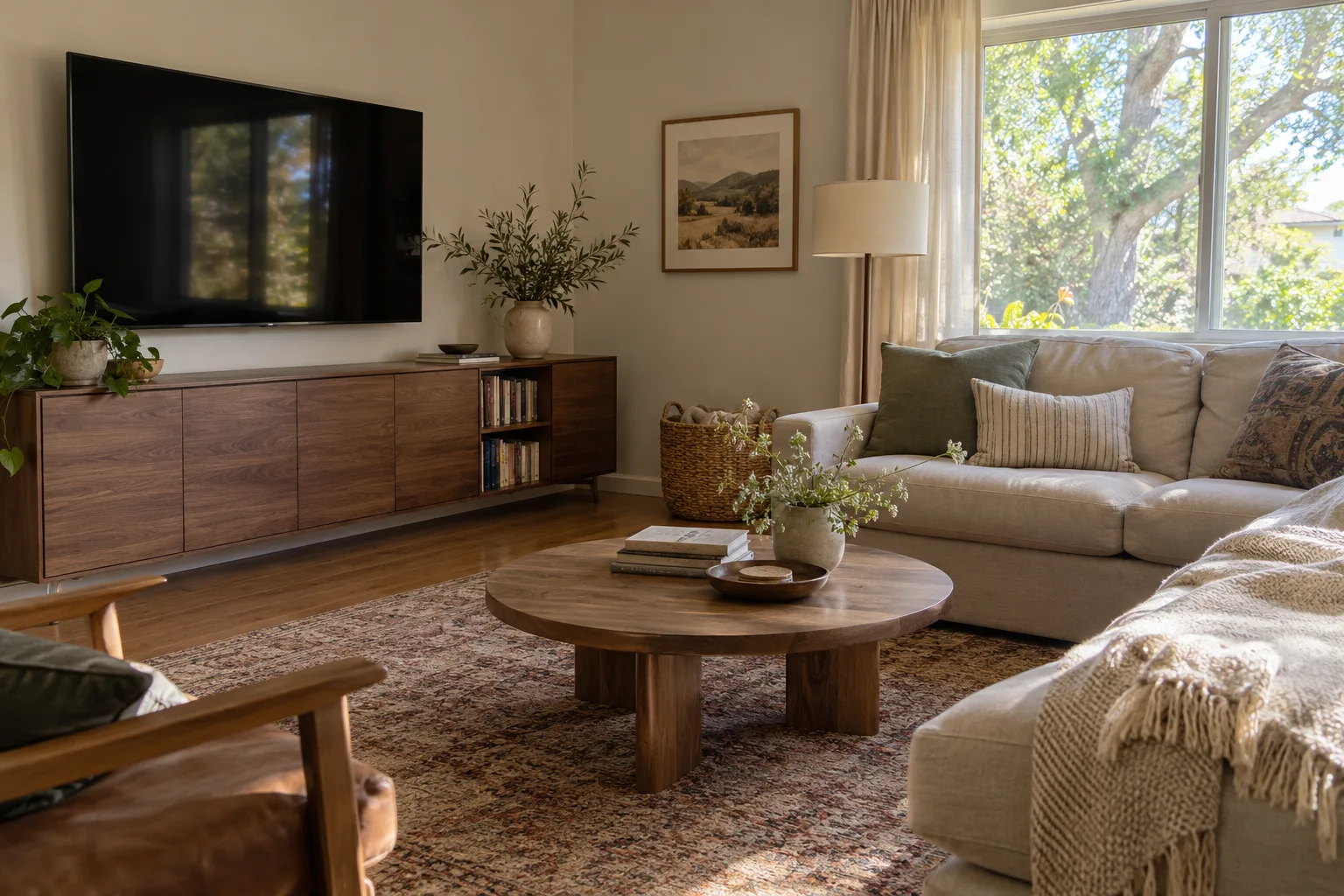
Pair open storage for daily favorites with closed storage for everything else. The room can still feel like a home where children live without displaying every puzzle piece.
Cabinets are handy for craft supplies, backup games and things used only on weekends. Give the most-used toys a reachable shelf or basket so opening a door is not required for every activity.
A closed cabinet also lets you reset the room quickly after dinner. Check stability, anchoring and any pinch points before using storage around young children.
13. Put the Basket Where the Mess Happens
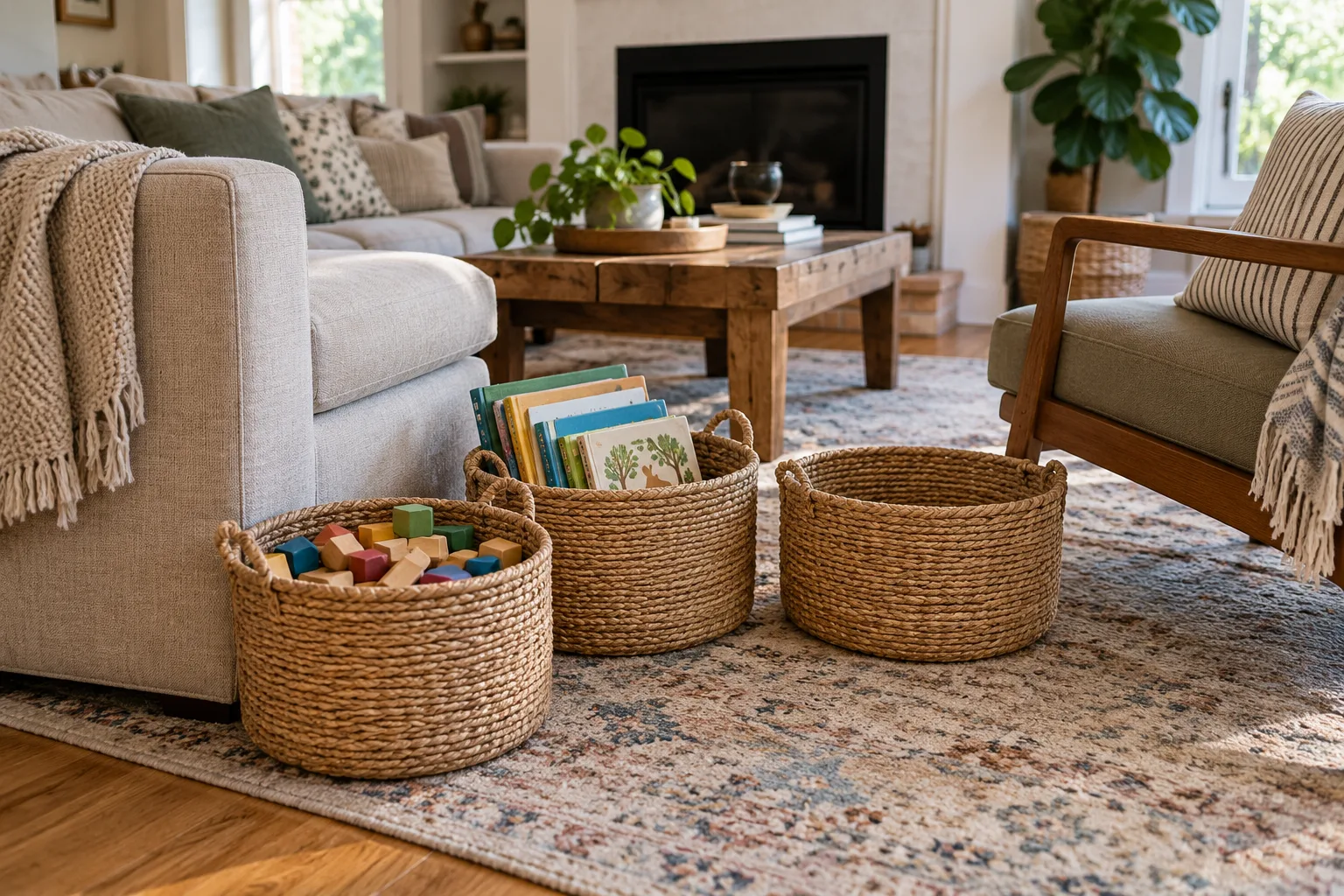
Place small containers next to the activities they serve. A book basket by the reading chair is easier to use than one across the room.
Try blocks near the play corner and a simple return basket for things that belong in another room. Smaller categories are easier to find again than one enormous mixed toy bin.
Choose baskets that are easy to carry and that suit the age of the children using them. Open tops make a ten-minute evening reset much less fussy.
14. Let a Storage Bench Earn Its Floor Space
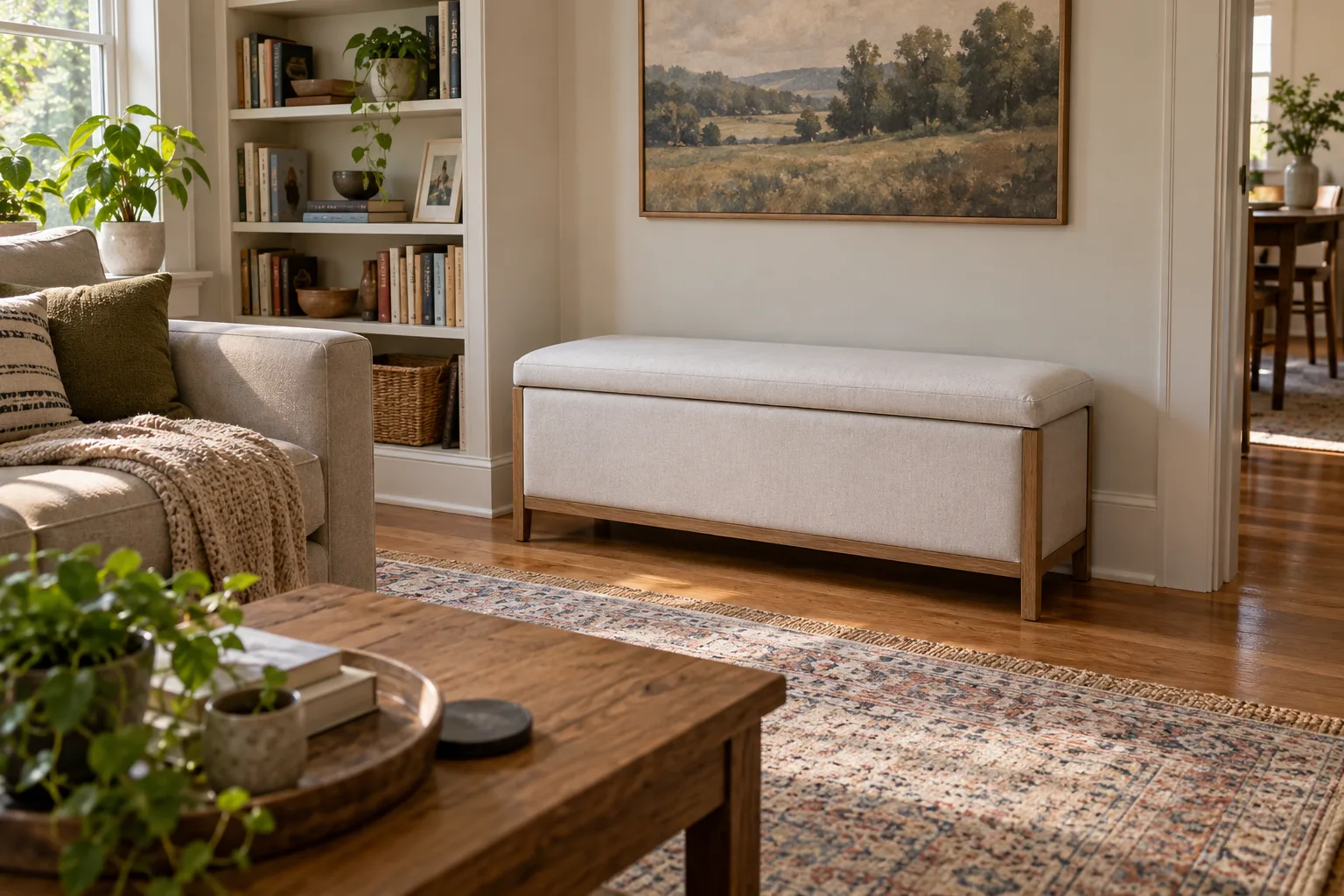
A storage bench makes sense when you need both an extra seat and a place for household overflow. Put it where it will not squeeze the walkway.
The Quince Oak and Performance Boucle Storage Bench has a cushioned seat and enclosed space. Check its exact dimensions, care directions and lid behavior; treat it as household furniture rather than assuming it is a child’s toy chest.
If a bench is too long for your room, see our storage ottoman picks for smaller footprints.
15. Make a Reading Spot Big Enough to Share
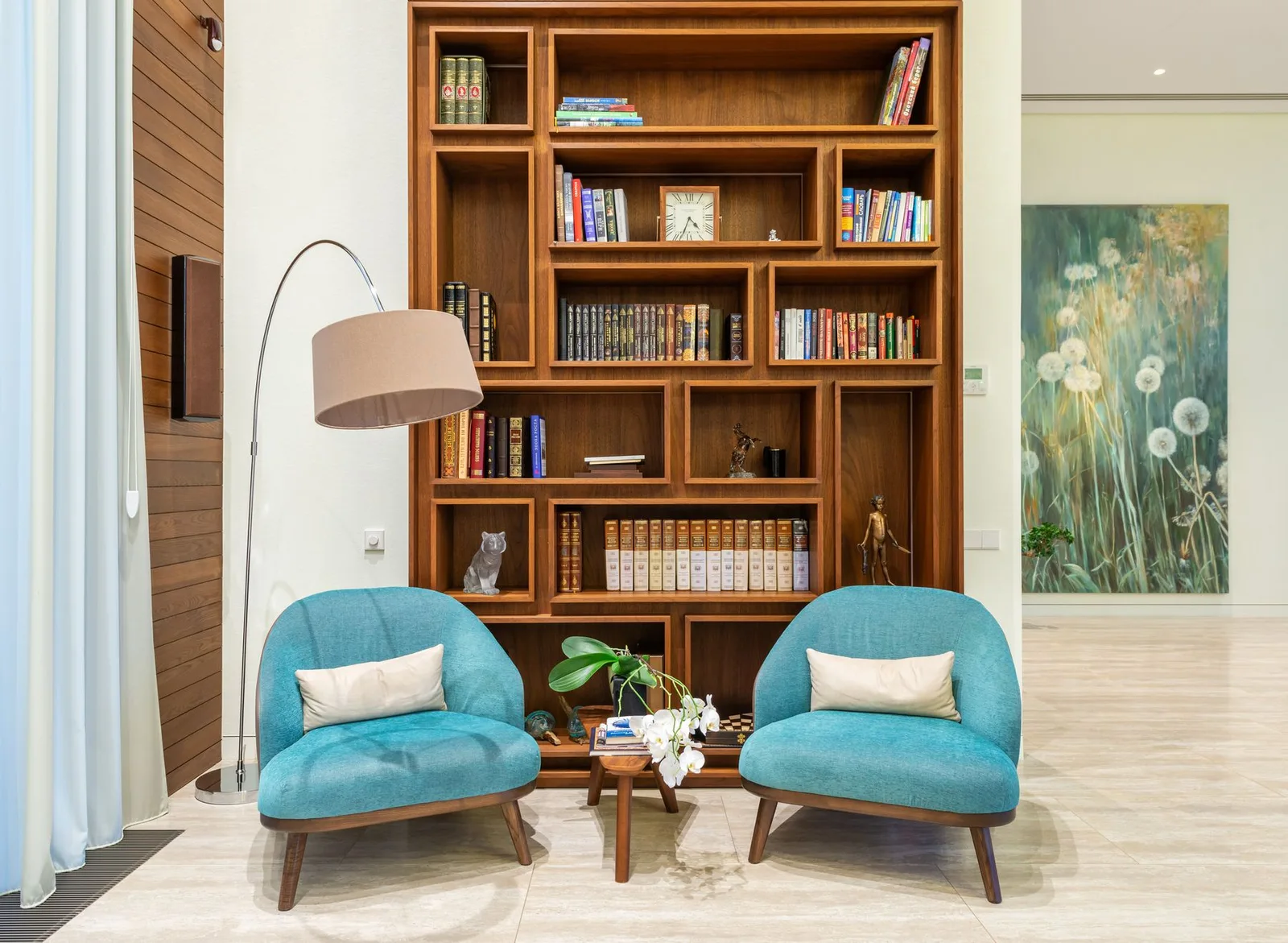
Pair a comfortable seat with books within easy reach. The simplest reading nook may already be one end of your sofa.
Add a good lamp and a small book basket, then leave room for two people to curl up together. An oversized chair is lovely if the floor plan can spare it, but it is optional.
The best reading spot is the one that gets used after the novelty wears off, whether that is a corner chair or the familiar sofa cushion.
16. Give Their Artwork a Proper Place
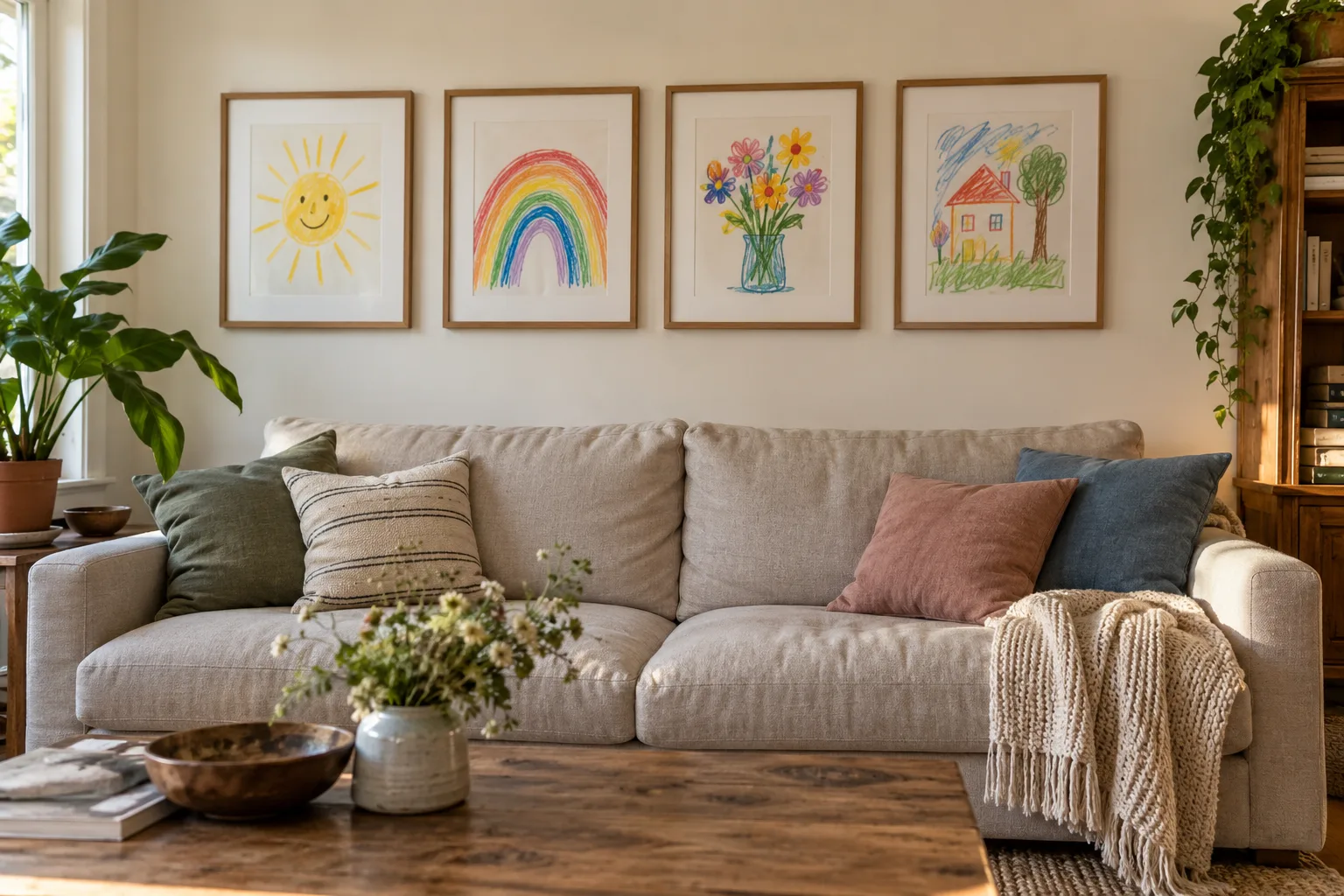
Pick one display area and rotate a few favorite pieces. That gives children’s artwork a real place in the living room without covering every wall.
Matching frames or a consistent rail can make drawings with very different colors look like a collection. Keep the display at a height that suits the room and mount it securely.
When new work arrives, swap rather than keep adding. A small rotation gives each piece its moment and makes the wall easy to enjoy.
17. Keep the Cushions You Actually Use
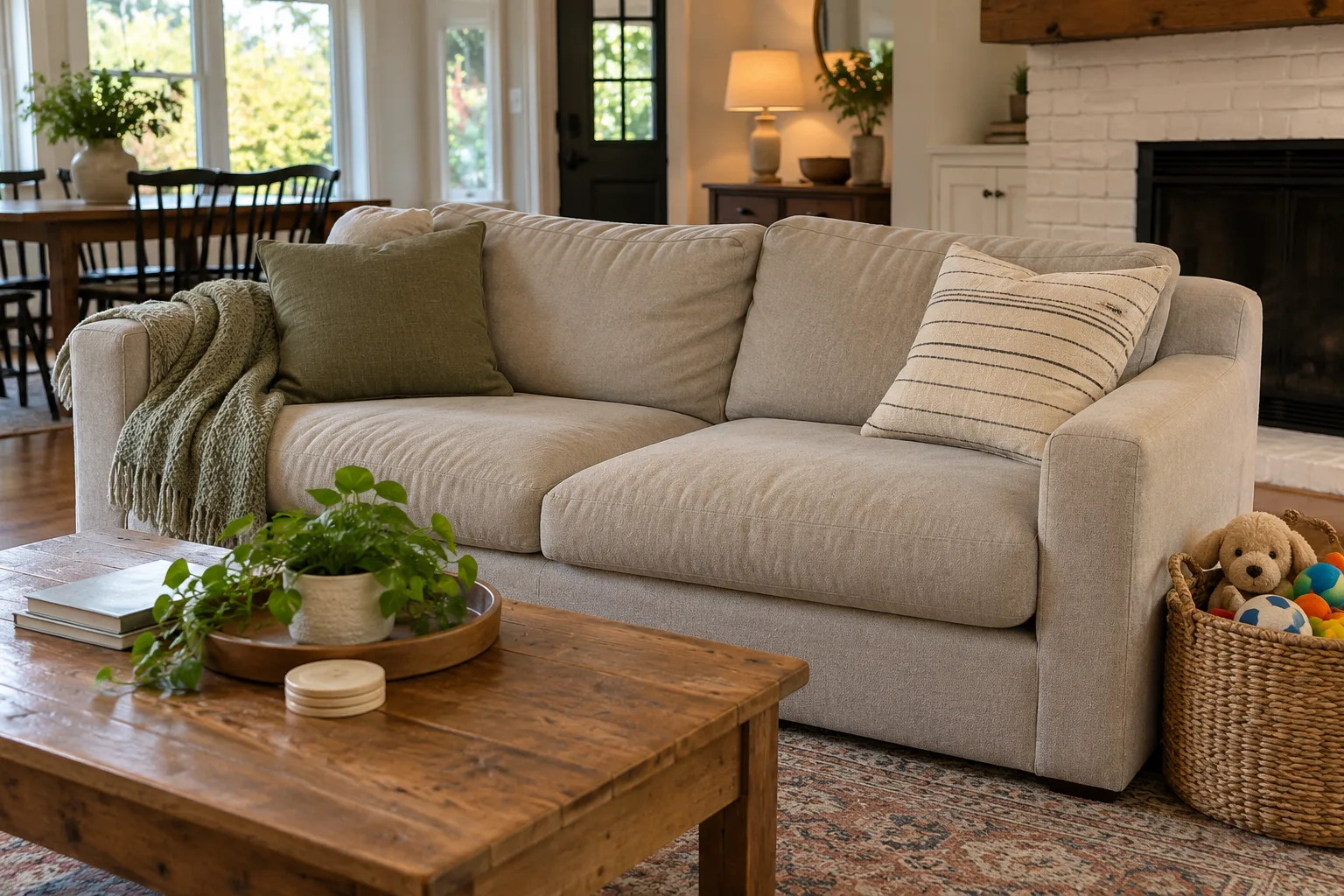
Keep enough pillows for comfort and let the extras go. If you put the same six cushions back on the sofa three times a day, the room is asking for fewer.
Washable covers are a bonus, especially on the pillows that end up on the floor during a fort-building session. Store seasonal ones out of the room if you enjoy changing the look.
Two useful cushions can look more welcoming than a crowded sofa nobody can sit on.
18. Choose Wall Paint for the Fingerprints
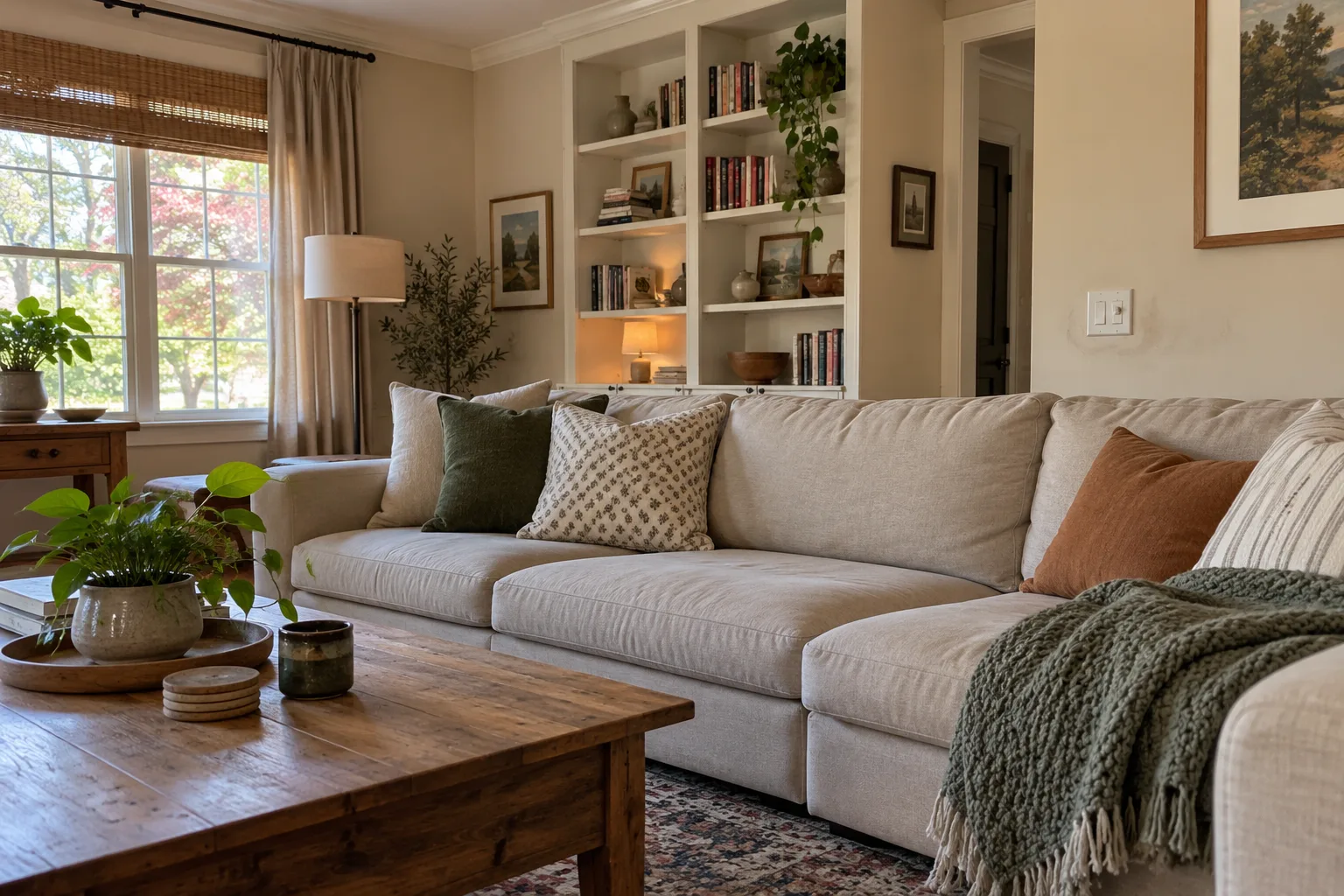
Compare the exact paint’s washability and cleaning guidance as carefully as its color. The right finish depends on the product, the wall and how often you need to wipe it.
A favorite pale shade can still work in a family room when the paint tolerates your cleaning routine. Keep a little leftover paint for touch-ups and test cleaning in a discreet spot.
Skip blanket rules about every matte or glossy paint. Read the manufacturer’s directions for the specific finish you plan to use.
19. Leave a Few Surfaces Mostly Empty
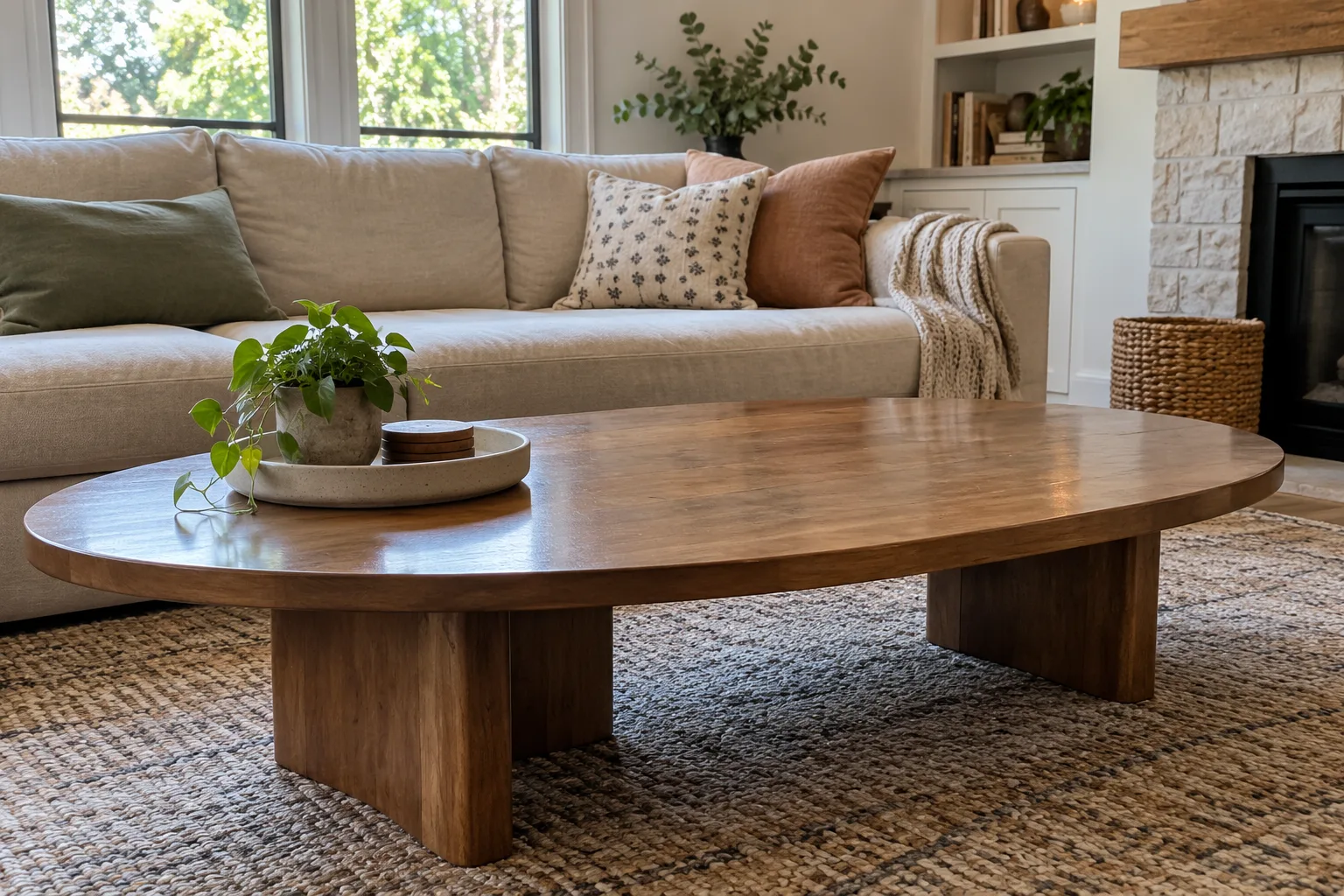
Keep the table and shelves you use most ready for real activities. A puzzle needs more space than another decorative bowl.
Move fragile objects to a suitable, secure place and keep just a few things you genuinely enjoy seeing. One small tray can gather the remotes without claiming the whole tabletop.
A mostly clear surface also makes the evening reset quicker. There is less to move before anyone can use the room.
20. Leave Room for the Next Stage
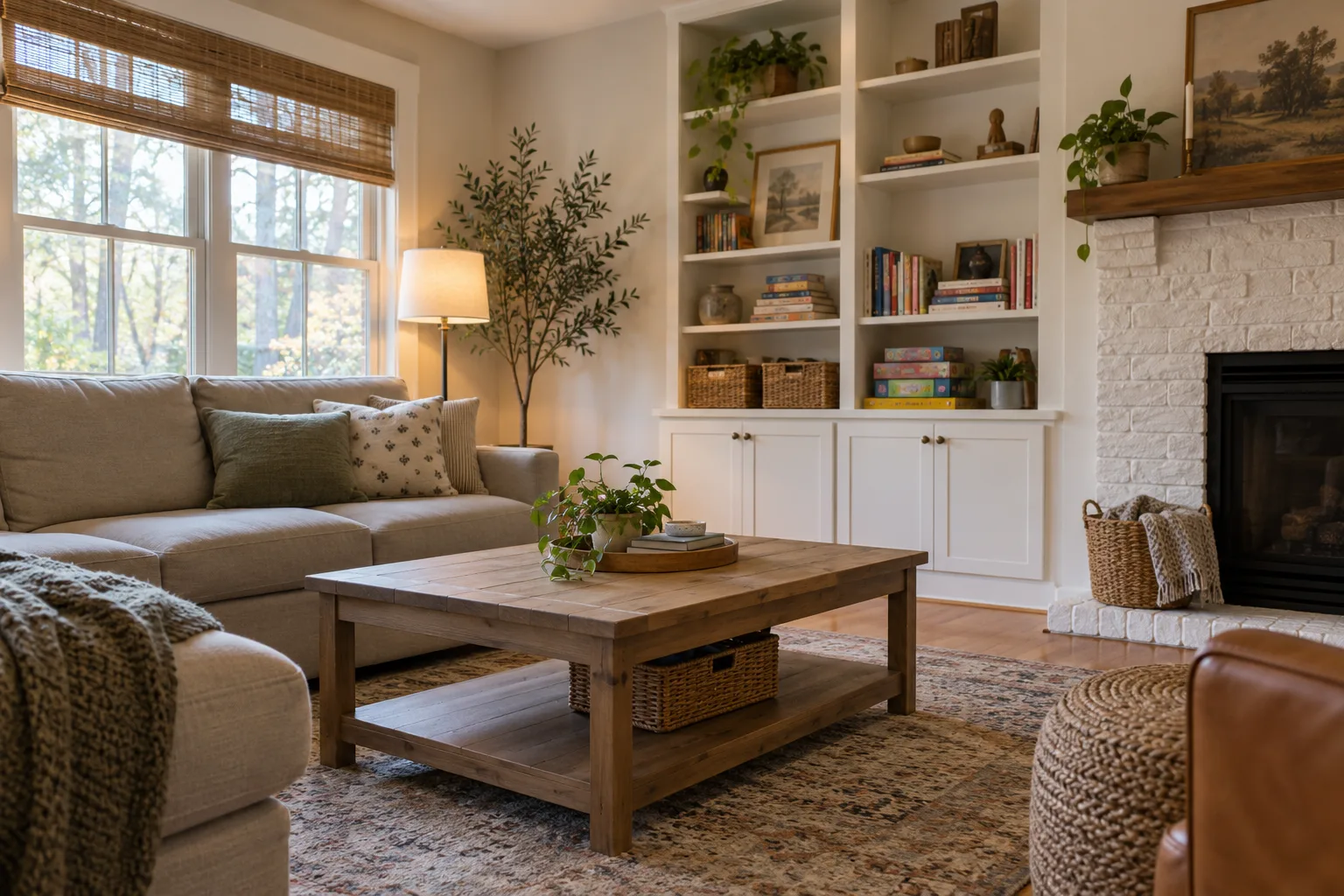
Choose arrangements and storage that can change as children grow. A low shelf that holds picture books now may hold board games and hobby supplies later.
Adjustable shelving and plain baskets can take on new jobs without a whole new decorating plan. Furniture that moves easily lets you reclaim floor space as interests change.
Think about the next year, not every future stage at once. A room that adapts a little at a time is easier on both the budget and the floor plan.
21. Make the Evening Reset Easy to Finish
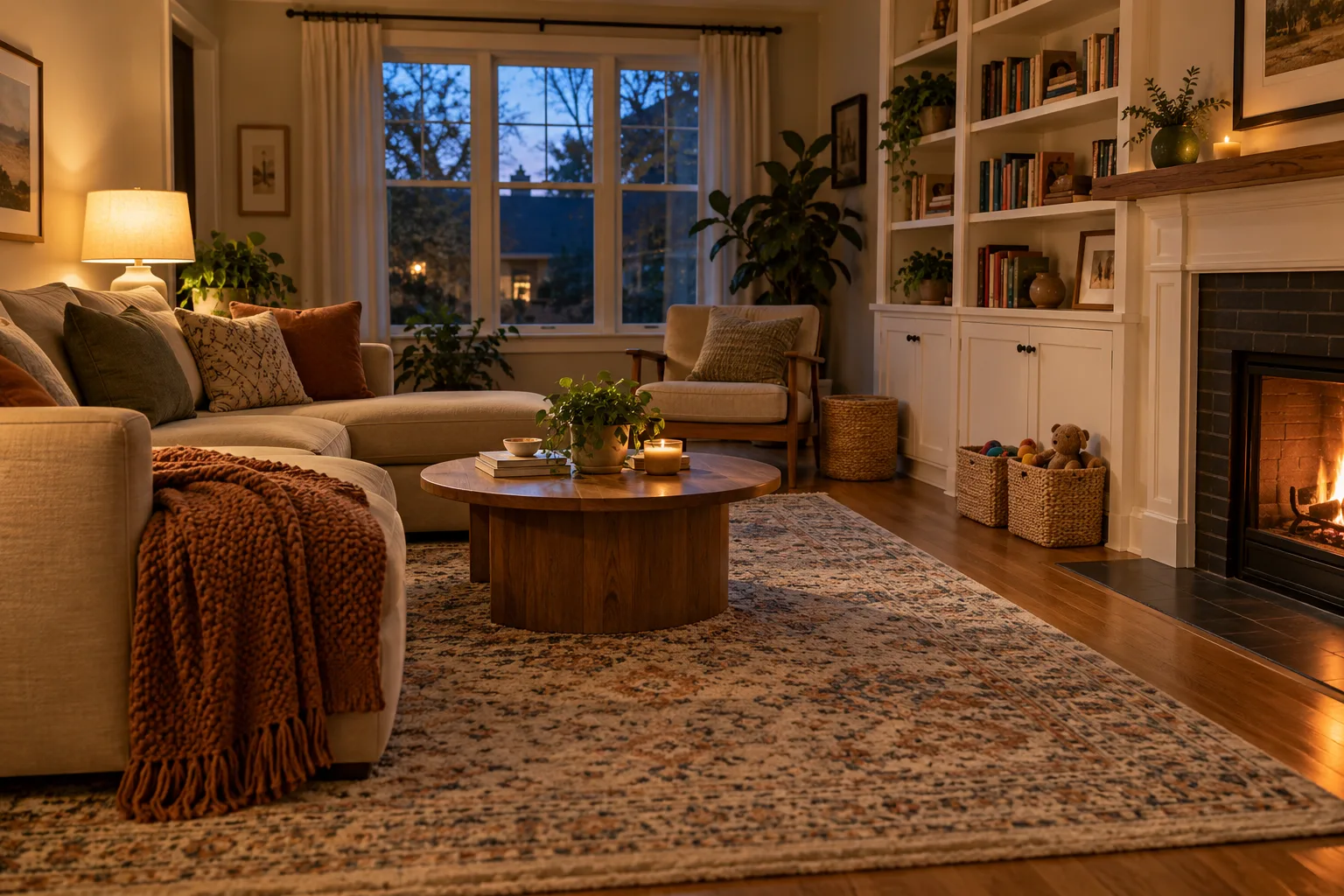
Give each category a clear home and keep the reset small. Return the books, gather loose toys, put cushions back and clear the main walking route.
If every basket is full before you begin, rotate some toys out of the room. Our decluttering guide can help with the broader things your home may no longer need.
Aim for a room ready for the next evening, not a photo shoot. A few lived-in signs of family life belong here.
Before You Buy Anything, Check These Details
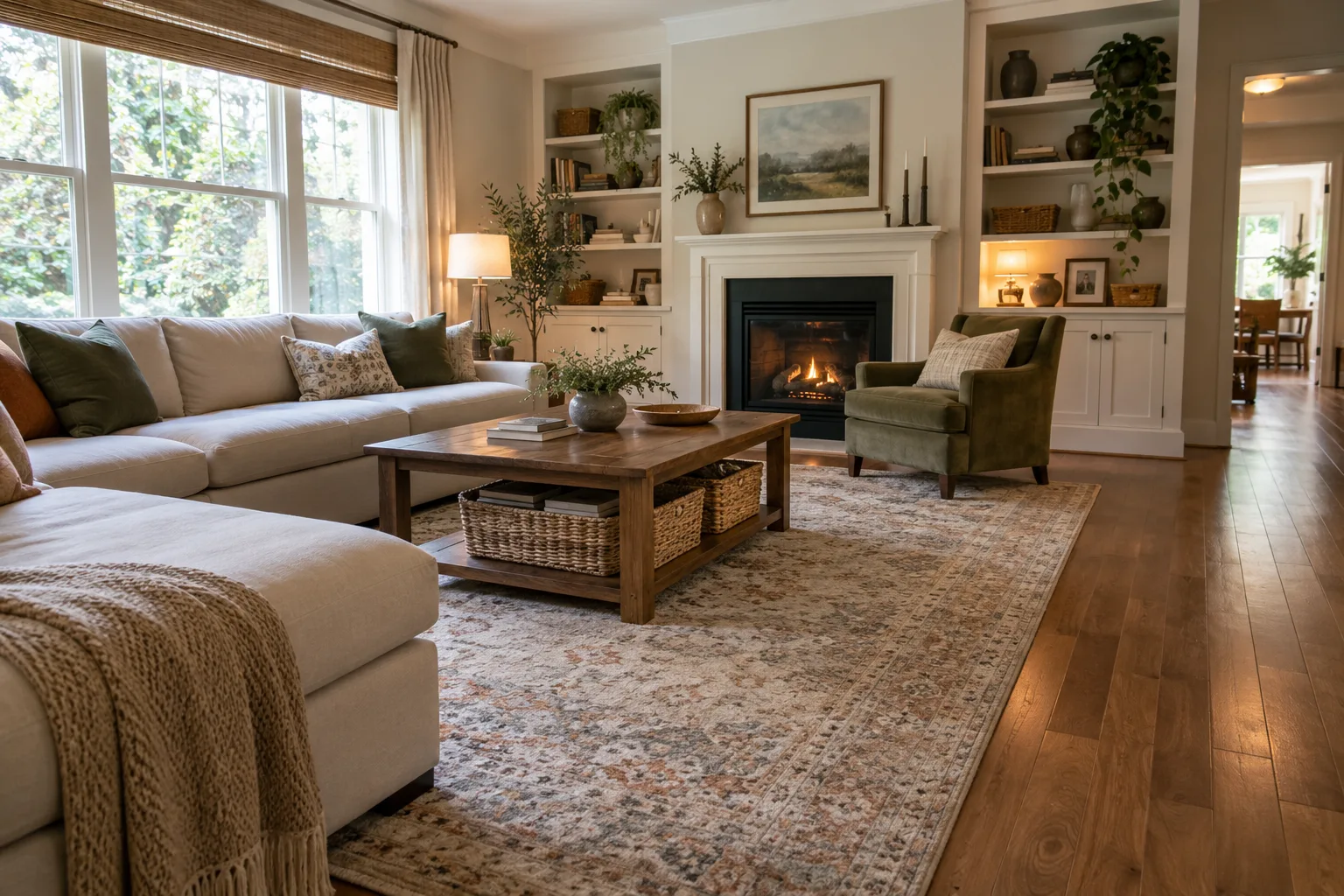
Check fit, care and safety before a new piece comes home. This list is useful whether you are buying a sofa or simply moving what you already own.
- The furniture fits while leaving useful walking and play space.
- I know which covers can be removed, washed and replaced.
- The rug’s cleaning requirements work with my washing setup.
- Everyday toys have an accessible place to go.
- Storage lids, hinges and intended use suit our household.
- Furniture and televisions are secured appropriately.
- Window-covering cords and other accessible hazards have been addressed.
- The purchase solves a problem we actually have.
The Questions Parents Actually Ask
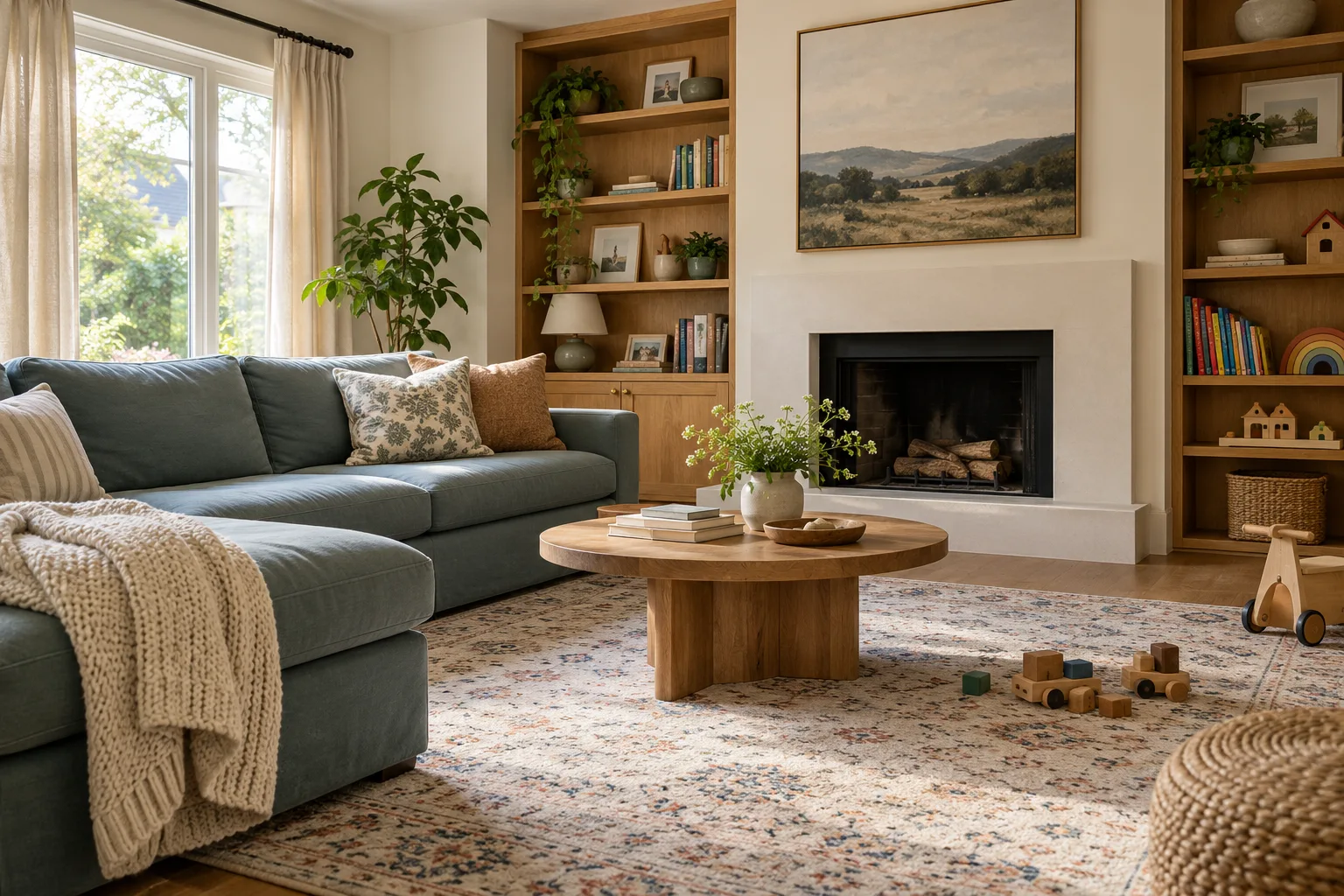
The best setup depends on your room, your children and your daily routine. These are the practical questions worth answering before you move furniture or buy anything.
Can a Small Living Room Have a Play Area?
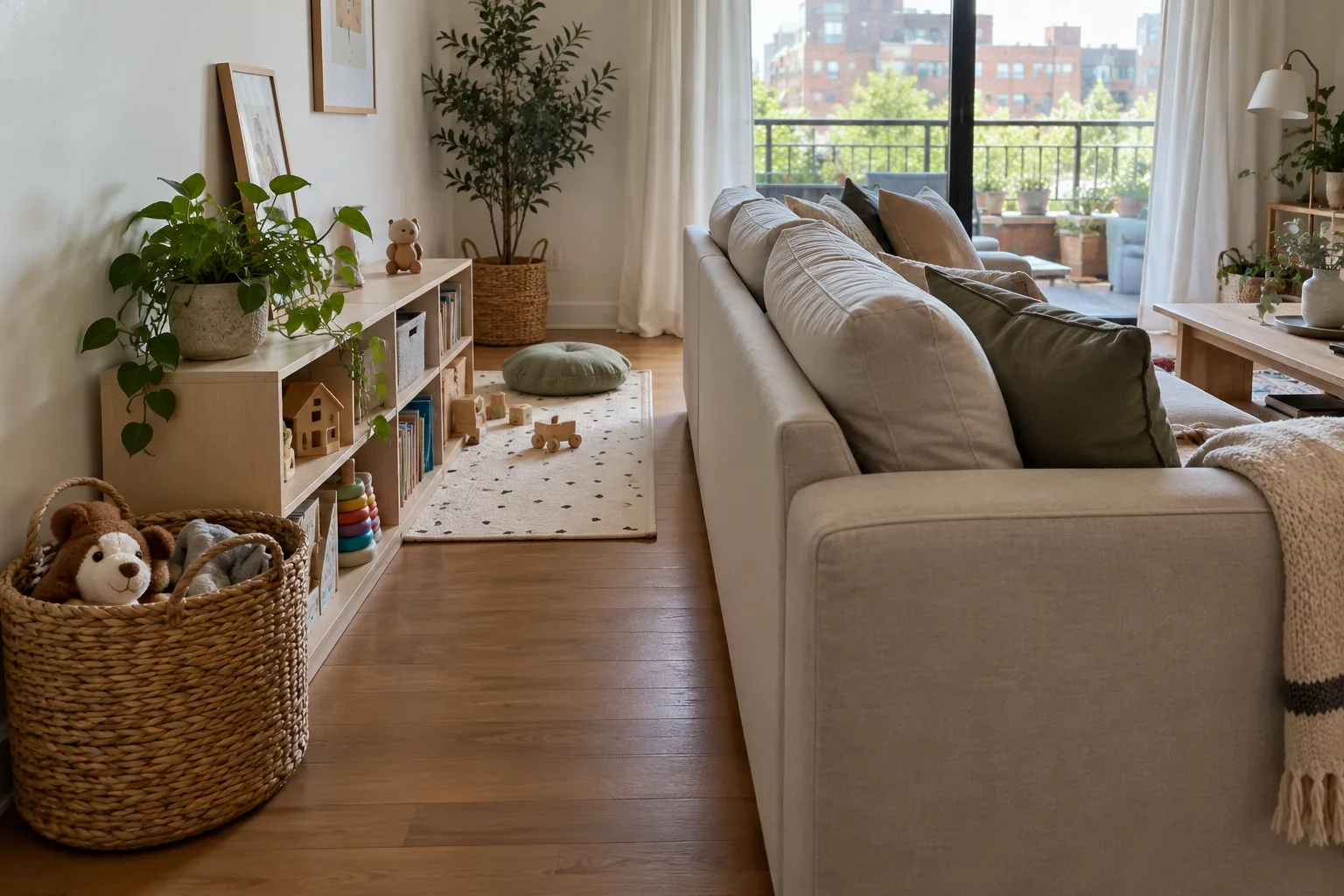
Yes. A compact shelf, basket and open patch of floor can create a play area. Place it where a child can be nearby without blocking the room’s main route.
Choose activities that pack away easily, then let the same floor space serve everyone again after bedtime.
Can You Have a Light-Colored Sofa With Kids?
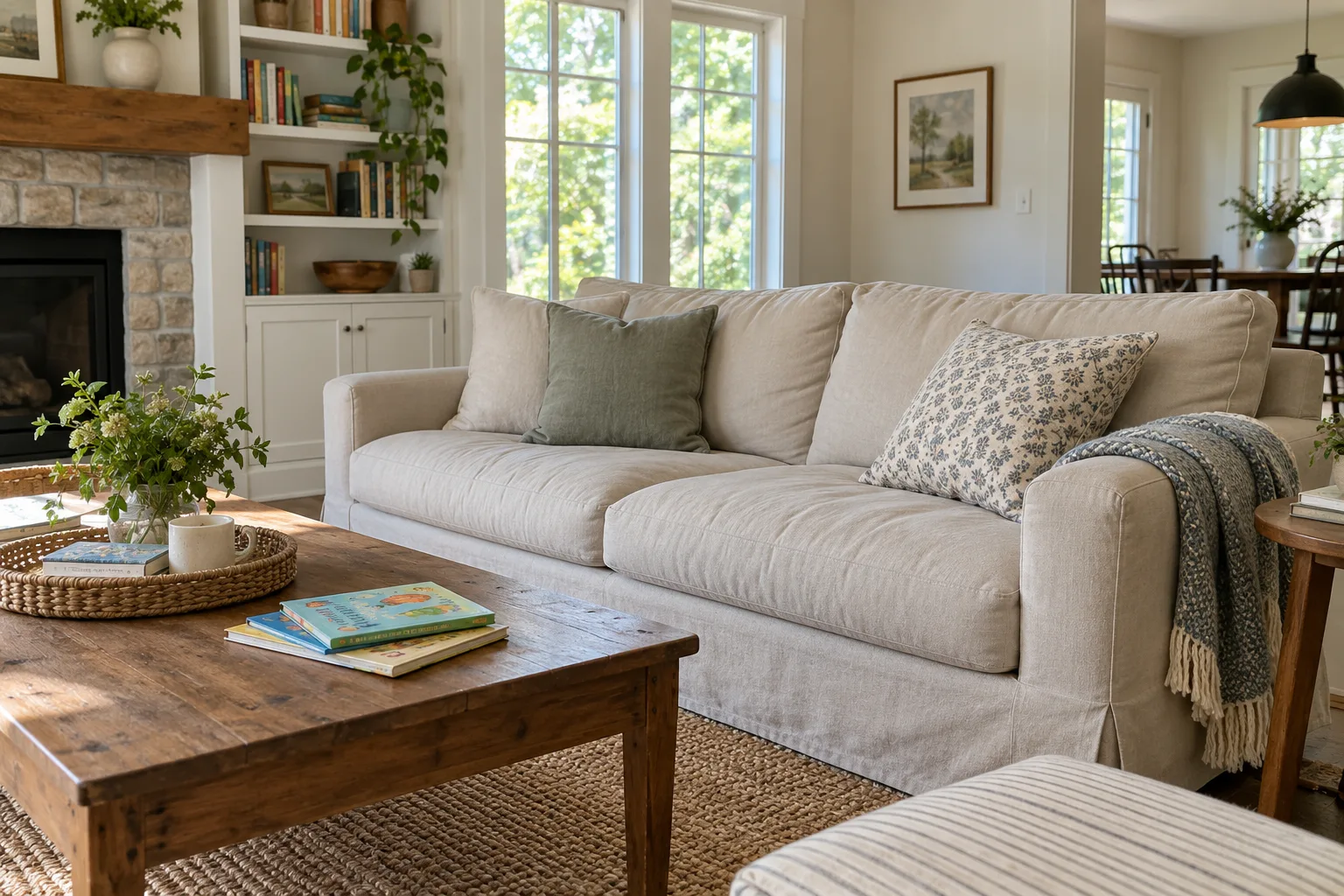
Yes, if its care instructions and your willingness to clean match. Removable machine-washable covers make a pale sofa much easier to live with.
Check the exact fabric rather than judging the color alone. A cream cover you can wash may suit your home better than a dark sofa that needs specialist cleaning.
Is an Ottoman Better Than a Coffee Table?
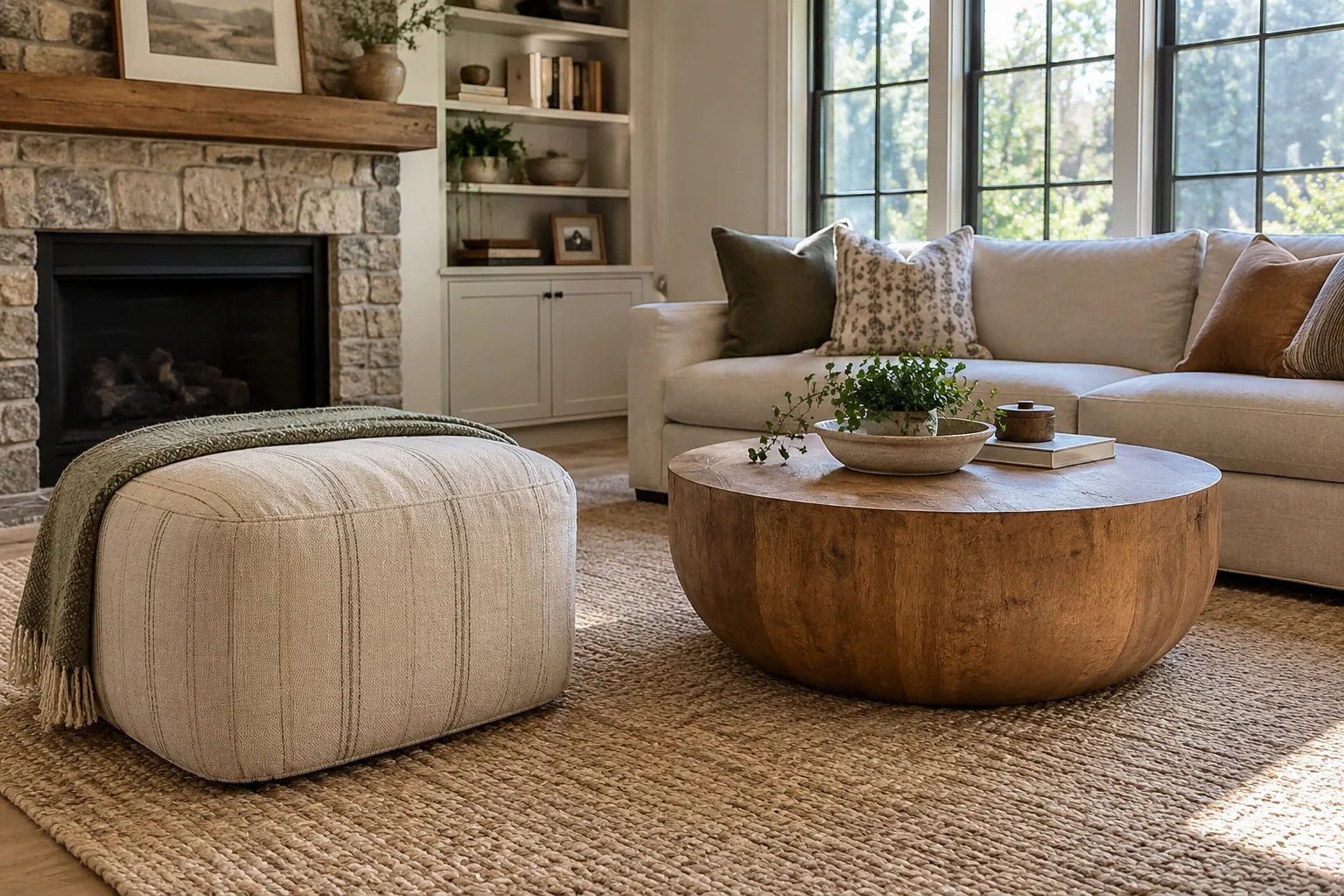
Choose an ottoman for a softer center; choose a table when you need a firm, steady surface. The better answer depends on how your family uses the middle of the room.
Games, drawing and coffee mugs benefit from a stable table. A soft ottoman can handle lounging and some play, with a side table nearby for drinks.
Should Toys Be Hidden or Left Out?
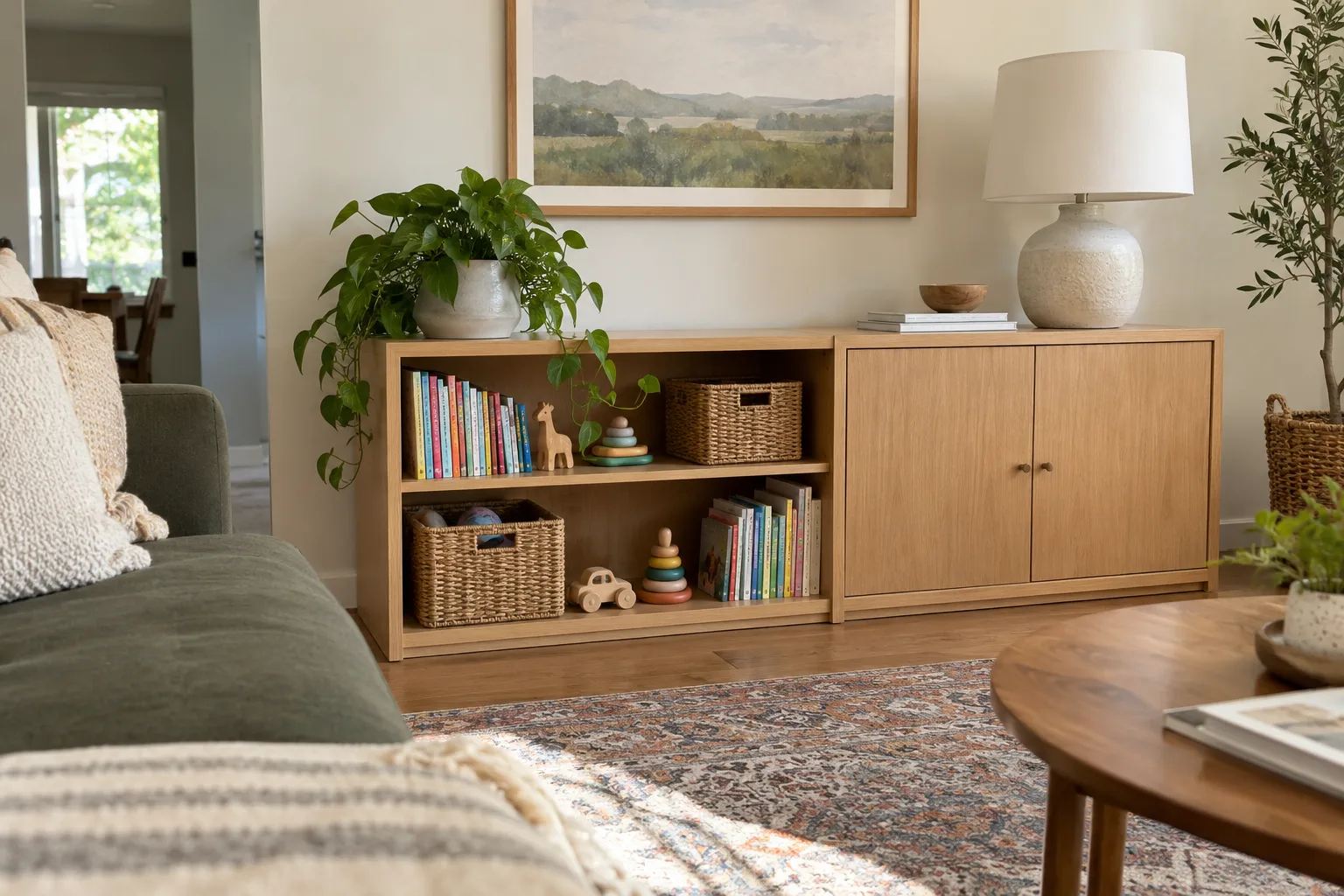
Keep a few daily favorites accessible and put the overflow behind closed doors. Children can use what they can see, and the whole collection does not need to be on display.
Rotate the visible choices when interest fades. Make sure shelving and cabinets are stable and secured as their makers instruct.
How Do You Make a Family Living Room Feel Less Cluttered?
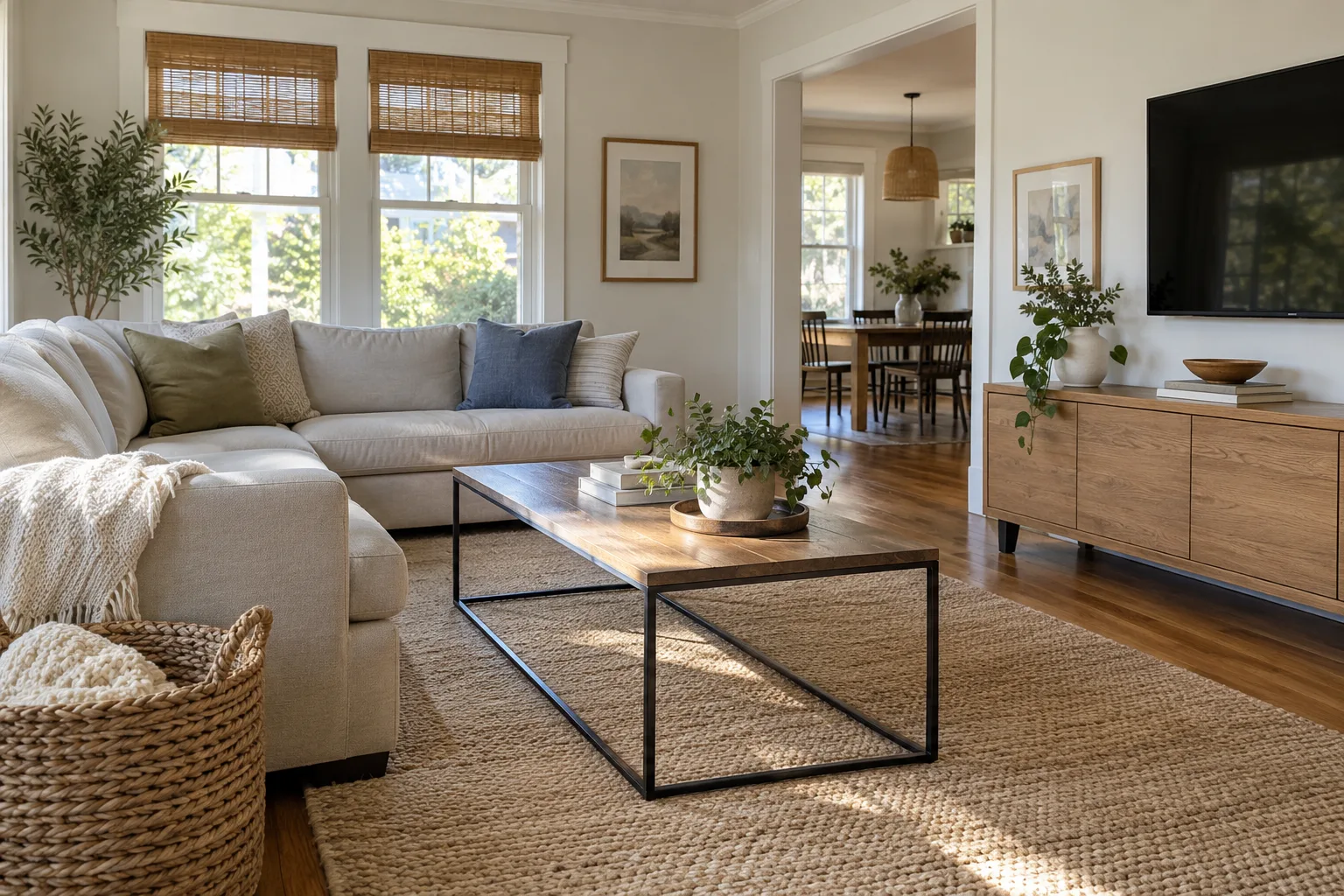
Clear the busiest surfaces and place storage close to where things are used. That cuts the distance between play and cleanup.
A few fewer loose accessories and a basket by the sofa can make more difference than a large new cabinet across the room.
Shop the Family Living Room
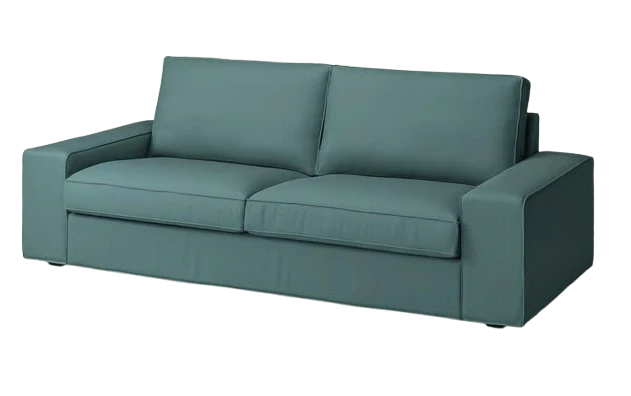 IKEA KIVIK SofaA roomy sofa with removable, machine-washable Kelinge covers for everyday family use.
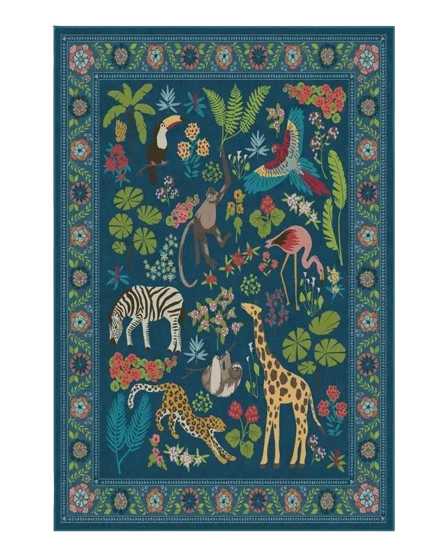 Ruggable Iris Apfel Jingle Jungle Royal Blue RugA washable blue rug with playful animal artwork and a lively border.
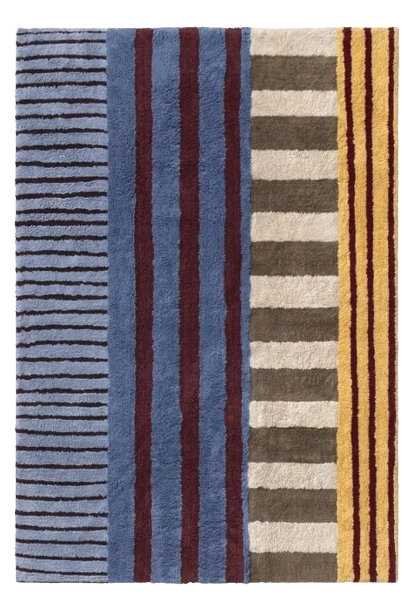 Lorena Canals Washable Cotton RugsSoft cotton rugs with washable designs for a floor where everyone sits.
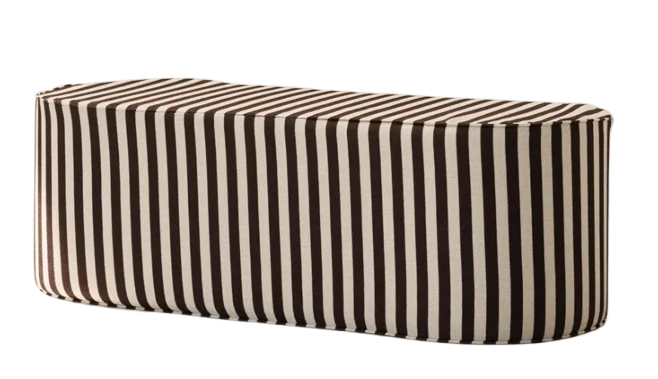 House of Noa Bennett Coffee TableA padded foam coffee-table alternative with a removable, washable cover.
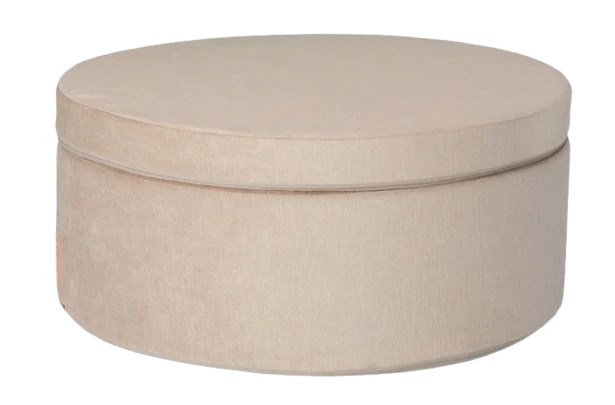 Nugget Chunk Play OttomanA soft ottoman that doubles as flexible play seating for ages three and up.
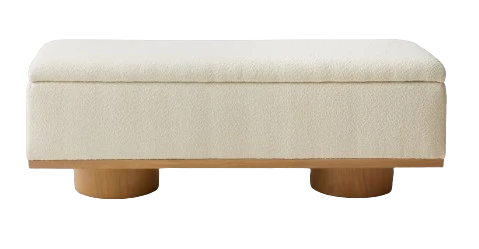 Quince Oak and Performance Boucle Storage BenchA cushioned extra seat with enclosed space for household overflow.
Sources and further reading
- Anchor It: prevent furniture and TV tip-overs — U.S. Consumer Product Safety Commission