How to Cover Ugly Rental Floors: 7 Fixes Worth Trying

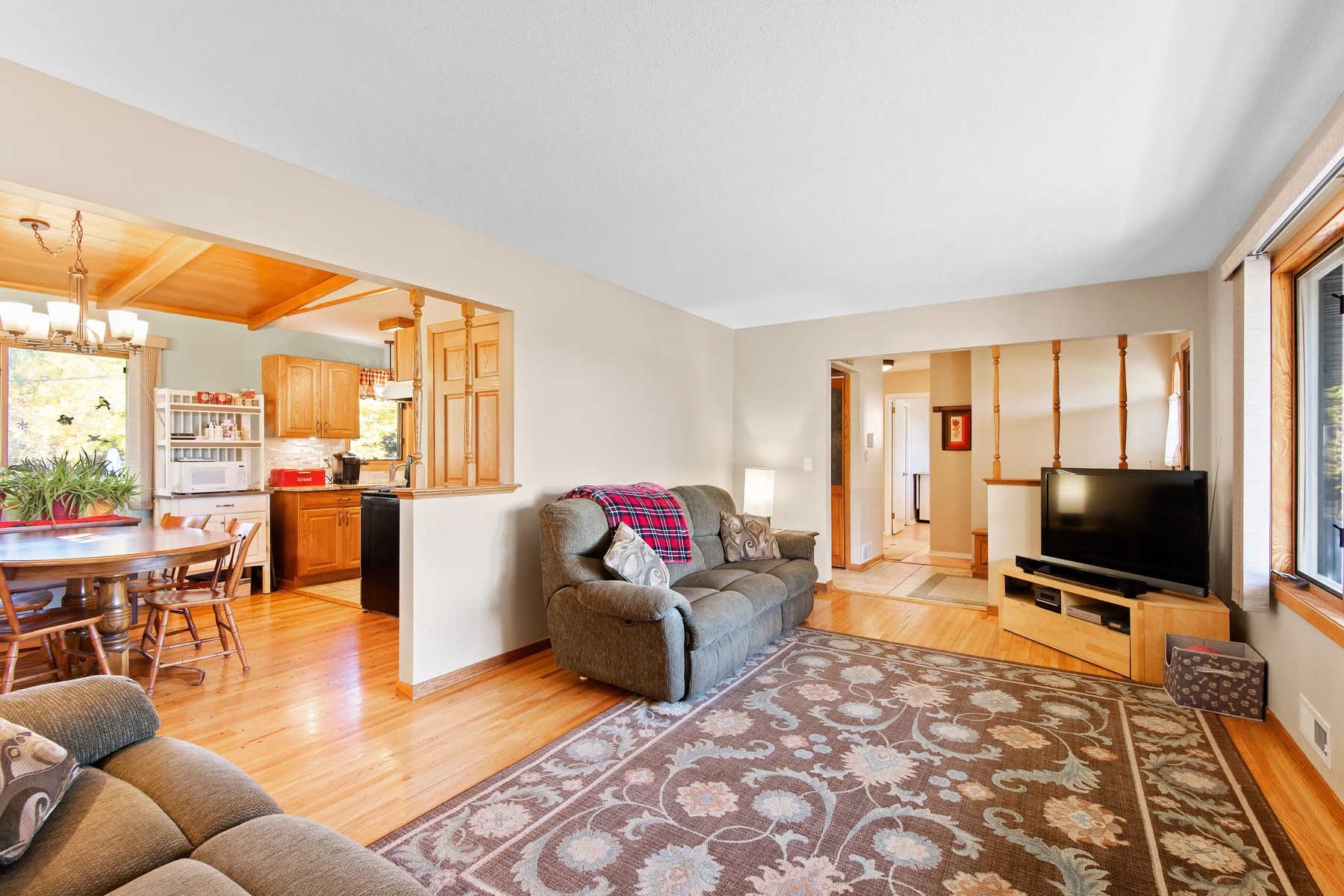
Tired of decorating around a floor you don’t like? Covering ugly rental flooring can make the room feel more like yours, without replacing what’s already there.
A large rug or a suitable vinyl mat can cover much of the floor and make the room feel more inviting. Carpet tiles and fitted flooring can cover larger areas, though some take more work to install and remove.
Here’s the quick answer:
The quick answer
- Large area rugs cover the main living or sleeping area.
- Runners hide narrow stretches in kitchens, hallways, and beside beds.
- Vinyl floor mats provide wipeable coverage on suitable hard floors.
- Modular carpet tiles let you create a rug beyond standard sizes.
- Adhesive tiles and floating planks offer a bigger change, with more fitting and removal work.
A Quick Match for Your Room
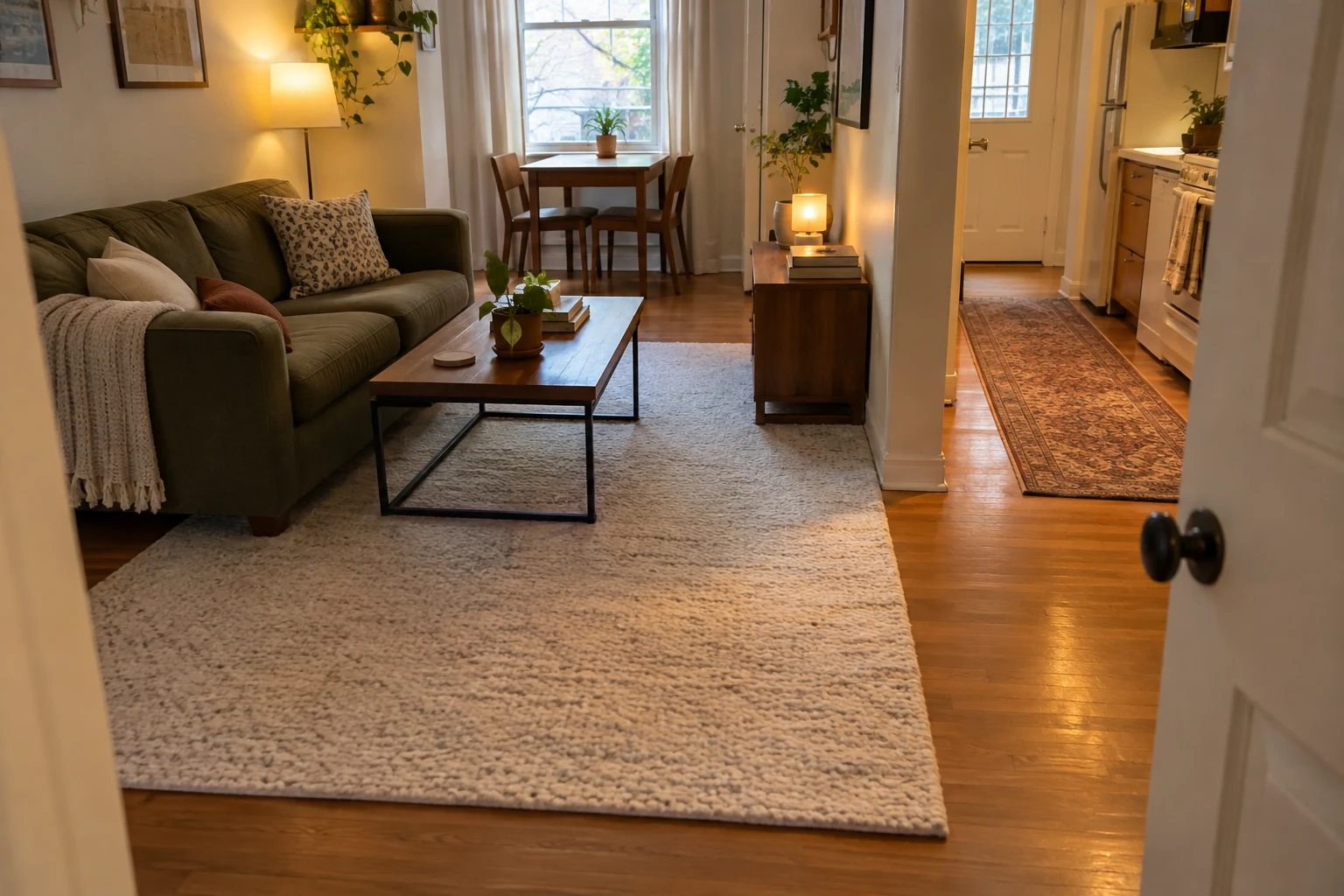
How you use the room helps narrow down the options. A soft rug feels good beside the bed. A wipeable mat is more useful where food spills land.
| What you want to cover | A useful option | What matters most |
|---|---|---|
| Most of a living room or bedroom | Large area rug | Enough coverage beneath the furniture |
| A narrow kitchen or hallway | Runner | Flat edges and clear doorways |
| Part of a kitchen or powder room floor | Suitable vinyl floor mat | A dry surface underneath |
| An awkwardly shaped area on a hard floor | Modular carpet tiles | A firm base and secure connections |
| A whole room needing a different finish | Floating planks | Added height and fitting work |
| A small floor where adhesive alterations are approved | Peel-and-stick tiles | Surface preparation and removal |
Note: These coverings hide cosmetic problems. Loose tiles, leaks, damp patches, and unstable flooring need repair before anything goes over them.
1. One Large Rug Makes the Biggest Difference
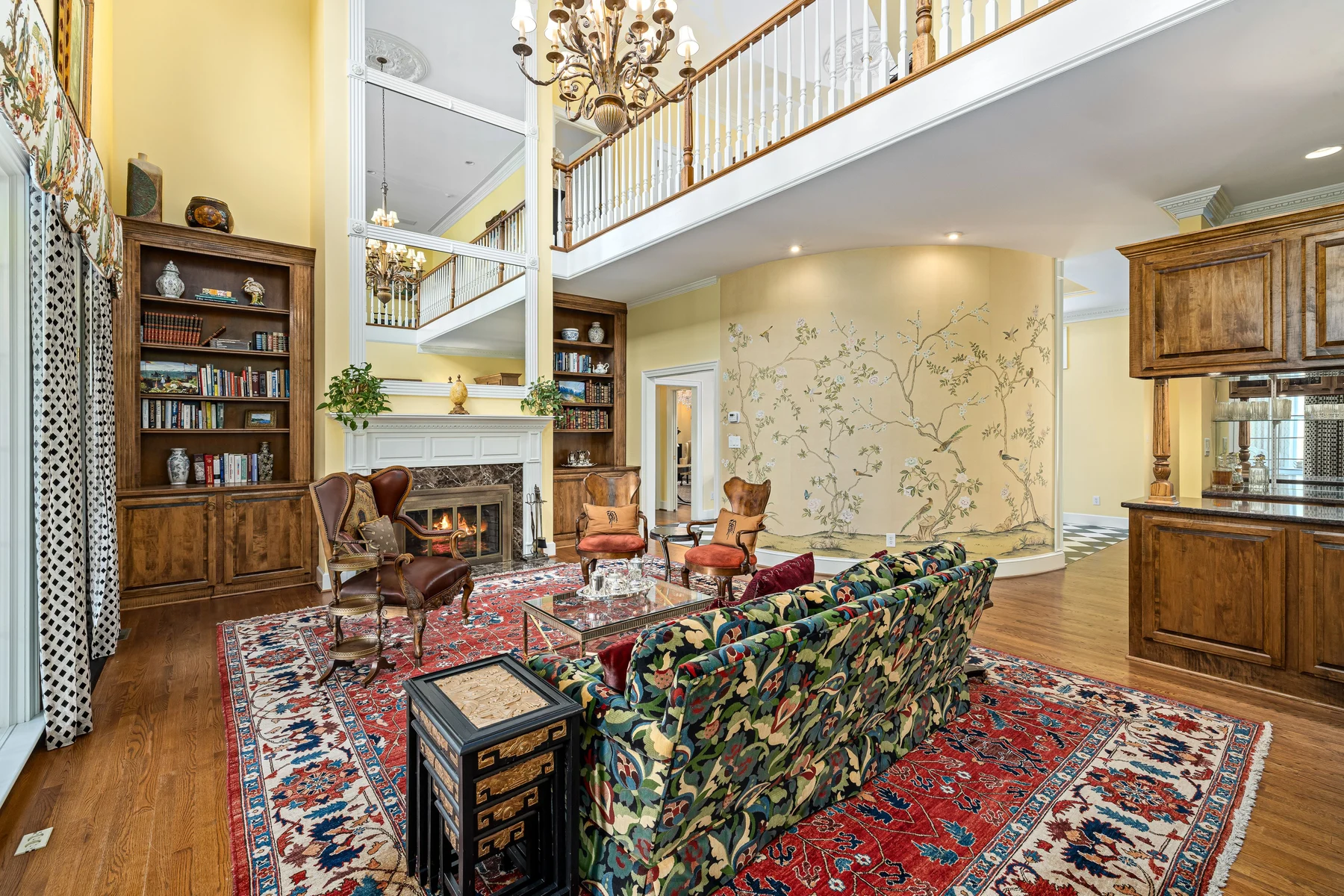
A large area rug covers a substantial part of a living room or bedroom without sticking anything to the floor. You can also take it with you when you move.
Size makes the biggest difference here. A little rug beneath the coffee table leaves most of the floor exposed. One that reaches beneath the front legs of the sofa and chairs covers more of what you see from the doorway.
The SAFAVIEH Madison 8-by-10-Foot Area Rug offers generous coverage with an ivory-and-aqua botanical pattern. Its low polypropylene pile suits a living room where you want softness without a thick shag.
In a bedroom, the most useful coverage is beside the bed and across the foot. That gives you a softer place to step while hiding the exposed flooring around the furniture.
Our rug size guide explains how to position a rug around beds, sofas, and chairs.
A properly sized rug pad adds cushioning and helps reduce movement. For a small accent rug, the GORILLA GRIP Felt and Rubber Rug Pad has a felt upper layer and a textured rubber backing. This version measures 2 by 3 feet and can be trimmed to fit beneath a smaller rug.
A large rug needs a pad that covers most of its underside. A small pad in the center leaves the edges without cushioning or grip.
Rubber-backed pads aren’t suitable for every floor. Rubber or latex can discolor some vinyl finishes.
2. Runners for the Strips of Floor You See Every Day
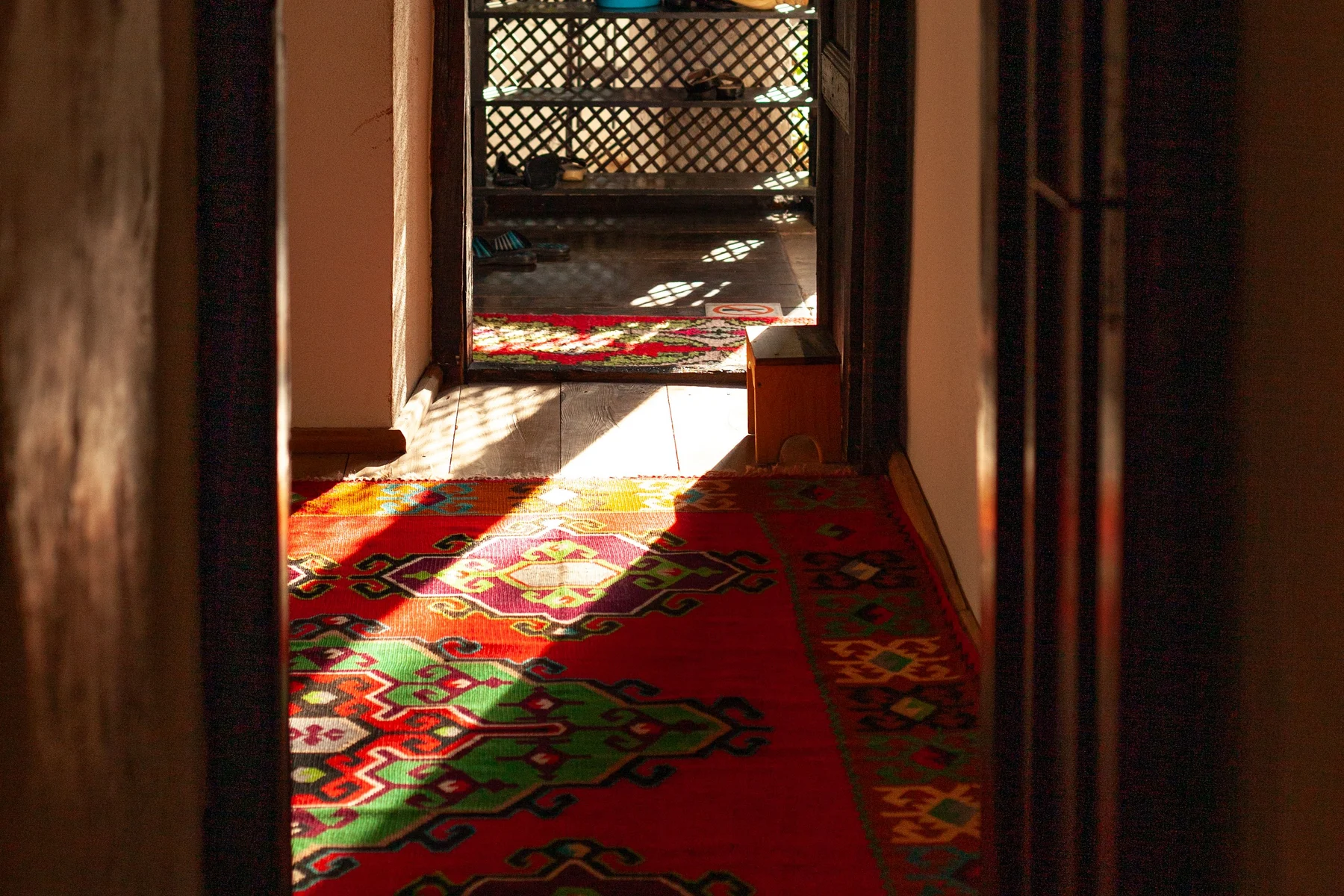
A runner covers long, narrow areas of flooring. Common spots include the space between kitchen cabinets, a hallway, and the side of a bed.
Your kitchen cabinets might look fine, while the old floor between them makes the room feel dated. A runner covers much of that visible area without extending beneath the appliances.
The HY HAO YUN LAI Washable Runner measures 2 by 10 feet and has a beige-and-cream abstract design. Its low pile works well in a long hallway or kitchen walkway, and it can go in the washing machine.
For cleaning, it can be machine-washed in cold water and air-dried. The washing machine still needs enough space for the rug to move freely.
Flat edges and door clearance matter more than filling every inch. A dishwasher door catching the rug each evening will quickly become frustrating.
Our kitchen rug ideas for small kitchens show how runners and smaller rugs fit around narrow layouts.
If you already own a few small rugs, use them in separate spots, such as beside the sink and near the back door. Overlapping them in a busy walkway creates raised edges that are easier to catch with your foot.
3. Vinyl Floor Mats for a Wipe-Clean Makeover
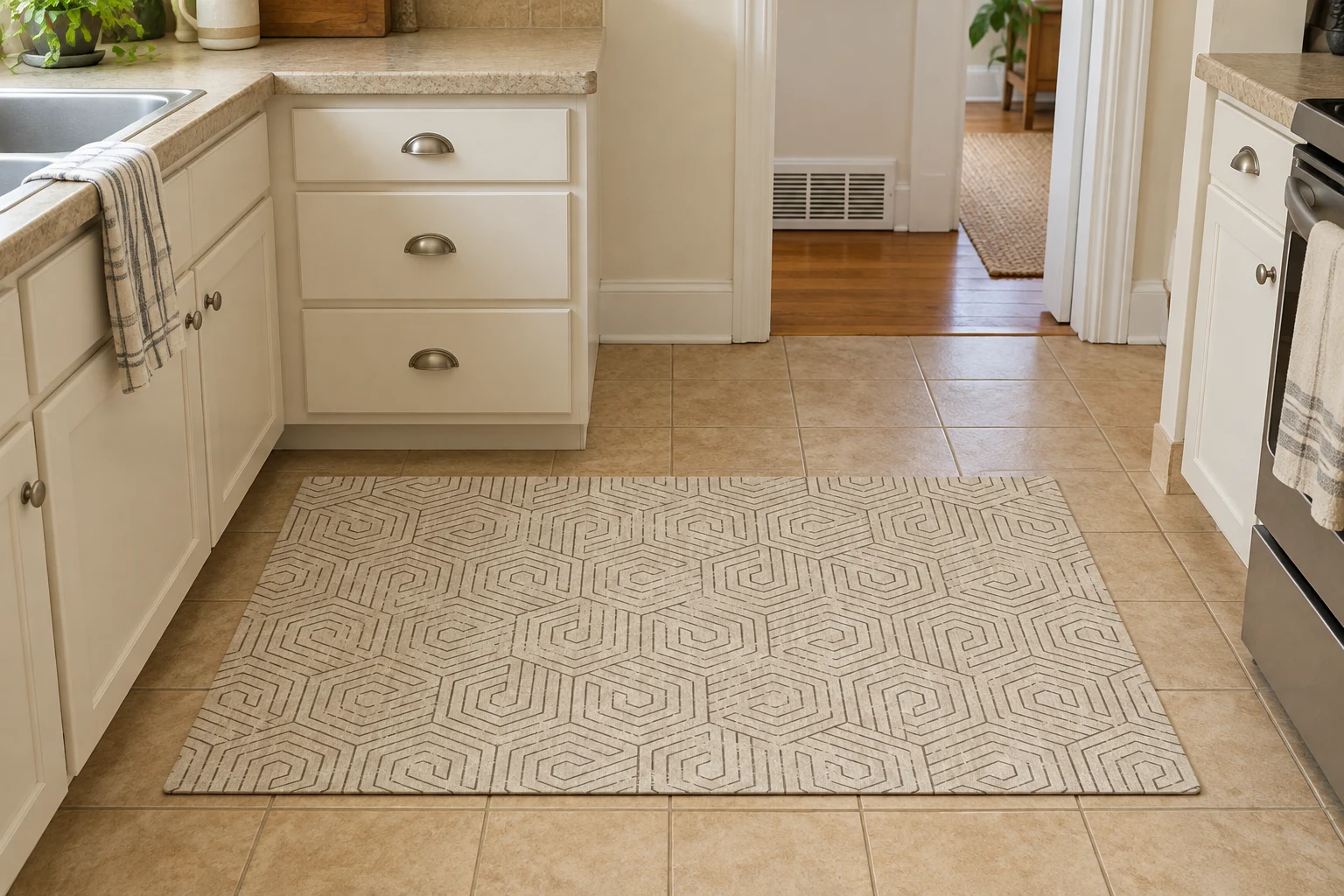
A vinyl floor mat provides a wipeable covering for an area of hard flooring. It is useful where crumbs and spills make a fabric rug less convenient.
Decorative vinyl mats are generally thinner than cushioned standing mats. They also differ from sheet flooring, which may need a fitted installation.
A Wipeable Mat for the Kitchen or Dining Area
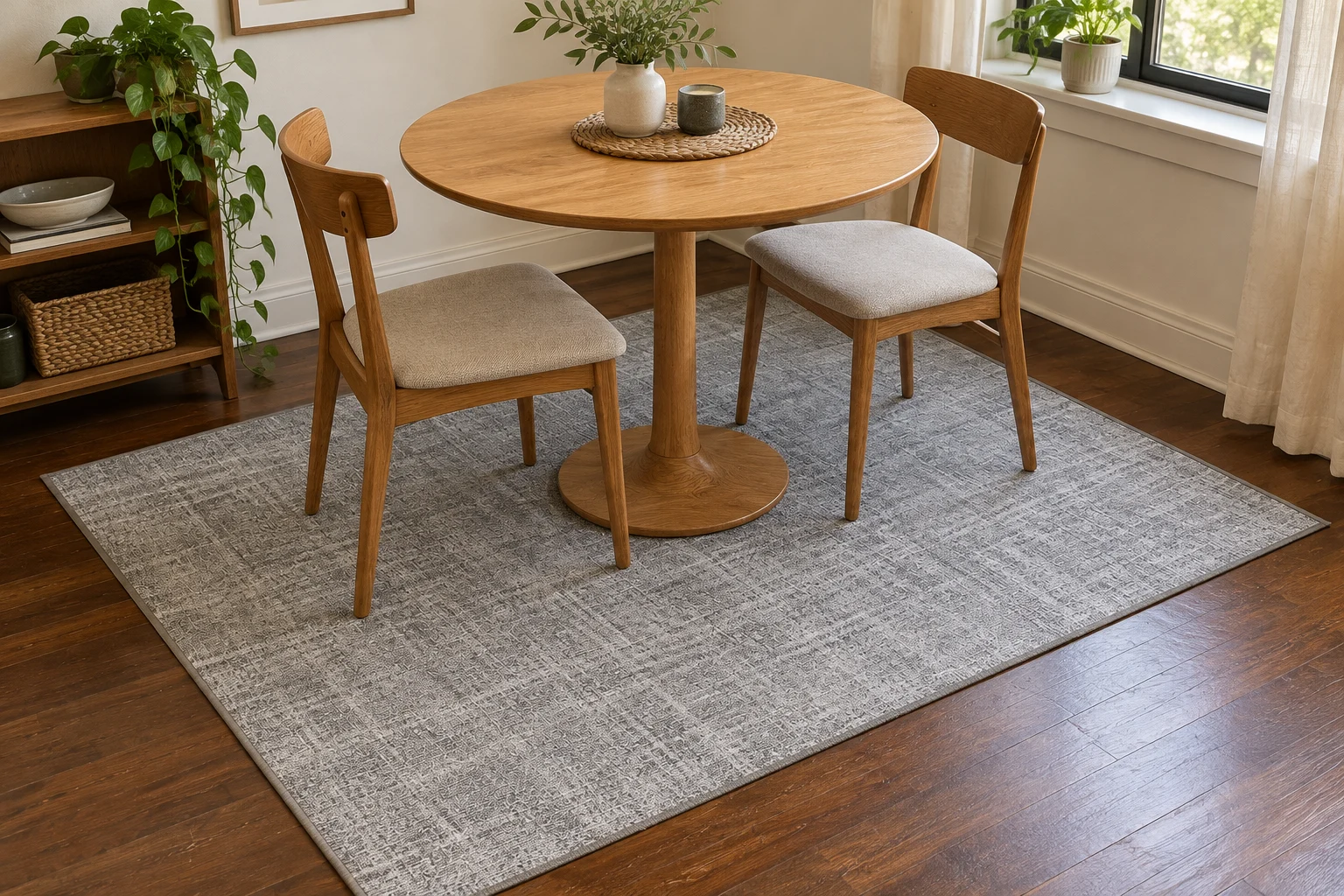
A wipeable vinyl mat works well beneath a small eating area or on an open stretch of kitchen floor.
The NHYTEKR 4-by-6-Foot Vinyl Floor Mat has a gray woven-look design and a PVC surface that wipes clean. Its subtle pattern suits a room that already has plenty of color. The wipe-clean surface is handy where food spills are common.
Under a dining table, the mat should extend far enough for chairs to stay on it when pulled out. A 4-by-6-foot mat may be too small for a larger dining set.
For more pattern, the Carolina Creekhouse Camden Vinyl Floor Mat comes in a beige geometric design. This 4-by-6-foot FloorFlat has a thin, 2 mm profile and cleans with soapy water.
The Camden pattern can add interest to plain cabinets and walls. The gray NHYTEKR mat offers a more subdued finish when the room already has plenty of color.
A waterproof mat does not protect the floor beneath it from water trapped underneath. Water can reach the edges and become trapped underneath. After a spill, dry both the mat and the original floor before putting it back.
A Neat Fit Around Doors and Fixtures
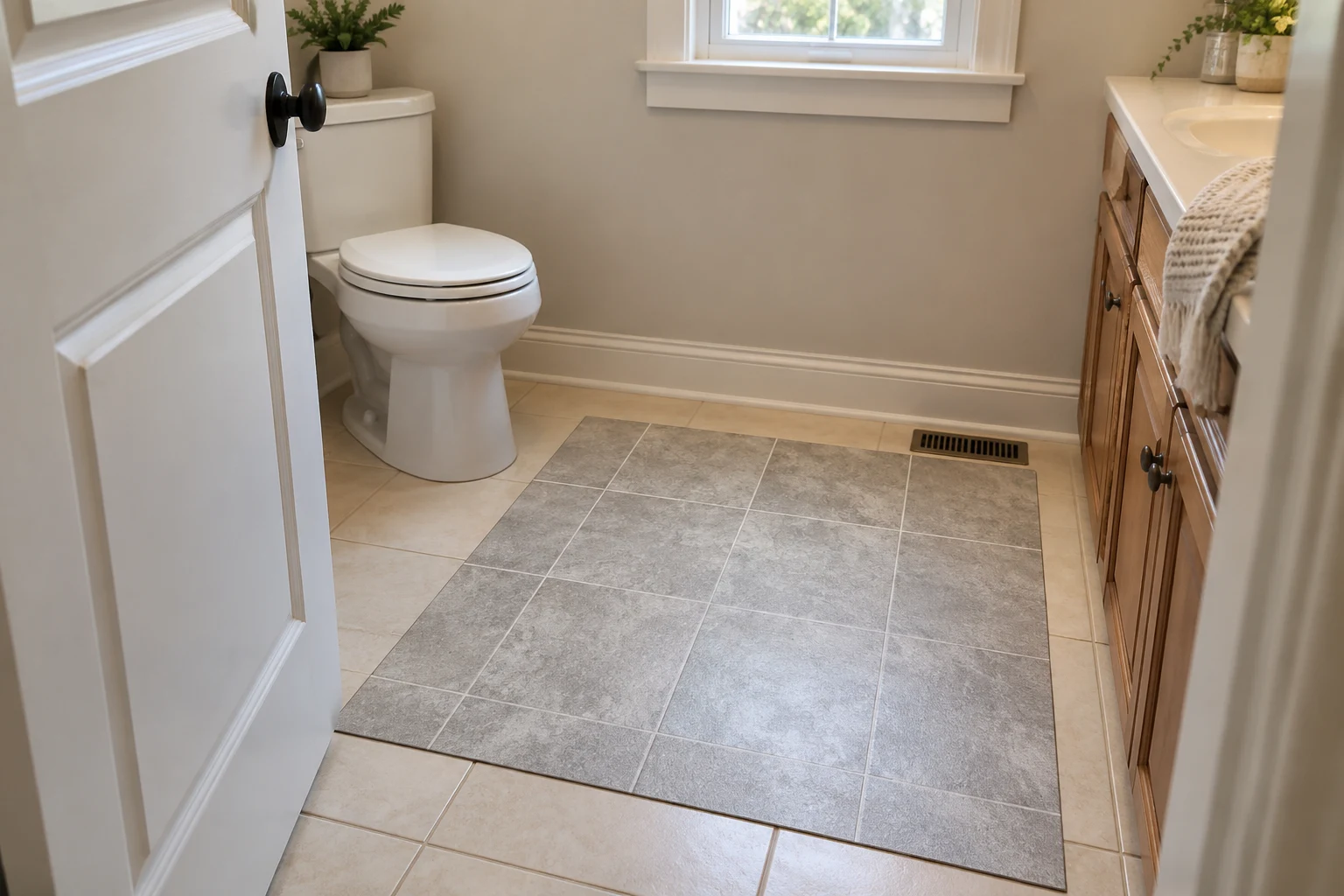
A ready-made mat that fits between fixtures is the simplest option. It can leave a border of the original flooring showing and still make a noticeable difference.
Before laying it down:
- Measure the open area between cabinets, walls, and fixtures.
- Allow room for doors and appliance panels to open.
- Leave floor vents uncovered.
- Place the mat on a clean, dry surface.
- Allow it to settle flat before putting the area back into use.
For a fitted, wall-to-wall look, the material must be designed for trimming. A paper template helps map curves around a toilet or pedestal sink before any cuts are made.
Any cutting should be done on a protective surface, away from the rental floor. Only materials designed for trimming should be cut to fit.
Note: Carpet tape can damage some floor finishes. A mat that curls or slides needs a better fit or a different backing, rather than tape added straight to the floor.
4. Carpet Tiles for Awkward Spaces
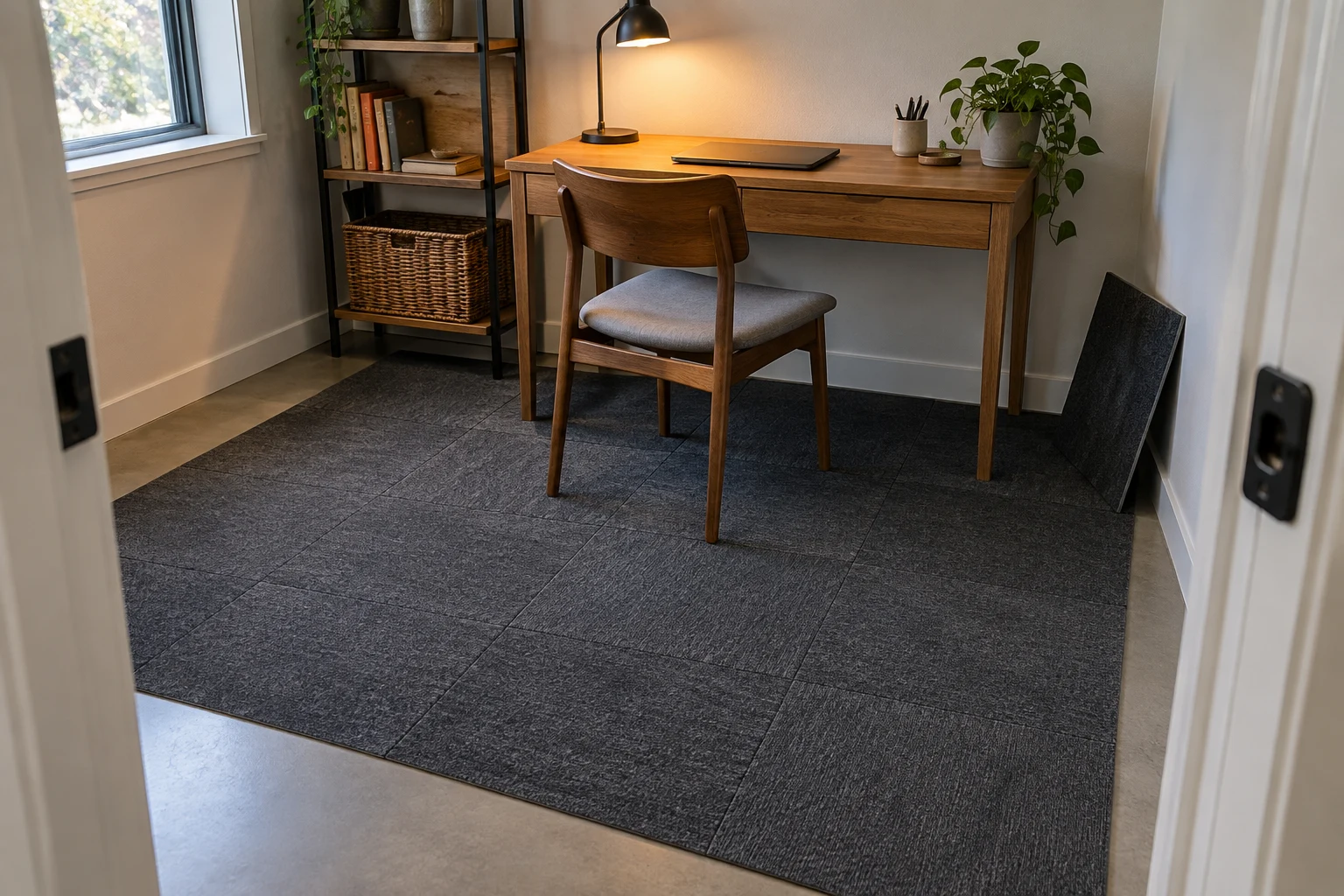
Modular carpet tiles let you build a rug to suit the space. They work well when standard rug sizes leave an awkward gap or extend too far into a doorway.
A desk alcove is a good example. A standard rug might be too wide, while a runner leaves the chair half on and half off. Carpet tiles offer more control over the shape.
They also make small repairs easier. One badly stained section can be replaced without replacing the whole rug.
FLOR carpet tiles use compatible FLORdots connectors to join neighboring tiles beneath the rug. The connectors hold the tiles together without sticking them to the floor.
FLOR tiles need a clean, hard, dry base. They are not designed to go over existing carpet or carpet padding.
One color gives a simple finish. Two related colors can create a subtle border without adding another busy pattern to the room.
5. Peel-and-Stick Tiles: A Bigger Change With More Commitment
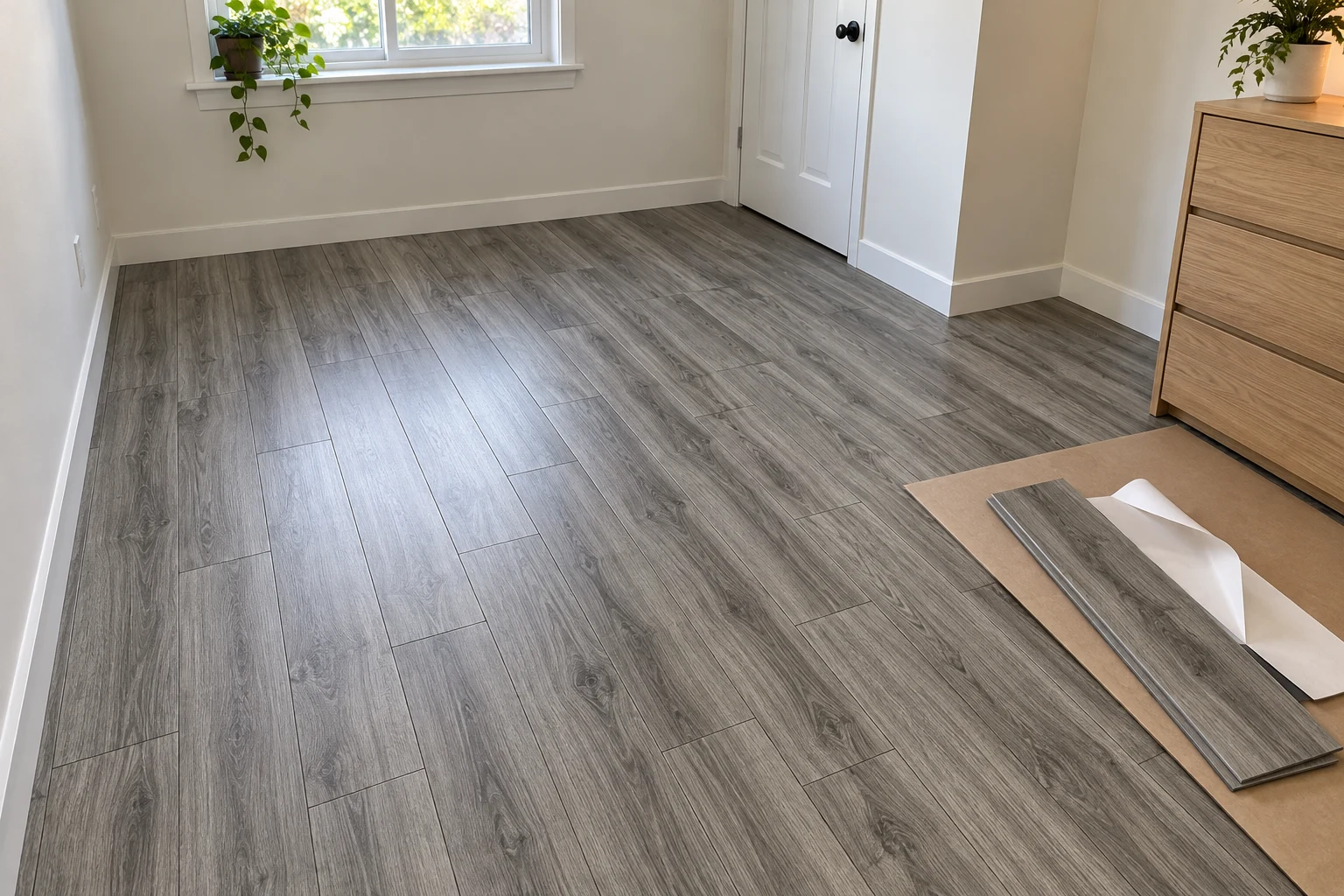
Peel-and-stick flooring can cover a whole floor, but the adhesive may leave residue or lift the finish underneath during removal.
That makes it a more involved rental update. Adhesive flooring belongs in a space where the alteration has written approval.
The Art3d Peel-and-Stick Vinyl Floor Planks offer a deep-gray wood look. The pack contains 36 planks measuring 6 by 36 inches, with a total material area of 54 square feet before cuts and waste.
These planks stick directly to the floor beneath them. Removing them takes more work than rolling up a rug or lifting a loose mat.
A sound, smooth base is essential. Loose flooring, uneven patches, and deep grout lines can interfere with adhesion or show through the finished surface.
A little preparation helps the installation look more even:
- A clean, dry surface gives the adhesive proper contact.
- Laying out the planks before peeling off the backing shows where pieces will need trimming.
- Staggered plank joints create a more natural wood-floor appearance.
- Extra material allows for cuts and later replacements.
- Any filling, priming, or leveling adds work and changes the original surface.
The budget needs to cover removal, too. Flooring that is quick to install can take much longer to remove.
For a short stay, a rug or loose mat is generally the easier project.
6. Floating Planks for a Whole-Room Change
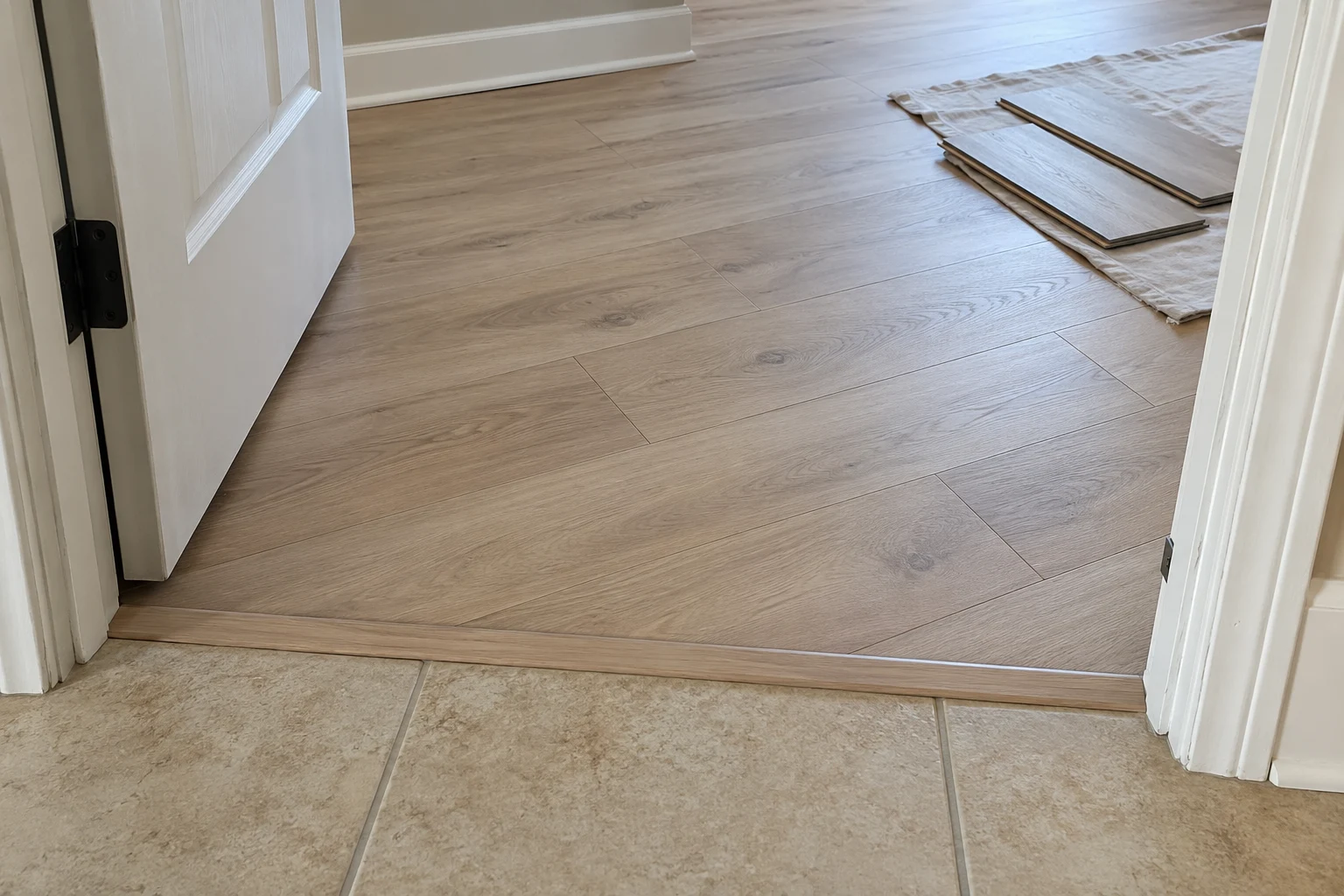
Click-lock flooring joins together at the edges without bonding each plank to the floor below. The connected pieces form a floating floor.
The floor still needs a small gap around its edges so the planks can expand. Trim pieces cover the joins at doorways, and planks need cutting around door frames and corners.
Added height is one of the biggest practical issues. It can affect doors, thresholds, and the clearance needed to remove an appliance later.
A firm, flat base is essential. Carpet and soft padding compress under weight, which can strain the plank joints. Carpet is too soft to support these rigid planks properly.
Some systems can be dismantled. However, cut pieces may not fit the next room, and locking edges can be damaged during removal. Reusing the entire floor is not guaranteed.
For a longer stay and an approved installation, floating flooring may be worthwhile. Rugs and mats require far less fitting work.
7. A Better Look for the Floor That Still Shows
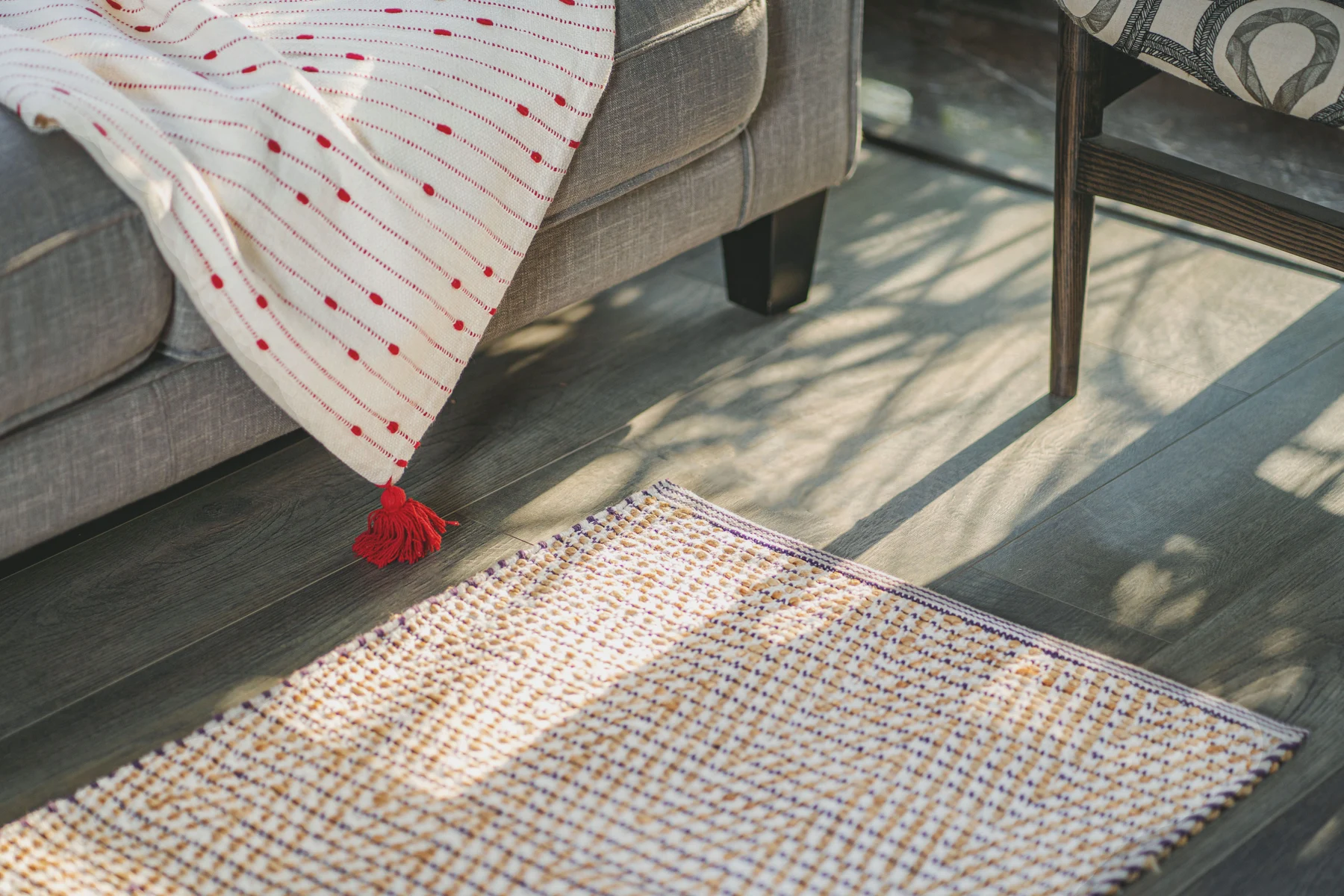
The whole floor does not need to be remodeled for the room to look better. The flooring around a rug can look more at home when the furniture and colors work well with it.
A mesmerizing floor pattern already draws attention. Plain curtains and solid-colored furniture give the room a simpler backdrop. Several other bold patterns can make the space feel crowded.
Warm brown flooring often works well with cream fabrics, muted greens, and natural wood. Our earth-tone interior color palette has combinations that bring those colors together.
Artwork and lighting give you other things to notice when you enter. A favorite print above the sofa or a warm lamp beside a chair makes the space feel more personal.
Our rental wall decorating ideas offer more ways to add interest above floor level.
Furniture should still fit comfortably. A larger coffee table might hide more floor, but it creates another problem if you have to squeeze past it.
A rug, a better-placed lamp, and clearer walkways may be all the room needs.
A Quick Checklist Before Everything Goes Back
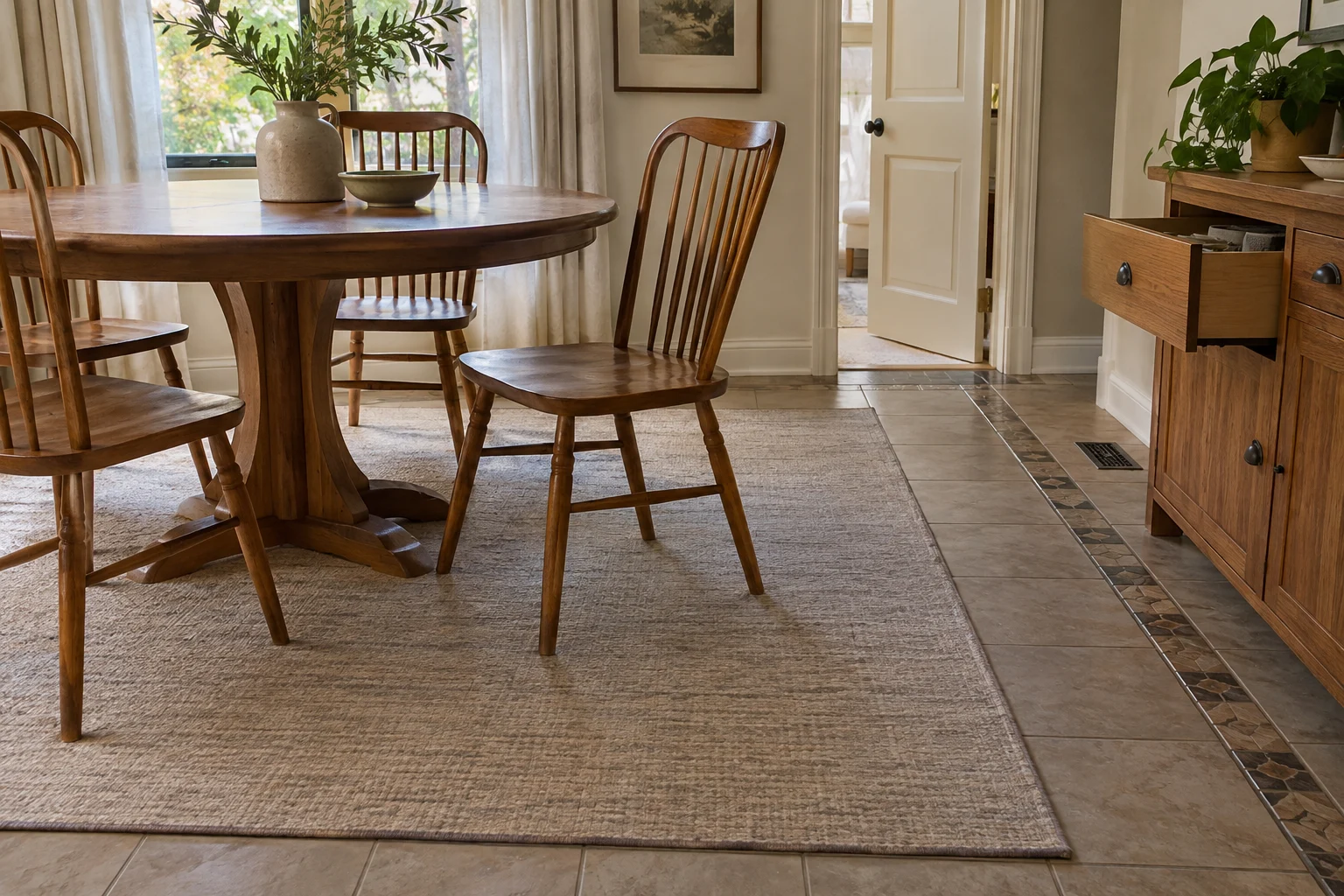
A few everyday checks will show whether the new covering gets in the way. Open the door, pull out a chair, and walk through carrying a laundry basket.
- The original floor is clean, dry, and sound.
- The covering and its backing suit the surface underneath.
- The rug pad covers most of the rug’s underside without showing at the edges.
- Doors, drawers, and appliances open freely.
- Corners and edges lie flat.
- Floor vents remain uncovered.
- Walking routes are clear.
- Adhesive or fitted flooring changes have written approval.
- The removal plan protects the original floor.
- Spare pieces and care instructions are saved.
Note: Moisture and grit can collect beneath loose coverings. Lifting the covering to clean underneath helps you spot hidden spills and protect the original floor.
Common Questions About Covering Rental Floors
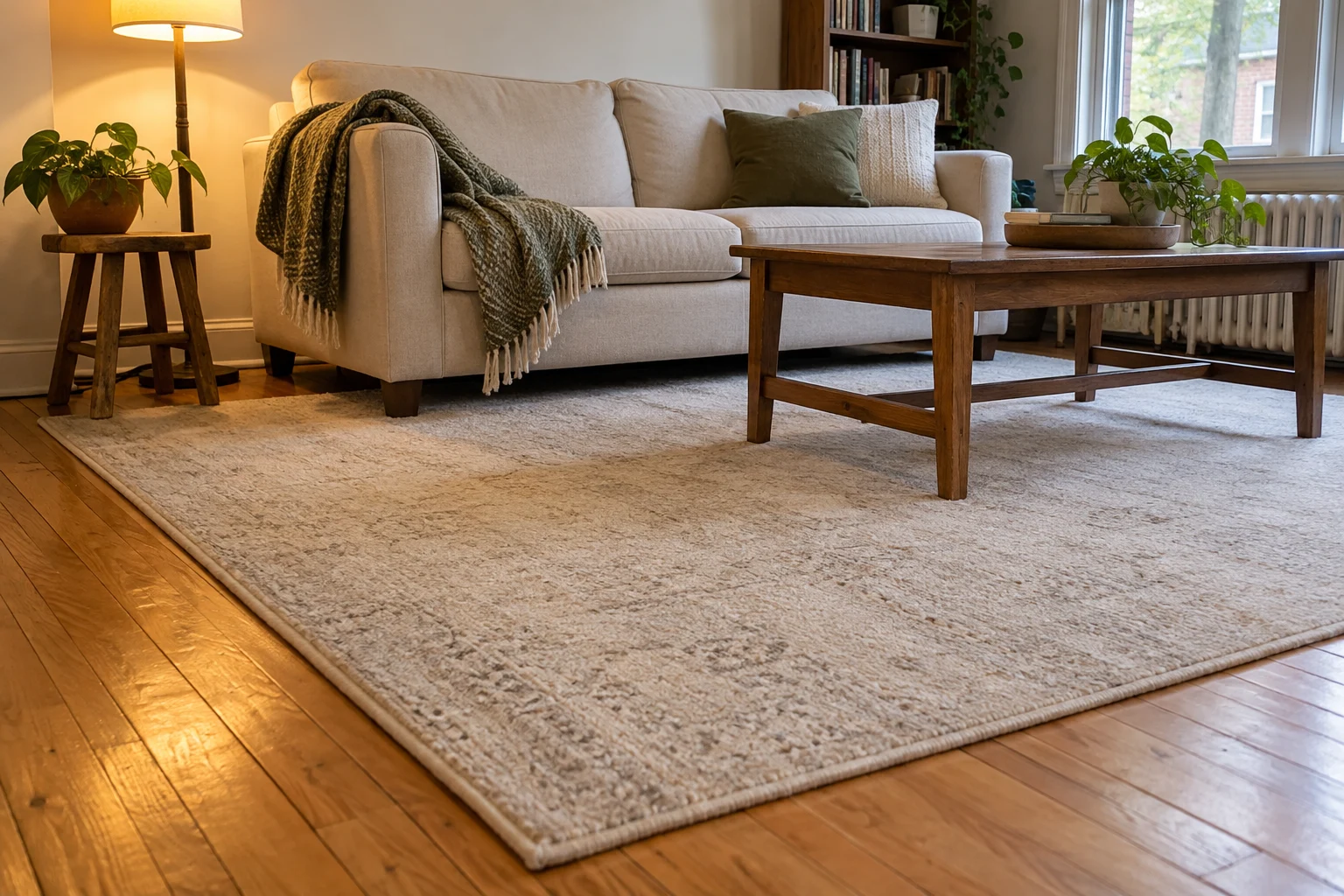
The best option covers the area you want to hide, stays in place, and is manageable to remove when you move out.
What Is the Cheapest Way to Cover Ugly Rental Floors?
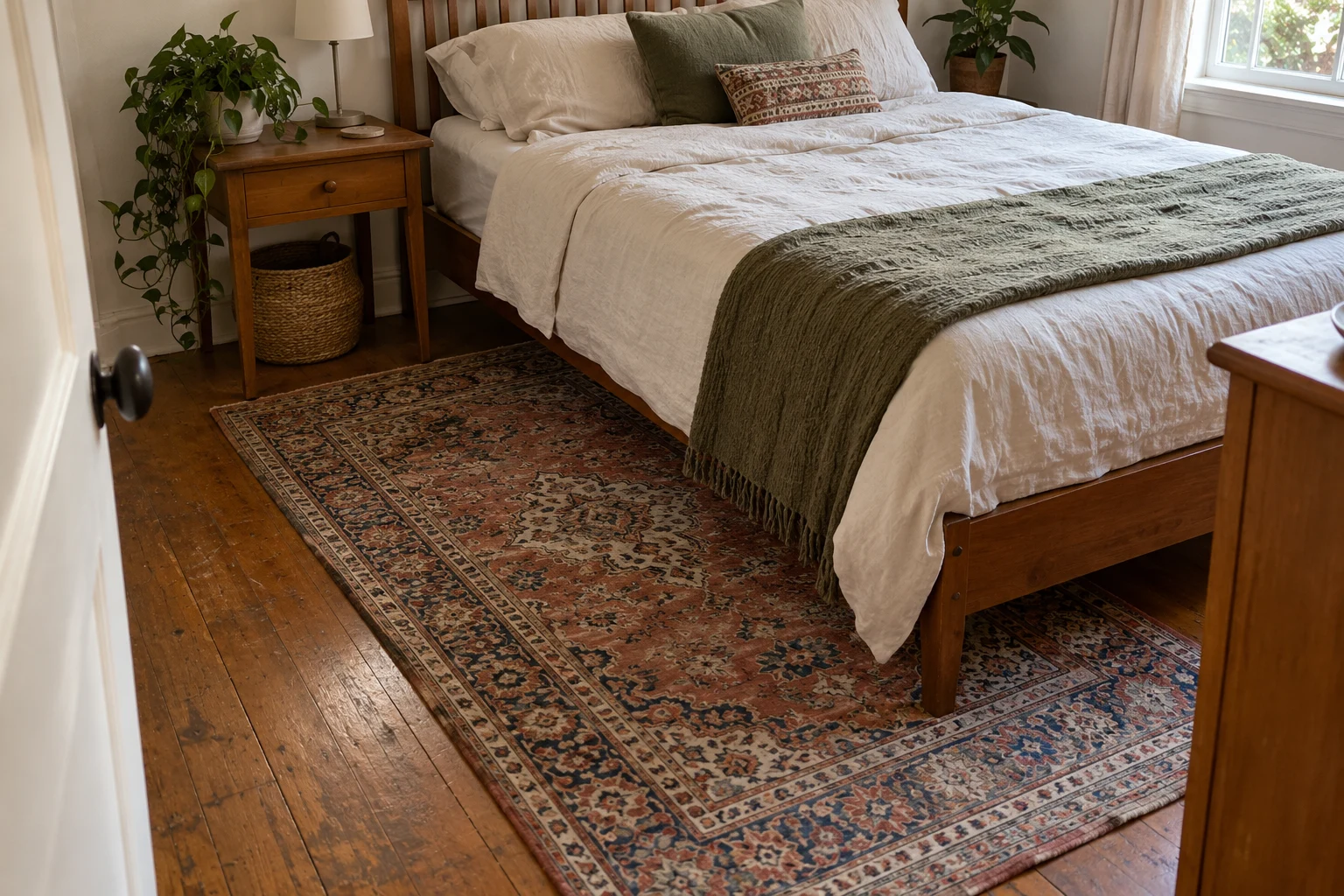
A rug you already own costs nothing to reuse. Moving it to the most visible area may be enough to improve the room.
For a new purchase, covering one area with a runner or rug requires less material and fitting work than covering the whole floor. Sale rugs and clean secondhand rugs can also stretch the budget.
Can an Area Rug Go Over Existing Carpet?
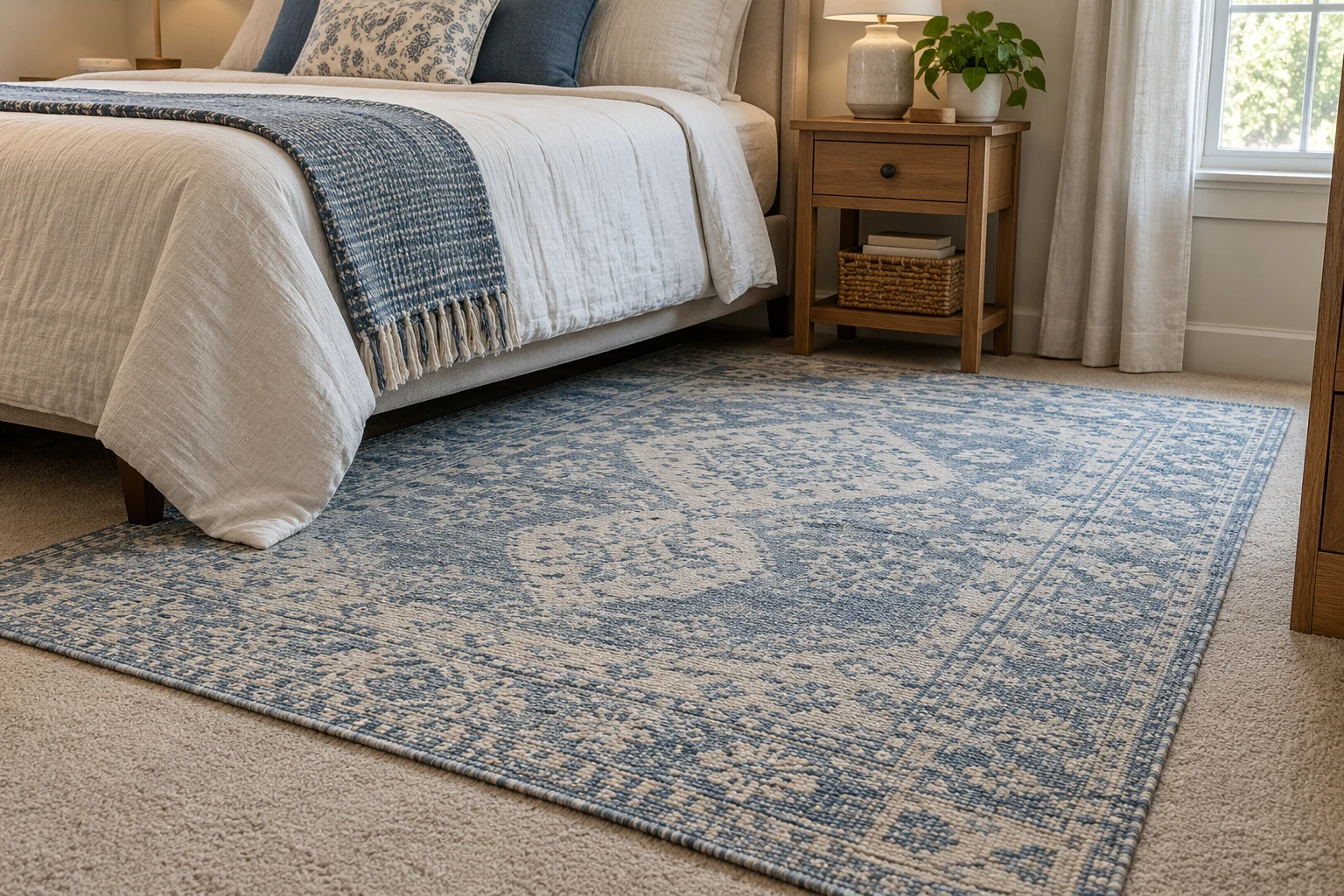
Yes, as long as the rug stays flat and stable. Low-pile carpet gives a firmer base than thick, plush carpet.
A pad specifically made for rugs over carpet can help reduce movement. If the rug repeatedly bunches or develops raised edges, it is not working in that spot.
Are Peel-and-Stick Floor Tiles Easy to Remove?
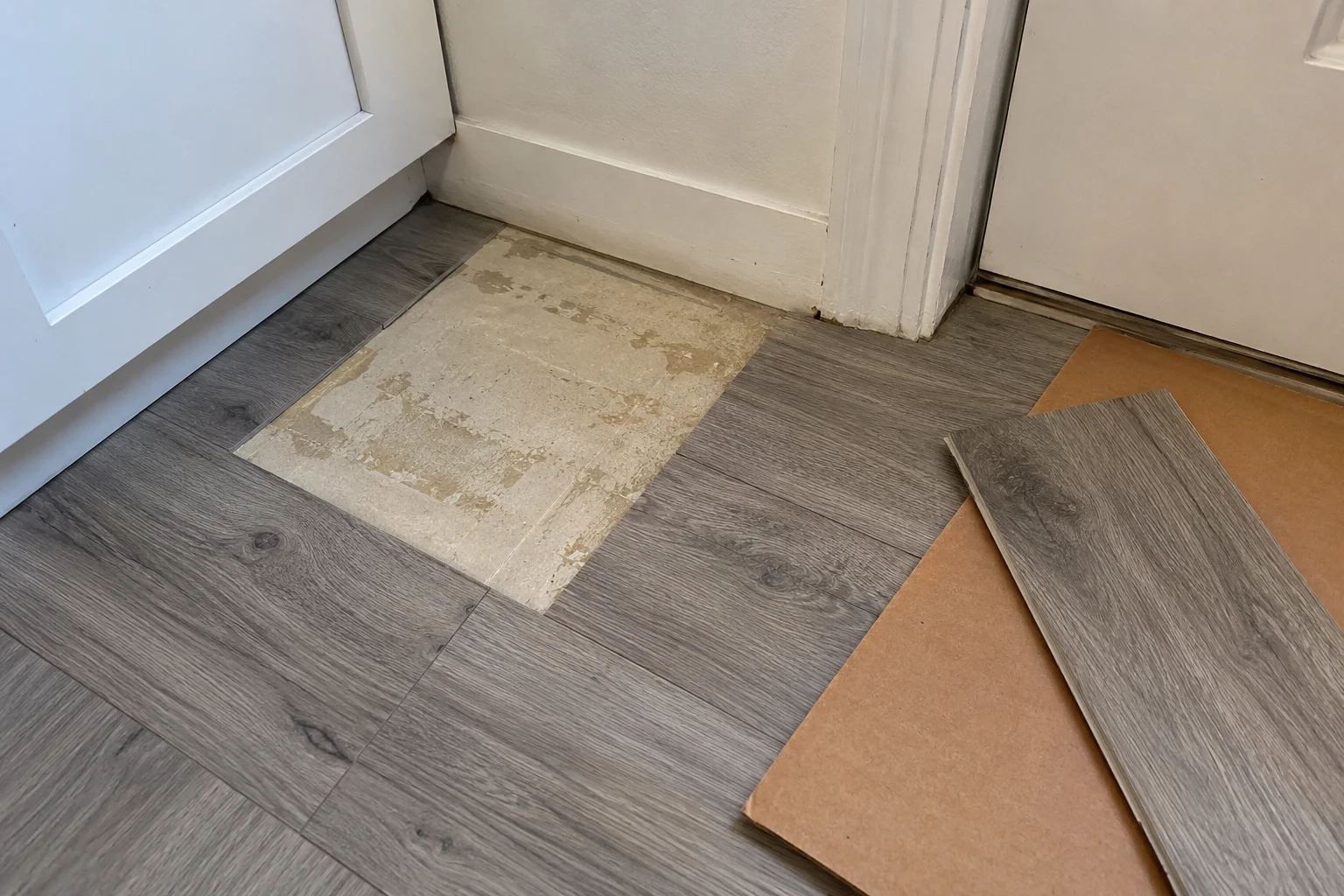
Easy removal is not guaranteed. The adhesive, original surface, and time in place all affect the result.
Some tiles leave adhesive behind when removed. Others pull up the floor’s finish. Adhesive flooring needs a more careful removal plan than a loose rug.
What Works Best in a Rental Bathroom?
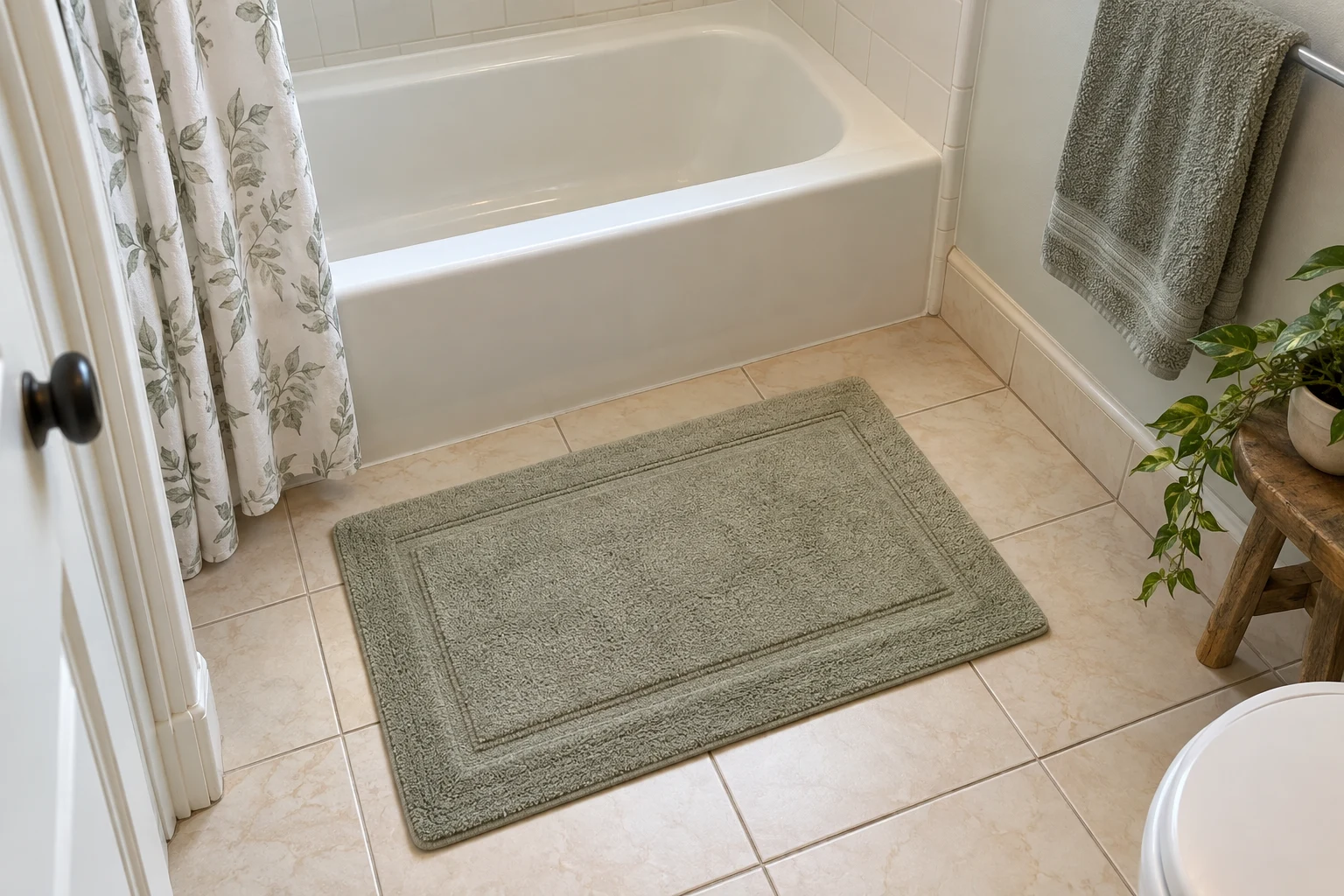
For the area outside a shower or tub, a washable bath mat is the simplest improvement. It can be lifted for cleaning and drying.
In a dry powder room, a suitable decorative vinyl mat can cover more of the visible floor. It still needs a dry surface underneath and flat edges.
Neither option should cover a leak or damp flooring.
Can Vinyl Flooring Go Over Carpet?
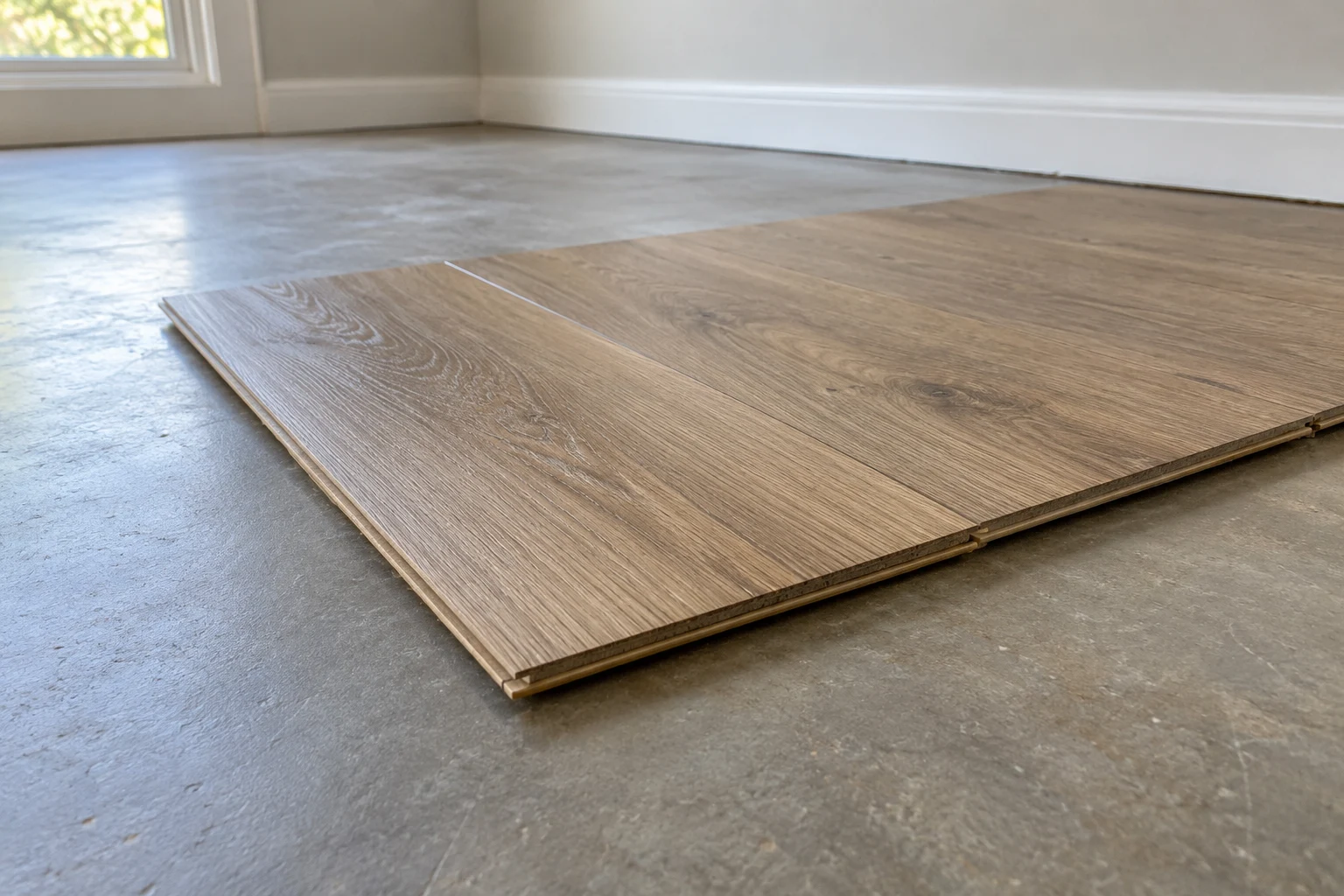
Carpet is too soft to support rigid click-lock flooring. It compresses when you walk on it, allowing the plank joints to bend.
An area rug is the simpler way to change the appearance of rental carpet without removing it.
Is Contact Paper Suitable for Floors?
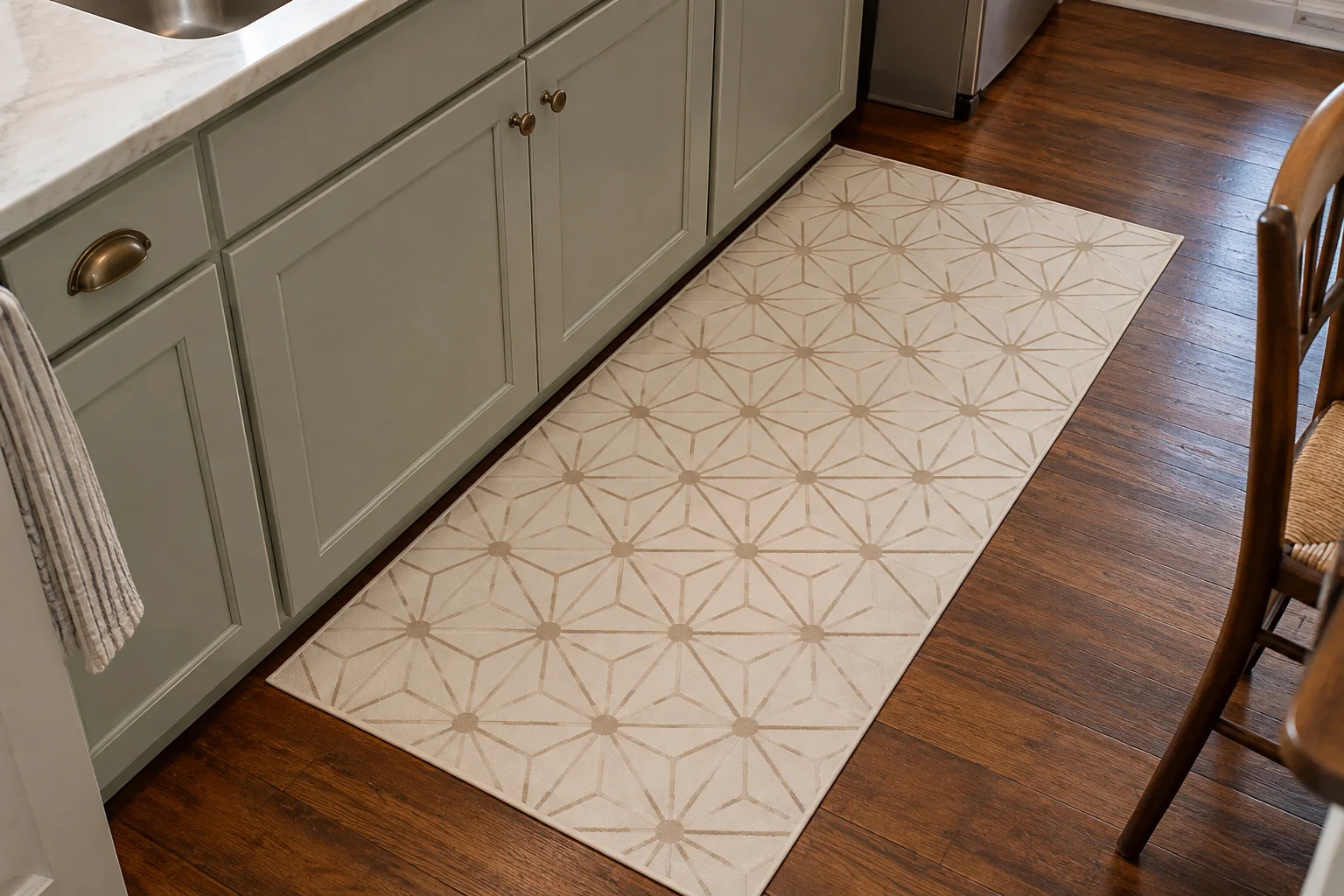
Ordinary contact paper is not suitable for floors. It can tear, wear through, or lift at the edges under regular foot traffic.
A decorative vinyl floor mat offers a wipeable alternative made for floor use.
Useful Finds for Better-Looking Rental Floors
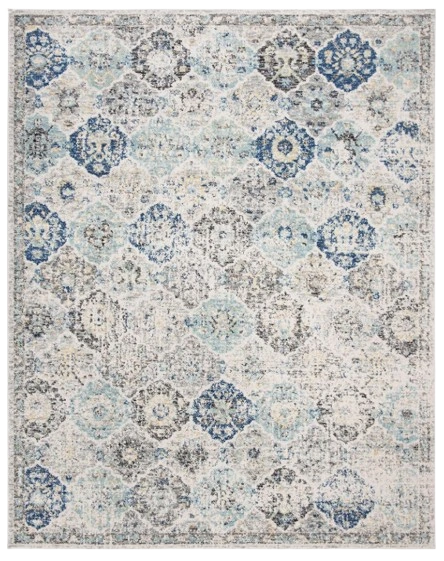 SAFAVIEH Madison Area RugAn 8-by-10-foot ivory-and-aqua rug with a botanical pattern and low pile for a living room or bedroom.
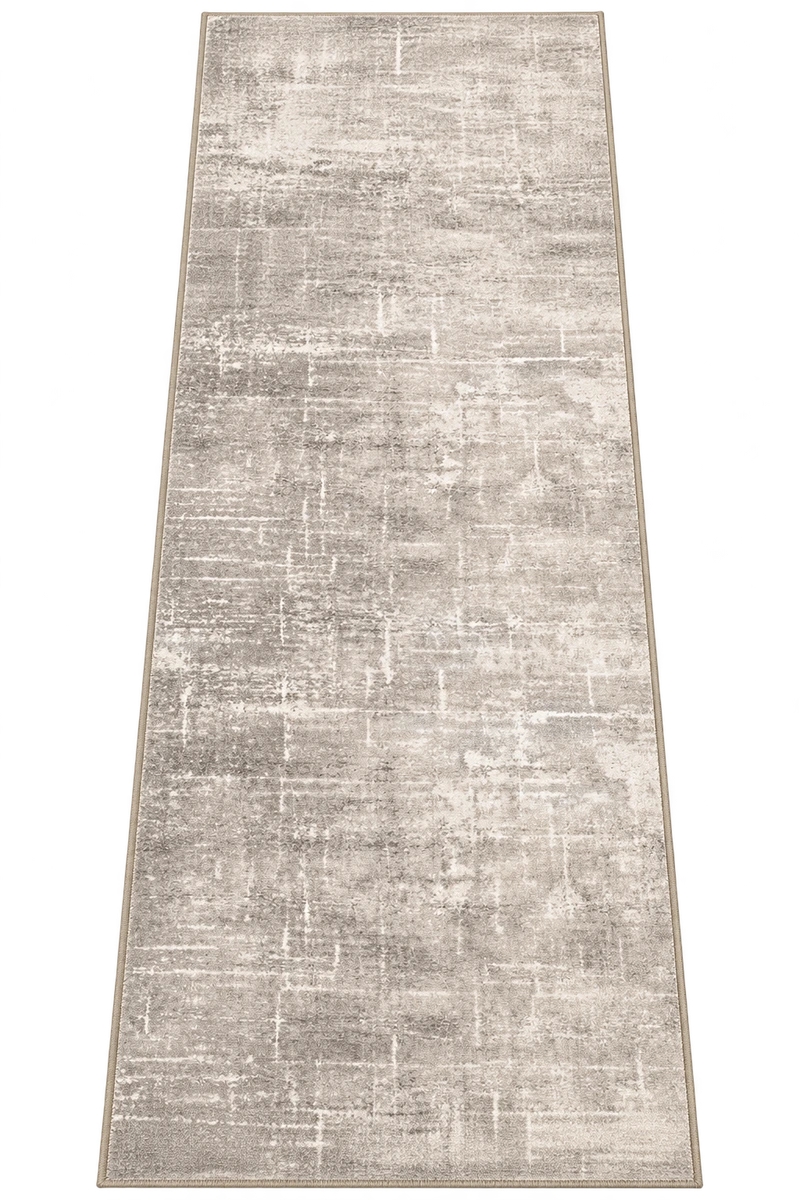 HY HAO YUN LAI Washable RunnerA 2-by-10-foot beige-and-cream runner for long kitchens, hallways, and narrow spaces.
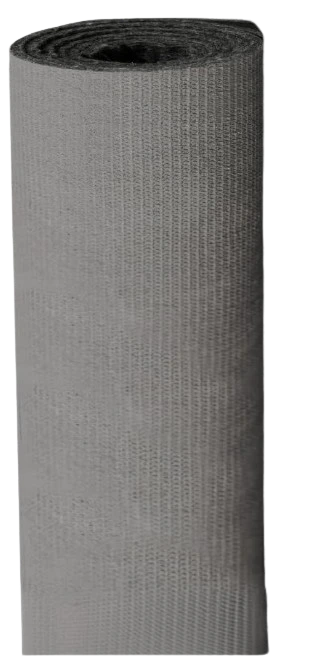 GORILLA GRIP Felt and Rubber Rug PadA trimmable 2-by-3-foot pad that adds cushioning and grip beneath a small rug on suitable hard flooring.
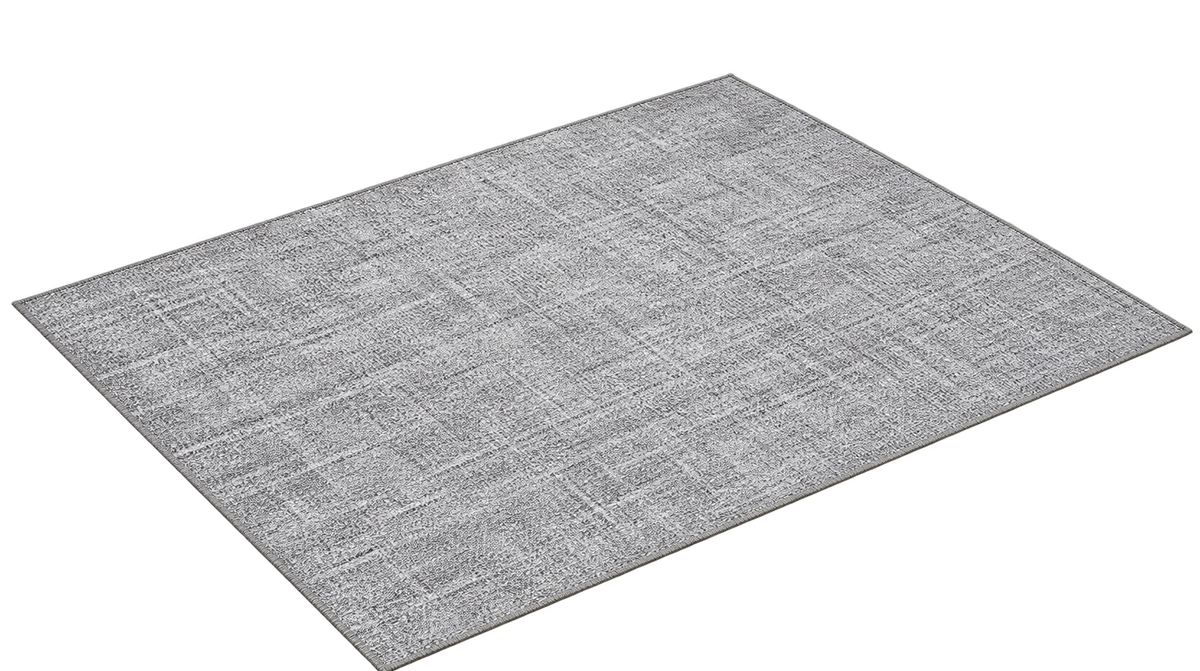 NHYTEKR Vinyl Floor MatA 4-by-6-foot gray PVC mat with a woven-look surface that wipes clean.
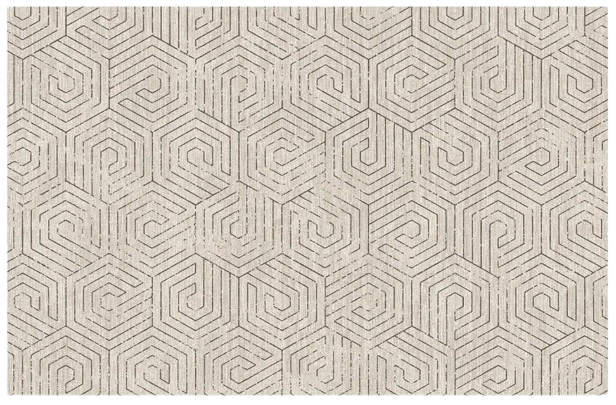 Carolina Creekhouse Camden Vinyl Floor MatA thin, 4-by-6-foot vinyl mat with a beige geometric pattern and an easy-to-clean surface.
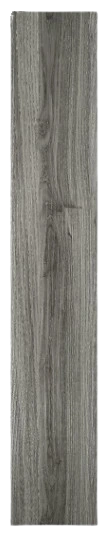 Art3d Peel-and-Stick Vinyl Floor PlanksA pack of 36 deep-gray wood-look planks that stick to the floor and cover 54 square feet before trimming. For rentals where adhesive flooring is approved.