How to Decorate Rental Walls: 10 Temporary No-Damage Changes

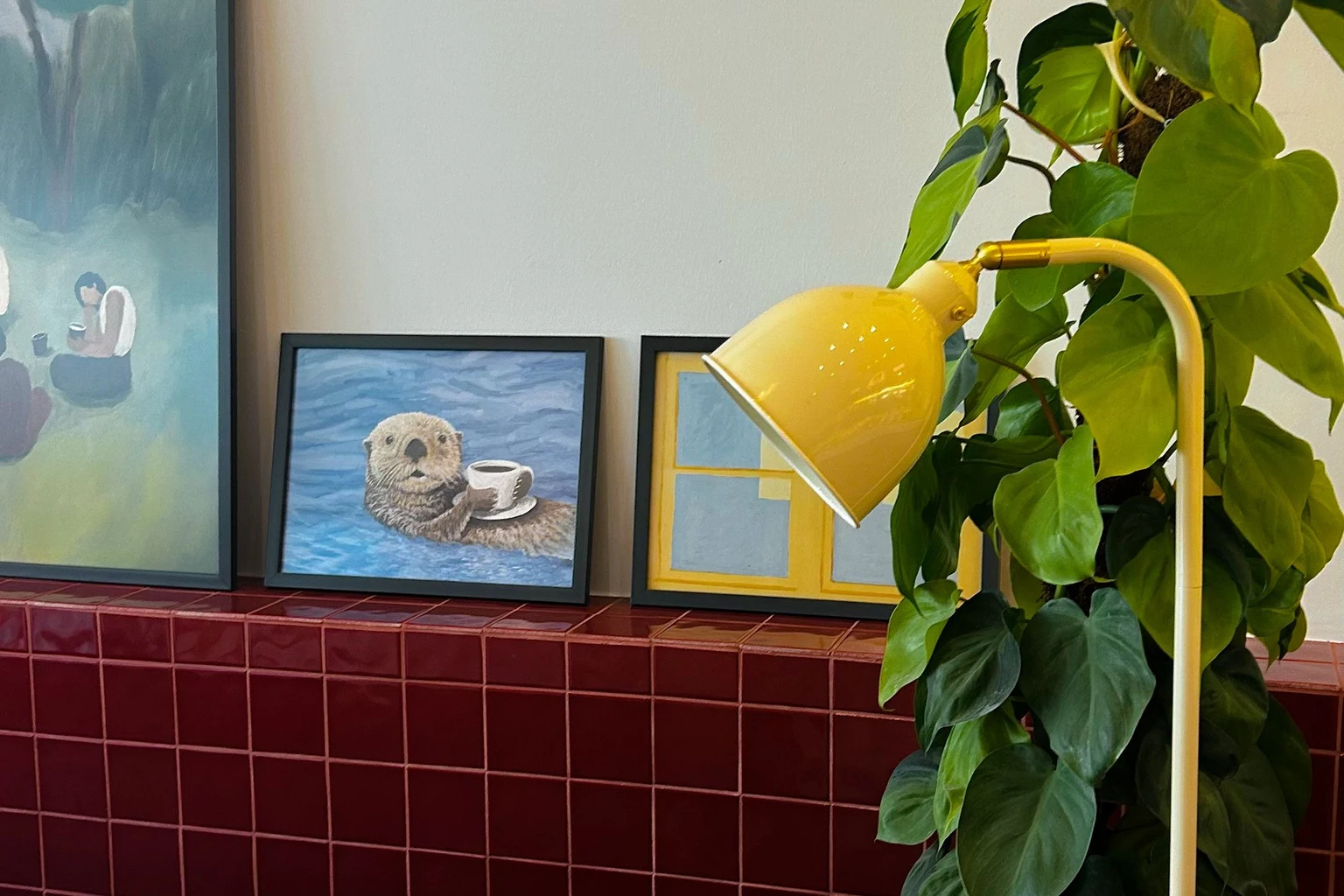
Decorating walls without damage can be as simple as displaying framed art on furniture or using suitable removable hanging products for lightweight pieces.
The quick answer
- Display artwork on a dresser, console, or existing shelf to avoid attaching it to the wall.
- Use removable picture-hanging strips for suitable frames on compatible surfaces.
- Add color with removable wallpaper or decals on wall finishes that suit the product.
- Add texture with long curtains, textiles, or woven decorations.
- Fill empty areas with plants, lamps, and decorative screens when wall attachments aren’t an option.
These 10 ideas include simple decorating tips, product suggestions, and advice for taking everything down.
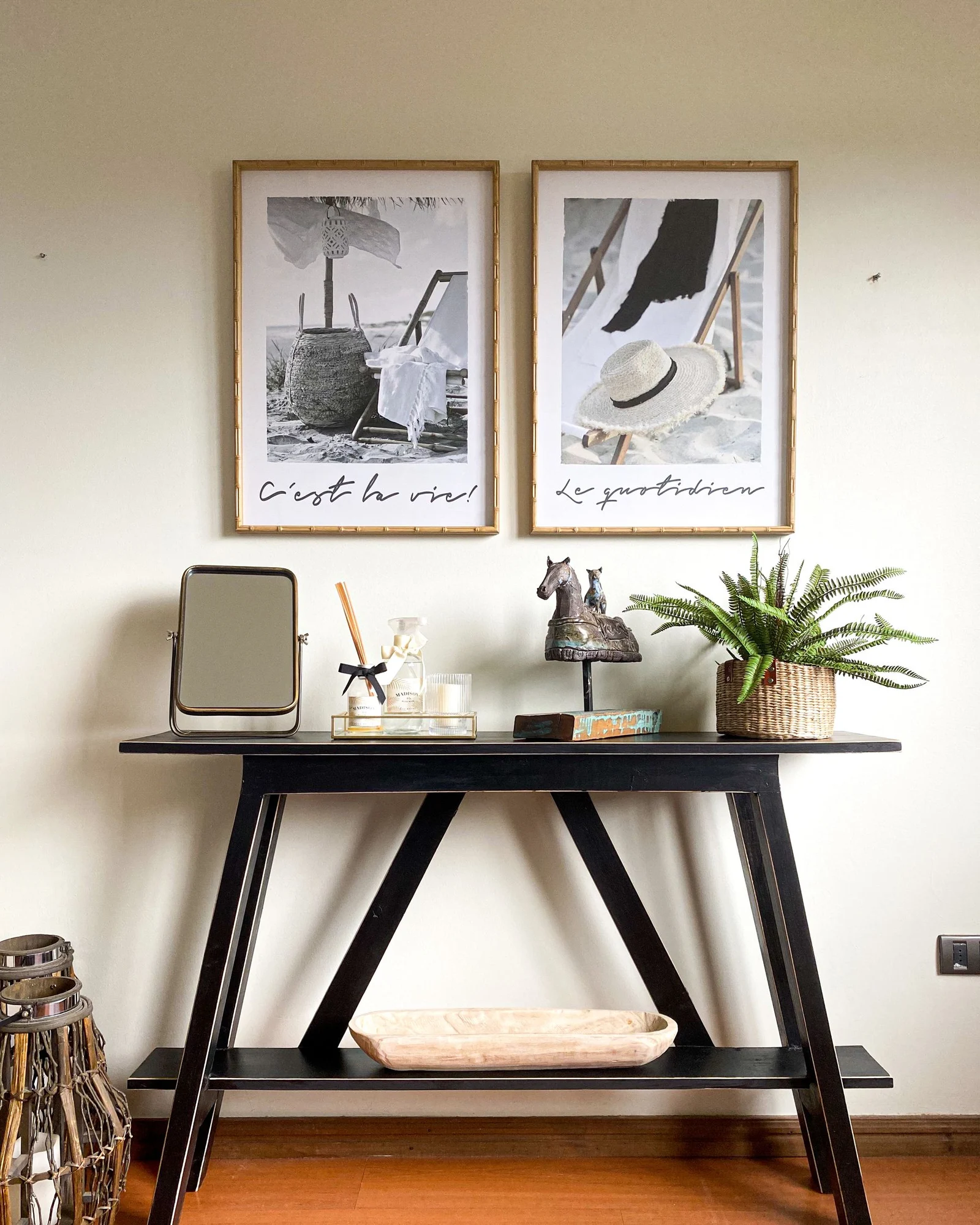
1. Framed Art on a Dresser or Console
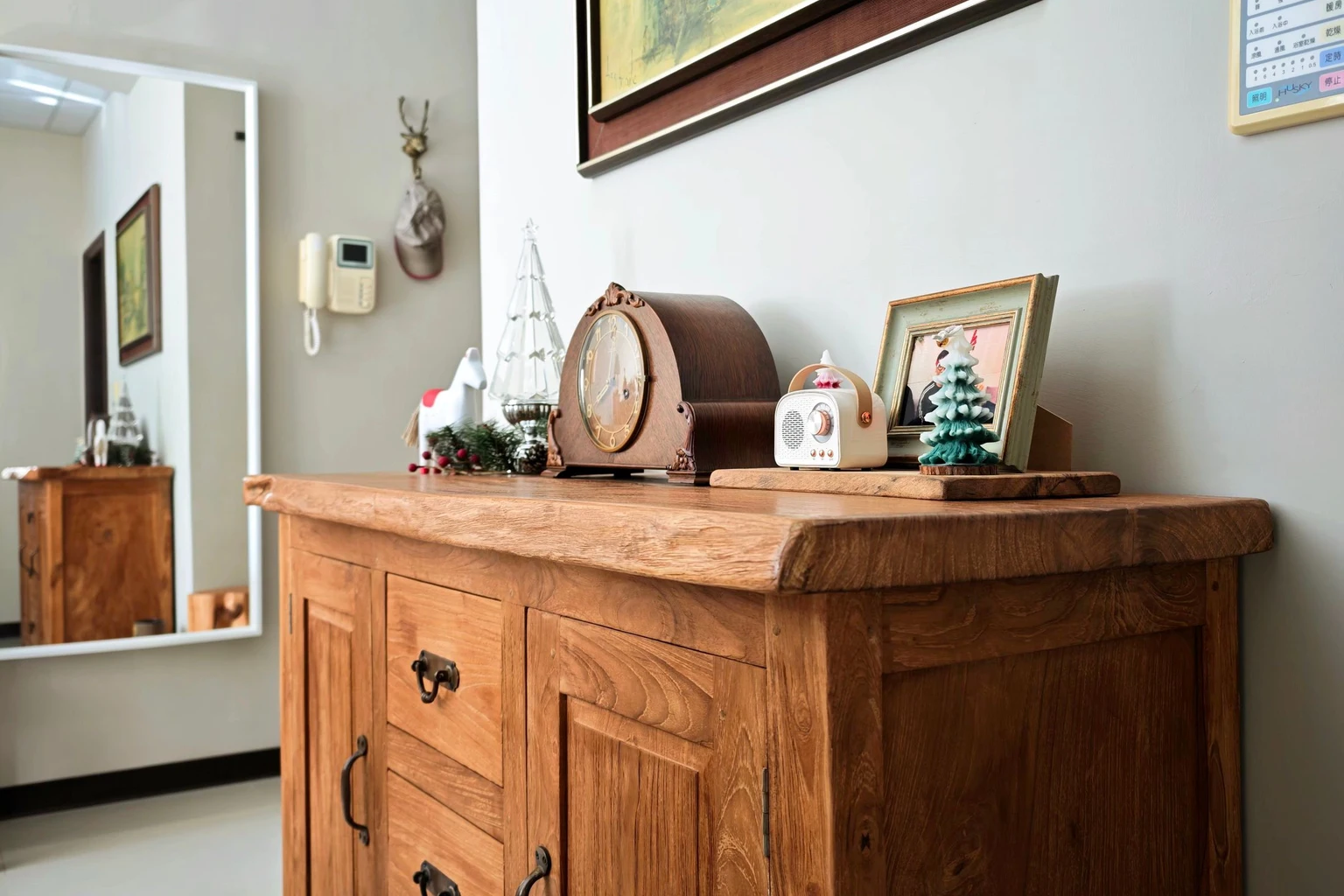
Artwork displayed on furniture you already own adds color without mounting a frame.
A dresser, sideboard, or console may already provide a good place for that print you’ve been meaning to hang. One large picture often stands out more than several tiny frames spread across a wide surface.
A smaller framed photo can sit in front of one corner of the larger picture, with a lamp or bowl beside them. Leave enough space for the things you use every day.
For example, a picture of green trees can pick up the color of a green cushion or throw. The artwork doesn’t need to match everything else in the room.
Small felt pads on the back of the frame help reduce rubbing where it touches the wall. The frame also needs a stable position where it won’t slide or get knocked over.
For smaller prints, a tabletop easel or frame with a built-in stand keeps the display off the wall altogether.
2. A Small Gallery Wall With Pictures You Actually Love
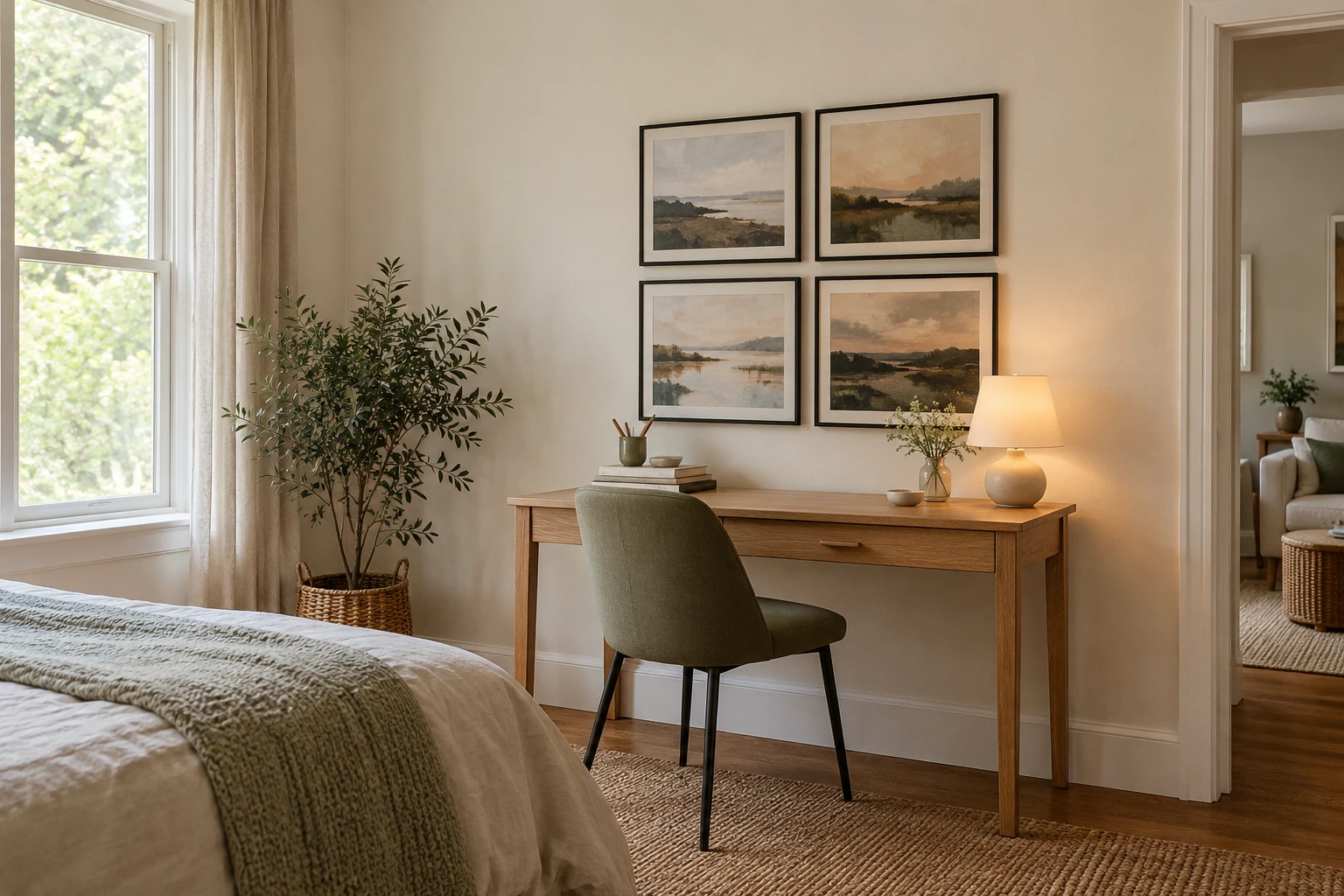
A few frames arranged as one group can fill an empty area without covering the whole wall.
Family photographs, a favorite illustration, and a postcard from a memorable trip can work together. A gallery wall doesn’t need to come from a matching set.
Three or four pieces are often enough above a small desk. The arrangement matters more than having lots of pictures.
A Simple Layout Before Anything Goes Up
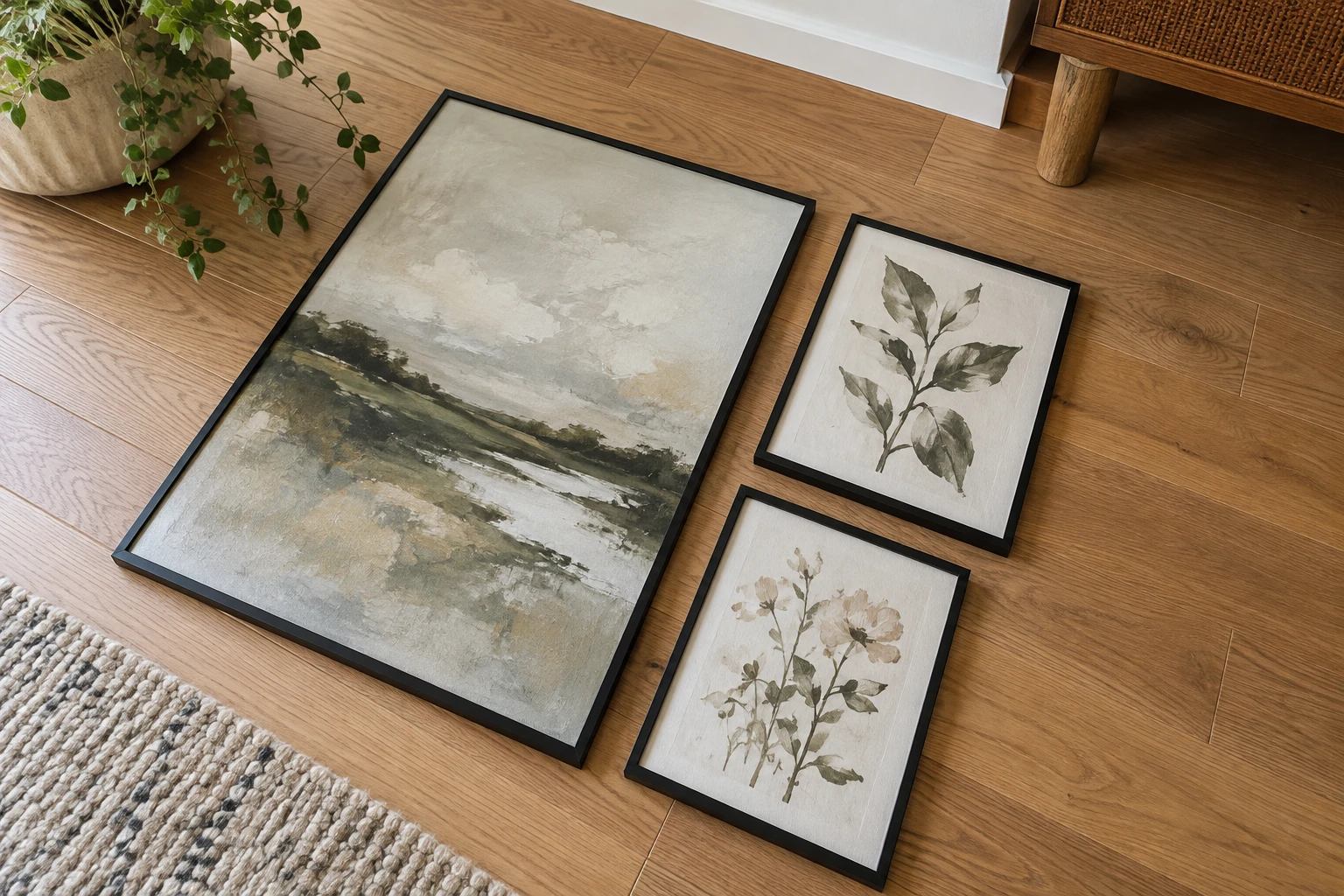
An arrangement on the floor lets you move the frames around before attaching anything.
One easy option is a row with the bottom edges aligned. Another is a larger frame beside two smaller ones, one above the other.
A photo of the arrangement gives you something to refer to while hanging. It also makes uneven gaps easier to notice.
If the pictures have different styles, frames in the same color help them look good together. Black frames work with a colorful print, a family photo, and a simple sketch.
Picture Strips and Hooks Have Different Uses
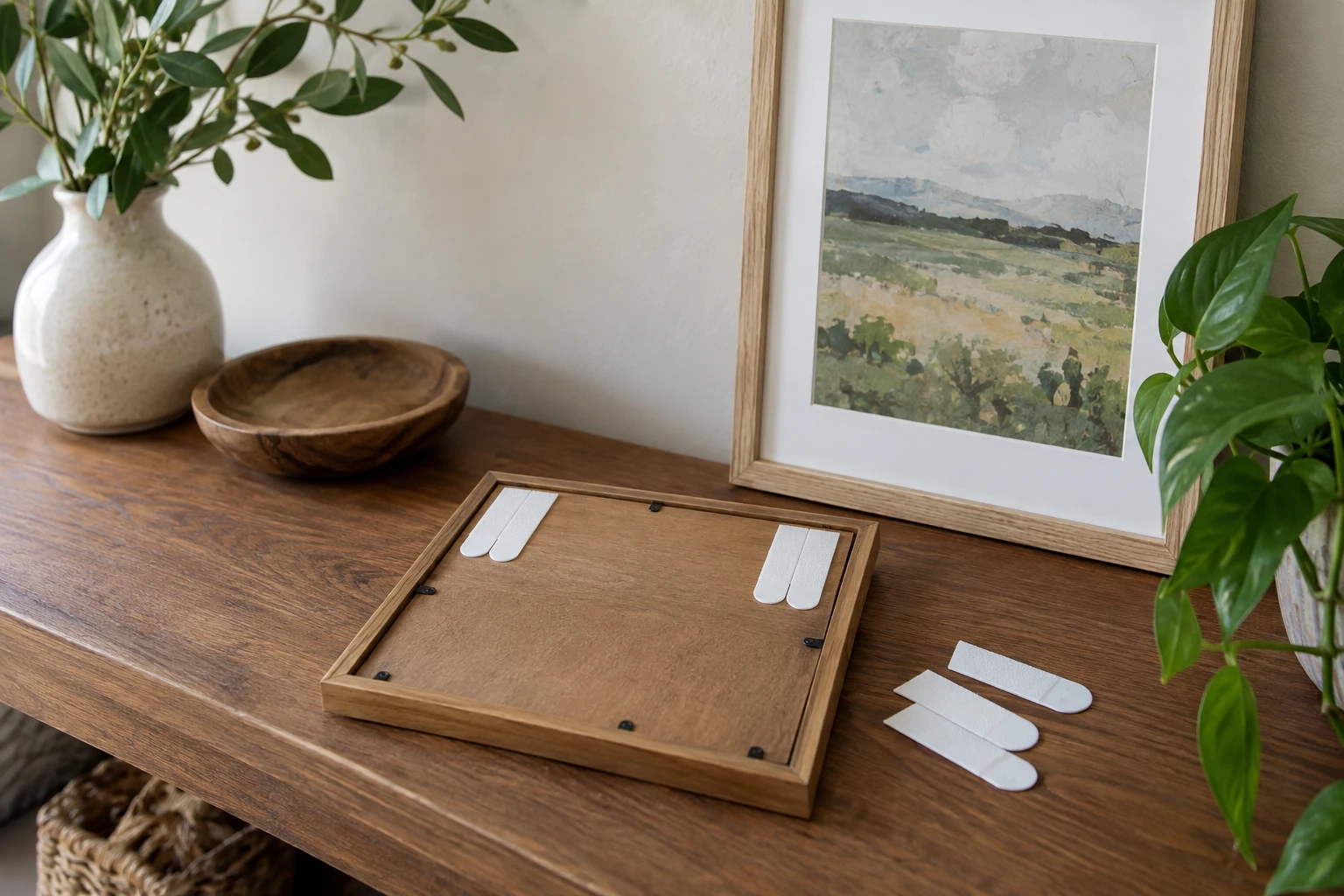
Picture-hanging strips need a suitable flat area on the back of the frame. Hooks hold decorations by a loop or hanger.
The Command Large Picture Hanging Strips, 28 Pairs are a useful option for arranging several pictures on a suitable smooth wall. The pack contains 56 strips that form 28 pairs.
The strips stay hidden behind the frames. The number of pairs needed depends on the frame’s size and total weight, including the glass.
For these strips, the wall is cleaned with rubbing alcohol and allowed to dry. After attaching the frame and reinforcing the strips against the wall, the adhesive needs an hour before the frame is rehung.
3. Removable Wallpaper for One Accent Wall
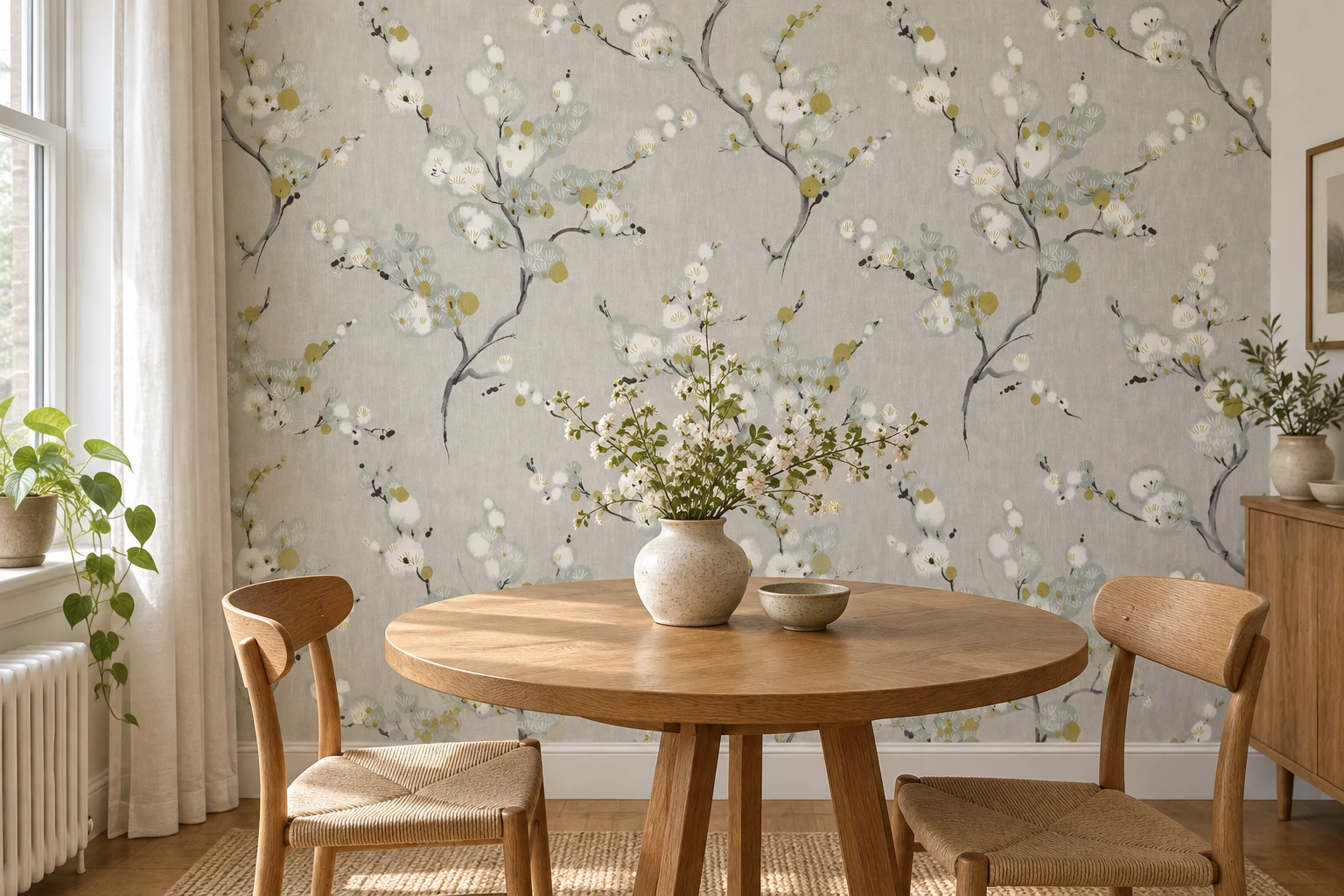
One wallpapered wall can provide enough pattern for an entire room.
A small dining wall, an entry recess, or the area behind a desk is a manageable place for it. There’s no need to cover every wall to get a noticeable change.
Fine stripes work well if you want a subtle pattern. A floral design works well when the wall will be the main decorative feature.
The NuWallpaper Mirei Peel-and-Stick Wallpaper has blue, yellow, and white blossoms against a gray linen-look background. It brings several colors into the room without needing separate pictures or decorations.
Beside a plain wooden table, the floral wallpaper can be the main decoration. A blue cushion or a small yellow ceramic piece elsewhere in the room would be enough to repeat its colors.
Each roll measures 20.5 inches wide by 18 feet long, and the paper can be repositioned during installation.
A smooth, flat, properly prepared surface is essential. Adhesive wallpaper will not stick well to rough walls or flaking paint.
If the wallpaper won’t work on your wall, section nine shows how to use it on a removable panel inside a bookcase.
4. Wall Decals for a Smaller Project
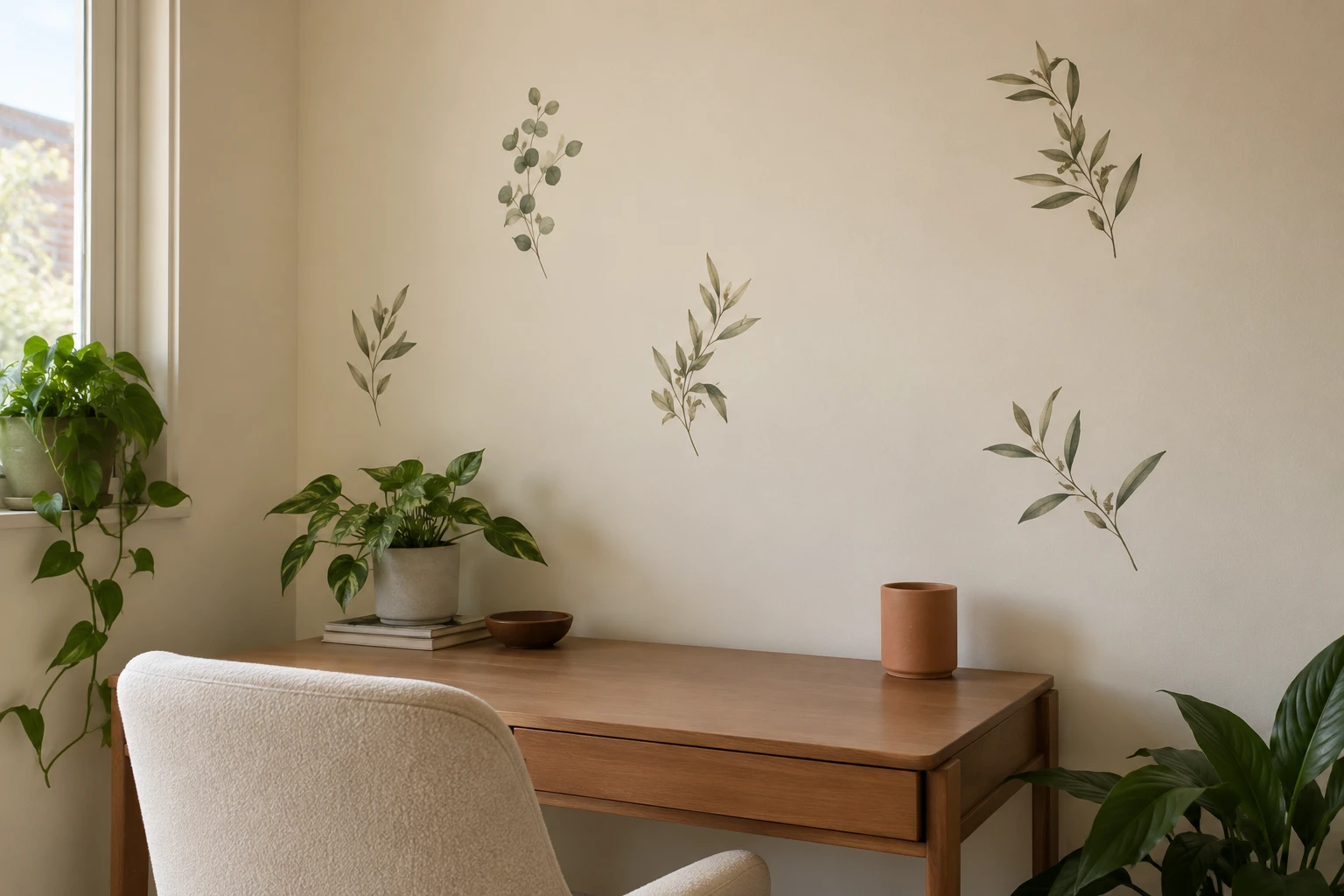
Individual wall stickers let you add a small patch of pattern without lining up sheets of wallpaper.
They’re useful beside a desk, above a low cabinet, or in a reading corner that feels a little bare.
A few large leaf or flower stickers can fill the space nicely. Small dots or simple shapes work well when you want a lighter pattern spread across the wall.
The original paint color becomes part of the design. On a cream wall, muted brown or olive shapes can add interest without a strong contrast.
A small area is usually enough. If the curtains or rug already have a pattern, fewer decals will keep the room from looking crowded.
Most standard decals need a smooth wall. Textured walls need decals made for that type of surface.
5. A Textile Wall Hanging for Color and Texture
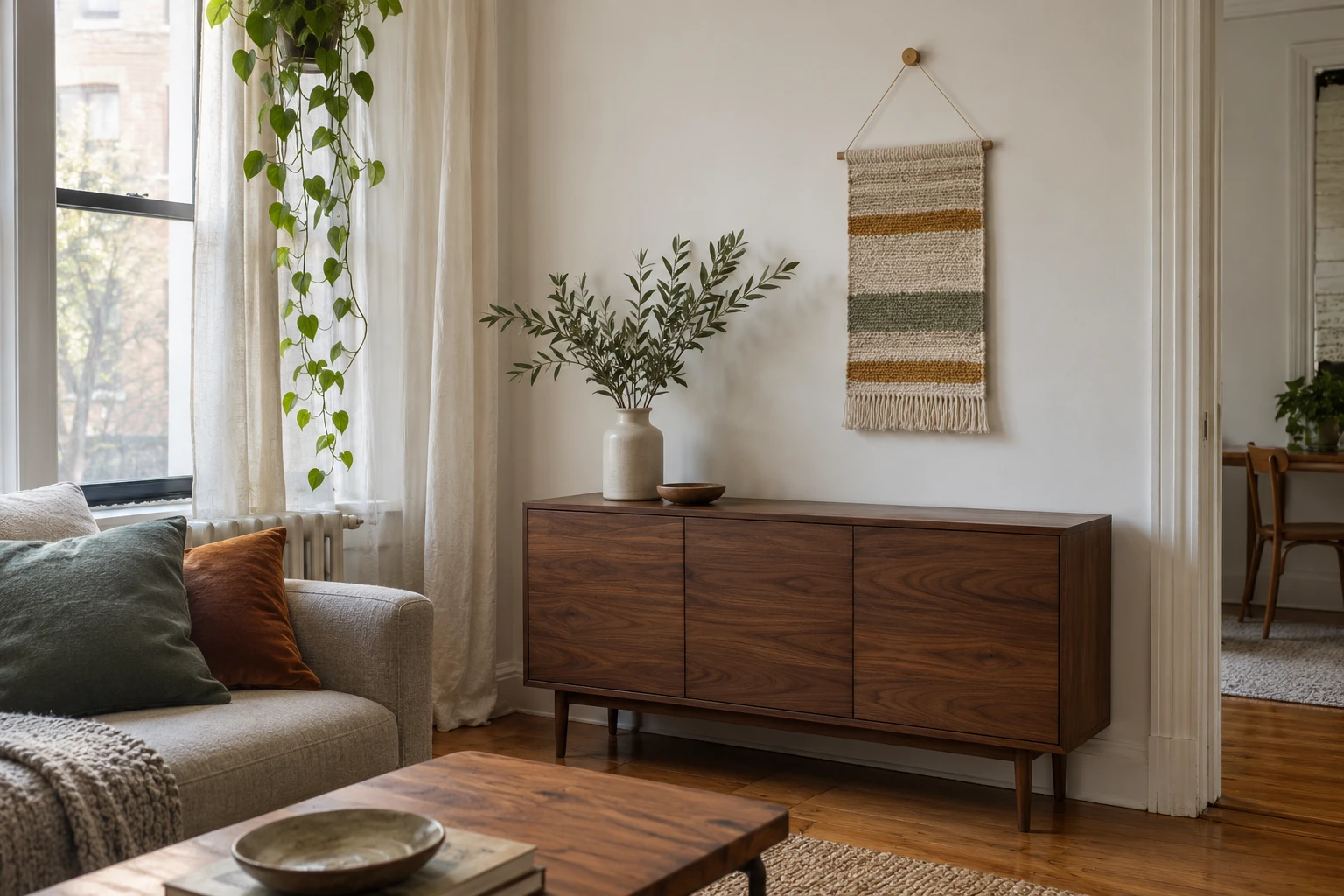
A light fabric hanging can fill a large blank space.
A small tapestry, woven hanging, or fabric print works especially well in a room with plenty of hard surfaces. Its texture adds variety beside smooth furniture, glass, and painted walls.
Cream fabric with a simple woven pattern is easy to coordinate. If the furniture is plain, a print with two or three colors can make the wall more interesting.
The hanging should also suit the width of the furniture beneath it. A tiny textile can look lost above a broad sideboard, while a very large one may crowd nearby lamps or doors.
For a very light decoration with a loop, the Command Small White Wire Hooks, 16-Pack are small enough to stay out of sight behind a light hanging. The pack includes 16 hooks and 24 adhesive strips.
Each hook holds up to 0.5 pound, so use them only for very light decorations. Large tapestries and woven wall baskets need stronger supports.
Magnetic poster hangers are another way to hold fabric prints or paper artwork. However, the cord still needs a suitable support.
6. Long Curtains That Change the Whole Wall
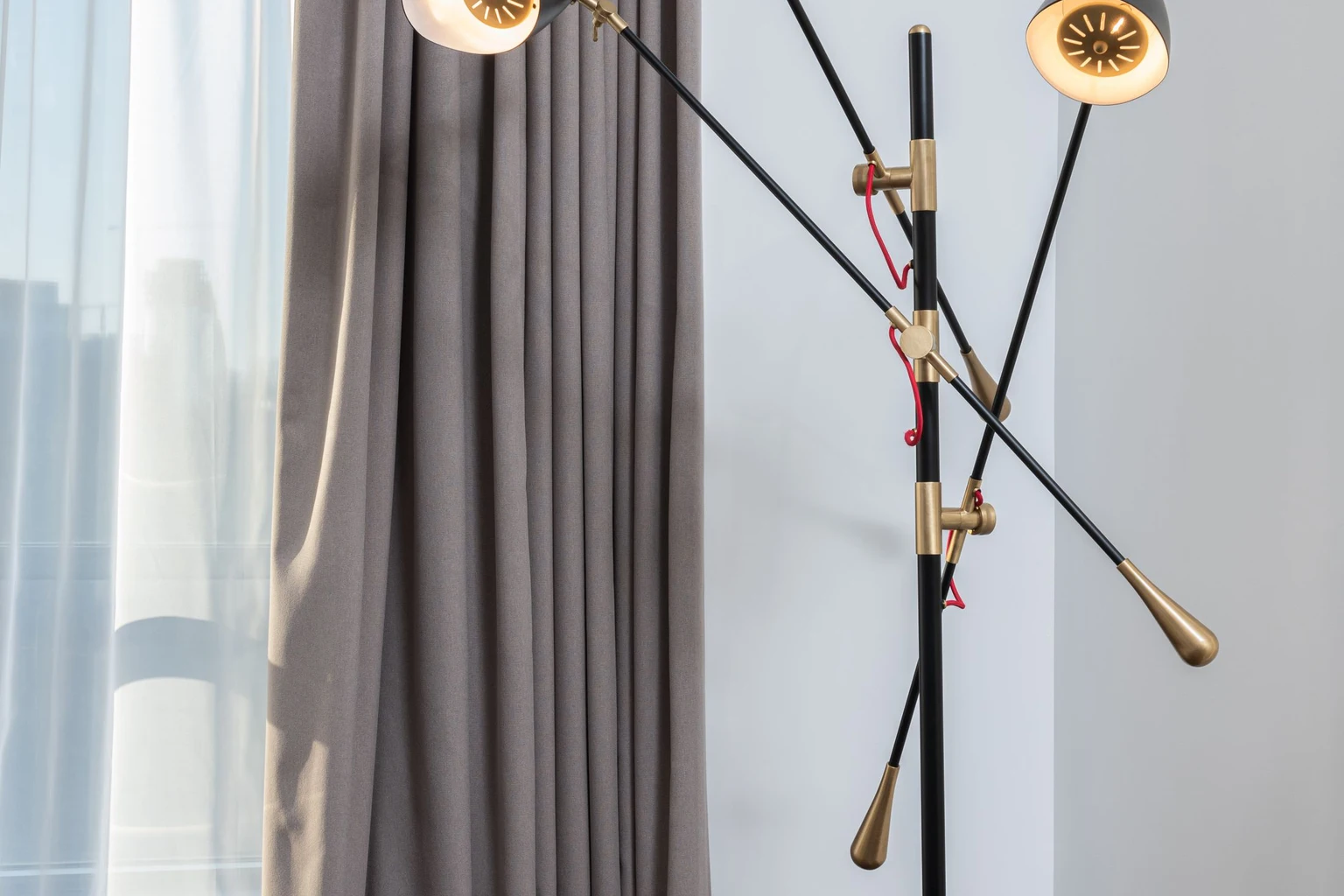
Long curtains add color and texture across a large area, often reducing the need for more wall art.
This is especially useful when a window occupies most of one wall. New panels can change the appearance of that entire side of the room.
Cream fabric gives a soft, neutral result. Muted green, blue, or warm brown curtains can match colors in your furniture or bedding.
Existing Curtain Hardware Makes This Easier
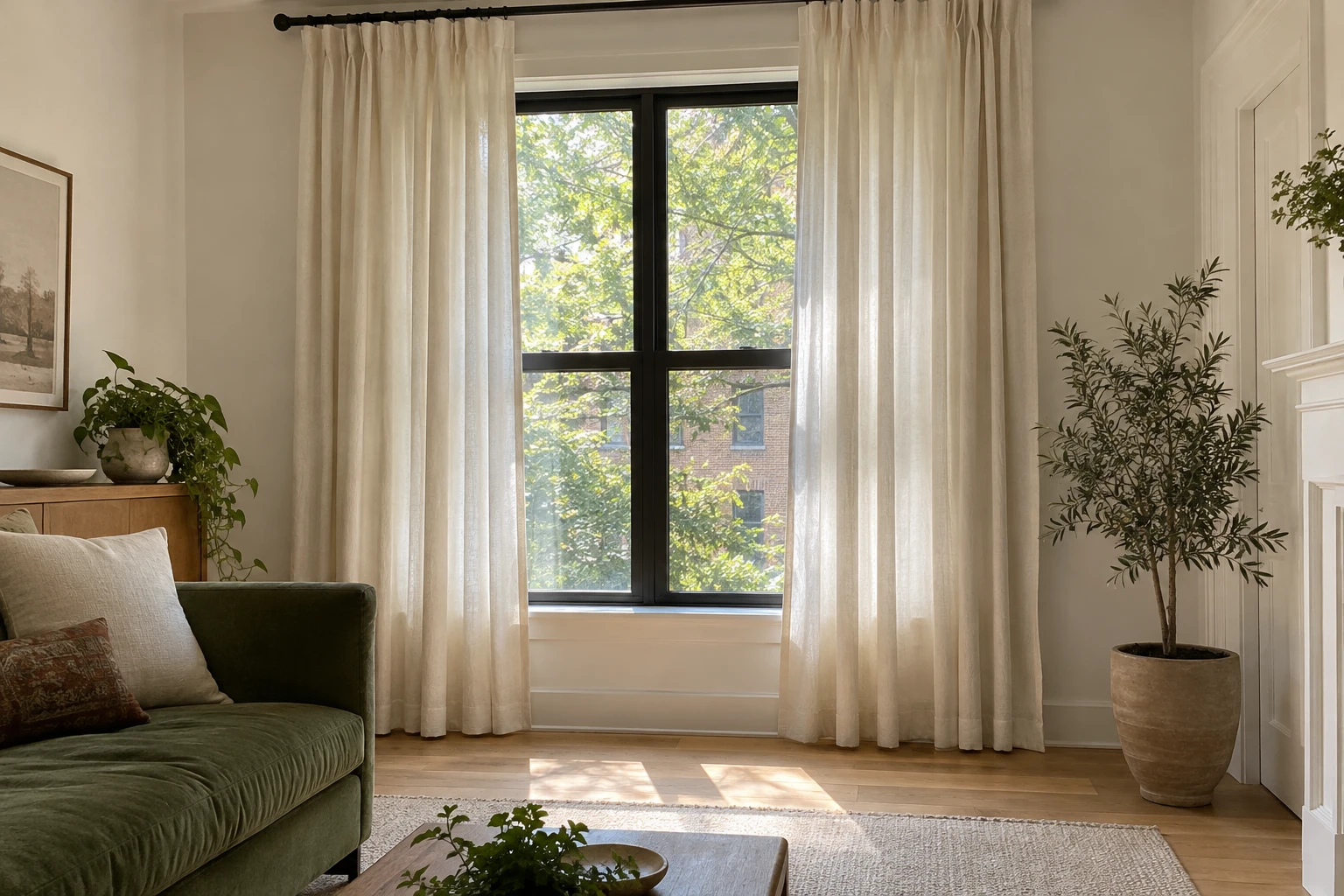
Curtains fitted to existing hardware avoid additional mounting holes.
The length should reach close to the floor without dragging through the walking area. Enough fabric across the rod creates folds when the curtains are closed, rather than a flat sheet stretched over the window.
If the rod is already mounted high, long curtains can make the window look taller.
A fabric with subtle texture is useful when you want interest without another pattern. Our guide to choosing bedroom curtains explains how fabric, lining, and length affect the result.
An Alcove Can Suit a Tension Rod
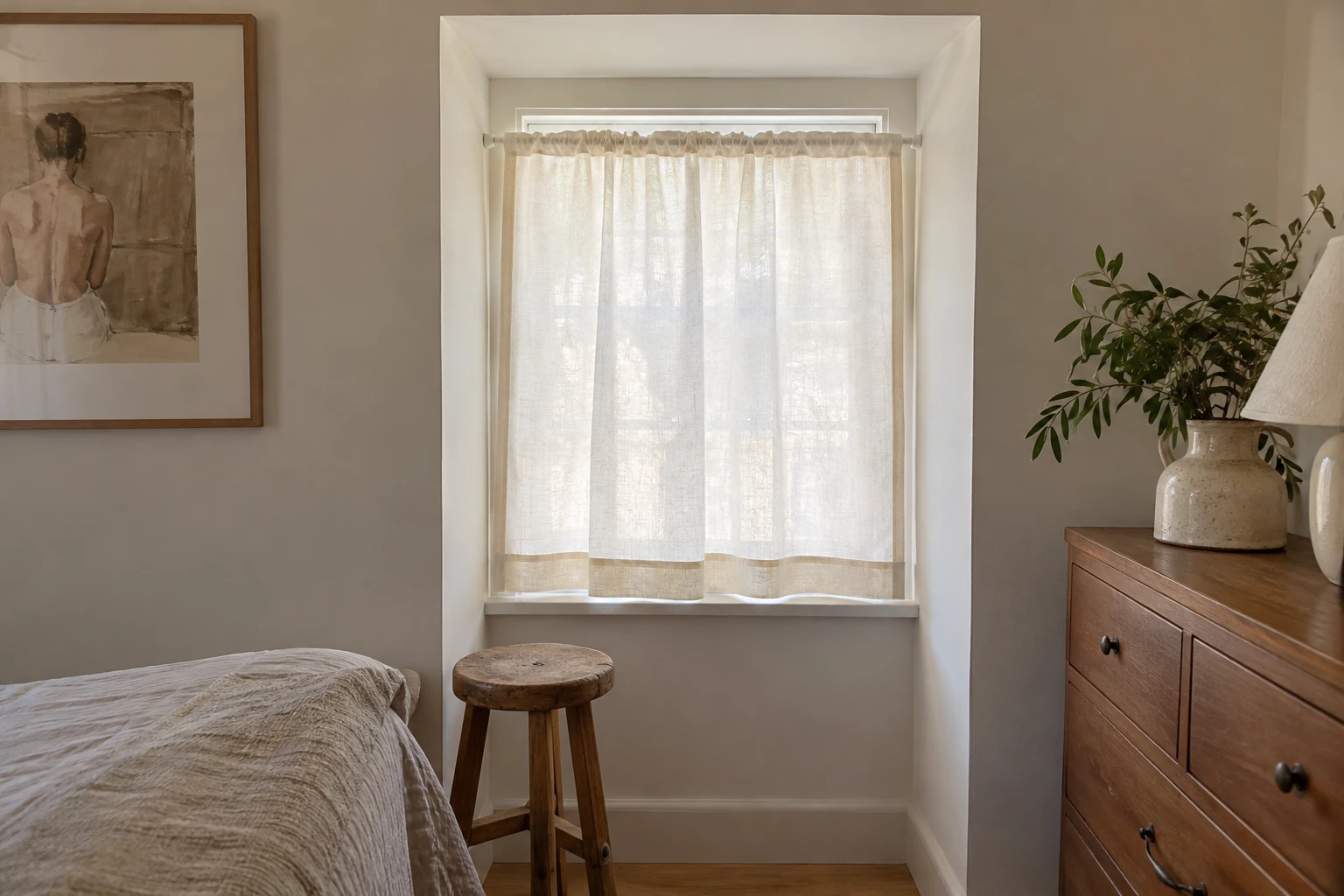
A standard tension rod stays in place by pressing against the two sides of an opening. The opening must fit the rod’s adjustable length.
That makes it useful inside a suitable window recess or narrow alcove. It won’t hold itself across an open wall.
A lightweight curtain is a sensible pairing for a small spring tension rod. Heavy blackout panels need a support designed for their weight.
The rod’s ends need firm surfaces to press against. They can still leave marks on loose paint or delicate finishes.
7. Woven Baskets and Paper Fans for Something Different
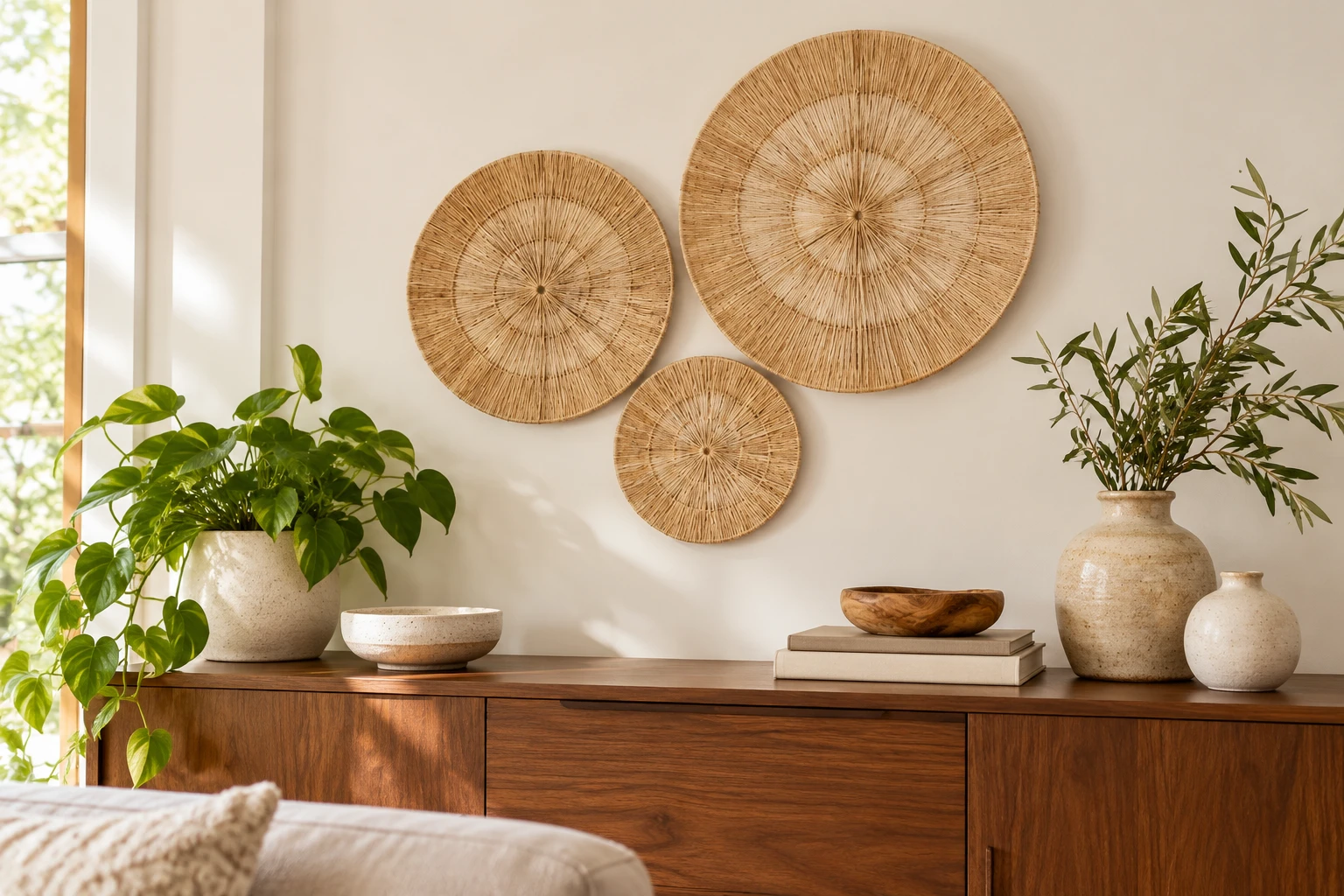
Woven wall decorations or paper fans offer an alternative when you already have enough framed pictures.
Natural tones work well with wood furniture, cream curtains, and simple upholstery. Different sizes add variety, while a close arrangement helps the pieces look like one display.
The CHI AN HOME Woven Jute Wall Baskets, Set of Six includes decorative wall plates ranging from 10 to 23 inches. They are woven from jute around metal frames, so they are sturdier than paper decorations.
You don’t have to use all six together. Three above a sideboard may suit the room better, with the remaining pieces used elsewhere.
Each piece has a hanging loop. Each basket needs a hook that can hold its weight. The small half-pound hooks mentioned earlier may not be strong enough.
For something much lighter, paper fans in cream, rust, and muted pink create a playful display. Two or three colors that go well together usually look less busy than lots of different colors.
8. A Photo Board You Can Rearrange Anytime
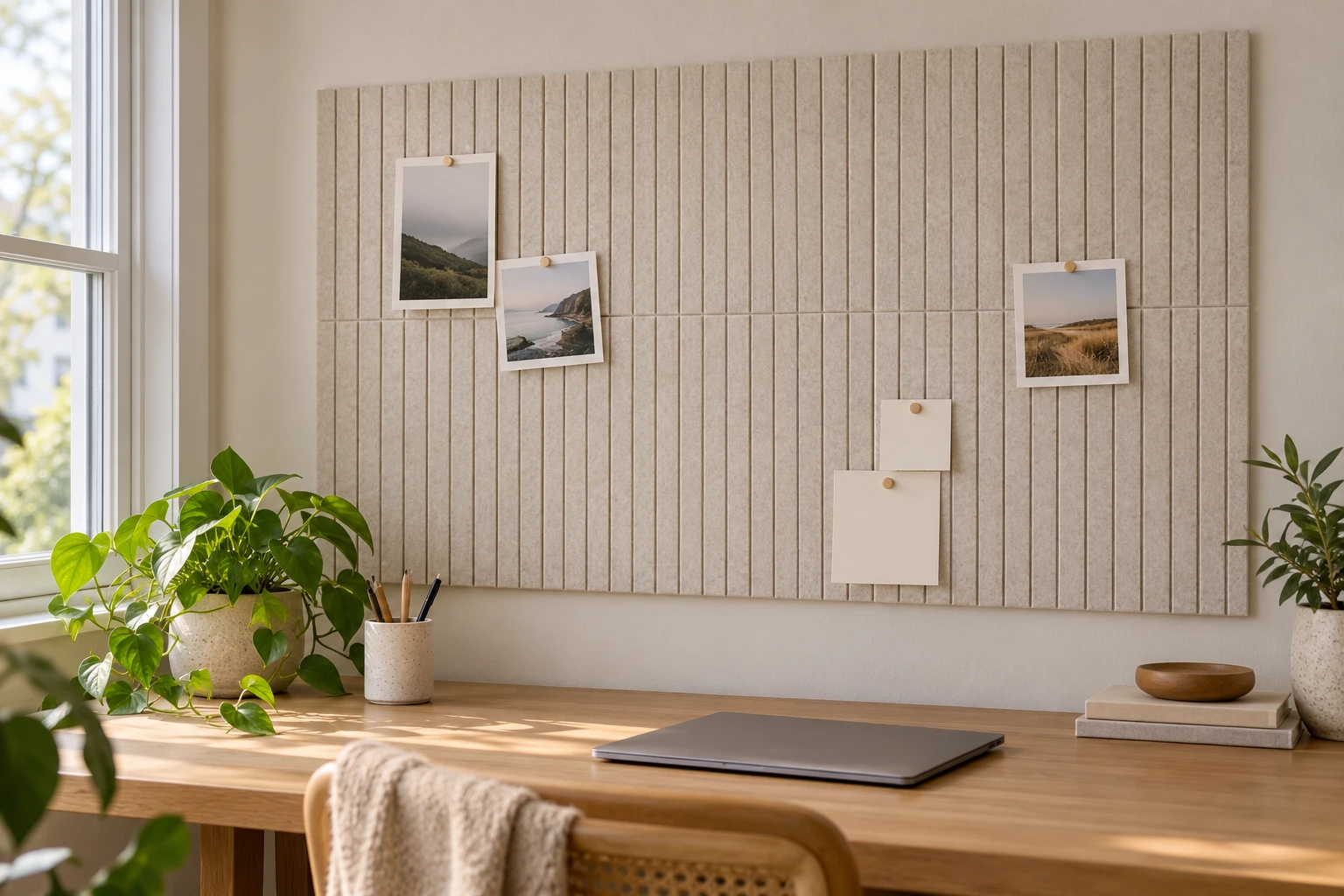
A pinboard lets you change the display without putting a new pin or piece of tape into the wall each time.
This is useful if you collect postcards, regularly print photographs, or like keeping small reminders beside your desk.
The Fluxynara Oatmeal Felt Bulletin Board Tiles, 12-Pack can be arranged into a larger board or divided into smaller displays. Each tile is approximately 11.8 inches square.
The oatmeal color provides a neutral background for colorful photographs and postcards. A simple rectangular arrangement looks tidy above a desk, while a smaller group works beside a narrow work area.
These tiles attach with the included adhesive tabs, so they are wall-mounted, not freestanding. The paint and wall surface still need to suit the adhesive.
For a setup with no adhesive on the rental wall, a desktop board with its own stand is the better choice.
Whichever version suits your room, leave some of the board visible. A few favorite pictures are easier to see than a crowded board. You can swap them whenever you like.
9. Wallpaper on Furniture You Can Take With You
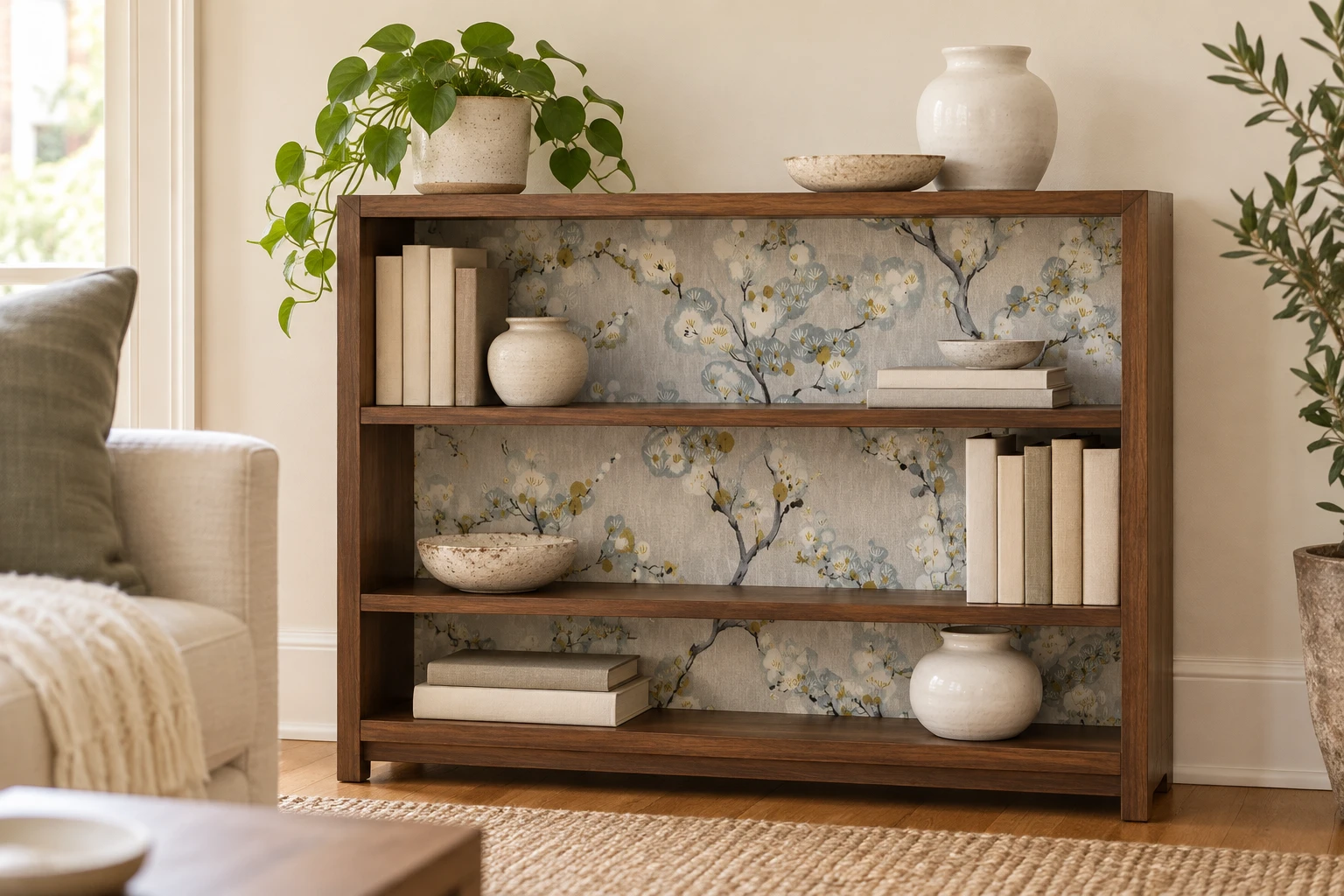
Removable panels inside a bookcase give you somewhere to use wallpaper without sticking it to the rental wall.
A bookcase is a useful example. The shelves break the pattern into smaller sections, so it looks less busy than a whole wallpapered wall.
The Mirei wallpaper from section three could add blue and yellow details behind white ceramics or a few rows of books. Plain objects are easier to see against a patterned background than lots of smaller, colorful decorations.
Wallpaper-covered panels can fit inside each shelf opening, in front of the bookcase’s back panel. They need to stay securely in place.
Fabric can work in a similar way. A small fabric-covered board displayed securely on a sideboard adds pattern without covering a whole wall.
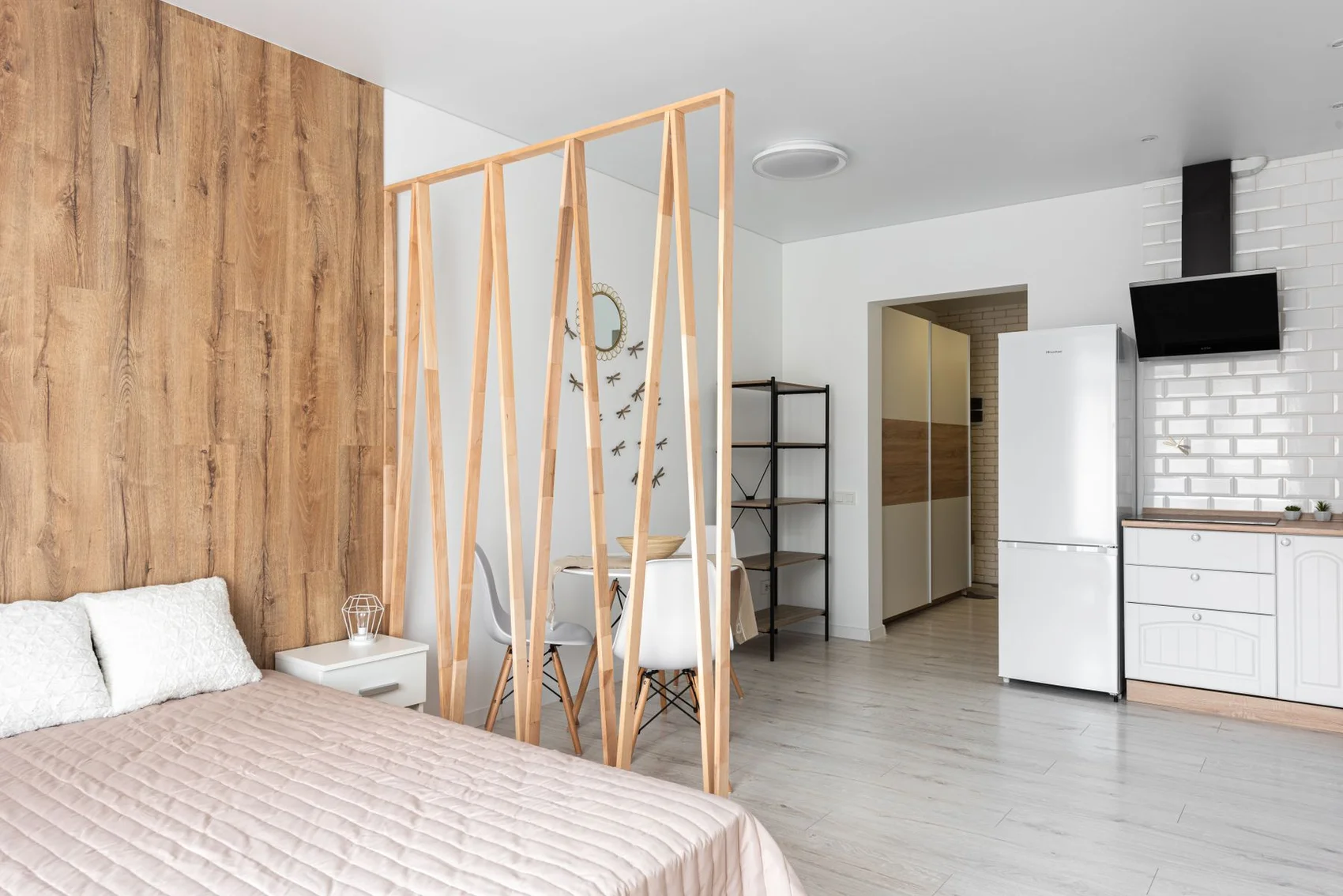
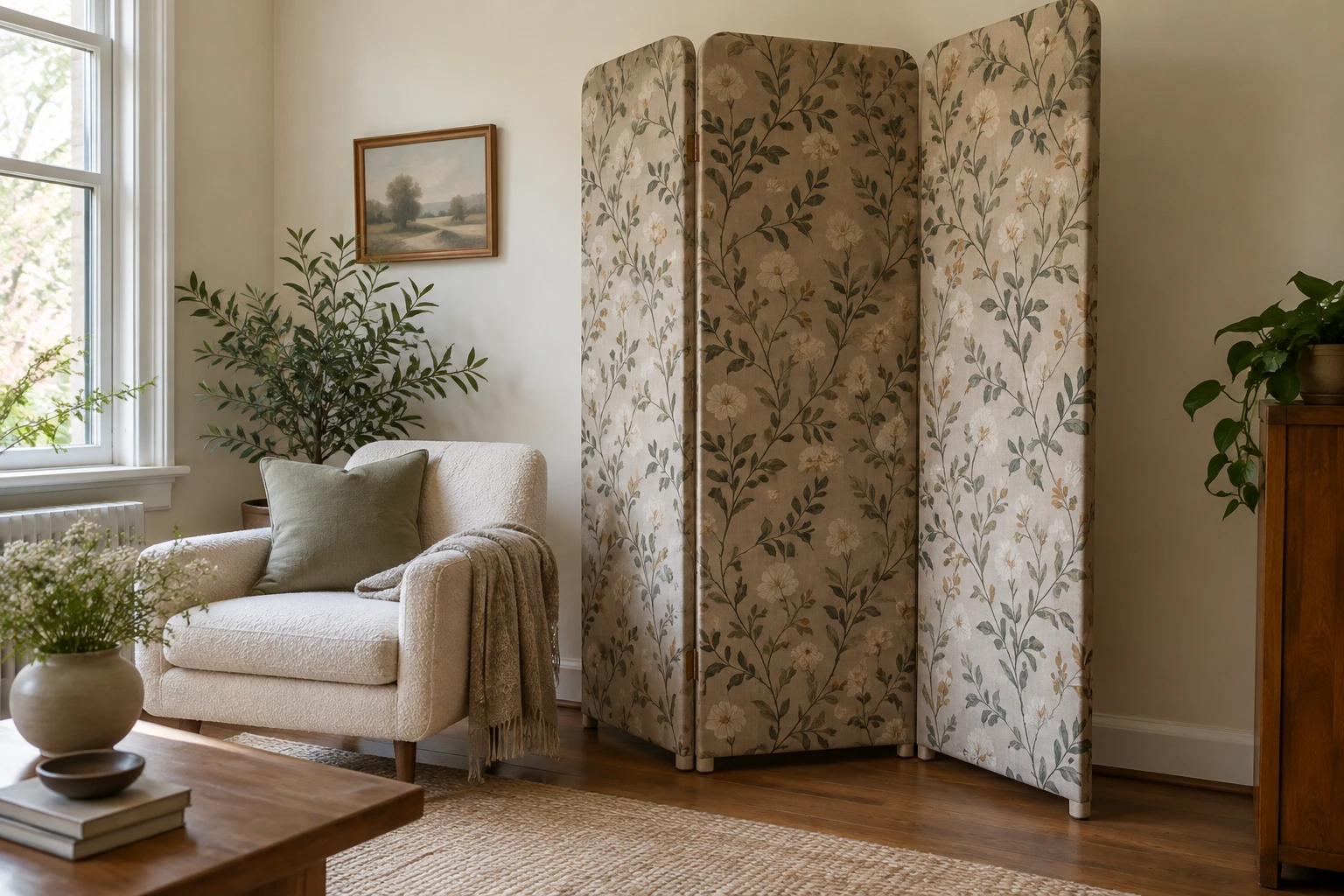
A patterned folding screen can cover a larger area. In a studio, it may also help separate a desk or sleeping area. Our guide to dividing a studio apartment without walls has more layout ideas.
10. Plants, Lamps, and Screens Beside a Blank Wall
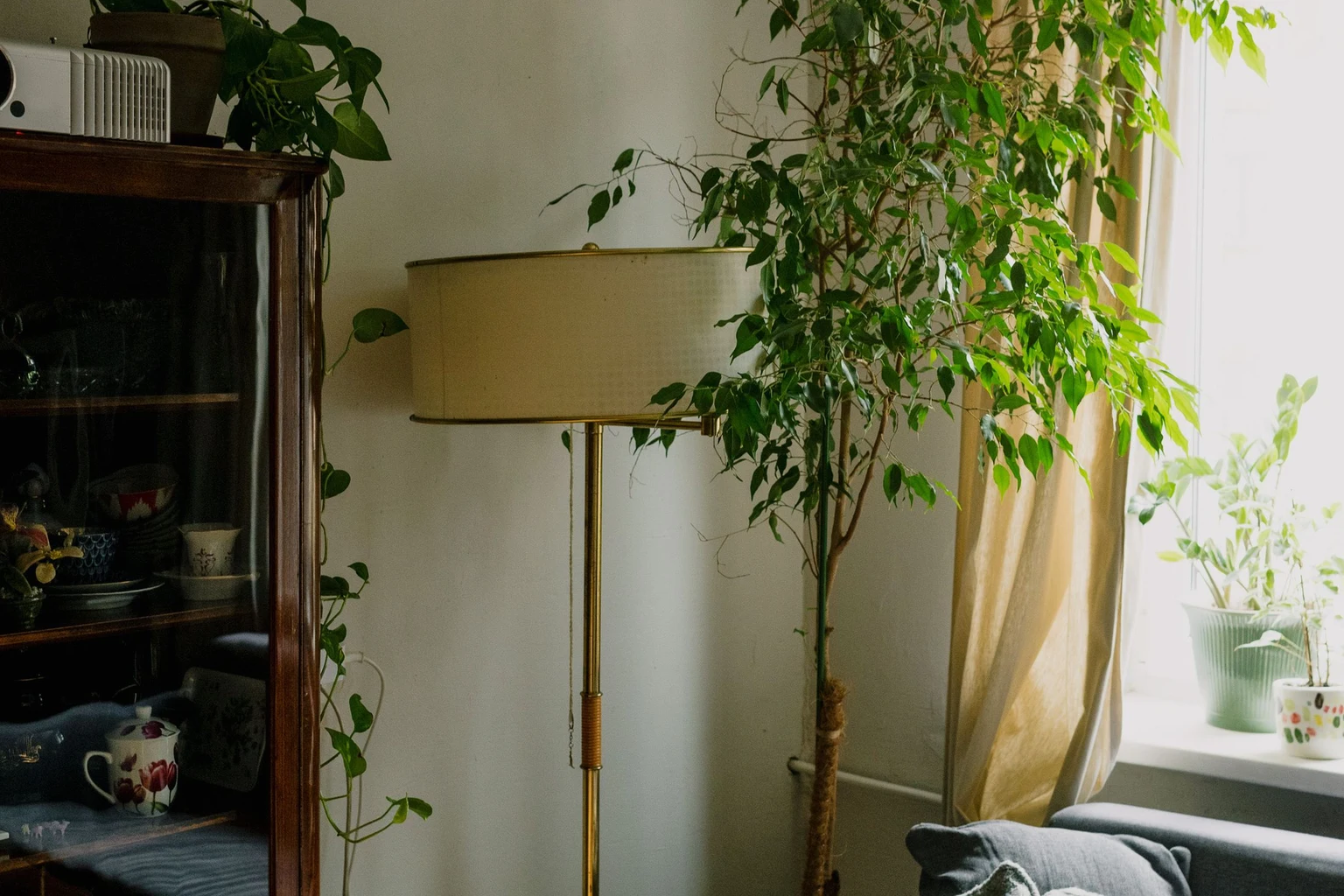
Tall decorative pieces can make an empty wall feel less bare without hanging anything.
A floor lamp beside a reading chair gives the corner a purpose. A plant nearby adds a different shape, as long as the spot gets enough light for it.
Beside a sofa, a slim floor lamp may be all you need to fill the gap. Its light also makes the corner feel cozier in the evening.
Our layered lighting guide explains how lamps can make a room feel cozier without relying entirely on the ceiling light.
For a wider area, a stable folding screen can add pattern or texture. Keep its panels partly folded so it stands securely.
Mirrors can also brighten a corner, but leaning mirrors may require anti-tip restraints. A mirror leaning against a wall in a photo may still need an anchor to keep it from tipping.
There should still be enough room to walk past, water the plant, and clean underneath. If the corner becomes difficult to use, fewer pieces will work better. Our guide to reducing visual clutter can help with that balance.
Before Move-Out: Removal Matters Too
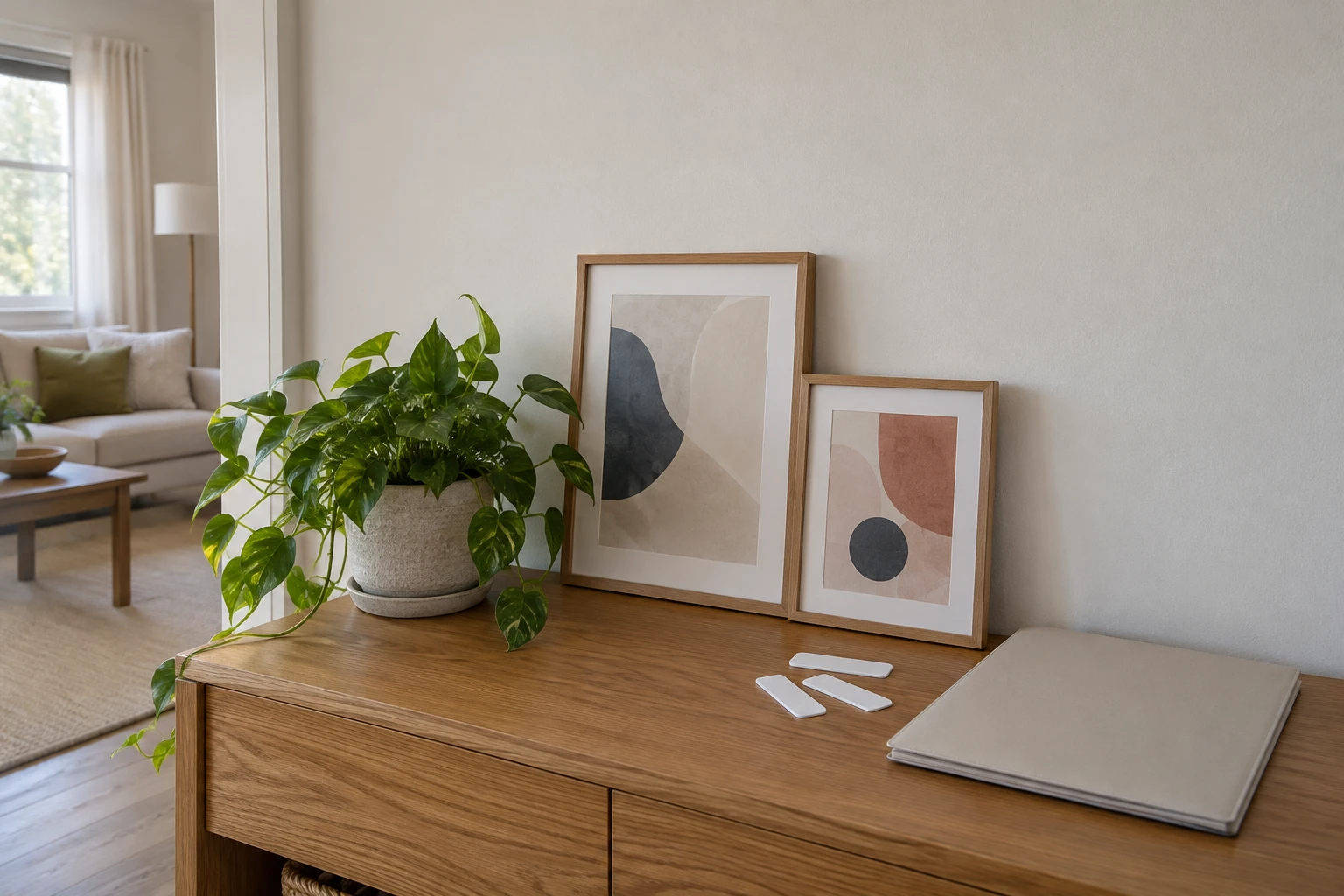
The correct removal method helps protect the finish underneath. Picture strips, hooks, felt-board tabs, and wallpaper don’t all release in the same way.
For Command Picture Hanging Strips, the frame comes off before the adhesive strips. The removal tab then stretches slowly downward against the wall, rather than being pulled outward.
Command specifies stretching these picture-strip tabs at least 15 inches to release them. That needs clear space below the strip.
For the small wire hooks, the hook is held lightly while the adhesive tab is stretched slowly downward. The hook can be reused with a fresh compatible strip.
Peel-and-stick wallpaper is removed gradually from an edge. Pulling off a large section sharply can put more stress on the paint underneath.
The felt-board tiles use different adhesive tabs. Their removal method may differ from Command strips, so save the instructions that come with them.
A photo of the packaging keeps the product name and removal details together for moving day.
A final checklist before you call it done:
- The decorating method follows the rental’s rules.
- Each item has the support required for its size and weight.
- Adhesives suit the wall surface, and the paint is not loose or peeling.
- Doors, curtains, and walking routes remain clear.
- Removal tabs are easy to reach.
- Furniture and mirrors that need anti-tip straps are secured.
- Product names and removal instructions are saved.
Common Questions About Rental Wall Decor
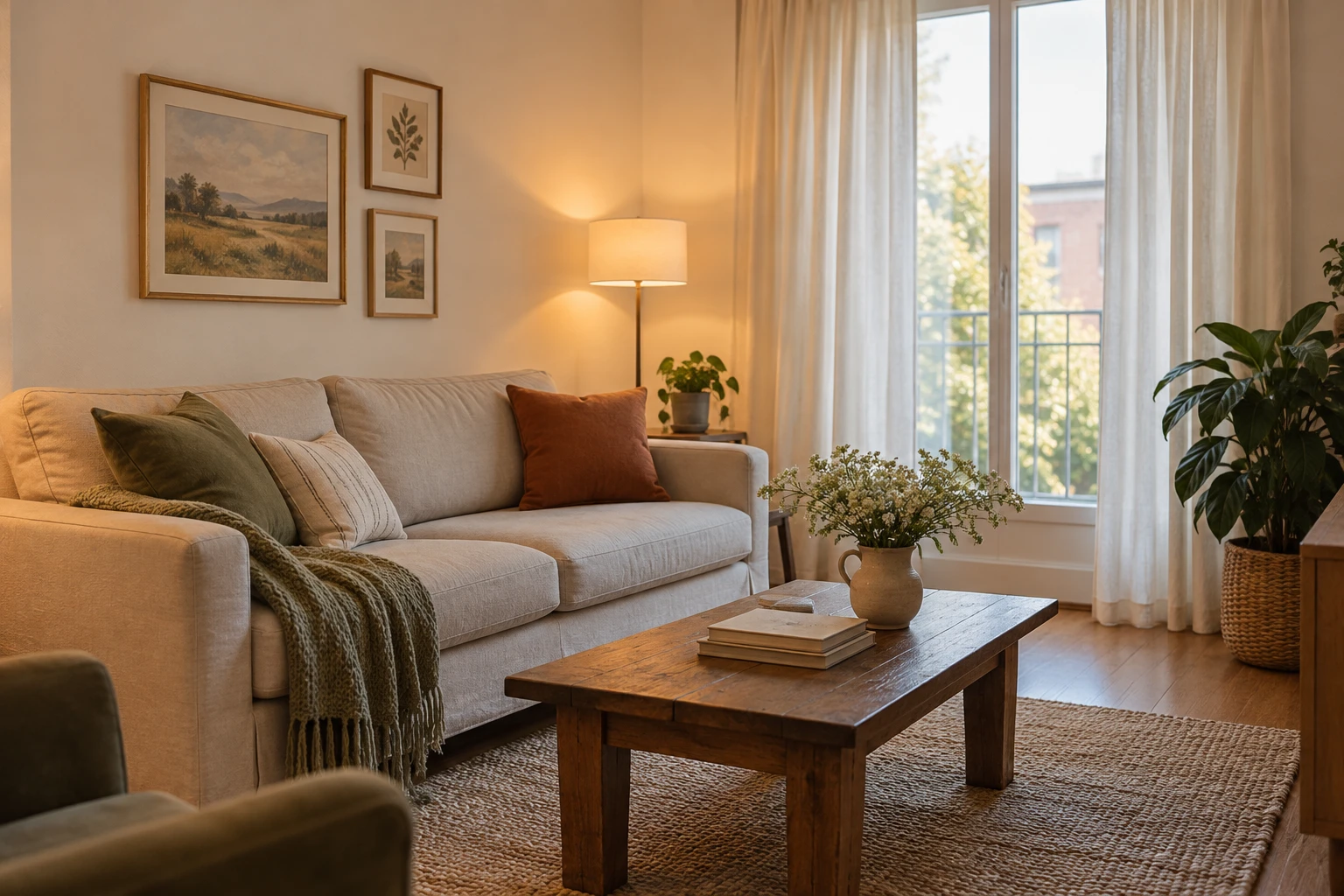
The wall surface and the weight of the decoration often determine which option works best. Here are answers to a few common questions.
Can Removable Wallpaper Damage Paint?
Yes, removable wallpaper can lift paint. This can happen if the paint is weak, the wallpaper doesn’t suit the wall finish, or the paper is pulled off too quickly.
“Removable” does not mean the paint underneath will always stay in place.
For flaky paint or a wall finish that doesn’t suit the paper, a patterned screen or decorative furniture insert avoids applying adhesive to the wall.
What Works on Textured Rental Walls?
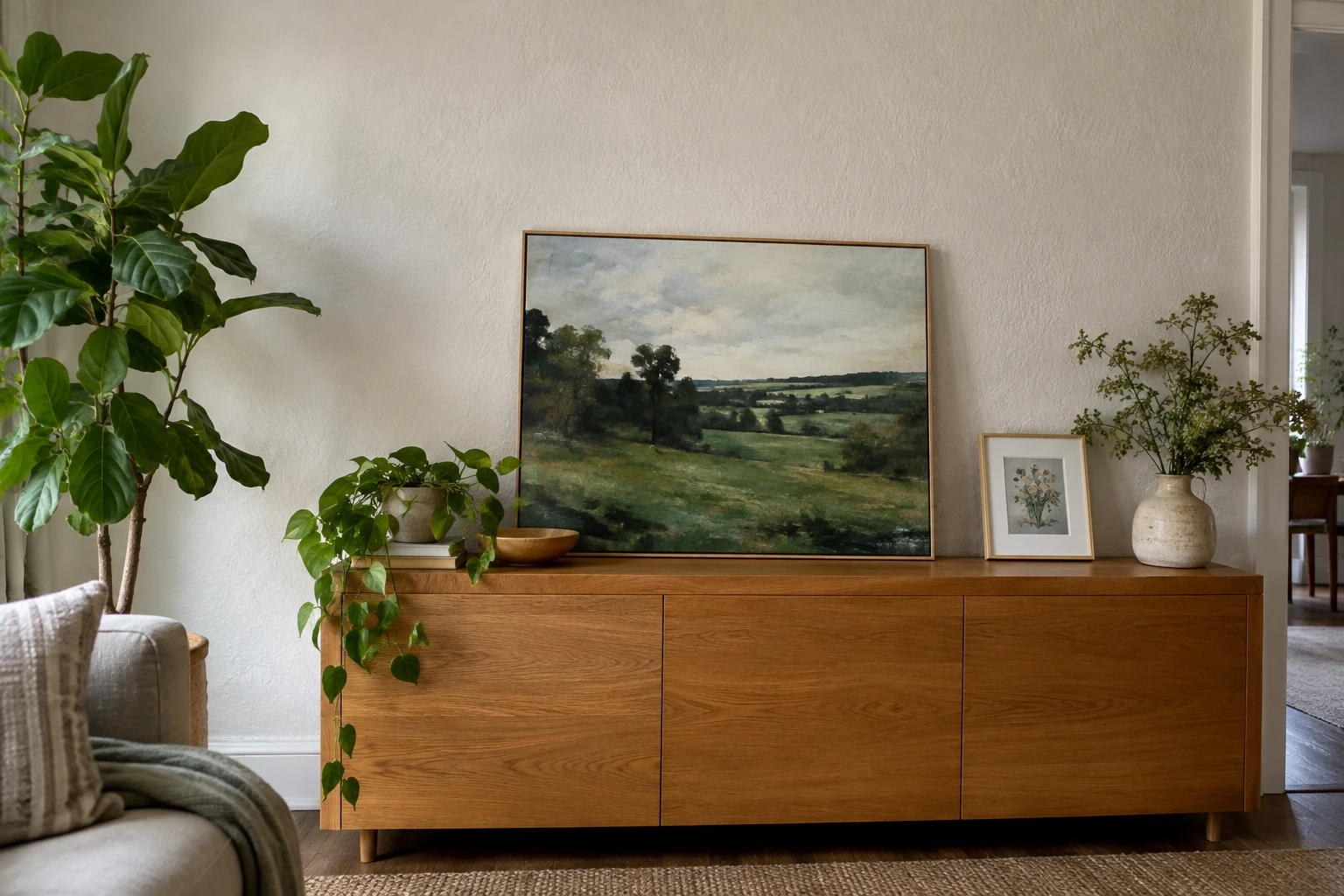
Artwork on furniture, freestanding displays, and suitable existing hanging points are practical options.
These methods don’t rely on adhesive making full contact with an uneven surface.
Standard wallpaper and picture strips do not work on every textured wall. A large print on a sideboard may provide the color you wanted without covering the wall.
Can I Decorate Above My Bed Without Nails?
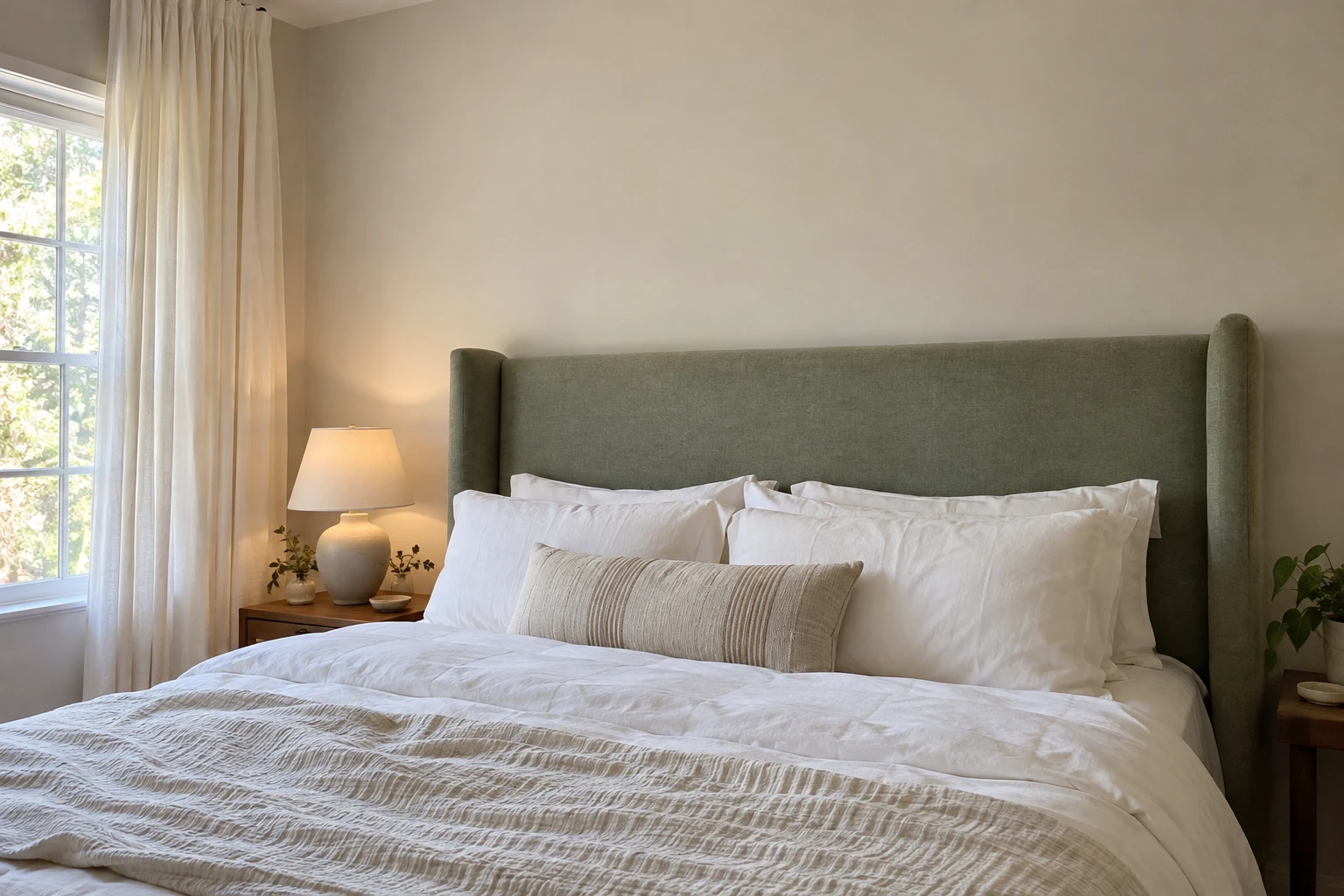
A decorative headboard or a compatible wall covering can add interest without mounting a heavy object overhead.
An upholstered headboard adds color and a soft fabric surface. Removable wallpaper adds pattern where the painted surface is suitable.
Command picture-hanging strips and the small wire hooks featured here are not for placement above beds.
Long curtains and bedside lamps can also make the bed area feel finished, even with a plain wall behind it.
Are Peel-and-Stick Shelves and Molding Really Damage-Free?
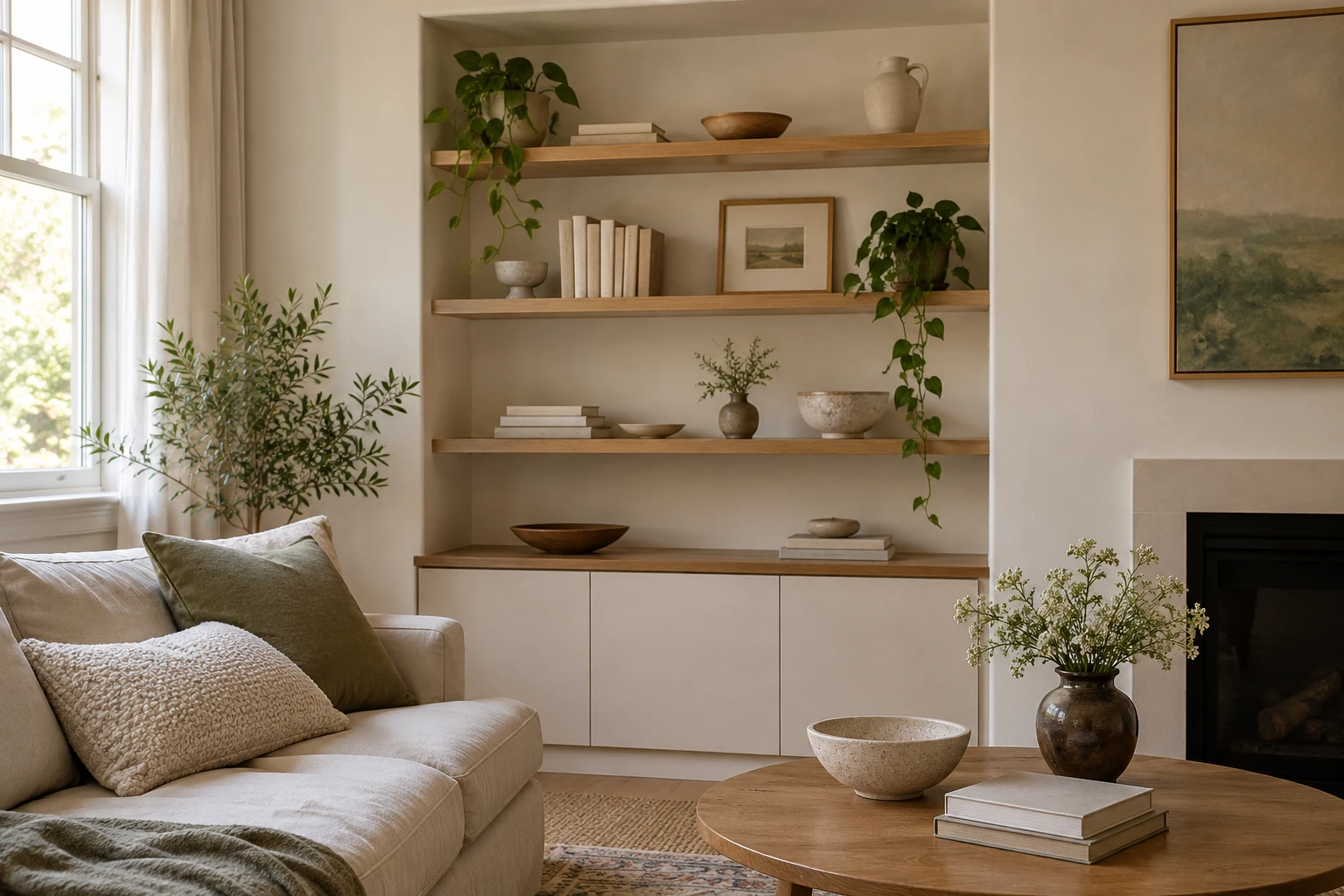
Adhesive shelves and molding can leave residue or lift paint. How well they work depends on the wall finish, how much weight they hold, and how they are removed.
Shelves made to attach with screws or wall anchors need that hardware. General-purpose adhesive tape is not a substitute.
For a few books or decorative objects, an existing shelf, dresser, or console is often enough. That also avoids buying a new shelf simply to fill an empty wall.
Useful Finds for Rental Walls
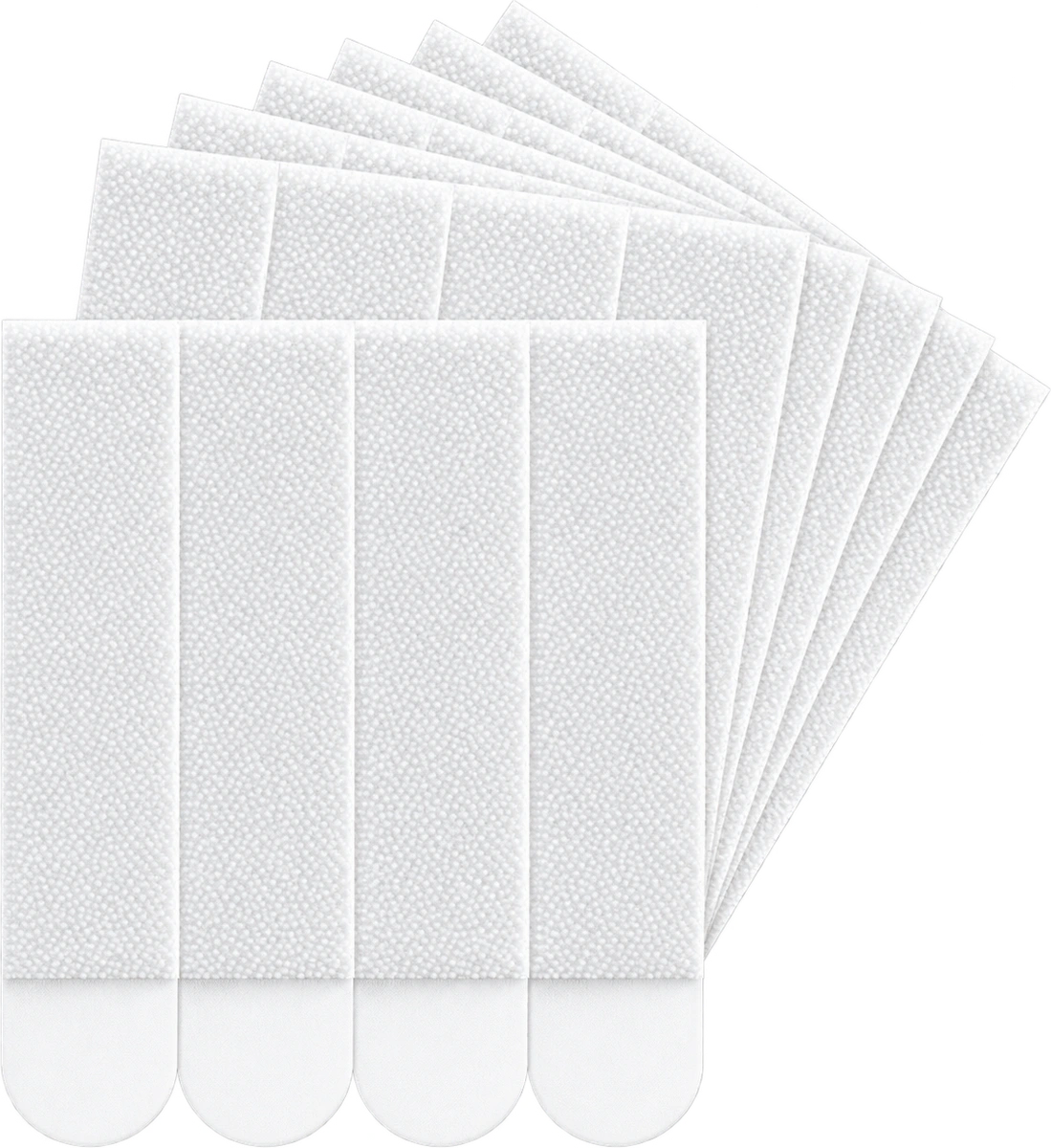 Command Large Picture Hanging Strips, 28 PairsA 56-strip pack for displaying compatible frames on suitable smooth surfaces.
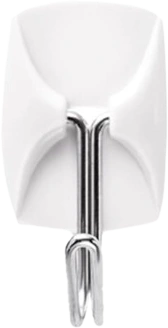 Command Small White Wire Hooks, 16-PackSmall removable hooks for light decorations, holding up to 0.5 pound per hook.
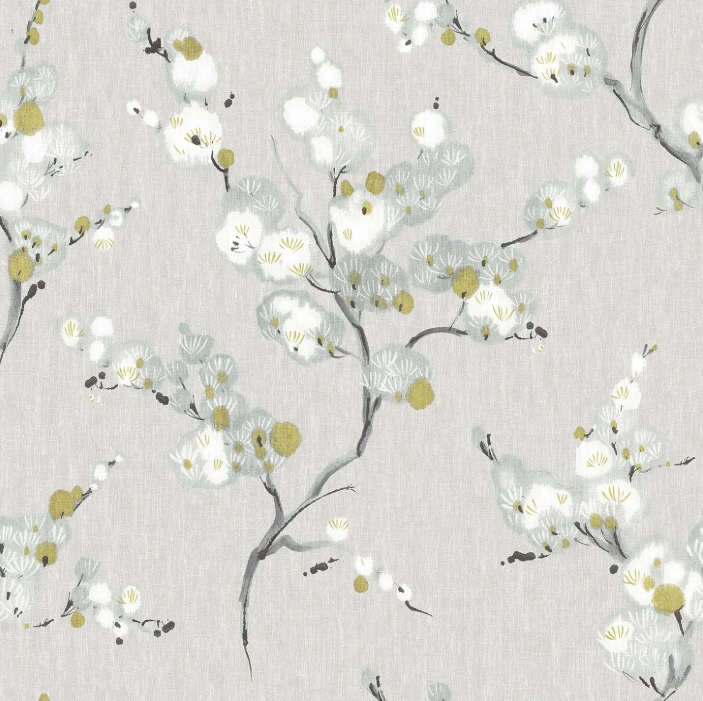 NuWallpaper Mirei Peel-and-Stick WallpaperA floral peel-and-stick design with a gray linen-look background.
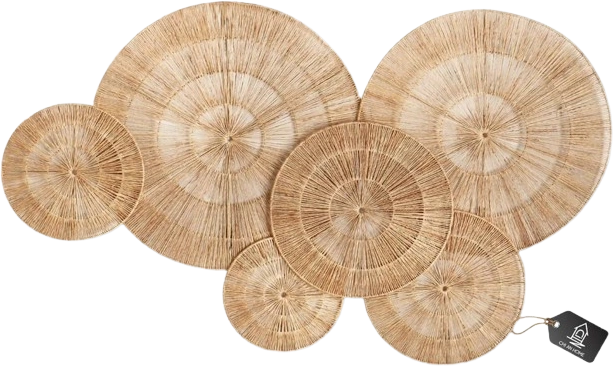 CHI AN HOME Woven Jute Wall Baskets, Set of SixWoven wall baskets in six sizes, from 10 to 23 inches, in natural jute colors.
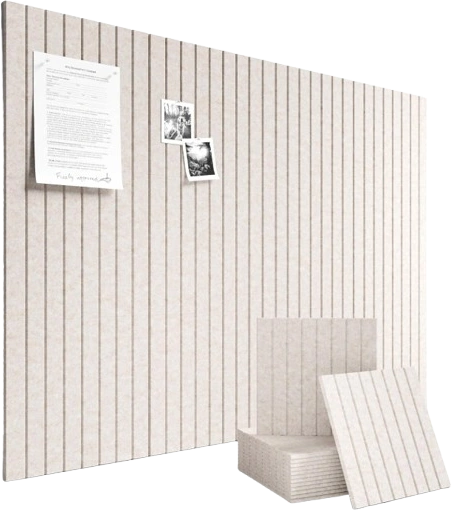 Fluxynara Oatmeal Felt Bulletin Board Tiles, 12-PackFelt tiles you can arrange into a pinboard for photos, postcards, and notes.