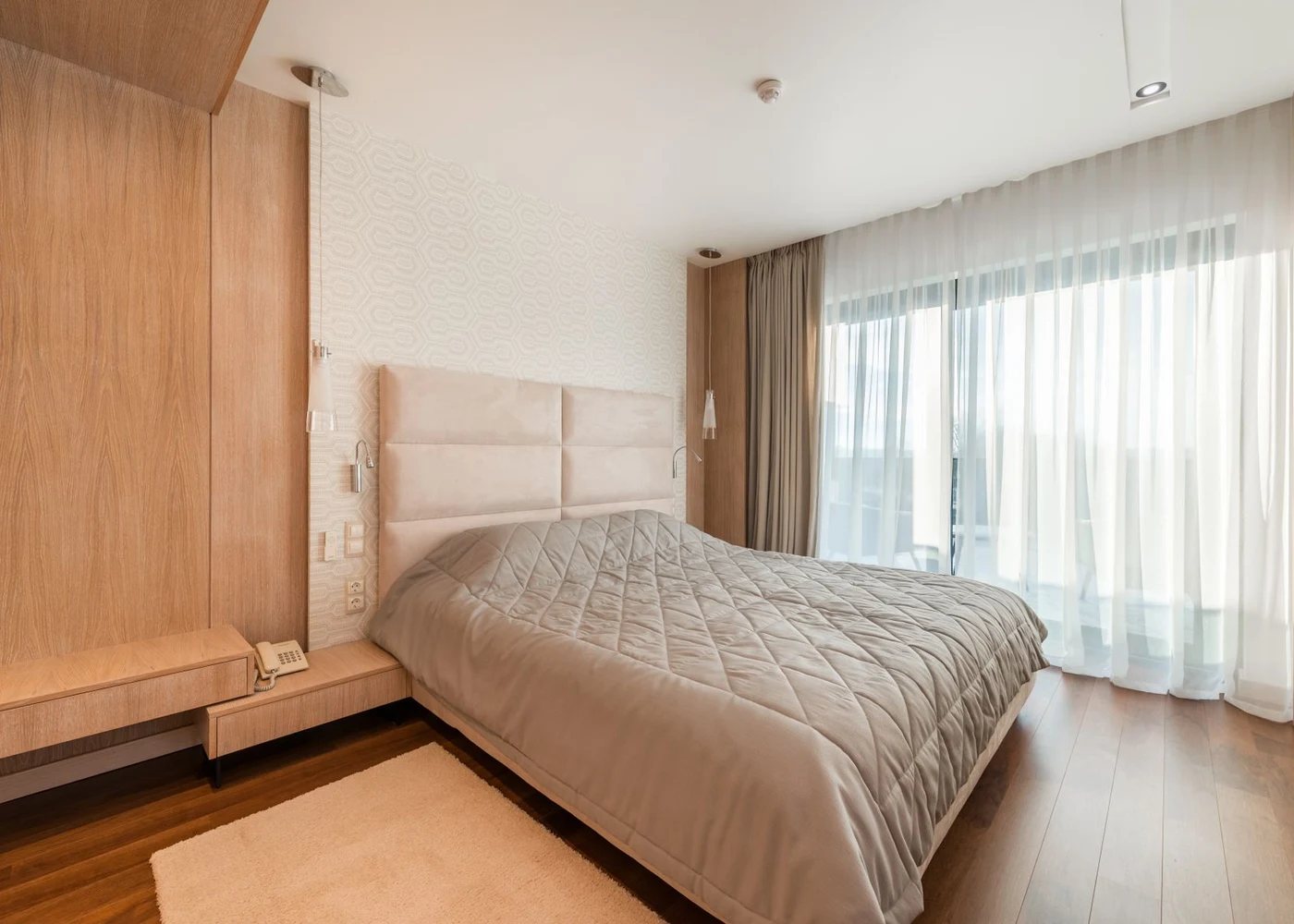
How to Measure for Curtains Without a Tape Measure (Using Things You Already Own)


A tape measure is one of those essentials worth having nearby before picking out curtains. It helps you figure out whether those lovely panels will actually fit your window. But somehow, the moment you need it, it’s missing from the drawer where it always lives.
The quick answer
- Use nonstretch string and a ruler, or repeated lengths of paper with a confirmed size, to measure the window setup.
- Measure the rod coverage and the drop to your chosen hem, including extra width for curtain folds.
- These methods help with ready-made sizes. Custom curtains need accurate final measurements with a proper measuring tool.
1. No Tape Measure? Here’s What You Can Use

Choose something with a known length, then use it consistently. A ruler gives you that length directly. Printer paper can provide it once you confirm the sheet size. String helps transfer an awkward measurement somewhere easier to work.
Have a quick look through the desk drawer before buying anything.
| What you have | How it helps | What to watch |
|---|---|---|
| Nonstretch string and a ruler | Transfers the full width or drop onto a flat surface for measuring | Stretching or sagging changes the result |
| Confirmed-size printer paper | Provides a repeatable length when there is no ruler | Gaps and overlaps can add up |
| A ruler or yardstick | Measures the span in marked sections | Use the zero mark, which may sit inside the physical edge |
| A phone measuring app | Gives an approximate width or drop for planning | Confirm the result before relying on a close fit |
Keep a pencil, notepad, and a few pieces of surface-appropriate low-tack tape nearby. They make it easier to mark endpoints and remember which measurement belongs to which window.
String alone cannot give you a number. It can capture the distance, but you still need a ruler or another known-size reference to measure that distance afterward.
Check the Paper Size Before Counting Sheets
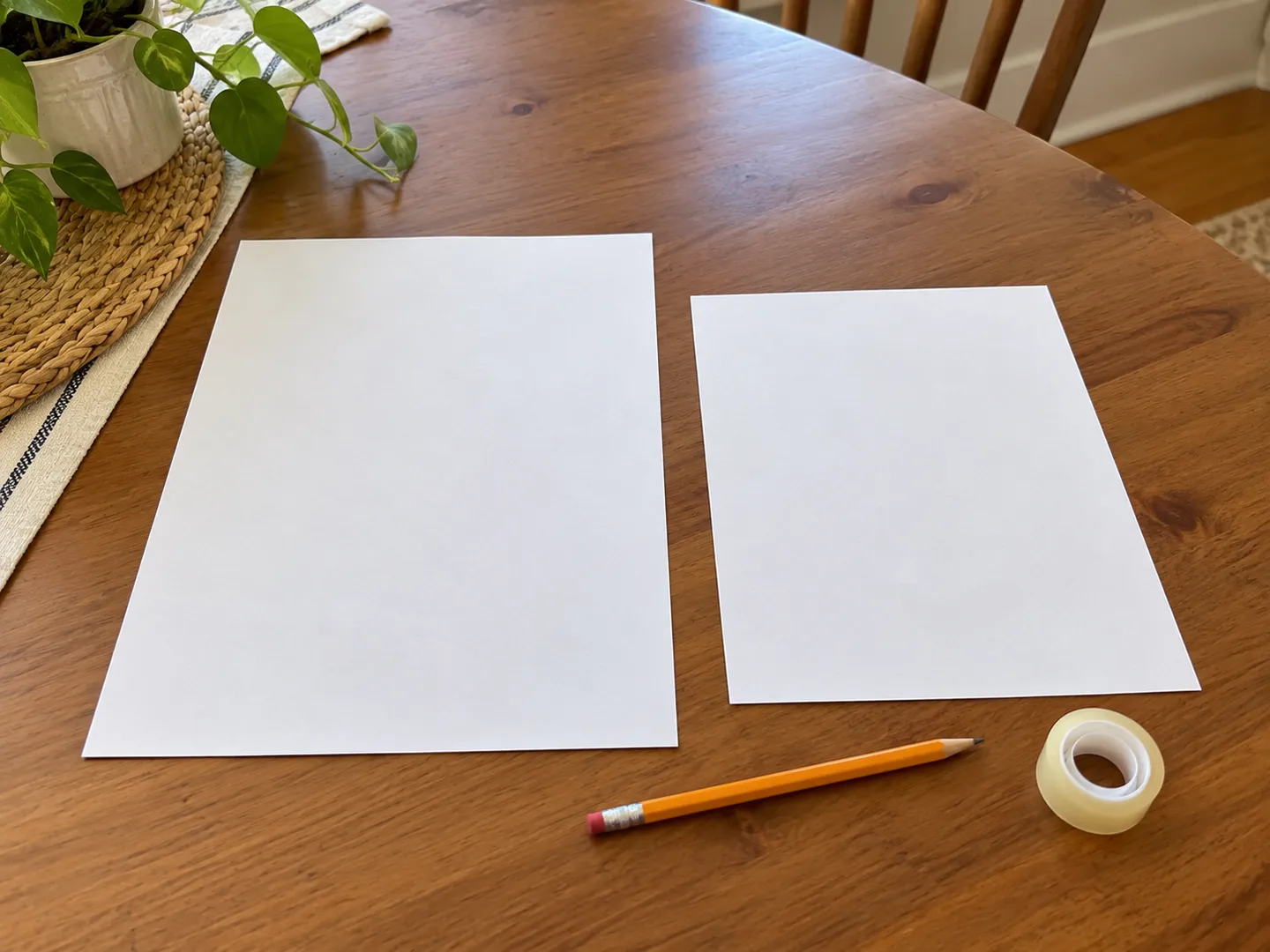
US Letter and A4 paper have different dimensions, so check which one you have before measuring.
- US Letter: 8.5 × 11 inches.
- A4: 210 × 297 millimeters, or 21 × 29.7 centimeters.
Look at the paper packaging if it is still nearby. Use an untrimmed sheet, choose one edge, and keep using that edge throughout the measurement.
If you choose the long edge, every placement should use the long edge. Turning the sheet halfway through changes the calculation.
A notebook page or envelope might look close enough, but its dimensions can vary. Stick with a size you can confirm.
Quick tip: Use centimeters with A4 paper and inches with US Letter paper. You can convert the final result later if the curtain listing uses different units.
2. Use String to Bring the Measurement Down to the Floor
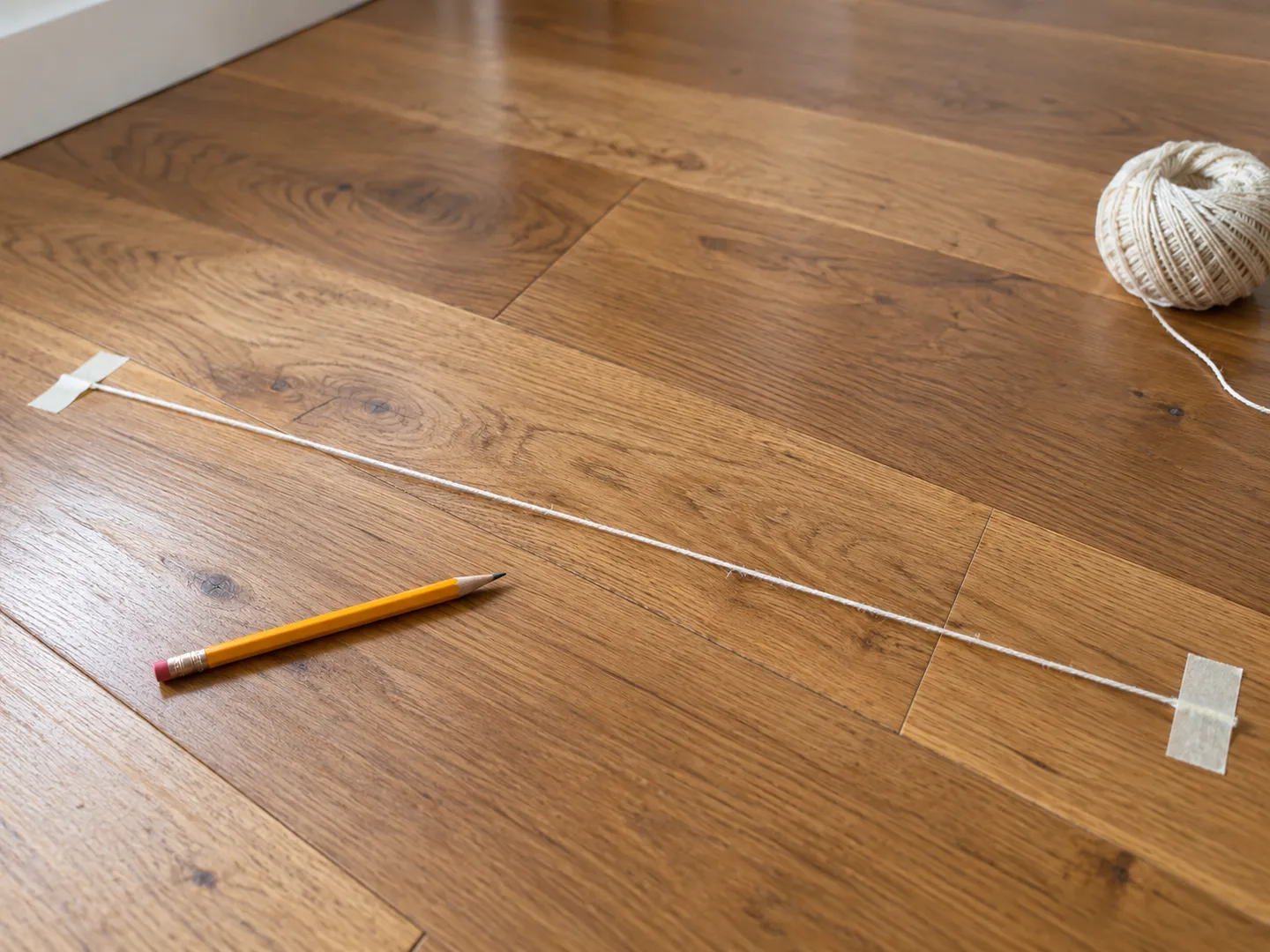
Mark the required width or drop on nonstretch string, lay it flat, and measure between the marks. This is especially helpful when a small ruler is all you can find.
Choose cord that does not noticeably lengthen when gently pulled. Stretchy yarn and elastic can add distance while you are trying to hold them straight.
Here’s the process:
- Hold the string at the first measuring point.
- Extend it straight to the second point.
- Keep it free of sag without pulling it longer.
- Mark both endpoints with a pen or small pieces of tape.
- Lay it straight on the floor or a long table.
- Measure between the marks in ruler-length sections.
- Add the remaining section and repeat to check the result.
Five full 12-inch sections plus another 7 inches gives you 67 inches.
Use the ruler’s zero line each time. Some rulers have a small blank space before zero, so placing their physical edges end to end can introduce an error.
A helper makes wide spans easier to manage. For a high hanging point, use a stable step stool or ladder so you can reach comfortably.
Label separate pieces of string “width” and “drop.” Once both are lying on the floor, they are surprisingly easy to mix up.
3. Only Have Printer Paper? Make a Simple Measuring Guide
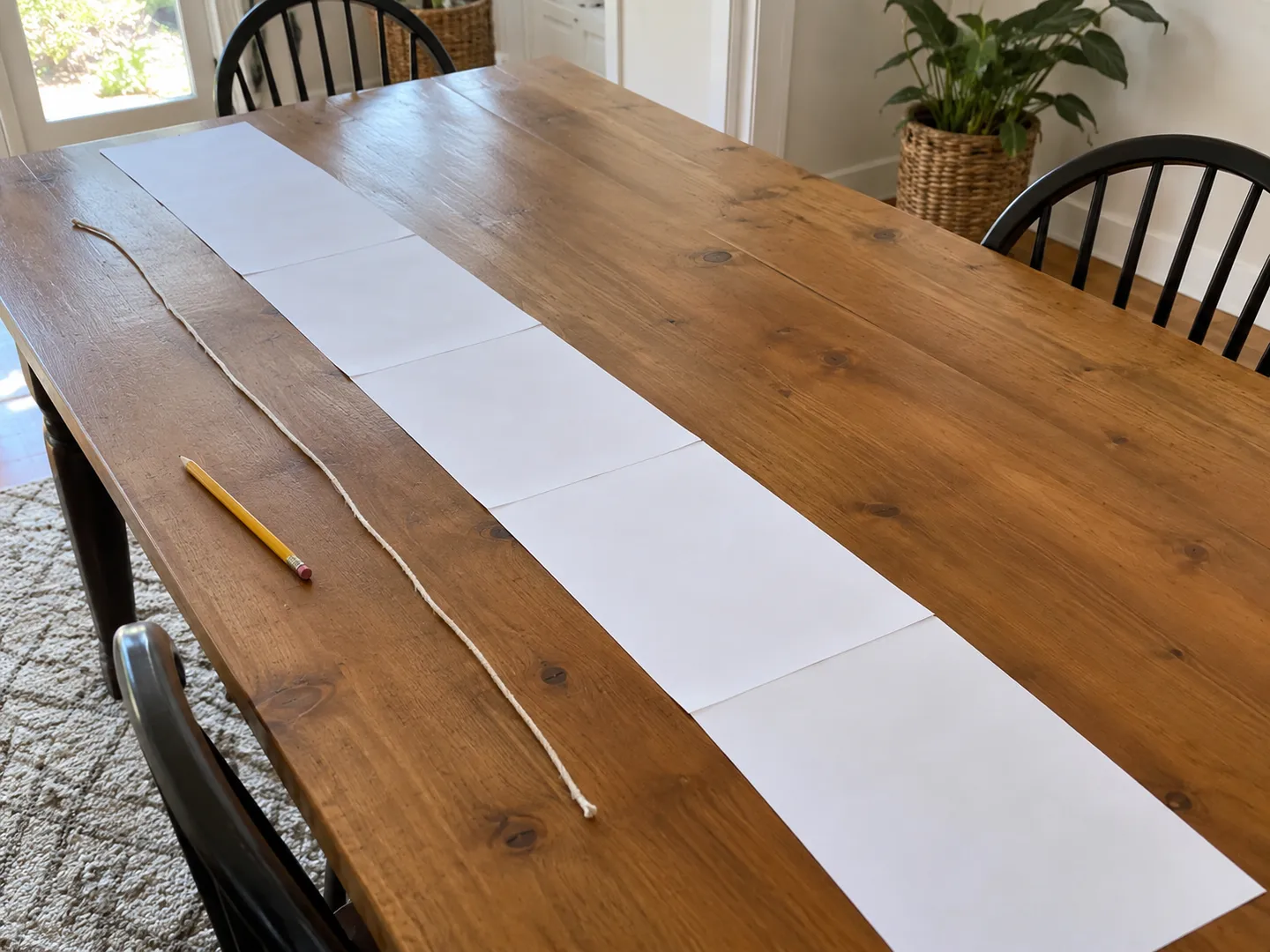
Count full paper lengths, then account for the leftover section. That last bit can make the difference between curtains that clear the floor and curtains that drag.
If you have string, transfer the measurement first and lay the paper beside it on a flat surface. This is usually easier than holding loose sheets against the wall.
Without string, move one sheet along a straight line. Mark its endpoint before moving it, then place the same edge at that mark.
For US Letter paper, the long edge measures 11 inches:
Six full paper lengths × 11 inches = 66 inches.
If the measurement continues beyond the sixth sheet, you still need to estimate or measure that remaining distance.
Fold a spare sheet carefully in half along its 11-inch length to create a 5.5-inch interval. Fold it into quarters and each interval measures 2.75 inches. These folds help narrow down the remainder, although they cannot give you the fine detail of a ruler.
If the endpoint falls between two folds, write down a range instead of treating the result as exact.
Keep the edges together without gaps or overlaps. A tiny placement error repeated several times can become a noticeable difference at the other end.
4. Measure the Curtain Coverage, Including the Rod

For most standard setups, curtain width depends on the rod or track span the panels need to cover.
Say the window is 48 inches wide, but the installed rod spans 60 inches. When closed, the curtains need to cover that 60-inch span.
That is why measuring only the glass or frame can leave you short of fabric.
Write down window width and rod width separately if you need both. The rod measurement is the one you will usually use when calculating panel width.
Rod Already Installed? Leave the Decorative Ends Out

Measure the usable pole width, excluding the decorative end pieces, called finials.
Those wooden balls or metal shapes make the rod look finished, but the curtain does not hang across them. Including them can add width you do not need.
For a straightforward track, measure the span the curtains will cover and follow the supplier’s measuring instructions.
Wraparound rods, overlapping tracks, and curtains that return toward the wall need a little more attention. Their coverage can extend beyond a simple straight line.
Label the result “rod or track coverage.” Keeping that number separate from the eventual panel width makes the next calculation much clearer.
No Rod Yet? Mark Its Position First
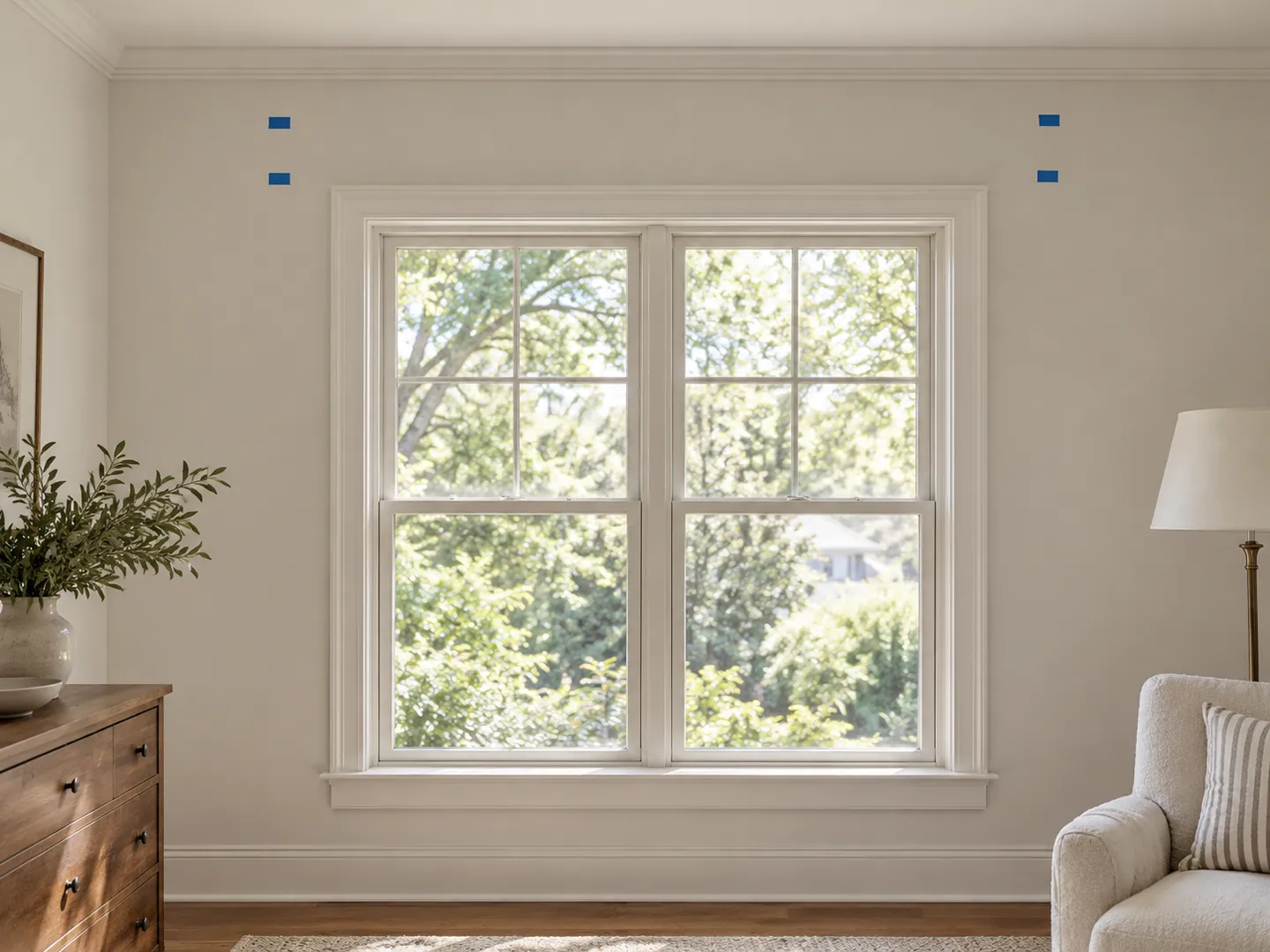
Decide where the rod will sit before calculating curtain sizes. Its height affects the drop, and its width affects how much fabric you need.
Use low-tack tape to mark the proposed height and both endpoints. Then step back and look at the whole wall.
Check whether:
- There is enough room above the window for the brackets.
- The rod can extend beyond the frame on both sides.
- Open curtains have space to gather.
- Nearby walls, shelves, or furniture limit the arrangement.
- Available ready-made lengths work with the proposed height.
Thicker curtains take up more room when pulled open. Without enough space beside the window, the gathered fabric will cover some of the glass.
Choose the rod extension to suit the window and curtain thickness. A narrow corner window and a wide window on an empty wall have different needs.
If you are still choosing between airy panels and heavier bedroom curtains, our guide to choosing bedroom curtains that work day and night can help you settle the fabric and hanging style.
5. Add Enough Width for Folds, Then Count the Panels
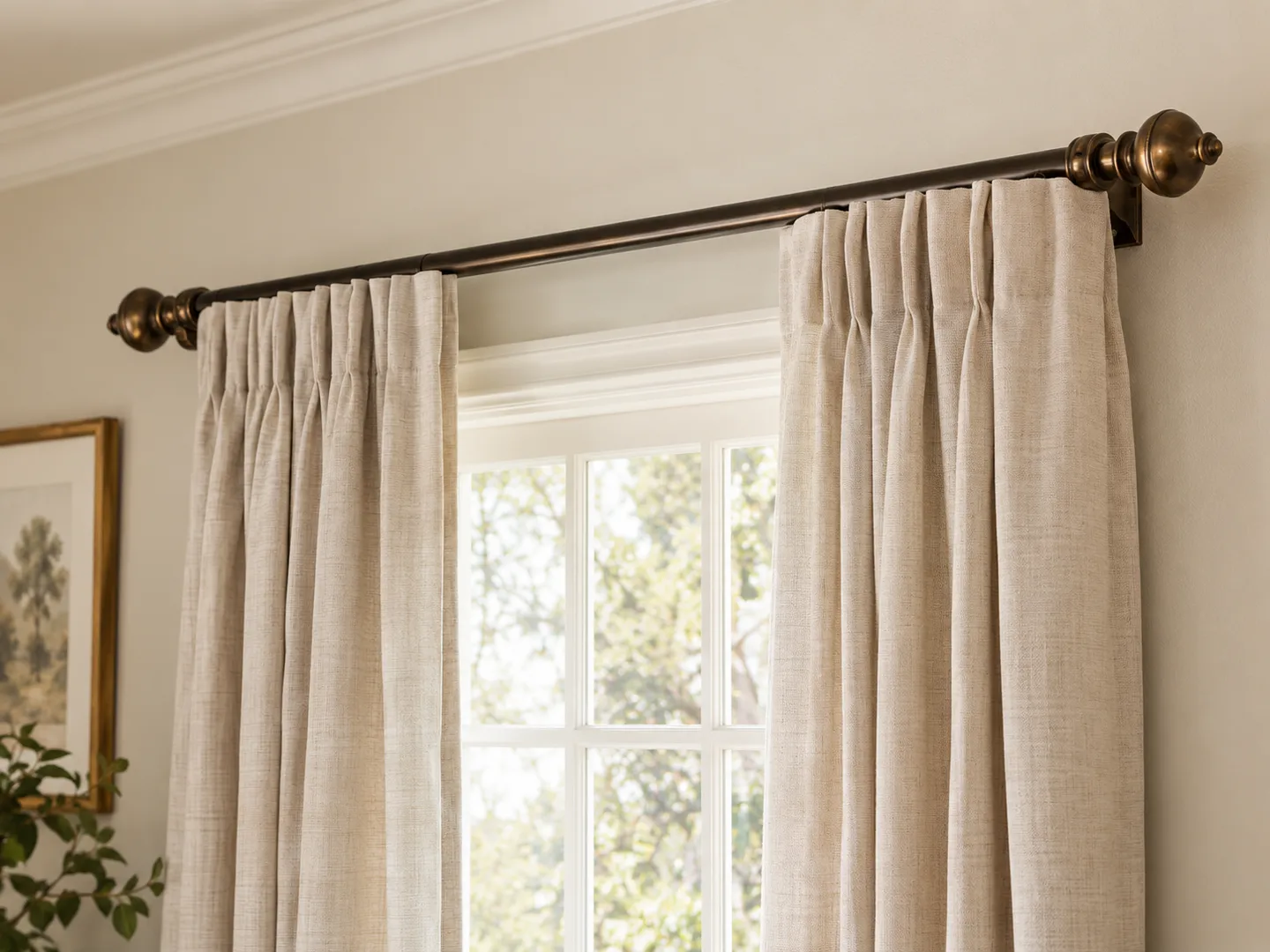
For curtains sold by flat panel width, multiply the rod width by the recommended fullness, then divide by the number of panels.
“Fullness” means the extra fabric that creates folds. Without enough of it, curtains that look lovely pulled to the sides can look stretched flat when closed.
For many flat-panel styles, 1.5 to 2 times the rod width is a common planning range. Follow the curtain maker’s recommendation, since the heading, fabric, and desired look can change that requirement.
Here’s an example using double fullness:
| Calculation | Result |
|---|---|
| Rod width | 60 inches |
| Multiply by 2 for fullness | 120 inches total flat curtain width |
| Divide between 2 equal panels | 60 inches per panel |
You would need two panels measuring 60 inches wide each.
Of course, ready-made curtains do not always come in exactly the width you calculate. If a pair has two 52-inch panels, their combined flat width is 104 inches.
On a 60-inch rod, that gives roughly 1.73 times fullness. You can then compare that with the product’s recommendation and decide whether the gathering will suit the look you want.
Check Whether the Pleats Already Include the Extra Fabric

Some made-to-measure pleated and ripple-fold curtains already include fullness in their finished width. Automatically doubling that measurement could mean ordering far more curtain than needed.
Three different widths can appear in product descriptions:
- Raw fabric width: The material used before the curtain is constructed.
- Flat panel width: The panel measured spread flat.
- Finished coverage: The width the made-up curtain is designed to cover.
A fixed pleated curtain can contain plenty of fabric while covering a much narrower span once the pleats are formed.
Check whether the listed width is per panel or per pair, and whether fullness is already included. Ask the seller if either detail is unclear.
6. Get the Length Right Before Choosing a Size

Measure from the point specified for your curtain heading to the position where you want the bottom hem to finish.
Choose that hem position before measuring. Curtains might finish above a sill, hang just clear of the floor, or extend onto it.
For a busy room, a hem that clears the floor makes cleaning and opening the curtains easier. A puddled finish uses extra length, so decide how much fabric you actually want resting on the floor.
The window’s height alone will not tell you the curtain length. The rod may sit above the frame, and the curtain heading affects where the fabric begins.
The Curtain Heading Changes Where You Measure From
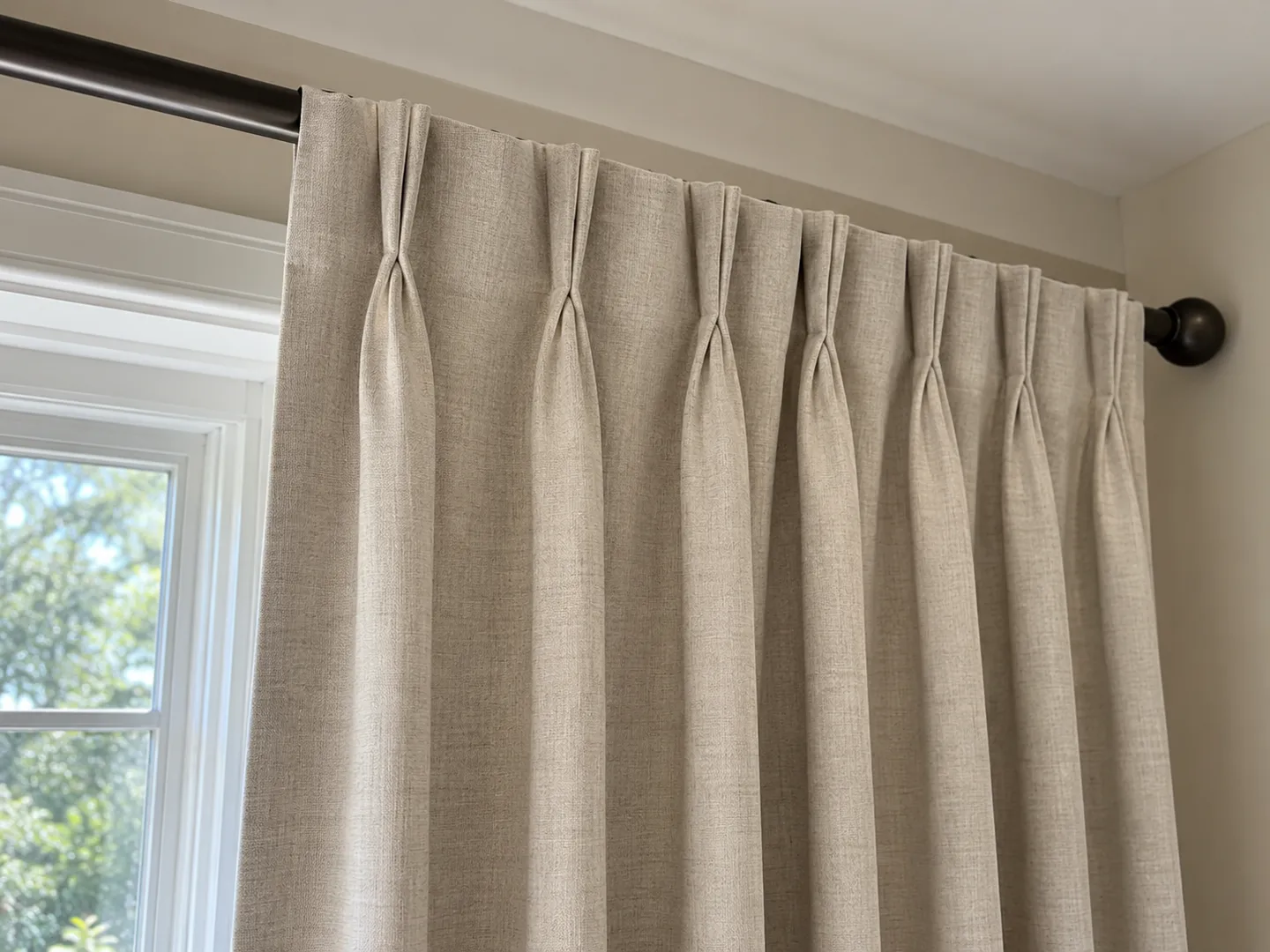
Follow the measuring instructions for the exact heading you plan to buy. The heading is the top part of the curtain where it connects to the pole or track.
With grommet curtains, some fabric sits above the opening that the rod passes through. Measuring only from the rod to the floor can miss that part of the panel.
With rod pockets and tabs, the fabric wraps around or hangs from the pole differently.
With rings, hooks, and track carriers, the hanging connection affects where the top of the fabric sits.
For example, a product might tell you to measure from the eye of a curtain ring and add a specific heading allowance. Use that allowance for that product, rather than carrying it over to every curtain you consider.
The length you order needs to match the seller’s definition of finished curtain length.
Check the Drop on the Left, Middle, and Right
Measure the drop in three places to catch an uneven floor or a rod that needs leveling.
An older floor might rise slightly toward one corner. A rod can also look level until a straight curtain hem makes the slope obvious.
Write down the left, middle, and right measurements separately. If the rod is unlevel, correct that before settling on the final length.
For curtains that should clear an uneven floor, use the shortest hanging-point-to-floor distance when working out the clearance, along with any heading allowance the manufacturer specifies.
For example, if the shortest drop is 84 inches and you want half an inch of floor clearance, the hanging-point-to-hem distance is 83.5 inches. The ordered panel length may still differ because of its heading.
Measure each window individually, even when two windows look identical.
If better darkness is the goal, check the coverage around the top and sides too. Our blackout versus room-darkening curtain guide explains why light can still enter around otherwise suitable curtains.
7. Can a Phone, Credit Card, or Handspan Do the Job?

These methods can help with rough estimates, but their usefulness depends on knowing the reference size and understanding the limits.
A phone is handy when you want an approximate window size before browsing. Apple describes the results from its Measure app as approximate, so treat them as planning measurements.
A credit card with verified dimensions can help measure a small remaining section. Across a whole window, though, you would need to move it repeatedly. Every move creates another opportunity for a gap, overlap, or change in angle.
Hands, feet, and arm spans vary from person to person. They only work as useful references when their actual dimensions are already known.
“About a handspan” gives you a sense of scale. It does not give you a reliable curtain order size.
Be careful with banknotes and household packaging too. Their dimensions may be less neatly rounded than you expect. Check the actual size before using one as your measuring reference.
8. A Few Helpful Tools, If This Becomes a Bigger Project
A ruler and marking supplies can handle much of the planning. A longer tape measure becomes useful when checking several windows or confirming an order.
There is no need to fill a shopping basket because one tool has gone missing. Pick whichever item solves the part you are struggling with.
| Tool | When it helps |
|---|---|
| Clearly marked ruler or yardstick | Measuring the string and checking smaller remaining sections |
| Pencil and notepad | Keeping each window’s width, drop, and heading notes together |
| Surface-appropriate low-tack tape | Marking proposed rod positions and temporary endpoints |
| Stable step stool or ladder | Reaching the hanging point comfortably |
| Spirit level | Checking rod placement before using it as a measuring reference |
| Full-length tape measure | Confirming the numbers without repeatedly moving a short reference |
For an optional final-check tool, consider the Komelon SELFLock SL2812. Its 12-foot blade locks automatically as it extends, with a button to release it. That can be useful when you need a moment to read and record the measurement. You can check its specifications in Komelon’s product catalog.
For something small enough to keep on your keys, the Stanley 3-foot PowerLock Key Tape Measure is a portable option. Its short reach makes it more convenient for smaller checks than measuring a full curtain drop in one go. See the Stanley product details.
Borrowing a longer tape for the final check works perfectly well, too. Especially if the original one is likely to turn up the moment the curtains arrive.
9. Before Ordering, Give These Details One Last Check

Compare your measurements with the actual product listing before ordering. A correct number can still lead to the wrong purchase if the seller defines width or length differently.
Use this quick checklist:
- The paper size or ruler markings are confirmed.
- The width and drop have each been measured twice.
- Rod or track coverage is recorded separately from window width.
- The curtain heading and its measuring instructions are checked.
- Left, middle, and right drops are written down.
- Fullness has been added only where required.
- The dimensions are understood as per panel or per pair.
- The number of panels in the package is checked.
- Inches and centimeters have stayed consistent.
- Every window has been measured individually.
- Custom-order measurements have been confirmed with a proper measuring tool.
A simple note for each window is enough:
Window:
Measuring method and units:
Rod or track coverage:
Left / middle / right drop:
Curtain heading:
Desired floor clearance or puddle:
Fullness required:
Panel quantity:
Size to order:
Once those details are written down, you can get back to choosing the curtains you liked, with a much clearer idea of how they will hang.