How to Make a Small Bedroom Look Bigger: 12 Clever Fixes

A small bedroom doesn’t have to feel cramped. Sometimes it’s a matter of perspective: a curtain hiding too much of the window, a bulky bed frame, or a chair sitting in the wrong spot.
A little tweak can change how the whole room feels. Decorating a larger bedroom comes with its own hurdles, too, from awkward empty corners to furniture that feels too far apart.
The quick answer
- A clear walkway and less bulky furniture make a small bedroom easier to move around and visually more open.
- Let curtains open beyond the glass to reveal more daylight, and place a mirror where it reflects a pleasant view.
- Coordinated colors and visible floor space reduce visual breaks around the room.
- Under-bed storage and a quick daily tidy help keep tables and other surfaces clear.
Below are 12 clever fixes, with practical examples and useful finds to help you decide which changes your bedroom actually needs.
1. A Clearer Path From the Door to the Bed
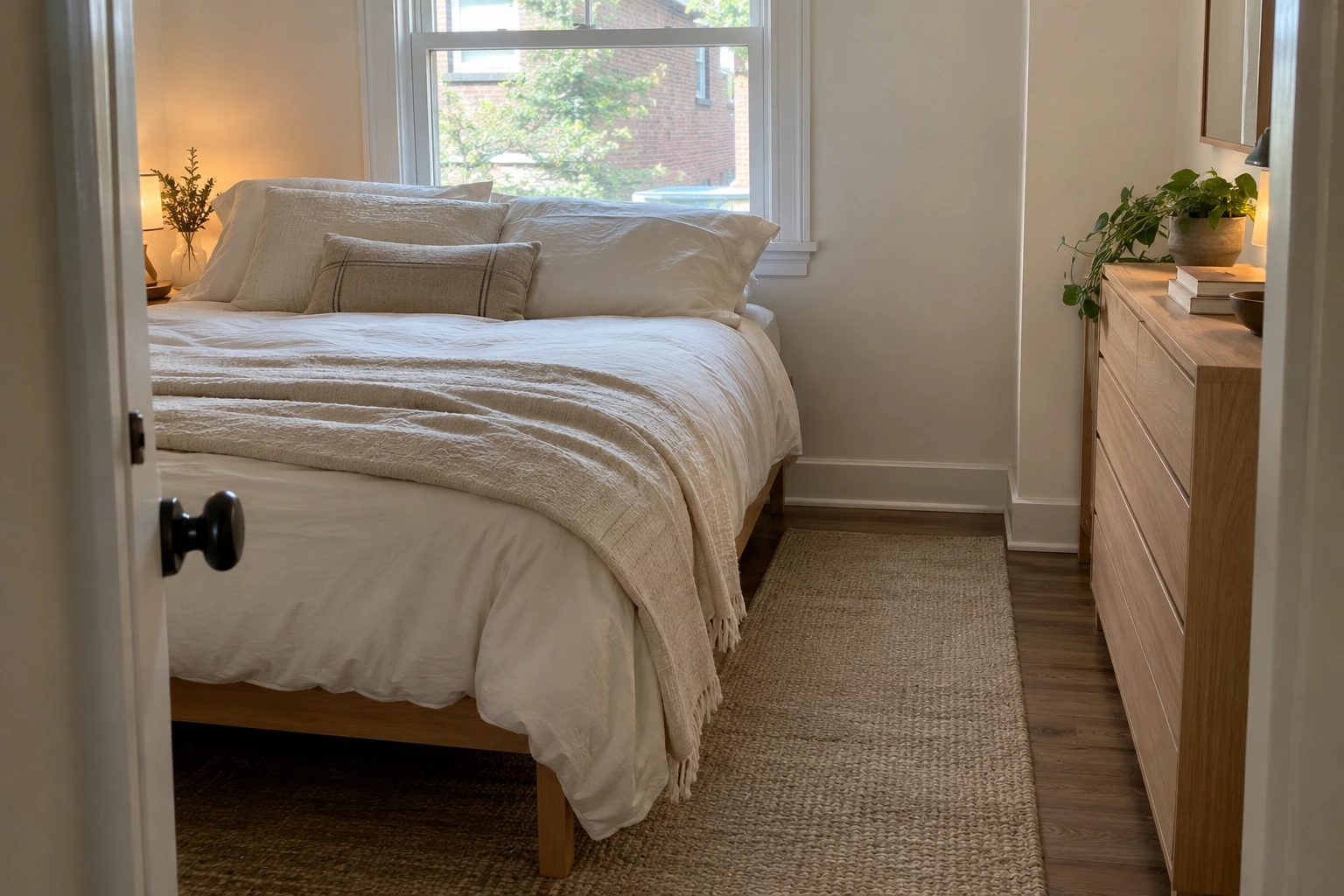
A bedroom feels less crowded when you can see into it clearly and move through it comfortably. The quickest improvement is often removing whatever interrupts that route.
Perhaps there’s a bench you shuffle around every morning, a basket beside the dresser, or a chair nobody has sat in for months. Each piece may be small, but together they can turn a simple walk to the closet into a sideways squeeze.
Try moving a chair or table you rarely use into another room for a few days. If getting dressed becomes easier and you barely miss it, you may prefer the extra floor space.
The same principle applies to bedside clutter. Your glasses, a book, and a glass of water are useful to have within reach. A quick daily tidy-up helps keep the nightstand clear: throw away any trash and put away things you’re no longer using.
The most useful open space is the space that makes your routine easier. A completely bare bedroom isn’t the goal.
2. The Bed Fits, but the Frame Takes Over
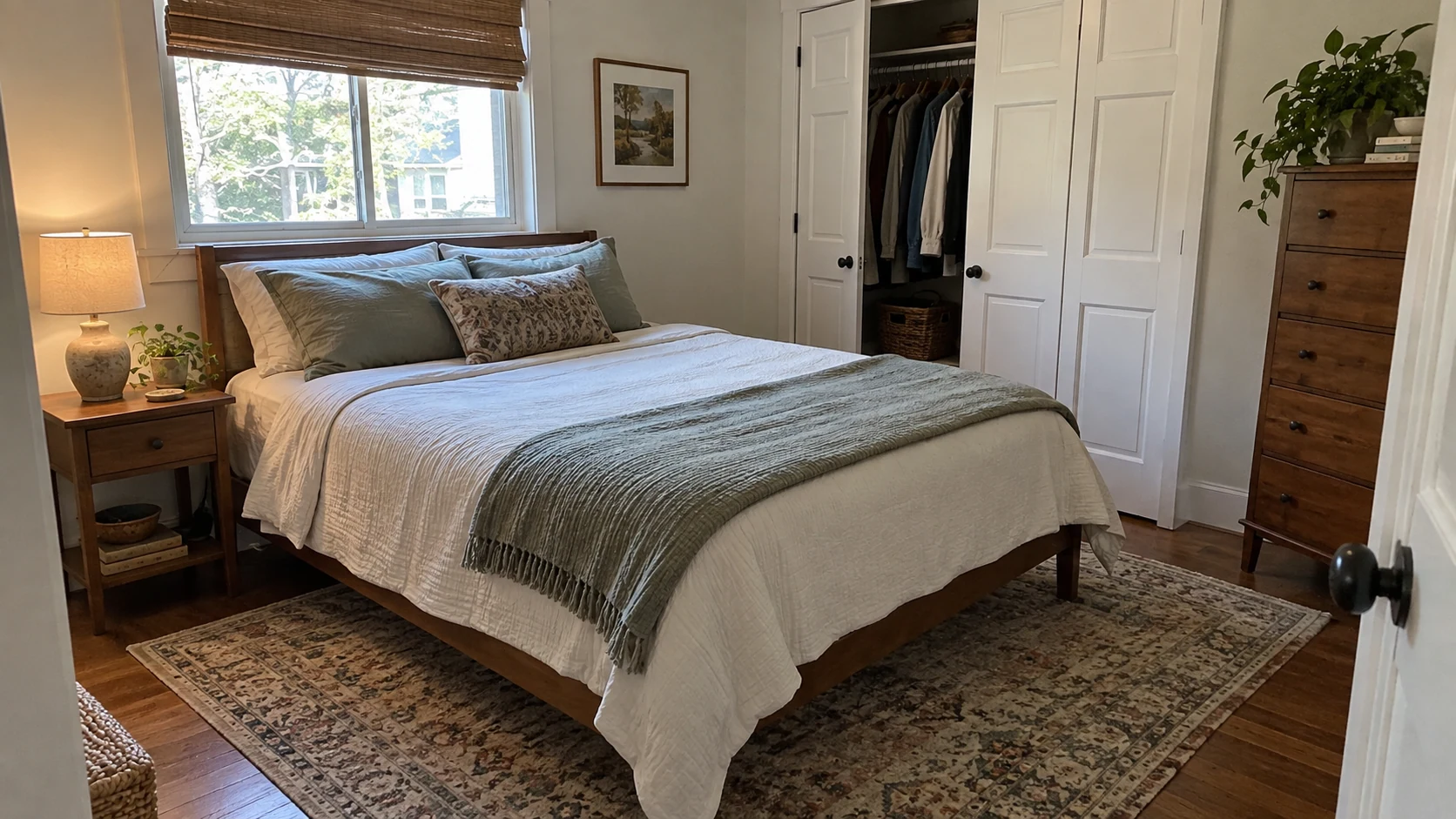
The frame’s overall dimensions matter as much as the mattress size. Thick upholstered sides, projecting corners, and a substantial footboard can add surprising bulk around a comfortable bed.
The Extra Inches Around Your Mattress
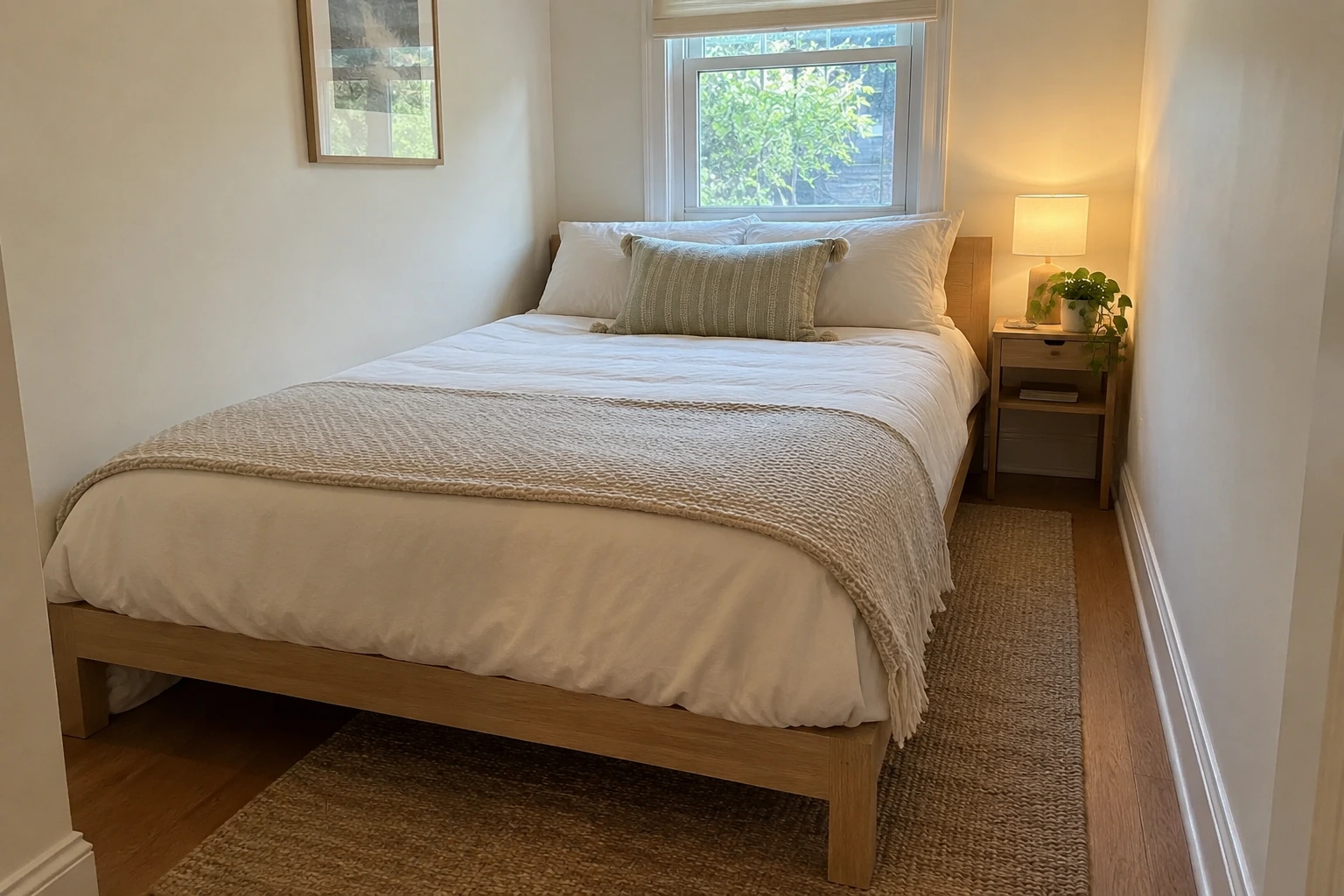
A narrower frame can preserve sleeping space while reducing the bed’s overall footprint.
For someone keeping a king mattress, the Allewie King Upholstered Bed Frame has a relatively compact footprint around that mattress, with an adjustable headboard and wood slat support. Its beige upholstery also works easily with warm neutral bedding.
The frame measures 82.1 inches long by 77.6 inches wide. It can free up space around the bed if your current king frame is bulkier and the mattress already fits comfortably in the room.
If the mattress itself blocks access to the closet, a slimmer frame may not free up enough space. Our queen vs king bed size guide explains how the sleeping surface affects the room around it.
A Nightstand That Holds More Than the Lamp
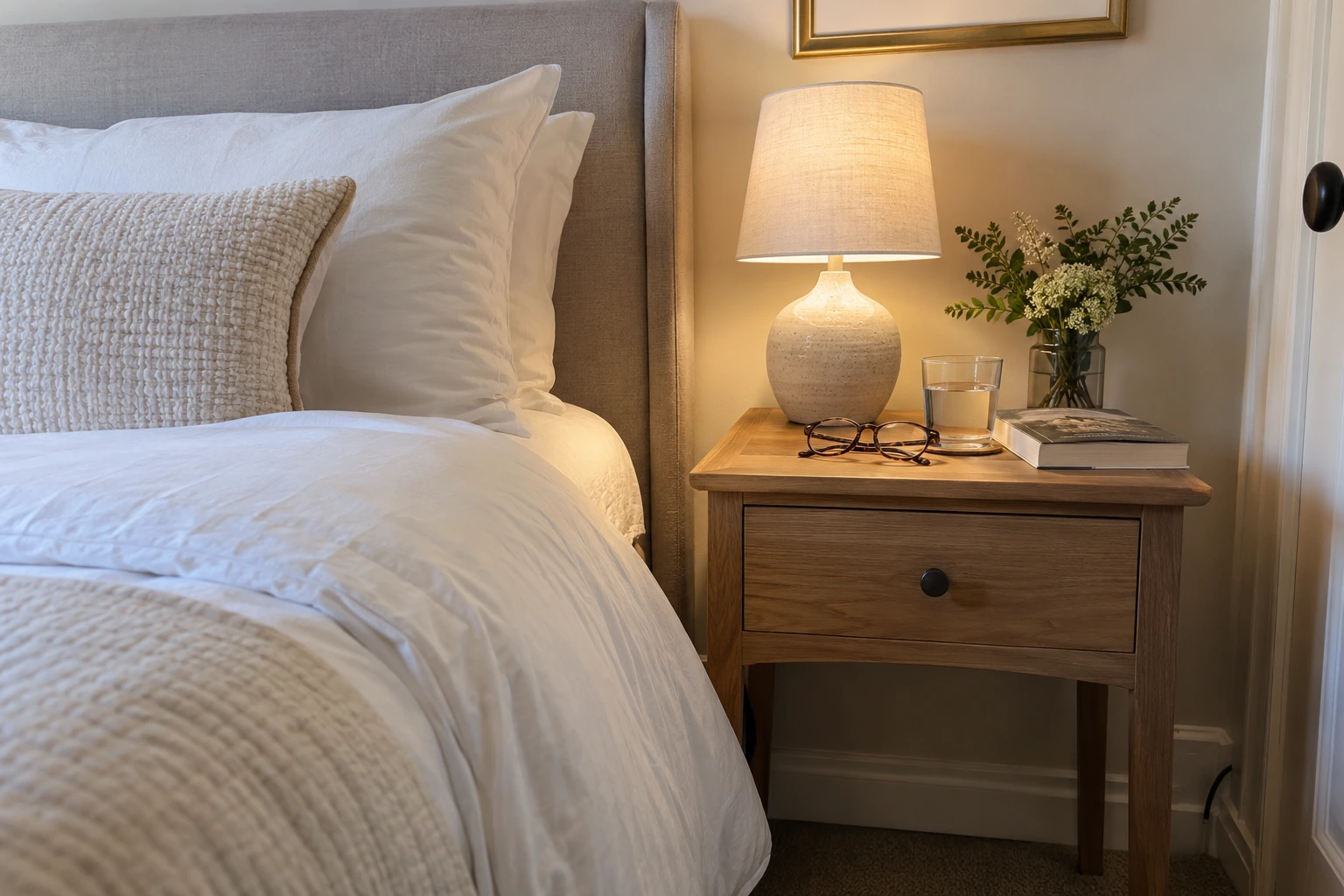
Furniture needs enough surface and storage to do its job, even in a small room. A tiny table isn’t much of a solution if your phone and glasses end up on the floor.
A compact nightstand with a drawer can replace both an open table and the basket tucked beneath it. Across from the bed, a shallow dresser may preserve more walking room than a deep one.
The arrangement also needs to work with drawers open. Everything can look beautifully fitted together until you try to get a clean T-shirt.
3. A Little Visible Floor Goes a Long Way
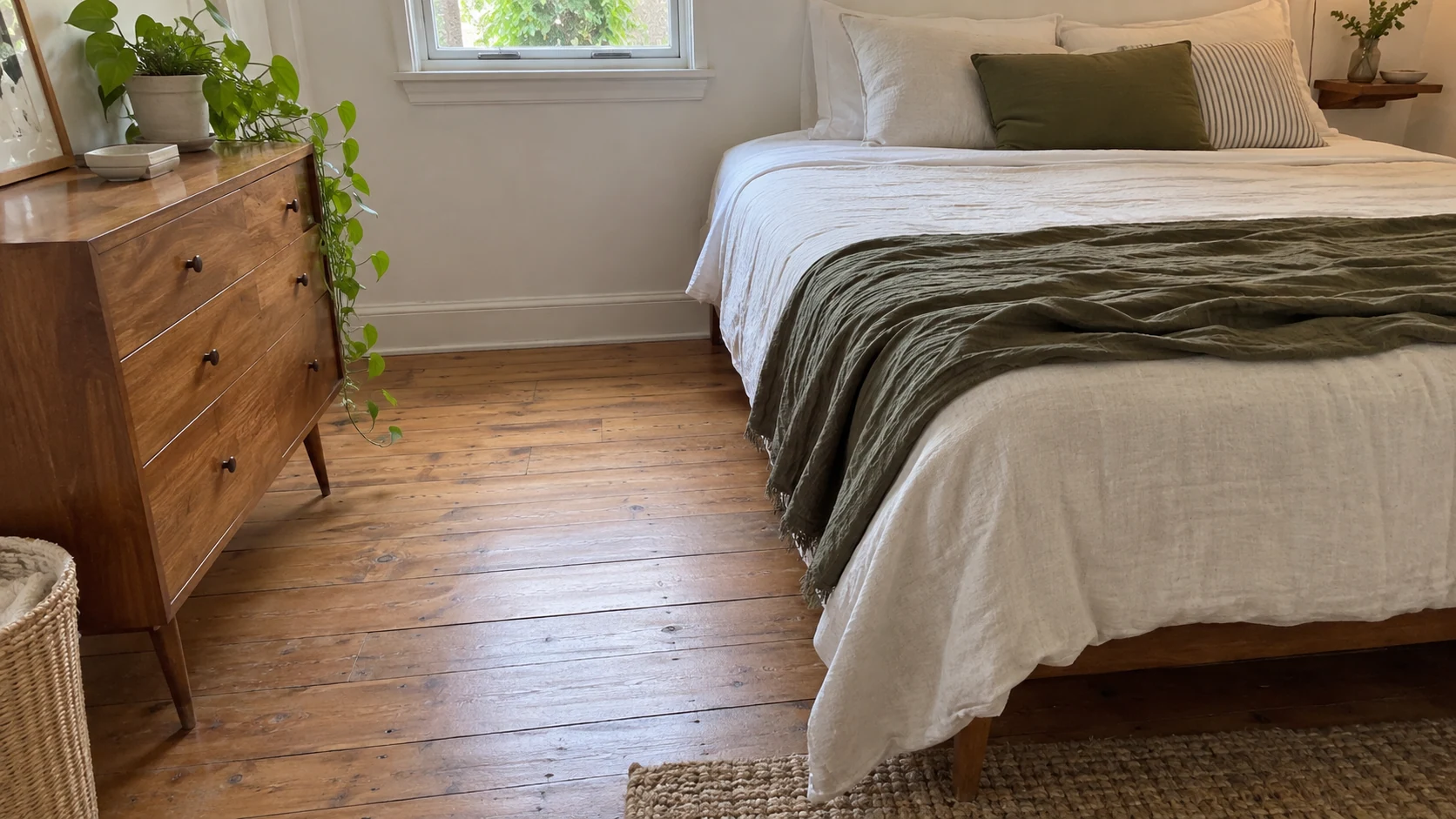
Visible floor beneath furniture can make the room look more spacious. Exposed legs and wall-mounted storage reduce the appearance of solid furniture surrounding the bed.
The Arbuxzuy Floating Nightstand Set provides two wall-mounted bedside units with drawers, open shelves, and charging stations. The drawer keeps small belongings out of sight, while the shelf has room for the book you’re reading.
That combination is useful when two people need bedside storage but floor-standing cabinets make the bed feel boxed in.
The black finish stands out against pale walls. Another black detail, such as a picture frame, can help it match the rest of the room.
A low bed and furniture with exposed legs offer different benefits. A lower bed reveals more wall above it; raised furniture reveals floor underneath. You can use either approach or combine the two.
If the space beneath the bed is packed with loose shoes and bags, those exposed legs will reveal the clutter too. Storage boxes keep those items organized and out of sight.
4. Colors That Belong in the Same Room
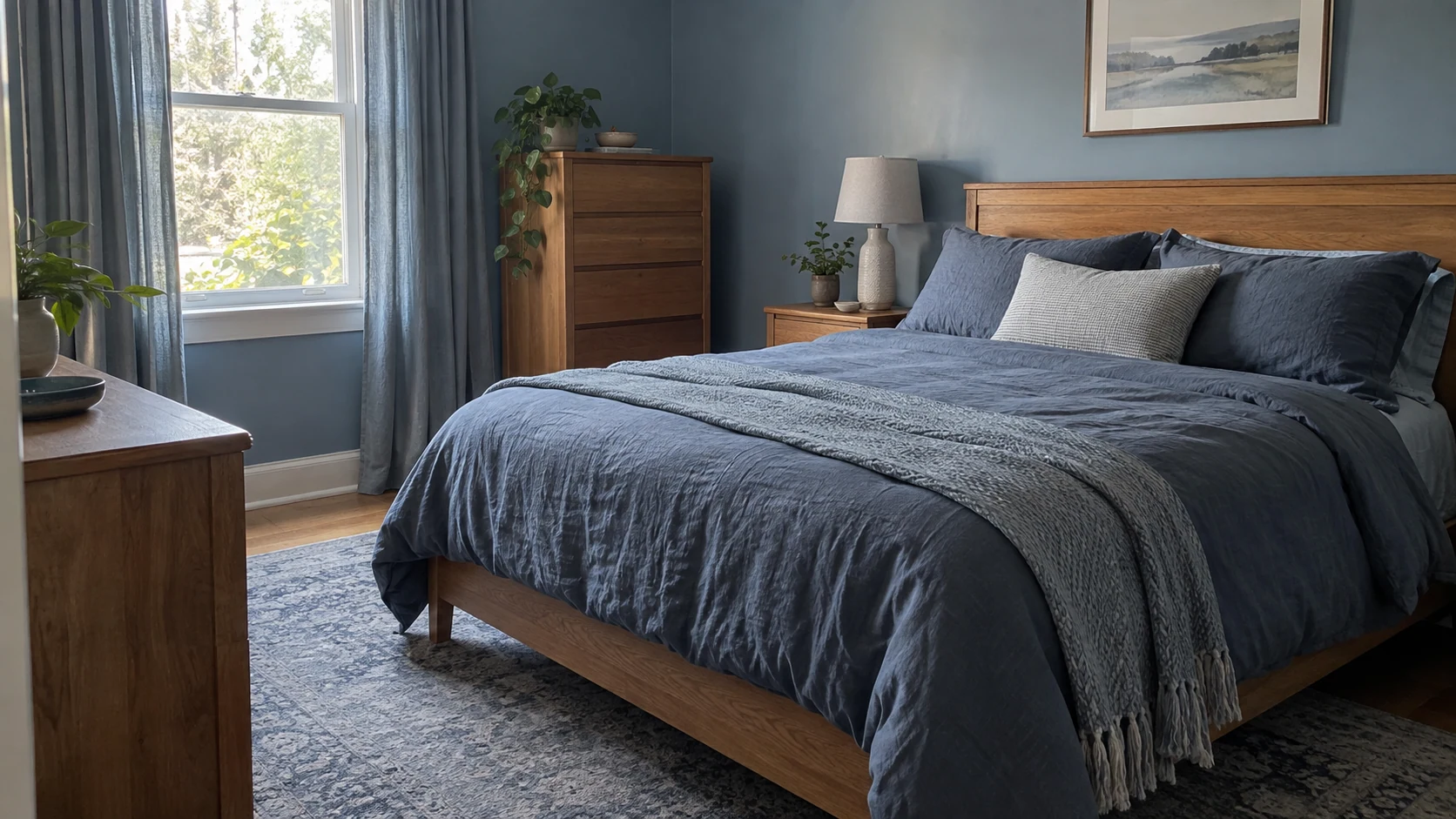
Similar colors on the walls, curtains, and bedding can help a small bedroom look more spacious. Strong contrasts between every wall, curtain, and piece of furniture can make a small space feel visually divided.
Cream walls, oatmeal curtains, and warm white bedding create a softer transition than three unrelated colors competing for attention.
Different textures add variety even when the colors are similar. Cotton bedding, woven curtains, wood furniture, and a soft rug keep the room from looking too uniform.
Three Easy Color Combinations
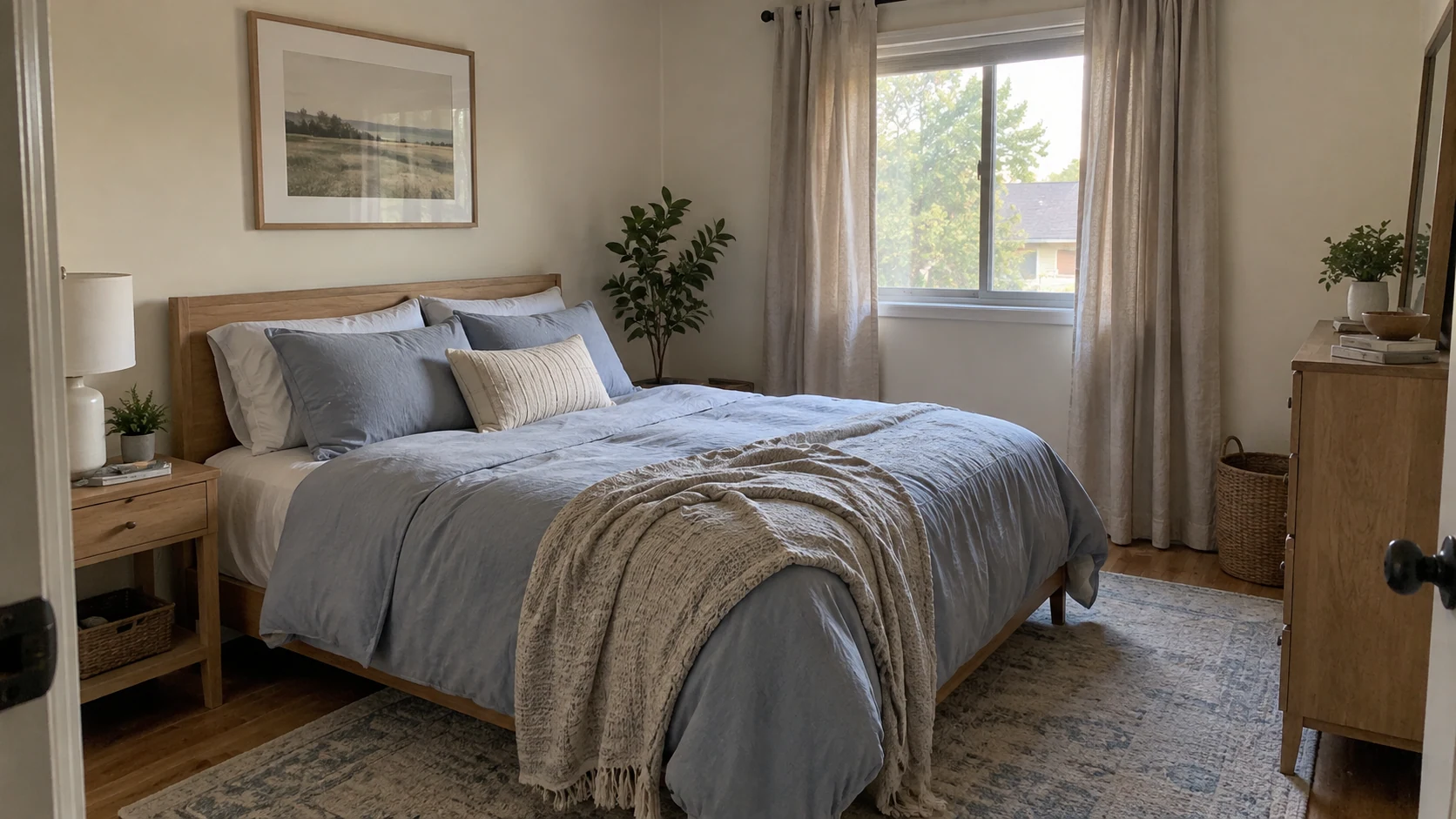
A light wall color, bedding or curtains in a similar shade, and a wood finish give you three colors to work with.
A lampshade or artwork that repeats one of those colors can connect the smaller details.
Our earth tone color palette guide has more ideas for bedrooms that lean warm and natural.
Warm White, Oatmeal, and Pale Oak
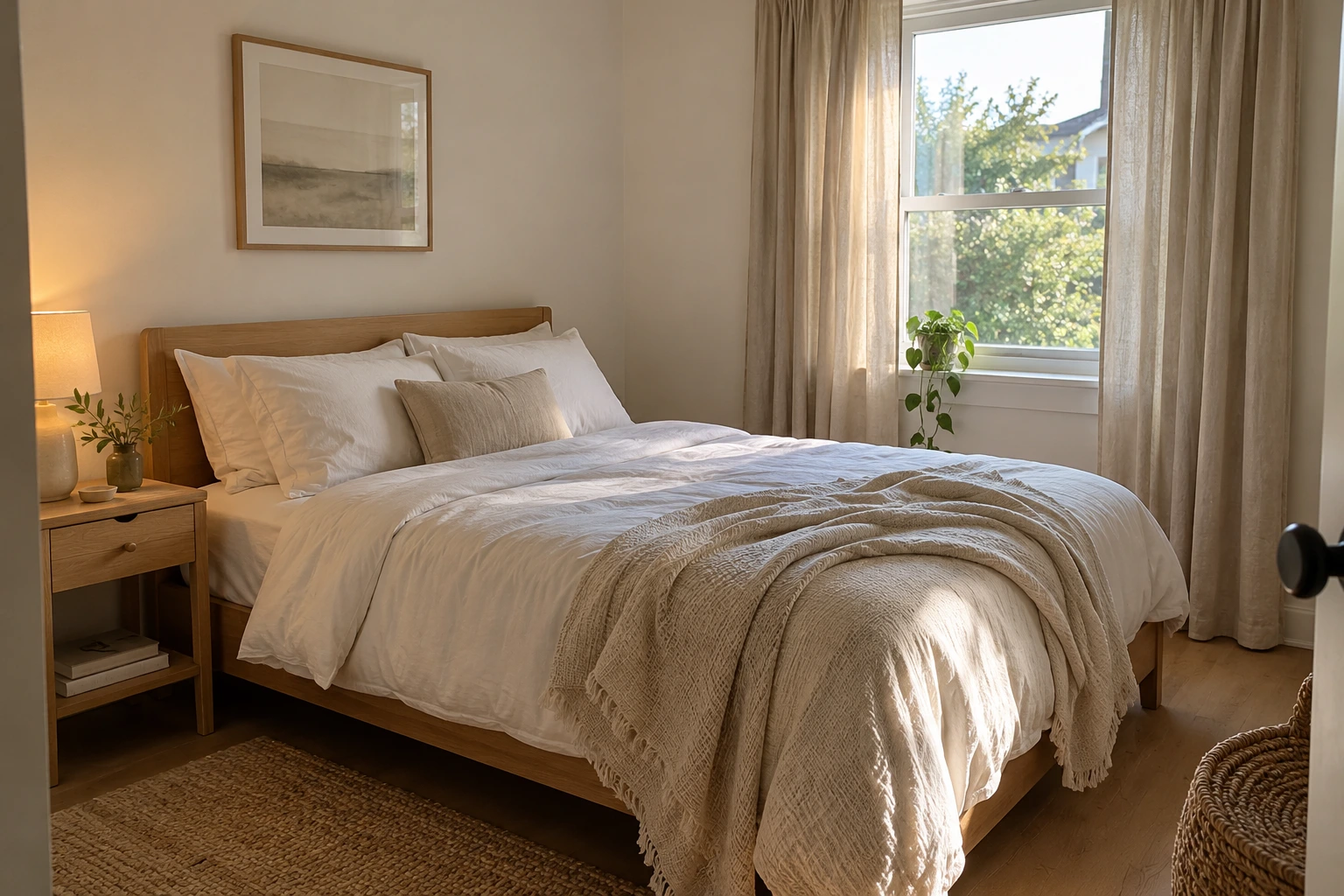
Warm white walls, oatmeal curtains, and pale oak furniture create a gentle, welcoming look.
Misty Blue, Ivory, and Soft Gray
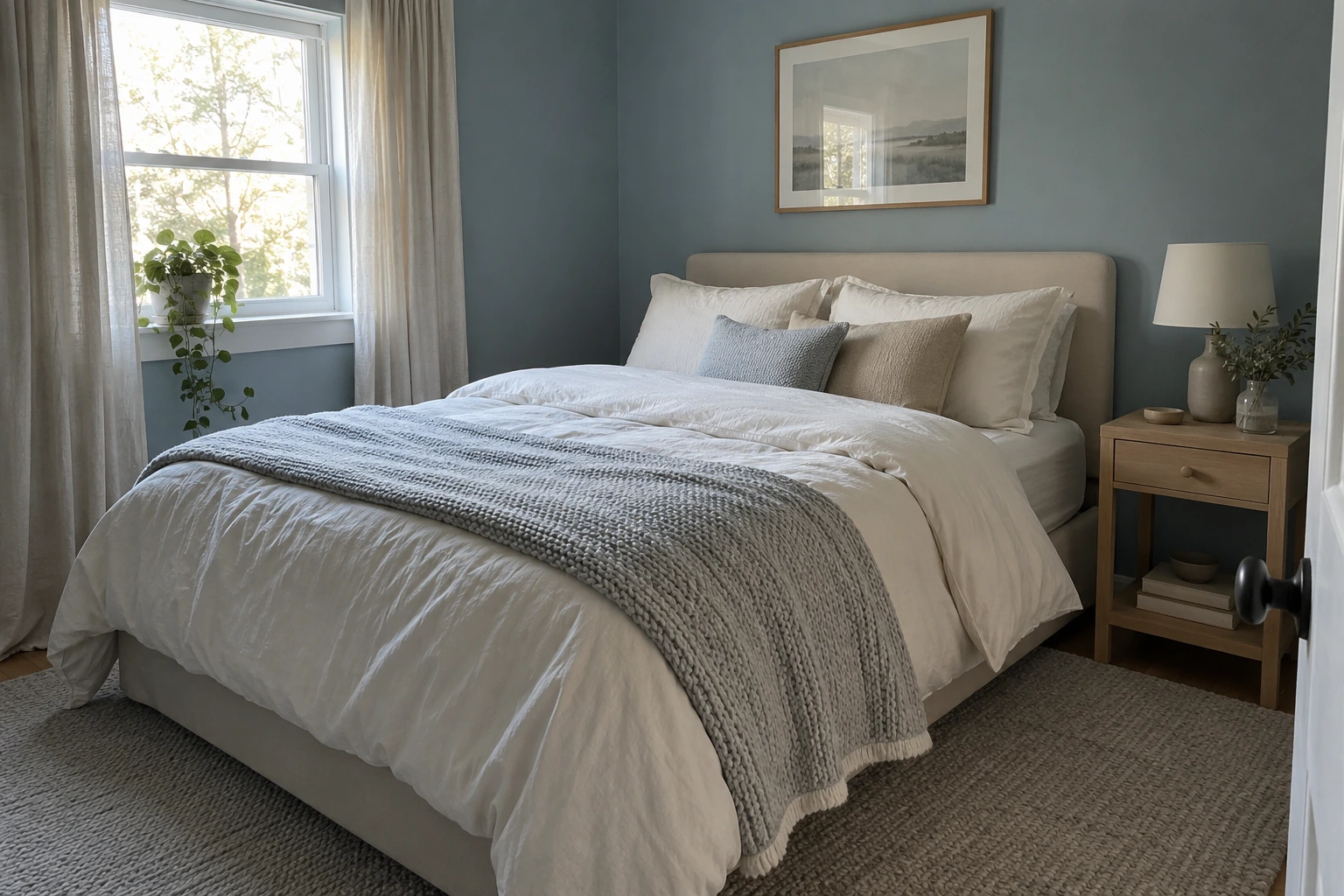
Misty blue walls, ivory bedding, and a soft gray rug give the room a cooler, restful feel.
Pale Sage, Cream, and Light Wood
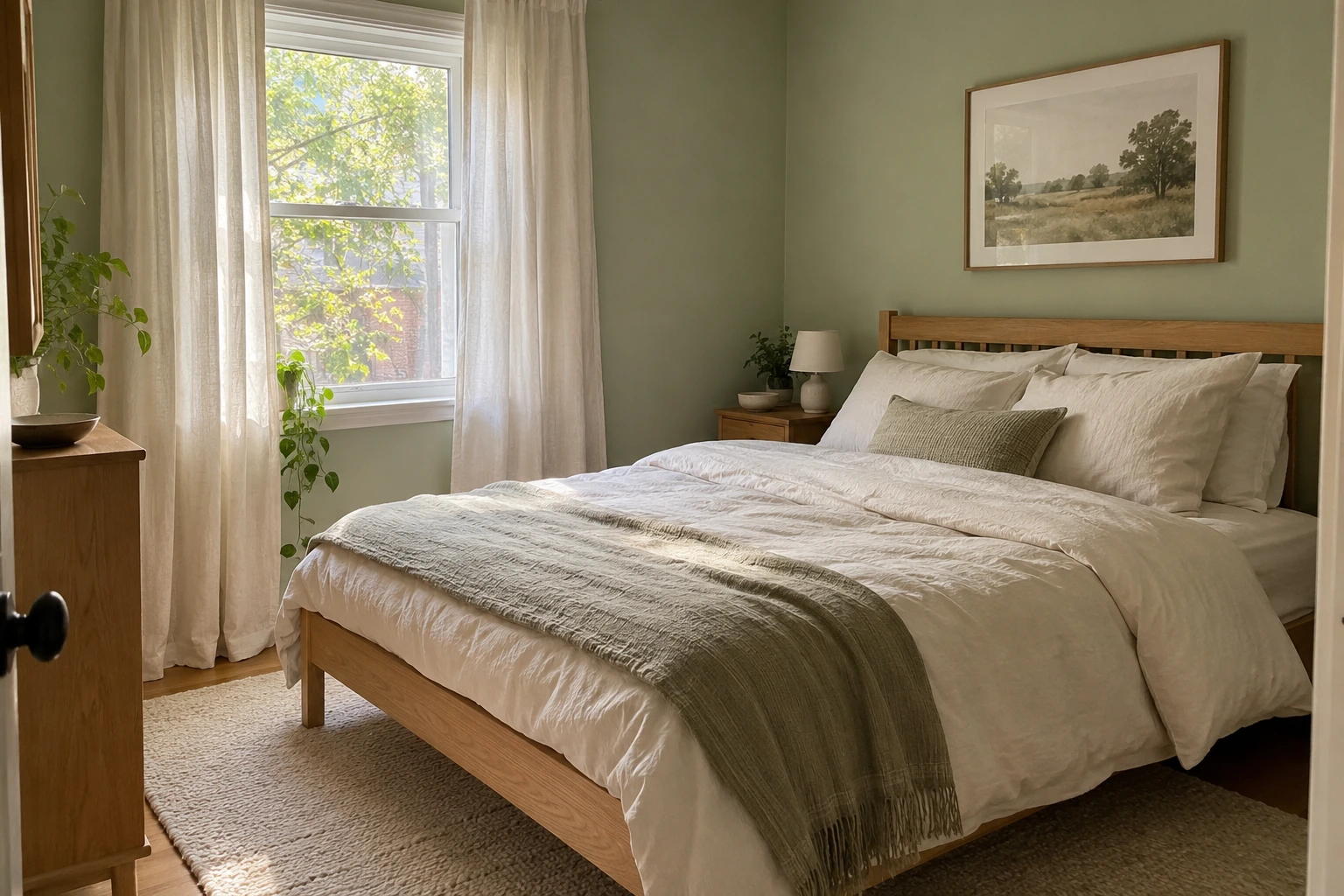
Pale sage walls, cream bedding, and light wood furniture bring in color with soft transitions.
The Bedroom That Never Gets Much Sun
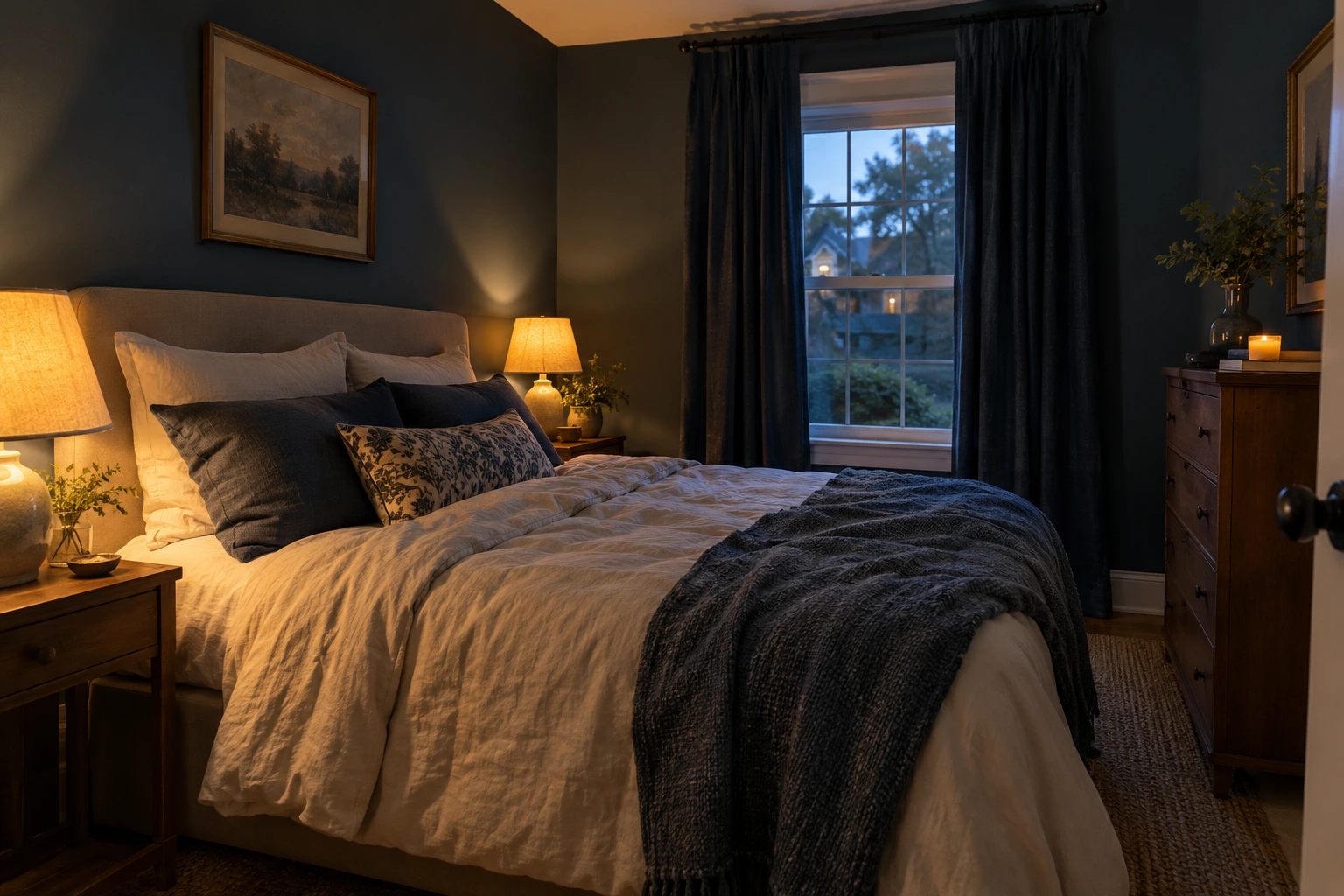
White paint cannot create daylight, so a dim bedroom needs help from lighting as well as color.
Pale surfaces can support an airy look when lamps brighten the areas that daylight misses. Deeper related colors can create a comfortable, cozy atmosphere when that suits the room better.
For example, muted blue walls, blue curtains, and lighter bedding can make a dim bedroom feel cozy.
In a dim room, lamps are just as important as the paint color.
5. A Window That Looks Bigger Than Before
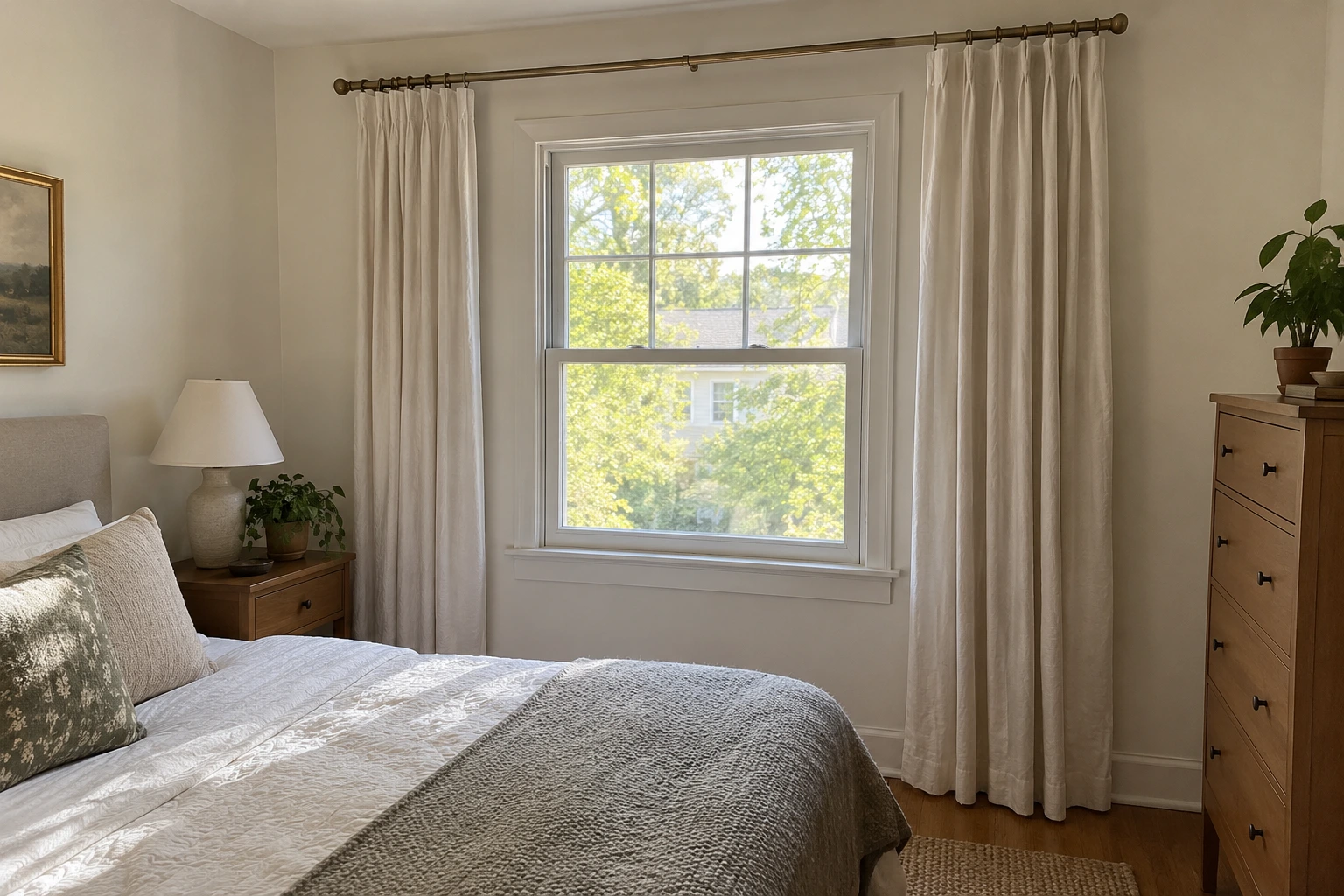
A curtain rod mounted above the window and extending beyond both sides can make the window look taller and wider. Often, the glass is already there. The fabric is simply covering too much of it.
Enough Room to Open the Curtains Fully
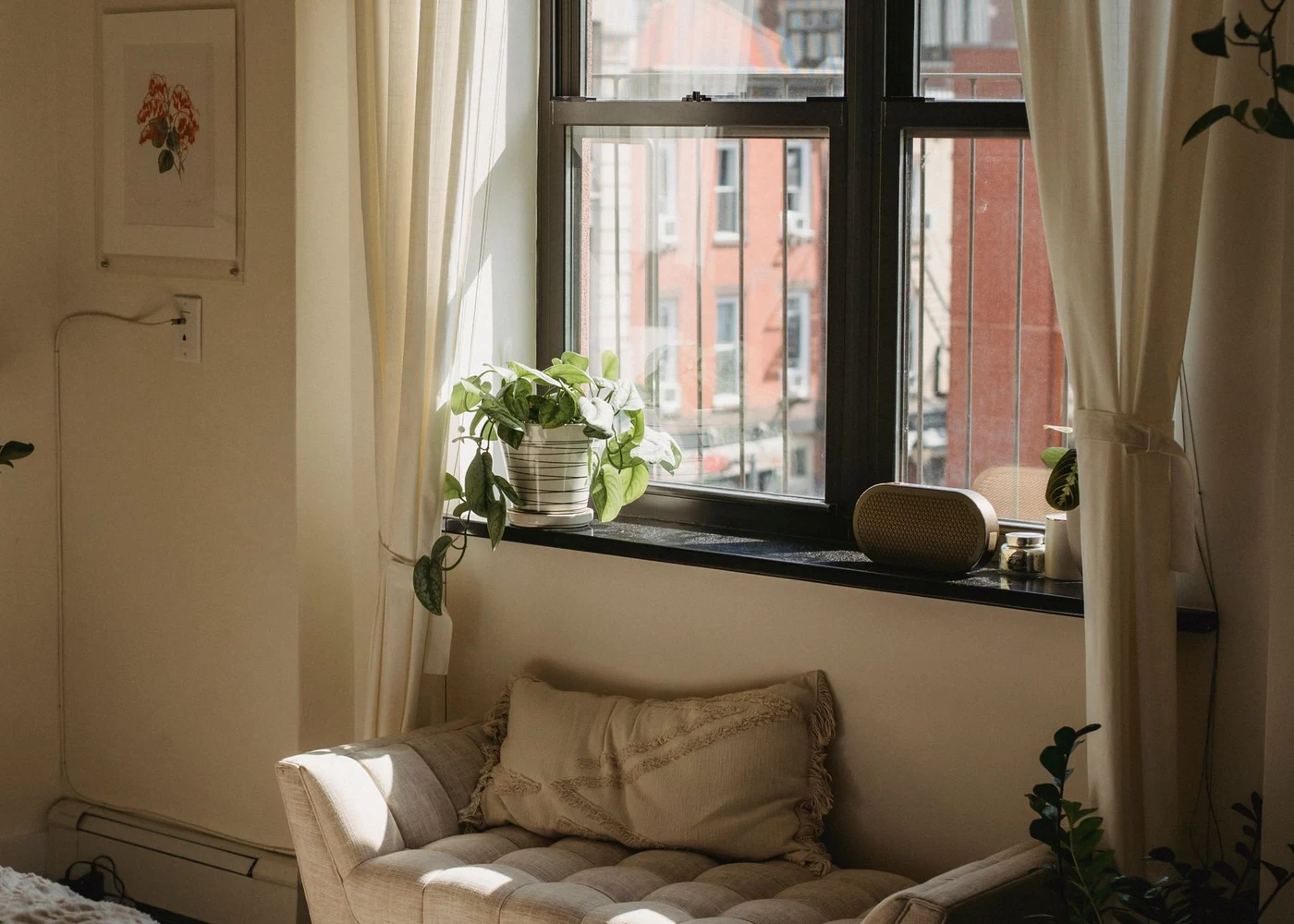
A curtain rod wider than the window lets you pull the curtains fully to each side so they don’t block the glass.
When the rod ends close to the window frame, the curtains still cover part of the glass when they’re open. A wider rod lets you pull them clear of the window so more daylight comes through.
Floor-length curtains can make the walls look taller. Curtains that finish just above the floor also avoid excess fabric bunching up in the walkway.
Curtains in a similar color to the walls blend in, helping the window area look less busy.
Daylight by Day, Darkness at Bedtime
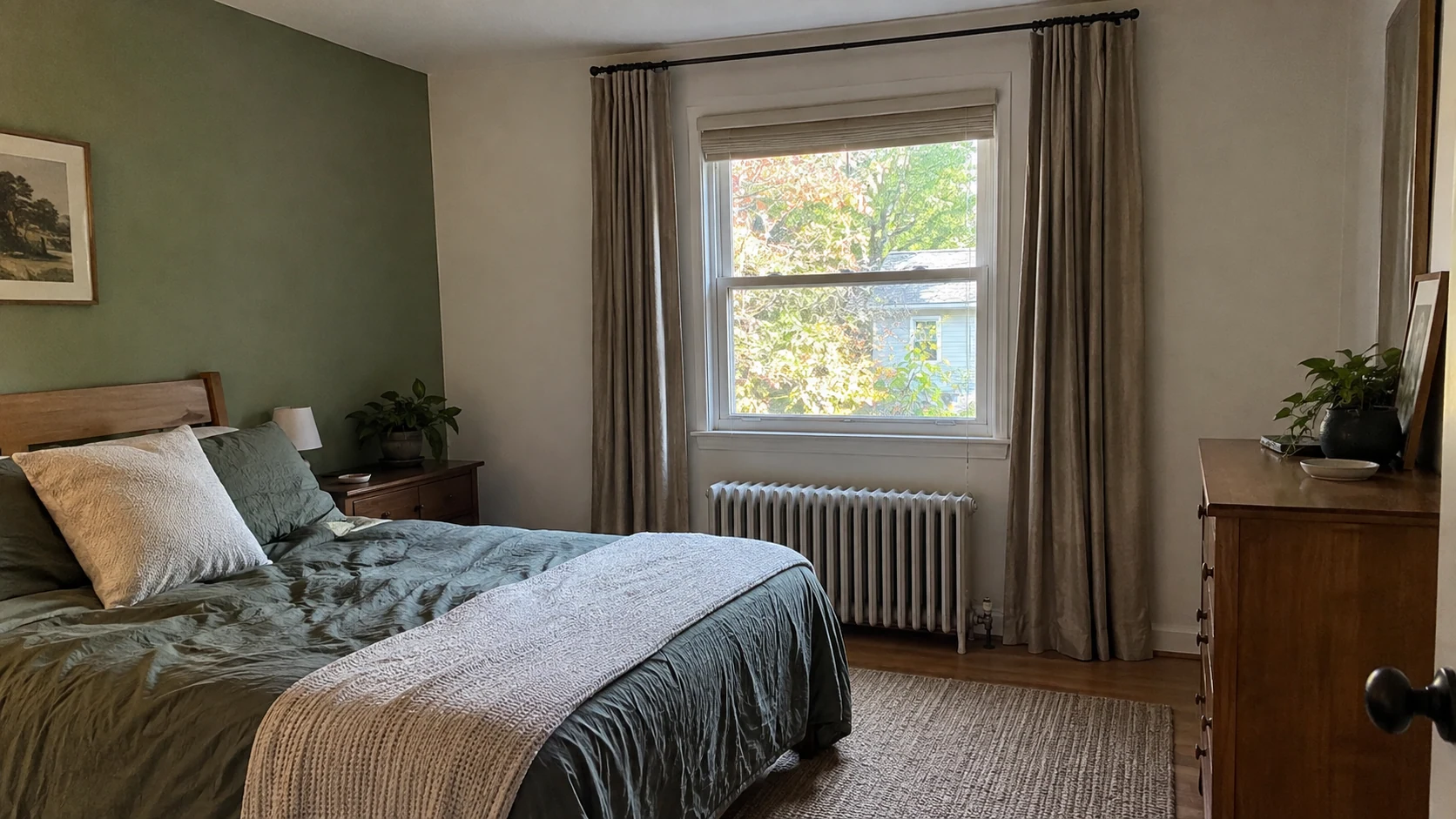
An airy daytime bedroom can still have proper light control at night. The difference is how the curtains work when open and closed.
The MIULEE Linen-Textured Blackout Curtains have a natural beige color and a linen-like texture. This pair has two panels measuring 52 inches wide by 84 inches long.
You can pull the curtains to the sides during the day and close them at bedtime.
Our bedroom curtain guide covers the styling choices, while blackout vs room-darkening curtains explains the difference in coverage.
6. A Mirror With Something Good to Reflect
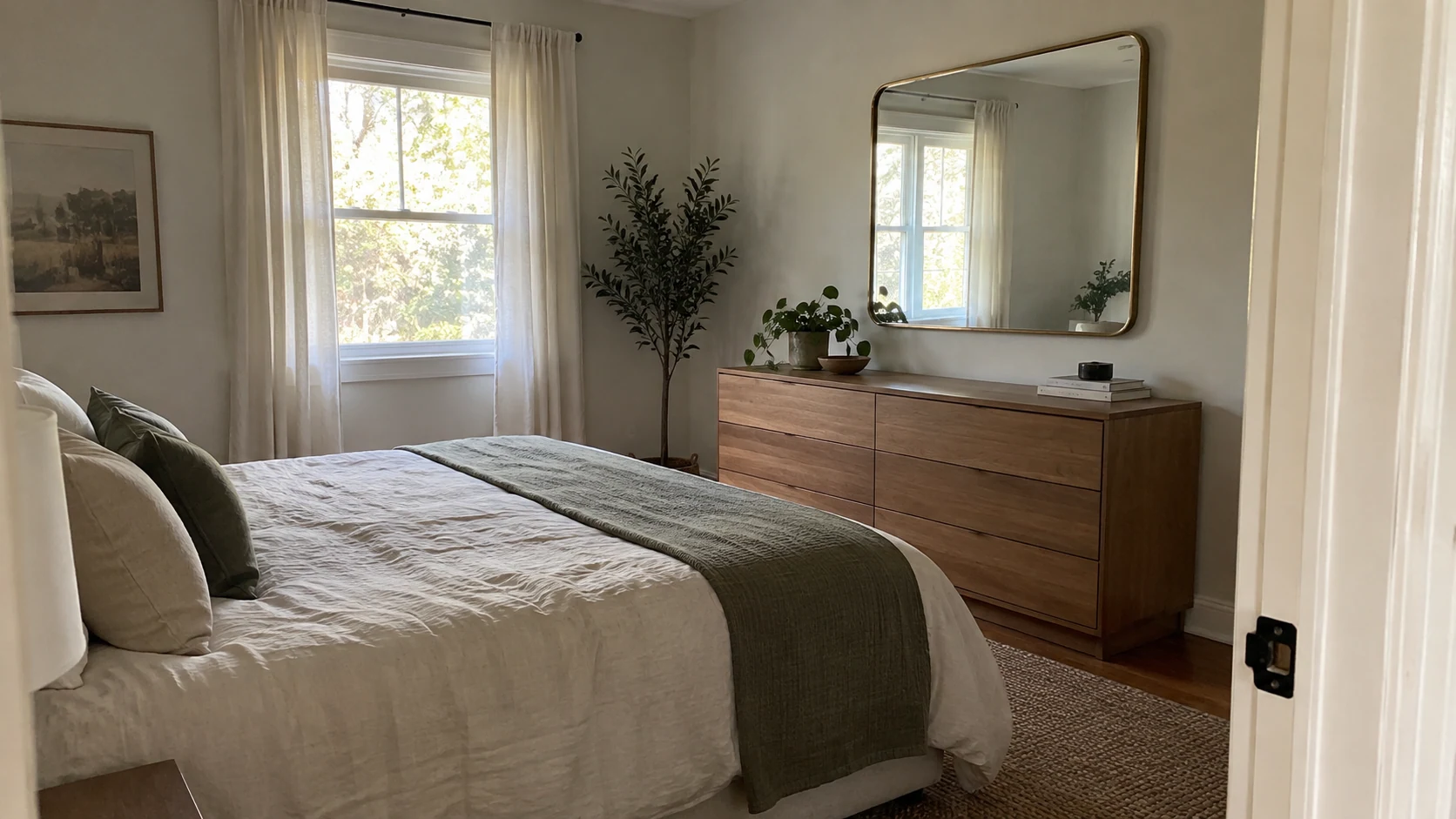
A mirror can make the room look deeper when it reflects a window or an uncluttered area. Its position matters more than simply having one.
A mirror facing a window or a tidy part of the room can make the space look more open. Facing a pile of laundry, it makes the clutter more noticeable.
The TRAHOME Arched Full-Length Mirror has a narrow gold frame and a 56-by-15-inch shape. Its wall-mounting option is useful where a standing mirror would take up valuable walking space.
The arch adds a softer shape beside straight-edged furniture, while the full-length reflection is useful for getting dressed.
Above a dresser or on a wardrobe door are other practical mirror positions. One large mirror usually looks less cluttered than several small mirrors scattered across the walls.
7. More Light, Less Nightstand Clutter
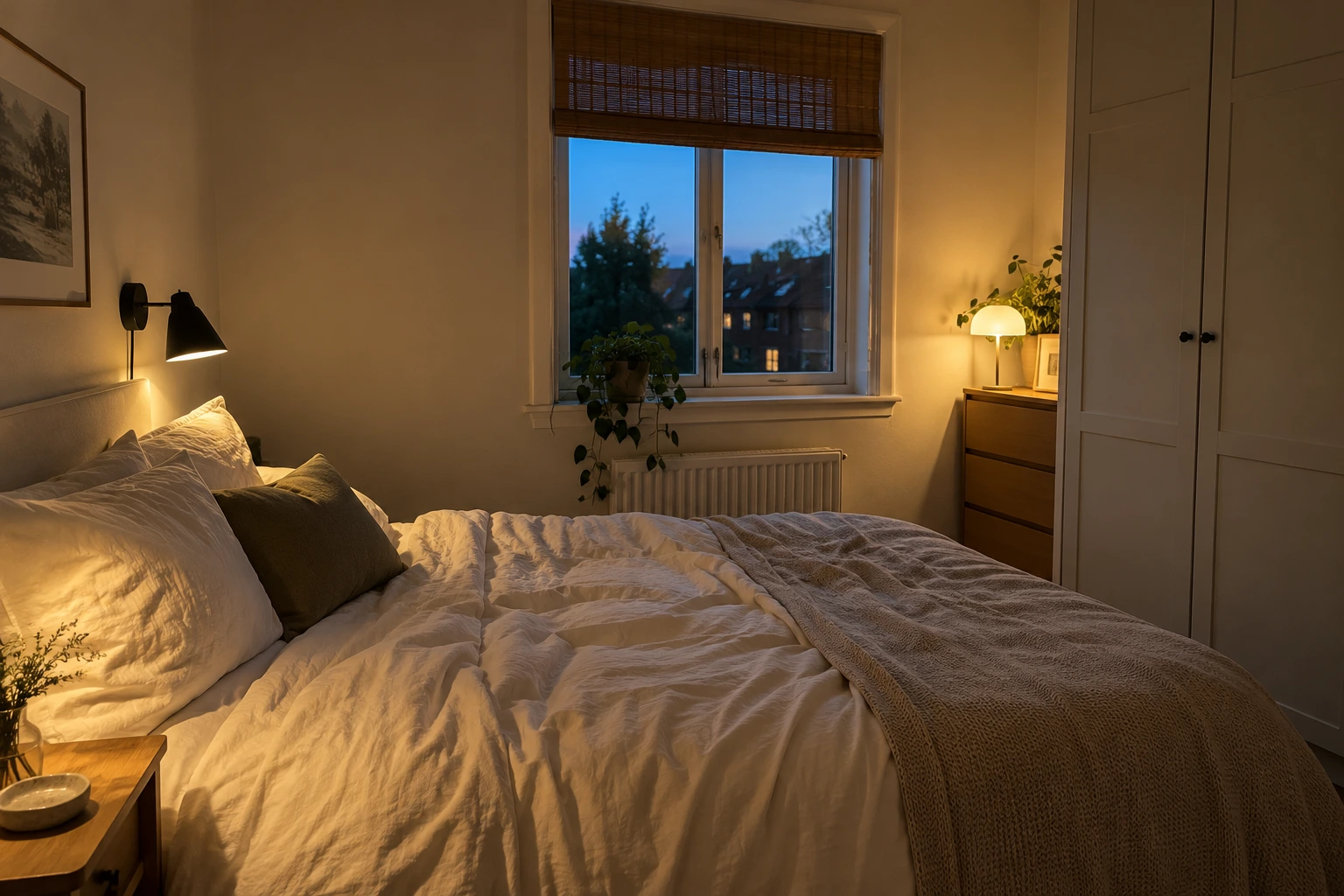
Lights near the bed and wardrobe make reading and getting dressed easier. One ceiling fixture can leave the center bright while the edges disappear into shadow.
A wall-mounted reading light frees space on a small nightstand. A compact lamp works well when there’s enough tabletop left for everyday essentials.
A reading light should brighten the page, while a light near the wardrobe helps you see your clothes. Softer lighting works well when you’re relaxing before bed.
A lamp on an existing dresser or shelf can brighten a dark corner without taking up more floor space.
Separate lights let you adjust the brightness for what you’re doing. Our bedroom lighting guide explains how general, reading, and softer accent lighting work together.
8. Storage That Doesn’t Need Another Cabinet
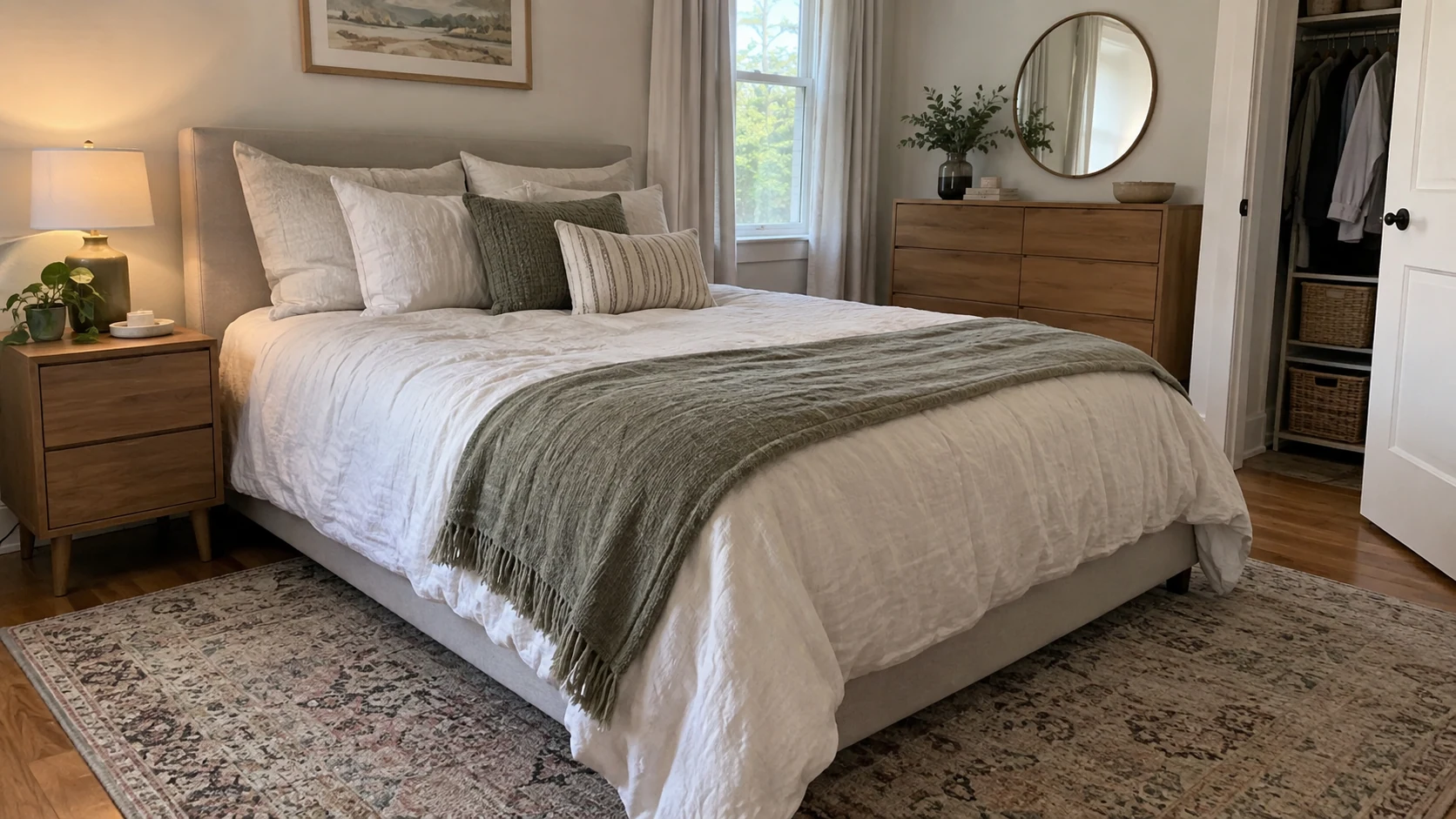
Better use of your closet and the space under the bed may free you from needing another cabinet.
A bedroom can become crowded one purchase at a time: a small cabinet for bedding, a rack for clothes, a basket for everything else. Eventually, the storage occupies the space you wanted to reclaim.
The Space Beneath the Bed Already Has Potential
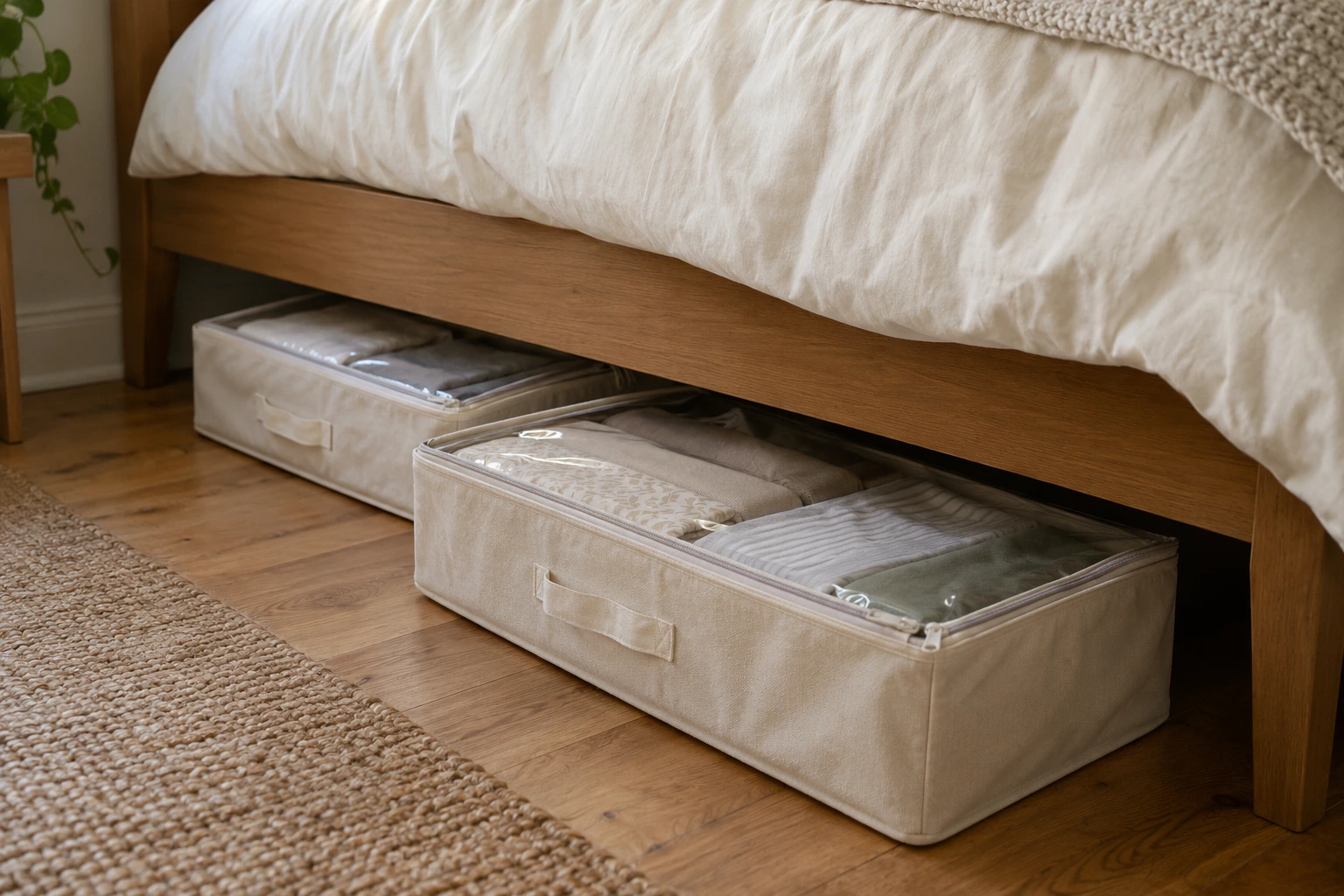
Under-bed containers are useful for spare linens and seasonal clothes when the bed has sufficient clearance.
The StorageWorks Under-Bed Storage Containers have a low, 6-inch profile and clear lids. Folded sheets or seasonal clothing stay grouped together, and the visible contents make finding the right container easier.
The bed needs enough space underneath for the 6-inch-high containers to slide in and out. Clear lids let you find the spare pillowcases without opening every box.
Frequently used clothes still belong within easy reach. Occasional items can take the less convenient storage spots.
Open Shelves With a Little Empty Space
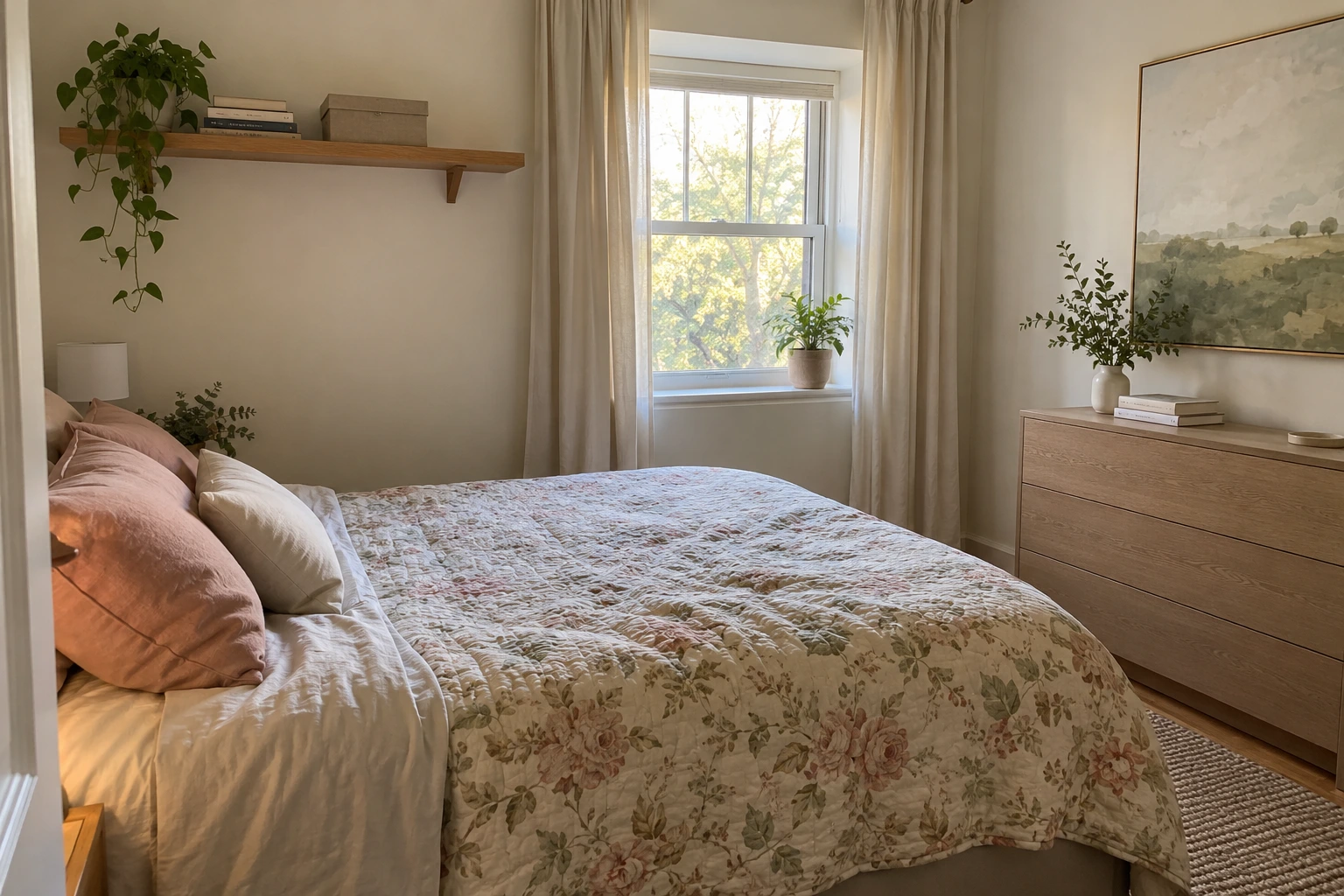
Open shelves look tidier with a few books, decorations, and storage boxes instead of lots of loose items.
A row of books, a framed photograph, and one storage box can look complete. Loose cables, toiletries, receipts, and several unrelated baskets create a much busier view.
Closed drawers are useful for those smaller belongings. Display space can stay reserved for the things you enjoy seeing.
Tall freestanding storage should also be securely anchored, particularly in a room where drawers are opened frequently.
9. A Rug That Reaches Beyond the Bed
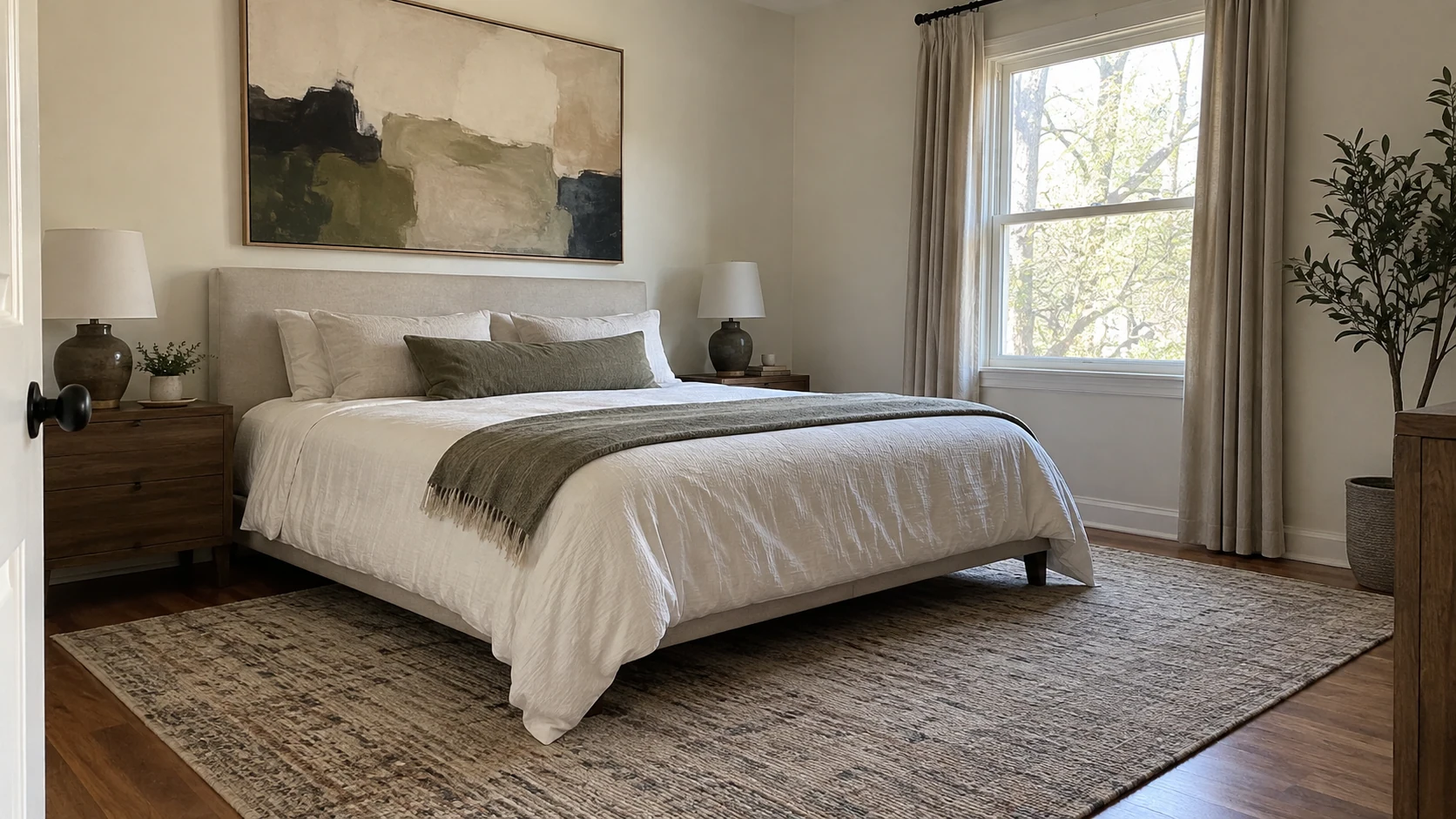
A rug looks more proportionate when it extends beyond the sides and foot of the bed. A small rug beside a large bed can look out of place.
The VECARF Beige Vintage Medallion Rug has an 8-by-10-foot footprint, a low pile, and a faded decorative pattern. It brings detail across the floor without relying on a thick, fluffy surface.
That size works where the room has space for a broad rug beneath the bed. A position under the lower portion can leave more rug visible along the sides and at the foot.
The beige tones also go well with cream bedding, light wood, and warm neutral curtains.
For tighter layouts, bedside runners offer another arrangement. The rug should suit the bed’s size and still allow doors to open freely.
Our rug size guide has more placement examples.
10. One Feature Worth Looking At
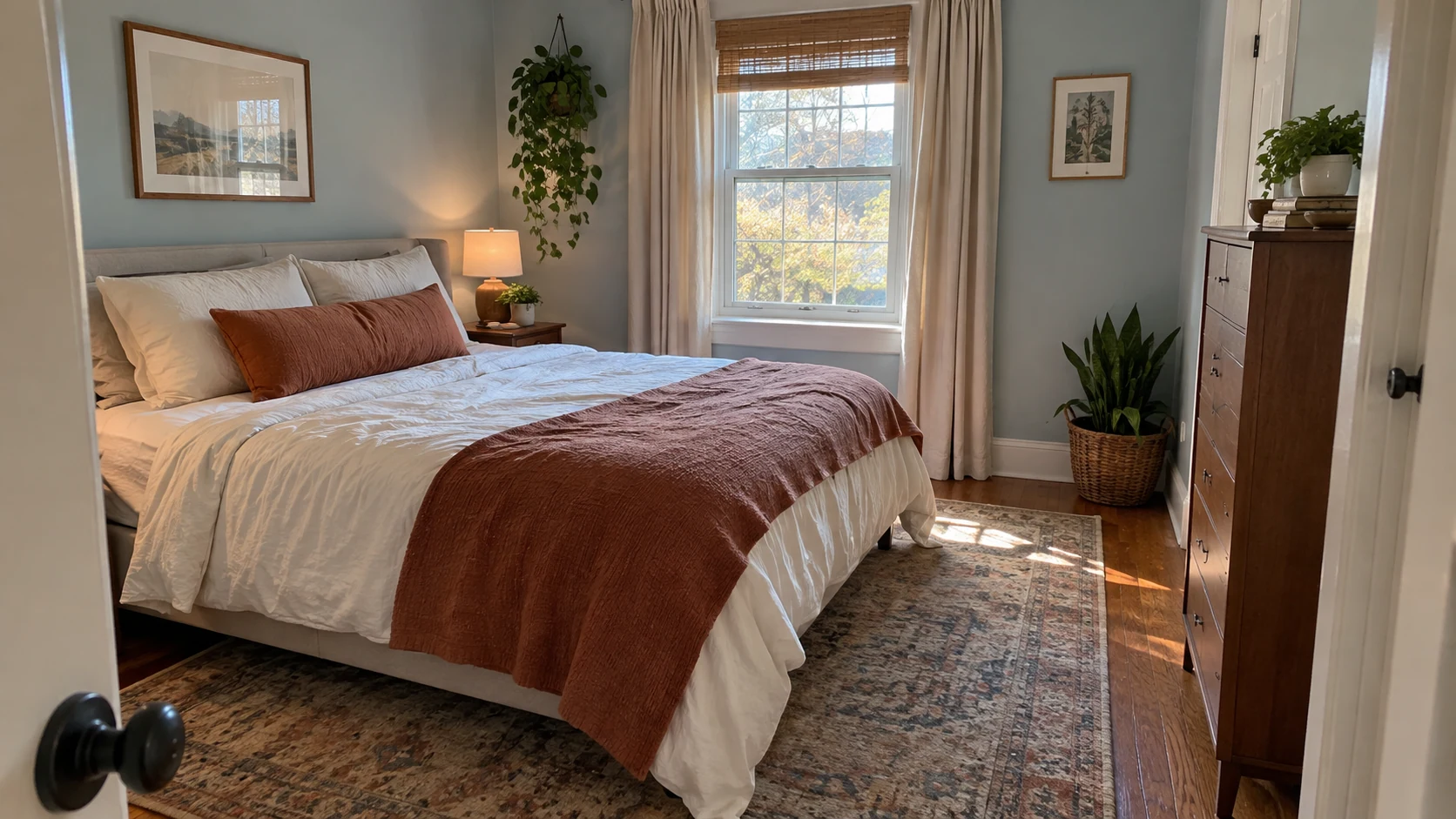
A small bedroom can have personality without every surface competing for attention. One artwork, headboard, or patterned textile can carry much of the decorative interest.
That might be a landscape above the dresser, a curved upholstered headboard, or a favorite floral quilt. Simpler colors and fewer decorations around it help it stand out.
Artwork That Belongs Above the Furniture
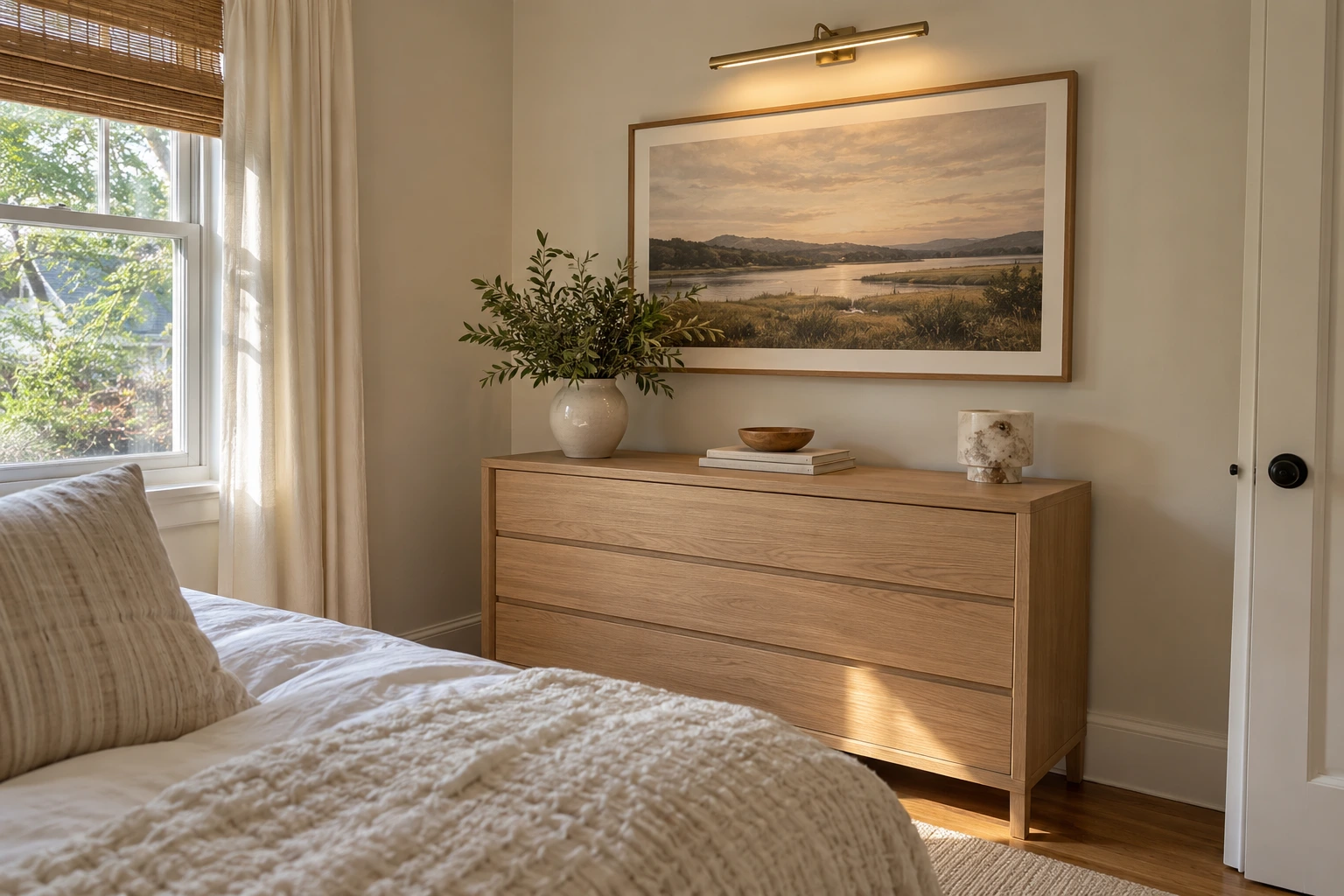
Artwork feels more connected when its size and position relate to the furniture beneath it.
A small picture hung high above a wide dresser can look too small for the space. A larger print or a group of photographs hung closer together usually looks more balanced.
The EZVALO 16-Inch Rechargeable Picture Light adds illumination above that arrangement without occupying a bedside or dresser surface. Its dimming controls and adjustable color temperature let the artwork remain visible in a softer evening setting.
It works naturally as accent lighting over a favorite print, with a separate reading light where you settle down with a book.
Pattern Paired With Plain Fabrics
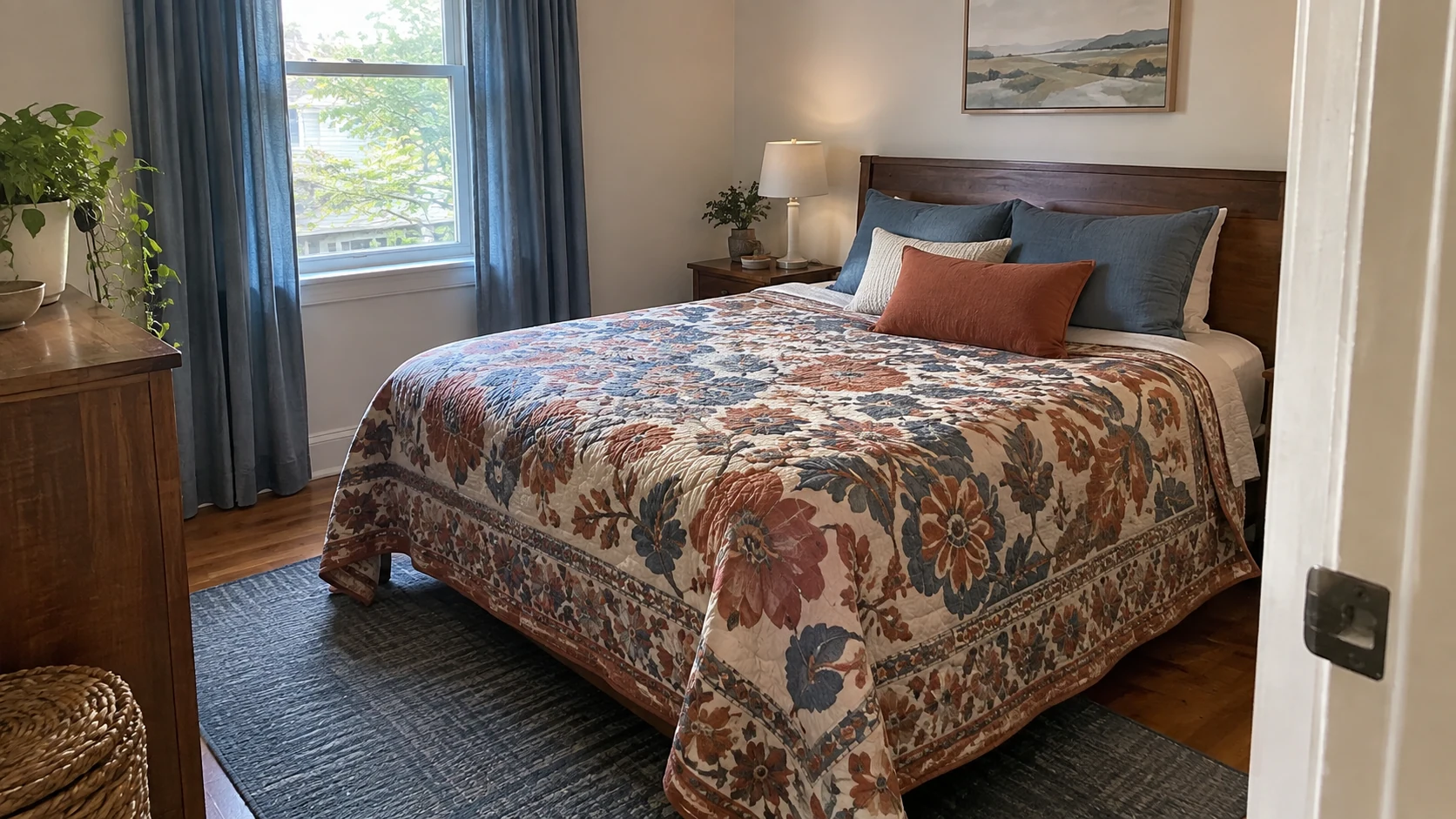
A patterned piece is easier to work into a small bedroom when its colors appear elsewhere.
A quilt with cream, sage, and muted pink can connect to cream curtains and a sage cushion. Plain sheets keep the bed from looking too busy.
The same idea works with wallpaper or a patterned headboard. A few repeated shades help the room feel coordinated, even when the main pattern has plenty of character.
A favorite pattern stands out more when the rest of the room has fewer competing prints and decorations.
11. A Bed That Can Replace the Linen Cabinet
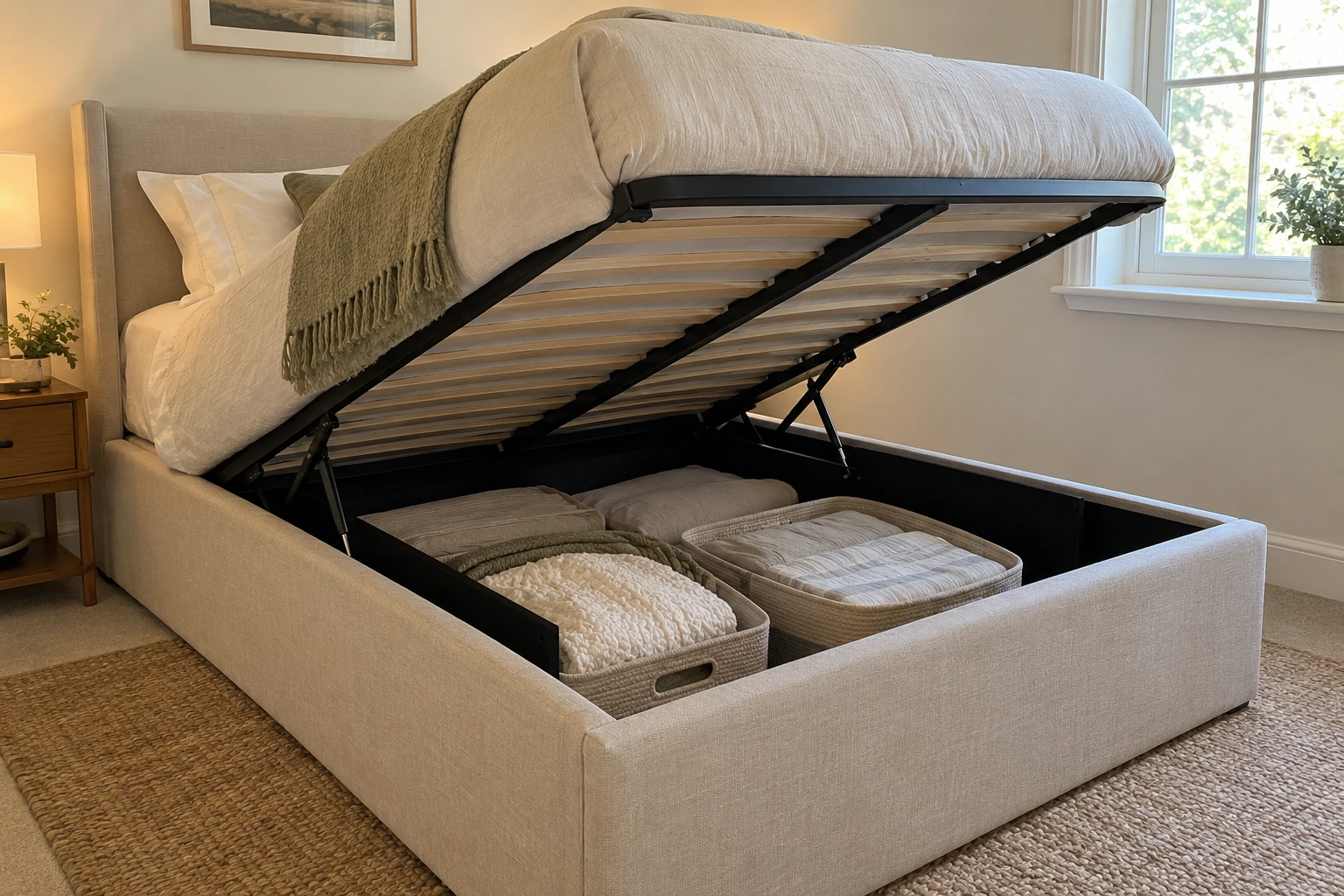
Multipurpose furniture saves the most room when another piece becomes unnecessary.
The Allewie Queen Lift-Up Storage Bed combines a light beige upholstered frame and wingback headboard with storage beneath the mattress platform.
Its hydraulic lift provides access from above, so storage drawers don’t need to slide into the side walkways. That makes it useful for spare bedding, seasonal clothes, or belongings currently filling a separate cabinet.
A storage bed still occupies floor space, of course. Its advantage is the opportunity to remove another storage unit from the room.
Other combinations can help too. A small dresser can serve as a bedside table, and a shallow desk can double as a dressing table when toiletries have a drawer of their own.
Our storage bed vs regular bed guide explains which arrangement suits different storage needs.
12. The Fix Depends on What Feels Wrong
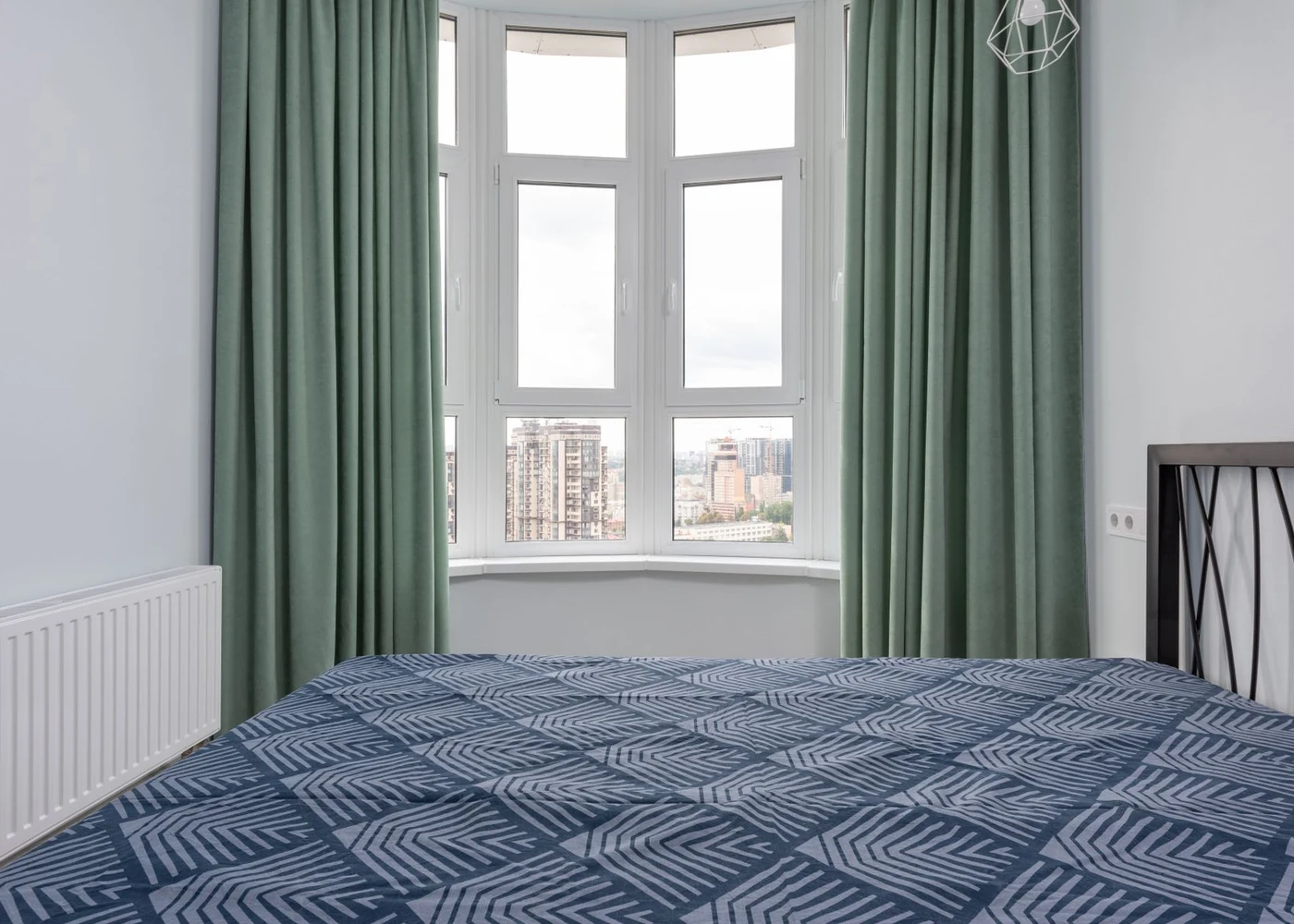
The most useful change addresses the problem you notice during an ordinary day. A bedroom that feels dark needs different help from one that leaves no room to open the dresser.
| What feels wrong | The most useful adjustment |
|---|---|
| The room feels narrow | A clear walkway with shallower furniture beside it. |
| The ceiling feels low | Higher curtains, lower furniture, and similar wall and ceiling colors. |
| The room feels dark | More exposed window glass and lighting in the areas daylight misses. |
| Storage fills every corner | Better closet organization and fewer separate storage units. |
| The bedroom looks busy | Related colors across large surfaces and less clutter on display. |
| Two sleepers struggle for bedside space | Compact tables or floating storage with clear access beside the bed. |
For separate sleeping spaces, our guide to two beds in a small bedroom focuses on layouts that make both beds easier to use.
A room feels better when the daily annoyance disappears. Sometimes that takes a new piece of furniture. Sometimes it takes moving the laundry basket.
The Small Mistakes That Bring the Clutter Back
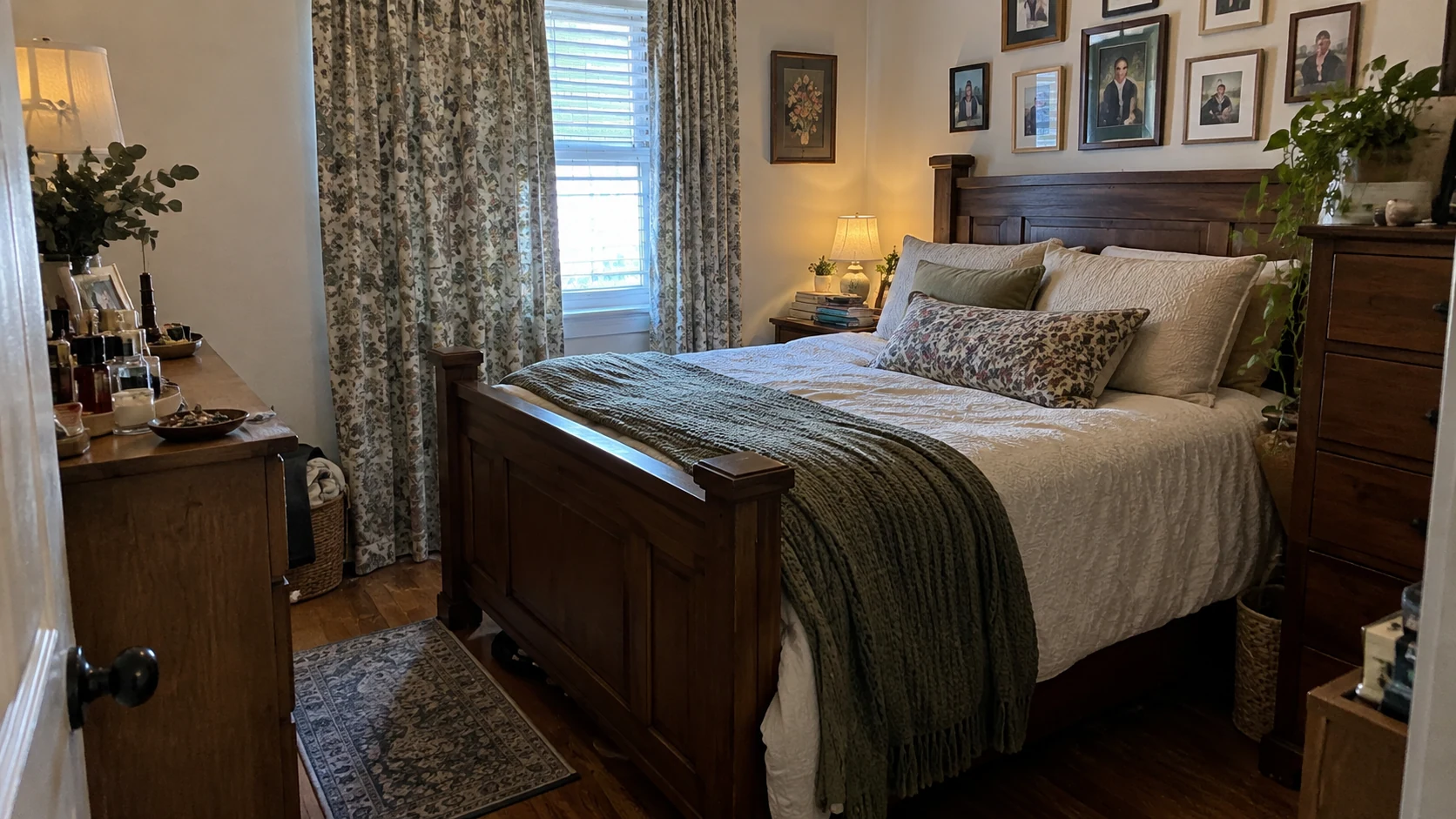
Several small pieces of furniture and piles of belongings can make a room harder to move around and look more cluttered.
These are the usual culprits:
- Curtains covering much of the glass even while open.
- A bed frame or dresser obstructing doors and drawers.
- Several little storage units doing the job of one useful piece.
- A mirror reflecting the busiest corner.
- Loose belongings beneath raised furniture.
- Small rugs scattered across the floor.
- Every shelf and tabletop filled.
- New furniture arriving before an old piece leaves.
One problem is enough to tackle at a time. The problem that bothers you every morning is usually the most useful one to fix.
A 20-Minute Reset Before Another Purchase
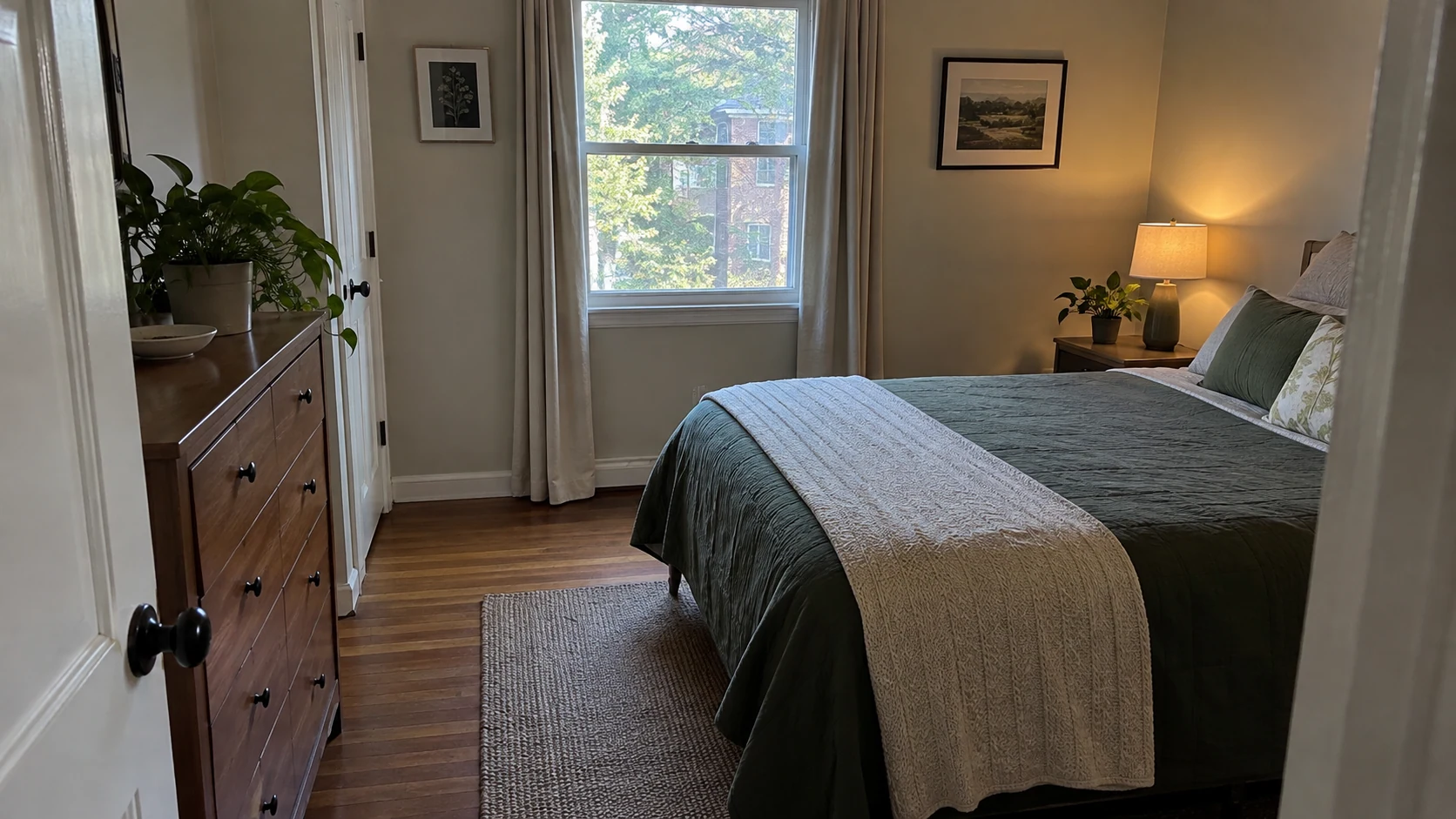
A few changes to the existing arrangement can reveal whether the bedroom needs anything new.
- The walkway is clear. Bags, shoes, and baskets are out of the route to the bed and closet.
- One optional item is elsewhere. The spare chair or little table is in another room for a few days.
- The curtains are fully open. As much glass as possible is visible.
- Bedside essentials have a place. Tonight’s book, glasses, and phone are easy to reach.
- Loose floor storage is contained. Spare bedding and seasonal items are grouped together.
- There’s enough light where you read or get dressed. An existing lamp may work better in a different position.
The next morning will tell you plenty. Easier access to clothes, fewer things underfoot, and somewhere convenient for your coffee are improvements worth keeping.
Small Bedroom Questions, Answered
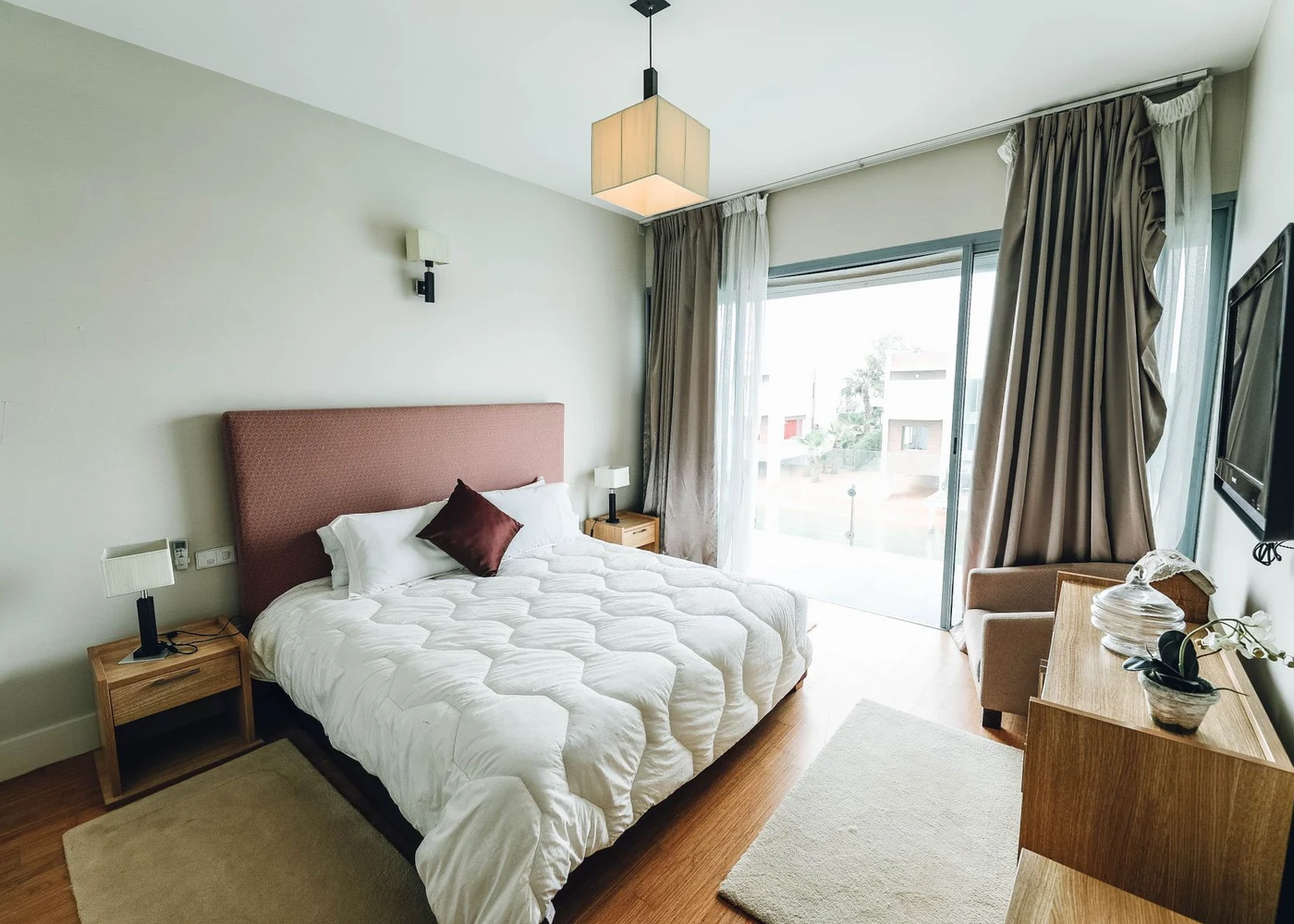
Furniture placement, lighting, and tidy storage all help a small bedroom feel more spacious. These details help narrow down the choices.
Which Colors Help a Small Bedroom Look Bigger?
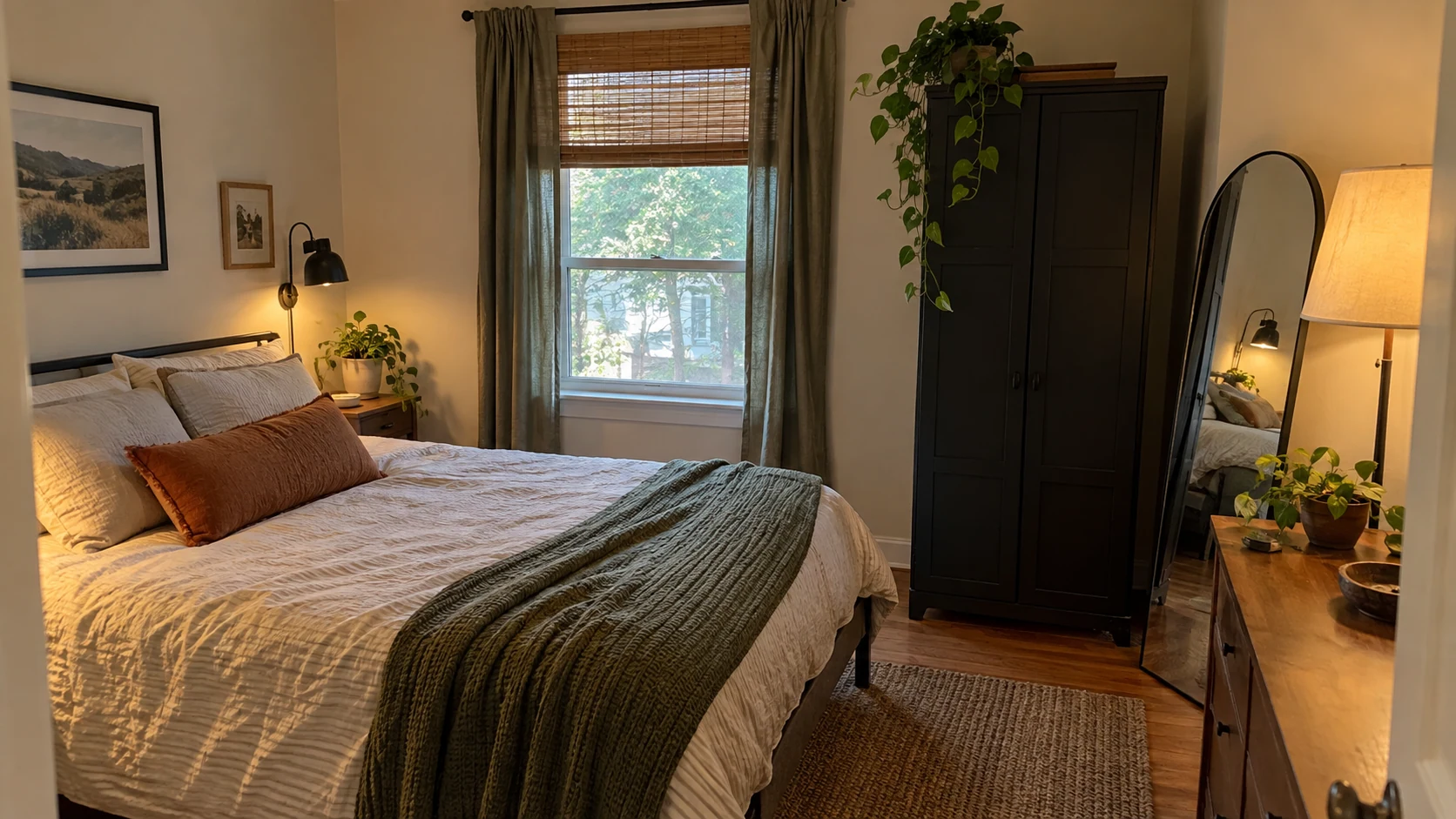
Soft white, pale blue, light sage, and warm neutrals can support a more open appearance. Related colors across curtains, bedding, and rugs help the room feel connected, while texture adds variety.
Can Dark Paint Work in a Small Bedroom?
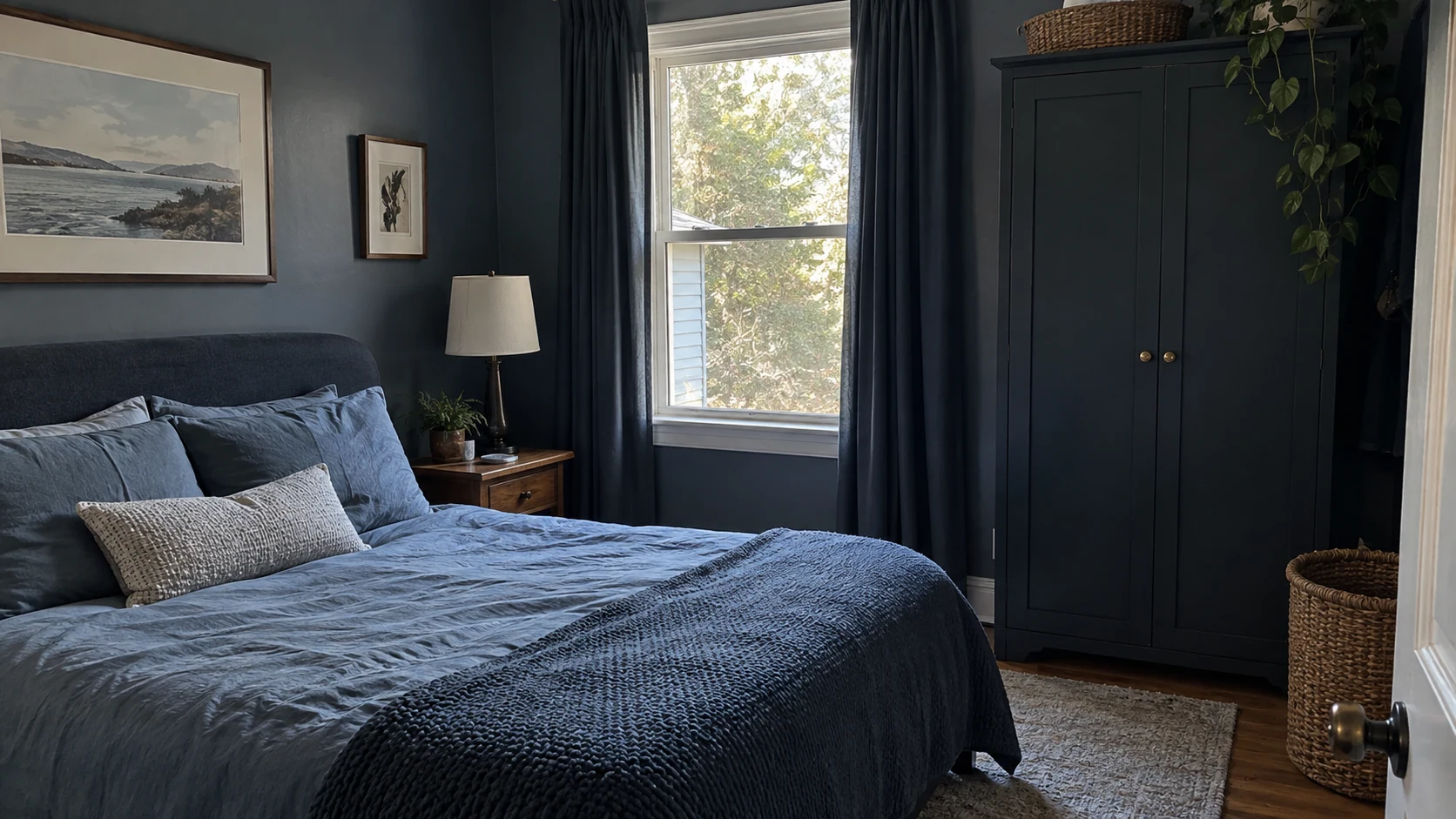
Yes. Dark paint can make a small bedroom feel cozy, especially when the trim and large pieces of furniture are similar in color. Enough light for reading and dressing remains important. A darker scheme creates a different mood from a pale, airy one.
Where Does a Mirror Help Most?
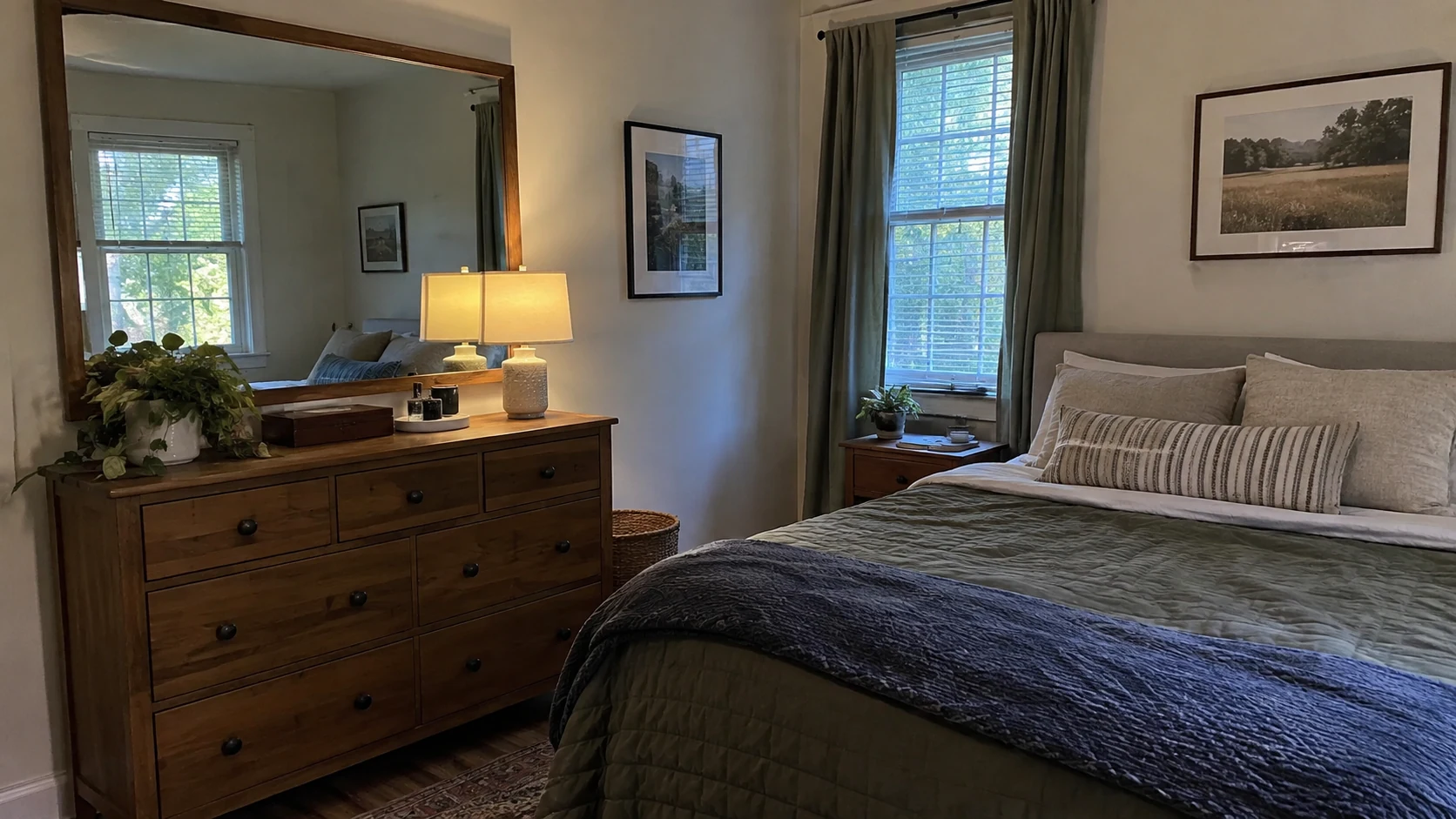
A mirror is most useful where it reflects a window or an uncluttered area. Above a dresser, near a window, or on a wardrobe door are practical positions that can preserve floor space.
Are Two Nightstands Necessary?
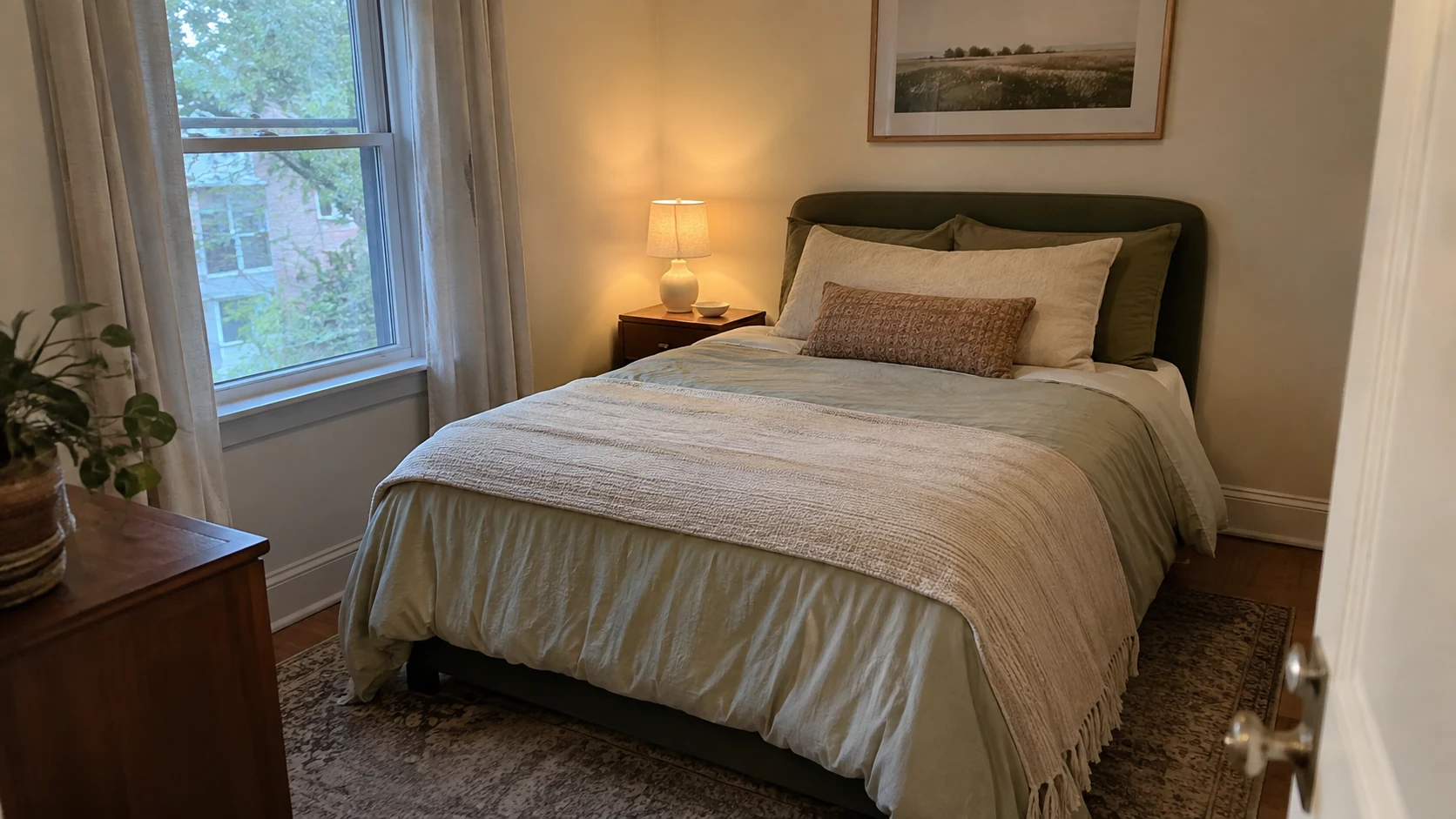
One nightstand may be plenty for a single sleeper. For two people, a compact shelf or floating drawer can provide a useful surface on the tighter side without a full floor-standing cabinet.
Is a Lower Bed Better for a Small Room?
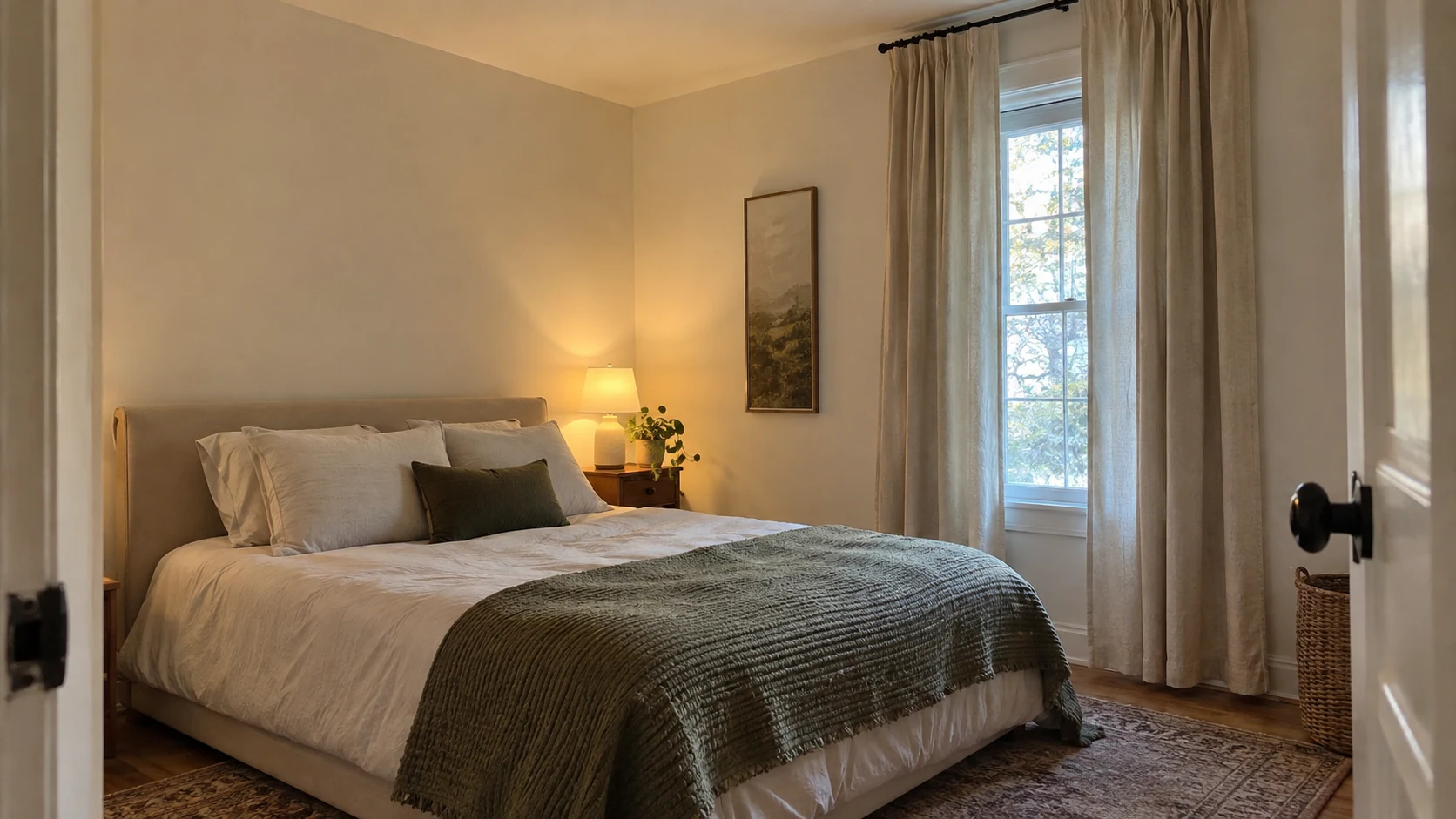
A low bed leaves more visible wall above it, which can help a low ceiling seem higher. A bed with exposed legs offers a different benefit by revealing floor beneath it. The bed should also be easy to get in and out of and provide the storage you need.
What Can Improve the Room Without Spending Anything?
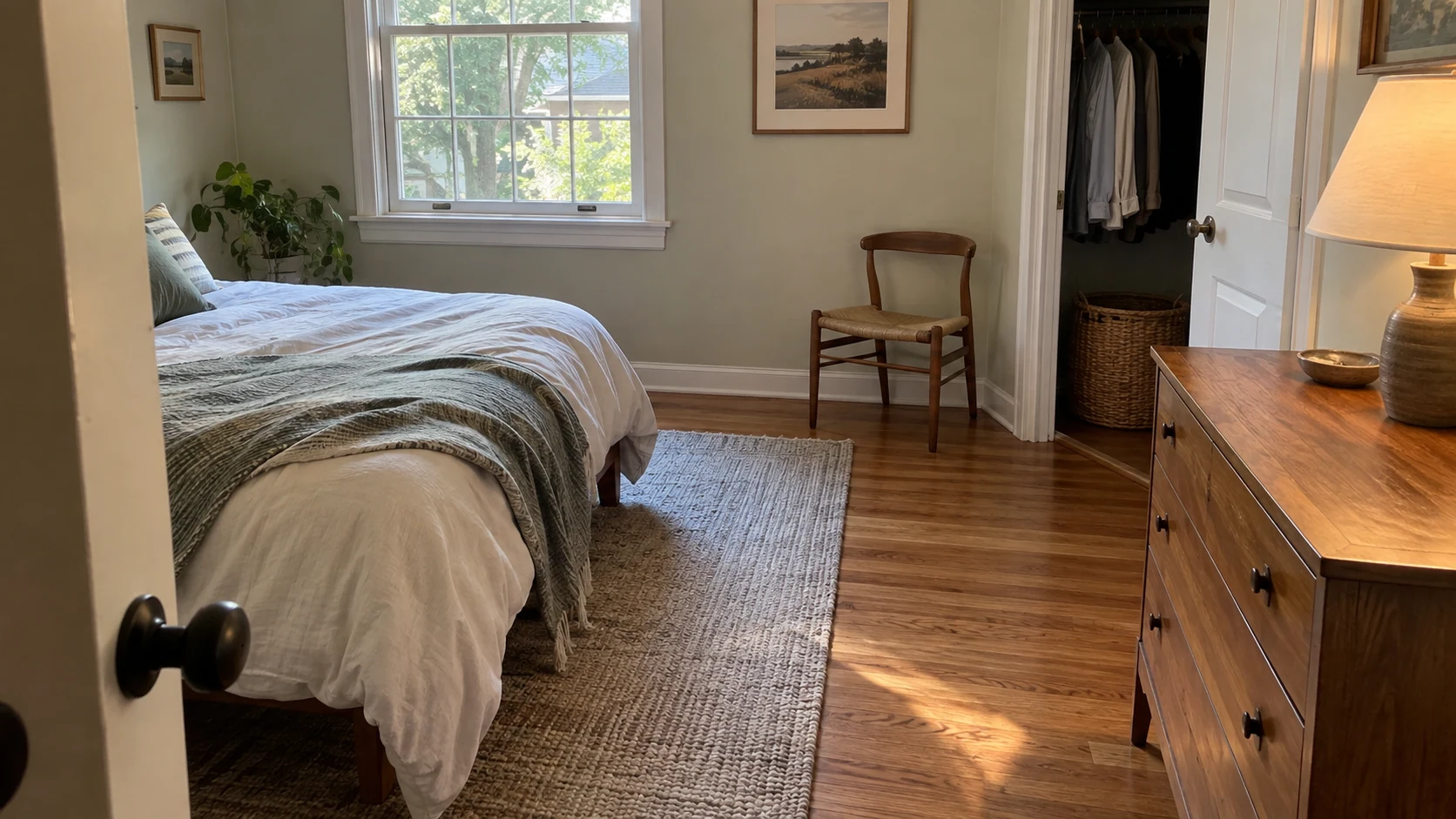
A clearer walkway, open curtains, and tidier surfaces can make a noticeable difference without a purchase. An existing mirror or lamp may also work better in a different position, and fewer extra cushions can mean less clutter on the floor at night.
Useful Finds for a Small Bedroom
 TRAHOME Arched Full-Length MirrorA full-length mirror with a narrow gold frame that can mount on the wall to save floor space.
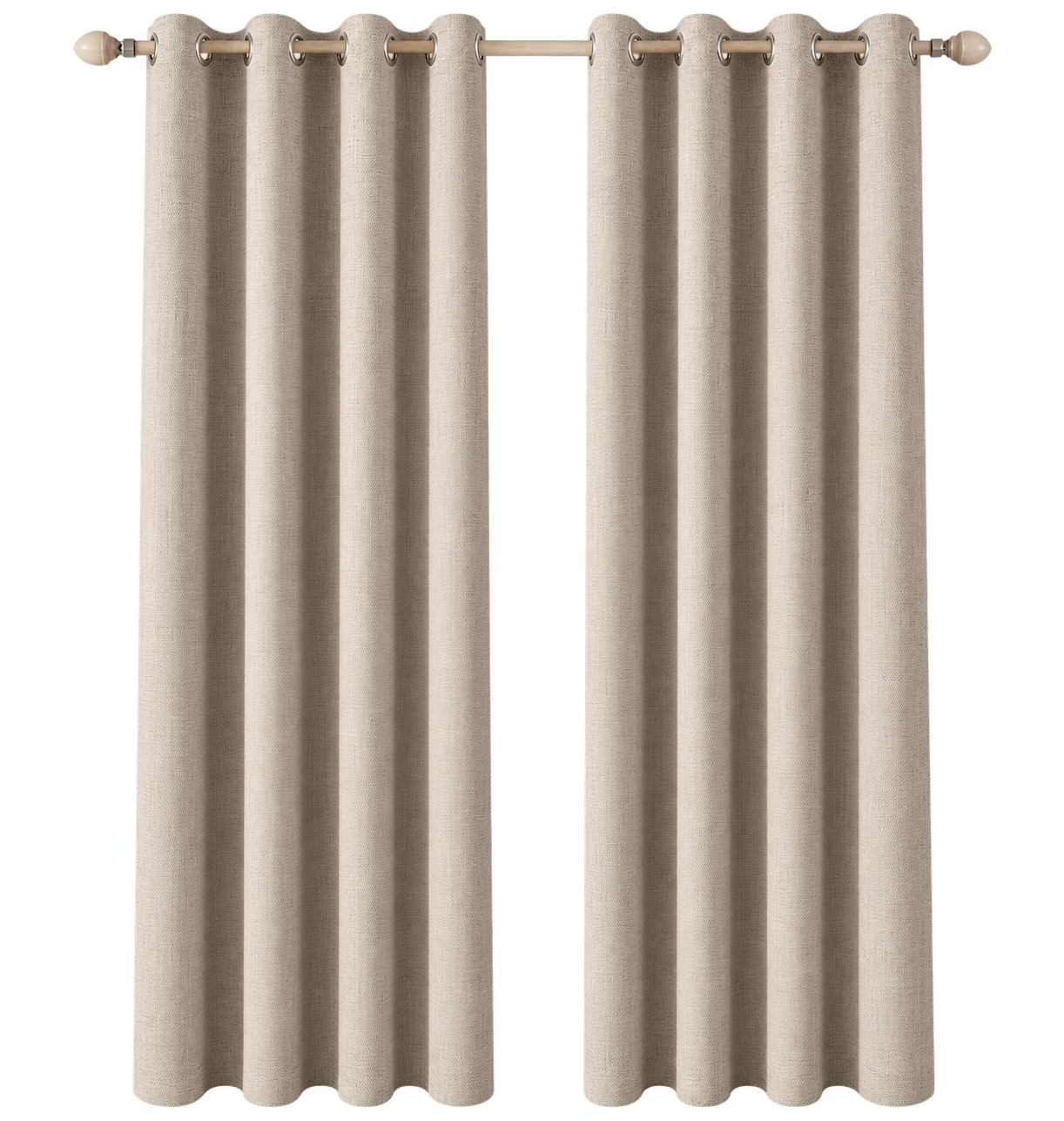 MIULEE Linen-Textured Blackout CurtainsTwo natural beige blackout panels, each 52 inches wide and 84 inches long.
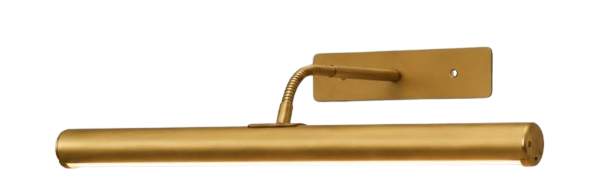 EZVALO Rechargeable Picture LightDimmable rechargeable accent lighting above artwork, with adjustable color temperature.
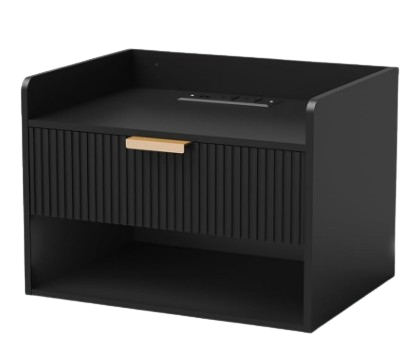 Arbuxzuy Floating Nightstand SetTwo wall-mounted units with drawers, open shelves, and charging stations.
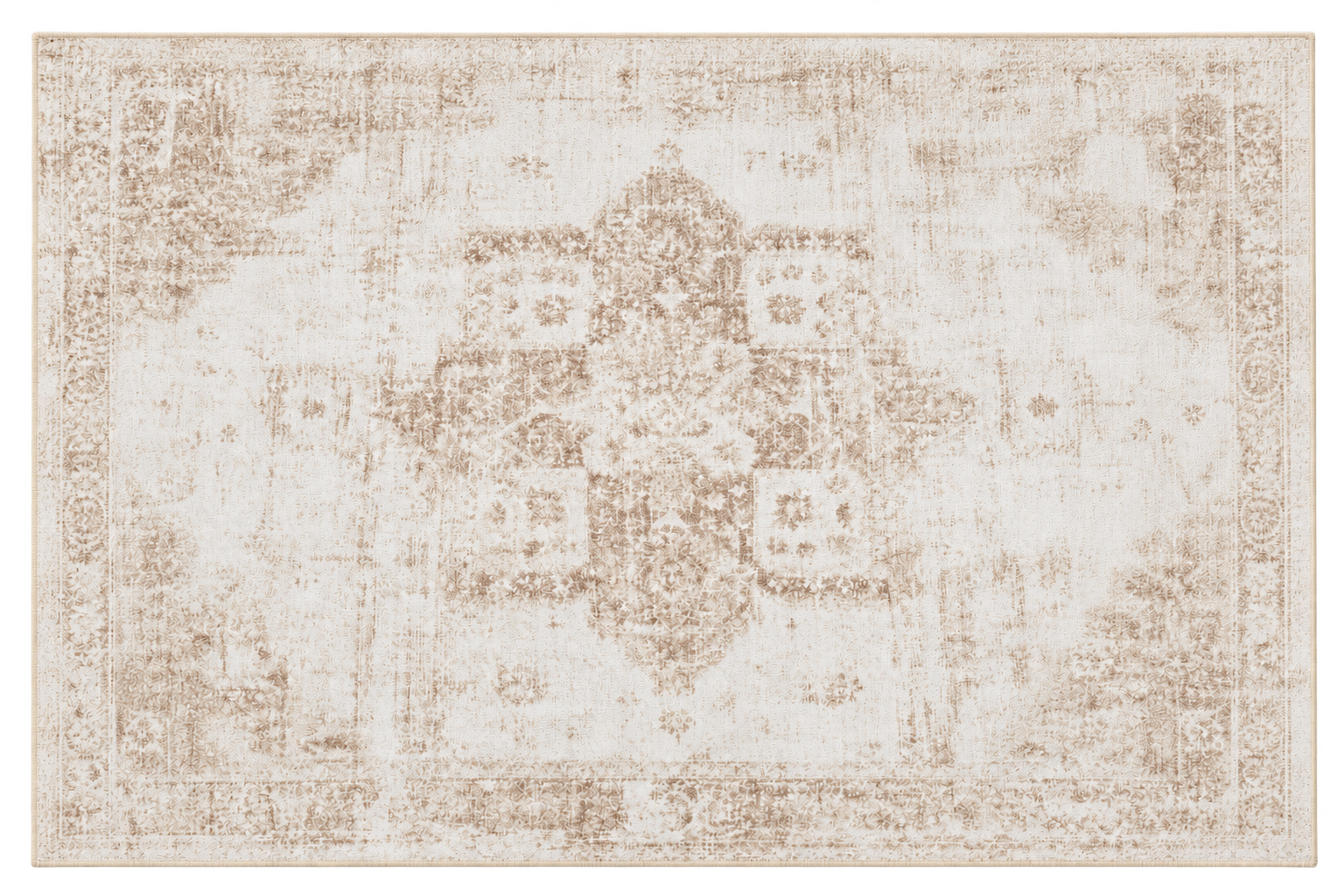 VECARF Beige Vintage Medallion RugA low-pile 8-by-10-foot beige rug with a faded decorative pattern.
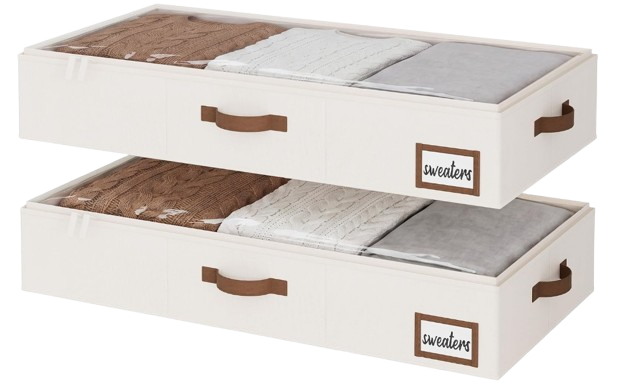 StorageWorks Under-Bed Storage ContainersSix-inch-high organizers with clear lids for linens and seasonal belongings.
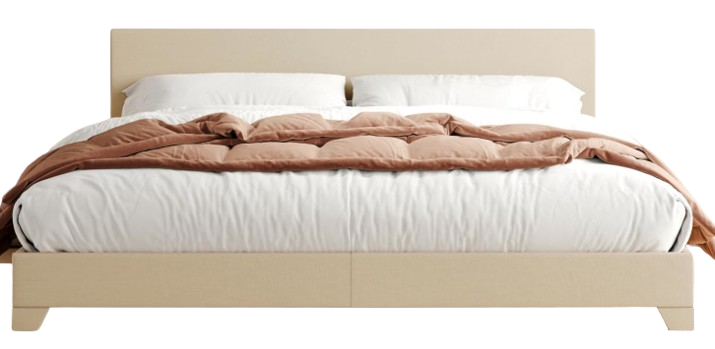 Allewie King Upholstered Bed FrameA beige king frame with an adjustable headboard and wood slat support.
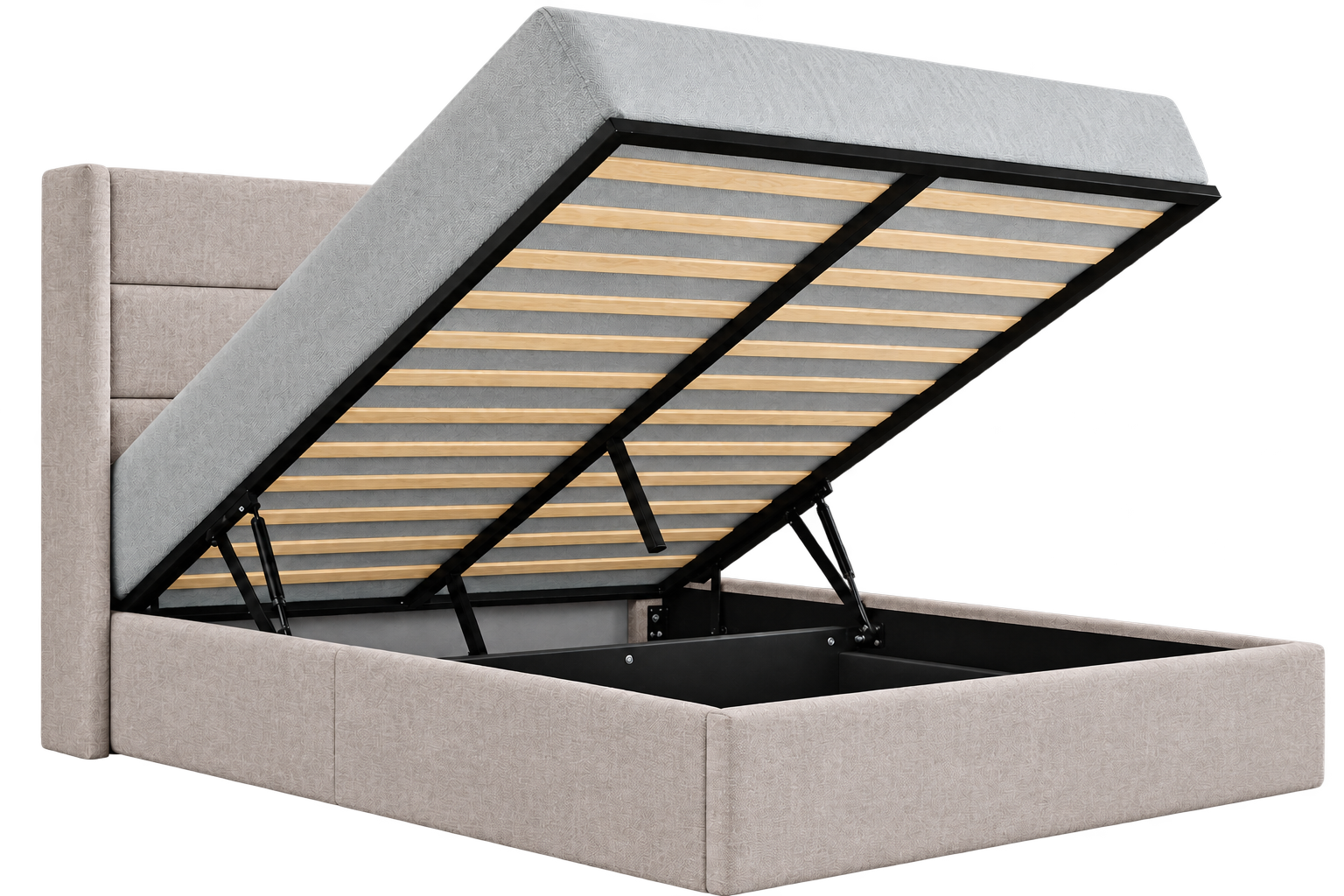 Allewie Queen Lift-Up Storage BedA light beige upholstered queen bed with hydraulic lift-up storage.