How to Remove Scratches From Laminate Flooring: What Works

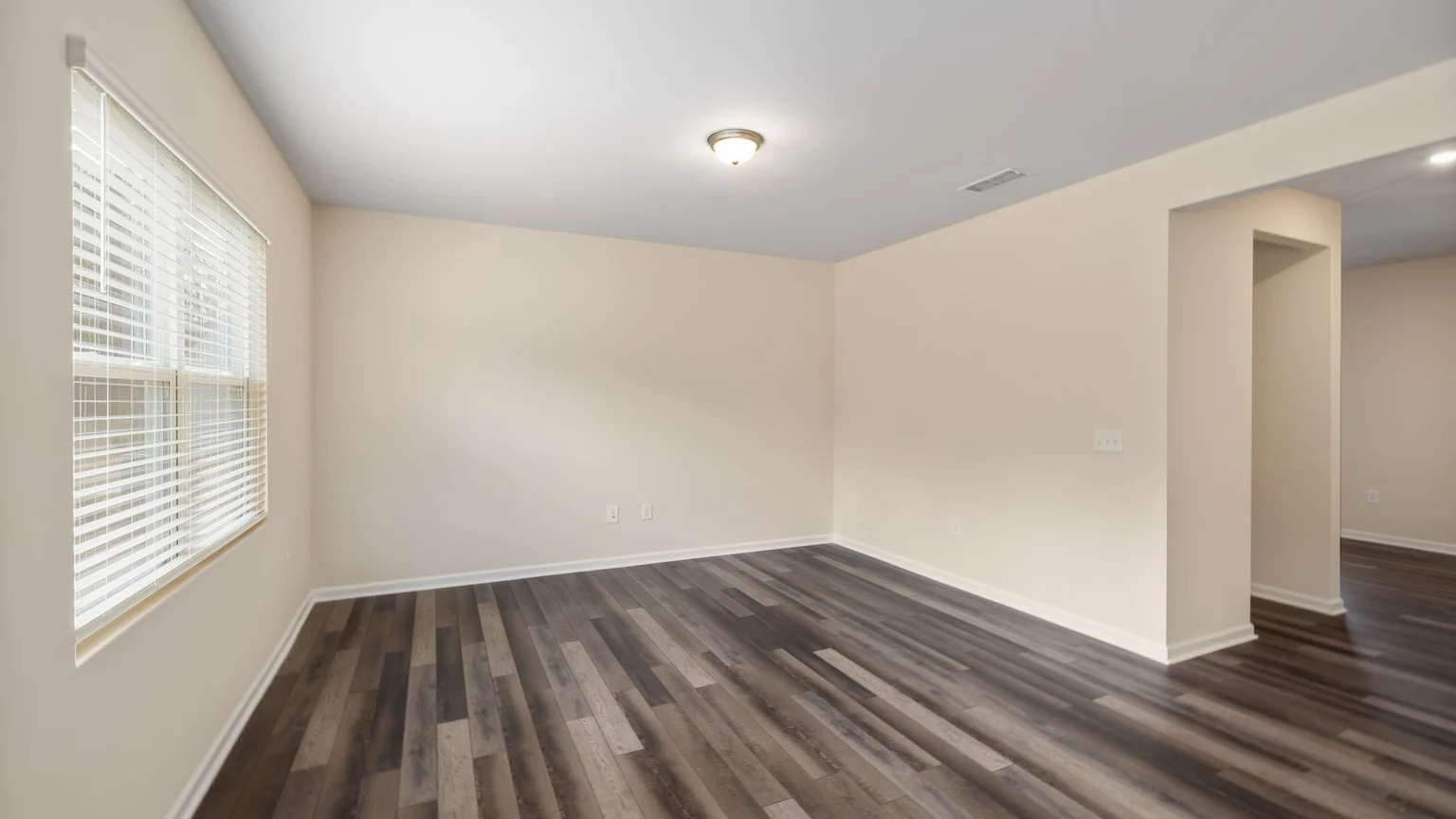
Removing scratches from laminate flooring depends on what kind of damage you have. A shoe scuff may wipe away, while a scratch with missing color or a small groove needs a different treatment, such as a matching touch-up pen or laminate repair wax.
The aim is to make the mark less noticeable without damaging the surrounding finish. Some repairs blend in well, while others leave a slight difference in color or shine.
The quick answer
- Scuff marks: Gentle cleaning may remove material left by shoes or furniture.
- Scratches with missing color: A laminate touch-up pen can disguise a pale line.
- Small grooves and chips: Laminate repair wax or putty can fill the damaged area.
- Swollen planks or broken joints: Replacement is usually the better repair.
- No sanding: Laminate has a thin decorative surface that cannot be refinished like solid wood.
Below, we’ll explain how to identify the damage, which repairs suit it, and how to avoid making a small mark worse.
1. A Scuff or a Scratch? The Difference Changes the Fix
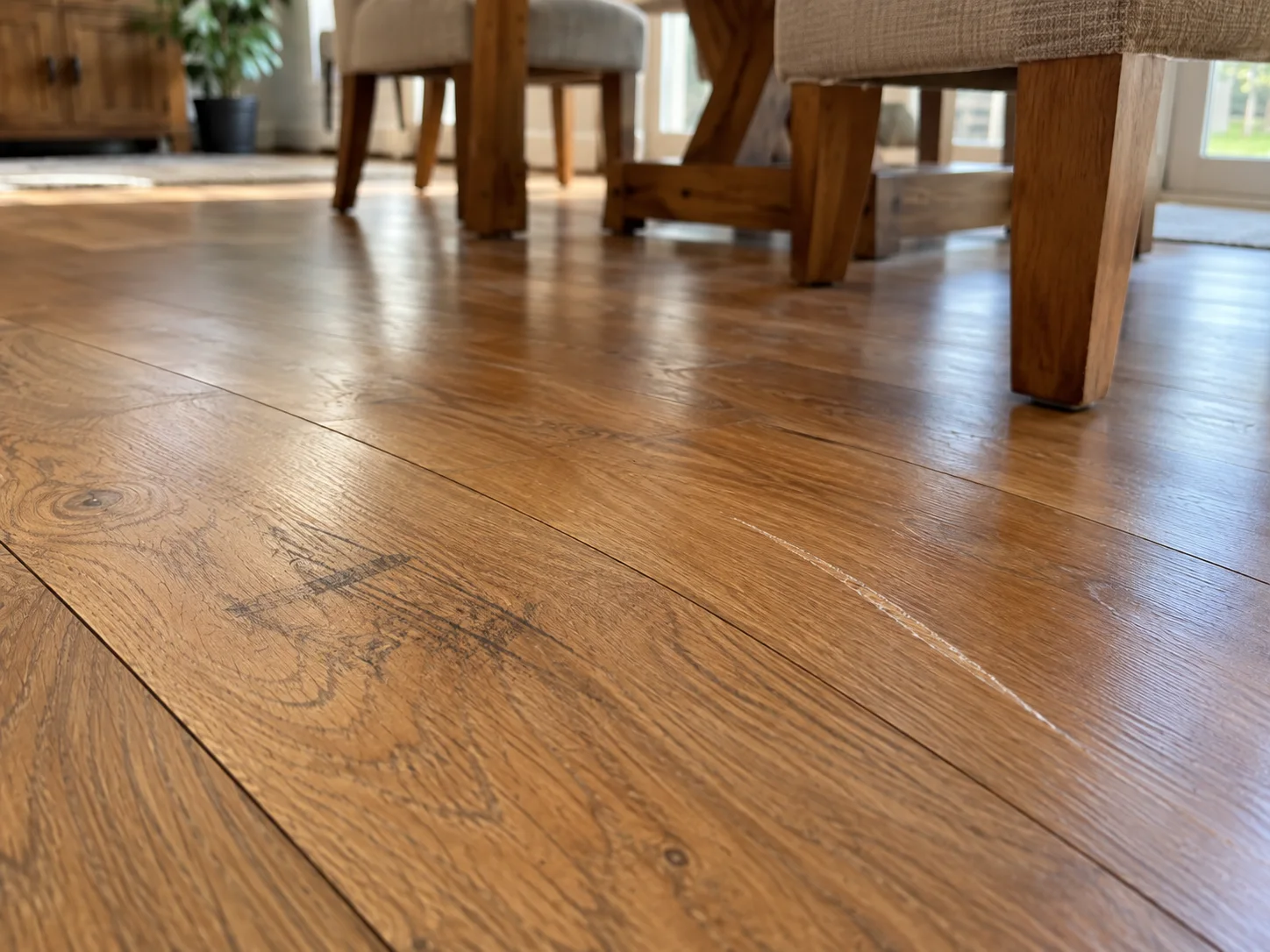
A scuff is often material sitting on the floor, while a scratch is damage to the surface itself.
For example, a rubber sole might leave a dark streak without cutting into the plank. A chair dragged across grit can leave a groove or scrape away some of the printed color.
Cleaning helps you tell the difference.
| What you see | What it may be | The most useful approach |
|---|---|---|
| A dark streak that lifts when wiped | Transferred rubber or another surface mark | Gentle cleaning |
| A fine line visible mainly at an angle | Damage to the clear surface finish | Clean it gently; avoid adding color if none is missing |
| A pale line where the wood pattern has faded | A scratch through the printed color | A matching laminate touch-up pen |
| A small groove, nick, or chip | Missing material | Laminate repair wax or putty |
| A swollen edge, loose joint, or large damaged area | Damage beyond a small surface repair | Plank replacement |
You can lightly run a fingernail across a clean mark to feel whether there is a groove. This gives you another clue, although a very shallow scratch may still damage the finish.
2. A Clean, Dry Surface Makes the Damage Easier to See
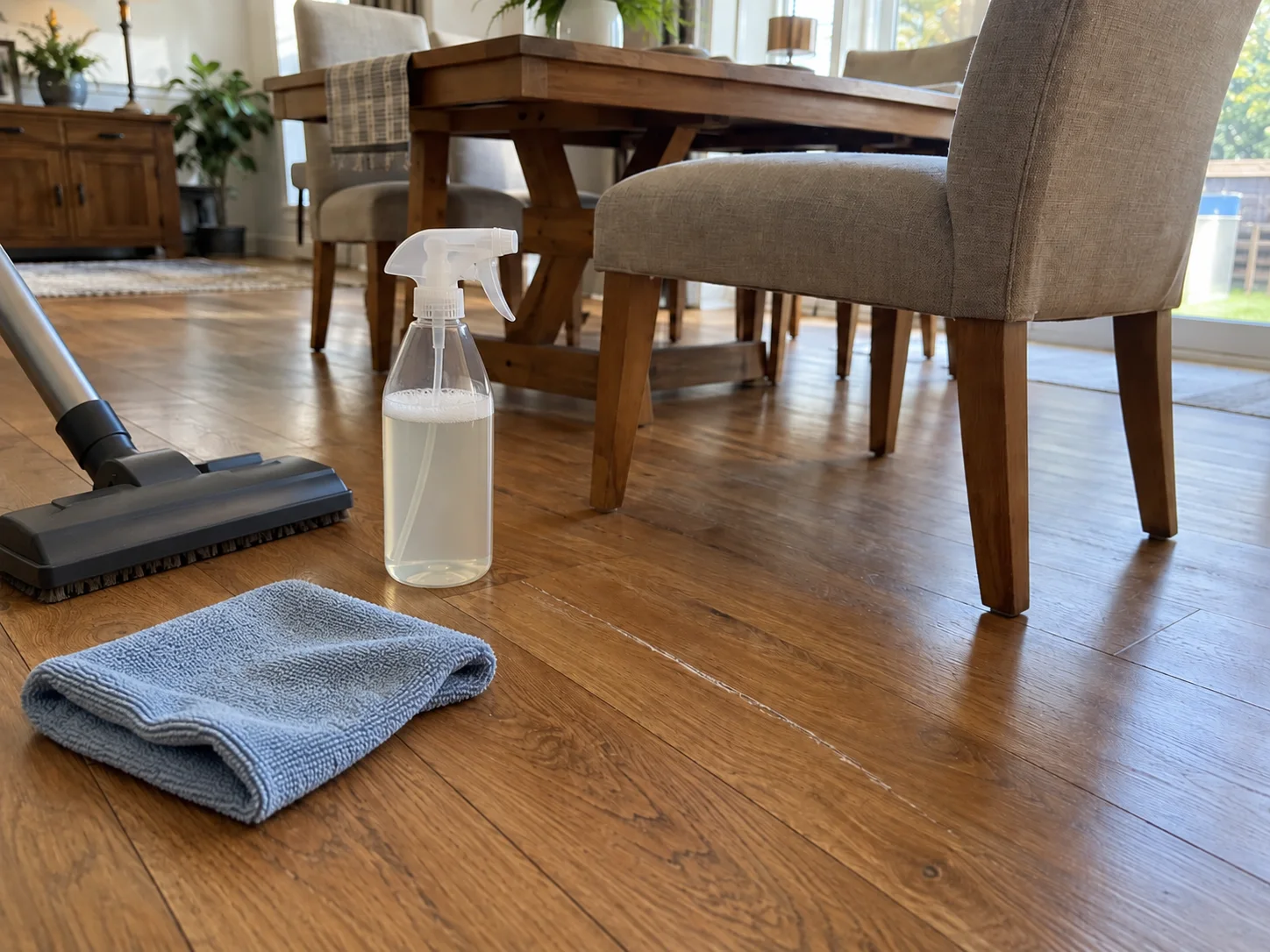
Loose grit needs to come off before you wipe the scratch. A soft brush or a vacuum’s hard-floor attachment removes particles that could scratch the surrounding finish.
The MagicFiber Microfiber Cleaning Cloths are useful for wiping a small area and drying it afterward. A clean cloth matters more than firm pressure, so replace it if it picks up grit.
If your home has different flooring types, the Bona Hardwood Floor Cleaner belongs with your wood-floor cleaning supplies. For the laminate repair described here, Bona’s Hard-Surface Cleaner is the formula intended for laminate.
Whichever area you are cleaning, remember that a cleaner removes dirt and transferred marks. It does not fill a groove or replace missing color.
3. Pale Scratches Can Often Be Disguised With a Touch-Up Pen
A touch-up marker helps disguise missing color, but it will not level a groove.
The DAIXISM Furniture Repair Kit includes six markers, six wax sticks, and a sharpener. Its wood shades offer options for touching up scratched wooden furniture, such as the chair or table beside the damaged floor.
For the laminate itself, the CalFlor ScratchCure Repair Pen is specifically intended for laminate and other listed surfaces. The two kits should not be treated as interchangeable simply because their colors look similar.
A close color match makes the biggest difference. Match the area immediately around the scratch and apply only enough pigment to reduce the pale contrast.
A Close Color Match Matters More Than the Shade Name
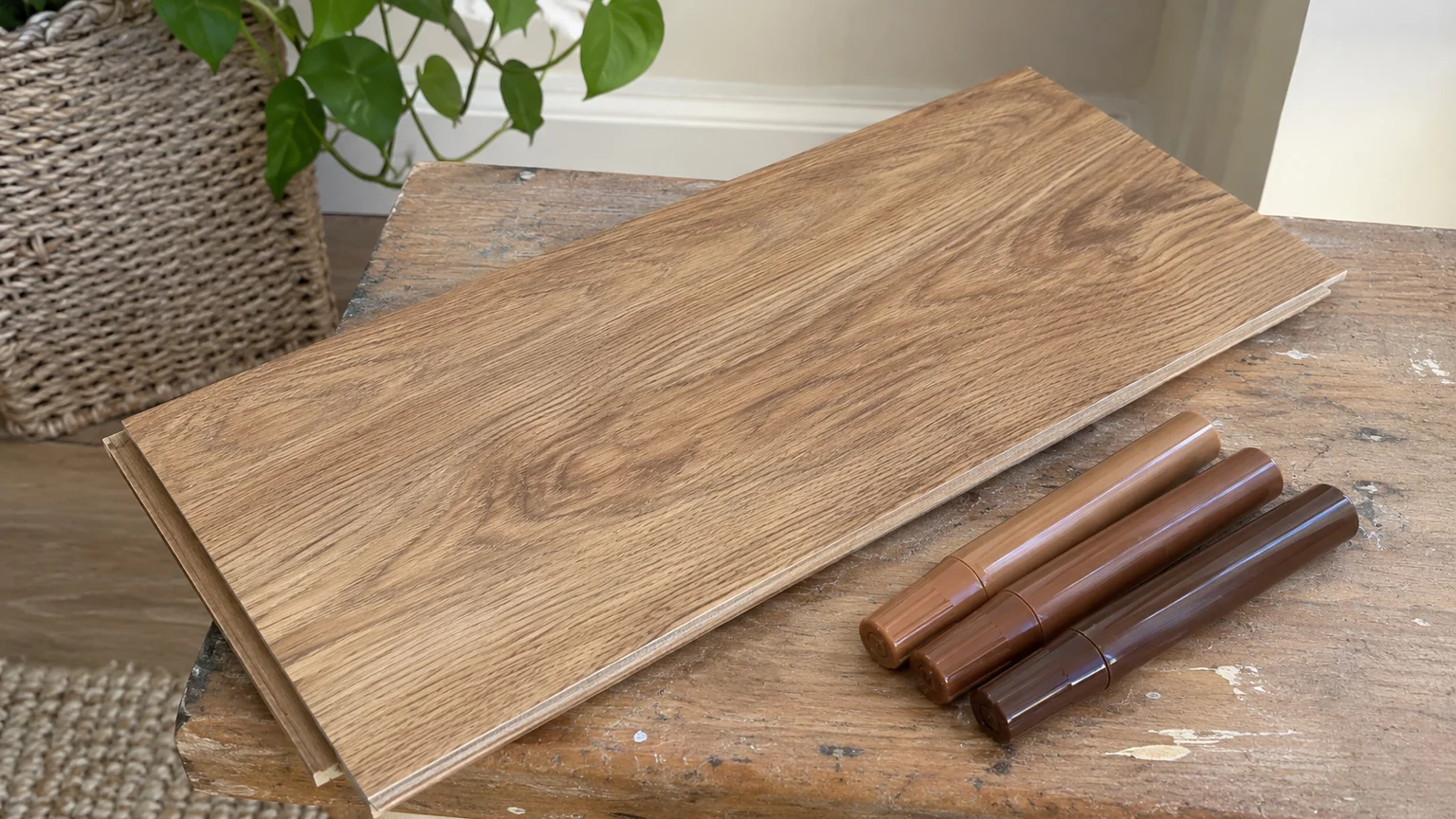
Match the color immediately beside the damage. A floor described as “oak” can contain cream, honey, brown, and gray within the same plank.
The darkest grain line is rarely the right color for the entire repair. A lighter background shade with a little darker detail usually looks more natural than one solid dark mark.
A spare plank gives you somewhere to try the color and let it dry. Without a spare, a small hidden area serves the same purpose.
A Thin Scratch Needs Only a Little Color
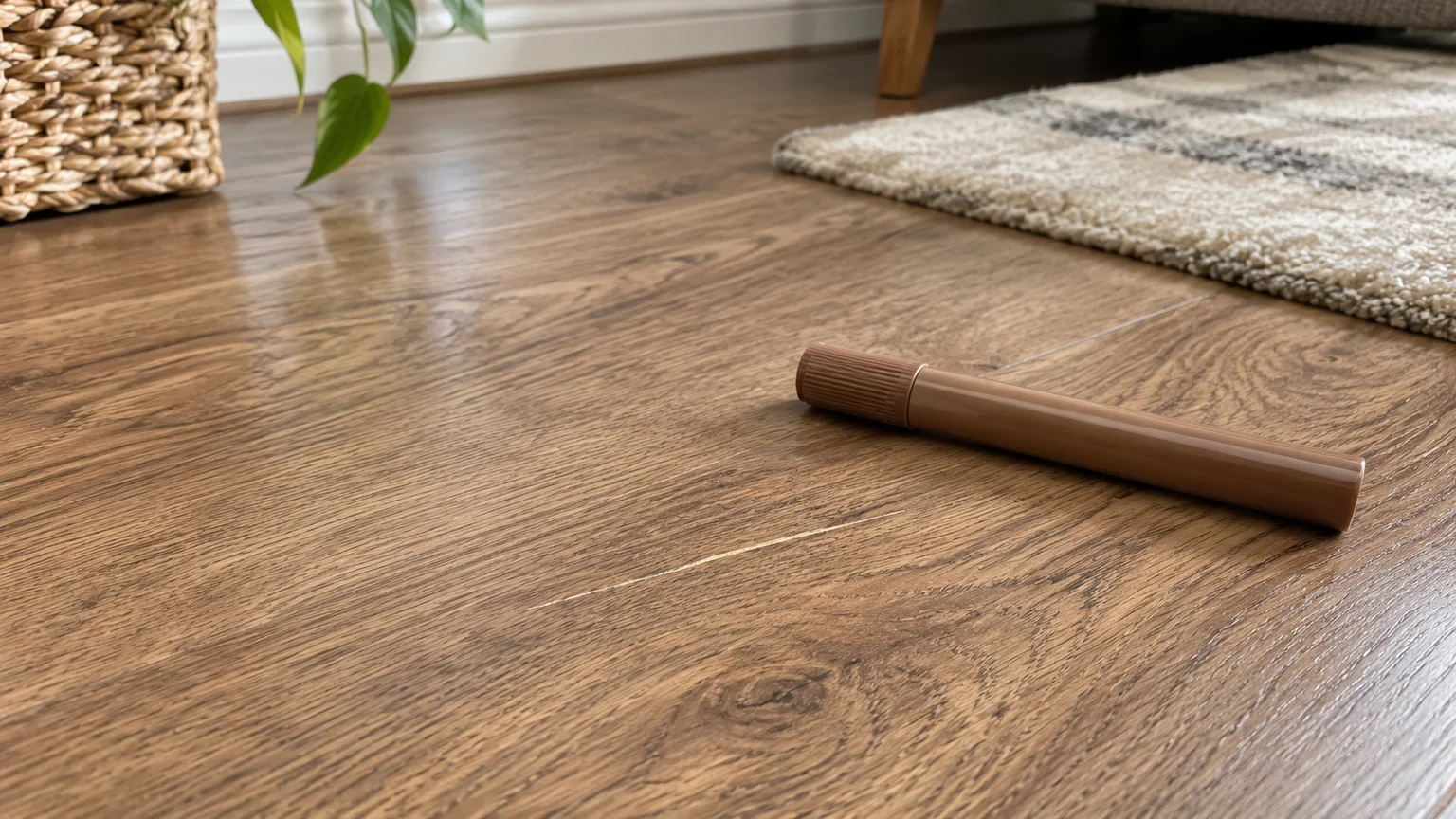
The neatest result comes from keeping the pigment inside the damaged line.
Apply a small amount, allow it to dry as directed, then look at the repair from standing height. You can add a little more if needed.
A scratch does not need to disappear under close inspection to look much better across the room. Too much pigment often makes the repair more noticeable.
4. Small Grooves and Chips Need Something to Fill Them
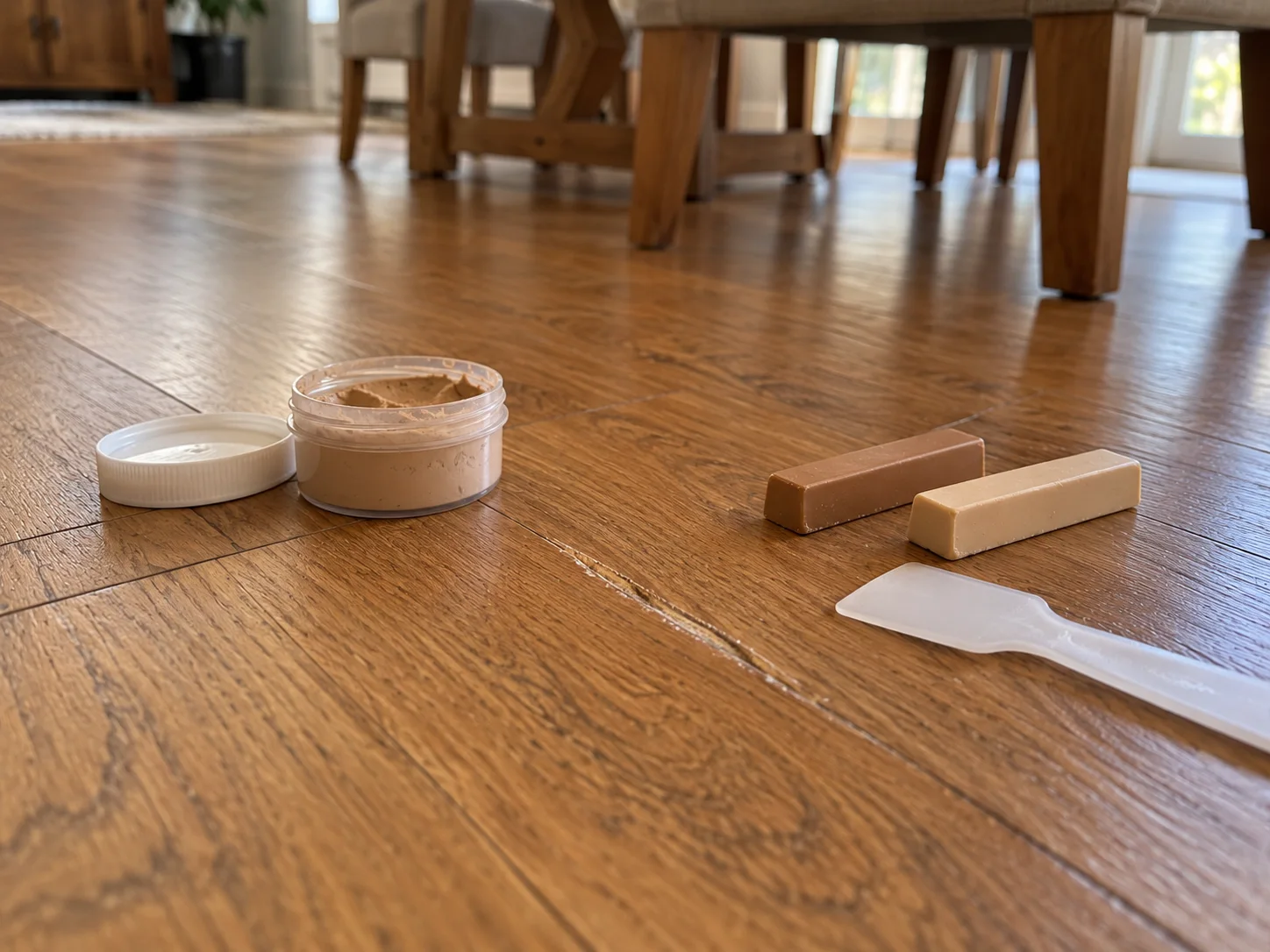
A groove needs laminate-compatible filler, rather than color alone. A marker can darken the damaged area, but the indentation will remain.
Repair wax and putty are useful for small, isolated defects in a plank that is otherwise flat and stable. Neither will fix a swollen edge or reconnect a broken locking joint.
Repair Wax for a Closer Color Match
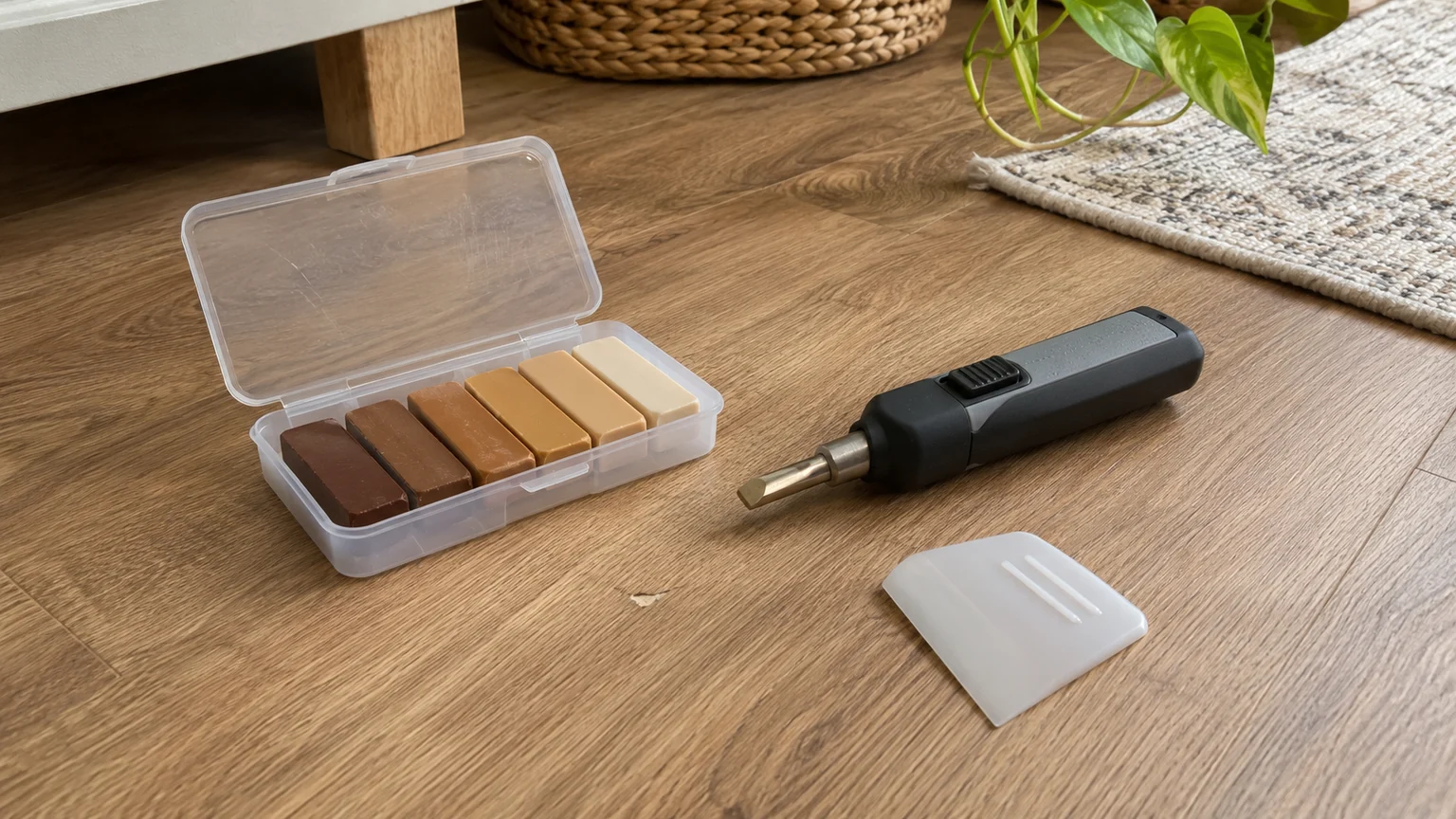
Hard-wax repair kits let you fill a chip and adjust its color. They are particularly useful when the floor has several shades running through the pattern.
The Laminate Floor Repair Kit with Heat Pen includes 11 hard-wax colors and touch-up markers. The range of shades gives you more options than a single-color filler.
For a small repair:
- Clean and dry the damaged area.
- Blend a small amount of wax to match the surrounding plank.
- Use the kit’s heat pen to apply the wax to the defect.
- Allow the wax to cool.
- Remove the excess with the kit’s leveling tool, leaving the repair flush with the floor.
Once the wax has cooled, remove the excess with the kit’s leveling tool. A thin, flush repair usually blends in better than a raised patch.
The heat pen melts the repair wax. A household iron should not be used on the plank.
You may need a little darker detail to recreate a grain line, but keep it subtle. A small variation in color usually blends better than a bold streak across the repair.
Repair Putty for Small Nicks and Gouges
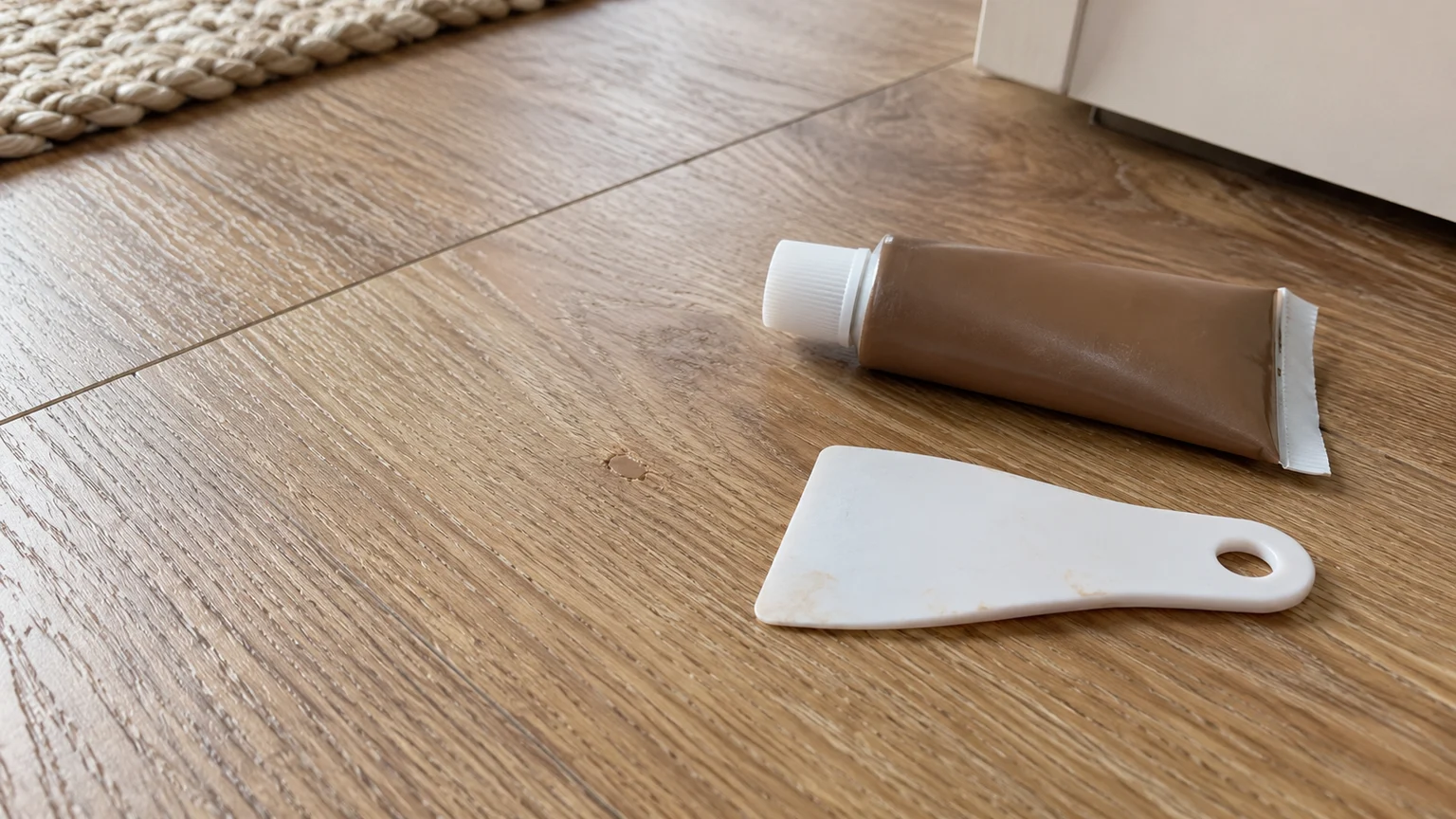
Laminate repair putty is another option for localized damage, especially when its color already matches the floor.
The ROBERTS Palette Quick-Repair Putty in Brown is made for repairs to wood, laminate, and vinyl. This brown shade suits repairs where the surrounding plank has a similar tone.
Press a small amount into the defect and level it with a suitable plastic spreader. Remove the excess while the putty is still workable, then leave the repair undisturbed for the product’s stated drying time.
Avoid spreading putty over a wide area. The less material left on the undamaged finish, the easier it is to achieve a tidy result.
5. Popular Scratch Hacks That Can Make the Mark Worse
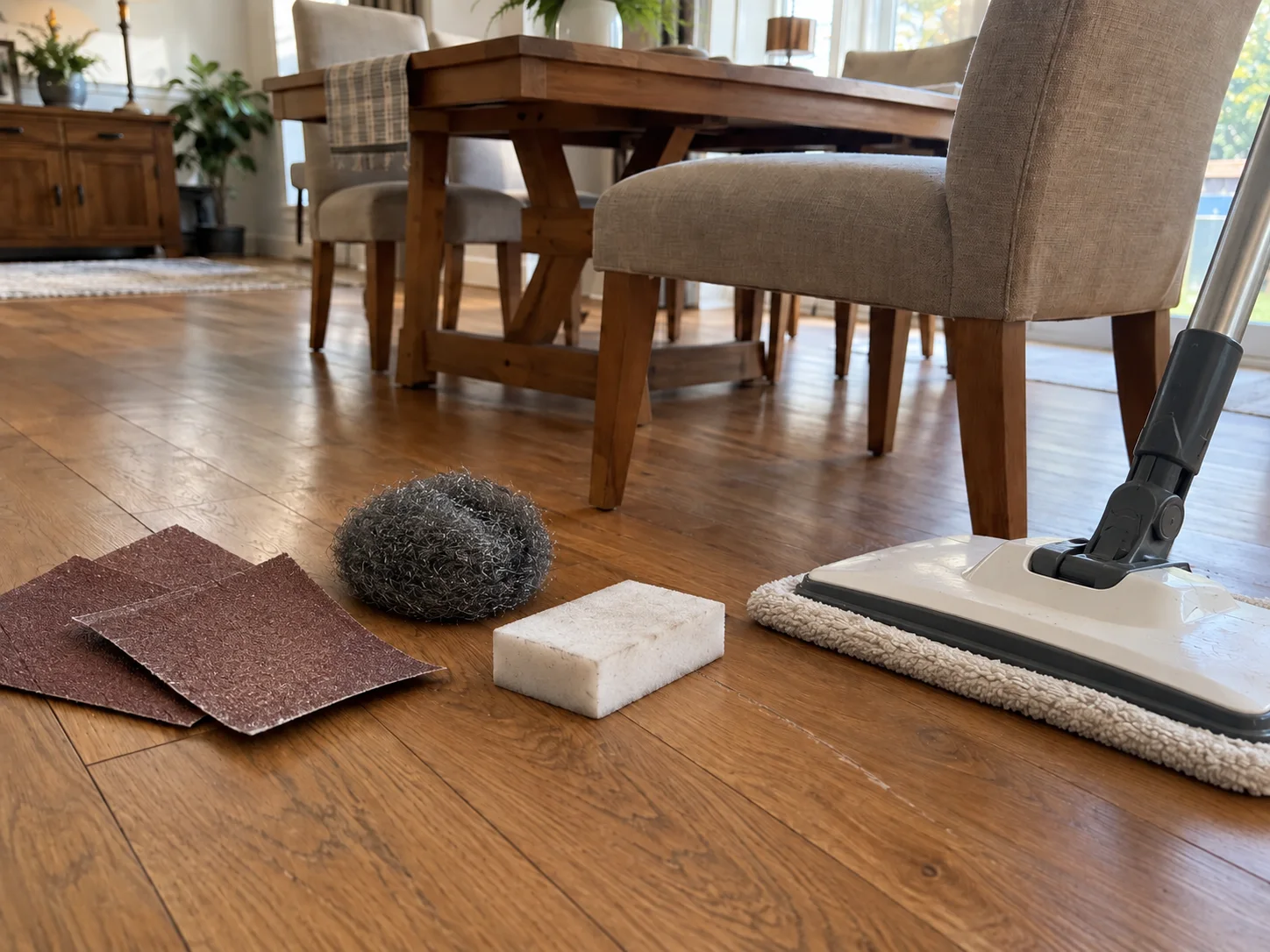
Abrasive scrubbing, sanding, and improvised coatings can damage laminate’s factory finish. That is why several common wood-floor tricks are a poor fit here.
Laminate has a decorative layer beneath a protective surface. Once that pattern is rubbed away, polishing cannot bring it back.
| Common suggestion | Why it can cause trouble |
|---|---|
| Sandpaper or steel wool | Can remove the protective finish and printed pattern |
| Toothpaste or baking soda paste | Abrasive rubbing can leave a dull patch |
| A melamine cleaning sponge | Can change the sheen of the surrounding surface |
| An iron over a damp towel | Heat and moisture can damage the plank |
| Olive oil or WD-40 | May temporarily disguise a mark while leaving residue or a slippery area |
| Clear nail polish | Can leave a raised, shiny patch that does not match the floor |
| Whole-floor wax or polish | Adds a coating that may conflict with the floor’s original finish and care requirements |
There is also a difference between repair wax inside a small chip and wax spread across the whole floor.
The same distinction matters with products such as Rejuvenate All Floors Restorer. It is a floor-wide coating intended to restore shine, rather than a color-matched filler for one damaged spot.
Although the product is marketed for laminate among other surfaces, some laminate flooring care instructions prohibit added polish or coatings. For that reason, it is not a general recommendation for scratch repair in this guide.
Where a Floor Restorer Fits
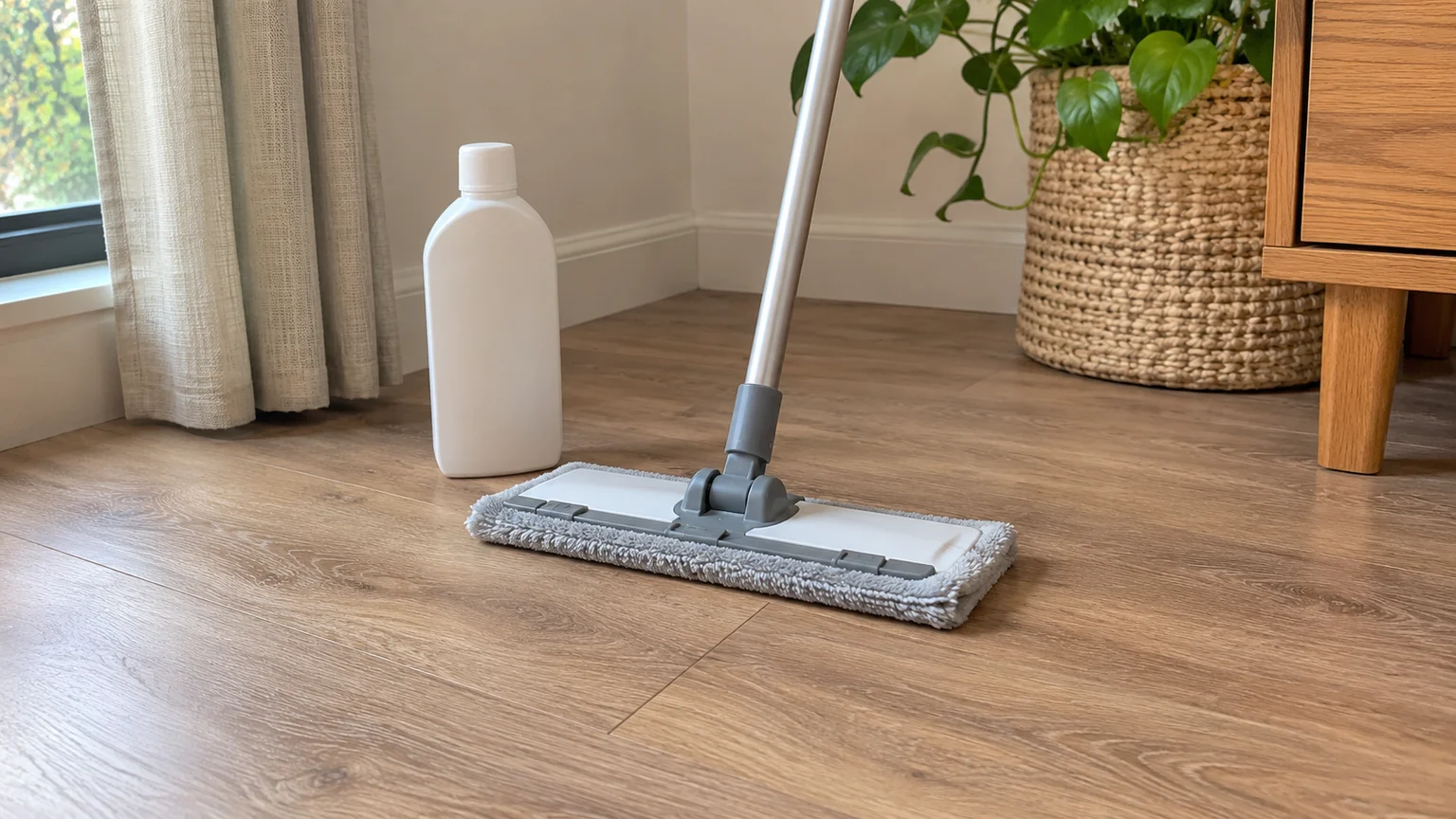
Rejuvenate All Floors Restorer is designed to renew shine and reduce the appearance of minor scratches across compatible flooring, including laminate.
Its role is improving the overall surface appearance. A pale scratch with missing color still needs a color repair, while a chip needs filler.
A restorer also changes the floor’s sheen. That makes it a different decision from touching up one mark, especially on a matte floor. Laminate floors whose care instructions prohibit polish or added coatings should remain uncoated.
6. When One Replacement Plank Is the Better Fix
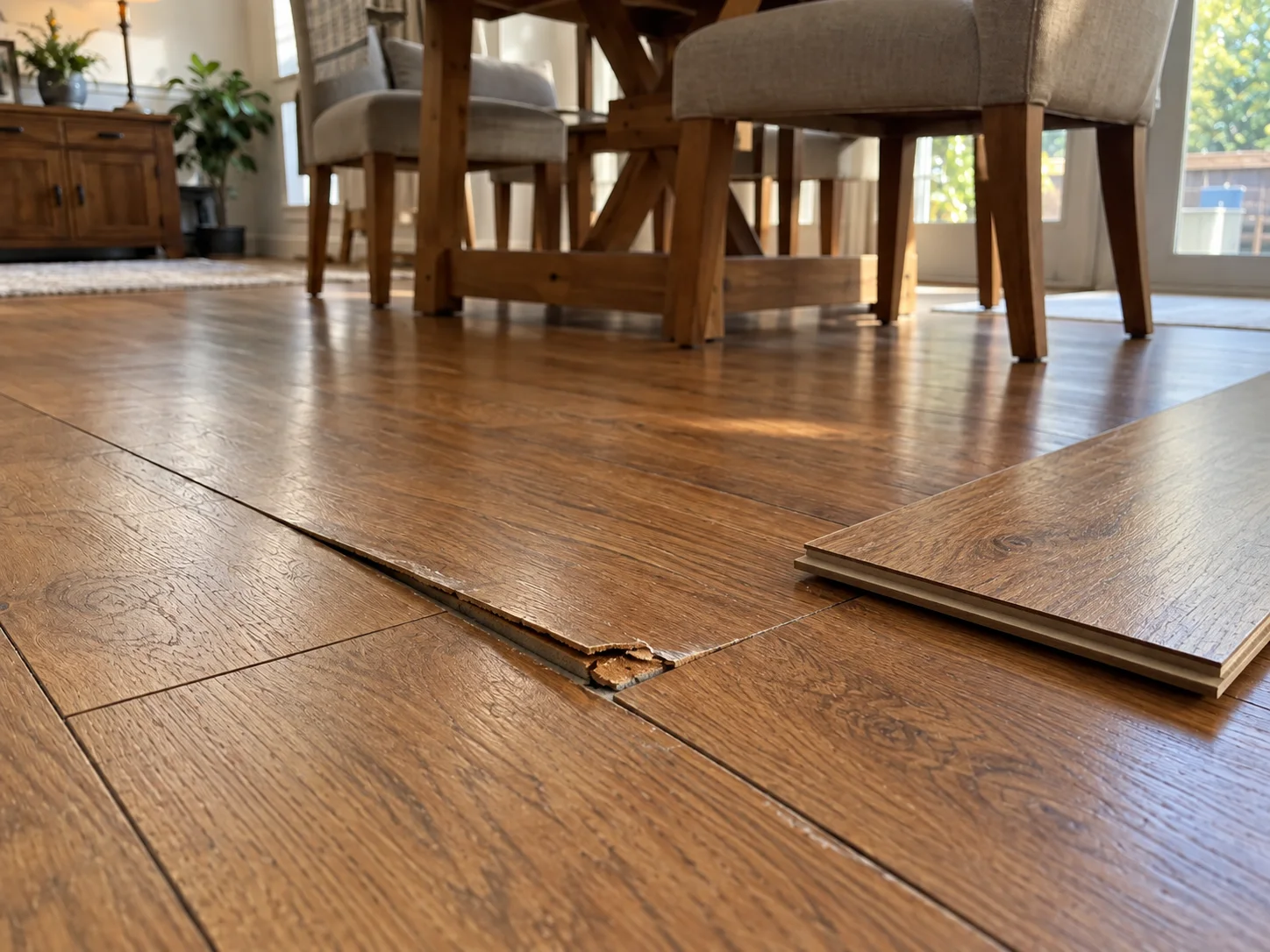
Replacement is usually the better option when the plank has swollen, its joint is broken, or the damage covers a large area.
A little filler may disguise the color of a swollen edge, but it will not make the board flat again. Likewise, covering a loose joint does not restore its strength.
Replacement makes more sense when:
- An edge has lifted or swollen after moisture exposure.
- The surface is peeling or flaking over a broad area.
- A large gouge has removed a substantial amount of the plank.
- The locking joint is broken.
- A previous repair keeps breaking away because the plank moves.
A matching spare board makes replacement easier. Depending on the floor and the location of the damage, an installer may lift boards from the nearest edge or remove and replace the individual plank.
If water caused the damage, the source of that moisture needs fixing too.
For a floor that is sound but unattractive, our guide to covering ugly rental floors explains ways to improve its appearance. A covering will not repair swelling or an unstable board.
7. Small Habits That Prevent the Next Scratch
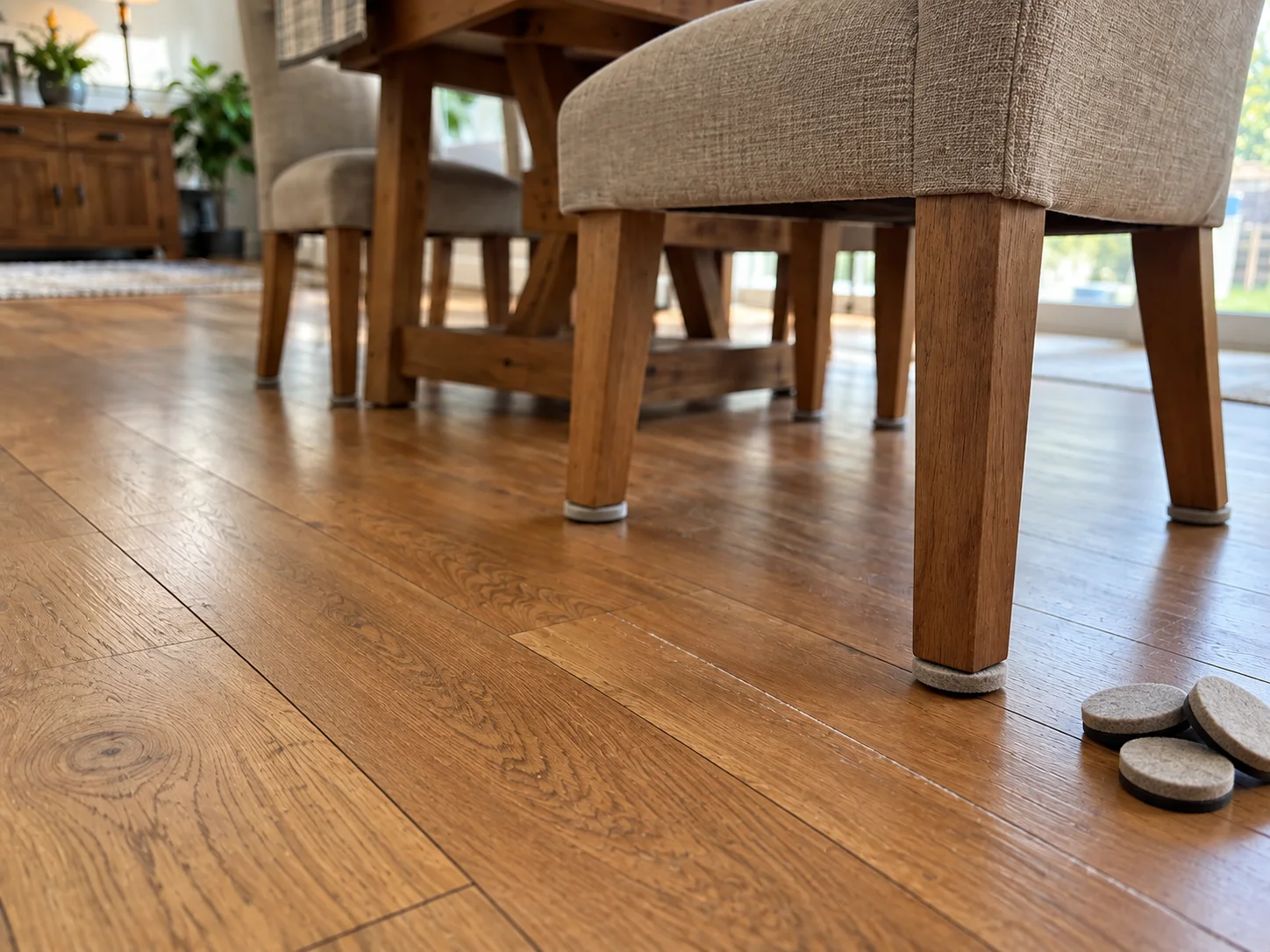
Removing grit and protecting furniture feet can prevent many everyday scratches.
Dining chairs are a common trouble spot because they move repeatedly across the same area. The Scotch Self-Stick Felt Pads add a soft layer beneath furniture feet to help protect hard floors.
Attach the pads to clean, dry furniture feet and replace any that become worn, loose, or collect grit. A worn pad with grit stuck in it can still scratch the surface.
A few other habits help:
- Lift furniture when moving it across the room.
- Use an entrance mat to catch grit before it reaches the floor.
- Dust-mop areas where dirt collects.
- Remove grit trapped beneath rugs and furniture.
- Replace felt pads that are dirty, flattened, or peeling away.
- Keep pet nails trimmed.
A rug can also protect a frequently used area, provided its backing is suitable for laminate. Our rug-size guide can help you choose one that fits the furniture and walking space.
A Quick Checklist Before You Begin
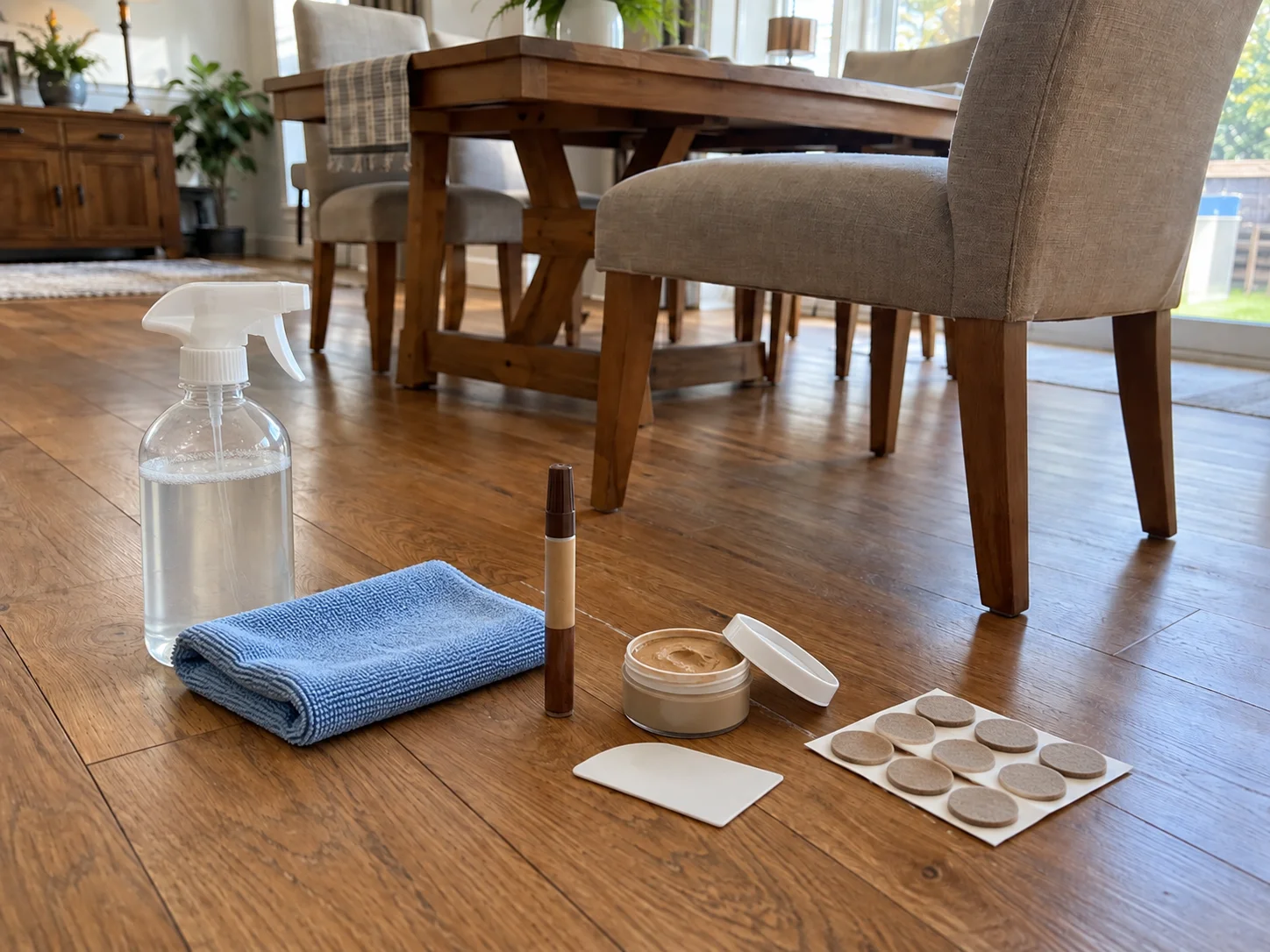
Before applying anything to the scratch:
- The floor is laminate.
- Loose dirt and grit have been removed.
- The area is clean and dry.
- I have identified a scuff, missing color, or a groove.
- The repair product is suitable for laminate.
- The repair color has been tested on a spare plank or hidden area.
- The plank is flat and its joints are stable.
- The repair can remain undisturbed while it dries or cools.
You only need the product that matches the damage. A removable scuff does not need a repair kit, and a tiny chip does not call for recoating the entire room.
Frequently Asked Questions

These are the questions that tend to come up once the floor is clean and the damage is easier to see.
Can Scratches Disappear Completely From Laminate Flooring?
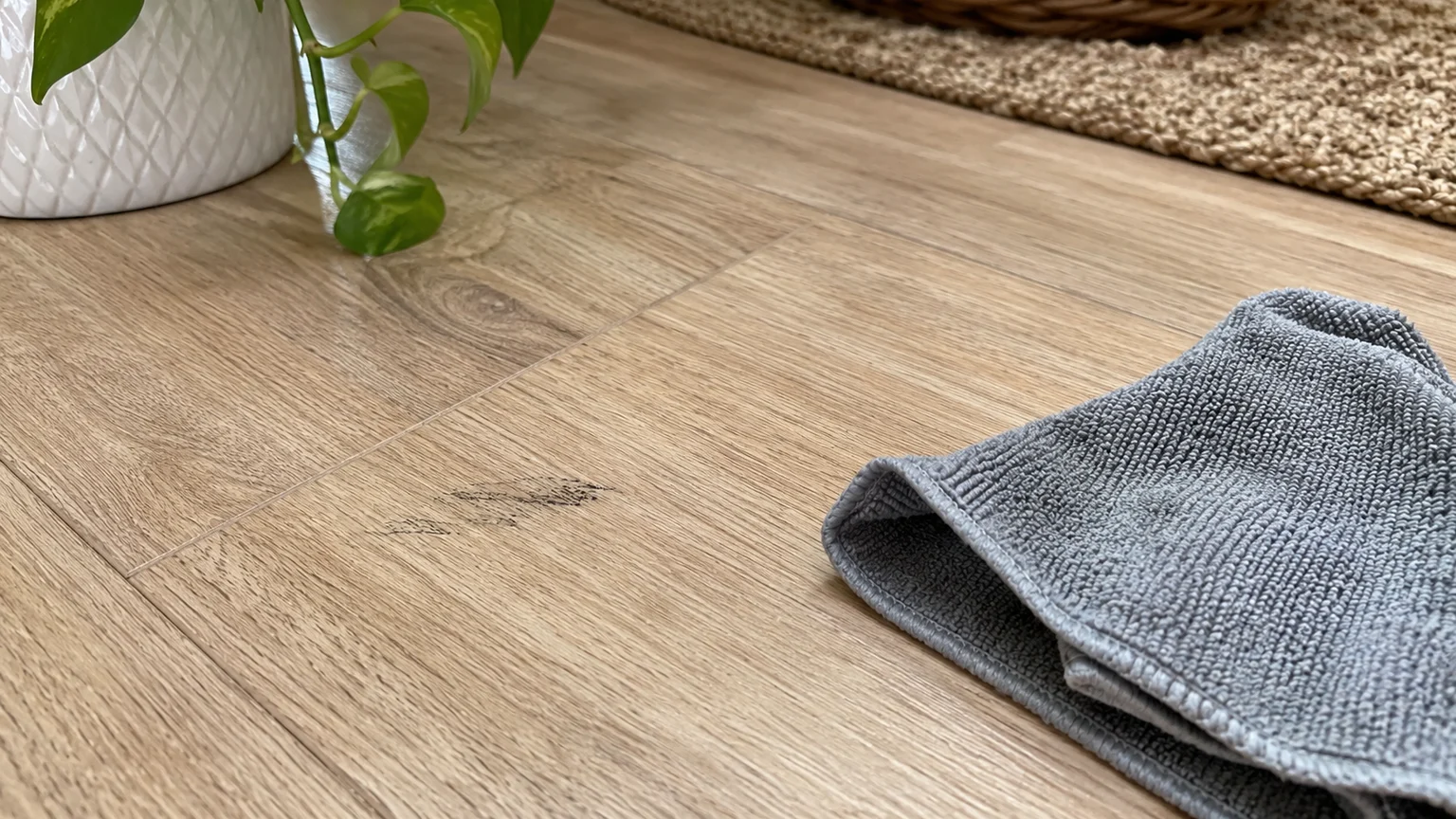
Scuffs can sometimes disappear completely, because they are material transferred onto the floor.
Actual scratches are different. A good color match and a neat fill can make them much less noticeable, but the repaired area may still reflect light differently.
What Is Best for a Light Scratch: a Pen, Wax, or Putty?
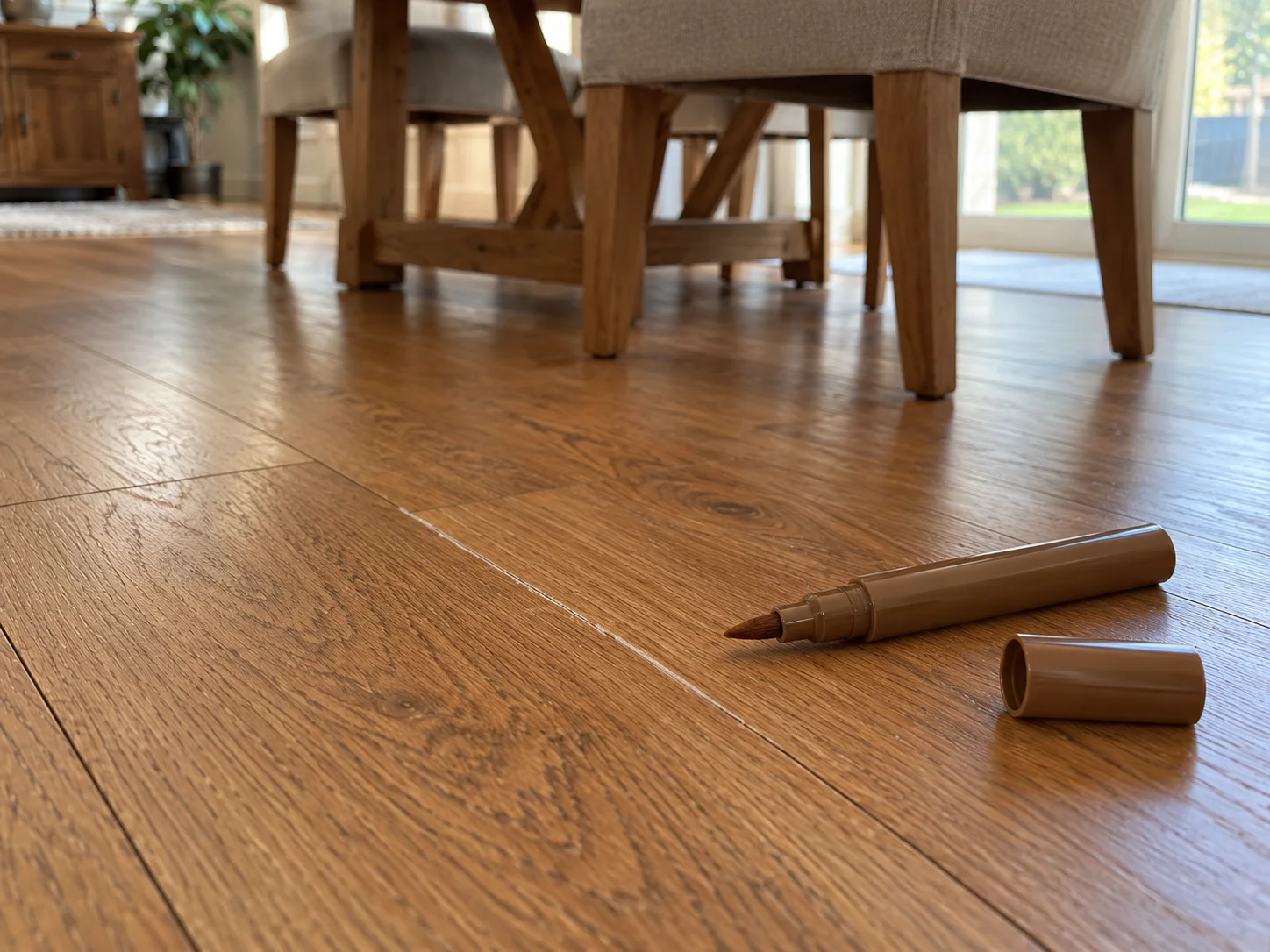
A touch-up pen suits missing color, while wax or putty suits a groove or chip.
If the mark is a clear line visible only at certain angles, adding color may make it stand out. Gentle cleaning and leaving it alone can be the better choice for a minor mark.
Can I Use WD-40 or Olive Oil on a Laminate Scratch?
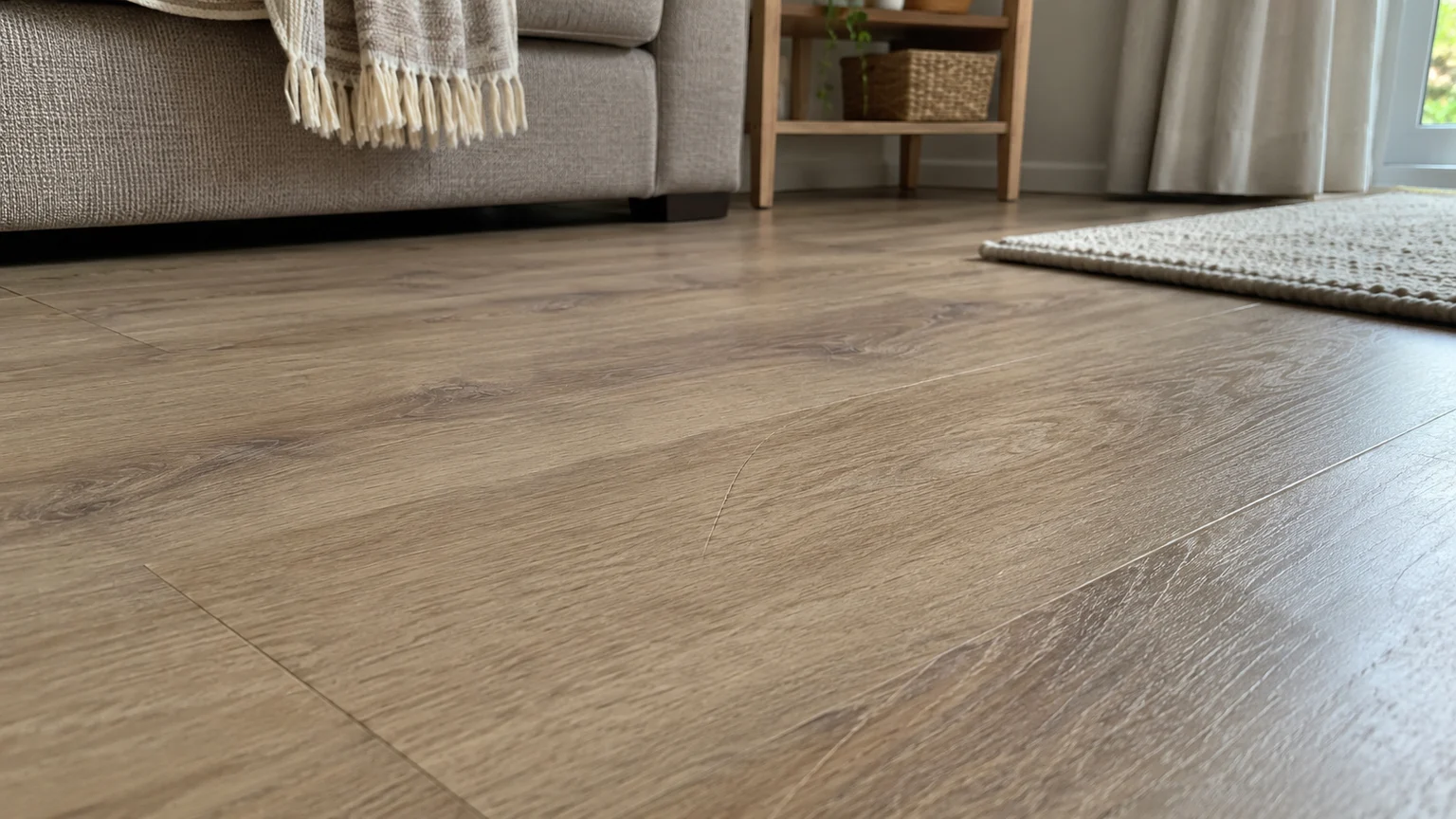
Neither is a lasting scratch repair. Oil may change how the scratch catches the light, but it does not replace missing color or fill the defect properly.
It can also leave residue or make the area slippery. A repair product made for the type of damage is a better option.
Can Laminate Flooring Be Sanded?
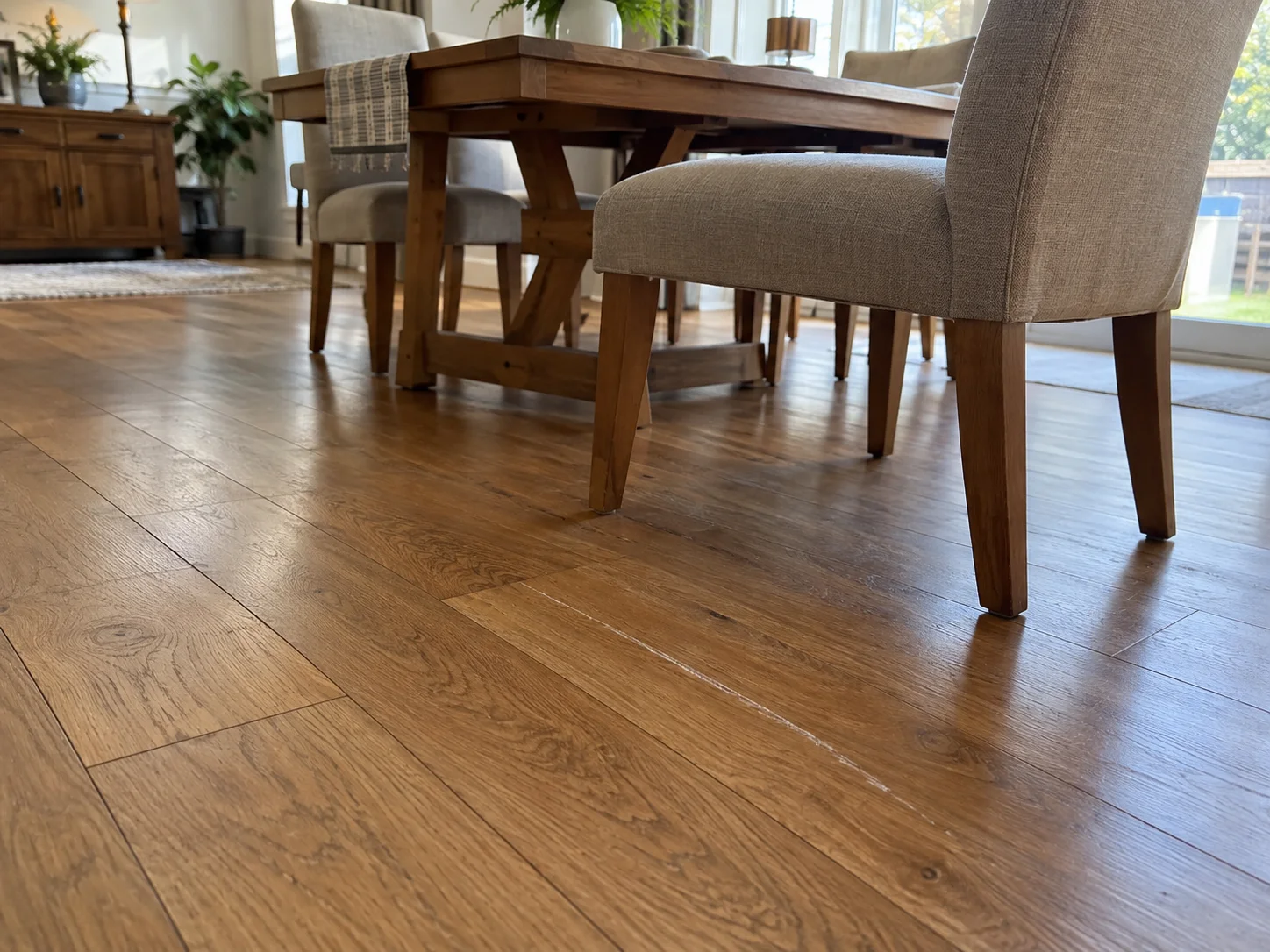
Laminate cannot be sanded and refinished like solid wood. Sanding can remove the pattern and expose the material underneath.
A repair kit’s leveling tool is used to remove excess filler. That is different from sanding the plank itself.
Can a Deep Scratch Be Repaired Without Replacing the Plank?
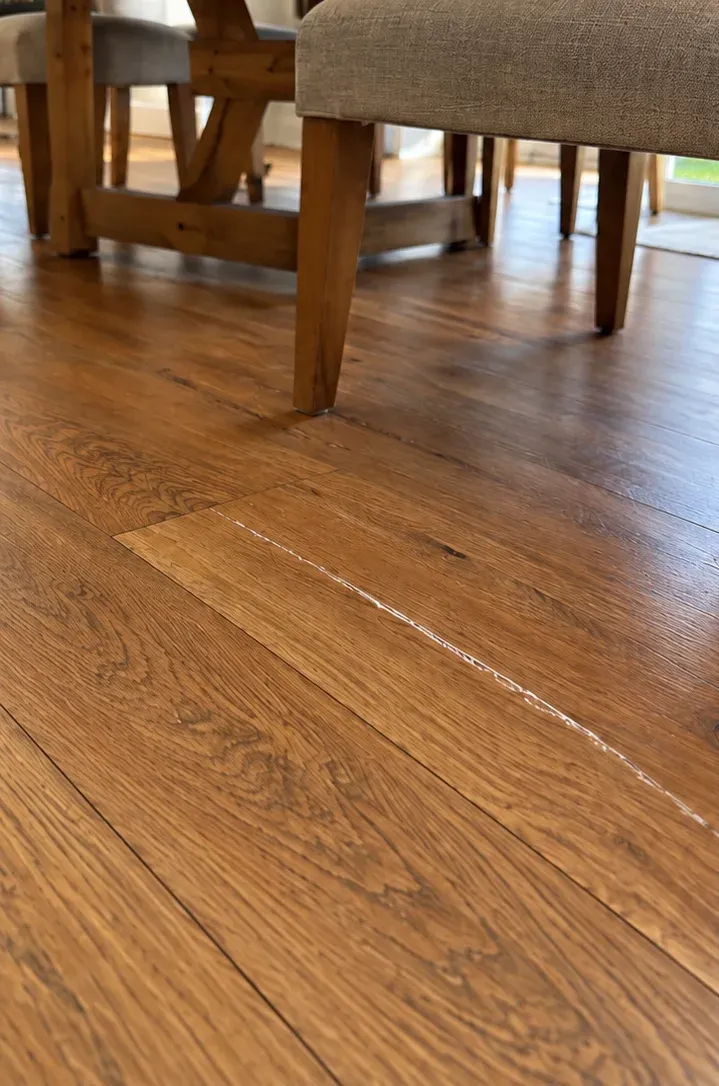
Some small gouges can be filled, provided the surrounding plank remains flat and intact.
Depth is only part of the decision. The size of the damaged area, the condition of the edges, and whether the board moves or has swollen also matter.
Will a Repair Kit Restore the Floor’s Waterproof Protection?
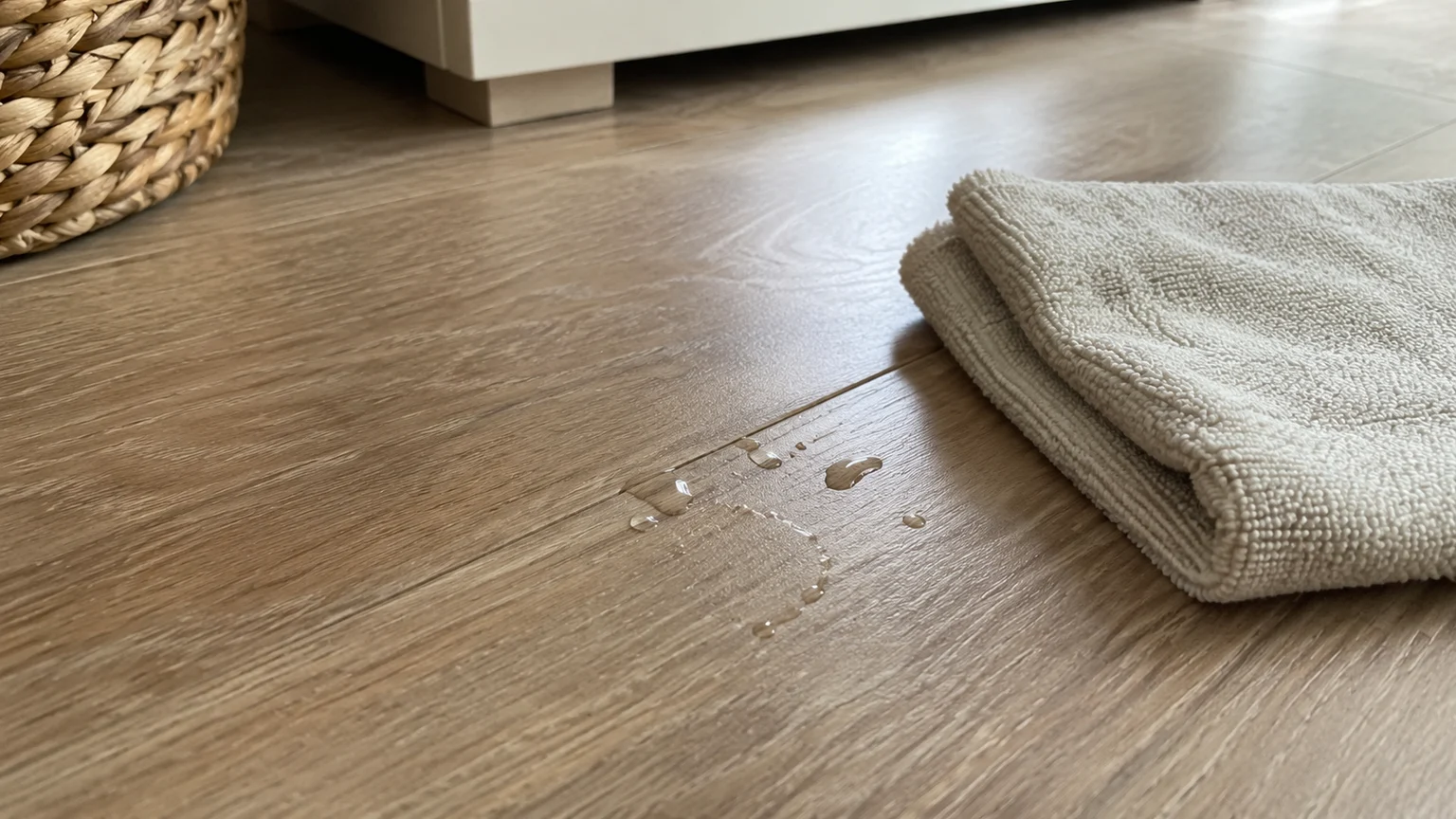
A cosmetic repair does not guarantee restored water resistance. Wax or putty can fill a defect, but the result may not perform like the original factory surface.
Spills should still be wiped up promptly, especially around repaired areas and plank joints.
Products Featured in This Guide
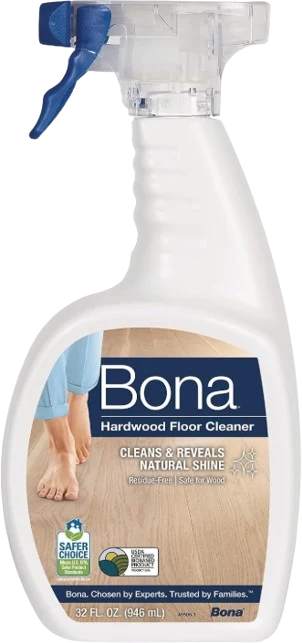 Bona Hardwood Floor CleanerA cleaner for wood-floor areas; Bona’s Hard-Surface formula is intended for laminate.
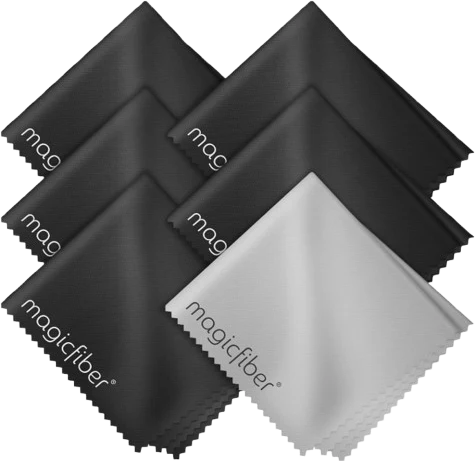 MagicFiber Microfiber Cleaning ClothsSoft cloths for wiping small marks and drying the area before a repair.
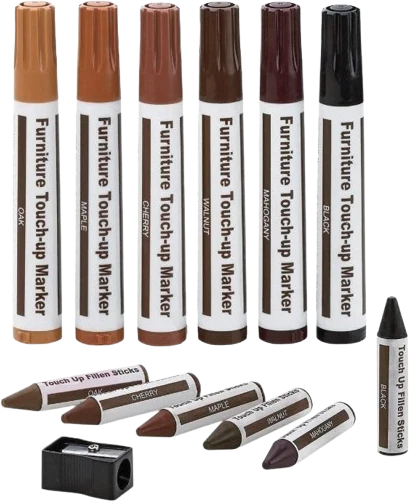 DAIXISM Furniture Repair KitSix wood-tone markers and wax sticks for cosmetic touch-ups on wooden furniture.
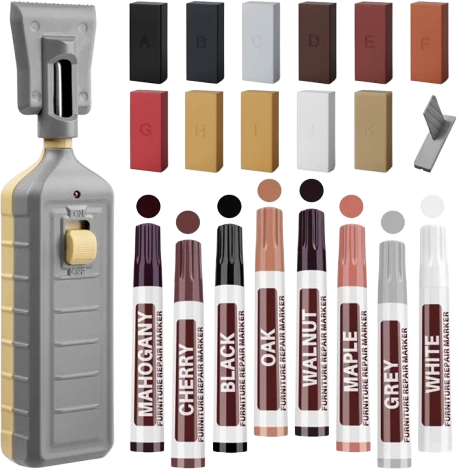 Laminate Floor Repair Kit with Heat PenAn 11-color hard-wax kit with touch-up markers for small laminate chips and scratches.
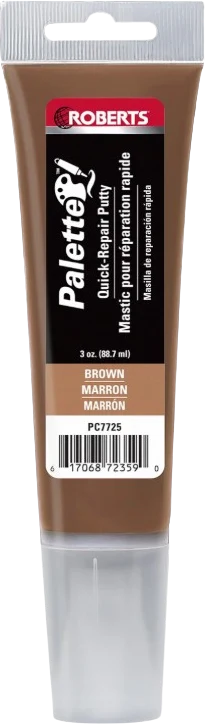 ROBERTS Palette Quick-Repair Putty, BrownBrown filling putty for small defects in wood, laminate, and vinyl surfaces.
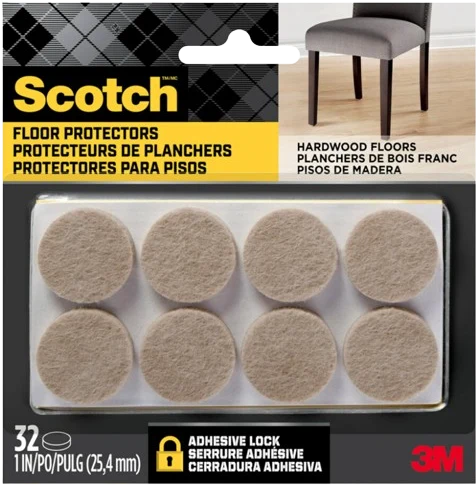 Scotch Self-Stick Felt PadsSoft furniture-foot pads that help protect hard floors from everyday scratches.
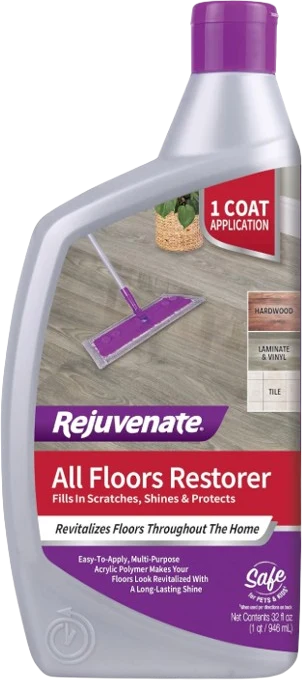 Rejuvenate All Floors RestorerA shine-restoring coating for compatible floors that permit added finishes.