How to Wash a Weighted Blanket Without Ruining It


Your weighted blanket has claimed a permanent spot on the sofa, the dog loves it, and yesterday’s coffee left a little souvenir. Now you’re wondering how to wash a weighted blanket without ending up with a tangled, misshapen mess. The extra weight makes laundry day feel complicated, but a few sensible choices make the job manageable.
The quick answer
- For a machine-washable weighted blanket, use cold water, a gentle cycle, and a washer that can handle its weight and bulk.
- Wash a removable cover separately and spot-clean small marks when the care instructions allow it.
- Use the approved drying method and let the entire blanket dry completely before returning it to the bed.
Below, you’ll find the right route for a quick spill, a full wash, and that awkward moment when your blanket looks much bigger than your washing machine.
Can You Wash a Weighted Blanket? Choose the Right Cleaning Method
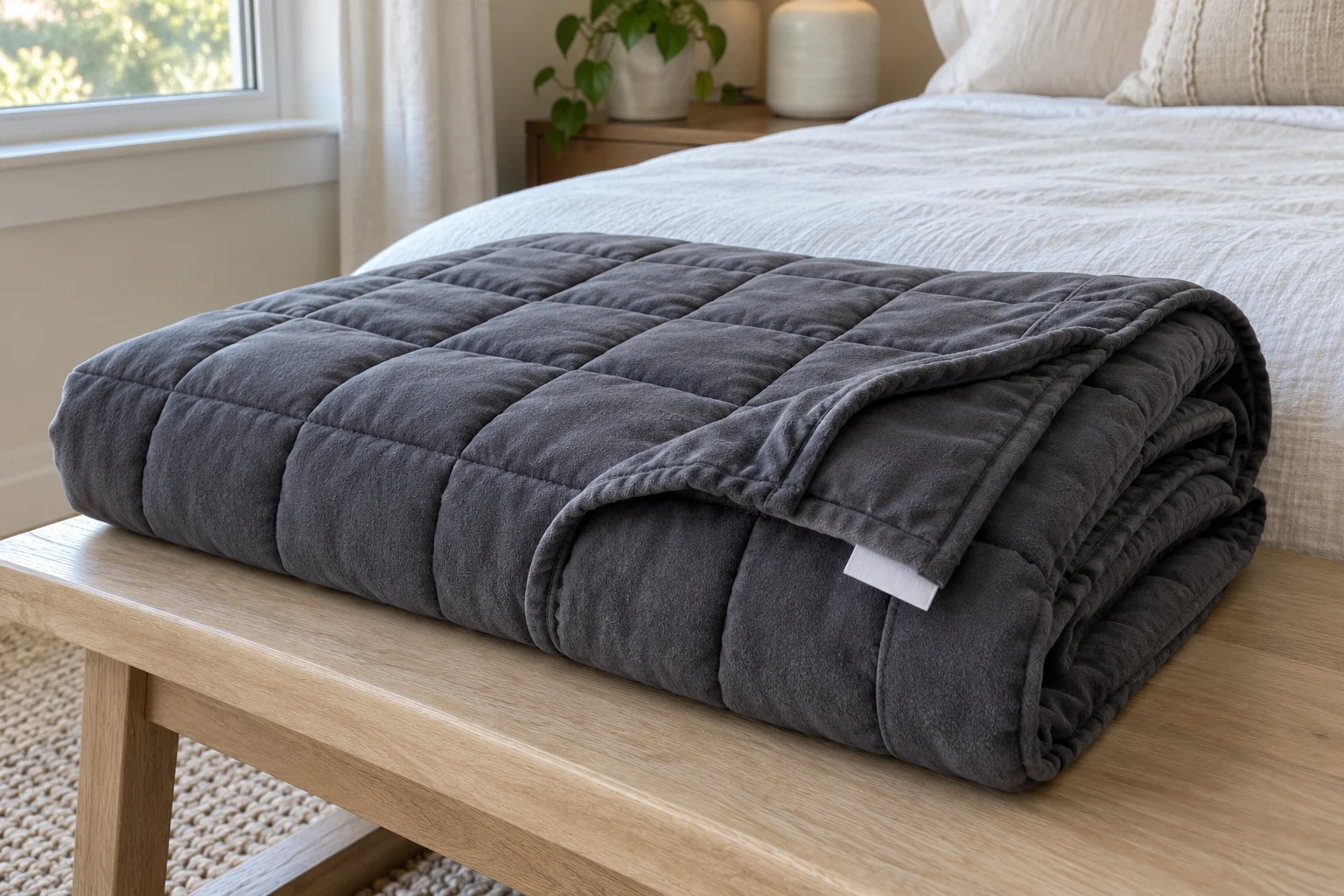
Many weighted blankets are washable, but the cover, filling, and construction determine how they can be cleaned. A washable cover can surround an insert that must stay out of the tub.
The blanket’s care instructions provide the rules for that particular combination of materials. Use them to choose your route:
| Your blanket’s instructions or condition | The right cleaning route |
|---|---|
| Machine washable, with suitable washer capacity | A gentle machine wash using the permitted settings |
| Hand washable | A clean bathtub or large wash basin |
| Washable cover with a nonwashable insert | Wash the cover separately; clean the insert only as permitted |
| Spot clean only | Treat individual marks without soaking the blanket |
| Dry clean only | Professional dry cleaning |
| Open seams, torn pockets, or escaping beads | Repair the damage before laundering |
Note: A blanket that cannot go in the washer is not automatically safe to hand wash or dry clean. Each method has its own requirements.
Glass Beads, Plastic Pellets, or Chunky Knit: Why the Filling Matters
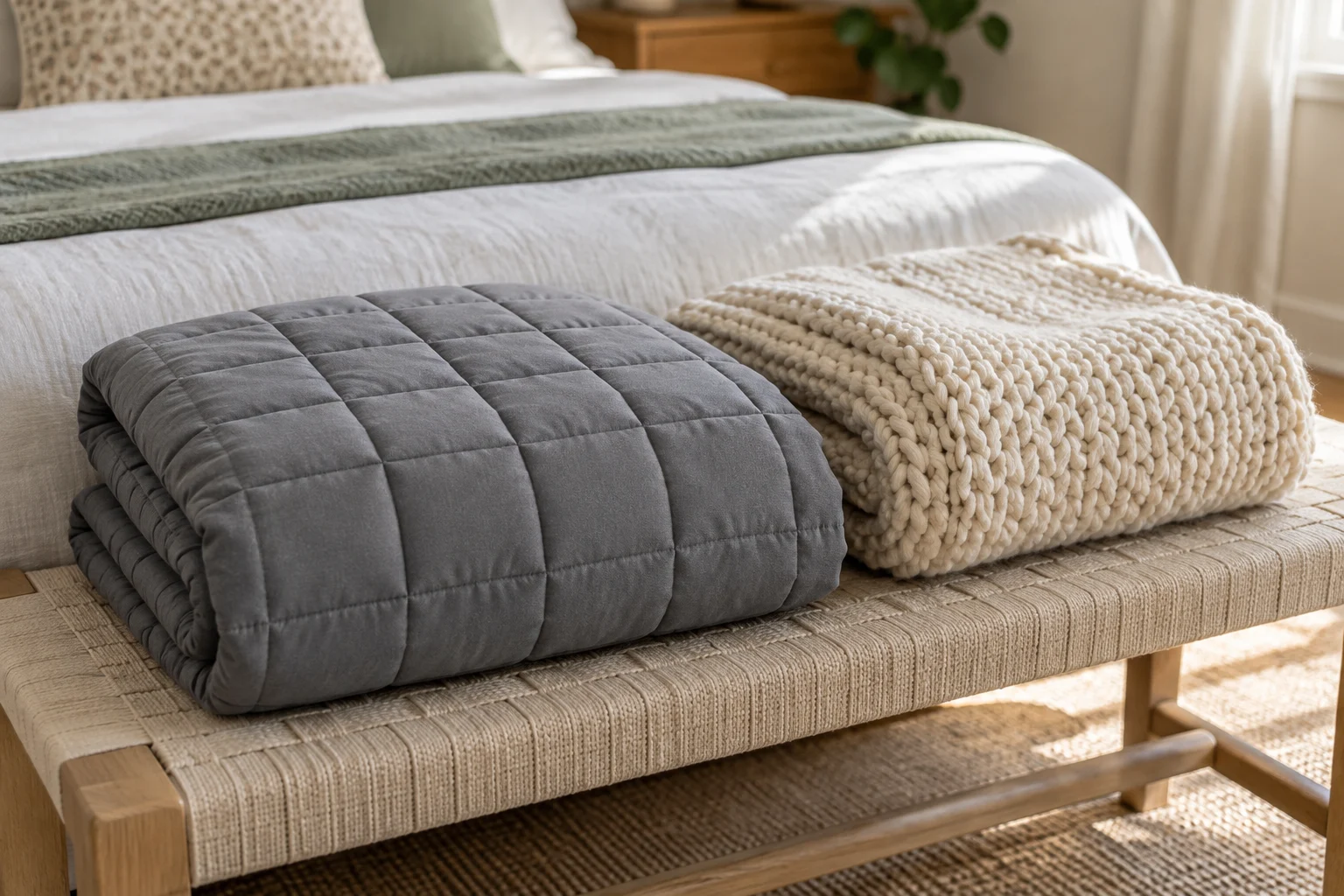
The entire blanket needs to tolerate the cleaning method, including its fabric, seams, and filling. Glass beads alone do not make a blanket machine washable.
Bead-filled blankets usually have stitched compartments that help distribute the weight. Those seams need gentle handling, especially while the surrounding fabric is wet.
For example, the L’AGRATY 15-Pound Weighted Blanket has a microfiber exterior and glass-bead filling, but its listed care recommendation is hand washing and hang drying. It is a useful example of why the word “washable” does not automatically mean “put it in the machine.”
Chunky knitted blankets can get their weight from thick strands of fabric instead. Their main concern may be stretching or slow drying, rather than beads shifting between pockets.
Fillings such as rice or beans need a different approach because soaking can damage them. Keep moisture-sensitive fillings out of a full wash unless the product’s instructions explicitly permit it.
What You’ll Need for a Weighted Blanket Wash
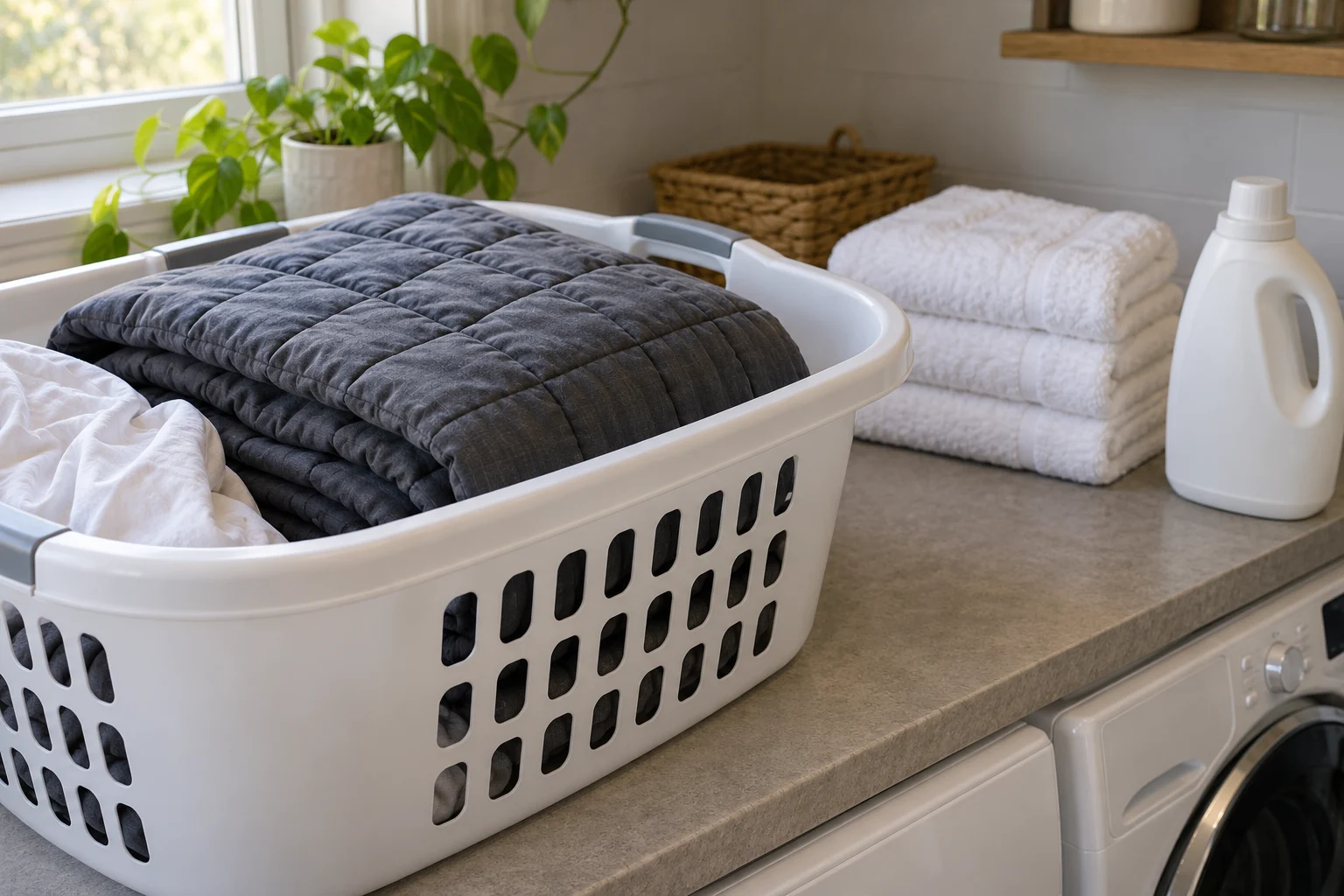
You need suitable detergent, gentle cleaning tools, and a drying plan before the blanket gets wet. Most of the supplies may already be in your laundry cupboard.
- Laundry detergent suitable for the fabric and cleaning method
- A soft white cloth or sponge
- A clean bathtub or appropriately sized washing machine
- Clean towels for absorbing excess water where appropriate
- A supported drying surface or suitable dryer, depending on the care instructions
For hand washing and spot cleaning, a mild liquid detergent is convenient because you can measure a small amount and dilute it. Delicate materials such as silk or wool need a formula suitable for those fibers.
Keep a few USANOOKS White Microfiber Cleaning Cloths with your laundry supplies for blotting spills and removing cleaning residue. Reserve clean cloths for bedding so you are not transferring polish or household cleaner from another job.
Have the drying space ready before you begin. A wet weighted blanket is much harder to move around while you search for somewhere to put it.
How to Machine Wash a Weighted Blanket Without Overloading the Washer
Machine washing is appropriate when the blanket allows it and the appliance can handle its weight and bulk on the required cycle. Being able to close the door does not establish that the load is suitable.
There is no universal rule that every 15-pound blanket fits every home washer. Drum space, load limits, and cycle restrictions all matter.
1. Remove the Cover and Look Over the Seams
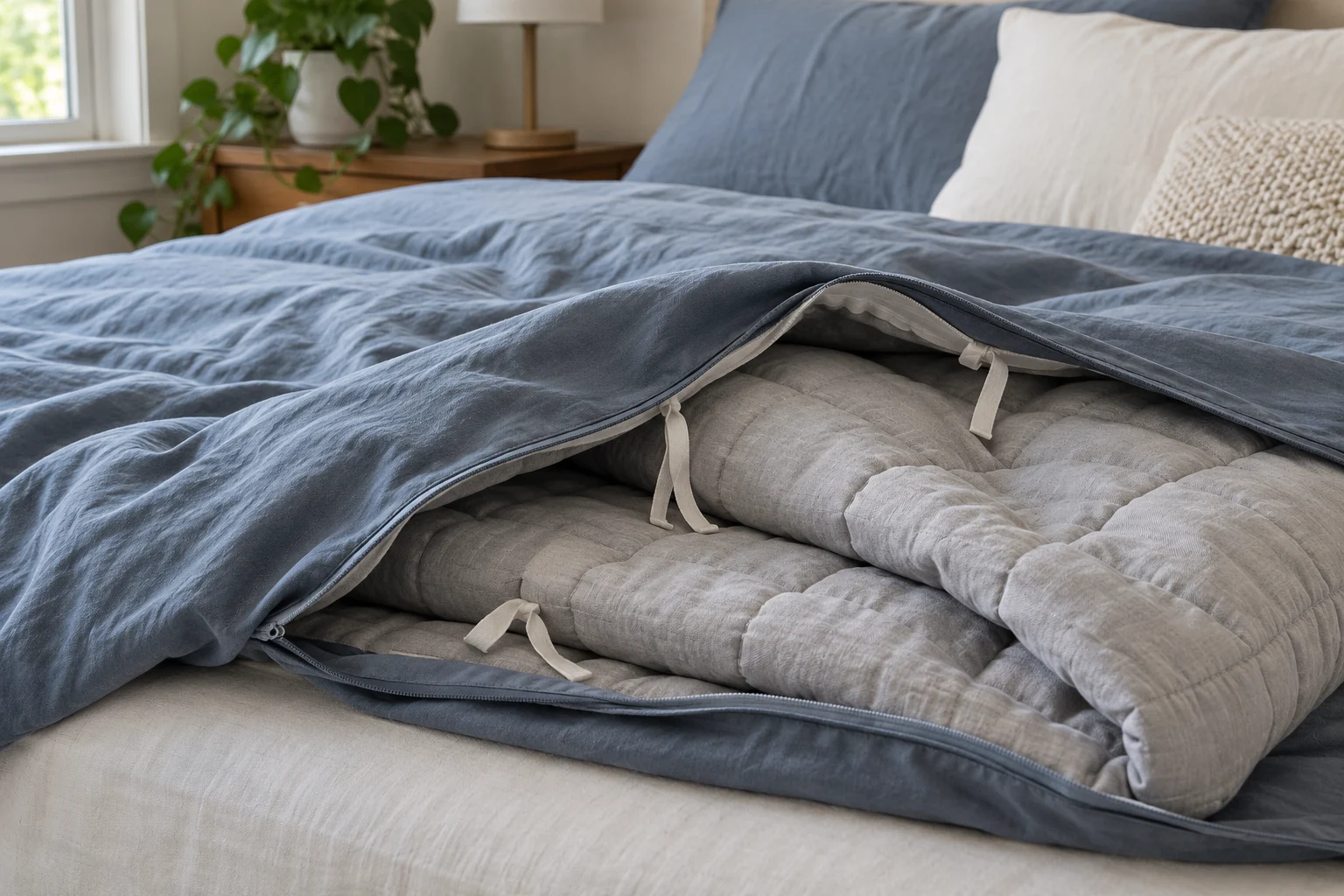
Remove the cover completely and repair damaged seams before washing the insert. Undo any interior ties rather than pulling the blanket out while it is still attached.
Shake off loose crumbs and remove surface debris. Look along the edges and stitched pockets for openings or escaping beads.
A removable cover makes this part easier. The YnM Cooling Duvet Cover has a zipper closure and 16 interior ties. The linked blue-grey version measures 48 by 72 inches and is made from rayon derived from bamboo.
It is a useful choice for a compatible insert with matching dimensions and attachment points. Wash the cover according to its own care instructions, which can differ from those of the blanket inside.
2. Treat Visible Stains Gently
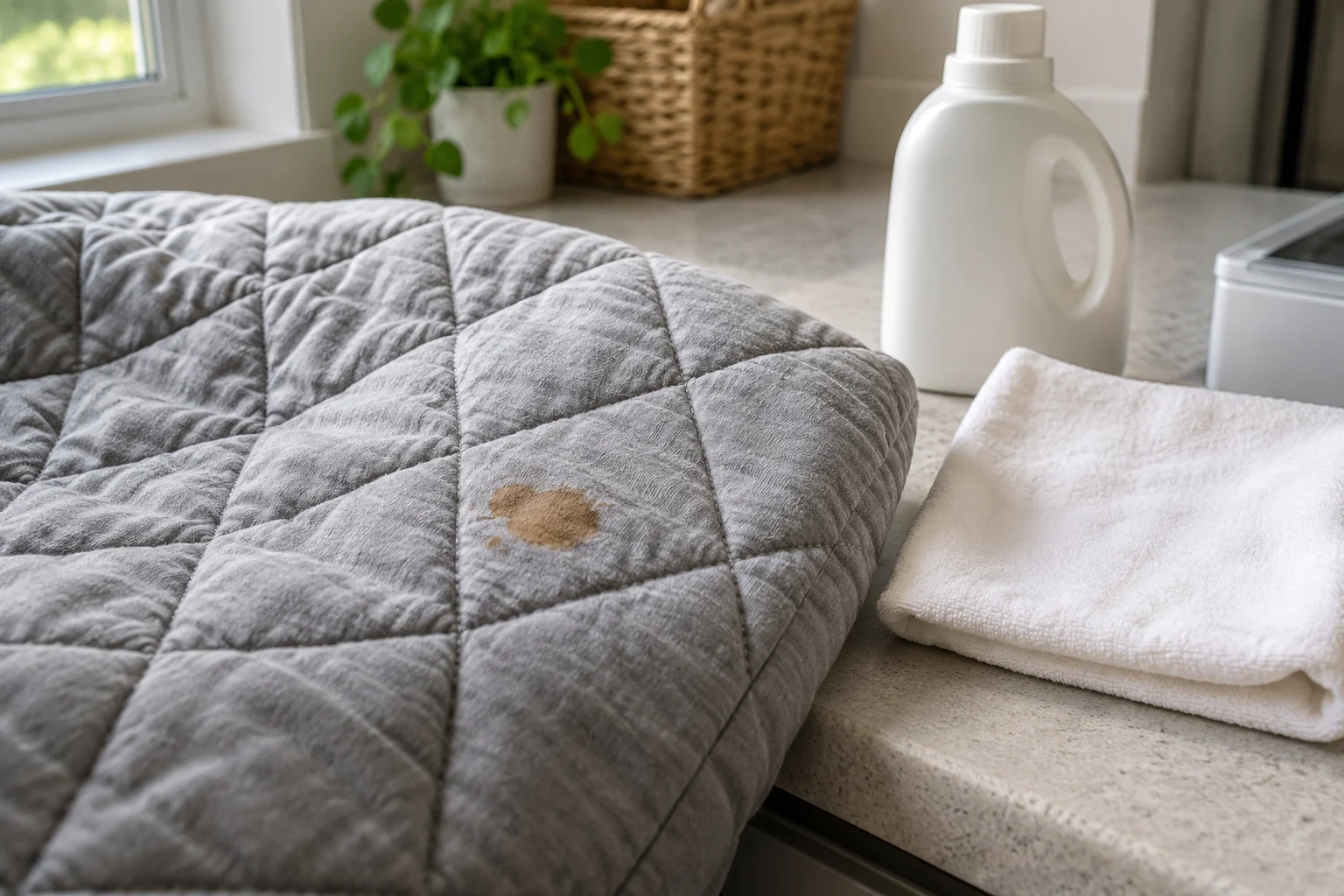
Blot fresh spills, then treat washable fabric with a small amount of suitable liquid detergent. Gentle pressure helps lift the mark without roughing up the surface.
Use a clean section of cloth as the stain transfers. Avoid vigorous scrubbing, particularly around stitching or on plush fabric.
A spot-clean-only insert belongs in the spot-cleaning routine below. Pre-treating a stain does not make it suitable for a full wash.
3. Load the Blanket on Its Own
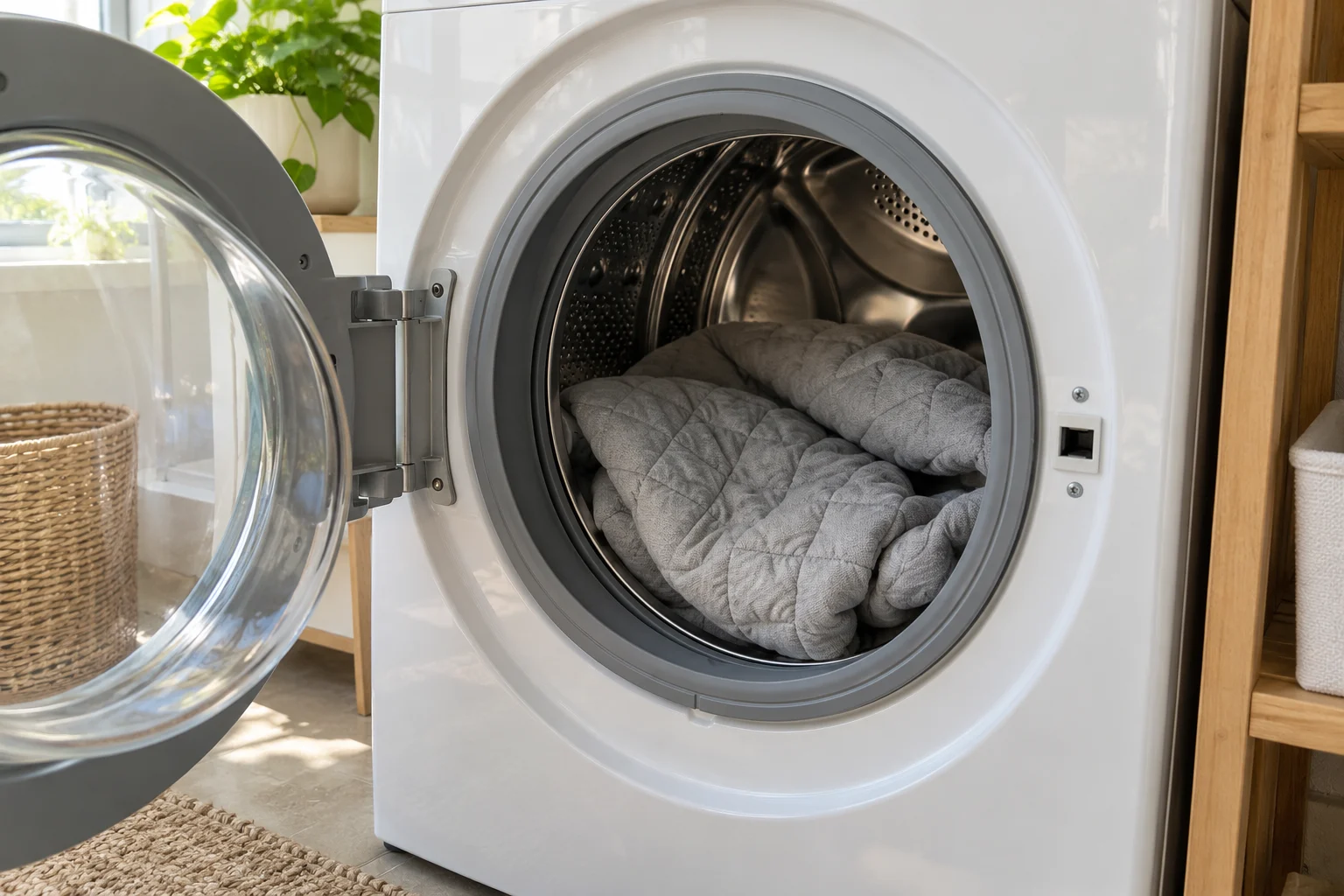
Wash the weighted blanket separately so it has room to move and rinse. Save the towels, sheets, and pillowcases for another load.
If the blanket needs to be tightly stuffed into the drum, the washer is too small for the job. A machine-washable blanket that exceeds the home appliance’s limits belongs in suitable commercial laundry equipment.
If the machine repeatedly reports an unbalanced load or starts banging, pause the cycle. Let the drum stop before opening it, then follow the appliance’s procedure for handling the load. Repeatedly restarting the spin cycle will not solve a capacity problem.
4. Keep the Settings Gentle and the Detergent Measured
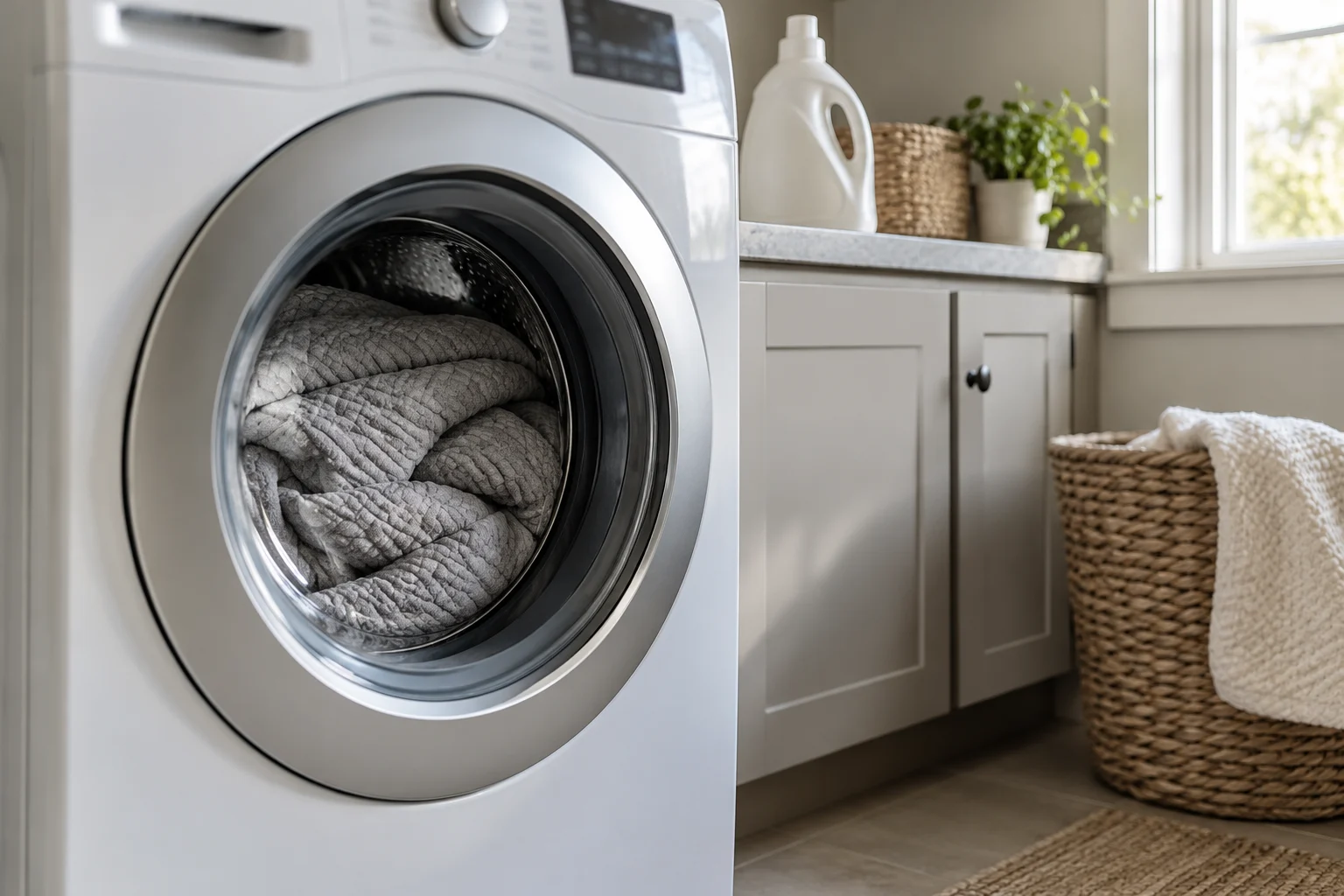
Use cold water and a gentle cycle when those settings match the blanket’s care instructions. Dose the detergent according to its directions and skip added bleach and fabric softener.
For machine-washable bedding that permits standard laundry detergent, Tide PODS Free & Gentle offers a premeasured option without added dyes or perfumes. Place the required number of intact pods directly into the empty drum before adding the blanket.
These pods belong in the washing machine. Do not cut them open for spot treatment or use them as bathtub detergent. Blankets requiring a specialist fabric wash still need that specific type of formula.
The permitted spin setting matters, too. Do not automatically add a powerful extra spin to speed up drying. Some blankets need a reduced spin to protect their construction.
5. Support the Blanket as You Move It
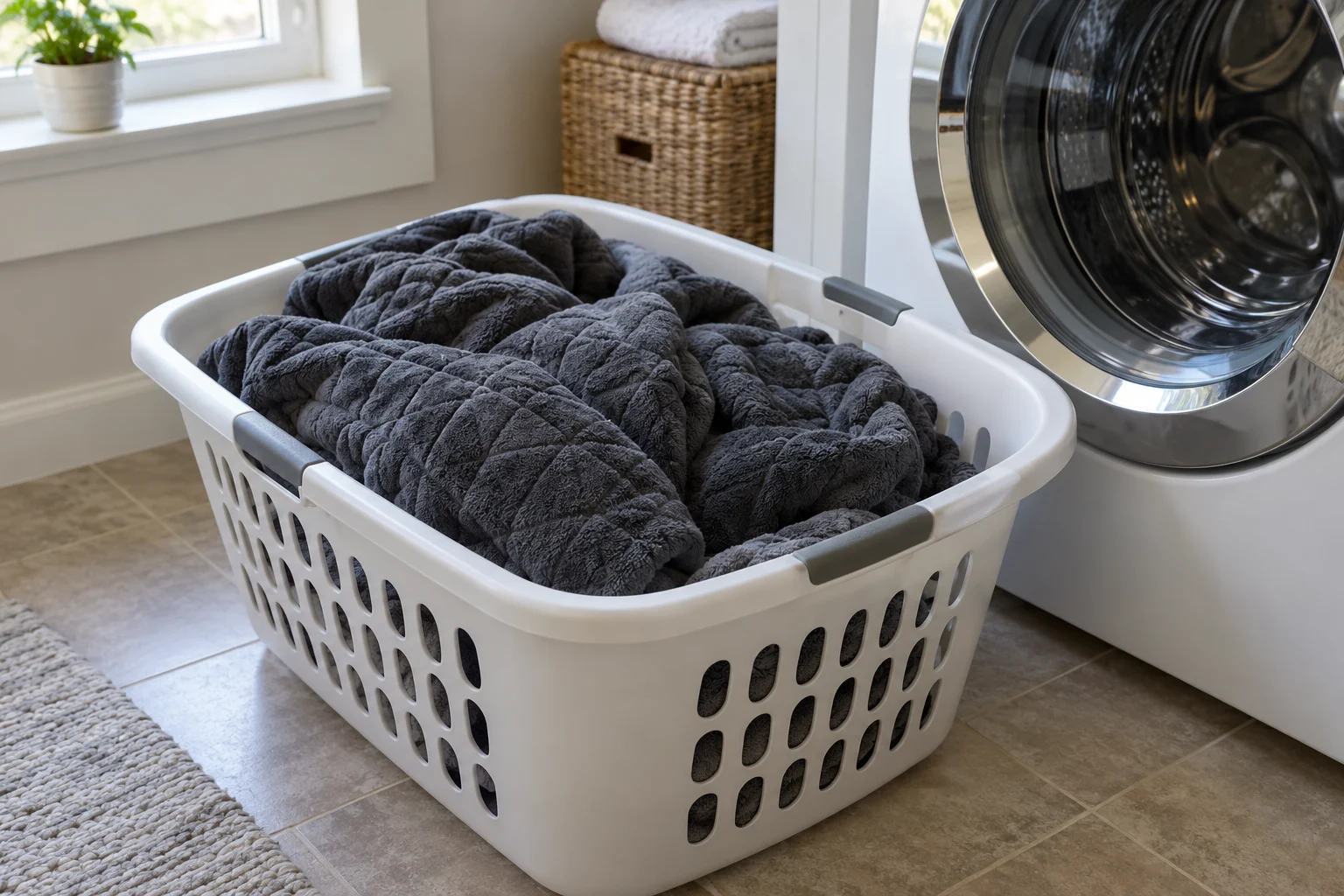
Move the blanket to its drying setup promptly, supporting its weight from underneath. Gather it into a manageable bundle instead of pulling the whole load by one edge.
A sturdy laundry basket can help with the transfer. If the wet blanket is too heavy to lift comfortably, get help rather than wrestling it across the room.
Follow the drying method below that matches your blanket.
How to Hand Wash a Weighted Blanket Without Wrestling It
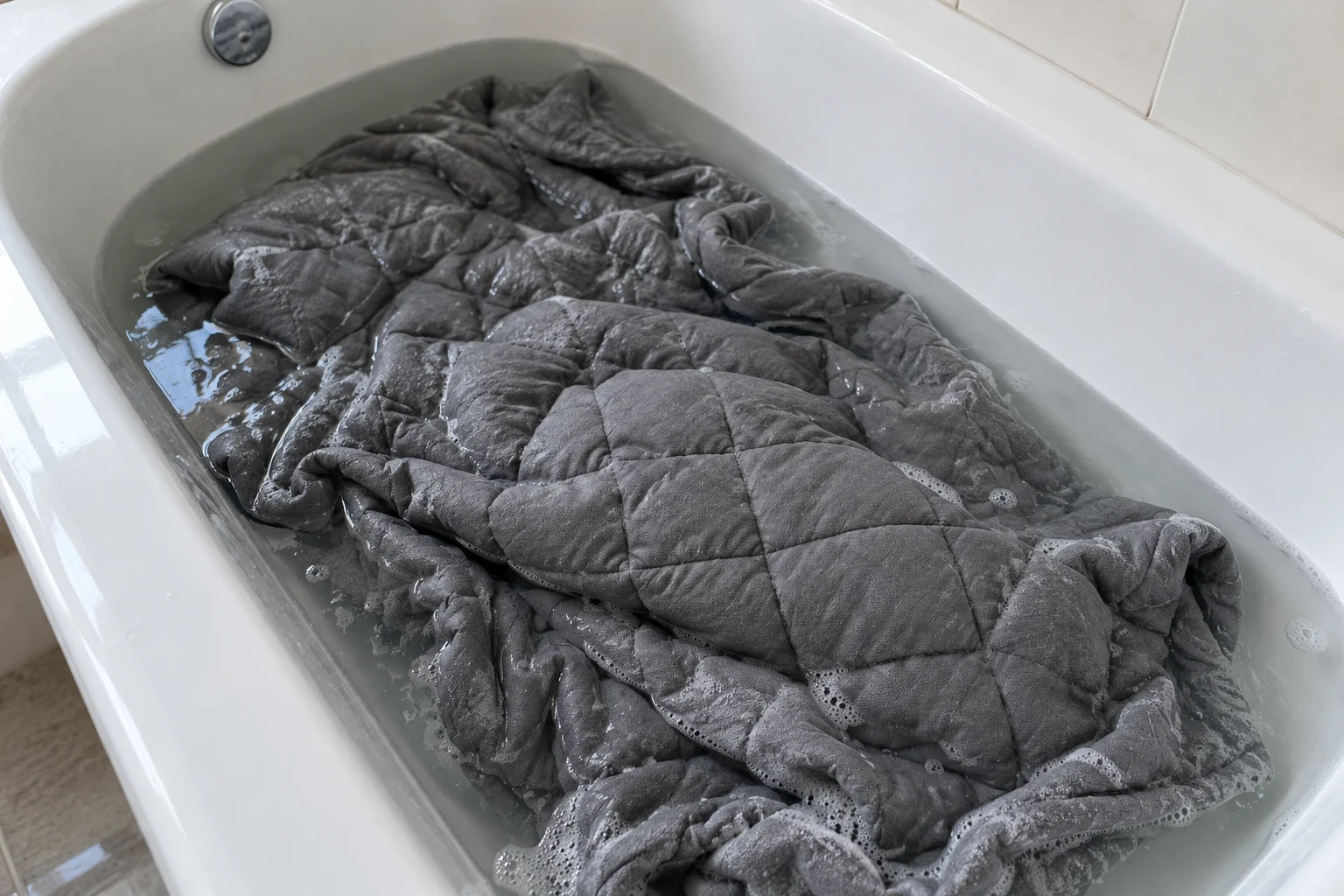
Hand washing works for blankets approved for immersion, provided you can safely manage their wet weight. It can be a useful option when machine washing is unsuitable, but it still requires a proper drying setup.
For the L’AGRATY weighted blanket, a gentle hand wash is the way to go. Press out the excess water without twisting, then hang it to dry with its weight evenly supported.
For a hand-washable blanket:
- Prepare the water. Fill a clean tub with cold or lukewarm water, as permitted by the blanket’s instructions. Mix in a measured amount of suitable liquid detergent.
- Wash gently. Submerge the blanket and press the fabric through the water. Work across it gradually without pulling the seams or twisting the corners.
- Rinse thoroughly. Drain the soapy water and refill with clean water. Gently press the blanket through each rinse until the detergent is removed.
- Press out excess water. Let the tub drain, then press the blanket against the bottom to release water. Support it from underneath when moving it to the approved drying setup.
Do not wring the blanket like a dishcloth. Twisting puts concentrated pressure on wet fabric and stitching.
For blankets that permit it, clean towels can help absorb remaining moisture through gentle pressing. Replace soaked towels rather than leaving the blanket sitting in them.
Note: A “spot clean only” blanket should not be submerged in the bathtub. Gentle movement cannot protect a filling that is damaged by soaking.
Just One Spill? How to Spot-Clean a Weighted Blanket
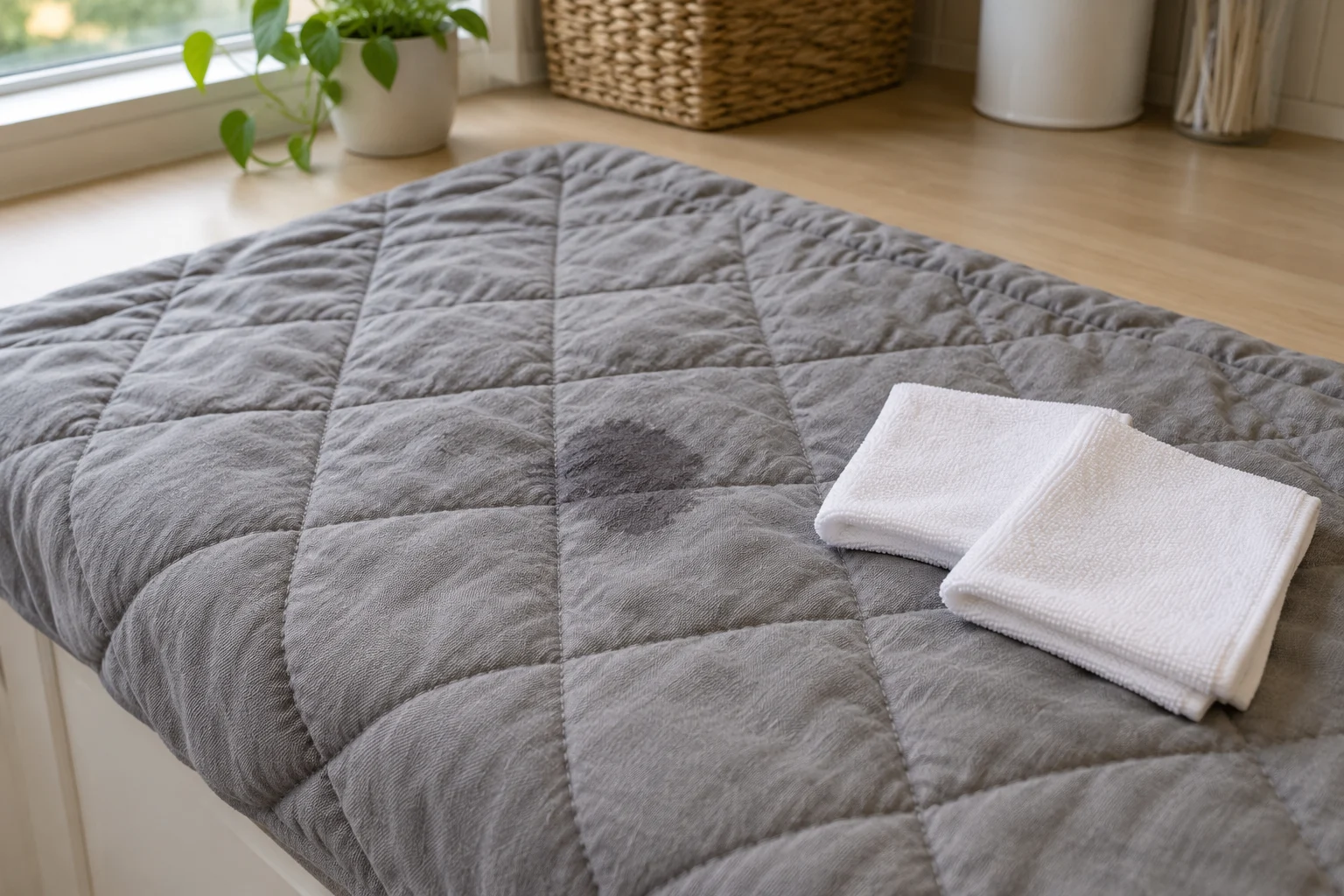
A small surface stain can often be treated without washing the entire blanket. Deal with it promptly using the spot-cleaning method permitted for the fabric.
Blot fresh liquid with a clean, dry cloth. Press and lift rather than rubbing the spill across a larger area.
The USANOOKS White Microfiber Cleaning Cloths are handy here: use one for absorbing the spill and another for removing cleaning residue. Keep the motion gentle, especially on textured fabric that could catch on a cloth.
For fabric that allows detergent-based spot cleaning, lightly dampen a cloth with a diluted, suitable liquid detergent solution. Work gently on the mark, then use a separate damp cloth to remove the residue. Keep moisture localized and let the area dry completely.
A spill that has soaked into the filling needs more than a surface wipe. Use the blanket’s permitted full-cleaning method, or a professional service appropriate to its care requirements.
A scented spray may cover an odor, but it does not remove dirt or moisture trapped inside.
How to Dry a Weighted Blanket Without Stretching or Clumping
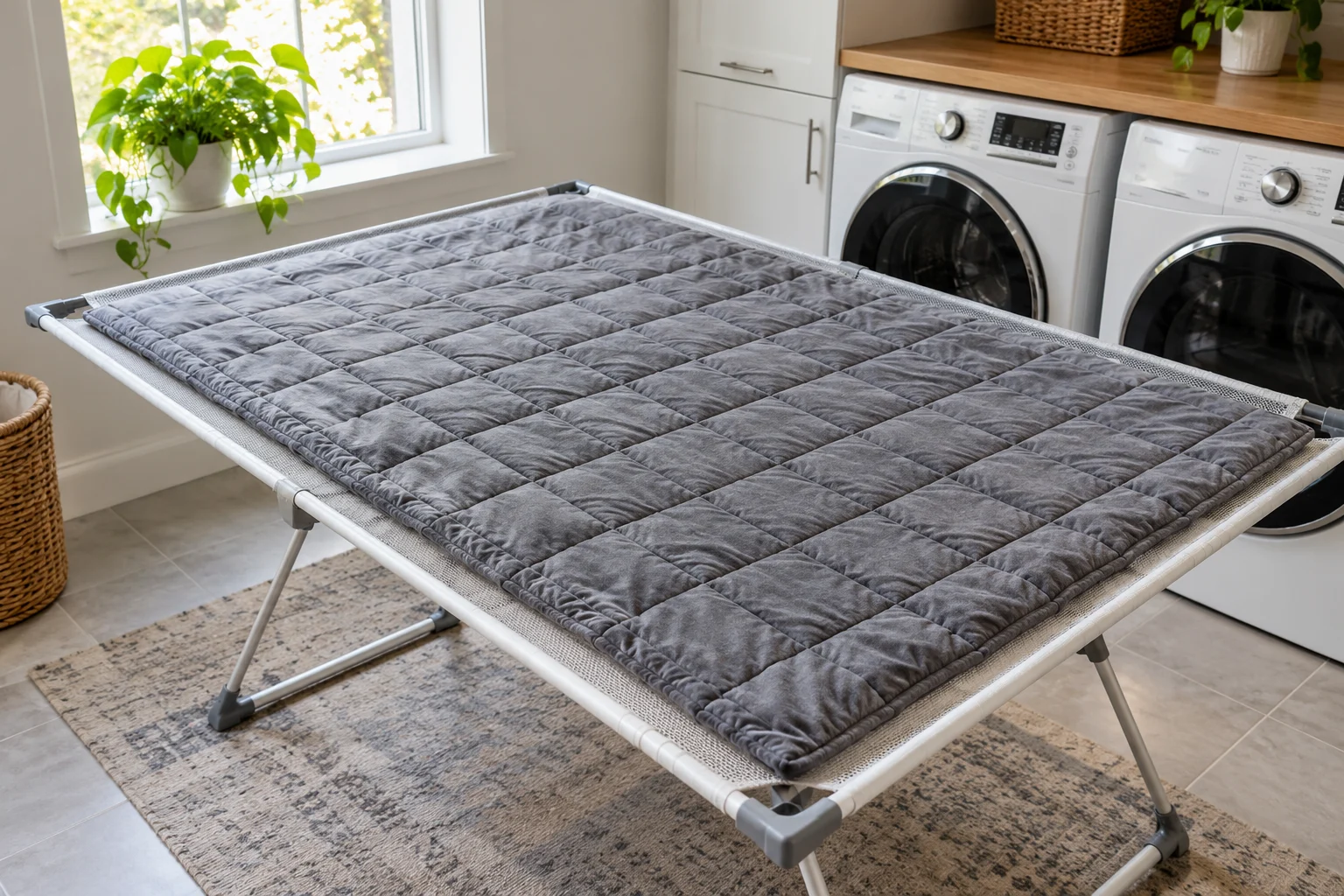
Use the drying method approved for your blanket, and dry it completely before use or storage. Air drying and tumble drying are not interchangeable for every design.
Some quilted blankets suit supported flat drying. Others permit hang drying. Some washable knitted blankets need low-heat tumble drying because their thick construction dries too slowly when laid out.
Air Drying: Spread the Weight and Keep Air Moving
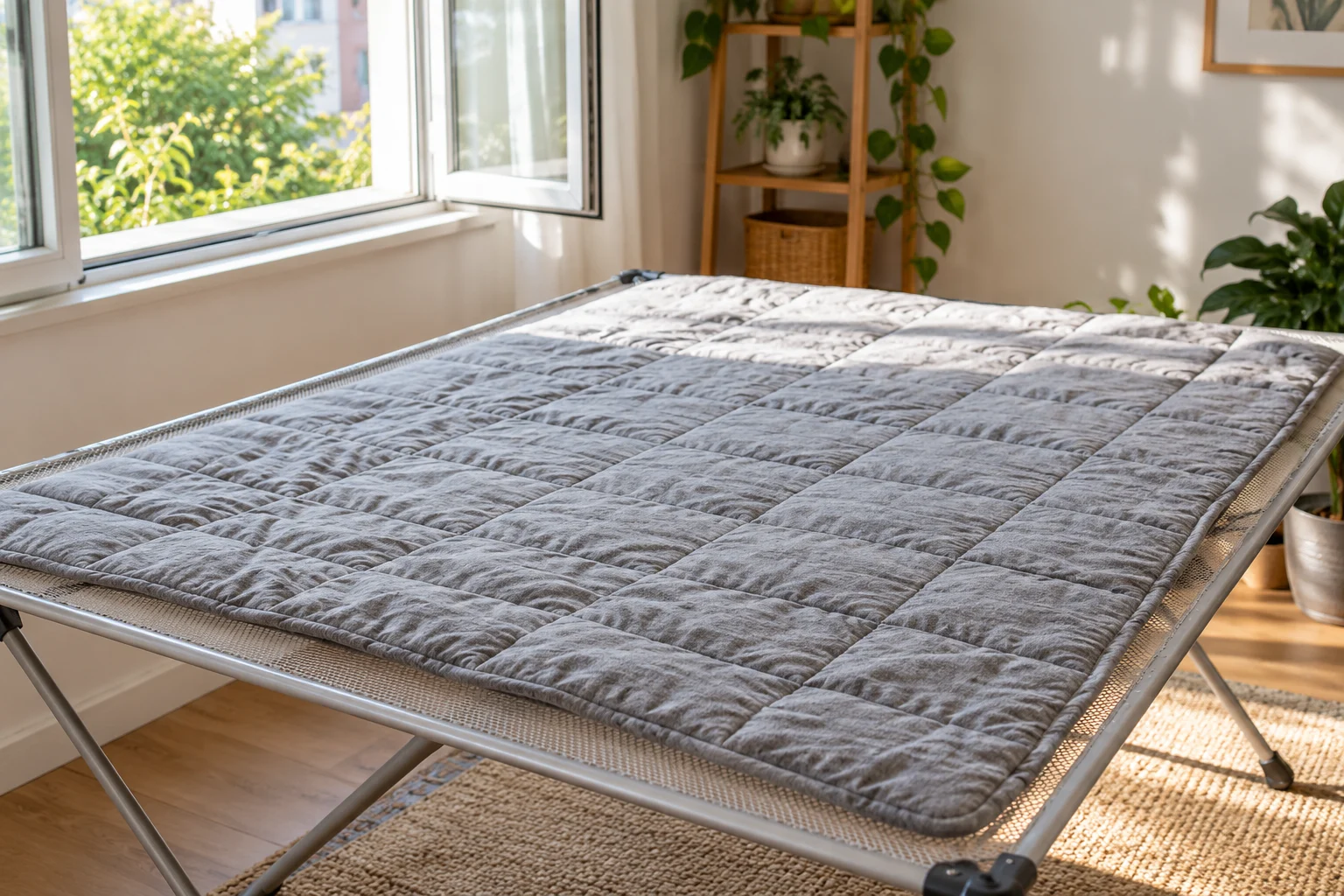
For a blanket approved for flat drying, use a clean, supportive surface with airflow around it. Avoid bunching several layers together. Reposition the blanket as it dries and replace wet towels underneath it.
The Unkqan 79-Inch Clothes Drying Rack is useful for hanging a washable cover separately. Its three extendable rods provide room to spread lightweight bedding, and it folds for storage after laundry day.
This rack is a hanging design, not a flat drying platform. Keep flat-dry-only inserts on an appropriate flat support.
For blankets specifically approved for hang drying, such as the linked L’AGRATY model, distribute the weight over suitable support rather than suspending the entire wet load from clips or one corner.
Drying time varies with the material, thickness, and room conditions. Give the blanket the time it needs rather than planning around a fixed number of hours.
Tumble Drying: Use the Approved Heat Setting
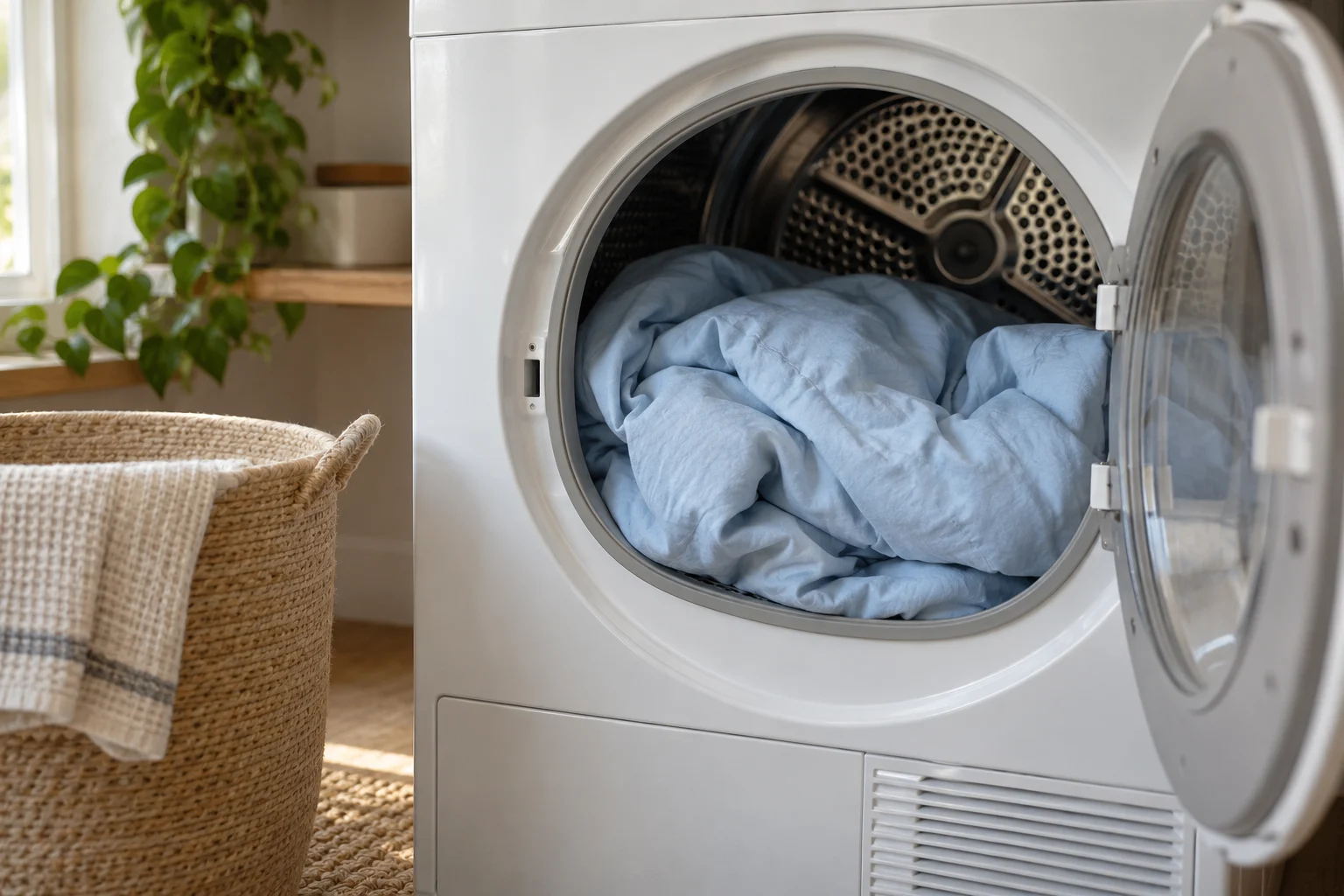
Tumble dry only when the blanket permits it, using its specified setting and a suitable dryer. Low or no heat is common, but the instructions for that blanket take priority.
Clean the lint filter and leave enough room for the blanket to tumble. If it needs repositioning, stop the machine before adjusting it.
For a removable cover that allows tumble drying, Handy Laundry Wool Dryer Balls are an optional addition to help separate the fabric as it turns. The linked pack contains four wool balls.
Keep them optional for the weighted insert itself. Use dryer balls with the insert only when its care instructions allow them, and do not rely on them to redistribute filling or repair clumps.
A thick blanket may need additional drying time. Turning up the heat to hurry it along can damage materials that require gentle care.
Still Damp in the Middle? Keep Drying
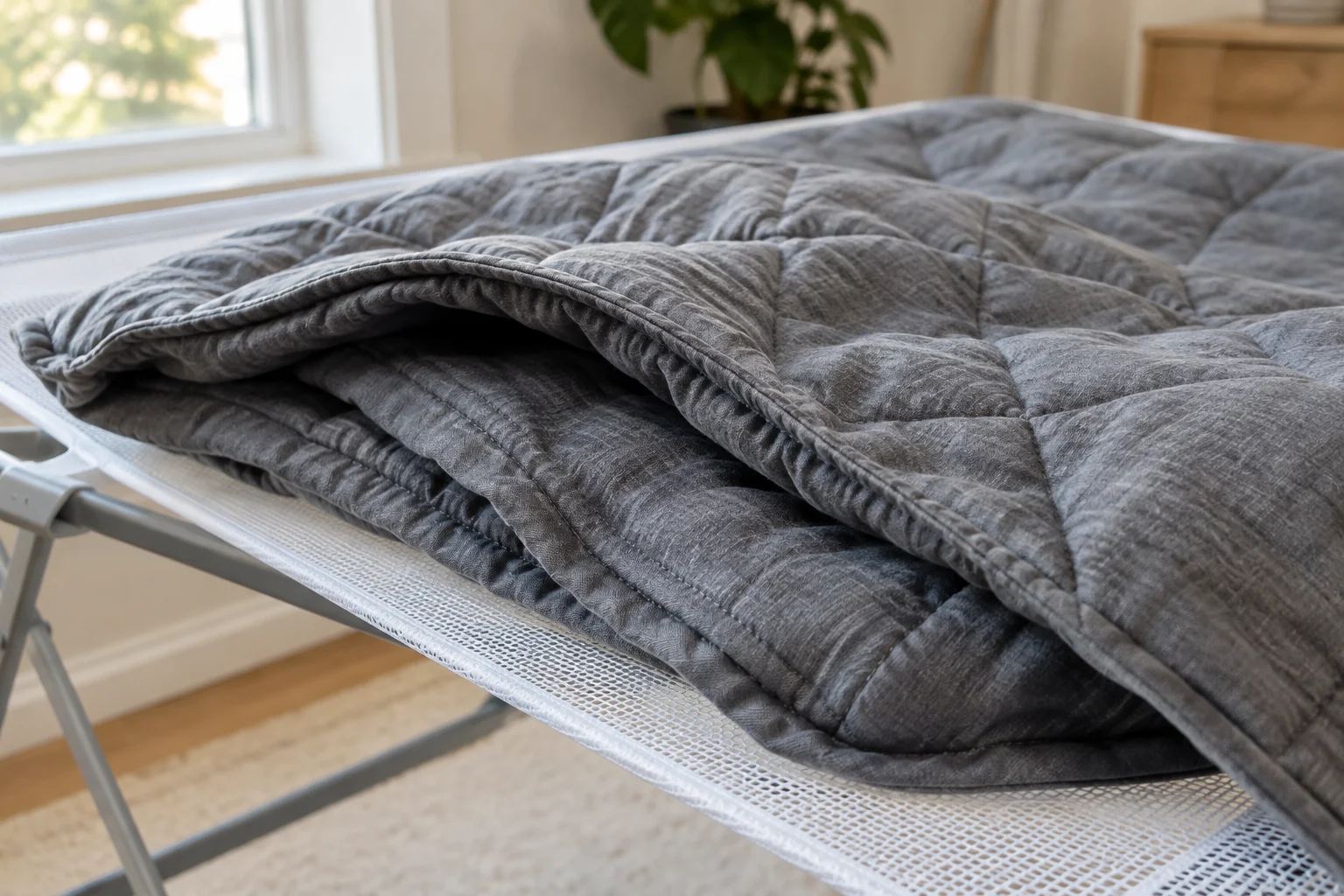
A dry outer surface does not prove the whole blanket is dry. Feel along thick sections, seams, edges, and any areas that were folded during drying.
After tumble drying, let the blanket cool enough to assess it properly. If you find remaining dampness, continue with its permitted drying method.
Keep the cover off until the insert is completely dry. Folding or covering damp bedding traps moisture where it is hardest to notice.
How Often Should You Wash a Weighted Blanket?

Wash according to use, direct skin contact, spills, and whether a cover protects the insert. A blanket used every night without a cover collects more body oils than one brought out for an occasional film.
| How you use it | A practical cleaning routine |
|---|---|
| Every night without a cover | A washable blanket may need cleaning every few weeks, with earlier treatment for spills or soiling |
| Every night with a washable cover | Wash the cover regularly with your bedding routine; clean the insert when needed |
| Occasional sofa use | Clean as needed; a few washes a year may be enough for a washable blanket that stays protected |
| A fresh spill or visible dirt | Treat it promptly using the permitted cleaning method |
| Pets regularly share the blanket | Remove loose hair and clean the cover more frequently as needed |
A removable cover is the easiest way to reduce how often you need to wash the heavy insert. The YnM Cooling Duvet Cover makes sense for a compatible 48-by-72-inch insert, giving you a machine-washable outer layer to handle everyday contact.
While the cover is in the wash, it is a good opportunity to give the rest of the bed some attention. Our guide to washing pillows without ruining them explains another bedding job that benefits from careful washing and thorough drying.
The Laundry Mistakes Worth Skipping
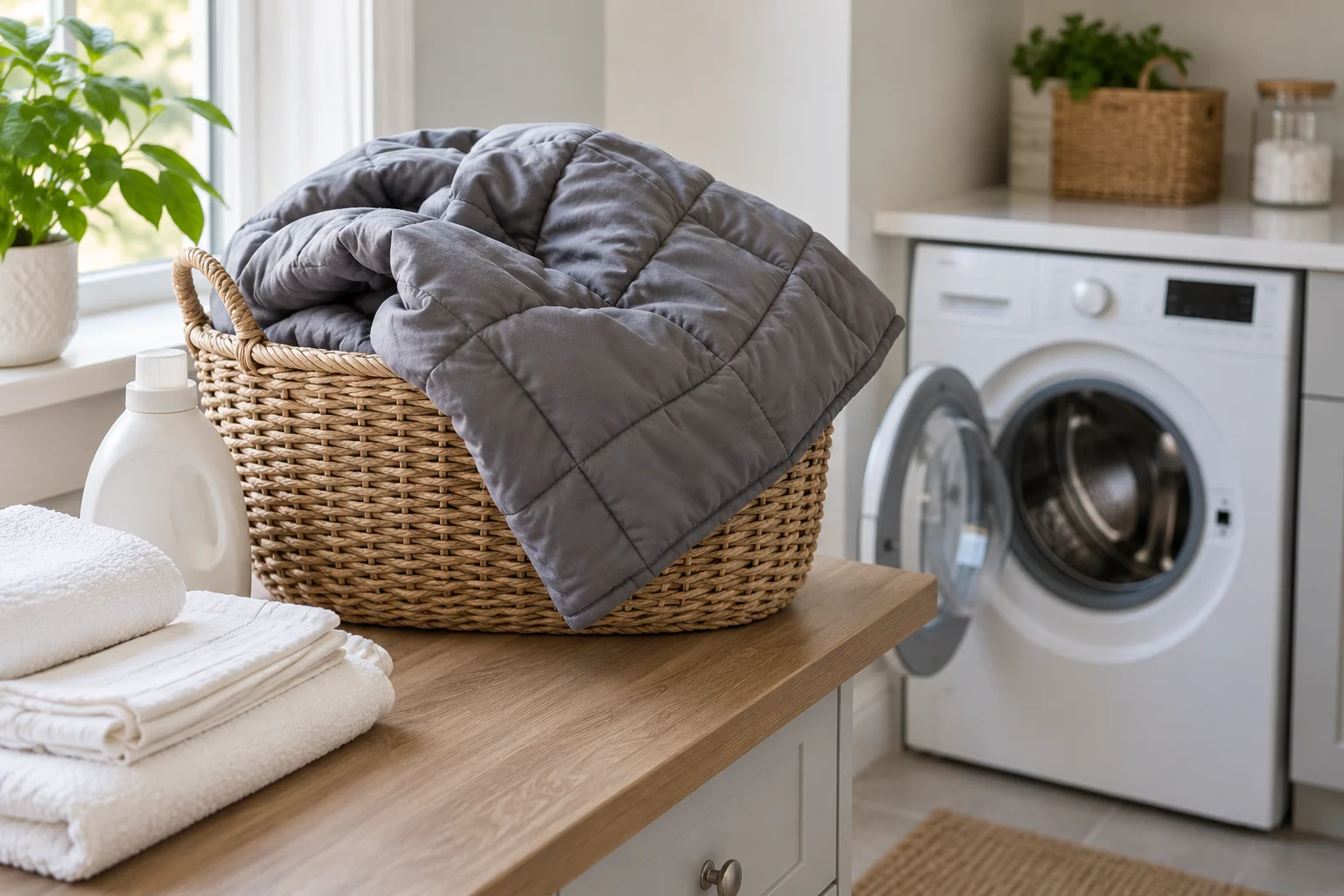
Protect the blanket by avoiding overload, rough handling, and incomplete drying. This quick checklist covers the habits that matter most:
- Give the blanket enough room in the washer.
- Keep the cover’s care instructions separate from the insert’s.
- Use detergent in the correct amount and form for the cleaning method.
- Press out water without twisting or wringing.
- Use only the permitted wash and drying temperatures.
- Support wet weight during lifting and drying.
- Dry the blanket completely before covering, folding, or storing it.
- Reserve dry cleaning for blankets whose care instructions allow it.
Once everything is dry, put the cover back on and fasten its interior ties. Those ties help keep the insert positioned inside the cover, so you are less likely to end up with an empty corner and a bulky middle.
For a bed that is easy to put back together, our guide to layering bedding for a cozy, manageable bed keeps the everyday setup simple.
Weighted Blanket Washing Questions, Answered
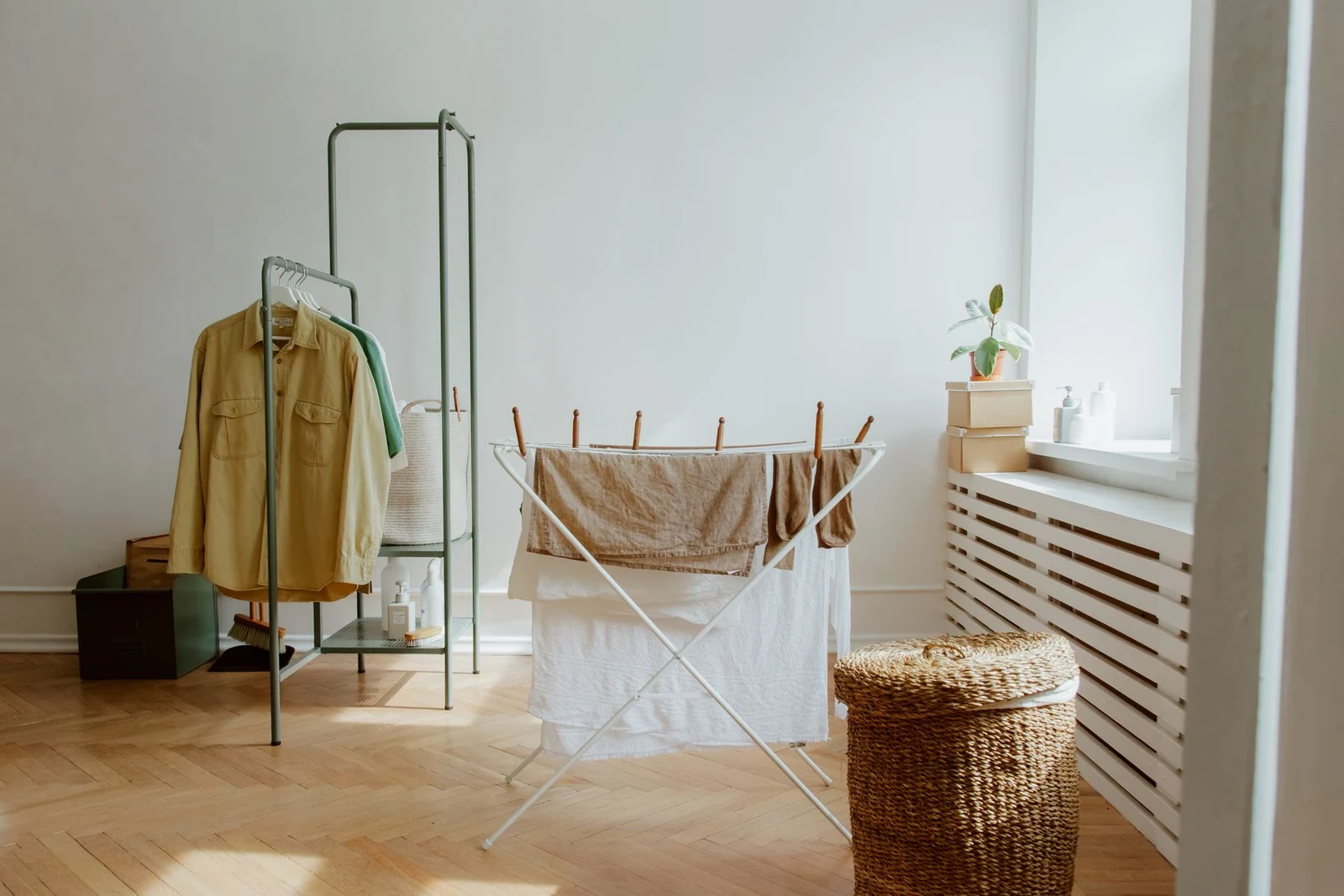
The blanket’s construction and care instructions determine the method; its weight also determines which equipment can handle the job. Here are the details that tend to cause confusion.
Can You Wash a 15-Pound or 20-Pound Weighted Blanket at Home?
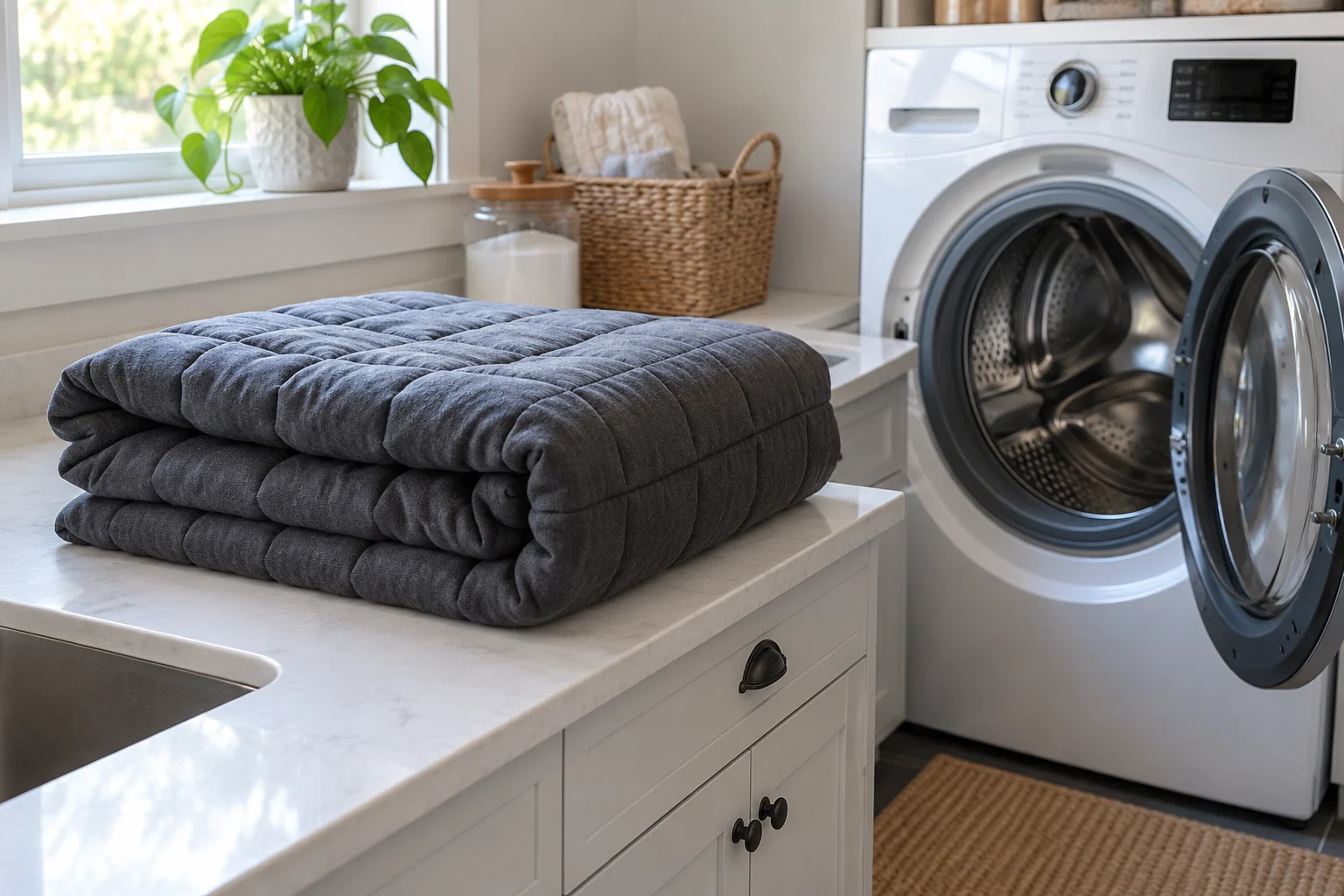
Sometimes, but neither weight is automatically safe for every home washer. The blanket must be machine washable, and the appliance must accommodate its weight and bulk on the required cycle.
A compact washer and a large-capacity model can have very different limits. Even an appliance’s maximum load rating may not apply to its delicate cycle.
For a machine-washable blanket beyond the home washer’s limits, suitable commercial laundry equipment is the practical option.
Can a Weighted Blanket Go in the Dryer?

Yes, when the blanket is labeled for tumble drying and the dryer can accommodate it. Use the specified heat setting and allow enough time for complete drying.
An air-dry-only blanket stays out of the dryer. Some washable knitted designs, meanwhile, specifically call for tumble drying. The same method does not suit every construction.
Can You Wash a Weighted Blanket With Glass Beads?
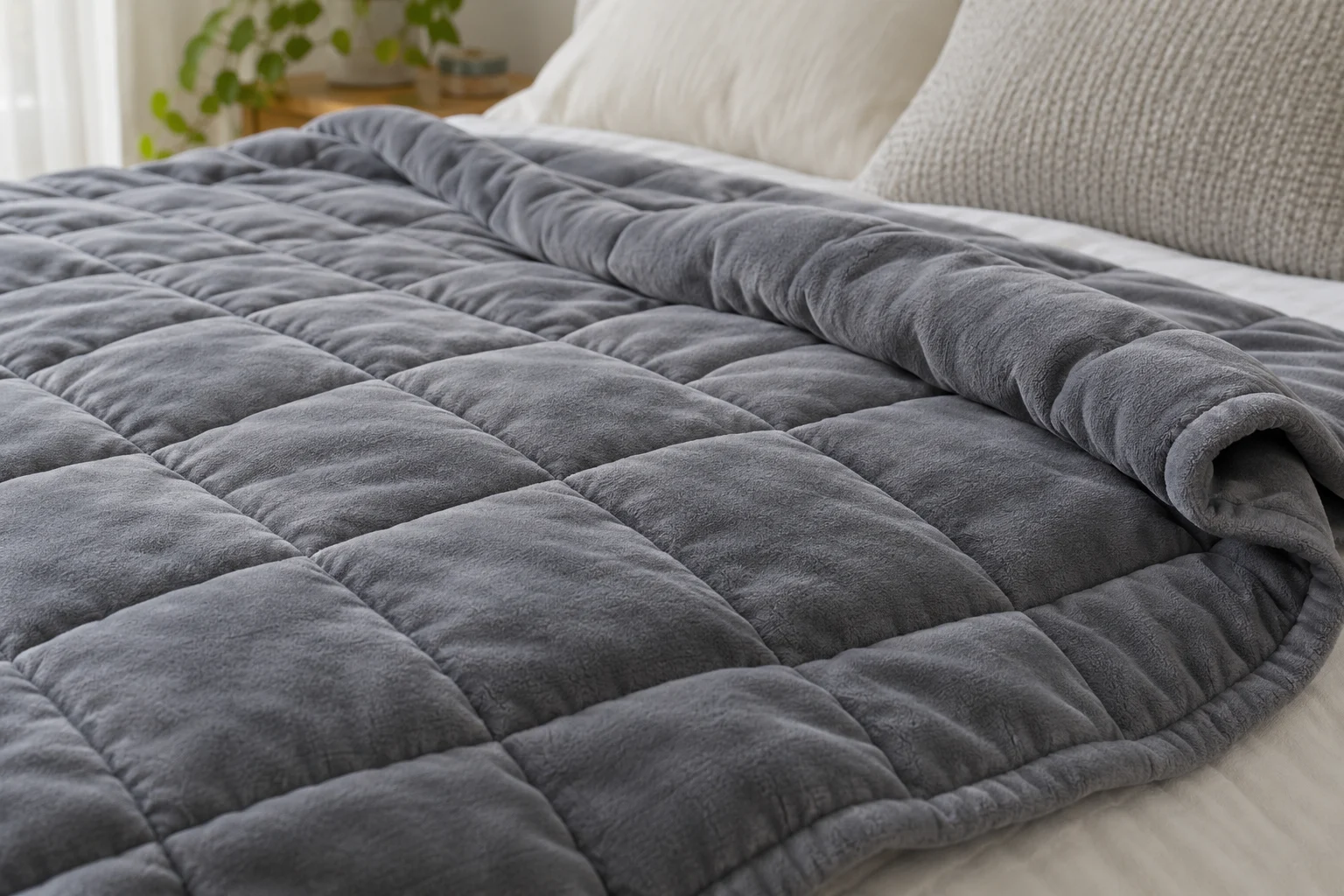
Yes, if the complete blanket is washable. The presence of glass beads does not establish whether the fabric, lining, and seams can tolerate a machine cycle.
Use the washing method approved for the whole blanket. Repair damaged pockets before laundering so filling cannot escape.
What If the Care Label Is Missing?
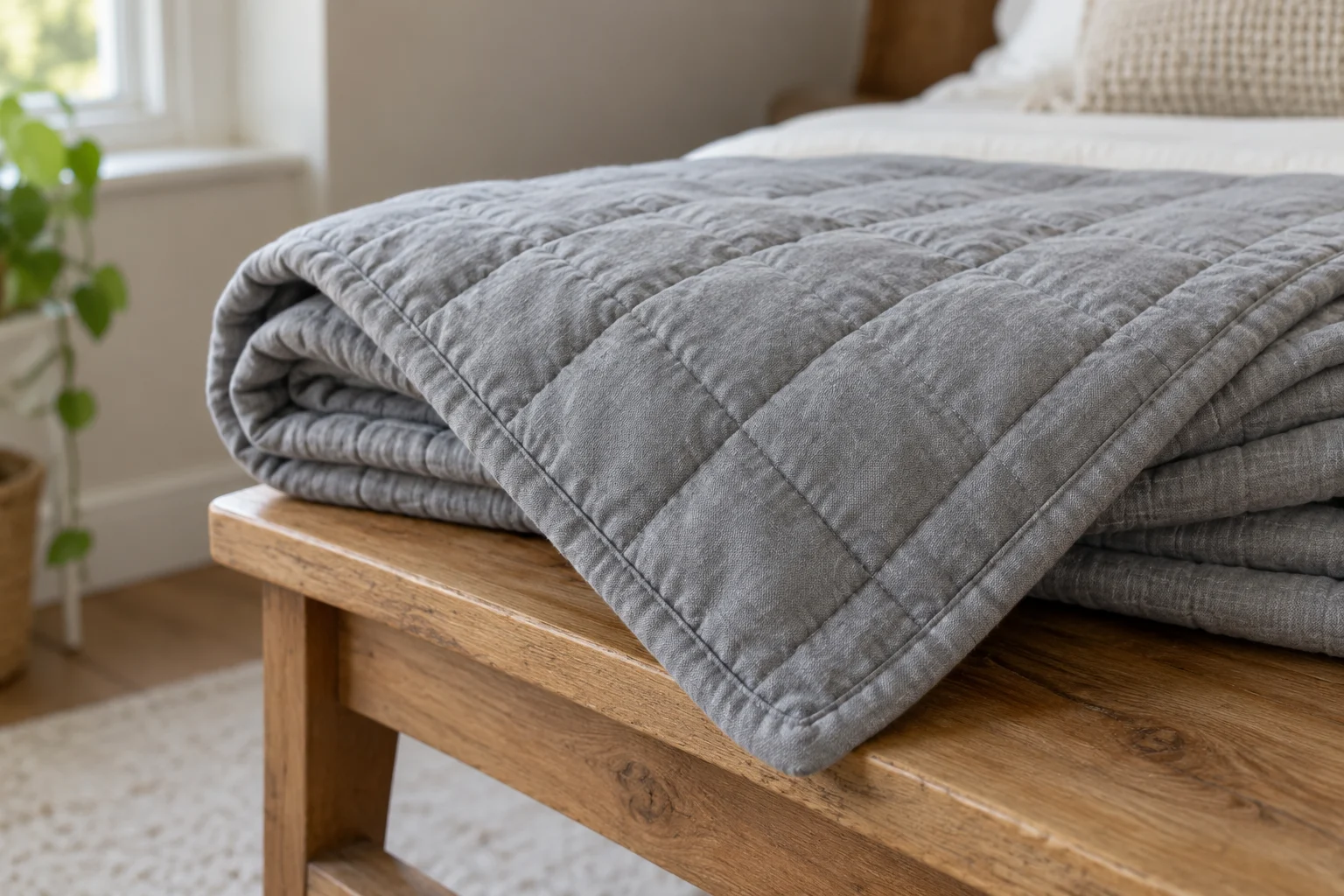
Avoid a full wash until the exact model’s care instructions are available. Appearance alone cannot identify hidden filling, coatings, or construction details.
The original product manual or saved care information can establish the permitted method. Without reliable model-specific instructions, neither soaking nor dry cleaning is a safe assumption. Keep the blanket dry and remove loose surface debris gently in the meantime.
Does a Weighted Blanket Need Dry Cleaning?
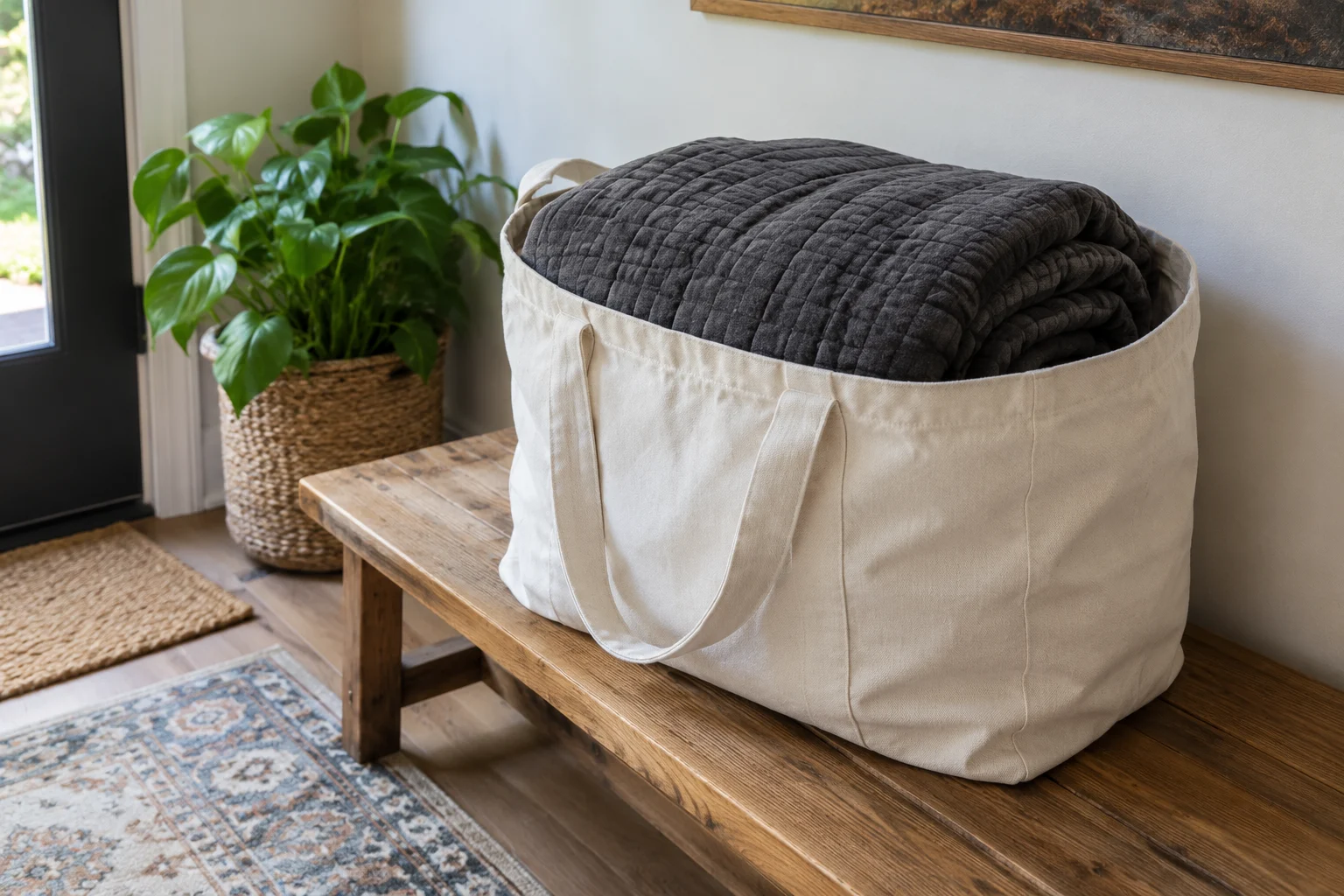
Only when dry cleaning is appropriate for that blanket’s care requirements. A blanket that is too large for your washer may simply need a larger washing machine.
Professional laundry service and dry cleaning use different processes. A machine-washable blanket needing commercial equipment does not automatically need solvent-based cleaning.
Useful Picks for Weighted Blanket Care
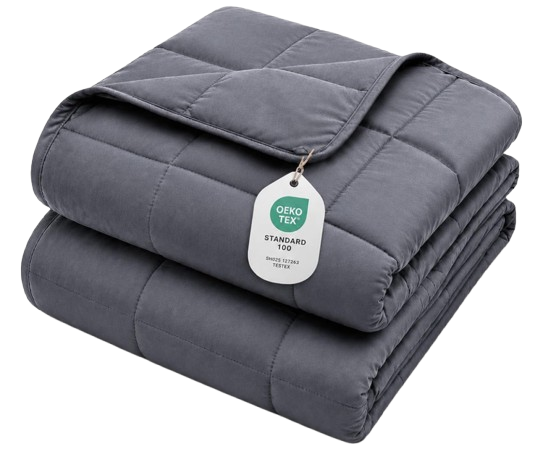 L’AGRATY 15-Pound Weighted BlanketA dark-grey, 48-by-72-inch microfiber blanket with glass beads. Its listed care recommendation is hand washing and hang drying.
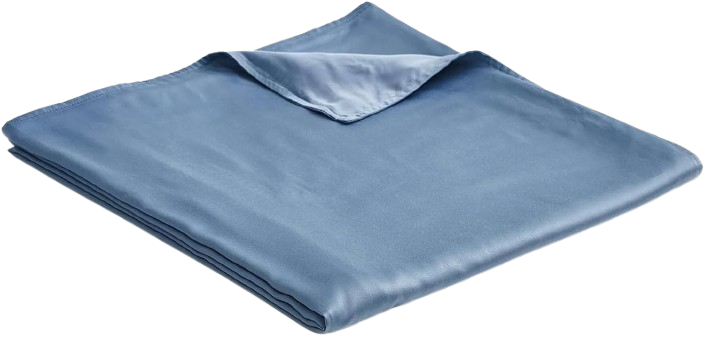 YnM Cooling Duvet CoverA machine-washable blue-grey rayon cover with a zipper and 16 interior ties for a compatible 48-by-72-inch insert.
 Tide PODS Free & GentleDetergent pods without added dyes or perfumes for suitable machine-washable bedding. Use intact in the drum.
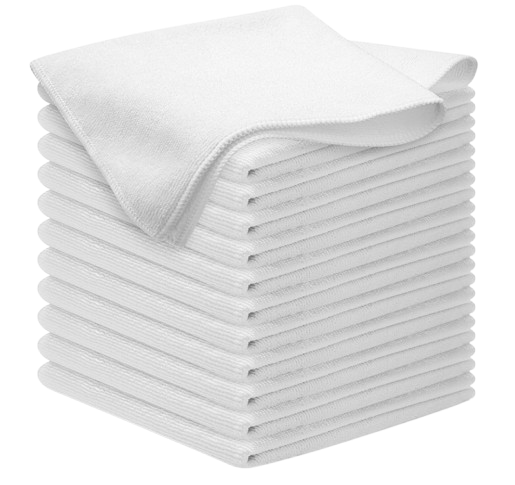 USANOOKS White Microfiber Cleaning ClothsReusable white microfiber cloths for gently blotting spills and removing cleaning residue.
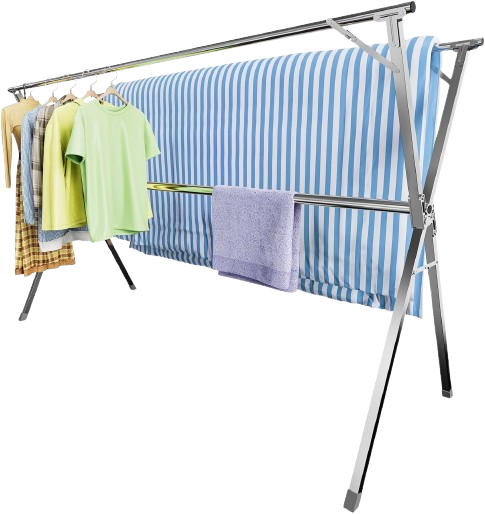 Unkqan 79-Inch Clothes Drying RackA folding rack with extendable rods for hanging washable covers and suitable laundry. This is a hanging design.
 Handy Laundry Wool Dryer BallsFour wool dryer balls for suitable tumble-dried covers. Use with weighted inserts only when their care instructions permit.
Sources and further reading
- How to wash weighted blankets — Whirlpool