Insulated Curtains to Keep Heat Out: What to Buy for a Cooler Room

There’s usually one room that gets uncomfortable before the rest of the house. The living room after lunch, perhaps, or the bedroom that catches the afternoon sun and still feels warm when it’s time for bed.
Curtains can help. The useful details are less obvious than the color and fabric, though. A thick curtain, a blackout curtain, and a curtain with reflective backing can do different things at a sunny window.
The quick answer
- A light-colored or reflective window-facing backing helps curtains reduce incoming summer heat.
- Full coverage and a close fit limit gaps around the window.
- Close curtains before direct sunlight heats the room, especially on the hottest windows.
For a ready-made option, H.VERSAILTEX’s white-lined, linen-look blackout curtains combine several of those features. If the curtains you already own fit well, a summer thermal liner is another practical route. The right choice depends mainly on whether you need new panels, more darkness, or an extra layer behind fabric you already love.
Do Insulated Curtains Really Make a Difference?
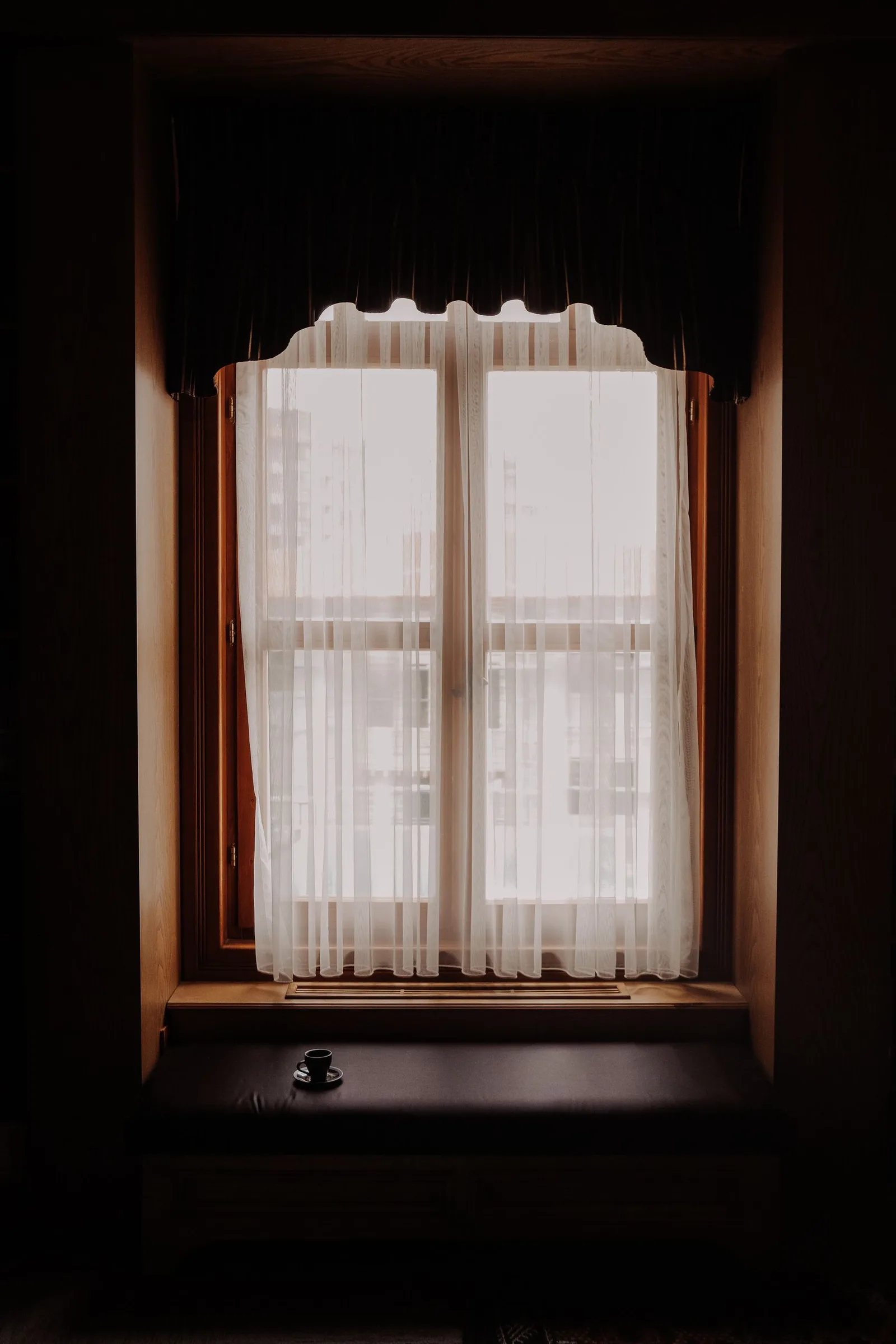
Suitable insulated curtains can reduce solar heat entering a room and slow heat transfer around the window. The effect depends on the window, its exposure, and how the curtains are fitted.
Sunlight passing through the glass warms the surfaces it reaches. The floor beside the sofa, the desk, and even the bedding can absorb that energy and release warmth into the room.
Curtains limit how much sunlight reaches those surfaces. Reflective backing sends some energy back toward the glass, while insulating construction helps slow heat transfer. Controlling solar heat gain is one way window coverings improve summer comfort, according to the Attachments Energy Rating Council.
That makes a sunny window a sensible place to spend your attention. Curtains will have less effect on heat coming from cooking, appliances, or other parts of the building.
They also won’t actively cool a room that is already hot. Their most useful work happens before the afternoon sun has warmed everything inside.
A realistic expectation: Curtains can improve comfort and reduce incoming heat. The temperature change and energy savings will vary from home to home.
The Lining Matters More Than It Gets Credit For
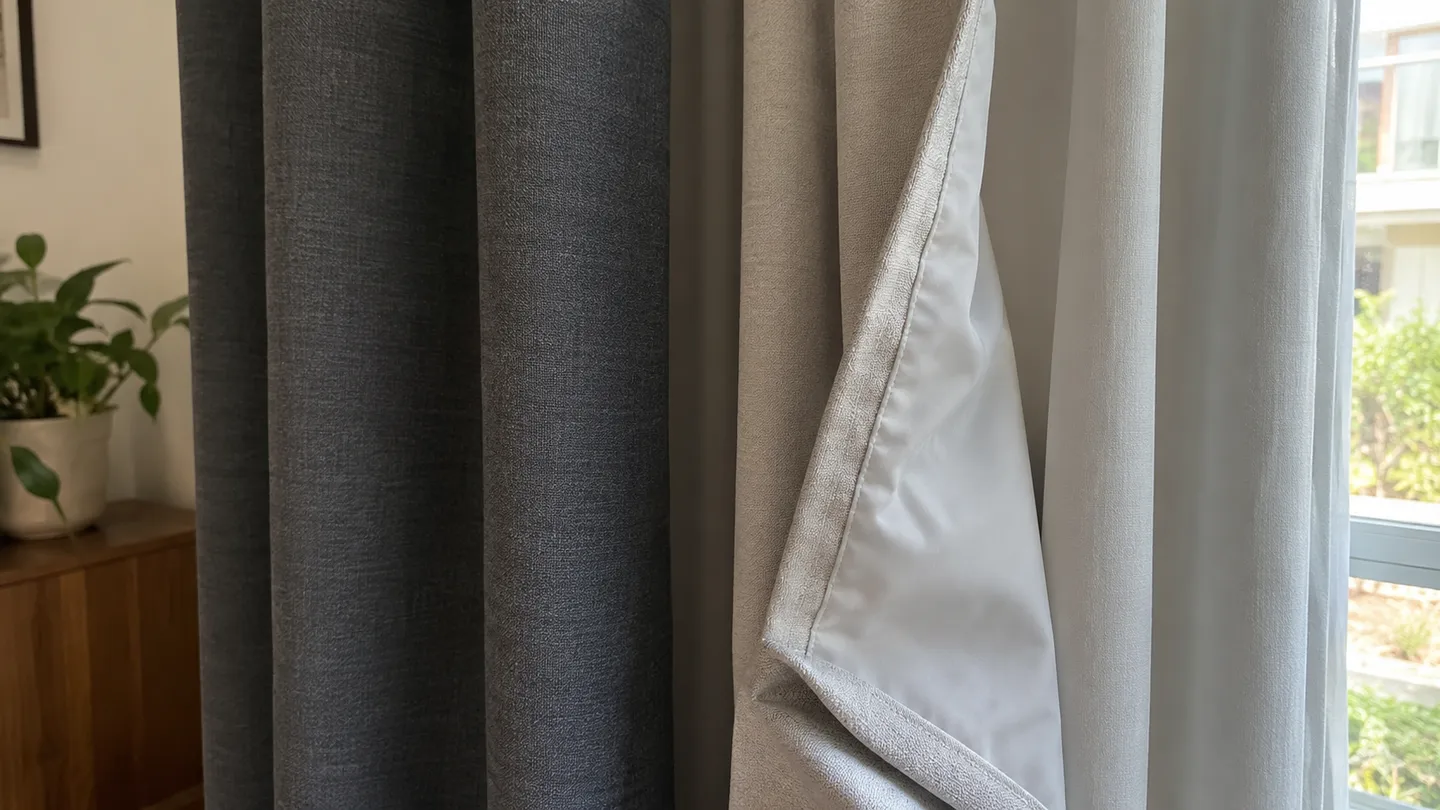
A light-colored or reflective window-facing backing is a useful choice for summer sun. It lets you keep the decorative color you like while giving the window a more suitable surface.
Closely fitted curtains with light-colored blockout backing are recommended in Australian government guidance on windows to help limit summer heat gain.
The distinction matters because the color facing the room and the color facing the glass aren’t always the same.
Dark Curtains Can Still Have a Light Backing
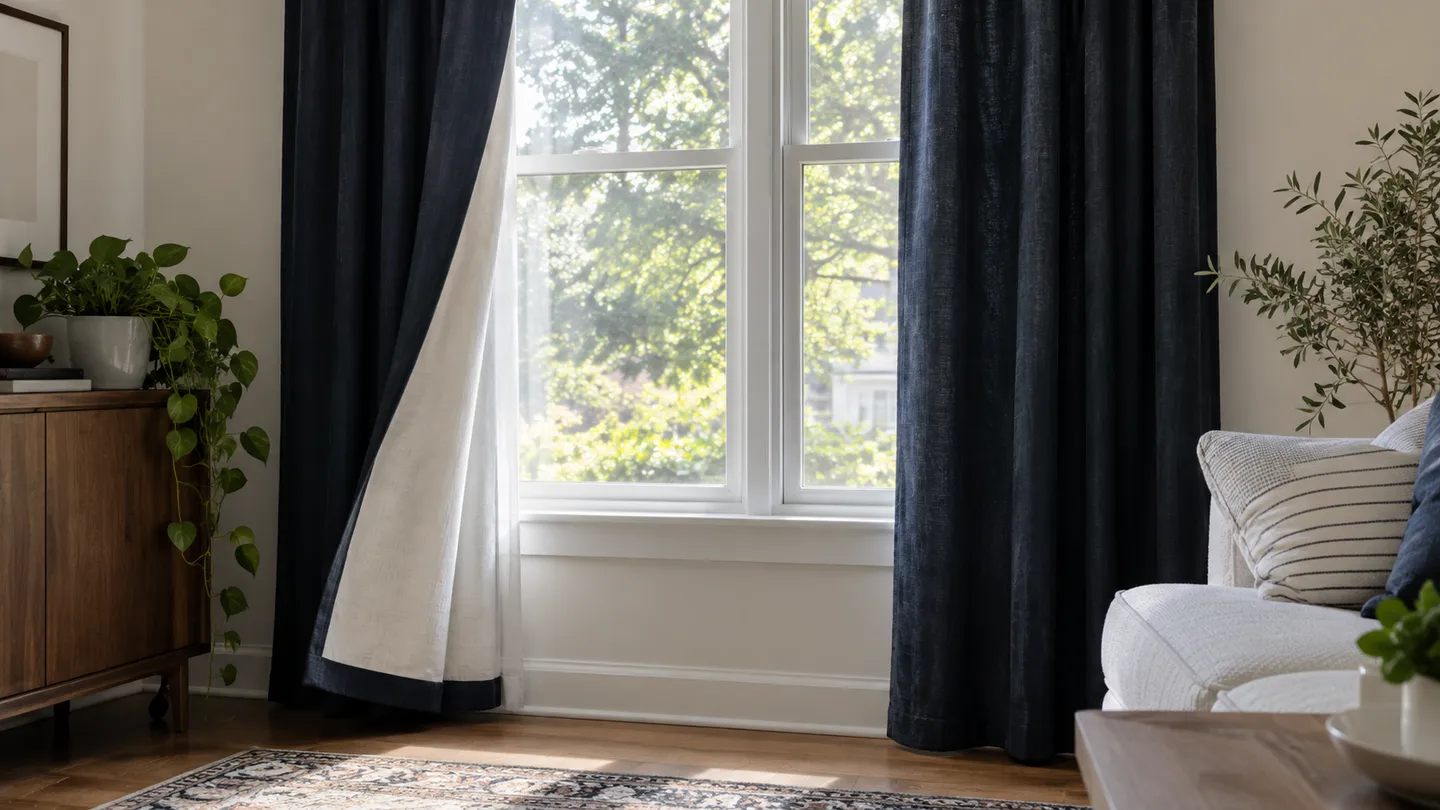
You can have navy, olive, or charcoal curtains with a pale lining. A dark decorative front does not automatically rule out a useful summer curtain.
The reverse is true, too. A white curtain can have a black liner, as NICETOWN’s Willow blackout panels do.
This is why the whole construction matters. The room-facing color contributes to the look you want; the backing has its own job at the window.
Thick Fabric and Reflective Fabric Do Different Jobs
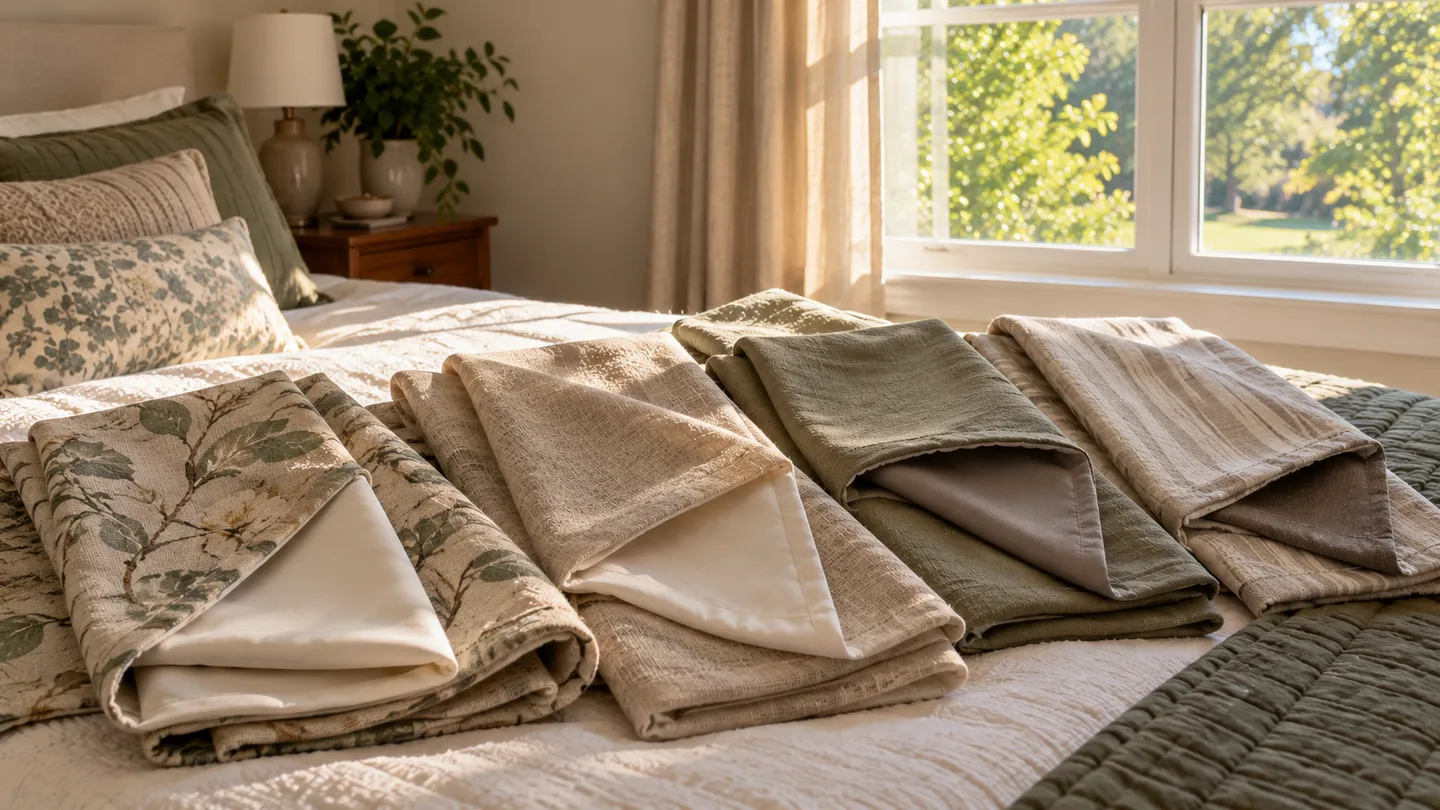
Thickness alone does not establish how well a curtain reflects sunlight. A substantial fabric may provide useful insulation, but its weight is only one part of the design.
A few terms help explain the differences:
- Separate lining: Another layer attached behind the decorative fabric.
- Coated backing: A treatment applied to the fabric, often for light blocking.
- Triple-weave: A woven construction that can include an inner light-blocking yarn. It does not necessarily mean three separate fabric layers.
- GSM: Grams per square meter, which describes fabric weight rather than cooling performance.
For a hot room, the practical combination is suitable backing, insulating construction, and enough coverage. Buying the heaviest curtain available does not guarantee the best result.
Blackout and Thermal Answer Different Questions
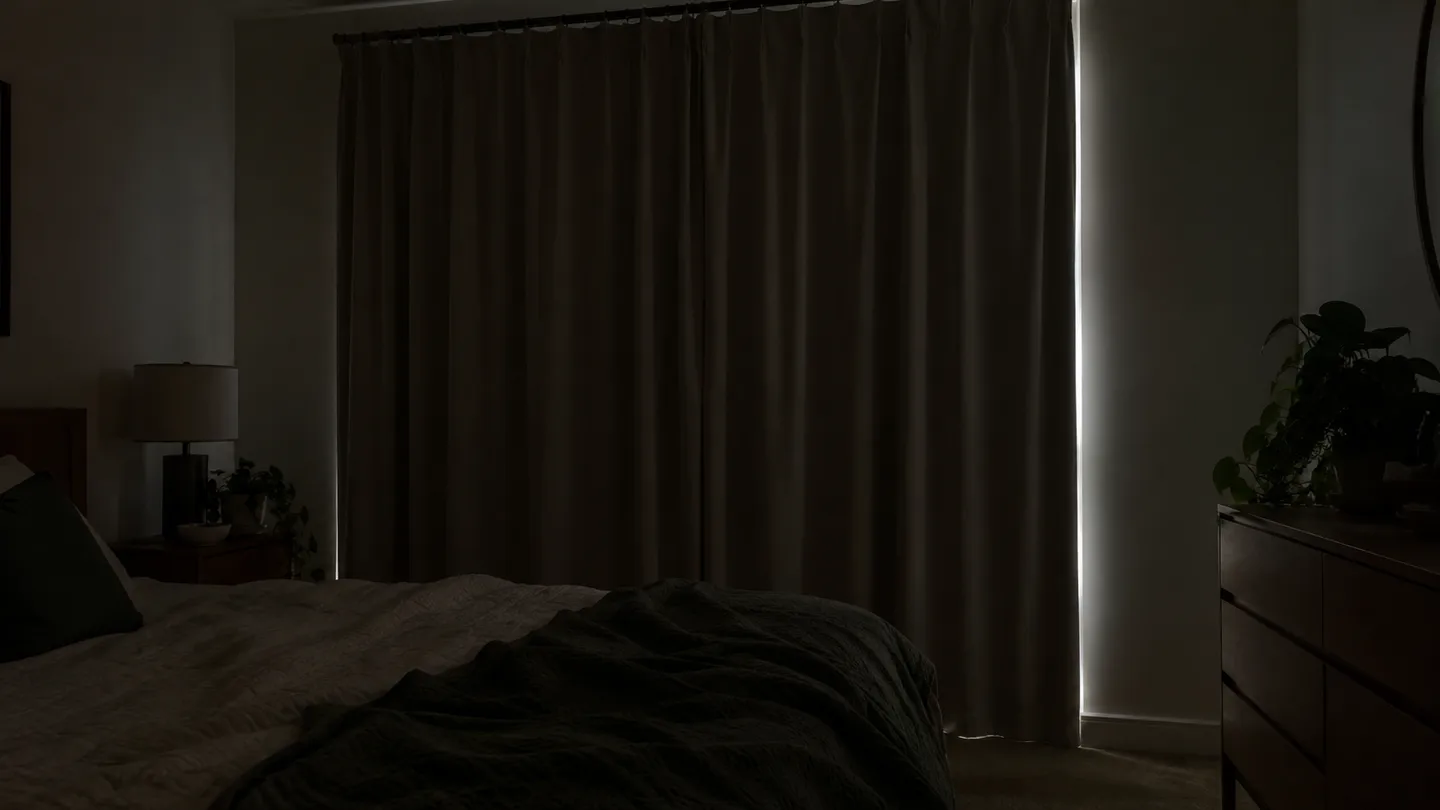
Blackout describes light blocking. Thermal describes an intended insulating function. A curtain can offer both, which is useful in a sunny bedroom.
The confusion comes when a light-blocking percentage is treated as a heat-blocking percentage.
| Curtain type | Main purpose | Where it makes sense |
|---|---|---|
| Thermal or insulated | Slow heat transfer | Rooms where temperature comfort is the priority |
| Blackout | Block light through the fabric | Bedrooms and spaces needing darkness |
| Thermal blackout | Combine insulation and light blocking | Sunny bedrooms and multipurpose rooms |
| Sheer or unlined linen | Soften daylight | A decorative daytime layer alongside heavier curtains |
“100% blackout” does not mean “100% heat blocking.” It also does not mean an installed curtain will eliminate every line of daylight around the window.
Someone sleeping during the day may want blackout fabric and close coverage at the sides. Someone using a living room may prefer separate layers that allow more daylight when the sun is less intense.
Our guide to blackout curtains vs. room-darkening curtains explains those differences in more detail.
Which Insulated Curtains Should You Buy?
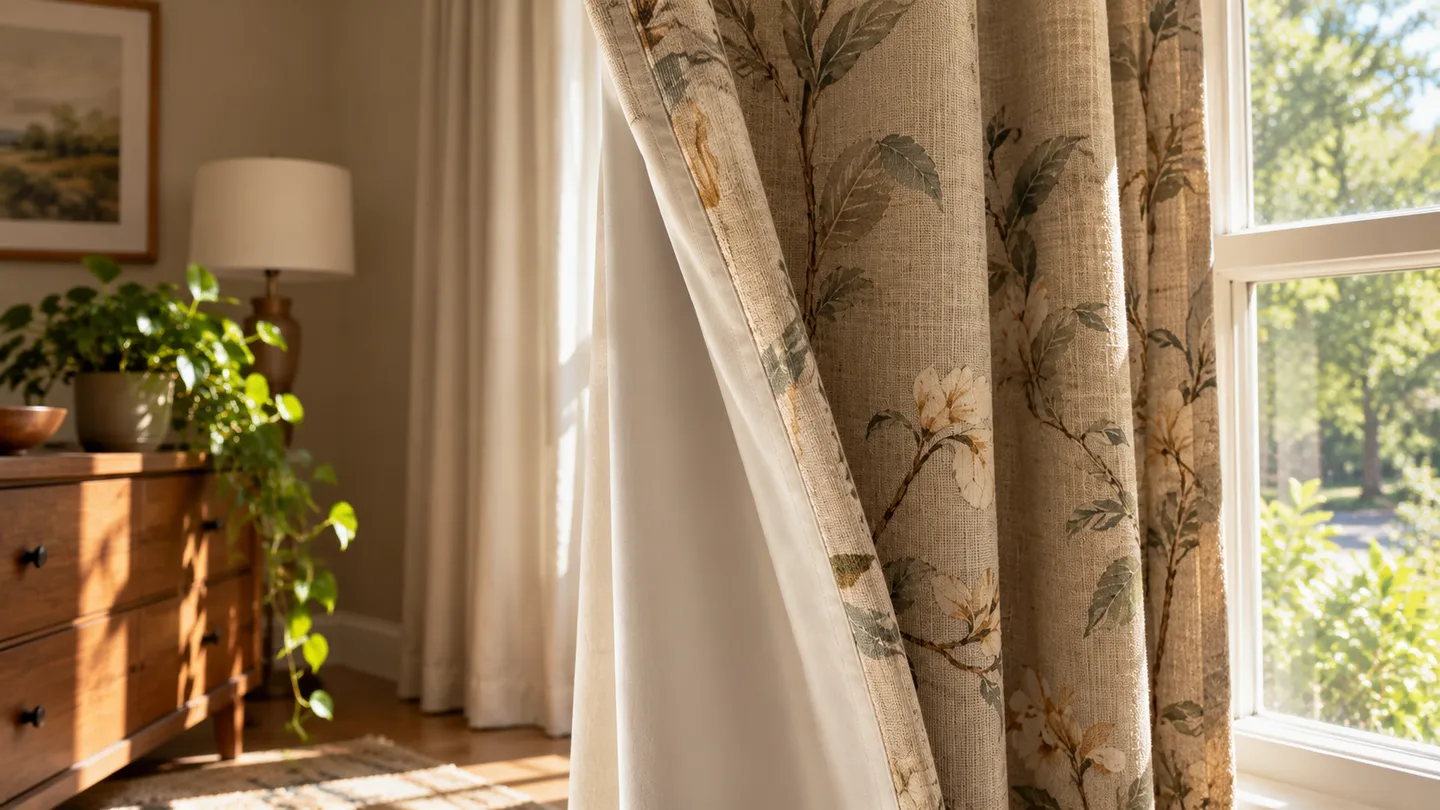
For a sunny room needing new curtains, the H.VERSAILTEX white-lined pair is the most straightforward recommendation here. For existing curtains, the Moondream summer liner provides an alternative without replacing the decorative fabric.
The selections below are based on their documented construction and practical features. They are not rankings from our own temperature tests.
| Your main need | Our recommendation | What it offers |
|---|---|---|
| White backing, darkness, and a textured finish | H.VERSAILTEX Linen Blackout Thermal Insulated White Liner Grommet Top Curtains | White blackout liner, two panels, machine-washable care |
| Extra-wide ready-made panels | Best Home Fashion Wide Basic Blackout Curtain | Single-panel widths of 80 or 100 inches, triple-weave polyester, machine-washable care |
| Bedroom darkness with a washable lined curtain | NICETOWN Willow 100% Blackout Thermal Insulated Ready Made Curtains | A pair of grommet panels with black lining |
| Keeping existing decorative curtains | Moondream Summer Thermal Lining Silver MC0001 | Silver summer liner with a self-gripping attachment; dry-clean only |
For a Sunny Bedroom: H.VERSAILTEX White-Lined Curtains
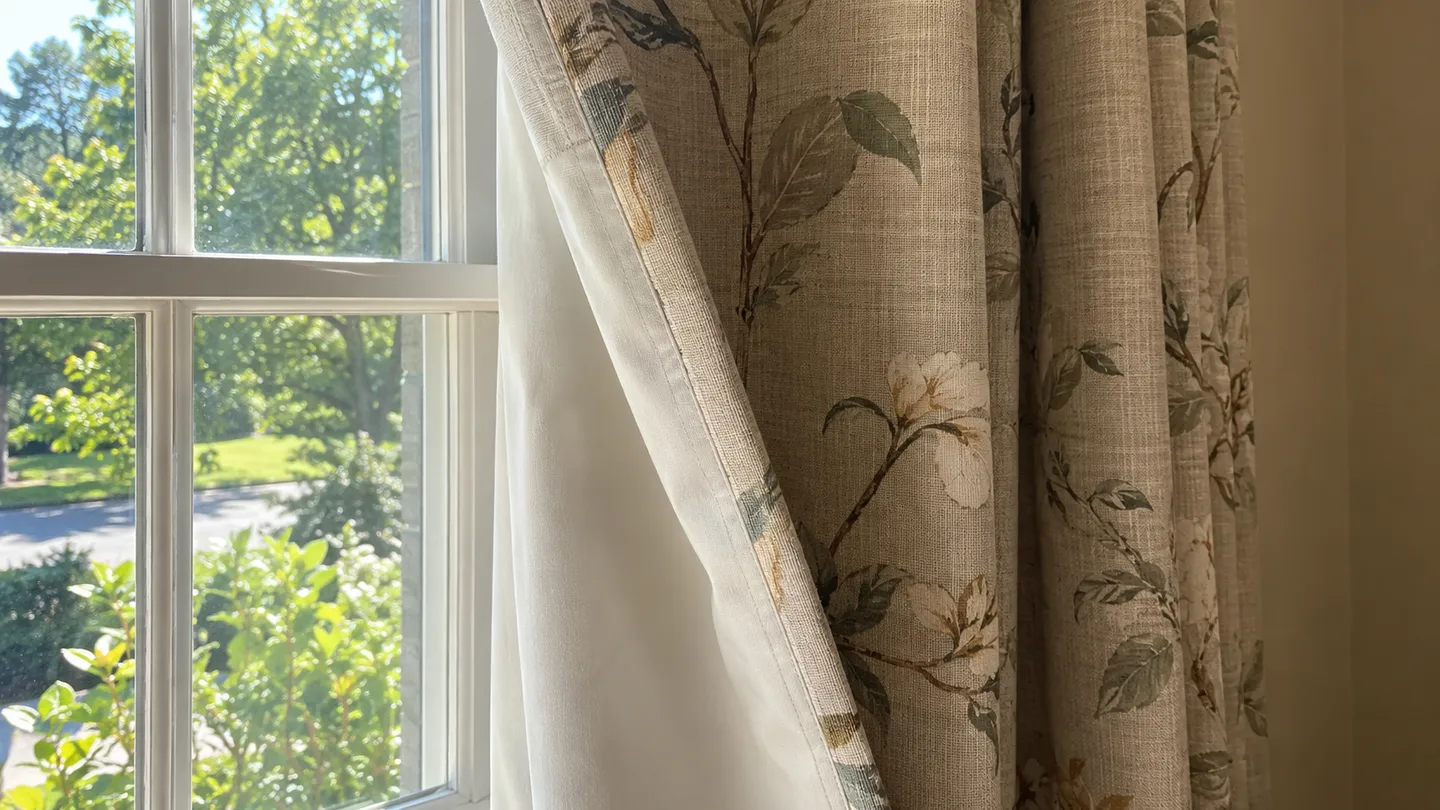
Choose this pair when you want white backing, blackout fabric, and a relaxed textured finish.
The set includes two panels, each 52 inches wide. Listed lengths run from 45 to 108 inches. Each panel has eight grommets, and the curtains are machine washable.
The fabric has a linen-like appearance, with a separate white blackout liner behind it. That combination makes it a sensible choice when both afternoon sun and unwanted light affect the bedroom. It is intended to provide full blackout through the fabric, so it suits a room where darkness is welcome. H.VERSAILTEX white-lined curtains
For Wider Windows: Best Home Fashion Wide Basic
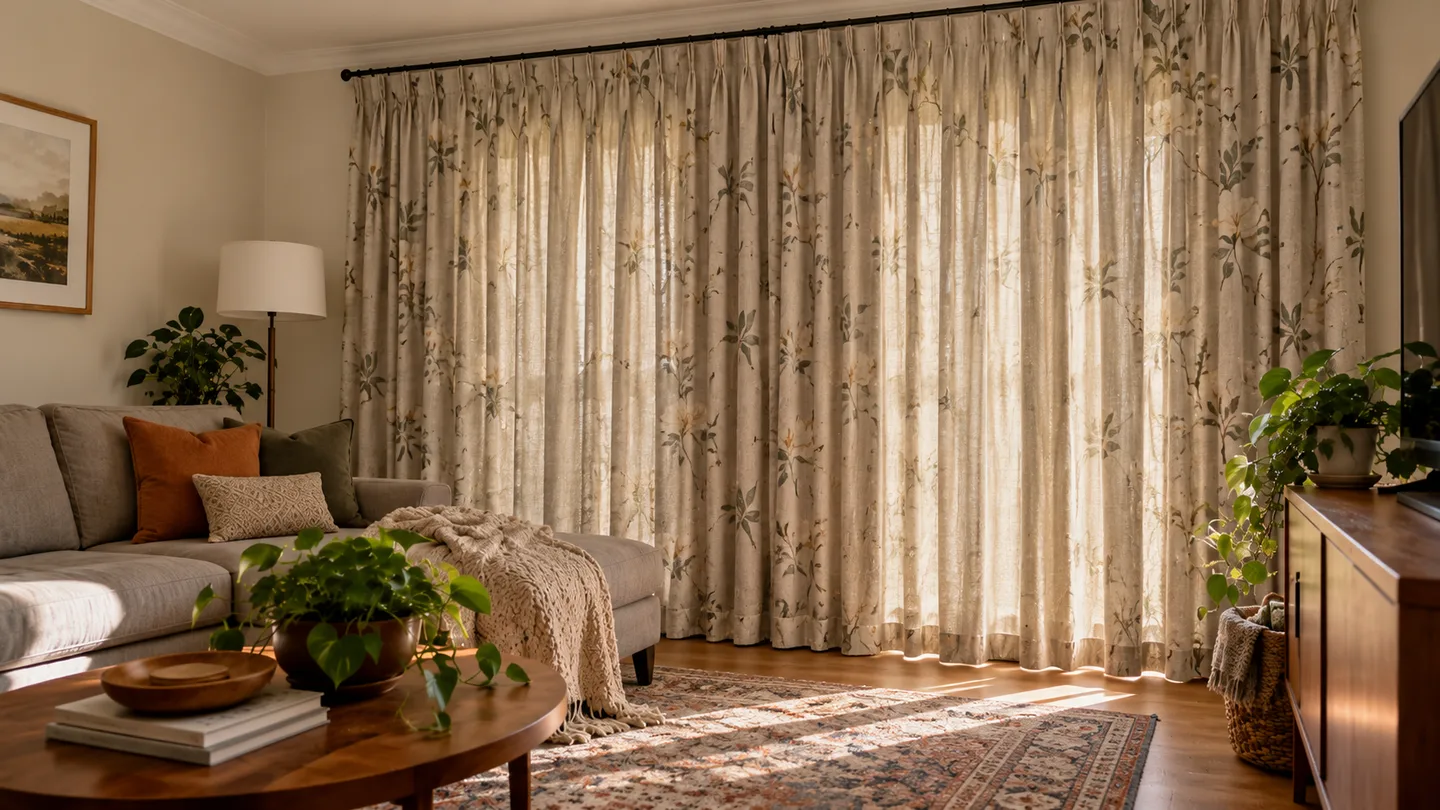
Choose this option when generous ready-made width is the main problem to solve.
Best Home Fashion sells this curtain as a single panel, with 80-inch and 100-inch widths and lengths including 84, 96, and 108 inches.
It uses single-layer triple-weave polyester rather than a separate sewn-in lining. Antique bronze grommets finish the top. For cleaning, the manufacturer specifies a cold machine wash and low tumble drying. Best Home Fashion Wide Basic Blackout Curtain
This is the width-focused option in the selection. For a curtain with a documented white liner, choose the H.VERSAILTEX pair instead.
When Bedroom Darkness Comes First: NICETOWN Willow
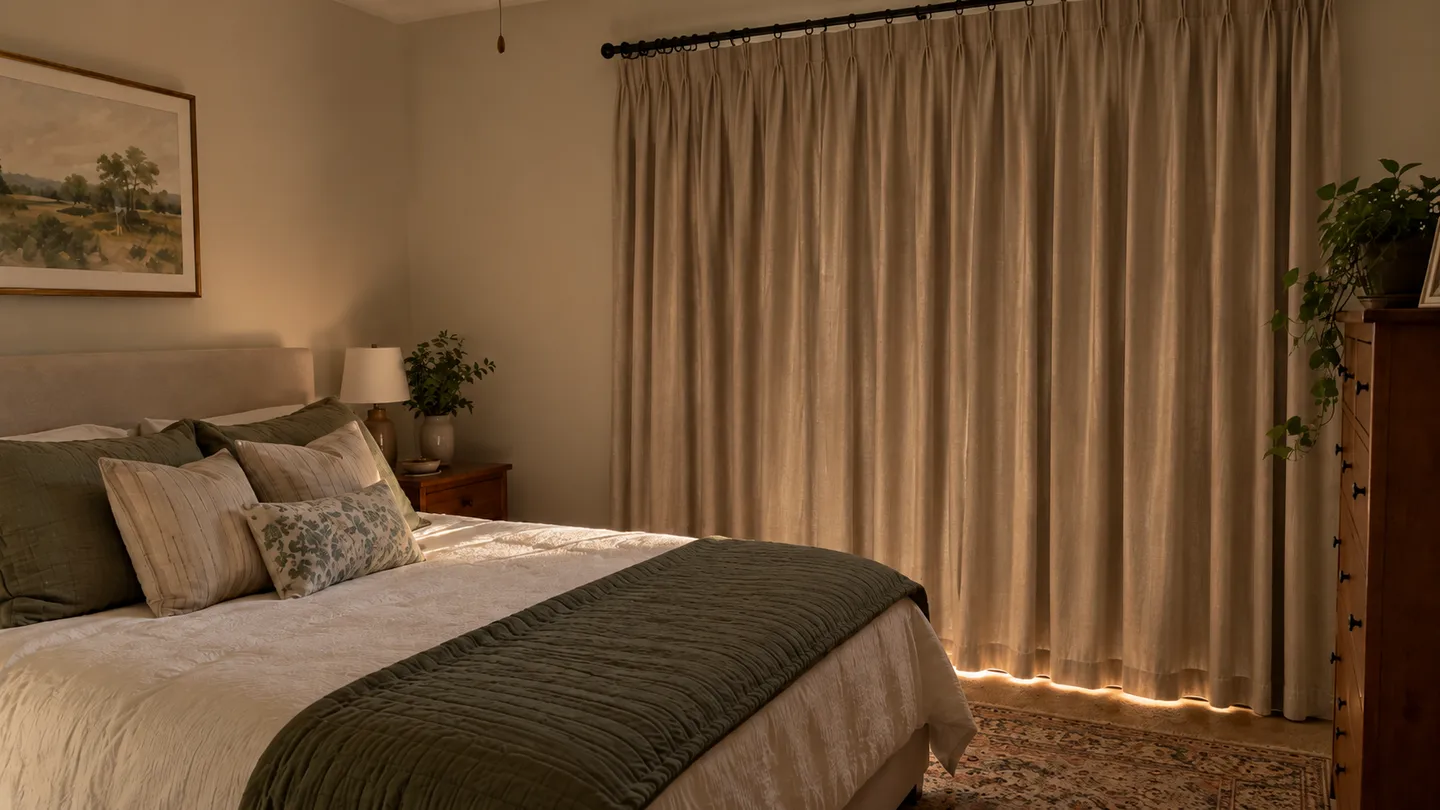
NICETOWN Willow suits a bedroom where strong light blocking is a major priority alongside insulation.
The curtains come as a pair, with grommet tops and a black lining. The manufacturer markets the fabric as 100% blackout and lists machine-washable care.
The black liner distinguishes this option from the white-lined recommendation above. For a room where a pale window-facing surface is the priority, the H.VERSAILTEX pair is the closer match. NICETOWN Willow curtains
You May Be Able to Keep the Curtains You Have
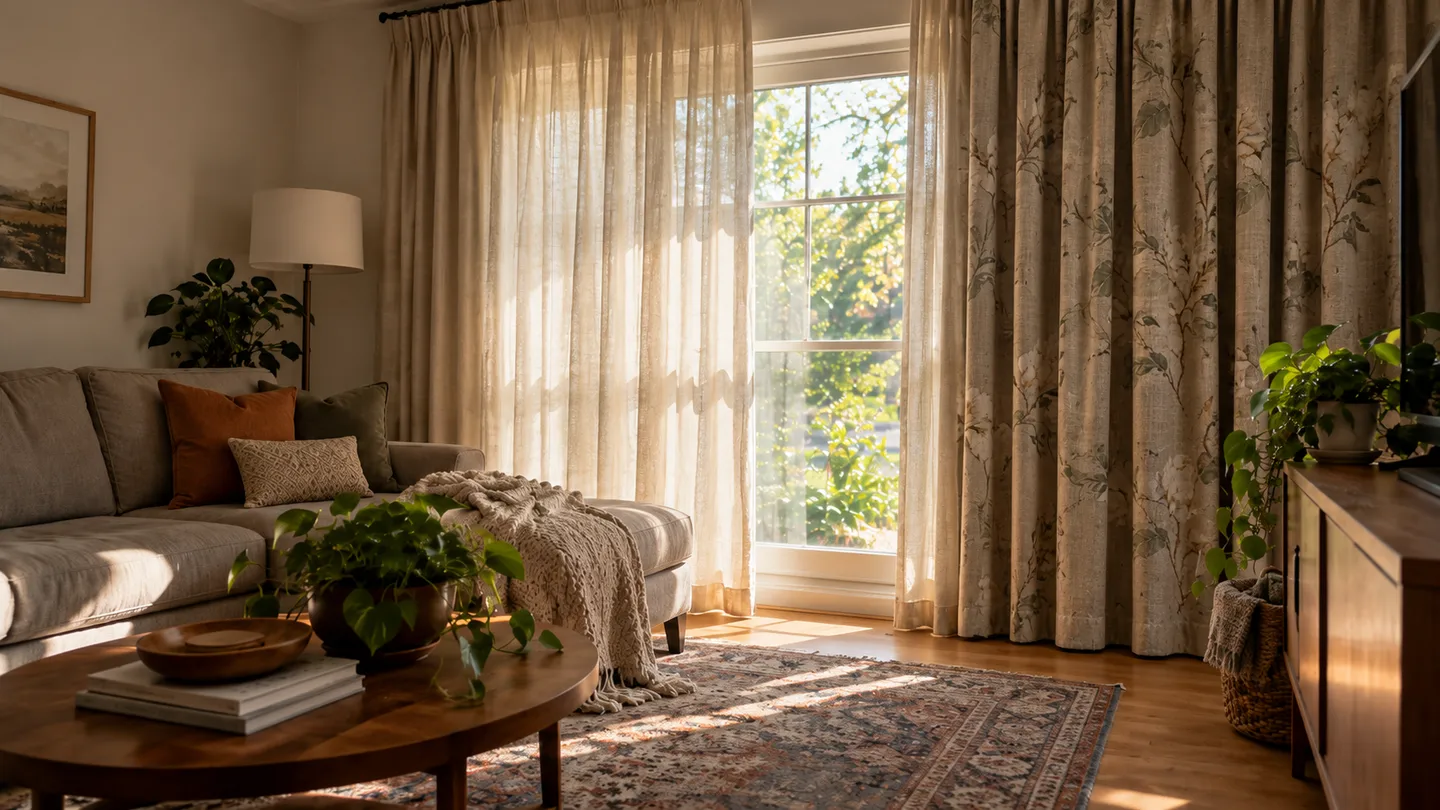
Use a summer thermal liner when your existing curtains fit well and you want to keep their color and texture.
This can be the more appealing choice when the curtains are already right for the room. Replacing them might mean another search for the right shade of green or a fabric that works with the sofa.
The Moondream Summer Thermal Lining Silver MC0001 is designed for this purpose. It has a silver finish and attaches with a self-gripping strip. The listed material is polyester with a small aluminum content, and it is dry-clean only. Moondream summer thermal liner
The extra layer adds weight, so a securely mounted rod matters. It also needs to cover the window area behind the decorative panels.
A liner is most useful when the existing fit is already good. Curtains that barely meet in the middle need more width as well as another layer.
Good Curtains Need Room to Close Properly
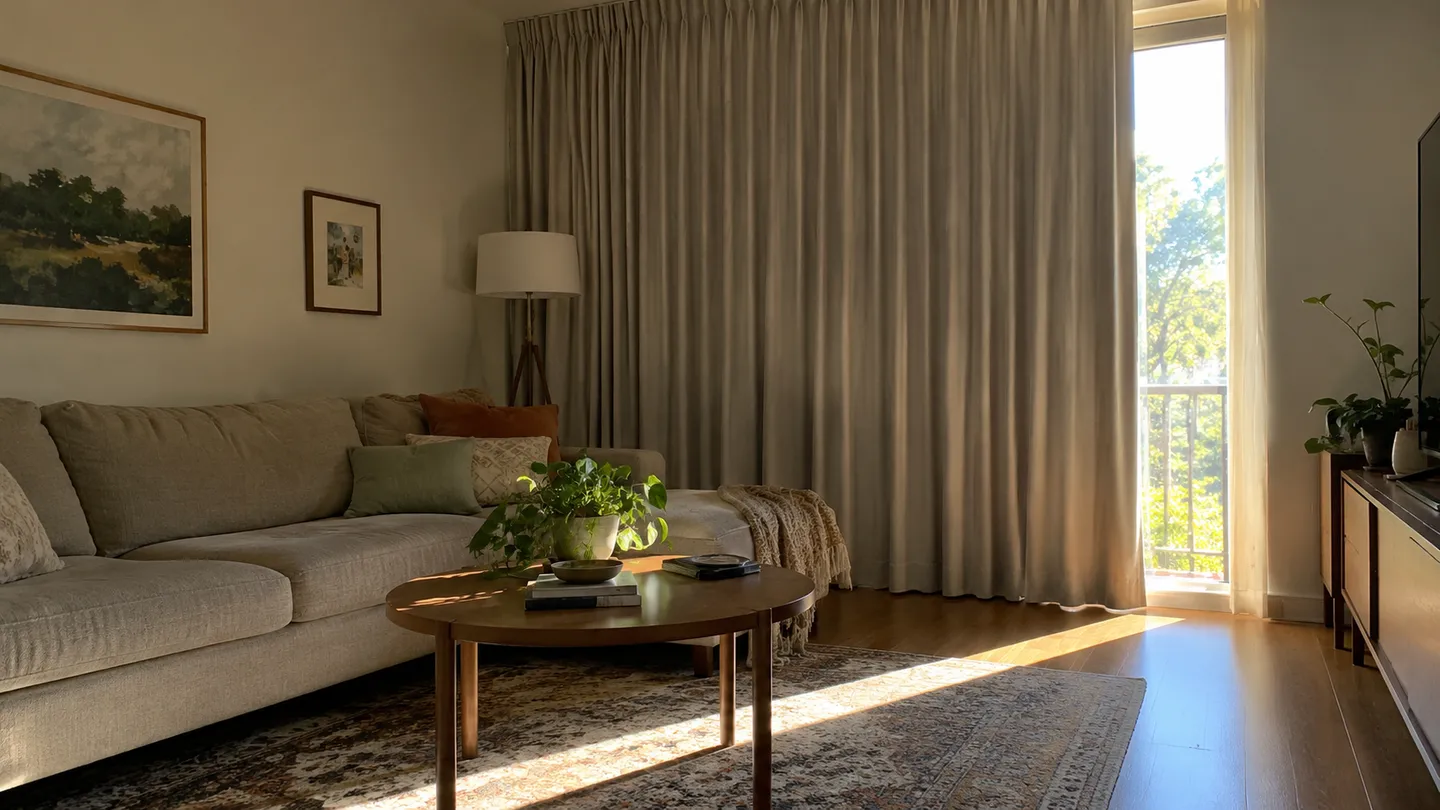
Full coverage makes the fabric more useful. Even a substantial lined curtain leaves part of the job undone if a broad strip of window remains exposed.
This is where your room’s measurements come in. The product details are fixed; the width, drop, and nearby furniture are specific to your home.
Allow Enough Width for the Folds
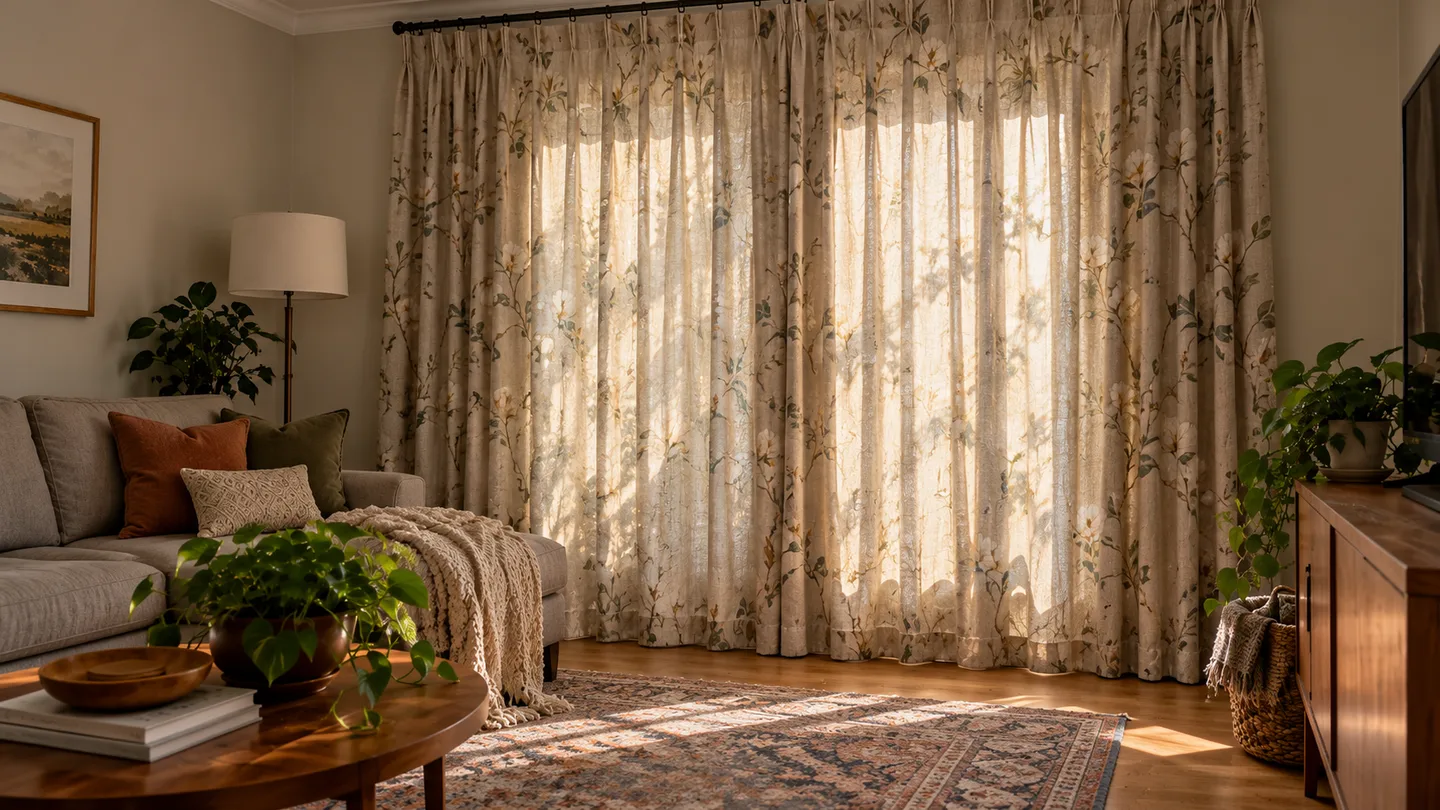
Curtain fabric needs extra width to form folds while covering the window.
Two 40-inch panels provide 80 inches of flat fabric. Across an 80-inch span, they leave no allowance for gathering or overlap.
For the Best Home Fashion Wide Basic curtain, the manufacturer recommends combined fabric width of 1.5 to 2 times the rod width. On an 80-inch rod, two 80-inch panels provide 160 inches of fabric, or twice the rod width.
That example applies to those ready-made panels. Custom pleated curtains use different width conventions because the pleats may already be included in the finished measurement.
For preliminary planning, our guide to measuring for curtains without a tape measure can help. Use a proper measuring tool for the final order, especially for custom sizing.
Bring the Outer Edges Toward the Wall
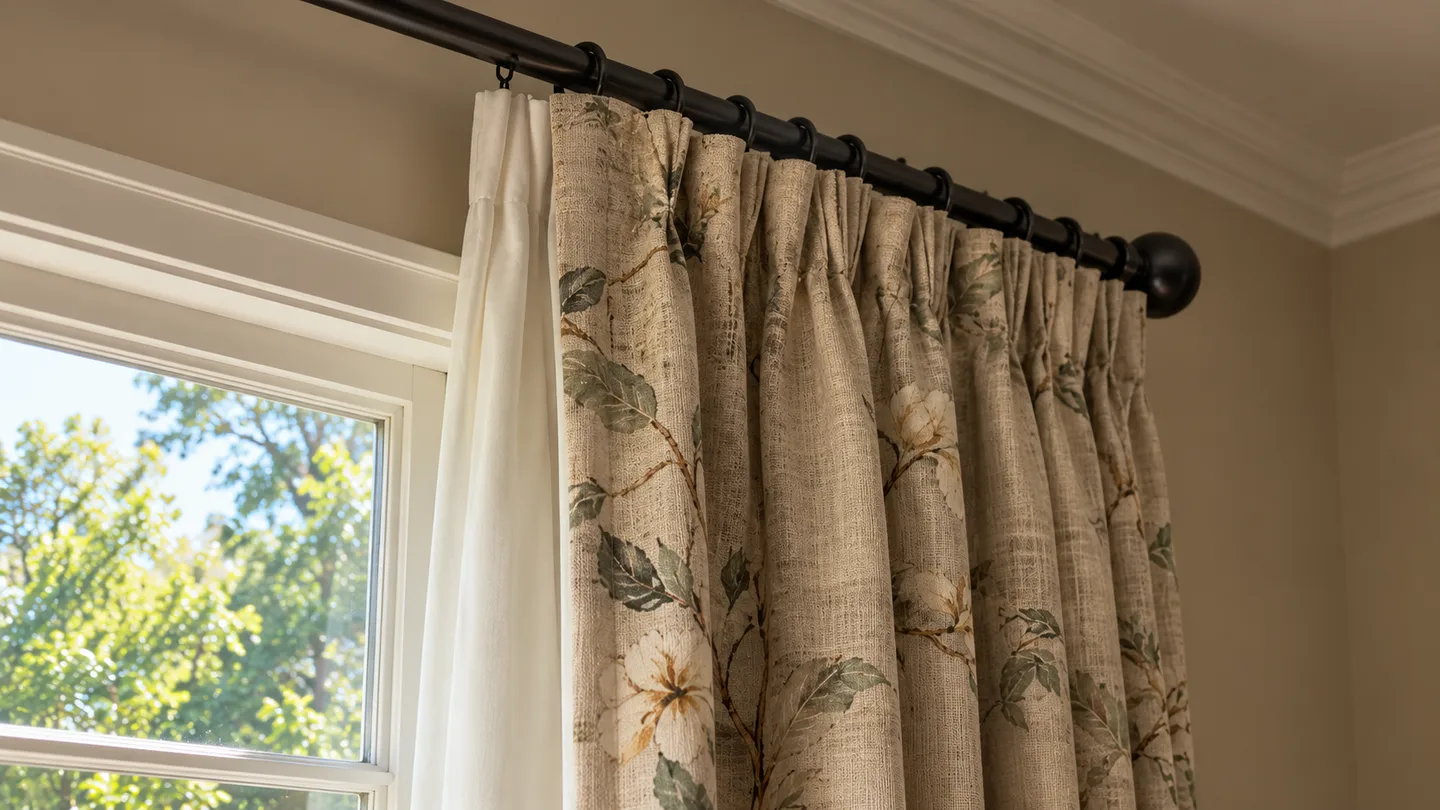
Side returns and a close fit help reduce openings around the curtain. A suitable wraparound rod can bring the outer edges toward the wall, while a pelmet can close the space above.
Raising the rod alone does not close that upper opening. A curtain can hang beautifully near the ceiling and still have a large gap behind it.
From the doorway, the sides are often easier to see than they are from the sofa. That view can reveal where furniture is pushing the fabric outward or preventing it from closing.
Choose a Length That Fits the Room
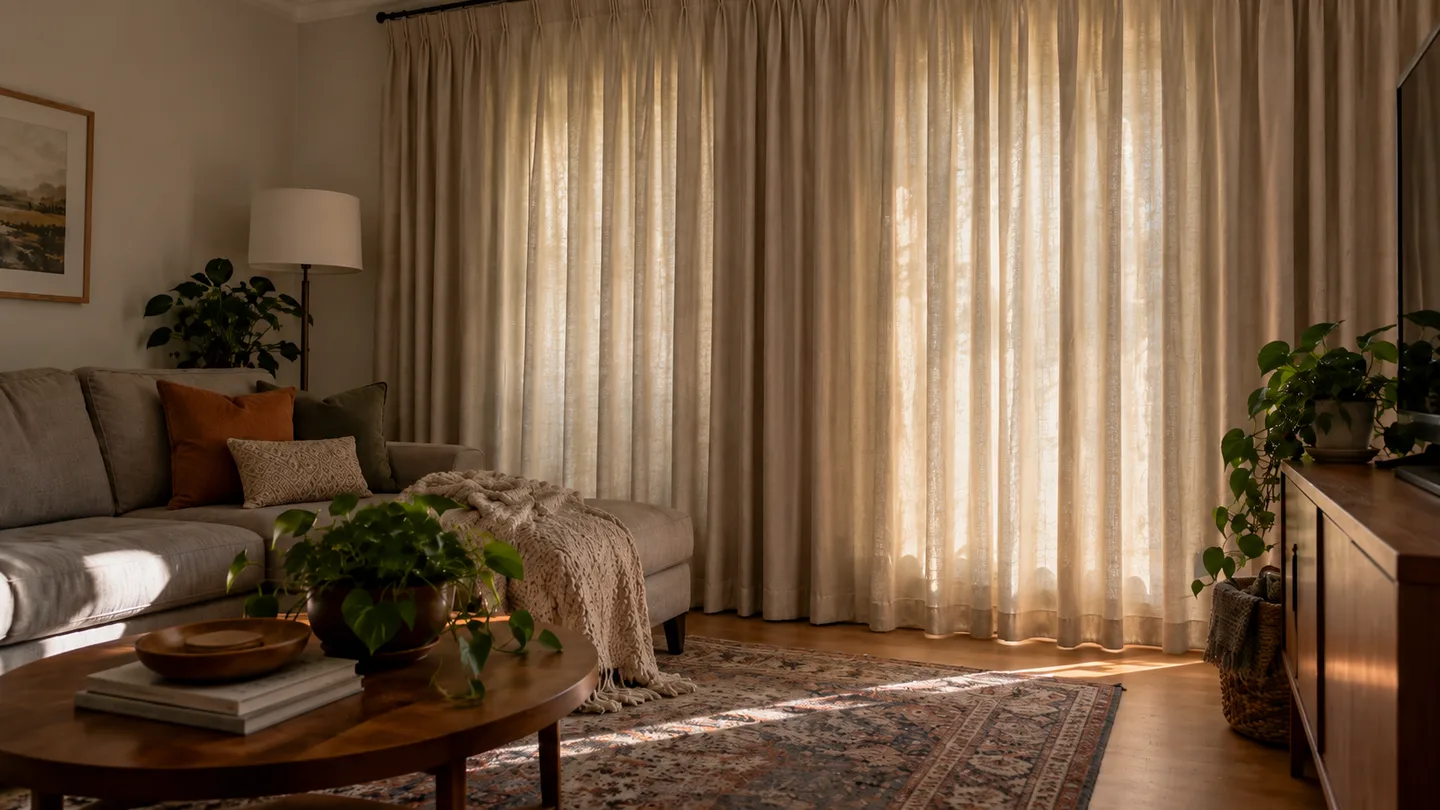
Floor-length curtains work well on an unobstructed wall. Where a counter, desk, or heater occupies the space below the window, use a treatment that fits the available area safely.
Puddled fabric is a decorative choice. It is not necessary for a practical curtain arrangement.
Keep vents clear, allow the panels to move freely, and maintain the required clearance around heating equipment. A curtain that has to be tucked behind furniture every morning will soon become irritating to use.
Give the Hottest Window the Most Attention
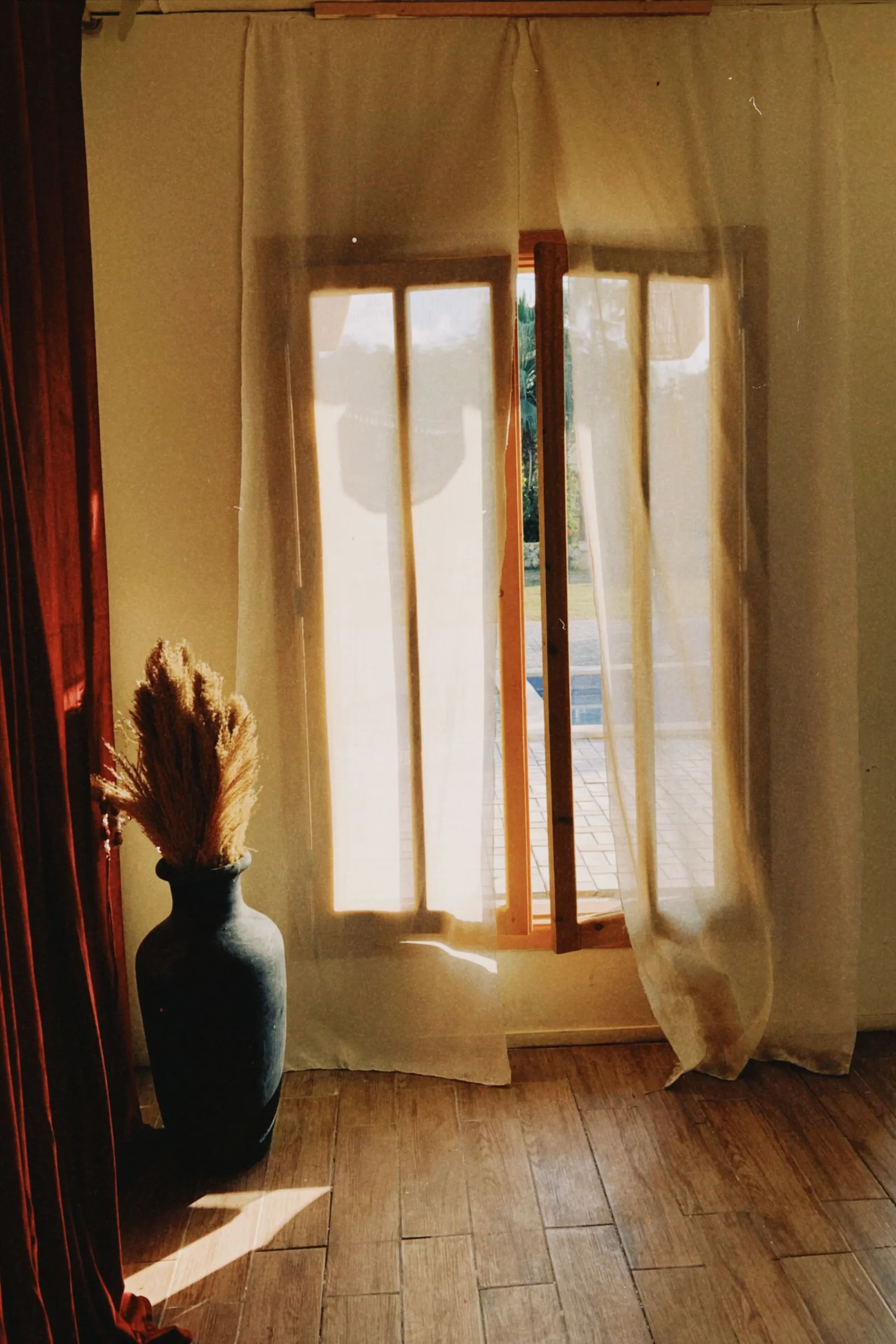
Prioritize the windows receiving strong direct sunlight. You may be able to improve the most uncomfortable room without replacing every curtain in the house.
In a bedroom, white-lined thermal blackout curtains are a practical combination when warmth and unwanted light arrive together. Close them while the sun is on that window, rather than waiting until bedtime. Our guide to choosing bedroom curtains that work day and night covers the balance between sleep, privacy, and daylight.
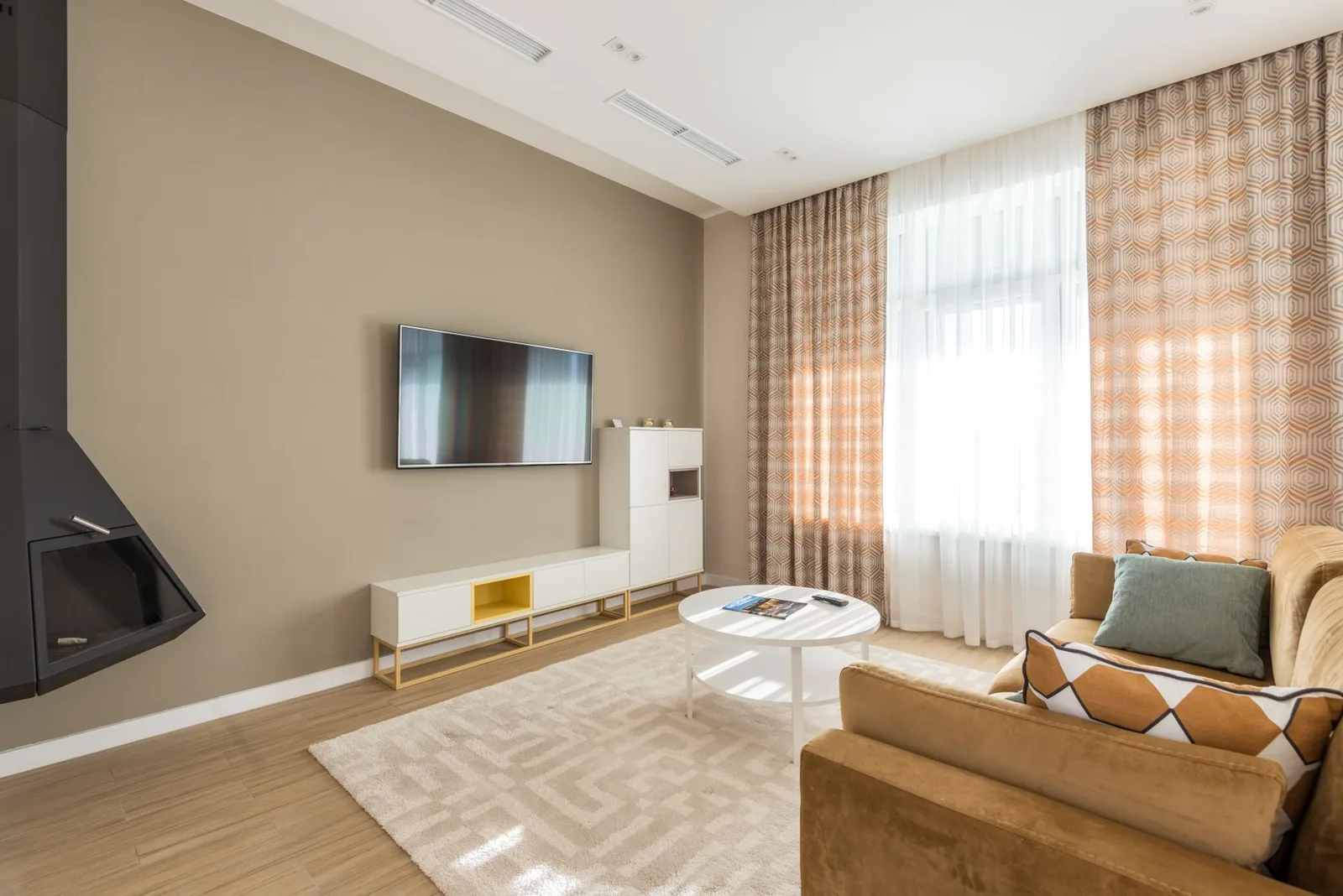
A living room often benefits from separate sheer and lined-curtain layers. The sheers soften daylight when heavier coverage is unnecessary; the lined panels close during the sunny stretch. This gives the room more flexibility than one permanently drawn layer.
For a home office, leave enough space between the desk and window for the curtains to move. If closing them means shifting a monitor or reaching behind a cabinet, it becomes a chore.
Sun exposure changes with nearby trees, buildings, and the season. The room that needs help is usually the one you already avoid at a particular time of day.
Close Them While the Room Still Feels Comfortable
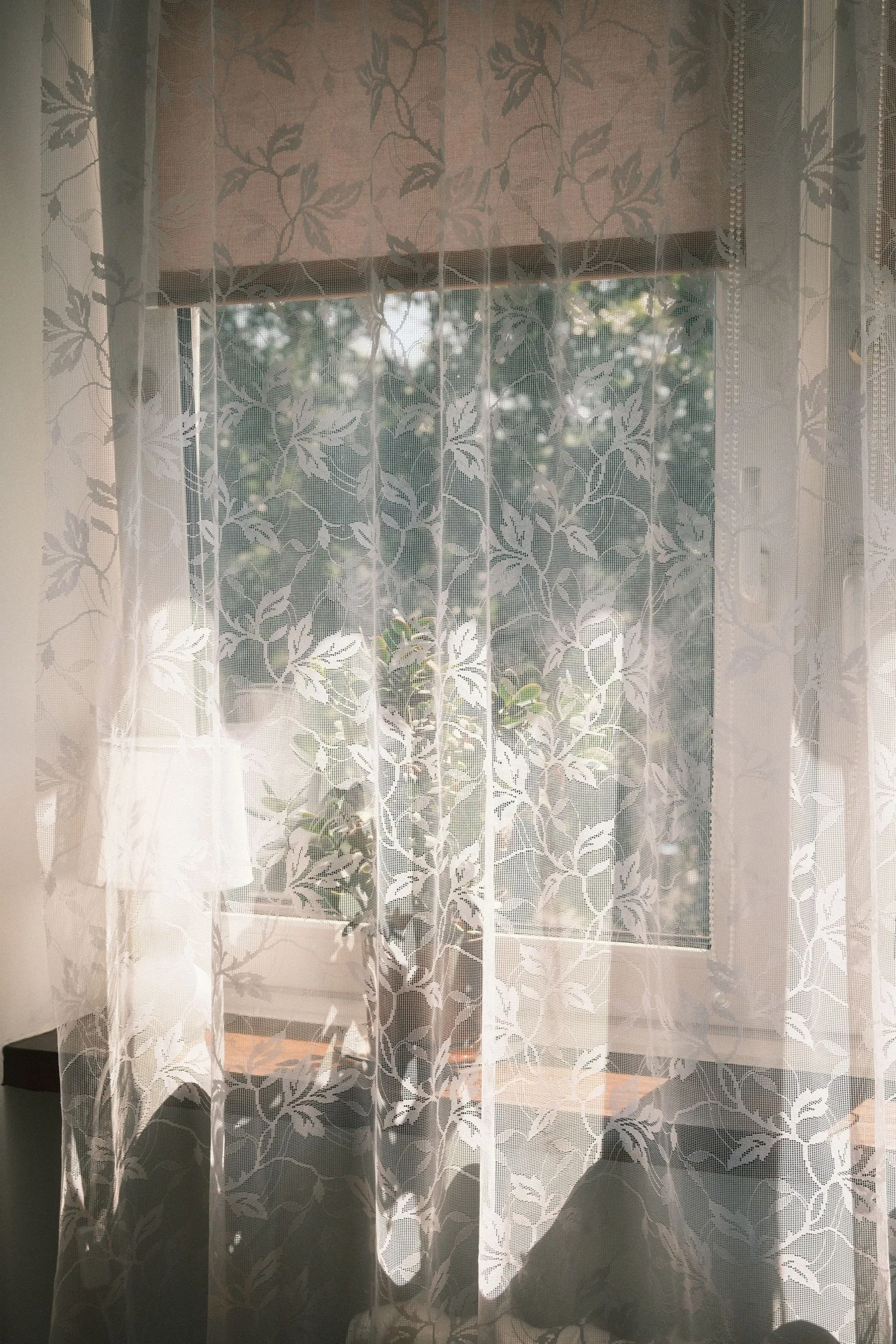
Close curtains before direct sunlight warms the room. This is more useful than waiting until the chair, floor, and desk feel hot.
The timing can be surprisingly easy to miss. Everything feels pleasant at lunchtime, so the curtains stay open. An hour later, the glare is across the screen and the room feels stuffy.
Once that pattern is familiar, closing the panels becomes a small part of the day. Pull them fully together and keep the sides clear of furniture. Existing blinds or shades can provide another adjustable layer.
There is no need to darken every room at once. Treat the sun-exposed windows as needed.
For a window that remains difficult to shade indoors, an external awning or other exterior shade can intercept sunlight before it reaches the glass. That is another way to address the source of the afternoon heat.
A Simple Plan for Your Room
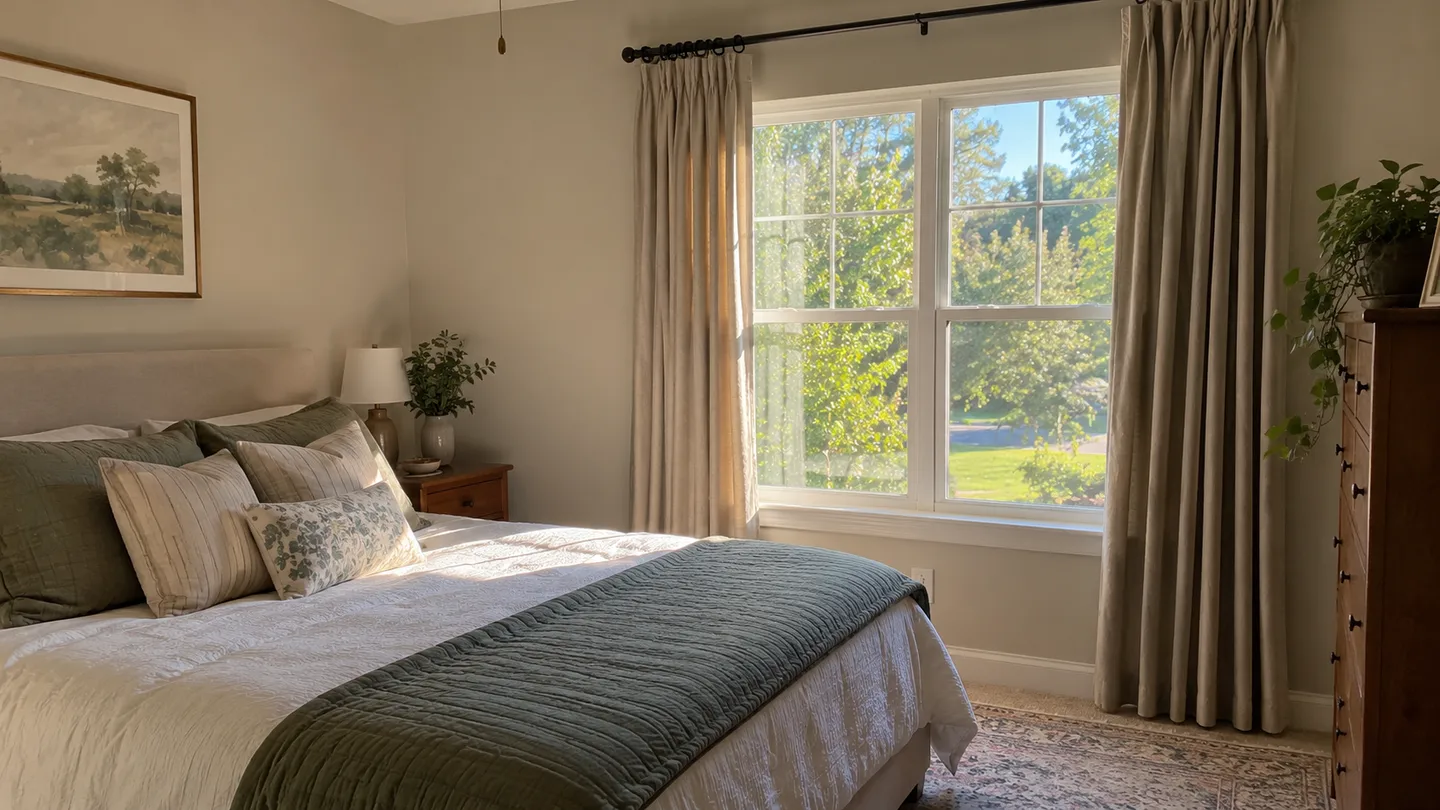
Choose the curtain by the problem you need to solve, then fit it to your window.
- New curtains for a sunny room: Use the H.VERSAILTEX white-lined pair.
- A broad window: Use appropriately sized Best Home Fashion Wide Basic panels.
- Bedroom darkness is the main concern: Consider NICETOWN Willow’s black-lined pair.
- Existing curtains already fit well: Add the Moondream summer liner.
- Measure the rod span and the required drop.
- Allow enough fabric for folds and full closure.
- Keep the sides, center, and top as well covered as the installation allows.
- Close the curtains before the window receives strong direct sun.
The most useful setup is one you can live with easily. It covers the window, suits the room, and takes only a moment to close.
A Few Remaining Questions

Can Dark Curtains Still Help Keep Heat Out?
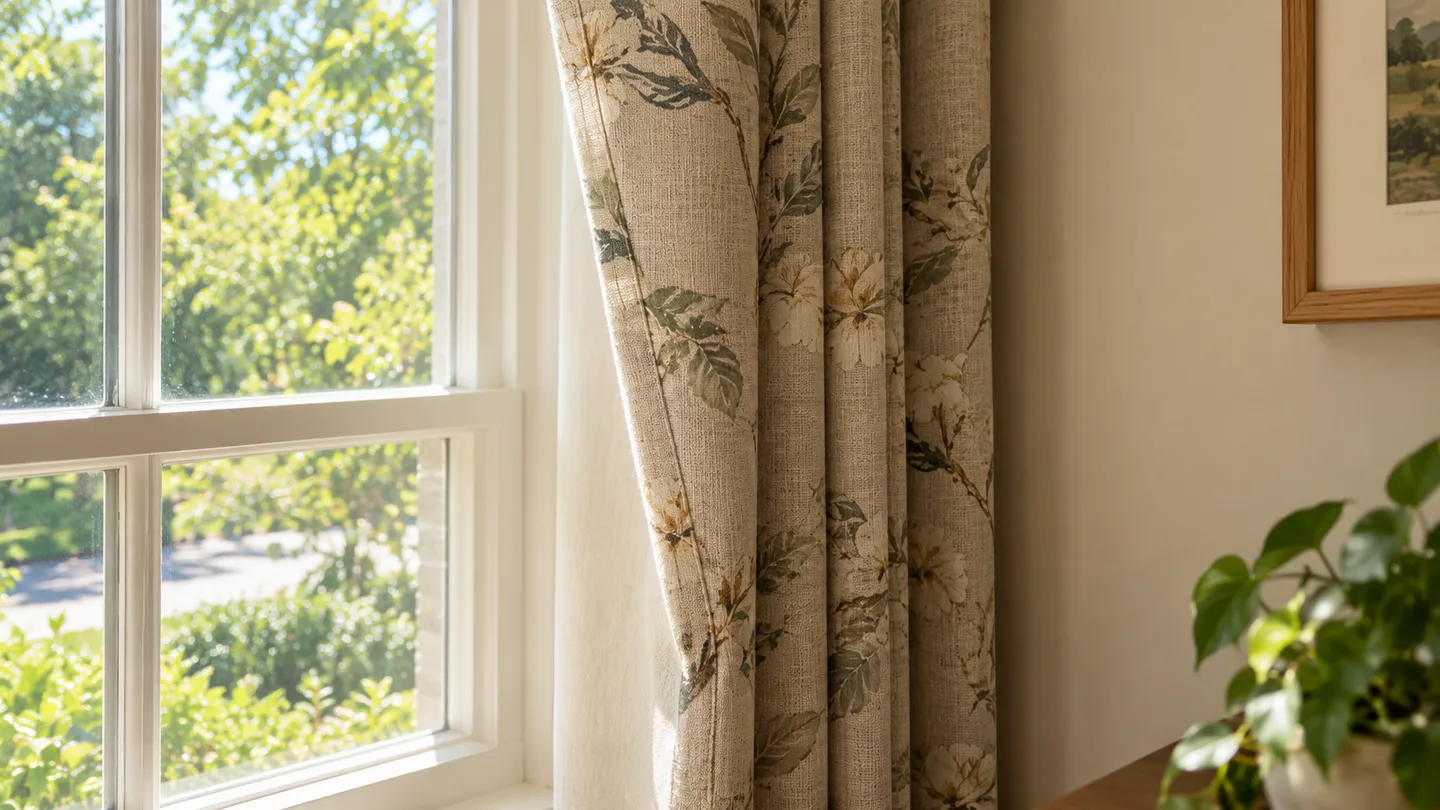
Yes. A dark decorative curtain can have a pale or reflective backing. The room-facing color alone does not determine the whole curtain’s heat-control performance.
Will Insulated Curtains Make the Room Completely Dark?
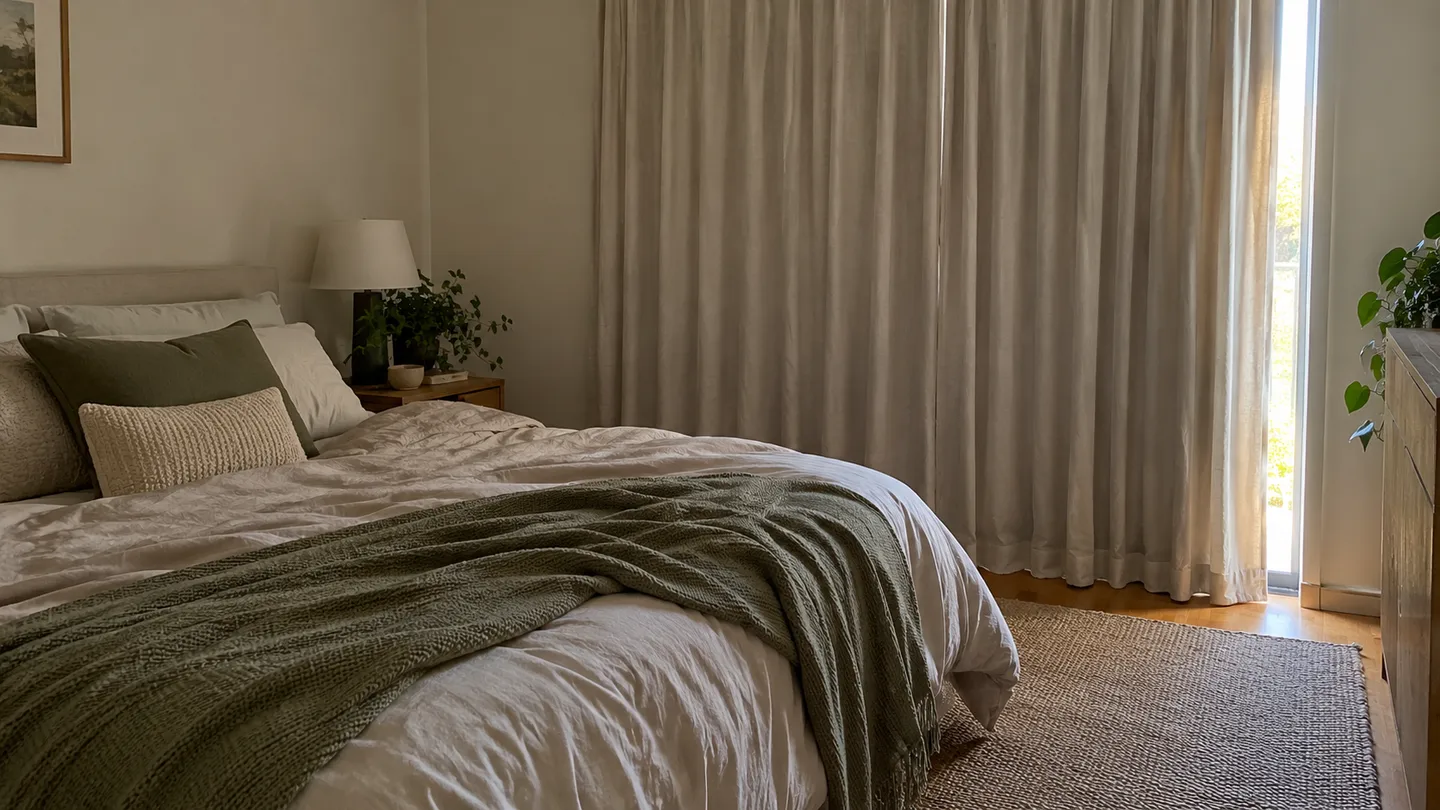
Only blackout versions are intended to block light fully through the fabric. Openings around the sides, top, or center can still admit daylight, which is why fit matters alongside fabric.
Can They Help Without Air Conditioning?
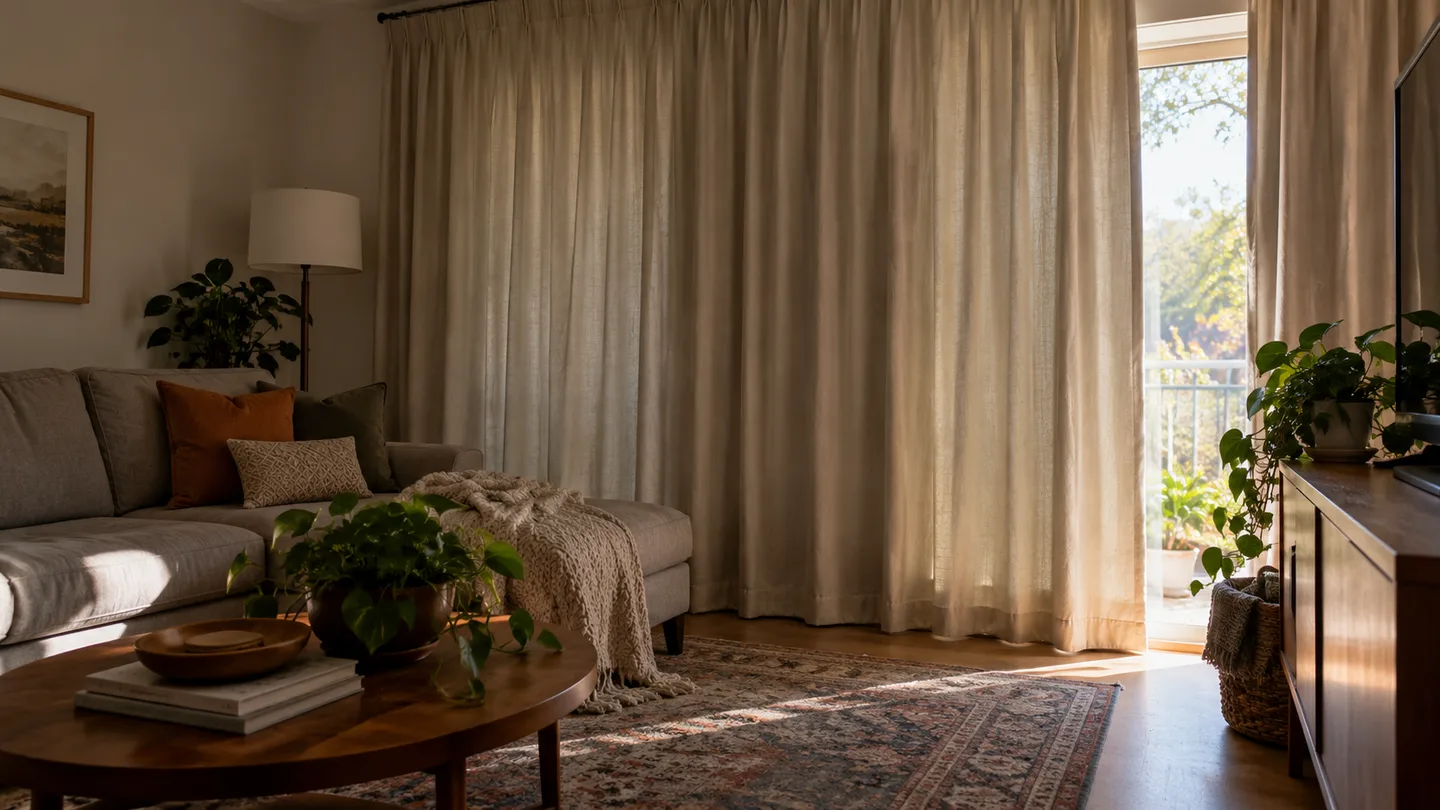
Yes. Reducing incoming solar heat can help even without AC. Curtains do not produce cool air, so their effect depends on outdoor conditions and the room’s other sources of heat.
Are Thermal Curtains Useful in Winter Too?
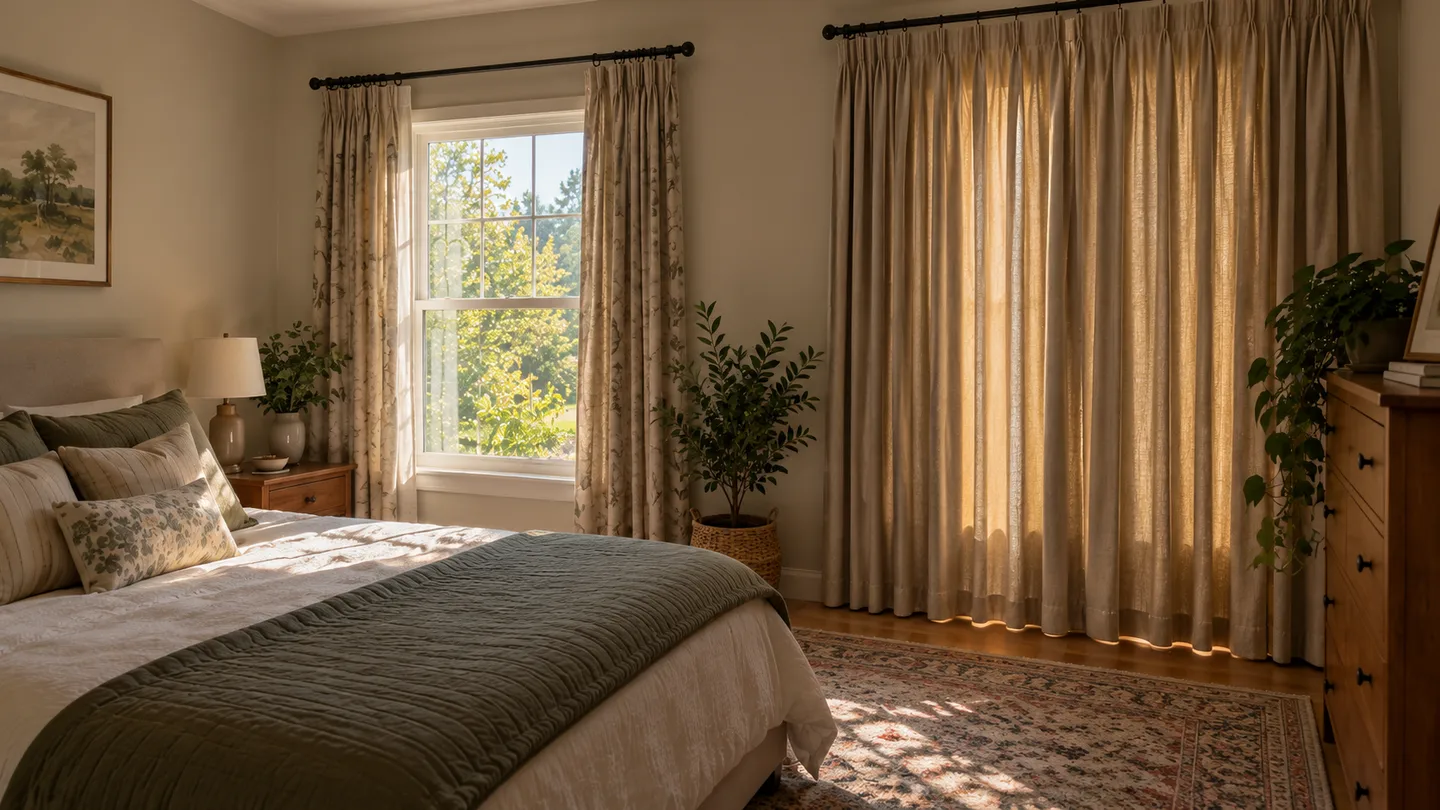
They can also help slow heat loss during colder weather. Open them for useful winter sunshine, then close them when that sunlight is gone.
Which of These Options Are Machine Washable?
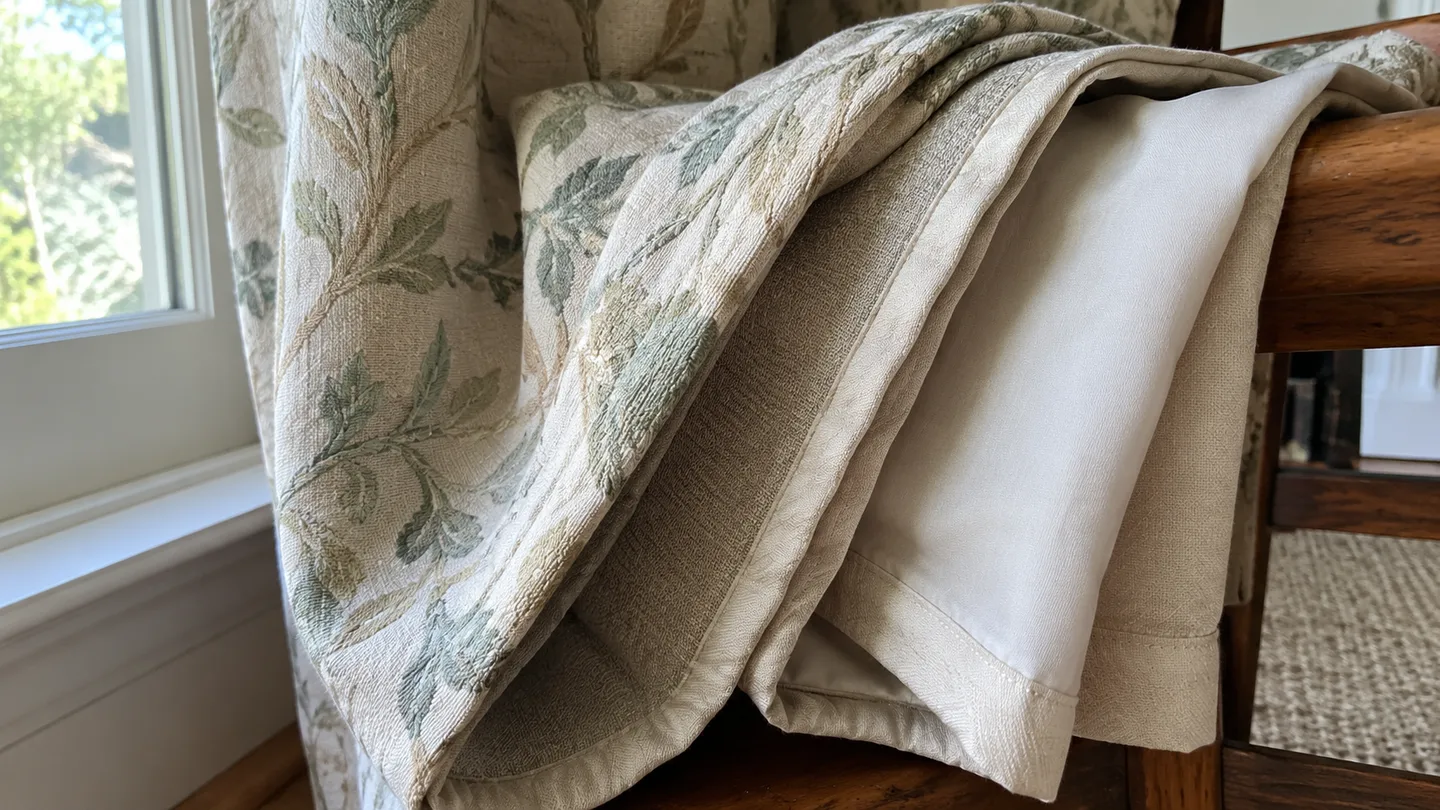
The H.VERSAILTEX white-lined pair, NICETOWN Willow pair, and Best Home Fashion Wide Basic panels are listed as machine washable. The Moondream summer liner is dry-clean only.
For the Best Home Fashion panels, the specified routine is a cold wash with similar colors and low tumble drying. That makes them a practical option where easy upkeep matters alongside window coverage.