24 Kitchen Lighting Ideas That Look Good With the Lights On or Off

A kitchen light gets chosen twice: once for how it looks hanging there, and again when someone flips the switch.
The quick answer
- Combine general room lighting with direct light on worktops so you can prepare food without standing in shadow.
- Pendants and wall lights add character where they fit, but cooking and preparation areas need their own useful light.
- Separate controls or dimming provide a softer setting after dinner.
That leaves plenty of room for the fun part. A milky glass globe, a little brass wall light, a woven shade over the breakfast table. The right piece can make you appreciate a corner you previously walked straight past.
These kitchen lighting ideas will help you find that balance, whether you’re replacing one fixture or rethinking the whole room.
Kitchen Lighting Ideas That Make Everyday Jobs Easier
Your kitchen needs light for moving around and light for seeing what you’re doing. A softer glow on a shelf or wall can make it more pleasant to spend time there, too.
Those jobs can overlap. What matters is how the room works when you’re actually using it.
1. Put Light Where Your Chopping Board Actually Lives
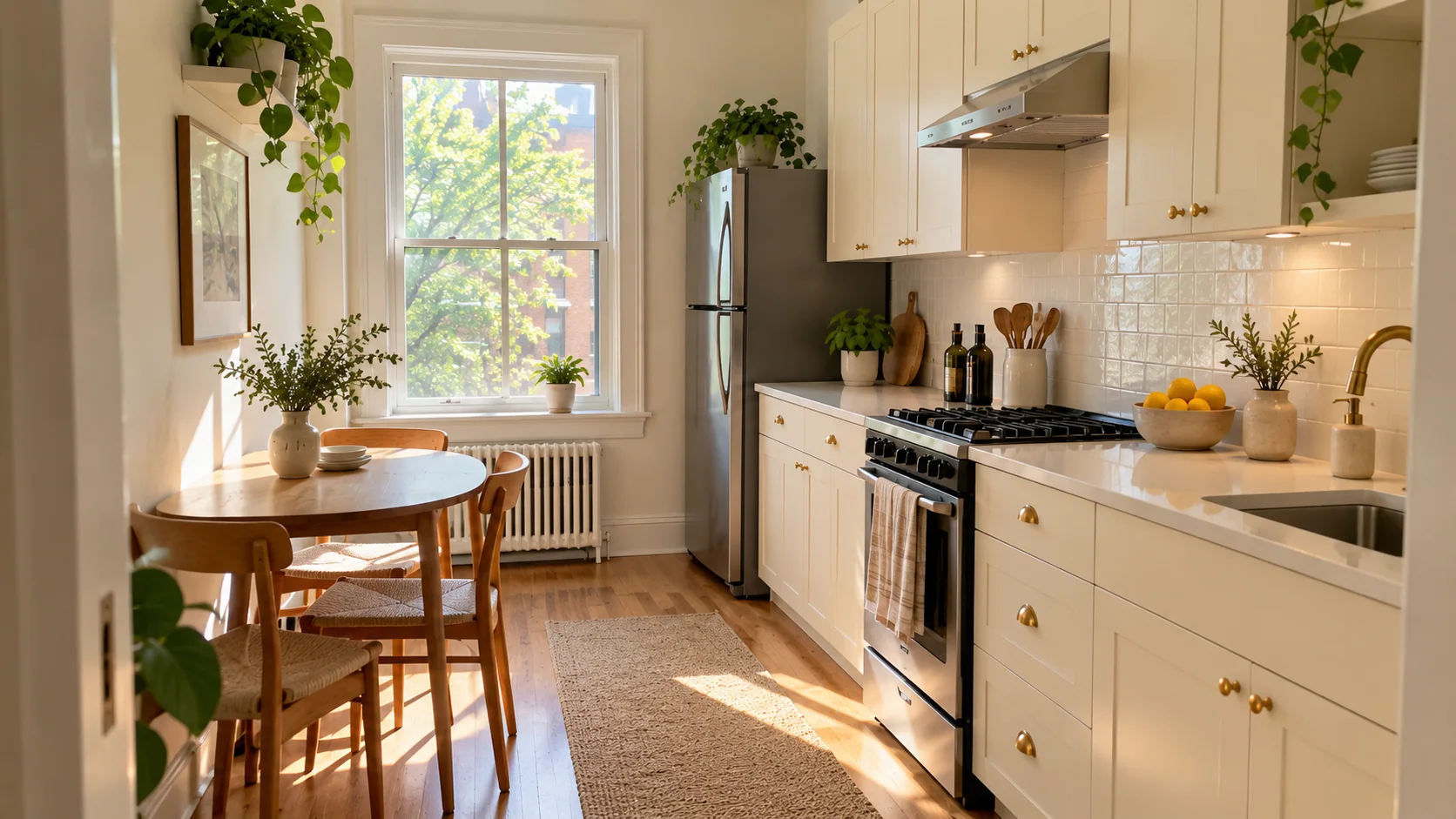
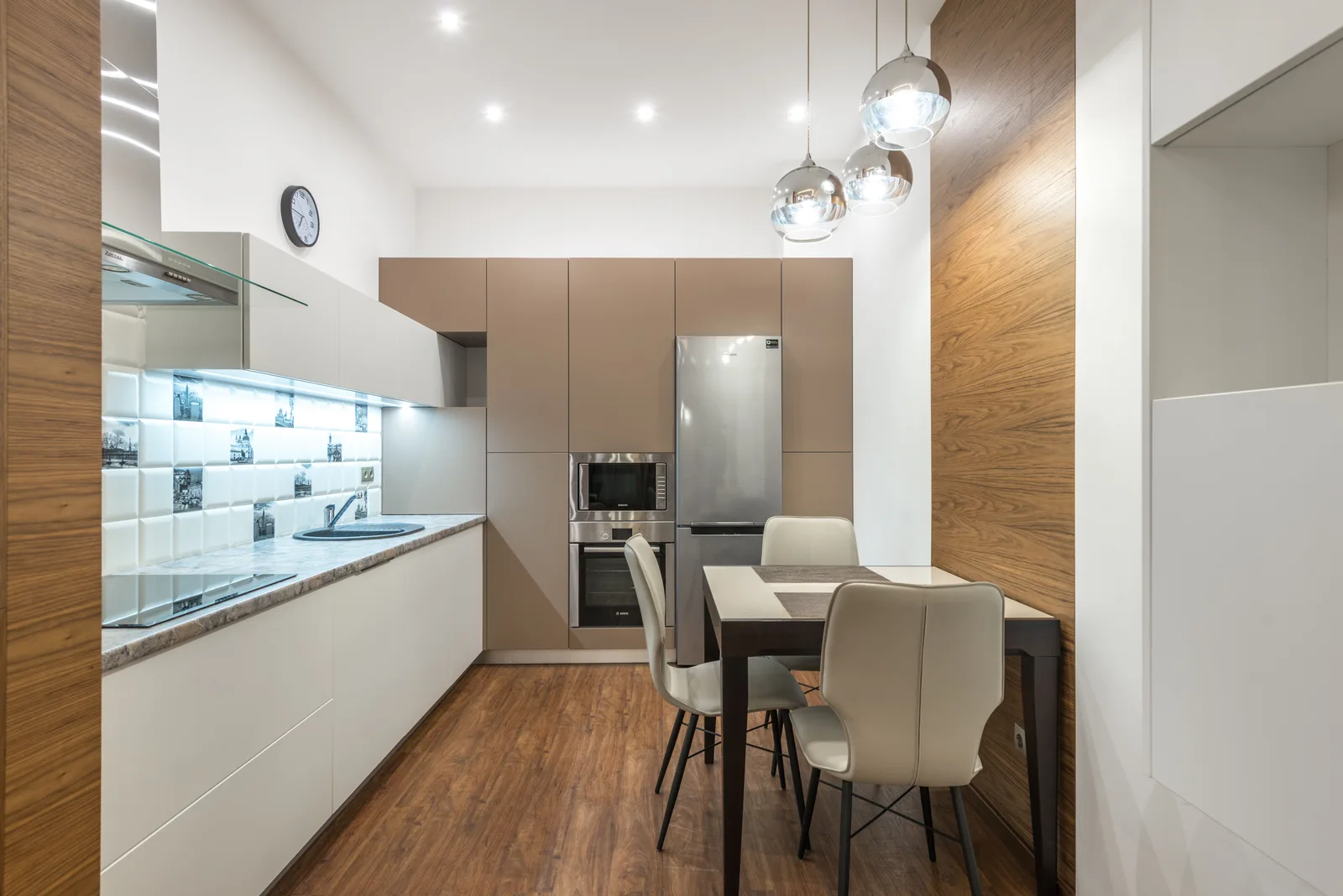
Under-cabinet lighting puts light directly on the worktop, where ceiling lights can leave shadows.
Pay attention to the counter you use most. It might be the stretch beside the sink, even if the island looks like the obvious preparation area in photographs.
If the countertop is polished, look at the reflection from nearby seats. A diffused light source can help avoid that distracting row of bright LED dots.
A slim light bar such as the IKEA MITTLED countertop lighting strip can sit beneath the upper cabinets and illuminate that everyday work area. It’s the kind of addition you appreciate when you can finally read the tiny measurements on a jug without carrying it toward the window.
2. Give the Sink Its Own Light
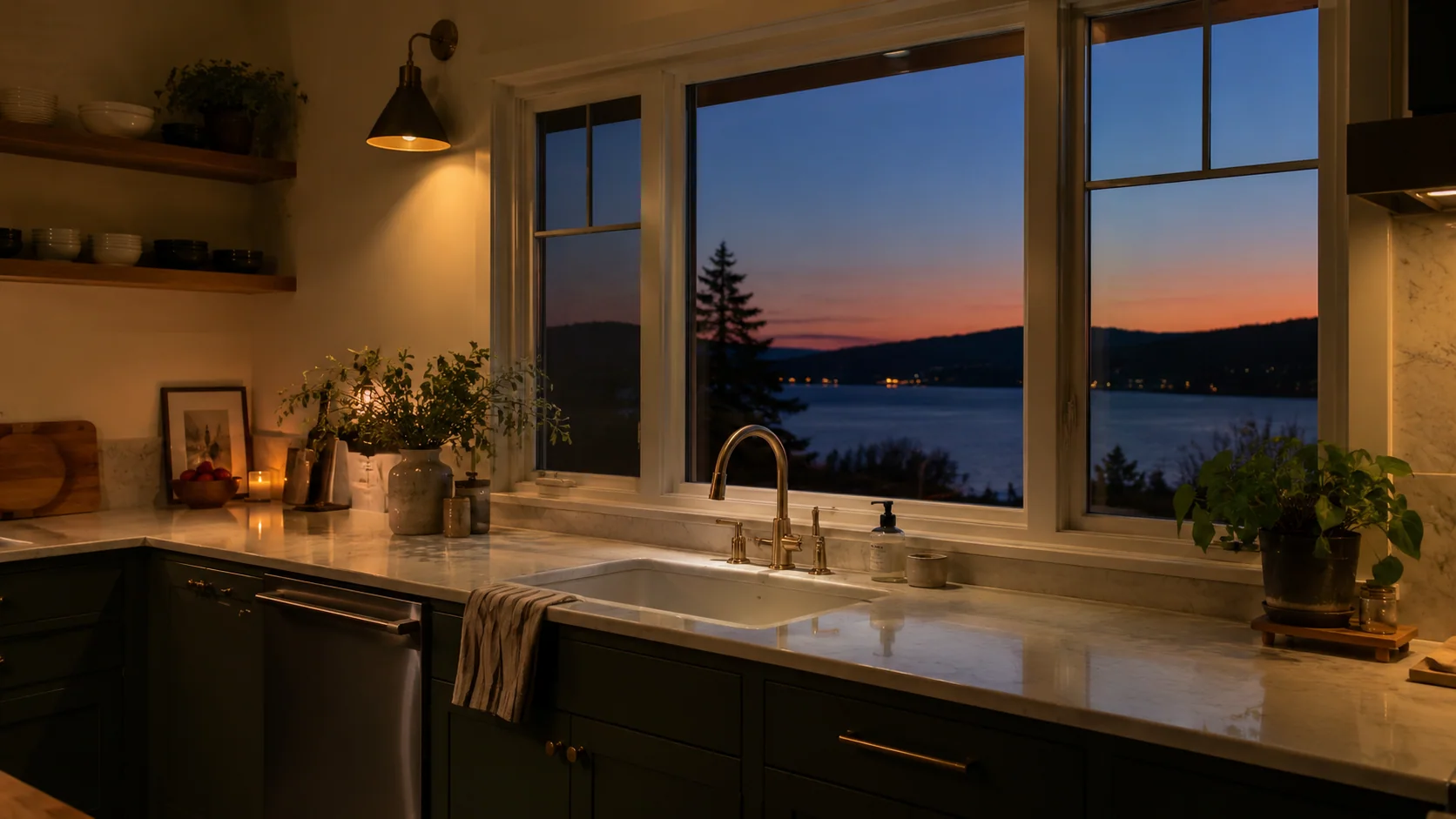
A light aimed at the sink makes washing, rinsing, and checking dishes easier after daylight disappears.
A window above the sink can make this easy to overlook. Everything looks bright at lunchtime, then dinner finishes and you find yourself inspecting a pan in your own shadow.
A compact pendant, wall light, or well-positioned ceiling light can help. Choose according to the space around the window and the direction the light needs to travel.
A downward-facing wall light is useful when you want illumination on the basin while keeping the view through the window open. Leave enough room for the window to operate comfortably.
3. Place Recessed Lights Around the Work Areas
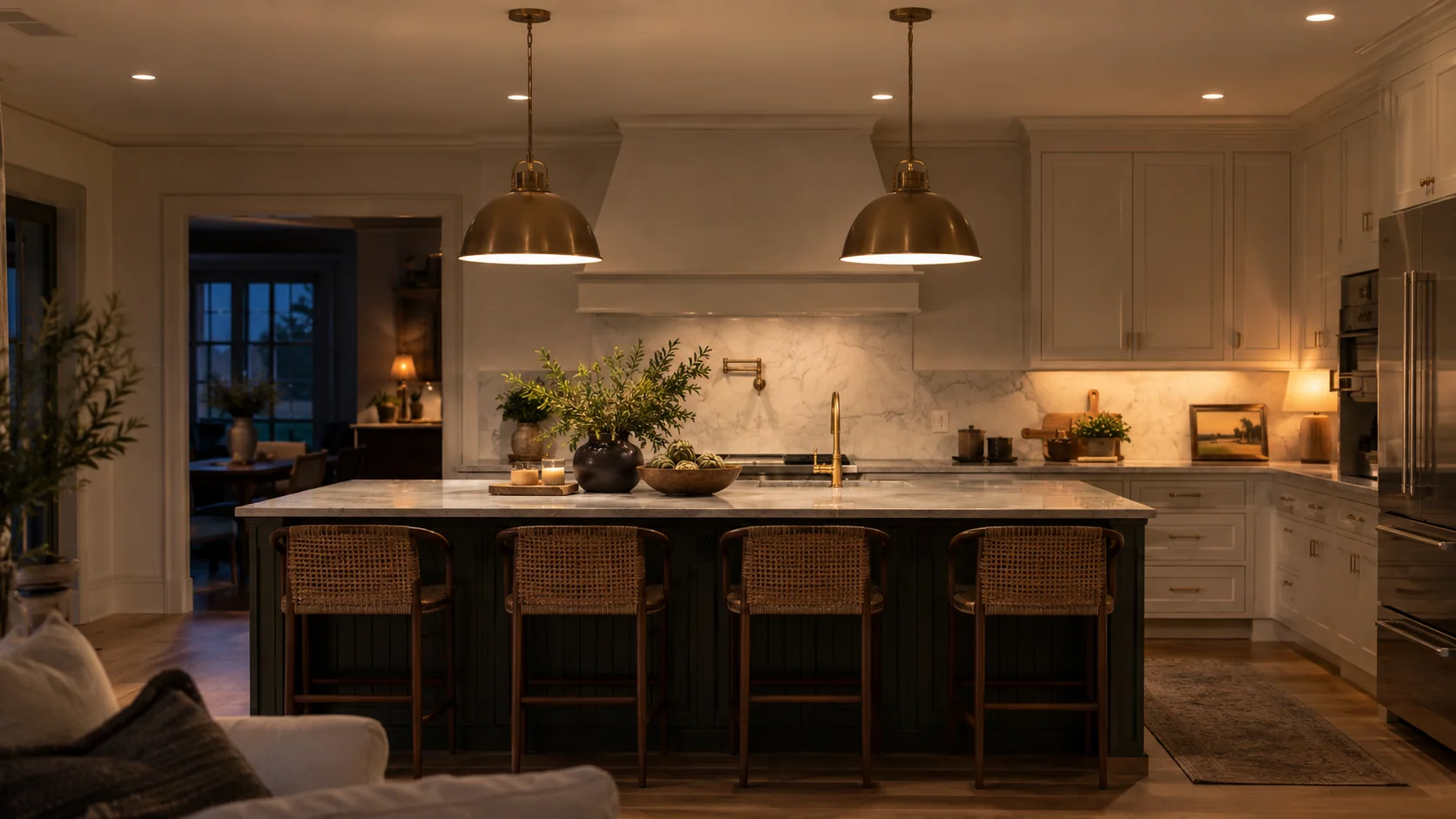
Position recessed lighting around counters and walking routes, rather than choosing a ceiling pattern solely for symmetry.
If a light sits behind you while you work, your body can block its beam. More brightness in that same position may still leave the chopping board in shadow.
Think of holding a flashlight while someone reads a map. Where you aim it matters as much as how powerful it is.
Placement still does the essential work. Map out where people stand and where the light needs to land.
Adjustable lighting can also help a room that changes jobs throughout the day. Govee 6-Inch Smart RGBWW Recessed Lights give you control over brightness and white-light color, so the ceiling lighting can feel different during food preparation and dinner.
4. Let Track Lights Follow an Awkward Layout
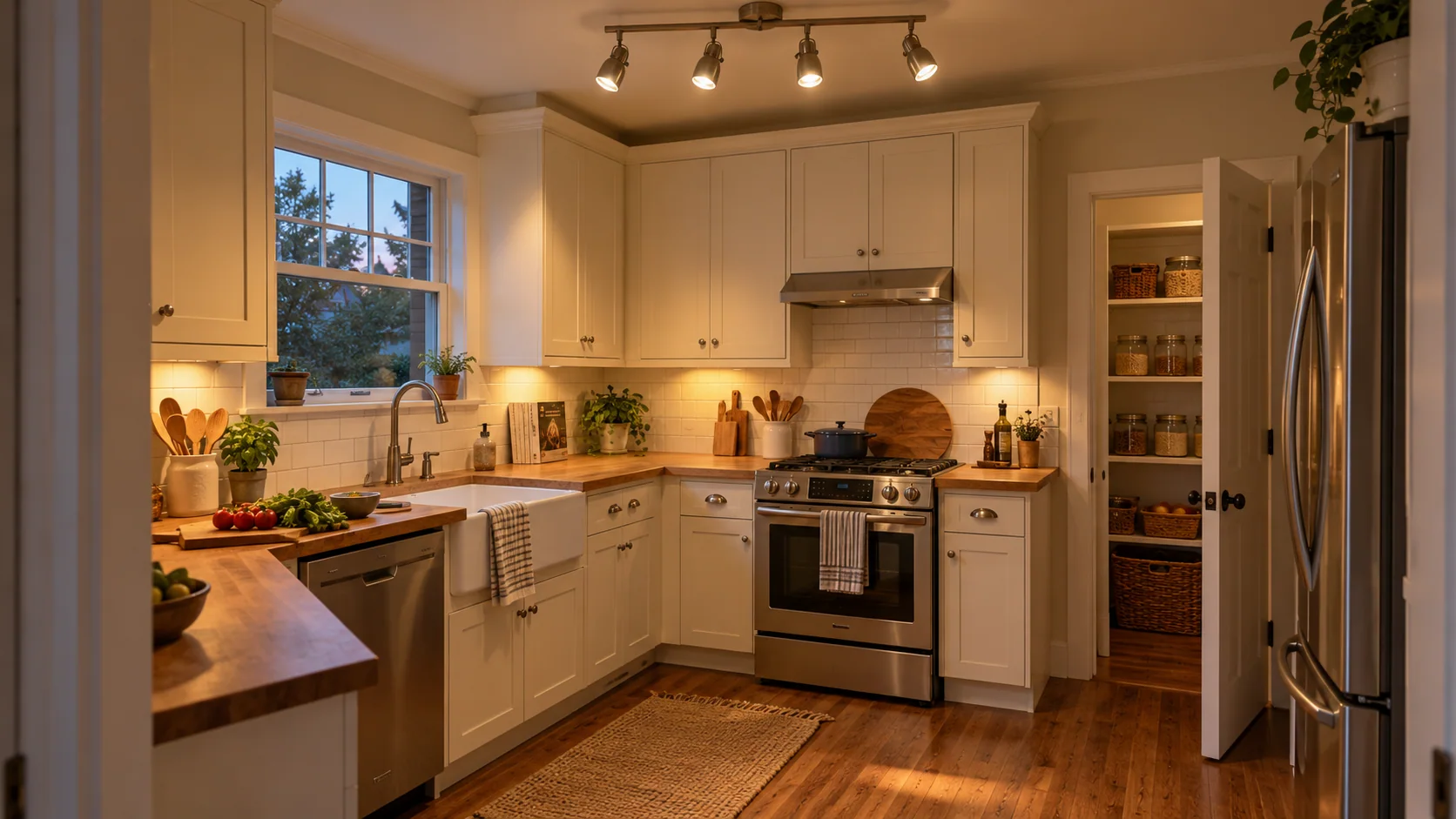
Adjustable track lights are useful when different parts of the kitchen need light in different directions.
One head can illuminate a preparation area while another points toward a pantry or wall. That flexibility can suit an L-shaped kitchen or a room where the existing ceiling connection sits in an inconvenient place.
The angle makes a difference. A spotlight that looks fine while you’re standing may shine directly into someone’s eyes at the breakfast table.
Adjust the heads with the room in use. Put someone at the counter and someone in a chair, then see whether both positions feel comfortable.
5. Give a Low Ceiling a Good-Looking Flush Mount
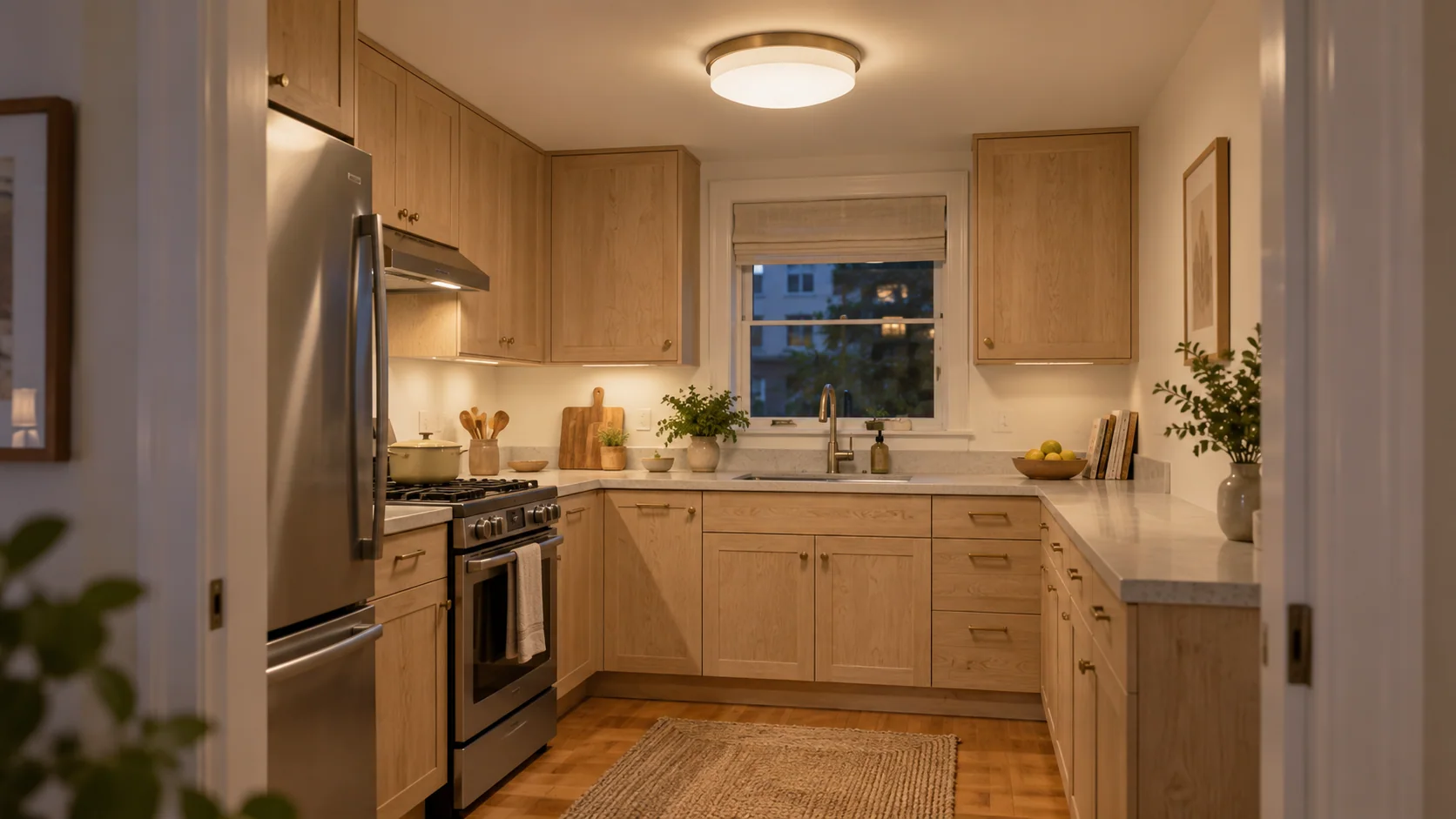
A flush-mount fixture adds room lighting while preserving overhead space.
It can still have personality. Opal glass, a shallow metal rim, a colored shade, or a simple sculptural shape can make a ceiling fixture feel considered.
A semi-flush mount is another possibility if you have a little more clearance. Its slight drop gives the fixture more presence while keeping it close to the ceiling.
For a kitchen that doubles as a dining or homework space, the Govee 12-Inch RGBWW + RGBIC Smart Ceiling Light offers a practical way to adjust brightness and the warmth of the white light without adding a hanging fixture.
6. Light a Kitchen Without an Island Around What’s There
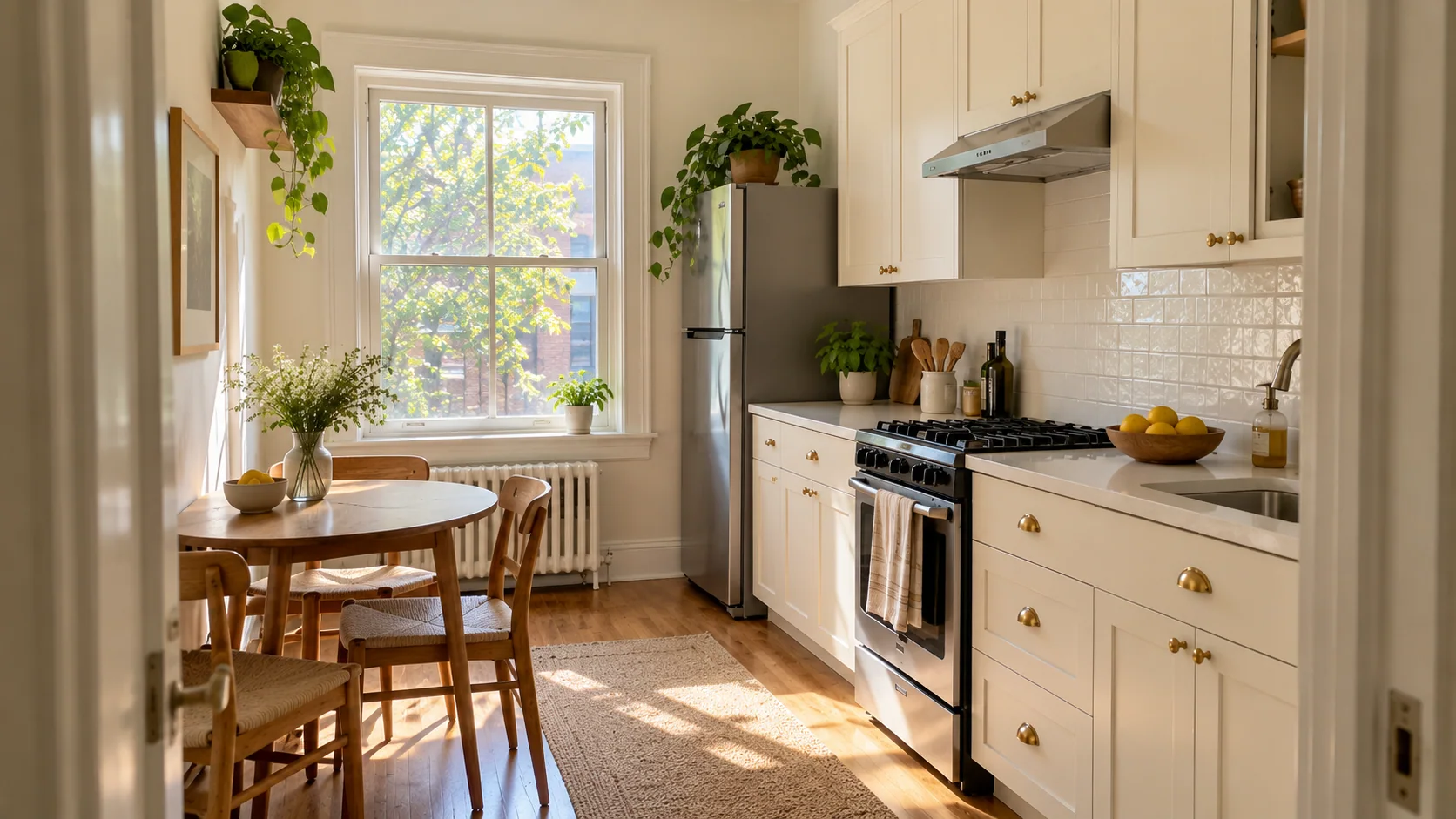
Use the counters, sink, and dining area to guide the lighting plan.
In a galley, that might mean a simple ceiling fixture plus lights beneath the wall cabinets. An L-shaped kitchen could benefit from extra attention at the corner counter. A small eat-in kitchen may have room for one pendant above the table.
You don’t need to create a central feature where there is no central workspace.
Keep the view through the room in mind, too. Our guide to making a small kitchen look bigger explains how lighting, clear surfaces, and open sightlines work together.
Pendants and Wall Lights That Suit the Space
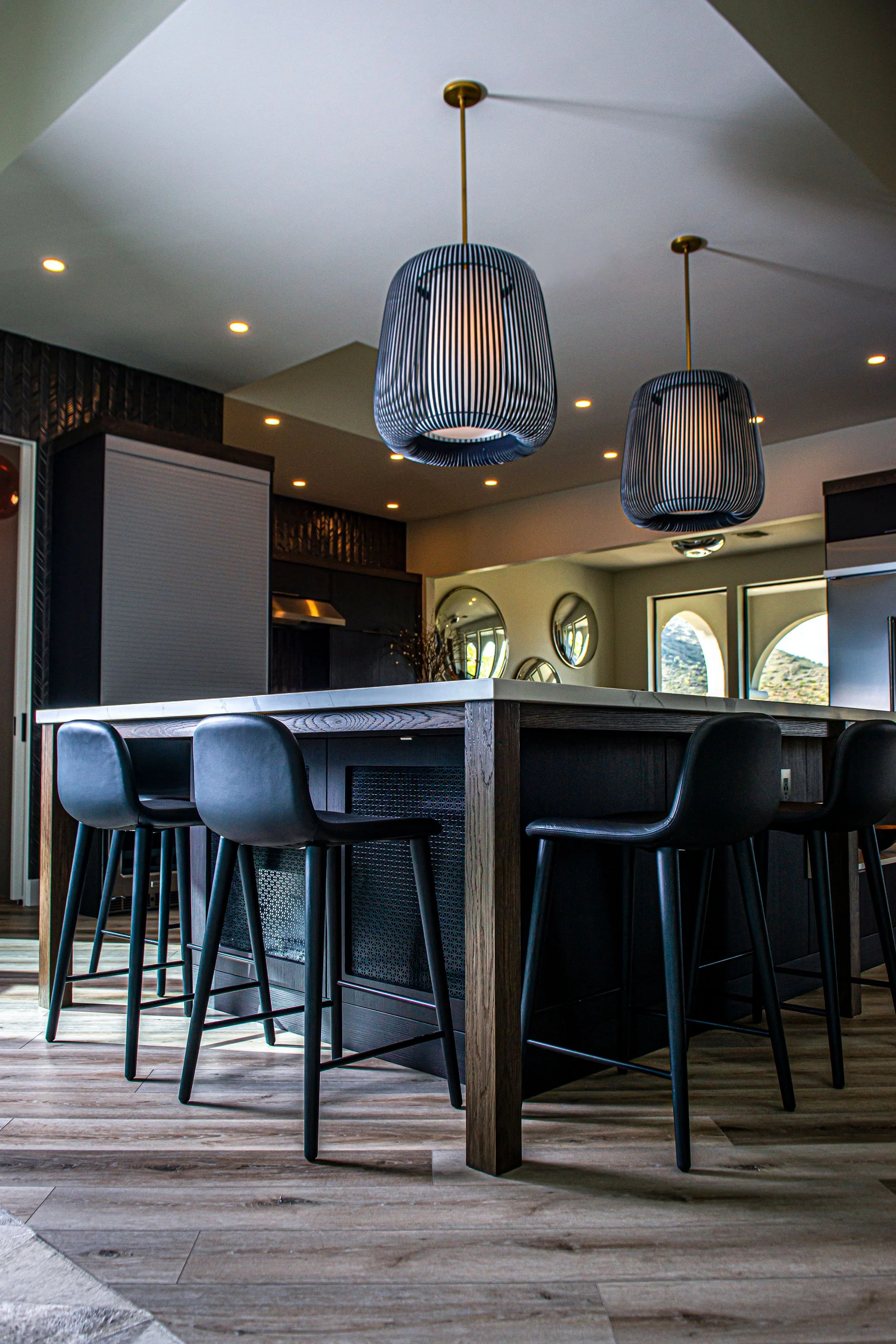
7. Keep the View Open With Clear Glass Pendants
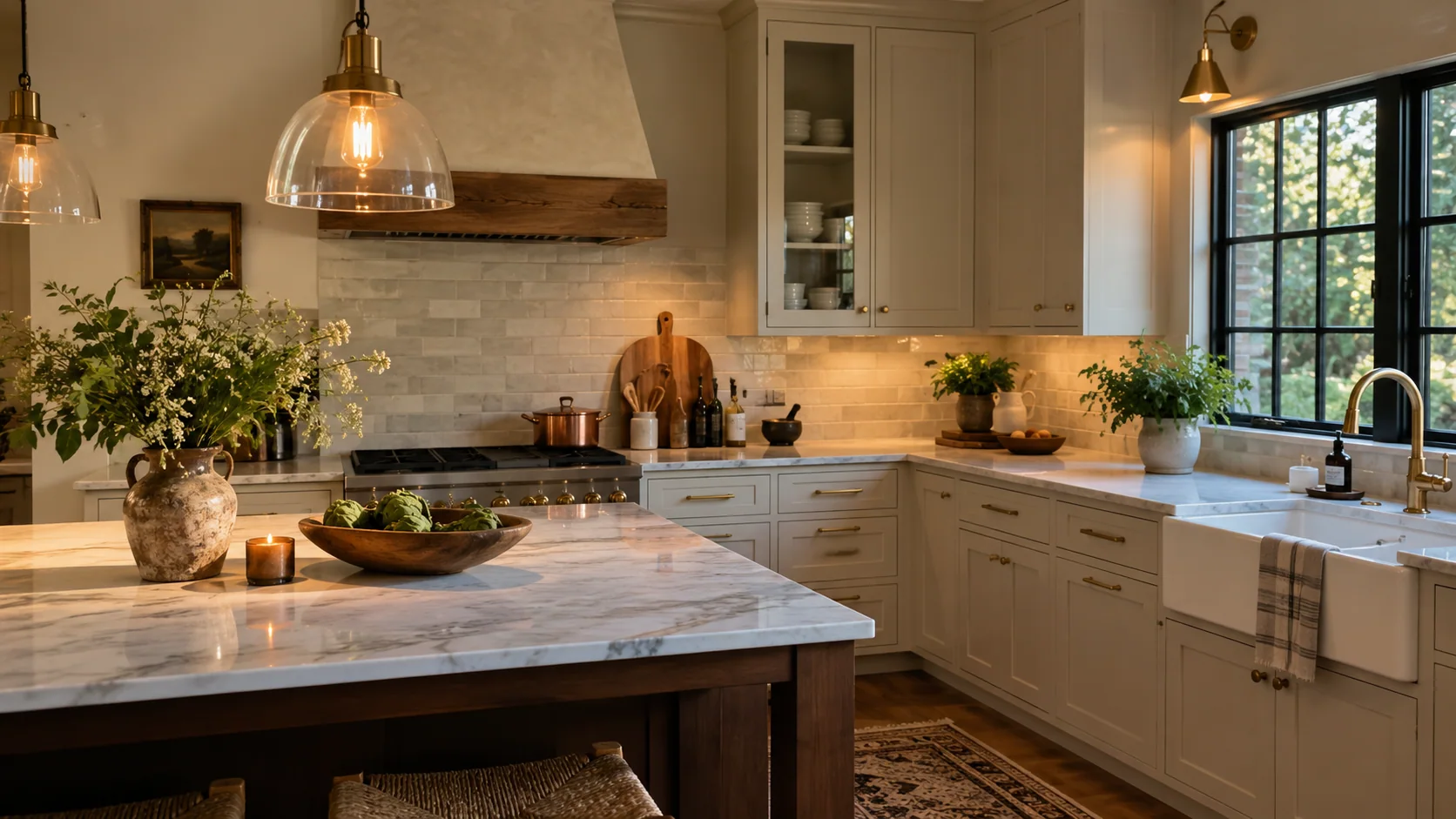
Clear glass pendants add shape without completely blocking the view across the kitchen.
They can work well above an island facing a living room or near a window you want to keep visible. The shade provides a little structure while the room remains visible through it.
The bulb deserves attention because you’ll see it. A very bright exposed bulb can feel uncomfortable when it sits near seated eye level.
Look at the fixture illuminated, ideally from beneath and across the room. A pendant that looks delicate when switched off can become quite assertive once the bulb is glowing.
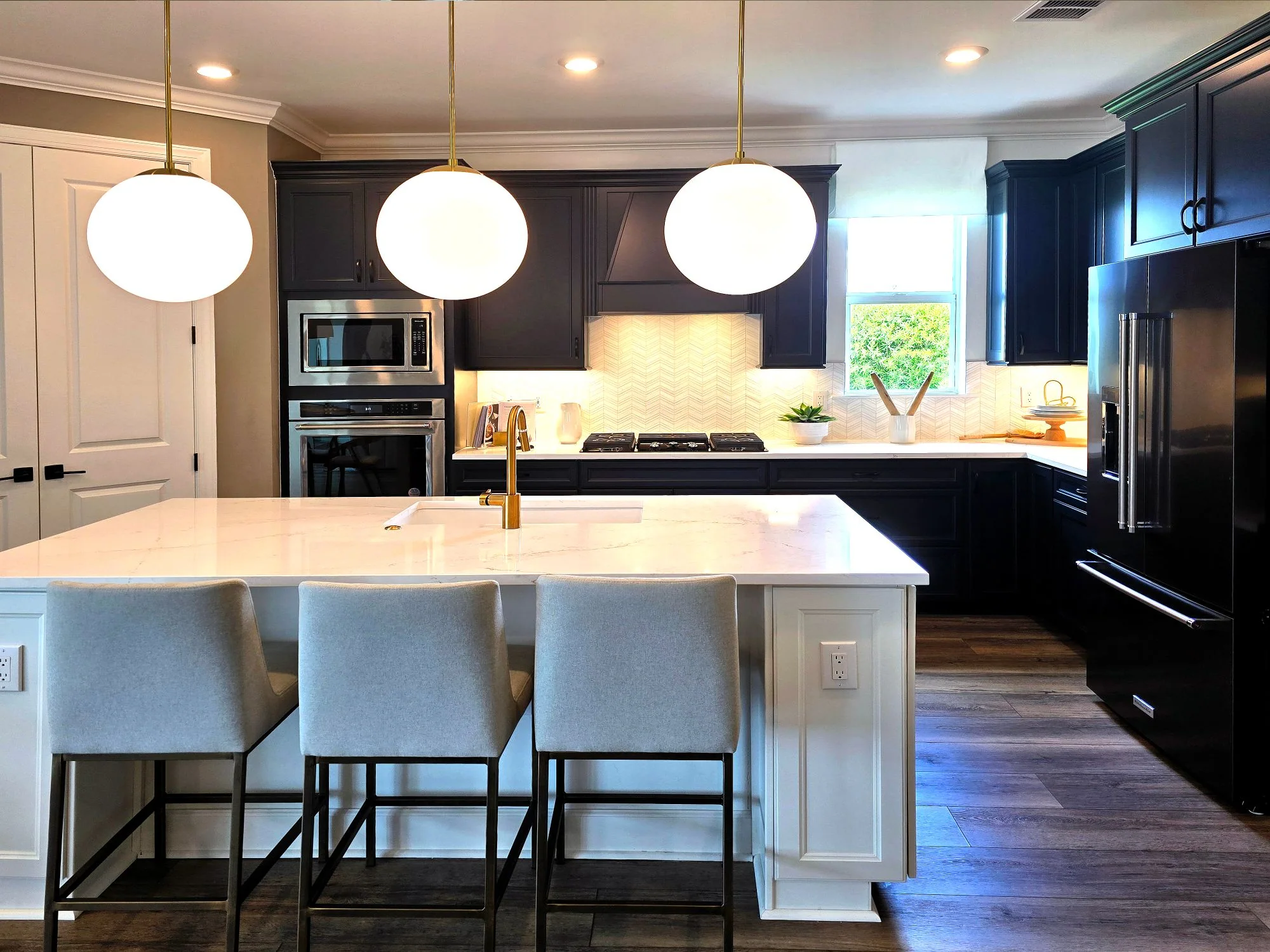
8. Try Milk Glass for a Softer-Looking Glow
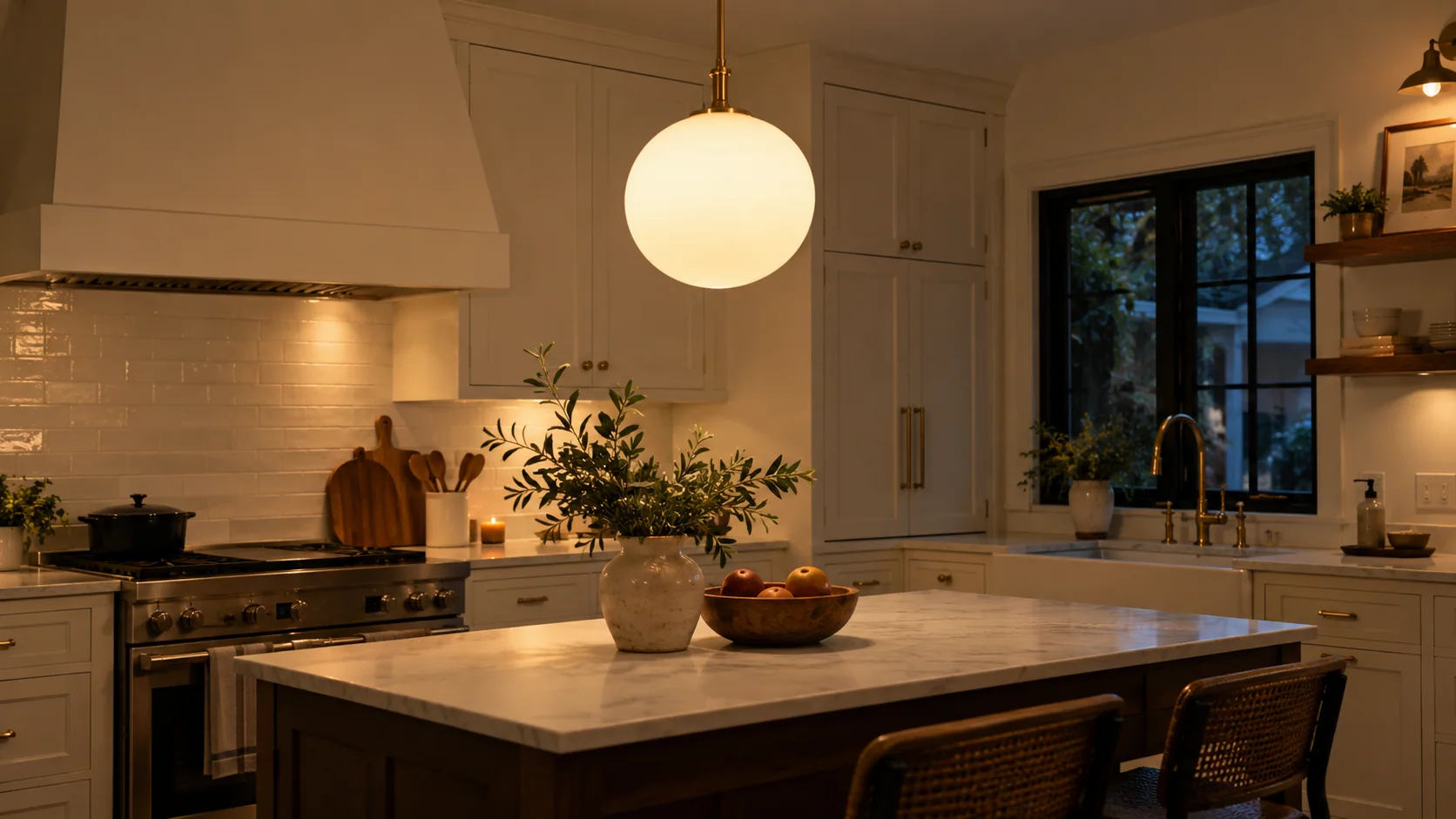
Milk or opal glass conceals the bulb and spreads light through the shade.
That makes it useful when you like globe pendants but would rather avoid looking directly at the light source.
A simple white globe sits comfortably with wood cabinets, painted doors, or brass hardware. It also gives the fixture some presence during the day.
The effect depends on the shade and its opening. Some white-glass fixtures have an open base, so the bulb may still be visible from the dining chair beneath it. The seated view often tells you more than the showroom view.
9. Follow a Long Island With a Linear Light
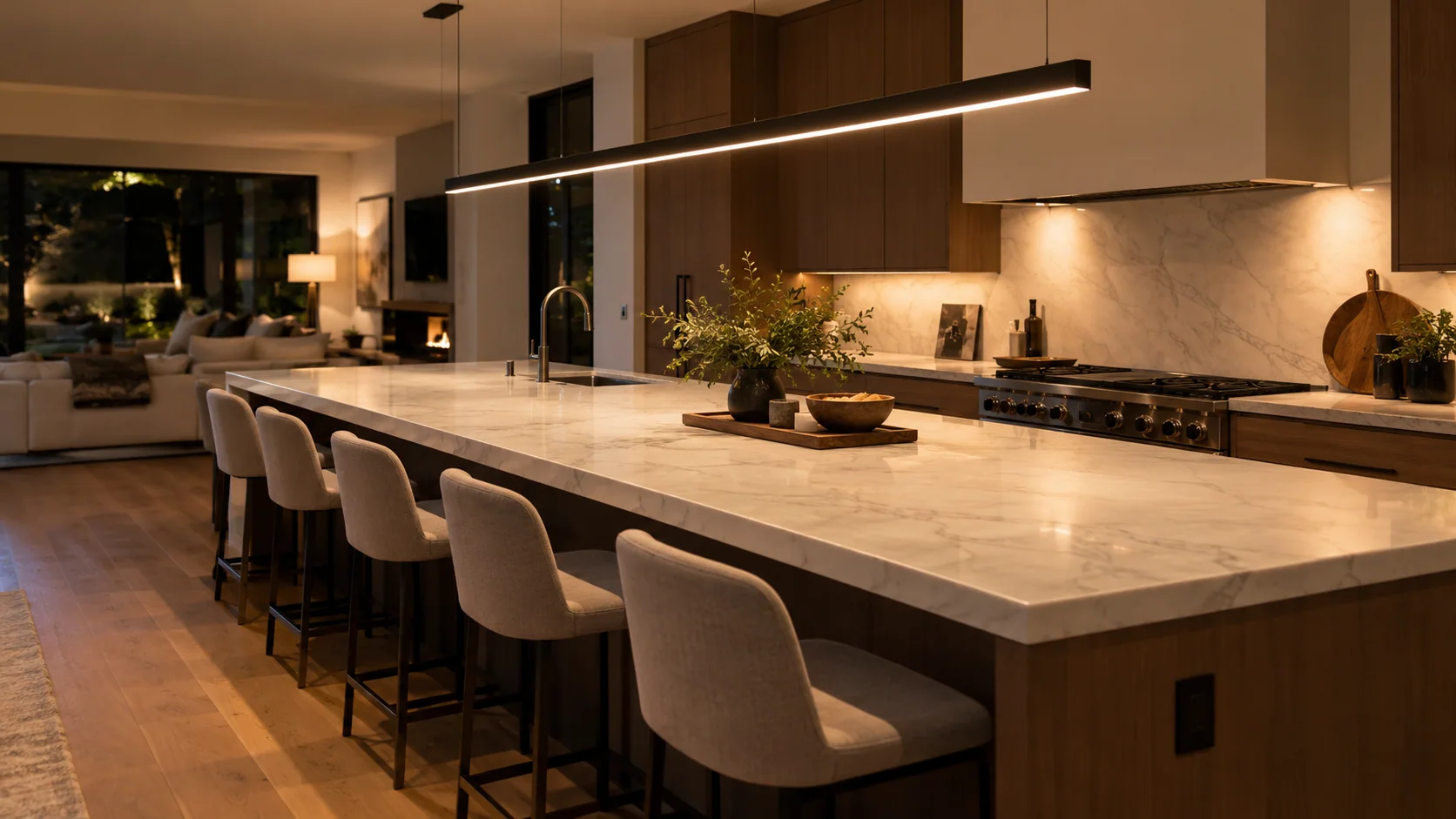
An elongated fixture can suit a long island because its shape follows the surface beneath it.
It’s a useful option when several individual pendants would make the ceiling feel crowded.
Look at where the light actually lands. Some linear fixtures direct illumination downward; others spread it upward or through multiple shades. Choose according to whether the island is mostly for food preparation, meals, or both.
Judge the fixture from the end of the island as well as the side. A light that looks slender in a photograph may have more depth than expected.
10. Try Two Pendants Before Automatically Choosing Three
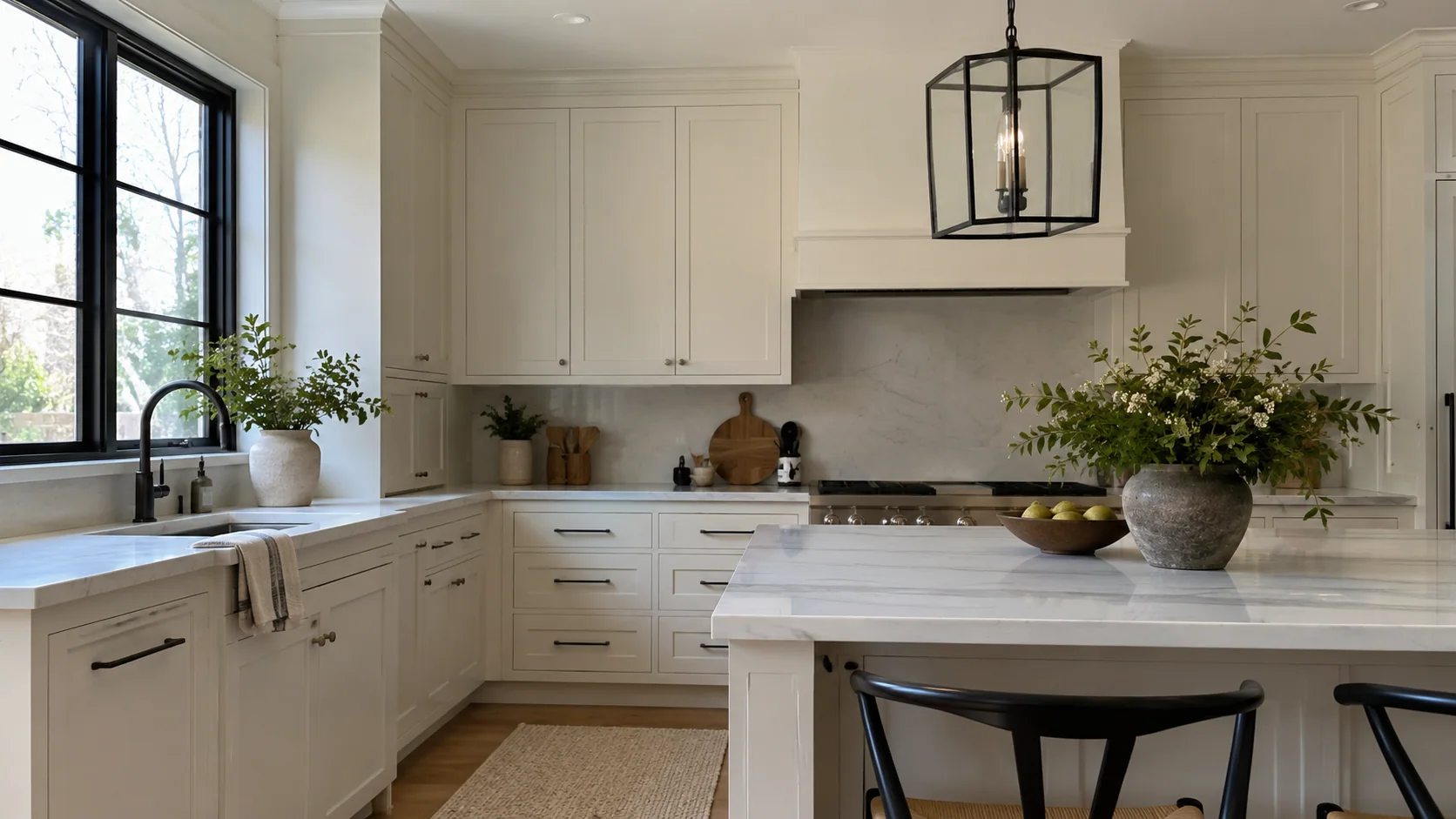
Choose the number of pendants around their size, light output, and the island’s proportions.
Two substantial shades may feel better balanced than three squeezed together. Smaller fixtures might suit a different arrangement.
Make paper or cardboard outlines of the shades and have someone hold them at the proposed positions. Look from the kitchen entrance and from wherever you usually sit.
This is especially helpful with oversized pendants. Their listed diameter can sound reasonable until you see that much material hanging in front of the window.
11. Use a Wall Sconce Where a Pendant Would Crowd the View
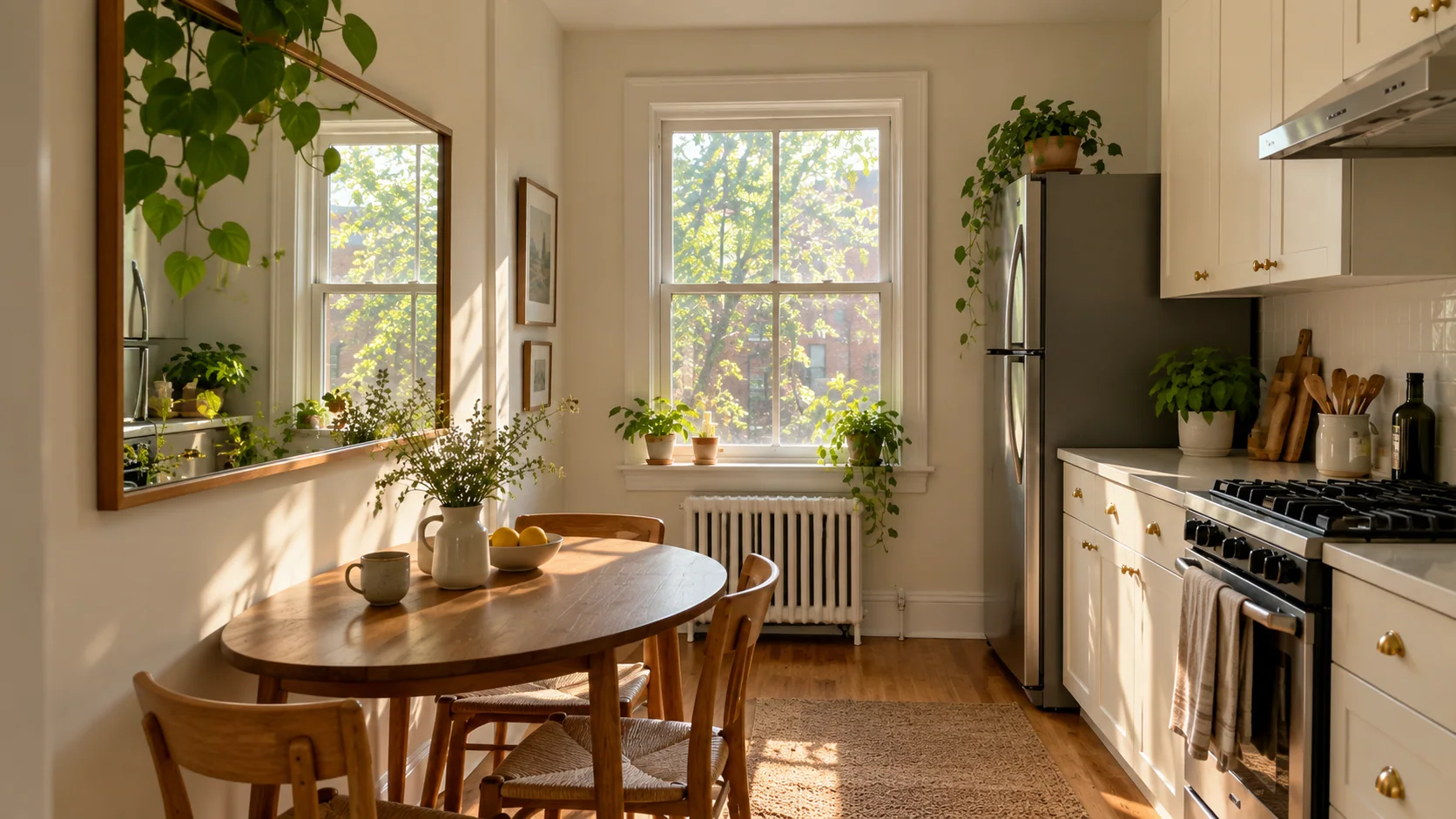
A wall light can illuminate a counter or sink while leaving the space above it open.
This works particularly well where there are no upper cabinets, or where a pendant would sit awkwardly in front of a window.
Choose the light distribution for the job. A downward-facing shade can direct light onto a surface. A softly glowing globe is often better for adding warmth to the wall.
Think about how far the fitting projects. An adjustable arm needs room to move without bumping into a cabinet door or becoming something you lean around every morning.
12. Give the Breakfast Table a Light of Its Own
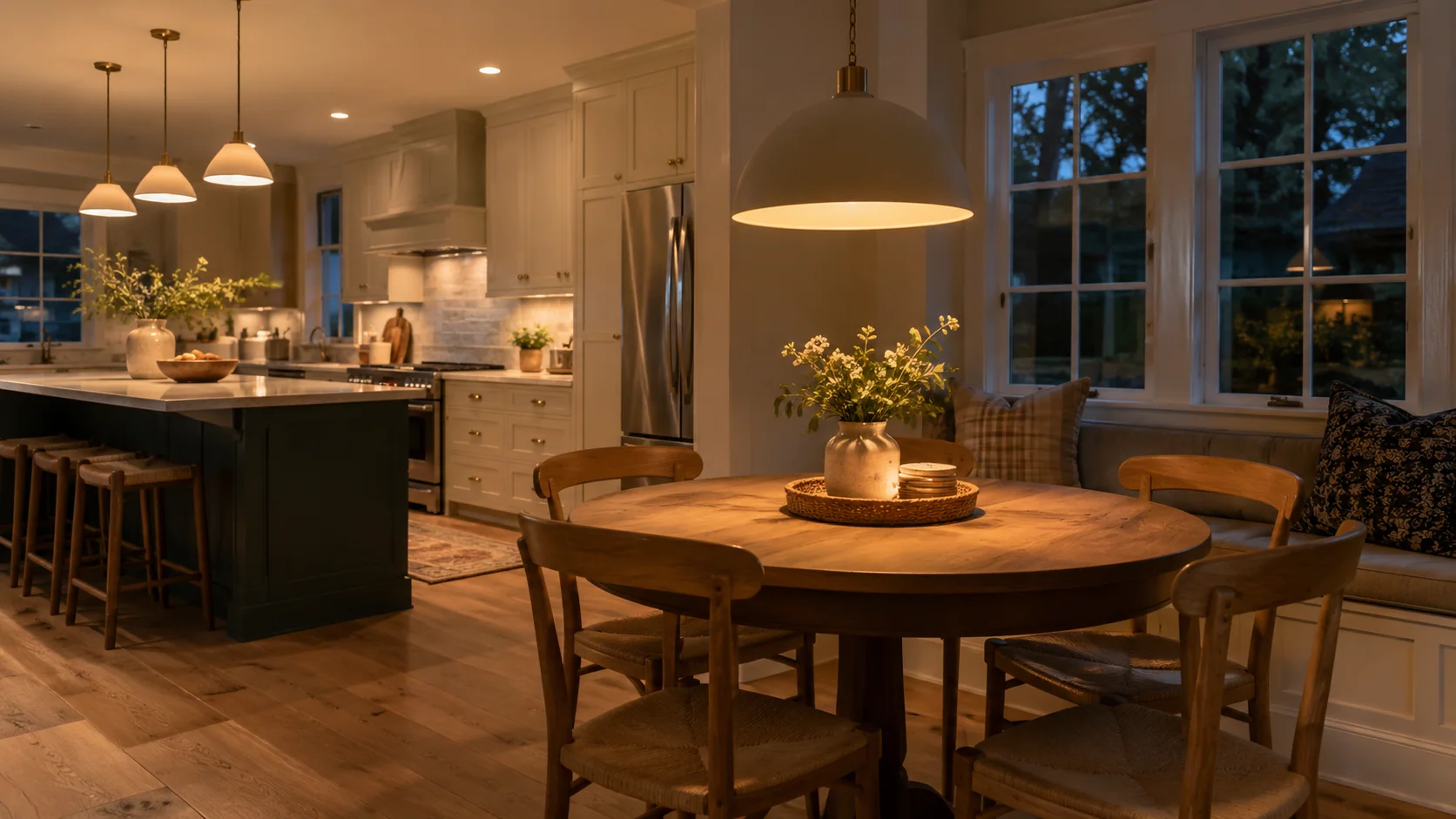
A separate dining light makes the table feel like a place to sit, even while the rest of the kitchen is busy.
A pendant can work beautifully here, but so can a shaded wall light beside a small nook.
Position it around the table’s everyday location. If the table usually stays tucked against a wall, that is the arrangement to plan for.
Then sit down. See whether the light feels comfortable when you look at the person opposite you.
This is one place where independent dimming earns its keep. Breakfast, homework, and a late dinner rarely need exactly the same setting.
Fixtures That Bring Color, Texture, and Personality
13. Repeat a Touch of Brass Above the Counter
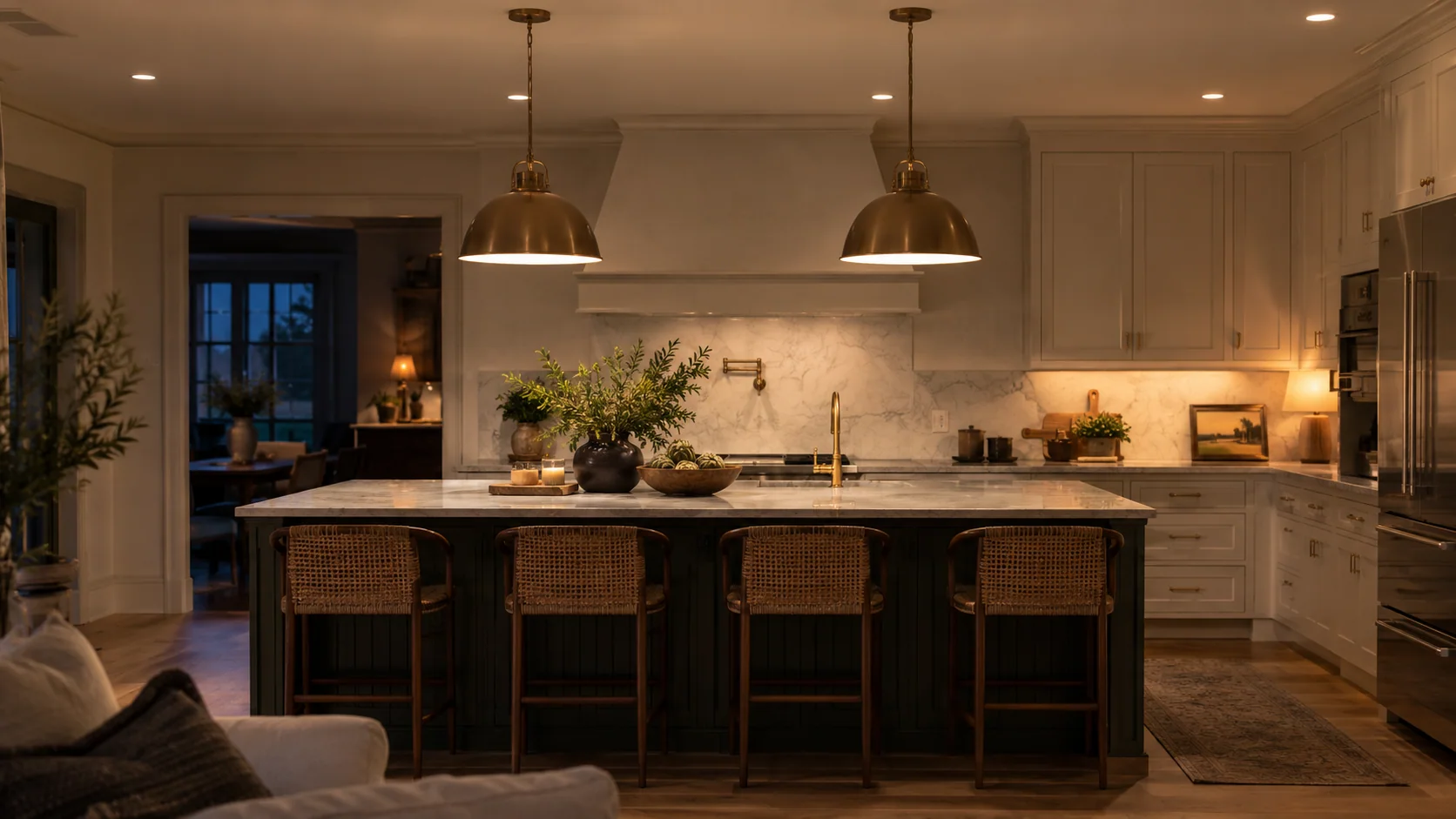
A brass detail in the lighting can connect with warm finishes already in the kitchen.
It might pick up the tone of cabinet handles, a faucet, or the frame of a favorite print. Even a small brass cap on a glass pendant can create that connection.
The finishes don’t have to match perfectly. Aged brass and a cleaner brushed finish can share a room, especially when another material, such as white glass, gives them something in common.
Be more deliberate when several noticeably different gold tones sit right beside one another. Sometimes moving one piece farther away is enough to make the combination feel easier.
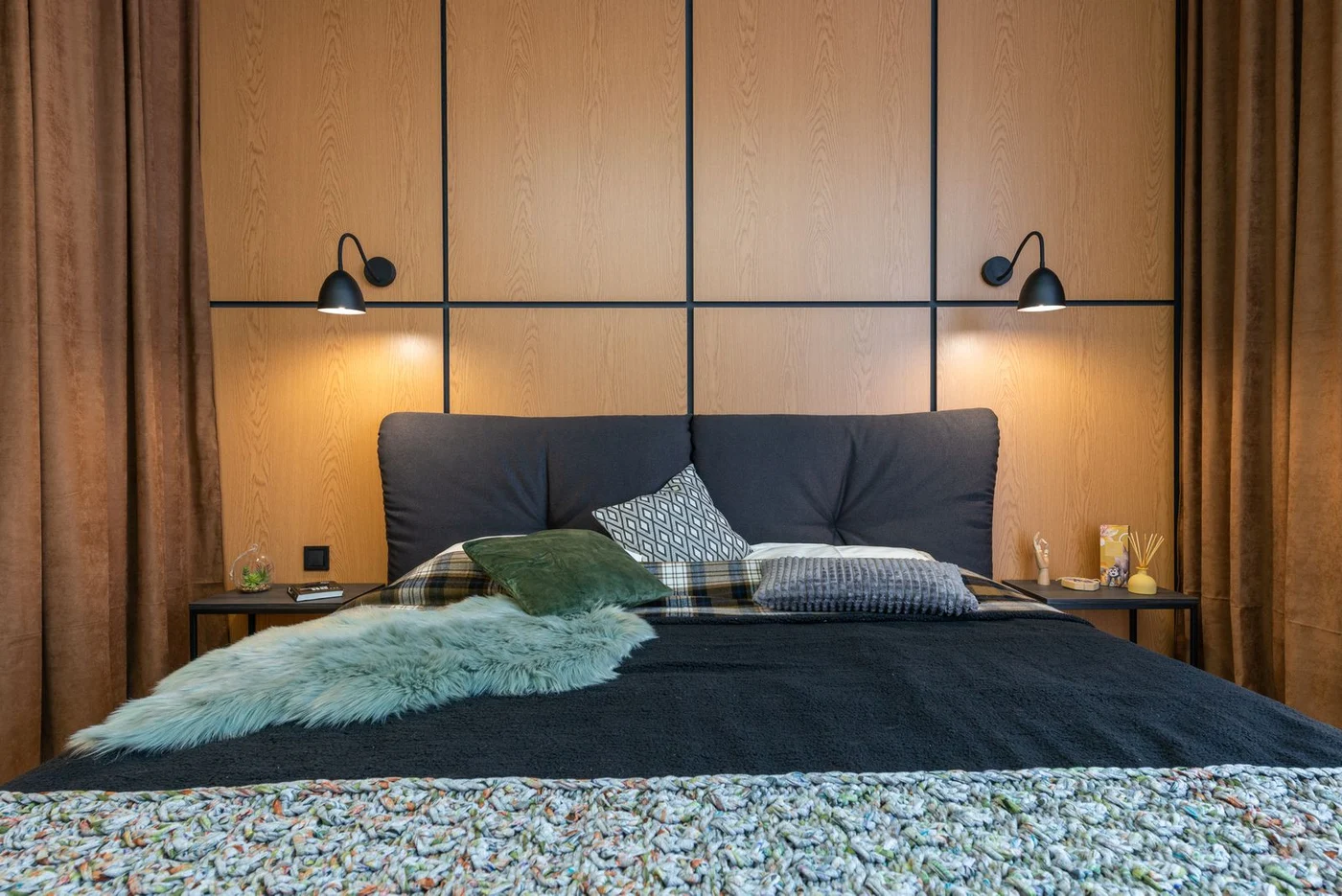
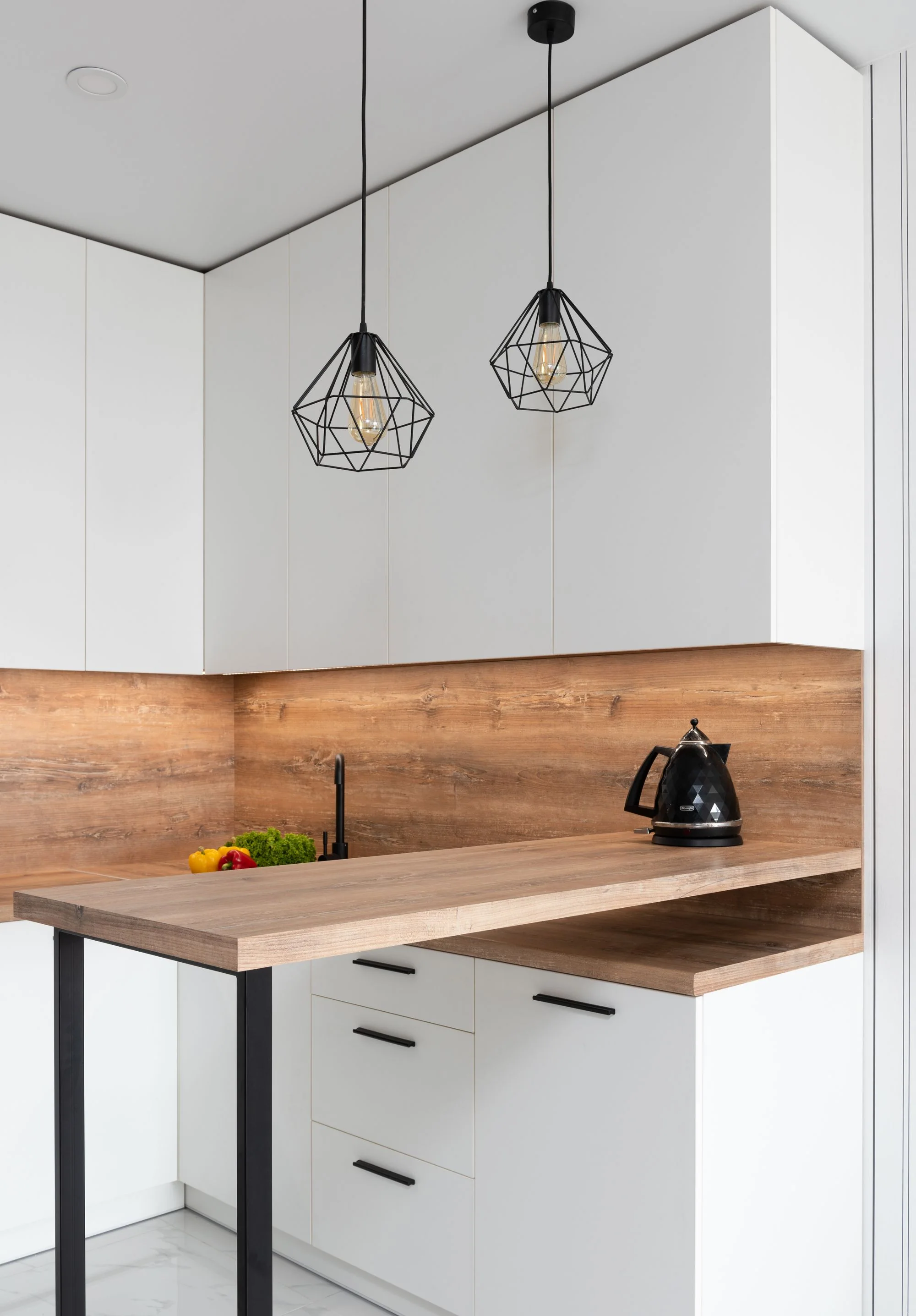
14. Give Pale Cabinets a Little Definition With Black Lighting
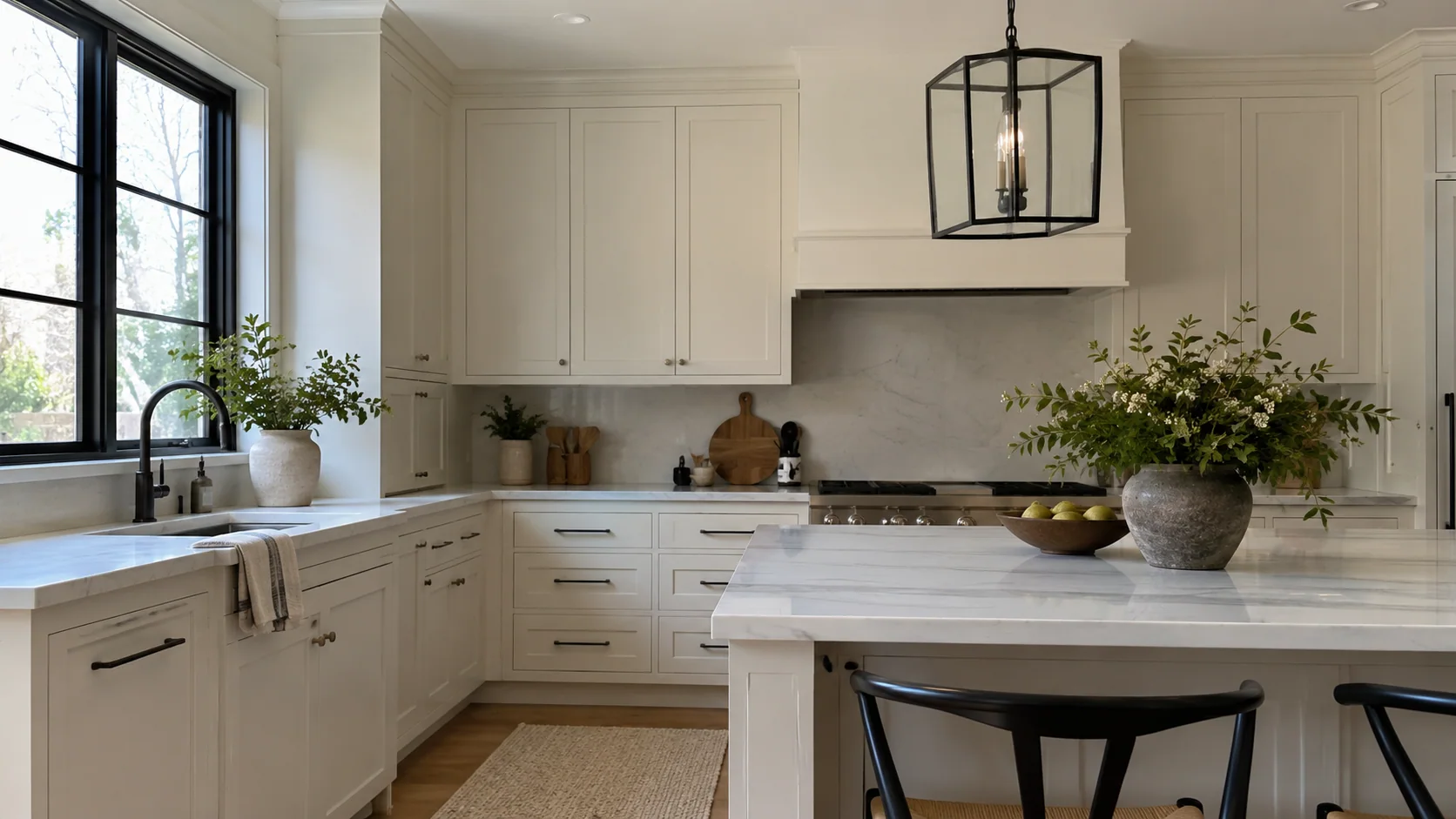
Black fixtures create a clear outline against pale walls and cabinetry.
A slim black wall light can echo a window frame or appliance handle. A larger black pendant makes a stronger statement and occupies more of the view.
Think about the amount of dark material you’re introducing. A narrow stem with a glass shade will feel quite different from a deep, solid metal dome.
If the kitchen already has dark stools, shelving brackets, and patterned tile, a smaller black detail may be enough to connect the room.
15. Bring Woven Texture to the Dining End of the Kitchen
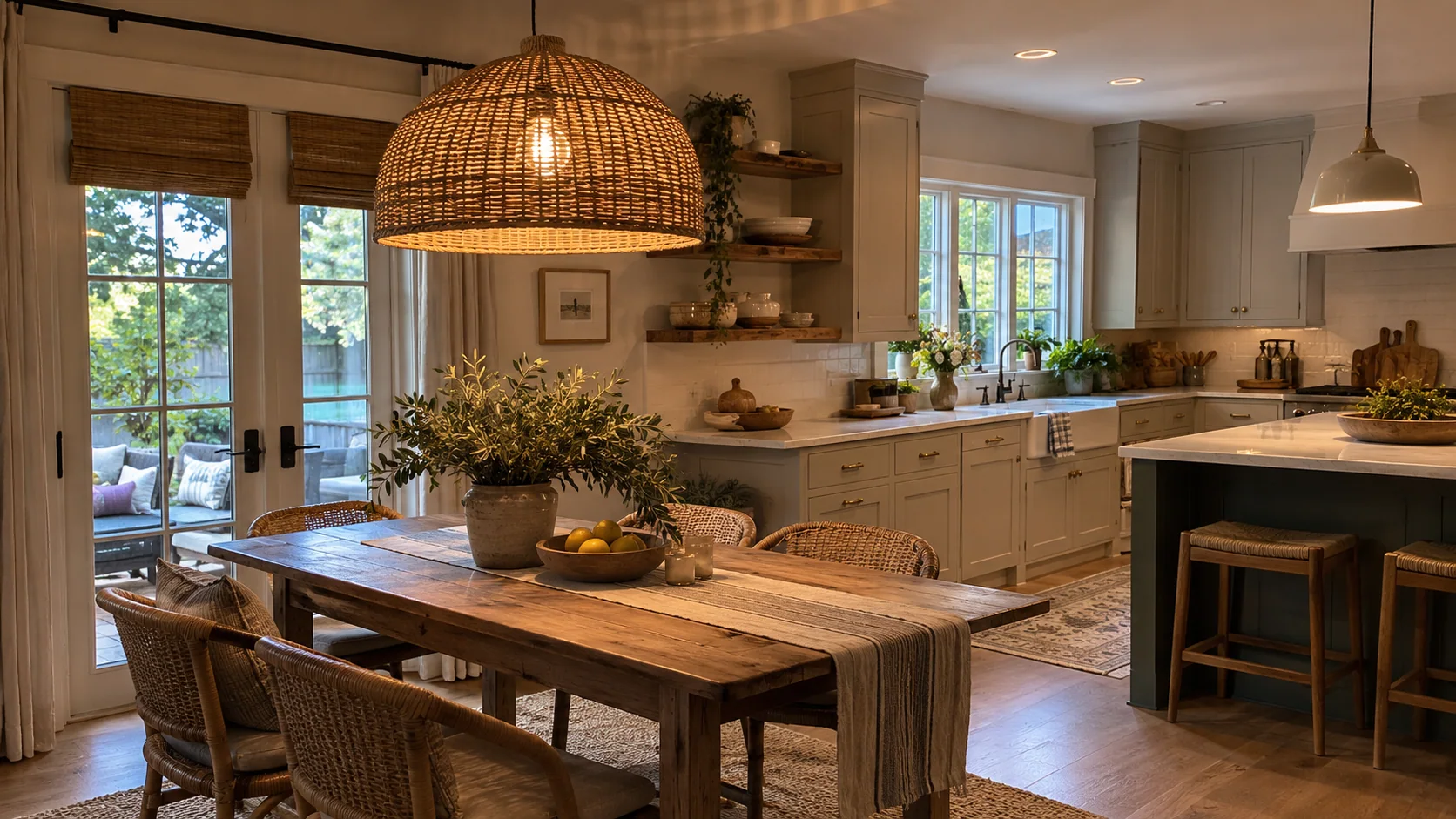
A woven shade adds texture where the kitchen meets a table, breakfast nook, or seating area.
Rattan and other woven materials can feel especially at home beside wood, linen, and simple painted cabinetry.
Look at the shade lit as well as unlit. An open weave may cast a noticeable pattern, which can be lovely on a wall but distracting over a detailed task.
A dining nook is often a comfortable home for this kind of fixture. You get to enjoy the texture, and the shade sits farther from the grease and steam of everyday cooking.
16. Try Ceramic for a Softer, More Handmade Look
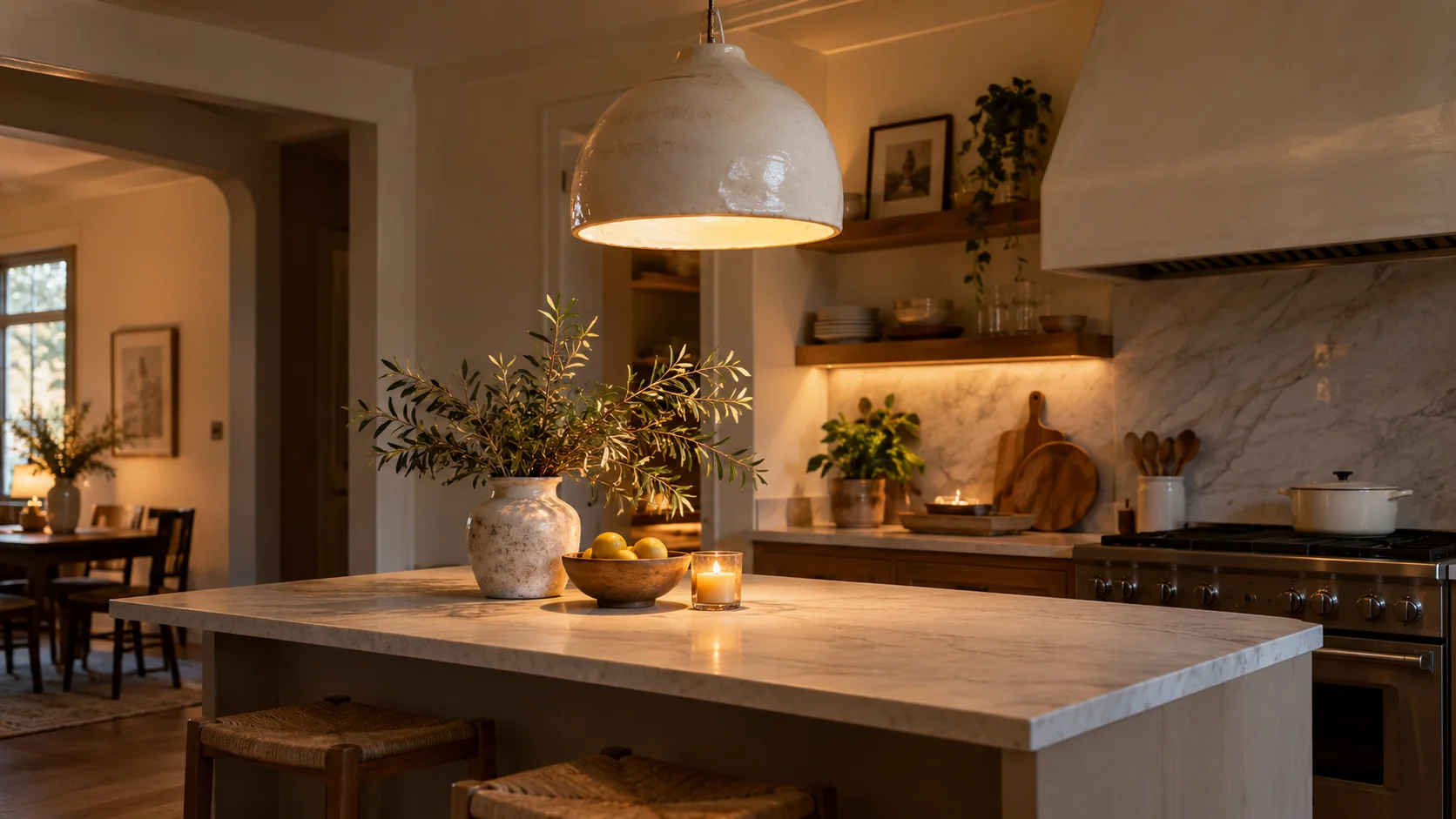
Ceramic shades bring a solid shape and subtle surface variation to the room.
A rounded cream pendant can sit quietly above an island. A rippled or irregular shade introduces more character without needing a bright color.
Different ceramic designs handle light differently. Opaque shades generally direct it through an opening, while translucent porcelain and perforated designs create other effects.
If the island is where you chop vegetables and read recipes, look for useful light on that surface. A delicate pattern across the ceiling can be lovely as an additional effect.
17. Let One Colored Shade Do the Decorating
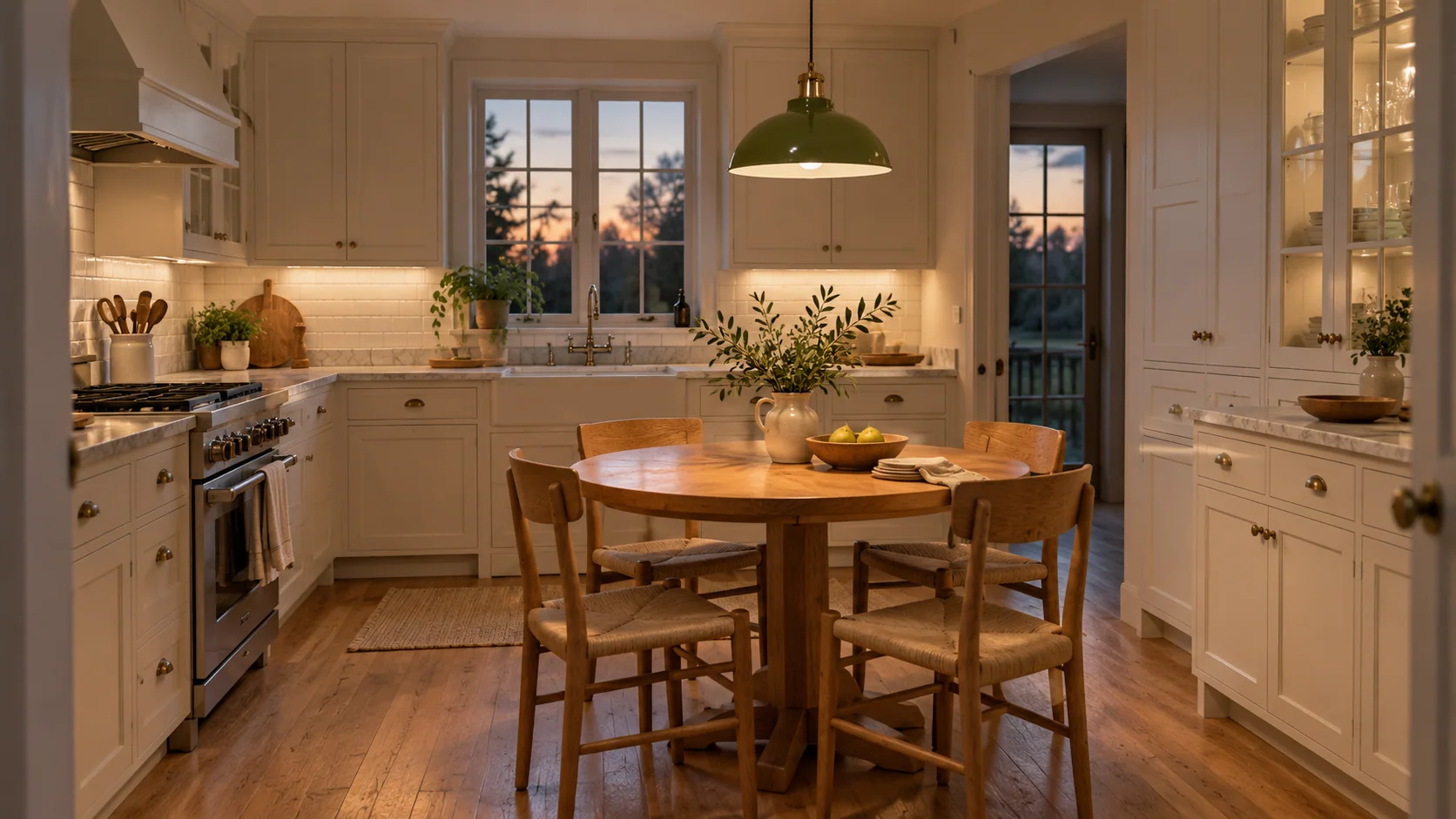
A colored fixture can provide an accent without changing cabinets, tiles, or countertops.
A green enamel shade might pick up a detail in a print. A rust-colored pendant could relate to terracotta pots or the warm tone of a wooden table.
Keep the connection loose enough to feel natural. Every accessory doesn’t need to join in.
Also distinguish the shade’s color from the light it casts. Amber or strongly colored glass may tint nearby surfaces. That can feel cozy above a breakfast table, while you may prefer a more neutral light where you prepare food.
18. Give a Sculptural Fixture Enough Room to Be Seen
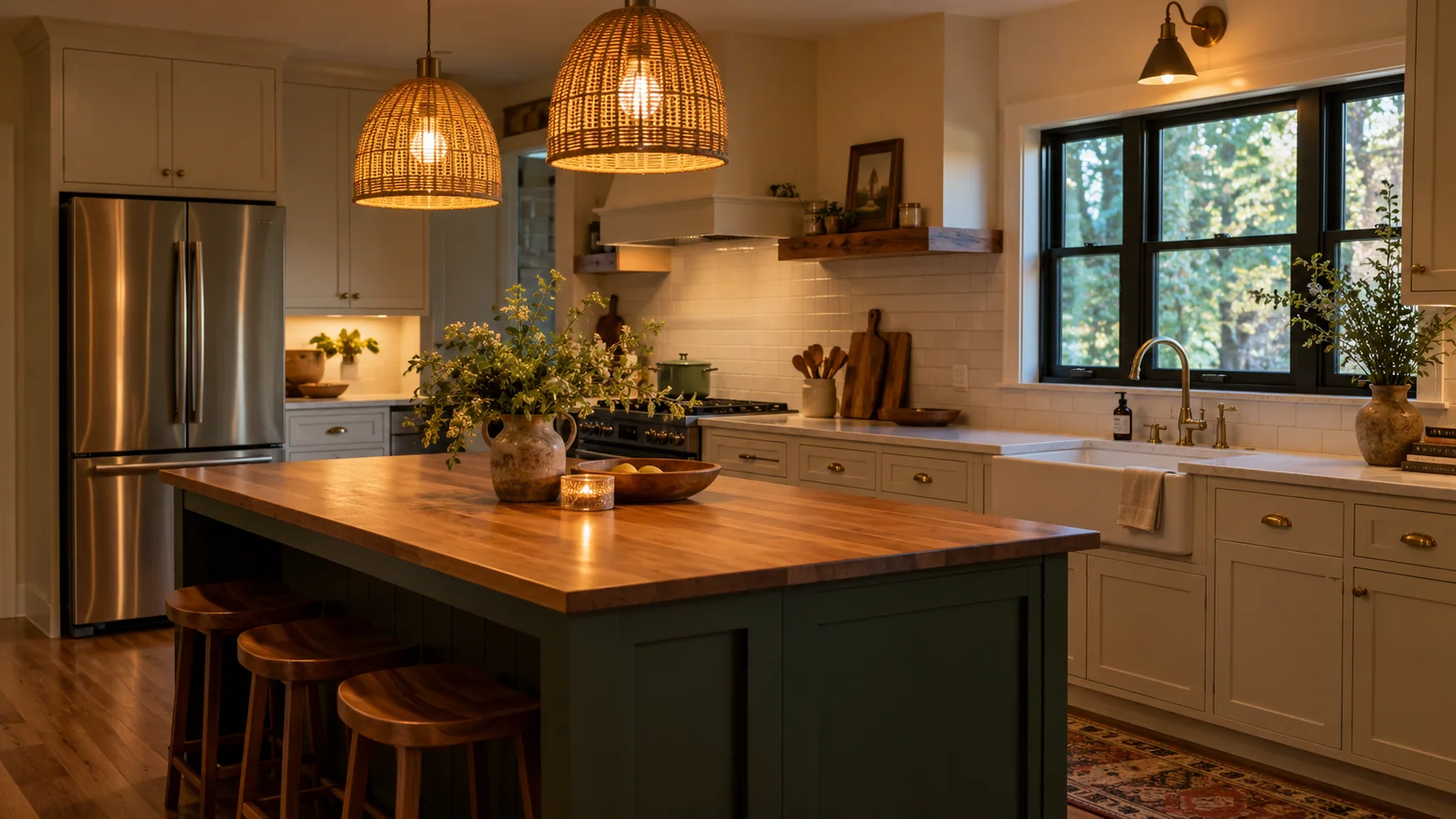
A branching chandelier or unusual pendant works best where its shape has some clear space around it.
A long island or dining table can provide an obvious place for it. A tightly packed corner beneath wall cabinets offers less room to appreciate the form.
Consider the whole outline, including arms, globes, and hanging details. Those parts may extend much farther than the central body suggests.
Keep nearby lighting simpler if the statement piece already has a lot going on. You should still be able to see across the island and talk comfortably to someone on the other side.
Kitchen Lighting Ideas for After Dinner
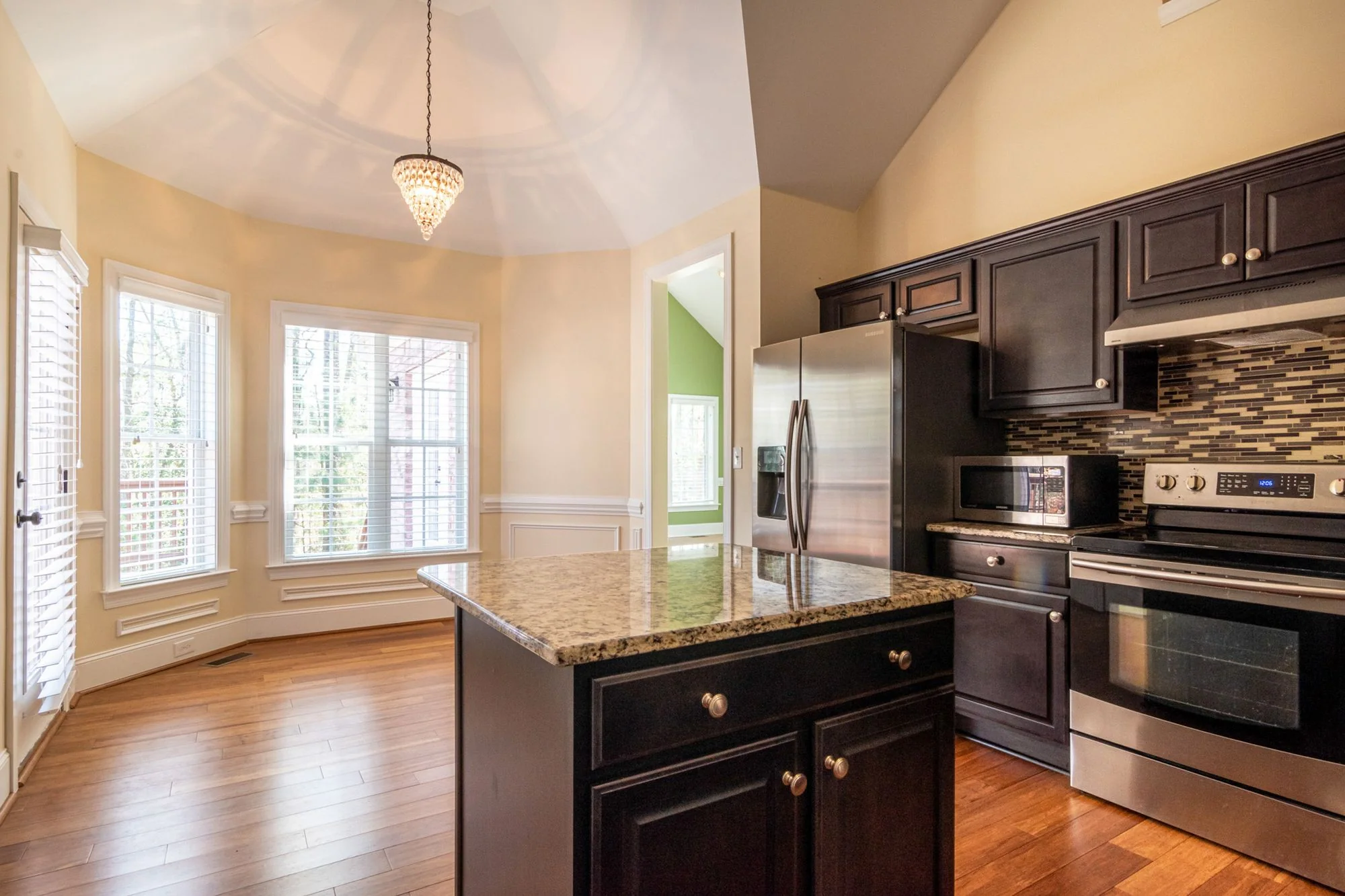
19. Add a Gentle Glow Inside Glass-Front Cabinets
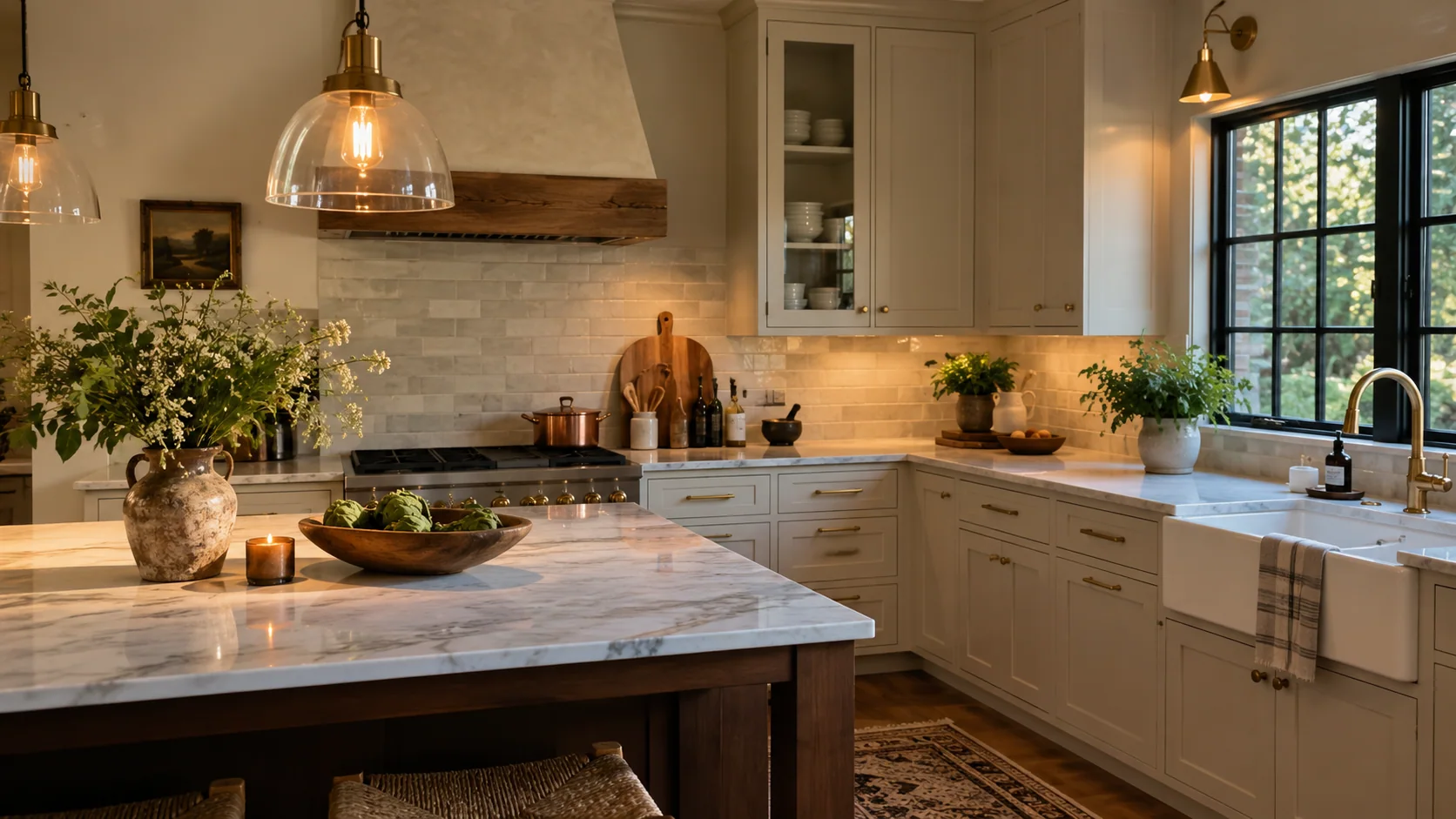
Concealed cabinet lighting adds depth and makes displayed pieces easier to see after dark.
A few glasses, bowls, or serving pieces can look lovely with a little light around them. Shelves packed edge to edge tend to make the effect feel busier.
Tuck the source out of ordinary sight so the contents get the attention. A bright strip reflected in the doors can distract from everything you wanted to display.
Adjustable brightness helps here. Cabinet lighting that looks subtle in daylight can become the brightest feature in the kitchen once everything else is switched off.
20. Put a Picture Light Above Something You Enjoy Looking At
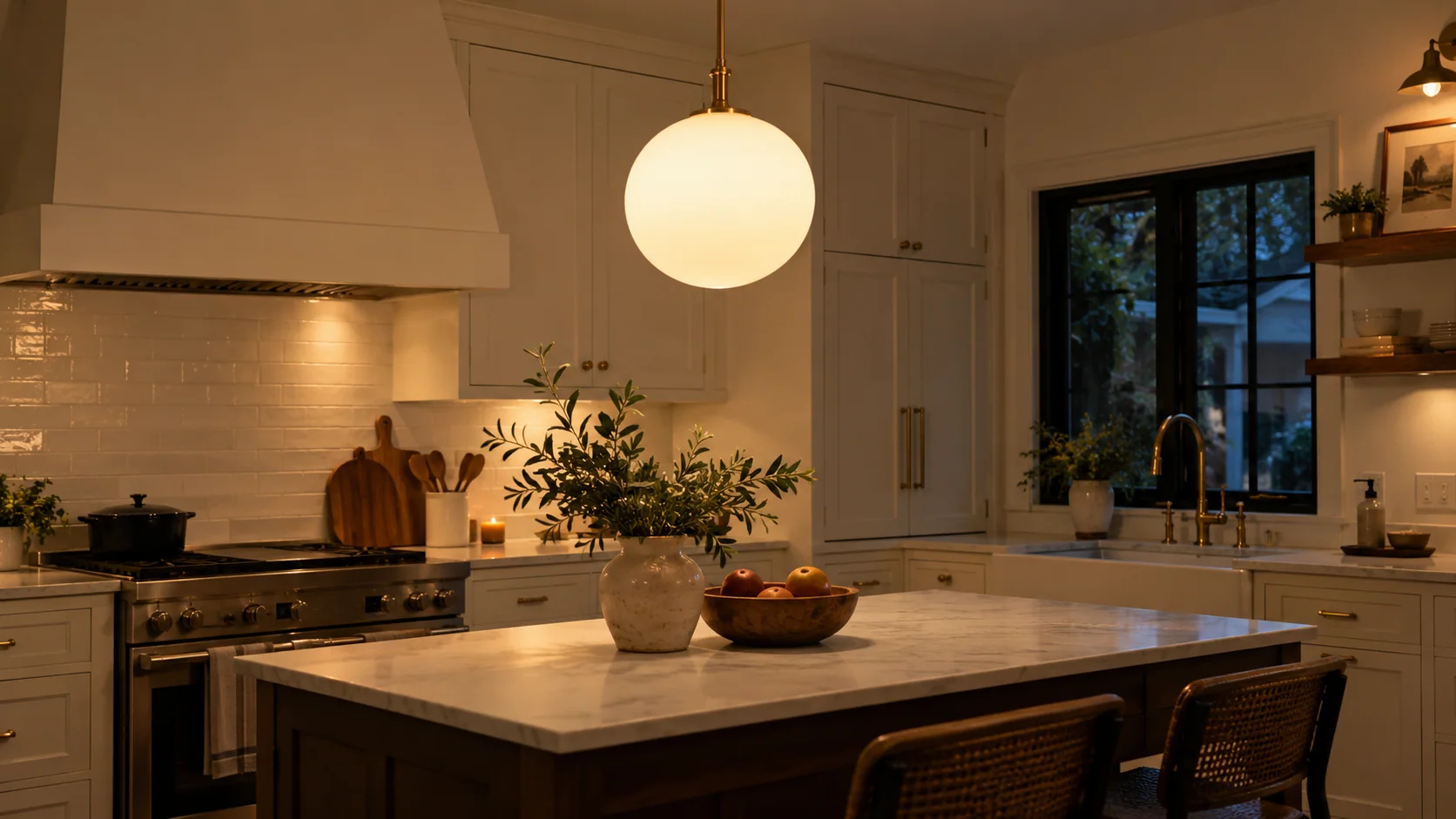
A picture light draws attention to a print, framed recipe, or small display.
It gives the kitchen a more personal evening view, particularly when the room opens into the living area.
Choose a spot away from regular cooking splashes, then adjust the light so it falls across the artwork without creating a bright reflection in the glass.
If there’s no wiring above the piece you want to highlight, the Visual Comfort Cabinet Maker 18-inch Cordless Picture Light provides that focused glow with a rechargeable light source. Its touch dimmer lets you keep the accent quiet once the main lights are off.
21. Add a Low Glow Beneath the Base Cabinets
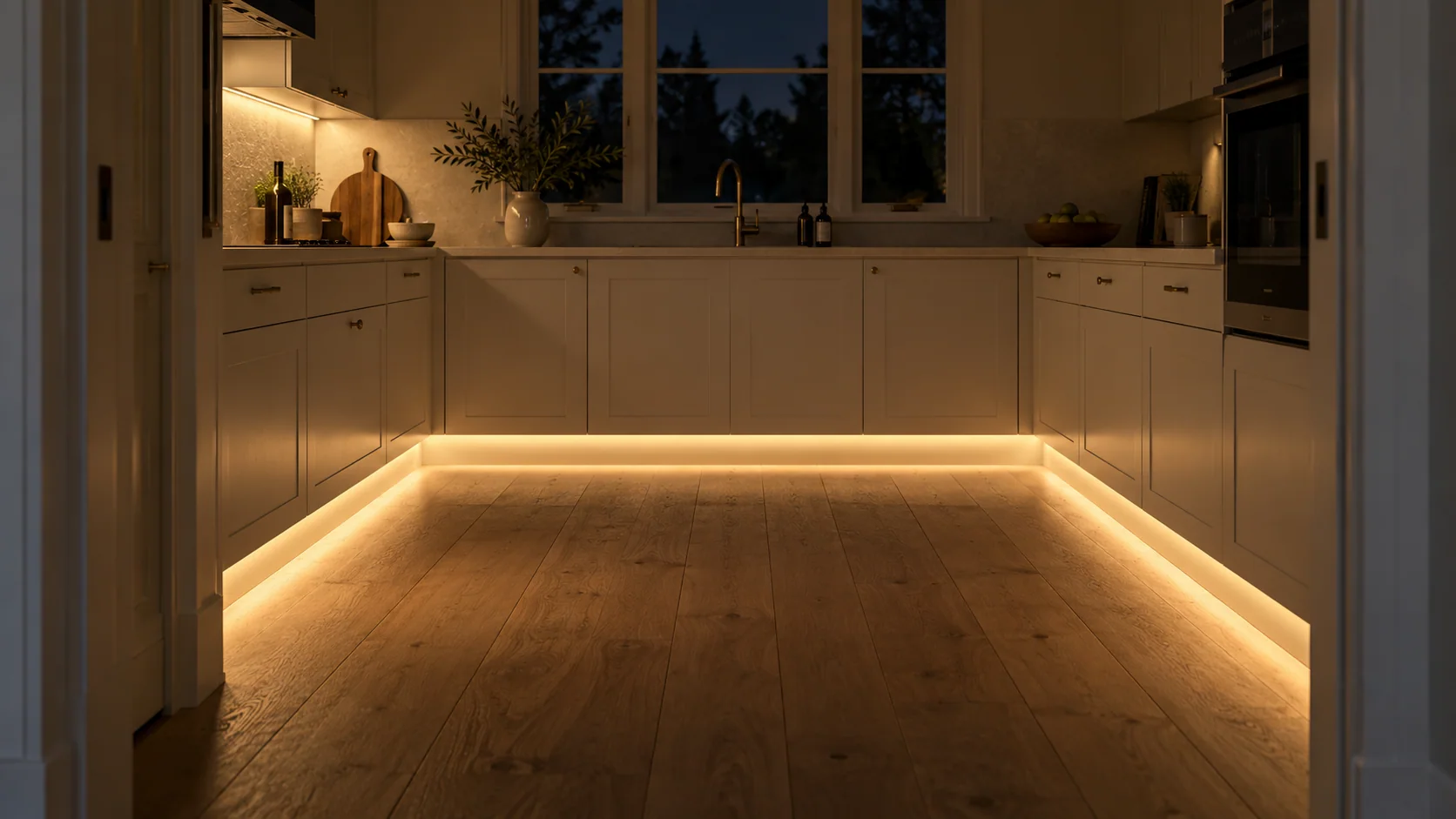
Toe-kick lighting provides a low level of illumination along the floor.
It can be useful for a late trip to the kitchen when you want to see the route without turning on every overhead light.
Keep the source tucked out of sight and use a restrained brightness. A bright strip reflected across glossy flooring can become more noticeable than intended.
A separate control or motion setting makes this layer easier to use. Look at the effect from the adjoining room, too, since that may be where you see it most often.
22. Give the Coffee Corner a Small Lamp
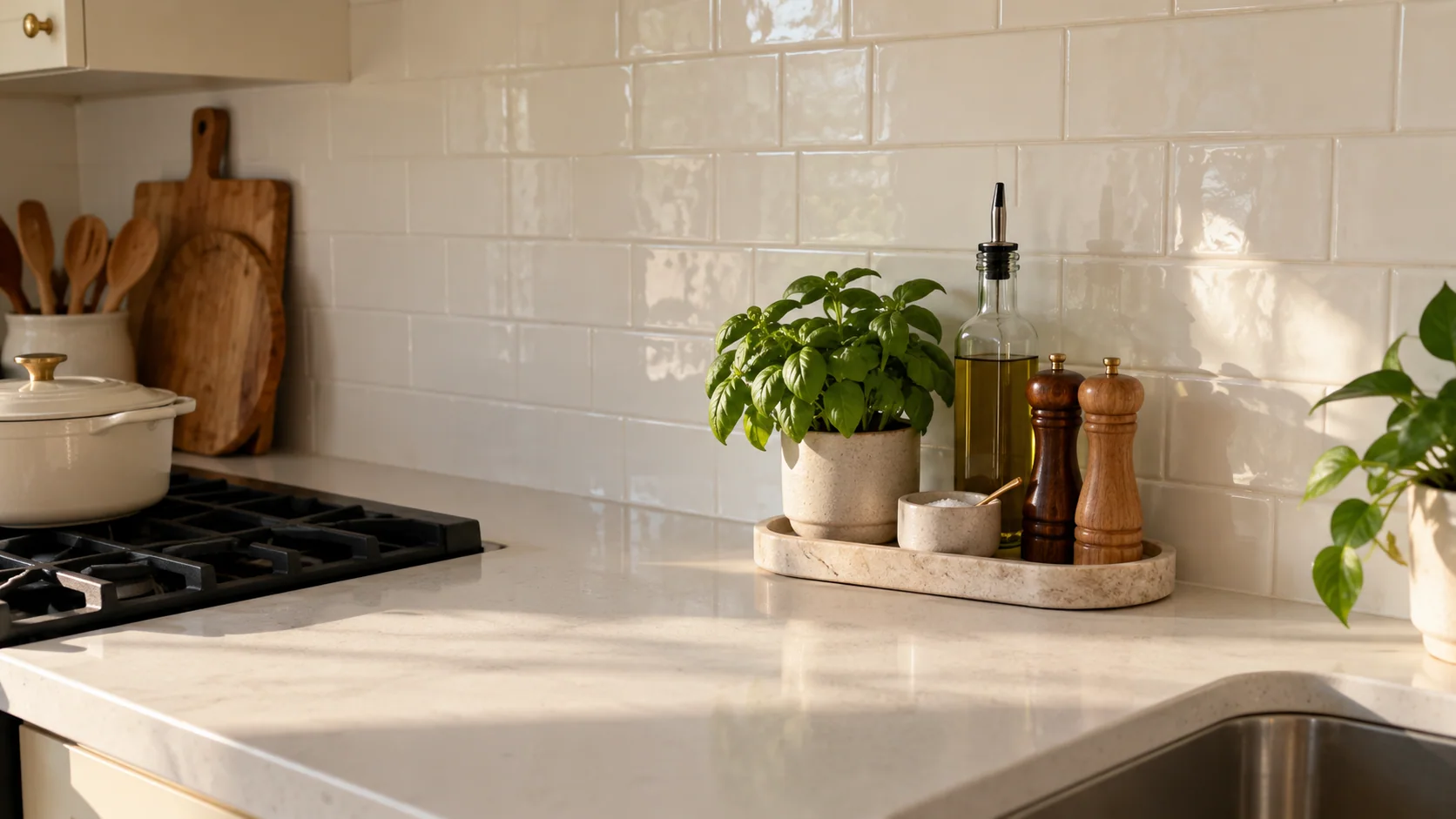
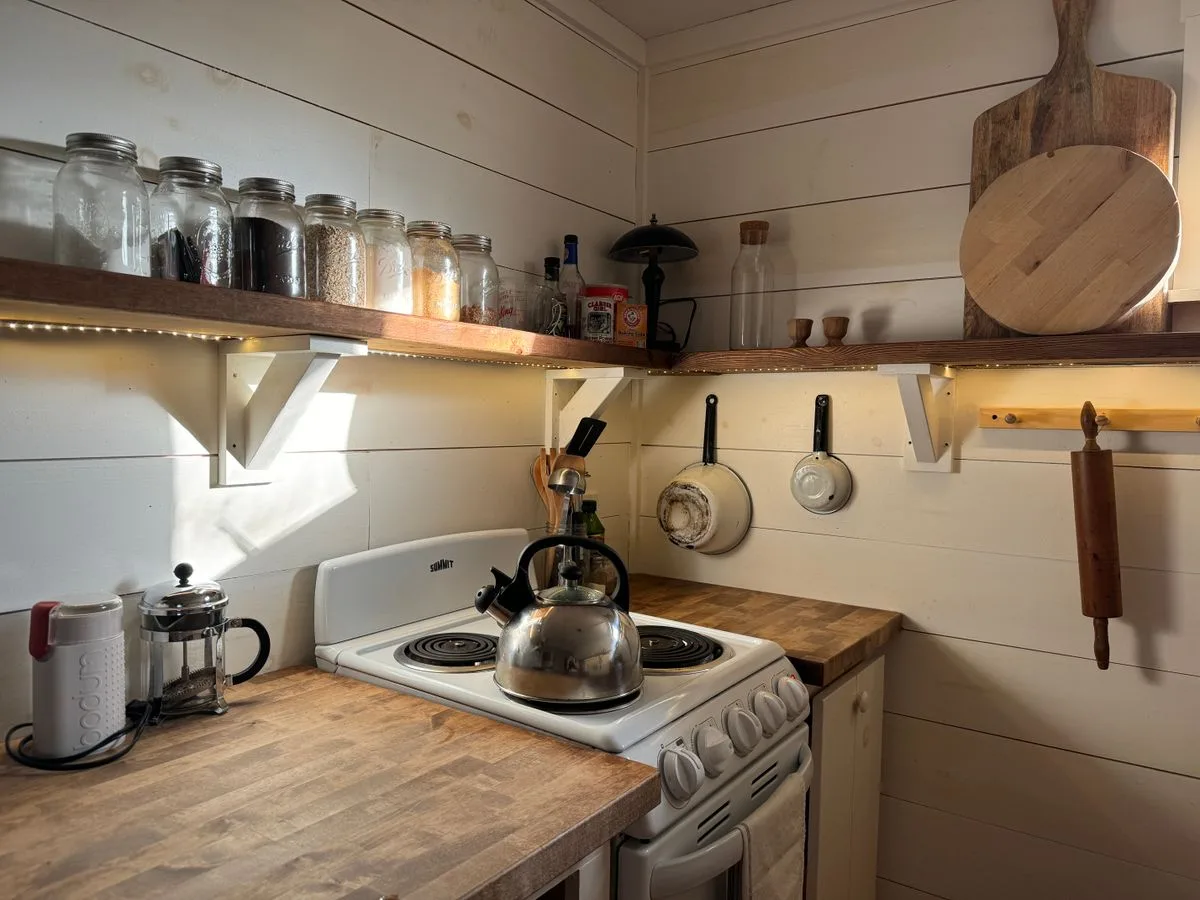
A compact lamp can make a dry, spare corner feel welcoming in the evening.
This works best where the counter has room to spare. If the lamp needs moving every time you prepare breakfast, another kind of light will probably be easier to live with.
A stable base, a wipeable shade, and a cord tucked away from the working area make the arrangement more practical. Keep it clear of water and hot appliances.
The appeal is simple: a pool of light beside the mugs while you make tea, with the rest of the kitchen allowed to feel quieter.
23. Put the Work Lights and Evening Lights on Separate Controls
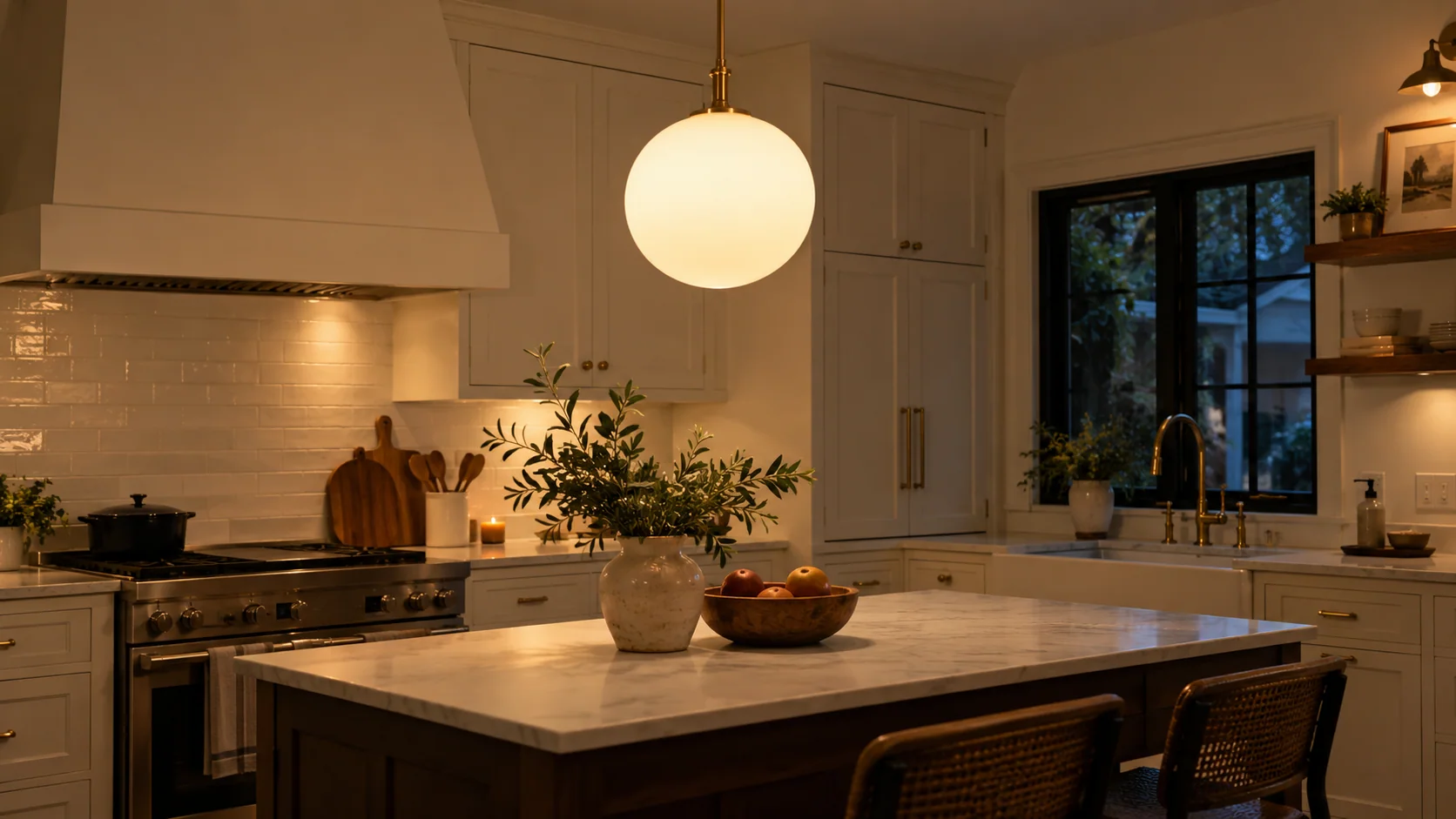
Independent controls let you change the kitchen’s atmosphere while keeping useful light where you need it.
You might leave the counter lights on while dimming the pendants during dinner. Later, a wall light or cabinet glow could be enough while you sit at the table.
It also helps in an open-plan home. The person watching television doesn’t have to sit beside a fully illuminated kitchen because someone else is making a sandwich.
24. Save a Few Smart Settings You’ll Actually Use
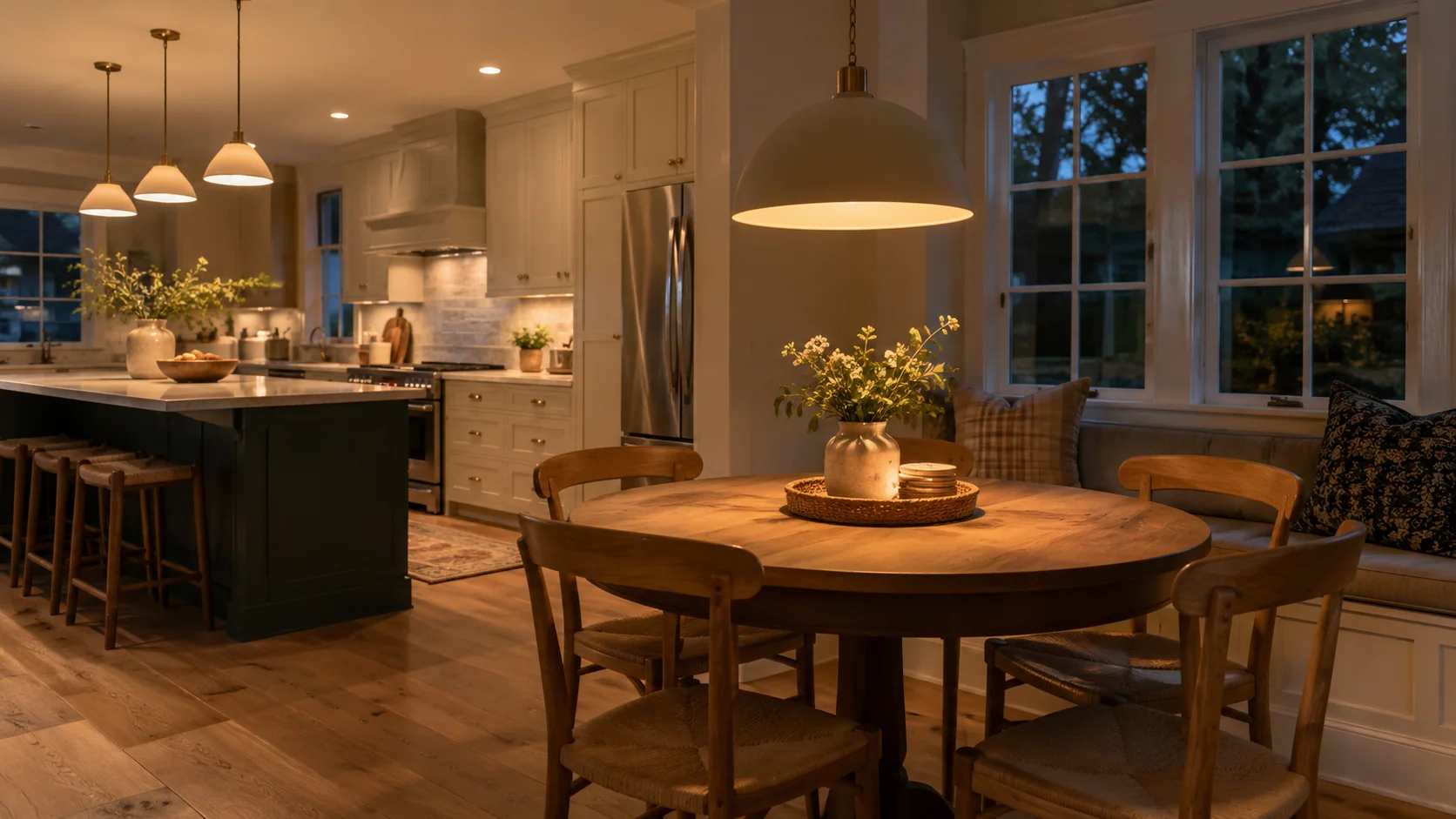
A small number of useful presets can make smart lighting easier to live with.
Three may be plenty:
- Food preparation: Clear light on counters and enough room lighting to move comfortably.
- Dinner: Softer light around the table or island.
- Evening: A low glow from selected fixtures.
Keep the controls easy for everyone. Having to find one person’s phone to turn down the kitchen lights soon loses its charm.
The Govee Pendant Light can handle changes like these through adjustable white light and independently controlled lighting segments. Above a dining spot, that gives the same fixture a useful role during the day and a gentler presence later.
Before and After: Same Kitchen, Better Light
 BeforeAfter
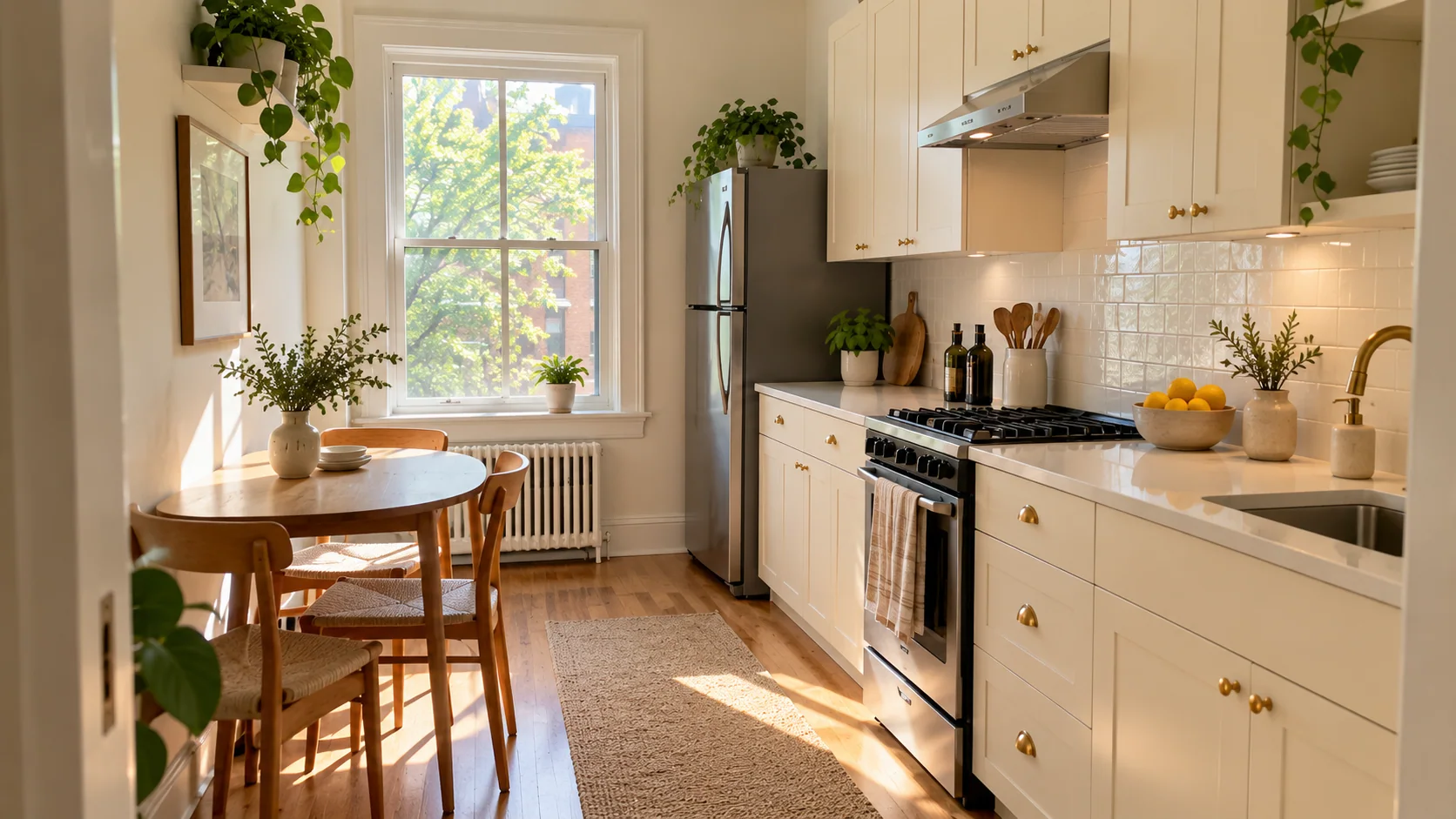
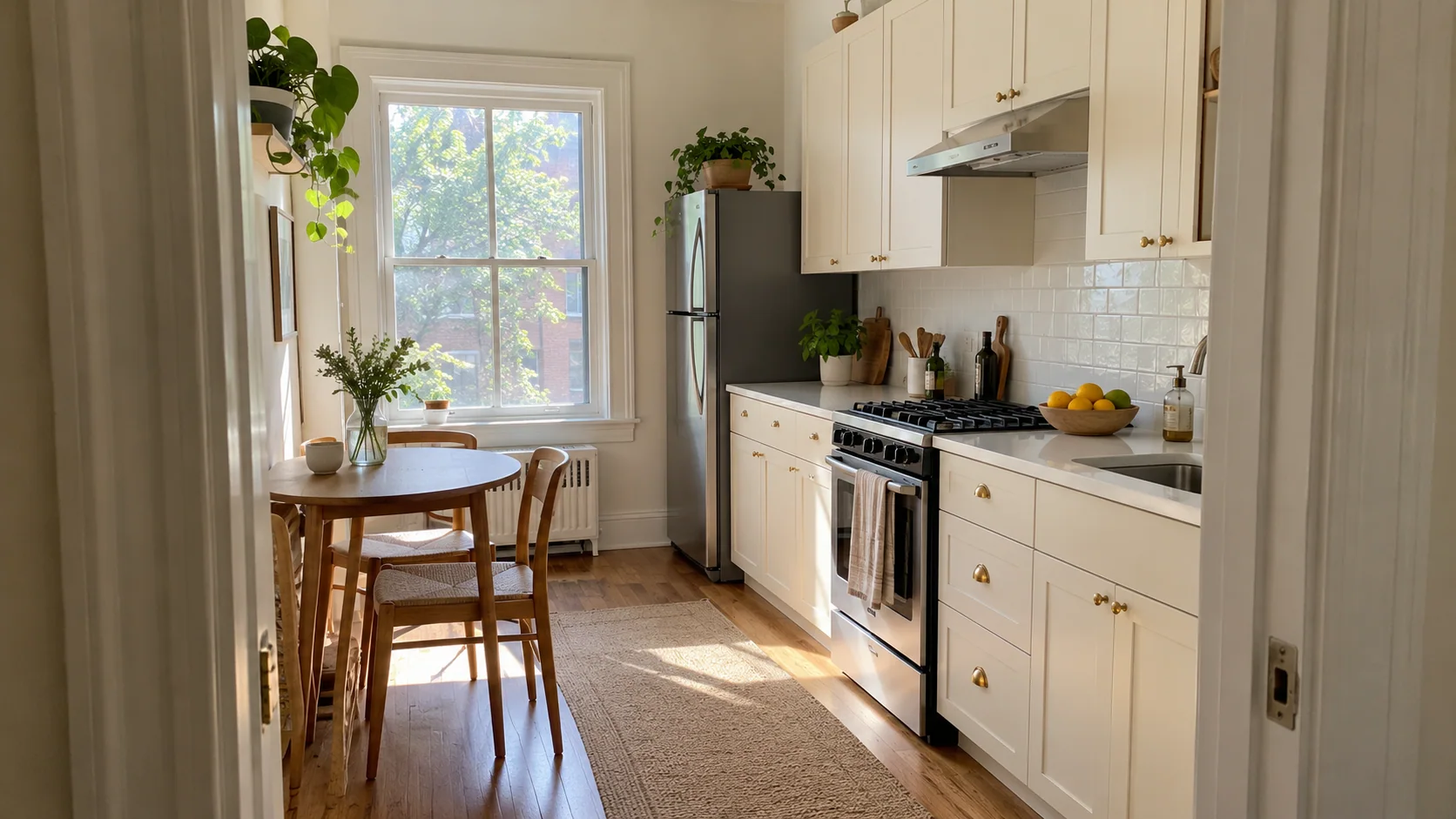
A useful lighting comparison keeps the room the same and shows what changes when the light comes from better positions.
Consider a kitchen with one ceiling fixture. The floor is easy to see, but the preparation counter becomes shadowy as soon as someone stands in front of it. After dinner, the whole room stays equally bright.
Before: One source lights the room broadly, leaving the counters dependent on where people stand.
After: Under-cabinet lighting illuminates the preparation space, a pendant lights the table or island, and a small accent light provides a softer setting later.
The cabinets and furniture can stay exactly where they are.
For your own before-and-after photos, keep the camera position and exposure settings consistent. Automatic camera adjustments can make a poorly lit room look brighter than it feels in person.
The more useful test is still an ordinary evening. Can you see comfortably while making dinner? Can someone sit at the table afterward without needing the full cooking setup switched on?
A Quick Match for Your Kitchen
Choose the lighting around the room you have and the problem you notice most.
| Your kitchen or concern | Ideas worth trying |
|---|---|
| Low ceiling | A diffused flush mount, carefully positioned recessed lights, under-cabinet lighting |
| Narrow galley | Clear light along the worktops, compact ceiling fixtures, restrained wall lighting |
| No island | Light over the sink, counter lighting, a separate fixture for the table |
| Long island | A linear light or a pendant arrangement chosen for the island’s proportions |
| Open kitchen beside the living room | Separate controls, dimming, a gentle cabinet or wall light |
| Bright ceiling but shadowy counters | Direct task lighting where you prepare food |
| Limited plans for renovation | Better bulbs, suitable plug-in counter lighting, a lamp in a dry spare corner |
If the lighting problem comes with a cramped work area, these small kitchen ideas that make more room to cook can help you look at the two together.
A Few Details That Make the Choice Easier
Judge a kitchen light from the places where you’ll use it, including the chair beneath it.
A fixture can look completely different from the doorway, the sink, and a breakfast stool. Give each view a moment before settling on the arrangement.
- Can you see clearly where you chop, wash, and read recipes?
- Does your body cast a shadow across the main preparation area?
- Is an exposed bulb uncomfortable from a nearby seat?
- Do pendants leave a comfortable view across the room?
- Are there distracting reflections on the countertop or cabinet glass?
- Do lights used together have a reasonably consistent warm or cool appearance?
- Can you keep useful counter lighting on while softening the rest of the room?
- Is there a gentle setting for after dinner?
A little lighting vocabulary helps make sense of what you’re seeing.
Lumens describe light output. They help you compare brightness, although the shade and beam determine where that light goes.
Kelvin describes the appearance of white light. Lower numbers look warmer; higher numbers look cooler.
Color rendering describes how colors appear under the light. CRI is one commonly listed measure of it.
Think of a tomato on the counter. Brightness affects how easily you can see it. Color temperature changes the overall warm or cool cast of the scene. Color rendering affects how its red looks under that light.
Frequently Asked Questions
What Type of Lighting Works Best in a Kitchen?
A combination of room lighting and direct worktop lighting works well for everyday use. Add accent lighting if you want a softer evening atmosphere or a little attention on a shelf, cabinet, or picture.
The exact fixtures depend on the room. A small kitchen may need only a few carefully chosen sources.
What Kitchen Lighting Works Without an Island?
Light the counters and sink, then give any dining area its own attention.
A flush mount or recessed arrangement can provide room lighting. Under-cabinet lights help with preparation, and a small pendant or wall light can suit a table or breakfast nook.
An island is simply one possible place to put light.
What Color Temperature Should Kitchen Lights Be?
Warm white around 2700K to 3000K is a useful range to compare for a kitchen that also serves as a place to eat and relax. A cooler white may suit your preferences for working, so try it beside your actual finishes.
Keep neighboring lights reasonably consistent when they will be on together. One yellow-looking strip beneath a cool ceiling light can make the room feel patchy.
Warmer light can still be bright. Color temperature and light output are separate choices.
How Many Pendants Should Go Over a Kitchen Island?
Choose the number according to the island’s size, the shades’ dimensions, and the coverage you need.
Two larger pendants may suit one island, while three smaller ones suit another. Include the gaps between the shades and the view across the room.
Mocking up the shapes before purchase is often more useful than following a fixed number.
How High Should Kitchen Pendant Lights Hang?
About 30 to 36 inches between the countertop and the bottom of the fixture is a common starting range. Adjust for the fixture, ceiling height, light distribution, and the people using the island.
Sit down and stand at the counter before settling on the final position. You should be able to see across comfortably without a shade or bright bulb interrupting the conversation.
Can I Mix Lighting Styles and Metal Finishes?
Yes. Repeating one or two details can help different fixtures feel connected.
A brass wall light and a black pendant might share simple rounded shades. A traditional glass fixture and a contemporary ceiling light could work together through similar proportions or a consistent finish.
Look at them alongside the cabinet handles, faucets, and other visible finishes. A small repeated detail is often enough.
How Can I Improve Kitchen Lighting Without a Major Renovation?
Better bulbs, extra light on the worktop, and a separate evening light can make a noticeable difference.
A purpose-made plug-in counter light or a small lamp in a dry corner may help without moving ceiling connections. Even changing an exposed bulb for a more comfortable option can improve the view from the table.
Tonight, stand where you usually prepare dinner and notice what happens. The shadow beside the chopping board, the bulb you can see from your chair, the corner you’d like to leave softly lit. Each one gives you a specific, manageable change to make.