19 Open Kitchen Shelving Ideas That Look Good in Real Life

Your favourite mug deserves a better spot than behind the blender attachments. And those bowls you use every evening? They can look lovely out in the open.
The quick answer
- Keep everyday dishes, mugs, or coffee supplies on shelves you can reach easily.
- Repeat a few colors and leave space between groups so the shelves stay easy to use and clean.
- Retain closed storage for less attractive or rarely used items rather than putting everything on display.
The trick is making the arrangement work when you’re half awake, the dishwasher needs emptying, and someone wants to know where the cereal bowls went. These ideas keep that kitchen in mind.
1. Give One Cabinet a Break
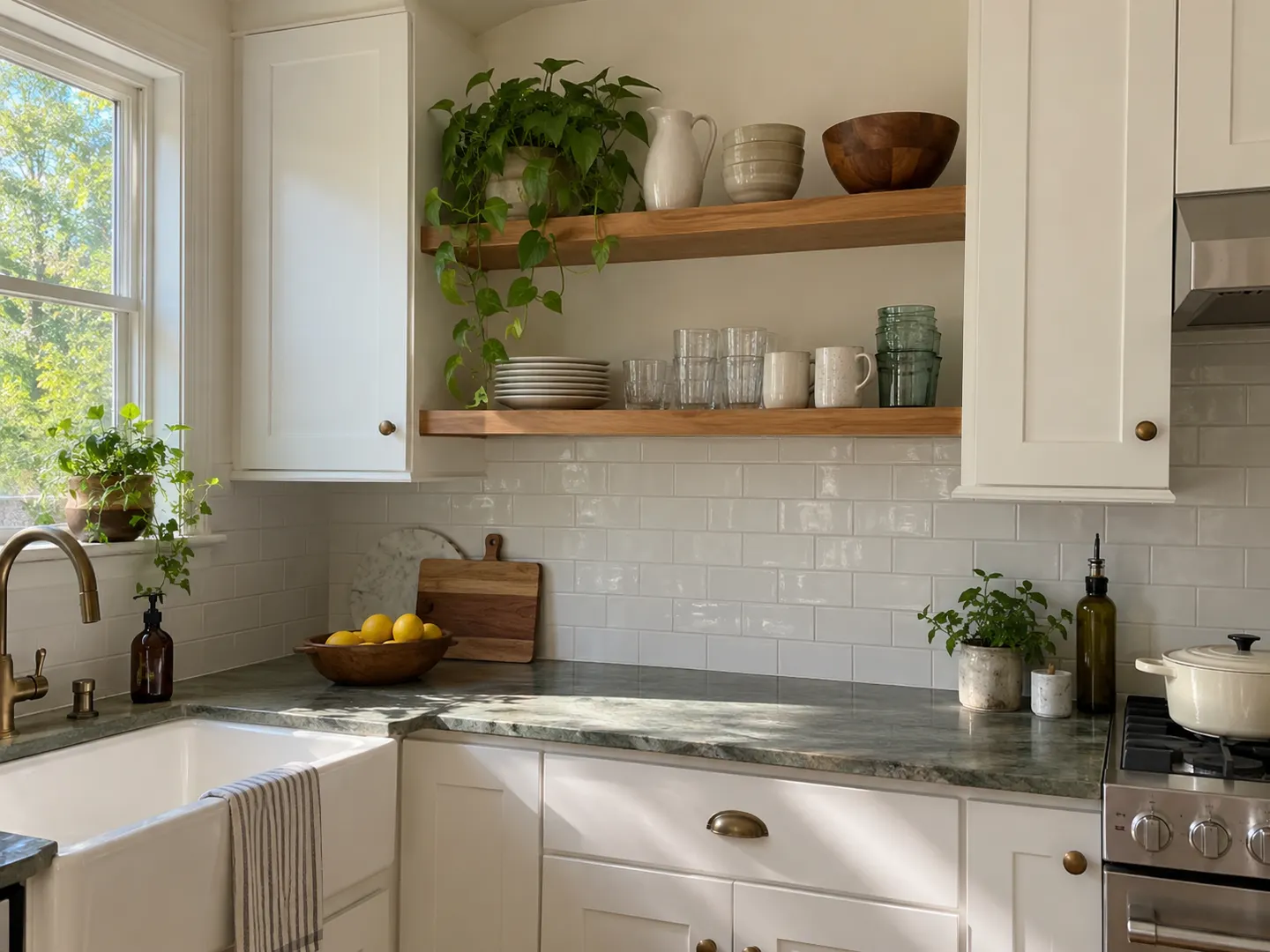
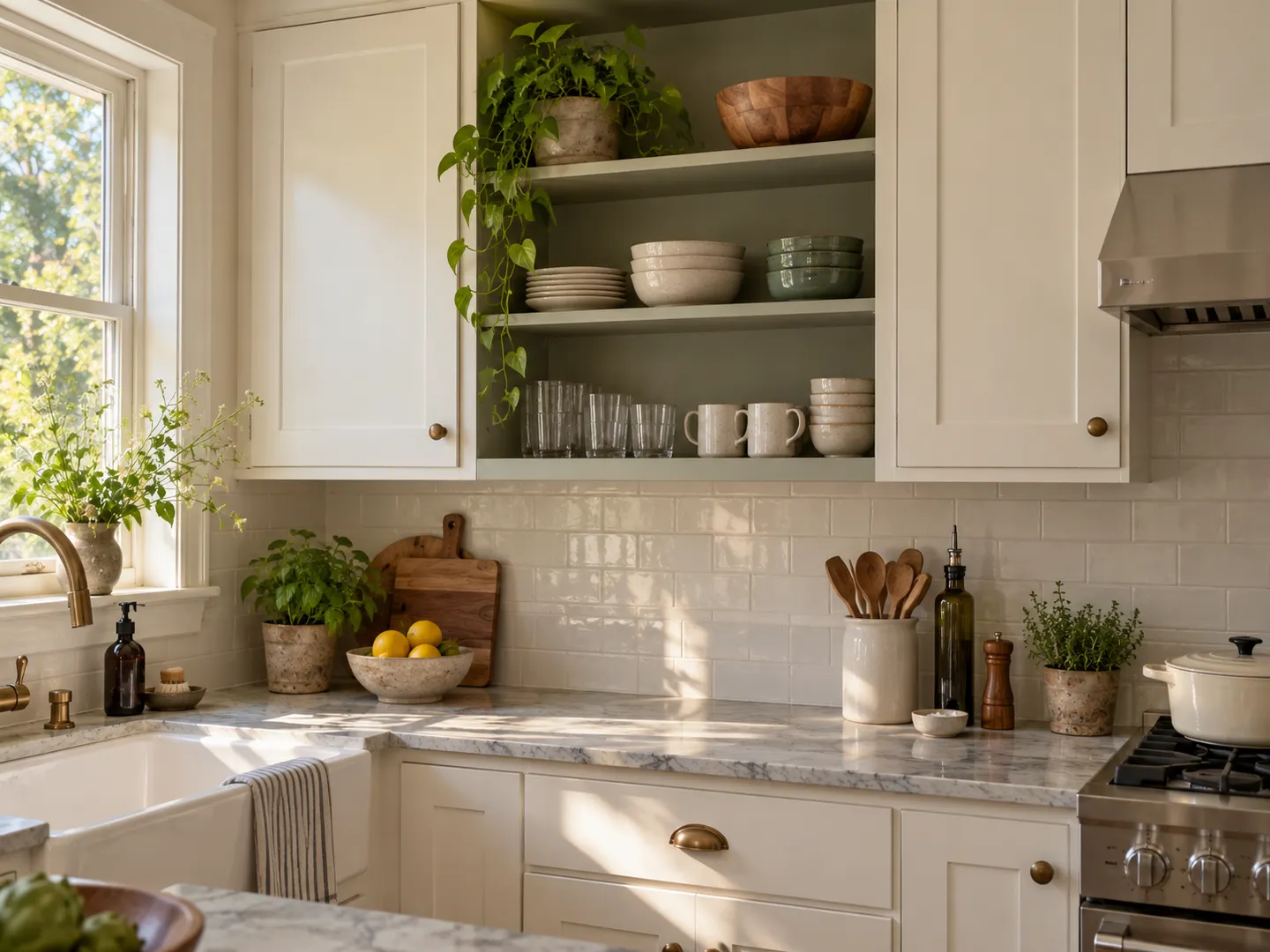
Swap one suitable upper cabinet for open shelves and keep enclosed storage nearby. You’ll get a place to display your favourite pieces without finding an attractive way to arrange twelve lunchbox lids.
A pair of shelves beside a window or between cabinets gives the room a little breathing space. Put bowls and glasses here, then let the remaining cupboards handle food packets, appliances, and everything with a tangled cord.
You don’t have to commit every wall to the same treatment. One useful open section earns its place.
2. Warm Up White Cabinets With Wood Shelves
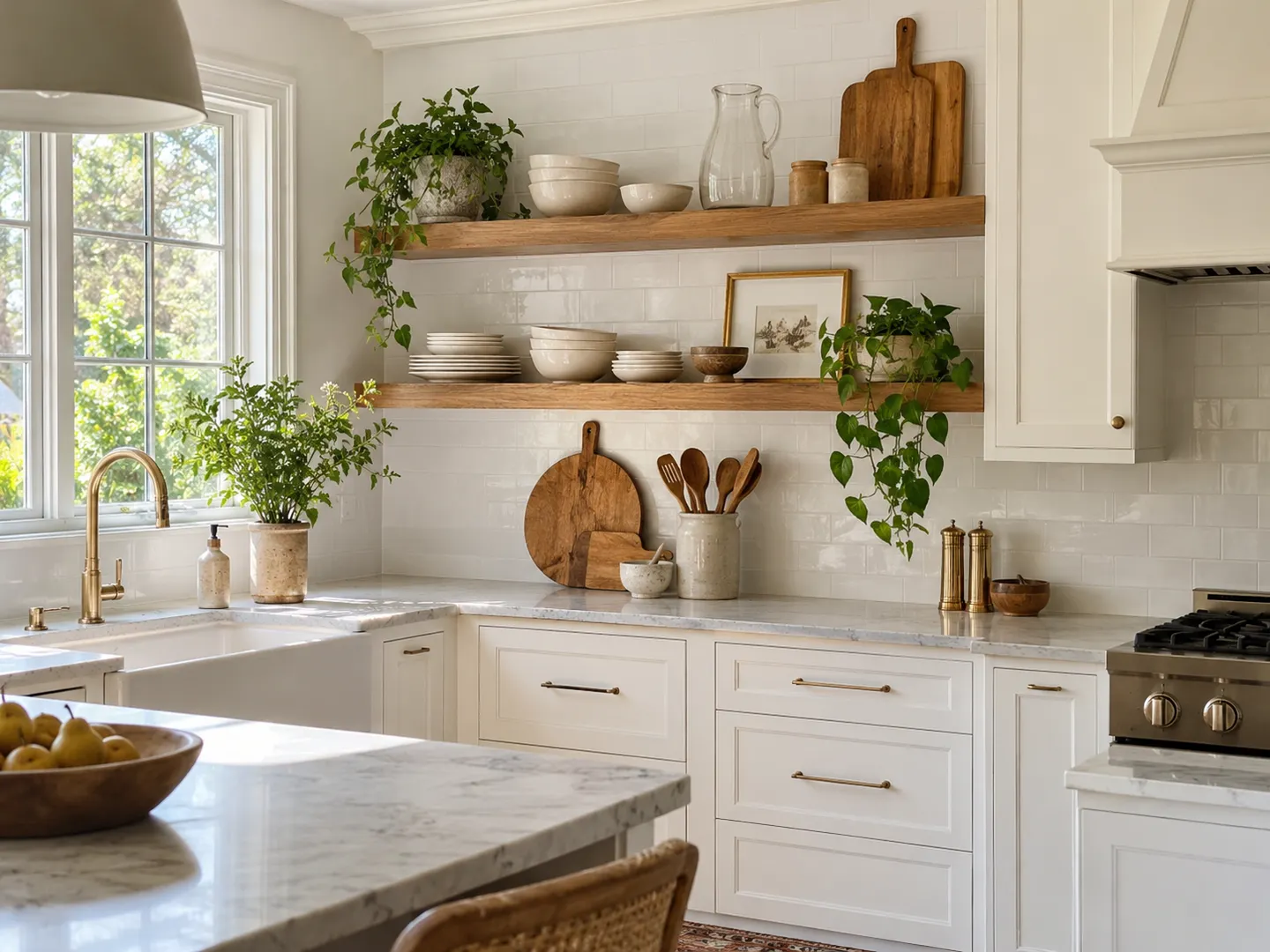
White cabinets, white tile, pale worktops. Lovely, but sometimes the kitchen needs something warmer.
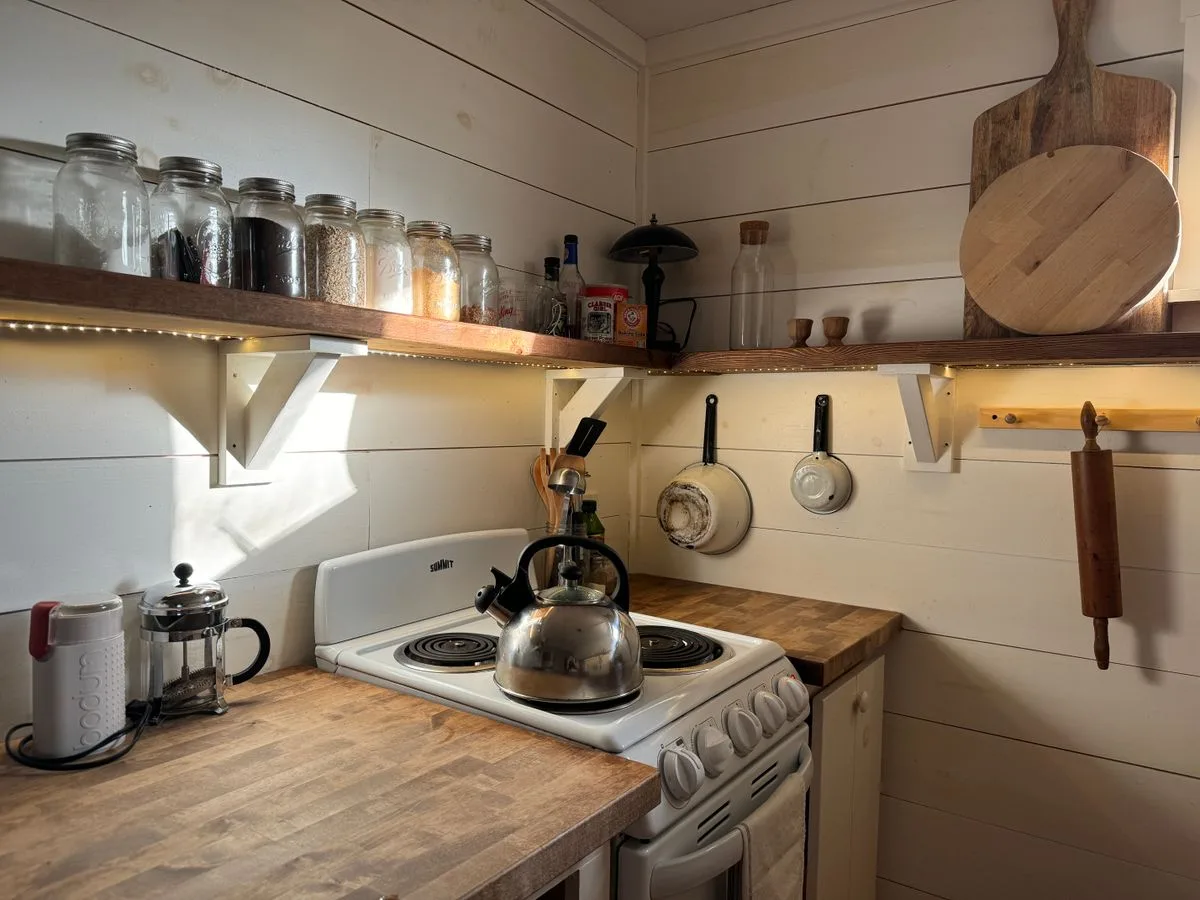
Wood shelves bring colour and texture into a pale kitchen. Look at the wooden pieces already in the room before choosing a finish. A honey-coloured table or warm chopping board gives you something to work with.
The woods don’t need to match exactly. A light oak shelf and a slightly darker board can sit happily together. Keeping their overall warmth similar helps the combination feel considered.
Add a few cream bowls and a glass jug. There’s your shelf, already looking at home.
3. Let the Brackets Join In
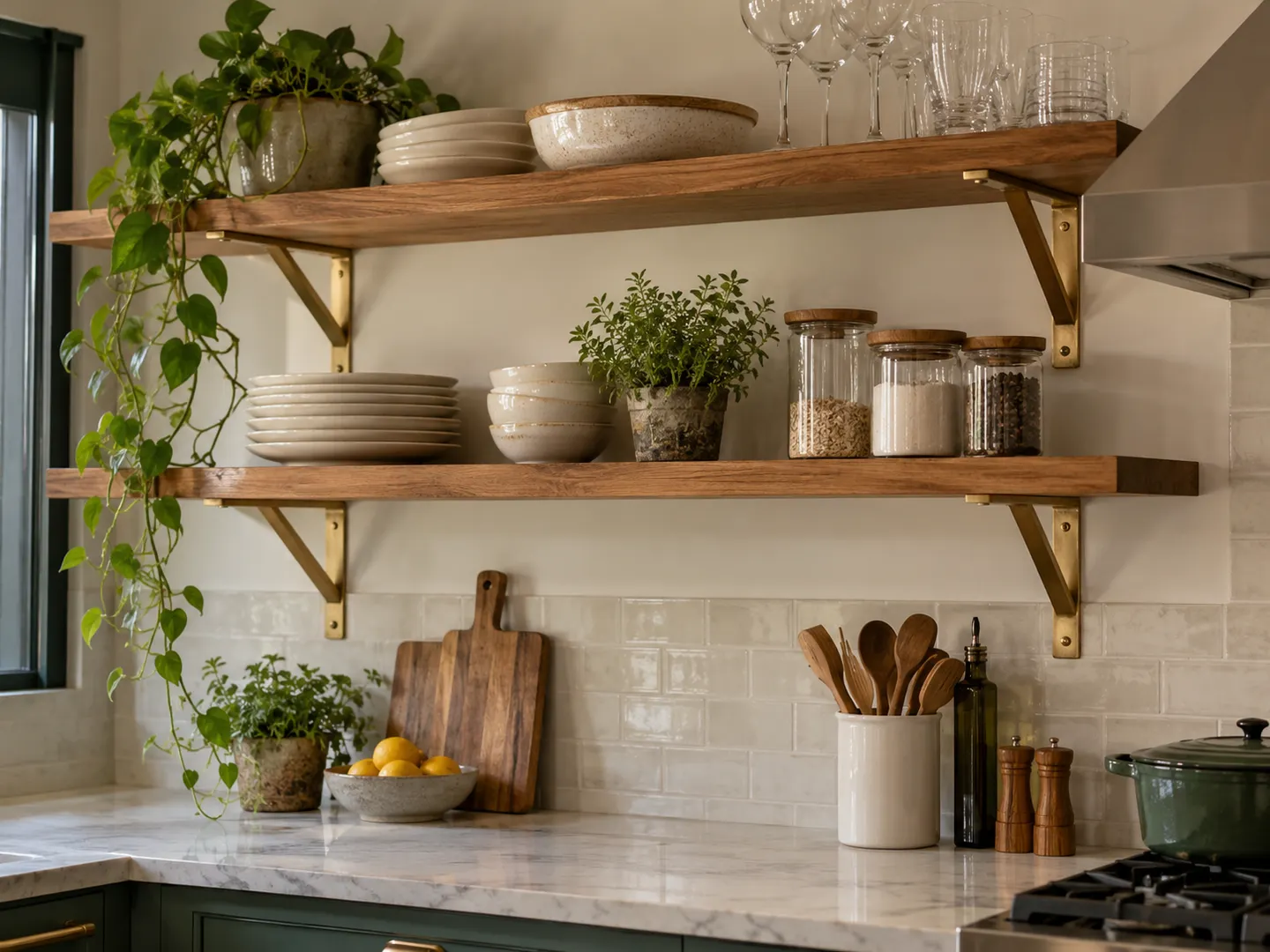
Choose visible brackets when you want the shelving itself to add character. Black metal works well with warm wood, brass brings a little shine, and stainless steel suits a kitchen where practical pieces are part of the appeal.
Think of brackets like cabinet handles. They’re small, but you notice when they belong with the rest of the room.
For a metal option, the IKEA KUNGSFORS stainless steel shelf is worth considering. Check its dimensions and installation requirements against your wall and what you plan to store.
4. Put That Awkward Corner to Work
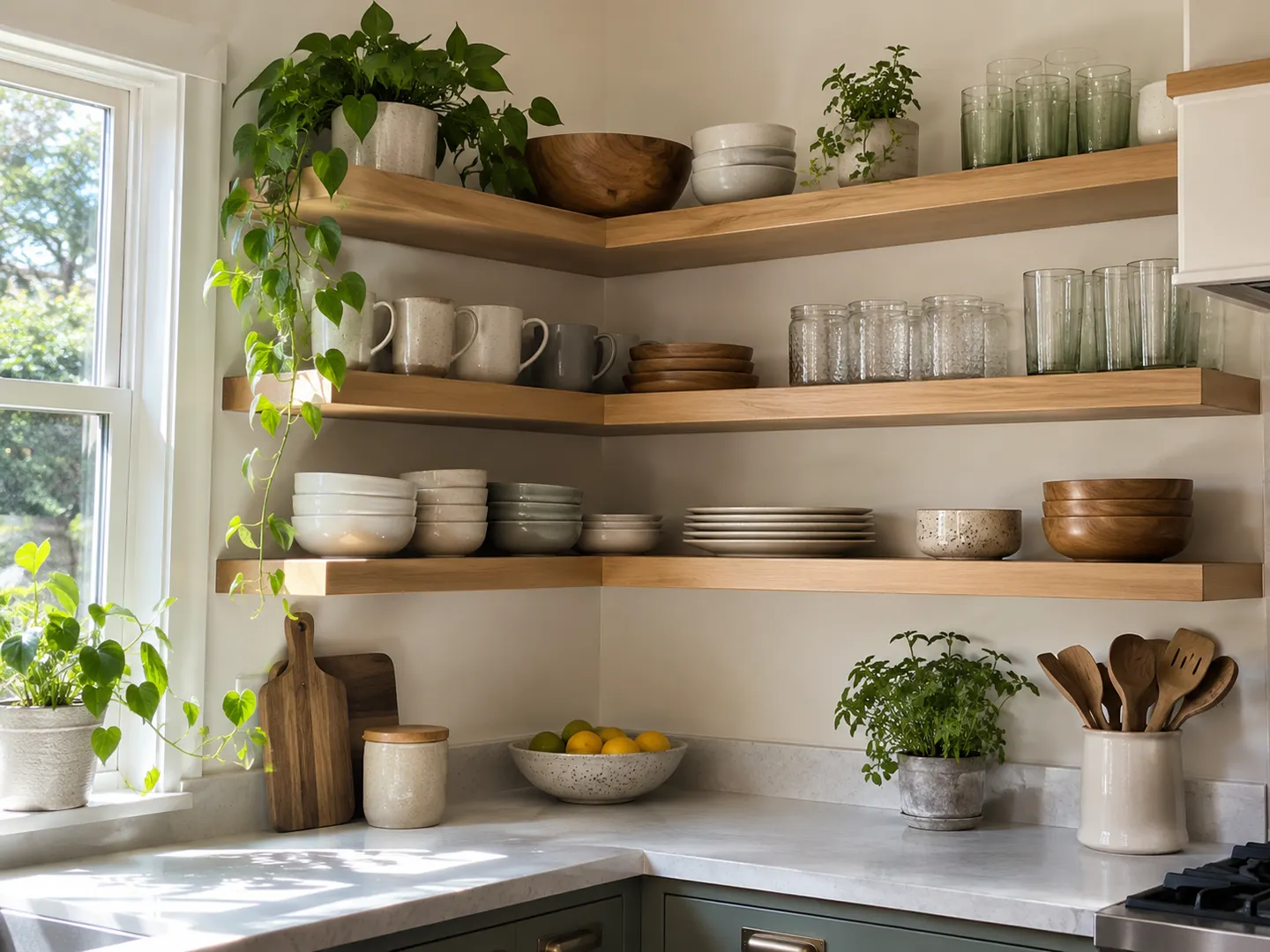
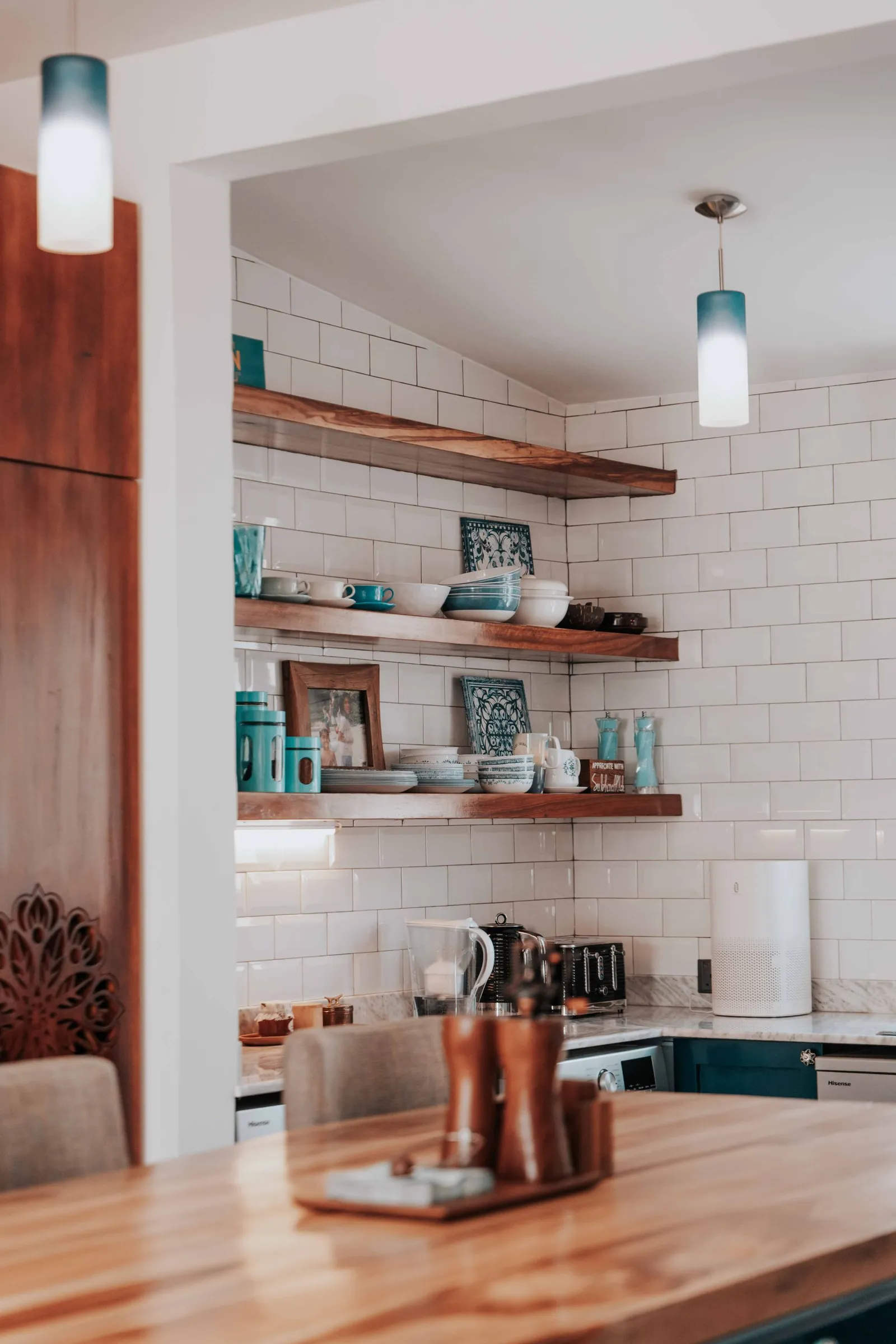
Corner shelves work best when they hold smaller pieces you can reach without stretching. Mugs, breakfast bowls, and everyday glasses are good candidates.
Carry the shelving around the corner to make use of both walls. Keep the most frequently used items toward the accessible ends, with less-used pieces farther back.
Resist the temptation to fill the deepest corner with tiny ornaments. You’ll meet every single one again on cleaning day.
5. Frame the Window and Keep the View
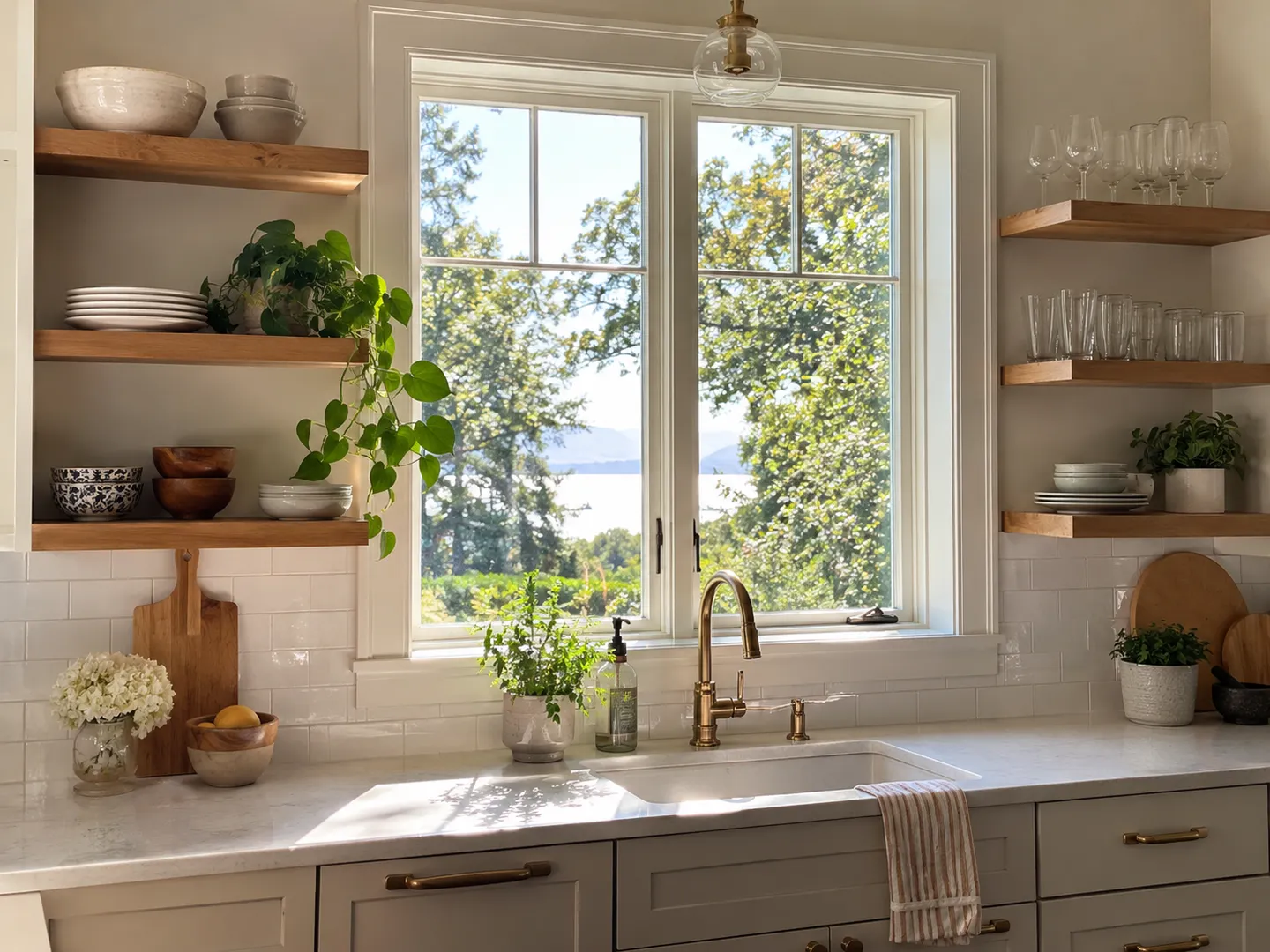
Fit shelves beside the window where there’s suitable wall space, keeping the opening clear. You’ll gain storage without putting a row of bottles between you and the daylight.
Shelves on both sides can give the wall balance. The objects don’t have to be identical, either. Bowls on one side and glasses on the other can feel just as settled.
Keep window handles, opening sections, and blinds easy to operate. If a jug needs moving every time you want fresh air, it needs a different home.
For more ways to keep a compact room feeling open, see how to make a small kitchen look bigger.
6. Give the Coffee Things Their Own Address
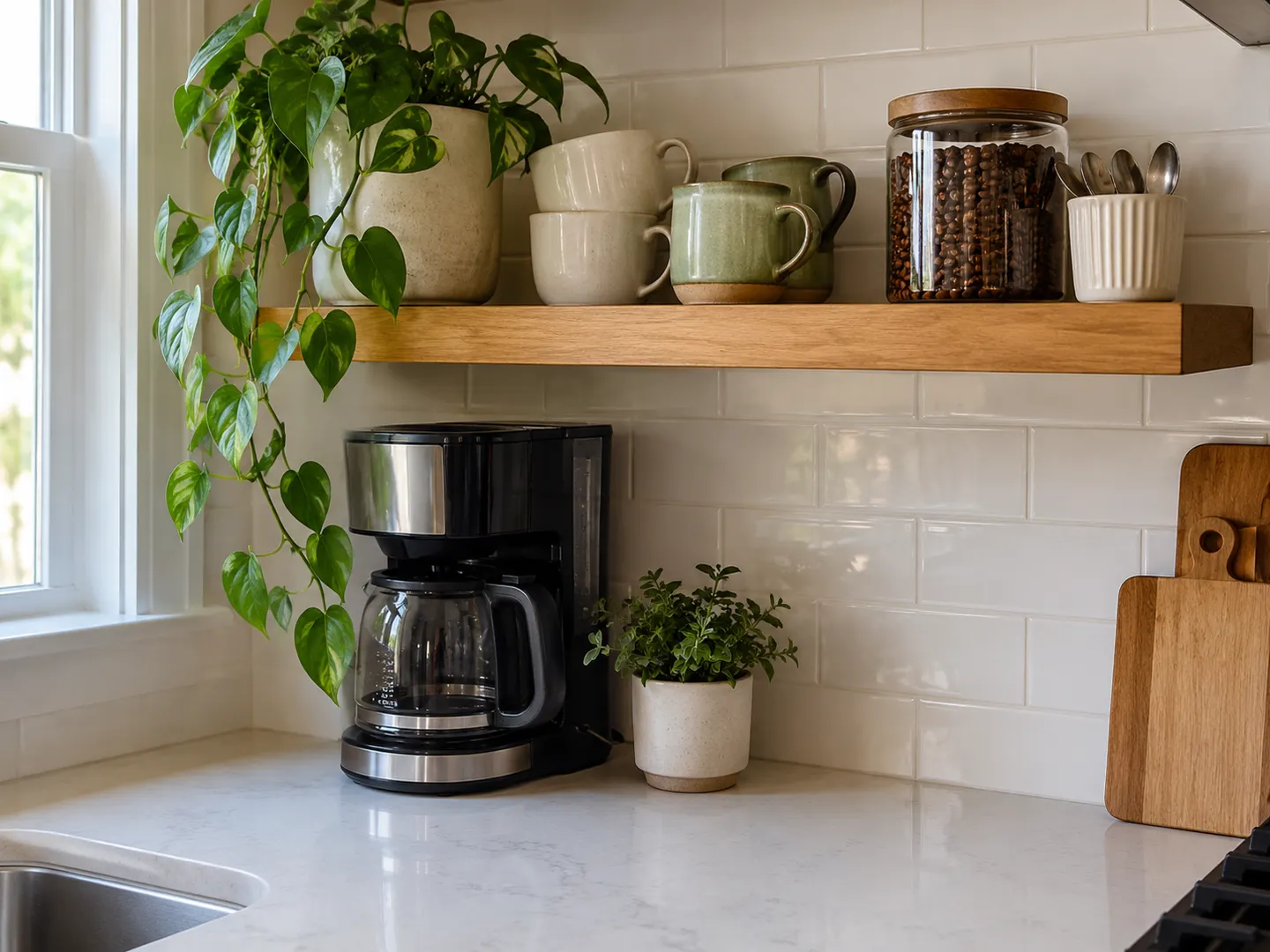
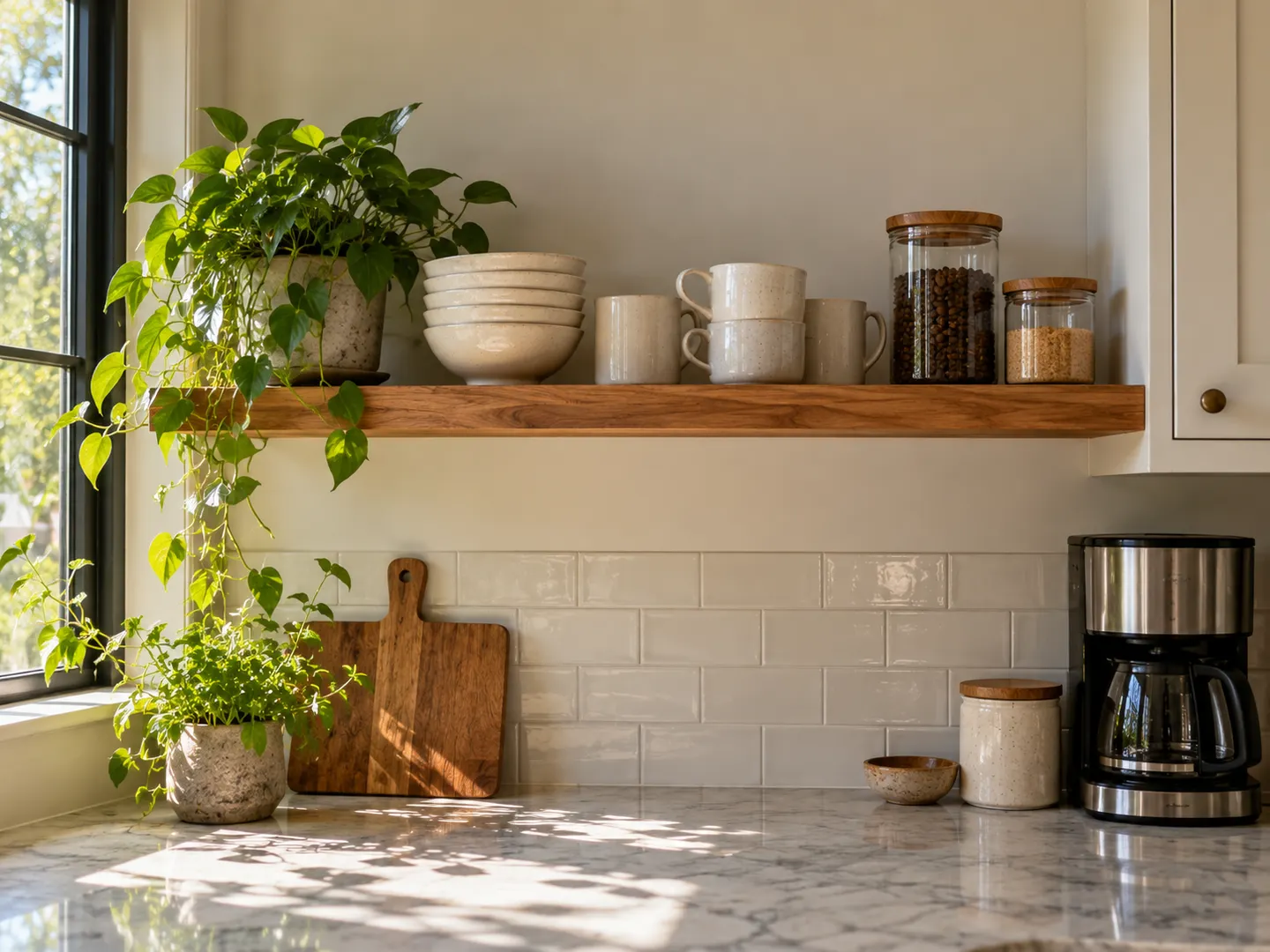
Keep mugs and everyday coffee supplies together near the coffee maker. One shelf can handle the things you reach for each morning while refills stay in a cupboard.
Try a short row of mugs, a coffee container, and a small dish for teaspoons. If you use a tray, choose one that makes the group easy to move for wiping.
Leave enough space around the appliance to refill it and follow its clearance instructions. A coffee station should make mornings easier, including the slightly clumsy ones.
7. Put Everyday Dishes on the Easy Shelf
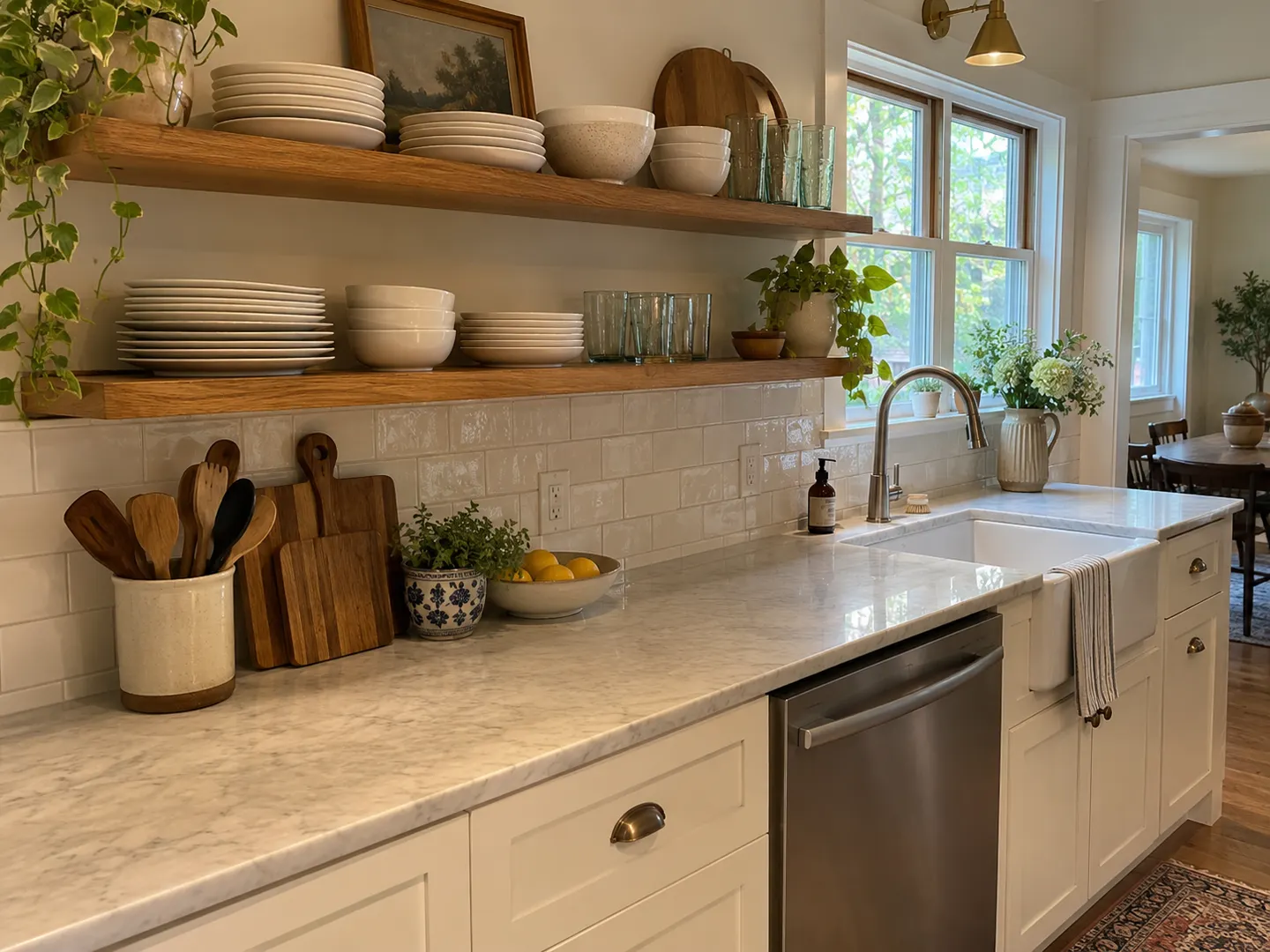
Give daily plates and bowls the shelf you can reach comfortably. Near the dishwasher or serving area often makes sense, depending on your layout.
Keep stacks low enough to lift from easily. Three smaller groups can be more manageable than one towering pile that makes you hold your breath.
This is also where open shelving becomes genuinely useful: clean bowls go straight from the dishwasher to the shelf, then straight back into use at breakfast.
8. Make Pantry Shelves Easy to Read
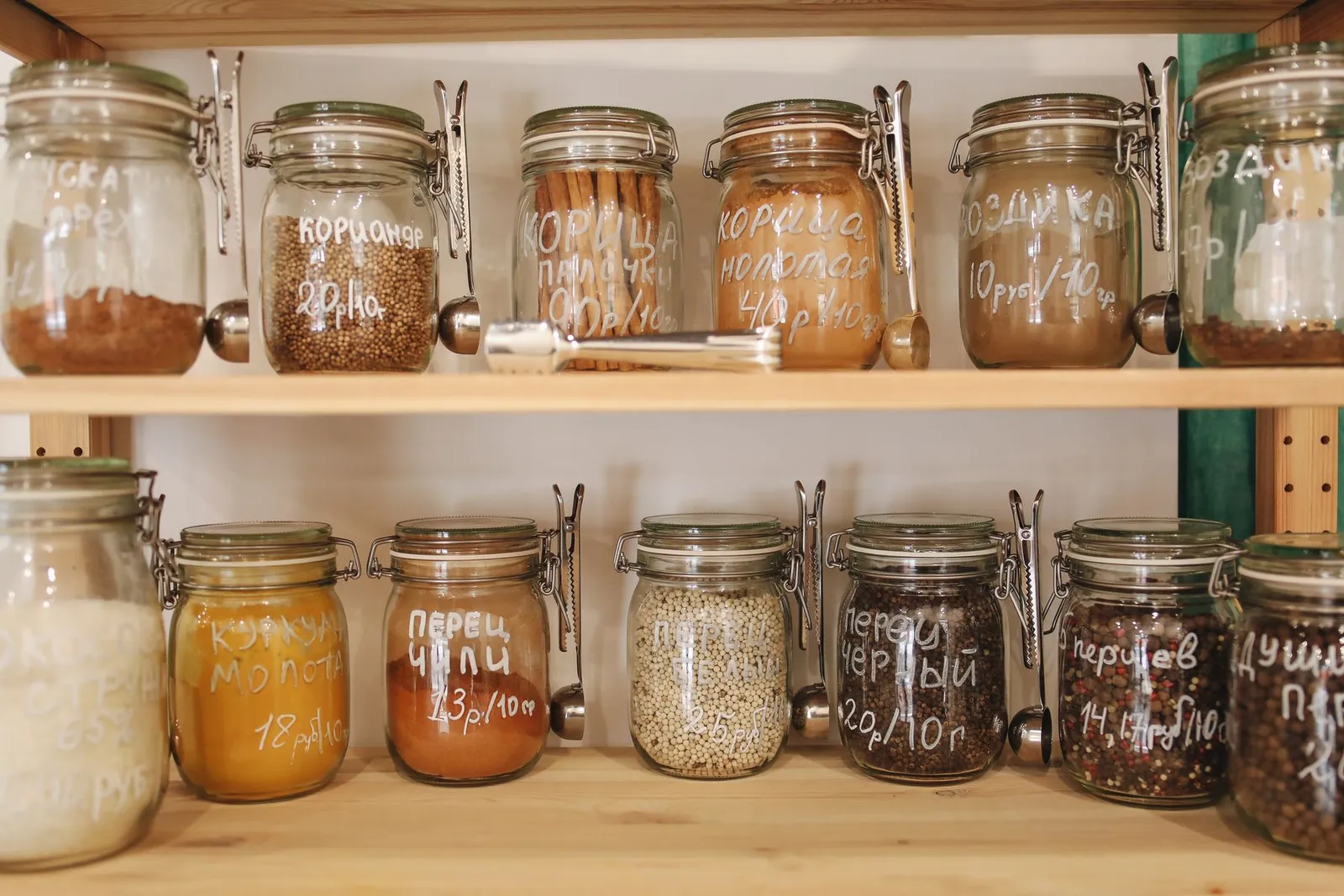
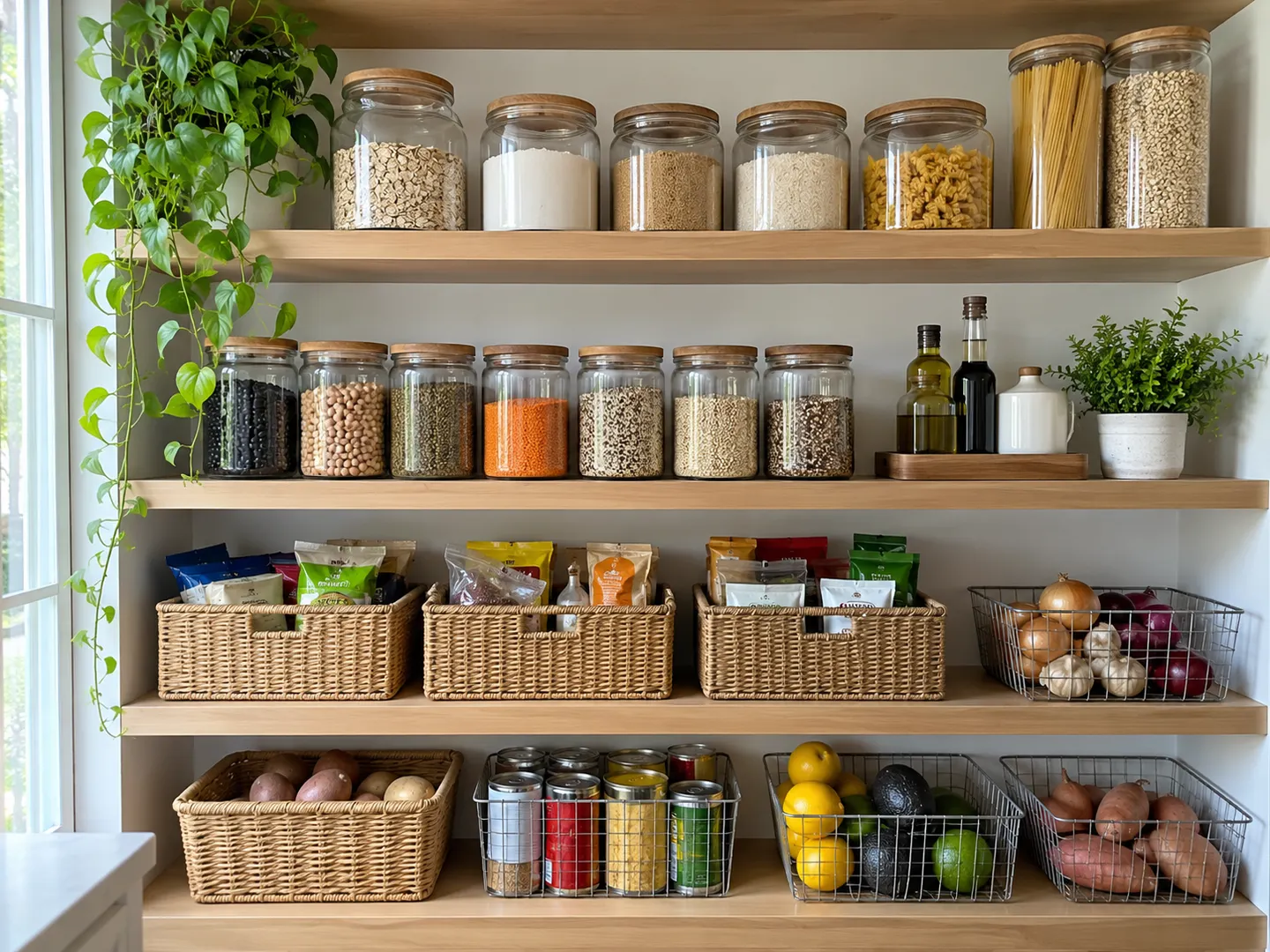
Group pantry supplies by use and decant only the foods that benefit from it. Baking ingredients together. Breakfast things together. Snacks where the snack seekers can find them.
Clear, airtight jars work well for suitable dry ingredients. The IKEA KORKEN jar with lid is one option for creating a consistent row without hiding the contents.
Packets can stay in their packaging inside a basket. Nobody needs an afternoon of pouring five kinds of crackers into matching containers.
Keep expiry dates, allergen details, and cooking instructions with anything you decant. A small label underneath or a clipped section of the packaging solves that problem.
9. Add Hooks for the Things You Keep Digging For
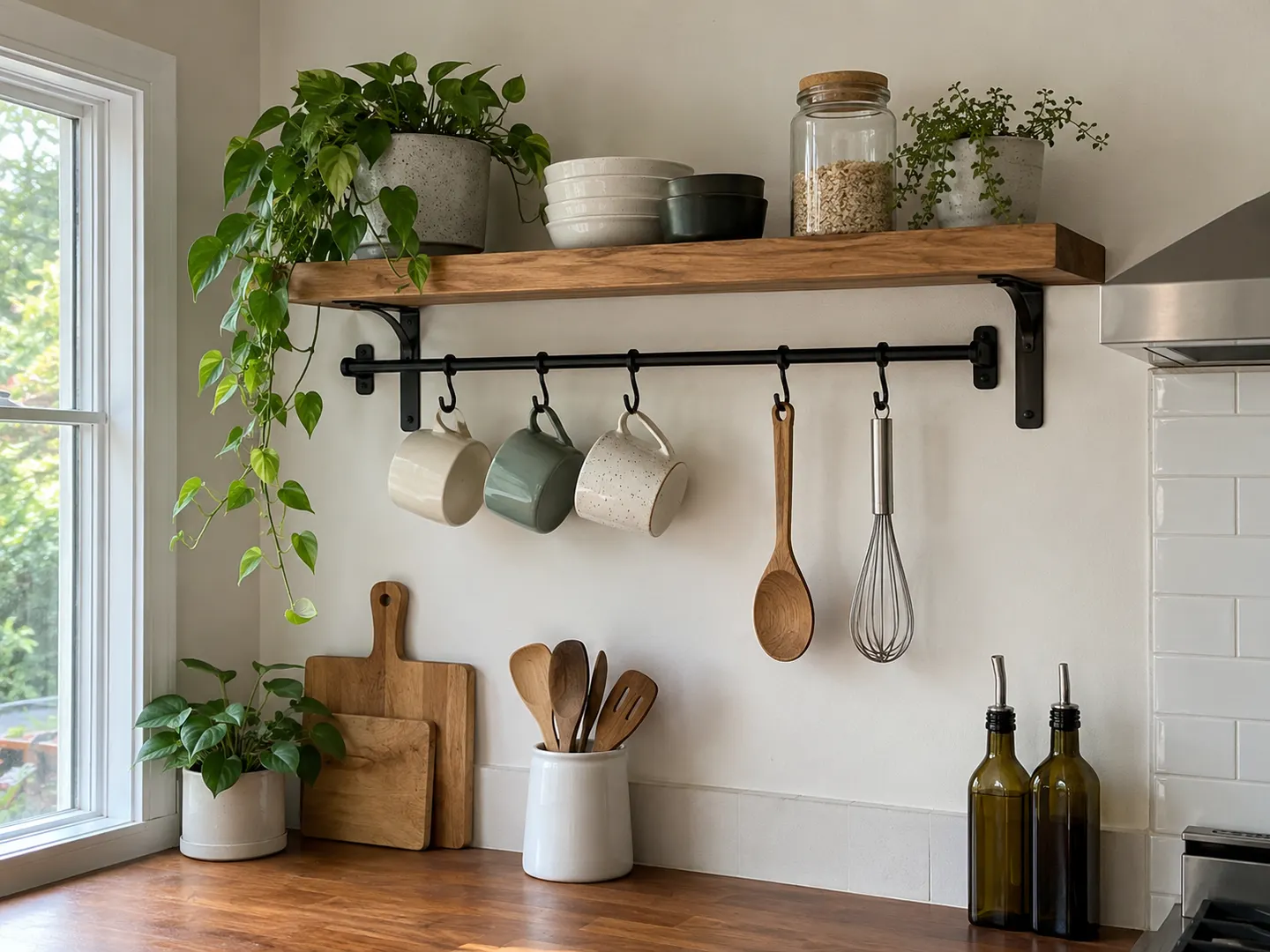
Pair a shelf with suitable hooks or a rail for frequently used mugs and utensils. It gives a small section of wall more than one job.
Hang the wooden spoon you reach for while cooking or the mugs used every morning. Leave enough space below them to work comfortably.
A few empty hooks are fine. Filling every available spot can turn a useful arrangement into a jangling obstacle course.
10. Give a Small Wall a Slim Shelf
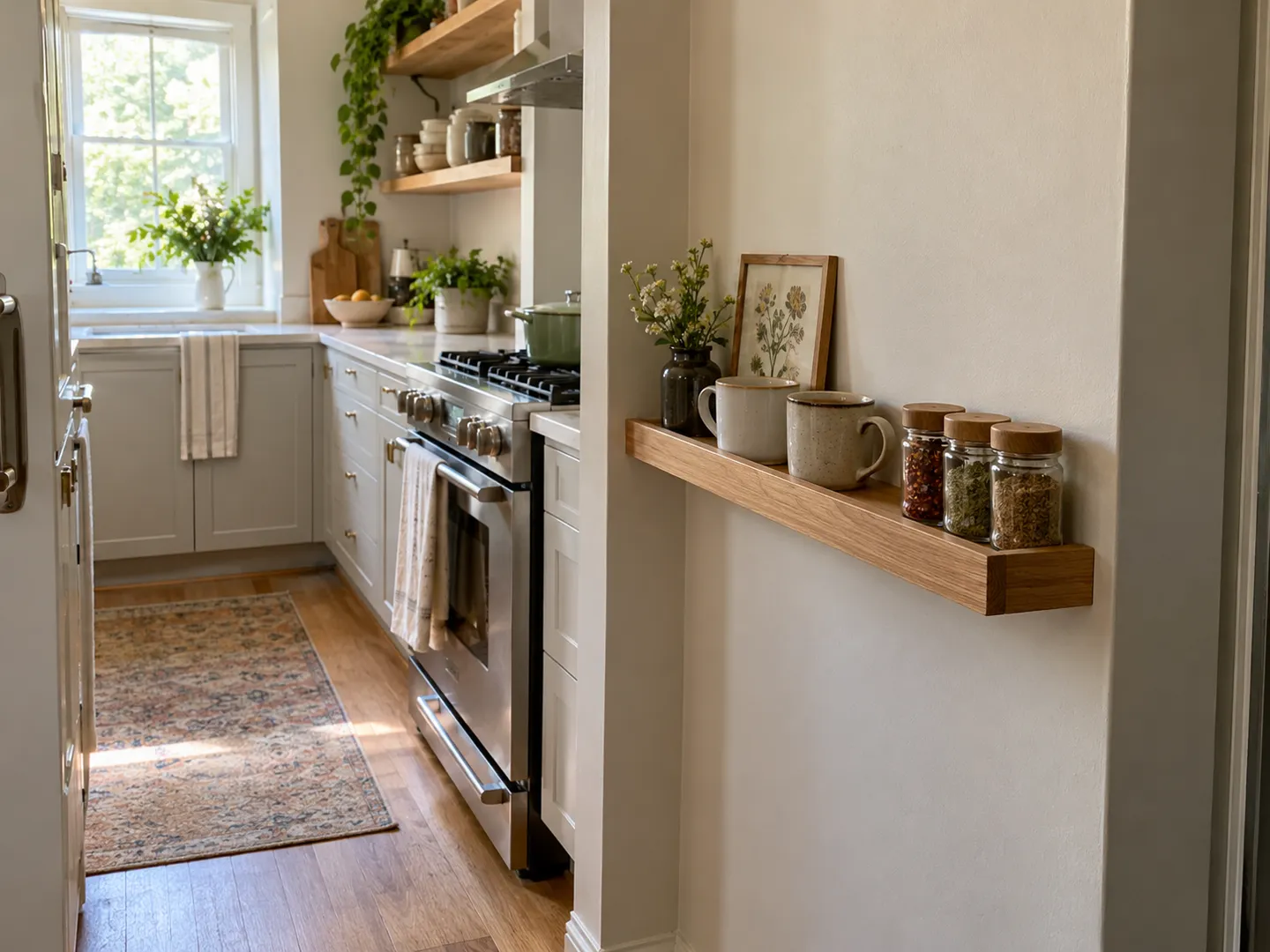
Use shallow shelving where a deep shelf would crowd the room. Small mugs, spice jars, and a little framed print need less space than dinner plates.
Measure what you want to put there first. That lovely narrow shelf becomes less lovely when half the bowl hangs over the edge.
A cabinet end or short wall beside a doorway can work, provided the shelf stays clear of normal movement. Nobody wants to dodge a corner while carrying dinner.
You’ll find more ways to use overlooked space in our small kitchen ideas.
11. Try Open Storage With the Doors You Already Have
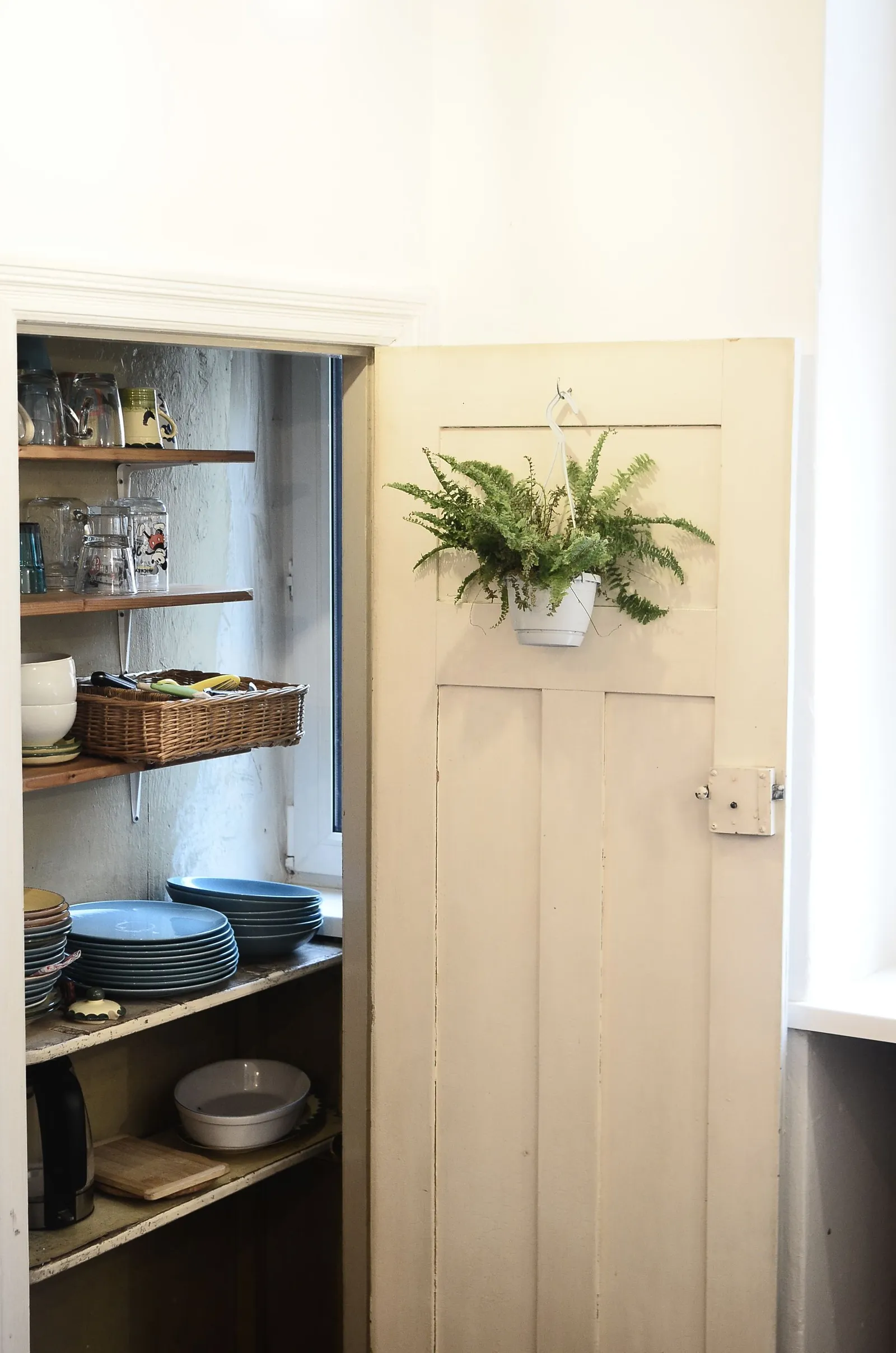
Remove the doors from one suitable cabinet to test whether you enjoy open storage. It lets you try the daily reality before changing a larger part of the kitchen.
Check the inside first. Worn edges, visible hinge holes, or an unfinished interior will need attention if you want the result to look intentional.
A painted interior can make the opening feel like a feature. Keep the first arrangement simple so you can judge whether you like using it.
12. Bring in Glass and Brass
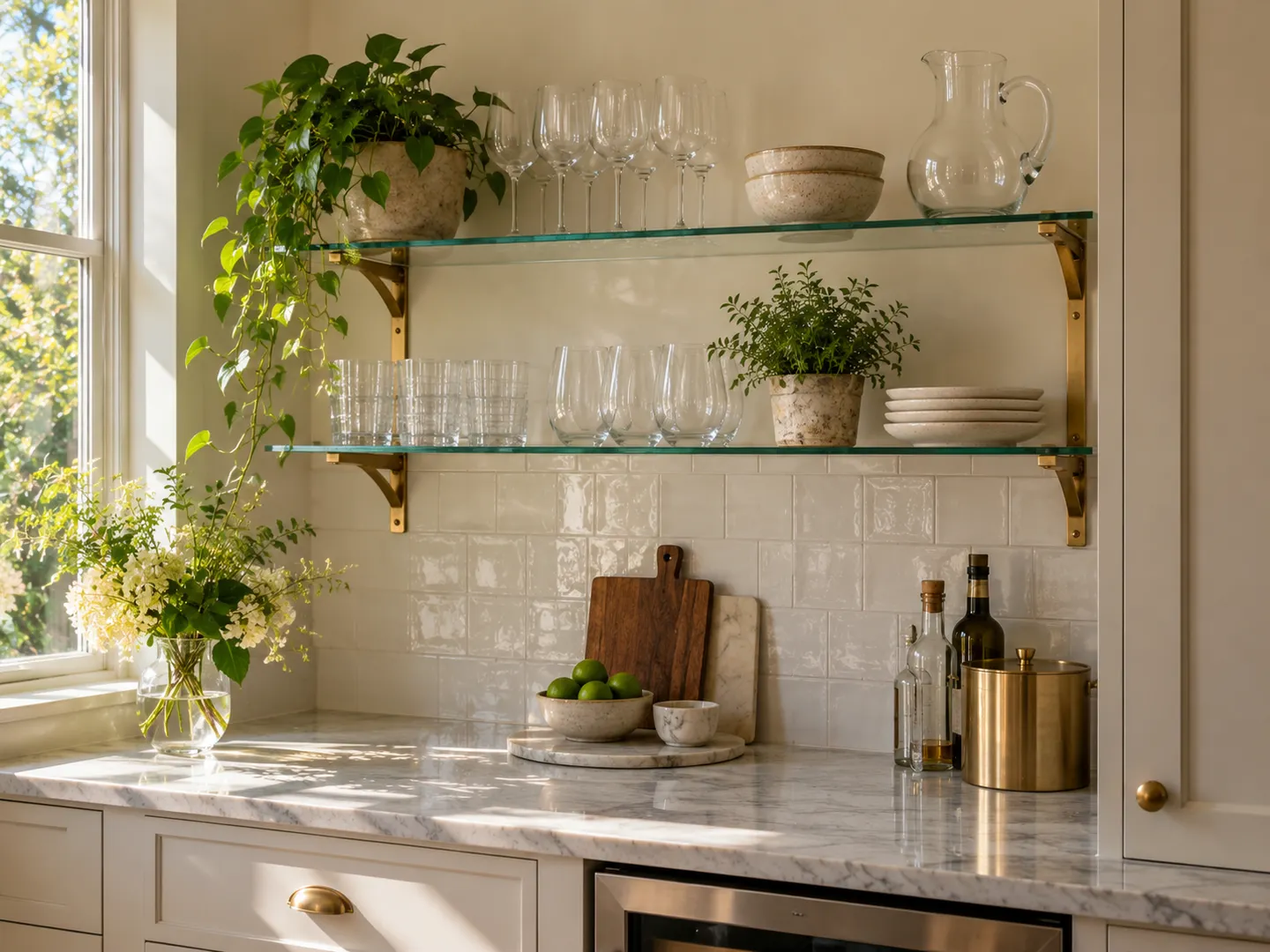
Glass shelves with brass supports give open storage a lighter visual presence. They suit a drinks nook, serving area, or a small section of wall holding glassware.
Keep the arrangement restrained. Clear glasses, a few bowls, and one favourite jug let the materials show.
Peck & Company’s custom shelving offers inspiration if you’re considering bespoke metalwork. Treat it as a custom option with project-specific dimensions and pricing.
Glass also shows fingerprints and marks, so choose it because you enjoy the finish enough to maintain it.
13. Give the Shelves a Good Backdrop
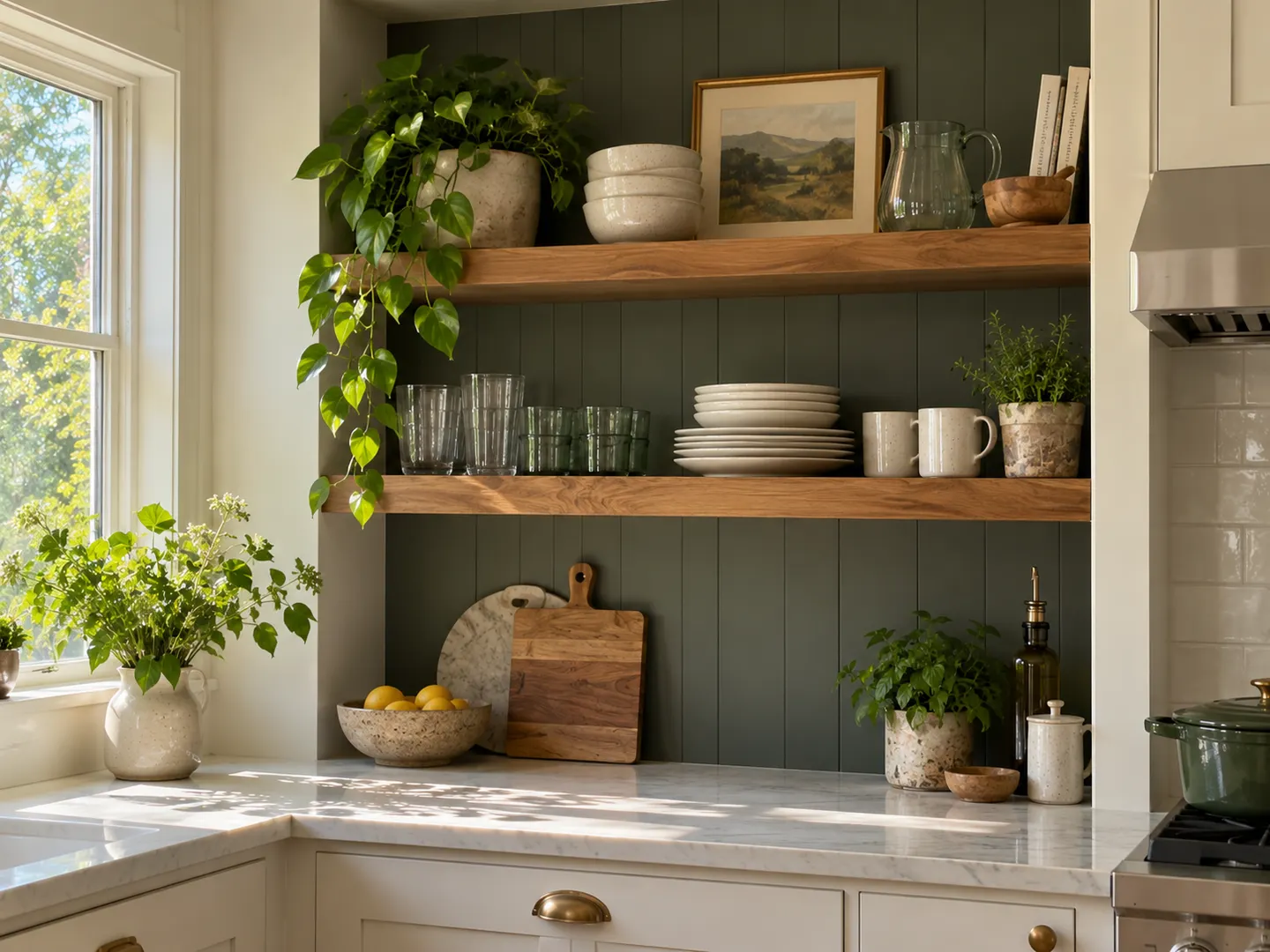
Use paint, tile, or a suitable wallcovering behind simple shelves to give the arrangement more depth.
A dark painted recess makes pale dishes stand out. Pattern adds interest behind a quieter collection. Existing tile can do the same job without another layer of decoration.
For a luxury option, Calico’s Satori wallcovering in Zenith offers a metallic backdrop. Check the specified material and suitability for your intended location before ordering.
Once the wall is doing something interesting, the shelf doesn’t need ten other things competing for attention.
14. Light the Shelf You Actually Use
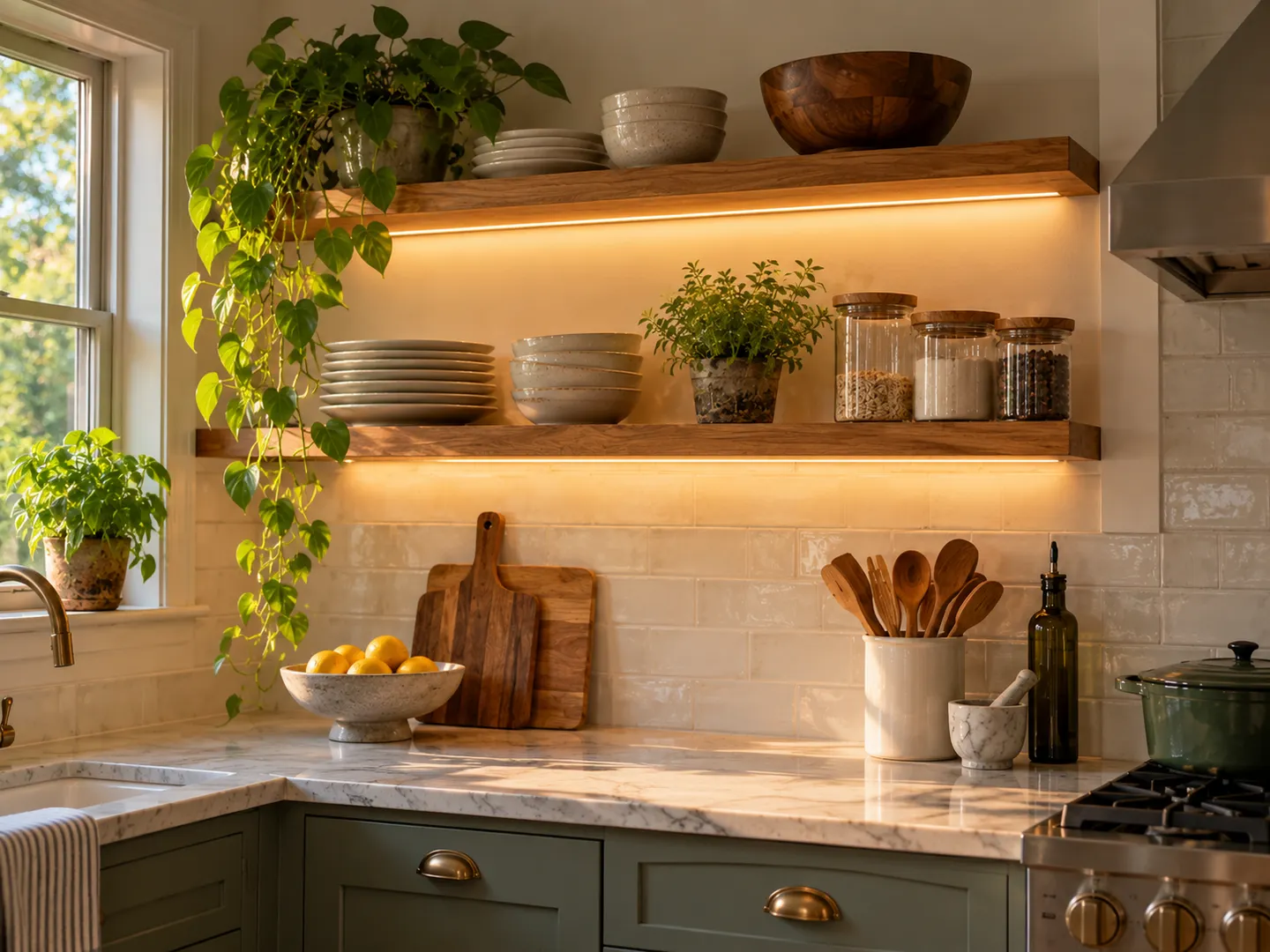
Add lighting where it helps you see the shelf or work surface clearly. A nearby sconce can brighten a display, while a properly positioned light beneath a shelf can help illuminate the counter.
Those are different jobs. A pretty pool of light on the top shelf won’t necessarily help you chop vegetables below it.
Plan wiring, switches, and fixture placement before fitting the shelves. It’s much easier than wondering where to hide a cable afterwards.
Our kitchen lighting ideas cover more ways to combine useful light with fixtures you’ll enjoy looking at.
15. Repeat a Few Colours, Then Relax
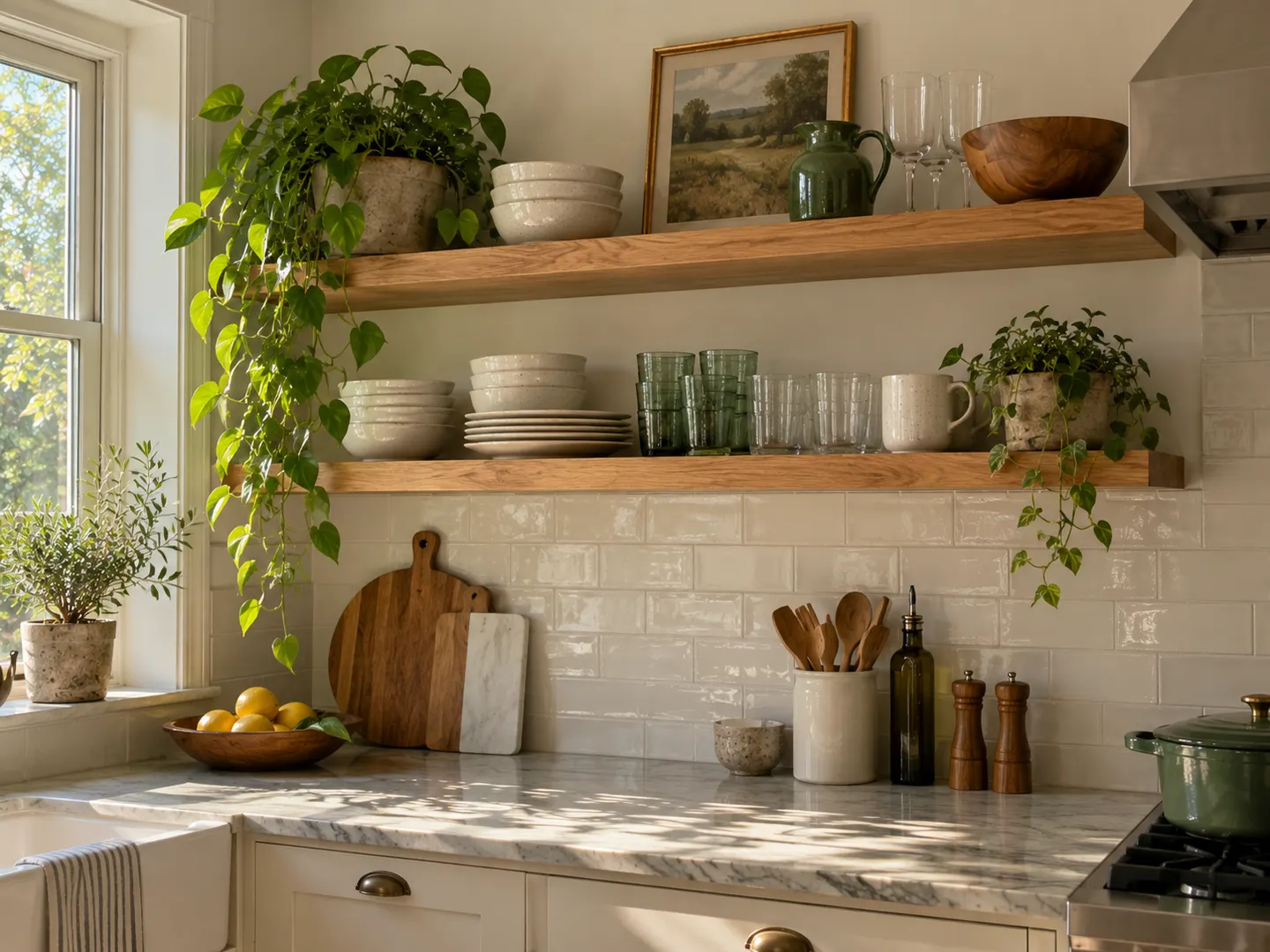
Repeat two or three colours already in the kitchen and vary the shapes. Cream bowls, green glasses, and warm wood can make a mixed collection feel connected.
There’s no need to replace perfectly good dishes because one mug missed the colour memo. Put it with pieces that share something, whether that’s a similar tone, material, or shape.
Useful objects can contribute colour, too. Verspace’s green glass oil dispensers are an option if you regularly use bottled oils and have a suitable spot away from heat and direct sunlight.
Buy them for a job you need done. Matching bottles shouldn’t create an extra chore you resent.
16. Put a Board Behind the Bowls
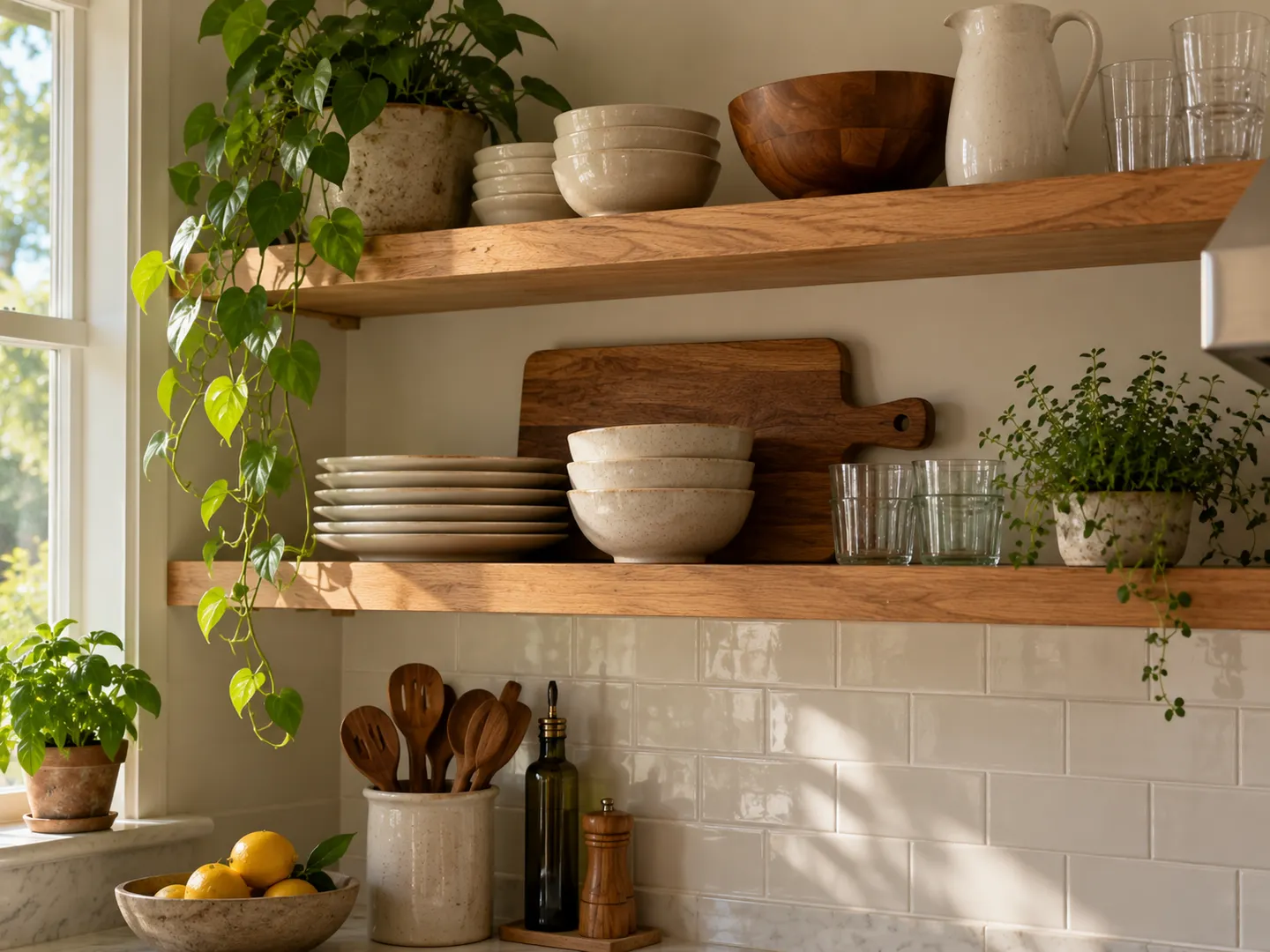
Layer a securely supported board, platter, or cookbook behind a lower group to vary the height. It’s a simple way to make the shelf feel less like a straight line of small objects.
Try a wooden board behind two bowls, or a cookbook beside a short plate stack. Keep anything used often easy to remove.
For a book that belongs in a working kitchen, consider Sunday Suppers: Recipes + Gatherings by Karen Mordechai. Give cookbooks a dry spot away from steam and splashes.
And if the book behind the bowls is the one you open every Tuesday, move it to the front. Dinner wins.
17. Let One Collection Have Its Moment
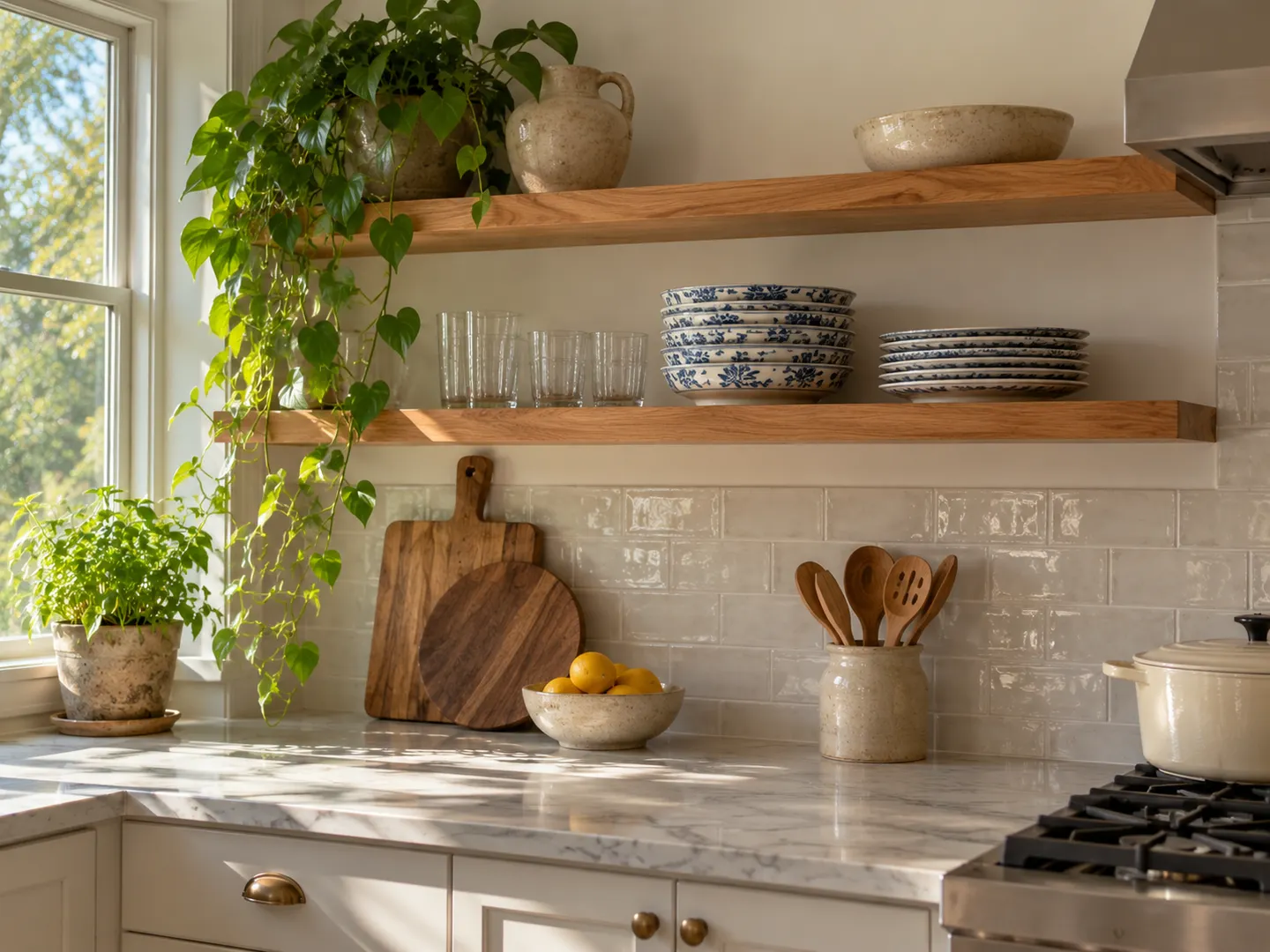
Group a small collection together so it reads as one deliberate display. A few blue-and-white plates or handmade mugs have more presence together than when scattered across the whole kitchen.
Give the collection a section of shelf, then leave some breathing room around it. Everyday storage can sit beside it without getting tangled into the arrangement.
This is a good place for things with a story. Your grandmother’s jug brings more personality than a decorative object bought purely to fill a gap.
18. Add a Plant That Likes the Spot
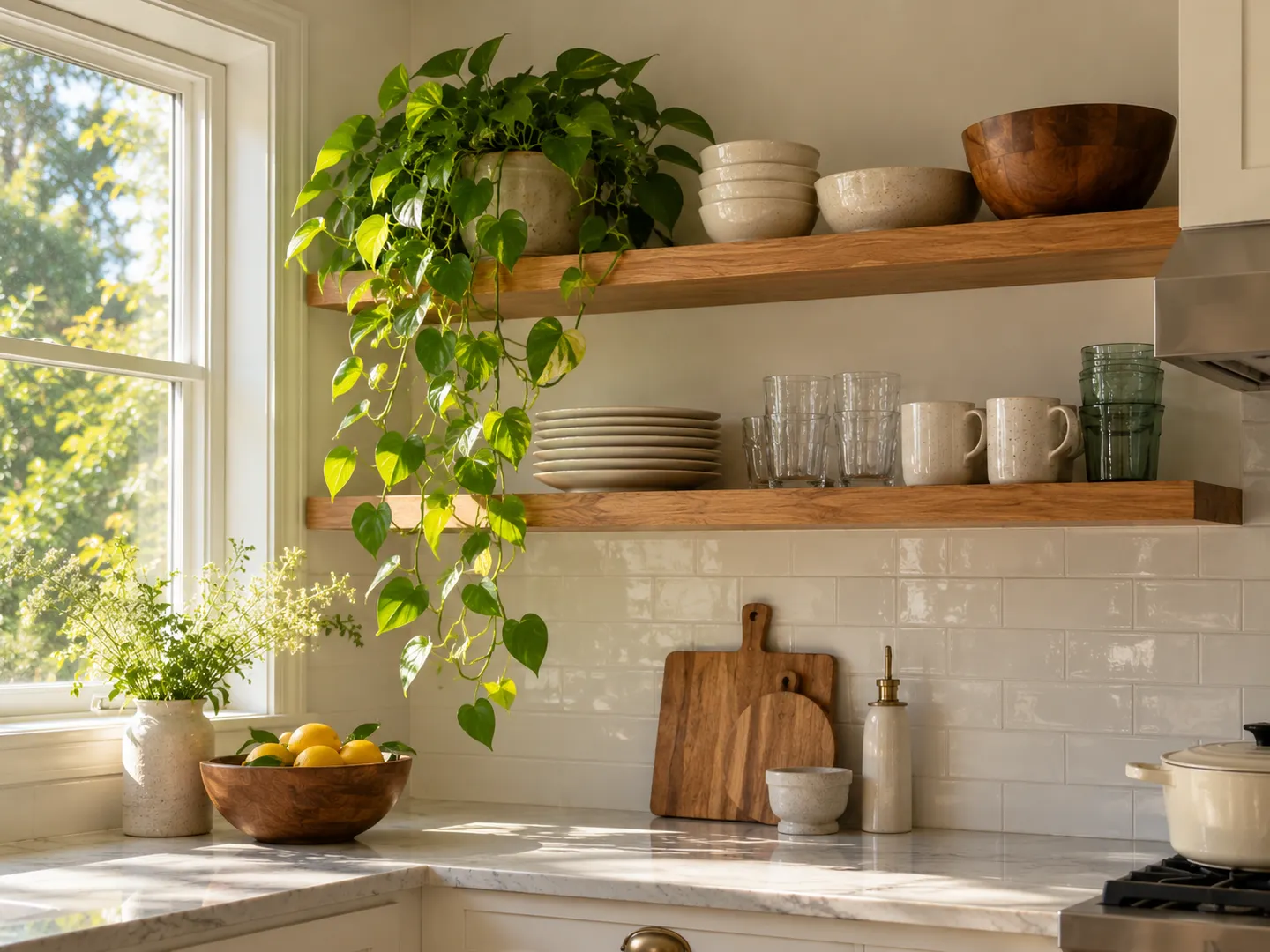
Choose greenery for the light the shelf actually receives. A bright window nearby doesn’t guarantee that a tucked-away upper shelf gets the same light.
Use a pot and drainage arrangement that protects the shelf. Leave enough access to water and inspect the plant without dismantling everything around it.
Trailing stems can soften the edges, but keep them clear of heat, food preparation, and items you need to grab. A plant should never be guarding the mugs.
19. Let a Freestanding Shelf Help Out
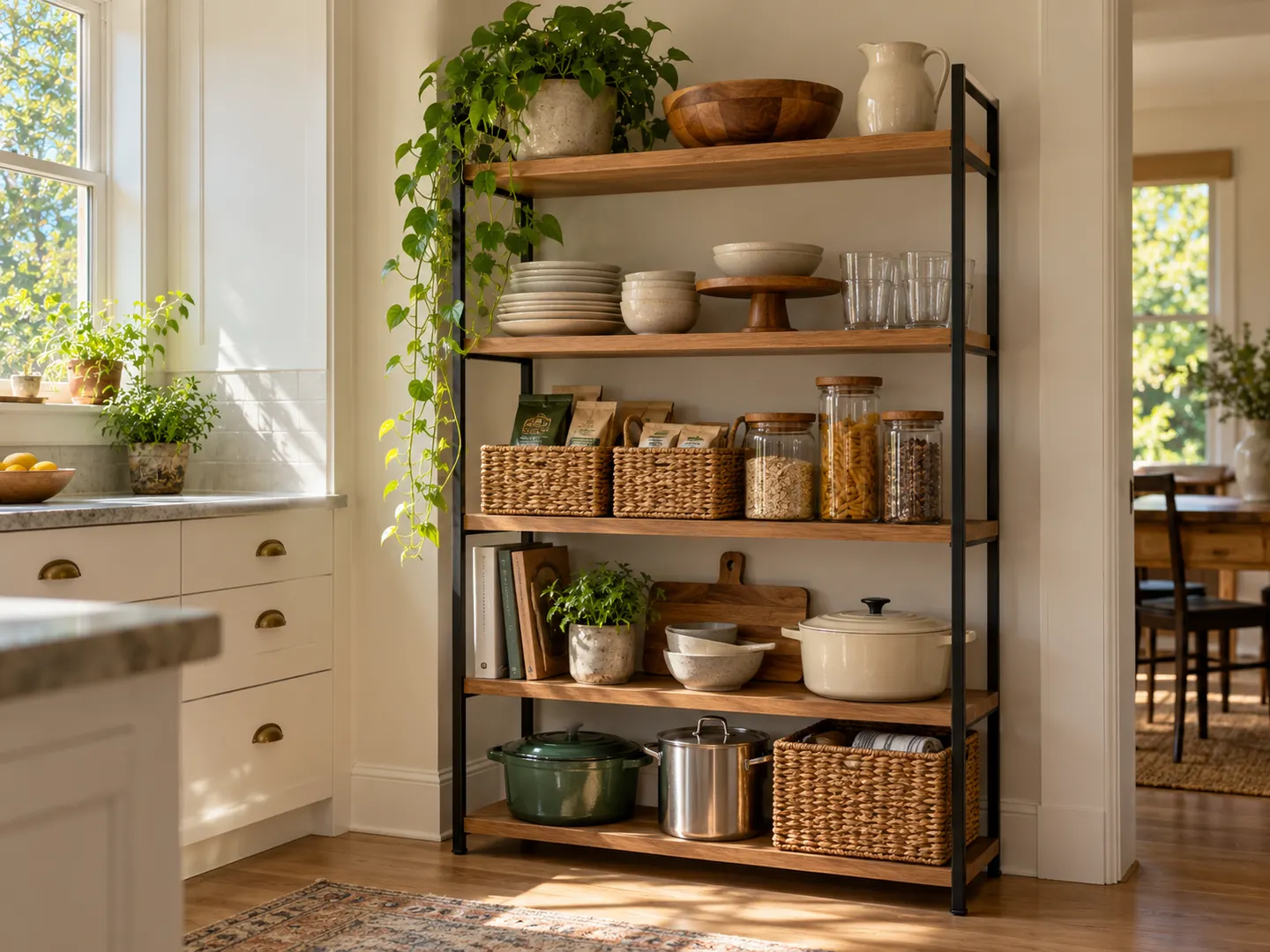
A freestanding shelving unit can add open storage where its footprint fits an unused wall or pantry corner. It’s especially useful for baskets, serving pieces, and supplies that need more room.
Put heavier items on suitable lower shelves and keep regularly used things at a comfortable height. Baskets help contain packets and small objects.
Measure the unit with the surrounding kitchen in use. Check what happens when the dishwasher, cupboard doors, and drawers are open.
How to Style Open Kitchen Shelves Without Rearranging Them All Afternoon
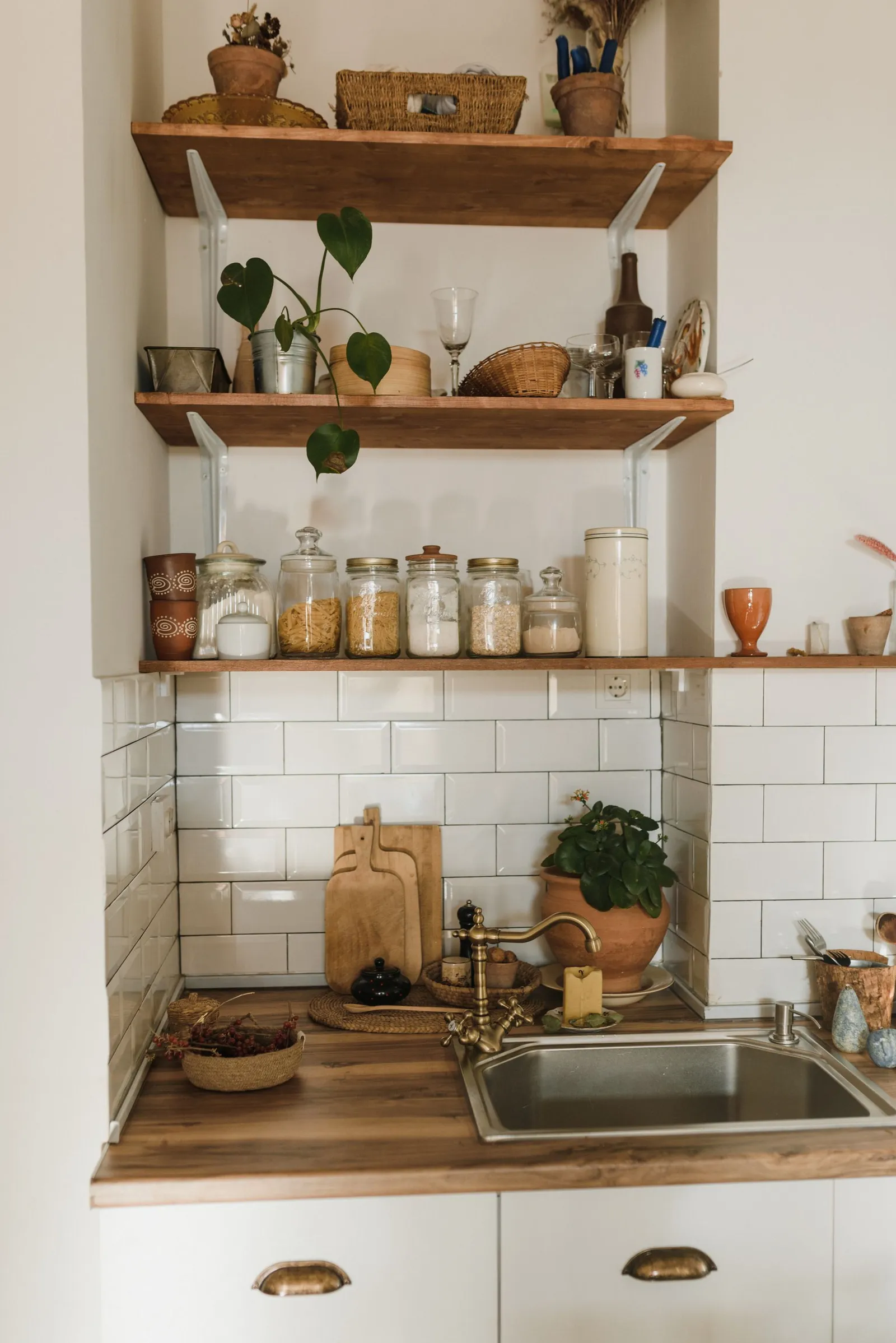
Put the Useful Things Back First
Arrange everyday items before adding decorations. Empty and clean one shelf, then return the dishes or supplies that belong there.
If this is the breakfast shelf, bowls and mugs get first choice of space. The little vase can wait.
Grouping by use also makes tidying easier. Everyone knows where things go, including the person who claims they couldn’t find the glasses.
Add One Taller Piece
Use a pitcher, board, or securely supported cookbook to break up a row of low objects. A short bowl stack beside a taller jug is enough to create some variation.
You don’t need a different height in every inch of space. One well-placed piece can do the work.
Leave Room to Pick Things Up
You should be able to remove an everyday item without moving something decorative. Reach for a mug, lift a bowl, and put both back.
If you keep nudging a plant or catching a handle on another cup, spread things out.
For more practical ways to arrange the contents, read Open Kitchen Shelves That Still Work Hard.
Before You Buy: The Kitchen Shelf Checklist
Choose shelves around their contents, the wall, and the way you move through the kitchen. Check these before ordering:
- My largest plate or storage container fits the shelf depth.
- I can comfortably reach the things I use every day.
- The shelf system supports the intended load.
- The fixings suit the wall construction.
- Nearby windows, doors, and cabinets can open properly.
- The position meets relevant appliance clearance requirements.
- The surfaces suit the location and are easy to clean.
- I still have enough closed storage for things I want out of view.
- The shelf doesn’t obstruct the worktop or a normal walking route.
Open Kitchen Shelving Questions, Answered
Do Open Kitchen Shelves Get Dusty?
Yes. Open shelves and their contents collect dust. Regularly used items spend less time sitting untouched, but the shelf still needs wiping.
Keeping decorative pieces to a manageable number makes cleaning quicker. Lift a few useful groups, wipe the surface, and put them back.
How Do You Keep Grease Off Open Shelves?
Place shelves away from frequent cooking splatter, use effective extraction, and clean exposed surfaces regularly. Shelving close to the hob generally takes more maintenance.
Choose finishes you can clean according to their care instructions. Keep delicate decorations and difficult-to-wash objects farther from the cooking area.
How Deep Should Kitchen Shelves Be?
Choose the depth around what you’ll store and the clearance available. Dinner plates need more depth than spice jars or small mugs.
Measure the largest item and check that it sits fully supported. Then check how far the shelf projects over the worktop or into the room.
What Should You Keep Off Open Kitchen Shelves?
Keep unstable stacks, loads beyond the shelf rating, and hard-to-reach heavy objects off them. Avoid placing anything overhead that you cannot lift down comfortably.
You can also leave messy-looking supplies behind closed doors. Open storage doesn’t create an obligation to display everything you own.
Are Open Shelves a Good Idea in a Small Kitchen?
Yes, when they provide useful storage without crowding the room or removing cupboards you still need. One well-placed shelf can be enough.
If your cabinets are already packed, think carefully before replacing several of them. A small open section alongside closed storage is often the easier arrangement to live with.
Give One Shelf a Clear Job
Choose one shelf and decide what it needs to hold before buying anything new. Breakfast bowls, coffee mugs, or pantry jars make a useful first project.
Put those things where they’re easy to reach, add one piece you enjoy looking at, and leave a little room.
Then make a coffee. If getting the mug was easy, you’re doing well.