Round vs. Rectangle Dining Table: Which Fits a Small Space?

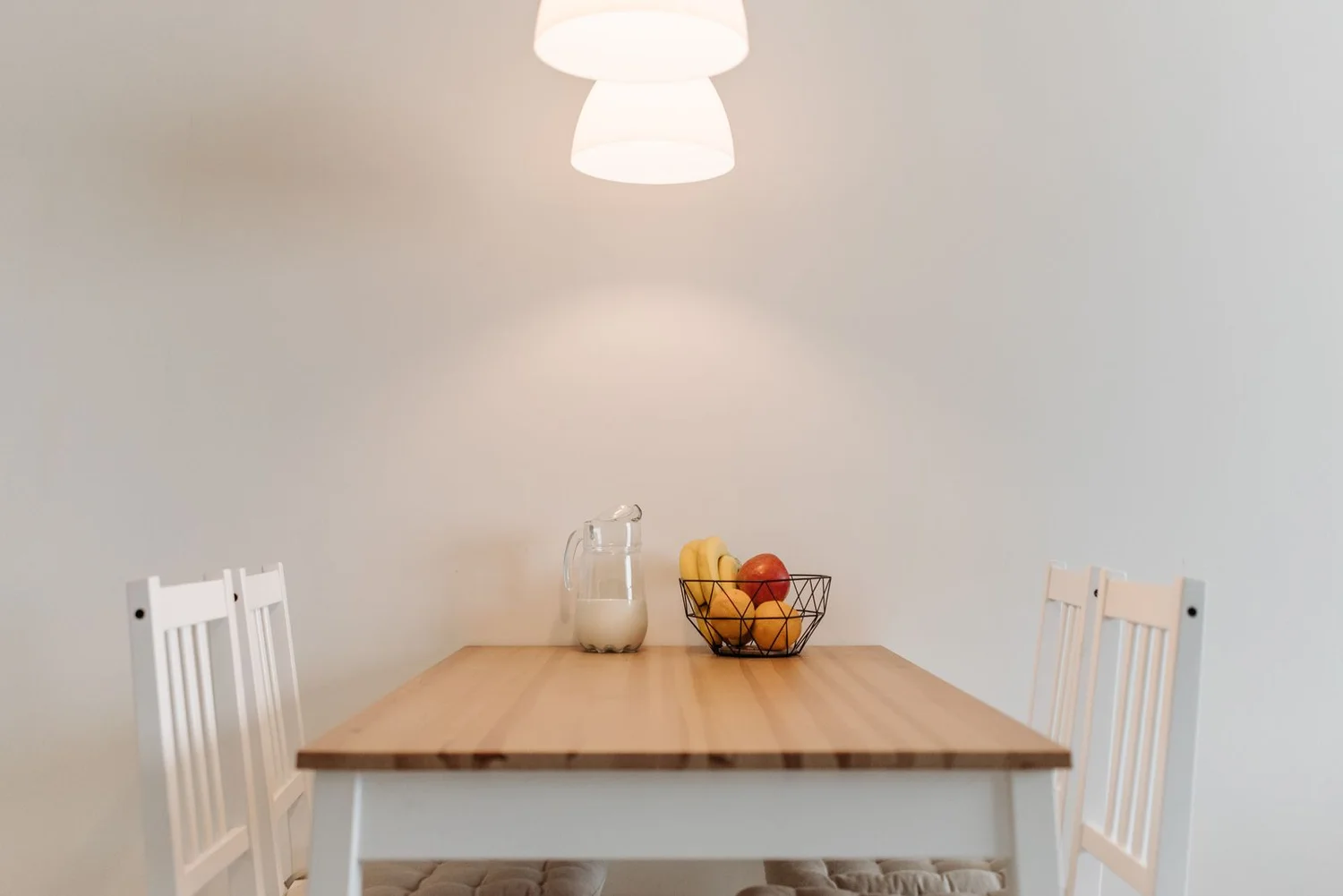
A round dining table often works well in a square nook, while a narrow rectangular table usually fits better in a long room or beside a wall. When choosing between a round or rectangle dining table for a small space, the room’s shape and the space around your chairs matter most.
Perhaps everything looks fine with the chairs tucked in. Then dinner arrives, someone needs to reach the kitchen, and everyone has to shuffle forward. You need enough room to sit comfortably, pull out a chair, and walk past the table.
Here’s the quick answer:
The quick answer
- Square dining nook: a compact round table often fits naturally.
- Long, narrow room: a slim rectangular table usually makes better use of the space.
- Two people most days: a drop-leaf table can leave more room between meals.
- Occasional dinner guests: an extendable table adds seats without staying large all week.
- Either shape: chair size, table legs, and nearby doors affect how comfortable the setup feels.
The sections below will help you work out which shape fits your room and how to avoid buying a table that feels too big once the chairs arrive.
1. Round or Rectangular? Here’s the Quick Comparison
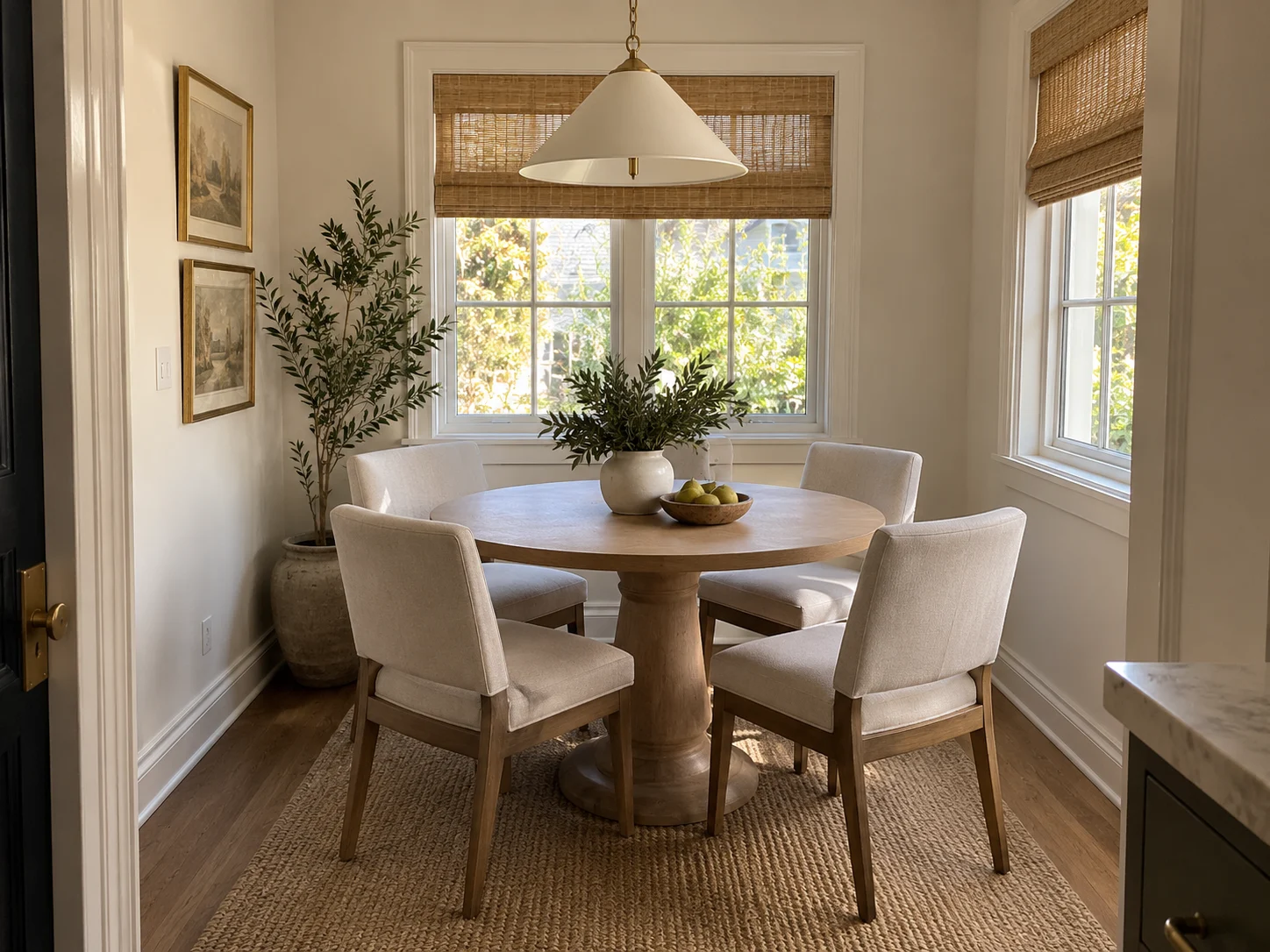
Round tables often suit square spaces; rectangular tables tend to suit longer rooms. The best choice depends on where people sit and how they move through the room.
A round table has no corners sticking into the path around it. A rectangular table can sit neatly along a wall or follow the length of a narrow dining area.
| What matters in your room | Round table | Rectangular table |
|---|---|---|
| Square dining nook | Often fits the proportions well | Works if there is enough room at both ends |
| Long, narrow dining area | Diameter may take up too much width | A slim model often leaves more room alongside it |
| Placement beside a wall | Curved edge makes less use of the wall | Straight edge sits neatly against it |
| Walking past the table | No projecting corners | Corners need space along the walking route |
| Occasional guests | Some designs extend into an oval | Extension leaves add length |
| Comfortable seating | Depends on diameter, chairs, and base | Depends on width, length, chairs, and leg placement |
A round table does not automatically take up less space. Its curved edge may be easier to walk around, while a narrow rectangle may leave a wider path through the same room.
2. Which Shape Works With Your Room?
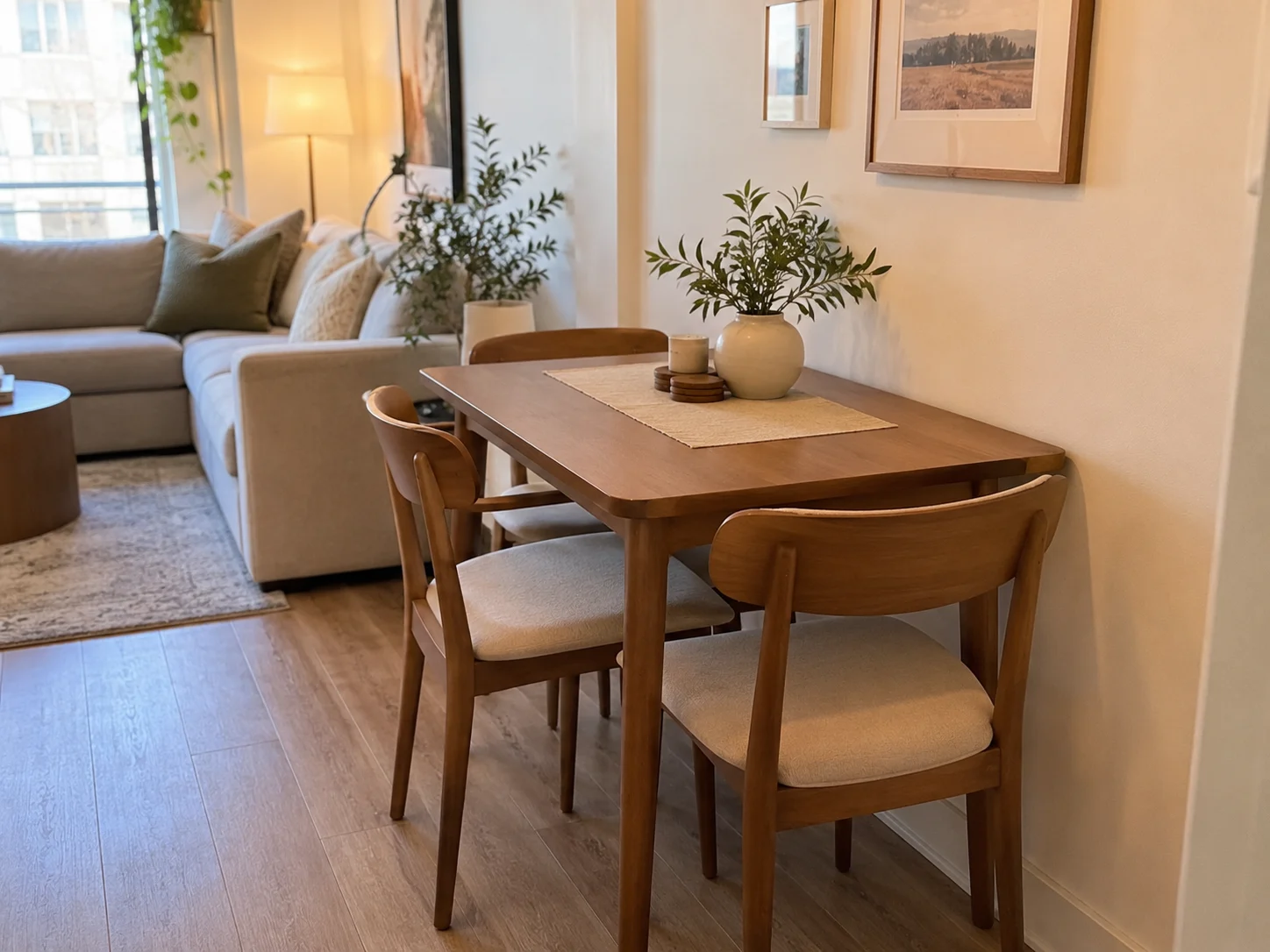
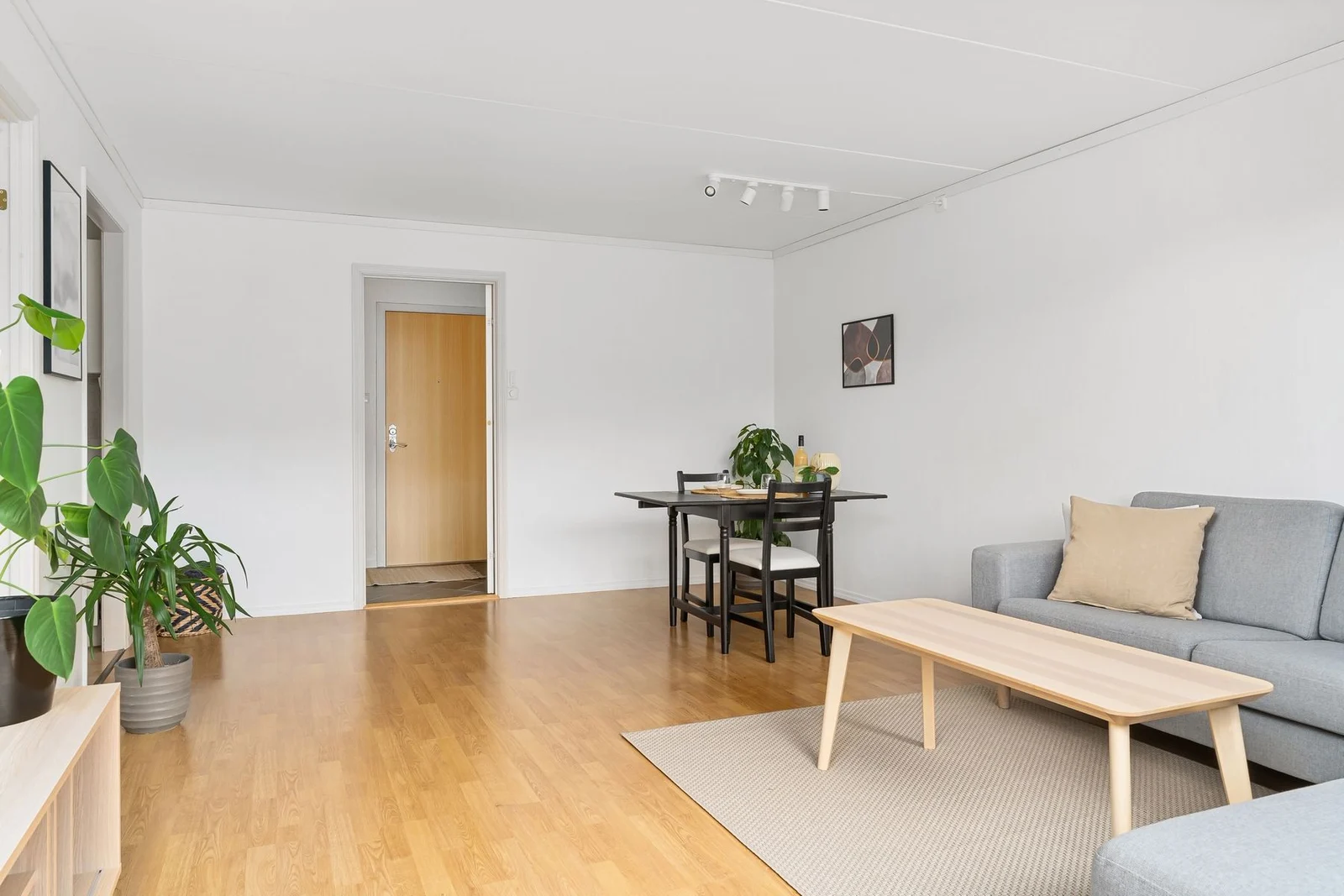
The space available for dining matters more than the shape of the whole room. In an apartment, that might be the area between a kitchen counter, a sofa, and the balcony door.
Those nearby features determine where the table and chairs can go.
A Square Nook Often Suits a Round Table
A round table gives people access from different sides in a roughly square nook.
For example, a small dining area between the kitchen and a window may have enough room for chairs around a central table, but little space for corners along the walking route. A circular top can work well there.
It also keeps everyone facing toward the middle, which is handy for conversation or a card game after dinner.
The Jocoevol 42-Inch Round Dining Table is an option for this kind of setup. It has a wood-look MDF top, a cross-shaped base, and a shelf beneath the tabletop for items such as napkins or placemats.
At 42 inches across, it takes up less width than a 47- or 48-inch round table. That difference matters when the dining nook is already tight.
A Long, Narrow Room Usually Suits a Rectangle
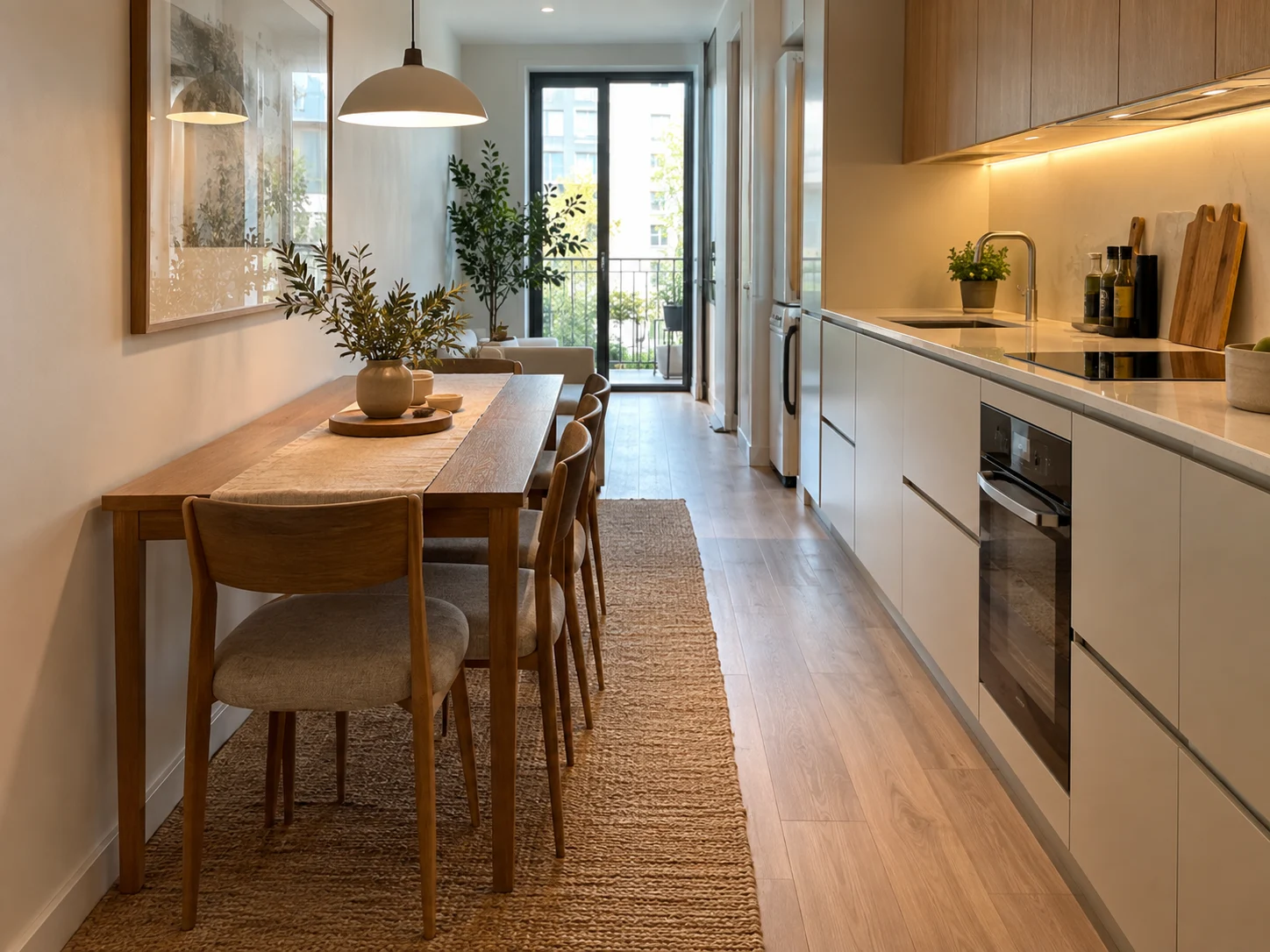
A narrow rectangular table can leave more walking space beside the dining area.
This often works in apartments where the table sits between the kitchen and living room. Its long side follows the room instead of extending equally in every direction.
Width deserves as much attention as length. A short but wide table can still leave you squeezing past the chairs.
The Memobarco 47.2-Inch Rectangular Dining Table is one option for readers who prefer a rectangular top. Its roughly four-foot length makes it a useful alternative to longer dining tables. The final layout still needs to include its full width and the chairs around it.
A narrower tabletop leaves less space for serving bowls. For everyday dinners, that is usually manageable: plates go on the table, while large dishes stay on the kitchen counter.
A Table Beside a Wall Favors a Straight Edge
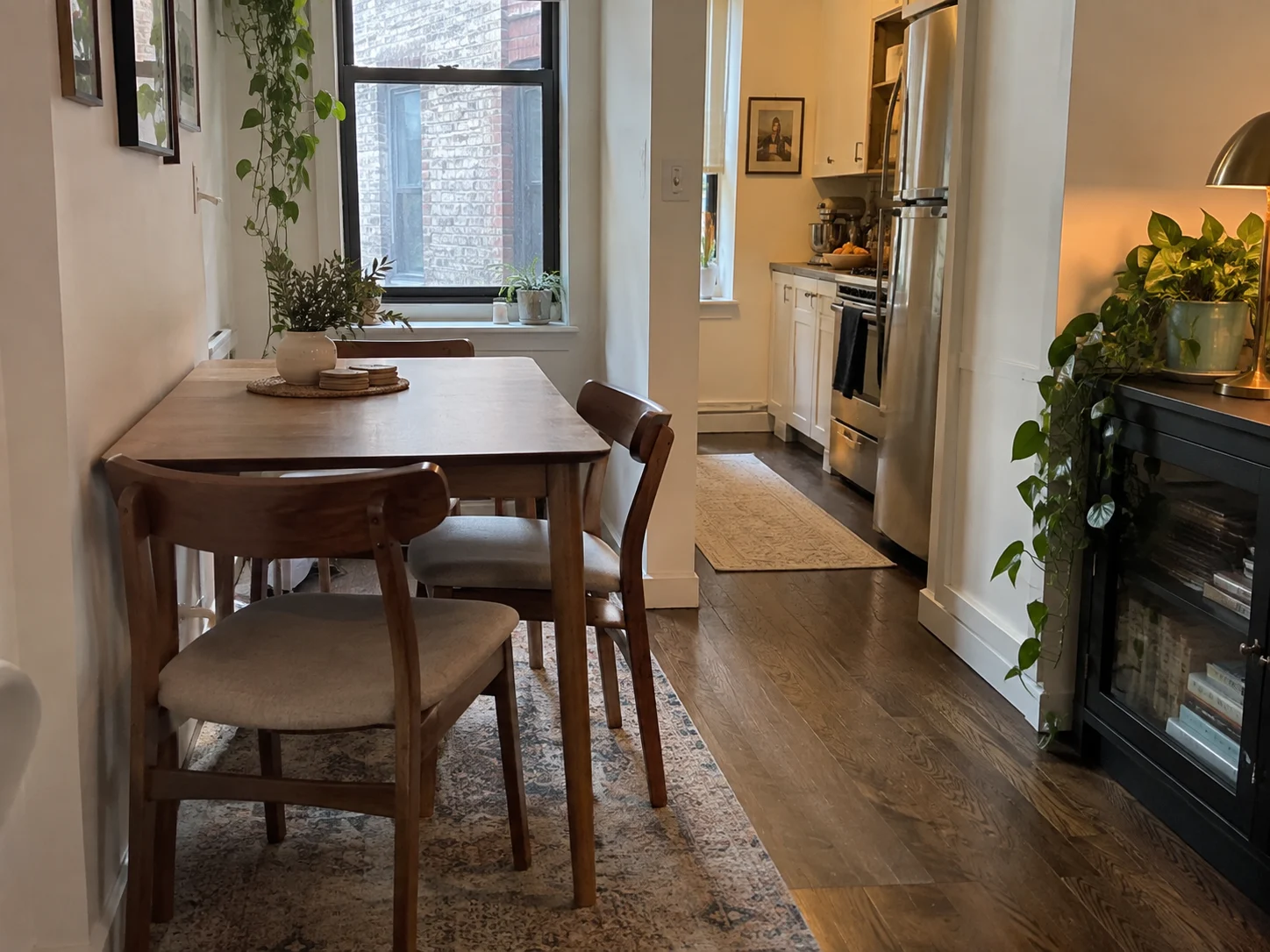
A rectangular or drop-leaf table usually fits more neatly against a wall.
For two people, this arrangement can free up floor space throughout the day. The table can move out for guests when there is room for the larger setup.
The tradeoff is seating. A side pushed against the wall cannot also hold occupied chairs. A table sold for four may work as a two- or three-person table in that position.
A wall-side bench needs a different arrangement, with enough space between the seat and table for people to sit comfortably.
If several activities share the same room, our small apartment decorating ideas can help you arrange the furniture around the dining area.
3. The Chairs Need More Room Than You Think
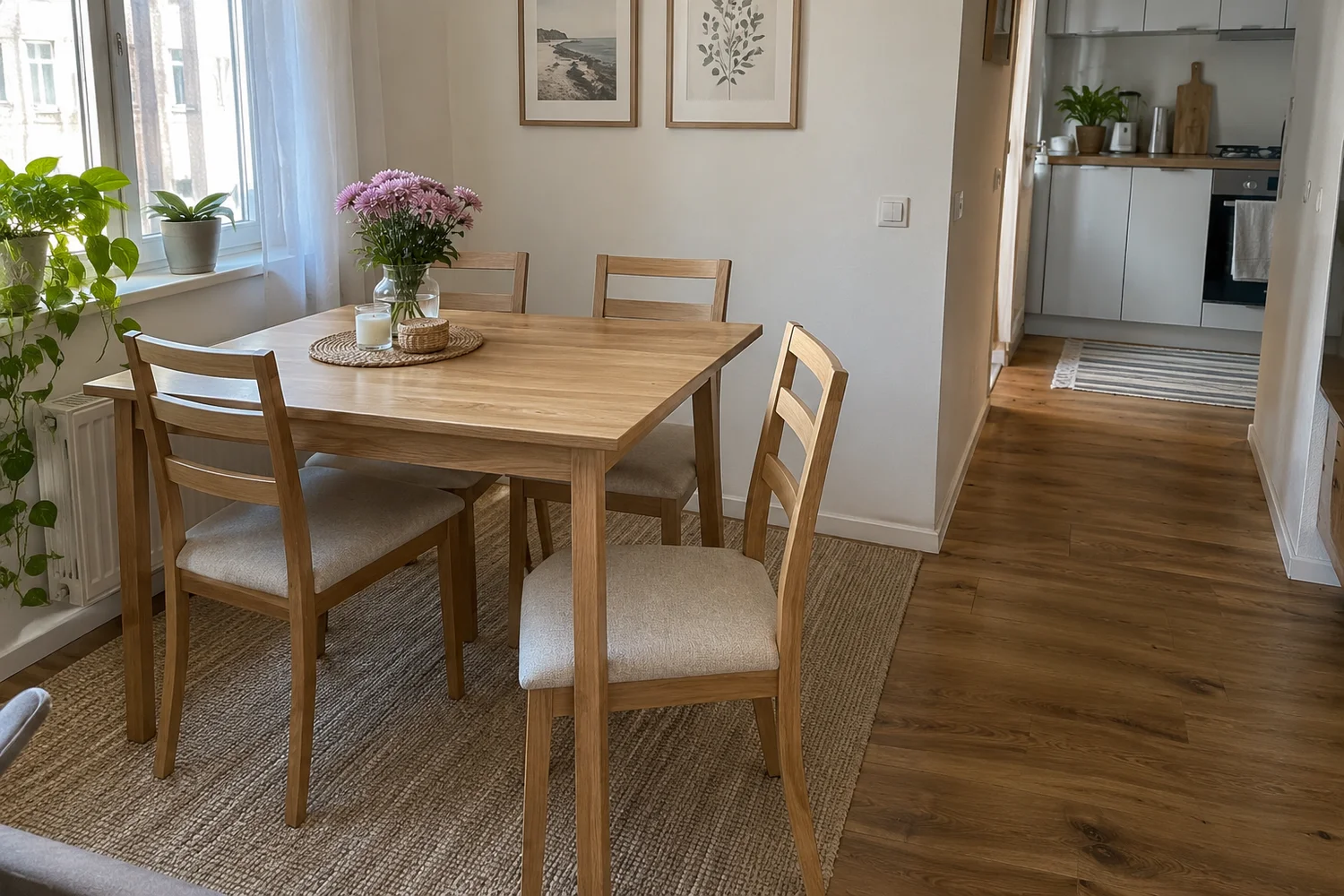
The table and chairs need to fit while people are using them. Measuring the tabletop alone leaves out the space needed to sit down and get up.
There are three useful ways to assess the arrangement:
- Between meals: the chairs are tucked away.
- During dinner: everyone is seated.
- Someone gets up: a chair moves back while another person may need to pass.
That third situation often explains why a dining area feels cramped.
A common planning allowance is around 36 inches from the table edge to a wall or nearby furniture for chair access. Along a route behind seated diners, around 42–48 inches provides more room for passing.
These measurements run from the tabletop edge to the obstruction. They are not measured from the back of a tucked-in chair.
What That Looks Like in a Small Room
With the same allowance around each table, a round design needs more width while a narrow rectangle needs more length.
Here is an example using 36 inches on every side:
| Table dimensions | Table plus surrounding allowance |
|---|---|
| 42-inch round table | 9 feet 6 inches × 9 feet 6 inches |
| 48 × 30-inch rectangular table | 10 feet × 8 feet 6 inches |
The rectangular setup needs six inches more length, but it uses a foot less width. In a narrow room, that can make a noticeable difference.
Note: These are planning examples, not seating guarantees. Large chairs, opening doors, and busy walking routes may require more space.
A temporary outline on the floor makes the measurements easier to understand. Your existing chairs can sit around that outline while you try the arrangement. Pulling a chair back will quickly reveal whether a cupboard or doorway gets in the way.
4. How Many People Eat Here Most Days?
Your regular household should guide the everyday table size. Occasional guests can help determine whether an extension is worth having.
If two people eat at the table most nights, a large table may take up space you would rather use elsewhere. A family of four, meanwhile, needs four comfortable places without rearranging the room at every meal.
For two people, a compact round, rectangular, or drop-leaf table can work. The room’s layout decides which is most practical.
For four people, chair width and leg placement deserve attention. A “four-seater” label does not tell you how roomy it will feel with wide upholstered chairs.
Frequent guests may make an extendable table worthwhile. Extra tabletop space still needs extra chair space, including room for people seated at the ends.
There is also the question of where those chairs go afterward. Folding chairs are useful when there is somewhere convenient to store them.
If the table doubles as a desk, a rectangular top can make it easier to spread out a laptop and notebook. A small round table can handle lighter laptop use too. A nearby drawer or shelf for work supplies makes clearing up before dinner much easier.
5. The Base and Chairs Can Change Your Decision
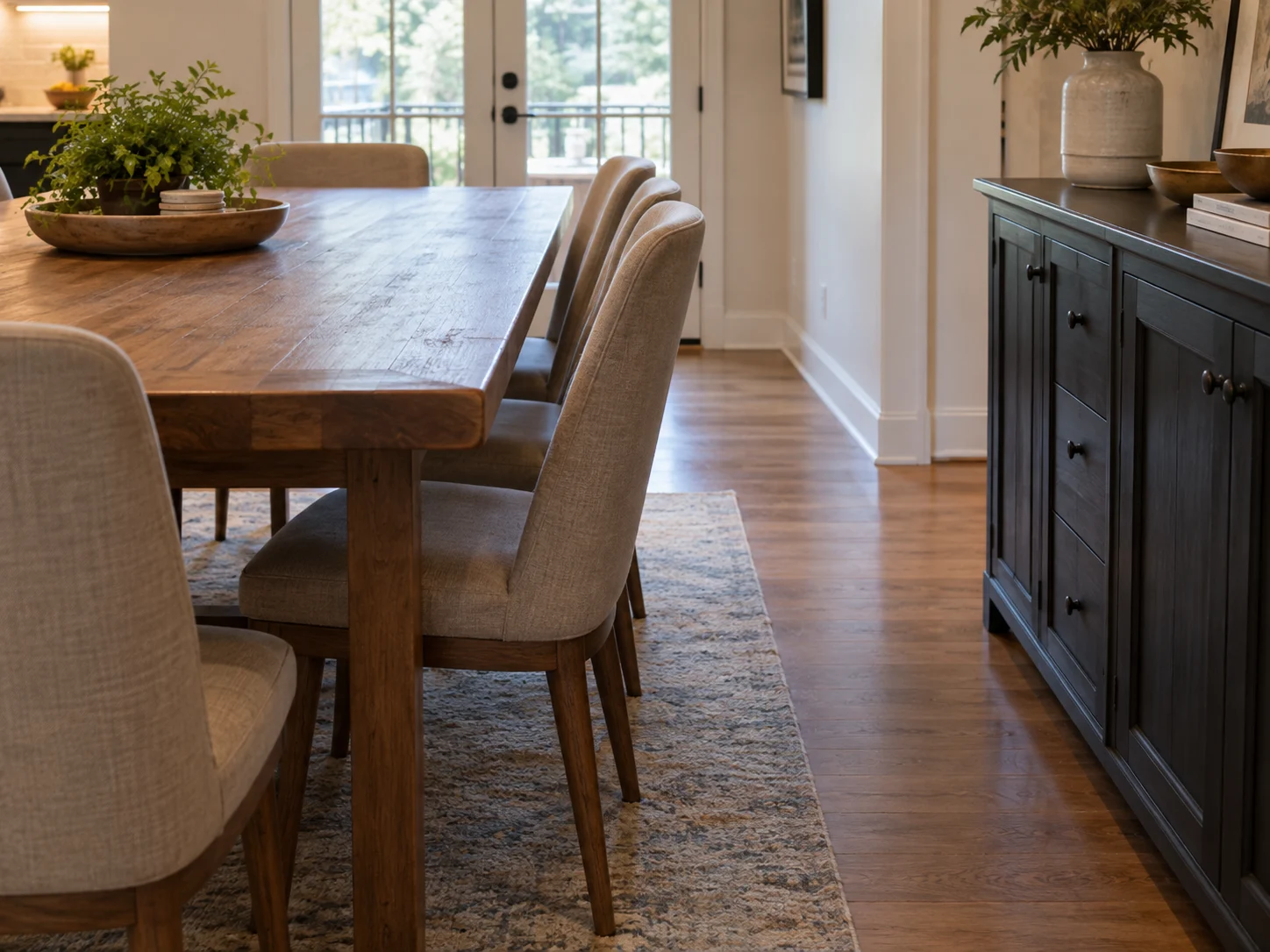
Chair size and table supports affect how comfortably people sit.
Two tables with similar dimensions can feel quite different. One leaves room to move your feet; the other puts a support directly in front of your chair.
A Pedestal Helps When It Leaves Space for Your Feet
A pedestal can allow more flexible chair placement because there are no legs at the tabletop’s corners.
That can help around a round table, where chairs may need to shift slightly to make everyone comfortable. However, a wide central base or spreading supports can still occupy foot space.
The VASAGLE 47-Inch Round Pedestal Dining Table has a cross-pedestal structure and a central shelf with three height settings. The shelf is useful for keeping napkins or other dining essentials close by.
Its listed tabletop diameter is 47.2 inches, so it needs more room than the 42-inch Jocoevol option. It makes more sense in a dining area with a little extra width than in a very tight breakfast corner.
A storage shelf is a useful feature, but the base remains part of the seating layout. Storage beneath the table does not create additional space for knees and feet.
Chairs That Tuck In Make Everyday Life Easier
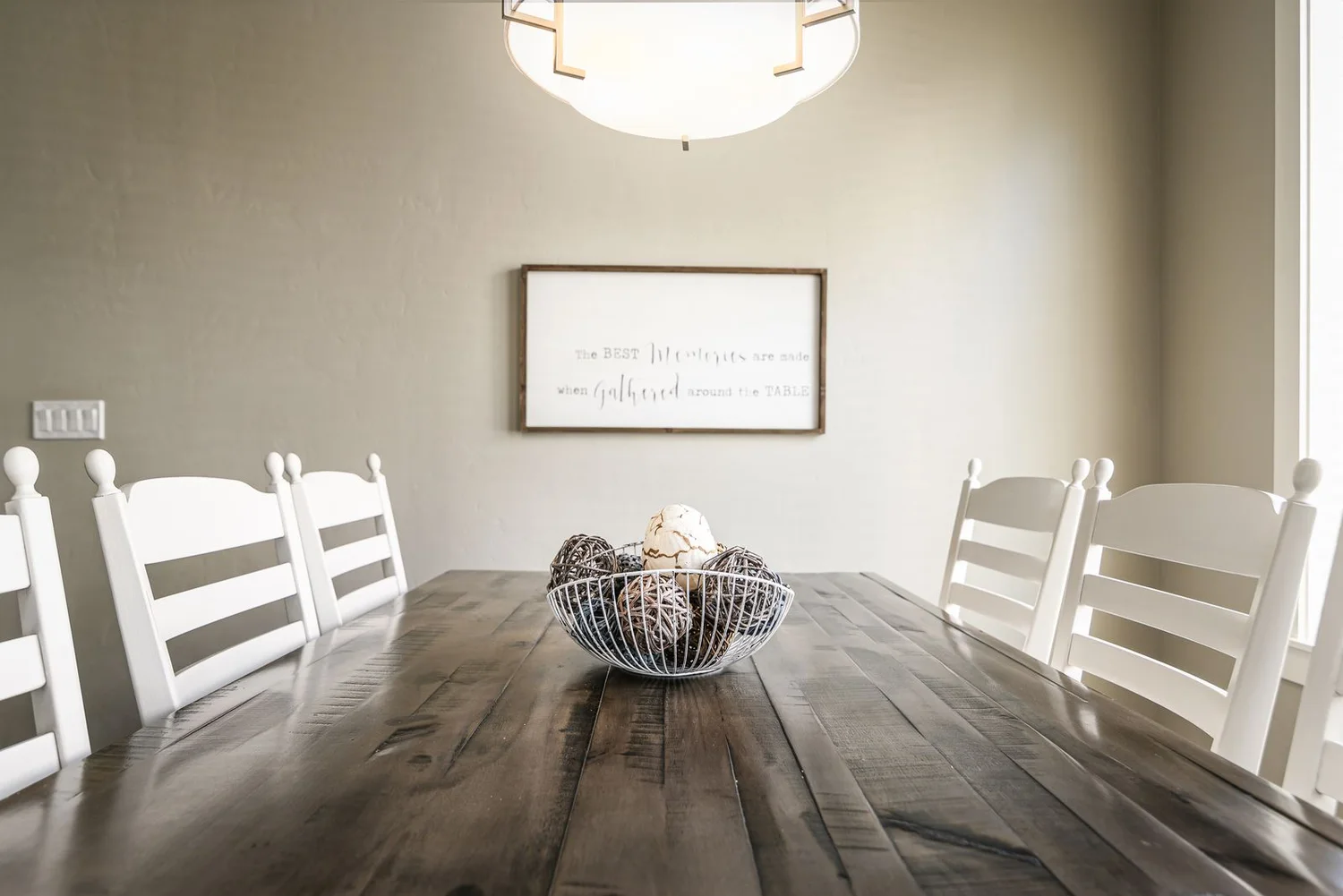
Chairs that tuck in well keep more floor space clear when the table is not in use.
Three details affect the fit:
- Seat width: chairs need space between the table legs and beside neighboring seats.
- Arm height: arms must clear the tabletop and any frame beneath it.
- Chair depth: deep seats and angled backs can extend well beyond the table.
The frame beneath some tabletops is called an apron. Chair arms may clear the tabletop but catch on this lower frame.
For a softer look, the CHUN YI Upholstered Dining Chairs, Set of Four combine warm beige upholstery with walnut-toned solid-wood frames and curved backs. They suit a dining area where you prefer fabric upholstery and wood finishes.
The REONEY Dining Chairs, Set of Four offer another option, with black PU upholstery and metal legs. The wipe-clean upholstery is practical for everyday meals, particularly if you prefer it to fabric.
Neither set needs a matching table to look at home. Repeating a wood tone or metal finish elsewhere in the room can help the pieces work together.
Existing chairs are worth keeping when they are comfortable and fit properly. A new table does not automatically call for a whole new set.
A Bench Works Best When Getting In Is Easy
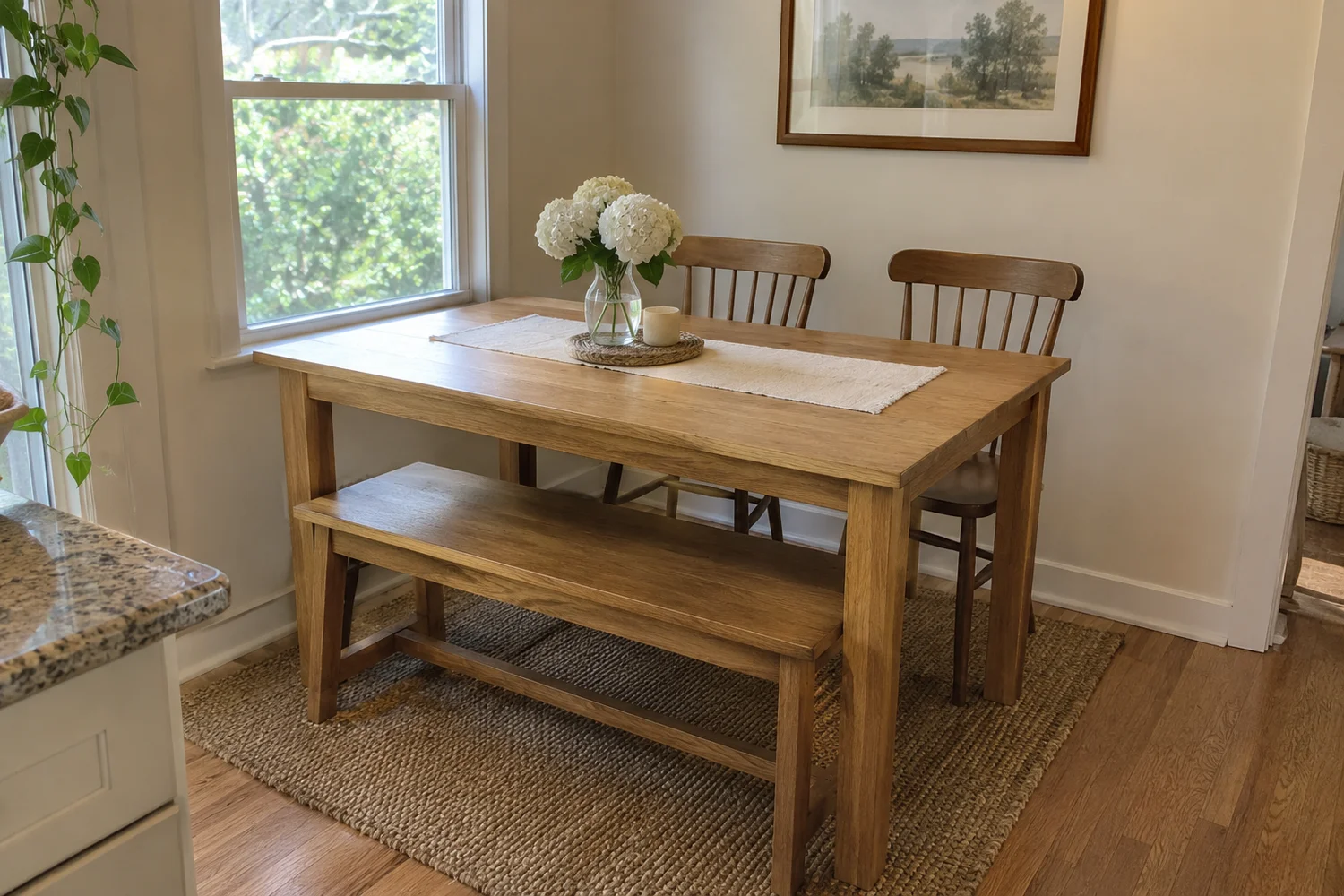
A bench helps when it fits between the table legs and is easy to get in and out of.
Being shorter than the tabletop is not enough. The bench must also fit between the supports if you want it to slide underneath.
A wall-side bench needs access from at least one end. Otherwise, the person in the middle may need everyone else to move whenever they get up.
Benches can offer flexible seating, especially for children. For adults, enough elbow room is still more useful than squeezing in one extra person.
6. Would a Drop-Leaf, Extendable, or Oval Table Work Better?
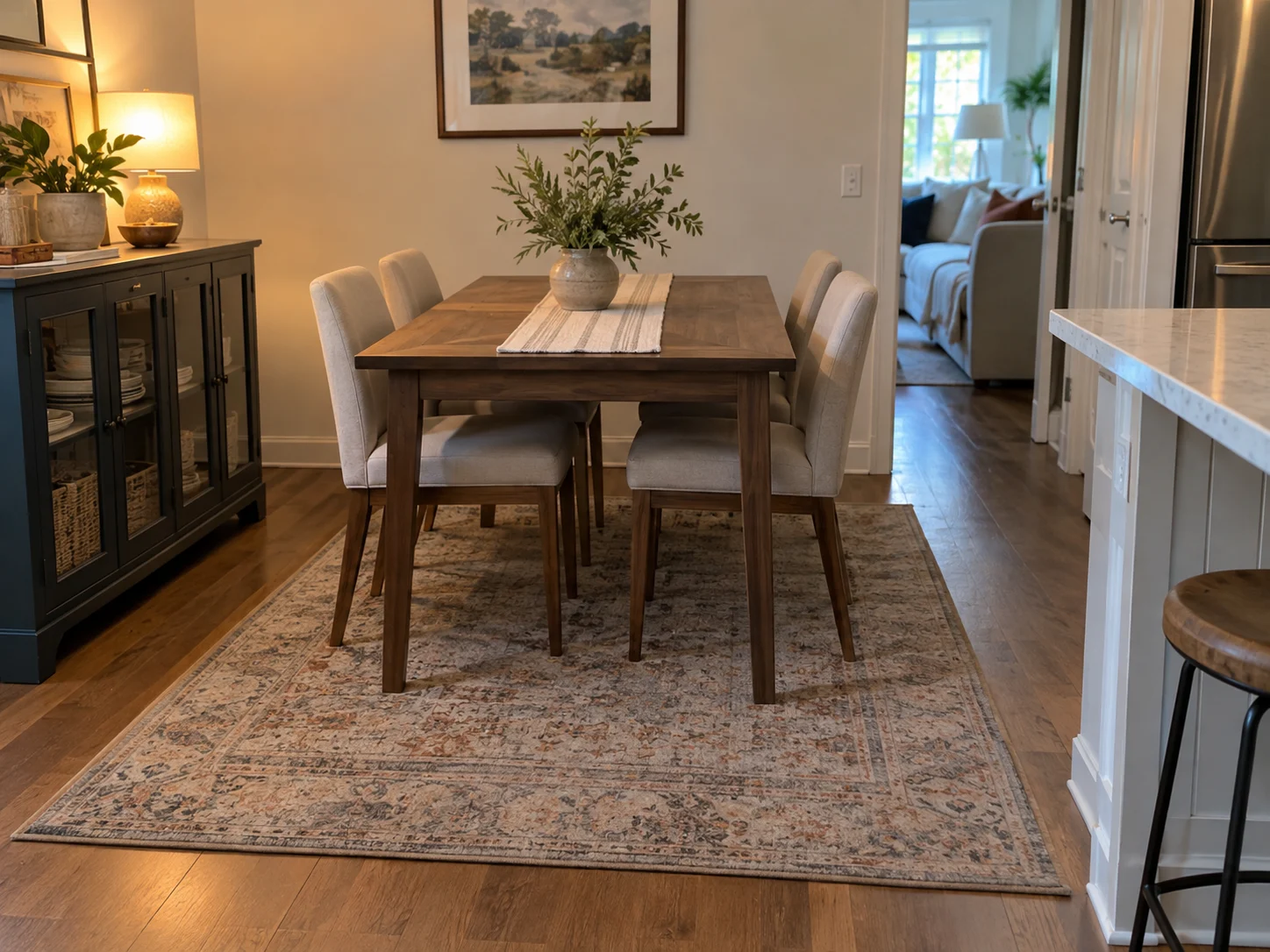
Drop-leaf tables reduce the everyday footprint, while extendable tables add room for guests. An oval offers a longer surface with curved ends.
The useful choice depends on whether you want the table smaller most days or larger on occasion.
Drop-Leaf Tables for Smaller Everyday Setups
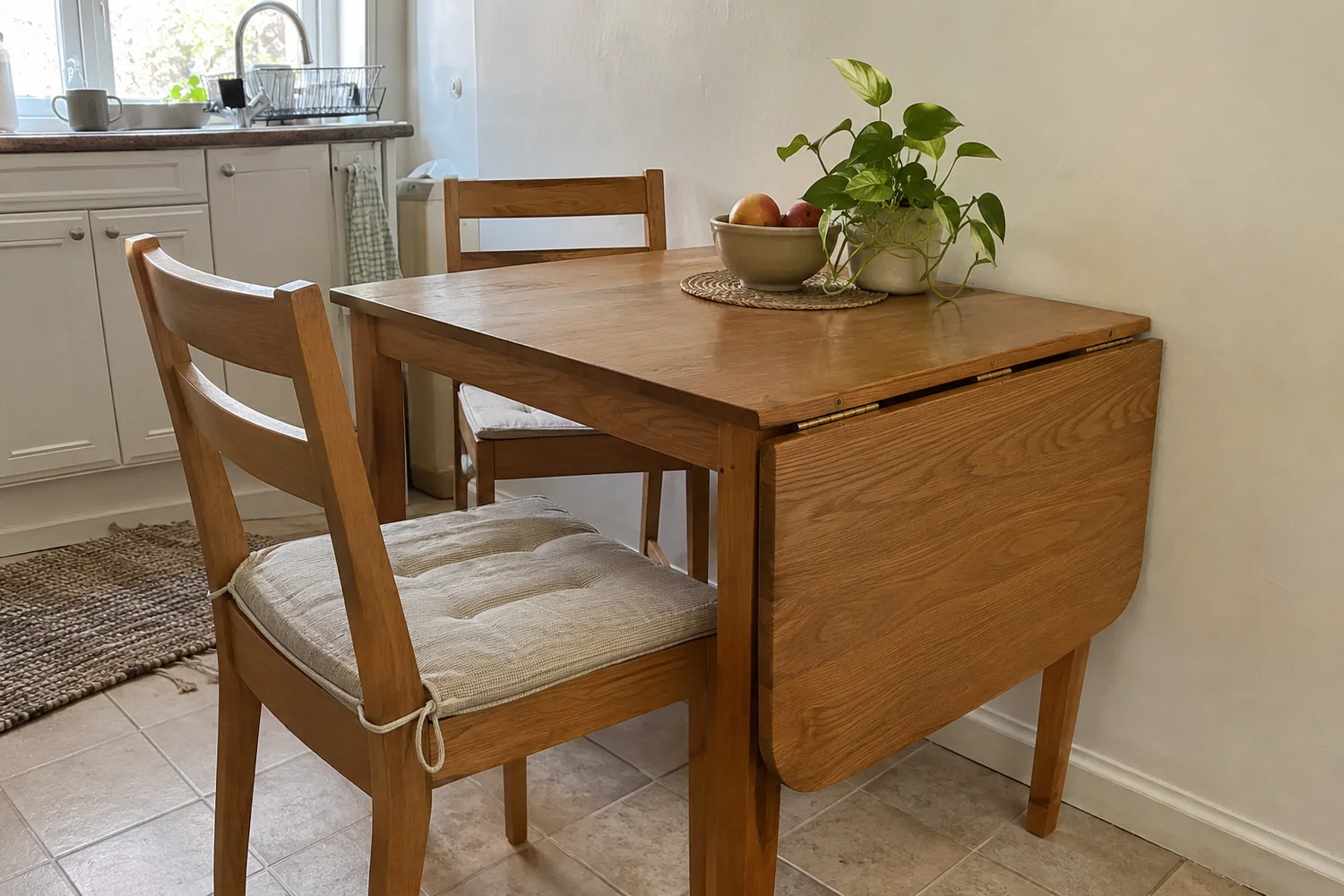
A drop-leaf table works well when you want a smaller tabletop most of the time.
Its hinged sections fold down along the sides, reducing the width. That can help in a two-person kitchen or a room where the table needs to sit against a wall.
The folded sections can affect where chairs and knees fit, so the available seating changes with the tabletop.
Extendable Tables for Occasional Guests
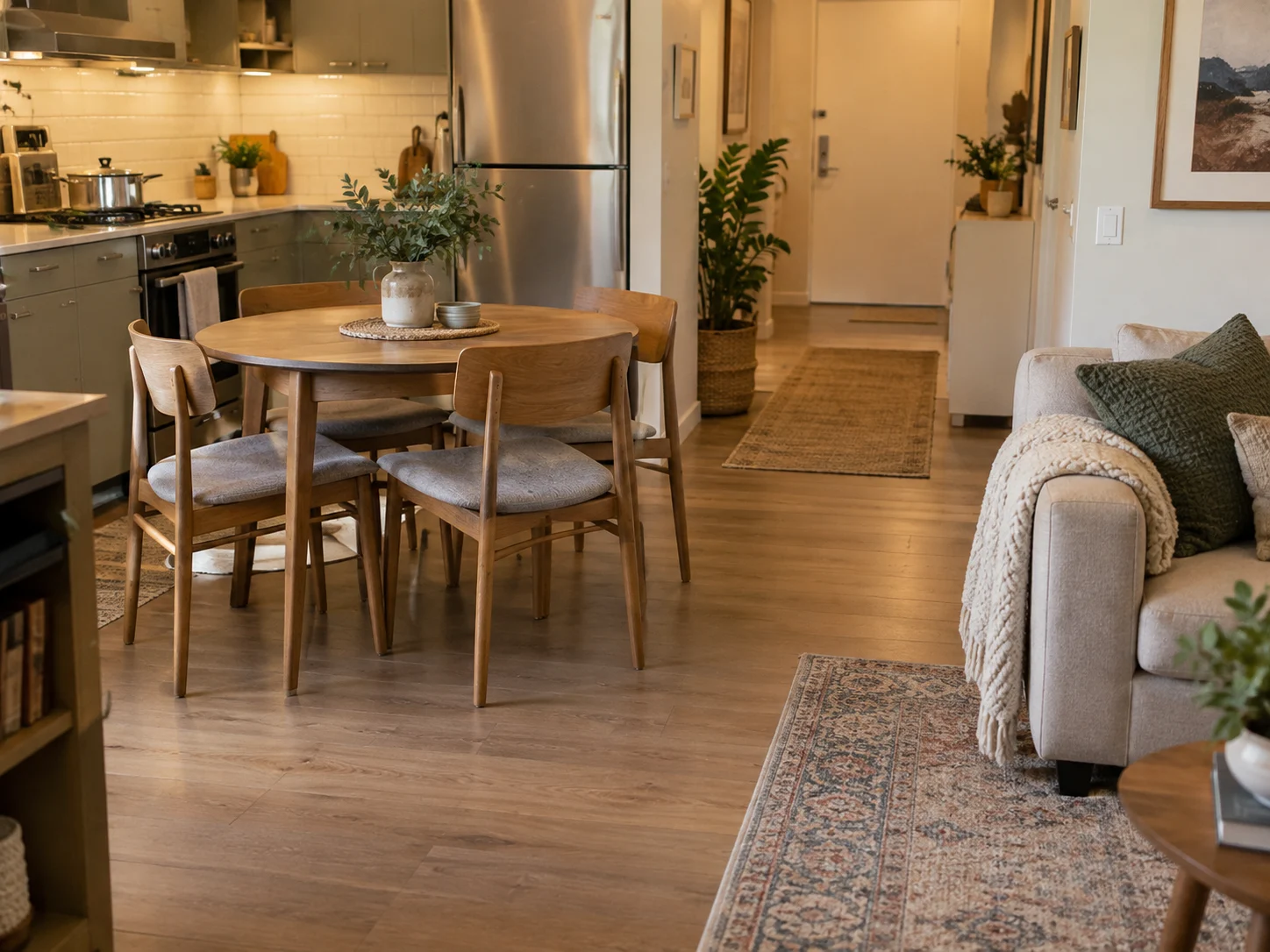
An extendable table is useful when guests join you often enough to need extra room.
Both arrangements need to work: the table closed for normal meals and extended with the extra chairs in place. Moving a small side table for a gathering is manageable. Blocking the kitchen doorway makes the meal awkward.
The Muwuele Extendable Dining Table extends from 47.2 to 63 inches long. It has a rubberwood construction and a walnut-colored finish, making it an option for readers who want a wood table that can grow for company.
Its added length provides more tabletop space, but comfortable seating still depends on the chairs and the room around it.
Oval Tables for Length Without Sharp Corners
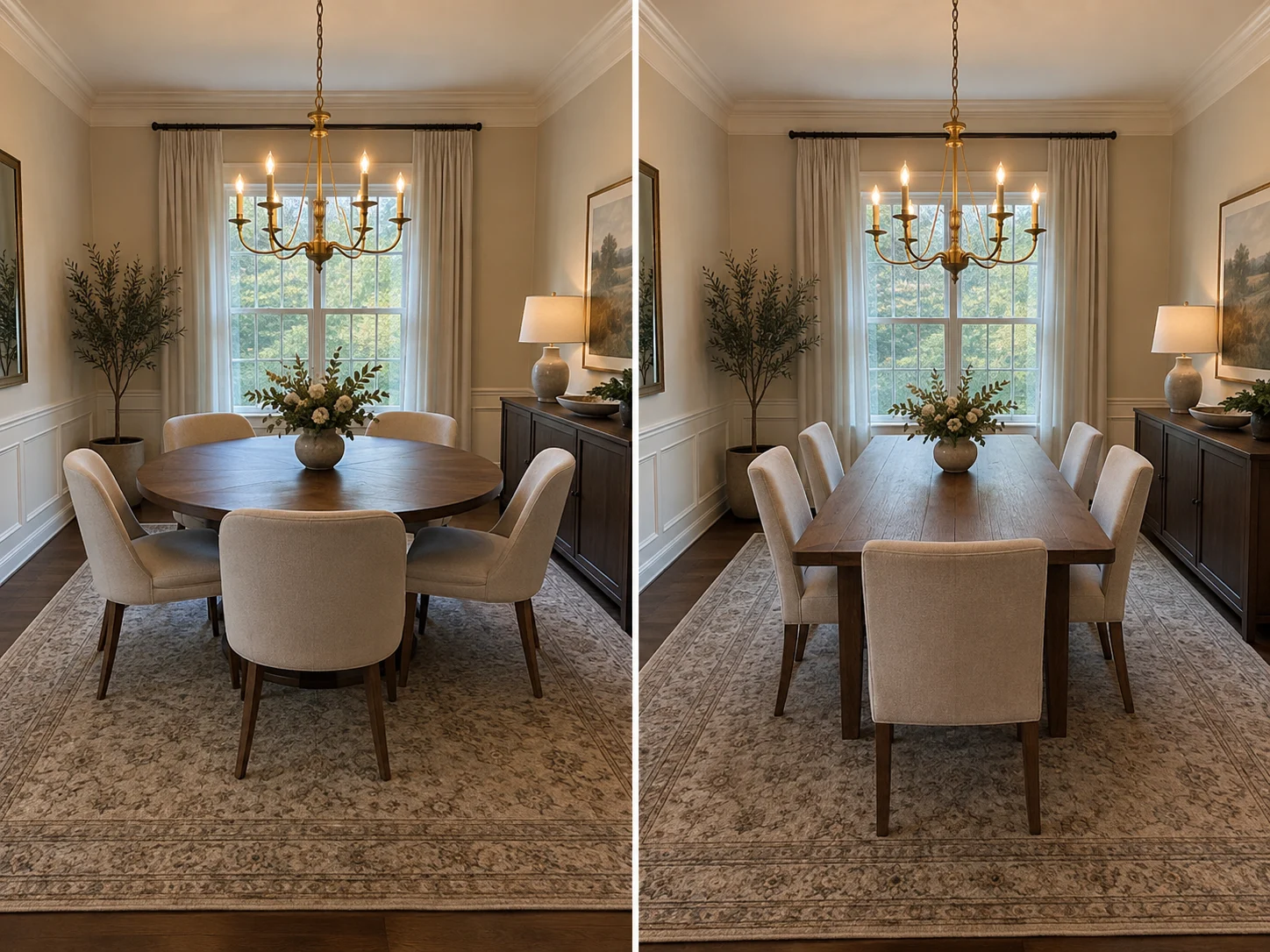
An oval table offers a longer surface with curved ends, which can help where people walk close to either end of the table.
Some designs change from round to oval. The MECHYIN 42–58-Inch Extendable Dining Table follows that approach, expanding from a 42-inch round setup to a 58-inch-long oval. It also includes a storage shelf beneath the top.
This suits a square nook that has room to extend in one direction when guests come over.
The curved ends do not remove the need for clearance. The extended top and chairs still need enough room for people to get up and pass.
7. A Lighter Look Helps, but the Dimensions Still Matter
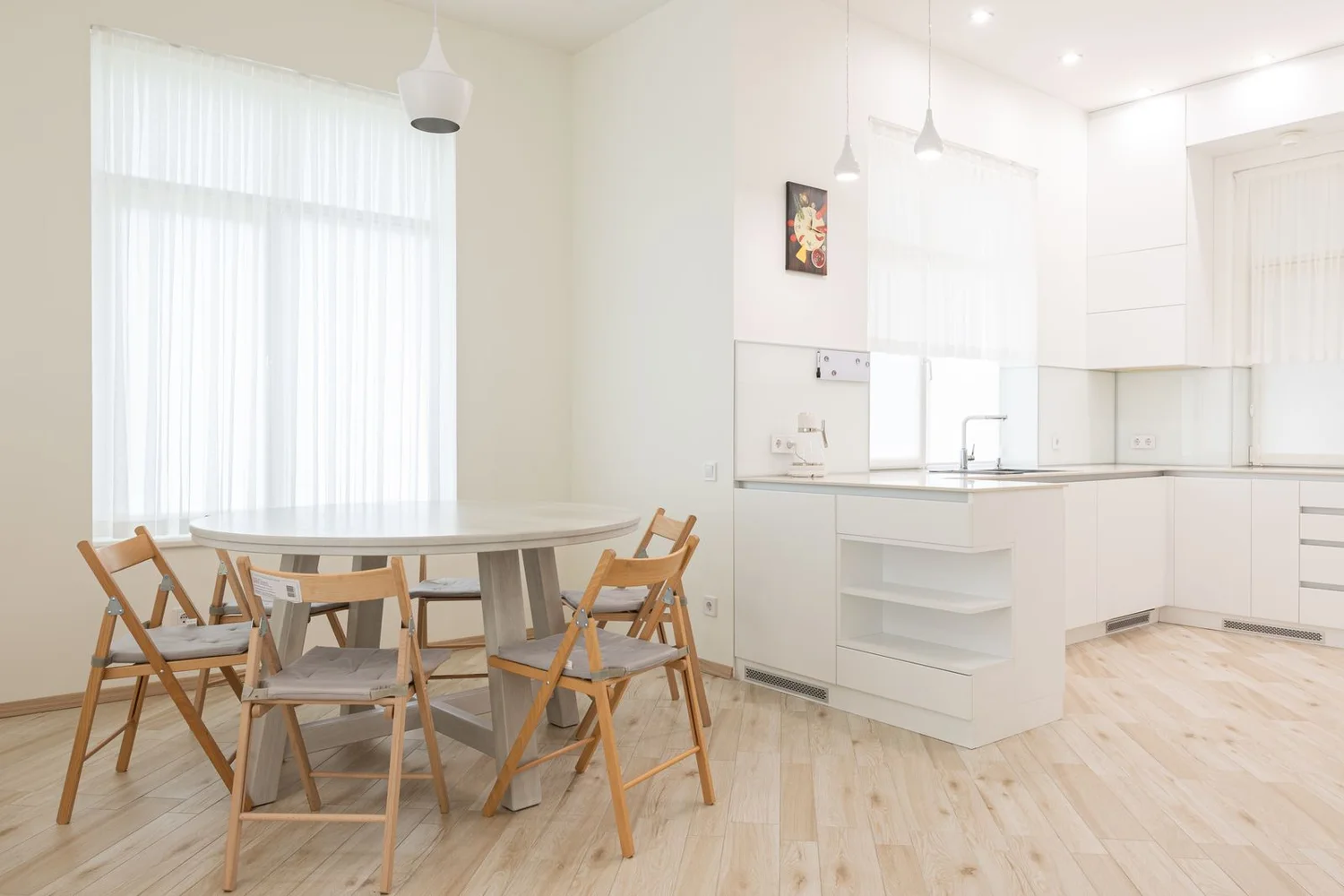
Slim legs, open chair backs, and glass tabletops can make a dining area look less crowded.
Being able to see more of the floor helps, especially when the table is visible from the sofa or entryway. The physical measurements remain the same, though. A table that looks light can still be too large.
Glass shows fingerprints and smudges, so it suits someone comfortable with regular wiping. A wood-look surface may be preferable if those marks bother you.
For a wood table and upholstered chairs, keeping the surrounding furniture simple can have a similar visual benefit. A large sideboard, bulky chairs, and a wide table can overwhelm a small dining area when used together.
A rug can define the dining space in an open-plan room. Pulled-out chairs should remain supported by the rug, rather than catching on its edge. Our rug size guide explains how to size it around your furniture.
Before You Buy: A Small-Space Dining Table Checklist
The best fit lets everyone sit, get up, and move through the room comfortably.
- The table fits beside the furniture that will remain in the room.
- Everyone who eats here regularly has a comfortable seat.
- Chairs fit beneath the tabletop without catching on the apron or base.
- Everyone can pull out a chair and get up.
- The route to the kitchen or doorway remains usable during meals.
- Nearby doors, drawers, and appliances can open.
- An extendable table fits with its leaf open and extra chairs in place.
- Extra chairs and removable leaves have somewhere to go.
- Any dining rug supports the chairs when they are pulled back.
Helpful note: If both shapes fit, choose the arrangement that needs less furniture moving during a normal week. Easy access matters more than gaining a little extra tabletop.
Frequently Asked Questions
Does a Round Dining Table Actually Save Space?
A round table can make walking around it easier, but it does not always take up less floor space.
Its diameter uses equal width and length. In a narrow room, a slim rectangular table may leave a wider path. In a square nook, a round table may fit more naturally.
Is a Round or Rectangular Table Better for Four People?
Both shapes can work well for four people. The room’s proportions, chair sizes, and table base determine which feels more comfortable.
A round table keeps everyone facing toward the middle. A rectangle may fit a narrow dining area better. Wide chairs or awkwardly placed legs can make either shape feel crowded.
Can a Round Dining Table Go Against a Wall?
Yes, although a straight edge uses the position more efficiently.
Pushing a round table toward a wall limits seating on that side. A drop-leaf design with one section lowered provides a straighter edge for this arrangement.
Is a 48-Inch Round Table Too Big for a Small Room?
A 48-inch round table needs roughly a 10 × 10-foot planning area with a 36-inch allowance around every side.
A busy route behind seated diners may need more room. This size can work in a small dining room, but it may be too wide for a narrow dining corner.
Which Shape Works Best With a Dining Bench?
A rectangular table usually works best with a straight bench. The parallel edges make seating and tuck-away storage easier to arrange.
A round table can work with a curved banquette or a carefully planned corner bench, but the distance between the seat and tabletop needs more attention.
Small-Space Dining Tables and Chairs to Shop
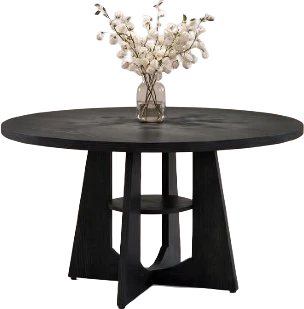 VASAGLE 47-Inch Round Pedestal Dining TableA 47.2-inch round top with a pedestal base and an adjustable storage shelf.
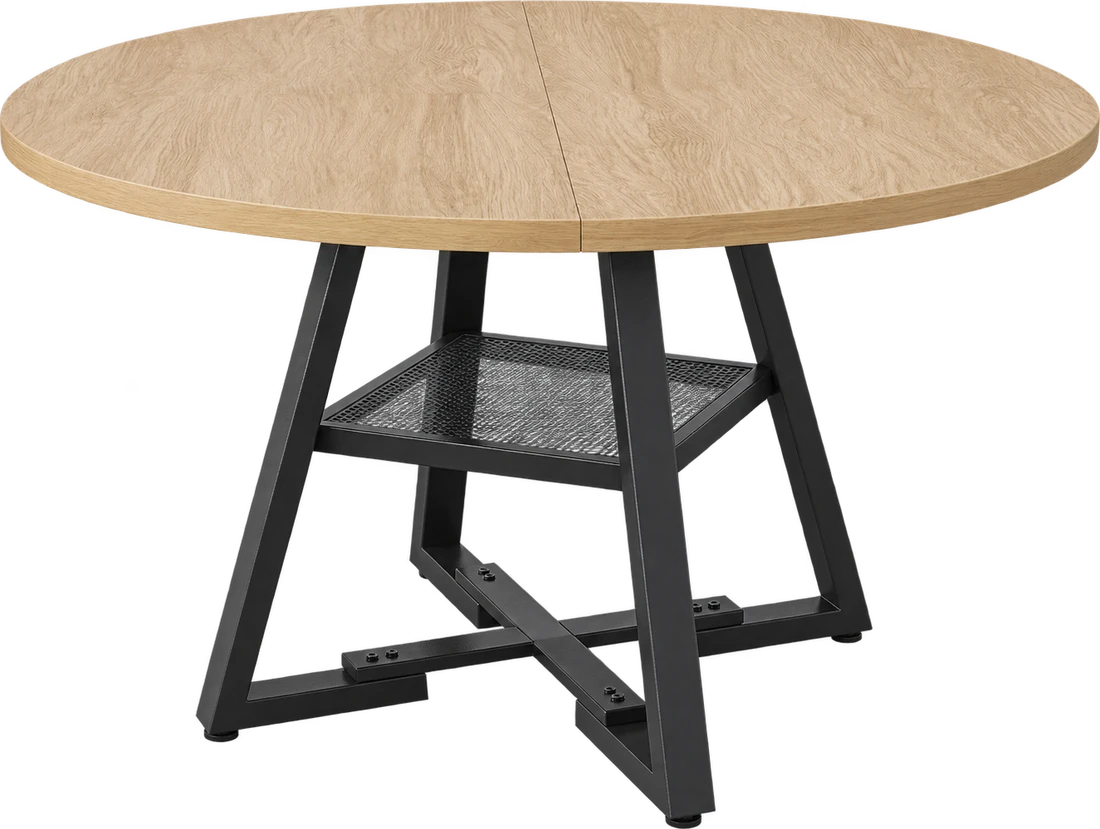 Jocoevol 42-Inch Round Dining TableA 42-inch round wood-look tabletop with a cross base and storage shelf.
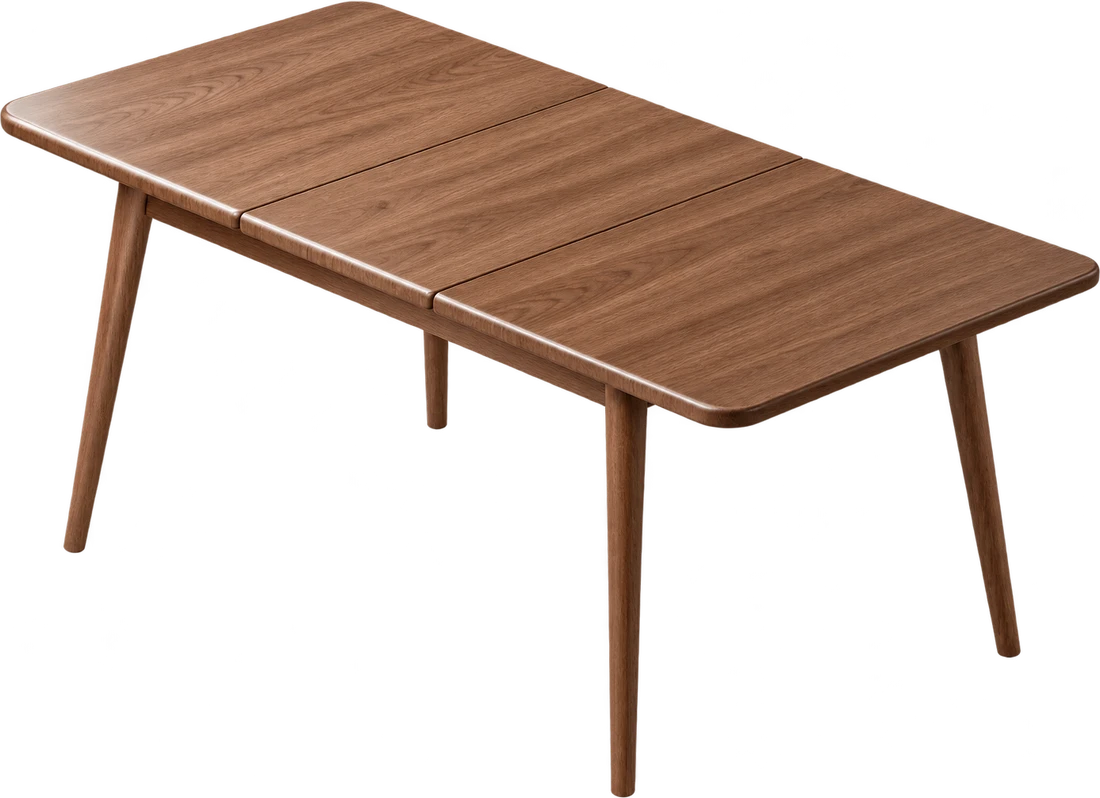 Muwuele Extendable Dining TableA rubberwood table that extends from 47.2 to 63 inches long. Table only.
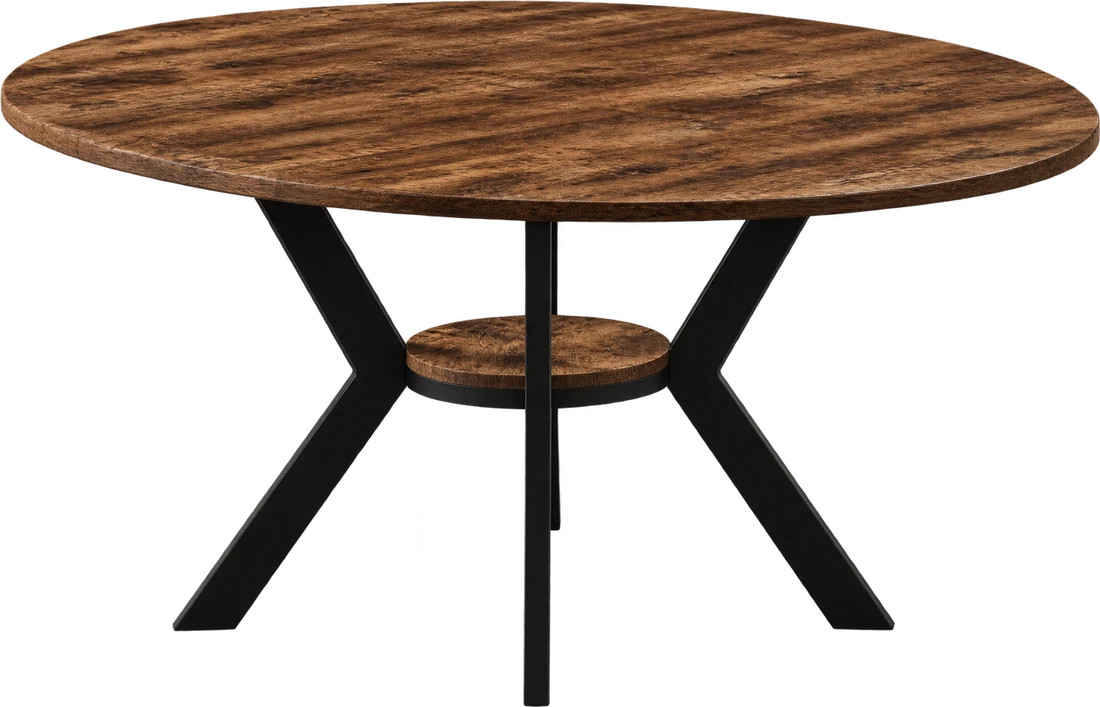 MECHYIN 42–58-Inch Extendable Dining TableA round-to-oval table that extends from 42 to 58 inches, with a storage shelf.
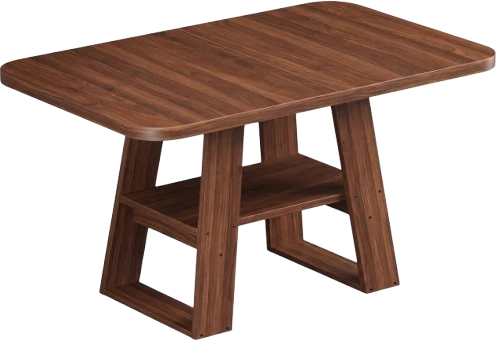 Memobarco 47.2-Inch Rectangular Dining TableA 47.2-inch rectangular dining table with rounded corners and a lower shelf.
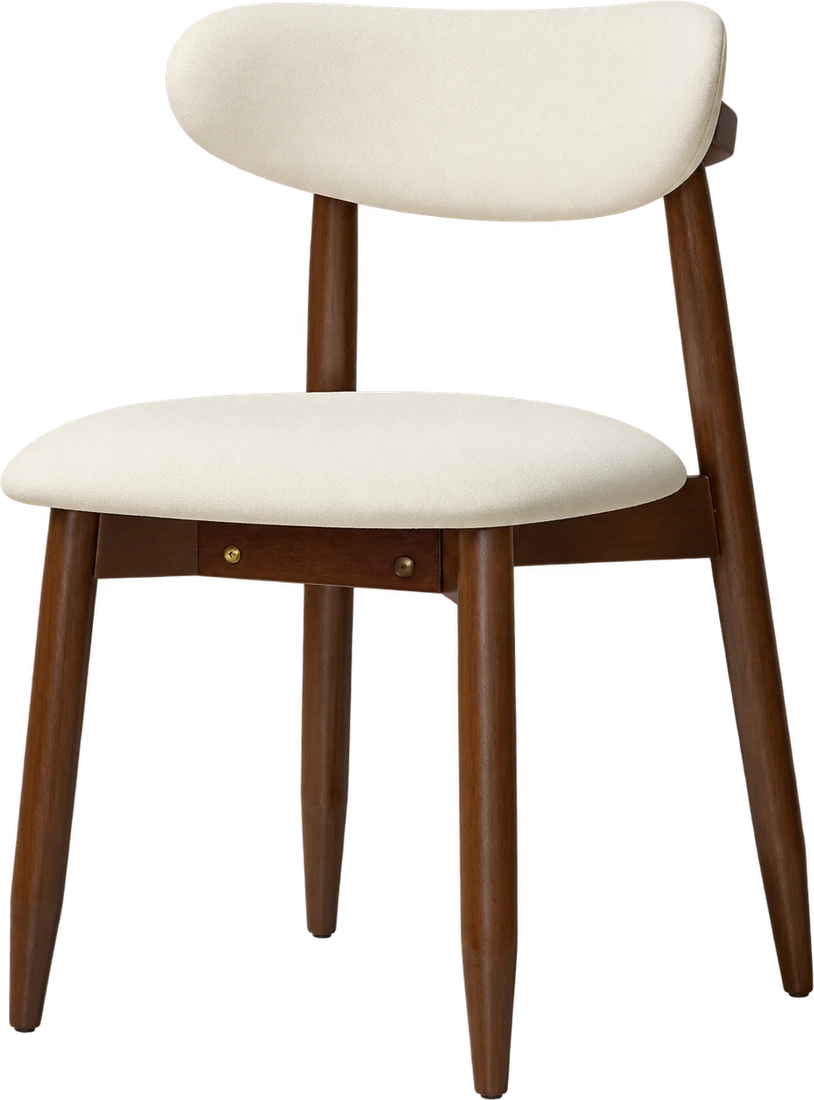 CHUN YI Upholstered Dining Chairs, Set of FourFour warm beige upholstered chairs with curved backs and walnut-toned wood frames.
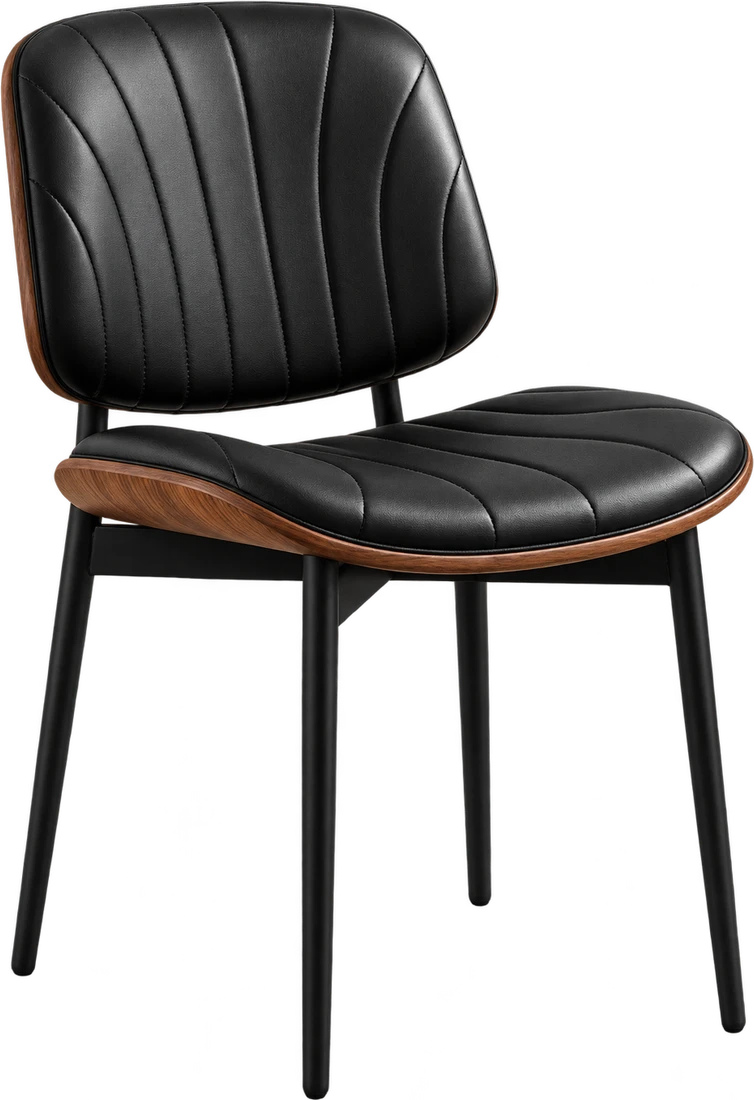 REONEY Dining Chairs, Set of FourFour black PU-upholstered chairs with metal legs and wipe-clean seats.