How to Decorate a Small Apartment on a Budget: 12 Ideas

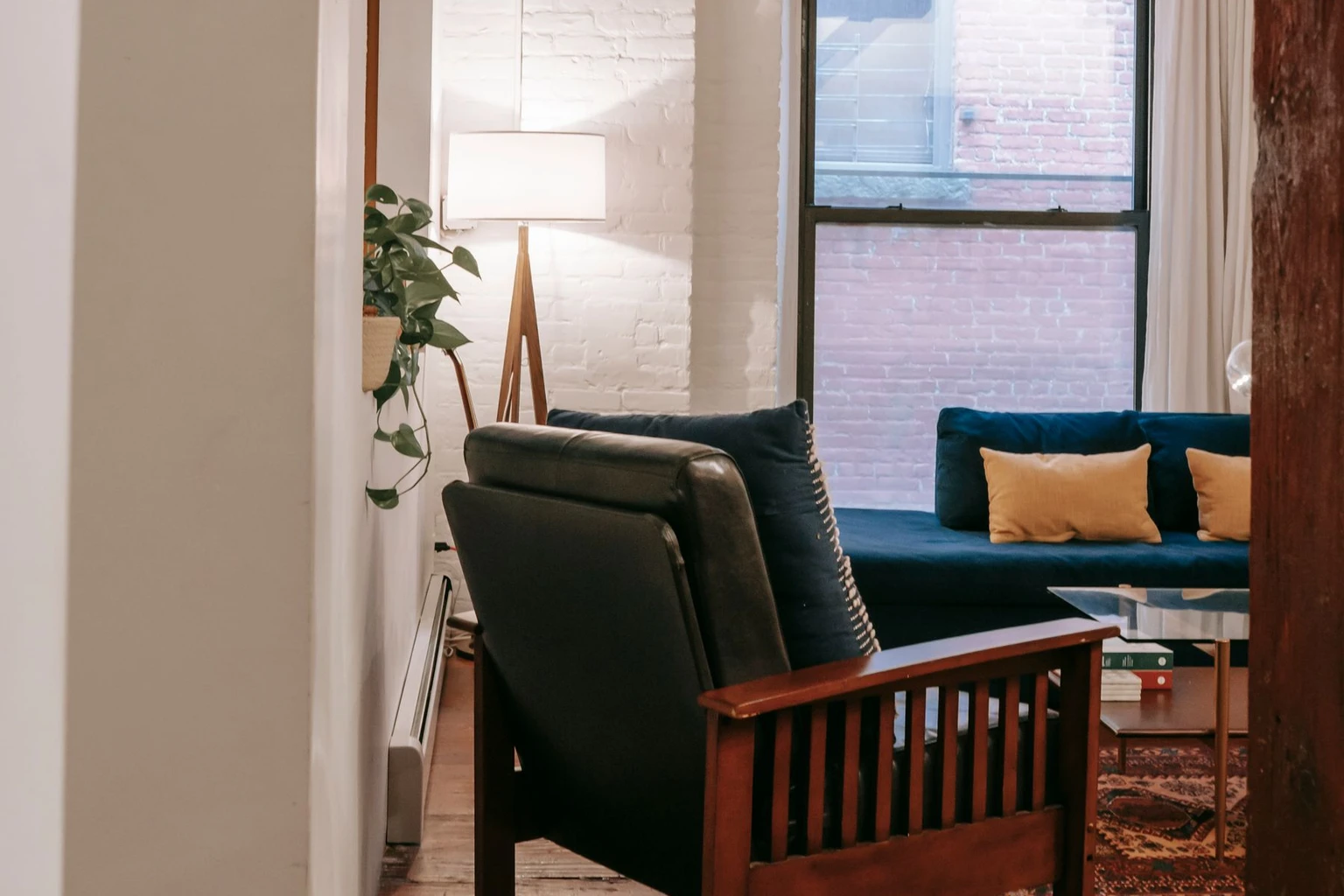
Decorating a small apartment on a budget gets easier when you know which changes will make the biggest difference. You may already have a comfortable sofa and a useful dining table, yet the room still feels unfinished.
Sometimes a better furniture arrangement, longer curtains, or a lamp beside your favorite seat is enough to change how the space looks and feels.
The quick answer
- Rearrange and reuse the furniture you already own before buying replacements.
- Spend first on comfortable lighting, privacy, and furniture that fits.
- Update the room with curtains, a sofa cover, or a properly sized rug.
- Use storage furniture and secondhand finds to meet specific needs.
- Repeat a few colors and materials so separate purchases look good together.
- Finish one area you use regularly before buying decorations for every room.
Below are 12 ways to make your apartment more comfortable and personal, including changes that cost nothing and purchases worth saving for.
1. A Better Layout Might Cost You Nothing
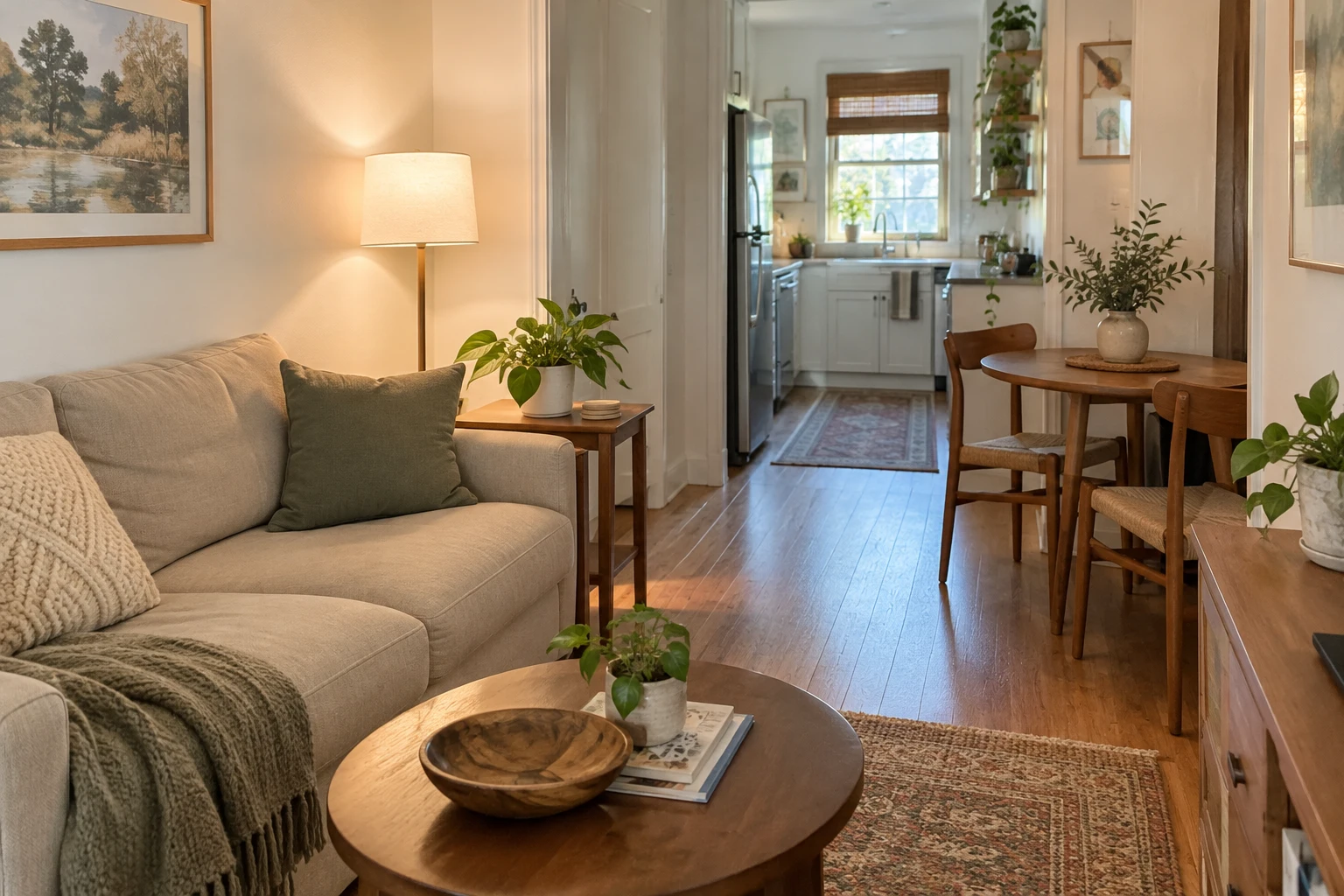
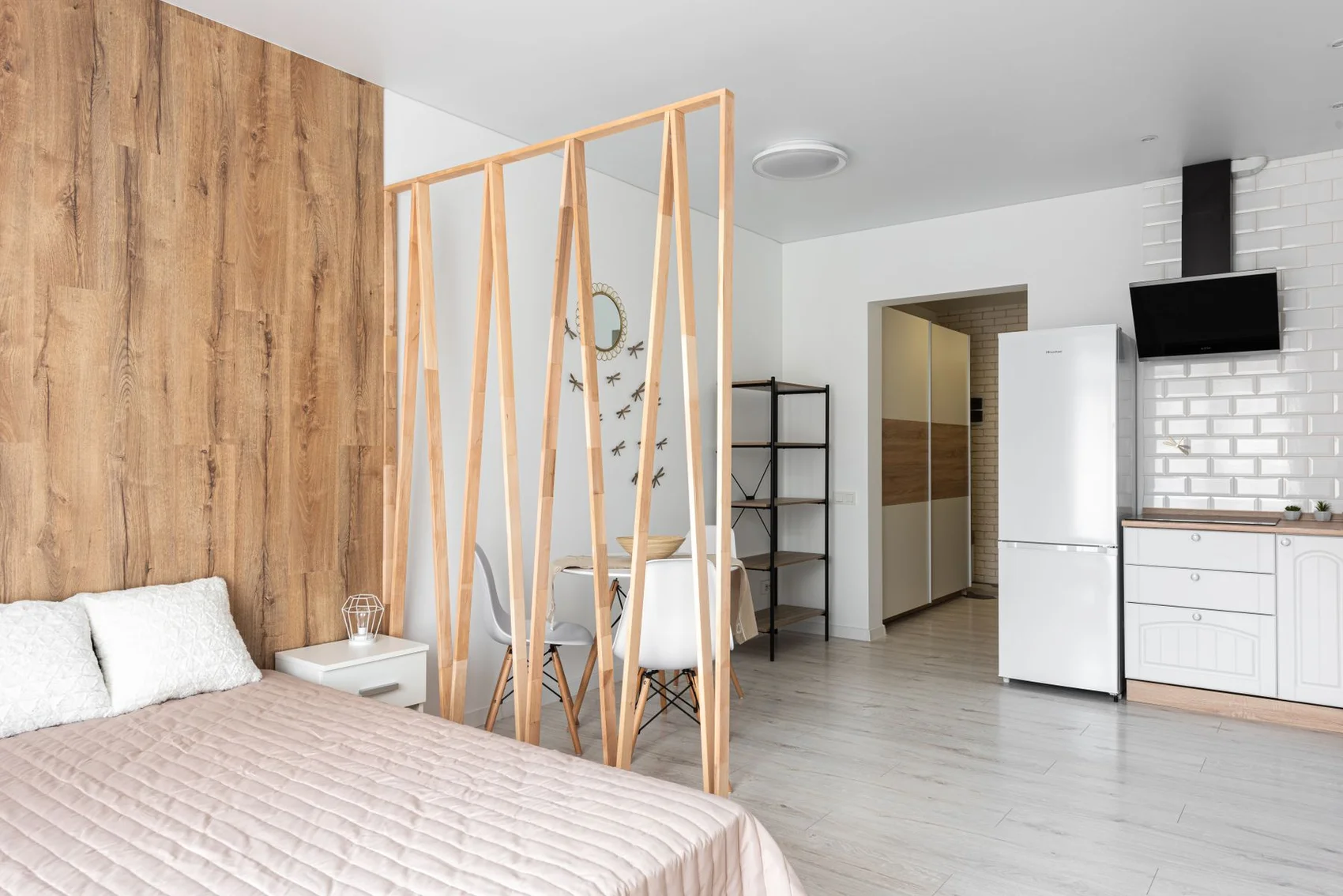
Rearranging existing furniture can improve a small apartment before you spend anything.
Perhaps the coffee table is awkward to walk around, or an extra chair blocks the route from the kitchen to the sofa. Moving one piece may make the whole room easier to use.
There should be enough space for ordinary activities: carrying groceries inside, bringing a laundry basket through, or rolling out an exercise mat.
You might find that a small table works better beside the sofa than near the front door. A chair that rarely gets used could move into the bedroom, provided there is room for it there.
Furniture does not have to stay where you put it on moving day.
Before replacing anything, try a different arrangement and use it for a few days. You will soon notice whether the lamp is easier to reach or whether the dining chair finally pulls out comfortably.
Our guide to living room design mistakes covers other arrangements that can make a room harder to use.
2. One Finished Area Makes a Bigger Difference
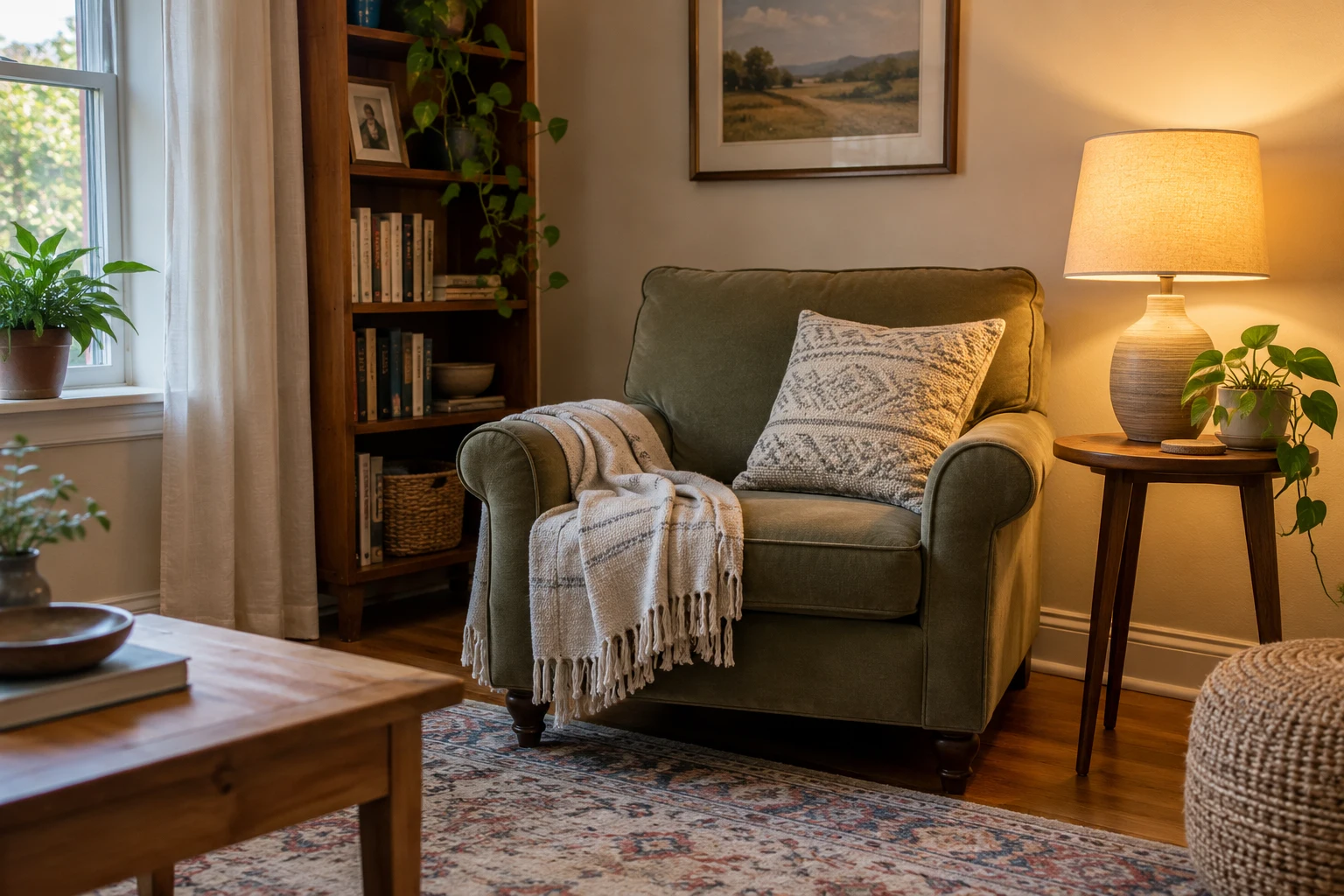
Spending on one area you use regularly usually produces a more noticeable result than spreading the same money across several rooms.
Small purchases add up quickly. You buy a vase for the kitchen, a cushion for the bedroom, and a basket for the hallway, but the place where you spend every evening still has poor lighting.
The Area You Use Most Deserves Priority
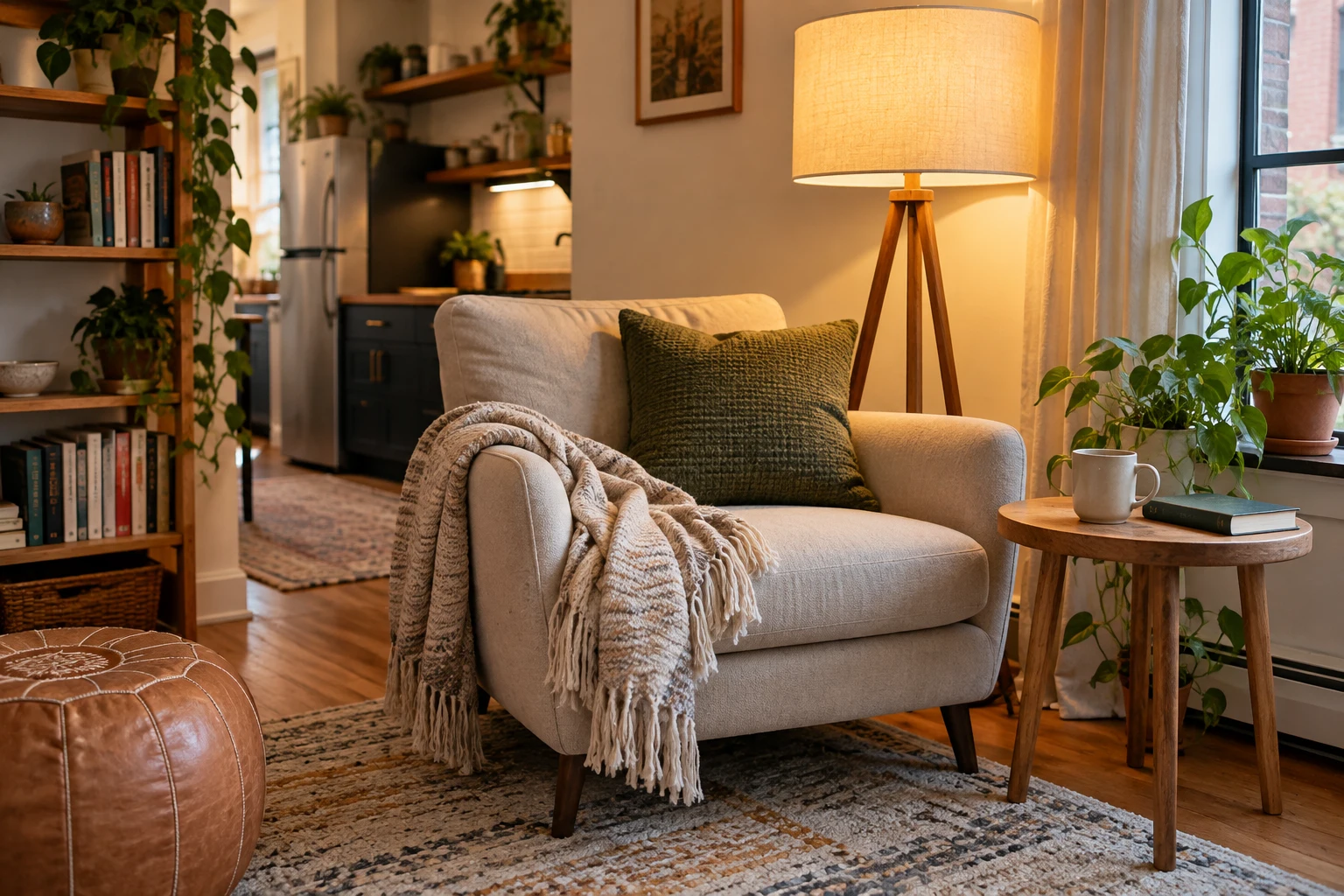
The best place to spend first is the area you use most often.
If you read on the sofa every night, a lamp might be more useful than artwork for the hallway. If you regularly eat at your desk, a small dining arrangement may improve daily life more than another decorative shelf.
There is no need to finish the whole apartment at once. Completing one area gives you somewhere comfortable to enjoy while you gradually improve the others.
The Extras Belong in the Budget, Too
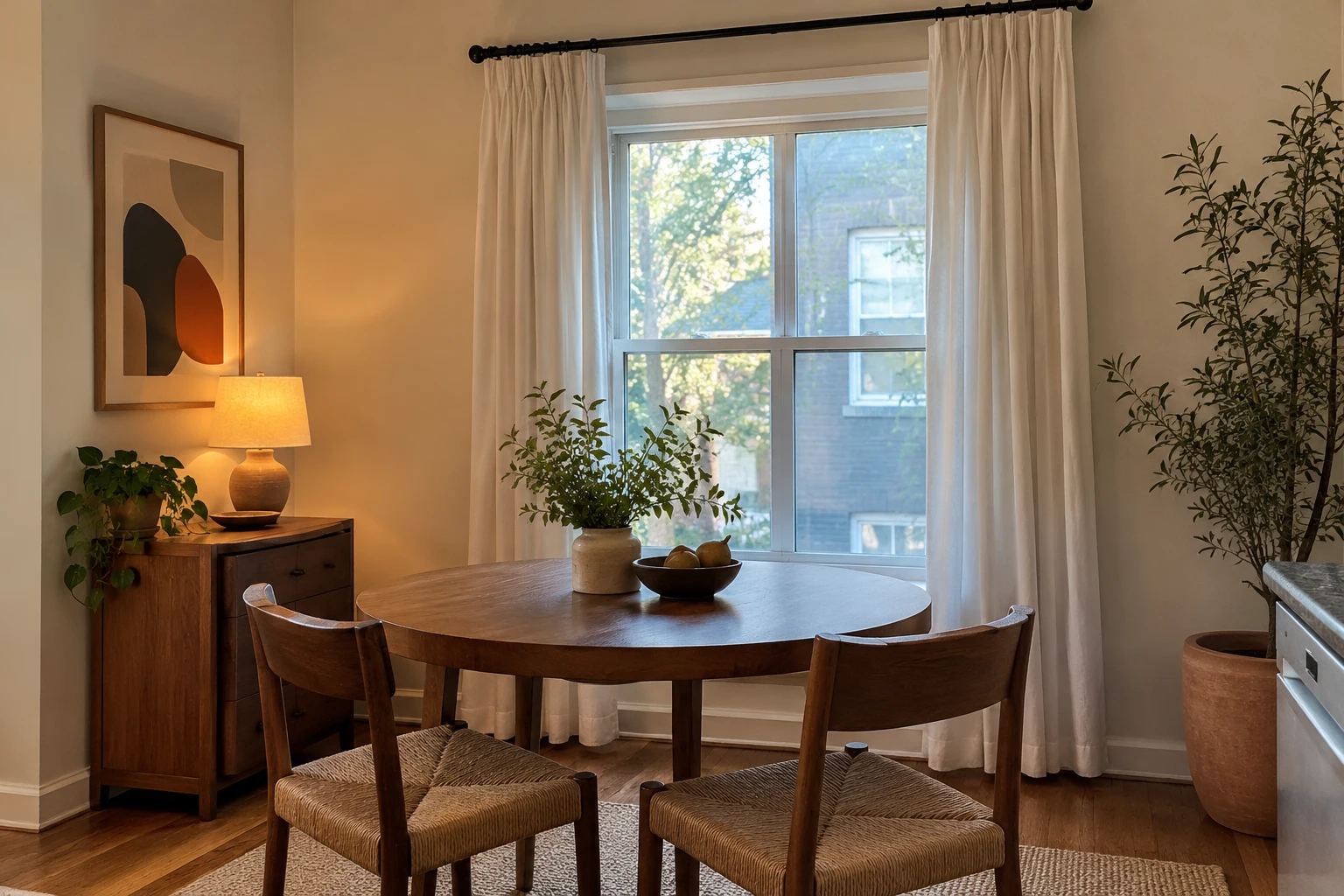
A realistic spending limit includes everything needed to use the item.
Curtains may need a rod, brackets, and more than one panel. A lamp base may need a shade and bulb. An inexpensive print still needs a frame.
Delivery and collection costs count, too.
A simple three-part list helps:
- Buy now: Something missing that affects everyday comfort.
- Save for later: An improvement that can wait.
- Skip: Something attractive that has no clear place or purpose.
If privacy is the bigger problem, put the money toward curtains before buying more decorations.
3. Your Sofa May Only Need a New Cover
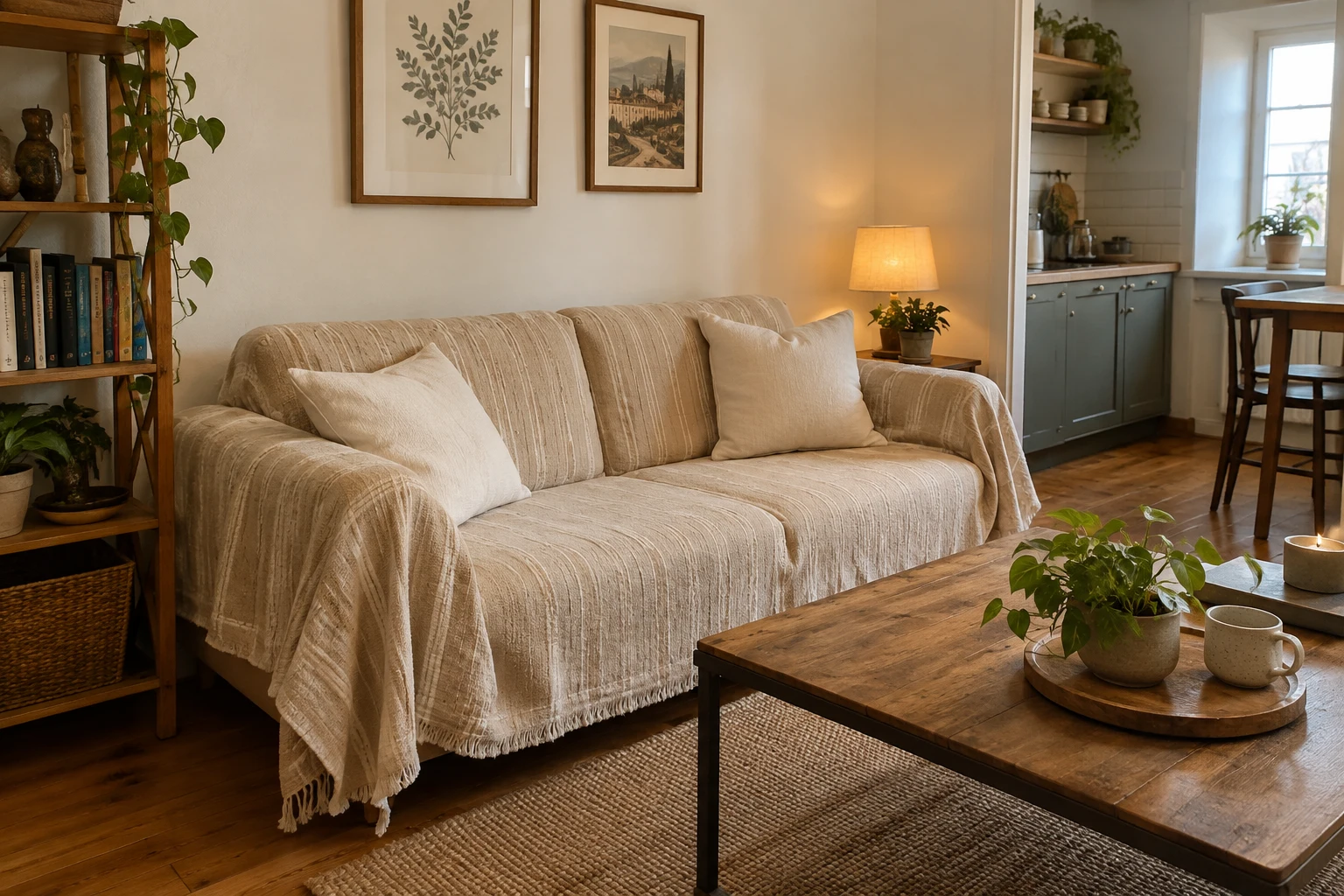
If your sofa is comfortable and fits the room, a new cover may be enough to update it.
A full sofa cover changes more of the visible fabric than a few decorative cushions. It can be useful when you still like the sofa but want a different color or an extra washable layer.
The Fuyulacom Beige Chenille Sofa Cover has a textured, striped design and measures 71 × 118 inches. It drapes over the sofa, with fabric tucked into the gaps around the cushions.
The beige color works well with cream, brown, olive, or muted blue accessories. One plain cushion and one patterned cushion can be enough.
Coverage depends on the sofa’s width, depth, and arms. Those measurements determine whether the fabric will cover the areas you want to conceal.
If the upholstery already looks good, replacing only the decorative cushion covers is another simple option. You can keep the inserts you own and spend less.
There should still be enough room to sit down without moving a pile of cushions onto the floor.
4. Warm Lighting Makes Evenings More Comfortable
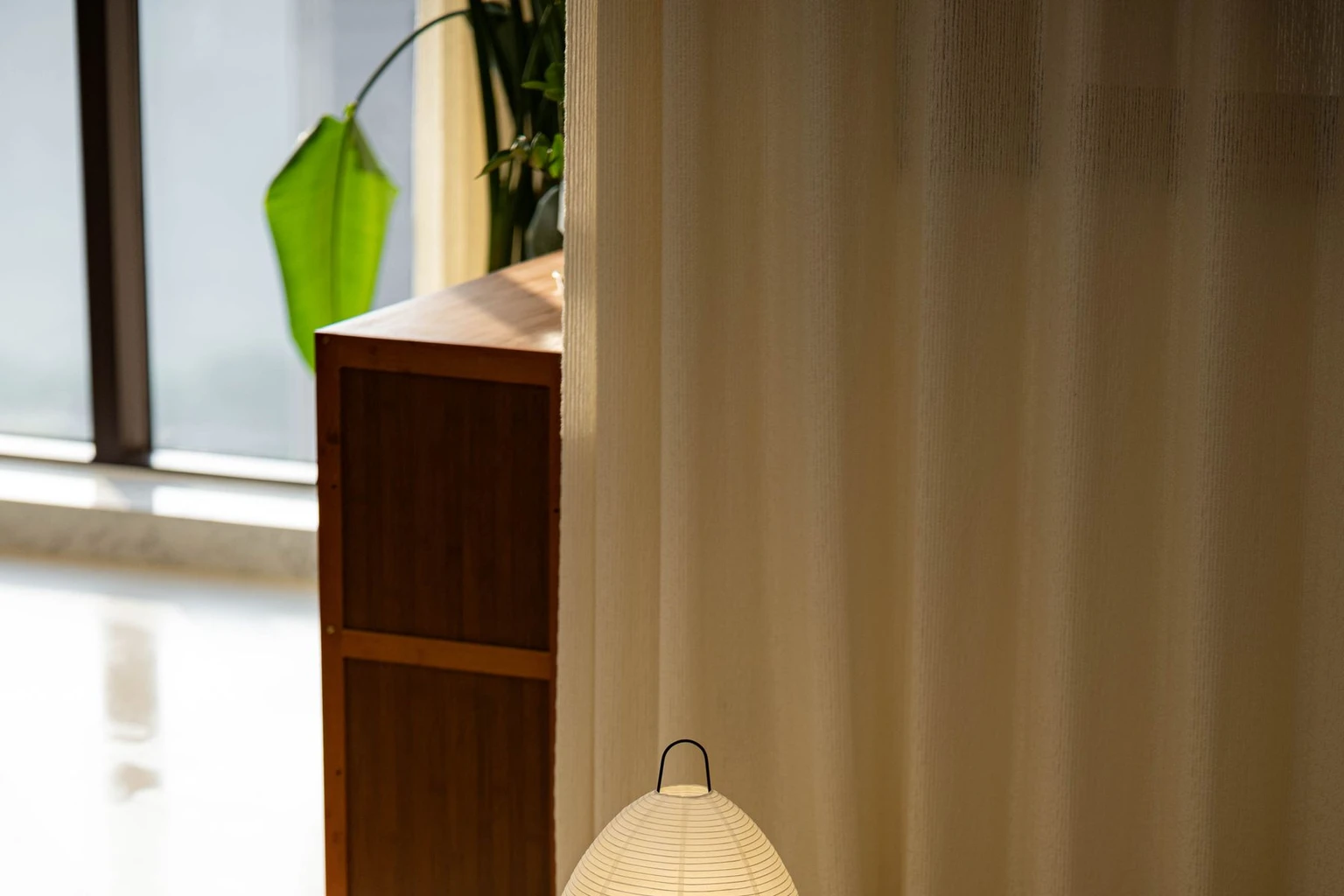
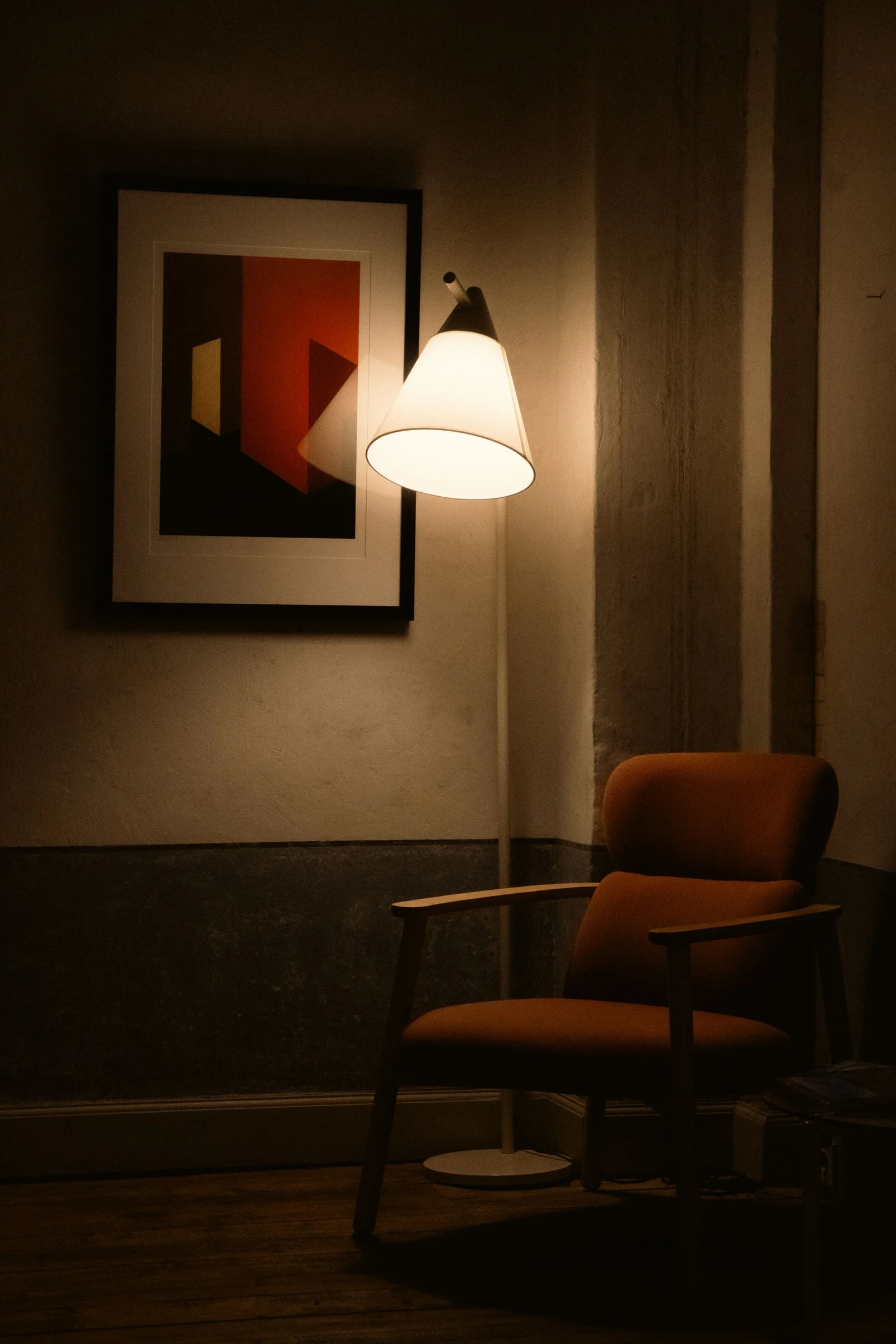
A lamp near your usual seat can make an apartment more comfortable in the evening without changing any furniture.
You may like the room during the day, then find it feels harsh once the ceiling light is on. A shaded table lamp gives you another option when you are watching television, chatting, or relaxing.
The PartageiZ Small Table Lamp has a fabric shade and a simple cord switch. It is an option for a side table, dresser, or bedside surface where a larger lamp would take up too much space.
The bulb is purchased separately, so include a compatible warm-white bulb in the total cost.
For reading, the light should reach the page without shining directly into your eyes. A soft decorative glow alone may not provide enough light.
Perhaps there is already a lamp on a desk you rarely use. Try it in the living room before buying another.
The cord should follow the wall or furniture rather than cross the walkway.
The same approach works beside the bed. Our layered bedroom lighting guide explains how to combine general, reading, and decorative light.
5. Long Curtains Can Make a Plain Room Look More Finished
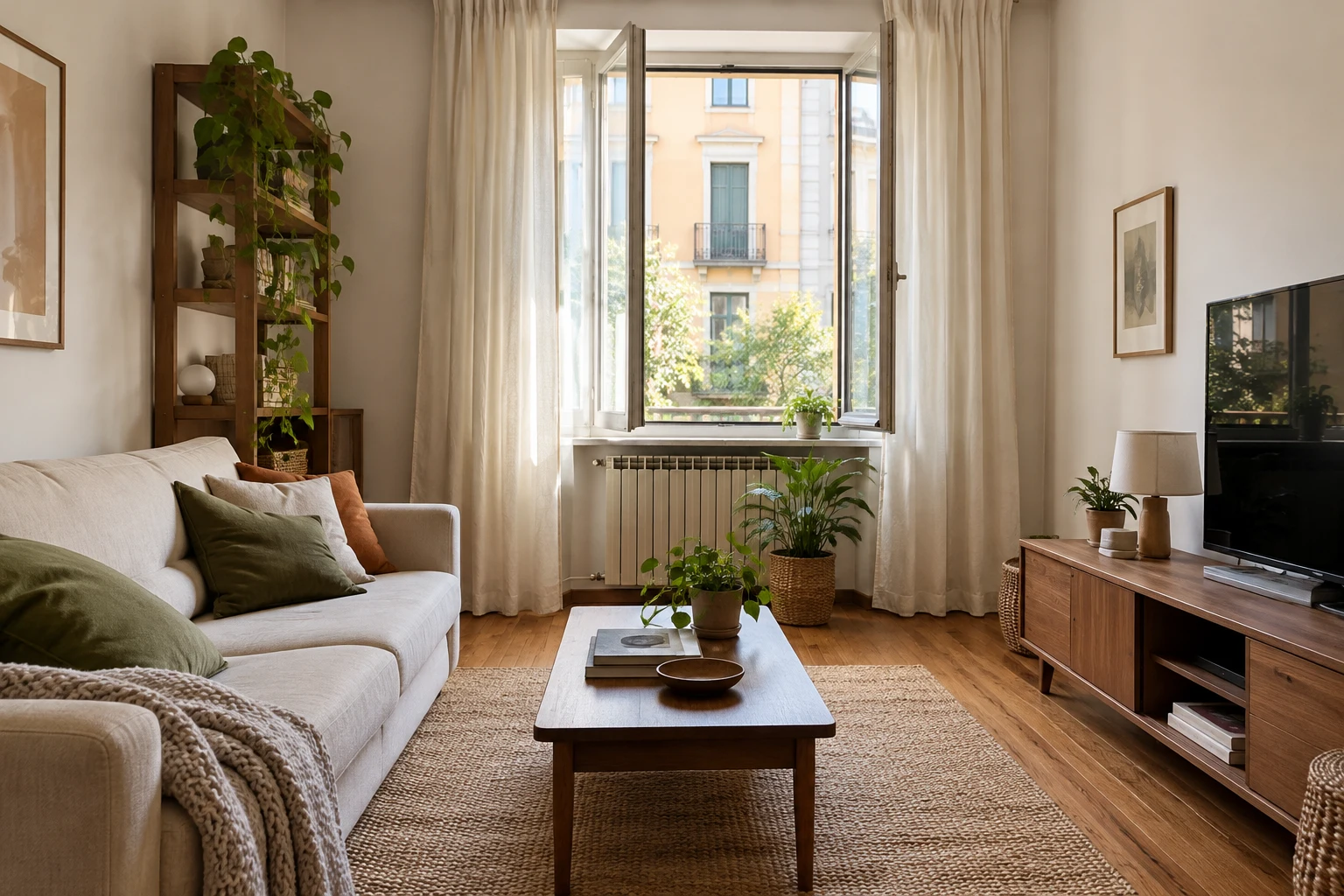
Curtains hung close to the ceiling and extending to the floor can noticeably improve the appearance of a plain room.
Long panels emphasize the height of the wall, while the fabric softens the appearance of a bare window. They can make a rental feel more finished even when the walls and flooring stay exactly as they are.
Daylight and Privacy Need Different Layers
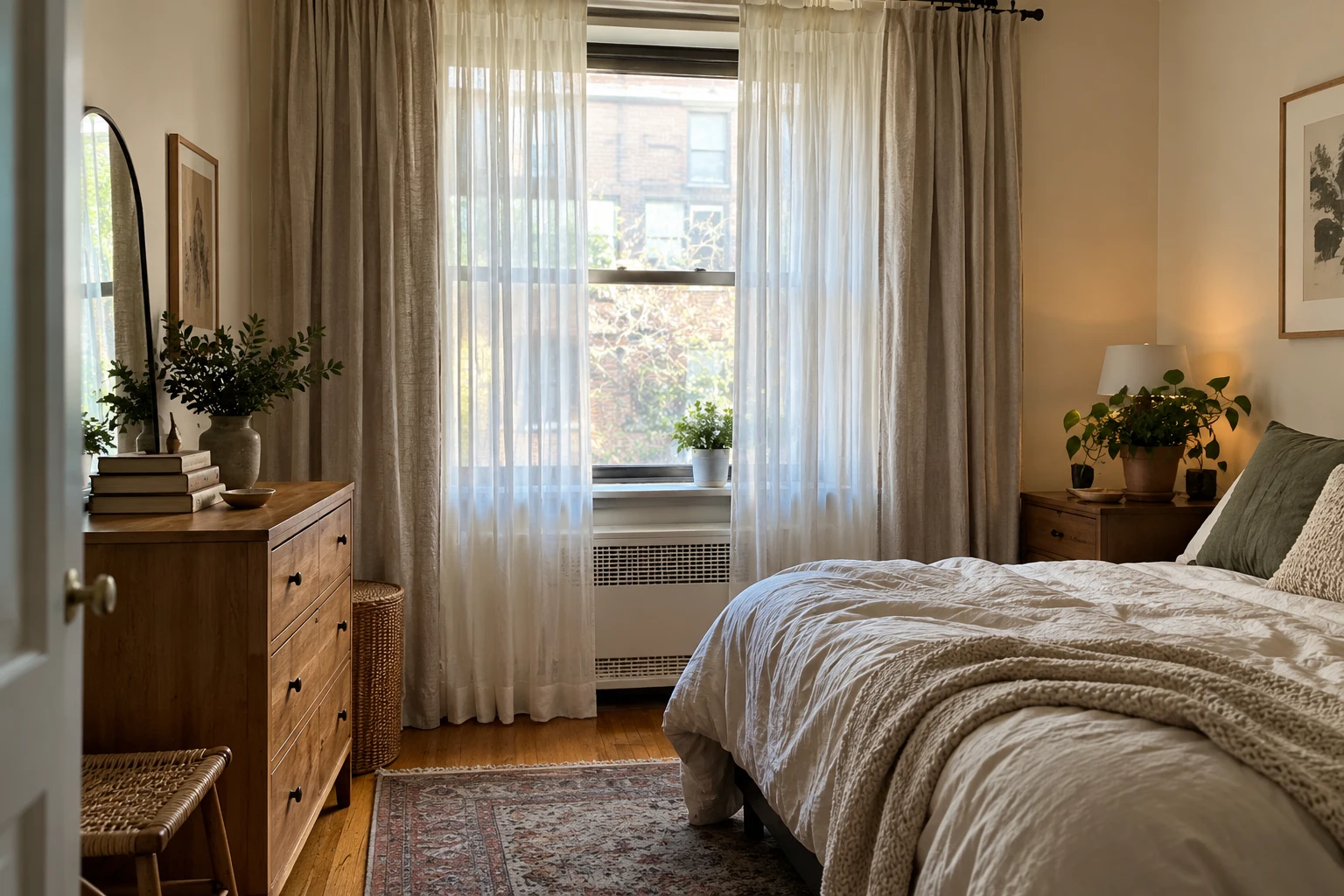
Light-filtering curtains soften incoming daylight; opaque curtains or blinds provide privacy after dark.
The Nanspring Ivory Linen-Blend Curtains are a light-filtering option with a softly textured appearance. The set includes two panels, each 52 inches wide and 84 inches long.
Their pale color works well with wood furniture and neutral upholstery. They are useful when you want softer daylight while keeping the room bright.
For more privacy after dark, pair them with opaque blinds or curtains.
The Full Window Cost Matters
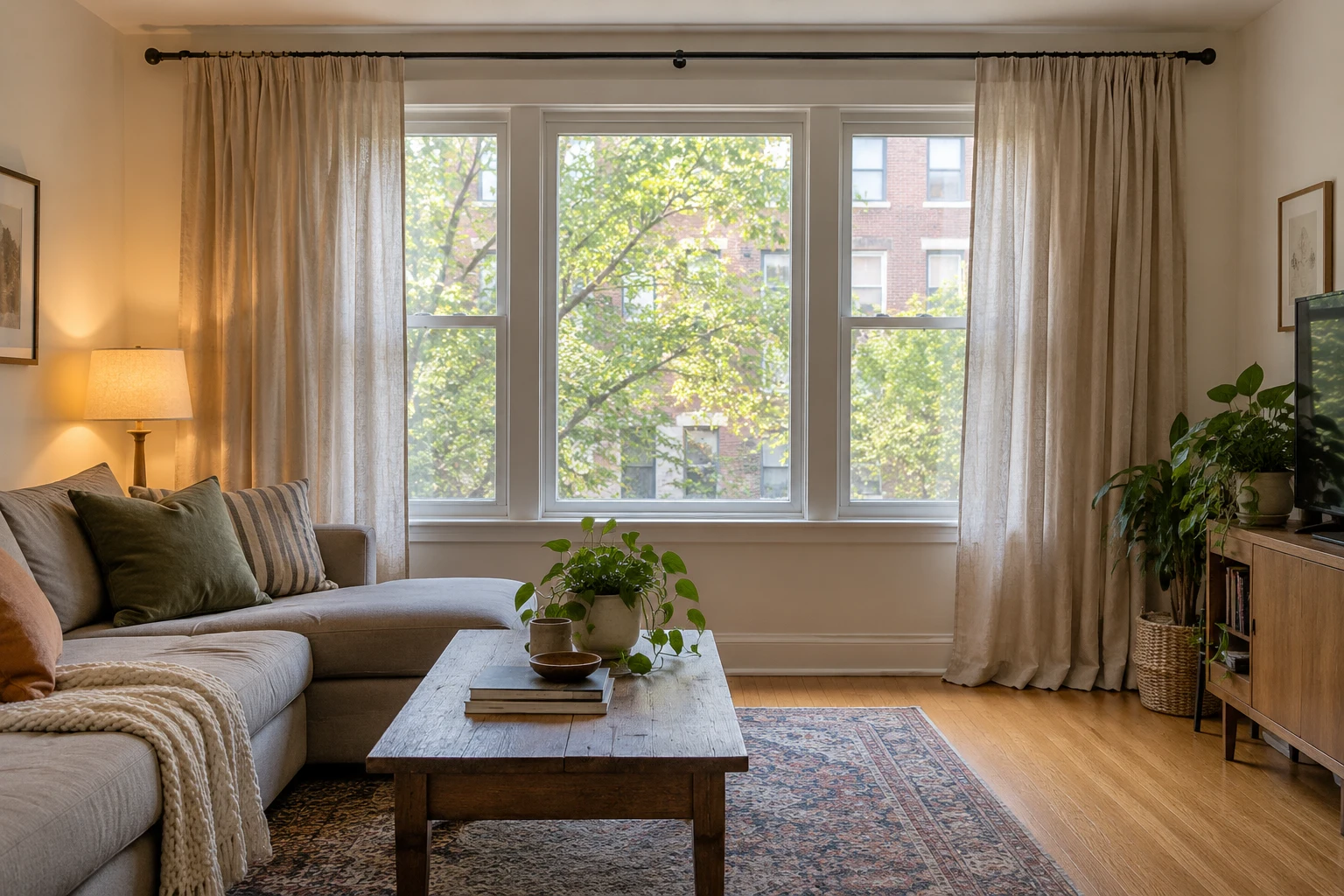
The total cost should cover enough panels, suitable hardware, and the right length.
A low price for one panel can be misleading when the window needs several. Likewise, curtains that stop well above the floor may not give you the full-length look you wanted.
The distance from the hanging point to the floor determines the length needed. An 84-inch panel will not reach the floor from a high ceiling-mounted track.
A rod extending beyond the window frame allows open curtains to hang beside the glass, letting more daylight through.
Our guide to choosing curtains explains fabric, light control, length, and hardware in more detail.
6. A Rug Works Best When It Fits the Seating Area
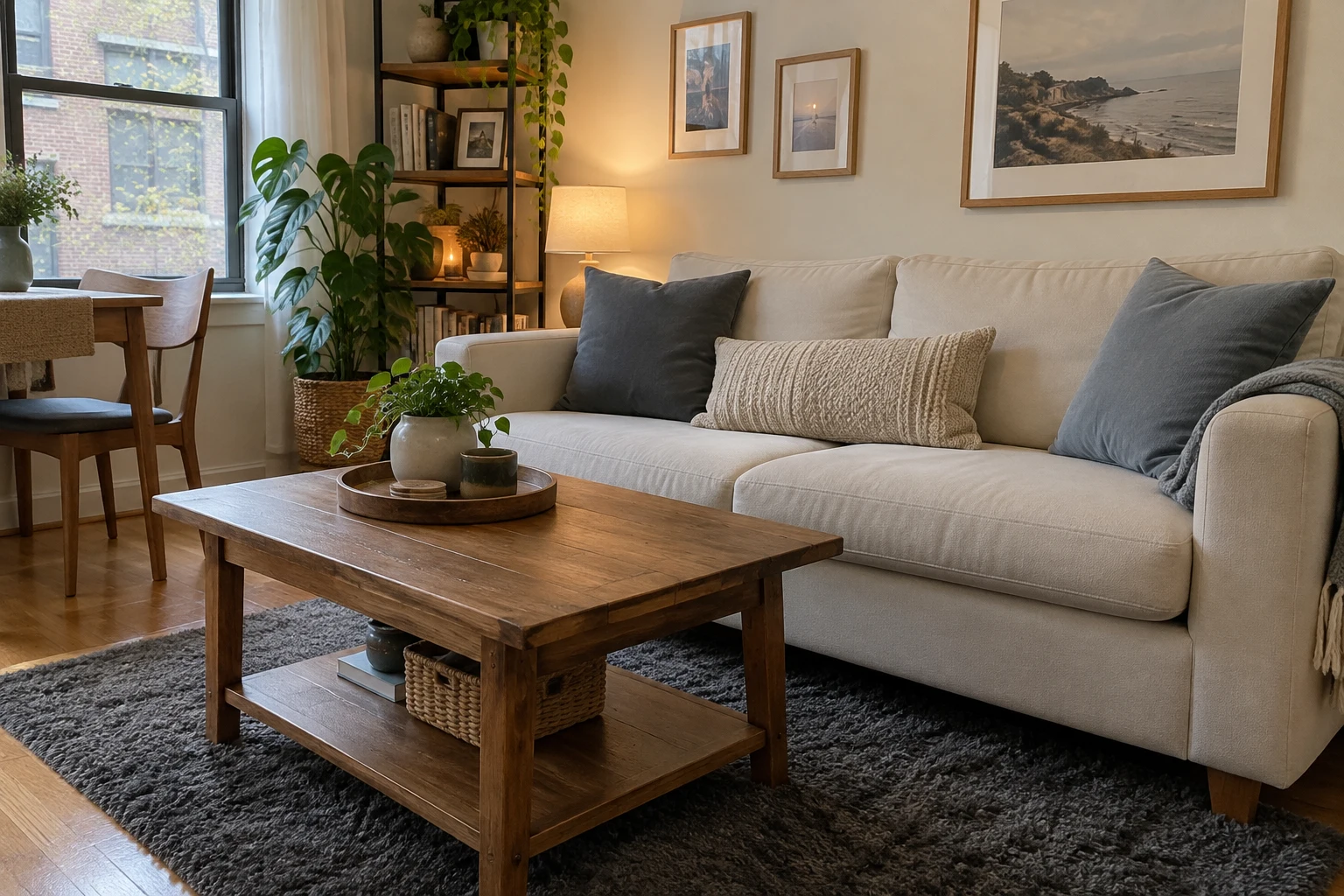
The right rug size matters more than finding the cheapest rug.
For a typical sofa-and-chair arrangement, a rug large enough to sit beneath the front legs of the main seating helps the furniture look grouped together.
A tiny rug beneath only the coffee table can leave a wide gap between the rug and the seating. Buying it because it costs less may lead to buying another one later.
The OLANLY 5 × 7-Foot Shaggy Area Rug adds a soft, fluffy surface beneath your feet. Its gray color can work with cream upholstery, warm wood, or colorful cushions.
The shaggy texture suits a cozy seating or bedside area. A 5 × 7-foot rug will fit some compact arrangements, while a wider sofa-and-chair setup may need a larger size.
If you already have a small rug, it may work better beside the bed or in another suitable spot.
In a studio, a rug can help distinguish the sitting area from the sleeping space. There still needs to be a clear route between them.
A rug is optional when you like the floor and the seating already looks well arranged. That money can go toward lighting or privacy instead.
For more layout ideas, see our guide to dividing a studio without walls.
7. Furniture With Storage Can Save You a Second Purchase
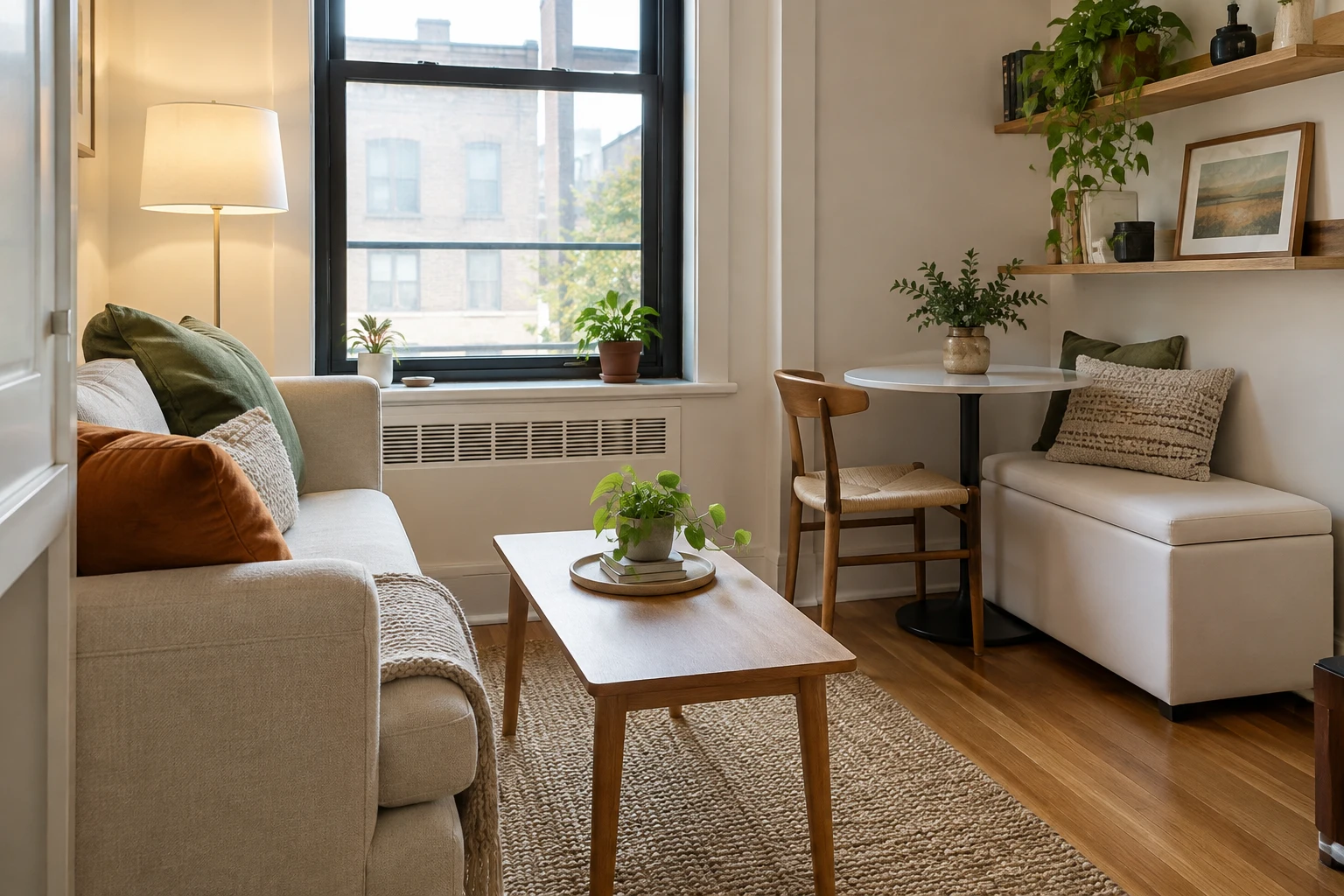
Furniture that serves two useful purposes can reduce the number of pieces you need.
The storage should suit something you actually own. A large compartment is useful for blankets, while small drawers may be more convenient for chargers and paperwork.
An Ottoman for Seating and Storage
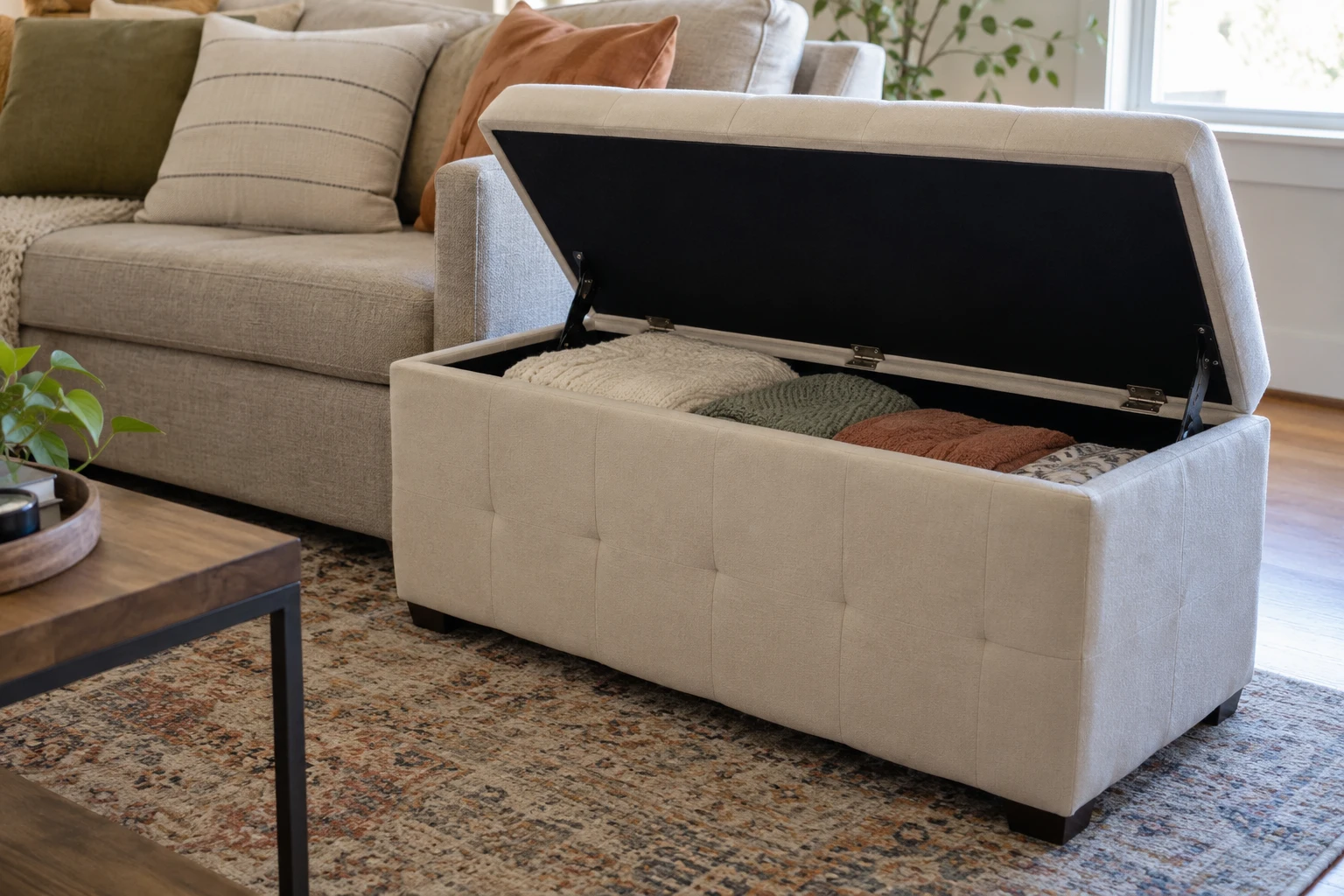
A storage ottoman can provide occasional seating, a footrest, and hidden storage in one piece.
The SONGMICS 43.3-Inch Folding Storage Ottoman Bench has a padded lid and space inside for belongings such as throws and spare bedding.
Its cream-white finish works with pale upholstery and wooden furniture. The folding design also allows it to be stored when empty and not in use.
At 43.3 inches long, it is a bench-sized piece. It works best where there is enough room for the full length without narrowing a walkway.
There also needs to be enough space to lift the lid comfortably.
Our guide to storage ottomans for small apartments explores options for different layouts.
A Table That Works Beyond Mealtimes
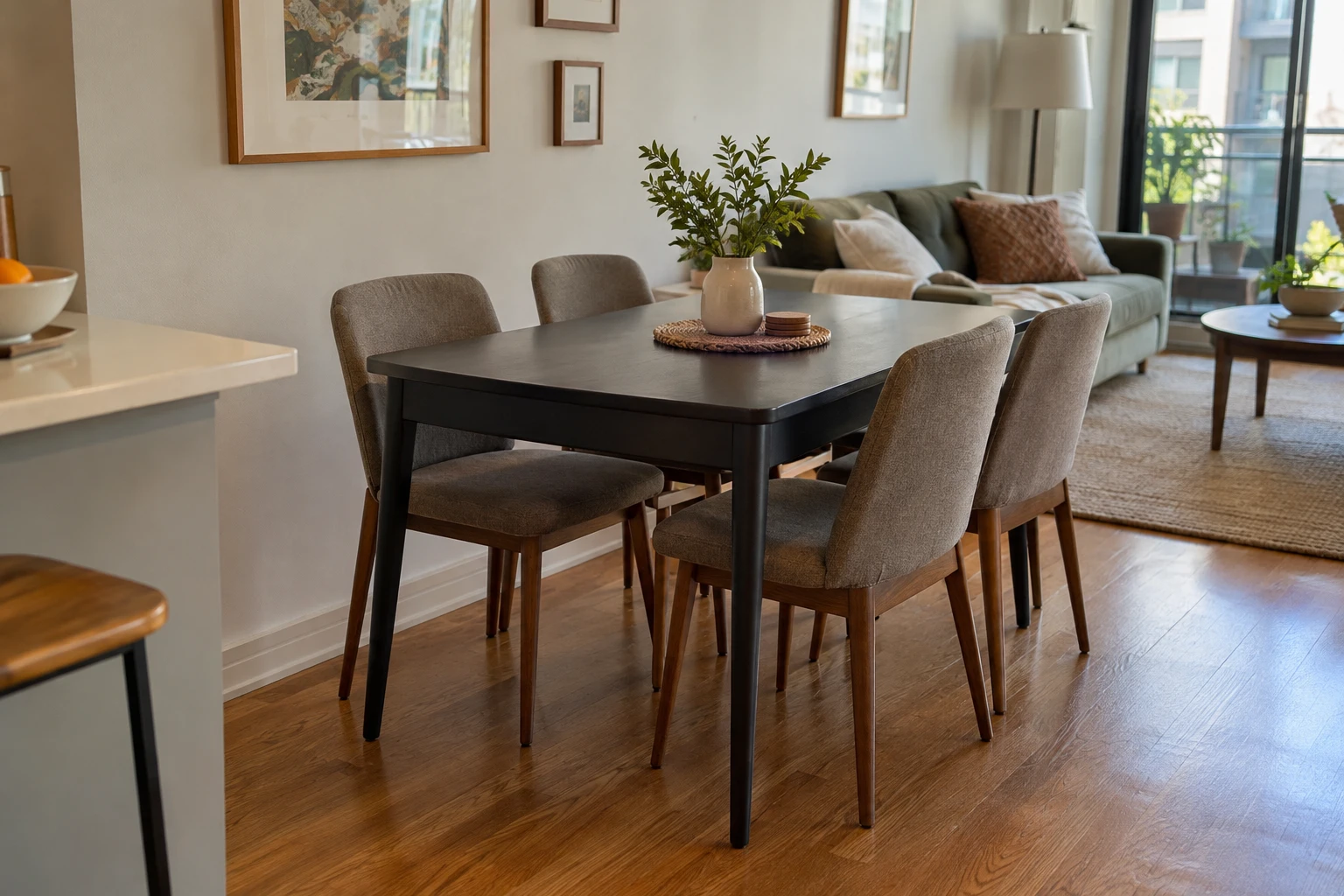
One table can handle eating, working, and hobbies when those activities happen at different times.
For an apartment with a dedicated dining area, the VASAGLE MAEZO Extendable Dining Table offers extra surface space when visitors come over.
It extends from 55.1 inches to 63 or 70.9 inches. That makes it useful for a dining area with enough room for a larger table occasionally.
Even at its shortest length, it needs a proper dining space. It is better suited to an open-plan apartment than a very narrow dining corner.
For a tighter area, a smaller folding table may be more practical. Whichever style you use, the surrounding space needs to accommodate chairs and people.
Our small-apartment dining guide has more ideas for fitting an eating area into a compact home.
8. Taller Storage Can Free Up Crowded Corners
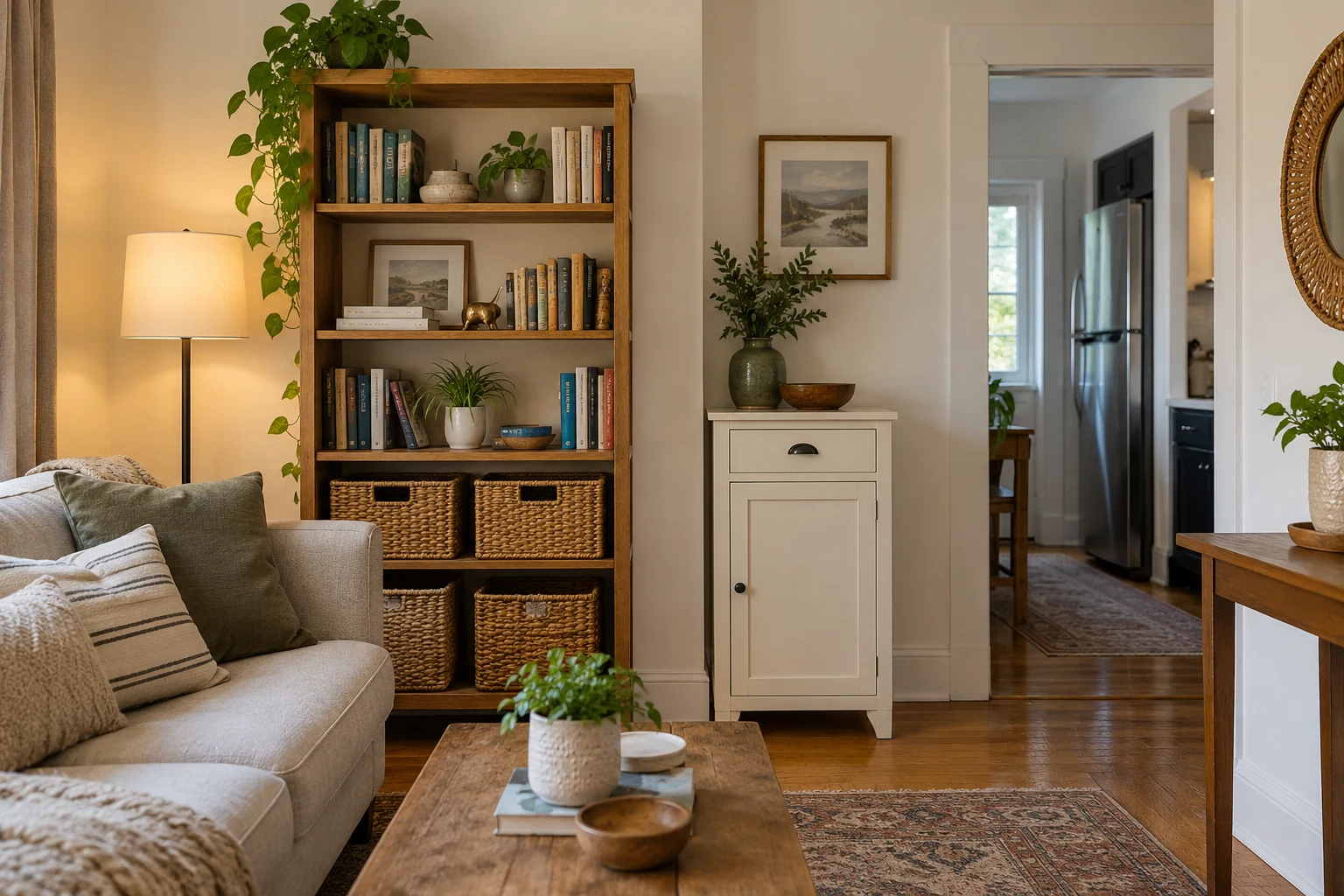
A well-sized cabinet or bookcase may work better than several little tables and baskets scattered around the apartment.
One unit could hold books, paperwork, chargers, and a few decorative objects. That can free up other tables and surfaces.
Closed storage is useful for belongings you would rather keep out of sight. Open shelves work well for books and a few things you enjoy displaying.
The NaturalCozy 11-Inch Cotton Rope Storage Cubes come in a set of three. The woven baskets can organize small belongings on shelves with enough clearance for their 11-inch size.
Their off-white and brown colors work well with wood furniture and cream textiles. Separate baskets for cables, craft supplies, or small accessories also make things easier to find.
Matching containers are helpful, but the contents matter more than having identical baskets everywhere.
Frequently used items belong within easy reach. Heavier belongings should go lower down, and tall furniture needs appropriate wall securing.
Our guide to reducing visual clutter explains how to organize everyday belongings while leaving room for the things you enjoy displaying.
9. Secondhand Finds Leave More Money for Other Updates
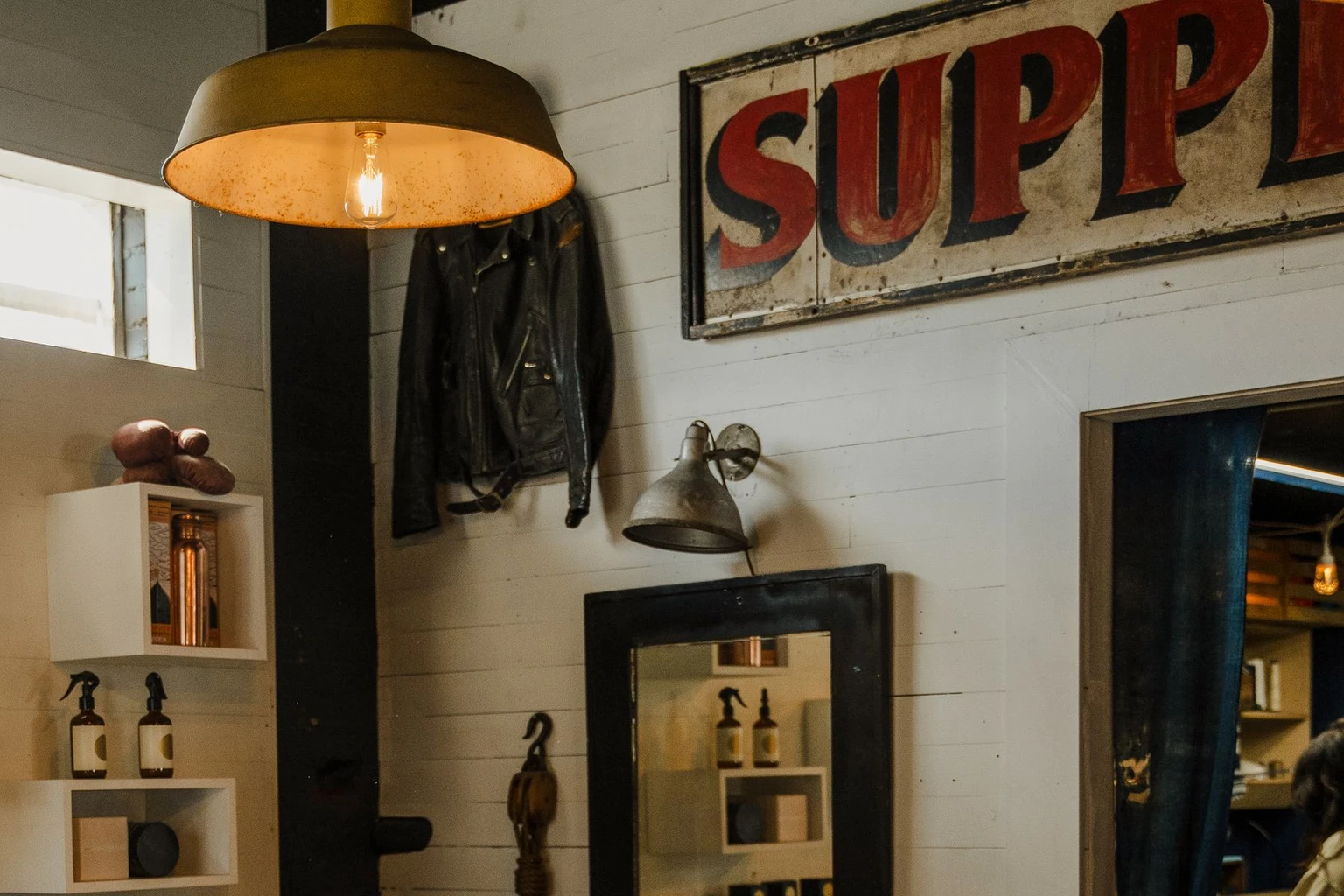
Buying selected pieces secondhand can leave more money for the things you prefer to buy new.
Tables, cabinets, chairs, and picture frames are useful places to look. A solid wooden side table with a few surface marks may still have years of use left.
A specific search is easier than browsing everything nearby. “Small round dining table” gives you a clearer direction than “furniture.”
The total cost includes collection, cleaning, and repairs. A bargain that needs a rented vehicle and major restoration may cost more than another piece that is ready to use.
Before committing, inspect the piece:
- Does it stand steadily?
- Do the drawers and doors work?
- Are joints loose or parts missing?
- Will it fit through the entrance and stairway?
- Can you transport it without an expensive extra arrangement?
Upholstered furniture needs particular attention to condition, odors, and signs of pests.
You can keep using the table that works while waiting for a replacement that fits both the room and the budget.
10. A Few Repeated Colors Help Different Pieces Work Together
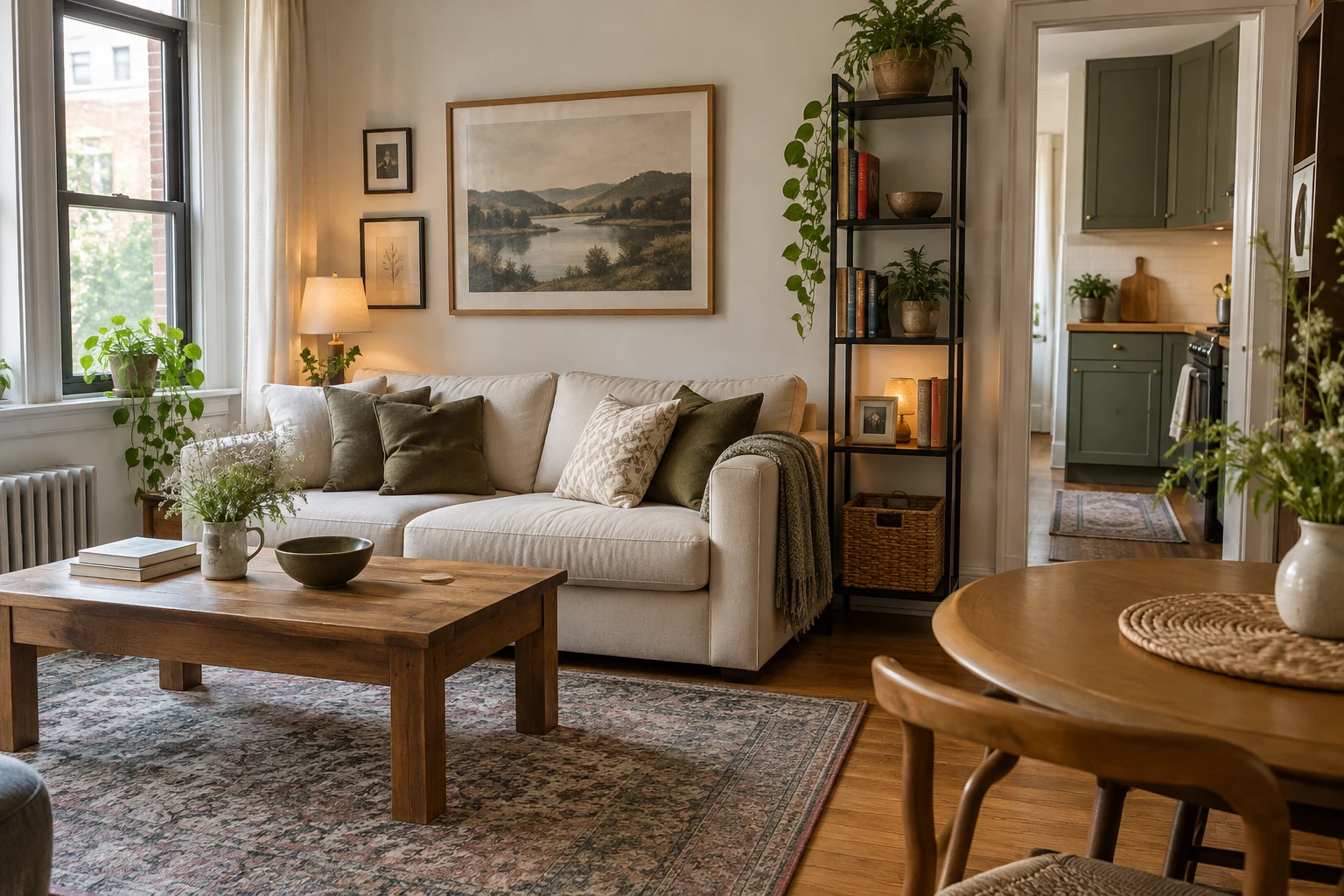
Repeating a few colors or finishes can make separate purchases look coordinated.
Most apartments contain a mixture of hand-me-downs, secondhand finds, and things bought when they were needed. A matching furniture set is rarely necessary.
The easiest colors to work with are already in the room. Look at the flooring, sofa, curtains, and larger pieces that will stay.
A cream sofa, wooden table, and black shelf could work with a cream-and-black cushion and a wooden picture frame. The cushion repeats the sofa and shelf colors, while the frame repeats the wood finish.
You do not need an exact match in every corner.
Three combinations worth trying are:
- Cream, olive, and warm wood for a soft, earthy look.
- Soft white, blue, and black for a little more contrast.
- Oatmeal, rust, and walnut for a warmer palette.
If you use the ivory curtains, beige sofa cover, and woven baskets mentioned above, they already provide a similar mix of pale colors and textured fabrics. A green cushion or print could add color without needing several more purchases.
A print or rug can also repeat colors you already own. There is no need to buy a matching accessory for every surface.
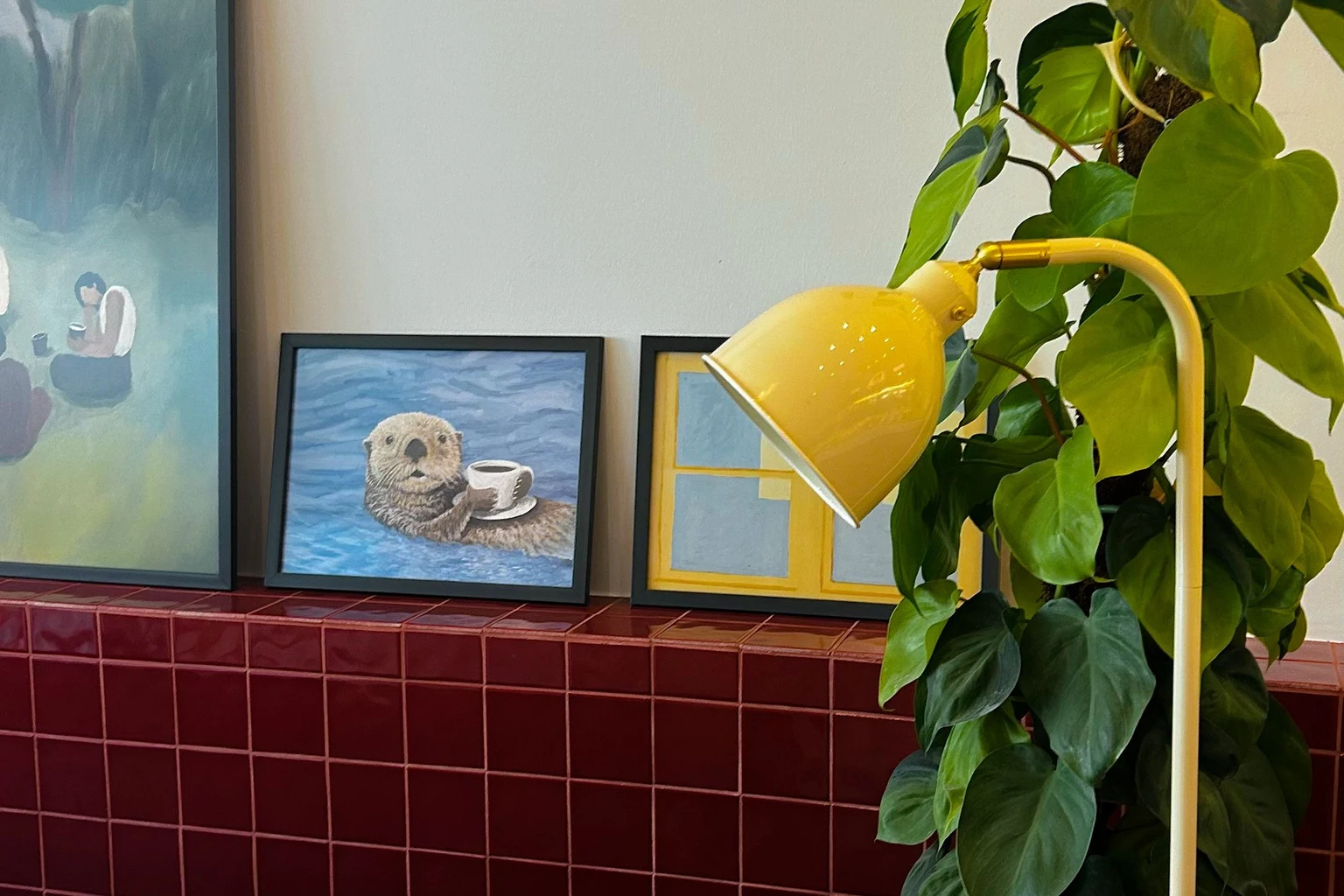
11. Personal Art, a Mirror, or a Plant May Be Enough
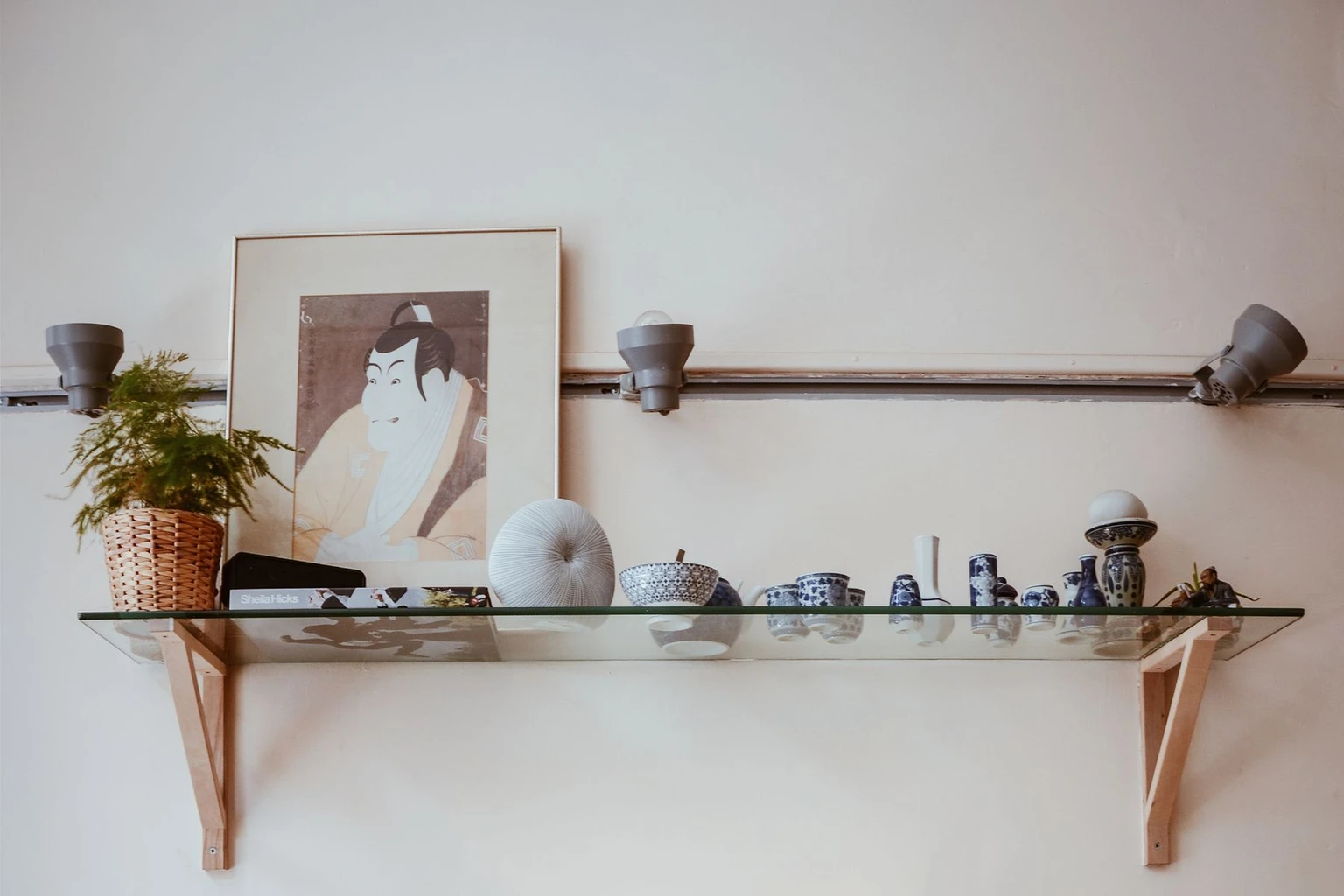
A few things you enjoy seeing can make the apartment feel personal without filling every wall and surface.
Books, photographs, ceramics, and souvenirs are all worth trying before shopping for decorative objects.
Artwork That Fits an Affordable Frame
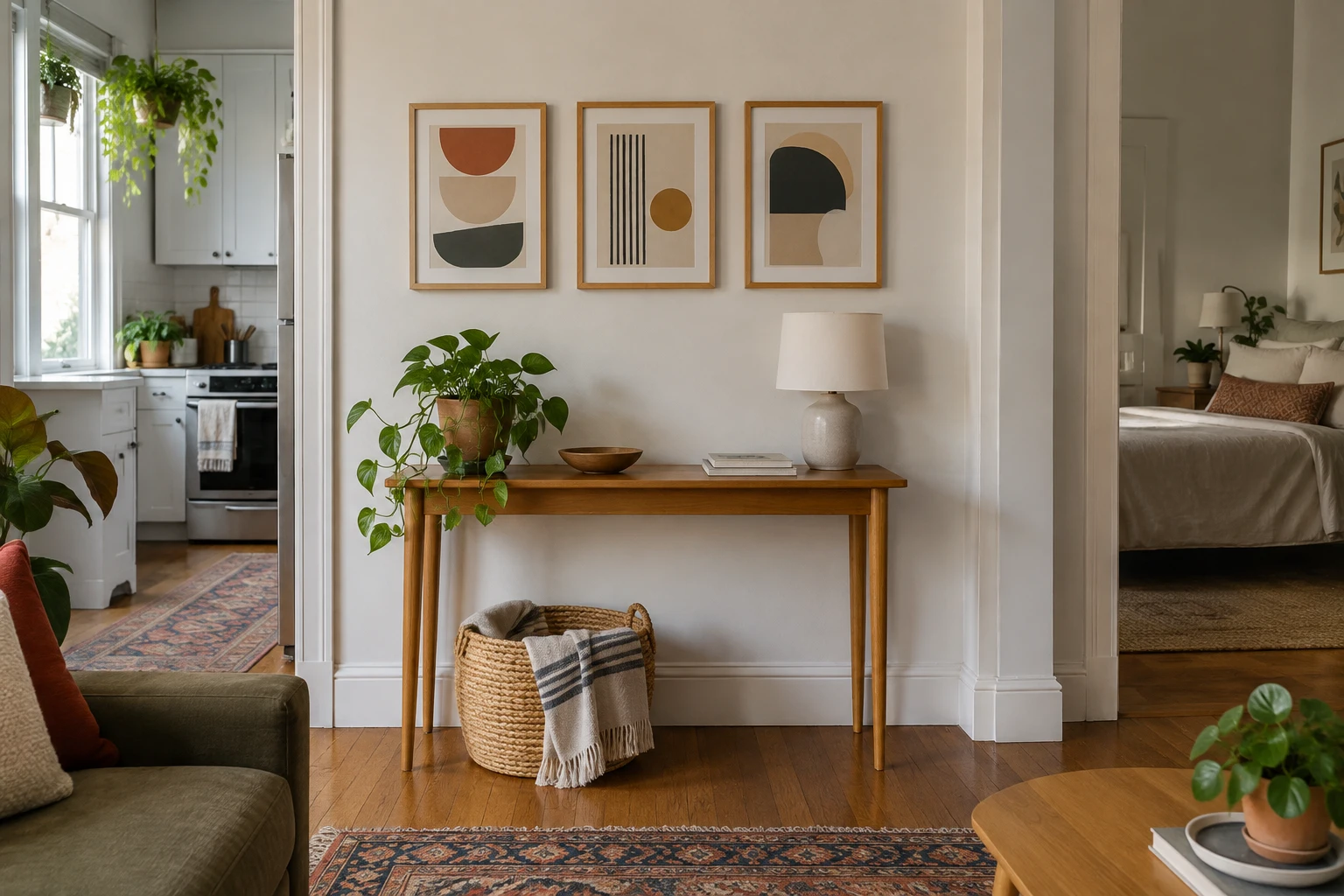
Standard-size artwork and frames help keep the overall cost manageable.
A postcard from a trip, a favorite photograph, or an inexpensive print can work beautifully. The frame does not need to be elaborate.
For several pictures, arrange them on the floor before hanging. Similar spacing and a connection in color or subject can make a small grouping look organized.
One larger piece is also an option. Every empty wall does not need a gallery arrangement.
A Mirror That Reflects Light and a Pleasant View
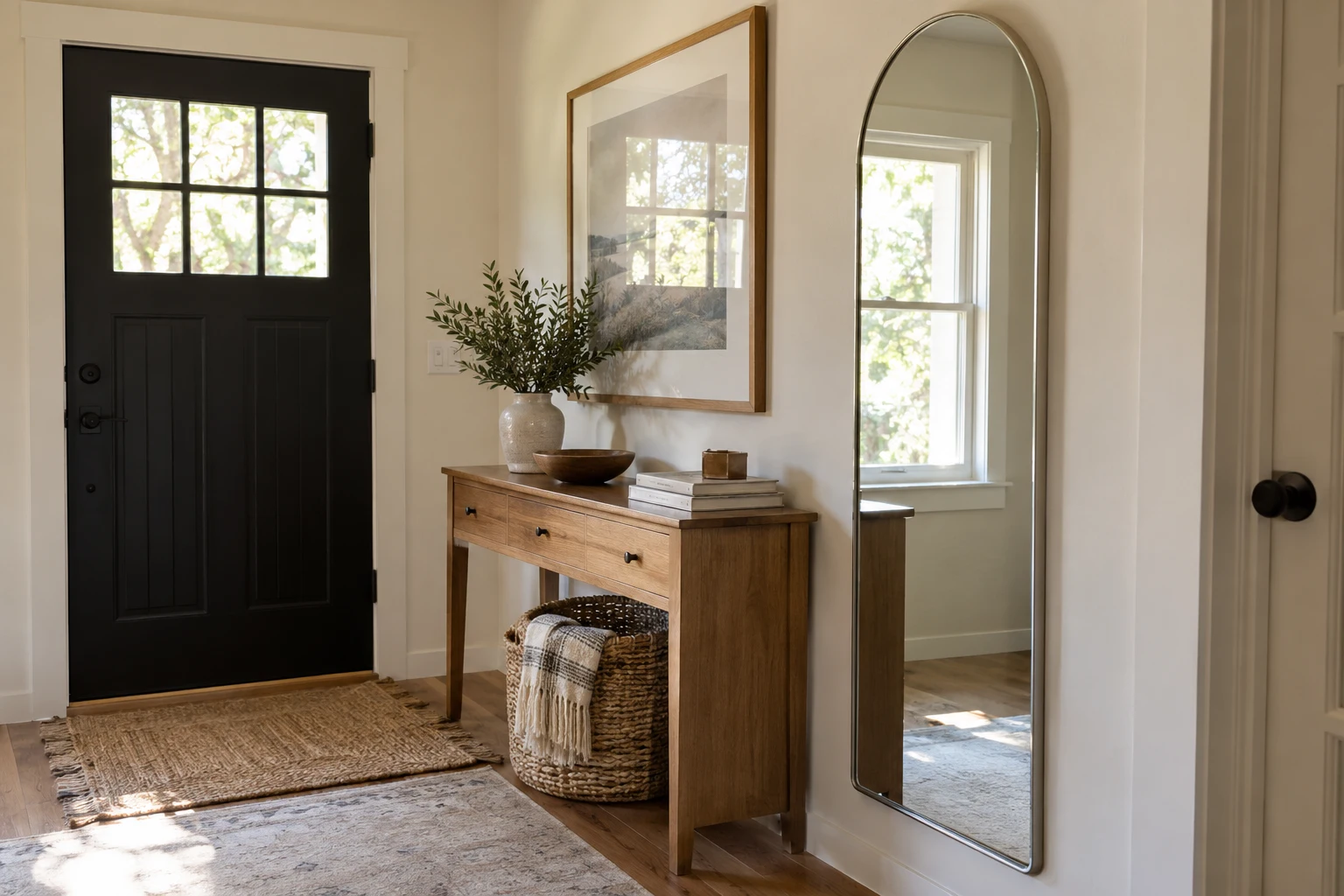
A mirror works best where it reflects daylight or something you like looking at.
A bright window, a plant, or a simple furniture arrangement is usually a better reflection than overflowing shelves.
The WISSMIELS 57 × 20-Inch Arched Full-Length Mirror has a slim aluminum frame and a curved top. The silver finish can work with black, white, or wood furniture.
Its tall shape provides a full-length view, making it useful in a bedroom or entryway as well as decorative.
A mirror cannot brighten a dark room on its own. Positioning it to reflect an existing window or light source is what makes the difference.
It should be securely installed using the appropriate mounting method for the mirror and wall.
Greenery Where It Can Grow
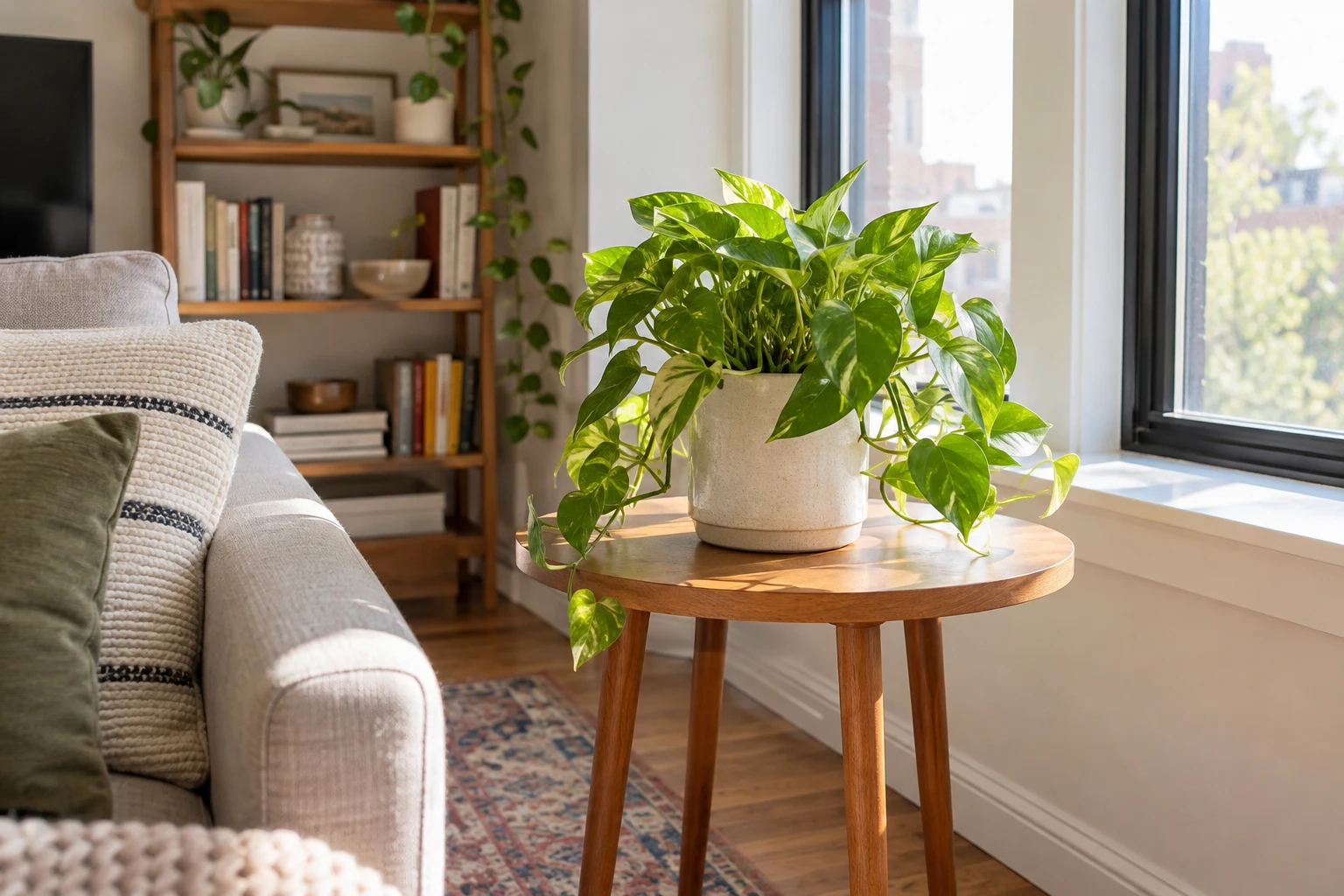
A plant suited to the available light is a better purchase than several chosen only for their appearance.
A small plant can go on an existing shelf or table. A larger one needs enough floor space without narrowing the walkway.
You may already have a pot that works. There is no need to buy a new planter every time you bring a plant home.
One plant can be enough, especially if you prefer simple maintenance and clear surfaces.
12. Rental Updates Worth Taking to Your Next Home
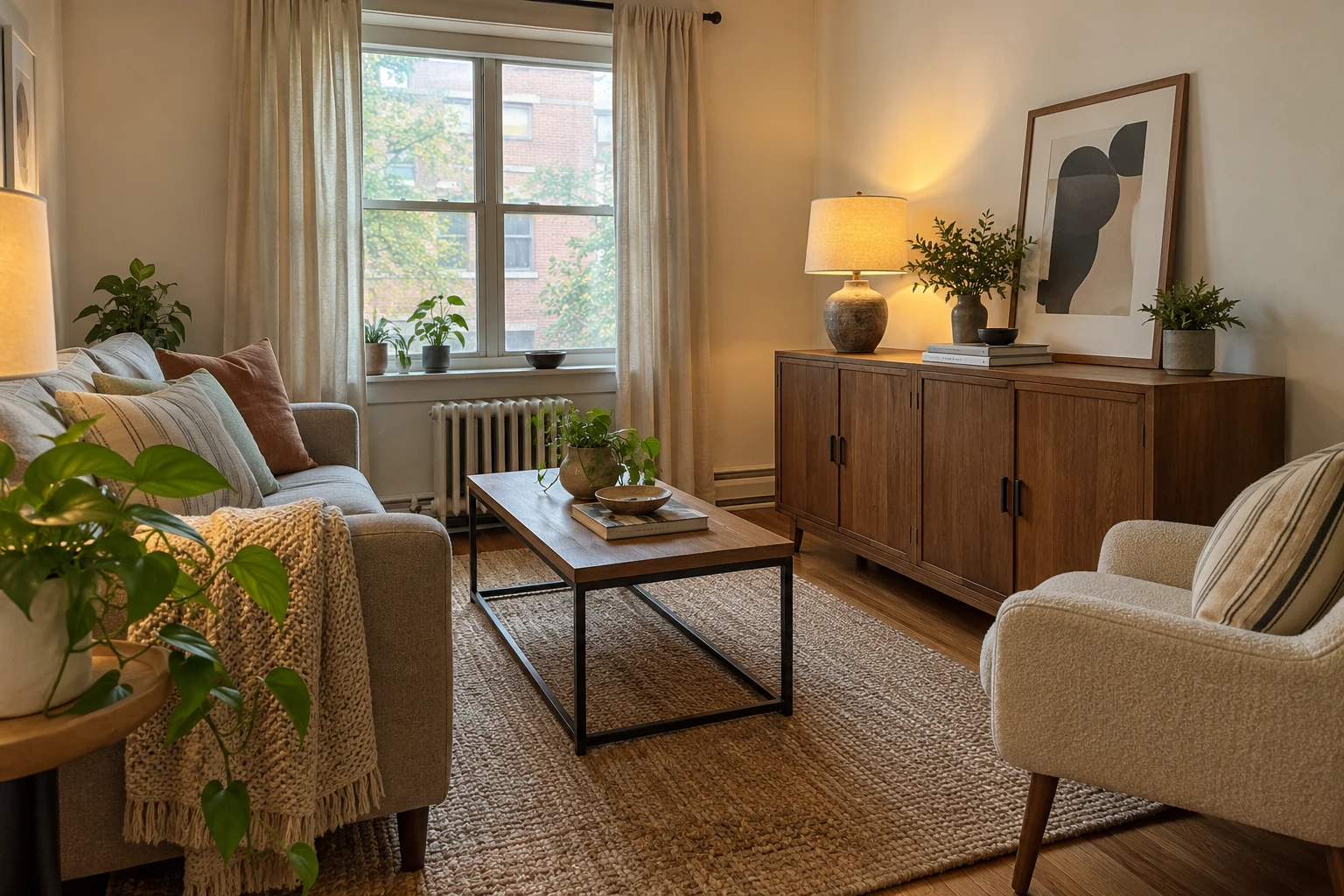
Lamps, artwork, and freestanding furniture can remain useful after you move.
That makes them worthwhile purchases when you are unsure how long you will stay in the apartment.
A lamp can move from the living room to the bedroom. A small cabinet may work in a future hallway. Artwork can come with you even when the next apartment has completely different colors.
Curtains can come along too, although a different window height or width may call for another size.
Temporary surface updates can also help, but the full cost includes preparation and removal.
A small wallpaper detail on furniture you own may be more manageable than covering an entire rental kitchen. Meanwhile, a framed print can change a plain wall with much less work.
Our guides to decorating rental walls and covering rental floors explain the options in more detail.
Your Apartment Budget: What Comes Next?
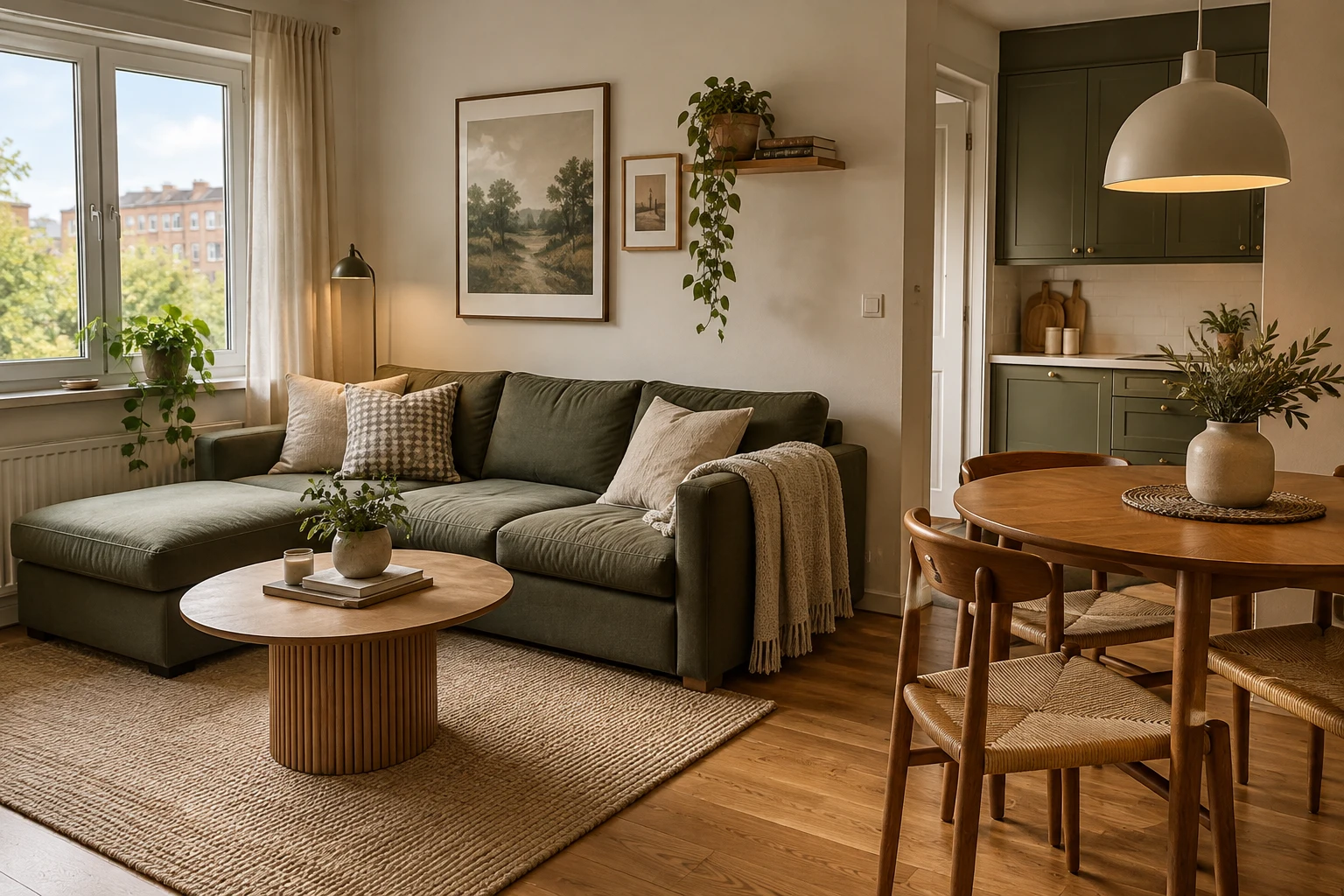
The next purchase should solve the problem that affects you most.
If you are unsure where to spend, this table can help.
| What your apartment needs | A useful first priority |
|---|---|
| Essential furniture is missing | A comfortable bed, usable seating, or a surface for eating and working |
| Evenings feel harsh or dim | Better lighting near the areas you use |
| The windows lack privacy | Suitable window coverings |
| The seating looks scattered | A better arrangement or properly sized rug |
| Small belongings cover every surface | Better use of existing storage, followed by a container or cabinet if needed |
| The furniture works, but the room feels impersonal | Artwork, a plant, or a few meaningful objects |
| Different pieces look unrelated | A few repeated colors through textiles and art |
You do not have to solve every problem at once. The apartment can become more comfortable while you save for the remaining improvements.
A Quick Checklist Before You Buy
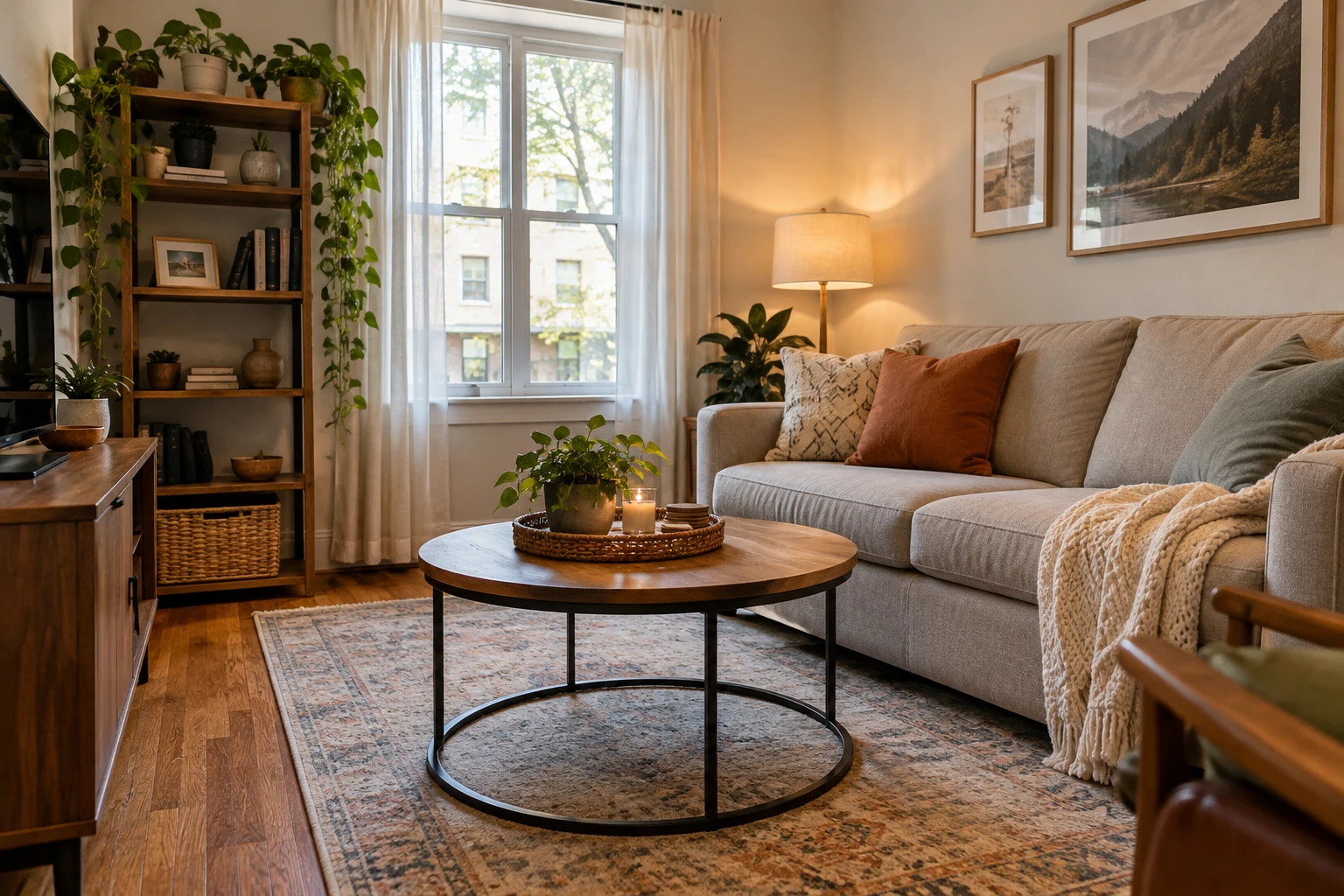
A purchase is more likely to be worthwhile when its purpose, size, and total cost are clear.
- It solves a specific problem or adds something I genuinely enjoy.
- It fits the room and the route into the apartment.
- The total includes delivery, hardware, and other necessary extras.
- It works with furniture or colors already in the room.
- There is a clear place for it.
- Something I already own cannot do the same job.
Useful Finds for a Small Apartment
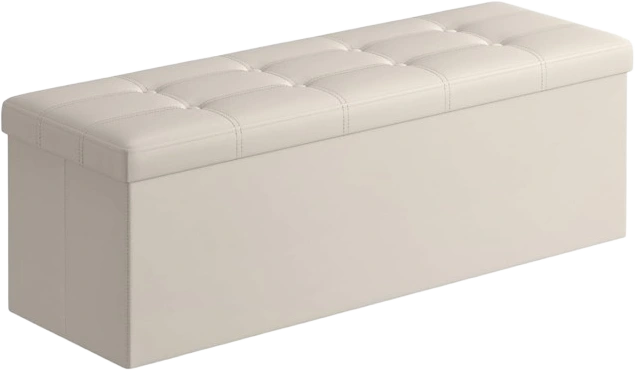 SONGMICS 43.3-Inch Folding Storage Ottoman BenchA padded cream-white bench with hidden storage for spare blankets and bedding.
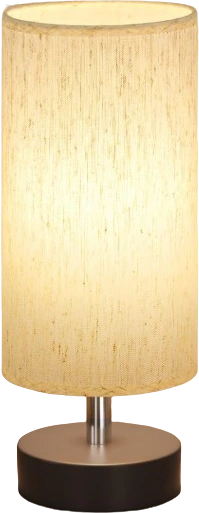 PartageiZ Small Table LampA compact fabric-shaded lamp for a side table or bedside surface. Bulb purchased separately.
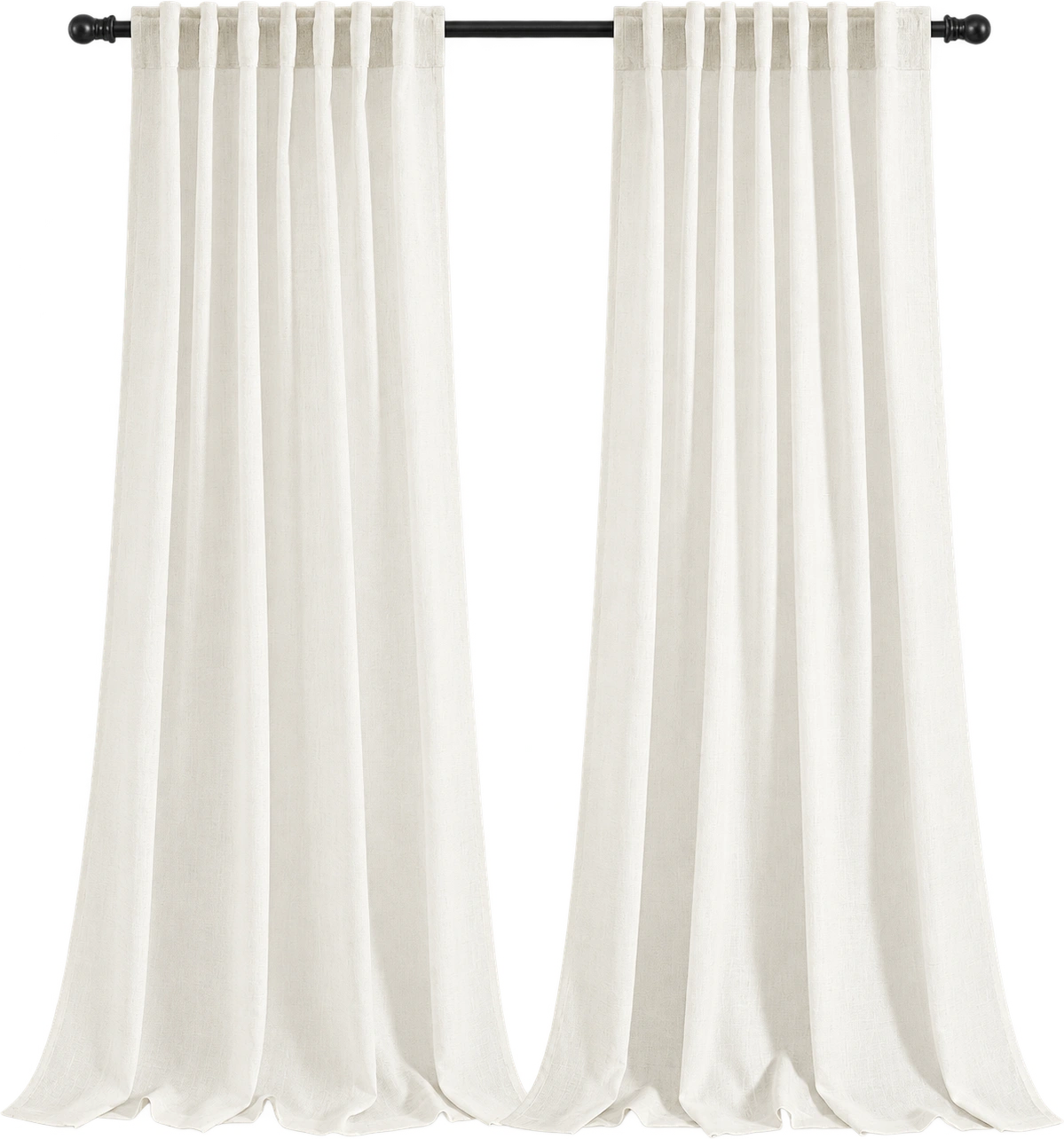 Nanspring Ivory Cream Semi-Sheer CurtainsTwo light-filtering panels with a textured finish, each 52 inches wide and 84 inches long.
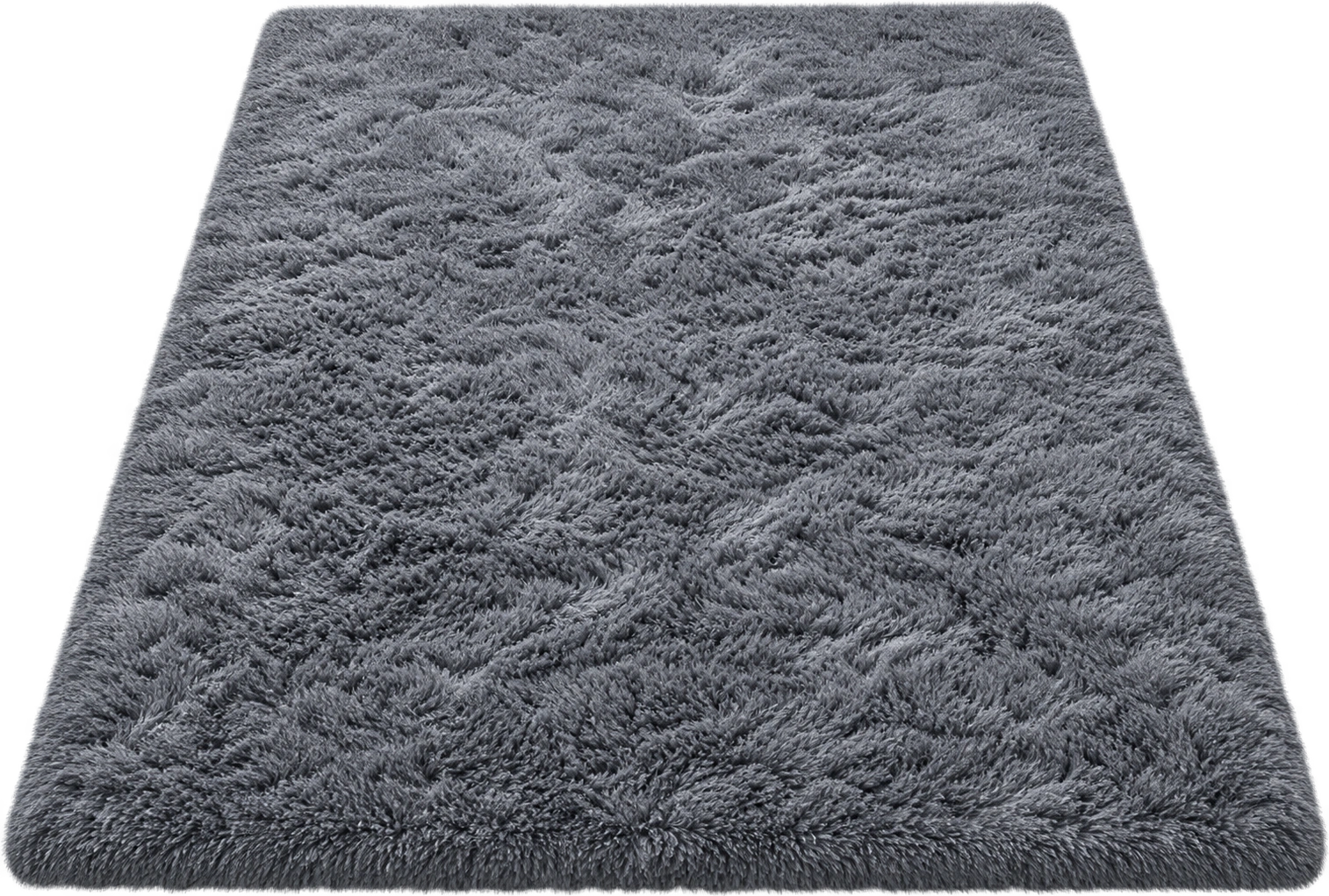 OLANLY 5 × 7-Foot Shaggy Area RugA soft gray rug for a cozy seating or bedside area.
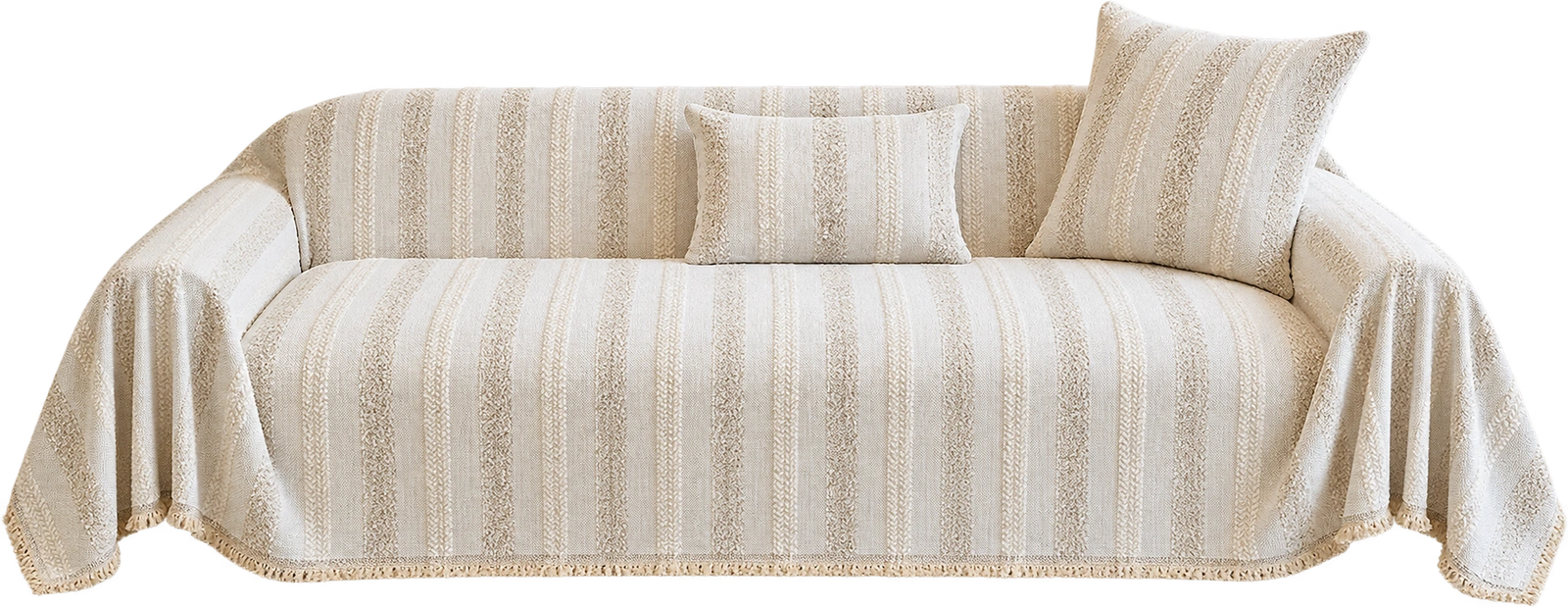 Fuyulacom Beige Chenille Sofa CoverA washable 71 × 118-inch cover for changing the appearance of existing upholstery.
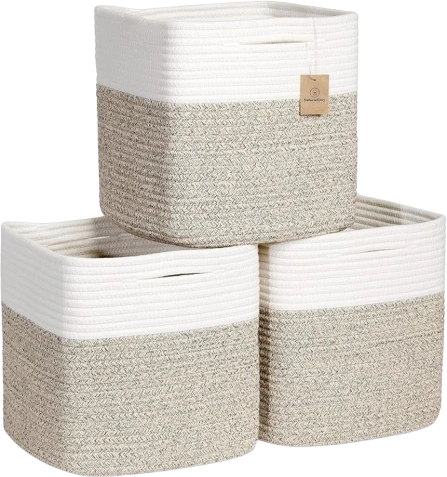 NaturalCozy 11-Inch Cotton Rope Storage CubesThree woven baskets for organizing small belongings on shelves or in cubbies.
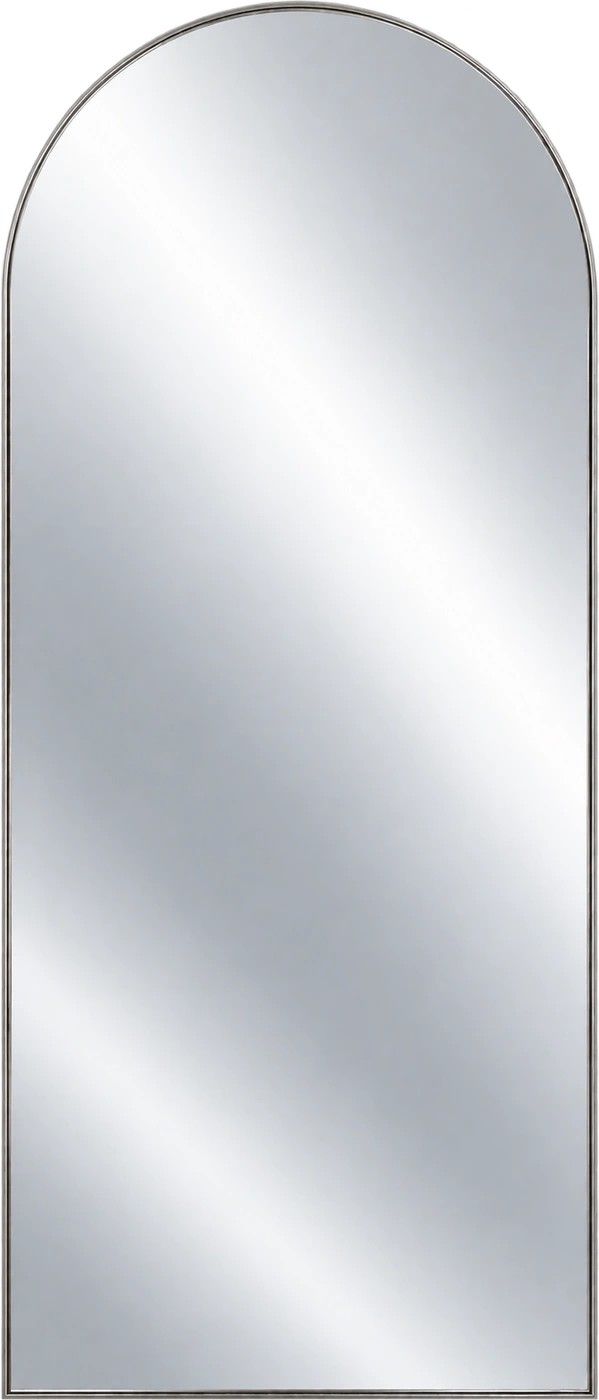 WISSMIELS 57 × 20-Inch Arched Full-Length MirrorA tall mirror with a curved top and slim silver aluminum frame.
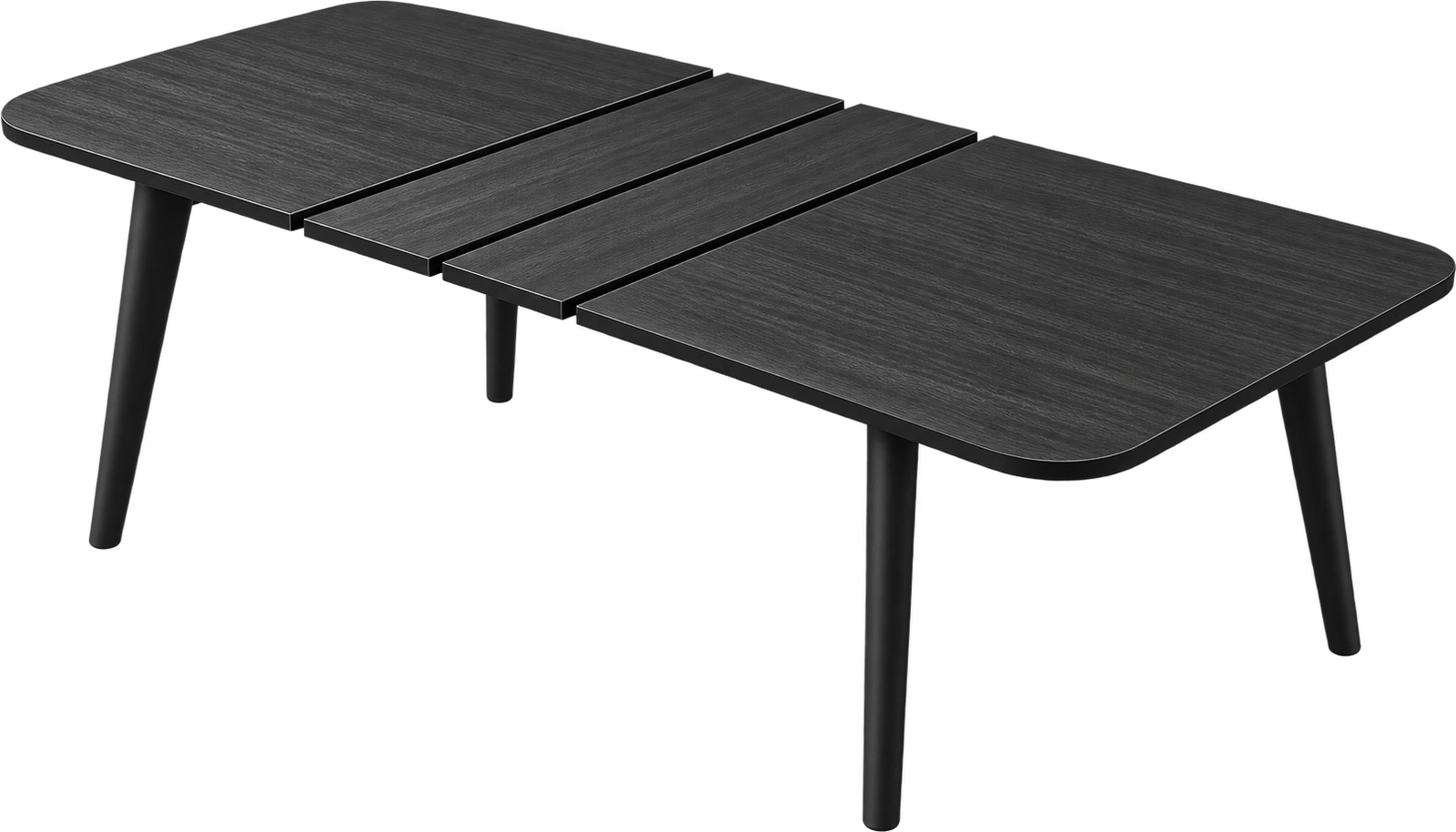 VASAGLE MAEZO Extendable Dining TableA charcoal-gray table that extends from 55.1 to 70.9 inches for meals, work, and visitors.