Decorating a small apartment on a budget gets easier when you focus on the spots that make everyday life awkward. Maybe a table blocks your path to the sofa, or bags keep piling up by the door.
A better layout, storage within easy reach, and lamps where you need them can make your apartment more comfortable. Moving a table or clearing a drawer for everyday clutter can help before you spend anything.
The quick answer
- Clear walkways: Leave room to move, open doors, and pull out chairs.
- Flexible furniture: Look for pieces that serve more than one purpose.
- Hidden storage: Give bedding, paperwork, and chargers a place of their own.
- Better lighting: Allow daylight through and add lamps where you sit.
- Personal details: Bring in colors, artwork, and textures you enjoy.
1. A Layout You Can Actually Walk Through
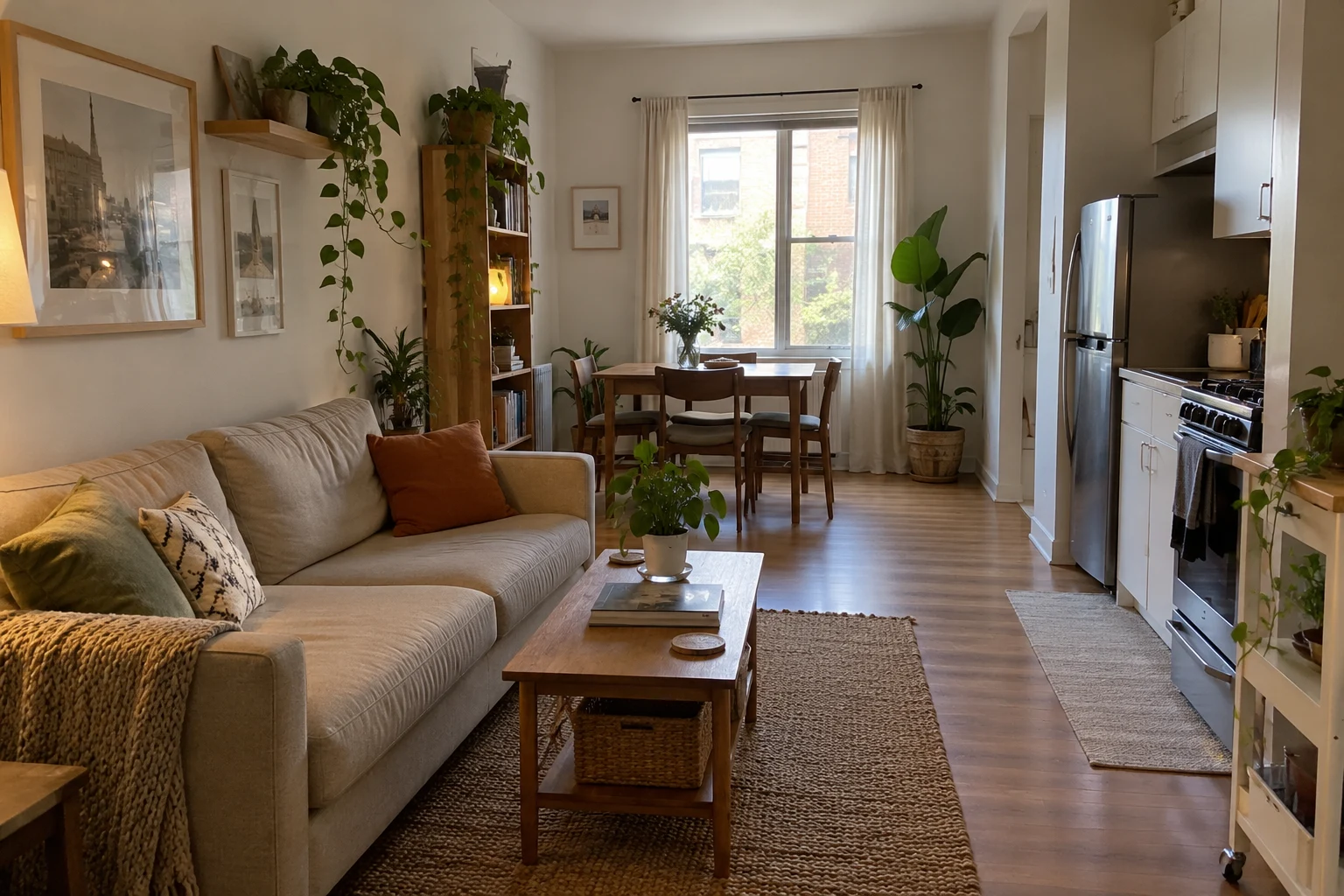
Clear walkways make a small apartment feel less crowded. You should be able to reach the sofa, kitchen, and bedroom without turning sideways around furniture.
A coffee table might fit between the sofa and TV but still get in your way. If you bump into it while carrying laundry, a smaller side table may work better.
Doors and drawers need space to open, too. A cabinet becomes frustrating when opening it means moving a chair.
Before buying anything, try removing one unnecessary piece and rearranging what remains. Our guide to living room design mistakes covers common problems such as oversized furniture and blocked walkways.
2. Comfortable Furniture Without the Crowd
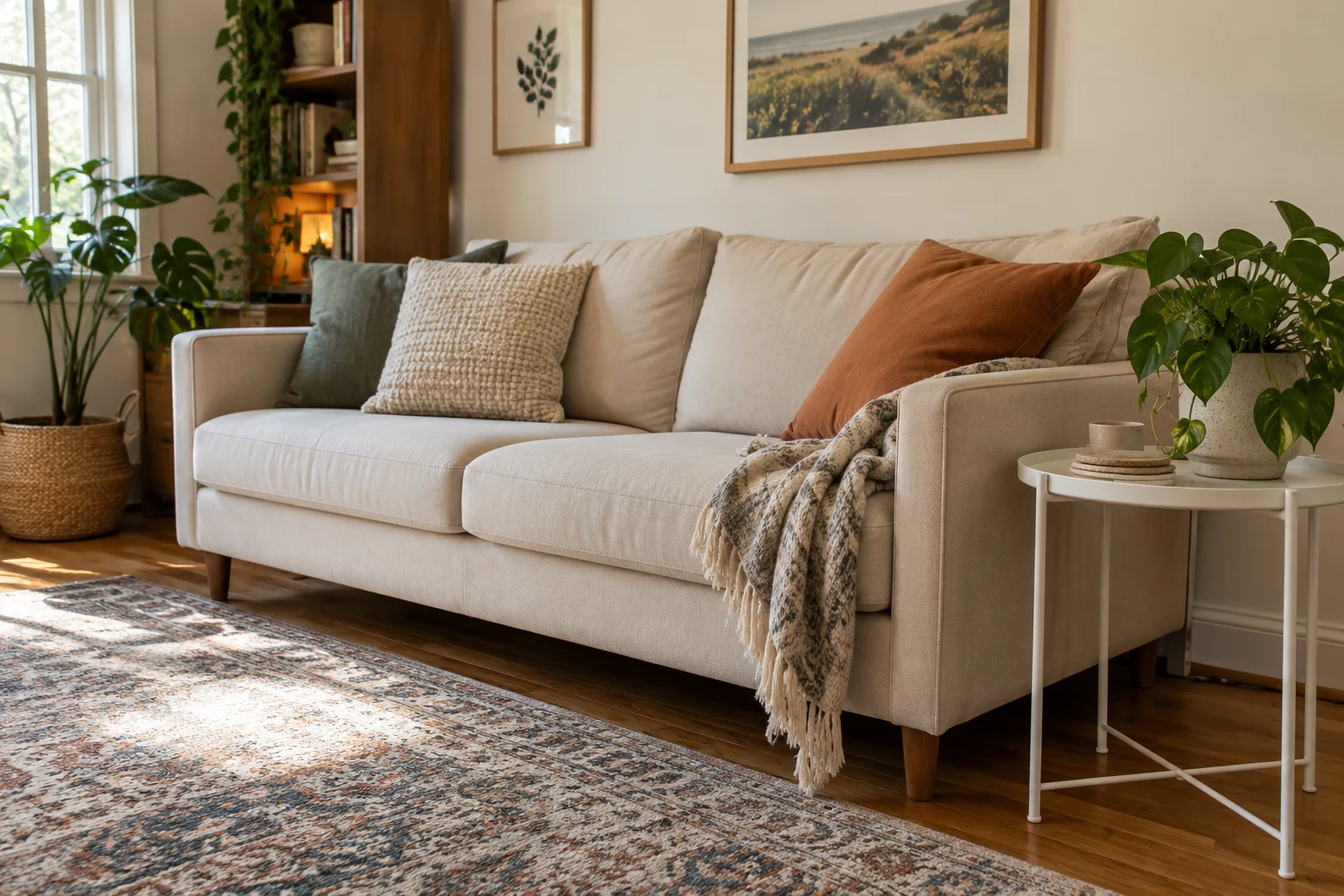
Furniture width and depth matter more than choosing the smallest piece available. One comfortable sofa may take up less room than a loveseat, two chairs, and several little tables.
Slim sofa arms leave more room for sitting without making the sofa wider. Raised legs let you see the floor underneath, so the room can look less crowded.
A glass or acrylic table has a similar effect, although you still need room to walk around it.
For a small surface beside a chair, the IKEA GLADOM tray table is easy to move and has a removable tray top. It provides a place for a drink without adding a full coffee table.
3. One Piece, More Than One Use
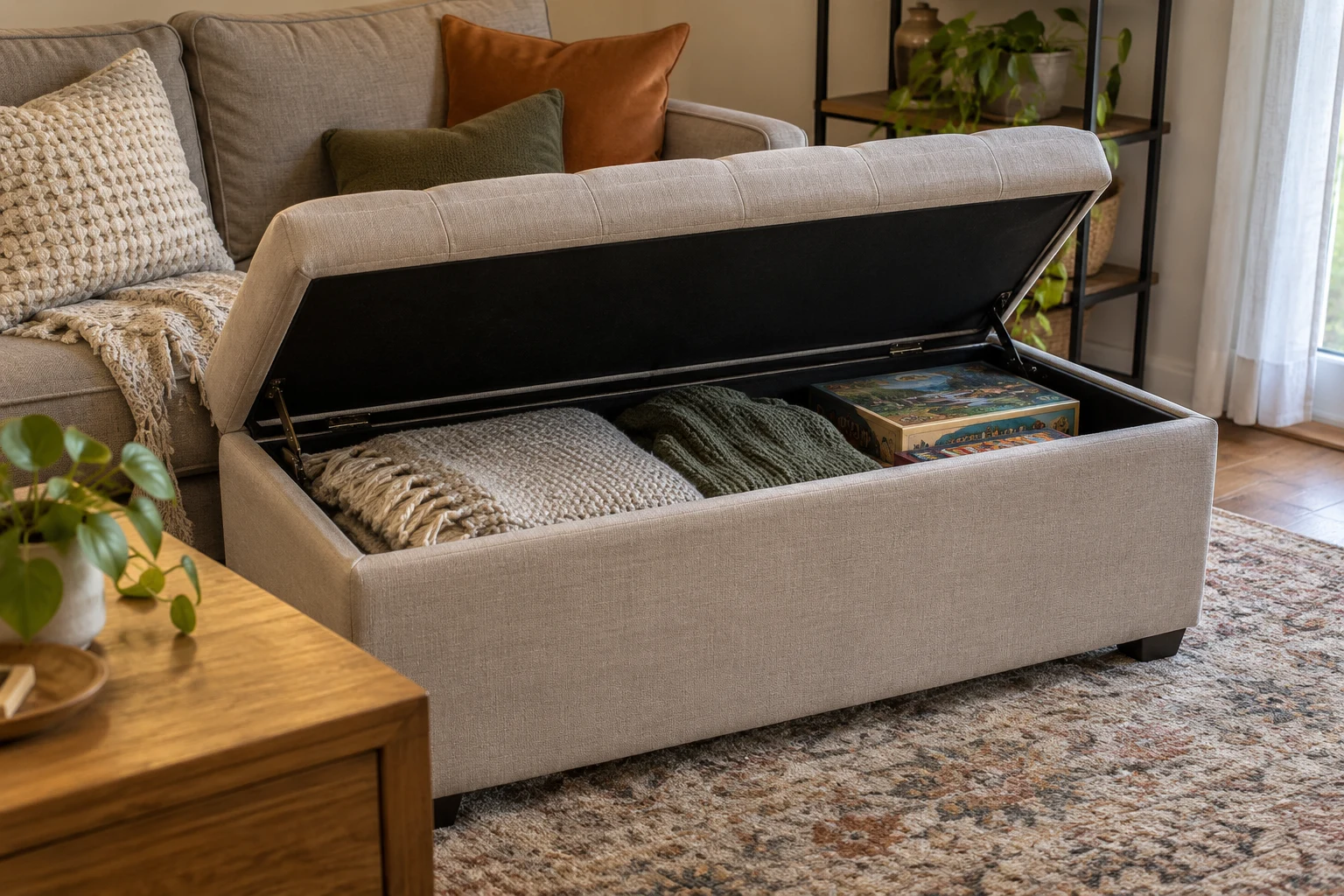
Furniture with more than one use can save space and money. A storage ottoman holds blankets and provides a seat. A daybed works as a sofa during the day and a bed for overnight guests.
The storage needs to be easy to use, too. An ottoman covered in books and decor means moving everything whenever you want a blanket.
The Huatean Home 48-Inch Storage Ottoman Bench combines an upholstered seat with storage beneath the hinged lid. It can hold blankets or board games and provide somewhere to sit near the bed or entryway.
At 48 inches long, it needs a clear stretch of floor. It makes the most sense when it replaces separate seating and storage.
Our guide to storage ottomans for small apartment living rooms covers more sizes and styles.
4. A Dining Table That Fits Your Week
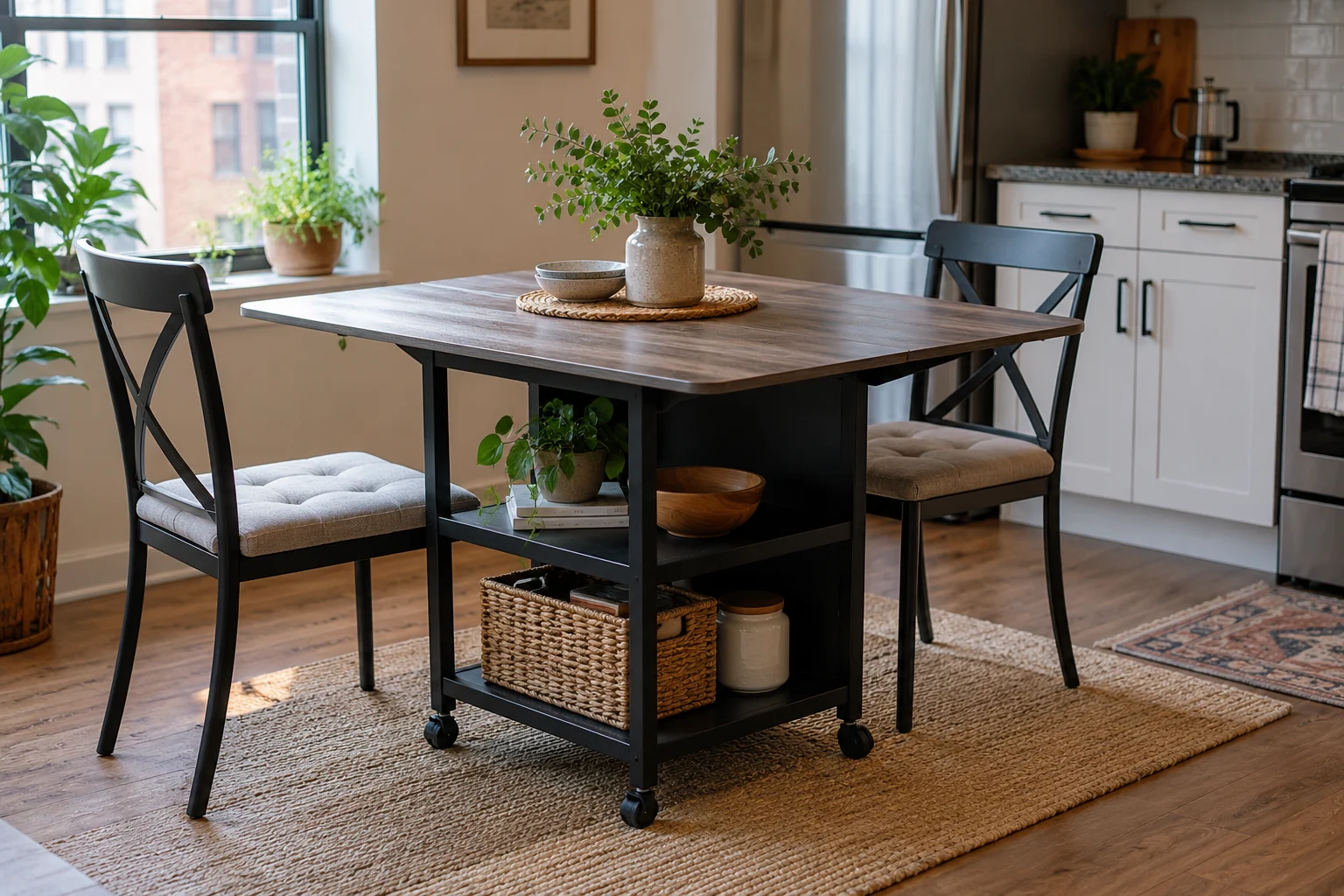
A table with enough seats for everyday meals is a good fit for a small apartment. An expandable table and folding chairs give guests a place to sit without taking up that space all week.
A drop-leaf table has hinged sides that fold down to save space and lift up for meals.
The IDEALHOUSE Drop-Leaf Dining Table has folding sides, two storage shelves, and six wheels. It can provide a dining or work surface, then fold down when you need more floor space.
The chairs need room to pull out, too. A table that opens across the route to the kitchen may be awkward during meals.
For occasional meals beside the sofa, the Amazon Basics Folding TV Tray Tables fold away after use. The set contains four black tray tables and a storage rack. You will need somewhere to keep the rack when the tables are folded.
Find more arrangements in our guide to dining areas for small apartments.
6. Tall Shelves With Room Left Around Them
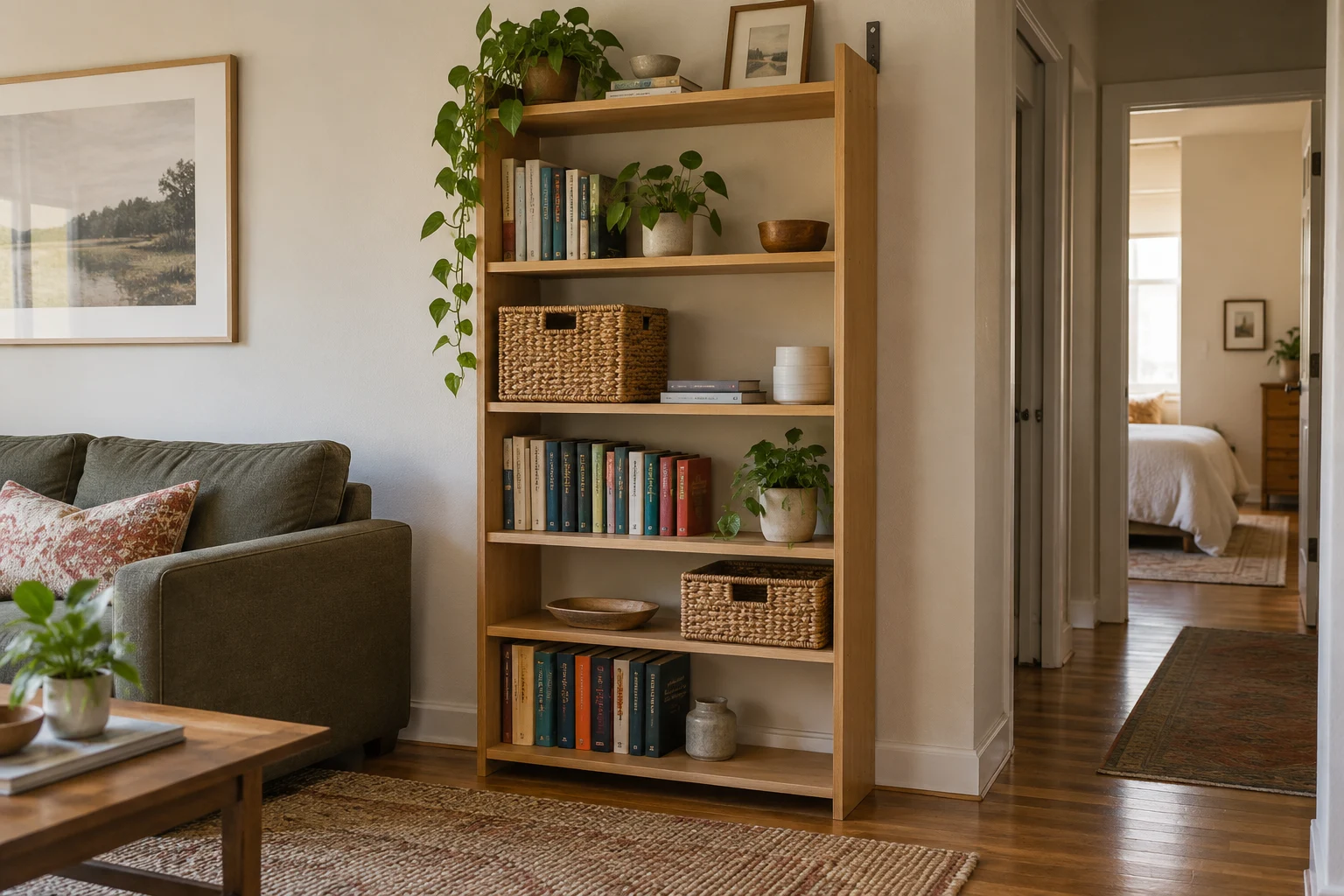
A tall, shallow bookcase adds shelf space without sticking far into the room.
A bookcase beside a desk can hold work supplies, books, and a basket of cables. Shelves above the desk keep supplies off the desktop.
Shelf depth matters. A deep cabinet may store more, but it can also narrow the route beside your sofa.
Baskets or boxes keep loose items together on open shelves. A few gaps between groups of books and objects make the shelves look less crowded.
7. Curtains That Let More Daylight In
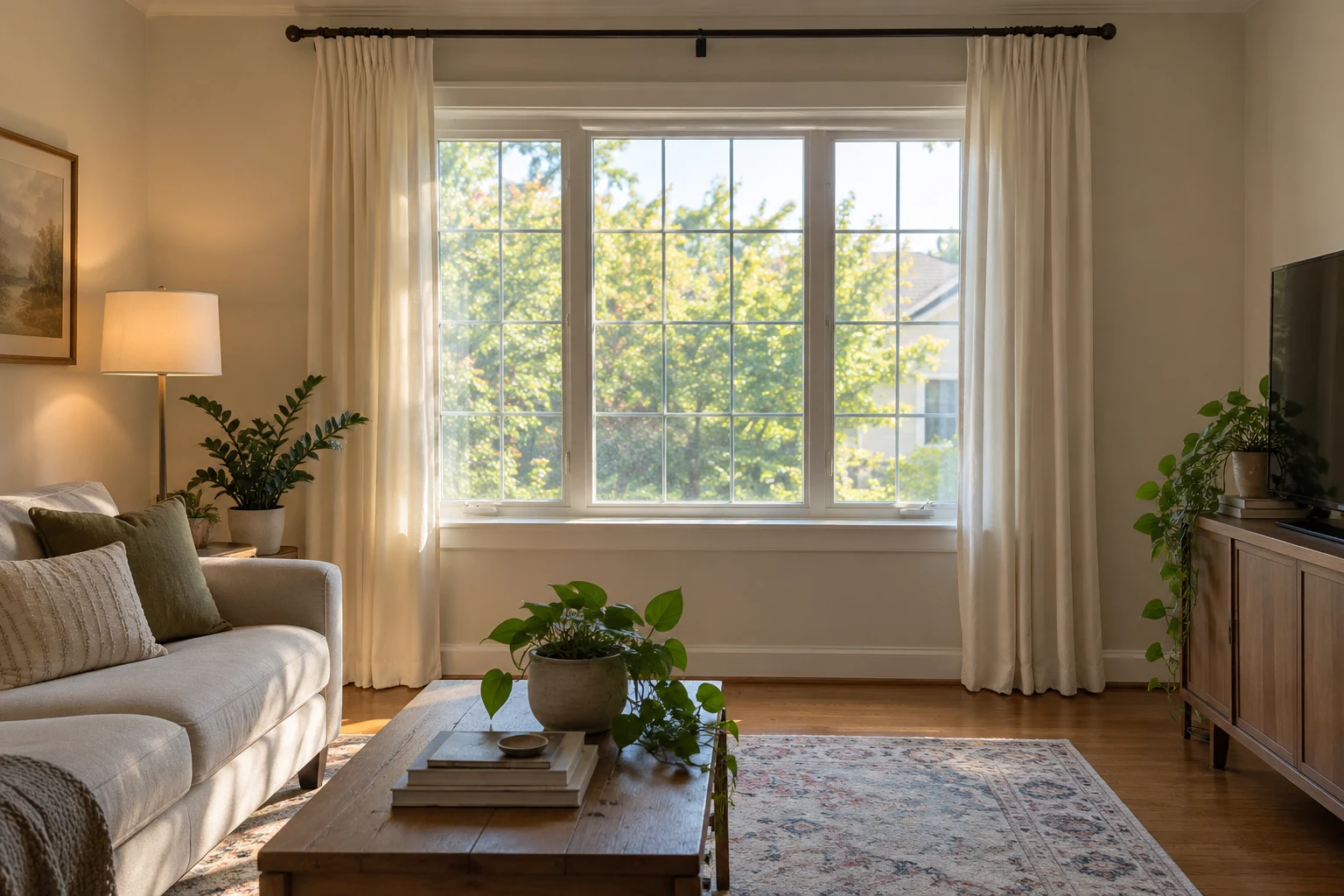
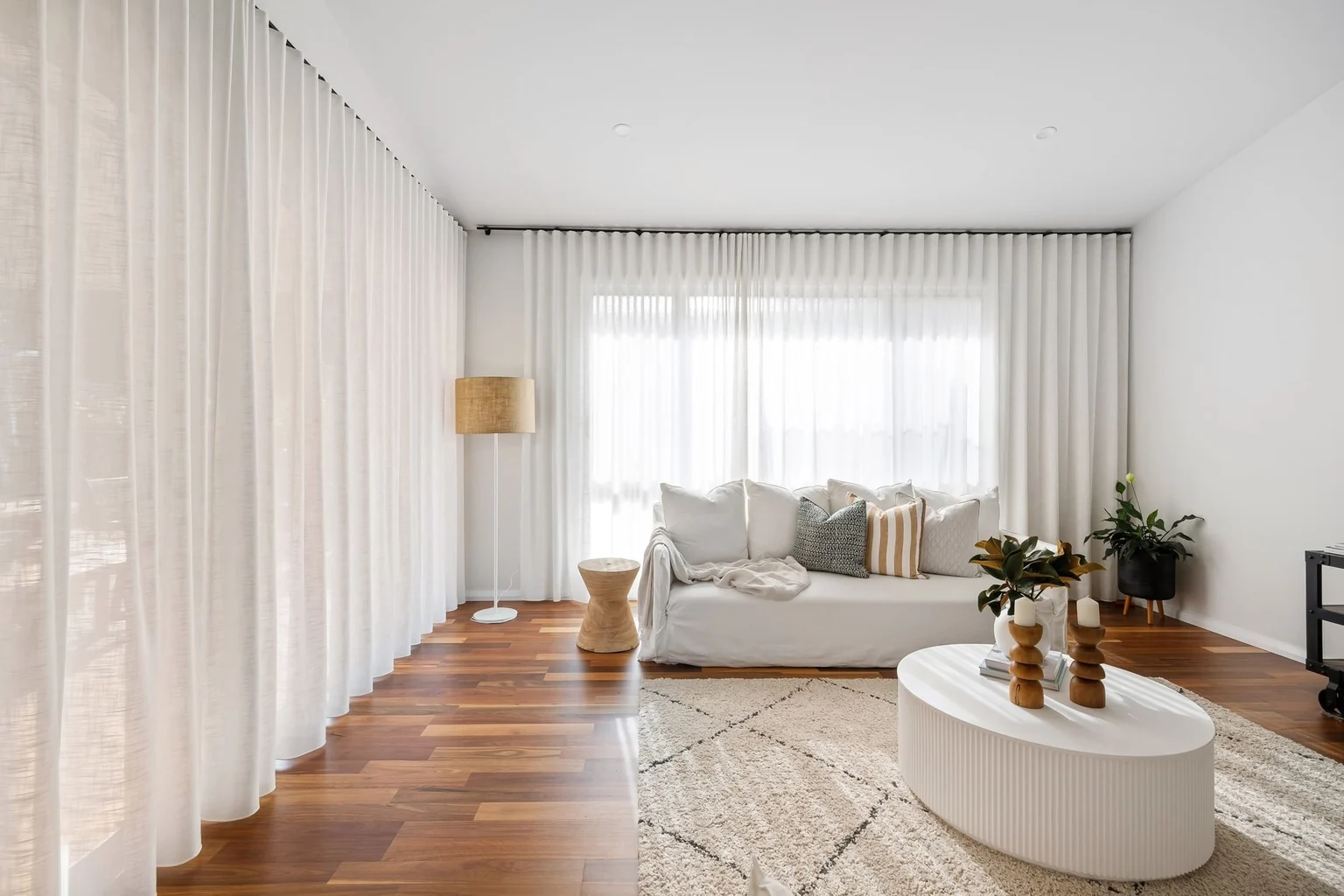
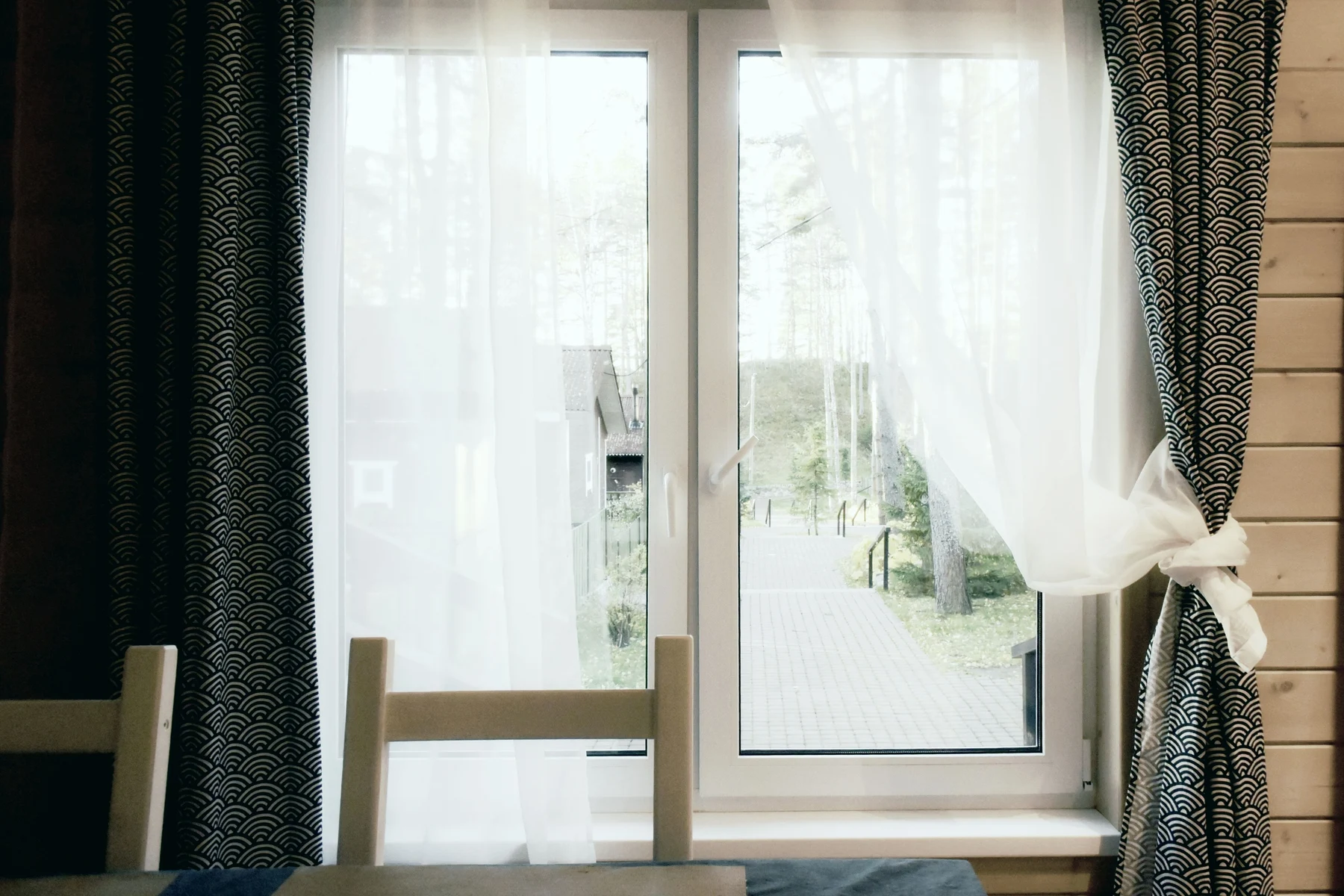
Curtains pulled to the sides of the window let in more daylight. That can make a noticeable difference in an apartment with only one main window.
A rod wider than the window lets you pull the curtains away from the glass. Hanging it higher can make the ceiling look taller.
Moving the rod may be enough to make better use of the curtains you already own.
Light-filtering curtains soften daylight. Bedrooms and street-facing windows may need another layer for darkness or privacy.
Our comparison of blackout, room-darkening, and light-filtering curtains explains what each type provides.
8. A Mirror in the Right Place
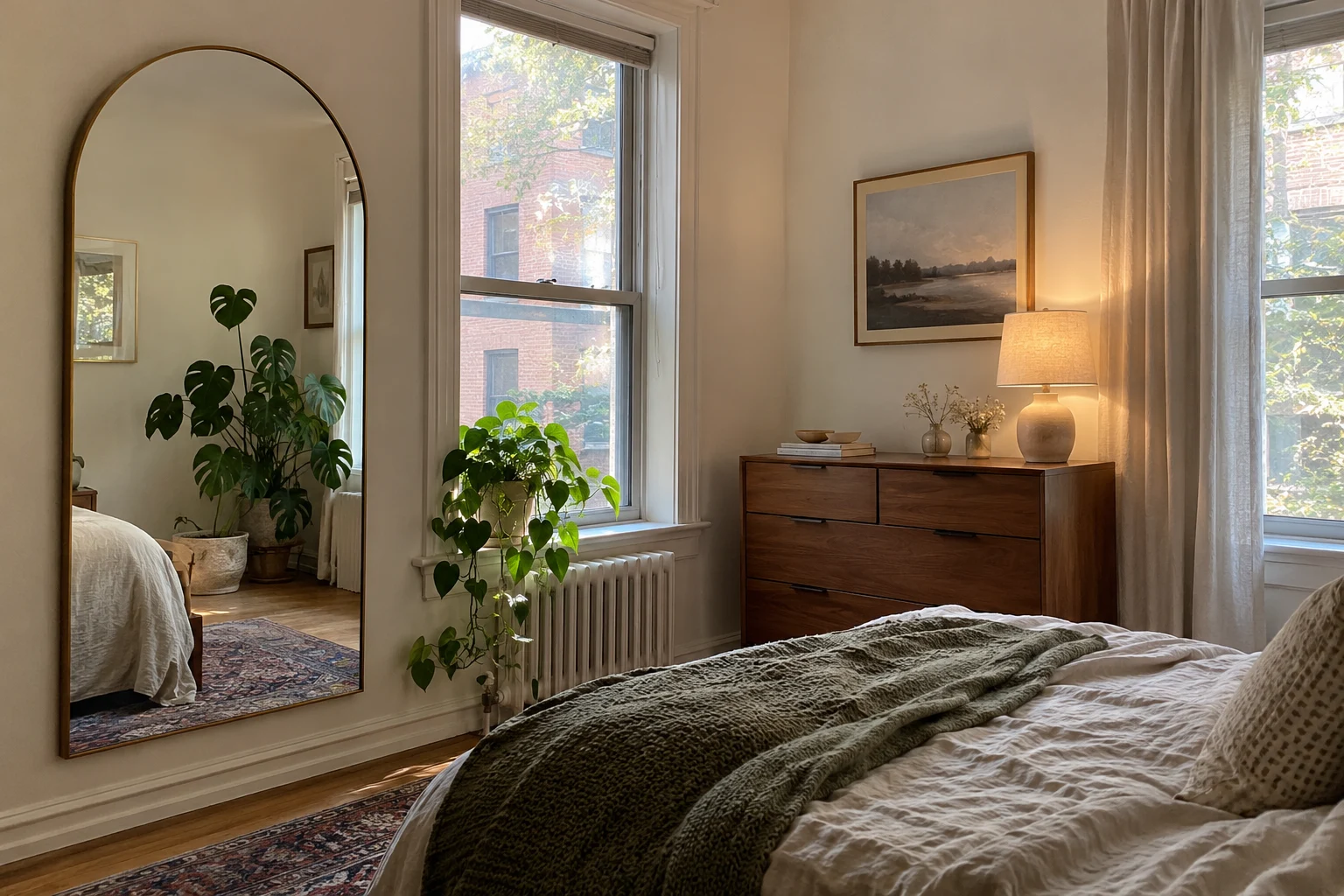
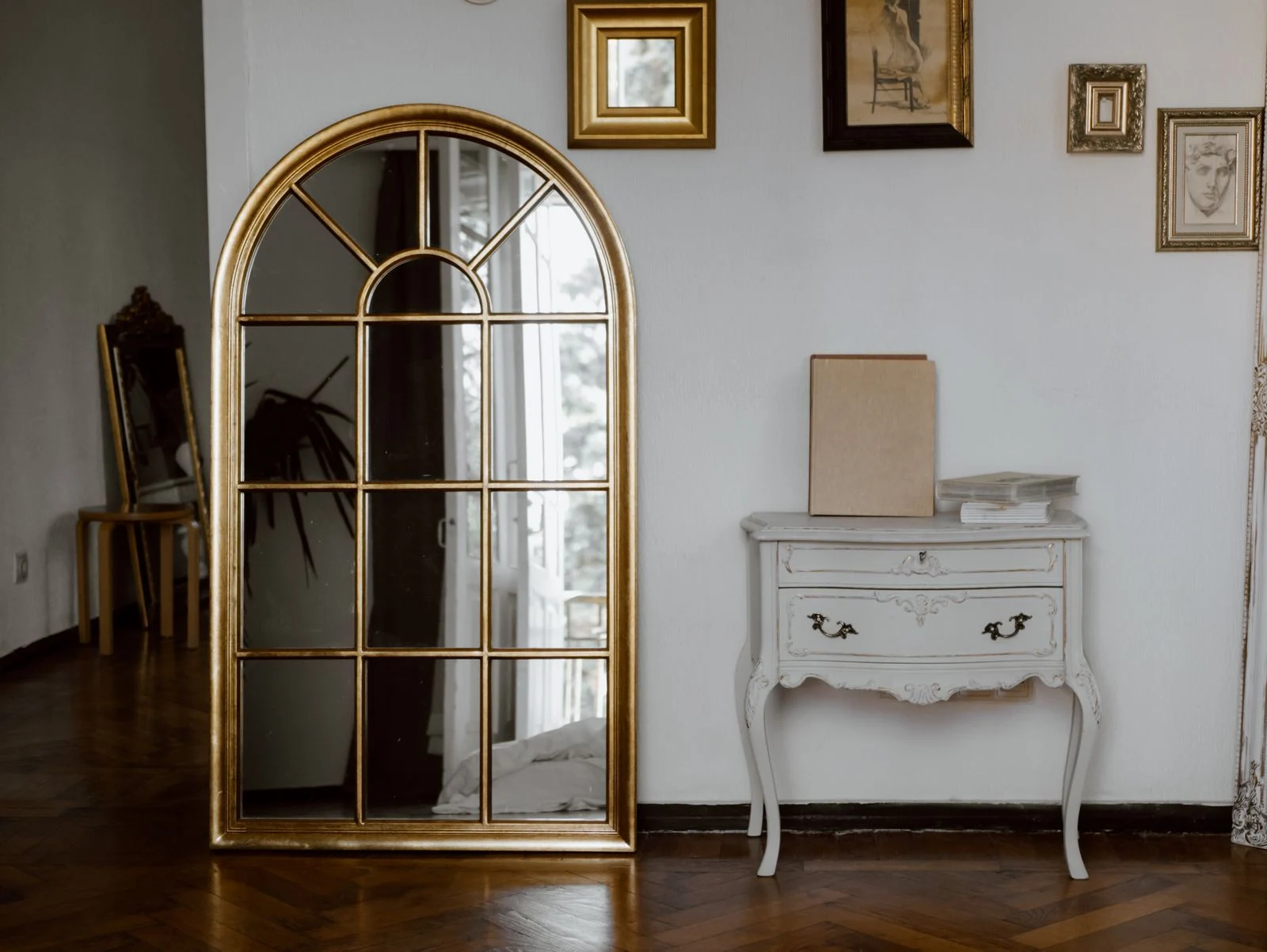
A mirror works best where it reflects daylight or a view you like, such as a window, artwork, or a favorite corner.
A mirror opposite a crowded shelf repeats that clutter. Moving it slightly may improve the view more than buying a larger one.
One large mirror can also be easier to arrange than several small mirrors scattered across the walls.
Secondhand mirrors are worth looking for, especially when the frame suits your furniture. Wall-mounted mirrors need secure fixings, and leaning mirrors need securing against tipping.
Our selection of full-length arch mirrors includes options for bedrooms and living areas.
9. Softer Lighting for Evenings at Home
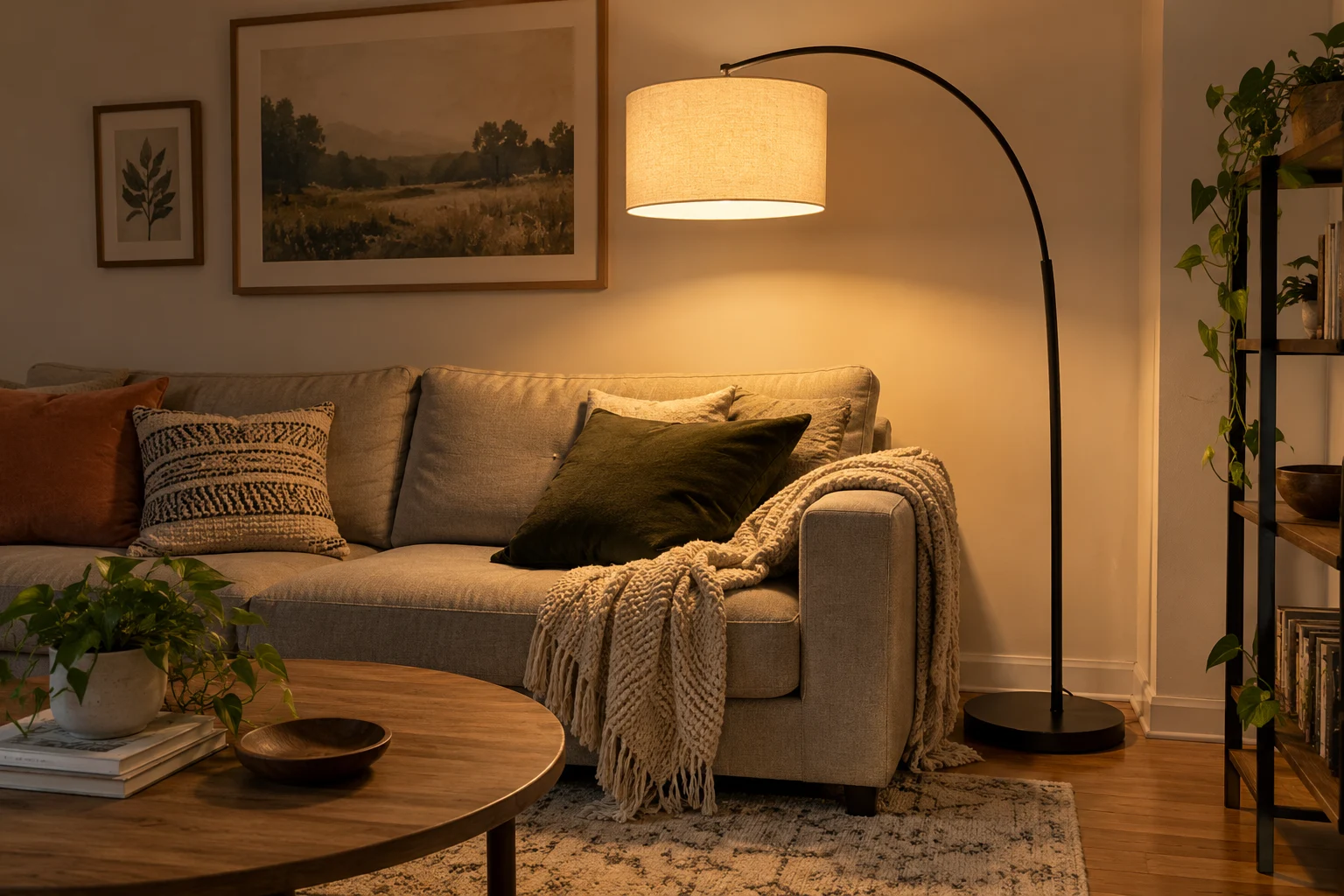
Lamps beside your seating make the apartment more comfortable in the evening. A lamp beside your chair provides reading light, while another near the dining area brightens that corner.
One ceiling light can leave the edges of a room looking gloomy. Smaller lights placed around the apartment help spread the light more evenly.
The Seaside Village Arc Floor Lamp has a curved arm, an adjustable drum shade, and a foot switch. It can bring light over a seat without needing a separate lamp table. The bulb is sold separately.
The lamp’s base needs its own spot beside the sofa or chair, clear of the walkway.
Warm-white bulbs with a similar color keep the lighting consistent from one lamp to another. Cords can run behind furniture, away from walkways. Our guide to hiding cords and cables covers clips, trays, and covers for common setups.
10. Color You Enjoy Living With
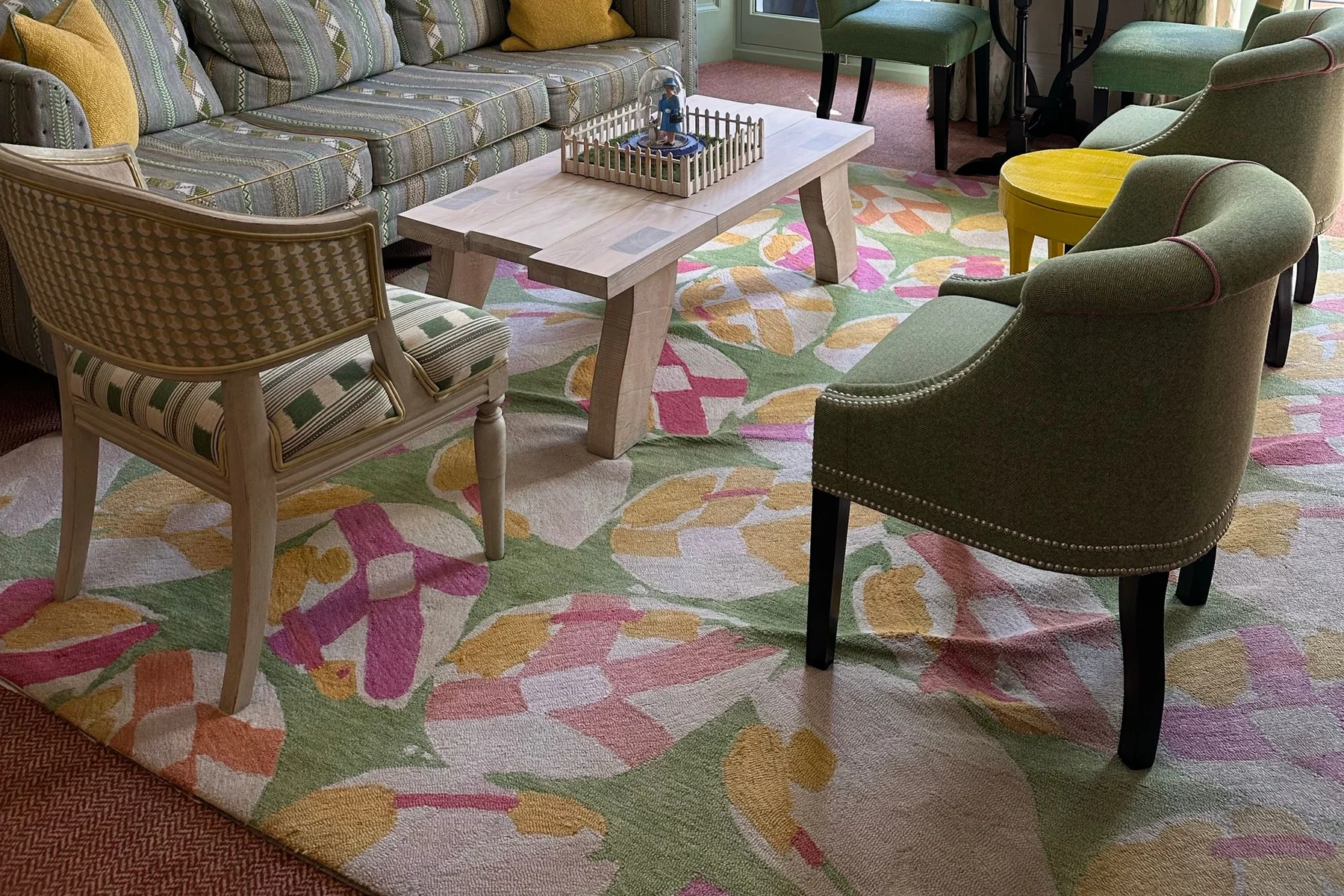
A few repeated colors help furniture and decor look good together, even when they were bought separately.
If your rug has some muted blue in it, a blue cushion and a print beside the bed can tie those areas together. The shades do not have to match exactly.
Light neutrals provide a bright, simple backdrop. Deeper colors can make a compact room feel cozy, particularly with warm lighting.
There is no need to replace everything to create a color scheme. Cushion covers, a throw, or a secondhand lampshade can connect furniture you already own.
For renters, bedding and curtains provide larger areas of color without repainting.
11. A Rug That Brings the Seating Together
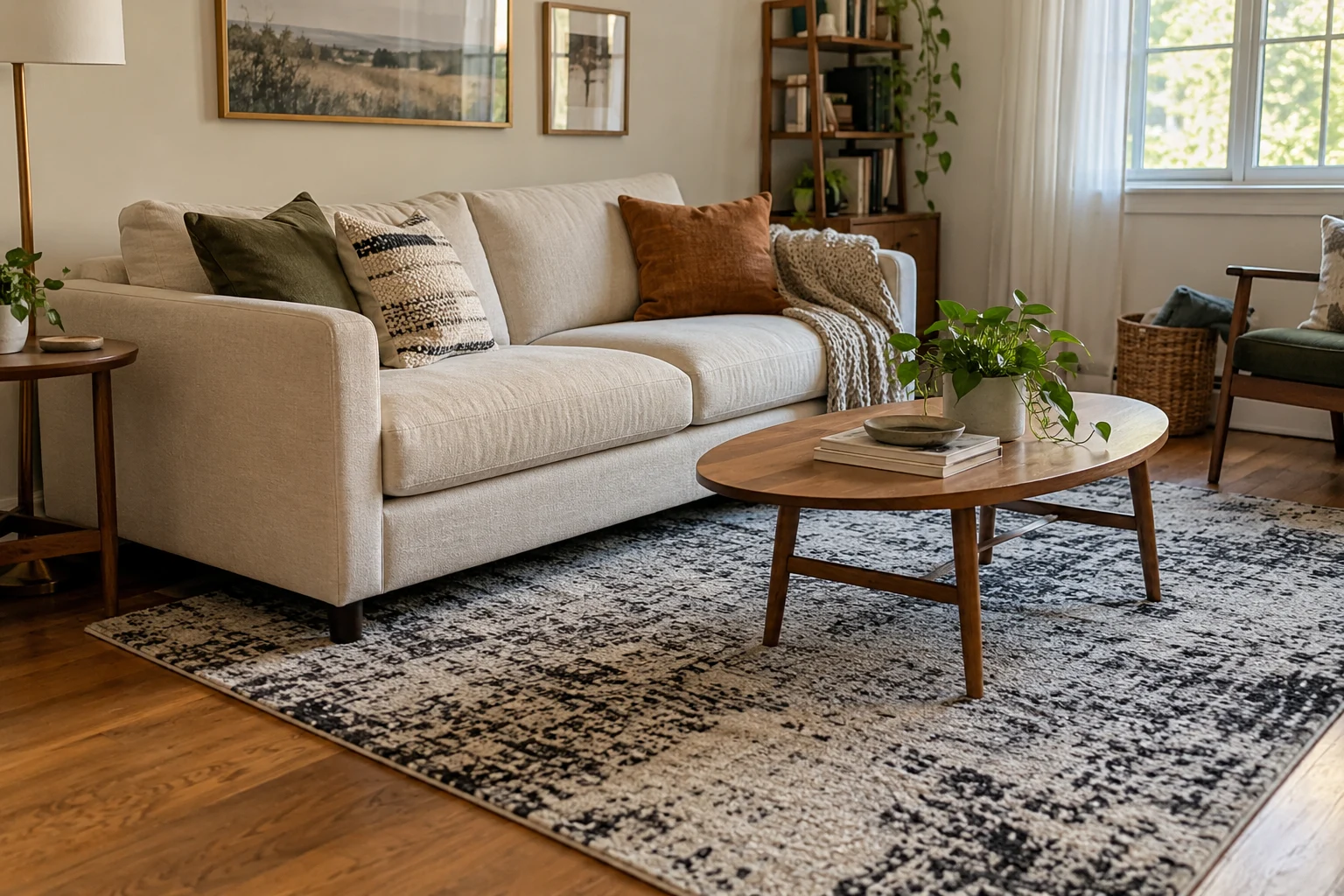
A rug large enough for the sofa’s front legs to rest on it helps the seating area look more inviting.
A small rug can look out of place when there is a wide gap between its edges and the sofa. A larger rug fills that gap and gives you a soft place to put your feet.
The 5-by-7-Foot Washable Abstract Area Rug has a low-pile surface and a black abstract design. It can add pattern to a compact seating area.
A 5-by-7-foot rug suits some smaller arrangements. For a wider sofa or a group of chairs, a larger rug may fit better.
Flatweave rugs are useful when furniture moves regularly because they are easier to roll up and store. A runner can soften a narrow hallway without covering the entire floor.
Our rug size guide shows how rugs fit beneath sofas, beds, and dining furniture.
12. Separate Areas Within One Open Room
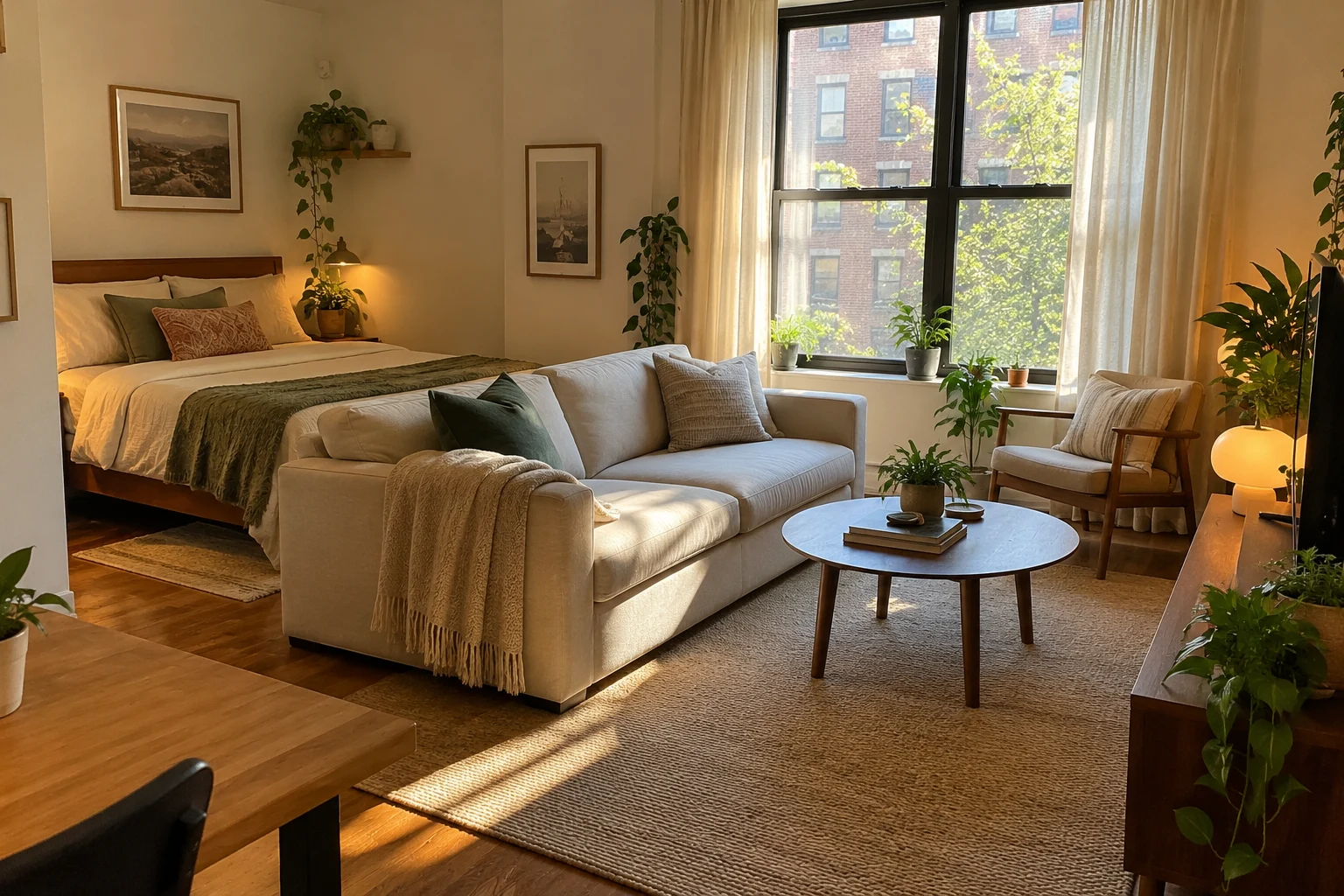
Furniture placement can create separate areas for sleeping, sitting, and working within one room.
The back of a sofa can mark the edge of a sitting area. A rug groups the seating together, while a desk facing a wall creates a work corner.
For more separation, a curtain or folding screen can partly hide the bed. You can pull the curtain back when you want to open up the space.
An open bookcase provides storage and some separation, although it still takes up floor space and needs secure anchoring.
A divider should let light through and leave room to walk past. A tall, solid screen between the only window and the sofa can make the living area much darker.
13. A Work Corner That Packs Away
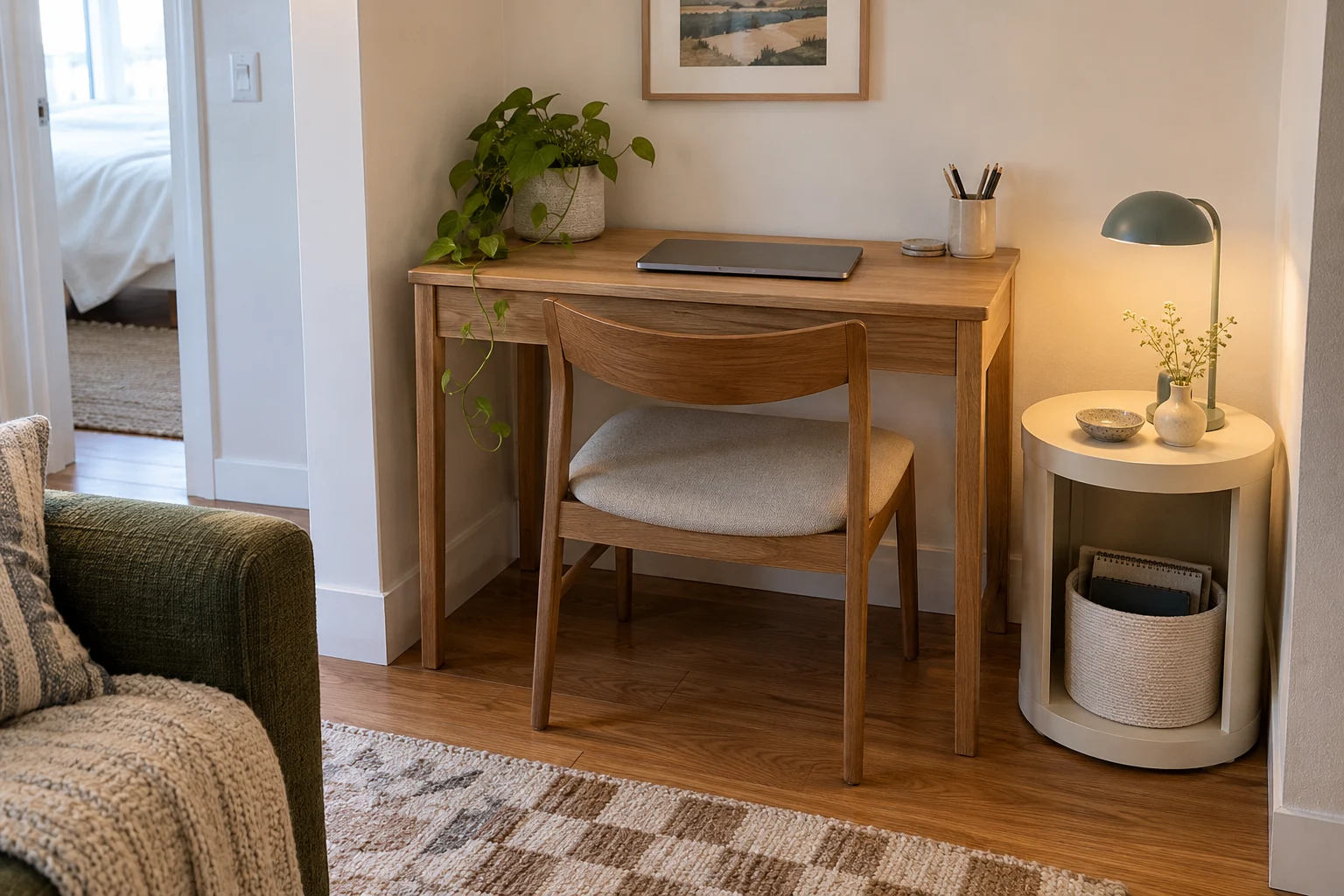
A drawer or basket for work supplies makes it easy to put your laptop, notebooks, and cables away at the end of the day.
A narrow desk can fit into a recessed corner. A desk with a fold-down writing surface closes up when you finish work. Your dining table can also serve as a desk if supplies have somewhere to go before dinner.
The VASAGLE LILEA Round Side Table with Fabric Basket provides a small tabletop and storage below. Beside a work chair or sofa, the basket can hold notebooks or small accessories you want nearby.
The round top measures 17.7 inches across. It provides an extra surface rather than enough room for a full desk setup.
If you work here every day, a comfortable chair and room for your legs matter. A shelf that barely holds a laptop may be too shallow for hours of use.
14. Personal Details Without Crowded Surfaces
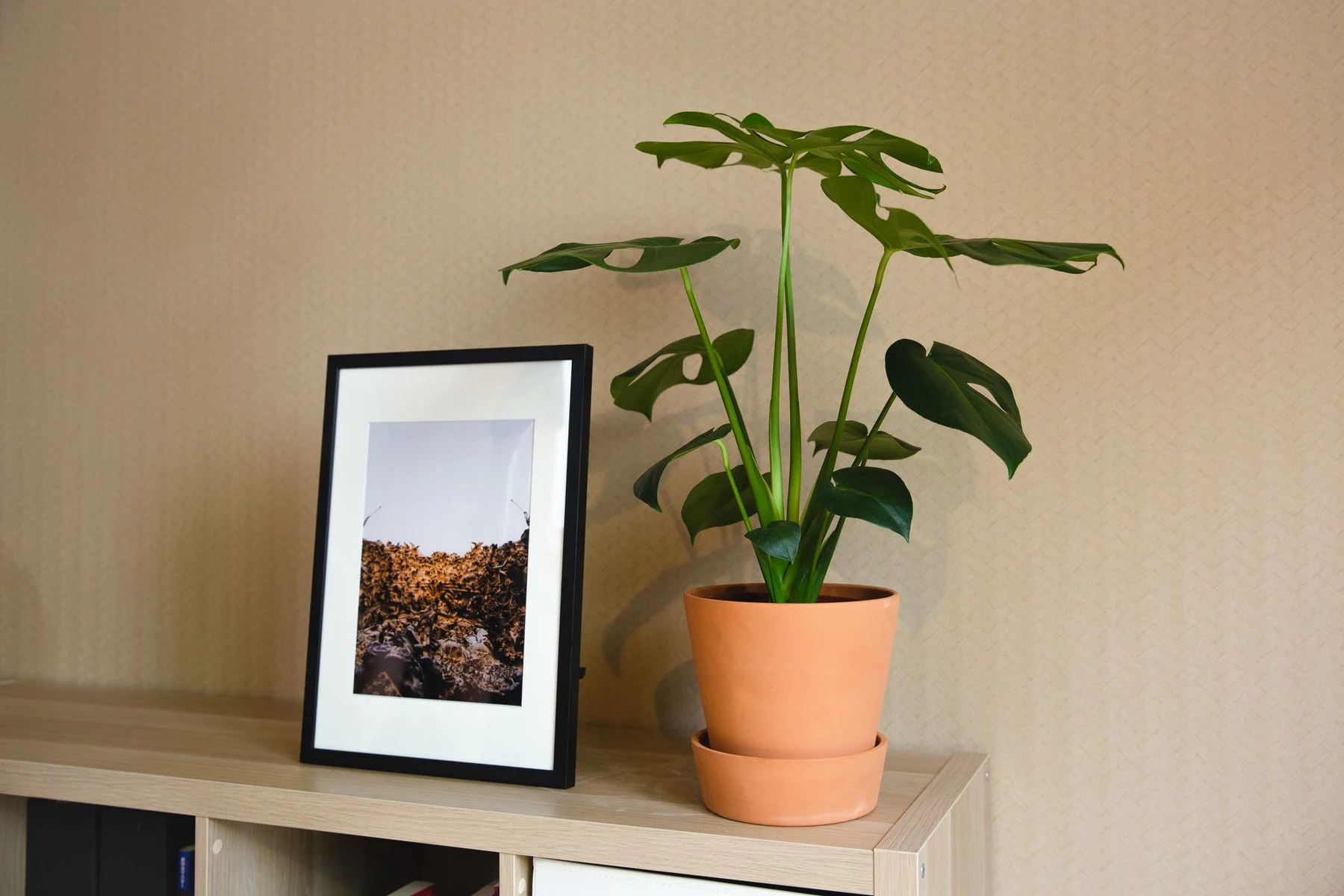
A few meaningful pieces can make an apartment feel personal without filling every surface.
One larger artwork gives a blank wall a clear focus. A gallery wall can work just as well when the frames form one connected group.
Secondhand finds add character at a lower cost. A wooden bowl, an unusual lamp, or a print you love may be enough to refresh a corner.
Nesting tables give you a place for decor without taking up as much room as two separate tables. The aboxoo Round Nesting Tables include two rustic-brown tables with metal frames. They can sit separately beside different seats or tuck together when you need more room.
A plant or small bowl can sit on one table while the other stays available for drinks.
Too many small objects can make cleaning frustrating. A tray groups a few favorites together and makes them easier to move. Find more ideas in our guide to reducing visual clutter.
15. Rental Updates You Can Take With You
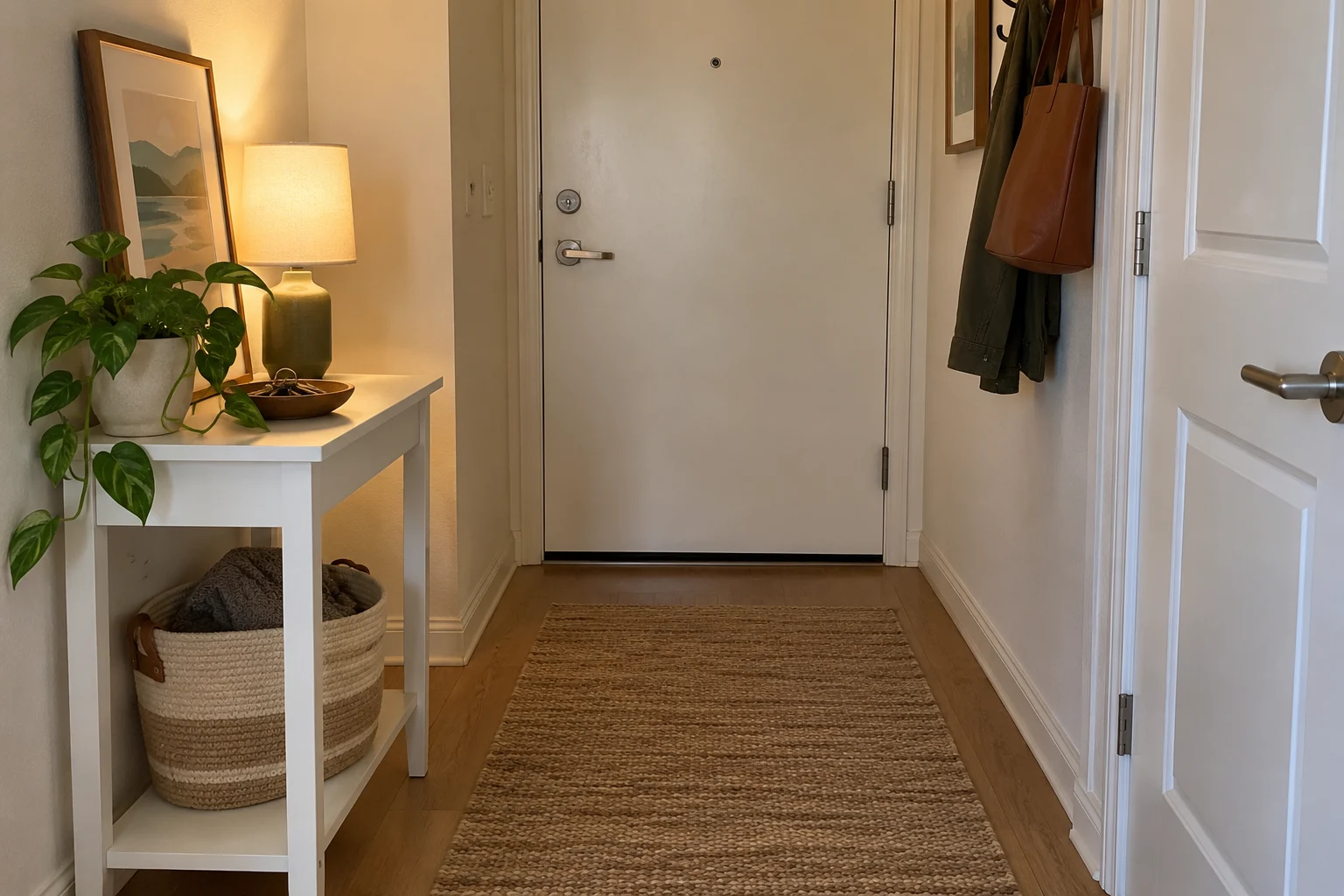
Portable decor gives you more options when you move. Rugs, lamps, artwork, and many storage pieces can work in the next apartment, too.
A small entryway needs somewhere for the things that otherwise collect on the floor. A compact table with a key dish and a basket underneath may be enough.
The IKEA LACK Side Table measures 13¾ inches square. It holds a drink beside a chair or a dish for keys near the door.
Replacement cabinet handles can also change the look of a rental kitchen. Handles with matching screw spacing avoid new holes, and the originals can go back before moving out.
For larger changes, see our guides to decorating rental walls and covering ugly rental floors.
A Small Apartment Decorating Checklist
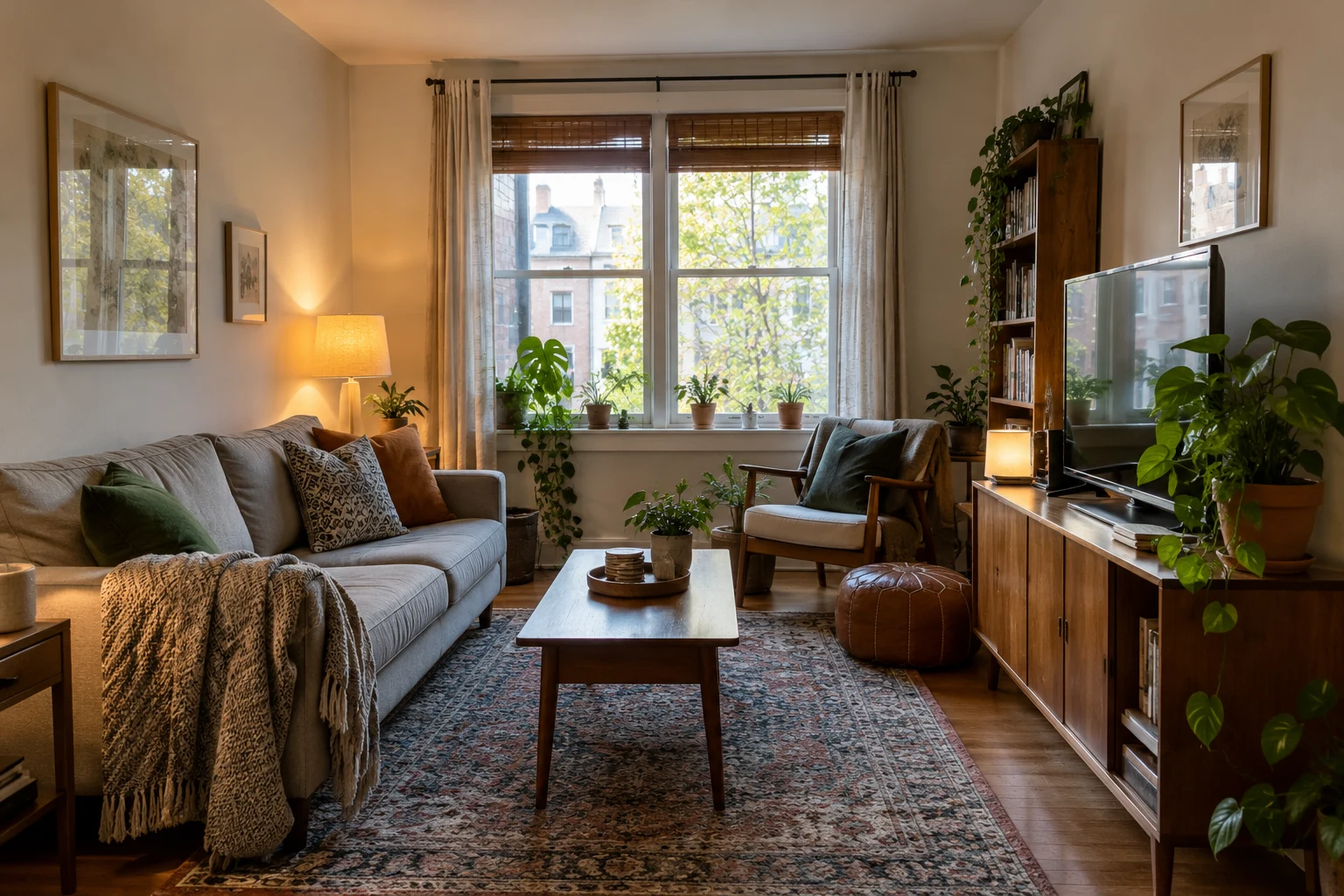
The most useful changes solve a daily problem. A clear route to the kitchen may matter more than another decorative accessory.
- I can walk through the apartment without squeezing around furniture.
- Doors and drawers open fully.
- Dining chairs have room to pull out.
- Everyday belongings have a place that is easy to reach.
- Curtains pull away from the window glass.
- Reading and work areas have suitable lighting.
- Rugs fit the furniture around them.
- My furniture suits the way I use the apartment.
- Favorite colors or materials appear in more than one place.
- Any new purchase solves a specific problem.
You do not have to buy everything at once. Try the new layout for a few days before deciding what else you need.
Common Questions About Decorating a Small Apartment
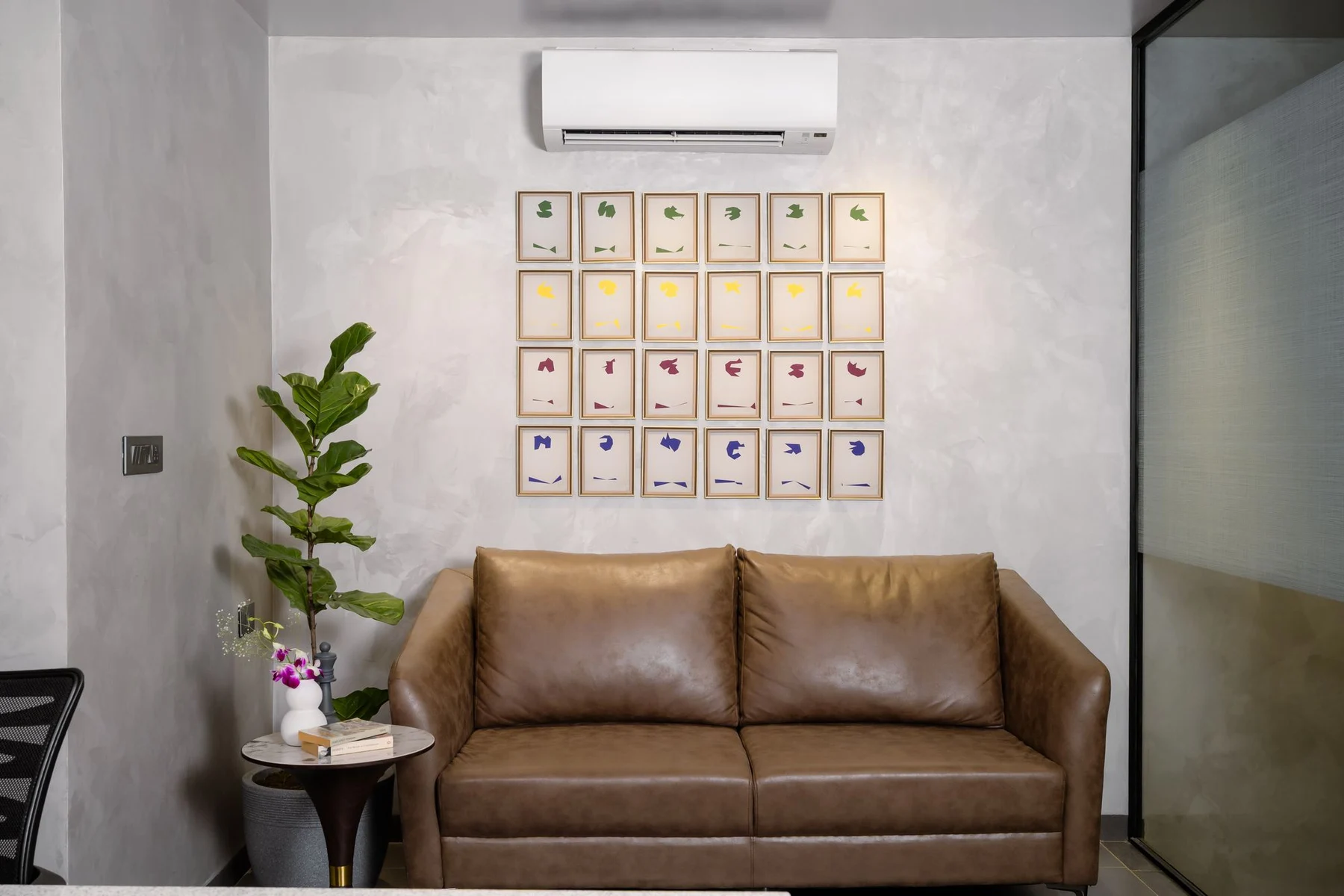
Furniture size, storage, light, and layout make the biggest difference. Here are answers to a few common decorating questions.
How Do You Make a Small Apartment Feel Bigger?
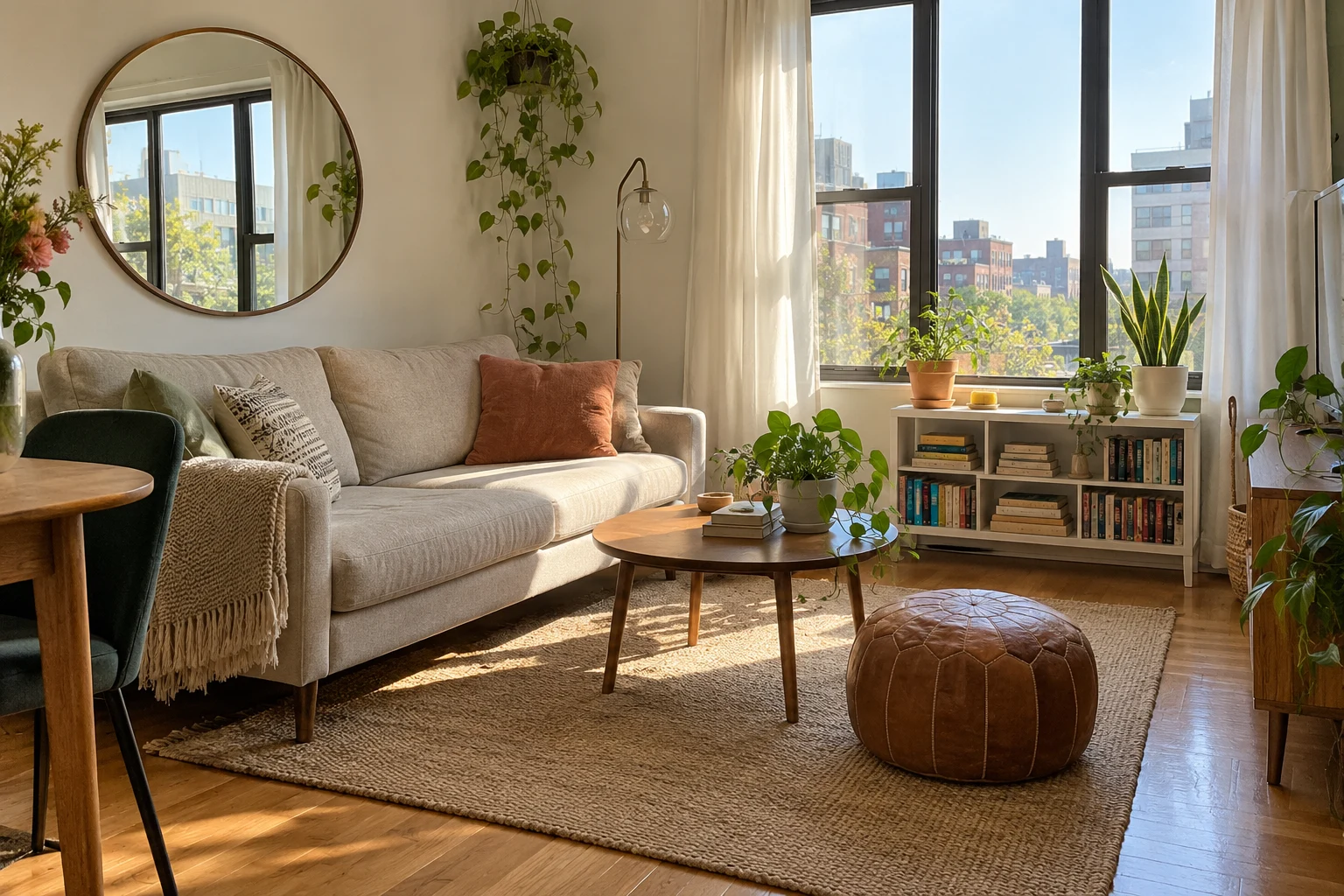
Clear walkways and furniture that fits make the room feel less crowded. Storage keeps belongings off the floor, and open curtains let in daylight. A mirror reflecting the room can make it feel larger.
Can Dark Colors Work in a Small Apartment?
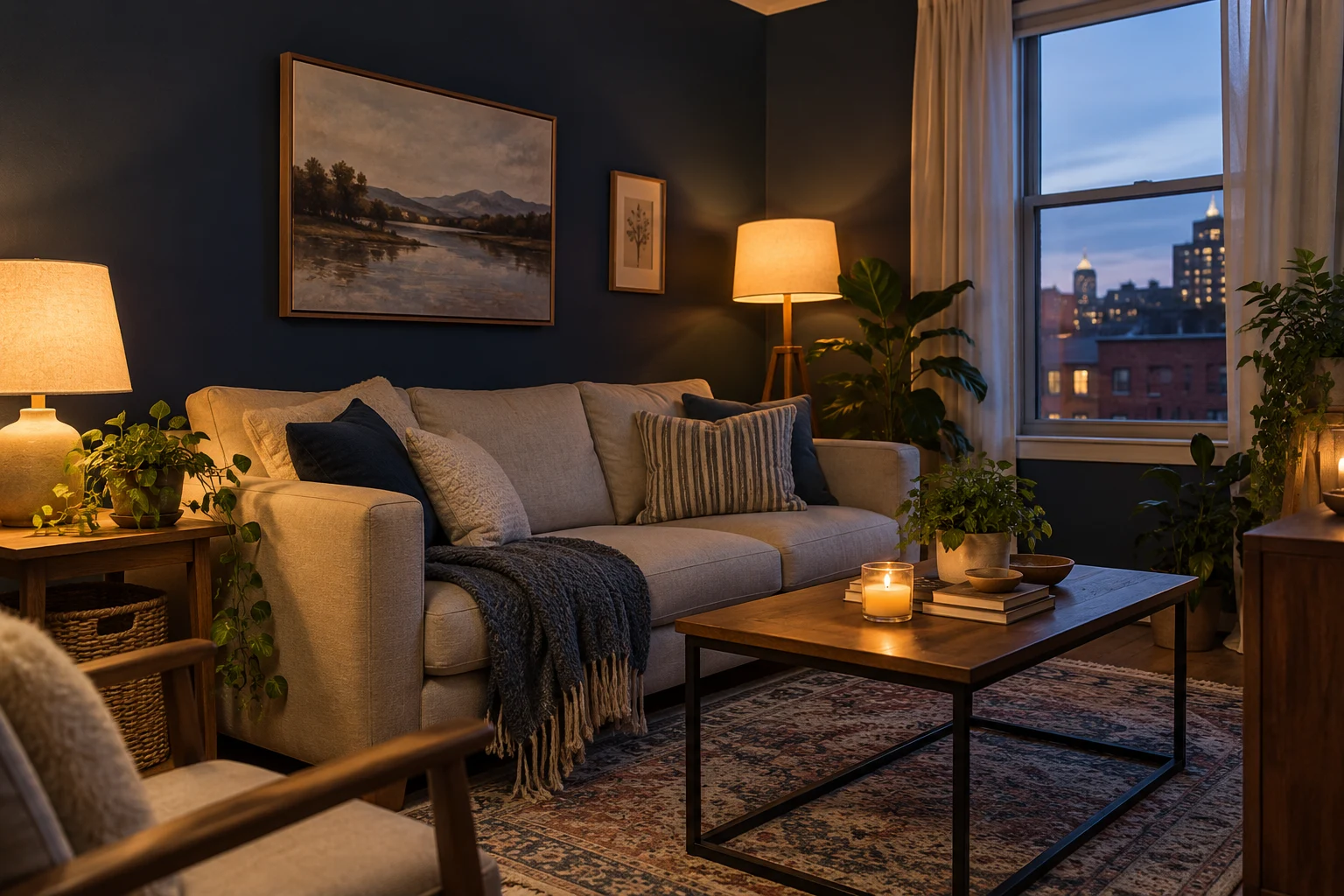
Yes, dark colors can make a small room feel cozy. Lamps beside the sofa, lighter cushions, and curtains pulled open during the day help keep it from feeling too dark.
How Do You Decorate a Studio Without Making It Feel Crowded?
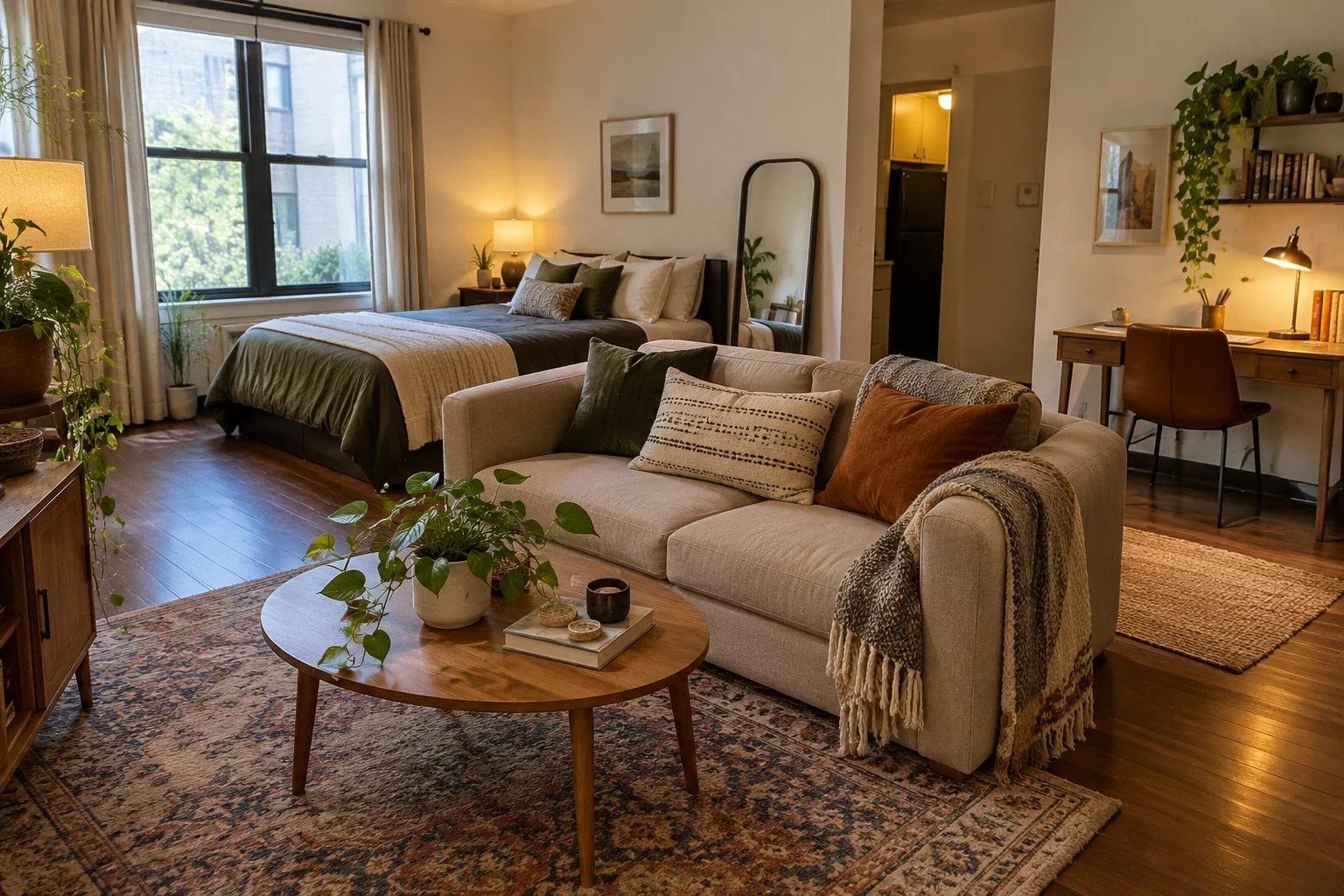
Separate places for sleeping, sitting, and working make a studio easier to use. A sofa, rug, or curtain can mark those areas. Fewer unnecessary pieces leave more room between them.
What Should You Buy First?
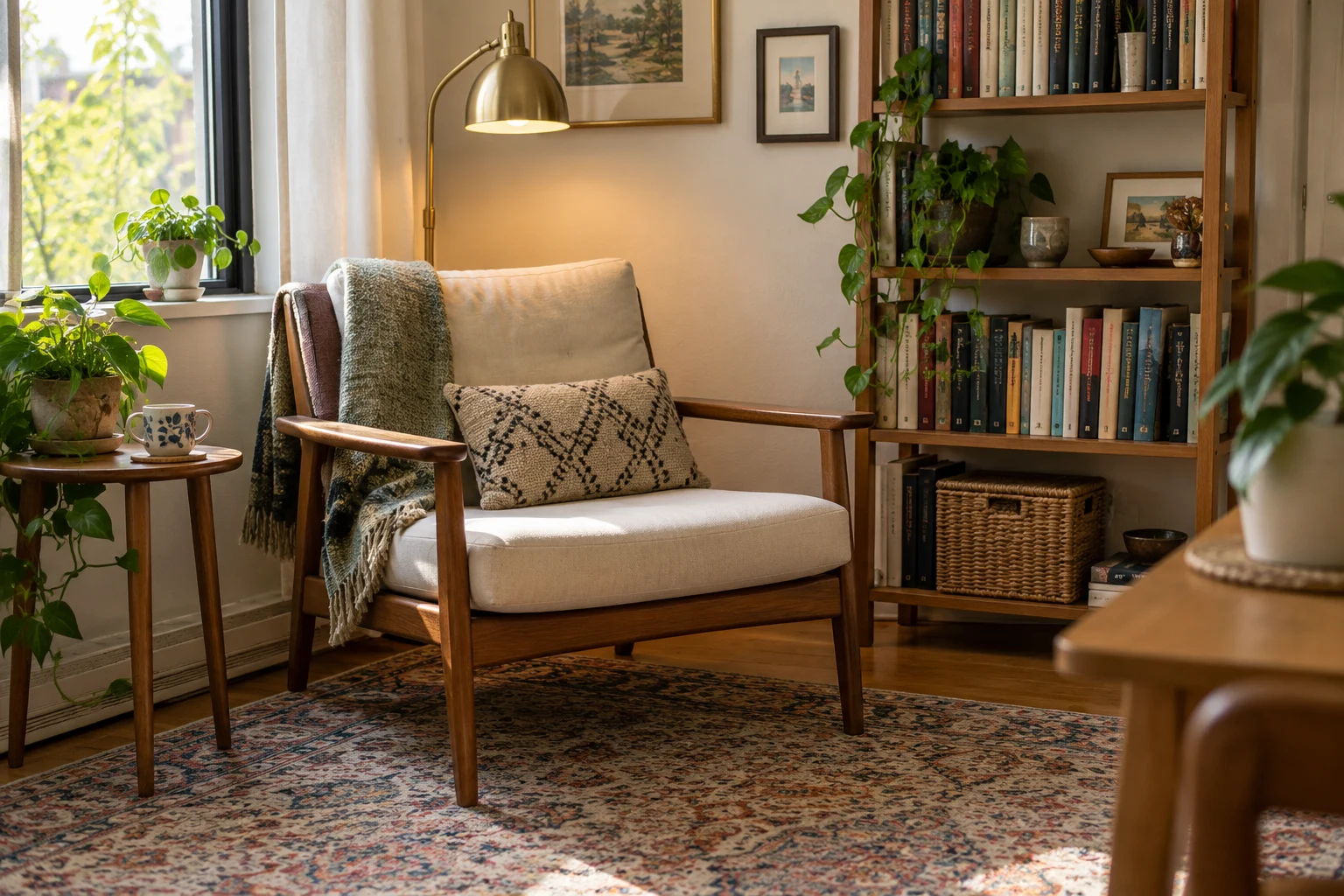
Something that solves your biggest daily problem is worth buying first. That might be a comfortable chair, a reading lamp, or storage for clothes piled on the floor. Artwork and other decorations can come later.
Furniture and Decor Mentioned in This Guide
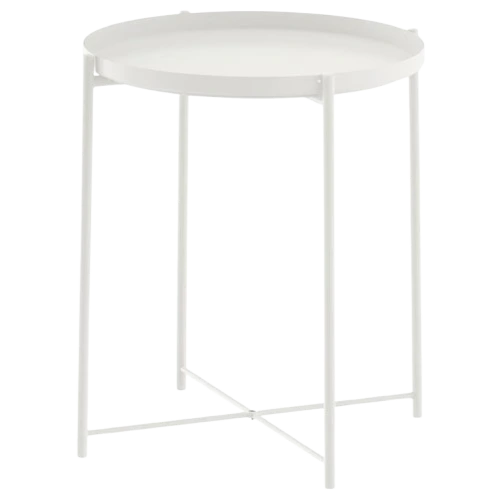 IKEA GLADOM Tray TableA movable side table with a removable tray top for drinks and snacks beside a sofa or chair.
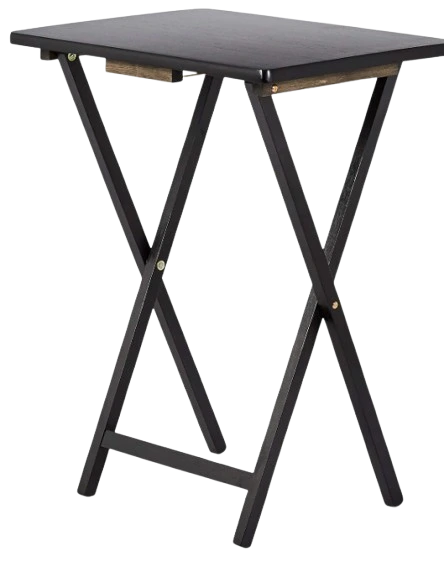 Amazon Basics Folding TV Tray Tables, Four-PackFour black folding tables with a matching storage rack for occasional meals and extra surfaces.
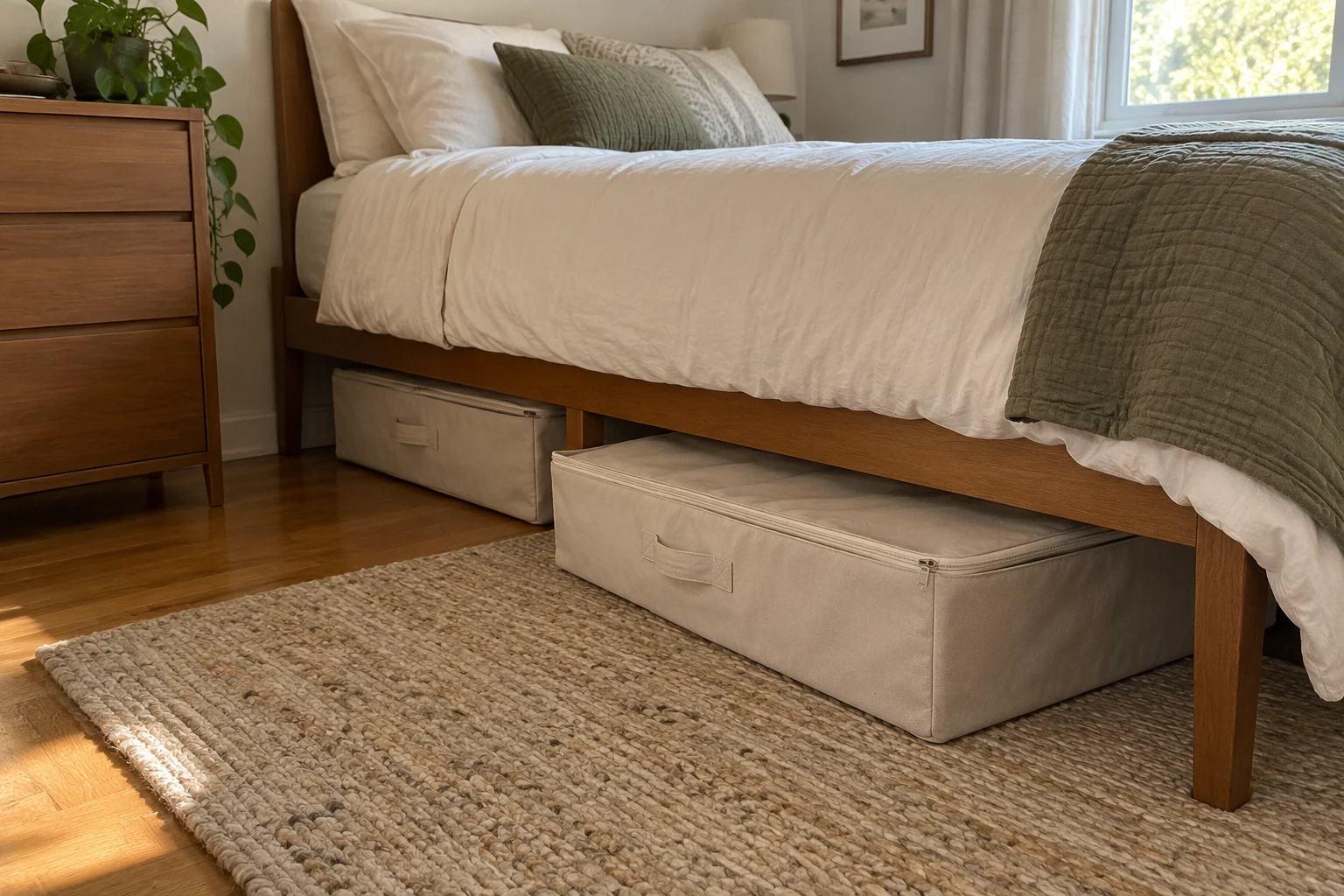
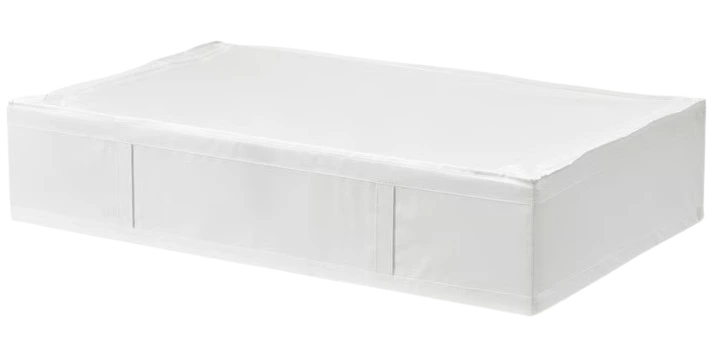 IKEA SKUBB Storage CaseA fabric storage case with handles for bedding or seasonal clothes under the bed.
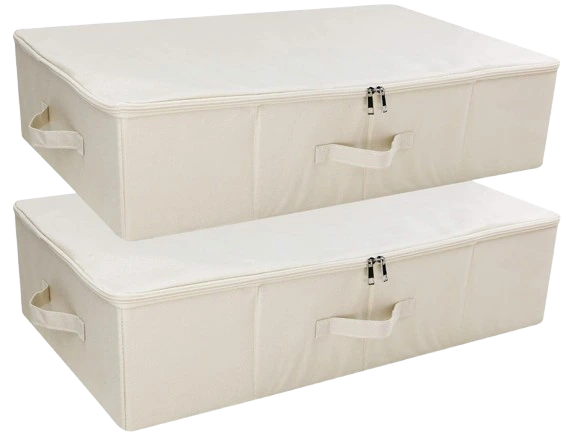 iwill CREATE PRO Under-Bed Storage BinA reinforced fabric bin with a zippered lid and handles. It needs more than 7½ inches of space beneath furniture.
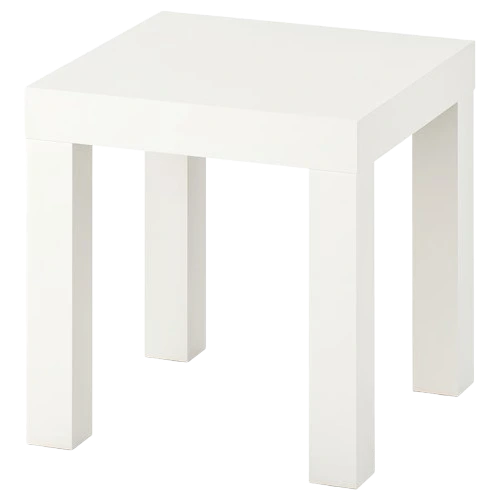 IKEA LACK Side TableA 13¾-inch-square table for a drink, book, or small lamp beside your seat.
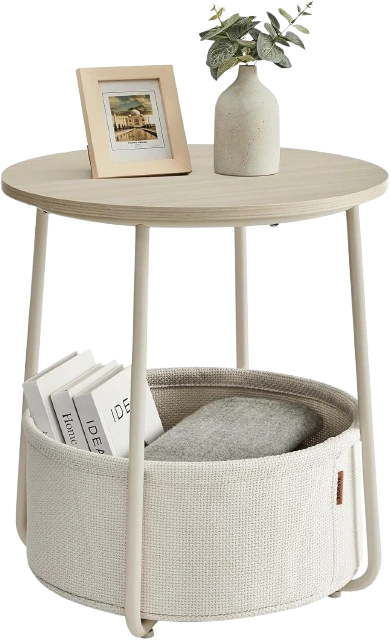 VASAGLE LILEA Round Side Table with Fabric BasketA cream-white side table with a fabric basket for notebooks, accessories, or other small belongings.
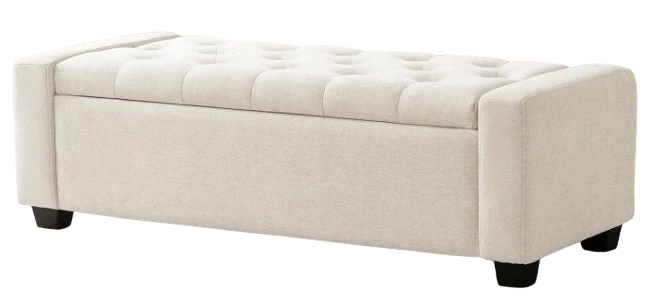 Huatean Home 48-Inch Storage Ottoman BenchA beige upholstered bench with a hinged lid and hidden storage for blankets or board games.
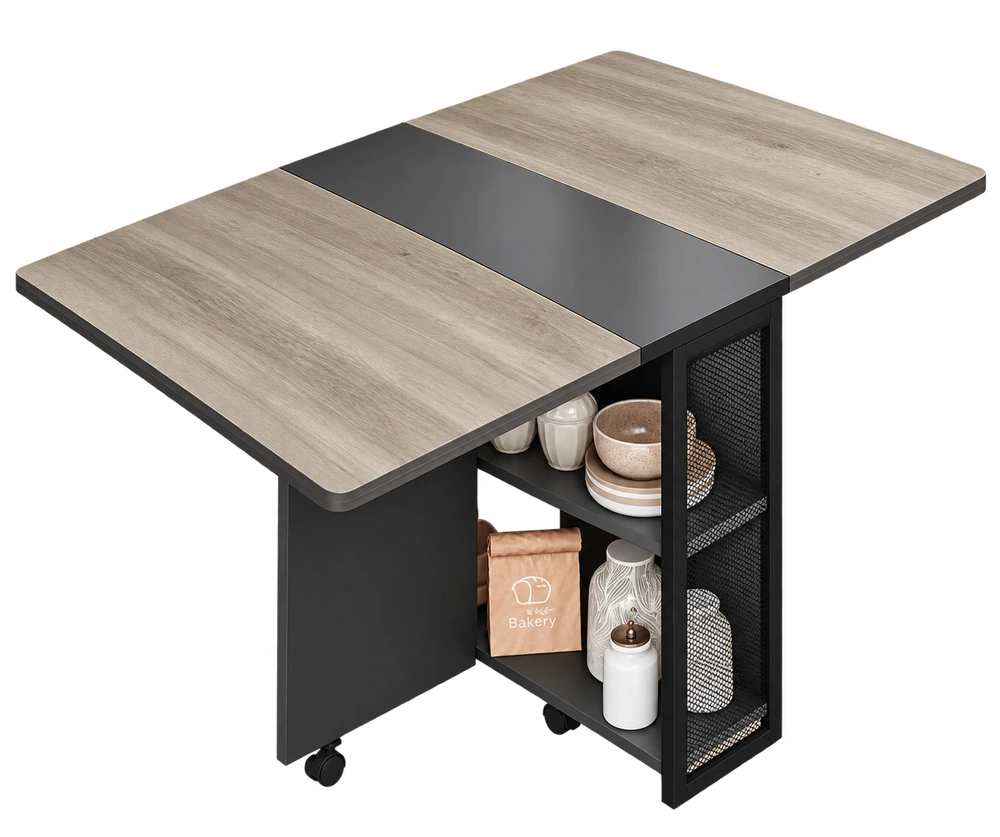 IDEALHOUSE Drop-Leaf Dining TableA table with folding sides, two storage shelves, and six wheels. It opens up for meals or work.
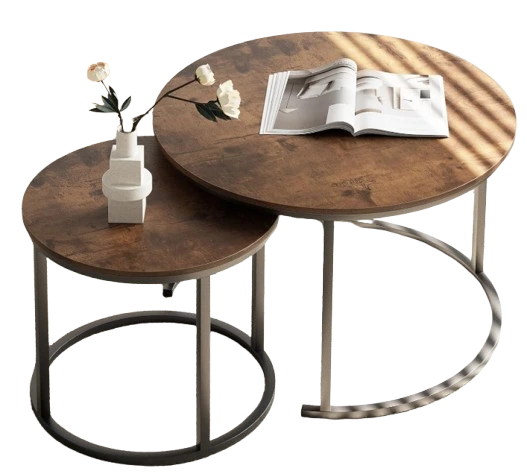 aboxoo Round Nesting Tables, Set of TwoTwo rustic-brown tables with metal frames that sit separately or tuck together.
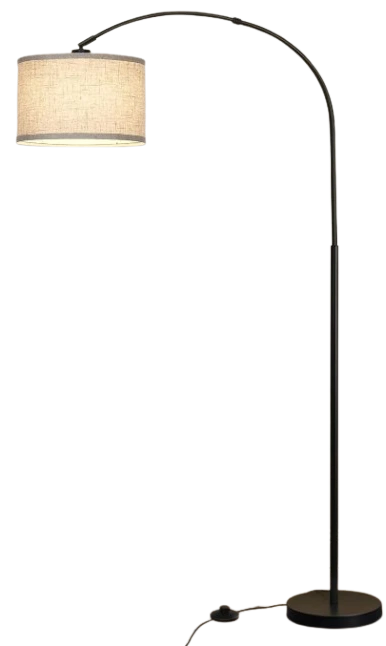 Seaside Village Arc Floor LampA curved floor lamp with an adjustable drum shade and foot switch. Bulb sold separately.
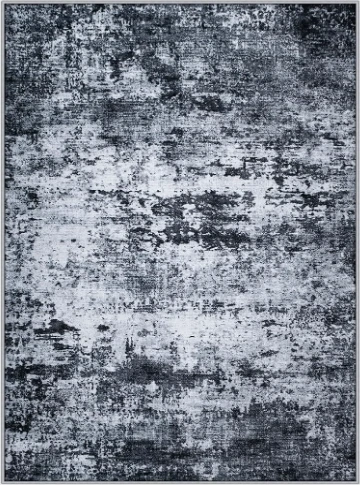 5-by-7-Foot Washable Abstract Area RugA low-pile rug with a black abstract design for a compact seating area.