Love the Viral Bubble Sofa? 4 Roche Bobois Alternatives Worth Checking

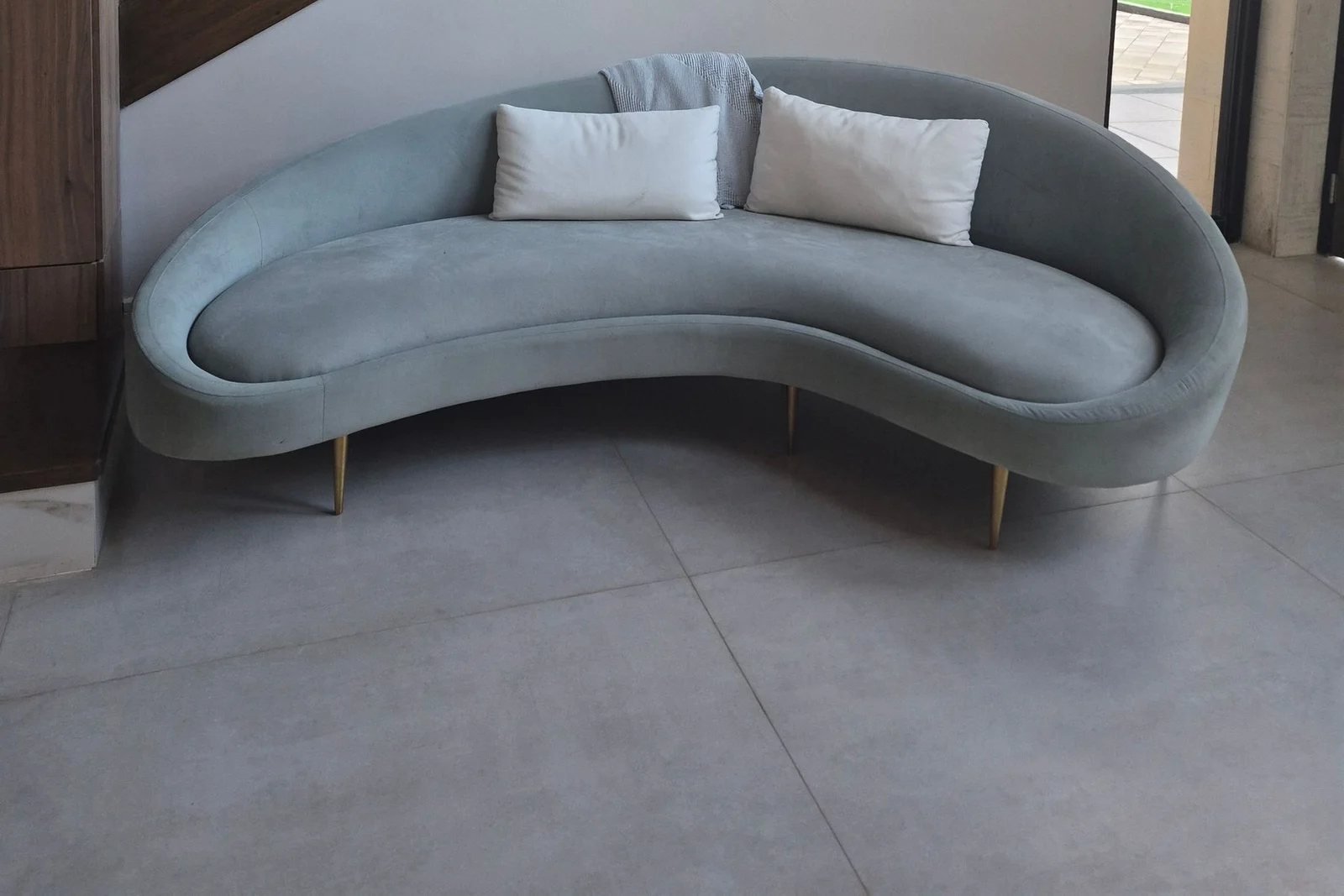
You’ve probably seen the viral bubble sofa on TikTok or Instagram: puffy curves, bright colors, and a seat that looks ready for an afternoon nap. Add the boneless couch unboxing videos everyone keeps sharing, and suddenly your perfectly ordinary sofa feels a little less exciting.
The quick answer
- A sculpted bubble sofa adds a rounded, playful shape; a framed curved sectional offers a more structured alternative.
- A boneless sleeper suits a casual room where flexible seating and occasional sleeping space matter.
- Choose for seat height, support, room size, and fabric care, as well as the rounded appearance.
The appeal is easy to understand. These sofas soften a room full of straight lines, look inviting, and make a statement without a pile of decorative cushions.
Below, we’ll explain where the bubble sofa came from, what makes it comfortable, what’s underneath the upholstery, and four Amazon alternatives that bring different parts of the look home.
What Exactly Is a Bubble Sofa?
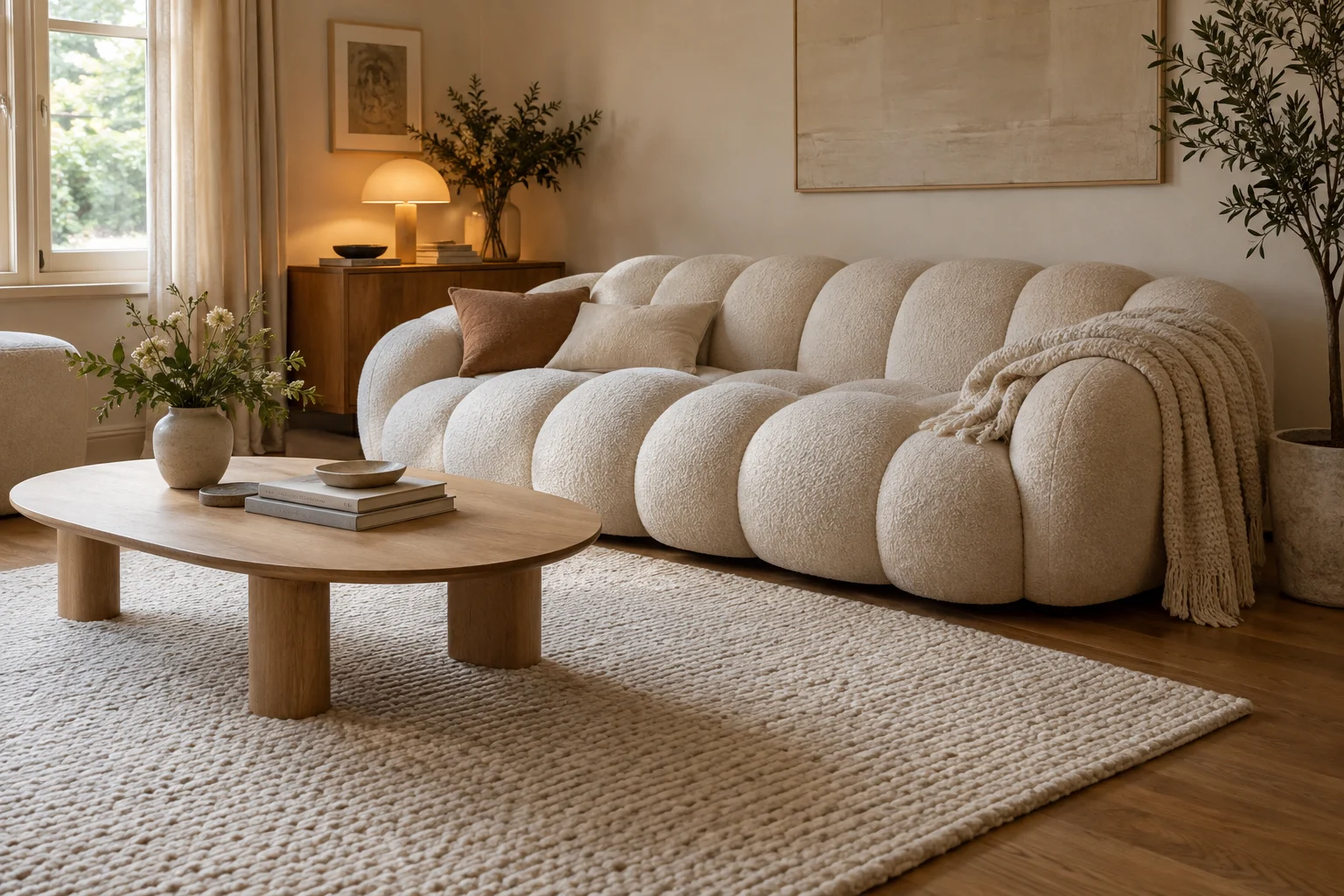
A bubble sofa is a sofa with rounded, inflated-looking sections that resemble a cluster of bubbles. Its curves give it a recognizable shape, whether the upholstery is orange, cream, green, or blue.
Some versions have pronounced individual bubbles. Others take a gentler approach, with curved arms, a scalloped back, or one continuous rounded seat.
That variety explains why searching for a bubble couch brings up furniture that looks quite different from one listing to the next.
Bubble, Cloud, and Boneless: What’s the Difference?
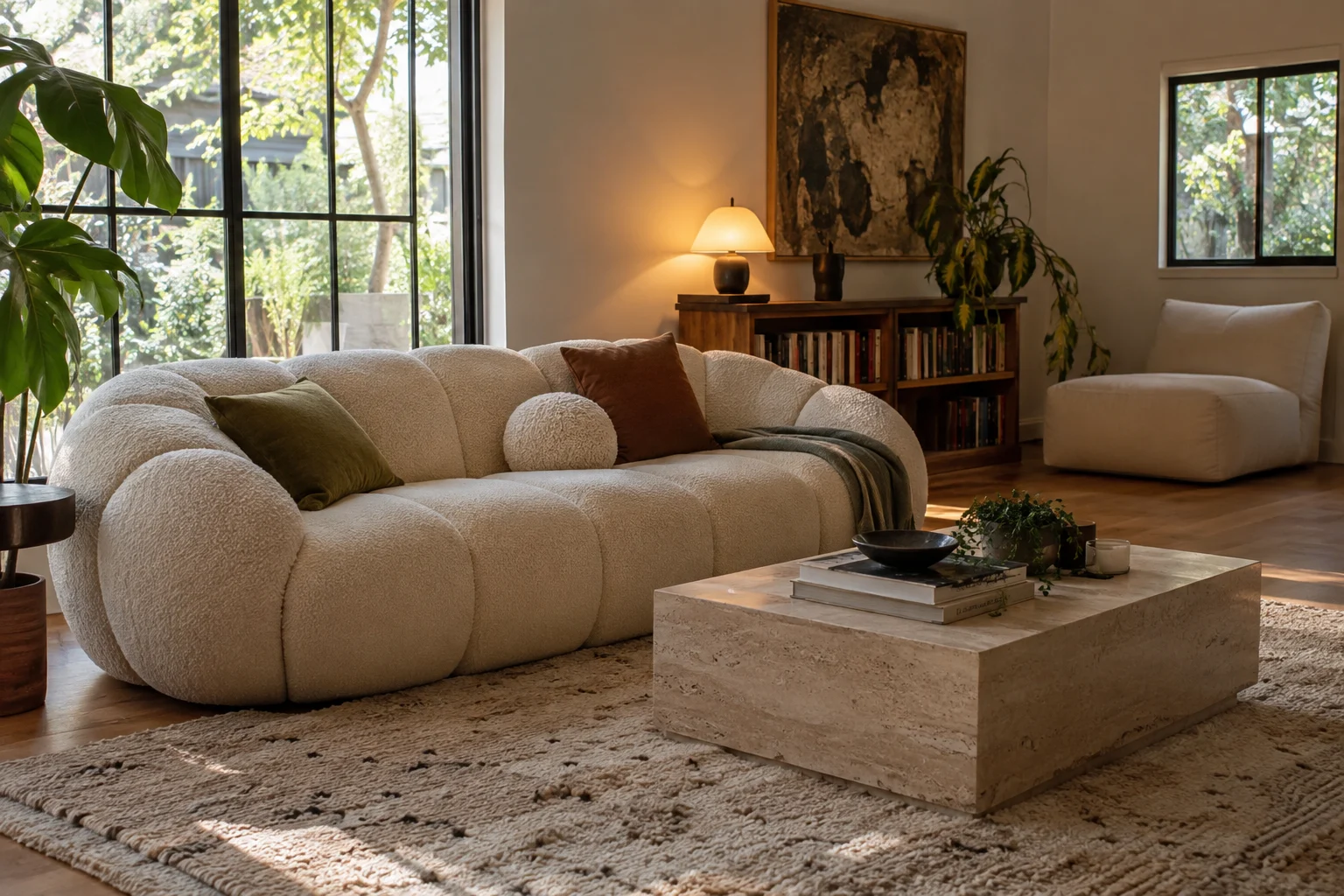
“Bubble” describes the appearance, while “boneless” describes the absence of a conventional rigid frame. “Cloud couch” is a broader shopping term often used for plush-looking seating, as well as specific named collections.
| Sofa term | What it usually describes | What the name alone won’t tell you |
|---|---|---|
| Bubble sofa | Puffy, rounded, sculptural forms | Whether it contains a rigid frame |
| Cloud couch | Plush-looking seating and generous cushions | The filling, firmness, or construction |
| Boneless sofa | A sofa without a conventional rigid frame | Whether it has the bubble silhouette |
| Curved sofa | A rounded back, seat, or overall outline | Whether it feels soft or supportive |
A sofa can fit more than one category. For example, a foam-based couch may be both boneless and bubble-shaped.
The Original Has Been Around Longer Than Your Feed
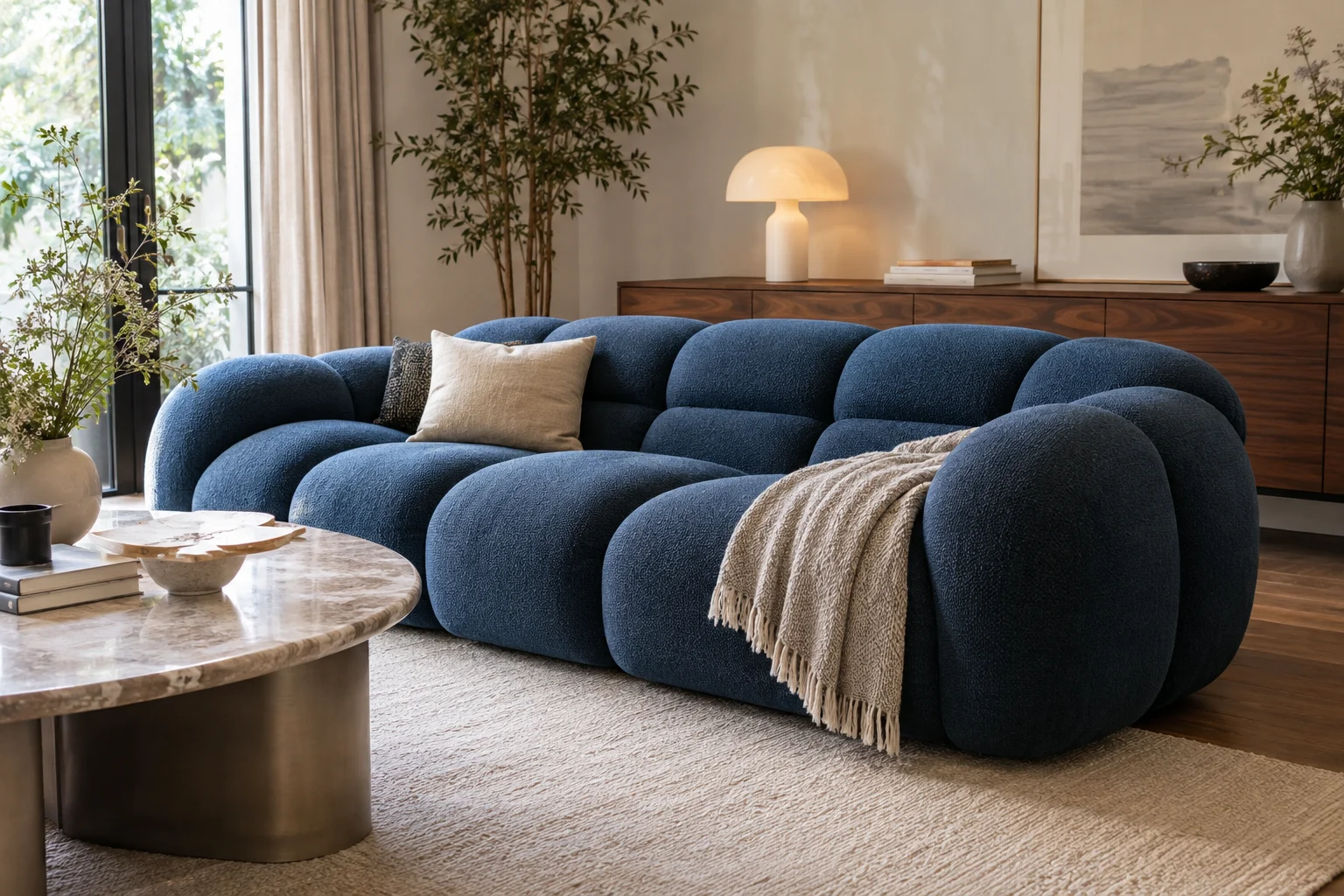
Sacha Lakic created the Roche Bobois Bubble in 2014. The original combines shaped foam, a wood frame, and specially developed stretch upholstery that follows its rounded forms. Sacha Lakic’s design details
That last detail matters: the famous designer Bubble has a frame. The compressed boneless couches appearing in unboxing videos represent a different construction, even when they borrow a similar silhouette.
When Did the Bubble Sofa Go Viral?
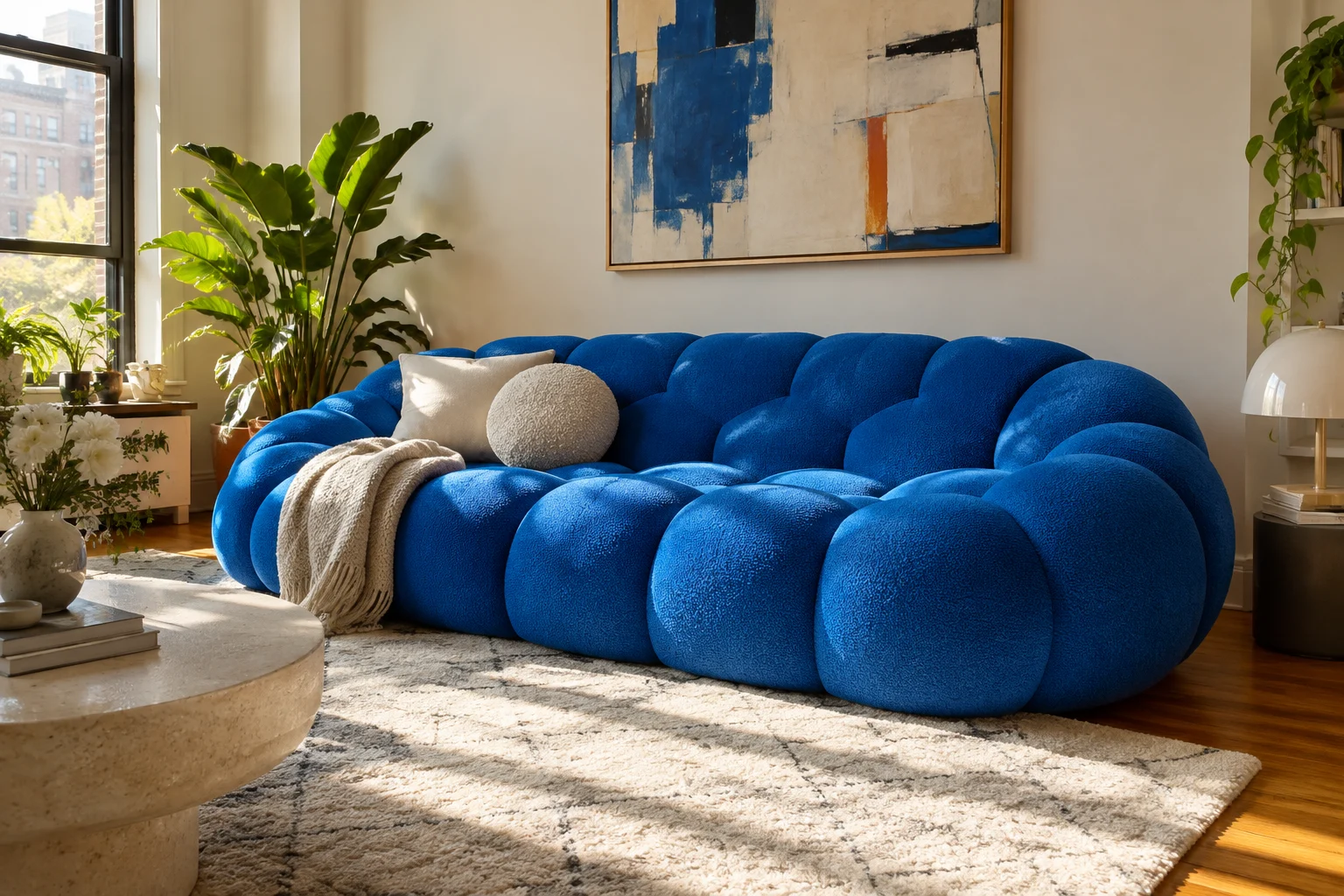
One major viral moment arrived in May 2023, when Amanda Joy shared a TikTok about finding a blue bubble-style sofa on a New York sidewalk and bringing it home. Her TikTok video helped turn the distinctive couch into an internet talking point.
The broader appeal goes beyond that one video. Puffy upholstery reads clearly on a small screen, bold colors catch your attention, and compressed sofa unboxings give viewers a satisfying before-and-after transformation.
You can appreciate the look without expecting every sofa sharing its name to feel the same.
Is a Bubble Sofa Actually Comfortable?
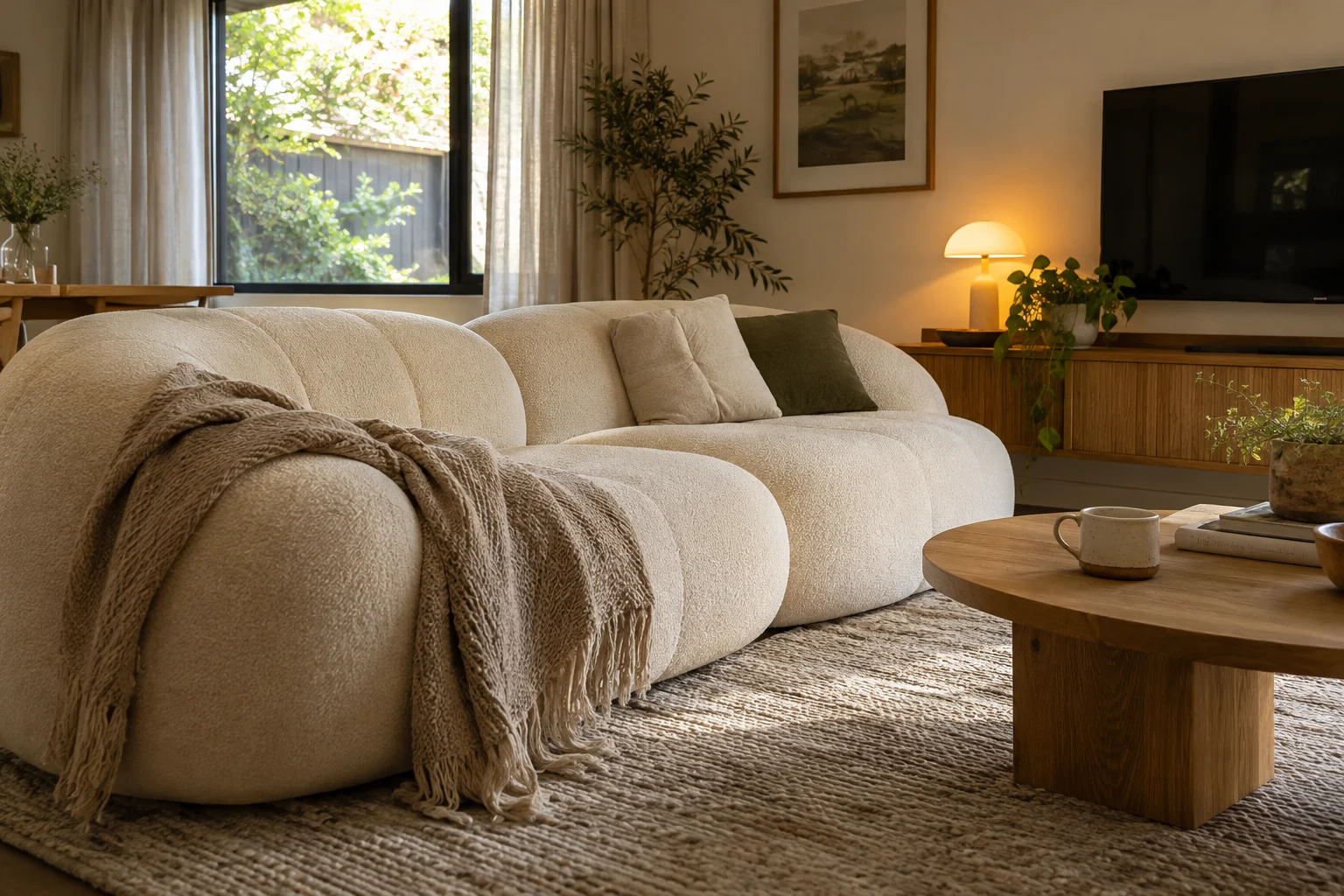
A bubble sofa can be comfortable for lounging, but its shape alone cannot promise a comfortable evening. Seat depth, back height, firmness, and your preferred sitting position do most of the work.
Think about your usual spot on the couch. Are your feet on the floor, tucked underneath you, or stretched toward the coffee table? That habit tells you more about the right sofa than a beautifully styled product photo.
Feet Up? A Deep Seat Makes Sense
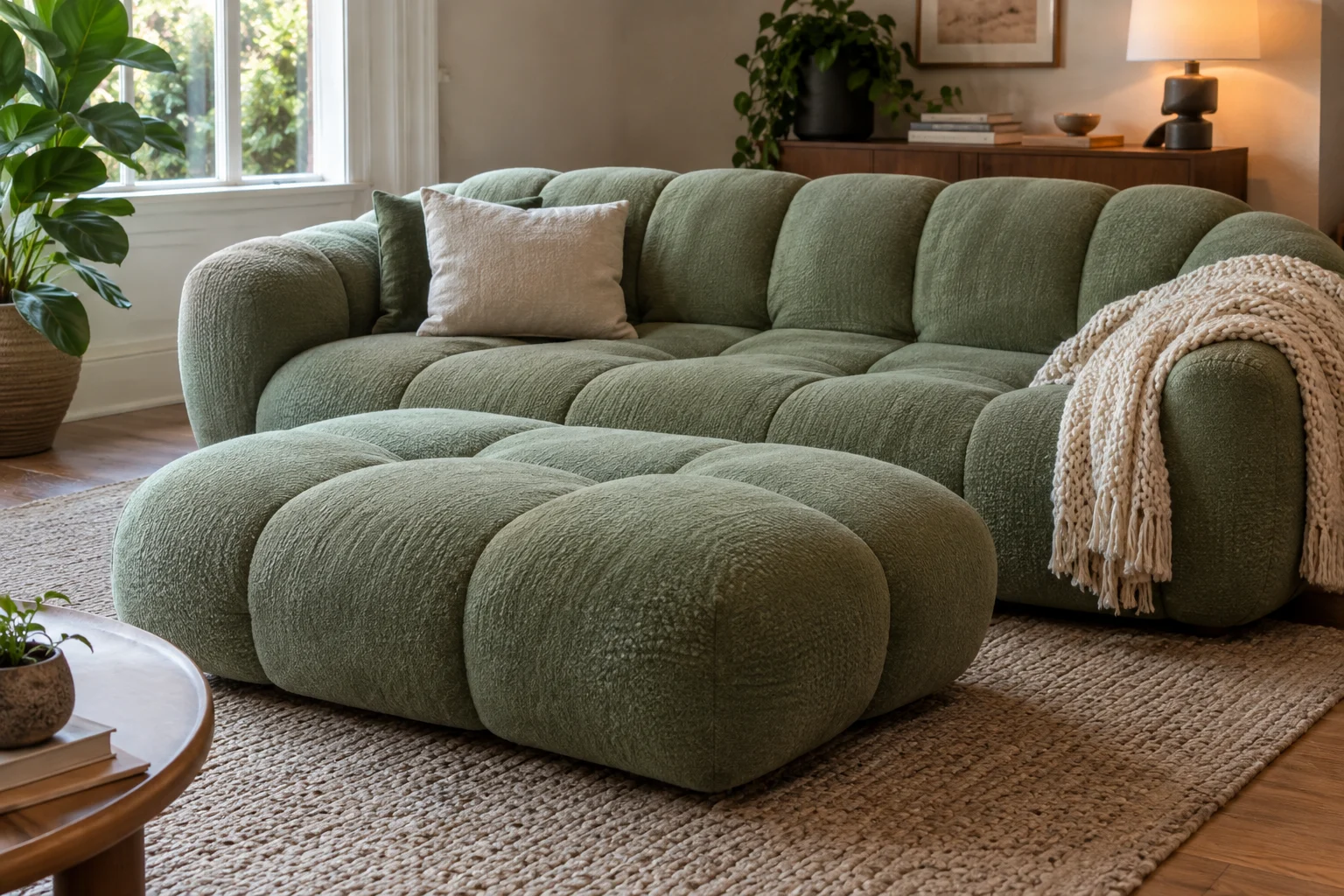
Deep seating suits people who curl up or stretch out. It gives you space to change positions without balancing on the edge of a cushion.
If your favorite evening involves a film and a blanket, this can be a useful feature. An ottoman or chaise extends that lounging space without requiring you to sit sideways.
Sitting Upright Needs a Different Kind of Support
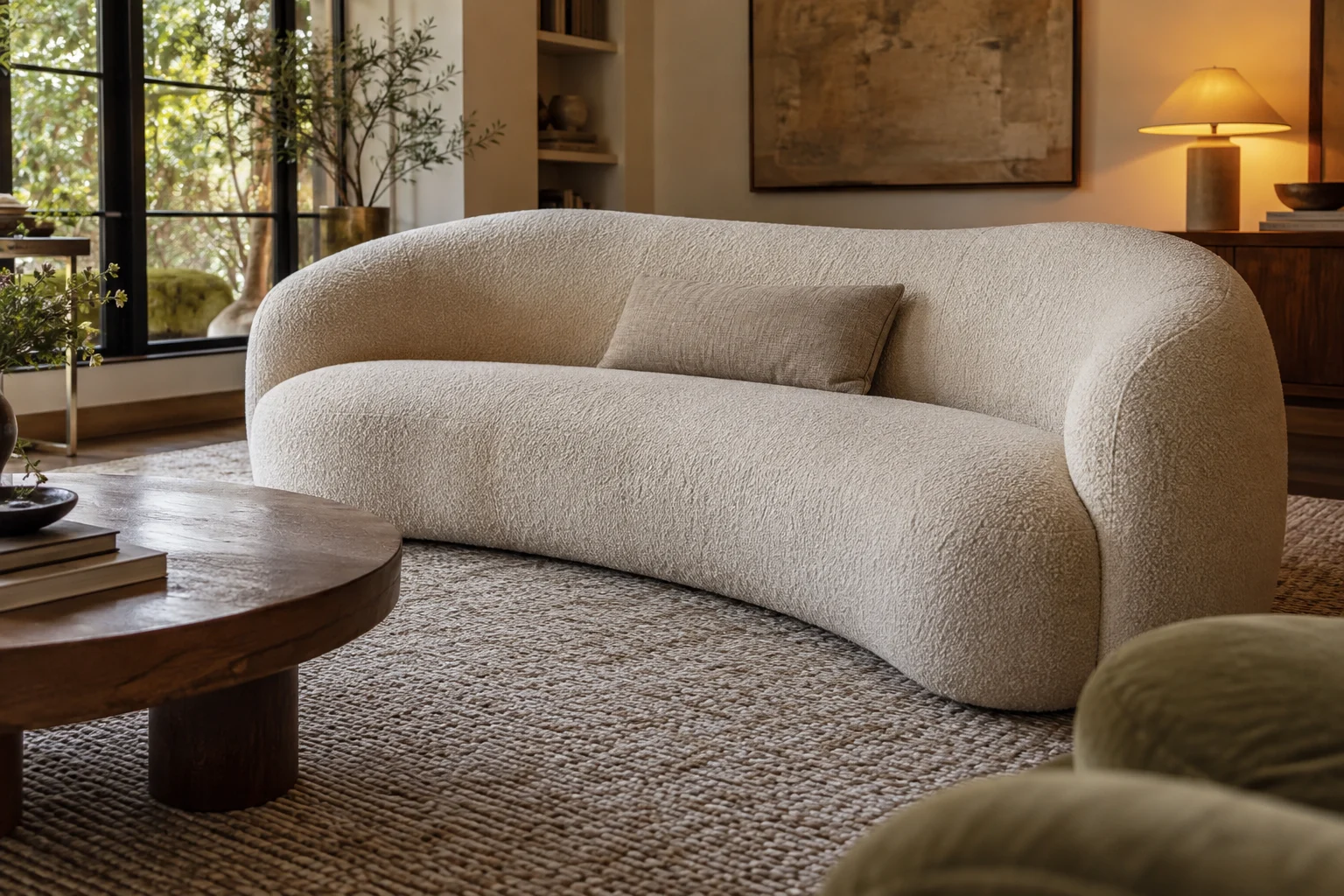
Comfortable upright sitting needs a usable backrest and a seat depth that lets you settle against it. A very deep sofa can leave a shorter person choosing between supported feet and a supported back.
A cushion behind you can reduce the sitting depth. Still, the main sofa should suit your everyday position without needing a small construction project before every cup of coffee.
Getting Up Is Part of the Comfort Test
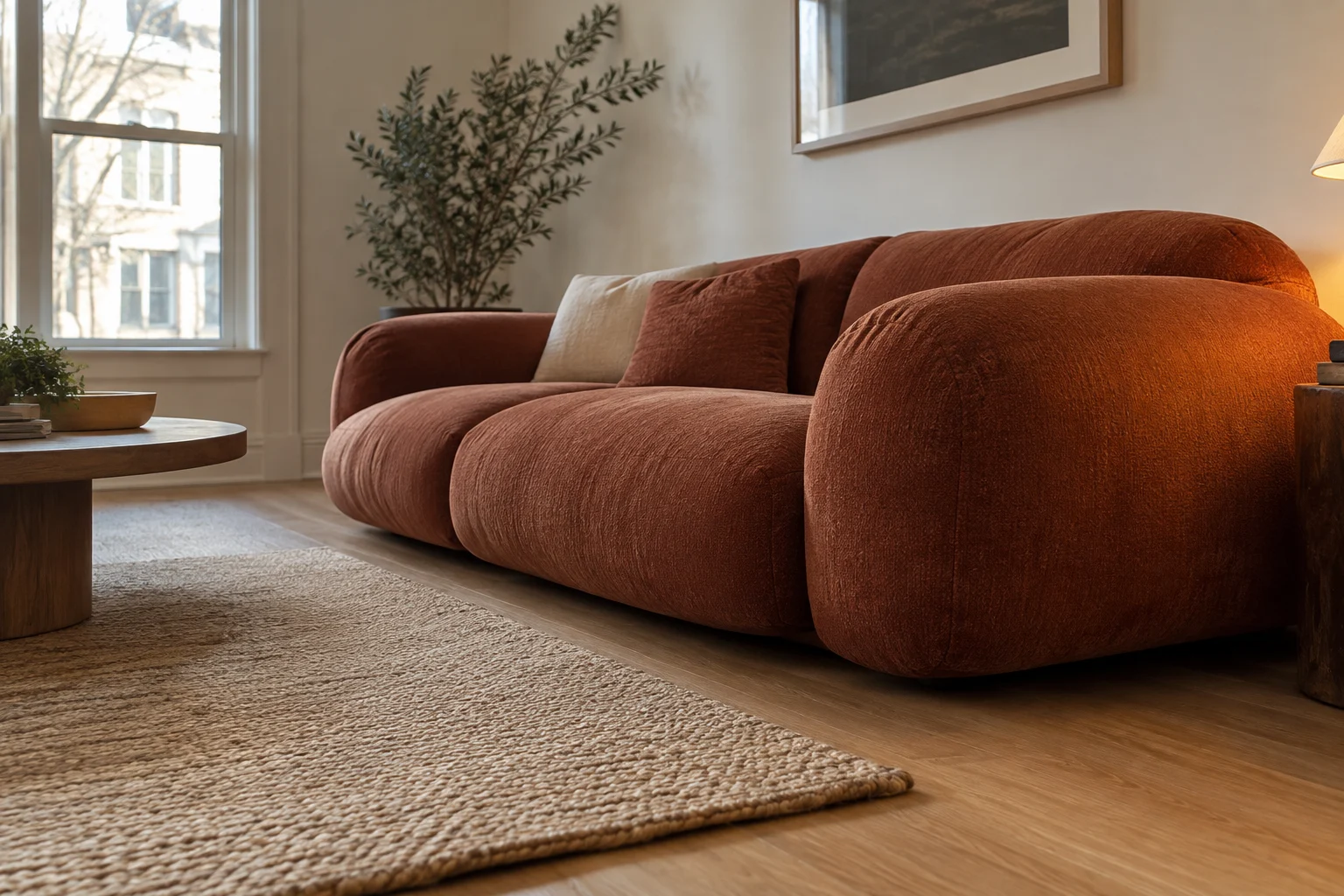
A low, yielding seat can take more effort to stand up from. Soft edges may compress as you shift forward, and a foam arm may offer limited resistance when you push against it.
For a main living room used by several people, give seat height and edge support the same attention as softness. A higher, more structured seat may suit the household better.
What’s Inside a Bubble Sofa?
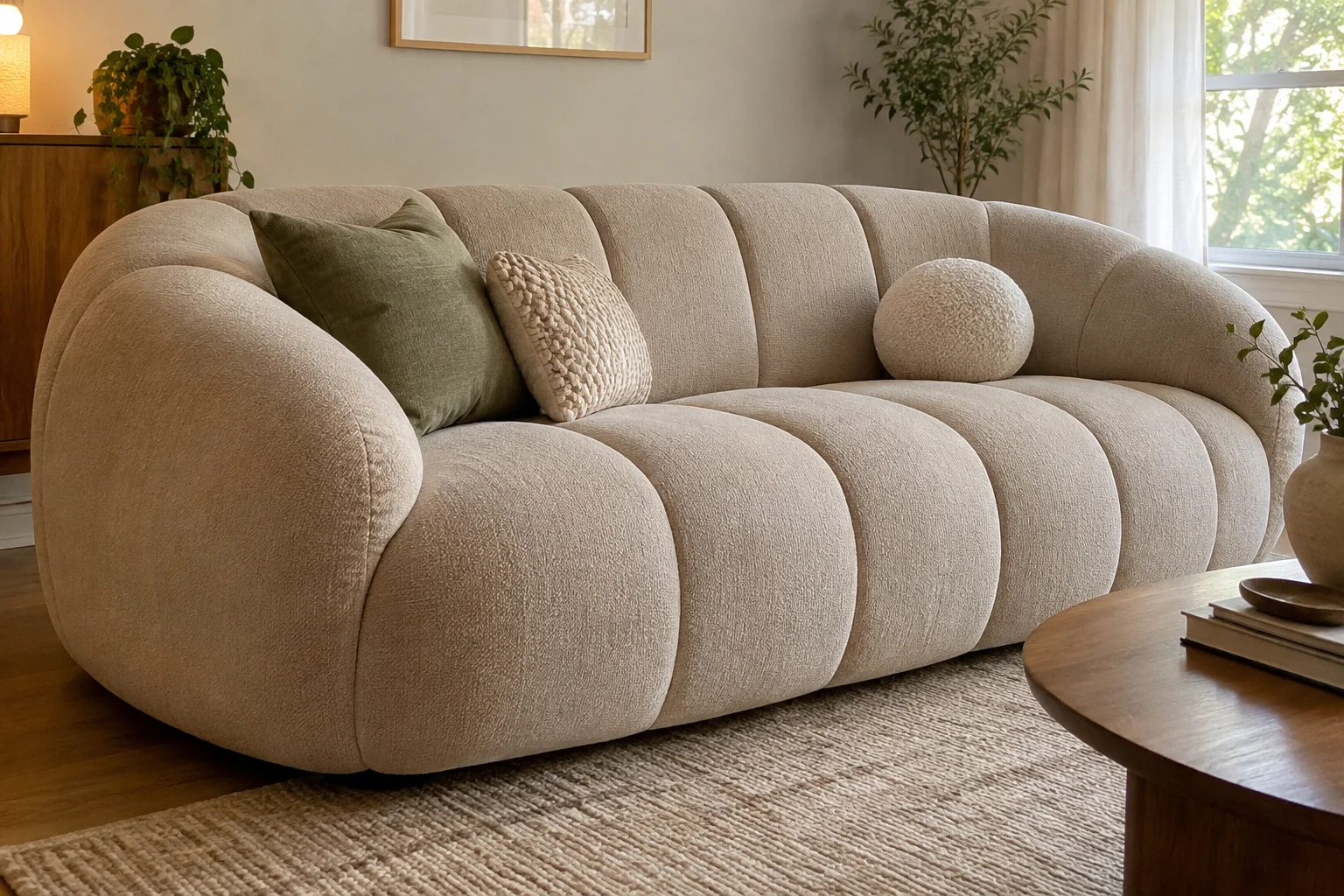
Bubble-style sofas can contain wood frames, foam cores, springs, or combinations of those materials. Their similar appearance can disguise very different builds.
Knowing the construction helps explain why one sofa holds a defined sitting position while another feels more like a low lounge.
Framed Sofas Hold Their Structure Differently
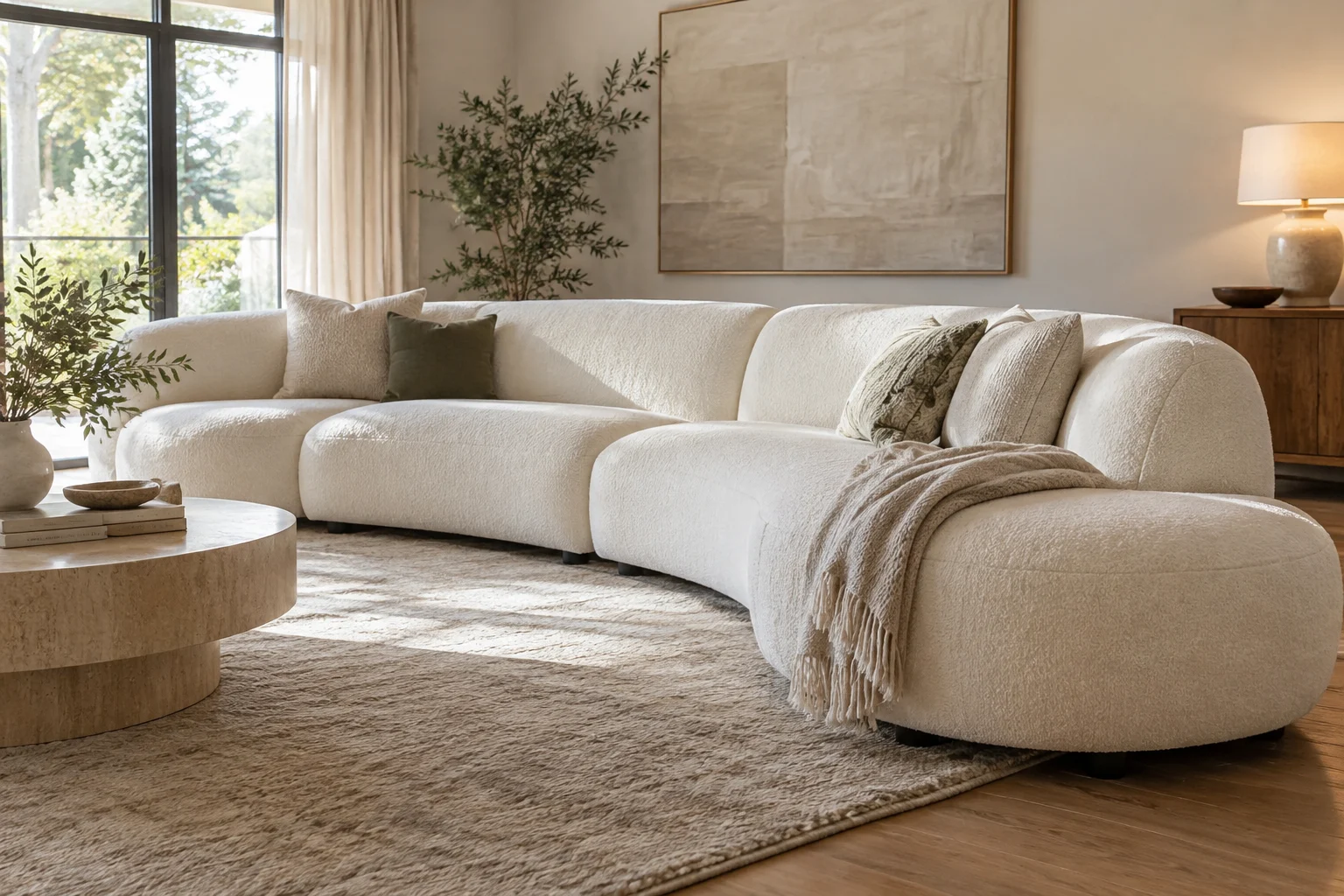
A framed sofa uses a rigid structure beneath its cushioning. Foam and, in some designs, springs provide the sitting surface while the frame supports the overall form.
This construction is useful when you want rounded furniture with a more conventional sofa foundation. The white Acanva sectional featured below follows that approach.
Boneless Sofas Rely on Their Foam Body
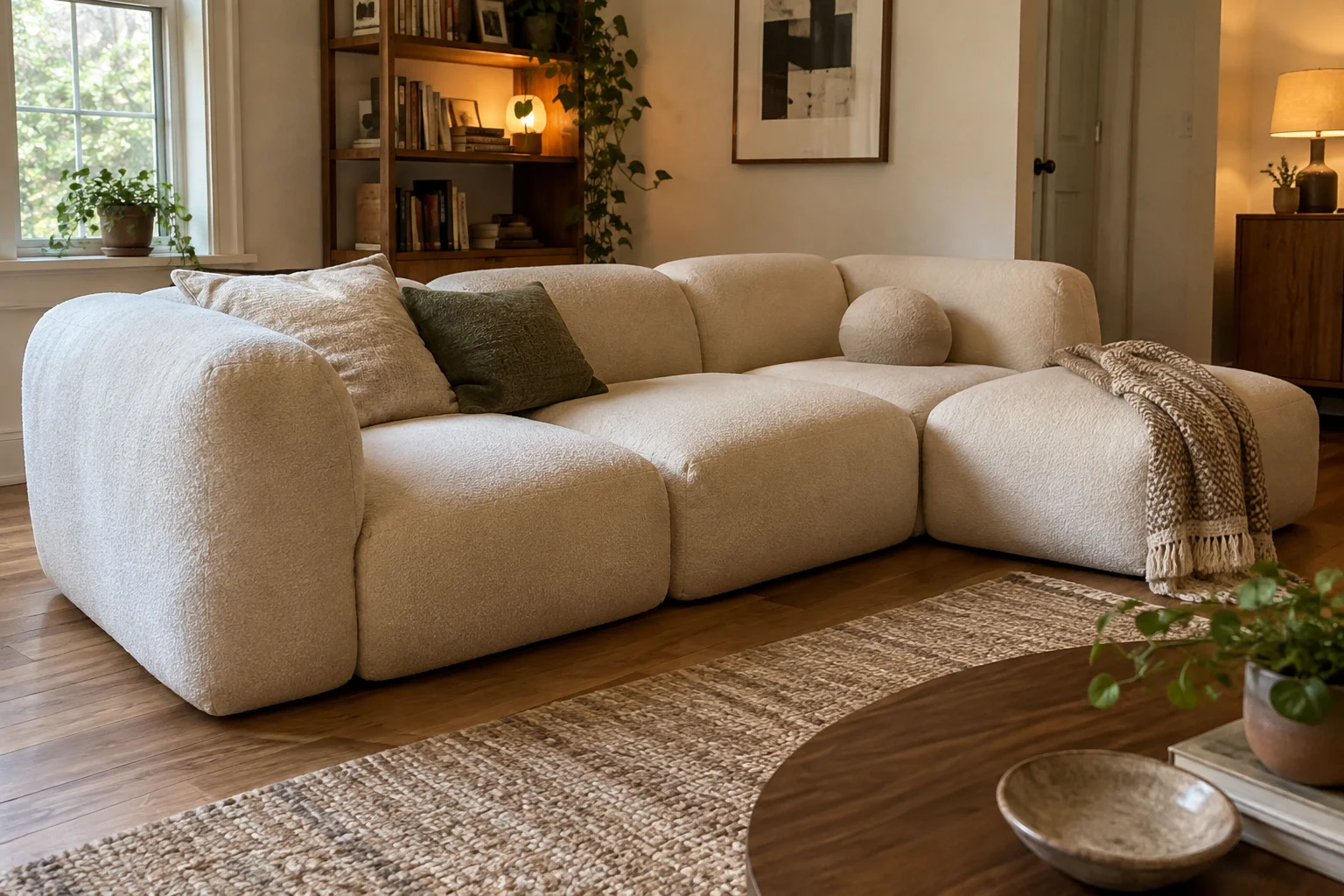
A boneless sofa uses its foam structure to form and support the seat. Some arrive compressed, then expand after unpacking.
The feel depends on the foam layers, shape, and upholstery. “Boneless” does not automatically mean loose or beanbag-like, and it does not guarantee a soft seat.
High Density and Firmness Are Different Things
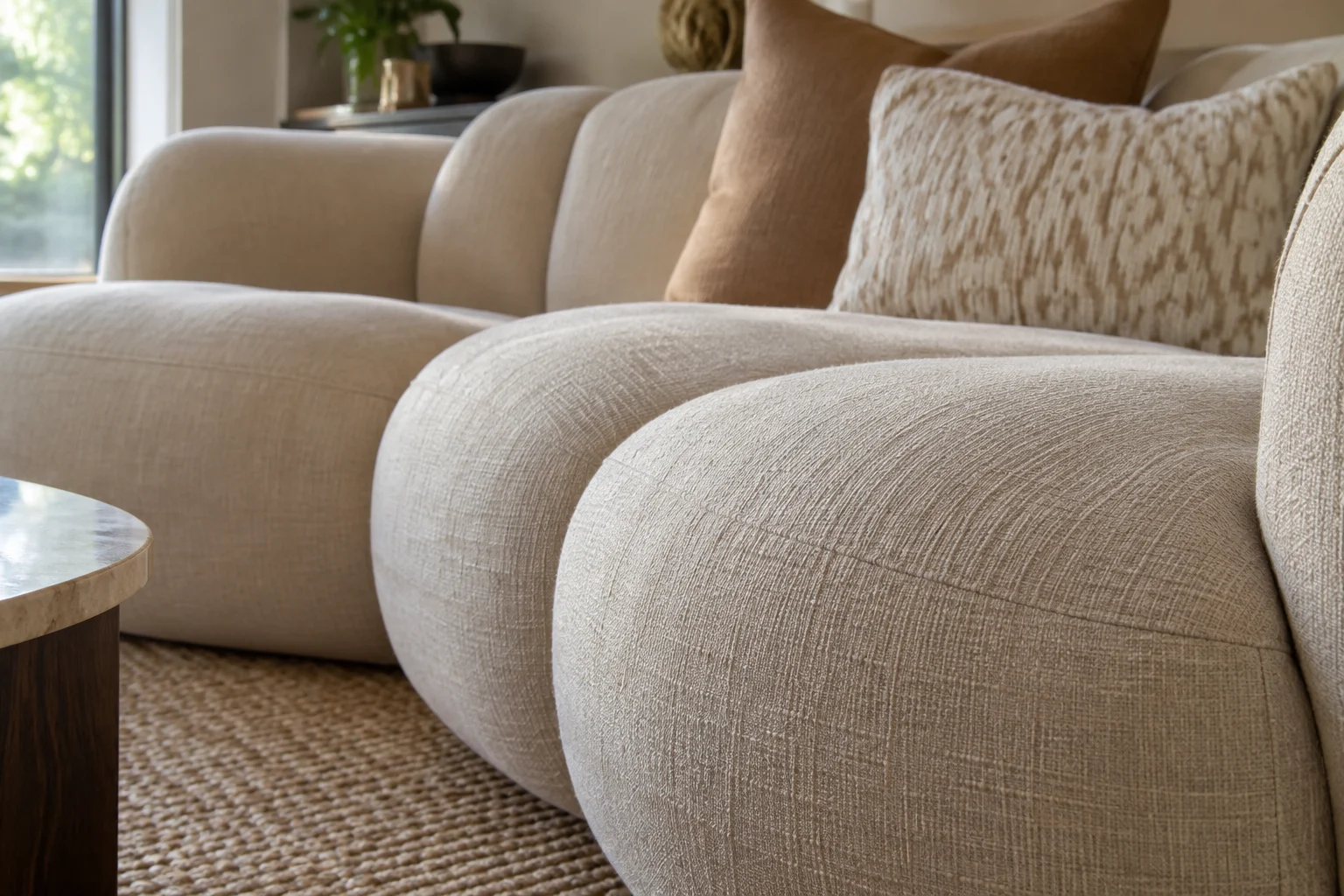
Foam density describes how much material occupies a given volume. Firmness describes how strongly the foam resists compression.
Think of density as part of the material specification and firmness as part of the sitting experience. The phrase “high-density foam” alone cannot establish how comfortable a sofa will feel or how long the complete piece will last.
Note: A rounded sofa with pocket springs or a wood frame belongs in the curved-sofa category even if its listing also uses words such as “cloud” or “bubble.”
Will It Fit Your Room Once It Leaves the Box?
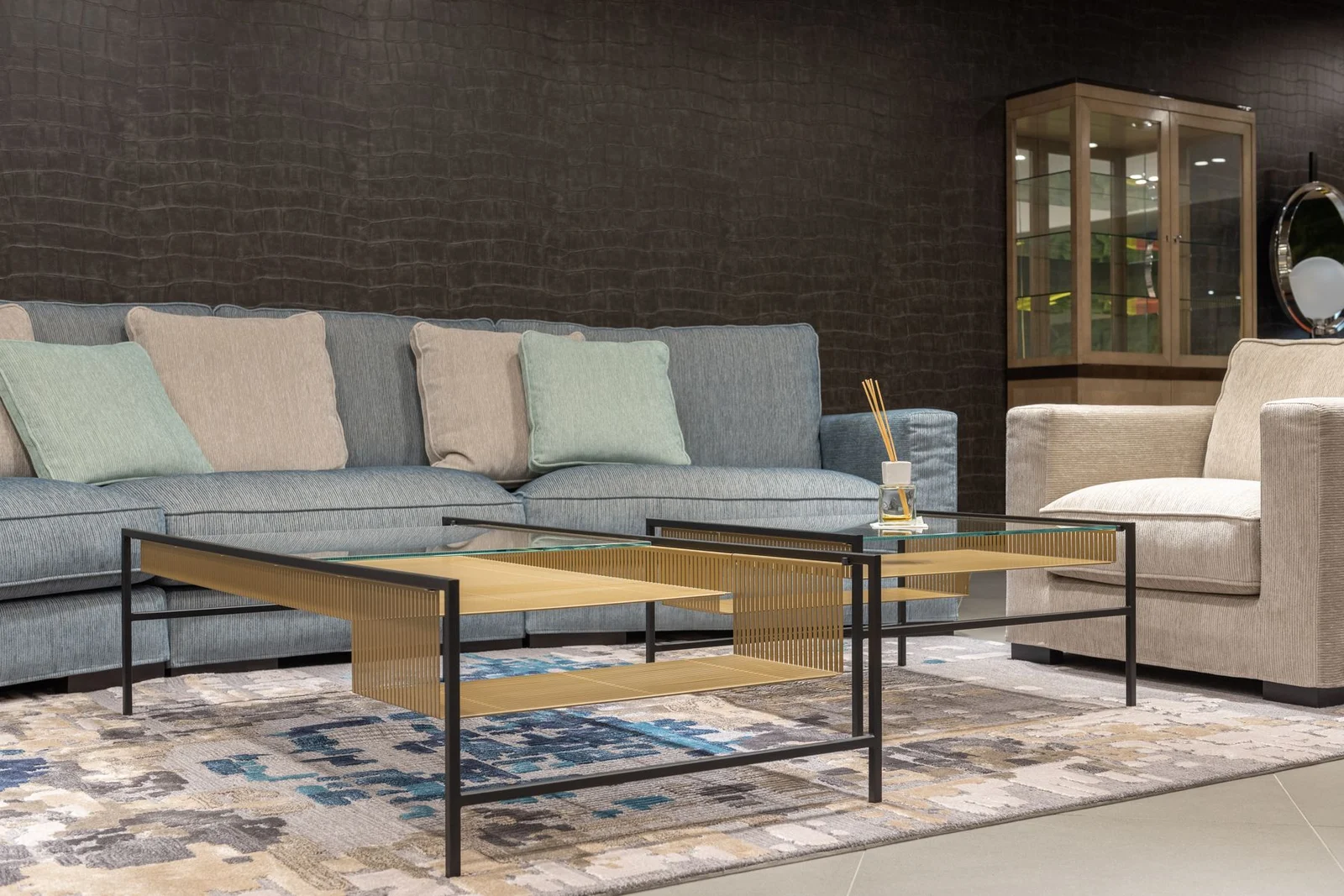
Plan around the expanded sofa and the space surrounding it. A low back can make furniture look less imposing while a deep seat still occupies a substantial part of the room.
The most useful layout includes the coffee table, nearby chairs, and the route you take through the room.
Low Profile, Generous Footprint
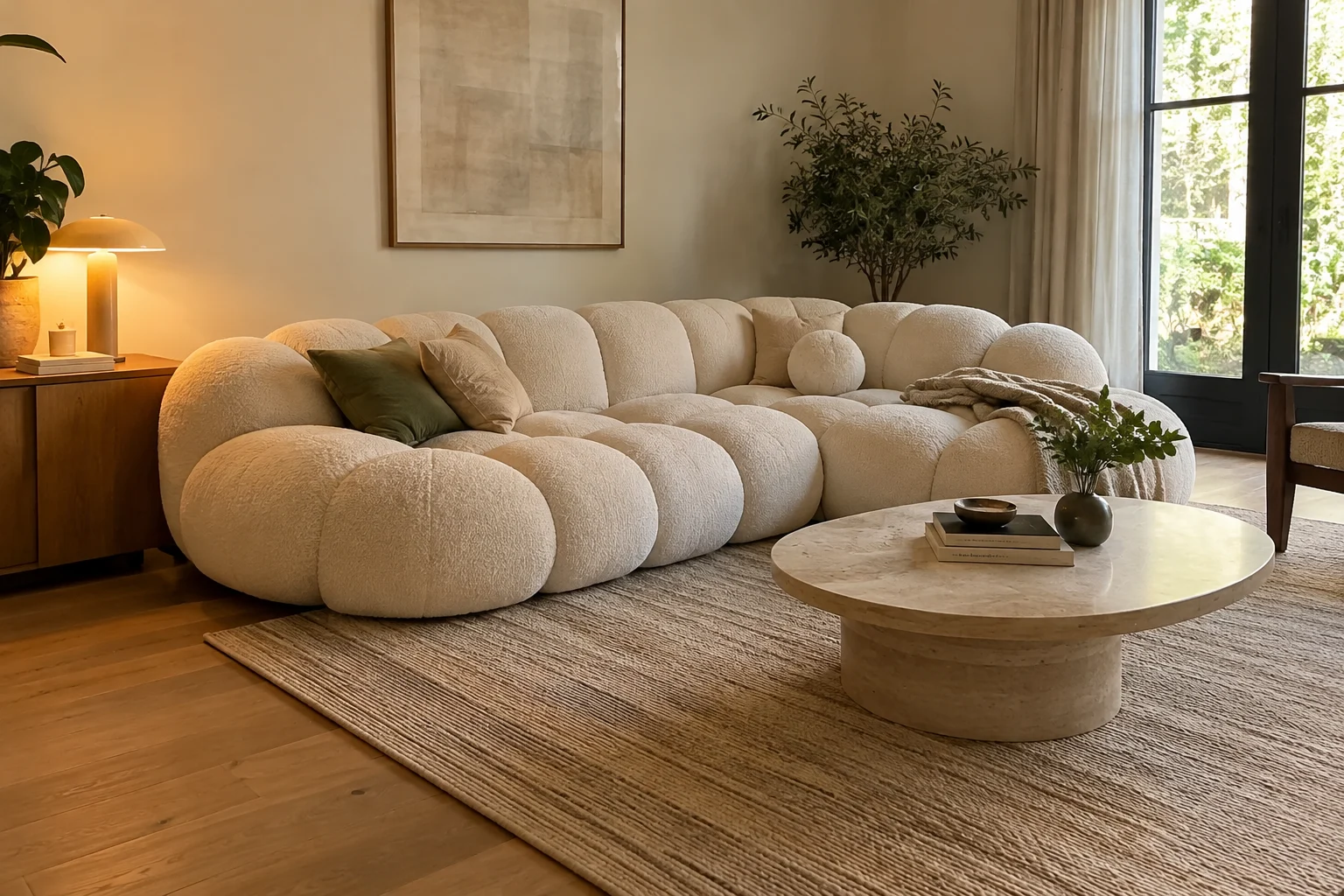
Overall depth matters just as much as width. Rounded backs and thick arms take up room, even when they create a soft, compact-looking outline in photographs.
Mark the footprint on the floor with painter’s tape. Then walk around it with your existing furniture in place. That everyday route quickly reveals whether the arrangement feels comfortable.
Sitting Depth Is Its Own Measurement
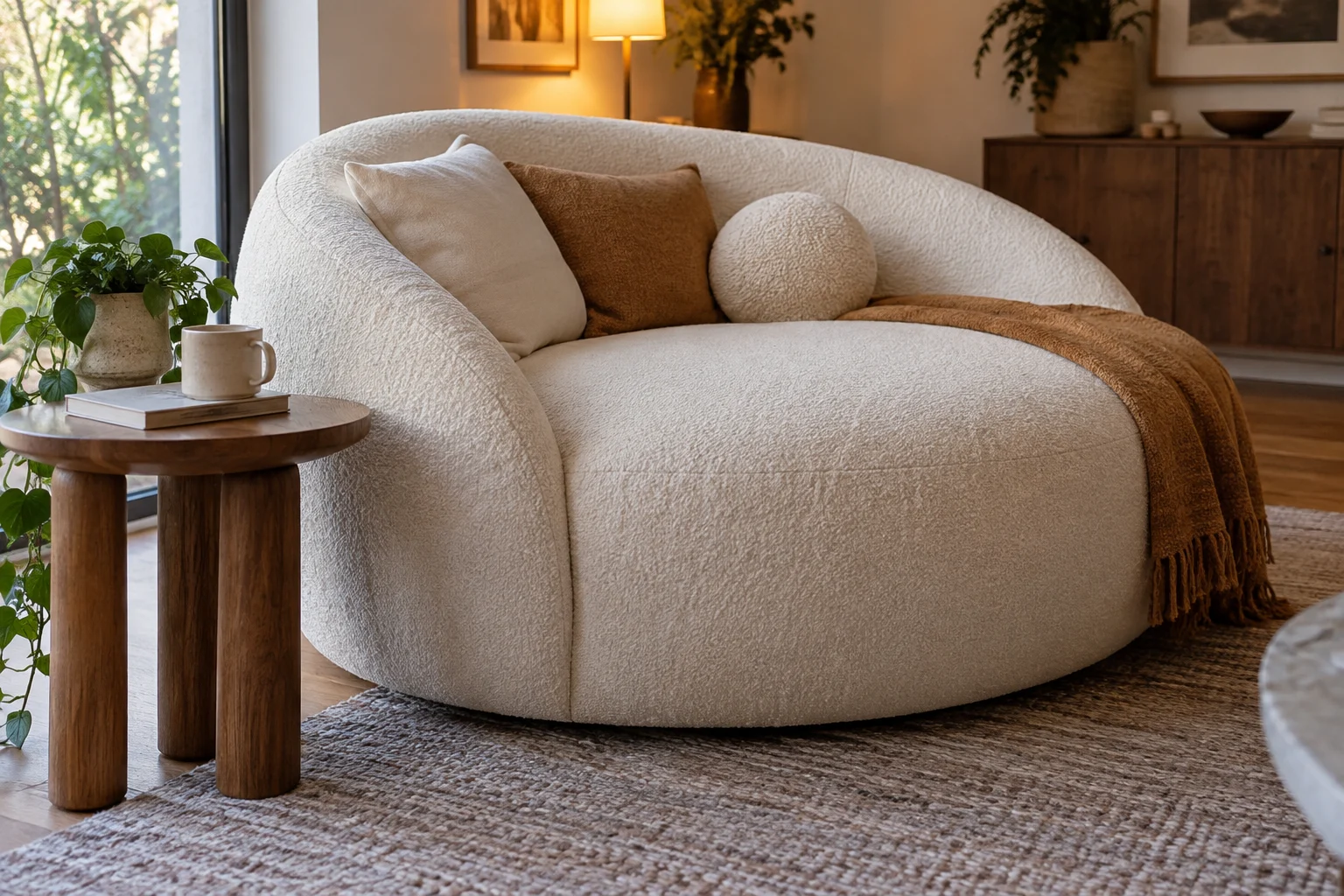
Usable seat depth measures the space available for sitting, while overall depth includes the rest of the sofa.
A couch can therefore be deep from front to back without offering an equally deep cushion. Keeping those two measurements separate makes product descriptions much easier to understand.
Modular Pieces Need a Practical Arrangement

Modularity is useful when the pieces create arrangements you will actually use. An extra module is less helpful if it blocks the doorway or makes the coffee table difficult to reach.
Plan for the full arrangement, including an ottoman. Also allow a route for the expanded pieces when it is eventually time to move them.
Which Fabric Fits Your Everyday Life?
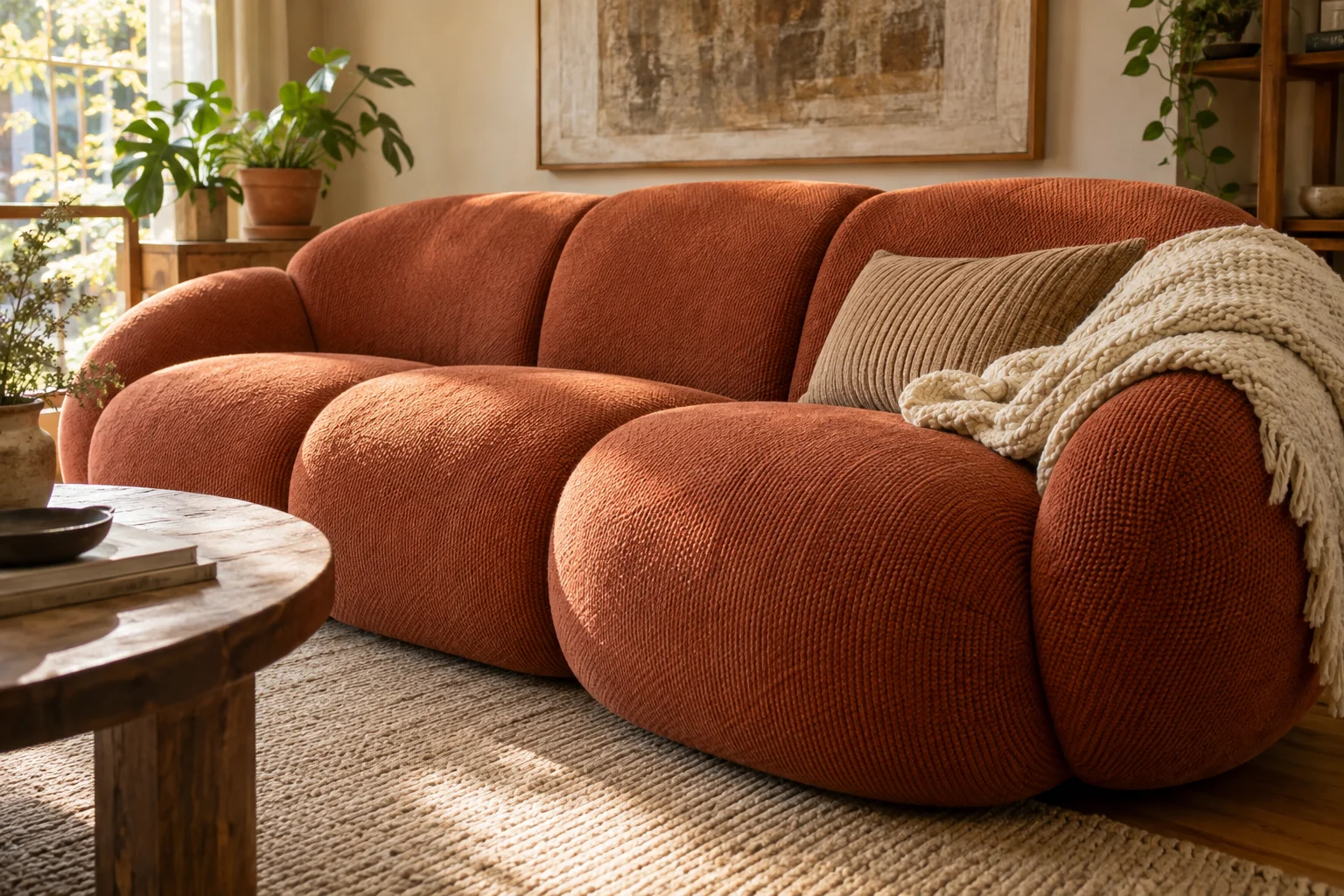
Choose upholstery for the way your household lives. A quiet reading room and a sofa shared with a shedding dog have different cleaning demands.
| Fabric | The visual effect | Everyday upkeep |
|---|---|---|
| 3D knit | Defined, closely upholstered curves | Vacuum textured areas and recessed seams |
| Chenille | A soft surface with a subtle pile | Remove crumbs and hair regularly |
| Corduroy | Visible ribs and a casual finish | Vacuum along the channels |
| Bouclé or teddy-style fabric | A textured or fuzzy appearance | Pay attention to debris caught in the surface |
3D Knit Shows Off the Bubble Shape
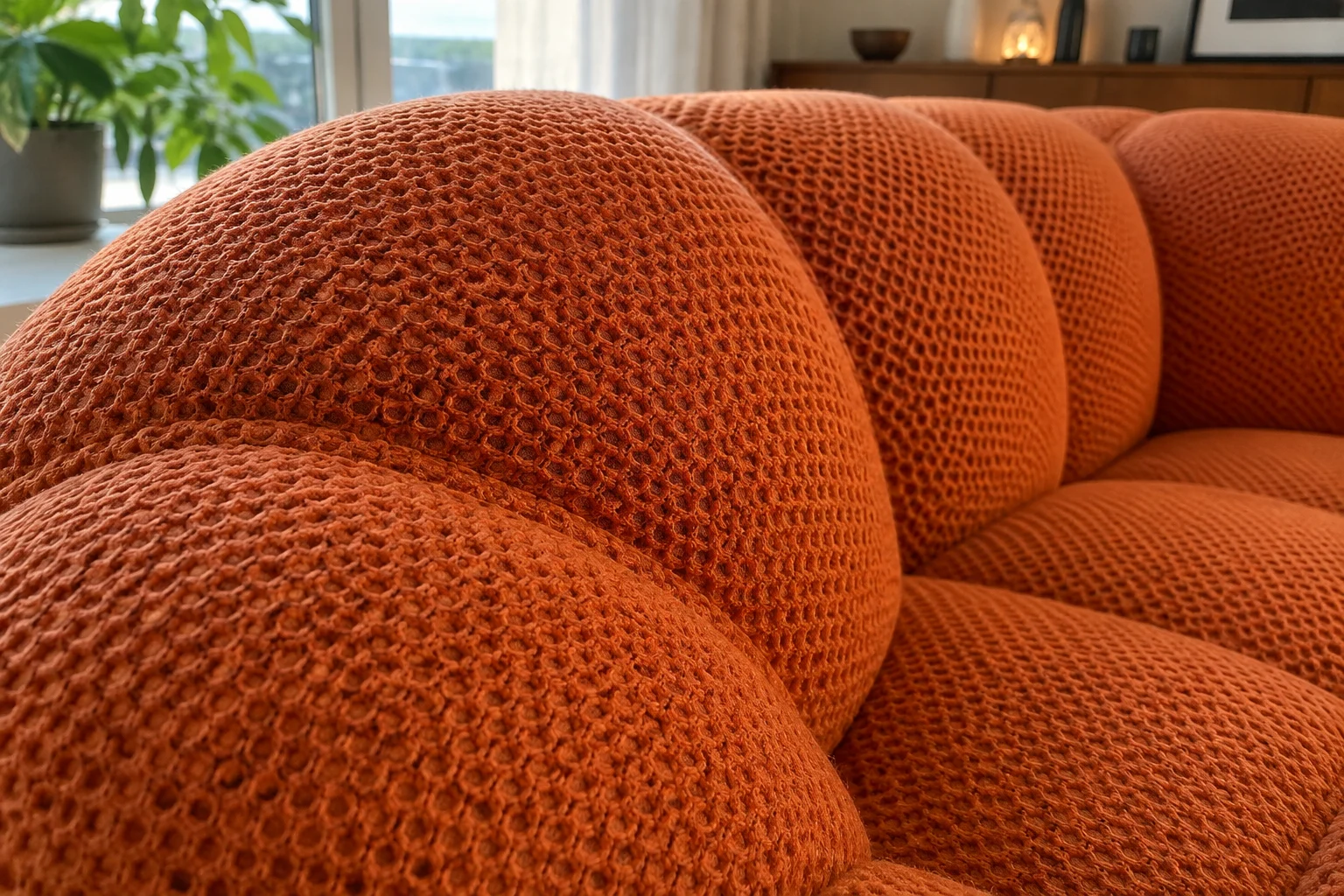
3D-knit upholstery suits a sculpted silhouette because it can follow complex curves. It keeps the form visible, especially on a sofa with pronounced rounded sections.
For decorating, that means you can keep accessories simple. The upholstery and shape already provide plenty of interest.
Chenille and Corduroy Bring a Casual Feel
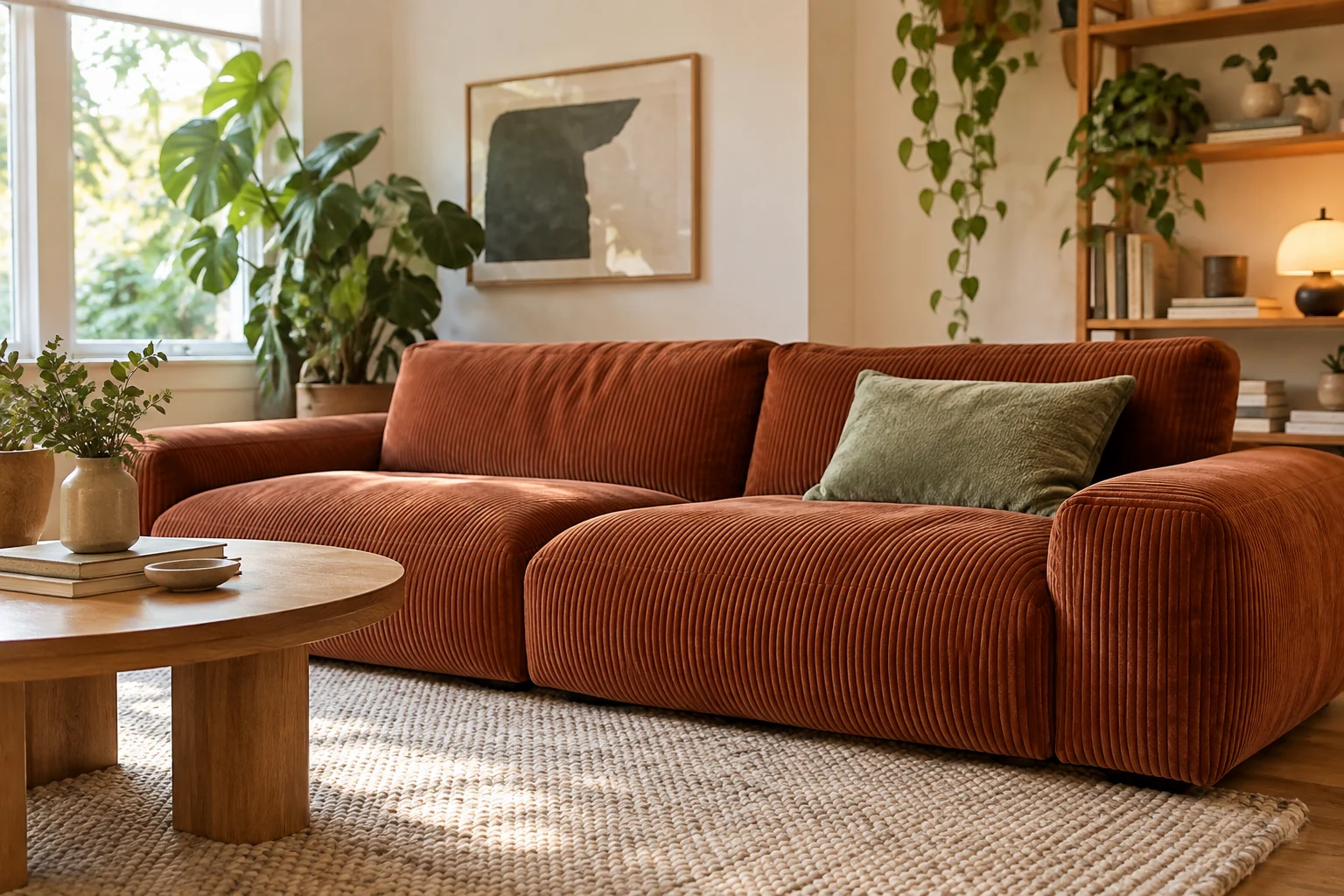
Chenille offers a soft pile, while corduroy adds a stronger ribbed pattern. Both can work well in a relaxed room with wood furniture and simple textiles.
Corduroy’s channels need regular vacuuming, especially if snacks are part of your sofa routine. A darker color changes how visible some marks are, but it does not remove the cleaning job.
Bouclé Adds Texture to a Quiet Palette
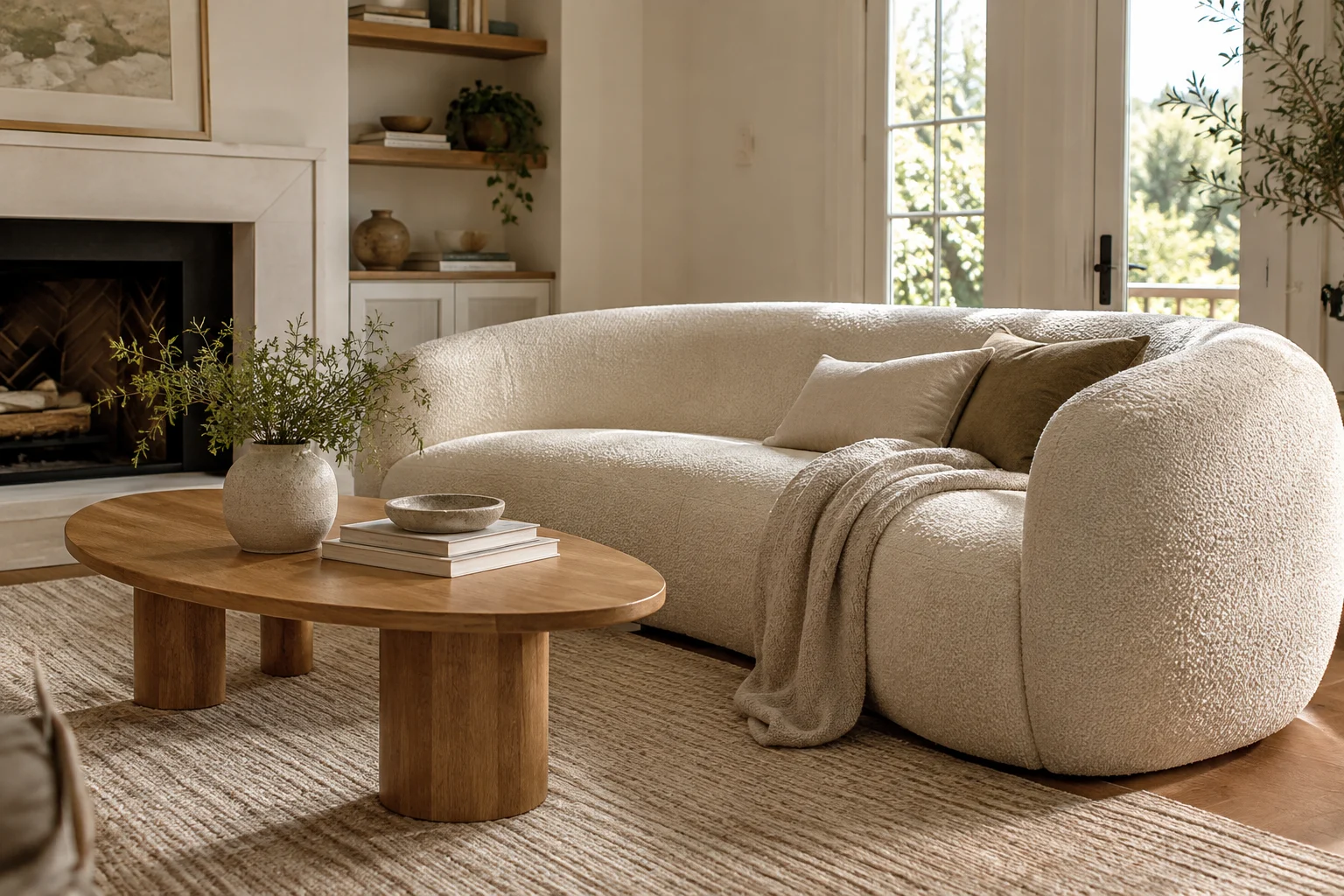
Bouclé-style upholstery creates interest without needing a bright color. It works particularly well when you want the curve of the furniture to remain the main feature.
Keep nearby patterns restrained if the surface is already busy. A plain rug and a wood table give the eye somewhere to rest.
Removable Doesn’t Automatically Mean Washable
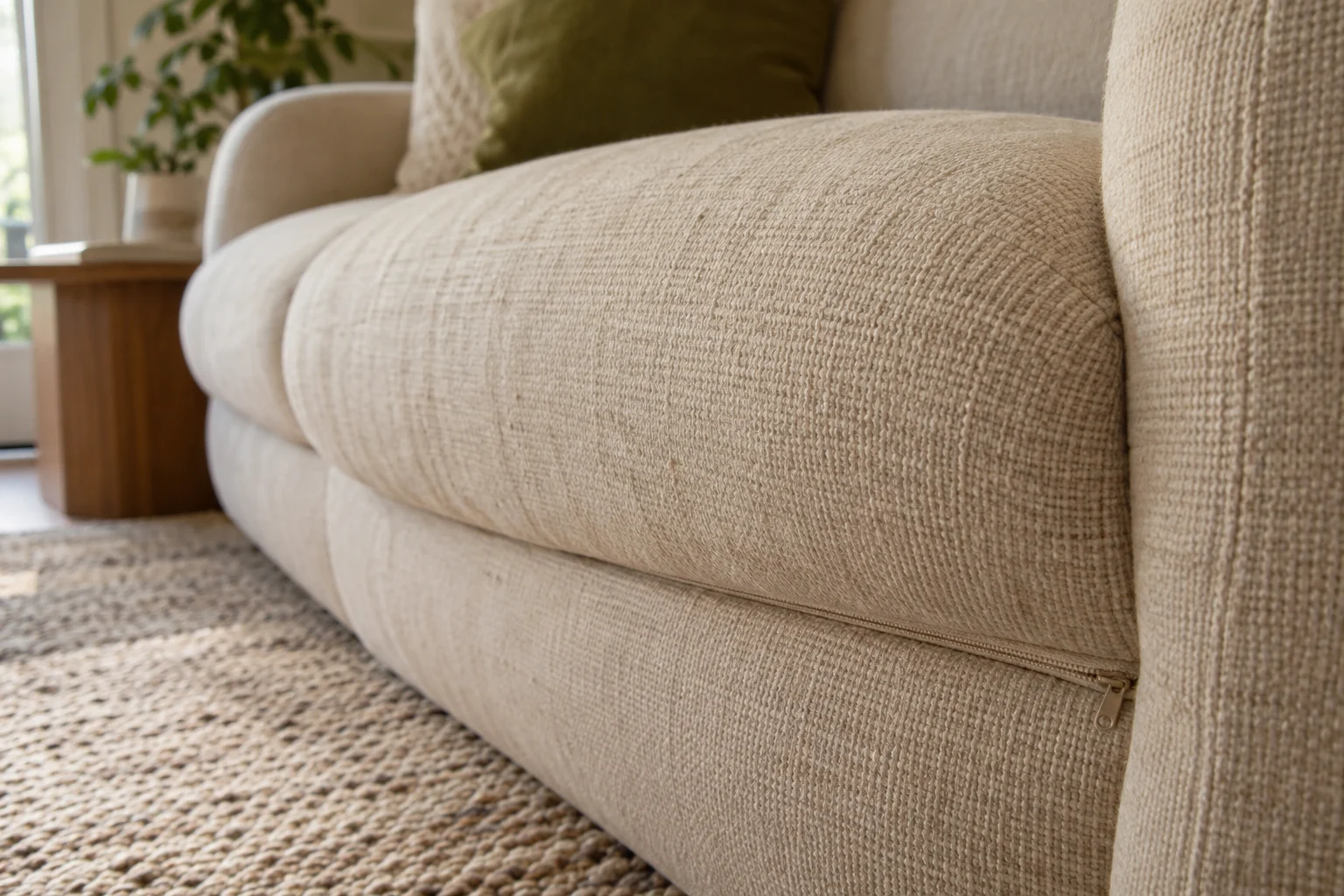
Cover removal and machine washing are separate features. A zipper may provide access during manufacturing or servicing rather than make the cover suitable for the washing machine.
For routine care, vacuum regularly and blot spills promptly. Use the cleaning method specified for the particular upholstery, and avoid saturating the foam underneath.
The Everyday Tradeoffs Behind the Pretty Pictures
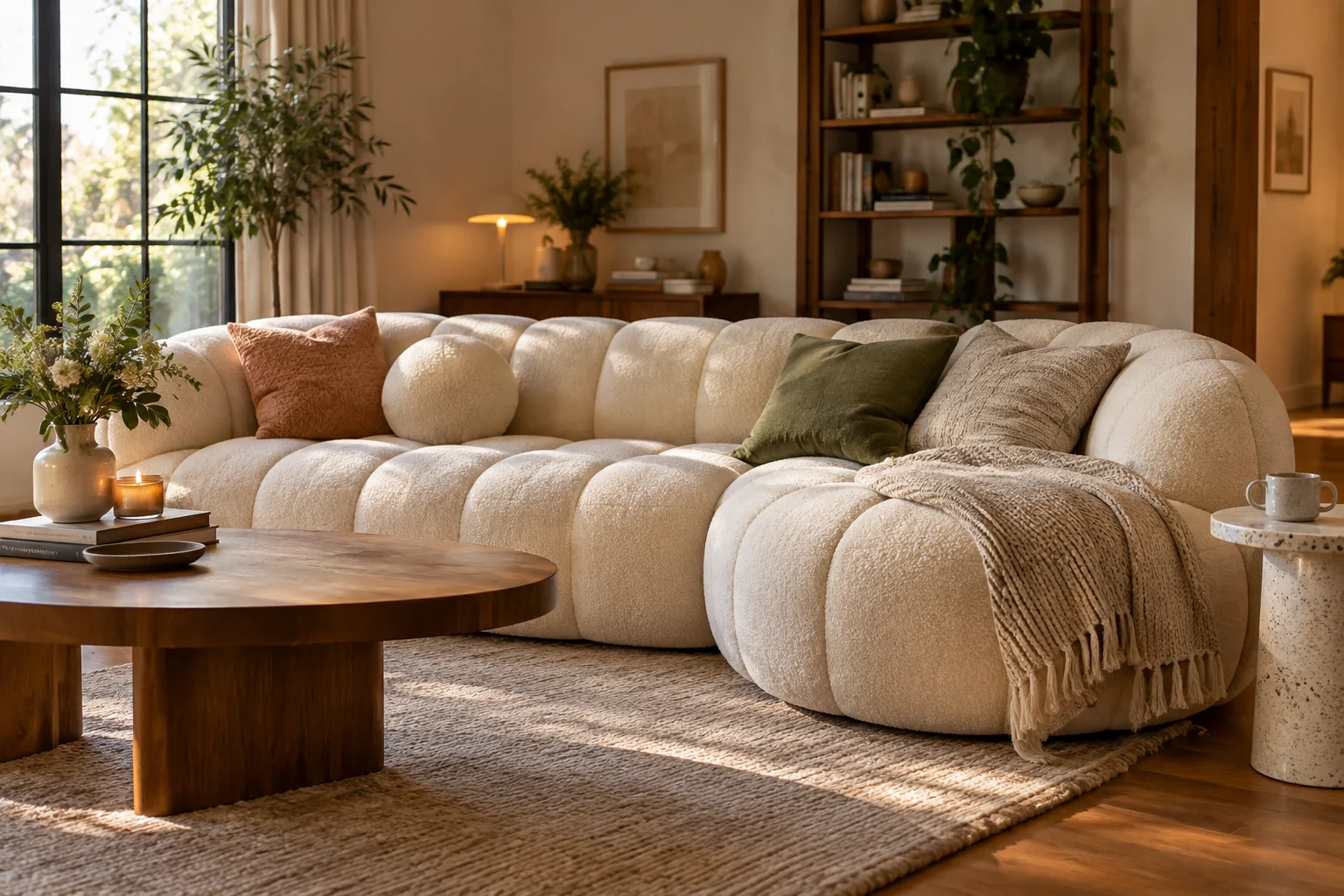
The practical tradeoffs usually involve cleaning, low seating, expansion, and long-term upkeep. None of those details appears clearly in a quick room-reveal video.
Crumbs Find the Recesses
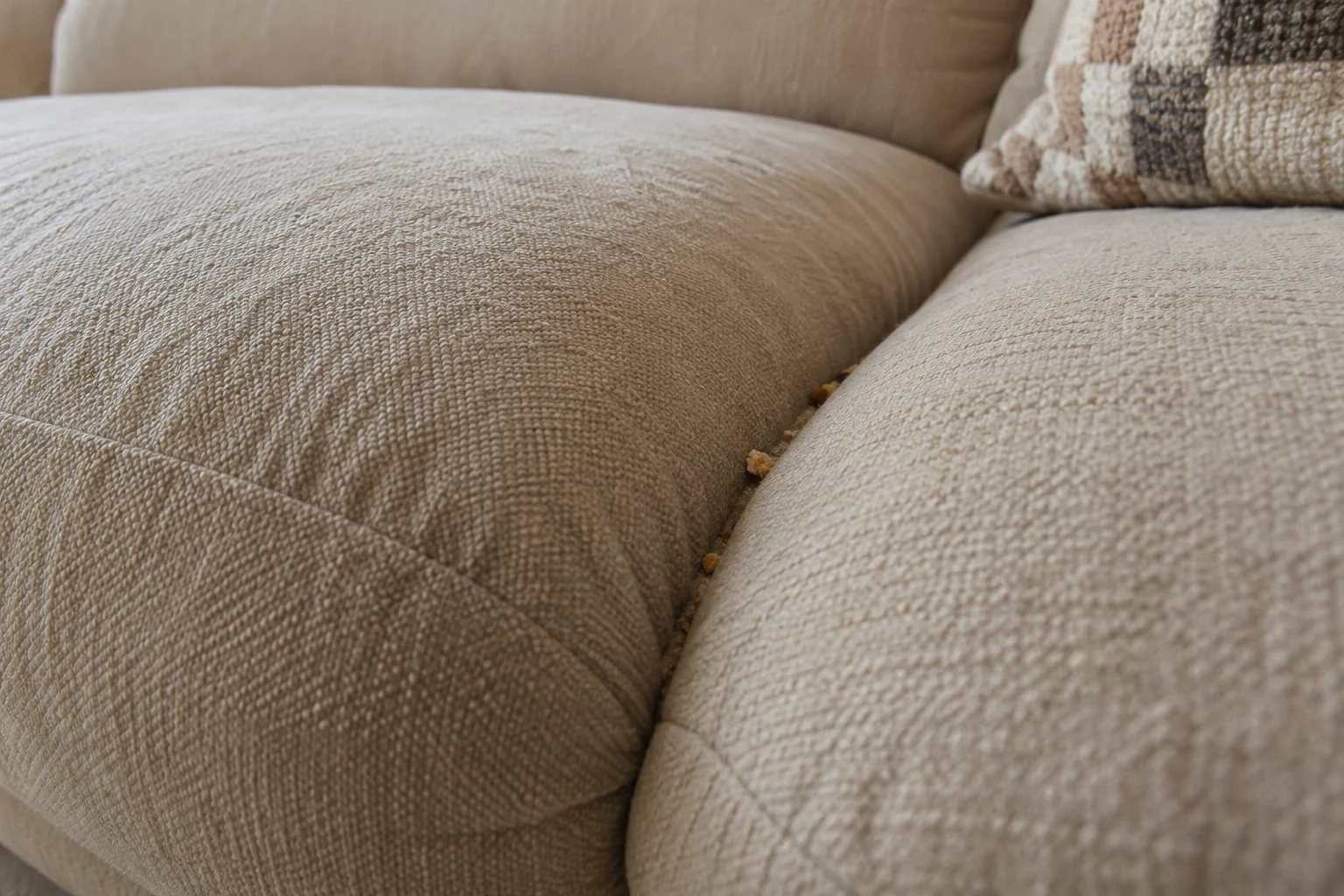
Rounded seams need regular attention from the upholstery attachment. Work around the sections and along the base, where the sofa meets the floor.
A quick weekly clean is easier than waiting until the gaps become a record of every snack you have eaten.
Soft Arms Have Their Limits
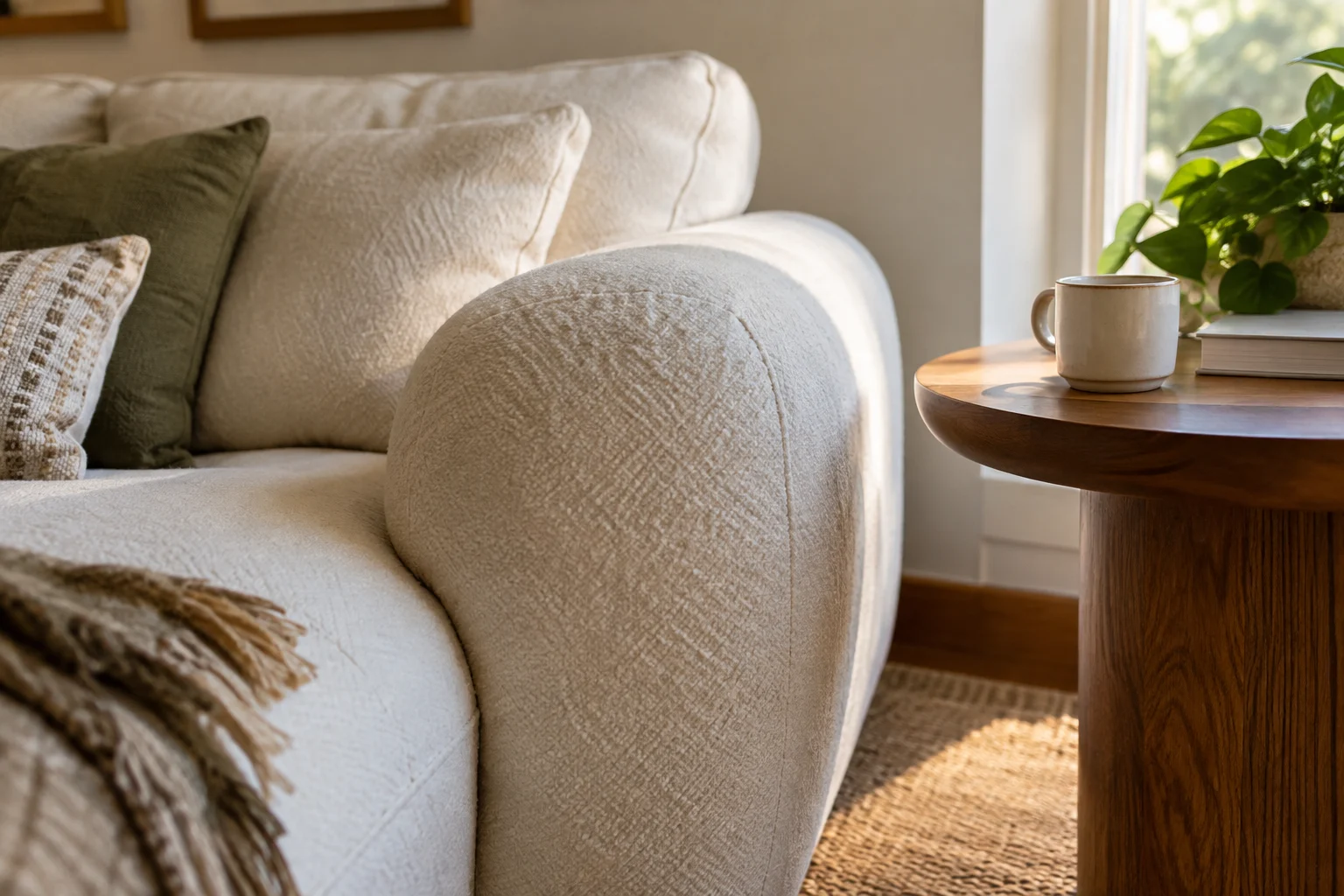
A cushioned arm may compress under pressure. Treat it as a resting surface unless the product is designed to support sitting or other substantial weight there.
A side table gives drinks and laptops a more stable home. It also keeps spills away from textured upholstery.
The Unboxing Clip Ends Before the Sofa Is Fully Ready
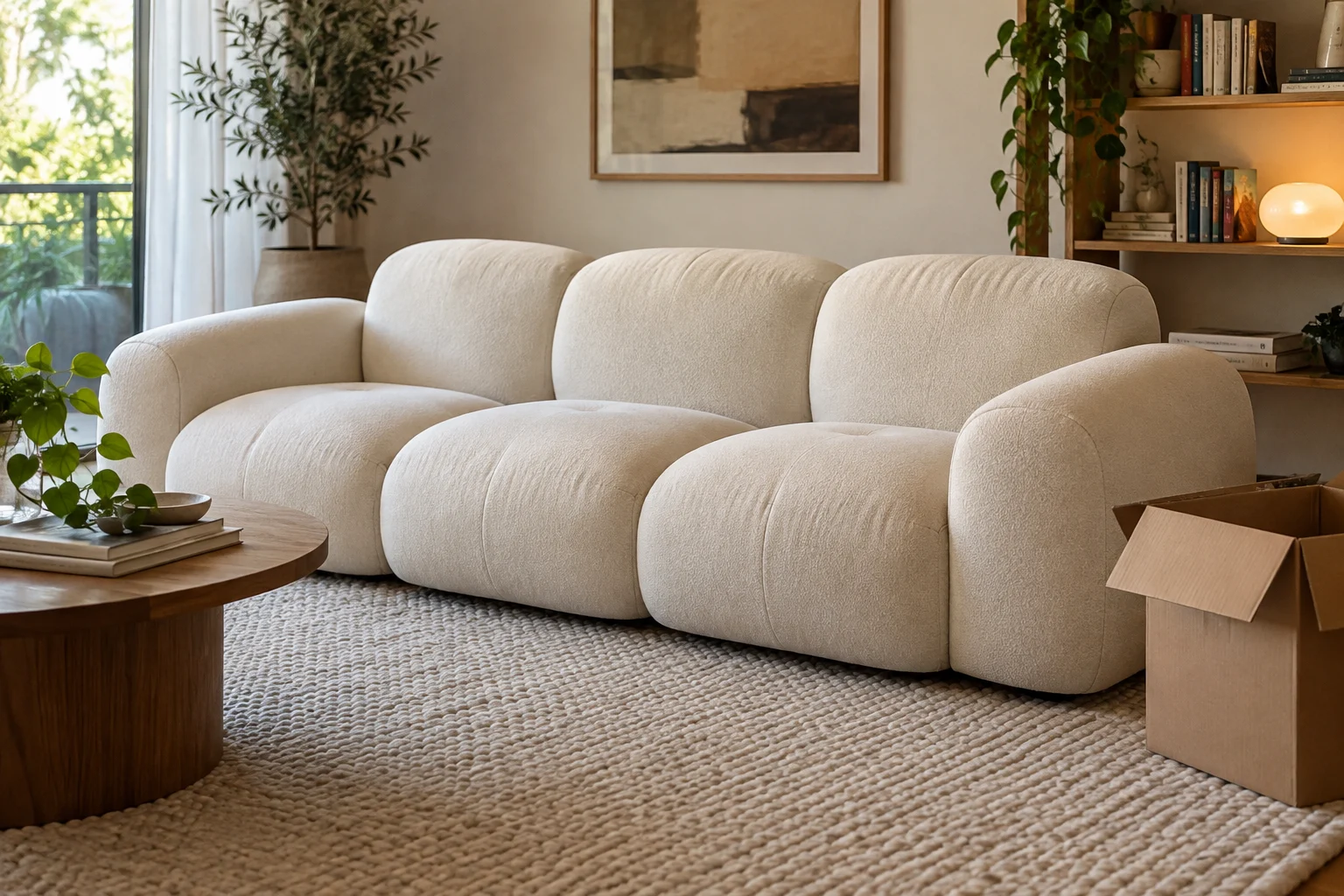
Compressed seating may continue recovering after its initial expansion. The first few minutes do not necessarily show its final height, shape, or firmness.
Allow the recovery period stated for the model before arranging everything tightly around it. Different products have different timelines.
Shape Retention Deserves Attention
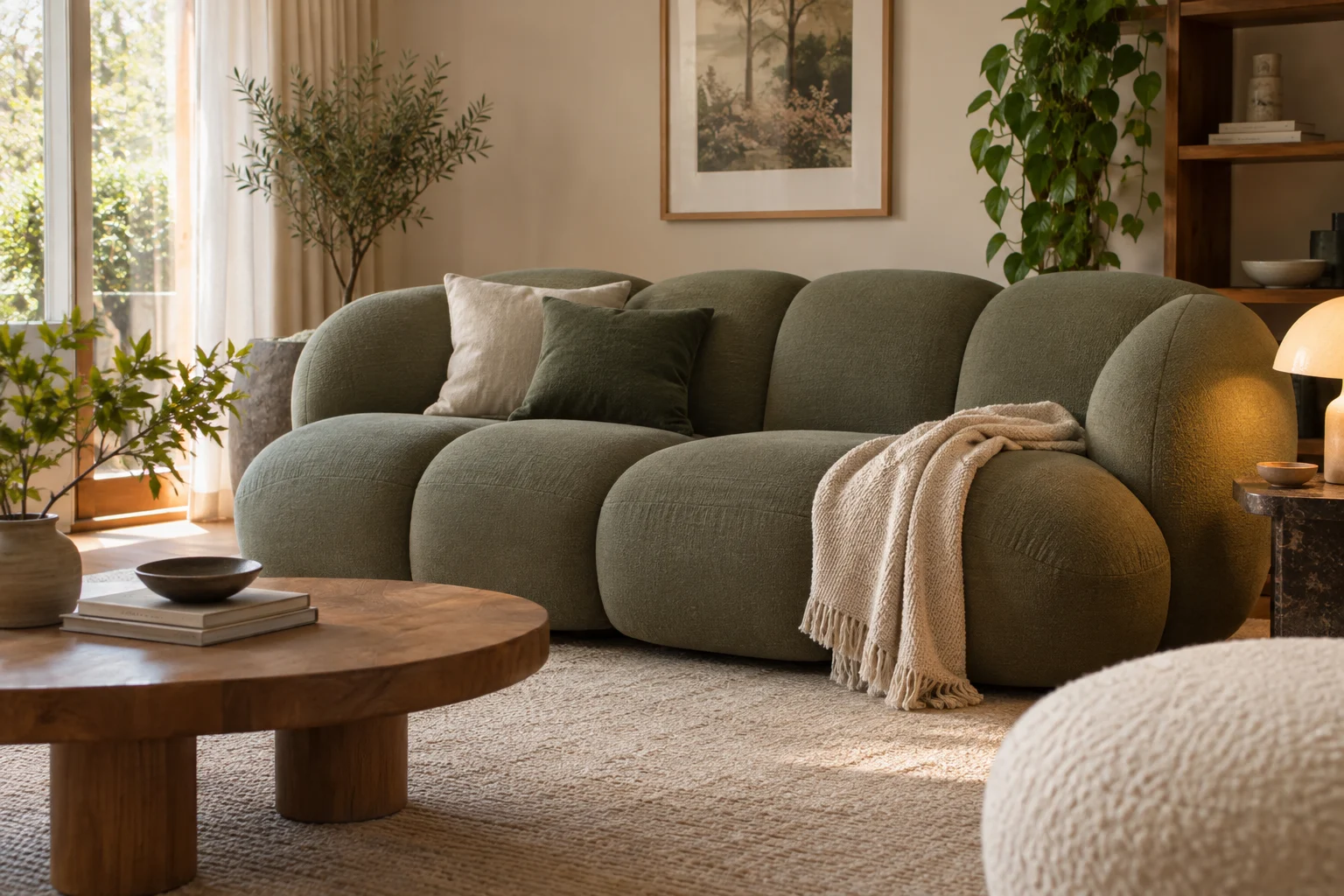
Long-term appearance depends on the foam, upholstery, construction, and use. No single marketing phrase can promise that a sofa will keep its shape indefinitely.
Replaceable covers or components can make future upkeep more practical. These details matter most when the piece will serve as your everyday family couch.
Six Ways to Style a Bubble Sofa Without Overdoing It
Let the sofa provide the strongest shape, then balance it with simpler pieces. Repeating curves everywhere can make the room feel crowded even when there is little furniture.
1. Cream Upholstery and Warm Wood
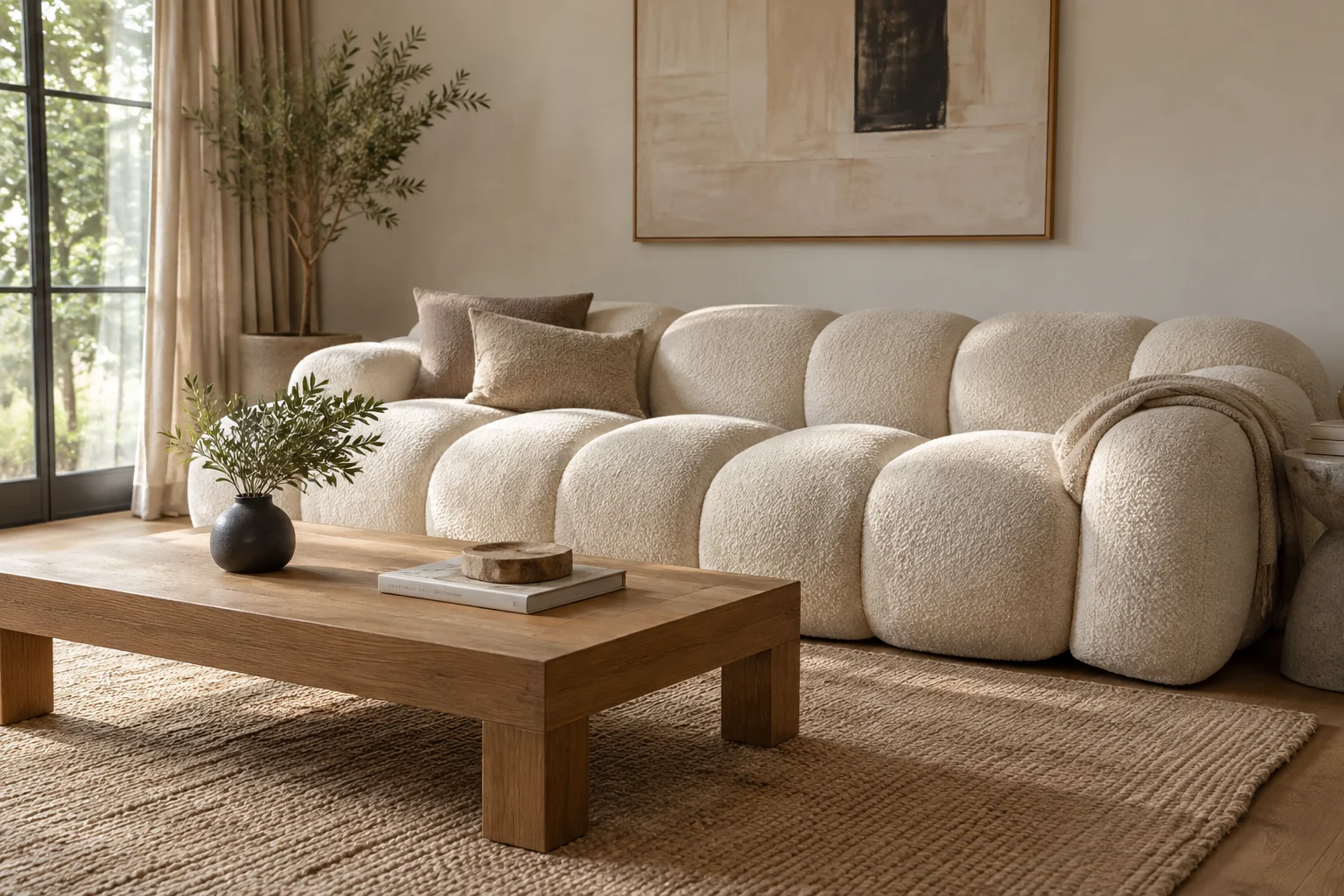
Pair a cream sofa with warm wood and a restrained mix of textures. An oak table, a plain woven rug, and one darker accent give the room definition.
If your room currently feels a little flat, vary the materials before adding more decorative objects.
2. Orange Gets the Spotlight
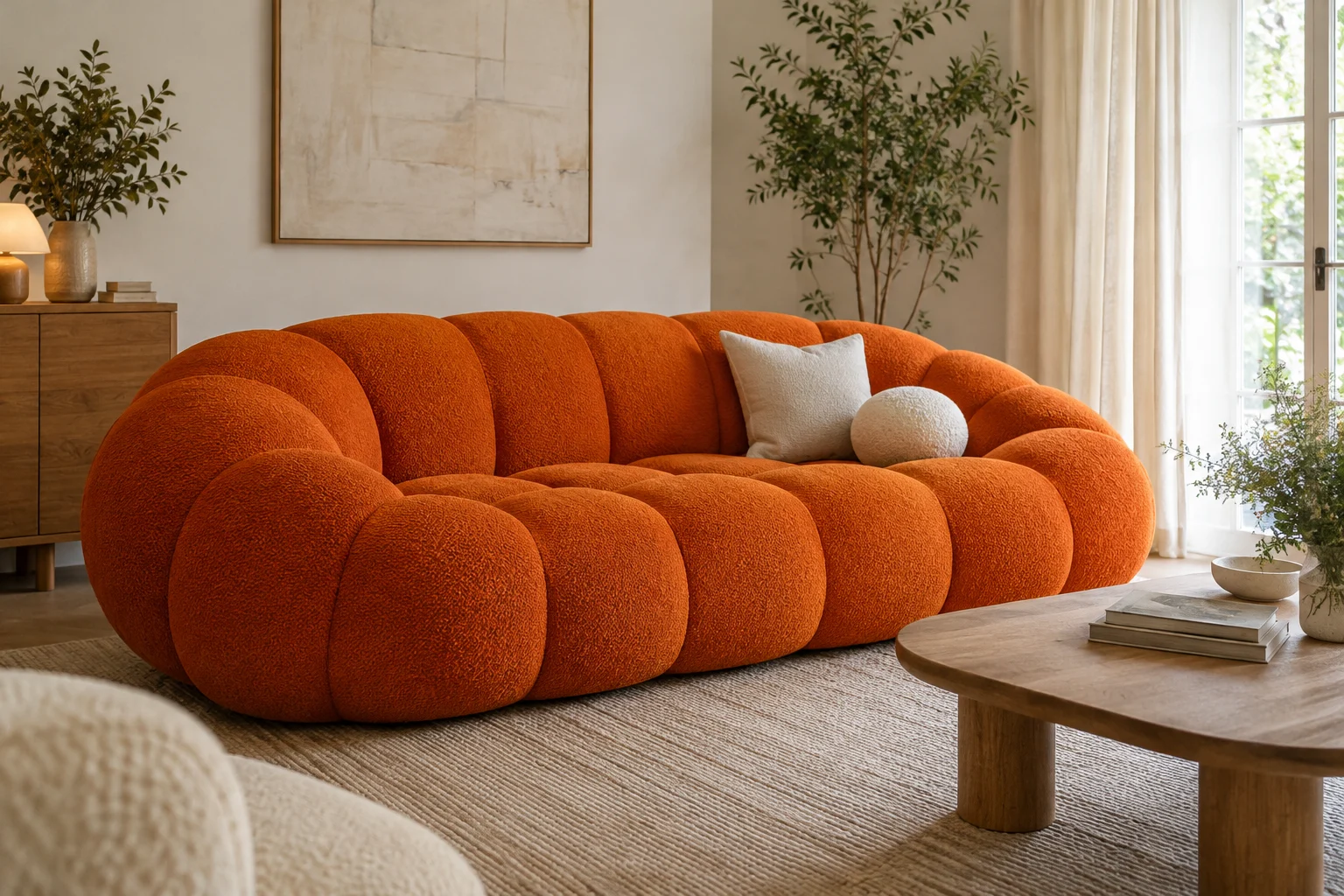
Give an orange sofa a quiet background. Warm white walls, a neutral rug, and simple curtains leave space for the upholstery to stand out.
Repeat the color once in a small artwork or accessory. That little connection helps the sofa feel part of the room.
3. Green, Oak, and Soft White
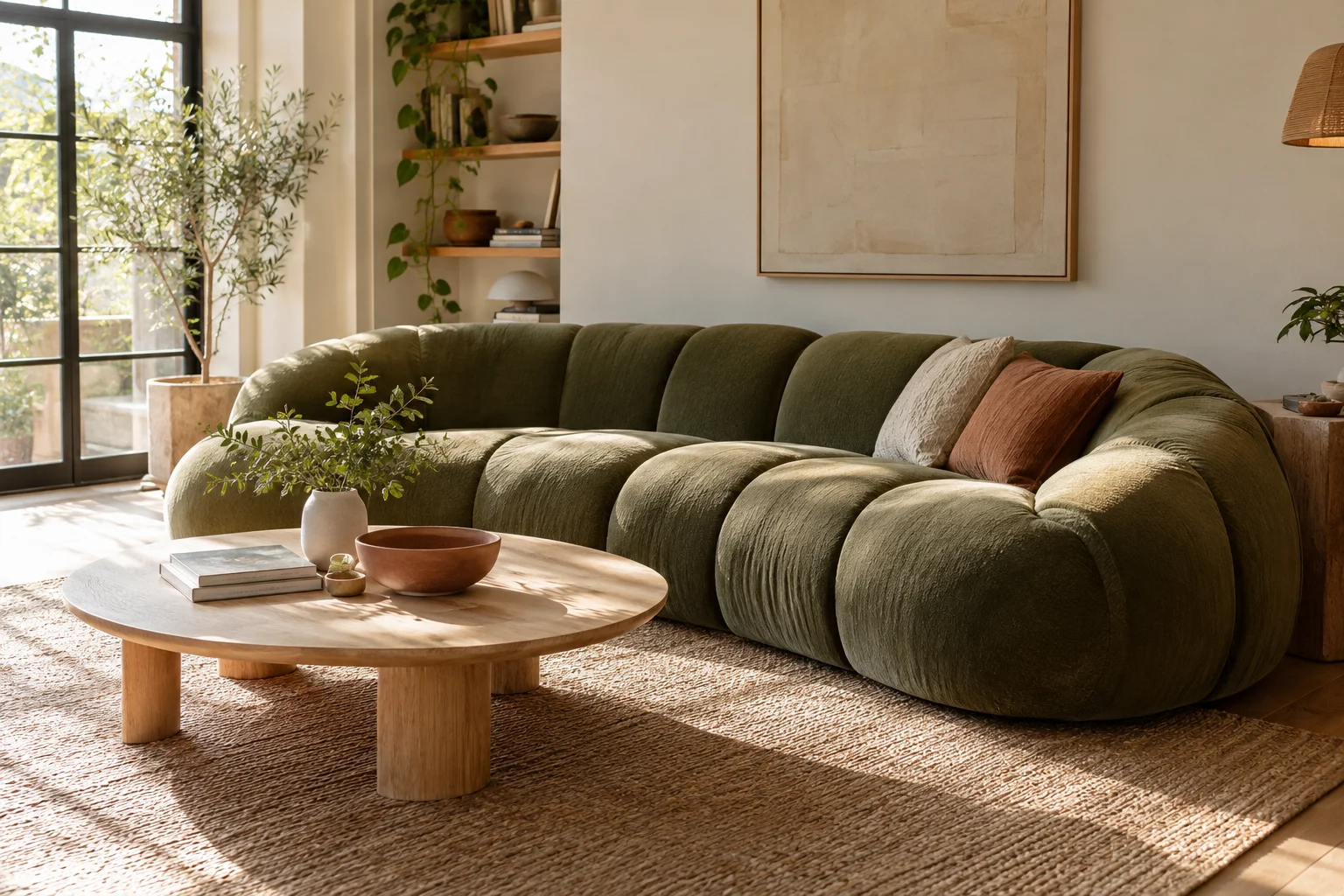
Combine green upholstery with wood and soft white for an earthy setting. Sage feels gentle, while deeper olive creates more contrast.
For help choosing the broader direction, our interior design styles guide explains how modern, Scandinavian, and other approaches use shape and materials.
4. Keep the Coffee Table in Proportion
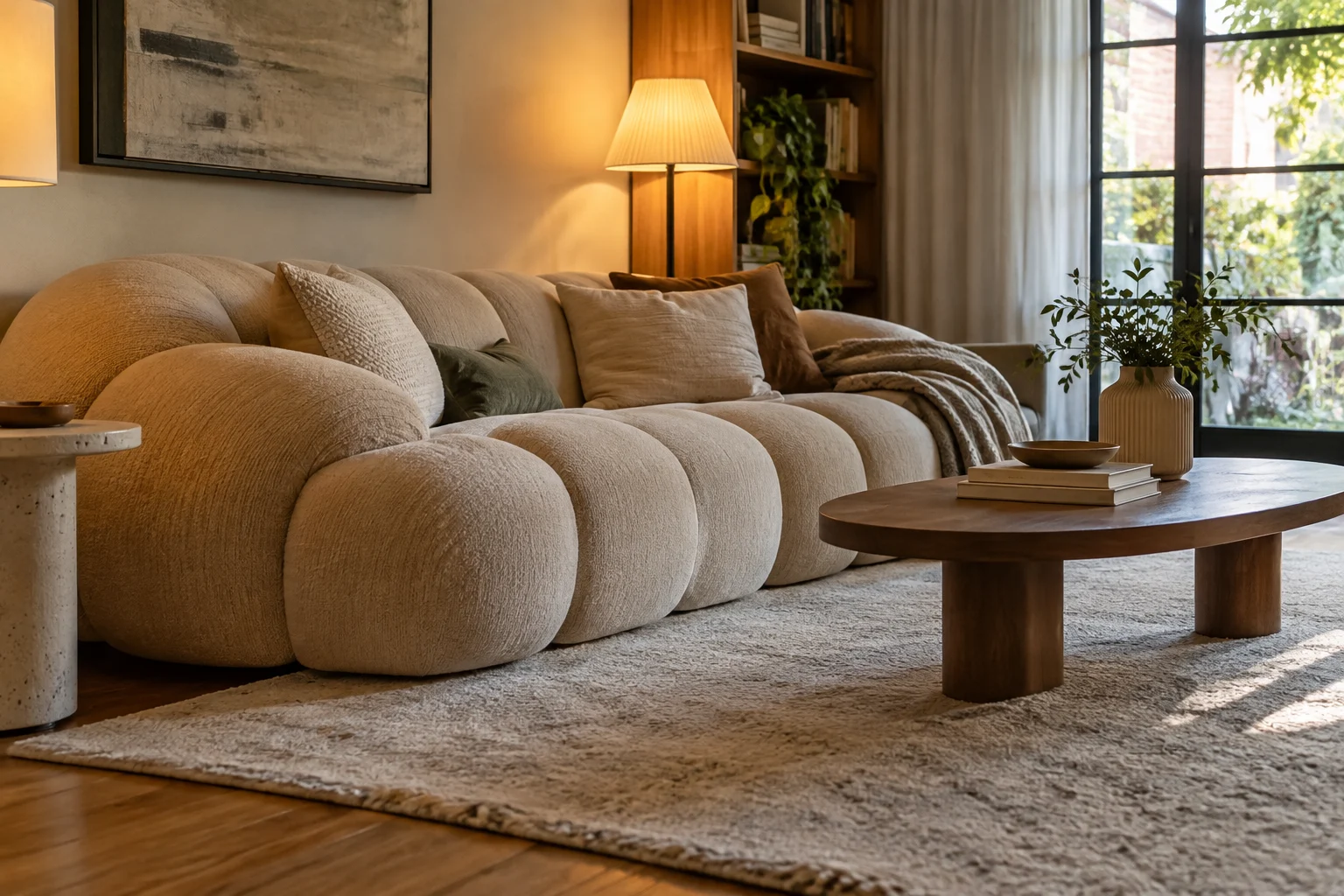
Choose a table height that works with the actual seat. A tall table can feel awkward beside a very low couch, especially when you reach forward from a reclined position.
An oval or rounded rectangular table also leaves room to move around a curved seating arrangement.
5. Let the Rug Connect the Furniture
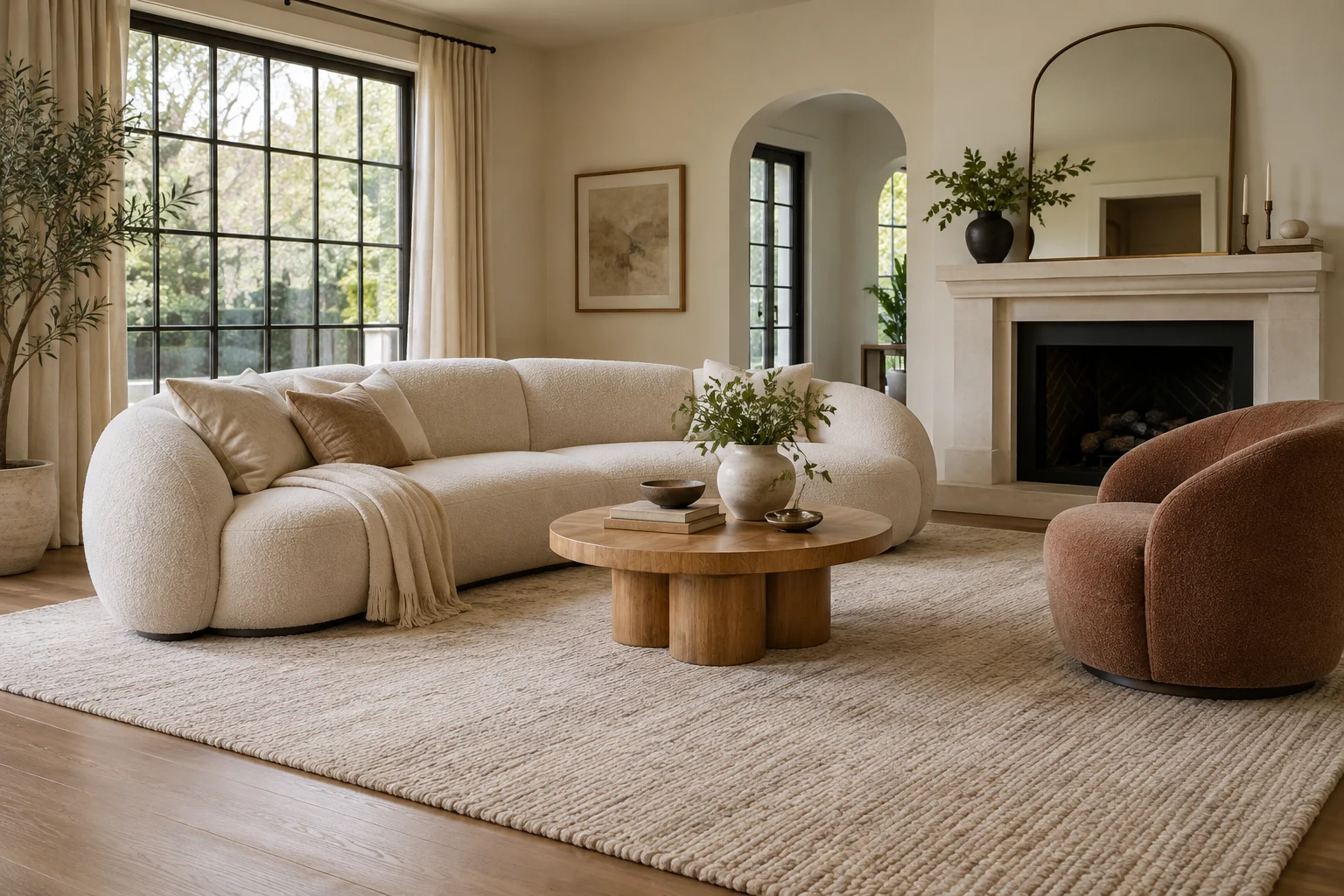
Use a rug large enough to connect the main pieces visually. A tiny rug floating under the coffee table can make the sofa feel disconnected from everything around it.
With a strongly textured couch, a quieter rug often gives the arrangement better balance.
6. Try the Look in a Second Lounge
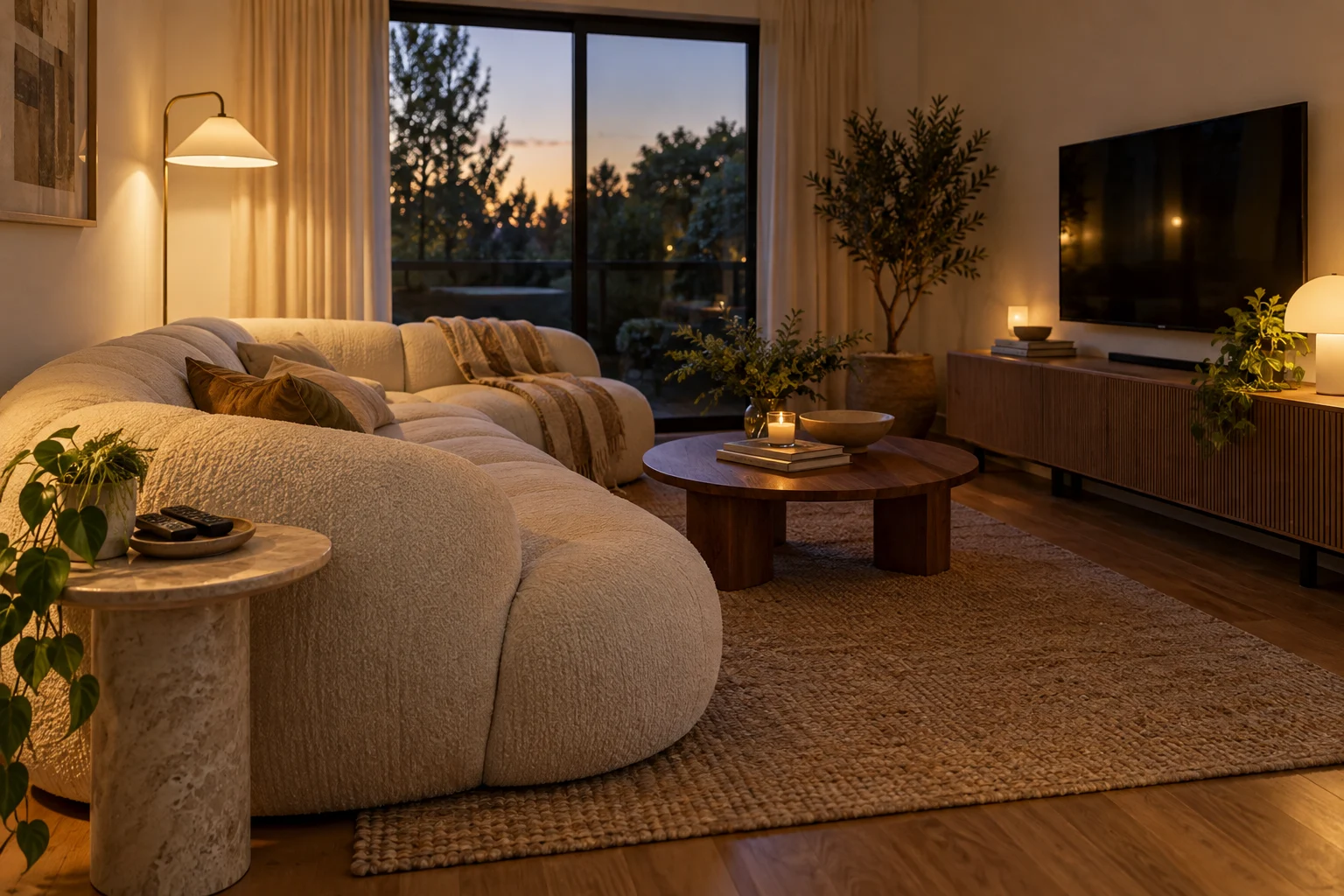
A second lounge or game room can be a practical home for low, relaxed seating. It lets the furniture serve the activity it suits best.
Add a side table, easy-to-reach lighting, and somewhere to put the remotes. Our game room ideas offer more ways to organize a space around hanging out.
Four Roche Bobois Alternatives Worth Checking
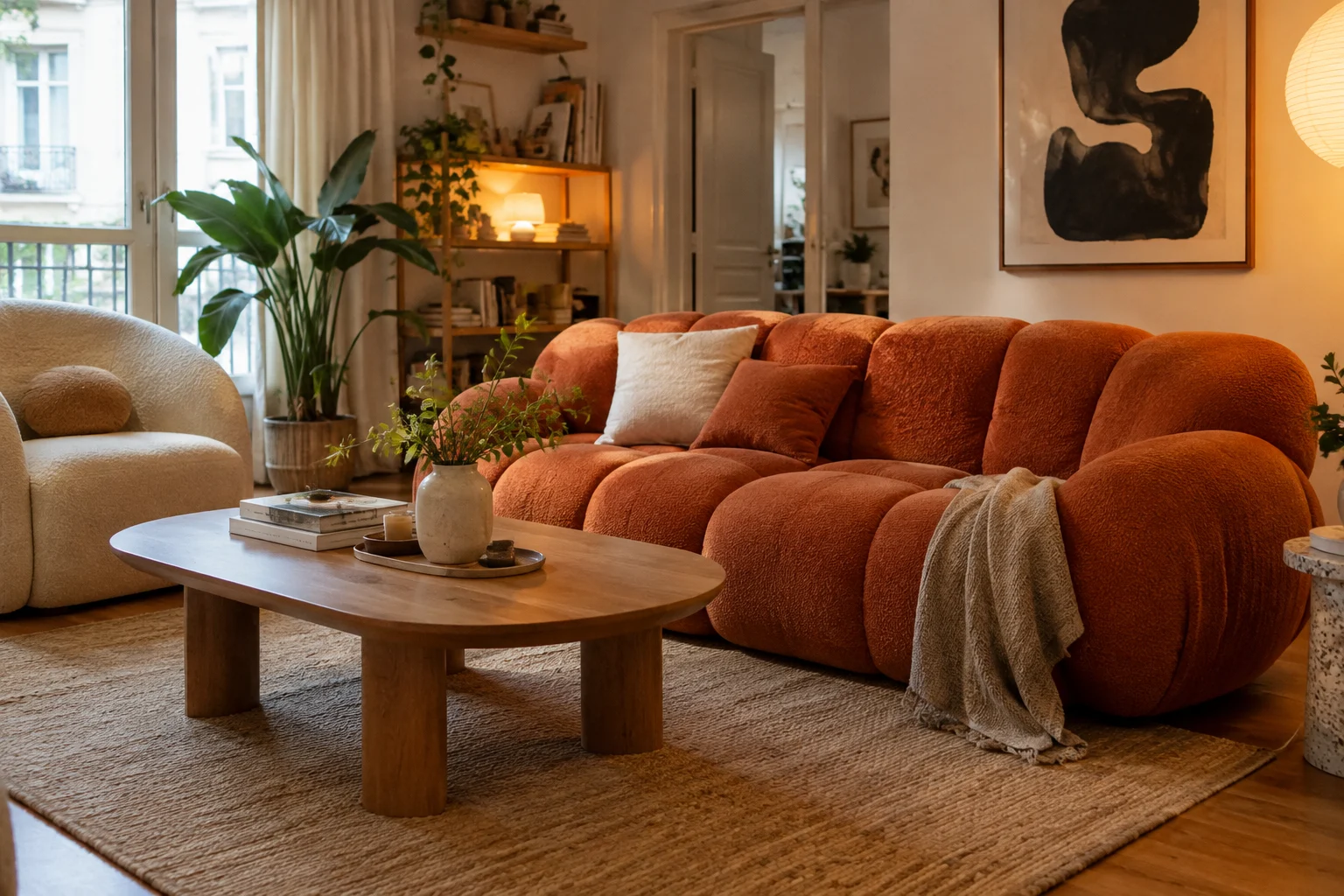
Choose the alternative that delivers the part of the look you love most. These options range from a pronounced bubble silhouette to a framed sectional and a convertible floor couch.
They are separate designs with their own materials and proportions. The recommendations below focus on their listed construction and features.
1. WJShome Orange Bubble Couch: For the Puffy Statement Shape
Bright orange upholstery turns a deeply sculpted couch into the center of the room.
The WJShome Orange Bubble Couch is the strongest choice here for a pronounced bubble appearance. Its rounded sections and 3D-knitted upholstery make the shape the main attraction.
This orange three-seater has a foam-based body and requires no assembly. It suits a room where the sofa can act as the main color accent.
Pair it with a plain rug and a simple wood table. Extra patterned cushions would cover the very feature that makes this couch appealing.
2. DAMAIFROM Sage Green Curved Sofa: For Softer Curves and Deep Seating
A sage-green sofa brings a gentler curve to an everyday seating arrangement.
The DAMAIFROM Sage Green Curved Sofa suits someone who wants rounded seating with a smoother overall outline. It has chenille upholstery, four throw pillows, and a seat depth of 25.2 inches.
Its listed support system combines pocket springs with high-density foam. That construction gives it a different foundation from an entirely foam-based floor couch.
The sage color works well with oak, walnut, cream, and muted terracotta. For a relaxed room, keep one throw nearby and let the broad curved shape do the decorating.
3. Acanva Formia White Curved Sectional: For a Larger, Framed Arrangement
White bouclé and a broad curved sectional create a generous gathering place.
The Acanva Formia Curved Sectional brings sculptural seating to a larger room with a wood-frame construction. The white, left-hand configuration combines a larch wood frame, pocket-spring support, and high-density foam cushioning.
Its listed overall width is 153.5 inches, so this is a substantial seating arrangement. The three-piece set also includes three throw pillows.
Choose this direction when you want a pale, textured sectional to anchor the living room. Wood tables and a rug with a little tonal variation will keep the white upholstery from making the space feel overly uniform.
4. MoonSpeak Rust-Red Boneless Futon: For a Flexible Lounge or Guest Space
Rust-red corduroy gives a convertible floor couch a warm, casual finish.
The MoonSpeak Boneless Futon Sofa Bed suits a room that needs both lounging and occasional sleeping space. The rust-red version has corduroy upholstery, a foam core, convertible arrangements, and two side storage pockets.
Its appeal is the relaxed, adaptable setup. It offers a different silhouette from the individual rounded sections of the WJShome couch.
Use it in a den, guest room, or casual media space where changing the layout is useful. A side table and a floor lamp can make the sofa arrangement feel complete between overnight visits.
Before You Buy: A Short Sofa Checklist

The right purchase fits your room, your sitting habits, and your cleaning routine. Keep these details together when narrowing down the options.
- Expanded dimensions: Width, overall depth, and height.
- Sitting proportions: Usable seat depth, seat height, and backrest height.
- Construction: Foam-only body, frame, springs, or a combination.
- Configuration: The exact pieces and orientation included.
- Daily use: Main couch, movie lounge, reading spot, or occasional guest bed.
- Upholstery care: The cleaning method and any removable components.
- Access: Delivery space and a route for the expanded furniture.
- Upkeep: Availability of replacement covers or components.
- Purchase terms: Total cost, delivery charges, and expanded-item return arrangements.
Quick decorating note: Leave enough room around the sofa to use it comfortably. A beautiful curve loses some of its appeal when everyone has to squeeze past the coffee table.
Is the Bubble Sofa a Passing Trend?
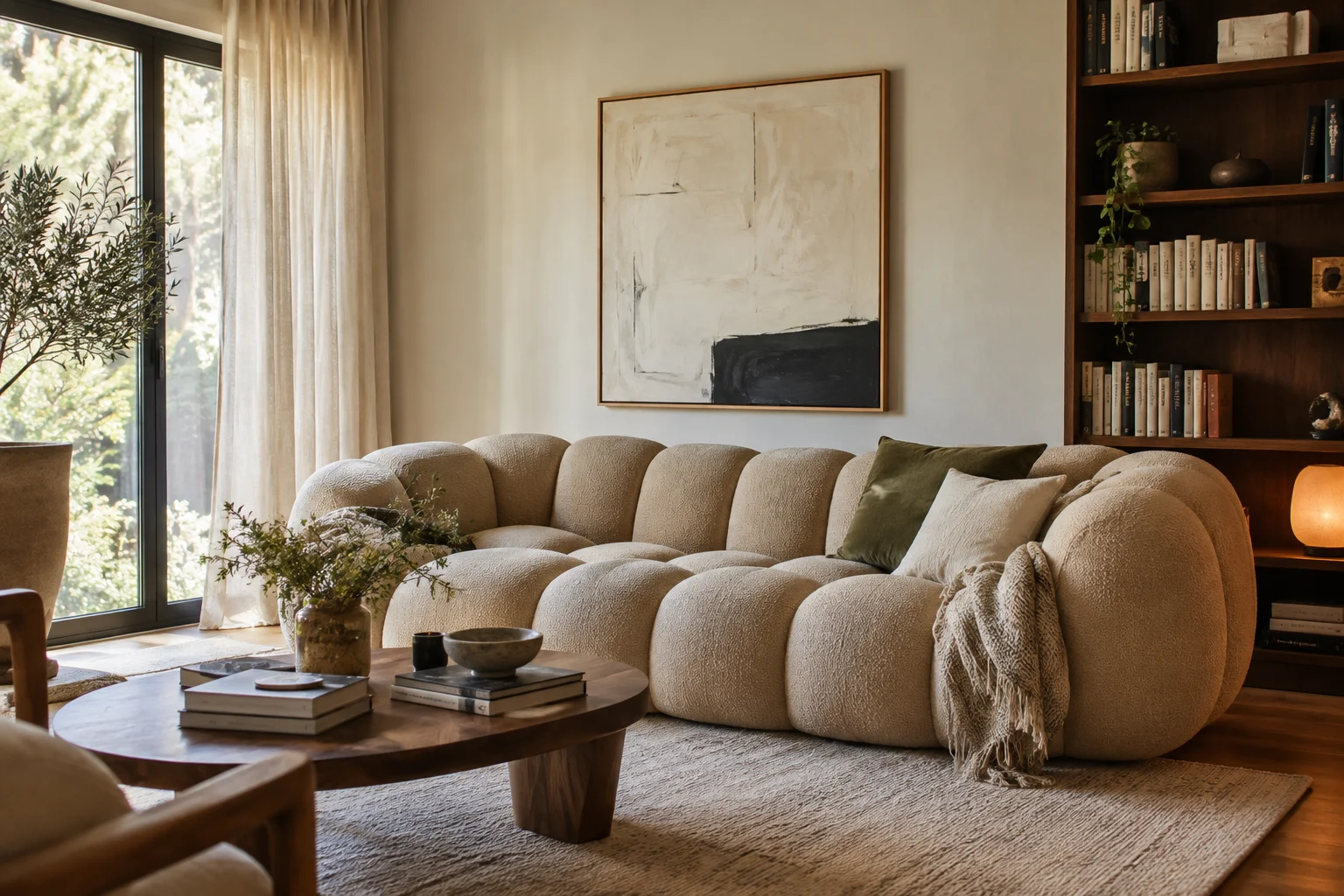
The rounded look has design history behind it, but its usefulness in your home matters more than its future popularity. The original Bubble predates the viral videos, and curved seating can work within several decorating styles.
Choose the sofa because you like its shape, enjoy its sitting position, and have room for it. Those reasons will still matter after your feed moves on.
If you are drawn to relaxed interiors with more traditional shapes, our Nancy Meyers aesthetic guide offers another route to a comfortable, inviting living room.
Quick Answers About Bubble Sofas
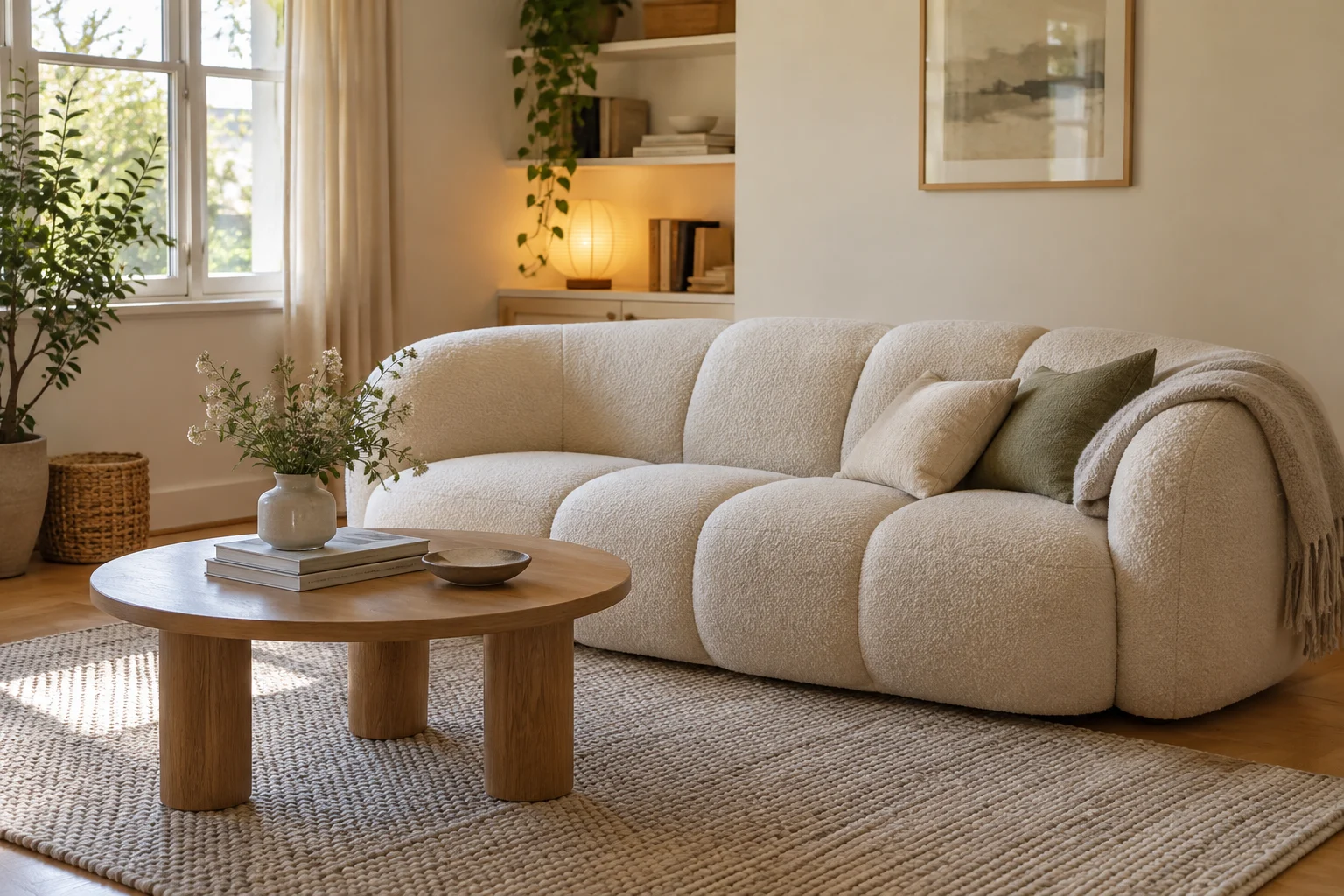
Shape is the easiest feature to spot. Construction and proportions deserve the next look.
Are All Bubble Sofas Boneless?
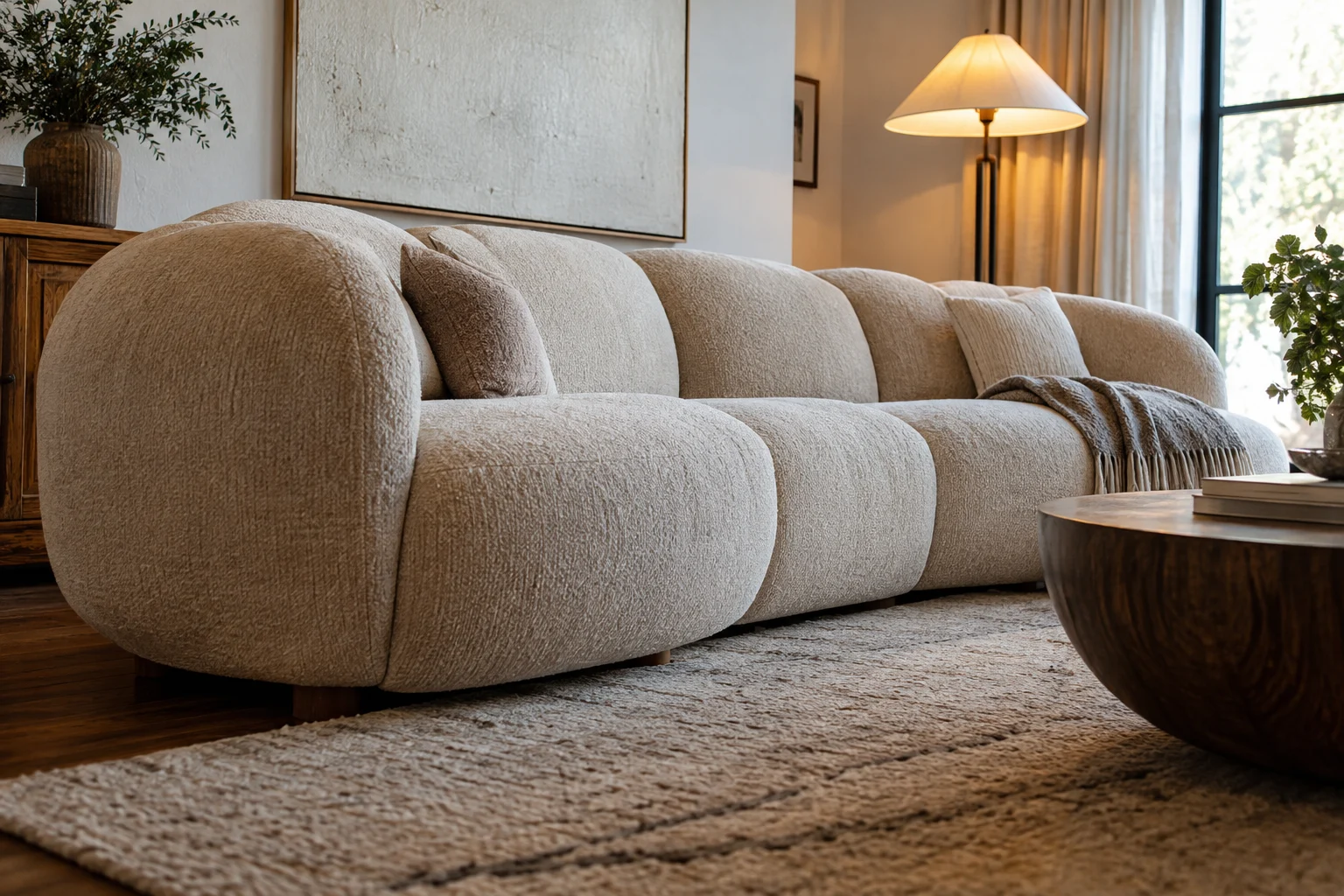
No. Bubble describes the silhouette, and boneless describes the construction. Some bubble-style sofas contain rigid frames, including the original Roche Bobois design.
Can a Bubble Sofa Be Your Main Couch?
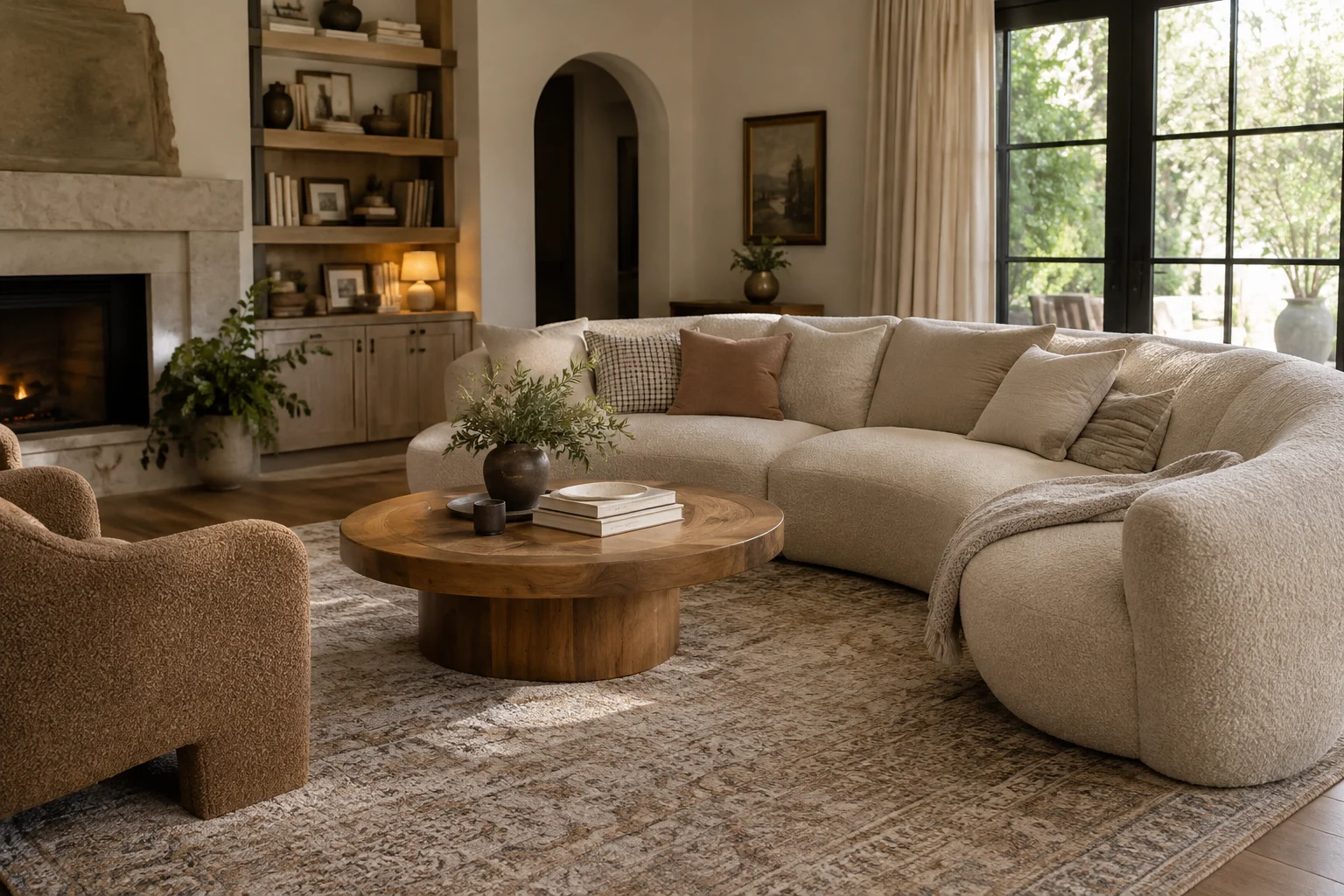
Yes, when its seat height, depth, and support suit the people using it daily. Give those features priority over a particularly dramatic shape.
Does a Bubble Sofa Work in a Small Apartment?

A suitably sized model can work, but a low profile does not guarantee a small footprint. Overall depth and walking space are especially important in a compact room.
Will a Bubble Sofa Lose Its Shape?
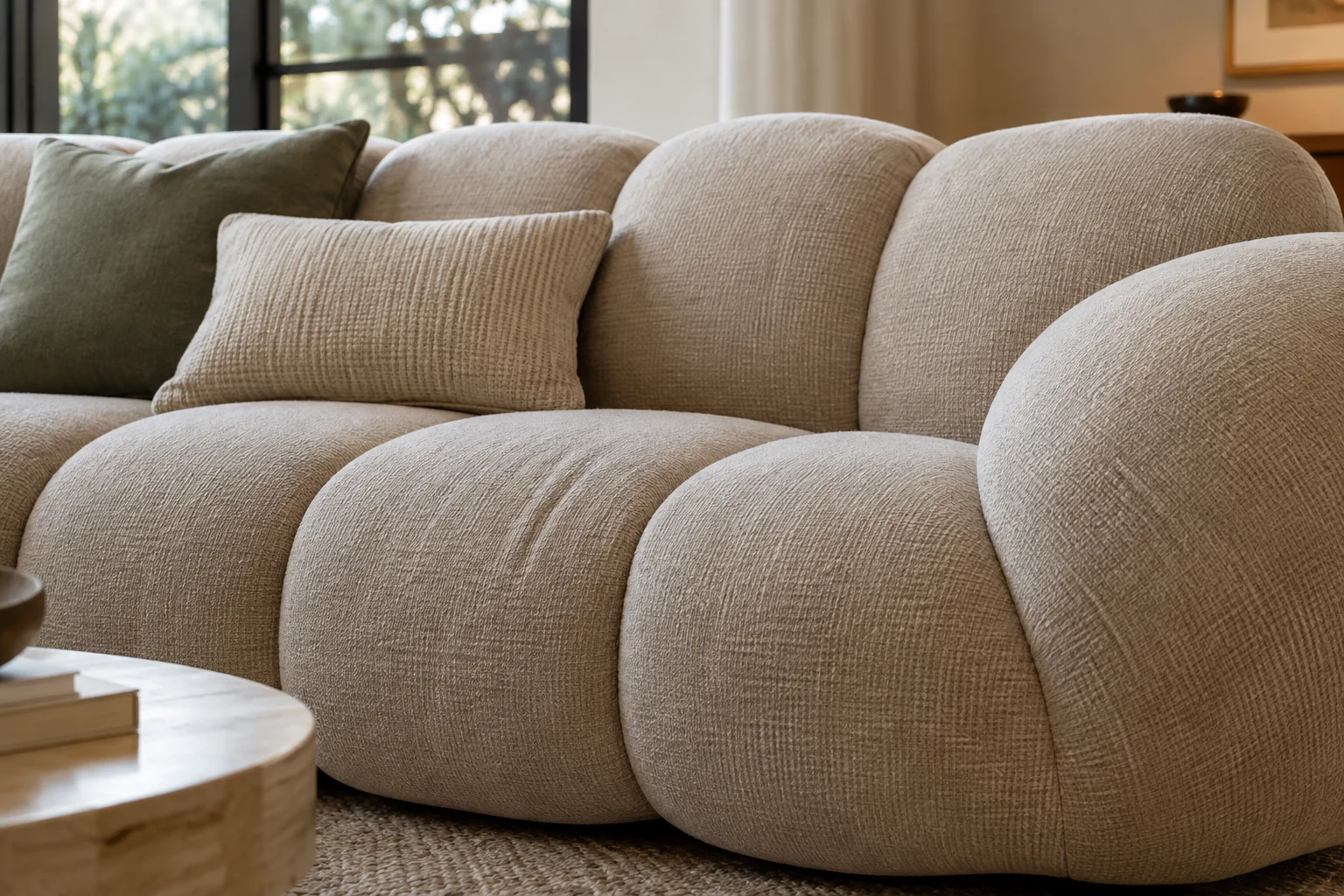
Foam and upholstery can change with wear. The rate depends on the particular materials, construction, and use, so there is no reliable lifespan for the entire category.
Can You Wash the Covers?
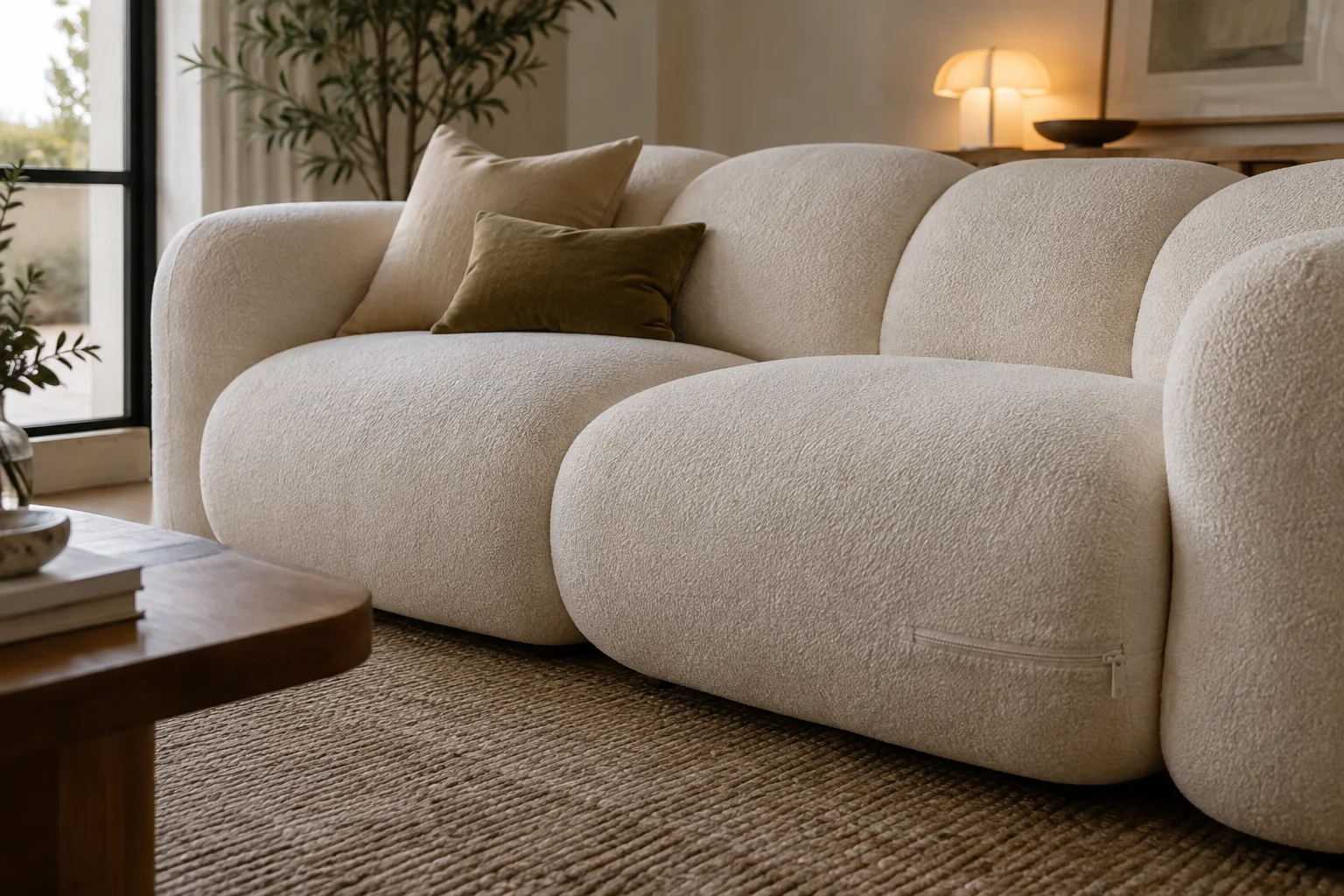
Only covers specifically identified as washable should go in the washing machine. A removable cover or visible zipper alone does not establish that.
How Long Does a Compressed Sofa Take to Expand?
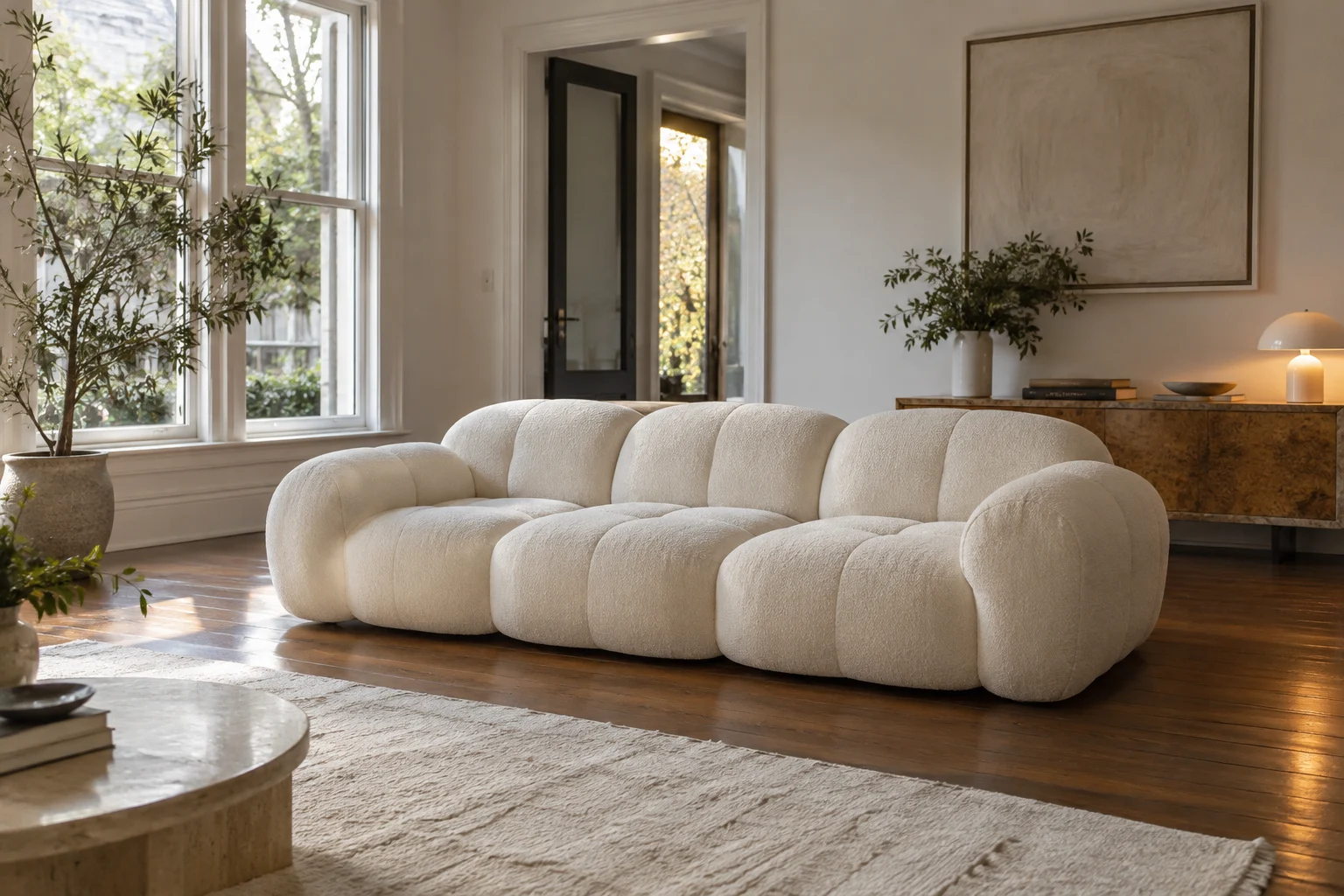
Recovery time varies by product. Initial expansion can happen quickly while the final shape takes longer, so use the recovery period stated for the model.
Is a Boneless Couch the Same as a Beanbag?
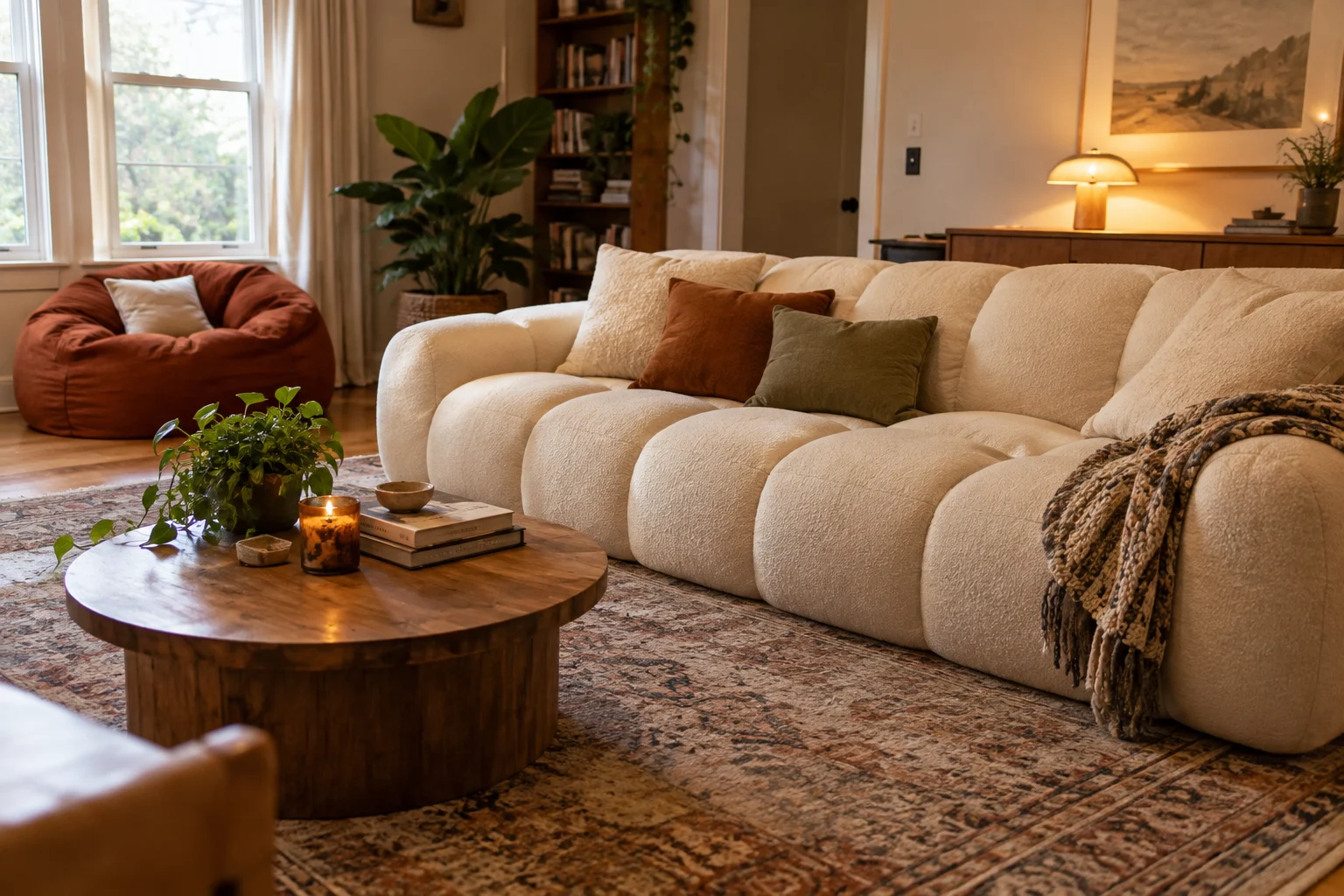
They can have quite different structures. Many boneless couches use shaped foam cores, while beanbags commonly contain loose beads or shredded filling. That difference affects how the seat moves and supports you.
Shop the Rounded Sofa Look
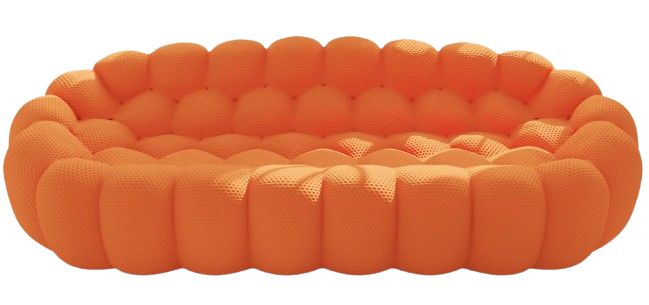 WJShome Orange Bubble CouchPronounced bubble sections and 3D-knitted upholstery for a colorful focal point.
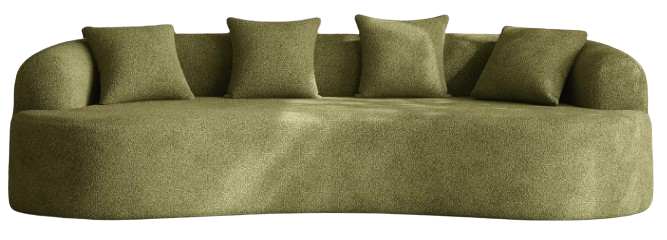 DAMAIFROM Sage Green Curved SofaChenille upholstery, deep seating, and a pocket-spring-and-foam support system.
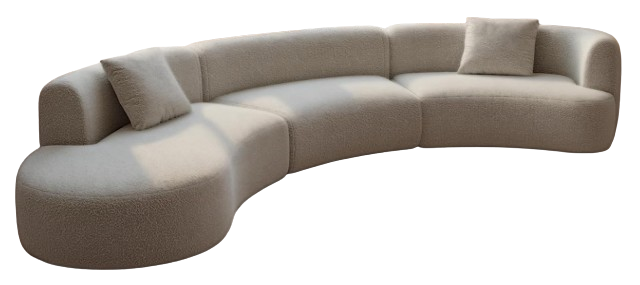 Acanva Formia Curved SectionalA broad, textured sectional with a larch wood frame and pocket-spring support.
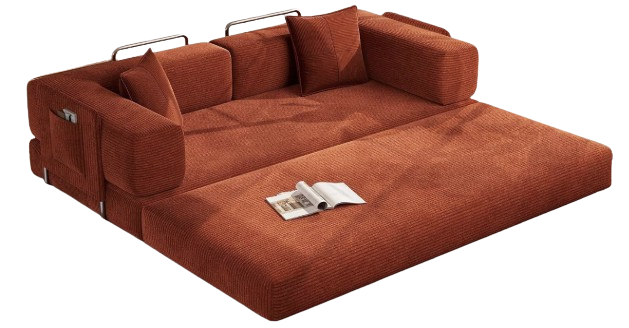 MoonSpeak Boneless Futon Sofa BedA convertible corduroy floor couch with side pockets for a casual multipurpose room.