The Best Linen Blackout Curtains of 2026: Dark Rooms, Beautiful Windows

Linen is the fabric that makes a room look like someone with good taste lives there. It’s relaxed, textured, a little rumpled in the best way, and it catches light like nothing else. Which is exactly the problem when you’re trying to sleep past 6 a.m.
The quick answer
- Quince European Linen True Blackout Curtain is our overall pick for real linen with a dedicated blackout lining.
- H.VERSAILTEX 100% Blackout Linen-Look Curtains offer a budget alternative with a textured appearance rather than real linen.
- The blackout lining provides the light blocking. Enough panel width and good coverage around the window help prevent light leaking at the edges.
The good news: in 2026, that’s easier to find than ever. The less-good news: “linen blackout” now covers everything from 100% European flax with a dedicated liner to polyester that’s been printed to look like linen. We dug through specs, liners, sizes, return policies and buyer reviews to find the panels actually worth hanging.
Short on time? Here are the answers first.
Our Quick Picks
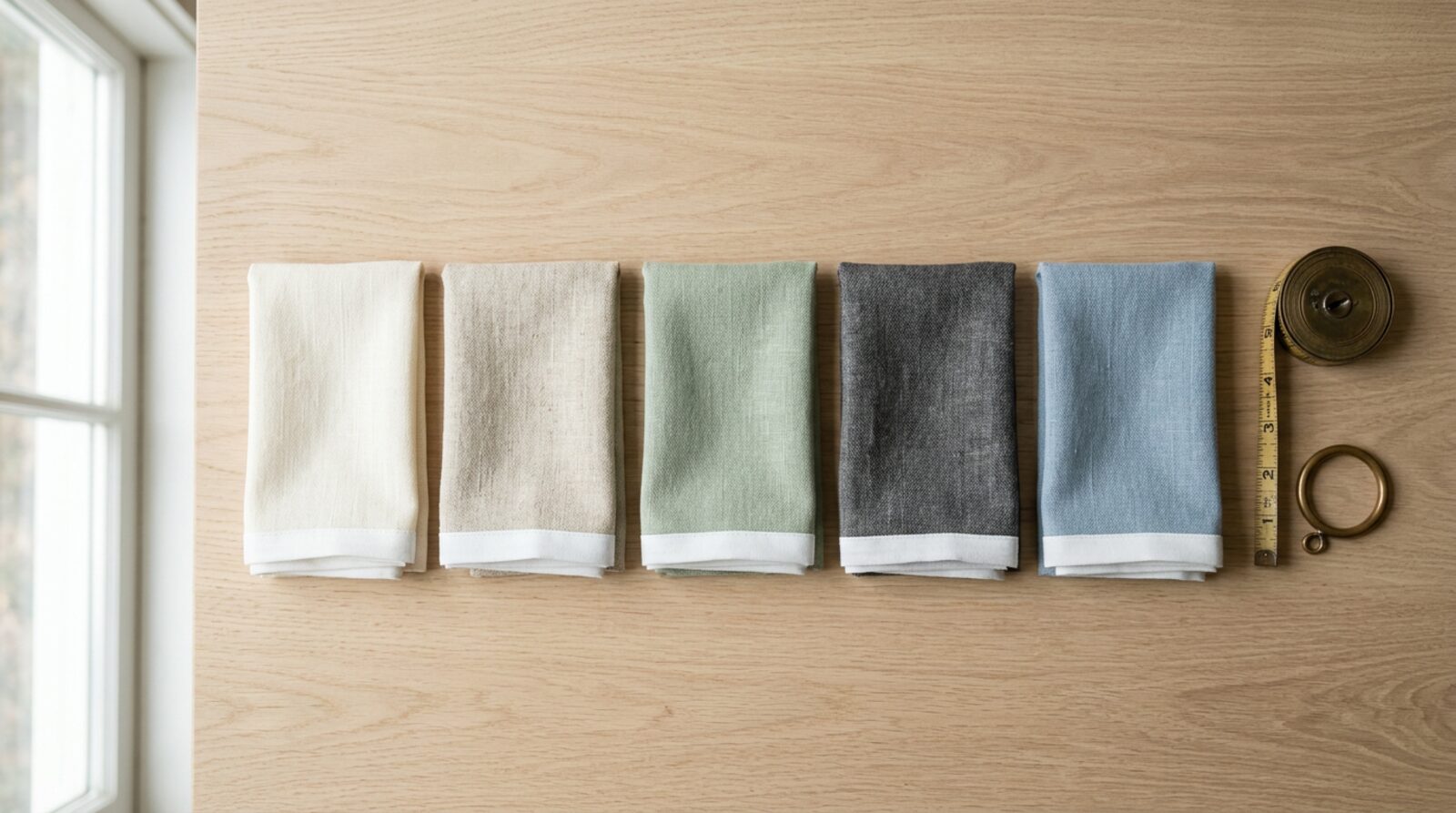
- Best Overall: Quince European Linen True Blackout Curtain ($92 per panel). Real 100% European linen, a dedicated true-blackout liner, 14 colours, and a 365-day return window. Nothing else combines all four at this price.
- Best Affordable: H.VERSAILTEX 100% Blackout Linen-Look Curtains ($38.95 per pair). Not real linen, but the texture fools the eye and the bonded liner blocks light through the fabric completely.
- Best Sewn-In Design: West Elm European Flax Linen Blackout Curtain (from $59). One panel, one thing to hang, one thing to wash, and Fair Trade Certified linen.
- Best Splurge: Pottery Barn Emery Linen Blackout Curtain ($159 per panel on sale). A heavier linen-cotton weave with three hanging options in one panel and that classic, tailored Pottery Barn drape.
- Best for a Breezy Look: CB2 European Flax-Certified Linen Blackout Panel ($110 per panel). The airiest, most “unlined-looking” of the bunch, with the richest colour range. Just know it lets a little light in.
| Curtain | Best for | Fabric | Price | Light blocking |
|---|---|---|---|---|
| Quince European Linen True Blackout | Best overall | 100% European linen | $92 / panel | True blackout liner |
| H.VERSAILTEX Linen-Look Blackout | Budget | Linen-look face, bonded liner | $38.95 / pair | 100% through fabric |
| West Elm European Flax Linen Blackout | Sewn-in simplicity | European flax linen | From $59 | Sewn-in blackout liner |
| Pottery Barn Emery Linen Blackout | Splurge | 73% linen, 27% cotton | $159 / panel (sale) | Blocks most light |
| CB2 European Flax-Certified Linen Blackout | Breezy, colourful rooms | European flax linen | $110 / panel | Darkening, some light in |
Prices as of October 2026 and can change. Panel prices are for the smallest standard size unless noted.
How We Chose
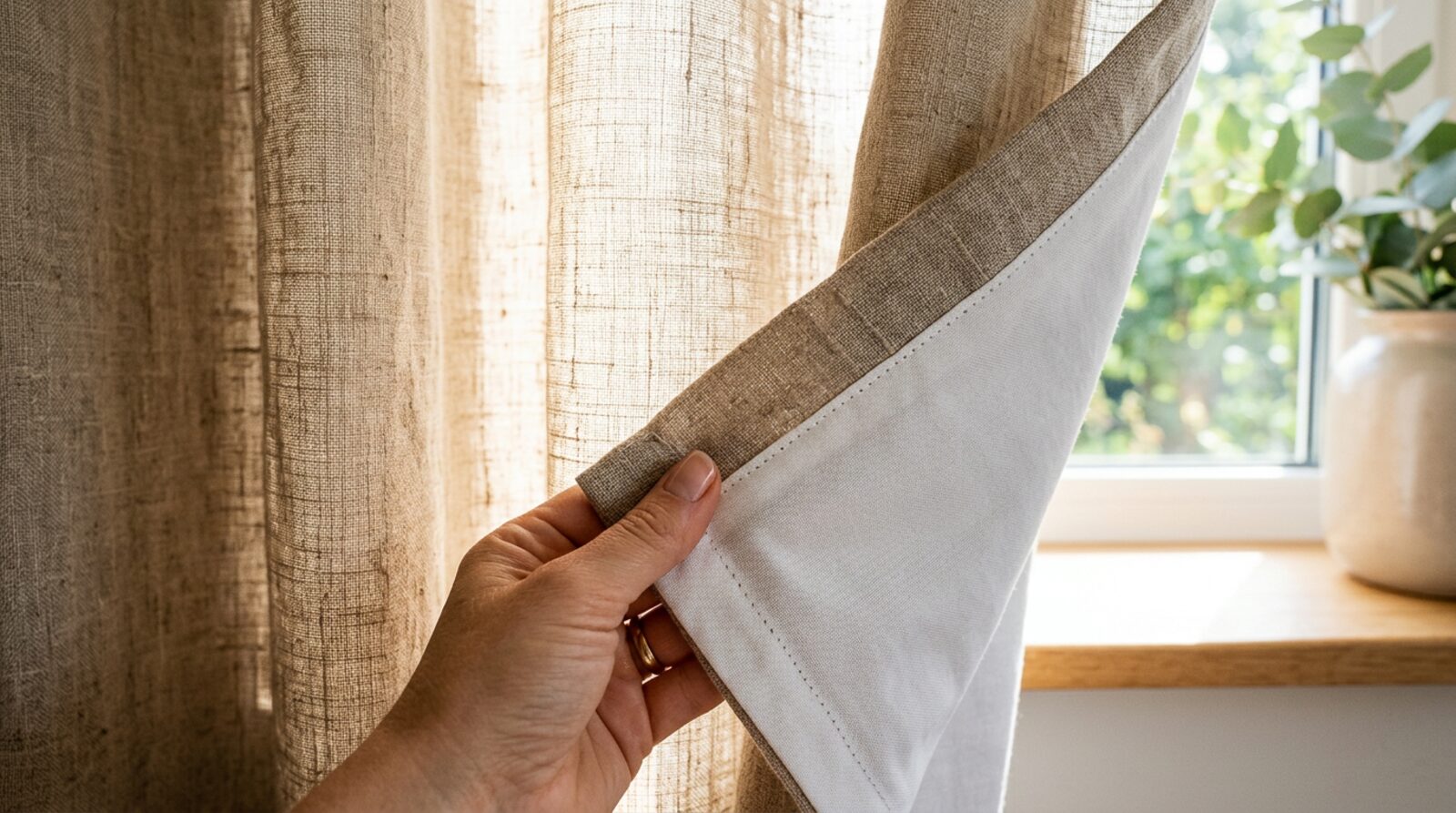
Here’s the secret most curtain ads won’t tell you: the linen doesn’t make a room dark. The liner does. The face fabric is what you look at. The opaque layer behind it is what stops the sun. That one fact shaped every pick on this list.
So we judged each curtain on:
- What the face fabric really is. 100% linen, a linen blend, or linen-look polyester. All three can be fine, but you deserve to know which one you’re paying for.
- How the blackout layer is built. A sewn-in liner, a bonded liner, or a “room darkening” lining that softens light rather than stopping it.
- Sizes and hanging options. A gorgeous curtain that’s three inches too short is not gorgeous.
- Care. Dry-clean only, machine washable, or somewhere in between.
- Price and return policy. Linen colours look different in every room’s light, so a generous return window matters more than usual.
We read brand specs directly from each retailer and cross-checked them against independent reviews from outlets like Wirecutter and buyer feedback. Where a curtain lets some light through, we say so plainly.
The Best Linen Blackout Curtains, Reviewed
1. Quince European Linen True Blackout Curtain: Best Overall
- Price:
- $92 per panel
- Fabric:
- 100% European flax linen
- Liner:
- True blackout (37% polyester, 63% polyacrylic)
- Sizes:
- 48” or 96” wide, 84” to 120” long
- Care:
- Dry clean only
If you only read one review on this page, make it this one. Quince does something the big decor brands still charge double for: real European linen on the front, and a dedicated blackout liner on the back, at $92 a panel.
Quince specifies a European linen front and a polyester/polyacrylic blackout liner for its True Blackout version. Choose True Blackout when comparing lining options: the brand also sells room-darkening curtains. Follow the selected panel’s care label; Quince recommends dry cleaning for this linen curtain.
The colour range is where it gets fun. There are around 14 shades, from crisp White and Ivory to Dark Flax, Sage, Hunter Green, Navy, Storm and a soft Vintage Blush. That makes it just as good in a moody, painted bedroom as in a pale Scandinavian one. Sizes run 48” or 96” wide, in 84”, 96”, 108” and 120” lengths, so tall windows and ceiling-mounted rods are covered. There’s also an optional grommet top if you prefer a more modern look.
The catch? It’s dry clean only. For a bedroom curtain that you vacuum occasionally and refresh once a year, that’s a fair trade. For a kid’s room that sees sticky fingers, it’s worth weighing. The other thing to know is that real linen wrinkles. Hang it, steam it once, and let gravity do the rest.
What seals it is the safety net: free shipping, free swatches, and a 365-day return window. Linen colours shift dramatically from screen to room, so being able to live with them for a while is a real advantage.
Love:
- Real 100% European linen at a mid-range price
- Genuine true-blackout liner, not just “darkening”
- Huge colour and size range, including 120” lengths
- Free swatches and 365-day returns
Consider:
- Dry clean only
- Easy to order the room-darkening version by mistake
Buy it if: you want the real thing, real darkness, and don’t want to pay designer-store prices for it.
2. H.VERSAILTEX 100% Blackout Linen-Look Curtains: Best Affordable
- Price:
- $38.95 per pair
- Fabric:
- Linen-textured face bonded to a white liner
- Liner:
- Bonded, 100% blackout through the fabric
- Header:
- Grommet
- Care:
- Machine washable, gentle cycle
Let’s be upfront: this isn’t real linen. It’s a linen-textured face fabric bonded to a blackout backing. But if your goal is “looks like linen, sleeps like a cave”, it punches far above its price, at about $19 a panel when you buy the pair.
The bonded construction is the reason it’s here. Most budget “blackout” curtains quietly block 85 to 99% of light. This one blocks light through the fabric completely, which is why it’s a favourite with night-shift workers, new parents and anyone with a street light outside the bedroom. With a 4.6-star average from more than 31,000 Amazon ratings, it’s one of the most proven panels you can buy.
The trade-offs are practical, not aesthetic. The double-layer build is heavy, so it needs a sturdy rod with a centre support; skip tension rods and thin café rods. The back is white, which is what your neighbours will see from the street. And the colour range is more limited than the premium picks. Grommets make it fast to hang, though they give a more casual, modern look than a pinch pleat.
On the plus side, it’s machine washable on gentle, which makes it the most family-friendly curtain on this list.
Love:
- Under $40 for a pair
- Complete blackout through the fabric
- Machine washable
- Linen texture reads much more expensive than it is
Consider:
- Not real linen; lacks linen’s natural slub and drape
- Heavy, needs a solid rod
- White backing faces the street
Buy it if: you’re furnishing a rental, a kid’s room or a guest room, or you want darkness first and linen looks second.
3. West Elm European Flax Linen Blackout Curtain: Best Sewn-In Design
- Price:
- From $59
- Fabric:
- European flax linen
- Liner:
- Sewn-in blackout
- Sizes:
- Standard sizes such as 48” x 84”, plus custom
- Extras:
- Fair Trade Certified, pleated version available
West Elm’s linen blackout panel wins on simplicity. The blackout liner is sewn into the panel, so there’s no separate liner to buy, no double rod, and no fiddly hardware puzzle. You hang one panel and you’re done. When it’s time to clean, you take down one thing, not two.
It’s also one of the more conscientious options on the list. West Elm’s European flax linen curtains are Fair Trade Certified, and the same fabric family comes as a plain unlined curtain and a sheer. That’s a quietly brilliant detail for anyone decorating a whole home: your bedroom blackouts, living room drapes and kitchen sheers can all match without hunting across brands.
If you like a more tailored top, there’s a pleated version of the same blackout linen. And if your windows are unusual, there’s a custom-size line too.
Two things to keep in mind. First, check the size you need; “from $59” applies to standard smaller sizes, and longer or wider panels cost more. Second, West Elm accepts returns on stock items for 30 days from delivery and excludes made-to-order pieces, so order early enough to hang them inside that window.
Love:
- A sewn-in liner keeps hanging simple
- Fair Trade Certified linen
- Matching sheer and unlined versions for a whole-home look
- Pleated and custom options
Consider:
- Price climbs quickly for longer sizes
- 30-day return window, and custom pieces can’t be returned
Buy it if: you want a clean, no-fuss install from a design-led brand, and you care where your linen comes from.
4. Pottery Barn Emery Linen Blackout Curtain: Best Splurge
- Price:
- $159 per panel for 50” x 84” (on sale; $179 regular)
- Fabric:
- 73% linen, 27% cotton
- Liner:
- 100% polyester blackout
- Hanging:
- Rod pocket, back tabs or ring top
- Hems:
- Blind-stitched
The Emery has been a Pottery Barn bestseller for years, and it’s easy to see why the moment it’s hanging. The linen-cotton blend gives it more body than pure linen. It falls in heavier, more structured folds and wrinkles less, so it reads polished rather than relaxed. Think classic, tailored, “hotel suite” rather than “beach cottage”.
The clever part is the 3-in-1 construction. Every panel can hang by a rod pocket, by hidden back tabs (for those crisp, even pleats), or from clip rings. That flexibility is handy if you move house, change your rod, or simply change your mind. Blind-stitched hems keep the finish clean.
The blackout liner is 100% polyester, and Pottery Barn describes it as preventing most light from entering. In plain terms: expect a very dark room, but don’t expect total darkness the way a bonded liner can deliver. For most bedrooms that’s plenty.
A few details worth knowing before you order. Using clip rings adds about 2” to the overall length, so size accordingly. The extra-wide 100” panels have a visible vertical seam down the middle. And the price is the highest here, at $159 for a 50” x 84” panel on sale and $179 regular, rising for longer sizes. There’s also a pinch-pleat version and a custom-size line for unusual windows.
Love:
- Rich linen-cotton weave that drapes beautifully and wrinkles less
- Three hanging styles in one panel
- Polished, tailored look with blind-stitched hems
- Wide colour range and custom sizes
Consider:
- Most expensive pick
- “Blocks most light” rather than total blackout
- Visible seam on 100”-wide panels
Buy it if: you want a heavier, more formal drape for a primary bedroom and the budget allows.
5. CB2 European Flax-Certified Linen Blackout Panel: Best for a Breezy Look
- Price:
- $110 per panel
- Fabric:
- European Flax-certified linen
- Liner:
- Blackout lining
- Sizes:
- 48” wide, 84” to 120” long
- Colours:
- White, Natural, Olive Green, Forest Green, Dark Terracotta, Smoked Mauve and more
CB2’s linen blackout panel is for people who love the airy, unlined look of linen and want better sleep, not perfect darkness. Wirecutter singled it out as “gorgeous and breezy”, and that’s the right way to think about it.
It has the most visible linen character of the premium picks: a soft, natural drape that doesn’t look stiff or heavily backed. The European Flax certification means the fibre is traceable to flax grown in Western Europe, a meaningful quality marker in linen. And the colour palette is the most design-forward of the group. Dark Terracotta and Smoked Mauve are the kinds of shades that turn a curtain into the room’s statement piece.
The honest trade-off: it lets some light in. You’ll get a noticeably dimmer room, but not a pitch-black one. If you’re a light sleeper facing east, choose one of the picks above. If you’re decorating a living room, a dining room, or a bedroom where gentle morning light is welcome, this is the most beautiful option here.
Love:
- The most natural, relaxed linen drape of the premium picks
- European Flax-certified fibre
- Standout colour range
- Lengths up to 120”
Consider:
- Lets some light through; not for day sleepers
- Pricier than Quince for less darkness
Buy it if: style comes first and you want softened light, not a blackout bunker.
The Linen Blackout Curtain Buying Guide
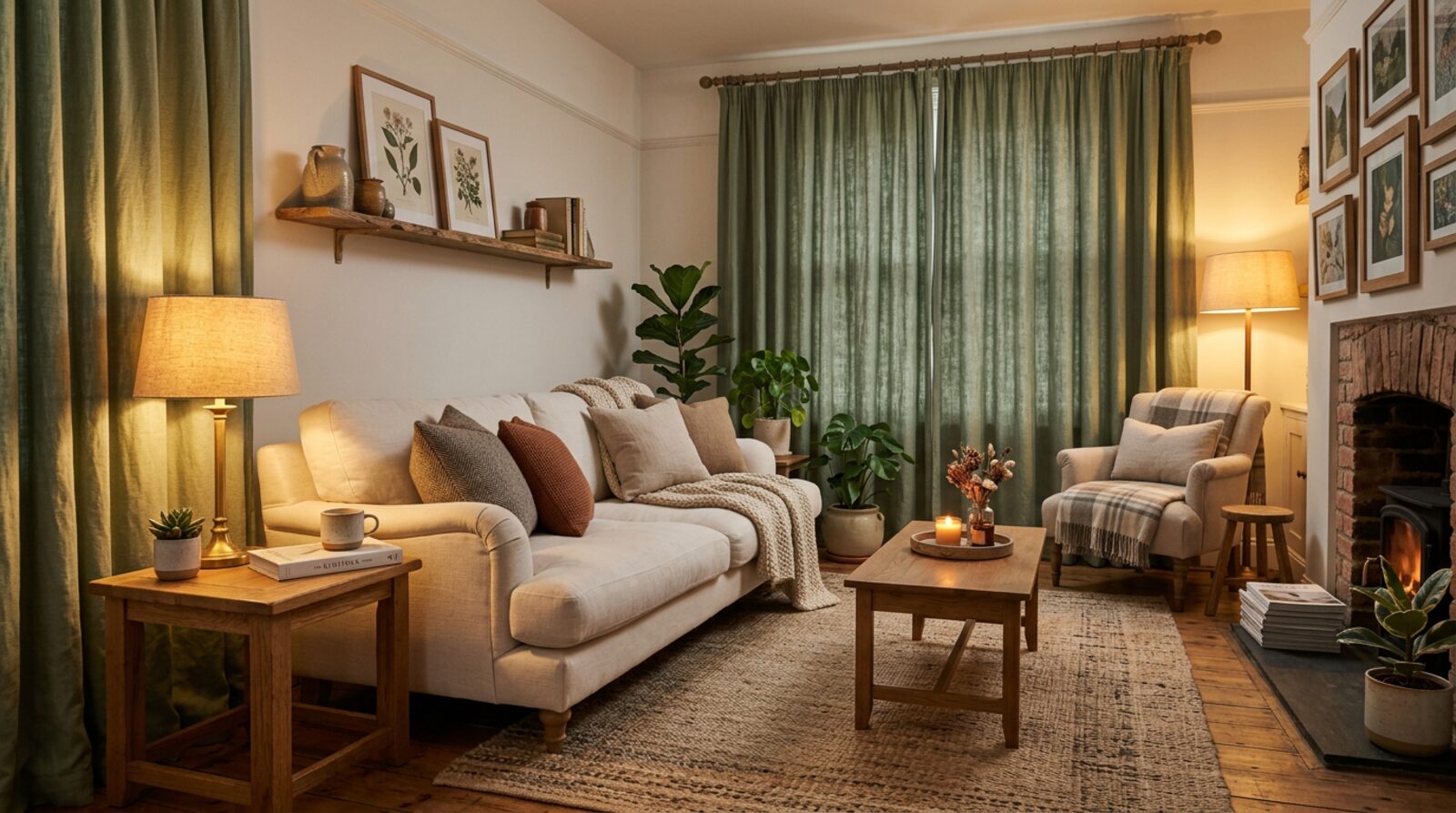
The right curtain depends on your window, your room and how dark you really need it. Here’s everything to check before you click “add to cart”.
Real Linen vs. Linen-Look
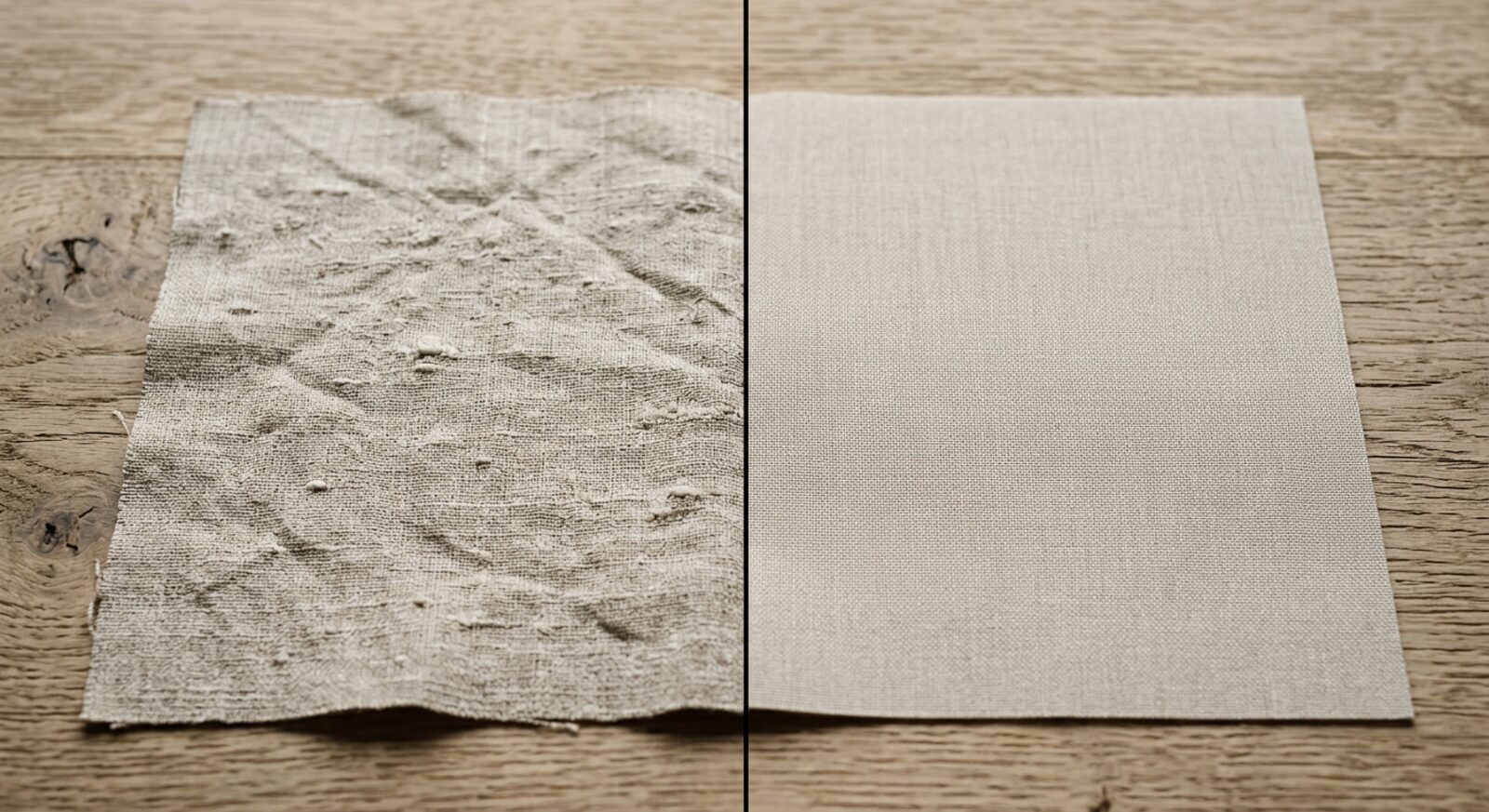
Real linen is woven from flax. It has natural slubs (little thicker threads), a matte, slightly irregular surface, and it drapes and wrinkles in a soft, organic way. It’s breathable, gets softer over time, and looks beautiful even when it’s not perfectly pressed.
Linen blends (like Pottery Barn’s linen-cotton) keep most of that texture while adding body and wrinkling less.
Linen-look fabrics are usually polyester woven or printed to mimic the texture. They’re cheaper, more wrinkle-resistant and often machine washable, but up close they look more uniform and drape more stiffly.
Our take: in a bedroom where curtains are closed every night and seen up close, real linen or a blend is worth the money. In a rental or a kid’s room, linen-look is a smart way to save.
True Blackout vs. Room Darkening
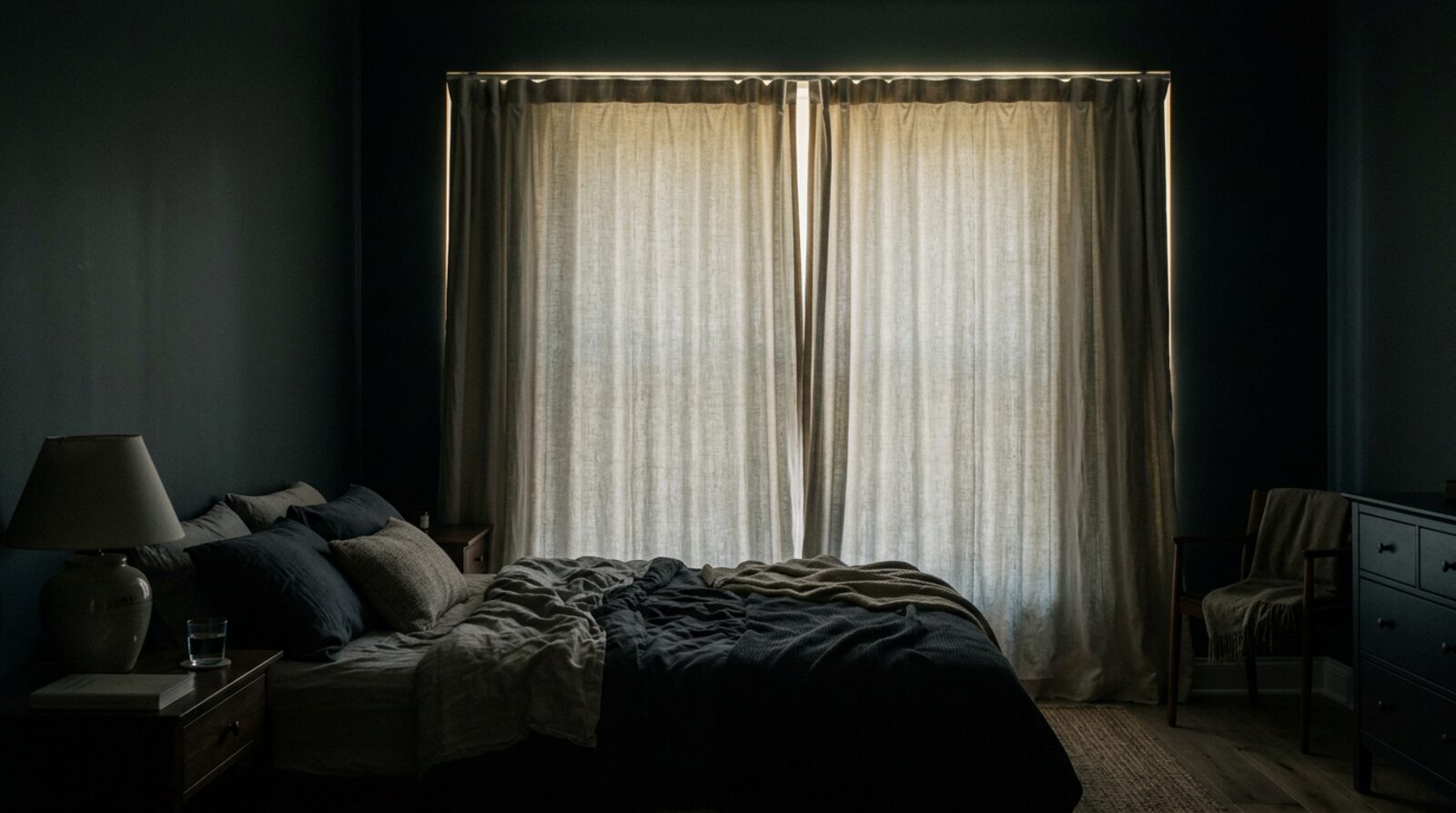
This is the single most important spec, and the labels are confusing. Here’s what they usually mean:
- Light filtering: softens light and adds privacy. Not dark.
- Room darkening: cuts most light. The room feels dim, but you’ll still see daylight.
- Blackout / true blackout: blocks light through the fabric. The room gets genuinely dark.
How the liner is attached matters too. A sewn-in liner (West Elm, Pottery Barn, Quince) keeps the face linen looking natural from the front. A bonded liner (H.VERSAILTEX) is fused to the face fabric, which is excellent for darkness but makes the panel heavier and stiffer. A separate liner hung behind any curtain is a good fix if you already own linen panels you love.
Keep in mind that even a 100% blackout fabric won’t make a room 100% dark on its own. Light sneaks in around the edges, which is where hardware comes in (more on that below).
How to Measure
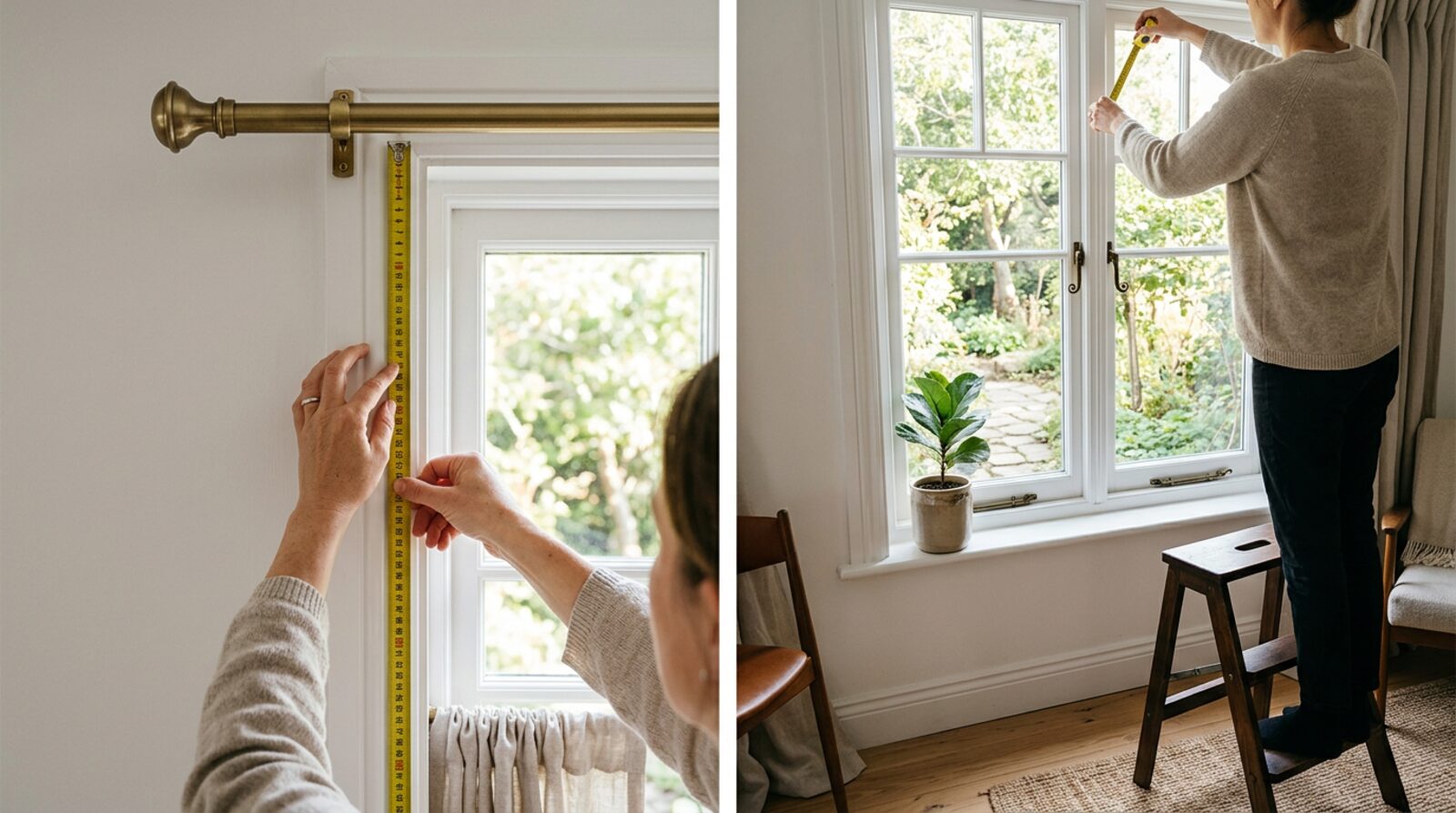
Measuring wrong is the most common curtain mistake, and the most annoying to fix. Follow these rules:
- Width: for a full, gathered look, your total curtain width should be about 1.5 to 2 times the width of the rod. For a 60” rod, that means two 48”–50” panels at minimum.
- Length: measure from the rod (or the top of the ring) to the floor. Then choose your style:
- Kiss the floor: about half an inch off the ground. Clean and tailored.
- Break: 1”–2” extra so the hem just rests on the floor. Relaxed and elegant.
- Puddle: 4”+ extra. Romantic, but collects dust.
- Account for rings. Clip rings add length (Pottery Barn notes about 2” with theirs), so subtract that from your measurement.
- Round up, not down. If your measurement falls between stock sizes, go longer. A slightly long curtain looks intentional; a short one looks like it shrank.
Header Styles
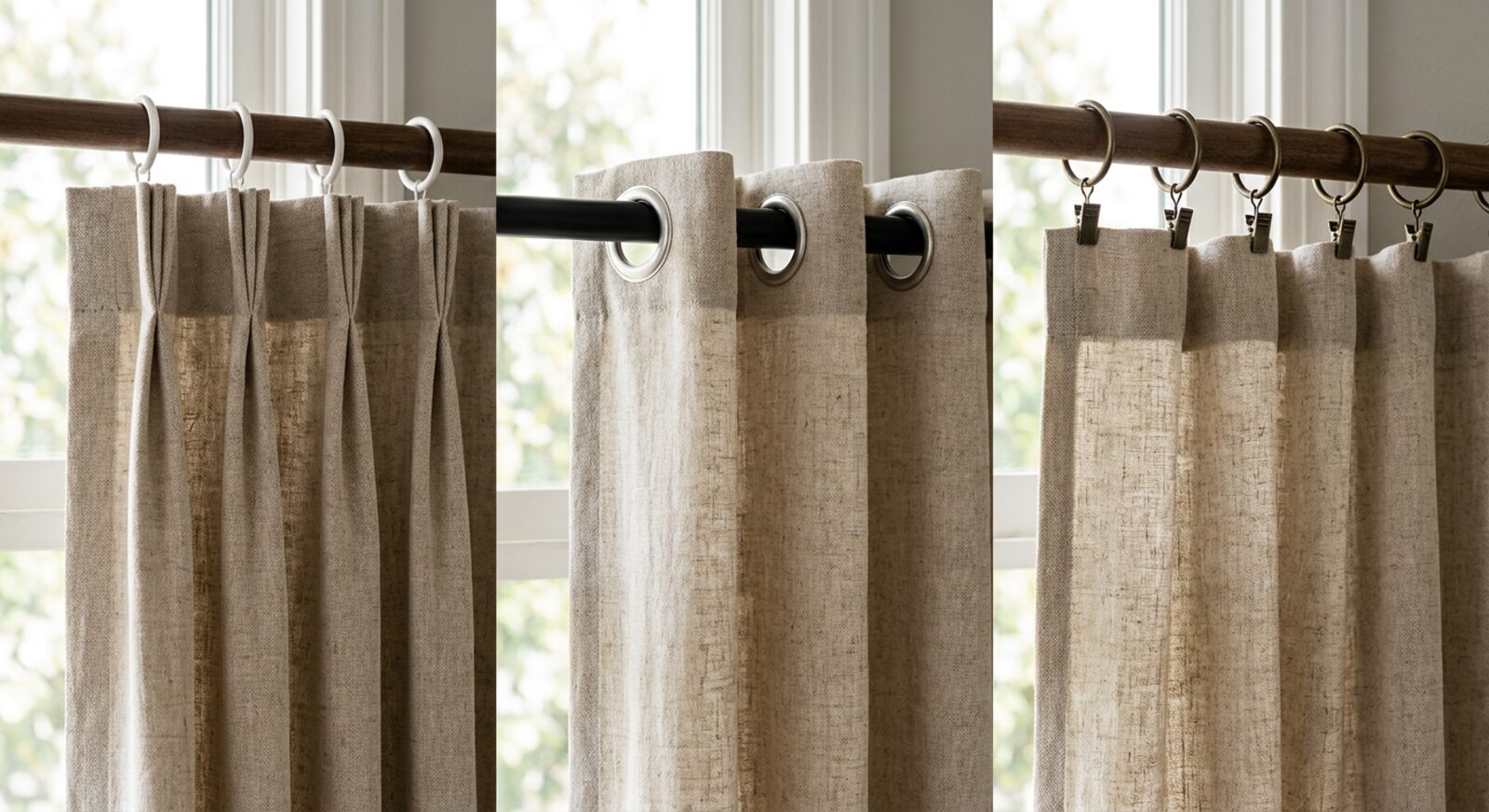
The header is the top of the curtain, and it changes the whole look:
- Rod pocket: the rod slides through a sewn channel. Casual and simple, but harder to open and close.
- Back tabs: hidden loops on the back create even, structured folds. A tailored look from a basic rod.
- Pinch pleat: sewn pleats at the top for the most polished, custom feel. Pair with rings or a track.
- Grommet: metal rings punched into the fabric. Modern, very easy to slide open, a bit more casual.
- Ring top / clip rings: the most flexible option, and the smoothest to open and close daily.
For a blackout curtain you’ll draw every night, smooth movement matters. Rings, grommets and pleats beat rod pockets for everyday use.
Colour and Light
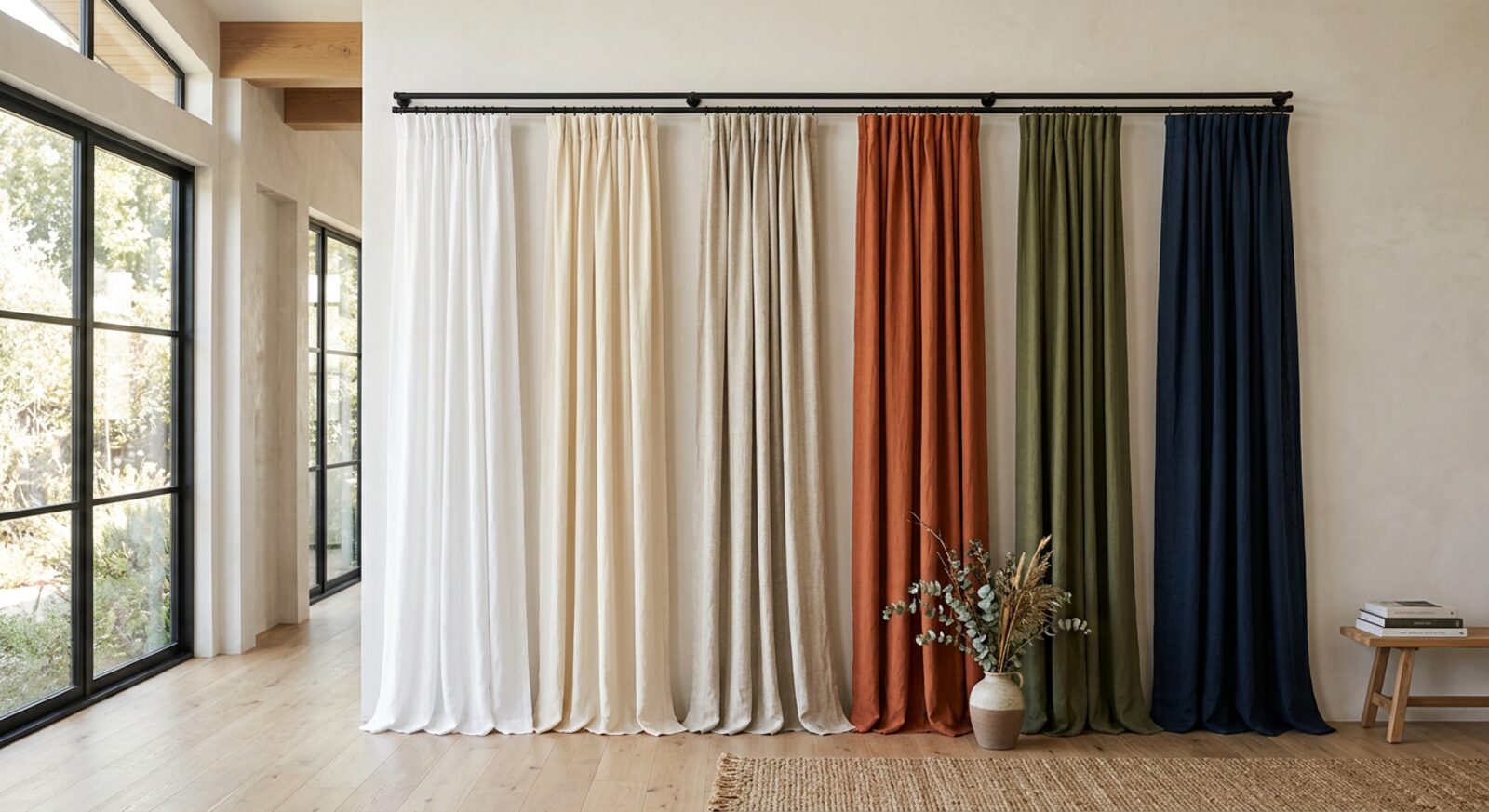
With a blackout liner, colour is mostly about style, not darkness. The liner does the blocking. Still, a few things are worth knowing:
- White and ivory keep a room bright and airy by day, and with a good liner they still black out at night.
- Natural flax and oatmeal are the most forgiving; they hide wrinkles and suit almost any style.
- Deep tones (navy, forest green, charcoal, terracotta) create a cocooning, hotel-like mood and hide any faint glow at the edges.
- Order swatches. Linen looks completely different in north light versus south light. Quince offers free swatches for exactly this reason.
Care and Wrinkles
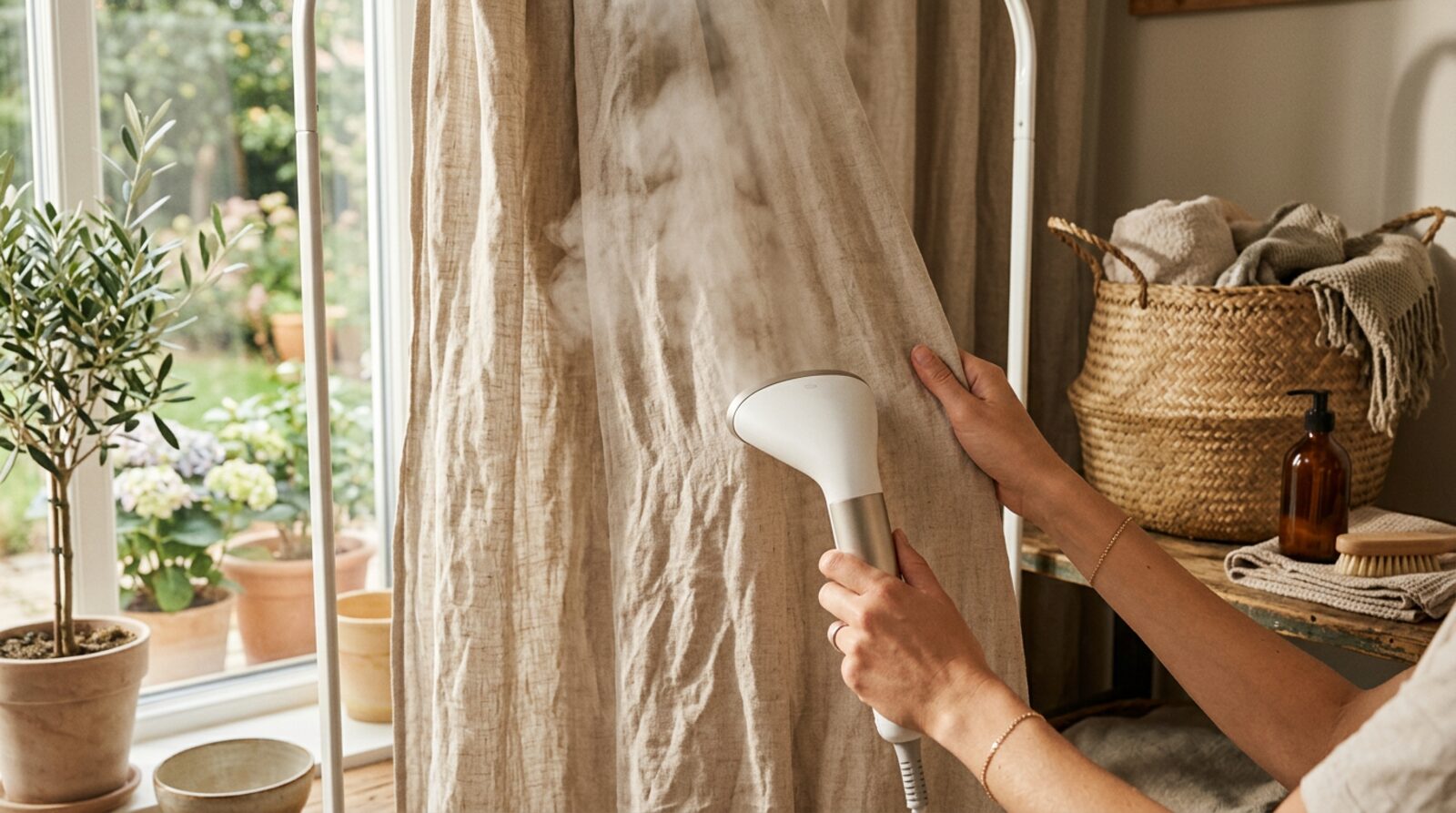
Linen wrinkles. That’s part of its charm, but it helps to know what you’re signing up for:
- Steam, don’t iron. Hang your curtains first, then steam them in place. Gravity does half the work over a few days.
- Check the care label before you buy. Some lined linen panels, including Quince’s true-blackout version, are dry clean only. Washing can shrink linen and warp a liner.
- Vacuum regularly. A soft brush attachment once a month keeps dust from settling into the weave.
- Want low maintenance? A linen-cotton blend or a machine-washable linen-look panel is the easiest to live with.
Hardware and Light Gaps
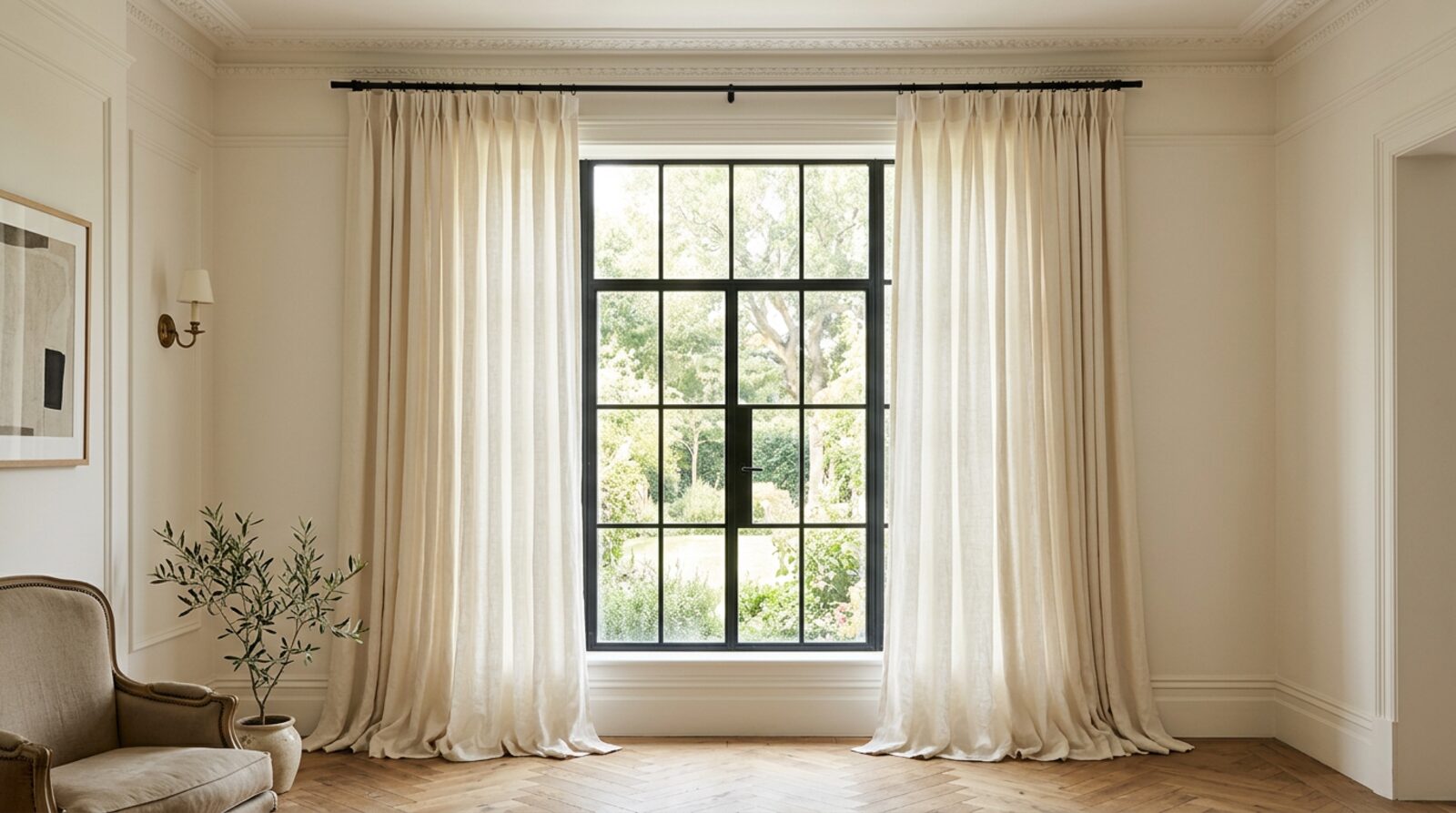
You can buy the darkest curtain in the world and still wake up to a glowing halo around it. Light leaks over the top and around the sides, so how you hang it matters as much as what you hang.
- Mount high. Place the rod 4”–6” above the window frame, or closer to the ceiling. It blocks light spilling over the top and makes your ceiling look taller.
- Go wide. Extend the rod 8”–12” past each side of the window so the panels fully cover the frame when closed.
- Consider wraparound rods. Return rods curve back to the wall and seal side gaps, a favourite trick for nurseries.
- Use a sturdy rod. Lined linen is heavy. Choose a rod at least 1” thick with a centre bracket for wide windows.
Frequently Asked Questions
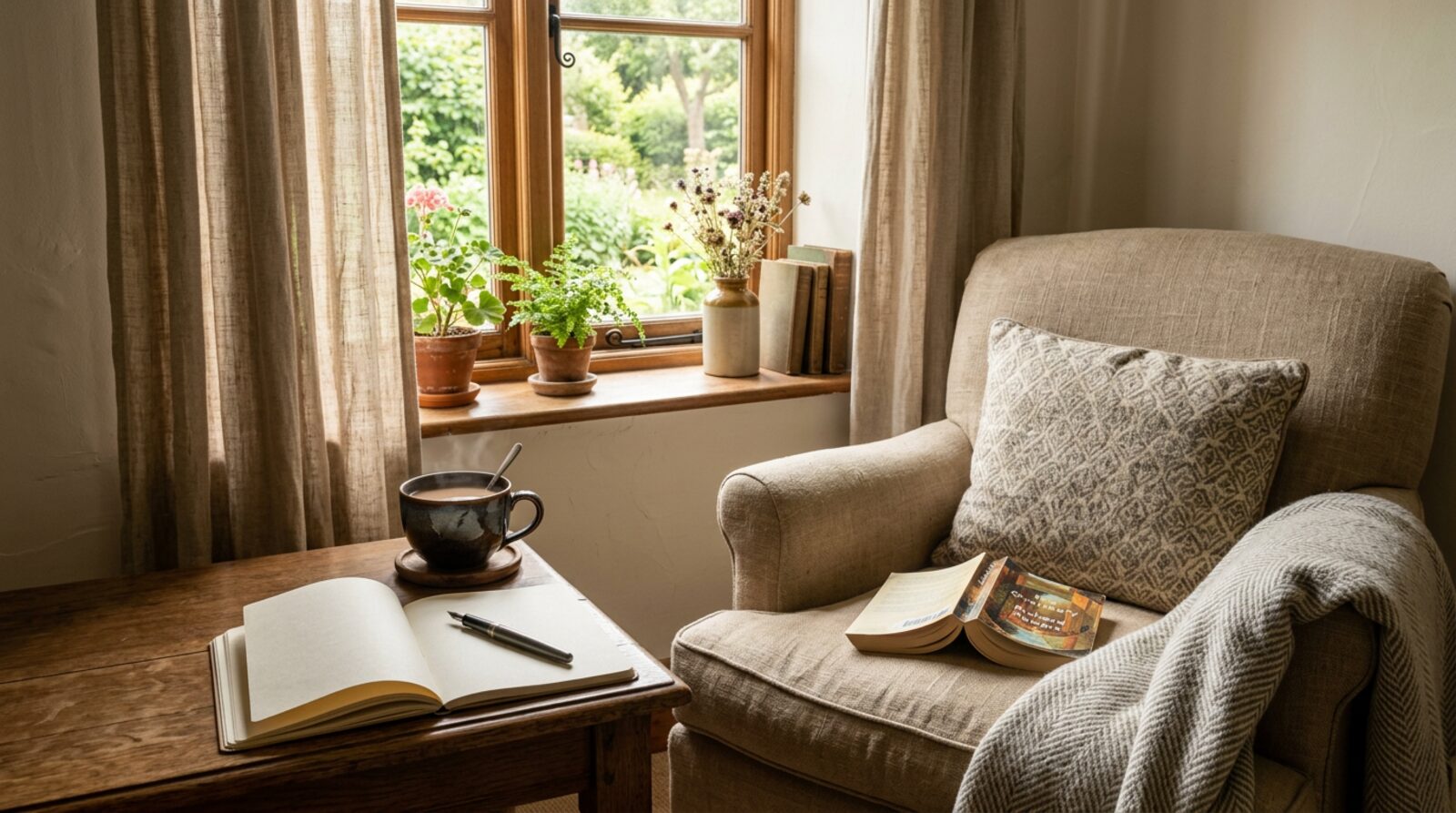
Does linen block light on its own? Barely. Linen is a loose, breathable weave, so unlined linen mostly softens and diffuses light. To darken a room, you need a blackout liner sewn in, bonded on, or hung behind it.
Are linen blackout curtains worth the money? If you want both style and sleep, yes. You get linen’s texture and natural drape at the window, with the darkness of a lined curtain. If you only care about darkness, a budget linen-look blackout does the job for far less.
Will my room be completely dark? The fabric can be, but the window usually isn’t. Light leaks around the top and sides of any rod-mounted panel. Mounting the rod high and wide, choosing wider panels, or using wraparound rods closes most of the gap.
What’s the difference between blackout and room-darkening? Room-darkening curtains cut most light but leave the room dim rather than dark. Blackout curtains block light through the fabric. Some brands, including Quince, sell both versions of the same curtain at the same price, so double-check before ordering.
Can I wash linen blackout curtains? It depends on the curtain. Many lined linen panels are dry clean only because washing can shrink the linen and damage the liner. Some linen-look blackout curtains, like H.VERSAILTEX, can go in the machine on a gentle cycle. Always follow the label.
Do blackout curtains help with heat and noise? A heavy lined panel adds an extra layer at the window, which can help a little with drafts, summer heat and outside noise. Just don’t expect it to replace proper insulation or soundproofing.
How many panels do I need? Aim for a total curtain width of 1.5 to 2 times your rod width. Most standard windows need two panels; wide windows or sliding doors often need four, or two extra-wide panels.
Can I add a blackout liner to linen curtains I already own? Yes. Separate blackout liners hang behind your existing curtains on a double rod or the same rings. It’s a great way to keep panels you love and still get a dark room.
Which colour works best for blackout? Any colour works when the liner is doing the blocking. Deeper shades help hide faint glows at the edges, while white and ivory keep a room brighter by day.
The Verdict
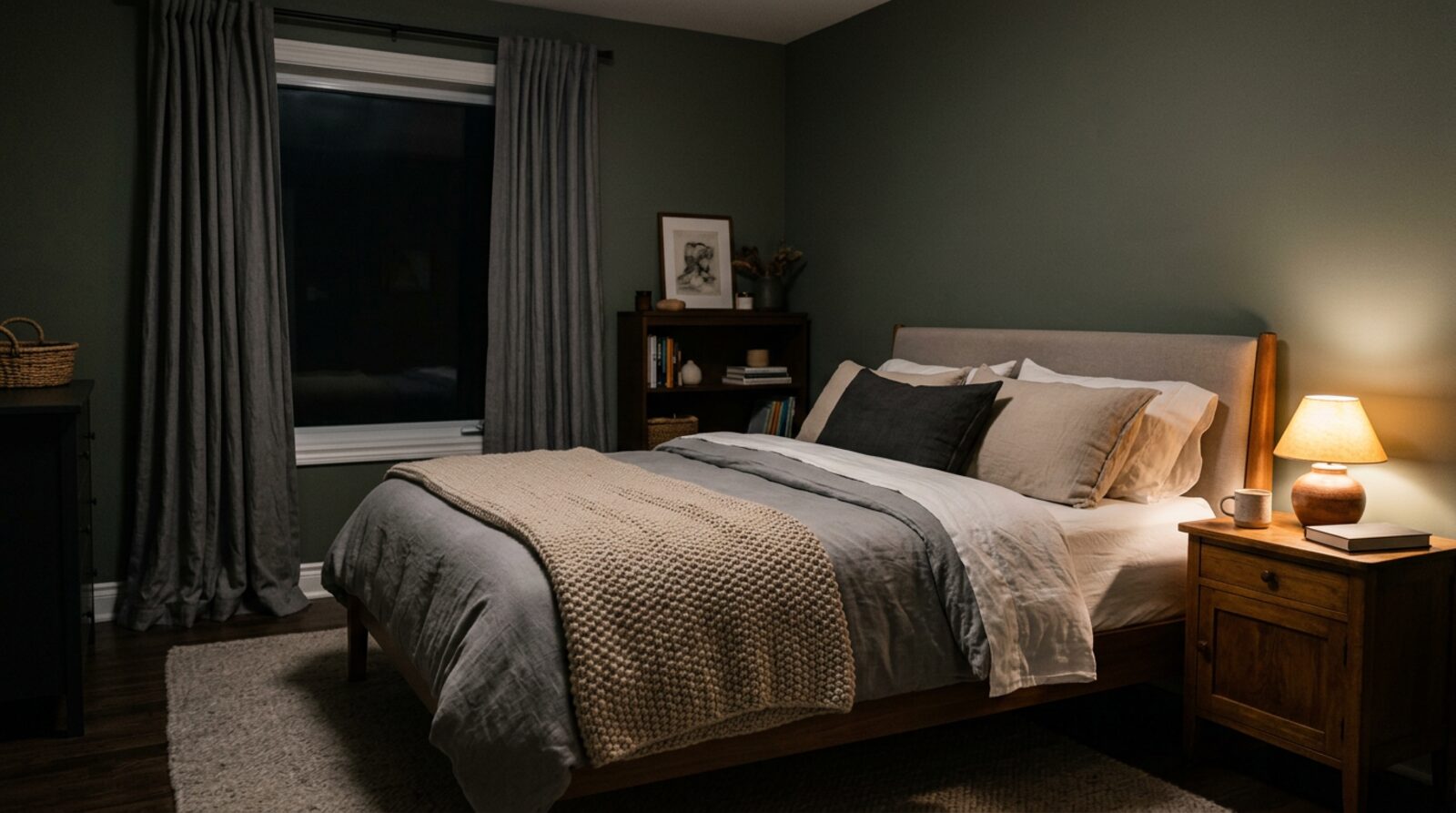
For most homes, the Quince European Linen True Blackout Curtain is the one to buy. It’s real linen, it’s genuinely dark, it comes in colours and lengths for almost any room, and a 365-day return window takes the risk out of choosing a shade online.
On a tight budget, the H.VERSAILTEX Linen-Look Blackout gives you serious darkness for under $40 a pair. Want a simpler install from a design-led brand? Go with West Elm. Craving a heavier, more tailored drape? Pottery Barn’s Emery is worth the splurge. And if you love light and colour more than darkness, CB2 makes the prettiest panel of the bunch.
Whatever you pick, hang it high, hang it wide, and steam it once. Then enjoy the best sleep your bedroom has ever given you.
Prices and availability were checked in October 2026 and may change.