10 Home Decor Quick Fixes That Feel Like Cheat Codes

Looking for home decor quick fixes because your room has all the furniture it needs, yet somehow still feels unfinished?
The sofa is comfortable, the walls have art, and you’ve already bought the cushion. Something is still missing.
The quick answer
- Warm lighting at different heights makes a room more comfortable after dark.
- Floor-length curtains and a rug that reaches the seating improve the proportions of a living room.
- A well-placed mirror or tall plant adds one noticeable feature without filling every surface.
- Hide visible cables, clear crowded tables, and repeat a color you already like in a few places.
You don’t need to tackle all ten.
Pick the detail that keeps catching your eye, whether that’s the tiny rug under your coffee table or the ceiling light you reluctantly switch on every evening.
1. The Lighting Cheat Code: Warm Bulbs, More Than One Lamp
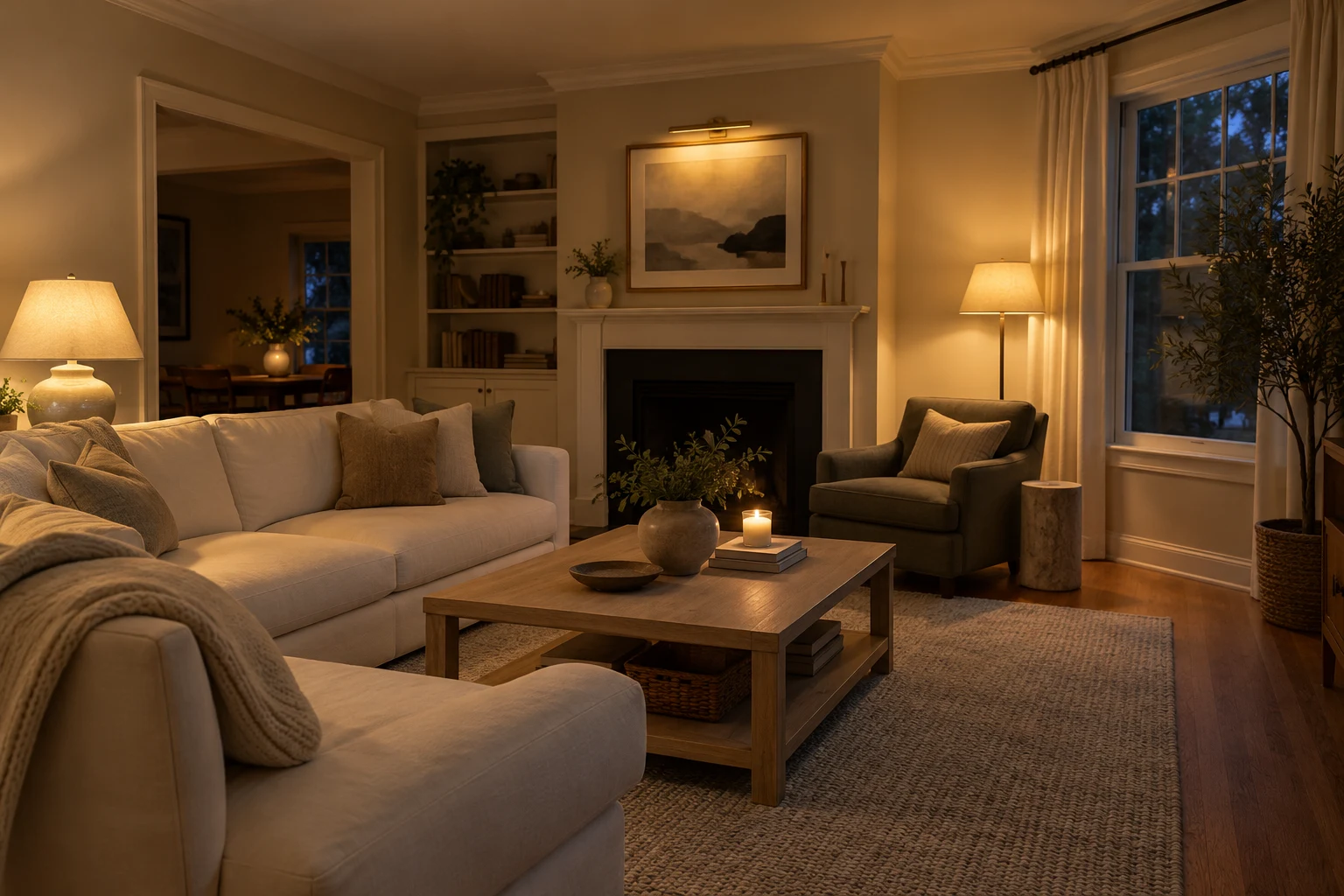
Warm light from several places gives a room depth and makes it easier to settle into. A single bright ceiling fixture lights everything at once, including the corners you’d happily leave a little softer.
For that cozy evening look, 2700K warm-white bulbs are a useful choice. The TJOY 2700K LED bulbs fit this part of the plan: warm light for ordinary on/off lamps with an E26 socket.
A shaded table lamp beside the sofa and a floor lamp across the room create separate pools of light. A small accent light over artwork adds another layer without making every surface equally bright.
That’s layered lighting in everyday terms: light for the room, light for what you’re doing, and light that draws attention to something you enjoy.
Around movie time, you can switch off the general lighting and leave the smaller lights on. The room still feels welcoming, and finding your drink doesn’t require turning everything back up.
Our guide to lighting a home in three useful layers has more examples for putting this into practice.
2. The “Magic Triangle”: Tall, Wide, and Textured
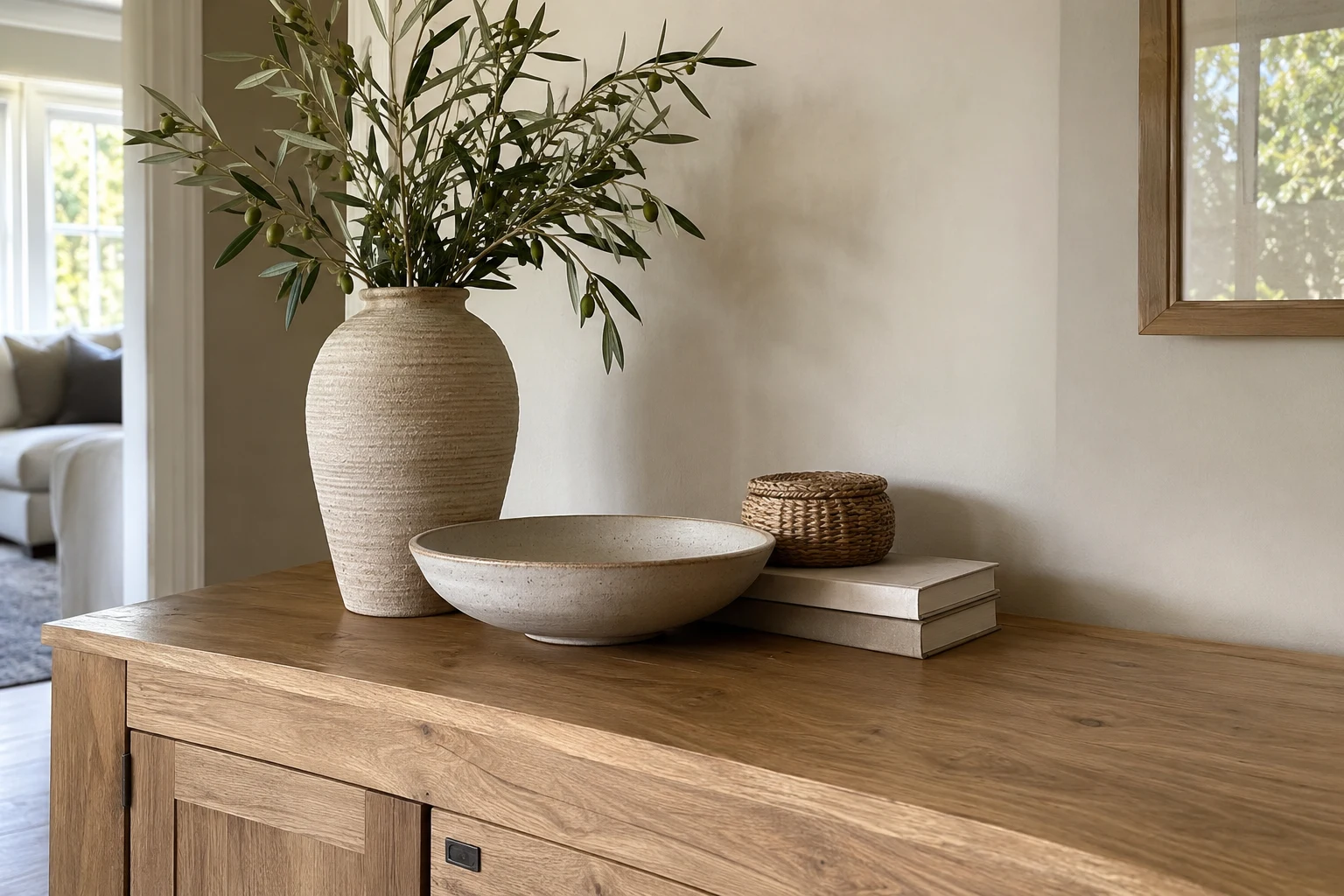
A small grouping feels more balanced when its pieces vary in height, width, and texture. Three objects of nearly identical size can disappear into a row. Different shapes give your eye somewhere to travel.
Here’s an easy arrangement:
- Tall: A vase with a few branches.
- Wide: A shallow bowl or short stack of books.
- Textured: A woven box or an interesting ceramic surface.
The Vanselia ceramic vase can handle both the height and texture. Its rustic finish gives a smooth console some contrast, while a few loose branches extend the arrangement upward.
Beside it, a low bowl keeps the grouping from feeling top-heavy. You may already have one in the kitchen.
The “triangle” is simply the loose shape formed by the tallest object and the lower pieces beside it. A little overlap helps them look like a group, while empty space around them keeps the surface usable.
3. The Big-Tree Effect: One Corner, Much More Presence
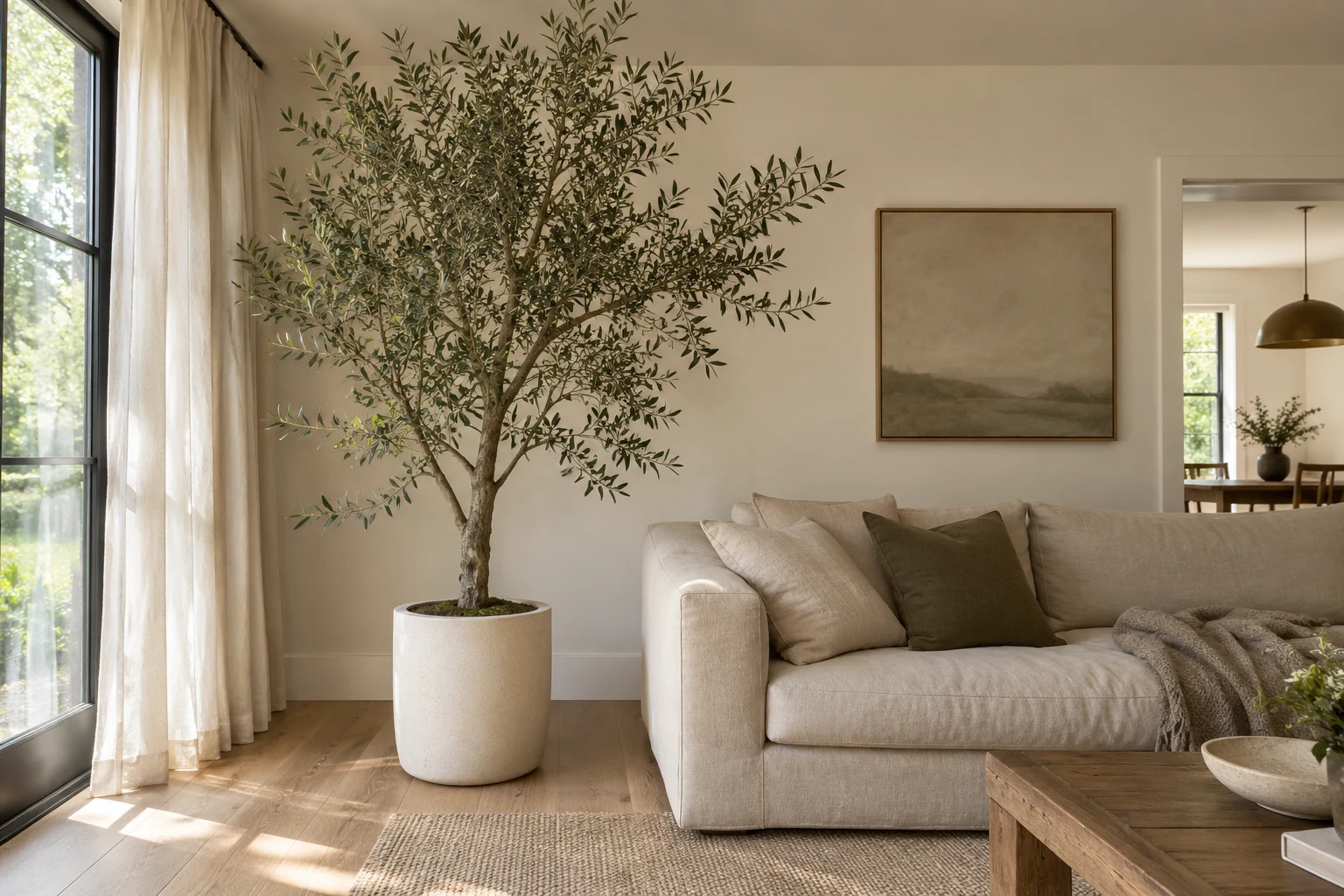
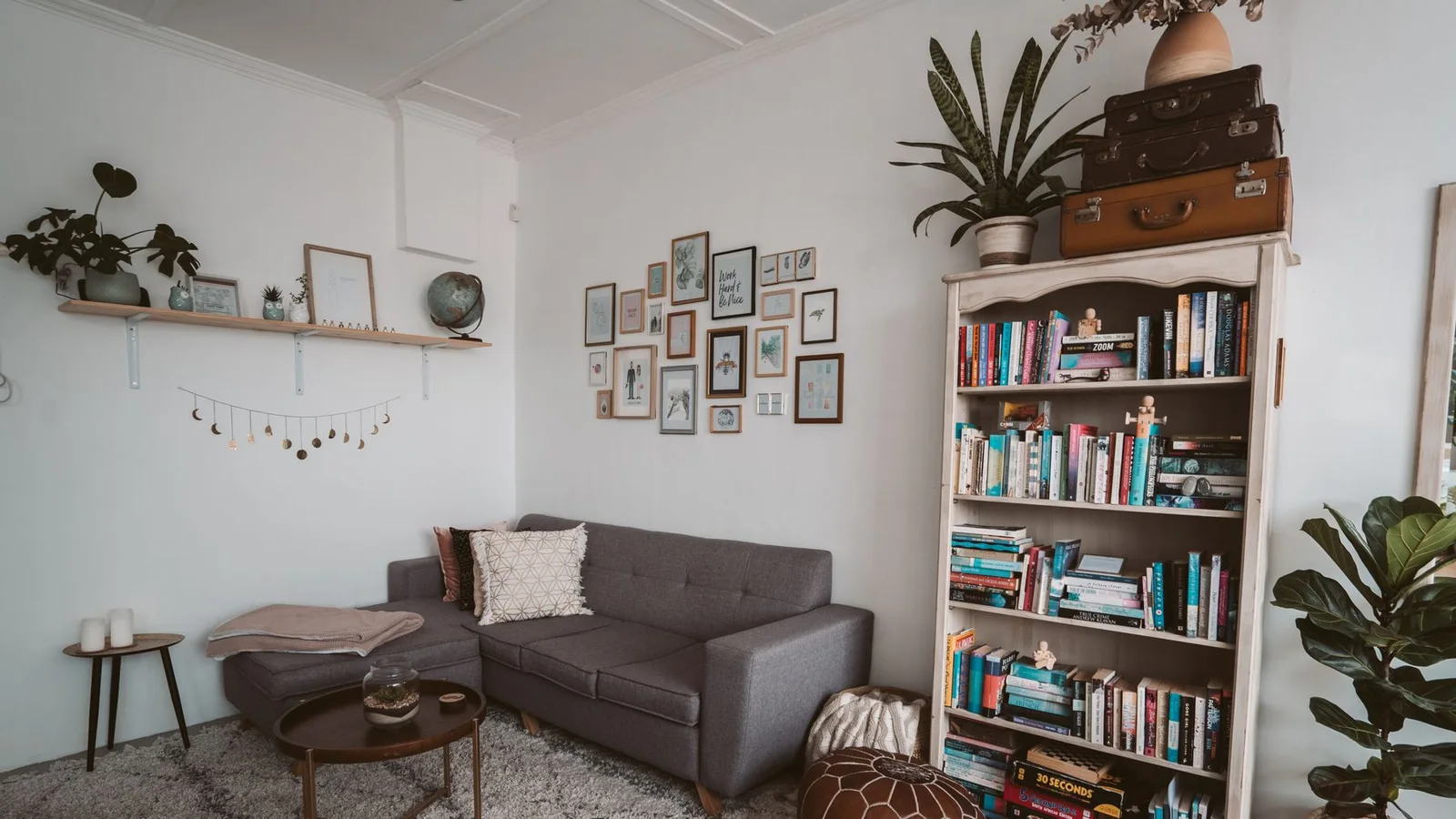
One tall plant changes the outline of a room because its greenery reaches beyond tabletop height. A small plant decorates a shelf. A tree occupies more of your view.
Think about the empty corner beside a low sofa. A tall trunk and spreading branches bring height, movement, and a substantial patch of green into that space.
The REALEAD six-foot artificial olive tree comes with a planter, making it a straightforward way to introduce that shape. It also works in a dim corner where a living olive tree would struggle.
Give the branches room around them. A tree squeezed tightly between a cabinet and the wall loses much of its silhouette.
A living tree is lovely where the light suits it, too. The decorating principle stays the same: greenery has more presence when its scale relates to the room.
Large trees vary in price, so this is a purchase with a noticeable visual payoff rather than an automatic budget buy. Our guide to decorating with fewer, larger accessories explores the same approach with other pieces.
4. The Mirror Trick: A Better View, Twice
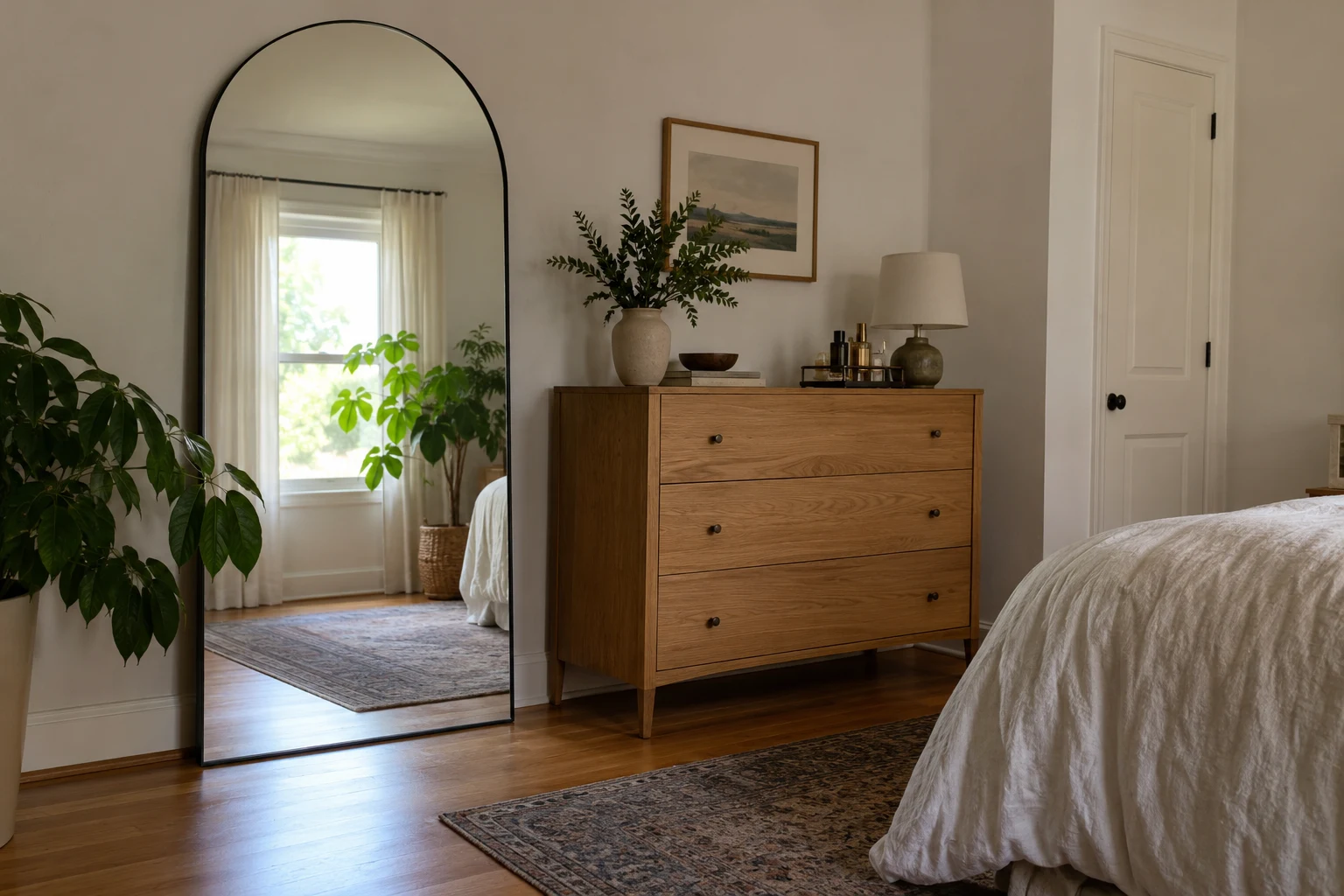
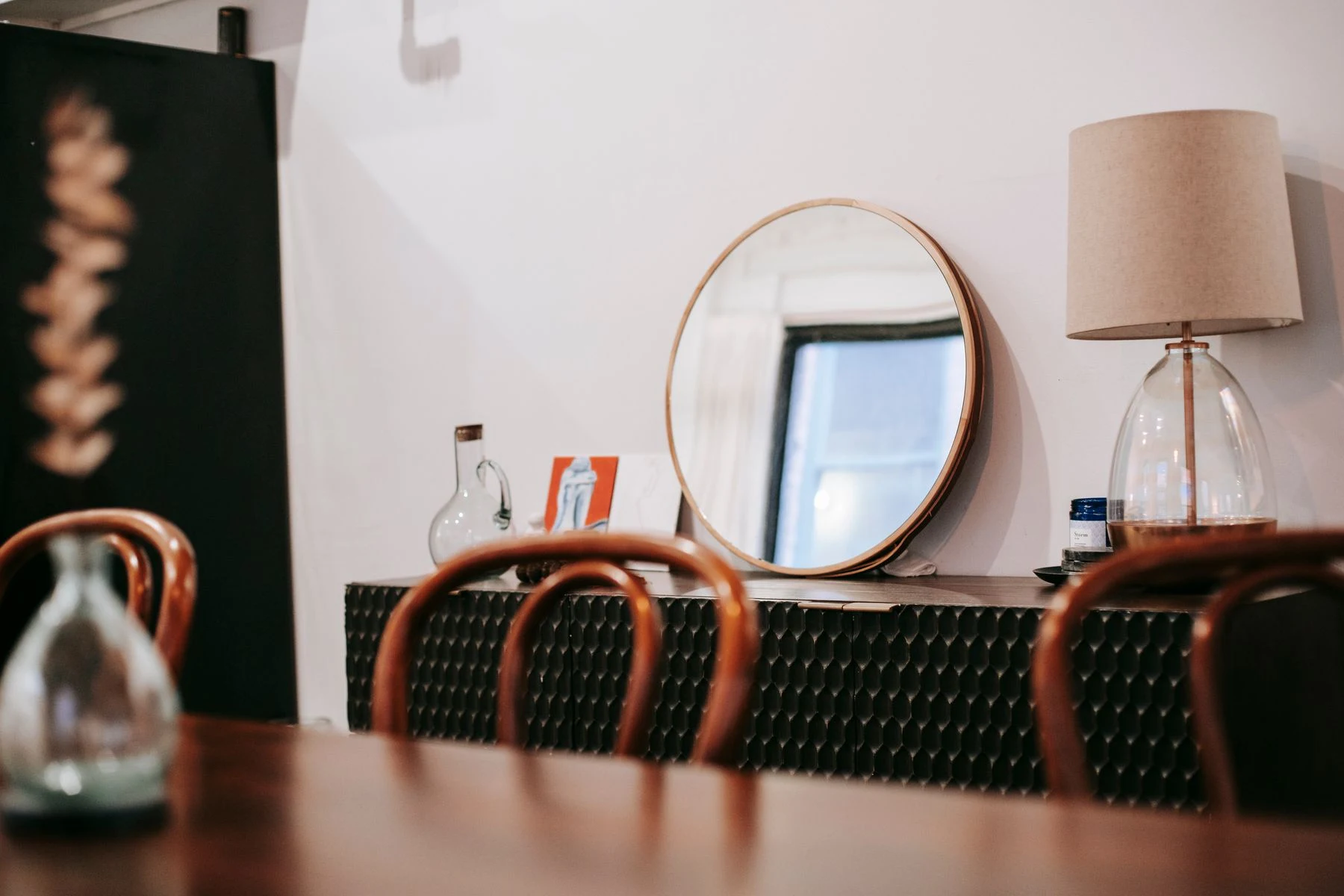
A large mirror adds apparent depth and can reflect daylight into the room when it faces a bright window. Placement does most of the work.
A reflection of greenery, a window, or a tidy seating area gives you more of something attractive. A reflection of the laundry rack gives you more laundry rack.
The Dewfig arched full-length mirror has a generous 76-by-34-inch format and a black frame. Beside a dresser, it creates a useful outfit-check spot while the curved top softens the surrounding straight lines.
Near an entry, the same mirror gives you somewhere to check your coat before leaving. It’s handy for a quick outfit photo, too.
The best angle depends on the view in the glass from your doorway and usual seating position. A slight shift can replace a blank wall reflection with daylight or leaves.
Secure mounting or anchoring belongs in the setup, including for large mirrors positioned against a wall.
For more shapes and placement ideas, see our full-length arch mirror guide.
5. The Curtain Upgrade: High, Full, and Floor-Length
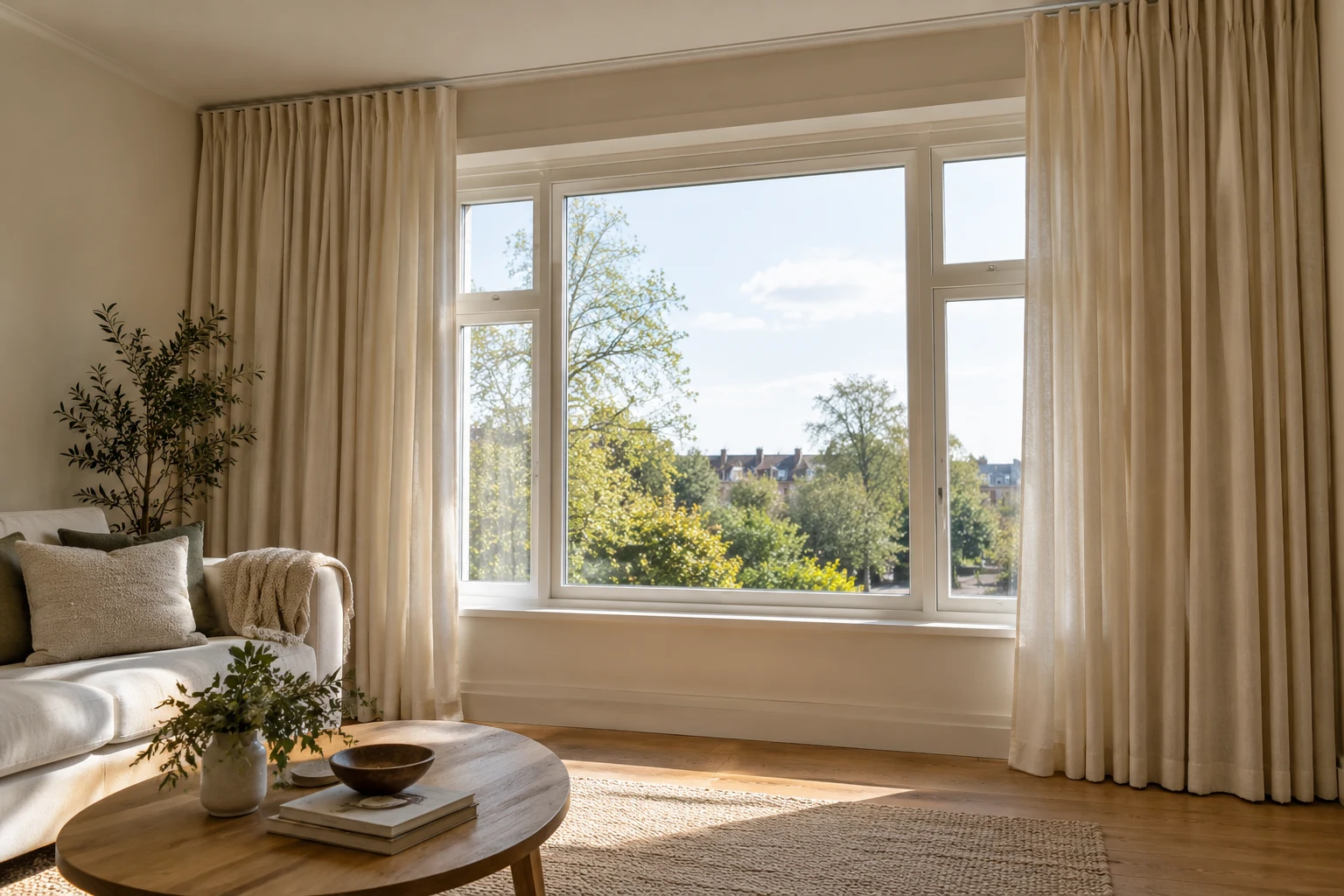
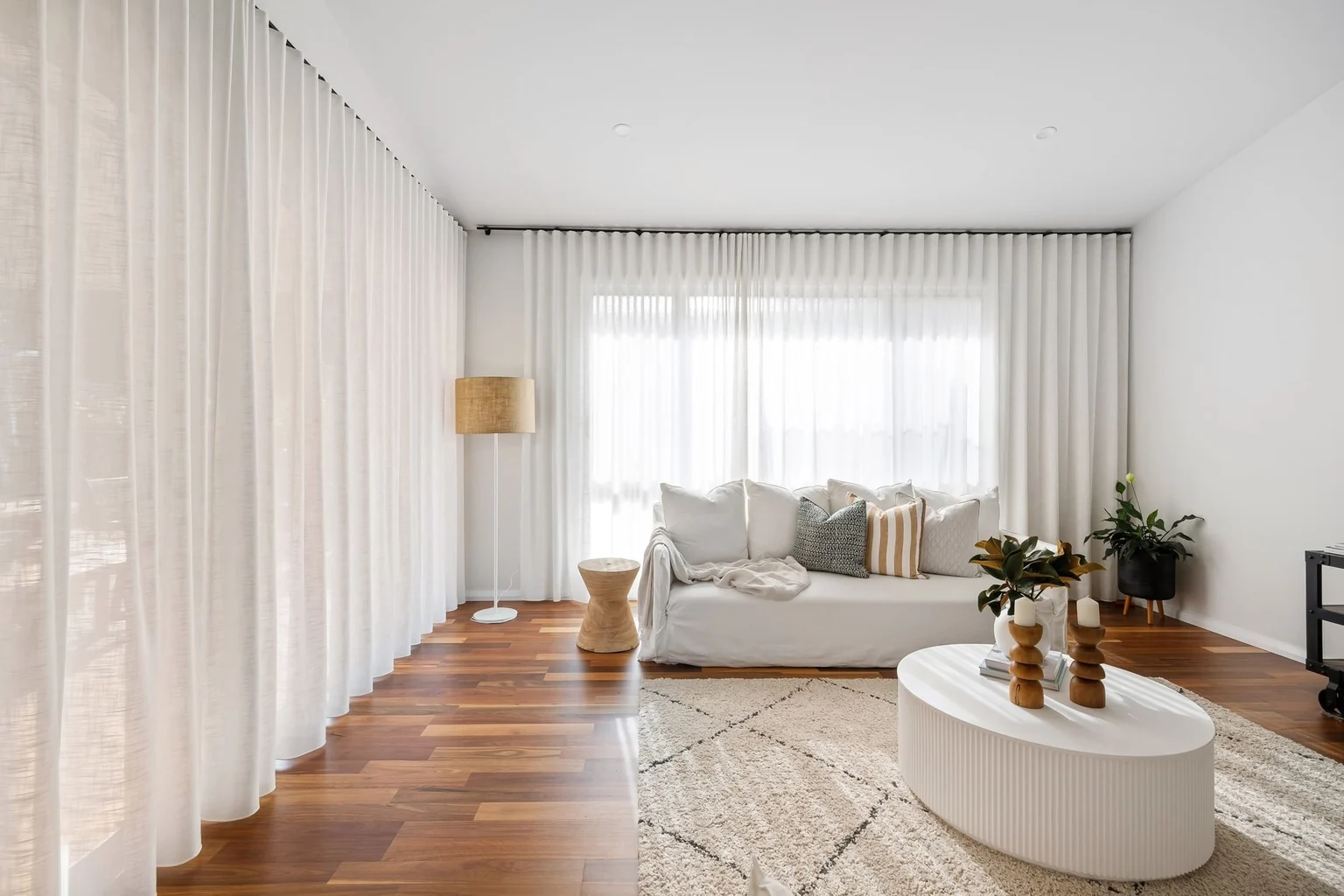
Curtains look more substantial when they hang high, retain soft folds, and reach the floor. The effect comes from the full sweep of fabric.
A ceiling-mounted track creates a continuous line down the wall. Where a rod works better, a position above the window frame helps draw the eye upward.
Width matters, too. Panels need enough fabric to keep their folds when closed. Curtains stretched flat across the glass lose much of that richness.
These cream linen-textured blackout curtains bring a quiet neutral color and a textured finish that pairs easily with wood, greenery, and upholstered furniture. The linked pair is 84 inches long, making it an option for installations where that length reaches the floor.
Floor-length describes the fit, not one universal panel size. A ceiling-high installation usually needs longer panels than a rod positioned closer to the window.
Where space allows, extend the curtain treatment beyond the window so the open panels sit beside the glass. Then steam out the packaging creases. That final step makes the fabric look much more settled.
Our curtain length and fullness guide explains the proportions in more detail.
6. Cables Be Gone: The Detail Your Eye Keeps Catching
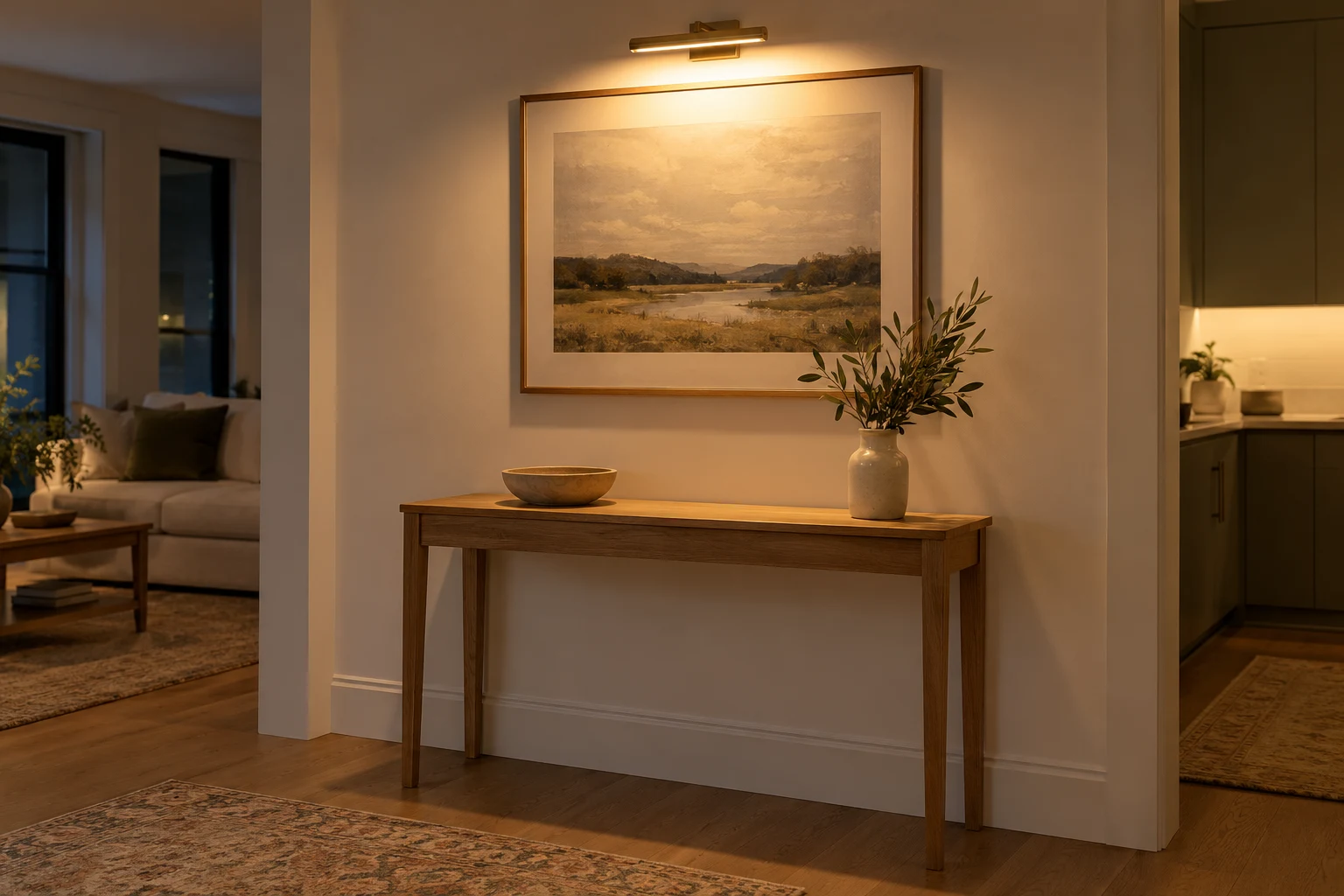
Cables become less distracting when they follow furniture edges and baseboards, with extra length gathered out of sight. A dark cord dangling across a pale wall can interrupt an otherwise calm arrangement.
Behind a console, clips can guide a cable down a rear leg. Along the wall, a surface-mounted channel creates a tidier route. Several cables behind a media unit can travel together in a sleeve.
Cordless accent lighting can remove a visible cable altogether during use. The EZVALO rechargeable picture light mounts above artwork and adds a focused pool of light without a power cord trailing down the wall.
It’s a useful option for that framed print above your console that disappears after sunset. The light has adjustable brightness and color temperature, so it can join the room’s softer evening lighting.
A picture light also gives existing artwork more presence. You get another lighting layer and a clearer focal point from something already on the wall.
Keep charging access convenient, and leave everyday plugs easy to reach. Cable management should make the room easier to live with.
7. The Rug Pull-In Effect: Bring the Furniture Together
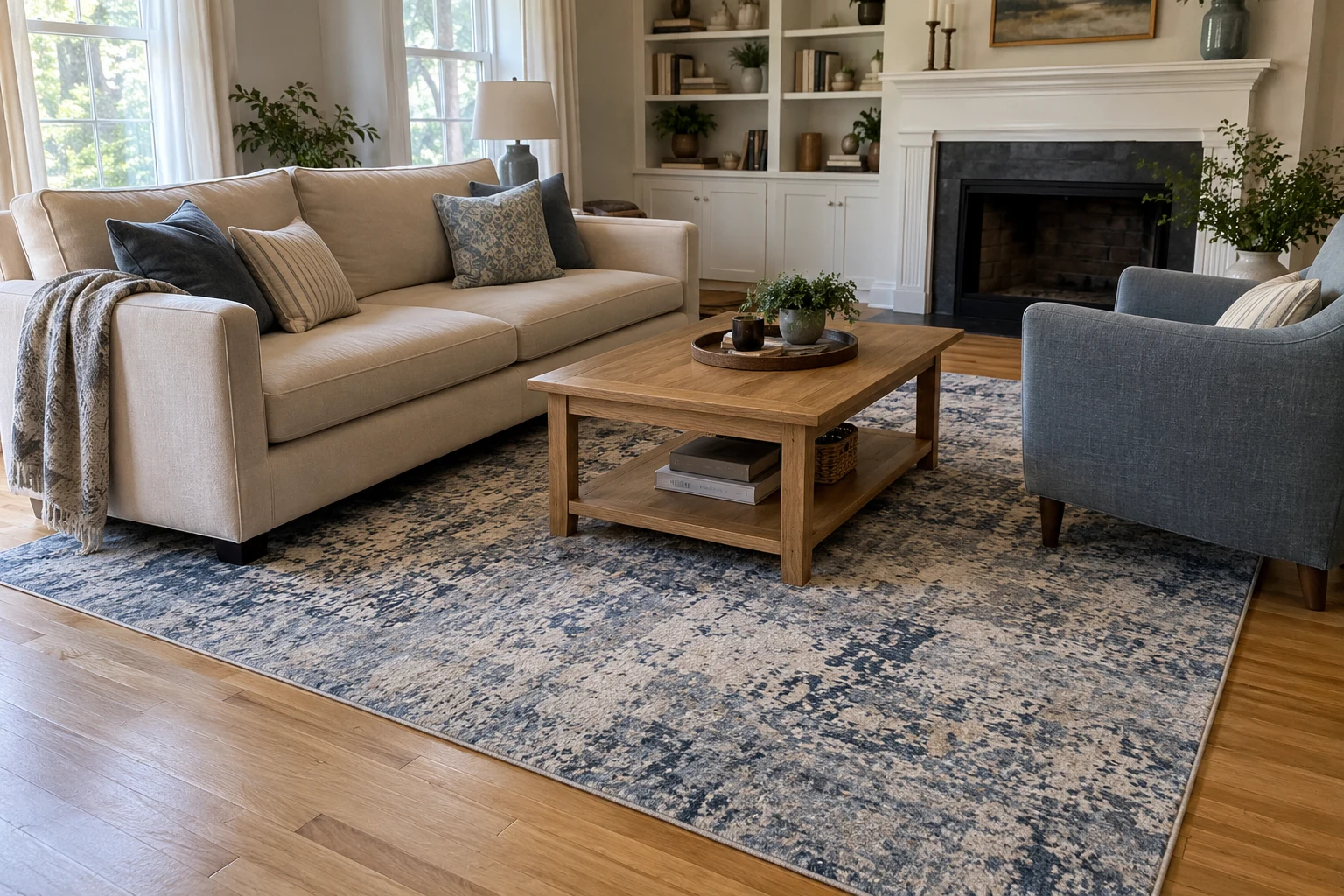
A rug that reaches beneath the front legs of the main seating helps the furniture read as one arrangement. When it stops short of everything except the coffee table, it can look stranded.
The Aelenmu blue-grey 8-by-10-foot area rug offers a larger footprint with an abstract pattern and a low-pile surface. Its blue and grey tones can also give you colors to repeat in cushions or artwork.
The useful boundary is your seating arrangement. Include nearby chairs as well as the sofa, so the furniture connects to the rug.
In an open-plan home, this helps mark out the sitting area without adding a wall or another cabinet.
Already attached to a smaller patterned rug? A larger neutral rug beneath it can supply more coverage while keeping the pattern visible. Both layers should sit flat and stay clear of door swings.
The right size belongs to the layout, so an 8-by-10 rug is one option rather than a rule for every room.
Our rug size room guide shows how that relationship changes with different furniture arrangements.
8. The Color Echo: One Shade, Three Little Appearances
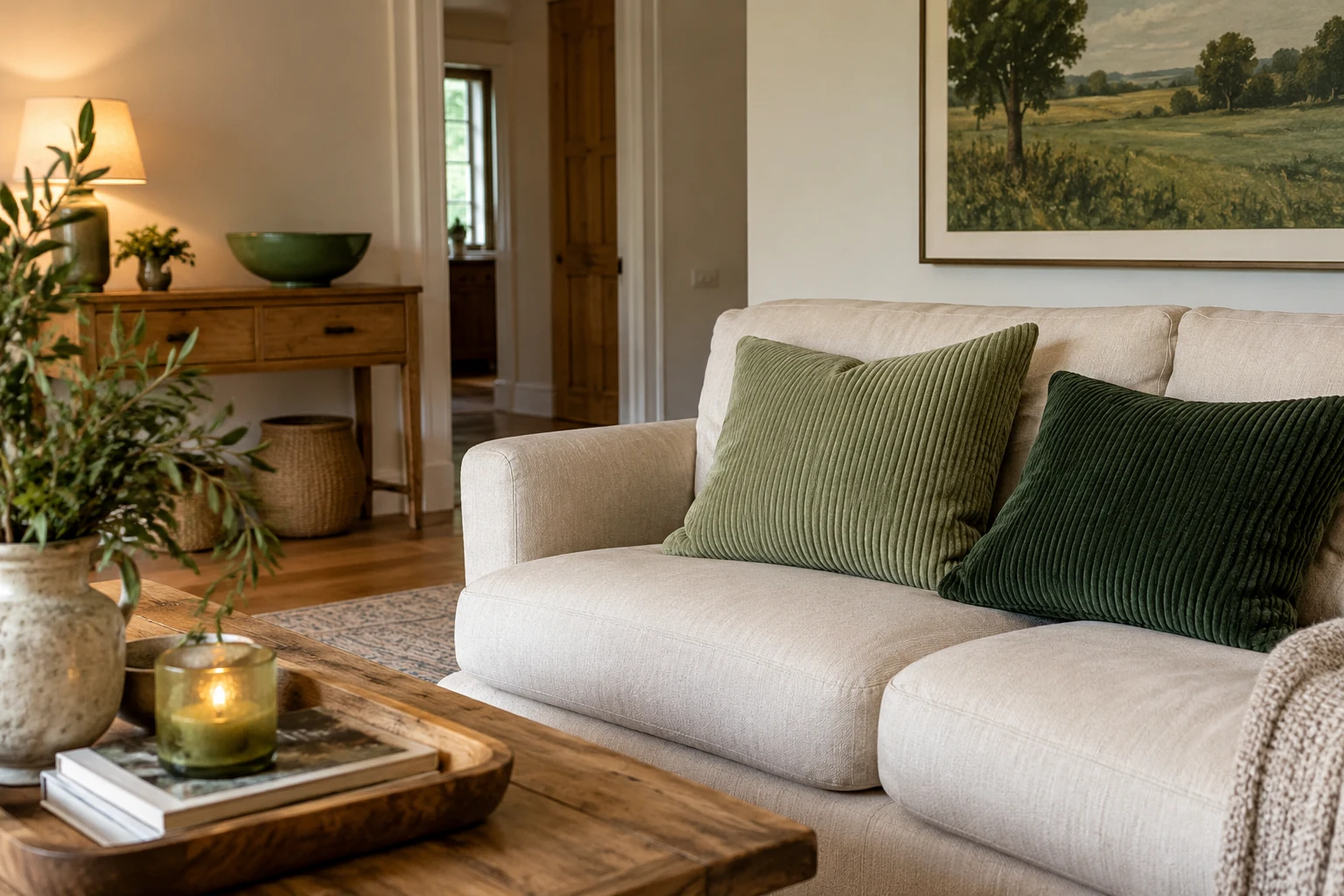
Repeating a color in a few places helps separate purchases feel related. This is especially useful when you like your belongings individually but the room still looks a little disconnected.
A green detail in a landscape print can reappear on the sofa and again on a nearby shelf.
The MIULEE green corduroy pillow covers give you an easy way to bring green onto existing seating. Their ribbed texture adds another detail without needing a busy pattern.
From there, a green bowl or a leafy plant can carry the color elsewhere in the room. The shades don’t need to match exactly.
Three appearances make a useful exercise, especially when they’re spread around the space. Three green objects on one shelf still read as one little cluster.
The same trick works with rust, blue, pink, or whatever shade you already enjoy. Our earth-tone palettes and Sanzo Wada-inspired color ideas offer combinations to borrow.
9. The Texture Fix: Same Sofa, Softer Room
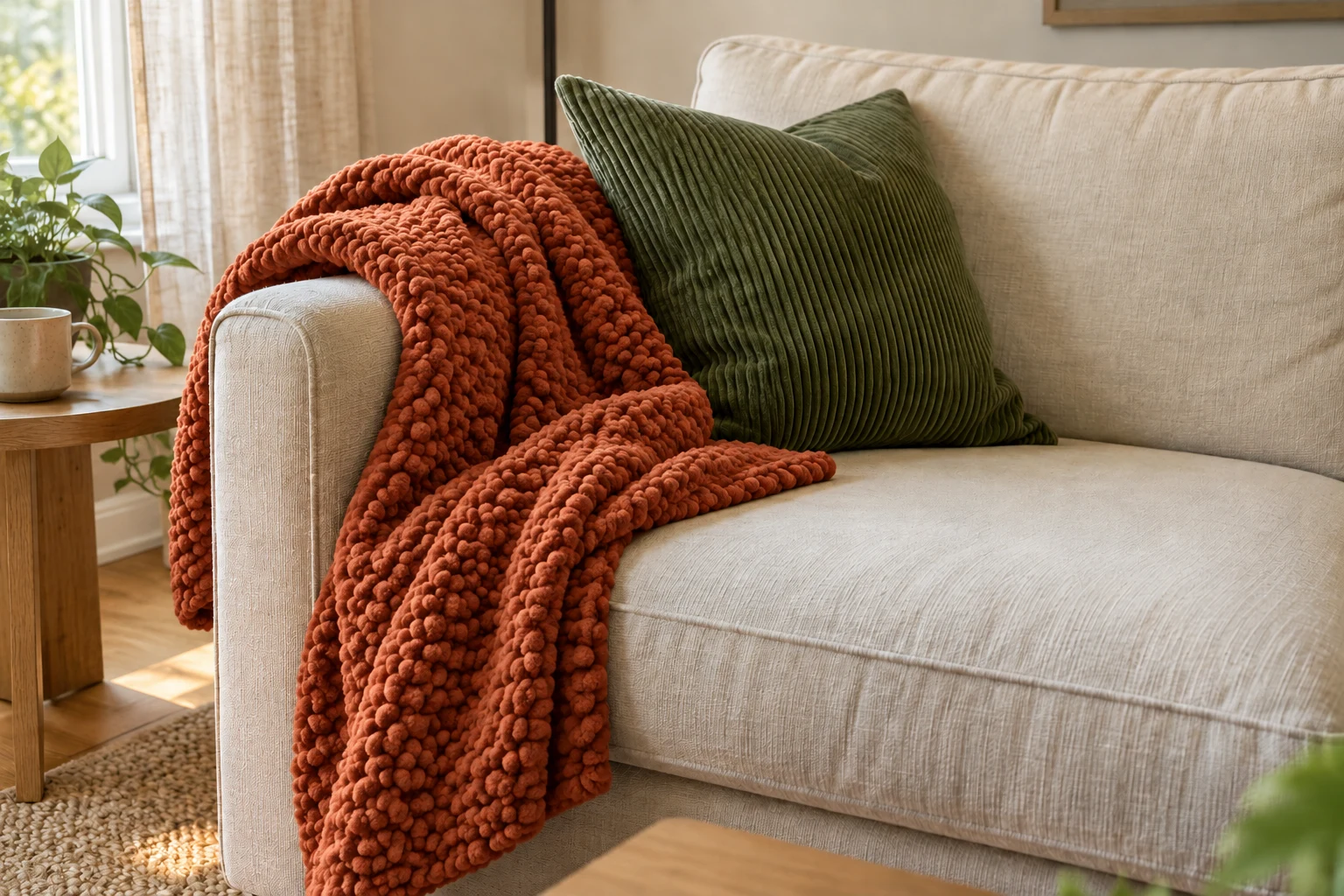
Different textures add variation even when the furniture and wall colors stay the same. A room can feel flat simply because most of its surfaces look equally smooth.
The Lussena rust fleece throw introduces a plush surface and a warm accent color. Fold it over one sofa arm or loosely across the end of a chaise, where it’s easy to reach.
Against cream, grey, or blue upholstery, that rust color gives the eye something to settle on. A ribbed cushion nearby adds a different texture again.
You don’t need a pile of accessories to get the effect. One throw and a couple of cushions can be enough, particularly when the curtains, rug, and furniture already contribute their own surfaces.
Keep comfort in the equation. If every evening begins with moving six cushions onto the floor, the styling needs a little editing.
For more ways to spread texture throughout a room, see our guide to layering curtains, rugs, and upholstery.
10. The Breathing-Room Trick: A Little Less on Display
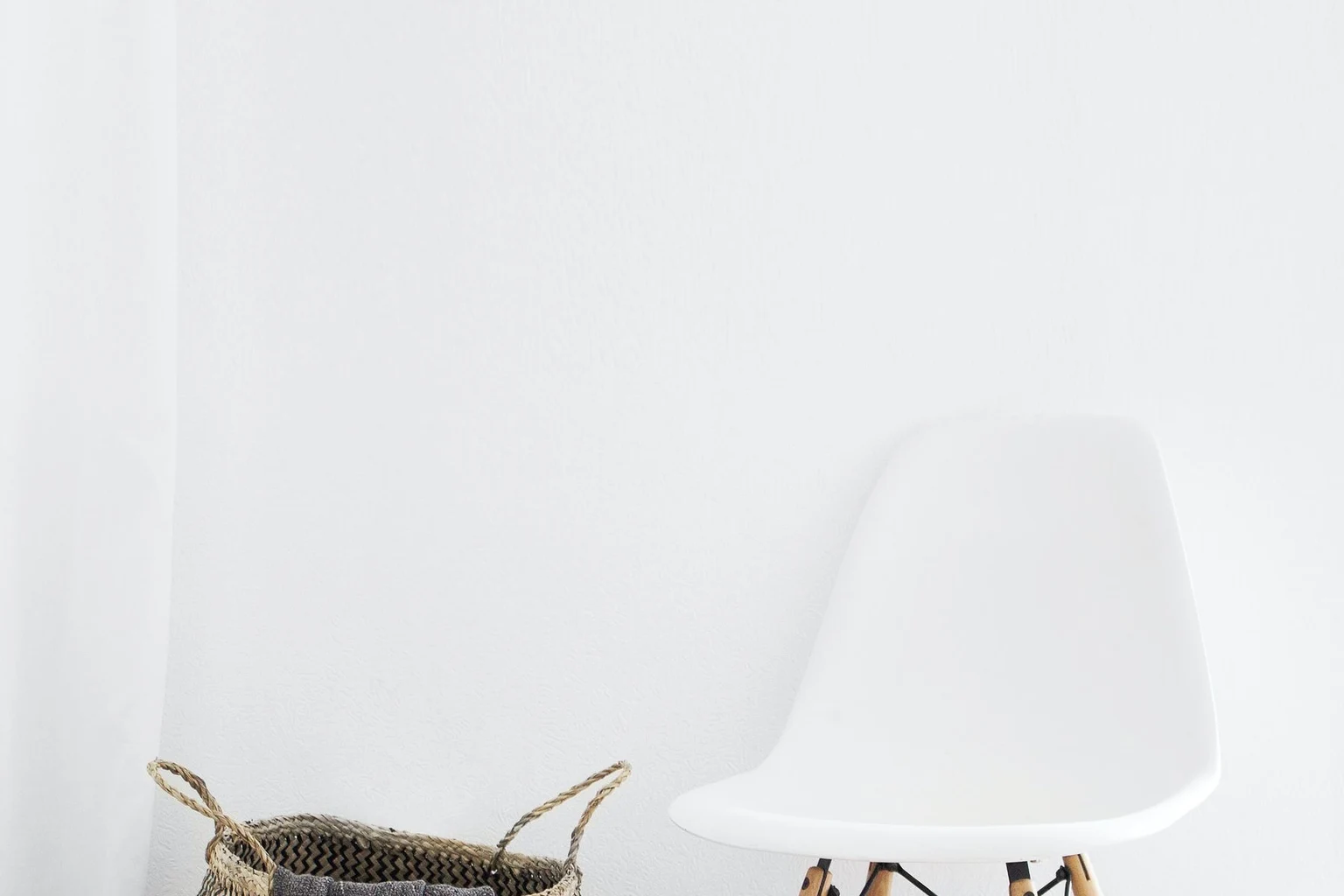
Clear space around your belongings helps the pieces on display stand out. This is the quickest fix here, and part of it costs nothing.
Take the coffee table. There might be a candle you like, three remotes, yesterday’s mail, a charging cable, and a mug that never made it back to the kitchen.
Once the stray items leave, the candle looks more deliberate. A small tray can gather the remotes while leaving a usable spot for a drink.
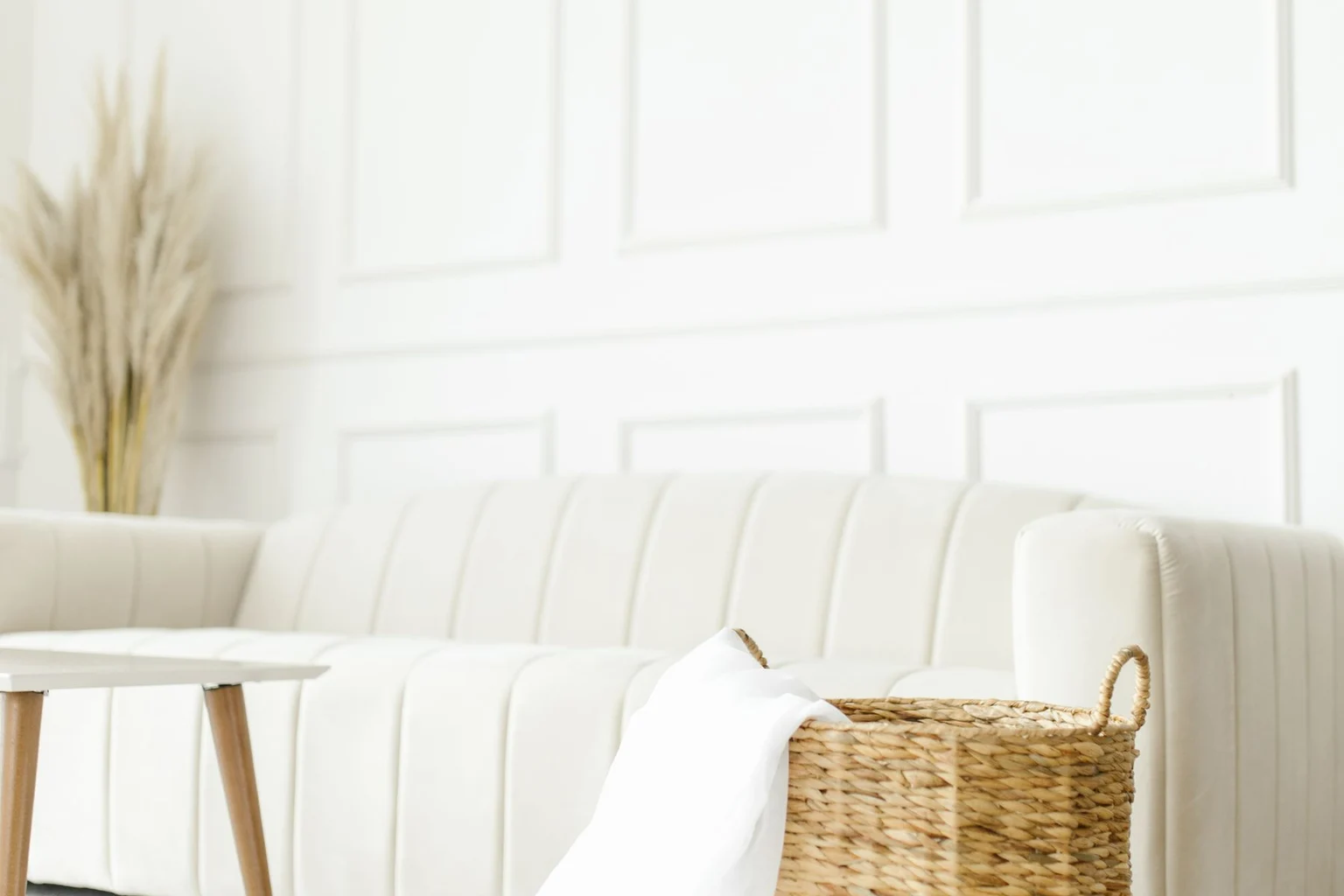
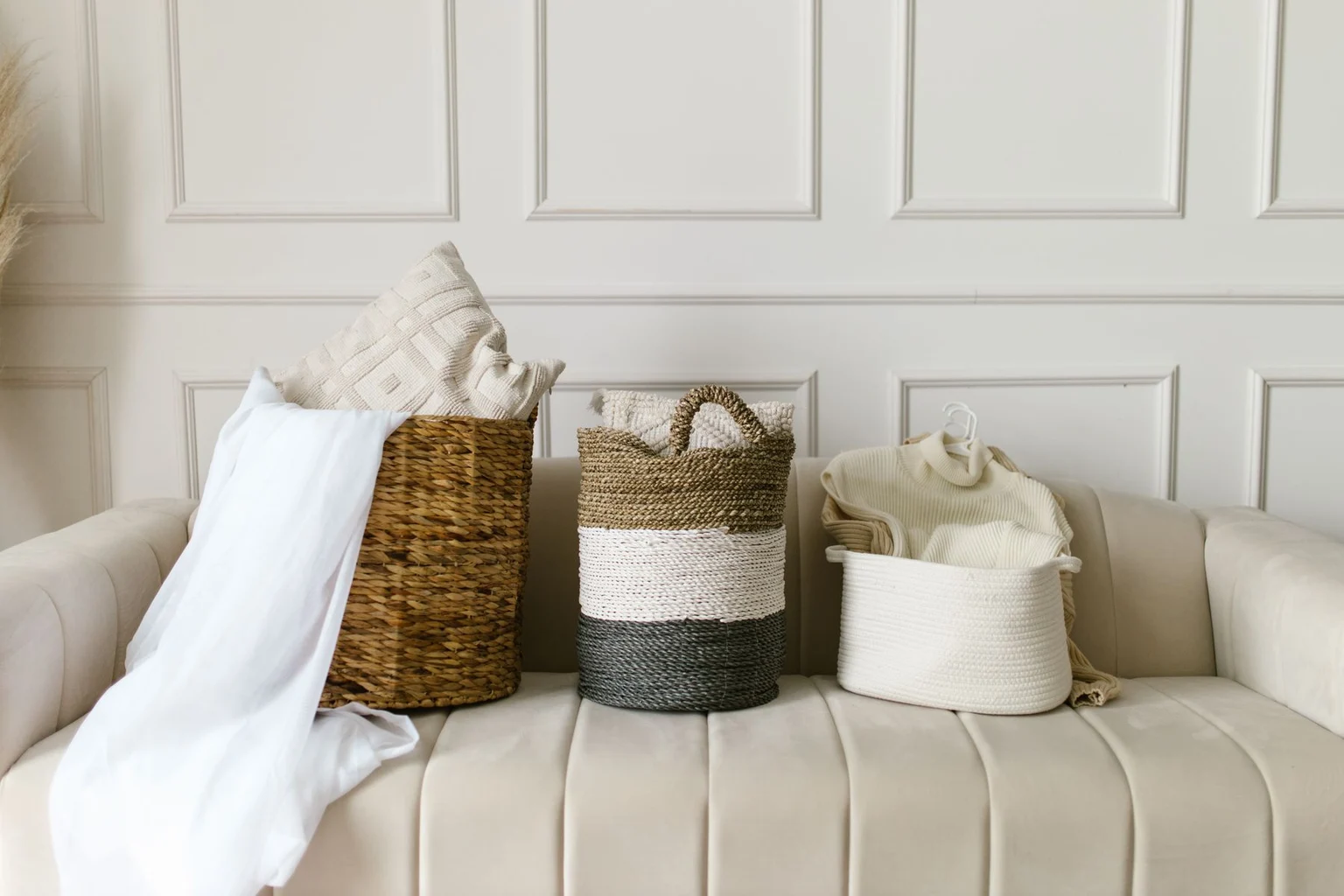
For the blanket that keeps migrating between the sofa and floor, the HZFTJOY woven blanket basket gives it a convenient home. The cotton-rope construction adds texture, while the handles make the basket easy to move around the room.
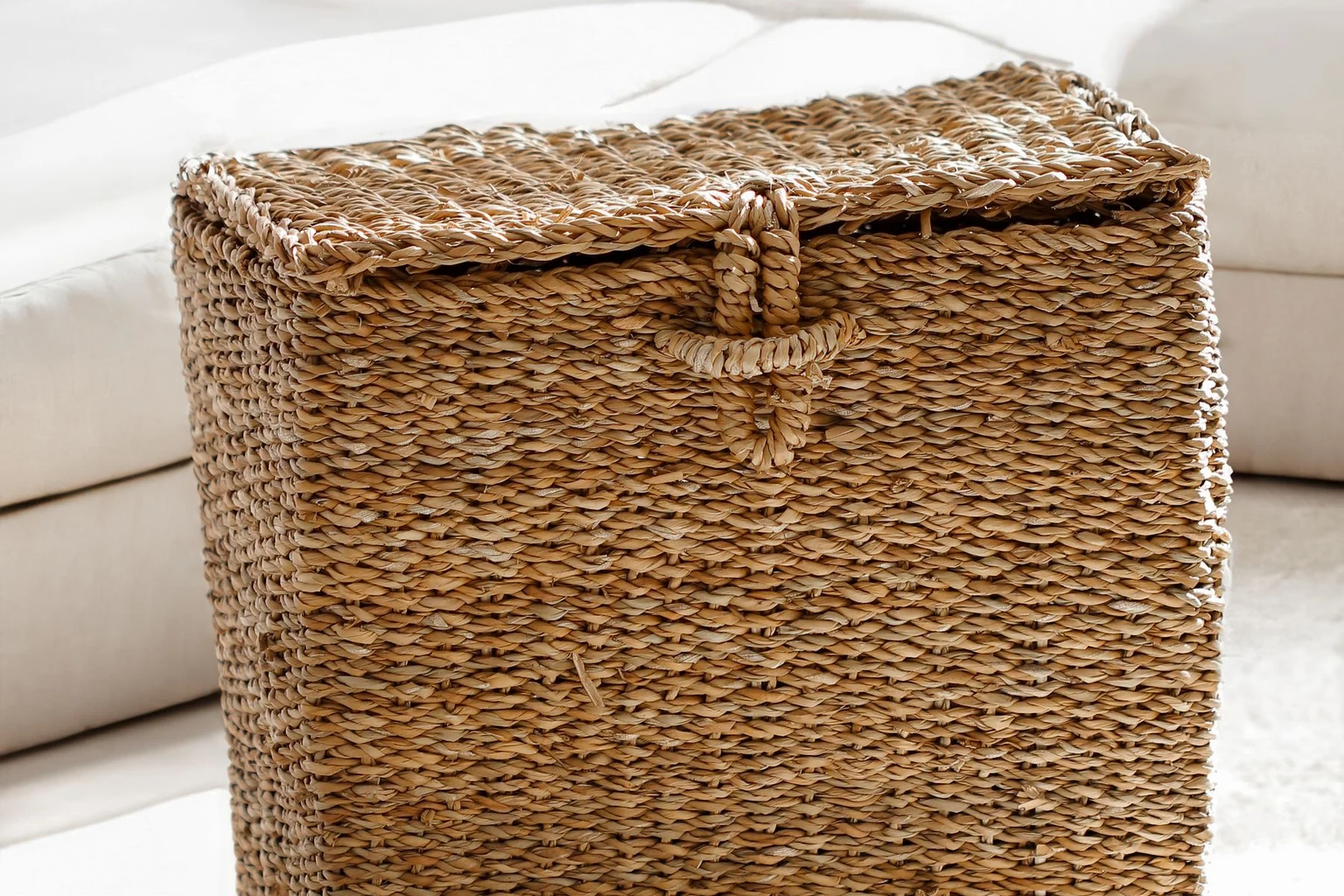
An open basket works well for blankets and spare cushions. Small, visually busy items such as chargers and game accessories are better tucked into a drawer or closed box.
Storage works best when it sits close to where you use the contents. A basket beside the sofa is much easier to keep using than a cupboard across the house.
For other details that can make a furnished room feel unsettled, see our living room design mistakes and fixes.
Your Quick-Fix Checklist
One well-chosen change is enough to make progress. Use this list to spot the opportunity in your room.
- Warm evening lighting comes from more than one place.
- Decorative groupings vary in height, width, and texture.
- Greenery has enough presence for its position.
- The mirror reflects something attractive or bright.
- Curtains retain soft folds and reach the floor.
- Visible cables follow discreet routes.
- The rug connects the main seating.
- A favorite color appears in a few places.
- Smooth surfaces have some textured company.
- Seats and tables have clear space for everyday use.
Frequently Asked Questions
Which home decor quick fix makes the biggest difference?
Lighting is a strong choice when the room feels uncomfortable after dark. Warm lamps placed around the room can change its evening atmosphere without replacing furniture. During the day, an undersized rug or short curtains may be the more noticeable detail.
How can I make my home feel more finished without buying anything?
Clear a crowded surface, gather existing objects into a balanced arrangement, and move accessories so one color appears around the room. Tidying visible cables and smoothing curtains or throws also helps existing pieces look their best.
Do all my lamps need the same color temperature?
A consistent warm color temperature across lights used together gives an evening seating area a more cohesive look. Brightness can vary according to the job, with stronger light for reading and softer light nearby.
Can a large tree work in a small room?
Yes, when its footprint leaves the walking route clear and its branches have space. A tall tree can bring height beside low furniture without needing another table to display it.
Where should a mirror go to reflect more daylight?
A wall opposite or beside a window can work well when the angle brings the bright opening into the reflection. The view in the glass matters more than following one fixed placement rule.
How do I know whether my rug is big enough?
For a typical sofa-and-chair arrangement, a useful benchmark is having the front legs of the main seating on the rug. A rug that only holds the coffee table often needs more coverage to connect the furniture.
Shop the Quick Fixes
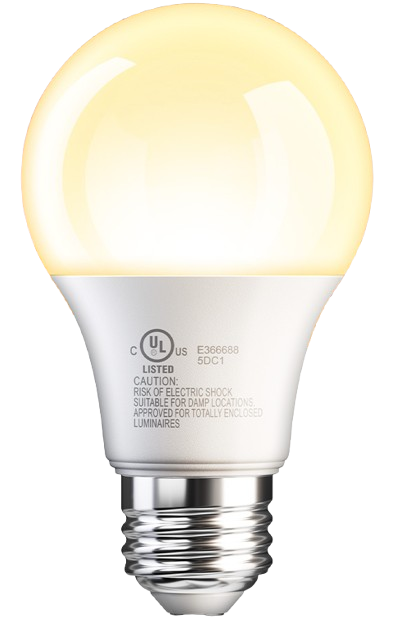 TJOY 2700K LED BulbsWarm-white, non-dimmable bulbs for standard on/off lamps with E26 sockets.
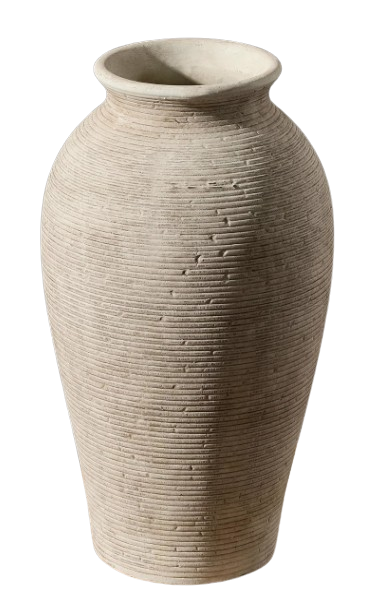 Vanselia Ceramic VaseA tall, textured ceramic vase for branches, flowers, or a simple console arrangement.
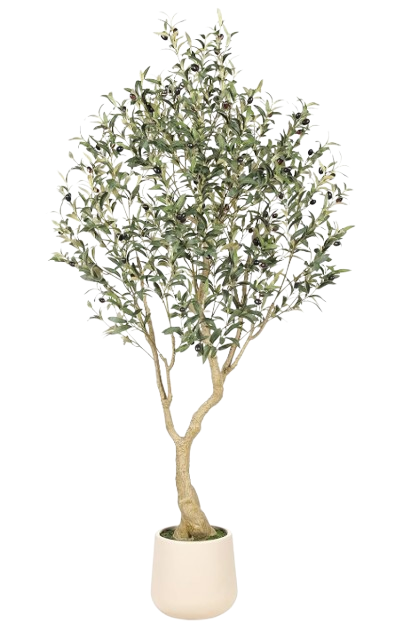 REALEAD Artificial Olive TreeA six-foot faux olive tree with a planter for adding height and greenery to an empty corner.
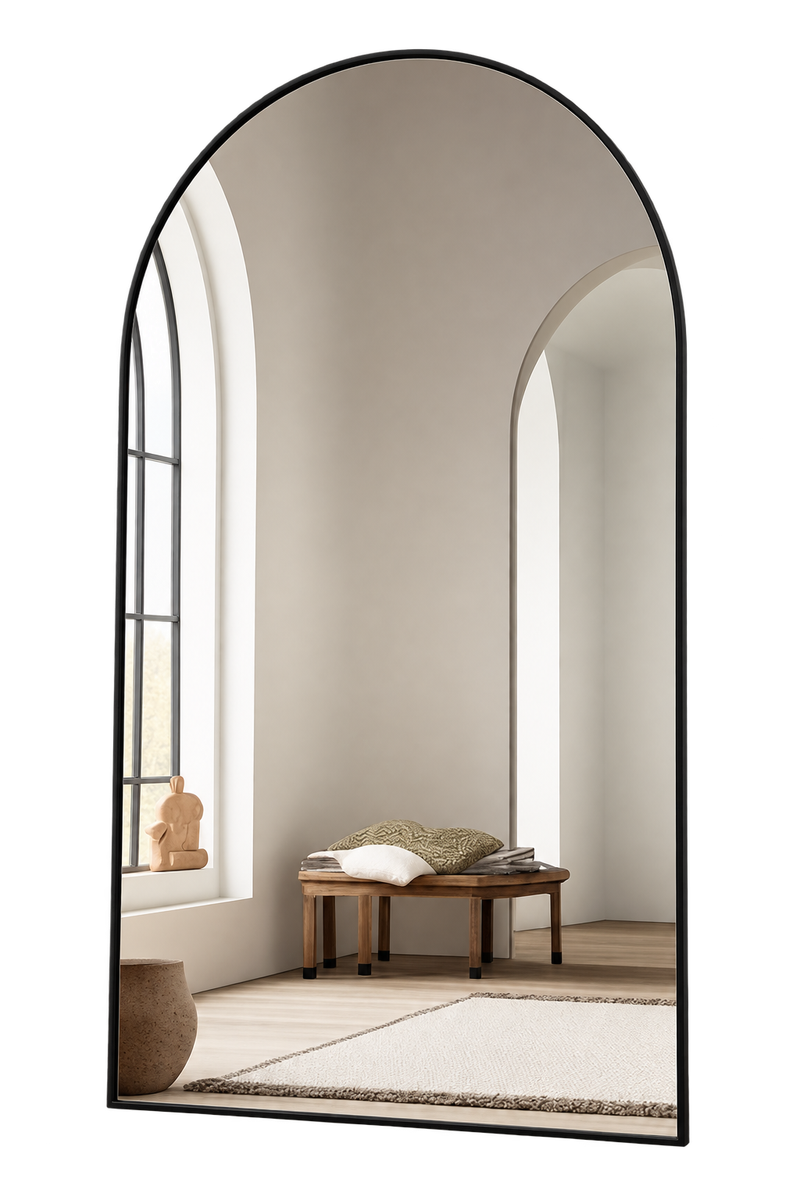 Dewfig Arched Full-Length MirrorA large black-framed mirror for outfit checks and reflecting a bright, attractive view.
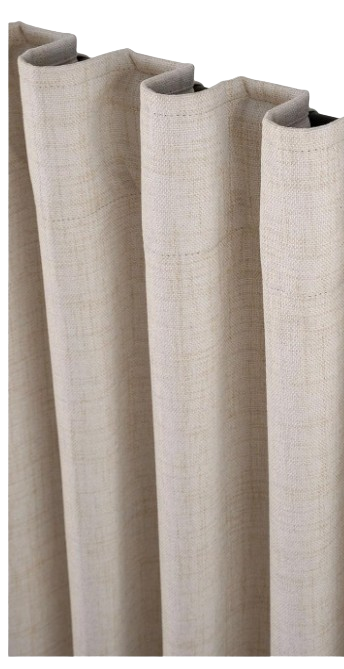 Cream Linen-Textured Blackout CurtainsA pair of 84-inch panels with a neutral color and textured finish for suitable window installations.
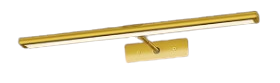 EZVALO Rechargeable Picture LightCordless accent lighting above artwork, with adjustable brightness and color temperature.
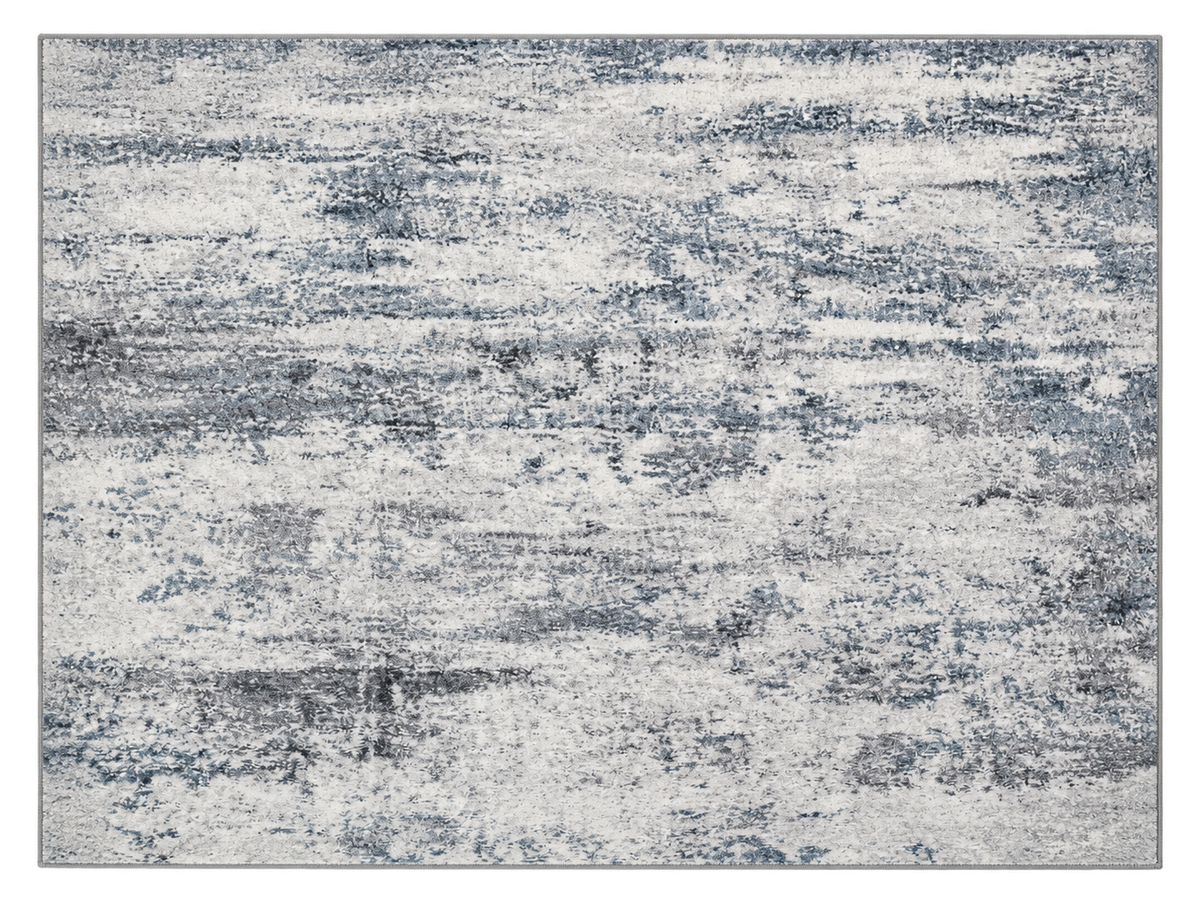 Aelenmu Blue-Grey Area RugAn 8-by-10-foot low-pile rug with an abstract pattern for connecting a seating arrangement.
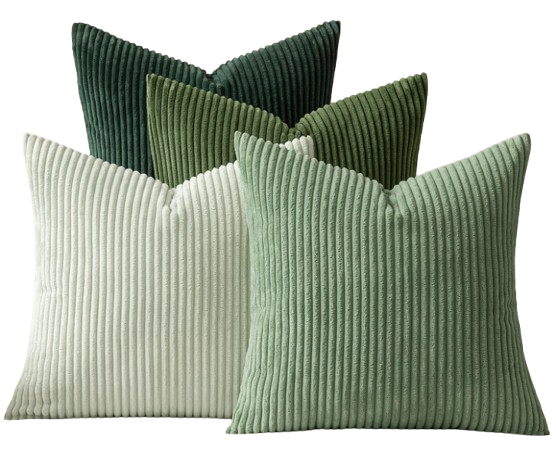 MIULEE Forest Green Corduroy Pillow CoversRibbed cushion covers that bring green tones and texture onto existing seating.
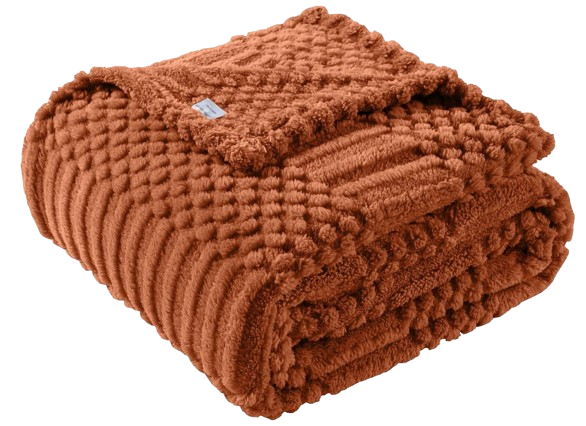 Lussena Rust Fleece ThrowA plush rust-colored throw for adding warmth and surface variation to a sofa or chair.
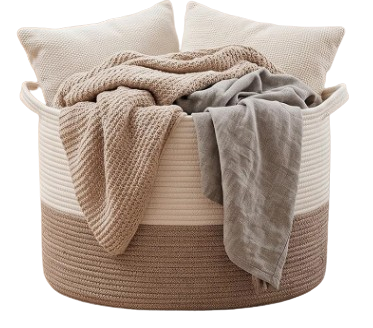 HZFTJOY Woven Blanket BasketA cotton-rope basket with handles for keeping blankets and spare cushions close by.