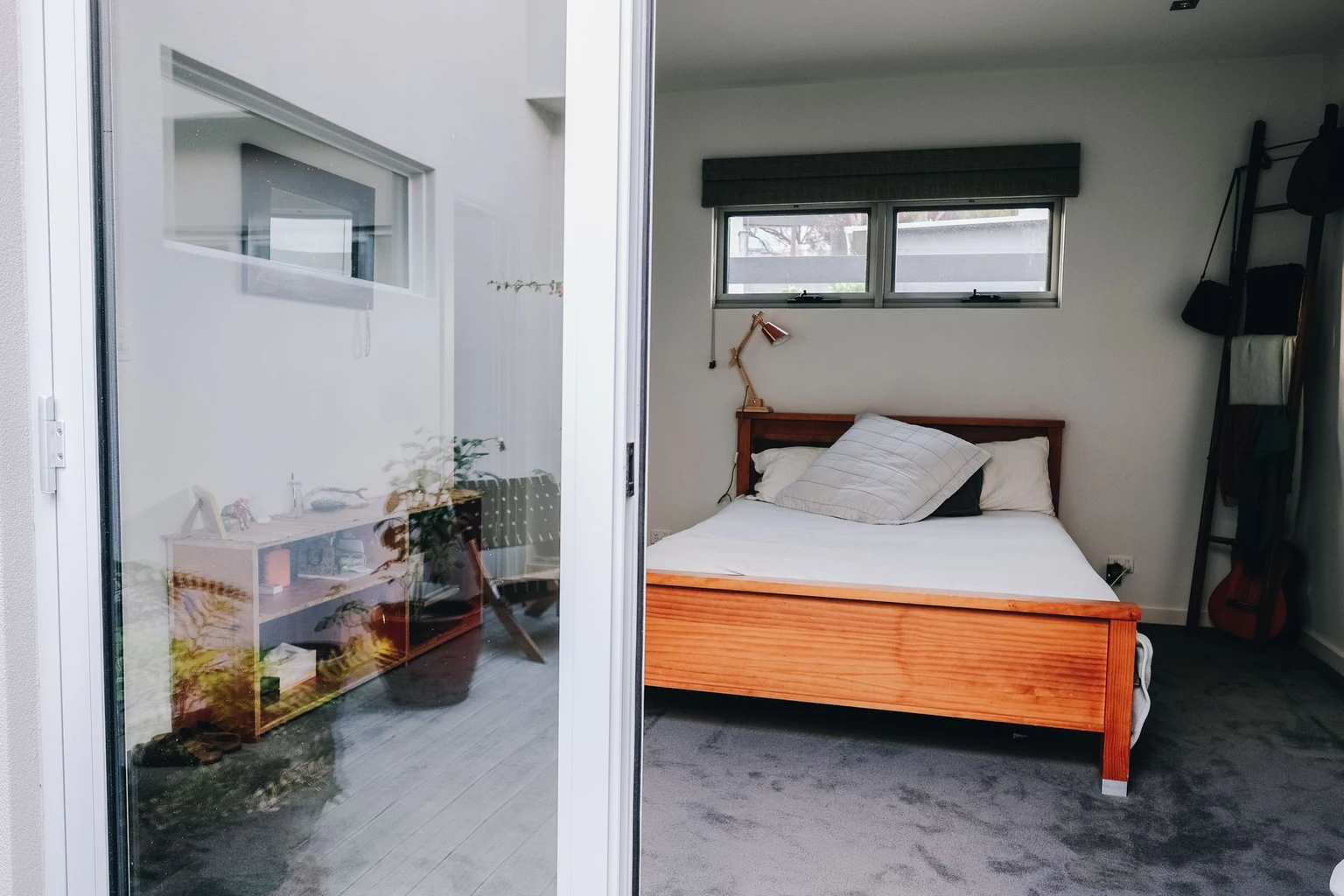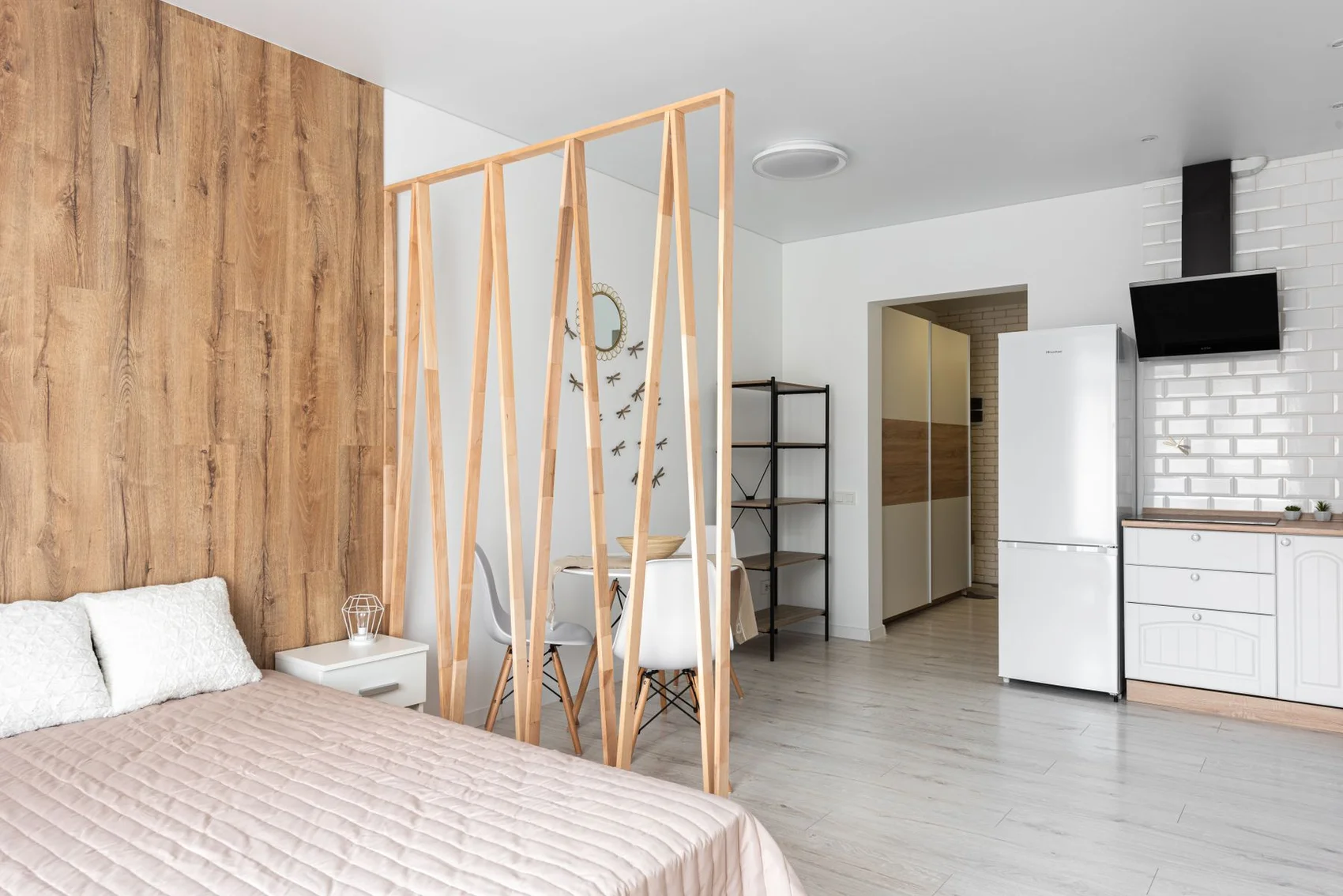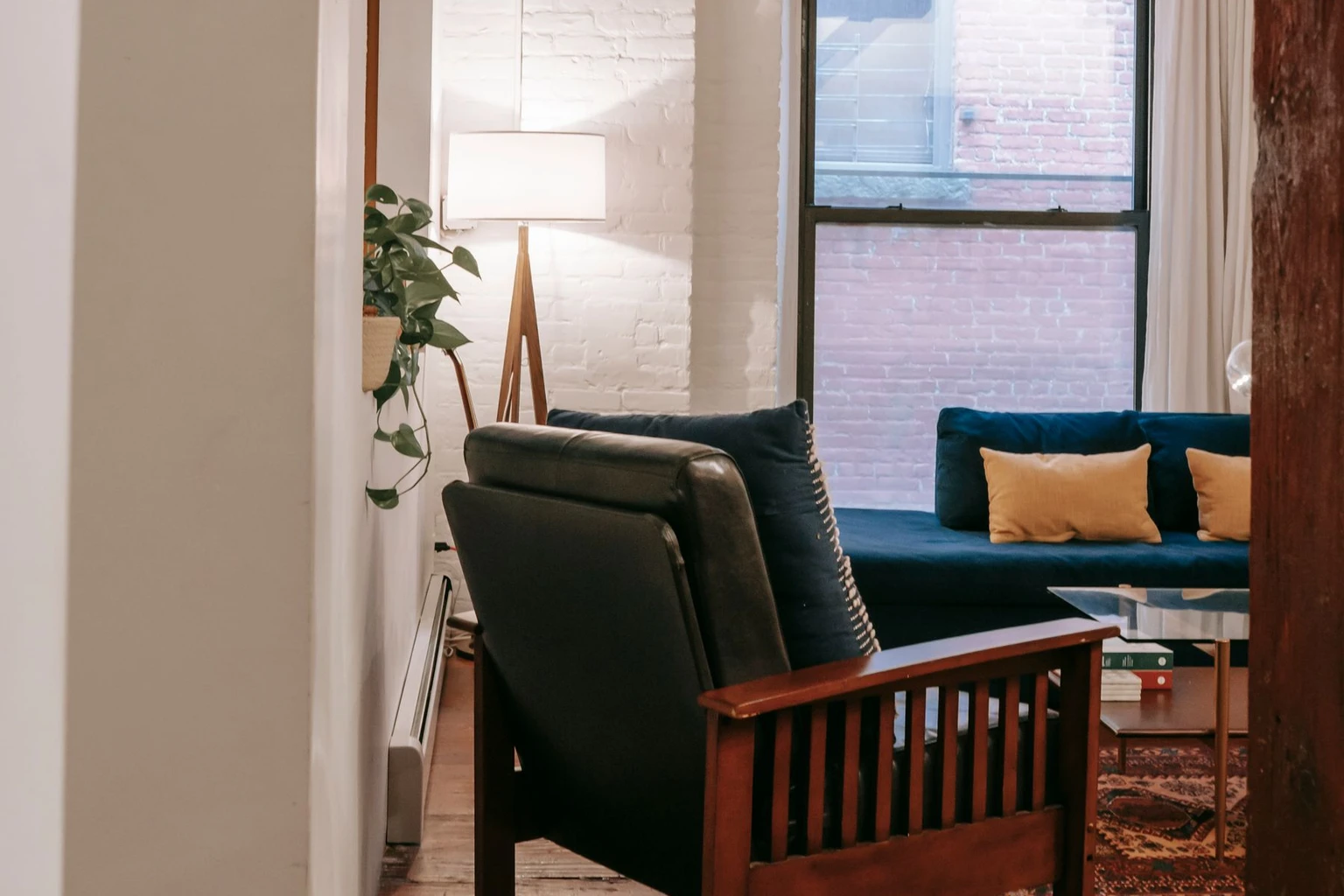
Decorating an empty, awkward corner can be as simple as adding a tall plant, a floor lamp, or a small cabinet. The best choice gives that spot a useful job without getting in the way.
Maybe the gap beside your sofa feels unfinished, or there’s a bare corner you pass every day. A few well-chosen pieces can make it feel part of the room, whether you need storage, extra seating, or a little color.
The quick answer
- Narrow corner: A slim lamp, plant stand, or wall art.
- Room for a seat: A comfortable chair, small table, and reading light.
- Clutter nearby: A closed cabinet or basket.
- Bare walls: A mirror, shelves, or a small gallery.
- Busy walkway: Wall decor with the floor kept clear.
A Good Match for Your Corner
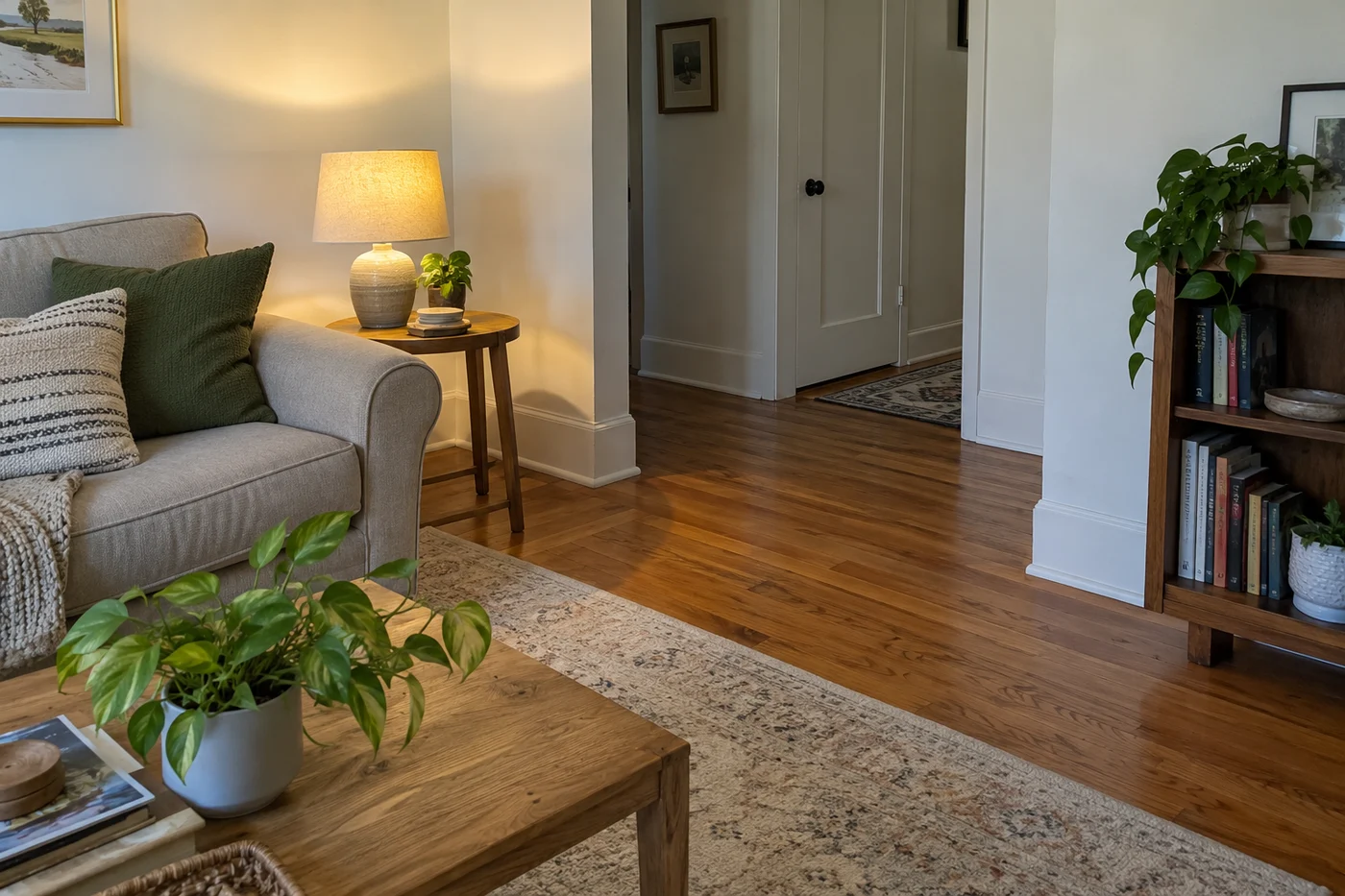
The easiest choice comes down to available space and what you need. A sunny corner might suit a plant, while the gap beside your reading chair could use a lamp.
| Your corner | A good match | The detail that matters |
|---|---|---|
| Narrow gap beside the sofa | Slim floor lamp or small side table | The shade or tabletop stays out of the walkway. |
| Sunny, unused corner | Tall plant or plant stand | Leaves have room, and curtains still move. |
| Dark corner | Floor lamp or table lamp | The light reaches where it’s needed. |
| Deep alcove | Closed cabinet or compact desk | Doors, drawers, and the chair have room to move. |
| Corner near the entrance | Narrow bench, hooks, or small shelf | The entrance door opens fully. |
| Bare walls with little floor space | Artwork, mirror, or shallow shelves | The floor stays clear. |
1. A Tall Plant With Room to Grow
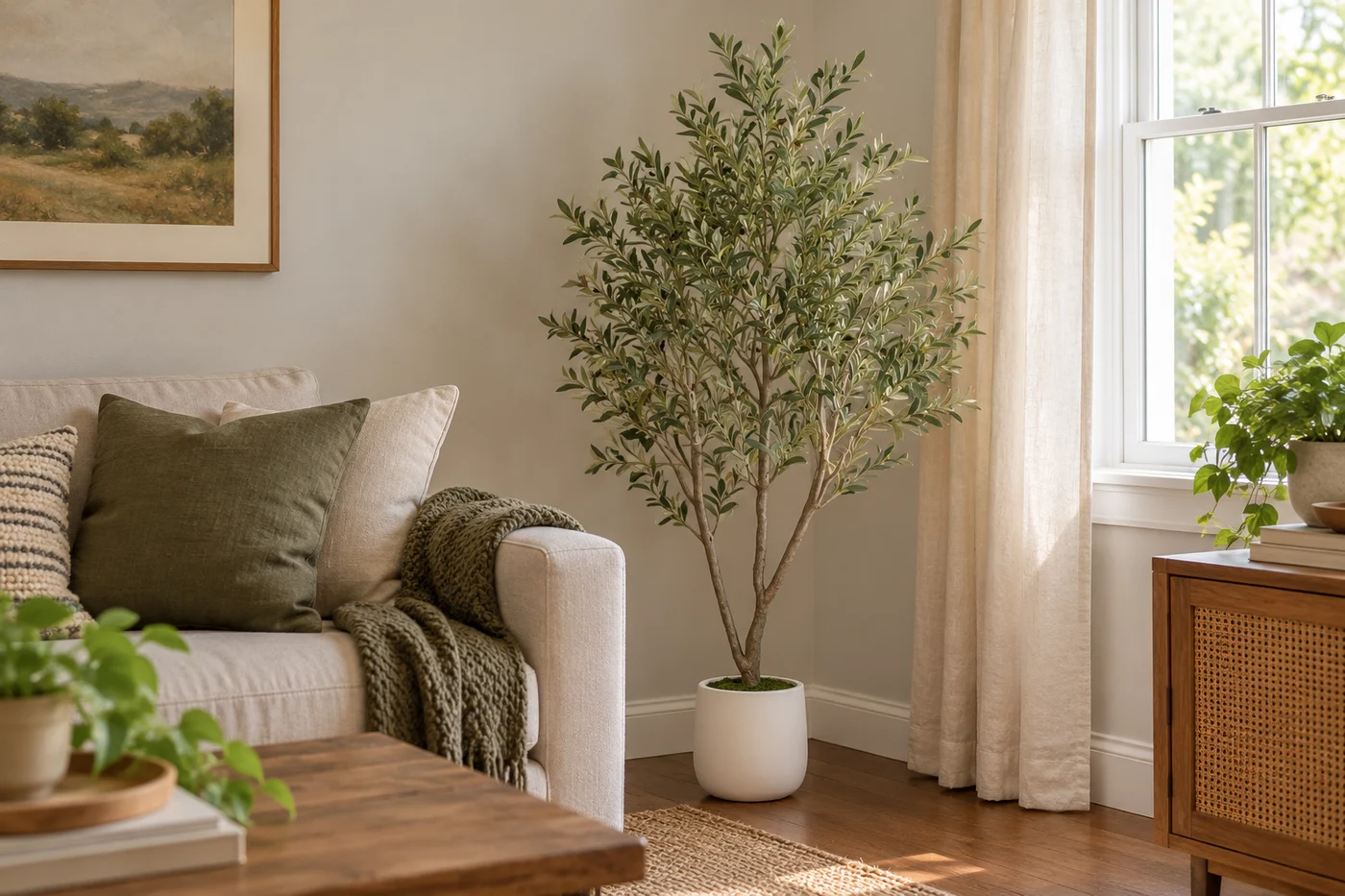
A tall plant adds height and color without another large piece of furniture. It works especially well beside a window where a chair would feel squeezed in.
One substantial plant is often enough. A cluster of tiny pots can look scattered, while a taller plant fills more of the empty space above the floor.
The leaves need room too. A pot might fit beside the sofa while its branches stretch across the seat or catch the curtains.
For a dark corner, the VIVATREES 7-Foot Artificial Olive Tree gives you a tall leafy shape without needing sunlight or watering. It comes with a white planter, so there’s no separate pot to buy.
If you already have several smaller plants, the Bamworld Three-Tier Plant Stand groups them at different heights. Its wooden shelves give the collection one place to sit instead of spreading pots across the floor.
Note: A tall tree and a tiered plant stand are two different ways to fill the corner. One arrangement is usually enough.
2. A Reading Chair You’ll Actually Use
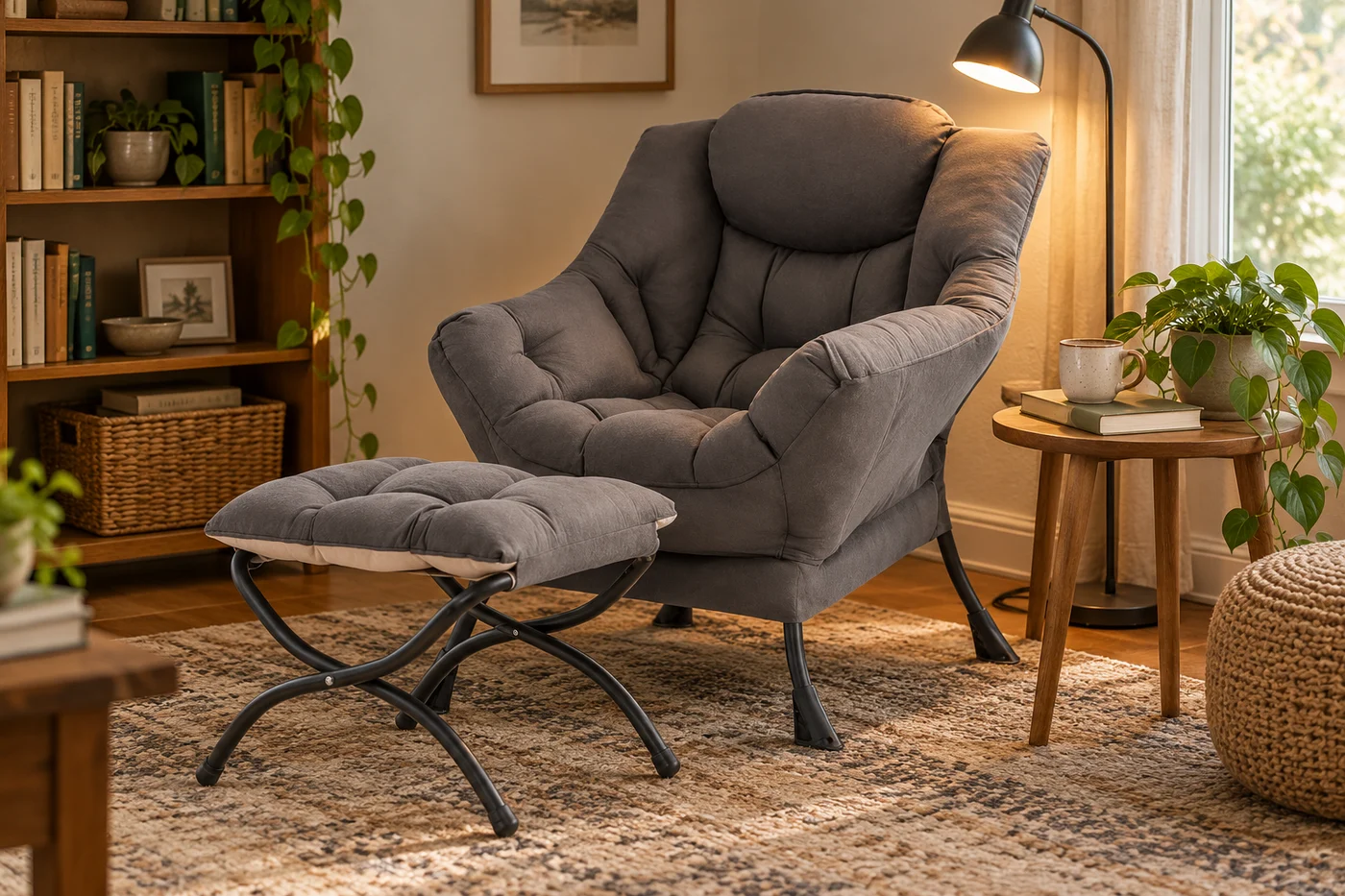
A chair, small table, and reading light can turn an empty corner into your favorite place to sit.
If someone else has claimed the sofa for a film, a separate chair gives you somewhere to finish your book without leaving the room.
The Tiita Lazy Chair with Ottoman includes a padded chair, a side pocket for a book or remote, and a folding footrest. The footrest can come out when you want to put your feet up and fold away when you need the floor space.
A small side table still comes in handy for a drink. It should sit close enough that you can reach it without leaning out of the chair.
Angling the seat slightly toward the room makes it easier to join a conversation. The corner should feel comfortable to use, with a clear path to get in and out.
3. A Floor Lamp for That Dark Gap
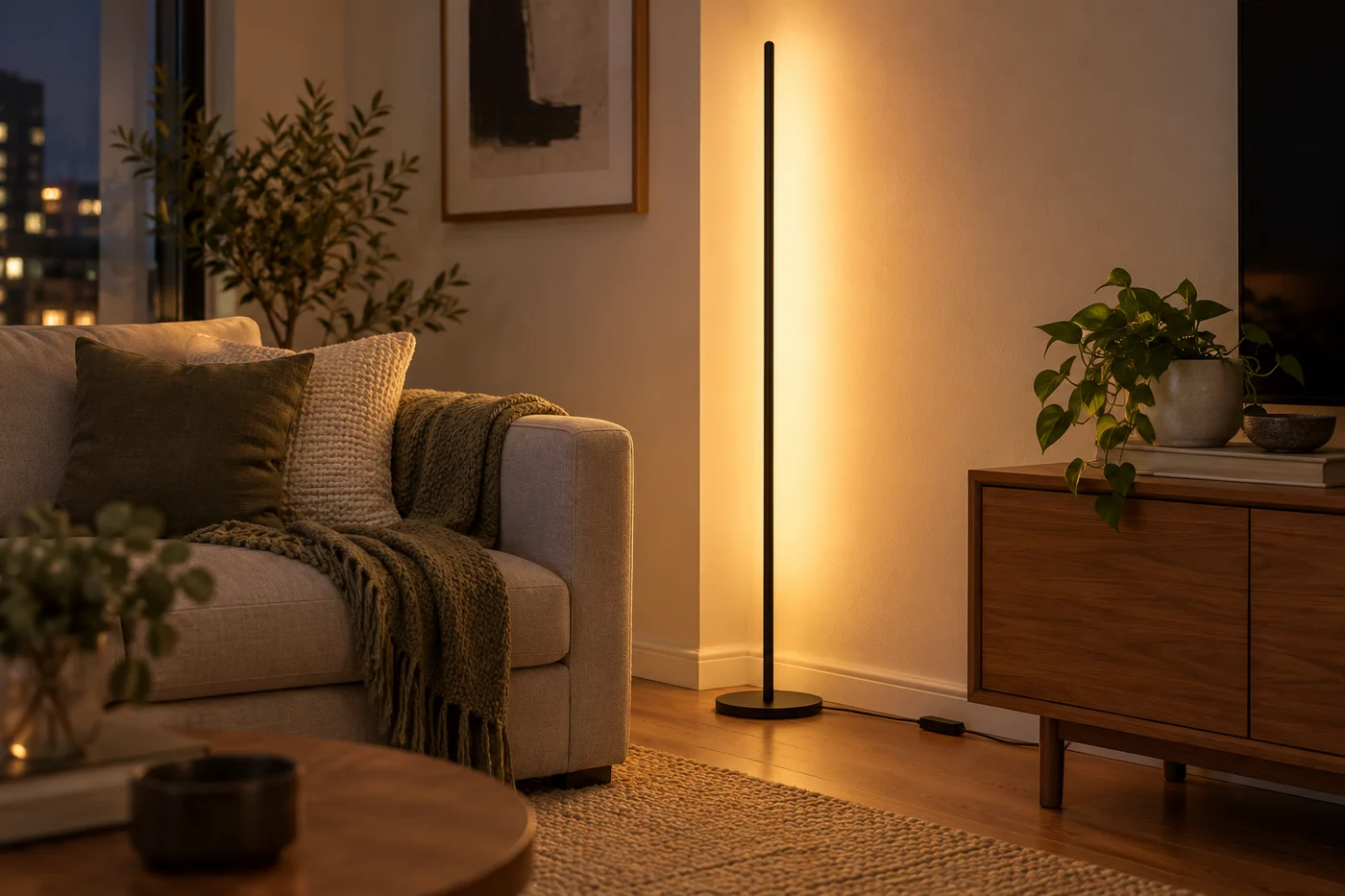
A floor lamp adds light without another table, which makes it useful beside seating you already have.
For a soft glow around the room, the Govee RGBIC Floor Lamp Basic has a slim upright design with adjustable colors and brightness. Beside the sofa or TV, it can light the corner without a large lampshade taking up space.
This style suits ambient lighting. For reading, a separate adjustable lamp aimed toward your book gives you more direct light.
The lamp’s base still needs a clear place on the floor. A cord running along the wall behind the furniture keeps the walking route open.
4. A Bookcase That Makes the Most of the Height
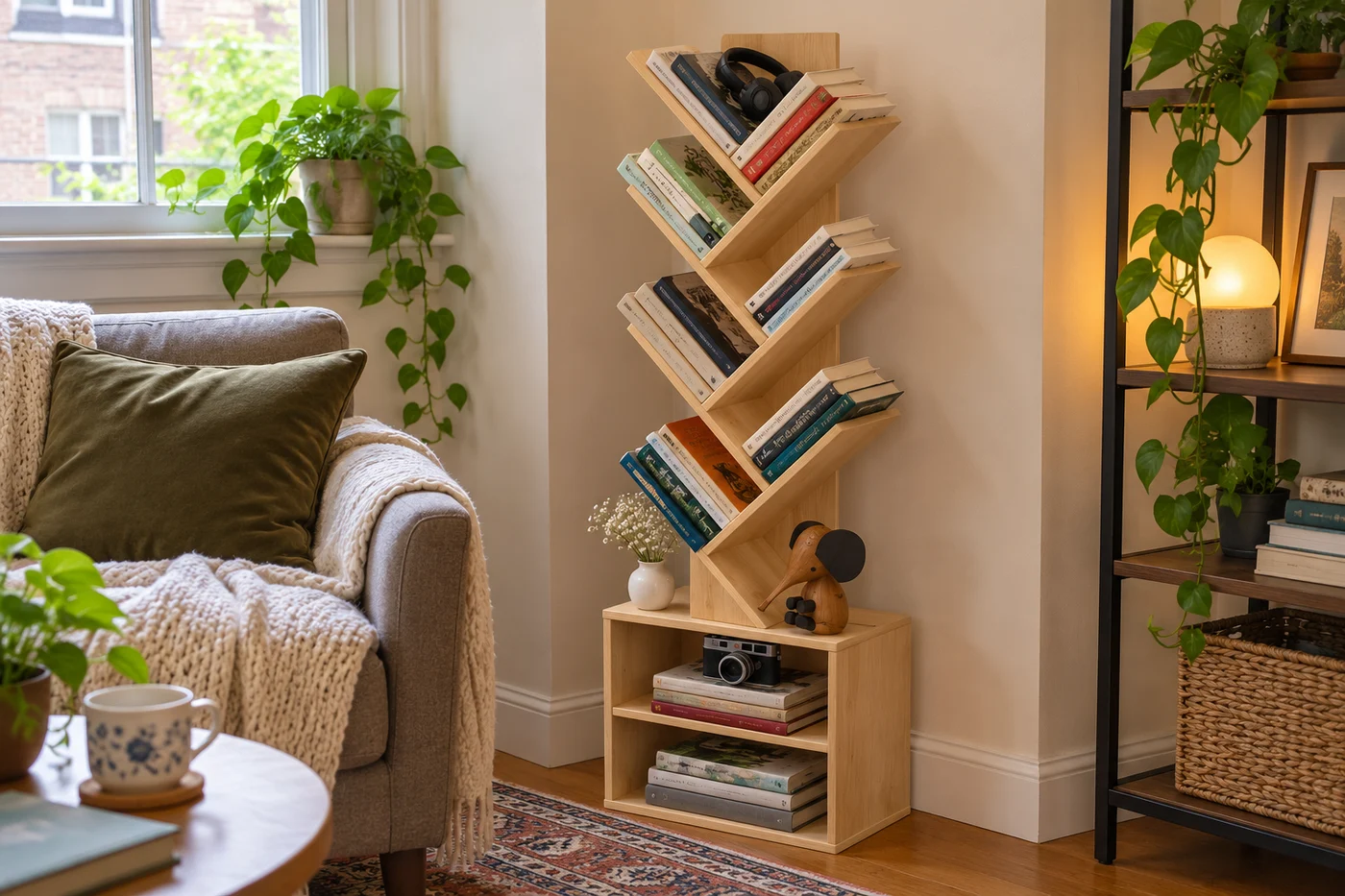
A narrow bookcase adds storage above the floor without taking up the width of a large cabinet.
The SHEEPAM 10-Tier Tree Bookshelf holds books on angled shelves arranged around a central upright. At about 14.6 inches wide and 8 inches deep, it offers a compact place for books beside a chair or desk.
Its branching shape also adds a little decoration on its own. A few groups of books are enough, without filling every space with extra ornaments.
A conventional bookcase with flat shelves is another option when you need baskets or larger objects. Books you reach for often belong at an easy height, whichever style you choose.
Note: Tall bookcases need the appropriate wall restraint, even when they sit snugly in a corner.
5. Floating Shelves Above a Clear Floor
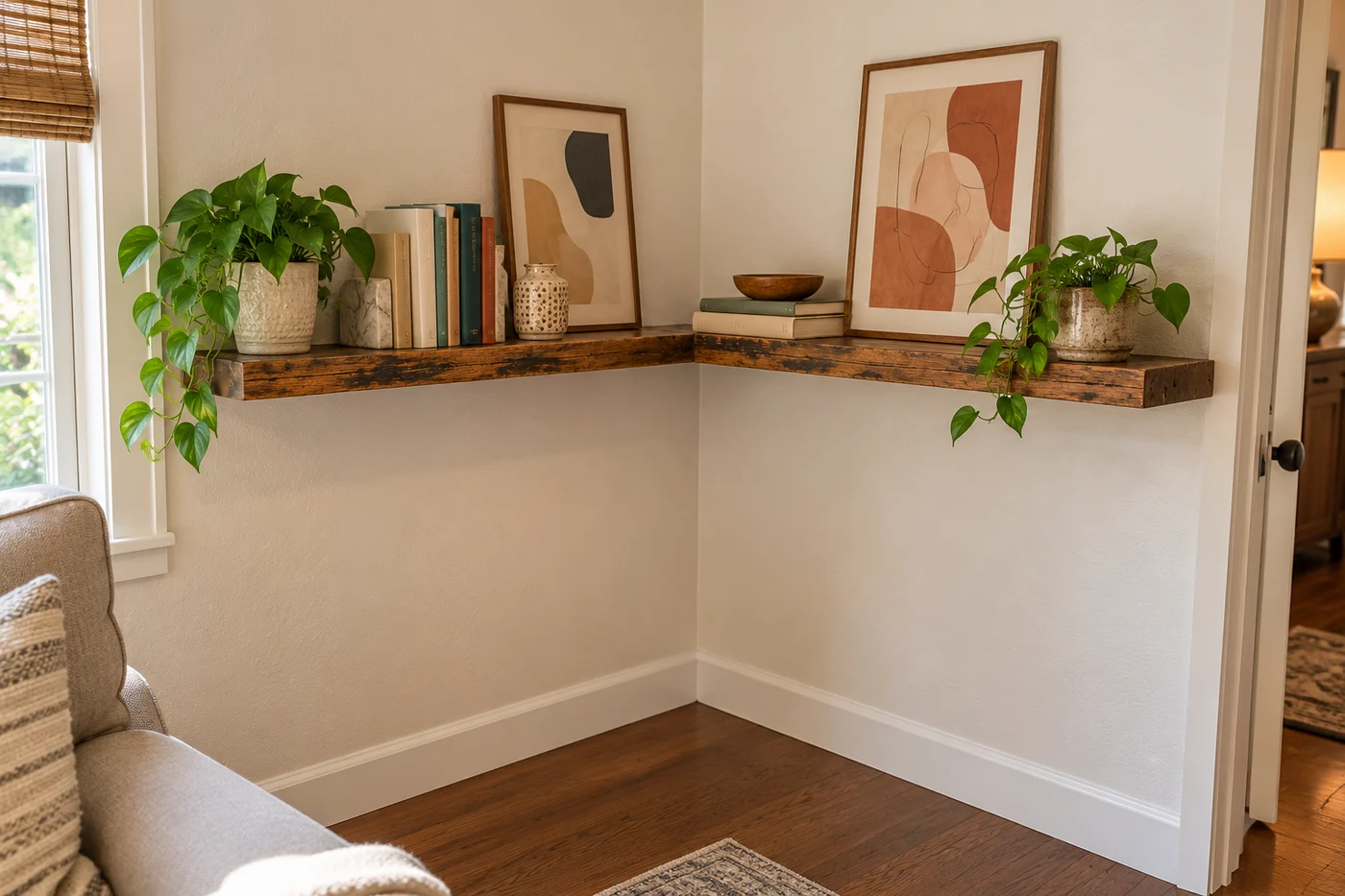
Floating shelves add storage and display space where another piece of furniture would block the floor.
For example, the corner beside a desk could hold reference books above the work surface. A couple of picture ledges can display framed photographs without needing a console underneath.
The BAYKA Rustic Brown Floating Shelves come as a matching pair, each 22.5 inches long. Their hidden brackets keep the look simple, and the brown finish works well near wood furniture.
The two shelves can sit one above the other or on adjoining walls. There’s no need to cover both walls if one short arrangement already looks balanced.
The shelf edges should stay clear of where you sit, stand, or bend down. Wall-mounted shelves also need proper support for what they’ll hold.
6. A Mirror With a Better View
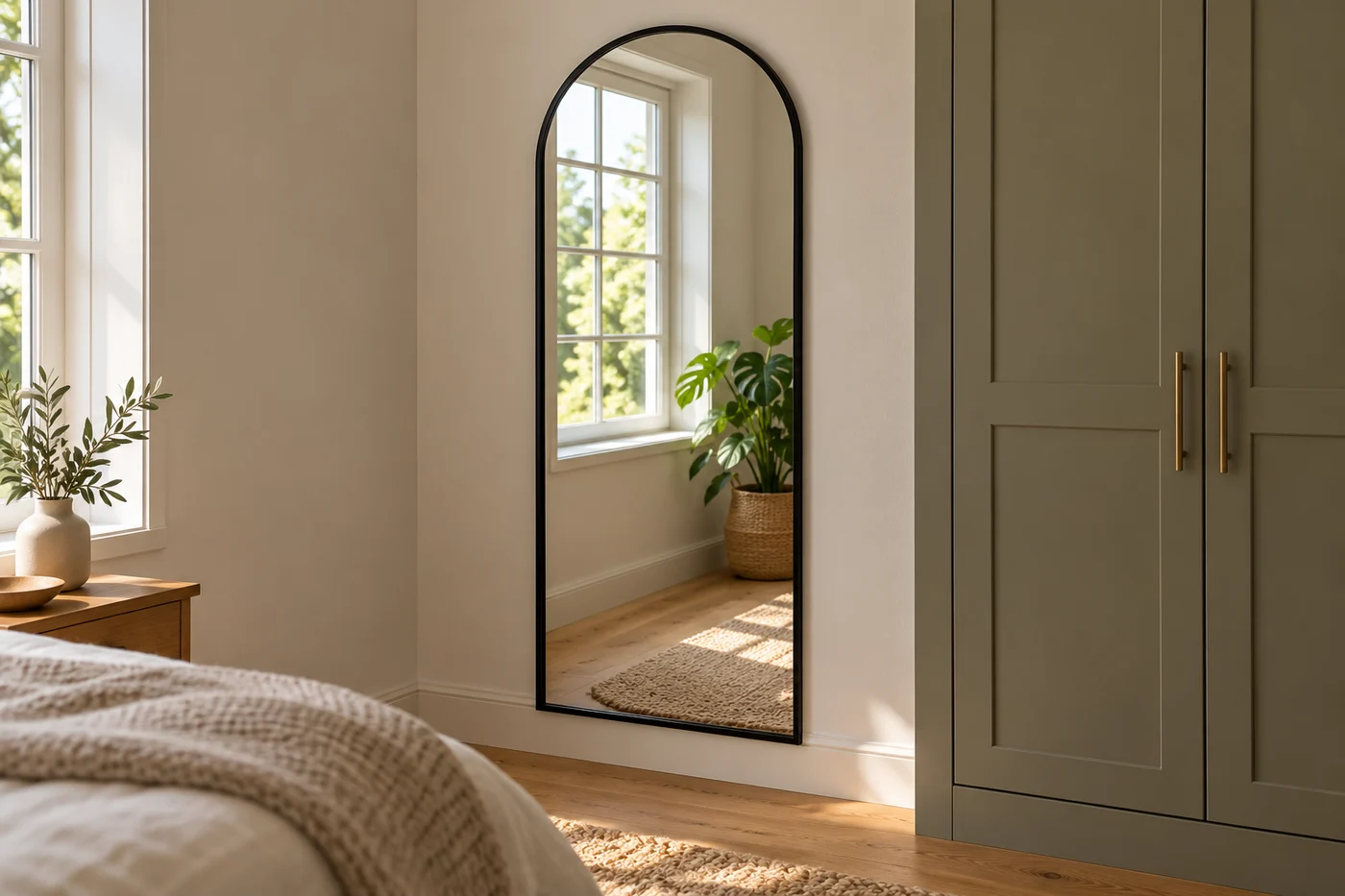
A mirror adds depth and reflected light, especially when it faces a window or an attractive part of the room.
In a bedroom, a full-length mirror can turn the corner beside the wardrobe into a convenient dressing spot. An arched top adds a curved shape among the straight lines of wardrobes and doors.
The HARRITPURE Arched Full-Length Mirror measures 64 by 21 inches and has a slim black aluminum frame. It’s a simple option for a bedroom corner where you want a full-length view without a wide decorative frame.
The reflection matters as much as the frame. A view of the window, a plant, or neatly arranged furniture usually looks better than a reflection of the laundry pile.
A wall-mounted mirror keeps the floor clear. A floor mirror works when there’s enough space for its base and it’s secured against tipping.
Our guide to full-length arch mirrors has more options for different rooms and decorating styles.
7. A Small Cabinet for the Everyday Mess
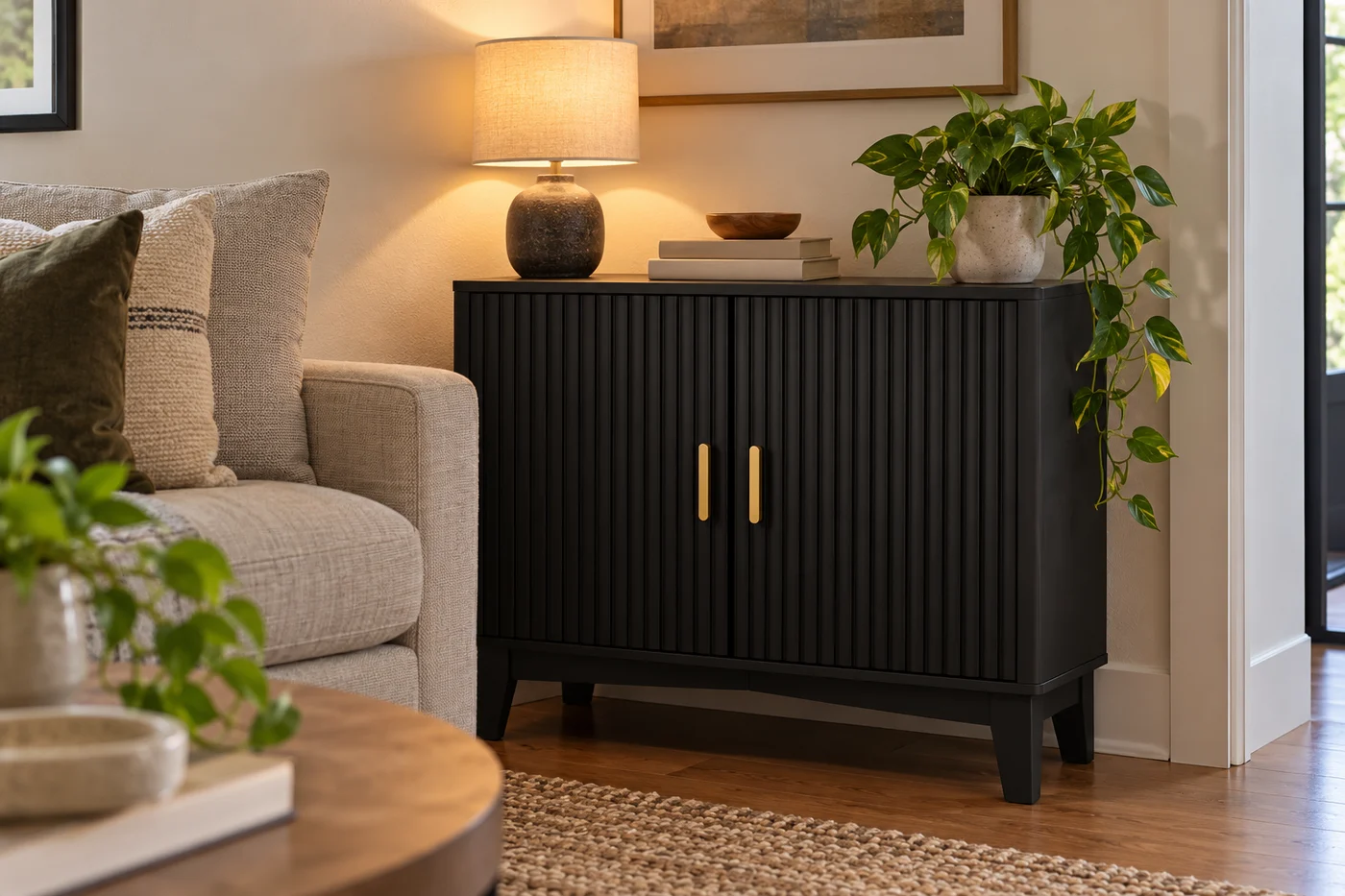
A small cabinet gives paperwork, chargers, and games somewhere to go behind closed doors.
If those things already collect beside the TV, storage in that corner makes sense. A shallow cabinet or small chest can keep them close without leaving everything on display.
The BORNOON Fluted Storage Cabinet has closed doors and an adjustable interior shelf. Its black finish, fluted door fronts, and gold-tone handles add some detail without needing lots of accessories on top.
Sometimes the existing TV console is simply too short for the wall. A longer console may use the awkward gap better than squeezing another cabinet alongside it.
For a separate cabinet, a finish similar to nearby furniture helps it look connected. A small lamp or framed photograph on top is enough to finish the arrangement.
The doors and drawers need room to open. Storage that requires moving the armchair every time will quickly become annoying.
8. A Blanket Basket Beside the Sofa
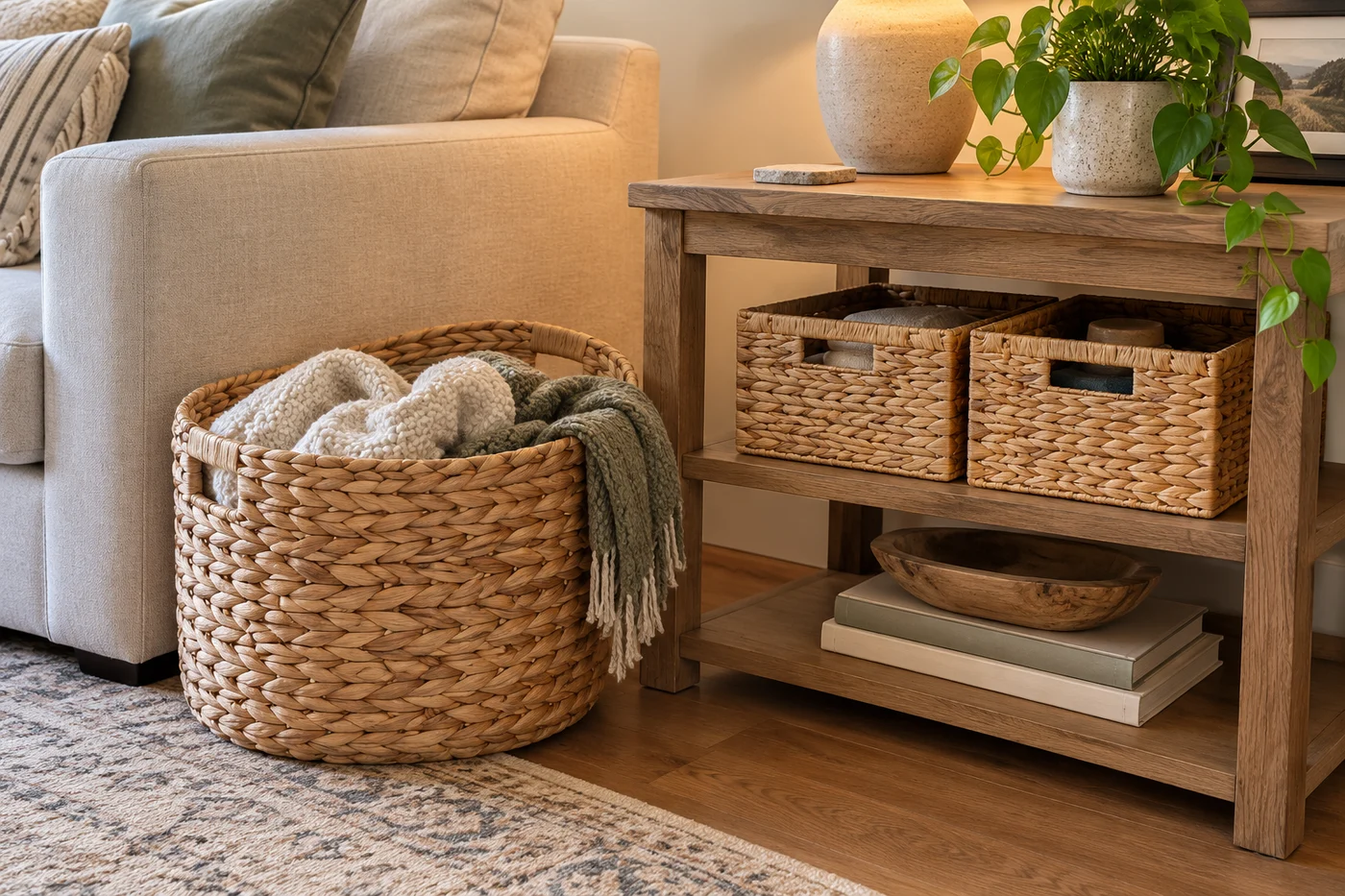
A roomy floor basket gives spare throws an easy home beside the place you use them.
If blankets end up across every cushion each evening, an open basket makes putting them away almost effortless. There’s no lid to lift and no need for perfect folding.
For smaller belongings, the StorageWorks Water Hyacinth Baskets come in a set of two with built-in handles. Their rectangular shape suits shelf storage for remotes, notebooks, and charging accessories.
These smaller baskets can sit on a shelf beside the sofa, while a larger floor basket holds blankets. That keeps each type of storage useful instead of squeezing everything into one container.
If you also need somewhere to put your feet, our storage ottoman guide covers pieces that combine seating or a footrest with hidden storage.
9. A Little Table With One Standout Piece
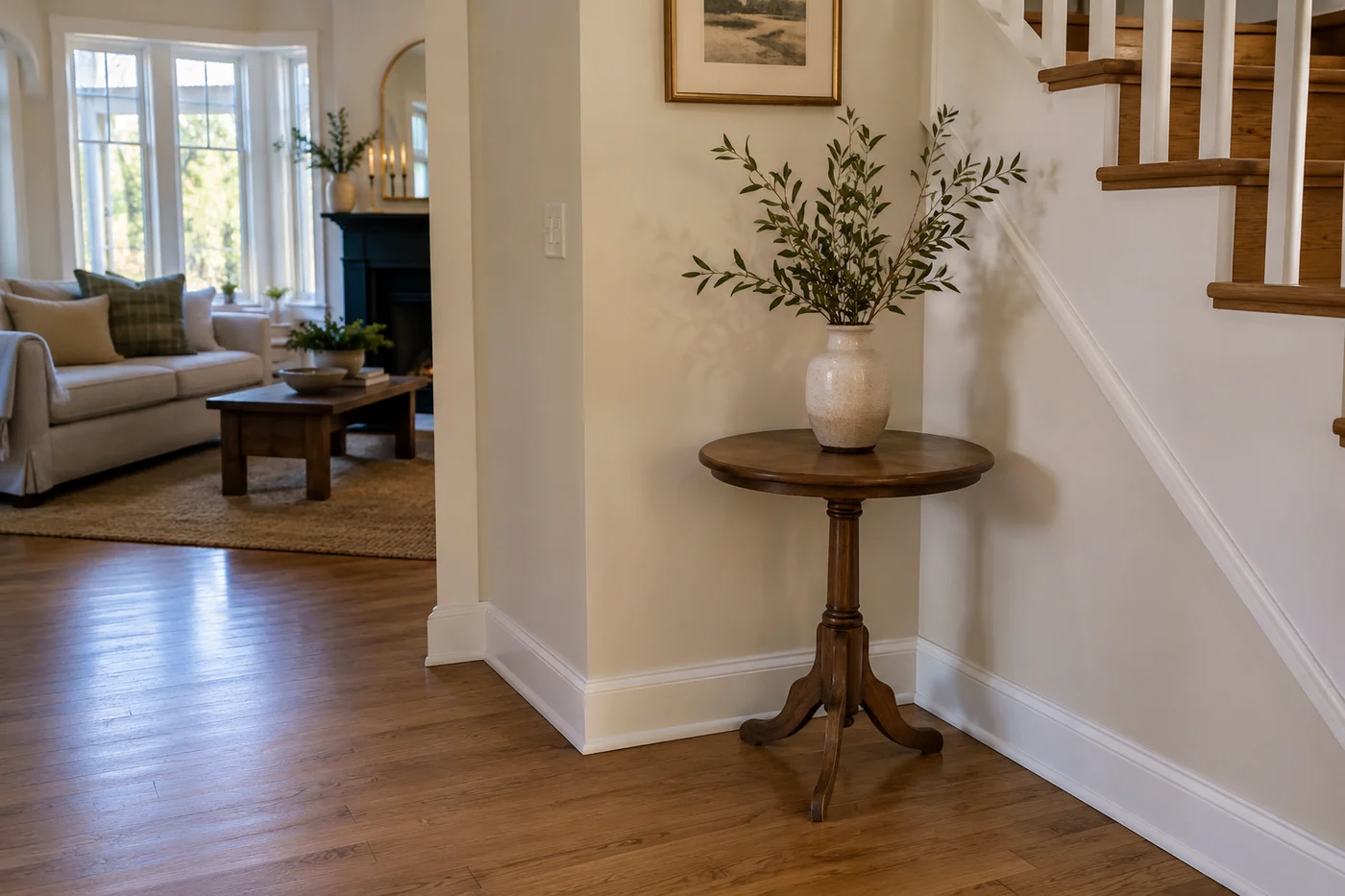
A small table or pedestal gives a small corner a finished look without adding another seat.
A spot near the stairs may feel bare even when you don’t need another chair. A round table with a lamp can fill that space and provide useful light in the evening.
A vase or sculpture also works. A taller vase is easier to notice from across the room than a handful of tiny ornaments.
An existing stool can hold a plant or a decorative bowl. That gives a piece you already own a new use.
For a table you’ll pass closely, a compact base and a top that stays out of the walkway are practical choices. Our table lamp guide has ideas for adding light without filling the whole surface.
10. A Gallery Wall Around the Bend
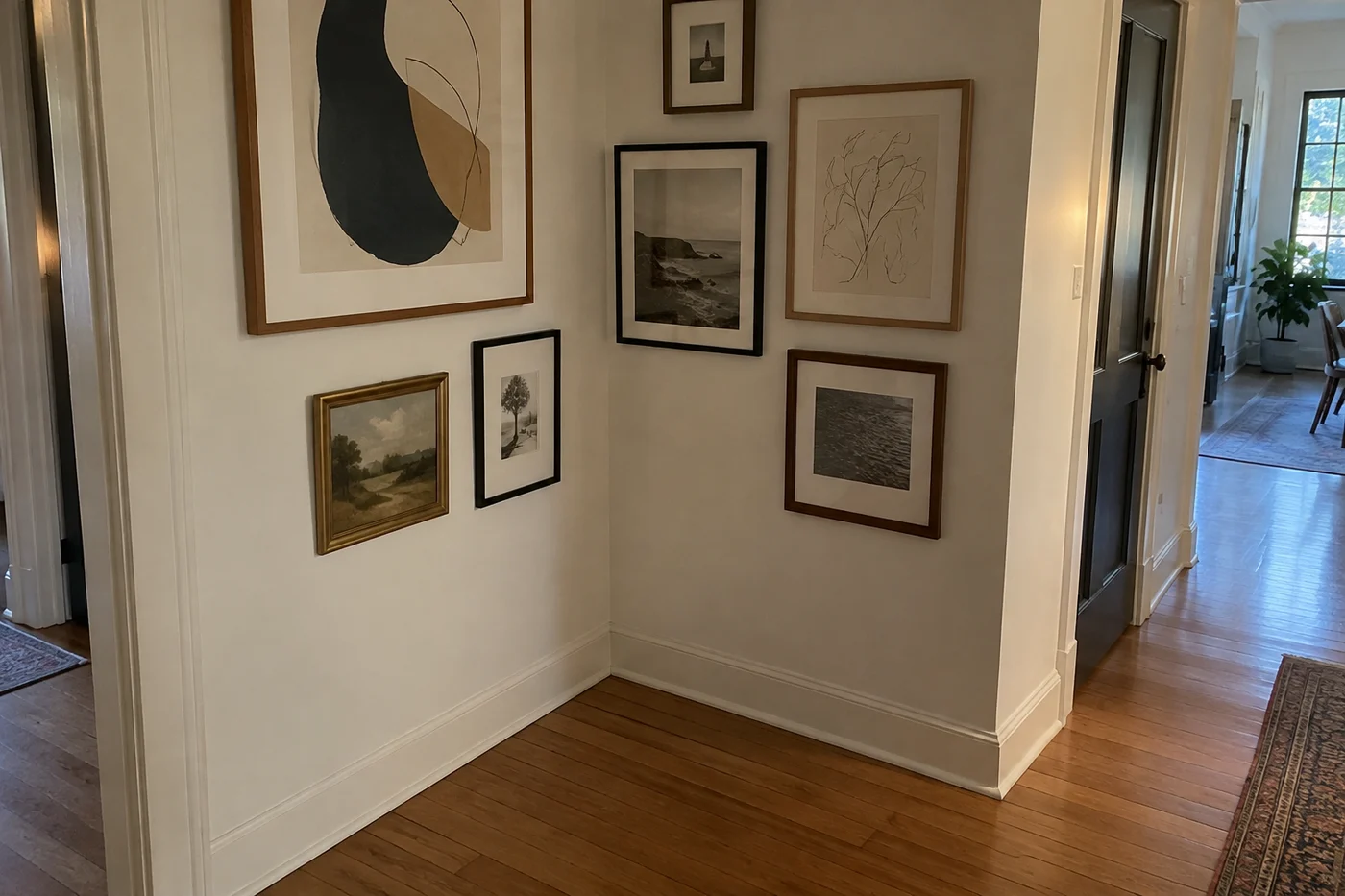
Artwork fills bare wall space while leaving the floor open.
A small gallery can continue from one wall onto the next. Matching frames help different photographs look connected, while similar colors can bring together artwork in mixed frames.
For a simple arrangement, one larger print on one wall and two smaller pieces nearby can be enough. The corner doesn’t need a frame on every available patch of wall.
Family photographs, travel prints, or a drawing you love make the display feel personal. There’s no requirement for a matching art set.
If you’re renting, our guide to decorating rental walls without damage covers ways to add wall decor that suit different setups.
11. A Small Desk With a Seat That Tucks In
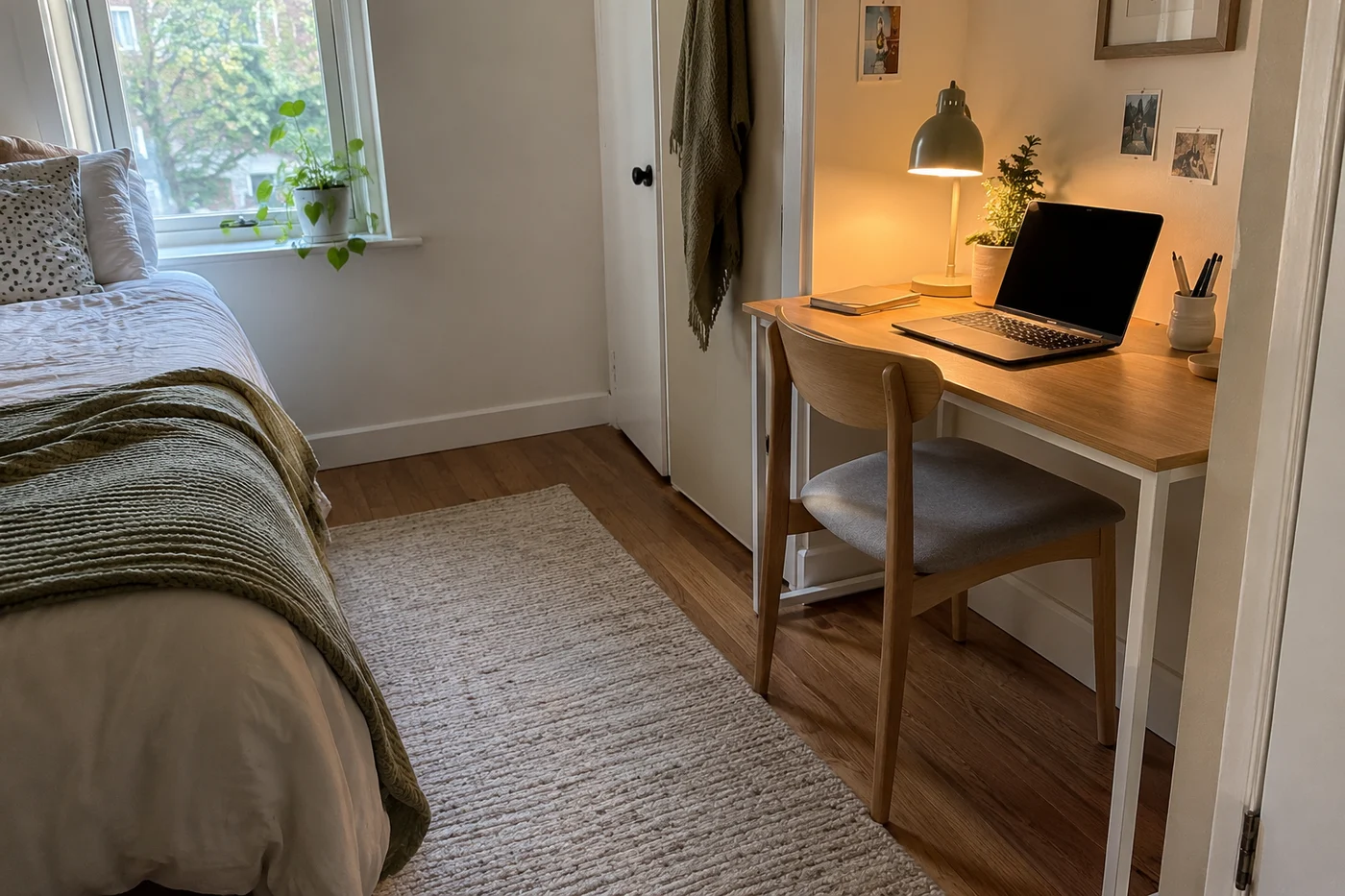
A compact desk creates a separate place to work when there’s room to sit and move comfortably.
If your laptop stays on the dining table between meals, even a modest desk can make daily life easier. A shallow drawer or small organizer gives the charger and notebook somewhere to go too.
The chair matters as much as the desk. It should pull out without hitting the bed or blocking the room’s main route.
A slim writing desk suits occasional laptop use. A wall-mounted desk can free up space below, and our wall-mounted desk guide has options for smaller rooms.
The same corner can become a vanity with a mirror and a tray for daily essentials. A stool that tucks underneath keeps the area easier to walk past.
12. A Coffee Cart for Slow Mornings
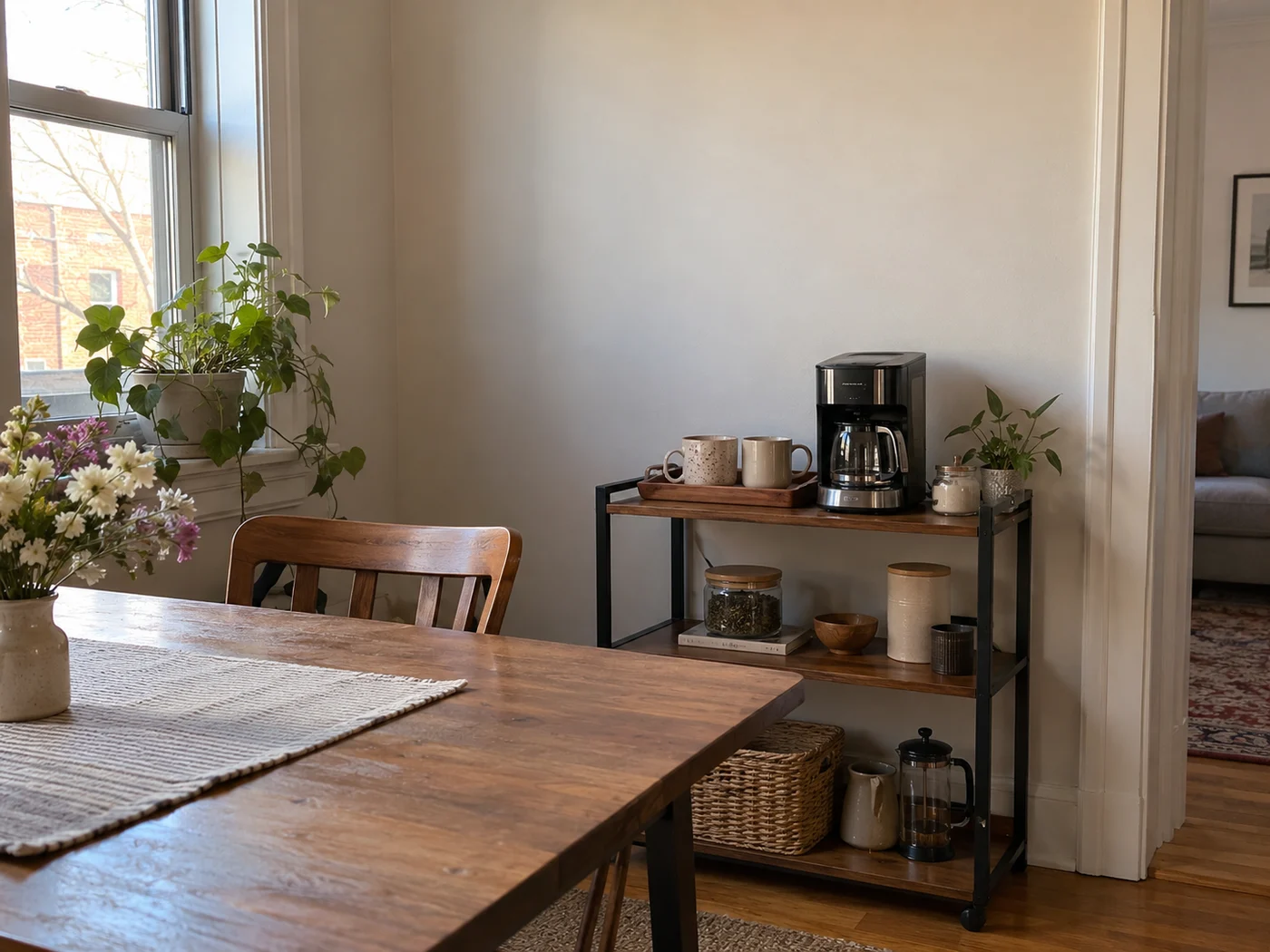
A small cart or cabinet creates a drinks station near the kitchen or dining area.
A tray, a few favorite mugs, and the supplies you use every day are enough. The lower shelf can hold spare cups or a basket of tea.
An existing cabinet can do the same job as a new cart. A wipeable tray protects the top and keeps smaller items together.
For a coffee machine, a stable surface near an outlet is the better setup. The machine needs clear space above for steam and room to open the water tank.
A bar cart also works for glassware, bottled drinks, or serving supplies. Locking wheels keep it in place while you use it.
13. A Breakfast Nook for Two
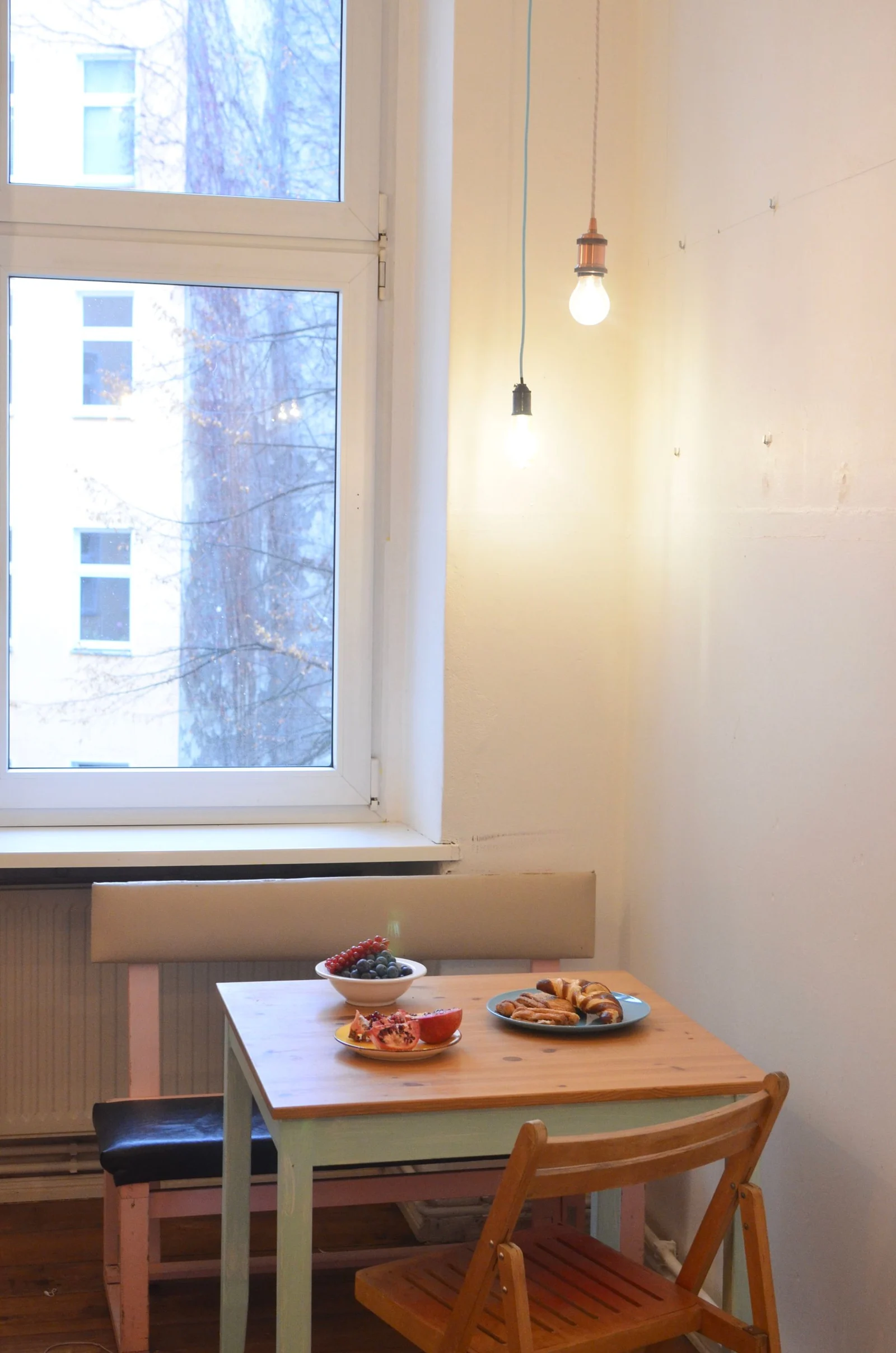
A compact table and corner seating can turn a wider nook into a place for breakfast, coffee, or a quick card game.
A bench against the wall keeps seating close to the edge of the room. Loose chairs on the open side make it easier to get in and out.
A pedestal table can help with leg space because there are fewer table legs near the seats. Its base still needs to leave somewhere comfortable for your feet.
This idea suits a roomy corner beside the kitchen or a window. In a tighter spot, a small table with two chairs may be easier to use than an L-shaped bench.
Our small-apartment dining area guide has more arrangements for fitting meals into a shared room.
14. An Entryway Bench for the Daily Drop-Off
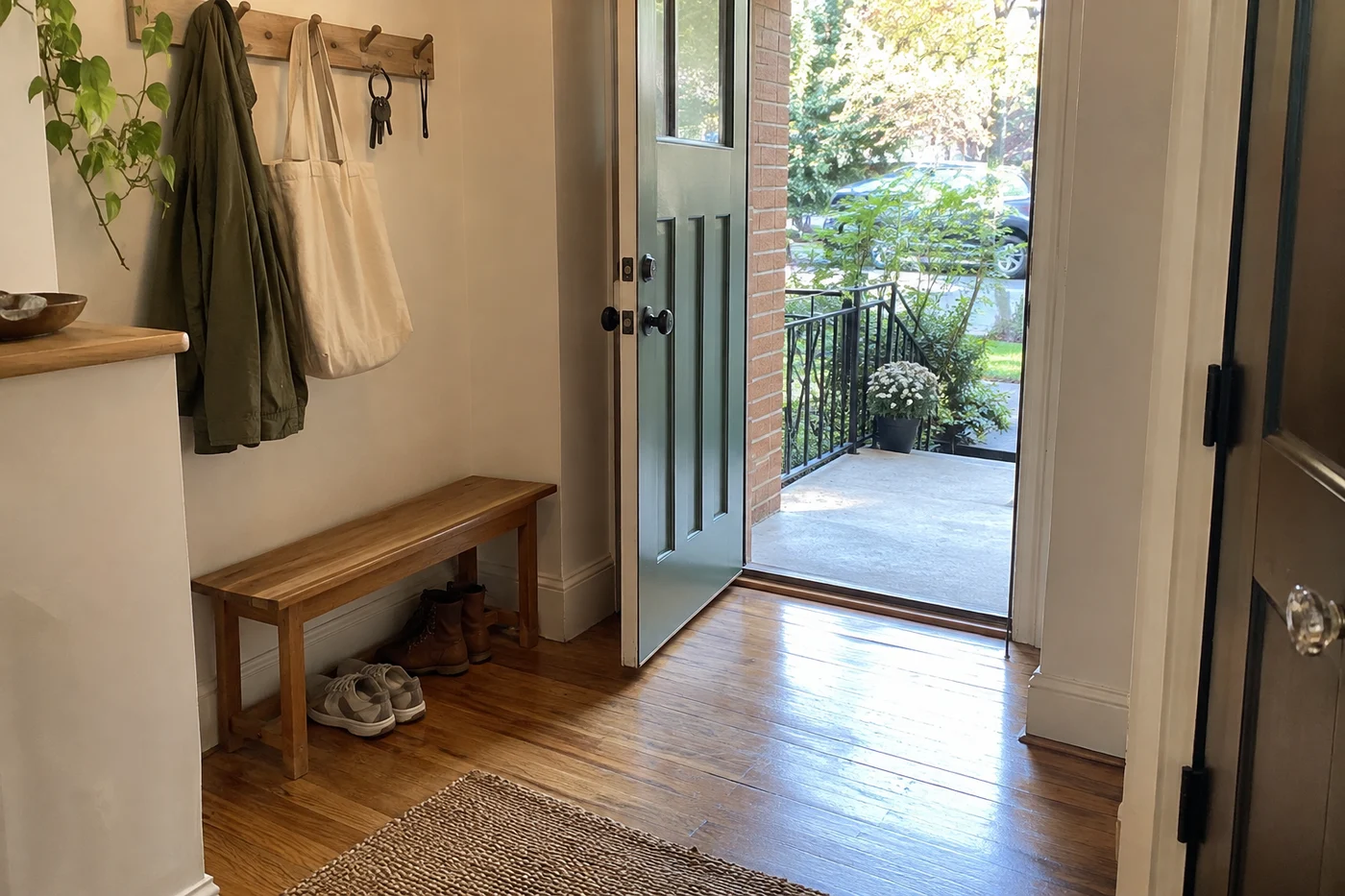
A narrow bench and a few hooks give shoes and bags a place near the front door.
This is especially useful when the entrance opens directly into the living room. A small place to sit while taking off shoes can keep those everyday belongings from spreading farther inside.
A bench with an open lower shelf makes shoes easy to put away. Hooks above or beside it can hold the bags and jackets used most often.
For a shallower corner, a small wall shelf and hooks may be enough. A catchall tray gives keys a regular home.
The door should still open fully with shoes underneath the bench and coats hanging from the hooks. Those items take up more space than empty furniture does.
15. A Blanket Ladder Beside the Sofa
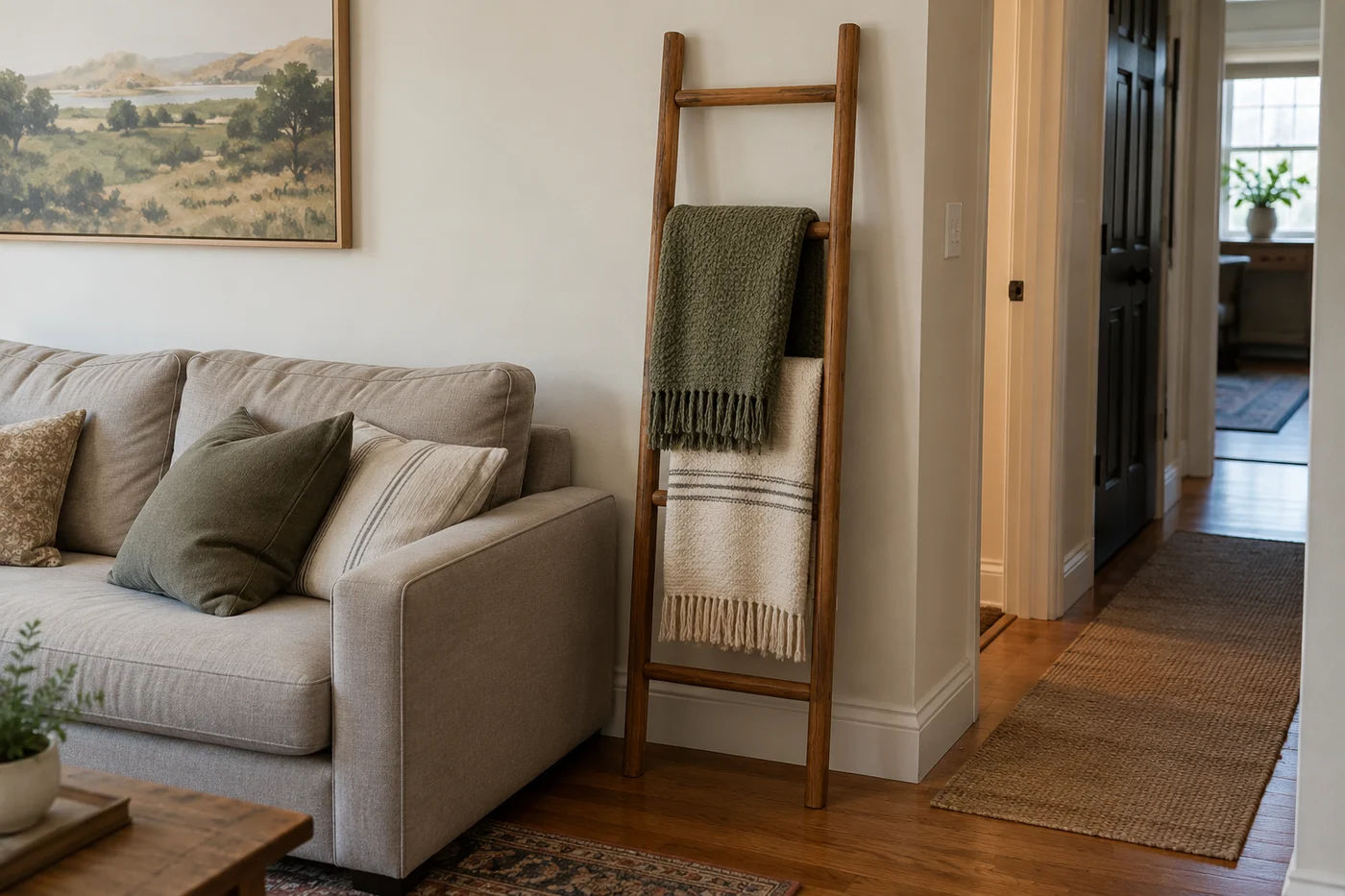
A blanket ladder adds height and texture while keeping a few throws easy to grab.
It suits a narrow corner beside the sofa where a wide basket would get in the way. Two or three blankets are enough to give it some color without hiding the whole frame.
The ladder’s feet sit away from the wall, so it needs more floor space than its slim shape might suggest. A stable position outside the walking route keeps it from being bumped.
A wood finish that matches a nearby table helps it fit into the room. Throws in colors already used on the sofa make the arrangement feel connected.
Note: A decorative blanket ladder is for displaying textiles, not climbing.
16. A Folding Screen With Some Personality
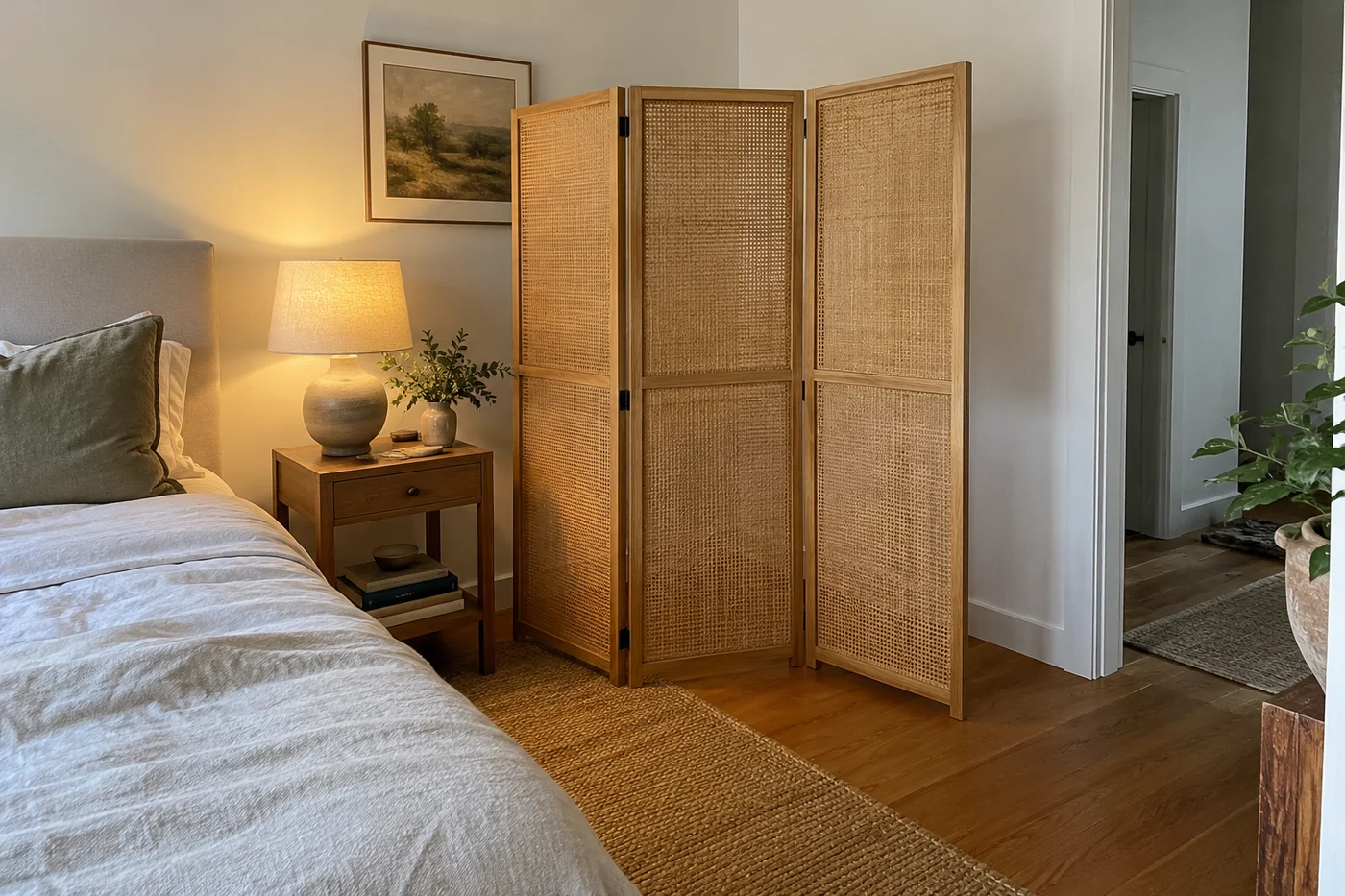
A folding screen adds height, pattern, and texture to an otherwise bare corner.
A woven screen suits a room with wood and natural materials. A fabric-covered version gives you a place for a bolder pattern without changing the sofa or curtains.
It can also block the view of a desk from the seating area. That’s handy when you’d rather stop looking at work once the laptop is closed.
A screen needs to stand partly folded for stability. Its panels should stay clear of the walkway, window, and furniture you need to reach.
Our room divider guide has more ideas for screens that decorate a room and create a little privacy.
17. A Cozy Spot for Your Pet
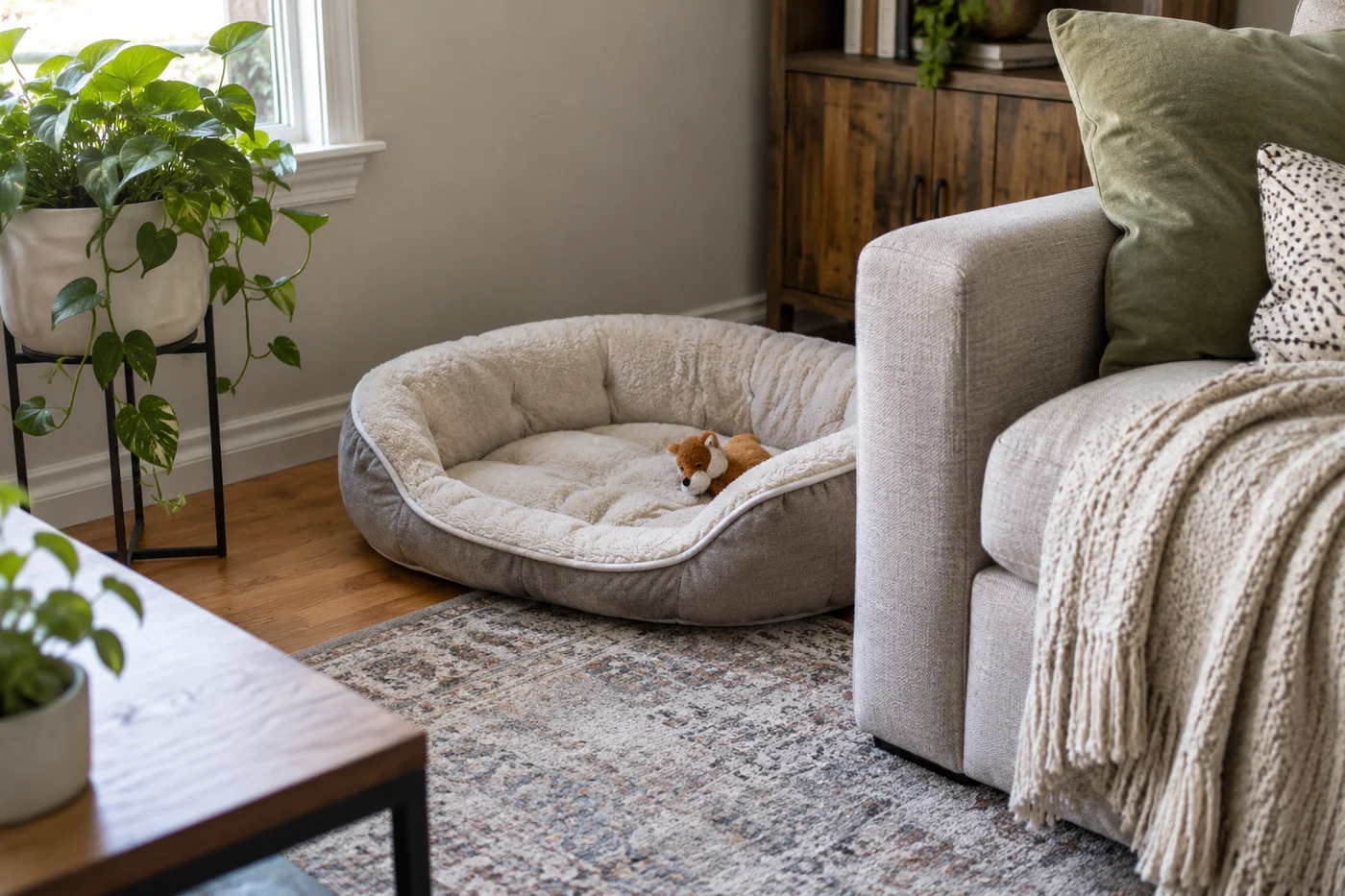
A pet bed or cat tree gives your pet a regular place within the room.
If your dog already sleeps beside the sofa, that nearby corner is a sensible place for a bed. A washable cover makes it easier to keep the area fresh.
For a cat, a stable scratching post or cat tree can use the height of a corner. There should still be a clear way to climb on and off it.
The bed needs room for your pet to stretch out, rather than simply fitting the empty patch of floor. Keeping it away from busy doorways also means fewer interruptions during naps.
One well-chosen piece is usually enough. The corner doesn’t need to hold every toy, bowl, and accessory.
18. A Painted Corner With Nothing Underfoot
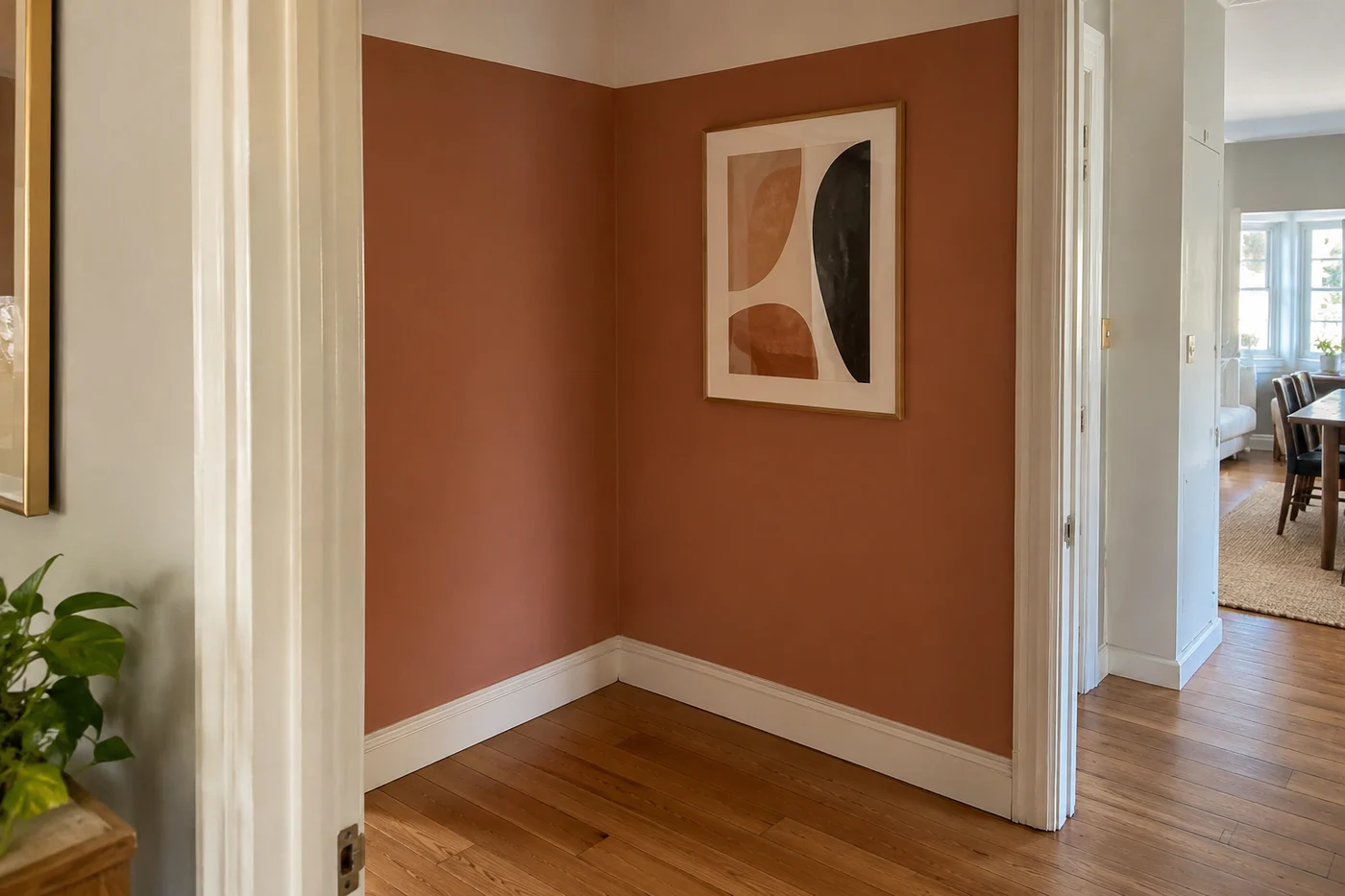
A paint accent adds color without furniture, which makes it useful for a corner beside a busy walkway.
A block of color can continue from one wall onto the next, connecting the two surfaces. A shade already found in your rug, cushions, or artwork helps it belong in the room.
If the corner looks bare from the doorway but there’s no room for a table, a painted section with one framed print can fill that view without creating another obstacle.
Wallpaper can provide a similar effect when the wall surface and decorating plans suit it. A quieter pattern works well near furniture that already has plenty of detail.
There’s no need to put something underneath just because the wall is decorated.
A Quick Corner Check
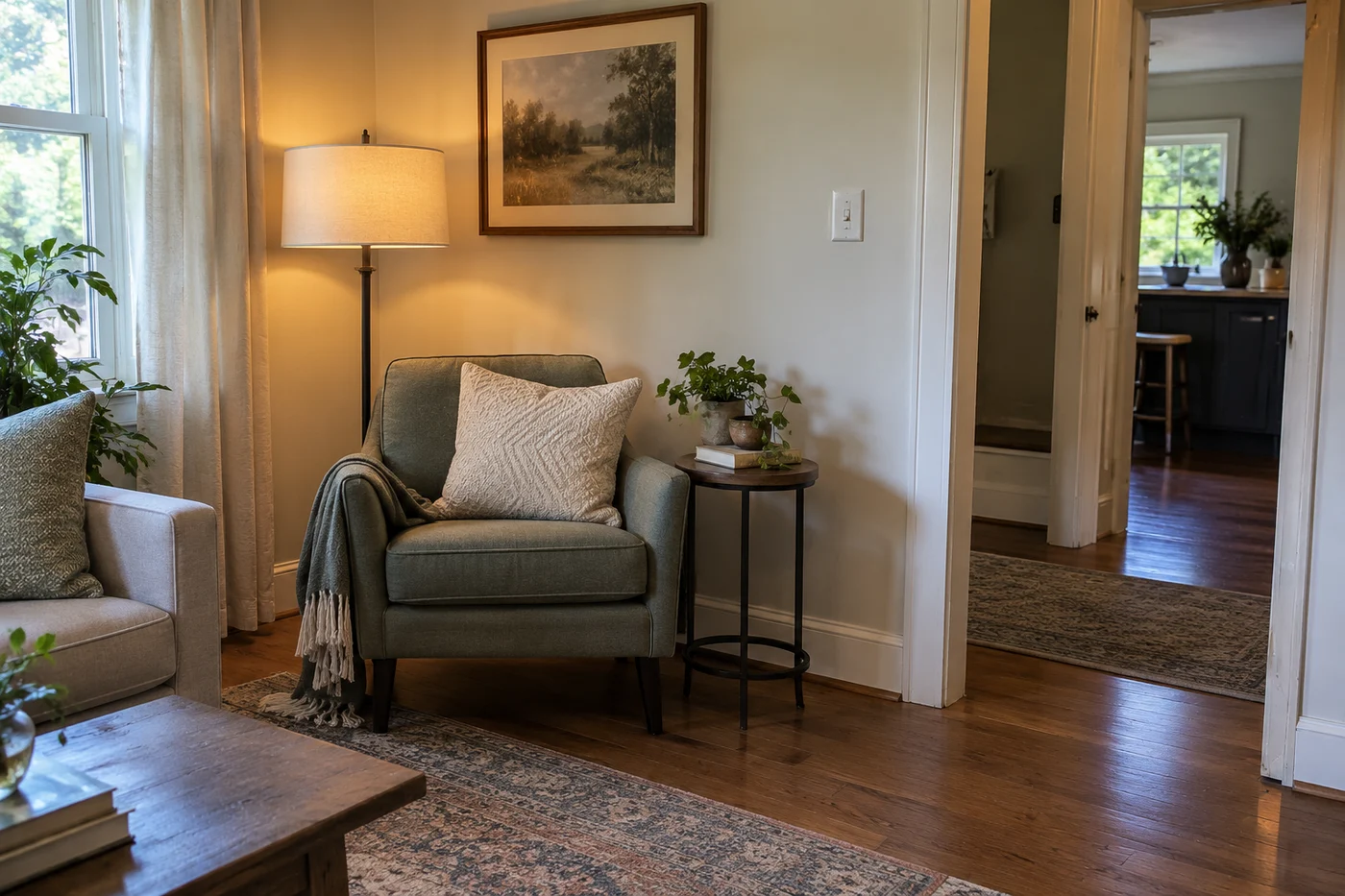
A quick everyday-use test helps you spot a corner that looks good but gets in the way.
These are the useful things to run through once the furniture and accessories are in place:
- The corner has a purpose I’ll use or a feature I enjoy.
- Doors and drawers open fully.
- I can walk past without squeezing.
- The chair has room to pull out.
- Curtains and windows move freely.
- Lamp cords stay out of the walkway.
- Storage is easy to reach.
- The new piece shares a color or material with the room.
Note: Some corners are useful because they stay open. Room to make the bed, reach a window, or walk past the sofa already serves a purpose.
If the corner still feels crowded, our guide to reducing visual clutter can help you decide what belongs there.
Common Questions About Awkward Corners
The right solution depends on how you use the space around it. These are the situations where a smaller change often works best.
The Cheapest Corner Makeover
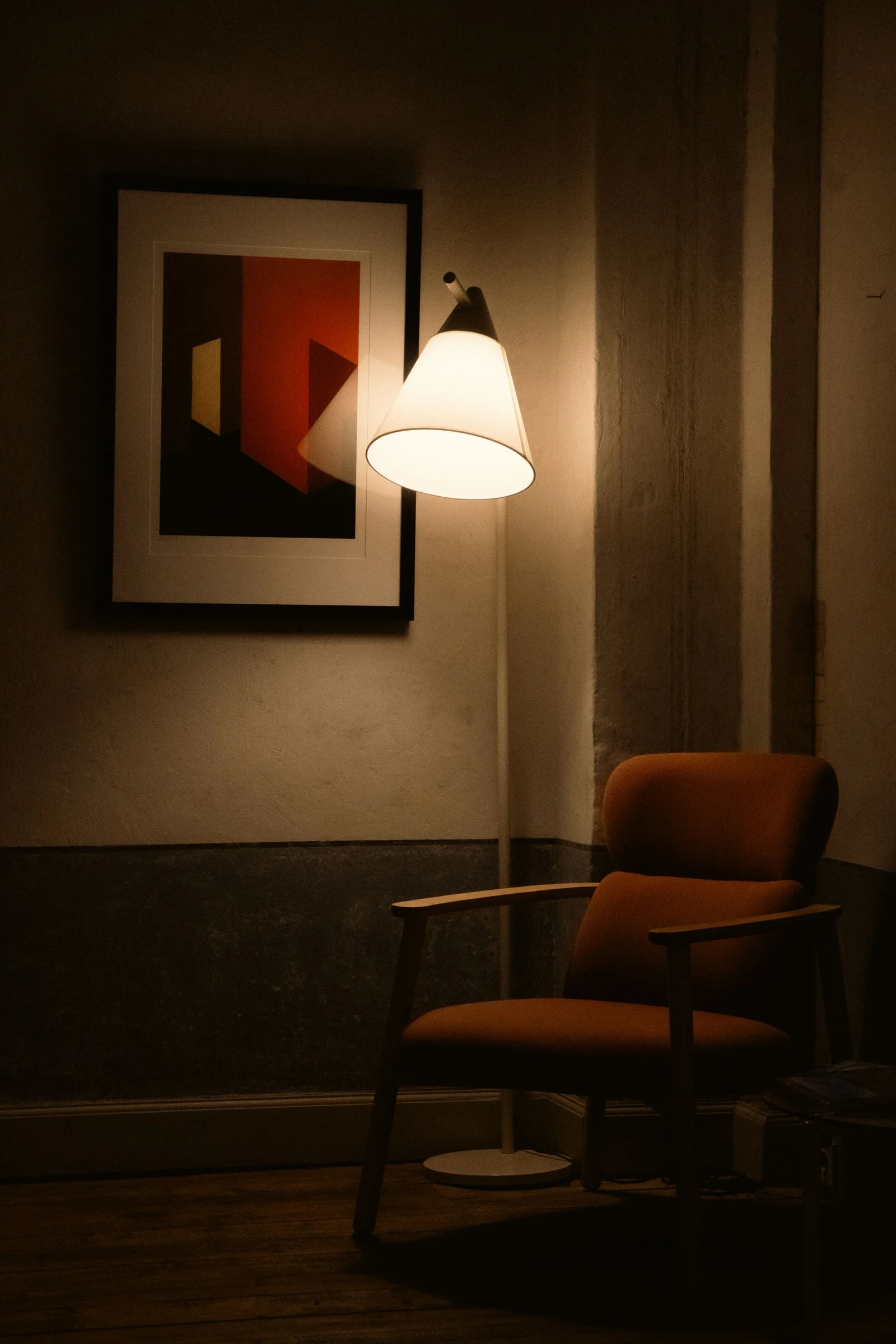
Moving something you already own is the cheapest way to refresh an awkward corner.
A lamp can brighten the gap beside the sofa. An unused basket can hold blankets, and a framed print can fill a bare wall. Sometimes moving a side table closer to the corner solves the problem without adding anything.
Our small-apartment decorating guide has more ideas for making useful changes on a modest budget.
A Corner Too Small for Furniture
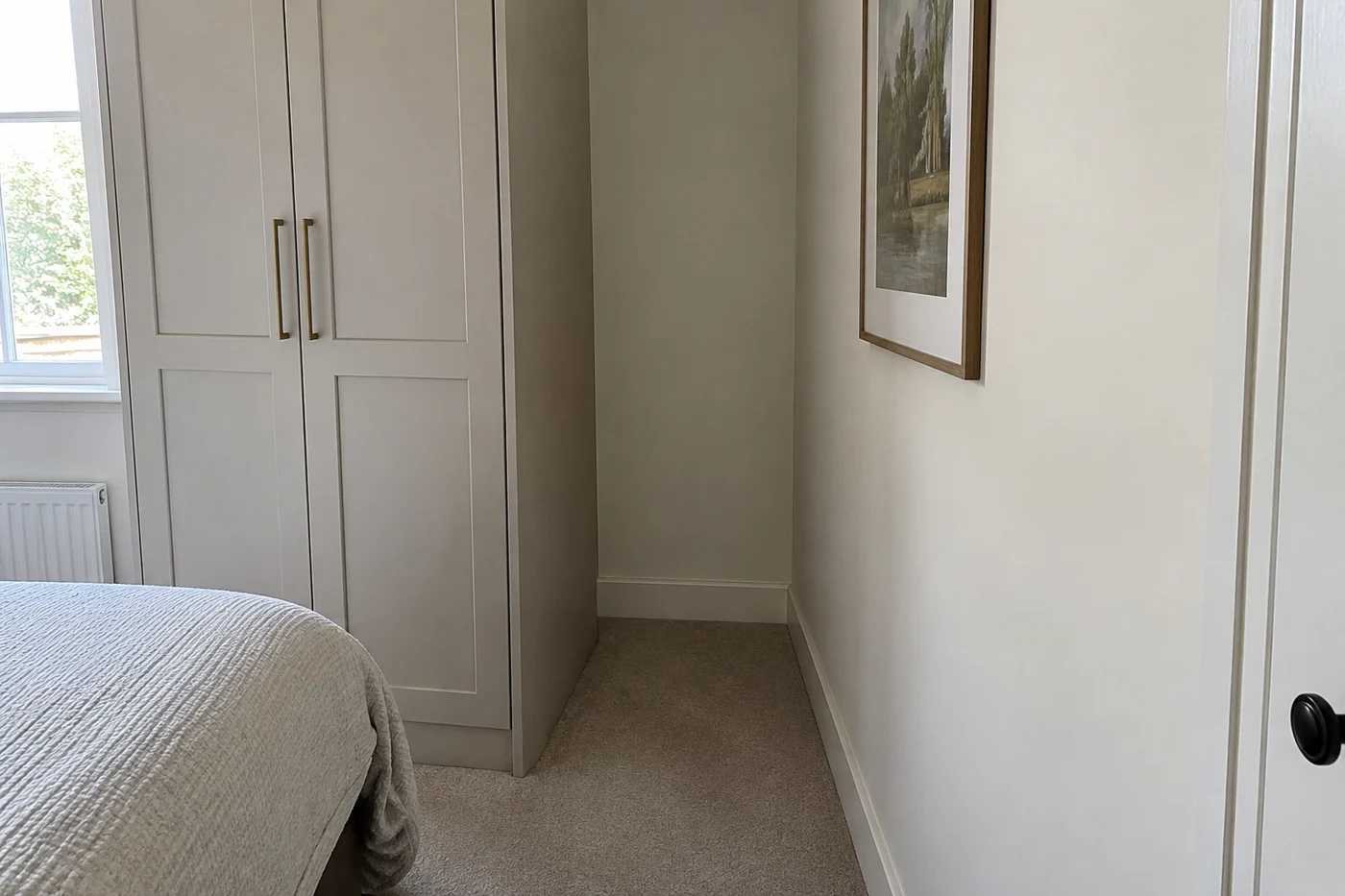
Wall art or a mirror can decorate a very narrow corner while keeping it easy to walk past.
A shallow shelf also works where its edge won’t get in the way. Near a doorway or beside a tightly fitted bed, a picture may be the simpler choice.
The corner can look finished without a table underneath.
The Space Behind the Sofa
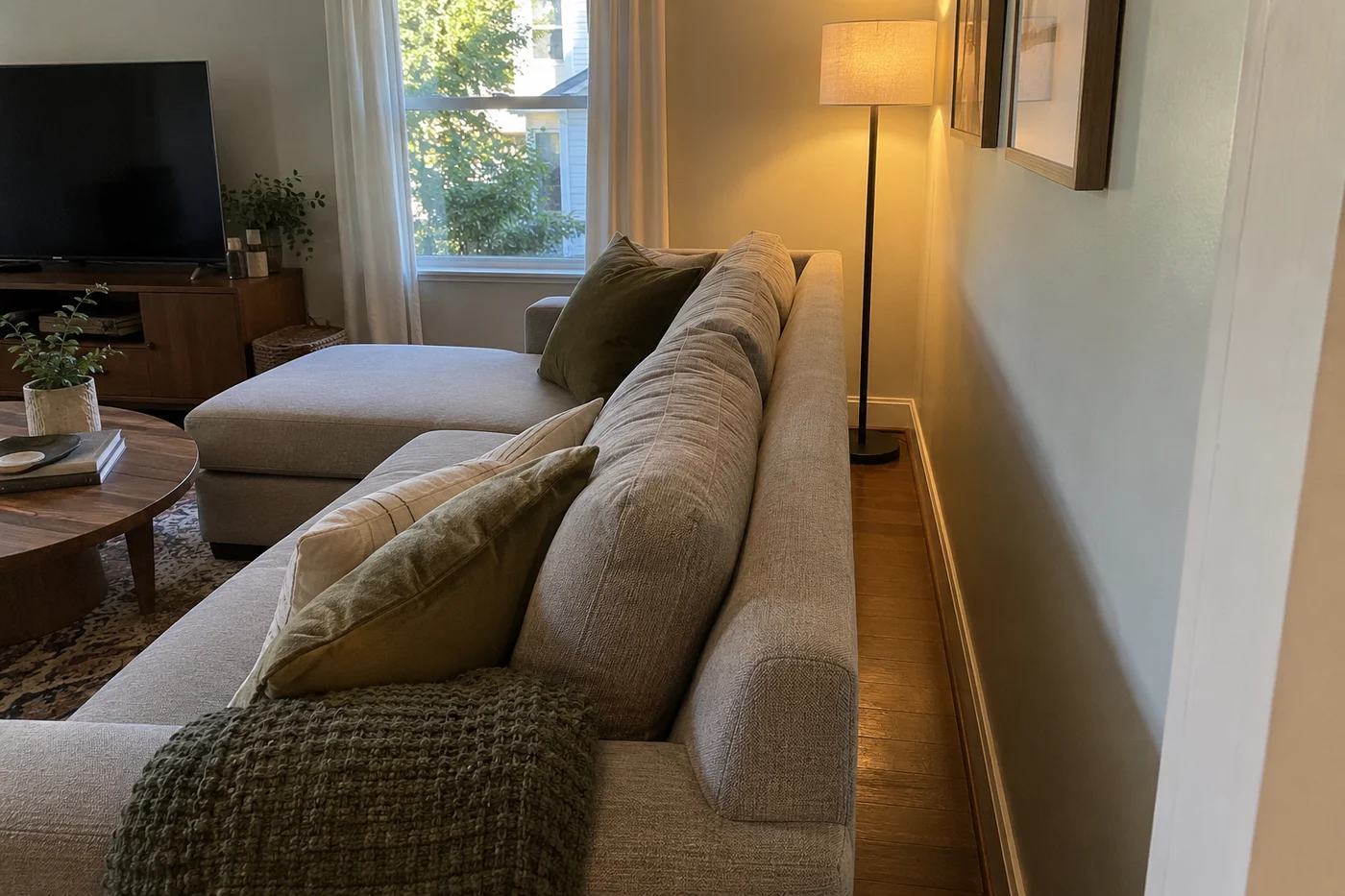
A floor lamp or accessible plant can work behind the sofa when there’s enough room for it.
The lamp should light the seating, and the plant should remain easy to water. Anything trapped between the sofa and wall will be awkward to clean or use.
Sometimes shifting the sofa slightly is the better answer. A small change in its position can turn an unusable gap into a useful place for a lamp.
A Corner Behind a Door
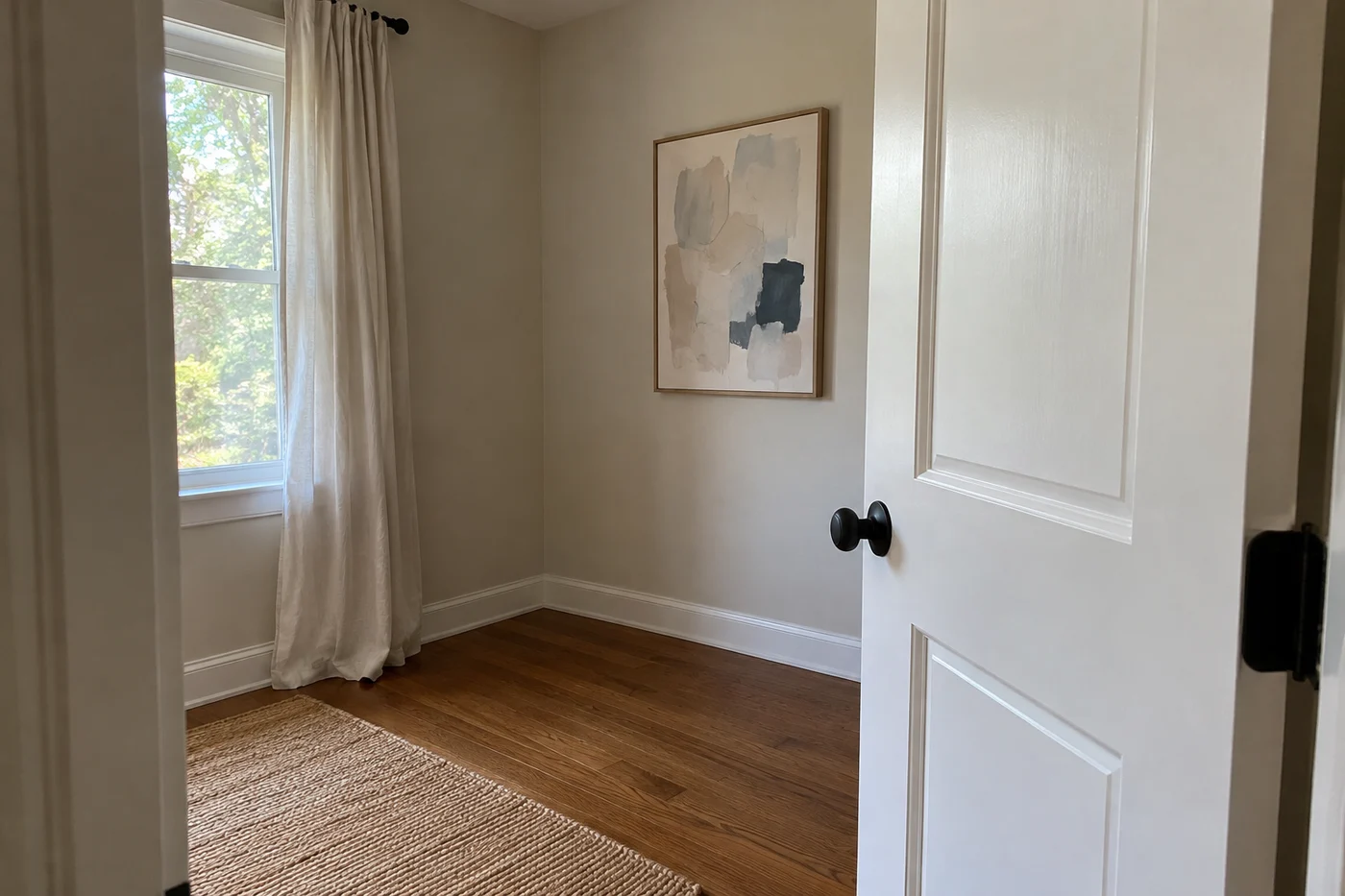
Flat wall decor is often the best choice behind a door, especially when there’s little space left once it opens.
A framed print works where the door and handle won’t hit it. Hooks need enough space for coats and bags once they’re hanging.
If the space is too tight, leaving it open keeps the entrance comfortable to use.
An Awkward Corner With No Window
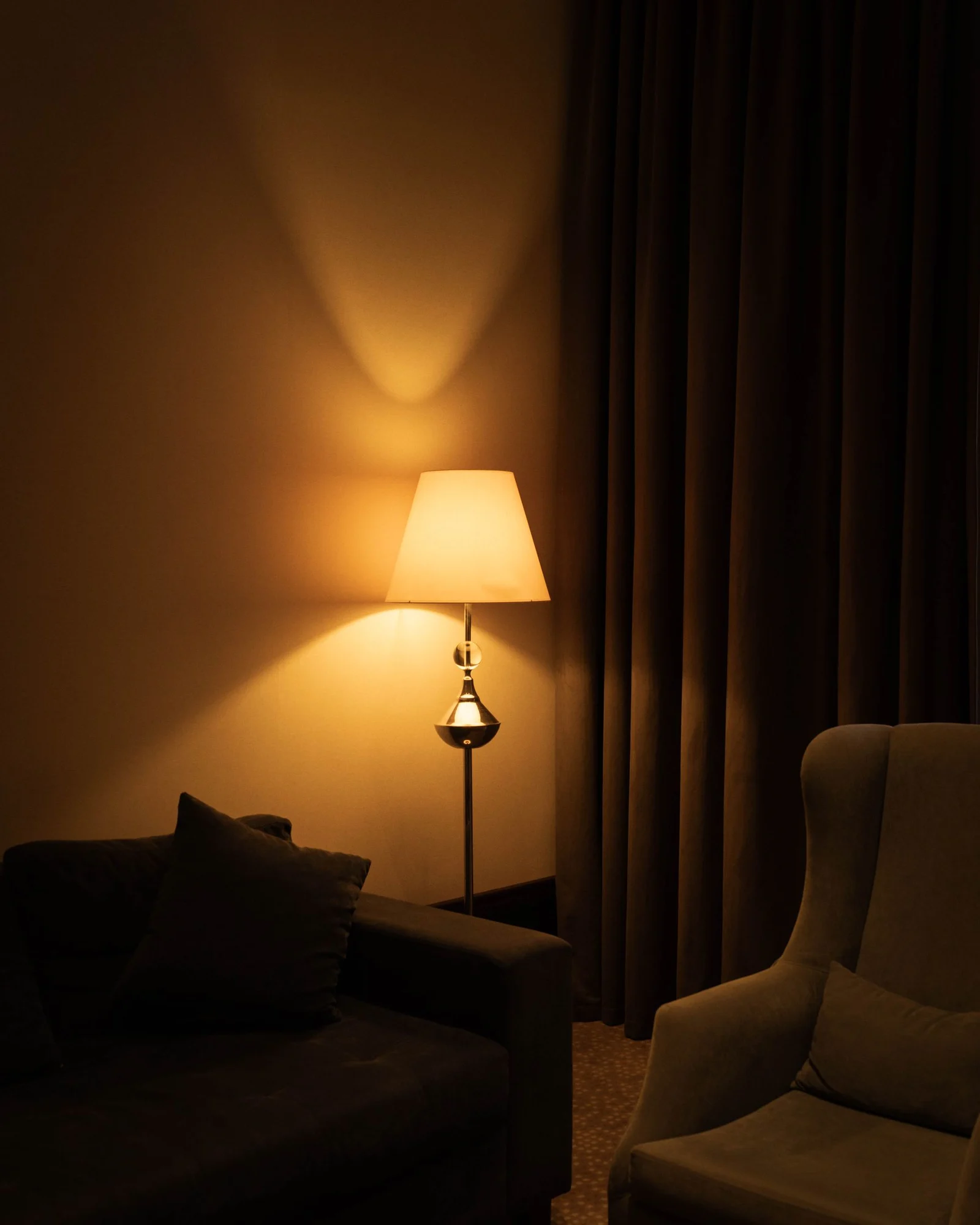
Lighting, artwork, storage, or faux greenery suit a corner without daylight.
A table lamp on a small cabinet can give you both light and storage. A floor lamp beside the sofa is useful when you only need the light.
A mirror can reflect existing light, but it won’t brighten a completely unlit corner by itself. A lamp is the more direct fix.
Corner Finds for Your Space
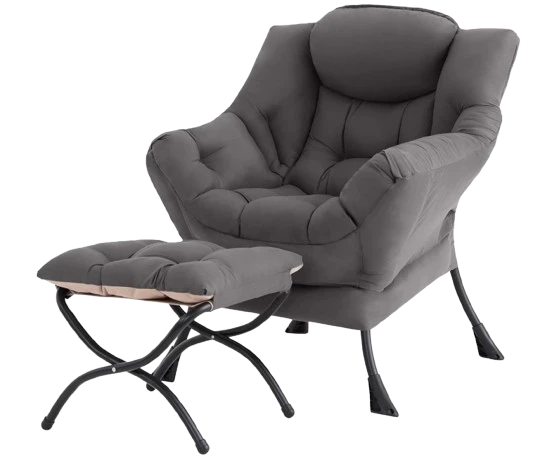 Tiita Lazy Chair with OttomanA padded chair with a book pocket and a folding footrest for a reading corner.
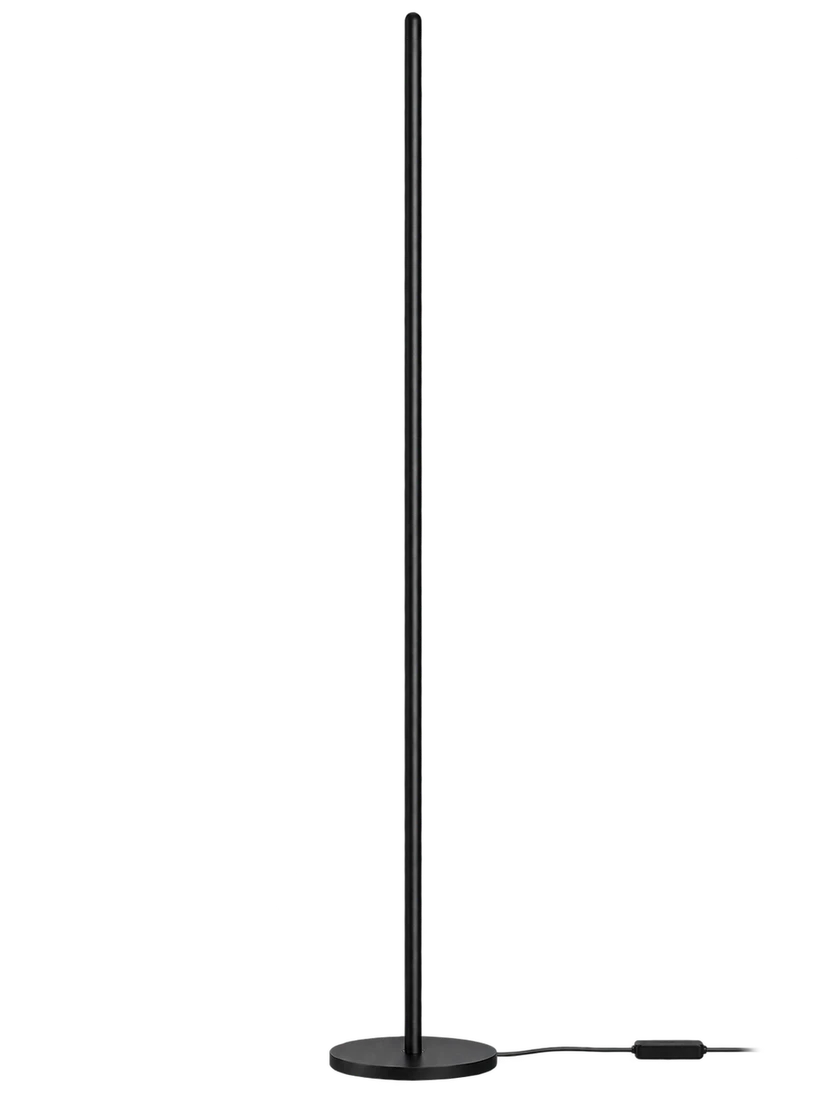 Govee RGBIC Floor Lamp BasicA slim lamp with adjustable colors and brightness for a soft glow beside the sofa or TV.
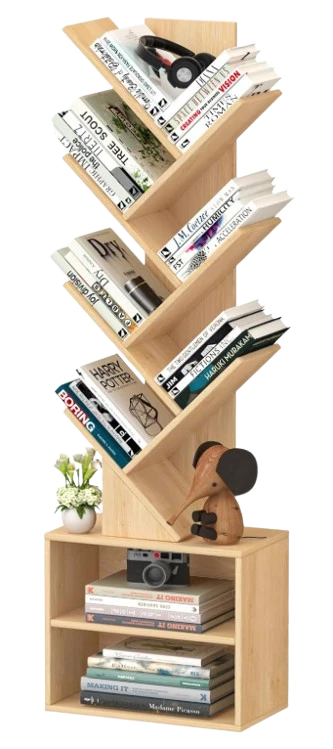 SHEEPAM 10-Tier Tree BookshelfA narrow book rack with angled shelves that adds storage and an unusual shape.
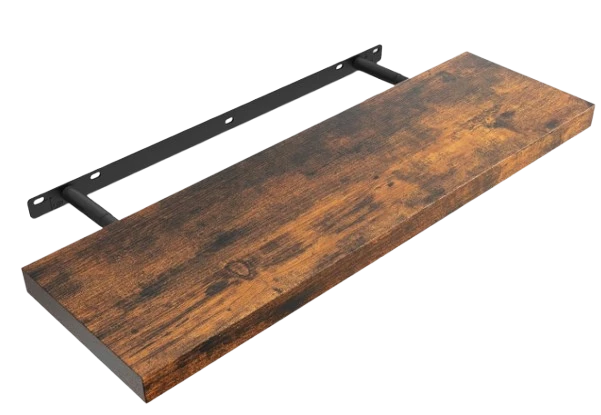 BAYKA Rustic Brown Floating ShelvesTwo matching shelves for books, framed photographs, and small decorative pieces.
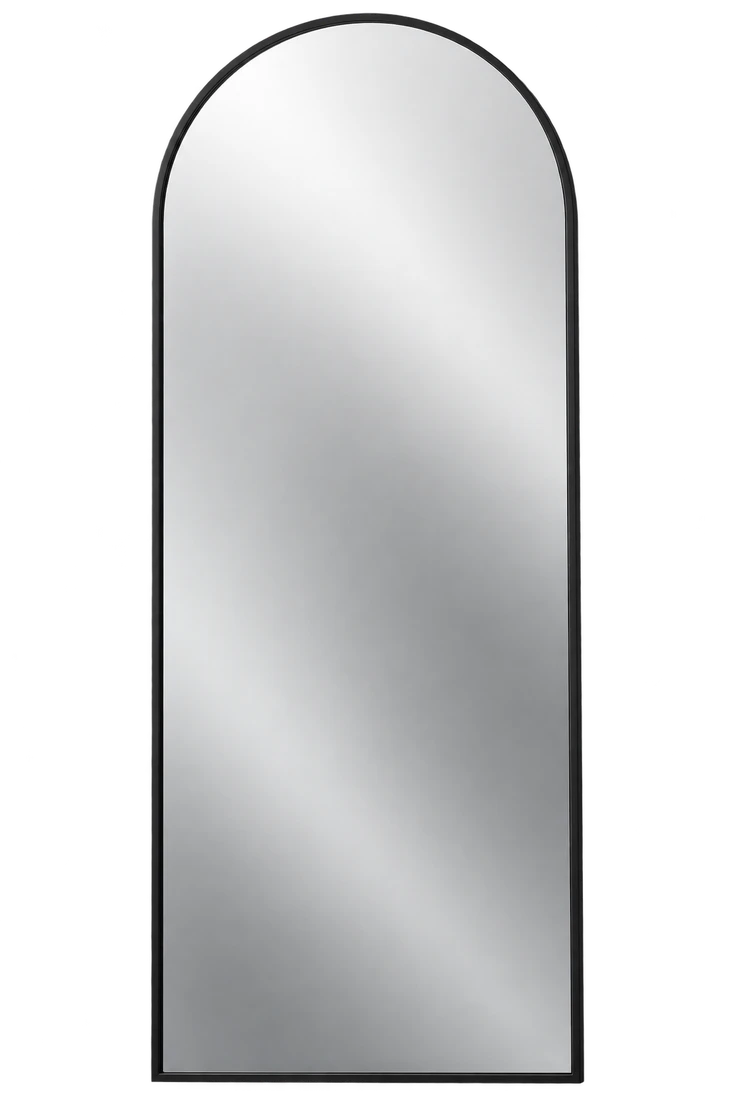 HARRITPURE Arched Full-Length MirrorA 64-by-21-inch mirror with a slim black frame for a bedroom dressing corner.
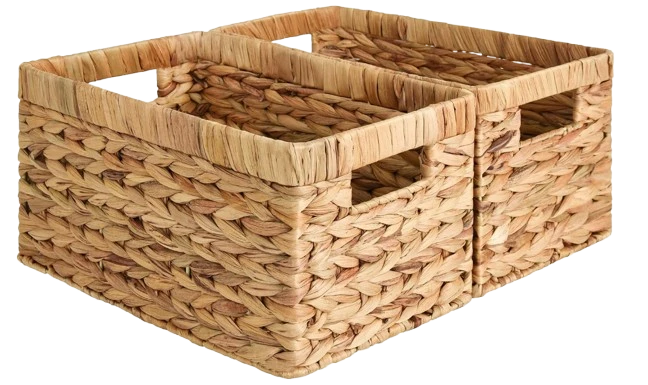 StorageWorks Water Hyacinth BasketsTwo rectangular shelf baskets for remotes, notebooks, and everyday accessories.
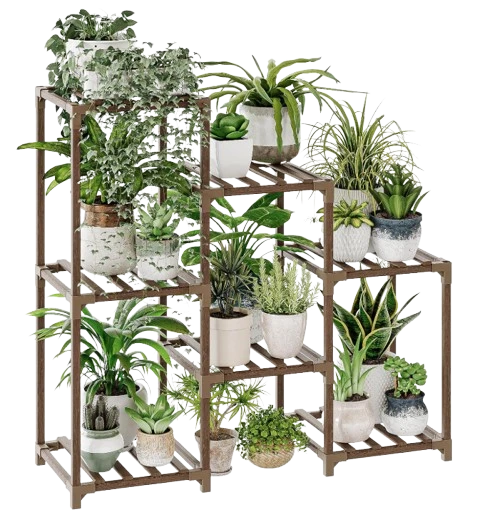 Bamworld Three-Tier Plant StandWooden shelves that group smaller plants at different heights.
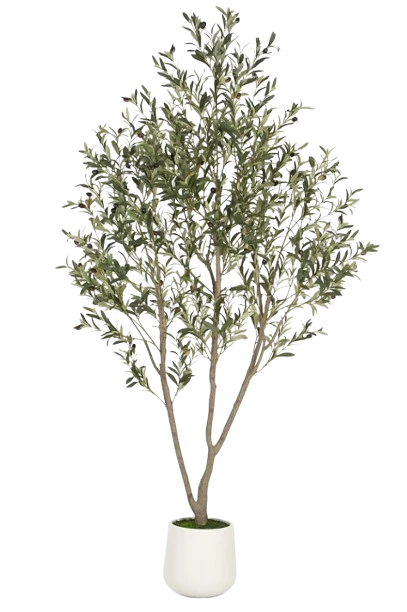 VIVATREES 7-Foot Artificial Olive TreeTall faux greenery with a white planter included, suited to corners without enough daylight for a living tree.
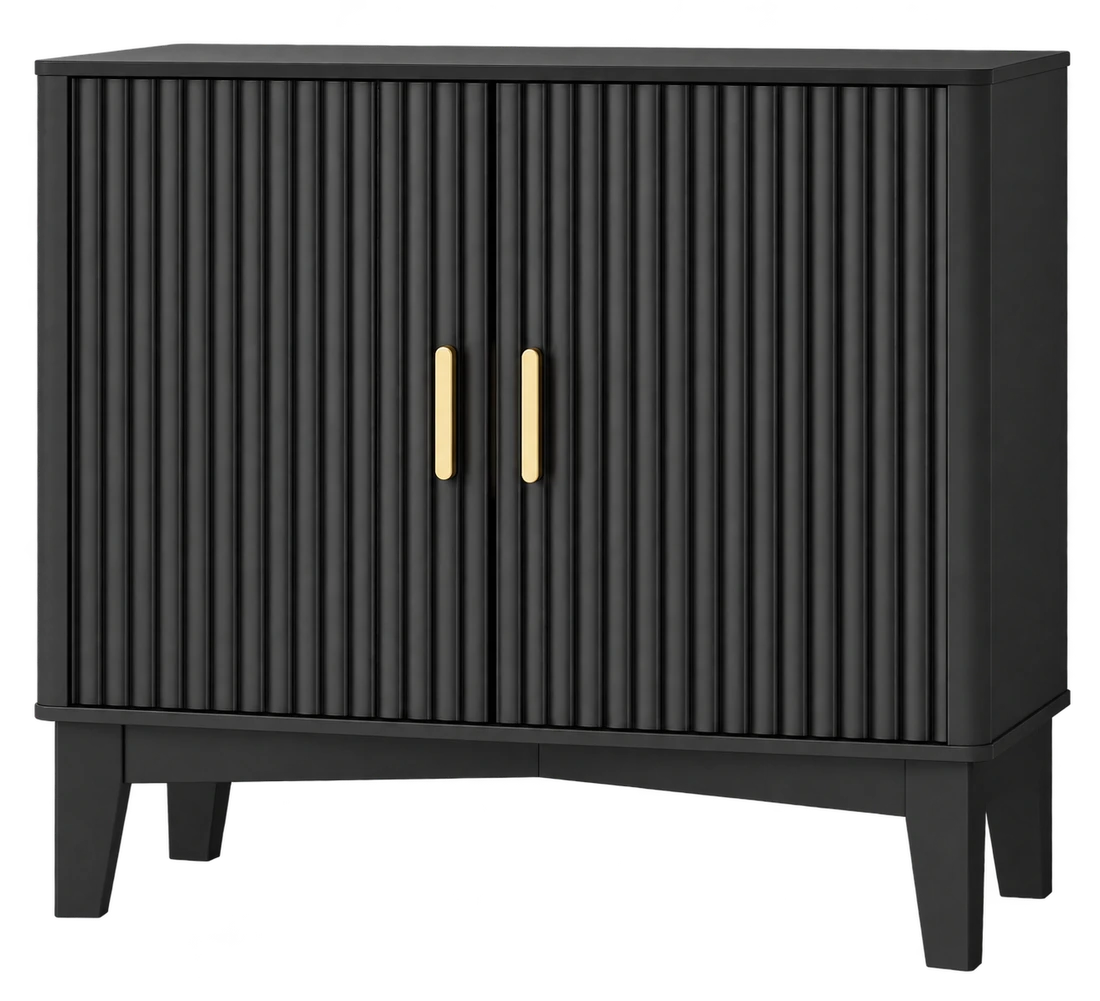 BORNOON Fluted Storage CabinetClosed storage with an adjustable shelf, fluted doors, and gold-tone handles.